1. Introduction
Critical-mineral assessments vary across countries due to differences in economic structures, geopolitical risks, and industrial priorities [
1]. Coal remains a critical fossil fuel in the global energy supply system and plays an indispensable role in the worldwide energy mix, with approximately two-thirds of global coal being used for power generation [
2,
3,
4]. However, as the depth and intensity of coal mining continue to increase, challenges associated with higher gas occurrence pressure, more complex seepage conditions, and intensified in situ stress environments have become increasingly prominent, posing greater difficulties for the prevention and control of coal mine gas disasters [
5,
6,
7,
8,
9]. Coal mine gas is not only a major hazard responsible for severe mining accidents but also an important component of unconventional natural gas resources [
10,
11]. Therefore, a comprehensive understanding of the occurrence, desorption, seepage, and extraction mechanisms of coal seam gas, together with the optimization of gas extraction parameters, is of great significance for enhancing mine safety, improving the efficient utilization of coalbed methane resources, and promoting green and low-carbon mining practices.
Coal seam gas is primarily stored in an adsorbed state on the surfaces of pores within the coal matrix, while a smaller proportion exists as free gas in fractures and pore spaces [
12,
13]. Based on micropore filling theory and adsorption potential theory, Yang et al. [
14] developed a coupled methane adsorption model that distinguishes between strong and weak adsorption zones. By integrating molecular simulations, isothermal adsorption experiments, and machine learning approaches, they elucidated the effects of temperature, pressure, pore size, and coal rank on methane occurrence characteristics in coal micropores. Their findings provide a new theoretical basis for understanding coalbed methane occurrence mechanisms under the coupled influence of multiple factors. Using nuclear magnetic resonance measurements and numerical simulations, Yao et al. [
15] investigated the heterogeneity of water distribution in coal reservoirs with different pore structures and its influence on the evolution of coalbed methane productivity. The results demonstrated that increasing initial water saturation significantly alters gas production behavior and delays the timing of peak gas production. By combining low-pressure gas adsorption experiments with theoretical modeling, Su et al. [
16] examined the response of coal pore structures and methane occurrence characteristics to temperature variations. Their study revealed that temperature regulates methane adsorption capacity and occurrence states within pores by influencing the kinetic energy of methane molecules, providing important insights into methane storage and migration mechanisms in deep coalbed methane reservoirs. Through a combination of laboratory experiments and field geological investigations, Li et al. [
17] explored the controlling effects of geological structures, including faults, folds, and collapse columns, on coalbed methane occurrence characteristics. Their results demonstrated that structural morphology and stress conditions jointly govern methane enrichment patterns, providing a theoretical foundation for predicting favorable coalbed methane accumulation zones in structurally complex regions. Using data obtained from deep exploratory drillings in the Upper Silesian Coal Basin, Kedzior et al. [
18] analyzed the relationships among coalbed methane content, adsorption capacity, and coal petrological characteristics. They clarified the controlling roles of coalification evolution, pore structure development, and organic maceral composition in methane enrichment and demonstrated that deep, high-rank coal seams constitute important target horizons for coalbed methane accumulation and development.
After desorption from the coal matrix, gas primarily migrates toward the drilling hole through the pore–fracture system, and the deformation of the coal body in turn affects the porosity and permeability, thereby forming a complex coupled feedback mechanism [
19,
20]. Ye et al. [
21] systematically investigated the effects of equilibrium pressure and coal particle size on the thermal effects associated with gas desorption. Their results indicated that the desorption process is accompanied by significant endothermic cooling and established a quantitative relationship between gas desorption capacity and temperature variation. This study provides a theoretical basis for understanding the thermodynamic response mechanisms during coalbed methane desorption and diffusion processes, as well as for the accurate evaluation of coalbed methane content. From the perspectives of fractal dimension characteristics and nuclear magnetic resonance responses, Yang et al. [
22] systematically examined the effects of different surfactants on the microscopic pore structure and gas desorption behavior of coal. The results demonstrated a significant correlation between variations in the fractal characteristics of the coal surface and methane desorption capacity, indicating that pore structure reconstruction is an important mechanism for enhancing coalbed methane desorption. Wang et al. [
23] systematically analyzed the mechanisms by which changes in gas wettability influence water-block damage and gas desorption characteristics in coal reservoirs. Their findings revealed that the transition of the coal surface from hydrophilic to hydrophobic reduces liquid-phase retention effects and transforms capillary forces within pores and fractures from resistance forces into driving forces, thereby promoting reservoir water backflow and methane desorption. Liu et al. [
24] reported that tectonic stress significantly promotes fracture development and pore structure complexity, thereby enhancing the gas desorption capacity of coal. Based on these findings, they established an improved gas desorption model, which provides theoretical support for gas disaster prevention and control in structurally complex coal-bearing regions.
The gas seepage capacity of coal is primarily governed by pore structure characteristics, fracture connectivity, and variations in effective stress [
25,
26]. Wang et al. [
27] investigated the deformation–seepage evolution behavior of gas-bearing coal under coupled stress–pore pressure conditions. Their study clarified the dominant roles of stress and pore pressure in coal deformation and gas migration processes and established a dynamic permeability model incorporating damage evolution, thereby providing new theoretical support for understanding the seepage response characteristics of gas-bearing coal. Zhang et al. [
28] examined the evolution of coal permeability under coupled gas–water–stress conditions through seepage experiments. The study revealed the synergistic effects of gas pressure, moisture content, and effective stress on the seepage characteristics of coal and developed a permeability model considering the coupling effects of multiple influencing factors. Li et al. [
29] employed μ-CT three-dimensional reconstruction and gas seepage simulation techniques to establish an evaluation system for coal pore connectivity and structural complexity. Their results verified the capability of pore structure parameters to characterize gas migration behavior. Hao et al. [
30] analyzed the damage evolution and gas seepage characteristics of coal under mining-induced stress from the perspective of energy dissipation. The study elucidated the intrinsic relationships among energy dissipation, damage accumulation, and permeability variation and proposed a permeability prediction model based on the energy-damage mechanism.
The effectiveness of gas extraction is jointly influenced by multiple factors, including coal seam occurrence conditions, coal structure characteristics, the stress environment, and engineering parameters [
31,
32,
33,
34]. Xu et al. [
35] proposed a method for determining the coal-breaking depth induced by water jets. Through numerical simulations, they revealed the effects of jet pressure, stand-off distance, and coal strength on coal-breaking depth, stress redistribution, and damage evolution. Furthermore, they established corresponding fitting models, providing theoretical support for the rehabilitation of gas extraction drillings. Yin et al. [
36] addressed the low extraction efficiency encountered in soft coal seams by proposing a combined hydraulic reaming–hydraulic flushing technique. A fluid–solid coupling model was developed, and numerical simulations demonstrated that the proposed method effectively enlarged the plastic zone and permeability-enhanced area, significantly increased coal permeability, eliminated low-permeability regions between drillings, and there-by mitigated the risk of coal and gas outbursts. Du et al. [
37] investigated the difficulty of determining the effective extraction radius after hydraulic fracturing. Using PFC2D discrete element simulations, they elucidated the mechanisms of fracture propagation and porosity evolution and subsequently proposed a gas extraction optimization method based on PFC2D–COMSOL coupling. Field tests validated the effectiveness of the proposed approach, providing a basis for the optimized layout of extraction drillings. Wu et al. [
38] established a full-life-cycle evaluation framework for gas extraction by integrating Bayesian optimization–random forest regression for scheme optimization and deep neural network–convolutional autoencoder models for dynamic prediction. The framework enabled accurate reconstruction of residual gas pressure fields with prediction errors below 0.02 MPa, providing a scientific basis for intelligent gas extraction management and control. Fan et al. [
39] comprehensively reviewed permeability-enhancement technologies based on controllable shock waves. According to the medium between electrodes, the technologies were classified into three categories. The authors clarified the synergistic fracturing mechanism of shock waves and bubble oscillations, and analyzed the constraints imposed by in situ stress, coal fragmentation degree, and drilling spacing on permeability enhancement. Zhang et al. [
40] developed a mining-induced damage–permeability model based on a representative coal mine and optimized the first-mined protective seam through numerical simulations. The study revealed the mechanism of pressure-relief-induced permeability enhancement and demonstrated that gas extraction through floor drillings can effectively reduce gas content, thereby clarifying the relationship between extraction efficiency and the degree of pressure relief. Cheng et al. [
41] focused on drilling instability in soft coal seams and optimized the formulation of micro foam drilling fluid using the response surface methodology. The experimental results confirmed that the proposed drilling fluid system effectively stabilized drilling walls, improved drilling quality, and enhanced gas extraction efficiency. Bai et al. [
42] investigated the influence of CO
2 injection pressure on coalbed methane displacement and carbon sequestration. Their results indicated that increasing injection pressure accelerated methane desorption and CO
2 sequestration; however, it reduced sequestration efficiency and the injection rate during later stages. Therefore, a moderate reduction in pressure was recommended during periods of inefficient methane desorption. Sun et al. [
43] established a coupled damage–seepage–deformation model for coal seams fractured by controllable shock waves and investigated the effects of impact frequency, impact intensity, and in situ stress on permeability enhancement. The results showed the existence of a threshold effect for shock-wave stimulation and demonstrated that in situ stress inhibits fracture propagation. The study further confirmed that controllable shock-wave technology can effectively improve gas extraction performance in low-permeability coal seams. Lou et al. [
44] summarizes plugging methods, identifies fracture-controlled leakage mechanisms, and highlights optimization strategies for improving sealing effectiveness and CBM extraction efficiency. Underground gas extraction in coal seams is hindered by inefficient borehole sealing and severe air leakage, leading to low methane concentration and rapid attenuation.
In situ coal exhibits pronounced heterogeneity and anisotropy. Relying solely on empirical correlations or field experiments is often insufficient to systematically elucidate the independent effects of individual parameters on gas extraction performance, as well as their differing sensitivities.
In this study, a three-dimensional Multiphysics coupling numerical model for coal seam gas extraction was developed based on the geological and engineering conditions of a coal mine in Shanxi Province, China. The model comprehensively incorporates gas adsorption–desorption behavior, Darcy seepage flow, and coal deformation processes. Using the control variable method, the effects of extraction time, extraction negative pressure, drilling diameter, drilling length, and initial porosity of the coal seam on the gas pressure field evolution, effective extraction radius, and cumulative gas extraction volume were systematically investigated. By comparing the expansion characteristics of low-pressure zones, pressure variation patterns along monitoring lines, and attenuation characteristics of gas extraction volume under different parameter conditions, the sensitivity of gas extraction parameters and the evolution mechanism of the effective extraction radius were clarified. Furthermore, the simulation results were validated against field data obtained from ultra-long directional drilling gas extraction operations. The findings of this study provide theoretical guidance and technical support for drilling parameter design, effective extraction radius determination, pre-extraction compliance evaluation, and optimization of gas control engineering in low-permeability coal seams.
2. Materials and Methods
2.1. Numerical Modeling Assumptions for Gas Extraction
Coal seam gas extraction involves complex Multiphysics interactions. To facilitate numerical simulation, the gas flow process was simplified based on the following assumptions:
(1) The roof and floor strata of the coal seam are impermeable rock layers containing no gas.
(2) The gas-bearing coal seam is considered an isotropic, homogeneous, and continuous porous medium undergoing only small deformations.
(3) Gas migration and coal deformation occur under isothermal conditions.
(4) Gas is treated as an ideal gas, and the adsorption–desorption process follows the Langmuir adsorption equilibrium equation.
(5) Gas seepage within the coal seam obeys Darcy’s law, and gas desorption is assumed to occur instantaneously.
The assumption of instantaneous desorption will have an impact on two aspects: overestimating the gas supply rate in the early stages and weakening the decay tail effect in the later stage. However, it should be emphasized that the primary objective of this study is to investigate the spatial distribution and dominant controlling mechanisms of the extraction influence zone under engineering conditions. Within this scope, the instantaneous desorption assumption does not alter the fundamental spatial evolution pattern of the effective extraction radius.
(6) The effective gas extraction radius of a drilling hole is defined as the distance from the drilling hole at which the gas extraction rate reaches 30%.
2.2. Construction and Parameters of Gas Extraction Numerical Model
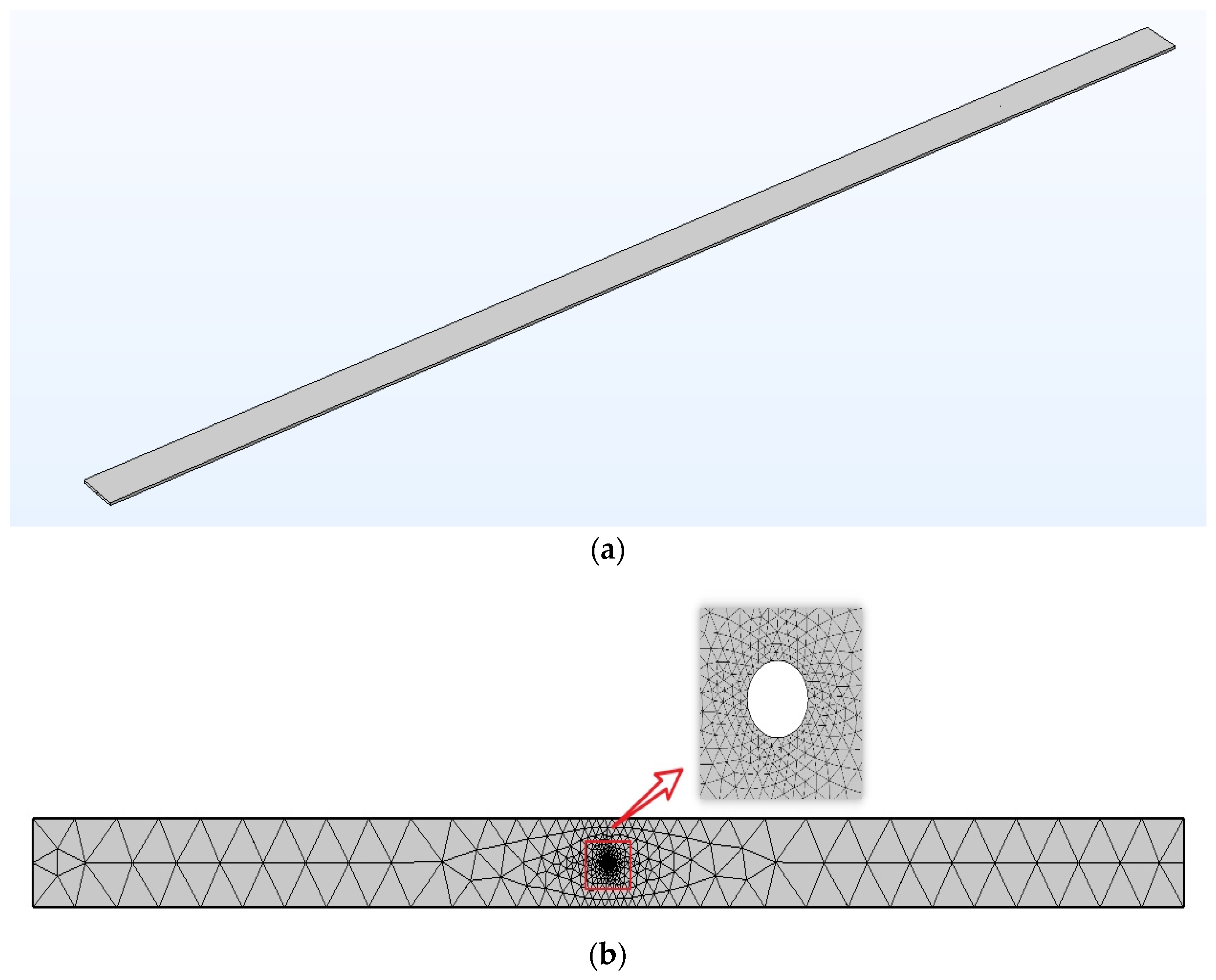
Based on the field conditions of a coal mine in Shanxi Province, China, a three-dimensional coal seam model was established using COMSOL Multiphysics 6.0. The model dimensions were 3500 m × 120 m × 7.3 m (length × width × height). A physics-controlled mesh incorporating Darcy’s law and General Form PDE was employed, with mesh elements divided into nine levels from coarsest to finest. Mesh independence testing showed that the change rate in gas extraction volume became negligible at the sixth level. Therefore, the sixth-level physics-controlled mesh was adopted for all simulations. The numerical model and the mesh configuration of its cross-section are presented in
Figure 1a and b, respectively.
The average burial depth of the coal seam was 580 m. A vertical stress of 15 MPa was applied to the upper boundary of the model to represent the overburden load. For the lateral boundaries, roller support conditions (i.e., normal displacement constrained to zero, while tangential displacement was free) were applied to simulate the confinement effect of surrounding rock masses, corresponding to a lateral pressure coefficient of 0.8 based on the in situ stress measurements in the coal mine. The bottom boundary was fixed in all directions to represent the rigid basement. Zero-flux boundary conditions were imposed on all boundaries for the fluid flow field.
The governing equations were solved using the Solid Mechanics, Darcy’s law, and General Form PDE modules in COMSOL Multiphysics. The key parameters adopted in the numerical model are summarized in
Table 1.
Equation (1) for coal seam gas extraction rate established by Zhou Shining is as follows.
where
η is the gas extraction rate (%), with a regulatory threshold of 30%;
w is the residual gas content (m
3/t); and
p is the residual gas pressure (MPa).
Calculation based on Equation (1) yields a residual gas pressure of 0.49 MPa and a residual gas content of 3.85 m3/t at the effective extraction radius of the drilling hole. Both values satisfy the regulatory requirements for coal and gas outburst prevention.
The theoretical model describing permeability evolution with effective stress during coal seam gas extraction is given in Equation (2) [
45,
46]:
Here, k denotes permeability (mD), ϕ denotes porosity (%), Kp represents the modulus of pore volume (Pa), σ denotes the mean normal stress (Pa), and σ0 denotes the initial mean normal stress (Pa).
As shown in Equation (2), an increase in extraction negative pressure leads to an increase in effective stress. This enhanced effective stress causes compaction of the pore structure, resulting in reduced porosity and permeability, increased gas transport resistance, and a decreased effective extraction radius. Consequently, the coupled gas desorption–migration rate is reduced.
2.3. Numerical Simulation Scheme for Gas Extraction
A control variable method was adopted to investigate the effects of different gas extraction parameters, including extraction time, extraction negative pressure, drilling diameter, drilling length, and the initial porosity of the coal seam. The baseline simulation parameters were set as follows: extraction time of 150 d, extraction negative pressure of 20 kPa, drilling diameter of 120 mm, drilling length of 3000 m, and an initial porosity of the coal seam of 7%.
The extraction time was simulated under nine conditions: 0 d, 50 d, 100 d, 150 d, 200 d, 400 d, 600 d, 800 d, and 1000 d. The extraction negative pressure was analyzed under five conditions of 20 kPa, 40 kPa, 60 kPa, 80 kPa, and 100 kPa. Five drilling diameters were considered, including 50 mm, 94 mm, 113 mm, 120 mm, and 216 mm. The drilling length was varied across seven conditions: 100 m, 1000 m, 1500 m, 2000 m, 2500 m, 3000 m, and 3500 m. In addition, the initial porosity of coal seam was examined under ten conditions of 1%, 3%, 5%, 7%, 9%, 11%, 13%, 15%, 17%, and 19%.
On the cross-section at x = 50 m, two monitoring lines were arranged symmetrically at distances of 25 m on both sides of the drilling hole to monitor the gas pressure distribution along the horizontal direction of the drilling hole. The location where the residual gas pressure equals 0.49 MPa is defined as the effective extraction radius of the drilling hole.
3. Results and Analyses
3.1. Gas Extraction Characteristics Under Different Extraction Times
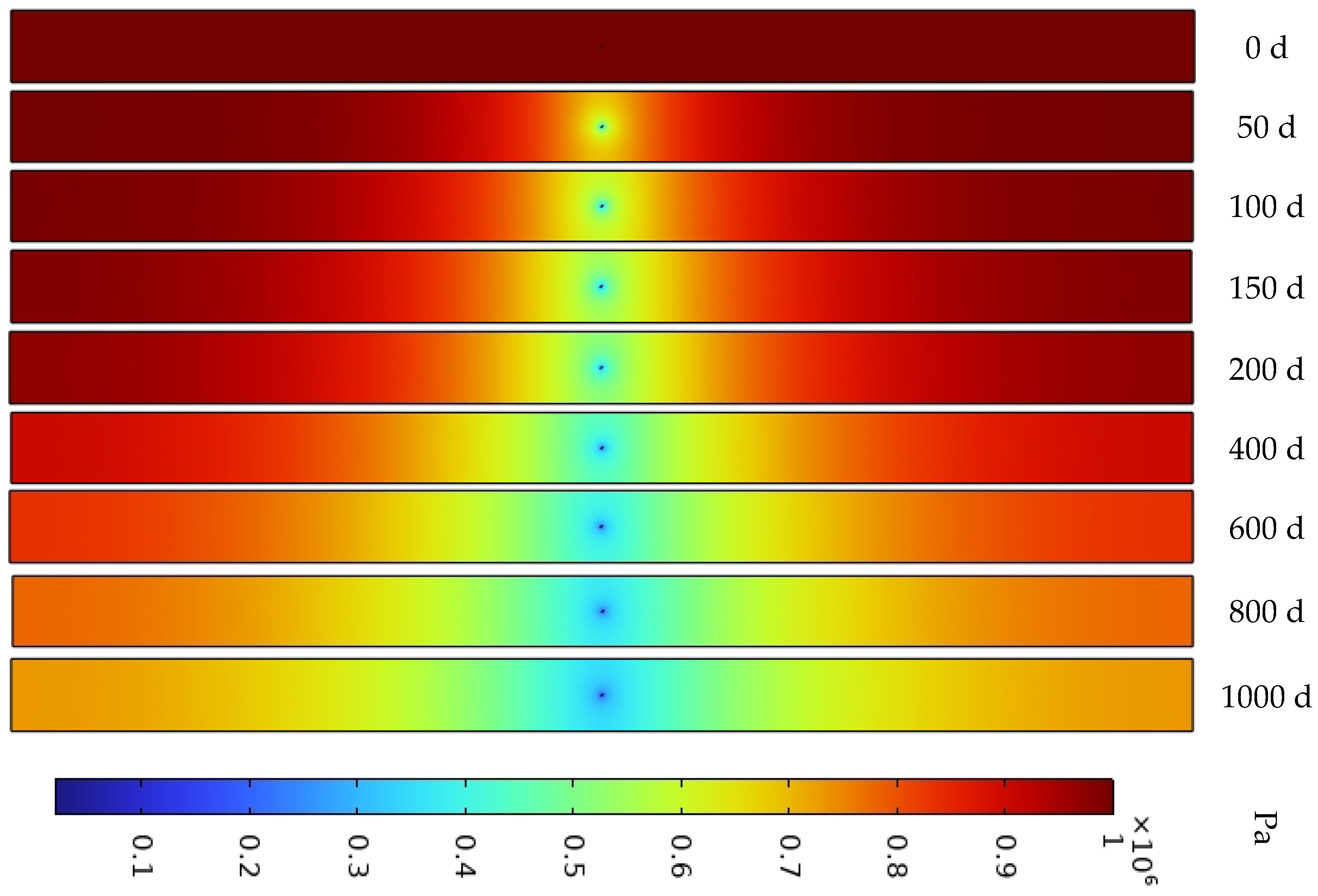
The gas pressure distributions on the cross-section of the model under nine extraction time scenarios are presented in
Figure 2. As shown in the figure, the extent of the low-gas-pressure zone increases significantly with increasing extraction time, indicating a continuous expansion of the drilling influence zone.
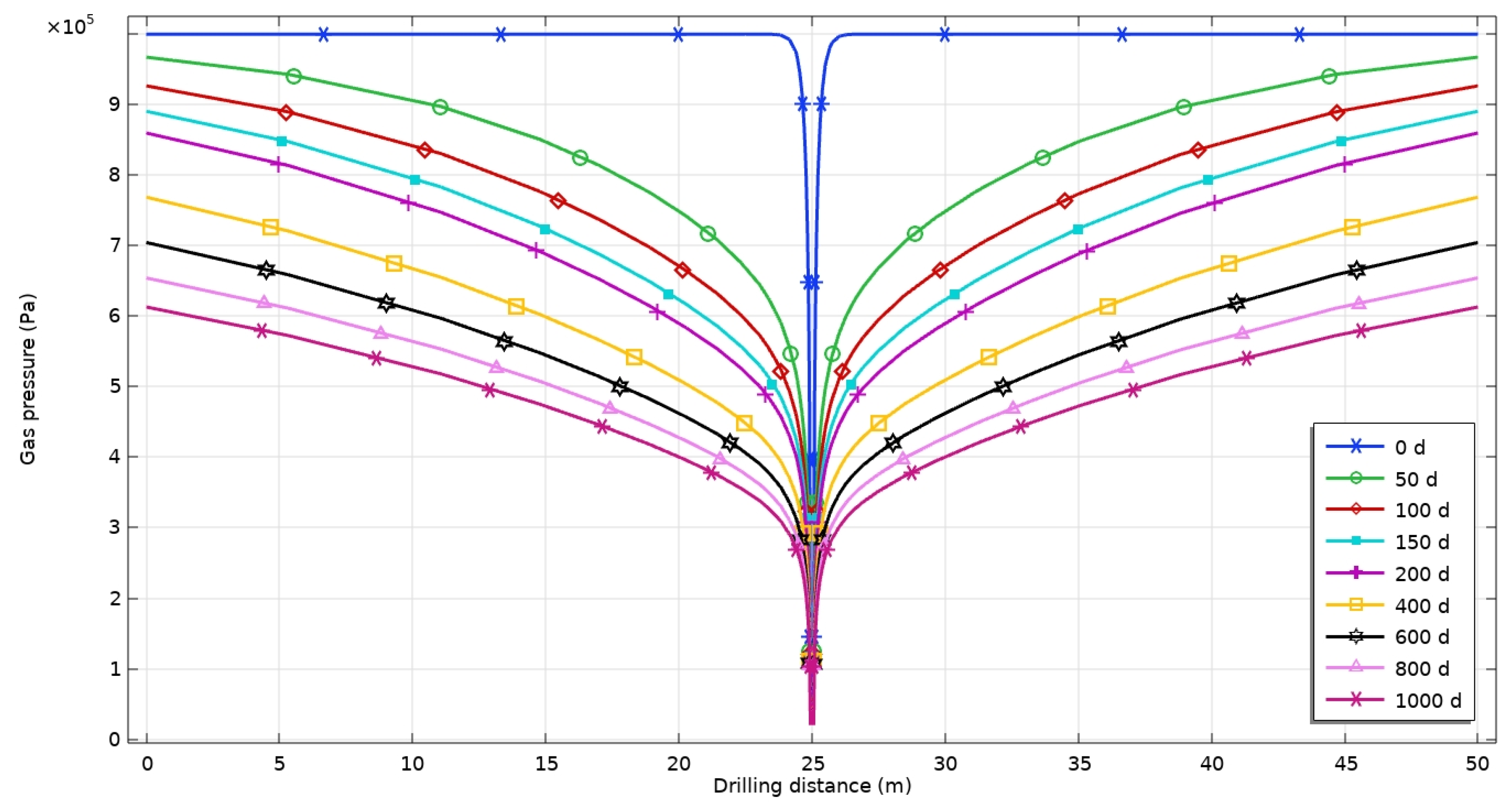
The gas pressure distributions along the monitoring lines for the nine extraction time scenarios are shown in
Figure 3. It can be observed that the range of low gas pressure expands as extraction time increases; however, the rate of expansion gradually decreases. This finding suggests that the influence zone of the drilling expands rapidly during the early stage of extraction, whereas the marginal expansion becomes progressively smaller at longer extraction times.
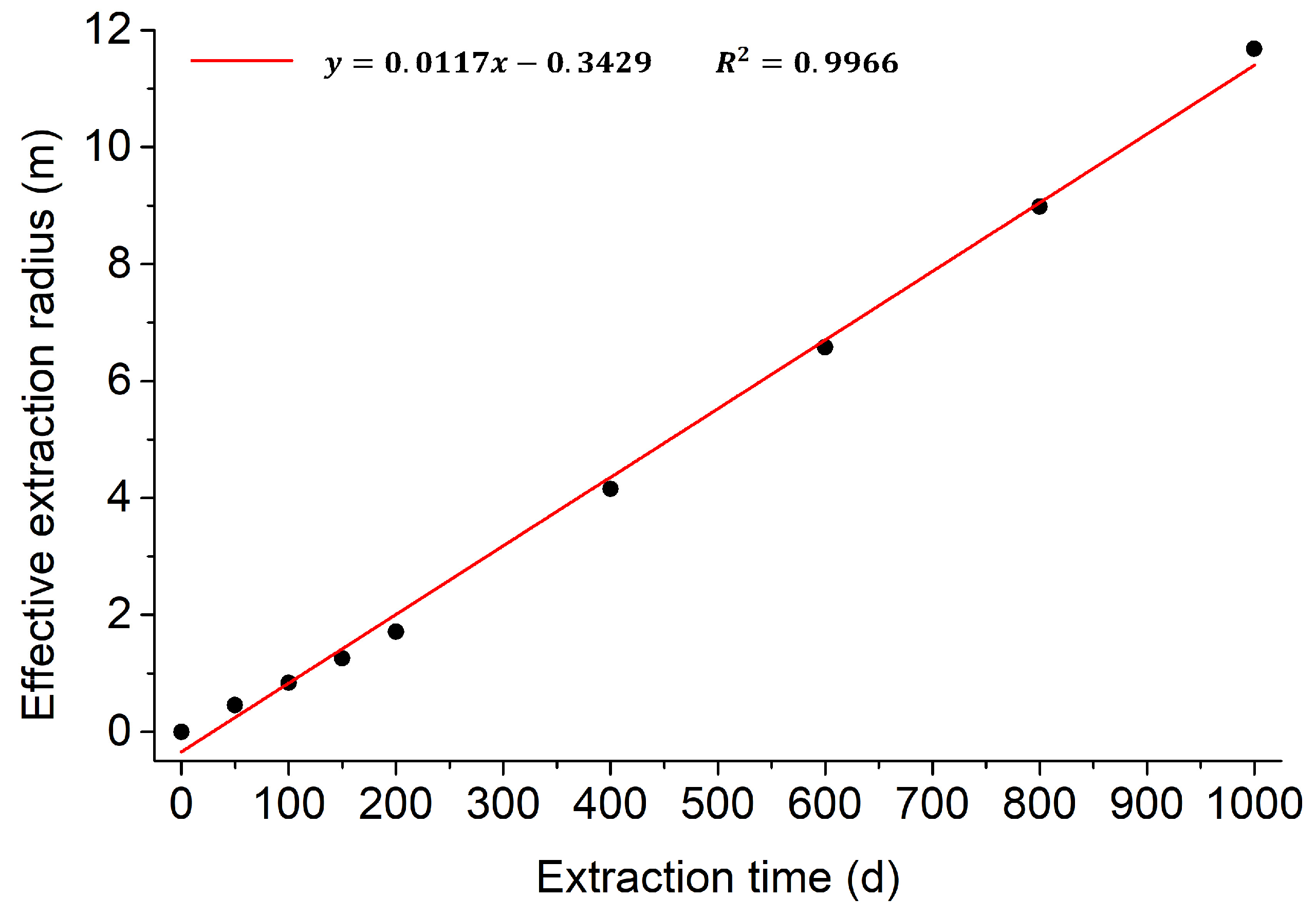
Based on the gas pressure distributions along the monitoring lines, the effective extraction radius of the drilling hole can be determined. The effective extraction radius under the nine extraction time scenarios is shown in
Figure 4. The linear regression relationship between extraction time and effective extraction radius is described by Equation (3).
The fitting correlation coefficient R2 is 0.9966, indicating an excellent fit and a high slope. The effective extraction radius increases linearly with extraction time. This trend differs from that observed for the drilling influence zone, whose growth rate gradually decreases over time.
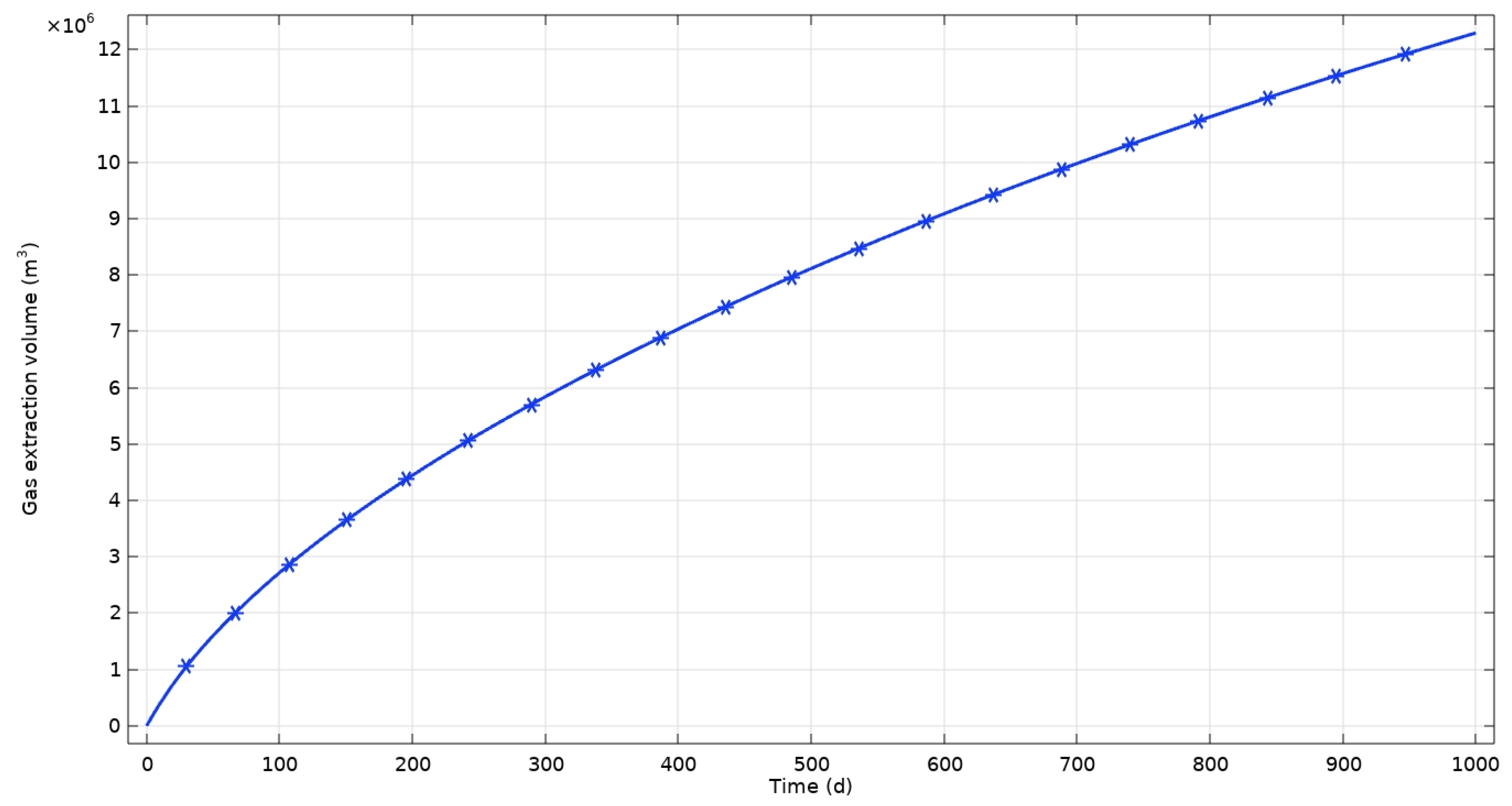
The cumulative gas extraction volume under the nine extraction time scenarios is presented in
Figure 5. As extraction time increases, the cumulative gas extraction volume continuously rises, although its growth rate gradually declines, which is consistent with the variation pattern of the drilling influence zone. The simulation results indicate that after 150 d of extraction, the cumulative gas production reaches 3.64 × 10
6 m
3, corresponding to an average daily gas production of 24,251 m
3/d. After 1000 d of extraction, the cumulative gas production increases to 1.25 × 10
7 m
3, while the average daily gas production decreases to 12,500 m
3/d.
As extraction time increases, the effective extraction radius expands linearly, whereas both the expansion rate of the drilling influence zone and the growth rate of cumulative gas production gradually decrease. Therefore, within a practical extraction time, extending the extraction time can effectively enhance cumulative gas recovery from the coal seam.
3.2. Gas Extraction Characteristics Under Different Extraction Negative Pressures
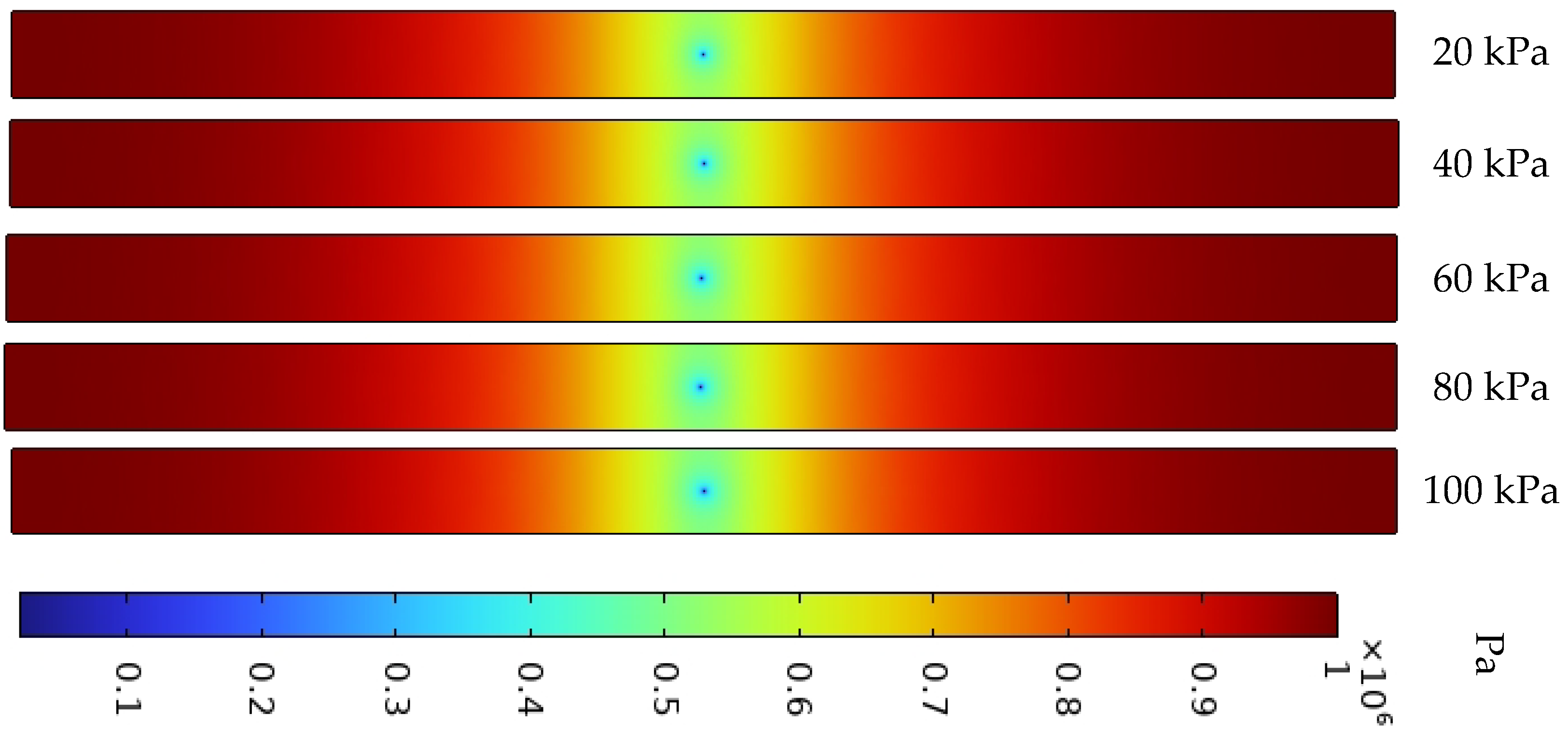
The gas pressure distributions on the cross-section of the model under five extraction negative pressure conditions are presented in
Figure 6. As the extraction negative pressure increased from 20 to 100 kPa, only minor variations were observed in the extent of the low-pressure zone surrounding the drilling hole.
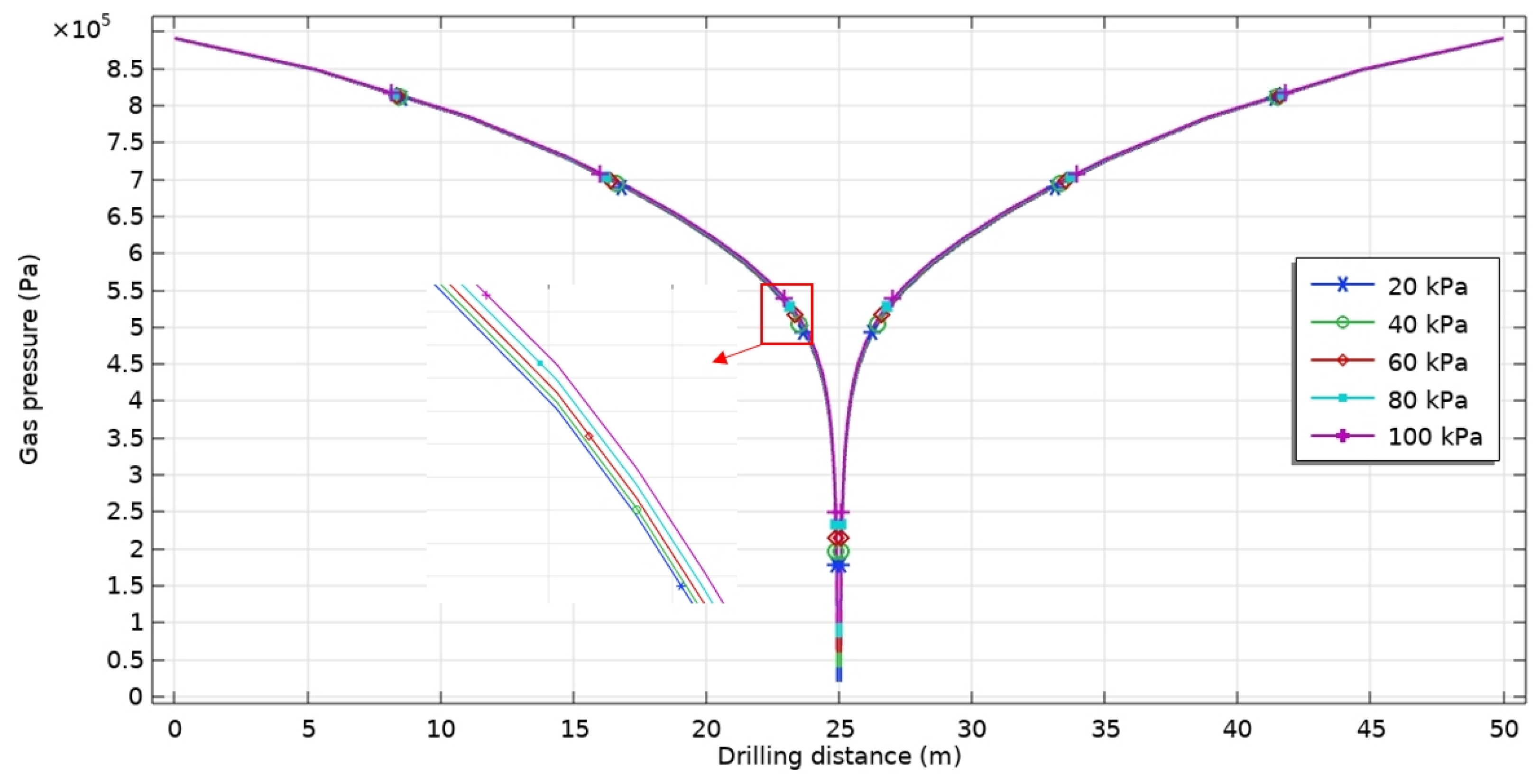
The gas pressure along the monitoring line under the five extraction negative pressure conditions is shown in
Figure 7. Consistent with the cross-sectional results, the range of the low-pressure zone exhibited negligible changes with increasing extraction negative pressure. These results suggest that extraction negative pressure has only a limited effect on the overall gas extraction performance of the coal seam.
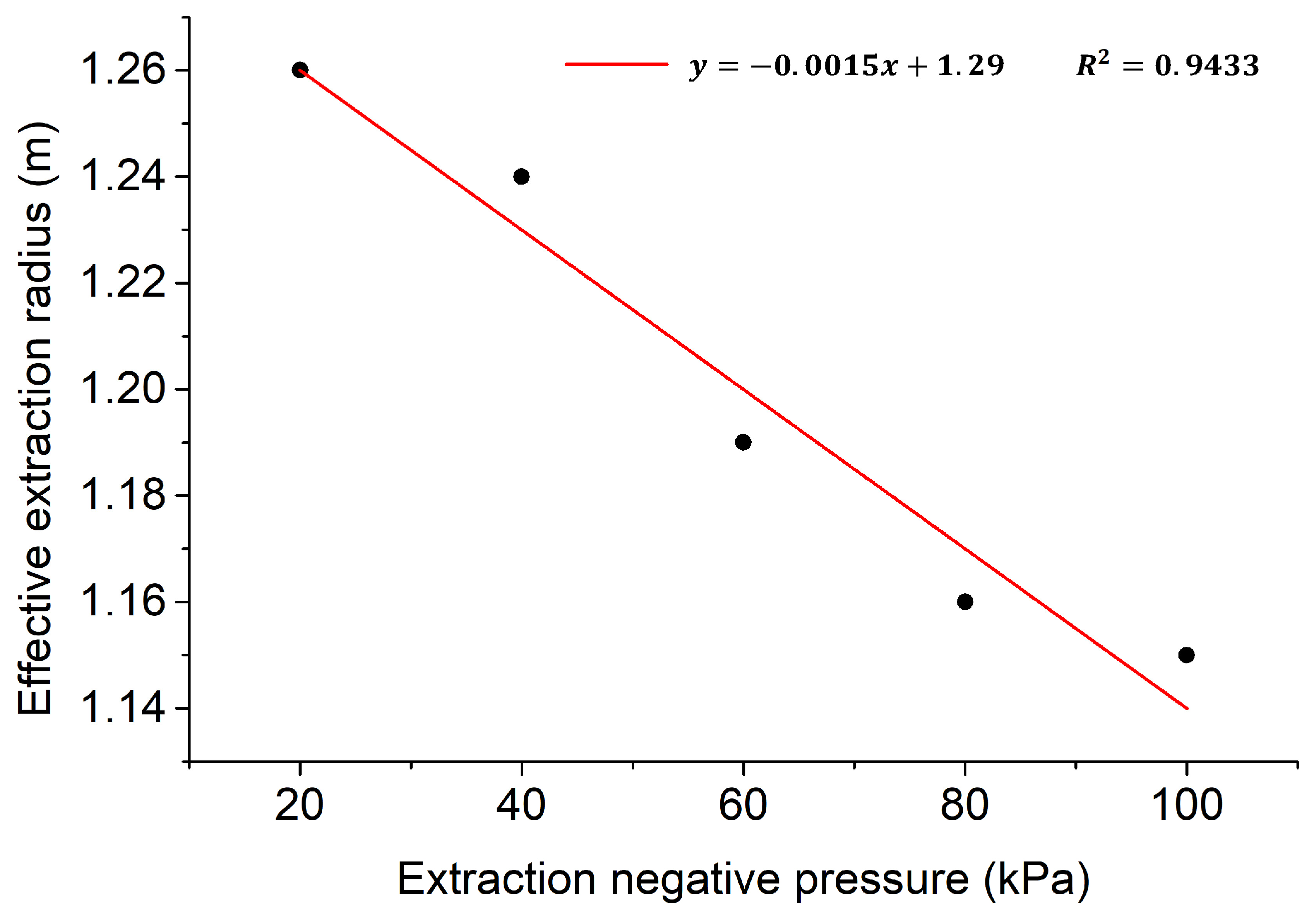
The effective extraction radius of the drilling hole under the five extraction negative pressure conditions is presented in
Figure 8. The linear regression relationship between extraction negative pressure and effective extraction radius is described by Equation (4).
The fitting correlation coefficient R2 is 0.9433, indicating a satisfactory linear fit. However, the fitted slope was extremely small, suggesting that the effective extraction radius decreased only marginally with increasing extraction negative pressure. This result implies that excessively high extraction negative pressure may exert a slight adverse effect on gas extraction performance.
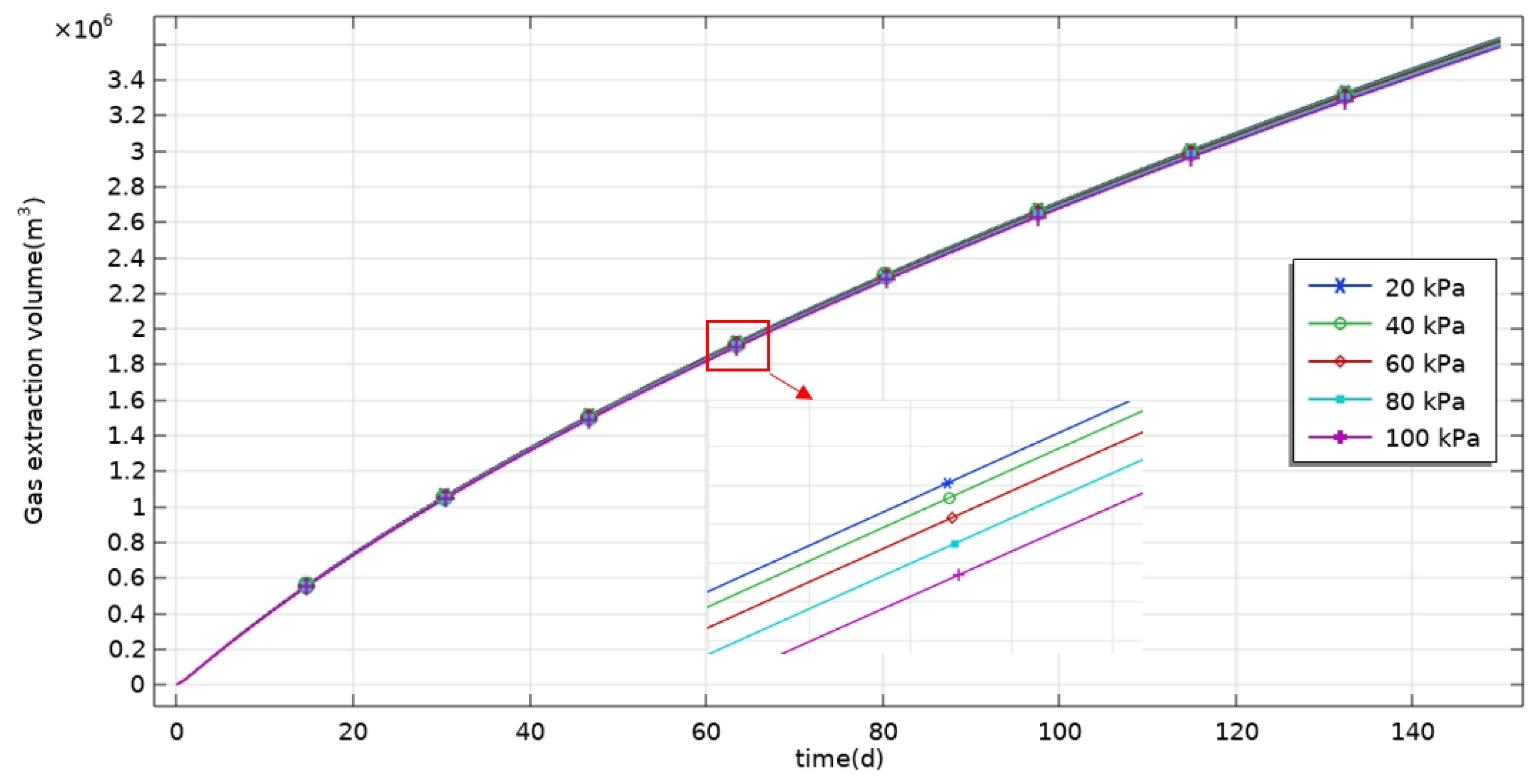
The cumulative gas extraction volumes under the five extraction negative pressure conditions are shown in
Figure 9. As the extraction negative pressure increased, the cumulative gas production exhibited a slight decreasing trend, although the reduction was not significant. This finding indicates that increasing extraction negative pressure does not enhance gas production and may even have a minor negative effect. After 150 days of extraction, the cumulative gas extraction volume continued to increase under all negative pressure conditions, indicating that the drilling still retained gas production potential and that extraction could be continued.
The numerical results showing a decrease in effective extraction radius and cumulative gas extraction volume with increasing extraction negative pressure are consistent with the classical permeability–effective stress coupling theory described in Equation (2).
Overall, increasing the extraction negative pressure resulted in only a negligible reduction in the effective extraction radius, while the drilling influence range remained essentially unchanged. Similarly, the cumulative gas extraction volume showed little variation among the different negative pressure conditions. Therefore, adjusting the extraction negative pressure within the investigated range has a limited impact on the overall effectiveness of coal seam gas extraction.
3.3. Gas Extraction Characteristics Under Different Drilling Diameters
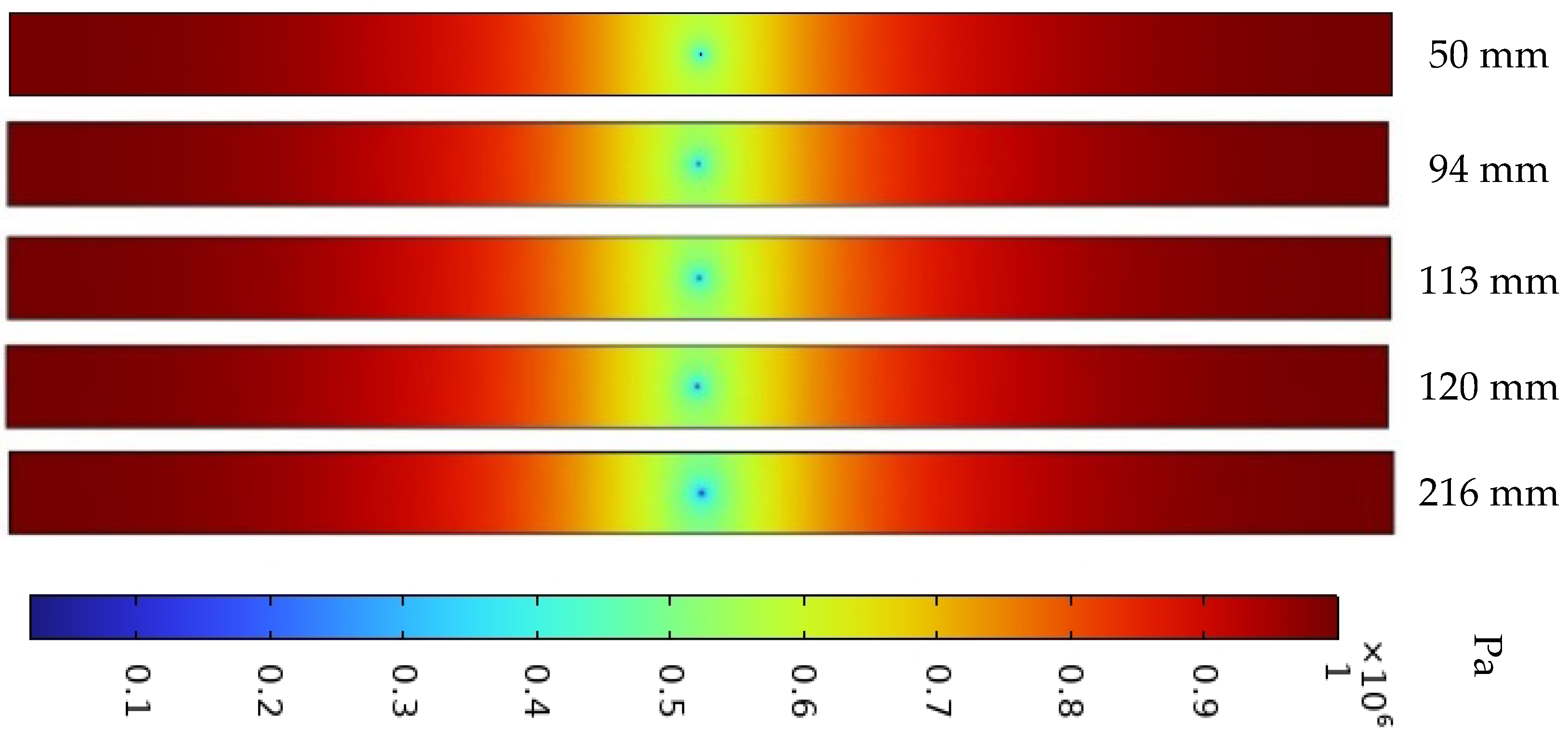
The gas pressure distributions on the cross-section of the model under five drilling diameter conditions are presented in
Figure 10. As the drilling diameter increased from 50 to 216 mm, the area influenced by gas extraction expanded slightly.
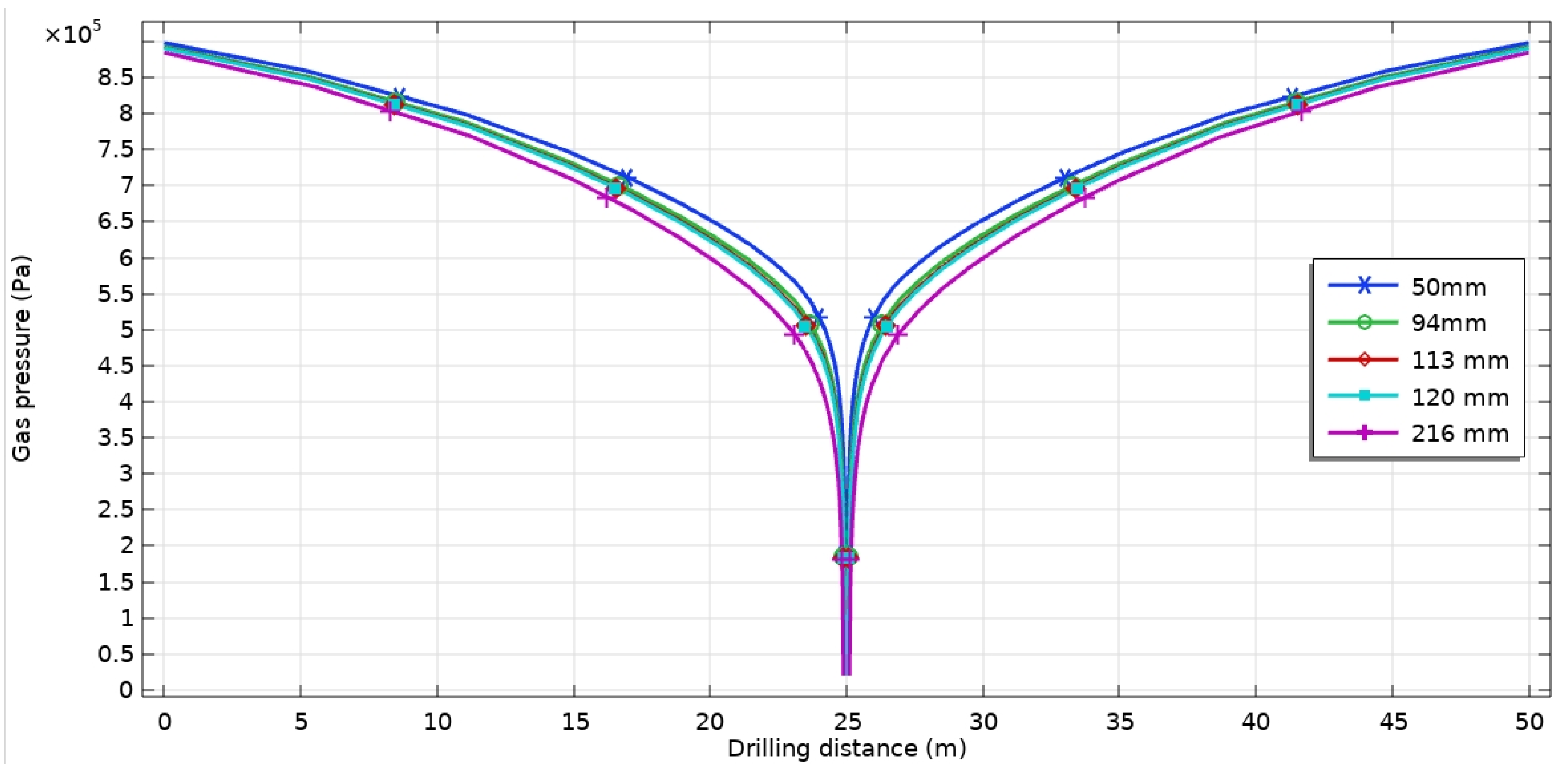
The gas pressures along the monitoring line under the five drilling diameter conditions are shown in
Figure 11. With increasing drilling diameter, the extent of the low-pressure zone increased slightly, suggesting that larger drilling can improve the pressure reduction effect within the surrounding coal seam.
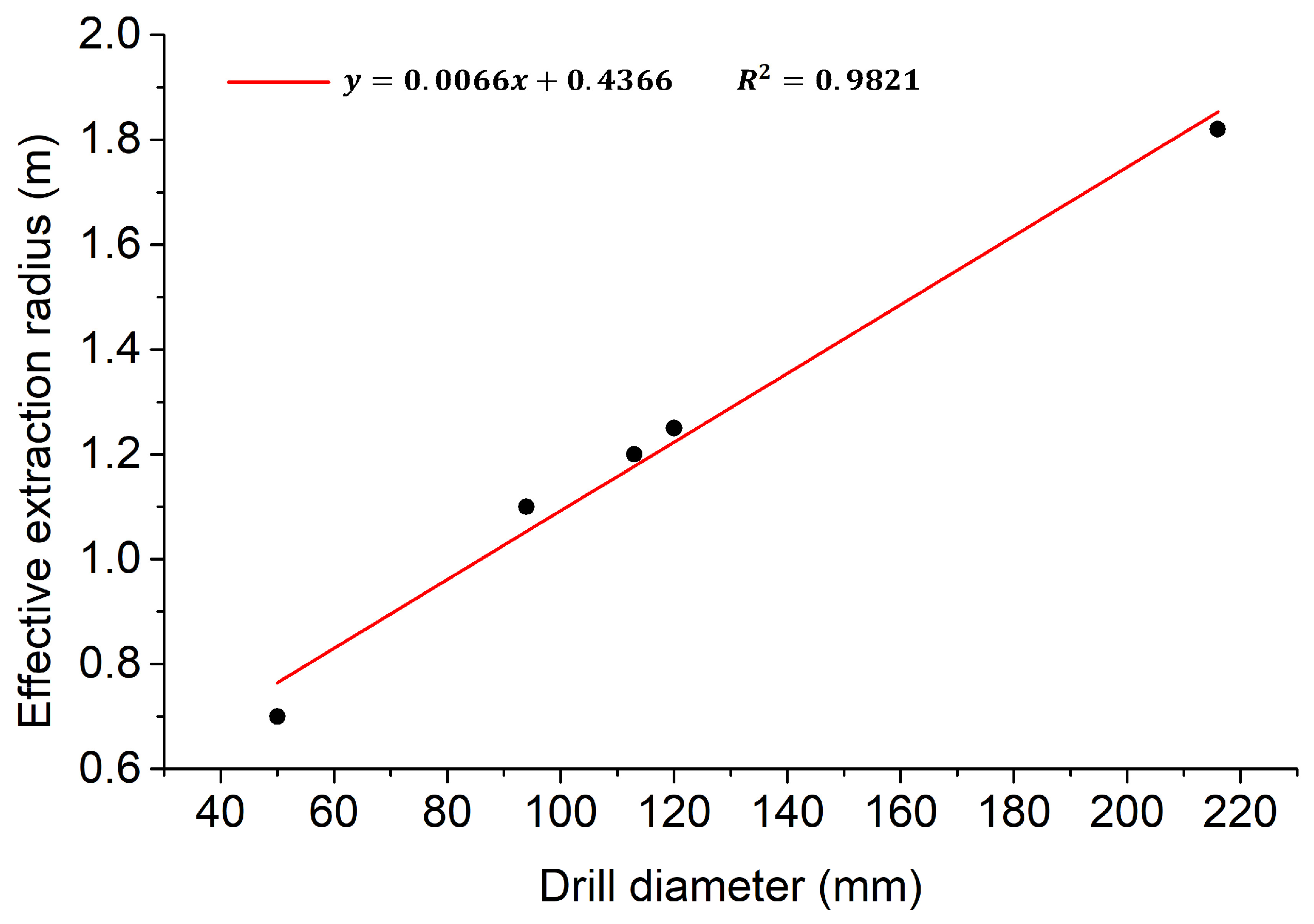
The effective extraction radius corresponding to the five drilling diameter conditions is presented in
Figure 12. The linear regression relationship between drilling diameter and effective extraction radius is described by Equation (5).
The fitting correlation coefficient R2 is 0.9821, indicating an excellent linear correlation. Increasing the drilling diameter resulted in only a marginal decrease in the effective gas extraction radius, suggesting that a larger drilling diameter has a positive effect on gas extraction efficiency.
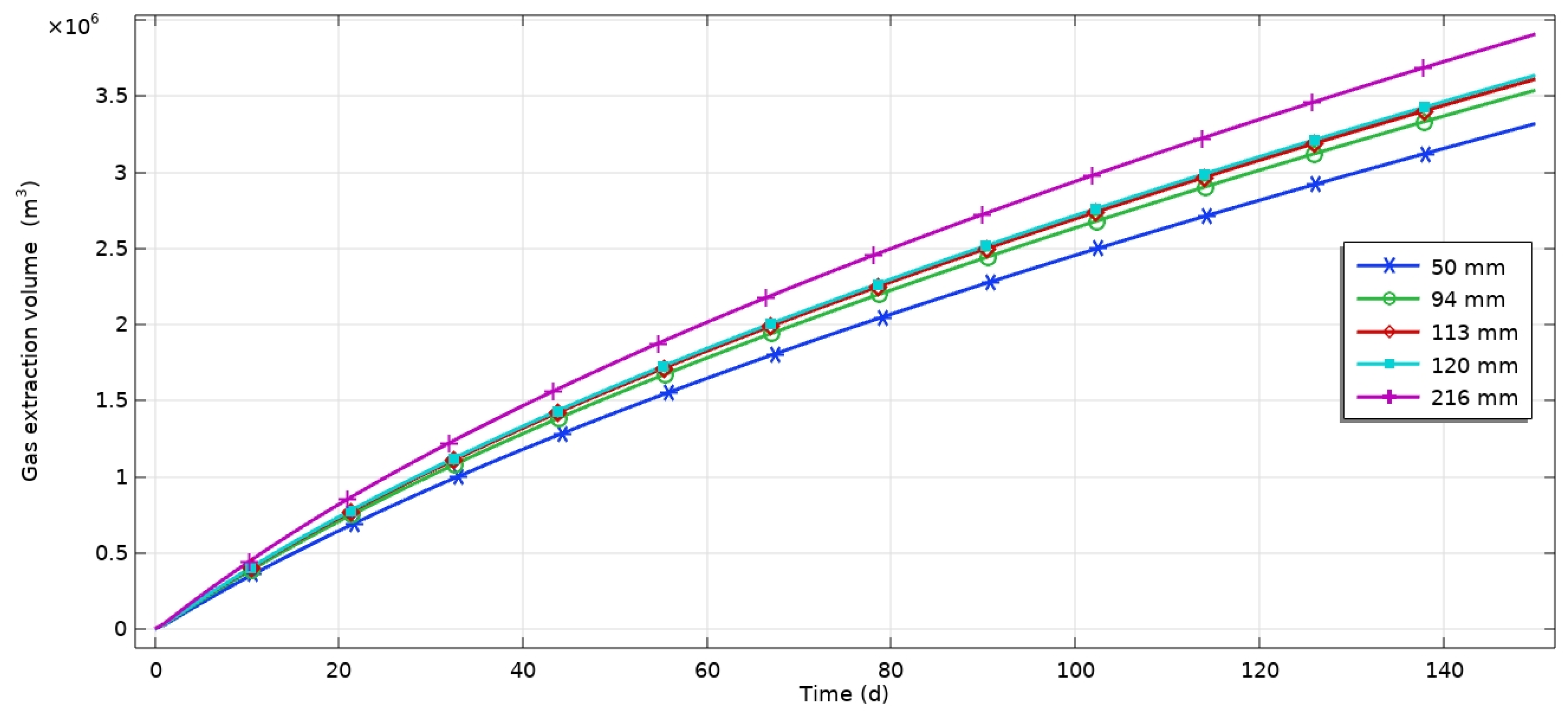
The cumulative gas extraction volumes under the five drilling diameter conditions are shown in
Figure 13. As the drilling diameter increased, the cumulative gas extraction volume exhibited a slight upward trend, which is consistent with the observed expansion of the drilling influence zone.
Overall, as the drilling diameter increases, there is a slight enhancement in the effective extraction radius, with a corresponding minor expansion in the influence zone and a modest increase in gas extraction volume. However, due to practical field limitations, the drilling diameter is constrained. Despite these limitations, increasing the drilling diameter on site can enhance the gas extraction volume and extraction time.
3.4. Gas Extraction Characteristics Under Different Drilling Lengths
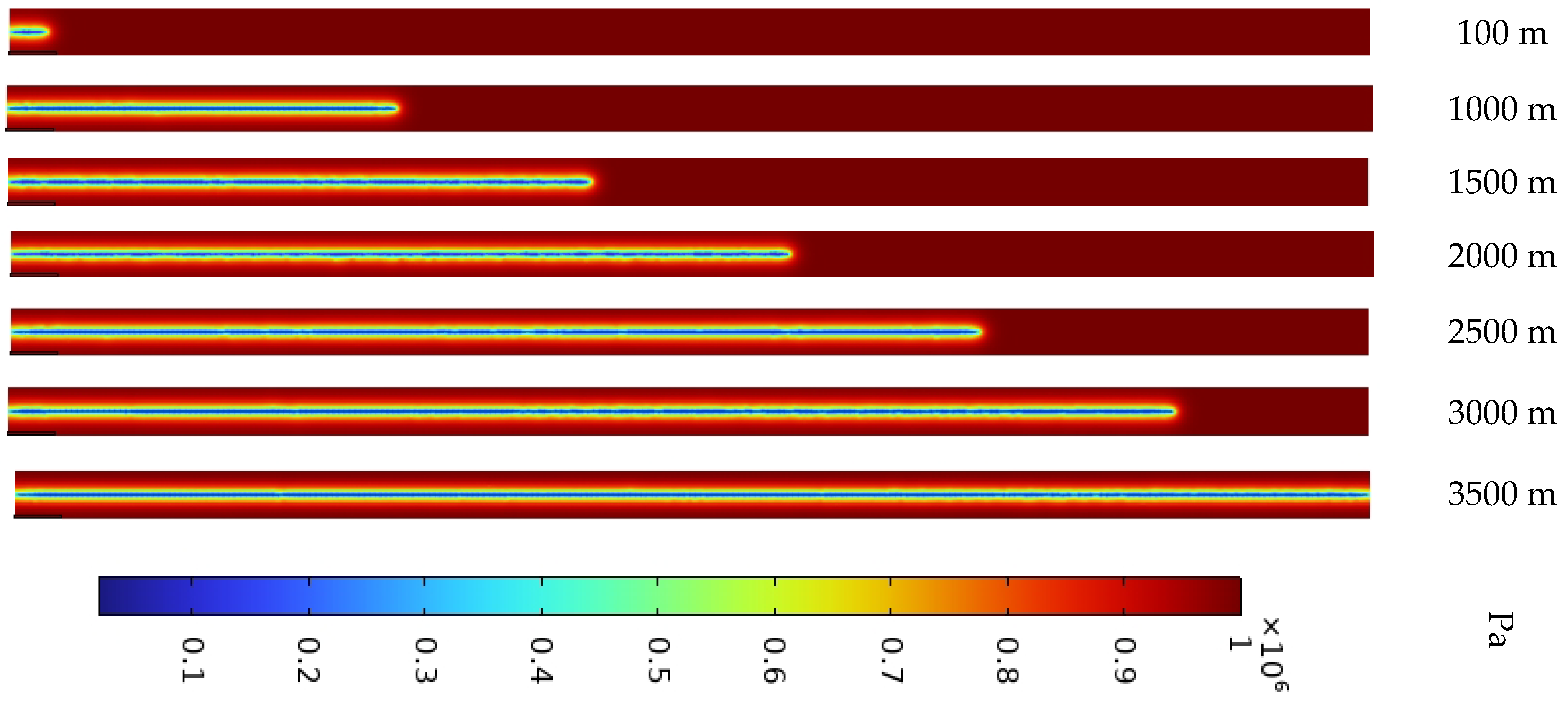
The gas pressure distributions on the longitudinal section of the model under seven drilling length conditions are presented in
Figure 14. As the drilling length increased, the affected region expanded primarily along the axial drilling direction.
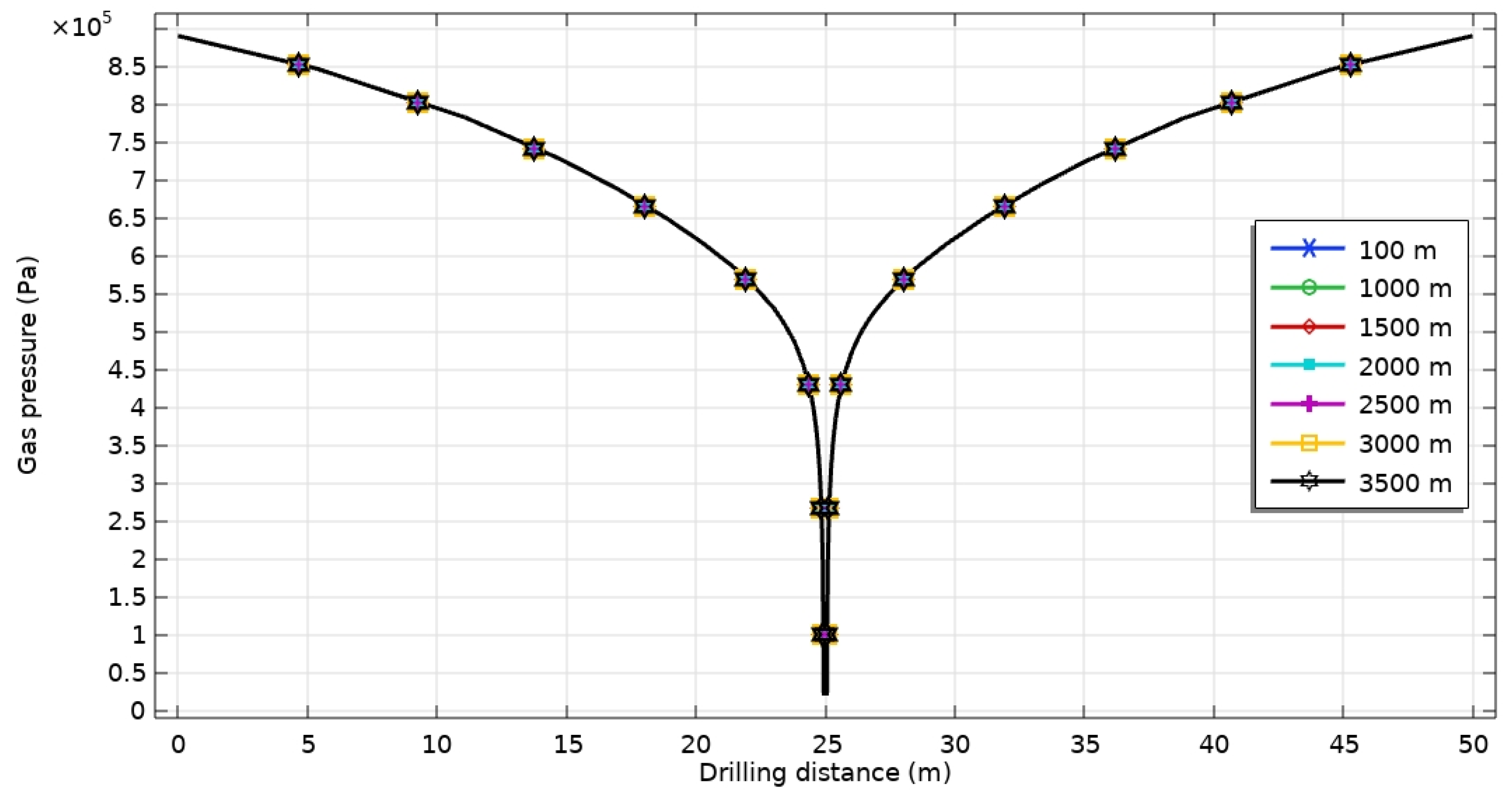
The gas pressure distributions along the monitoring line under the seven drilling length conditions are shown in
Figure 15. With increasing drilling length, the influence range of the drilling remained nearly unchanged.
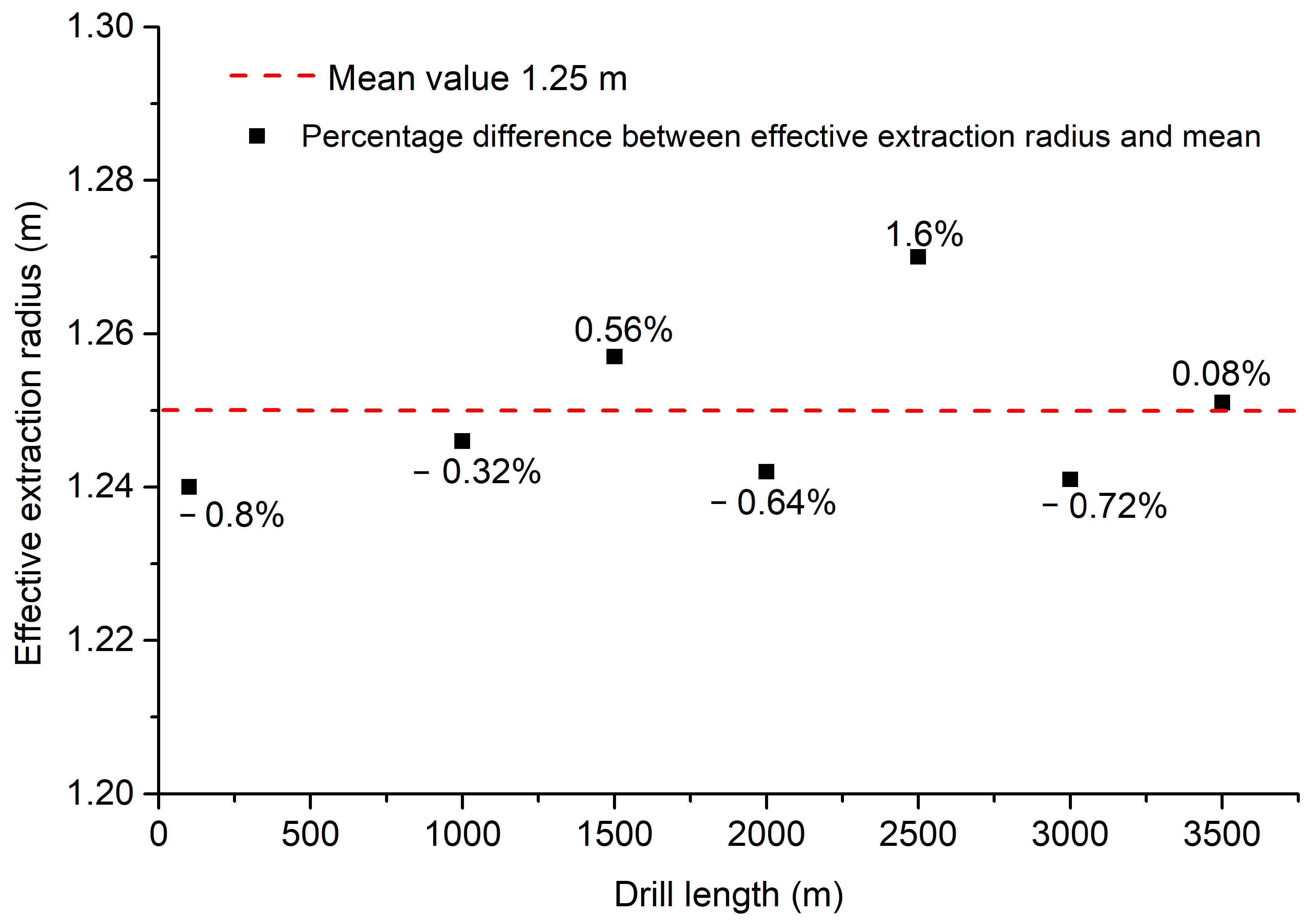
The effective extraction radius corresponding to the seven drilling length conditions is presented in
Figure 16. As the drilling length increased, the effective extraction radius remained essentially unchanged, with an average value of approximately 1.25 m.
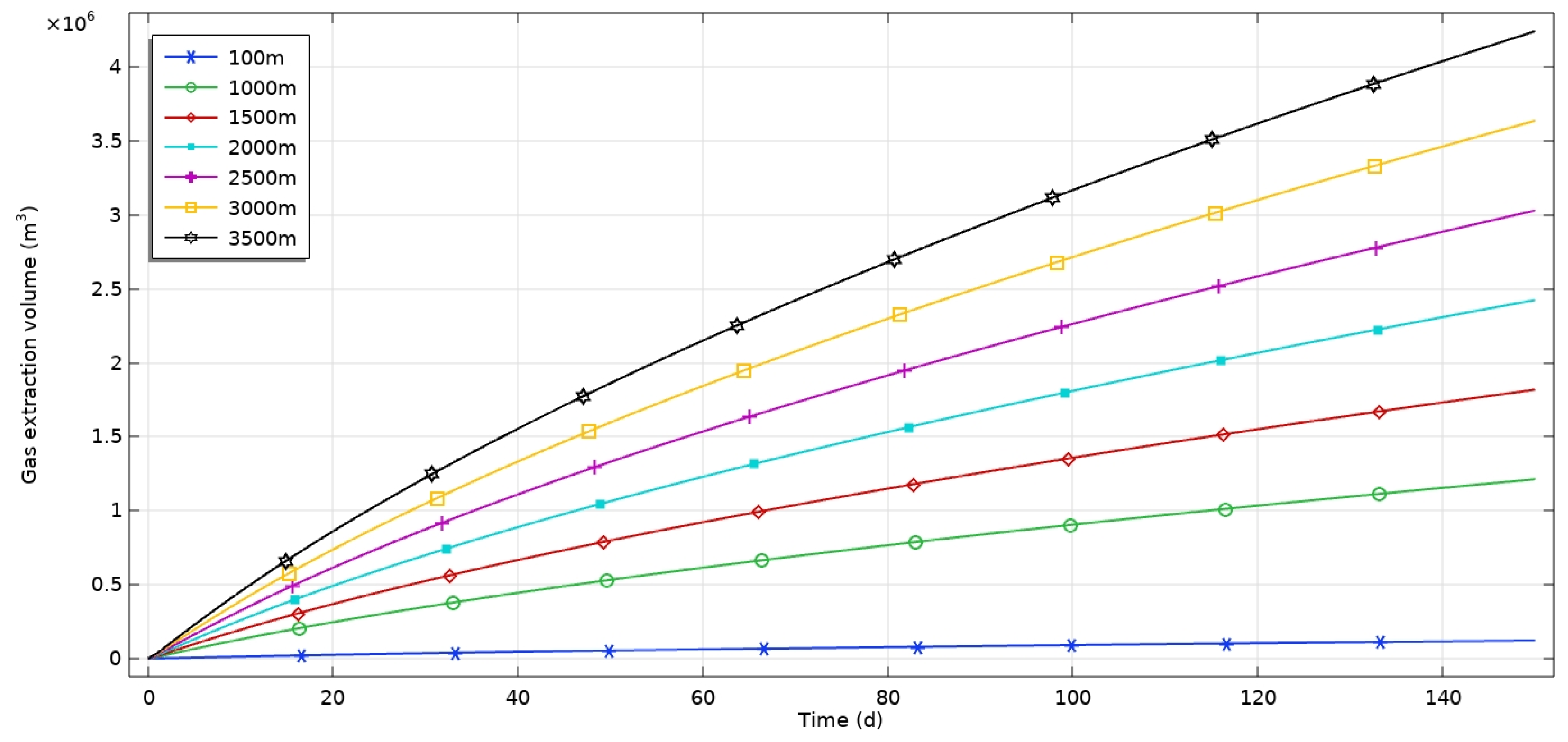
The cumulative gas extraction volumes under the seven drilling length conditions are shown in
Figure 17. As the drilling length increased, the cumulative gas extraction volume increased significantly. For shorter drilling lengths, the cumulative extraction volume gradually stabilized after 150 d of extraction, indicating that the daily gas extraction rate had approached zero. In contrast, for longer drilling lengths, the cumulative extraction volume continued to increase noticeably after 150 d, suggesting that the daily gas extraction rate remained relatively high and that further extraction could still be effectively sustained.
Overall, increasing the drilling length had little influence on either the effective extraction radius or the drilling influence range; however, it substantially increased the cumulative gas extraction volume. Under the assumptions adopted in the numerical simulation, extending the drilling length can effectively enhance both gas production and the duration of efficient gas extraction.
3.5. Gas Extraction Characteristics Under Different Initial Porosities of Coal Seam
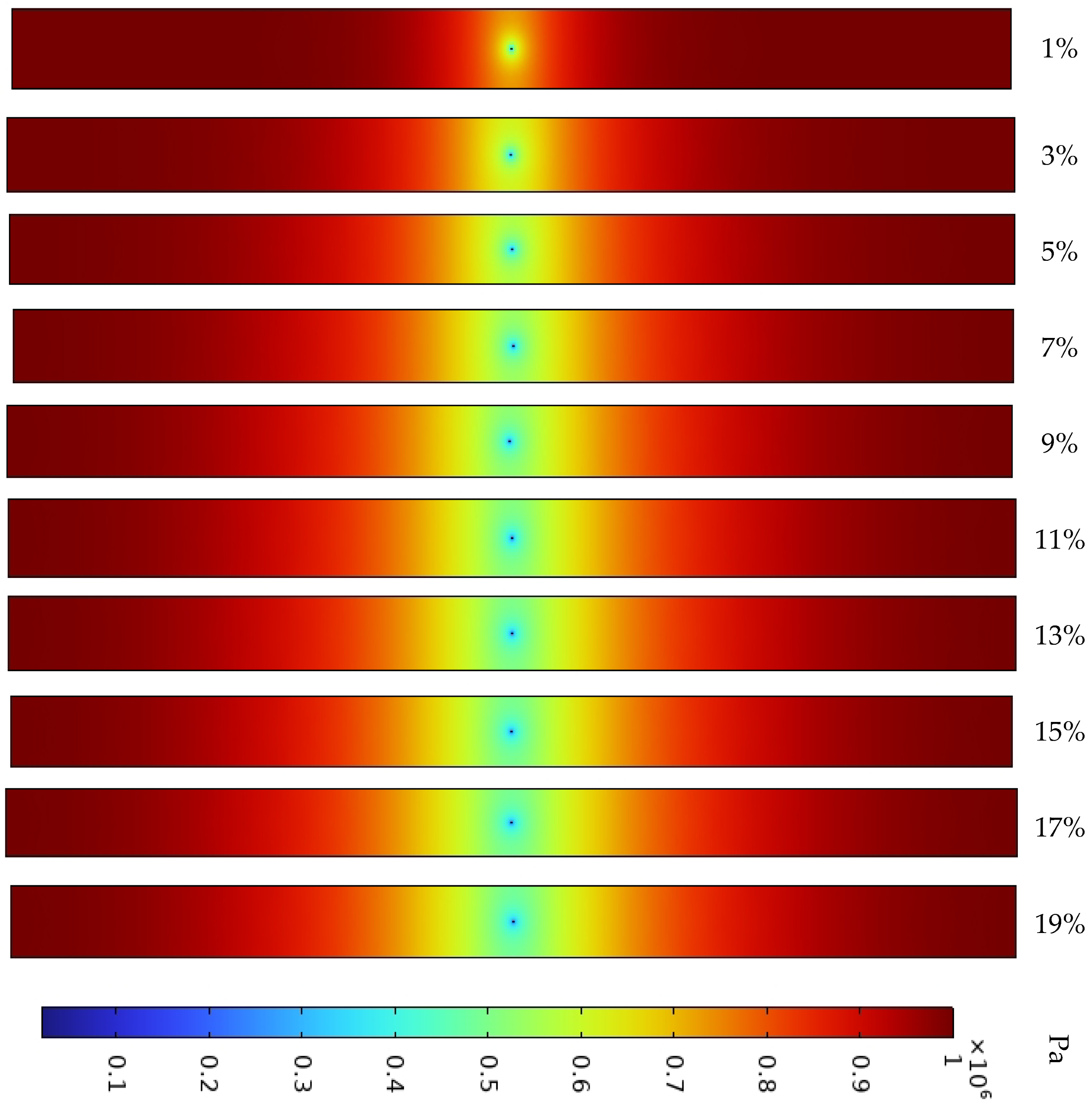
The gas pressure distributions on the cross-section of the model under ten initial coal seam porosity conditions are presented in
Figure 18. As the initial porosity of the coal seam increased, the influence range of the extraction drilling expanded correspondingly.
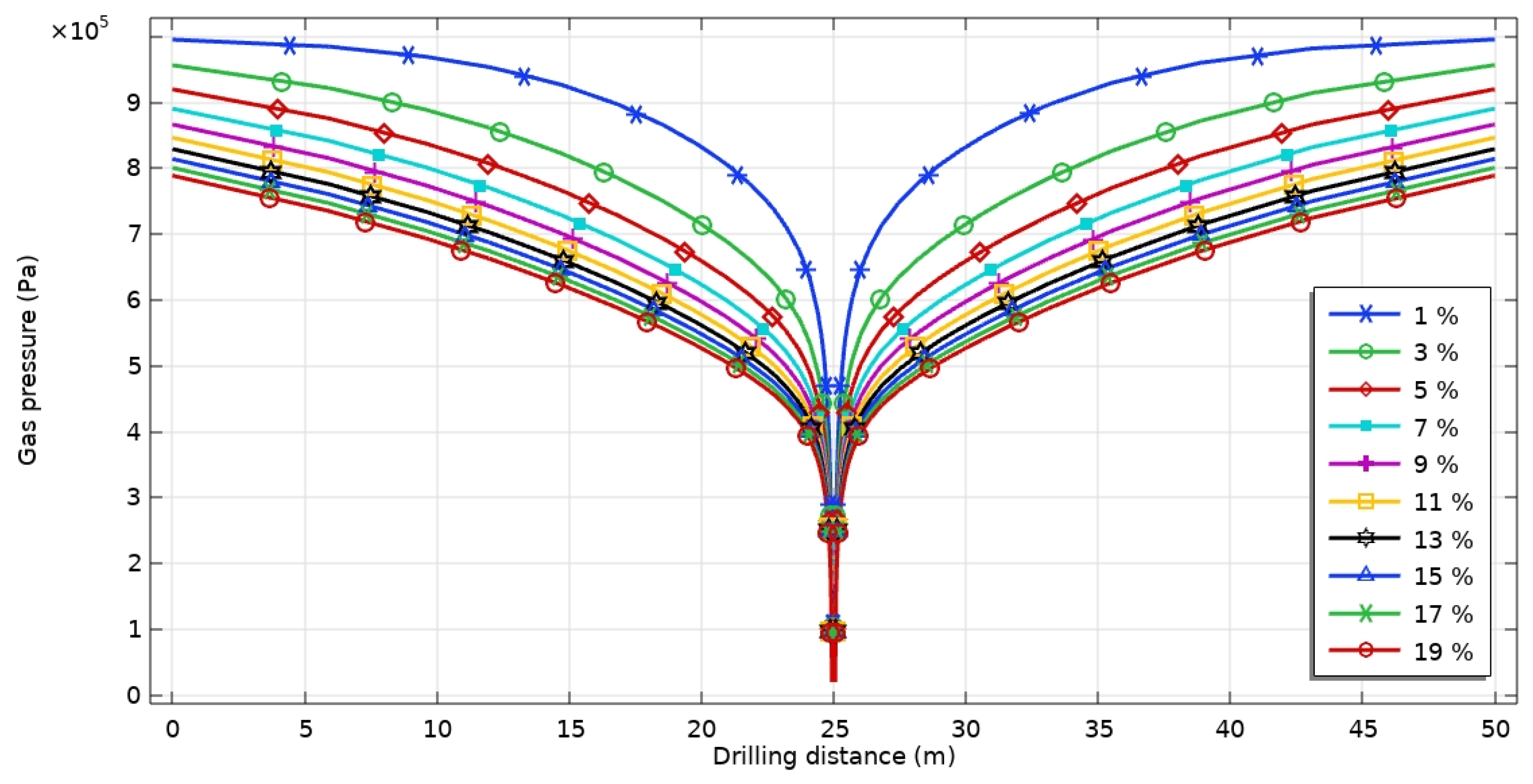
The gas pressure distributions along the monitoring line under the ten initial coal seam porosity conditions are shown in
Figure 19. With increasing initial porosity of the coal seam, the low-pressure gas zone gradually expanded; however, the rate of expansion decreased. This indicates that increases in porosity have a more pronounced effect on the drilling influence range when the initial porosity is relatively low, whereas this effect gradually diminishes at higher porosity levels.
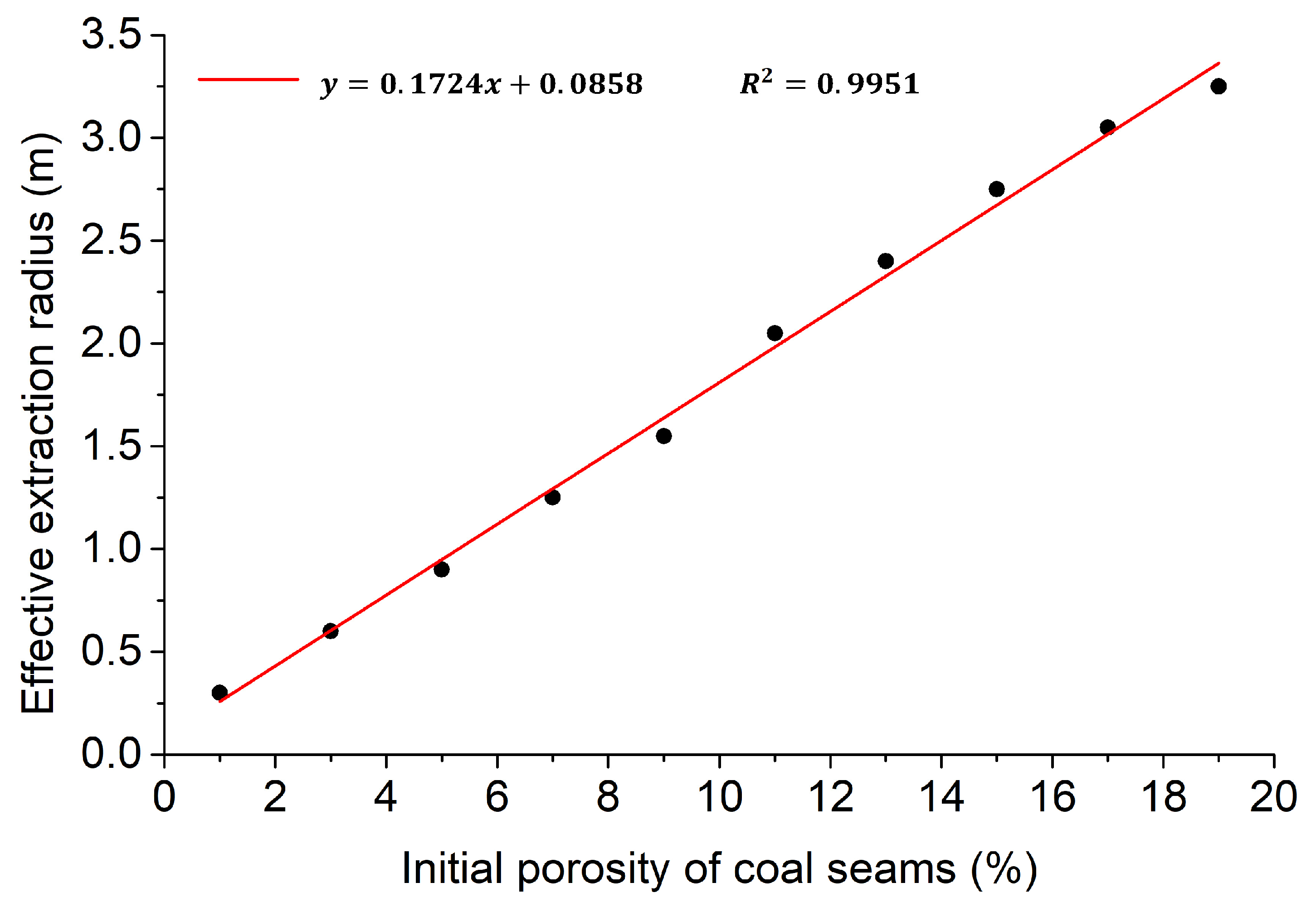
The effective extraction radii under the ten initial coal seam porosity conditions are presented in
Figure 20. The linear regression relationship between the initial porosity of coal seam and the effective extraction radius is described by Equation (6).
The fitting correlation coefficient R2 is 0.9951, indicating an excellent fit and a strong positive correlation. As the initial porosity of the coal seam increased, the effective extraction radius increased approximately linearly. This trend differs from that observed for the drilling influence range, whose growth rate gradually decreased with increasing porosity.
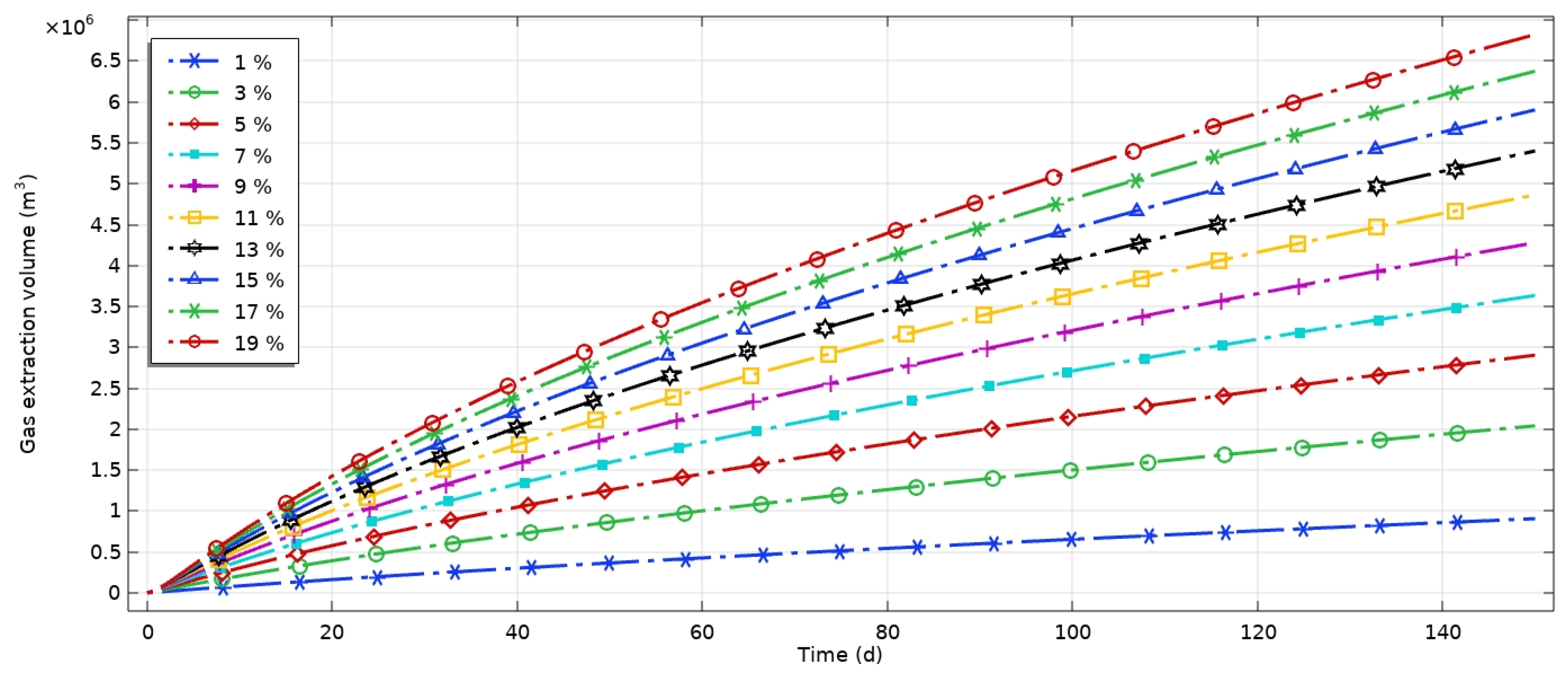
The cumulative gas extraction volumes under the ten initial porosity conditions are shown in
Figure 21. As the initial porosity increased, the cumulative gas extraction volume also increased; however, the incremental increase gradually diminished, which is consistent with the trend observed for the drilling influence range. For coal seams with relatively low initial porosity, the cumulative extraction volume approached a stable value after 150 d of extraction, indicating that the daily gas extraction rate had nearly declined to zero. In contrast, for coal seams with higher initial porosity, the cumulative extraction volume continued to increase after 150 d, suggesting that the daily gas extraction rate remained relatively high and that further extraction could still be effectively maintained.
Overall, increasing the initial porosity of the coal seam resulted in a nearly linear increase in the effective extraction radius, while the growth rates of both the drilling influence range and the cumulative gas extraction volume gradually decreased. Because the natural porosity of coal seams is generally low and the enhancement of permeability through drilling enlargement is often limited in field applications, increasing the initial porosity can effectively improve gas extraction performance by enhancing both the total gas production and the duration of effective extraction.
4. Discussion
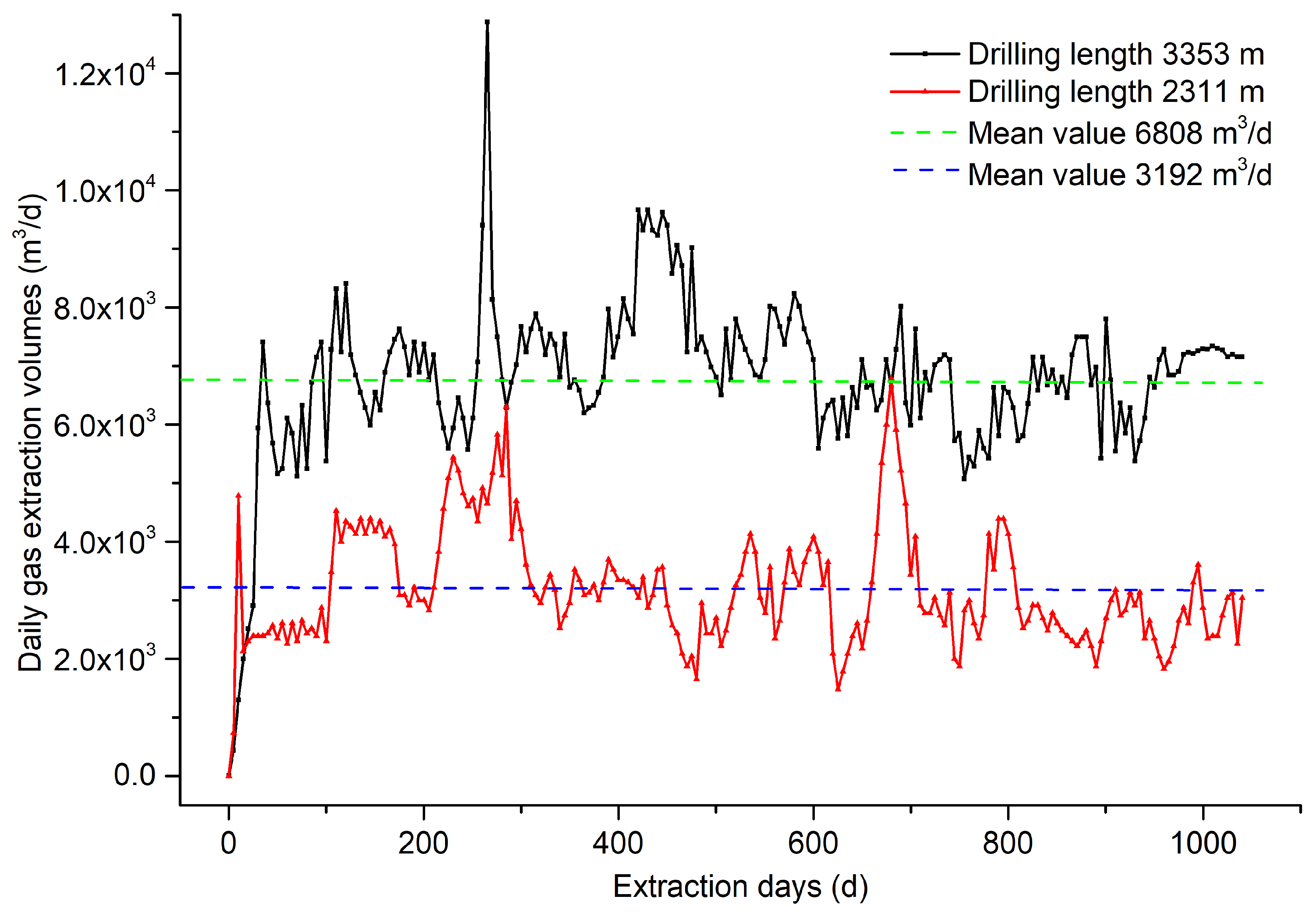
The initial porosity of the coal seam at the mine site was 7%. The diameters of the boreholes drilled through underground in-seam ultra-long directional drilling were 120 mm, and the extraction negative pressure ranged from 13 to 25 kPa. The drilling lengths were 2311 m and 3353 m, respectively. Stable gas extraction was maintained for 1040 d, resulting in cumulative pure gas production volumes of 3.32 × 10
6 m
3 and 7.06 × 10
6 m
3, respectively. The corresponding average daily gas production volumes were 3192 m
3/d and 6808 m
3/d. The daily gas extraction volumes are presented in
Figure 22.
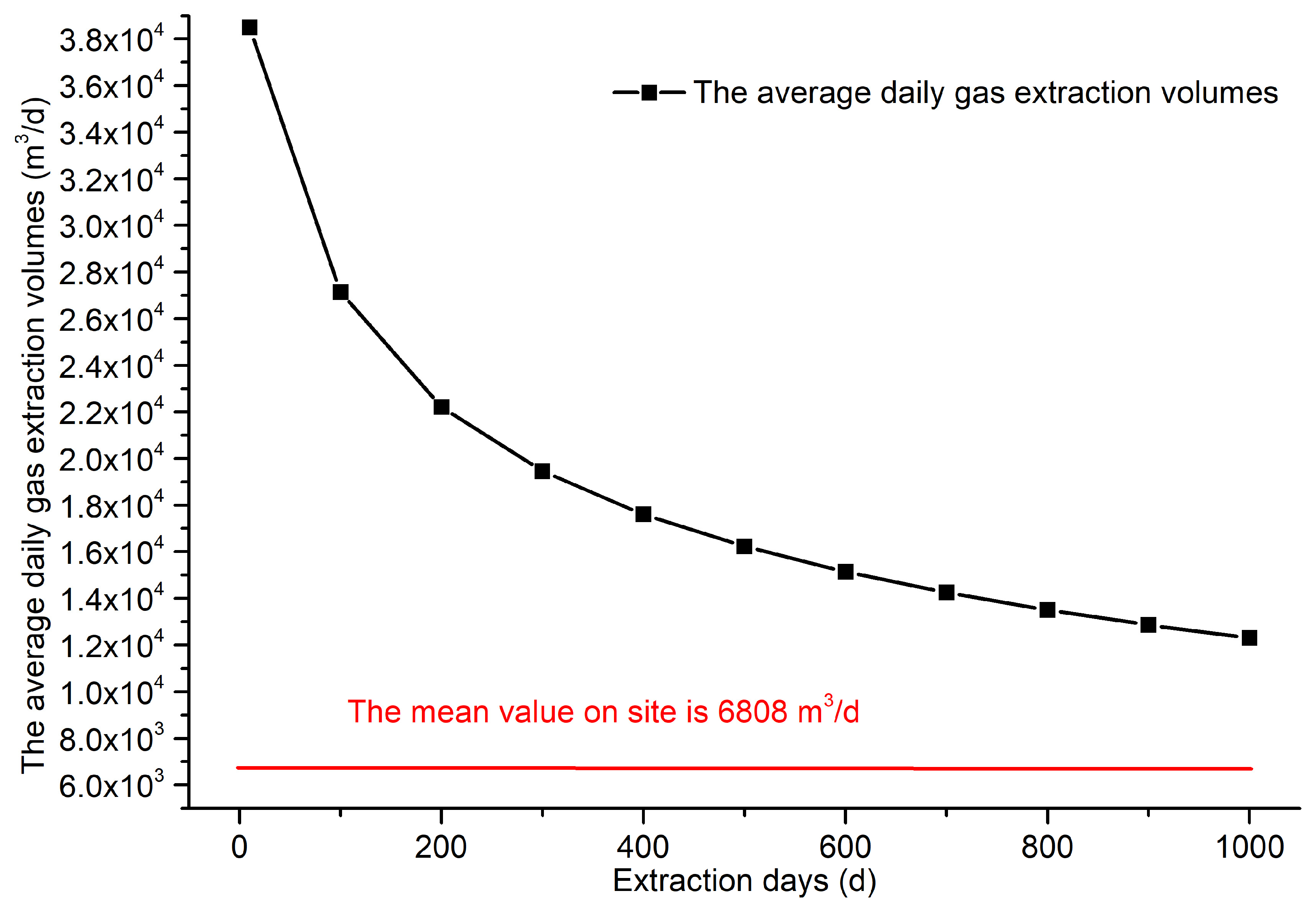
The numerical simulation results exhibit reasonable agreement with field-scale extraction practices involving ultra-long directional drilling. The simulated drilling length is 3000 m. The convergence profile of the average daily gas extraction volume over the extraction time is shown in
Figure 23. The results indicate that the average daily gas extraction volume gradually converges with increasing extraction time. At 1000 days of production, the average daily gas extraction volume reaches 12,297 m
3/d.
Compared with the simulation results, the field-measured production volumes were significantly lower. This discrepancy may be attributed to factors such as coal seam heterogeneity, variations in geological structures, drilling trajectory deviations, sealing quality, pipeline resistance, moisture conditions, and localized drilling collapse. The numerical model assumes the coal seam to be a continuous, homogeneous, and isotropic medium. Under these assumptions, the model effectively reveals the relative influence of different parameters on gas extraction behavior; however, it cannot fully capture the complex heterogeneous seepage characteristics encountered under actual geological conditions. Therefore, the simulation results are more suitable for sensitivity analysis of extraction parameters and optimization of engineering schemes, whereas field applications should incorporate dynamic corrections based on measured gas pressure, extraction concentration, gas production rate, and drilling inspection data.
The simulation results indicate that coal seam gas extraction is jointly controlled by the pore–fracture structure of the coal mass, gas desorption and seepage capacity, extraction duration, and drilling spatial configuration. Based on the influence of different factors on the effective extraction radius, the linear fitting slopes between effective extraction radius and extraction time, extraction negative pressure, drilling diameter, drilling length, and initial porosity of the coal seam were 0.0117, 0.0015, 0.0066, 0, and 0.1724, respectively. These results demonstrate that the initial porosity of the coal seam exerts the most significant influence on the effective extraction radius, followed by extraction time. The effects of drilling diameter and extraction negative pressure are comparatively weak, while drilling length has virtually no influence on the effective extraction radius. This finding suggests that the development degree of seepage pathways within the coal seam is the dominant factor governing the extraction range. Higher porosity enhances pore and fracture connectivity, reduces gas flow resistance, and facilitates the propagation of pressure disturbances over greater distances, thereby substantially increasing the effective extraction radius.
Extending the extraction time significantly increases cumulative gas production; however, the extraction efficiency per unit time continuously declines. This phenomenon is primarily associated with the gradual reduction in the pressure gradient, weakening of the gas desorption driving force, and progressive depletion of recoverable free gas in the vicinity of the drilling. During the initial extraction stage, a substantial pressure differential exists between the coal surrounding the drilling and the applied negative pressure, resulting in rapid gas seepage and pronounced expansion of the low-pressure zone. As extraction continues, pressure propagation gradually extends into the far-field coal mass, leading to a reduction in the gas pressure gradient and a corresponding decline in the growth rate of gas production. Therefore, the pre-extraction period should be determined based on engineering requirements and economic considerations.
Extraction negative pressure and drilling diameter primarily affect local flow conditions near the drilling boundary. Their influence is difficult to transmit over long distances in low-permeability coal seams, resulting in limited enhancement of the overall effective extraction radius. The simulation results further indicate that increasing the negative pressure from 20 kPa to 100 kPa slightly reduced both the effective extraction radius and cumulative gas production. This finding suggests that higher negative pressure does not necessarily improve extraction performance under given permeability conditions. One possible explanation is that high negative pressure mainly intensifies pressure reduction in the near-drilling region, while pressure transmission into the far-field coal mass remains constrained by low permeability. Moreover, excessive pressure gradients may exacerbate stress redistribution and pore compression around the drilling hole, thereby reducing the stability of seepage pathways. Therefore, field gas extraction operations should avoid pursuing excessively high negative pressures and instead determine an appropriate pressure range based on coal seam permeability, sealing quality, pipeline resistance, and extraction system stability.
Increasing the drilling diameter can moderately expand the drilling influence zone and enhance gas production; however, the magnitude of this effect is limited. The fitted slope between drilling diameter and effective extraction radius was only 0.0066, indicating that enlarging the drilling diameter contributes far less to extraction radius enhancement than improving coal seam porosity or extending extraction duration. A larger drilling diameter increases the exposed surface area and pressure-relief zone around the drilling hole, thereby reducing local flow resistance. Nevertheless, because the overall permeability of the coal seam remains the primary factor controlling gas migration, the influence of drilling enlargement on pressure propagation into the far-field coal mass remains limited. Considering practical constraints such as drilling equipment capacity, drilling stability, collapse risk, and construction costs, drilling diameter should be increased only moderately while ensuring drilling quality and effective sealing, rather than being regarded as a primary means of improving extraction performance.
Drilling length primarily affects cumulative gas production but has little influence on the effective extraction radius. The simulation results show that increasing drilling length expands the controlled coal volume along the drilling axis and significantly increases cumulative gas production. However, within the same cross-section, the pressure disturbance zone and effective extraction radius remain nearly unchanged. This observation indicates that extending drilling length increases the spatial coverage of extraction rather than enhancing radial extraction capacity within a given cross-section. For boreholes drilled through ultra-long in-seam directional drilling, longer drilling lengths can improve the controlled resource volume and prolong the stable extraction period. However, under low-permeability conditions, increasing drilling length alone cannot substantially improve the radial influence range. Therefore, ultra-long drilling should be combined with permeability-enhancement technologies such as hydraulic fracturing, hydraulic slotting, CO2/N2 displacement, or other stimulation methods to improve gas migration from the far-field coal mass toward the drilling hole.
The initial coal seam porosity exerts the strongest control on extraction performance. As porosity increased from 1% to 19%, the low-pressure zone expanded significantly, the effective extraction radius exhibited a strong linear increase, and cumulative gas production increased substantially, although the growth rate gradually decreased. These results indicate that improving the development of pores and fractures can significantly enhance gas extraction performance; however, for coal seams characterized by low porosity and low permeability, permeability-enhancement measures should be prioritized over simply increasing extraction negative pressure or drilling diameter. Such measures fundamentally improve gas seepage conditions and represent the most effective approach for enlarging the effective extraction radius, increasing extraction efficiency, and shortening the pre-extraction period required to achieve target gas-control standards.
Overall, improving coal seam gas extraction performance primarily depends on enhancing coal permeability and maintaining an appropriate extraction duration. Initial coal seam porosity is the dominant factor controlling the effective extraction radius, while extraction duration governs the continuous expansion of the pressure disturbance zone. Drilling length mainly determines the gas resource volume controlled by a single drilling operation, whereas extraction negative pressure and drilling diameter contribute relatively little to extraction enhancement. For low-permeability coal seams similar to those investigated in this study, engineering practice should prioritize a coordinated technical strategy consisting of ultra-long drilling coverage, permeability enhancement, optimized negative pressure, and sustained extraction. Specifically, ultra-long directional drilling should be employed to expand the extraction coverage area, permeability enhancement measures should be used to improve pore–fracture connectivity, appropriate negative pressure should be maintained to ensure stable extraction, and economically optimal extraction time should be determined according to production decline characteristics. The findings of this study provide a theoretical basis and technical support for drilling parameter optimization, effective extraction radius determination, pre-extraction evaluation, and gas control engineering design in low-permeability coal seams.
5. Conclusions
Based on the multi-field coupling mechanisms of the coal seam, and in combination with the geological and engineering conditions of the mine, a Multiphysics numerical model for coal seam gas extraction was established in this study. The model systematically revealed the influences of key parameters, including extraction time, extraction negative pressure, drilling diameter, drilling length, and initial porosity of the coal seam, on gas pressure evolution, effective extraction radius, and cumulative gas production. The main conclusions are summarized as follows:
(1) Coal seam gas extraction is essentially a continuous reconstruction process of the internal gas pressure field in the coal mass under the disturbance induced by drilling negative pressure. With increasing extraction time, the low-pressure zone surrounding the drilling hole gradually propagates deeper into the coal seam. During this process, adsorbed gas continuously desorbs into the free state and migrates toward the drilling hole through the pore–fracture network.
(2) The initial porosity of the coal seam is the dominant factor controlling gas production and the effective extraction radius, and its influence is significantly greater than that of extraction time, drilling diameter, extraction negative pressure, and drilling length. Extraction time mainly governs the expansion process of the pressure disturbance zone, while gas extraction exhibits a pronounced diminishing marginal benefit over time. Extraction negative pressure and drilling diameter primarily improve local flow conditions near the drilling hole and therefore provide relatively limited enhancement to the overall extraction performance. Drilling length determines the controlled resource volume and sustained extraction capacity of a single drilling operation but has limited influence on the radial extent of extraction. The intrinsic seepage capacity of the coal seam is the fundamental factor determining gas extraction efficiency. For low-permeability coal seams, permeability-enhancement measures such as hydraulic fracturing, hydraulic slotting, and pressure-relief permeability enhancement should be preferentially adopted to optimize the pore–fracture structure and improve coal seam permeability.
(3) The field extraction data show good overall agreement with the numerical simulation results, thereby validating the reliability of the model in characterizing gas extraction behavior and parameter influence mechanisms. Based on parameter sensitivity analysis and field engineering verification, a coordinated control mode characterized by long drilling coverage, enhanced permeability, reasonable negative pressure, and continuous extraction was proposed. The findings of this study provide a theoretical basis and technical support for drilling parameter optimization, effective extraction radius determination, extraction evaluation, and gas control engineering design in low-permeability coal seams.