1. Introduction
Thermal–gas–chemical treatment (TGCT) of the near-wellbore zone is considered a promising well stimulation method because it combines several mechanisms, including localized heating, gas generation, pressure increase within the pore space, removal of plugging deposits, and improvement of reservoir filtration properties.
The physicochemical basis of this approach is the reaction of aluminum with water, accompanied by the release of hydrogen and heat. Recent reviews indicate that Al-H
2O systems are considered one of the possible routes for hydrogen and thermal energy generation; however, their efficiency depends on the composition of the aluminum material, the conditions of contact with water, and the method of surface activation [
1,
2,
3].
The main limitation of pure aluminum is the formation of a dense oxide film, which suppresses hydrolysis. Therefore, studies [
4,
5] have focused primarily on activated aluminum alloys containing Ga, In, Sn, and other low-melting components that disrupt passivation and ensure a sustained reaction. Additional data on the relationship between the microstructure of activated aluminum and hydrogen yield are presented in [
6], while the alloy composition for hydrogen generation is protected by a patent [
7].
A similar concept of in situ activation has been discussed in catalytic in situ combustion studies, where oil-soluble metal precursors decompose under thermal conditions and form active oxide phases that influence subsequent oxidation behavior. These studies indicate that the active phase generated in situ may be more important than the initial form of the reagent. This concept is relevant to activated aluminum alloys, in which disruption of the passive Al
2O
3 film and interaction with Ga–In–Sn eutectic phases enable hydrogen and heat generation in contact with the aqueous phase [
8,
9].
For petroleum engineering applications, activated aluminum alloys are of interest because they can serve not only as a gas-generating agent but also as a localized heat source directly within the filtration zone. In [
10], such alloys are considered an alternative to conventional technological solutions for improving well productivity, and the potential use of energy-accumulating substances in the oil industry is also discussed.
Engineering calculations of TGCT parameters are of particular importance. In [
11], thermal–gas–chemical treatment is considered through calculations of temperature increase, heating radius, and other parameters that determine the scale of the effect on the near-wellbore zone. Such calculations are important for transferring the process from laboratory-scale reactions to field-scale technology.
The practical significance of TGCT is also associated with the removal of asphaltene–resin–paraffin deposits. It has been shown that the exothermic reaction of an activated aluminum alloy with water can generate a hot gas–steam–hydrogen mixture capable of breaking down such deposits and improving the permeability of the treated zone [
12]. Thermochemical heat-generation processes under simulated wellbore conditions with similar mechanisms are discussed in [
13].
For heavy and high-viscosity oil reservoirs, technologies involving in situ heat and steam generation are of particular interest. The application of thermochemical systems for in situ steam generation has been demonstrated in [
14,
15], while issues related to well-placement optimization and feasibility assessment of such processes have been addressed in [
16,
17].
Reservoir stimulation efficiency is also controlled by geological conditions, fluid properties, near-wellbore flow behavior, and operational stability. Recent studies on hydraulic-fracturing-fluid filtration, particle sedimentation in CO
2 fracturing fluids, and wellhead stability during reservoir development show that stimulation performance depends on the interaction between injected fluids, reservoir properties, and wellbore conditions [
18,
19,
20]. Therefore, TGCT should also be considered as a coupled near-wellbore stimulation process involving oil-viscosity reduction, gas generation, chemical activation, and improvement of local flow conditions.
Related research areas also confirm the relevance of localized thermal and chemical treatment for heavy oils. Downhole catalytic upgrading of heavy oil with improved fractional composition and viscosity reduction is discussed in [
21], the effect of temperature and asphaltene content on the properties of oil systems is examined in [
22], and the possibility of in situ hydrogen generation during cyclic steam–air injection is considered in [
23].
The application of thermochemical fluids requires evaluation not only of production enhancement but also of reservoir rock integrity. In [
24], formation integrity after flooding hydrocarbon reservoirs with thermochemical and chelating agent solutions is evaluated, whereas in [
25], thermochemical fluids are investigated using an integrated approach that combines geochemical, petrophysical, and core flooding methods.
Under complicated operating conditions, thermochemical reagents can also be used to remove liquid and solid deposits in the near-wellbore zone. Thermochemical treatment with gradual in situ heat and pressure generation for condensate banking removal is considered in [
26], whereas the removal of asphaltene–resin–paraffin deposits using ultrasonic cavitation combined with a thermochemical heat source is discussed in [
27].
Thus, published studies confirm the physicochemical feasibility of TGCT and its potential effectiveness for near-wellbore treatment. The objective of this study is to evaluate the effectiveness of thermal–gas–chemical treatment using activated aluminum alloys for high-viscosity oil at the Karazhanbas field, based on laboratory core flooding experiments and reservoir-scale scenario analysis of production well response to local near-wellbore improvement.
2. Materials and Methods
2.1. Study Object: Karazhanbas Field
The Karazhanbas field was selected as the study object because it is characterized by high-viscosity oil reserves and complex development conditions. The field was discovered in 1974 and is located on the Buzachi Peninsula in Kazakhstan. Commercial development began in 1980 [
28,
29].
The oils of the Karazhanbas field are classified as heavy and resin-rich. The reservoir oil density is 0.935–0.945 g/cm
3, the oil viscosity at 30 °C is 460–550 mPa·s, the resin and asphaltene content reaches 24%, and the sulfur content is up to 2.0%. Reservoir conditions are characterized by a temperature of 26–36 °C, an initial reservoir pressure of 3.6–4.8 MPa, and a bubble-point pressure of 1.5–4.2 MPa. These parameters indicate limited oil mobility and reduced efficiency of conventional displacement methods [
28,
29,
30]. The summarized physicochemical properties of the oil, reservoir fluids, and reservoir rocks of the Karazhanbas field are presented in
Table 1.
The formation waters of the Karazhanbas field are highly mineralized, with a total salinity of 40–48 g/L and a density of 1.031–1.035 g/cm
3. The reservoirs are mainly composed of terrigenous sandstones. The typical reservoir porosity and permeability used for general field characterization are 20–22% and 1000–1250 mD, respectively. At the same time, the literature data indicate that individual productive intervals of the Karazhanbas field may have higher reservoir properties, with porosity reaching 38–40% and permeability up to 6.0 μm
2 [
28]. These properties generally provide favorable filtration conditions; however, they do not fully compensate for the negative effect of high oil viscosity on well productivity.
Therefore, the Karazhanbas field is a representative object for evaluating thermal–gas–chemical treatment of the near-wellbore zone. It combines high oil viscosity, low reservoir temperature, and reservoir conditions under which the interaction of an activated aluminum alloy with reservoir fluid may result in localized heating, changes in oil properties, improved oil mobility, and reduced near-wellbore flow resistance, which together can affect well production performance.
To evaluate these effects, laboratory core flooding experiments and reservoir-scale scenario simulations were conducted. The laboratory experiments were used to determine changes in oil displacement efficiency during the interaction of the activated aluminum alloy with formation water, while reservoir simulations were applied to assess the possible production response of selected wells to local near-wellbore improvement.
2.2. Core Model and Experimental Setup
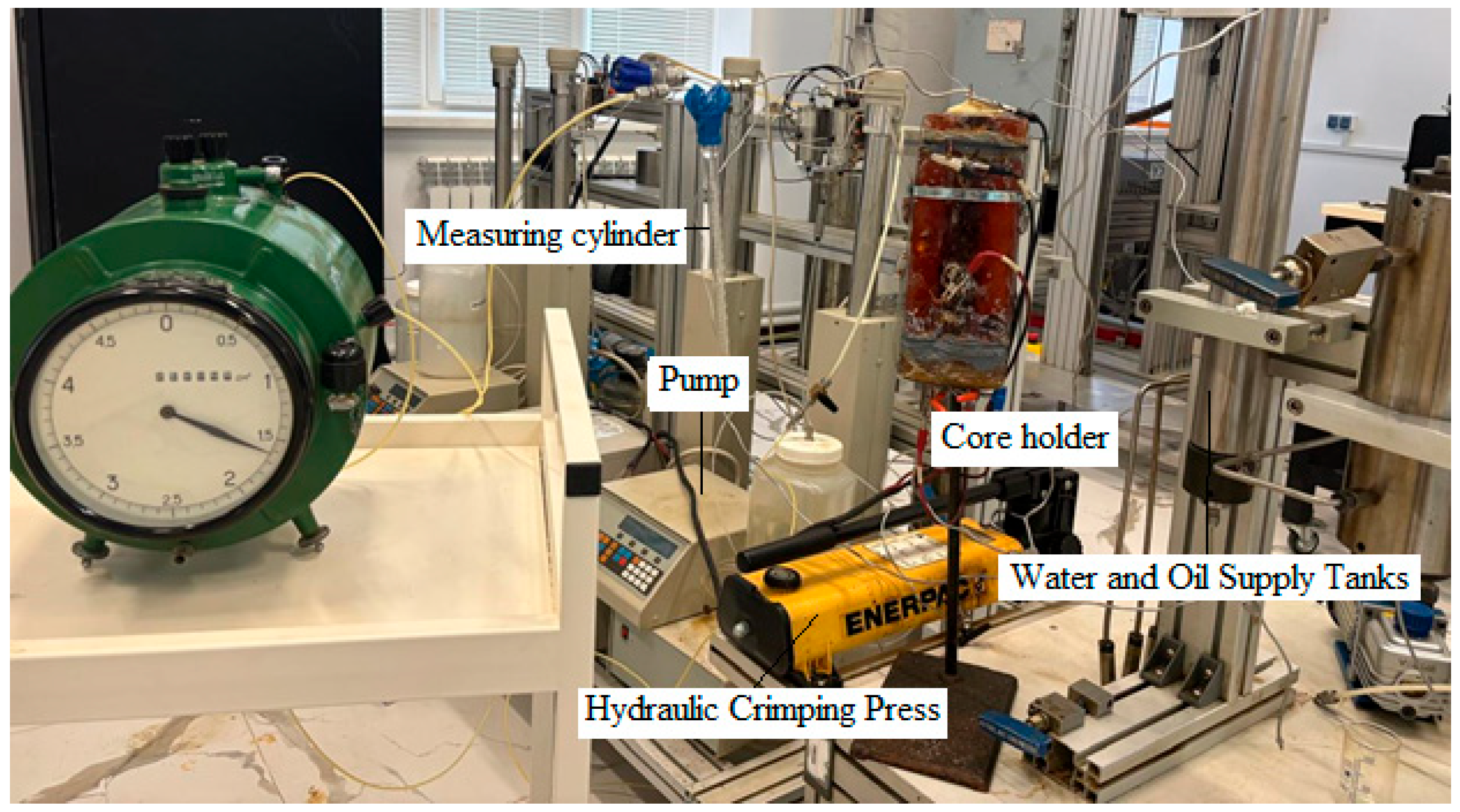
Core flooding experiments were conducted using an unconsolidated core model prepared from material taken from well No. 7415 of the Karazhanbas field at a depth interval of 288.5 m. The core flooding experiments were performed in a core holder with a length of 14 cm and a diameter of 4.6 cm (
Figure 1).
The porosity of the samples ranged from 37.7% to 40.7%, and the permeability was up to 4350 mD. The oil viscosity under experimental conditions reached 643 mPa·s, which corresponded to high-viscosity oils (
Table 2).
It should be noted that the unconsolidated core models used in this study differ from the average reservoir properties summarized in
Table 1. However, published data for the Karazhanbas field indicate that, due to the shallow depth of productive formations and weak intensity of secondary transformations, the productive reservoirs may exhibit high reservoir properties, with porosity varying from 20% to 38–40% and permeability ranging from 1.02 to 6.0 μm
2 [
28]. Since 1 μm
2 is approximately equivalent to 1013 mD, this permeability range corresponds to approximately 1030–6080 mD. Therefore, the permeability of the laboratory model used in this study, 4350 mD, falls within the reported range for highly permeable Karazhanbas reservoir intervals.
Nevertheless, the laboratory models should not be interpreted as a direct reproduction of average field-scale reservoir conditions. Rather, they represent high-porosity and high-permeability unconsolidated intervals and were used for the comparative evaluation of activated aluminum alloy treatment with and without chemical additives under controlled conditions. Additional experiments using core models with average reservoir properties are required for further scale-up and field design.
2.3. Core Flooding Procedure
At the first stage, the core models were saturated with formation water, followed by restoration of oil wettability. Formation water with a total salinity of 44.3 g/L was injected into the system. The total injected volume was at least five pore volumes, which ensured complete air displacement. A two-step procedure was used to restore wettability: first, heated diesel fuel at 50–70 °C was sequentially injected into the samples, followed by oil at the reservoir temperature of 22 °C. The total injected volume was two pore volumes of diesel fuel and six to seven pore volumes of oil for each sample.
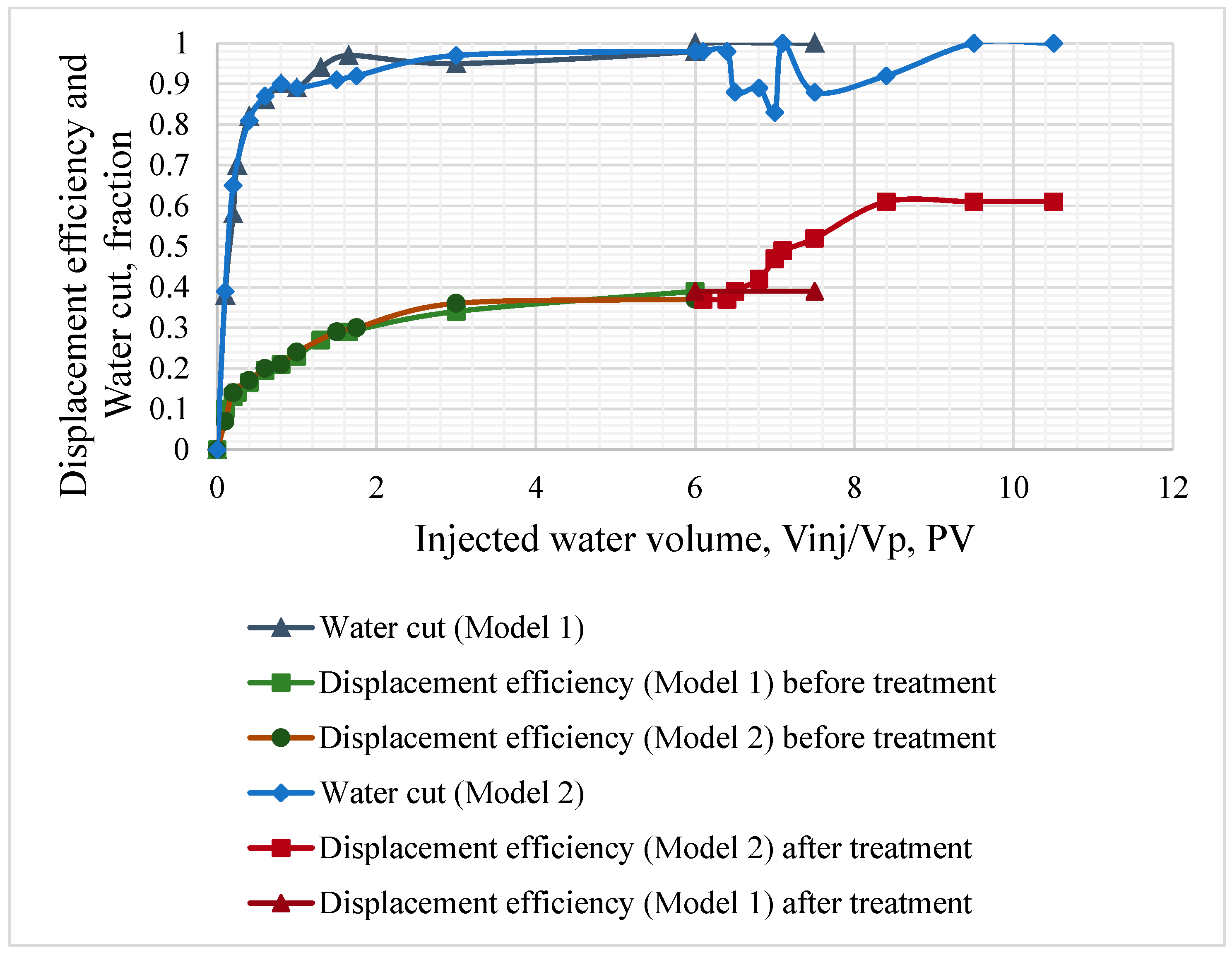
At the final stage, oil was displaced by injected formation water at reservoir temperature. Graduated cylinders with capacities of 10 and 15 mL were used to measure the produced fluid volumes. The injected volume was 4–5 pore volumes. Before TGCT, the oil displacement efficiency was 0.39 for Model 1 and 0.37 for Model 2, indicating the limited efficiency of waterflooding for the studied high-viscosity oil system.
For Model 2, the treatment fluid contained 3 wt.% HCl and 2 wt.% surfactant. The surfactant used in this study was the nonionic complex-action surfactant “Umay LC”, manufactured according to the relevant company standard [
31]. The concentration of 2 wt.% was calculated based on the total commercial product.
In addition, a blank control experiment with HCl and surfactant without activated aluminum alloy was not performed in the present study. Therefore, the current experimental design allows comparison between activated aluminum alloy in the formation water and the combined activated aluminum alloy–HCl–surfactant system, but it does not separately quantify the independent contribution of the acid–surfactant solution in the absence of the aluminum alloy. Such blank control experiments should be included in future work to isolate the individual effects of acid activation, surfactant-assisted foam formation, and aluminum-alloy reaction.
Electrical resistivity was monitored during the core flooding experiments as an indirect diagnostic parameter reflecting changes in the phase state of the pore space. The resistivity values were used for qualitative interpretation of gas accumulation and phase redistribution, and were not used for a direct quantitative calculation of gas saturation.
2.4. Reservoir Simulation Methodology
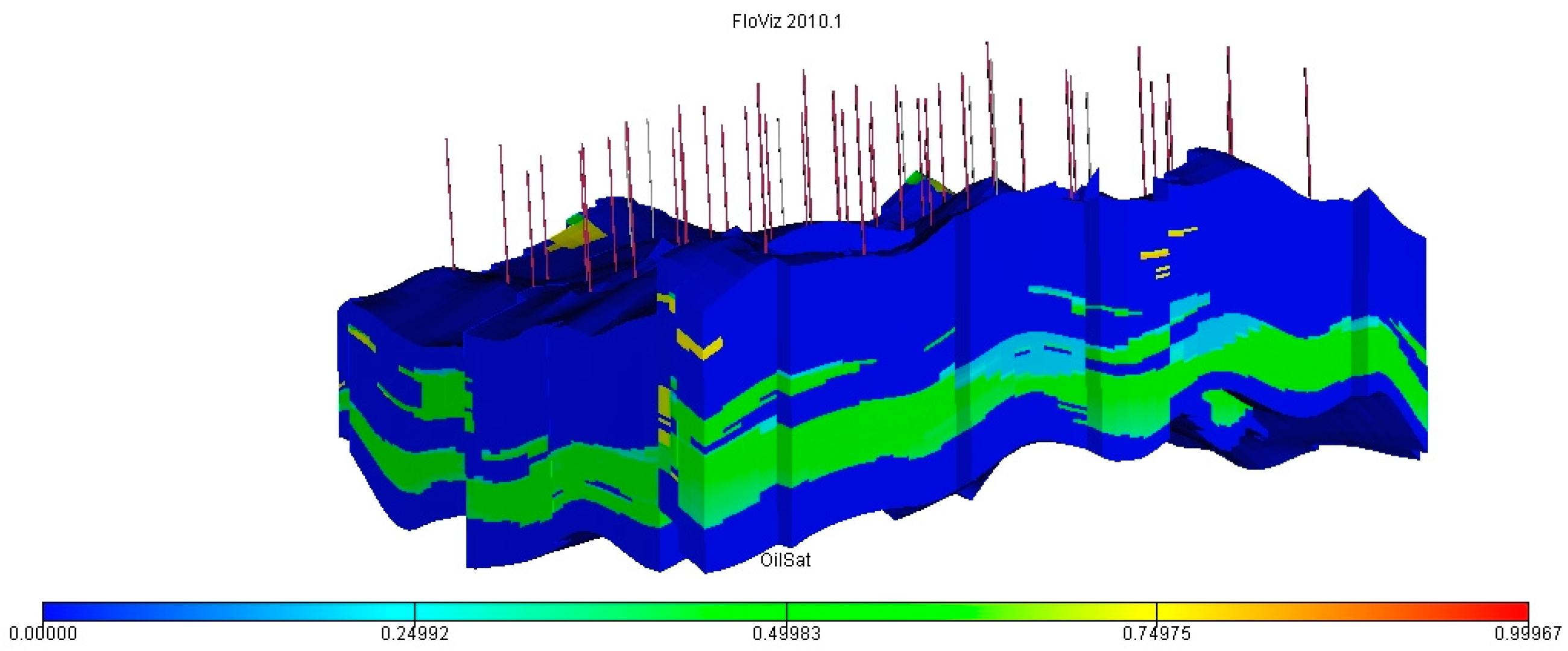
Numerical analysis of thermal–gas–chemical treatment in the near-wellbore zone was performed using ECLIPSE 2010 reservoir simulation software (Schlumberger, Houston, TX, USA). Reservoir simulation was carried out for Object I of the eastern sector of the Karazhanbas field, taking into account the geological and physical reservoir characteristics and fluid properties.
Figure 2 shows the oil-saturation distribution in the reservoir model of Object I in the eastern sector of the Karazhanbas field.
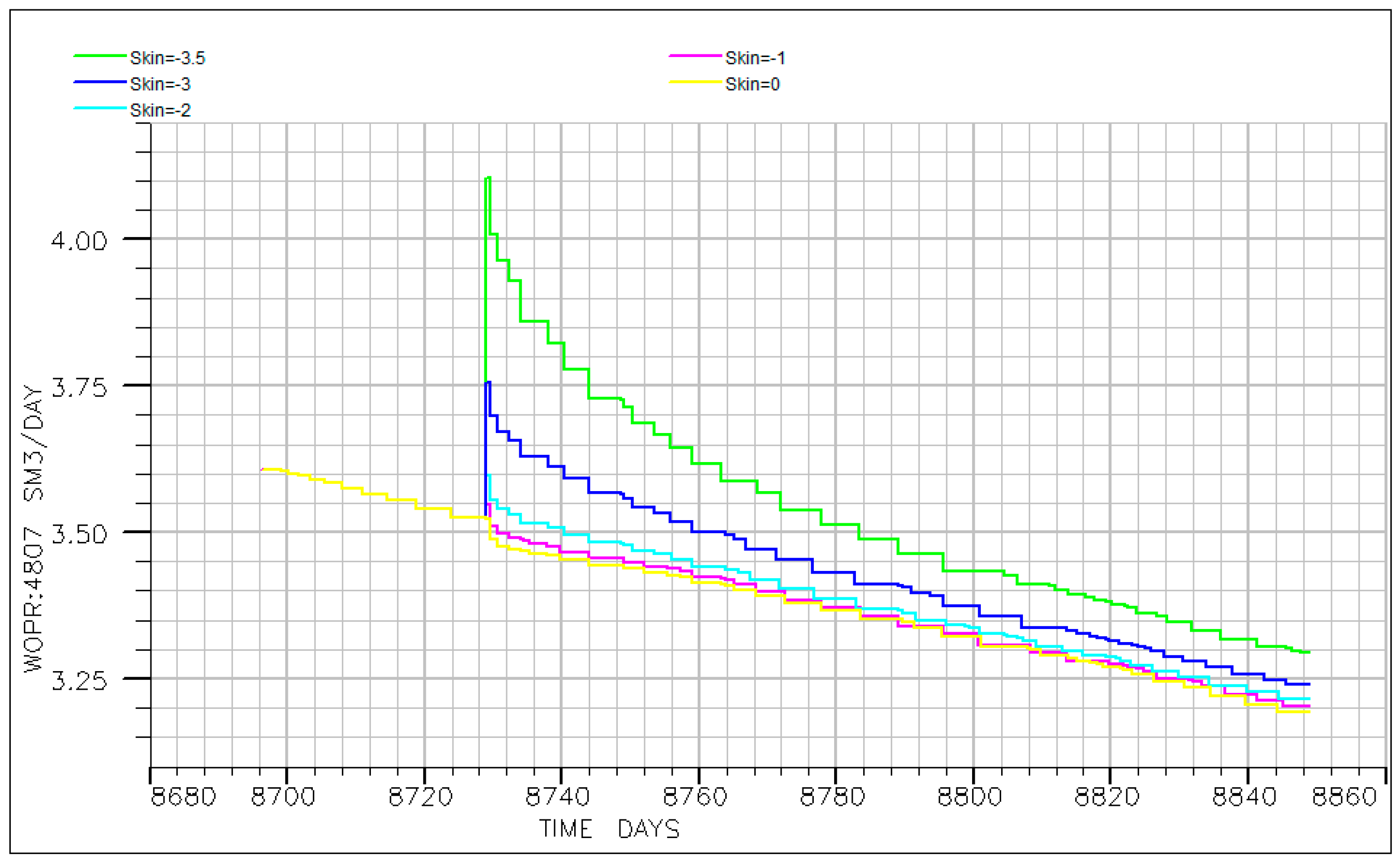
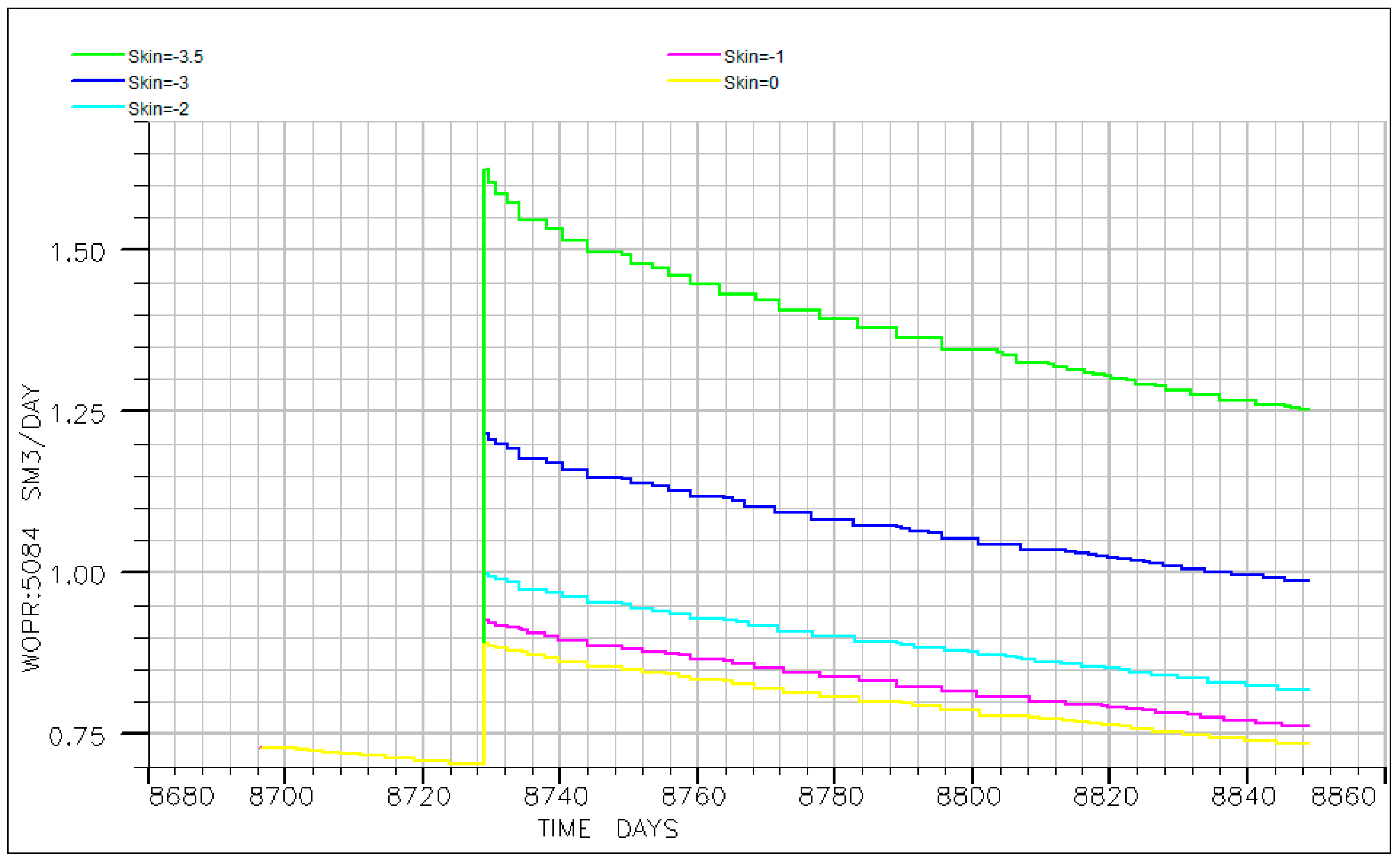
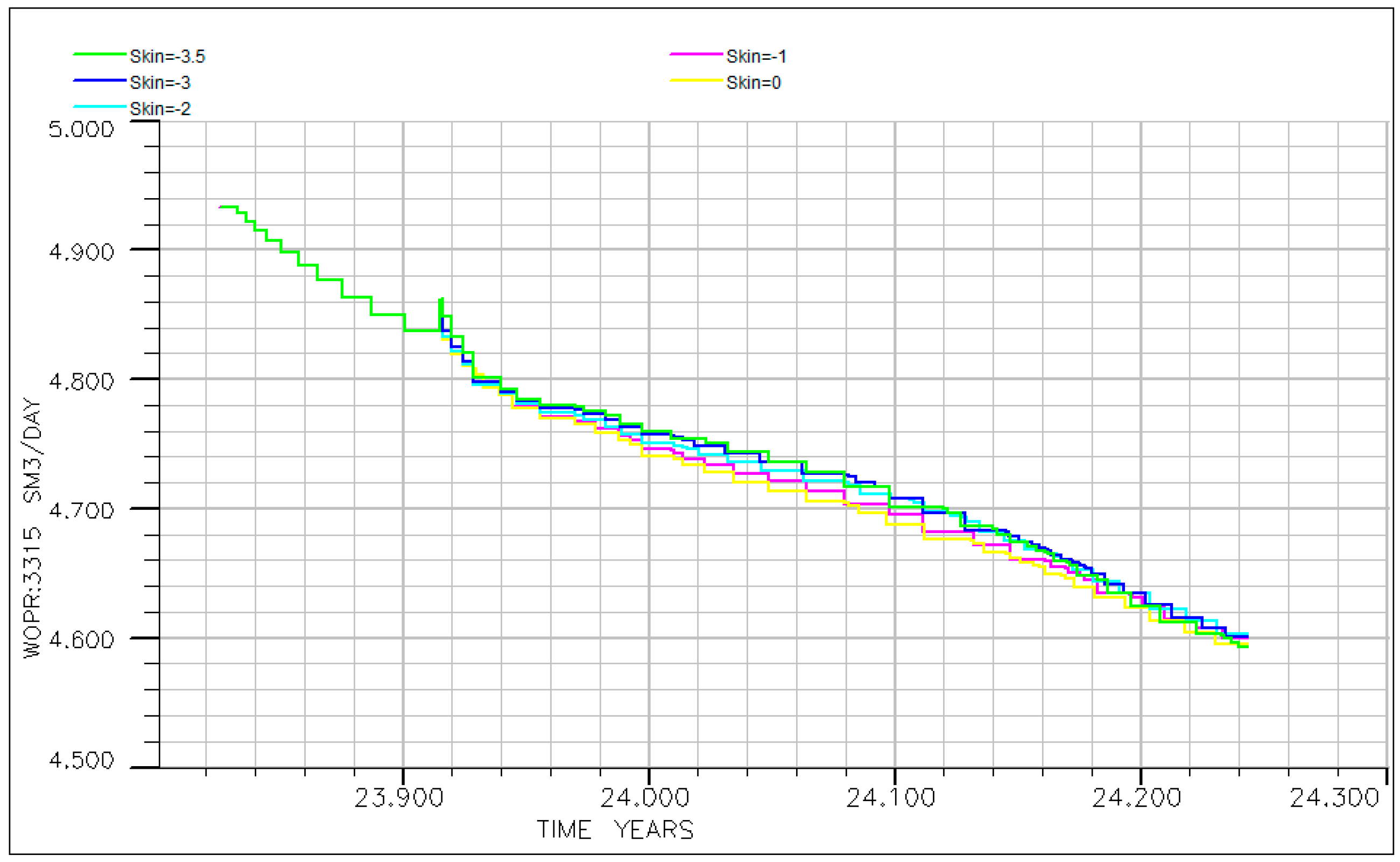
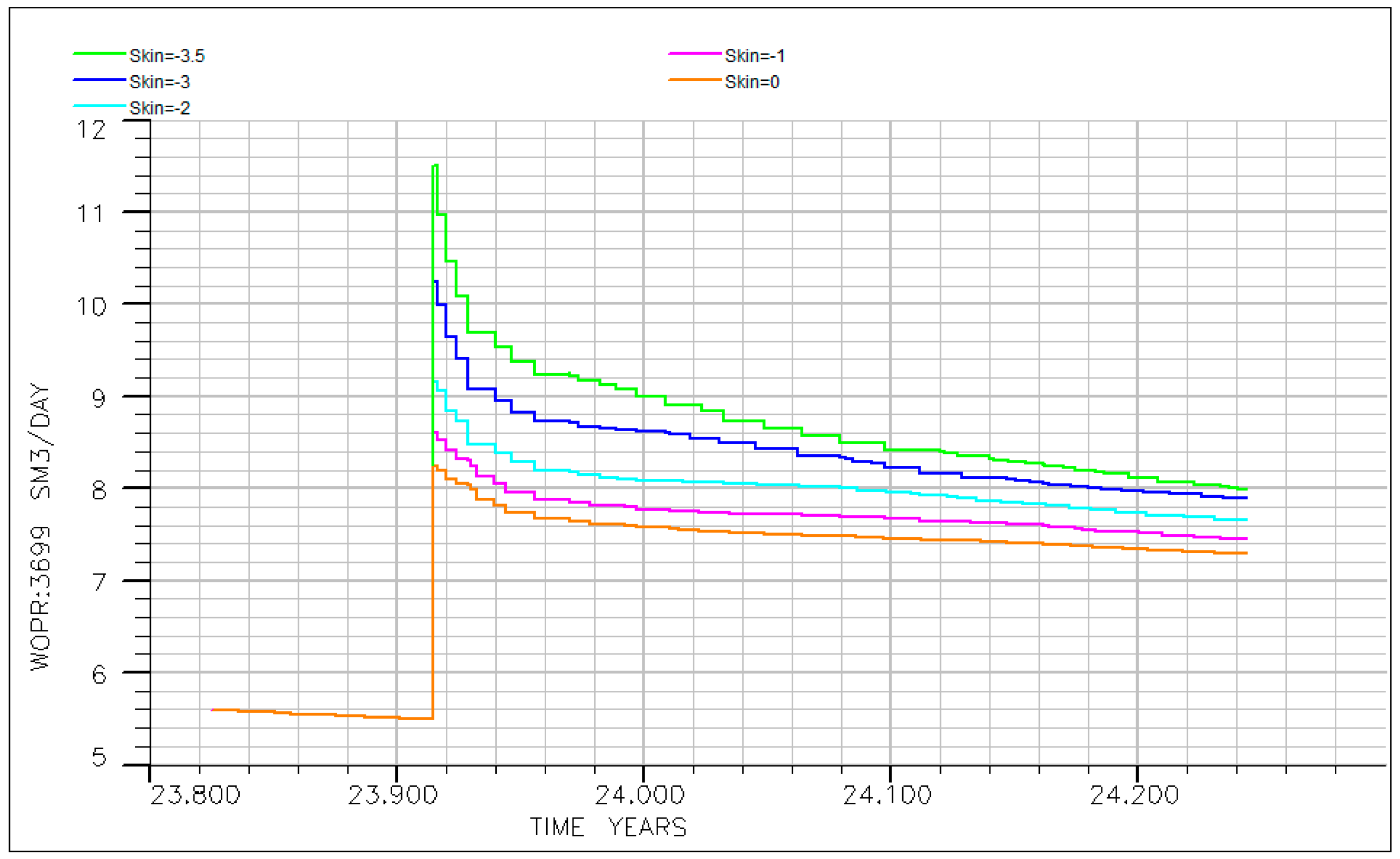
The model included the main development parameters, including reservoir pressure, temperature, fluid properties, oil saturation, reservoir petrophysical properties, and well operating conditions. Production wells 4807, 5084, 3315, and 3699 were selected for analysis. For these wells, the responses of oil production rate, water cut, and cumulative oil production were evaluated under changes in near-wellbore zone parameters.
Thermal–gas–chemical treatment was considered as a localized multifactor process involving:
Heat generation during the reaction of the activated aluminum alloy with formation water or acidified water;
Gas generation, predominantly hydrogen;
Local pressure increase;
Possible alteration of the filtration properties of the treated zone.
Direct representation of each of these processes in a full-field reservoir simulation model requires specific data on reaction kinetics, heat and gas distributions, changes in phase behavior, and effect duration. Therefore, at this stage, the model was used as a scenario-based tool to evaluate the sensitivity of production wells to local near-wellbore improvement.
As one of the equivalent parameters for local near-wellbore improvement, a reduction in near-wellbore flow resistance was introduced through the skin factor. This approach is not considered a direct physicochemical representation of the reaction; rather, it is used to estimate the possible range of the production response.
According to published data [
24,
27], thermochemical treatment can increase permeability and alter the pore structure of the treated zone, including the formation of additional flow channels and local fractures. From a reservoir engineering perspective, such changes reduce flow resistance near the wellbore. In a radial-flow formulation, this effect can be expressed using the Hawkins skin-factor equation [
32,
33]:
where
k is the permeability of the undisturbed reservoir;
ks is the permeability of the near-wellbore zone after treatment;
rs is the radius of the treated zone; and
rw is the wellbore radius.
It should be emphasized that the laboratory-scale increase in oil displacement efficiency was not directly converted into a unique skin-factor value. The skin factor was used as an equivalent reservoir-engineering parameter to represent a possible reduction in near-wellbore flow resistance caused by the combined TGCT effects, including local gas generation, heat release, chemical activation, foam formation, and possible alteration of filtration properties. Therefore, the selected skin-factor range should be interpreted as a sensitivity range rather than a direct deterministic translation of laboratory displacement efficiency into field-scale skin.
Thus, an increase in the permeability of the near-wellbore zone after thermal–chemical treatment physically corresponds to a reduction in the skin factor.
Considering the localized nature of TGCT and the absence of direct field data on the radius of the altered zone, a range of moderately negative skin-factor values was used in this study. To evaluate the effect of treatment intensity on well performance, a sensitivity analysis was performed using different skin-factor values (
Table 3), with a wellbore radius of (r
w = 0.1905 m). For the considered conditions, skin-factor values from −1 to −3 were regarded as the most physically reasonable range, corresponding to improved near-wellbore filtration properties without overestimating the treatment scale. A skin factor of −3.5 was considered the upper-bound scenario for model sensitivity analysis.
4. Discussion
The laboratory studies showed that thermal–gas–chemical treatment using an activated aluminum alloy is a multifactor process. Its effectiveness is determined not only by the volume of released gas but also by the reaction conditions, chemical activation of the medium, and changes in the filtration behavior of fluids in the porous medium.
Comparison of the two experimental cases revealed a fundamental difference between the treatment with activated aluminum alloy in formation water and the treatment in the system containing HCl and surfactant. In the first case, the reaction was accompanied by substantial gas generation of up to 2600 mL; however, no additional oil production was observed, and the oil displacement efficiency after treatment remained at 0.39. This indicates that hydrogen and heat generation alone are not sufficient to mobilize residual oil in the studied porous medium.
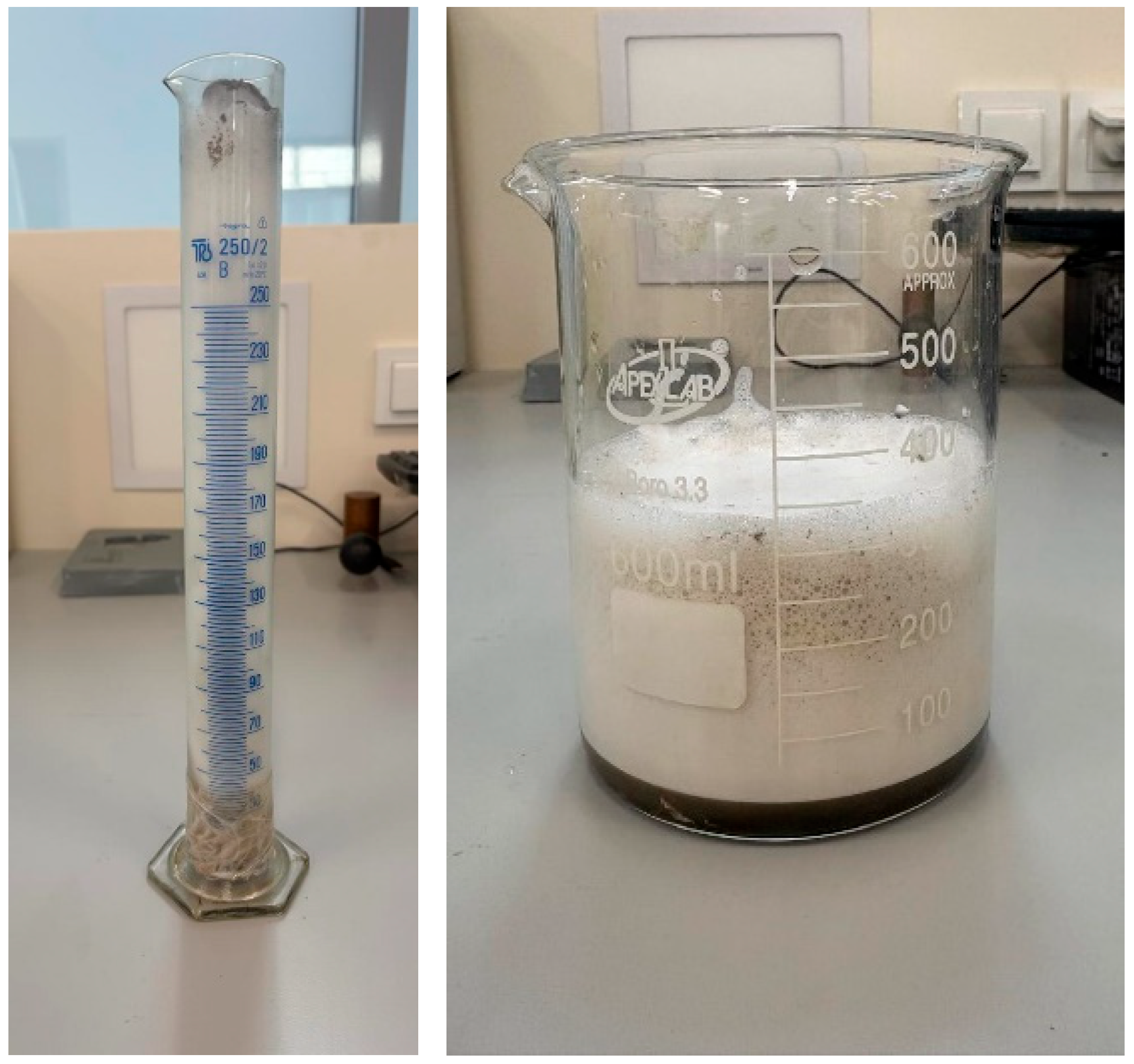
In the second case, the addition of 3 wt.% HCl and 2 wt.% surfactant significantly changed the reaction behavior. HCl promoted the dissolution of the passive oxide film on the aluminum surface, accelerated the interaction between the metal and the liquid phase, and intensified the reaction. As a result, the reaction proceeded more rapidly and was accompanied by a pronounced thermal and gas-dynamic effect. At the same time, the surfactant likely contributed to the stabilization of released gas bubbles and the formation of gas–liquid foam within the pore space. This gas–liquid system could improve the contact between the reagents, oil, and rock surface, redistribute filtration flows, and contribute to additional oil displacement.
The role of the surfactant in this system is interpreted primarily as stabilization of the released gas phase and formation of a gas–liquid foam. In porous media, foam can reduce gas mobility, increase the apparent resistance to flow in high-permeability channels, and redistribute the displacing fluid toward less-swept pore zones. For high-viscosity oil systems, this effect may be important because gas generated during the reaction can otherwise preferentially move through the most permeable flow paths without efficiently contacting residual oil. In the present experiments, the contribution of foam was not quantified independently because a blank HCl-surfactant control experiment without activated aluminum alloy and separate foam stability tests were not performed. Therefore, foam-assisted mobility control should be considered a plausible contributing mechanism rather than an independently measured effect.
The experimentally measured gas volumes were compared qualitatively, with the theoretical hydrogen yield calculated from the corrected stoichiometry. However, the measured outlet gas volume should not be interpreted as the full theoretical hydrogen yield, because part of the generated gas may remain trapped in the pore space, dissolve in the liquid phase, or be retained as gas–liquid foam, especially in the presence of a surfactant.
Detailed foam characterization was beyond the scope of the present study, which focused on the integral core flooding response of the TGCT system. Therefore, foam quality, bubble-size distribution, and foam stability under reservoir pressure and temperature were not measured. In this work, foam formation is considered as a possible contributing mechanism that may reduce gas mobility, redistribute flow paths, and improve contact between the displacing phase and trapped high-viscosity oil. Further experiments under reservoir pressure, temperature, salinity, and oil-composition conditions are required to quantitatively evaluate foam stability and its contribution to oil displacement.
Of particular importance is the fact that, in the second experiment, the volume of released gas was approximately 2100 mL, which was lower than in the case without HCl; nevertheless, this case provided an increase in oil recovery. This confirms that the effectiveness of TGCT is not controlled by the maximum gas volume alone, but by the combined action of several factors, including reaction rate, localized heat release, gas pressure, chemical activation of the medium, foam formation, and changes in filtration conditions within the porous medium.
An additional indication of phase changes in the pore space is the increase in electrical resistivity. In the experiment with HCl and surfactant, the electrical resistivity increased to 5000 Ω·m, whereas in the case without additives, the maximum value was approximately 1500 Ω·m. This increase is consistent with gas accumulation and phase redistribution in the pore space, because the gas phase has much lower electrical conductivity than mineralized formation water. However, since a resistivity–gas saturation calibration curve was not obtained, electrical resistivity should be interpreted only as a qualitative diagnostic indicator rather than as a quantitative measure of gas saturation. At the same time, the smaller volume of gas recorded at the core outlet may be related to partial retention of gas bubbles inside the porous medium due to foam stabilization by the surfactant. Therefore, electrical measurements can be considered an additional diagnostic tool for evaluating the dynamics of gas saturation and phase changes during laboratory studies of TGCT.
The characterization of solid reaction products and possible formation damage is also required for further development of TGCT. Formation damage may be induced by chemical treatments and can involve permeability impairment, precipitation of insoluble products, pore plugging, wettability alteration, fines migration, or emulsion-related blockage [
35]. In addition, although the present study focuses on heavy-oil near-wellbore TGCT rather than geothermal stimulation, previous studies on thermal stimulation have shown that thermal effects may alter rock mechanical behavior, fracture evolution, and flow pathways, which further supports the need for post-treatment pore-structure and permeability diagnostics [
36]. Previous studies have shown that core flooding combined with NMR, CT, SEM, or microscopic analysis can be used to evaluate permeability reduction, porosity damage, pore-size changes, and pore morphology before and after treatment [
37]. In the present study, aluminum hydroxide and other aluminum-containing products were considered as possible reaction products based on reaction stoichiometry, but their morphology and spatial distribution were not directly analyzed. Therefore, post-treatment gas-permeability measurements, CT or NMR pore-structure analysis, SEM/microscopic characterization of reaction products, and direct gas-composition analysis should be included in future work.
From the perspective of oil recovery, the most important result is the increase in oil displacement efficiency in Model 2 from 0.37 to 0.61. The absolute increase in displacement efficiency was 0.24, while the relative increase compared with the initial waterflooding stage was approximately 65%. The additional oil volume was approximately 16.8 mL, including oil produced directly during the reaction and oil additionally displaced during subsequent waterflooding. This indicates that, after TGCT in the system containing HCl and surfactant, not only did the reaction intensity change, but also the ability of the porous medium to release oil during subsequent water displacement.
The additional oil recovered during subsequent waterflooding after TGCT can be explained by the combined effect of several mechanisms. First, acid activation accelerates the reaction of the activated aluminum alloy and promotes localized gas and heat generation. Second, the surfactant may stabilize part of the released gas as a gas–liquid foam, which can reduce gas mobility and redistribute the subsequent water flow toward previously unswept or poorly swept pore channels. Third, localized heating may reduce the viscosity of high-viscosity oil and improve its mobility. Fourth, acidified fluid and reaction-induced flow disturbance may contribute to partial removal or redistribution of pore-scale plugging materials. However, the individual contributions of wettability alteration, pore-channel cleaning, residual-oil emulsification, and foam-assisted mobility control were not separately quantified in the present study. Therefore, these mechanisms should be considered as plausible contributing factors rather than independently measured effects.
The difference between the experimental temperature and reservoir temperature should also be considered when interpreting the laboratory results. The core flooding experiments were conducted at 21 °C, whereas the reservoir temperature of the Karazhanbas field is 26–36 °C. Since the studied oil is highly temperature-dependent, the lower experimental temperature corresponds to a higher oil viscosity of 643 mPa·s compared with 460–550 mPa·s at 30 °C under reservoir-fluid characterization conditions. Therefore, the laboratory experiments were performed under relatively more unfavorable mobility conditions for oil displacement. At the same time, the reaction rate of activated aluminum with the aqueous phase, heat release, and foam stability may also change at reservoir temperature. For this reason, the obtained results should be interpreted as laboratory evidence of the TGCT mechanism, while further experiments at reservoir temperature are required for quantitative field-scale design.
It should be noted that the present study evaluated the integral response of the TGCT system rather than the detailed reaction kinetics. The experiments included measurements of total gas volume, reaction duration, electrical resistivity, and oil displacement efficiency, whereas reaction rate constants, activation energy, and time-dependent temperature and gas-generation profiles were not determined. These parameters should be investigated in future studies for more rigorous reactive-transport modeling and field-scale design.
A limitation of the present work is that foam stability, foam rheology, and reaction kinetics at different temperatures and salinities were not measured separately. Therefore, no reaction-rate equation or quantitative foam-mobility model was established. Future studies should include kinetic experiments at reservoir-representative temperatures and salinities, foam stability tests, rheological measurements of the foam system, and core flooding experiments with separate control groups to quantify the individual contribution of each component.
A further limitation is that the temperature inside the core was not continuously monitored during the reaction. Therefore, the thermal contribution was evaluated only qualitatively, based on the exothermic nature of the aluminum reaction and the observed displacement response. Time-dependent oil production rates, gas production rates, and internal temperature profiles were not recorded with sufficient resolution to distinguish the individual contributions of thermal viscosity reduction, gas displacement, foam-assisted mobility control, wettability alteration, and pore-channel cleaning. Visual micromodel experiments and time-resolved temperature and gas-production monitoring should be included in future work to directly observe hydrogen and foam flow patterns and quantify the contribution of each mechanism.
The obtained results indicate that the “activated aluminum alloy–HCl-surfactant” system is more effective than the use of activated aluminum alloy and formation water alone. The mechanism of the positive effect should be interpreted as a complex process: HCl activates the aluminum surface and accelerates the reaction, the surfactant promotes the formation of a gas–liquid structure, and the release of heat and hydrogen creates local conditions for improving oil mobility and altering the filtration properties of the porous medium.
The laboratory results are also important for the interpretation of reservoir simulation. A direct representation of the reaction between the aluminum alloy and reservoir fluid, as well as the distribution of heat, gas, and foam in a full-field reservoir model, requires additional data on reaction kinetics and phase behavior. Therefore, in this study, reservoir simulation was used as a scenario-based tool. It made it possible to evaluate how production wells may respond to local near-wellbore improvement caused by the combined action of thermal–gas–chemical factors.
The scenario calculations showed that the production response of wells to local near-wellbore improvement is well-specific. The most pronounced increase in oil production rate was obtained for well 3699, with 3.27 m3/day, whereas the effect for well 3315 was practically insignificant, with only 0.03 m3/day. This confirms that the effectiveness of TGCT is determined not only by the chemical activity of the reagent but also by the current condition of the drainage area, residual oil saturation, water cut, reservoir pressure, and hydrodynamic connectivity between the well and oil-saturated intervals.
Field implementation of TGCT also requires consideration of operational safety and environmental aspects. Since the proposed system involves HCl, corrosion of wellbore equipment and surface facilities should be controlled by selecting the appropriate acid concentration, exposure time, corrosion inhibitors, and compatible materials. Hydrogen generation in the near-wellbore zone requires pressure control and safe handling procedures during reagent preparation, injection, and well return to operation, especially to prevent uncontrolled gas accumulation at the surface. Reaction products such as aluminum hydroxide and aluminum chloride should also be considered when designing the treatment, because their formation, transport, and possible retention in the porous medium may affect permeability and produced-fluid handling. Therefore, field application of TGCT should be accompanied by compatibility tests with reservoir fluids and rocks, corrosion assessment, pressure monitoring, and compliance with applicable regulations for downhole chemical injection.
Thus, the results indicate that TGCT using activated aluminum alloys should be considered a well-oriented near-wellbore stimulation technology. The most promising approach is not the use of a gas-generating reagent alone, but a combined system that includes an activated aluminum alloy, acid activation, and surfactant. To move from laboratory experiments to field-scale design, further calibration is required with respect to treatment radius, effect duration, temperature change, gas saturation, permeability alteration, and the actual response of individual wells.




 ,
,