Article

A Multipurpose Hydrogen Storage System Using AB5– and AB2–Type Metal Hydrides for Flexible Hydrogen Storage and Delivery


1
Hydrogen Research Department, Korea Institute of Energy Research (KIER), Daejeon 34129, Republic of Korea
2
Department of Chemical and Biological Engineering, Korea University, Seoul 02841, Republic of Korea
3
H2 & Smart Business Department, Korea Hydro & Nuclear Power, Daejeon 34101, Republic of Korea
*
Authors to whom correspondence should be addressed.
†
These authors contributed equally to this work.
Energies 2026, 19(13), 3010; https://doi.org/10.3390/en19133010
Submission received: 11 May 2026 / Revised: 16 June 2026 / Accepted: 23 June 2026 / Published: 25 June 2026
(This article belongs to the Topic Advances in Hydrogen Energy)

Abstract

Metal hydrides can safely store hydrogen in the solid state at high volumetric density under moderate temperature and pressure. Their hydrogen sorption characteristics are represented by pressure–composition–temperature (PCT) curves. AB5–type metal hydrides, which have low plateau pressures, store and release hydrogen at low pressures. AB2–type metal hydrides, which have high plateau pressures, store and release hydrogen at relatively high pressures. Compared with AB5–type metal hydrides, AB2–type metal hydrides generally have lower raw material costs and higher hydrogen storage capacity. This makes them more suitable for storing large quantities of hydrogen. Green and blue hydrogen are produced using commercial alkaline water electrolyzers and natural gas reformers, respectively. After downstream purification, this hydrogen is typically supplied at pressures below 1 MPa. However, the high plateau pressures of AB2–type metal hydrides make it difficult to store this low-pressure hydrogen directly. AB5–type metal hydrides can store it but release it only at low pressures. A single hydride type therefore operates within a narrow pressure range for both storage and delivery. In this study, a multipurpose hydrogen storage system (MHSS) using AB5– and AB2–type metal hydrides was proposed to broaden the applications of metal hydride-based systems. The feasibility of the MHSS was experimentally evaluated through lab-scale tests. The AB5 and AB2 modules were first tested as standalone units. The integrated MHSS was then tested assuming that waste heat was continuously available. The MHSS can store a large quantity of low-pressure hydrogen and deliver it across a wide pressure range. This range covers diverse end uses, from fuel cells at 0.5 MPa to hydrogen pipelines at 4.0 MPa.

1. Introduction

Hydrogen is widely recognized as a key energy carrier for achieving carbon neutrality. It has high gravimetric energy density and can be converted into electricity through fuel cells, with water as the only byproduct. For low-carbon hydrogen utilization, green hydrogen generated by water electrolysis using renewable energy and blue hydrogen generated by natural gas reforming with carbon capture are used. In practical hydrogen production systems, hydrogen generated by these processes is purified using downstream purification units and is typically supplied at pressures below 1 MPa. At these supply pressures, hydrogen exists as a low-density gas, making it difficult to store compared with liquid fuels.
To address this challenge, various hydrogen storage methods, including high-pressure gaseous storage, cryogenic liquid storage, and solid-state storage using metal hydrides, have been developed. Among various hydrogen storage methods, metal hydride-based solid-state storage can safely store a large quantity of hydrogen in the solid state under moderate temperature and pressure conditions [1,2,3,4,5]. This is because hydrogen atoms are located in the metal lattice at interatomic distances smaller than the van der Waals radius of the hydrogen molecule [6].
Among various metal hydrides, AB5– and AB2–type metal hydrides have been widely investigated for hydrogen storage and delivery because of their reversible hydrogen sorption, relatively fast reaction kinetics, and applicability under moderate operating conditions [7,8,9,10]. AB5–type metal hydrides, represented by LaNi5, show low plateau pressures and flat plateau regions. With these characteristics, AB5–type metal hydrides are suitable for absorbing hydrogen supplied at low pressure, such as hydrogen produced by water electrolysis. AB2–type metal hydrides, represented by TiMn2, show high plateau pressures and higher gravimetric hydrogen storage capacity than AB5–type metal hydrides [11]. With these characteristics, AB2–type metal hydrides are suitable for storing large quantities of hydrogen and delivering hydrogen to diverse end uses, such as hydrogen pipelines requiring high-pressure hydrogen [12].
Hydrogen storage systems using only AB5– or AB2–type metal hydrides have a limited pressure range for hydrogen storage and delivery [13,14,15,16]. A system using only AB5–type metal hydrides can store low-pressure hydrogen. However, because of their low plateau pressures, it is difficult to deliver hydrogen at higher pressures. A system using only AB2–type metal hydrides can store a large amount of hydrogen and deliver hydrogen at relatively high pressures. However, because of their high plateau pressures, it is difficult to directly store low-pressure hydrogen. Therefore, a metal hydride-based hydrogen storage system is required to connect low-pressure hydrogen storage with higher-pressure hydrogen delivery.
In this study, a multipurpose hydrogen storage system (MHSS) was proposed to broaden the range of applications of metal hydride-based hydrogen storage systems. The MHSS consists of an AB5 module and an AB2 module connected in series, which contain AB5– and AB2–type metal hydrides, respectively. The AB5 module is used to store low-pressure hydrogen. When waste heat is available, the AB5 module increases the pressure potential of the hydrogen stored in the AB5 module, and the hydrogen is stored in the AB2 module. The AB2 module is used to deliver hydrogen at higher pressures. The feasibility of the MHSS was experimentally evaluated through lab-scale tests. The performances of the standalone AB5 and AB2 modules were first evaluated, and the integrated MHSS was then tested under the assumption that waste heat was continuously available.

2. Multipurpose Hydrogen Storage System

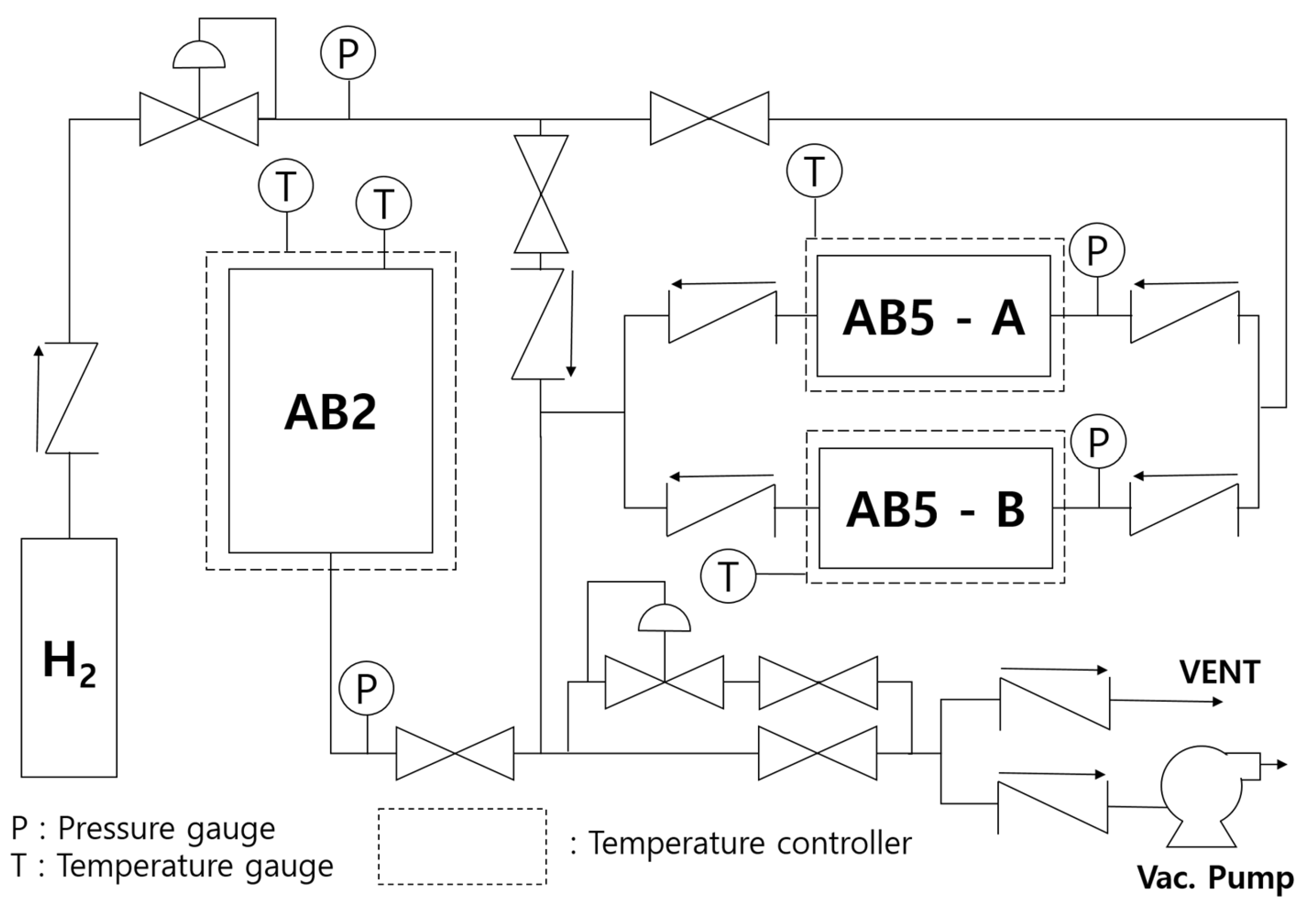
Figure 1 shows a schematic diagram of the MHSS. The MHSS is composed of an AB5 module and an AB2 module. The AB5 module and the AB2 module are connected in series. The AB5 module is used to upgrade the hydrogen pressure to store hydrogen in the AB2 module. The AB5 module consists of two sub-modules, AB5 module–A and –B, which are connected in parallel. Each AB5 sub-module has an outer diameter of 60.5 mm and contains 375 g of La0.9Ce0.1Ni5 with 5 wt% expanded natural graphite [17]. The AB2 module serves as the main hydrogen storage module of the MHSS, storing a large amount of hydrogen and delivering hydrogen over a wider pressure range. The AB2 module has an outer diameter of 89.1 mm and contains 1607 g of Ti0.95Zr0.05Mn1.33V0.51Fe0.06 with 5 wt% expanded natural graphite. The AB5 sub-modules and the AB2 module were each installed in water jackets. Water was used as the heat transfer medium (HTM) for temperature control of the AB5 sub-modules and the AB2 module. The HTM was supplied to each water jacket at a flow rate of 3 L/min. The MHSS operates just by shifting the HTM. Hydrogen is stored in the AB5 module when low-temperature HTM flows through it, and is released at an increased pressure and transferred to the AB2 module when high-temperature HTM flows through it. Low-temperature and high-temperature HTMs are alternately supplied to AB5 module–A and –B, allowing one sub-module to store hydrogen while the other releases it. Hydrogen transferred from the AB5 sub-modules is stored in the AB2 module under low-temperature HTM supply. Under high-temperature HTM supply, the hydrogen pressure in the AB2 module further increases, allowing for hydrogen delivery at a higher pressure. Check valves are installed in the system to prevent backflow and ensure unidirectional hydrogen flow from the hydrogen gas cylinders through the AB5 module to the AB2 module.

3. Results and Discussion

3.1. Characteristics of Hydrogen Storage Materials

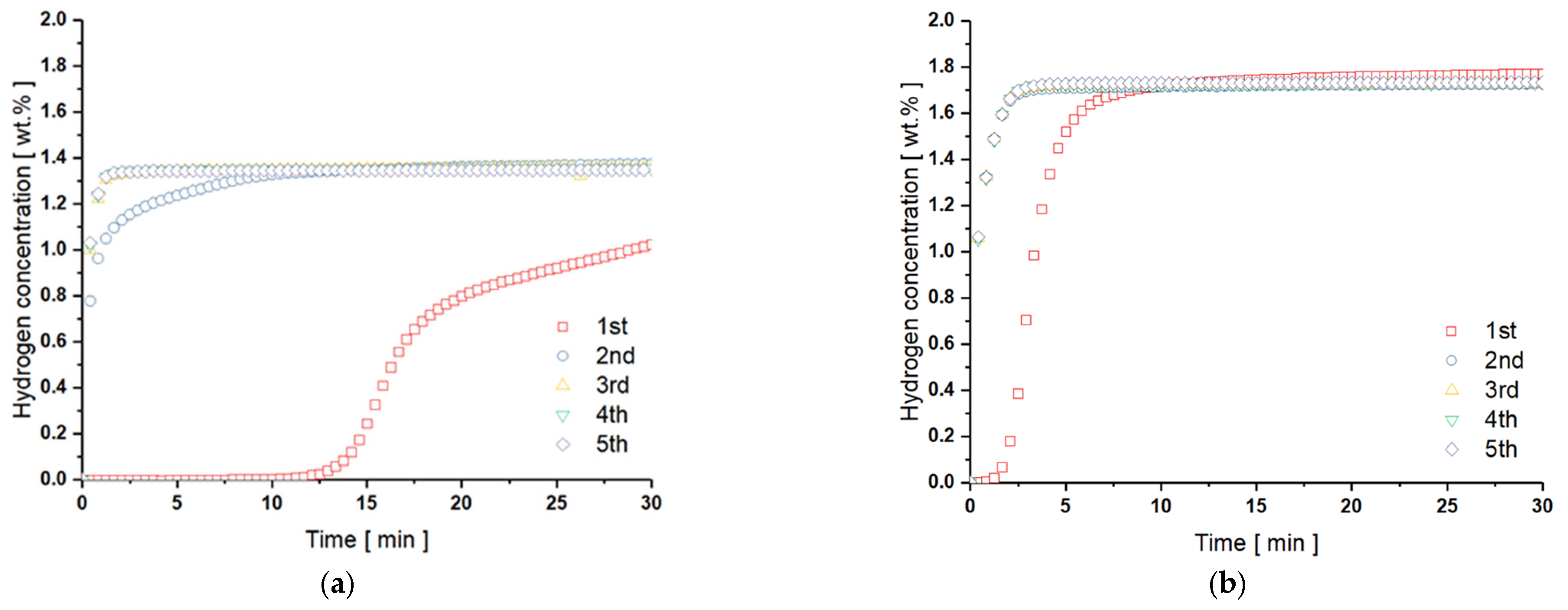
Figure 2 shows the activation of AB5– and AB2–type metal hydrides. Each hydrogen absorption process was conducted at 6 MPa for 30 min, followed by vacuuming for 30 min before the next absorption process. The hydrogen absorption process was repeated five times, and both metal hydrides were fully activated through two hydrogen absorption processes. The amount of hydrogen stored in the activated AB5–type metal hydride was 1.35 wt% (approximately 99% of theoretical storage capacity). The amount of hydrogen stored in the activated AB2–type metal hydride was 1.73 wt% (approximately 97% of theoretical storage capacity). The elapsed time to store these amounts of hydrogen was 2 min for the AB5–type metal hydride and 3 min for the AB2–type metal hydride.
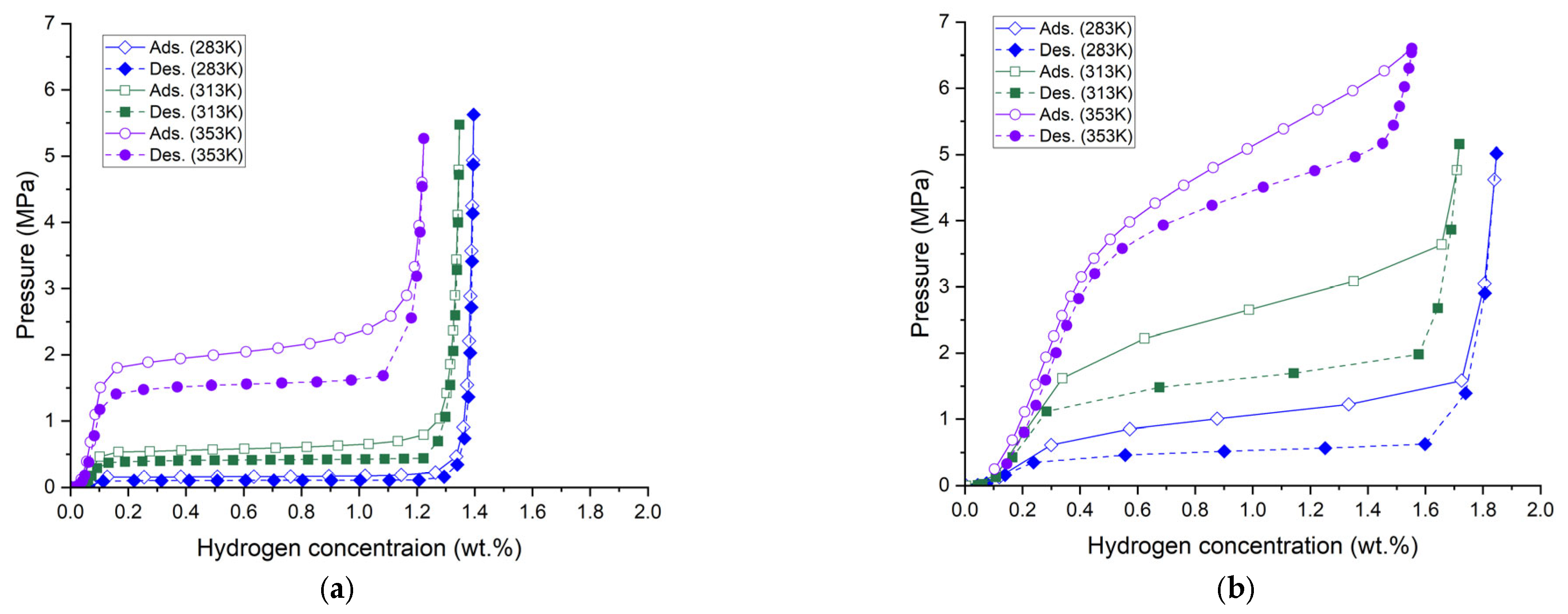
Figure 3 shows pressure–composition–temperature (PCT) curves of AB5– and AB2–type metal hydrides at 283 K, 313 K, and 353 K. The PCT curves present the thermodynamic characteristics of metal hydrides, which consist of pressure, composition, and temperature in hydrogen absorption and desorption. Based on the PCT curves, the AB5–type metal hydride can absorb hydrogen at 0.6 MPa at 283 K and desorb hydrogen at 1.5 MPa at 353 K. The AB2–type metal hydride can absorb hydrogen at 2.0 MPa at 283 K and desorb hydrogen at 4.0 MPa at 353 K. These results indicate that the AB5–type metal hydride is suitable for low-pressure hydrogen storage, whereas the AB2–type metal hydride, with a higher hydrogen storage capacity, is suitable for storing a large quantity of hydrogen and delivering hydrogen at higher pressures. Hydrogen absorption enthalpies of AB5– and AB2–type metal hydrides obtained from the PCT results were 31.34 kJ/mol and 26.47 kJ/mol, respectively.

3.2. Performance of AB5 Module

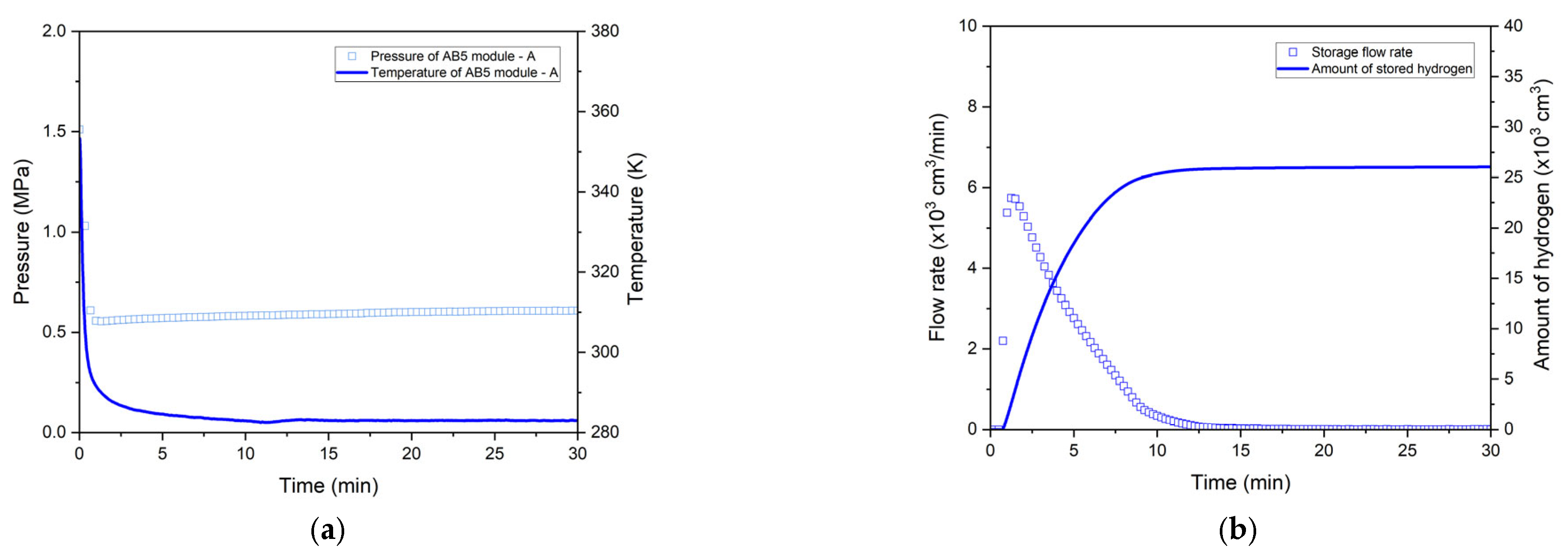
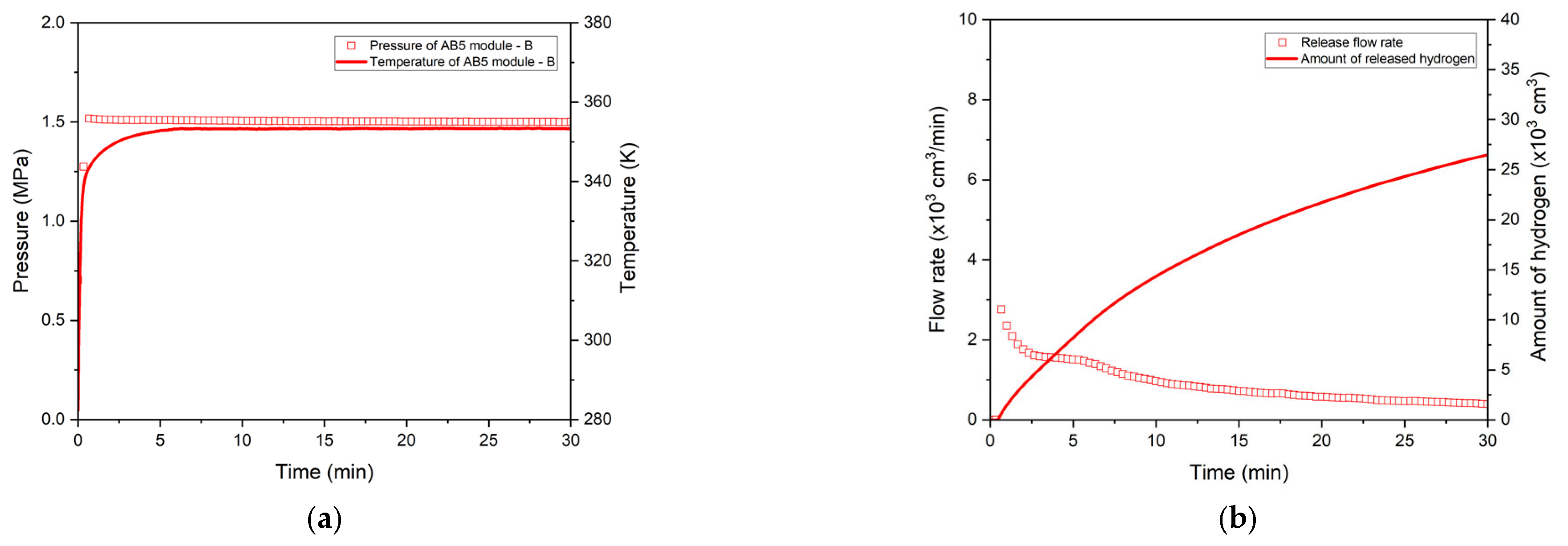
Figure 4 and Figure 5 show the performance of the AB5 module during hydrogen storage and release. The inlet and outlet pressures of the AB5 module were controlled at 0.6 MPa and 1.5 MPa, respectively. The HTM with different temperatures, 358 K and 288 K, was shifted between AB5 sub–modules (AB5 module–A and –B). When the HTM was shifted, the temperature of the HTM flowing through AB5 module–A decreased from 353 K to 300 K for 1 min and to 283 K for 10 min. The hydrogen pressure of AB5 module–A immediately decreased from 1.5 MPa to 0.6 MPa. After the pressure decreased to 0.6 MPa, AB5 module–A started to store hydrogen. The hydrogen storage flow rate reached 6000 Scm3/min for 2 min. Thereafter, the hydrogen storage flow rate gradually decreased, and hydrogen storage was completed after approximately 15 min. The total amount of hydrogen stored in AB5 module–A was 26,000 Scm3. At the same time, the temperature of the HTM flowing through AB5 module–B increased from 283 K to 343 K for 1 min and to 353 K for 7 min. The hydrogen pressure of AB5 module–B immediately increased from 0.6 MPa to 1.5 MPa. After the pressure increased to 1.5 MPa, AB5 module–B started to release hydrogen. The hydrogen release flow rate reached 3000 Scm3/min for 1 min. Thereafter, the hydrogen release flow rate gradually decreased to 500 Scm3/min at 30 min. The total amount of hydrogen released from AB5 module–B was 26,000 Scm3 after 30 min.

3.3. Performance of AB2 Module

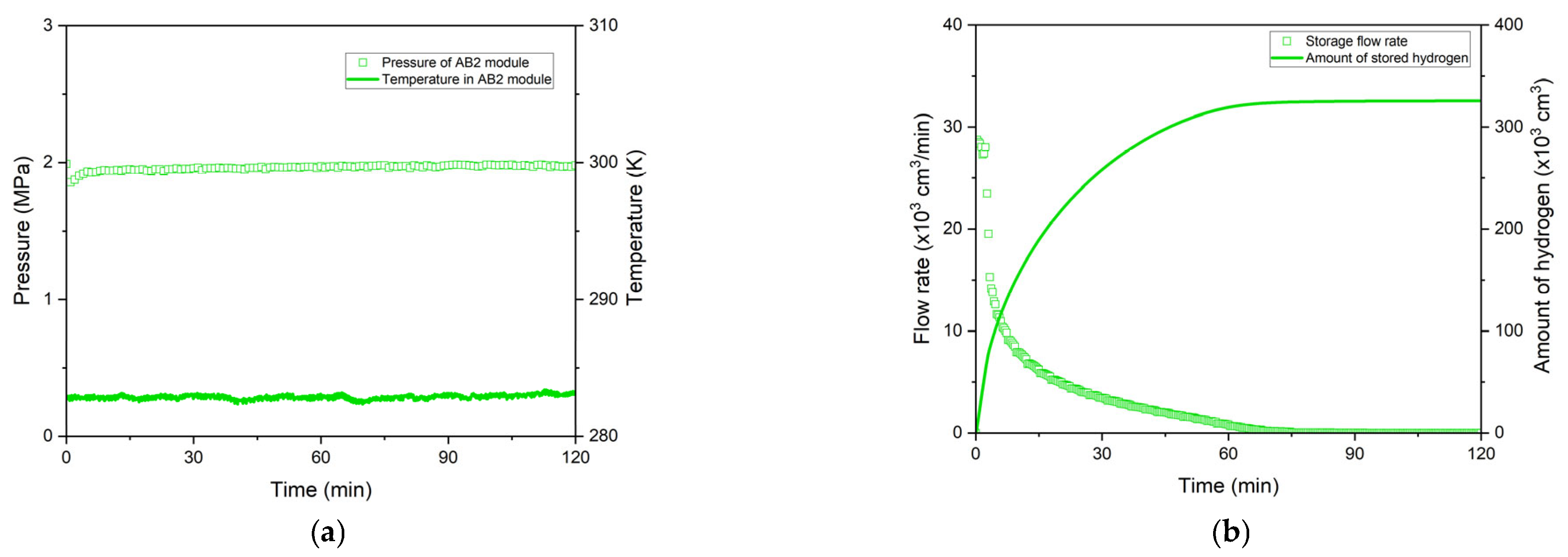
Figure 6 shows the performance of the AB2 module during hydrogen storage. During hydrogen storage, the temperature of the HTM flowing through the AB2 module was maintained at 283 K. The inlet pressure of the AB2 module was controlled at 2.0 MPa, and the hydrogen storage flow rate was controlled not to exceed 30,000 Scm3/min. When the inlet valve was opened, the inlet pressure immediately dropped from 2.0 MPa to 1.8 MPa, and the hydrogen storage flow rate reached 30,000 Scm3/min. This state was kept for approximately 2 min. Thereafter, the inlet pressure gradually increased to its initial value of 2.0 MPa after 60 min, while the hydrogen storage flow rate gradually decreased. Hydrogen storage in the AB2 module was completed after approximately 80 min. The total amount of hydrogen stored in the AB2 module was 325,800 Scm3.
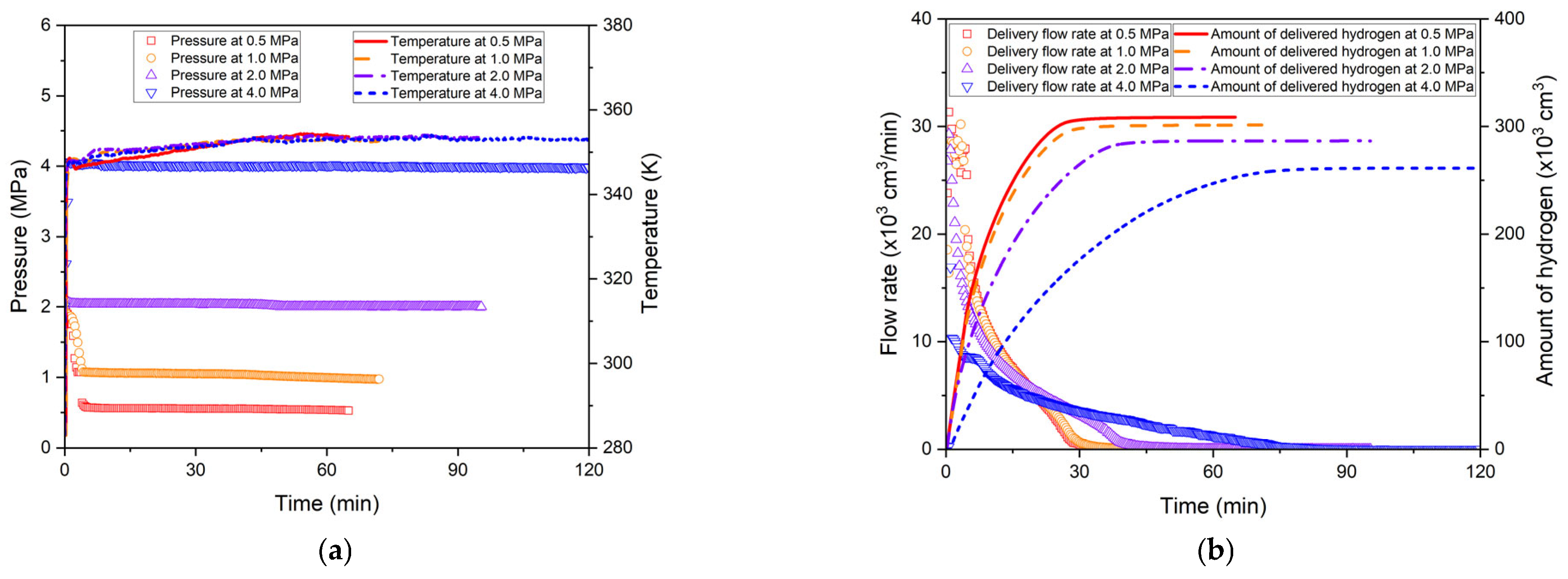
Figure 7 shows the performance of the AB2 module during hydrogen delivery. Before hydrogen delivery, the AB2 module stored hydrogen at 2.0 MPa and 283 K. The hydrogen delivery flow rate was controlled not to exceed 30,000 Scm3/min. The HTM was shifted from low-temperature HTM at 283 K to high-temperature HTM at 353 K. The outlet pressure of the AB2 module was controlled at 0.5, 1.0, 2.0, and 4.0 MPa. At all outlet pressure conditions, the temperature of the HTM flowing through the AB2 module showed a similar increase when the HTM was shifted, increasing from 283 K to 347 K within 1 min and reaching 353 K within 40 min. At outlet pressures of 2.0 and 4.0 MPa, the pressure of the AB2 module increased and reached the target outlet pressure within 1 min. The hydrogen delivery flow rate reached 29,000 Scm3/min and 17,000 Scm3/min for 1 min at 2.0 and 4.0 MPa, respectively. Thereafter, the hydrogen delivery flow rate gradually decreased, and hydrogen delivery was completed after 45 min and 80 min at 2.0 and 4.0 MPa, respectively. At outlet pressures of 0.5 and 1.0 MPa, the pressure of the AB2 module remained relatively high because the hydrogen delivery flow rate was controlled to 30,000 Scm3/min, and then reached the target outlet pressure after approximately 4 min. Thereafter, the hydrogen delivery flow rate gradually decreased, and hydrogen delivery was completed after 32 min and 35 min at 0.5 and 1.0 MPa, respectively. The total amount of hydrogen delivered from the AB2 module was 325,200 Scm3, 308,600 Scm3, 286,600 Scm3, and 261,100 Scm3 at outlet pressures of 0.5, 1.0, 2.0, and 4.0 MPa, respectively.

3.4. Performance of MHSS

3.4.1. Preparation of MHSS

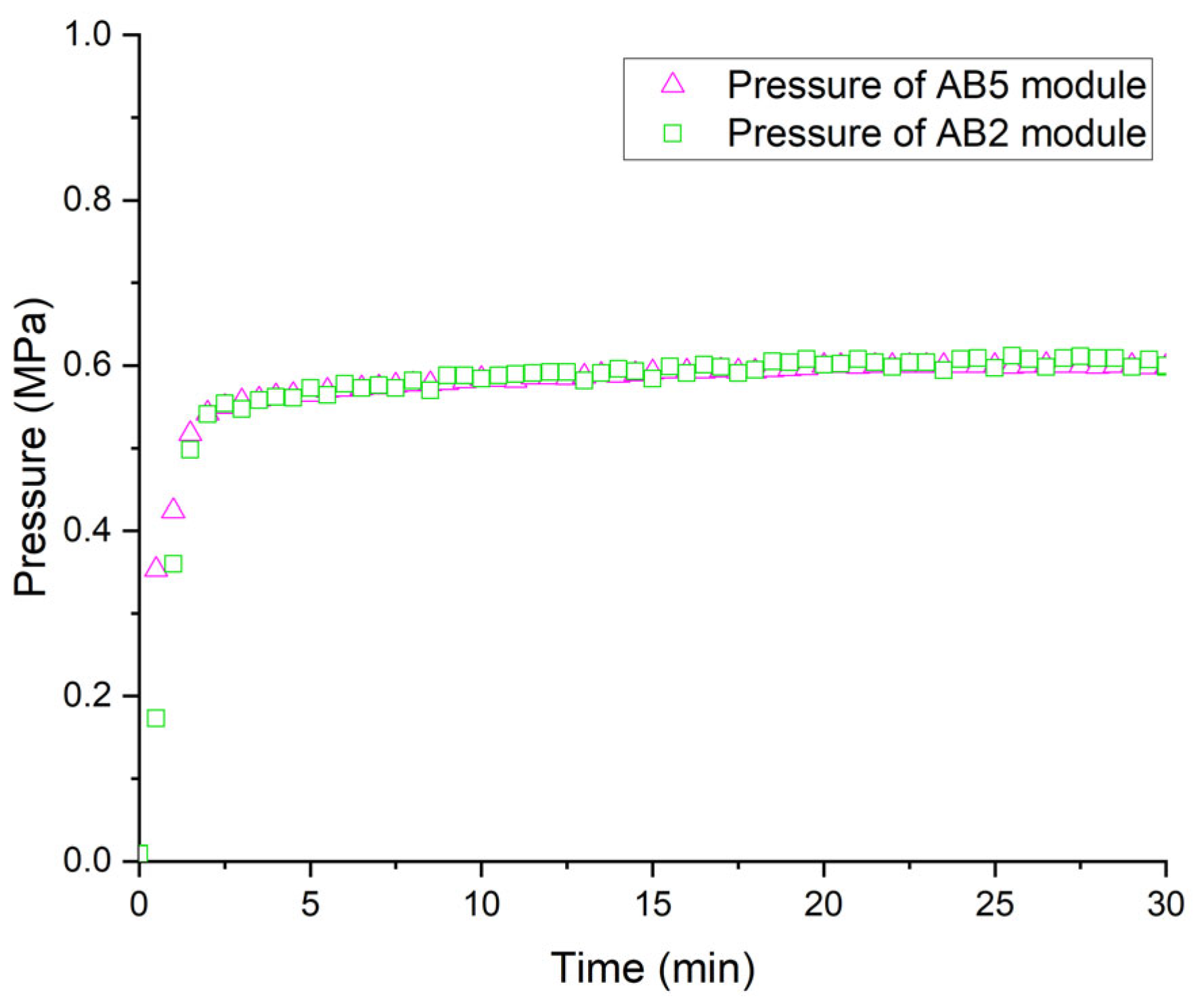
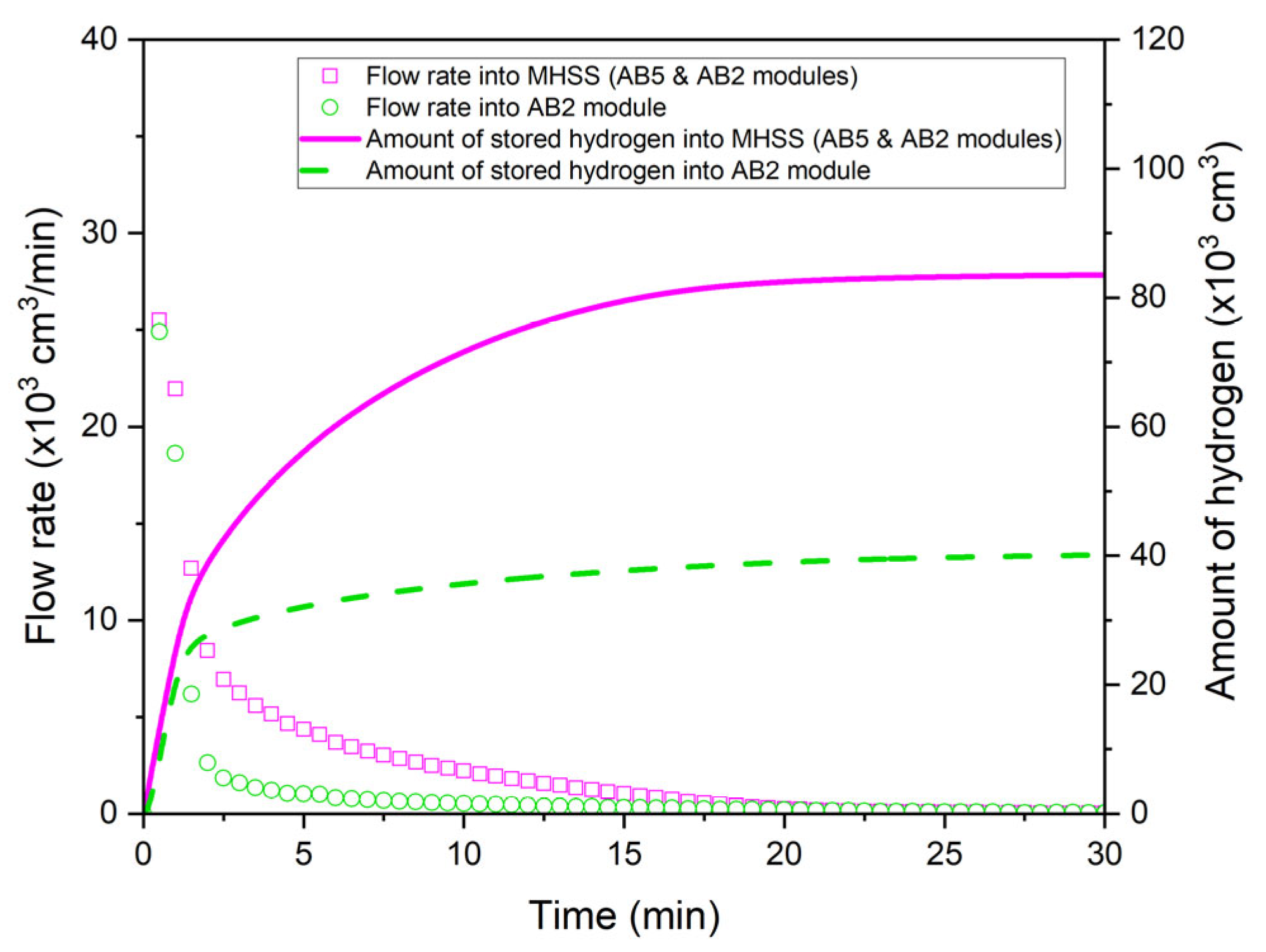
Figure 8 shows the pressure variation in the AB5 and AB2 modules during MHSS preparation. Figure 9 shows the volumetric flow rates of hydrogen entering the MHSS and the AB2 module and the amounts of hydrogen stored in the MHSS and the AB2 module during MHSS preparation. The amount of hydrogen stored in the MHSS represents the total amount stored in AB5 module–A, AB5 module–B, and the AB2 module. The inlet pressure of the MHSS was controlled at 0.6 MPa, and the volumetric flow rate entering the MHSS was controlled not to exceed 30,000 Scm3/min. The temperatures of the HTM flowing through AB5 module–A, AB5 module–B, and the AB2 module were maintained at 353 K, 283 K, and 283 K, respectively. When the inlet valve of the MHSS was opened, the pressures of the AB5 and AB2 modules gradually increased and reached the target outlet pressure after 20 min. The hydrogen storage flow rate entering the MHSS immediately reached 30,000 Scm3/min and then gradually decreased. The hydrogen storage flow rate entering the AB2 module reached 24,000 Scm3/min within 1 min and then gradually decreased. Hydrogen storage in the MHSS and the AB2 module during preparation was completed within 30 min, and the total amount of hydrogen stored in the MHSS and the AB2 module was 84,000 Scm3 and 41,000 Scm3, respectively. These results indicate that only a limited amount of hydrogen can be stored in the AB2 module at an inlet pressure of 0.6 MPa, and that additional hydrogen storage in the AB2 module requires pressure-upgraded hydrogen transferred from the AB5 module.

3.4.2. Operation of MHSS

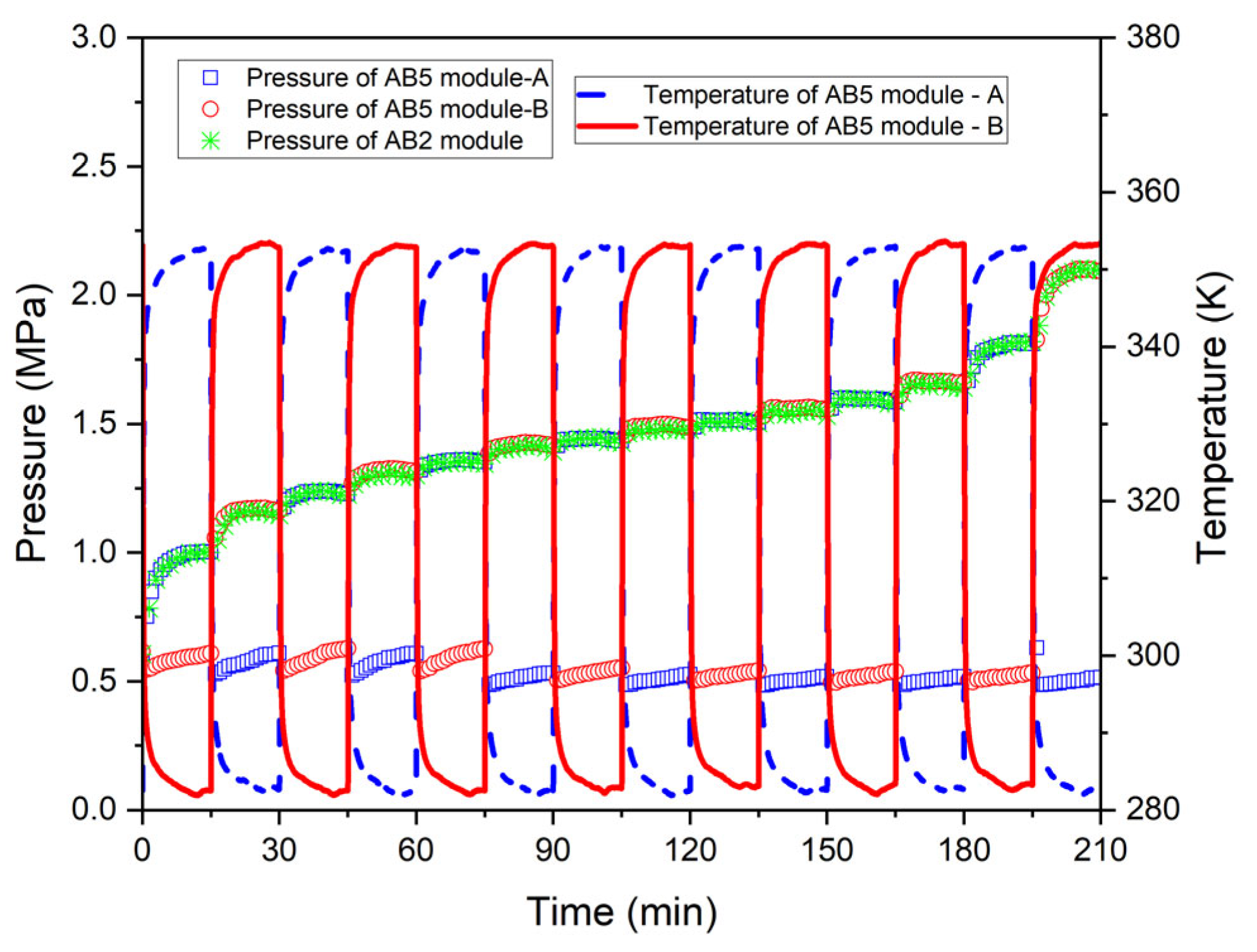
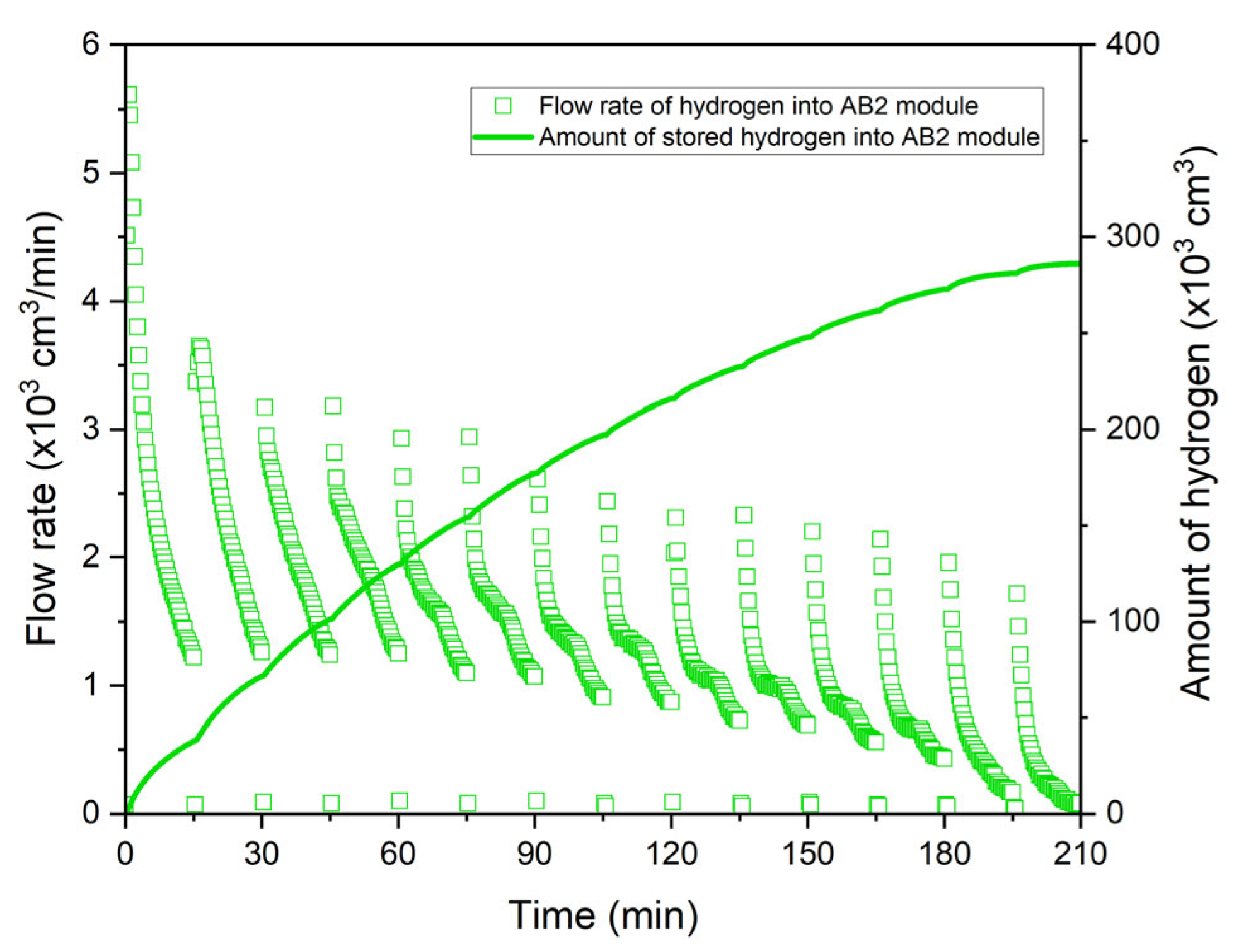
Figure 10 and Figure 11 show the performance of the MHSS during operation. Before the operation, the AB5 and AB2 modules were filled with hydrogen at 0.6 MPa. The inlet pressure of the MHSS was controlled at 0.6 MPa. The HTM at different temperatures, 353 K and 283 K, was set to be shifted between the AB5 sub-modules every 15 min. The temperature of the HTM flowing through the AB2 module was maintained at 283 K. The AB5 sub-modules, AB5 module–A and –B, repeatedly stored hydrogen at pressures below 0.6 MPa and released hydrogen into the AB2 module. The pressure of the AB2 module varied with the increases in the pressures of the AB5 sub-modules, AB5 module–A and –B, which were heated to 353 K by the HTM. The hydrogen storage flow rate into the AB2 module was 5600 Scm3/min at the beginning of the MHSS operation. As hydrogen storage in the AB2 module progressed, the driving force for hydrogen transfer decreased because the pressure difference between the plateau pressures of the AB5– and AB2–type metal hydrides became smaller, resulting in a gradual decrease in the volumetric hydrogen storage flow rate. The total amount of hydrogen stored in the AB2 module through the MHSS operation was 286,400 Scm3 for 210 min. The total amount of hydrogen stored in the AB2 module during MHSS preparation and operation was 327,400 Scm3, which is almost the same amount of hydrogen stored in the standalone AB2 module, 325,800 Scm3.

4. Conclusions

A multipurpose hydrogen storage system (MHSS) using AB5– and AB2–type metal hydrides was proposed and experimentally evaluated. The pressure–composition–temperature (PCT) curves of the fully activated AB5– and AB2–type metal hydrides were obtained. Each standalone AB5 sub-module stored 26,000 Scm3 of hydrogen at 0.6 MPa and 283 K for 15 min and released the same amount of hydrogen at 1.5 MPa and 353 K for 30 min. The standalone AB2 module stored 325,800 Scm3 of hydrogen at 2.0 MPa and 283 K for 80 min and delivered 325,200 Scm3, 308,600 Scm3, 286,600 Scm3, and 261,100 Scm3 of hydrogen at 353 K and outlet pressures of 0.5, 1.0, 2.0, and 4.0 MPa, respectively. The AB5–type metal hydride was suitable for increasing low-pressure hydrogen storage and pressure, whereas the AB2–type metal hydride was suitable for storing a large quantity of hydrogen and delivering hydrogen at higher pressures. Assuming that waste heat was continuously available, the integrated MHSS was tested to evaluate hydrogen transfer from the AB5 module to the AB2 module. During the preparation process, the MHSS stored 84,000 Scm3 of hydrogen, of which 41,000 Scm3 was stored in the AB2 module, at an inlet pressure of 0.6 MPa for 30 min. During operation, the MHSS stored an additional 286,400 Scm3 of hydrogen in the AB2 module over 210 min at an inlet pressure of 0.6 MPa by shifting the HTM every 15 min. The total amount of hydrogen stored in the AB2 module was 327,400 Scm3, which was comparable to that stored in the standalone AB2 module (325,800 Scm3). The proposed MHSS can be used as a flexible hydrogen storage and delivery system for storing low-pressure hydrogen and delivering it over a wider pressure range.

Author Contributions

Conceptualization, P.L. and K.J.; methodology, C.P.; validation, K.J., K.K., J.K. and S.J.; formal analysis, P.L.; investigation, K.B.L., K.K., J.K. and S.J.; resources, C.P. and K.B.L.; data curation, P.L.; writing—original draft preparation, P.L.; writing—review and editing, K.J., C.P. and K.B.L.; visualization, P.L.; supervision, K.J., C.P. and K.B.L.; project administration, K.J. and C.P.; funding acquisition, K.J. All authors have read and agreed to the published version of the manuscript.

Funding

This research was supported by the National Research Council of Science & Technology (NST) grant by the Korea government (MSIT) (No. GTL24052-100).

Data Availability Statement

The data supporting the reported results can be obtained by contacting the first author via email.

Acknowledgments

This research was supported by the National Research Council of Science & Technology (NST) grant by the Korea government (MSIT) (No. GTL24052-100).

Conflicts of Interest

The authors declare no conflicts of interest.

References

  1. Larpruenrudee, P.; Bennett, N.S.; Luo, Z.; Hossain, M.J.; Haque, N.; Sauret, E.; Fitch, R.; Islam, M.S. A review on the overall performance of metal hydride-based hydrogen storage systems. Energies 2025, 18, 1291. [Google Scholar] [CrossRef] [Scilit]
  2. Nivedhitha, K.S.; Beena, T.; Banapurmath, N.R.; Umarfarooq, M.A.; Ramasamy, V.; Soudagar, M.E.M.; Ağbulut, U. Advances in hydrogen storage with metal hydrides: Mechanisms, materials, and challenges. Int. J. Hydrogen Energy 2024, 61, 1259–1273. [Google Scholar] [CrossRef] [Scilit]
  3. Park, C.S.; Kim, J.W.; Bae, K.K.; Jeong, S.U.; Kang, K.S. Investigation of thermal management parameters of metal hydride based hydrogen storage system. J. Hydrog. New Energy 2018, 29, 251–259. [Google Scholar] [CrossRef]
  4. Jung, K.; Yun, S.H.; Chung, H. Physicochemical conditions for effective hydrogen isotope storage and delivery in a uranium bed. J. Radioanal. Nucl. Chem. 2018, 316, 947–953. [Google Scholar] [CrossRef] [Scilit]
  5. Sakintuna, B.; Lamari-Darkrim, F.; Hirscher, M. Metal hydride materials for solid hydrogen storage: A review. Int. J. Hydrogen Energy 2007, 32, 1121–1140. [Google Scholar] [CrossRef] [Scilit]
  6. Schlapbach, L.; Züttel, A. Hydrogen-storage materials for mobile applications. Nature 2001, 414, 353–358. [Google Scholar] [CrossRef] [Scilit] [PubMed]
  7. Mańka, M.; Kinoshita, T.; Nowak, A.; Ludwik, A.; Klimkowicz, A.; Takasaki, A.; Gondek, Ł. Tuning Hydrogen Storage Properties in La1−xYxNi4.5Cu0.5 (x = 0.1; 0.2; 0.3; 0.4; 0.5) Alloys. Energies 2024, 17, 71. [Google Scholar]
  8. Zhang, X.; Li, B.; Wang, L.; Xiong, W.; Li, J.; Zhou, S.; Xu, J.; Zhao, Y.; He, X.; Yan, H. Hydrogen storage properties of AB2 type Ti–Zr–Cr–Mn–Fe based alloys. Int. J. Hydrogen Energy 2024, 51, 193–201. [Google Scholar]
  9. Joubert, J.M.; Latroche, M.; Cerny, R.; Percheron-Guegan, A.; Yvon, K. Hydrogen cycling induced degradation in LaNi5–type materials. J. Alloys Compd. 2002, 330, 208–214. [Google Scholar]
  10. Scarpati, G.; Frasci, E.; Di Ilio, G.; Jannelli, E. A comprehensive review on metal hydrides-based hydrogen storage systems for mobile applications. J. Energy Storage 2024, 102, 113934. [Google Scholar] [CrossRef] [Scilit]
  11. Bououdina, M.; Soubeyroux, J.L.; de Rango, P.; Fruchart, D. Phase stability and neutron diffraction studies of the laves phase compounds Zr(Cr1−xMox)2 with 0.0 <x <0.5 and their hydrides. Int. J. Hydrogen Energy 2000, 25, 1059–1068. [Google Scholar]
  12. Bououdina, M.; Grant, D.; Walker, G. Review on hydrogen absorbing materials—Structure, microstructure and thermodynamic properties. Int. J. Hydrogen Energy 2006, 31, 177–182. [Google Scholar] [CrossRef] [Scilit]
  13. Chandra, S.; Sharma, P.; Muthukumar, P.; Tatiparti, S.S.V. Experimental hydrogen sorption study on a LaNi5–based 5 kg reactor with novel conical fins and water tubes and its numerical scale-up through a modular approach. Int. J. Hydrogen Energy 2023, 48, 37872–37885. [Google Scholar]
  14. Sunku Prasad, J.; Muthukumar, P. Performance and Energy Efficiency of a Solid-state Hydrogen Storage System: An Experimental Study on La0.7Ce0.1Ca0.3Ni5. Appl. Therm. Eng. 2022, 216, 119030. [Google Scholar] [CrossRef] [Scilit]
  15. Klopčič, N.; Grimmer, I.; Winkler, F.; Sartory, M.; Trattner, A. A review on metal hydride materials for hydrogen storage. J. Energy Storage 2023, 72, 108456. [Google Scholar] [CrossRef] [Scilit]
  16. Bowman, R.C.; Fultz, B. Metallic hydrides I: Hydrogen storage and other gas–phase applications. MRS Bull. 2002, 27, 688–693. [Google Scholar]
  17. Sánchez, A.R.; Klein, H.P.; Groll, M. Expanded graphite as heat transfer matrix in metal hydride beds. Int. J. Hydrogen Energy 2003, 28, 515–527. [Google Scholar] [CrossRef] [Scilit]
Figure 1. Schematic diagram of the multipurpose hydrogen storage system.
Energies 19 03010 g001
Figure 2. Activation of the metal hydrides: (a) AB5–type metal hydride; (b) AB2–type metal hydride.
Energies 19 03010 g002
Figure 3. PCT curves of the metal hydrides: (a) AB5–type metal hydride; (b) AB2–type metal hydride.
Energies 19 03010 g003
Figure 4. Storage performance of AB5 module: (a) pressure and temperature; (b) volumetric flow rate and amount of available hydrogen.
Energies 19 03010 g004
Figure 5. Release performance of AB5 module: (a) pressure and temperature; (b) volumetric flow rate and amount of available hydrogen.
Energies 19 03010 g005
Figure 6. Storage performance of AB2 module: (a) pressure and temperature; (b) volumetric flow rate and amount of stored hydrogen.
Energies 19 03010 g006
Figure 7. Delivery performances of AB2 module at different deliver pressures: (a) pressure and temperature; (b) volumetric flow rate and amount of delivered hydrogen.
Energies 19 03010 g007
Figure 8. Pressures during MHSS preparation.
Energies 19 03010 g008
Figure 9. Volumetric flow rates and amounts of stored hydrogen during MHSS preparation.
Energies 19 03010 g009
Figure 10. Pressures and temperatures during MHSS operation.
Energies 19 03010 g010
Figure 11. Volumetric flow rate and amount of stored hydrogen during MHSS preparation.
Energies 19 03010 g011
Disclaimer/Publisher’s Note: The statements, opinions and data contained in all publications are solely those of the individual author(s) and contributor(s) and not of MDPI and/or the editor(s). MDPI and/or the editor(s) disclaim responsibility for any injury to people or property resulting from any ideas, methods, instructions or products referred to in the content.