Modeling of Traction Power Supply Systems Equipped with Renewable Energy Sources

 ,
,  ,
,  , ,
, ,  ,
,  and
and
Abstract
1. Introduction
- Providing electricity to facilities located in regions with unstable or insufficient power supply—In remote or mountainous areas where the main power grid is either absent or prone to frequent outages, DG units based on local renewable resources can serve as primary or backup sources. This is particularly relevant for signaling systems, communication devices, and maintenance infrastructure.
- Boosting the reliability of power supply to essential consumers, whose shutdown during system accidents can lead to serious consequences—First-category consumers (e.g., traffic control systems, emergency lighting, and critical switching equipment) require near-zero downtime. DG plants can provide uninterruptible power through islanded operation or seamless transition during grid faults, thereby reducing the risk of cascading failures and ensuring passenger safety.
- Creating transport and energy corridors that integrate railway routes, high-voltage power lines, and communication lines—Such corridors represent a novel infrastructure concept where railway rights-of-way host not only catenary and signaling systems but also renewable DG installations (e.g., wind turbines along embankments or solar panels on noise barriers). This synergy reduces land use conflicts, allows shared maintenance access, and enables direct supply of green energy to traction substations, thus lowering transmission losses and dependency on external grids.
- Powering individual transport facilities [5,6,7]—Stand-alone railway objects, such as remote crossing points, block posts, track circuit huts, and station buildings, can be supplied by small-scale DG plants sized to match local loads. This eliminates the need for long low-voltage feeder lines, which are costly and prone to faults, while also enabling autonomous operation and real-time load management through smart control systems.
2. Literature Review
- Traction loads significantly deteriorate power quality and negatively affect the operation of electrical networks serving non-traction consumers that intend to use RES-based DG plants.
- The non-stationary nature of traction loads causes considerable voltage deviations on the 6–10 kV busbars to which RESs are connected.
- The single-phase traction load introduces substantial voltage unbalance, which in some cases significantly exceeds standard limits.
- Rectifier–inverter converters of electric locomotives inject harmonics into the network, increasing the levels of non-sinusoidal distortion.
- Systems approach—determining operating conditions by analyzing the properties and characteristics of complex TPSS and the overall power supply system.
- Versatility—enabling modeling of power supply systems of various structures and designs.
- Comprehensiveness—calculating normal, emergency, and special operating parameters, which is crucial for scenarios such as ice melting on catenary wires.
- General methodological principles have been established for modeling static multi-wire systems, enabling the correct accounting of mutual inductive and capacitive couplings.
- Methods have been developed for modeling multi-wire overhead and cable lines of various designs, including traction networks of electrified railways, new types of power transmission lines, three-phase cable lines, and single-phase cable systems. A methodology and algorithm have been prepared for obtaining model parameters based on reference data and the geometric coordinates of the conductor system.
- Methods have been proposed for modeling single-core single-phase, three-core, and five-core three-phase transformers with arbitrary winding connections and taking into account the configuration of the magnetic system. A methodology and algorithm have been developed for deriving transformer model parameters from reference information.
- A procedure has been created for integrating individual network element models into a unified computational scheme, and the main principles for its visualization have been proposed.
- New methods have been proposed for the analysis of electromagnetic compatibility and electromagnetic safety.
- Methods have been developed for calculating non-sinusoidal operating conditions generated by moving traction loads.
3. Methodology
- -
- Assessment of the impact of renewable energy sources on the quality of electricity;
- -
- Determination of areas of their application in the power supply system;
- -
- Identifying the best locations for renewable energy sources in networks.
- –
- Improving the quality of electricity in the traction network and the external network;
- –
- Boosting energy efficiency by reducing power and energy losses.
4. Modeling Results
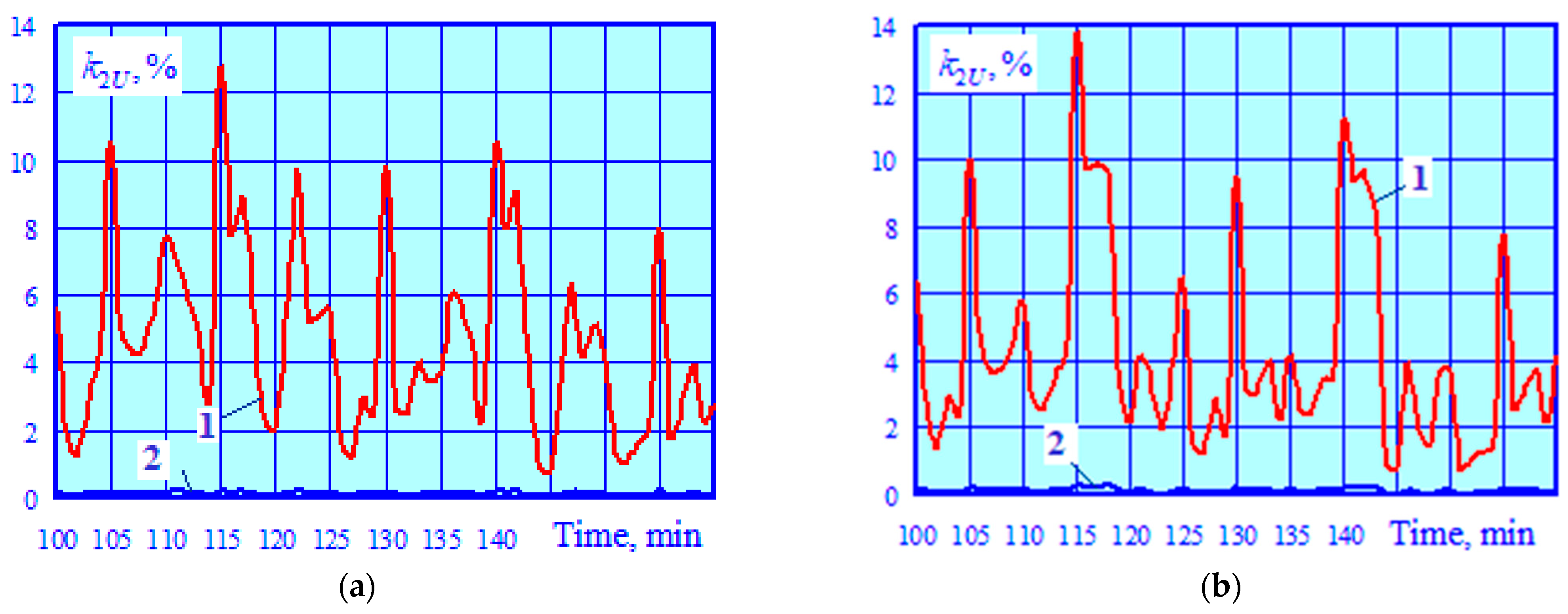
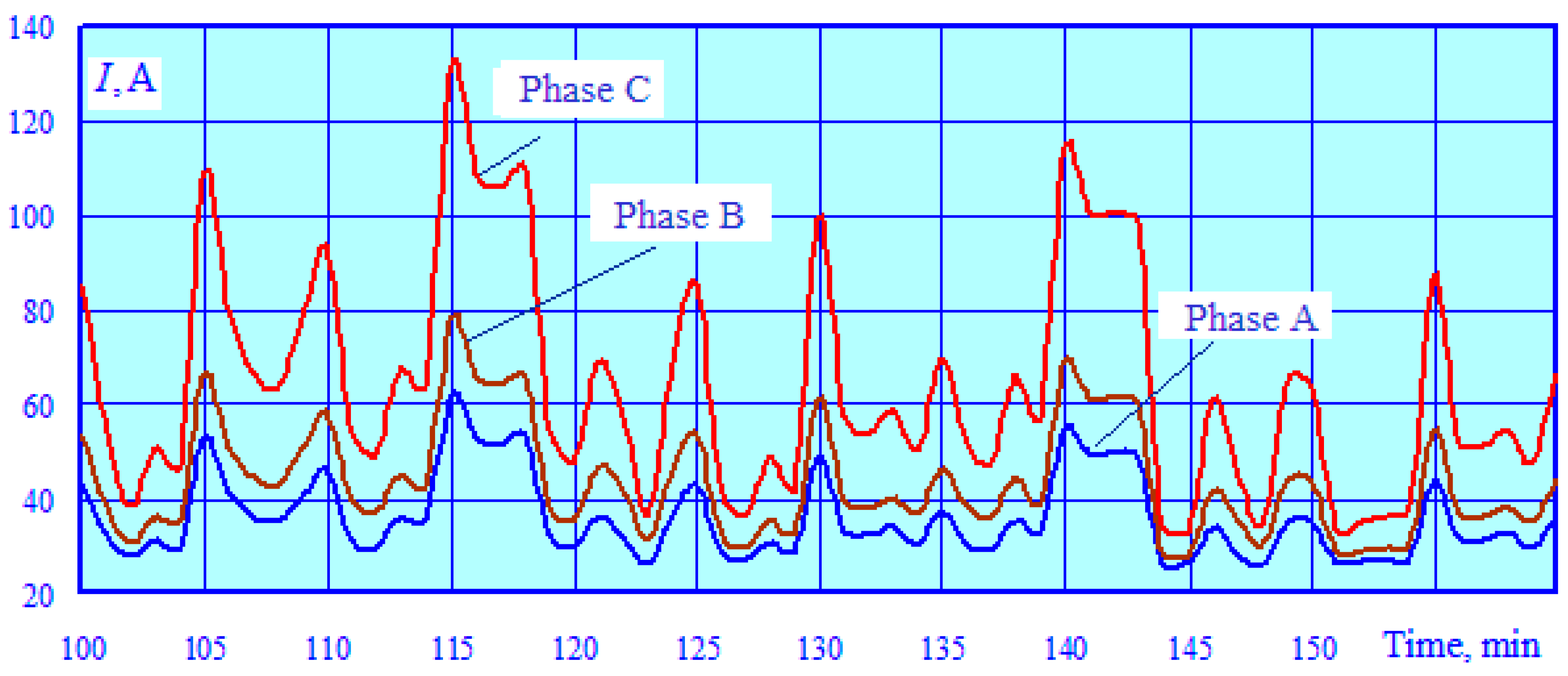
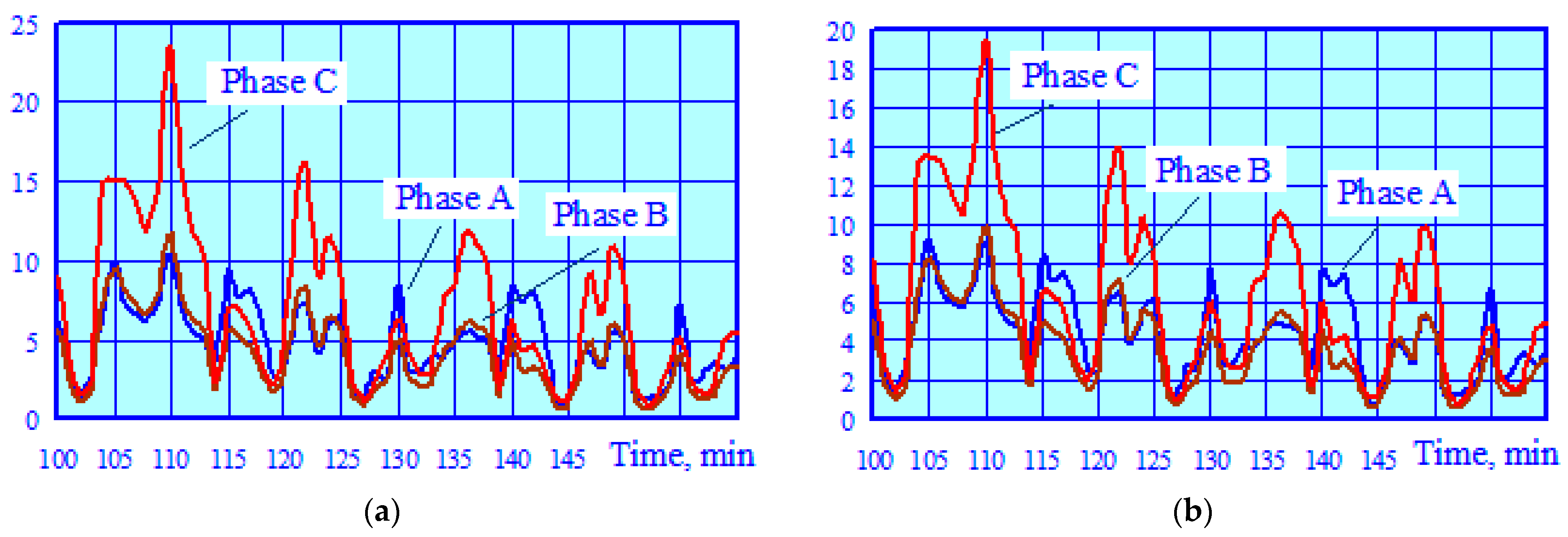
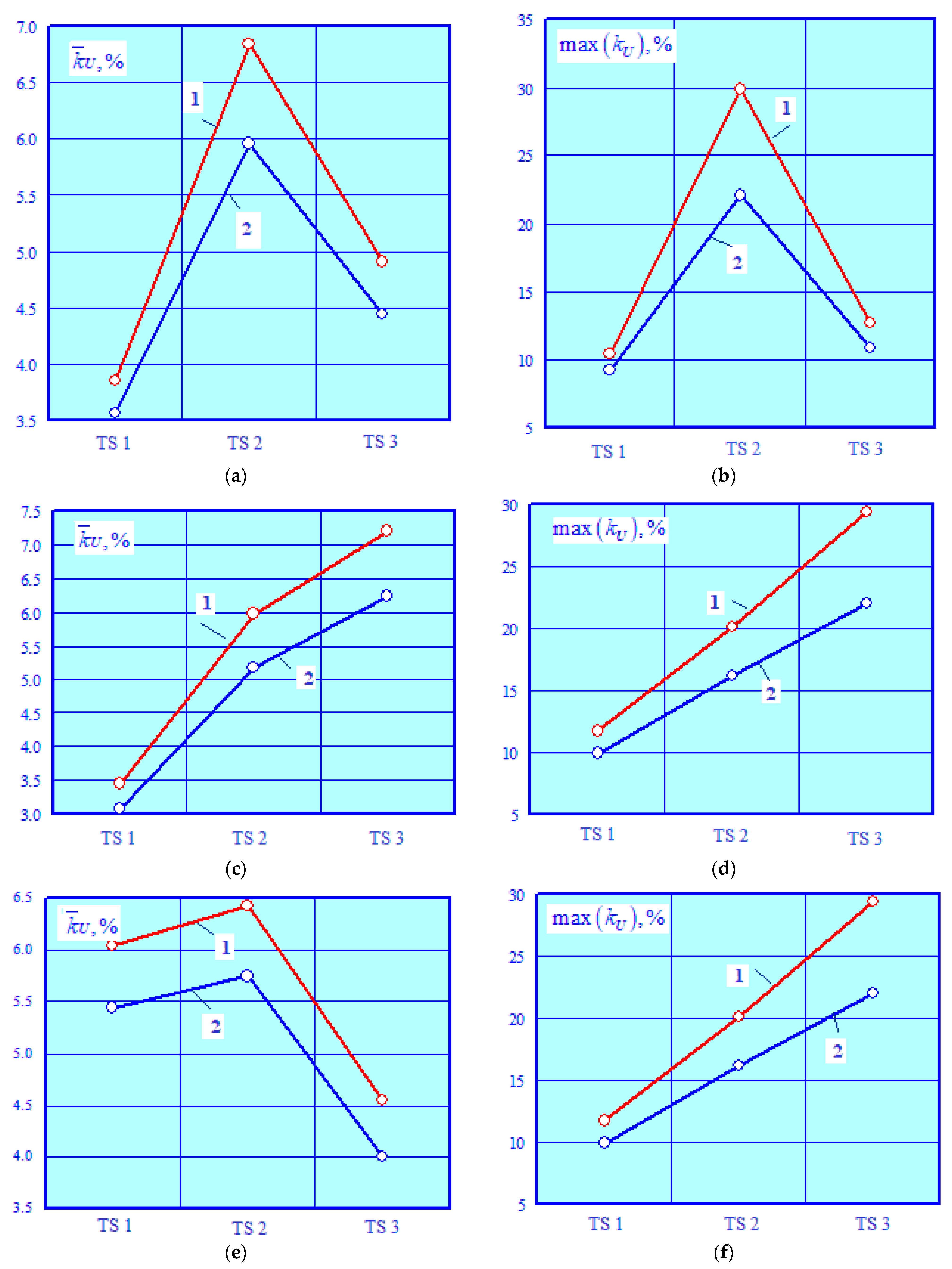
- With RES connected, the unbalance decreases by 25–34%, but it still remains outside the standard range;
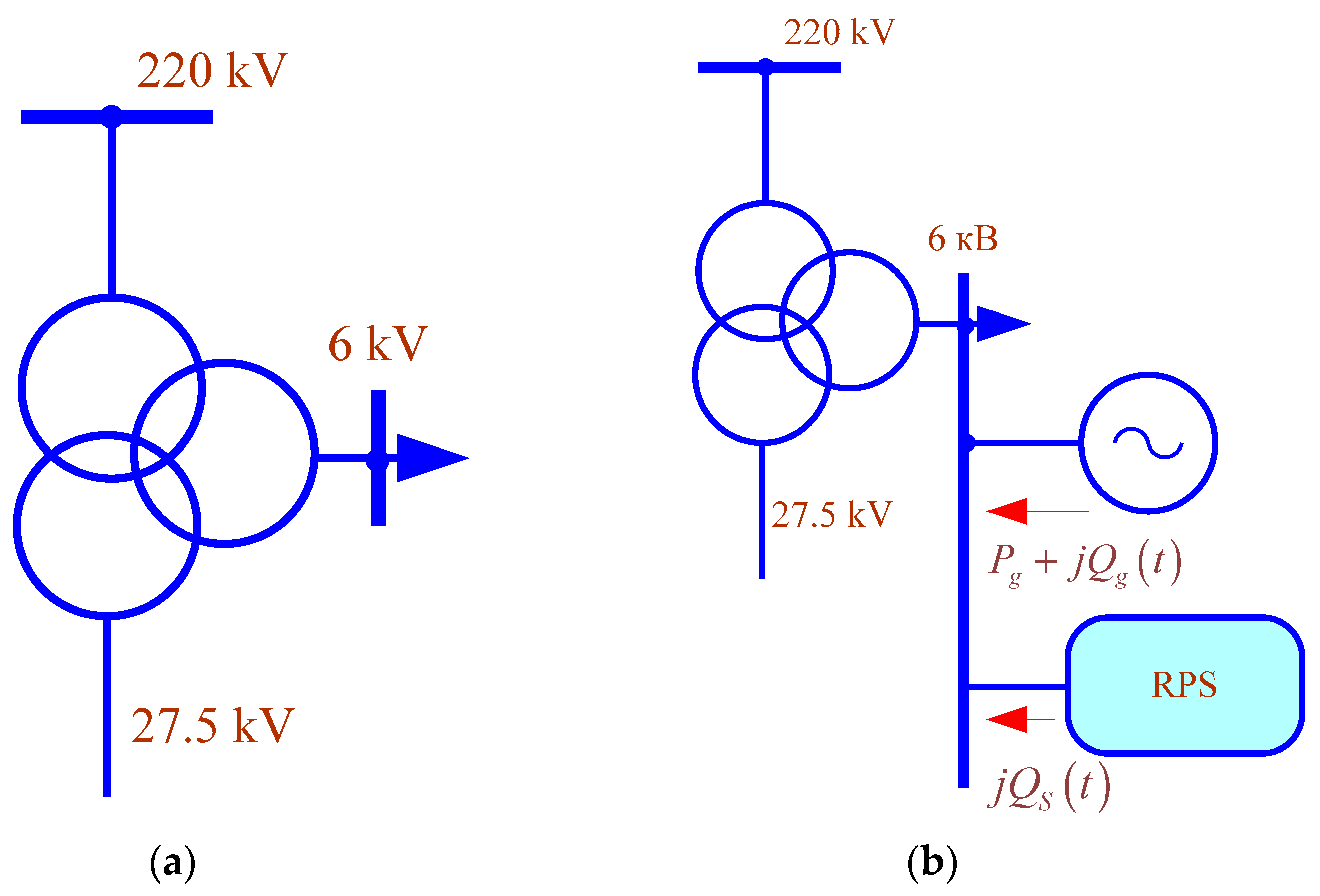
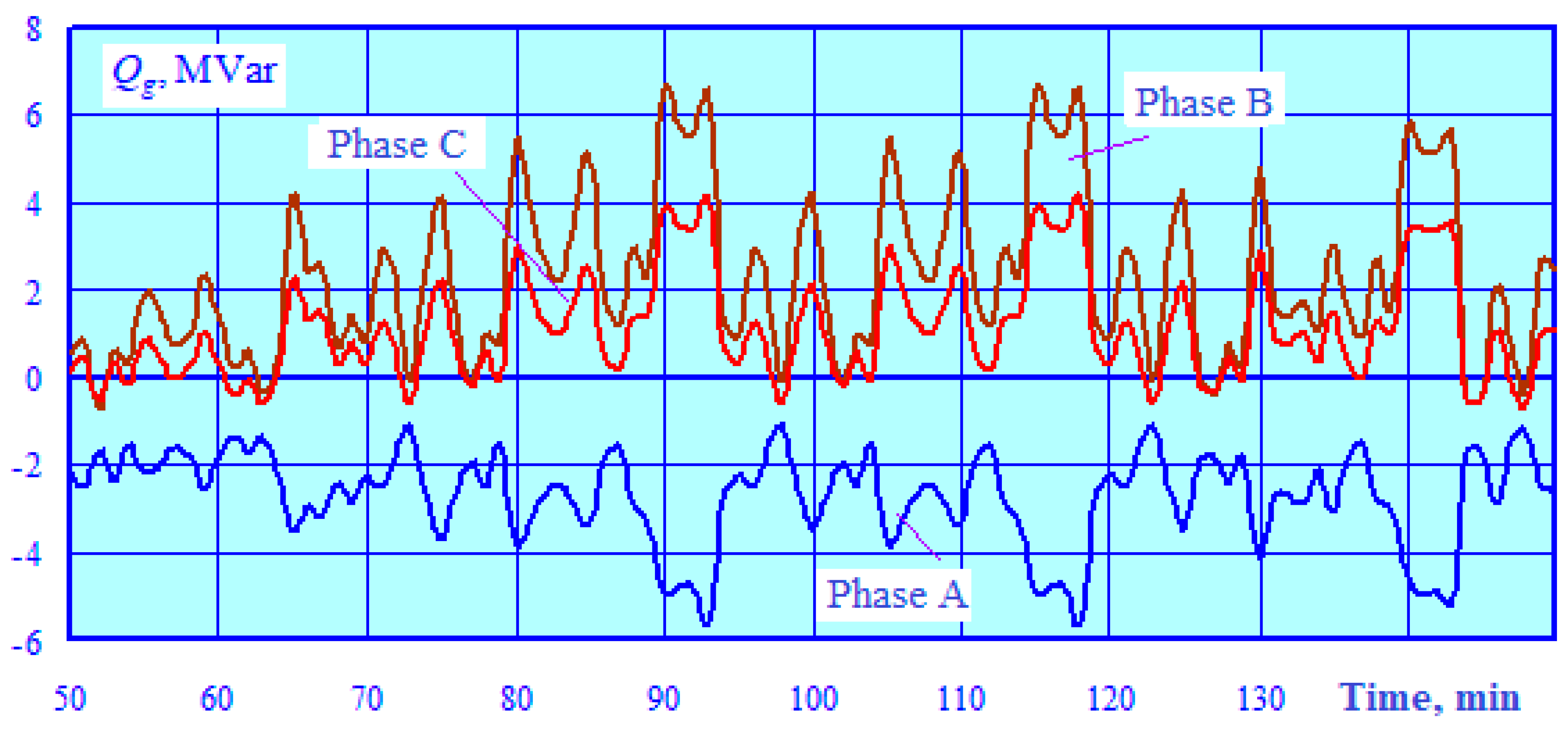
- Compliance with state-standard (GOST) requirements can only be achieved in operating scenario 2 when turning on the RPS with control limits of −6–+10 MVAr (Figure 7).
5. Conclusions
- These renewable energy source technologies can be employed in railway transport to address the following issues:
- Increasing the reliability of power supply to facilities located in regions with an insufficiently developed power grid. This primarily concerns first-category consumers, for whom a power failure can lead to significant damage, accidents, and a threat to human life.
- Providing a third independent source for electric loads of a special group that does not allow interruptions in power supply.
- Creating transport and energy corridors by integrating railway routes and high-voltage power lines.
- Enhancing the efficiency of energy conversion.
- Reducing energy supply costs and radically improving power quality.
- RES models have been developed and implemented in the Fazonord AC-DC software. They provide practical solutions to the following problems:
- Assessing the impact of renewable energy sources on power quality.
- Determining application areas within transport facilities.
- The developed models are also useful for solving complex optimization problems related to selecting rational locations for renewable energy sources.
- Based on the results of digital modeling of the power supply system for a main railway section, the following conclusions can be drawn:
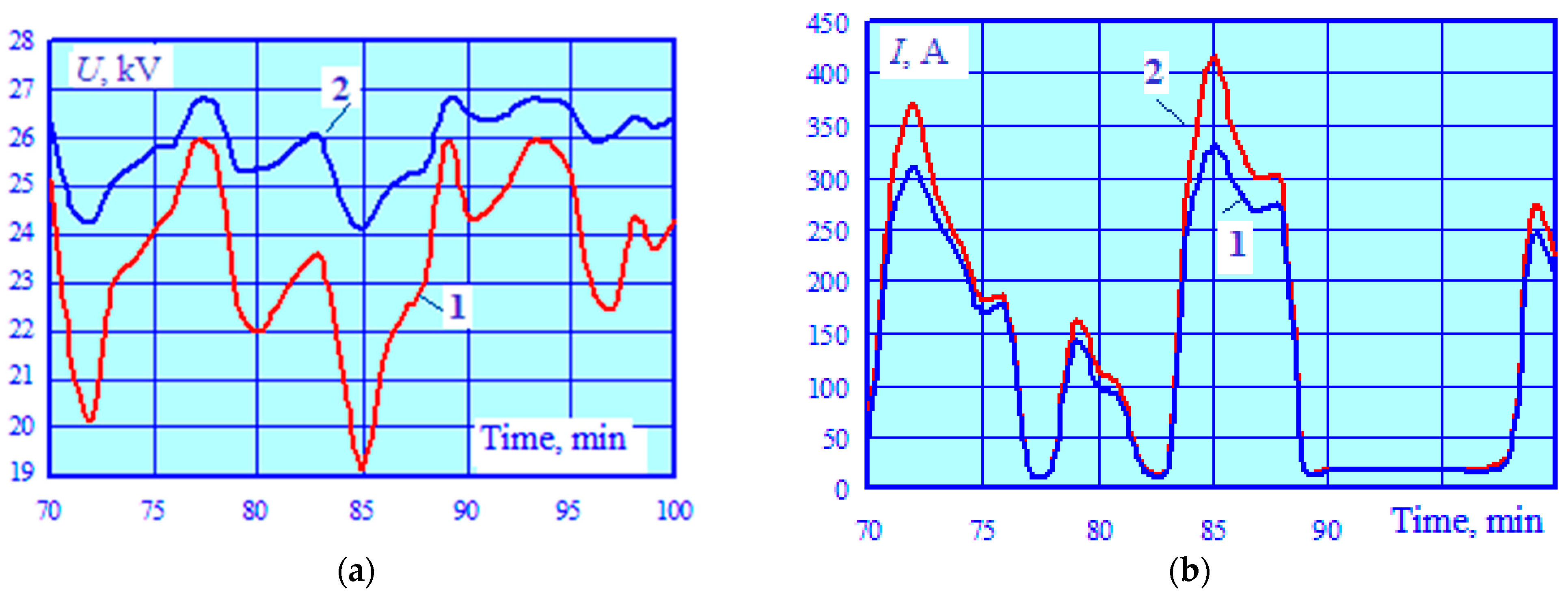
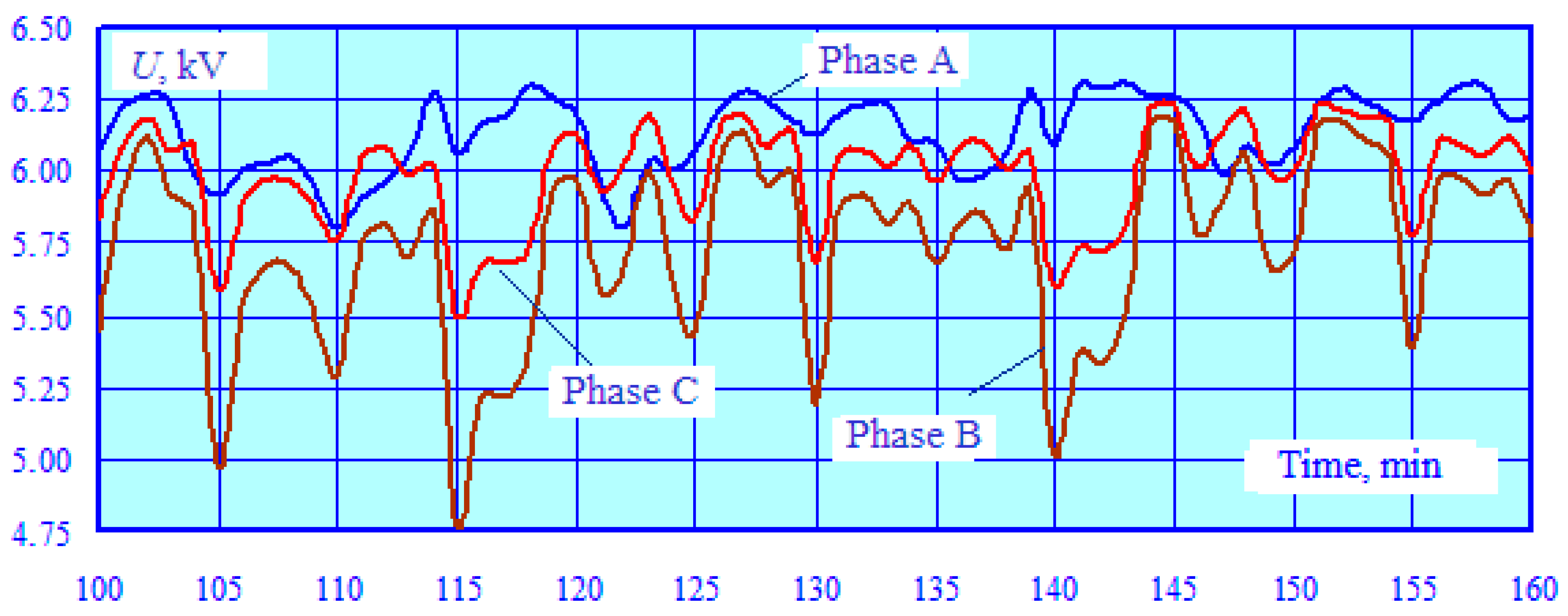
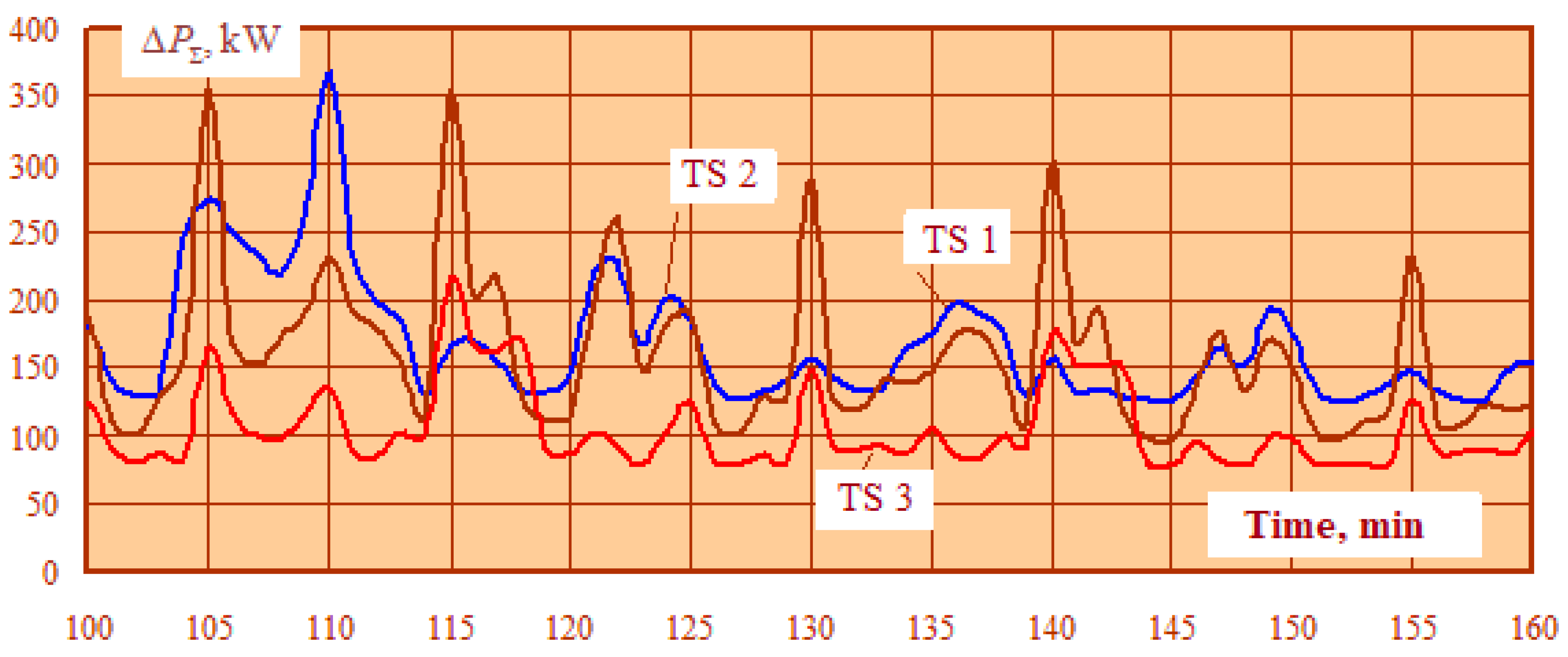
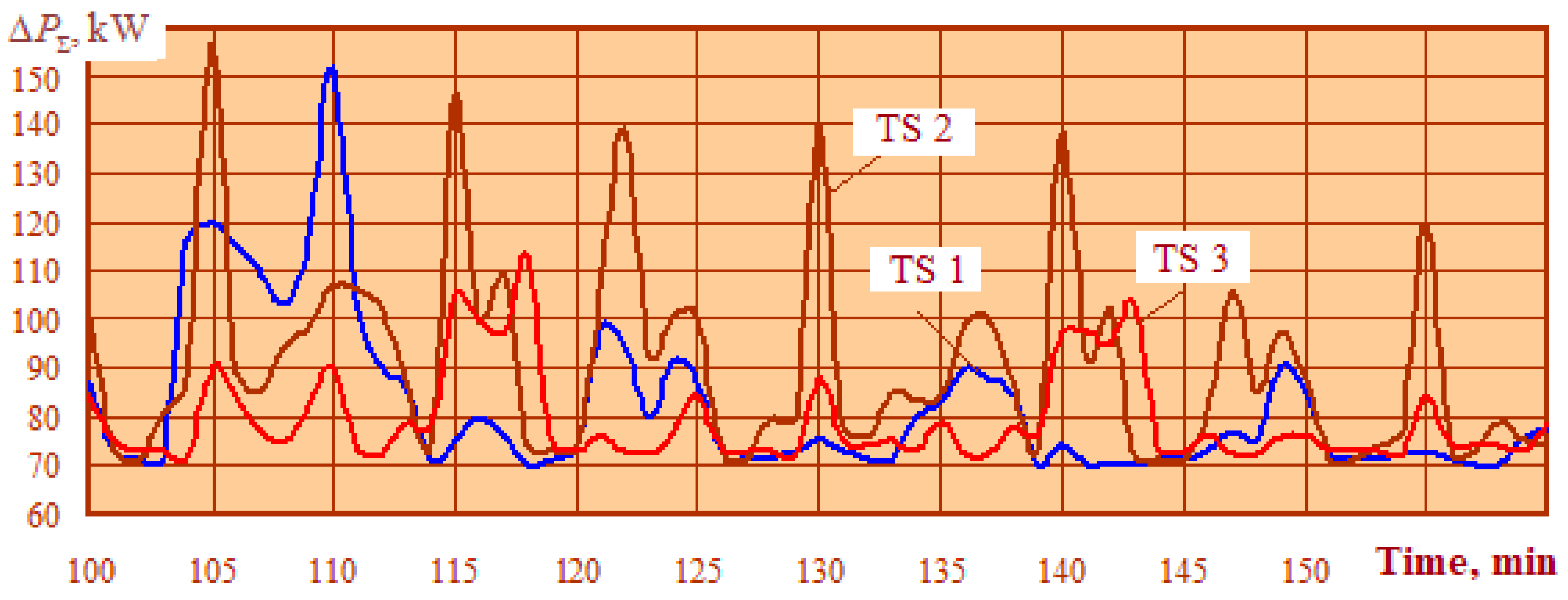
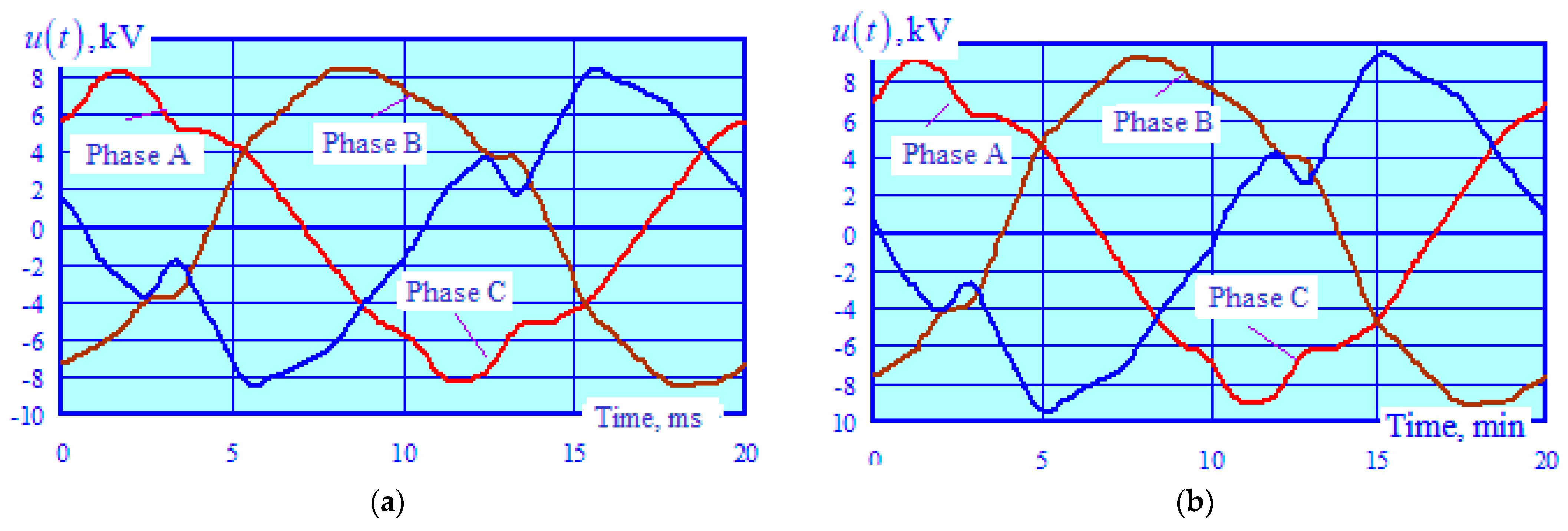
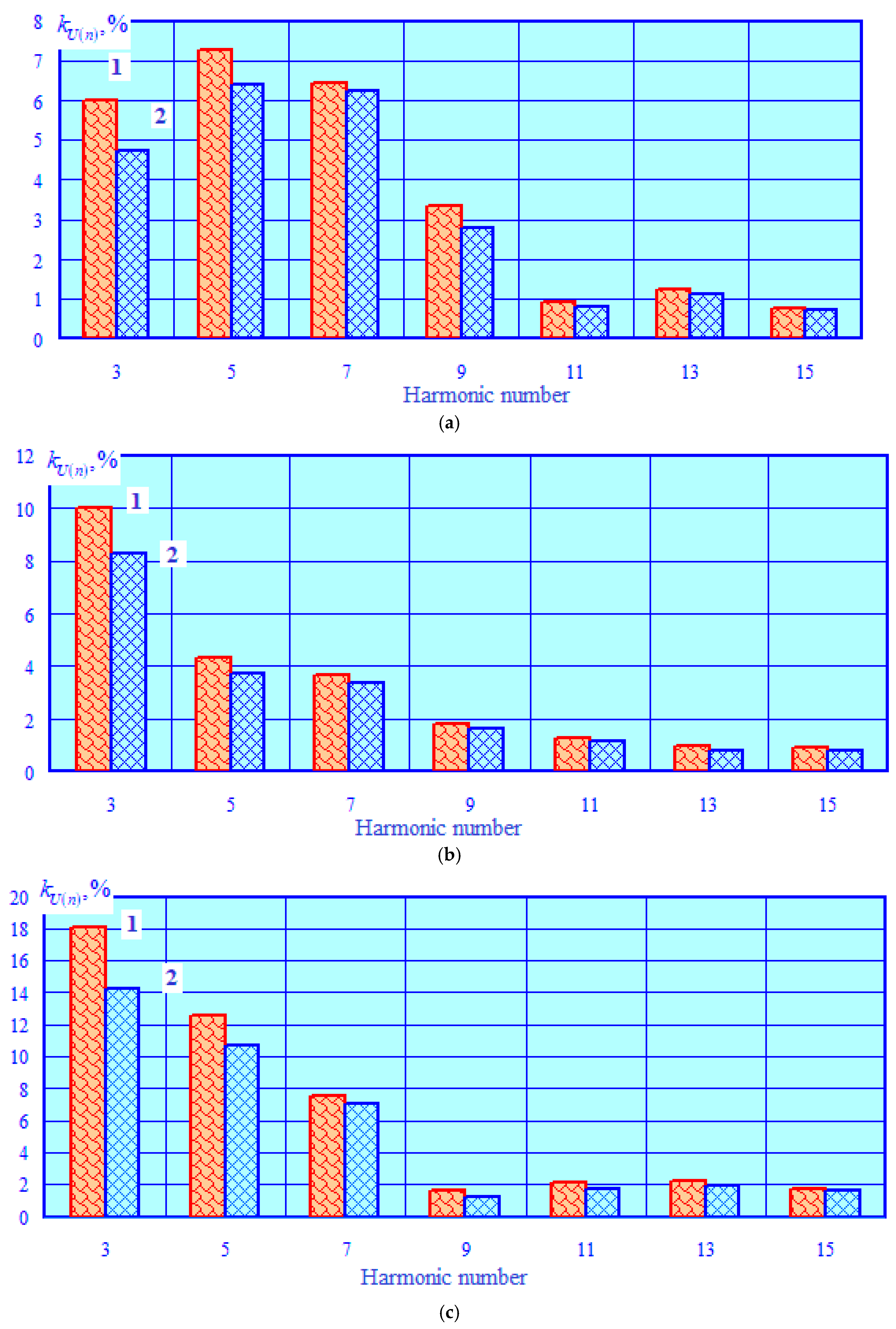
- The use of renewable energy sources makes it possible to stabilize voltage on the current collectors of electric locomotives and reduce the levels of unbalance and non-sinusoidal distortion on the 6 kV traction substation busbars. In the absence of renewable energy sources, the maximum values of the k2U coefficients exceed the maximum permissible value of 4% by more than three times. When renewable energy sources are switched on, the asymmetry decreases by 25–34%, but remains outside the regulatory range. Compliance with standard requirements can only be achieved when reactive power sources with control limits of −6 to +10 MVAr are switched on. In the presence of renewable energy sources, the average values of the total harmonic distortion coefficients decrease by 7–14%, and the maximum values decrease by 11–26%. Full compliance with the standard for harmonic distortion is possible only when active harmonic filters are used.
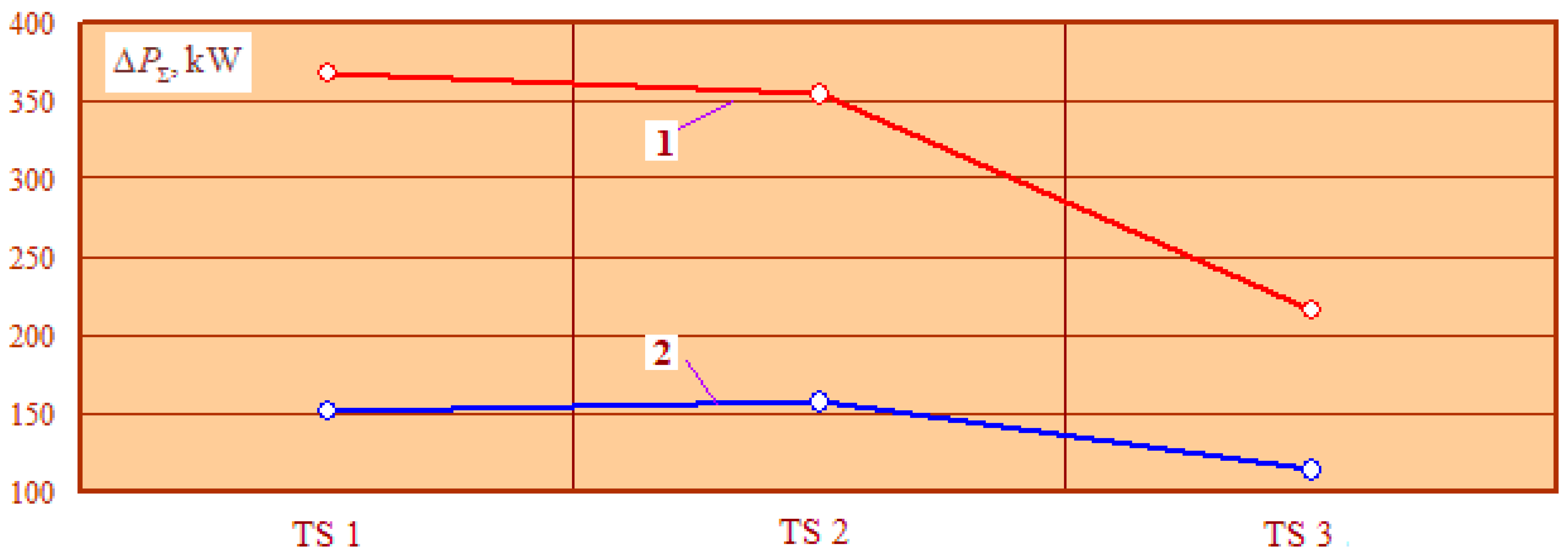
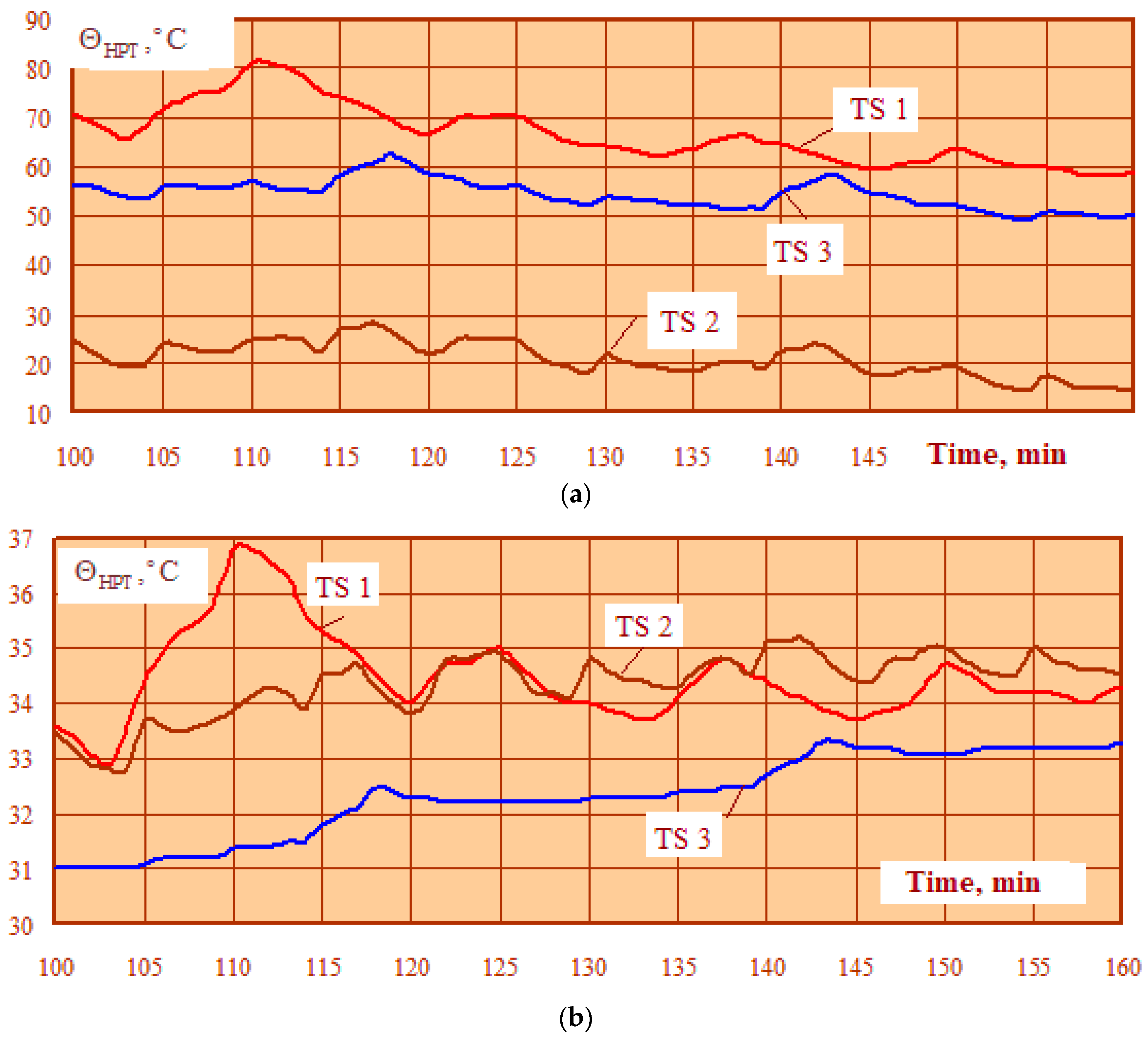
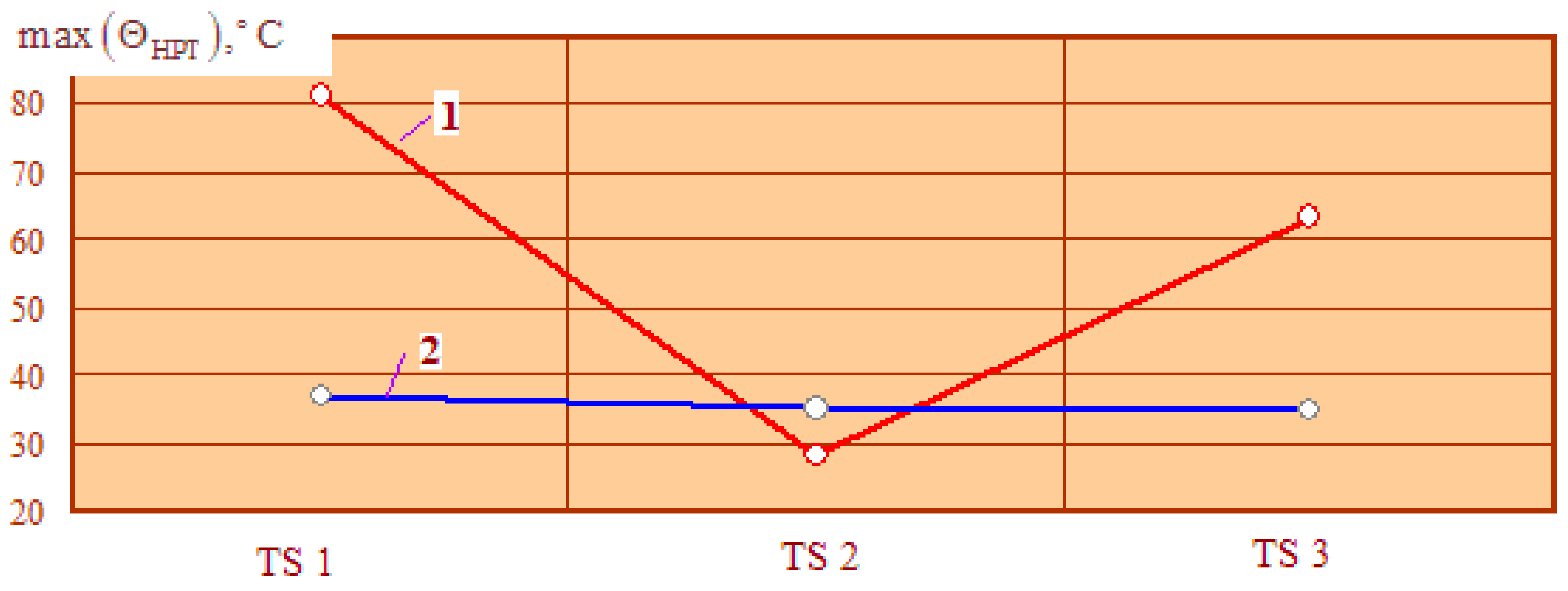
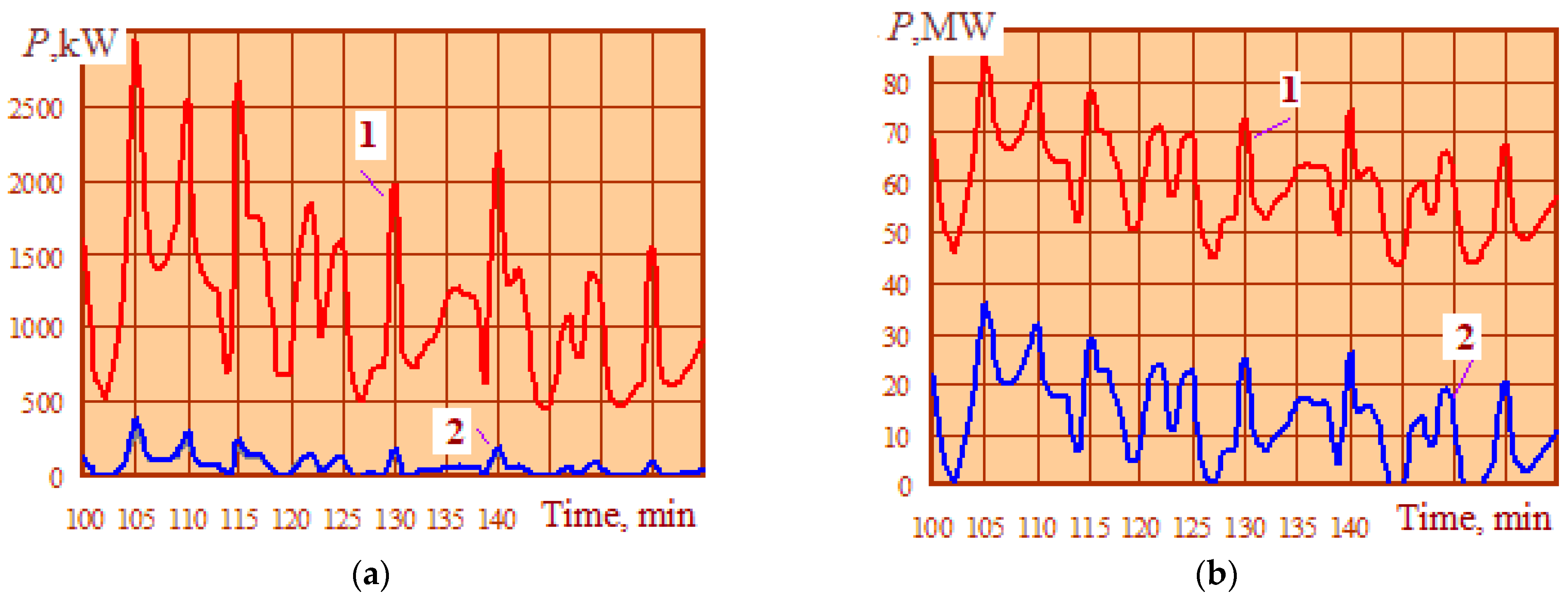
- The presence of renewable energy sources leads to a decrease in power consumption from power system networks, a reduction in power losses in transmission lines and traction transformers, and a significant decrease in heating of traction transformers.
- The active use of RES in traction power supply systems (TPSSs) can reduce carbon emissions into the environment, thereby contributing to the implementation of the sustainable development goals formulated by the United Nations.
Author Contributions
Funding
Data Availability Statement
Conflicts of Interest
References
- Ruvio, A.; Lamedica, R.; Geri, A.; Maccioni, M.; Carere, F.; Alati, F.R.; Carones, N.; Buffarini, G.G. Integrated procedure to design optimal hybrid renewable power plant for railways’ traction power substation. Sustain. Energy Grids Netw. 2024, 39, 101446. [Google Scholar] [CrossRef]
- Voropai, N.I.; Suslov, K.V.; Sokolnikova, T.V.; Styczynski, Z.A.; Lombardi, P. Development of power supply to isolated territories in Russia on the bases of microgrid concept. In Proceedings of the 2012 IEEE Power and Energy Society General Meeting, San Diego, CA, USA, 22–26 July 2012. [Google Scholar]
- Solodusha, S.V.; Suslov, K.V.; Gerasimov, D.O. Applicability of Volterra integral polynomials in the control systems of electric power facilities. In Proceedings of the 2016 International Conference “Stability and Oscillations of Nonlinear Control Systems” (Pyatnitskiy’s Conference), STAB 2016, Moscow, Russia, 1–3 June 2016. [Google Scholar]
- Karamov, D.N.; Ilyushin, P.V.; Suslov, K.V. Electrification of Rural Remote Areas Using Renewable Energy Sources: Literature Review. Energies 2022, 15, 5881. [Google Scholar] [CrossRef]
- Monakov, Y.; Tarasov, A.; Ivannikov, A.; Murzintsev, A.; Shutenko, N. Optimization of Equipment Operation in Power Systems Based on the Use in the Design of Frequency-Dependent Models. Energies 2023, 16, 6756. [Google Scholar] [CrossRef]
- Bulatov, Y.N.; Cherepanov, A.V.; Kryukov, A.V.; Suslov, K. Distributed Generation in Railroad Power Supply Systems. In Proceedings of the 2020 3rd International Colloquium on Intelligent Grid Metrology (SMAGRIMET), Cavtat, Croatia, 20–23 October 2020; pp. 54–60. [Google Scholar]
- Dong, H.; Tian, Z.; Spencer, J.W.; Fletcher, D.; Hajiabady, S. Coordinated Control Strategy of Railway Multisource Traction System with Energy Storage and Renewable Energy. IEEE Trans. Intell. Transp. Syst. 2023, 24, 15702–15713. [Google Scholar] [CrossRef]
- Cheng, P.; Kong, H.; Ma, J.; Jia, L. Overview of resilient traction power supply systems in railways with interconnected microgrid. CSEE J. Power Energy Syst. 2021, 7, 1122–1132. [Google Scholar]
- Bade, S.K.; Kulkarni, V. Use of Renewable energy in performance enhancement of Indian Traction Power Supply System. In Proceedings of the 2018 International Conference on Smart Electric Drives and Power System (ICSEDPS), Nagpur, India, 12–13 June 2018. [Google Scholar]
- Kuznetsov, V.; Kuznetsov, V.; Bondar, O.; Rojek, A.; Hubskyi, P.; Stypulkowski, P. Study of Short Circuit Currents in a Distributed Traction Power Supply System with Renewable Electric Power Sources. In Proceedings of the 2022 IEEE 3rd KhPI Week on Advanced Technology (KhPIWeek), Kharkiv, Ukraine, 3–7 October 2022. [Google Scholar]
- Singh, L.; Vaishnav, C. Performance Analysis of Hybrid Network of Indian Traction Power System Using Renewable Energy Sources. In Proceedings of the 2016 International Conference on Micro-Electronics and Telecommunication Engineering (ICMETE), Ghaziabad, India, 22–23 September 2016. [Google Scholar]
- Tian, Z.; Kano, N.; Hillmansen, S. Integration of Energy Storage and Renewable Energy Sources into AC Railway System to Reduce Carbon Emission and Energy Cost. In Proceedings of the 2020 IEEE Vehicle Power and Propulsion Conference (VPPC), Gijon, Spain, 18 November–16 December 2020. [Google Scholar]
- Bade, S.K.; Kulkarni, V.A. Analysis of Railway Traction Power System Using Renewable Energy: A Review. In Proceedings of the 2018 International Conference on Computation of Power, Energy, Information and Communication (ICCPEIC), Chennai, India, 28–29 March 2018. [Google Scholar]
- Elisabeta, S.; Bogdan, P.; Ion, P.; Valentin, N.; Florina, P. Use of Renewable Energy Sources to Power Railroad Traffic Safety Installations. In Proceedings of the 2019 11th International Symposium on Advanced Topics in Electrical Engineering (ATEE), Bucharest, Romania, 28–30 March 2019. [Google Scholar]
- Bakre, S.; Gokhale, P. Neural Network Based Source Selection Scheme for Wind-solar Based Auxiliary Supply in Railway Traction Systems. In Proceedings of the 2020 IEEE Pune Section International Conference (PuneCon), Pune, India, 16–18 December 2020. [Google Scholar]
- D’Arco, S.; Piegari, L.; Tricoli, P. Comparative Analysis of Topologies to Integrate Photovoltaic Sources in the Feeder Stations of AC Railways. IEEE Trans. Transp. Electrif. 2018, 4, 951–960. [Google Scholar] [CrossRef]
- Di Noia, L.P.; Rizzo, R. Analysis of Integration of PV Power Plant in Railway Power Systems. In Proceedings of the 2019 8th International Conference on Modern Power Systems (MPS), Cluj-Napoca, Romania, 21–23 May 2019. [Google Scholar]
- Wu, C.; Han, B.; Lu, S.; Xue, F.; Zhong, F. Carbon-reducing Train Rescheduling Method for Urban Railway Systems considering the Grid with Wind Power Supply. In Proceedings of the 2022 IEEE 25th International Conference on Intelligent Transportation Systems (ITSC), Macau, China, 8–12 October 2022. [Google Scholar]
- Rageh, M.; Ndtoungou, A.; Hamadi, A.; Al-Haddad, K. Railway Traction Supply with PV integration for Power Quality Issues. In Proceedings of the IECON 2018—44th Annual Conference of the IEEE Industrial Electronics Society, Washington, DC, USA, 21–23 October 2018. [Google Scholar]
- Yu, H.; Wang, Y.; Chen, Z. A Renewable Electricity-Hydrogen-Integrated Hybrid DC Traction Power System. In Proceedings of the 2021 IEEE Southern Power Electronics Conference (SPEC), Kigali, Rwanda, 6–9 December 2021. [Google Scholar]
- Wu, M.; Wang, W.; Deng, W.; Chen, H.; Dai, C.; Chen, W. Back-to-back PV generation system for electrified railway and its control strategy. In Proceedings of the 2017 IEEE Transportation Electrification Conference and Expo, Asia-Pacific (ITEC Asia-Pacific), Harbin, China, 7–10 August 2017. [Google Scholar]
- Çiçek, A.; Şengör, İ.; Güner, S.; Karakuş, F.; Erenoğlu, A.K.; Erdinç, O.; Shafie-Khah, M.; Catalão, J.P.S. Integrated Rail System and EV Parking Lot Operation with Regenerative Braking Energy, Energy Storage System and PV Availability. IEEE Trans. Smart Grid 2022, 13, 3049–3058. [Google Scholar] [CrossRef]
- Loktionov, E.Y.; Sharaborova, E.S.; Asanov, I.M. Prospective Sites for Solar-Powered Permafrost Stabilization Systems Integration in Russian Railways. In Proceedings of the 2019 8th International Conference on Renewable Energy Research and Applications (ICRERA), Brasov, Romania, 3–6 November 2019. [Google Scholar]
- Lencwe, M.J.; Chowdhury, S.P.; ElGohary, H.M. Solar photovoltaic integration on locomotive roof top for South African railway industry. In Proceedings of the 2016 51st International Universities Power Engineering Conference (UPEC), Coimbra, Portugal, 6–9 September 2016. [Google Scholar]
- Zakaryukin, V.P.; Kryukov, A.V. Complicated Asymmetrical Modes of Electrical Systems; Izd-vo IrGUPS: Irkutsk, Russia, 2005. [Google Scholar]
- Suslov, K.; Kryukov, A.; Ilyushin, P.; Kryukov, A.; Shepovalova, O. Modeling of modes of traction power supply systems equipped with renewable energy sources. Energy Rep. 2023, 9, 447–461. [Google Scholar] [CrossRef]
- Zakaryukin, V.P.; Kryukov, A.V. Modeling of DC Traction Power Supply Systems: Monograph; IrGUPS: Irkutsk, Russia, 2022. (In Russian) [Google Scholar]
- Bulatov, Y.N.; Kryukov, A.V.; Suslov, K.V. Multi-agent technologies for control of distributed generation plants in the isolated power systems. Far East J. Electron. Commun. 2017, 17, 1197–1210. [Google Scholar] [CrossRef]



| TS 1 | TS 2 | TS 3 | |||
|---|---|---|---|---|---|
| P, MW | Q, MVAr | P, MW | Q, MVAr | P, MW | Q, MVAr |
| 6 | 3 | 4 | 2 | 3 | 1 |
| No | Description of the Operating Scenario |
|---|---|
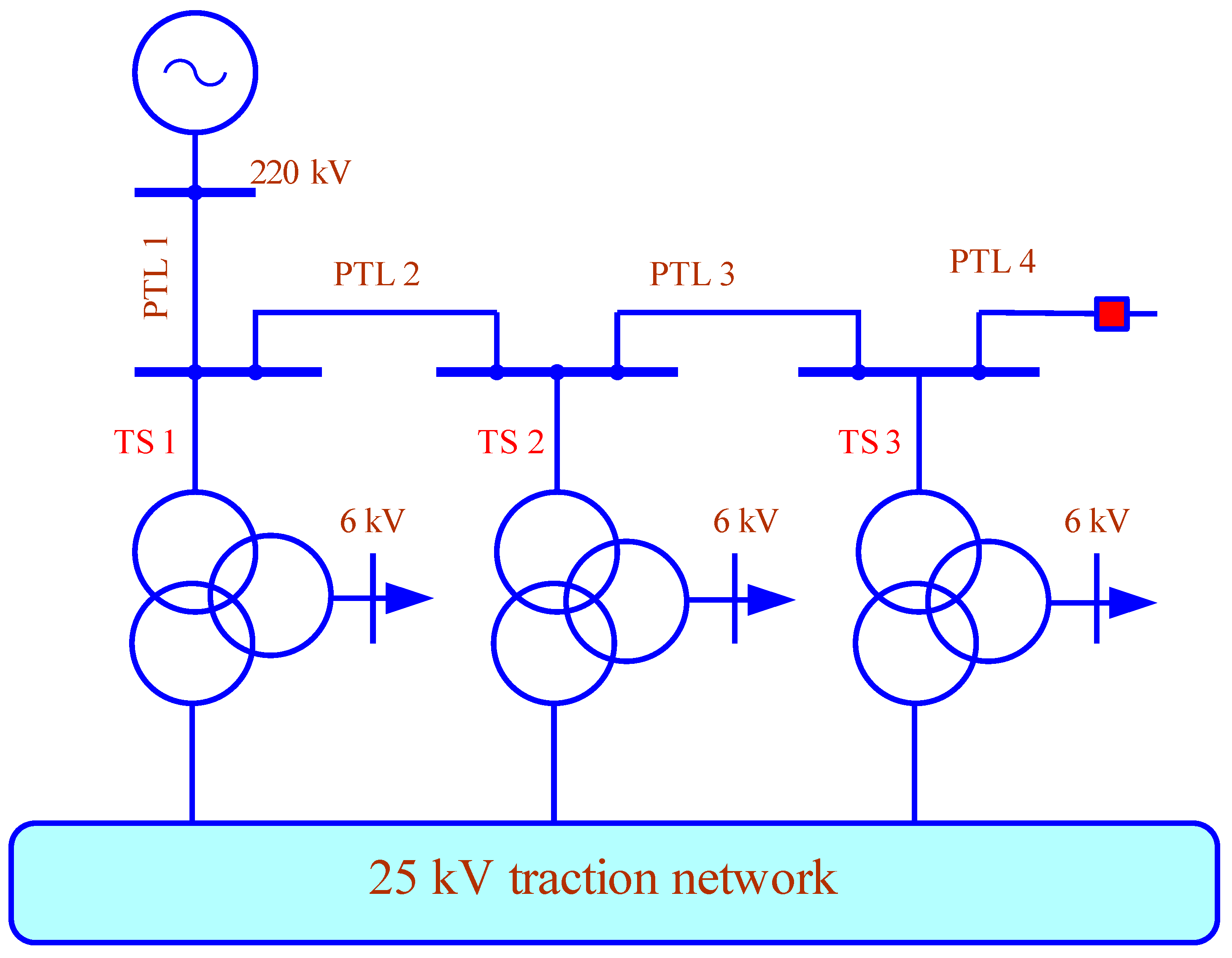
| 1 | The loads are supplied to the 6 kV TS busbars according to Table 1. |
| 2 | The loads are supplied to the 6 kV TS busbars according to Table 1, RES and RPS are connected. The reactive power generation limits for each phase are −6…+10 MVAr. |
| Direction | Train Number | Operating Scenario | |
|---|---|---|---|
| 1 | 2 | ||
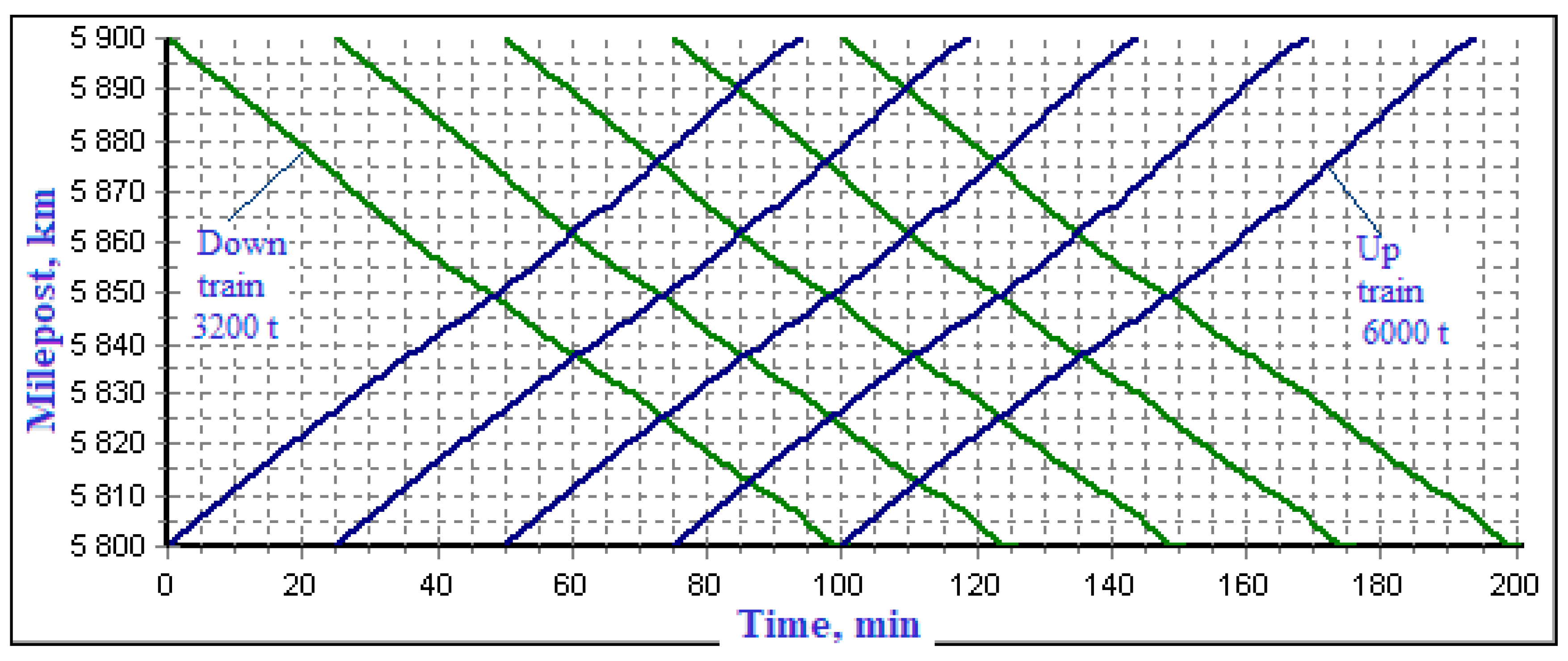
| Down train | 1 | 20.6 | 24.5 |
| 2 | 20.6 | 24.5 | |
| 3 | 20.2 | 24.6 | |
| 4 | 20.2 | 25.2 | |
| 5 | 20.4 | 25.4 | |
| Up train | 6 | 19.6 | 23.6 |
| 7 | 17.4 | 23.2 | |
| 8 | 17.4 | 23.3 | |
| 9 | 18.6 | 23.4 | |
| 10 | 20.3 | 23.8 | |
| Parameter | TS | Operating Scenario | |||
|---|---|---|---|---|---|
| 1 | 2 | 3 | 4 | ||
| Average value | TS 1 | 3.07 | 2.43 | 0.09 | 0.4 |
| TS 2 | 3.56 | 3.01 | 0.11 | 0.44 | |
| TS 3 | 3.06 | 2.61 | 0.09 | 0.19 | |
| Maximum value | TS 1 | 11.7 | 8.77 | 0.34 | 3.57 |
| TS 2 | 12.67 | 8.25 | 0.31 | 4.77 | |
| TS 3 | 13.67 | 9.33 | 0.3 | 2.64 | |
| Operating Scenario | TS 1 | TS 2 | TS 3 | ||||||
|---|---|---|---|---|---|---|---|---|---|
| A | B | C | A | B | C | A | B | C | |
| 1 | 178.8 | 94.6 | 112.4 | 143.2 | 165 | 92.6 | 61.9 | 78.4 | 131.5 |
| 2 | 64.6 | 39.1 | 48.8 | 53.4 | 55.8 | 39.7 | 26.5 | 22.7 | 36.9 |
Disclaimer/Publisher’s Note: The statements, opinions and data contained in all publications are solely those of the individual author(s) and contributor(s) and not of MDPI and/or the editor(s). MDPI and/or the editor(s) disclaim responsibility for any injury to people or property resulting from any ideas, methods, instructions or products referred to in the content. |
© 2026 by the authors. Licensee MDPI, Basel, Switzerland. This article is an open access article distributed under the terms and conditions of the Creative Commons Attribution (CC BY) license.
Share and Cite
Iliev, I.; Kryukov, A.; Suslov, K.; Kryukov, A.; Beloev, I.; Karlina, A.; Beloev, H. Modeling of Traction Power Supply Systems Equipped with Renewable Energy Sources. Energies 2026, 19, 2904. https://doi.org/10.3390/en19122904
Iliev I, Kryukov A, Suslov K, Kryukov A, Beloev I, Karlina A, Beloev H. Modeling of Traction Power Supply Systems Equipped with Renewable Energy Sources. Energies. 2026; 19(12):2904. https://doi.org/10.3390/en19122904
Chicago/Turabian StyleIliev, Iliya, Andrey Kryukov, Konstantin Suslov, Aleksandr Kryukov, Ivan Beloev, Antonina Karlina, and Hristo Beloev. 2026. "Modeling of Traction Power Supply Systems Equipped with Renewable Energy Sources" Energies 19, no. 12: 2904. https://doi.org/10.3390/en19122904
APA StyleIliev, I., Kryukov, A., Suslov, K., Kryukov, A., Beloev, I., Karlina, A., & Beloev, H. (2026). Modeling of Traction Power Supply Systems Equipped with Renewable Energy Sources. Energies, 19(12), 2904. https://doi.org/10.3390/en19122904