Article

Optimization of CO2 Flooding Strategies for an Undeveloped Chang 8 Tight Oil Reservoir in the Ordos Basin, China


1
Research Institute of Exploration and Development, Changqing Oilfield Company, PetroChina, Xi’an 710016, China
2
Shaanxi Key Laboratory of Carbon Neutralization Technology, Carbon Neutralization College of Northwest University, Xi’an 710069, China
3
Petroleum Development Center, Shengli Oilfield Company, SINOPEC, Dongying 257000, China
*
Author to whom correspondence should be addressed.
Energies 2026, 19(12), 2829; https://doi.org/10.3390/en19122829 (registering DOI)
Submission received: 25 April 2026 / Revised: 27 May 2026 / Accepted: 10 June 2026 / Published: 13 June 2026
(This article belongs to the Special Issue New Advances in Carbon Capture, Utilization and Storage (CCUS))

Abstract

The Chang 8 tight oil reservoir in the Xifeng area of the Ordos Basin is characterized by poor reservoir properties, making conventional water flooding ineffective for efficient reservoir development. CO2 flooding is therefore considered an important approach for enhancing oil recovery in tight reservoirs. However, suitable development strategies for direct CO2 injection in undeveloped reservoir areas remain insufficiently understood. In this study, compositional numerical simulation combined with a single-factor sensitivity analysis was employed to investigate the effects of key parameters, including well pattern configuration, fracturing parameters, injection–production strategy, and gas injection modes. The results indicate that an inverted nine-spot well pattern with vertical well injection and vertical well production, a well spacing of 500 m, and a row spacing of 200 m can achieve relatively favorable areal and vertical sweep performance. A fracture half-length of 80 m, fracture widths of 0.003–0.005 m, and fracturing treatment before initial production help balance early-stage productivity and gas channeling control. Maintaining an injection rate of 0.03–0.04 PV/a, an oil production rate of 2–3 m3/d, and a bottomhole flowing pressure of 13–14 MPa is beneficial for maintaining reservoir energy and stabilizing displacement-front propagation. Based on neighboring field development experience, switching from continuous CO2 injection to water–alternating–gas (WAG) injection during the mid-development stage can improve mobility control and enlarge the CO2 swept volume. Under the current geological model and simulation conditions, the recommended development strategy predicts a recovery factor of 35.43% over a 30-year production period. The results provide reasonable parameter ranges and an engineering reference for direct CO2 flooding development in the Chang 8 tight oil reservoir and similar reservoirs.

1. Introduction

The Ordos Basin is a major oil and gas production base in China, where low-grade petroleum resources, such as low-permeability and tight reservoirs, are increasingly becoming crucial for safeguarding national energy security and sustaining stable oil and gas output [1]. However, these reservoirs are characterized by low porosity, low permeability, and strong heterogeneity, with well-developed natural and induced fractures [2]. Such reservoirs exhibit a recovery factor of merely 5–10% under natural energy development, while conventional water flooding still encounters issues including high injection pressure, limited sweep efficiency, and marginal improvement in oil recovery [3]. A significant amount of residual oil remains unrecovered in the reservoir and cannot be effectively produced. Consequently, it is necessary to explore efficient enhanced oil recovery (EOR) techniques that are better suited to the characteristics of tight oil reservoirs.
CO2 is characterized by low viscosity, strong diffusivity, and favorable injectivity, enabling it to readily penetrate the micropore throats of low-permeability and tight reservoirs. It can also reduce crude oil viscosity, improve the mobility ratio, and supplement reservoir energy [4,5]. Under reservoir temperature and pressure conditions, CO2 can readily develop near-miscible or miscible displacement with crude oil, thereby enhancing microscopic oil displacement efficiency [6]. In recent years, extensive studies have been conducted worldwide on the mechanisms, displacement characteristics, and development modes of CO2 flooding in tight oil reservoirs [7,8,9]. However, most existing studies have focused on CO2 injection implemented during the middle and late stages of waterflooding development [10,11,12], while relatively limited attention has been paid to the direct application of CO2 flooding in undeveloped tight oil reservoirs. In particular, studies on the optimization of development parameters under original reservoir conditions in undeveloped areas remain insufficient.
Compared with CO2 flooding implemented after waterflooding in mature oilfields, the direct application of CO2 flooding in undeveloped reservoirs offers several advantages. On the one hand, the original formation pressure, intact reservoir energy, and undisturbed fluid distribution are conducive to establishing a stable displacement pressure field during the initial stage of development, while avoiding common issues associated with CO2 injection following the middle and late stages of waterflooding, such as aggravated reservoir heterogeneity, fragmented residual oil distribution, and reservoir energy depletion. On the other hand, the absence of fixed well pattern deployment and reservoir stimulation schemes provides greater flexibility for optimizing CO2 flooding development parameters. However, CO2 flooding development is highly sensitive to parameters such as well pattern deployment, fracturing scale, injection–production strategy, and gas injection mode, all of which collectively influence displacement front stability, sweep efficiency, and gas channeling behavior [13,14,15]. Owing to the lack of production performance data in undeveloped reservoirs, the optimization of development parameters is considerably more challenging than that in adjustment reservoirs with a prior waterflooding history.
At present, studies on the direct implementation of CO2 flooding in undeveloped tight oil reservoirs still lack parameter analysis of key engineering parameters, particularly regarding the coupled effects of well pattern deployment, fracturing parameters, injection–production strategy, and gas injection mode. Unlike conventional research approaches focused on CO2 injection following waterflooding, this study is based on the original formation energy, native seepage conditions, and undeveloped well pattern configuration of undeveloped tight oil reservoirs. Focusing on the optimization of development parameters for direct CO2 flooding in undeveloped areas, the effects of well pattern configuration and well spacing, fracturing parameters, injection–production strategy, and gas injection mode on recovery factor, formation pressure maintenance, and gas channeling behavior are investigated in detail, aiming to address the current lack of research on CO2 flooding development parameters in undeveloped tight oil reservoirs.
Based on this, an undeveloped area of the Chang 8 tight oil reservoir in the Xifeng Oilfield, Ordos Basin, was selected as the study target. A three-dimensional compositional numerical simulation model was established, and a single-factor control variable method was employed to optimize well pattern configuration and well spacing, fracturing parameters, and injection–production strategy, as well as to compare different gas injection modes. On this basis, recommended ranges of development parameters suitable for the direct implementation of CO2 flooding in the study area were proposed. The research results can provide technical references for CO2 flooding development in similar undeveloped tight oil reservoirs.

2. Geological Model and Numerical Simulation Methods

2.1. Geological Model Construction

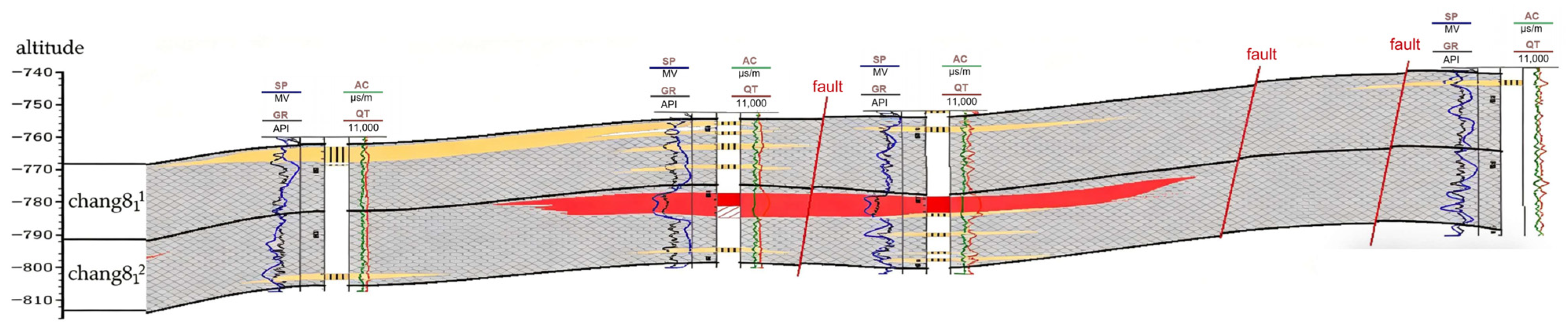
The target reservoir is the Chang 81 reservoir located in an oilfield in the western part of the Ordos Basin. The main sand body of the pay zone extends in a northeast–southwest direction, and the overall structure dips westward. The average burial depth is 2095 m, with an average drilled thickness of 9.3 m. The original formation pressure is 18.5 MPa, and the reservoir temperature is 71.4 °C. The reservoir is relatively well developed and stable in the eastern part, with a thickness of approximately 15 m, while it thins to about 7.5 m in the western part. The geological profile is shown in Figure 1. Exploration wells have been completed in this reservoir, and no development activities have yet been carried out.
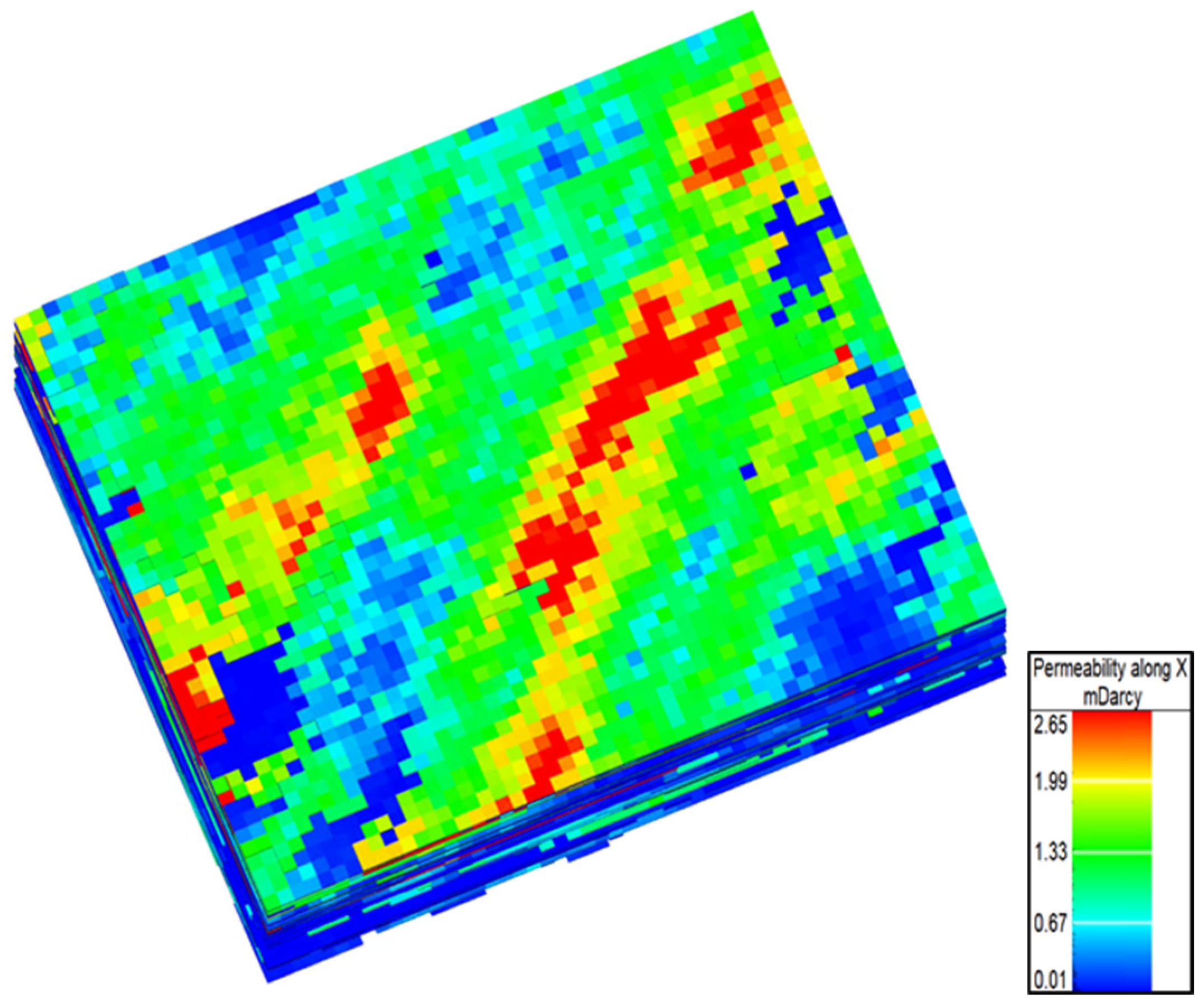
To optimize the CO2 flooding development strategy for the undeveloped area, a three-dimensional geological model of a typical well group was established using CMG (version 2024.20) based on logging data from exploration wells and relevant geological parameters, aiming to accurately characterize the geological features of the study block. The model adopts a Cartesian grid system, with the principal grid orientation set to NE 67.5° according to the dominant direction of natural fractures. The horizontal grid size is 25 m × 25 m, and the vertical grid resolution is 0.5 m. The typical well-group model contains 53 × 45 × 11 grids (approximately 2.6 × 10⁴ cells), including about 2.3 × 10⁴ active grid cells (Figure 2).
The Chang 81 reservoir can be subdivided into two sublayers, namely Chang 811 and Chang 812. In the model, the porosity of Chang 811 ranges from 1.1% to 16.2%, with an average of 8.6%, while the permeability ranges from 0.01 to 2.65 mD. For Chang 812, the porosity ranges from 2.9% to 12.0%, with an average of 8.1%, and the permeability ranges from 0.01 to 1.34 mD. The overall average permeability of the model is 0.43 mD, with an average porosity of 8.3% and an effective thickness ranging from 8 to 15 m.
Considering that the fracture width is much smaller than the grid size of the model, a macroscopic equivalent method based on permeability multiplication was adopted to characterize hydraulic fractures. The enhanced conductivity of the fractured reservoir was represented by equivalently increasing the permeability of grids within fracture-developed regions.

2.2. Fluid Model Construction

Referring to the crude oil PVT properties, CO2 swelling experiments, and slim-tube test results from adjacent reservoirs, the saturation pressure of the formation crude oil is 12.14 MPa, the crude oil density under reservoir conditions is 0.7494 g/cm3, the original gas–oil ratio is 89 m3/m3, the crude oil viscosity is 1.05 mPa·s, and the minimum miscibility pressure (MMP) is 18.87 MPa [16]. Fluid phase behavior was characterized using the Peng–Robinson equation of state (EOS), and pseudo-component lumping, EOS parameter regression, and phase behavior matching were conducted using the WinProp module in CMG.
Considering both computational efficiency and phase behavior characterization accuracy, the reservoir fluid was lumped into seven pseudo-components: CO2, C1, C2–4, C5–7, C8–12, C13–20, and C21+. Previous studies on similar tight oil reservoirs have demonstrated that the content of resins and asphaltenes in heavy fractions significantly affects the swelling behavior and miscibility characteristics of the CO2–crude oil system, and inappropriate lumping of heavy fractions may lead to deviations in phase behavior prediction [17]. Therefore, rather than relying solely on theoretical lumping methods, this study calibrated the EOS model using laboratory PVT experimental data.
In WinProp, the EOS model was comprehensively tuned by adjusting the critical properties, acentric factors, and binary interaction coefficients of the pseudo-components. The calibration was based on flash tests, constant composition expansion tests, differential liberation tests, and gas injection swelling tests. In addition, the MMP value (18.87 MPa) determined from slim-tube experiments was used to constrain the miscibility behavior. The final calibrated model can reasonably characterize the phase behavior of the CO2–crude oil system under reservoir conditions.
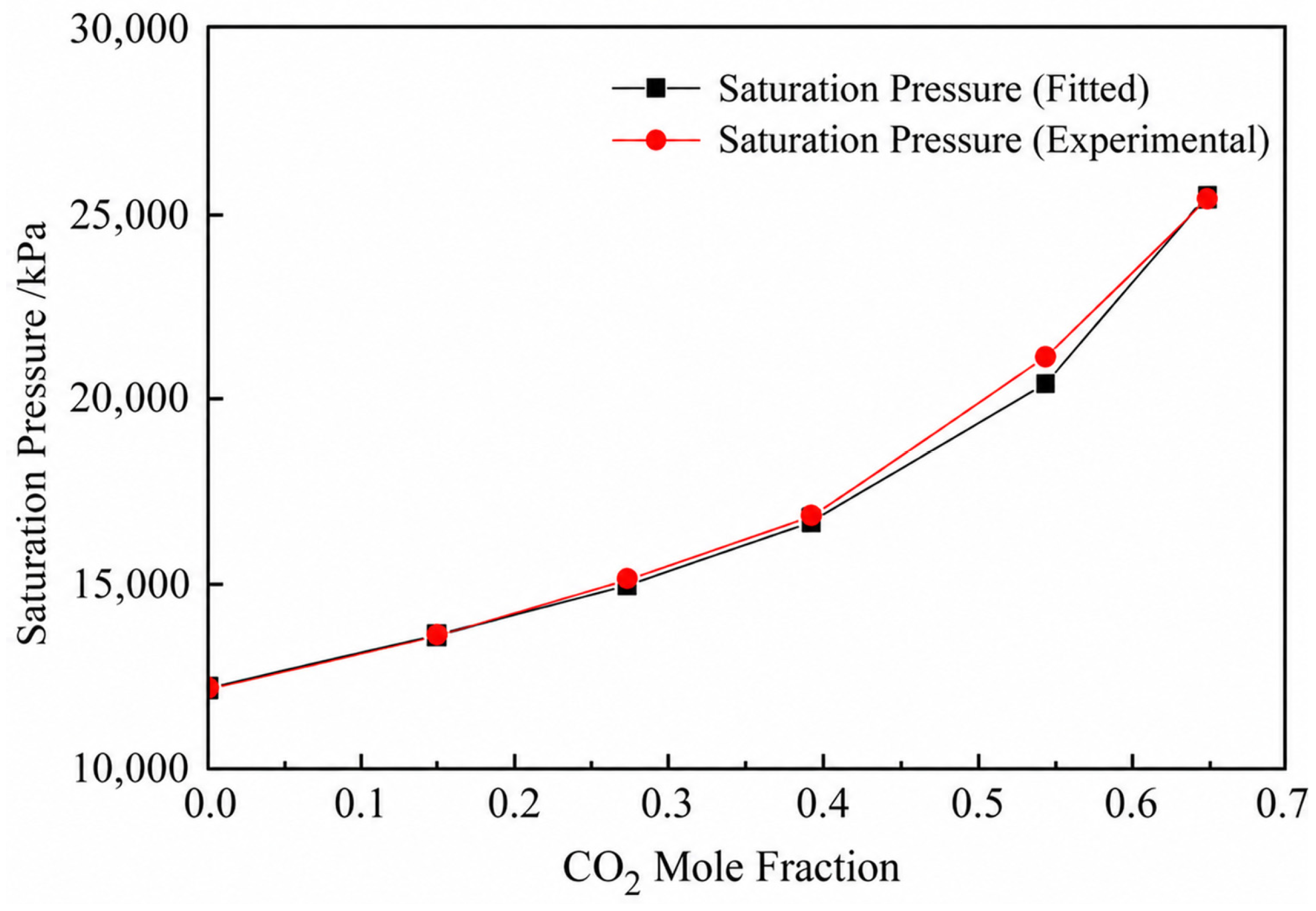
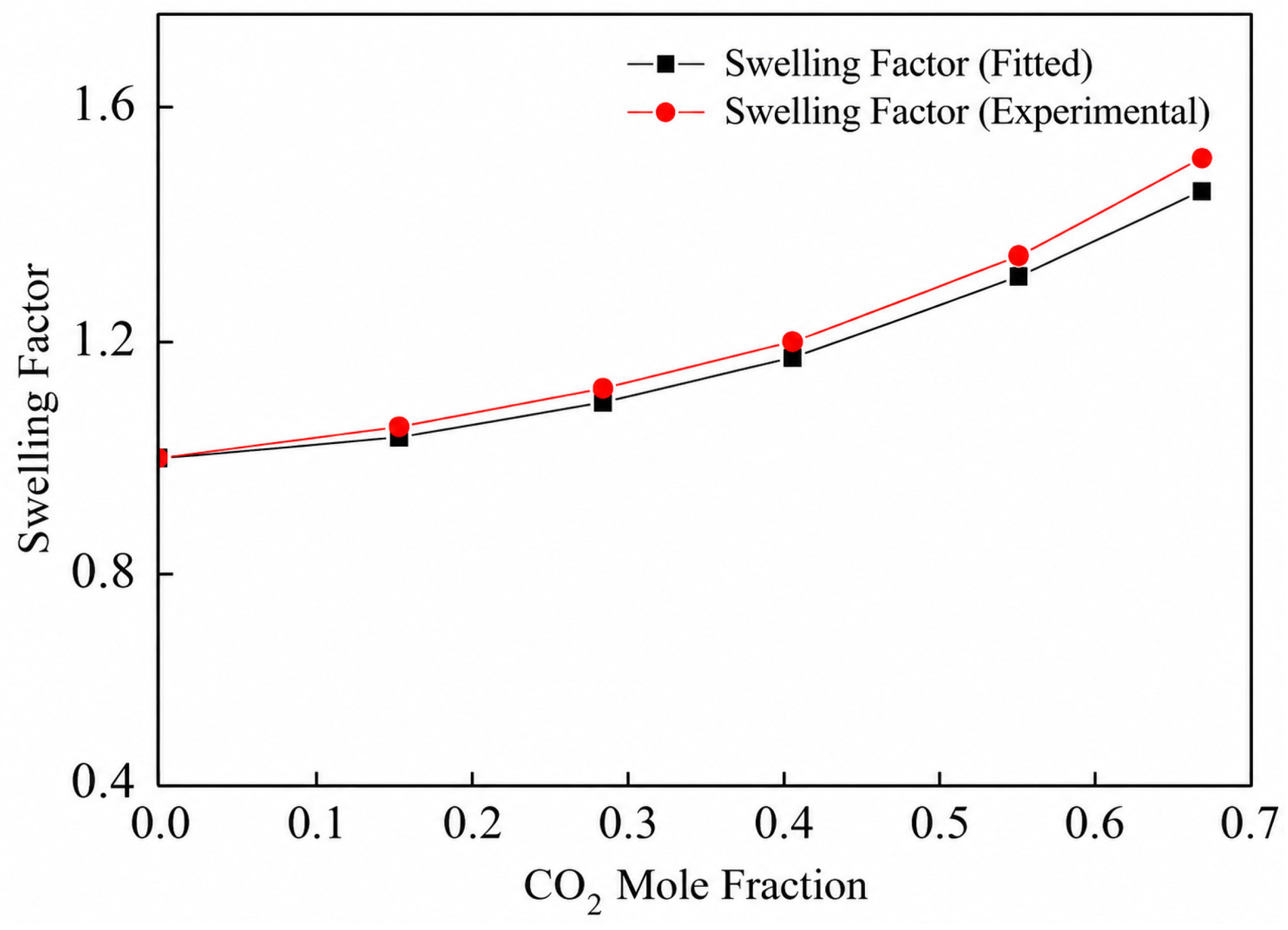
The final matching results are presented in Table 1 and Table 2, while the fitting results of the CO2 swelling factor, saturation pressure, and slim-tube MMP tests are shown in Figure 3 and Figure 4. The simulation errors of key PVT parameters were controlled within 3.5%, indicating that the adopted pseudo-component lumping strategy and EOS parameterization method can satisfy the requirements of subsequent compositional numerical simulation studies.
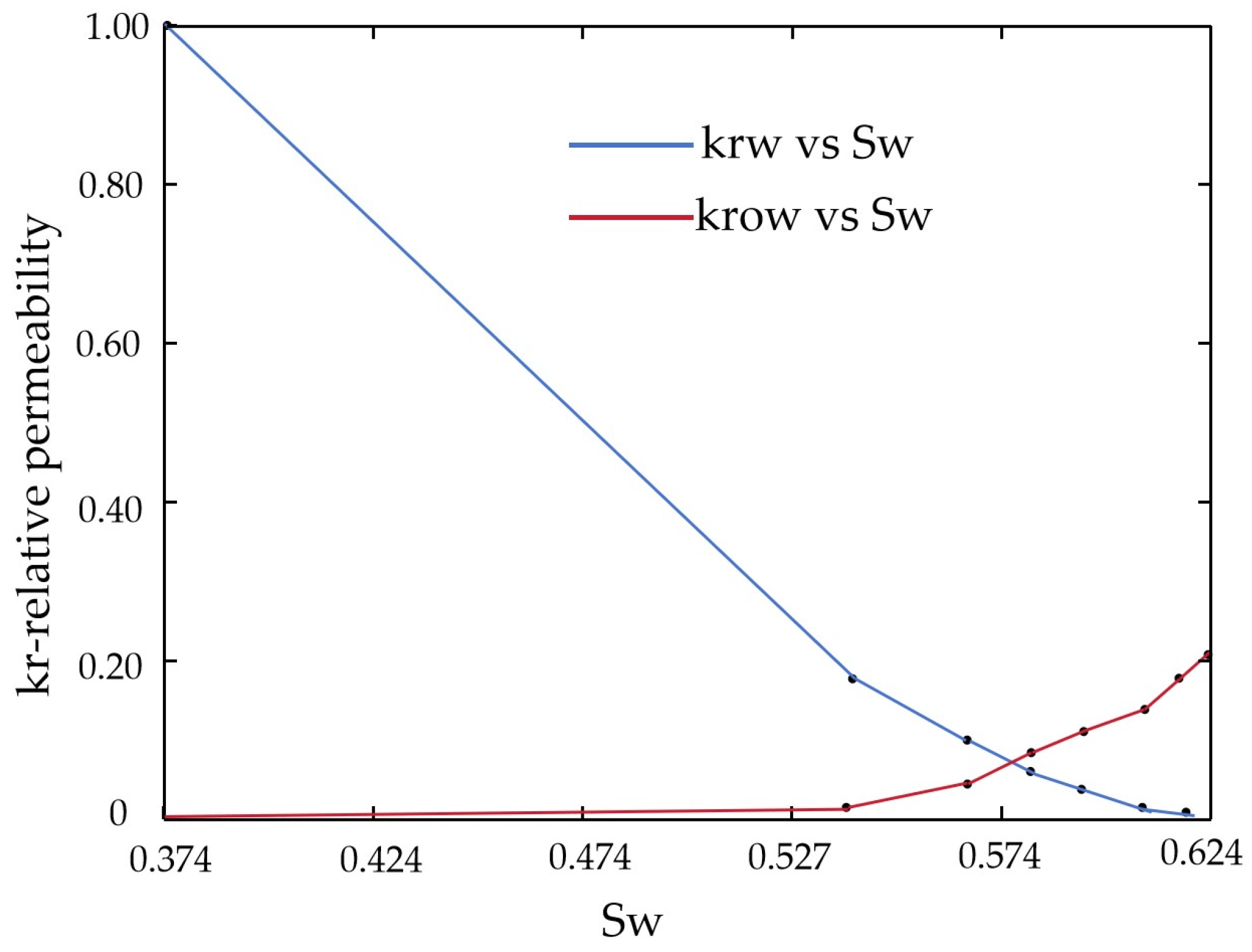
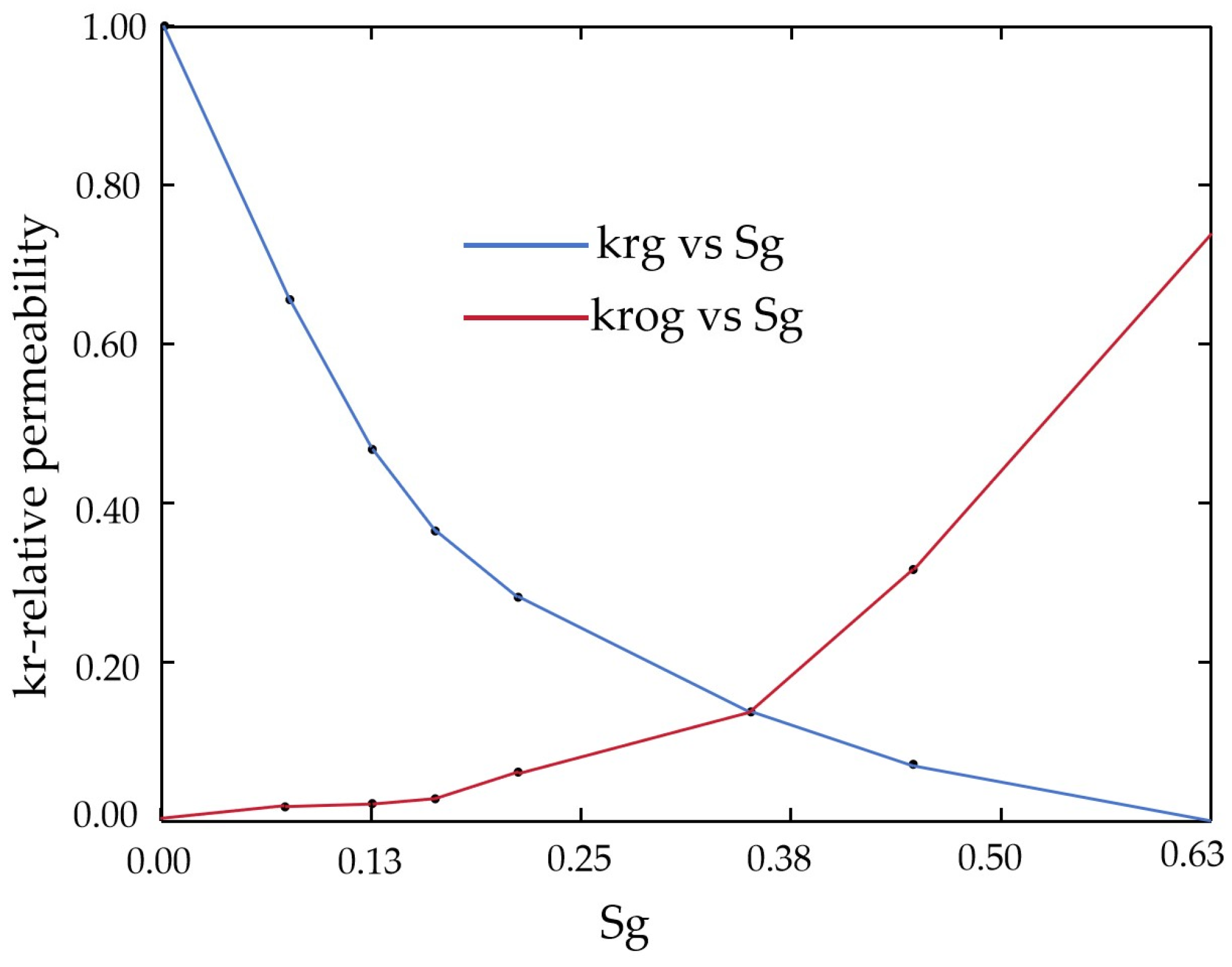
The oil–water and gas–oil relative permeability curves utilized in the model are shown in Figure 5 and Figure 6. The data were obtained from laboratory relative permeability experiments conducted on core samples from the target block, reflecting the typical seepage characteristics of the ultra-low permeability reservoir in the study area.
The oil–water relative permeability curves indicate that the irreducible water saturation reaches 37.4%, suggesting that effective oil displacement by water injection requires relatively high injection volumes. The two-phase flow region is relatively narrow, and the oil relative permeability (krow) decreases rapidly with increasing water saturation, whereas the water relative permeability (krw) increases slowly and exhibits a relatively low endpoint value. Overall, these characteristics indicate weak oil–water co-flow capacity and highlight the inherent limitations of waterflooding development in ultra-low permeability reservoirs.
In contrast, the gas–oil relative permeability curves exhibit a significantly broader two-phase flow region and a higher endpoint gas relative permeability (krg), while the decline in oil relative permeability (krog) is comparatively more gradual. These characteristics indicate a wider oil–gas co-flow interval and stronger gas-phase seepage capacity under gas flooding conditions, directly demonstrating that gas injection development has greater advantages than waterflooding in improving displacement efficiency.

2.3. Numerical Experiment Design

To investigate the effects of key engineering parameters, such as well pattern deployment, fracturing parameters, injection–production parameters, and gas injection modes, on the performance of CO2 flooding, a series of numerical experiments were performed based on the base model using the single-factor control variable method. The parameter ranges were primarily determined according to the actual geological conditions of the study area, development experience from similar tight oil reservoirs in the Ordos Basin, and previous research results, and were further adjusted considering engineering feasibility. While keeping all other factors constant, sensitivity analyses were conducted by varying one parameter at a time to quantify the influence of each factor on development performance. All experimental variables and comparative schemes are summarized in Table 3.

3. Results and Discussion

3.1. Well Type and Well Pattern Optimization

3.1.1. Well Pattern

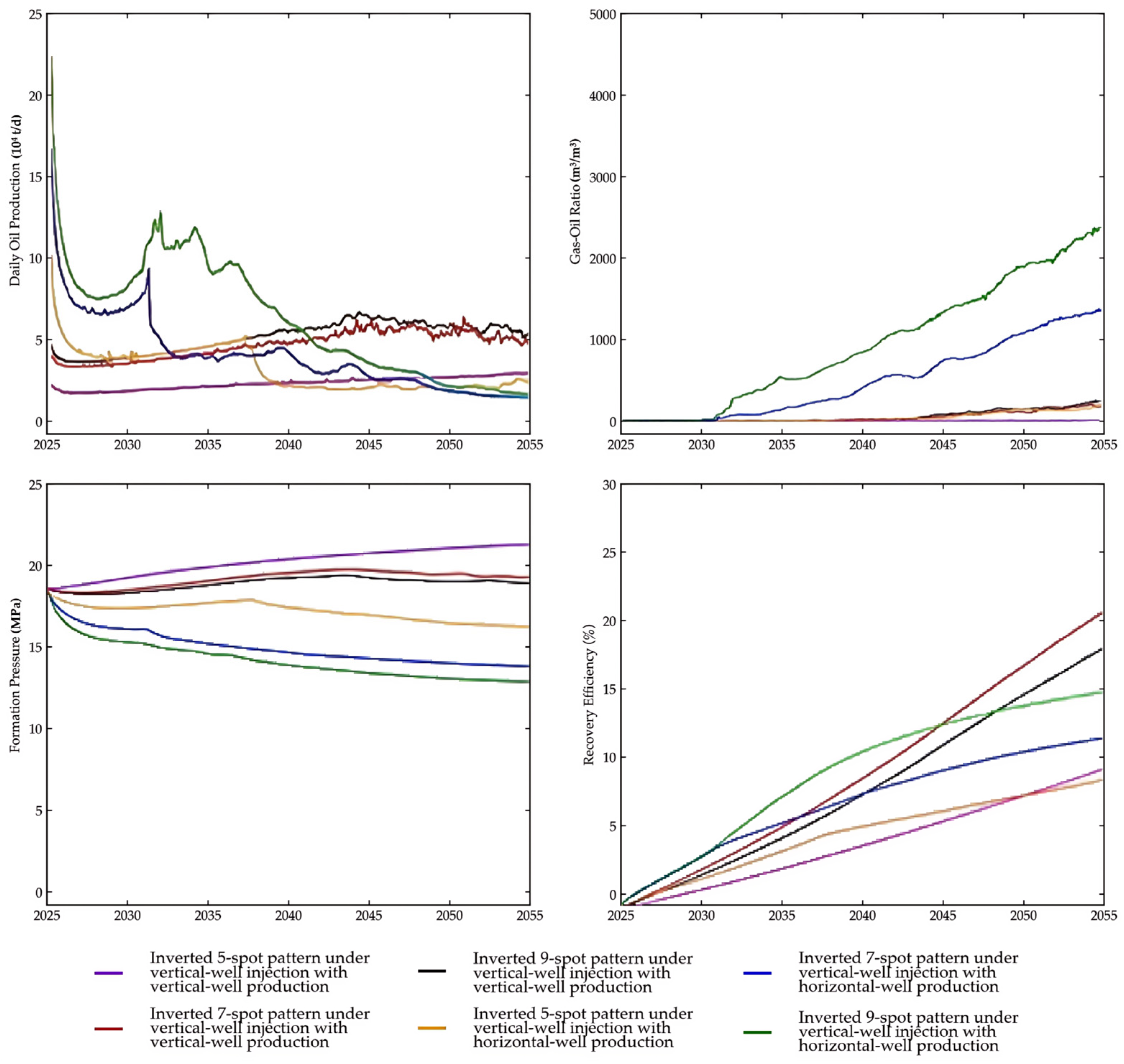
To determine the reasonable well pattern, this study compared three patterns, namely inverted 5-spot, inverted 7-spot, and inverted 9-spot well patterns, under two development modes: vertical well injection with vertical well production and vertical well injection-horizontal well production. The results of Case 1 (Figure 7) indicate that the inverted 9-spot well pattern with vertical well injection and vertical well production is more favorable for overall development performance. It maintains a relatively high daily oil rate during the early production stage and exhibits superior reservoir pressure maintenance, the slowest increase in gas–oil ratio, the latest CO2 breakthrough time, and the highest ultimate recovery factor over the long term. This advantage results from improved vertical and areal sweep efficiency. Vertically, vertical wells penetrate multiple layers, effectively overcoming the strong vertical heterogeneity caused by interlayers in the study area [18], thereby providing a geological basis for efficient vertical sweep. Laterally, the inverted nine-spot well pattern, characterized by a larger drainage area and a greater number of producing wells, effectively distributes injected gas and mitigates channeling, thus maximizing the sweep volume. In contrast, although the vertical well injection-horizontal well production mode yields higher initial production due to the larger contact area of horizontal wellbores, the injected CO2 is severely restricted by interlayers in the vertical direction [19], making it difficult to effectively displace oil beyond the interval penetrated by the horizontal well. This results in accelerated gas channeling, poorer pressure maintenance, and lower recovery factor in the later stage. Considering reservoir adaptability and the stability of development performance, the inverted 9-spot well pattern with vertical well injection–vertical well production is identified as the reasonable well pattern for CO2 flooding in the study area.

3.1.2. Well Spacing and Row Spacing

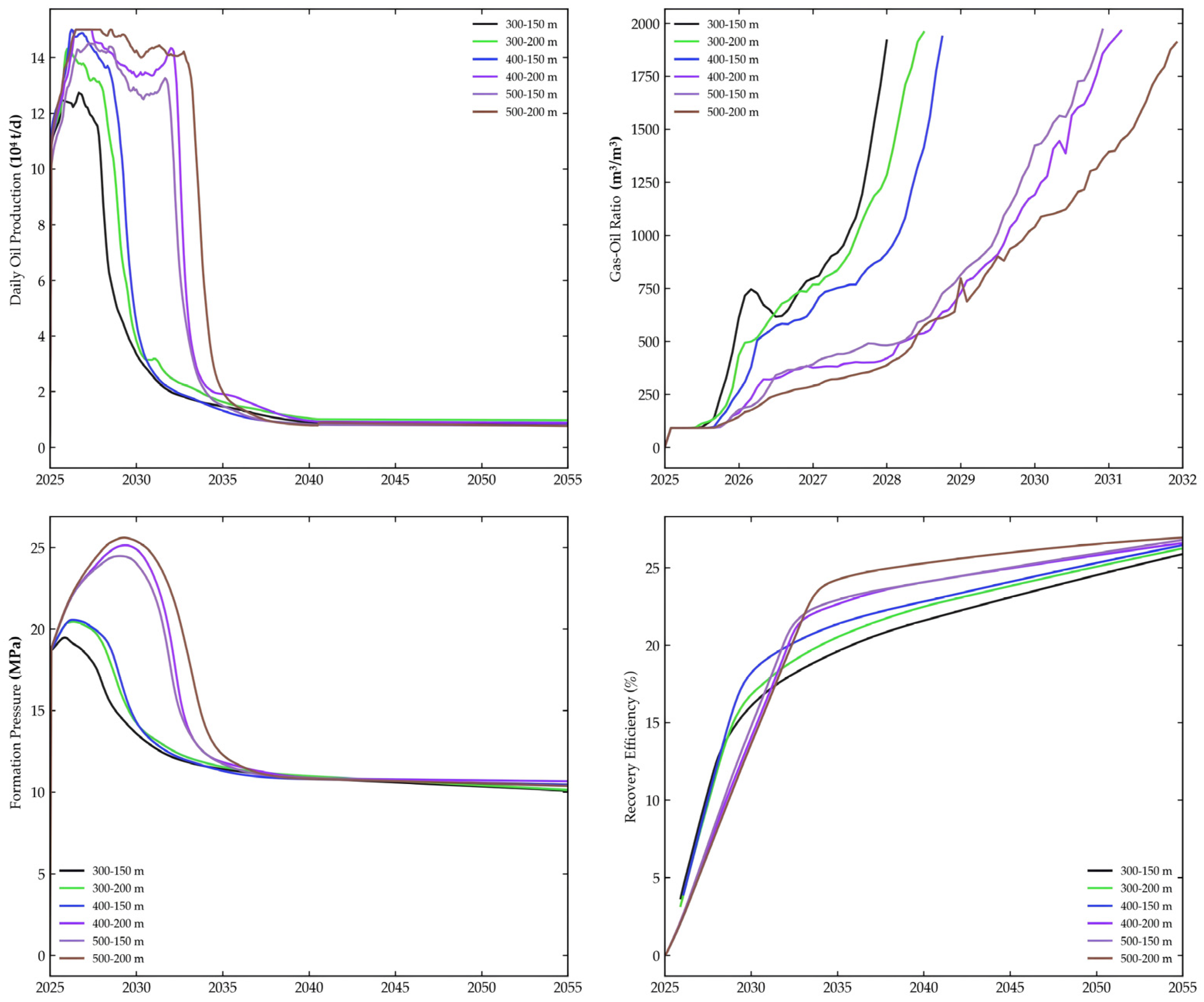
Based on the inverted nine-spot well pattern with vertical well injection–vertical well production, Case 2 evaluated six combinations of well spacing and row spacing (Figure 8). The results indicate that smaller spacing combinations can achieve a rapid increase in initial oil production due to shorter displacement distances; however, they also lead to early CO2 breakthrough and a sharp rise in the gas–oil ratio, resulting in rapid reservoir pressure depletion and a shortened stable production period, ultimately limiting the recovery factor [20]. In contrast, larger spacing combinations exhibit a slower increase in initial production, but the extended injection–production distance enlarges the sweep volume within the controlled area, reduces the displacement pressure gradient, and prolongs the contact and mass transfer time between CO2 and crude oil. This effectively delays gas channeling [21], resulting in a smoother gas–oil ratio curve and improved reservoir pressure maintenance, thereby achieving a longer stable production period and higher ultimate recovery factor. Therefore, a well spacing of 500 m and a row spacing of 200 m are recommended for the study area.

3.2. Fracturing Parameter Optimization

3.2.1. Fracture Half-Length

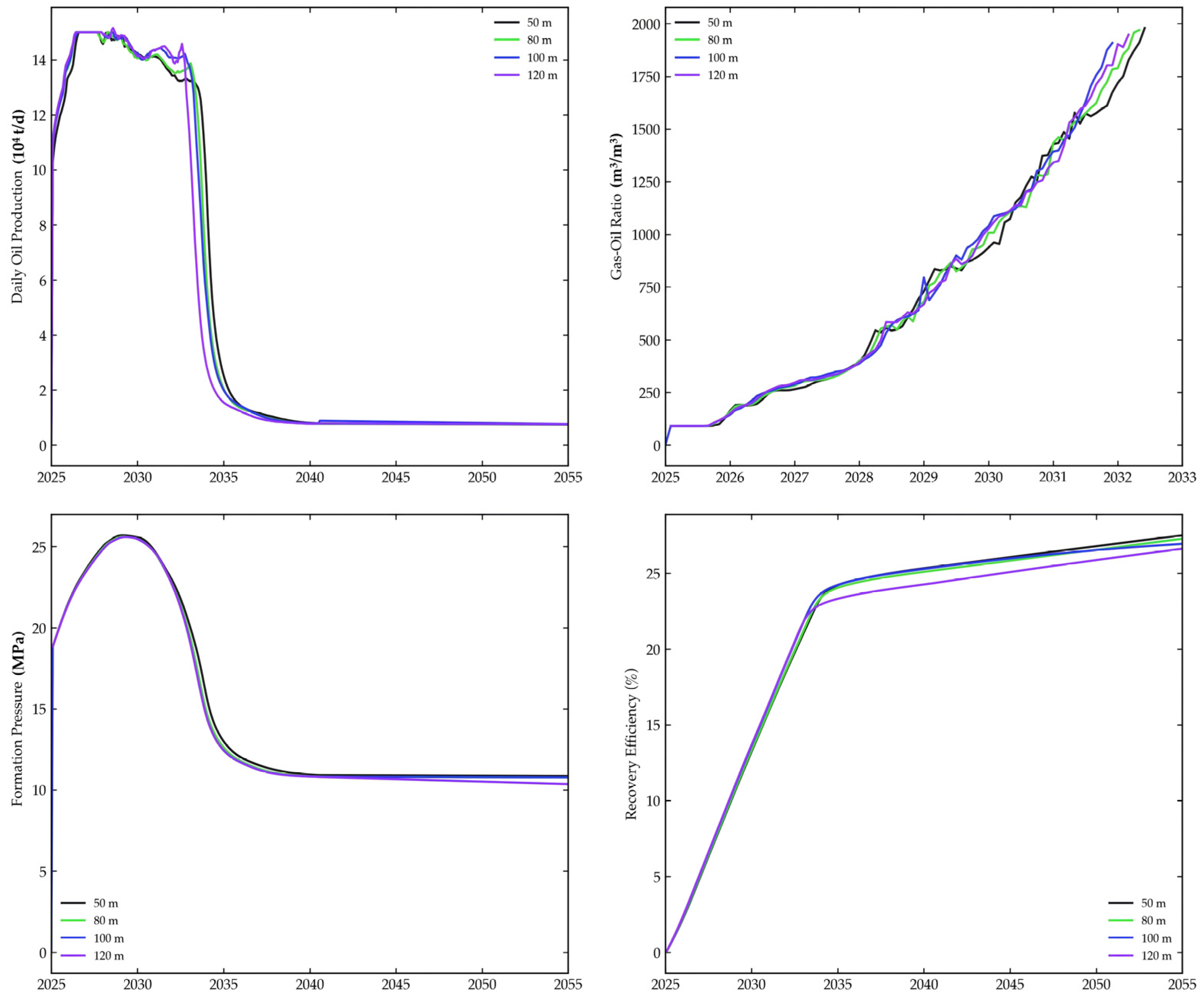
After determining the well pattern and spacing, optimization of fracturing parameters was carried out. Simulations were conducted with varying fracture half-lengths. The results of Case 3 (Figure 9) indicate that excessively long fractures significantly enhance early oil production; however, they also increase the risk of early CO2 channeling along high-conductivity pathways. This leads to premature gas channeling, a rapid rise in the gas–oil ratio, accelerated reservoir pressure depletion, and ultimately a reduction in recovery factor [22]. When the fracture half-length is 50 m, reservoir pressure is best maintained and the gas–oil ratio increases most slowly; however, the contribution to initial productivity is limited. In contrast, the 80 m case achieves a favorable balance, maintaining relatively high initial oil production while exhibiting a gradual increase in gas–oil ratio and a slower decline in reservoir pressure, resulting in a higher ultimate recovery factor. Therefore, a fracture half-length of 80 m is recommended to achieve a balance between productivity enhancement and gas channeling control.

3.2.2. Fracture Width

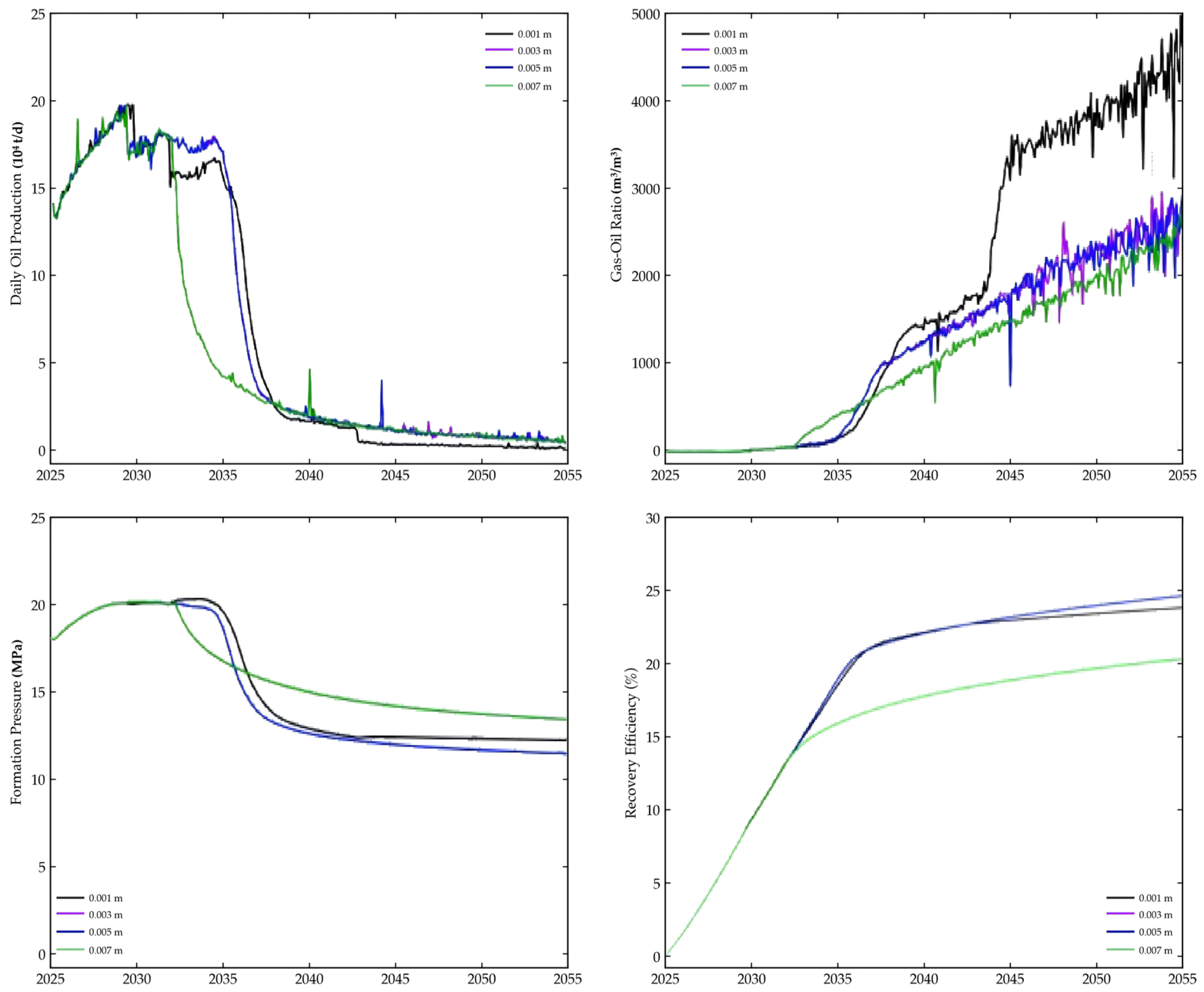
Regarding fracture width, Case 4 (Figure 10) shows that an excessively large fracture width (0.007 m), despite providing extremely high fracture conductivity, leads to rapid reservoir depletion and poor pressure maintenance, ultimately resulting in lower recovery factor. Conversely, a very small fracture width (0.001 m) enhances reservoir pressure maintenance during the early stage but restricts fluid flow [23], making the system more prone to gas channeling in the middle and late stages, thereby negatively affecting development performance. Results show that fracture widths of 0.003 m and 0.005 m yield nearly identical development indicators and exhibit the most favorable production behavior. They ensure relatively high initial productivity and a prolonged stable production period, while effectively maintaining a reasonable pressure level and moderating the increase in gas–oil ratio, ultimately achieving the highest recovery factor. To balance early productivity and long-term energy sustainability, fracture widths of 0.003–0.005 m are recommended.

3.2.3. Fracturing Timing

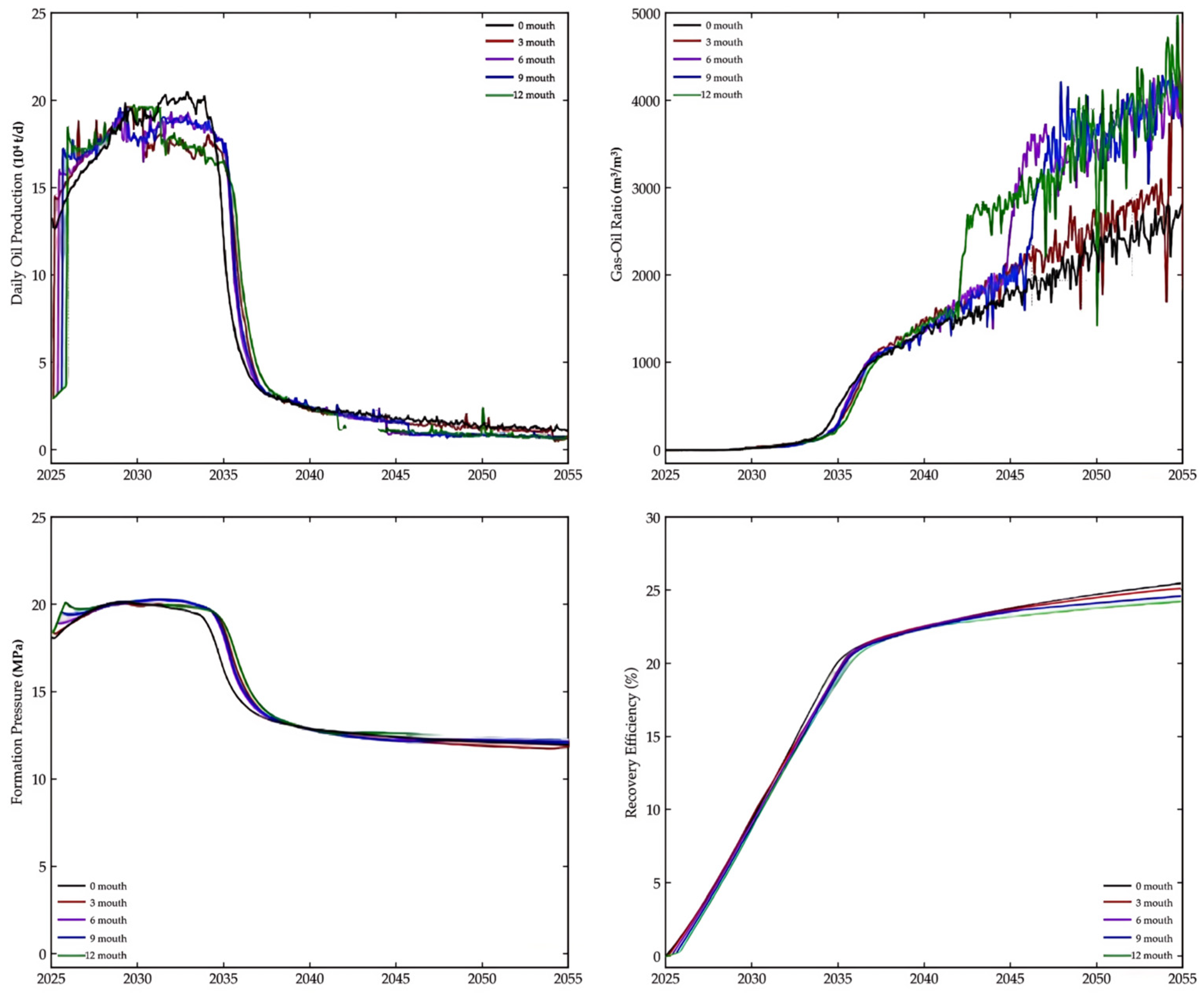
Based on the numerical simulations of Case 5 concerning fracturing timing, the effects of implementing fracturing at different time points after production initiation on CO2 flooding performance were analyzed (Figure 11). The results indicate that earlier fracturing leads to better overall performance. When fracturing is conducted immediately upon production start (0 month), the abundant initial reservoir energy facilitates the formation of a complex fracture network with a large stimulated reservoir volume [24]. This highly effective fracture system significantly increases the contact volume between CO2 and crude oil and promotes more uniform displacement. As a result, production performance exhibits better reservoir pressure maintenance, a noticeable delay in gas channeling, and consistently low gas–oil ratios throughout the production cycle, ultimately yielding the highest cumulative recovery factor. In contrast, delaying the timing of fracturing leads to inferior performance. Due to prior depletion of reservoir energy and the resulting changes in effective stress, fracture propagation becomes increasingly constrained, resulting in a significant reduction in the effective stimulated reservoir volume. The inability to establish a stable displacement flow field under low-pressure conditions makes the system more susceptible to CO2 channeling. This is reflected in rapid reservoir pressure depletion and an uncontrolled rise in gas–oil ratio, which severely limits the ultimate development performance.

3.3. Dynamic Optimization of Injection–Production Parameters

3.3.1. Injection Rate Optimization

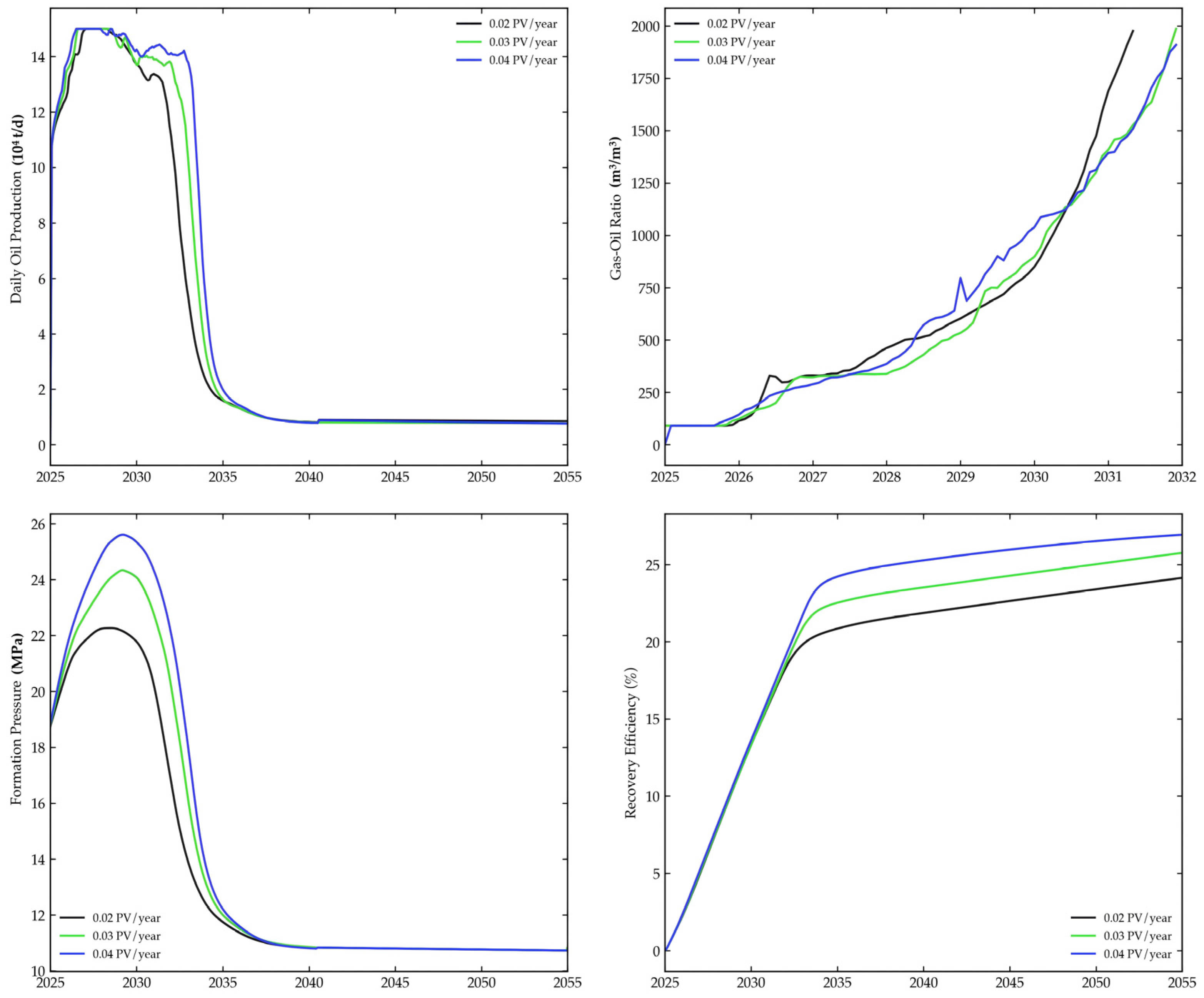
Injection rate is a key parameter that controls both the rate of reservoir energy replenishment and the displacement driving force during CO2 flooding. The results of Case 6 indicate that higher injection rates lead to a more rapid increase in initial daily oil production and better reservoir pressure maintenance (Figure 12). When the injection rate exceeds 0.03 PV/year, the stable production period is further extended. The underlying mechanism is that a higher injection rate can promptly supplement reservoir energy [25]. Meanwhile, sufficient energy support enhances the maintenance of a reasonable pressure differential at production wells, thereby sustaining higher oil production rates and enhancing production stability. However, excessively high injection rates may intensify viscous fingering and gravity override of CO2 [26], which could increase the risk of earlier gas channeling in the long term. Considering injection practices in other oilfields together with the simulation results, it is recommended that the single-well CO2 injection rate in the Xifeng area be controlled at 20–30 t/d, corresponding to an injection rate of 0.03–0.04 PV/year.

3.3.2. Oil Production Rate Optimization

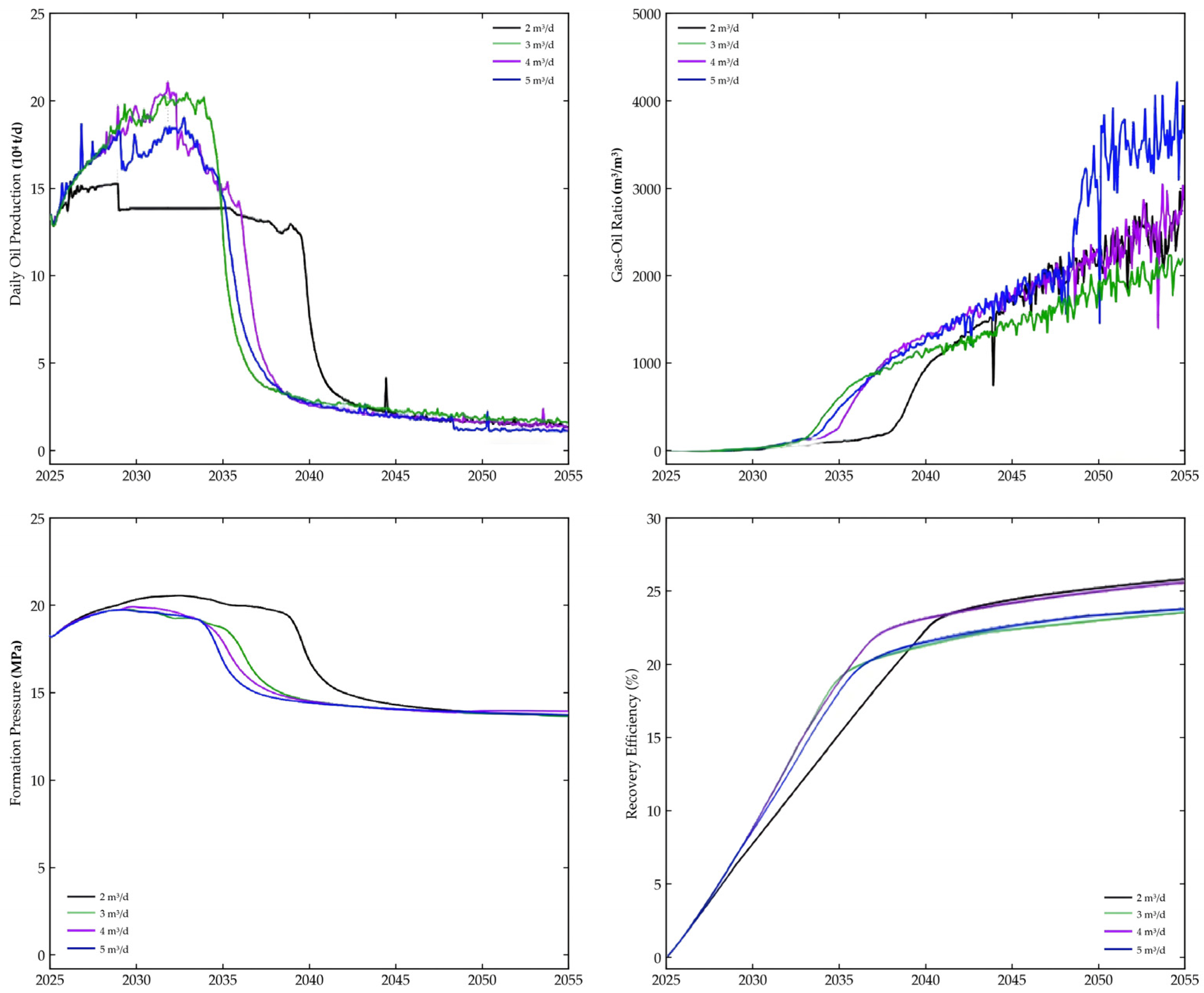
The oil production rate controls the rate of reservoir energy depletion and plays a critical role in determining the duration of the stable production period and the production decline trend. Case 7 compares different single-well oil production rates, showing that higher oil production rates lead to a shorter stable production period, a faster decline rate, and a lower recovery factor. The results indicate that excessively high oil production rates (Figure 13) cause the fluid withdrawal rate to exceed the energy replenished by CO2 injection, resulting in rapid reservoir energy depletion. This, in turn, shortens the stable production period and reduces recovery factor [27]. In contrast, lower oil production rates allow more sufficient contact between CO2 and crude oil, enlarging the sweep volume and delaying production decline [28]. An oil production rate in the range of 2–3 m3/d is recommended, as it helps maintain relatively high initial production while avoiding excessive reservoir energy depletion, thereby extending the stable production period and improving overall recovery.

3.3.3. Bottomhole Flowing Pressure Control

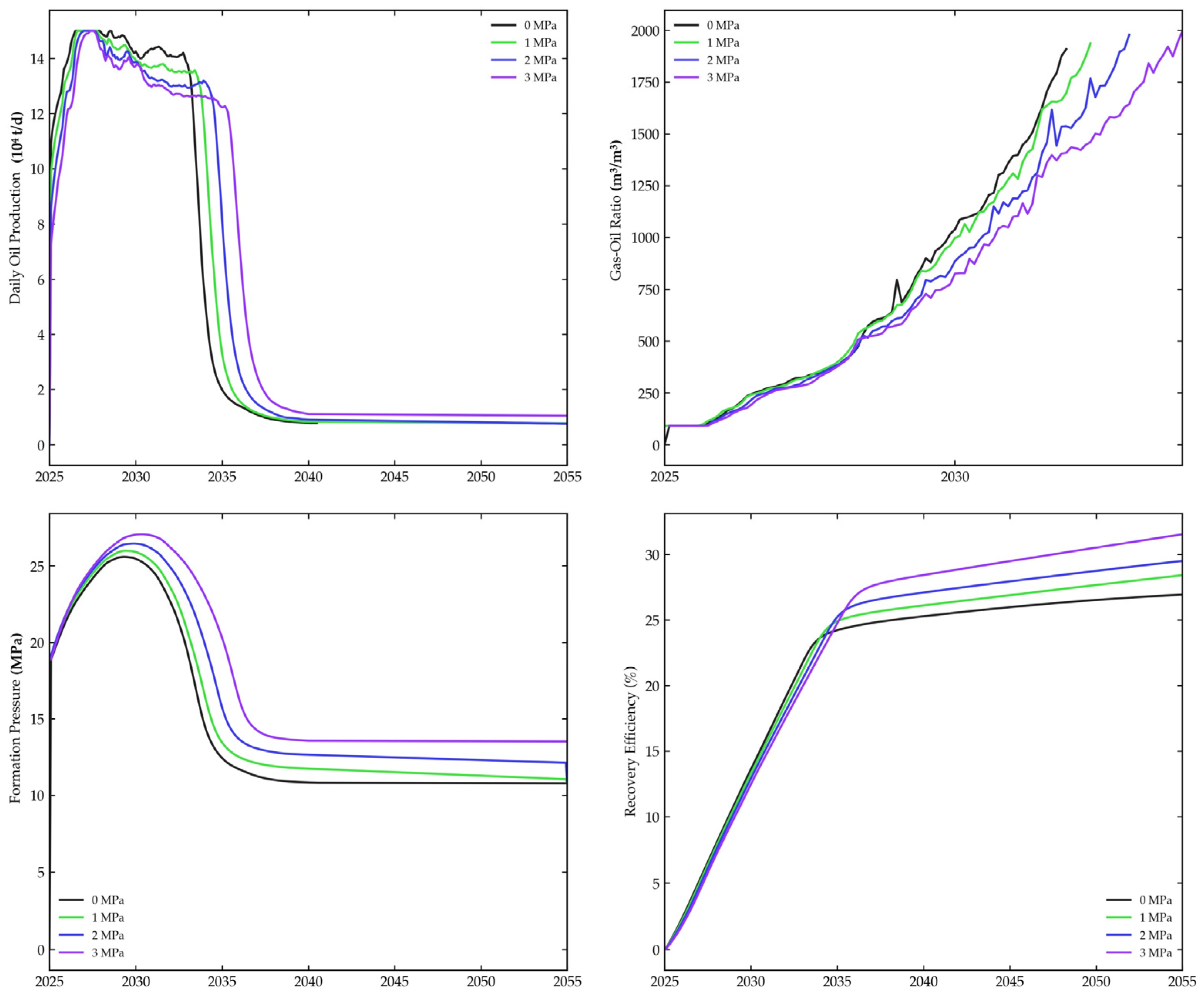
Case 8 investigated the development performance under different bottomhole flowing pressures set at 0, 1, 2, and 3 MPa above the saturation pressure (corresponding to absolute pressures of 12, 13, 14, and 15 MPa, respectively). The results (Figure 14) show that higher bottomhole flowing pressure leads to lower initial oil production but a slower decline rate in the later stage, better reservoir pressure maintenance, delayed gas channeling, and a significantly higher ultimate recovery factor. This behavior can be explained by the fact that a low bottomhole flowing pressure provides the largest production pressure differential at the early stage, resulting in the highest initial oil production rate. However, it also causes rapid depletion of reservoir energy, leading to a sharp decline in reservoir pressure. Moreover, the pressure near the wellbore can easily drop below the saturation pressure, which triggers substantial CO2 exsolution and the formation of free gas, which may cause gas blockage near the wellbore and block flow channels [29]. In contrast, higher bottomhole flowing pressure, although yielding lower initial production, enhances reservoir pressure maintenance stability. The smaller pressure differential ensures a more stable displacement front and significantly delays gas channeling, thereby maximizing ultimate recovery factor. Considering the balance among production build-up period, stable production duration, and recovery factor, it is recommended to operate at a bottomhole flowing pressure of 13–14 MPa.

3.3.4. Perforation Placement Optimization

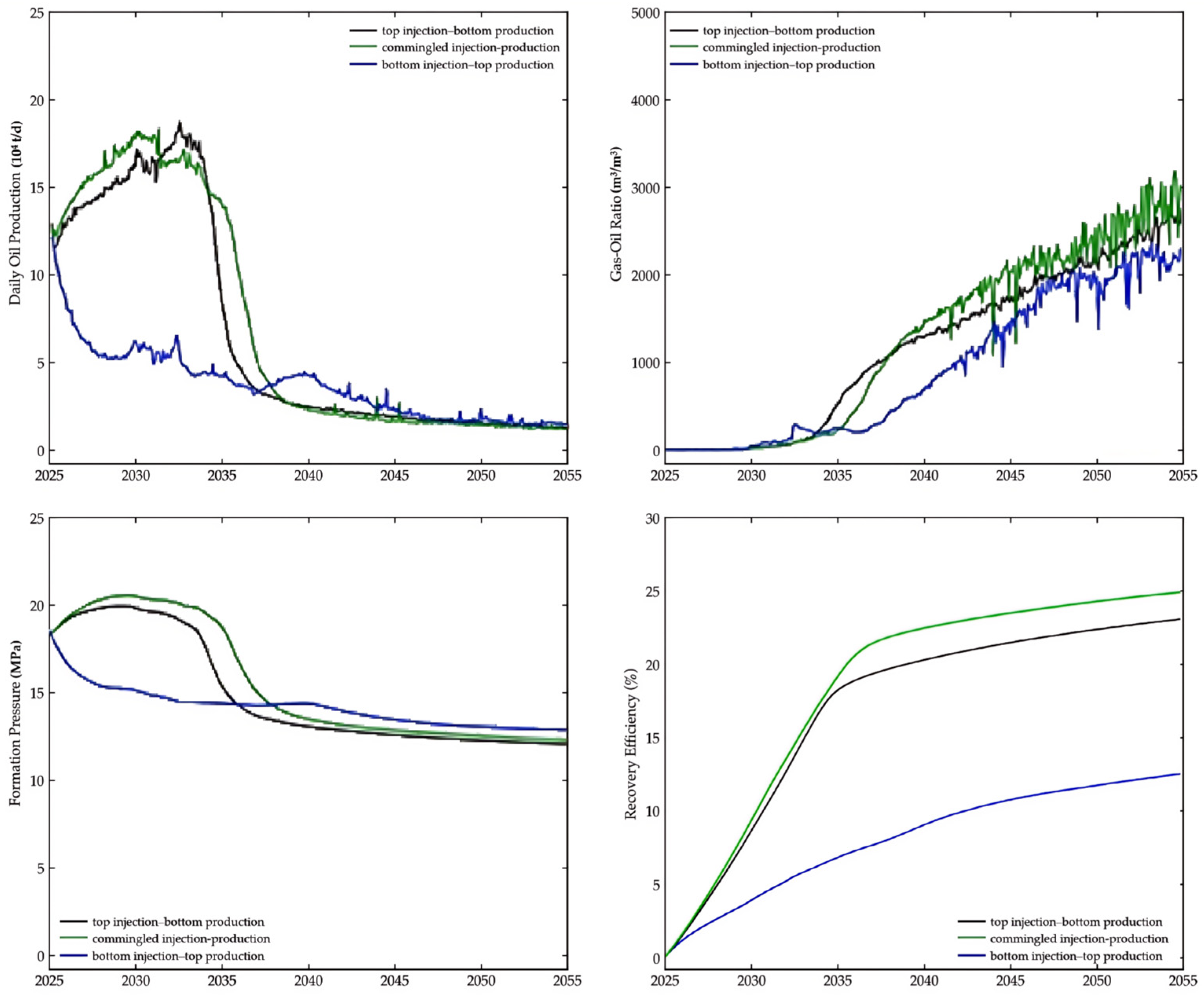
To optimize the CO2 displacement pathway, Experiment 9 comparatively investigated three perforation schemes: bottom injection–top production, commingled injection–production, and top injection–bottom production. The simulation results (Figure 15) indicate that the commingled injection–production scheme achieves the best development performance, characterized by a high and stable production profile, a relatively gentle decline rate, the highest ultimate recovery factor, the latest gas breakthrough time, and the most favorable reservoir pressure maintenance. The top injection–bottom production scheme exhibits outstanding early-stage productivity, with the highest daily oil production, the slowest increase in gas–oil ratio, and relatively good reservoir pressure maintenance; however, its ultimate recovery factor is slightly lower than that of the commingled scheme. In contrast, the bottom injection–top production scheme shows the poorest performance across all development indicators.
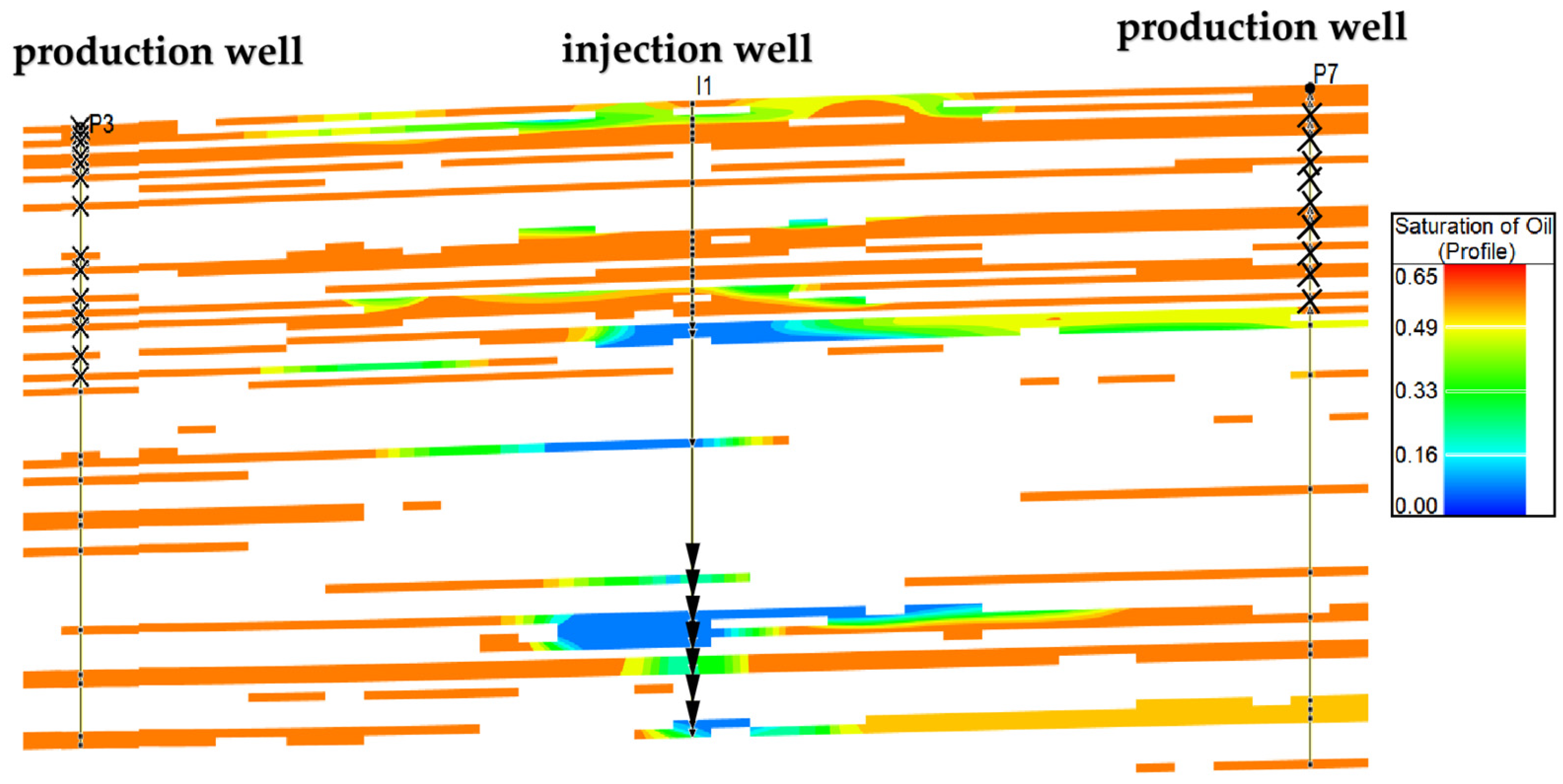
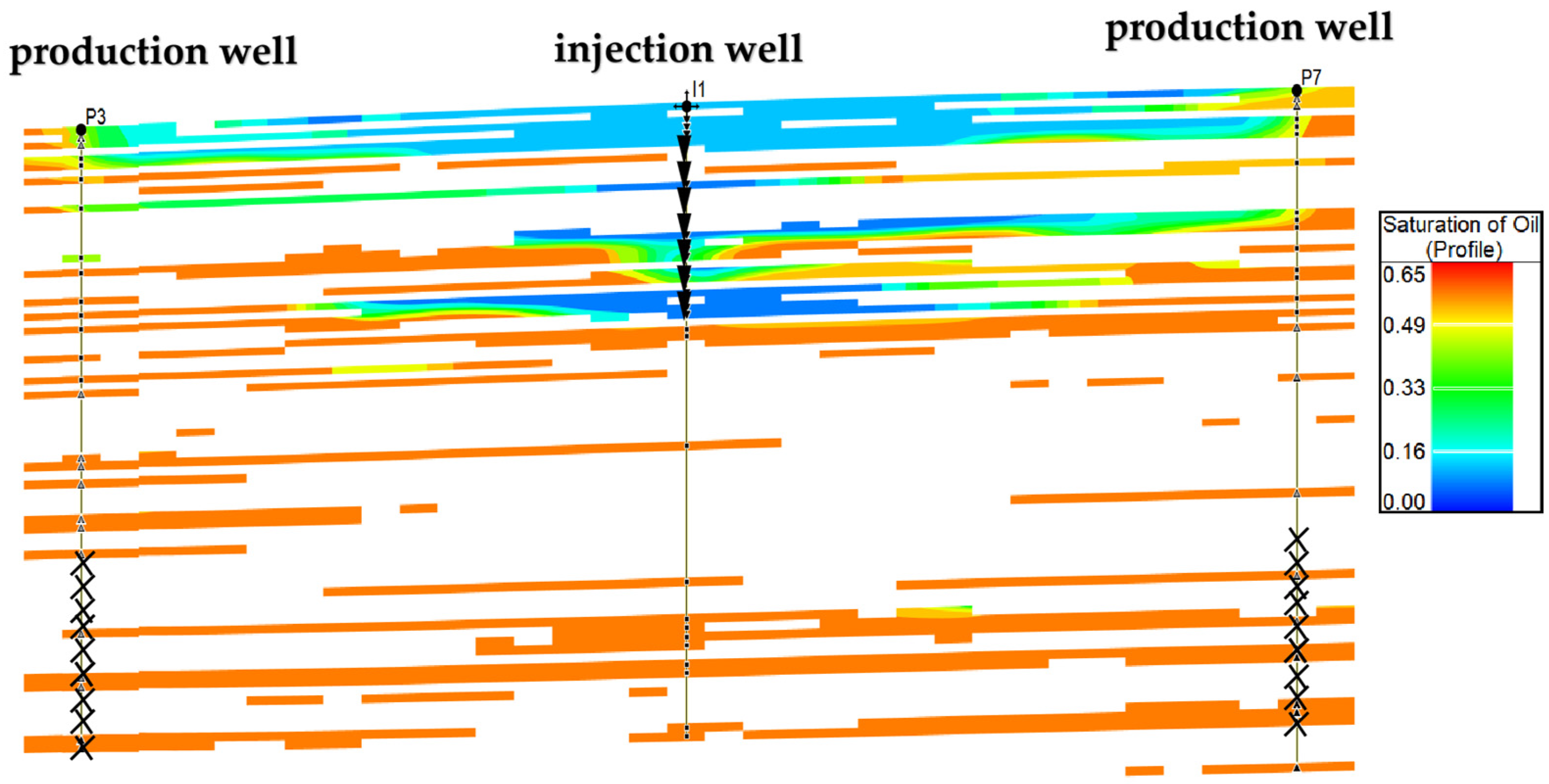
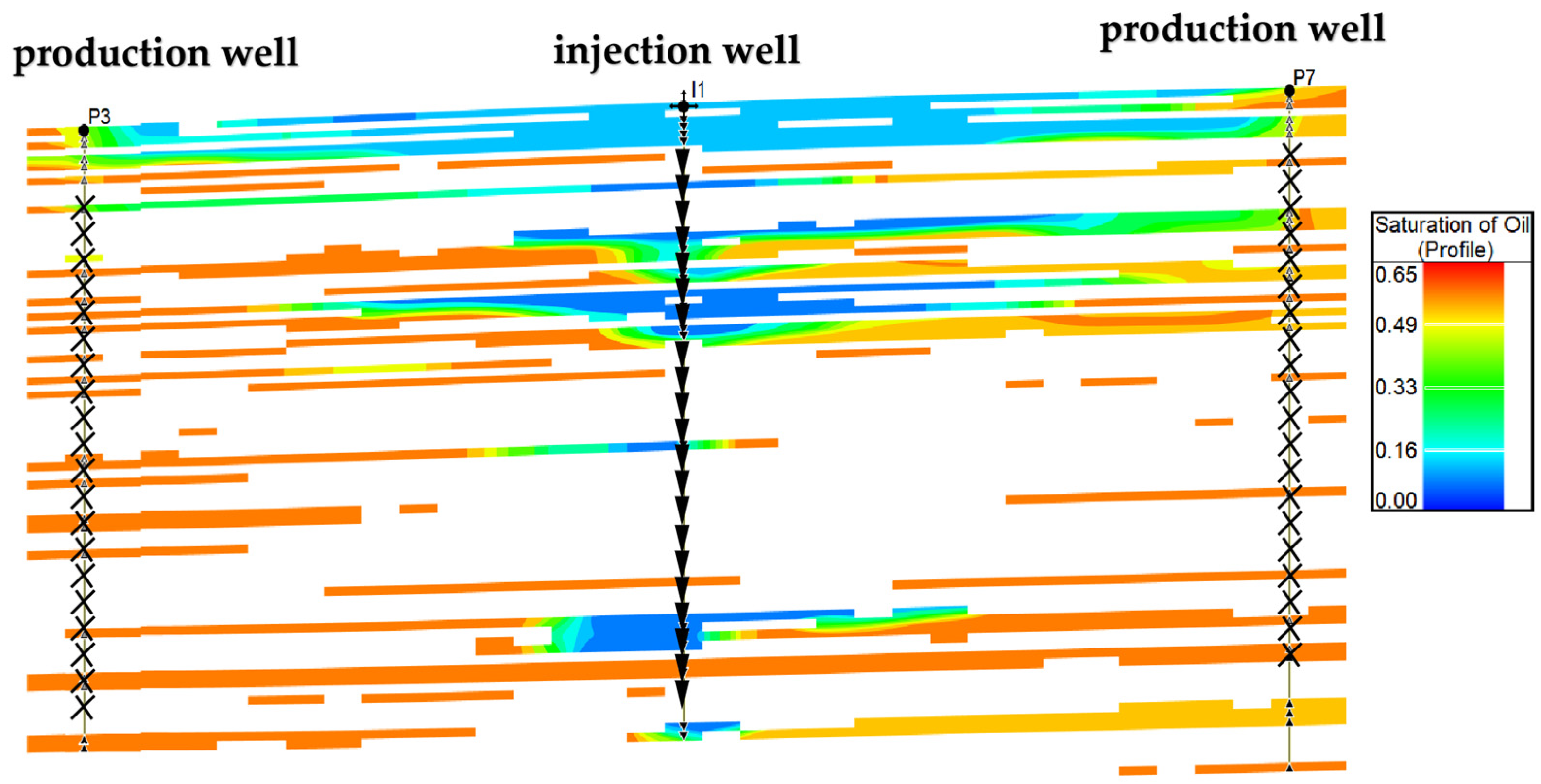
The oil saturation profiles (Figure 16, Figure 17 and Figure 18) further compare the sweep characteristics of the three perforation schemes in different reservoir intervals. Under the bottom injection–top production scheme, only the lower reservoir section is effectively swept, whereas the top injection–bottom production scheme mainly mobilizes crude oil in the upper section. In both cases, vertically unswept zones remain due to the sealing effect of interlayers and barriers. By contrast, the commingled injection–production scheme employs perforation across the entire well interval, allowing CO2 to bypass the constraints imposed by interlayers and effectively sweep the upper, middle, and lower reservoir sections simultaneously, thereby achieving the most balanced reservoir utilization. These results reveal the fundamental mechanism underlying the superior performance of the commingled injection–production scheme: full-interval perforation is the key to maximizing vertical sweep volume.
These findings indicate that, although commingled injection–production represents the theoretically optimal static scheme for CO2 flooding in strongly heterogeneous reservoirs, engineering practice necessitates a comprehensive balance between economic returns and risk mitigation. Given the inherent uncertainty regarding subsurface conditions in undeveloped reservoirs, a dynamic development strategy entailing initial top injection–bottom production followed by subsequent conversion to commingled injection–production is recommended to circumvent development risks. During the initial development phase, top injection–bottom production is employed to achieve rapid production build-up and stable displacement of the top oil layers through gravity segregation at a relatively low cost. Upon the emergence of a distinct inflection point in the gas–oil ratio during the middle to late production stages, timely conversion to commingled injection–production is implemented to overcome interlayer barriers and mobilize oil in the middle and lower intervals, thereby substantially enhancing the vertical sweep efficiency and ultimate economic returns.

3.4. Gas Injection Mode Optimization

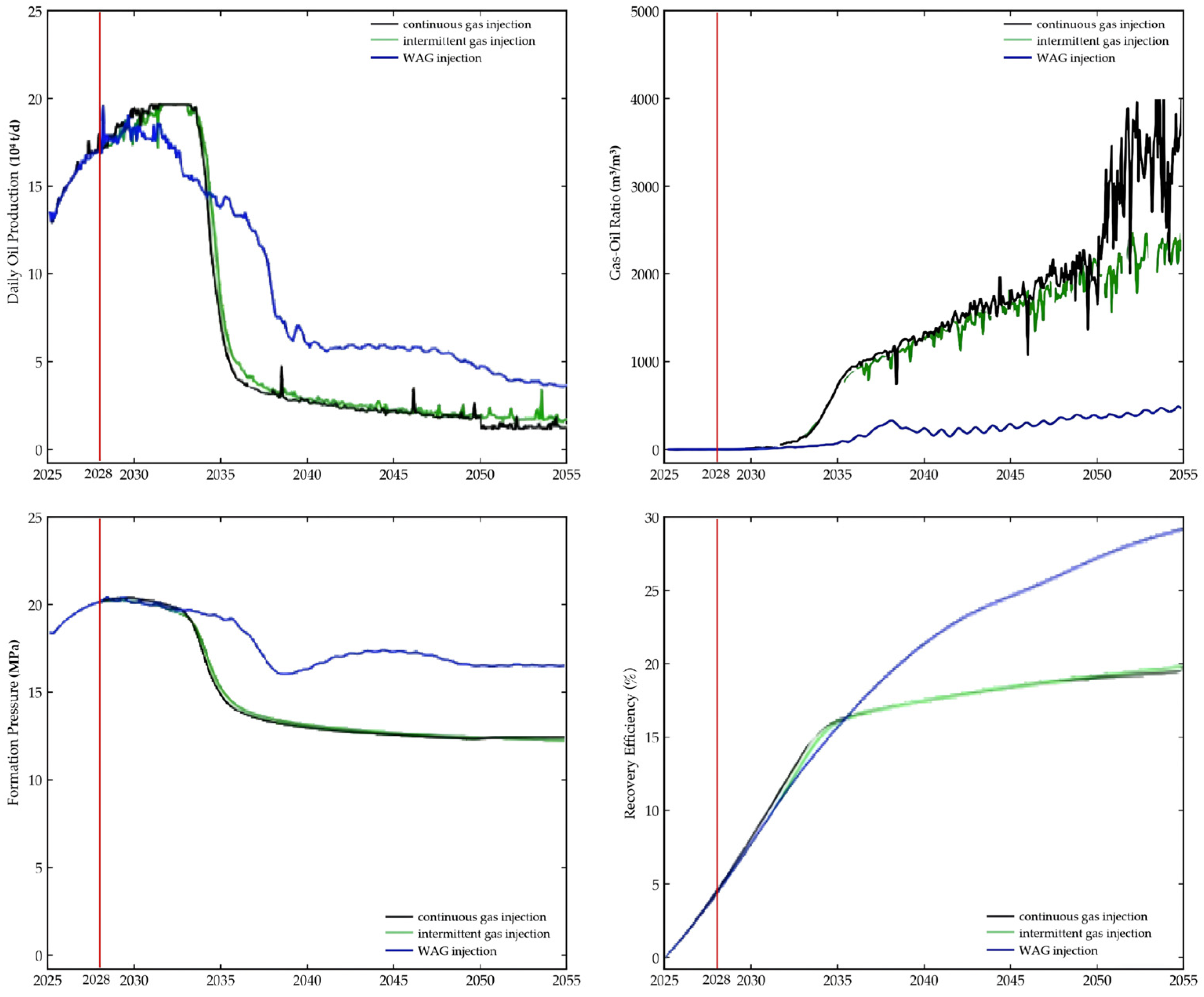
The Case 10 experimental scheme was designed to compare three injection modes: continuous gas injection, intermittent gas injection, and WAG injection. Based on neighboring field experience from CO2 flooding projects, continuous CO2 injection was applied during the early development stage to rapidly establish the displacement front and supplement formation energy. Beginning in 2028, the development scheme was converted to WAG injection and intermittent gas injection for comparative analysis. To mitigate the mobility contrast between gas and water phases and suppress preferential CO2 channeling in low-permeability reservoirs, a small-slug WAG scheme was adopted, with a water–gas ratio of 1:1 and a slug size of 0.01 PV for comparative evaluation of different injection methods [30]. The results (Figure 19) show that, compared with continuous gas injection and intermittent gas injection, the WAG scheme exhibits relatively lower daily oil production during the early stage. However, it can effectively reduce the gas–oil ratio and replenish formation energy, thereby maintaining reservoir pressure at a relatively high level. Consequently, the production decline rate is slower in the later stage, and the final recovery factor is superior to those of the continuous and intermittent gas injection schemes.
After switching to the WAG development mode, alternating injection of water and CO2 helps improve the gas-water mobility ratio and mitigate preferential CO2 flow through high-permeability channels, thereby enlarging the CO2 sweep volume and slowing the increase in gas–oil ratio [31]. In addition, periodic water injection effectively supplements formation energy and maintains reservoir pressure at a relatively high level [32], which is beneficial for improving displacement efficiency and extending the stable production period. Compared with continuous gas injection, WAG injection can alleviate gas channeling in low-permeability reservoirs to a certain extent and improve reservoir utilization during the later development stage. However, when reservoir properties are poor and water injectivity is insufficient to sustain stable WAG operation, intermittent gas injection is recommended instead. Considering the overall development performance, WAG injection is preferentially recommended when water injection conditions are favorable.

3.5. Performance Prediction of Optimized Development Scenarios

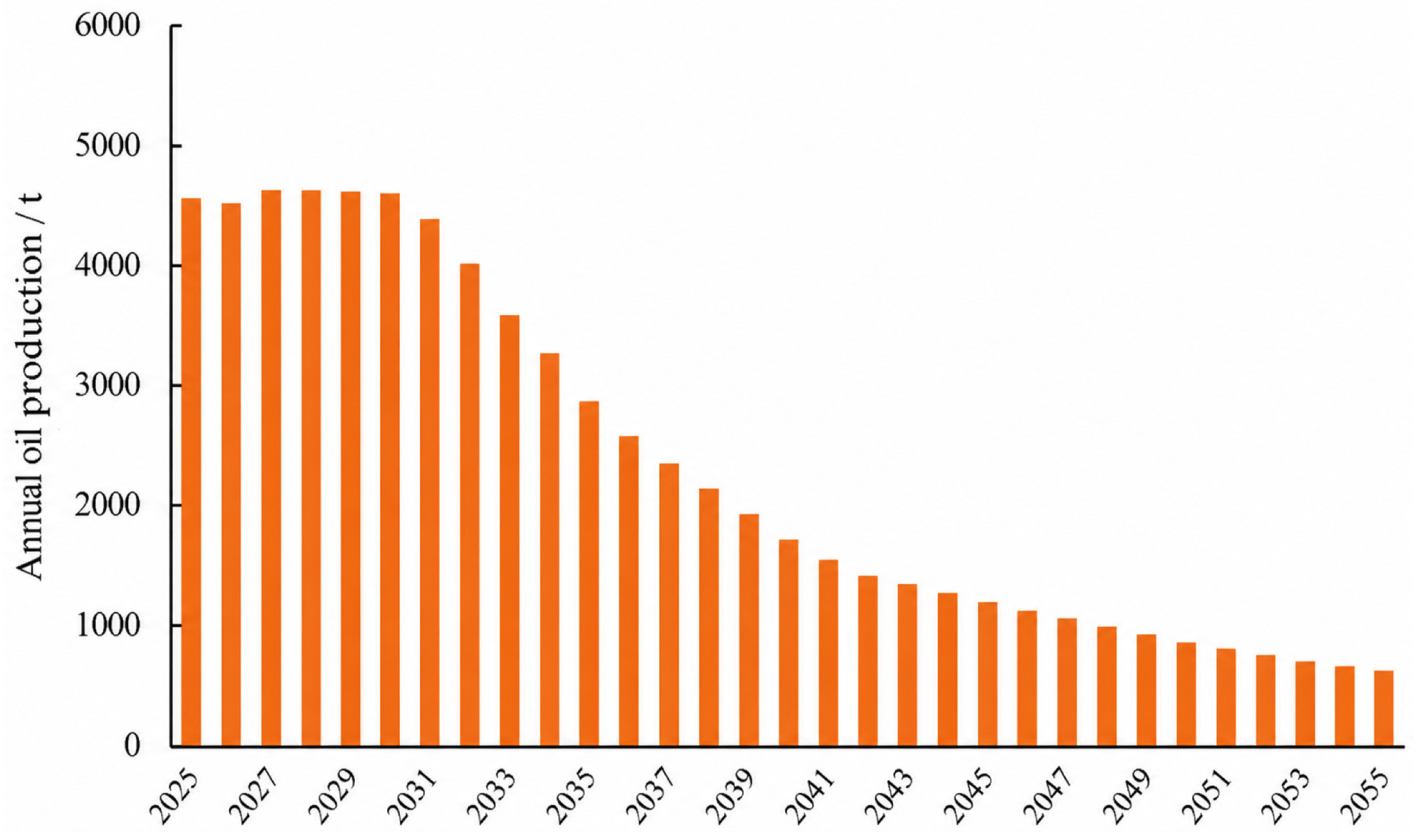
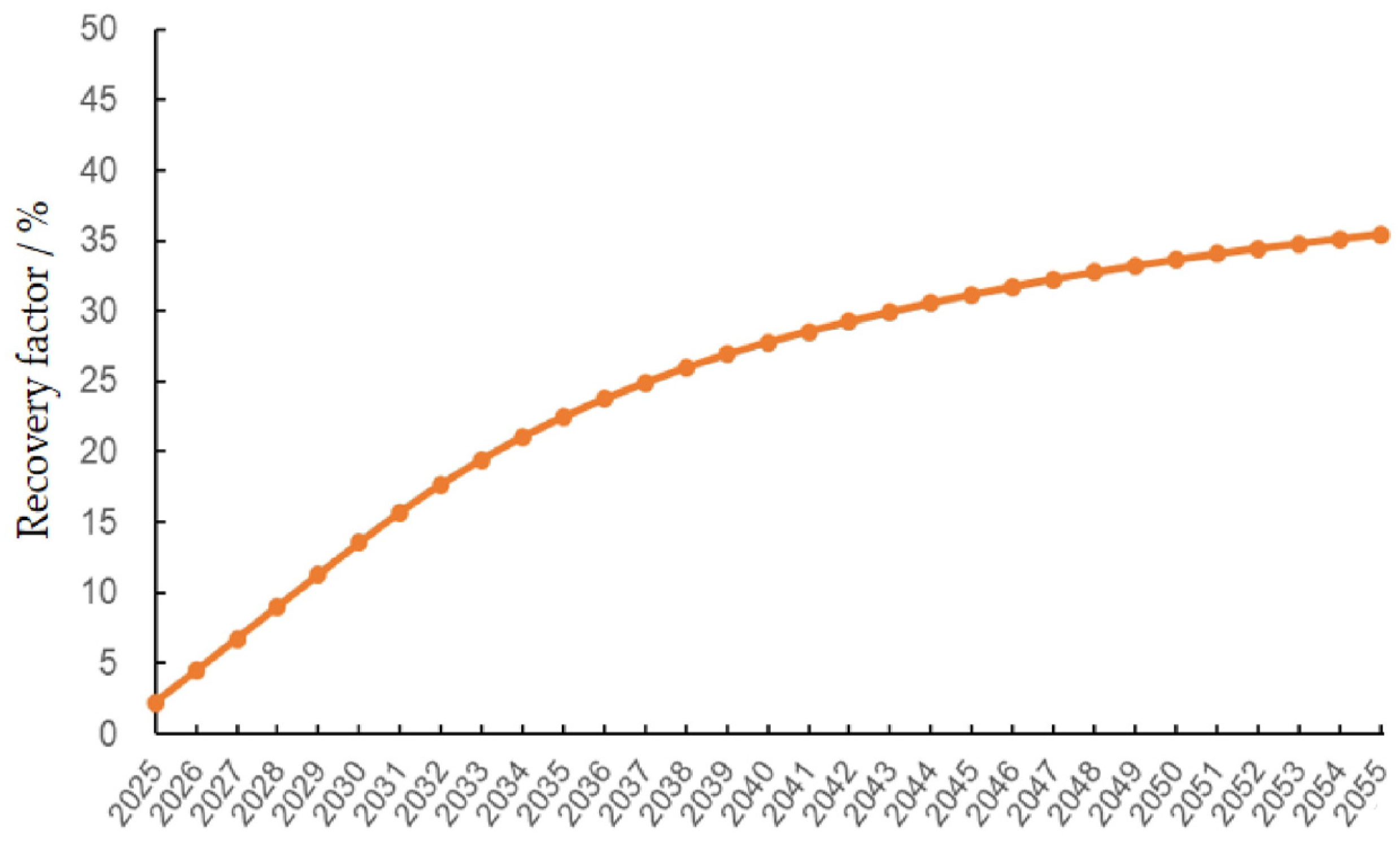
Based on the optimized development strategy, the predicted development performance for the undeveloped Chang 8 reservoir in the Xifeng Oilfield, Ordos Basin, is as follows: the peak daily oil production of the well group is equivalent to an annual oil production rate of approximately 4.6 × 10³ t, with a stable production period of about 7 years. By the end of the 30th production year, both reservoir pressure and gas–oil ratio remain within reasonable ranges. Under the current geological model and fluid parameter conditions, the central estimate of the recovery factor is 35.43% (Figure 20 and Figure 21).
Although a relatively comprehensive evaluation of key parameters has been conducted through single-factor sensitivity analysis, this study is primarily based on the single-factor control variable method and does not further consider the coupled effects among parameters such as well spacing, fracture parameters, and injection–production strategy. Therefore, the results are more suitable for analyzing general development patterns and providing engineering references. Prior to field-scale application, it is recommended to perform multi-parameter integrated uncertainty analyses based on multiple geological models to quantify the probabilistic distribution of recovery performance under geological uncertainty conditions. During actual field development, the simulation model should be continuously updated based on dynamic monitoring data, with close tracking of gas–oil ratio and reservoir pressure variations, while corresponding gas channeling risk control measures should be formulated in advance.

4. Conclusions

This study focuses on the undeveloped tight oil reservoir of the Chang 8 formation in the Xifeng area of the Ordos Basin. Based on numerical simulation methods, the effects of different CO2 flooding development strategies were investigated, leading to the following main conclusions:
(1)
Both well pattern and fracturing parameters exhibit reasonable ranges. The inverted 9-spot well pattern with vertical well injection–vertical well production is considered a relatively suitable well pattern, with a recommended well spacing of 500 m and row spacing of 200 m. A reasonable fracture half-length of 80 m is recommended, while fracture widths of 0.003–0.005 m are considered appropriate. These parameters not only ensure sufficient initial productivity but also help delay the formation of preferential flow channels, thereby providing favorable conditions for enhancing both areal and vertical sweep efficiency.
(2)
Injection–production parameters and injection strategies are critical for controlling displacement stability. An injection rate of 0.03–0.04 PV/year achieves a balance between reservoir energy replenishment and gas channeling control, while an oil production rate of 2–3 m3/d is considered appropriate. Maintaining the bottomhole flowing pressure at 13–14 MPa stabilizes the displacement front. Switching from continuous CO2 injection to WAG injection during the mid-development stage can improve mobility control and expand the sweep volume. Together, these parameters determine the reasonable operational boundaries for CO2 flooding development in the study area. In cases where reservoir water injectivity is poor and stable WAG injection cannot be achieved, intermittent gas injection is recommended as an alternative.
(3)
Based on the comprehensive analysis of well pattern, fracturing design, and injection–production schemes, an effective development strategy for directly implementing CO2 flooding in undeveloped areas has been proposed. The prediction results indicate that the recommended scheme can achieve a prolonged stable production period and maintain favorable reservoir pressure conditions, with a predicted recovery factor of 35.43% after 30 years of production under the current geological model and simulation conditions. The results indicate that appropriate parameter combinations can help delay gas channeling and improve sweep efficiency, providing valuable technical guidance for CO2 flooding development in similar low-permeability tight reservoirs.

Author Contributions

Conceptualization, J.W. and W.W.; methodology, W.W.; software, L.L.; validation, P.X., W.W. and L.S.; formal analysis, Q.L.; investigation, Y.F.; resources, J.W.; data curation, P.X.; writing—original draft preparation, P.X.; writing—review and editing, W.W. and Q.Z.; visualization, P.X. and L.L.; supervision, W.W.; project administration, J.W.; funding acquisition, J.W. All authors have read and agreed to the published version of the manuscript.

Funding

This research was funded by the National Major Science and Technology Projects of China grant number 2025ZD1408301.

Data Availability Statement

The data supporting the findings of this study are available from the corresponding author upon reasonable request.

Acknowledgments

The authors extend their gratitude to the Research Institute of Exploration and Development, Changqing Oilfield Company, PetroChina and the Postgraduate Innovation Project of Northwest University (2025–2026) for funding this study.

Conflicts of Interest

Authors Jiwei Wang, Yongjian Feng, Qiang Liu and Luming Shi were employed by Research Institute of Exploration and Development, Changqing Oilfield Company, PetroChina. Author Long Liu was employed by the Petroleum Development Center, Shengli Oilfield Company, SINOPEC. The remaining authors declare that the research was conducted in the absence of any commercial or financial relationships that could be construed as a potential conflict of interest.

Abbreviations

The following abbreviations are used in this manuscript:
CO2Carbon Dioxide
EOREnhanced Oil Recovery
WAGWater–Alternating–Gas
PVPore Volume
GORGas–Oil Ratio
MMPMinimum Miscibility Pressure

References

  1. Shi, Y.; Wu, Z. Problems and Solutions of Low-grade Oil & Gas Development in China. Resour. Ind. 2010, 12, 99–102. [Google Scholar]
  2. Zeng, L.; Lyu, W.; Zhang, Y.; Liu, G.; Dong, S. The Effect of Multi-Scale Faults and Fractures on Oil Enrichment and Production in Tight Sandstone Reservoirs: A Case Study in the Southwestern Ordos Basin, China. Front. Earth Sci. 2021, 9, 664629. [Google Scholar] [CrossRef]
  3. Kang, Y.; Tian, J.; Luo, P.; You, L.; Liu, X. Technical Bottlenecks and Development Strategies of Enhancing Recovery for Tight Oil Reservoirs. Acta Pet. Sin. 2020, 41, 467–477. [Google Scholar]
  4. Al Eidan, A.A.; Bachu, S.; Melzer, L.S.; Lars, E.I.; Ackiewicz, M. Technical Challenges in the Conversion of CO2-EOR Projects to CO2 Storage Projects. In Proceedings of the SPE Asia Pacific Enhanced Oil Recovery Conference, Kuala Lumpur, Malaysia, 11 August 2015; Society of Petroleum Engineers: Kuala Lumpur, Malaysia, 2015; p. D021S011R004. [Google Scholar]
  5. Huang, F.; Huang, H.; Wang, Y.; Ren, J.; Zhang, L.; Ren, B.; Butt, H.; Ren, S.; Chen, G. Assessment of Miscibility Effect for CO2 Flooding EOR in a Low Permeability Reservoir. J. Pet. Sci. Eng. 2016, 145, 328–335. [Google Scholar] [CrossRef]
  6. Han, W. The Influence of Injection Modes on CO2 Flooding and Storage in Low-Permeability Reservoirs. Energies 2026, 19, 480. [Google Scholar] [CrossRef]
  7. Ren, B.; Zhang, L.; Huang, H.; Ren, S.; Chen, G.; Zhang, H. Performance Evaluation and Mechanisms Study of Near-Miscible CO2 Flooding in a Tight Oil Reservoir of Jilin Oilfield China. J. Nat. Gas Sci. Eng. 2015, 27, 1796–1805. [Google Scholar] [CrossRef]
  8. Zhang, J.; Zhang, H.; Ma, L.; Liu, Y.; Zhang, L. Performance Evaluation and Mechanism with Different CO2 Flooding Modes in Tight Oil Reservoir with Fractures. J. Pet. Sci. Eng. 2020, 188, 106950. [Google Scholar] [CrossRef]
  9. Zhu, Q.; Wu, K.; Guo, S.; Peng, F.; Zhang, S.; Jiang, L.; Li, J.; Feng, D.; Zhang, Y.; Chen, Z. Pore-Scale Investigation of CO2-Oil Miscible Flooding in Tight Reservoir. Appl. Energy 2024, 368, 123439. [Google Scholar] [CrossRef]
  10. Li, Z.; Gu, Y. Soaking Effect on Miscible CO2 Flooding in a Tight Sandstone Formation. Fuel 2014, 134, 659–668. [Google Scholar] [CrossRef]
  11. Luo, Q.; Li, M.; Liang, B.; Liu, J.; Shi, G.; Wang, M.; Li, L. Experimental Investigation on the Mechanism of CO2-Enhanced Oil Recovery in Tight Conglomerate Reservoirs with Surfactant Assistance. ACS Omega 2025, 10, 50077–50087. [Google Scholar] [CrossRef]
  12. Wang, B.; Dong, J.; Zhou, P.; Liu, K. Study on the Microscopic Mechanism of Supercritical CO2 and Active Water Alternating Flooding in a Tight Oil Reservoir. Processes 2025, 13, 2535. [Google Scholar] [CrossRef]
  13. Jadhawar, P.S.; Sarma, H.K. Effect of Well Pattern and Injection Well Type on the CO2-Assisted Gravity Drainage Enhanced Oil Recovery. J. Pet. Sci. Eng. 2012, 98–99, 83–94. [Google Scholar] [CrossRef]
  14. Liu, K.; He, H.; Yin, D. Theoretical and Experimental Study on the Long-Term Conductivity of Heterogeneous Artificial Fractures in Tight Reservoirs. Energy Rep. 2023, 9, 3881–3895. [Google Scholar] [CrossRef]
  15. Fan, L.; Li, L.; Su, Y.; Cai, M.; Tang, M.; Gao, X.; Chen, Z.; Wang, C. CO2-Prepad Injection EOR Simulation and Sensitivity Analysis Considering Miscibility and Geomechanics in Tight Oil Reservoirs. J. Pet. Sci. Eng. 2020, 195, 107905. [Google Scholar] [CrossRef]
  16. Wang, W.; Zhao, H.; Sun, B.; Lu, Y.; Shen, Z.; Zhu, Q.; Xu, P. Injection Modes and Injection-Production Configurations for CO2 Flooding in Heterogeneous Tight Oil Reservoirs. Energy Fuels 2026, 40, 1290–1303. [Google Scholar] [CrossRef]
  17. Mansour, G.; Ivanova, L.V.; Miller, V.K.; Koshelev, V.N.; Djouadi, Y.; Chemam, M.-S.; Khelkhal, M.A.; Rodionov, A.A.; Vakhin, A.V. Structure of high-molecular components and their influence on the properties of oils from Syrian fields. Fuel 2025, 394, 135053. [Google Scholar] [CrossRef]
  18. Wei, J.; Yu, H.; Gao, M.; Lang, X.; Zhao, B.; Liu, W.; Yin, H. Interlayer Interference Analysis and Layered Development Strategy in CO2 Miscible Flooding of Reverse-Rhythm Reservoirs. ACS Omega 2025, 10, 59723–59735. [Google Scholar] [CrossRef]
  19. Taber, J.J.; Seright, R.S. Horizontal Injection and Production Wells for EOR or Waterflooding. In Proceedings of the Permian Basin Oil and Gas Recovery Conference, Midland, TX, USA, 18–20 March 1992; Society of Petroleum Engineers: Midland, TX, USA, 1992; p. SPE-23952. [Google Scholar]
  20. Zhang, L.; Tan, X.; Tian, X.; Jiao, Y.; Zhang, W.; Shu, X.; Li, B.; Liu, X.; Chen, H. Inspirations from Field-Reservoir CO2 Flooding with Different Miscible Degrees under Cross-Scale Oil Reservoir Conditions. ACS Omega 2024, 9, 14692–14703. [Google Scholar] [CrossRef] [PubMed]
  21. Qi, X.; Zhou, T.; Lyu, W.; He, D.; Sun, Y.; Du, M.; Wang, M.; Li, Z. Front Movement and Sweeping Rules of CO2 Flooding under Different Oil Displacement Patterns. Energies 2023, 17, 15. [Google Scholar] [CrossRef]
  22. Zhang, Q. Laboratory Investigation of the Influence of Fractures on CO2 Flooding. Front. Earth Sci. 2022, 10, 983442. [Google Scholar] [CrossRef]
  23. Fang, P.; Wan, Y.; Yang, Z.; Zhang, Q.; Lv, W.; Yu, H.; Cao, M. Mechanism-Driven Optimization of CO2 Flooding in Fractured Low-Permeability Reservoirs: Synergistic Insights from 2D Visual Model and Nanoscale Lattice Boltzmann Simulations. J. CO2 Util. 2025, 101, 103223. [Google Scholar] [CrossRef]
  24. Tian, G.; Fang, Y.; Hua, L.; Wang, H.; Wang, B.; Zheng, Y.; Zhang, T.; Xia, Q. Performance Evaluation of CO2 Pre-Pad Energized Fracturing in Shale Oil Reservoir. Processes 2026, 14, 671. [Google Scholar] [CrossRef]
  25. Yinbil, P.J.; Atarah, J.J.A.; Miezah, E.B. Optimizing the Utilization of Carbon Dioxide for Enhanced Oil Recovery in Matured Reservoirs Using the Petroleum Expert Suite. J. Yangtze Oil Gas 2026, 11, 1–33. [Google Scholar] [CrossRef]
  26. Asim, T.; Ur Rahman, K.; Kukha, H.K.; Mishra, R. Hybrid CFD and Machine Learning Analysis of CO2 Enhanced Oil Recovery in Naturally Fractured Reservoirs. Sci. Rep. 2026, 16, 4630. [Google Scholar] [CrossRef]
  27. Zhai, W.; Cui, C.; Hu, X.; Li, S.; Feng, Y.; Tan, L.; Zhang, J.; Jiang, R.; Tan, F. Feasibility Study of CO2 Injection at the Top of Tight Conglomerate Reservoir in Mahu Sag, Junggar Basin, China. Front. Earth Sci. 2025, 13, 1586641. [Google Scholar] [CrossRef]
  28. Nan, C.; Xin, X.; Yu, G.; Lei, Z.; Wang, T. Comprehensive Study of Development Strategies for High-Pressure, Low-Permeability Reservoirs. Processes 2023, 11, 3303. [Google Scholar] [CrossRef]
  29. Kong, X.; Wang, H.; Yu, W.; Wang, P.; Miao, J.; Fiallos-Torres, M. Compositional Simulation of Geological and Engineering Controls on Gas Huff-n-Puff in Duvernay Shale Volatile Oil Reservoirs, Canada. Energies 2021, 14, 2070. [Google Scholar] [CrossRef]
  30. Guo, P.; Huo, L.; Jiang, B.; Lei, Y. Parameter optimization of water alternating gas of Fang 48 CO2 flooding pilot area. J. China Univ. Pet. (Ed. Nat. Sci.) 2012, 36, 89–93. [Google Scholar]
  31. Fu, C.; Yan, G.; Zhang, W.; Zhu, R.; Huang, K.; Chen, H.; Shu, X. Analysis of the Impact of CO2 Water-Gas Intermittent Displacement Parameter Optimization on Enhanced Oil Recovery in Low Permeability Reservoirs. Mine Eng. 2024, 12, 725–728. [Google Scholar] [CrossRef]
  32. Yang, Y.; Zhao, X.; Yang, J.; Zhang, Y.; Tian, Y. Recent Developments in CCUS-EOR for Depleted Reservoirs. Comput. Energy Sci. 2025, 2, 17–30. [Google Scholar] [CrossRef]
Figure 1. Geological profile of the study area.
Energies 19 02829 g001
Figure 2. Three-dimensional permeability field of the typical well pattern model.
Energies 19 02829 g002
Figure 3. CO2 injection saturation pressure fitting.
Energies 19 02829 g003
Figure 4. CO2 swelling factor fitting.
Energies 19 02829 g004
Figure 5. Oil-water relative permeability curves.
Energies 19 02829 g005
Figure 6. Gas–oil relative permeability curves.
Energies 19 02829 g006
Figure 7. Comparison of development performance under different well patterns within a 30-year development.
Energies 19 02829 g007
Figure 8. Comparison of development performance under different well and row spacing combinations.
Energies 19 02829 g008
Figure 9. Development performance under different fracture half-lengths.
Energies 19 02829 g009
Figure 10. Development performance under different fracture widths.
Energies 19 02829 g010
Figure 11. Effect of fracturing timing on development performance.
Energies 19 02829 g011
Figure 12. Development performance under different CO2 injection rates.
Energies 19 02829 g012
Figure 13. Development performance under different production rates.
Energies 19 02829 g013
Figure 14. Development performance under different bottomhole pressures.
Energies 19 02829 g014
Figure 15. Comparison of development performance under different perforation schemes.
Energies 19 02829 g015
Figure 16. Bottom injection-top production final oil saturation profile.
Energies 19 02829 g016
Figure 17. Top injection–bottom production final oil saturation profile.
Energies 19 02829 g017
Figure 18. Commingled injection–production final oil saturation profile.
Energies 19 02829 g018
Figure 19. Development performance under different gas injection schemes.
Energies 19 02829 g019
Figure 20. Predicted annual oil production under the optimized scheme.
Energies 19 02829 g020
Figure 21. Predicted recovery factor under the optimized scheme.
Energies 19 02829 g021
Table 1. Properties of reservoir oil after history matching.
Density (kg/m3)Viscosity (mPa·s)Saturation Pressure (MPa)GOR (m3/m3)Cricondentherm (°C)Cricondenbar (MPa)Critical Temperature (°C)Critical Pressure (MPa)
749.41.0712.0692483.3519.22423.2114.22
Table 2. Fitting results of pseudo-component characteristic parameters of reservoir fluids.
ComponentMole Fraction Molar MassCritical Pressure (atm)Critical Temperature (K)Acentric FactorOmegaAOmegaB
CO20.0044.0172.8304.20.22500.44480.0650
C10.399916.0445.4190.60.00800.45720.0779
C2–40.112744.4742.26272.100.14900.45720.0777
C5–70.120186.3430.06403.020.28200.46020.0776
C8–120.1927101.0927.44738.050.41200.60830.1030
C13–200.1328208.8624.57776.510.55100.43890.0699
C21+0.0416910.5020.911196.660.93500.29260.0943
Table 3. Design of numerical simulation cases for CO2 flooding.
Case No.CategoryOptimization VariableCases
1well pattern deploymentWell pattern typeInverted 5-spot, 7-spot, and 9-spot patterns under vertical-well injection with vertical-well production;
inverted 5-spot, 7-spot, and 9-spot patterns under vertical-well injection with horizontal-well production
2Well spacing and row spacing (m)300-150, 300-200, 400-150, 400-200, 500-150, 500-200
3Fracturing parametersFracture half-length (m)50, 80, 100, 120
4Fracture width (m)0.001, 0.003, 0.005, 0.007
5Fracturing timing (months)0, 3, 6, 9, 12
6Injection–production parametersSingle-well injection rate (PV/year)0.02, 0.03, 0.04
7Single-well oil production rate (m3/d)2, 3, 4, 5
8bottomhole flowing pressure (MPa)12, 13, 14, 15
9Perforation placementTop injection–bottom production; commingled injection–production; bottom injection–top production
10Gas injection modesContinuous gas injection; intermittent gas injection; WAG injection
Disclaimer/Publisher’s Note: The statements, opinions and data contained in all publications are solely those of the individual author(s) and contributor(s) and not of MDPI and/or the editor(s). MDPI and/or the editor(s) disclaim responsibility for any injury to people or property resulting from any ideas, methods, instructions or products referred to in the content.