Review

Corrosion of Gaseous CO2 Pipelines in Carbon Capture, Utilization, and Storage (CCUS): A Mechanistic Review

Shandong Provincial Key Laboratory of Oil, Gas and New Energy Storage and Transportation Safety, China University of Petroleum (East China), Qingdao 266580, China
*
Author to whom correspondence should be addressed.
Energies 2026, 19(12), 2814; https://doi.org/10.3390/en19122814
Submission received: 3 March 2026 / Revised: 7 April 2026 / Accepted: 25 May 2026 / Published: 12 June 2026

Abstract

With the global advancement of carbon peaking and carbon neutrality goals, the importance of carbon capture, utilization, and storage (CCUS) technologies has become increasingly prominent. As a critical component of CCUS systems, gaseous CO2 pipeline transportation has emerged as a research hotspot due to its efficiency and cost effectiveness. However, there are invariably corrosion problems when it comes to gaseous CO2 pipeline transportation. These issues pose a significant threat to both the safety and economic viability of pipeline operations. Therefore, it is of importance to investigate gaseous CO2 corrosion during pipeline transportation. In this work, based on recent domestic and international research achievements, research progress in the field of gaseous CO2 corrosion during pipeline transportation is systematically reviewed. First, the corrosion mechanisms and corrosion characteristics during gaseous CO2 pipeline transportation are studied, and the synergistic mechanisms by which key parameters such as impurities, temperature, pressure, flow velocity, and water content jointly influence pipeline wall corrosion behavior are elucidated. Then, corrosion products in CO2 transportation pipelines are analyzed, and protective measures applicable to gaseous CO2 pipeline systems are synthesized. Finally, future research goals are proposed to promote research on gaseous CO2 corrosion during pipeline transportation: the impact of interactions among multiple impurities on corrosion behavior should be clarified; the inhibitory effects of the dynamic evolution of product films on mass transfer processes should be considered in corrosion rate calculation models; and more economical and efficient anti-corrosion technologies should be developed to meet diverse operational requirements. This work can provide guidance for the corrosion protection of gaseous CO2 pipeline transportation.

1. Introduction

1.1. Strategic Value of CCUS Technology Under “Dual Carbon” Goals

Amid the intensifying global climate crisis, decarbonization has become a universal imperative. As the world’s largest carbon emitter, China elevated its climate governance to a national strategic level by formalizing their “dual carbon” goals (carbon peaking and carbon neutrality) in 2020. Carbon capture, utilization, and storage, also known as CCUS technology, functions through an integrated “capture—transport—storage—utilization” chain. This technology is the key to achieving those goals. CCUS technology can reduce CO2 emissions in the industrial sector. This provides a crucial technical approach for the transformation of the energy system and the decarbonization of high energy-consuming industries. Drustrup Rikke et al. [1] aim to emphasize that CCUS has a dual role. It can curb greenhouse gas emissions and promote the utilization of carbon resources by enhancing oil recovery, enabling chemical raw material synthesis, and engaging in building materials production. This approach can drive the development of a “negative carbon economy” ecosystem.
In China, the fourteenth five-year plan explains the sequence of technological advances, demonstration projects, and the industrial deployment of CCUS, reflecting the strategic importance of CCUS in terms of coordinating energy security and environmental sustainability [2]. Akankesha Singh analyzed the hierarchical process of the fuzzy analysis of CCUS. Networks are designed for high-emission facilities, such as coal-fired power plants and steel mills. They can address two major problems: the high costs of emission reduction and the uneven regional distribution of emissions. However, technical barriers remain. Li et al. [3] noted that the transportation of unclean carbon dioxide gas is actually a safety risk, which can be seen as a key vulnerability in the CCUS value chain. Their analysis emphasizes that systematic research on corrosion mechanisms is important for improving the economic and engineering feasibility of this technology. To address these challenges, this paper systematically reviews the global progress in this regard, establishing a logical framework that encompasses corrosion mechanisms, influencing factors, product characteristics, mitigation technologies, and future directions. This provides theoretical support for engineering practice.

1.2. Central Role and Corrosion Challenges in Gaseous CO2 Pipeline Transportation

In the CCUS system, pipeline transportation serves as an “arterial lifeline”, connecting carbon capture facilities with utilization or geological storage sites. Compared with oil tankers or marine alternatives, pipeline transportation offers unmatched advantages: a single pipeline can transport several million tons of CO2 per year with very low energy consumption and operate continuously, making it an ideal choice for establishing regional or national CO2 networks [4]. While pipeline transportation is the critical link connecting capture to downstream operations, the ultimate purpose of CCUS is secure and permanent geological storage. As an example of the full cycle, Dumitrache L et al. [5] demonstrated that properly transported CO2 can be injected into deep saline aquifers or depleted oil/gas reservoirs, where trapping mechanisms—structural, residual, solubility, and mineral—ensure long-term containment. This integration of transport and storage is essential for realizing the “negative carbon economy” ecosystem mentioned earlier. However, industrially sourced CO2 flows typically contain impurities such as H2S, O2, H2O vapor, and sulfides. Under high-pressure, humid, or supercritical conditions, these pollutants create a corrosive environment that can cause pipe wall thinning, perforation, or even catastrophic failure. Chen et al. [6] studied the effect of a corrosive environment with H2S and CO2 on pipelines. Their results show that the local corrosion rate increases by an order of magnitude compared to the uniform corrosion rate. This increase is driven by several mechanisms. For example, pitting corrosion leads to stress concentration [7]. In addition, wall thickness is degraded beyond the allowable range [8]. Key defect areas may also be sensitive to sulfide stress cracking [9]. These mechanisms seriously damage the integrity of the pipeline structure.
The pipelines under study are primarily made of carbon steel. The complexity of corrosion mechanisms arises from multifactorial interactions. On the one hand, CO2 dissolution forms a weakly acidic environment, triggering combined electrochemical and chemical corrosion, with the stability of FeCO3 protective films directly governing corrosion rates [10]. On the other hand, impurities exacerbate degradation—H2S disrupts FeCO3 films, and O2 accelerates anodic oxidation [11]. Leng et al. [12] established that within CO2-O2-Cl environments, dissolved oxygen serves as the dominant driver for localized corrosion initiation, with O2-Cl synergistic interactions governing the primary corrosion mechanisms. Fang et al. [13] demonstrated that in CO2-enriched wet gas pipelines, erosion–corrosion interactions driven by hydrodynamic forces can elevate corrosion rates by 300–500% through synergistic mechanisms. Furthermore, supercritical CO2 (>31.1 °C, >7.38 MPa) combines gas-like diffusivity with liquid-phase solvation, intensifying intergranular corrosion and stress corrosion cracking (SCC) [14]. In the analysis of corrosive products, FeCO3 and FeS have been found to coexist, indicating that they can both inhibit and promote mass transfer [15,16]. Qin et al. [16] demonstrated the dynamic balance between corrosion and the regeneration of protective film through on-site material survival under pipe flow conditions. Corrosion mitigation methods are evaluated in three ways: [17,18,19] surface protection (e.g., nanocomposite coating and thermal spraying modification), corrosion inhibition (environmental inhibitors) [19], and integrated systems (integrated protection with intelligent monitoring) [20].
Despite progress in understanding single-factor influences, critical gaps remain in addressing multiparameter coupling effects. For instance, the mechanism of H2S solubility-driven film degradation under high pressure remains unclear. Zhu et al. [21] reported that prediction errors for corrosion rates in submarine pipelines reached ±40% due to unmodeled thermal gradients and tidal currents, reflecting the limitations of current complex multiphase flow models. Practical challenges also persist, such as the reduced accuracy of corrosion monitoring tools (e.g., resistance probes) under supercritical conditions, and the ineffectiveness of cathodic protection in high-resistivity soils. Future research will focus on developing quantitative models to analyze multi-impurity interactions and advancing low-cost technologies through interface reaction studies [22,23]. Ultimately, the corrosion of CO2 pipelines is an interdisciplinary issue related to materials science, chemical engineering, and environmental science [24]. To overcome these obstacles, interdisciplinary research is particularly necessary to promote the development of predictive models, corrosion-resistant materials, and adaptive monitoring systems—a necessary step to safely and effectively expand the scale of CCUS infrastructure.

2. Corrosion Mechanism and Influencing Factors of CO2 Gas Pipeline

2.1. Analysis of Basic Mechanism of Corrosion

2.1.1. Electrochemical Corrosion and Chemical Corrosion Work Together

Corrosion in CO2 gaseous pipes usually works together with electrochemical corrosion and chemical corrosion. In a humid environment, CO2 is dissolved in carbonic acid in H2O [25], forming an acidic electrolyte to accelerate the electrochemical reaction [26]. A gap in the oxide or corrosive film on a metal pipe surface can create a micro-cell, leading to metal dissolution and subsequent electrochemical corrosion [27].

2.1.2. Key Reaction Pathways of CO2 Corrosion in Humid Environment

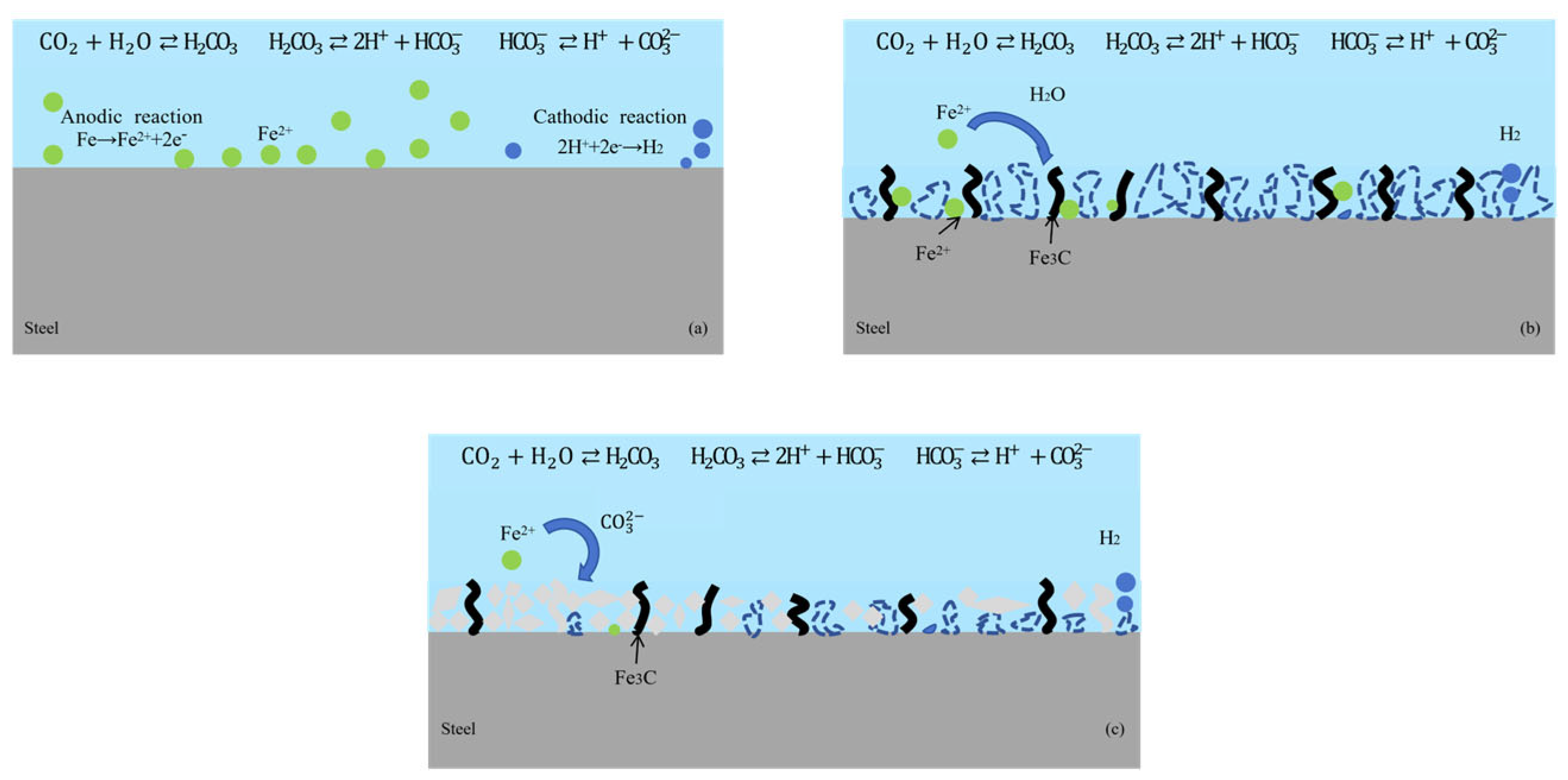
Moisture is the key to corrosion caused by CO2. When the environment is humid, a series of chemical reactions occurs. First, CO2 dissolves in H2O to form carbonic acid. The carbonate is then divided into hydrogen ions and carbonate ions, which lays the electrochemical basis for the reaction. In the cathode, hydrogen ions are reduced; in the anode, the metallic iron is oxidized to produce a black iron ion. After that, the membrane is constantly thickened, and the structure changes. This will change the rate of the diffusion of ions, as well as affect local electrochemical conditions, which obviously affects the development of corrosion and ultimately determines the pattern of the prolonged corrosion of the material [28].
CO2 + H2O ⇌ H2CO3
H2CO3 ⇌ H+ + HCO3
2H+ + 2e ⇌ H2
Fe − 2e ⇌ Fe2+
In an H2O-rich environment, corrosion initially proceeds rapidly, with the preferential dissolution of the ferrite phase while the Fe3C phase is retained (Figure 1a). The retained Fe3C phase becomes covered with poorly protective, porous corrosion products such as ferrous oxide/iron hydroxides (Figure 1b). As the dissolution of the matrix continues, the concentration of Fe2+ ions at the corrosion interface gradually increases. When the concentrations of Fe2+ and CO32− ions at the interface exceed the saturation solubility of FeCO3, FeCO3 (iron carbonate) corrosion products form on the surface of N80 steel. Ultimately, a dense protective film of corrosion products develops on the steel surface, mitigating further corrosion (Figure 1c) [29].

2.2. Multiparameter Coupling Effects

2.2.1. Catalytic and Accelerating Effects of Impurities

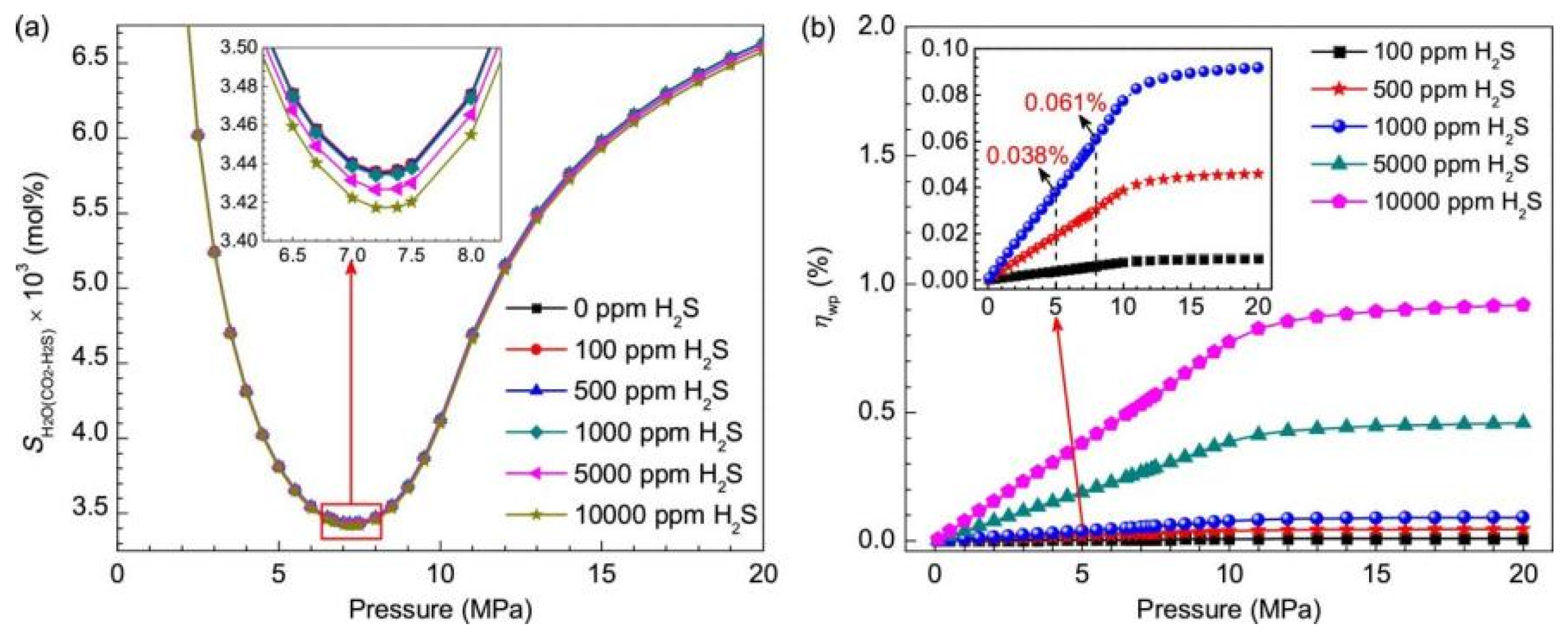
The CO2 gas transported in practice often contains various impurities such as H2S, O2, and CO. These impurities exhibit a significant catalytic and accelerating effect on pipeline corrosion. Research by Sun et al. [30]. revealed that the presence of H2S impurity promotes H2O dropout by reducing the solubility of H2O in CO2. The change in phase distribution induced by H2S is the root cause of the exacerbated corrosion. Furthermore, the amount of H2O dropout increases with higher H2S concentration. Once the dissolved H2O separates from the CO2 phase to form free H2O, both CO2 and H2S will dissolve in this free H2O, and then corrosive substances will be produced, which will make the metal corrosion situation more severe, as shown in Figure 2a. The solubility of H2O in a mixture of CO2 and H2S is slightly lower than that in pure CO2. This indicates that adding H2S to the CO2 stream can cause some H2O to separate from the stream and form free H2O. Figure 2b also shows that at 50 °C, the percentage of H2O separated by H2S will increase with the increase in H2S concentration and also with the increase in pressure.
An analysis of the causes of internal corrosion in two subsea multiphase pipelines in the South China Sea indicated that the presence of O2 promotes the anodic oxidation reaction, thereby increasing the corrosion rate. Concurrently, O2 can react with corrosion products, altering the composition and structure of the product film [31]. Studies on the CO2 corrosion characteristics in oil-H2O multiphase pipelines have demonstrated that while CO itself exhibits weak corrosivity, it can act synergistically with other impurities under certain conditions to influence the corrosion process [32].

2.2.2. The Impact of Temperature on Corrosion Kinetics and the Properties of Product Layers

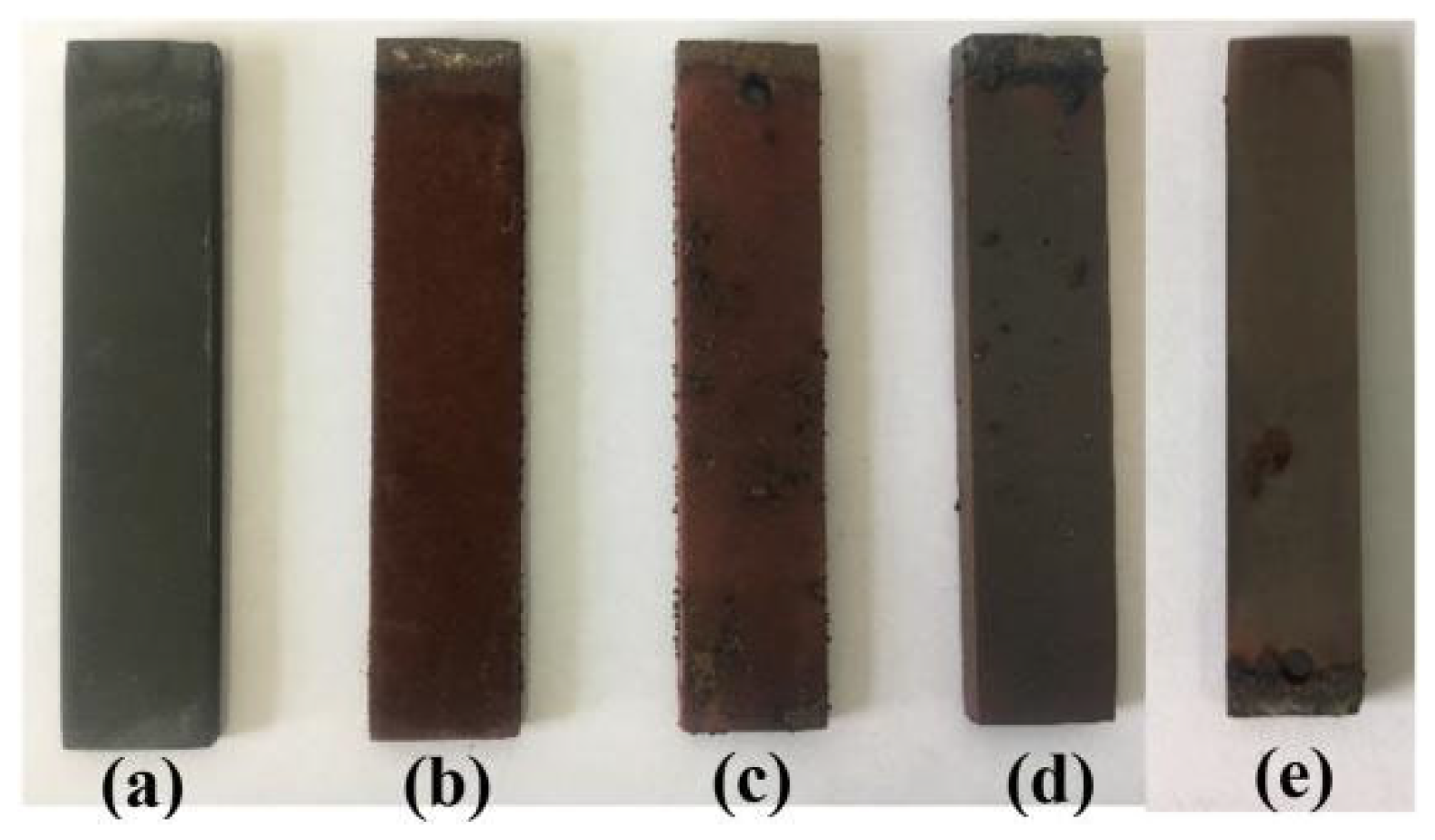
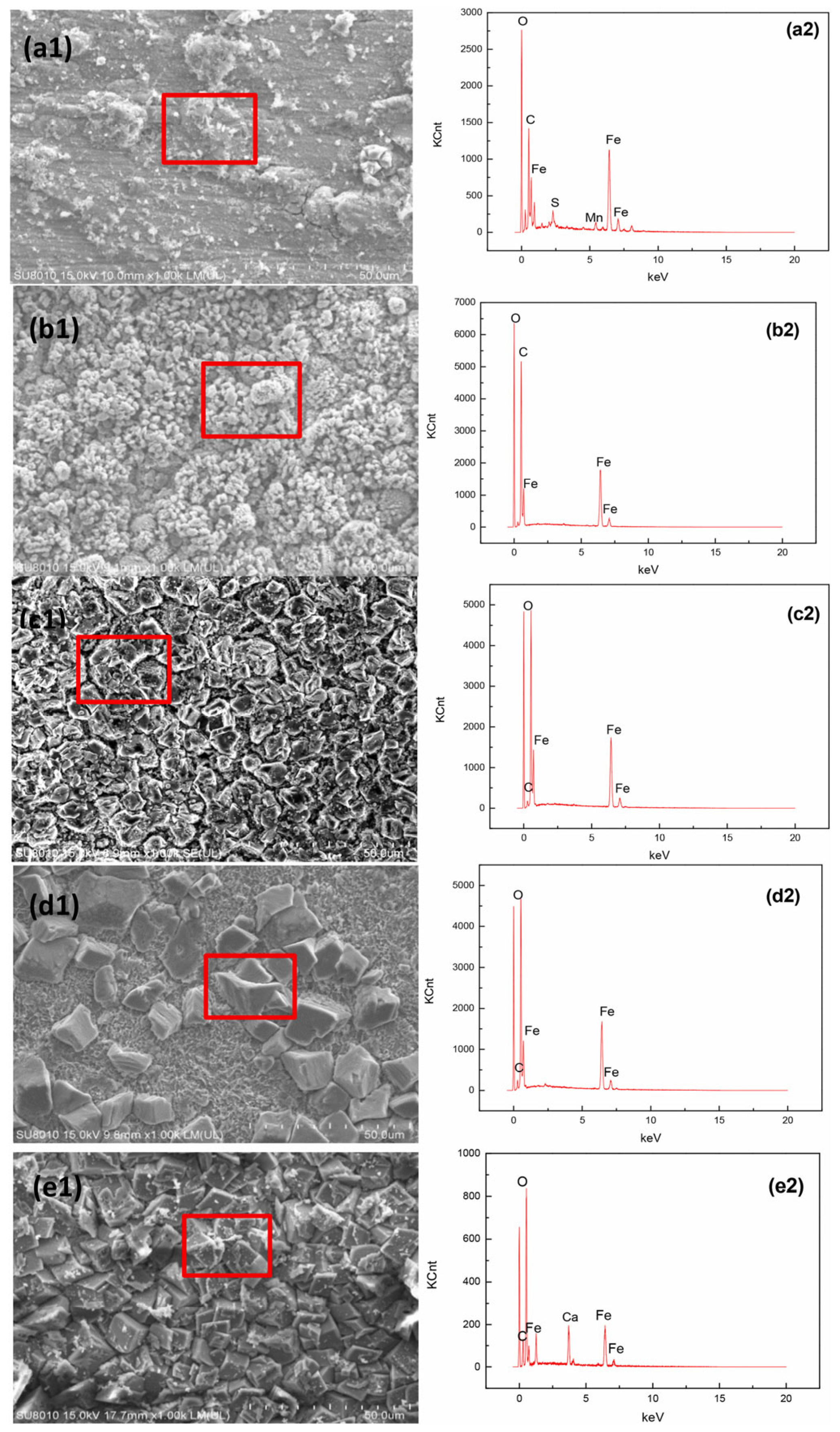
Temperature is a critical parameter influencing corrosion in CO2 pipelines, significantly impacting both corrosion kinetics and the properties of the product film. As outlined in a study on the effects of pre-erosion initial structures on the CO2 corrosion behavior of X65 carbon steel, elevated temperatures accelerate chemical reaction rates and ionic diffusion, thereby increasing the corrosion rate [33]. Riccardo Rizzo et al. [34] demonstrated that temperature markedly affects the corrosion behavior of 1Cr carbon steel, with the morphology and composition of corrosion products changing as the temperature rises. Chen et al. [35] further investigated corrosion morphologies at different temperatures using SEM imaging and EDS analysis. Figure 3 reveals that product films form across all of the tested temperatures; however, the films formed below 90 °C are insufficiently dense (Figure 4(a1,a2)), whereas those formed at or above 90 °C exhibit greater density (Figure 4b–e), offering improved pipeline protection. Additionally, Yao et al. [36] show temperature variations also play a role in shaping the phase composition of the corrosion products. For instance, different polymorphs of iron carbonate (FeCO3) may form at different temperatures, consequently affecting the protective performance of the product film [33].

2.2.3. Pressure Effects on CO2 Pipeline Corrosion Mechanisms

Pressure affects the corrosion of the pipeline in two main ways: by changing the amount of CO2 dissolved in H2O and changing the movement of corrosive substances [37]. When the pressure becomes greater, CO2 dissolves more easily in H2O, making the water acidic [3], and the corrosion reaction becomes faster. However, if there is a large amount of CO2 in the pipeline [38], high pressure will reduce the amount of CO2 dissolved in gas. When studying the internal corrosion of supercritical CO2 pipes [14], authors have mentioned that the physicochemical properties of CO2 change significantly in a supercritical state. Therefore, gas and liquid CO2 have very different levels of corrosiveness to metals, which complicates the pressure mechanism. Moreover, the pressure of H2S parting will directly affect the corrosion rate, and the higher the pressure, the faster the corrosion [39].

2.2.4. Flow Velocity Effects on CO2 Pipeline Corrosion

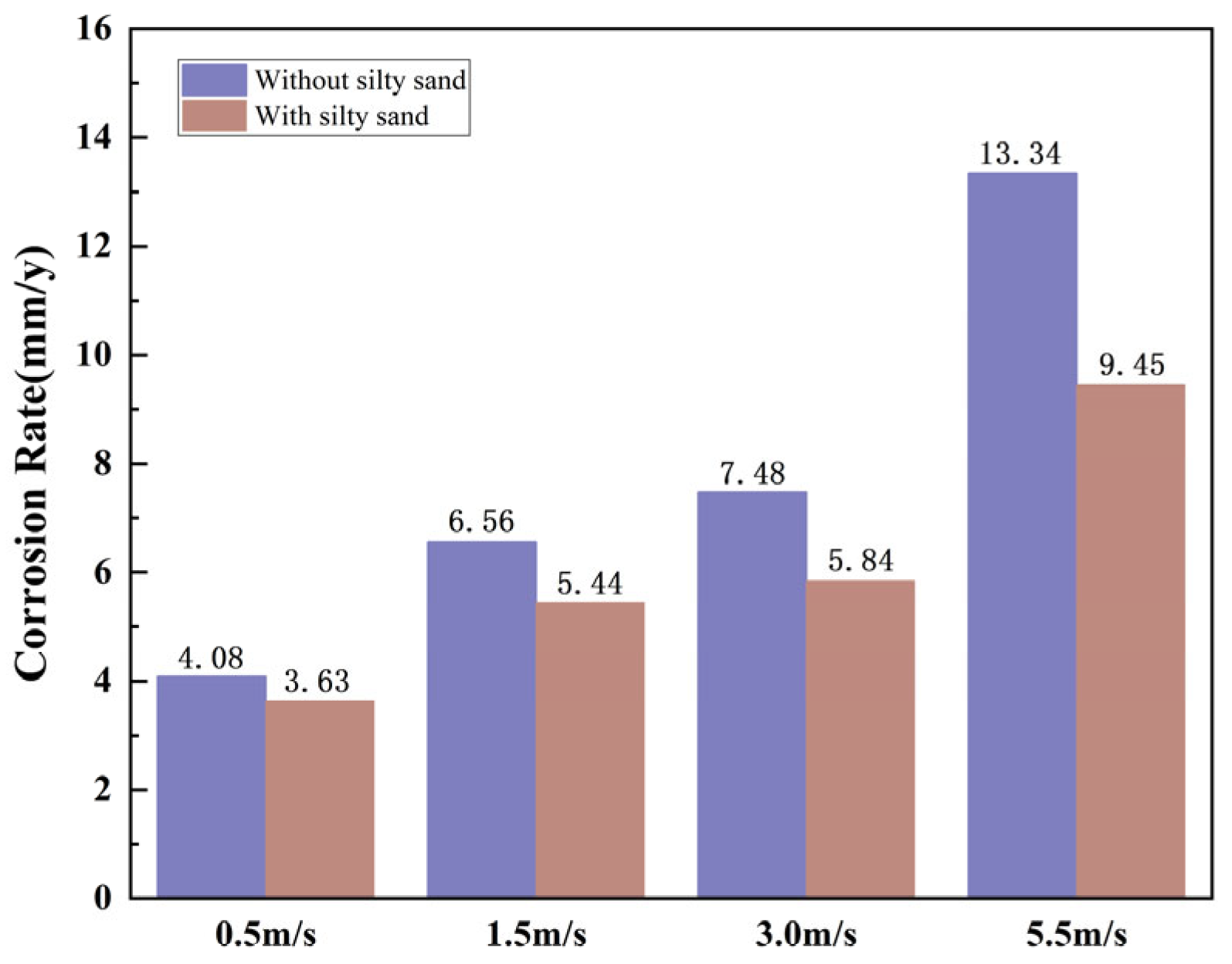
The effect of flow rate on the corrosion of the CO2 pipeline is mainly manifested by the corrosion of flow acceleration (FAC). Sun M et al. [40] studied local CO2 corrosion in a liquid—a fixed X70 wet steel region—and found that low-flow corrosive products were easily deposited at the bottom of the pipeline. This formed a layered liquid layer, which exacerbated local corrosion. On the contrary [16], the flow force mechanically removes the protective film (Figure 5) [41], exposes the surface of the fresh metal, and causes corrosion due to the flow rate. It is noteworthy that Wang et al. had similar findings: [42] the increased flow rate reduces the concentration of Fe2+ in the interface of the steel solution, inhibits the settlement of FeCO3, and promotes the formation of Cr(OH)3.

2.2.5. Effects of H2O Content on CO2 Pipeline Corrosion

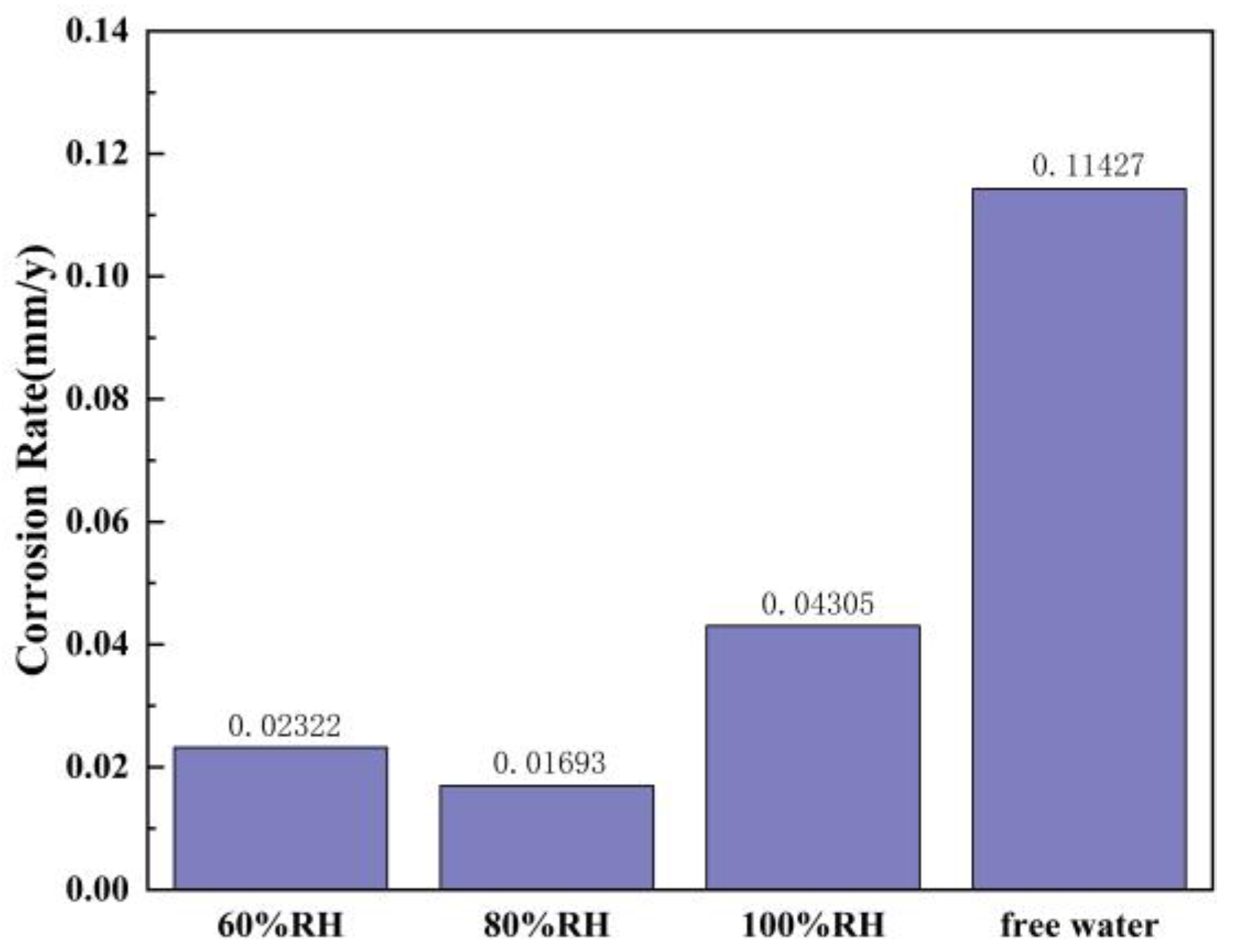
H2O content constitutes a critical factor in CO2 pipeline corrosion, exhibiting a distinct threshold concentration. Below this threshold, corrosion manifests primarily as a mild uniform attack; exceeding this accelerates corrosion rates and may induce localized corrosion morphologies. As stipulated in GB/T 23258-2020: Control Standard for Internal Corrosion of Steel Pipelines [43], uniform corrosion rates below 0.025 mm/y classify as low-level corrosion. Liu [44] established the critical H2O content for gaseous CO2 systems: at 50 °C and 4 MPa in dynamic CO2 streams containing 4% O2 and 4% N2, uniform corrosion rates of X65 pipeline steel remained below 0.025 mm/y at both 60% RH and 80% RH. While 60% RH constitutes the technical critical threshold, its stringent requirement would escalate dehydration costs. Consequently, 80% RH is recommended as the practically viable amount of critical relative humidity to prevent significant corrosion in gaseous CO2 transportation pipelines under these conditions (Figure 6). Wang Y et al. [45] emphasized in their review on H2S/CO2 corrosion control that H2O content governs the phase distribution and transport kinetics of corrosive species, ultimately dictating corrosion morphology transitions. Vagapov K R et al. [46] experimentally determined operational threshold H2O contents across diverse scenarios and elucidated their mechanistic influence on corrosion behavior.

2.2.6. Synergistic Corrosion Mechanisms in Operational CO2 Pipelines

In real operations with pipes, corrosion factors do not work alone but rather work together to create complex mechanisms for damage to the pipeline. Li et al. [3] demonstrated that in CO2 gas pipelines containing impurities, complex interactions occur among pollutants, temperature, pressure, flow rate, and moisture. For example, when H2S and O2 exist together, the effect of accelerated corrosion is more serious than when they are isolated; temperature and pressure fluctuations also affect the dissolution and reaction of impurities [47]. With a synergy of corrosion in CO2 pipelines, especially when the parameters change, the corrosion mechanism will change.

3. Characteristics of Corrosion Products in CO2 Pipelines

3.1. Corrosion Product Characterization in CO2 Pipelines

The phase composition and structural characteristics of corrosion products are the basis for understanding the mechanism of corrosion and performance of the protective film in CO2 pipelines. The common corrosion products are carbonated iron (FeCO3), iron sulfide (FeS), and iron oxide (Fe2O3, Fe3O4), and the formation and appearance of these products are determined by environmental factors such as temperature [48], pressure, and corrosion media. When studying Cr-containing 37Mn5 steel in a CO2 environment, Yuan Ei et al. found that an increase in the content of chromatin would reduce the formation of chrome. Liu et al. [44] analyzed the film of the corrosion product using a scanning electron microscope (SEM) and energy-dispersive X-ray spectroscopy (EMS). The analysis showed that the morphology of the film is different [49], the characteristics of the particles are different, and the networks of microtuplications are different, which proves that these structural properties are directly related to the physical and chemical parameters of the corrosion environment.

3.2. Dynamic Evolution of Corrosive Product Films in CO2 Pipelines

The formation, growth, and spraying of corrosive product films is a dynamic process that is important for the corrosion rate and corrosion shape of the pipeline [16,50]. Wang and others mention that the film formed at the beginning is thin and porous, which will make the corrosion process faster, but after a long period of contact, a thicker film is formed. If the film is dense and the adhesion is strong, it can prevent the passage of the corrosion material, thereby slowing down the corrosion. However, mechanical erosion [51], stress, or chemical interaction can cause the film to break away and expose the fresh metal surface. These results show that in the corrosive model, the amount of time (specifically taking into account the dynamic changes in the film life cycle) should be optimized to optimize the control of the pipeline’s integrity.

3.3. Dual Roles of Corrosion Products in CO2 Pipeline Degradation

Corrosive products have two effects on the corrosion process: the inhibition of corrosion and the acceleration of corrosion. If the film formed by the corrosion product is dense, full, and firmly sticks to the metal surface, it can block the corrosion agents, such as H+, CO2, and H2S, as well as reduce the material transfer, thereby reducing the corrosion rate. On the contrary, if the film is porous, cracked, or incomplete, it will be used as a corrosive agent, and the active ingredients in the film can be used to produce more corrosive substances by chemical reactions. Wang et al. demonstrated that the film of the product from the iron carbonate perome (FeCO3) can significantly reduce the rate of corrosion [30], as it can effectively reduce the electrochemical activity of the open surface of steel. This protective effect comes from the small tracks of the film itself and can also form a continuous barrier layer that separates the metallic and corrosive substances below, slowing down the dissolution of the anode.

4. Anti-Corrosion Technology

4.1. Anti-Corrosion Coating

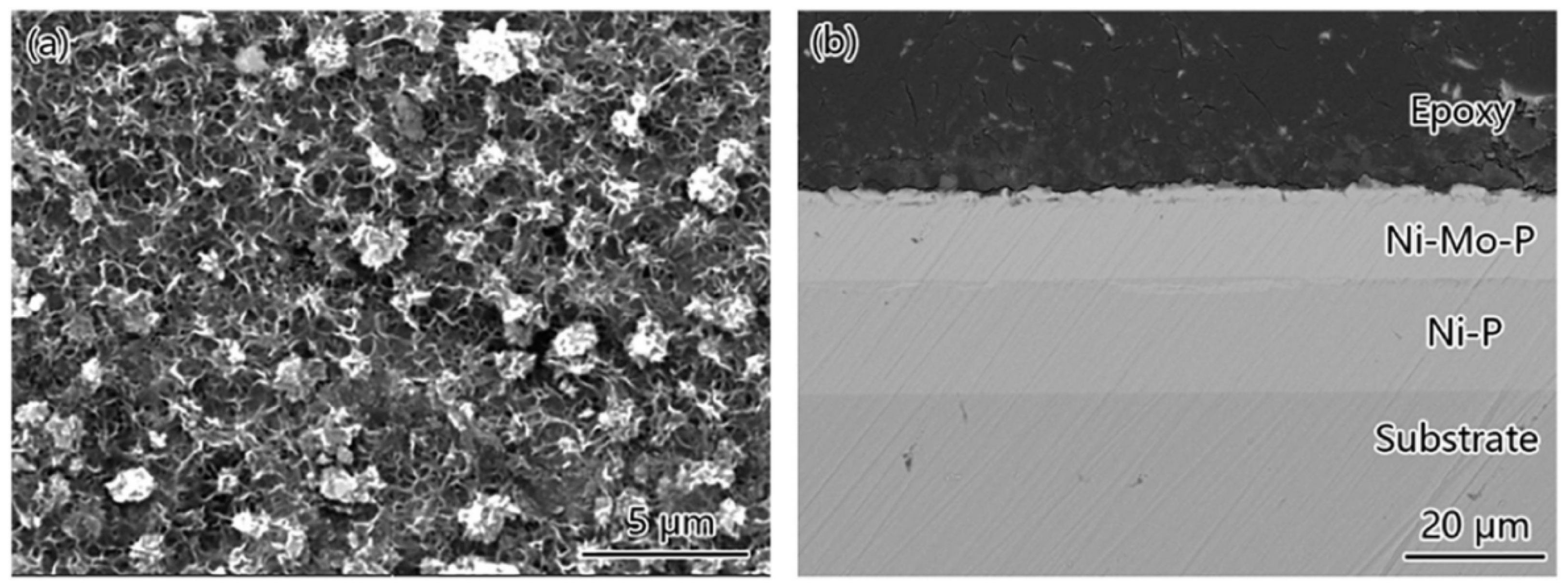
The development and application of high-performance anti-corrosion coatings constitute a critical strategy for mitigating CO2 pipeline corrosion. Conventional coating materials—including epoxy resins, polyurethanes, and polyethylene—demonstrate robust corrosion resistance and adhesion. Cui et al. [52] highlighted emerging materials such as nanocomposite coatings and graphene-enhanced films, which exhibit superior barrier properties and wear resistance to extend pipeline service life. Sun et al. [30] determined that amorphous Ni-P deposits achieve an >80% efficiency in corrosion inhibition through the formation of a passive barrier layer. Jiankuan Li et al. [53] engineered electroless Ni-Mo-P/Ni-P duplex coatings on N80 steel, revealing via electrochemical testing and surface analysis that post-deposition heat treatment optimizes corrosion resistance (96.1% inhibition efficiency). Figure 7a confirms the absence of corrosion pits, while Figure 7b demonstrates no electrolyte penetration at coating/coating or coating/substrate interfaces after 168 h of immersion. Manel Rodríguez Ripoll et al. [54] evaluated tribocorrosion performance in CO2 environments and identified that chemical-vapor-deposited W/WC and thermal-sprayed WC-Cr3C2-NiCr coatings outperform Ni-P in terms of wear resistance. Huang et al. [55] further established that PTFE-modified Ni-P coatings exhibit enhanced abrasion resistance and corrosion inhibition by impeding corrosive species transport. Sun et al. [56] synthesized Gr-PPFAN nanocomposites, with gas transmission rate (GTR) testing indicating a 3.7-fold permeability increase versus Gr-PFAN controls.
Surface modification technologies enhance corrosion resistance by altering the chemical composition and microstructure of metal substrates. Thermal spraying technology involves depositing high-performance metal or ceramic coatings, such as aluminum or zinc, onto the surface of pipes to form sacrificial anodes, which then protect the base material through electrochemical means. Electroplating, on the other hand, uses corrosion-resistant metal or alloy layers, such as nickel or chromium, to enhance the integrity of the surface. Notably, Zhang et al. [57] demonstrated that chromium plating can significantly enhance the corrosion resistance of steel through a dual mechanism. The chromium layer can act as a physical barrier to prevent corrosive substances from entering. Additionally, after the addition of chromium, the surface electrode potential increases, thereby suppressing the electrochemical dissolution kinetics.

4.2. Corrosion Inhibitor

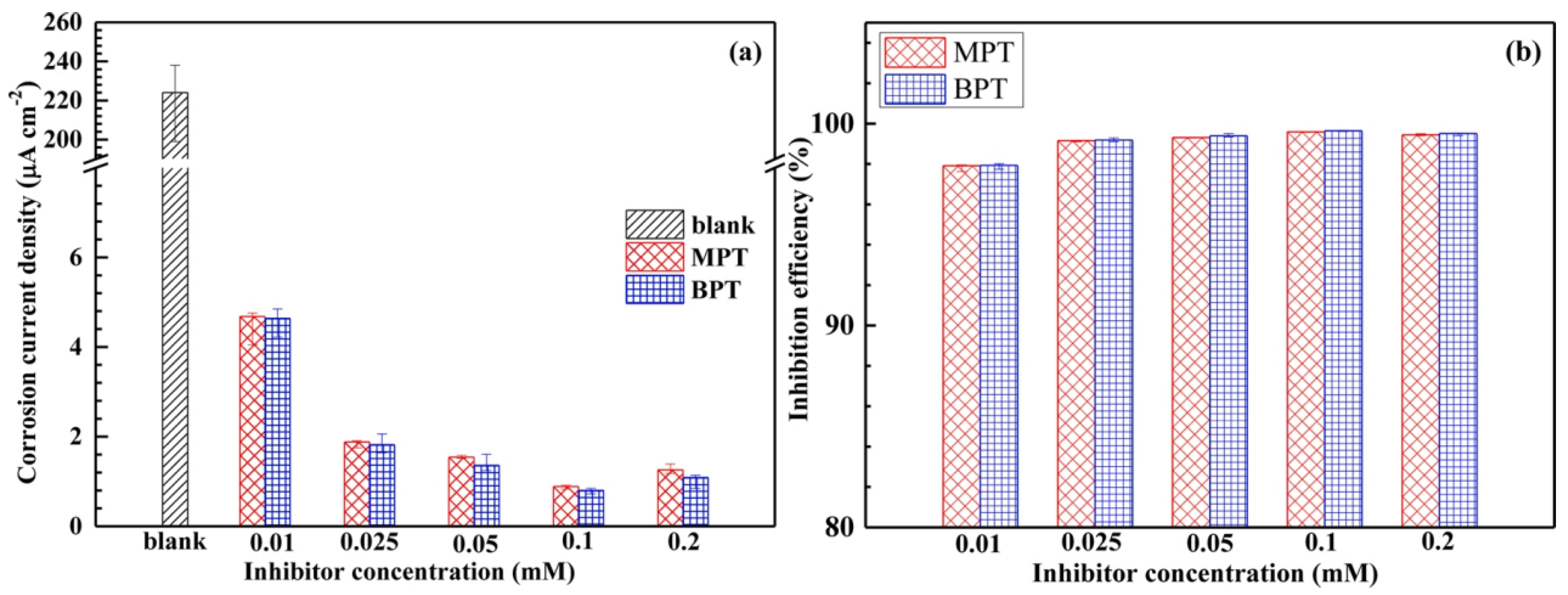
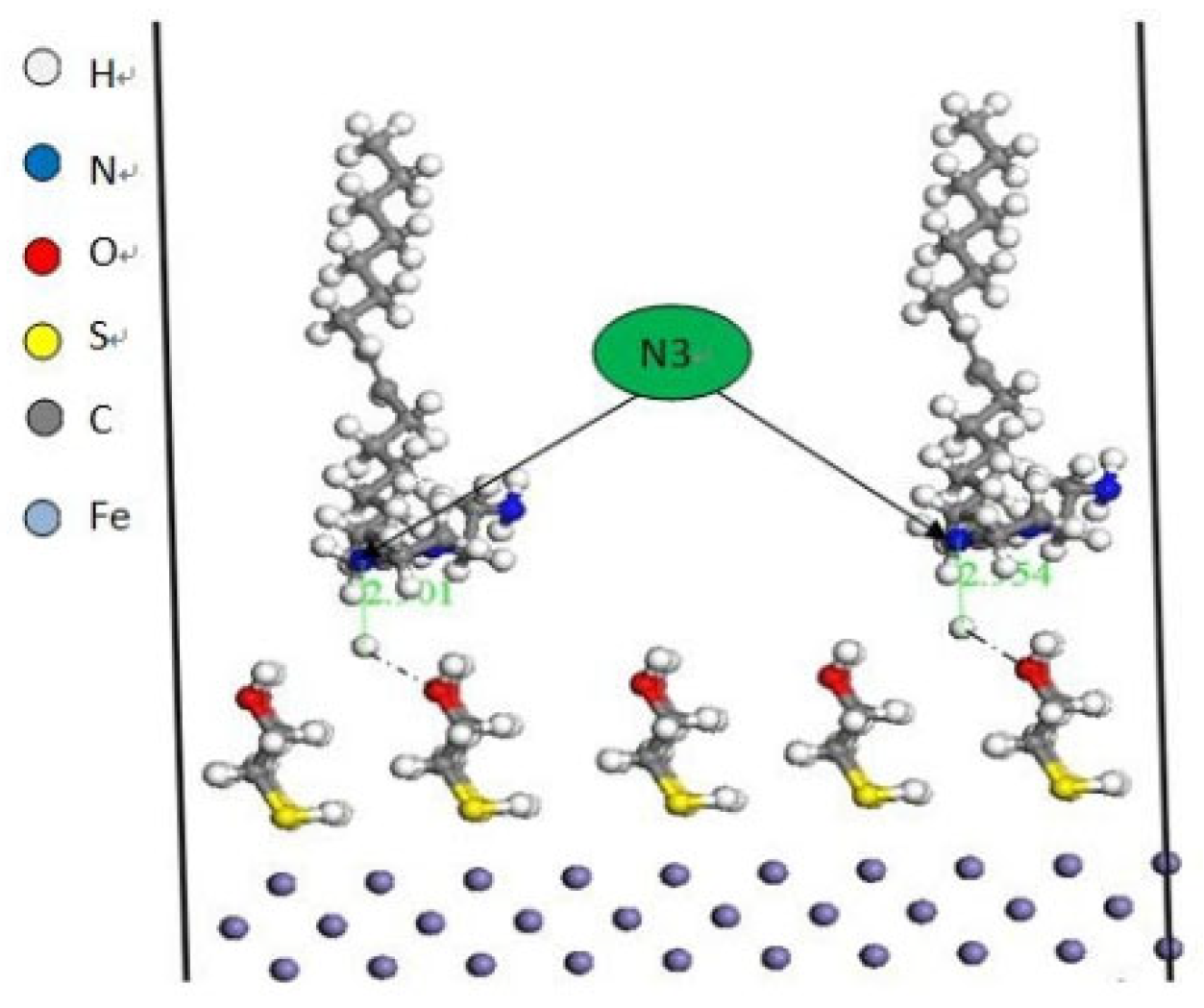
Corrosion inhibitors inhibit electrochemical reactions by adsorbing onto the surface of metals to form a protective film. Driven by the continuous upgrading of environmental regulations, significant progress has been made in the development of ecologically compatible inhibitors. Luo Zhong et al. [58] reviewed green inhibitor technology, which includes natural plant extracts and amino acid derivatives. It is pointed out that they have the characteristics of low toxicity, high efficiency, and biodegradability. Notably, Zhang et al. [59] demonstrated through electrochemical analysis and surface analysis that the corrosion inhibition efficiencies of MPT and BPT on N80 steel in CO2 saturated brine reached 99.26% and 99.44%, respectively, as shown in Figure 8. Hu et al. [60] emphasized that the effect of single-component inhibitors is limited, while a synergistic formulation that combines complementary inhibitor types can significantly enhance the corrosion inhibition performance. Yue et al. [61] quantified this synergy: oleic-based imidazoline (OIM) and mercaptoethanol (ME) individually showed 73.1% and 56.3% efficiencies, but their optimized blend reached 89.6%. Mechanistic modeling revealed ME forms an inner chemisorbed layer while OIM constructs an outer barrier film (Figure 9). Wang et al. [45] identified optimal inhibitor cocktails mitigating monoethanolamine (MEA) solvent degradation during CO2 capture through experimental computational approaches. Liu et al. [62] synthesized chitosan derivatives VCOS and GCOS, with polarization tests confirming mixed-type anodic-dominated inhibition. VCOS + KI and GCOS delivered 98.9% and 95.1% efficiencies, establishing them as non-toxic, H2O-soluble green alternatives.

4.3. Alloy

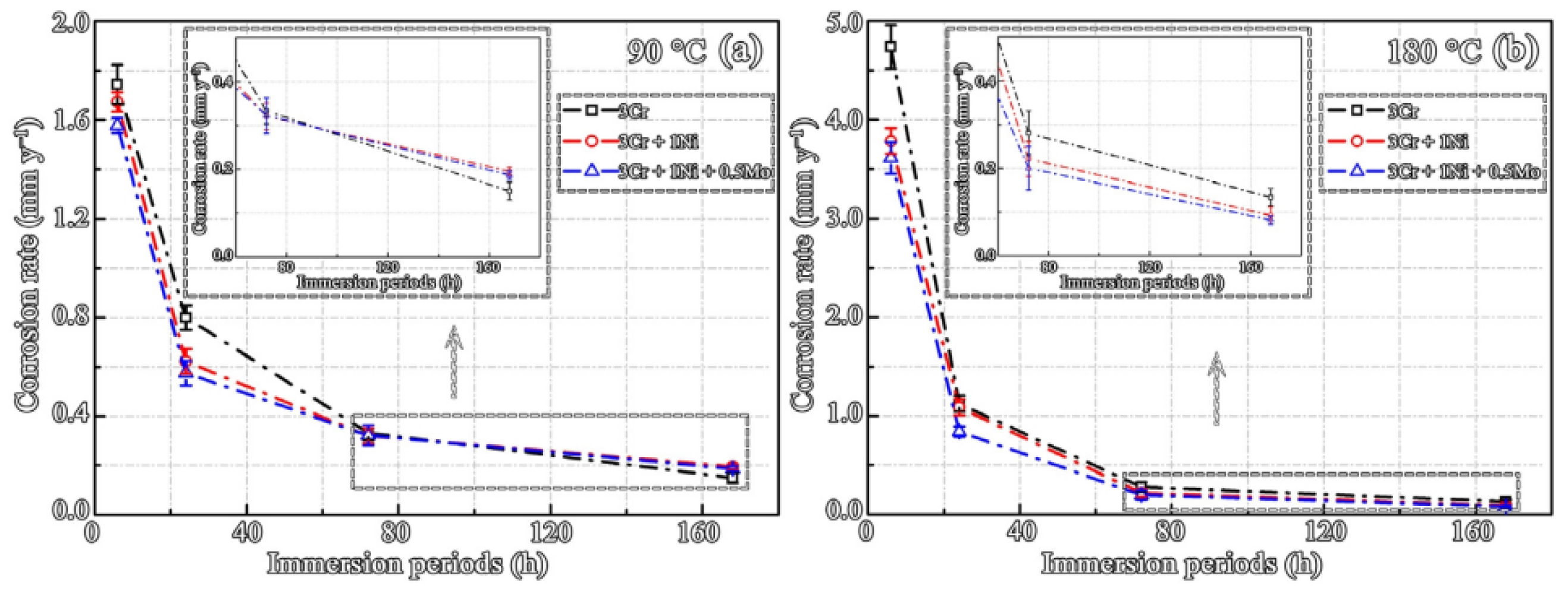
The fundamental strategy of alloy-based corrosion protection lies in the precise engineering of elemental composition and microstructural architecture, coupled with optimized manufacturing processes, to endow materials with intrinsic corrosion resistance [63]. In an environment where carbon dioxide is present, if this specially designed corrosion-resistant alloy is used, the risk of corrosion problems can be significantly reduced. This ensures that the integrity of the equipment can be guaranteed during its long-term operation. Adding chromium and nickel to the alloy can increase its density and improve its continuity. This is to enhance the protective effect of the corrosion product film and reduce the corrosion rate of the pipeline (Figure 10) [64].
Figure 11 presents the total corrosion rates of three low-chromium steels immersed in CO2-saturated NaCl solution at 90 °C and 180 °C over 6–168 h, revealing distinct time-dependent attenuation kinetics with progressively decreasing rates throughout exposure. At 90 °C, the 3Cr steel exhibits peak corrosion rates during initial exposure (6–24 h) followed by a significant reduction, while both 3Cr + 1Ni and 3Cr + 1Ni + 0.5Mo steels demonstrate an accelerated rate decay within the first 24 h; post-72 h immersion, the mean corrosion rates converge statistically across all alloys at both temperatures. Crucially, the beneficial effects of Ni and Ni/Mo additions predominantly manifest during early-stage corrosion, diminishing substantially during prolonged exposure—a temporal divergence intricately correlated with the time- and temperature-dependent evolution of corrosion product films, including variations in crystallographic structure, morphological continuity, and elemental stratification [64].
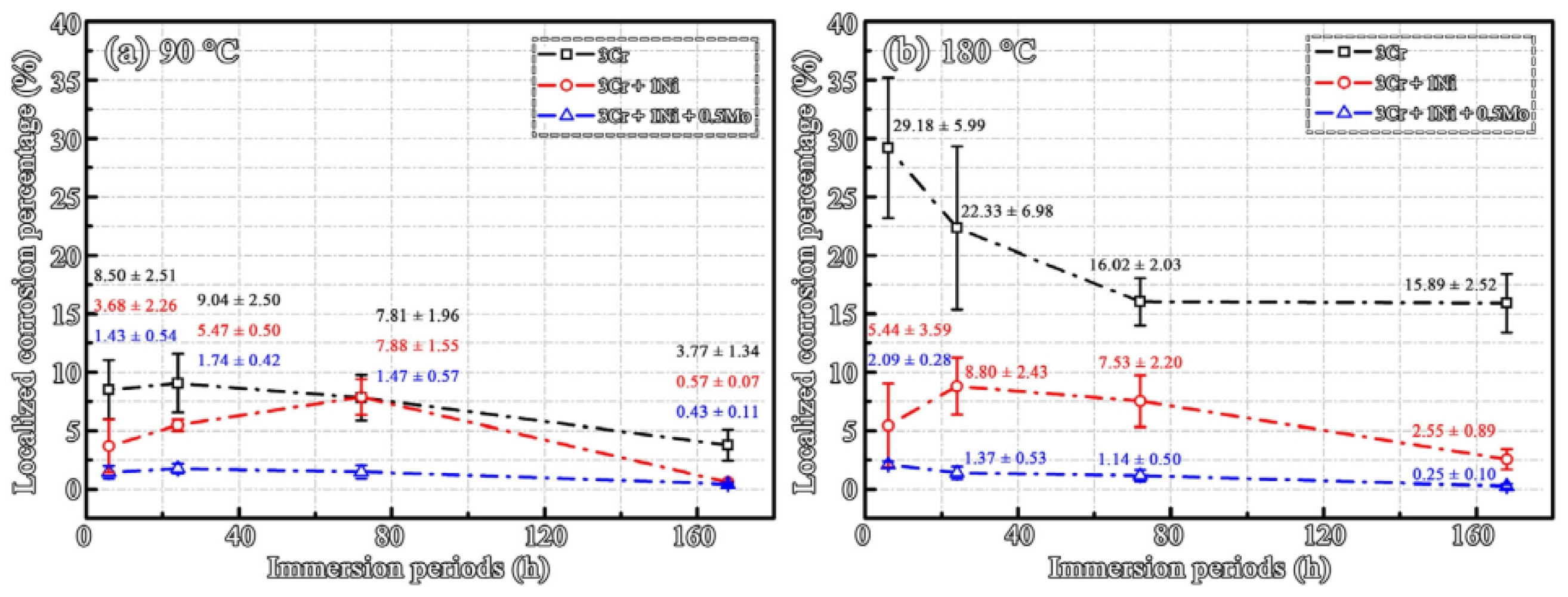
Figure 11 quantifies the local corrosion situation by comparing the pitting area with the total exposed area and determining their ratio. It can be seen from the figure that within the first 24 h of corrosion, more than 90% of the pitting corrosion occurred. This indicates that in the initial stage of corrosion, the nucleation and expansion of pitting corrosion are relatively active. However, after 72 h, the exposure value decreased. This is because over time, local corrosion was gradually replaced by uniform thinning. Critically, Ni and Mo additions significantly suppress localized corrosion in low-Cr steels: the 3Cr + 1Ni alloy exhibits pitting fractions below 10%, whereas the 3Cr + 1Ni + 0.5Mo variant demonstrates near-negligible pitting (≤0.5%) attributable to molybdate-induced repassivation at defect sites.
In addition, Andri et al. [65] found that the addition of Cu accelerated the corrosion rate.

5. Conclusions and Outlook

5.1. Current Challenges and Future Directions in Multi-Impurity CO2 Pipeline Corrosion

Current research has advanced our understanding of individual impurity effects on CO2 pipeline corrosion; however, the interaction mechanisms among multiple coexisting impurities—such as H2S, O2, SO2, and CO—in complex operational environments remain insufficiently understood. To address these gaps, in future work, we need to combine experimental simulation with theoretical modeling. We should systematically understand the interaction mechanisms among various impurities, figure out the roles played by individual pollutants, and calculate the specific circumstances of the synergistic effects. Through these efforts, targeted corrosion mitigation strategies can be developed for pipeline systems with multiple stress sources in the real world, and a powerful theoretical framework can be established.

5.2. Advancements in Corrosion Rate Prediction Modeling

There is a significant deviation between the current corrosion rate prediction models and empirical observations. The reason is that the dynamic evolution of the corrosion product films, as well as the coupling effects of film formation, growth, and peeling on the mass transfer process, have not been fully considered. Under supercritical conditions, the dynamic behavior of these films becomes more complex. This makes it impossible for traditional models to characterize corrosion kinetics. In the future, on-site monitoring and multi-physics simulation should be combined to develop the next-generation prediction framework. This prediction framework should take into account the physical and chemical properties of the film over time, including porosity gradient, thickness evolution dynamics, and adhesion strength degradation. This will enable a revolutionary improvement in the accuracy and reliability of the prediction.

5.3. Challenges and Future Directions in Pipeline Corrosion Mitigation

Although various anti-corrosion technologies have been developed, there are still many challenges in practical engineering applications, such as their high costs, short service life, and complex implementation. Take high-performance coatings for example. Although they can play an anti-corrosive role, they are particularly expensive. When applying them, very strict conditions also need to be met. Additionally, cathodic protection systems require a constant power supply and incur significant maintenance costs. To address these existing limitations, in future research, priority should be given to cost-effective, easy-to-deploy, and durable solutions, such as environmentally friendly corrosion inhibitors, self-healing coatings, and intelligent anti-corrosion systems. These are all good choices. If the application of these technologies in engineering is promoted by optimizing the installation protocol and maintenance strategy, life cycle costs can be reduced and pipeline integrity management can be continuously carried out.

5.4. Integrated Lifecycle Corrosion Management for CO2 Pipelines

The corrosion management of gas CO2 pipelines is actually a systematic engineering challenge. This requires comprehensive consideration throughout its entire life cycle, from the design stage, manufacturing stage, and installation stage, all the way to the operation stage and decommissioning stage. In the current practical situation in China, there are some limitations regarding life cycle corrosion management. For instance, the standards are rather scattered, the integration of monitoring data is insufficient, and analytical capabilities are also inadequate. To address these emerging issues, future strategies must include the establishment of a unified life cycle management framework, which should include corrosion prediction, protection design, real-time monitoring, and maintenance protocols. This framework should integrate advanced technologies such as big data analysis, the Internet of Things, and artificial intelligence to achieve intelligent and real-time corrosion monitoring, as well as adaptive maintenance. By leveraging data-driven decision-making methods, it would enhance the safety of pipelines and improve the reliability of pipeline operation.

Author Contributions

J.Z.: investigation, resources, data curation, writing—original draft preparation, writing—review and editing. S.A.: investigation, writing—original draft preparation, writing—review and editing. J.C.: investigation, writing—original draft preparation. H.P.: writing—original draft preparation. H.Z.: investigation. Y.Z.: investigation. G.S.: writing—review and editing, supervision. Q.H.: writing—review and editing, supervision. Y.L.: supervision, writing—review and editing. All authors have read and agreed to the published version of the manuscript.

Funding

This research received no external funding.

Data Availability Statement

Data will be made available on request.

Acknowledgments

This work was supported by Natural Science Foundation of Shandong Province, China (ZR2024MEO16, ZR2021QE169) and National Key Research and Development Program of China (No. 2022YFE0206800), which are gratefully acknowledged.

Conflicts of Interest

The authors declare that they have no known competing financial interests or personal relationships that could have appeared to influence the work reported in this paper.

References

  1. Drustrup, R.; Lyhne, I.; Raakjær, J. System integration in CCUS initiatives: Current considerations in North European countries. Int. J. Greenh. Gas Control 2025, 146, 104429. [Google Scholar] [CrossRef]
  2. Singh, A.; Kumari, S.; Lal, S.; Radulescu, M. Ccus technology or renewable energy for India’s net zero carbon emission mission? Fuzzy analytical hierarchy process. Energy Rep. 2025, 14, 332–342. [Google Scholar] [CrossRef]
  3. Li, Y.; Liu, X.; Wang, C.; Hu, Q.; Wang, J.; Ma, H.; Zhang, N. Research Progress in Corrosion of Impurity-Containing Gaseous CO2 Transmission Pipelines. Acta Metall. Sin. 2021, 57, 283–294. (In Chinese) [Google Scholar]
  4. Huang, W.; Li, Y.; Chen, P. China’s CO2 pipeline development strategy under carbon neutrality. Nat. Gas Ind. B 2023, 10, 502–510. [Google Scholar] [CrossRef]
  5. Dumitrache, L.; Suditu, S.; Branoiu, G.; Neagu, D.; Alecu, M.D. Carbon Management and Storage for Oltenia: Tackling Romania’s Decarbonization Goals. Sustainability 2025, 17, 6793. [Google Scholar] [CrossRef]
  6. Chen, Z.; Xu, M.; Hu, T.; Xue, G.; Chen, F.; Zhao, H.; Zhou, H.; Lei, Y.; Zhu, K. Effects of H2S content on the corrosion behavior of gas storage reservoir injection and production pipeline steel in CO2-H2S environment. Mater. Today Commun. 2024, 41, 110364. [Google Scholar] [CrossRef]
  7. Dobson, T.; Larrosa, N.; Coules, H. The role of corrosion pit topography on stress concentration. Eng. Fail. Anal. 2024, 157, 107900. [Google Scholar] [CrossRef]
  8. Liu, Y.; Yang, B.; Yang, N.; Xu, J.; Fu, S.; Tao, J.; Zhou, Q.; Zhao, Q.; Guo, W.; Wang, H.; et al. Effect of symmetrical position notching on cracking and cross-section quality of thick-walled metal tube under low-stress cropping. Int. J. Adv. Manuf. Technol. 2022, 121, 5587–5603. [Google Scholar] [CrossRef]
  9. Zhang, Y.; Dong, L.; Li, H.; Wang, S.; Liu, L.; Wang, Q. Insights into the role of partially mixed zones in sulfide stress corrosion cracking of the inconel 625/X80 weld overlay. Int. J. Hydrogen Energy 2023, 48, 28583–28600. [Google Scholar] [CrossRef]
  10. Shaikhah, D.; Ritacca, A.G.; Ritacco, I.; Matamorose-Veloza, A.; Taleb, W.; Mohamed-Said, M.; Cowe, B.; Neville, A.; Camellone, M.F.; Barker, R. Engineering of corrosion product-polymer hybrid layers for enhanced CO2 corrosion protection of carbon steel part two: Computational investigation and surface characterisation. Polymer 2022, 250, 124776. [Google Scholar] [CrossRef]
  11. Liao, K.; Leng, J.; Cheng, Y.F.; He, T.; He, G.; Zhao, S.; Liu, X.; Huang, Q. Effect of H2S concentrations on corrosion failure of L245NS steel in CO2-O2-H2S system. Process Saf. Environ. Prot. 2022, 168, 224–238. [Google Scholar] [CrossRef]
  12. Leng, J.; Cheng, Y.F.; Liao, K.; Huang, Y.; Zhou, F.; Zhao, S.; Liu, X.; Zou, Q. Synergistic effect of O2-Cl on localized corrosion failure of L245N pipeline in CO2-O2-Cl environment. Eng. Fail. Anal. 2022, 138, 106332. [Google Scholar] [CrossRef]
  13. Fang, Q.; Zhao, Y.; Wei, J.; Wang, Z.; Yao, J.; Chen, S.; He, M. Flow corrosion simulation study of local defects in CO2 saturated solution. Gas Sci. Eng. 2024, 131, 205460. [Google Scholar] [CrossRef]
  14. Qian, H.; Yang, L.; Feng, X.; Wang, W.; Yang, W.; Kuang, W. The effect of surface grinding on the stress corrosion cracking initiation of 316LN stainless steel in 600 °C supercritical CO2. Corros. Sci. 2024, 234, 112147. [Google Scholar] [CrossRef]
  15. Sun, C.; Ding, T.; Sun, J.; Lin, X.; Zhao, W.; Chen, H. Insights into the effect of H2S on the corrosion behavior of N80 steel in supercritical CO2 environment. J. Mater. Res. Technol. 2023, 26, 5462–5477. [Google Scholar] [CrossRef]
  16. Qin, M.; Chen, S.; Ye, N.; Chen, Y.; Zhang, S.; Li, K.; Liao, K. Study on the evolution mechanism and influencing factors of CO2 corrosion product film under pipe flow. Int. J. Press. Vessel. Pip. 2025, 216, 105506. [Google Scholar] [CrossRef]
  17. Marimuthu, A.; Pandiyarajan, S.; Liao, A.H.; Baskaran, G.; Ayyar, M.; Selvaraj, M.; Assiri, M.A.; Treeratanaphitak, T.; Chuang, H.C. Eggshell derived hydroxyapatite reinforced nickel electrodeposition via post-supercritical-CO2 approach: Enhanced electrochemical corrosion resistance for seascape applications. J. Mol. Liq. 2024, 411, 125637. [Google Scholar] [CrossRef]
  18. Hakuzweyezu, T.; Zhang, L.; Gan, M.; Wang, Y.; Alvi, I.H.; Onyekwena, C.C. Cement additives to mitigate wellbore cement degradation in CO2 corrosive environment: A review. Geoenergy Sci. Eng. 2025, 249, 213785. [Google Scholar] [CrossRef]
  19. Shaban, G.; Bartawi, E.H.; Sundberg, J.; Andersson, M.P.; Ambat, R. Eco-friendly CO2 corrosion inhibition on 1Cr steel: Electrochemical and molecular modelling of black tea extract. Mater. Chem. Phys. 2025, 337, 130565. [Google Scholar] [CrossRef]
  20. Du, B.; Sun, Y.; Shao, Z.; Pei, L.; Deng, J.; Yuan, S.; Cui, J.; Zhou, H.; Zhu, Y.; Wang, H. A unique polymer-based composite coating with superior corrosion resistance under high-pressure CO2 environment. Compos. Commun. 2025, 55, 102330. [Google Scholar] [CrossRef]
  21. Zhu, Y.; Cai, K.; Hu, B.; Xia, Y.; Hu, T.; Huang, Y. Research Progress in CO2 Corrosion Behavior and Prediction Models for Submarine Pipelines. J. Chin. Soc. Corros. Prot. 2023, 43, 1225–1236. (In Chinese) [Google Scholar]
  22. Dong, Z.; Hou, T.; Li, W.; Hou, C.; Guo, C.; Yang, Z.; Ma, X. Effect of surfactants C12PO6 and SW320 on oil/CO2 minimum miscibility pressure of unconventional liquid reservoirs-molecular dynamics simulation study. Geoenergy Sci. Eng. 2025, 251, 213863. [Google Scholar]
  23. Jiang, C.; Liu, X.; Li, X.; Fu, G.; Zhang, K.; Wang, J.; Xie, C. Preparation and anti-corrosion performance of temperature-resistant self-healing coating for L80 pipe. Int. J. Electrochem. Sci. 2023, 18, 100041. [Google Scholar] [CrossRef]
  24. Jones, M.; Owen, J.; de Boer, G.; Woollam, R.C.; Folena, M.C.; Farhat, H.; Barker, R. Numerical exploration of a fully mechanistic mathematical model of aqueous CO2 corrosion in steel pipelines. Corros. Sci. 2024, 236, 112235. [Google Scholar] [CrossRef]
  25. Wang, Z.; Zou, J.; Wang, M.; Li, S.; Peng, D.; Chen, S.; Yang, W.; Zhong, W.; Yang, W. The failure mechanism of nuclear-grade 316H protective oxide layer in long-term supercritical CO2 Corrosion. J. Nucl. Mater. 2025, 611, 155803. [Google Scholar] [CrossRef]
  26. Yuan, Y.; Li, C.; Zhao, Y.; Zhang, F.; Xiang, Y. Crevice corrosion mechanism of L80-13Cr in Cl-containing supercritical CO2 water-rich phase considering the influence of SO2. J. Supercrit. Fluids 2025, 222, 106577. [Google Scholar]
  27. Haratian, S.; Gupta, K.K.; Larsson, A.; Abbondanza, G.; Bartawi, E.H.; Carlá, F.; Lundgren, E.; Ambat, R. Ex-situ synchrotron X-ray diffraction study of CO2 corrosion-induced surface scales developed in low-alloy steel with different initial microstructure. Corros. Sci. 2023, 222, 111387. [Google Scholar] [CrossRef]
  28. Alsalem, M.M.; Ryan, M.P.; Campbell, A.N.; Campbell, K.S. Modelling of CO2 corrosion and FeCO3 formation in NaCl solutions. Chem. Eng. J. 2023, 451, 138966. [Google Scholar]
  29. Li, Y.Y.; Jiang, Z.N.; Zhang, Q.H.; Lei, Y.; Wang, X.; Zhang, G.A. Unveiling the influential mechanism of O2 on the corrosion of N80 carbon steel under dynamic supercritical CO2 conditions. Corros. Sci. 2022, 205, 110436. [Google Scholar] [CrossRef]
  30. Sun, C.; Sun, J.; Luo, J.L. Unlocking the impurity-induced pipeline corrosion based on phase behavior of impure CO2 streams. Corros. Sci. 2020, 165, 108367. [Google Scholar] [CrossRef]
  31. He, L.; Zhang, Q.; Chen, W.; Wang, Y.; Wang, M.; Huang, Y.; Xu, Y. Unraveling short-term O2 contamination on under deposit corrosion of X65 pipeline steel in CO2 saturated solution. Corros. Sci. 2024, 233, 112113. [Google Scholar] [CrossRef]
  32. Kai, W.; Huang, Y.; Hsu, Y.; Huang, R.; Zhou, Y.; Kai, J. The corrosion of FeCoNiAl-based medium-and high-entropy alloys in various ratios of CO2/CO gas mixture. Intermetallics 2024, 173, 108431. [Google Scholar] [CrossRef]
  33. Cao, X.; Wang, P.; Xu, Z.; Peng, W.; Bian, J. Study on the effects of pre-erosion initial structures on the CO2 corrosion behavior of X65 carbon steel. Corros. Sci. 2024, 227, 111752. [Google Scholar]
  34. Rizzo, R.; Baier, S.; Rogowska, M.; Ambat, B. An electrochemical and X-ray computed tomography investigation of the effect of temperature on CO2 corrosion of 1Cr carbon steel. Corros. Sci. 2020, 166, 108471. [Google Scholar] [CrossRef]
  35. Chen, X.; Li, C.; Ming, N.; He, C. Effects of temperature on the corrosion behaviour of X70 steel in CO2-Containing formation water. J. Nat. Gas Sci. Eng. 2021, 88, 103815. [Google Scholar]
  36. Yao, J.; Wang, Z.; Fang, Q.; Zhao, Y.; Cai, W.; Mao, Y. Investigation of the effect of temperature and CO2 partial pressure on flow corrosion of N80 steel. Eng. Fail. Anal. 2025, 181, 109972. [Google Scholar] [CrossRef]
  37. Javidi, M.; Fatemifar, S.J.; Sadeghi, M.A. Localized CO2 Corrosion due to Galvanic Effect on the Surface of API 5L X65 Steel in the Presence of Iron Carbonate Corrosion Product. Prot. Met. Phys. Chem. Surf. 2024, 60, 1010–1021. [Google Scholar]
  38. Li, K.; Zeng, Y. Advancing the mechanistic understanding of corrosion in supercritical CO2 with H2O and O2 impurities. Corros. Sci. 2023, 213, 110981. [Google Scholar] [CrossRef]
  39. Huang, X.; Zhou, L.; Li, Y.; Du, Z.; Zhu, Q.; Han, Z. The synergistic effect of temperature, H2S/CO2 partial pressure and stress toward corrosion of X80 pipeline steel. Eng. Fail. Anal. 2023, 146, 107079. [Google Scholar]
  40. Sun, M.; Wang, X.; Cui, W.; Shi, C. Effect of Temperature on Corrosion of L245 Steel Under CO2-SRB Corrosion System. Microorganisms 2025, 13, 500. [Google Scholar] [CrossRef] [PubMed]
  41. Li, H.; Liu, W.; Chen, L.; Zhang, H.; Zhang, B.; Sun, Y.; Wang, F.; Hou, B. Corrosion behavior of N80 carbon steel in CO2 environments: Investigating the role of flow velocity and silty sand through experimental and computational simulation. Corros. Sci. 2024, 237, 112337. [Google Scholar] [CrossRef]
  42. Wang, B.; Wang, Y.; Li, Q.; Hu, L.; Chang, W.; Li, H.; Lu, M. Effect of Turbulent Flow on Corrosion Behavior of 6.5 Cr Steel in CO2-Containing Environment. Int. J. Electrochem. Sci. 2021, 16, 21034. [Google Scholar] [CrossRef]
  43. GB/T 23258-2020; Specification for Internal Corrosion Control of Steel Pipelines. Standards Press of China: Beijing, China, 2020. (In Chinese)
  44. Liu, X. Study on Corrosion Behavior of X65 Pipeline Steel in Impurity-Containing Gaseous CO2 Environments. Master’s Thesis, China University of Petroleum (East China), Qingdao, China, 2021; p. 000261. (In Chinese) [Google Scholar]
  45. Wang, Y.; Fang, M.; Yi, J.; Yu, H.; Yang, Q.; Lu, X.; Wang, T. Synergistic inhibition of degradation and corrosion in monoethanolamine solvent for CO2 capture solvents: Experimental and simulation studies. Sep. Purif. Technol. 2025, 362, 131712. [Google Scholar] [CrossRef]
  46. Vagapov, R.K.; Laptev, A.M.; Ibatullin, K.A.; Oliferenko, G.L.; Chumakov, K.V. Studies on the Corrosive Activity of CO2 Environments with Respect to Pipelines and the Protective Efficiency of Corrosion Inhibitors. Steel Transl. 2024, 54, 639–644. [Google Scholar] [CrossRef]
  47. Simonsen, K.R.; Goebel, J.; Hansen, D.S.; Pedersen, S. The influence of temperature, H2O, and NO2 on corrosion in CO2 transportation pipelines. Process Saf. Environ. Prot. 2025, 198, 107190. [Google Scholar] [CrossRef]
  48. Yuan, Y.; Jia, R.; Hao, P.; Zhang, F.; Zhao, Y.; Li, C.; Xiang, Y. Investigation of crevice corrosion susceptibility of L80-13Cr in CO2 solution containing SO2. Int. J. Greenh. Gas Control 2025, 141, 104293. [Google Scholar] [CrossRef]
  49. Liu, Y.; Jiang, H.; Xu, T.; Li, Y. CO2 corrosion prediction on 20# steel under the influence of corrosion product film. Petroleum 2023, 9, 427–438. [Google Scholar] [CrossRef]
  50. Wang, C.; Hua, Y.; Nadimi, S.; Hu, Q.; Taleb, W.; Zhang, J.; Liu, X.; Zhang, R.; Chen, X.; Neville, A.G. Anti-corrosion characteristics of FeCO3 and FexCayMgzCO3 scales on carbon steel in high-PT CO2 environments. Chem. Eng. J. 2022, 431, 133484. [Google Scholar] [CrossRef]
  51. Wang, C.; Xu, X.; Liu, C.; Luo, X.; Hu, Q.; Zhang, R.; Guo, H.; Luo, X.; Hua, Y.; Li, Y. Improvement on the CO2 corrosion prediction via considering the corrosion product performance. Corros. Sci. 2023, 217, 111127. [Google Scholar] [CrossRef]
  52. Cui, G.; Bi, Z.; Liu, J.; Wang, S.; Li, Z. New method for CO2 corrosion resistance Ni-W-Y2O3-ZrO2 nanocomposite coatings. Ceram. Int. 2019, 45, 6163–6174. [Google Scholar] [CrossRef]
  53. Li, J.; Sun, C.; Roostaei, M.; Mahmoudi, M.; Fattahpour, V.; Zeng, H.; Luo, J. Characterization and corrosion behavior of electroless Ni-Mo-P/Ni-P composite coating in CO2/H2S/Cl brine: Effects of Mo addition and heat treatment. Surf. Coat. Technol. 2020, 403, 126416. [Google Scholar] [CrossRef]
  54. Ripoll, M.R.; Trausmuth, A.; Rojacz, H.; Fateh, N.; Schoberleitner, C.; Gillham, R.; Zhuk, Y.; Badisch, E. CO2 tribocorrosion of CVD W/WC coatings and performance against internally epoxy coated pipes: A benchmark against HVOF WC-Cr3C2-NiCr and electroless Ni-P coatings. Surf. Coat. Technol. 2025, 495, 131553. [Google Scholar] [CrossRef]
  55. Huang, C.; Zhang, Z.; Sun, L.; Sun, L.; Wang, J. Enhancing wear and corrosion resistance of electroless Ni-P coatings in CO2-saturated NaCl solution through polytetrafluoroethylene incorporation. Corros. Sci. 2024, 226, 111620. [Google Scholar] [CrossRef]
  56. Sun, Y.; Li, X.; Du, B.; Cui, J.; Abdullah, A.; Zhu, Y.; Wang, H.; Bao, D. Customized Copolymer composite coatings for carbon capture Environments: Corrosion inhibition and CO2 barrier Synergy. J. Colloid Interface Sci. 2025, 692, 137519. [Google Scholar] [CrossRef] [PubMed]
  57. Zhang, Z.; Ding, C.; Liu, W.; Zhao, Y. Study on corrosion of Cr-containing steel under different CO2 partial pressures at high temperatures. Geoenergy Sci. Eng. 2024, 243, 213365. [Google Scholar] [CrossRef]
  58. Luo, Z.; Huang, S.; Li, Z.; Su, D.; Gao, Y.; Zhang, B.; Yang, Y. Carboxyl carbon nano-tubes modified calcium silicate hydrate (CSH-PCE/CNTs) to enhance the CO2 corrosion resistance of oil well cement. Constr. Build. Mater. 2024, 452, 138894. [Google Scholar] [CrossRef]
  59. Zhang, Q.H.; Hou, B.S.; Li, Y.Y.; Lei, Y.; Wang, X.; Liu, H.F.; Zhang, G.A. Two amino acid derivatives as high efficient green inhibitors for the corrosion of carbon steel in CO2-saturated formation water. Corros. Sci. 2021, 189, 109596. [Google Scholar] [CrossRef]
  60. Lang, J.; Hu, Y.; Wang, H.; Zhu, Y.; Wang, Y.; Nie, Z.; Wang, Y.; Normand, B. Complicated synergistic effects between three corrosion inhibitors for Q235 steel in a CO2-saturated 3.5 wt% NaCl solution. Int. J. Electrochem. Sci. 2019, 14, 2246–2264. [Google Scholar] [CrossRef]
  61. Yue, X.; Wei, Q.; Lu, Y.; Duan, M.; Wang, H.; Xie, J. The synergistic inhibition effect between imidazoline and 2-mercaptoethanol on carbon steel corrosion in CO2-saturated 3.5% NaCl solution. Int. J. Electrochem. Sci. 2022, 17, 220556. [Google Scholar] [CrossRef]
  62. Liu, S.; Zhou, J.; Liang, G.; Lyu, X.; Li, Z. Evaluation of green corrosion inhibitors of chitosan oligosaccharide derivatives for CO2 corrosion inhibition on 20# carbon steel. Process Saf. Environ. Prot. 2024, 190, 1520–1535. [Google Scholar]
  63. Yan, T.; Xu, L.C.; Zeng, Z.X.; Pan, W.G. Mechanism and anti-corrosion measures of carbon dioxide corrosion in CCUS: A review. iScience 2024, 27, 108594. [Google Scholar] [CrossRef]
  64. Zhang, S.; Bian, T.; Mou, L.; Yan, X.; Zhang, J.; Zhang, Y.; Liu, B. Alloy design employing Ni and Mo low alloying for 3Cr steel with enhanced corrosion resistance in CO2 environments. J. Mater. Res. Technol. 2023, 24, 1304–1321. [Google Scholar] [CrossRef]
  65. Thorhallsson, A.I.; Csáki, I.; Geambazu, L.E.; Magnus, F.; Karlsdottir, S.N. Effect of alloying ratios and Cu-addition on corrosion behaviour of CoCrFeNiMo high-entropy alloys in superheated steam containing CO2, H2S and HCl. Corros. Sci. 2021, 178, 109083. [Google Scholar] [CrossRef]
Figure 1. Corrosion mechanism of N80 steel: (a) after 0 h of corrosion; (b) after 3 h of corrosion; (c) after 48 h of corrosion [29].
Energies 19 02814 g001
Figure 2. (a) Solubility of H2O in CO2–H2S mixture (SH2O(CO2−H2S)) and (b) percentage of H2O precipitation (ηwp) from CO2 streams caused by H2S at 50 °C vs. pressure [30].
Energies 19 02814 g002
Figure 3. Corrosion morphology of X70 steel at temperatures of (a) 30 °C, (b) 60 °C, (c) 90 °C, (d) 12 0 °C, and (e) 150 °C [35].
Energies 19 02814 g003
Figure 4. Surface SEM images and EDS results of X70 steel after corrosion for 168 h at temperatures of (a) 30 °C, (b) 60 °C, (c) 90 °C, (d) 120 °C, and (e) 150 °C [35].
Energies 19 02814 g004
Figure 5. Corrosion rate of N80 steel in CO2 environment under various flow velocities for 48 h [41].
Energies 19 02814 g005
Figure 6. General corrosion rates in dynamic gaseous CO2 system containing 92% CO2, 4% O2, and 4% N2 with different H2O contents [44].
Energies 19 02814 g006
Figure 7. SEM (a) surface and (b) cross-sectional morphologies of heat-treated Ni-Mo-P/Ni-P coating after 7 days of immersion in CO2/H2S-saturated 3.5 wt% NaCl solution [53].
Energies 19 02814 g007
Figure 8. Corrosion current density (a) of N80 carbon steel in the CO2-saturated formation of H2O with different concentrations of amino acid derivatives (MPT and BPT) at 60 °C and the corresponding inhibition efficiencies (b) [59].
Energies 19 02814 g008
Figure 9. Bilayer film model for the synergistic corrosion inhibition effect of the OIM-ME combination in CO2-saturated solution at 65 °C [61].
Energies 19 02814 g009
Figure 10. General corrosion rates of three low-Cr steels exposed to CO2-saturated NaCl solutions over immersion periods from 6 to 168 h at (a) 90 and (b) 180 °C [64].
Energies 19 02814 g010
Figure 11. Localized corrosion percentage based on a high-throughput screening method of three low-Cr steels exposed to CO2-saturated NaCl solutions over immersion periods from 6 to 168 h at (a) 90 and (b) 180 °C [64].
Energies 19 02814 g011
Disclaimer/Publisher’s Note: The statements, opinions and data contained in all publications are solely those of the individual author(s) and contributor(s) and not of MDPI and/or the editor(s). MDPI and/or the editor(s) disclaim responsibility for any injury to people or property resulting from any ideas, methods, instructions or products referred to in the content.