Article

Carinata and Camelina as Intermediate Crops for Sustainable Biofuels in Italy and Spain

by
Calliope Panoutsou
1,*,
Francesca Tozzi
2 and
David Chiaramonti
3
1
Department of Chemical Engineering, Imperial College London, London SW7 2AZ, UK
2
RE-CORD, Renewable Energy Consortium for Research and Demonstration, 50038 Florence, Italy
3
Department of Energy, Polytechnic University of Turin, 10129 Turin, Italy
*
Author to whom correspondence should be addressed.
Energies 2026, 19(12), 2803; https://doi.org/10.3390/en19122803
Submission received: 3 May 2026 / Revised: 7 June 2026 / Accepted: 8 June 2026 / Published: 11 June 2026
(This article belongs to the Section A4: Bio-Energy)

Abstract

Intermediate crops, such as Brassica carinata and Camelina sativa, offer a promising pathway for expanding sustainable feedstock supply for advanced biofuels in Europe without competing with food and feed production. This study applies a competitive priority framework to assess the performance of intermediate crops in Italy and Spain, integrating agronomic, environmental, and regulatory dimensions. Using Member State-specific agroecological conditions, cost structures, and land-use profiles, the analysis identifies key challenges across land use and biomass-production stages and links them to measurable indicators and targeted optimisation strategies. Evidence from both experimental studies and modelling indicates that camelina can be seamlessly integrated into existing cropping systems without compromising crop yields or triggering soil carbon losses. These findings highlight the potential of intermediate crops to enhance soil health, to reduce erosion, and to stabilise yields under climate variability. This study also examines the policy conditions required to enable deployment, emphasising the need for region-specific crop calendars, digital traceability systems, and coherent implementation of RED III, CAP, ESCA, and CRCF frameworks. The distinction between volumetric and GHG-based targets is shown to be critical: intermediate crops perform strongly under GHG-based intensity reduction frameworks that reward soil carbon gains and sustainable cultivation. National instruments in Italy and Spain—including the Piano Strategico della PAC, Decreto Biocarburanti, Plan Estratégico de la PAC, and Real Decreto 376/2022—provide mechanisms for operationalising these strategies. Overall, the results demonstrate that intermediate crops can contribute meaningfully to both national and EU renewable energy, soil restoration, and climate mitigation objectives when supported by coherent agronomic and policy frameworks.

1. Introduction

The transition to advanced biofuels in the European Union requires feedstock systems that are economically viable, agronomically robust [1], and demonstrably sustainable [2,3]. Intermediate crops—grown between two main crops without displacing food or feed production—have emerged as a promising pathway for expanding domestic biomass supply under the Renewable Energy Directive (RED III), CAP, ESCA, and CRCF frameworks [4,5,6,7]. Recent agronomic evidence has shown that Brassica carinata and Camelina sativa can be cultivated during fallow periods or integrated into rotation-diversifying systems, increasing the feedstock availability for biodiesel, hydrotreated vegetable oil (HVO), and hydroprocessed esters and fatty acids (HEFA), while improving soil health and supporting regenerative agriculture [8,9,10,11,12,13,14].
Independent studies have confirmed the strong agronomic performance of camelina and carinata in European and Mediterranean environments. Monti et al. demonstrated that these crops could function as cash cover crops, enhancing biodiversity and soil organic carbon (SOC) while supplying feedstock for the bioeconomy [8]. Additional innovations—such as the use of pelargonic acid to accelerate camelina seed drying—have improved crop succession and integration into Mediterranean crop rotations [9]. Broader agronomic analyses have also highlighted camelina’s suitability for low-input systems, drought tolerance, and adaptability to short growing windows [10,11,12]. Carinata has shown a similarly robust performance under Mediterranean conditions, with resilience to water-limited environments and positive impacts on soil quality [15,16,17].
Environmental assessments have further supported the role of intermediate crops in sustainable biofuel pathways. Lifecycle analyses have indicated that camelina-based biofuels can deliver substantial greenhouse gas (GHG) savings compared with fossil fuels [14], while European studies have emphasised the soil carbon and biodiversity benefits associated with integrating intermediate crops into existing rotations [18]. Advances in soil carbon accounting frameworks have reinforced these findings: SOC monitoring has increasingly been recognised as a critical component of climate mitigation strategies [19], and emerging methodologies [20,21] have provided robust approaches for quantifying sequestration under sustainability frameworks such as the EU Soil Carbon Certification Framework (CRCF) and the Emissions Savings from Cultivation of Agricultural Biomass (ESCA) [7].
Despite this growing evidence base, the existing studies have often analysed agronomic, environmental, or policy dimensions in isolation. This study addresses this gap by adapting the competitive priority framework of Panoutsou et al. [3] specifically to intermediate crops and applying it to Italy and Spain—two Member States with extensive fallow land, diverse agroecological zones, and established oilseed processing capacity. The novelty of this work lies in (i) combining agronomic and SOC modelling evidence with a value chain analysis, (ii) linking physical and market attributes to measurable indicators across land-use and biomass-production stages, and (iii) interpreting these indicators within the context of RED III, the Common Agricultural Policy (CAP), ESCA, and CRCF implementation.
By integrating a competitive priority analysis with a policy assessment, this study provides a comprehensive evaluation of the potential for intermediate crops in Italy and Spain, and identifies the optimisation strategies and regulatory interventions needed to support their sustainable deployment at scale.

2. Conceptual Framework

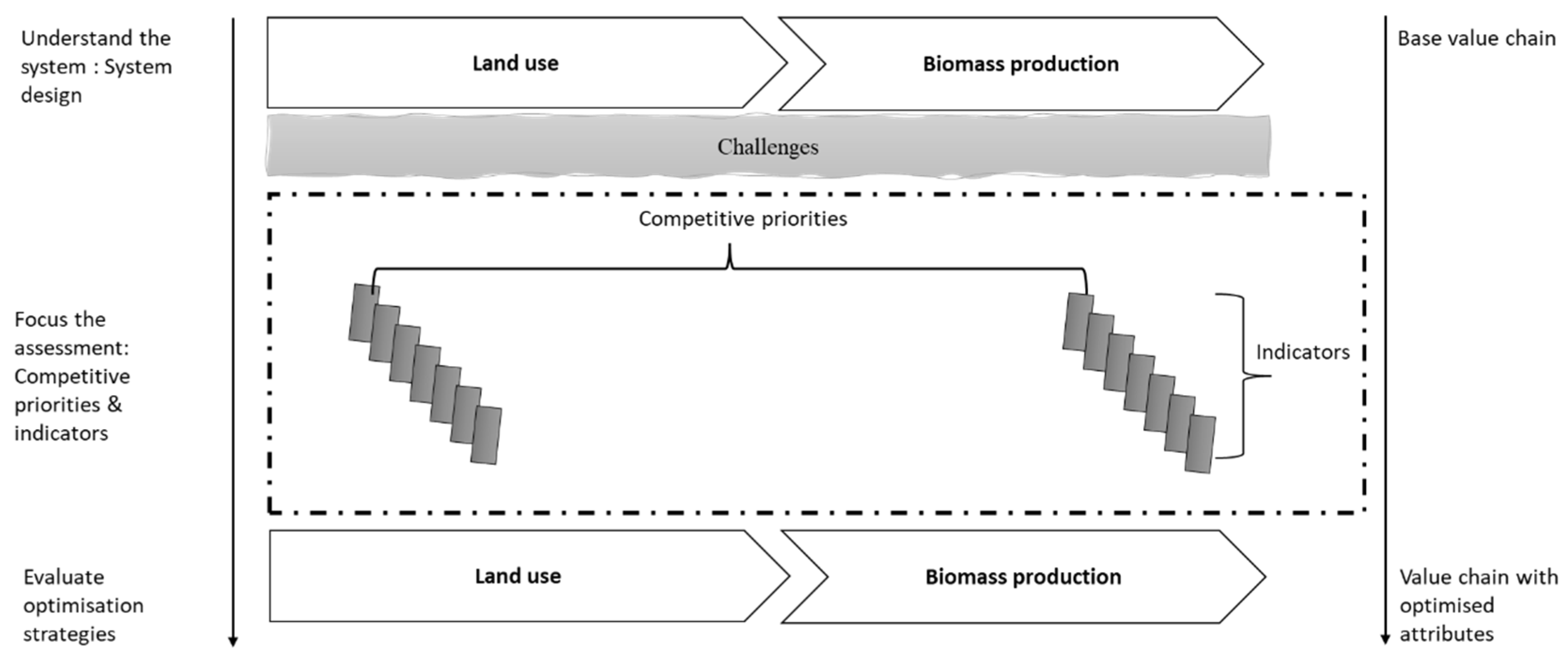
The conceptual framework applied in this study (Figure 1) builds on the competitive priority approach originally developed by Panoutsou et al. [3], but introduces substantive modifications to address the specific characteristics of intermediate crops in Mediterranean agriculture. While the original framework assessed entire biomass value chains, the present adaptation focuses explicitly on the two stages most relevant for sustainability and regulatory assessment under RED III: land use and biomass production. This refinement reflects the need to evaluate whether intermediate crops can be integrated into existing farming systems without displacing main crops or compromising environmental performance.
Several methodological extensions distinguish this adapted framework from earlier applications. First, the indicator set is expanded to include agronomic and environmental parameters tailored to C. sativa and B. carinata, such as soil organic carbon (SOC), erosion risk, biodiversity protection, water-use efficiency, and machinery suitability for small seed crops [22,23]. These additions reflect recent advances in agronomy and soil science, including evidence on SOC dynamics under reduced-tillage and cover-crop systems [15,16,17].
Second, the framework incorporates policy integration by embedding EU and national instruments—RED III, CAP Strategic Plans, ESCA, CRCF, Decreto Biocarburanti, and Real Decreto 376/2022—into the assessment structure. This ensures alignment with current sustainability governance and reflects the increasing importance of traceability, digital monitoring, and land use verification in biofuel certification systems [4,24,25].
Third, the framework introduces targeted optimisation strategies to address uncertainties associated with short crop calendar windows, low-input cultivation, and variable climatic conditions. These strategies include precision agronomy, early-maturing and drought-tolerant varieties, improved harvesting techniques, and digital traceability systems. Such innovations are essential for stabilising yields and reducing environmental impacts, particularly in Mediterranean regions where water availability and soil degradation pose significant constraints [22,23].
Finally, the transparency dimension is strengthened through the integration of digital monitoring tools, geotagged farm records, and enhanced traceability mechanisms. These elements respond to evolving certification requirements and societal expectations for verifiable sustainability claims, particularly in the context of low-ILUC-risk feedstocks and GHG-based intensity reduction targets [24,25].
By explicitly tailoring the competitive priority framework to intermediate crops and Mediterranean conditions, this study moves beyond a restatement of earlier methodologies and provides a new approach for evaluating sustainability, resource efficiency, and policy compliance in Italy and Spain. The resulting framework offers a robust basis for identifying optimisation strategies and regulatory interventions that can support the sustainable deployment of intermediate crops at scale.
Beyond the competitive priority framework, several alternative methodologies have been proposed for assessing bioenergy value chains. Cherubini et al. (2009) [26] highlighted the importance of integrating environmental trade-offs into biomass system evaluations, while Slade et al. (2014) [27] compared pathways to illustrate sustainability and resource-efficiency challenges. These studies provide broader methodological context and complement our adapted framework for intermediate crops in Mediterranean agriculture.

2.1. System Design

The system design identifies the key stages and activities that shape the performance and the competitive advantage. This step “defines key stages and underlying activities within biobased value chains, identifies challenges that trigger major uncertainties and explores competitive priorities” [3]. For intermediate crops, the system is focused on two stages outlined in Section 2.1.1 and Section 2.1.2.

2.1.1. Land Use

This stage includes land identification, allocation, and soil quality management. For intermediate crops, the central challenge is ensuring that cultivation occurs on fallow or under-utilised land, without displacing food or feed crops. Decision-makers must “avoid displacement of other land-based activities and ensure sustainable practices that improve soil quality” [28,29].

2.1.2. Biomass Production

This stage includes crop establishment, annual management, harvesting, and pre-treatment/logistics. For intermediate crops, the main uncertainties relate to achieving reliable yields within short crop calendar windows, maintaining low-input cultivation, and safeguarding soil carbon and biodiversity. Crop establishment must “recognize and enhance biodiversity, enable low-input cultivation systems, and minimise intensity of the applied practices” [3].
By focusing on these two stages, the framework captures the most critical determinants of sustainability, resource efficiency, soil health, and RED III compliance for intermediate crops.

2.2. Competitive Priorities

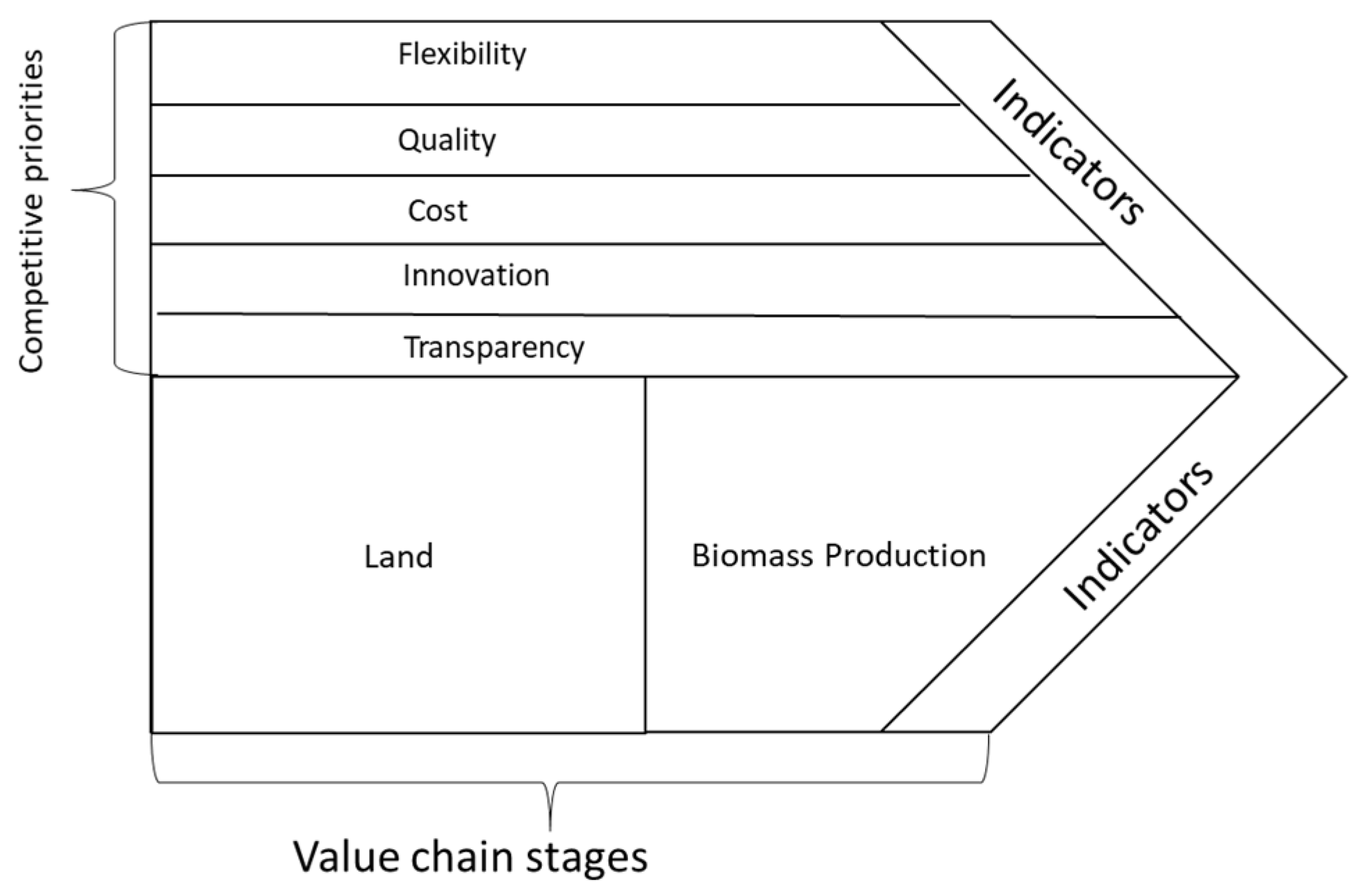
Competitive priorities articulate how value chains can overcome uncertainties and achieve a sustainable performance [30]. In the context of intermediate crops, these priorities provide a structured way to interpret agronomic, environmental, and operational challenges and to identify the strategies that enable reliable integration into Mediterranean farming systems. Building on the framework of Panoutsou et al. [3], five priorities—flexibility, quality, cost, innovation, and transparency—are used to guide indicator selection and optimisation strategies across the land-use and biomass-production stages (Figure 2).
For intermediate crops, these priorities are interpreted in Section 2.2.1, Section 2.2.2, Section 2.2.3, Section 2.2.4 and Section 2.2.5.

2.2.1. Flexibility

Flexibility refers to the ability of intermediate crops to integrate into diverse crop rotations and short fallow windows without disrupting the main crop production. This is particularly important in Mediterranean crop systems, where sowing windows are narrow and climatic variability can constrain crop establishment. Indicators of flexibility include compatibility with regional crop calendars, growing cycle length, and adaptability to different agroecological conditions. Evidence from camelina and carinata trials shows that early-maturing and drought-tolerant varieties can significantly improve rotation fit and reduce agronomic risk [31,32].

2.2.2. Quality

Quality encompasses environmental integrity and adherence to sustainability standards. For intermediate crops, this includes lifecycle GHG emissions, SOC dynamics, nutrient balance, biodiversity protection, water-use efficiency, and soil compaction risk during harvesting. These indicators ensure that intermediate crops contribute positively to environmental performance and meet RED III sustainability criteria. Recent advances in soil carbon science have highlighted the importance of SOC monitoring and reduced-tillage systems in maintaining soil health, particularly in Mediterranean regions where soils are vulnerable to erosion and degradation [10,12,14,16].

2.2.3. Cost

Cost encompasses the economic viability for farmers and processors, including production costs, logistics, and feedstock competitiveness. Land use and biomass production “account for more than half of total costs” [10,33,34,35].

2.2.4. Innovation

Innovation refers to the practical advances in agronomy, crop breeding, and logistics that enable improved practices and technologies in real farming systems. Innovation is described as “the cornerstone defining which value chain configurations perform best technically whilst being sustainable and resource efficient” [14,15,16,36].

2.2.5. Transparency

Transparency refers to traceability, monitoring, and compliance with RED III sustainability criteria. Transparency is defined as “current information about status of system and immediate notification of unexpected events” and is essential for certification and societal trust [24,25,26,27,28].
These priorities guide the selection of indicators and optimisation strategies in the subsequent stages of the analysis.
The section below discusses the major challenges within individual value chain stages and suggests relevant competitive priorities that can help overcome them.
Table 1 summarises the main challenges affecting sustainability and resource efficiency in the two value chain stages relevant to intermediate crops—Land Use and Biomass Production—and links them to the competitive priorities and optimisation strategies that can address them.
Land Use: For intermediate crops, such as B. carinata and C. sativa, land identification and allocation must ensure that cultivation takes place on fallow or under-utilised land to avoid the displacement of main crops. This reflects the need to “avoid displacement of other land-based activities” and to ensure that land use decisions support long-term sustainability. Competitive priorities, such as quality, innovation, and transparency, are essential to maintain soil health, to ensure traceability, and to demonstrate compliance with CAP and RED III requirements. Cost considerations also play a role, as land preparation and monitoring must remain economically viable.
Optimisation strategies therefore focus on improving the soil organic matter, enhancing land-use monitoring systems, and ensuring that land selection supports both environmental integrity and economic feasibility.
Biomass Production: The biomass production stage includes crop sowing, annual management, harvesting, and pre-treatment/logistics. Intermediate crops must achieve reliable yields within short crop calendar windows, maintain low-input cultivation, and protect biodiversity. Competitive priorities, such as cost and innovation, are central to improving agronomic performance and reducing input requirements, while flexibility and quality are critical during harvesting to safeguard soil carbon and to minimise compaction. Pre-treatment, storage, and transport activities must minimise emissions and maintain seed quality, aligning with the broader emphasis on environmental performance and resource efficiency.
Optimisation strategies therefore include adopting early-maturing varieties, improving machinery practices, reducing logistics emissions, and enhancing storage efficiency.

2.3. Competitive Priorities and Indicators

Intermediate crop value chains involve dynamic interactions between land resources, agronomic practices, environmental constraints, and market requirements. In this paper, the focus is placed on the two stages most relevant for assessing the sustainability and regulatory performance of intermediate crops—Land Use and Biomass Production—and on the competitive priorities that guide optimisation within them.
Following Panoutsou et al. [3], competitive priorities provide a structured way to articulate how value chains can overcome uncertainties and improve performance. They represent the dimensions along which intermediate crops must perform well to ensure sustainability, resource efficiency, and compliance with RED III. The five priorities—flexibility, quality, cost, innovation, and transparency—capture both the physical and market attributes of intermediate crop systems and guide the selection of indicators that measure and interpret performance.
Flexibility: Flexibility refers to the ability of intermediate crops to integrate into existing farming systems without disrupting main crop production [10,11,12,13,14,15]. This translates into the following:
  • fitting within short crop calendar windows
  • adapting to diverse agro-ecological conditions
  • enabling year-round biomass availability through rotation diversification.
Indicators for flexibility include sowing window compatibility, growing cycle length, and rotation fit.
Quality: Quality encompasses environmental integrity and adherence to sustainability standards [15,16,37]. For intermediate crops, quality is assessed through the following:
  • life-cycle GHG emissions
  • soil organic carbon and nutrient balance
  • biodiversity protection
  • water-use efficiency
  • soil compaction risk during harvesting.
These indicators ensure that intermediate crops contribute positively to environmental performance and meet RED III sustainability criteria.
Cost: Cost reflects the economic viability of intermediate crop cultivation and logistics [36,37,38,39,40]. Cost indicators for intermediate crops include the following:
  • production costs (seed, fertiliser, machinery, labour)
  • gross margins at representative yields
  • levelised cost of feedstock
  • transport and storage costs.
These indicators help determine whether intermediate crops can be adopted by farmers and integrated into regional supply chains.
Innovation: Innovation captures advances in agronomy, crop breeding, and processing that improve performance and reduce uncertainty [10,11,12,13]. For intermediate crops, innovation indicators include the following:
  • varietal development (early maturity, drought tolerance)
  • low-input agronomic practices
  • improvements in harvesting and pre-treatment technologies
  • compatibility with emerging biofuel pathways.
Innovation is essential for stabilising yields, reducing inputs, and improving environmental outcomes.
Transparency: Transparency refers to traceability, monitoring, and compliance with sustainability governance [24,25,26,27,28]. For intermediate crops, transparency is particularly important because their eligibility under RED III depends on demonstrating the following:
  • use of fallow or marginal land
  • absence of displacement of main crops
  • verifiable land-use baselines
  • compliance with certification schemes.
Indicators include land-use traceability, monitoring feasibility, and documentation of agronomic practices.

2.4. Optimisation Strategies with Competitive Priority Indicators

Optimisation strategies translate competitive priorities and indicators into targeted actions that improve sustainability and resource efficiency across the intermediate crop value chain. As emphasised by Panoutsou et al. [3], indicators must be “fit to measure, monitor and interpret performance, overcome challenges and facilitate opportunities within individual value chains.”
Land Use: Indicators such as land availability, biodiversity protection, SOC, nutrient balance, and land-use traceability provide evidence of whether intermediate crops are cultivated on appropriate land and whether soil health is maintained. These indicators support strategies that prioritise fallow land, enhance soil organic matter through residue retention and soil amendments, reduce erosion risk, and strengthen traceability systems for RED III compliance [28,29].
Biomass Production: Indicators including yield stability, input intensity, water-use efficiency, soil compaction risk, harvest losses, seed quality preservation, and logistics emissions highlight where improvements are needed to stabilise yields, to reduce inputs, to protect soil carbon, and to minimise post-harvest emissions. Innovation indicators such as variety development, precision agronomy, and improved harvesting technologies guide strategies that enhance resilience and reduce environmental impacts [15].
Together, these indicators and optimisation strategies provide a coherent framework for improving the sustainability, resource efficiency, and regulatory performance of intermediate crop systems.
These optimisation strategies directly address the uncertainties identified in the biomass production stage and support the development of sustainable, resource efficient intermediate crop systems.

3. Comparative Case Study: Italy and Spain

Intermediate crops are increasingly recognised for their potential contribution to sustainable feedstock supply in Europe. Applying the competitive priority framework to Italy and Spain illustrates how indicators across value chain stages can guide decision making, improve farmer uptake, and support regional capacity development. Unlike a purely narrative review, this case study integrates empirical modelling results, regional soil and climate datasets, and national policy instruments to provide a structured assessment of feasibility.

3.1. System Design

Italy and Spain offer favourable conditions for intermediate crops due to the availability of fallow and under-utilised land, reducing competition with food and feed crops and supporting regenerative pathways [26,27,28]. Agronomic suitability is reinforced by short growing cycles, low input requirements, and tolerance to water-limited conditions [10,11,12]. Evidence from the BIO4A project, using the ARMOSA mechanistic crop model calibrated with LUCAS soil data and MARS weather datasets, has simulated 20 years of camelina cultivation across ~500,000 km2 of Mediterranean and semi-arid zones [1,31].
The quantitative results highlight the environmental and productivity benefits of rotation systems. A continuous camelina (CAM) scenario achieved average yields of 1870 ± 717 kg ha−1 yr−1 and carbon gains of +31 kg C ha−1 yr−1. The camelina–barley rotation (CAMBAR) outperformed monoculture crop systems, reaching 2468 ± 641 kg ha−1 yr−1 and SOC gains of +43 kg C ha−1 yr−1 [1,31]. In Spain, the SOC increases were substantially higher—+188 to +236 kg C ha−1 yr−1 in Castilla-La Mancha and Madrid—demonstrating a strong soil restoration potential in water-limited regions [1,31]. These findings confirm that intermediate crops can deliver measurable agronomic and environmental benefits under Mediterranean conditions.

3.2. Policy Integration

National instruments in Italy and Spain provide the mechanisms for operationalising EU sustainability frameworks. The Piano Strategico della PAC and Decreto Biocarburanti in Italy, together with the Plan Estratégico de la PAC and Real Decreto 376/2022 in Spain, establish crop calendar rules, sustainability incentives, and traceability requirements [26,27,28]. These instruments align with RED III, ESCA, and CRCF frameworks, enabling intermediate crops to qualify as low-ILUC-risk feedstocks and to contribute to GHG-based intensity reduction targets. Policy analyses emphasise the importance of digital monitoring and opt-in mechanisms to accelerate deployment, while scenario assessments highlight camelina’s role in SAF production and degraded soil recovery [24].

3.3. Case Study Framing

By combining empirical modelling data with regional statistics and policy instruments, this section provides a comparative Mediterranean case study rather than a narrative review. The integration of quantitative yield and SOC data with national regulatory frameworks demonstrates how intermediate crops can be deployed sustainably in Italy and Spain. This structured case study highlights both the agronomic potential and the policy conditions required for successful implementation, offering a replicable approach for other Mediterranean regions.

3.4. Comparative Analysis: Italy and Spain

Competitive priorities provide a structured understanding of the factors influencing intermediate crop performance. Extending the analysis beyond single-issue metrics, such as costs or GHG savings, reveals the full set of value chain characteristics that determine sustainability and resource efficiency [3].
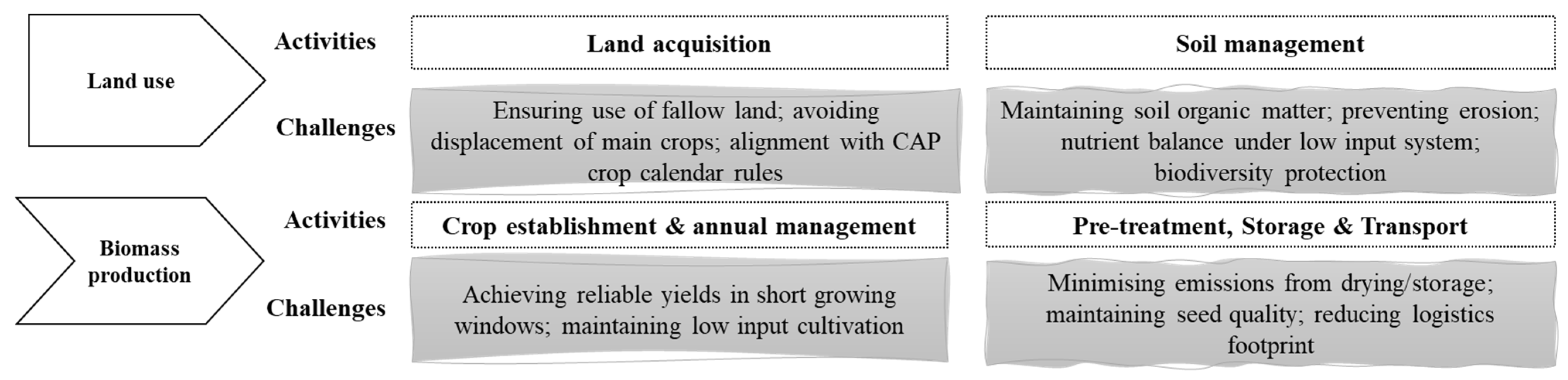
Although Italy and Spain share Mediterranean agro-ecological characteristics, their contexts differ across climate, rotations, land availability, processing capacity, policy implementation, and crop calendars (Figure 3). These differences shape the feasibility and optimisation strategies for intermediate crops.
Climatic Zones: Italy is characterised by Mediterranean zones with higher rainfall variability and shorter fallow periods, particularly in central and northern regions. Spain includes extensive semi-arid areas, such as Castilla-La Mancha and Madrid, where water limitations are more pronounced but the SOC-sequestration potential is higher [31].
Crop Rotation Structures: In Italy, camelina and carinata are commonly integrated into rotations with durum wheat and maize. In Spain, camelina–barley rotations dominate, improving yield stability and SOC accumulation under semi-arid conditions [31].
Fallow Land Availability: Italy has seasonal fallow land concentrated in specific regions, requiring careful alignment with CAP crop calendar rules. Spain has larger expanses of fallow and under-utilised land, offering greater potential for scaling intermediate crops [26,27,28].
Processing Capacity: Italy benefits from established oilseed-processing facilities in regions such as Emilia-Romagna and Lombardy. Spain’s biodiesel capacity is concentrated in Andalusia and Catalonia, with less integrated oilseed-crushing infrastructure.
Policy Implementation: Italy’s Decreto Biocarburanti incentivises advanced biofuels and emphasises crop calendar compliance. Spain’s Real Decreto 376/2022 places a stronger emphasis on traceability and RED III verification, while its PAC Plan provides greater flexibility for semi-arid rotations [38,39].
Regional Crop Calendars: Italy’s winter cover-crop windows allow structured integration with minimal disruption to main crops. Spain relies more heavily on drought-tolerant varieties and wider sowing windows to accommodate the semi-arid conditions.
For intermediate crops, such as B. carinata and C. sativa, the main challenges in Mediterranean crop systems relate to land availability, soil quality protection, yield stability within short crop calendar windows, and the operational feasibility of harvest and post-harvest handling. However, these challenges manifest differently in Italy and Spain. The competitive priority indicators help interpret these differences and guide optimisation strategies tailored to each national context.

3.4.1. Land Use

Land use is the first decision point and determines whether intermediate crops can be cultivated without displacing food or feed production.
  • Italy: Seasonal fallow land is more limited and regional, requiring careful alignment with CAP crop calendar rules. Indicators such as soil organic matter, erosion risk, and biodiversity protection are critical to demonstrate environmental integrity in regions with shorter fallow periods.
  • Spain: Larger expanses of fallow and under-utilised land provide greater scaling potential. Indicators such as land availability and SOC gains are particularly relevant in semi-arid zones, where the soil restoration potential is high. Traceability and monitoring are essential to verify compliance under Spain’s Real Decreto 376/2022 [40].

3.4.2. Biomass Production

Biomass production encompasses crop establishment, annual management, harvest, and pre-treatment/logistics.
  • Italy: Yield stability must be achieved within shorter crop calendar windows, often in rotations with durum wheat and maize. Indicators linked to cost and innovation (e.g., varietal development, precision agronomy) are central to ensuring reliable, low input cultivation.
  • Spain: Camelina–barley rotations dominate, with wider sowing windows and stronger SOC gains. Indicators of flexibility and quality (e.g., soil compaction risk, residue retention) are critical to demonstrate resilience under semi-arid conditions. Logistics indicators are particularly important given the concentration of biodiesel plants in Andalusia and Catalonia.
Table 2 summarises the challenges in each value chain stage and maps them to the relevant competitive priorities and indicators, providing a structured basis for optimisation strategies aligned with RED III and national sustainability requirements

3.5. Optimisation Strategies/Regulatory Interventions for Intermediate Crops in Italy and Spain

The optimisation strategies presented here (Table 3) build directly on the competitive priority indicators identified in Section 3.4. By linking challenges to indicators and targeted actions, the framework provides a structured approach to improving sustainability and resource efficiency across the intermediate crop value chain. Importantly, the strategies differ between Italy and Spain, reflecting their distinct agronomic and policy contexts.

3.5.1. Land Use

Indicators such as land availability, biodiversity protection, SOC, nutrient balance, and land use traceability determine whether intermediate crops can be cultivated sustainably.
  • Italy: Strategies emphasise prioritising seasonal fallow land, aligning sowing with CAP crop calendar rules, and clustering production near established oilseed processing hubs in Emilia-Romagna and Lombardy.
  • Spain: Strategies focus on exploiting larger semi-arid fallow areas, integrating camelina–barley rotations, and strengthening traceability under Real Decreto 376/2022 [39].

3.5.2. Biomass Production

Indicators including yield stability, input intensity, water use efficiency, soil compaction risk, harvest losses, seed quality preservation, and logistics emissions highlight where improvements are needed.
  • Italy: Optimisation emphasises early maturing varieties, precision agronomy, lightweight machinery, and improved storage near crushing facilities.
  • Spain: Strategies prioritise drought tolerant camelina varieties, adjusted harvest timing for semi-arid soils, residue retention, and reduced transport distances to biodiesel plants in Andalusia and Catalonia.

3.5.3. Integrating Innovation, Biochar, and Compost

The BIO4A results show that biochar and compost are particularly effective soil enhancement strategies for Mediterranean soils.
  • Italy: Compost and digestate provide short-term fertility gains, while biochar supports long-term SOC stability in wetter regions.
  • Spain: Biochar is especially valuable for semi-arid soils, improving water retention and resilience, while compost supplements nutrient balance in rotations.

3.5.4. EU-Level Optimisation

Indicators used to assess land suitability, soil quality, yield stability, input intensity, logistics efficiency, and innovation potential can support harmonised sustainability criteria, region specific crop calendars, and investment priorities for soil improvement practices and digital traceability across the Member States.

3.5.5. National Implementation in Italy and Spain

Practical implementation depends on the national instruments.
  • Italy: Piano Strategico della PAC 2023–2027 and Decreto Biocarburanti define the GAEC requirements, soil management obligations, crop calendar rules, and sustainability certification procedures [38].

  • Spain: Plan Estratégico de la PAC 2023–2027 and Real Decreto 376/2022 establish regionally differentiated crop calendars and national sustainability and traceability requirements for biofuels [39,40].
The application of competitive priorities and indicators must reflect the distinct agronomic, environmental, and policy contexts of Italy and Spain. While both countries share Mediterranean characteristics, Italy’s shorter fallow periods and established processing capacity contrast with Spain’s larger semi-arid fallow areas and stronger emphasis on traceability. Table 3 below summarises how the indicators provide evidence and guide optimisation strategies in each country.
Table 3. Use of indicators and competitive priorities to provide evidence and to address challenges in intermediate crop value chains in Italy and Spain.
Value Chain StageChallengesCompetitive PriorityKey IndicatorsHow Indicators Provide Evidence (Italy and Spain)Optimisation Strategies (Italy and Spain)
Land UseEnsuring use of fallow/under-utilised land; avoiding displacement of main crops; alignment with CAP crop calendar rulesQuality• Land availability
• Biodiversity protection
• SOC
• Soil nutrient balance
Italy: Demonstrates cultivation on seasonal fallow land with strict CAP alignment.
Spain: Verifies use of larger fallow areas and higher SOC restoration in semi-arid zones.
Italy: Prioritise seasonal fallow land; align sowing with CAP rules.
Spain: Exploit larger fallow areas; integrate semi-arid rotations.
Cost• Land preparation cost
• Proximity to storage/processing
Italy: Identifies parcels near oilseed facilities in Emilia-Romagna/Lombardy.
Spain: Minimises logistics costs by proximity to biodiesel plants in Andalusia/Catalonia.
Italy: Cluster production near crushing facilities.
Spain: Reduce transport distances to biodiesel hubs.
Innovation• Land suitability mapping
• Remote sensing data
Italy: Supports precision allocation in fragmented landscapes.
Spain: Provides spatial evidence for semi-arid land suitability.
Italy: Use geospatial tools for fragmented parcels.
Spain: Apply remote sensing for semi-arid suitability.
Transparency• Land use traceability
• Monitoring feasibility
Italy: Ensures CAP compliance via digital farm records.
Spain: Strengthens RED III documentation under Real Decreto 376/2022.
Italy: Implement geotagged monitoring for CAP.
Spain: Enhance digital traceability systems for RED III.
Land UseMaintaining SOC; preventing erosion; nutrient balance under low input systemsQuality• SOC
• Nutrient balance
• Erosion risk
Italy: Evidence of soil health in rotations with cereals.
Spain: Demonstrates erosion control and SOC gains in semi-arid soils.
Italy: Apply reduced tillage; compost/digestate amendments.
Spain: Use biochar to enhance SOC and water retention.
Innovation• Soil improvement practices
• Precision nutrient management
Italy: Compost and digestate improve fertility.
Spain: Biochar enhances resilience in semi-arid soils.
Italy: Adopt precision fertilisation.
Spain: Integrate biochar as soil enhancement.
Biomass ProductionAchieving reliable yields in short growing windows; biodiversity protection; maintaining low input cultivationCost• Yield stability
• Input intensity
Italy: Quantifies viability in durum wheat/maize rotations.
Spain: Identifies cost drivers in camelina–barley rotations.
Italy: Select low input, fast growing varieties; optimise sowing dates.
Spain: Reduce fertiliser use; exploit barley–camelina synergies.
Innovation• Water use efficiency
• Agronomic innovation indicators
Italy: Demonstrates efficiency gains from precision agronomy.
Spain: Shows resilience through drought tolerant varieties.
Italy: Adopt early maturing varieties; precision agronomy.
Spain: Use drought tolerant camelina; optimise water use.
Biomass ProductionMinimising soil compaction; preserving soil carbon; adapting machinery to small seed cropsFlexibility• Soil compaction risk
• Machinery suitability
Italy: Lightweight machinery reduces compaction in wetter soils.
Spain: Adjusted harvest timing for semi-arid soils.
Italy: Use lightweight machinery; adjust timing.
Spain: Adapt machinery for semi-arid conditions.
Quality• SOC retention
• Harvest losses
• Residue retention
Italy: Demonstrates efficient biomass recovery and residue management.
Spain: Highlights SOC retention under semi-arid conditions.
Italy: Improve harvest techniques; retain residues.
Spain: Avoid soil disturbance; maximise residue retention.
Biomass ProductionMinimising emissions from drying/storage; maintaining seed quality; reducing logistics footprintQuality• Storage losses
• Seed moisture control
• Transport/logistics emissions
Italy: Quantifies impacts of storage near oilseed facilities.
Spain: Identifies opportunities to reduce transport distances to biodiesel plants.
Italy: Improve drying efficiency; optimise storage near crushing hubs.
Spain: Reduce transport distances; optimise logistics for biodiesel plants.

3.6. Economic Viability and Competitiveness

Economic viability is a critical dimension for assessing the potential of intermediate crops as feedstocks for advanced biofuels. While agronomic and environmental indicators demonstrate feasibility, deployment ultimately depends on whether cultivation and processing are competitive for farmers and downstream users in aviation, maritime, and heavy-duty transport sectors. This section integrates the cost data, gross margin estimates, and sector specific competitiveness for Italy and Spain (Table 4).
Cost Structures and Farmer Uptake
  • Production costs for camelina and carinata seeds vary between EUR 400/t and EUR 550/t depending on crop type and region. Gross margins at representative yields are positive under current PAC incentives, particularly for camelina in Spain, where larger fallow areas and semi-arid conditions support low input cultivation. In Italy, profitability is enhanced when coproducts, such as protein meal and glycerine, are monetised, thereby offsetting higher seed costs. These findings suggest that farmer uptake is viable when supported by targeted incentives and integration into established supply chains [10,33,34,35].
Sector Specific Competitiveness
  • Aviation (SAF): Camelina-based HEFA and ATJ pathways deliver SAF at EUR 17–22/GJ, with carbon intensity reductions of 10–30 gCO2eq/MJ depending on the SOC gains. Although SAF costs are higher than maritime or heavy-duty fuels, competitiveness is driven by RED III GHG-based intensity targets and SAF blending mandates [33,35].
  • Maritime (HVO/FT diesel): Carinata biodiesel chains in Tuscany and camelina biodiesel in Spain achieve costs of EUR 15–19/GJ, competitive with conventional biodiesel when logistics are optimised. Coproducts further improve profitability [10,33].
  • Heavy-Duty Road Transport (HVO blends): Camelina seed feedstock at EUR 400/t supports competitive HVO blending at 10–15%, while carinata seed at EUR 550/t remains viable at lower blending shares. Farmer gross margins are positive under PAC incentives, making heavy-duty transport a near-term market for intermediate crops [10].
Comparative Insights: Italy vs. Spain
  • Italy: Stronger integration into established oilseed processing hubs (Emilia-Romagna, Lombardy) supports competitiveness, but higher seed costs require coproduct valorisation and policy incentives (Decreto Biocarburanti).
  • Spain: Larger fallow land areas and semi-arid conditions reduce input costs and enhance the SOC gains, making camelina particularly competitive for SAF and biodiesel under Real Decreto 376/2022 traceability requirements.
Policy and Market Drivers
Economic viability is closely linked to regulatory frameworks. Italy’s Decreto Biocarburanti provides direct incentives for advanced biofuels, while Spain’s Real Decreto 376/2022 emphasises traceability and RED III compliance. Both countries’ PAC Strategic Plans influence crop calendars and farmer support, shaping cost competitiveness and uptake. Market incentives for SAF and sustainable low-ILUC-risk feedstocks further enhance profitability, particularly in aviation [10,33].
The optimisation strategies outlined here focus on agronomic and technical measures derived from the competitive priority framework. The regulatory mechanisms that enable and incentivise these strategies—such as PAC, ESCA, CRCF, and RED III—are discussed in detail in Section 4.

4. Policy Recommendations for Carinata and Camelina as Intermediate Crops in Italy and Spain

The successful deployment of intermediate crops in Mediterranean agriculture depends on aligning agronomic realities with the regulatory frameworks governing sustainable biofuels—RED III, ESCA, CRCF, and the Common Agricultural Policy (CAP)—and on how these frameworks are implemented through national instruments in Italy and Spain. The evidence presented in Section 3.4 and Section 3.5 shows that intermediate crops can deliver soil carbon benefits, low-input cultivation, and sustainable feedstock supply, but only if regulatory conditions recognise their specific agronomic characteristics and support their integration into existing farming systems [4,10,11,12,13].
The policy recommendations presented in this section (Table 5) build upon the agronomic optimisation strategies described in Section 3.5. By linking technical measures to regulatory instruments (PAC, ESCA, CRCF, RED III), this section highlights how governance frameworks can operationalise and scale the strategies identified earlier [24,25].

4.1. Volumetric Versus GHG-Based Targets

Policy implications differ depending on whether the Member States prioritise volumetric renewable energy shares or GHG-based intensity reduction targets.
  • Under volumetric (% RES) targets, the emphasis is on increasing the supply of compliant biofuels, favouring feedstocks with stable yields and established conversion pathways.
  • Under GHG-based targets, the focus shifts to marginal GHG savings, including soil carbon accumulation, reduced fertiliser use, etc.
Intermediate crops perform strongly under GHG-based frameworks because their sustainability benefits translate directly into improved GHG performance [3,15,16]. Policy mechanisms should therefore prioritise instruments that reward soil carbon gains, erosion reduction, and regenerative practices—such as ESCA and CRCF—rather than relying solely on volumetric mandates [24,25].

4.2. RED III: Aligning Sustainability Criteria with Mediterranean Agronomy

RED III sets the overarching sustainability framework for biofuels, including low-ILUC-risk requirements, traceability obligations, and feedstock eligibility rules [4]. For intermediate crops, the most urgent need is to replace fixed sowing and harvest dates with Growing Degree Days (GDD)-based criteria that reflect Mediterranean agro-ecological conditions and allow winter intermediate crop options.
Indicators such as sowing window compatibility, rotation fit, and land-use traceability provide the evidence base for this shift [5,22].
National transposition measures operationalise these requirements:
  • Italy: The Decreto Biocarburanti defines the national procedures for RED III compliance, traceability, and certification of sustainable feedstocks [26].
  • Spain: Real Decreto 376/2022 establishes sustainability and traceability requirements, including verification of land-use baselines [28].
Strengthening digital monitoring systems—geotagged field records, remote sensing verification, and interoperable databases—will be essential to demonstrate low-ILUC-risk cultivation on fallow land [4,24].

4.3. Emission Savings from Soil Carbon Accumulation (ESCA) and Carbon Removals and Carbon Farming Regulation (CRCF): Recognising Soil Carbon Benefits

ESCA: RED II (Directive (EU) 2018/2001)—Annex V (GHG calculation formula) https://eur-lex.europa.eu (ESCA is defined in Annex V) (accessed on 9 May 2026).
CRCF: Regulation (EU) 2024/3012—Carbon Removals and Carbon Farming Regulation (CRCF) This is the EU’s first voluntary certification framework—European Commission—Carbon Removals and Carbon Farming https://climate.ec.europa.eu (climate.ec.europa.eu) (CRCF overview) (accessed on 9 May 2026).
The ESCA and CRCF frameworks offer opportunities to reward the soil carbon accumulation and climate benefits of intermediate crops [24,25]. Indicators such as SOC, erosion risk, nutrient balance, and residue retention provide the evidence base for recognising intermediate crops—and soil amendments such as biochar and compost—as eligible soil improvement practices.
The BIO4A results demonstrate that camelina rotations can deliver +31 to +255 kg C ha−1 yr−1 depending on region and pedo-climatic conditions [15,16,35], strengthening the case for including intermediate crops in national ESCA measures and enabling farmers to generate CRCF credits for SOC increases.
Integrating these mechanisms into national carbon farming schemes would create long-term incentives for regenerative practices.

4.4. CAP: Enabling Crop Calendar Flexibility and Soil Quality Improvements

Under the CAP, crop calendar rules, GAEC (Good Agricultural and Environmental Conditions) requirements, and rotation schemes must be adapted to accommodate the agronomic realities of winter intermediate crops [26,28]. The indicators related to sowing windows, soil cover, and rotation fit demonstrate the need for the following:
  • region-specific crop calendars based on GAEZ and GDD (Growing Degree Days) thresholds;
  • recognition of intermediate crops under GAEC 6 (soil cover) and GAEC 7 (rotation);
  • support for diversified rotations, including intercropping and relay cropping where compliant;
  • incentives for lightweight machinery, decentralised storage, and soil improvement practices.
National CAP Strategic Plans operationalise these measures as follows:
  • Italy’s CSP emphasises soil carbon conservation, erosion control, and region-specific crop calendars [26].
  • Spain’s CSP provides regionally differentiated crop calendar rules through the autonomous communities [28].

4.5. Market Mechanisms and SAF Integration

Insights from the BIO4A regulatory analysis show that opt-in mechanisms can accelerate the deployment of sustainable aviation fuels (SAF) derived from low-ILUC-risk feedstocks, such as intermediate crops [1,10,31]. The Dutch bioticket system demonstrates how SAF suppliers can voluntarily generate tradable credits without incurring compliance obligations, bridging the price gap between fossil and renewable jet fuels. Similar mechanisms could be adopted in Italy and Spain through their national energy agencies, enabling camelina-based SAF to contribute to RED III transport targets while supporting rural development on marginal lands [4,26,27,28]. The forthcoming ReFuelEU Aviation Regulation will introduce EU-wide SAF blending mandates and harmonised sustainability requirements. Coupling these mandates with CAP eco-schemes and carbon farming incentives would create a coherent policy environment that rewards soil carbon sequestration, low-input cropping systems, and the valorisation of marginal land [4,15].

4.6. Cross-DG Coordination

Given the cross-cutting nature of intermediate crop governance, improved coordination across DG AGRI, DG ENER, DG CLIMA, and DG ENV is essential. Harmonised guidance is needed to align sustainability criteria, crop calendar rules, carbon accounting methodologies, and biodiversity safeguards [4,26,27,28]. Such coordination would ensure consistent implementation of RED III, ESCA, CRCF, and CAP across the Member States.
Together, these recommendations provide a coherent policy framework that supports the sustainable deployment of intermediate crops in Italy and Spain, strengthens soil health, reduces ILUC risk, and contributes to the EU’s advanced biofuel and climate mitigation objectives. Integrating agronomic evidence, soil carbon benefits, and region-specific crop calendar flexibility into national and EU-level policies will be essential to unlock the full potential of carinata and camelina as winter intermediate crops in Mediterranean agriculture.

5. Conclusions

This study shows that intermediate crops can strengthen sustainable feedstock supply in Mediterranean agriculture when agronomic practices and policy frameworks are aligned. Long-term modelling confirms that camelina and carinata deliver stable yields and positive SOC trends under Mediterranean and semi-arid conditions, particularly in rotations such as camelina–barley systems [8,9,10,11,12,13,14,15]. These outcomes support soil restoration objectives and demonstrate compatibility with low-input cultivation, consistent with broader evidence on reduced-tillage systems and SOC protection [23].
National instruments in Italy and Spain provide the regulatory basis for operationalising RED III, ESCA, and CRCF requirements, though regional differences in crop calendars, land availability, and processing capacity influence the deployment potential [38,39,40]. The competitive priority framework clarifies how flexibility, quality, cost, innovation, and transparency interact across land-use and biomass-production stages, guiding targeted optimisation strategies [3].
Overall, intermediate crops can contribute meaningfully to renewable energy, soil health, and climate mitigation goals when supported by region-specific agronomy, robust monitoring systems, and coherent policy implementation. The framework presented here offers a replicable approach for assessing feasibility and informing interventions that enhance sustainability and resource efficiency in Mediterranean farming systems.
While this study provides new insights into the agronomic, environmental, and policy dimensions of intermediate crops in Italy and Spain, the following limitations should be acknowledged. First, the analysis is based on modelling evidence and selected case studies, which may not fully capture the heterogeneity of Mediterranean agroecological conditions or farming practices. Second, the economic values rely on representative cost and revenue estimates; more detailed farm-level profitability studies and long-term market analyses are needed to validate the competitiveness under diverse scenarios. Third, the policy evaluation is framed around current RED III, CAP, ESCA, and CRCF instruments, yet future regulatory changes could alter the deployment pathways and incentive structures. Finally, this study does not address in depth the logistics of large scale supply chain integration, which will be critical for scaling intermediate crops. Future research should therefore expand empirical trials across additional Mediterranean regions, integrate long-term soil monitoring, and conduct detailed techno-economic assessments at farm and cooperative scales. Comparative studies on coproduct valorisation, logistics optimisation, and farmer adoption behaviour will also be essential to strengthen the evidence base and to support policy design.

Author Contributions

Conceptualization, C.P. and D.C.; Methodology, C.P.; Validation, F.T. and D.C.; Formal analysis, C.P. and D.C.; Resources, F.T. and D.C.; Data curation, F.T.; Writing—original draft, C.P. and F.T.; Writing—review & editing, C.P. and D.C. All authors have read and agreed to the published version of the manuscript.

Funding

This research received no external funding.

Data Availability Statement

The original contributions presented in this study are included in the article. Further inquiries can be directed to the corresponding author.

Conflicts of Interest

The authors declare no conflict of interest.

References

  1. Schillaci, C.; Perego, A.; Acutis, M.; Botta, M.; Tadiello, T.; Gabbrielli, M.; Barsali, T.; Tozzi, F.; Chiaramonti, D.; Jones, A. Assessing Marginality of Camelina (C. sativa L. Crantz) in Rotation with Barley Production in Southern Europe: A Modelling Approach. Agric. Ecosyst. Environ. 2023, 350, 108–123. [Google Scholar] [CrossRef]
  2. Panoutsou, C.; Bauen, A.; Duffield, J. Policy Regimes and Funding Schemes to Support Investment for Next Generation Biofuels in the USA and the EU27. Biofuels Bioprod. Bioref. 2013, 7, 685–701. [Google Scholar] [CrossRef]
  3. Panoutsou, C.; Singh, A.; Christensen, T.; Pelkmans, L. Competitive Priorities to Address Optimisation in Biomass Value Chains: The Case of Biomass CHP. Manag. Glob. Transit. 2020, 2, 60–75. [Google Scholar] [CrossRef]
  4. European Parliament and Council. Directive (EU) 2023/2413 on the Promotion of Energy from Renewable Sources (RED III). Off. J. Eur. Union 2023. [Google Scholar]
  5. Nozzoli, A.; Amadori, S.; Guerrieri, V.; Prospero, S.; Stanzani, G.; Mancini, L.; Vittuari, M.; Hermet, L.; Herreras, Y.; Alexopoulou, E.; et al. Policy Needs in the Countries with Demonstration Fields. CARINA Deliverable D4.3, 2026. Available online: https://www.carina-project.eu/wp-content/uploads/2026/03/D4.3-Policy-needs-in-the-countries-with-demonstration-fields.pdf (accessed on 9 May 2026).
  6. European Parliament and Council. Directive (EU) 2018/2001 (RED II). Off. J. Eur. Union 2018, L328, 82–209. [Google Scholar]
  7. European Parliament and Council. Regulation (EU) 2024/3012 Establishing a Union Certification Framework for Carbon Removals (CRCF). 2024. Available online: https://eur-lex.europa.eu/eli/reg/2024/3012/oj/eng (accessed on 10 May 2026).
  8. Monti, A.; Zanetti, F.; Parenti, A.; Alberghini, B.; Jeromela, A.; Sessa, M.G.; Pagani, E.; Vecchi, A.; Facciolla, E.; Rajković, D. Carinata and Camelina: Two Cash Cover Crops Boosting the Bioeconomy in Europe. In Proceedings of the 34th Annual Meeting of the Association for the Advancement of Industrial Crops (AAIC 2023); AAIC: Albany, CA, USA, 2023. [Google Scholar]
  9. Sessa, M.G.; Zanetti, F.; Alberghini, B.; Vecchi, A.; Ciancolini, A.; Falce, M.; Ravaglia, P.; Villano, D.; Facciolla, E. The Use of Pelargonic Acid Accelerates Seed Drying of Camelina. In Proceedings of the 52nd National Conference of the Italian Society for Agronomy; Alma Mater Studiorum—Università di Bologna: Bologna, Italy, 2023. [Google Scholar]
  10. Buffi, M.; Bergonzoli, S.; Medina Martos, E.; Hurtig, O.; Chiaramonti, D.; Tozzi, F.; Monti, A.; Sessa, M.; Thiel, C.; Schillaci, C. Camelina Oil for Sustainable Aviation Fuel Production: A Scenario Assessment for Recovering European Degraded Soils. Energy Policy 2026, 210, 115043. [Google Scholar] [CrossRef]
  11. Gesch, R.W.; Archer, D.W. Double-cropping with winter camelina in the northern Corn Belt to produce fuel and food. Ind. Crops Prod. 2013, 44, 718–725. [Google Scholar] [CrossRef]
  12. Sintim, H.Y.; Zheljazkov, V.D.; Obour, A.K.; y Garcia, A.G.; Foulke, T.K. Influence of nitrogen and sulfur application on camelina performance under dryland conditions. Ind. Crops Prod. 2015, 70, 253–259. [Google Scholar] [CrossRef]
  13. Berti, M.T.; Gesch, R.; Eynck, C.; Anderson, J.; Cermak, S. Camelina Uses, Genetics, Genomics, Production, and Management. Ind. Crops Prod. 2016, 94, 690–710. [Google Scholar] [CrossRef]
  14. Seepaul, R.; Kumar, S.; Iboyi, J.E.; Bashyal, M.; Stansly, T.L.; Bennett, R.; Boote, K.J.; Mulvaney, M.J.; Small, I.M.; George, S.; et al. Brassica carinata: Biology and agronomy as a biofuel crop. GCB Bioenergy 2021, 13, 582–599. [Google Scholar] [CrossRef]
  15. Davis, A.S.; Hill, J.D.; Chase, C.A.; Johanns, A.M.; Liebman, M. Increasing Cropping System Diversity Improves Agronomic Performance and Environmental Outcomes. Proc. Natl. Acad. Sci. USA 2012, 109, 8362–8367. [Google Scholar] [CrossRef]
  16. Pittelkow, C.M.; Liang, X.; Linquist, B.A.; van Groenigen, K.J.; Lee, J.; Lundy, M.E.; Van Gestel, N.; Six, J.; Venterea, R.T.; Van Kessel, C. Productivity Limits and Soil Carbon Responses to Reduced Tillage. Nature 2015, 517, 365–368. [Google Scholar] [CrossRef] [PubMed]
  17. Lal, R. Digging Deeper: A Holistic Perspective of Factors Affecting Soil Organic Carbon Sequestration in Agroecosystems. Glob. Change Biol. 2018, 24, 3285–3301. [Google Scholar] [CrossRef]
  18. Zegada Lizarazu, W.; Monti, A. Energy Crops in Rotation: A Review of Agronomic and Environmental Benefits. Biomass Bioenergy 2011, 35, 12–25. [Google Scholar] [CrossRef]
  19. Searle, S.; Malins, C. Waste and Residue Availability for Advanced Biofuel Production in EU Member States. Biomass Bioenergy 2016, 89, 2–10. [Google Scholar] [CrossRef]
  20. Ali, A.; Anwar, S.; Abbas, M.; Batool, S.W.; Zainab, S.; Bajwa, S.; Ali, A.; Gururani, M. Biomass crops for sustainable energy in Europe: Contributions to bioenergy, environment, and energy security. J. Plant Interact. 2025, 20, 2564839. [Google Scholar] [CrossRef]
  21. Krzyżaniak, M.; Stolarski, M.J. Life cycle assessment of camelina and crambe production for biorefinery and energy purposes. J. Clean. Prod. 2019, 237, 117755. [Google Scholar] [CrossRef]
  22. Clemente, C.; Ercolini, L.; Rossi, A.; Foschi, L.; Grossi, N.; Angelini, L.G.; Tavarini, S.; Silvestri, N. Spectral Response of Camelina (Camelina sativa (L.) Crantz) to Different Nitrogen Fertilization Regimes under Mediterranean Conditions. Agronomy 2023, 13, 1539. [Google Scholar] [CrossRef]
  23. Stolarski, M.J.; Warmiński, K.; Krzyżaniak, M.; Olba-Zięty, E.; Akincza, M. Bioenergy technologies and biomass potential vary in Northern European countries. Renew. Sustain. Energy Rev. 2020, 133, 110238. [Google Scholar] [CrossRef]
  24. Christensen, T.; Panoutsou, C. Advanced Biofuel Value Chains through System Dynamics Modelling and Competitive Priorities. Energies 2022, 15, 627. [Google Scholar] [CrossRef]
  25. European Parliament and Council. RED II Annex V—GHG Calculation Methodology (ESCA); European Parliament and Council: Brussels, Belgium, 2018. [Google Scholar]
  26. Cherubini, F.; Bird, N.D.; Cowie, A.; Jungmeier, G.; Schlamadinger, B.; Woess Gallasch, S. Energy and GHG Based LCA of Biofuel and Bioenergy Systems: Key Issues, Ranges and Recommendations. Resour. Conserv. Recycl. 2009, 53, 434–447. [Google Scholar] [CrossRef]
  27. Slade, R.; Bauen, A.; Gross, R. Global Bioenergy Resources. Nat. Clim. Change 2014, 4, 99–105. [Google Scholar] [CrossRef]
  28. Smith, P.; Soussana, J.F.; Angers, D.; Schipper, L.; Chenu, C.; Rasse, D.P.; Batjes, N.H.; van Egmond, F.; McNeill, S.; Kuhnert, M.; et al. How to measure, report and verify soil carbon change to realize the potential of soil carbon sequestration for atmospheric greenhouse gas removal. Glob. Change Biol. 2020, 26, 219–241. [Google Scholar] [CrossRef] [PubMed]
  29. Paustian, K.; Larson, E.; Kent, J.; Marx, E.; Swan, A. Soil C Sequestration as a Biological Negative Emission Strategy. Nat. Sustain. 2019, 2, 924–936. [Google Scholar] [CrossRef]
  30. Porter, M.E. Competitive Advantage; Free Press: New York, NY, USA, 1985. [Google Scholar]
  31. Chiaramonti, D.; Barsali, T. BIO4A—Advanced Sustainable Biofuels for Aviation: Project Concept and R&D Activities; Workshop Proceedings; ETA Florence Renewable Energies: Florence, Italy, 2023. [Google Scholar]
  32. JRC. Assessment of Potential for Drought Resistant Oil Crop in Marginal Land of Southern Europe and Abroad. BIO4A Deliverable D2.7, 2023. Available online: https://www.bio4a.eu/wp-content/uploads/2023/08/D-2.7-Mapping-of-sustainable-potential-for-Mediterranean-agricultural-land_PU.pdf (accessed on 10 May 2026).
  33. Pavlenko, N.; Searle, S.; Christensen, A. The Cost of Supporting Alternative Jet Fuels in the EU; ICCT Working Paper; International Council on Clean Transportation: Washington, DC, USA, 2021. [Google Scholar]
  34. Basili, M.; Rossi, M.A. Brassica carinata-derived biodiesel production: Economics, sustainability and policies. The Italian case. J. Clean. Prod. 2018, 191, 40–47. [Google Scholar] [CrossRef]
  35. CARINA Project. Deliverable D3.2—Economic Assessment of Camelina Biodiesel in Spain. 2026. Available online: https://www.carina-project.eu/wp-content/uploads/2026/03/D3.2-Economic-assessment-of-selected-CARINA-concepts.pdf (accessed on 9 May 2026).
  36. Jones, A.; Schillaci, C.; Perego, A. Environmental Sustainability Indicators for Advanced Biojet Fuel Value Chains. BIO4A Deliverable D4.4, 2023. Available online: https://www.bio4a.eu/wp-content/uploads/2023/08/D-4.4-Final-Report-on-the-assessment-of-environmental-sustainability-indicators.pdf (accessed on 9 May 2026).
  37. Staples, M.D.; Malina, R.; Suresh, P.; Hileman, J.I.; Barrett, S.R.H. Aviation CO2 Emissions Reductions from the use of Alternative Jet Fuels. Energy Policy 2018, 114, 342–354. [Google Scholar] [CrossRef]
  38. Italy, Ministero dell’Ambiente e della Sicurezza Energetica. Decreto Biocarburanti: Criteri, Procedure e Requisiti per la Sostenibilità dei Biocarburanti ai Sensi Della Direttiva (UE) 2023/2413 (RED III); Gazzetta Ufficiale della Repubblica Italiana: Rome, Italy, 2024. [Google Scholar]
  39. MAPA. Plan Estratégico de la PAC 2023–2027; MAPA: Madrid, Spain, 2023. [Google Scholar]
  40. Gobierno de España. Real Decreto 376/2022; BOE: Madrid, Spain, 2022. [Google Scholar]
Figure 1. Methodological steps for optimisation strategies in intermediate crop value chains, adapted and extended from Panoutsou et al. (2020) [3]. The interrelationship between competitive priorities and indicators is highlighted in the dashed rectangle.
Energies 19 02803 g001
Figure 2. Basic value chain flow chart for intermediate crop value chains (adapted from Porter, 1985, [30]).
Energies 19 02803 g002
Figure 3. Stages, activities, and challenges of the intermediate crop value chain in Italy and Spain.
Energies 19 02803 g003
Table 1. Framework for Intermediate Crop Value Chains: Challenges, Priorities, Indicators, and Optimisation Strategies.
Value Chain StageMain ActivitiesChallenges Affecting Sustainability and Resource EfficiencyCompetitive PrioritiesKey IndicatorsOptimisation Strategies
Land UseLand identification and allocationEnsuring use of fallow/marginal land; avoiding displacement of main crops; alignment with CAP crop calendar rulesQuality, Innovation, Transparency, Cost• Land availability (fallow/marginal land)
• Biodiversity protection
• Land use traceability
• Monitoring feasibility
• Land preparation cost
• Proximity to storage/processing
Prioritise fallow land; avoid sensitive habitats; align sowing windows with CAP; use geospatial tools; strengthen digital farm records; select land requiring minimal remediation; reduce transport distances
Soil quality managementMaintaining soil organic matter; preventing erosion; nutrient balance under low-input systemsQuality, Innovation• Soil organic carbon (SOC)
• Soil nutrient balance (N, P, K)
• Erosion risk
• Soil structure/compaction sensitivity
• Soil improvement practices
• Precision nutrient management
Reduced tillage; residue retention; optimised nutrient management; introduce cover crops; adopt precision fertilisation
Biomass ProductionCrop sowing and annual managementAchieving reliable yields in short growing windows; biodiversity protection; maintaining low-input cultivationCost, Innovation• Yield and yield stability
• Input intensity (fertiliser, pesticides, water)
• Water-use efficiency
• Lifecycle GHG emissions
• Biodiversity impact of management practices
Select low-input varieties; optimise sowing dates; reduce fertiliser use; adopt early-maturing, drought-tolerant varieties; use precision agronomy
HarvestingMinimising soil compaction; preserving soil carbon; adapting machinery to small seed cropsFlexibility, Quality• Soil compaction risk
• Harvest losses
• Residue management/SOC retention
• Machinery suitability for small seed crops
Use lightweight machinery; adjust harvesting timing; improve harvesting techniques; retain residues
Pre-treatment, storage and transportMinimising emissions from drying/storage; maintaining seed quality; reducing logistics footprintQuality, Cost, Innovation• Storage losses
• Seed moisture and quality
• Emissions from drying/storage
• Transport distance and logistics emissions
Improve drying efficiency; optimise storage; reduce transport distances
Table 2. Comparative competitive priorities and suitable indicators addressing challenges in the Land Use and Biomass Production stages of intermediate crop value chains in Italy and Spain.
Value Chain StageChallengesRelevant Competitive PrioritiesSuitable IndicatorsHow Indicators Provide Evidence (Italy and Spain)
Land UseEnsuring use of fallow land; avoiding displacement of main crops; alignment with CAP crop calendar rulesQuality• Land availability (fallow/under-utilised land)
• Biodiversity protection
• SOC
• Soil nutrient balance
Italy: Demonstrates cultivation on seasonal fallow land with strict CAP alignment.
Spain: Verifies use of larger fallow areas and higher SOC restoration in semi-arid zones.
Cost• Land preparation cost
• Proximity to storage/processing
Italy: Identifies cost-effective parcels near oilseed facilities in Emilia-Romagna/Lombardy.
Spain: Minimises logistics costs by proximity to biodiesel plants in Andalusia/Catalonia.
Innovation• Land suitability mapping tools
• Remote sensing data
Italy: Supports precision allocation in fragmented landscapes.
Spain: Provides spatial evidence for semi-arid land suitability.
Transparency• Land use traceability
• Monitoring feasibility
Italy: Ensures CAP compliance through digital farm records.
Spain: Strengthens RED III documentation under Real Decreto 376/2022.
Land UseMaintaining soil organic matter; biodiversity protection; preventing erosion; nutrient balance under low-input systemsQuality• SOC
• Nutrient balance
• Erosion risk
Italy: Evidence of soil health in rotations with cereals.
Spain: Demonstrates erosion control and SOC gains in semi-arid soils.
Innovation• Soil improvement practices (biochar, compost, digestate)
• Precision nutrient management
Italy: Introduces compost and digestate to enhance soil fertility.
Spain: Applies biochar to improve water retention and long-term SOC.
Biomass ProductionAchieving reliable yields in short growing windows; adapting machinery to small seed crops; maintaining low-input cultivationCost• Yield and yield stability
• Input intensity (fertiliser, pesticides, water)
Italy: Quantifies viability in durum wheat/maize rotations.
Spain: Identifies cost drivers in camelina–barley rotations.
Innovation• Water use efficiency
• Agronomic innovation indicators (varietal development, precision agronomy)
Italy: Demonstrates efficiency gains from precision agronomy.
Spain: Shows resilience through drought-tolerant varieties.
Biomass ProductionMinimising soil compaction; preserving soil carbonFlexibility• Soil compaction risk
• Machinery suitability for small seed crops
Italy: Evidence of operational adaptability with lightweight machinery.
Spain: Adjusted harvesting timing for semi-arid soils.
Quality• SOC retention
• Harvest losses
• Residue retention
• Soil bulk density reduction
Italy: Demonstrates efficient biomass recovery and residue management.
Spain: Highlights SOC retention under semi-arid conditions.
Biomass ProductionMinimising emissions from drying/storage; maintaining seed quality; reducing logistics footprintQuality• Storage losses and seed moisture control
• Seed quality preservation
• Transport and logistics emissions
Italy: Quantifies impacts of storage near oilseed facilities.
Spain: Identifies opportunities to reduce transport distances to biodiesel plants.
Table 4. Sector-specific costs and competitiveness of carinata and camelina biofuels.
SectorItaly–Carinata/CamelinaSpain–Camelina
Aviation (SAF–HEFA/ATJ)Estimated production cost: EUR 400–600 per tonne of oilseeds; levelised SAF cost EUR 18–22/GJ. Profitability depends on SAF mandates and RED III GHG-based intensity targets.Camelina grown on degraded soils yields SAF at EUR 17–21/GJ, with carbon intensity 10.5–30.8 gCO2eq/MJ depending on the SOC gains.
Maritime (HVO/FT diesel)Carinata biodiesel chain in Tuscany shows economic viability with gross margins positive at representative yields; biodiesel cost EUR 16–19/GJ including coproducts (meal, glycerine).Camelina biodiesel integrated into Spanish biodiesel plants achieves competitive cost EUR 15–18/GJ, especially when logistics are optimised near Andalusia/Catalonia hubs.
Heavy-Duty Road Transport (HVO blends)Novel vegetable oil feedstock prices: camelina EUR 996/t, carinata EUR 1169/t. Co-fed HVO becomes competitive at 5–15% blending shares, depending on crop.Camelina feedstock at EUR 996/t supports competitive HVO blending at 10–15%, with farmer gross margins positive under PAC incentives.
Table 5. Policy challenges, regulatory domains, competitive priorities, indicators, and recommended actions for intermediate crops in Italy and Spain.
Policy DomainPolicy ChallengeRelevant Competitive PrioritiesKey Indicators (from Section 3.2)How Indicators Provide EvidencePolicy Recommendations
RED III (incl. IR 996)Fixed sowing/harvest dates not aligned with Mediterranean agronomyQuality, Flexibility• Sowing window compatibility
• GDD requirements
• Rotation fit
Demonstrate that crop development depends on temperature accumulation rather than fixed datesReplace fixed dates with GDD-based criteria; allow region-specific calendars; ensure compatibility with main crop rotations
Demonstrating low-ILUC-risk for fallow land useTransparency, Quality• Land availability (fallow/under-utilised land)
• ILUC-risk indicators
• Land-use traceability and monitoring feasibility
Verify non-competitive land use and compliance with RED IIIRequire geotagged field records; integrate remote-sensing verification; harmonise MS reporting
ESCARecognising soil carbon benefits of intermediate cropsQuality, Innovation• SOC
• Erosion risk
• Residue retention
Provide evidence of soil carbon gains and erosion reductionInclude intermediate crops as eligible soil carbon enhancement practices; reward SOC improvements
Integrating soil improvement practices into carbon accountingInnovation, Quality• SOC
• Nutrient balance
• Water-use efficiency
Demonstrate long-term carbon retention and soil quality improvementsRecognise biochar, compost, and digestate as eligible ESCA measures; support monitoring methodologies
CRCFEnabling carbon credit generation for soil improvementsTransparency, Innovation• SOC
• Soil nutrient balance
Provide measurable evidence for carbon creditingAllow farmers to generate CRCF credits for SOC increases from intermediate crops and soil improvement practices
CAP (GAECs, crop calendars, GAEZs)Crop calendar rigidity and lack of regional differentiationFlexibility, Cost• Sowing window compatibility
• Growing cycle length
Show that Mediterranean regions require differentiated calendarsAllow regional crop calendars based on GAEZ data; integrate GDD thresholds
Recognition of intermediate crops in GAEC 6 and GAEC 7Quality, Transparency• Soil cover
• SOC
• Erosion risk
Demonstrate soil cover and soil quality benefitsRecognise intermediate crops as eligible for GAEC 6 (soil cover) and GAEC 7 (rotation)
Supporting diversified rotationsInnovation, Flexibility• Rotation fit
• Biodiversity indicators
Show benefits of 3-crop rotationsEncourage 3-crop rotations; allow intercropping/relay cropping where compliant
Machinery, storage, and logistics constraintsCost, Flexibility• Soil compaction risk
• Storage losses and seed moisture control
• Transport and logistics emissions
Identify operational bottlenecksUse CAP Pillar II to support lightweight machinery, decentralised storage, and soil improvement units
Cross-DG coordination (AGRI, ENER, CLIMA, ENV)Fragmented governance across DGsTransparency, Innovation• Monitoring feasibility
• Certification alignment
Show need for harmonised guidanceEstablish cross-DG coordination for RED III, CAP, ESCA, CRCF; issue joint guidance on intermediate crops
Disclaimer/Publisher’s Note: The statements, opinions and data contained in all publications are solely those of the individual author(s) and contributor(s) and not of MDPI and/or the editor(s). MDPI and/or the editor(s) disclaim responsibility for any injury to people or property resulting from any ideas, methods, instructions or products referred to in the content.