Article

Fast Transient Trajectory Control for a Dual-Active-Bridge Series Resonant Converter

College of Electrical Engineering, Shanghai University of Electric Power, Shanghai 200090, China
*
Author to whom correspondence should be addressed.
Energies 2026, 19(12), 2793; https://doi.org/10.3390/en19122793
Submission received: 18 March 2026 / Revised: 7 May 2026 / Accepted: 5 June 2026 / Published: 10 June 2026
(This article belongs to the Section F3: Power Electronics)

Abstract

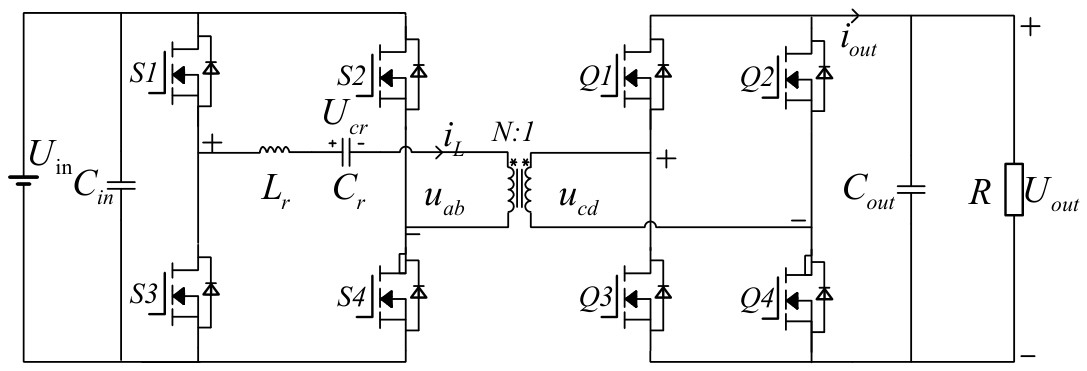
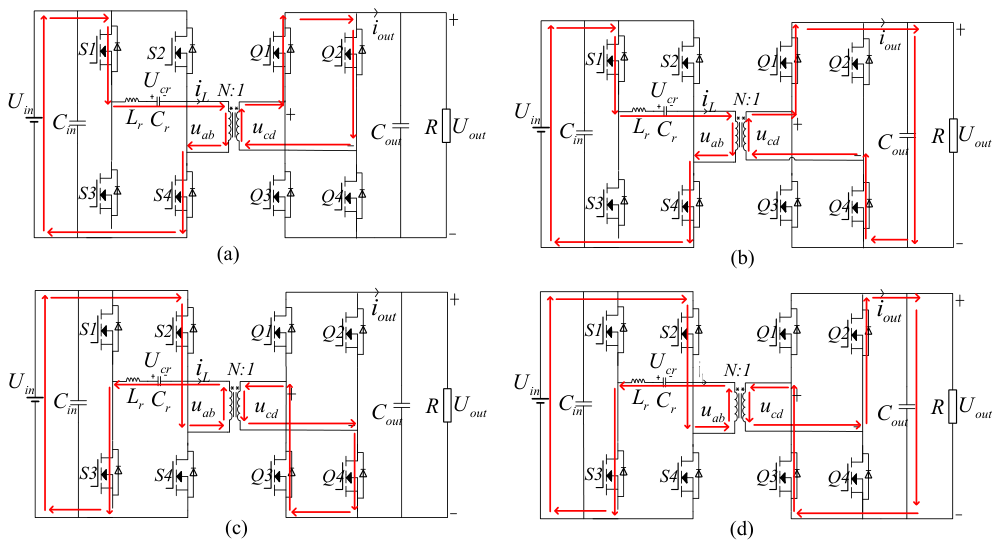
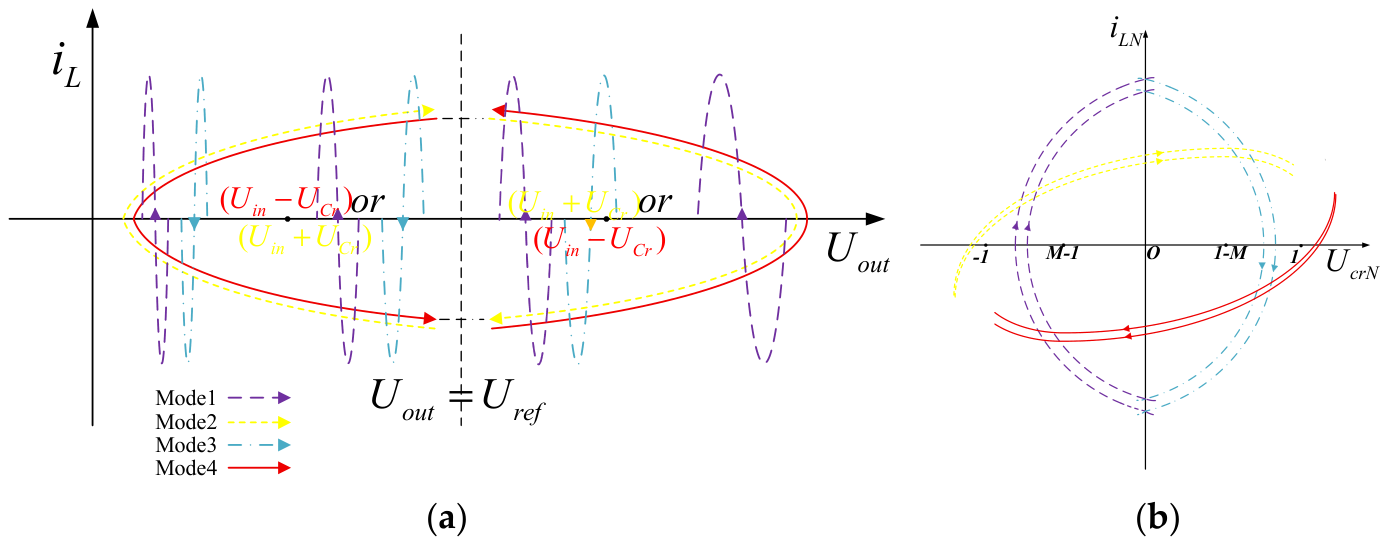
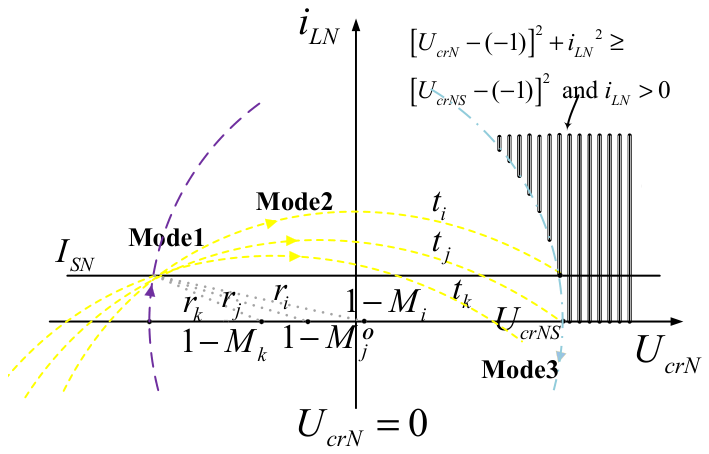
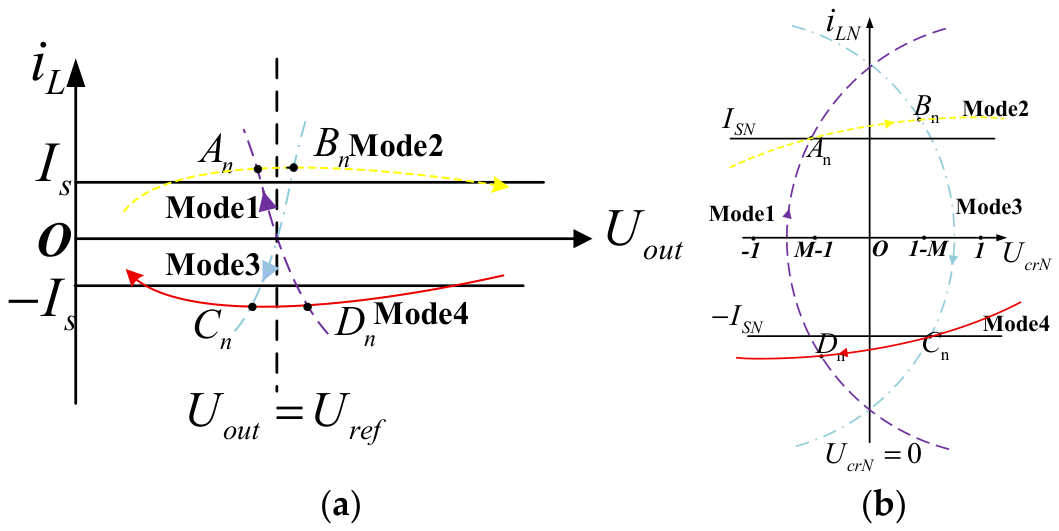
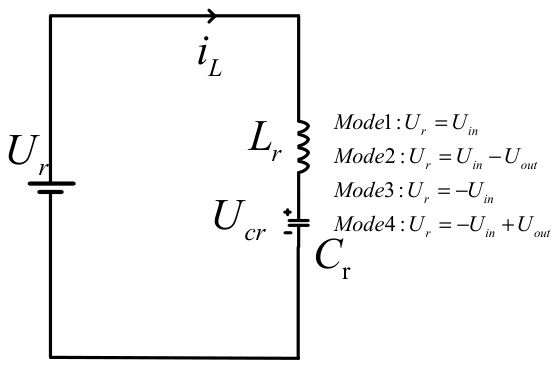
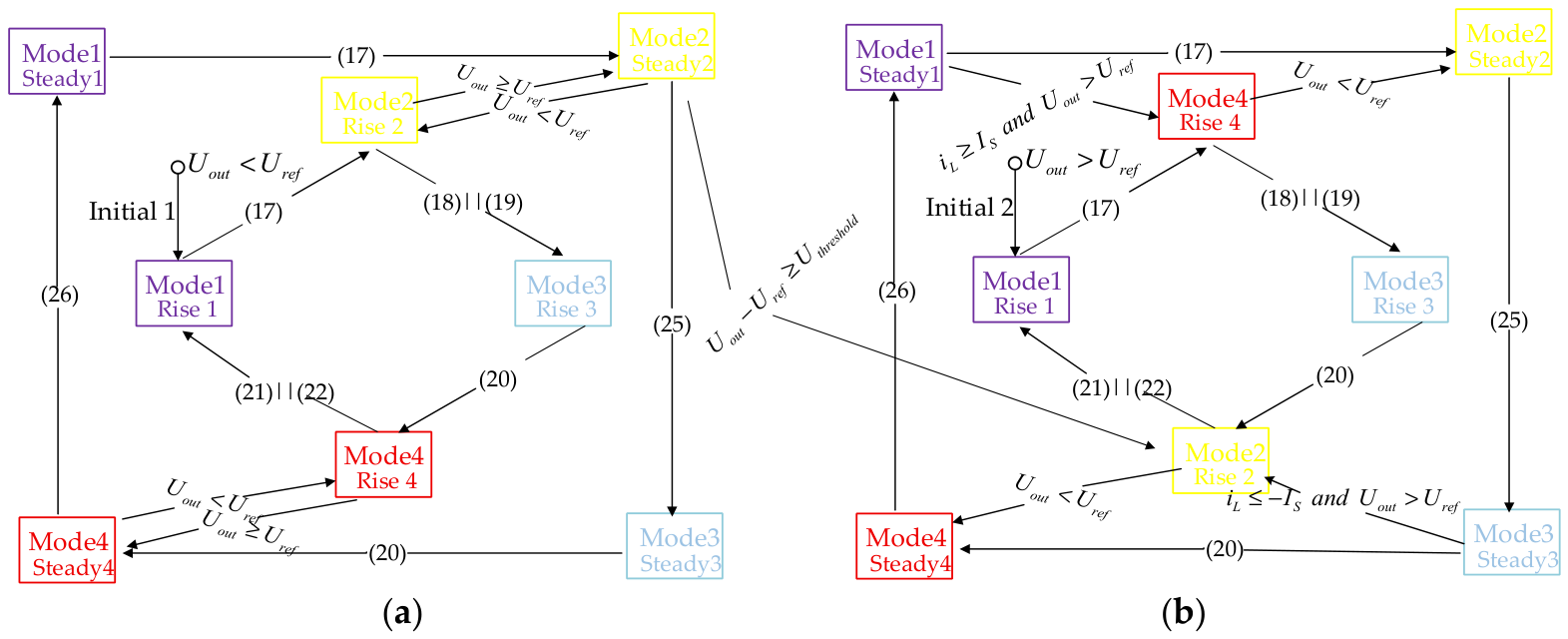
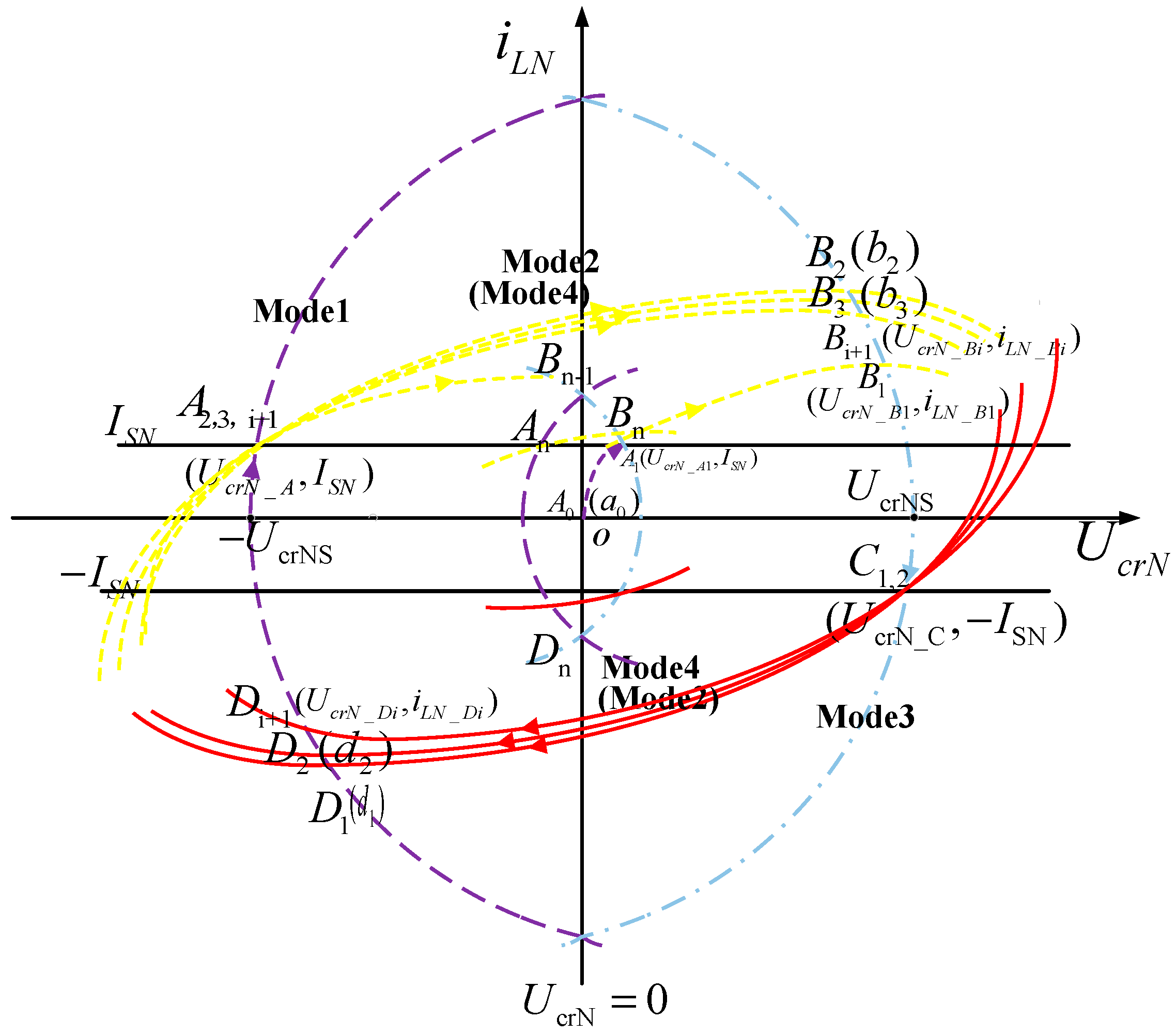
The dual-active-bridge series resonant converter (DBSRC) is attractive for bidirectional DC conversion, but its output voltage may respond slowly and exhibit overshoot during start-up, load-step, and reference-step transients when conventional controllers are designed mainly from steady-state or small-signal models. This paper addresses the problem of improving the large-signal transient regulation of a DBSRC while avoiding undesired charging and discharging of the switching capacitor and output capacitor. A finite-state-machine-based state-trajectory control method is proposed. Thus, the converter consists of two full-bridge circuits, each with four switches. The proposed technique enhances the dynamic response of output voltage regulation. By examining the system dynamics in two state-plane domains, the switching behavior of the converter can be clearly characterized, enabling an accurate geometric representation of its operating mechanism. Consequently, a finite-state machine controller is designed based on state-trajectory planning. Switching conditions are utilized to achieve fast start-up and step-load transient responses. Finally, experiments are conducted to validate the effectiveness of the proposed control method.
Keywords: dynamic response; dual-active-bridge series resonant converter; state machine; state-trajectory control dynamic response; dual-active-bridge series resonant converter; state machine; state-trajectory control