This section presents two groups of simulation studies. First, a single-area LFC system is used to verify the effectiveness of the individual improvement strategies introduced into the proposed HDE-CGWO algorithm. Second, a three-area LFC system is considered, and HDE-CGWO is compared with WGWO, PSO-AHA, and standard GWO to evaluate its overall control performance and robustness. All simulations are carried out in MATLAB 2025a. The main simulation and optimization settings are listed in
Table 2. The ITAE, IAE, ITSE, and ISE values reported in this section are calculated from
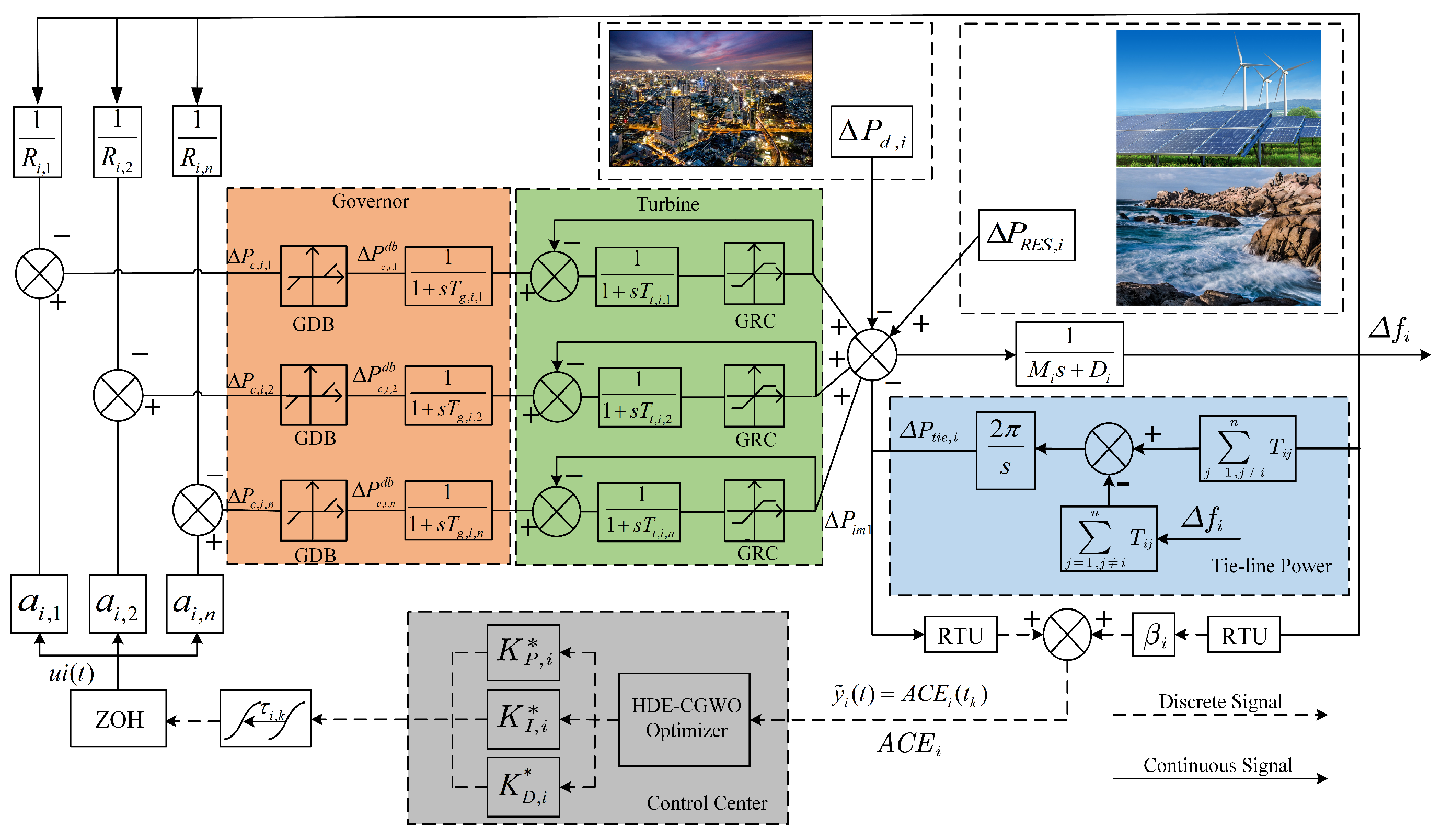
over all control areas unless a single-area case is explicitly specified. The benchmark system parameters used in the case studies are listed in
Table 1. The Rate column is used to calculate
according to (
1). The columns
and
enter (
3), while
,
, and
enter the Genco-level turbine and governor equations in (
10)–(
13).
The sampling period in
Table 2 corresponds to a sampling frequency of
Hz. To avoid relying on a single arbitrary value, the same optimized PID gains are later tested over multiple sampling periods and communication delays, which verifies that the nominal setting
s and
s remains inside the locally stable and bounded-response region. The nonnegative PID search range
is used because the adopted LFC law has a fixed negative-feedback direction. Positive PID gains correspond to the conventional damping and recovery action, whereas negative gains would reverse the control action and enlarge the invalid search region; therefore, the present study follows the common nonnegative PID tuning domain used in PID-LFC optimization studies.
4.1. Validation of the Improvement Strategies
In this subsection, the LFC system of Area 1 in
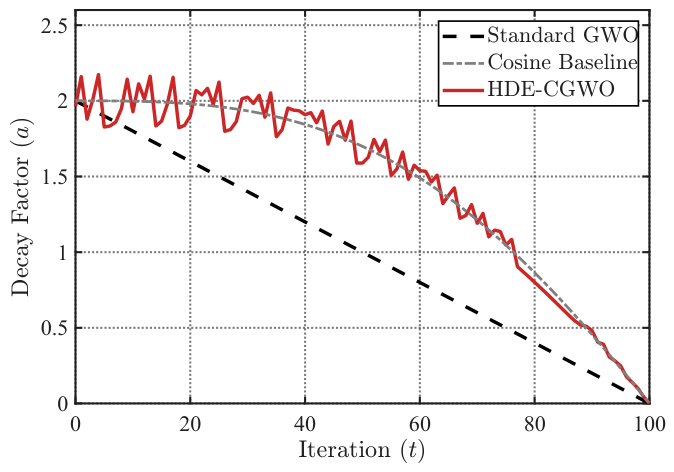
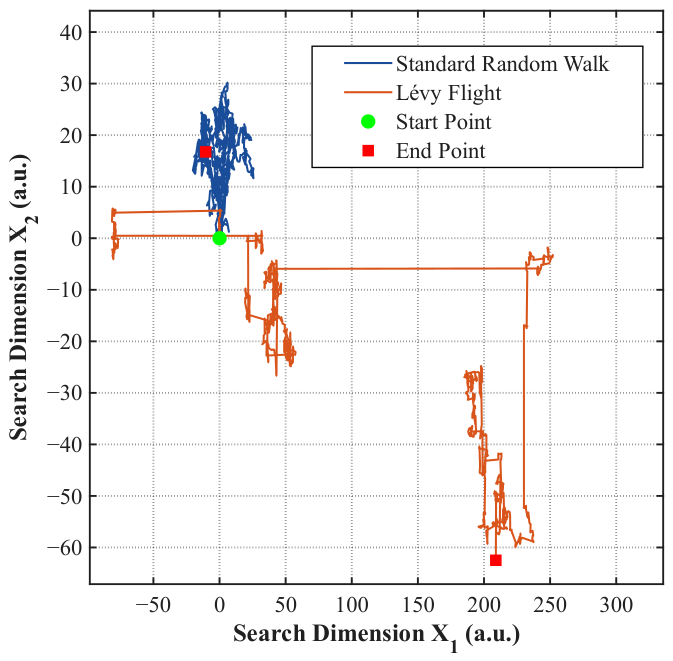
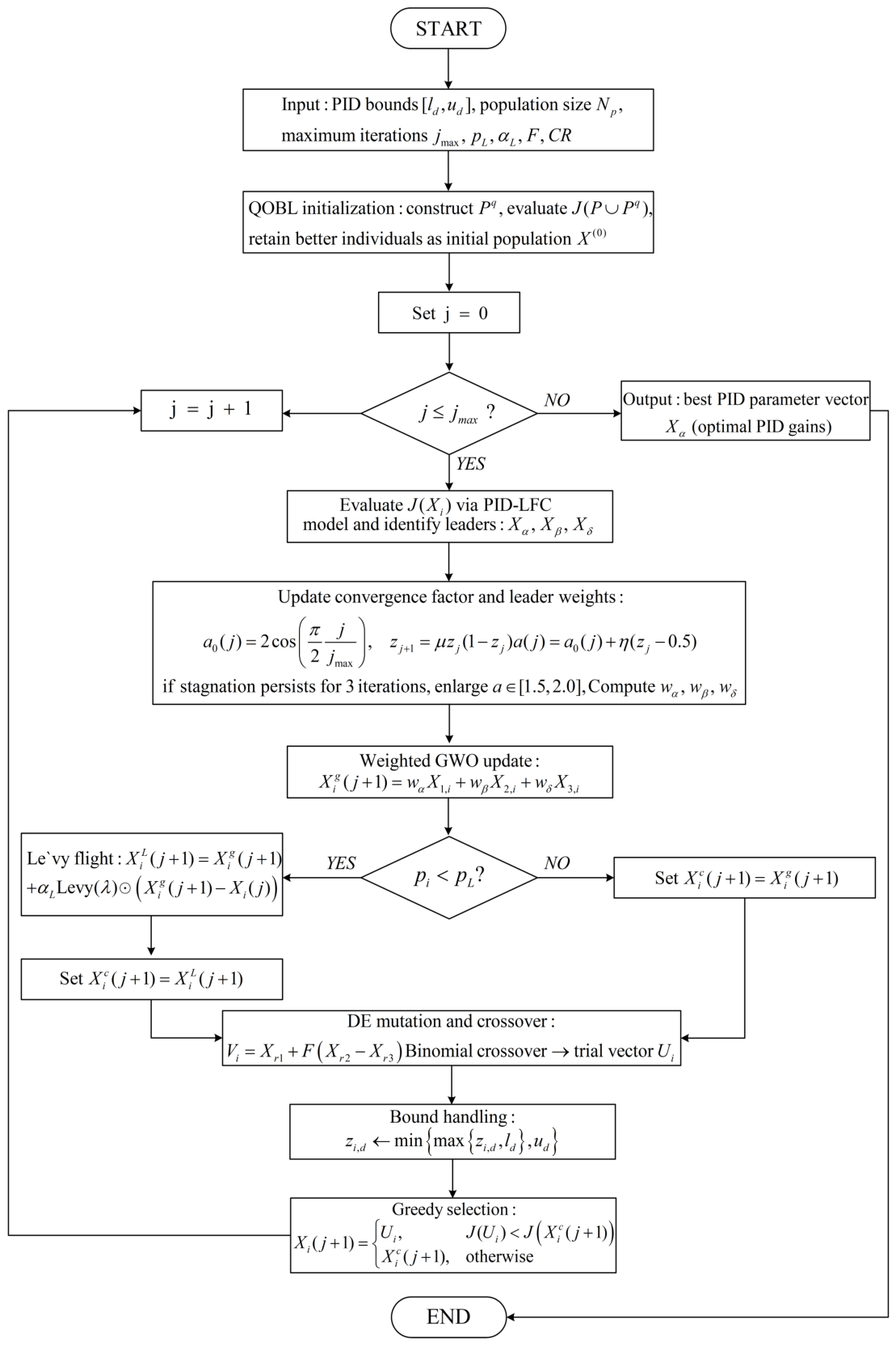
Table 1 is used to examine the effectiveness of the proposed improvement strategies. This test is arranged according to three difficulties in digital PID-LFC tuning. First, the initial PID parameters may fall into infeasible or low-quality regions, which motivates QOBL initialization. Second, sampling, communication delay, GDB, and GRC make the ACE-based ITAE landscape non-smooth, platform-like, and prone to local stagnation, which motivates the hybrid convergence factor, the adaptive enlargement of
a, and dynamic leader weighting. Third, the late-stage search may still be trapped in a local region and requires local refinement, which motivates Lévy flight and DE. The compared methods, following this order, are standard GWO, GWO with QOBL initialization (GWO + QOBL), the further improved version with the hybrid convergence factor and Lévy flight (CGWO + QOBL + Lévy), and the final HDE-CGWO obtained by additionally incorporating dynamic leader weighting and DE-based local refinement.
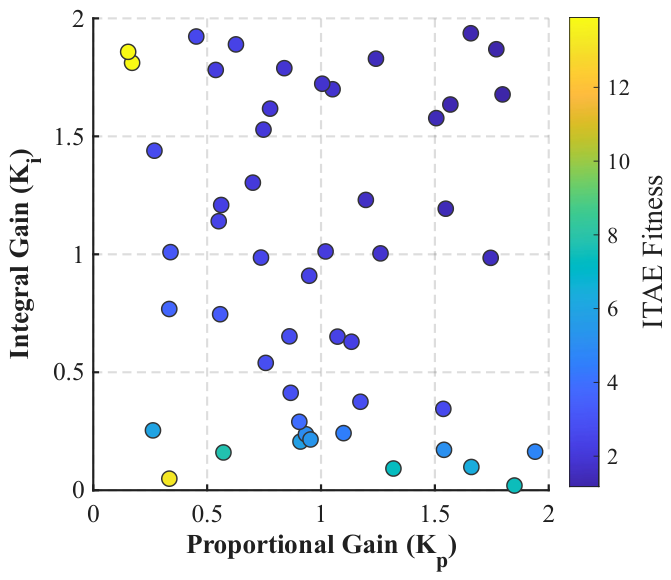
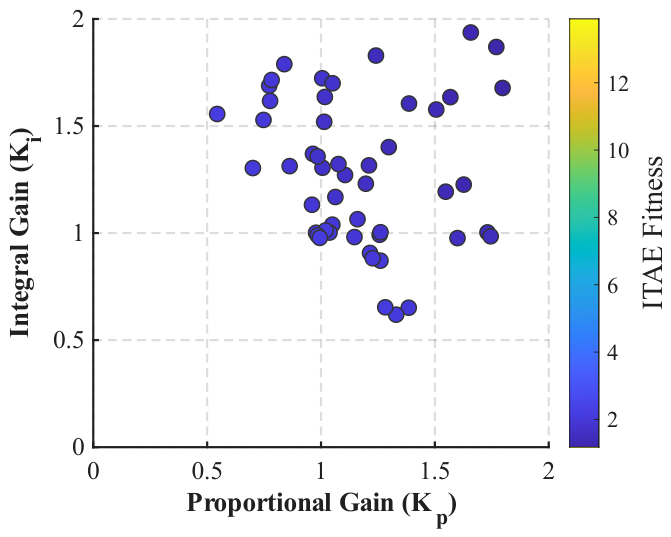
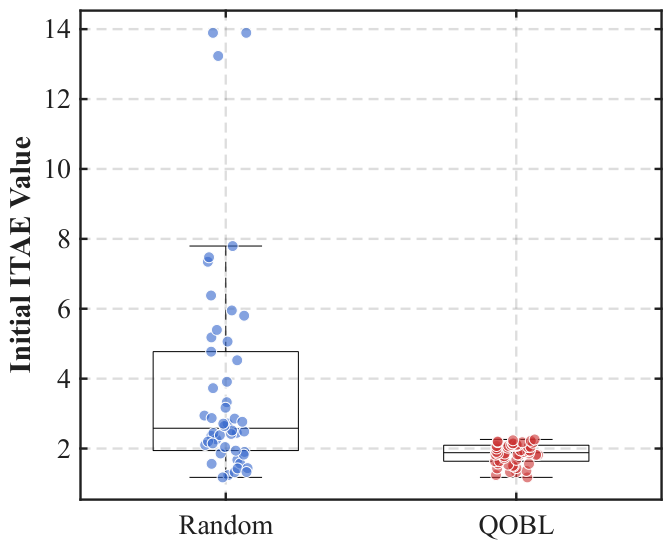
The first test focuses on the effect of QOBL on the quality of the initial population. The controller parameters are initialized using both the random strategy and the QOBL strategy. The corresponding distributions of the initial population in the parameter space are projected onto the
–
plane and shown in
Figure 5 and
Figure 6, while the boxplot of the initial ACE-based ITAE values is shown in
Figure 7.
As can be seen from
Figure 5 and
Figure 6, compared with random initialization, QOBL produces a more concentrated population and reduces the number of poor individuals, that is, those with relatively large initial ACE-based ITAE values. This indicates that QOBL can provide a higher-quality starting population.
Figure 7 further shows that the QOBL strategy yields lower and more concentrated initial ACE-based ITAE values. This again confirms that it improves the quality of the initial solutions and provides a better basis for the subsequent search.
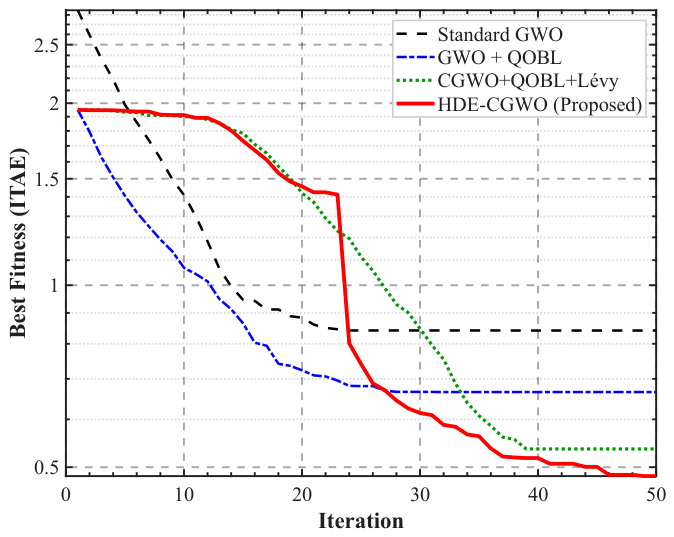
The convergence behavior of the four methods is then compared, as shown in
Figure 8.
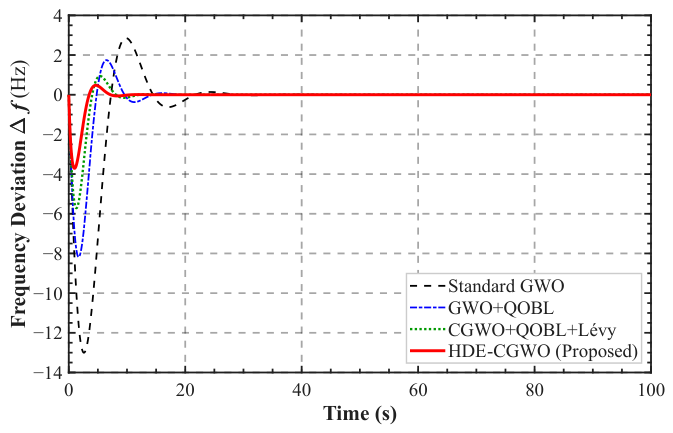
Figure 8 shows that standard GWO decreases rapidly at the early stage but enters stagnation relatively early. As the improvement mechanisms are introduced successively (Standard GWO → GWO + QOBL → CGWO + QOBL + Lévy → HDE-CGWO), the convergence process becomes smoother and the final fitness value continues to decrease. Among the four methods, HDE-CGWO obtains the lowest final fitness value. This indicates that, starting from QOBL-based initialization, the addition of convergence-factor regulation, Lévy flight, and DE-based local refinement improves the search capability and leads to better tuning results.
To further verify the contribution of each improvement mechanism, a
p.u. step load disturbance is applied to the single-area system. For fair comparison, the optimization settings defined above are kept the same for all methods. The resulting frequency-deviation responses are shown in
Figure 9, while the ACE-based ITAE value and positive frequency peak are listed in
Table 3.
As shown in
Figure 9, the frequency nadir and the oscillations during recovery are gradually weakened as the improvement strategies are incorporated one by one. The results in
Table 3 are consistent with this observation: HDE-CGWO obtains the smallest positive peak deviation and the lowest final ACE-based ITAE among the four methods. These results indicate that the adopted improvement strategies improve the tuning result and the dynamic response in the single-area test.
4.2. Comprehensive Performance and Robustness Evaluation in the Three-Area System
This subsection considers the three-area LFC system listed in
Table 1. Under the same system model, search bounds, and optimization settings, the proposed HDE-CGWO is evaluated comprehensively. Owing to the stronger tie-line coupling in the three-area system, controller tuning must suppress the frequency deviations of all areas while also maintaining acceptable overall recovery behavior. Therefore, four methods, namely PSO-AHA [
33], GWO [
35], WGWO [
26], and HDE-CGWO, are used to tune the PID controllers, and their performances are compared under step disturbances, random disturbances, and repeated independent runs.
To simulate a sudden increase in demand, step load disturbances are applied to the three areas as
The optimized PID gains obtained by PSO-AHA, GWO, WGWO, and HDE-CGWO are listed in
Table 4.
Under the controller parameters listed in
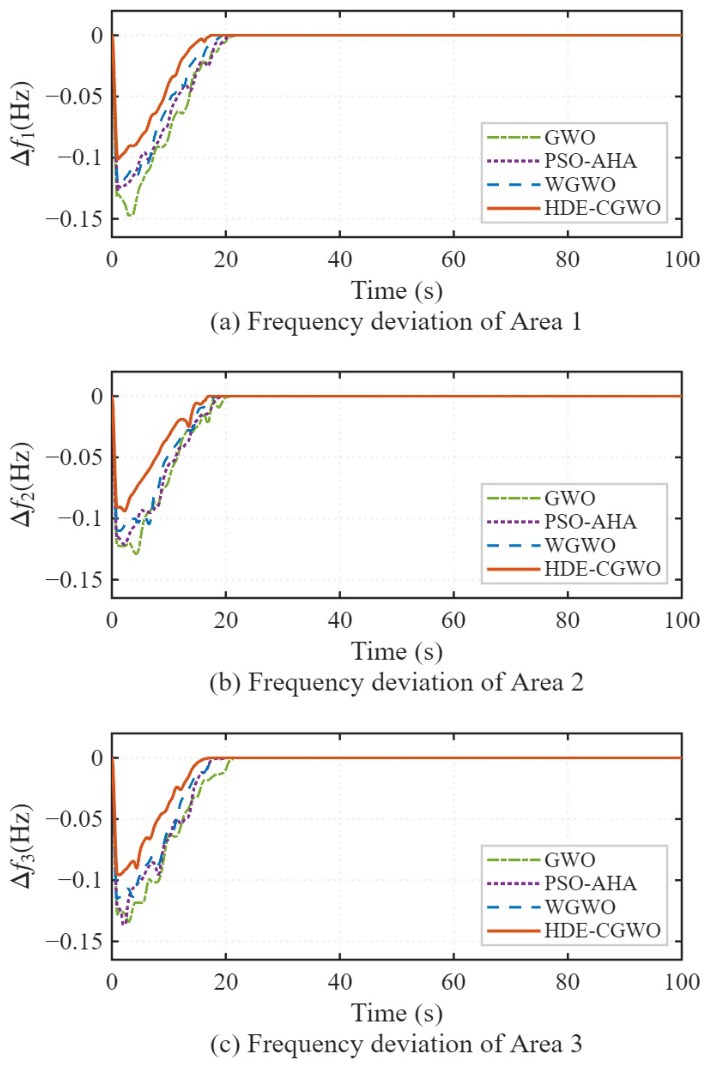
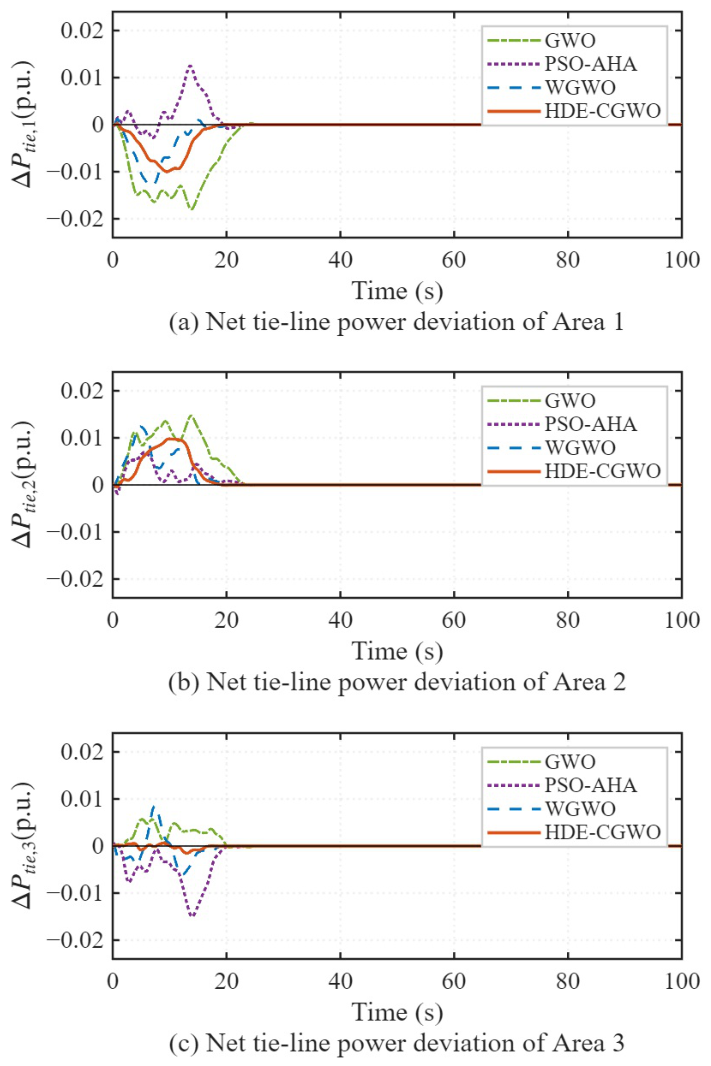
Table 4, the frequency-deviation responses of the three-area system under step disturbances are shown in
Figure 10, and the corresponding tie-line power deviation responses are shown in
Figure 11.
As shown in
Figure 10, all four controllers drive the frequency deviations back toward zero after the step disturbances, but their transient behaviors are different. Compared with PSO-AHA and GWO, WGWO and HDE-CGWO produce smaller peak frequency deviations and milder oscillations. A further comparison between WGWO and HDE-CGWO shows that HDE-CGWO gives a slightly smaller frequency drop and a somewhat faster recovery process in the tested case. The tie-line power curves in
Figure 11 also remain bounded and gradually decay, showing that the inter-area power exchange is properly regulated under the same step-disturbance condition. This indicates that, under multi-area coupling conditions, the controller parameters tuned by HDE-CGWO provide a modest improvement in dynamic regulation.
Table 5 lists the corresponding ACE-based overall performance indices.
Table 5 reports the performance indices corresponding to the best run among the 30 independent runs used in the subsequent statistical analysis; therefore, the ITAE values in
Table 5 are consistent with the corresponding best-run results. According to the raw 30-run ITAE data, these best values are obtained in the 3rd run for PSO-AHA, the 26th run for GWO, the 15th run for WGWO, and the 13th run for HDE-CGWO. HDE-CGWO obtains the lowest ACE-based ITAE among the four methods, while its ACE-based IAE, ITSE, and ISE are also slightly lower than those of the compared methods in this case. Compared with WGWO, the ACE-based ITAE decreases from 10.673 to 10.351, indicating a further but moderate reduction in cumulative ACE regulation cost under the same operating condition. Compared with PSO-AHA, the ACE-based ITAE decreases from 10.852 to 10.351. This is consistent with the dynamic responses shown in
Figure 10 and
Figure 11.
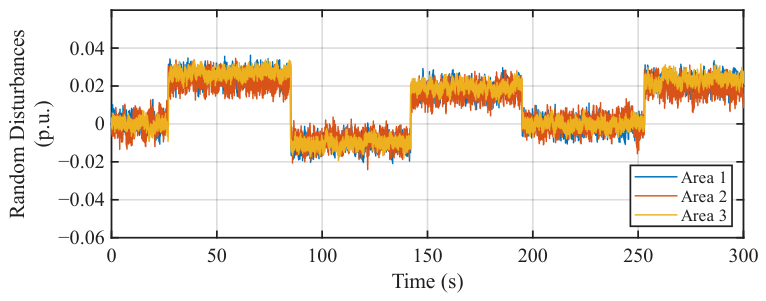
To further evaluate the algorithm under more complex operating conditions, continuous random disturbances caused by wind-power fluctuations, photovoltaic (PV) fluctuations, and load variations are considered. In this case, the random load disturbances acting on the three areas are denoted by
,
, and
, respectively. The wind and PV fluctuations are modeled as equivalent random generation deviations, denoted by
and
. Accordingly, the disturbance inputs are written as
and the renewable-generation deviation is given by
Here,
denotes the step load disturbance defined above.
denotes the random load fluctuation, and
and
denote the random power deviations of wind and PV generation, respectively. Accordingly, under the random disturbance scenario, the unified disturbance term in (
6) is written as
. In the numerical implementation, these random components are combined into the equivalent net disturbance
, and the final composite signal used for each area is specified in
Table 6. The random signals are generated with the seed rng(2026) an integration step of
s, and a total duration of 300 s.
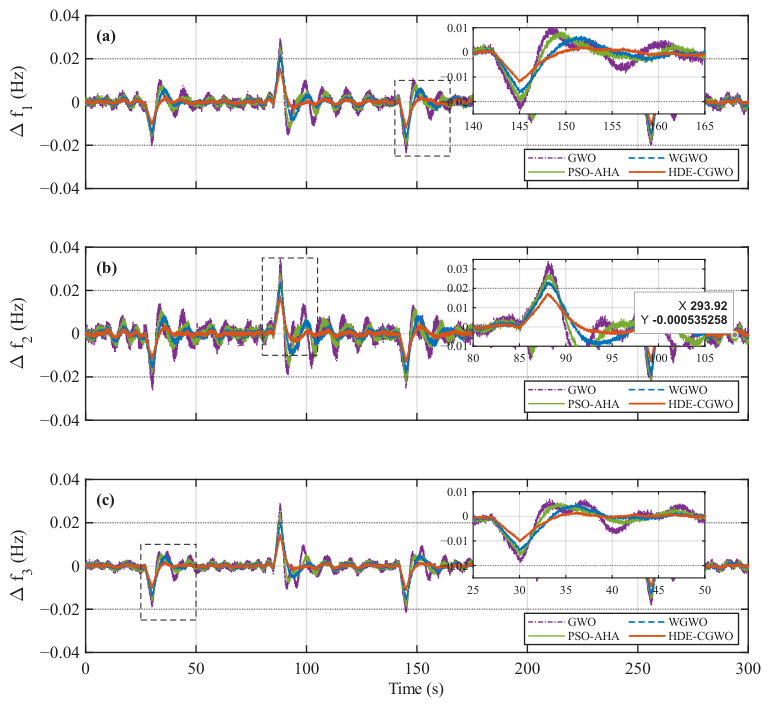
The resulting disturbance waveforms are shown in
Figure 12. The corresponding frequency responses obtained with the controller parameters in
Table 4 are shown in
Figure 13.
It can be seen from
Figure 13 that, under continuous random disturbances, the frequency deviations are more pronounced when the controllers are tuned by PSO-AHA and GWO. WGWO improves the control effect to some extent, whereas HDE-CGWO shows a slightly smaller fluctuation range and a somewhat faster recovery process in the tested case. The enlarged local views in
Figure 13 make the differences around the main fluctuation intervals clearer. In these zoomed windows, the HDE-CGWO curve generally has smaller local excursions than the compared methods, especially near the disturbance-transition intervals. This indicates that the controller parameters tuned by HDE-CGWO can keep the frequency responses bounded and provide a small improvement under the hybrid-disturbance condition.
Table 7 lists the corresponding ACE-based overall performance indices.
As listed in
Table 7, HDE-CGWO still obtains the lowest ACE-based ITAE under random disturbances. Compared with WGWO, the ACE-based ITAE decreases from 645.215 to 636.473, corresponding to an improvement of about 1.35%. Combined with
Figure 13, this shows that the controller parameters tuned by HDE-CGWO remain effective for composite disturbances involving wind, PV, and random load fluctuations.
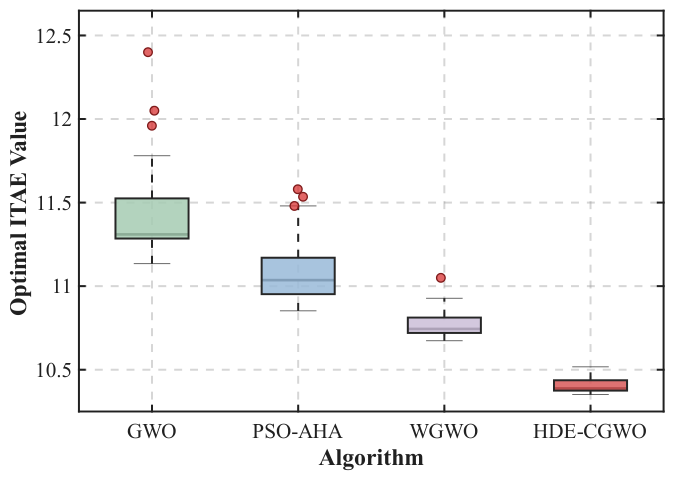
To further assess the statistical performance of the proposed algorithm, PSO-AHA, GWO, WGWO, and HDE-CGWO are independently run 30 times under the same conditions. The boxplot of the best ACE-based ITAE values is shown in
Figure 14.
Figure 14 shows that HDE-CGWO has a narrower box, a lower median, and a more concentrated overall distribution across the 30 runs. This indicates that its performance varies less from run to run in the tested setting. The corresponding statistical results are summarized in
Table 8, where Best, Worst, Mean, and Median denote the minimum, maximum, average, and median values of the best ACE-based ITAE obtained over the 30 independent runs, respectively, while Std and IQR measure the dispersion and the interquartile spread of these best ACE-based ITAE values.
As shown in
Table 8, HDE-CGWO obtains the lowest Best, Worst, Mean, and Median values, while also yielding the smallest Std and IQR. This indicates that the proposed algorithm can obtain lower ACE-based ITAE values and a more concentrated distribution over repeated runs in the tested setting.
To further verify whether the observed differences are statistically significant, Mann–Whitney U tests are performed between HDE-CGWO and each compared method using the 30-run ACE-based ITAE samples. The resulting
p-values are adjusted by the Holm procedure, and Cliff’s delta is reported as the effect-size indicator. The results are listed in
Table 9.
The Holm-adjusted
p-values in
Table 9 are all below 0.05, and Cliff’s delta is equal to 1.000 in the three pairwise comparisons. Hence, the superiority of HDE-CGWO over GWO, PSO-AHA, and WGWO is statistically supported for the tested 30-run data set, rather than being inferred only from descriptive statistics.
Since hybrid optimization may increase offline tuning cost, the computational time is also compared based on 30 independent runs. All CPU-time measurements were performed on the same hardware configuration. The processor model, CPU-core configuration, and RAM capacity are reported in the last column of
Table 10. As listed in
Table 10, the CPU values are reported as means and standard deviations in seconds over 30 independent runs. HDE-CGWO requires the largest mean CPU time, but its CPU-time increase relative to WGWO is about 12.18%, while the mean ITAE is improved by about 3.39%. This extra cost belongs to the offline tuning stage and does not increase the online PID controller structure.
4.3. Parameter Sensitivity and Sampling-Delay Stability Checks
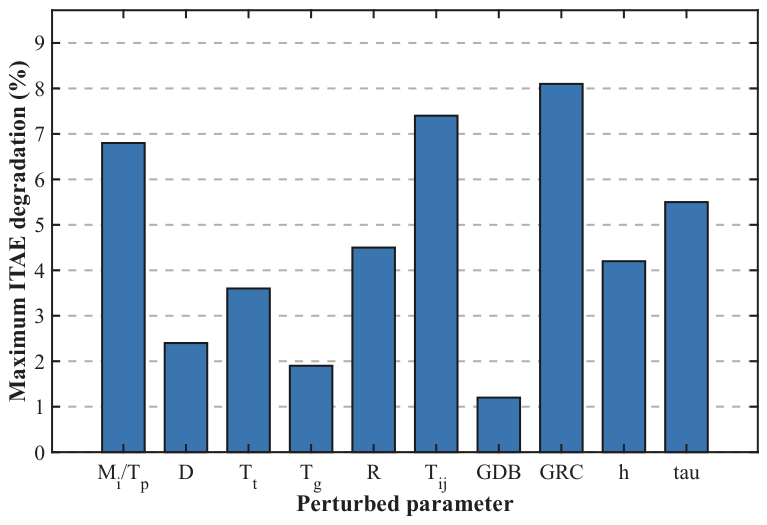
To address the robustness of the optimized PID gains under slight grid-configuration changes, a baseline parameter-sensitivity test is added. In this test, the HDE-CGWO-based PID gains are fixed and are not re-optimized. The main model parameters are perturbed by
one group at a time, and the ACE-based ITAE and key time-domain indicators are recalculated. The resulting maximum ITAE degradation is shown in
Figure 15, and the numerical summary is listed in
Table 11.
The largest sensitivity appears in the GRC perturbation, where the maximum ITAE degradation is 8.1%. The tie-line coefficient and equivalent inertia-related perturbations lead to maximum ITAE degradations of 7.4% and 6.8%, respectively. All tested cases remain bounded, indicating that the optimized PID gains do not rely on an extremely narrow nominal parameter setting.
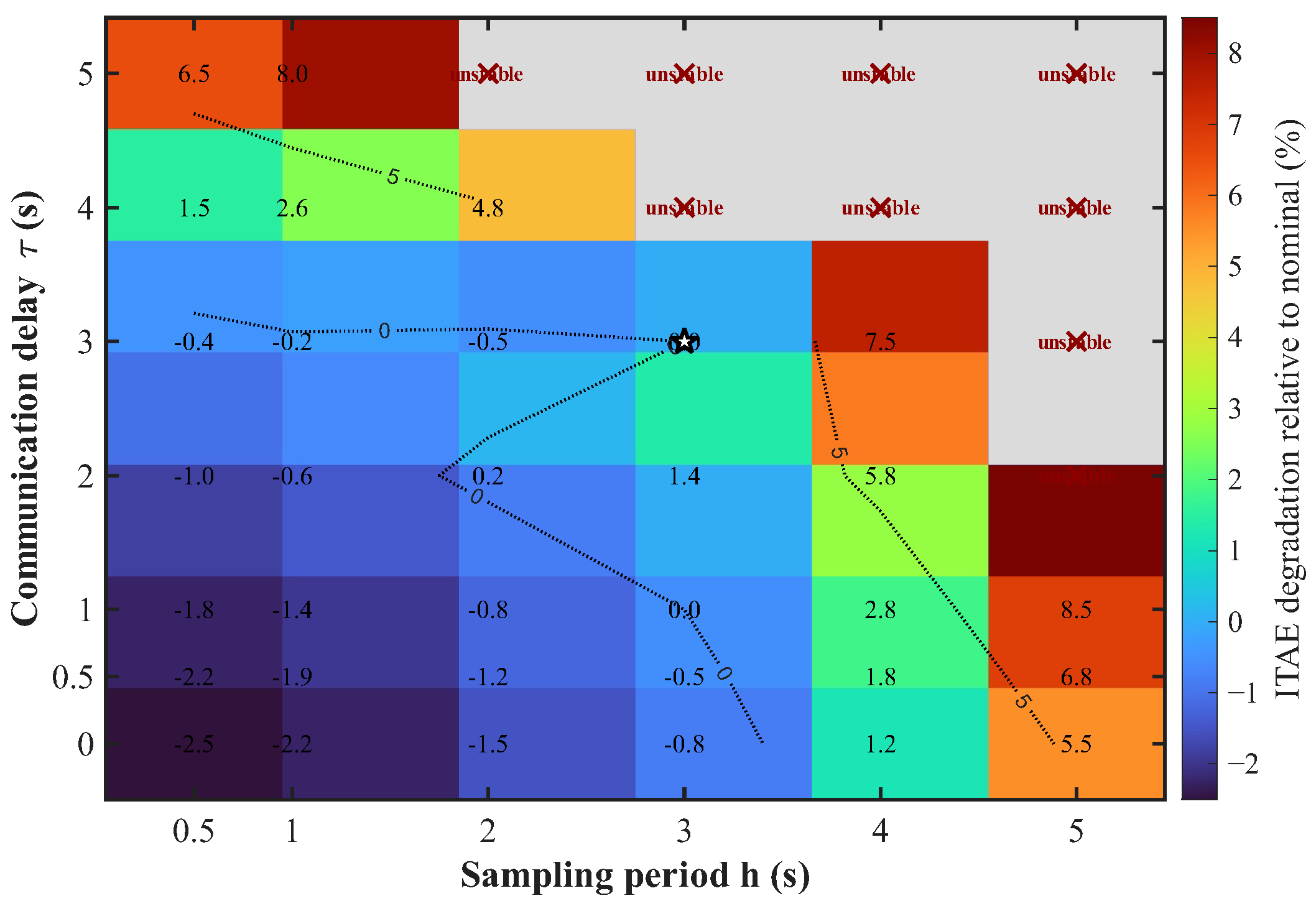
A sampling-delay boundary check is further carried out by scanning
s and
s with the same fixed HDE-CGWO-based PID gains.
Figure 16 shows the ITAE degradation map, while
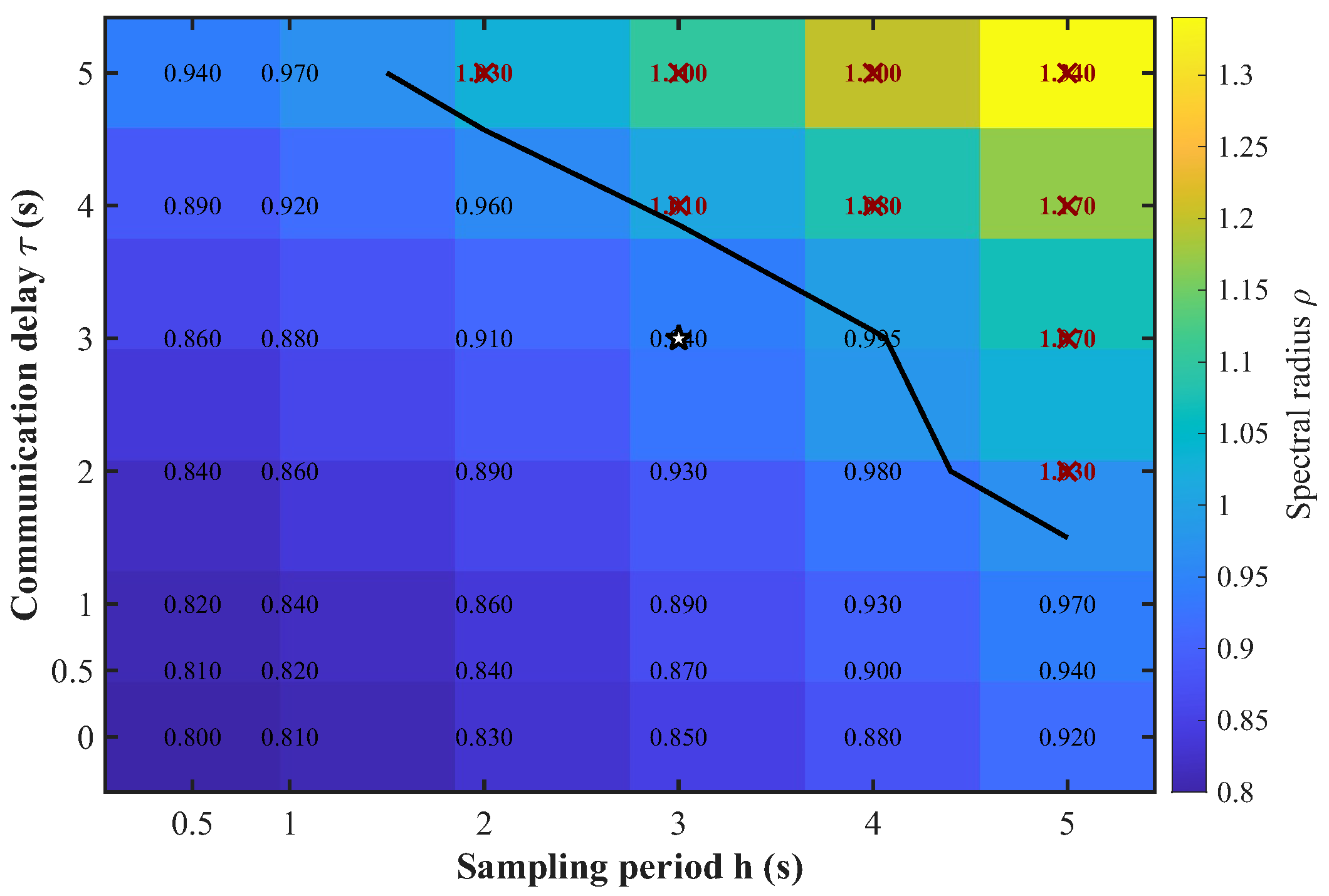
Figure 17 gives the spectral-radius map of the corresponding linearized sampled-delay closed-loop system. The nominal setting
s and
s has a spectral radius of 0.94 and is therefore inside the local stable region. In contrast, the upper-right case
s and
s gives
, which is consistent with a locally unstable sampled-delay response. This scan is used as a reliability check for the selected sampling frequency: the nominal sampling rate
Hz is slower than the other stable sampled cases tested here, but it still gives bounded time-domain responses and remains within the local stability boundary.
The corresponding sampling-delay stability margins are summarized in
Table 12, which lists the maximum stable communication delay for each sampling period and the associated degradation margins.
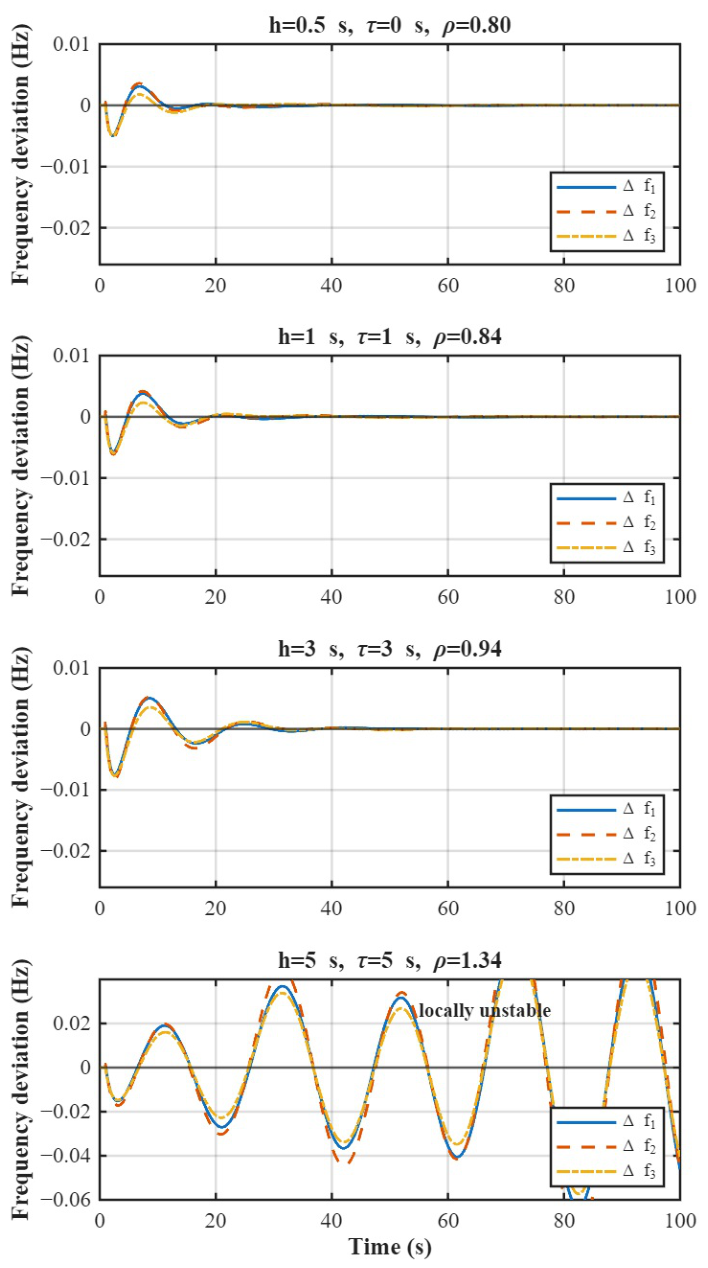
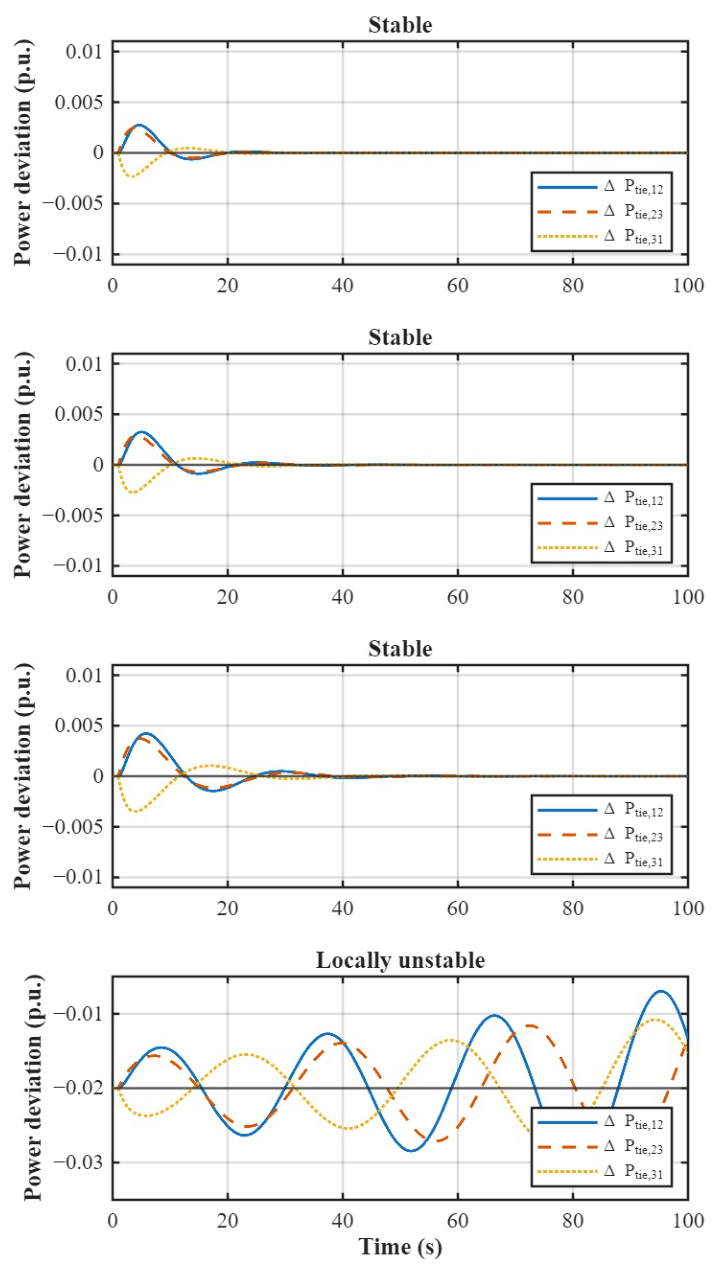
The typical responses in
Figure 18 and
Figure 19 further support the boundary-map results. The cases
,
, and
are locally stable with spectral radii 0.80, 0.84, and 0.94, respectively, whereas
is non-convergent and corresponds to
. Therefore, the nominal test condition
s and
s is a conservative but still locally stable sampled-delay condition rather than an arbitrary unstable operating point.