A Review of Overvoltage Protection Technologies and Protective Devices for Wind Turbines
 ,
,
Abstract
1. Introduction
2. An Overview of Overvoltage Phenomena and Protection Systems in Wind Turbine Generators
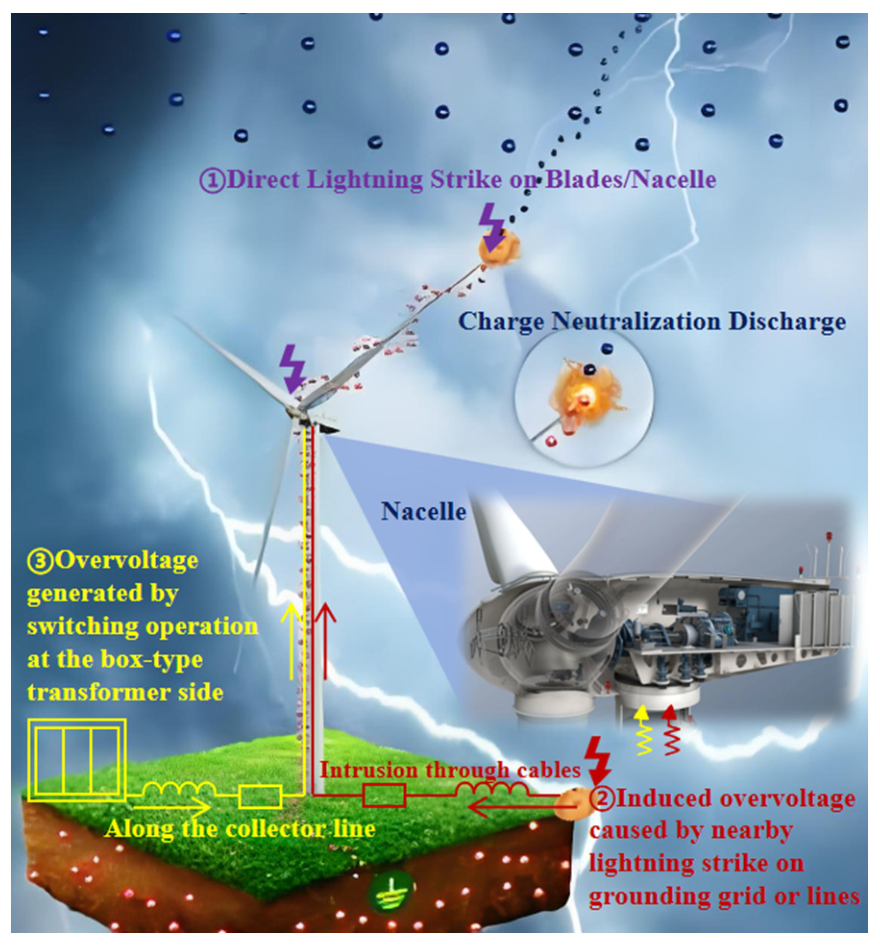
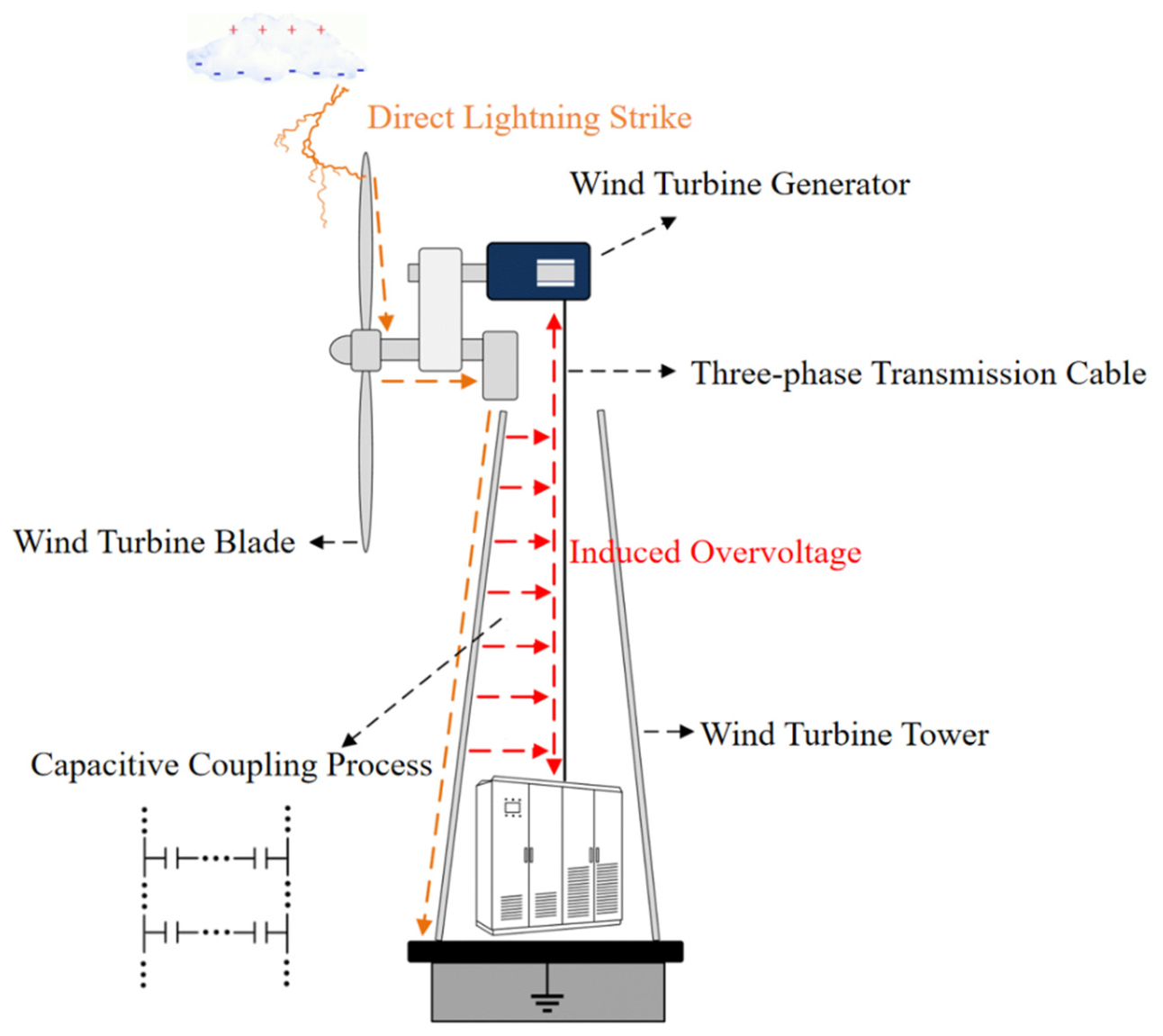
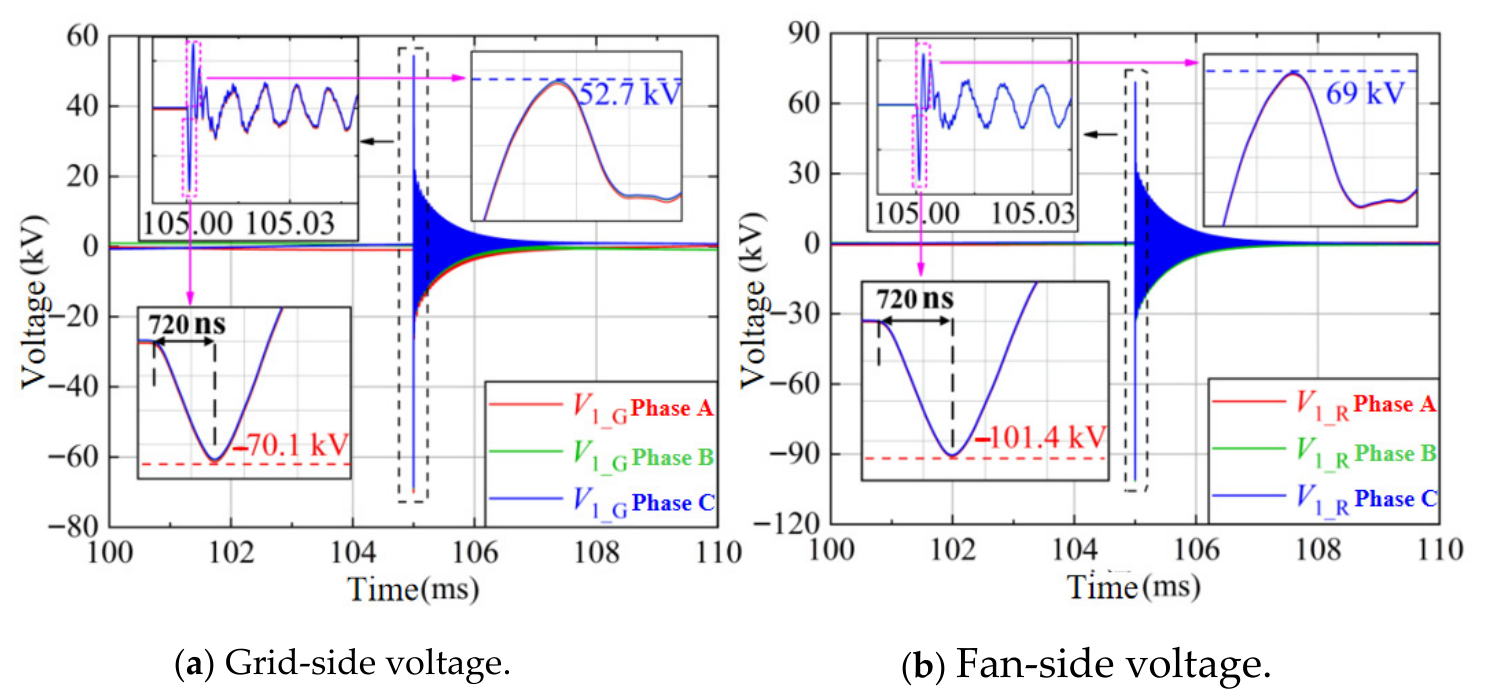
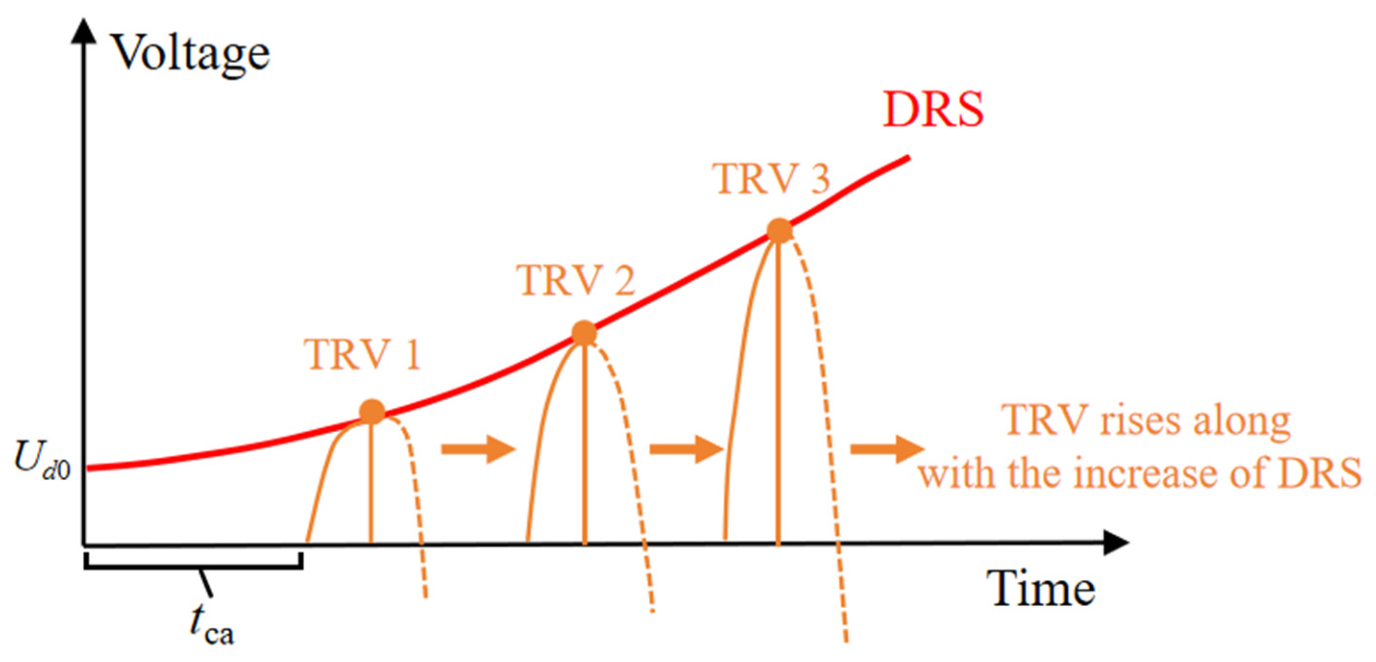
2.1. Types of Overvoltage in Wind Power Systems and Their Generation Mechanisms
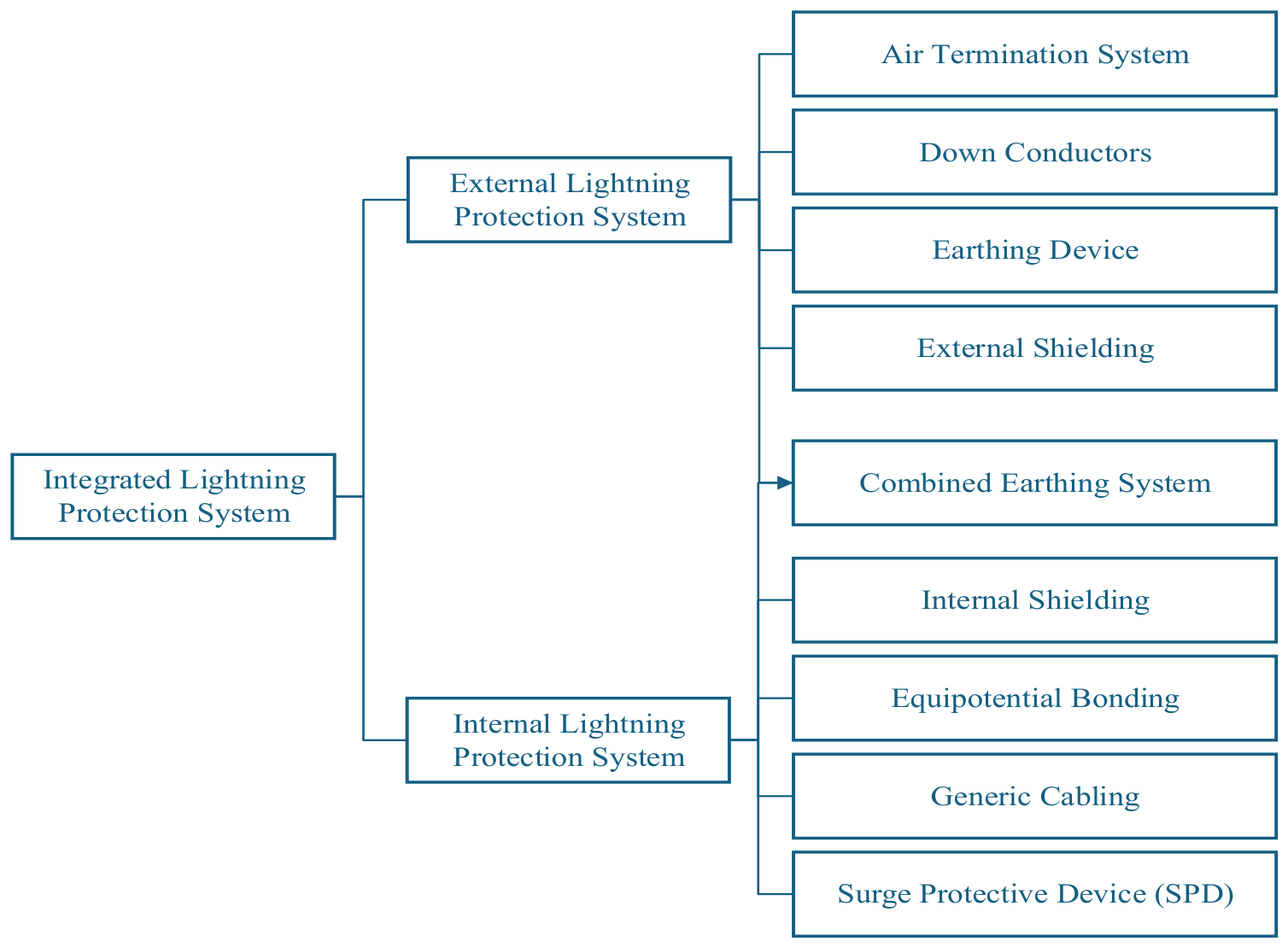
2.2. Framework and Core Components of the Existing Overvoltage Protection System
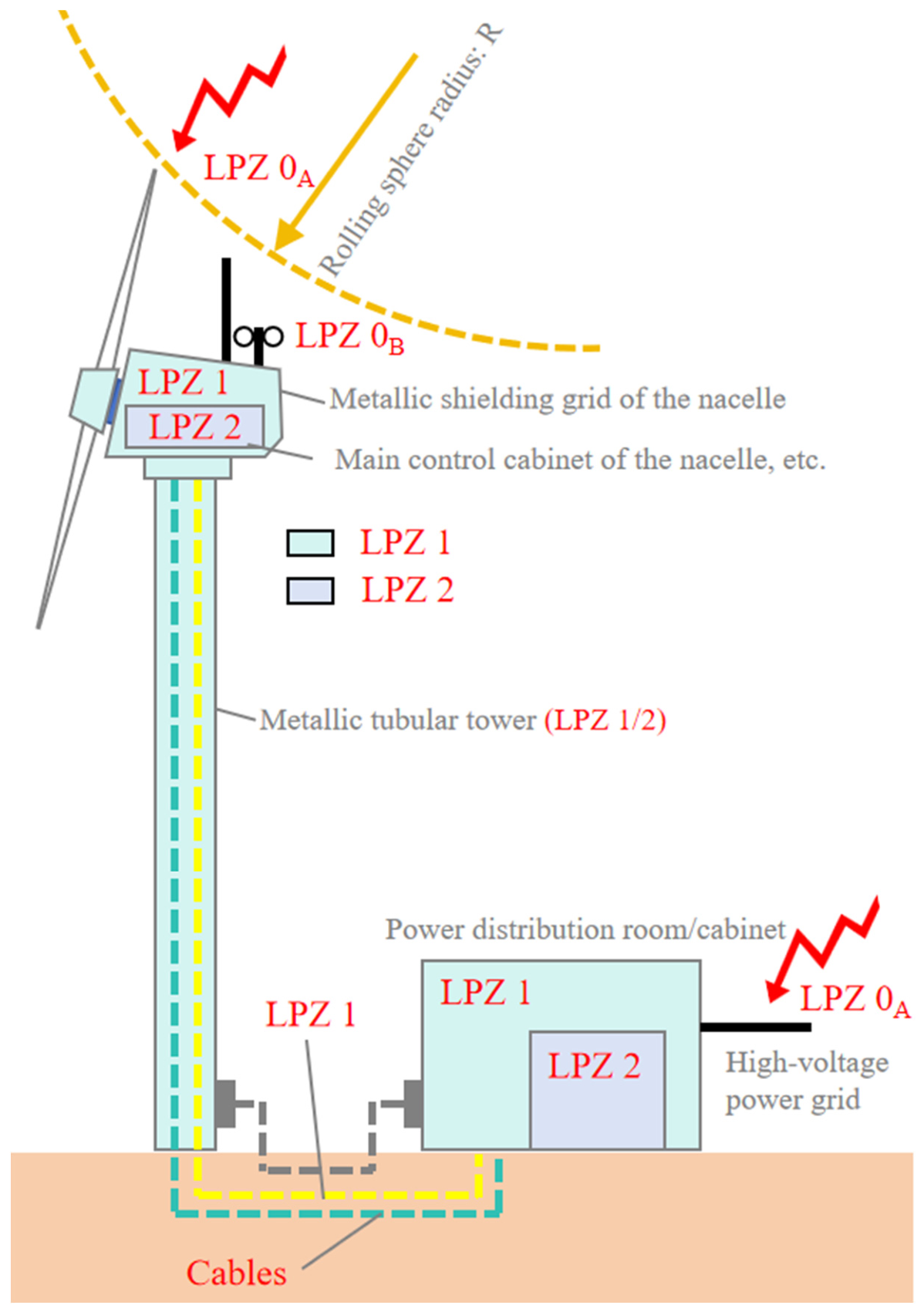
2.2.1. Zone Protection Strategy Based on the Lightning Protection Zone (LPZ) Concept
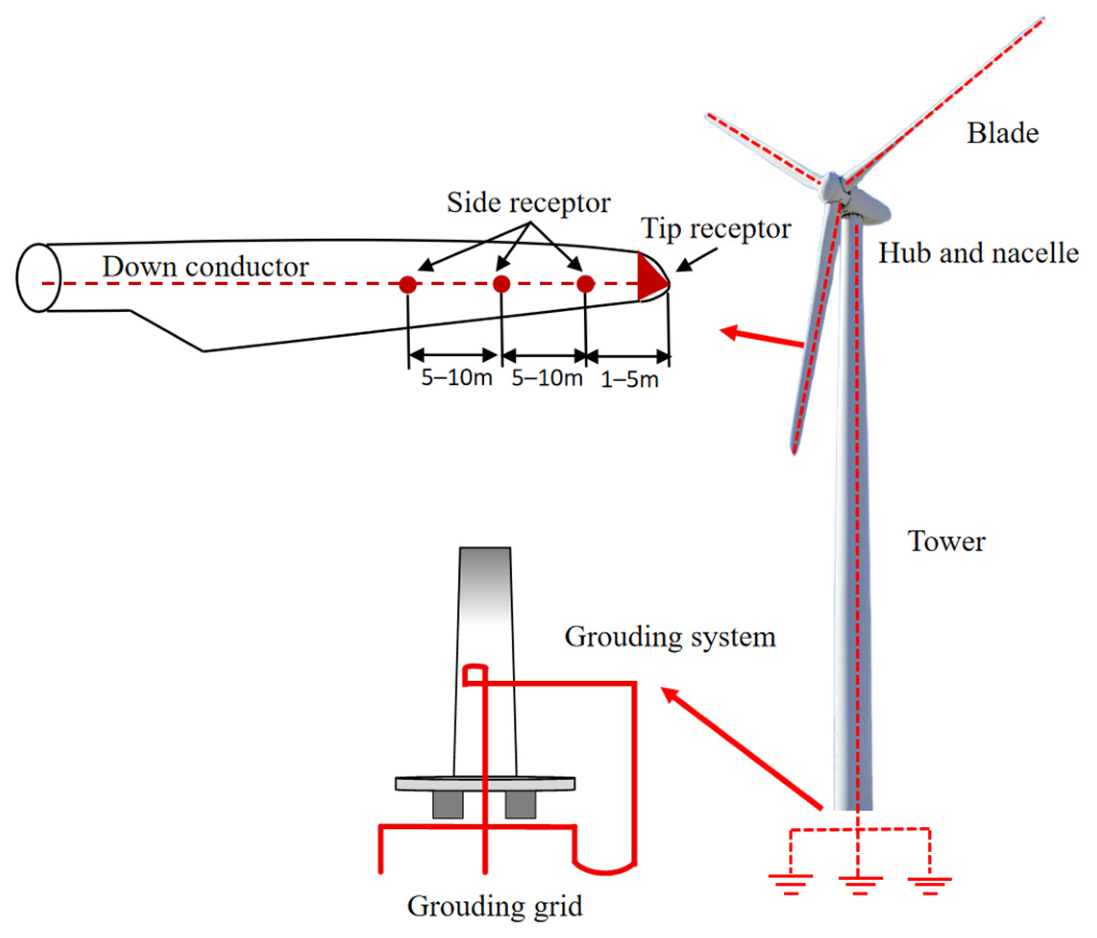
2.2.2. External Protection System

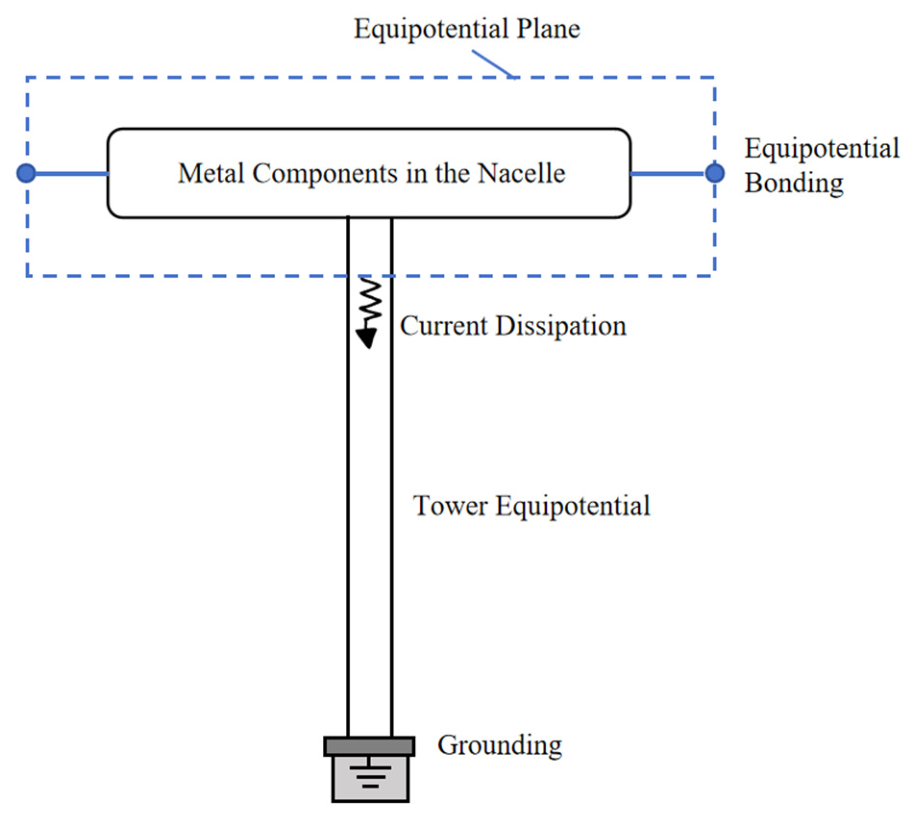
2.2.3. Internal Protection System
2.3. Current Challenges Facing Wind Turbine Protection Systems
3. Performance Evolution and Technical Optimisation of Core Overvoltage Protection Devices
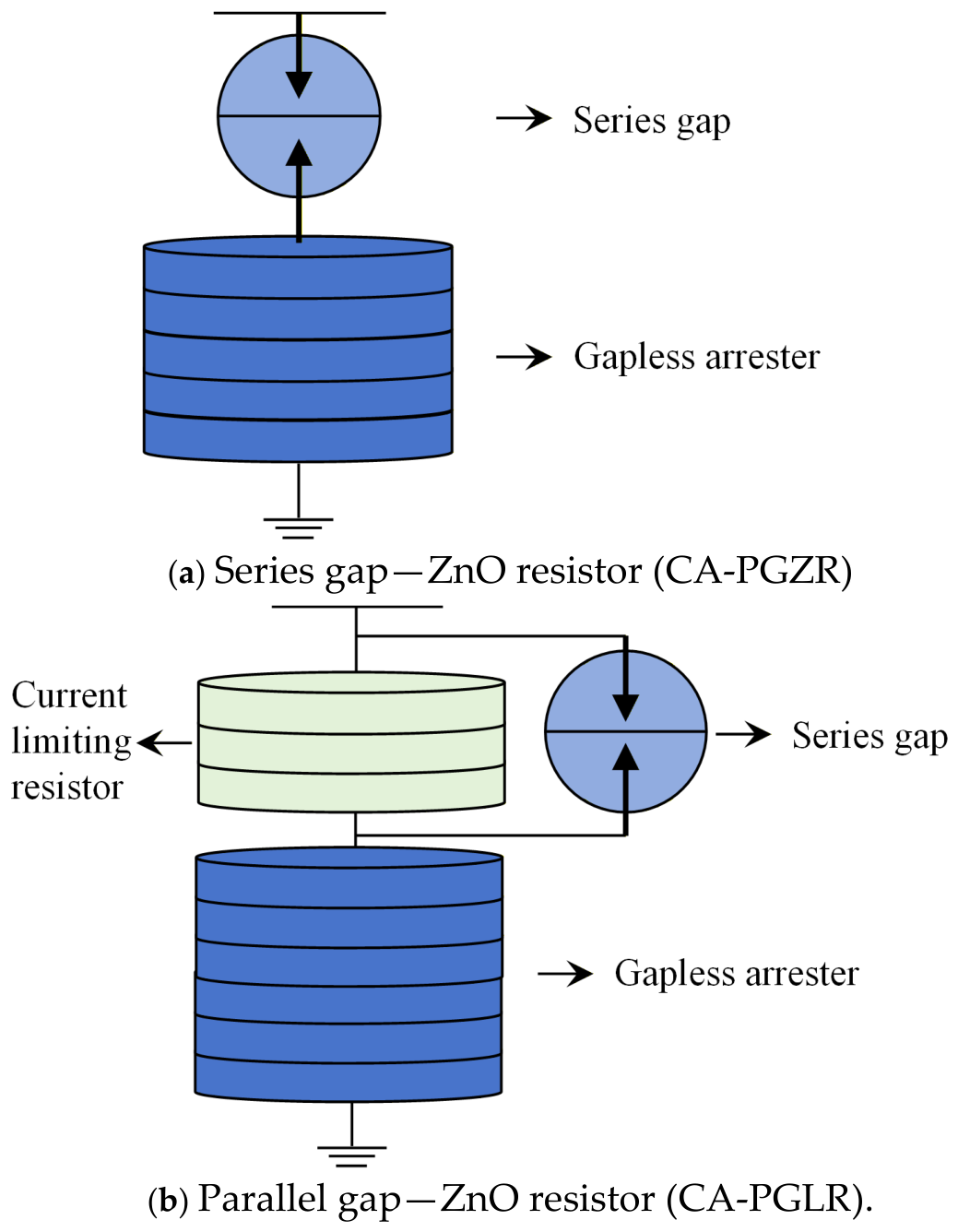
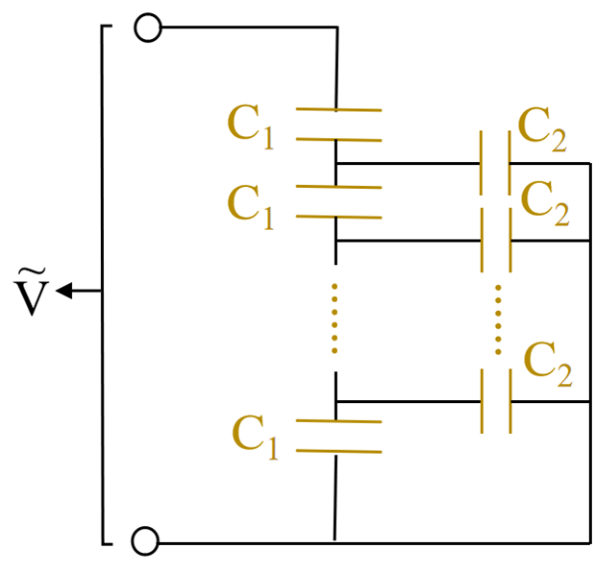
3.1. Metal Oxide Varistor
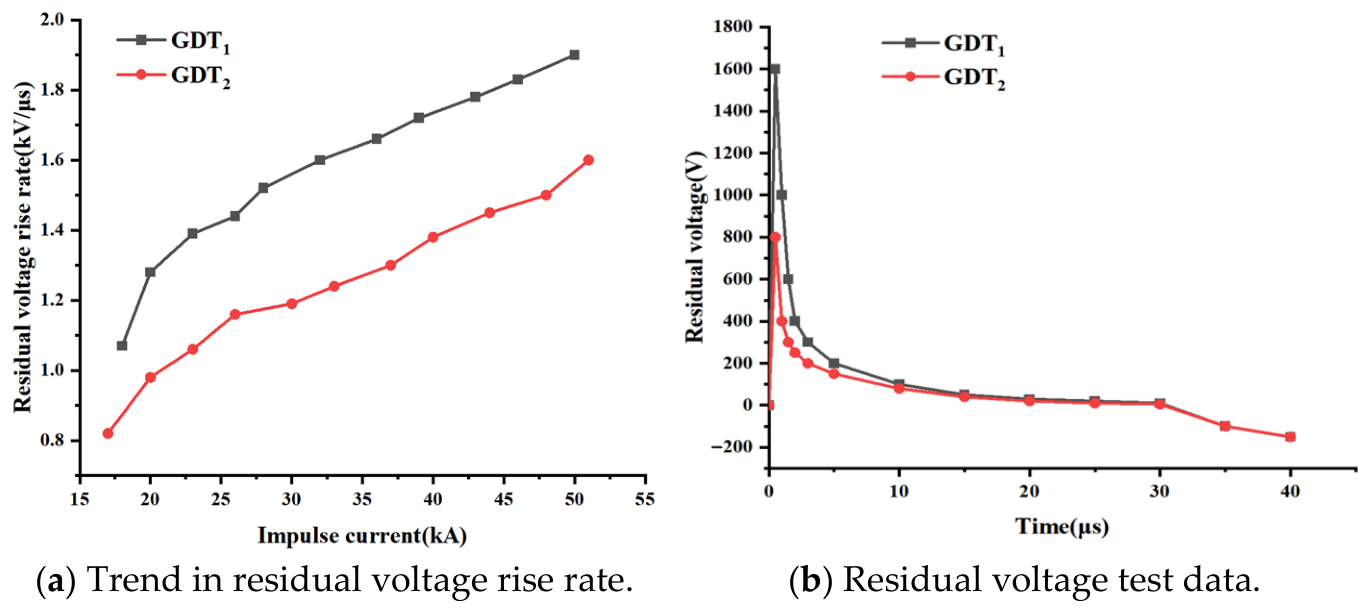
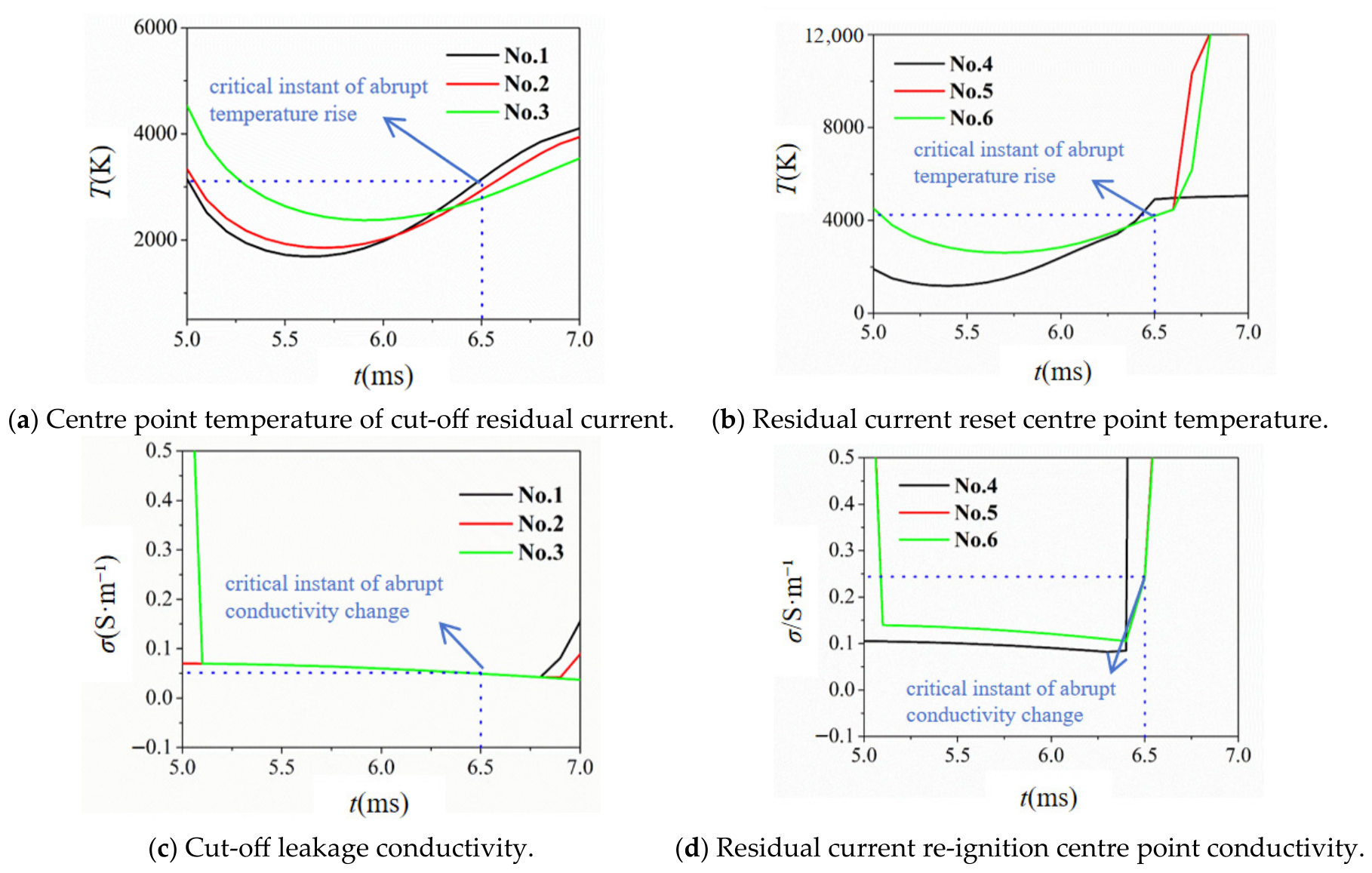
3.2. Gas Discharge Tube
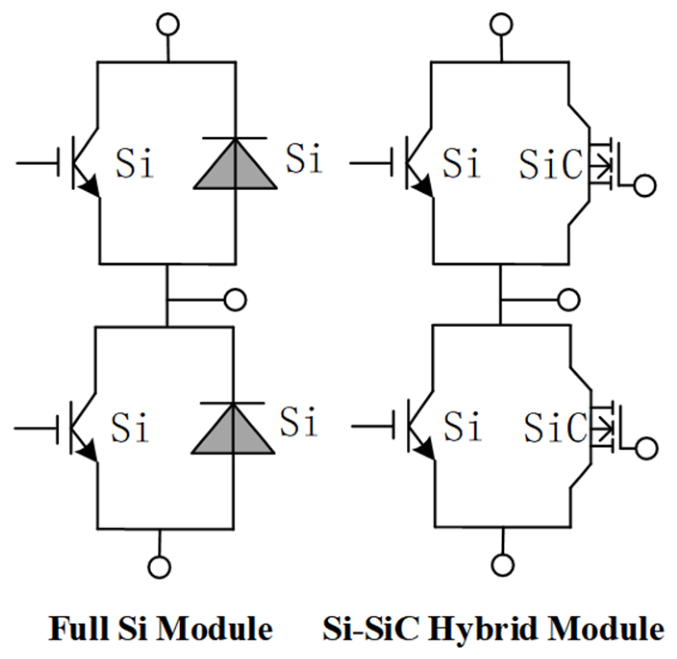
3.3. Transient Voltage Suppressor Diode
4. Topology Optimisation and Intelligent Protection Technology for Overvoltage Protectors
4.1. Topological Structure Optimisation Design for Protective Devices
4.1.1. Fundamental Collaborative Topology Design and Applications
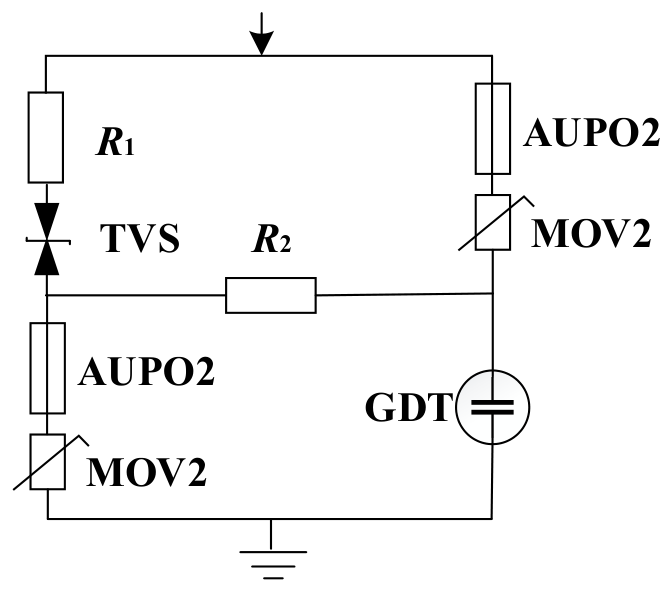
4.1.2. The Complex Topological Structure Design of Overvoltage Protection

4.2. Proactive Triggering of Intelligent Protection Technology
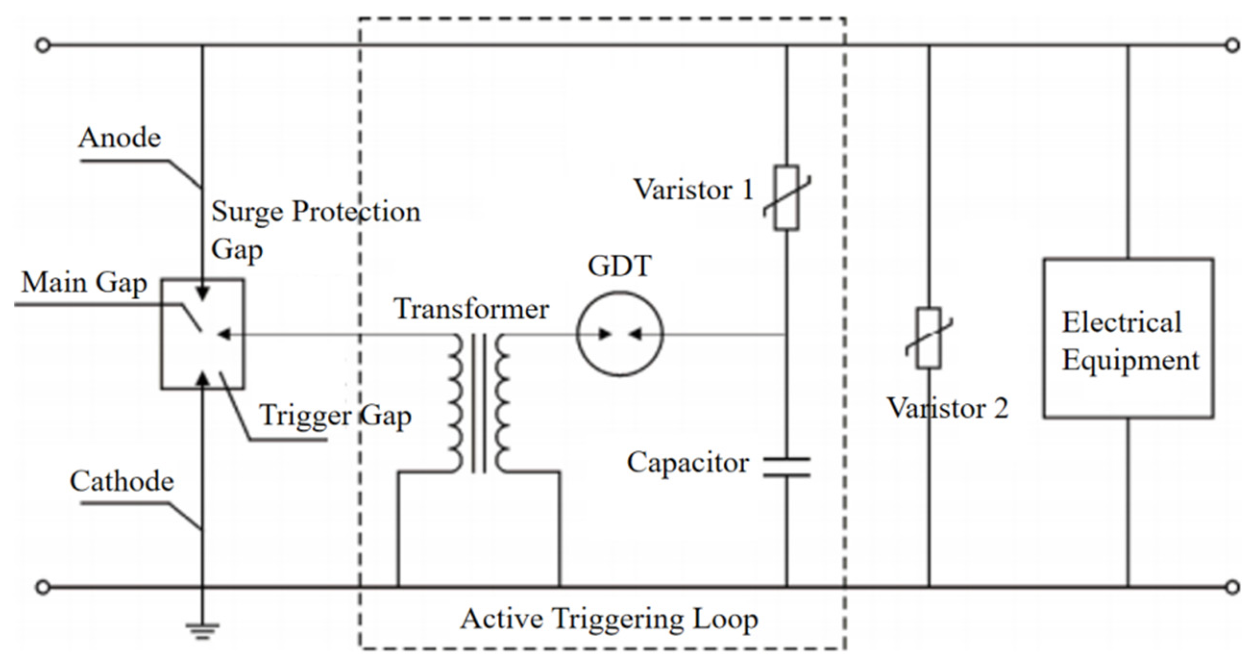
4.2.1. Technical Principles and System Configuration

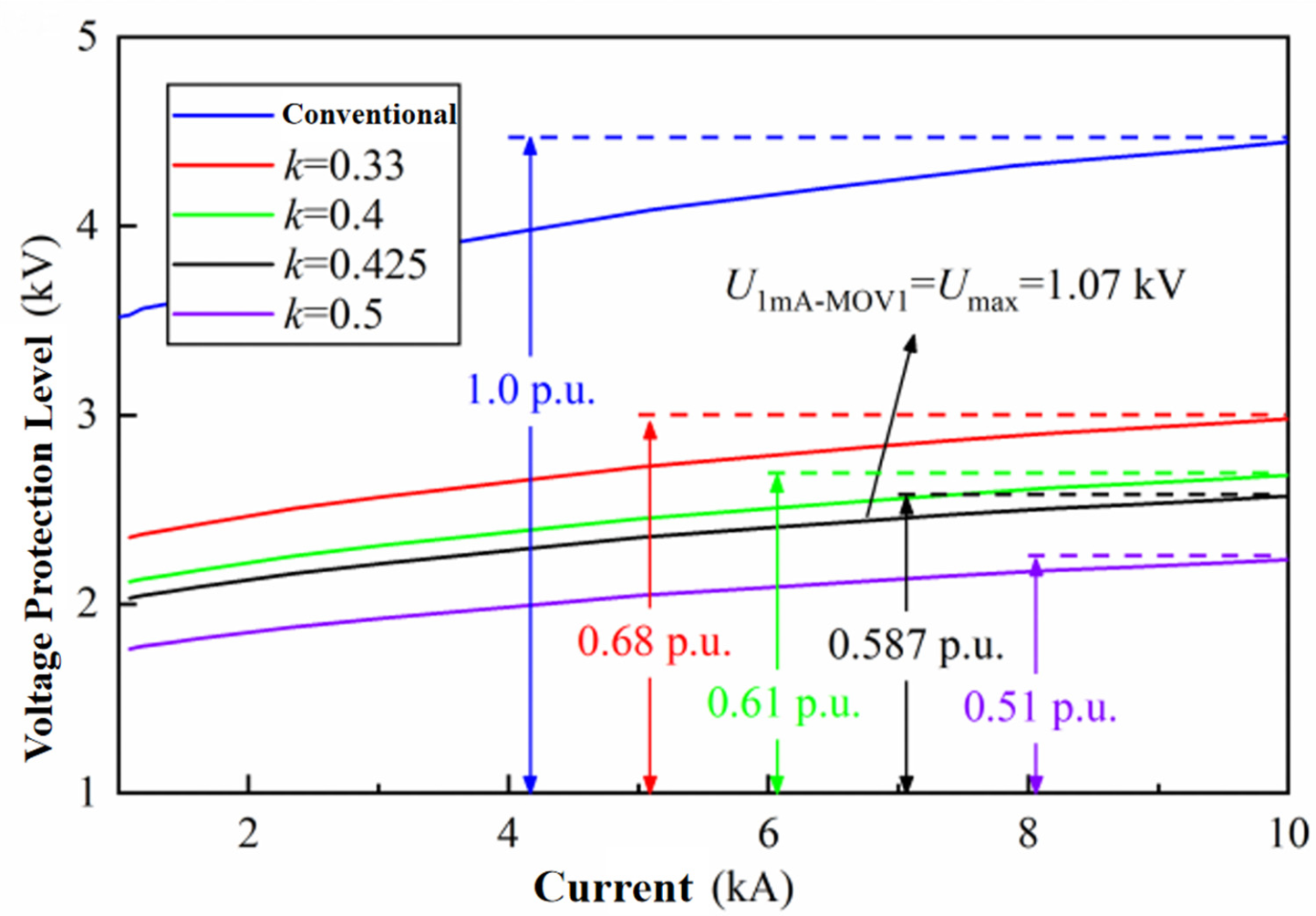
4.2.2. Research on Key Technologies and Their Suitability for Wind Power Scenarios
5. Summary and Outlook
- (1)
- Overcoming bottlenecks in materials and integration technology to develop next-generation high-performance protection devices. Continue deepening the application of wide-bandgap semiconductors in TVS and active switches, investigating their physical mechanisms and reliability under ultra-fast transients. Explore the use of nanomaterials, novel metal oxide systems, and biomimetic structures in MOVs and GDTs to further enhance energy density, reduce ageing rates, and improve tolerance to extreme environments. Promote the development of modular and integrated devices to elevate protection levels and equipment lifespan.
- (2)
- Refine testing standards and collaborative design methodologies grounded in real-world operating conditions. Address dynamic electromagnetic environments caused by turbine rotation and yaw, alongside specialised stresses such as multi-pulse lightning strikes at sea and high salt fog exposure, to establish overvoltage testing methods more closely aligned with actual wind farm conditions. Develop a high-precision, multi-physics coupled electromagnetic transient simulation platform. This platform will enable system-level modelling from lightning strike capture and internal induction to the operation of SPDs at various levels. It will provide quantitative design tools for the coordinated optimisation of external lightning protection and internal surge protection, thereby reducing protection blind spots and design redundancy.
- (3)
- Addressing specific challenges such as DC-side transient overvoltages in offshore flexible DC transmission wind farms, external insulation coordination under low atmospheric pressure in high-altitude regions, and high-frequency switching overvoltages in large-scale converter units, deepen integration with intelligent and digital technologies to construct predictive protection systems. Deeply integrate sensing technology, edge computing, and artificial intelligence algorithms into protection systems, developing customised protection solutions for specialised application scenarios. This initiative will foster a multi-tiered technological framework spanning materials, components, topologies, and complete systems, providing robust safety assurance for China’s wind power industry as it pursues its strategic development towards offshore, deep-sea, and large-scale wind energy.
Funding
Data Availability Statement
Conflicts of Interest
References
- Liu, Z.; Li, W.; Zhang, Y.; Wang, X. A comprehensive review of wind power prediction based on machine learning: Models, applications, and challenges. Energies 2025, 18, 350. [Google Scholar] [CrossRef]
- IEA. Global Energy Review 2025; IEA: Paris, France, 2025; Available online: https://www.iea.org/reports/global-energy-review-2025 (accessed on 24 March 2025).
- Zhangbin, Y.; Chen, L.; Liu, H.; Wang, J. Analysis and suppression of offshore wind power broadband oscillation based on HVDC transmission technology. Electr. Eng. 2025, 107, 3463–3481. [Google Scholar] [CrossRef]
- Sekioka, S.; Otoguro, H.; Funabashi, T. A study on overvoltages in windfarm caused by direct lightning stroke. IEEE Trans. Power Deliv. 2018, 34, 671–679. [Google Scholar] [CrossRef]
- Glasdam, J.; Bak, C.L.; Hjerrild, J. Transient Studies in Large Offshore Wind Farms Employing Detailed Circuit Breaker Representation. Energies 2012, 5, 2214–2231. [Google Scholar] [CrossRef]
- Chen, C.; Gao, J.; Chu, P. A novel energy absorption-based protection scheme for surge transients in large-scale wind farm system. Front. Energy Res. 2022, 10, 846714. [Google Scholar] [CrossRef]
- Chen, M.; Liu, Y.; Zhao, Y.; Wang, L.; Zhang, H. Two-layer fuzzy control-based energy storage participation in offshore wind power transient stability enhancement. J. Phys. Conf. Ser. 2025, 3065, 012051. [Google Scholar] [CrossRef]
- Wang, H.; Wu, Z.; Wang, Z. Transient voltage stability analysis of offshore wind power systems. J. Energy Res. Rev. 2025, 17, 1–10. [Google Scholar] [CrossRef]
- Garolera, A.C.; Cummins, K.L.; Madsen, S.F.; Holboell, J.; Myers, J.D. Multiple lightning discharges in wind turbines associated with nearby cloud-to-ground lightning. IEEE Trans. Sustain. Energy 2015, 6, 526–533. [Google Scholar] [CrossRef]
- Zheng, Y.; You, Q.; Chen, Y.; Zhang, W.; Li, X. Modeling transient waveforms of offshore wind power AC/DC transmission faults: Unveiling symmetry–asymmetry mechanisms. Symmetry 2025, 17, 1551. [Google Scholar] [CrossRef]
- Sarajcev, P.; Meglic, A.; Goic, R. Lightning overvoltage protection of step-up transformer inside a nacelle of onshore new-generation wind turbines. Energies 2021, 14, 322. [Google Scholar] [CrossRef]
- Mustajärvi, R. Standard Design Criteria for Electrical Substations. Master’s Thesis, Lappeenranta–Lahti University of Technology LUT, Lappeenranta, Finland, 2024. [Google Scholar]
- Sarajcev, P.; Goic, R. A review of current issues in state-of-art of wind farm overvoltage protection. Energies 2011, 4, 644–668. [Google Scholar] [CrossRef]
- Singhasathein, A.; Phanthuna, N.; Thongkeaw, S. The design and simulation of the external lightning protection for a tall building according to IEC62305. In Proceedings of the 2019 16th International Conference on Electrical Engineering/Electronics, Computer, Telecommunications and Information Technology (ECTI-CON), Pattaya, Thailand, 10–13 July 2019. [Google Scholar]
- Yu, J.; Liu, K.; Wang, X.; Zhang, L.; Chen, H. Multi-dimensional coupling study of the thermal-hydraulic characteristics in a helical coil once-through steam generator under motion conditions. Energy 2025, 314, 134297. [Google Scholar] [CrossRef]
- Evans, S.P.; Anup, K.C.; Bradney, D.R.; Urmee, T.P.; Whale, J.; Clausen, P.D. The suitability of the IEC 61400-2 wind model for small wind turbines operating in the built environment. Renew. Energy Environ. Sustain. 2017, 2, 31. [Google Scholar] [CrossRef]
- Yasuda, Y.; Yokoyama, S.; Minowa, M.; Satoh, T. Classification of lightning damage to wind turbine blades. IEEJ Trans. Electr. Electron. Eng. 2012, 7, 559–566. [Google Scholar] [CrossRef]
- Jiao, Z. Research on Lightning Overvoltage Protection Technology for Converter Side of High Power Offshore Wind Farms. Ph.D. Thesis, Xi’an Jiaotong University, Xi’An, China, 2026. (In Chinese) [Google Scholar]
- Boussayoud, L.; Nekhoul, B. Transient electromagnetic lightning disturbances induced in the collector cables of a wind farm. Electr. Power Syst. Res. 2025, 241, 111345. [Google Scholar] [CrossRef]
- Rodrigues, R.B.; Mendes, V.M.F.; Catalão, J.P.S. Analysis of transient phenomena due to a direct lightning strike on a wind energy system. Energies 2012, 5, 2545–2558. [Google Scholar] [CrossRef]
- Cao, Z.; Liu, X.; Gao, B.; Suo, Z.; Teng, S. Coordinated control strategy for transient overvoltage of wind power HVDC transmission system. Electr. Eng. 2025, 107, 13519–13528. [Google Scholar] [CrossRef]
- Zhou, J.; Xin, Y.; Tang, W.; Liu, G.; Wu, Q. Impact factor identification for switching overvoltage in an offshore wind farm by analyzing multiple ignition transients. IEEE Access 2019, 7, 645–662. [Google Scholar] [CrossRef]
- Zheng, Z.; Yuan, J.; Chen, D.; Yang, W.; Li, X.; Sun, Q. Superposition effect of overvoltage for vacuum circuit breakers simultaneously switching shunt reactor banks in offshore wind farms. In Proceedings of the 2023 IEEE 6th International Electrical and Energy Conference (CIEEC), Hefei, China, 12–14 May 2023. [Google Scholar]
- Jiang, L.; Xie, P.; Jiang, Z.; Lu, J.; Huang, X.; Ning, K. Numerical and experimental analysis of the lightning transient behavior of electric heating deicing control system of wind turbine blade. Electr. Power Syst. Res. 2025, 241, 111385. [Google Scholar] [CrossRef]
- GB 50057-1994; Code for Lightning Protection of Buildings. China Planning Press: Beijing, China, 1994. (In Chinese)
- IEC/TR 61400-24:2002; Wind Turbine Generator Systems—Part 24: Lightning Protection. IEC: Geneva, Switzerland, 2002.
- Martinez-Velasco, J.A. Power System Transients: Parameter Determination, 1st ed.; CRC Press: Boca Raton, FL, USA, 2010. [Google Scholar]
- Hu, J.; Fang, Z.; Qian, Z.; Shen, X.; Zhou, H.; Jin, D. Corrosion failure analysis of the galvanized lightning rod in a 220 kV transformer substation. Anti-Corros. Methods Mater. 2017, 64, 620–628. [Google Scholar] [CrossRef]
- Guo, Z.; Siew, W.H.; Li, Q.; Shi, W. On the lightning attachment process of wind turbine—Observation, experiments and modelling. Machines 2025, 13, 704. [Google Scholar] [CrossRef]
- Samaras, P.K.; Staikos, E.T.; Tsouris, P.P.; Datsios, Z.G.; Mikropoulos, P.N.; Tsovilis, T.E.; Kokkinos, N.D. Evaluation of the electric stress on an insulating down-conductor caused by lightning strikes through ATP-EMTP simulations. IEEE Trans. Ind. Appl. 2024, 60, 8353–8361. [Google Scholar]
- Heydari, O.; Moradi, H.; Karimi, S.; Abdi, H. Optimization of wind turbine grounding systems: Performance evaluation of simple ring and square mesh configurations under constant total electrode length and occupied area conditions. Electr. Power Syst. Res. 2026, 254, 112642. [Google Scholar] [CrossRef]
- Glushakow, B. Effective lightning protection for wind turbine generators. IEEE Trans. Energy Convers. 2007, 22, 214–222. [Google Scholar] [CrossRef]
- Bang, Y.S.; Kim, H.D.; Kim, C.S. Analysis of touch voltage and electric shock risk before and after installation of equipotential bonding in the sewage treatment plants. J. Loss Prev. Process Ind. 2024, 91, 105371. [Google Scholar] [CrossRef]
- Sun, Q.; Yang, L.; Zheng, Z.; Han, J.; Wang, Y.; Yao, L. A comprehensive lightning surge analysis in offshore wind farm. Electr. Power Syst. Res. 2022, 211, 108259. [Google Scholar] [CrossRef]
- Yi, X. Research on lightning protection metal mesh for wind turbine blades. In Proceedings of the Second International Conference on Sustainable Technology and Management (ICSTM 2023); SPIE: Bellingham, WA, USA, 2023; Volume 12804, pp. 230–234. [Google Scholar] [CrossRef]
- Khanmiri, D.T.; Ball, R.; Lehman, B. Degradation effects on energy absorption capability and time to failure of low voltage metal oxide varistors. IEEE Trans. Power Deliv. 2016, 32, 2272–2280. [Google Scholar] [CrossRef]
- Zhu, Z.; Jiang, M.; Crevenat, V. Simulation and analysis of surge protection for wind turbines based on ATP-EMTP. In Proceedings of the 2022 36th International Conference on Lightning Protection (ICLP), Cape Town, South Africa, 2–7 October 2022. [Google Scholar]
- Wang, M.; Ren, X.; Zhou, Q.; Li, Z.; Yang, H.; Jiang, H.; Yan, Y.; Ruan, X.; Yu, W.; Jin, L.; et al. High improvement of degradation behavior of ZnO varistors under high current surges by appropriate Sb2O3 doping. J. Eur. Ceram. Soc. 2020, 40, 2390–2395. [Google Scholar] [CrossRef]
- Cheng, X.; Lu, Z.; Liu, X.; Yi, W.; Chen, Z.; Wang, X. Improvement of surge current performances of ZnO varistor ceramics via C3N4-doping. J. Eur. Ceram. Soc. 2020, 40, 2390–2395. [Google Scholar] [CrossRef]
- Liu, J.; Ren, B.; Cao, W. Preparation and electrical properties of Eu2O3 doped high-performance ZnO-Bi2O3 based varistors. Ceram. Int. 2025, 51, 11586–11592. [Google Scholar] [CrossRef]
- Zhao, Z.W.; Guo, Z.P.; Liu, H.K. Non-aqueous synthesis of crystalline Co3O4 powders using alcohol and cobalt chloride as a versatile reaction system for controllable morphology. J. Power Sources 2005, 147, 264–268. [Google Scholar] [CrossRef]
- Si, M.; Ding, Q.; Wei, P.; Deng, C.; Fan, Y.; Guo, J. Engineered amorphous interfaces in cold-sintered ZnO-PAN hybrids: Synergistic thermal insulation and nonlinear electrical properties. J. Eur. Ceram. Soc. 2025, 45, 117329. [Google Scholar] [CrossRef]
- Xu, D.; Song, K.; Li, Y.; Jiao, L.; Zhong, S.; Ma, J.; Bao, L.; Zhang, L.; Song, J. Sc2O3 doped Bi2O3-ZnO thin films varistor prepared by sol-gel method. J. Alloys Compd. 2018, 746, 314–319. [Google Scholar] [CrossRef]
- Lee, Y.S.; Tseng, T.Y. Influence of processing parameters on the microstructure and electrical properties of multilayer-chip ZnO varistors. J. Mater. Sci. Mater. Electron. 1995, 6, 90–96. [Google Scholar] [CrossRef]
- Tian, F.; Li, X.; Chen, J.; Cao, J.; Zhang, S. Research on the structural optimization and electrical characteristics of the arrester in electric multiple units. IEEE Trans. Instrum. Meas. 2025, 74, 3514411. [Google Scholar] [CrossRef]
- Dong, L.; Chen, W.; Zheng, C.; Deng, N. Microstructure and properties characterization of tungsten–copper composite materials doped with graphene. J. Alloys Compd. 2017, 695, 1637–1646. [Google Scholar] [CrossRef]
- An, M.; Lu, H.; Zhao, W.; Zheng, C.; Wang, Y.; Hu, Y. An experimental study on novel gas discharge tubes with graphene as electron emission material. IEEE Trans. Electron Devices 2023, 70, 1942–1949. [Google Scholar] [CrossRef]
- Wen, Z.; Wang, Z.; Liu, Y.; Fan, S.; Jiang, X.; Qiu, A. Study on Multichannel Discharge Characteristics of Multigap Gas Switch Gaps. IEEE Trans. Plasma Sci. 2023, 51, 3348–3357. [Google Scholar] [CrossRef]
- Jin, S.; Wang, K.; Han, W.; Zhang, X.; Wei, Z.; Zhu, L.; Ma, M.; Yan, Y.; Yang, Y. Influence of gap distribution on conduction delay of multigap gas switch. IEEE Trans. Plasma Sci. 2024, 52, 344–351. [Google Scholar] [CrossRef]
- Pal, U.N.; Lamba, R.P.; Varun; Meena, B.L.; Frank, K. A multigap multiaperture pseudospark switch and its performance analysis for high-voltage applications. IEEE Trans. Electron Devices 2020, 67, 5600–5604. [Google Scholar] [CrossRef]
- Racka-Szmidt, K.; Żelazko, J.; Michałowski, P.; Roguska, A.; Pisarek, M.; Banasiak, A.; Przyborowska, K.; Stańczyk, B.; Harmasz, A.; Sochacki, M. ICP-RIE etching of MESA and trench SiC structures in SF6 + O2 plasma: Significant difference in SiC etching rate dependence on oxygen content. Vacuum 2025, 240, 114543. [Google Scholar] [CrossRef]
- Chen, S.; Liu, A.; He, J.; Bai, S.; Sheng, K. Design and application of high-voltage SiC JFET and its power modules. IEEE J. Emerg. Sel. Top. Power Electron. 2016, 4, 780–789. [Google Scholar] [CrossRef]
- Qi, Z.; Qiao, M.; Zhao, F.; Li, Z.; Zhang, B. Novel integrated low capacitance transient voltage suppressor array with capacitance equalization technique for system-level EOS/ESD protection. In Proceedings of the 2021 33rd International Symposium on Power Semiconductor Devices and ICs (ISPSD), Nagoya, Japan, 30 May–3 June 2021. [Google Scholar]
- Qi, Z.; Qiao, M.; Wei, J.; Shi, Y.; Chen, H.; Li, Z.; Zhang, B. Novel multifunctional transient voltage suppressor technology for modular EOS/ESD protection circuit designs. In Proceedings of the 2023 35th International Symposium on Power Semiconductor Devices and ICs (ISPSD), Hong Kong, China, 28 May–1 June 2023. [Google Scholar]
- Kayser, F.; Pfirsch, F.; Niedernostheide, F.-J.; Baburske, R.; Eckel, H.-G. Novel Si-SiC hybrid switch and its design optimization path. In Proceedings of the 2022 IEEE 34th International Symposium on Power Semiconductor Devices and ICs (ISPSD), Vancouver, BC, Canada, 22–26 May 2022. [Google Scholar]
- Tsovilis, T.E. Critical insight into performance requirements and test methods for surge protective devices connected to low-voltage power systems. IEEE Trans. Power Deliv. 2020, 36, 3055–3064. [Google Scholar] [CrossRef]
- Malcolm, N.; Aggarwal, R.K. The impact of multiple lightning strokes on the energy absorbed by MOV surge arresters in wind farms during direct lightning strikes. Renew. Energy 2015, 83, 1305–1314. [Google Scholar] [CrossRef]
- Takashi, O.; Tsukamoto, N. Withstand capability of MOV and GDT parallel combination for excessive impulse currents. In Proceedings of the 2023 12th Asia-Pacific International Conference on Lightning (APL), Langkawi, Malaysia, 12–16 June 2023. [Google Scholar]
- Kijima, H.; Murakawa, K. Lightning surge response improvement by combinations of varistors and gas discharge tubes. WSEAS Trans. Power Syst. 2012, 7, 60–69. [Google Scholar]
- Andreotti, A.; De Martinis, U.; Maffucci, A.; Miano, G.; Verolino, L. A mixed frequency and time domain approach for accurate evaluation of the dynamics of lemp-excited lossy multiconductor power lines. Electr. Eng. 2001, 83, 147–155. [Google Scholar] [CrossRef]
- Li, X.-C.; Chen, P.; Zhou, Z.; Ye, T.; Xu, L.; Wang, C. Research on energy coordination between multi-level surge protective devices with the transmission line theory. Int. J. Appl. Electromagn. Mech. 2015, 48, 345–356. [Google Scholar] [CrossRef]
- Hođić, M.; Mujčić, A.; Suljanović, N.; Zajc, M. Modelling Overvoltage Protection Components: Verilog Simulations of Combined MOV and GDT Arresters. Inf. MIDEM 2017, 47, 261–272. [Google Scholar]
- Androvitsaneas, V.P. Lightning Surge Immunity of LED Road Luminaires: A Comparative Study of Hybrid SPD, EMI Filter, and TVS-Diode Protection Strategies. IEEE Access 2025, 13, 204584–204591. [Google Scholar] [CrossRef]
- Kularatna, N.; Ross, A.S.; Fernando, J.; James, S. Design of Transient Protection Systems: Including Supercapacitor Based Design Approaches for Surge Protectors; Elsevier: Amsterdam, The Netherlands, 2018. [Google Scholar]
- Wang, C.G.; Yao, X.L.; Lin, H. Transient characteristics of field-breakdown trigger circuit for active surge protection gap. J. Xi’an Jiaotong Univ. 2017, 51, 104–110. (In Chinese) [Google Scholar]
- Han, P. Experimental Study on the Action Characteristics of Active Overvoltage Protection. Master’s Thesis, Xi’an University of Architecture and Technology, Xi’an, China, 2018. (In Chinese) [Google Scholar]
- Liu, J.; Li, F.; Yin, C.; Chen, R.; Han, L.; Shi, Y. Power operation region modeling and transient overvoltage suppression strategy of hybrid cascaded HVDC. Int. J. Electr. Power Energy Syst. 2025, 169, 110803. [Google Scholar] [CrossRef]
- Yao, X.; Chen, J. An active triggered surge protective gap. Plasma Sci. Technol. 2012, 14, 759–764. [Google Scholar] [CrossRef]
- Price, S.J.; Figueira, R.B. Corrosion protection systems and fatigue corrosion in offshore wind structures: Current status and future perspectives. Coatings 2017, 7, 25. [Google Scholar] [CrossRef]
- Yangjing, L. The Lightning Protection Characteristics and Mechanism of the Active Surge Protection Gap in the Low-Voltage Distribution System. Ph.D. Thesis, Xi’an Jiaotong University, Xi’an, China, 2024. (In Chinese) [Google Scholar]



| Device Type | Core Operating Principle | Key Performance Indicators | Wind Protection Position | Primary Areas for Optimisation |
|---|---|---|---|---|
| MOVs | Nonlinear voltage clamping at grain boundaries | Current-carrying capacity, residual voltage, energy withstand | LPZ 1/2 boundary (secondary protection) | Multi-component doping modification, composite interstitial structures, enhanced thermal dissipation packaging |
| GDTs | Gas gap breakdown and leakage current | Impulse withstand voltage, response time, follow-current interrupting capability | LPZ 0/1 boundary (primary protection) | Electrode material modification (e.g., graphene), multi-interstitial structure design, gas composition optimisation |
| TVSs | PN junction avalanche/Zener breakdown clamping | Clamping voltage, response time, peak pulse power | Sensitive equipment ports (fine-grained protection) | Wide-bandgap material applications (SiC/GaN), low-capacitance integrated design, multifunctional chip technology |
| Topological Structure | Core Features and Advantages | Typical Application Scenarios in Wind Power Systems | Design Challenges and Difficulties |
|---|---|---|---|
MOV parallel connection [56,57] | Enhance total current-carrying capacity, reduce equivalent residual voltage, and achieve redundant backup. | Secondary protection module for the tower base main control cabinet (LPZ 1/2 boundary), designed to withstand high-energy-induced lightning currents. | It is necessary to ensure high consistency in the parameters of parallel MOVs (particularly the voltage-sensitive voltage Un), as inconsistencies may lead to uneven current distribution and accelerate degradation of individual components. |
GDT and MOV in series [56] | Employ GDT isolation to completely eliminate leakage current from MOVs, thereby elevating system insulation integrity; MOVs limit residual voltage following GDT arc extinction. | Suitable for primary protection of monitoring signal circuits in offshore wind turbines where leakage current sensitivity or extremely high insulation resistance are required. | GDT response delays may cause MOVs to bear wavefront impacts alone; GDT follow-current issues must be matched to power supply parameters to prevent sustained short-circuits. |
GDT and MOV in parallel [58,59] | GDTs discharge the majority of surge currents, shielding MOVs from high-current impacts and extending their operational lifespan; MOVs deliver precise clamping. | Primary protection combination at the cabin entrance (LPZ 0/1 boundary), providing both leakage current (10/350 μs waveform) and clamping. | The breakdown voltage of the GDT must be precisely matched to the trigger voltage of the MOV, and a decoupling inductor must be designed to ensure the GDT reliably operates first, thereby preventing MOV overload. |
TVS and MOV/GDT Synergy [60,61] | TVS devices provide nanosecond-level rapid response to clamp initial spikes; MOV/GDT components absorb the subsequent primary energy. | Final-stage precision protection for the most sensitive equipment, including converter IGBT driver boards and main controller power ports. | TVS devices possess low current-carrying capacity and must be strictly coordinated with the response time and energy dissipation capability of upstream MOVs/GDTs; otherwise, the TVS is susceptible to burnout. |
Disclaimer/Publisher’s Note: The statements, opinions and data contained in all publications are solely those of the individual author(s) and contributor(s) and not of MDPI and/or the editor(s). MDPI and/or the editor(s) disclaim responsibility for any injury to people or property resulting from any ideas, methods, instructions or products referred to in the content. |
© 2026 by the authors. Licensee MDPI, Basel, Switzerland. This article is an open access article distributed under the terms and conditions of the Creative Commons Attribution (CC BY) license.
Share and Cite
Sun, J.; Peng, Z.; Liu, D.; Chen, Z.; Li, Y.; Wang, A.; Jiao, Z.; Yao, X. A Review of Overvoltage Protection Technologies and Protective Devices for Wind Turbines. Energies 2026, 19, 2704. https://doi.org/10.3390/en19112704
Sun J, Peng Z, Liu D, Chen Z, Li Y, Wang A, Jiao Z, Yao X. A Review of Overvoltage Protection Technologies and Protective Devices for Wind Turbines. Energies. 2026; 19(11):2704. https://doi.org/10.3390/en19112704
Chicago/Turabian StyleSun, Jinru, Zhicheng Peng, Dongxin Liu, Zhuoyan Chen, Yihe Li, Aoyu Wang, Zijia Jiao, and Xueling Yao. 2026. "A Review of Overvoltage Protection Technologies and Protective Devices for Wind Turbines" Energies 19, no. 11: 2704. https://doi.org/10.3390/en19112704
APA StyleSun, J., Peng, Z., Liu, D., Chen, Z., Li, Y., Wang, A., Jiao, Z., & Yao, X. (2026). A Review of Overvoltage Protection Technologies and Protective Devices for Wind Turbines. Energies, 19(11), 2704. https://doi.org/10.3390/en19112704