Review

A Review of Overvoltage Protection Technologies and Protective Devices for Wind Turbines
State Key Laboratory of Electrical Insulation and Power Equipment, Xi’an Jiaotong University, Xi’an 710049, China
*
Author to whom correspondence should be addressed.
Energies 2026, 19(11), 2704; https://doi.org/10.3390/en19112704
Submission received: 19 March 2026 / Revised: 20 May 2026 / Accepted: 25 May 2026 / Published: 4 June 2026
(This article belongs to the Section A3: Wind, Wave and Tidal Energy)

Abstract

Wind turbines are persistently threatened by both lightning overvoltage and switching overvoltage due to their ultra-high structure, dense power electronics, and harsh operational environments, which severely endanger the safe and stable operation of the units. This paper systematically reviews the generation mechanism, type characteristics, and hazards of overvoltages in wind turbines. An internal and collaborative overvoltage protection system based on lightning protection zones (LPZs) is described. Focusing on three core protective devices—metal oxide varistors (MOVs), gas discharge tubes (GDTs), and Transient Voltage Suppressors (TVSs)—the research progress in material modification, structural optimisation, and performance evolution laws is explored. Additionally, the development of series-parallel topological collaborative design for multiple devices and active-triggered intelligent protection technologies is analysed. It is highlighted that current wind turbine overvoltage protection still faces bottlenecks in standard applicability, device operating condition adaptability, and system-level collaborative design. Future research should focus on the application of a wide bandgap and nanomaterials, the improvement of test standards tailored for actual operating conditions, and the construction of multi-physics coupling simulation and active intelligent early warning protection systems, so as to provide theoretical and technical support for high-reliability overvoltage protection of large-capacity and offshore wind turbines.

1. Introduction

Wind energy, as a technologically mature and extensively developed renewable resource, has seen a steady increase in its installation capacity within global power systems, becoming a vital component of energy diversification and carbon reduction efforts [1]. According to the International Energy Agency Global Energy Review 2025, the global electricity demand increased significantly in 2024, and renewables continued to play a major role in the growth of global electricity generation. Meanwhile, the Global Wind Energy Council reported that 117 GW of new wind power capacity was installed worldwide in 2024, bringing the cumulative global wind power capacity to 1136 GW. The rapid expansion of wind power, especially large-capacity and offshore wind turbines, highlights the urgent need for reliable overvoltage protection technologies [2]. Wind power generation systems typically comprise key components including the wind turbine (encompassing blades, hub, nacelle, and generator), tower, box-type transformer, and on-site collection lines [3], as shown in Figure 1. During operation, these systems face severe overvoltage threats, significantly compromising equipment reliability and the overall operational efficiency of wind farms.
Overvoltages in wind power systems primarily originate from external lightning intrusion and internal electromagnetic transient processes. External overvoltages are predominantly lightning-induced, encompassing direct strikes to protruding components such as turbine blades and nacelles, as well as overvoltages induced within the system by lightning strikes to nearby ground or power lines [4]. Internal overvoltages are primarily generated by switching operations within the system (such as circuit breaker switching), faults (such as short-circuits), and phenomena like resonance caused by improper parameter matching [5,6]. These overvoltages exhibit characteristics including high amplitude, steep rise times, or prolonged duration, posing multiple hazards to wind turbines—complex systems integrating precision mechanics, power electronics, and electrical equipment. Direct lightning strikes can cause ablation or spalling of composite blades. Induced and switching overvoltages readily damage the insulation of core electronic equipment such as converters and control systems, triggering fault shutdowns. Transient overvoltages may also propagate along collection circuits, potentially expanding the scope of faults [7,8,9,10].
To address the aforementioned threats, the overvoltage protection system for wind power generation typically encompasses three aspects: the turbine unit, the step-up substation, and the on-site transmission lines. However, this review focuses specifically on overvoltage protection for the wind turbine generator system itself, from the blades to the low-voltage side of the box-type transformer. While relatively mature standards and solutions exist for protecting step-up substations and transmission lines [11,12], protecting the turbine unit itself presents greater challenges due to its unique characteristics. Firstly, as tall, isolated structures, wind turbines are far more exposed to lightning strikes than conventional buildings. Furthermore, the rotating blades complicate both the lightning strike reception and discharge processes [13]. Secondly, wind turbines house extensive power electronic equipment (such as converters) that are highly sensitive to voltage fluctuations. Their low insulation withstand levels impose stringent requirements on residual voltage and response speed for protective devices. Crucially, current overvoltage protection designs in wind power largely reference general building lightning protection standards (e.g., IEC 62305) [14]. However, wind turbines exhibit significant structural differences from buildings in aspects such as layout (e.g., long down-conductors, rotating components), equipment composition [15] (a high proportion of power electronics), and operational environments (high-altitude land-based environments vs. high-saline fog offshore). Consequently, traditional protection concepts, device selection, and testing methods may prove inadequate, posing risks of insufficient or failed protection [16]. For instance, the applicability of lightning protection zone classifications outlined in standards must be reassessed in light of wind turbine dynamic rotation and complex electromagnetic environments. Furthermore, there is an urgent need for in-depth research on the performance of protective devices under wind turbine-specific operating conditions, such as multiple-pulse lightning strikes and high-frequency switching transients.
Consequently, conducting a specialised review on overvoltage protection for wind turbine systems holds significant theoretical and engineering importance. This paper aims to systematically organise and evaluate the generation mechanisms of overvoltages in wind turbine systems, the principles and limitations of conventional protective devices, and the latest research advances in enhancing protective device performance through material innovation, structural optimisation, topological coordination, and intelligent triggering. The paper will first analyse the sources, characteristics, and hazards of typical overvoltages in wind farm scenarios, subsequently elucidating the operating principles and key performance parameters of core protective components such as MOVs, GDTs, and TVSs. Subsequently, it will focus on reviewing technical breakthroughs achieved in device materials, electrode structures, and multi-level protection topologies to enhance current-carrying capacity, reduce residual voltage, and accelerate response speed. Finally, it will summarise current technical challenges and outline future development trends towards high performance, high reliability, intelligence, and standardisation.

2. An Overview of Overvoltage Phenomena and Protection Systems in Wind Turbine Generators

Wind turbines are complex mechatronic systems that convert wind energy into electrical power. Their towering structures and highly integrated power electronics render them exceptionally sensitive to overvoltages. Overvoltages affecting the turbine body primarily originate from external natural lightning strikes and electromagnetic transient processes triggered by internal switching operations or faults within the system. Such overvoltages may cause equipment malfunctions or temporary shutdowns at best, while at worst inflicting permanent physical damage resulting in substantial economic losses. Consequently, establishing a commensurate overvoltage protection system is paramount. Presently, this system primarily adheres to the principle of zoned protection, integrating external direct lightning strike protection with internal surge protection. Its core efficacy fundamentally depends upon the performance of various surge protection devices.

2.1. Types of Overvoltage in Wind Power Systems and Their Generation Mechanisms

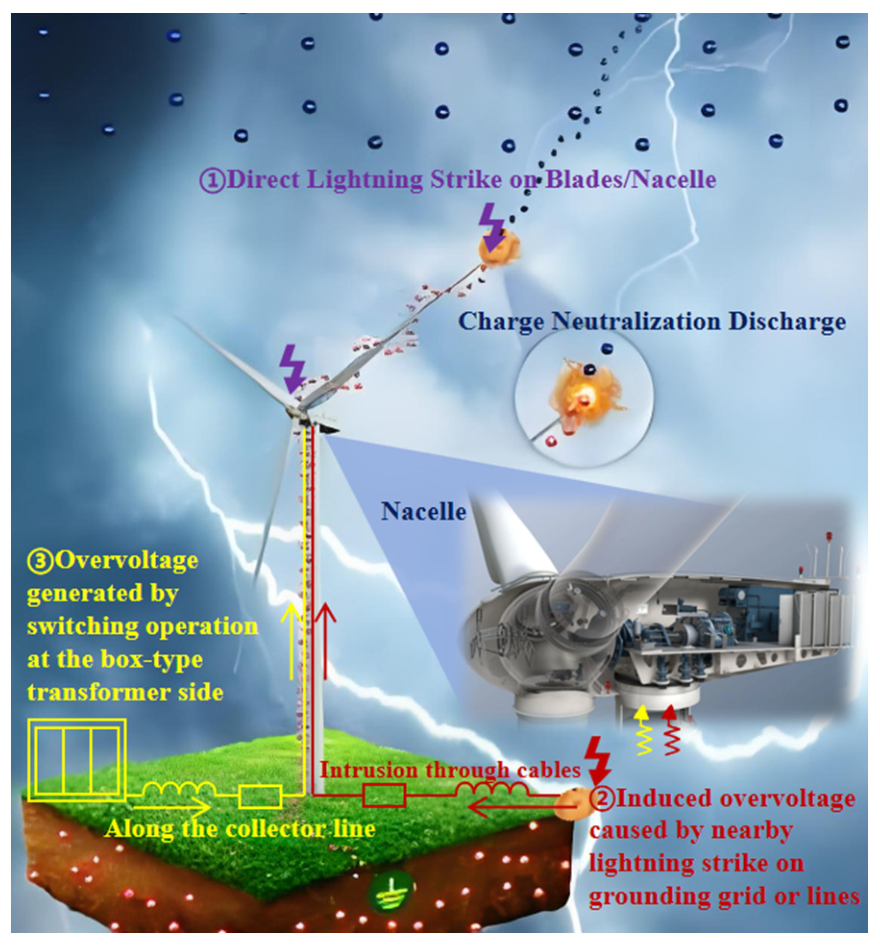
Overvoltages in fan systems may be categorised into two primary types based on their energy source: external lightning overvoltages and internal transient overvoltages. Their pathways of intrusion are illustrated in Figure 2.
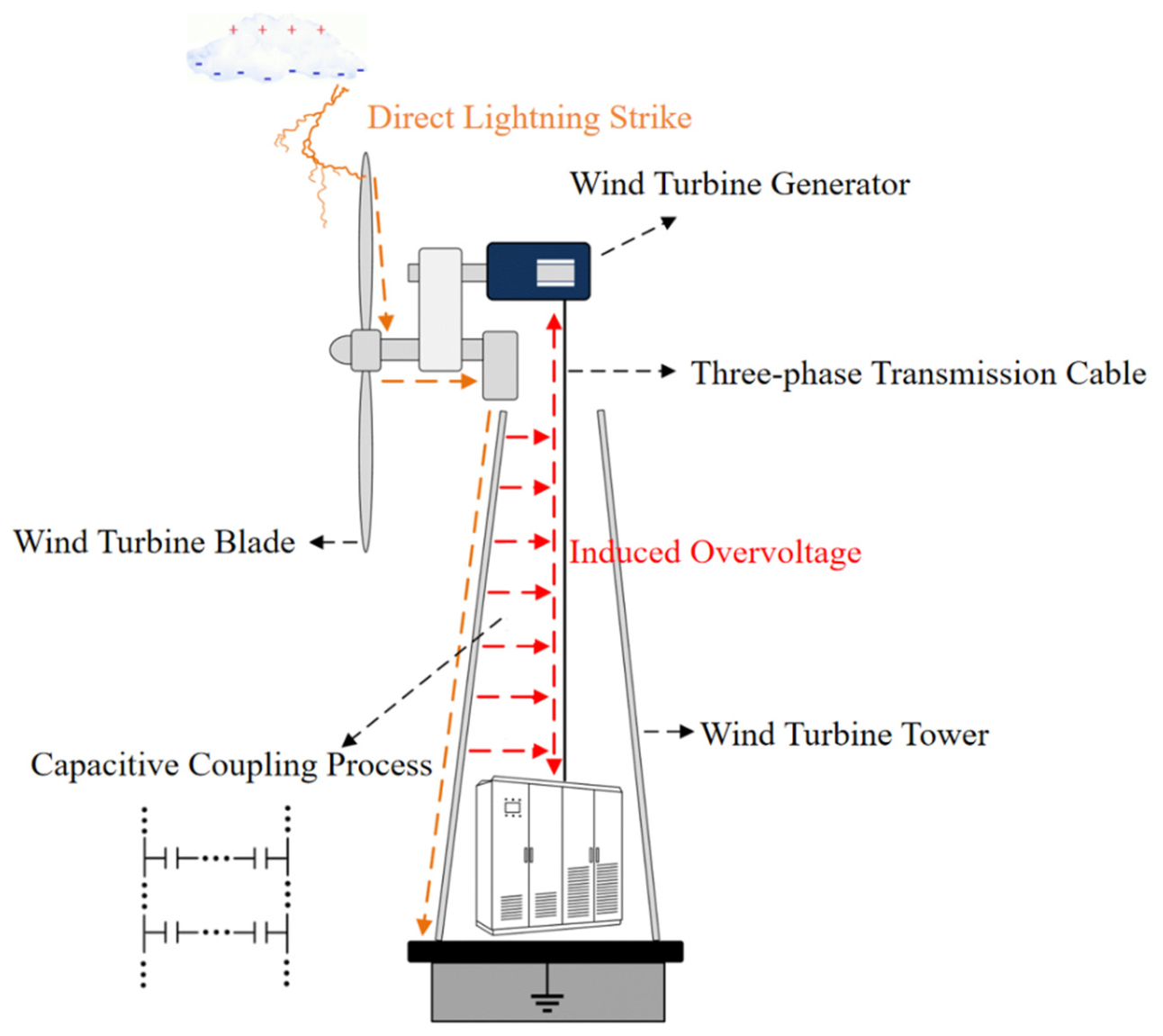
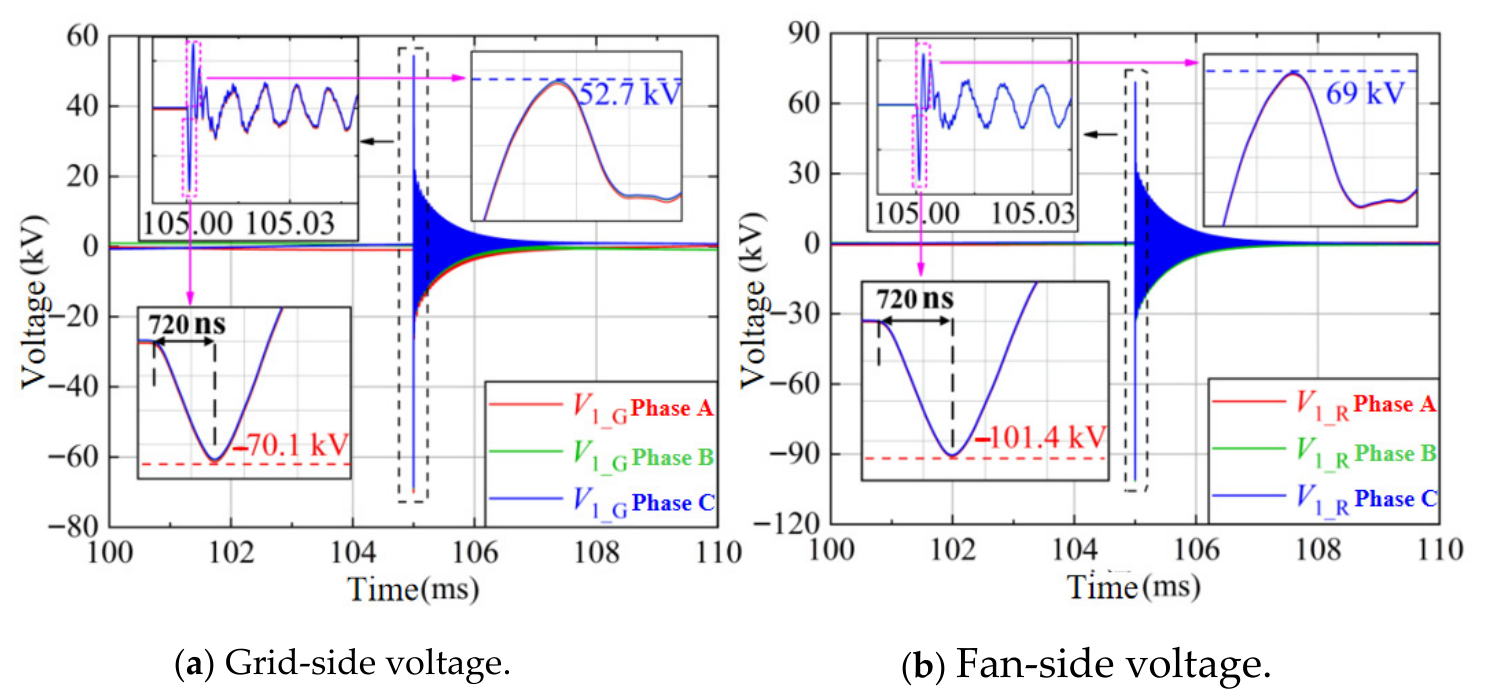
External overvoltage primarily refers to lightning overvoltage, encompassing both direct lightning strikes and induced lightning strikes. A direct lightning strike occurs when a thundercloud discharges directly onto the tip of a wind turbine blade or the top of the nacelle. At this point, a massive lightning current, ranging from tens to hundreds of kilamps, is directly injected into the turbine structure. This process poses dual hazards. Firstly, the strike point suffers ablation, melting, or even rupture due to high-temperature arcing. The potent electromagnetic force may also deform or damage conductors and blades [17]. As the powerful lightning current discharges through the blade–tower–ground path, it sharply elevates the tower’s potential, causing insulation breakdown against adjacent metal objects and generating counterstrikes, as depicted in Figure 3 [18]. More critically, as the lightning current discharges to earth via the internal blade downleads and tower, it generates a rapidly changing, intense magnetic field in the surrounding space. This magnetic field induces extremely high-amplitude common-mode and differential-mode overvoltages in the loops formed by power and control cables laid parallel to the downleads within the wind turbine [18], as illustrated in Figure 4. The figure shows that, in the absence of any converter-side protection devices (such as MOVs), the voltage is 70.1 kV on the grid side and 101 kV on the machine side, with a rise time to the order of hundreds of nanoseconds, and the oscillation persists for several hundred microseconds. This extreme waveform clearly demonstrates the severe threat posed by lightning-induced overvoltages to power electronic equipment and directly highlights the necessity of deploying a multi-level coordinated protection system at LPZ boundaries.
When lightning current propagates along the blade down-conductor and tower grounding path, the rapidly changing current generates a strong transient magnetic field. According to electromagnetic induction theory, the induced overvoltage on nearby cable loops can be approximately expressed as:
V = L d i d t
where L represents the equivalent loop inductance and d i d t denotes the lightning current steepness. Due to the extremely high current rise rate of lightning impulses, even relatively small parasitic inductances can generate significant transient overvoltages. This phenomenon is particularly critical in wind turbines because long vertical cable routing and compact nacelle structures increase electromagnetic coupling between lightning current paths and internal electrical circuits.
Induced lightning strikes occur when lightning strikes the ground or power lines near the point of impact (within several hundred metres). The transient electromagnetic field radiated by the lightning channel induces surge currents and voltages between the shielding layer and the core conductor of wind turbine cables through electromagnetic coupling [19]. Although the energy of a single event is typically lower than that of a direct strike, the higher frequency of occurrence is equally sufficient to damage the port insulation of equipment [20].
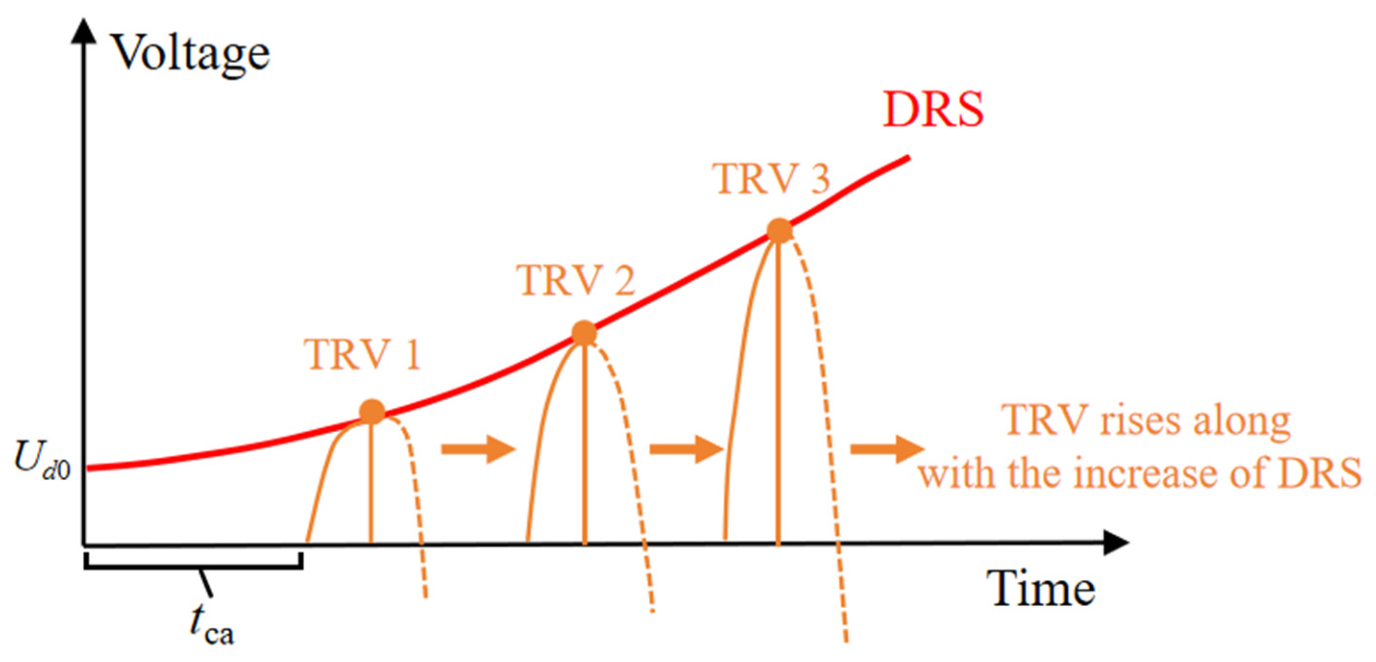
Internal overvoltages originate from alterations in the operational state of the fan’s electrical system itself, primarily comprising switching overvoltages and transient overvoltages. Operational overvoltages are chiefly triggered by the operation of switching devices such as circuit breakers and contactors. Particularly when interrupting inductive loads, current interruption or re-ignition of arcs between contacts may excite transient processes involving high-frequency oscillations, with peak values reaching 4–6 times the system-rated voltage [21,22]. The superposition mechanism during arc extinction is illustrated in Figure 5. Transient overvoltages are typically induced by system faults or improper parameter matching. Examples include elevated line-frequency voltages on healthy phases following single-phase-to-ground faults in power grids, or resonant circuits formed under specific conditions by stray capacitance and inductance in equipment such as transformers and cables. While such overvoltages may exhibit lower amplitudes, their duration significantly exceeds that of lightning overvoltages [23]. This prolonged exposure accelerates ageing or even failure in thermal-dominant protective devices due to sustained energy absorption [24].

2.2. Framework and Core Components of the Existing Overvoltage Protection System

Wind turbine systems face more severe overvoltage threats than conventional power equipment due to their towering physical structures, integration of numerous power electronic devices that are highly sensitive to voltage fluctuations, and operation in harsh environments such as offshore and high-altitude locations. To effectively counter these threats, modern wind turbines have widely adopted and developed a multi-layered, coordinated protection system based on the concept of LPZ. This system aims to achieve comprehensive defence against direct lightning strikes, induced lightning, and internal operational overvoltages through a combination of external diversion, internal clamping, equipotential bonding, and electromagnetic shielding. This paper systematically outlines the design principles, core components, and operational mechanisms of this protection system, providing a clear framework for understanding subsequent discussions on enhancing and optimising protective device performance.

2.2.1. Zone Protection Strategy Based on the Lightning Protection Zone (LPZ) Concept

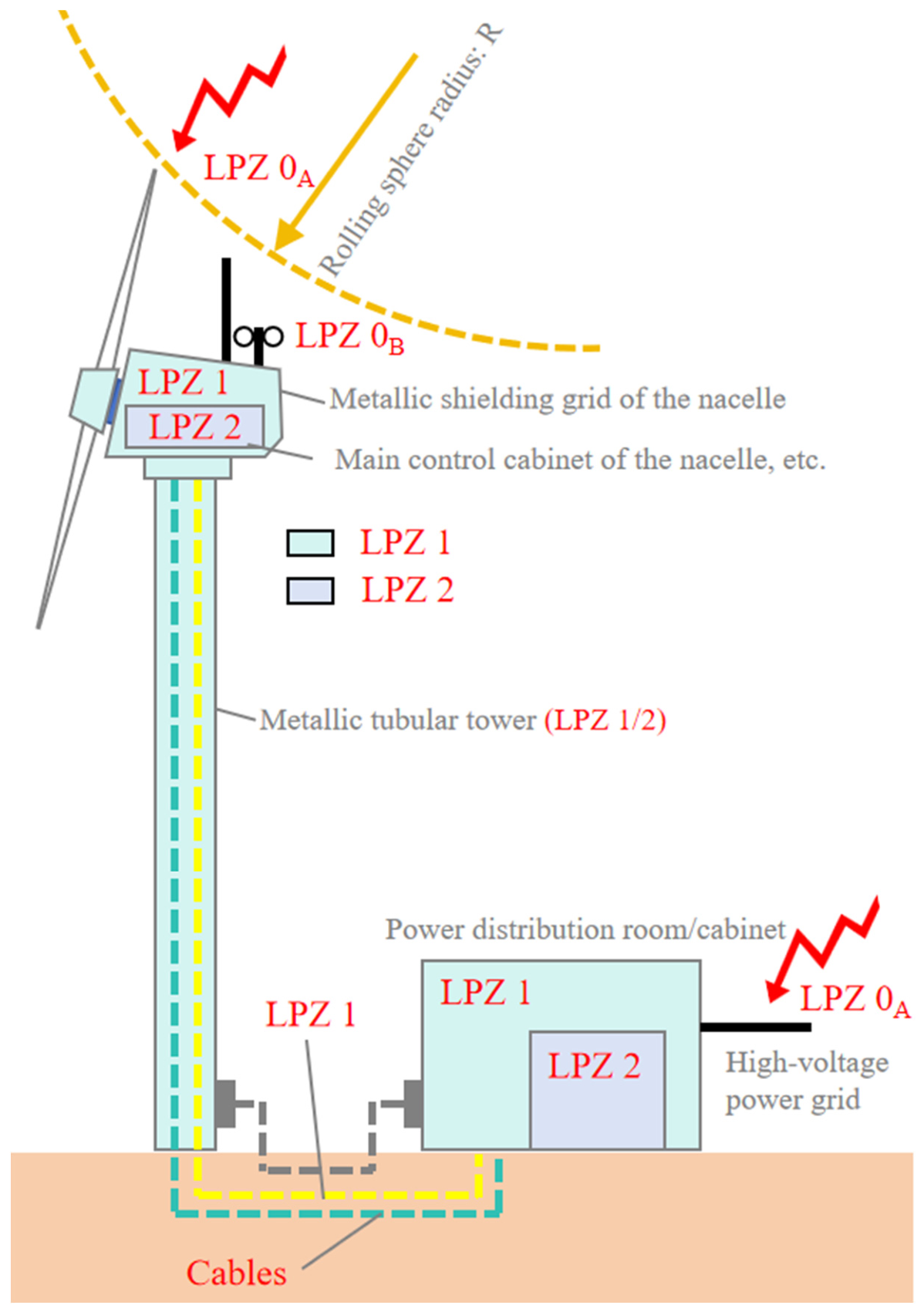
The core concept of overvoltage protection for modern wind turbines originates from the IEC 62305 series of standards and is concretised within the lightning protection zone concept defined in IEC 61400-24 (Lightning Protection for Wind Turbines). This strategy divides the complex wind turbine system into several zones with progressively decreasing electromagnetic environments, from the exterior to the interior [25,26], as illustrated in Figure 6. The core of zoned protection lies, on the one hand, in establishing a low-impedance, controlled discharge pathway for the extremely high-energy direct lightning current within LPZ0. This is achieved through the lightning receptor, down-conductor, and earthing system, thereby safeguarding the main wind turbine structure from physical damage. On the other hand, and more critically, at the boundaries between each LPZ level, gradient-based energy dissipation and voltage clamping measures are deployed to address surge overvoltages that have penetrated the internal system via conduction or inductive coupling. This approach progressively attenuates surge energy, ultimately limiting the overvoltage reaching sensitive electronic equipment in the innermost zones (LPZ2 and subsequent areas) to levels within their tolerance thresholds.
LPZ 0 Zone represents the area most directly and severely threatened by lightning. LPZ 0A Zone (e.g., blade surfaces, unprotected nacelle casings) is directly exposed to direct lightning strikes and undamped lightning electromagnetic fields. LPZ 0B Zone (e.g., the exterior of the tower within the protection range of the lightning conductor) remains within an undamped, intense lightning electromagnetic environment, though it is spared the threat of direct lightning strikes. Objects within LPZ 1 (such as the nacelle interior and primary spaces within the tower) are no longer subject to direct lightning strikes. The intensity of the lightning electromagnetic field is preliminarily attenuated due to partial shielding provided by the surrounding metallic structures (tower, shielded nacelle). LPZ 2 zones (e.g., main control cabinets at tower bases and converter cabinets) achieve further electromagnetic pulse attenuation through additional shielding measures such as shielded cabinets, providing a relatively secure electromagnetic environment for the most critical control and power electronic equipment.
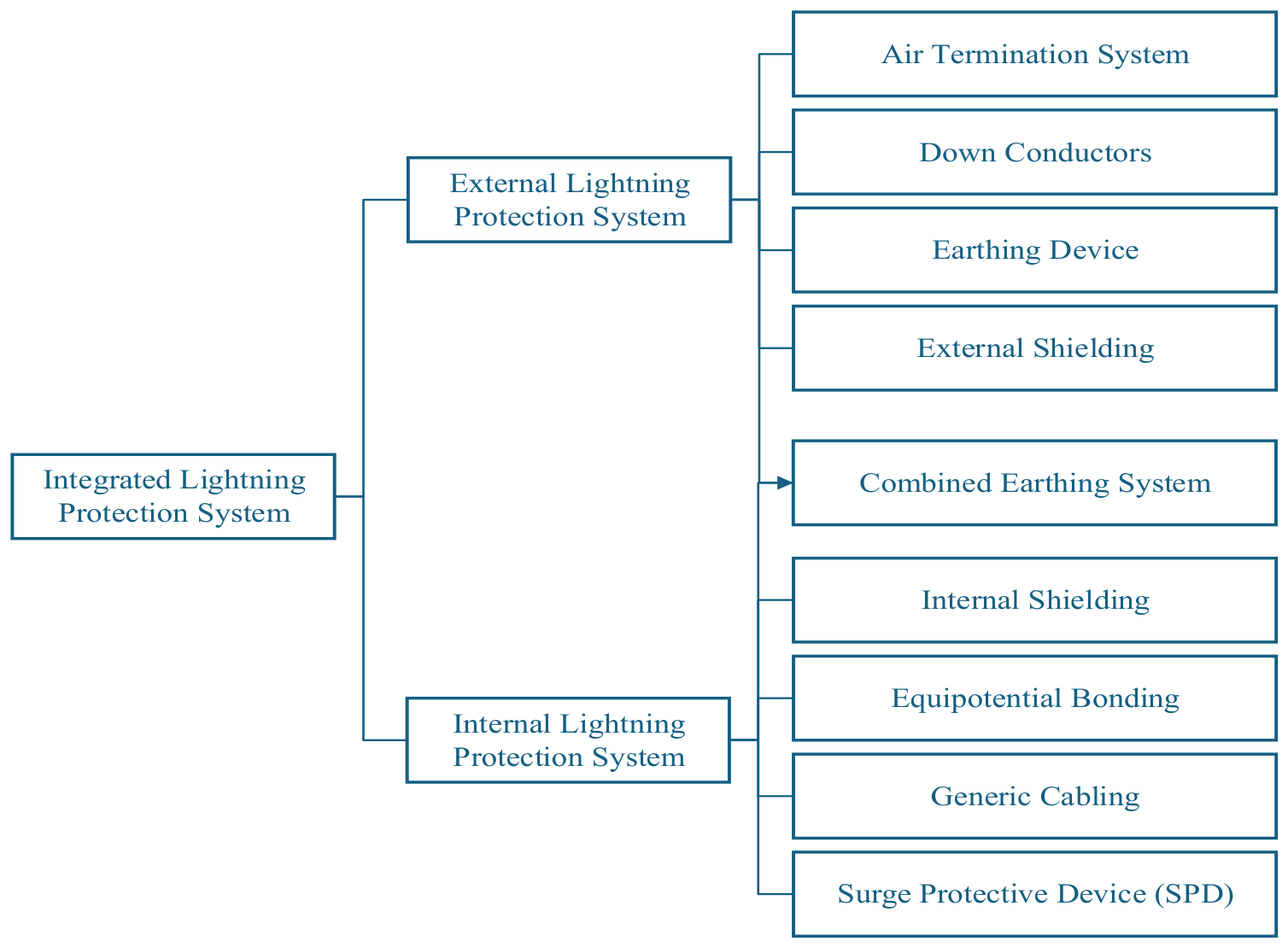
The fan lightning protection system comprises two principal components: external lightning protection and internal surge protection, as illustrated in Figure 7. Its effectiveness is critically dependent upon the coordinated operation of various protective devices.

2.2.2. External Protection System

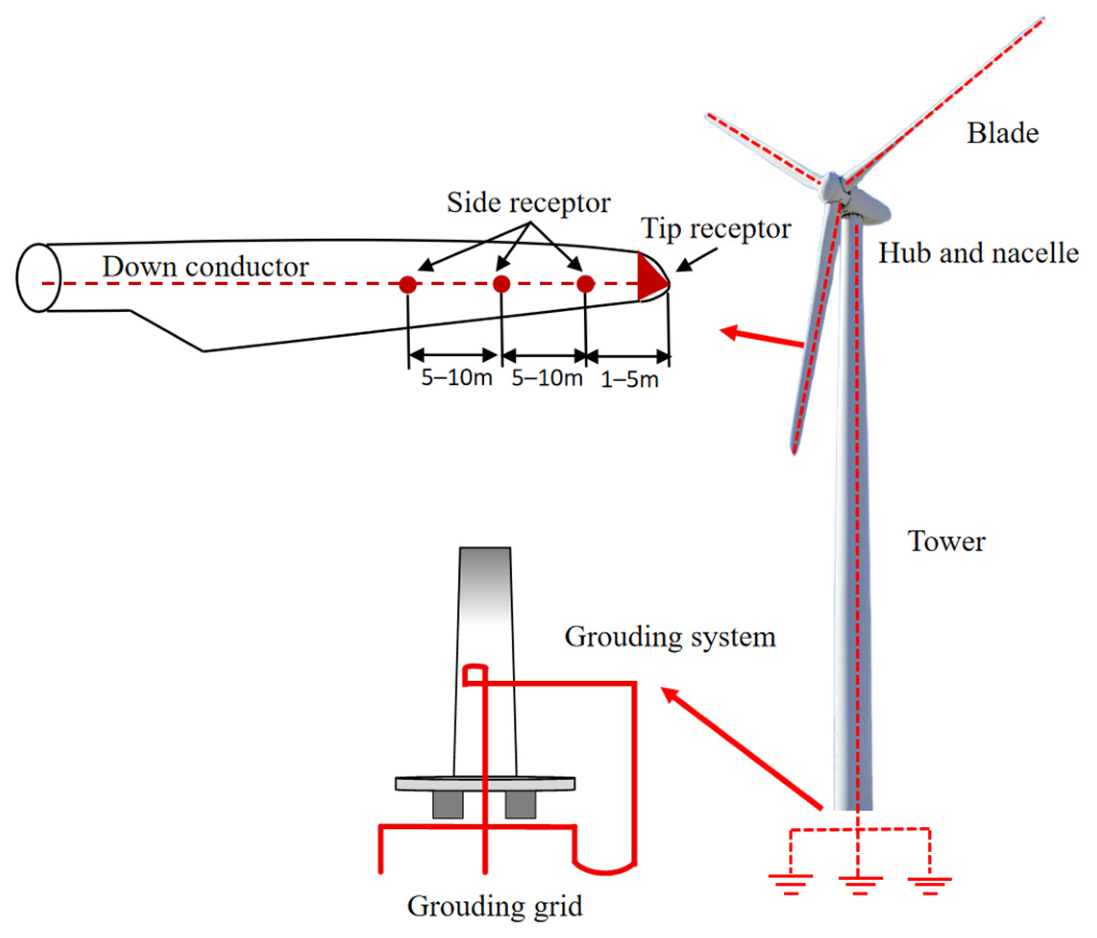
External lightning protection systems are designed to shield wind turbine structures from physical damage caused by direct lightning strikes and to safely conduct lightning currents to earth. They primarily comprise air terminals, down-conductors, and earthing installations. Figure 8 illustrates a typical design for an external lightning protection system on a wind turbine.
Air-termination systems typically comprise metallic arrestors installed at each blade tip, designed to actively induce upward lightning leaders. This ensures that strikes occur at predetermined locations, preventing direct lightning currents from impacting the non-conductive composite blade body and causing structural damage. Traditional point or wire arresters suffer from limited capture area and susceptibility to ablation and fracture. Hollow galvanised tubes may also corrode due to rust layer formation from rainwater ingress [27]. Thus, corrosion-resistant, high-melting-point materials must be selected to enhance arc ablation resistance and durability. Furthermore, optimisation is required for the arrestor terminal connection structure and arrestor positioning [28].
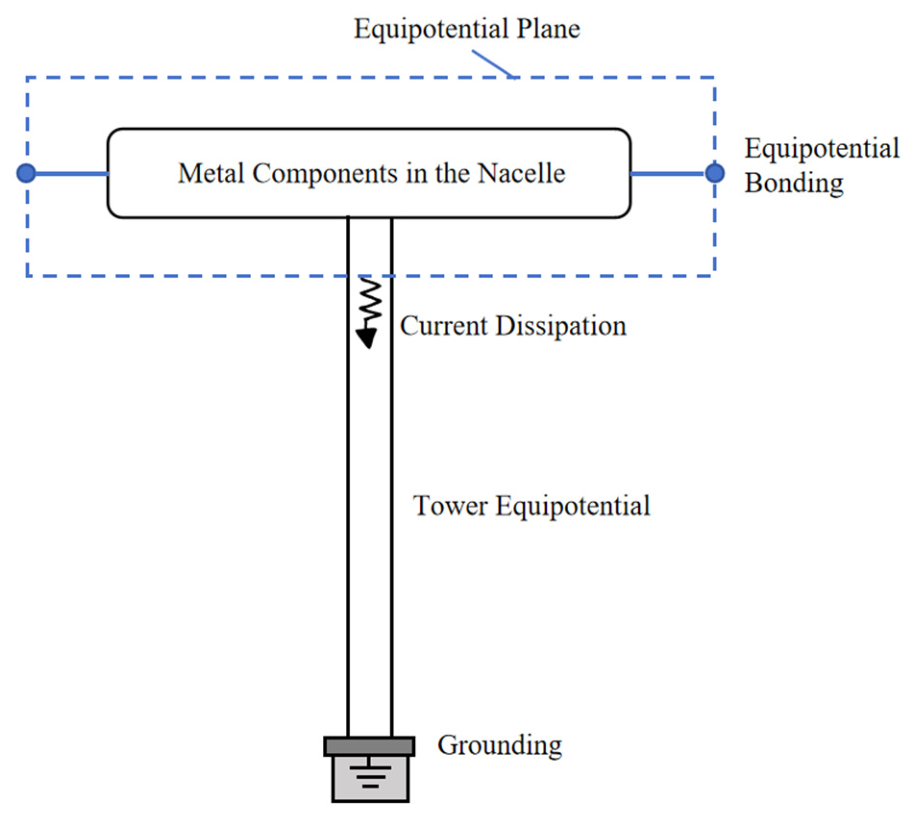
Blade lightning protection systems have evolved into relatively mature designs. The conductive network within the blades (copper cables or aluminium strips) connects to the lightning arrestor, forming an internal down-conductor. The function of the down-conductor and grounding system is to conduct the lightning current captured by the arrestor to earth with minimal additional damage, as illustrated in Figure 9. The down-conductor is typically embedded within the blade main spar and the inner wall of the tower. While this design protects the down-conductor itself, it introduces a prominent issue specific to wind turbines: when tens of thousands of amperes of lightning current rapidly discharge along this long conductor, the intensely fluctuating electromagnetic field generated around it induces common-mode and differential-mode overvoltages of up to several thousand volts in adjacent power and control circuits. These internal overvoltages, induced by the very process of “conducting lightning to Earth”, constitute a key distinction between wind turbines and conventional building lightning protection systems. They also represent one of the primary threat sources that internal protection systems must address [29].
Down-conductor system is designed to provide a final low-impedance discharge path for lightning currents and to minimise ground potential rise during lightning strikes, thereby preventing equipment damage from counterstrikes. Wind turbines typically employ ring or radial earthing grids. However, achieving low earth resistance proves particularly challenging in mountainous terrain with extremely high soil resistivity or offshore (where grounding relies on the jacket structure), thereby increasing the complexity of overvoltage protection [30].
Figure 9. Equipotential and grounding protection [31].
Energies 19 02704 g009

2.2.3. Internal Protection System

Internal protection systems are crucial for ensuring the functional safety of expensive and sensitive electrical and electronic equipment within fans. Core measures include internal shielding, equipotential bonding, integrated cabling, and the use of surge arresters.
Within the nacelle and tower, all metallic components (enclosures, cable trays, equipment casings) shall be electrically interconnected and reliably bonded to the main earthing system to eliminate hazardous potential differences [31]. The principle of equal potential and earthing protection for wind turbines is illustrated in Figure 9. Regarding shielding, the composite material of the nacelle shell offers limited shielding effectiveness. This can be supplemented by installing a metal mesh (increasing the wire cross-section or reducing the mesh aperture) [32]. Additionally, shielded cables should be employed for critical signal lines, with the shielding layer bonded at the boundaries of the LPZ to achieve equipotential bonding, thereby attenuating electromagnetic pulses [33,34,35].
The deployment strategy for surge protection devices adheres to the principles of “protection at zone boundaries” and “multi-level coordination,” with the effectiveness of protection directly dependent upon the performance and synergy of various surge protection components. At the LPZ 0/1 boundary (e.g., cable entries in machinery rooms), where lightning threats are most severe, a primary-level discharge-type SPD capable of withstanding partial direct lightning currents must be deployed. Its core protective element is typically a GDT or spark gap [36]. When surge voltages exceed its breakdown threshold (typically several thousand volts, e.g., 3000–7200 V), the GDT rapidly breaks down within nanoseconds to microseconds, transitioning from high impedance to a near-short-circuit state. This diverts the majority of lightning current energy (e.g., in a 10/350 μs waveform) to earth. The advantage of GDTs lies in their exceptionally high current-carrying capacity, though they exhibit relatively slow response times, dispersed breakdown voltages, and potential issues with follow-current generation.
At the LPZ 1/2 boundary (e.g., the power input terminals of the main control cabinet at the tower base), the surge amplitude has been reduced by prior discharge stages, yet the energy remains substantial. A second-level voltage-limiting SPD must be deployed here, typically utilising MOVs as core components. MOVs, owing to their excellent nonlinear voltage–current characteristics and rapid response speed, exhibit a sharp decrease in impedance under overvoltage conditions. This clamps the inter-line voltage to a relatively low level (e.g., under an 8/20 μs waveform) while absorbing the residual energy [37].
At the front end of the innermost sensitive equipment (such as pitch controllers or the I/O ports of the main PLC), a third-level fine protection device, such as a TVS, must be deployed. TVS devices feature picosecond-level response speeds, precisely clamping residual fast transient spikes (such as electrostatic discharge EFT) to very low levels, providing final protection for chip-level circuits. However, their current-carrying capacity is limited, and they are not typically relied upon as the primary means of energy dissipation.
This three-tiered collaborative protection system, comprising GDTs (or spark gaps), MOVs, and TVSs, forms an “energy pyramid” that progresses from coarse energy dissipation to fine voltage clamping. This ensures both the effectiveness and cost-efficiency of protection. Furthermore, the internal protection system places significant emphasis on equipotential bonding and shielding. Reliably connecting all metallic components within the nacelle and tower to the main grounding busbar ensures that hazardous potential differences during lightning strikes are eliminated. Employing shielded cables for critical signal lines, coupled with equipotential bonding at both ends, serves as an effective means of attenuating induced overvoltages.

2.3. Current Challenges Facing Wind Turbine Protection Systems

In practical wind turbine lightning protection systems, the effectiveness and operational reliability of surge protective devices (SPDs) strongly depend on the proper coordination with overcurrent protection devices (OCPDs), including backup fuses and circuit breakers. Compared with conventional low-voltage building installations, SPD coordination in wind turbines faces additional challenges due to repetitive lightning exposure, high tower structures, long cable routing, the high maintenance cost of wind turbines, and converter-based electrical architectures.
In conventional building electrical systems, international standards commonly require backup overcurrent protection devices to be installed in series with SPDs in order to prevent thermal runaway, short-circuit failure, and fire hazards caused by SPD degradation or end-of-life failure. However, this protection strategy may also permanently disconnect the SPD branch after a severe surge event, thereby reducing the continuity of surge protection.
Unlike building installations, wind turbines are continuously exposed to multiple high-energy lightning events during their operational lifetime, particularly in offshore wind farms and mountainous onshore regions. Therefore, SPDs in wind turbine systems are generally designed with enhanced repetitive surge-withstand capability, and their coordination with OCPDs must balance transient surge survivability and thermal safety requirements.
Modern wind turbine protection systems usually adopt coordinated multi-stage LPZ-based architectures. Type I SPDs are typically installed at nacelle power entrances, tower-base interfaces, and transformer terminals to discharge partial lightning currents, while Type II and Type III SPDs provide secondary and fine protection for converters, control circuits, sensors, and communication interfaces. In such systems, the selection of backup fuses and circuit breakers is coordinated with the SPD impulse discharge current rating, temporary overvoltage (TOV) withstand capability, and prospective short-circuit current of the wind farm collector system.
To improve operational continuity after repeated lightning events, recent studies have proposed MOV array structures, thermal monitoring mechanisms, coordinated fuse selection methods, and intelligent controllable protection modules. These approaches aim to reduce unnecessary SPD disconnection while maintaining safe thermal operating conditions. Therefore, SPD coordination in wind turbines is now more commonly treated as a system-level insulation coordination problem involving grounding topology, LPZ partitioning, converter interfaces, collector networks, and wind farm electrical infrastructure.
Relevant engineering practices are mainly guided by IEC 61400-24 for lightning protection of wind turbines, IEC 62305 for lightning protection zoning and coordination principles.
The current wind turbine overvoltage protection system primarily draws upon building lightning protection standards (such as the IEC 62305 series), while incorporating turbine-specific characteristics (e.g., IEC 61400-24) for application. Its core principle is “external diversion, internal clamping, and equipotential bonding”. However, with increasing single-unit capacities, elevated voltage levels, and increasingly extreme operating environments (offshore, high-altitude), this system faces significant challenges.
Firstly, the LPZ zoning employed in building lightning protection is static. The dynamic electromagnetic environment created by rotating blades and nacelle yawing necessitates a thorough reassessment of the applicability of traditional zoning models. Secondly, conventional MOVs are prone to degradation under high-frequency, multi-pulse lightning current surges; GDTs exhibit response time and follow-current limitations when protecting precision converters; existing SPDs’ nominal parameters do not fully match the complex waveforms actually encountered by wind turbines. Finally, the lack of coordinated optimisation between external downlead design and internal SPD layout/parameter selection may compromise protection efficacy or inflate costs. Consequently, establishing a highly reliable overvoltage protection system tailored to the turbine’s unique structure and operational conditions fundamentally hinges on developing superior protective devices. The following section will focus on reviewing recent research advances in protective device materials, structures, and system topologies addressing these challenges.

3. Performance Evolution and Technical Optimisation of Core Overvoltage Protection Devices

Within the multi-level protection system for wind turbines, MOV, GDT and transient suppression diodes serve as three core surge protection devices, respectively undertaking the critical functions of energy limiting, high-current discharge and precise clamping. Their performance directly determines the reliability and effectiveness of the entire protection system. To withstand complex wind power operating conditions such as multi-pulse lightning strikes, high-frequency switching transients, and extreme environments, these components undergo continuous optimisation in material systems, microstructures, and manufacturing processes.

3.1. Metal Oxide Varistor

Metal oxide varistors (MOVs) represent the most prevalent voltage-limiting protective devices within wind power systems (at the LPZ 1/2 boundary). Their core functionality relies on the Schottky barrier formed at ZnO ceramic grain boundaries to generate nonlinear voltage–current characteristics. Addressing the severe multi-pulse, high-energy surges encountered in wind farm environments, MOV research focuses on optimising grain boundary characteristics through doping modifications. Concurrently, structural design enhancements improve thermal dissipation and electric field distribution, thereby increasing energy tolerance, reducing residual voltage, and delaying ageing.
The nonlinear current-voltage characteristic of MOV-based SPDs can be approximately expressed as:
I = k V α
where k is a material-dependent constant and α is the nonlinear coefficient reflecting the voltage clamping capability of the MOV. A higher nonlinear coefficient generally indicates stronger surge suppression performance and lower residual voltage during transient overvoltage conditions.
Material doping and microstructural regulation form the foundation for enhancing MOV intrinsic performance. Researchers employ multi-component doping within the ZnO-Bi2O3 base formulation to target specific electrical property optimisation. For instance, Sb2O3 doping refines grain size and improves grain boundary uniformity, thereby enhancing stability under high-current surges [38]. The incorporation of additives such as C3N4 or Eu2O3 has been demonstrated to strengthen grain boundary barriers, thereby enhancing surge current tolerance and reducing leakage current, achieving a balance between high nonlinearity and low loss [39,40]. Notably, needle-shaped Co3O4 dopants form more effective conductive networks within sintered bodies than spherical particles. This enables samples to exhibit superior current-carrying capacity and power–frequency overvoltage tolerance when subjected to 8/20 μs lightning current surges [41]. These microstructural modifications collectively address the performance degradation of MOVs caused by grain boundary deterioration during repeated impacts.
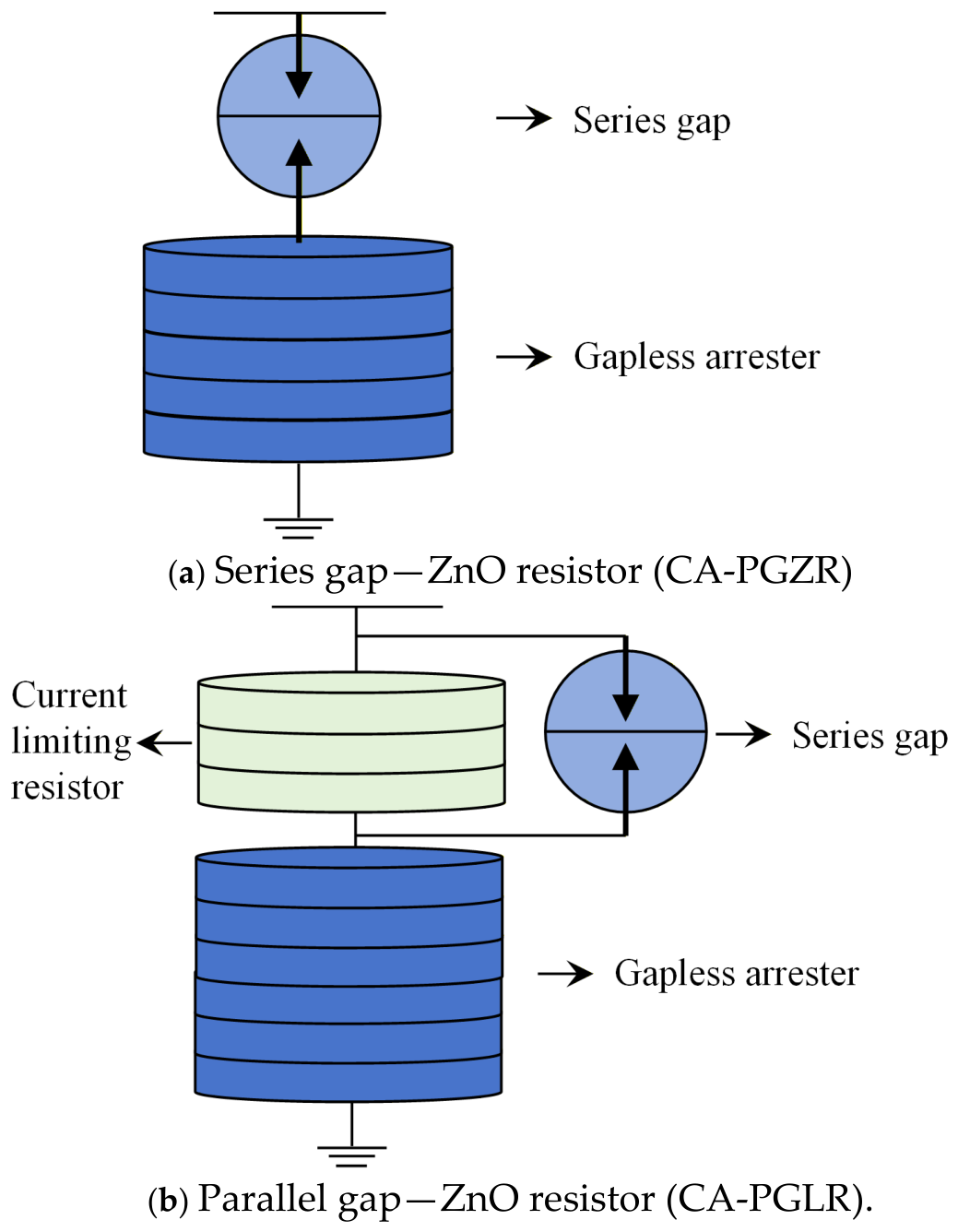
Advanced preparation techniques and macrostructure design represent another critical pathway for achieving performance breakthroughs. At the process level, novel methods such as cold sintering have been employed to fabricate high-performance ZnO-based composites. For instance, the introduction of amorphous polyacrylonitrile (PAN) to form ZnO-PAN hybrid materials has elevated the threshold electric field and breakdown strength by an order of magnitude compared to conventional materials, demonstrating exceptional high-temperature stability [42]. Meanwhile, sol–gel-synthesised Sc2O3-doped Bi2O3-ZnO films offer potential for embedded protection in miniaturised, integrated electronic devices [43]. At the device structural level, innovative designs aim to enhance current distribution uniformity and thermal dissipation. As shown in Figure 10, multilayer chip-on-board packaging structures exhibit lower parasitic inductance and improved heat dissipation pathways, contributing to increased energy absorption density [44]. More significantly, integrating MOVs with discharge gaps to form composite structures such as series-connected gap-ZnO resistors (CA-PGZR) or parallel-connected gap-ZnO resistors (CA-PGLR) [45], as illustrated in Figure 10, constitutes an effective system-level solution. This configuration leverages the gap to absorb the initial impact of high-amplitude operational overvoltages, while the MOV precisely clamps residual voltage and dissipates energy. Their synergistic operation significantly enhances transient overvoltage withstand capability and overall service life.

3.2. Gas Discharge Tube

Gas discharge tubes (GDTs), as switching devices, are commonly employed for primary coarse protection at the LPZ 0/1 boundary in wind power systems. Their performance hinges critically on response speed, breakdown voltage stability, and the ability to interrupt power–frequency follow-current. Current optimisation research primarily focuses on electrode materials, gas atmospheres, and gap structures to overcome traditional GDT limitations such as response delay, parameter dispersion, and potential follow-current faults in power supplies.
The breakdown behaviour of GDTs is closely related to gas pressure and electrode spacing, which can be approximately described by Paschen’s law:
V b = B p d l n ( A p d ) l n [ l n ( 1 + 1 / γ ) ]
where V b is the breakdown voltage, p is the gas pressure, d is the electrode spacing, and A , B , and γ are gas-dependent constants. This relationship explains the high insulation capability and delayed conduction characteristics of GDT devices under lightning impulse conditions.
Innovations in electrode materials and surface treatment technologies aim to enhance discharge trigger reliability and electrode longevity. Traditional electrode materials such as tungsten–copper alloys are prone to ablation after repeated high-current impacts. Research indicates that modifying electrodes with graphene represents an effective approach. Tungsten–copper composites with tuneable graphene content, prepared via cold pressing or sintering processes, exhibit significantly enhanced resistance to arc ablation, thereby extending GDT service life [46]. Coating the electrode surface with a graphene layer prepared via chemical vapour deposition (CVD) as an electron emission layer stabilises initial electron emission. This helps reduce breakdown voltage dispersion and enhances the device’s reliability against surge currents [47].
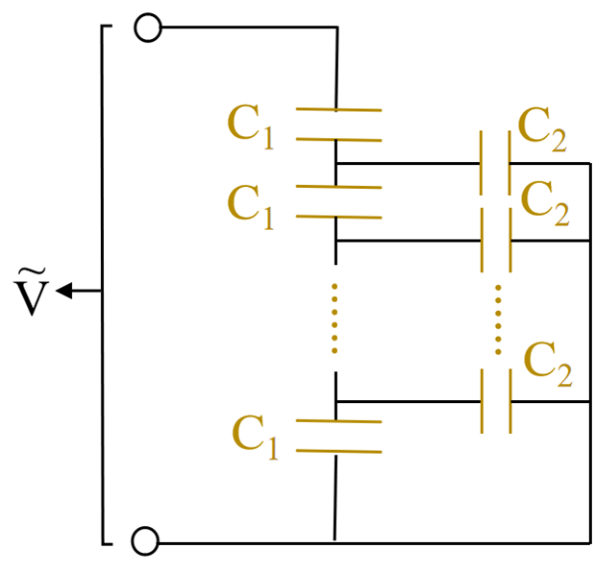
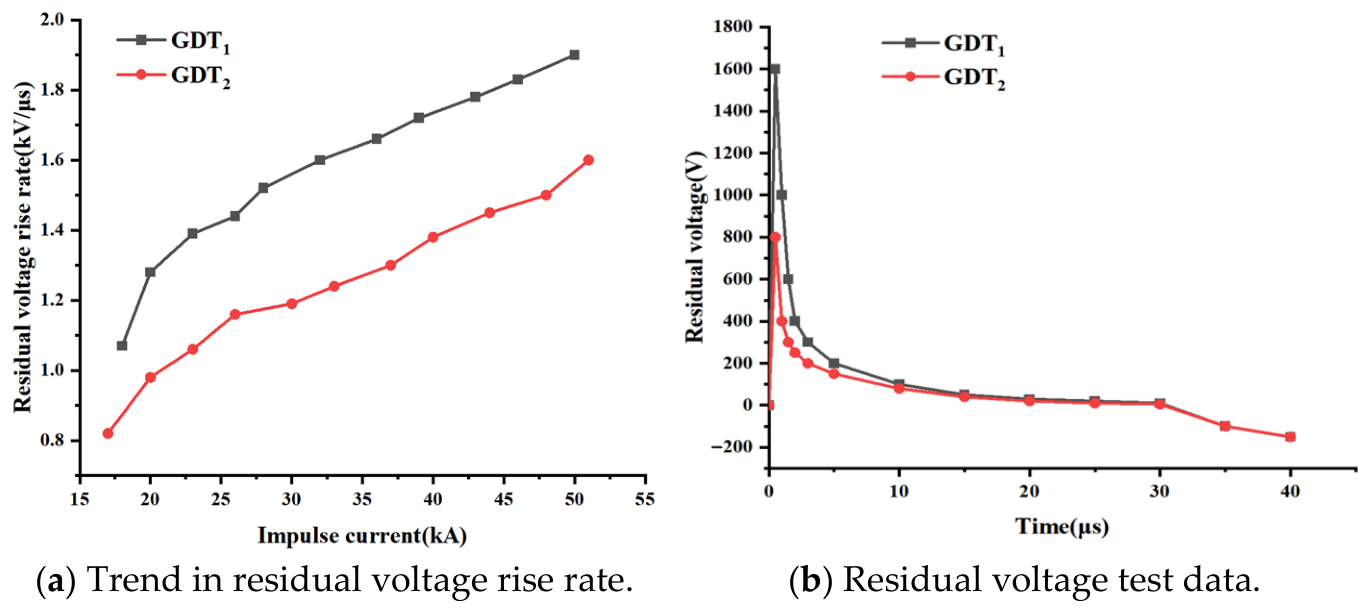
The multi-gap structure design represents a systematic approach to substantially enhancing GDT performance. By decomposing a single large gap into multiple small gaps arranged in series (Figure 11), the physical discharge process can be effectively optimised [48]. This design offers multiple advantages. Firstly, for the same overall spacing, the multi-gap structure typically exhibits a lower and more stable DC breakdown voltage due to the more pronounced field emission effect. Secondly, the sequential breakdown mechanism across multiple gaps facilitates the rapid formation of continuous conductive pathways, thereby reducing response times. Research confirms that carefully designing the ratio between the trigger gap and main gap enables precise control over conduction delay [49]. Furthermore, the multi-gap configuration forces the arc to fragment into multiple short arcs, increasing the arc cooling surface area. This facilitates rapid arc extinction at the zero-crossing point of the mains frequency current, fundamentally enhancing the follow-current interruption capability [50]. Residual voltage test data (Figure 12) indicates that the optimised multi-gap GDT exhibits a gentler residual voltage rise slope and lower peak voltage during impulse withstand, demonstrating superior voltage-limiting performance and dynamic response.

3.3. Transient Voltage Suppressor Diode

Transient voltage suppressor (TVS) diodes operate at the end of protection chains, providing nanosecond-level or even picosecond-level precise voltage clamping for the most sensitive components within wind turbines, such as IGBTs and control chips. Their development trajectory is advancing towards lower clamping voltages, faster response times, higher power density, and reduced parasitic capacitance. The application of wide bandgap semiconductor materials, particularly silicon carbide (SiC), serves as the core driving force.
The protection mechanism of TVS diodes is mainly based on avalanche breakdown of reverse-biased PN junctions under transient overvoltage conditions. The avalanche breakdown voltage can be approximately expressed as:
V B R = E c W
where V B R is the breakdown voltage, E c is the critical electric field strength of the semiconductor material, and W is the depletion layer width. When the transient voltage exceeds the breakdown threshold, avalanche multiplication occurs rapidly inside the PN junction, enabling the TVS device to clamp the overvoltage within nanoseconds.
SiC-based TVS devices, leveraging their high critical breakdown electric field strength and thermal conductivity, are progressively replacing certain silicon-based TVS variants, particularly in high-voltage, high-frequency applications such as wind power converters. SiC-based avalanche TVSs, employing designs like mesa trench-terminated coupled U-shaped planar junctions, enable rapid and uniform avalanche breakdown, effectively suppressing voltage overshoot during the switching process of silicon carbide converters [51]. Compared to conventional silicon-based through-type devices, their response time can be reduced by several orders of magnitude, significantly enhancing system reliability when confronting rapid transients [52]. Furthermore, by optimising the device terminal structure, flexible clamping voltage design can be achieved to meet the protection requirements of different circuit nodes.
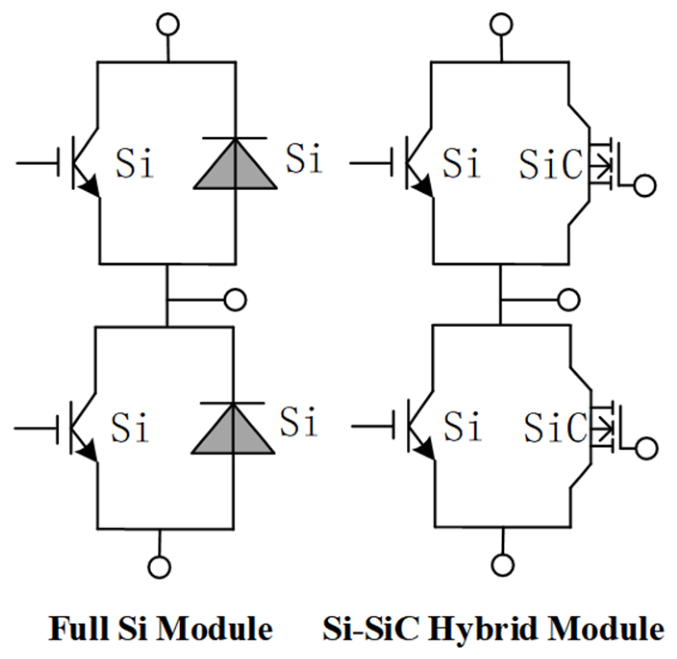
Integrated and multifunctional TVS technology aims to resolve the conflict between high performance and circuit compatibility. For instance, integrated low-capacitance TVS devices incorporate capacitance-balancing structures onto a single chip, delivering superior electrostatic discharge protection while maintaining extremely low parasitic capacitance. This prevents adverse effects on high-speed data signal integrity [53]. Multifunctional TVS technology addresses uniformity challenges during triggering in multi-finger devices, preventing localised thermal failure while achieving more precise clamping [54]. At the module level, hybrid switches employing SiC MOSFETs instead of conventional silicon diodes, as illustrated in Figure 13, utilise MOSFET channel conduction during reverse conduction. This not only eliminates the recovery losses of the body diode but also leverages the inherent rapid avalanche breakdown characteristics of the body diode itself, enabling its use as a natural TVS. This approach simplifies the design of the main power circuit and enhances overall performance [55].
A review of these three core protective devices reveals that their technological evolution has been closely aligned with the practical requirements of wind power systems. The optimisation of MOVs focuses on withstanding and absorbing high energy; the critical function of GDTs lies in rapidly and reliably discharging large currents while ensuring safe disconnection; and TVSs pursue extreme response speeds coupled with precise clamping levels. Table 1 systematically outlines their characteristics, applicable scenarios, and current primary optimisation directions.
Advancements in materials science and innovations in micro-physical structures jointly drive the expansion of protective device performance boundaries. However, the enhancement of individual device performance faces inherent physical limitations. Consequently, the key focus for breakthroughs in protection technology now lies in determining how to combine optimised devices such as MOVs, GDTs, and TVSs through scientifically designed series-parallel topologies and coordinated triggering mechanisms. This approach enables the construction of system-level protection solutions whose performance far exceeds the simple sum of their component parts.

4. Topology Optimisation and Intelligent Protection Technology for Overvoltage Protectors

The performance optimisation of individual protective devices faces inherent physical limitations. To meet the exceptionally high reliability and precision demands for overvoltage protection in large-scale wind power systems—particularly in extreme environments such as offshore and high-altitude locations—innovations must be pursued at the system level. This involves integrating topologies with optimised coverage and employing active intelligent triggering technologies to address complex, dynamic overvoltage threats in wind power systems, thereby enhancing overall protective performance.

4.1. Topological Structure Optimisation Design for Protective Devices

Within the limited space of the fan unit, the rational design of connection methods (topologies) for components such as MOVs, GDTs, and TVSs is crucial for optimising energy dissipation pathways and achieving multi-level coordination.

4.1.1. Fundamental Collaborative Topology Design and Applications

Fundamental series-parallel topologies constitute the basic forms for achieving energy and timing coordination between devices, with their core principle lying in leveraging the complementary characteristics of different components. Table 2 summarises the features of several typical basic topologies and their application considerations within wind power systems.
The core of basic topology design lies in resolving two major challenges: “timing coordination” and “energy sharing”. Timing coordination requires that fast-responding devices (such as TVS) do not prematurely exhaust their energy and become damaged, thereby affording slower-responding but higher-current-carrying devices (such as GDTs) sufficient activation time. Energy sharing demands that each device bears a proportionate share of the surge energy according to its capacity, preventing localised overload. This typically necessitates the introduction of decoupling components (such as inductors and resistors), validated through rigorous simulation and experimentation (e.g., 8/20 μs and 10/350 μs waveform testing) [57,59].

4.1.2. The Complex Topological Structure Design of Overvoltage Protection

To address the increasingly severe overvoltage environments faced by wind turbines, particularly offshore units, such as multiple-pulse lightning strikes, more advanced composite topologies have been developed. Among these, a representative solution involves a structure where multiple-gap GDT are connected in parallel with varistors, achieving a significant leap in performance through structural innovation. As shown in Figure 14, this topology encapsulates multiple metal electrodes within a single chamber, forming a series of multiple micro-gaps [62]. When connected in parallel with MOVs, this structure exhibits distinct advantages.
Firstly, the DC breakdown voltage of the multi-gap GDT (Figure 14) demonstrates reduced variability. Furthermore, by paralleling it with MOVs of differing voltage ratings, the effective operating threshold of the GDT can be actively “lowered”. Research indicates that the higher the MOV’s varistor voltage, the greater the static ignition voltage of the parallel combination. Increasing the number of parallel MOVs effectively reduces this ignition voltage, enabling the protection system to initiate at lower overvoltage levels. This facilitates early operation during the initial phase of lightning surge fronts, thereby limiting overvoltage peaks. Secondly, the multi-gap design segments the long arc into multiple short arcs, significantly increasing the arc cooling surface area and insulation recovery strength. This enables faster and more reliable termination of the power–frequency follow current after discharging the lightning current, fundamentally overcoming the short-circuit risks that traditional single-gap GDTs may pose in low-voltage power systems. It is particularly suitable for protecting distribution boxes at the base of wind turbine towers. Moreover, the multi-gap structure renders the discharge process more uniform and controllable. Experimental data indicates that, when subjected to identical surge currents, multi-gap GDTs exhibit a gentler residual voltage rise slope, lower peak residual voltage, and greater stability compared to single-gap GDTs. This proves more advantageous for protecting downstream precision electronic equipment. Concurrently, the parallel arrangement of multiple electrodes effectively increases the current-carrying cross-sectional area, enhancing overall surge current withstand capability.
The design challenge of this composite topology lies in the precise parameter matching and process consistency. The spacing, gas pressure, and composition of multiple gaps require precise control to ensure consistent breakdown voltages across all gaps. The parameters of the parallel-connected MOVs must also be carefully selected to achieve optimal trigger coordination and energy sharing. Despite these challenges, its comprehensive advantages in handling multi-pulse, high-energy surges in wind power applications position it as a promising high-performance solution for primary front-end protection [63].
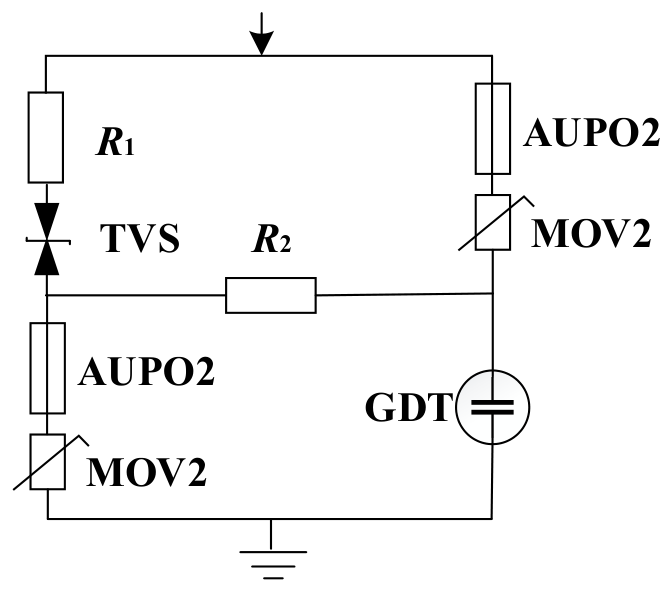
Extending the aforementioned fundamentals with composite topology concepts enables the construction of fully functional system-level protection modules. For instance, the high-performance surge protection device (SPD) topology depicted in Figure 14 employs a multi-channel, multi-device collaborative design philosophy [64]. A fast-response channel, comprising TVS and resistors, specifically suppresses extremely steep-fronted induced overvoltages. A two-stage MOV configuration forms the energy-limiting channel, which is responsible for absorbing and restricting the primary surge energy. The discharge channel, comprising a GDT, serves as the ultimate high-current discharge pathway. Energy coordination and timing synchronisation between channels are achieved via decoupling resistors (R1, R2), thereby realising integrated protection encompassing “rapid clamping, energy absorption, and high-current discharge” within a compact module. This demonstrates the powerful capability of topological optimisation in maximising overall performance.
Figure 14. Schematic diagram of a multi-channel cooperative topology for a high-performance power supply SPD [64].
Energies 19 02704 g014

4.2. Proactive Triggering of Intelligent Protection Technology

Traditional passive protective devices rely on the natural response following overvoltage reaching their fixed breakdown threshold, presenting inherent issues such as response delays, protection blind spots, and operational characteristics influenced by environmental factors (e.g., atmospheric pressure, humidity). As wind power systems increase in individual capacity and power electronic equipment becomes more densely packed, particularly in extreme environments such as offshore and high-altitude locations, demands for rapid and reliable protection have become almost stringent. This has led to the emergence of active-triggered intelligent protection technology. By integrating sensing, control, and rapid-triggering units, it enables real-time detection of external overvoltages and active intervention. This marks a paradigm shift in overvoltage protection philosophy, moving from “passive endurance” to “active defence”.

4.2.1. Technical Principles and System Configuration

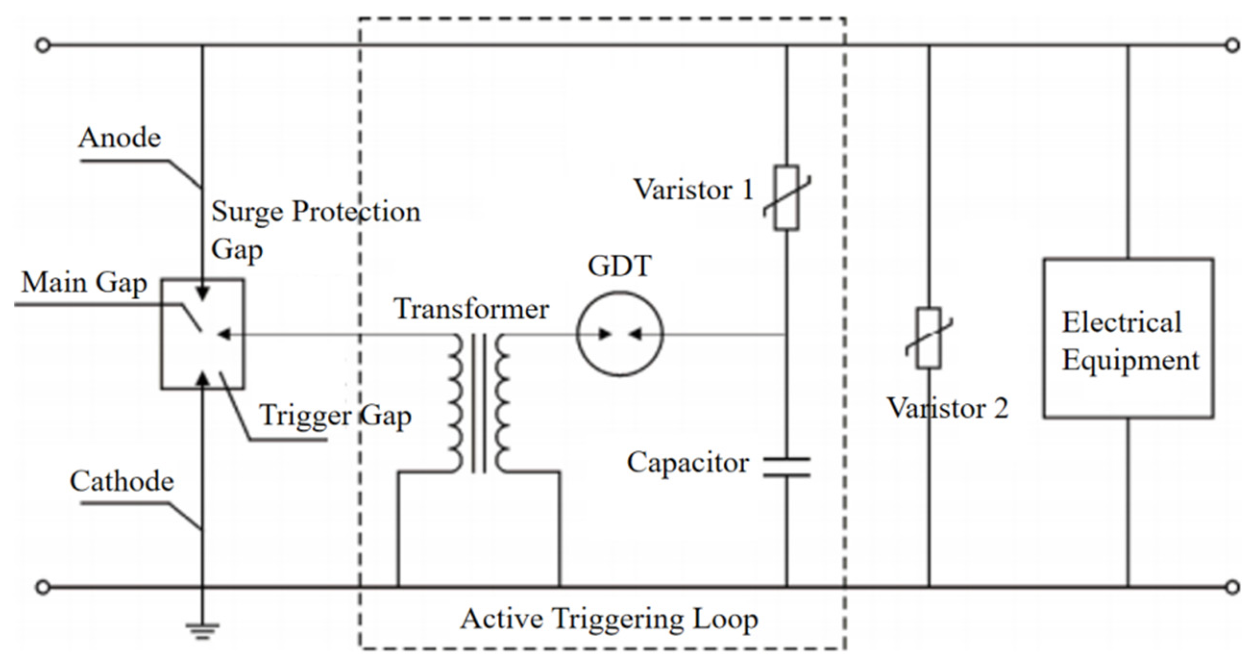
The core of proactive triggering technology lies in establishing a rapid closed-loop system comprising detection, assessment, and execution, as illustrated in Figure 15. During the operation of protective devices, the sensing unit continuously monitors overvoltage signals on the line. Upon detecting overvoltage amplitude or rise rates exceeding preset thresholds, the trigger unit generates a high-energy trigger signal within an extremely short timeframe. This signal is applied to the main discharge unit (typically a controllably breakdown spark gap), forcing it to conduct prematurely at a voltage significantly below its self-breakdown threshold [65].
This operational mechanism offers substantial application advantages in overvoltage protection requiring rapid response and high protection levels. Firstly, it enables controlled adjustment of the breakdown voltage. By setting different trigger thresholds, it can flexibly adapt to the requirements of different voltage levels or protection levels (LPZ boundaries) within wind power systems. It also maintains a stable operating voltage in harsh high-altitude environments, overcoming the performance drift of traditional air gaps caused by environmental changes. Secondly, it achieves a significant enhancement in response speed. As the trigger pulse energy sufficiently pre-injects a large number of initial electrons into the gap, it drastically shortens the formation and development time of the discharge stream. This reduces the breakdown delay of the main gap from the microsecond level of traditional passive approaches to the nanosecond level, which is crucial for suppressing extremely steep-fronted induced lightning overvoltages [66].
Figure 15. Schematic diagram of the general operating principle for an active overvoltage protection system [65].
Energies 19 02704 g015

4.2.2. Research on Key Technologies and Their Suitability for Wind Power Scenarios

The engineering application of active triggering technology centres on resolving issues of trigger reliability, precise energy matching, and adaptability to the complex operating conditions of wind power generation.
Regarding enhancing trigger reliability, research focuses on the generation method of trigger pulses and energy coupling efficiency. A typical approach employs a topology incorporating a GDT and a pulse transformer. This utilises the rapid overvoltage clamping action of a front-end MOV to charge a capacitor, thereby triggering the GDT. The pulse transformer then boosts the voltage to generate the trigger pulse [64,65]. Research indicates that trigger circuit parameters, particularly the static breakdown voltage of the GDT and the turns ratio of the pulse transformer, directly influence the system’s protection range and response speed [67]. Alternative studies have proposed trigger techniques based on surface flashover in ZnO materials. By optimising the electric field design of the flashover channel, trigger signals can be generated at lower overvoltage levels, further reducing the overall system’s operating voltage [68]. Addressing the high salt fog corrosion environment confronting offshore wind power equipment, the corrosion resistance of materials and creepage distance design for exposed sensors and trigger electrodes have become research priorities. Examples include employing specialised coatings or fully sealed structures to ensure long-term reliability [69].
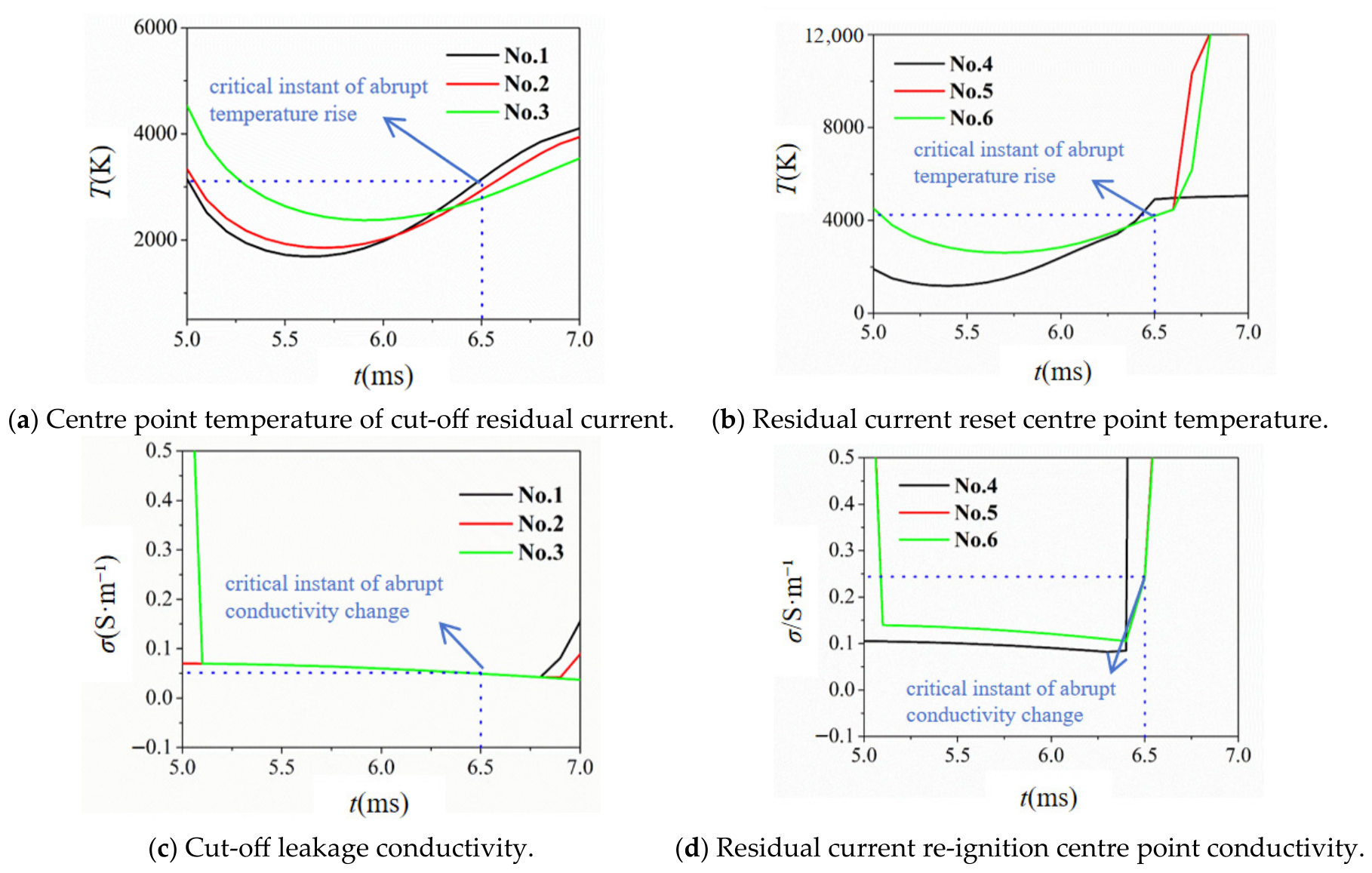
The value of active triggering technology is particularly evident in adapting to the overvoltage waveforms characteristic of wind power systems. Lightning strikes on wind farms, especially direct strikes to blades, typically exhibit a “multi-pulse” feature comprising an initial prolonged return stroke followed by multiple subsequent short pulses. Conventional MOVs are prone to thermal failure due to energy accumulation when subjected to such impacts. Research has explored analysing the decay characteristics of the gap plasma (e.g., temperature, conductivity) following power–frequency follow-current extinction within active-triggered gaps. By evaluating their arc-quenching capability and insulation recovery status, this work proposes quantitative criteria for assessing whether an overvoltage protection gap retains the capacity to withstand subsequent lightning strikes [70], as shown in Figure 16.
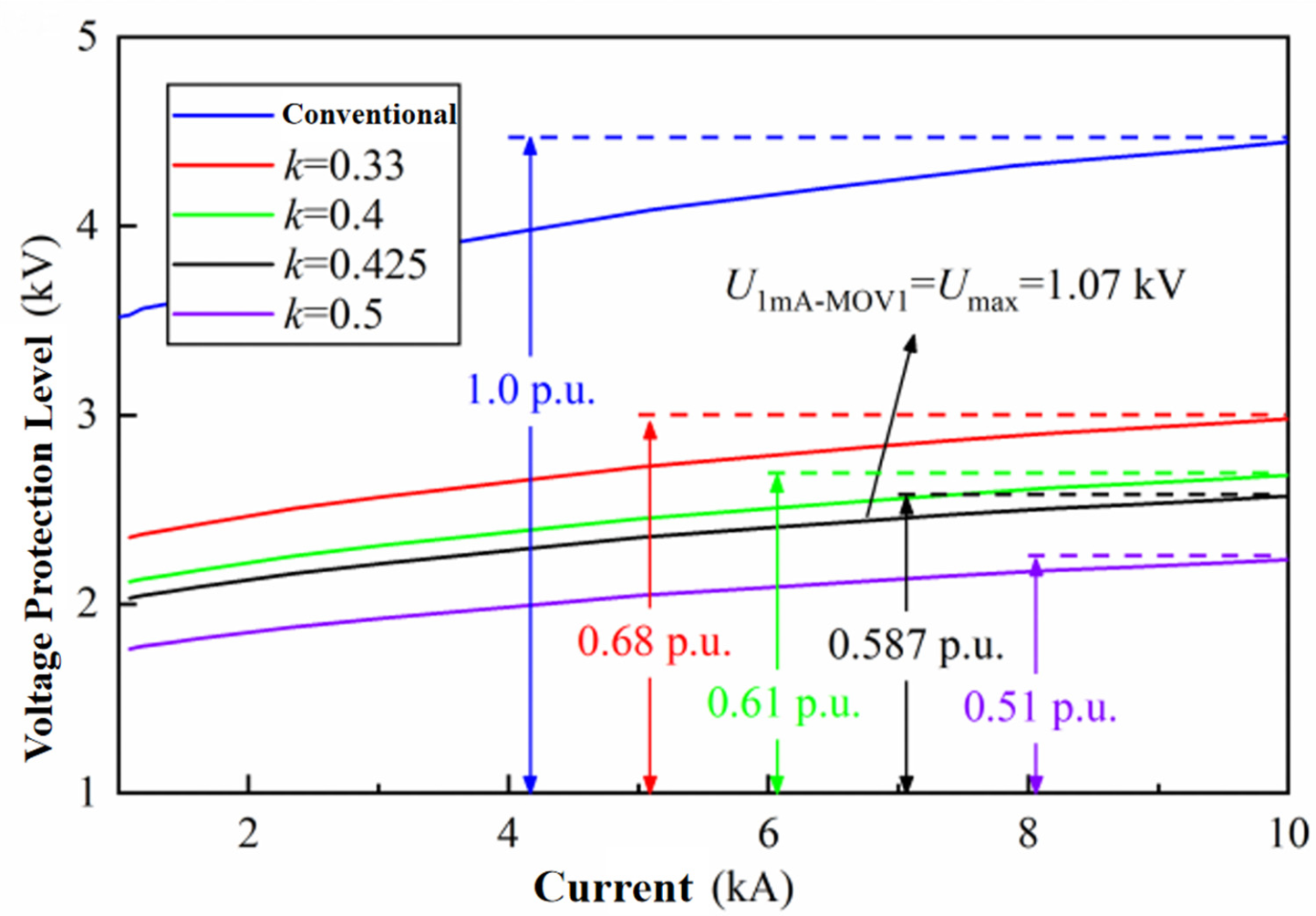
Moreover, current cutting-edge research no longer settles for merely achieving rapid triggering, but instead pursues protective devices with dynamically adaptive voltage–current characteristics. That is, their impedance can intelligently adjust according to the magnitude, rise rate, and even spectral characteristics of overvoltages. This enables deep clamping of high-energy lightning surges while maintaining high impedance against prolonged power–frequency or operational overvoltages, thereby preventing false tripping or damage. In this direction, higher-integration intelligent protection modules have emerged. For instance, research has proposed the concept of a controllable surge protection module, whose core comprises a controllable trigger switch driven by specialised circuitry. The module’s key innovation lies in its built-in automatic energy-coupled trigger circuit, which autonomously determines the nature of the invading overvoltage signal based on its frequency components (du/dt): For high-frequency lightning wavefronts, the circuit rapidly couples energy to trigger the main switch, achieving nanosecond-level response and deep voltage limiting. For low-frequency transient overvoltages, it maintains a decoupled state, presenting the module as a high impedance. This approach elegantly resolves the contradiction between high protection levels and high operational stability [18]. Experimental validation demonstrates that such modules achieve stable response times around 130 nanoseconds, with residual voltages under standard lightning wave impacts reduced by over 30% compared to conventional SPDs. Figure 17 further quantifies the advantage of the active triggering module in terms of voltage protection level. Compared with a conventional SPD, the Combined Surge Protection Module (CSPM) reduces the residual voltage under the same 8/20 μs lightning impulse current from 0.68 p.u. to 0.61 p.u. As the controllable ratio k (the parameter ratio between the two MOV devices) gradually increases to 0.5, the residual voltage of the CSPM under lightning impulse can be further reduced to 0.51 p.u., significantly enhancing the voltage protection level of the device. This result demonstrates that, through active triggering and energy coupling optimisation, the protection residual voltage can be significantly reduced without sacrificing current-carrying capacity, making it particularly suitable for voltage-sensitive wind turbine control and converter systems [18].

5. Summary and Outlook

This paper systematically traces the evolution of overvoltage protection technologies and devices for wind turbines, delving into the unique overvoltage threats posed to wind turbines by their towering structures and intricate internal power electronic equipment. Particular emphasis is placed on the core challenge of severe induced overvoltages triggered when lightning currents discharge along long down-conductors. The paper presents a zoned collaborative protection framework based on the lightning protection zone (LPZ) concept, highlighting key material and structural advancements in three core protection devices: MOVs, GDTs, and TVS. These innovations enhance current-carrying capacity, accelerate response times, and improve environmental adaptability. Finally, the paper comprehensively reviews technological trends towards energy coordination via multi-level topological optimisation and the transition from “passive endurance” to “intelligent active defence” through active triggering techniques, charting a course for constructing highly reliable overvoltage protection systems suited to future large-scale, complex wind power scenarios.
Despite significant technological advances, current protection systems still face challenges including incomplete alignment between standards and dynamic operating conditions, mismatches between device performance and complex waveforms, and insufficient system-level collaborative design. Therefore, to propel wind power overvoltage protection technology towards higher reliability, intelligence, and standardisation, the following research directions warrant particular attention:
(1)
Overcoming bottlenecks in materials and integration technology to develop next-generation high-performance protection devices. Continue deepening the application of wide-bandgap semiconductors in TVS and active switches, investigating their physical mechanisms and reliability under ultra-fast transients. Explore the use of nanomaterials, novel metal oxide systems, and biomimetic structures in MOVs and GDTs to further enhance energy density, reduce ageing rates, and improve tolerance to extreme environments. Promote the development of modular and integrated devices to elevate protection levels and equipment lifespan.
(2)
Refine testing standards and collaborative design methodologies grounded in real-world operating conditions. Address dynamic electromagnetic environments caused by turbine rotation and yaw, alongside specialised stresses such as multi-pulse lightning strikes at sea and high salt fog exposure, to establish overvoltage testing methods more closely aligned with actual wind farm conditions. Develop a high-precision, multi-physics coupled electromagnetic transient simulation platform. This platform will enable system-level modelling from lightning strike capture and internal induction to the operation of SPDs at various levels. It will provide quantitative design tools for the coordinated optimisation of external lightning protection and internal surge protection, thereby reducing protection blind spots and design redundancy.
(3)
Addressing specific challenges such as DC-side transient overvoltages in offshore flexible DC transmission wind farms, external insulation coordination under low atmospheric pressure in high-altitude regions, and high-frequency switching overvoltages in large-scale converter units, deepen integration with intelligent and digital technologies to construct predictive protection systems. Deeply integrate sensing technology, edge computing, and artificial intelligence algorithms into protection systems, developing customised protection solutions for specialised application scenarios. This initiative will foster a multi-tiered technological framework spanning materials, components, topologies, and complete systems, providing robust safety assurance for China’s wind power industry as it pursues its strategic development towards offshore, deep-sea, and large-scale wind energy.

Funding

This research received no external funding. No APC funding was available for this article.

Data Availability Statement

Data sharing is not applicable to this article as no new data were created or analyzed in this study.

Conflicts of Interest

The authors declare no conflict of interest.

References

  1. Liu, Z.; Li, W.; Zhang, Y.; Wang, X. A comprehensive review of wind power prediction based on machine learning: Models, applications, and challenges. Energies 2025, 18, 350. [Google Scholar] [CrossRef]
  2. IEA. Global Energy Review 2025; IEA: Paris, France, 2025; Available online: https://www.iea.org/reports/global-energy-review-2025 (accessed on 24 March 2025).
  3. Zhangbin, Y.; Chen, L.; Liu, H.; Wang, J. Analysis and suppression of offshore wind power broadband oscillation based on HVDC transmission technology. Electr. Eng. 2025, 107, 3463–3481. [Google Scholar] [CrossRef]
  4. Sekioka, S.; Otoguro, H.; Funabashi, T. A study on overvoltages in windfarm caused by direct lightning stroke. IEEE Trans. Power Deliv. 2018, 34, 671–679. [Google Scholar] [CrossRef]
  5. Glasdam, J.; Bak, C.L.; Hjerrild, J. Transient Studies in Large Offshore Wind Farms Employing Detailed Circuit Breaker Representation. Energies 2012, 5, 2214–2231. [Google Scholar] [CrossRef]
  6. Chen, C.; Gao, J.; Chu, P. A novel energy absorption-based protection scheme for surge transients in large-scale wind farm system. Front. Energy Res. 2022, 10, 846714. [Google Scholar] [CrossRef]
  7. Chen, M.; Liu, Y.; Zhao, Y.; Wang, L.; Zhang, H. Two-layer fuzzy control-based energy storage participation in offshore wind power transient stability enhancement. J. Phys. Conf. Ser. 2025, 3065, 012051. [Google Scholar] [CrossRef]
  8. Wang, H.; Wu, Z.; Wang, Z. Transient voltage stability analysis of offshore wind power systems. J. Energy Res. Rev. 2025, 17, 1–10. [Google Scholar] [CrossRef]
  9. Garolera, A.C.; Cummins, K.L.; Madsen, S.F.; Holboell, J.; Myers, J.D. Multiple lightning discharges in wind turbines associated with nearby cloud-to-ground lightning. IEEE Trans. Sustain. Energy 2015, 6, 526–533. [Google Scholar] [CrossRef]
  10. Zheng, Y.; You, Q.; Chen, Y.; Zhang, W.; Li, X. Modeling transient waveforms of offshore wind power AC/DC transmission faults: Unveiling symmetry–asymmetry mechanisms. Symmetry 2025, 17, 1551. [Google Scholar] [CrossRef]
  11. Sarajcev, P.; Meglic, A.; Goic, R. Lightning overvoltage protection of step-up transformer inside a nacelle of onshore new-generation wind turbines. Energies 2021, 14, 322. [Google Scholar] [CrossRef]
  12. Mustajärvi, R. Standard Design Criteria for Electrical Substations. Master’s Thesis, Lappeenranta–Lahti University of Technology LUT, Lappeenranta, Finland, 2024. [Google Scholar]
  13. Sarajcev, P.; Goic, R. A review of current issues in state-of-art of wind farm overvoltage protection. Energies 2011, 4, 644–668. [Google Scholar] [CrossRef]
  14. Singhasathein, A.; Phanthuna, N.; Thongkeaw, S. The design and simulation of the external lightning protection for a tall building according to IEC62305. In Proceedings of the 2019 16th International Conference on Electrical Engineering/Electronics, Computer, Telecommunications and Information Technology (ECTI-CON), Pattaya, Thailand, 10–13 July 2019. [Google Scholar]
  15. Yu, J.; Liu, K.; Wang, X.; Zhang, L.; Chen, H. Multi-dimensional coupling study of the thermal-hydraulic characteristics in a helical coil once-through steam generator under motion conditions. Energy 2025, 314, 134297. [Google Scholar] [CrossRef]
  16. Evans, S.P.; Anup, K.C.; Bradney, D.R.; Urmee, T.P.; Whale, J.; Clausen, P.D. The suitability of the IEC 61400-2 wind model for small wind turbines operating in the built environment. Renew. Energy Environ. Sustain. 2017, 2, 31. [Google Scholar] [CrossRef]
  17. Yasuda, Y.; Yokoyama, S.; Minowa, M.; Satoh, T. Classification of lightning damage to wind turbine blades. IEEJ Trans. Electr. Electron. Eng. 2012, 7, 559–566. [Google Scholar] [CrossRef]
  18. Jiao, Z. Research on Lightning Overvoltage Protection Technology for Converter Side of High Power Offshore Wind Farms. Ph.D. Thesis, Xi’an Jiaotong University, Xi’An, China, 2026. (In Chinese) [Google Scholar]
  19. Boussayoud, L.; Nekhoul, B. Transient electromagnetic lightning disturbances induced in the collector cables of a wind farm. Electr. Power Syst. Res. 2025, 241, 111345. [Google Scholar] [CrossRef]
  20. Rodrigues, R.B.; Mendes, V.M.F.; Catalão, J.P.S. Analysis of transient phenomena due to a direct lightning strike on a wind energy system. Energies 2012, 5, 2545–2558. [Google Scholar] [CrossRef]
  21. Cao, Z.; Liu, X.; Gao, B.; Suo, Z.; Teng, S. Coordinated control strategy for transient overvoltage of wind power HVDC transmission system. Electr. Eng. 2025, 107, 13519–13528. [Google Scholar] [CrossRef]
  22. Zhou, J.; Xin, Y.; Tang, W.; Liu, G.; Wu, Q. Impact factor identification for switching overvoltage in an offshore wind farm by analyzing multiple ignition transients. IEEE Access 2019, 7, 645–662. [Google Scholar] [CrossRef]
  23. Zheng, Z.; Yuan, J.; Chen, D.; Yang, W.; Li, X.; Sun, Q. Superposition effect of overvoltage for vacuum circuit breakers simultaneously switching shunt reactor banks in offshore wind farms. In Proceedings of the 2023 IEEE 6th International Electrical and Energy Conference (CIEEC), Hefei, China, 12–14 May 2023. [Google Scholar]
  24. Jiang, L.; Xie, P.; Jiang, Z.; Lu, J.; Huang, X.; Ning, K. Numerical and experimental analysis of the lightning transient behavior of electric heating deicing control system of wind turbine blade. Electr. Power Syst. Res. 2025, 241, 111385. [Google Scholar] [CrossRef]
  25. GB 50057-1994; Code for Lightning Protection of Buildings. China Planning Press: Beijing, China, 1994. (In Chinese)
  26. IEC/TR 61400-24:2002; Wind Turbine Generator Systems—Part 24: Lightning Protection. IEC: Geneva, Switzerland, 2002.
  27. Martinez-Velasco, J.A. Power System Transients: Parameter Determination, 1st ed.; CRC Press: Boca Raton, FL, USA, 2010. [Google Scholar]
  28. Hu, J.; Fang, Z.; Qian, Z.; Shen, X.; Zhou, H.; Jin, D. Corrosion failure analysis of the galvanized lightning rod in a 220 kV transformer substation. Anti-Corros. Methods Mater. 2017, 64, 620–628. [Google Scholar] [CrossRef]
  29. Guo, Z.; Siew, W.H.; Li, Q.; Shi, W. On the lightning attachment process of wind turbine—Observation, experiments and modelling. Machines 2025, 13, 704. [Google Scholar] [CrossRef]
  30. Samaras, P.K.; Staikos, E.T.; Tsouris, P.P.; Datsios, Z.G.; Mikropoulos, P.N.; Tsovilis, T.E.; Kokkinos, N.D. Evaluation of the electric stress on an insulating down-conductor caused by lightning strikes through ATP-EMTP simulations. IEEE Trans. Ind. Appl. 2024, 60, 8353–8361. [Google Scholar]
  31. Heydari, O.; Moradi, H.; Karimi, S.; Abdi, H. Optimization of wind turbine grounding systems: Performance evaluation of simple ring and square mesh configurations under constant total electrode length and occupied area conditions. Electr. Power Syst. Res. 2026, 254, 112642. [Google Scholar] [CrossRef]
  32. Glushakow, B. Effective lightning protection for wind turbine generators. IEEE Trans. Energy Convers. 2007, 22, 214–222. [Google Scholar] [CrossRef]
  33. Bang, Y.S.; Kim, H.D.; Kim, C.S. Analysis of touch voltage and electric shock risk before and after installation of equipotential bonding in the sewage treatment plants. J. Loss Prev. Process Ind. 2024, 91, 105371. [Google Scholar] [CrossRef]
  34. Sun, Q.; Yang, L.; Zheng, Z.; Han, J.; Wang, Y.; Yao, L. A comprehensive lightning surge analysis in offshore wind farm. Electr. Power Syst. Res. 2022, 211, 108259. [Google Scholar] [CrossRef]
  35. Yi, X. Research on lightning protection metal mesh for wind turbine blades. In Proceedings of the Second International Conference on Sustainable Technology and Management (ICSTM 2023); SPIE: Bellingham, WA, USA, 2023; Volume 12804, pp. 230–234. [Google Scholar] [CrossRef]
  36. Khanmiri, D.T.; Ball, R.; Lehman, B. Degradation effects on energy absorption capability and time to failure of low voltage metal oxide varistors. IEEE Trans. Power Deliv. 2016, 32, 2272–2280. [Google Scholar] [CrossRef]
  37. Zhu, Z.; Jiang, M.; Crevenat, V. Simulation and analysis of surge protection for wind turbines based on ATP-EMTP. In Proceedings of the 2022 36th International Conference on Lightning Protection (ICLP), Cape Town, South Africa, 2–7 October 2022. [Google Scholar]
  38. Wang, M.; Ren, X.; Zhou, Q.; Li, Z.; Yang, H.; Jiang, H.; Yan, Y.; Ruan, X.; Yu, W.; Jin, L.; et al. High improvement of degradation behavior of ZnO varistors under high current surges by appropriate Sb2O3 doping. J. Eur. Ceram. Soc. 2020, 40, 2390–2395. [Google Scholar] [CrossRef]
  39. Cheng, X.; Lu, Z.; Liu, X.; Yi, W.; Chen, Z.; Wang, X. Improvement of surge current performances of ZnO varistor ceramics via C3N4-doping. J. Eur. Ceram. Soc. 2020, 40, 2390–2395. [Google Scholar] [CrossRef]
  40. Liu, J.; Ren, B.; Cao, W. Preparation and electrical properties of Eu2O3 doped high-performance ZnO-Bi2O3 based varistors. Ceram. Int. 2025, 51, 11586–11592. [Google Scholar] [CrossRef]
  41. Zhao, Z.W.; Guo, Z.P.; Liu, H.K. Non-aqueous synthesis of crystalline Co3O4 powders using alcohol and cobalt chloride as a versatile reaction system for controllable morphology. J. Power Sources 2005, 147, 264–268. [Google Scholar] [CrossRef]
  42. Si, M.; Ding, Q.; Wei, P.; Deng, C.; Fan, Y.; Guo, J. Engineered amorphous interfaces in cold-sintered ZnO-PAN hybrids: Synergistic thermal insulation and nonlinear electrical properties. J. Eur. Ceram. Soc. 2025, 45, 117329. [Google Scholar] [CrossRef]
  43. Xu, D.; Song, K.; Li, Y.; Jiao, L.; Zhong, S.; Ma, J.; Bao, L.; Zhang, L.; Song, J. Sc2O3 doped Bi2O3-ZnO thin films varistor prepared by sol-gel method. J. Alloys Compd. 2018, 746, 314–319. [Google Scholar] [CrossRef]
  44. Lee, Y.S.; Tseng, T.Y. Influence of processing parameters on the microstructure and electrical properties of multilayer-chip ZnO varistors. J. Mater. Sci. Mater. Electron. 1995, 6, 90–96. [Google Scholar] [CrossRef]
  45. Tian, F.; Li, X.; Chen, J.; Cao, J.; Zhang, S. Research on the structural optimization and electrical characteristics of the arrester in electric multiple units. IEEE Trans. Instrum. Meas. 2025, 74, 3514411. [Google Scholar] [CrossRef]
  46. Dong, L.; Chen, W.; Zheng, C.; Deng, N. Microstructure and properties characterization of tungsten–copper composite materials doped with graphene. J. Alloys Compd. 2017, 695, 1637–1646. [Google Scholar] [CrossRef]
  47. An, M.; Lu, H.; Zhao, W.; Zheng, C.; Wang, Y.; Hu, Y. An experimental study on novel gas discharge tubes with graphene as electron emission material. IEEE Trans. Electron Devices 2023, 70, 1942–1949. [Google Scholar] [CrossRef]
  48. Wen, Z.; Wang, Z.; Liu, Y.; Fan, S.; Jiang, X.; Qiu, A. Study on Multichannel Discharge Characteristics of Multigap Gas Switch Gaps. IEEE Trans. Plasma Sci. 2023, 51, 3348–3357. [Google Scholar] [CrossRef]
  49. Jin, S.; Wang, K.; Han, W.; Zhang, X.; Wei, Z.; Zhu, L.; Ma, M.; Yan, Y.; Yang, Y. Influence of gap distribution on conduction delay of multigap gas switch. IEEE Trans. Plasma Sci. 2024, 52, 344–351. [Google Scholar] [CrossRef]
  50. Pal, U.N.; Lamba, R.P.; Varun; Meena, B.L.; Frank, K. A multigap multiaperture pseudospark switch and its performance analysis for high-voltage applications. IEEE Trans. Electron Devices 2020, 67, 5600–5604. [Google Scholar] [CrossRef]
  51. Racka-Szmidt, K.; Żelazko, J.; Michałowski, P.; Roguska, A.; Pisarek, M.; Banasiak, A.; Przyborowska, K.; Stańczyk, B.; Harmasz, A.; Sochacki, M. ICP-RIE etching of MESA and trench SiC structures in SF6 + O2 plasma: Significant difference in SiC etching rate dependence on oxygen content. Vacuum 2025, 240, 114543. [Google Scholar] [CrossRef]
  52. Chen, S.; Liu, A.; He, J.; Bai, S.; Sheng, K. Design and application of high-voltage SiC JFET and its power modules. IEEE J. Emerg. Sel. Top. Power Electron. 2016, 4, 780–789. [Google Scholar] [CrossRef]
  53. Qi, Z.; Qiao, M.; Zhao, F.; Li, Z.; Zhang, B. Novel integrated low capacitance transient voltage suppressor array with capacitance equalization technique for system-level EOS/ESD protection. In Proceedings of the 2021 33rd International Symposium on Power Semiconductor Devices and ICs (ISPSD), Nagoya, Japan, 30 May–3 June 2021. [Google Scholar]
  54. Qi, Z.; Qiao, M.; Wei, J.; Shi, Y.; Chen, H.; Li, Z.; Zhang, B. Novel multifunctional transient voltage suppressor technology for modular EOS/ESD protection circuit designs. In Proceedings of the 2023 35th International Symposium on Power Semiconductor Devices and ICs (ISPSD), Hong Kong, China, 28 May–1 June 2023. [Google Scholar]
  55. Kayser, F.; Pfirsch, F.; Niedernostheide, F.-J.; Baburske, R.; Eckel, H.-G. Novel Si-SiC hybrid switch and its design optimization path. In Proceedings of the 2022 IEEE 34th International Symposium on Power Semiconductor Devices and ICs (ISPSD), Vancouver, BC, Canada, 22–26 May 2022. [Google Scholar]
  56. Tsovilis, T.E. Critical insight into performance requirements and test methods for surge protective devices connected to low-voltage power systems. IEEE Trans. Power Deliv. 2020, 36, 3055–3064. [Google Scholar] [CrossRef]
  57. Malcolm, N.; Aggarwal, R.K. The impact of multiple lightning strokes on the energy absorbed by MOV surge arresters in wind farms during direct lightning strikes. Renew. Energy 2015, 83, 1305–1314. [Google Scholar] [CrossRef]
  58. Takashi, O.; Tsukamoto, N. Withstand capability of MOV and GDT parallel combination for excessive impulse currents. In Proceedings of the 2023 12th Asia-Pacific International Conference on Lightning (APL), Langkawi, Malaysia, 12–16 June 2023. [Google Scholar]
  59. Kijima, H.; Murakawa, K. Lightning surge response improvement by combinations of varistors and gas discharge tubes. WSEAS Trans. Power Syst. 2012, 7, 60–69. [Google Scholar]
  60. Andreotti, A.; De Martinis, U.; Maffucci, A.; Miano, G.; Verolino, L. A mixed frequency and time domain approach for accurate evaluation of the dynamics of lemp-excited lossy multiconductor power lines. Electr. Eng. 2001, 83, 147–155. [Google Scholar] [CrossRef]
  61. Li, X.-C.; Chen, P.; Zhou, Z.; Ye, T.; Xu, L.; Wang, C. Research on energy coordination between multi-level surge protective devices with the transmission line theory. Int. J. Appl. Electromagn. Mech. 2015, 48, 345–356. [Google Scholar] [CrossRef]
  62. Hođić, M.; Mujčić, A.; Suljanović, N.; Zajc, M. Modelling Overvoltage Protection Components: Verilog Simulations of Combined MOV and GDT Arresters. Inf. MIDEM 2017, 47, 261–272. [Google Scholar]
  63. Androvitsaneas, V.P. Lightning Surge Immunity of LED Road Luminaires: A Comparative Study of Hybrid SPD, EMI Filter, and TVS-Diode Protection Strategies. IEEE Access 2025, 13, 204584–204591. [Google Scholar] [CrossRef]
  64. Kularatna, N.; Ross, A.S.; Fernando, J.; James, S. Design of Transient Protection Systems: Including Supercapacitor Based Design Approaches for Surge Protectors; Elsevier: Amsterdam, The Netherlands, 2018. [Google Scholar]
  65. Wang, C.G.; Yao, X.L.; Lin, H. Transient characteristics of field-breakdown trigger circuit for active surge protection gap. J. Xi’an Jiaotong Univ. 2017, 51, 104–110. (In Chinese) [Google Scholar]
  66. Han, P. Experimental Study on the Action Characteristics of Active Overvoltage Protection. Master’s Thesis, Xi’an University of Architecture and Technology, Xi’an, China, 2018. (In Chinese) [Google Scholar]
  67. Liu, J.; Li, F.; Yin, C.; Chen, R.; Han, L.; Shi, Y. Power operation region modeling and transient overvoltage suppression strategy of hybrid cascaded HVDC. Int. J. Electr. Power Energy Syst. 2025, 169, 110803. [Google Scholar] [CrossRef]
  68. Yao, X.; Chen, J. An active triggered surge protective gap. Plasma Sci. Technol. 2012, 14, 759–764. [Google Scholar] [CrossRef]
  69. Price, S.J.; Figueira, R.B. Corrosion protection systems and fatigue corrosion in offshore wind structures: Current status and future perspectives. Coatings 2017, 7, 25. [Google Scholar] [CrossRef]
  70. Yangjing, L. The Lightning Protection Characteristics and Mechanism of the Active Surge Protection Gap in the Low-Voltage Distribution System. Ph.D. Thesis, Xi’an Jiaotong University, Xi’an, China, 2024. (In Chinese) [Google Scholar]
Figure 1. Offshore wind farm structure and VSC-HVDC transmission system [2].
Energies 19 02704 g001
Figure 2. Schematic diagram of primary sources of overvoltage in wind turbine generator systems.
Energies 19 02704 g002
Figure 3. Schematic diagram of lightning current path and induced overvoltage during lightning strike to wind turbine blades [18].
Energies 19 02704 g003
Figure 4. Overvoltage waveform at WT1 during lightning strike on wind turbine blades (−100 kA, no MOV installed on converter side) [18].
Energies 19 02704 g004
Figure 5. Schematic diagram of the superposition mechanism during arc extinction [21].
Energies 19 02704 g005
Figure 6. Division of LPZs [26].
Energies 19 02704 g006
Figure 7. Lightning protection system composition diagram.
Energies 19 02704 g007
Figure 8. Typical design of an external lightning protection system for wind turbines.
Energies 19 02704 g008
Figure 10. Schematic diagram of MOV composite structure and multi-gap GDT [44].
Energies 19 02704 g010
Figure 11. Equivalent circuit diagram of a multi-gap series-connected GDT-based SPD.
Energies 19 02704 g011
Figure 12. Test results for residual voltage rise steepness in multi-gap GDT.
Energies 19 02704 g012
Figure 13. Schematic comparison of silicon modules and silicon–silicon carbide hybrid modules [55].
Energies 19 02704 g013
Figure 16. Centre point temperature and electrical conductivity of the protective gap within 2 ms after the zero-crossing point of the mains voltage (5 ms to 7 ms) [70].
Energies 19 02704 g016
Figure 17. Voltage protection level of the conventional SPD and the controllable surge protection module under lightning impulse current [17].
Energies 19 02704 g017
Table 1. Summary of characteristics and optimisation directions for three categories of core overvoltage protection devices.
Device TypeCore Operating
Principle
Key Performance
Indicators
Wind Protection PositionPrimary Areas for Optimisation
MOVsNonlinear voltage clamping at grain boundariesCurrent-carrying capacity, residual voltage, energy withstandLPZ 1/2 boundary (secondary protection)Multi-component doping modification, composite interstitial structures, enhanced thermal dissipation packaging
GDTsGas gap breakdown and leakage currentImpulse withstand voltage, response time, follow-current interrupting capabilityLPZ 0/1 boundary (primary protection)Electrode material modification (e.g., graphene), multi-interstitial structure design, gas composition optimisation
TVSsPN junction avalanche/Zener breakdown clampingClamping voltage, response time, peak pulse powerSensitive equipment ports (fine-grained protection)Wide-bandgap material applications (SiC/GaN), low-capacitance integrated design, multifunctional chip technology
Table 2. Application and challenges of typical surge protection topologies in wind power systems.
Topological StructureCore Features and
Advantages
Typical Application
Scenarios in Wind Power Systems
Design Challenges and Difficulties
MOV parallel connection [56,57]Energies 19 02704 i001Enhance total current-carrying capacity, reduce equivalent residual voltage, and achieve redundant backup.Secondary protection module for the tower base main control cabinet (LPZ 1/2 boundary), designed to withstand high-energy-induced lightning currents.It is necessary to ensure high consistency in the parameters of parallel MOVs (particularly the voltage-sensitive voltage Un), as inconsistencies may lead to uneven current distribution and accelerate degradation of individual components.
GDT and MOV in series [56]Energies 19 02704 i002Employ GDT isolation to completely eliminate leakage current from MOVs, thereby elevating system insulation integrity; MOVs limit residual voltage following GDT arc extinction.Suitable for primary protection of monitoring signal circuits in offshore wind turbines where leakage current sensitivity or extremely high insulation resistance are required.GDT response delays may cause MOVs to bear wavefront impacts alone; GDT follow-current issues must be matched to power supply parameters to prevent sustained short-circuits.
GDT and MOV in parallel [58,59]Energies 19 02704 i003GDTs discharge the majority of surge currents, shielding MOVs from high-current impacts and extending their operational lifespan; MOVs deliver precise clamping.Primary protection combination at the cabin entrance (LPZ 0/1 boundary), providing both leakage current (10/350 μs waveform) and clamping.The breakdown voltage of the GDT must be precisely matched to the trigger voltage of the MOV, and a decoupling inductor must be designed to ensure the GDT reliably operates first, thereby preventing MOV overload.
TVS and MOV/GDT Synergy [60,61]Energies 19 02704 i004TVS devices provide nanosecond-level rapid response to clamp initial spikes; MOV/GDT components absorb the subsequent primary energy.Final-stage precision protection for the most sensitive equipment, including converter IGBT driver boards and main controller power ports.TVS devices possess low current-carrying capacity and must be strictly coordinated with the response time and energy dissipation capability of upstream MOVs/GDTs; otherwise, the TVS is susceptible to burnout.
Disclaimer/Publisher’s Note: The statements, opinions and data contained in all publications are solely those of the individual author(s) and contributor(s) and not of MDPI and/or the editor(s). MDPI and/or the editor(s) disclaim responsibility for any injury to people or property resulting from any ideas, methods, instructions or products referred to in the content.