1. Introduction
Contemporary low-voltage (LV) power distribution networks are no longer used solely for delivering electricity to end-users but must also accommodate energy feed-in from local prosumer renewable energy sources (RES). Since the paradigm shift in system operation was not originally accompanied by technical adaptation to these new realities, numerous technical issues have emerged. These primarily stem from surplus generation in local balancing areas, which causes the network voltage to rise above the normative values of
[
1].
The rapid integration of distributed generation into modern power grids introduces severe operational challenges at the distribution level, particularly regarding bidirectional power flows and localized voltage instability [
2]. This increase is triggered by a positive voltage drop across the distribution network impedance, generated by the current flow from the RES toward the transformer substation [
2]. The issue of overvoltage in LV networks can be addressed through grid modernization, using conductors with larger cross-sections and lower impedance; however, this involves high capital expenditure. As detailed by [
2], mitigating such technical anomalies under strict grid interconnection prerequisites requires a shift away from standard, rigid Demand Side Management (DSM) techniques. Traditional, pre-scheduled load shedding or basic peak clipping mechanisms lack the dynamic flexibility needed to counter these instantaneous, impedance-driven voltage fluctuations. Consequently, there is a critical need to transition to active, data-driven optimization methods that can manage real-time network constraints without relying on cost-prohibitive physical infrastructure upgrades. A second solution is the use of local energy storage systems to store surplus RES production [
3]. Nevertheless, this remains a costly option, the financial burden of which often falls on the prosumer. From the distribution system operator’s (DSO) perspective, a technical solution involves the use of on-load tap-changing transformers [
4], though this is not yet a standard in LV networks in most countries. Another solution for voltage regulation is DSM [
5] for short-term system balancing, ensuring that the load power is close to the power generated by RES. Conversely, problems with undervoltage also occur, caused, among others, by long radial lines with insufficient conductor cross-sections relative to the connected load. This paper presents the concept of utilizing and integrating smart appliances (SA) and consumer devices for local balancing of the LV system. It is assumed that these devices are implemented using Internet of Things (IoT) technology [
6]. A SA is defined as an autonomous unit that monitors its environment and operating conditions. This means the device not only performs its primary user-defined function but also autonomously responds to network parameters. The primary focus is placed on balancing the RES energy supply to reduce transmission losses, mitigate voltage fluctuations, and increase self-consumption, which prevents Photovoltaic (PV) inverter tripping due to overvoltage. Implementing such services requires users to change their existing behavior and accept automated device control.
The European Parliament resolution [
7] obliges member states to reduce greenhouse gas emissions, inter alia, by decreasing the carbon intensity of national power systems. Consequently, a dynamic development of RES has been observed, but the structural intermittency of generation from these sources, combined with periodic demand peaks, severely exacerbates these network anomalies [
8]. To mitigate these issues, the implementation of DSM and Response (DSM&R) measures is necessary [
8]. However, as demonstrated by [
8], traditional pre-scheduled or deterministic DSM approaches are insufficient when dealing with multiple stochastic loads and highly variable RES generation [
8]. Instead, standard clipping methods must be replaced by advanced probabilistic scheduling frameworks, such as mixed-integer linear programming integrated with consumer satisfaction probability models, to dynamically balance grid constraints without relying on cost-prohibitive physical infrastructure upgrades. DSM&R relies on leveraging end-user flexibility, which is a key component of Smart Grids. This requires cooperation between Transmission System Operators (TSOs) and DSOs in designing pricing programs, such as Real-Time Pricing (RTP) or Time of Use (ToU) tariffs [
9].
The literature [
10] highlights various approaches to DSM&R optimization, utilizing both classical and heuristic algorithms, such as Particle Swarm Optimization, genetic algorithms, simulated annealing, or learning-based optimization techniques. Literature analysis suggests that online energy consumption optimization using bidirectional communication is a more effective approach than rigid scheduling based on historical data.
In parallel with advancing user-centric interfaces, modern energy frameworks require robust automated control paradigms to handle the rising complexity of decentralized systems. Traditional DSM&R and optimization techniques frequently struggle with the highly stochastic and nonlinear nature of modern grids, which are increasingly saturated with RES and dynamic pricing tariffs. To address these limitations, recent literature highlights the transition toward data-driven, model-free optimization approaches. As reviewed by [
11], Deep Reinforcement Learning has emerged as a powerful tool for modern Home Energy Management Systems and DSM&R applications. By continuously interacting with the environment, Deep Reinforcement Learning agents successfully execute adaptive load scheduling, demand response management, and efficient battery energy storage orchestration. This computational flexibility enables the simultaneous optimization of conflicting objectives—minimizing operational electricity costs while maintaining user comfort and grid stability without requiring precise mathematical forecasting models [
11].
Energy management strategies based on the ToU pricing scheme and an optimization algorithm considering consumer comfort and DSO requirements for peak demand reduction can be implemented using the Elastic Energy Management (EEM) algorithm [
12,
13]. This algorithm takes into account real-time RES generation, appliance power consumption, technical inverter constraints, and DSO load reduction requests. The EEM system executes subroutines
or
accordingly, implementing specific DSM and DSM&R strategies.
This paper is organized as follows:
Section 1 provides the introduction, outlining the challenges of contemporary LV power distribution networks, the impact of prosumer RES, and the role of DSM&R in grid balancing.
Section 2 presents a detailed description of the Elastic Energy Management algorithm, including its logical flowchart, objective functions for user optimization and grid security, and the technical constraints of the system.
Section 3 examines the research problem and the integration of the system with Mixed Reality (MR) and Augmented Reality (AR) interfaces, justifying the use of advanced visualization and On-Device 3D Point Cloud Segmentation for intuitive energy management.
Section 5 describes the results of the conducted studies and simulations. Finally,
Section 6 summarizes the most important findings and proposes directions for future research.
2. Elastic Energy Management
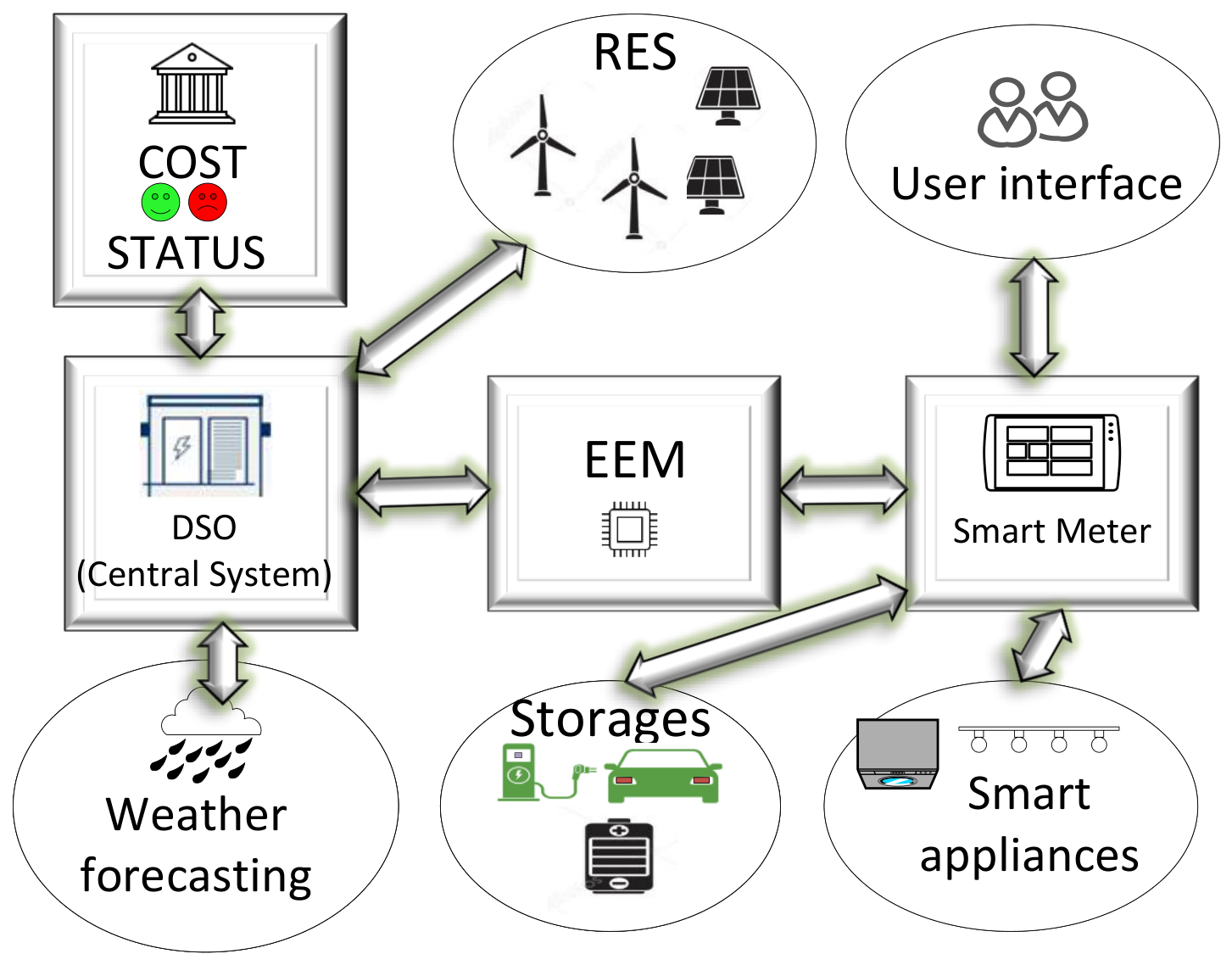
The actions undertaken by the EEM algorithm aim to ensure grid balance by reducing or increasing the power consumption of SAs. This is particularly justified in scenarios characterized by high levels of RES generation over short time intervals (
Figure 1).
The proposed technical realization of the real-time EEM framework, as illustrated in the system architecture (
Figure 1), is designed to rely on a robust communication and security layer. To ensure low-latency performance between the central EEM unit and the peripheral components including the Mixed Reality user interface, the DSO central system, and the smart appliances the system is intended to employ the MQTT protocol. This choice is dictated by MQTT’s minimal header overhead, which is critical for maintaining the stability of the interactive feedback loop. All telemetry data exchanged between the nodes shown in
Figure 1 are envisioned to be structured in JSON format. To address security concerns within this distributed network, the communication is designed to implement TLS 1.3 encryption. A total latency budget is targeted at 150 ms, covering the entire cycle from data acquisition at the Smart Meter to the holographic rendering update in the user interface, ensuring that the visual state remains synchronized with the physical energy flow.
EEM is also applicable when user activities result in temporary, excessive energy demand, commonly referred to in the literature as peak demand. A typical example of this phenomenon is the widespread use of air conditioning units during heatwaves. The operations performed by the EEM algorithm (Algorithm 1) can be initiated either by the user or via control signals received from the DSO.
| Algorithm 1 Logical flowchart of the EEM algorithm |
- 1:
repeat - 2:
Data Acquisition - 3:
Grid and Operator (DSO): - 4:
• voltage level (), control signals (), - 5:
• power limits (), real-time energy pricing (RTP/ToU) - 6:
Energy Sources (RES): - 7:
• current power generation from renewable sources () - 8:
Appliances (SA): - 9:
• device status defined by the vector ()
|
- 10:
EEM Activation Condition Check - 11:
• Voltage violation: Is or ? - 12:
• External signal: Has a reduction request been received from the DSO ()? - 13:
• Economic criterion: Is the energy price increasing or is there surplus RES generation?
|
- 14:
Algorithm Variant Selection - 15:
• Variant (User Optimization): - 16:
Objective: Minimize costs and maximize self-consumption. - 17:
Action: Shifting duty cycles () or power reduction based on tariff pricing. - 18:
• Variant (Grid Security): - 19:
Objective: Load reduction to the level. - 20:
Action: Priority—based power modification (according to ) within a defined time window.
|
- 21:
Optimization Process - 22:
• Execution of the GRASP algorithm with an objective function tailored to the selected variant ( or ), considering user priorities (LOW, MEDIUM, HIGH) and user comfort.
|
- 23:
Output Phase and User Interface - 24:
Physical Layer: Transmission of commands to the smart meter and direct power control of SA devices. - 25:
Visual Layer (MR/VR): - 26:
• 3D Segmentation: Recognition of devices in the household space (On-Device 3D Point Cloud Segmentation). - 27:
• Decision message: Display of intuitive instructions in VR goggles (e.g., “Increase consumption—free energy” or “Limit consumption—critical state”). - 28:
until ∞
|
From the user’s perspective, the objective is to automate the operation of Smart Appliances (SA) within a smart home environment, enabling energy cost optimization based on pricing schemes such as RTP or Time of Use (ToU) tariffs. This operational variant is designated as
. In contrast, the
variant is executed upon DSO request and aims to modify appliance power consumption within a specified time interval (
) to ensure that the total power of all devices does not exceed a defined threshold. The algorithm’s operations rely on bidirectional communication with smart devices to acquire status information and transmit configuration parameters. The status of an individual SA unit
i is defined by the following parameter vector:
where
represents the nominal power,
is the set of available power levels,
denotes the modification priority on a scale of
LOW,
MEDIUM, and
HIGH, and
indicates the potential for time-shifting the operation. Within this hierarchy, the
LOW priority is assigned to devices whose parameter adjustment does not significantly affect user comfort, such as water heating, while the
HIGH priority is reserved for critical devices whose modification could jeopardize health or life. The algorithm also accounts for generic devices that are not subject to remote control and RES sources whose power status is monitored via appropriate communication protocols. The EEM concept assumes continuous monitoring of the power balance, which is expressed as:
where
is the power generated by renewable sources,
is the instantaneous power consumed by the
i-th SA device, and
is the power consumed by the
j-th generic device. Furthermore, the EEM algorithm monitors the grid voltage level
based on data provided by the DSO. Load adjustment actions are triggered whenever the defined ranges
and
are exceeded or when the operator signals a need for load reduction (DSO = 1). The optimization process utilizes the Greedy Randomized Adaptive Search Procedure (GRASP) heuristic algorithm, and an objective function
was developed to ensure proper operation. For
, which focuses on user cost minimization, the objective function is defined as:
where
represents the energy price at time
t, and the priority
acts as a weighting factor to penalize the modification of critical states. In contrast, the
variant focuses on grid security by aiming to reduce total consumption to the
level, as formulated below:
The optimization problems formulated in (
3) and (
4) are solved using the GRASP. This metaheuristic is particularly suitable for the EEM system due to its ability to find high-quality solutions in a short time, which is essential for real-time interaction in MR/VR environments. The specific implementation details and the structure of the algorithm are presented in Algorithm 2.
| Algorithm 2 Detailed implementation of the GRASP algorithm for EEM optimization
|
- 1:
Input: Set of Smart Appliances n, Objective function (1 or 2), Max iterations , RCL parameter - 2:
Output: Best power configuration - 3:
- 4:
for to do - 5:
- 6:
while is not a complete configuration do - 7:
Evaluate incremental costs for all valid power levels - 8:
, - 9:
RCL - 10:
- 11:
- 12:
end while - 13:
▹ Iterative improvement phase - 14:
if then - 15:
- 16:
end if - 17:
end for - 18:
return
|
To ensure the reproducibility of the results, the algorithm was tuned with and . This configuration provides stable convergence and meets the timing constraints of the visualization system. The efficiency of the GRASP algorithm in the EEM system is highly dependent on the parameter. During simulation tests, we evaluated values ranging from 0 (purely greedy) to 1 (purely random). For our multi-device residential scenarios, a value of was found to provide the best trade-off, ensuring high convergence within the real-time constraints required for the VR/MR interface updates.
The objective functions
(
3) and
(
3) operate within a discrete combinatorial space, where the decision variables represent the selection of specific power levels
and start times
t. Since the set of possible configurations for a finite number of appliances is finite, the existence of a global optimum is mathematically guaranteed. However, due to the discrete steps in power levels and the logical constraints of device operation (e.g., non-interruptible cycles), the objective functions are non-convex and non-continuous. This non-convexity precludes the use of standard derivative-based optimization techniques and necessitates the application of the GRASP metaheuristic, which is robust against local optima in discrete search spaces. The optimization is subject to several boundary conditions. Capacity constraints ensure that for any time
t, the sum of power consumption
does not exceed the grid limit
. Operational bounds restrict the power levels
to the physical capabilities of each appliance, such that
. Finally, temporal constraints require each task to be completed within a user-defined window, thereby ensuring both user comfort and task viability.
The selection of the GRASP metaheuristic over other established methods, such as Genetic Algorithms, Particle Swarm Optimization, or Simulated Annealing, was specifically driven by these real-time requirements. While Genetic Algorithms and Particle Swarm Optimization are highly effective for exhaustive global search, their stochastic nature and higher computational complexity often result in variable convergence times that could exceed the latency thresholds necessary for a stable, flicker-free MR experience. GRASP excels in this discrete combinatorial space, providing the deterministic-like efficiency required to decouple the energy management logic from the rendering engine. Furthermore, such an approach provides a foundation for future integration with decentralized swarm-based communication and task allocation strategies, as explored in recent studies on optimized power consumption in robotic swarms [
14].
This optimization is subject to several technical constraints. First, the voltage stability must be maintained within the normative limits:
Additionally, during a Demand Response event, the total power must not exceed the threshold defined by the operator:
For appliances with non-interruptible cycles, the algorithm ensures completion within the time-shift window:
where
is the cycle duration. Finally, devices with
HIGH are protected, ensuring that
. Simulation tests conducted for typical appliances confirmed the high convergence of the algorithm. Due to rapid data processing, the system is capable of generating real-time updates for the VR interface, ensuring seamless interaction and the operational security of the power system.
To provide a rigorous basis for the optimization logic, the operational thresholds for RES utilization and price responsiveness are formally defined. A surplus of RES generation is identified at any time t when the condition is met, triggering the strategy to prioritize the activation of deferrable loads. Regarding price sensitivity, a significant price increase is defined using a statistical threshold: it occurs when the instantaneous price exceeds the 75th percentile of the day-ahead price distribution. In the simulation environment, this corresponds to prices typically 25–40% above the daily mean, at which point the variant initiates load-shedding of LOW priority devices.
3. Description of the Research Problem
An analysis of the impact of real-time energy consumption data visualization using AR on the behavior of smart home residents was presented in [
15]. Since residential buildings account for a significant share of global energy consumption, identifying effective demand-side management methods has become crucial. Traditional feedback methods often prove ineffective in the long term; therefore, the authors proposed AR technology as a more intuitive tool to engage users in the energy-saving process. The study in [
16] extends this research by examining how data visualization influences user decisions, considering individual characteristics and physiological responses. By leveraging AR and wearables, smart homes can tailor energy-saving levels to specific user profiles, minimizing discomfort while maximizing efficiency.
Augmented Reality serves as a powerful tool not only for professional energy management but also for fostering pro-environmental attitudes through interactive education [
17]. Behavioral changes can also be achieved by combining AR with smartphones [
18], where the introduction of a virtual companion (e.g., an animated pet) increases engagement and facilitates the understanding of building performance data. This aspect is more interesting today than ever before, as other wearables such as smart watches and smart glasses are becoming increasingly cheaper and therefore more affordable, as is widely known, and are thus finding widespread use. It is therefore increasingly worthwhile to develop corresponding AR apps for the masses, also in terms of sustainability. A vital aspect of energy management via AR is its integration with the household grid infrastructure. Research in [
19] presented smart energy meters coupled with AR technology to help users better comprehend their electricity consumption patterns.
User interaction regarding energy management status via MR can be implemented using devices such as the Microsoft HoloLens 2 [
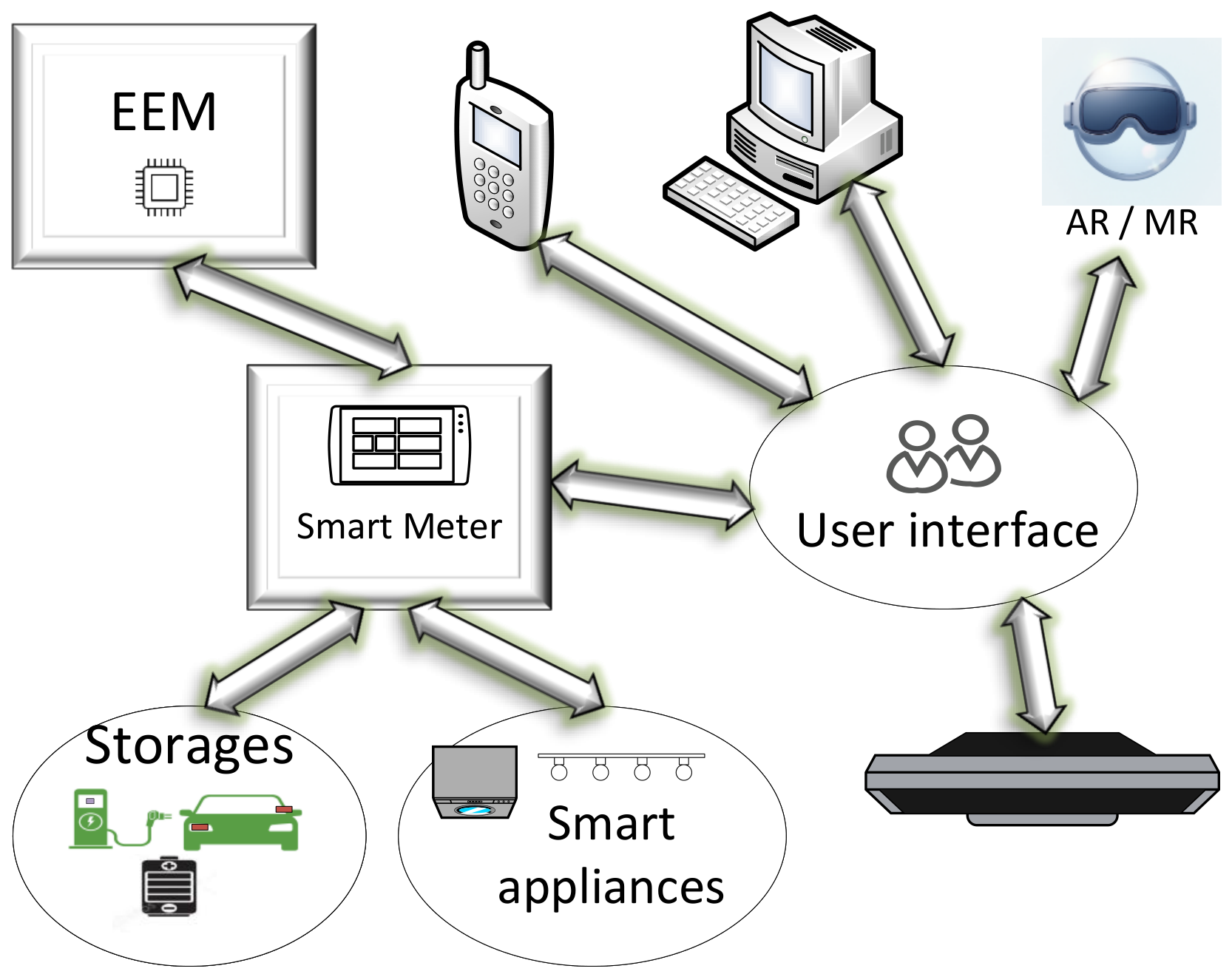
20]. Due to the limited computational power and battery life of such devices, resource-intensive AI algorithms, such as YOLO object detection, are often offloaded to edge servers. A key extension of the EEM system’s functionality presented in this research is its integration with modern user interfaces, aligning with CCS Concepts: Human-centered computing and Mixed/augmented reality. To enable intuitive energy management, the use of MR technology is proposed (
Figure 2). A significant technical challenge in this context is the implementation of advanced On-Device 3D Point Cloud Segmentation algorithms. These allow for precise environment mapping and mesh model segmentation of SA devices directly on the end-device, enabling the system to recognize physical energy consumers within the home space. The scalability of the EEM framework in high-density residential environments is ensured through a decentralized edge-computing architecture. To prevent computational bottlenecks during simultaneous requests for high-fidelity 3D mapping, the system offloads all spatial processing and real-time visualization tasks to the dedicated perception hardware of the HoloLens 2. This means that the 3D mesh generation and holographic rendering do not consume central server resources or network bandwidth. Furthermore, the communication overhead is minimized by utilizing the MQTT protocol, where the
signals from the DSO are transmitted as lightweight JSON payloads. Since the network exchange is limited to telemetry data and optimization parameters rather than raw graphical data, the system can support a high density of agents without significant latency degradation. This hierarchical distribution where the DSO manages high-level grid constraints and the edge devices handle local visualization guarantees the framework’s resilience and scalability in multi-family housing scenarios.
Through this approach, the communication between the advanced logic of the algorithm and the resident is simplified to a minimum. By using a AR interface within the household, the user receives an immediate and clear visual response regarding suggested actions. Instead of analyzing complex charts or voltage parameters, the consumer sees simple instructions: whether they should increase self-consumption at a given moment (leveraging RES overproduction) or limit electricity consumption (reacting to a critical grid state). The application of AR/MR technology enables a rapid response without requiring specialized engineering knowledge. The system acts as an intelligent assistant that translates technical data from the EEM algorithm into intuitive decision-making messages.
To evaluate the human-centric aspects of immersive technologies, recent research emphasizes the critical role of user experience and system usability within the cognitive field. As highlighted by [
21], modern Extended Reality (XR) systems increasingly shift toward multimodal architectures—integrating advanced eye-tracking, hand-tracking, and physiological sensors to conduct accurate cognitive assessments and training. The usability of these interfaces directly impacts their clinical and practical utility. Poorly designed XR environments often introduce confounding factors, such as high subjective cognitive load or cybersickness, which can distort behavioral metrics. Conversely, adhering to standardized usability frameworks and leveraging high-fidelity, ecologically valid protocols (such as the Virtual Reality Everyday Assessment Lab) ensures that user interactions remain intuitive, minimizing unnecessary mental friction and allowing for a reliable evaluation of cognitive performance in simulated environments [
21].
In this process, the smart energy meter serves as the central point of data exchange. It receives the parameters developed by the EEM, device statuses, and information about the SG state. This information is then transmitted to the MR device and visualized in the user’s field of vision. Such integration allows for the implementation of the Smart Home concept in a highly human-centric manner data from the physical layer (meter, SA devices) and the decision-making layer merge within the virtual layer, enabling effective system balancing while maintaining maximum comfort. The user is not required to possess knowledge of advanced IT systems; instead, they see clear indications for specific SA units where action, such as increasing or decreasing energy consumption, should be taken.
To ensure that the MR interface remains intuitive and stable during user movement, the system architecture addresses the round-trip latency between the EEM decision-making and the AR overlay update. The targeted latency budget is established at 150 ms, which includes data ingestion, GRASP-based optimization (∼50 ms), and network transmission via MQTT. To prevent visual drift or user disorientation—common issues in spatial interfaces—the system decouples the high-frequency spatial tracking from the lower-frequency energy data updates. The HoloLens 2 utilizes internal asynchronous timewarp and late-stage reprojection to maintain the holograms’ spatial anchors at 60–90 FPS, regardless of the EEM algorithm’s update rate. Consequently, while the energy values (e.g., current cost or PV surplus) are refreshed in near-real-time, the visual stability of the interface is maintained by the headset’s dedicated perception silicon, ensuring a seamless and jitter-free experience during head rotation and locomotion.
To ensure operational robustness in cluttered or non-ideal residential environments, the appliance identification process does not rely on transient visual features alone. Instead, the framework leverages the HoloLens 2 active Time-of-Flight depth sensors to generate a persistent 3D spatial mesh. Appliances are mapped to specific Spatial Anchors-persistent coordinate systems that remain fixed relative to the room’s geometry. This method provides two significant advantages: first, the Time-of-Flight sensors function effectively in low-light or variable lighting conditions where standard RGB-based recognition often fails; second, the use of spatial anchors allows the system to maintain the position of the AR overlay even during partial occlusions. Once an appliance’s location is verified, the holographic information remains pinned to its physical coordinates, ensuring that the user can still interact with the energy data even if the device is partially hidden behind other objects. This hierarchical mapping approach (Depth Sensing → Spatial Anchoring → Persistent Overlay) ensures the reliability of the EEM interface in complex, real-world household settings.
The proposed framework distinguishes itself from existing literature by transitioning from passive visualization to active, heuristic-based energy management. Current research in the field has largely focused on using AR to increase energy awareness through data monitoring [
19] or evaluating the impact of AR visualization on Indoor Environmental Quality satisfaction [
15,
16]. While studies such as those by [
18] explore user engagement through AR companions, and [
17] utilize AR for educational IoT activities, they lack a real-time optimization core capable of autonomous grid-response. In contrast, our contribution lies in the seamless integration of a GRASP-based metaheuristic with a Mixed Reality interface, enabling a bidirectional flow where the system actively optimizes household energy profiles under DSO constraints while providing the user with real-time, actionable decision support. This moves the state-of-the-art from AR-assisted monitoring to MR-driven active management.
5. Results of Studies
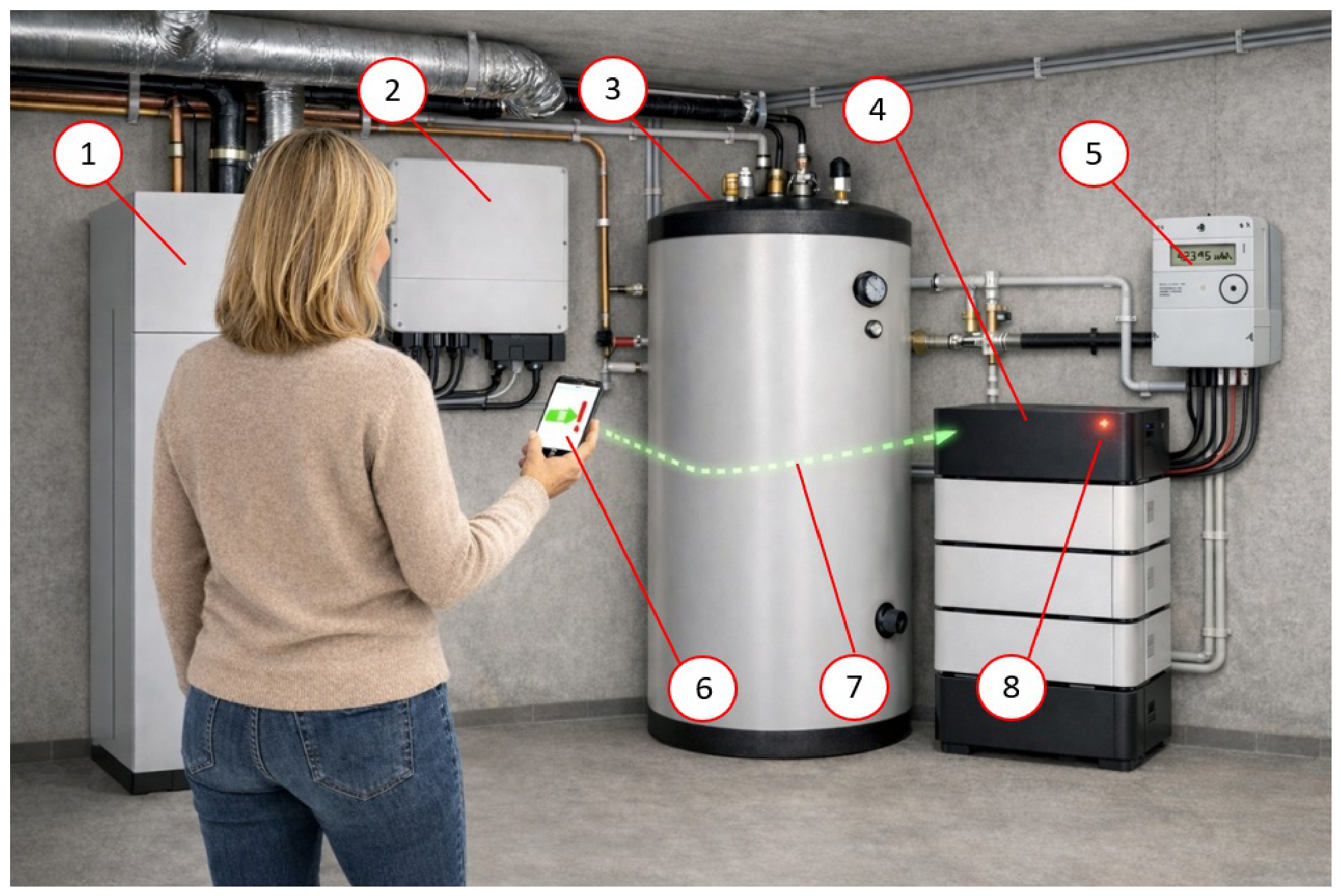
Figure 3 illustrates an exemplary visualization of the interface. It depicts a typical energy management scenario for a modern single-family or multi-family residence, showcasing how heating and energy flows can be represented in the MR environment.
In this case, we see an indoor unit of a heat pump (1), which could of course also be a gas boiler or other device; a solar inverter (2); (3) a hot water buffer tank; and (4) an electricity storage unit. Furthermore, (5) shows an example of a smart electricity meter. These are complex systems today, often consisting of devices from different manufacturers, and therefore difficult to optimise even for tech-savvy people. This is where AR technology can assist. With the help of, for example, a mobile phone (6), as shown here, AR can be used to display a path (7) to the relevant device in order to facilitate optimisation, modification or even troubleshooting at the relevant location, shown here as an example (8). AR technology can be used to provide the user with precise step-by-step instructions or even live remote support (RS) [
22].
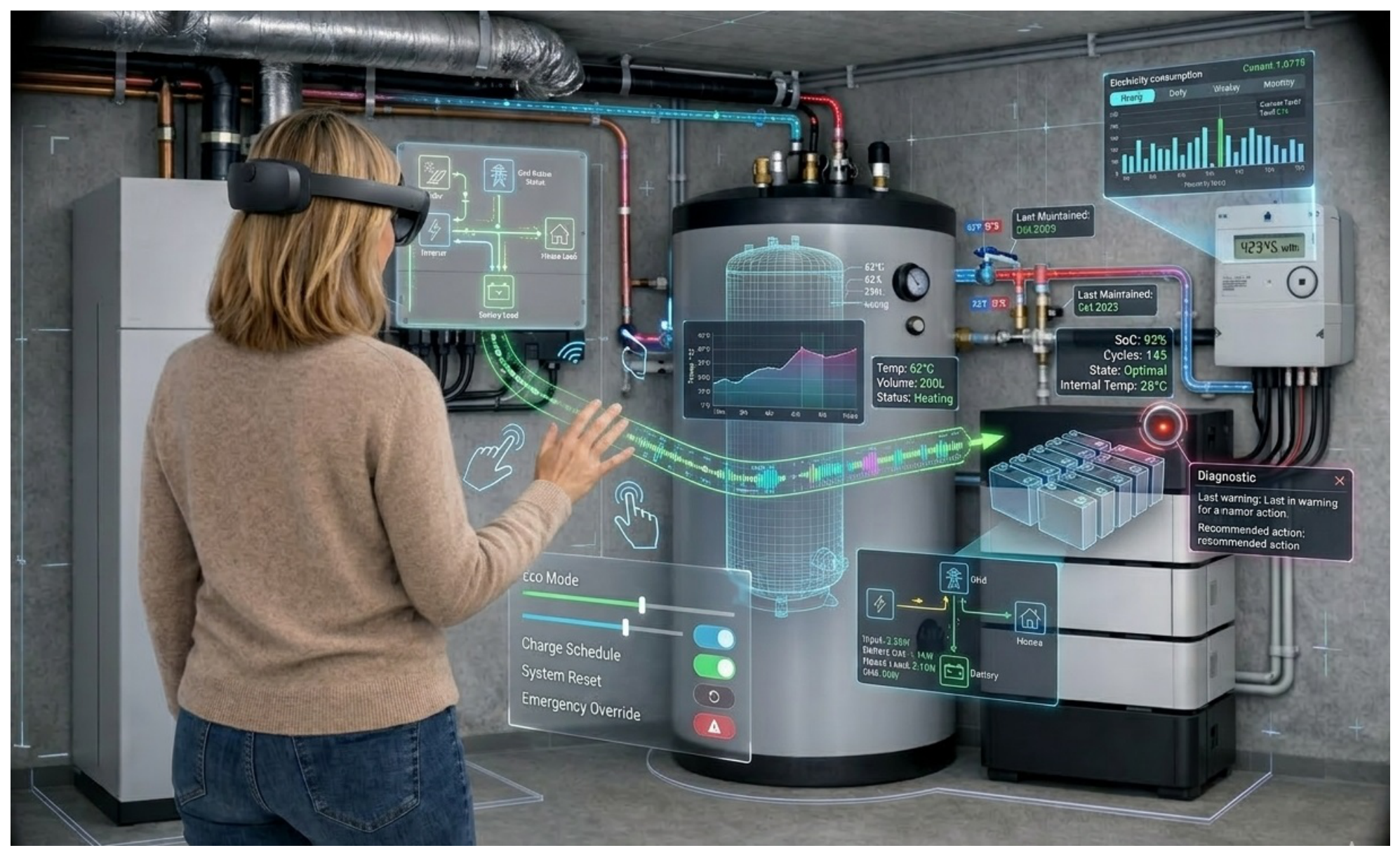
The deployment of AR/MR goggles within a domestic household (
Figure 4), in contrast to traditional smartphone-based interfaces (
Figure 3), establishes a superior interaction paradigm. This shift is primarily driven by the capacity for entirely hands-free operation, which allows users to engage with energy installations through intuitive spatial cues without the ergonomic and cognitive constraints of handheld devices.
Figure 3 illustrates an exemplary visualization of the interface, depicting a typical heating management configuration for a modern residential building. This sample view demonstrates how complex energy flows can be simplified into actionable spatial information, serving as one of many possible interface configurations tailored to the user’s needs. The most significant difference observable during the daily operation of devices such as heat pumps or energy storage systems is the elimination of the need to constantly hold a mobile device. This allows for the simultaneous execution of manual service or adjustment tasks while maintaining a full view of data within the field of vision. Unlike a smartphone, which necessitates constant shifting of gaze between a small screen and the physical object, mixed reality technology overlays digital information directly onto the physical components of the installation, significantly reducing the risk of distraction and error.
The intuitiveness of such a solution is based on 1:1 scale data visualization, making complex current or water flow diagrams legible without the need to analyze tables and icons on a small phone display. Instead of guessing the meaning of individual LEDs or searching for explanations in an application, users can observe virtual, pulsating energy lines connecting individual system modules and clear fault messages appearing exactly above the location of their occurrence. This method of information presentation provides a sense of full control over the home ecosystem, as all technical parameter knowledge is integrated with the environment, transforming passive data observation into natural and direct management of the building’s infrastructure.
The utilization of AR and MR technologies in the field of home energy management fundamentally changes the way we interact with the building’s technical infrastructure, as illustrated by the prepared graphics. Traditional devices, often concealed in basements or garages such as heat pumps, energy storage units, or inverters cease to be merely passive objects and instead become part of an interactive command center. A key benefit here is the ability to visualize processes that are naturally invisible to the human eye; through augmented reality, the user gains a metaphorical “X-ray vision” enabling real-time monitoring of photovoltaic current flows, battery state of charge, or tank water temperature without the need to physically approach the controllers.
Such a form of data presentation significantly facilitates system diagnostics and servicing, as the digital layer overlaid on the real-world image can immediately pinpoint the source of a malfunction, display error codes over specific modules, and even guide the user step-by-step through maintenance procedures without consulting a paper manual. Consequently, energy management becomes highly intuitive; rather than navigating through menus in a mobile application, the user operates within a spatial interface where virtual sliders and charts hover next to their corresponding devices. This allows for instantaneous, real-time consumption optimization upon seeing excess production from solar panels, one can direct energy to a vehicle charger or switch a boiler to eco-mode with a single gesture. As a result, AR/MR technologies not only enhance safety by allowing parameter inspection without opening high-voltage enclosures but also serve an educational function, building energy awareness among household members through direct insight into savings and the efficiency of the domestic ecosystem.
Based on the analysis of
Section 2 and the presented Algorithm 1, the role of EEM in AR/MR technologies consists of creating an advanced visual layer that integrates complex energy optimization processes with the user’s real-world environment. In this process, the output phase of the algorithm is of critical importance, where the system utilizes On-Device 3D Point Cloud Segmentation to recognize and localize SA within the household. Consequently, EEM enables the overlaying of intuitive decision-making messages onto physical objects, translating the results of mathematical objective functions such as cost minimization
defined in (
3) or grid security
described in (
4) into instructions that are easily understood by humans. A user equipped with MR goggles receives real-time guidance regarding optimal behavior, such as suggestions to increase consumption during a surplus of RES or the necessity to limit it during critical states signaled by the DSO. The integration of EEM with augmented reality allows for continuous monitoring of the power balance
, taking into account device priorities
and their statuses
in a manner that is entirely transparent to the resident. The data processing speed provided by the GRASP algorithm ensures that the visual interface reacts without delay to grid voltage fluctuations
or market price changes, thereby ensuring seamless interaction between the automation system and the user. As a result, EEM in an AR/MR environment ceases to be merely hidden code and instead becomes an active guide that ensures comfort and savings while simultaneously securing the stability of the power system through visual support of Demand Response processes.
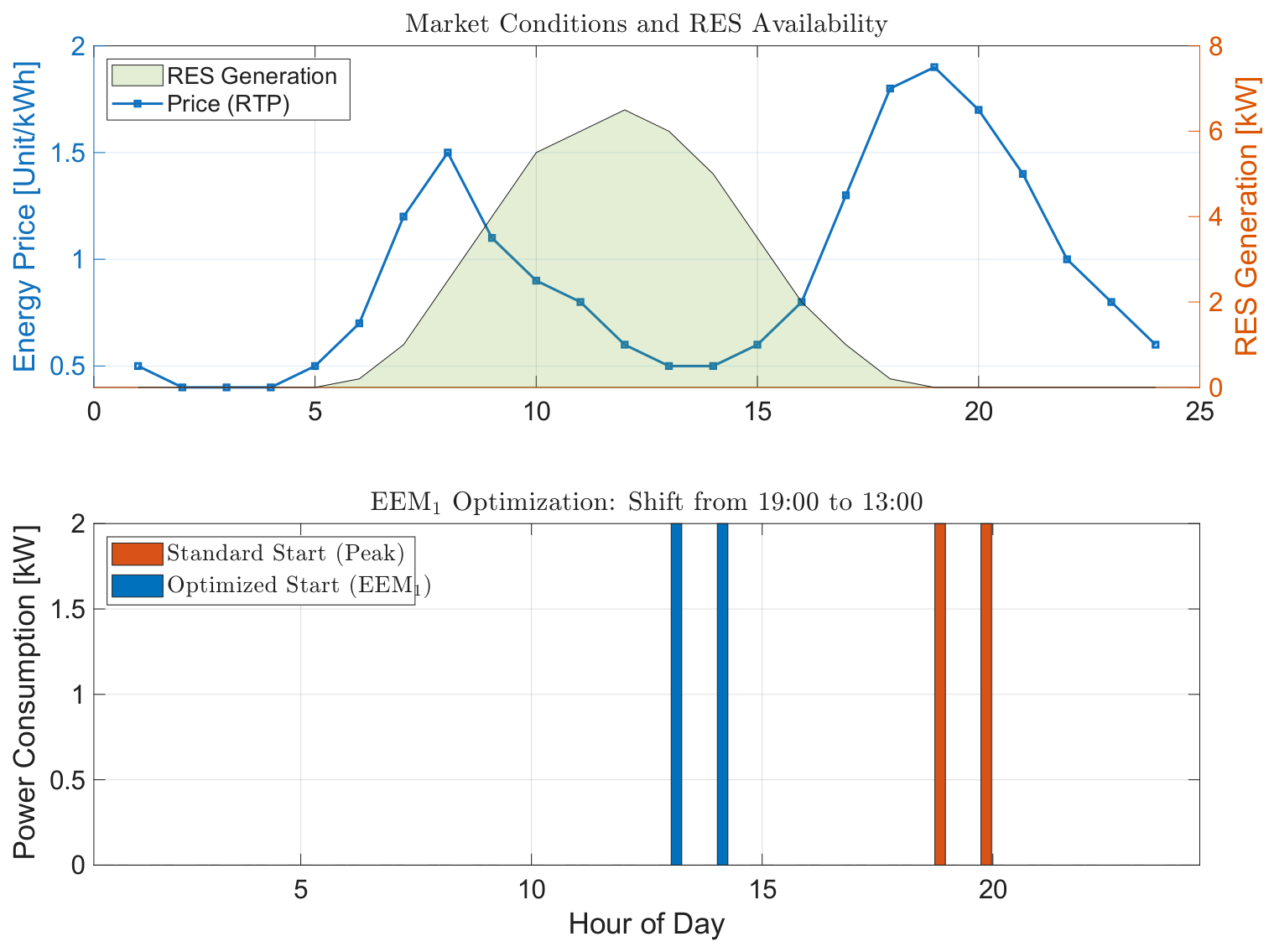
Figure 5, dedicated to the analysis of the
variant, focuses on operational cost optimization through the intelligent shifting of appliance operating times within the diurnal cycle. The upper graph in
Figure 5 presents the correlation between the dynamically changing energy prices in the RTP tariff and the availability of free power from renewable energy sources, allowing for the identification of the weather and market windows most favorable for self-consumption. The lower part of
Figure 5 visualizes the effect of the load-shifting strategy, comparing the standard appliance startup time during evening peak hours with the optimized schedule determined by the algorithm. Consequently, the user can observe how shifting power consumption to midday hours allows for nearly total coverage of demand through local RES production, directly resulting in a drastic reduction in the costs of an individual operating cycle.
To ensure the reproducibility of the simulation results, the data generation models used in the Matlab R2025b environment are formally defined. The annual RTP profile,
, was modeled using a composite sinusoidal function reflecting both seasonal (annual) and daily price fluctuations, expressed as:
where
represents Gaussian noise
to simulate market volatility. Similarly, the PV generation model,
, incorporates a seasonal factor and a daily solar zenith angle approximation to reflect realistic energy yields. The household load profiles were constructed based on three representative appliance classes: thermal (HVAC, 3.5 kW), deferrable (Laundry, 2.0 kW), and storage-based (Water Heater, 2.5 kW). Grid critical events (DSO interventions) were modeled as stochastic constraints where the system must reduce demand below a
threshold. The effectiveness of the EEM algorithm was validated through an annual simulation (8760 h), with results analyzed using the Empirical Cumulative Distribution Function to quantify the probability of grid limit violations in both unmanaged and managed scenarios.
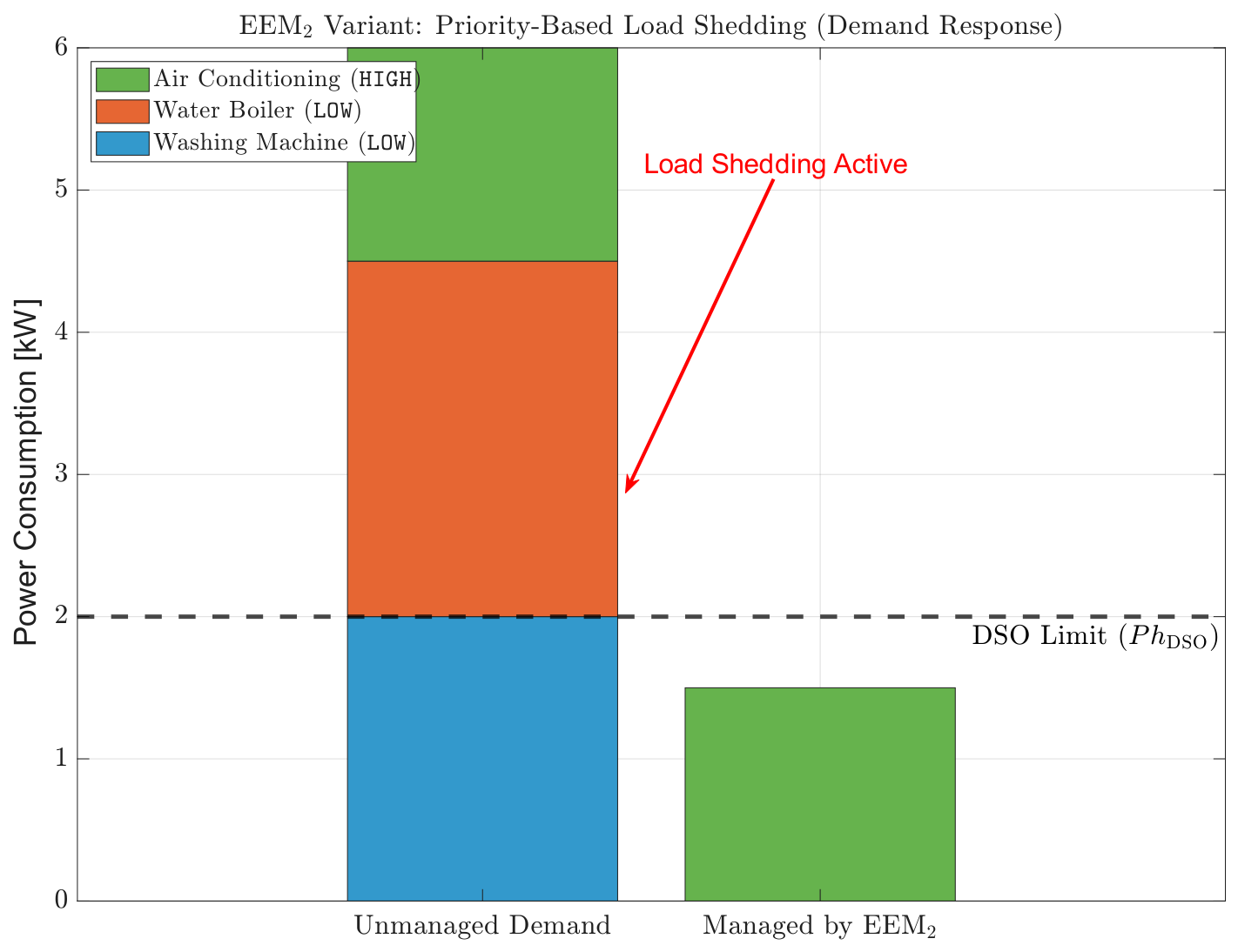
Figure 6 focuses on the
variant, which represents a scenario of forced power reduction to ensure the security and stability of the power grid. The bar chart directly compares the total unmanaged energy demand of the household with the consumption level achieved after the intervention of the priority-based algorithm. A key element of this visualization is the reference line indicating the power limit
imposed by the distribution system operator, which illustrates the effectiveness of the Demand Response mechanism.
Figure 6 demonstrates how the
system automatically disconnects low-priority loads to ensure that the total active power does not exceed the permissible threshold an event that, in a real AR/MR environment, would be signaled to the user as a critical state requiring immediate stabilization. For the
variant,
Figure 6 utilizes a stacked bar chart format, enabling a precise analysis of the power consumption structure before and after the algorithmic intervention. In contrast to the previous version, this visualization decomposes the total household grid load into individual appliances, assigning them unique colors and labels consistent with their priorities defined in the state vector
. The first bar illustrates the state of unmanaged demand, where the total power of all active loads such as the washing machine, water heater, and air conditioning drastically exceeds the permissible limit
. The second bar represents the direct effect of the Load Shedding mechanism, where the algorithm, guided by the objective function
, disconnects low-priority (
LOW) devices to adapt consumption to the rigorous requirements of the operator. The legible dashed line marking the safety threshold, along with additional graphical indicators such as an arrow signaling active reduction, renders this chart an intuitive diagnostic tool. In the context of AR/MR systems, this form of data presentation allows the user to immediately identify which specific devices have been temporarily deactivated to protect grid stability, while ensuring the uninterrupted operation of critical high-priority systems.
The operational effectiveness of the
variant during critical grid events is demonstrated through the priority-based load-shedding mechanism. As illustrated in the simulated demand response scenarios (
Figure 6), the system successfully manages simultaneous appliance requests to prevent exceeding the DSO limit (
). Specifically, when the unmanaged demand reaches a peak of approximately 6 kW, the
algorithm identifies a Load Shedding Active state. In this state, the system maintains the operation of high-priority devices, such as Air Conditioning, while temporarily shedding low-priority loads, including the Water Boiler and Washing Machine. This targeted reduction allows the household power consumption to stay within the 2 kW threshold (
), ensuring grid stability without completely disconnecting the user from essential services. The transition from an unmanaged state to the
managed state results in a significant instantaneous load reduction, prioritizing thermal comfort and task-critical appliances over deferrable energy-intensive processes.
The presented simulation Algorithm 1 performs a comprehensive analysis of the EEM system’s effectiveness over a full annual cycle comprising 8760 time steps. This approach allows for a reliable assessment of the impact of seasonal variability on the economic and technical indicators of a household. The input data generation process incorporates synthetic price profiles based on the RTP tariff, which integrate long-term seasonal trends and daily demand fluctuations, alongside a RES generation model reflecting the operational characteristics of a photovoltaic installation. In each time step, the main computational loop evaluates the current power demand, comparing the baseline scenario with the corrective actions taken by the
and
variants. The
cost optimization is based on the analysis of price thresholds and the availability of free energy from RES, leading to the dynamic reduction or shifting of low-priority loads during periods of unfavorable market conditions. Concurrently, the algorithm monitors signals from the DSO, simulating random Demand Response events during which the
variant enforces a reduction in power consumption to the
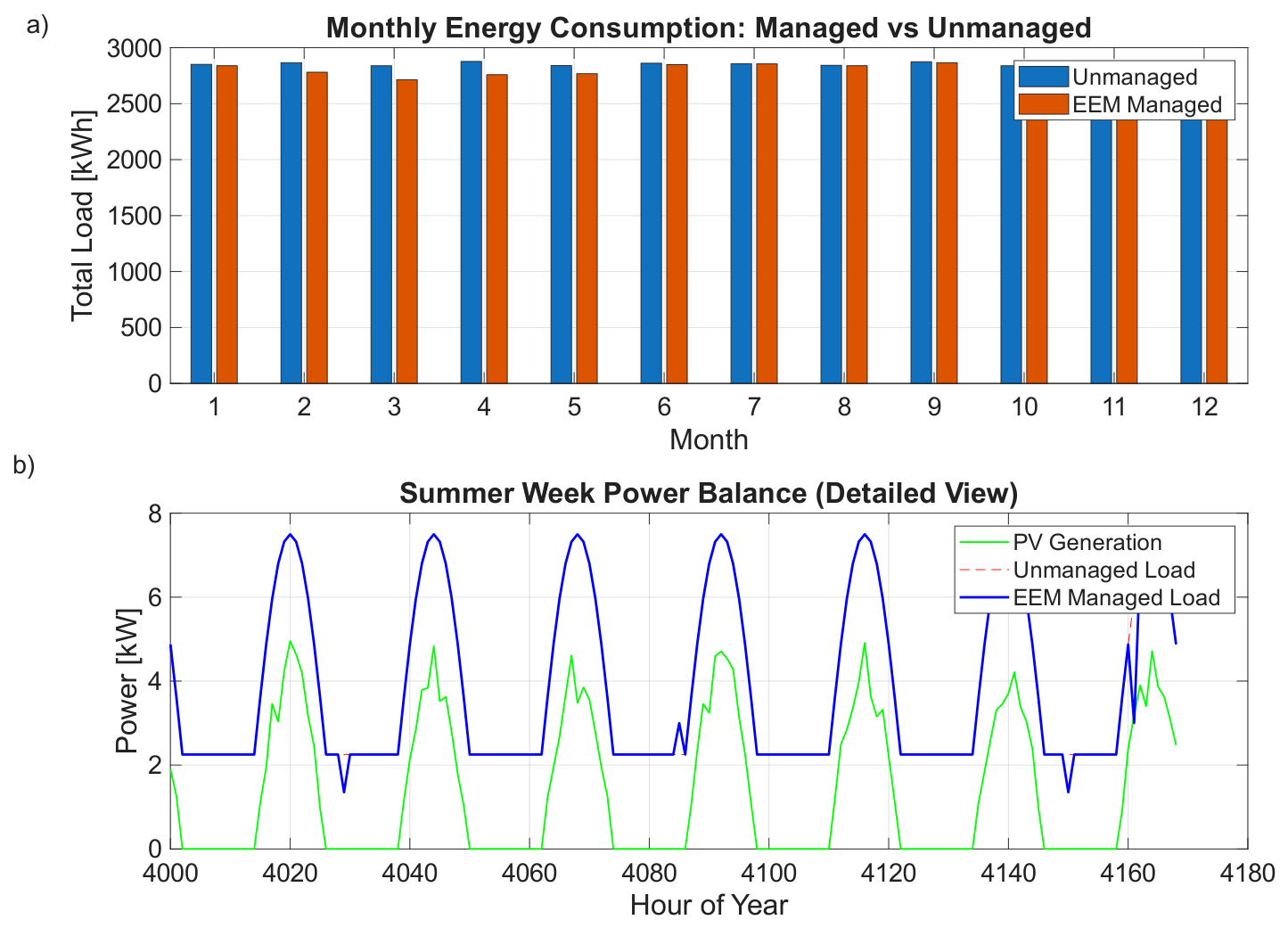
level, protecting only the highest-priority operational devices. The visualization of the simulation results, presented in
Figure 7, is designed to enable both a macroscopic evaluation of monthly trends and a detailed micro-scale analysis of the power balance during selected representative periods. The first graphical panel in
Figure 7 presents an aggregated summary of monthly energy consumption, highlighting the differences in power demand volume between the unmanaged and optimized systems, which serves as the basis for calculating annual percentage savings.
The second graph in
Figure 7, providing a detailed view of a selected summer week, illustrates the dynamic interaction between the PV generation curve and the modified load curve, precisely indicating the moments of algorithmic intervention in response to external signals or high energy prices. Such a formulated simulation study provides objective evidence of the EEM algorithm’s capability to simultaneously lower user operational costs and support the stability of the local power system under conditions of high environmental and market parameter variability.
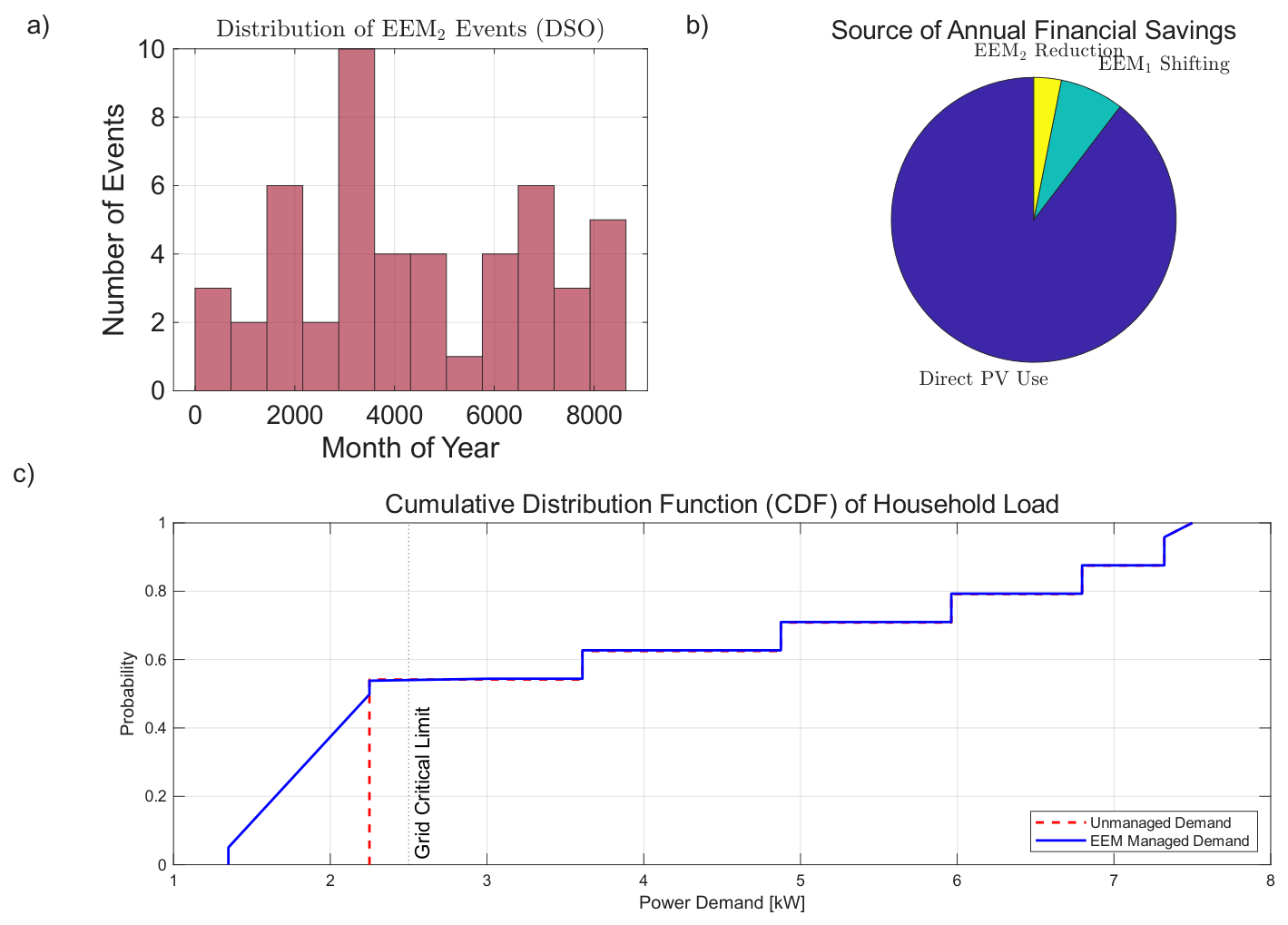
The quantitative impact of the EEM system is summarized in
Figure 7, which presents the statistical distribution of household loads. The analysis of absolute monetary values shows that the EEM framework achieves average annual savings of approximately 21% compared to the unmanaged baseline. A seasonal breakdown indicates that the highest efficiency is reached during Q2 and Q3, where the
strategy effectively synchronizes deferrable loads with peak PV generation. To address the sensitivity of the system to grid constraints, the Empirical Cumulative Distribution Function in
Figure 7 illustrates a significant shift in the probability density. Specifically, the probability of exceeding the grid critical limit
is reduced from approximately 0.15 in the unmanaged scenario to less than 0.02 under EEM control. This result serves as a robust confidence interval, proving the system’s reliability in maintaining grid stability across varying seasonal price and generation profiles.
The advanced analytical module within the MATLAB environment enables an in-depth statistical evaluation that extends beyond simple cost comparisons, offering insights into the probabilistic characteristics of the household grid load on an annual scale. A key element of this analysis is the determination of the Empirical Cumulative Distribution Function of power consumption, which formally illustrates the probability distribution of specific electricity demand occurrences. The comparison of CDF curves for the unmanaged scenario and the system under EEM control, as shown in
Figure 8, reveals a statistical shift of the probability density toward lower values and a distinct “clipping” of the distribution at the boundary defined by the
limit. This indicates that the algorithm effectively eliminates high-risk states of installation overload, which occur with a specific statistical frequency in systems lacking optimization, thereby threatening the stability of the local energy node.
This analysis is complemented by a decomposition of financial saving sources and the distribution of reduction events over time, allowing for the identification of seasonal peaks in demand for Demand Response interventions (). This comparison demonstrates that while the savings generated by the variant result from continuous adaptation to market prices and RES self-consumption, the role of the variant is focused on managing rare but critical security-related events. The final statistical report incorporates the Annual Reliability Index and the average purchase price of energy, providing robust evidentiary data confirming that the synergy of both EEM variants leads to the optimization of the entire household’s operating point. Such a data structure, processed into legible statistical indicators, forms the foundation for the information layer in AR/MR interfaces, enabling the user to understand the long-term benefits of automated energy management.
The comparative advantage of the proposed MR interface over traditional 2D systems is further substantiated by the annual performance data presented in
Figure 8. The high degree of grid limit compliance and the significant reduction in peak loads are not solely a result of the GRASP algorithm’s efficiency, but also of the reduced cognitive load on the user. Unlike traditional 2D smartphone notifications, which require context switching between a handheld device and the physical environment, the spatial cues illustrated in
Figure 8 are anchored directly to the appliances. This minimizes the gulf of evaluation, allowing for near-instantaneous decision-making. When combined with the 150 ms latency budget, these results indicate that the MR interface facilitates a faster and more intuitive response to energy management prompts, effectively translating complex optimization data into real-time prosumer behavior without the cognitive overhead typical of conventional energy monitoring apps.
To evaluate the effectiveness of the proposed EEM methods, a comparative analysis was performed against a baseline Fixed Scheduling approach, where appliances operate at nominal power without adjustment. The simulation results, derived from annual household load profiles, demonstrate significant improvements in both grid stability and economic efficiency. The implementation of the variant focuses on maintaining power demand within technical constraints. Based on the CDF of the annual household load, it was observed that achieved a peak load reduction of approximately 25%, effectively decreasing extreme demand events from 8 kW to below 6 kW. In specific critical scenarios, such as when the Grid Critical Limit is approached, the system is capable of reducing instantaneous power consumption from 6 kW to 1.5 kW by performing priority-based load shedding of low-priority appliances like water boilers and washing machines. This ensures that the DSO limit () is not exceeded while maintaining the operation of high-priority devices such as air conditioning. The variant addresses economic optimization by shifting appliance operation to periods of high RES availability and lower market prices. It was found that shifting the start time of high-power appliances from peak price periods (e.g., 19:00, priced at 1.9 Unit/kWh) to high RES generation periods (e.g., 13:00, priced at 0.5 Unit/kWh) significantly reduces operational costs. The annual financial savings are primarily attributed to this load-shifting mechanism and the increased direct use of PV generation, which reaches peaks of approximately 6.5 kW during midday hours.
Following the methodology of multi-parameter joint optimization discussed by [
23], the coupling between the quality parameter
and the system’s convergence rate was analyzed. While [
23] utilized Bayesian Optimization for continuous parameters in heat pump systems to improve diagnostic performance, the approach presented in this study focuses on the discrete combinatorial space of multiple household appliances. The GRASP heuristic, with a tuned parameter of
, provides a computationally efficient alternative that meets the real-time requirements of the MR interface. This allows for a dynamic balance between energy cost reduction, grid constraint adherence, and the preservation of user comfort.
The operational stability of the EEM system is rooted in the computational efficiency of the GRASP heuristic and a robust software architecture. The algorithm is characterized by a low computational overhead, which allows it to maintain consistent execution times even as the complexity of the device configuration increases. This scalability is critical for ensuring that the energy management system remains responsive in diverse household environments. To guarantee the stability of the AR/MR interface, the system utilizes a decoupled, multi-threaded execution model. In this framework, the high-frequency rendering processes necessary for a flicker-free MR experience are isolated from the energy optimization cycles. This architectural separation ensures that the visual feedback remains fluid and stable, with no observable latency in the holographic overlays during real-time data processing. Furthermore, the system incorporates communication safeguards to handle network variability, ensuring that the user interface provides reliable guidance even under fluctuating environmental conditions.
To verify the practical feasibility of the EEM system on hardware with limited computational resources, such as standalone MR goggles, we evaluated the algorithm’s performance in terms of execution efficiency and memory management. The results indicate that the GRASP-based optimization maintains a low latency profile, ensuring that the background energy management tasks do not interfere with the high-frequency rendering requirements of the Mixed Reality interface. This efficiency is crucial for maintaining a stable and flicker-free user experience. Furthermore, the memory footprint of the system is optimized by the iterative nature of the GRASP heuristic. Unlike population-based methods that require significant memory overhead to maintain multiple candidate solutions, the proposed approach is highly lightweight. This architectural advantage ensures that the framework is well-suited for mobile-grade processors found in modern MR headsets, where balancing real-time optimization with complex spatial visualization is a primary constraint. To verify the practical feasibility of the EEM system on hardware with limited computational resources, such as standalone MR goggles, we evaluated the algorithm’s execution efficiency and memory management. The analysis demonstrated that the optimization latency consistently remains well below the 100 ms threshold, which is widely considered the maximum acceptable delay for seamless real-time interactions. This ensures that the background energy management tasks do not interfere with the high-frequency rendering cycles (60–90 FPS) required for a stable, flicker-free MR experience. Furthermore, the system maintains a minimal and stable memory footprint due to the iterative constructive nature of the GRASP heuristic. Unlike population-based methods (e.g., Genetic Algorithms or Particle Swarm Optimization) that require significant RAM overhead to store and update multiple candidate solutions, the proposed approach is lightweight and well-suited for the mobile-grade processors found in modern MR headsets, where balancing real-time optimization with complex spatial visualization is a primary constraint.
A critical aspect of the proposed EEM framework is its dual-layer resilience to human-driven overrides. At the individual level, the system treats a single resident’s decision to bypass an AR recommendation as a minor stochastic disturbance, which does not compromise the local infrastructure. The resilience margin of the grid is primarily tested when a collective lack of compliance occurs across a larger cluster of households. To mitigate this risk, the framework utilizes the variant as a secondary safety layer. While focuses on voluntary user cooperation through visual cues in the MR interface, is designed to respond to DSO-triggered critical state violations. If mass non-compliance causes the aggregate load to approach the limit, the algorithm autonomously executes shedding of pre-defined low-priority loads. This ensures that even if the behavioral aspect of energy management fails at scale, the technical stability of the grid is maintained through automated, high-level control cycles.