1. Introduction
As the world advances toward sustainable energy alternatives, solar photovoltaic (PV) technology has emerged as a cornerstone of renewable power generation, providing an unparalleled opportunity to harness the vast potential of sunlight for electricity production [
1]. It plays a pivotal role in achieving energy security, independence, and resilience in the energy transition from fossil fuels to renewables [
1].
Recognizing the enormous solar potential for independent energy supply, climate protection and alleviation of pressure on energy prices, the global solar PV capacity entered the “terawatt age” in April 2022 (after 68 years of development) and doubled to 2 TW in less than two years (by late 2024) [
2]. Projections forecast 8 TW by 2030, requiring annual installations of 1 TW [
1]. Accordingly, PV technology is expected to constitute about 80% of global renewable capacity additions through 2030 and become Europe’s dominant electricity source [
3]. This was underscored in June 2025, when solar generated over 22% of the EU’s electricity for the first time, surpassing nuclear power [
4].
Countries with high solar irradiation, such as Cyprus in the Mediterranean [
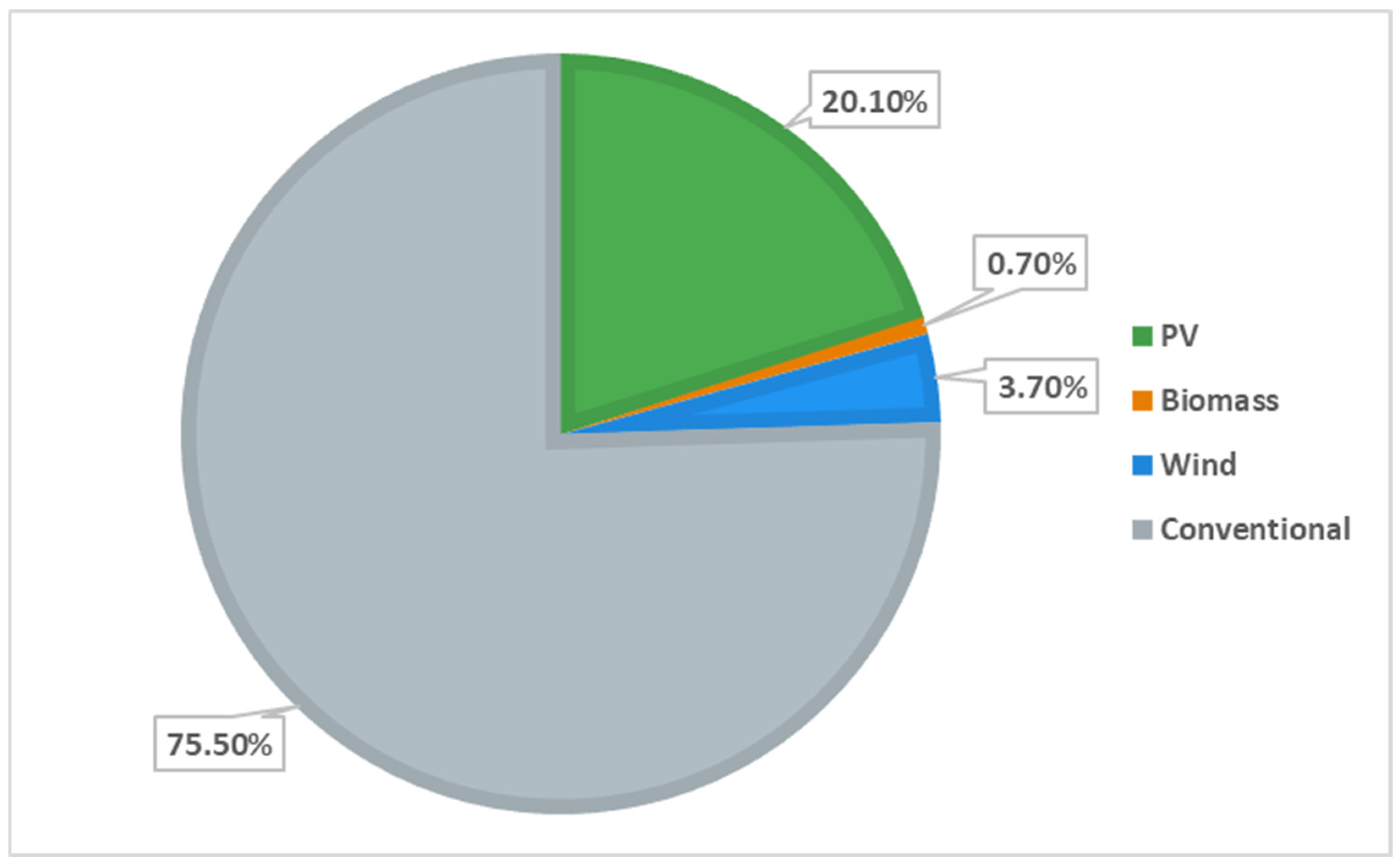
5], stand to benefit disproportionately. In 2025, Cyprus installed 122 MW of solar capacity, ending the year with 957 MW of cumulative PV capacity and 1139 MW of total renewables, up from 1004 MW in 2024 [
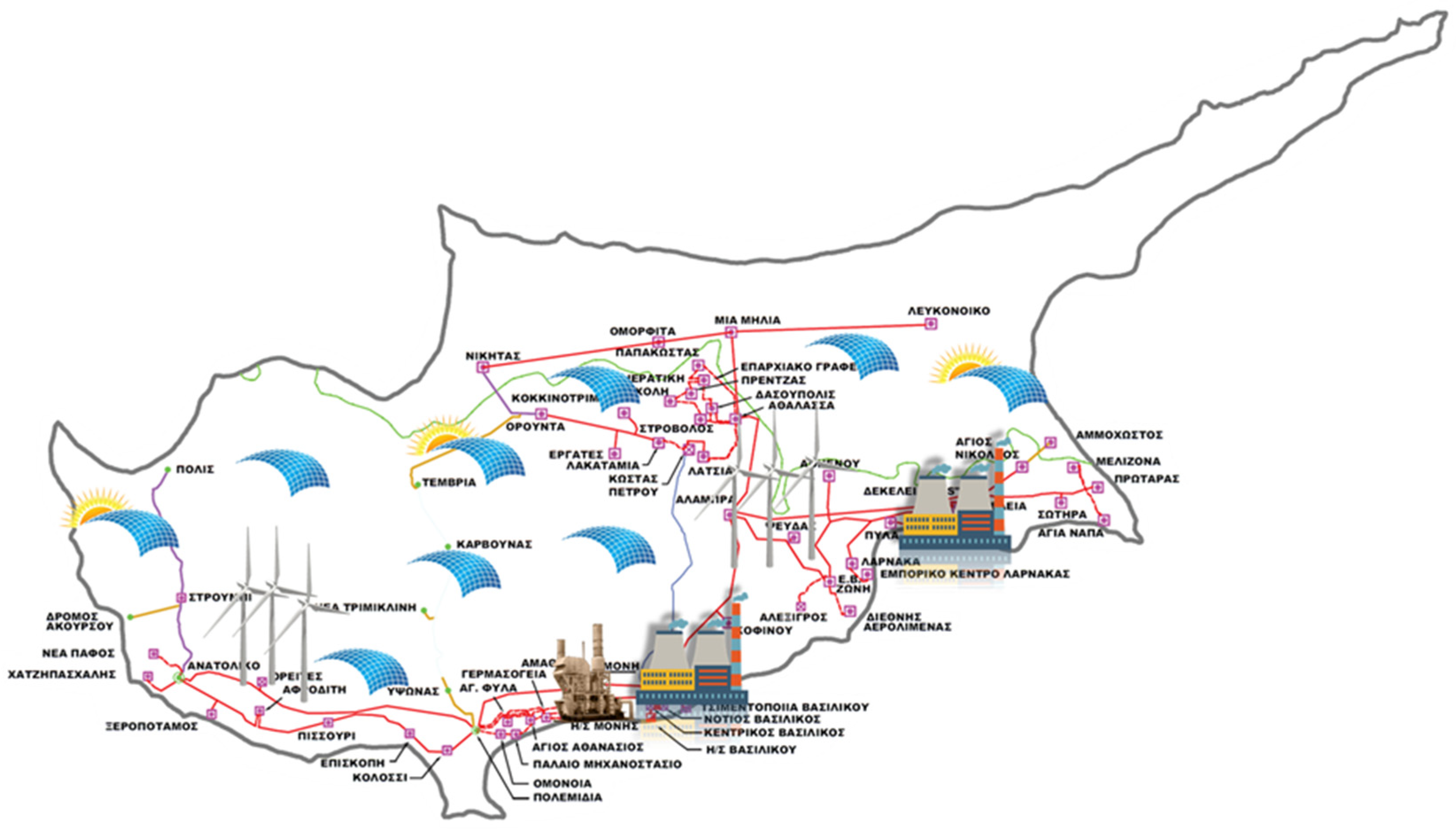
6]. Despite over two decades of deployment and enormous potential, Cyprus’s small and isolated grid (with no interconnections to neighboring countries) [
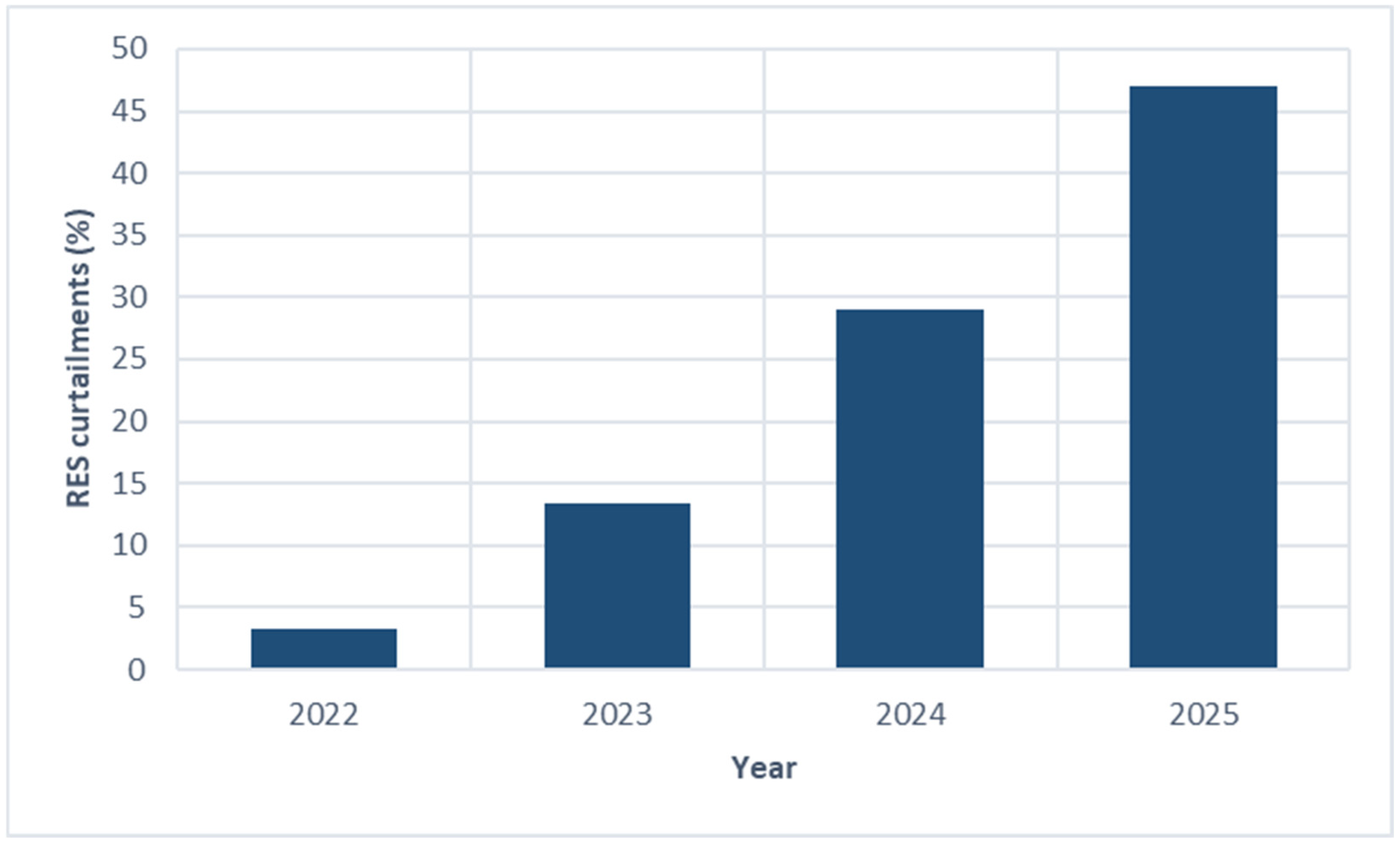
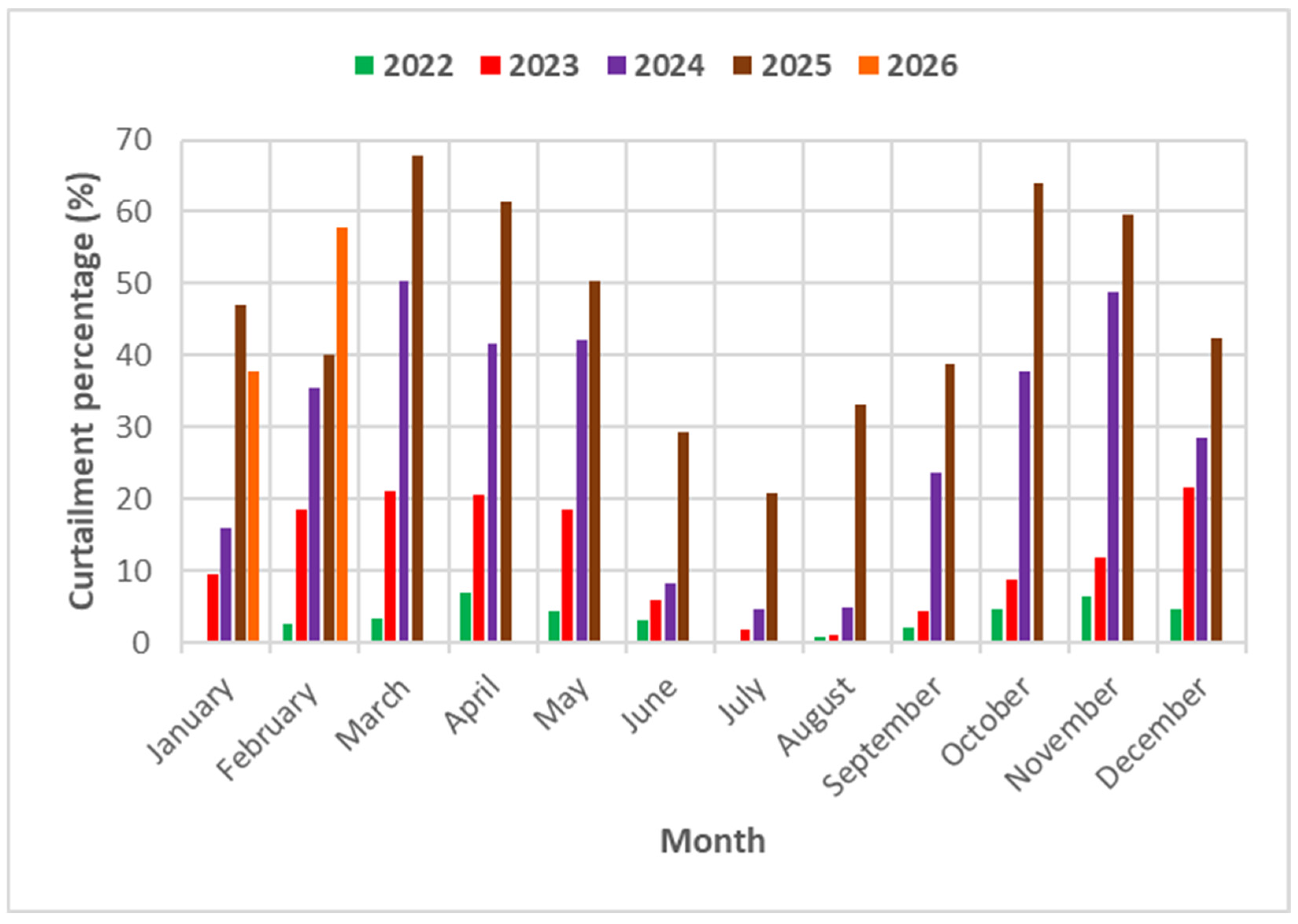
7] amplifies PV-related challenges: variability, limited flexibility, and infrastructure constraints. Rising PV penetration has caused midday overgeneration, network bottlenecks, and record curtailment (47% in 2025 [
8]), underutilizing the island’s resources. These issues and conditions have intensified the need for flexible technologies that can reshape demand and/or shift excess solar energy to periods of higher demand, supporting system reliability and improving the economics of further PV integration.
Battery energy storage systems (BESSs) coupled with PV technology, broadly referred to as solar-plus-storage systems, offer a promising solution to these challenges in islanded power systems [
7]. Such configurations boost prosumer self-consumption, curb peak demand, and mitigate curtailment across distribution and transmission levels [
7]. Their viability depends on local tariffs, net-metering/net-billing schemes, export constraints, and incentives. In Cyprus, escalating retail prices, curtailment risks, and regulatory shifts make such systems especially relevant. While BESSs remain the dominant electrochemical storage solution for short-duration applications, a diversified portfolio of storage technologies is increasingly recognized as necessary for comprehensive grid flexibility. For example, thermal energy storage has demonstrated potential as a cost-effective complement to battery systems, offering peak-shaving capabilities and demand flexibility benefits [
9] that are particularly relevant for high renewable energy sources (RESs) in islanded grids facing significant curtailment.
In parallel, EU-wide electromobility policies are accelerating electric vehicle (EV) deployment, including electric buses, which generates highly concentrated demand at depots and charging hubs, while fast charging requirements often produce sharp power spikes [
10,
11]. Co-locating PV systems/BESSs with EV charging infrastructure buffers these impacts on the grid, smooths power flows, and partially decouples charging demand from grid constraints [
12,
13]. For commercial and fleet operators, this yields lower energy bills, reduced exposure to peak tariffs and demand charges, and greater outage resilience.
However, EV charging infrastructures, particularly for heavy-duty vehicles like electric buses, demand irregular and high-capacity power, especially during simultaneous charging at bus depots, posing significant challenges for local distribution grids [
14]. The unpredictable nature of EV charging behavior further complicates grid operations, with demand fluctuating throughout the day [
14]. Electric bus charging often occurs overnight or in short windows between routes, leading to sharp peaks that can exceed existing grid capacities and necessitate costly and complex grid reinforcements or upgrades. Distribution network operators frequently impose limits on maximum demand or export, further constraining operations [
14]. Time-of-use tariffs, demand charges, and fuel price volatility also hinder optimal PV, BESS, and EV charger operation [
15]. Thus, designing and operating PV-powered, battery-integrated EV depots requires coordinated control of generation, storage, and charging, ideally supported by forecasting and advanced energy management system (EMS) strategies to preserve grid stability [
16,
17].
At the building or microgrid level, the EMS acts as the supervisory layer that co-ordinates PV generation, storage, and flexible loads. It acquires real-time measurements, processes operational data, and uses forecasts of PV generation and demand to support battery dispatch and EV charging decisions, while respecting technical and economic constraints. Depending on the application, EMS strategies range from simple rule-based scheduling to predictive and optimization-based approaches that balance cost, curtailment, flexibility, and asset utilization [
16,
17]. In islanded and weak grid conditions, such supervisory control is particularly important for maintaining reliable operation under zero-export requirements and limited network flexibility.
Literature in this field has focused on designing PV systems/BESSs [
18,
19], implementing EV charging strategies [
20,
21,
22,
23], and optimizing energy flows and economics [
12,
15,
19]. However, gaps remain at the intersection of PV, BESS, and high-power EV charging in real-world, islanded systems [
18]. Existing studies mainly rely on simulated data, case studies and interconnected grids [
12,
18], with limited efforts addressing small and/or islanded systems [
19]. Taken together, the existing literature exhibits three specific shortcomings that this study directly addresses: (1) an over-reliance on simulation-based or modeled data rather than high-resolution real-world operational measurements, (2) insufficient attention to high-power EV charging scenarios, particularly heavy-duty fleet depot configurations, within integrated PV-BESSs, and (3) a lack of empirical analysis conducted in non-interconnected grids such as Cyprus, where curtailment and grid constraints are increasingly prominent, despite their relevance for many islands and weak grids worldwide [
7].
This paper directly addresses these three shortcomings through a real-world case study of the first commercially deployed PV-powered, battery-integrated EV charging station in Cyprus; an isolated, non-interconnected grid with among the highest recorded RES curtailment rates globally (47% in 2025). In contrast to simulation-based studies, the analysis is conducted on six months of high-resolution operational and weather data collected from an operational system, directly addressing shortcoming (1). The case study specifically targets a high-power heavy-duty EV depot charging configuration, combining a 60.32 kWp PV array, a 100 kW/97 kWh BESS, and a 160 kW DC fast charger; a scenario largely absent from the existing literature, addressing shortcoming (2). By situating the entire analysis within Cyprus’s extreme curtailment and zero-export operating environment, the study generates empirical evidence directly relevant to islanded and weak grid systems worldwide, addressing shortcoming (3). Building on this foundation, we (i) quantify energy performance, including self-consumption, self-sufficiency, and site demand coverage; (ii) assess economics via cost reductions and revenues against a grid-only baseline; (iii) estimate environmental gains from avoided carbon dioxide (CO2) emissions. We also (iv) introduce a cloud-based EMS and analytics framework with short-term PV/load forecasting to support operator decision-making, and (v) examine operational events (e.g., curtailment episodes, system faults, and data quality issues), distilling key challenges, lessons learned, and potential optimization pathways applicable to similar deployments globally. Beyond site-level performance, we quantify the system’s contribution to grid stress reduction in an islanded, high PV penetration context, providing directly transferable insights for grid operators, policymakers, and developers operating in similarly constrained island and weak grid environments.
3. Materials and Methods
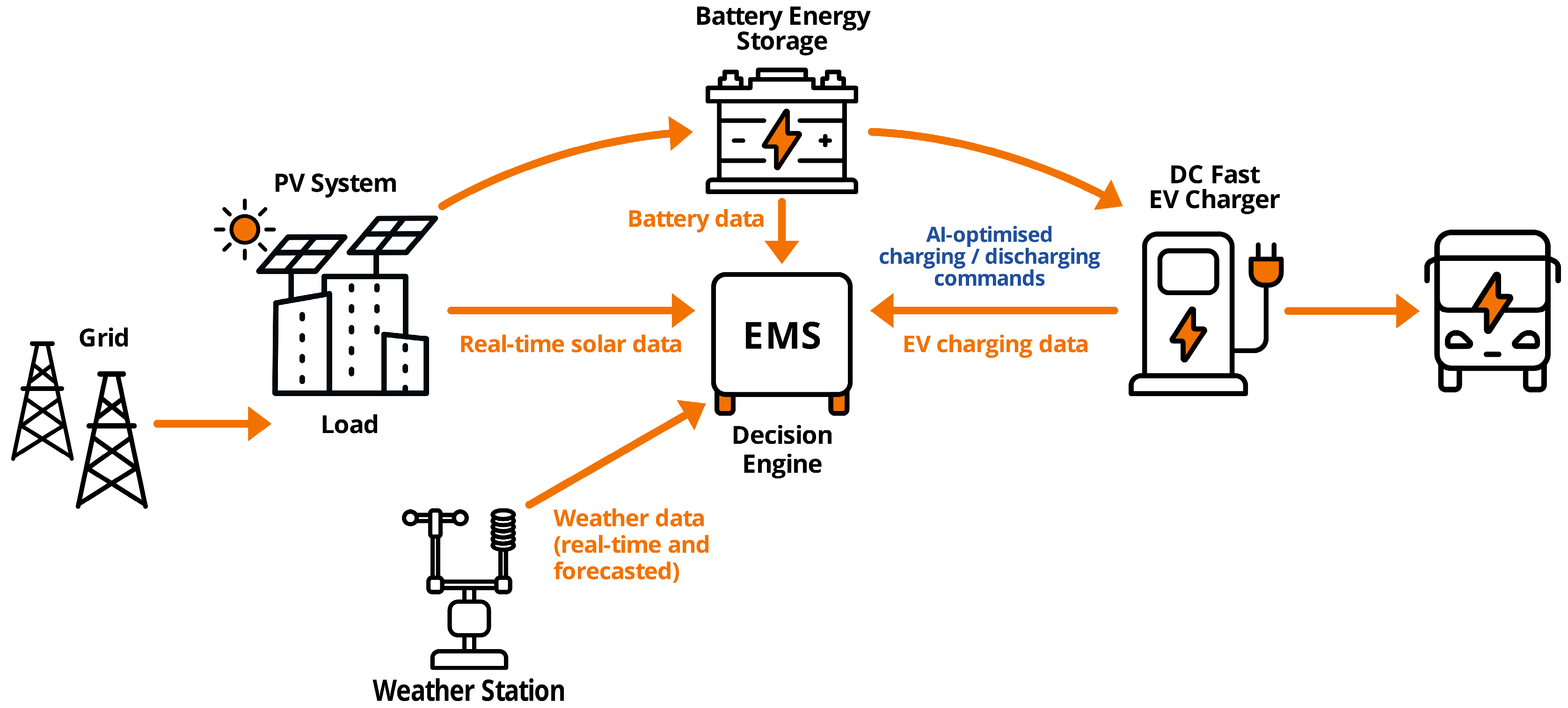
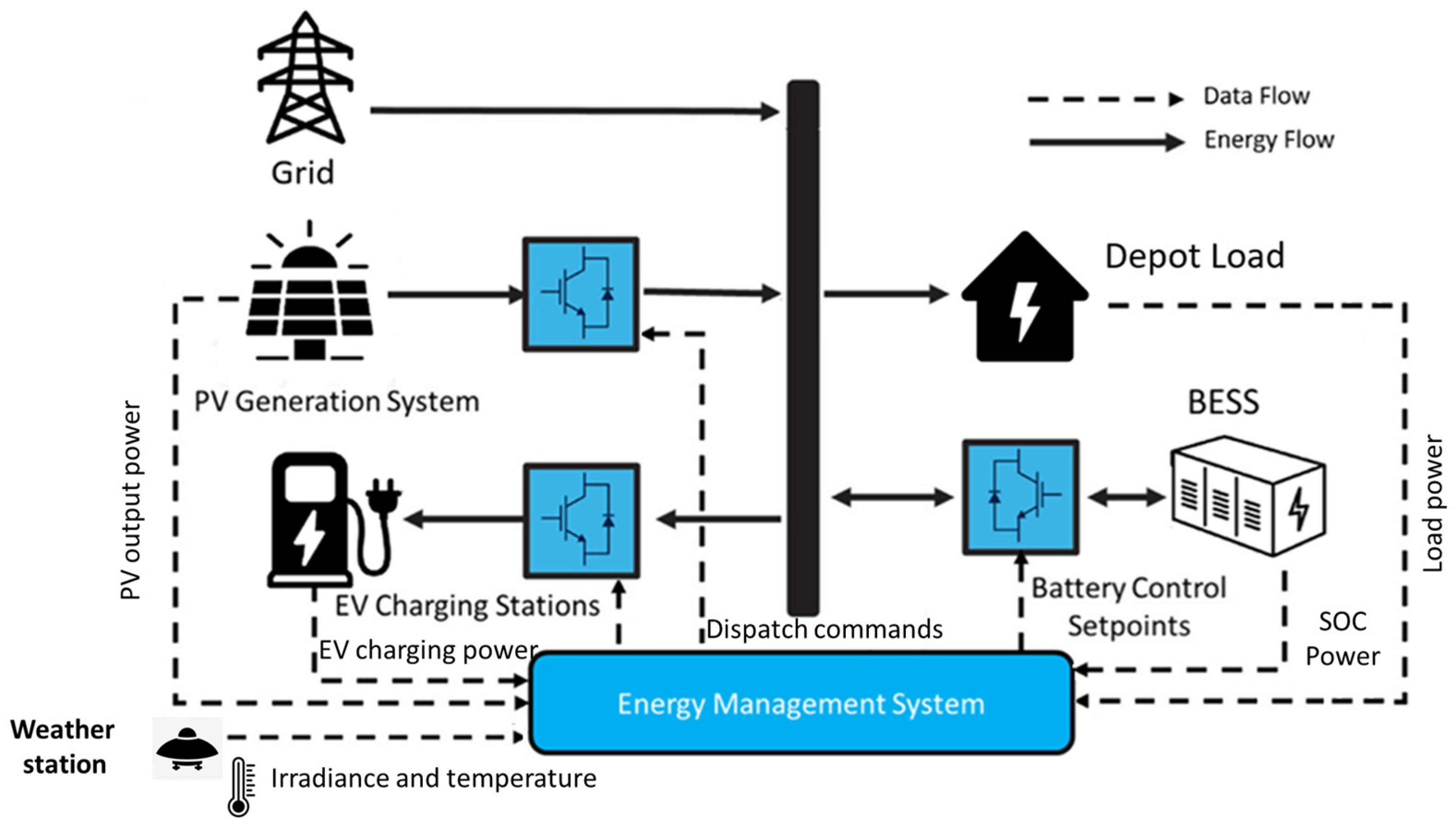
This section describes the experimental setup, the data acquisition system (DAQ), and the developed supervision platform for the PV-powered, battery-integrated electric vehicle EV charging station. The schematic diagram of the developed EMS architecture along with the energy flows is illustrated in
Figure 7.
3.1. Experimental Setup, Data Acquisition and Monitoring Platform
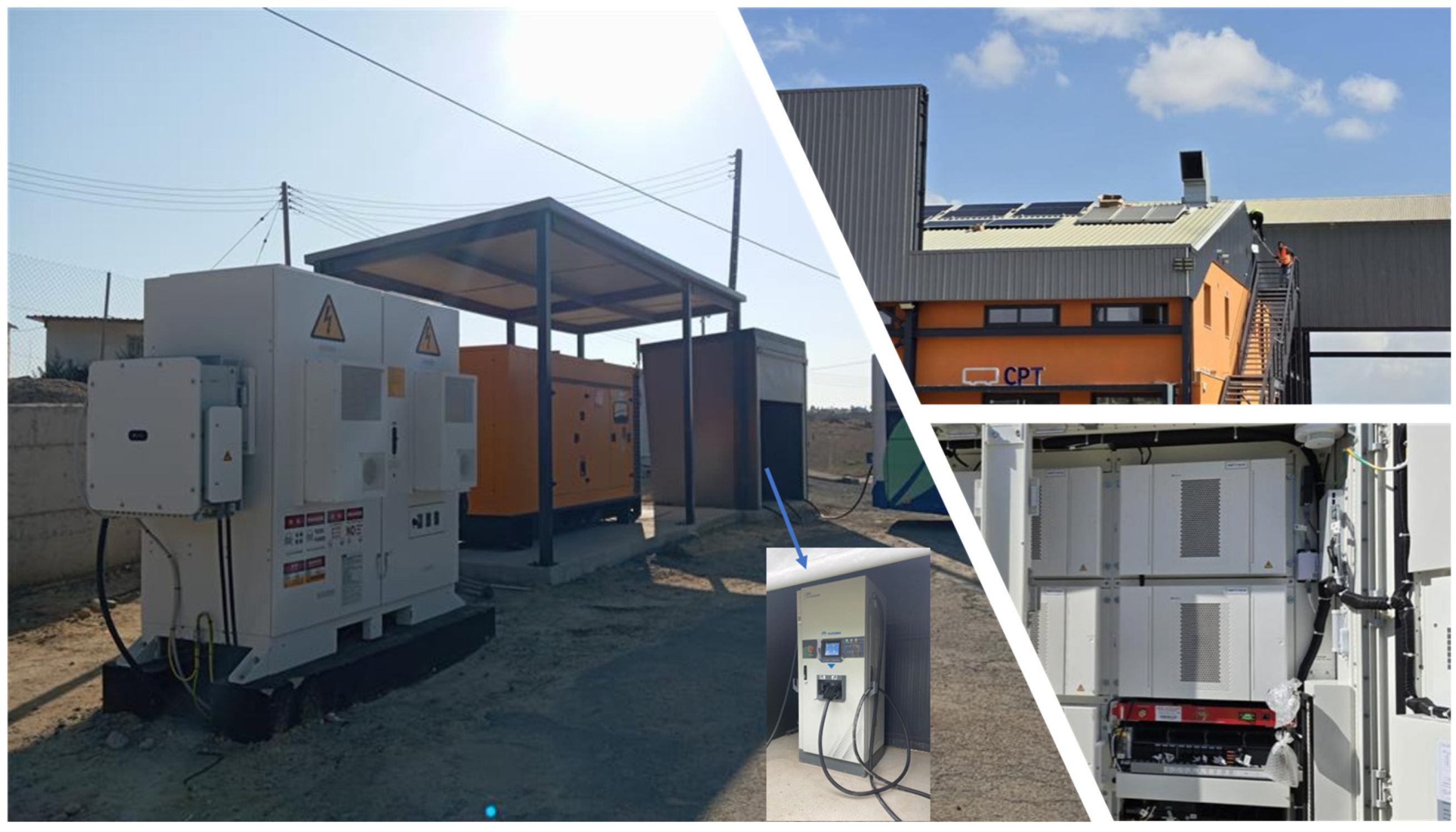
The PV-battery system was commissioned on 15 May 2025 at the Cyprus Public Transport (CPT) bus depot in Geri, Cyprus (see
Figure 8). To the authors’ knowledge, this is the first commercial-scale installation in Cyprus that integrates a behind-the-meter PV array, utility-scale BESS, and EV DC fast chargers [
31].
The depot comprises administrative buildings, maintenance facilities, and parking areas serving both urban and interurban buses (electric and gas-powered). The site is connected to the low-voltage distribution network through a dedicated transformer and a metering point at the point of common coupling (PCC). Bus operations exhibit distinct weekday and weekend patterns. Most buses depart in the early morning and return in the late afternoon or evening, resulting in a concentrated demand for EV charging during evening and nighttime periods. Electric bus charging durations typically range from 30 min to 10 h. The EV charging infrastructure supports a peak power of up to 160 kW when a single vehicle is connected to one port, or up to 80 kW per port when two vehicles are charged simultaneously. However, due to local grid constraints, the ports operate at 30% of peak power. On average, 4–5 electric buses are served each month, with the number of charging sessions ranging between 17 and 44 per month. The state-of-charge (SOC) of the electric buses at the start of charging can be as low as 13%, while it typically reaches >90% at the end of the charging session.
The grid-connected PV system has a total installed capacity of 60.32 kWp (maximum allowed PV capacity at the time of installation due to local constraints), comprising 104 n-type monocrystalline modules rated at 580 Wp each (model Tiger Neo N-type 72HL4-DBV 580 W manufactured by Jinko Solar (Shanghai, China)). The PV modules (bifacial with dual glass) are installed on buildings’ rooftops with a fixed tilt angle of 20° facing due south. The PV array is connected to two Huawei (Shenzhen, China) SUN2000-30KTL-M3 inverters. Inverter 1 is connected to 48 PV modules arranged in four strings of 12 PV modules each (12 × 580 Wp). Inverter 2 is connected to 56 PV modules arranged in four strings of 12 PV modules (12 × 580 Wp) and one string of eight PV modules (8 × 580 Wp). The inverters are tied to the national grid via a transformer and an energy meter. The BESS is a Huawei (Shenzhen, China) LUNA2000 Smart String system, based on lithium iron phosphate (LFP) technology, with a rated power of 100 kW and a usable capacity of 97 kWh. The EV charging infrastructure consists of a 160 kW DC fast charger (model SZ-160-CE, manufactured by Yutong (Zhengzhou, China)), equipped with two charging ports.
The electrical performance of the PV-battery system, along with the prevailing weather conditions, is recorded in accordance with International Electrotechnical Commission (IEC) 61724-1:2021 [
32]. Electrical measurements are obtained directly from the PV inverters, BESS converter, DC fast chargers, and grid meters. The monitored electrical parameters include AC power at the PCC (grid import/export), PV inverter output power, load power, BESS charge and discharge power, BESS SOC and EV charging power. In addition, on-site temperature sensors measure PV module back-side temperature and battery cabin temperature.
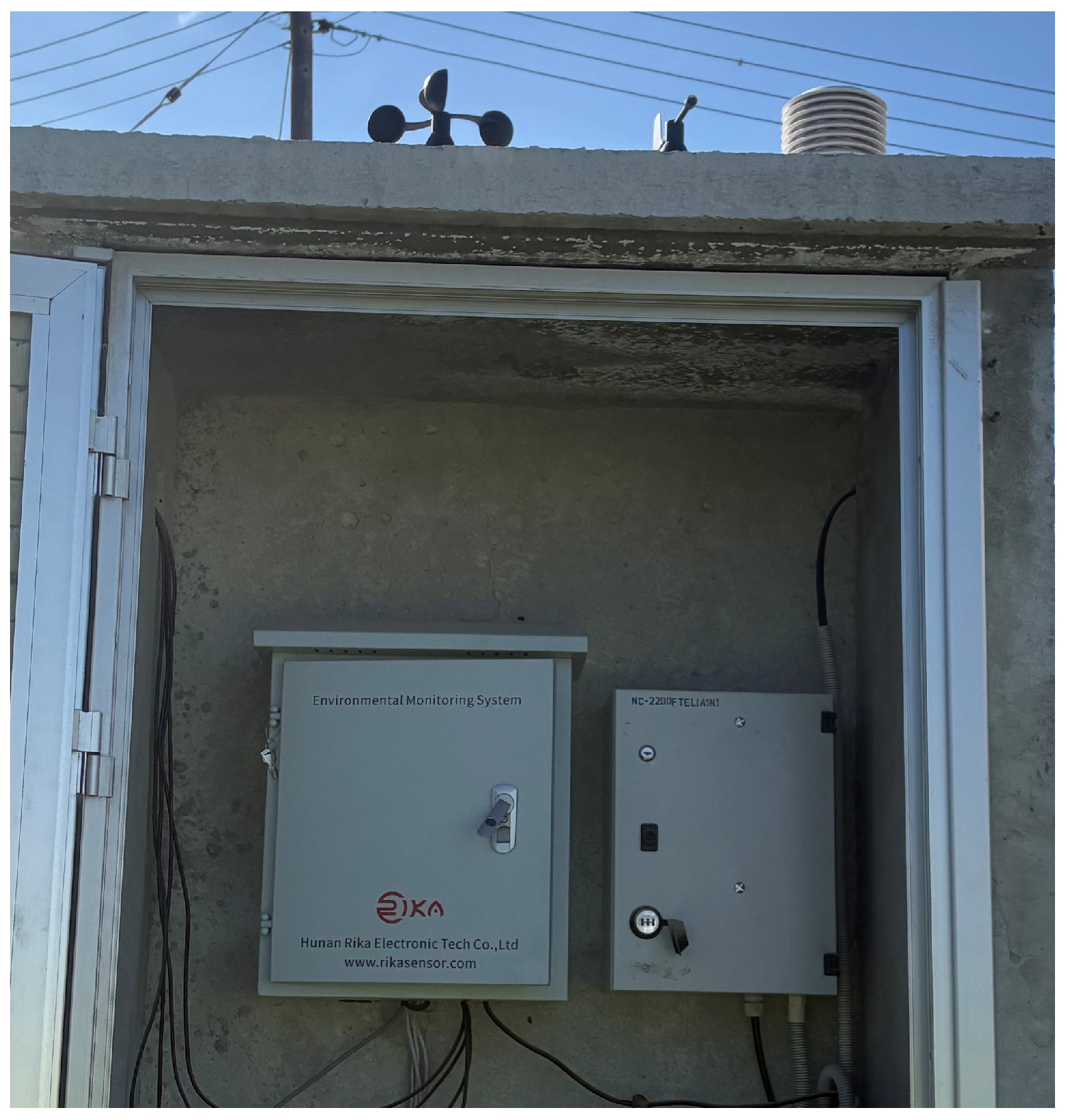
An automatic weather station (i.e., Rika (Changsha, China) environmental monitoring system) was also installed at the site (see
Figure 9). The weather station is located near the battery installation, and it is connected to the DAQ. The station incorporates an atmospheric temperature, humidity, and pressure sensor along with an anemometer and a pyranometer to measure wind speed (accuracy ±(0.3 + 0.03 V)m/s), ambient air temperature (accuracy ±0.5°C), relative humidity (accuracy ±3%), and in-plane irradiance (accuracy ±2%).
All electrical and environmental measurements are collected via embedded device sensors and data loggers. Field devices, including PV inverters, the battery management system (BMS), EV chargers, grid meters, and the weather station, communicate through proprietary and standard communication protocols (e.g., Modbus/TCP) via on-site gateways. Local devices are interconnected through Ethernet or RS-485 links to data loggers or gateways, which securely transmit data to a cloud-based database via internet connection.
Raw data are collected at 1 s resolution and aggregated into 5 min averages before being stored in the cloud database. For long-term performance assessment, the data are also aggregated into daily, monthly, and yearly blocks.
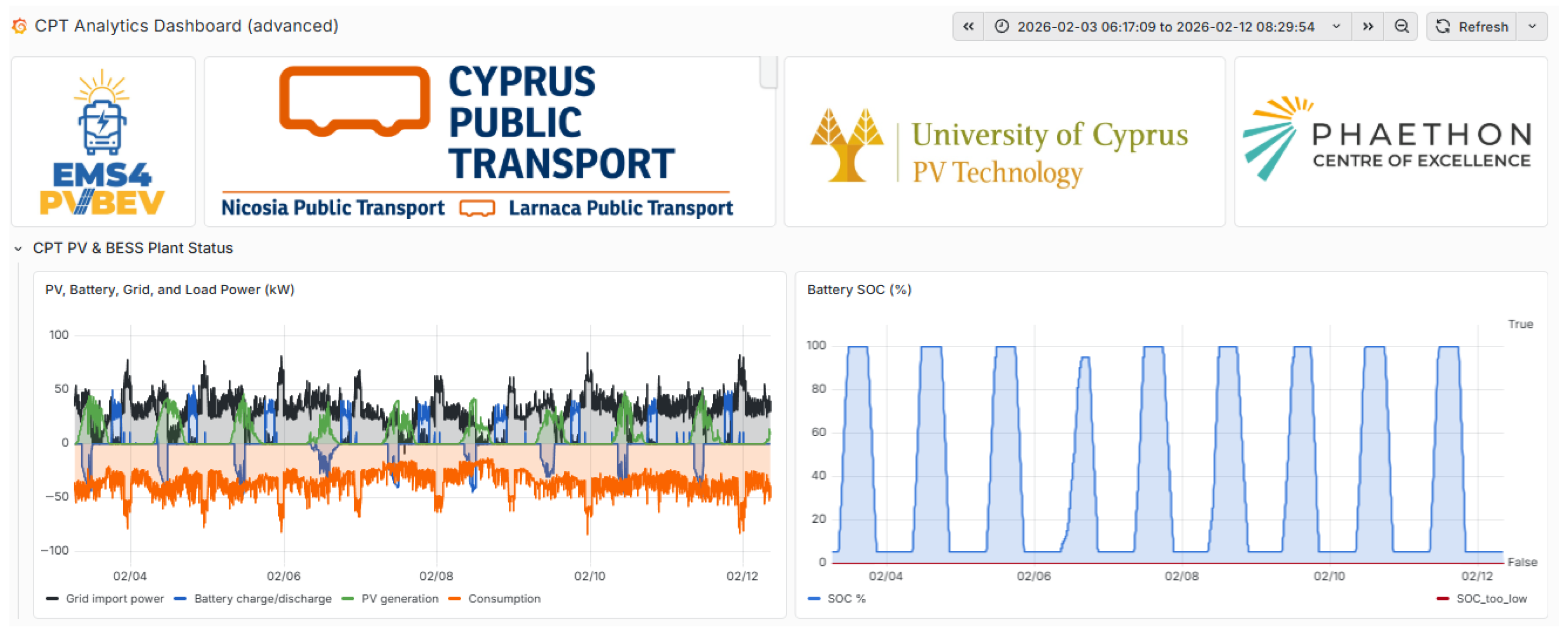
A custom monitoring and supervision platform was developed using the open-source Grafana software [
33] to enable continuous performance assessment of the solar-powered, battery-integrated EV charging system. The platform provides visualization of both real-time and historical data (see
Figure 10), and incorporates data-driven functionalities for data cleansing [
34], early fault detection [
3] and PV/load forecasting [
35,
36].
Finally, the platform integrates a supervisory decision-support layer that functions as the central EMS. The EMS continuously monitors real-time data inputs from all system components (see
Figure 11), including PV generation output, battery power and SOC, EV charging demand, depot load consumption and weather data. Based on these inputs and by considering forecasting results, the EMS executes a rule-based control strategy [
37] to regulate energy flows. Dispatch commands are issued to the inverter, EV chargers, and BESS via the data links shown in
Figure 11, enabling closed-loop control of the entire system (e.g., coordinated operation of generation, storage, and depot demand).
The rule-based EMS controller operates as a state machine using predefined logic to manage the charging and discharging operation of the battery [
37]. It considers the constraints of grid and battery capacity and charges the battery when PV generation exceeds load demand (usually occurring during morning hours) and discharges it during evening peak demand, thereby alleviating grid congestion.
3.2. PV-Battery System Operation Strategy
The bus depot operates under a zero-export scheme imposed by the distribution system operator (DSO) of Cyprus due to local grid capacity constraints. The zero-export condition is permanent, and it is achieved through the data logger. When PV energy production is higher than local consumption, the data logger sends a signal to the inverters of the PV system for zero export (i.e., to curtail the surplus of the PV production). The DSO has also installed a ripple-control at the PCC to curtail the PV system during unstable system conditions (in rare cases).
Within this regulatory framework, the BESS operating limits were defined according to manufacturer guidelines. The allowable SOC range was set between 5% and 100%, targeting one full charge–discharge cycle per day. Battery power setpoints are constrained within manufacturer-recommended C-rate limits to mitigate accelerated degradation and ensure long-term system reliability.
To align battery operation with the depot’s load profile, a time-based control strategy was implemented in the EMS. During morning and midday hours (typically 06:00–12:00), the EMS prioritizes charging the BESS using available PV generation, with most of the charging occurring between 08:00 and 12:00 when solar production is highest. During the late afternoon and evening hours (approximately from 18:00 onwards), when buses return to the depot and EV charging demand increases, the BESS is discharged to supply EV charging loads and other depot demands. This strategy reduces grid imports during evening peak periods and enhances on-site utilization of solar energy.
Under normal operating conditions, this coordinated approach results in approximately one full charge–discharge cycle per day, ensuring compliance with the zero-export requirement while supporting peak demand reduction, and maintaining battery health.
3.3. Data-Driven Functionalities of the Monitoring Platform
The custom monitoring platform provides real-time supervision, observability, and performance assessment of the depot’s infrastructure assets. Beyond data visualization, it integrates data-driven functionalities, including data cleansing, machine learning-based forecasting, comparative fault detection algorithms, and an automated alerting system for abnormal operation and underperformance conditions.
3.3.1. Data Cleansing
Raw measurements collected from field devices/sensors are first processed through a structured data quality routines (DQR) methodology to ensure data reliability prior to analysis [
34]. The DQR framework performs systematic pre-processing of the raw datasets to generate cleansed data streams suitable for performance assessment and algorithmic processing. In addition, it provides diagnostic insights into potential equipment and/or communication errors, data issues and failures and it evaluates the overall data availability of the monitored system [
38].
Specifically, the DQR methodology detects duplicate records, erroneous values and outliers by applying physical limits (i.e., threshold ranges) and statistical tests (e.g., standard boxplot rule) on the acquired measurements [
38]. Missing values are identified by searching for blank entries, Not a Number (NaN), and Not Available (NA) values [
38]. Single missing data points were corrected using model results, while longer data gaps (continuous missing data points) were not filled or corrected to fully capture the patterns exhibited during fault/loss conditions and DAQ system errors [
39,
40].
3.3.2. Forecasting Algorithms
Following data cleansing, supervised machine learning algorithms are applied for PV generation and load forecasting [
3,
35,
36]. In this study, gradient boosting models [
41] were developed using a train-test dataset approach for both PV production and depot load forecasting.
The forecasting models incorporate historical operational data along with Numerical Weather Prediction datasets, which provide forecasted meteorological variables [
35]. For PV generation forecasting, the Extreme Gradient Boosting (XGBoost) model is trained using available historical measurements (e.g., irradiance and temperature), generating short-term predictions of PV power output. Similarly, the total depot load (including EV bus charging demand) is forecasted using historical power consumption data, calendar features (hour of day, day of week), and, where available, route scheduling information [
35,
42]. In this work, emphasis is placed on 24 h-ahead demand forecasting to support optimal scheduling and energy management decisions.
3.3.3. Fault Detection and Automated Alerting
For fault detection, a comparative algorithm is employed to identify discrepancies between forecasted and measured system performance on a daily basis [
43]. Significant deviations between actual and forecasted PV output are flagged as potential faults, which may indicate inverter malfunction, curtailment, shading effects, etc. Likewise, abrupt drops or persistent zero values in BESS power, SOC, or EV charger power outside scheduled operating intervals are interpreted as indicators of possible hardware malfunctions or DAQ issues.
These diagnostic processes are executed in near real-time. When abnormal patterns or performance deviations are detected, the system automatically triggers alerts to operators, enabling rapid fault identification and timely implementation of corrective actions [
3,
39]. This integrated approach enhances operational reliability, reduces downtime, and improves overall system performance [
3,
39].
3.4. Performance, Financial and Environmental Evaluation
3.4.1. Energy Performance Indicators
Energy performance was assessed using key indicators computed over the evaluation period. Specifically, the self-consumption rate (SCR) and self-sufficiency rate (SSR) metrics were used to quantify the contribution of the PV-battery system in meeting the depot’s electricity demand. The SCR measures the percentage of solar energy generated that is utilized on-site, either directly by the load or indirectly via the BESS. The SSR represents the share of total depot electricity demand supplied by PV generation and discharged battery energy. These indicators quantify the effectiveness of the PV-battery system in enhancing on-site renewable energy utilization and reducing grid dependency.
Additionally, the BESS round-trip efficiency (i.e., the ratio of the energy output during discharge to the energy input during charging) was calculated to quantify energy losses over a full charge–discharge cycle. The state-of-health (SOH), defined as the ratio of current capacity to initial capacity, was estimated using a data-driven method to assess battery performance and aging under operating conditions [
44,
45]. Specifically, for each identified cycle, battery capacity was estimated from charge/discharge power via coulomb counting, filtered to reduce noise, and normalized by the nominal initial capacity to yield the SOH. Finally, a linear fit was applied to the filtered SOH data and extrapolated to predict degradation over future cycles.
3.4.2. Forecasting Performance Metrics
The common performance metrics of mean absolute error (MAE), root mean square error (RMSE), and normalized root mean square error (nRMSE) were employed to evaluate the accuracy of the developed PV generation and load forecasting models [
46]. The normalization factor used for the nRMSE was the mean of the observed data.
3.4.3. Economic Performance Indicators
Economic performance was evaluated by comparing the actual electricity cost of the depot operating with a PV-battery system against a counterfactual grid-only scenario based on applicable time-of-use tariffs. Thus, cumulative cost savings are derived as the difference between the grid-only and PV-battery cases, together with the revenue attributed to PV generation and battery dispatch.
3.4.4. Environmental Impact Indicator
Environmental performance was quantified in terms of avoided CO2 emissions, and the equivalent number of trees saved resulting from the operation of the PV-battery system.
4. Results and Discussion
This study presents the results from a six-month evaluation period (15 May–30 November 2025), focusing on the operation of the PV-battery system. Discussion and comments about the results are also provided in this section, along with future research directions.
4.1. Data Availability and Weather Conditions Analysis
4.1.1. Data Cleansing and Availability
The DQR methodology was initially applied on the field measurements to ensure data reliability and to assess the availability of the PV-battery monitoring system. During the data quality process, outliers, sensor errors and communication glitches were removed. Furthermore, short data gaps (≤15 min) were reconstructed using linear interpolation following standard practice in PV monitoring studies [
34].
After the data quality control procedure, the data availability of the main monitored and weather variables was evaluated. Overall, data availability across these key channels exceeded 95%, indicating reliable system operation and consistent data acquisition. Reported monitoring uptimes for similar energy systems in the literature typically range between 95.5% and 99.5% [
47], while best-practice monitoring systems target an annual data availability above 98% [
48].
A summary of the monitored variables and their corresponding data availability is provided in
Table 2.
The availability plot for the grid import power measurements (recorded as 5 min averaged values by the DAQ) is presented in
Figure 12. The grid import signal was available for most of the evaluation period. However, one extended outage occurred in September, lasting approximately nine days, caused by a BESS fault that temporarily disabled the DAQ.
4.1.2. Weather Conditions Analysis
The PV-battery system was installed in Geri, Cyprus, a location classified as a steppe climate with high irradiation (CH) under Köppen–Geiger-Photovoltaic climate classification [
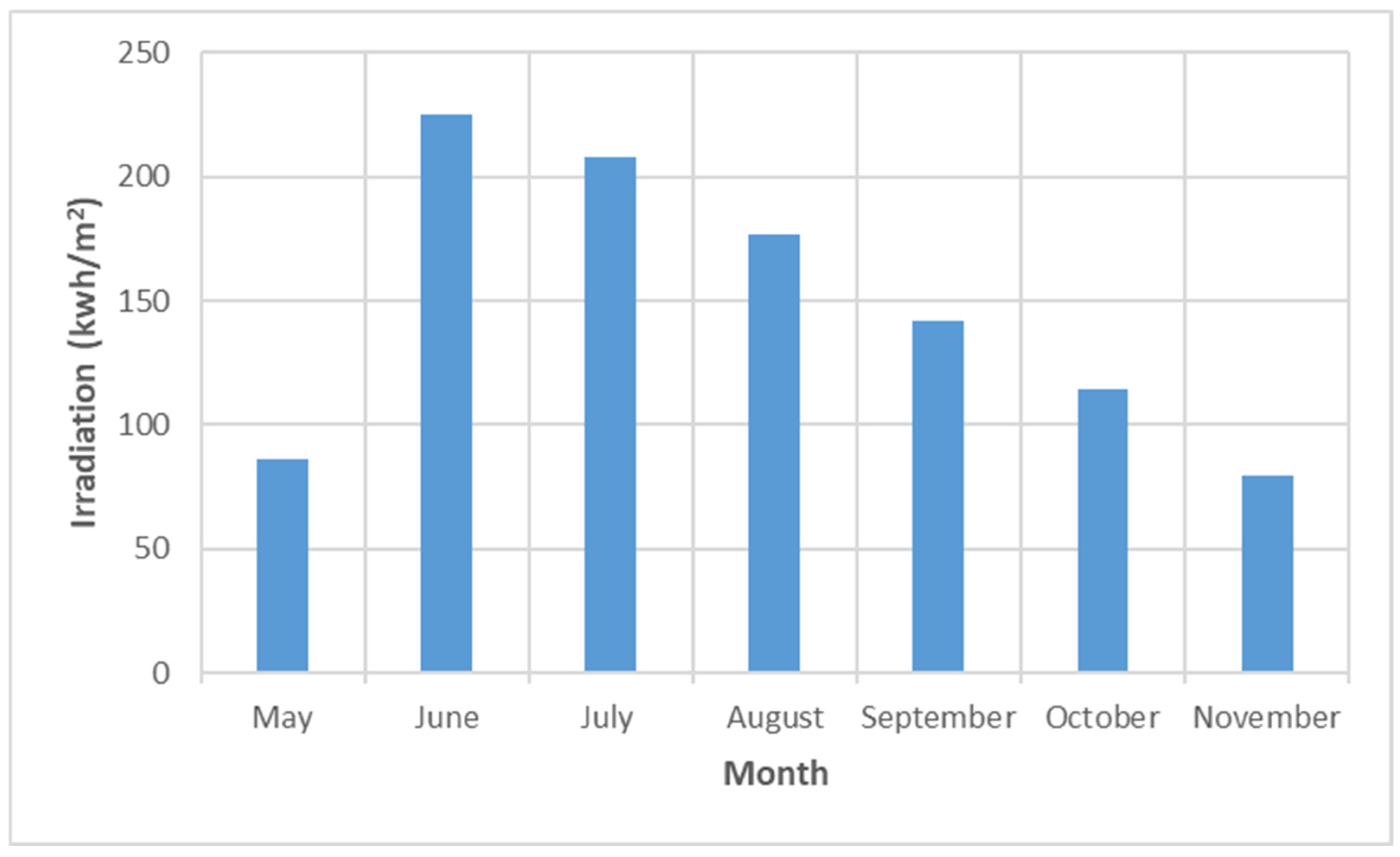
49]. Over the evaluation period, in-plane irradiance ranged from 0 to 1254 W/m
2 (median: 462 W/m
2, excluding nighttime hours), with midday peaks between 900 and 1254 W/m
2.
Figure 13 depicts the total monthly in-plane irradiation from 15 May to 30 November, which exhibits seasonality with peaks during summer followed by a gradual decline in autumn.
Over the evaluation period, ambient air temperature varied between 12 °C and 45 °C (average: 27 °C). The PV module back-side temperature was slightly higher, ranging from 16 to 50 °C (average: 31 °C). Nevertheless, the recorded temperature values remained within the indicative PV module operating limits (−40 °C to 85 °C). Finally, the BESS cabin temperature ranged from 23 °C to 43 °C, with an average temperature of 31 °C, which is also within the manufacture’s operating limits (−20 °C to 55 °C). It is worth noting here that the embedded temperature control system of the BESS ensures that the battery cells operate reliably under the site’s environmental conditions.
Overall, the PV-battery system operated within comfortable thermal margins throughout the evaluation period, and no temperature-related operational issues were identified. These results demonstrate that commercially available BESS units with embedded thermal management systems can reliably operate under high ambient temperatures (e.g., eastern Mediterranean conditions), providing empirical validation for deployment in other high-irradiance, high-temperature regions, where thermal concerns often hinder adoption. Provided manufacturer specifications are met and adequate ventilation is ensured, temperature alone need not be a disqualifying constraint for utility-scale BESS deployment in such regions/climates.
4.2. Forecasting Performance Evaluation
The developed forecasting models were applied to the available data to generate 24 h-ahead PV generation and depot load forecasts. The performance assessment of the forecasting models is tabulated in
Table 3.
For PV generation forecasting, the developed XGBoost model uses the meteorological parameters of in-plane irradiance, ambient temperature, wind speed and direction as input variables, while the PV power serves as the output variable. The data-driven model was trained on historical power generation and weather data and achieved accurate day-ahead forecasts, with an average nRMSE of 9.25% over the evaluation period.
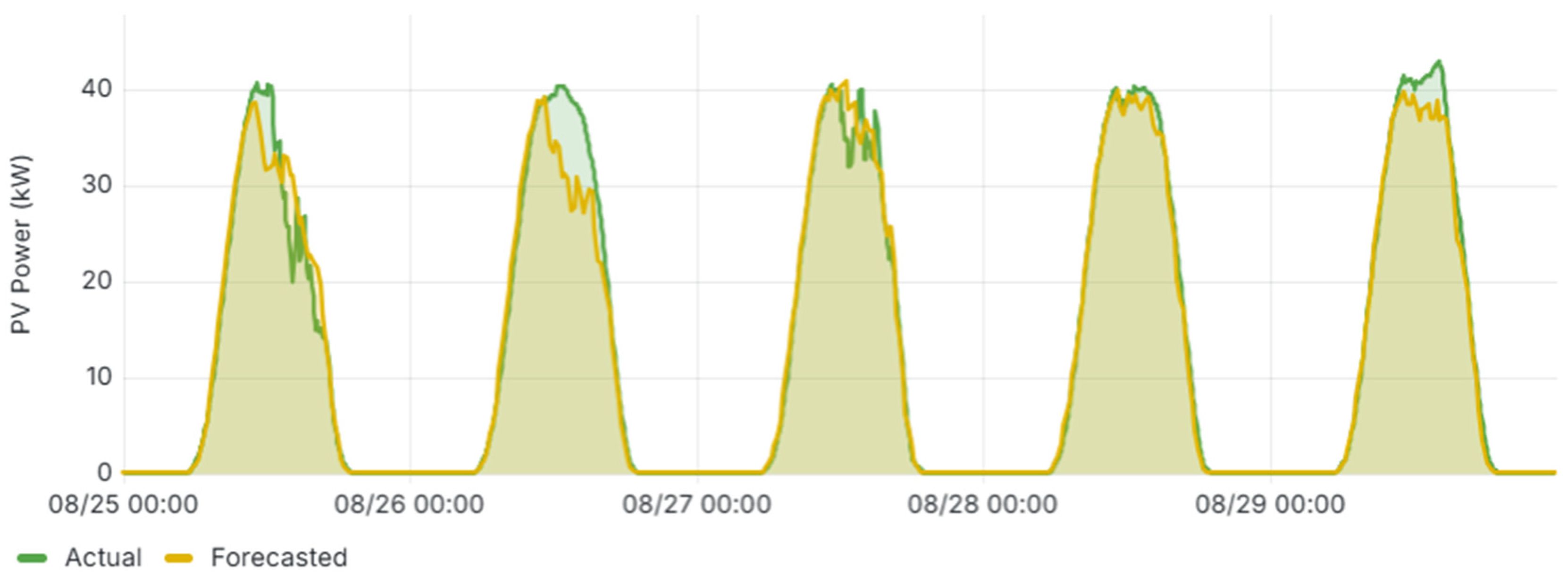
Figure 14 illustrates an example of the measured and forecasted PV generation over a five-day period in August. As shown, the forecasted PV power closely follows the measured PV output and captures the daily generation profile, particularly during clear-sky days.
The corresponding depot load model, which utilizes historical load data, calendar features, and, when available, EV route information, yielded a slightly higher average nRMSE of 12.87% over the evaluation period.
The developed forecasting models provided good accuracy levels within the ranges reported in the literature (from 3% up to 20% depending on installation type, location, output and forecast horizon [
42,
50]). Since accurate forecasts support both fault detection (as reported in
Section 4.3) and the predictive scheduling of RES-based systems, further improvements to forecasting accuracy represent a direct pathway to enhanced system reliability and reduced curtailment. To this end, more advanced machine learning and PV modeling approaches (e.g., deep learning architectures [
51], physics-informed models [
52], etc.) could be integrated to reduce forecasting/prediction errors under varying irradiance conditions.
4.3. Fault Detection Analysis and Alerting System
Over the evaluation period, the fault detection stage detected 20 failure occurrences in total (one DAQ issue, one BESS fault, and 18 PV curtailment events), though due to the absence of historical maintenance logs, a quantitative assessment of the fault detection stage’s accuracy was not feasible.
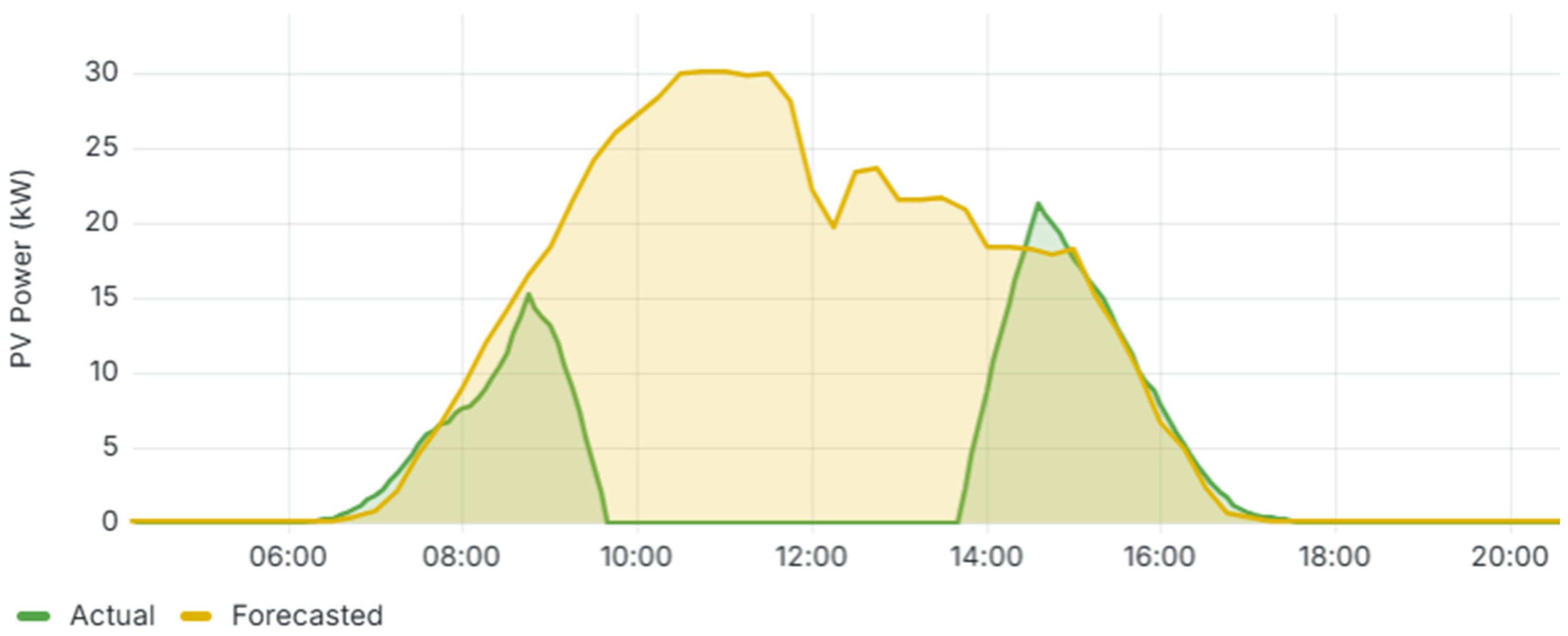
An example of a detected fault is presented in
Figure 15. The PV curtailment event was identified by comparing the measured PV power with the forecasted PV generation using a threshold deviation level of 10%. On the curtailed day, the forecast follows a bell-shaped profile, peaking before midday, whereas the actual PV power drops to zero between 10:00 and 14:00, indicating a curtailment event.
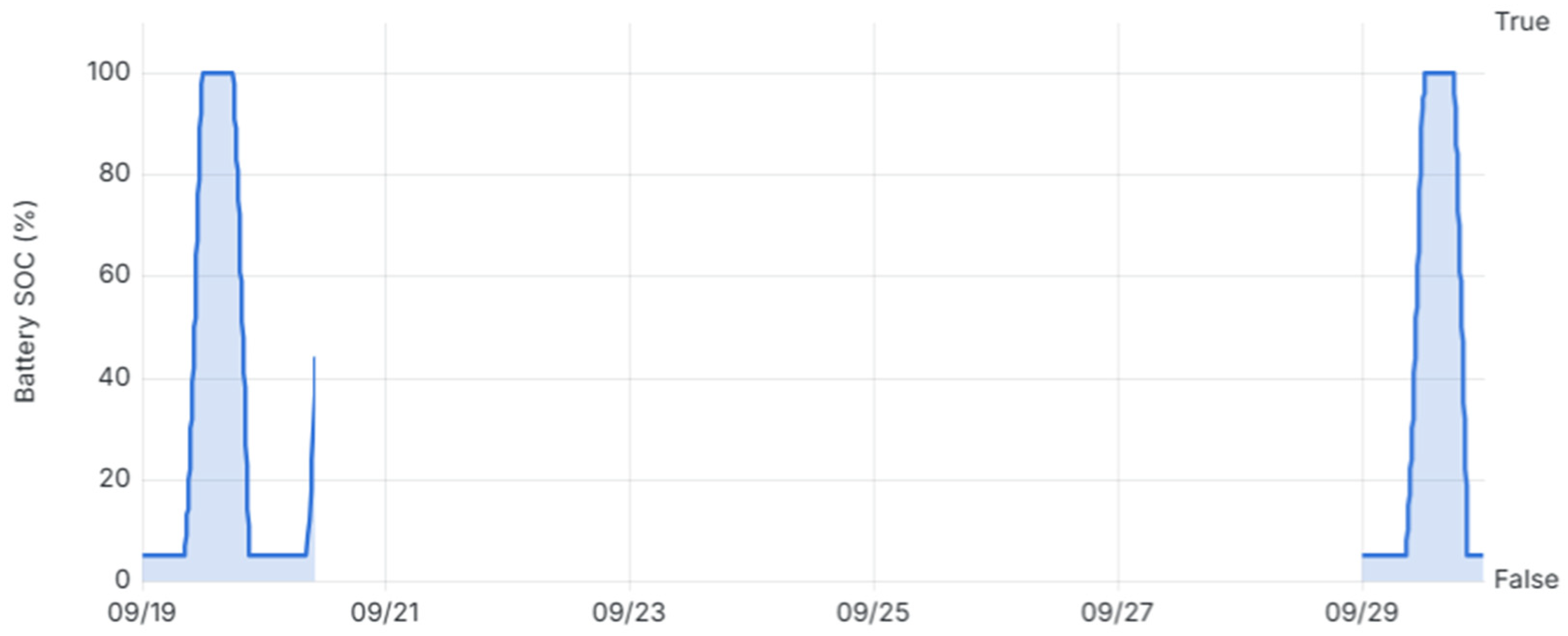
In another instance (see
Figure 16), a BESS fault caused a complete system shutdown (with the depot reverting to 100% grid supply), that required on-site intervention for resolution. Consequently, the system remained offline for approximately nine days, resulting in significant energy losses, which is reflected by the absence of normal battery SOC operation during this period. This event underscores the importance of the automated alerting system.
Other faults detected by the fault detection stage include communication and/or DAQ issues. These events temporarily interrupted the recording of measurements, although the underlying system operation continued. Such interruptions reduce the effective availability of data and may slightly bias energy performance analysis.
Therefore, the implementation of a monitoring platform with an automatic alerting system is essential to generate alarms in cases of abnormal system operation. This would help reduce downtime periods and associated energy and economic losses, while also enabling faster fault resolution and improving overall system performance and availability.
4.4. Performance, Financial and Environmental Analysis
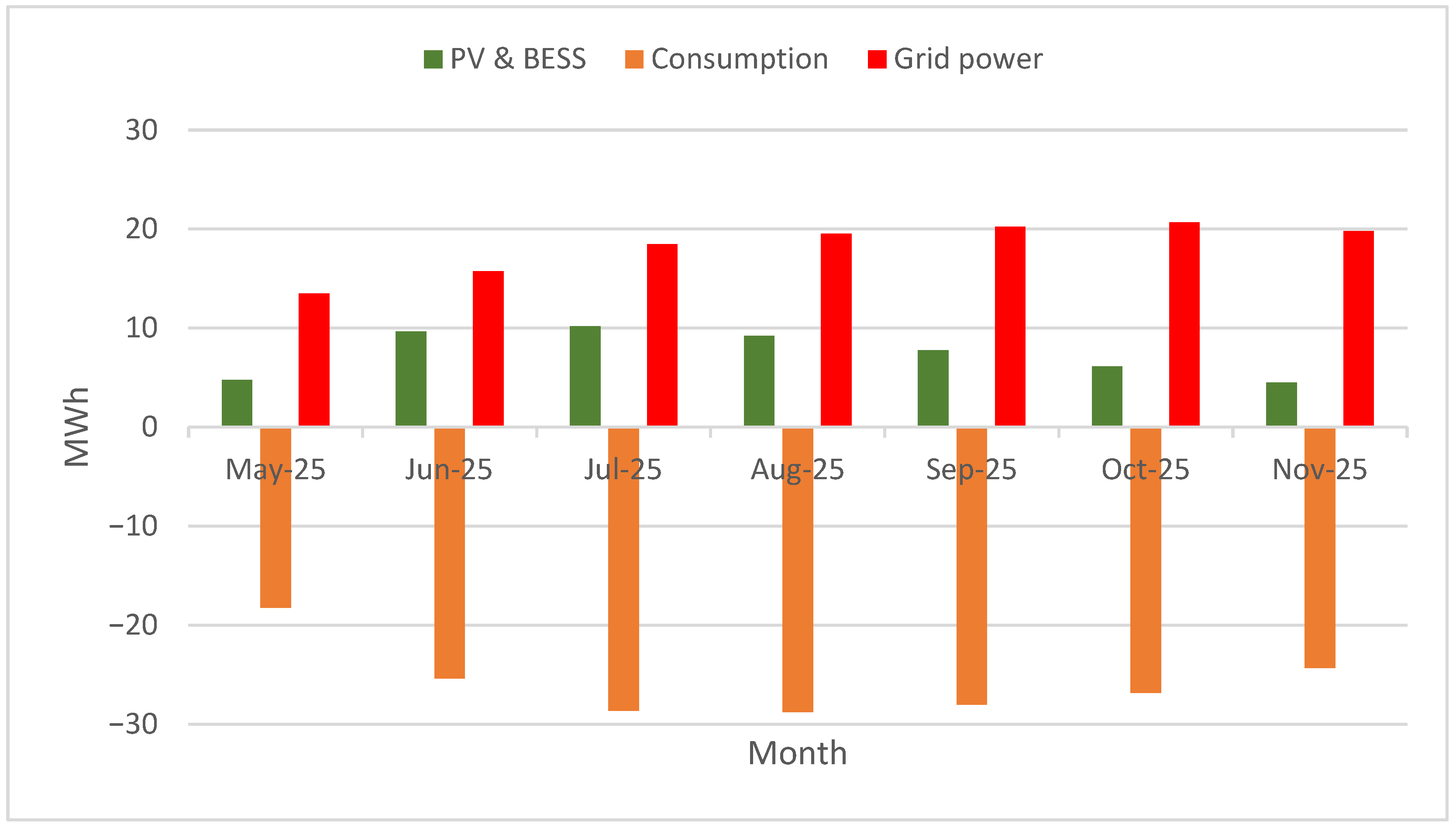
Over the evaluation period, the total depot electricity consumption was 180.17 MWh (see
Figure 17), while 52.21 MWh was supplied to the loads by the PV system and BESS, corresponding to a SSR of 28.97 (grid dependency rate of 71.03%). The PV system generated 54.31 MWh, of which 53.6 MWh was either directly consumed by the loads or stored in the BESS, resulting in a SCR of 98.69%. The remaining energy was curtailed.
The 28.97% SSR is within the ranges reported in the literature (i.e., 20–60% [
12,
15,
18,
19]) for similar systems, though it must be interpreted within the context of the system’s configuration and site’s load profile. With 54.31 MWh annual PV yield against 180.17 MWh depot consumption, the 60.32 kW
p array covered 29% of demand, approaching the theoretical maximum for this PV capacity. The 98.69% SCR confirms that the 97 kWh BESS was effectively sized to absorb all available PV output in one daily cycle. Thus, PV capacity expansion, rather than additional storage, is the primary lever for improving self-sufficiency, given the evening-concentrated EV charging profile. For similar fleet depots, this suggests a design guideline: scale PV technology to match/exceed daytime base load with storage sized for one daily cycle before considering larger batteries. The 160 kW DC fast charger peak power exceeds the BESS power rating (meaning that peak EV demand events cannot be fully met by storage alone and must rely on the grid), indicating that intelligent EV charging scheduling is required to decouple peak demand from the grid.
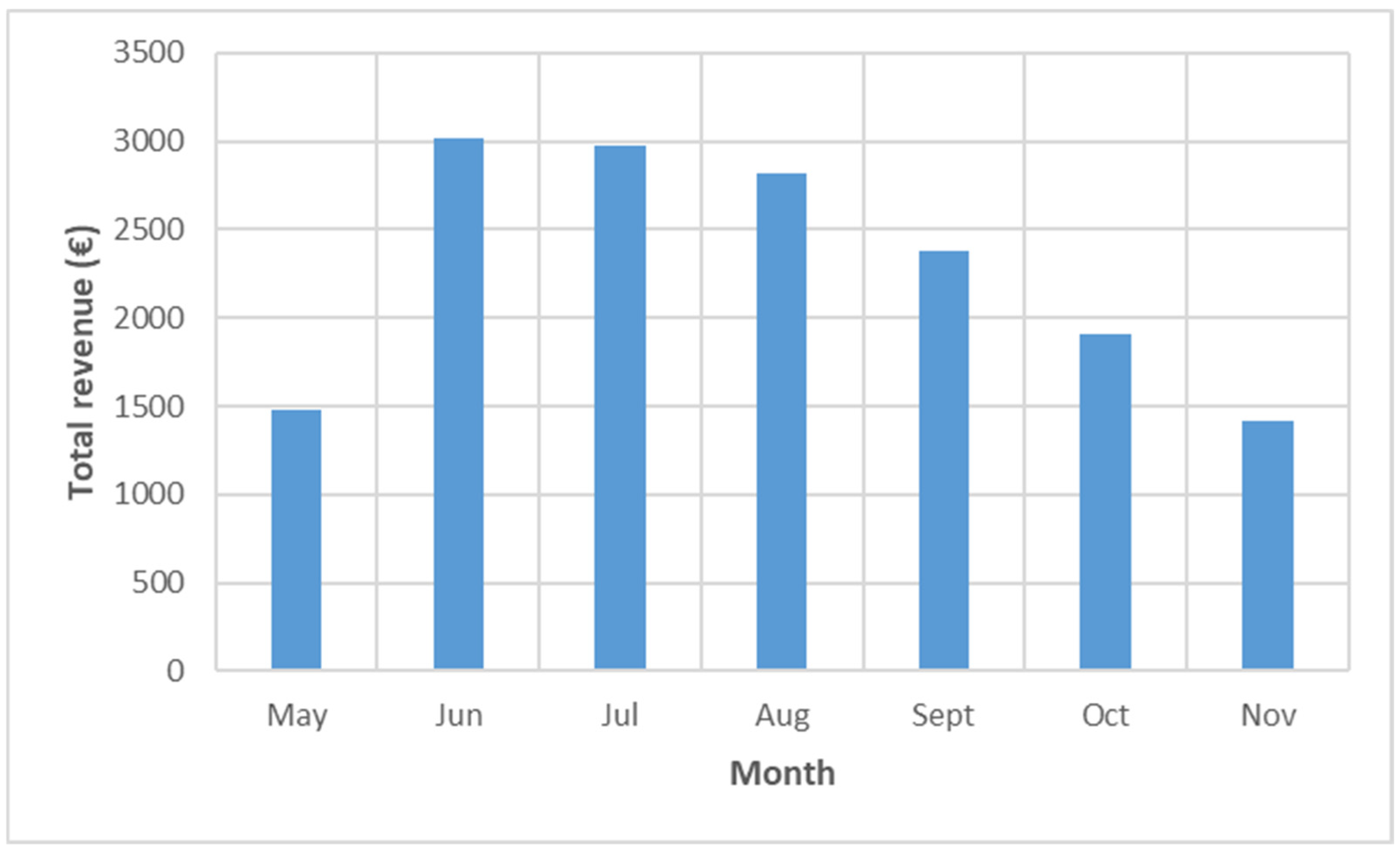
In addition, the PV-battery system reduced depot electricity costs by approximately 29%, generating €16,010 revenue over the six-month evaluation period (see
Figure 18). This corresponds to an average saving of about €89 per day compared to a counterfactual grid-only operation. Furthermore, total revenue peaks during the summer months due to the higher solar irradiation and gradually declines toward November.
The energy supplied by the PV system and BESS over the evaluation period resulted in 26.47 tonnes of CO2 emissions avoided, equivalent to approximately 37 trees planted. These emission reductions directly support the national and EU decarbonization targets and align with CPT’s corporate sustainability objectives.
The key performance, financial, and environmental indicators for the PV-battery system over the evaluation period are consolidated in
Table 4.
PV-Battery Operation and Optimization
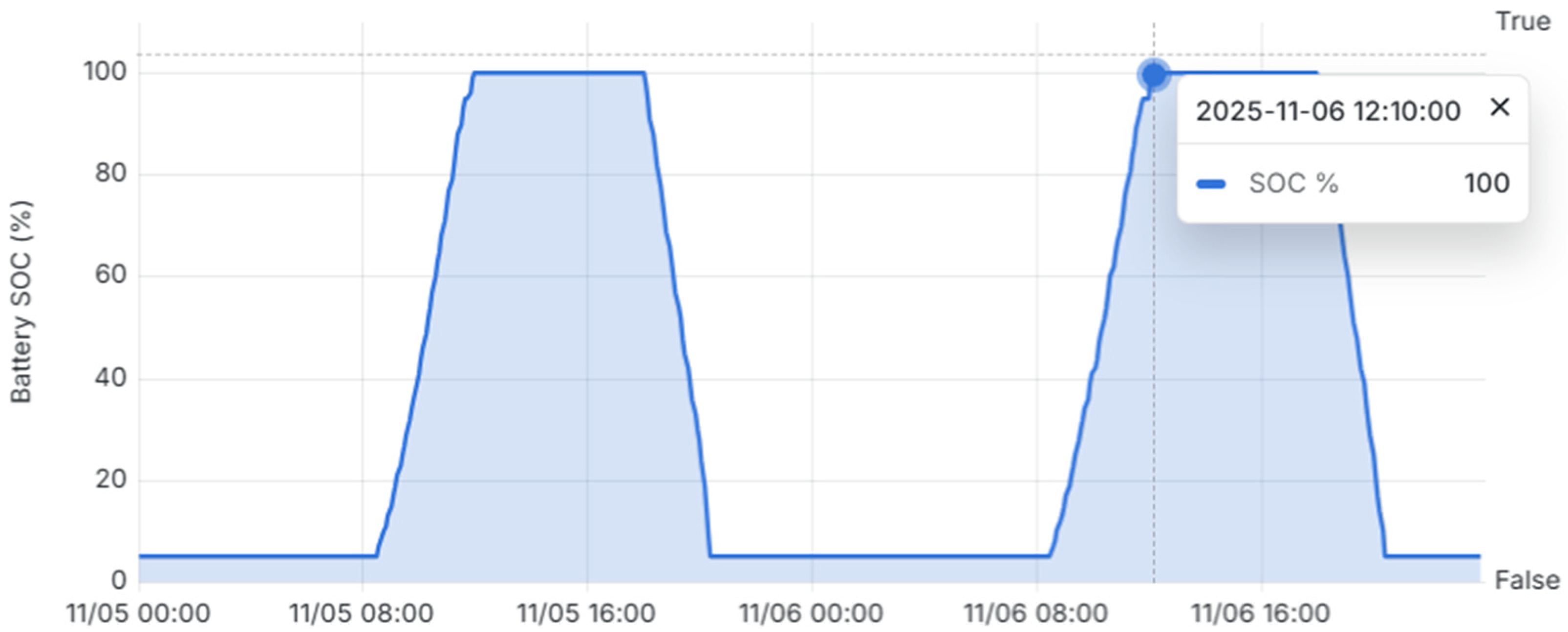
Over the evaluation period, PV generation peaks around midday, during which excess energy is stored in the BESS while the remainder supplies direct loads. Under the current time-based operation strategy, the battery’s SOC follows a regular daily pattern (see
Figure 19), increasing from 5% in the early morning (e.g., 08:15) to 100% around midday (e.g., 12:10), when PV generation is at its maximum. Subsequently, the SOC gradually decreases during the evening hours (i.e., from around 18:00 onwards) as the stored energy is discharged to charge electric buses and reduce grid imports, completing one full charge–discharge cycle per day. This behavior reflects the role of the storage system in mitigating the intermittency of RESs, as the SOC increases during periods of high PV generation and decreases during periods of low or no PV output (e.g., evening and night), thereby contributing to improved grid stability.
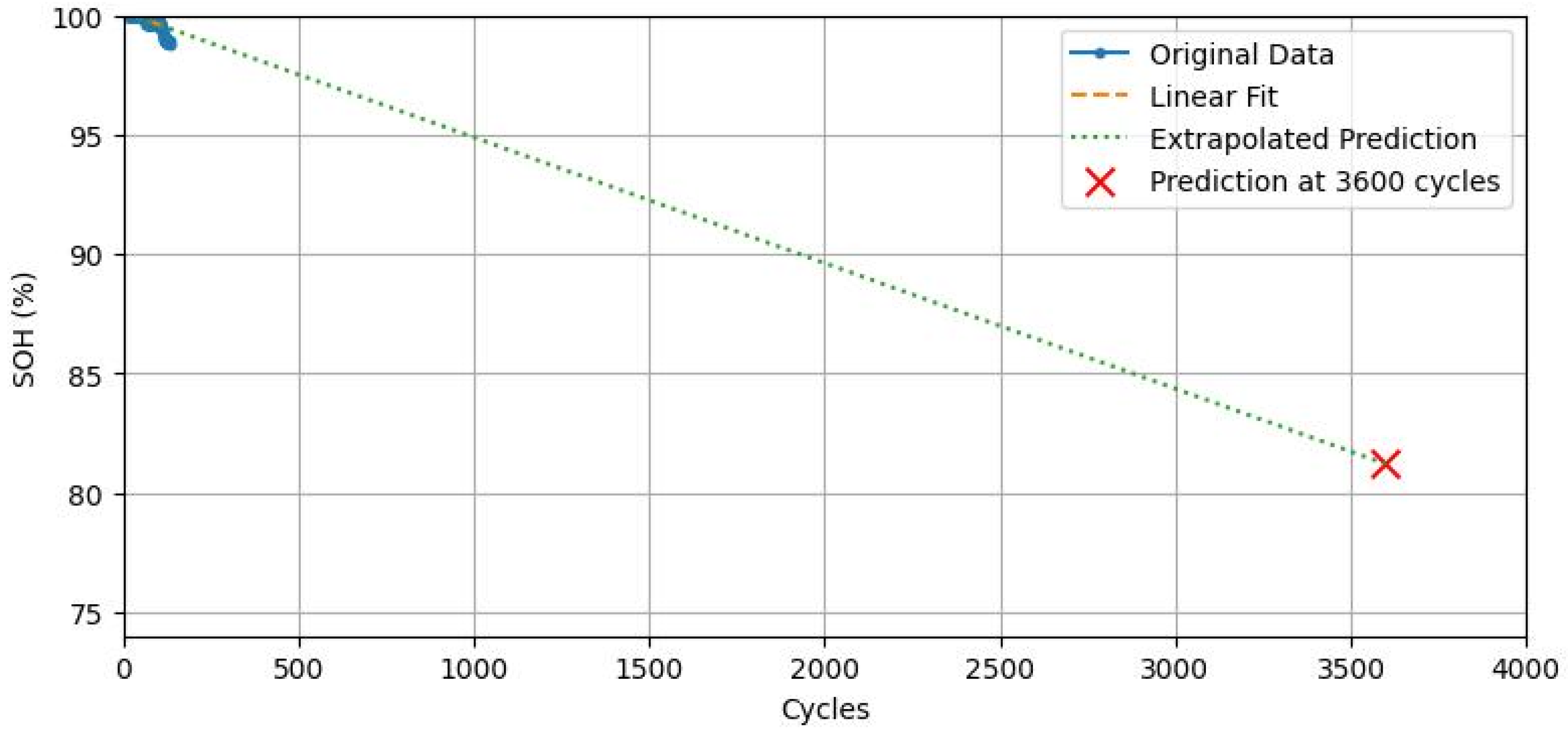
The operation strategy of the PV-battery system can be adjusted to maximize self-consumption. However, this approach may not fully meet evening EV load demand and could increase the number of daily charge–discharge cycles the battery undergoes, potentially accelerating battery degradation over time. Under the current operating strategy, the BESS completes approximately one full charge–discharge cycle per day (depth of discharge 95%), accumulating 148 full cycles over the six-month evaluation period. The estimated SOH at the end of this period was 98.88%, reflecting only 1.12% capacity fade over six months of operation. To project long-term degradation, a linear fit was applied to the estimated SOH data as a function of cumulative cycles (see
Figure 20), projecting a SOH of 81.58% at 3600 cycles (10 years of operation at current cycling rate), which is above the 80% end-of-life capacity threshold commonly used for utility-scale BESSs [
44,
45]. This confirms that the current single-cycle-per-day duty cycle is within acceptable degradation bounds over the expected system lifetime. Increasing to two cycles per day to maximize self-consumption would roughly double annual cycles, resulting in a substantially faster degradation trajectory. This trade-off between self-sufficiency gains and accelerated degradation should be incorporated into the EMS optimization framework for battery dispatch strategies. Finally, since the degradation trend was extrapolated from only six months of operational data, a longer duration period is needed for a more accurate assessment of long-term BESS capacity fade.
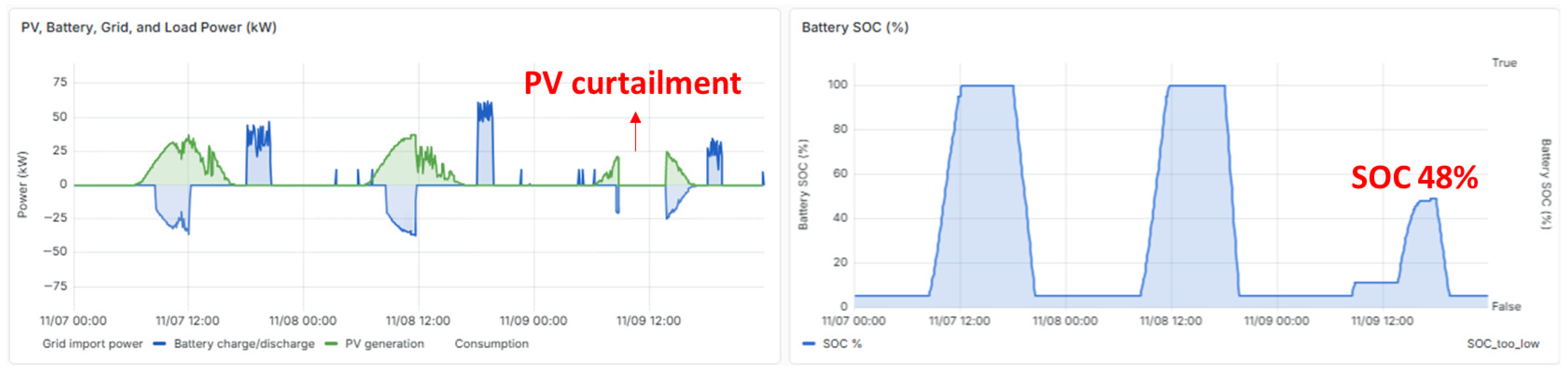
A further optimization strategy involves periodically adjusting the BESS charging profile to account for seasonal variations in PV generation, EV charging demand and prevailing load conditions. During high irradiance periods (e.g., summer months), the BESS typically reaches full charge before or by midday. To avoid midday curtailment under zero-export constraints, especially during low-demand conditions with high curtailment risk (as shown in the PV curtailment event in
Figure 21), a controlled morning charging rate could be applied to delay full SOC until mid-to-late afternoon (e.g., 15:00). This prevents early BESS saturation and maximizes absorption of peak afternoon PV generation. Looking ahead to winter months (not covered by the current evaluation period but projected), the lowest irradiance conditions will likely require the EMS to incorporate tariff-aware pre-charging from the grid during off-peak windows to ensure sufficient BESS capacity for evening EV charging demand. These periodic SOC management profiles offer a practical and directly implementable optimization pathway that requires no hardware changes, only EMS controller updates, and are therefore directly applicable to similar deployments in other regions with comparable climates, load conditions and zero-export grid constraints.
4.5. Grid Interaction and PV Penetration Impact
A key contribution of this case study, particularly relevant to Cyprus’s islanded, high PV penetration context, is the system’s impact on grid interaction and local network stress. While
Section 4.4 quantifies site-level energy, economic and operational performance, this subsection focuses on how the PV-battery system affects the grid import profile and curtailment dynamics, both of which are central to grid stability in non-interconnected power systems such as Cyprus.
First, the PV-battery system significantly reduced the total power drawn from the grid compared to a grid-only baseline. More specifically, 17.86 MWh stored in the BESS were discharged during evening hours when EV bus charging demand is concentrated, thereby reducing grid import, flattening the import profile, and reducing peak ramp rates. This load-shifting and smoothing effect is particularly significant for the local distribution network operator, as sharp demand peaks of the kind produced by simultaneous heavy-duty EV charging can exceed substation capacity limits, trigger demand charges, and require costly grid reinforcement. By absorbing and time-shifting on-site PV generation, the system directly alleviates this loading pressure without requiring network upgrades.
Second, with respect to curtailment avoidance, the system operated under a zero-export constraint, meaning that any PV generation exceeding instantaneous on-site demand that cannot be stored in the BESS must be curtailed. Over the evaluation period, the BESS absorbed/charged 19.16 MWh of PV output that would otherwise have been wasted, and the resulting SCR of 98.69% confirms that nearly all available generation was either directly consumed or stored. This is directly relevant to the curtailment crisis facing the Cypriot grid, where record curtailment rates of 47% were recorded in 2025. At the distribution level, each prosumer system that maximizes self-consumption and storage utilization reduces the volume of generation that propagates back to the transmission network, contributing to system-wide curtailment mitigation.
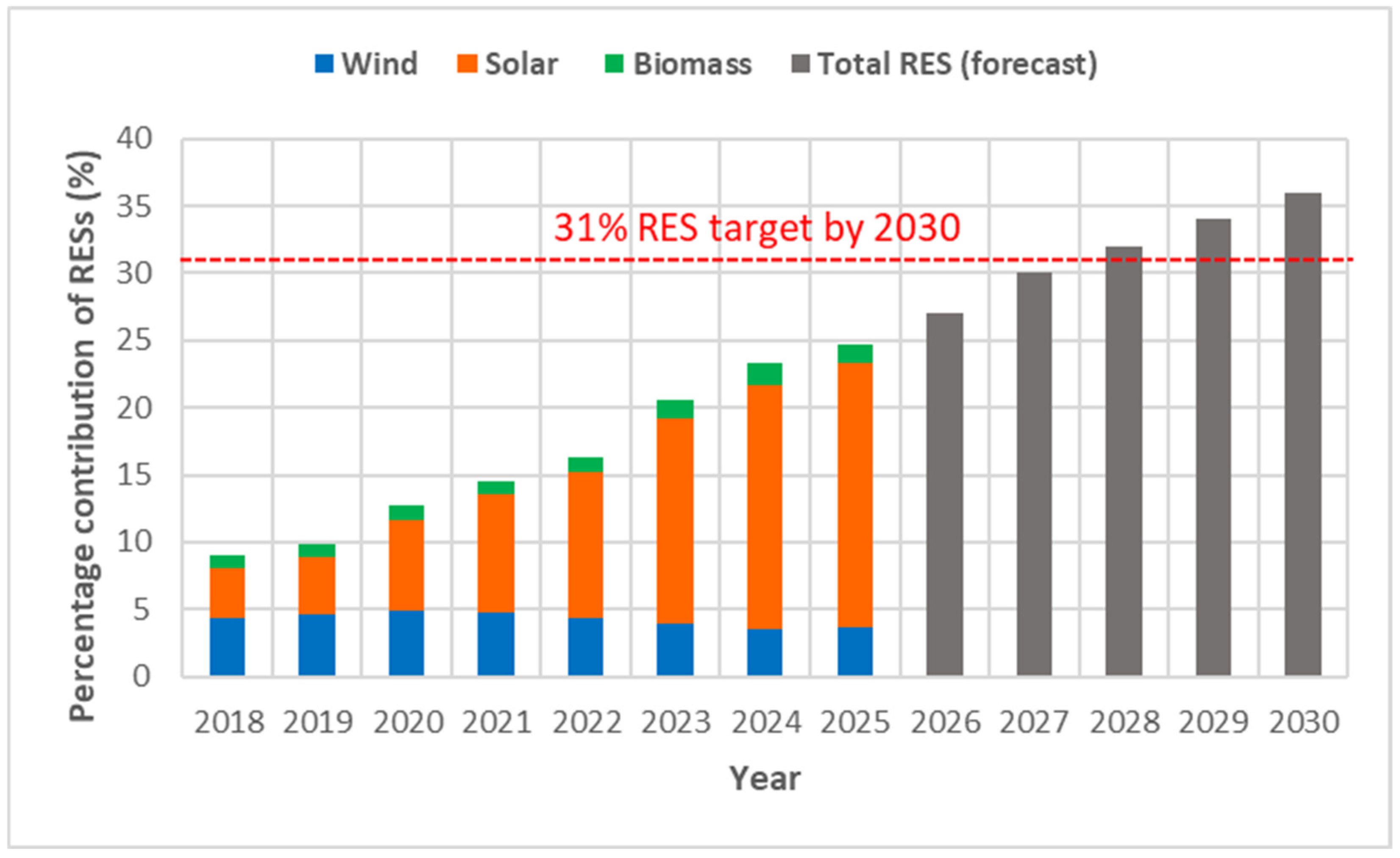
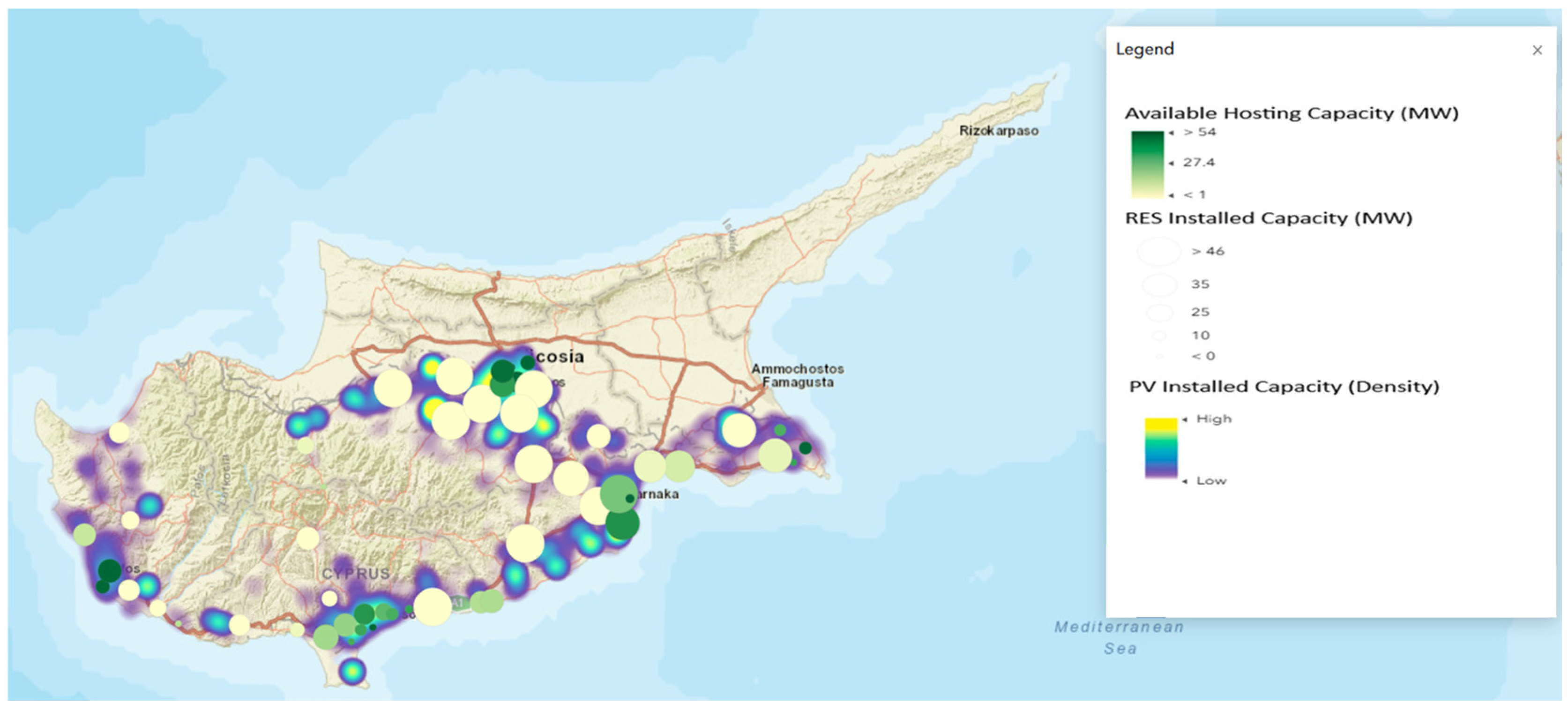
Third, the high SCR carries direct implications for local hosting capacity. Of the 54.31 MWh generated by the PV system, 53.6 MWh was consumed on-site or stored in the BESS, meaning that virtually no generation was injected back into the network. This prevents the overvoltage and reverse power flow conditions at the PCC that are among the primary technical barriers limiting the hosting capacity of distribution feeders in high PV penetration areas. This supports the argument that distributed PV-plus-storage systems, operating under zero-export conditions, can be integrated into grid-congested areas without requiring substation reinforcement, provided adequate storage capacity is available to absorb surplus generation. Replicating such configurations across commercial and fleet depot sites in Cyprus could collectively expand the grid’s effective hosting capacity, enabling further RES integration in line with the national 31% target for 2030 without a proportional increase in network investment.
4.6. Summary, Limitations and Future Research Directions
The analysis provided valuable insights for the performance monitoring and operation of the first PV-powered, battery-integrated EV charging station for commercial application in Cyprus. The main findings of this study are summarized as follows:
The PV-powered, battery-integrated case study demonstrates practical advantages of integrating RESs with EV charging infrastructure.
The system reduces electricity costs and provides environmental benefits (i.e., reduced CO
2 emissions) by utilizing on-site PV generation and stored battery energy. The PV-battery system met 29% of the site’s total energy demand, while achieving a SCR of 98.69%. These economic and environmental findings are consistent with results reported in the literature from other PV-plus-storage case studies [
18,
19].
The load still far exceeded the solar supply, indicating that the installed PV capacity is fundamentally undersized relative to the load. To further reduce grid dependency, the installed RES capacity (mainly PV) should be increased. Moving towards this direction and aiming to achieve complete energy self-sufficiency, CPT has already developed a new 1 MW substation to scale up the total capacity of both the PV system and BESSs.
Data availability across the key monitoring channels exceeded 95%, indicating reliable system operation and consistent data acquisition [
53]. The recorded signals were available for most of the six-month evaluation period, although some short gaps were observed, including one main period (eight days) with significant data loss.
The main underperformance incidents identified in the PV-battery system during the evaluation period were DAQ issues, BESS faults and PV curtailment events. To minimize downtime and fault periods, data-driven functionalities (e.g., forecasting tools) integrated into the monitoring system are required for early fault detection, together with an automated alerting system. Such alerts can notify plant operators and enable timely fault resolution.
Operational lessons from the evaluation period indicate minimal temperature-related issues, with BESS cabin temperatures (23–43 °C) remaining within manufacturer limits. However, given Cyprus’s high ambient temperatures and the inherent risk of thermal runaway in BESS deployments during summer conditions, future systems should adopt joint SOC–temperature estimation techniques (such as those based on ultrasonic reflection wave sensing [
54]) to enable early fault detection. This would allow the alerting system to trigger warnings before thermal conditions reach critical thresholds, thereby reducing both downtime and safety risks. The value of periodic operation strategies, implemented via an optimized EMS controller, is also highlighted for enhancing performance and energy flows while mitigating RES curtailment challenges in isolated grids under zero-export constraints.
Operating the BESS at different charge–discharge cycles per day presents a trade-off; although increased cycling can improve self-sufficiency, it may accelerate battery degradation compared with more conservative cycling strategies. The observed single-cycle-per-day strategy resulted in an estimated SOH of 98.88% after six months of operation, with linear extrapolation projecting a SOH of 81.58% at 3600 cycles (10 years of operation at current cycling rate), which is above the 80% end-of-life capacity threshold commonly used for utility-scale BESSs. Nonetheless, a longer operational period and further analysis are needed to accurately assess BESS capacity fade over time and to quantify the trade-off between self-sufficiency and asset longevity. Operators should also explicitly balance cycling frequency against replacement cost and degradation rate when configuring the EMS dispatch strategy.
The installation provides an empirical validation for deployment of BESS units in regions with similar weather conditions and serves as a living laboratory for further research on energy optimization, smart grid interactivity, and scalable integration of renewable energy and electric mobility.
This study has several limitations. The evaluation period covered only a six-month period (May–November 2025), excluding winter months when solar irradiance is lower, which may not fully capture the seasonal variability of solar resources, depot electricity demand, and annual EV charging patterns. In addition, the available data aggregate the depot load and, during certain periods, do not distinguish EV charging from other electricity consumption, thereby limiting the granularity of EV charging-specific analysis. Furthermore, battery performance was assessed using SOH and cycle counting metrics, with a linear extrapolation applied to project long-term capacity fade. Explicit electrochemical or physics-based degradation models were not incorporated. The resulting lifetime projections are therefore indicative rather than precise and should be validated against manufacturer degradation curves and measured SOH data over a longer operational period. The economic analysis was conducted using the static commercial electricity tariff applicable to the site at the time of the evaluation and fixed maintenance cost assumptions, without accounting for the dynamic fluctuations in grid electricity prices driven by fuel price volatility in Cyprus’s import-dependent energy market. Consequently, the reported cost savings and revenue figures represent a point-in-time estimate rather than a robust economic projection, and the sensitivity of the return of investment (ROI) to electricity price variability and battery replacement costs was not quantified in this study. Moreover, this study’s conclusions depend on the prevailing regulatory and policy environment at the time of the evaluation. Shifts in EU or national energy policies (such as reforms of the scheme rules for the production of energy from RESs, changes to time-of-use tariffs, introduction of BESS subsidies, etc.) could significantly alter the economic viability and operational strategies of such systems. This policy sensitivity was not formally assessed in the present study. Finally, the accuracy of the fault detection stage could not be evaluated due to the absence of historical maintenance logs.
Future work will extend the evaluation period to a full year to better capture seasonal variability in solar generation and EV charging demand, which will be the subject of a future publication. In addition, detailed EV charging data (e.g., per bus and per charging session) will be integrated to characterize charging demand profiles and assess the operational flexibility of the system more accurately. On the control side, an optimized EMS controller will be developed to explicitly balance cost savings, curtailment reduction, and battery degradation. The EMS controller will employ a cost-minimization strategy to optimize system energy flows. This framework will rely on forecast-driven scheduling, tariff-aware EV charging strategies, and detailed degradation models to improve overall system performance and economics. It will also support cost-effective operation by enabling optimal battery dispatch based on electricity tariffs and by facilitating informed operational decision-making for the solar-powered, battery-integrated EV charging infrastructure. At the control architecture level, the integration of voltage-power self-coordinating inverter control frameworks into the cloud-based EMS platform represents a promising avenue for future development, providing inverter-level voltage regulation capabilities (e.g., real-time mitigation of voltage fluctuations caused by variable PV output and concentrated EV charging demand) that would complement the supervisory dispatch logic and further reduce grid stress. Furthermore, a dynamic cost model will be developed to capture the impact of electricity price fluctuations, which is driven by fuel price volatility in Cyprus’s fossil fuel-dependent grid, and battery lifecycle costs (including replacement cost trajectories) on system economics. This model will incorporate a sensitivity analysis to quantify the impact of electricity price variability and battery replacement cost scenarios on the ROI and payback period, thereby providing a more robust economic assessment applicable to different market conditions and deployment contexts. From an algorithmic perspective, the existing forecasting tools can be further enhanced by incorporating state-of-the-art AI and physics-based forecasting methods. In addition, predictive algorithms, together with financial and energy loss modules, could be integrated into the cloud-based EMS platform to further expand its analytical and operational capabilities. Such improvements would support more informed and proactive decision-making, enabling dynamic adjustment of the battery SOC and strategic pre-charging to meet evening demand peaks and the reservation of storage capacity when needed. Battery state estimation could be further enhanced by incorporating joint SOC–temperature monitoring approaches, such as ultrasonic reflection wave-based methods [
54], which are particularly relevant for BESS deployments in hot climates where thermal runaway risk is elevated and early detection is critical to system safety and continuity of operation. Ultimately, these enhancements could reduce system downtime, minimize grid electricity imports, and further lower operational costs.
5. Conclusions
This paper presented a real-world case study of a PV-powered, battery-integrated EV charging station at the CPT bus depot in Geri, Cyprus, demonstrating the technical feasibility and practical benefits of integrating PV generation with a utility-scale BESS under a zero-export scheme.
Over the six-month evaluation period, the system supplied a substantial share of the depot’s electricity demand, reduced electricity costs and delivered CO2 emission reductions compared with a grid-only baseline. Beyond these energy, economic, and environmental gains, the analysis also highlighted several operational challenges typical of high PV systems in islanded power networks. These include midday curtailment and RES installation capacity constraints. The analysis also highlighted the importance of robust monitoring, fault detection, and alerting mechanisms. The deployment of a cloud-based EMS and analytics framework, combined with AI forecasting capabilities, provides a strong foundation for addressing these challenges through more advanced predictive control strategies.
Critically, the results of this case study extend beyond site-level performance to address the broader challenge of PV penetration and grid stability in Cyprus’s non-interconnected power system. The BESS absorbed nearly all available PV output (SCR of 98.69%), retaining generation that would otherwise have been curtailed under the zero-export operating constraint—a direct contribution to curtailment mitigation at the local distribution level. The system also reduced peak grid import demand by time-shifting stored energy to evening hours. Furthermore, by ensuring that PV generation does not propagate back into the network, the system avoids the overvoltage and reverse power flow effects that constrain hosting capacity in distribution feeders. These findings are particularly pertinent in the context of Cyprus’s record curtailment rate of 47% in 2025 and the national target of 31% RES penetration by 2030: replicating distributed PV-plus-storage deployments across commercial and fleet depot sites could collectively support higher RES hosting capacity without proportional network investment, offering a scalable and cost-effective complement to grid reinforcement.
Overall, the CPT depot installation provides an empirical validation for the deployment of BESS units in regions with similar weather conditions and functions as a living laboratory for RES integration in small, isolated power systems. The operational insights obtained, particularly regarding system operation and curtailment mitigation, are directly relevant to other fleet depots in Cyprus and similar island grids. These findings support future large-scale deployment and the development of smart grid applications. PV-powered, battery-integrated EV charging infrastructure therefore represents a promising pathway for simultaneously advancing the decarbonization of both the energy and transport sectors while facilitating higher levels of renewable energy integration in islanded power systems.





 ,
,