Two-Layer Optimal Power Allocation of a Vanadium Flow Battery Energy Storage System Based on Adaptive Simulated Annealing Multi-Objective Harris Hawks Optimizer


Abstract
1. Introduction
2. Vanadium Redox Flow Battery Energy Storage System Architecture
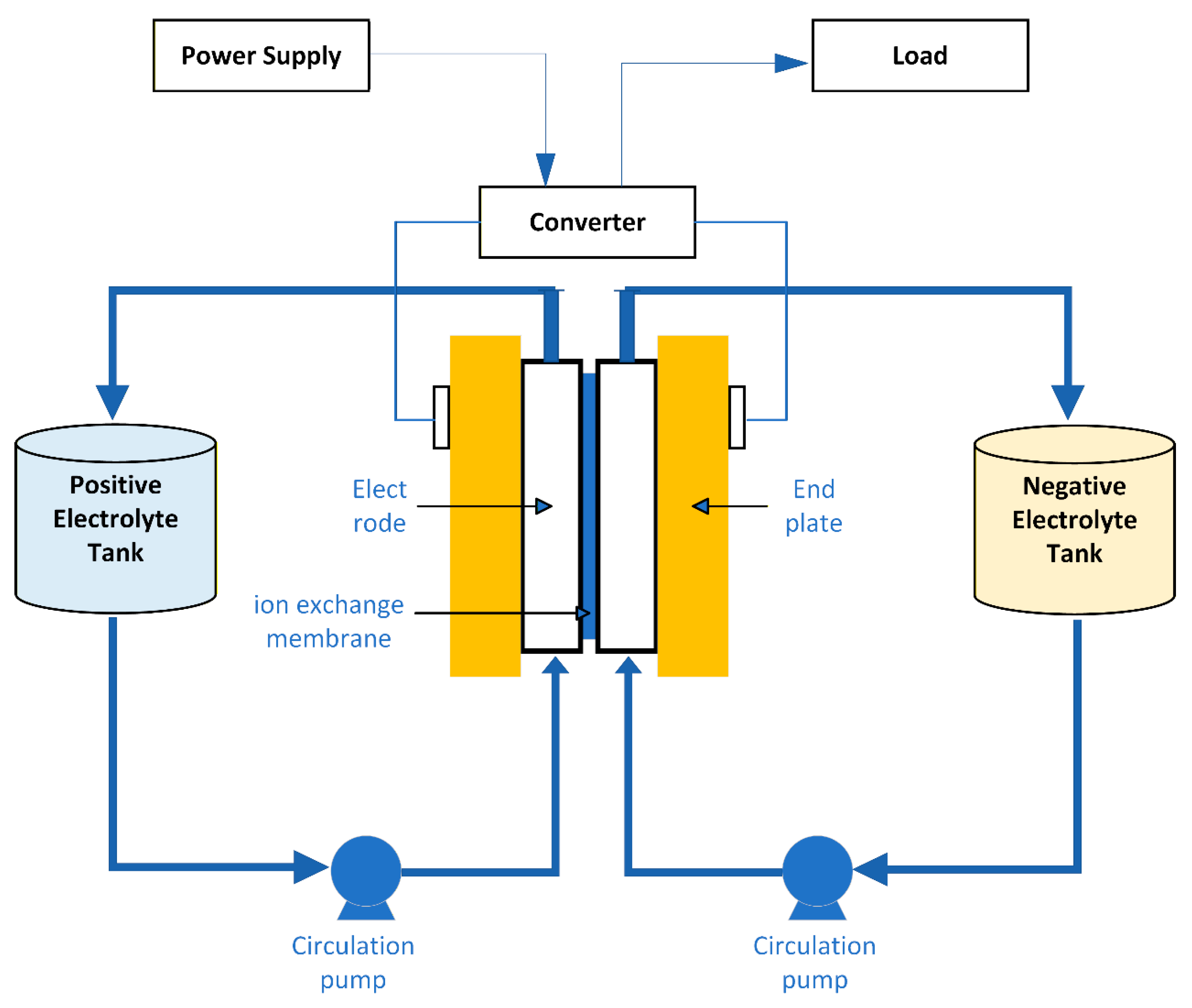
2.1. Vanadium Redox Flow Battery
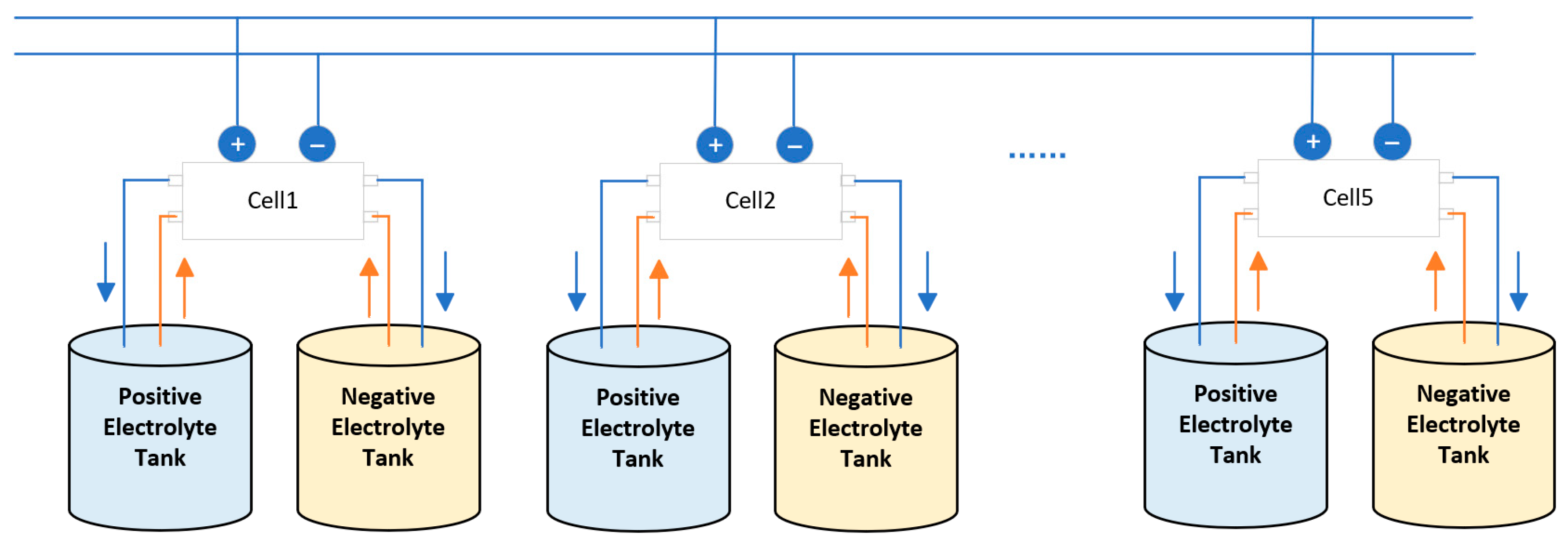
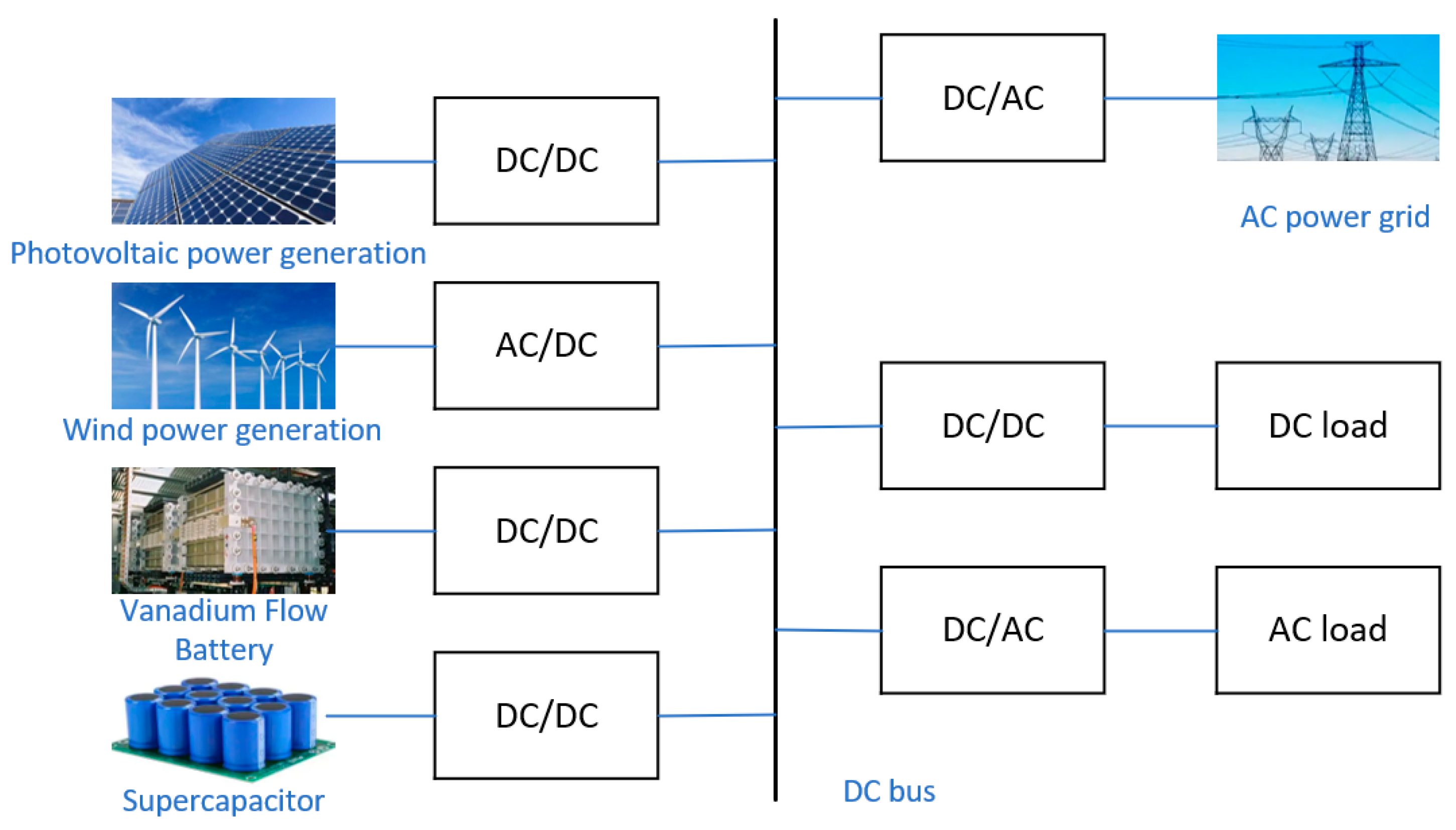
2.2. Vanadium Flow Battery Energy Storage System Architecture
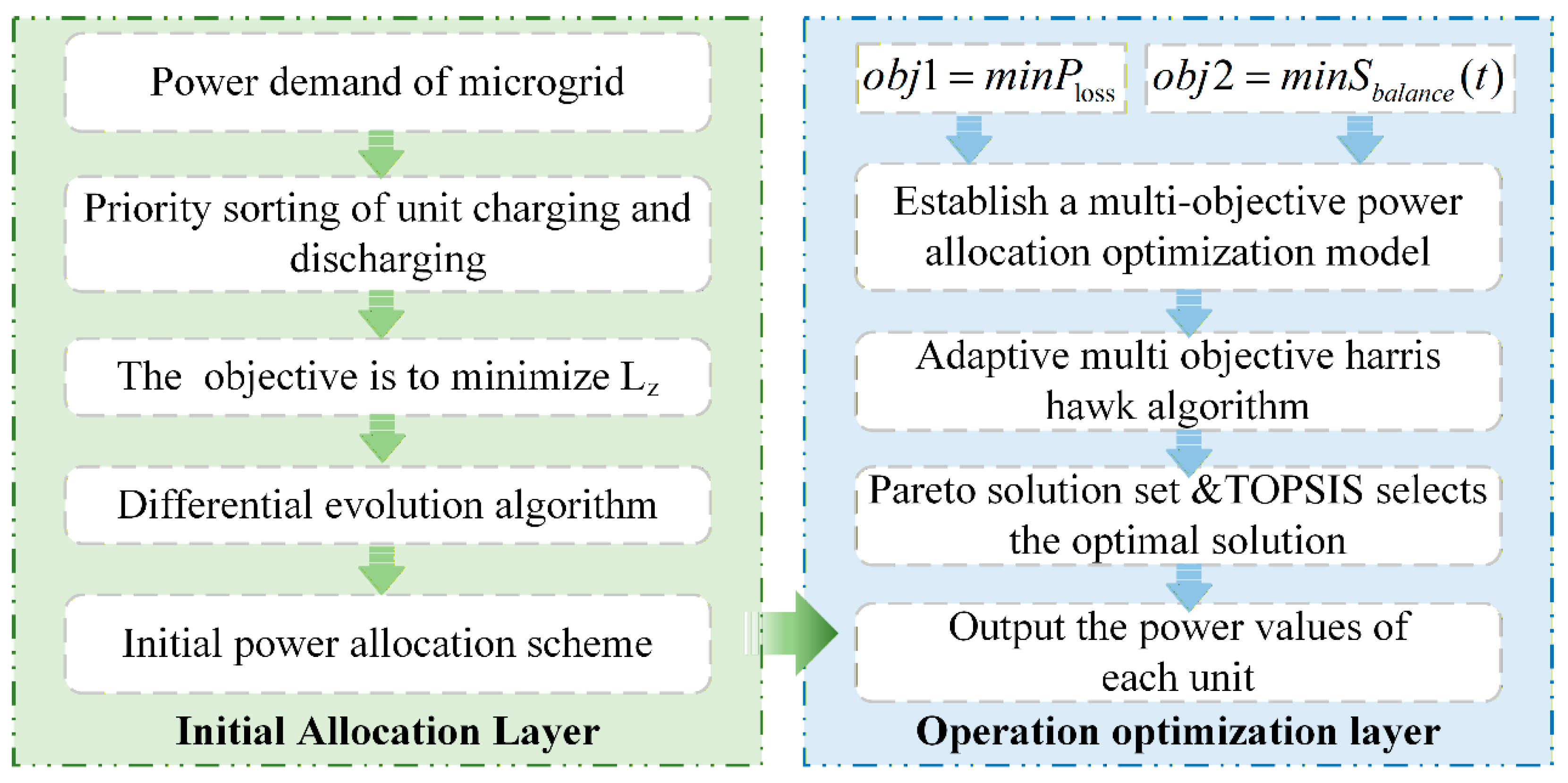
3. Two-Layer Optimization Model
3.1. Initial Allocation Layer
Initial Allocation Layer Optimization Objectives
3.2. Operational Optimization Layer
Operational Optimization Layer Optimization Objectives
3.3. Power Distribution Constraints
3.4. Evaluation Indicators
3.4.1. Number of Charge–Discharge Cycles for Energy Storage Units
3.4.2. Charge–Discharge Balance of Energy Storage Units
4. Power Allocation Solution Method
4.1. Multi-Objective Optimization
4.1.1. Multi-Object Harris Hawks Algorithm
4.1.2. Adaptive Simulated Annealing Multi-Objective Harris Hawks Algorithm
4.1.3. Algorithm Performance Validation
4.2. Power Allocation Strategy
4.2.1. Single-Layer Optimization Strategy
4.2.2. Dual-Layer Optimization Strategy
4.3. Conventional Power Allocation Strategy
5. Case Study Simulation and Analysis
5.1. Case Configuration
5.2. Comparison Results Between Strategy
6. Conclusions
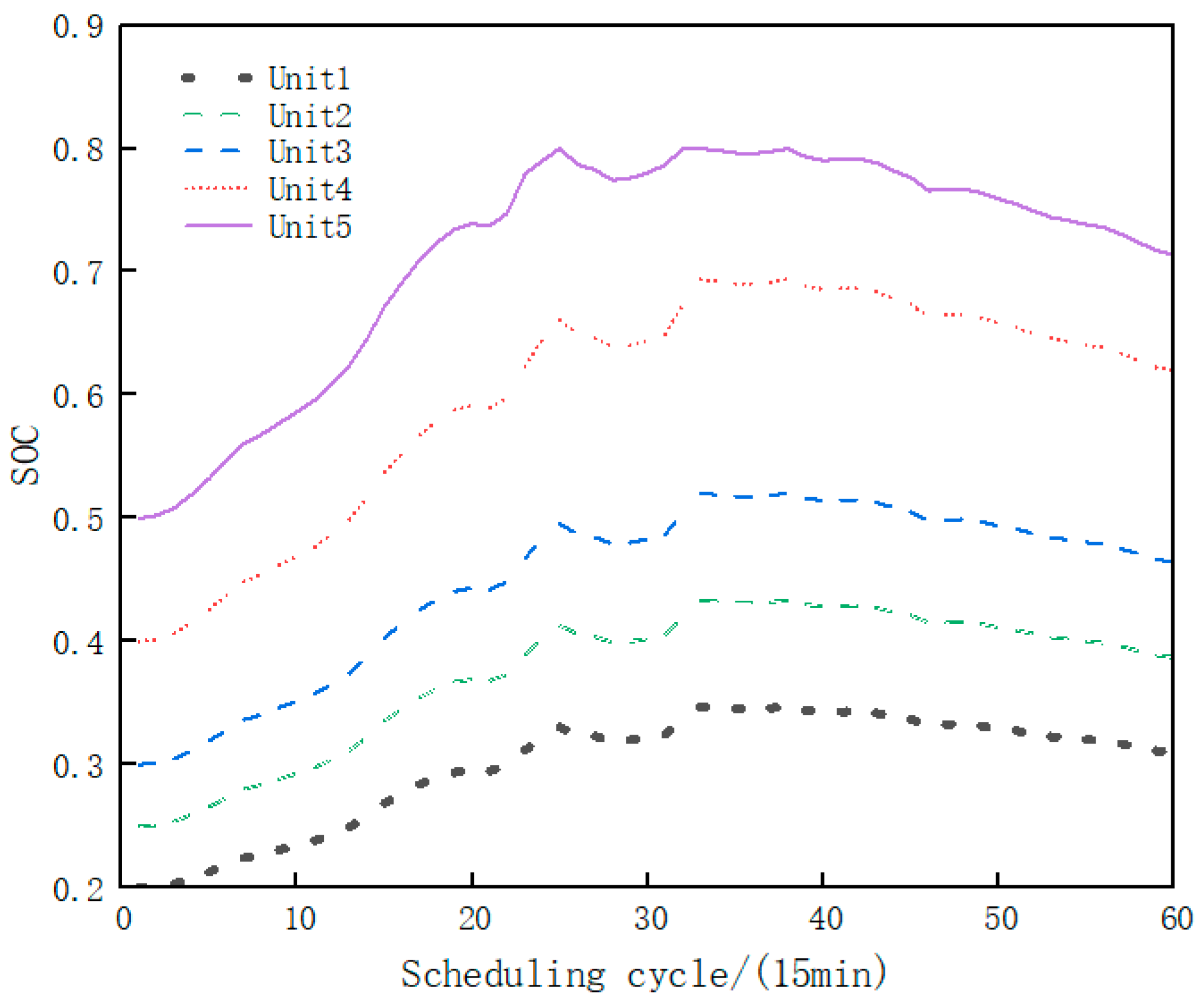
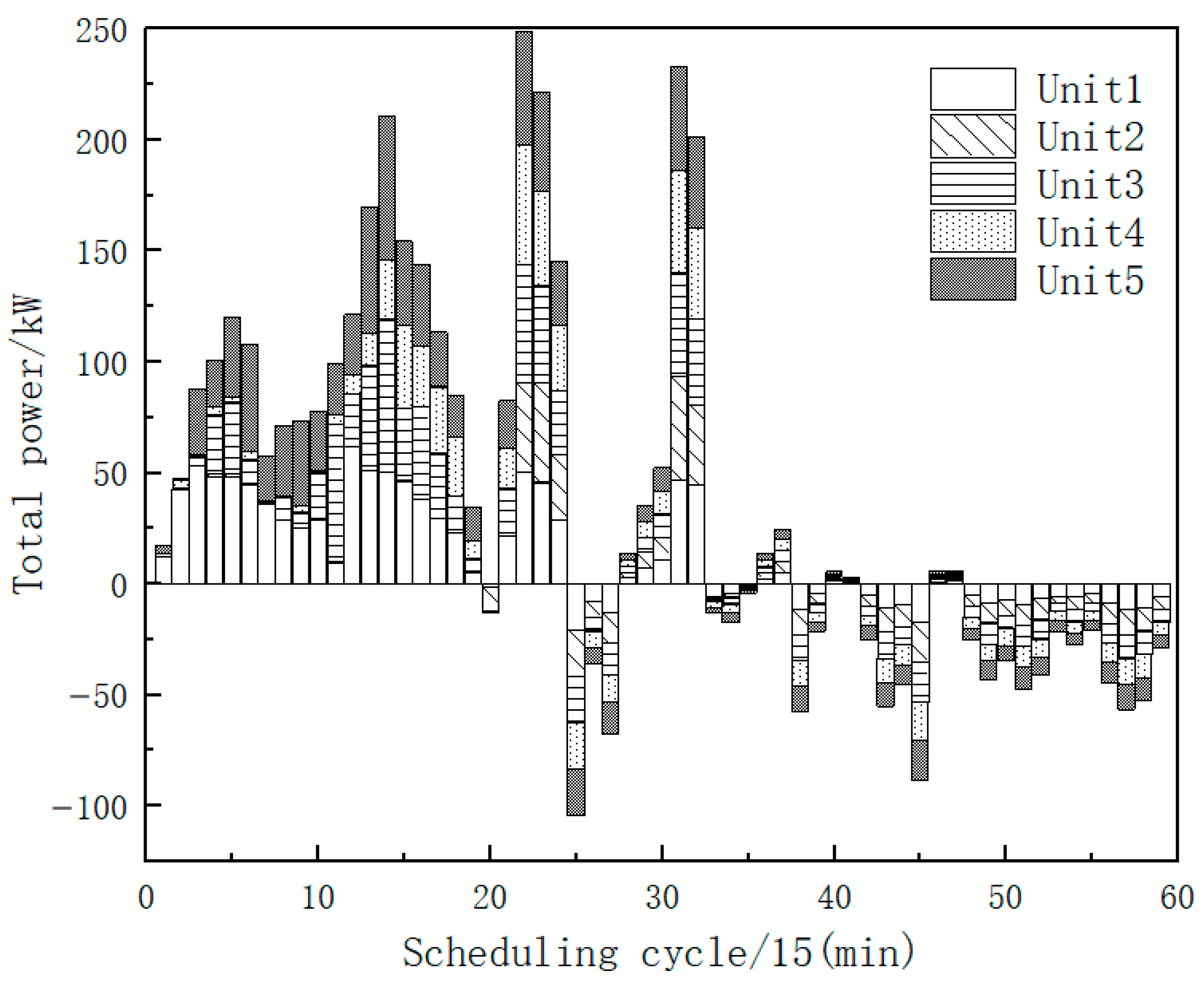
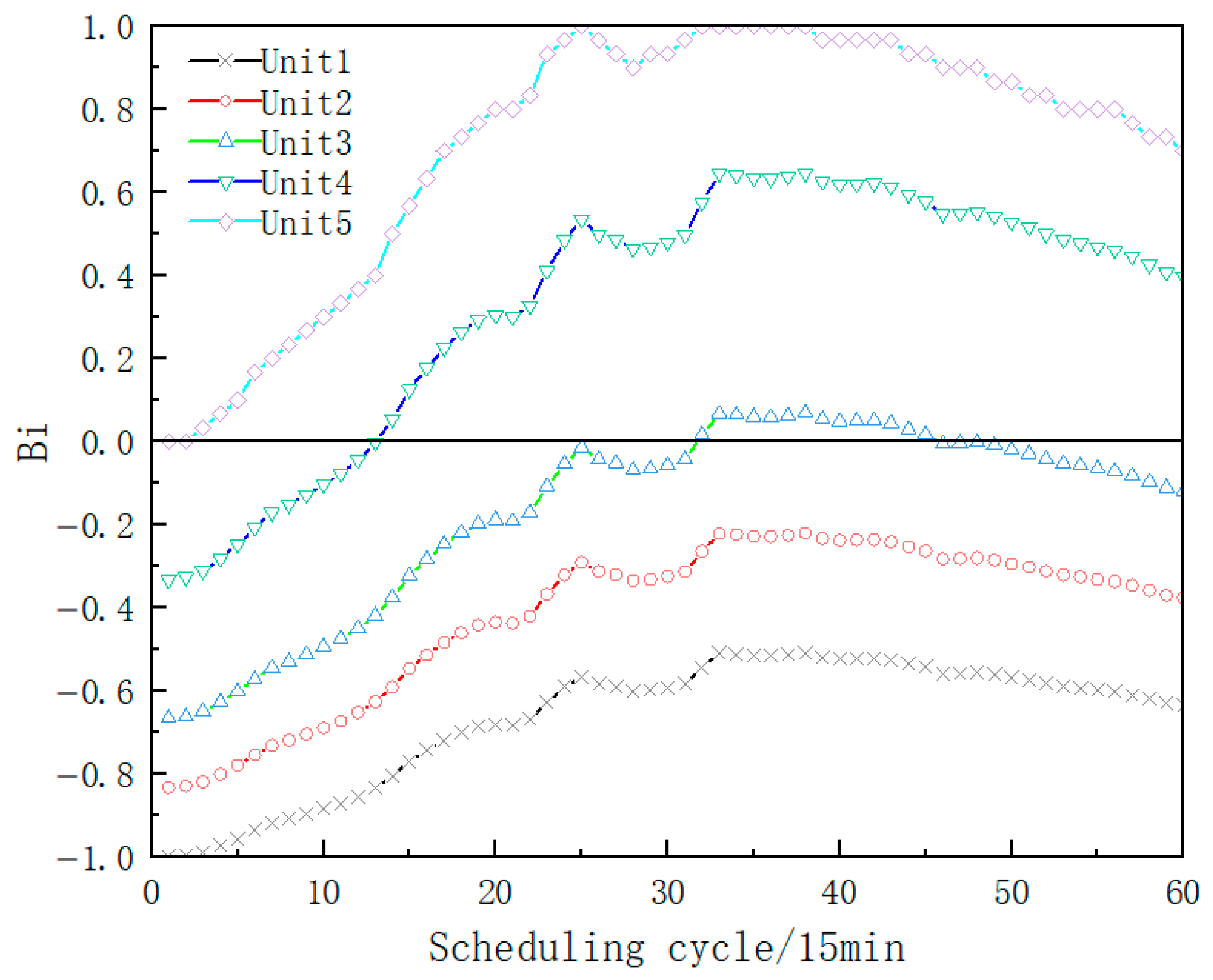
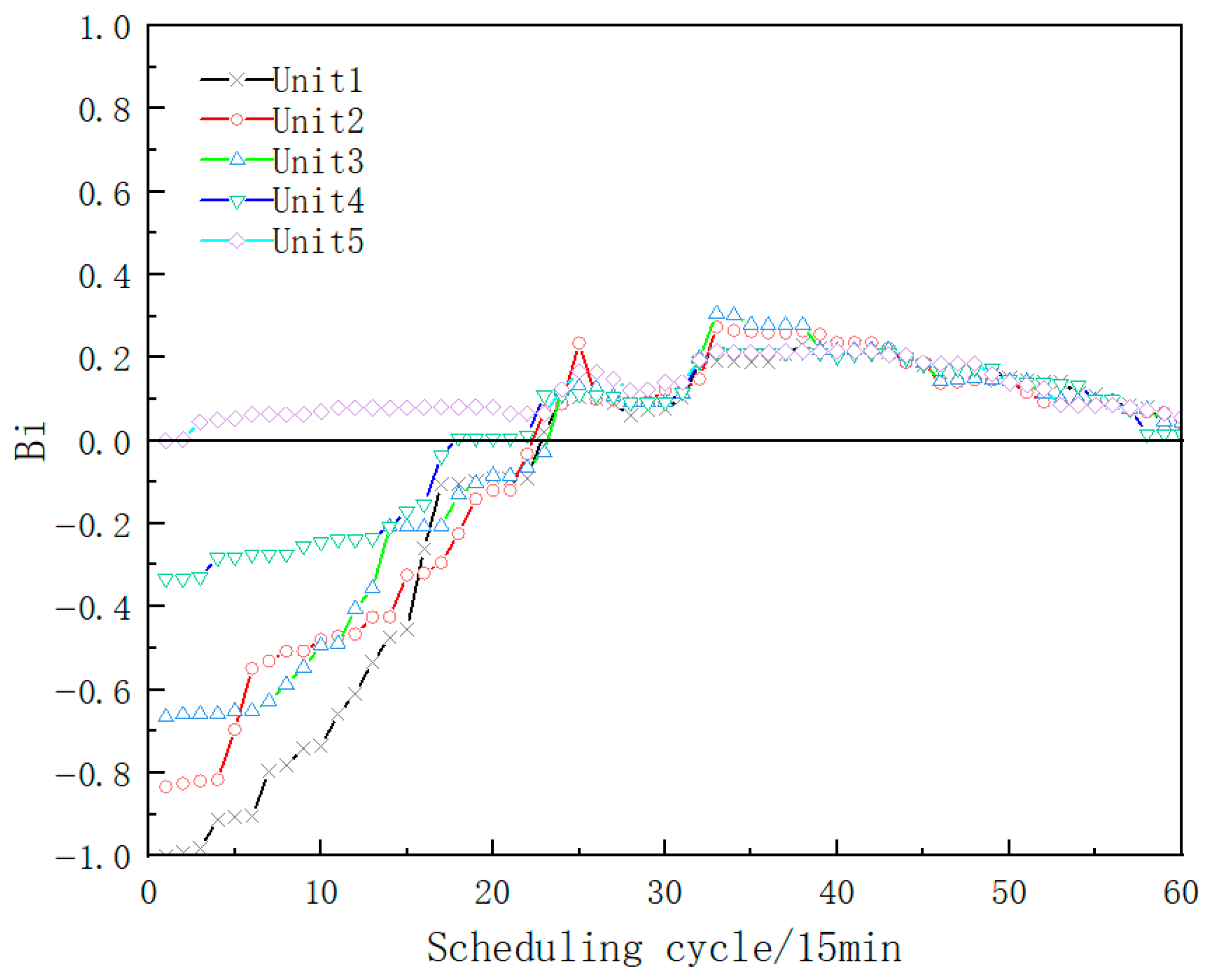
- Conventional allocation strategies simply distribute power proportionally. Compared to the dual-layer optimization strategy employing intelligent algorithms, conventional allocation strategies yield poorer results in simulations, both in terms of SOC balance and charge and discharge equilibrium capability. The disparity in SOC levels between individual units grows increasingly pronounced over time, which will ultimately compromise the overall system performance. The dual layer optimization strategy proposed in this article has the core advantages of hierarchical collaboration and balancing global and local aspects, resulting in better performance in various objective results.
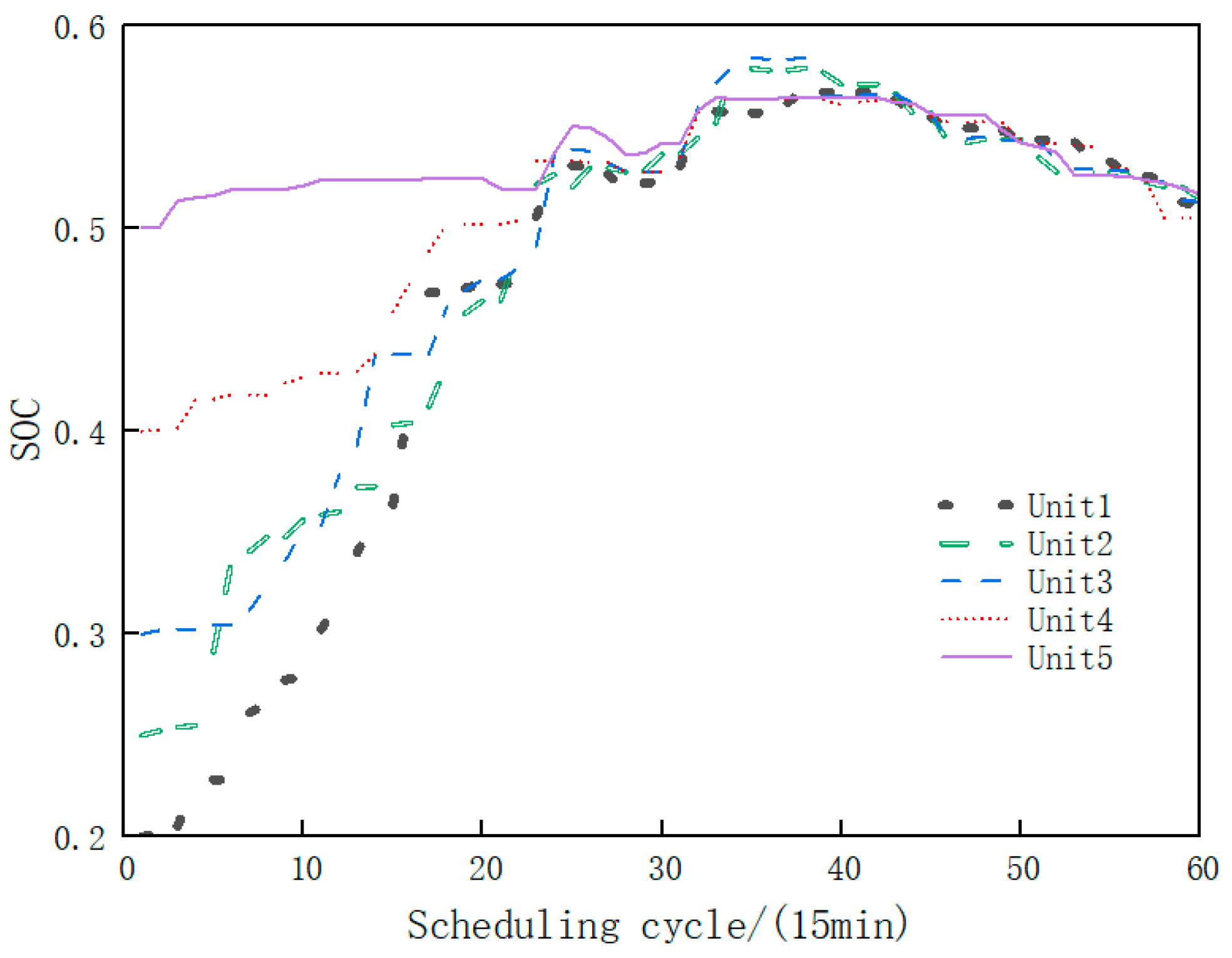
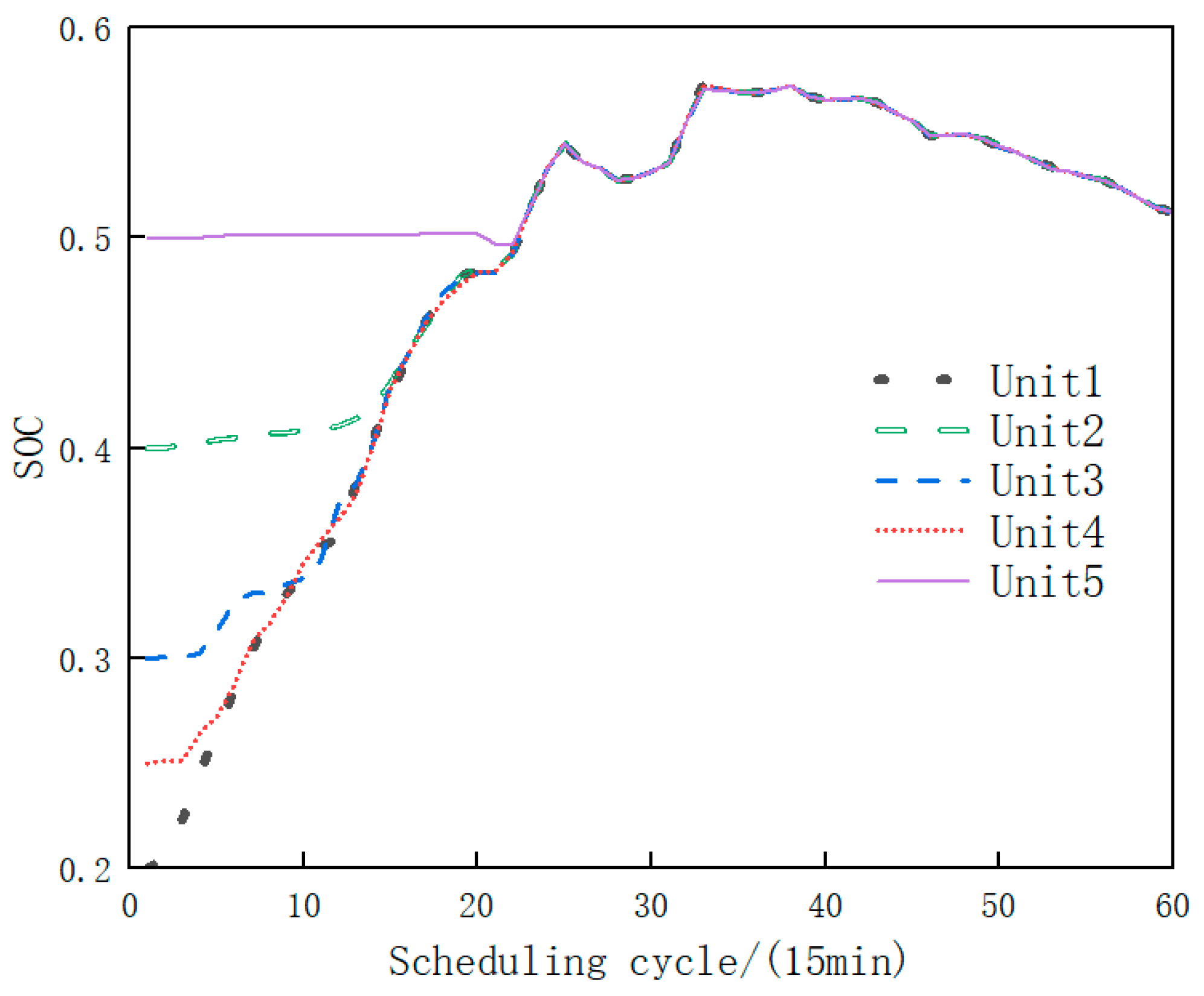
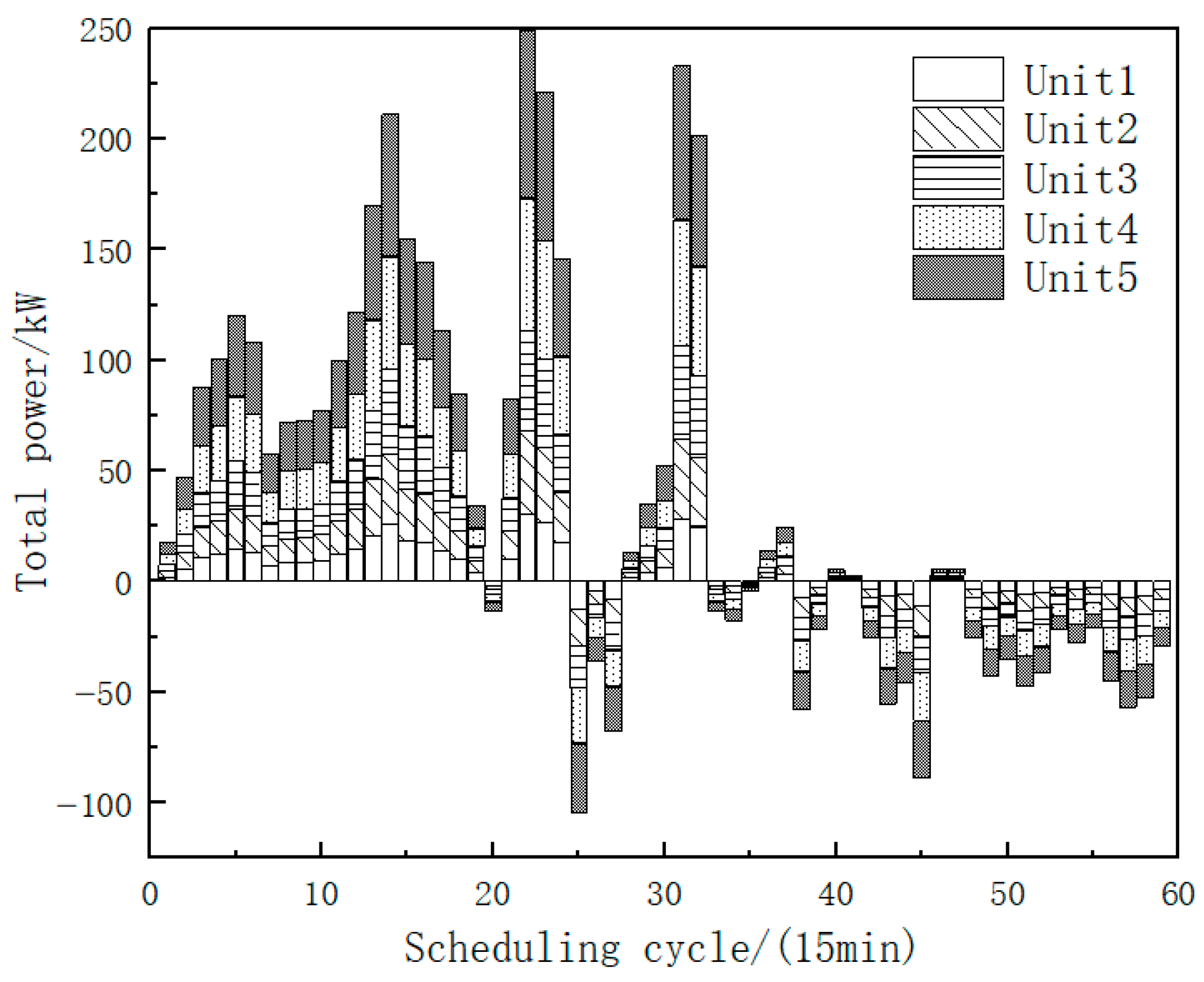
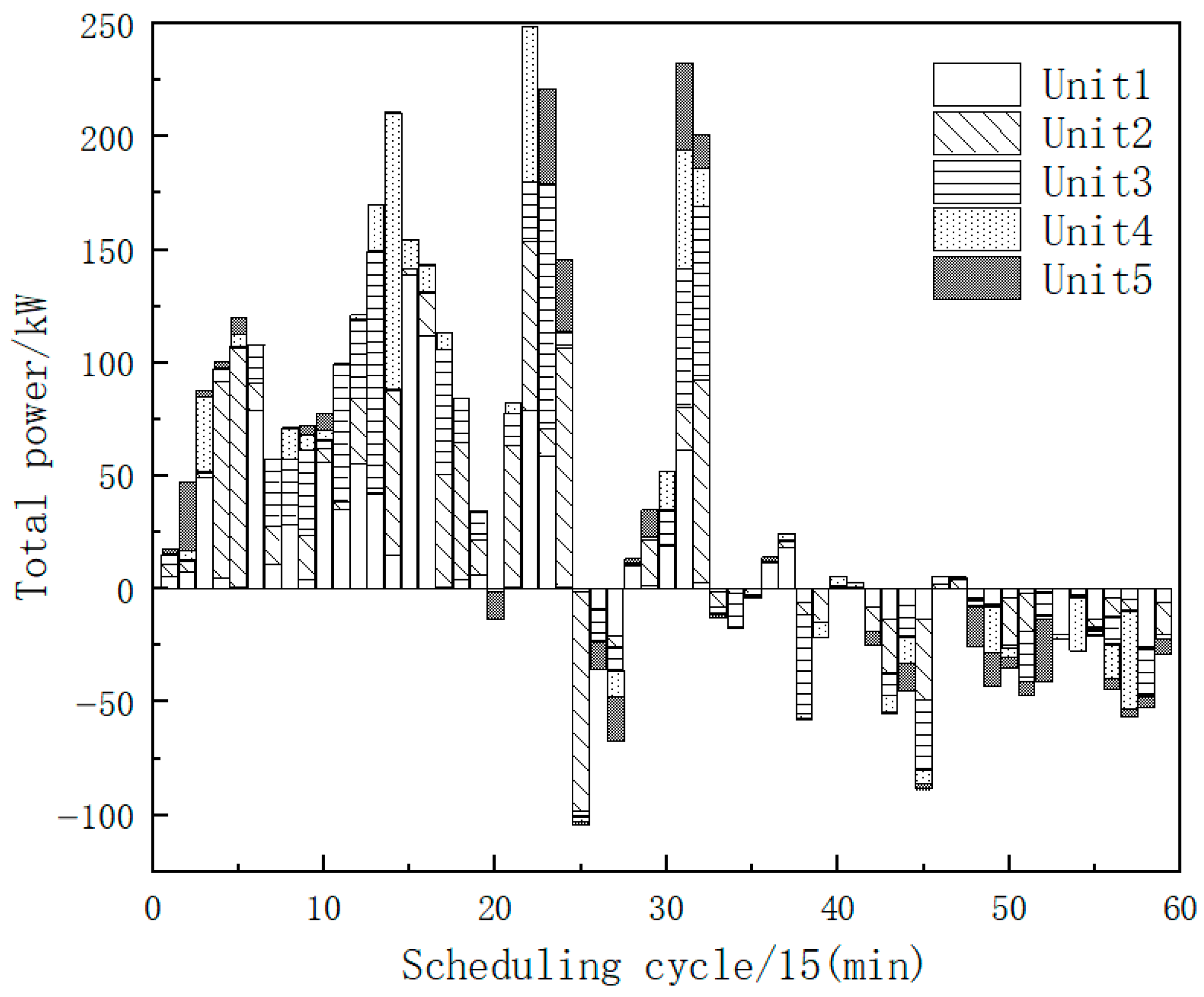
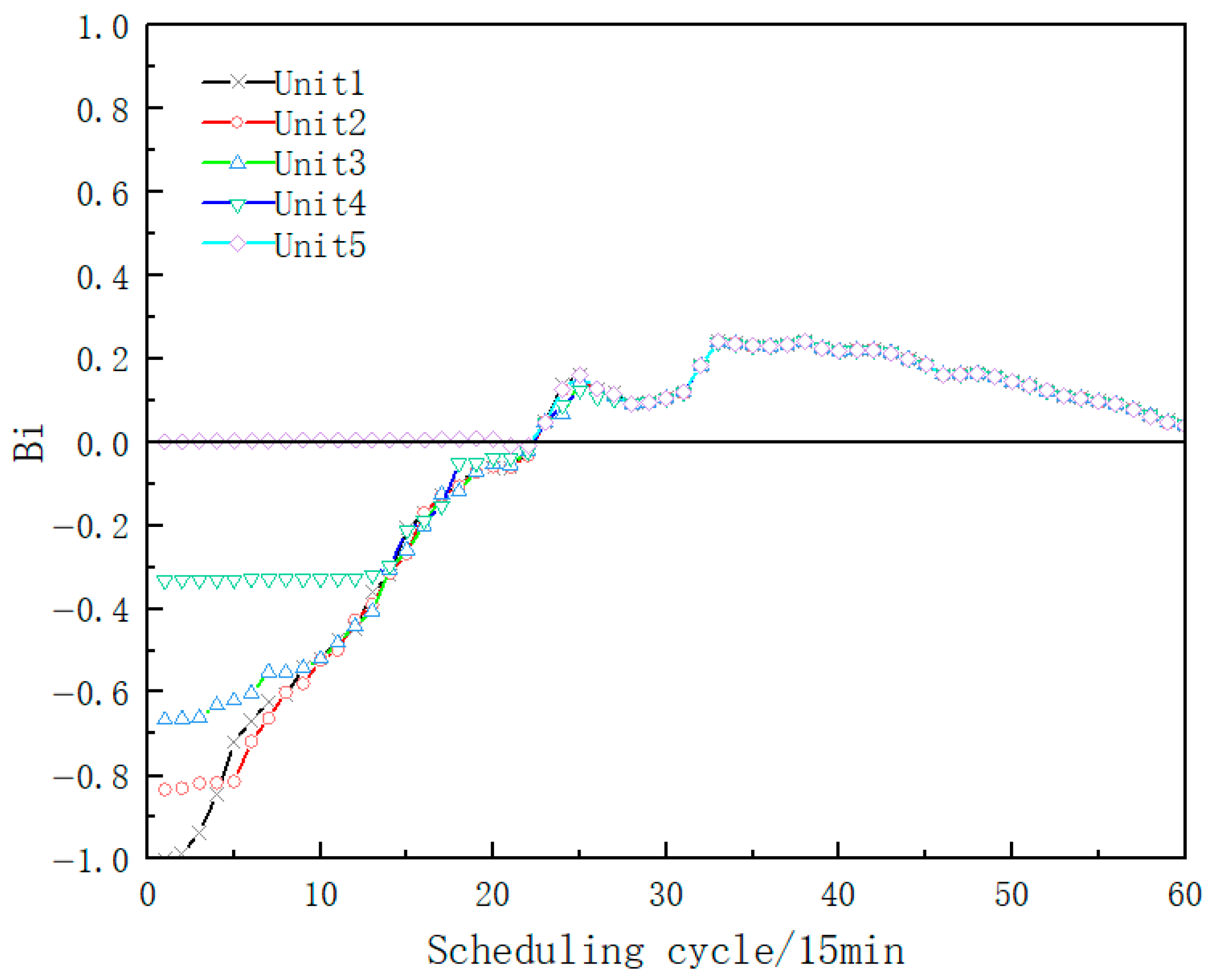
- Compared with the single-layer multi-objective Harris hawks optimization strategy, the proposed two-layer combined ASAMOHHO allocation strategy achieves superior SOC consistency among energy storage units after optimization, without SOC fluctuations arising from inter-objective conflicts. After stabilizing the charge–discharge balance across all five units, the range remained within [0, 0.25], indicating superior charge–discharge capability compared to the single-layer strategy. Furthermore, the total number of charge–discharge switching cycles across energy storage units decreased by eight cycles compared to the single-layer strategy, representing a 14.3% reduction in total switching frequency and an 8.77% relative decrease in degradation rate. This contributes to extending the lifespan of energy storage units. These results demonstrate that the proposed two-layer optimization strategy achieves outcomes more aligned with target requirements. Additionally, since single-layer optimization lacks a prioritized hierarchy among objectives, the computation of three objectives becomes more complex, leading to longer simulation runtime.
- Future research may consider incorporating additional objective functions and comparative analyses of alternative approaches to further validate the effectiveness of the dual-layer allocation strategy presented herein. Improvements to the multi-objective Harris hawks algorithm could also be explored to enhance its performance, thereby enabling its application to more complex real-world systems.
Author Contributions
Funding
Data Availability Statement
Conflicts of Interest
References
- Wang, F.; Xue, Y. A Review of the Development of the Energy Storage Industry in China: Challenges and Opportunities. Energies 2025, 18, 1512. [Google Scholar] [CrossRef]
- Feng, R.; Guo, Z.; Meng, X.; Sun, C. Modeling and State of Charge Estimation of Vanadium Redox Flow Batteries: A Review. Energies 2025, 18, 4666. [Google Scholar] [CrossRef]
- Barzigar, A.; Ebadati, E.; Mujumdar, A.S.; Hosseinalipour, S. A comprehensive review of vanadium redox flow batteries: Principles, benefits, and applications. Next Res. 2025, 2, 100767. [Google Scholar] [CrossRef]
- Zhang, J.; Hou, L.; Diao, X.; Yang, X.; Tang, P.; Cao, X. Power allocation method of battery energy storage system considering state balance in smoothing photovoltaic power fluctuations. Front. Energy Res. 2022, 10, 965812. [Google Scholar] [CrossRef]
- Gege, L. Optimal power distribution method for energy storage system based on available capacity. Int. J. Low-Carbon Technol. 2021, 16, 45–49. [Google Scholar] [CrossRef]
- Elalfy, D.A.; Gouda, E.; Kotb, M.F.; Bureš, V.; Sedhom, B.E. Comprehensive review of energy storage systems technologies, objectives, challenges, and future trends. Energy Strategy Rev. 2024, 54, 101482. [Google Scholar] [CrossRef]
- Xu, K.; She, X.P.; Li, K.; Cao, Y.; Feng, Y.; Fang, Y. Power allocation of energy storage system based on battery state of health prediction. Proc. CSU-EPSA 2025, 37, 113–120. [Google Scholar]
- Duan, S.; Yu, H.; Liu, C.; Wang, Q.; Wang, S.; Xia, B. BESS power allocation strategy considering consistency of state of health and state of charge of energy storage units. Autom. Electr. Power Syst. 2023, 47, 65–73. [Google Scholar]
- Yan, G.; Zhu, W.; Duan, S.; Liu, Y.; Cai, C.; Li, J. Power control strategy of energy storage system considering consistency of lead carbon battery pack. Autom. Electr. Power Syst. 2020, 44, 61–67. [Google Scholar]
- Zhao, Y.; Shi, X.; Wang, L.; Liu, H.; Yang, J.; Huan, J.; Zhang, Y. Power Allocation Strategy of Large-scaled Battery Energy Storage Power Station. Power Syst. Technol. 2022, 46, 5004–5012. [Google Scholar]
- Chen, W.; Hou, Y.; Zhang, L.; Wang, J.; Qiu, Y. Power optimal allocation strategy for vanadium battery energy storage system considering losses. Trans. China Electrotech. Soc. 2020, 35, 4038–4047. [Google Scholar]
- Chen, W.; Di, N.; Qiu, Y.; Li, X.; Huang, Y.; Mo, Y. Multi-objective optimal power allocation strategy for VRB energy storage system. High Volt. Eng. 2020, 46, 1518–1527. [Google Scholar]
- Liu, R. Energy Management Strategy for wind solar Storage Microgrid based on Improved Ant Lion Optimizer. J. Energy Res. Rev. 2024, 16, 15–29. [Google Scholar] [CrossRef]
- Lourenssen, K.; Williams, J.; Ahmadpour, F.; Clemmer, R.; Tasnim, S. Vanadium redox flow batteries: A comprehensive review. J. Energy Storage 2019, 25, 100844. [Google Scholar] [CrossRef]
- Binqadhi, H.; Hamanah, W.M.; Shafiullah, M.; Alam, M.S.; AlMuhaini, M.M.; Abido, M.A. A comprehensive survey on advancement and challenges of DC microgrid protection. Sustainability 2024, 16, 6008. [Google Scholar] [CrossRef]
- Arévalo, P.; Ochoa-Correa, D.; Villa-Ávila, E. Optimizing microgrid operation: Integration of emerging technologies and artificial intelligence for energy efficiency. Electronics 2024, 13, 3754. [Google Scholar] [CrossRef]
- Montano, J.; Guzmán, J.P.; Garzón, O.D.; Barrera, A.M.R. Techno-economic approach for energy management system: Multi-objective optimization algorithms for energy storage in standalone and grid-connected DC microgrids. J. Energy Storage 2024, 102, 114069. [Google Scholar] [CrossRef]
- Tang, A.; Bao, J.; Skyllas- Kazacos, M. Dynamic modelling of the effects of ion diffusion and side reactions on the capacity loss for vanadium redox flow battery. J. Power Sources 2011, 196, 10737–10747. [Google Scholar] [CrossRef]
- Qiu, Y.; Li, X.; Wei, D.; Yu, L. Flexible charge-discharge control of all-vanadium redox flow battery. Energy Storage Sci. Technol. 2017, 6, 78–84. [Google Scholar]
- Qiu, Y. Hierarchical Coordinated Control and Application of MW-Scale All-Vanadium Redox Flow Battery Energy Storage System. Doctoral Dissertation, Hefei University of Technology, Hefei, China, 2019. [Google Scholar]
- Chen, H. Research on High-Efficiency Control Technology of Modern Integrated DC-DC Converters. Doctoral Dissertation, Zhejiang University, Hangzhou, China, 2009. [Google Scholar]
- Pereira, J.L.J.; Oliver, G.A.; Francisco, M.B.; Cunha, S.S.; Gomes, G.F. A review of multi-objective optimization: Methods and algorithms in mechanical engineering problems. Arch. Comput. Methods Eng. 2022, 29, 2285–2308. [Google Scholar] [CrossRef]
- Heidari, A.A.; Mirjalili, S.; Faris, H.; Aljarah, I.; Mafarja, M.; Chen, H. Harris hawks optimization: Algorithm and applications. Future Gener. Comput. Syst. 2019, 97, 849–872. [Google Scholar] [CrossRef]



| Energy Storage Unit | Number of Charge–Discharge Cycles | |
|---|---|---|
| Single-Layer Optimization Strategy | Dual-Layer Optimization Strategy | |
| 1 | 15 | 11 |
| 2 | 11 | 10 |
| 3 | 9 | 9 |
| 4 | 10 | 9 |
| 5 | 10 | 9 |
| Energy Storage Unit | Capacity Loss % | |
|---|---|---|
| Single-Layer Optimization Strategy | Two-Layer Optimization Strategy | |
| 1 | 0.041 | 0.027 |
| 2 | 0.026 | 0.025 |
| 3 | 0.022 | 0.022 |
| 4 | 0.014 | 0.017 |
| 5 | 0.009 | 0.011 |
Disclaimer/Publisher’s Note: The statements, opinions and data contained in all publications are solely those of the individual author(s) and contributor(s) and not of MDPI and/or the editor(s). MDPI and/or the editor(s) disclaim responsibility for any injury to people or property resulting from any ideas, methods, instructions or products referred to in the content. |
© 2025 by the authors. Licensee MDPI, Basel, Switzerland. This article is an open access article distributed under the terms and conditions of the Creative Commons Attribution (CC BY) license.
Share and Cite
Liu, D.; Tang, Z.; He, L.; Xia, T. Two-Layer Optimal Power Allocation of a Vanadium Flow Battery Energy Storage System Based on Adaptive Simulated Annealing Multi-Objective Harris Hawks Optimizer. Energies 2026, 19, 71. https://doi.org/10.3390/en19010071
Liu D, Tang Z, He L, Xia T. Two-Layer Optimal Power Allocation of a Vanadium Flow Battery Energy Storage System Based on Adaptive Simulated Annealing Multi-Objective Harris Hawks Optimizer. Energies. 2026; 19(1):71. https://doi.org/10.3390/en19010071
Chicago/Turabian StyleLiu, Daifei, Zhiyuan Tang, Lingqi He, and Tian Xia. 2026. "Two-Layer Optimal Power Allocation of a Vanadium Flow Battery Energy Storage System Based on Adaptive Simulated Annealing Multi-Objective Harris Hawks Optimizer" Energies 19, no. 1: 71. https://doi.org/10.3390/en19010071
APA StyleLiu, D., Tang, Z., He, L., & Xia, T. (2026). Two-Layer Optimal Power Allocation of a Vanadium Flow Battery Energy Storage System Based on Adaptive Simulated Annealing Multi-Objective Harris Hawks Optimizer. Energies, 19(1), 71. https://doi.org/10.3390/en19010071