1. Introduction
Automatic reclosing is the primary method for addressing transient faults common in overhead distribution lines and enhancing power supply reliability [
1]. The integration of DERs transforms traditional single-source radial DNs into multi-source networks, making them highly susceptible to sustained arcing faults and failed reclosing [
2,
3]. Most existing approaches to improving reclosing for active DNs extend the reclosing dead time to 3~6 s through coordinated timing between reclosing and DERs islanding protection, ensuring all DERs reliably disconnect during reclosing [
4,
5]. However, as the proportion of DERs continues to rise, this solution will face new challenges.
On the one hand, large-capacity, scaled DERs generally possess low voltage ride through (LVRT) capability. According to relevant standards [
6], the maximum action time limit for anti-islanding protection has exceeded 300 s. This will result in prolonged reclosing wait times, severely impacting power supply reliability. On the other hand, if large-scale DERs were to disconnect from the grid entirely, it would cause drastic changes in power flow within the distribution network before and after the fault, as well as false tripping of backup protection, leading to secondary system impacts [
7]. Reliably identifying the clearance of transient faults and promptly reclosing before widespread DERs disconnection could effectively resolve this issue.
In addition to the aforementioned methods for extending dead-time settings, existing research on improved reclosing for DNs incorporating DERs also includes the voltage detection method [
8,
9] and adaptive reclosing method [
10,
11,
12,
13,
14,
15,
16,
17,
18]. Among these, the voltage detection method identifies the off-grid status of DERs by detecting voltage levels. However, it cannot distinguish this condition from the zero-voltage state caused by three-phase metallic faults, and thus still fails to resolve the issue of reclosing onto faults.
The core of adaptive reclosing methods lies in detecting fault conditions to adaptively adjust the reclosing dead time, ensuring reliable reclosing on non-faulty lines. Existing research can be categorized into two approaches: passive detection methods [
10,
11,
12,
13] and active signal injection method [
14,
15,
16,
17,
18]. The passive detection method identifies the fault condition by analyzing the transient free oscillation signals after tripping, such as utilizing the attenuation characteristics of line capacitive discharge or network parameter identification. In [
10], transient high voltage is applied to de-energized feeders via thyristor control, and the fault type is identified from the feeder’s frequency response to enable adaptive reclosing. However, due to the small line-to-ground capacitance of overhead distribution feeders, this method has difficulty accurately capturing high-frequency attenuation signals.
In contrast, the active signal injection method relies on injecting characteristic signals through additional power electronic devices and determining the fault condition by analyzing the voltage spectrum at the CB terminal. In [
14], a STATCOM controls its converter sub-modules to briefly discharge DC capacitors into the faulty line, injecting a small current whose correlation coefficient is used to distinguish transient from permanent faults. Nevertheless, this method requires communication coordination between the high and low voltage sides of distribution transformers, as well as a relatively complex control system.
In summary, relying solely on reclosing is insufficient for effective fault restoration. Both passive detection and active signal injection methods require coordination between reclosers and controllable devices. However, the long electrical distances and the difficulty of high-speed communication in distribution networks make developing adaptive reclosing strategies based on fault characteristics—without additional equipment—a critical challenge.
Energy storage (ES) is one of the viable solutions to the aforementioned issues. with global installed capacity reaching nearly 28 GW by 2022 (data from IEA). By effectively utilizing the bidirectional power regulation capability of ES converters, effective technical support can be provided for arc extinction and fault state identification during fault recovery, thereby improving restoration efficiency and operational safety.
This study analyzes the characteristics of metallic short circuits and fault clearance in DNs incorporating ES following a trip. It constructs a fault state detection criterion based on voltage relative entropy derived from post-fault voltage rise, and designs a control method for arc extinction via b-EMF suppression in ES converters based on arc extinction conditions. Furthermore, considering protection action scenarios, an adaptive setting scheme for reclosing delay is designed. A rapid fault recovery control method for DNs is proposed, based on the three-stage sequential coordination of reclosing and ES. Simulation results demonstrate that the proposed method can effectively identify fault clearance and adaptively shorten reclosing delay based on fault detection outcomes and protection actions. This significantly minimizes the extensive disconnection of DERs and ES following transient faults, thereby facilitating rapid system restoration. Compared to the existing research, the main contributions of this study are as follows:
A rapid fault recovery control method for DNs is proposed, based on the three-stage sequential coordination between reclosing and ES.
Different from existing active detection schemes that rely on dedicated FACTS devices or communication links, the proposed method leverages inherent GFM-ES capabilities to construct fault-identifiable voltage features, enabling reclosing decisions based purely on local measurements.
A fault detection method based on voltage relative entropy is proposed, and an adaptive reclosing delay setting scheme is designed considering protective action scenarios.
The remainder of this study is organized as follows. In
Section 2, a three-stage control strategy for ES-reclosing cooperation was designed, comprising arc extinction control, GFM control, and variable power control. In
Section 3. This paper analyzes the post-tripping system characteristics and the fault detection method based on voltage relative entropy;
Section 4 determines the fault recovery control timing sequence for ES-reclosing communication-free cooperation.
Section 5 presents simulation results obtained in PSCAD, verifying validity and feasibility of the proposed method.
Section 6 provides the conclusions.
2. Three-Stage Sequential Control Strategy for ES-Reclosing Coordination
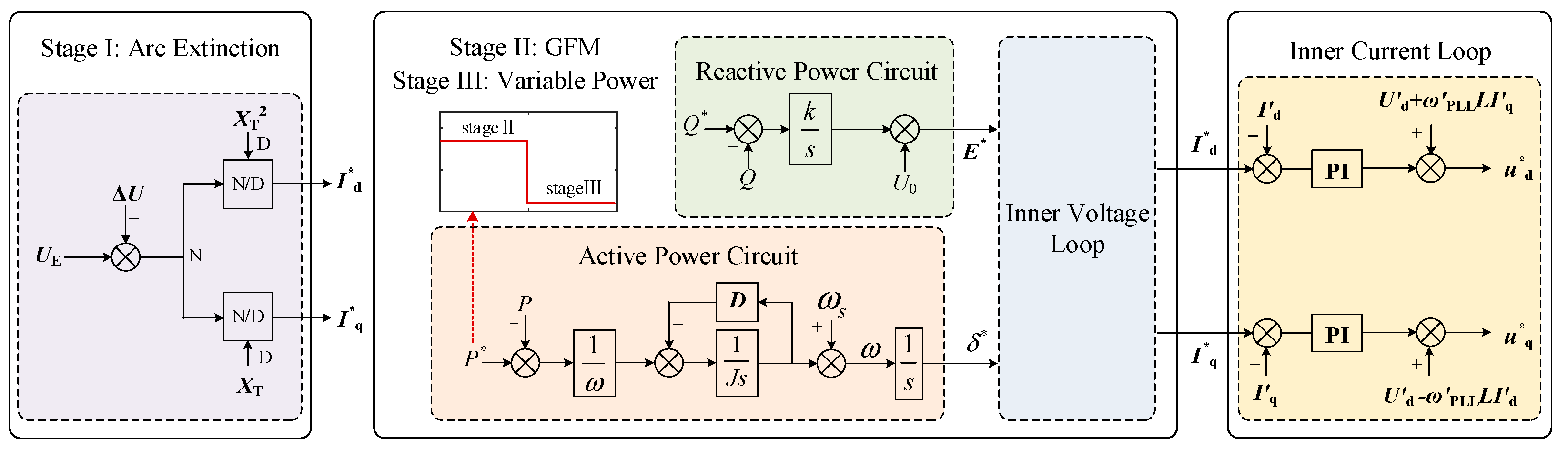
After a DNs fault triggers a trip, reclosing may encounter three scenarios: metallic short circuits, sustained arcing, or fault clearance. To address system restoration control requirements under various fault conditions, this study proposes a three-stage sequential control strategy for the ES. First, to assist in arc extinction, the ES enters arc extinction control (Stage I) immediately after a fault occurs, aiming to suppress the point of common coupling (PCC) voltage to zero. After several power-frequency cycles, the ES transitions to grid-forming (GFM) control (Stage II) to provide voltage support for the downstream system during reclosing and help construct fault detection characteristics. If no fault clearance is detected within the specified time, the ES enters Stage III to implement variable power control and actively identify the fault status. The three-stage sequential control strategy of the ES is shown in
Figure 1 (* means reference value).
2.1. Stage I: Arc Extinction Control of ES Converters
For persistent arc faults, reducing the voltage amplitude can assist the extinction of AC fault arcs [
19,
20,
21]. This study leverages the bidirectional power controllability of ES grid-connected converters. Upon fault detection, the ES converter switches to arc extinction control by monitoring the voltage drop at the PCC, targeting zero output voltage.
At this stage, PCC voltage is given by Equation (1)
where
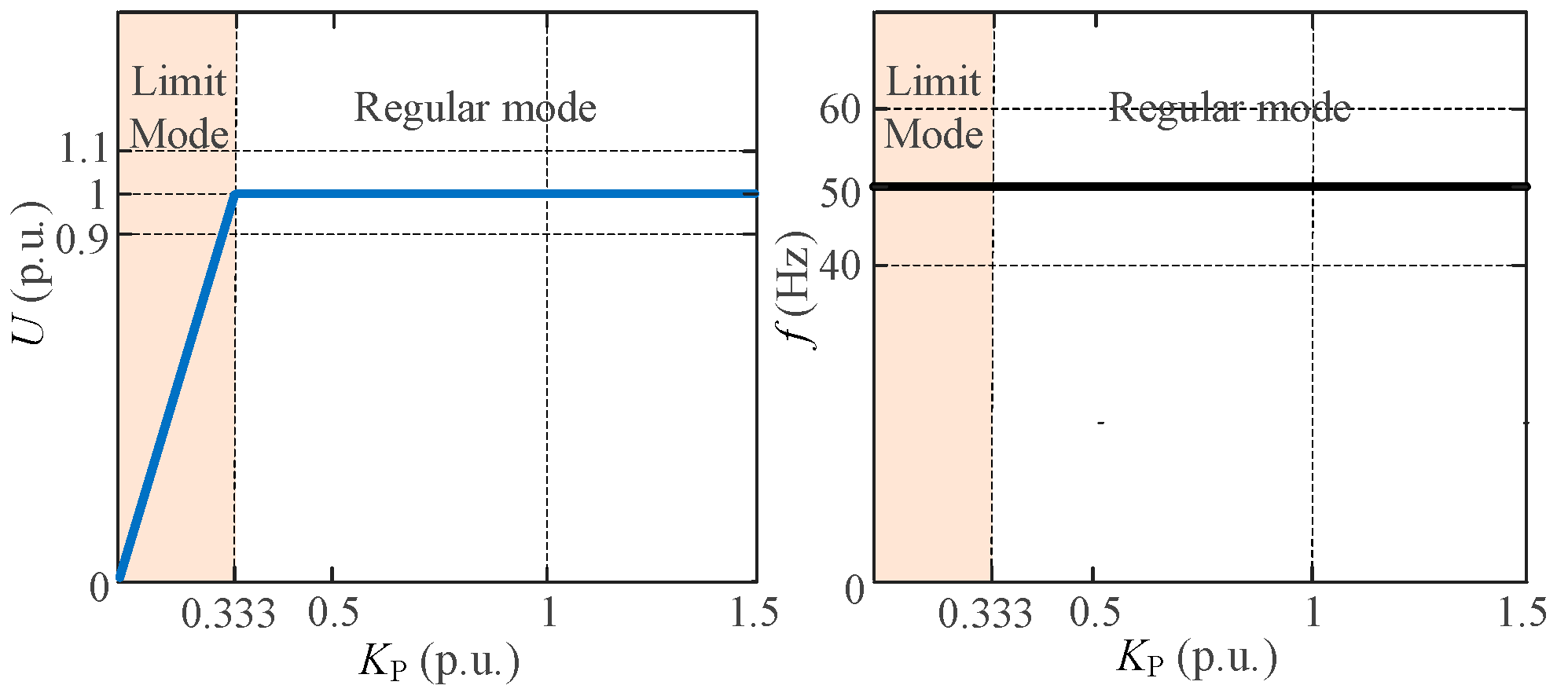
represents the PCC voltage (Since downstream systems may have DERs remaining connected after a CB trip, the voltage control target at PCC is reduced to −10%
UN.),
and
represent the ES output voltage and current, respectively.
RT and
XT represent the equivalent impedances of the ES step-up transformer.
Further derived from Equation (1), the required output current of the ES for arc extinction control is:
To facilitate implementation in the ES inverter, the current command is further expressed in the synchronous dq reference frame, where the d-axis is aligned with
. Under this condition, the inverter current commands are given by:
In practical ES step-up transformers, the winding resistance is much smaller than the leakage reactance, i.e.,
RT <<
XT. Therefore, Equation (3) can be simplified to
The arc extinction control block diagram for the ES converters is shown in Stage I of
Figure 1. After a fault occurs,
Id/
Iq assumes the command value for arc extinction control. After 60 ms (the fault arc typically extinguishes after three power-frequency cycles under zero-voltage conditions [
22,
23,
24]), the system switches to GFM control mode.
2.2. Stage II: GFM Support and Fault State Identification of ES
GFM-DERs grid-connected converters exhibits “voltage source” characteristics externally, possessing the capability to actively support grid voltage and frequency. Its general-purpose control loop is shown in Stage II of
Figure 1.
GFM control of ES can provide voltage support after fault clearance, enabling it to rise back to its rated value. In contrast, during permanent faults, the voltage level remains at a persistently low level, with waveform characteristics generally exhibiting similar patterns.
Following a fault trip, the recloser continuously acquires and calculates the positive-sequence voltage downstream of the CB in real time. This study establishes a voltage relative entropy criterion based on the waveform characteristics of voltage rise after fault clearance (see
Section 2.2 for details), enabling the identification of transient versus permanent faults. If the fault is transient and determined to have cleared automatically, a reclosing operation will be performed after a preset delay. If the fault is not detected as cleared within the monitoring period, the ES will initiate variable power control.
2.3. Stage III: Active Fault Identification Based on Variable Power Control of ES
When voltage rise characteristics remain undetected for an extended period, the ES employs a variable power control strategy after a predetermined delay. This strategy actively reduces active power output by modifying the reference value
p* within the active power loop depicted in
Figure 1. At this point, if the fault has been cleared, the downstream voltage will decrease as power output reduces. Conversely, if the fault persists, the downstream voltage will remain unchanged regardless of variations in ES output power, and the waveform characteristics will generally remain similar.
Similarly, the reclosing system continuously acquires and calculates the positive-sequence voltage downstream of the CB in real time, determining whether the fault has been cleared based on the principle of relative entropy. If the fault is determined to be cleared, the system executes the reclosing operation after a preset delay; if the fault is determined to remain, reclosing is immediately blocked.
4. ES-Reclosing Cooperative Fault Recovery Control Timing Setting Scheme
Following a short-circuit fault in the DNs, the relay protection device initiates CB tripping after a preset short delay threshold. Concurrently, the ES activates b-EMF arc extinction control to reduce PCC voltage. After the arc extinction control period, the ES switches control strategies to provide voltage support for downstream loads.
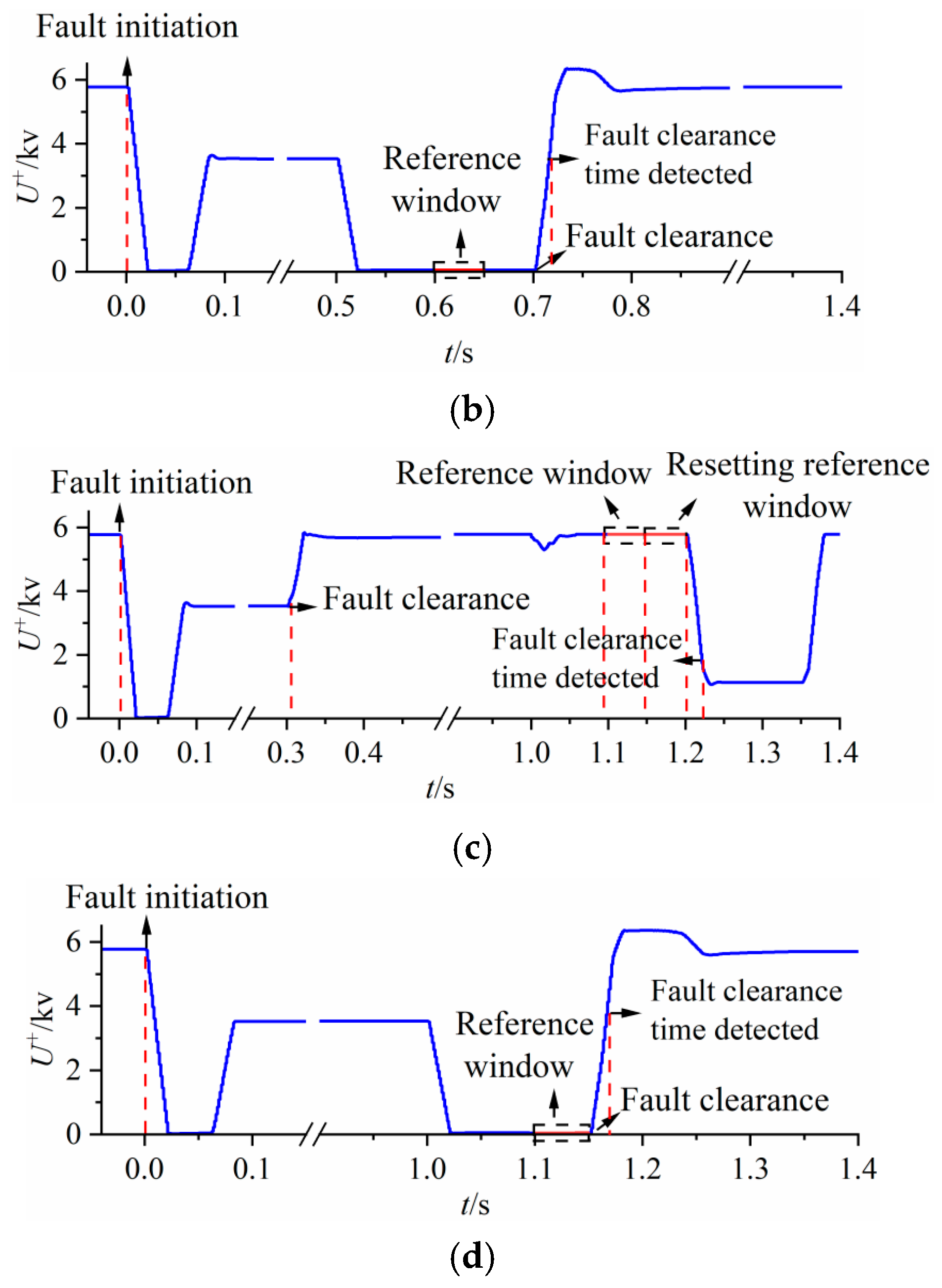
In DNs, transient faults caused by lightning strikes, bird contacts, and other factors typically clear spontaneously within 0~1 s. Considering the protection operation conditions and the requirements of fast auto-reclosing, this study assumes a maximum transient fault duration tf_max of 1.2 s, which is used as the boundary between Control Stage II and Stage III. Based on different entropy detection conditions and protection action types, the adaptive setting of reclosing delay can be further subdivided into the following two specific scenarios for in-depth research and analysis.
Case-1: When a fault clearance is detected in a timely manner during Stage II, this situation can be further divided into two scenarios:
(1) When the protection action type employs instantaneous protection (such as interlocked differential protection, instantaneous current protection, and distance stage I protection, etc.,
ttrip = 0.03 s [
26]), the reference window is set after the arc extinction control time concludes and undergoes a voltage fluctuation transient period
tT (set to 100 ms in this study). This ensures the voltage signal within the window has recovered from transient disturbances and reached a stable state. The sliding detection window then commences with the reference window as its starting point.
(2) When the protection action type is a time-limited instantaneous protection (e.g., time-limited current instantaneous protection, distance stage II protection, etc., with
ttrip = 0.5 s [
26]) or a time-delayed protection (e.g., time-delayed overcurrent protection, distance stage III protection, etc., with
ttrip = 1 s [
26]), the reference window is set after tripping and after the voltage fluctuation transient period
tT. The sliding detection window then begins detection starting from the reference window, with the detection time constrained as follows:
Not exceeding the difference between the fault duration and the protection trip time, taking into account the sliding detection window time window duration ΔT and the voltage transient time tT;
Not exceeding the difference between tf_max and the protection trip time.
In summary, the detection time
td1 is given by Equation (21):
Within detection time td1, if criterion (20) is satisfied, the fault is cleared and reclosing occurs after a 300 ms delay, which is determined by accounting for the inherent switching time of the CB and the environmental deionization time; if criterion (20) is not satisfied, proceed as follows.
Case-2: When fault clearance cannot be detected in a timely manner during Stage II:
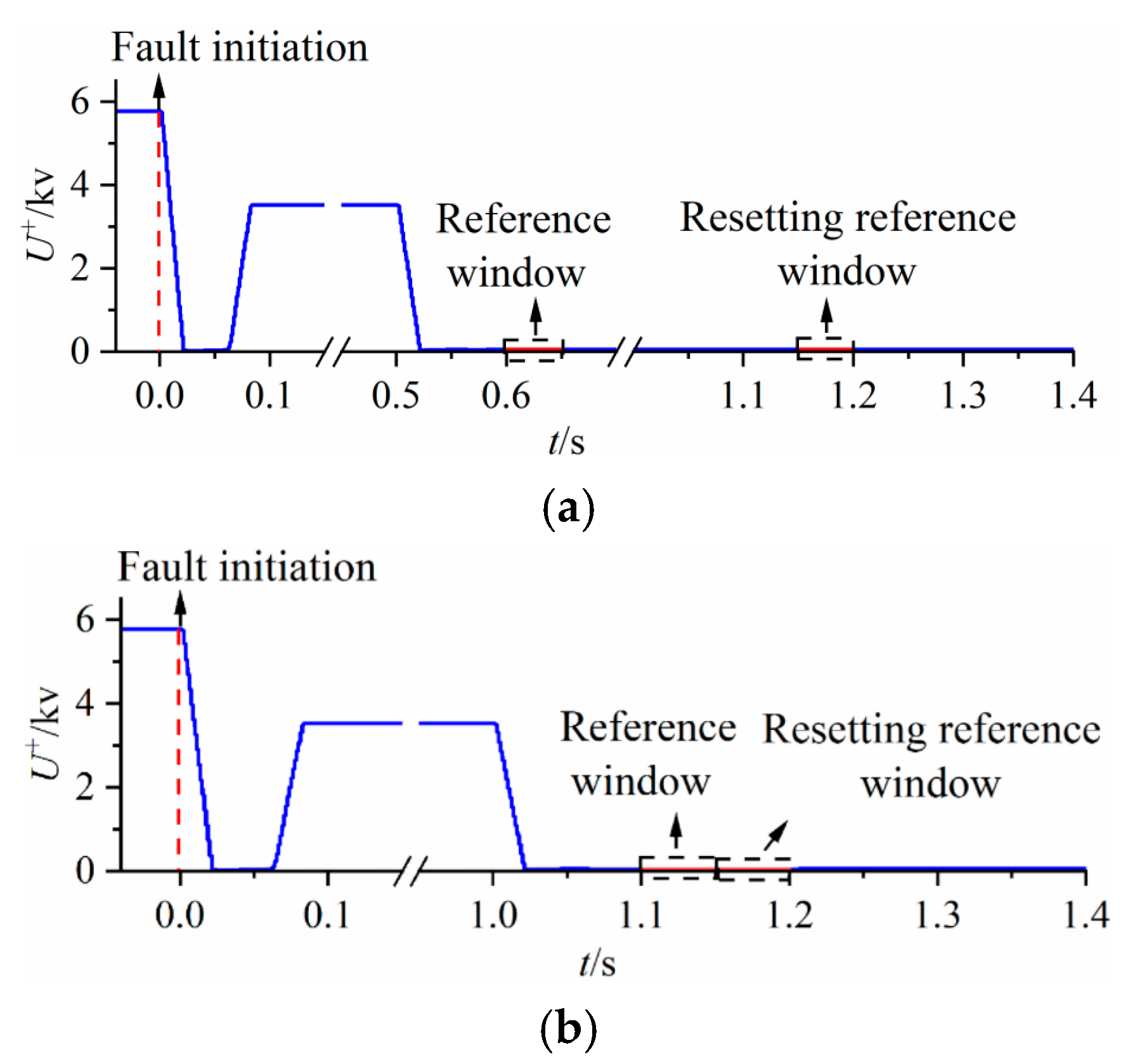
If the voltage rise following fault clearance occurs within the reference window, or if the fault is cleared before the reference window, subsequent voltage relative entropy measurements will yield lower values. This creates a detection dead zone of a certain duration. To address this issue, this study proposes a detection method that actively reduces the output power of the ES and resets the reference window
If the fault occurs and criterion (20) remains unsatisfied after Stage II, according to Equation (9), the active power
P regulated by the ES is:
Reduce P to lower the voltage downstream of the CB to 0.2 p.u. Simultaneously, reset the reference window to the latter segment of Stage II (set to the 1.15~1.2 s interval in this study). The sliding detection window begins detection starting from the reference window, recalculating the voltage relative entropy within both the reference window and the sliding detection window.
Considering window duration Δ
T and the voltage transient duration
tT, the detection time
td2 is given by Equation (23):
Within detection time
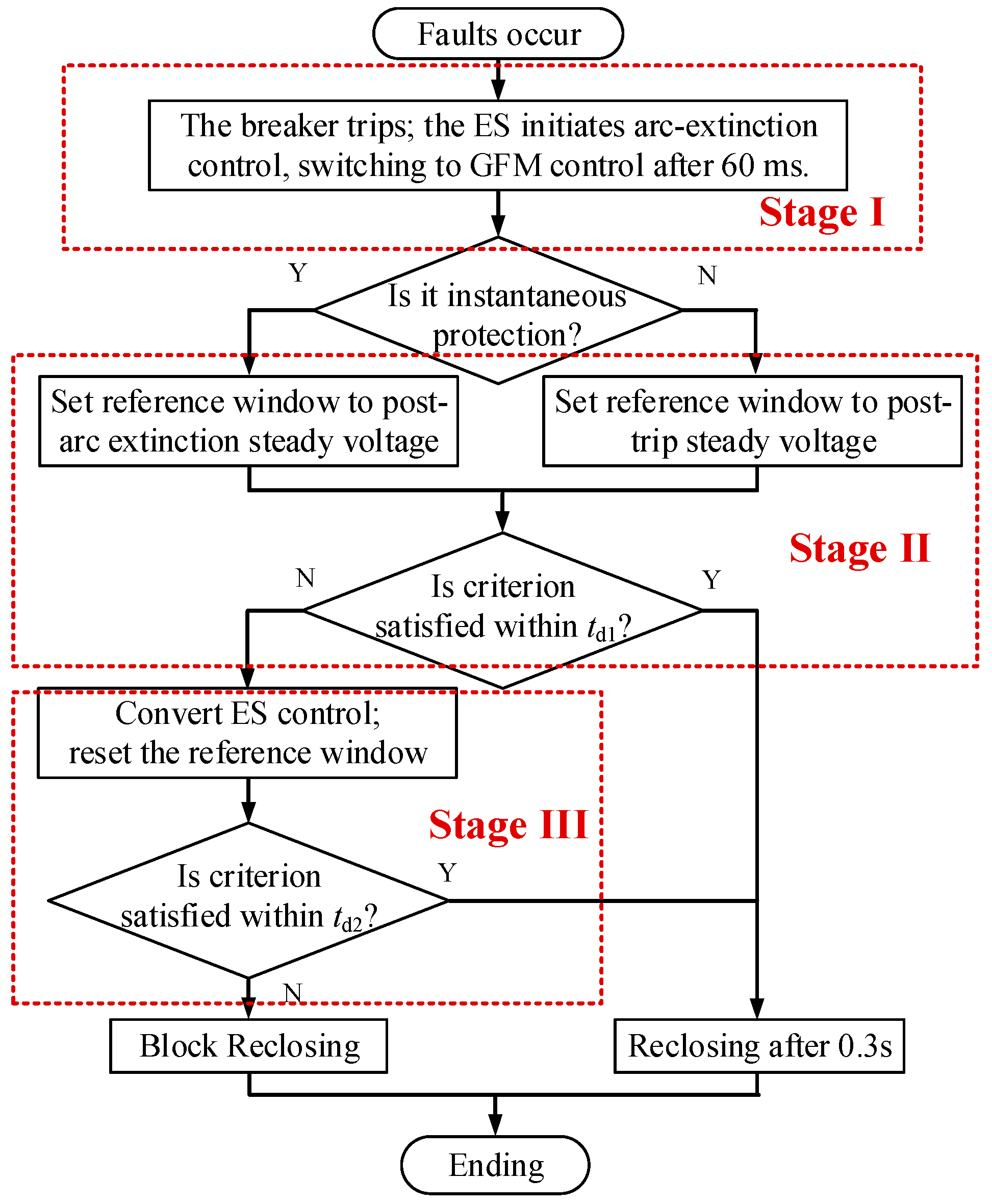
td2, if criterion (20) is satisfied, the fault is cleared and reclosing occurs after a 300 ms delay; if criterion (20) is not satisfied, reclosing is blocked. After the detection time elapses, the ES resumes GFM control. The detection flowchart is depicted in
Figure 4.
5. Simulation Verification
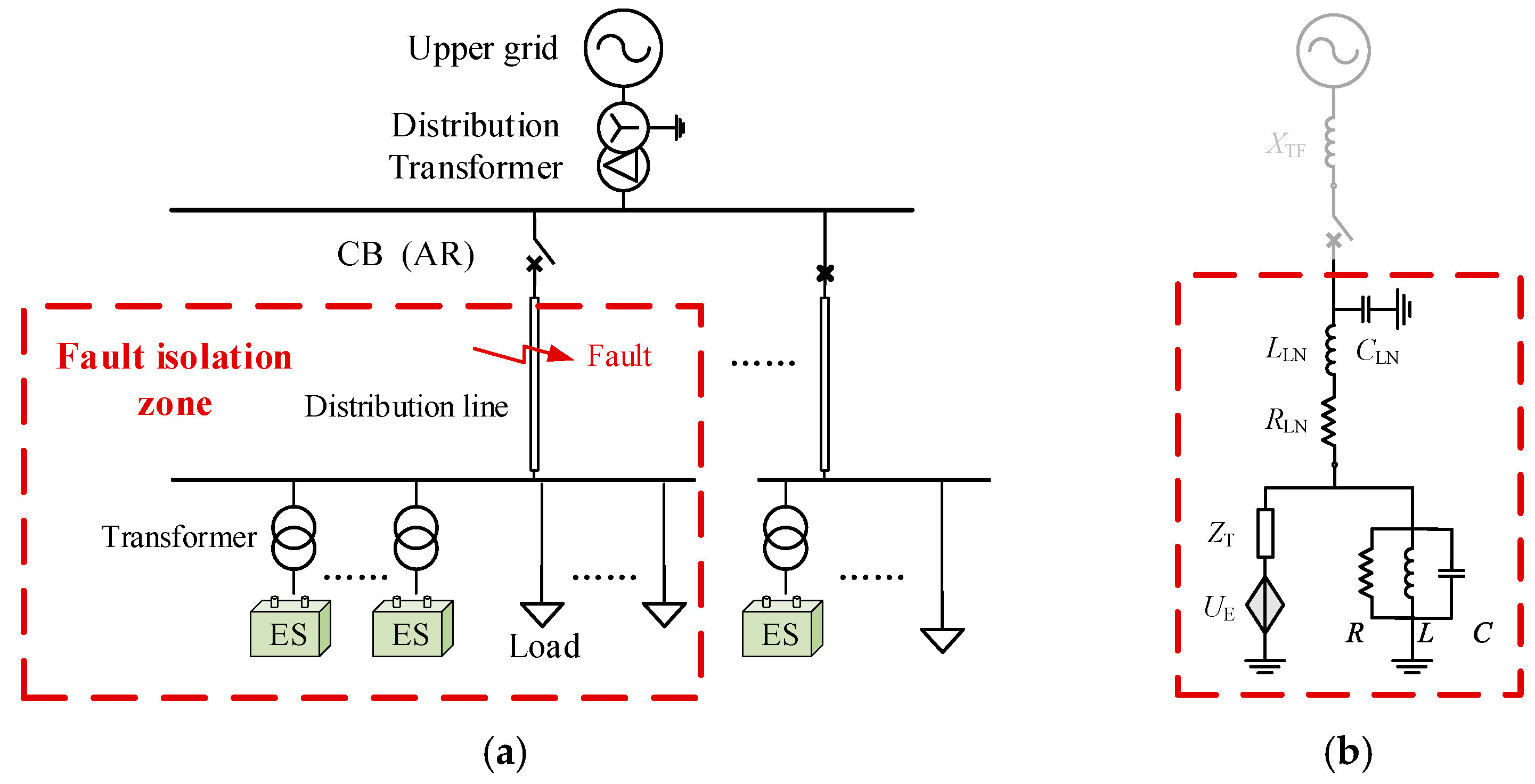
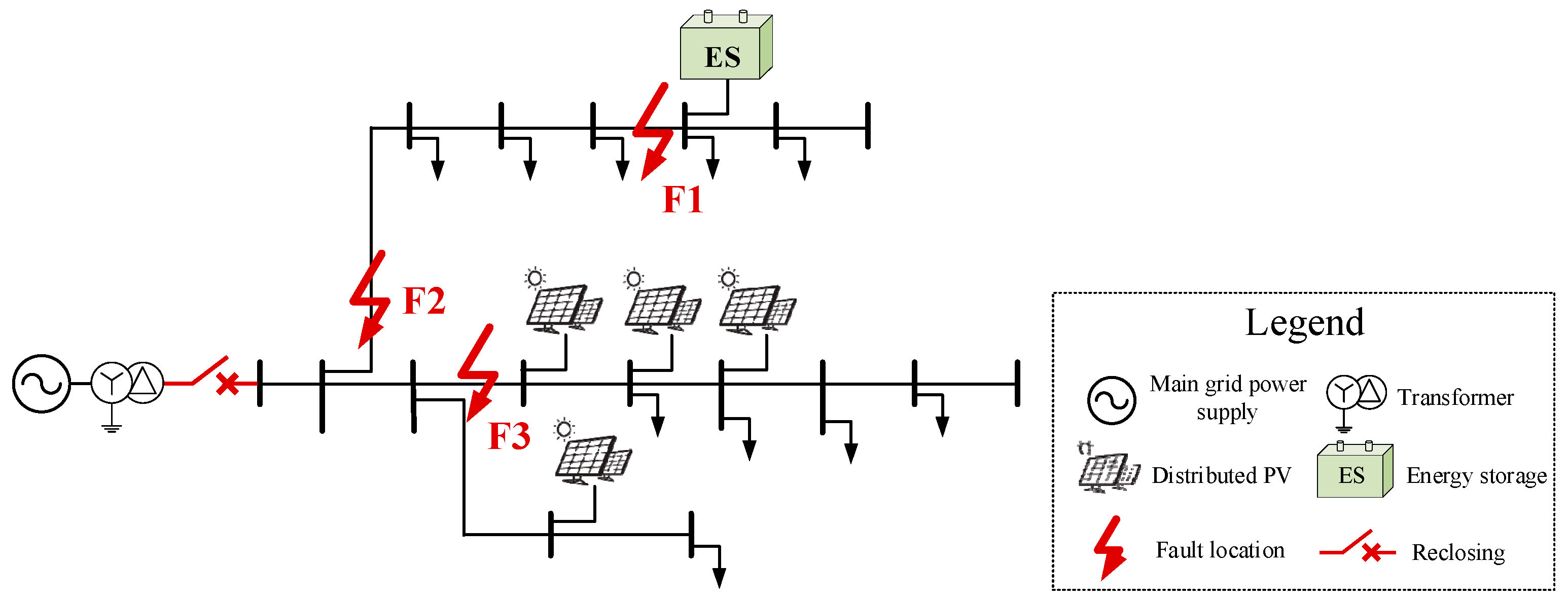
To validate the conclusions of fault characteristic analysis and the effectiveness of the proposed ES-reclosing non-communication cooperative fault recovery control method based on local detection, a simulation system was constructed on the PSCAD/EMTDC platform. A 100 kW ES was connected to a 10 kV distribution feeder (see
Appendix C for derivation details). The detailed system structure is shown in
Figure 5.
A three-stage current protection system is installed at the substation’s outgoing CB. The voltage measurement point for adaptive reclosing is located downstream of the CB, where it monitors and continuously calculates the downstream positive-sequence voltage. The relative entropy value of the voltage for a 500 Ω ABG fault was selected as the basis for the detection threshold. The window duration ΔT was set to 50 ms (sufficient to capture 2–3 cycles of the power frequency voltage), and K was ultimately determined to be 0.095 based on Equation (20).
All faults are assumed to occur on the feeder downstream of the CB. The main transformer in the DNs has a capacity of 5 MVA, operates at a voltage level of 110/10 kV, employs a YNd connection, and has a short-circuit impedance of 10.5%.
5.1. Single Transient Fault Case Verification
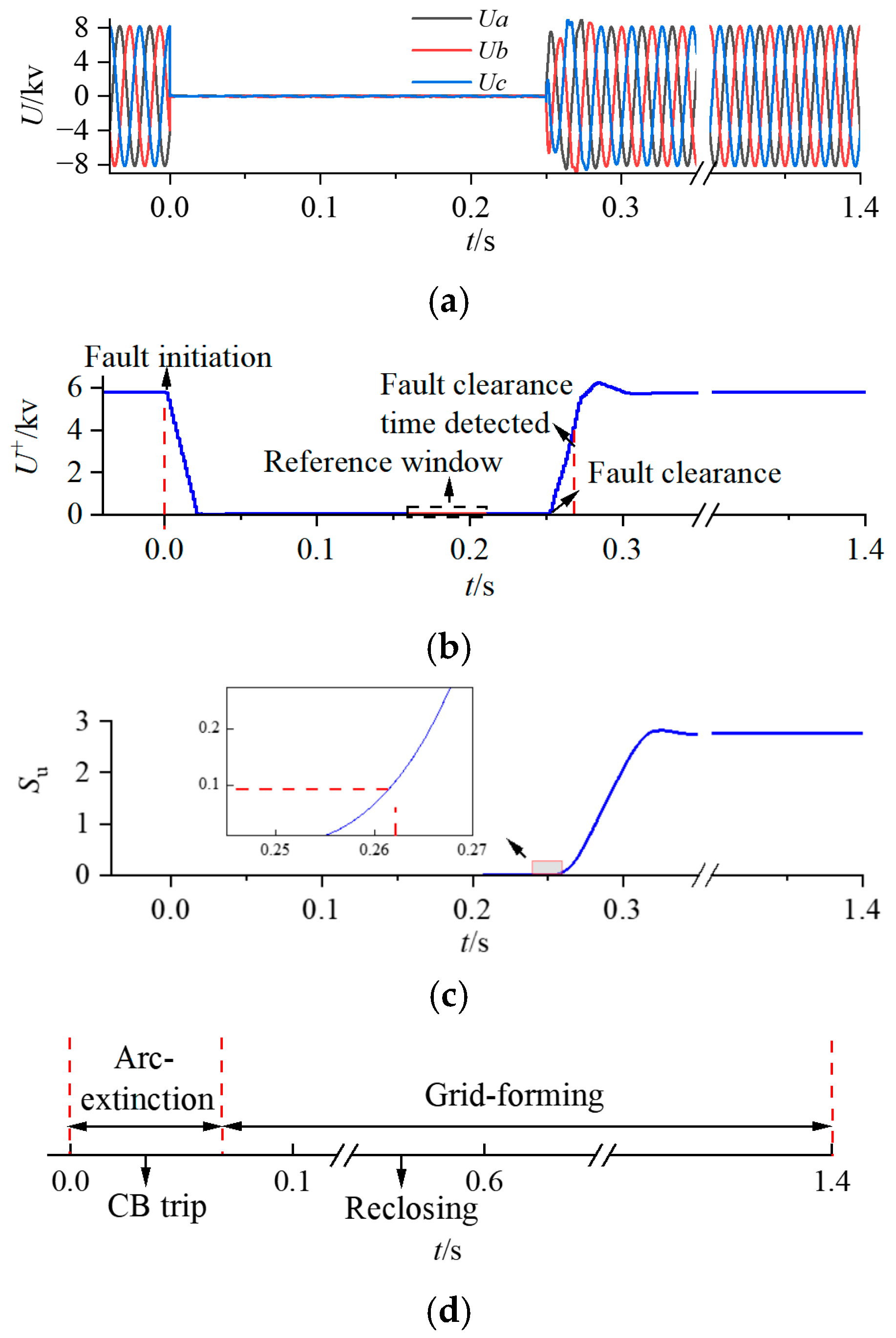
Simulations of transient and permanent three-phase faults (ABC) at point F1, with a fault resistance of 10 Ω, were conducted to evaluate the performance of the proposed method. The fault occurs at time 0 s, with an transient fault duration of 250 ms. The fault detection diagram is shown in
Figure 6, where
Figure 6a,b represent the faulted three-phase voltage and positive-sequence voltage, respectively.
Figure 6c depicts the entropy value curve over time.
Figure 6d illustrate the ES and Reclosing control strategies
Following a fault occurrence, the CB trips after 30 ms, simultaneously initiating arc extinction control at the ES. After 60 ms, the control strategy switches to GFM control. At 0.263 s, fault clearance is detected, and reclosing occurs after a 300 ms delay.
5.2. Verification Under Different Fault Locations
Based on the preceding discussion, it can be concluded that the proposed cooperative fault recovery control scheme, by effectively integrating protection action information, can significantly reduce fault detection time. Given that the operating characteristics of protective devices vary when faults occur at different locations along the feeder, it is necessary to systematically verify the performance of cooperative fault recovery control scheme under various protective action scenarios.
This section constructs three typical fault location scenarios: F1 (at the beginning of the line), F2 (at the end of the line), and F3 (at the 10% point of the downstream line). These locations correspond to the operational conditions of instantaneous protection, time-limited instantaneous protection, and time-delayed protection, respectively. Taking a three-phase metallic short-circuit fault through a 10 Ω transition resistor as a typical fault type, both transient and permanent faults with varying durations are considered. The performance of the proposed cooperative fault recovery control scheme is validated through simulation.
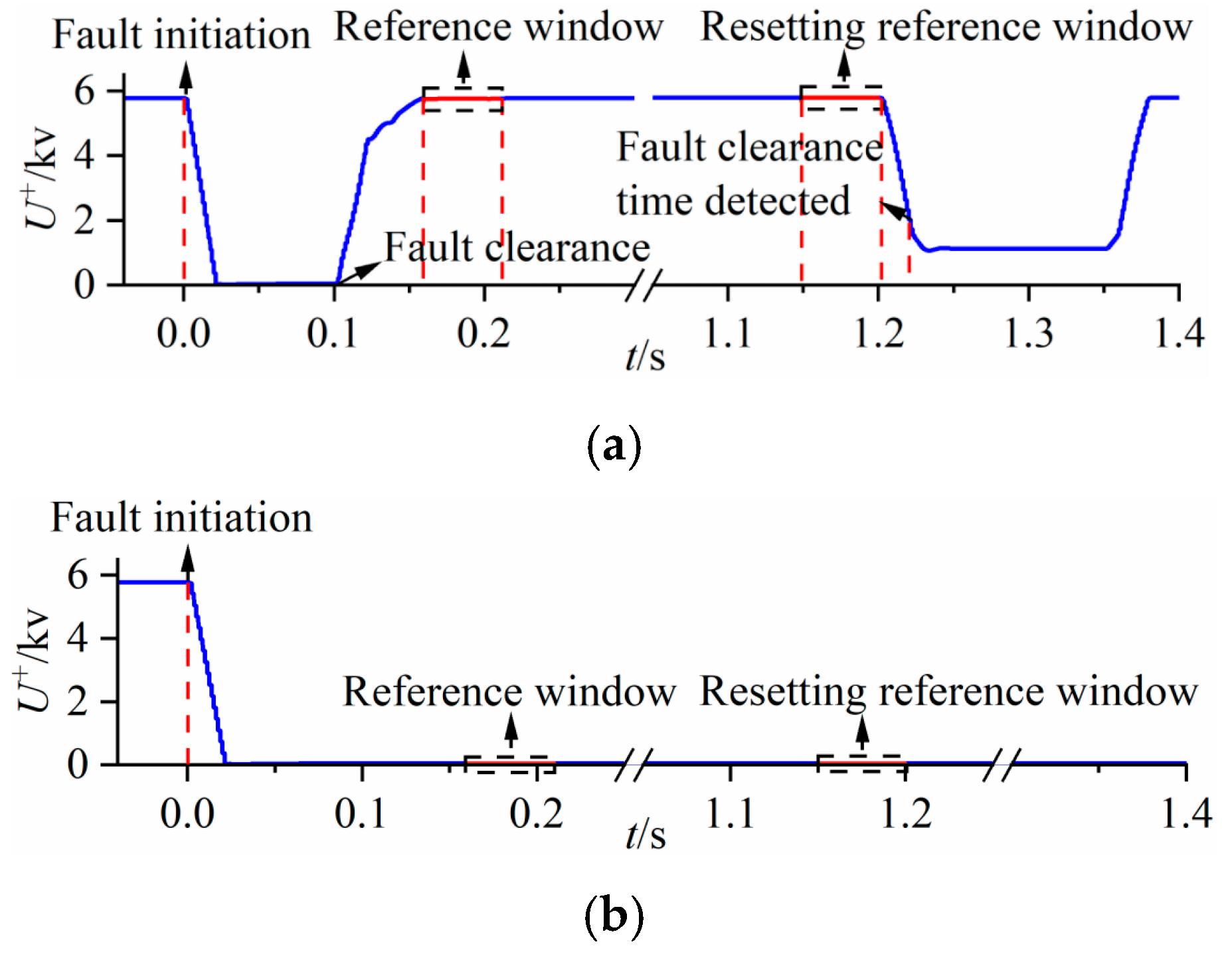
Taking position F1 as an example, the fault detection results are shown in
Figure 7.
Figure 7a depicts a transient fault lasting 100 ms, which self-cleared before the baseline window. Within 1.2 s after the fault occurred, no voltage relative entropy exceeding the threshold was detected. The ES adjusted its output power
P to reduce the positive-sequence voltage. Resetting the reference window to the 1.15~1.2 s interval after the fault, the positive-sequence voltage decreased to 0.2 p.u. At
t = 1.216 s, a threshold exceeding
K = 0.095 was detected. After a 300 ms delay, reclosing occurred.
Figure 7b shows a permanent fault, where the measured voltage remains at a low level and the entropy value
Su approaches 0, failing to reach the threshold. Finally, reclosing is locked out after exceeding the detection time to prevent secondary reclosing during a fault.
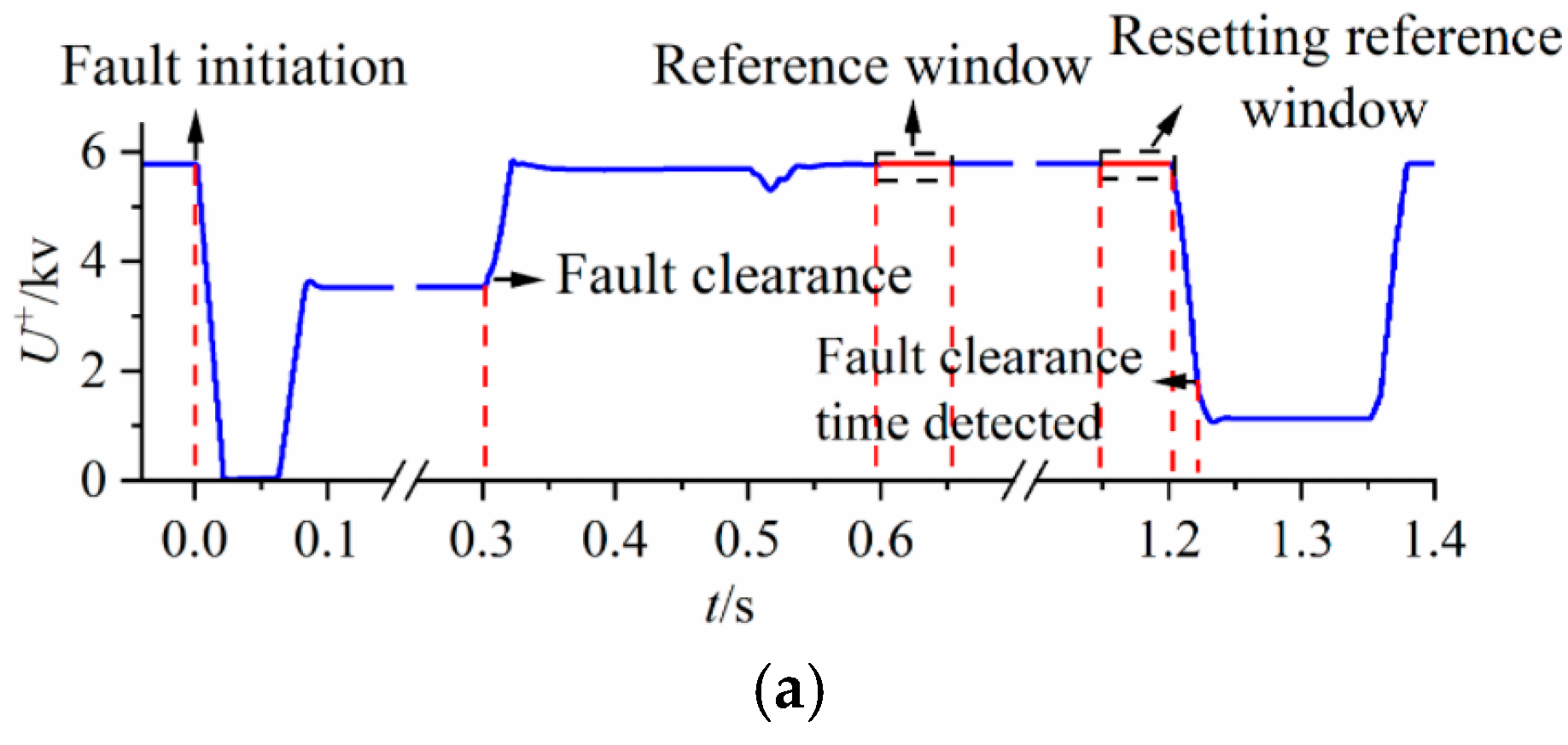
The simulation results for fault detection in the three scenarios are shown in
Table 1. The fault detection diagrams for transient and permanent faults at locations F2 and F3 are shown in
Figure A1 and
Figure A2 of
Appendix B.
The proposed cooperative fault recovery control scheme can identify fault types under various fault locations and protection operation conditions.
5.3. Verification Under Different Fault Types and Fault Resistances
To validate the proposed cooperative fault recovery control scheme system’s detection capability for different fault types and fault resistances, transient and permanent faults were simulated for three-phase faults (ABC), two-phase-to-phase faults (AB), and two-phase-to-ground faults (ABG). A eight-step transition resistance gradient was set at 0.1 Ω, 1 Ω, 10 Ω, 50 Ω, 125 Ω, 250 Ω, 375 Ω and 500 Ω. Assuming that the reference windows corresponding to each protection action can capture the steady-state voltage during transient faults, the steady-state entropy values after subsequent fault clearance are shown in
Table 2. The entropy values for permanent faults are presented in
Table A1 of
Appendix B.
For faults that self-clear before the reference window, the steady-state entropy value reaches 0.562 after undergoing variable power control during the Stage III. The results demonstrate that the proposed method can effectively distinguish fault characteristics under high resistance conditions across different fault types.
5.4. Verification Under Different Noise
Random noise is inevitably present during the actual operation of DNs, and such noise will affect the accuracy of voltage measurement. To verify the anti-noise performance of the proposed fault recovery control method, this section establishes three types of noise environments, namely 35 dB, 30 dB, and 25 dB, respectively. Taking three-phase faults (ABC), phase-to-phase faults (AB), and two-phase-to-ground faults (ABG) with a fault resistance of 10 Ω as the research objects, their transient and permanent fault conditions are considered separately. Assuming that the reference windows corresponding to various protection operations can capture the steady-state positive-sequence voltage under transient faults, the subsequently calculated steady-state entropy values are shown in
Table 3For transient faults that have self-cleared before the reference window, after the variable power control in the third stage of ES, the steady-state entropy values under the three noise environments (35 dB, 30 dB, and 25 dB) are 0.563, 0.566, and 0.562, respectively. The results indicate that the proposed method can still effectively discriminate the fault nature under the condition of random noise.