


Abstract
To address the power fluctuation challenges associated with high-proportion wind power integration and enhance the source–load coordination capability of aluminum electrolysis parks, this paper proposes a multi-time scale collaborative regulation strategy. Based on the production characteristics and regulation principles of aluminum electrolysis loads, a multi-objective optimization model for regulating loads with multiple potline series is established, considering both production revenue and temperature penalties. On this basis, a multi-time scale optimal scheduling model is developed for the park, involving day-ahead commitment optimization, intraday rolling adjustment, and real-time dynamic responses. Case studies based on actual data demonstrate that the proposed strategy effectively alleviates wind power fluctuations and enhances local consumption capacity. Compared to the baseline scenario without load regulation, the integration of electrolytic aluminum load across day-ahead, intra-day, and real-time stages reduces wind curtailment by approximately 40.1%, 52.5%, and 74.6% in successive scenarios, respectively, while the total operating cost shows a decreasing trend with reductions of about 1.15%, 0.63%. This facilitates economical and high-quality operation while maintaining temperature stability for the aluminum electrolysis production process.
1. Introduction
The large-scale integration of wind power into high-energy-consumption industrial parks is an important pathway for achieving low-carbon transformation in industry [1]. Global energy demand, particularly in the industrial sector, accelerated in 2024 with electricity consumption by industry growing nearly 4% and accounting for almost 40% of the increase in global electricity demand, highlighting the critical role and energy intensity of modern industrial production [2]. However, its strong volatility significantly increases the difficulty of power balance in the parks, posing great challenges to the safe and stable operation of the power grid [3]. Moreover, international studies underscore that in future power systems with high shares of wind and solar energy, climate change may intensify supply–demand mismatches, potentially increasing the costs during extreme periods and necessitating significant investments in flexible capacity to enhance system resilience [4]. Owing to its large capacity, significant thermal inertia, and regulation capability from seconds to minutes, the electrolytic aluminum load is regarded as an ideal flexible resource for smoothing wind power fluctuations [5,6,7].
In recent years, scholars worldwide have conducted systematic research on the regulation potential of electrolytic aluminum loads [8]. Modeling the characteristics of electrolytic aluminum loads is the foundation for designing regulation strategies. In [9], a detailed coupling relationship between the core production constraint—electrolytic bath temperature—and its impacts on chemical reaction rates, current efficiency, production equipment, as well as active power regulation was established. Reference [10] presents a safety-constrained electrolytic aluminum plant model, which takes into account operational states swinging with key parameters and limitations verified by the thermal dynamic simulations of electrolytic aluminum electrolyzers. Previous studies in [11] proposed a mechanistic dynamic load model for electrolytic aluminum that considers the distributed impedance of the electrolytic cell series and constant current control. Earlier works in [12] focused on the strong coupling characteristics of active power and voltage, deriving a voltage-active power frequency response model for electrolytic aluminum loads. The existing literature in [13] analyzed the electro-thermal conversion mechanism of electrolytic cells from the perspective of energy flow optimization, proposing an additional heat exchanger process to enhance adjustable capacity.
Electrolytic aluminum features large capacity and fast response speed, demonstrating effective regulation performance in frequency control, peak shaving, and smoothing renewable energy output fluctuations [14,15,16]. Notably, in isolated or weak grid environments, frequency fluctuations caused by renewable energy and load variations pose significant challenges to system stability. Recent research has proposed integrated battery sizing methods that jointly consider energy adequacy and dynamic stability to suppress such frequency disturbances in hybrid renewable microgrids [17]. As proposed in [18], a distributed robust optimization method was designed for electrolytic aluminum loads coordinated with thermal power and storage, using the Wasserstein distance to handle uncertainties in wind power and electricity prices. In [19], a wind–aluminum cooperative scheduling model was established, achieving multi-party benefit distribution through Nash cooperative game. Previous work [20] combined a deep peak shaving model for thermal power units to construct a hierarchical optimization model for joint peak shaving by electrolytic aluminum loads and deep regulation of thermal power. For grid-connected high-energy-consuming industrial grids, a source-load coordinated control strategy has been proposed to smooth wind power fluctuations, as detailed in [21]. In [22], a multi-source coordinated low-carbon optimal dispatching model considering carbon capture has been developed for interconnected power systems to enhance wind power absorption and reduce operational costs. Additionally, a coordinated emergency frequency control scheme is presented in [23] to address power disturbances in isolated industrial microgrids.
However, a review of these studies reveals two notable gaps. First, there remains insufficient investigation into the multi-time scale optimal operation of industrial parks that integrate renewable energy sources with electrolytic aluminum loads. Second, existing approaches often lack a comprehensive framework that simultaneously considers both the economic efficiency and the production safety of electrolytic aluminum loads when allocating regulation power among the electrolytic cell series.
The remainder of this paper is structured as follows. Section 2 details the power regulation principles and characteristics of electrolytic aluminum loads, including their equivalent circuit modeling and constraints. Section 3 develops the multi-time scale optimal scheduling framework, formulating the day-ahead, intra-day, and real-time models. Section 4 describes the solution methodology, focusing on wind power uncertainty handling via scenario reduction and robust optimization. Section 5 presents a comprehensive case study to validate the proposed approach. Finally, Section 6 concludes the paper and discusses potential future research directions.
2. Power Regulation Characteristics of Electrolytic Aluminum Loads
2.1. Principle of Power Regulation for Electrolytic Aluminum Loads
Electrolytic aluminum refers to the production of metallic aluminum through the cryolite-alumina molten salt electrolysis process, which is the core in the modern aluminum industry. Electrolytic aluminum loads have been demonstrated to possess considerable demand-side response potential. This controllability primarily stems from the flexible control of the current intensity supplied to the electrolytic cells. Theoretically, provided that the thermal balance and stable physicochemical state of the electrolytic cell are maintained, the power input to the cell can be dynamically regulated within a certain range without causing irreversible damage to cell longevity or key production indicators.
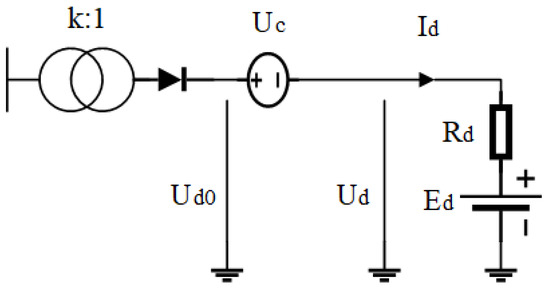
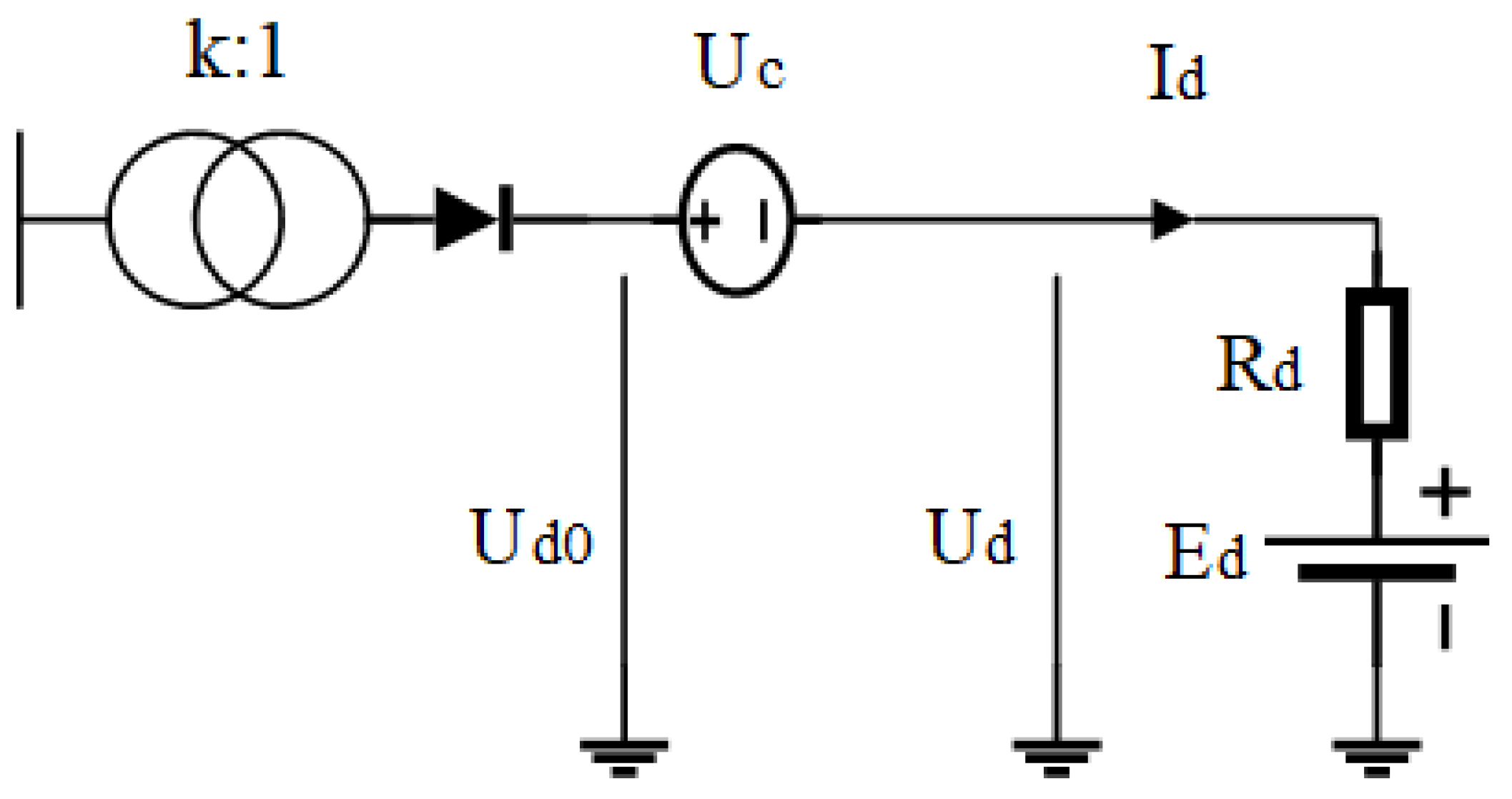
In actual operation, multiple electrolytic cells are connected in series to form an electrolytic cell series. An electrolytic cell can be equivalently modeled as a series connection of a resistor and a counter electromotive force source [14]. The equivalent circuit of a single electrolytic cell series is shown in Figure 1.
Figure 1.
Equivalent circuit of aluminum electrolysis load.
Where is the transformation ratio of the on-load tap-changing transformer, is the equivalent voltage source of the saturable reactor, is the voltage on the low-voltage side of the transformer; is the DC voltage of the electrolytic cell; is the DC current flowing through the electrolytic cell; and are the equivalent EMF and equivalent resistance of the electrolytic cell series, respectively. Altering the cell power can primarily be achieved through three methods: adjusting the transformation ratio of the on-load tap-changing transformer, adjusting the saturable reactor, or adjusting the voltage of the high-voltage side bus. Among these, the method based on adjusting the saturable reactor is the most widely used. The regulation range relying on the saturable reactor is approximately 5–10% [24] of the rated voltage, with an average response time of 0.5 s.
The power of an electrolytic cell series is expressed as:
The DC current adjusted by the saturable reactor is:
The total electrolytic aluminum load is obtained by summing the power of all electrolytic cell series:
where is the power of the -th electrolytic cell series. is the number of electrolytic cell series in the electrolytic aluminum plant.
2.2. Power Regulation Model for Electrolytic Aluminum Loads
2.2.1. Constraints
- (1)
- Minimum On/Off Time Constraints.
- (2)
- Constraint on the Voltage Drop Range of the Saturable Reactor.
- (3)
- Production Safety Constraints for the Electrolytic Cell Series [25].
To prevent product quality degradation and electrolytic cell damage caused by excessively low series current, it is stipulated that the electrolytic cell should not be in an excessively cooled state, i.e.,
where is the rated series current of the -th electrolytic cell series.
- (4)
- Temperature Constraints
Maintaining the temperature of the electrolyte within the cell in a reasonable range is crucial for the normal production of electrolytic aluminum. During normal operation of the aluminum load, the cell temperature is generally maintained at 950–970 °C [25]. When the cell temperature falls below 950 °C, it severely affects the circulation rate of the electrolyte, easily leading to the freezing of the electrolytic cell and significant equipment damage. When the electrolyte temperature exceeds 970 °C, it causes greater corrosion to the equipment and can easily trigger safety incidents.
Based on the law of energy conservation and the specific heat capacity formula, the maximum downward and upward adjustable capacity of electrolytic aluminum, considering temperature constraints, can be expressed as:
where is the specific heat capacity of the electrolyte within the electrolytic cell; is the mass of the electrolyte in the -th electrolytic cell series; is the duration of the time interval; is the cell temperature of the -th electrolytic cell series during time period . and denote the permissible minimum and maximum cell temperatures, respectively.
- (5)
- Ramp Rate Constraint
- (6)
- Regulation Time Constraint
Due to the adverse effects of frequent adjustments on product quality during the aluminum electrolysis process, limitations must be placed on its regulation time :
where is a binary variable indicating the adjustment status of the -th electrolysis cell series during time period (0 for no adjustment, 1 for adjustment). is a sufficiently large constant.
- (7)
- The Number of Adjustments Constraint
2.2.2. Regulation Cost of Electrolytic Aluminum
Electrolytic aluminum loads possess significant power regulation potential; however, actively adjusting their series current incurs certain economic costs. This cost primarily stems from two aspects: firstly, the direct production loss cost resulting from reduced aluminum production per unit time when the current is decreased; secondly, frequent or large current fluctuations may disrupt the thermal balance of the electrolytic cell, leading to additional energy consumption, reduced cell lifespan, and production risks, constituting the temperature penalty cost. Specifically:
where and represent the production loss cost and the temperature penalty cost, respectively, for the -th electrolytic cell series during time period ; and is the cost weighting coefficient.
- (1)
- Production Loss Cost
The series current is a key parameter in the electrolysis process. Under normal production conditions, the series current is maintained near its rated value, and the electrolytic aluminum load operates normally. When the series current is between 90% and 100% of the rated value, the electrolytic aluminum is in a production reduction state. The production loss cost of electrolytic aluminum is:
where is the aluminum production under reduced load conditions; is the aluminum production under rated operating conditions; is the profit per unit production of aluminum.
Under load reduction conditions, the aluminum production per unit time can be calculated by the following formula [26]:
where 0.3356 is the electrochemical equivalent of aluminum; and are the current efficiency and the rated current efficiency, respectively, of the -th electrolytic cell series during time period .
Thus, the relationship between production and electrolytic current is obtained:
- (2)
- Temperature Penalty Cost
Changes in the active power of the electrolytic cell will cause changes in its temperature. The yield and quality of aluminum products are primarily determined by the smelting temperature. Frequent adjustments may trigger thermal imbalance in the electrolytic cell. Therefore, the temperature penalty cost is defined as:
where is the temperature index of the production equipment; is the temperature penalty coefficient for the -th electrolytic cell series; and is the set rated temperature.
3. Multi-Time Scale Scheduling Model
3.1. Scheduling Framework
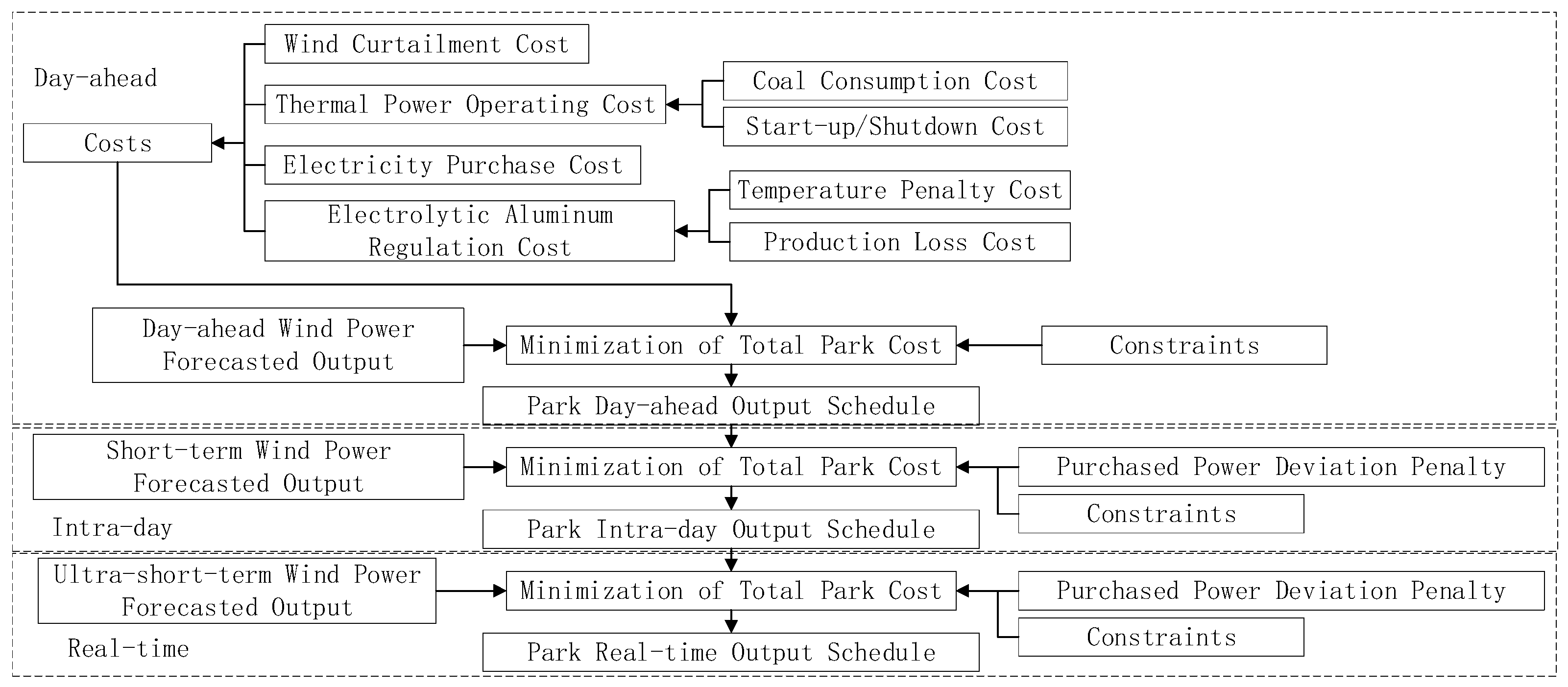
The multi-time scale scheduling model for the industrial park addresses the volatility and randomness of wind power through tiered refinement and coordinated optimization across day-ahead, intra-day, and real-time stages.
The day-ahead stage operates on a 24 h scheduling horizon with a 1 h resolution, formulating the dispatch plan one day in advance. Based on inputs including the smoothed wind power forecast curve, conventional load forecast, and time-of-use electricity prices, this stage aims to minimize the total operating cost of the park. It determines the commitment plans for thermal power units and potline series, along with their baseline power output. The outputs are the day-ahead schedules for all units and loads, which serve as the foundation for the subsequent stages.
The intra-day rolling optimization stage functions with a 15 min rolling step. Utilizing updated short-term wind power forecasts, it adjusts the output of dispatchable resources to mitigate deviations between the day-ahead and intra-day forecasts. Each optimization generates a dispatch plan for the upcoming 4 h and specifies the output schedule for thermal power units. This stage takes the day-ahead schedule and updated wind/load forecasts as inputs, and produces the adjusted intra-day dispatch commands as outputs.
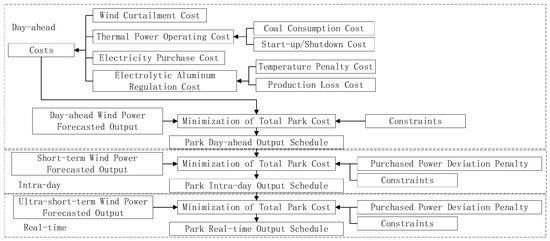
The real-time dispatch stage works on a 5 min time scale within a 15 min execution window. Relying on ultra-short-term wind power forecasts, it further accounts for wind power randomness and performs optimal dispatch of adjustable resources, leveraging the fast regulation capability of the aluminum electrolysis load. Its inputs include the intra-day schedule and ultra-short-term forecast data, while its outputs are the final real-time dispatch commands to be executed. The ultimate goal is to achieve safe, economical, and stable operation of the park integrated with wind power. The multi-time scale optimal scheduling framework for the aluminum electrolysis park is illustrated in Figure 2.
Figure 2.
Multi-time scale optimal scheduling framework for aluminum electrolysis park.
3.2. Day-Ahead Scheduling Model
3.2.1. Objective Function
The objective is to minimize the total integrated cost within the park:
where , , , are the operating cost of thermal power units, the wind curtailment cost of wind turbine units, the regulation cost of the electrolytic aluminum load, and the cost of purchasing/selling electricity from/to the external grid during time period , respectively.
The operating cost of thermal power units includes coal consumption cost and start-up/shutdown cost:
where and are the coal consumption cost and the start-up/shutdown cost of the thermal power unit, respectively; , , are the operating cost coefficients of the -th thermal power unit; , are the start-up cost and shutdown cost of the -th thermal power unit; is the output of the -th thermal power unit during time period ; , represent the operational state of the thermal power unit, where 1 indicates that the -th thermal power unit is in the start-up state during time period t, and 0 indicates it is in the shutdown state.
The wind curtailment cost of wind turbine units is:
where and are the predicted output and the actual grid-integrated power, respectively, of the wind turbine unit during time period ; is the per-unit wind curtailment penalty cost.
The cost of purchasing electricity from the external grid is:
where is the power purchased from the external grid during time period ; is the per-unit electricity purchase cost during time period .
3.2.2. Constraints
- (1)
- Power Balance Constraint
- (2)
- Thermal Power Unit Constraints
These include output constraints, ramping constraints, and minimum uptime/downtime constraints:
where is a binary (0–1) variable indicating the operational state of the -th thermal power unit during time period ; and are the upper and lower output limits of the -th thermal power unit during operation; and represent the maximum upward and downward ramping rates of the -th thermal power unit; and denote the cumulative continuous operation time and shutdown time of the -th thermal power unit up to the beginning of time period ; and represent the minimum required continuous operation time and shutdown time for the -th thermal power unit; and are binary variables indicating whether the -th thermal power unit performs a start-up action or a shutdown action, respectively, during time period .
- (3)
- Wind Power Grid Integration Constraint
- (4)
- External Grid Purchased Power Constraint
- (5)
- Electrolytic Aluminum Constraints
As shown in Equations (4)–(7).
After the day-ahead scheduling stage, the commitment statuses of the thermal power units and electrolytic cell series are treated as determined parameters and passed down to the intra-day rolling scheduling and real-time scheduling stages.
3.3. Intra-Day Rolling Dispatch Model
3.3.1. Objective Function
Compared to the day-ahead stage, unit start-up/shutdown costs are no longer considered. A penalty for deviation from the purchased power schedule with the main grid is introduced. The objective is to minimize the total cost within the dispatch horizon:
where is the total number of time intervals in the intra-day rolling stage; is the adjustment cost for the purchased power deviation during the intra-day stage, which can be expressed as:
where is the penalty coefficient for the purchased power deviation during the intra-day stage; is the deviation of the intra-day dispatched value of purchased power from the day-ahead schedule during time period .
3.3.2. Constraints
Building upon the day-ahead schedule, constraints regarding the start-up/shutdown of electrolytic aluminum loads and thermal power units are no longer considered. Due to the change in time resolution from 1 h to 15 min, the ramping rates and spinning reserve constraints for thermal power units are adjusted appropriately. A constraint for adjusting the purchased power from the main grid is added:
After the intra-day rolling stage, the output of the thermal power units is passed down as deterministic parameters to the real-time dispatch stage.
3.4. Real-Time Dispatch Model
3.4.1. Objective Function
Since the output of thermal power units remains consistent with the intra-day dispatch plan in the real-time stage, the cost associated with their output is not included in the objective function. Instead, a penalty for the deviation between the actual purchased power from the external grid and the contracted schedule must be considered:
where is the adjustment cost for purchased power during the intra-day stage at time .
where is the penalty coefficient for real-time purchased power deviation; is the deviation of the real-time dispatched value of purchased power from the intra-day schedule at time .
3.4.2. Constraints
Due to the short time scale, which is less than the dispatch timescale for the spinning reserve of conventional thermal units, the output of each unit is input into the real-time dispatch as a deterministic value. Therefore, compared to intra-day regulation, unit ramping constraints, operational constraints, and spinning reserve constraints are not considered.
4. Model Solution
4.1. Handling Wind Power Uncertainty
4.1.1. Wind Power Scenario Generation and Reduction
This paper employs Monte Carlo simulation to generate a large number of initial wind power output scenarios, aiming to comprehensively capture the uncertainty in day-ahead wind power forecasts. To reduce the computational complexity of the optimization model, a K-medoids scenario reduction method based on the Fortet–Mourier distance [27] is adopted to retain a small number of representative scenarios along with their corresponding probability weights. Finally, the final wind power output forecast curve is obtained by summing the weighted outputs of each representative scenario according to its respective probability. The specific steps of the K-medoids scenario reduction method based on the Fortet–Mourier distance are as follows.
- (1)
- Randomly select k scenarios from the initial set as the initial representative scenarios.
- (2)
- Calculate the Fortet–Mourier distance between all scenarios and the current representative scenarios. Assign each scenario to the cluster whose representative scenario is the nearest neighbor. The Fortet–Mourier distance can be expressed as:
- (3)
- For each of the clusters, calculate the distances between all scenarios within the cluster and select a new representative scenario for which the sum of distances to all other scenarios in the cluster is minimized.
- (4)
- When the clustering results no longer change, the final representative scenarios are obtained. Their probability weights are determined by the number of scenarios in their respective clusters.
4.1.2. Robust Optimization of Wind Power
Given that actual wind power output is subject to significant uncertainty due to weather conditions, the impact of wind power output uncertainty on the optimal operation of the park should be taken into account. Therefore, in real-time scheduling, the actual wind power output is modeled as the predicted value plus a deviation term:
where is the real-time forecasted value of wind power. is the uncertainty deviation, belonging to a bounded set:
where is the output uncertainty coefficient, determined based on historical meteorological data, and .
Consequently, the wind power output in the aforementioned model is no longer a deterministic value but a stochastic variable. Thus, in the real-time scheduling model, the objective function is adjusted to minimize the total park cost under the worst-case scenario:
where represents the uncertainty set. Correspondingly, Equations (22) and (24). must also account for feasibility under the worst-case scenario to ensure stable system operation despite fluctuations in wind power output.
4.2. Multi-Time Scale Solution Procedure
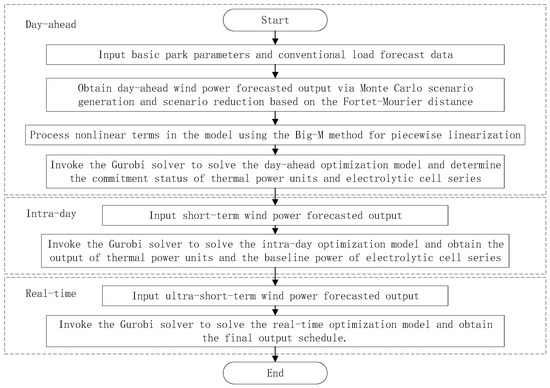
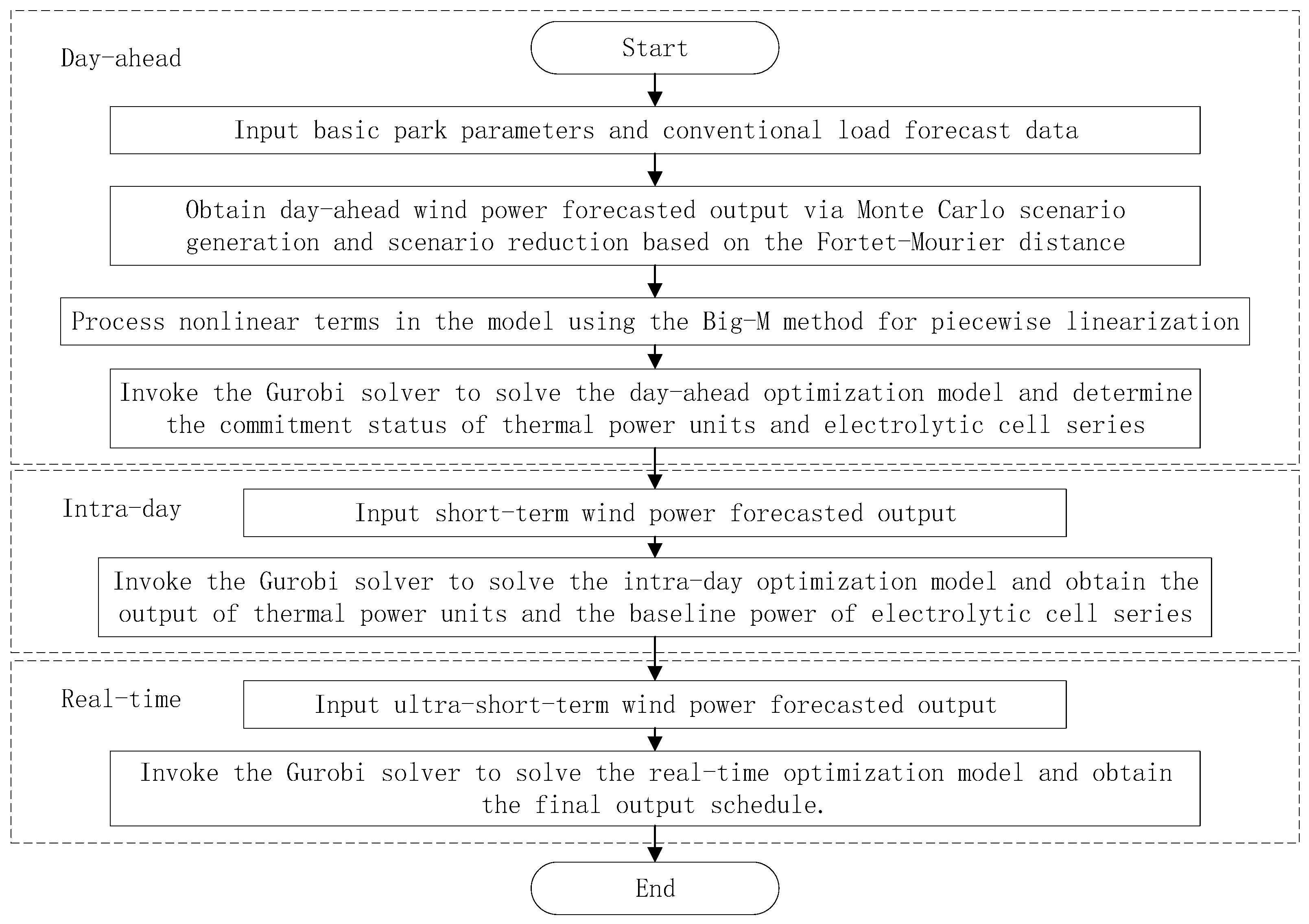
The solution procedure for the proposed multi-time scale optimal scheduling model is divided into three stages: day-ahead model solution, intra-day rolling optimization solution, and real-time model solution. Nonlinear terms in the model are handled using the Big-M method for piecewise linearization. The Gurobi solver is then invoked to solve the day-ahead, intra-day, and real-time optimization models sequentially in a hierarchical manner. The solution flowchart is shown in Figure 3.
Figure 3.
Multi-time scale solution process.
5. Case Study
5.1. Basic Data
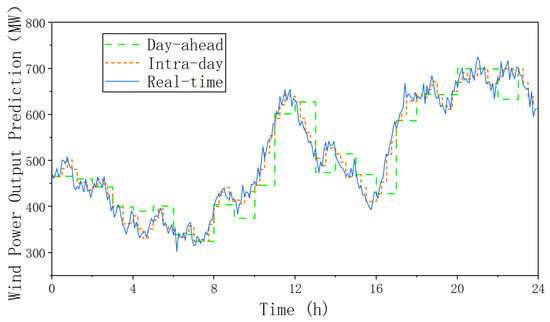
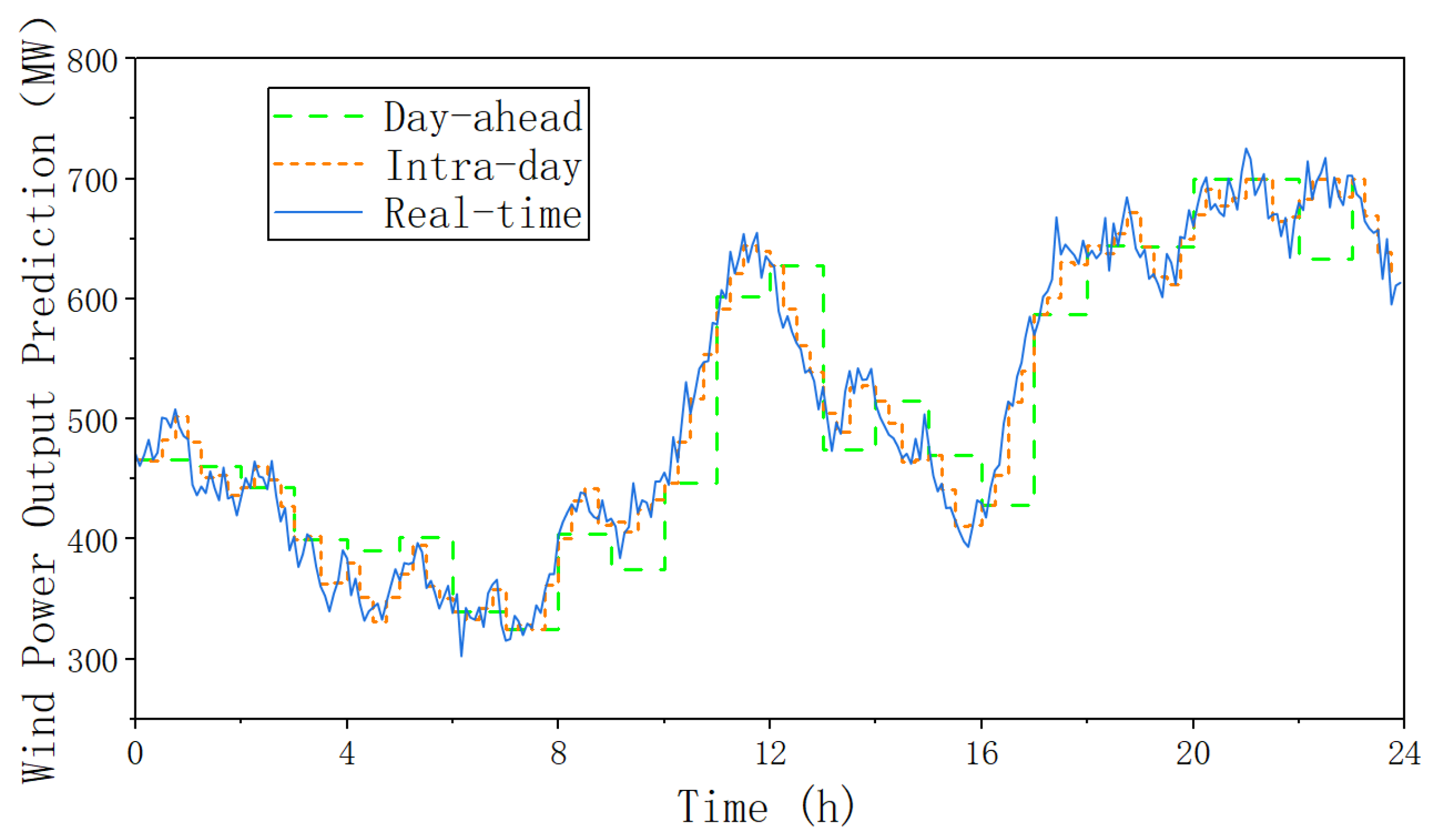
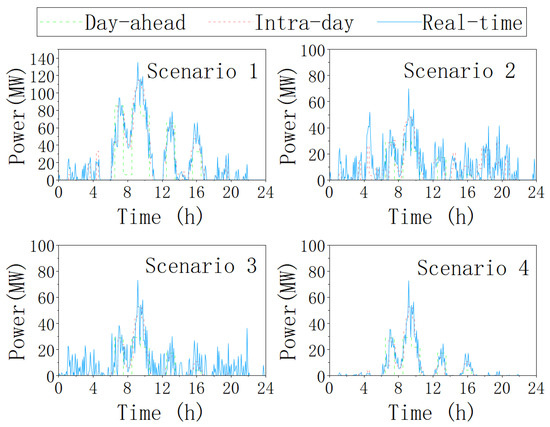
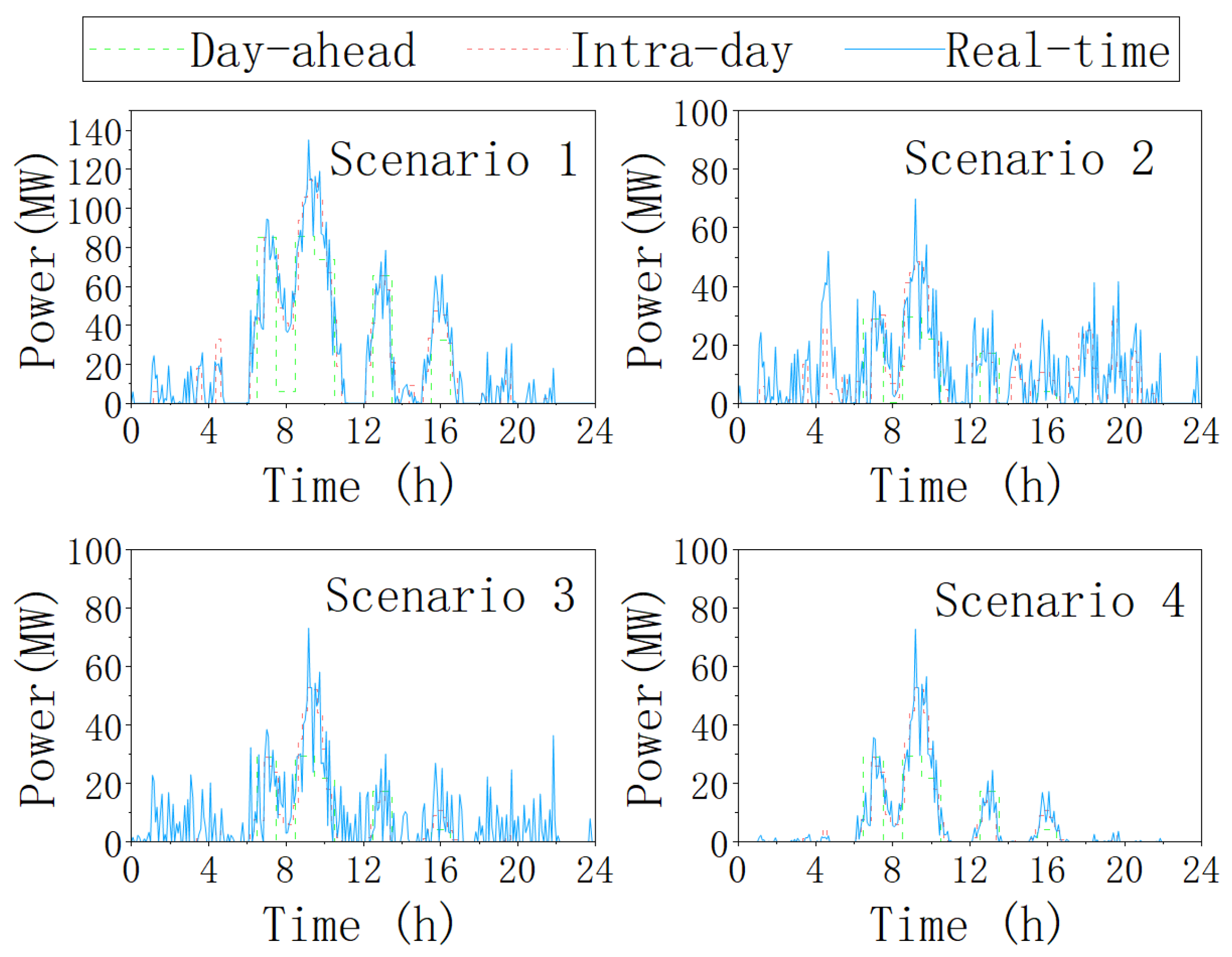
To verify the effectiveness of the proposed model, simulation calculations are performed using operational data from an actual electrolytic aluminum park. The electrolytic aluminum load comprises five electrolytic cell series with a total rated load of 1060 MW. Specific parameters are listed in Table 1. The power regulation characteristics and constraints for these series are derived from established models in [28]. The park comprises three 350 MW thermal power units and two 150 MW thermal power units, with their key equipment parameters provided in Table 2. The maximum transmission power of the tie-line is 500 MW, and the wind farm has an installed capacity of 800 MW. The forecast data after scenario reduction is shown in Figure 4. Market parameters are defined as follows: the wind curtailment penalty coefficient is set at 63.8 USD/MWh, reflecting the value of lost renewable energy. Time-of-use (TOU) electricity prices are applied, with specific values listed in Table 3.
Table 1.
Parameters of the electrolytic cell series.
Table 2.
Equipment parameters of thermal power units.
Figure 4.
Wind power output prediction curve.
Table 3.
Electricity price information.
5.2. Multi-Time Scale Scheduling Results
To systematically evaluate the impact and incremental value of electrolytic aluminum load participation across different scheduling stages, we designed a set of progressive comparative scenarios. These scenarios are constructed by sequentially enabling the load’s regulation capability at finer time scales, thereby isolating the contribution of each scheduling stage to the overall system performance. This design allows us to examine the most relevant and representative operational states that demonstrate the evolution from a baseline system with no flexible load regulation to a fully coordinated multi-time scale system. The four specific scenarios are defined as follows:
Scenario 1: Electrolytic aluminum does not participate in regulation.
Scenario 2: Electrolytic aluminum participates only in day-ahead regulation.
Scenario 3: Electrolytic aluminum participates only in day-ahead and intra-day regulation.
Scenario 4: Electrolytic aluminum participates in day-ahead, intra-day, and real-time regulation.
Figure 5.
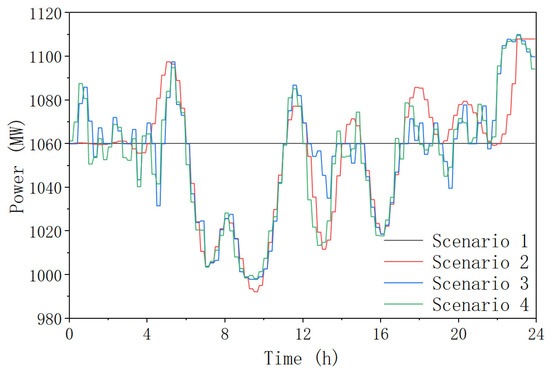
Power purchasing curve under different scenarios.
Figure 6.
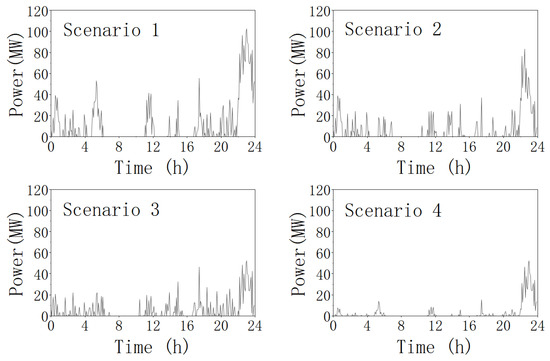
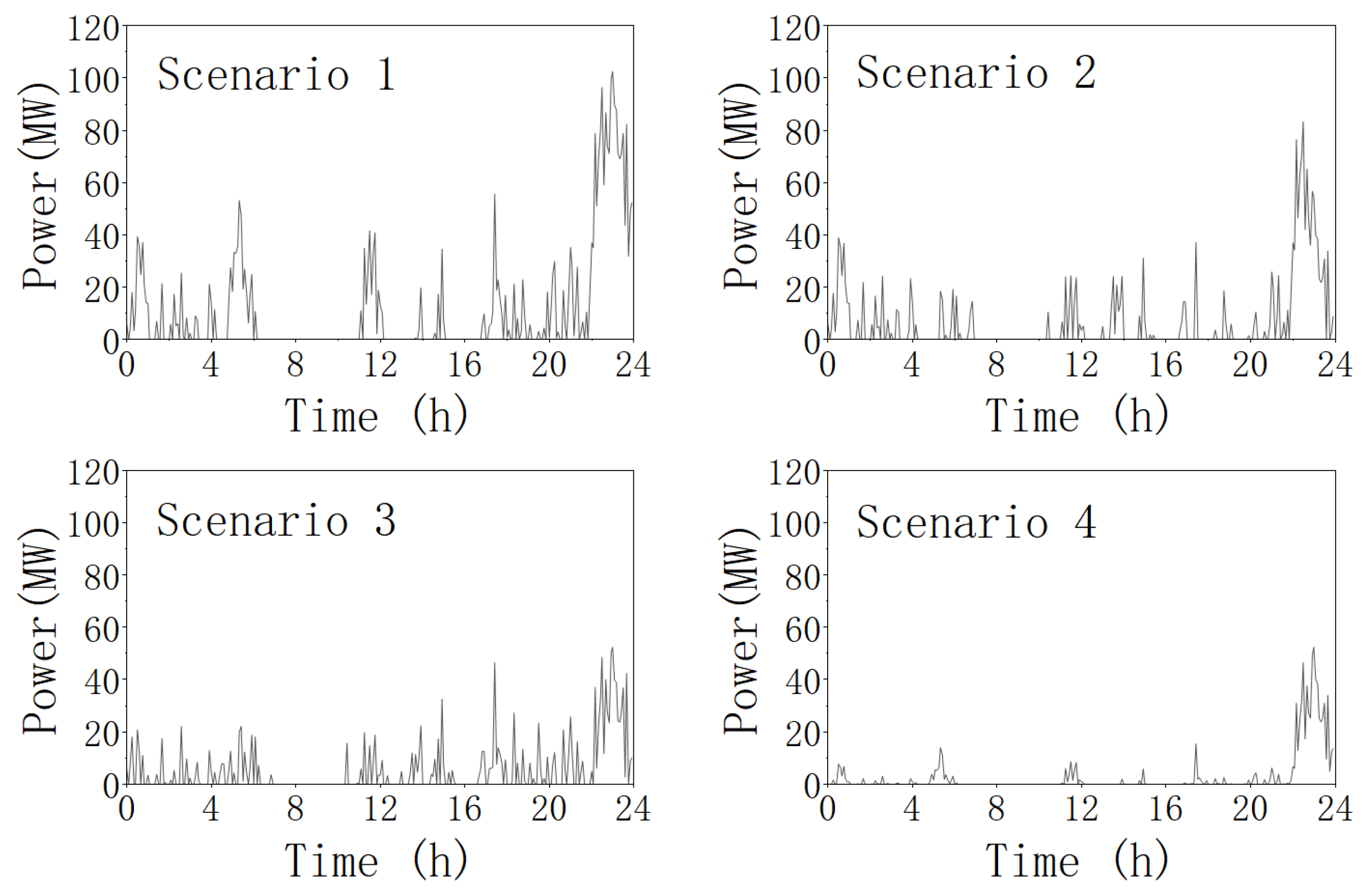
Wind curtailment power curve under different scenarios.
Figure 7.
Aluminum electrolysis load power variation curve under different scenarios.
In Scenario 1, the system relies solely on the ramping capability of thermal power units, tie-line power adjustments, and wind curtailment to cope with wind power fluctuations and forecast errors. The purchased power peaks during periods of low wind power output and high electricity consumption.
In Scenario 2, during the morning when the load remains high while wind power output is low, thermal power units cannot fully meet the load demand. The electrolytic aluminum load reduces its consumption to maintain system power balance, thereby decreasing the power purchased from the external grid. During the night when wind power output is high, the electrolytic aluminum load maintains a higher level to increase the renewable energy consumption rate. However, when discrepancies exist between the intra-day or real-time wind power output and the day-ahead forecast, it is impossible to increase the electrolytic aluminum load to absorb the additional wind power, resulting in a still high risk of wind curtailment.
In Scenario 3, the intra-day correction can respond to updated wind power forecasts on the intra-day scale, thereby reducing forced power purchases caused by actual wind power being lower than the latest forecast. Similarly, the planned electricity consumption of the electrolytic aluminum load can be increased in advance during the intra-day stage to reserve space for the upcoming high wind power output, effectively reducing wind curtailment caused by intra-day forecast errors.
Building upon Scenario 3, Scenario 4 involves rapid adjustment of the electrolytic aluminum load based on real-time wind power output, further reducing power shortages and wind curtailment caused by short-term fluctuations, thus achieving the highest system flexibility. Compared to Scenario 1, it reduces wind curtailment by 206.62 MWh and decreases purchased power by 380.18 MWh.
The operational costs for different scenarios are shown in Table 4. It can be observed that when the electrolytic aluminum load does not participate in regulation, the utilization rate of renewable energy is lower, and reliance on external power purchases is higher, leading to the highest total operating cost for the park. After implementing day-ahead, intra-day, and real-time regulation of the electrolytic aluminum load, the system’s flexibility continuously increases, improving the renewable energy consumption rate, reducing the regulation burden on thermal power units, and saving 38,995 USD in operating costs for the park.
Table 4.
Comparison of park operation results under different scenarios.
5.3. Wind Power Robustness Validation
To investigate the impact of the uncertainty coefficient on the operation strategy, Scenario 4 was selected as the study case. The operational outcomes of the industrial park under different values were analyzed, and the results are presented in Table 5.
Table 5.
Comparison of optimization results under different uncertainty coefficients.
The sensitivity analysis quantifying the impact of the forecast uncertainty coefficient reveals a critical nonlinear relationship between uncertainty magnitude and system economic performance. For low to moderate uncertainty levels ( ≤ 0.4), the total operational cost increases at a manageable, near-linear rate of approximately 7.04% over this range. In this regime, the incremental costs are distributed across power procurement, imbalance penalties, and wind curtailment, indicating that the multi-time scale coordination framework successfully leverages the flexibility of electrolytic aluminum loads to absorb forecast deviations without a drastic economic penalty. However, a distinct inflection point is observed as ψ exceeds 0.4, marking a transition to a high-stress operational regime. Beyond this threshold, the economic impact intensifies markedly: the total cost escalates at an accelerating pace, rising by over 35.67% as increases from 0.4 to 1.0. Within this sharp rise, the power purchase and deviation penalty costs become the predominant drivers, accounting for over 75% of the total incremental cost in the high-uncertainty phase, compared to a significantly lower share in the lower uncertainty range. This suggests that the inherent flexibility provisioned by the scheduling strategy is saturated; the system must increasingly resort to more conservative and expensive measures, such as relying on costly spot market purchases and accepting higher renewable curtailment, to maintain security. The analysis delineates the robustness limit of the current operational paradigm and underscores that sustaining economic efficiency under severe uncertainty would necessitate enhanced flexibility resources or more advanced stochastic or robust optimization techniques.
5.4. Sensitivity Analysis of Temperature Constraint Variations
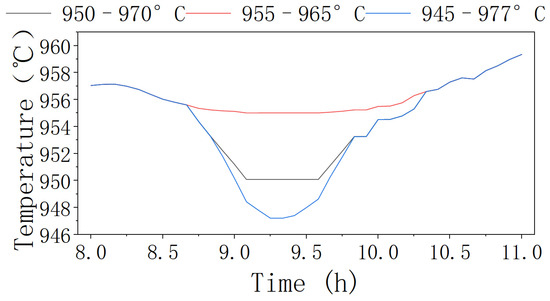
To assess the influence of thermal operating limits on the dispatch strategy and system performance, a sensitivity analysis is conducted by varying the permissible cell temperature range of the aluminum electrolysis loads. Three distinct constraint sets are examined: the baseline range of 950–970 °C, a narrower range of 955–965 °C representing stricter process control, and a wider range of 945–977 °C reflecting relaxed thermal tolerance. The temperature evolution of Electrolytic Cell Series 1 between 8:00 and 11:00 under these different constraints is illustrated in Figure 8. The corresponding optimal dispatch outcomes are summarized in Table 6.
Figure 8.
Temperature variation curve of electrolytic cell series 1 under different temperature range constraints.
Table 6.
Comparison of Park operation results under different temperature range constraints.
The analysis of the results under varying temperature constraints elucidates a clear trade-off between operational safety, embodied by the permissible thermal range, and overall system economic efficiency. Imposing a more stringent temperature band inherently restricts the available downward regulation capacity of the electrolytic aluminum load. This limitation forces the system to rely more heavily on alternative, often more expensive, measures such as increased power purchase from the external grid to maintain balance, thereby elevating the total operational cost despite a potential reduction in the direct load regulation expense. Conversely, adopting a more relaxed temperature constraint unlocks greater flexibility, allowing the electrolytic load to undertake more significant power adjustments for wind power integration. This enhanced capability directly contributes to a reduction in grid purchase costs. Notably, the system’s optimization process intelligently respects other inherent limits—for instance, halting further power reduction to prevent the cell temperature from dropping excessively, such as below 947 °C—ensuring that the pursuit of economic gains does not compromise fundamental safety.
5.5. Sensitivity Analysis of Electricity Price Fluctuations
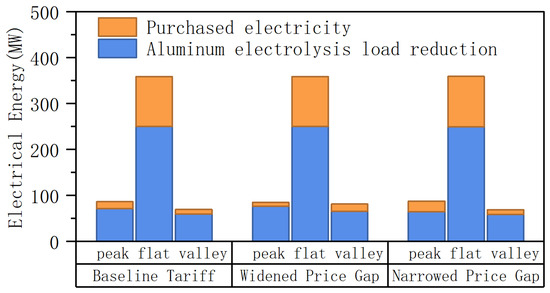
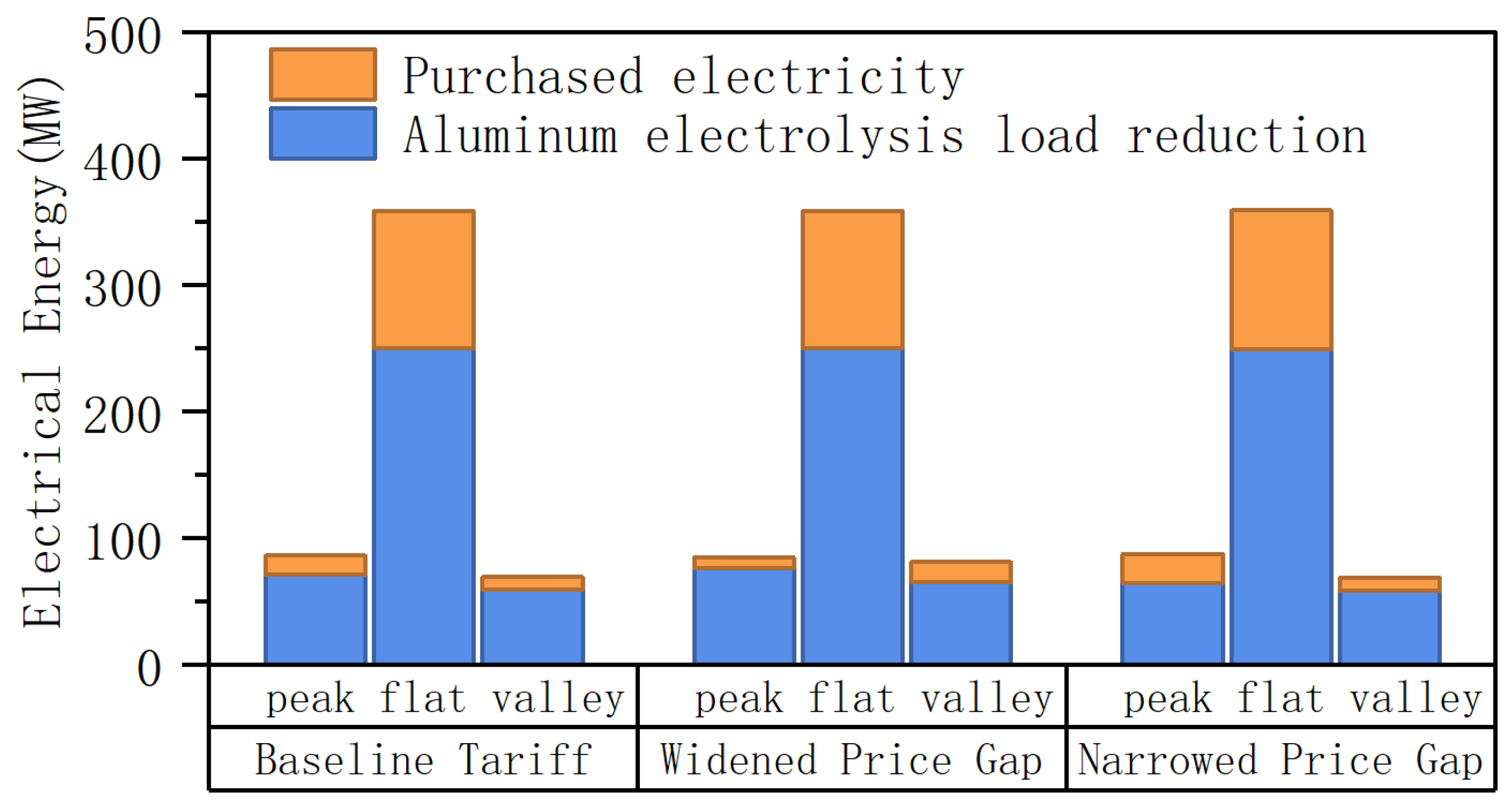
In practical power markets, electricity prices are subject to fluctuations due to factors such as fuel cost variations, policy adjustments, and market dynamics. To assess how price signal changes affect the regulation behavior of aluminum electrolysis loads, a targeted sensitivity analysis is conducted. In this study, three distinct TOU price scenarios are designed based on the baseline price profile. The first scenario maintains the existing baseline tariff structure as the reference case. The second scenario intensifies the price signal by increasing the peak-hour tariff by 5% while decreasing the off-peak (valley) tariff by 5%. Conversely, the third scenario dampens the price signal by decreasing the peak tariff by 5% and increasing the valley tariff by 5%. The results are presented in Figure 9.
Figure 9.
Power purchase and aluminum electrolysis load reduction under different electricity price scenarios.
The sensitivity analysis reveals a pronounced response of the aluminum electrolysis load and the park’s procurement strategy to variations in the time-of-use price structure. When the peak–valley price differential is widened, the load reduction during peak hours increases by approximately 7% compared to the baseline, demonstrating a stronger demand response incentive. Consequently, the power purchased from the external grid during these hours decreases sharply by about 41%, indicating significant on-site peak shaving. Conversely, the narrowed price gap scenario leads to a reduction in peak-hour load curtailment by around 9.3%, accompanied by a substantial increase of approximately 53% in peak-hour electricity purchases, underscoring the weakened economic signal for flexible adjustment. Meanwhile, valley-period behavior shows an inverse trend, with load utilization increasing under a widened gap and decreasing under a narrowed gap. These results quantitatively confirm the critical role of price signals in orchestrating demand-side flexibility, where a steeper tariff structure effectively promotes peak load shifting and reduces reliance on the external grid during high-cost periods, thereby enhancing the park’s overall economic efficiency and self-balancing capability.
5.6. Analysis of Electrolytic Aluminum Regulation Under Different Objectives
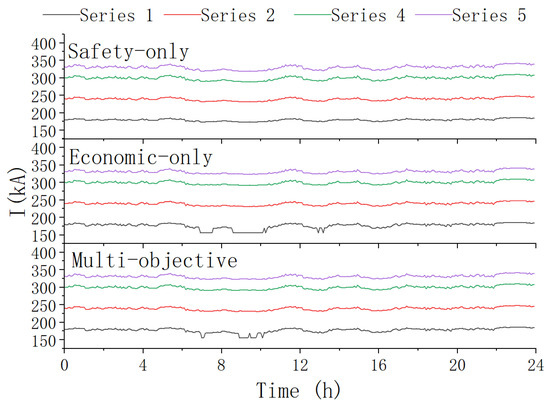
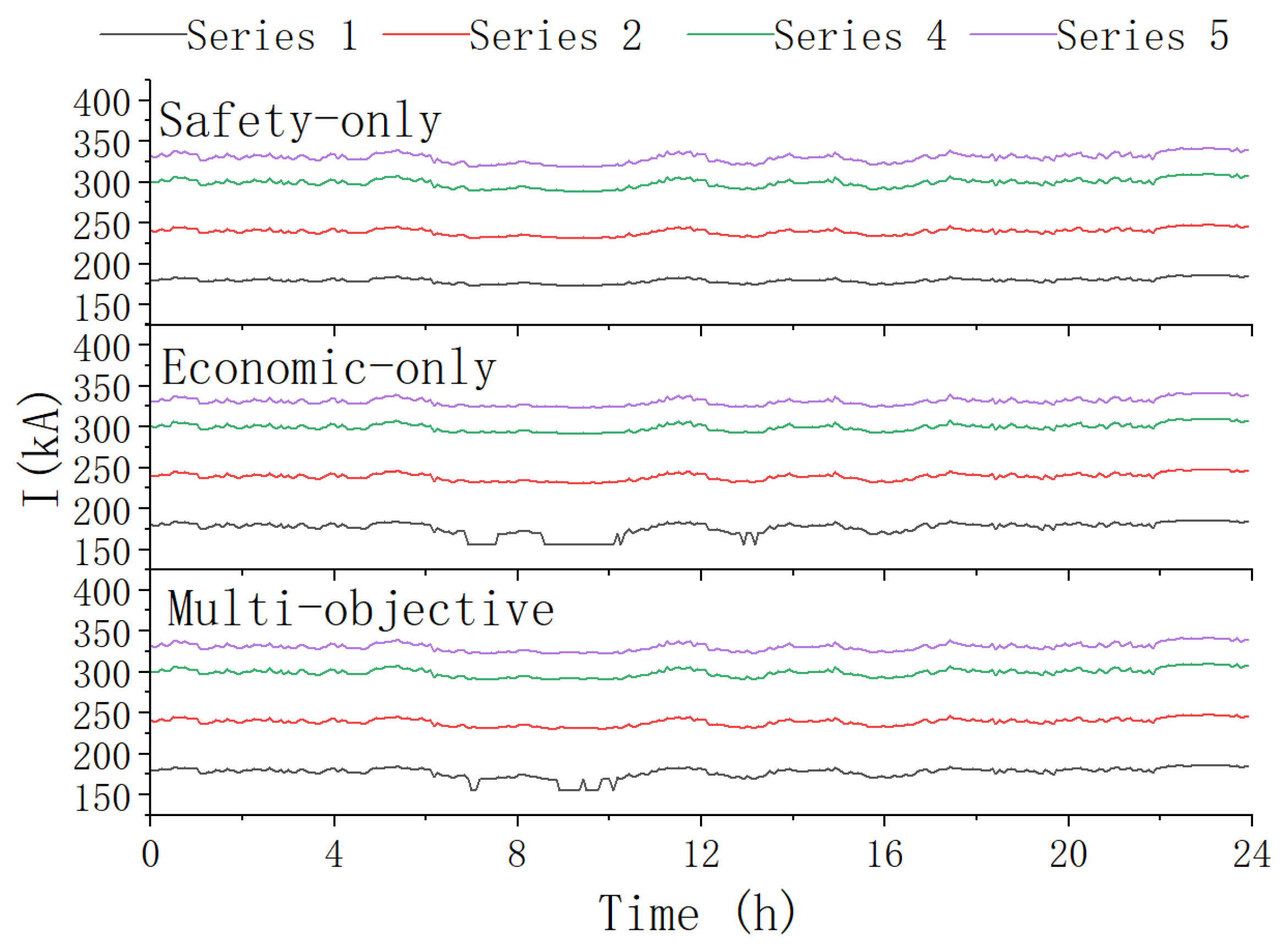
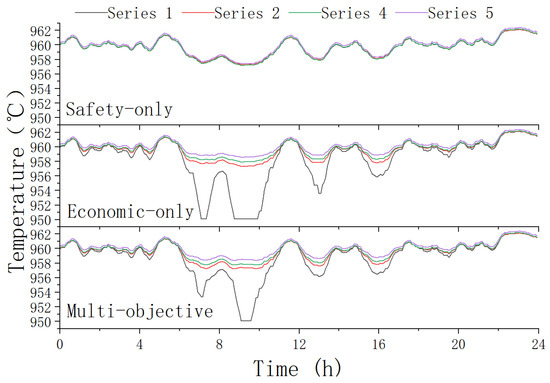
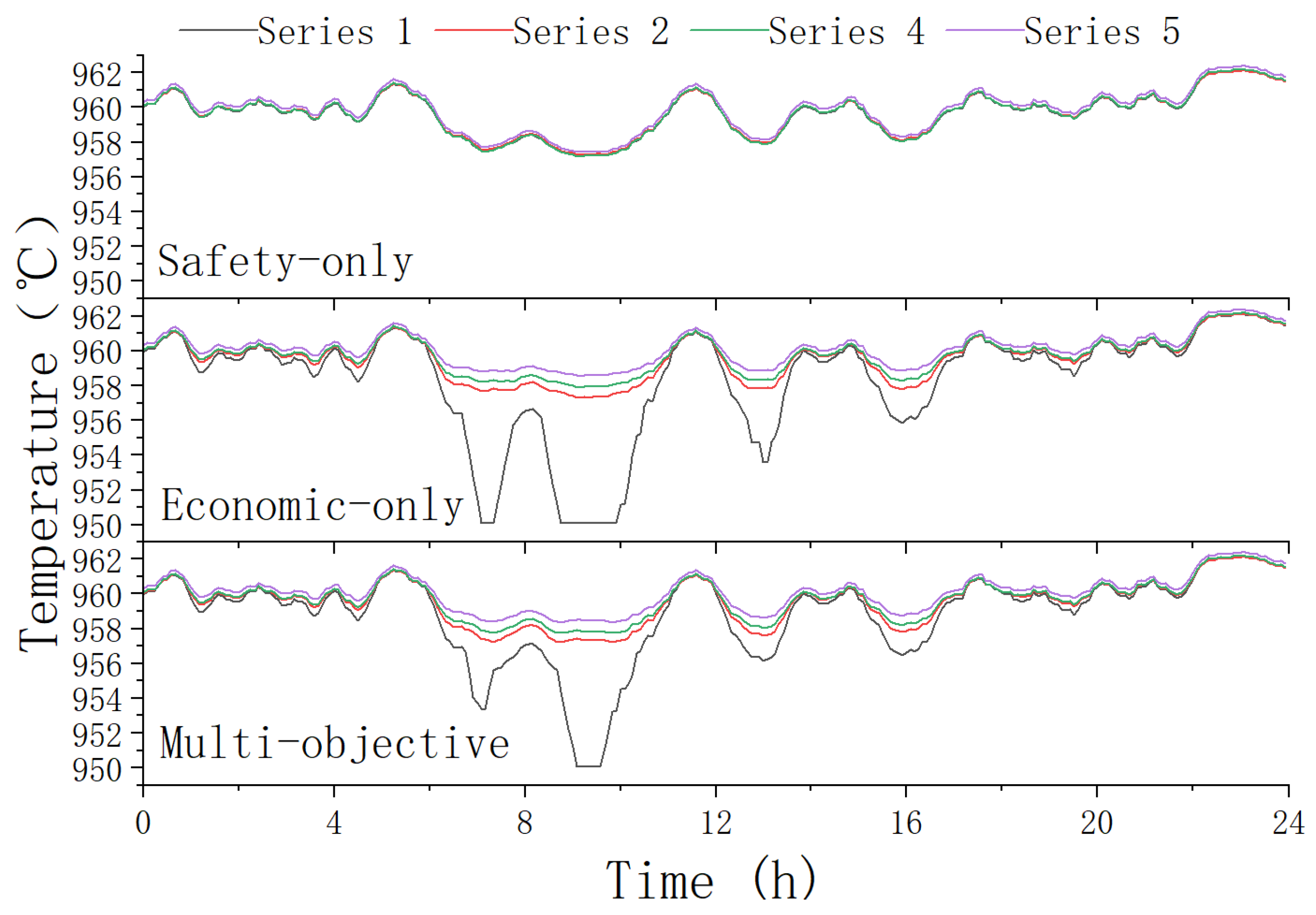
To analyze the internal behavior of the electrolytic aluminum load participating in multi-time scale regulation under different objectives, three optimization models with distinct emphases were established and compared: the proposed multi-objective model, a single-objective model considering only production loss cost, and a single-objective model considering only production safety. The optimization results are shown in Figure 10 and Figure 11.
Figure 10.
Current variation curves of the electrolytic cell series under different objectives.
Figure 11.
Temperature variation curves of the electrolytic cell series under different objectives.
It can be observed that when optimization is driven solely by production safety, the temperature deviation of each electrolytic cell series remains relatively small. During load reduction periods, all series operate in a production reduction state. In contrast, when prioritizing economic efficiency, Series 5 occasionally reduces its load to a heat preservation stage at specific times to minimize production loss in other series. This leads to significant temperature fluctuations for Series 5, albeit within allowable limits. The proposed multi-objective model comprehensively balances both safety and economic aspects of operation. It not only reduces production loss but also mitigates the safety risks associated with excessive temperature fluctuations.
6. Conclusions
This paper presents a comprehensive analysis of the adjustable characteristics of electrolytic aluminum loads and establishes a multi-time scale optimal scheduling model. The impacts of electrolytic aluminum load participation in different time-scale regulation are analyzed, yielding the following conclusions:
- (1)
- The integration of aluminum electrolysis loads into day-ahead, intra-day, and real-time optimal scheduling enhances the flexibility of the power system, facilitates the consumption of renewable energy, and reduces the total operating costs.
- (2)
- The developed multi-objective regulation model for aluminum electrolysis effectively balances the trade-off between economic cost and production safety, thereby ensuring the economical and secure operation of the loads.
While this study provides a viable scheduling framework, it acknowledges certain limitations that point to directions for future work. The proposed model relies on several simplifying assumptions, particularly regarding the linearization of regulation costs and load response dynamics, which may not fully capture the nonlinear complexities in practical industrial settings. Furthermore, the case study is based on a specific park configuration; thus, the generalizability of the strategies to industrial parks with significantly different energy mixes, market structures, or grid interconnection requirements warrants further validation. Future research will concentrate on the interaction mechanisms between aluminum electrolysis loads and other distributed energy resources within the park, such as photovoltaic systems and energy storage units. Additionally, integrating the substantial waste heat generated from the electrolysis process with park-level thermal systems or energy storage infrastructure represents a critical direction. Developing an integrated electric–thermal–hydrogen multi-energy coupling and coordination framework, incorporating waste heat recovery and multi-energy flow optimization, is a promising path to enhance overall energy utilization efficiency and operational resilience of industrial parks. Investigating data-driven approaches for uncertainty management and adaptive control also remains a critical area for improving the practical applicability of the proposed framework.
Author Contributions
Conceptualization, C.X.; methodology, C.X.; software, C.X.; validation, Y.W.; formal analysis, X.L.; investigation, X.L.; data curation, H.Z.; writing—original draft preparation, H.Z.; writing—review and editing, Z.O.; visualization, Z.O.; Supervision, Y.W. All authors have read and agreed to the published version of the manuscript.
Funding
This research was funded by Hubei Provincial Natural Science Foundation Joint Fund Project, grant number 2022CFD167.
Data Availability Statement
The data supporting the findings of this study are available from the corresponding author, Chiyin Xiao, upon reasonable request.
Conflicts of Interest
The authors declare no conflicts of interest.
References
- Chen, G.; Yang, X.; Jiang, H.; Cui, Y.; Zhang, Y.; Hao, S.; Zhang, Y. Demand response regulation strategy for power grid accessed with high proportion of renewable energy considering industrial load characteristics. Electr. Power Autom. Equip. 2023, 43, 177–184. [Google Scholar] [CrossRef]
- International Energy Agency (IEA). Global Energy Review 2025; International Energy Agency: Paris, France, 2025. [Google Scholar]
- Hu, W.; Zhang, H.; Dong, Y.; Wang, Y.; Dong, L.; Xiao, M. Short-term optimal operation of hydro-wind-solar hybrid system with improved generative adversarial networks. Appl. Energy 2019, 250, 389–403. [Google Scholar]
- Zheng, D.; Yan, X.; Tong, D.; Davis, S.J.; Caldeira, K.; Lin, Y.; Guo, Y.; Li, J.; Wang, P.; Ping, L.; et al. Strategies for climate-resilient global wind and solar power systems. Nature 2025, 643, 1263–1270. [Google Scholar] [CrossRef] [Scilit] [PubMed]
- Jing, L.; Wei, E.; Wang, L.; Li, J.; Zhang, Q. A Multi-Type Dynamic Response Control Strategy for Energy Consumption. Energies 2024, 17, 3092. [Google Scholar] [CrossRef] [Scilit]
- Wu, L.; Huo, Q.; Liu, Q.; Yin, J.; Yang, J. Multi-Time-Scale Optimization and Control Method for High-Penetration Photovoltaic Electrolytic Aluminum Plants. Energies 2025, 18, 5840. [Google Scholar] [CrossRef] [Scilit]
- Wang, Y.; Xie, H.; Zhu, H. Source-load coordinated optimal planning method of electrolytic aluminum industrial park. Electr. Power Autom. Equip. 2024, 44, 132–140. [Google Scholar] [CrossRef]
- Yang, Z.; Chen, L.; Hao, L.; Xu, F.; Min, Y. Industrial Load Peak Regulation and its Secondary Frequency Regulation Capacity Assessment Considering Intra-Production Segment Characteristics. Power Syst. Technol. 2025, 49, 3613–3622. [Google Scholar] [CrossRef]
- Jiang, Y.; Wang, Z.; Bian, S.; Liao, S.; Lu, H. Source-Load Collaborative Optimization Method Considering Core Production Constraints of Electrolytic Aluminum Load. Energies 2024, 17, 6396. [Google Scholar] [CrossRef] [Scilit]
- Yang, Y.; Li, S.; Zhang, N.; Yan, Z.; Liu, W.; Wang, S. Two-Level Optimal Scheduling of Electric–Aluminum–Carbon Energy System Considering Operational Safety of Electrolytic Aluminum Plants. Energies 2025, 18, 1645. [Google Scholar] [CrossRef] [Scilit]
- Si, D.; Sun, Z.; Xu, Y. Load Modeling of Electrolytic Aluminum Considering Distributed Impedance and Constant Current Control. J. North China Electr. Power Univ. 2023, 50, 35–43. [Google Scholar]
- Zhang, M.; Liao, S.; Xu, J.; Li, L.; Chen, Y.; Zhu, X. System static voltage stability analysis considering load characteristics of electrolytic aluminum. Energy Rep. 2022, 8, 1112–1121. [Google Scholar] [CrossRef] [Scilit]
- Liao, S.; Bian, S.; Xu, J.; Ke, D.; Sun, Z. Evaluation of Grid-load Interactive Adjustable Capacity of Electrolytic Aluminum Load Considering Optimization of Electrolytic Cell Energy Flow. Proc. CSEE 2025, 45, 2110–2121. [Google Scholar] [CrossRef]
- Xu, J.; Liao, S.; Sun, Y.; Ma, X.; Gao, W.; Li, X.; Gu, J.; Dong, J.; Zhou, M. An isolated industrial power system driven by wind-coal power for aluminum productions: A case study of frequency control. IEEE Trans. Power Syst. 2015, 30, 471–483. [Google Scholar] [CrossRef] [Scilit]
- Liu, X. Optimization scheduling strategy of high energy-consumption industrial park participation in green certificate trading and carbon emission trading. Int. J. Electr. Power Energy Syst. 2025, 172, 111169. [Google Scholar] [CrossRef] [Scilit]
- Zeng, Y.; Chen, Z.; Huang, Y.; Chen, C. Coordinated optimization of IES in electrolytic aluminum industrial park considering hybrid CSP-CCHP system, demand response, and CCER-carbon trading. Int. J. Electr. Power Energy Syst. 2025, 171, 110943. [Google Scholar] [CrossRef] [Scilit]
- Caminiti, C.M.; Spiller, M.; Dimovski, A.; Barbieri, J.; Ragaini, E.; Merlo, M. Integrated adequacy and stability BESS sizing criteria for hybrid diesel–PV microgrids in developing countries. Sustain. Energy Technol. Assess. 2025, 83, 104541. [Google Scholar] [CrossRef] [Scilit]
- Liu, X.; Wang, H. Deep peak shaving method of electrolytic aluminum load cooperating with thermal power and energy storage system based on Wasserstein distance distribution robust. Therm. Power Gener. 2024, 53, 152–162. [Google Scholar] [CrossRef]
- Zhang, B.; Si, D.; Li, F.; He, J.; Shan, W.; Niu, T. Research on peak shaving of wind power grid connection considering demand side response of electrolytic aluminum load. Adv. Technol. Electr. Eng. Energy 2023, 42, 31–38. [Google Scholar]
- Yue, X.; Liao, S.; Fu, L.; Xu, J.; Ke, D.; Wang, H.; Li, L.; He, X. Hierarchical Optimization Strategy of High-penetration Wind Power System Considering Electrolytic Aluminum Energy-intensive Load Regulation and Deep Peak Shaving of Thermal Power. Power Syst. Technol. 2024, 48, 3186–3196. [Google Scholar] [CrossRef]
- Ding, X.; Xu, J.; Sun, Y.; Liao, S. Source-load coordinated control strategy for smoothing wind power fluctuation in grid-connected high energy consuming electrolytic aluminum industrial power grid. Electr. Power Autom. Equip. 2022, 42, 47–55. [Google Scholar] [CrossRef]
- Sun, J.; Hua, D.; Song, X.; Liao, M.; Li, Z.; Jing, S. Multi-source coordinated low-carbon optimal dispatching for interconnected power systems considering carbon capture. Energy Inform. 2024, 7, 61. [Google Scholar] [CrossRef] [Scilit]
- Ding, X.; Zhang, S. A Coordinated Emergency Frequency Control Strategy Based on Output Regulation Approach for an Isolated Industrial Microgrid. Energies 2024, 17, 5217. [Google Scholar] [CrossRef] [Scilit]
- Xu, J.; Liao, S.; Sun, Y. Modeling and Control of Industrial Load for Power Grid Supporting; China Science Publishing & Media Ltd.: Beijing, China, 2022. [Google Scholar]
- Thonstad, J. Aluminium Electrolysis: Fundamentals of the Hall-Héroult Process; Aluminium-Verlag: Düsseldorf, Germany, 2001. [Google Scholar]
- Liu, Y.; Li, J. Modern Aluminum Electrolysis; Metallurgical Industry Press: Beijing, China, 2008. [Google Scholar]
- Hille, S.C.; Theewis, E.S. Explicit expressions and computational methods for the Fortet–Mourier distance of positive measures to finite weighted sums of Dirac measures. J. Approx. Theory 2023, 294, 105947. [Google Scholar] [CrossRef] [Scilit]
- Liu, Z.; Xe, J.; Liu, Y.; Gong, F.; Chen, S.; Wang, J. Series on Power Demand-Side Flexibility: Overview of Flexibility Potential in the Aluminum Electrolysis Industry; Rocky Mountain Institute: Basalt, CO, USA, 2023; Available online: https://rmi.org.cn/insights/industrial-dsf/ (accessed on 28 December 2025).

Disclaimer/Publisher’s Note: The statements, opinions and data contained in all publications are solely those of the individual author(s) and contributor(s) and not of MDPI and/or the editor(s). MDPI and/or the editor(s) disclaim responsibility for any injury to people or property resulting from any ideas, methods, instructions or products referred to in the content. |
© 2026 by the authors. Licensee MDPI, Basel, Switzerland. This article is an open access article distributed under the terms and conditions of the Creative Commons Attribution (CC BY) license.