


Abstract
The global transition toward electrification has accelerated the need for high-performance, sustainable electric machine designs. Emerging manufacturing techniques, particularly additive manufacturing, have enabled the development of complex and unconventional machine topologies. Designing novel machine topologies often relies on data-driven methods and topology optimization, which can be computationally intensive. Semi-analytic modeling offers an effective middle ground by balancing computational efficiency with modeling accuracy—positioned between fully analytical formulations and resource-intensive numerical simulations. While its advantages are recognized, the current literature lacks a unified overview of semi-analytic approaches applied across coupled multiphysics domains, including electromagnetic, thermal, and structural analyses. This paper addresses that gap by presenting a comprehensive review of recent semi-analytic modeling techniques relevant to electric machine design. The goal is to establish a foundational reference for researchers aiming to incorporate these models into advanced topology optimization frameworks.
1. Introduction
The increasing demand for high-efficiency electric machines, driven by global efforts to mitigate climate change and address the finite availability of natural resources, has accelerated the development of innovative machine topologies. Many governments have enacted policies that support green initiatives, focusing on material-efficient designs to reduce the reliance on rare-earth elements, the extraction of which causes significant environmental damage [1]. This shift requires more lightweight and efficient machines to satisfy demands.
Realization of new topologies is essential to achieve these objectives. Topological optimization offers a pathway to identify novel, yet complex, power-dense electrical machine designs. Recent advances in manufacturing technologies, such as additive manufacturing, can enable design realizations that are otherwise impractical using conventional processes. The integration of advanced materials through next-generation production methods has demonstrated significant improvements in machine performance [2].
A comprehensive understanding of the underlying multiphysics, including structural, thermal, and electromagnetic behavior, is required [3]. An effective evaluation technique is essential to achieve true topology optimization, thereby enabling free-form design. The evaluation technique should provide an accurate representation of the machine’s behavior under real operating conditions. It is necessary to balance the model accuracy and its computational efficiency.
Analytical approaches, such as magnetic equivalent circuit (MEC) methods, are computationally efficient but often lack the accuracy and flexibility required for design exploration. In contrast, traditional numerical methods, such as finite element analysis (FEA), provide high accuracy but are computationally expensive, making them less practical for iterative optimization. Semi-analytical models, also called subdomain models, have emerged as a promising alternative, and can bridge these two approaches by achieving a favorable balance of accuracy and efficiency while remaining well-suited for topology optimization [4]. Nonetheless, semi-analytical methods require continued advancement to meet their full performance potential.
Subdomain models of complex systems with many degrees of freedom have been applied in multiple fields. The wide range of multiphysics systems modeled demonstrates their versatility. In mechanical and biomedical engineering, this approach describes fluid–structure interactions and biological growth. These applications highlight that subdomain models can capture interactions across interfaces with distinct material properties while simultaneously accounting for dynamic changes. Domain decomposition has been shown to enable large-scale electromagnetic modeling through staggered grids and second-order finite difference and to accommodate spatially varying conductivity and permeability [5]. The efficiency and scalability of subdomain models for 2-D and 3-D problems were demonstrated for sparse systems in [6]. Although still emerging in electric machine design, there is high potential for the adoption of subdomain models to enable the identification of novel topologies.
The early methodological development of subdomain models for electrical machines underscored their robustness and potential advantage over numerical methods [4]. The evolution of subdomain models across different electrical machine configurations is discussed. However, recent technological advances extend the approach through finite-difference and Fourier-based formulations, nonlinear material integration, techniques to overcome topological limitations, and multiphysics optimization.
The objective of this article is to consolidate semi-analytical methods from the literature. To facilitate a structured discussion and review of subdomain modeling, the paper is organized as follows. Section 2 examines domain decomposition strategies required by semi-analytical methods and their practical implementations. Section 3 then addresses the assignment and physical definition of domains. After establishing the analytical behavior within domains, Section 4 discusses the numerical techniques used to solve the governing physics. Considerations for incorporating three-dimensional effects are presented in Section 5. Since convergence challenges often arise in subdomain models, Section 6 explores mitigation strategies and requirements for optimal performance. For optimization tasks, multiphysics coupling is essential; therefore, Section 7 reviews available coupling approaches. Section 8 summarizes future directions and highlights areas for improvement in subdomain modeling.
2. Partitioning
Electric machines are multi-physical systems composed of many components—such as the stator, rotor, air gap, windings, and permanent magnets—each characterized by distinct material properties, as shown in the example of Figure 1.
Figure 1.
A two-dimensional representation of an electric machine highlighting its components. Adapted from [7].
Domain decomposition techniques are applied to the regions of the electric machine that are directly involved in energy conversion. Auxiliary elements such as the housing, bearings, and cooling systems are generally excluded.
The overall machine size plays a key role in determining the appropriate number of modeling domains. Large machines generally reach diameters close to one meter [8]. Current density is a critical sizing factor since higher currents impose constraints on conductor dimensions, slot geometry, and heat dissipation mechanisms. In large machines, slotting effects are diminished since localized phenomena such as torque ripple are less influential relative to the overall electromagnetic behavior. The substantial inertia of these machines effectively attenuates disturbances. For smaller machines, the influence of slotting on the field distribution becomes substantially more pronounced. Thus, large machines can typically be approximated by lumped, globally defined domains that vary material properties primarily in a single direction, as shown in Figure 2. Conversely, smaller machines necessitate localized domain partitioning to accurately represent the resulting field behavior.
Figure 2.
Global and localized partitioning of subdomains. In the global model on the left, the dashed red lines correspond to the air gap region. In the local model on the right, the solid red line denotes the center of the air gap region.
The partitioning process emphasizes the use of simple and separable regions. The division of domains is governed by the machine’s geometric features and the uniformity of its material properties. Regions with similar material properties can be grouped naturally into common subdomains, as they exhibit comparable field behavior. Such grouping is typically guided by the interfaces that arise at discontinuities in material properties, which define the physical boundaries of each subdomain. The subdomain count is largely dictated by geometric considerations, with the partitioned regions structured to align with the machine’s overarching form.
3. Analytical Modeling
Analytical expressions are derived from the governing physical phenomena under consideration. The appropriate field expressions are defined within the boundaries of each subdomain.
3.1. Electromagnetic Modeling
Electromagnetic modeling is fundamentally based on the magnetic potential formulation. The magnetic potential provides a convenient representation of Maxwell’s equations and serves as the foundation for many analytical formulations. The potential form of these equations, as a function of space and time, is given in Equation (1) [9]. B and E represent the magnetic flux density and electric field strength, respectively.
The magnetic potential may be formulated either as a magnetic scalar potential or as a magnetic vector potential , depending on the characteristics of the field and the chosen modeling approach.
The magnetic scalar potential, given in Equation (2), offers a relatively straightforward formulation, which contributes to its ease of use. Here, H is the magnetic field intensity. These formulations are useful for modeling multidirectional flux paths, intricate design features, or 3D machine configurations [10]. However, the application of the magnetic scalar potential is limited to subdomains without current sources, meaning regions containing windings cannot be represented using this approach. Although empirical inclusion of current sheets can partially compensate for this constraint, accurately coupling the scalar potential with current-carrying vector potentials remains a significant challenge.
The magnetic vector potential formulation is generally the most comprehensive approach for electromagnetic evaluation. It provides a more accurate representation of electromagnetic behavior and inherently accounts for current densities and source distributions without requiring empirical adjustments. One such formulation is shown in Equation (3), [11].
is the magnetization vector; is the current density; is permeability of free space; and r represents the radius. Consequently, the magnetic vector potential is well suited for modeling the detailed electromagnetic phenomena present in electrical machines. Furthermore, applying Gauss’s law within this framework enables direct computation of key electromagnetic performance indices.
3.2. Structural Modeling
The structural behavior of an electric machine is governed by constitutive and kinematic relationships. These equations capture the stress–strain response of solid materials under mechanical loading. The radial and circumferential forces, and , generated from the mechanical loading due to the centripetal force can be expressed as Equation (4).
Here, , , and are the mechanical angular velocity, material density, and rotor angular acceleration, respectively.
Young’s modulus, Poisson’s ratio, and material density are key parameters in the structural modeling of electric machines, as they define how machine components respond to mechanical stresses and vibrations. Young’s modulus, E, quantifies the stiffness of a material, governing its deformation response under electromagnetic or mechanical loading. Poisson’s ratio, , characterizes the coupling between axial and lateral strains, playing a critical role in evaluating stress distributions at interfaces between dissimilar materials. The governing differential equations for the radial and circumferential stresses are given in Equation (5) [12].
Here, , , and are the radial, circumferential, and shear stress, respectively. As shown in Equation (6), the stress components are functions of the radial, circumferential, and shear strain, , , and , respectively.
The components of strain are described in Equation (7), where and are the radial and circumferential components of displacement.
The forces exerted on the stator and rotor can also arise from electromagnetic interactions. As described in Equation (8), the force components ( and ) can be derived by integrating the Maxwell stress tensor over the surface of the volume on which the force acts [13].
Here, is the unit vector normal to the surface of integration.
Electromagnetic force ripples induce mechanical oscillations that result in vibrations. The harmonic components of these forces excite specific vibration modes within the machine structure. The vibration modes generate radial and circumferential magnetic pressure, and , respectively, at a given instant, in the middle of the air gap, defined by Equation (9). The magnetic pressure can align with the natural frequencies of the structure, leading to resonance which amplifies vibration levels and contributes to increased acoustic noise and harshness.
3.3. Thermal Modeling
Thermal temperature distributions are fundamentally dependent on the underlying heat-flux fields. Thermal evaluations are governed by heat transfer theory, which describes the flow of thermal energy arising from temperature gradients between the regions. The corresponding thermal behavior can be expressed through the heat flux relation in Equation (10) [14].
Here, T represents the temperature and k denotes thermal conductivity. The thermal conductivity characterizes the conductive and convective heat transfer behavior of the material in the subdomains. The temperature rise, due to winding losses, can be described by a general partial differential equation in the form of the Laplace equation, as shown in Equation (11), corresponding to the temperature.
The nonhomogeneous regions containing heat sources are governed by the Poisson equation, expressed in Equation (12) where denotes the volumetric power loss generated in the windings. Heat can be generated from copper losses, core losses, and eddy currents which directly influence temperature rise, making precise modeling critical. Effective heat transfer is equally important as components such as windings, permanent magnets, and cores are highly sensitive to thermal degradation. Poor thermal conductivity can create hot spots, accelerate insulation aging, and reduce efficiency, whereas high-conductivity materials promote uniform temperature distribution and enhance cooling.
Heat transfer in electrical machines occurs through conduction, convection, and radiation. However, current subdomain modeling approaches typically account only for conduction and convection, with radiative effects generally neglected due to their comparatively minor contribution and added modeling difficulty.
4. Numerical Methods
Accurate evaluation of analytical field expressions across different domains relies on selecting and applying appropriate numerical methods. In practice, this can be achieved through methods such as the Finite Difference Method (FDM) or Fourier-based approaches as shown in Figure 3. Fourier-based approaches can be implemented using the eigenvalue method or the separation of variables method.
Figure 3.
Current available numerical methods for subdomain modeling.
4.1. Finite Difference Method
FDM is a numerical technique that approximates solutions to partial differential equations (PDEs). In FDM, the computational domain is discretized into a spatial mesh composed of nodes as illustrated by Figure 4. A minimum of four nodes is required for modeling a single domain, with each node storing local material properties and spatial coordinates. FDM offers significant advantages due to its versatility in handling irregular boundary conditions, complex geometries, and spatially varying material properties [15]. However, its application is most effective when the machine geometry is known a priori, and it generally requires higher computational effort compared to Fourier-based models.
Figure 4.
Internal mesh point for a particular domain. The red dashed lines indicate the subdomain boundaries, the circles represent the nodes, and the blue lines show the connections between the nodes. Adapted from [16].
FDM can be implemented using three main approaches: the forward, backward, and central-difference techniques. The forward-difference method approximates a spatial derivative at a point using the difference between that point and the next point. The backward-difference method approximates a spatial derivative by subtracting the previous point from the original point. The central-difference method approximates a spatial derivative by averaging the forward and backward differences at the initial point. This property makes the central difference method a reliable choice for approximating derivatives in the numerical solution of differential equations [17].
The implementation of FDM depends on key factors such as node density, grid resolution, and computational efficiency. Fine grids are typically employed to accurately capture machine features, resulting in increased node density. The total number of nodes dictates the resolution and setup of the model. Node spacing is selected to achieve an optimal balance between computational cost and solution accuracy. Control nodes may be introduced to enable coupling between different physical fields [12].
FDM has emerged as a valuable tool for multiphysics evaluations, particularly in electromagnetic, thermal, and structural analyses. Prior studies demonstrate that higher accuracy is consistently observed for thermal and structural quantities ranging from 85–97%, while its performance in electromagnetic evaluations is comparatively lower, with reported values beginning around 70% as shown in Table 1. Although FDM offers the accuracy benefits, its computational efficiency remains limited, as reductions in execution time relative to FEA generally fall within a modest 20–33% range.
Table 1.
Average Performance Ranges of Finite Difference Methods Compared with Finite Element Analysis.
The method has been applied to a broad set of electromagnetic performance metrics which include magnetic flux density, magnetic flux linkage, back emf, inductance, torque, and cogging torque, illustrating its wide range of applicability as shown in Table 2. Despite its versatility, the method has been limited in its application to Permanent Magnet machines and Synchronous Reluctance Machines, with adoption still lacking in Magnetically Geared Machines, Linear Permanent Magnet Machines, Axial Flux Machines and Induction Machines. Overall, Table 1 and Table 2 indicate that while FDM provides substantial accuracy across several physical domains, further work is needed to expand its usage across the full spectrum of electrical machine topologies.
Table 2.
References for Application of Finite Difference-Based Techniques for Permanent Magnet (PM) machines and Synchronous Reluctance Machines (SynRM).
4.2. Fourier-Based Methods
Fourier-based approaches can be employed to evaluate the analytically defined subdomains. These implementations utilize eigenvalue techniques and separation of variables formulations, the latter being the most commonly used in the field. Eigenvalue methods are matrix-oriented; hence, they are closely associated with matrix-based linear approaches. Separation of variable methods rely on singular functions and are strongly dependent on weighted scalar methods.
Eigenvalue-based methods represent the spatial domain through eigenfunction expansions, enabling matrix formulations that capture geometric and material properties [20]. The formulated matrix system has coefficients that correspond to eigenvectors. Eigenmodes characterize local solution structures, while eigenvalues—the real roots of the characteristic equation—are determined by the spatial configuration and material properties. A simplified form of this relationship is expressed in Equation (13).
Here, denotes the linear matrix transformation of the spatial domain; represents the eigenvalue or scaling factors; and are the eigenvectors. The matrix system is constructed based on interface conditions. Implementing this technique typically requires iterative computation and supports both odd and even parity solutions when harmonics are considered.
Eigenvalue-based approaches provide computational efficiency for certain applications, but their reliance on prior geometric knowledge and sensitivity to variations limits consistent performance. The method’s advantage lies in its ability to truncate solutions, thereby reducing computational time through its linear formulation. This approach is particularly effective when modeling subdomains with constant material properties.
The incorporation of material properties has broadened the use of eigenvalue-based methods, as summarized in Table 3. The method’s advantages have enabled applications across PM, MGM, LPM, AFM, and IM machines, particularly for electromagnetic evaluations such as flux linkage, flux density, back-EMF, inductance, torque, cogging torque, and thermal losses. However, its use in structural analysis remains limited.
Table 3.
References for Application of Eigenvalue-Based Techniques PM machines, MGM, LPM, AFM and IM.
Reported computation times vary widely from 5% to 95% depending on the specific application, while accuracy generally remains high at 90–98% as seen in Table 4. Consequently, although the method can be highly efficient, its performance is not consistently reliable across all machine designs.
Table 4.
Average Performance Ranges of Eigenvalue-Based Technique Compared with Finite Element Analysis.
The separation of variables technique is widely employed to reduce multi-dimensional PDEs into simpler ordinary differential equations (ODEs) that depend on a single variable [49]. This technique enables the field to vary along a singular direction, as illustrated in Figure 5.
Figure 5.
Representation of nonhomogeneous regions in cylindrical subdomains. Adapted from [49].
Weighted coefficients are introduced to incorporate geometric and material property information into the formulation. By decoupling interfaces or boundaries between subdomains along one direction, the spatial domain becomes significantly easier to model. Furthermore, the superposition principle is applied to capture the overall behavior within a single subdomain. For instance, the magnetic vector potential change in the domain in Figure 5 can be represented by Equation (14), where and are the decoupled magnetic vector potential changes in the radial and circumferential directions, respectively.
Separation of variables provides notable computational advantages when applied to globally partitioned machine models. Existing studies show that SoV methods have been successfully implemented for evaluating magnetic flux density in electromagnetic analyses, as well as for thermal loss estimation and NVH assessments in globally partitioned configurations. Despite these capabilities, Table 5 illustrates how current applications remain limited to SynRM and PM machines.
Table 5.
References for Application of Fourier-Based Lumped Models for PM machines and SynRM.
As summarized in Table 6, separation of variables lumped models often have high accuracy ranging from 85 to 95% in comparison to FEA. Moreover, these models maintain excellent computational performance, with minimum observed reductions in simulation time reaching 80%, demonstrating that improved accuracy does not come at the expense of efficiency. Nevertheless, the inherent assumptions embedded in the lumped formulations restrict the extendibility of SoV approaches to other machine topologies.
Table 6.
Average Performance Ranges of Fourier-Based Lumped Models Compared with Finite Element Analysis.
The localized SoV approach is the most widely adopted method for subdomain-based electromagnetic, thermal, and structural analyses. In electromagnetic studies, its applications encompass evaluations of magnetic flux linkage, magnetic flux density, back electromotive force, inductance, torque, and cogging torque. Suitability is demonstrated across a broad range of machine types including PM, SynRM, MGM, LPM, AFM, and IM, shown in Table 7. Thermal loss predictions have only been reported for permanent magnet and induction machines; nonetheless, the method still covers a wider set of machine classes than alternative modeling techniques, highlighting its versatility. In structural analysis, localized SoV methods have been applied primarily to NVH assessments, while evaluations of stress and displacement remain scarce due to the inherent challenges of representing such quantities accurately using Fourier-based formulations. The localized SoV approach demonstrates strong adaptability across multiple physics domains, though specific structural analyses continue to present modeling limitations.
Table 7.
References for Application of Separation of Variables Techniques for PM machines, SynRM, MGM, LPM, AFM, and IM.
Locally partitioned SoV models provide substantial computational benefits. These methods achieve up to an 80% reduction in computation time while maintaining accuracies above 90%, as shown in Table 8. Their efficiency results from relying on a small set of solution coefficients. However, because the approach is Fourier-based, it remains vulnerable to numerical artifacts that can affect convergence and accuracy.
Table 8.
Average Performance Ranges of Separation of Variables Compared with Finite Element Analysis.
5. Techniques for Including 3D Effects
Recent efforts have focused on extending subdomain modeling to three-dimensional (3D) analyses, driven by its inherent advantages of fast computation and reduced resource requirements. Various approaches have been proposed to capture the 3D effects in electric machines while preserving the accuracy of their physical behavior. Despite these advancements, full 3D modeling remains computationally intensive and complex, particularly when accounting for end-winding effects.
Axial stacking techniques have been introduced as a cost-effective approach for extending subdomain models to three dimensions. In this method, two-dimensional slices are extracted and superimposed to reconstruct the full 3D section of an electric machine [45]. Each slice is treated as an individual subdomain, and the stacked layers are subsequently combined to ensure inter-slice field continuity, particularly along the axial direction. This approach effectively captures end effects in a computationally efficient manner while maintaining the fidelity of the machine’s electromagnetic behavior.
In certain machine structures, the magnetic field component normal to the two-dimensional coordinate system is sufficiently small and may be neglected. For these cases, quasi-3D representations, often referred to as 2.5D models, are employed as an alternative to full 3D modeling [82]. For example, the 2.5D analytical framework proposed in [83] represents radial-flux machines as distributed slices, incorporating skewing effects through axial magnet displacement. Magneto-motive force harmonics and currents are analyzed within each slice, and the overall magnetic field is obtained by superimposing the contributions from all slices. This approach preserves the analytical structure of the machine while including key 3D flux paths in the superposition, enabling accurate prediction of slot-induced force ripple in skewed actuators. Consequently, the method offers a practical compromise between computational efficiency and modeling accuracy.
Three-dimensional effects can be incorporated into subdomain models by introducing correction factors derived from analytical formulations or FEA [29,84,85]. These empirically determined factors are applied to the two-dimensional subdomain representation to more accurately capture the machine’s true 3D behavior [86]. This can be achieved by directly incorporating them into field expressions or equations to compensate for discrepancies between 2D predictions and the actual 3D field response. In particular, phenomena such as flux leakage and fringing fields, typically underrepresented in purely 2D formulations, can be addressed through these corrections. Because this approach relies on prior characterization of the machine, either analytically or numerically, the correction factors serve as an interface between detailed 3D evaluations and simplified subdomain models.
When 3D features such as end windings and complex reluctance paths cannot be modeled directly, subdomain formulations can be coupled with complementary numerical techniques, such as reluctance networks. Lumped permeance models and equivalent electrical elements can be integrated into the subdomain framework to approximate 3D magnetic paths [18]. These permeance networks are connected through subdomain interfaces to ensure continuity and accurate coupling [87]. As a result, evaluation of key parameters—including magnetic flux distribution, leakage effects, and axial saturation—is significantly improved, enhancing the overall fidelity of the model while maintaining computational efficiency.
Geometric transformations and mapping techniques can be employed to better represent physical phenomena in analytical models. These methods simplify complex geometries by unrolling them or transferring them to more convenient coordinate planes [10,28,88,89,90,91,92,93]. Alternatively, simplified linearization around an average radius can be applied which reduces computational effort [94,95], though at the expense of neglecting curvature effects. However, in certain cases, particularly for full 3D models, such simplifications are insufficient [96]. To address this, conformal mapping, particularly Schwarz-Christoffel mapping, can be applied to reduce the complexity of interface handling while preserving essential physical characteristics [97,98,99]. These techniques enhance stacked or slice-based modeling by maintaining quantities such as losses and torque [98], though they introduce additional complexity through extra coefficients [100,101,102]. Consequently, the accuracy of these methods strongly depends on the assumptions underlying the mapping process.
Modal expansion of axial harmonics is another technique employed to capture three-dimensional effects in analytical models. In this approach, radial and axial modes are combined to represent the entire machine using a combination of magnetic vector and scalar potentials [103,104]. The analytical formulation incorporates attenuation terms to account for end effects, ensuring accurate representation of field variations along the stack length. This method provides a structured way to model axial dependencies while preserving the efficiency of subdomain-based analysis.
6. Convergence Challenges
Slotting in electric machines inherently introduces convergence challenges due to sharp variations in material properties. These discontinuities make slotting effects difficult to capture accurately within analytical models. The abrupt changes in material characteristics often lead to continuity issues at the interfaces between different regions, complicating the formulation and solution of the governing equations [3]. One such example is shown in Figure 6 where eccentricity is modeled [13,105,106].
Figure 6.
Eccentricity modeling for slotted SPM machine. The stator is represented by the solid gray region, while the striped area corresponds to the rotor back iron. The red and blue regions indicate the poles of the permanent magnets. Adapted from [106].
Accurate representation of material discontinuities is critical in analytical models, since it significantly impacts field behavior. Analytical modeling often employs Fourier series to approximate these variations; however, this approach inherently introduces overshoots at material interfaces. This phenomenon, known as the Gibbs phenomenon, is a numerical artifact that occurs in regions with sharp material property changes and typically requires a large number of spatial modes for adequate resolution [9,104]. Consequently, mitigation strategies are necessary to address these spatial discontinuities without compromising accuracy or convergence [107,108,109].
Resolving the Gibbs phenomenon is critical for improving both convergence and accuracy. Increasing the number of harmonics or spatial modes can mitigate convergence issues; however, this approach significantly increases computational cost [110]. Alternative strategies include geometric scaling, which reduces distortions by reformulating the field descriptions [11]. Empirical techniques such as eigenvalue stabilization, Fast Fourier Factorization, and iterative smoothing methods have also been proposed to address discontinuities without altering the underlying solution [107,108,109,111]. In particular, iterative approaches improve continuity by smoothing transitions at material or field interfaces [112]. However, these alternative strategies increase the computational cost.
Accurate convergence depends heavily on interface placement, requiring refinement in regions with rapid field variations. Domains are typically refined in regions where rapid field variations occur, such as near slots or magnet bridges. To reduce abrupt transitions at interfaces, domains can be further subdivided and locally adapted [49]. However, although increasing the number of domains near these interfaces improves accuracy, it is achieved at the expense of higher computational cost.
Consistent field behavior across interfaces is essential to satisfy boundary conditions and minimize convergence issues [112]. This requirement implies that the physical phenomena defining adjacent subdomains must match at their shared boundaries. In practice, achieving perfect continuity can be challenging due to differences in analytical formulations between domains. Recursive techniques can be employed to enforce consistency by introducing corrective coefficients. Common approaches include Taylor series expansions and Newton–Raphson iterations, which iteratively adjust the solution to satisfy interface conditions [3,51]. However, these methods introduce additional computational overhead, necessitating a balance between improved convergence and acceptable computation time.
Nonlinear material properties significantly influence convergence, requiring accurate representation within subdomains. Iterative updates can be employed to reflect nonlinearity; for example, in electromagnetic applications, regional updates of permeability within subdomains are determined based on operating conditions. Piecewise mapping techniques can be employed to achieve this [3]. At each iteration, a new relative permeability, , is obtained by interpolating the B-H curve of the magnetic material, which is typically provided by manufacturers or derived from experimental measurements. A visual representation of this iterative process is shown in Figure 7, and the corresponding iterative scheme is illustrated in Figure 8. However, such methods increase the computation time.
Figure 7.
Iterative process to account for saturation by choosing the effective permeability a visual representation. Adapted from [3].
Figure 8.
Iterative scheme to determine the effective subdomain relative permeability in the nonlinear case. Adapted from [51].
Computational efficiency can also be achieved through material property simplifications [110]. Materials may be modeled as either linear [23,51,97,104,113,114,115,116] or nonlinear [49,51,117,118,119,120]. For further simplification, materials can be assumed to have infinite permeability [25,121], reducing boundary conditions so that only air-gap interfaces require consideration. Similarly, magnets are also often treated as linear. This assumption extends to multiphysics analyses such as structural modeling to avoid iterative schemes that increase computation time [122,123]. Such simplifications minimize boundary conditions to compute and eliminate iterative steps, enabling faster convergence however at the cost of accuracy.
Model reduction and projection-based coupling techniques can be employed to improve convergence and computational efficiency. These approaches aim to replace computationally expensive models with simplified representations that retain essential physical characteristics. Such methods are particularly useful in applications requiring repeated solutions, such as high-temperature superconducting generator modeling or NVH analysis Figure 9, where perturbation techniques are commonly applied [56,124,125,126]. By precomputing certain quantities and leveraging initial computations to define subdomains, these techniques reduce convergence errors and have facilitated fault analysis [39,64,127,128,129]. Additionally, pole-pair symmetry can be exploited when poles share identical subdomains and boundary conditions, significantly reducing computational burden. Neglecting end effects is another common simplification that improves efficiency while maintaining acceptable accuracy. Ultimately, model reduction and projection coupling exploit symmetry and precomputation to cut computational cost while preserving essential accuracy.
Figure 9.
Eccentricity modeling for slotless SPM machine. The slotless stator is represented by the solid gray region, while the striped area corresponds to the rotor back iron. The red and blue regions indicate the poles of the permanent magnets. Adapted from [13].
Time reduction can be achieved through harmonic selection strategies that prioritize harmonics critical to performance. By leveraging prior knowledge of the machine, an a priori harmonic analysis can identify which harmonics significantly influence performance indices, allowing unnecessary components to be excluded from the computation. This selective approach ensures that only relevant harmonics are retained, striking a balance between computational efficiency and accuracy in evaluating performance metrics [104,130]. As a result, overall computation time is substantially reduced without compromising model fidelity.
7. Coupling Techniques
The integration of multiphysics models enables a comprehensive representation of electric machine performance by capturing the strong coupling between electromagnetic, mechanical, and thermal phenomena. Such integration is essential for achieving optimized designs that remain robust under practical operating conditions. Effective coupling techniques are therefore required to link these individual physics domains, typically implemented through sequential one-way coupling or bidirectional coupling strategies.
Sequential coupling enables efficient multiphysics simulations by transferring data in one direction between domains. Because the data transfer occurs in only one direction, the individual physics are not solved simultaneously. This approach is effective when the feedback influence from the secondary physics is negligible [12,18,42]. Data exchange typically occurs at interfaces linking the two domains, and the transferred data represent all relevant components of the machine under the primary physics being considered. Establishing a hierarchy of physics interactions is essential to determine which domain serves as the primary driver and which domains receive the input.
Bidirectional iterative coupling ensures accurate multiphysics modeling by enforcing two-way data exchange between strongly interdependent domains [33,52,59,62,63,99,131,132,133]. Unlike sequential coupling, this approach enforces two-way data exchange through iterative updates, ensuring that changes in one domain influence and are influenced by the other. For example, ref. [19] demonstrates bidirectional coupling between electromagnetic and thermal analyses to capture mutual effects accurately. This method avoids the complexity of monolithic multiphysics systems, which can obscure parameter sensitivities during design studies [134]. Consequently, bidirectional coupling provides a practical balance between accuracy and transparency in multiphysics modeling.
8. Next-Generation Subdomain Models
The next generation of subdomain models must expand to incorporate comprehensive multiphysics analysis. Achieving this requires robust thermal modeling, as current subdomain approaches primarily address steady-state conditions and often neglect transient effects and radiation heat transfer [14,19]. Furthermore, to the authors’ knowledge, no Fourier-based analytical formulations currently exist for stress and displacement analysis within subdomain frameworks, highlighting a significant research gap. Additionally, improved coupling strategies are needed for domain optimization as existing methods have largely been limited to two-way coupling between physics domains. Future developments should focus on advanced coupling schemes and integrated multiphysics formulations to enable accurate, efficient, and holistic machine design.
The integration of machine learning (ML) into subdomain modeling has opened new possibilities for enhancing accuracy and efficiency [135]. ML can ensure structured and reliable data generation within subdomain frameworks, enabling the development of surrogate models that significantly reduce computational issues. Furthermore, ML techniques can address challenges associated with nonlinear material behavior and geometric limitations—areas where traditional analytical subdomain models often struggle. By leveraging data-driven approaches, machine learning offers a promising pathway toward more adaptive and robust multiphysics subdomain modeling.
The development of high-fidelity, optimization-ready subdomain models is essential to match the capabilities offered by numerical methods such as FEA. While most existing subdomain approaches focus primarily on electromagnetic field solutions, with recent extensions to structural and thermal domains, they are often limited to performance evaluation rather than design exploration. Future subdomain models should provide actionable insights to support design optimization, including sensitivity analysis to identify key parameters influencing machine behavior. Incorporating these capabilities would significantly enhance early-stage decision-making, enabling designers to efficiently explore design spaces and achieve robust, optimized solutions.
Current subdomain modeling approaches lack the adaptability required for advanced shape and topology optimization. New models should support optimization with clearly defined boundaries or interfaces, facilitating material assignment and improving parametric updates beyond simple geometric length variations [59,62,63,99,131,132]. Introducing these capabilities would enable multi-objective topology optimization, providing designers with greater flexibility and efficiency in exploring complex design spaces.
Despite significant progress in subdomain modeling for electric machines, certain topologies with inseparable flux paths remain difficult to represent accurately. Examples include transverse flux machines, which lack orthogonal domain separability and periodicity, and designs with interlinked phases or non-uniform air gaps [136]. Machines with inseparable flux paths often require full 3D modeling, making subdomain approaches less effective [137]. While simplifications using magnetic equivalent circuits and empirical transformations exist, they add complexity without guaranteeing accuracy.
Machines with combined flux paths or strong magnetic interactions, such as hybrid-excited claw pole and integrated starter-generators, are difficult to model using conventional harmonic or Fourier-based methods [138,139]. Analytical models for such machines are scarce, highlighting the need for further development. Integrated starter-generators and coaxial machines pose challenges due to magnetic interactions between inner and outer rotors, which are difficult to express using harmonic formulations. Advanced switched and flux-modulated machines are difficult to model using conventional methods because of their nonlinear, discontinuous, and time-varying permeance, which limits Fourier-based solutions under perturbations.
Subdomain modeling remains limited by its assumption of uniform material properties, making it inadequate for machines with anisotropic or graded magnetic materials [140]. Developing analytical models that account for property variations would be valuable, particularly for machines with graded magnets, for which analytical solutions are virtually nonexistent. Expanding subdomain modeling to address these gaps would significantly enhance its applicability.
9. Summary
This review has examined the current state of the art in subdomain modeling and identified key areas for improvement. By leveraging semi-analytical methods, it is possible to accelerate the design process, reduce computational cost, and enable multiphysics analysis in the development of advanced electrical machines. However, significant work remains for subdomain modeling to fully realize its potential. With further development, subdomain models can provide a deeper understanding of electric machines by balancing accuracy with computational efficiency, which is an essential requirement for the design and analysis of electrical machines.
Author Contributions
Conceptualization, O.M.; methodology, O.M.; software, O.M. and S.N.F.; validation, O.M. and S.N.F.; formal analysis, O.M.; investigation, O.M.; resources, O.M. and S.N.F.; writing—original draft preparation, O.M.; writing—review and editing, O.M. and S.N.F.; visualization, O.M.; supervision, S.N.F.; project administration, S.N.F.; funding acquisition, S.N.F. All authors have read and agreed to the published version of the manuscript.
Funding
This material is based upon work supported by the National Science Foundation under Grant No. 2045776.
Data Availability Statement
No new data were created or analyzed in this study.
Conflicts of Interest
The authors declare no conflicts of interest.
References
- Stockton, C.A.; McElveen, R.F.; Chastain, E. The integral role of electric motors in achieving sustainability. IEEE Trans. Ind. Appl. 2024, 60, 7949–7957. [Google Scholar] [CrossRef] [Scilit]
- Gadiyar, N.; Wang, B. Topology Optimization of Electric Machines: A Review. In Proceedings of the 2022 IEEE Energy Conversion Congress and Exposition (ECCE), Detroit, MI, USA, 9–13 October 2022; pp. 1–8. [Google Scholar]
- Sprangers, R. Towards Increased Understanding of Low-Power Induction and Synchronous Reluctance Machines. Ph.D. Thesis, Eindhoven University of Technology, Eindhoven, The Netherlands, 2015. [Google Scholar]
- Devillers, E.; Le Besnerais, J.; Lubin, T.; Hecquet, M.; Lecointe, J.P. A review of subdomain modeling techniques in electrical machines: Performances and applications. In Proceedings of the 2016 XXII International Conference on Electrical Machines (ICEM), Lausanne, Switzerland, 4–7 September 2016; pp. 86–92. [Google Scholar]
- Xiong, Z. Domain decomposition for 3D electromagnetic modeling. Earth Planets Space 1999, 51, 1013–1018. [Google Scholar] [CrossRef] [Scilit]
- Ren, Z.; Kalscheuer, T.; Greenhalgh, S.; Maurer, H. A finite-element-based domain-decomposition approach for plane wave 3D electromagnetic modeling. Geophysics 2014, 79, E255–E268. [Google Scholar] [CrossRef] [Scilit]
- Gierczynski, M.; Grzesiak, L.M. Comparative analysis of the steady-state model including non-linear flux linkage surfaces and the simplified linearized model when applied to a highly-saturated permanent magnet synchronous machine—Evaluation based on the example of the BMW i3 traction motor. Energies 2021, 14, 2343. [Google Scholar]
- Alvarenga, B.P.; Alves, R.S.; Paula, G.T.; Marra, E.G.; Chabu, I.E.; Cardoso, J.R.; Mecrow, B.C.; Smith, A.C. Anisotropic layer model theory applied to synchronous machine analysis. IET Electr. Power Appl. 2020, 14, 2873–2880. [Google Scholar] [CrossRef] [Scilit]
- Hannon, B. Fourier-Based Modeling of Permanent-Magnet Synchronous Machines Operating at High Speed. Ph.D. Thesis, Ghent University, Ghent, Belgium, 2017. [Google Scholar]
- Hannon, B.; Sergeant, P.; Dupré, L.; Pfister, P.D. Two-dimensional Fourier-based modeling of electric machines—An overview. IEEE Trans. Magn. 2019, 55, 8107217. [Google Scholar] [CrossRef] [Scilit]
- Roubache, L.; Boughrara, K.; Dubas, F.; Ibtiouen, R. New subdomain technique for electromagnetic performances calculation in radial-flux electrical machines considering finite soft-magnetic material permeability. IEEE Trans. Magn. 2018, 54, 8103315. [Google Scholar] [CrossRef]
- Liu, J.; Wang, X.; Li, X.; Yan, B.; Xiong, L.; Zhang, X. Electromagnetic and stress performance analysis for synchronous reluctance motor using a new hybrid subdomain method. IEEE Trans. Ind. Electron. 2023, 71, 8548–8559. [Google Scholar] [CrossRef] [Scilit]
- Kim, U.; Lieu, D.K. Magnetic field calculation in permanent magnet motors with rotor eccentricity: With slotting effect considered. IEEE Trans. Magn. 1998, 34, 2253–2266. [Google Scholar] [CrossRef] [Scilit]
- Boughrara, K.; Dubas, F.; Ibtiouen, R. 2-D exact analytical method for steady-state heat transfer prediction in rotating electrical machines. IEEE Trans. Magn. 2018, 54, 8104519. [Google Scholar] [CrossRef] [Scilit]
- Zhou, P.B. Numerical Analysis of Electromagnetic Fields; Springer Science & Business Media: Berlin/Heidelberg, Germany, 2012. [Google Scholar]
- Jamali-Fard, A.; Mirsalim, M. Calculation of the Air-Gap Field Distribution in Surface-Mounted Permanent-Magnet Synchronous Motors Using the Finite Difference Method. In Proceedings of the 2023 3rd International Conference on Electrical Machines and Drives (ICEMD), Tehran, Iran, 20–21 December 2023; pp. 1–9. [Google Scholar]
- Vuković, M.; Žarko, D. Finite Difference Model for the Calculation of Eddy Current Losses in Foil Windings of Distribution Transformers. In Proceedings of the 2024 International Conference on Electrical Machines (ICEM), Torino, Italy, 1–4 September 2024; pp. 1–7. [Google Scholar]
- Zhou, H.; Wang, X.; Zhao, W.; Liu, J.; Xing, Z.; Peng, Y. Rapid Prediction of Magnetic and Temperature Field Based on Hybrid Subdomain Method and Finite-Difference Method for the Interior Permanent Magnet Synchronous Motor. IEEE Trans. Transp. Electrif. 2023, 10, 6634–6651. [Google Scholar] [CrossRef] [Scilit]
- Liu, J.; Wang, X.; Zhao, W.; Xing, Z.; Zhou, H. An Enhanced Hybrid Subdomain Method towards Electromagnetic-Thermal Performance Analysis of Synchronous Reluctance Motor. IEEE Trans. Transp. Electrif. 2025, 11, 2851–2865. [Google Scholar] [CrossRef] [Scilit]
- Behnke, H.; Mertins, U.; Plum, M.; Wieners, C. Eigenvalue inclusions via domain decomposition. Proc. R. Soc. Lond. Ser. A Math. Phys. Eng. Sci. 2000, 456, 2717–2730. [Google Scholar] [CrossRef] [Scilit]
- Devillers, E.; Le Besnerais, J.; Lubin, T.; Hecquet, M.; Lecointe, J.P. An improved 2-D subdomain model of squirrel-cage induction machine including winding and slotting harmonics at steady state. IEEE Trans. Magn. 2018, 54, 8100612. [Google Scholar] [CrossRef] [Scilit]
- Du, Y.; Huang, Y.; Guo, B.; Peng, F.; Yao, Y.; Dong, J. Magnetic field prediction of U-shaped interior permanent magnet motor considering magnetic bridge saturation. IEEE Trans. Magn. 2023, 60, 8200304. [Google Scholar] [CrossRef] [Scilit]
- Sun, C.; Fang, Y.; Pfister, P.D. Comparison of two finite-permeability subdomain models for surface-mounted permanent-magnet machines. IEEE Access 2023, 11, 73470–73477. [Google Scholar] [CrossRef] [Scilit]
- Jalali, E.; Rahideh, A.; Javanmardi, M.H. Two-Dimensional Analytical Modeling for Slotless Spoke Type Permanent Magnet Synchronous Machines Considering Ferromagnetic Parts Permeability. IEEE Trans. Magn. 2024, 60, 8101110. [Google Scholar] [CrossRef] [Scilit]
- Zhang, H.; Fan, M.; Qiao, J.; He, X.; Yang, M.; Tuo, J. Analytical prediction of electromagnetic performance for surface-embedded permanent magnet in-wheel machines considering iron’s nonlinearity. Sci. Rep. 2024, 14, 26353. [Google Scholar] [CrossRef] [Scilit]
- Zhang, H.; Yang, M.; Zhang, Y.; Tuo, J.; Luo, S.; Xu, J. Analytical field model of segmented Halbach array permanent magnet machines considering iron nonlinearity. IET Electr. Power Appl. 2021, 15, 717–727. [Google Scholar] [CrossRef] [Scilit]
- Javanmardi, M.; Rahideh, A. 2-D analytical electromagnetic modeling for slotless tubular surface magnet machines considering end-effect. IEEE Trans. Energy Convers. 2023, 39, 205–213. [Google Scholar] [CrossRef] [Scilit]
- Guo, B.; Du, Y.; Djelloul-Khedda, Z.; Peng, F.; Dong, J.; Huang, Y.; Dubas, F.; Boughrara, K. Nonlinear semianalytical model for axial flux permanent-magnet machine. IEEE Trans. Ind. Electron. 2022, 69, 9804–9816. [Google Scholar] [CrossRef] [Scilit]
- Dorget, R.; Lubin, T.; Ayat, S.; Lévêque, J. 3-D Semi-analytical model of a superconducting axial flux modulation machine. IEEE Trans. Magn. 2021, 57, 9000415. [Google Scholar] [CrossRef] [Scilit]
- Shin, K.H.; Wang, B. Semi-analytical modeling for interior permanent magnet synchronous machines considering permeability of rotor core. In Proceedings of the 2020 23rd International Conference on Electrical Machines and Systems (ICEMS), Hamamatsu, Japan, 24–27 November 2020; pp. 19–22. [Google Scholar]
- Li, S.; Tong, W.; Hou, M.; Wu, S.; Tang, R. Analytical model for no-load electromagnetic performance prediction of V-shape IPM motors considering nonlinearity of magnetic bridges. IEEE Trans. Energy Convers. 2021, 37, 901–911. [Google Scholar] [CrossRef] [Scilit]
- Wang, B.; Shin, K.H.; Hidaka, Y.; Kondo, S.; Arita, H.; Ito, K. Analytical magnetic model for variable-flux interior permanent magnet synchronous motors. In Proceedings of the 2021 IEEE Energy Conversion Congress and Exposition (ECCE), Vancouver, BC, Canada, 10–14 October 2021; pp. 4142–4148. [Google Scholar]
- Liu, F.; Wang, X.; Wei, H. Fast magnetic field prediction based on hybrid subdomain method and multiobjective optimization design for interior permanent magnet synchronous machines. IEEE Trans. Energy Convers. 2023, 38, 2045–2060. [Google Scholar] [CrossRef] [Scilit]
- Xing, Z.; Wang, X.; Zhao, W.; Chen, A.; Yu, S. Fast Evaluation and Suppression of Electromagnetic Vibrations in Interior Permanent Magnet Synchronous Motors Based on Improved Subdivision Subdomain Models. IEEE Trans. Energy Convers. 2025, 40, 1600–1613. [Google Scholar] [CrossRef] [Scilit]
- Wu, P.; Sun, Y. A novel analytical model for on-load performance prediction of delta-type IPM motors based on rotor simplification. IEEE Trans. Ind. Electron. 2023, 71, 6841–6851. [Google Scholar] [CrossRef] [Scilit]
- An, Y.; Ma, C.; Zhang, N.; Guo, Y.; Degano, M.; Gerada, C.; Li, Q.; Zhou, S. Open-circuit air-gap magnetic field calculation of interior permanent magnet synchronous motor with V-shaped segmented skewed poles using hybrid analytical method. IEEE Trans. Magn. 2021, 57, 8108309. [Google Scholar] [CrossRef] [Scilit]
- Cui, Z.; Zhou, Y.; Zhang, J.; Liu, W. Modeling and analysis of dual-winding bearingless flux-switching permanent magnet motor considering magnetic saturation based on subdomain model. IEEE Trans. Energy Convers. 2021, 37, 132–144. [Google Scholar] [CrossRef] [Scilit]
- Ullah, B.; Khan, F.; Qasim, M. Subdomain modeling of linear hybrid excited flux switching machine. COMPEL- Int. J. Comput. Math. Electr. Electron. Eng. 2022, 41, 1584–1603. [Google Scholar] [CrossRef] [Scilit]
- Fang, Y.; Ji, J.; Zhao, W. Modeling of fault-tolerant flux-switching permanent-magnet machines for predicting magnetic and armature reaction fields. CES Trans. Electr. Mach. Syst. 2022, 6, 413–421. [Google Scholar] [CrossRef] [Scilit]
- Ni, Y.; Cao, B.; Chen, Q.; Huang, Y.; Wang, Q. Subdomain Model of Consequent-Pole Flux Reversal Machine With Halbach Magnets Over Tooth-Tips. IEEE Trans. Transp. Electrif. 2023, 10, 2936–2944. [Google Scholar] [CrossRef] [Scilit]
- Ni, Y.; Wang, P.; Xiao, B.; Lin, Y.; Wang, Q. Analytical Model of Consequent-Pole Flux Reversal Machine With Segmented Magnet Arrangement. IEEE Trans. Magn. 2025, 61, 8100814. [Google Scholar] [CrossRef] [Scilit]
- Liu, W.; Yang, H.; Lin, H.; Qin, L. Hybrid analytical modeling of air-gap magnetic field in asymmetric-stator-pole flux reversal permanent magnet machine considering slotting effect. IEEE Trans. Ind. Electron. 2021, 69, 1739–1749. [Google Scholar] [CrossRef] [Scilit]
- Yang, K.; Zhao, F.; Yu, J.; Zhang, C.; Wang, Y. Nonlinear analytical model of a double-stator flux reversal Halbach array permanent magnet machine. IEEE Trans. Energy Convers. 2023, 39, 493–503. [Google Scholar] [CrossRef] [Scilit]
- Zhu, X.; Zhao, M.; Wang, H.; Shen, Y.; Zhou, Y.; He, Y.; Lee, C.H. Design and Investigation of Flux-Reversal Permanent-Magnet Motor with Less Rare-Earth Magnet for Low-Cost Application. IEEE Trans. Transp. Electrif. 2025, 11, 4133–4144. [Google Scholar] [CrossRef] [Scilit]
- Tong, W.; Cai, D.; Wu, S. An Improved Subdomain Model for Optimizing Electromagnetic Performance of AFPM Machines. IEEE Trans. Ind. Appl. 2024, 60, 8745–8754. [Google Scholar] [CrossRef] [Scilit]
- Wu, Q.; Yang, G.; Yang, Y.; Li, W. Optimization Design of Tubular Permanent Magnet Synchronous Linear Motors Considering Machining and Assembly Errors. In Proceedings of the 2024 IEEE International Magnetic Conference-Short Papers (INTERMAG Short Papers), Rio de Janeiro, Brazil, 5–10 May 2024; pp. 1–2. [Google Scholar]
- Chen, C.; Wu, X.; Yuan, X.; Zheng, X. A new technique for the subdomain method in predicting electromagnetic performance of surface-mounted permanent magnet motors with shaped magnets and a quasi-regular polygon rotor core. IEEE Trans. Energy Convers. 2022, 38, 1396–1409. [Google Scholar] [CrossRef] [Scilit]
- Shirzad, E.; Pirouz, H.M.; Shirzad, M.T. Subdomain method for brushless double-rotor flux-switching permanent magnet machines with yokeless stator. Electr. Eng. 2024, 106, 1475–1485. [Google Scholar] [CrossRef] [Scilit]
- Roubache, L.; Boughrara, K.; Dubas, F.; Ibtiouen, R. Elementary subdomain technique for magnetic field calculation in rotating electrical machines with local saturation effect. COMPEL- Int. J. Comput. Math. Electr. Electron. Eng. 2019, 38, 24–45. [Google Scholar] [CrossRef] [Scilit]
- Holm, S.; Polinder, H.; Ferreira, J. Analytical modeling of a permanent-magnet synchronous machine in a flywheel. IEEE Trans. Magn. 2007, 43, 1955–1967. [Google Scholar] [CrossRef] [Scilit]
- Guo, J.; Queval, L.; Roucaries, B.; Vido, L.; Liu, L.; Trillaud, F.; Berriaud, C. Nonlinear Current Sheet Model of Electrical Machines. IEEE Trans. Magn. 2019, 56, 7502904. [Google Scholar] [CrossRef] [Scilit]
- Zhang, W.; Xia, D.; Zhang, D.; Zhang, G. Parameter design by a novel method and optimization of the field coil for a 500 kW air-gap HTS generator. IEEE Trans. Appl. Supercond. 2013, 24, 5201704. [Google Scholar] [CrossRef] [Scilit]
- Atallah, K.; Howe, D.; Mellor, P.H.; Stone, D.A. Rotor loss in permanent-magnet brushless AC machines. IEEE Trans. Ind. Appl. 2002, 36, 1612–1618. [Google Scholar]
- Paulides, J.J.; Meessen, K.J.; Lomonova, E.A. Eddy-current losses in laminated and solid steel stator back iron in a small rotary brushless permanent-magnet actuator. IEEE Trans. Magn. 2008, 44, 4373–4376. [Google Scholar] [CrossRef] [Scilit]
- Markovic, M.; Perriard, Y. Analytical solution for rotor eddy-current losses in a slotless permanent-magnet motor: The case of current sheet excitation. IEEE Trans. Magn. 2008, 44, 386–393. [Google Scholar] [CrossRef] [Scilit]
- Mortezaei, S.R.; Aliabadi, M.H.; Javadi, S. Eccentricity fault detection in surface-mounted permanent magnet synchronous motors by analytical prediction, FEM evaluation, and experimental magnetic sensing of the stray flux density. J. Magn. Magn. Mater. 2024, 589, 171441. [Google Scholar] [CrossRef] [Scilit]
- Zheng, B.; Zhang, Z.; Yan, D.; Shi, T.; Xia, C. Electromagnetic performance analysis of dual-stator permanent magnet motors based on hybrid subdomain model. IEEE Trans. Magn. 2024, 60, 8205012. [Google Scholar] [CrossRef] [Scilit]
- Roshandel, E.; Mahmoudi, A.; Kahourzade, S.; Soong, W. Analytical model and performance prediction of induction motors using subdomain technique. In Proceedings of the 2020 IEEE Energy Conversion Congress and Exposition (ECCE), Detroit, MI, USA, 11–15 October 2020; pp. 3815–3822. [Google Scholar]
- Pfister, P.D.; Tang, C.; Fang, Y. A multi-objective finite-element method optimization that reduces computation resources through subdomain model assistance, for surface-mounted permanent-magnet machines used in motion systems. IEEE Access 2023, 11, 8609–8621. [Google Scholar] [CrossRef] [Scilit]
- Zhou, H.; Wang, X.; Zhao, W.; Xing, Z.; Liu, J. Research on Magnetic Field Prediction of Synchronous Reluctance Motor Considering Structure of Multi-layer Flux Barrier and Saturation of Rotor Core. IEEE Trans. Transp. Electrif. 2025, 11, 5983–5998. [Google Scholar] [CrossRef] [Scilit]
- Boughrara, K.; Takorabet, N.; Ibtiouen, R.; Touhami, O.; Dubas, F. Analytical analysis of cage rotor induction motors in healthy, defective, and broken bars conditions. IEEE Trans. Magn. 2014, 51, 8200317. [Google Scholar] [CrossRef] [Scilit]
- Wu, Q.; Xu, B.; Liu, X.; Qiu, L.; Ma, J.; Yan, C.; Yin, X.; Fang, Y. Modeling and Optimization for Submersible Pump Tubular Linear Motor Based on Dynamic Load Analysis. IEEE Access 2024, 12, 177160–177172. [Google Scholar] [CrossRef] [Scilit]
- Sun, L.; Kang, H.; Wang, J.; Li, Z.; Liu, J.; Ma, Y.; Zhou, L. Analytical Model and Topology Optimization of Doubly-Fed Induction Generator. CES Trans. Electr. Mach. Syst. 2024, 8, 162–169. [Google Scholar] [CrossRef] [Scilit]
- Su, X.; Zhao, H.; Ou, Z.; Yu, J.; Liu, C. Subdomain Analytical Modeling of a Double-Stator Spoke-Type Permanent Magnet Vernier Machine. Energies 2024, 17, 1114. [Google Scholar] [CrossRef] [Scilit]
- Hu, J.; Liu, F.; Li, Y. An improved sub-domain model of flux switching permanent magnet machines considering harmonic analysis and slot shape. IEEE Access 2021, 9, 55260–55270. [Google Scholar] [CrossRef] [Scilit]
- Roshandel, E.; Mahmoudi, A.; Kahourzade, S. 2D subdomain model of the ladder linear induction machine with considering saturation effect. In Proceedings of the 2021 IEEE Energy Conversion Congress and Exposition (ECCE), Vancouver, BC, Canada, 10–14 October 2021; pp. 4127–4134. [Google Scholar]
- Lubin, T.; Mezani, S.; Rezzoug, A. Analytic calculation of eddy currents in the slots of electrical machines: Application to cage rotor induction motors. IEEE Trans. Magn. 2011, 47, 4650–4659. [Google Scholar] [CrossRef] [Scilit]
- Roubache, L.; Boughrara, K.; Ibtiouen, R. Analytical electromagnetic analysis of multi-phases cage rotor induction motors in healthy, broken bars and open phases conditions. Prog. Electromagn. Res. B 2016, 70, 113–130. [Google Scholar] [CrossRef] [Scilit]
- Li, S.; Tong, W.; Wu, S.; Tang, R. Analytical model for electromagnetic performance prediction of IPM motors considering different rotor topologies. IEEE Trans. Ind. Appl. 2023, 59, 4045–4055. [Google Scholar] [CrossRef] [Scilit]
- Ghahfarokhi, M.M.; Faradonbeh, V.Z.; Amiri, E.; Bafrouei, S.M.M.; Aliabad, A.D.; Boroujeni, S.T. Computationally efficient analytical model of interior permanent magnet machines considering stator slotting effects. IEEE Trans. Ind. Appl. 2022, 58, 4587–4601. [Google Scholar] [CrossRef] [Scilit]
- Lee, M.; Nam, K. Subdomain approach for IPMSM via an equivalent SPMSM model. In Proceedings of the 2018 21st International Conference on Electrical Machines and Systems (ICEMS), Jeju, Republic of Korea, 7–10 October 2018; pp. 2719–2724. [Google Scholar]
- Hao, X.; Cai, X.; Nie, Y. Analytical computation of magnetic field distribution in double-stator hybrid-excitation vernier motor based on an accurate subdomain model. Adv. Mech. Eng. 2024, 16, 16878132241256026. [Google Scholar] [CrossRef] [Scilit]
- Pourahmadi-Nakhli, M.; Daryanavard, S.H.; Jokar-Kohanjani, M.; Soltani, S. Fast Subdomain Approximation of Brushless Electrical Machines with Spoke-Hub Permanent Magnets. In Proceedings of the 2024 32nd International Conference on Electrical Engineering (ICEE), Tehran, Iran, 14–16 May 2024; pp. 1–6. [Google Scholar]
- Kumar, R.; Kar, N.C. Sub-domain model for induction motor with more accurate realization of tooth-saturation. IEEE Trans. Energy Convers. 2024, 39, 1673–1685. [Google Scholar] [CrossRef] [Scilit]
- Ishak, D.; Zhu, Z.; Howe, D. Eddy-current loss in the rotor magnets of permanent-magnet brushless machines having a fractional number of slots per pole. IEEE Trans. Magn. 2005, 41, 2462–2469. [Google Scholar] [CrossRef] [Scilit]
- Wu, P.; Sun, Y. An improved subdomain method for air gap flux density of interior permanent magnet machines based on rotor reconstruction and flux equivalence. IET Electr. Power Appl. 2023, 17, 1447–1458. [Google Scholar] [CrossRef] [Scilit]
- Bao, G.; Chang, Y.; Zhang, A. An improved subdomain modeling technique for surface-mounted permanent magnet Vernier motor. Int. J. Appl. Electromagn. Mech. 2024, 75, 297–317. [Google Scholar] [CrossRef] [Scilit]
- Deng, F. Commutation-caused eddy-current losses in permanent-magnet brushless DC motors. IEEE Trans. Magn. 1997, 33, 4310–4318. [Google Scholar] [CrossRef]
- Soresini, F.; Barri, D.; Ballo, F.; Gobbi, M.; Mastinu, G. Noise and Vibration Modeling of Permanent Magnet Synchronous Motors: A Review. IEEE Trans. Transp. Electrif. 2024, 10, 8728–8745. [Google Scholar] [CrossRef] [Scilit]
- Zhao, S.; Chen, J.; Zhang, C.; Gao, Y. Vibration Prediction Based on Hybrid Model of Surface-Mounted PMSM Considering Different Topologies and Tooth Modulation. IEEE Trans. Ind. Appl. 2025, 61, 6172–6182. [Google Scholar] [CrossRef] [Scilit]
- Guo, R.; Yu, H.; Xia, T.; Shi, Z.; Zhong, W.; Liu, X. A simplified subdomain analytical model for the design and analysis of a tubular linear permanent magnet oscillation generator. IEEE Access 2018, 6, 42355–42367. [Google Scholar] [CrossRef] [Scilit]
- Williamson, S.; Flack, T.J.; Volschenk, A.F. Representation of skew in time-stepped two-dimensional finite-element models of electrical machines. IEEE Trans. Ind. Appl. 2002, 31, 1009–1015. [Google Scholar] [CrossRef] [Scilit]
- Meessen, K.; Gysen, B.; Paulides, J.; Lomonova, E. General formulation of fringing fields in 3-D cylindrical structures using Fourier analysis. IEEE Trans. Magn. 2012, 48, 2307–2323. [Google Scholar] [CrossRef] [Scilit]
- Hannon, B.; Sergeant, P.; Dupré, L. Evaluation of the rotor eddy-current losses in high-speed PMSMs with a shielding cylinder for different stator sources. IEEE Trans. Magn. 2019, 55, 8101010. [Google Scholar] [CrossRef] [Scilit]
- Shi, M.; Wang, Q.; Li, G.; Zhou, R.; Liu, Y.; Gao, S. A new analytical method for modelling of a spherical reluctance motor based on a small amount of measured flux linkage. Measurement 2023, 208, 112447. [Google Scholar] [CrossRef] [Scilit]
- Meessen, K.J. Electromagnetic Fields and Interactions in 3D Cylindrical Structures: MODELING and Application. Ph.D. Thesis, Department of Electrical Engineering, Eindhoven University of Technology, Eindhoven, The Netherlands, 2012. [Google Scholar]
- Heister, C.; Henke, M. Improvements on hybrid analytical modeling by using Fourier subdomains in slot regions. In Proceedings of the 2019 IEEE International Electric Machines & Drives Conference (IEMDC), San Diego, CA, USA, 12–15 May 2019; pp. 461–467. [Google Scholar]
- Azzouzi, J.; Barakat, G.; Dakyo, B. Quasi-3-D analytical modeling of the magnetic field of an axial flux permanent-magnet synchronous machine. IEEE Trans. Energy Convers. 2005, 20, 746–752. [Google Scholar] [CrossRef]
- Tiegna, H.; Bellara, A.; Amara, Y.; Barakat, G. Analytical modeling of the open-circuit magnetic field in axial flux permanent-magnet machines with semi-closed slots. IEEE Trans. Magn. 2011, 48, 1212–1226. [Google Scholar] [CrossRef] [Scilit]
- Hemeida, A.; Sergeant, P. Analytical modeling of surface PMSM using a combined solution of Maxwell–s equations and magnetic equivalent circuit. IEEE Trans. Magn. 2014, 50, 7027913. [Google Scholar] [CrossRef] [Scilit]
- Zhao, H.; Chau, K.; Yang, T.; Song, Z.; Liu, C. A novel quasi-3D analytical model for axial flux motors considering magnetic saturation. IEEE Trans. Energy Convers. 2021, 37, 1358–1368. [Google Scholar] [CrossRef] [Scilit]
- Kahourzade, S.; Mahmoudi, A.; Roshandel, E.; Cao, Z. Optimal design of Axial-Flux Induction Motors based on an improved analytical model. Energy 2021, 237, 121552. [Google Scholar] [CrossRef] [Scilit]
- Ding, Z.; Wu, X.; Chen, C.; Yuan, X. Magnetic field analysis of surface-mounted permanent magnet motors based on an improved conformal mapping method. IEEE Trans. Ind. Appl. 2022, 59, 1689–1698. [Google Scholar] [CrossRef] [Scilit]
- Dolisy, B.; Mezani, S.; Lubin, T.; Lévêque, J. A new analytical torque formula for axial field permanent magnets coupling. IEEE Trans. Energy Convers. 2015, 30, 892–899. [Google Scholar] [CrossRef] [Scilit]
- Lubin, T.; Rezzoug, A. 3-D analytical model for axial-flux eddy-current couplings and brakes under steady-state conditions. IEEE Trans. Magn. 2015, 51, 8203712. [Google Scholar] [CrossRef] [Scilit]
- Boldea, I. Linear Electric Machines, Drives, and MAGLEVs Handbook; CRC Press: Boca Raton, FL, USA, 2023. [Google Scholar]
- Dubas, F.; Boughrara, K. New scientific contribution on the 2-D subdomain technique in Cartesian coordinates: Taking into account of iron parts. Math. Comput. Appl. 2017, 22, 17. [Google Scholar] [CrossRef] [Scilit]
- Olivo, M.; Tessarolo, A.; Bortolozzi, M. On the use of conformai mapping in the analysis of electric machines. In Proceedings of the 2016 XXII International Conference on Electrical Machines (ICEM), Lausanne, Switzerland, 4–7 September 2016; pp. 492–498. [Google Scholar]
- Encica, L.; Paulides, J.; Lomonova, E. Space-mapping optimization in electromechanics: An overview of algorithms and applications. COMPEL Int. J. Comput. Math. Electr. Electron. Eng. 2009, 28, 1216–1226. [Google Scholar] [CrossRef] [Scilit]
- Starschich, E.; Muetze, A.; Hameyer, K. An alternative approach to analytic force computation in permanent-magnet machines. IEEE Trans. Magn. 2009, 46, 986–995. [Google Scholar] [CrossRef] [Scilit]
- Tessarolo, A. Modeling and analysis of synchronous reluctance machines with circular flux barriers through conformal mapping. IEEE Trans. Magn. 2014, 51, 8104411. [Google Scholar] [CrossRef] [Scilit]
- O’Connell, T.C.; Krein, P.T. A Schwarz–Christoffel-based analytical method for electric machine field analysis. IEEE Trans. Energy Convers. 2009, 24, 565–577. [Google Scholar] [CrossRef] [Scilit]
- Jung, S.W.; Kim, J.H.; Min, J.; Yoon, H.M.; Kwon, Y.S.; Song, W.; Yoon, J.Y. 3-D integrated sub-domain model for on-load magnetic field and force analysis of 6-DoF screw-motion permanent magnet synchronous motor. IEEE Trans. Energy Convers. 2023, 38, 2487–2498. [Google Scholar] [CrossRef] [Scilit]
- Gysen, B.L.J. Generalized Harmonic Modeling Technique for 2D Electromagnetic Problems: Applied to the Design of a Direct-Drive Active Suspension System. Ph.D. Thesis, Technische Universiteit Eindhoven, Eindhoven, The Netherlands, 2011. [Google Scholar]
- Li, Y.; Lu, Q.; Zhu, Z.; Wu, L.; Li, G.; Wu, D. Analytical synthesis of air-gap field distribution in permanent magnet machines with rotor eccentricity by superposition method. IEEE Trans. Magn. 2015, 51, 8110404. [Google Scholar] [CrossRef] [Scilit]
- Fu, J.; Zhu, C. Subdomain model for predicting magnetic field in slotted surface mounted permanent-magnet machines with rotor eccentricity. IEEE Trans. Magn. 2011, 48, 1906–1917. [Google Scholar] [CrossRef] [Scilit]
- Granet, G.; Guizal, B. Efficient implementation of the coupled-wave method for metallic lamellar gratings in TM polarization. J. Opt. Soc. Am. A 1996, 13, 1019–1023. [Google Scholar] [CrossRef] [Scilit]
- Li, L. Use of Fourier series in the analysis of discontinuous periodic structures. J. Opt. Soc. Am. A 1996, 13, 1870–1876. [Google Scholar] [CrossRef] [Scilit]
- Lalanne, P.; Morris, G.M. Highly improved convergence of the coupled-wave method for TM polarization. J. Opt. Soc. Am. A 1996, 13, 779–784. [Google Scholar] [CrossRef] [Scilit]
- Hannon, B.; Sergeant, P.; Dupré, L. Computational-time reduction of Fourier-based analytical models. IEEE Trans. Energy Convers. 2017, 33, 281–289. [Google Scholar] [CrossRef] [Scilit]
- Garhuom, W.; Usman, K.; Düster, A. An eigenvalue stabilization technique to increase the robustness of the finite cell method for finite strain problems. Comput. Mech. 2022, 69, 1225–1240. [Google Scholar] [CrossRef] [Scilit]
- Roubache, L.; Boughrara, K.; Dubas, F.; Ibtiouen, R. Semi-analytical modeling of spoke-type permanent-magnet machines considering the iron core relative permeability: Subdomain technique and Taylor polynomial. Prog. Electromagn. Res. B 2017, 77, 85–101. [Google Scholar] [CrossRef] [Scilit]
- Sprangers, R.; Paulides, J.; Gysen, B.; Waarma, J.; Lomonova, E. Semianalytical framework for synchronous reluctance motor analysis including finite soft-magnetic material permeability. IEEE Trans. Magn. 2015, 51, 8110504. [Google Scholar] [CrossRef] [Scilit]
- Chikouche, B.L. Analytical model for PMSM analysis including finite soft-magnetic material permeability. In Proceedings of the 2019 11th International Conference on Electrical and Electronics Engineering (ELECO), Bursa, Turkey, 28–30 November 2019; pp. 200–204. [Google Scholar]
- Mollaeian, A.; Kundu, A.; Toulabi, M.S.; Thamm, M.U.; Kim, S.; Tjong, J.; Kar, N.C. Fourier-based modeling of an induction machine considering the finite permeability and nonlinear magnetic properties. IEEE Trans. Energy Convers. 2021, 36, 3427–3437. [Google Scholar] [CrossRef] [Scilit]
- Mollaeian, A.; Sangdehi, S.M.; Balamurali, A.; Feng, G.; Tjong, J.; Kar, N.C. Reduction of space harmonics in induction machines incorporating rotor bar optimization through a coupled IPSO and 3-D FEA algorithm. In Proceedings of the 2016 XXII International Conference on Electrical Machines (ICEM), Lausanne, Switzerland, 4–7 September 2016; pp. 557–563. [Google Scholar]
- Elhaminia, P.; Yazdanian, M.; Zolghadri, M.; Fardmanesh, M. An analytical approach for optimal design of rotor iron for superconducting synchronous machine. In Proceedings of the IECON 2011-37th Annual Conference of the IEEE Industrial Electronics Society, Melbourne, VIC, Australia, 7–10 November 2011; pp. 1741–1745. [Google Scholar]
- Yazdanian, M.; Elhaminia, P.; Zolghadri, M.R.; Fardmanesh, M. Analytical modeling of magnetic flux in superconducting synchronous machine. IEEE Trans. Appl. Supercond. 2013, 23, 5200406. [Google Scholar] [CrossRef] [Scilit]
- Djelloul-Khedda, Z.; Boughrara, K.; Dubas, F.; Ibtiouen, R. Nonlinear analytical prediction of magnetic field and electromagnetic performances in switched reluctance machines. IEEE Trans. Magn. 2017, 53, 8107311. [Google Scholar] [CrossRef] [Scilit]
- Madescu, G.; Boldea, I.; Miller, T. An analytical iterative model (AIM) for induction motor design. In Proceedings of the IAS’96, Conference Record of the 1996 IEEE Industry Applications Conference Thirty-First IAS Annual Meeting, San Diego, CA, USA, 6–10 October 1996; Volume 1, pp. 566–573. [Google Scholar]
- Liu, Z.; Li, J. Analytical solution of air-gap field in permanent-magnet motors taking into account the effect of pole transition over slots. IEEE Trans. Magn. 2007, 43, 3872–3883. [Google Scholar] [CrossRef] [Scilit]
- Amara, Y.; Reghem, P.; Barakat, G. Analytical prediction of eddy-current loss in armature windings of permanent magnet brushless AC machines. IEEE Trans. Magn. 2010, 46, 3481–3484. [Google Scholar] [CrossRef] [Scilit]
- Pfister, P.D.; Yin, X.; Fang, Y. Slotted permanent-magnet machines: General analytical model of magnetic fields, torque, eddy currents, and permanent-magnet power losses including the diffusion effect. IEEE Trans. Magn. 2015, 52, 8103013. [Google Scholar] [CrossRef] [Scilit]
- Pfister, P.D.; Perriard, Y. Slotless permanent-magnet machines: General analytical magnetic field calculation. IEEE Trans. Magn. 2011, 47, 1739–1752. [Google Scholar] [CrossRef] [Scilit]
- Sprangers, R.; Motoasca, T.; Lomonova, E. Extended anisotropic layer theory for electrical machines. IEEE Trans. Magn. 2013, 49, 2217–2220. [Google Scholar] [CrossRef]
- Kim, U.; Lieu, D.K. Magnetic field calculation in permanent magnet motors with rotor eccentricity: Without slotting effect. IEEE Trans. Magn. 1998, 34, 2243–2252. [Google Scholar] [CrossRef] [Scilit]
- Wu, L.; Zhu, Z.; Chen, J.; Xia, Z. An analytical model of unbalanced magnetic force in fractional-slot surface-mounted permanent magnet machines. IEEE Trans. Magn. 2010, 46, 2686–2700. [Google Scholar] [CrossRef] [Scilit]
- Abbas, A.; Iqbal, A. A subdomain model for armature reaction field and open-circuit field prediction in consequent pole permanent magnet machines. Int. J. Numer. Model. Electron. Netw. Devices Fields 2022, 35, e3023. [Google Scholar] [CrossRef] [Scilit]
- Liang, Z.; Liang, D.; Kou, P.; Jia, S. Electromagnetic Performance Prediction for the Symmetrical Dual Three-phase Surface-mounted PMSM under Open-phase Faults Based on Accurate Subdomain Model. CES Trans. Electr. Mach. Syst. 2022, 6, 422–437. [Google Scholar] [CrossRef] [Scilit]
- Gysen, B.; Meessen, K.; Paulides, J.; Lomonova, E. General formulation of the electromagnetic field distribution in machines and devices using Fourier analysis. IEEE Trans. Magn. 2009, 46, 39–52. [Google Scholar] [CrossRef] [Scilit]
- Guo, L.; Zhou, Q.; Galea, M.; Lu, W. Cogging force optimization of double-sided tubular linear machine with tooth-cutting. IEEE Trans. Ind. Electron. 2021, 69, 7161–7169. [Google Scholar] [CrossRef] [Scilit]
- Nguyen, M.D.; Jung, W.S.; Hoang, D.T.; Kim, Y.J.; Shin, K.H.; Choi, J.Y. Fast Analysis and Optimization of a Magnetic Gear Based on Subdomain Modeling. Mathematics 2024, 12, 2922. [Google Scholar] [CrossRef] [Scilit]
- Sakamoto, Y.; Xu, Y.; Wang, B.; Yamamoto, T.; Nishimura, Y. Electric Motor Surrogate Model Combining Subdomain Method and Neural Network. In Proceedings of the 2023 24th International Conference on the Computation of Electromagnetic Fields (COMPUMAG), Kyoto, Japan, 22–26 May 2023; pp. 1–4. [Google Scholar]
- Hidaka, Y.; Sato, T.; Igarashi, H. Topology optimization method based on on–off method and level set approach. IEEE Trans. Magn. 2014, 50, 617–620. [Google Scholar] [CrossRef] [Scilit]
- Sun, X.; Yu, L.; Yue, L.; Zhou, K.; Demoly, F.; Zhao, R.R.; Qi, H.J. Machine learning and sequential subdomain optimization for ultrafast inverse design of 4D-printed active composite structures. J. Mech. Phys. Solids 2024, 186, 105561. [Google Scholar] [CrossRef] [Scilit]
- Shuaibu, I.; Wei, E.H.T.; Kannan, R.; Samaila, Y.A. Advancements in axial flux permanent magnet machines utilizing coreless technology: A systematic review. Ain Shams Eng. J. 2024, 15, 103091. [Google Scholar] [CrossRef] [Scilit]
- Yang, X.; Kou, B.; Luo, J.; Zhang, H. A novel dual-consequent-pole transverse flux motor and its analytical modeling. IEEE Trans. Ind. Electron. 2020, 68, 4141–4152. [Google Scholar] [CrossRef] [Scilit]
- Cao, Y.; Zhu, S.; Yu, J.; Liu, C. Optimization design and performance evaluation of a hybrid excitation claw pole machine. Processes 2022, 10, 541. [Google Scholar] [CrossRef] [Scilit]
- Dajaku, G.; Lehner, B.; Dajaku, X.; Pretzer, A.; Gerling, D. Hybrid excited claw pole rotor for high power density automotive alternators. In Proceedings of the 2016 XXII International Conference on Electrical Machines (ICEM), Lausanne, Switzerland, 4–7 September 2016; pp. 2536–2543. [Google Scholar]
- Guo, Y.; Ba, X.; Liu, L.; Lu, H.; Lei, G.; Yin, W.; Zhu, J. A review of electric motors with soft magnetic composite cores for electric drives. Energies 2023, 16, 2053. [Google Scholar] [CrossRef] [Scilit]
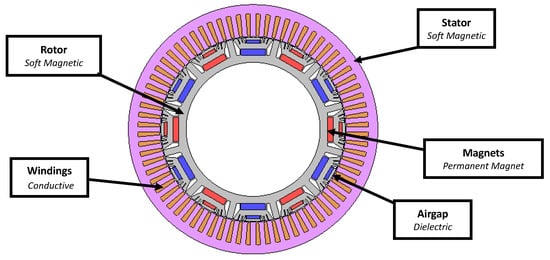
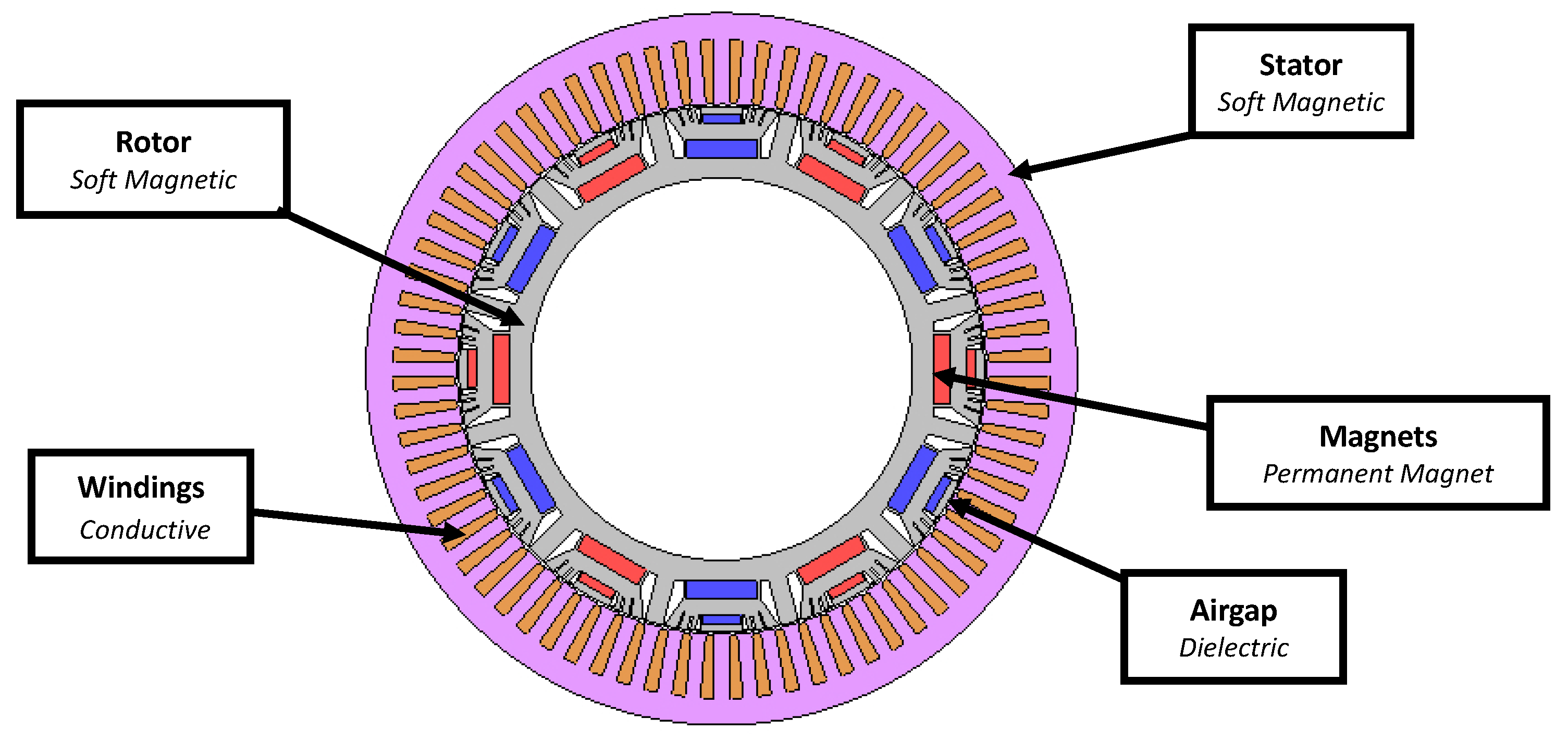
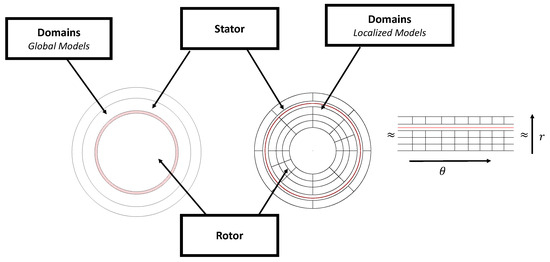
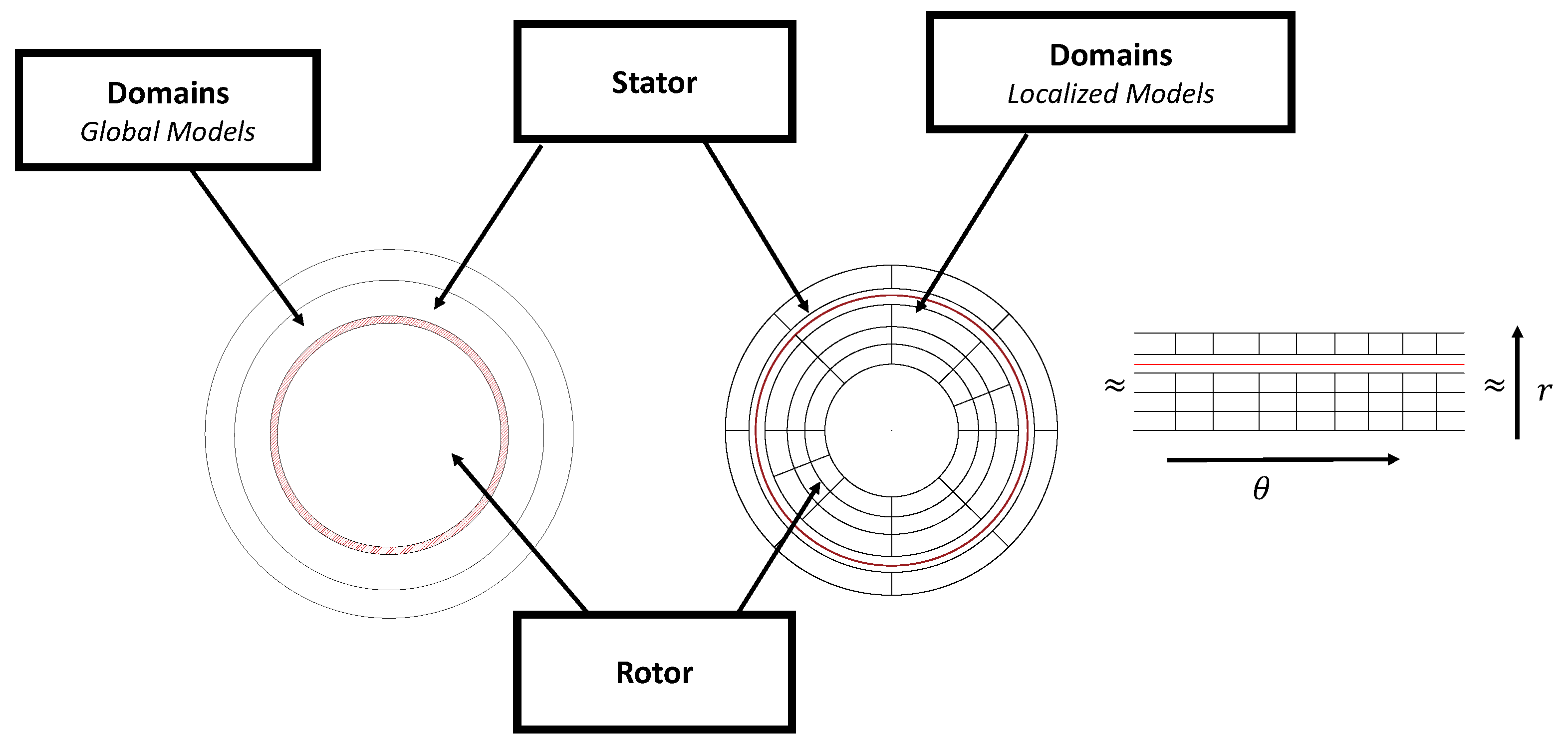
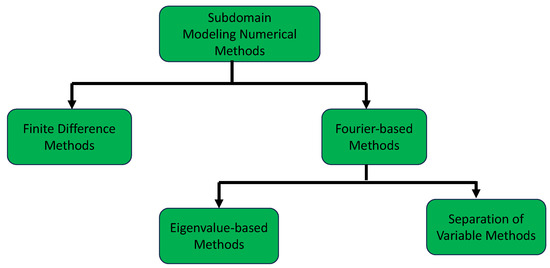
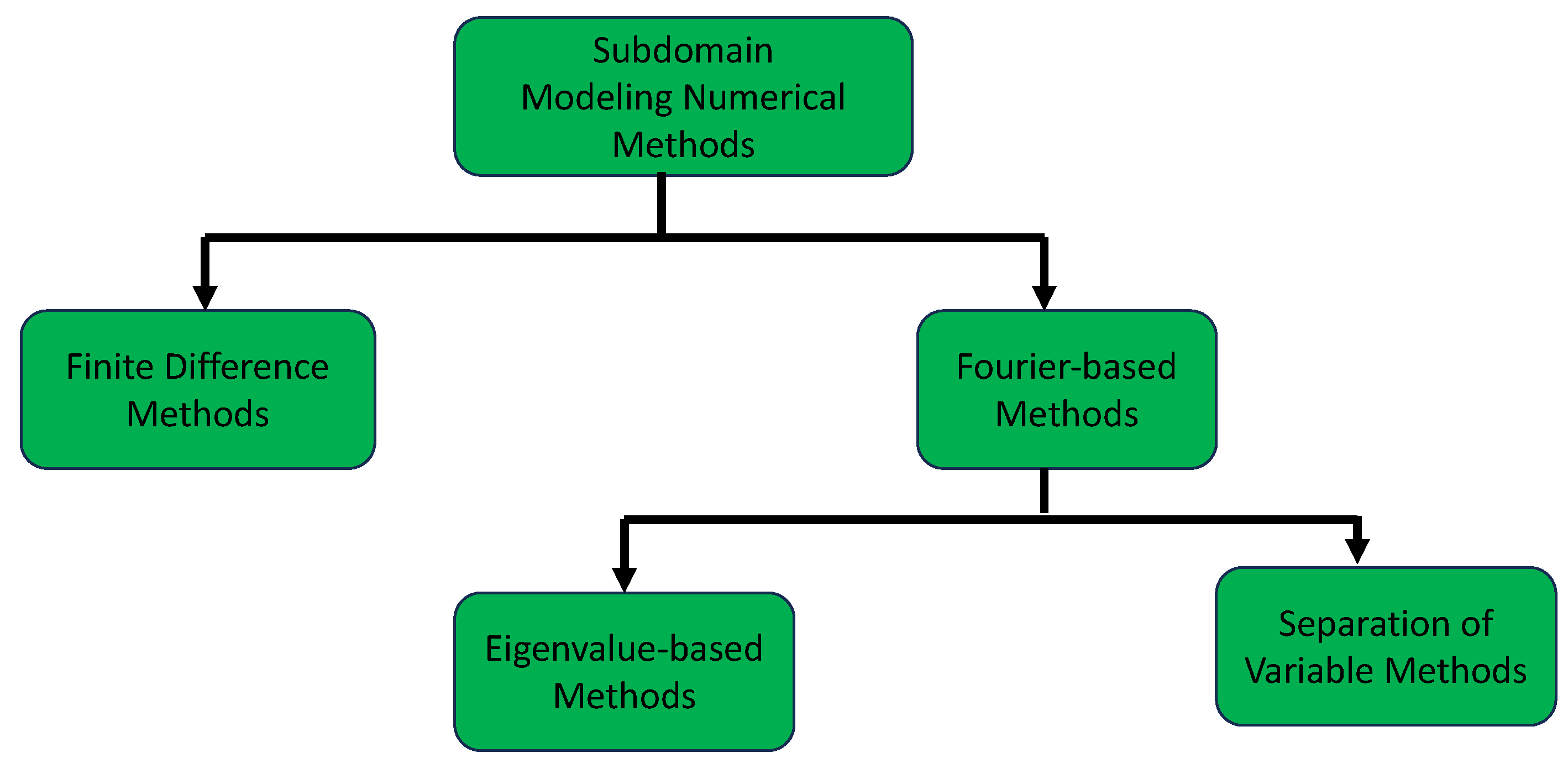
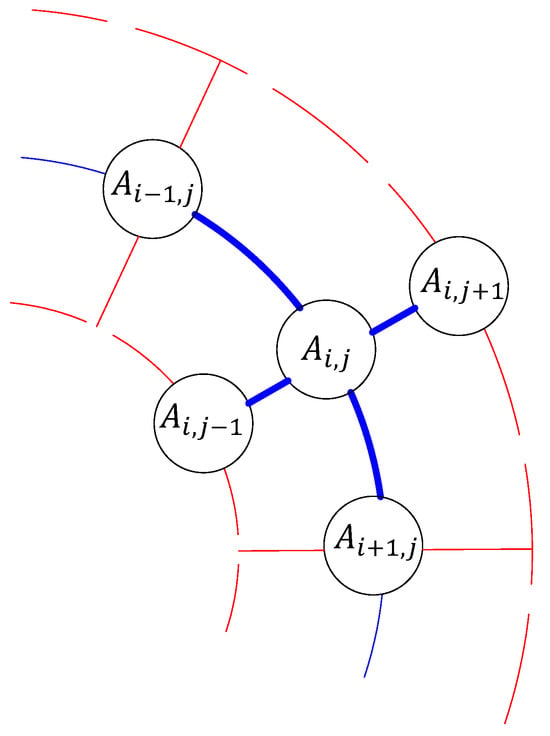
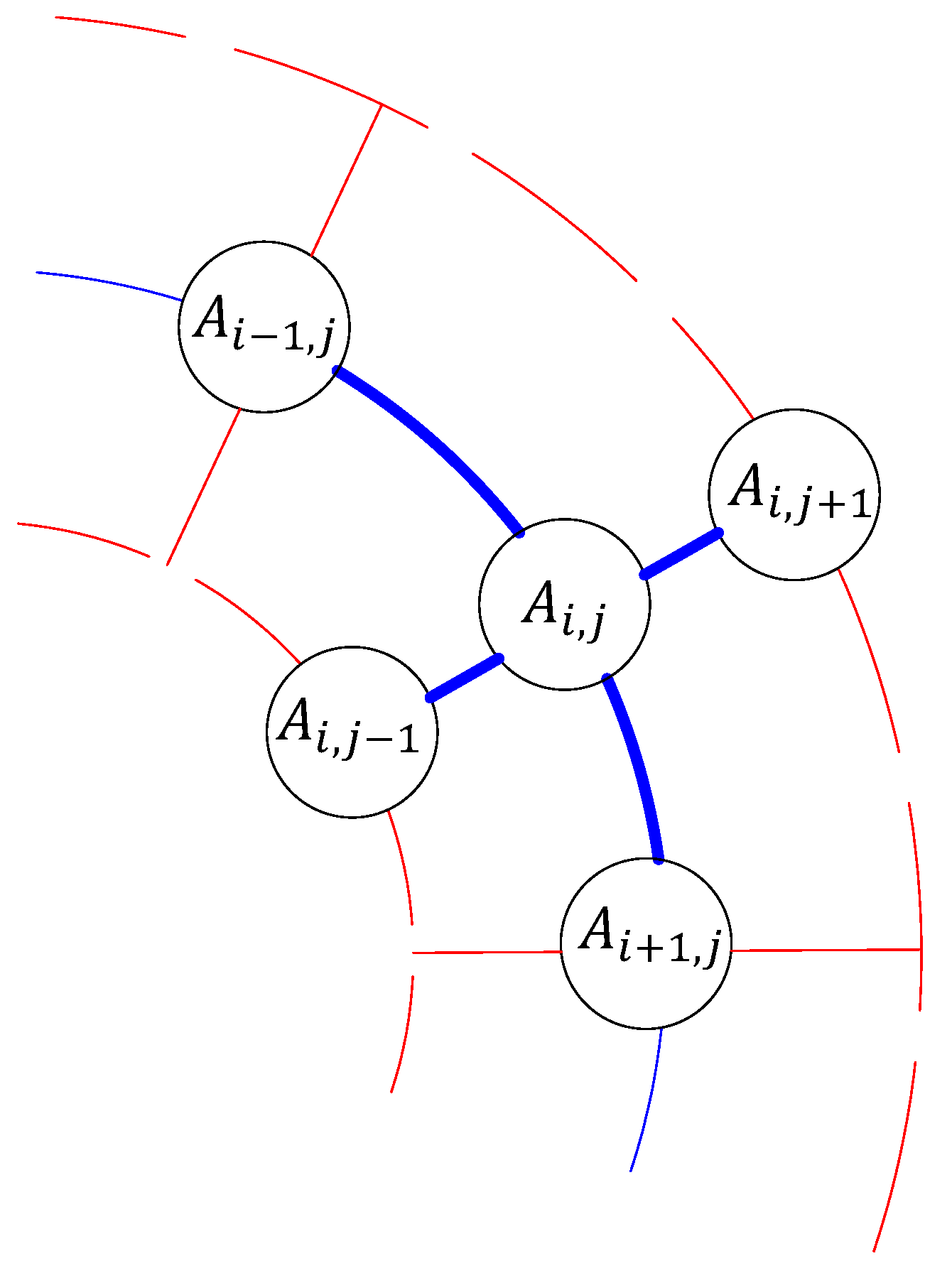
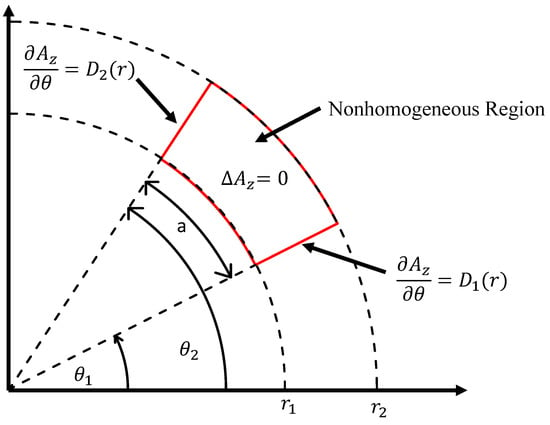
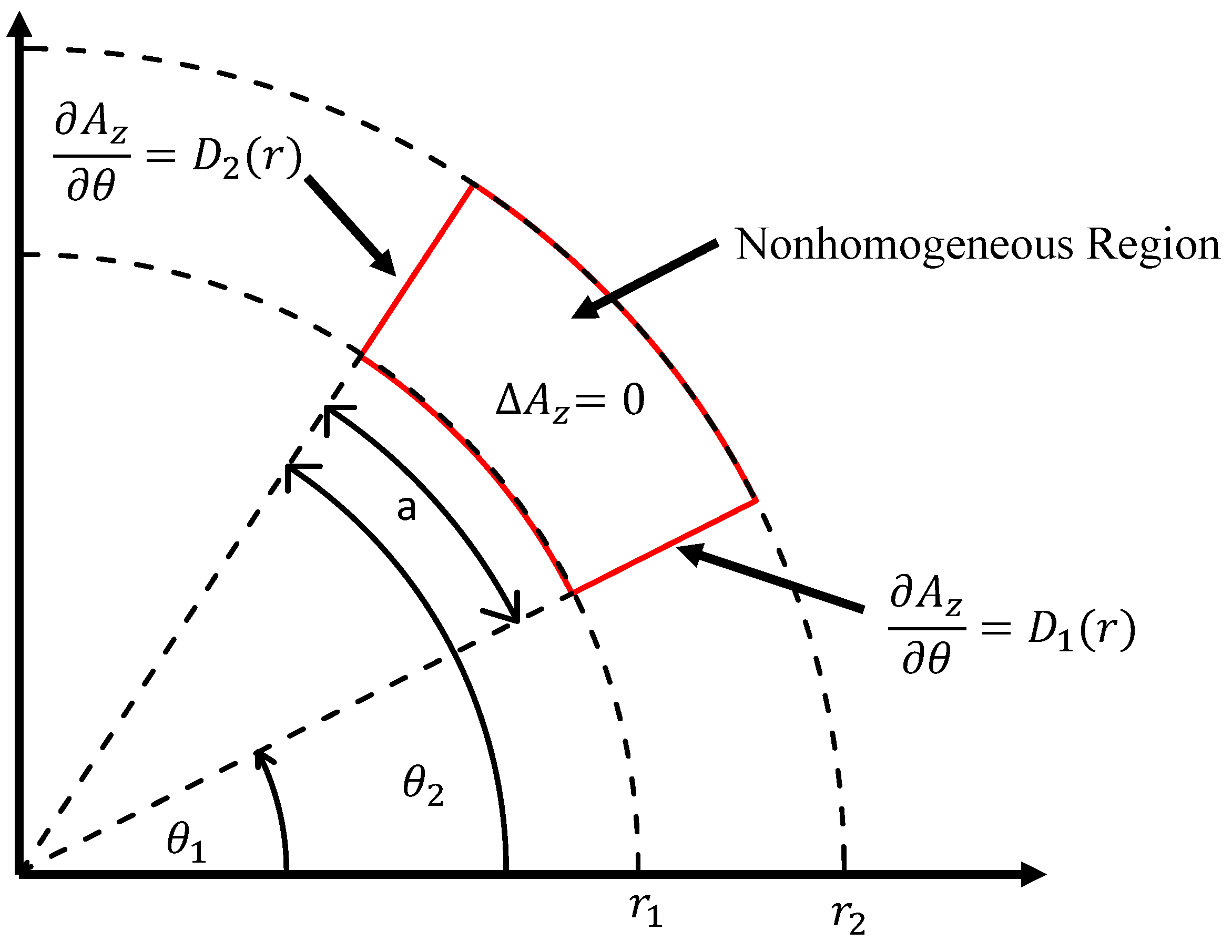
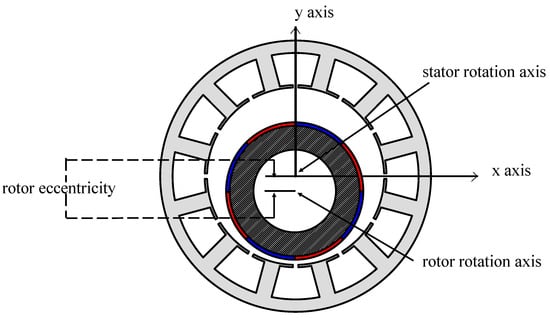
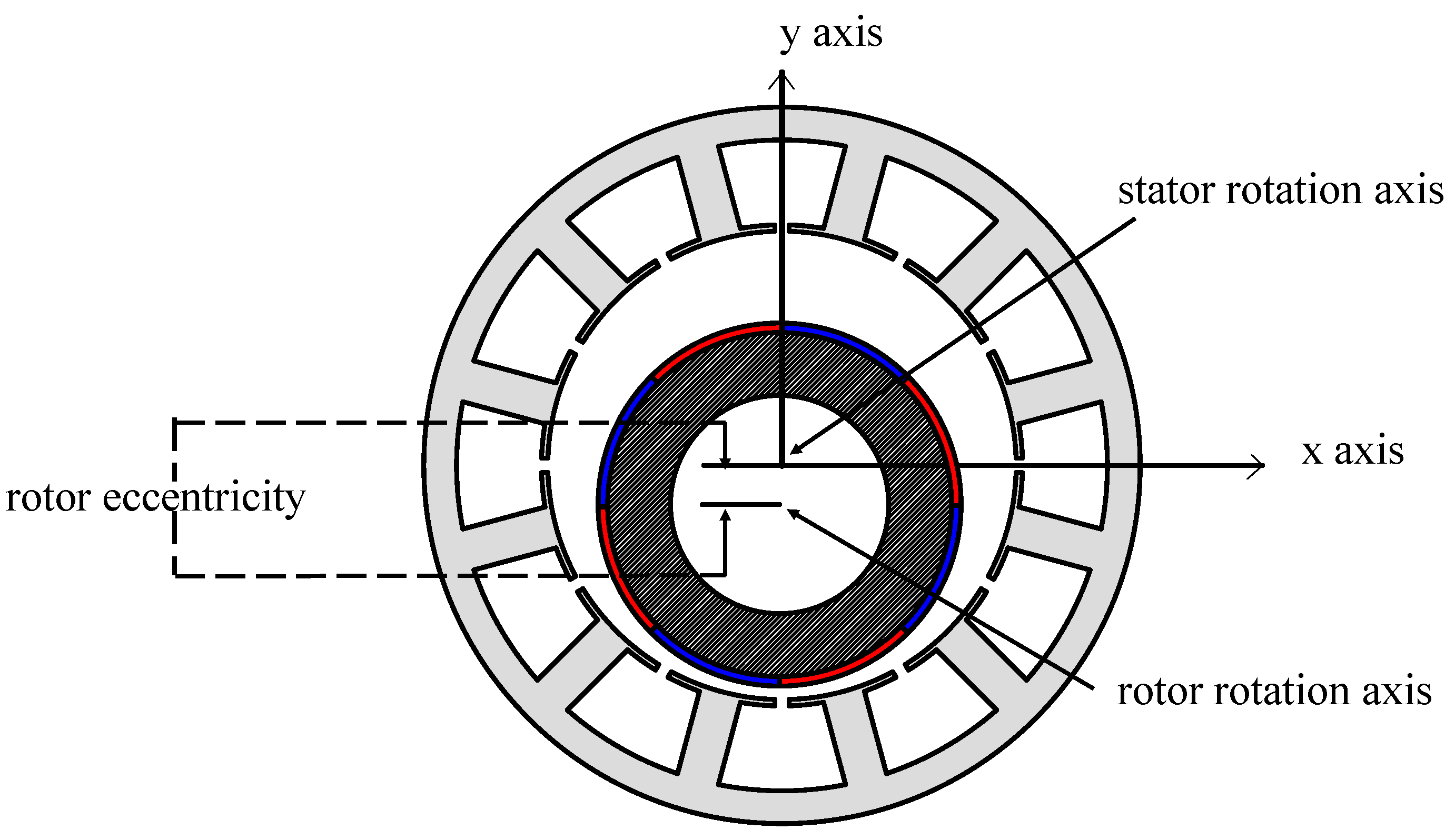
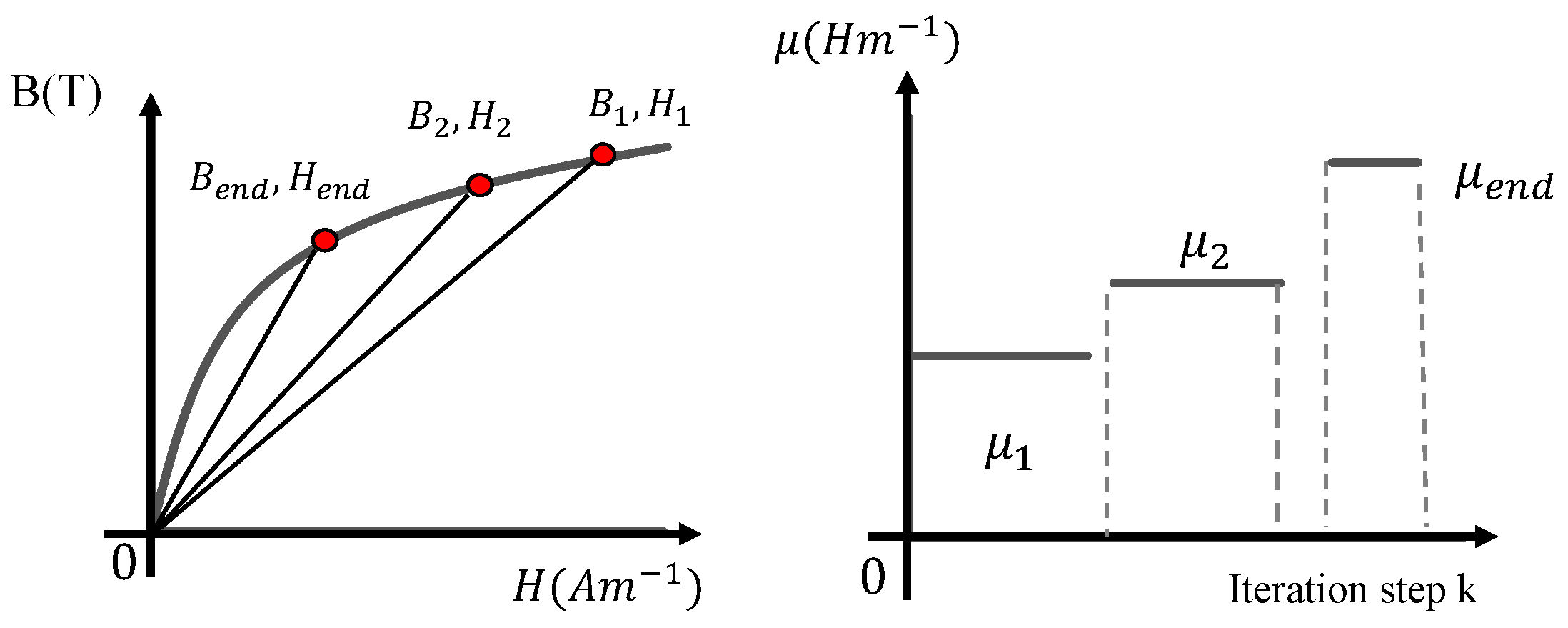
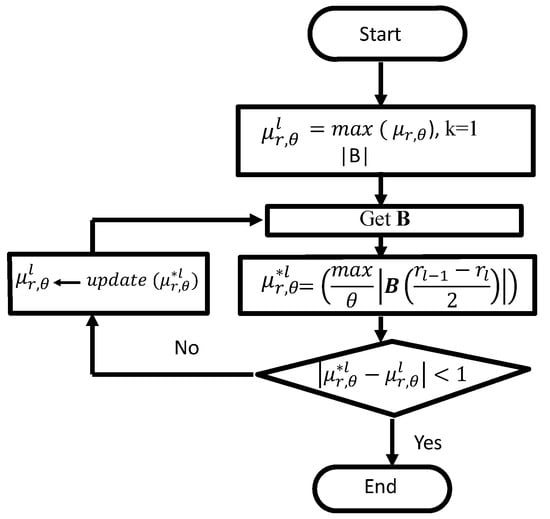
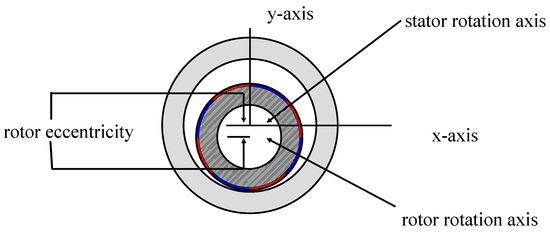
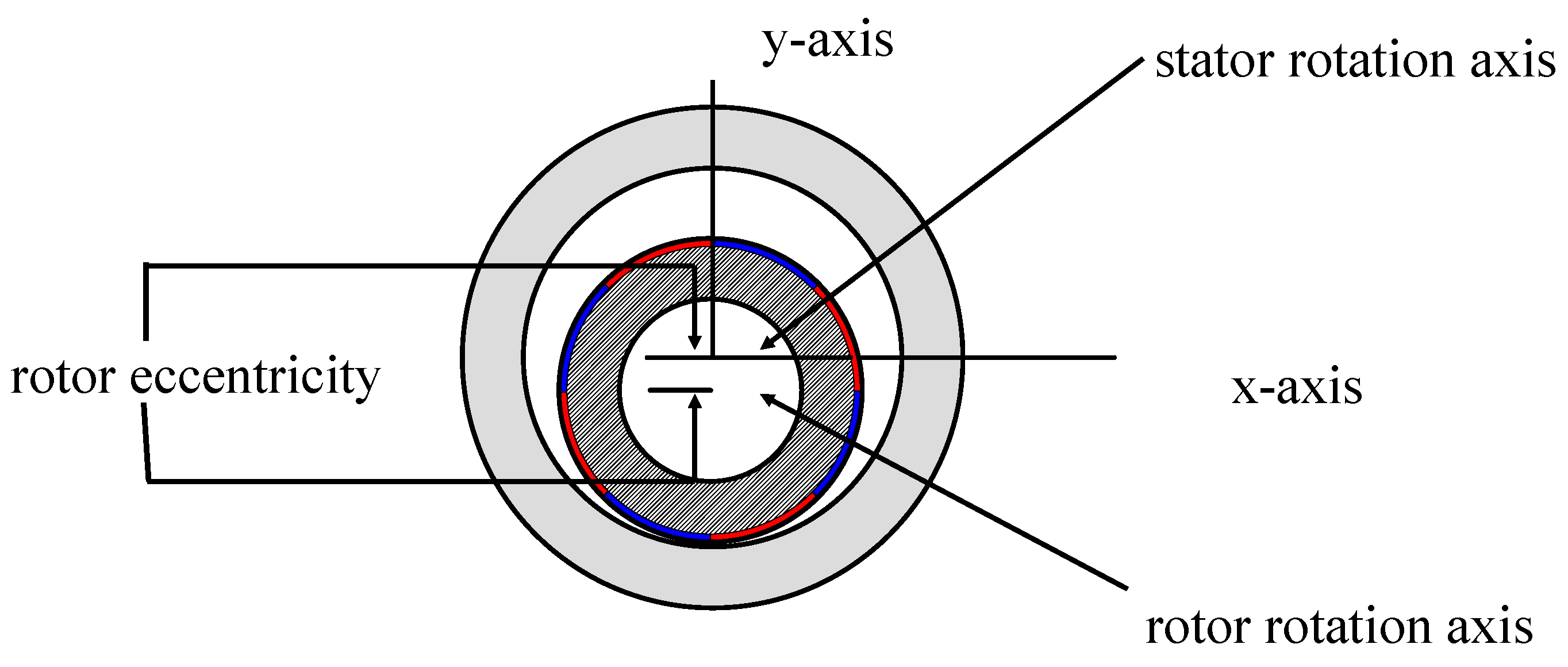

Disclaimer/Publisher’s Note: The statements, opinions and data contained in all publications are solely those of the individual author(s) and contributor(s) and not of MDPI and/or the editor(s). MDPI and/or the editor(s) disclaim responsibility for any injury to people or property resulting from any ideas, methods, instructions or products referred to in the content. |
© 2025 by the authors. Licensee MDPI, Basel, Switzerland. This article is an open access article distributed under the terms and conditions of the Creative Commons Attribution (CC BY) license.