Article

SOC Balancing Scheme of Microgrid Lithium Battery Energy Storage System Considering SOH

1
Department of Electrical and Control Engineering, Shanxi Institute of Technology, Yangquan 045000, China
2
School of Electronic Information Engineering, Taiyuan University of Science and Technology, Taiyuan 030024, China
*
Author to whom correspondence should be addressed.
Energies 2026, 19(1), 180; https://doi.org/10.3390/en19010180 (registering DOI)
Submission received: 6 November 2025 / Revised: 21 December 2025 / Accepted: 23 December 2025 / Published: 29 December 2025

Abstract

The existing state of charge (SOC) balancing scheme of the lithium battery energy storage system (LBESS) does not consider the state of health (SOH) of LBESS in the process of energy distribution, which results in an inability to reduce SOH balancing errors and increases maintenance costs for LBESS. To solve this problem, an SOC balancing scheme for LBESS of microgrids considering SOH is proposed. In this scheme, SOC equalization factor and health status factor (HSF) are introduced into droop control, and the power output of LBESS inverter is adjusted according to SOC and SOH status so as to achieve SOC balancing and reduce SOH imbalance errors. Simulation and experimental results demonstrate that the proposed SOC balancing factor and HSF can maintain SOC balancing and reduce SOH balancing difference even under load fluctuations by adjusting the output active power of LBESS. With the implementation of SOC balancing, its SOC balancing factor becomes zero, thereby achieving a frequency stabilization effect. In addition, the proposed solution has good effects in multiple LBESS scenarios and LBESS charging processes.

1. Introduction

Microgrids, as a low-carbon power generation system, play a crucial role in achieving China’s dual carbon goals of peak carbon emissions and carbon neutrality, as well as in energy transition [1]. Lithium batteries are indispensable devices in microgrid systems, as they play a crucial role in ensuring stable operation and effectively balancing the energy supply and demand [2]. Lithium batteries in microgrids need to be equipped with a Battery Management System (BMS) to manage their state. The functions of a BMS mainly include preventing lithium batteries from overheating, overcharging and over-discharging. Additionally, it encompasses the estimation of critical parameters such as State of Charge (SOC) and State of Health (SOH), while also ensuring SOC and SOH balancing [3,4]. The implementation of SOC balancing by BMS enables all lithium batteries in the system to reach the charging and discharging limits simultaneously, thereby improving the utilization efficiency of the battery capacity and extending the service life of the batteries [5]. The implementation of SOH balancing by BMS ensures that all SOH values of the microgrids reach the scrapping standard simultaneously, thus reducing the labor cost of replacing or maintaining the LBESS [6]. In an islanded AC microgrid, when the LBESS inverter adopts P-f droop control, it cannot adjust the output energy of the inverter based on SOC and SOH states, leading to SOC and SOH imbalances among LBESS units [7].
Scholars have proposed a series of solutions to address the issue of SOC imbalance in islanded microgrid lithium batteries. References [8,9] introduce a droop correction term into the traditional droop control scheme, which shifts the droop curve based on the SOC value of the battery and adjusts the power or current output of the lithium battery to achieve the goal of SOC balancing. Reference [10] found that the output power of lithium batteries is influenced by line impedance. Therefore, the SOC can be adjusted by using virtual impedance to regulate the line impedance. However, these solutions may lead to a decrease in power quality while achieving SOC balancing. To address this issue, some scholars have made further improvements to the droop correction term by introducing exponential functions [11] or power functions [12], aiming to further reduce the degradation of power quality. In reference [13], the algorithm is switched to traditional P-f droop control after SOC balancing to restore the frequency within an acceptable range, but the switching of algorithms may lead to system instability. The above-mentioned SOC balancing solutions are all based on droop control, which results in low system inertia. To address this limitation, reference [14] proposes SOC balancing solution based on a virtual synchronous generator, which not only achieves SOC balancing but also enhances system inertia. Reference [15] proposes an energy storage control strategy based on a Modular Multilevel Matrix Converter (MMC), which achieves SOC balancing in the context of the MMMC topology for LBESS. In reference [16], SOC balancing of lithium batteries in the Modular Multilevel DC/DC Converter (MMDDC) topology is achieved by improving the SOC droop coefficient and shifting the current curve, without introducing any current offset.
The above-mentioned SOC balancing scheme has not taken into account the impact of SOH on the LBESS, which leads to a lack of reduction in SOH imbalance differences. Therefore, this paper proposes an SOC balancing scheme for a microgrid LBESS that considers SOH. This scheme introduces both SOC balancing and a Health Status Factor (HSF) into the traditional P-f droop control. The combined effect of SOC balancing and HSF allows for the redistribution of active power in the LBESS, thereby achieving SOC balancing and mitigating SOH imbalances. The main contribution of this article is:
  • The scheme proposed in this article further optimizes the SOC balance factor while achieving SOC balancing, reducing the SOH balancing difference, and overcoming the disadvantage of traditional SOC balance schemes that cannot reduce the SOH balancing difference.
  • The proposed solution in this article addresses the limitation that traditional SOH balancing schemes cannot balance SOC, further extending the service life of lithium batteries.
  • The proposed scheme in this article considers the impact of the balancing factor on frequency during the design process, ensuring that there is no frequency offset phenomenon in the SOC balancing process.
The SOC and SOH balancing technology for LBESSs can effectively extend their lifespan and reduce maintenance costs. However, existing SOC balancing schemes are unable to reduce the SOH imbalance difference. Based on this, this article proposes an SOC balancing scheme for microgrid LBESS that takes into account SOH. To achieve SOC and SOH balancing, it is necessary to measure the SOC and SOH parameters. Due to the nonlinear nature of LBESS, an LBESS model is established, and the output current and voltage of the LBESS are measured. Then, the SOC, SOH, and DOD parameters are obtained based on the estimation formulas of SOC, SOH and DOD. After obtaining these parameters, they form the SOC balancing factor and HSF. The proposed scheme is obtained by combining the SOC balancing factor and HSF into the P-f droop control. Due to the influence of control parameters on system stability in the proposed scheme, a small signal model is established to analyze the impact of control parameters on system stability based on root locus analysis, ensuring system stability. The effectiveness of the proposed scheme under different operating conditions is verified through simulation and experimentation. Finally, a summary of the entire text is provided in Section 8.

2. Estimation of SOC and SOH of LBESS

The estimation of SOC and SOH for the LBESS is the basis of the proposed scheme. The LBESS is a nonlinear system, and the values of SOC and SOH can only be obtained through estimation methods. This paper adopts the classical Ampere-hour integration method to obtain the SOC. The SOC estimation algorithm based on the Ampere-hour integration method has the advantages of simple calculation and high accuracy, with its expression given as follows [17,18]:
S O C i = S O C 0 i i n d t Q r a t e d S O C 0 P i d t V d c Q r a t e d
where SOC0 is the initial SOC of the LBESS before discharging, Qrated is the capacity value of the LBESS, Pi is the active power measured at the output side of LBESS inverter, and Vdc is the output voltage of the LBESS.
The SOH indicator reflects the degree of degradation of the LBESS, and the LBESS must be scrapped when the indicator drops to a certain level. In this paper, an SOH estimation method based on the lifecycle of the LBESS is used. Compared to traditional methods based on capacity and internal resistance, this approach offers several advantages: it does not require long offline charge–discharge testing and ensures estimation results remain unaffected by ambient temperature. The expression for SOH estimation based on the lifecycle of the LBESS is as follows [19]:
S O H i = C L C T = S O H 0 C C C T = S O H 0 C C a · D O D i b
where CL is the remaining usage time of the LBESS, CT is the total usage time of the LBESS from service to scrapping, CC is the already used time of the LBESS, SOH0 is the initial SOH value of the LBESS, DOD is the depth of discharge of the LBESS, a and b are constants.
The DOD in (2) can be expressed using the change in SOC, denoted as ΔSOC.
D O D i = Δ S O C i min Δ S O C a v e z · D O D m a x
where ΔSOCimin is the minimum value of ΔSOC within a certain time period, ΔSOCave is the average value of ΔSOC for all LBESS, DODmax is the maximum value of DOD among all DOD, z is the proportionality coefficient.
Based on (1), we can derive the expression for ΔSOC in (3).
Δ S O C i = t 1 t 1 + Δ t P i d t V d c · Q r a t e d
Combining (1) and (4), we can conclude that both SOC and SOH are related to the active power output of the LBESS inverter. By appropriately adjusting the active power, we can simultaneously regulate the states of SOC and SOH.

3. Mechanism Analysis of Droop Control for Regulating SOC and SOH

The traditional P-f droop control is widely used in medium- to high-voltage islanded microgrid LBESS control due to its characteristics of no communication, adjustable voltage and frequency, simple control, and high practicality [20]. Therefore, this paper investigates the mechanisms of P-f droop control for regulating SOC and SOH. Based on this, we propose improvements to the traditional P-f droop control to reduce the imbalance error of SOH while achieving SOC balance in LBESS. The expression of the traditional P-f droop control is as follows [21]:
f i = f r e f m P i
E i = E r e f n Q i
where f and E are frequency and voltage, fref and Eref are frequency and voltage ratings, m and n are the droop coefficients, and Q is reactive power.
By analyzing Equation (5), we can conclude that changing the droop coefficient or frequency can alter the value of active power. Since both SOC and SOH are related to active power, a reasonable improvement to the droop control can achieve the regulation of SOC and SOH states.
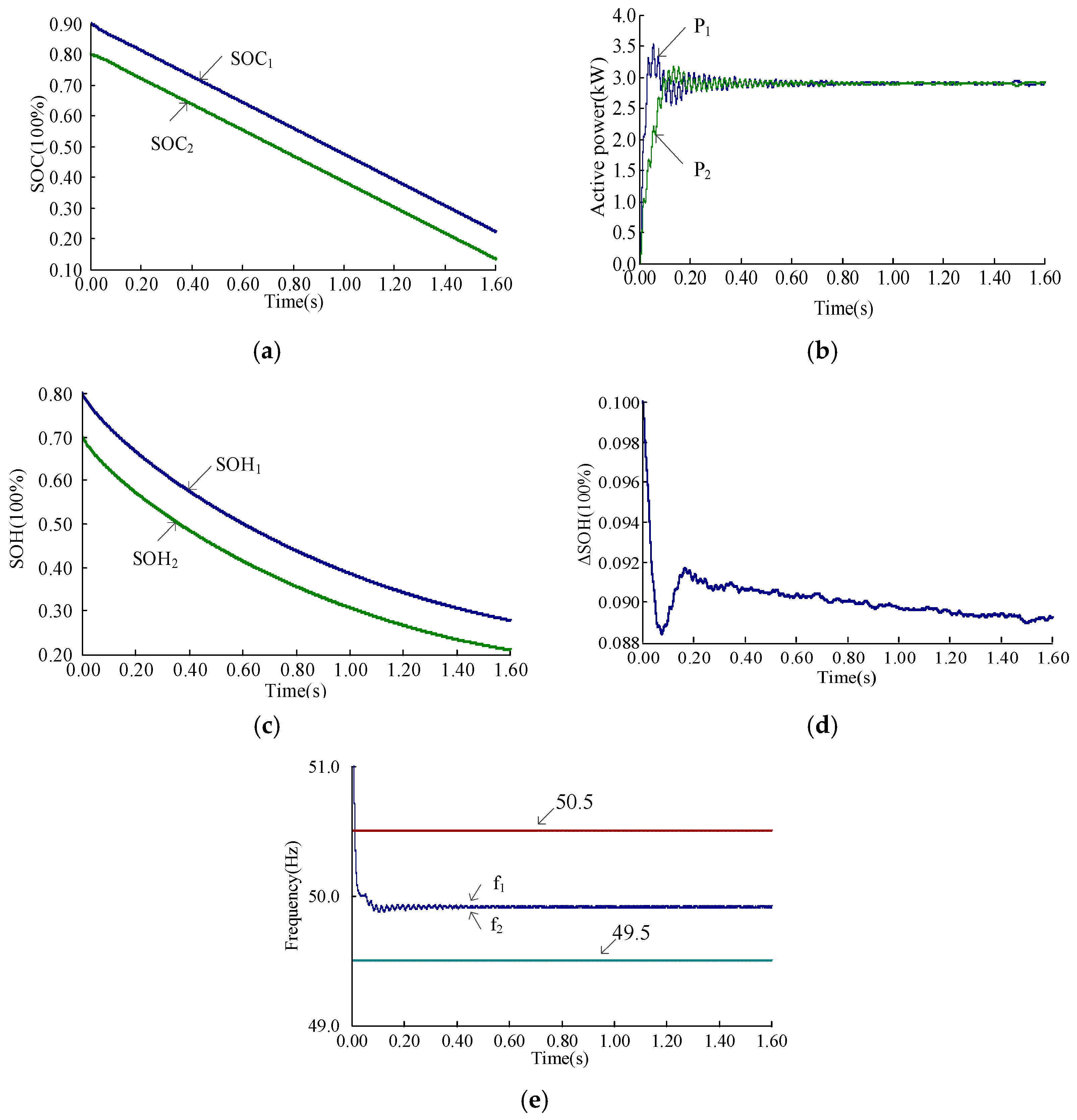
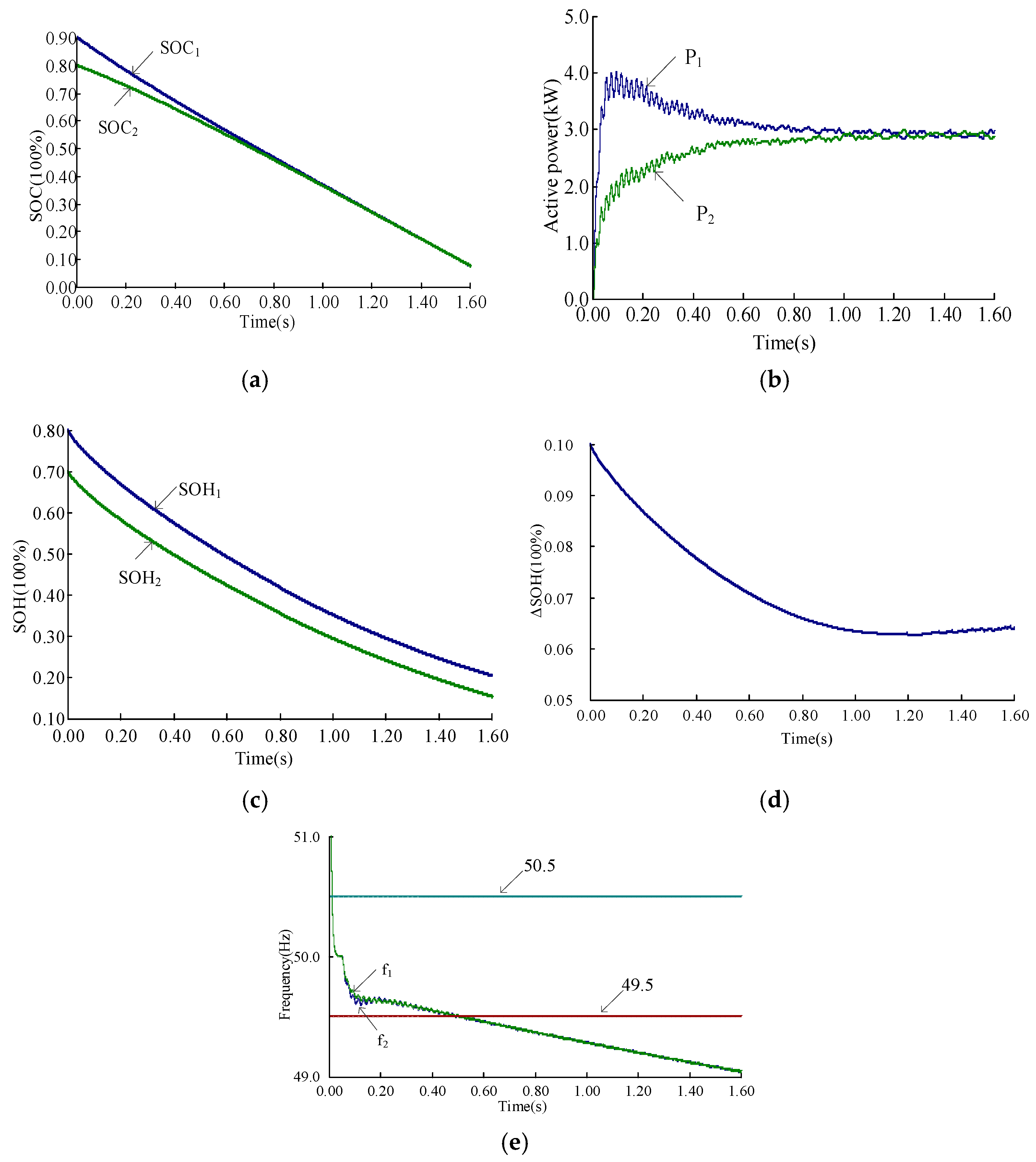
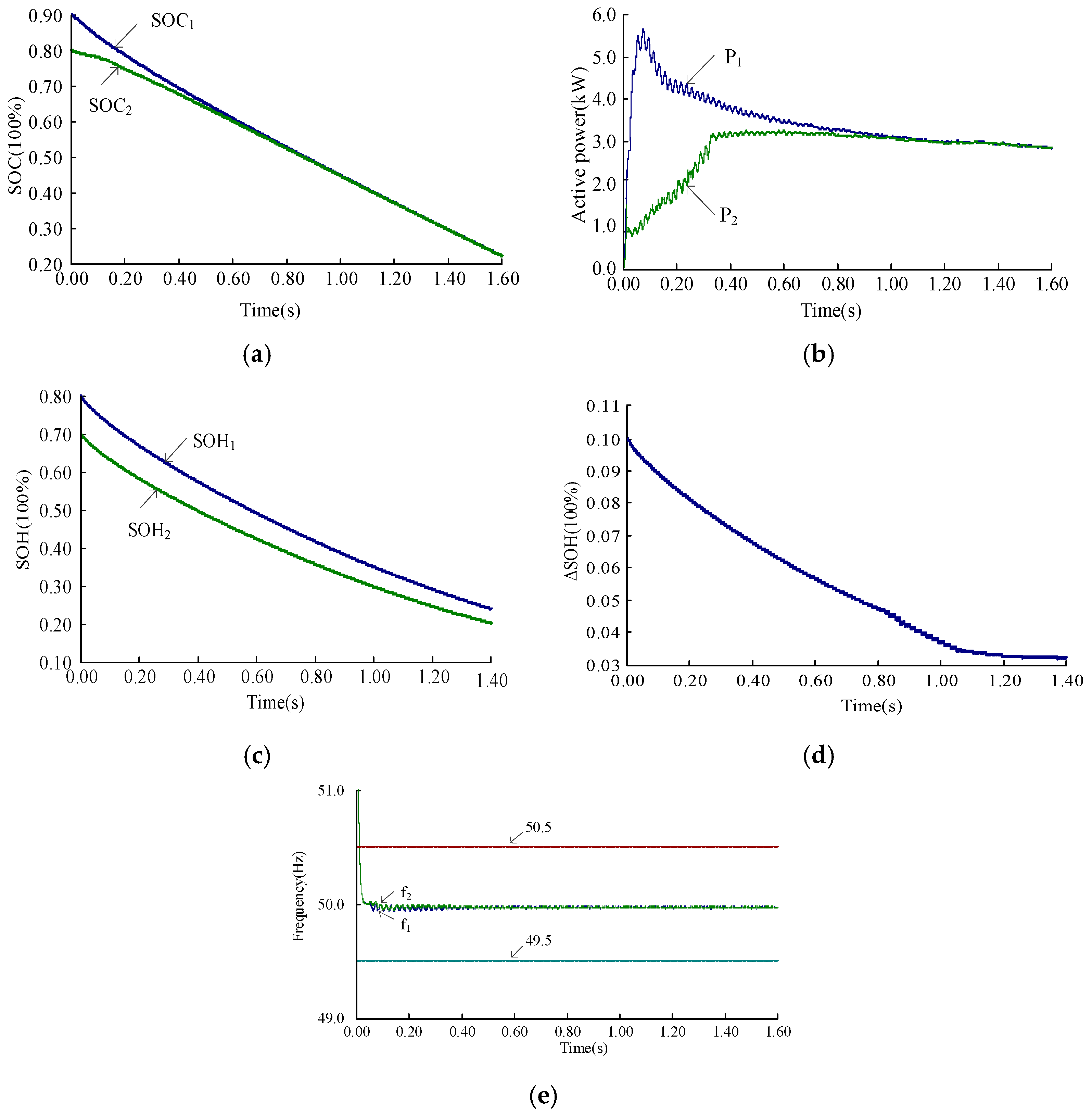
The LBESS inverter can capture the simulated waveform using the traditional P-f droop control, which is shown in Figure 1. In the traditional P-f droop control, the active power and the global variable frequency have a linear relationship. Therefore, the active power output of the two LBESS inverters in Figure 1b is evenly distributed in a very short period of time. According to Equations (1)–(4), it can be analyzed that when the active power is evenly distributed, the DOD of the two LBESSs is equal. If the SOC and SOH are not evenly distributed at this time, the SOC and SOH of each LBESS cannot be balanced in the subsequent discharge process. The simulation results in Figure 1a,c verify this conclusion. Figure 1d shows that under the traditional droop control, the imbalance difference ΔSOH (ΔSOH = SOH1 − SOH2) of the SOH is relatively large, at around 0.09. Figure 1e shows that under traditional droop control, the system frequency fails to be maintained at the rated value of 50 Hz. However, thanks to the small droop coefficient, the frequency can still be kept within the permissible range (50 ± 1% Hz).

4. SOC Balancing Scheme of Microgrid LBESS Considering SOH

To balance SOC and reduce SOH imbalance error, the SOC balancing factor and HSF are introduced into the traditional droop control. The improved droop control expression is as follows:
f i = f r e f m · P i G P I S O C ave S O C i · D O D ave D O D i discharge f i = f r e f m · P i G PI S O C ave S O C i 1 · 1 D O D ave D O D i charge
where GPI is the proportional integral coefficient, DODave is the average DOD of all LBESSs.
The SOCave and DODave in (7) are calculated using the following formulas:
S O C ave = S O C 1 + S O C 2 + S O C n N
D O D ave = D O D 1 + D O D 2 + D O D n N
where N is the total number of LBESS units in the microgrids.
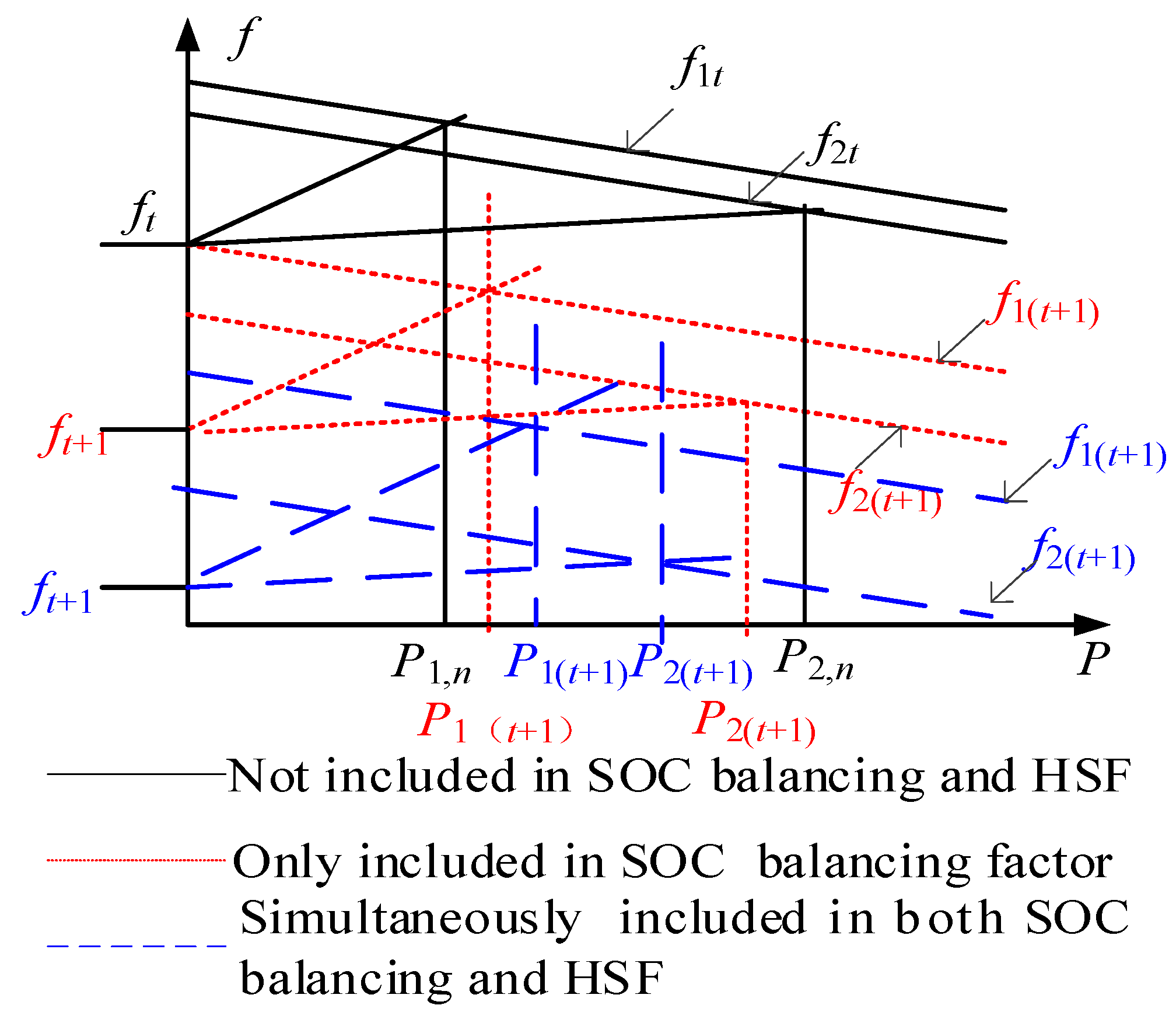
Taking the discharge process as an example, the principle of the proposed scheme is analyzed in this paper. The analysis process of the charging process is similar to that of the discharging process and will not be repeated here. In Equation (7), GPI (SOCaveSOCi) is the SOC balancing factor, which is responsible for maintaining SOC equilibrium, while (DOCaveDODi) is the HSF, which is responsible for adjusting the SOH. The schematic diagram of the proposed solution is shown in Figure 2. For the convenience of explaining the principles of the proposed solution, the time will be discretized. Taking the example of having two LBESS units in the system and assuming that the relationship between the SOC and SOH of the two LBESS units at time t is SOC1t > SOC2t and SOH1t > SOH2t. After introducing the SOC balancing factor at time t + 1 (shown by the red line in Figure 2), the frequency decreases, and the droop curve begins to shift downward. Due to the unequal SOC of the two LBESS units at time t, the amplitude of the droop curve shift is different, and the change in active power ΔP satisfies ΔP1t > ΔP2t, gradually achieving the SOC balance of the two LBESS units. After adding HSF (shown by the blue line in Figure 2), influenced by the disparate SOH values at time t, HSF1(t + 1) > HSF2(t + 1) can be obtained based on (2)–(4) at time t + 1. Under the influence of HSF, the LBESS inverter with high SOH increases the active power output and increases depth of discharge. On the other hand, the LBESS inverter with low SOH decreases the active power output and reduces the depth of discharge. These actions aim to reduce the SOH imbalance. There are two key points to note: (1) After the proposed solution achieves SOC balance, the LBESS inverter’s output active power is evenly distributed. At this time, according to (3) and (4), the DOD of both LBESS units is equivalent, resulting in HSF reaching zero and ceasing to regulate SOH. (2) After SOC balancing, both the SOC balancing factor and HSF automatically become zero. The proposed algorithm automatically reverts to traditional droop control, and the SOC balancing process does not introduce any additional frequency deviation.
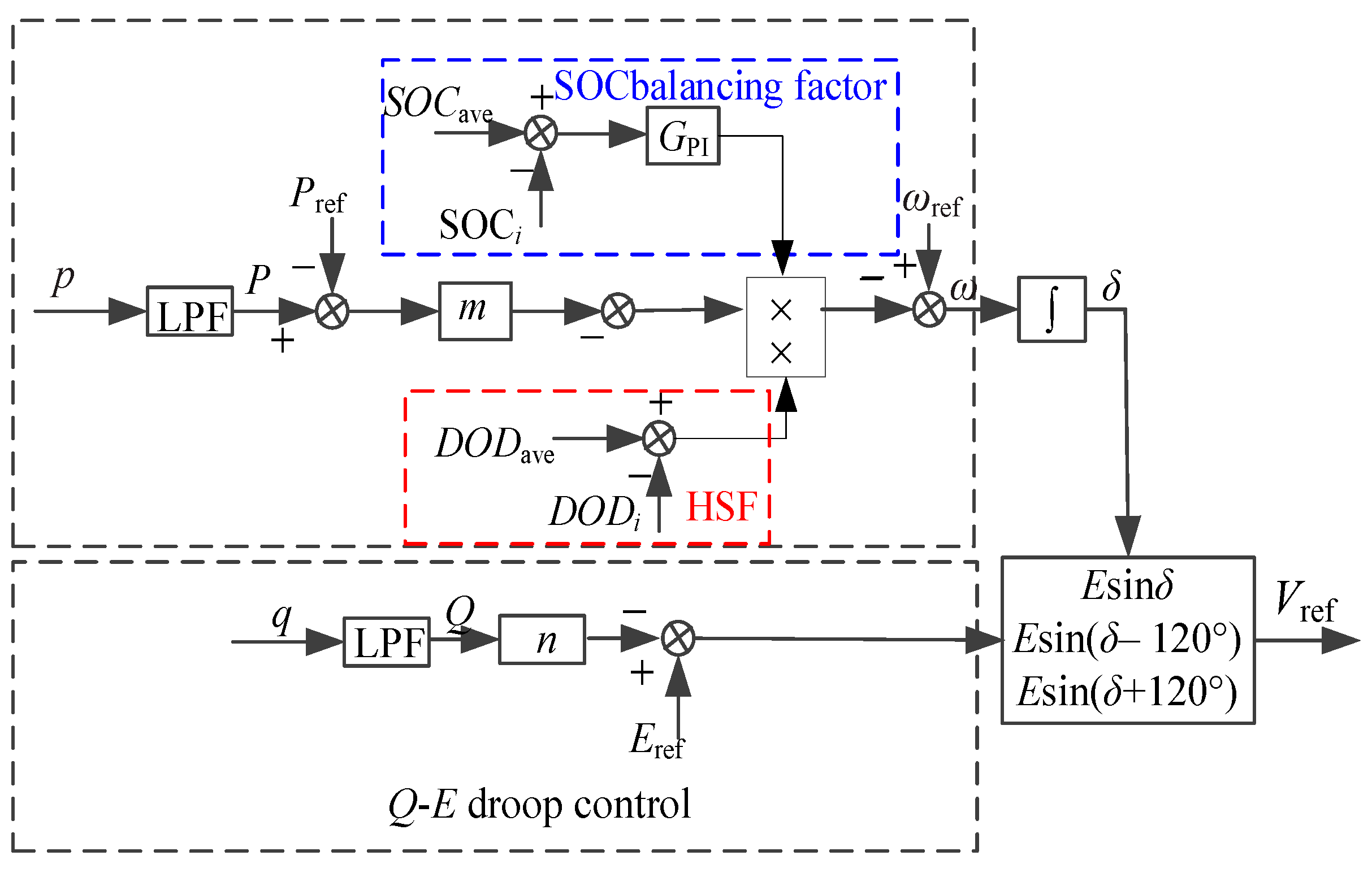
The SOC balancing scheme of microgrid LBESS considering SOH is shown in Figure 3. After measuring the voltage and current data of the LBESS output using voltage and current sensors, the active power and reactive power can be calculated. Then, using the collected LBESS data, the SOC is estimated based on (1). Next, the SOH and DOD values are obtained using (2) to (4). Then the SOCave and DODave can be calculated separately using (8) and (9), and the SOC balancing factor and HSF are obtained. Finally, combining the SOC balancing factor, HSF and (5) can yield the proposed solution.

5. Analysis of System Small Signal Model

When LBESSs are controlled by droop control, the selection of control parameters will affect the stability of the system [22,23]. Based on this principle, we established a small signal model for the control scheme and discussed the principle of different control parameters on system stability in order to select the control parameters that can maintain system stability [24].
P = V · E · θ X
Q = V · ( E V ) X
where V and E are the magnitudes of point of common coupling (PCC) voltage and output voltage of inverter; X is the reactance of line impedance; θ is power angle.
Modeling the LPF with a first-order description and linearizing (10) and (11), it yields [25].
Δ P = ω c s + ω c V X [ Δ e s i n θ + Δ θ E c o s θ ]
Δ Q = ω c s + ω c V X [ Δ e c o s θ Δ θ E s i n θ ]
where Δ denotes perturbed values, and ωc is the cut-off angular frequency of LPF.
Next, by perturbing and linearizing the proposed scheme shown in (6) and (7), it yields
f i = m · Δ P i G P I S O C ave S O C i · D O D ave D O D i m · Δ P i G P I S O C ave Δ S O C i · D O D ave Δ D O D i
Δ E = n · Δ Q
Due to
Δ f = s Δ θ
Δ S O C i = 1 s V d c Q r a t e d Δ P
Δ D O D i = z ( Δ S O C i Δ S O C a v e ) z 1 ( Δ P V d c Q r a t e d ) z
Combining (14), (16)–(18), it can be found that
Δ θ = m Δ P z · V · n z X s 2 V d c Q r a t e d X + m · θ · X 2 E · V · X · Δ P z z s V d c Q r a t e d X
Then, the four-order small signal model of the proposed scheme can be obtained as
s 4 Δ θ + a · s 3 Δ θ + b · s 2 Δ θ + c · s Δ θ + d s Δ θ = 0
where
  • a = m ω c cos θ X V d c Q r a t e d
  • b = m X ω c + E ω c 2 + m sin θ + n E sin θ n X 2 V d c Q r a t e d
  • c = V D O D i m ω c ω c X V d c Q r a t e d + n E 2 cos θ + V sin θ ω c X 2 V D C Q r a t e d
  • d = m z n + V cos θ ω c 2 X sin θ n V 2 ω c D O D i X 2 V d c Q r a t e d
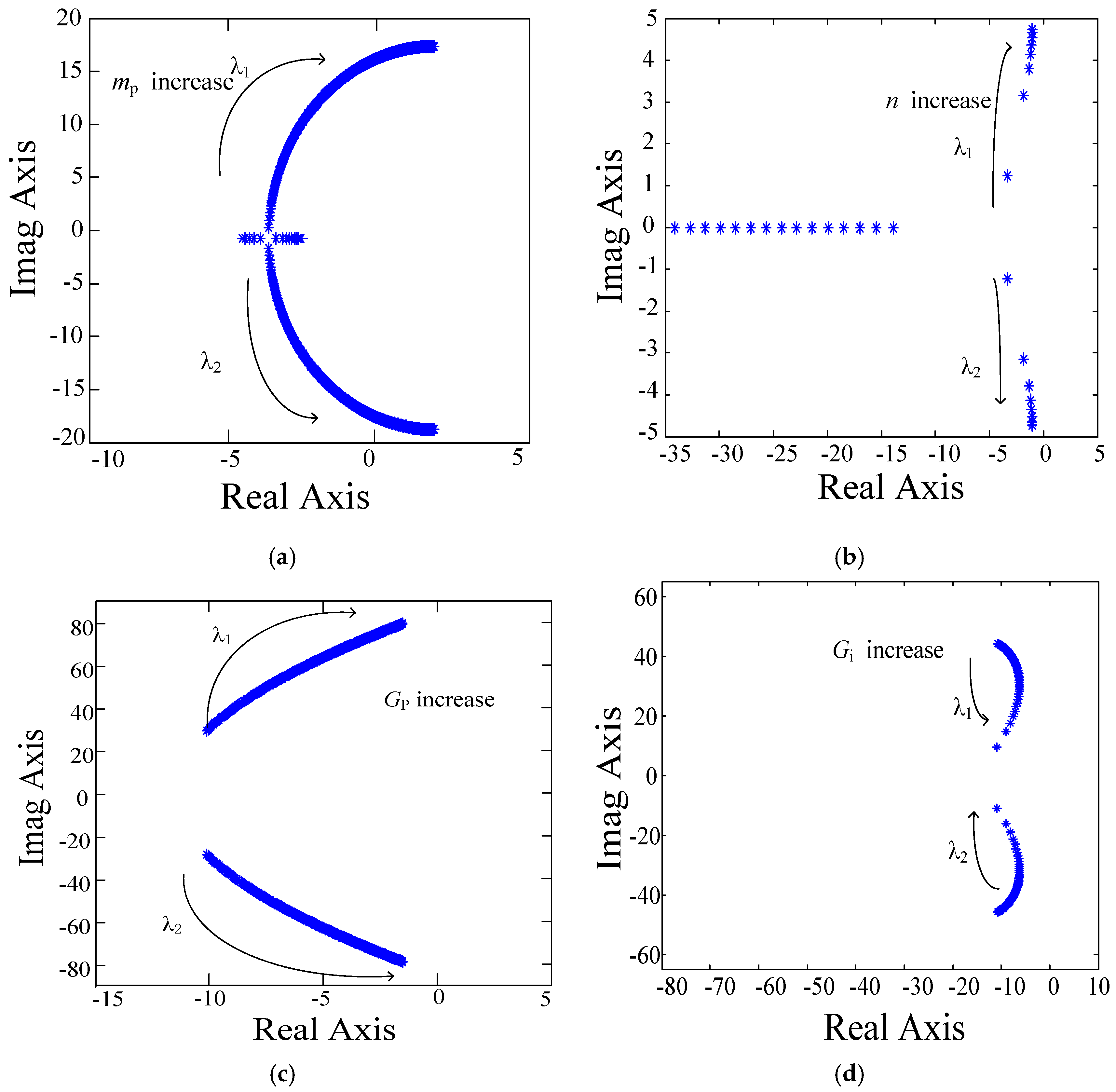
Since the dominant pole determines the stability of the system. Figure 4 shows the variation diagram of the dominant pole under different droop coefficients. The parameters used for plotting root locus are shown in Table 1 (the parameters not listed are shown in Table 2). From the dominant pole (λ1 and λ2) shown in Figure 4, it can be known that with the increase in the droop coefficients, the dominant pole gradually moves from the stability region (in the left half of the imaginary axis) to the instability region (in the right half of the imaginary axis). Therefore, the selected droop coefficient must guarantee the stability of the system.

6. Simulation and Verification of the Proposed Scheme Under Multiple Work Conditions

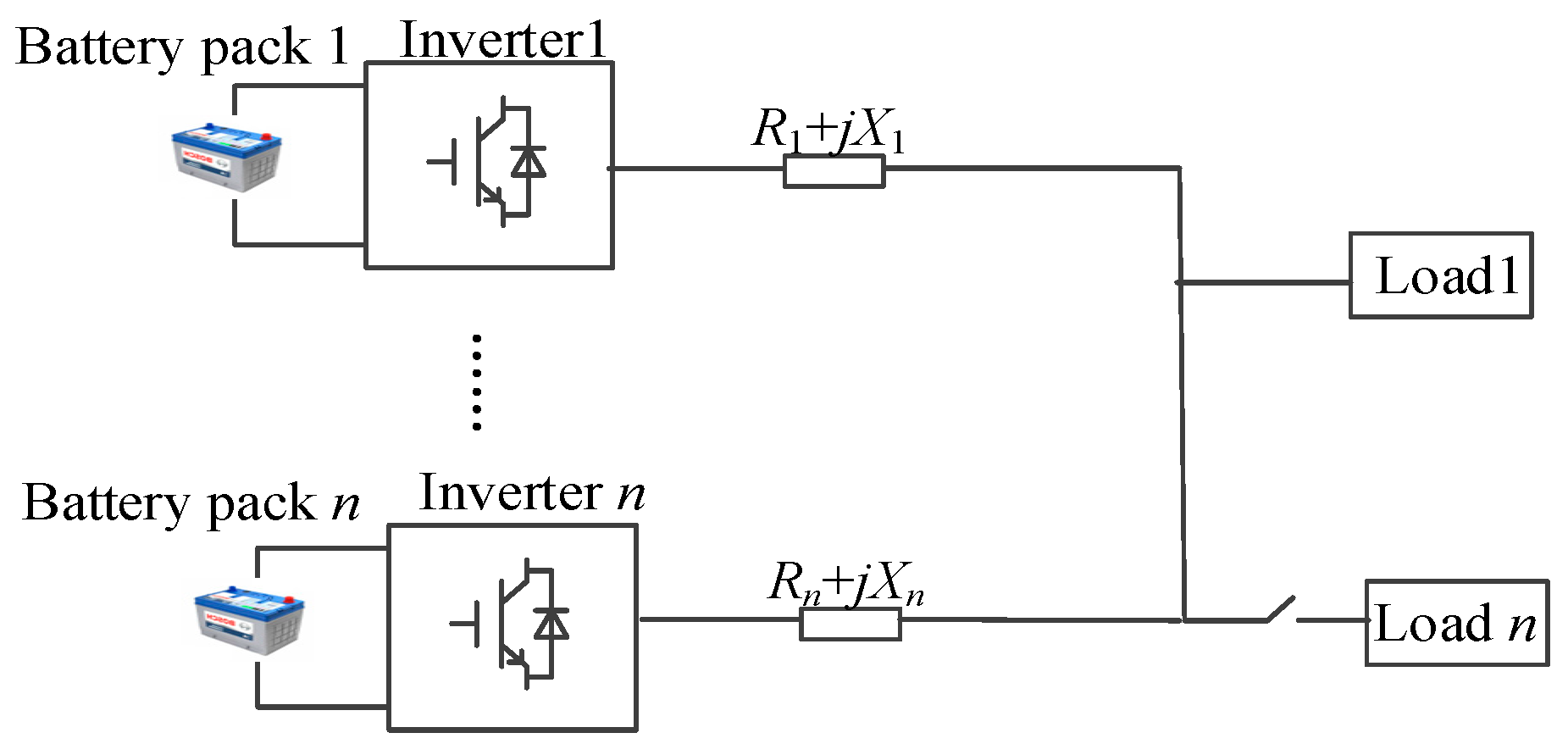
To validate the correctness of the proposed scheme, a simulation model is constructed in PSCAD simulation software version 4.5 according to Figure 5. Multiple work conditions are set in the simulation to verify the adaptability of the proposed solution under different conditions. In the simulation, the battery system consists of multiple lithium battery cells connected in series and parallel to meet the DC voltage requirements of the inverter. Each LBESS supplies power to the public load by grid-connecting through the inverter. To emulate real-world scenarios, the line impedance values (Ri + jXi) of each LBESS are different and satisfy Ri << Xi. The simulation parameters are shown in Table 2.

6.1. Simulation Analysis of SOC Balancing Control Scheme Based on Droop Control

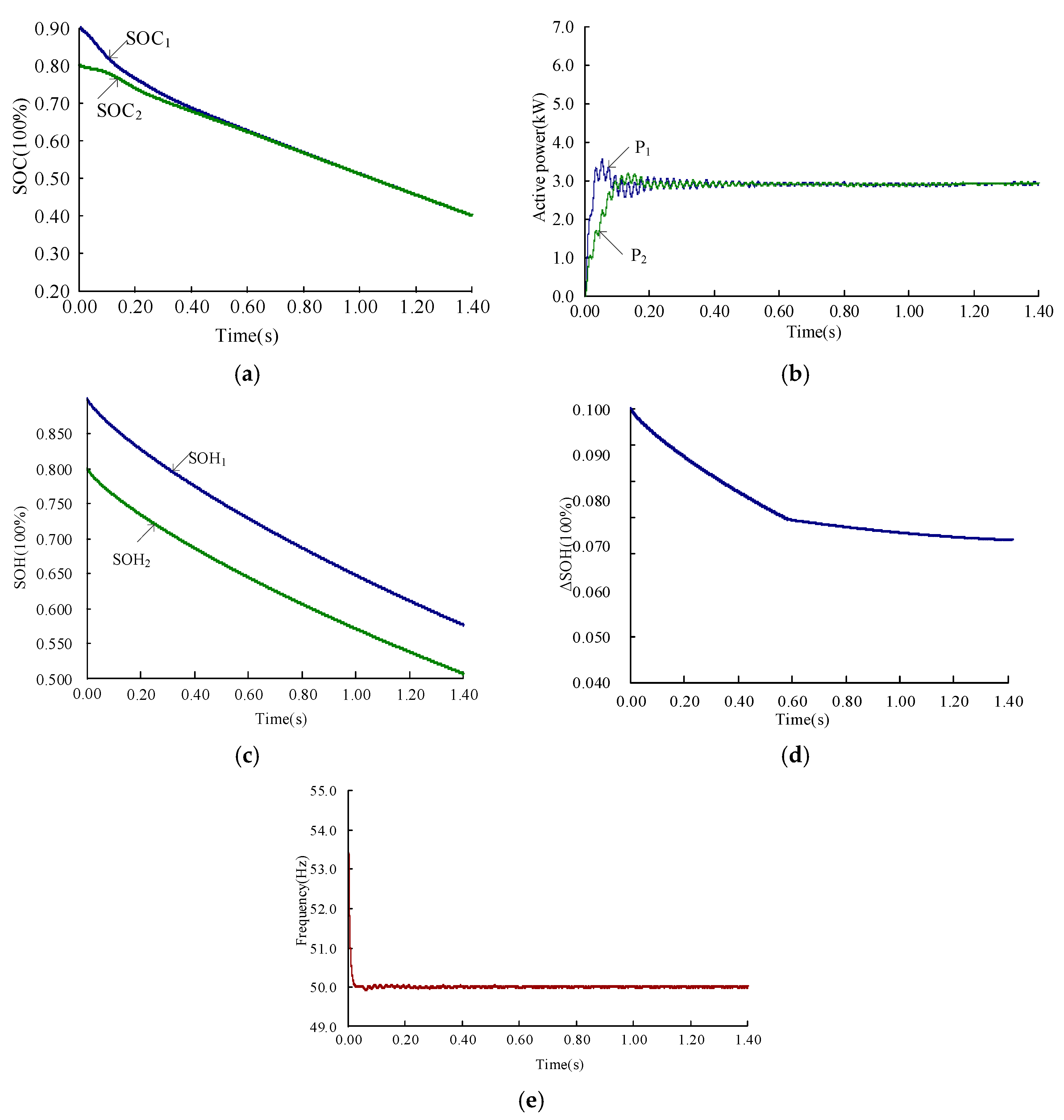
The proposed solution, which enhances the conventional P-f droop control, is compared to the SOC balancing scheme based on P-f droop control. Figure 6 shows the simulation waveform of the SOC balancing scheme based on droop control from literature [9]. In the literature [9], the traditional P-f droop control is modified by subtracting the droop correction term based on the SOC value, which adjusts the degree of translation of the droop curve to balance the SOC waveform by affecting the active power output of the LBESS inverter. Figure 6a verifies that the SOC balancing scheme from literature [9] achieves good balancing results. Based on Equation (1), if SOC balancing is achieved, the steady-state active power should be evenly distributed. The active power waveform in Figure 6b is consistent with the theoretical analysis result. According to Equations (1) to (4), after achieving equal distribution of steady-state active power, if the SOH is still not balanced, then SOH balancing cannot be achieved, as shown in Figure 6c. It is worth noting that due to the influence of the SOC balancing factor, compared to Figure 1b, the active power output of LBESS1 increases during the transient adjustment process. The decrease in LBESS2 leads to a change in DOD, resulting in a reduced ΔSOH in Figure 6d compared to Figure 1d. Furthermore, as in the literature [9], the SOC balancing factor is subtracted from the traditional P-f droop control, and frequency deviation also occurs during the SOC balancing process (as shown in Figure 6e).

6.2. Analysis of SOC Balancing Control Scheme Based on Distributed Control

A distributed multi-agent-based SOC balancing scheme is proposed in reference [26], and its simulation results are shown in Figure 7. The biggest advantage of this scheme is that it can keep the frequency at the rated value. However, similar to other SOC balancing schemes, this scheme also did not consider the control of SOH parameters, resulting in a significant SOH imbalance difference.

6.3. Analysis of SOH Balancing Control Scheme Based on Droop Control

Figure 8 is the simulation results of the SOH balancing scheme based on droop control in reference [27]. From the analysis of the simulation results, it can be seen that reference [27] introduces a balancing factor related to the DOD variable in the P-f droop control to regulate the active power output of the LBESS and achieve SOH balancing, as shown in Figure 8b. The main difference between the SOH balancing scheme and the scheme proposed in this article is that the active power output of the LBESS in Figure 8c is not shared in the adjustment of the SOH balancing. However, active power sharing is the prerequisite for achieving SOC balancing of equal capacity LBESS. Therefore, the SOC waveform in Figure 8a cannot be balanced. Figure 8 illustrates that the existing SOH balancing scheme based on droop control cannot achieve SOC balancing. The scheme proposed in this paper not only achieves SOC balance but also takes into account reducing the SOH balance difference, which is also the main innovation of the scheme proposed in this article.

6.4. Analysis of SOC Balancing Scheme Considering SOH

The SOC balancing scheme considering SOH is shown in Figure 9. From Figure 9a, it can be seen that the proposed solution still achieves good SOC balancing results. After adding the HSF, the active power of LBESS1 in Figure 9b is higher than that in Figure 6b, indicating a deep discharge state, while the active power of LBESS2 is lower than that in Figure 6b, indicating a shallow discharge state. Therefore, the ΔSOH in Figure 9d is significantly reduced compared to Figure 6d, and the SOH of the two LBESS units in Figure 9c gradually becomes consistent. However, since the active power is evenly distributed around 0.8 s, it is noteworthy that the SOH of the two LBESS units exhibits an imbalance during this period. According to Equations (1) to (4), the SOH cannot continue to balance in this situation. Additionally, as the SOC gradually balances, both the SOC balancing factor and HSF gradually become zero, so the frequency deviation issue shown in Figure 6e does not exist in Figure 9e. Figure 9 illustrates that after introducing HSF, the proposed scheme achieves SOC balancing while reducing SOH balancing difference, which is also the main innovation of this paper.

6.5. Different Load Work Conditions

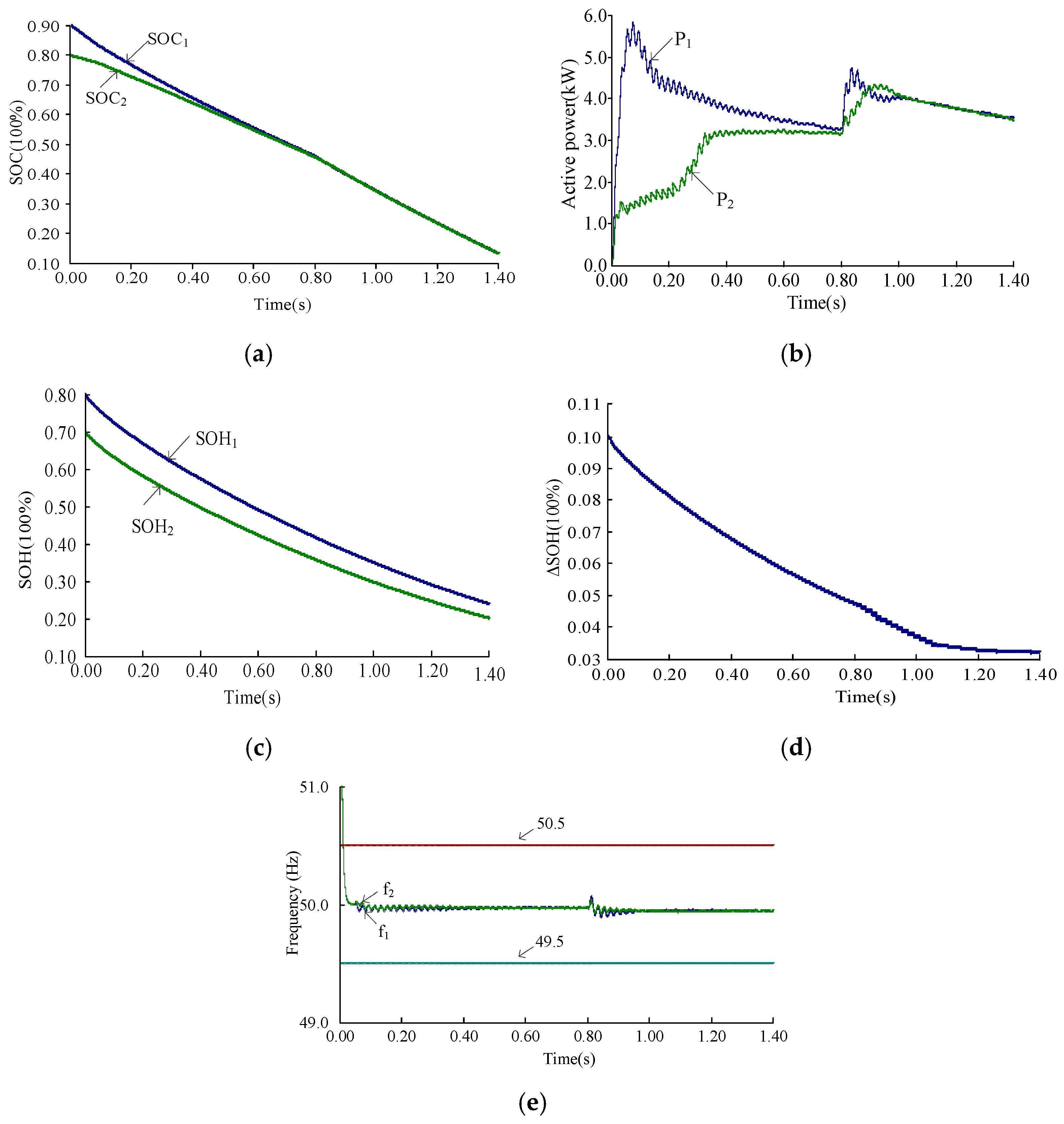
Figure 10 shows the simulation waveforms under different load conditions. At t = 0.8 s, Load 2 is added to increase the total load on the system. At t = 0.8 s, as the load increases, the output active powers of LBESS in Figure 10b increase to meet the load demand. At the same time, the decrease in SOC in Figure 10a increases, but the SOC balancing effect is still maintained. Figure 10c,d demonstrate that the proposed scheme can also achieve the control effect of reducing SOH balancing difference under load fluctuations. Meanwhile, the frequency in Figure 10e only experiences a slight drop at the moment of increased load. From the analysis of Figure 10, it can be observed that the proposed solution can still maintain remarkable SOC balancing control effect even after adding the additional load.

6.6. Simulation Analysis of Parallel Operation of Multiple LBESS

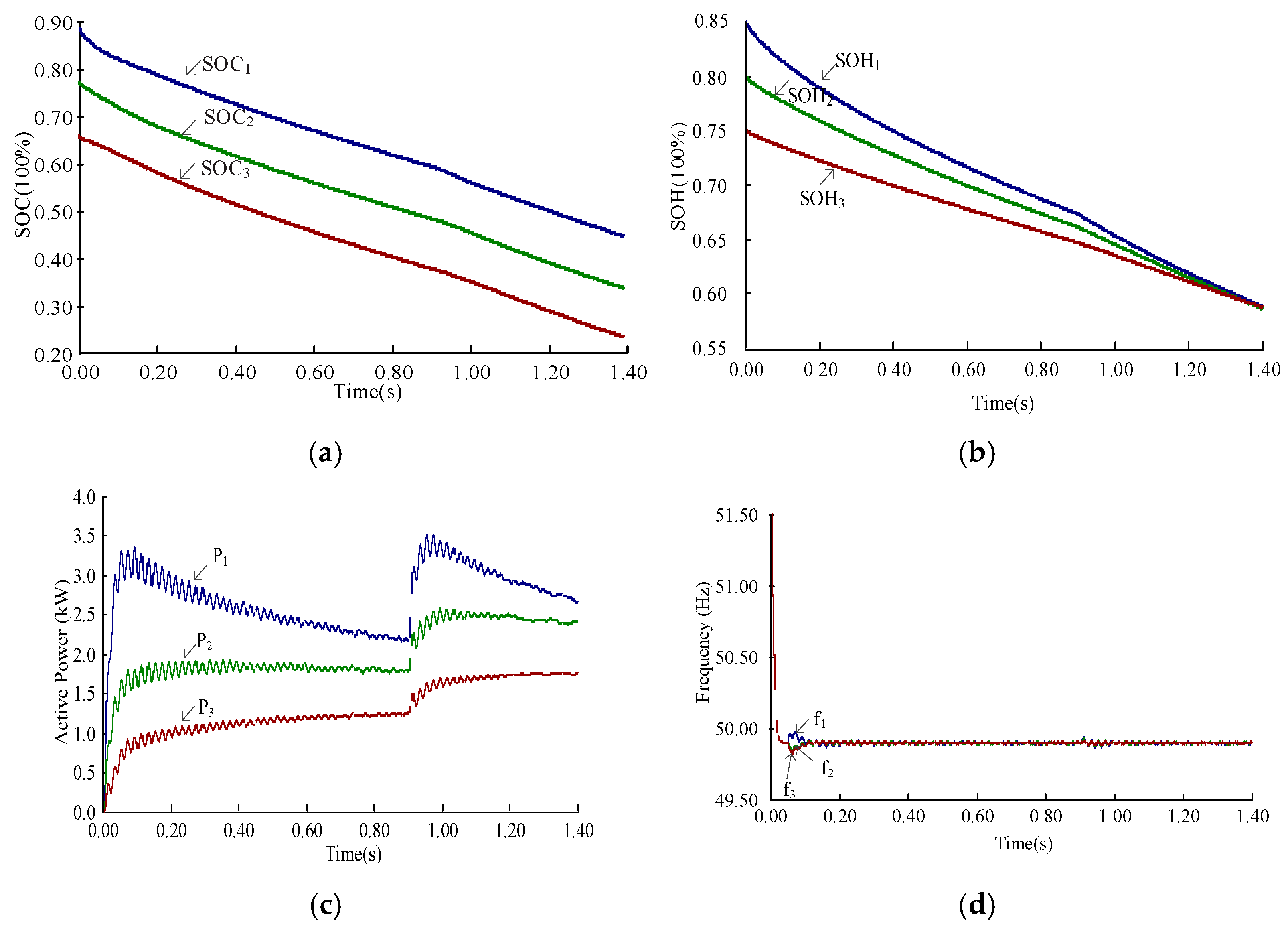
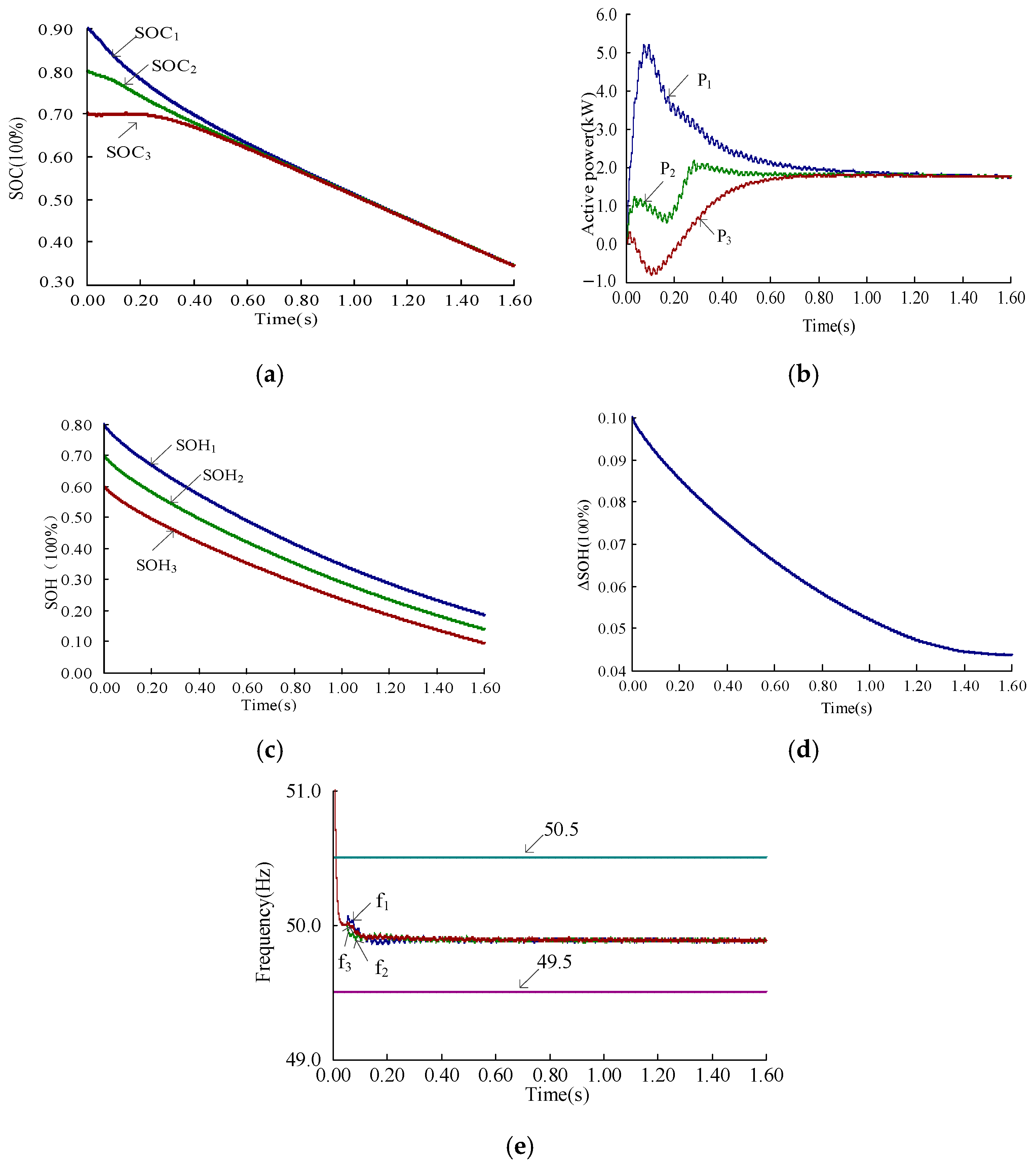
In Figure 11, the number of LBESS units is increased from two to three to validate the effectiveness of the proposed solution in the case of multiple parallel LBESS units. From Figure 11, it can be observed that when the proposed solution is applied to three LBESS inverters, it still achieves a similar control effect as in the case of two parallel LBESS units. This validates that the proposed solution can be extended to microgrid systems containing multiple LBESS units.

6.7. Comparative Analysis Between Different Schemes

In order to highlight the innovation of the proposed scheme, we defined SOC balancing difference, SOH balancing difference, and frequency offset separately, and their expressions are as shown in Equations (21)–(23). Furthermore, the SOC balancing difference, SOH balancing difference, and frequency offset of different control schemes are compared, and the comparison results are shown in Table 3. Table 3 shows that compared with traditional P-f droop control and SOC balancing schemes, the proposed scheme has the lowest SOC balancing difference, SOH balancing difference, and frequency offset value indicators. In addition, although the proposed scheme cannot achieve the SOH control effect of the SOH balance scheme, it achieves SOC balance while reducing the SOH balancing difference, which is incomparable to the SOH balancing scheme.
D S O C = S O C i S O C a v e S O C a v e
D S O H = S O H i S O H a v e S O H a v e
D f = f r e f f i

6.8. Simulation Verification of the Proposed Scheme During the Charging Process

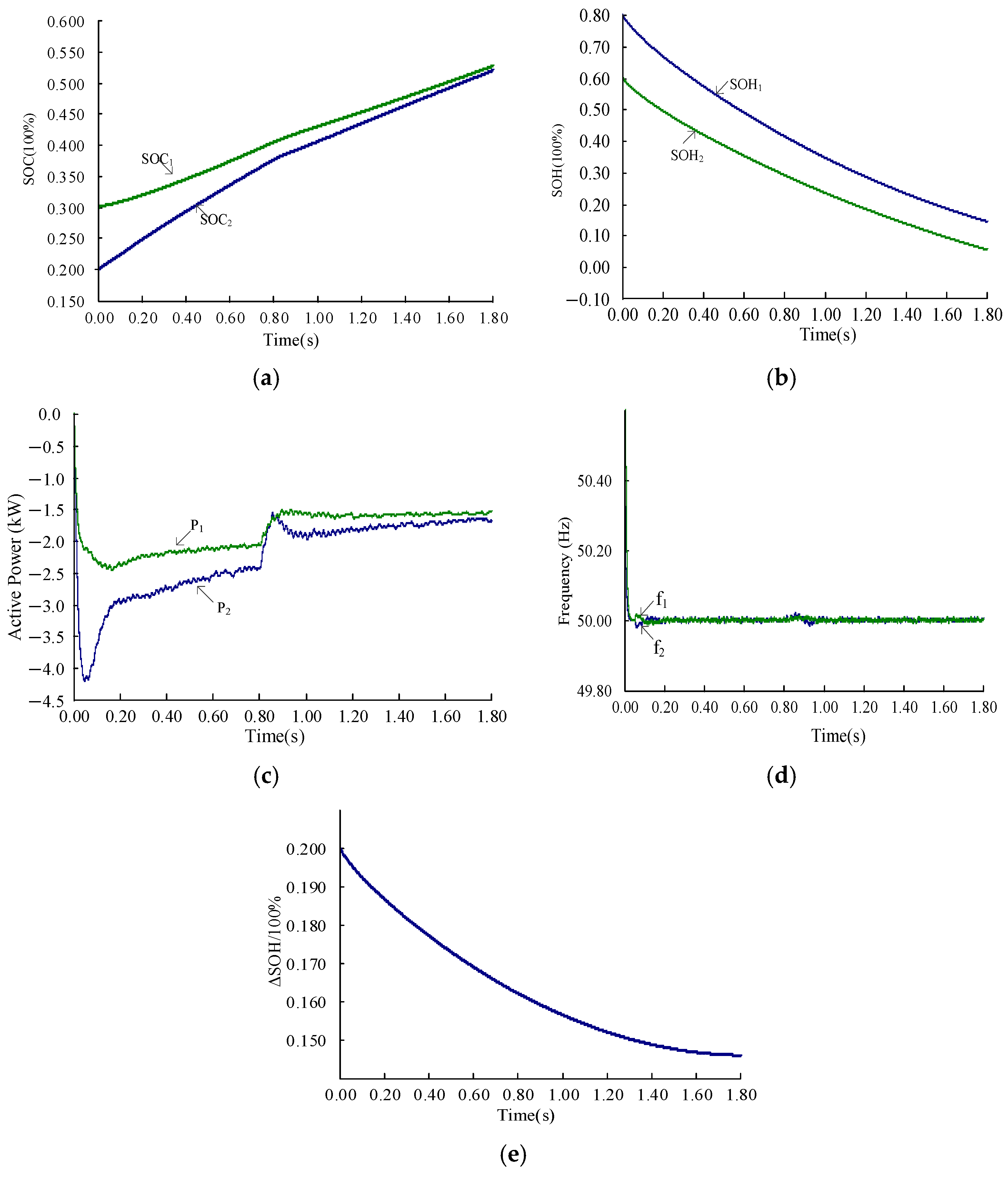
The control effect achieved by the proposed scheme during the LBESS charging process is shown in Figure 12. Figure 12a illustrates that the SOC can also be balanced during the charging process of LBESS. Figure 12b,e verify that the proposed scheme can also reduce the SOH balance difference during LBESS charging process. Due to the LBESS being in a charging state, the active power in Figure 12c is negative, and the steady-state frequency in Figure 12d is maintained at 50 Hz. Figure 9 verifies that the proposed scheme is not only applicable to the discharge process but also to the charging process and has practical engineering application value.

7. Experimental and Verification of the Proposed Scheme Under Multiple Work Conditions

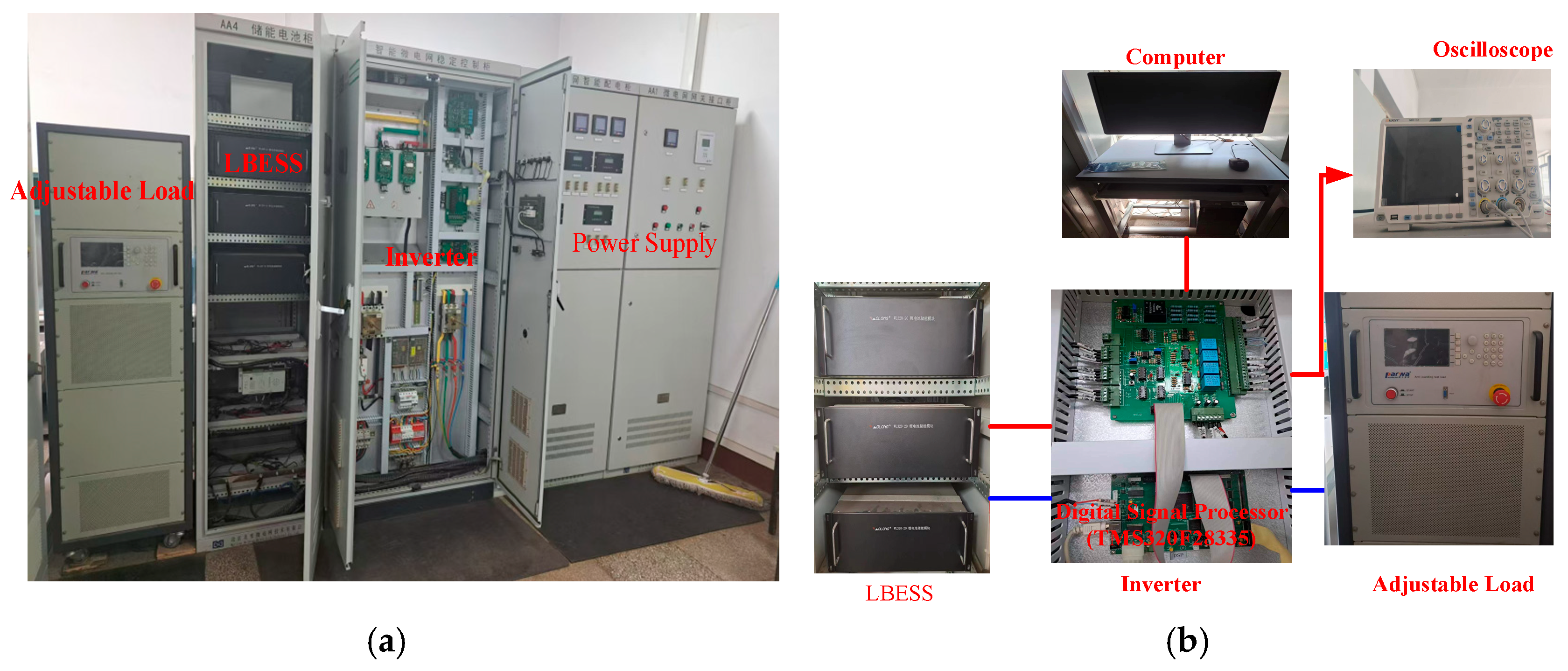
In this section, a multiple LBESS parallel low-power experimental platform is built to verify the effectiveness of the design scheme under different operating conditions. The experimental platform uses the TMS320F28335 DSP control chip from Texas Instruments (Dallas, TX, USA) and a hardware architecture of ARM Cortex A8 CPU + FPGA. The controlled area network (CAN) communication bus is used for real hardware communication. The PC uses the Windows 10 operating system with 16 GB of RAM. The experimental platform is shown in Figure 13, which is mainly composed of LBESS packs (18,650 lithium batteries), inverters, loads, a PC, and other devices. Each LBESS pack contains several lithium battery cells with a capacity of 2600 mAh. The experimental parameters are shown in Table 2. When selecting control coefficients in the experimental process, a small signal model was also established according to the analysis process of the system’s small signal model in Section 5, and parameters that can maintain system stability were selected. As Section 5 has already provided a detailed analysis of the principle of parameter selection, it is not repeated here.

7.1. Experimental Analysis of SOC Balancing Control Scheme Based on Droop Control

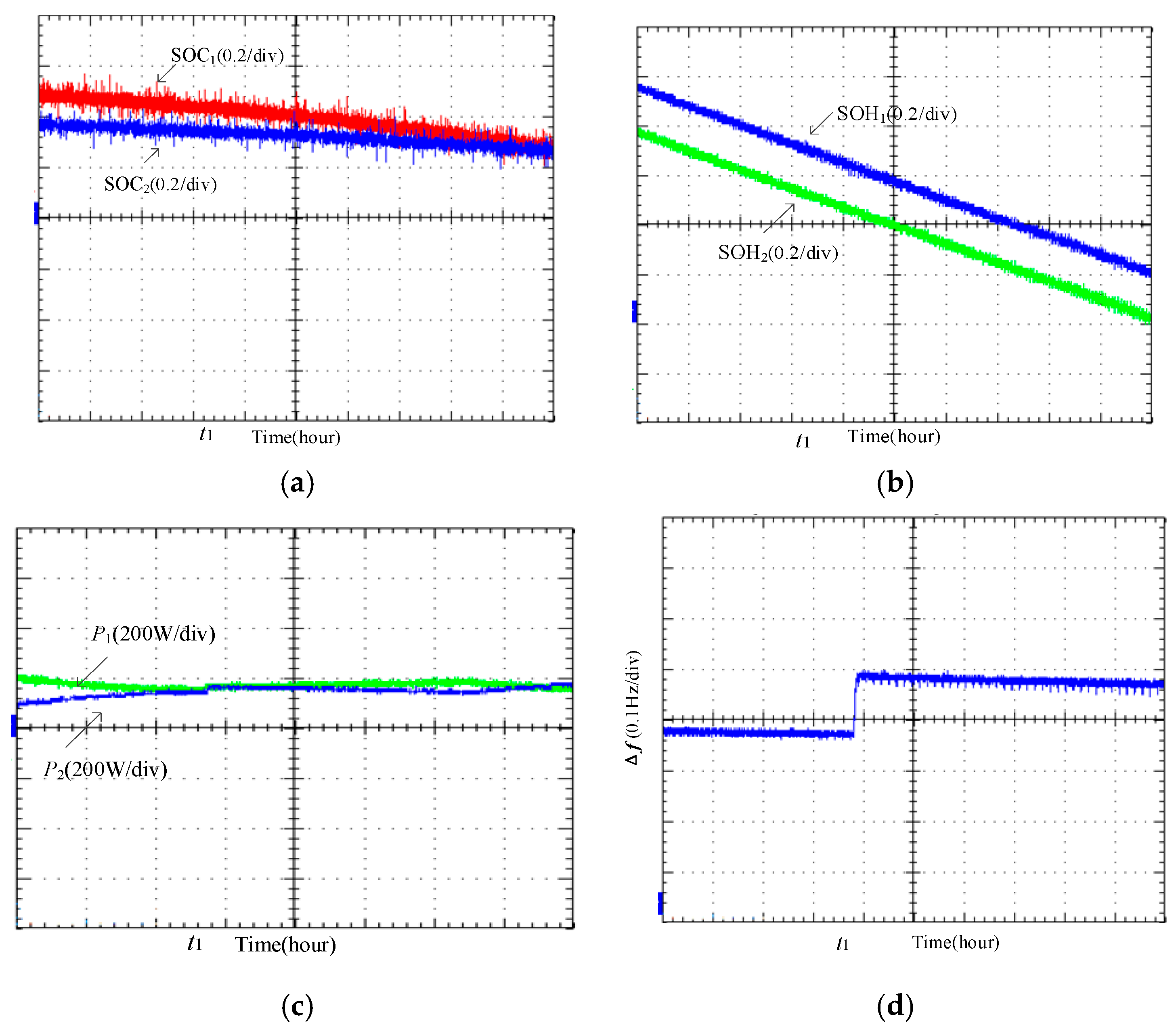
The experimental waveforms of two parallel LBESS adopt the SOC balancing scheme proposed in reference [9], as shown in Figure 14, and the system load increases at t = t1. By comparing with the simulation waveform shown in Figure 6, it can be seen that the experimental platform’s collected results are consistent with the simulation results, further verifying the shortcomings of the traditional SOC balancing scheme, which cannot reduce the SOH balancing difference. It is worth noting that due to the frequency deviation being usually small, the frequency deviation Δff = 50 − fi) is collected as the frequency index in the experiment. Therefore, unlike the simulated waveform, as the system load increases, the frequency of the system shows an upward trend.

7.2. The Proposed Control Scheme with Load Changes

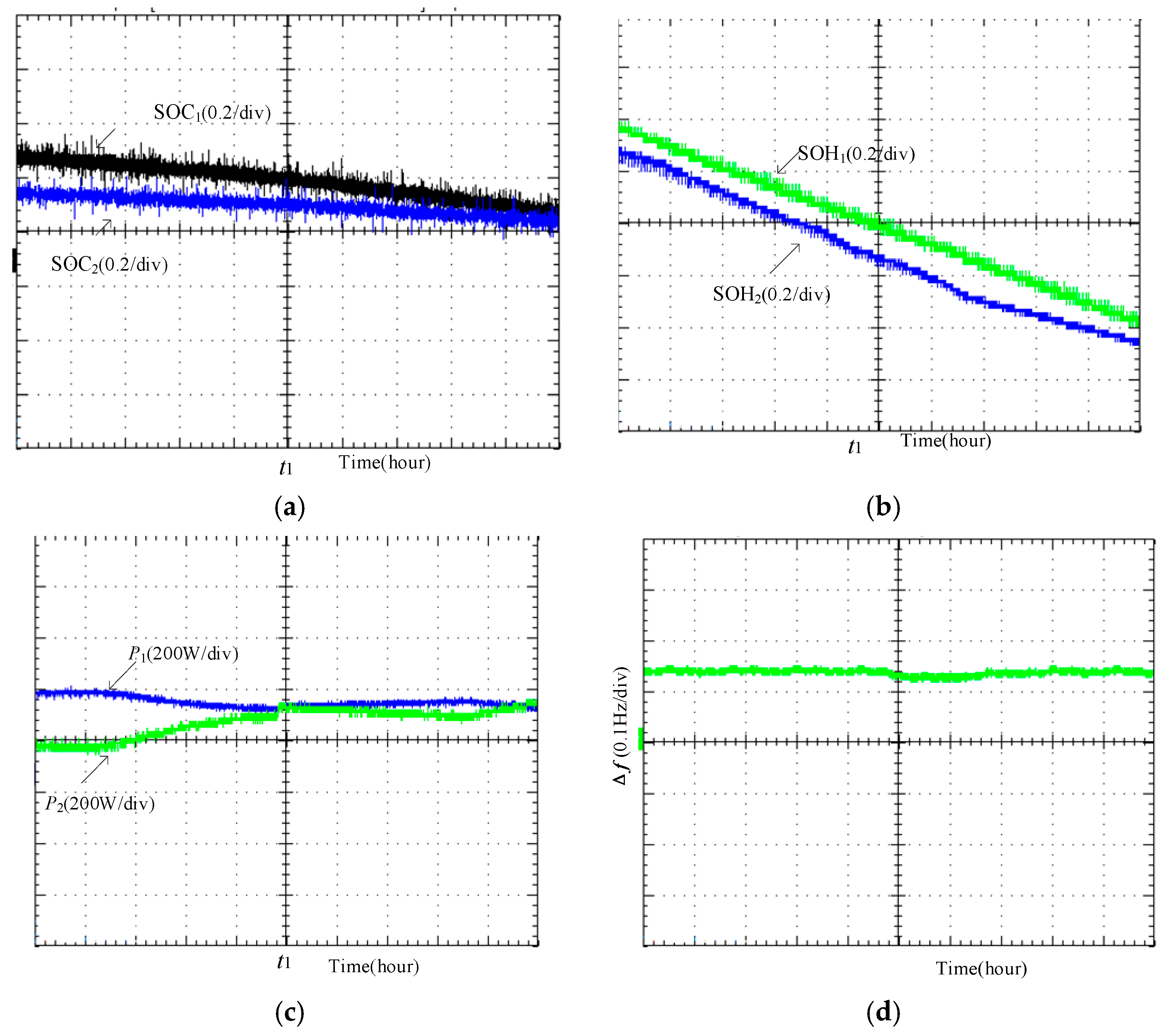
The experimental results under the proposed control scheme are shown in Figure 15, where the system load increases at t = t1. Figure 15a illustrates that the proposed scheme can also achieve good SOC balancing effect under load changes. Compared with Figure 14b, the SOH in Figure 15b shows a gradually approaching trend, and the SOH balancing difference significantly decreases, indicating that the designed scheme can reduce the SOH balancing difference while balancing SOC. The transient active power regulation process in Figure 15c is significantly different from that in Figure 14c, which is also the key to reducing the SOH balance difference in the proposed scheme. In addition, compared with the frequency waveform in Figure 14d, the frequency waveform shown in Figure 15d did not show significant offset, thus proving the superiority of the proposed scheme in maintaining frequency quality.

7.3. Experimental Analysis of Parallel Operation of Multiple LBESS

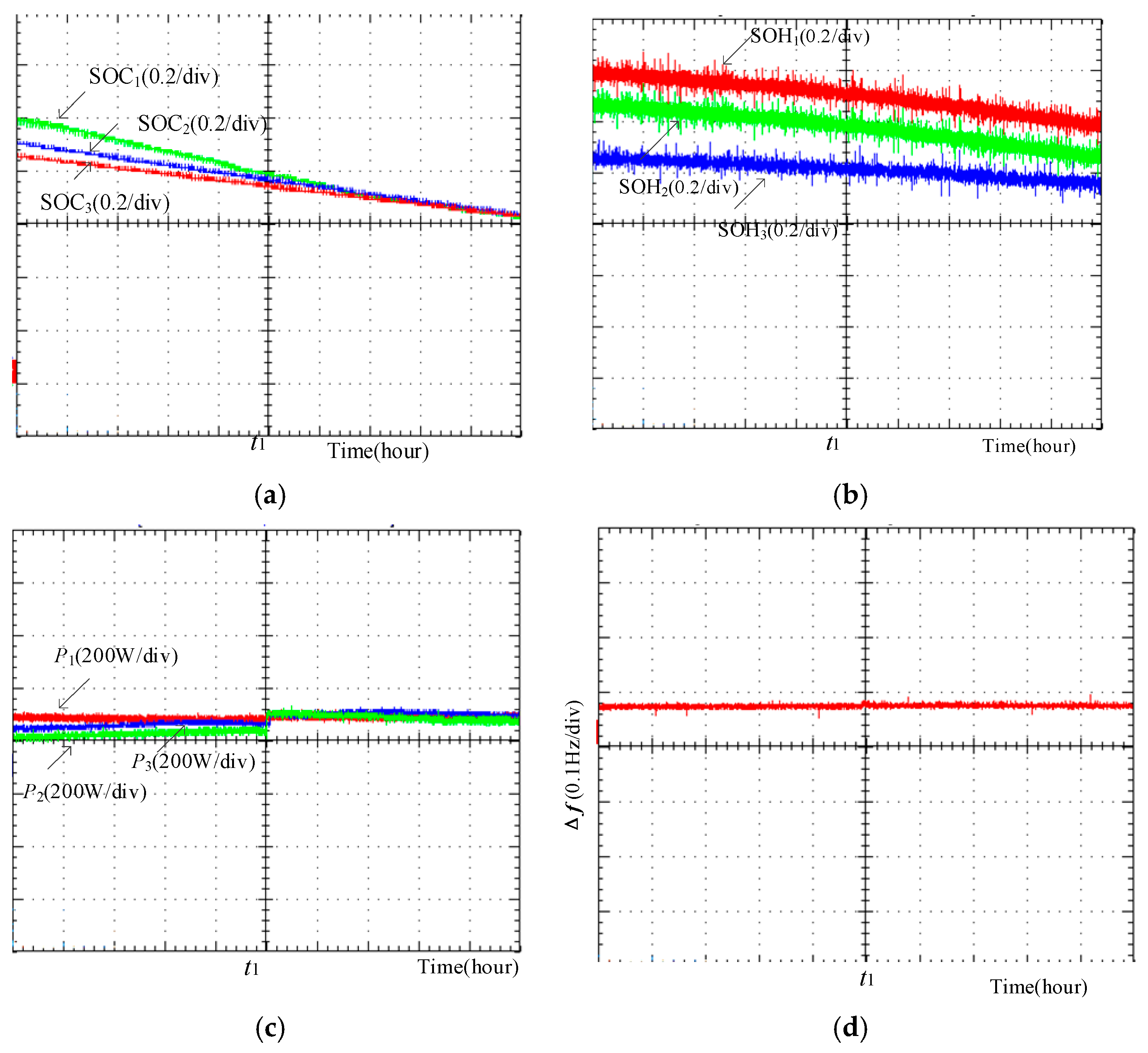
Due to limitations in experimental conditions, only three LBESS are connected in parallel during the operation of multiple LBESS. The experimental results in Figure 16 indicate that with an increase in the number of LBESS, the control effect achieved is similar to that of the 6.6 operating condition, which verifies that the proposed solution is not affected by the increase in the number of LBESS and has good scalability.

8. Conclusions

This study proposes an SOC balancing scheme of microgrid LBESS considering SOH. By introducing SOC balancing factors and HSF into traditional P-f droop control, the control objectives are achieved through their combined effect. Compared with traditional SOC balancing schemes, simulation and experimental results validate the advanced nature of the proposed solution and its applicability to load variations and multiple parallel LBESS scenarios. The main conclusions of this study are summarized as follows:
  • The proposed solution adjusts the active power of LBESS inverters based on the SOH and SOC states. It not only achieves SOC balancing but also reduces the SOH balancing errors, thereby overcoming the limitations associated with large SOH balancing discrepancies in traditional P-f droop control and SOC balancing strategies.
  • The SOC balancing factors and HSF of the proposed solution gradually decrease during the SOC balancing process. After SOC balancing, the SOC balancing factors and HSF reduce to 0, thereby avoiding frequency deviation issues.
  • The proposed solution is applicable to medium- and high-voltage microgrid energy storage systems with centralized controllers. Under the normal operation of central control and good communication conditions, the best control effect can be achieved.

Author Contributions

Methodology, J.Y.; Software, J.Y. and Q.W.; Formal analysis, S.Y.; Investigation, J.Y., L.L. and Q.W.; Resources, L.L. and Q.W.; Data curation, J.Y., R.M. and Q.W.; Writing—original draft, J.Y.; Writing—review and editing, J.Y., Y.F. and Q.W.; Supervision, J.Y., R.M. and Q.W. All authors have read and agreed to the published version of the manuscript.

Funding

This work was supported in part by the Shanxi Province Basic Research Program (202203021221153), Postgraduate Education Innovation Program of Shanxi Province (2025SJ366) and National College Student Innovation and Entrepreneurship Program Project (20250904).

Data Availability Statement

The original contributions presented in this study are included in the article. Further inquiries can be directed to the corresponding author.

Conflicts of Interest

The authors declare no conflicts of interest.

References

  1. Pan, T.; Li, C.; Jin, X.; Meng, Z.; Cai, X. Energy storage capacity configuration and scheduling method for microgrid considering demand response. Energies 2025, 18, 5167. [Google Scholar] [CrossRef]
  2. Tewari, C.; Rawat, K.S.; Yoon, S.; Jung, Y.C. Polymer-Based electrolytes for organic batteries. Energies 2025, 18, 5168. [Google Scholar] [CrossRef]
  3. Wang, X.; Zhu, H.; Luo, X.; Guan, X. Data-Driven-Based detection and localization framework against false data injection attacks in DC microgrids. IEEE Internet Things J. 2025, 12, 36079–36093. [Google Scholar] [CrossRef]
  4. Wang, X.; Zhu, H.; Luo, X.; Chang, S.; Guan, X. A novel optimal dispatch strategy for hybrid energy ship power system based on the improved NSGA-II algorithm. Electr. Power Syst. Res. 2024, 232, 110385. [Google Scholar] [CrossRef]
  5. Chang, X.Y.; Li, R.P.; Wang, Y.T.; Zhai, M.J.; Cai, J.H. A two-stage soc balancing control strategy for distributed energy storage systems in dc microgrids based on improved droop control. J. Electr. Eng. Technol. 2024, 19, 3891–3905. [Google Scholar] [CrossRef]
  6. Wang, X.; Li, R.; Luo, X.; Guan, X. Improved differential mutation aquila optimizer-based optimization dispatching strategy for hybrid energy ship power system. IEEE Trans. Transp. Electrif 2025, 11, 12667–12683. [Google Scholar] [CrossRef]
  7. Ma, Z.; Gao, F.; Gu, X.; Li, N.; Wang, X.L. Multilayer SOH equalization scheme for mmc battery energy storage system. IEEE Trans. Power Electron. 2020, 35, 13514–13527. [Google Scholar] [CrossRef]
  8. Lu, X.N.; Sun, K.; Guerrero, J.M.; Vasquez, J.C.; Huang, L.P. Double-Quadrant state-of-charge-based droop control method for distributed energy storage systems in autonomous DC microgrids. IEEE Trans. Smart Grid 2015, 6, 147–157. [Google Scholar] [CrossRef]
  9. Sun, X.F.; Hao, Y.C.; Wu, Q.F. A multifunctional and wireless droop control for distributed energy storage units in islanded AC microgrid applications. IEEE Trans. Power Electron. 2017, 32, 736–751. [Google Scholar] [CrossRef]
  10. Fan, M.S.; Geng, M.M.; Yang, M.J.; Liu, H. State of health estimation of lithium-ion battery based on electrochemical impedance spectroscopy. Energies 2023, 16, 3393. [Google Scholar] [CrossRef]
  11. Hoang, K.D.; Lee, H.H. Accurate power sharing with balanced battery state of charge in distributed DC microgrid. IEEE Trans. Ind. Electron. 2019, 66, 1883–1893. [Google Scholar] [CrossRef]
  12. Li, P.; Zhang, C.; Yuan, R.; Kan, Z.; Chen, Y. Load current sharing method of distributed energy storage systems by improved SOC drooping control. Proc. CSEE 2017, 37, 3746–3754. [Google Scholar] [CrossRef]
  13. Guan, Y.; Meng, L.; Li, C.; Vasquez, J.C.; Guerrero, J.M. A dynamic consensus algorithm to adjust virtual impedance loops for discharge rate balancing of AC microgrid energy storage units. IEEE Trans. Smart Grid 2018, 9, 4847–4860. [Google Scholar] [CrossRef]
  14. Wu, Q.F.; Chu, X.L.; Fan, Y.M.; Liu, L.Q.; Sun, X.F. Consistency algorithm-based SOC balancing scheme of retired non-equal capacity lithium battery in virtual synchronous generator controlled microgrids. IEEE Access 2025, 13, 9073–9088. [Google Scholar] [CrossRef]
  15. Barresi, M.; De Simone, D.; Piegari, L. Direct state-of-charge balancing control for modular multilevel converter integrating batteries. IEEE J. Emerg. Sel. Top. Power Electron. 2025, 13, 733–746. [Google Scholar] [CrossRef]
  16. Bi, K.; Zhang, S.; Zhu, Y. An improved SOC balancing strategy for HVDC modular energy storage system based on low bandwidth communication with enhanced current regulation accuracy. IEEE Trans. Energ. Convers. 2021, 36, 3355–3364. [Google Scholar] [CrossRef]
  17. Cao, Y.; Abu Qahouq, J.A. Hierarchical SOC balancing controller for battery energy storage system. IEEE Trans. Ind. Electron. 2021, 68, 10. [Google Scholar] [CrossRef]
  18. Cheng, C.Z.; Xu, C.; Dai, K.; Huang, Y.S.; Pan, F. Three-level balancing control for battery state-of-charge based on MMC-LBESS. Power Syst. Prot. 2021, 49, 100–108. [Google Scholar] [CrossRef]
  19. Li, N.; Gao, F.; Hao, T. SOH balancing control method for the MMC battery energy storage system. IEEE Trans. Ind. Electron. 2018, 65, 6581–6591. [Google Scholar] [CrossRef]
  20. Liu, B.; Wu, T.; Liu, Z. A small-AC-signal injection-based decentralized secondary frequency control for droop-controlled Islanded Microgrids. IEEE Trans. Power Electron. 2020, 35, 11634–11651. [Google Scholar] [CrossRef]
  21. Ling, Y.; Li, Y.; Yang, Z.; Xiang, J. A dispatchable droop control method for distributed generators in islanded AC microgrids. IEEE Trans. Ind. Electron. 2021, 68, 8356–8366. [Google Scholar] [CrossRef]
  22. Wang, C.; Zhang, Q.; Han, L. A Novel Construction Method and Control Strategy of Modular Battery Energy Storage Systems Based on Improved Droop Control. IEEE Trans. Power Electron. 2025, 40, 11490–11508. [Google Scholar] [CrossRef]
  23. Zhang, Y.; Jing, S.; Wei, Y.; Li, T.; Huang, Z. A dynamic power balancing method for aircraft battery packs based on fuzzy droop control. IEEE J. Emerg. Sel. Top. Power Electron. 2025, 13, 4598–4606. [Google Scholar] [CrossRef]
  24. Sun, P.; Pinthurat, W.; Li, G.; Khalid, M.; Town, G.E.; Konstantinou, G. Adaptive droop control in VSC-based MT-MVDC distribution systems considering ESS participation. IEEE Trans. Energy Convers. 2025, 40, 761–772. [Google Scholar] [CrossRef]
  25. Tran, A.T.; Huynh, V.V.; Shim, J.W.; Lim, C.P. Optimized sliding mode frequency controller for power systems integrated energy storage system with droop control. IEEE Access 2025, 13, 43749–43766. [Google Scholar] [CrossRef]
  26. Ouoba, S.V.; Houari, A.; Machmoum, M. A resilient control for distributed energy storage units in an islanded ac microgrid. IEEE J. Emerg. Sel. Top. Power Electron. 2024, 12, 1446–1455. [Google Scholar] [CrossRef]
  27. Wu, Q.F.; Yang, K.Y.; Yu, S.J.; Liu, L.Q. Active SOH cooperative control scheme of micogrid energy storage systems based on no-communication. Acta Energi. Solaris Sin. 2023, 44, 40–47. [Google Scholar] [CrossRef]
Figure 1. Simulation waveforms under traditional P-f droop control. (a) SOC; (b) active power; (c) SOH; (d) SOH imbalance difference; (e) frequency.
Energies 19 00180 g001
Figure 2. Schematic diagram of the proposed scheme.
Energies 19 00180 g002
Figure 3. Control block diagram of the proposed SOC balancing scheme.
Energies 19 00180 g003
Figure 4. The dominant pole with different droop coefficients. (a) m = 0 to 10.8 × 10⁻³ rad/W, n = 0.08 × 10⁻³ rad, GP = 0.4 × 10⁻³, Gi = 1 × 10⁻³. (b) m = 0.3 × 10⁻³ rad/W, n = 0 to 0.5 × 10⁻³ rad, GP = 0.4 × 10⁻³, Gi = 1 × 10⁻³. (c) m = 0.3 × 10⁻³ rad/W, n = 0.08 × 10⁻³ rad, GP = 0 to 5.6 × 10⁻³, Gi = 1 × 10⁻³. (d) m = 0.3 × 10⁻³ rad/W, n = 0.08 × 10⁻³ rad, GP = 0.4 × 10⁻³, Gi = 0 to 3.9 × 10⁻³.
Energies 19 00180 g004
Figure 5. Simulation model.
Energies 19 00180 g005
Figure 6. Simulation waveforms of SOC balancing control based on droop control. (a) SOC; (b) active power; (c) SOH; (d) SOH imbalance difference; (e) frequency.
Energies 19 00180 g006
Figure 7. Simulation waveforms of SOC balancing control based on distributed control. (a) SOC; (b) active power; (c) SOH; (d) SOH imbalance difference; (e) frequency.
Energies 19 00180 g007
Figure 8. Simulation waveforms of SOH balancing control based on droop control. (a) SOC; (b) SOH; (c) active power; (d) frequency.
Energies 19 00180 g008
Figure 9. Simulation waveform of SOC balancing scheme considering SOH. (a) SOC; (b) active power; (c) SOH; (d) SOH imbalance difference; (e) frequency.
Energies 19 00180 g009
Figure 10. Simulation waveforms under different load conditions. (a) SOC; (b) active power; (c) SOH; (d) SOH imbalance difference; (e) frequency.
Energies 19 00180 g010
Figure 11. Simulation waveforms of three LBESS in parallel. (a) SOC; (b) active power; (c) SOH; (d) SOH imbalance difference; (e) frequency.
Energies 19 00180 g011
Figure 12. Simulation waveforms of the proposed scheme during the charging process. (a) SOC; (b) SOH; (c) active power; (d) frequency; (e) SOH imbalance difference.
Energies 19 00180 g012
Figure 13. Experimental platform. (a) Experimental platform. (b) Experimental equipment connection diagram.
Energies 19 00180 g013
Figure 14. Experimental waveforms of SOC balancing control based on droop control. (a) SOC; (b) SOH; (c) active power; (d) frequency.
Energies 19 00180 g014
Figure 15. Experimental waveforms of SOC balancing scheme considering SOH. (a) SOC; (b) SOH; (c) active power; (d) frequency.
Energies 19 00180 g015
Figure 16. Experimental waveforms of three LBESS in parallel. (a) SOC; (b) SOH; (c) active power; (d) frequency.
Energies 19 00180 g016
Table 1. Parameters for plotting root locus.
ItemSymbolNominal Value
Filter cut-off frequencyωc120 rad/s
Initial Phase Differenceθ0.25 rad
Line ImpedanceX1.5 Ω
Capacity of DESUQrated100 Ah
Droop Coefficientm0 to 0.8 × 10⁻³ rad/W
Droop Coefficientn0 to 0.5 × 10⁻³ rad
CoefficientGP0 to 5.6 × 10⁻³
CoefficientGi0 to 3.9 × 10⁻³
Table 2. Simulation and experimental parameters.
ProjectSymbolSimulation
Parameters
Experimental
Parameters
Line impedanceR1 + jX10.2 + j2 Ω0.2 + j1.0 Ω
Line impedanceR2 + jX20.4 + j4 Ω0.4 + j2.0 Ω
Rated frequencyfref50 Hz50 Hz
LBESS voltageVdc230 V200 V
LBESS1 pack rated capacityQrated1200 Ah40 Ah
LBESS2 pack rated capacityQrated2200 Ah40 Ah
Droop coefficientm0.36 × 10−3 rad/W0.12 × 10−3 rad/W
Droop coefficientn0.178 × 10−3 rad0.227 × 10−3 rad
Proportionality coefficientkp1.20.45
Integral coefficientki0.540.17
DOD coefficienta694694
DOD coefficientb0.7950.795
LBESS cumulative cycleCalc500500
Table 3. Comparison of results under different control schemes.
SchemesSOC Balancing Difference (%)SOH Balancing
Difference (%)
Frequency
Offset (Hz)
Traditional P-f droop control10.59.30.08
SOC balancing scheme based on droop control [9]0.98.50.12
SOC balancing scheme based on distributed control [26]0.88.10.0003
SOH balancing scheme based on droop control [27]9.80.90.05
The proposed scheme0.74.20.01
Disclaimer/Publisher’s Note: The statements, opinions and data contained in all publications are solely those of the individual author(s) and contributor(s) and not of MDPI and/or the editor(s). MDPI and/or the editor(s) disclaim responsibility for any injury to people or property resulting from any ideas, methods, instructions or products referred to in the content.