
Thermal–Fluid Behavior and Heat-Transfer Enhancement in PEMFC Cooling Plates Using Multi-Fin Zigzag Channels Under Variable Slope Angles

Abstract
1. Introduction
2. Materials and Methods
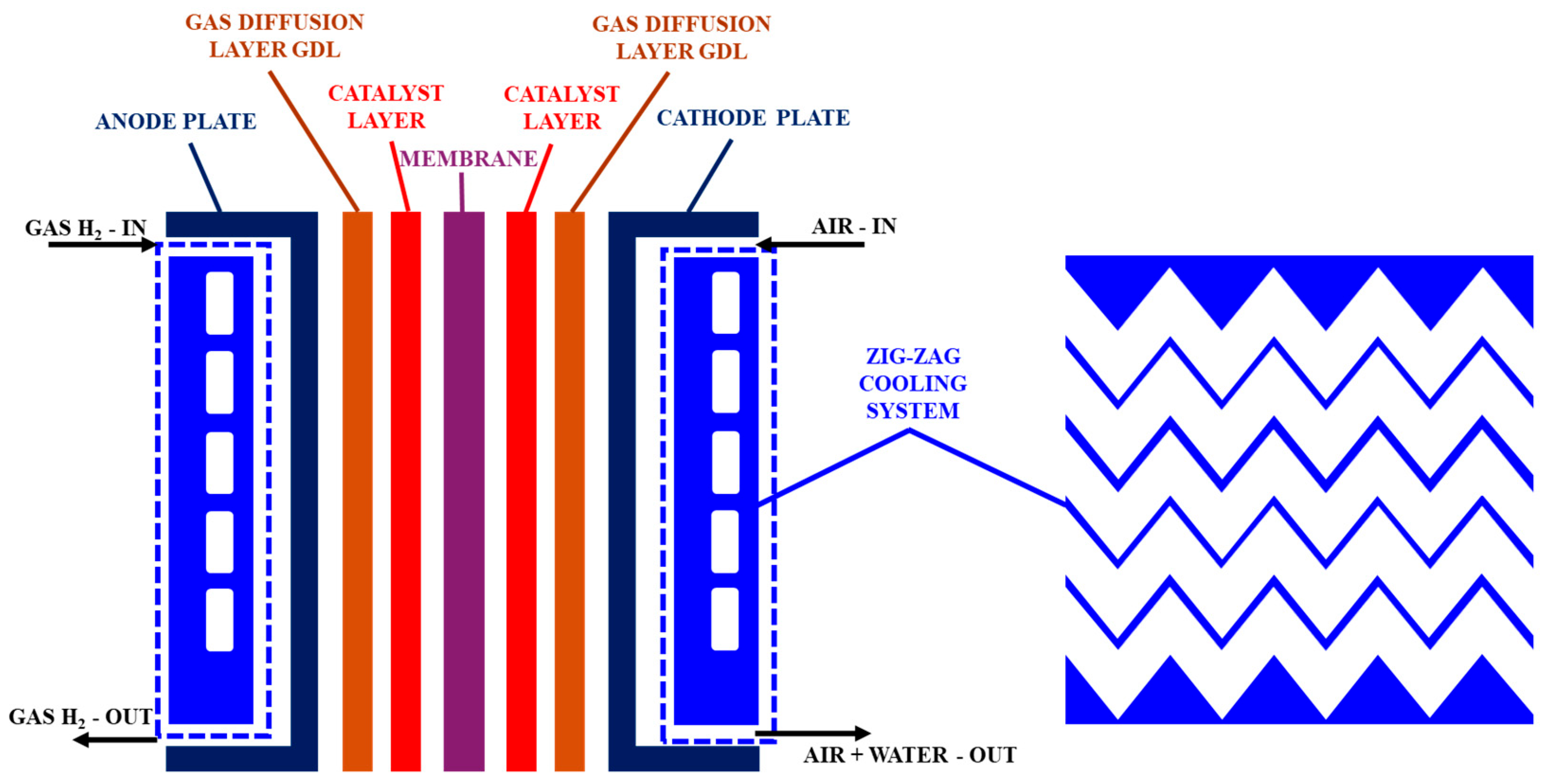
2.1. PEMFC Stack Architecture and Cooling Channel Arrangement
2.2. Experimental Setup
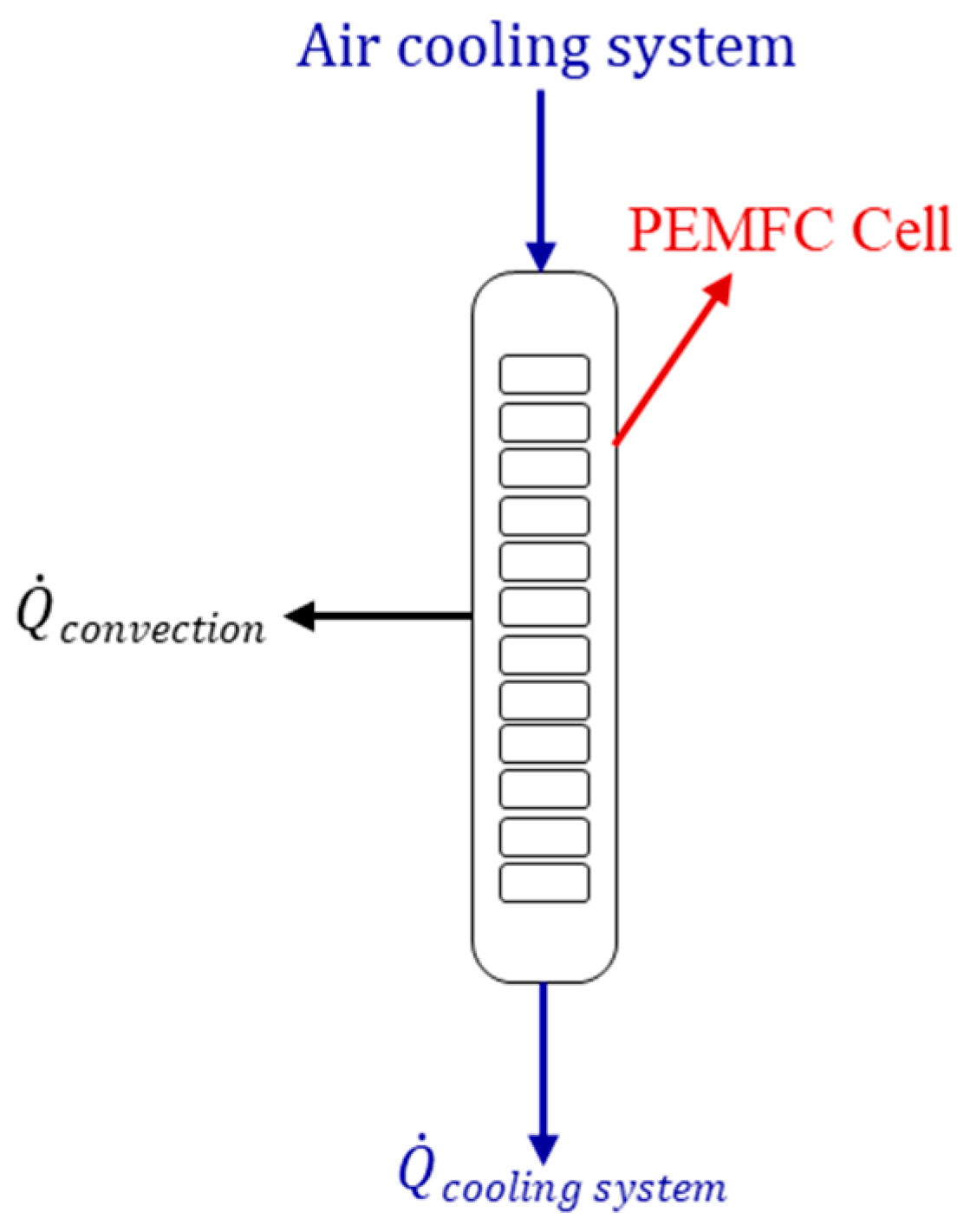
2.3. Calculation for Heat Transfer in Cooling System
2.3.1. Cooling System Heat ()
2.3.2. Convective Heat Transfer ()
2.3.3. Cooling System Efficiency
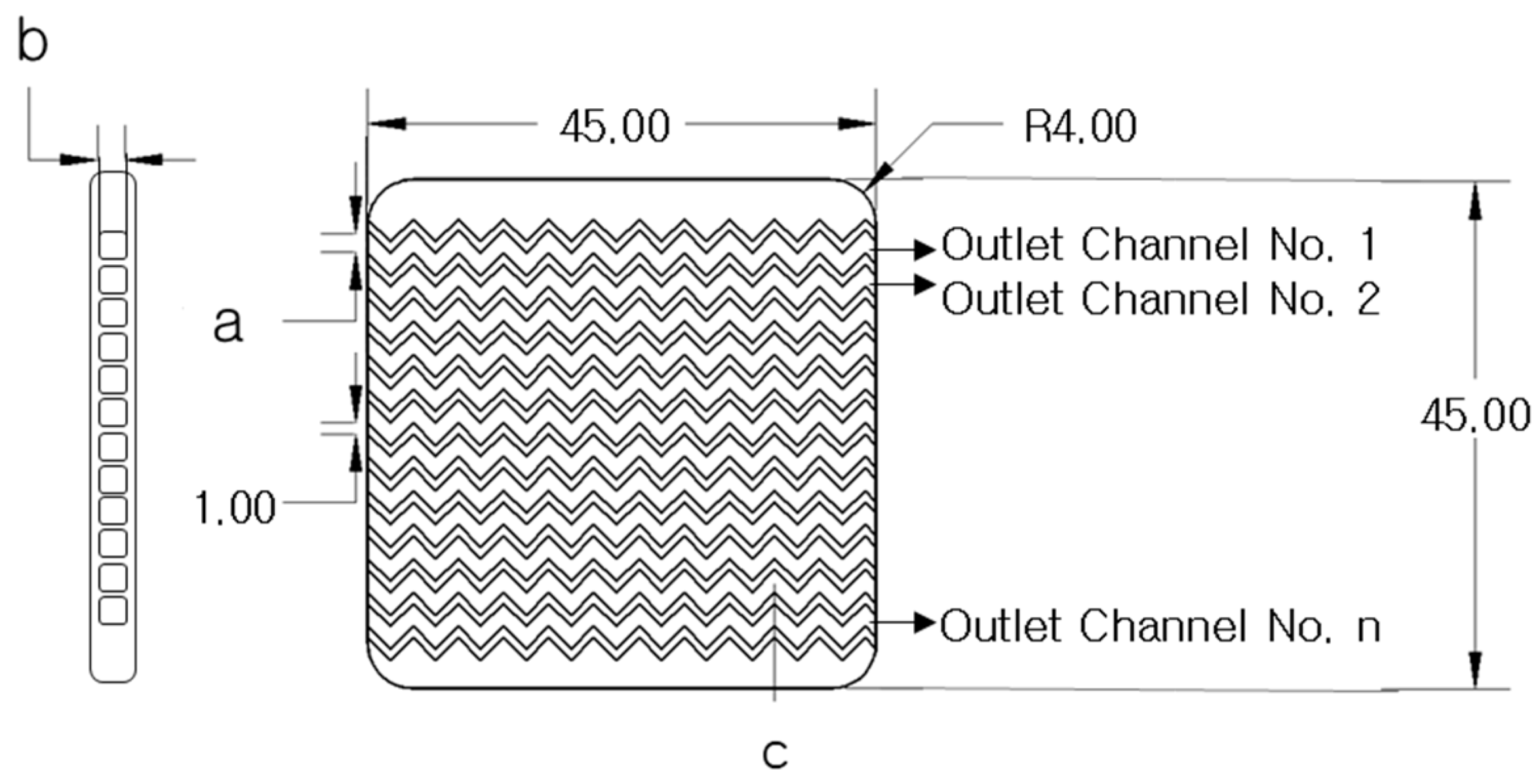
2.4. Parameter of Manifold and Cooling Channel
2.5. Numerical Method
2.5.1. Geometry Model
2.5.2. CFD Method System
2.5.3. Model Validation Using Experimental Results
3. Results and Discussion
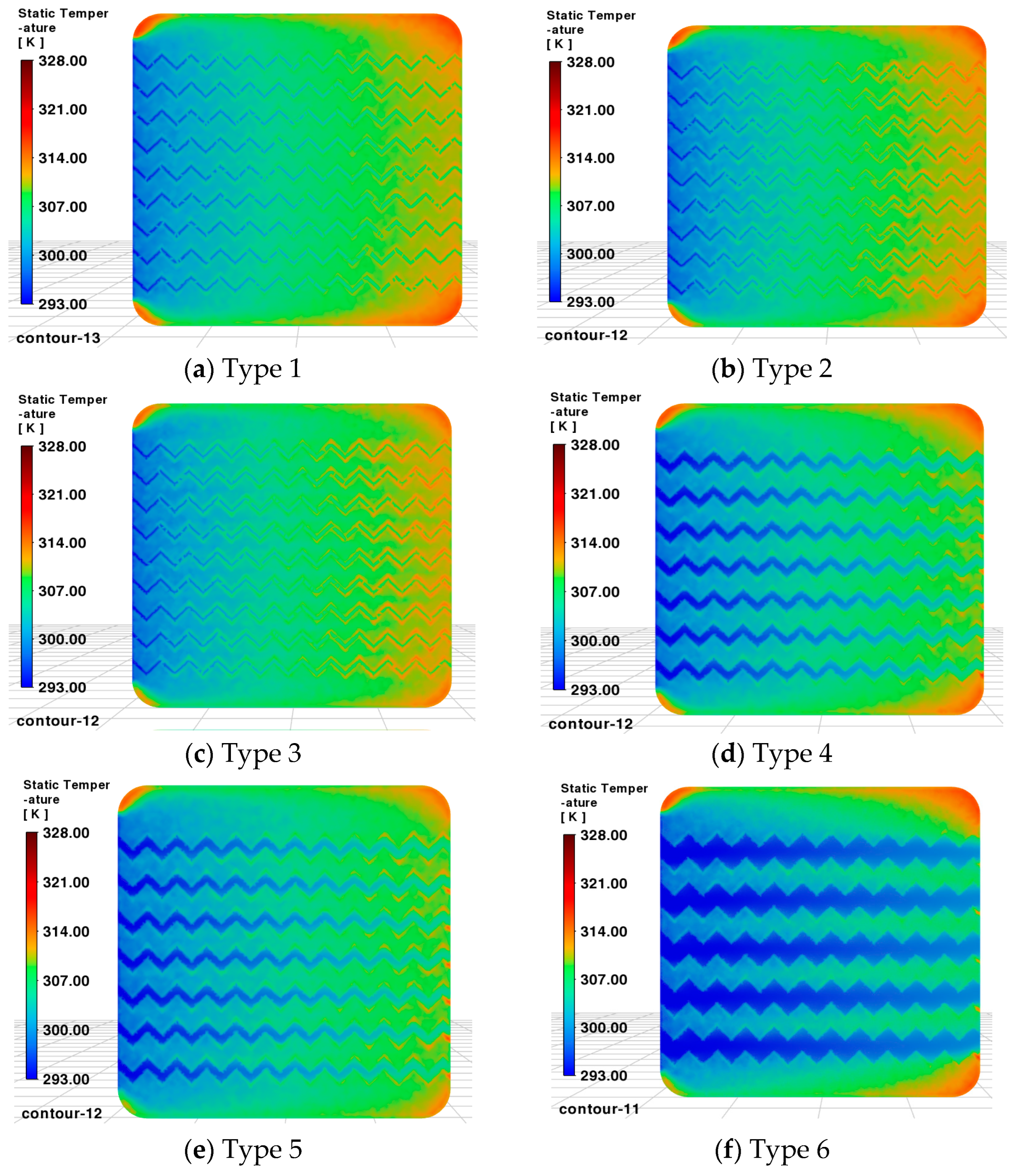
3.1. Temperature, Velocity, and Heat Flow Under Baseline Condition (Slope Angle c = 90°)
3.2. Effect of Low and High Slope Angle on Temperature, Velocity, and Heat Flow Distribution
3.3. Total Heat Flow, Heat Flow of Each Area, and Efficiency of Cooling System
4. Conclusions
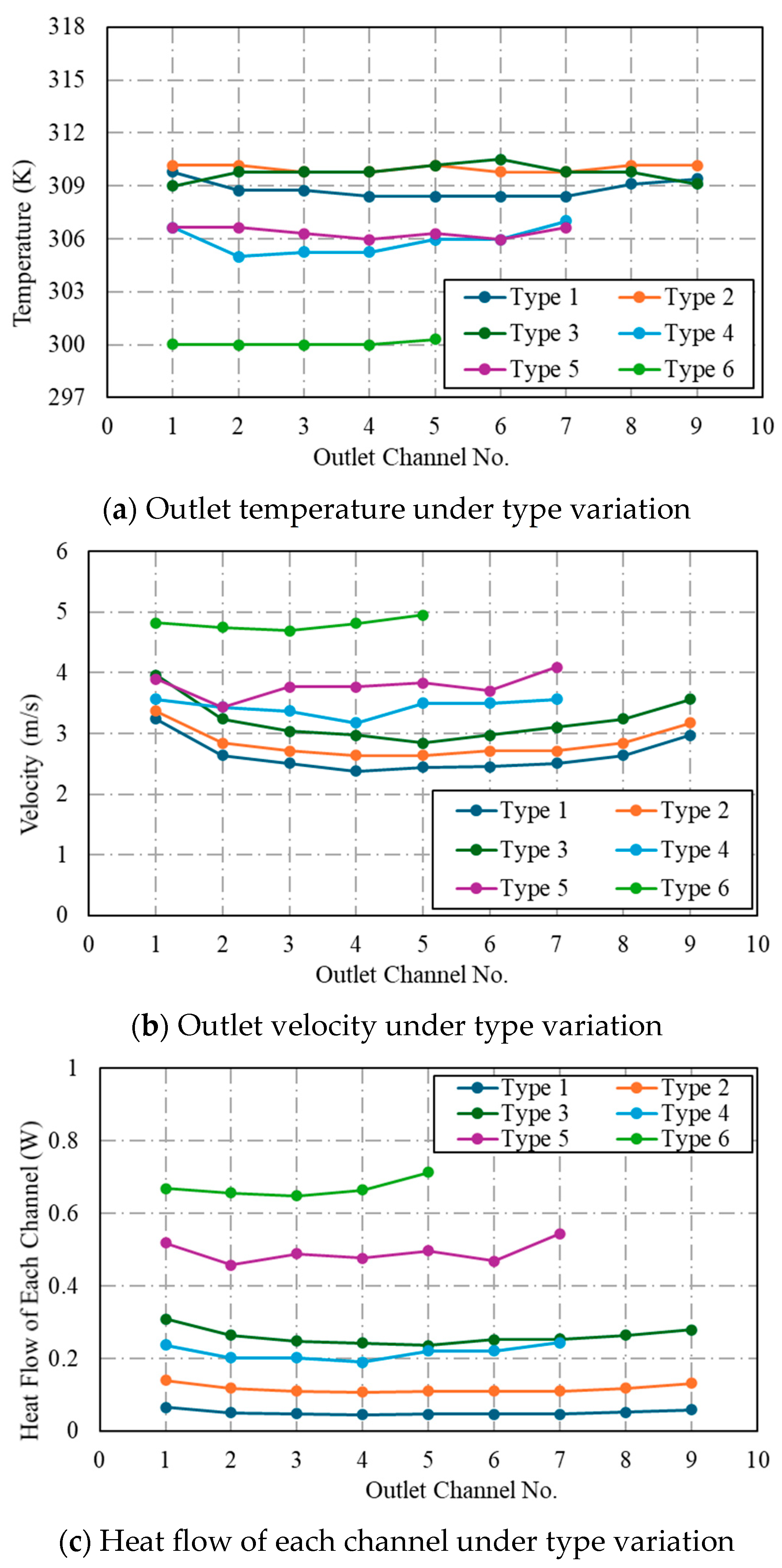
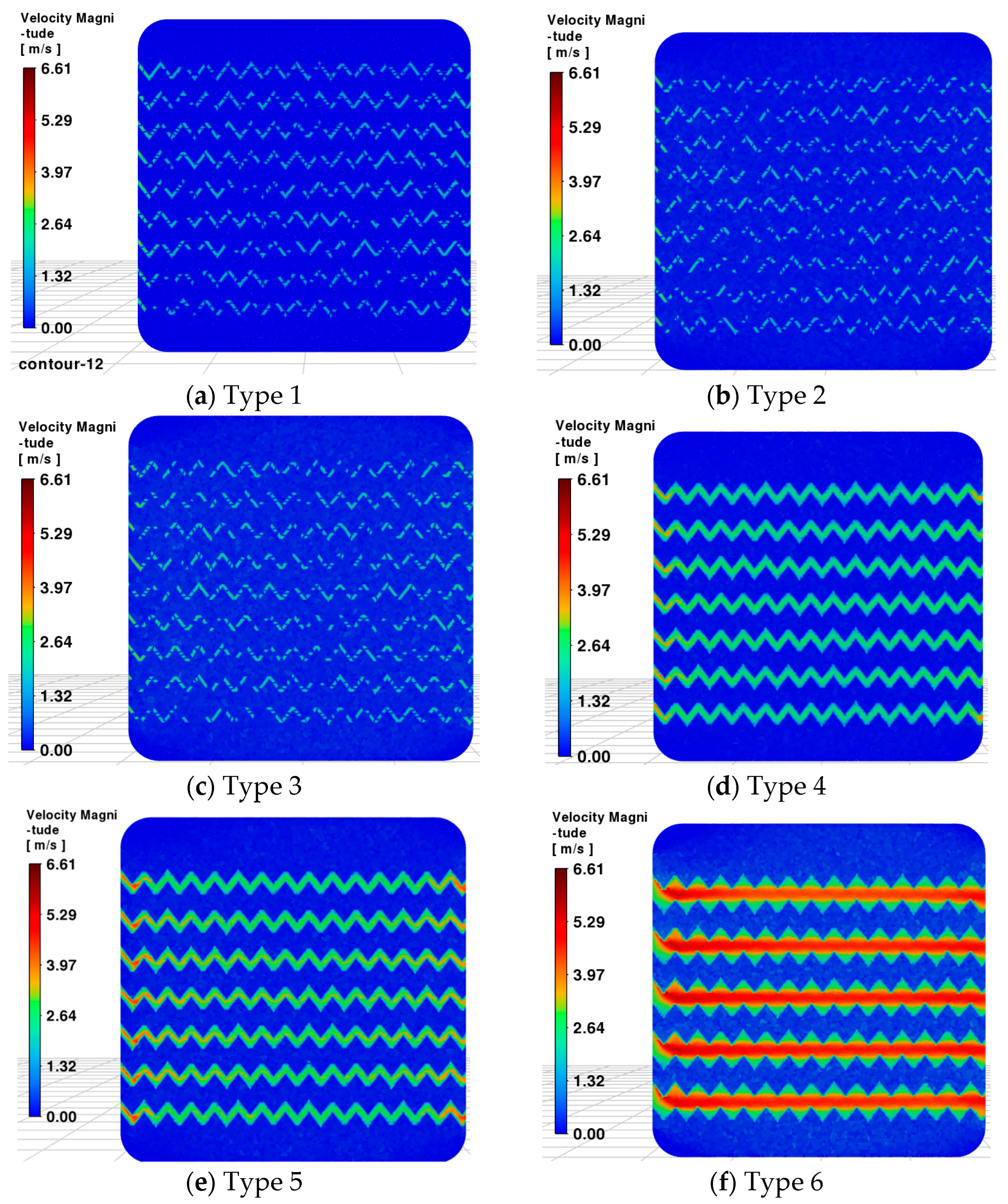
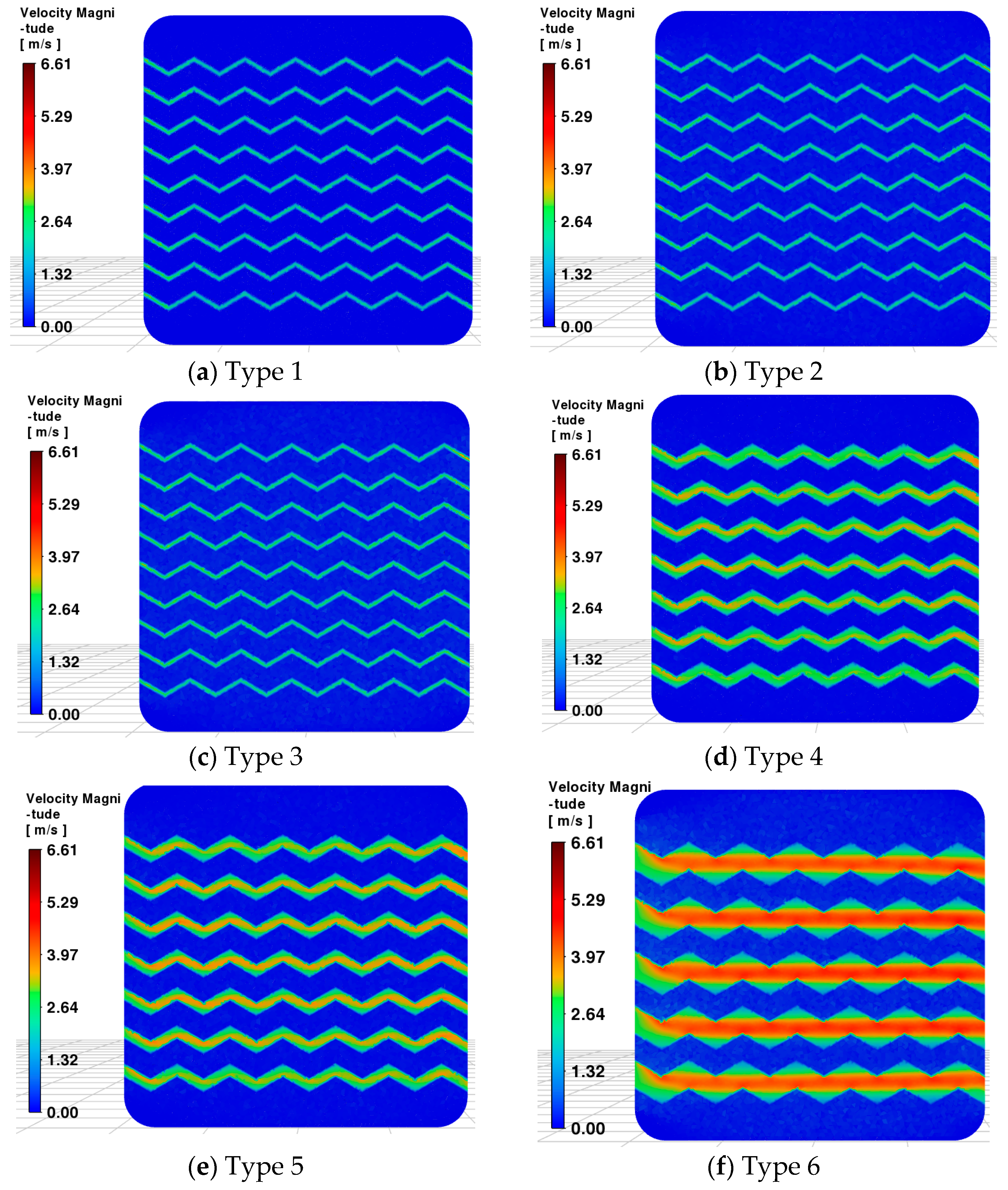
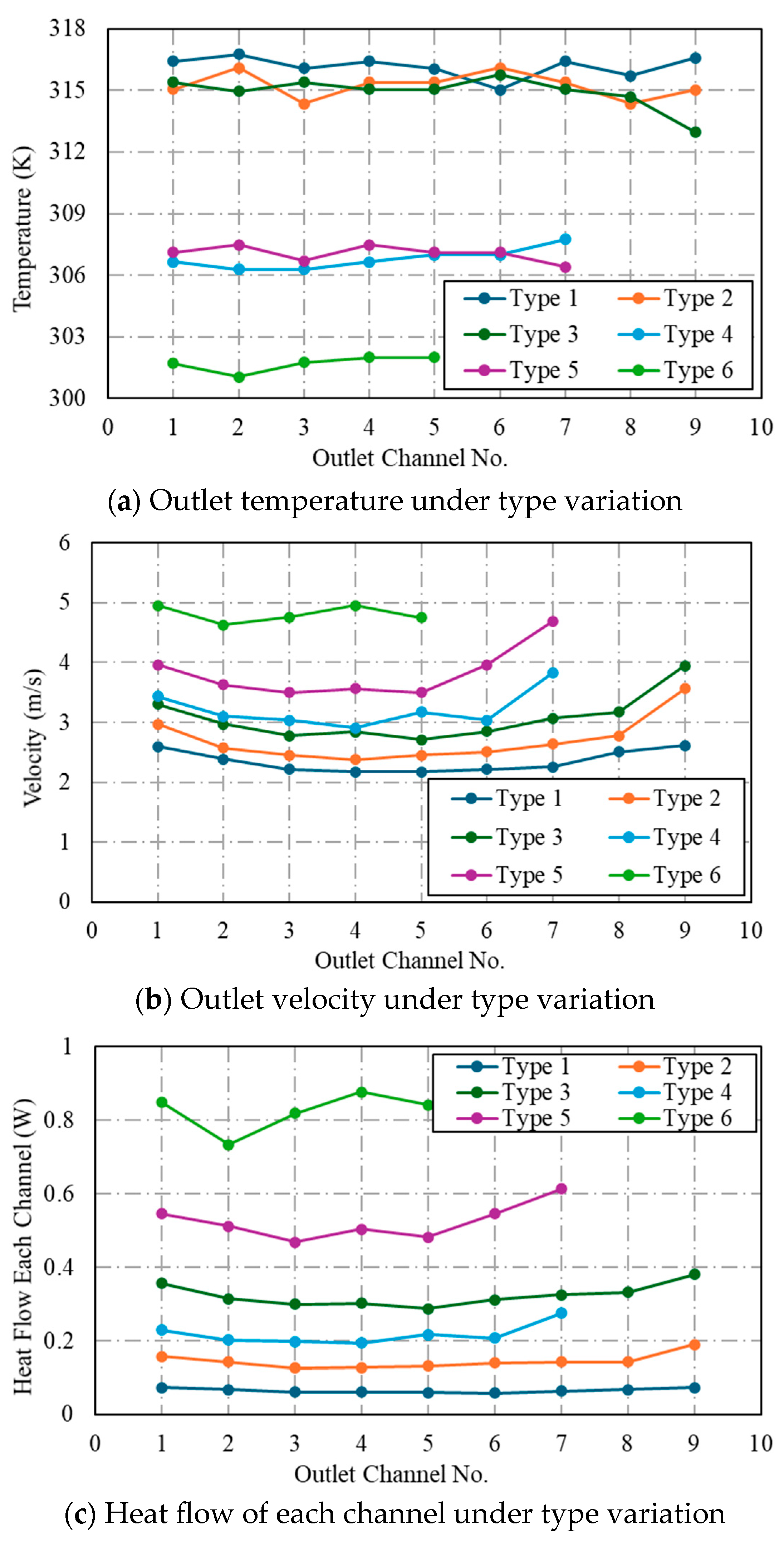
- Increasing fin complexity enormously modified thermal–fluid behavior of the cooling system. Types 5 and 6 produced stronger coolant mixing and greater velocity magnitudes, which translated into superior heat-transfer performance. The results showed that geometric design played the major role in certifying cooling effectiveness.
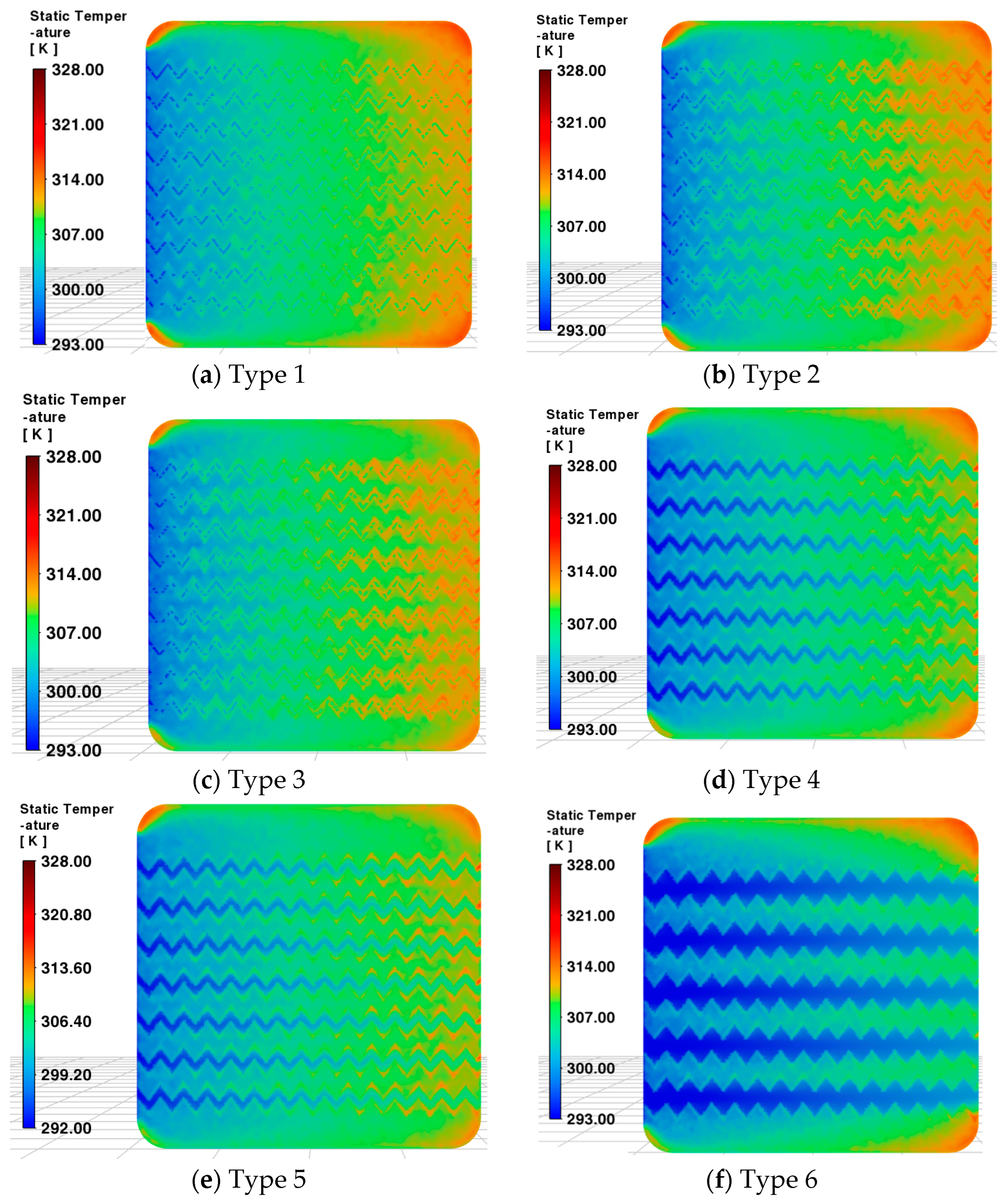
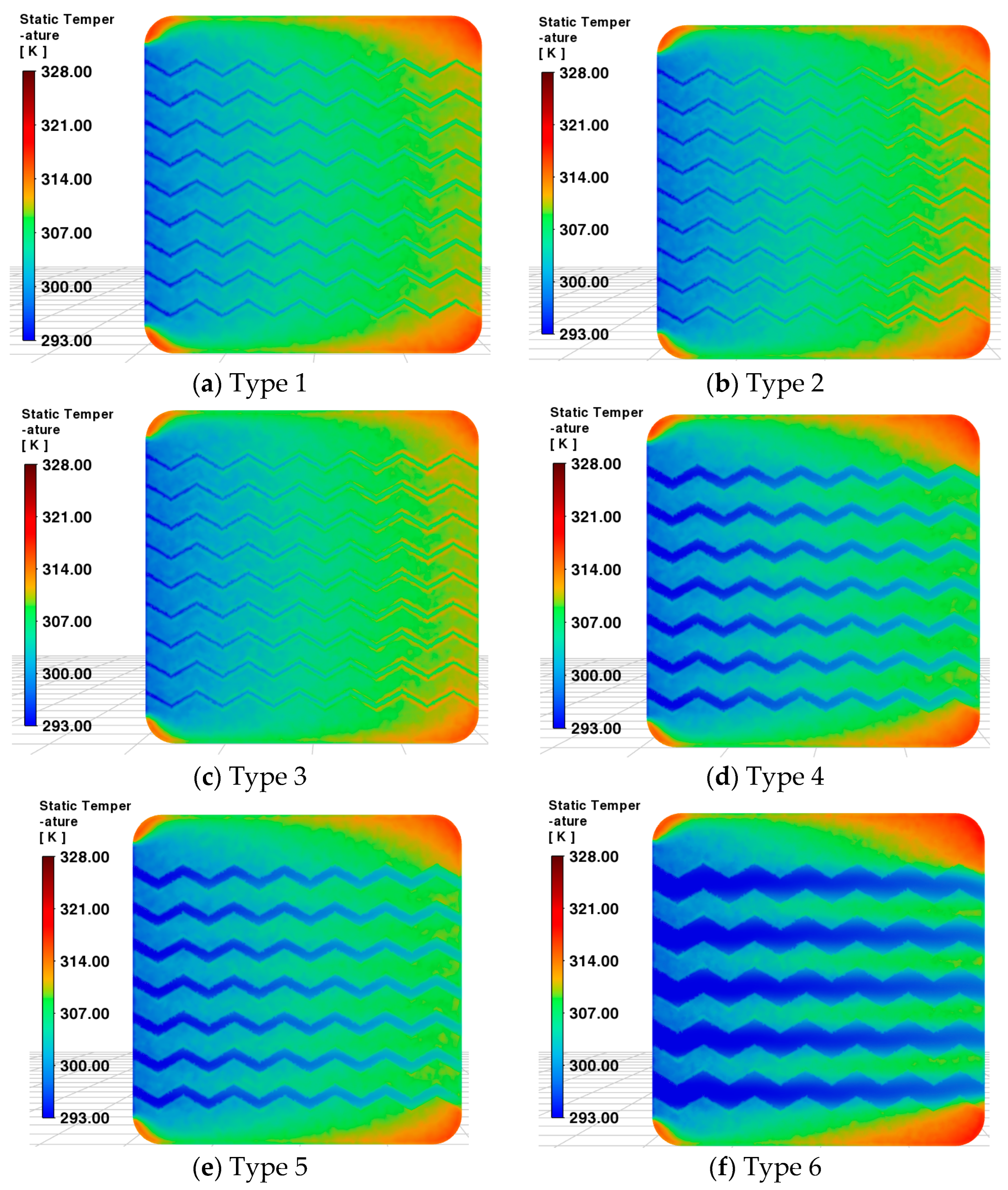
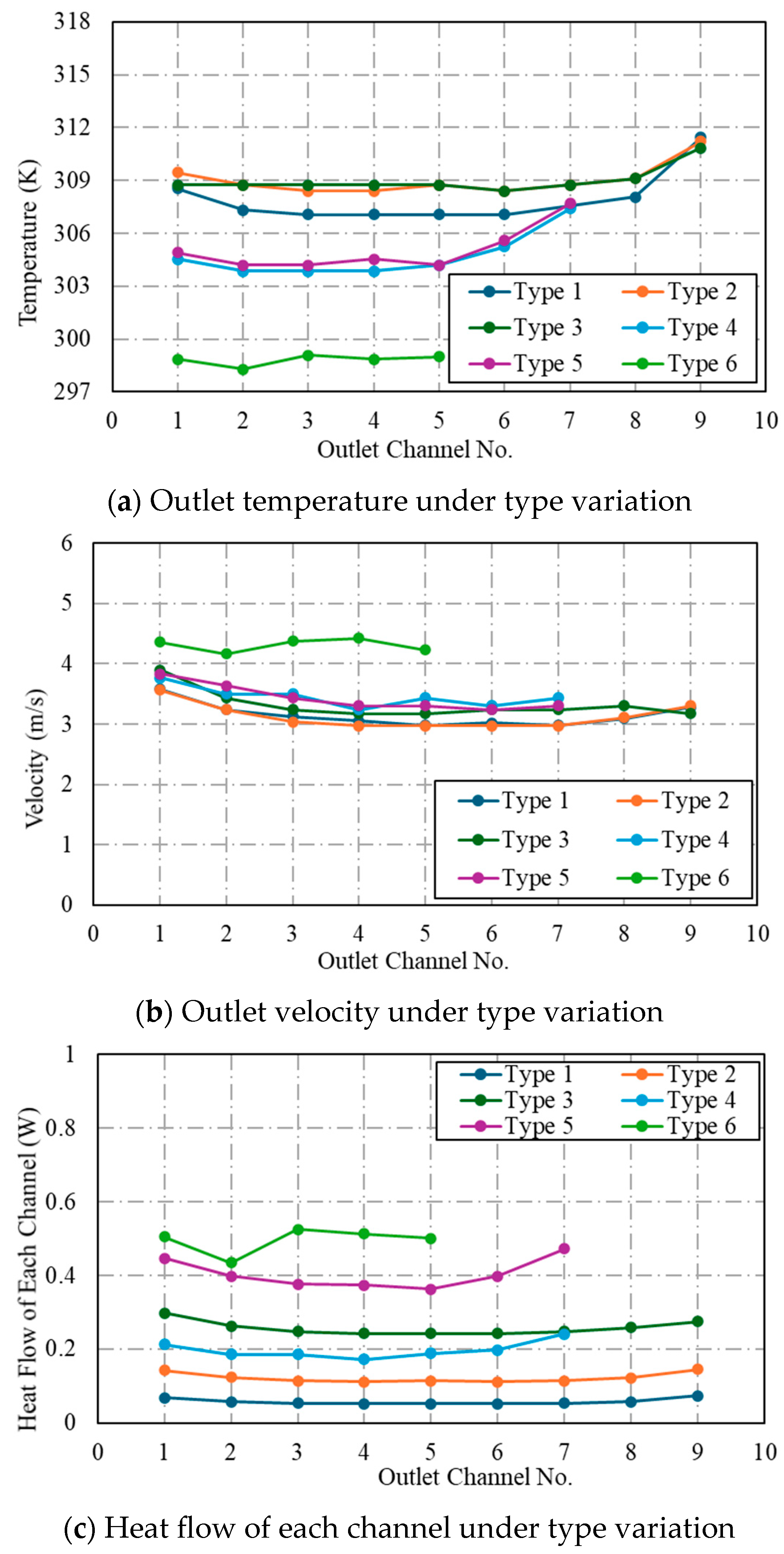
- Complex zigzag configurations gradually reproduced lower and more homogeneous temperature distributions in the cooling plate. This uniformity suppressed the formation of hot spots, which were responsible for stable PEMFC operation. Types 5 and 6 represented the most gradual temperature decline in all slope angles.
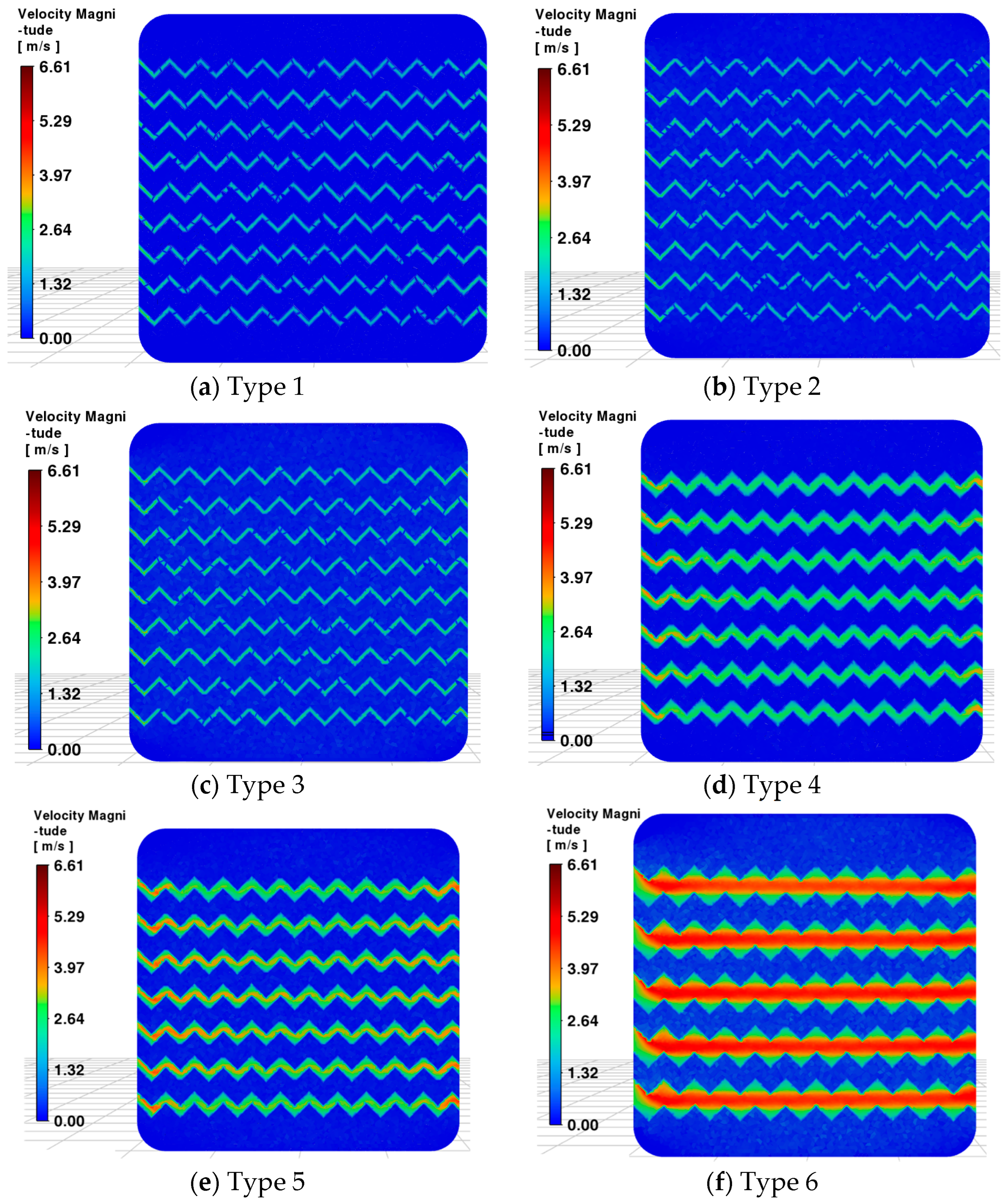
- Sharper zigzag paths triggered occasional coolant redirection, which led to maximum velocities and intensified secondary flow structures. The flow patterns triggered internal mixing and lowered stagnant regions in the channels. Type 6 layout exhibited the strongest capability for accelerating coolant flow.
- At a low slope angle of 75°, reverse-flow regions started to build up in the zigzag channel, raising pressure drop and deteriorating coolant velocity, which led to increased outlet temperatures. However, the 120° configuration fostered stronger forward flow and better mixing, advancing heat removal compared to the 75° case. The influence of slope angle was still secondary compared to the effect of channel geometric complexity.
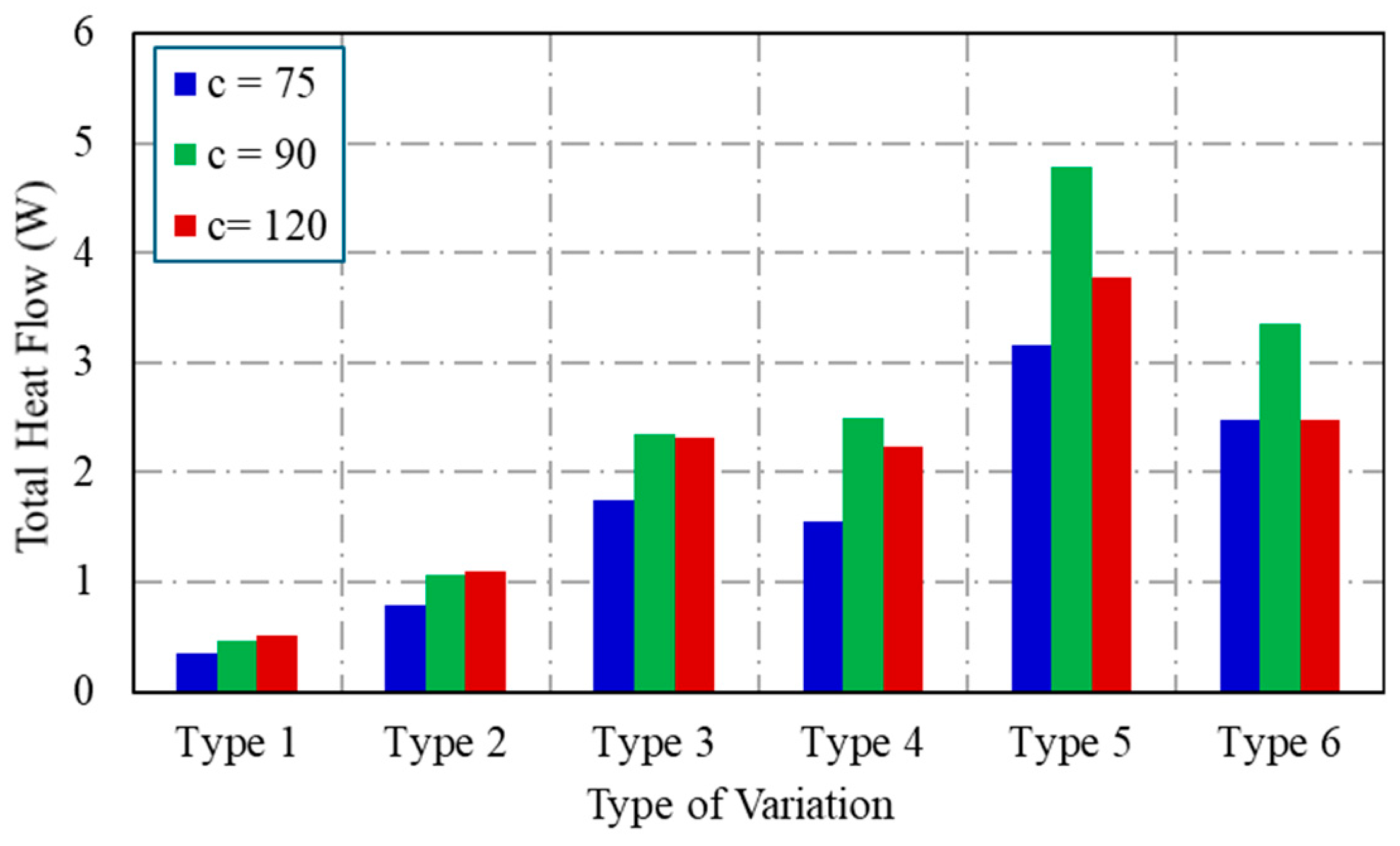
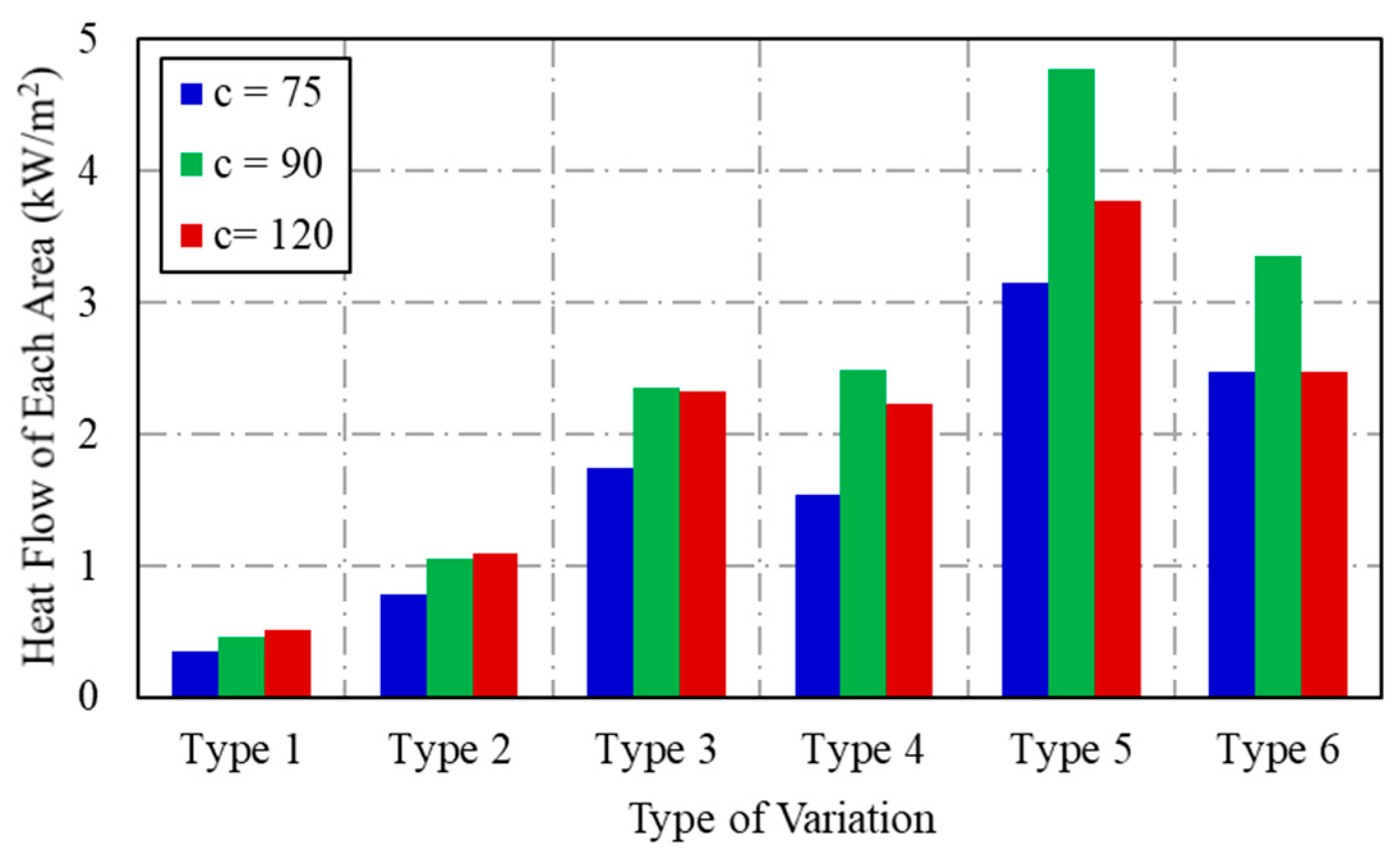
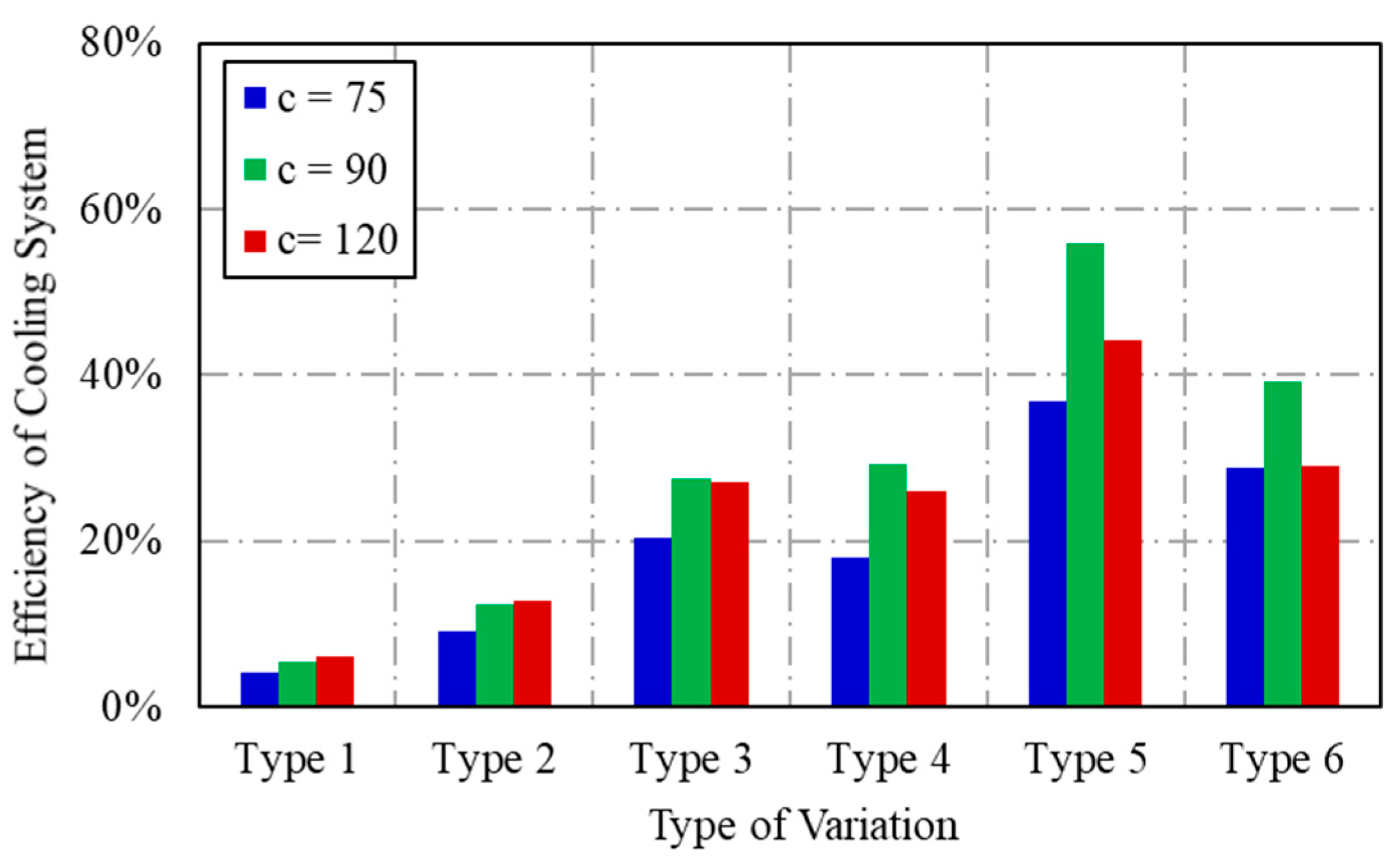
- Types 5 and 6 delivered the peak heat flow, area-specific heat expulsion, and cooling efficiency in all operating conditions. In addition, Type 5 exhibited the most balanced performance, particularly at the 90° slope angle, where efficiency reached its peak. The results showed that advanced multi-fin channels were the most effective configurations for improving PEMFC cooling performance.
Author Contributions
Funding
Data Availability Statement
Acknowledgments
Conflicts of Interest
Abbreviations
| PEMFC | Proton Exchange Membrane Fuel Cell |
| CFD | Computational Fluid Dynamics |
| BCGSTAB | Bi-Conjugate Gradient Stabilized Solver |
| SIMPLE | Semi-Implicit Method for Pressure-Linked Equations |
| a | Length of Fin Channel Area |
| b | Width of Fin Channel Area |
| h | Height of Fin Channel Area |
| c | Slope Angle of Fin Channel Area |
| k–ε | Turbulence Model (Realizable k–ε) |
| CNC | Computer Numerical Control |
| Cp | Specific Heat Capacity |
| ΔP | Pressure Drop |
| Re | Reynolds Number |
References
- Azamian, S. Dynamic multicriteria optimization of household heating and cooling system for reusing fuel-cell waste heat at optimal thermodynamic conditions while considering climatic effects. Energy Storage Sav. 2025, 4, 179–194. [Google Scholar] [CrossRef]
- Basar, M.F.; Rais, N.A.M.; Rahman, A.A.; Mustafa, W.A.; Sopian, K.; Wong, K.V. Optimization of Reaction Typed Water Turbine in Very Low Head Water Resources for Pico Hydro. J. Adv. Res. Fluid Mech. Therm. Sci. 2021, 90, 23–39. [Google Scholar] [CrossRef]
- Wei, J.; Qi, M.; Long, Q.; Zhang, H.; Zheng, S. Experimental investigation and modelling of the air compressor performance used for hydrogen fuel cell systems under enhanced cooling conditions. Appl. Therm. Eng. 2025, 277, 127089. [Google Scholar] [CrossRef]
- Meng, X.; Mei, J.; Tang, X.; Jiang, J.; Sun, C.; Song, K. The Degradation Prediction of Proton Exchange Membrane Fuel Cell Performance Based on a Transformer Model. Energies 2024, 17, 3050. [Google Scholar] [CrossRef]
- Cai, S.; Yang, J.; Zou, Y.; Hua, Z.; Li, S.; Tu, Z. Energy-exergy-emergy optimization analysis designed for combined cooling and power systems driven by proton-exchange membrane fuel cell. Energy 2025, 329, 136407. [Google Scholar] [CrossRef]
- Caponetto, R.; Privitera, E.; Mirone, G.; Matera, F. Structural Analysis of Electrochemical Hydrogen Compressor End-Plates for High-Pressure Applications. Energies 2022, 15, 5823. [Google Scholar] [CrossRef]
- Wu, J.; Yu, X.; Cai, S.; Xiao, B.; Tu, Z. Performance enhancement in an air-cooled proton exchange membrane fuel cell stack with Y-shape hydrogen supply. Energy Convers. Manag. 2025, 333, 119768. [Google Scholar] [CrossRef]
- Cheng, M.; Wang, Y.; Bai, Y.; Hu, X.; Li, H.; Li, Y.; Luo, L.; Yan, X.; Shen, S.; Guo, Y.; et al. Porous titanium water transport plates applied in liquid-cooled H2-O2 proton exchange membrane fuel cells for enhanced passive water management. J. Power Sources 2025, 647, 237274. [Google Scholar] [CrossRef]
- Dai, H.; Zhang, Z.; Zhang, M.; Xu, X.; Dong, G.; Leung, D.Y.; Leoung, M.K.; Wang, Y. Combined cooling and power: Investigating the coupling effect between a microfluidic fuel cell and a heating chip. Chem. Eng. J. 2024, 504, 159031. [Google Scholar] [CrossRef]
- Wu, X.; Xing, S.; Luo, J.; Wang, H.; Huang, F.; Zhao, C. Progress and challenges on air-cooled open-cathode proton exchange membrane fuel cells: Materials, structures, and systems. Energy Rev. 2025, 4, 100130. [Google Scholar] [CrossRef]
- Deng, Z.; Liu, K.; Xing, S.; Zhao, C. Optimization of cathode channel design, bolt torque, and assembly mode for enhanced performance in air-cooled proton exchange membrane fuel cells. Int. J. Hydrogen Energy 2025, 102, 702–714. [Google Scholar] [CrossRef]
- Idris, M.S.; Zakaria, I.A.; Hamzah, W.A.W.; Mohamed, W.A.N.W. The Characteristics of Hybrid Al2O3:SiO2 Nanofluids in Cooling Plate of PEMFC. J. Adv. Res. Fluid Mech. Therm. Sci. 2021, 88, 67–79. [Google Scholar]
- Yakubu, A.U.; Zhao, J.; Jiang, Q.; Ye, X.; Liu, J.; Yu, Q.; Xiong, S. A comprehensive review of primary cooling techniques and thermal management strategies for polymer electrolyte membrane fuel cells PEMFC. Heliyon 2024, 10, e38556. [Google Scholar] [CrossRef]
- Gao, B.; Zhou, Y. Multi-objective optimization and posteriori multi-criteria decision making on an integrative solid oxide fuel cell cooling, heating and power system with semi-empirical model-driven co-simulation. Energy Convers. Manag. 2024, 325, 119371. [Google Scholar] [CrossRef]
- Han, Y.; Gao, W.; Qin, Y. Performance evaluation and multi-objective optimization for a direct ammonia solid oxide fuel cell-based triple-cycle integrated system providing power and cooling. Appl. Therm. Eng. 2025, 266, 125578. [Google Scholar] [CrossRef]
- Yang, H.; Li, T.; Wang, R.; Cao, S.; Hu, L.; Fu, J. Effect of interstage air-cooling on reducing power consumption of fuel cell two-stage centrifugal pressurization system. Case Stud. Therm. Eng. 2025, 70, 106095. [Google Scholar] [CrossRef]
- Çerçi, K.N.; Silva, I.R.O.; Kaşka, Ö.; Hooman, K. Summer period analysis of the rotary desiccant—Hybrid cooling system combined with solid oxide fuel cells using human waste fuel. Clean. Eng. Technol. 2024, 23, 100818. [Google Scholar] [CrossRef]
- Jung, G.; Kim, J.; Choi, H.; Lee, H. Multi-objective optimization of an offset strip fin heat exchanger applied to fuel cell electric vehicles for cooperative cooling. Appl. Therm. Eng. 2025, 268, 125832. [Google Scholar] [CrossRef]
- Kanti, P.K.; Prashantha Kumar, H.G.; Said, N.M.; Wanatasanappan, V.V.; Paramasivam, P.; Dabelo, L.H. Optimizing base fluid composition for PEMFC cooling: A machine learning approach to balance thermal and rheological. Sci. Rep. 2025, 15, 27335. [Google Scholar] [CrossRef]
- Yang, M.; Quan, Z.; Wang, L.; Chang, Z.; Zhao, Y.; Xing, L.; Xuan, J. Experimental design and assessment of a novel mixed-cooling proton exchange membrane fuel cells stack for enhanced power generation and thermal management. Appl. Energy 2025, 386, 125573. [Google Scholar] [CrossRef]
- Yang, M.; Zhao, Y.; Quan, Z.; Wang, L.; Liu, Z.; Chang, Z. Design and experimental study on performance of different types of micro heat pipe arrays for thermal management of a novel mixed-cooling proton exchange membrane fuel cells stack. Renew. Energy 2025, 242, 122420. [Google Scholar] [CrossRef]
- Karaca, A.; Glüsen, A.; Wippermann, K.; Mauger, S.; Yang-Neyerlin, A.C.; Woderich, S.; Gimmler, C.; Müller, M.; Bender, G.; Weller, H.; et al. Oxygen Reduction at PtNi Alloys in Direct Methanol Fuel Cells—Electrode Development and Characterization. Energies 2023, 16, 1115. [Google Scholar] [CrossRef]
- Simanjuntak, J.P.; Anis, S.; Syamsiro, M.; Baharuddin; Daryanto, E.; Tambunan, B.H. Thermal Energy Storage System from Household Wastes Combustion: System Design and Parameter Study. J. Adv. Res. Fluid Mech. Therm. Sci. 2021, 80, 115–126. [Google Scholar] [CrossRef]
- Yang, X.; Zhang, Z.; Liu, J.; Ou, K.; Zhang, X.; Yang, J.; Wang, Y.-X. Numerical simulation and optimized design of water-cooled volute for turbine-based air compressor used in automotive fuel cells. Appl. Therm. Eng. 2025, 273, 126474. [Google Scholar] [CrossRef]
- Kumari, A.; Sonkar, K.; Chaudhari, C.; Jindal, T.; Katiyar, A.; Singh, S.; Bera, T.; Badhe, R.M.; Srivastva, U.; Sharma, A. Optimization of air-cooled PEM fuel cell system with battery hybridization and experimental validation on hydrogen powered fuel cell bike. Renew. Energy 2025, 250, 123340. [Google Scholar] [CrossRef]
- Song, K.; Hou, T.; Jiang, J.; Grigoriev, S.A.; Fan, F.; Qin, J.; Wang, Z.; Sun, C. Thermal management of liquid-cooled proton exchange membrane fuel cell: A review. J. Power Sources 2025, 648, 237227. [Google Scholar] [CrossRef]
- Mun, J.; Lee, C.; Kim, S. Cryogenic cooling and fuel cell hybrid system for HTS maglev trains Employing liquid hydrogen. Cryogenics 2025, 149, 104109. [Google Scholar] [CrossRef]
- Su, H.; Xu, H.; Wang, L.; Liu, Z.; Xie, L. A review on thermal management strategy for liquid-cooling proton exchange membrane fuel cells: Temperature regulation and cold start. Appl. Energy 2025, 393, 126142. [Google Scholar] [CrossRef]
- Yu, X.; Cai, S.; Zhang, R.; Xiao, B.; Tu, Z. Performance enhancement in air-cooled proton exchange membrane fuel cell stack during cold-start with gas recirculation. Fuel 2025, 396, 135289. [Google Scholar] [CrossRef]
- Pei, H.; Liu, Z.; Chen, J.; Sun, L.; Wang, B.; Xing, L.; Cai, S.; Tu, Z. Dynamic response study of air-cooled proton exchange membrane fuel cell stack. Prog. Nat. Sci. Mater. Int. 2024, 34, 1318–1326. [Google Scholar] [CrossRef]
- Tang, T.; Li, B.; Lu, M.; Feng, Y.; Wang, J. Synergistic geothermal energy and ammonia fuel cell utilization towards sustainable power, cooling, and freshwater production; An exergoeconomic, exergoenvironmental, and technoeconomic analysis. Renew. Energy 2024, 241, 122244. [Google Scholar] [CrossRef]
- Zeng, R.; Kang, H.; Umar, M.; Xu, L.; Zhaio, Y.-N. Design and thermal management study of fuel cell spray cooling system. Appl. Therm. Eng. 2025, 270, 126271. [Google Scholar] [CrossRef]
- Qiao, Y.; Lu, G.; Li, S.; Xie, J.; Li, Y. Effects of cathode enhanced cooling channels and microporous metal mesh on performance of open cathode air-cooled fuel cells. Int. J. Electrochem. Sci. 2025, 20, 100927. [Google Scholar] [CrossRef]
- Tu, X.; Lv, J.; Wu, J.; Luo, X.; Tu, Z. Experimental investigation of a novel open cathode air-cooled fuel cell stack design featuring simultaneous inlet blowing and outlet suction. Energy 2024, 314, 134308. [Google Scholar] [CrossRef]
- Zhang, L.; Xia, Y.; Hu, G.; Wang, Q. Numerical analysis of the influence of cooling design on temperature uniformity in the large proton exchange membrane fuel cell stack. Int. J. Hydrogen Energy 2024, 93, 668–681. [Google Scholar] [CrossRef]
- Roschger, M.; Wolf, S.; Mayer, K.; Singer, M.; Hacker, V. Alkaline Direct Ethanol Fuel Cell: Effect of the Anode Flow Field Design and the Setup Parameters on Performance. Energies 2022, 15, 7234. [Google Scholar] [CrossRef]
- Iskandarianto, F.A.; Ichsani, D.; Taufany, F. Thermal and Fluid Flow Performance Optimization of a Multi-Fin Multi-Channel Cooling System for PEMFC Using CFD and Experimental Validation. Energies 2025, 18, 5048. [Google Scholar] [CrossRef]
- Samsun, R.C.; Rex, M.; Antoni, L.; Stolten, D. Deployment of Fuel Cell Vehicles and Hydrogen Refueling Station Infrastructure: A Global Overview and Perspectives. Energies 2022, 15, 4975. [Google Scholar] [CrossRef]
- Tzelepis, S.; Kavadias, K.A.; Marnellos, G.E. A Three-Dimensional Simulation Model for Proton Exchange Membrane Fuel Cells with Conventional and Bimetallic Catalyst Layers. Energies 2023, 16, 4086. [Google Scholar] [CrossRef]
- Zhao, C.; Han, Y.; Xing, S.; Deng, Z.; Liu, K.; Xiao, W. Study on performance enhancement and modeling of air-cooled proton exchange membrane fuel cell for different runner structure. Appl. Energy 2025, 389, 125794. [Google Scholar] [CrossRef]
- Fahruddin, A.; Ichsani, D.; Taufany, F.; Widodo, B.U.K.; Widodo, W.A. The effect of baffle shape on the performance of a polymer electrolyte membrane fuel cell with a biometric flow field. Int. J. Hydrogen Energy 2021, 46, 6028–6036. [Google Scholar] [CrossRef]



| Parameter | Value |
|---|---|
| Channels per cell | 5–9 |
| Channel length (representative) | 45 mm |
| Coolant | Air |
| Coolant density | 1.165 kg/m3 |
| Coolant viscosity | 1.86 × 10⁻⁵ Pa·s |
| Coolant cp | 1.04 kJ/kg·K |
| Velocity Inlet | 3 m/s |
| Mean channel velocity | ≈2.86 m/s |
| Reynolds number | ≈2.45 |
| Estimated ΔP (per channel, L = 45 mm) | ≈2.5 kPa |
| Information | Value |
|---|---|
| Initial velocity | 3 m/s |
| Initial temperature of cathode | 333.33 K |
| Average temperature after reaction | 340.41 K |
| Minimum temperature | 332.88 K |
| Maximum temperature | 378.57 K |
| Current density | 8723.41 A/m2 |
| Power density | 5670.21 W/m2 |
| Parameter | Value | |||||
|---|---|---|---|---|---|---|
| Plate length | 45 mm | |||||
| Plate high | 45 mm | |||||
| Corner radius | 4 mm | |||||
| Channel width | 1.0 mm | |||||
| Zigzag variation | a | b | h | c | ||
| Type 1 | 1 | 1 | 2 | 45° | 90° | 120° |
| Type 2 | 1 | 2 | 2 | 45° | 90° | 120° |
| Type 3 | 1 | 4 | 2 | 45° | 90° | 120° |
| Type 4 | 2 | 2 | 2 | 45° | 90° | 120° |
| Type 5 | 2 | 4 | 2 | 45° | 90° | 120° |
| Type 6 | 4 | 4 | 2 | 45° | 90° | 120° |
| Material | Aluminum | |||||
| Fabrication process | CNC milling | |||||
| PEMFC Model | Parameter | Flow Rate | Simulation | Experiment | Error (%) |
|---|---|---|---|---|---|
| PEMFC (Without Cooling System) | Cathode temperature of bipolar plates | 3 m/s | 340.41 K | 342.10 K | 0.494 |
| Power density | 5670.21 W/m2 | 5853.54 W/m2 | 3.131 | ||
| PEMFC and Triple Channel Cooling System | Cathode temperature of bipolar plates | 3 m/s | 326.96 K | 327.3 K | 0.104 |
| Power density | 7564.38 W/m2 | 7440.24 W/m2 | −1.668 | ||
| Efficiency of cooling system | 55.33% | 54.51% | −1.498 | ||
| PEMFC and Multiple Fin Channel Cooling System | Cathode temperature of bipolar plates | 5 m/s | 328.75 K | 326.58 K | −0.664 |
| Power density | 7954.19 W/m2 | 7942.15 W/m2 | −0.152 | ||
| Efficiency of cooling system | 67.04% | 65.77% | 1.931 | ||
| PEMFC and Cooling System | Outlet temperature | 5 m/s | 314.8 K | 316.0 K | −0.38 |
| Average temperature | 312.2 K | 313.5 K | −0.41 | ||
| Cooling efficiency | 82.70% | 83.50% | −0.96 | ||
| Pressure drop | 68.4 Pa | 70.2 Pa | −2.56 |
| Type | Geometry (a–b–h) | Slope Angle (°) | Temperature Distribution | Flow Behavior | Heat Transfer and Cooling Performance | Overall Assessment |
|---|---|---|---|---|---|---|
| Type 1 | a = 1, b = 1, h = 2 | 75/90/120 | Relatively high and non-uniform temperature | Low velocity, weak disturbance | Lowest heat flow and cooling efficiency | Least effective design |
| Type 2 | a = 1, b = 2, h = 2 | 75/90/120 | Slightly improved uniformity vs. Type 1 | Mild flow redirection | Marginal heat-transfer improvement | Limited enhancement |
| Type 3 | a = 1, b = 4, h = 2 | 75/90/120 | Moderate temperature reduction | Increased velocity and mixing | Moderate increase in heat flow | Transitional performance |
| Type 4 | a = 2, b = 2, h = 2 | 75/90/120 | Improved thermal uniformity | Stronger secondary flows | Higher area-specific heat removal | Good balance |
| Type 5 | a = 2, b = 4, h = 2 | 75/90/120 | Low and uniform temperature field | Strong mixing, stable velocity | Highest total heat flow and peak efficiency (especially at 90°) | Optimal configuration |
| Type 6 | a = 4, b = 4, h = 2 | 75/90/120 | Lowest temperature but locally sensitive | Very high velocity, intense vortices | High heat transfer but increased pressure drops | High performance with higher hydraulic loss |
Disclaimer/Publisher’s Note: The statements, opinions and data contained in all publications are solely those of the individual author(s) and contributor(s) and not of MDPI and/or the editor(s). MDPI and/or the editor(s) disclaim responsibility for any injury to people or property resulting from any ideas, methods, instructions or products referred to in the content. |
© 2025 by the authors. Licensee MDPI, Basel, Switzerland. This article is an open access article distributed under the terms and conditions of the Creative Commons Attribution (CC BY) license.
Share and Cite
Iskandarianto, F.A.; Ichsani, D.; Taufany, F. Thermal–Fluid Behavior and Heat-Transfer Enhancement in PEMFC Cooling Plates Using Multi-Fin Zigzag Channels Under Variable Slope Angles. Energies 2026, 19, 174. https://doi.org/10.3390/en19010174
Iskandarianto FA, Ichsani D, Taufany F. Thermal–Fluid Behavior and Heat-Transfer Enhancement in PEMFC Cooling Plates Using Multi-Fin Zigzag Channels Under Variable Slope Angles. Energies. 2026; 19(1):174. https://doi.org/10.3390/en19010174
Chicago/Turabian StyleIskandarianto, Fitri Adi, Djatmiko Ichsani, and Fadlilatul Taufany. 2026. "Thermal–Fluid Behavior and Heat-Transfer Enhancement in PEMFC Cooling Plates Using Multi-Fin Zigzag Channels Under Variable Slope Angles" Energies 19, no. 1: 174. https://doi.org/10.3390/en19010174
APA StyleIskandarianto, F. A., Ichsani, D., & Taufany, F. (2026). Thermal–Fluid Behavior and Heat-Transfer Enhancement in PEMFC Cooling Plates Using Multi-Fin Zigzag Channels Under Variable Slope Angles. Energies, 19(1), 174. https://doi.org/10.3390/en19010174