Article

A Novel Approach to Improving Heat Transfer and Minimizing Fouling in Tube Bundles: Insert Elements Inspired by Venetian Blinds


Department of Power Engineering and Turbomachinery, Faculty of Energy and Environmental Engineering, Silesian University of Technology, 44-100 Gliwice, Poland
Energies 2026, 19(1), 162; https://doi.org/10.3390/en19010162 (registering DOI)
Submission received: 20 November 2025 / Revised: 18 December 2025 / Accepted: 22 December 2025 / Published: 27 December 2025
(This article belongs to the Section J1: Heat and Mass Transfer)

Abstract

This paper presents the results of a numerical investigation into the use of window-blind-shaped inserts for enhancing heat transfer and facilitating fouling removal in cross-flow tube bundles. Three configurations were examined: a baseline staggered plain tube bundle, and the same staggered bundle equipped with steel window-blind inserts arranged in two distinct orientations: ( ) and ) (. The CFD simulations were performed using a two-dimensional model in Ansys Fluent. Tube bundles with inserts inclined at 5°, 20°, and 30° were analyzed for two flow velocities corresponding to maximum and minimum boiler loads. In addition, particle-trajectory simulations were conducted for the same blade inclinations to assess the potential for ash-deposit detachment. The results demonstrate that window-blind-type inserts can effectively enhance the thermal performance of tube bundles while simultaneously promoting the removal of ash deposits.

1. Introduction

1.1. Previous Studies on Improving Heat Transfer in Tube Bundles, Especially Boiler Tube Banks

One way to enhance heat transfer in heat exchangers, particularly in boiler tube banks, is to increase the heat transfer surface area by adding extended surfaces or installing finned tubes. Another approach is to intensify the flow inside the tubes using turbulence-promoting devices, such as internal inserts. Modifications without fins are also possible, including surface indentations, metal tube coatings, or turbulent inserts placed inside the tubes.
The operational outcomes of installing a supplemental economizer surface at the 620 MWe lignite-burning Unit B1 of the Nikola Tesla B Power Plant are detailed in [1]. This modification enabled the reclamation of over 30 MWth of thermal energy from the exhaust gases. Consequently, the unit’s gross thermal efficiency improved by 0.53 percentage points. Beyond additional heat surfaces, the integration of finned tubing represents an alternative strategy for enhancing plant performance and mitigating CO2 emissions.
Heat transfer and pressure drop tests have been carried out so far for many types of finned tube bundles: row and alternating with longitudinal membrane fins [2,3,4,5], finned [4], finned diagonal [6], profiled fins [4,7], triple finned tube bundles [8], inline and staggered transverse tube bundles [9,10] (bundles of tubes with spiral fins, bundles of tubes with disk fins), tube bundles of both longitudinal and transverse fins [4].
Ref. [11] presents research on a heat exchanger made of H-type finned tubes characterized by high heat transfer efficiency, excellent self-cleaning properties, and the possibility of recovering waste heat from flue gases during boiler modernization. The heat transfer and pressure drop characteristics of H-type finned tubes were investigated using an experimental, open, high-temperature wind tunnel. The effects of fin width, fin height, spacing, and air velocity on fin efficiency, convective heat transfer coefficient, integrated heat transfer efficiency, and pressure drop were analyzed. The results indicated that with increasing air velocity, fin height, and fin width, fin efficiency decreases.
An effective technique for enhancing heat transfer within a tube featuring a corrugated surface was presented in [12]. However, the influence of surface corrugation on the fluid flow and thermal transport characteristics around the tube’s exterior remains an area that needs more comprehensive investigation. In ref. [13], the study utilized Computational Fluid Dynamics (CFD) to examine the lateral flow and heat transfer properties within a configuration of tubes that were periodically corrugated inwards. The goal was to investigate how different corrugation parameters affected heat transfer and flow dynamics in tube groups configured in both linear and offset configurations. Comparative analysis of performance criteria suggested that the staggered configuration was more beneficial for improving thermal-hydraulic efficiency in lateral flow through corrugated tube bundles.
In reference [13], a computational energy assessment was conducted on transient crossflow across heated circular cylinders. By adjusting variables such as the array of inline tubes, inflow velocity, pitch ratios, and Reynolds numbers, the study covered a broad range of scenarios. The findings indicated an energy efficiency between 72% and 98%, with viscous dissipation playing a negligible role at lower Reynolds numbers. Such insights offered valuable guidance for optimizing heat recovery units, particularly in low-temperature environments.
In ref. [14], the thermal performance of fluoroplastic-steel heat exchangers was evaluated to improve the accuracy of heat transfer predictions in corrosive waste heat recovery. The authors proposed a new correlation that reduced the average calculation discrepancy to 3.3%, down from the 16.8% error associated with the Zhukauskas correlation. Their analysis revealed a critical limitation: the Zhukauskas model was unsuitable for exchangers utilizing thin fluoroplastic films, although its reliability improved as the condensation heat transfer area increased.
Refs. [8,15] presented the results of physical and numerical analysis of the use of three-fin tubes (TFT) in boiler tube assemblies. Three arrangements of tube bundles were compared: base (alternating row of plain tubes; combination of three-fin tubes) and plain tubes (two rows of triple-fin tubes every 10 rows); an alternating row of tubes in which half of the plain tubes were replaced by three-fin tubes in a linear arrangement. The values of the economizer heat transfer (ECO) with three-finned tubes were obtained to calculate the exhaust gas temperature at the outlet and the losses at the outlet. Calculations of the Nu number of tubes were made for all systems. Boiler efficiency and fuel consumption were then calculated using 0D modeling. A comparison of the base variant (unfinned tubes) showed that the use of the variant and the system in which half of the tubes in the bundle were triple finned reduced the flue gas temperature by more than 20 °C and would potentially increase the boiler efficiency by more than 1%. In addition, the two compared upgrades reduced CO2 emissions by 550 t/y and 826 t/y, respectively. The results obtained were used to conduct an economic analysis. The results showed that triple-finned tubes could be used to increase the efficiency of rows of cross-flow tubes.
The system of a heat exchanger bundle with diagonal tubes, known as PL213943 from the Polish patent description and [6], allowed for the spontaneous removal of ash deposits and prevented their formation. Placing plain and finned diagonal tubes with fins of constant thickness in appropriately arranged rows and columns induced turbulence in the flue gas streams flowing across the bundle. This enhanced turbulence promoted washing of the tube surfaces and facilitated the removal of ash deposits. Heat exchangers incorporating such tube bundle configurations increased boiler efficiency and could eliminate the need for additional ash-blowing devices. When flue gas contained particulate matter, ash tended to accumulate on the bundle tubes, reducing heat transfer efficiency. However, in diagonal bundles, the turbulence generated by the fins suppressed deposit formation while simultaneously enhancing the convective heat transfer coefficient due to increased fluid mixing.
In ref. [16], an investigation of the heat transfer enhancement of a tube-bundle heat exchanger with reversed trapezoidal profile fins was presented. Parametric study and field synergy principle analysis of the H-type finned-tube bundle with 10 rows were conducted. In ref. [17], a three-dimensional analysis of the thermal and hydraulic performance of finned and unfinned tubes was conducted. A CFD analysis of an economizer for heat transfer enhancement using a serrated finned tube equipped with variable fin segments was presented in [18].
In [19], an experimental three-dimensional CFD numerical simulation of a cross-current heat exchanger with an adjustable arrangement of pipes in a basic variant and a longitudinally finned variant with a single fin for turbulent flow was described: (5500 ≤ Re ≤ 14,500) and a fin length-to-tube diameter (L/(D) ratio of 1. The modification of the tube bundle increased the Nusselt number and results in greater heat transfer and higher pressure dropped on each row of tubes compared to the non-finned variant. The overall thermal efficiency of finned tubes was much higher than that of plain tubes, and this was indicated by higher values of heat transferred in the exchanger at a lower coefficient of friction. The highest increase in thermal efficiency of the exchanger after modification was 60–82%.
Research conducted in [20] evaluated the thermal performance of plate-fin heat exchangers (PFTHE) through the use of Computational Fluid Dynamics (CFD). The study focused on comparing the air-side Nusselt number correlations derived from CFD models with established empirical data from the previous literature. The findings highlighted that numerical simulations were a highly effective tool for precisely determining the heat transfer behavior of intricate exchanger geometries.
Further advancements in optimization were discussed in [21], which explored a hybrid approach combining neural networks (NN) and genetic algorithms (GA) for the multi-objective enhancement of heat exchangers. Using a tube-fin heat exchanger (TFHE) as the primary model, the researchers identified the ellipticity of the tubes and the inlet air velocity as critical variables for optimization.
To balance the trade-off between thermal efficiency and hydraulic resistance, CFD simulations were carried out across various Reynolds numbers. This dataset served as the foundation for training a backpropagation neural network to model both the pressure drop and the heat transfer coefficient. The resulting optimization indicated that at a Reynolds number of 541 and a tube ellipticity of 0.34, the TFHE achieved a 20% reduction in pressure drop while maintaining a stable heat transfer coefficient.
In Ref. [22], a numerically efficient Multi-U microchannel structure was proposed for a liquid cooling plate (Multi-U). The introduction of a low-temperature coolant for heat exchange with a central, high-temperature surface was investigated. Using CFD, it was determined that the Multi-U exhibited better overall performance compared to two typical liquid-cooled plates. The maximum temperature, temperature difference, and pressure drop were determined.
The risk of erosion in solid fuel boilers that use finned tubes is usually unknown. Special tube and fin-systems tube flows are used to increase heat transfer, and these tube systems can be relatively susceptible to heat damage. Erosion studies in the convective cross-section of steam boilers were carried out in previous studies [23,24,25]. They focused on solving the erosion problem of boilers with plain tube exchangers.
A predictive framework based on the ANSYS FLUENT platform was established in [26] to model ash deposition on tube bundles in high-temperature environments. The study examined how tube morphology, surface temperature, and bundle geometry—specifically transverse and longitudinal pitches—influenced both fouling and thermal efficiency. A key finding was that as ash deposits grew, the altered tube morphology significantly lowered the impact mass flux. Furthermore, the researchers observed that higher tube wall temperatures improved final thermal efficiency. Regarding geometry, increasing the transverse pitch-to-diameter ratio from 1.58 to 2.63 resulted in a thermal efficiency drop from 0.74 to 0.65, whereas variations in longitudinal pitch had a negligible impact. Consequently, the authors suggested that optimizing tube shapes and utilizing smaller transverse pitches were effective strategies for mitigating ash accumulation.
Optimization studies using CFD are crucial. Optimization studies [27] demonstrated the PEMFC power density increase, achieving maximum gain. The optimization was validated by CFD simulations with a maximum error of less than 8%, confirming reliability.

1.2. A New Solution for Intensifying Heat Transfer Outside the Tubes—Insert Elements Shaped Similarly to Window Blinds System

Although numerous passive and active enhancement techniques have been developed to improve heat transfer in tubular heat exchangers—such as twisted tapes, wire-coil inserts, vortex generators, and dimpled surfaces—their performance is often limited by increased pressure drop, complex manufacturability, or poor adaptability to existing systems. Despite substantial research on swirl-flow devices, there remains a notable gap concerning solutions that simultaneously enable flow modulation, adjustable turbulence generation, and low-cost retrofitting. In particular, no studies have investigated the use of a window-blind-type insert capable of producing controlled alternating flow structures through partial, periodically obstructed cross-sections. This concept introduces a novel mechanism for passive intensification of heat transfer, offering tunable mixing characteristics that have not been explored in the available literature. The present work addresses this gap by proposing, modeling, and evaluating a window-blind insert as a new geometrical strategy for enhancing thermal performance in tubular heat exchangers.
A major drawback of most methods for enhancing heat transfer outside the tubes by adding fins to tube bundles is the requirement to weld the fins onto the tubes. Furthermore, any modification of an existing exchanger typically necessitates disassembly and reassembly of the bundle elements. In the case of retrofitting existing heat exchangers, such as those in boilers, the installation of longitudinal or diagonal fins often requires complete replacement of the tube bundle, resulting in significant costs and operational downtime.
In systems for cleaning ash deposits from tubes, such as those using ash blowers, the main drawbacks were the high installation costs and the consumption of steam required for operation. Previous attempts to enhance heat transfer on the outside of tubes have primarily relied on finned tubes, which required the welding of the fins. This often rendered such modifications economically unfeasible, particularly for existing exchangers.
A novel approach to intensifying heat transfer outside the tubes involves the use of turbulence-inducing inserts placed along the flow path of the medium, inclined at an angle relative to the flow direction. These inserts can be either non-tilted or tilted, and may also be installed temporarily to enhance heat transfer and/or facilitate the cleaning of ash deposits in the tube bundle columns.
An almost infinite number of combinations of insert shapes, tube pitches, and inclination angles are possible, offering flexibility in design.
This study proposes the use of flat-bar inserts, shaped similarly to the curved slats of window blinds, as a retrofit solution for intensifying heat transfer and/or promoting ash removal in tube bundles. This concept has been patented by the Silesian University of Technology, Pat. 242770 [28] (Figure 1). The use of profiled shapes is necessary to ensure the required rigidity, especially in the case of long heat exchangers.
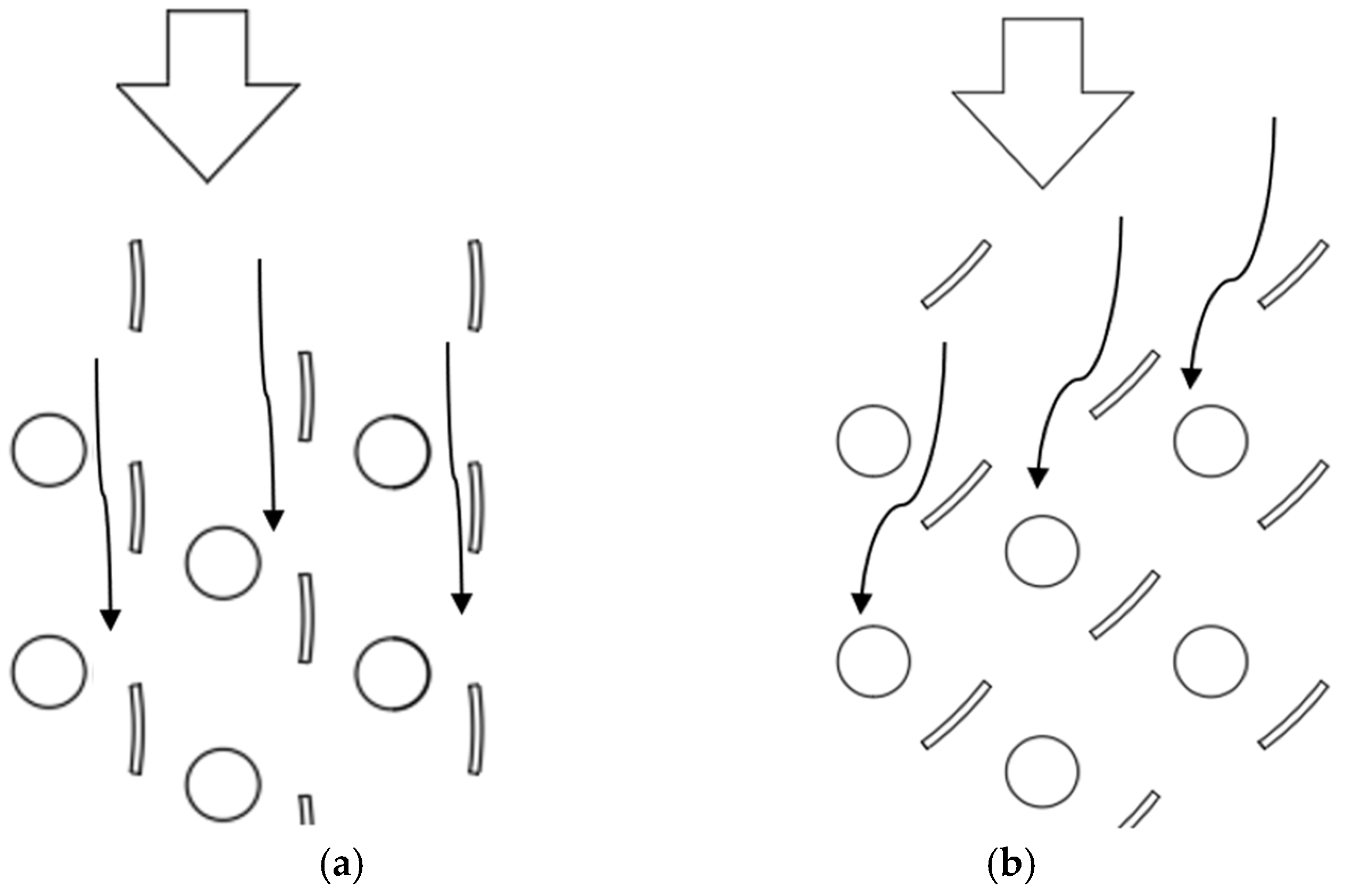
The main advantage of this solution is that the insert intensifiers generate strong turbulence of the medium as it flows through the tube bundle, resulting in an increased heat transfer coefficient and/or preventing fouling and/or cleaning the tubes in the presence of a dusty medium (Figure 2). The inserts can be introduced either continuously or periodically into the exchanger bundle, particularly when the bundle is contaminated with ash deposits. The temporary insertion functions similarly to conventional ash blowers but does not require the use of a blowing agent, such as steam or compressed air (Figure 3).
The geometry of the turbulating inserts and their inclination angle relative to the direction of the medium flow must be carefully selected based on the specific requirements for enhancing heat transfer and/or cleaning the tube bundle from solid particles in the case of a dusty medium. In addition, the properties of both the insert material and the solid particles must be considered to avoid erosion or excessive wear caused by particle impact.

2. Materials and Methods

2.1. Numerical Methods

The Fluent software Workbench 2024 R1 uses the finite volume method and is based on computational fluid dynamics assumptions based on fundamental physical principles. The fluid dynamics within the system are governed by the conservation of mass, momentum, and energy. For viscous flow and compressible equations, the behaviors are as follows [29]:
Mass conservation is defined as
ρ t + · ρ ν = S m ,
where S m represents mass source (e.g., from chemical reactions, evaporation, injection, etc.) In this case, equal to 0. ρ represents density, and = (u, v, w) is the velocity vector.
The continuity equation, Equation (1), provides a generalized formulation applicable to both incompressible and compressible regimes. Momentum conservation is defined via Newton’s second law, as expressed in Equation (2):
ρ t ρ ν + · ρ ν ν = p + · ( τ ̿ ) +   ρ g + F
where p is the static pressure, τ ̿ is the stress tensor, and ρ g and F account for gravitational and external body forces, respectively.
To account for thermal effects and fluid compressibility, the energy conservation law is integrated as follows:
t ρ E + · ν ( ρ E + p ) = · k T + j h j J j + τ ̿ · ν +   S E
In Equation (3), the right-hand side terms represent heat conduction, species diffusion (chemical reactions), and viscous dissipation (the conversion of kinetic energy into internal energy). Given the significant impact of compressibility on simulation accuracy, the model treats the gas as perfectly compressible under turbulent conditions. Turbulence is modeled using the Reynolds-Averaged Navier–Stokes (RANS) approach, specifically employing a k − ε realizable model [16]. The transport equations for turbulent kinetic energy (k) and its dissipation rate (ε) are defined by Equations (4)–(6):
for k,
t ρ k + x j ρ k u j = x j μ + μ t σ k k x j + G k + G b ρ ϵ Y M + S k
for ε,
t ρ ϵ + x j ρ ϵ u j = x j μ + μ t σ ϵ ϵ x j + ρ C 1 S ϵ ρ C 2 ϵ 2 k + v ϵ + C 1 ϵ ϵ k C 3 ϵ G b + S ϵ
where
C 1 = max   0.43 ,   η η + 5 ,   η = S   k ϵ ,   S = 2 S i j S i j
where k is kinetic energy, representing the intensity of velocity fluctuations; ε is the dissipation rate, indicating the rate at which turbulent kinetic energy is converted into thermal energy through viscous stresses; μ is the Eddy (turbulent) viscosity, which models the increased momentum transport due to turbulent eddies; G k is the generation of turbulent kinetic energy resulting from mean velocity gradients; G b is the production of turbulent kinetic energy due to buoyancy effects; Y M is the contribution of fluctuating dilatation in compressible turbulence to the overall dissipation rate; and C 1 and C 2 and are constants. σ k and σ ϵ   are the Turbulent Prandtl numbers for the transport of k and ε, respectively. S k   and S ϵ are user-defined source terms utilized to account for specific physical interactions or external influences [9].
Equations (1)–(3) are similar to those occurring in the standard k − ε model.
μ t = ρ C μ k 2 ϵ
The main difference is that while calculating eddy viscosity, the C μ is no longer a constant number. The assumptions of the model allow for a better description of flows in which recirculation or rotation phenomena occur.
The dynamic viscosity of the gas phase is calculated using Sutherland’s law [15], which accounts for the temperature-dependent nature of molecular transport. To ensure the numerical stability and accuracy of the results, strict convergence criteria were established. The simulation is considered converged when the residuals for all governing equations—including continuity, momentum, energy, and turbulence transport—fall below a threshold of 1 × 10⁻⁶. Furthermore, global mass conservation is monitored to ensure no significant mass imbalance persists within the computational domain.

2.2. Geometry Selection

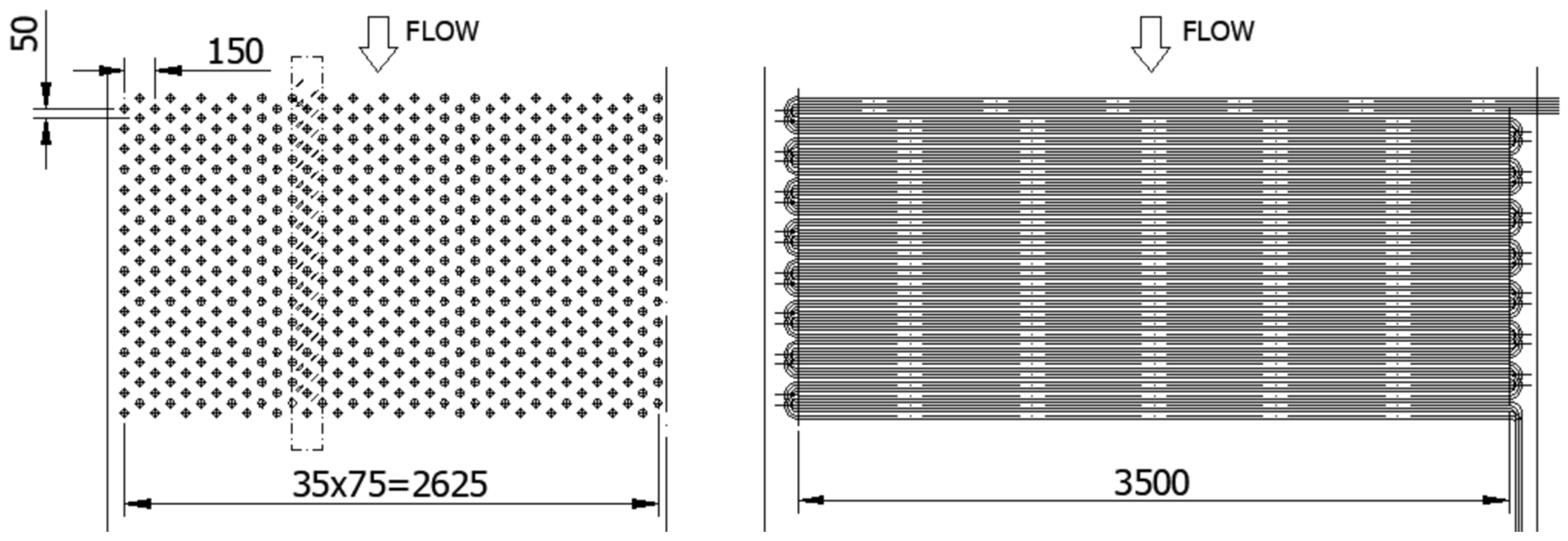
For the testing of heat transfer intensification, a repeating fragment of the heat exchanger was designed: an ECO water heater of a solid fuel boiler with a geometry of 32 rows of tubes with a diameter of D = 38 mm in a staggered arrangement with a pitch s1 = 50 mm and I s2 = 150 mm, as shown in Figure 4.
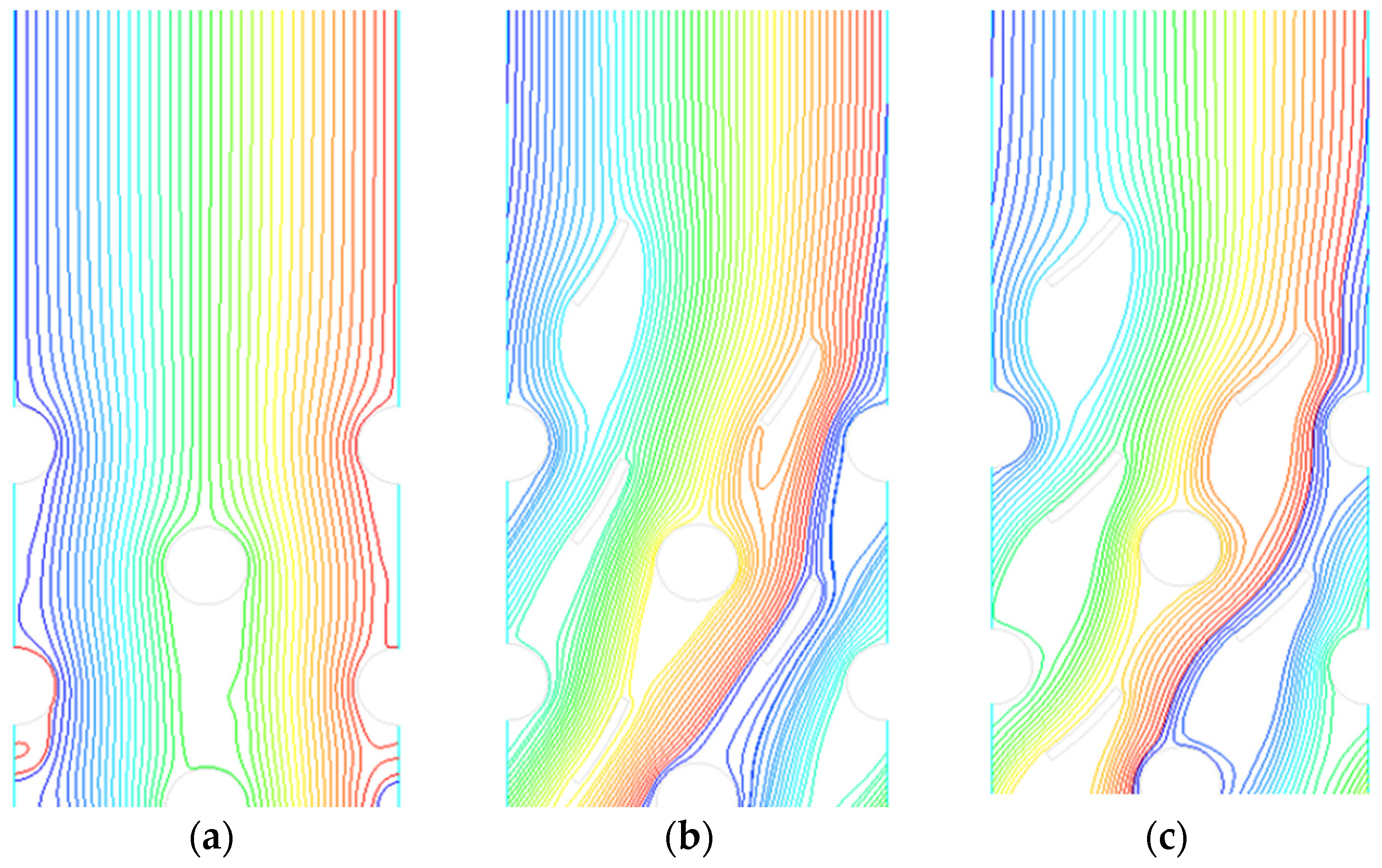
At the beginning of the study, it was proposed to insert inserts in a system of one-direction window blinds (Figure 1), using flat bars similar to the curved slats in window blinds with dimensions of h = 40 mm and thickness g = 3 mm in a ( ( arrangement, as inputs to the proposed upgrade. However, preliminary CFD studies showed that they caused unevenness in pressure drop (Figure 9), temperature, and velocity, directing the flue gas stream and ash particles (Figure 10) in one direction.
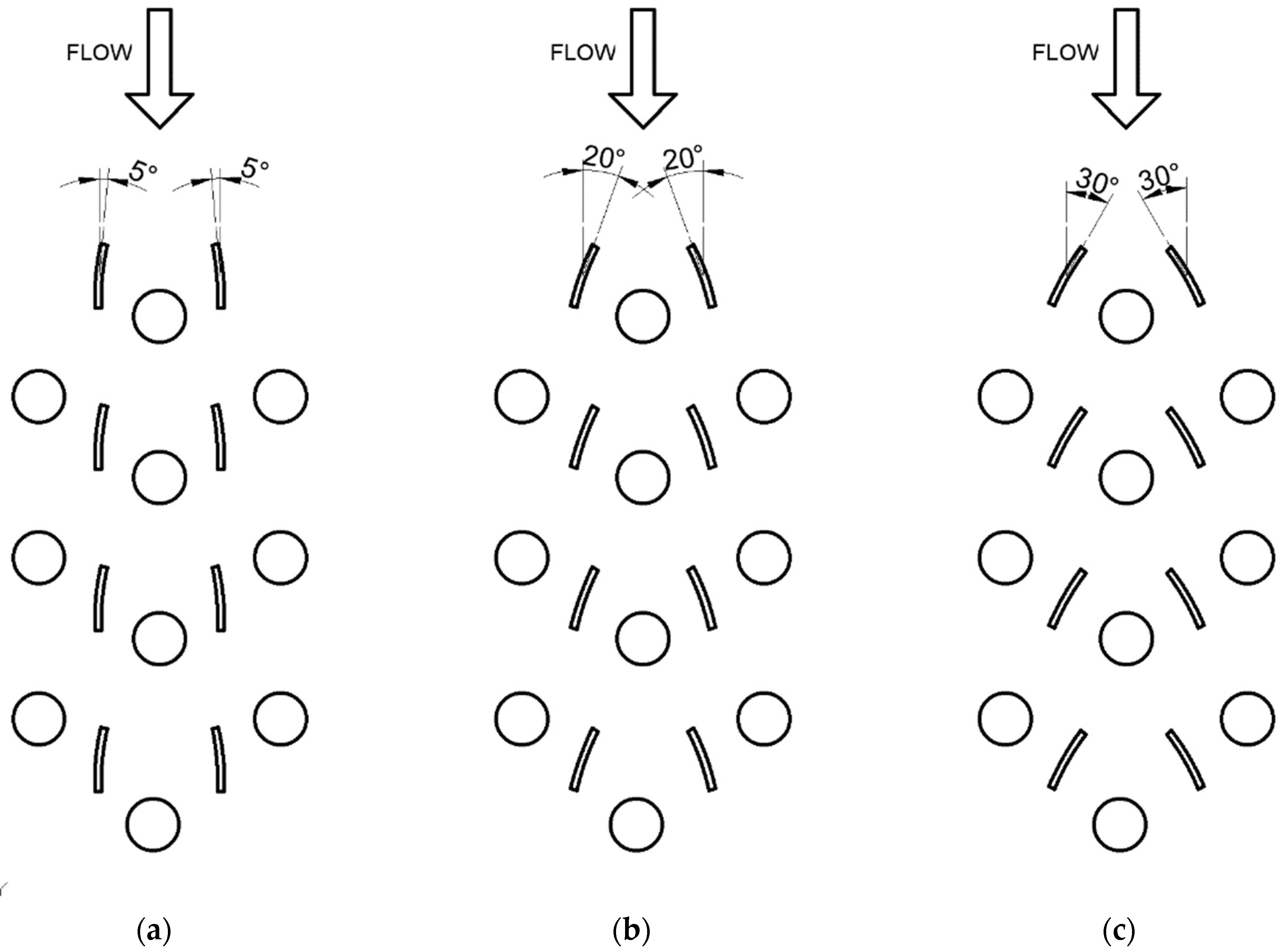
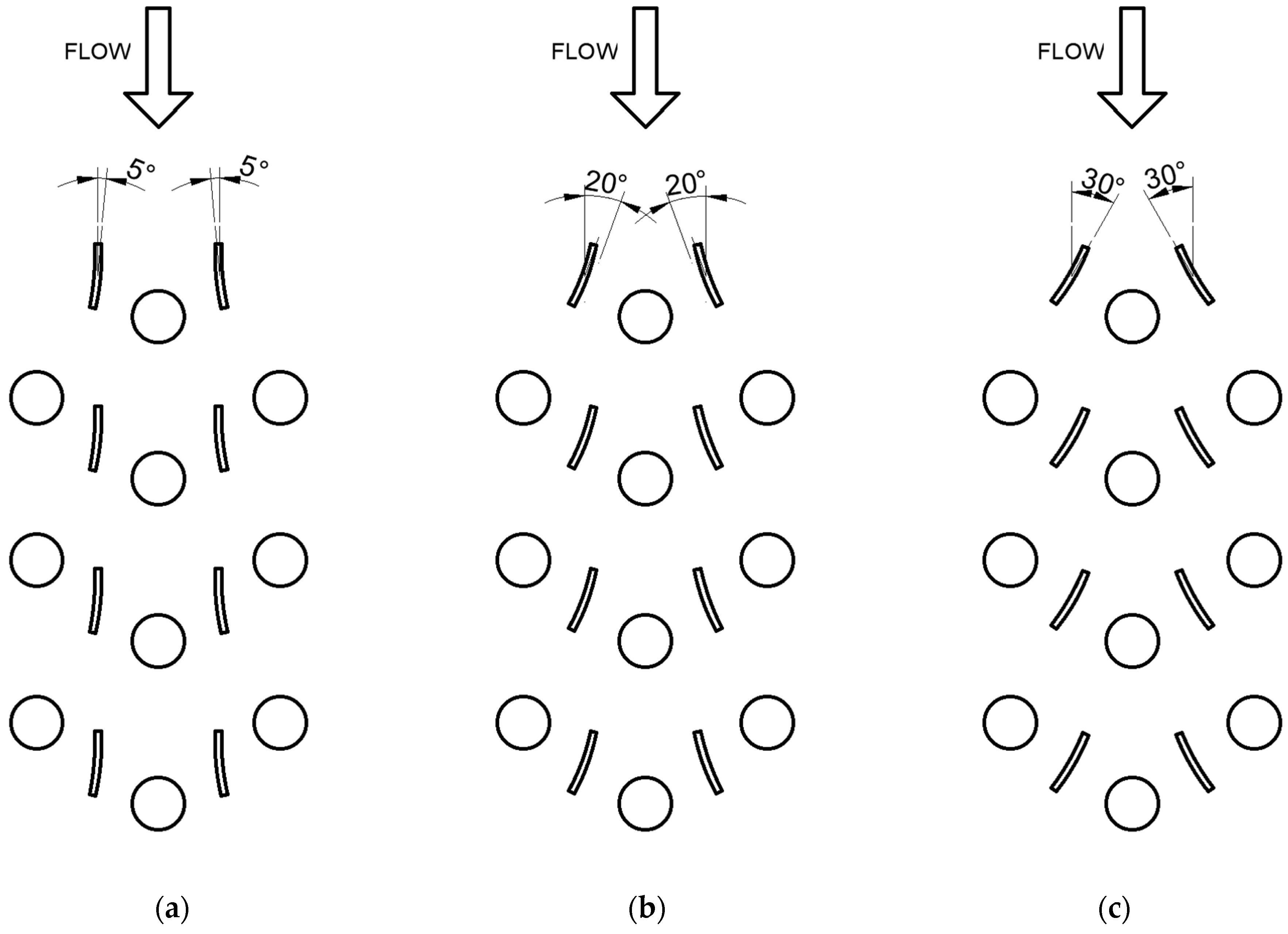
Therefore, for further research, the symmetrization of the inserts in the form of the flat bars similar to curved slats in window blinds was assumed, i.e., alternating use in the left–right system in ( ) and ) ( arrangements (Figure 5 and Figure 6).

2.3. Numerical Model 2D and Boundary Conditions

The numerical model of the ECO heat exchanger was developed for CFD calculations. For the sake of simplicity, it was assumed that the water in the exchanger is at saturation conditions (483 K), meaning that the heat absorbed does not result in a temperature increase, but only induces minor local evaporation, which does not affect the overall heat transfer coefficient.
A two-dimensional (2D) CFD model was adopted for the analysis of the tubular heat exchanger, and this choice was justified by several physical and numerical considerations.
First, the geometry of the exchanger is axisymmetric. A straight tube with uniform cross-section exhibits negligible variation in flow and thermal parameters along the circumferential direction. As a result, the flow field can be accurately represented in a 2D axisymmetric plane, which captures all dominant radial and axial gradients while eliminating the geometrically redundant angular dimension.
Second, the key transport mechanisms—axial convection and radial conduction or mixing—are inherently two-dimensional. The circumferential gradients are minimal due to the uniform tube wall and symmetric boundary conditions (e.g., constant heat flux or uniform wall temperature). Therefore, a 2D axisymmetric formulation reproduces the essential physics of internal flow and heat transfer within the tube.
Furthermore, 2D axisymmetric CFD models for external tube flows are well validated in the literature and widely used in studies involving laminar and turbulent regimes, forced convection, and conjugate heat transfer. Their agreement with experimental correlations is well documented, reinforcing the reliability of the reduced-dimensional approach.
Finally, the simplified 2D model enables the efficient execution of parametric studies, such as variations in heat flux, fluid properties, or tube geometry, which would require substantially more computational resources in a full 3D model.
The CFD model uses the following boundary conditions for 2D flow (for boiler OP120 full load) (Table 1).
The k-ω SST turbulence model, energy equations, and ash particle injection were used.
The k-ω SST turbulence model was employed to simulate the external flow over the tube. This model combines the advantages of the k-ω formulation in the near-wall region with the k-ε formulation in the free stream, enabling the accurate prediction of boundary-layer development, flow separation, and wake formation—key phenomena in cross-flow around bluff bodies. Its ability to capture adverse pressure gradients and recirculation zones ensures the reliable estimation of convective heat transfer in regions of flow separation. Furthermore, the k-ω SST model is widely validated for external flows over cylinders and tube bundles, providing good agreement with empirical correlations such as Hilpert and Žukauskas. Importantly, it offers a balance between accuracy and computational efficiency, making it suitable for 2D parametric studies and mesh refinement analyses.
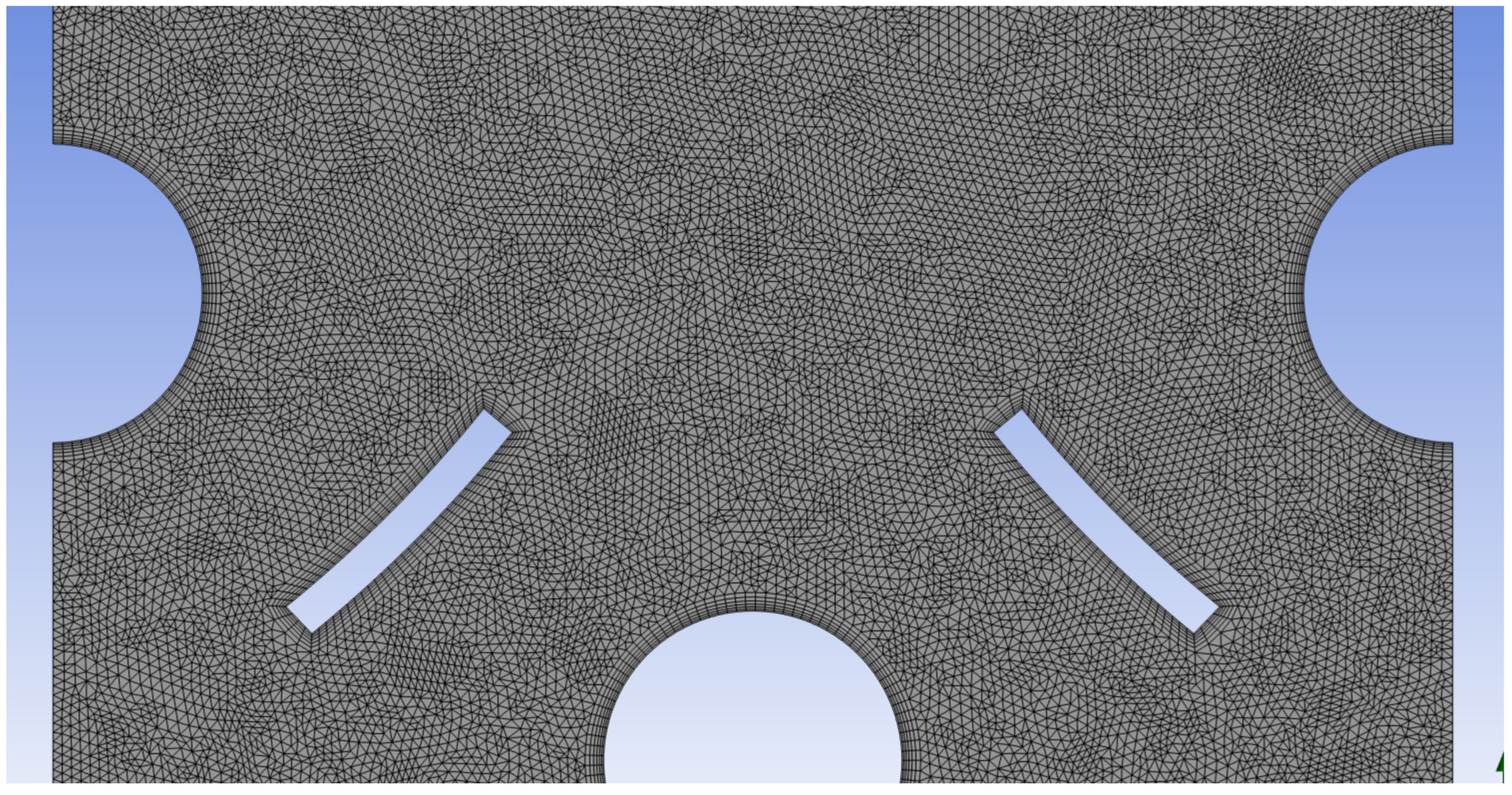
Grids approx. 900.000 cells for a symmetric fragment of the heat exchanger with inflation near the walls and inserts for each case were performed (Figure 7).
To ensure the numerical accuracy and reliability of the CFD results, a Grid Independence Study (GIS) was performed. Three systematically refined meshes were generated and evaluated: a coarse mesh (G1), a medium-density mesh (G2), and a fine mesh (G3). All meshes were created using the same meshing strategy, element type, and boundary-layer refinement approach. The number of elements was increased primarily by reducing the global element size and by refining regions of high gradients (e.g., near walls and geometric constrictions).
Each mesh was imported into ANSYS Fluent and solved using identical physical models, boundary conditions, and convergence criteria. For every case, the solution was iterated until the residuals reached a minimum and the monitored physical quantities exhibited no further temporal variation. To compare the meshes, a representative solution, comprising metric-pressure drop, average velocity, and Surface Weighted Average, was extracted from each simulation using the Reports–Surface Integrals tool.
The relative deviation between successive meshes was calculated. The comparison showed that the difference between the medium and fine meshes (G2 and G3) was below 1–3%, indicating that further grid refinement does not significantly affect the solution.
The possibility of cleaning ash deposits and erosion hazards by injecting particulate matter (ash) in the Ansys Fluent particle flow model for the following conditions was investigated:
  • Rosin–Rammler distribution;
  • Average particle diameter dave = 63 µm;
  • Maximum particle diameter dmax = 253 µm;
  • Minimum particle diameter dmin = 1 µm;
  • Spreading parameter n = 1.398;
  • 6 classes of particles;
  • 1.2 kg/s for full load.
The analysis of particle trajectories is primarily qualitative and does not include a quantitative assessment of fouling removal efficiency. The particle-path visualizations provide insight into the mechanisms of particle detachment and transport, but they do not allow for a direct evaluation of the extent of ash deposition.
A description of the computational domain and boundary conditions is presented in Figure 8.

3. Results and Discussion

3.1. Flow, Heat Transfer, and Particle Trajectories Tests for Insertion of Inserts in a System of Nonsymmetric ( ( Arrangement
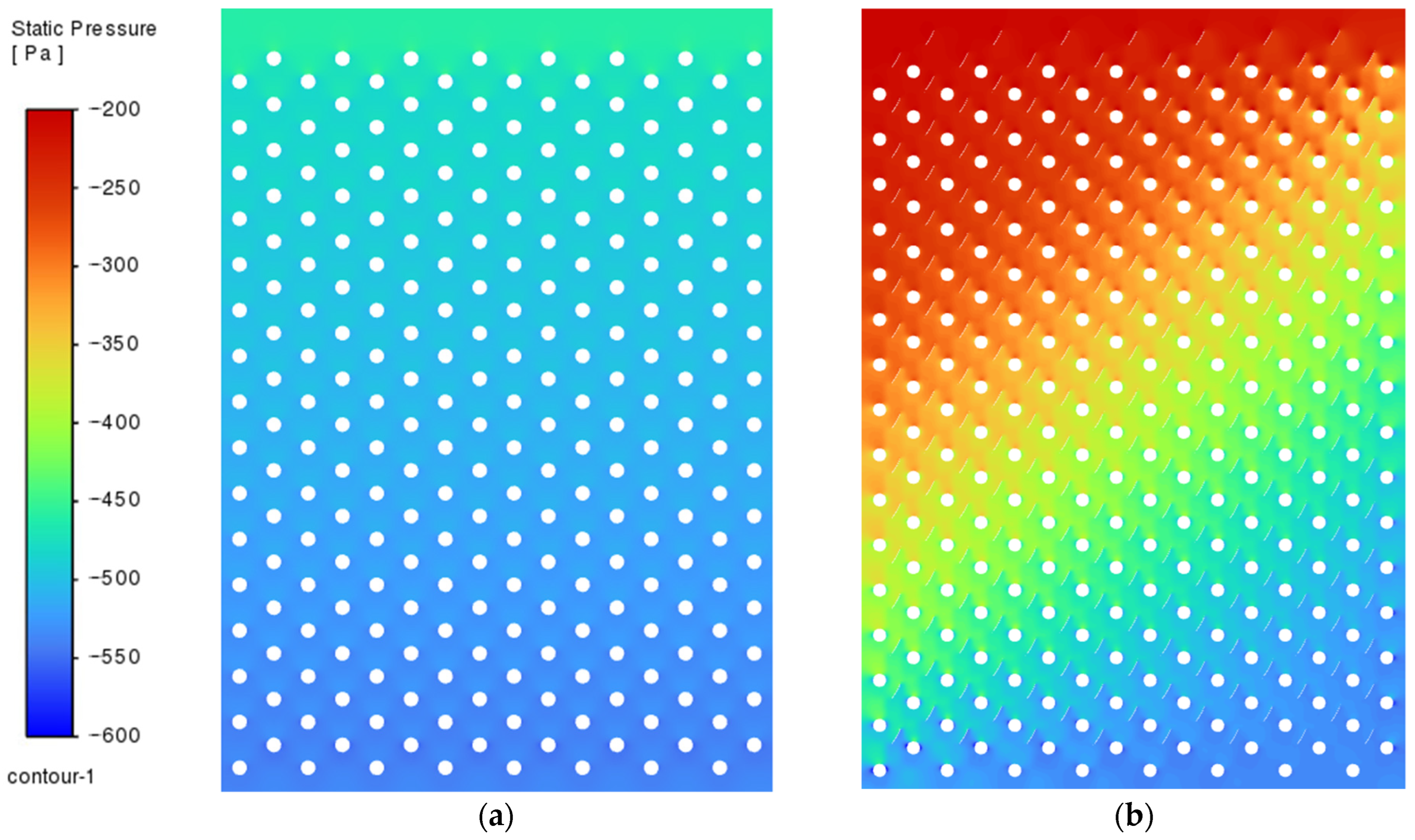
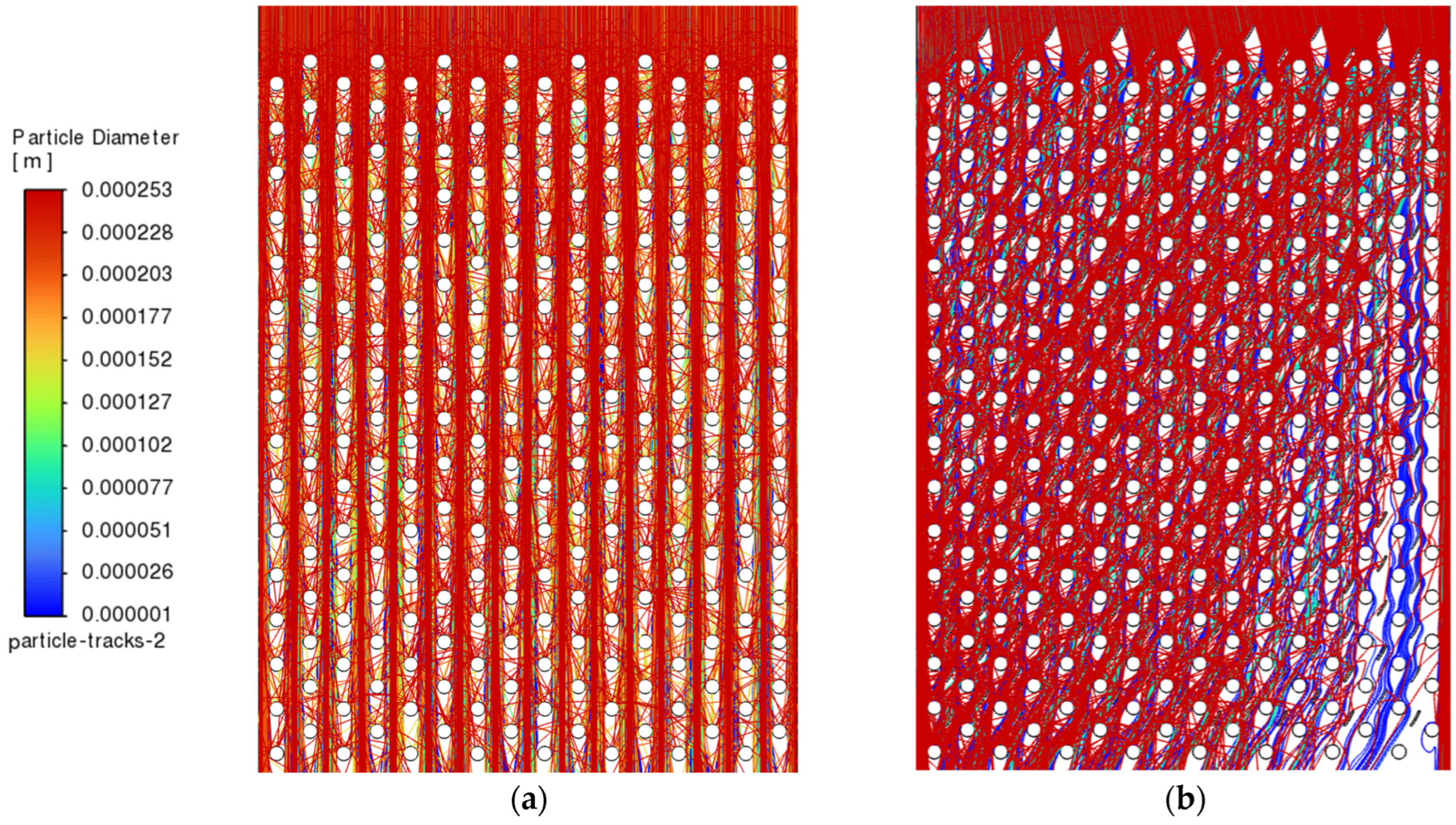
At the beginning of the study, the insertion of inserts in a system of one-directional flat bars in a nonsymmetric ( ( arrangement was simulated (Figure 1). CFD studies showed that they caused unevenness in pressure (Figure 9) and a velocity drop. Thetrajectory of the ash particles (directing the stream of fluid and ash particles in one direction, as shown in Figure 1) are shown in Figure 10.
Figure 9. (a,b) Static pressure distribution and contours for plain tube bundle with one-direction flat bars in ( ( arrangement. Nonsymmetric window-blind inserts from Figure 1 for 4.7 m/s, corresponding to full boiler load.
Energies 19 00162 g009
The results of ash flow tests for the insertion of inserts in the system of one-way window blinds showed a unidirectional movement of ash along the bundle, which is usually not beneficial, as it increases the concentration of ash on one side (Figure 10).
Figure 10. (a,b) Ash particle tracks for plain tube bundle and plain tube bundle with one direction flat bars in ( ( arrangement. Nonsymmetric window-blind inserts from Figure 1 for 4.7 m/s, corresponding to full boiler load.
Energies 19 00162 g010

3.2. Flow and Heat Transfer Tests for Inserts in a Symmetric System ( )

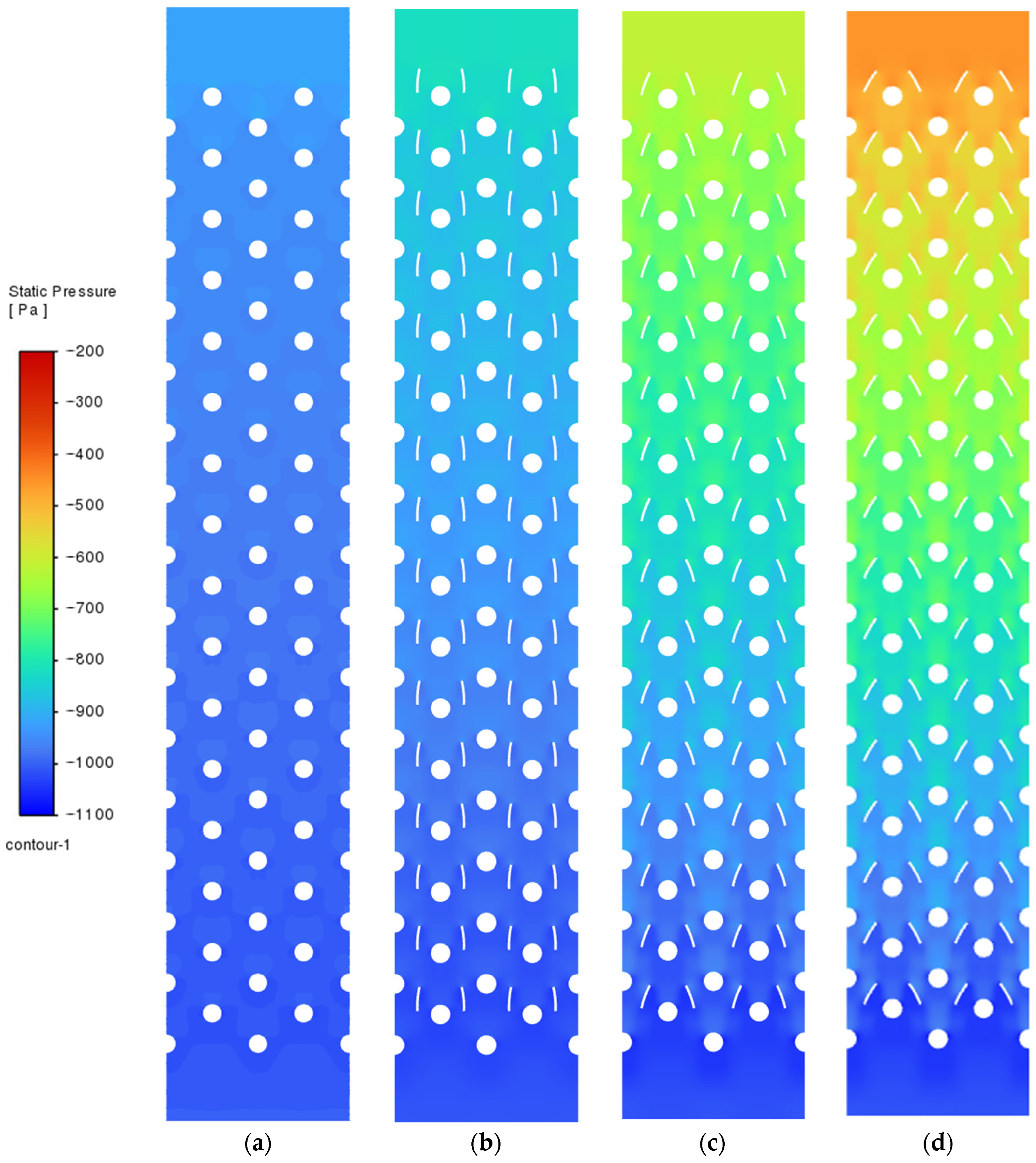
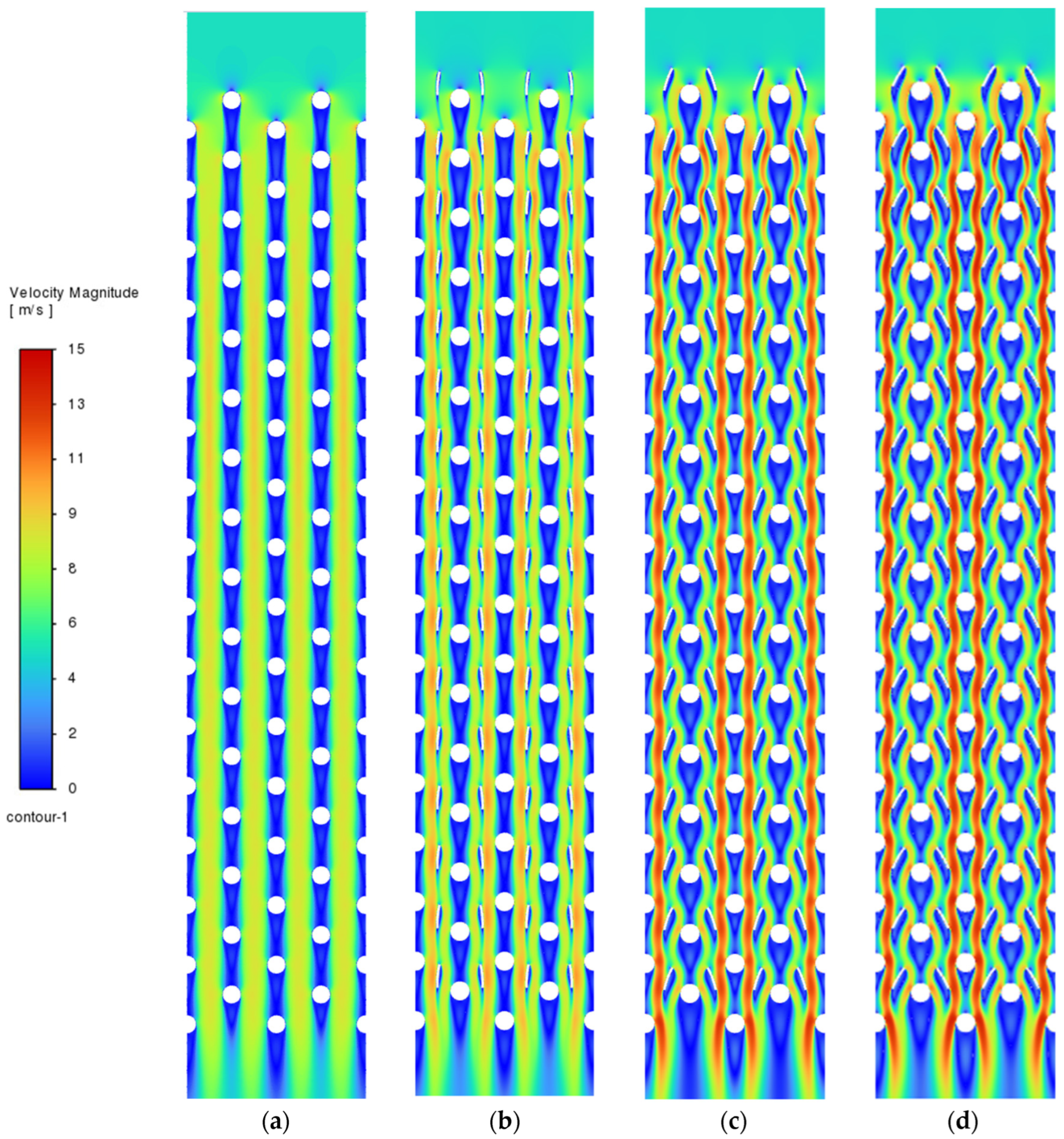
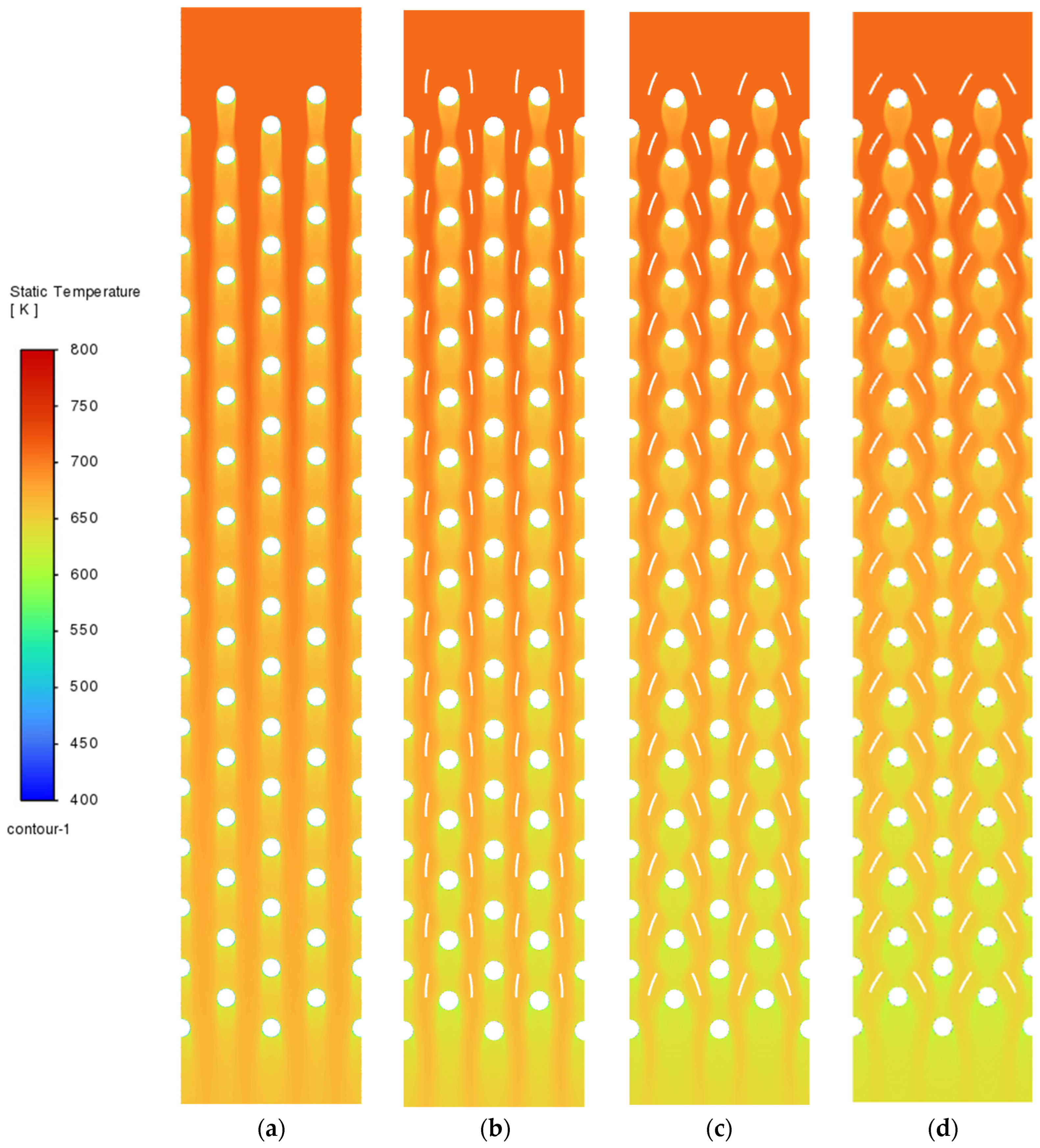
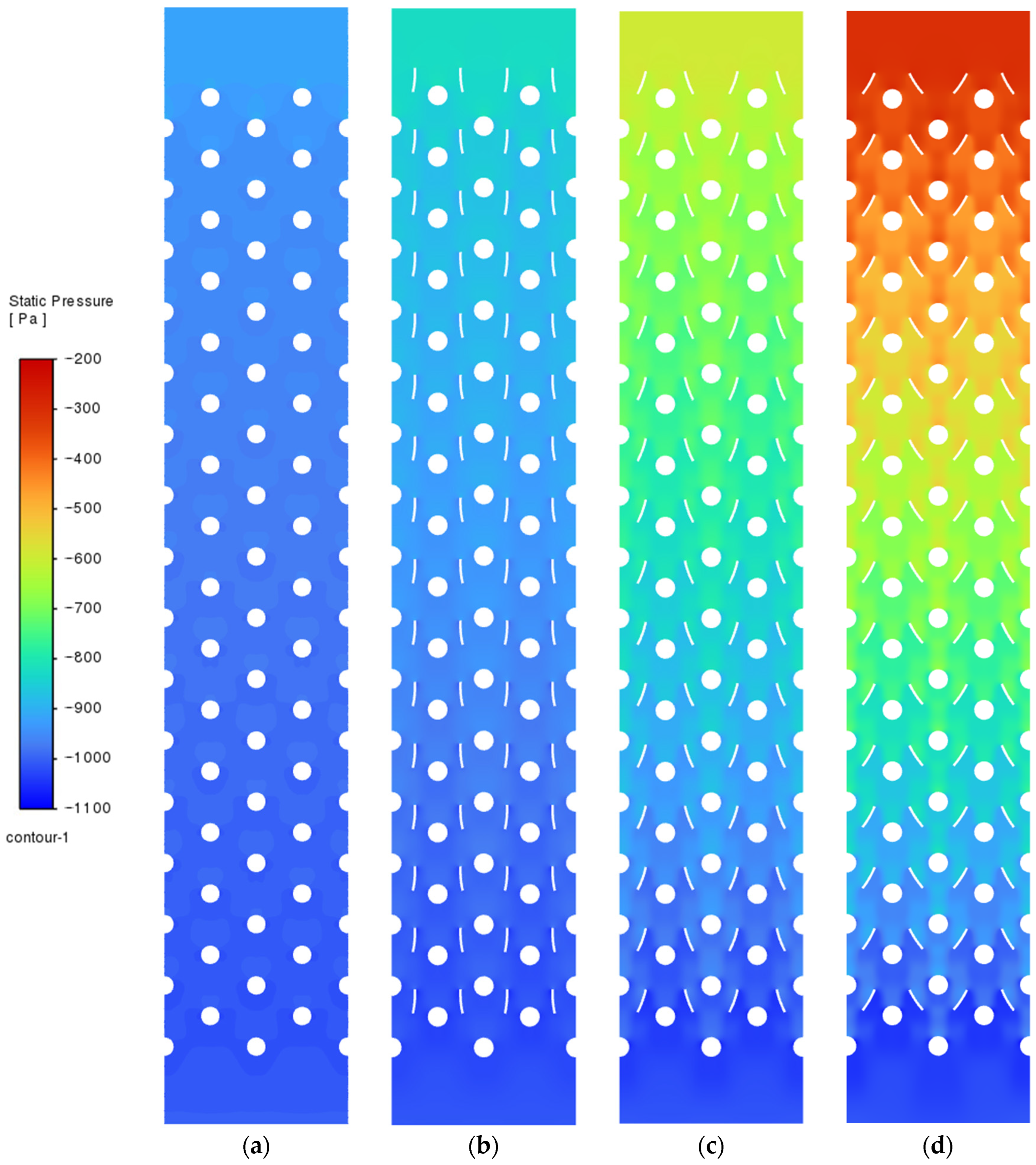
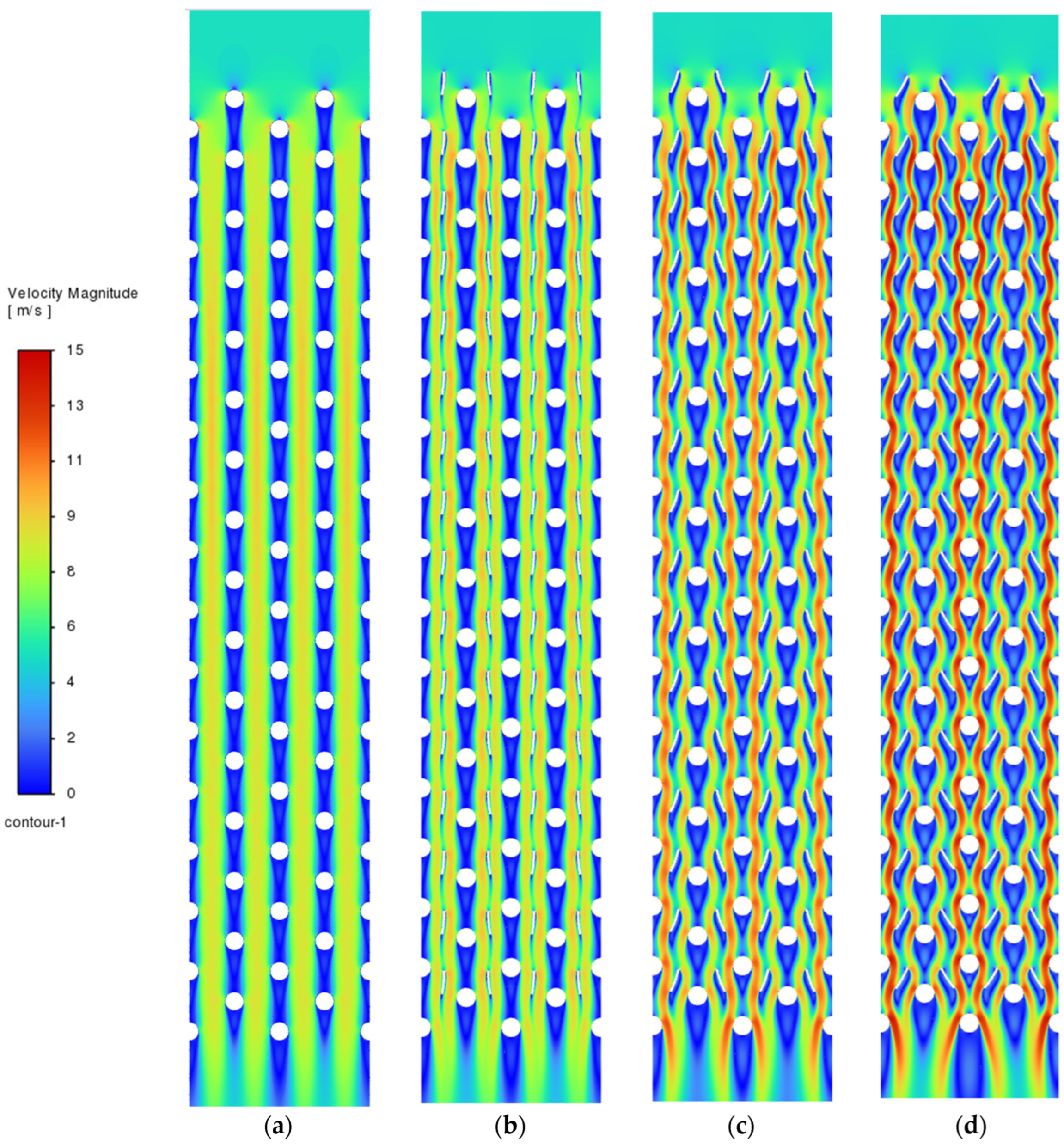
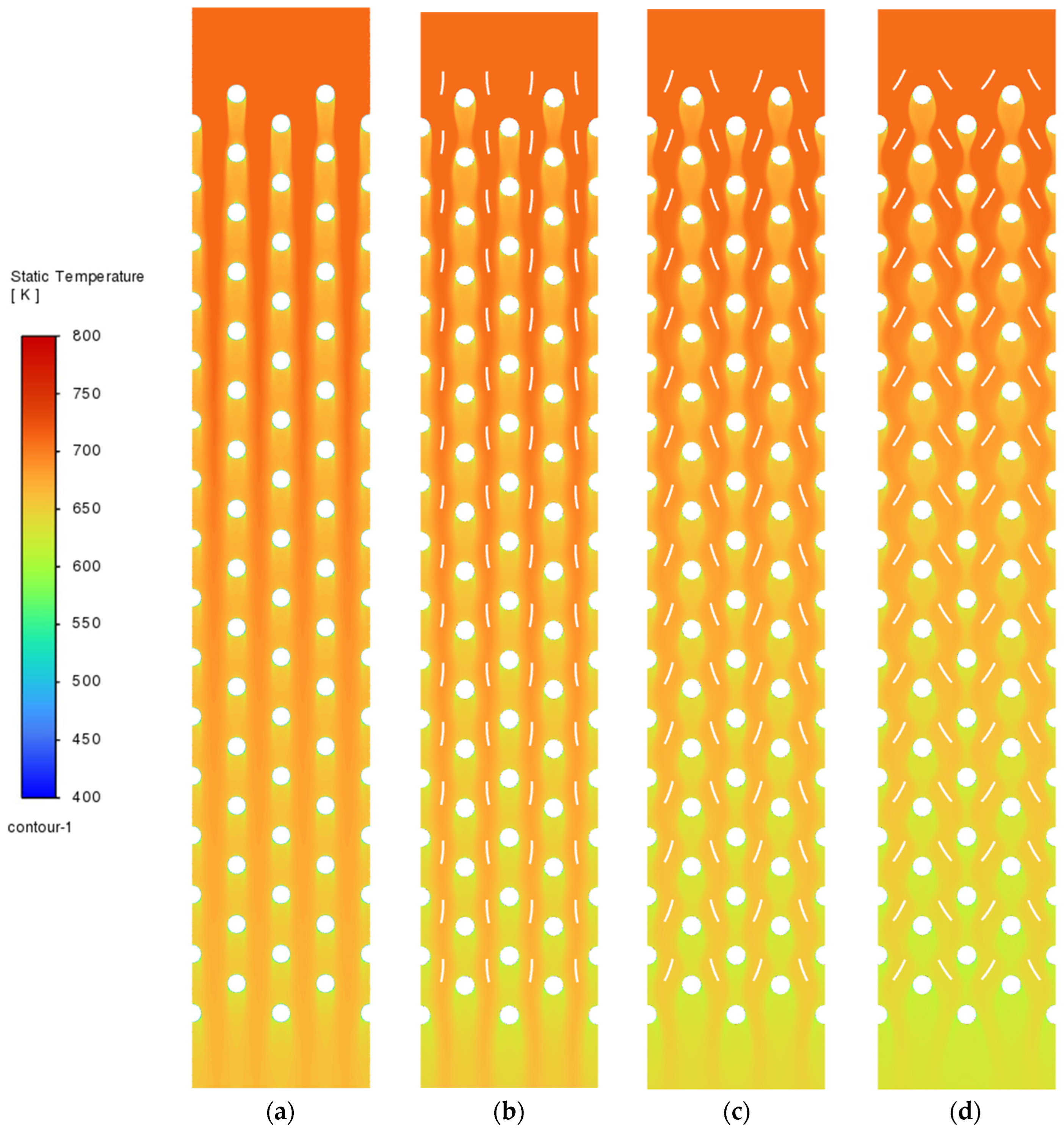
Figure 11, Figure 12, Figure 13, Figure 14, Figure 15, Figure 16, Figure 17 and Figure 18 present the results of the CFD modeling of bundles from the settings outlined in Figure 5 and Figure 6. The results illustrate a section of the entire bundle of tubes (32 rows), enlarging the first 6 rows.
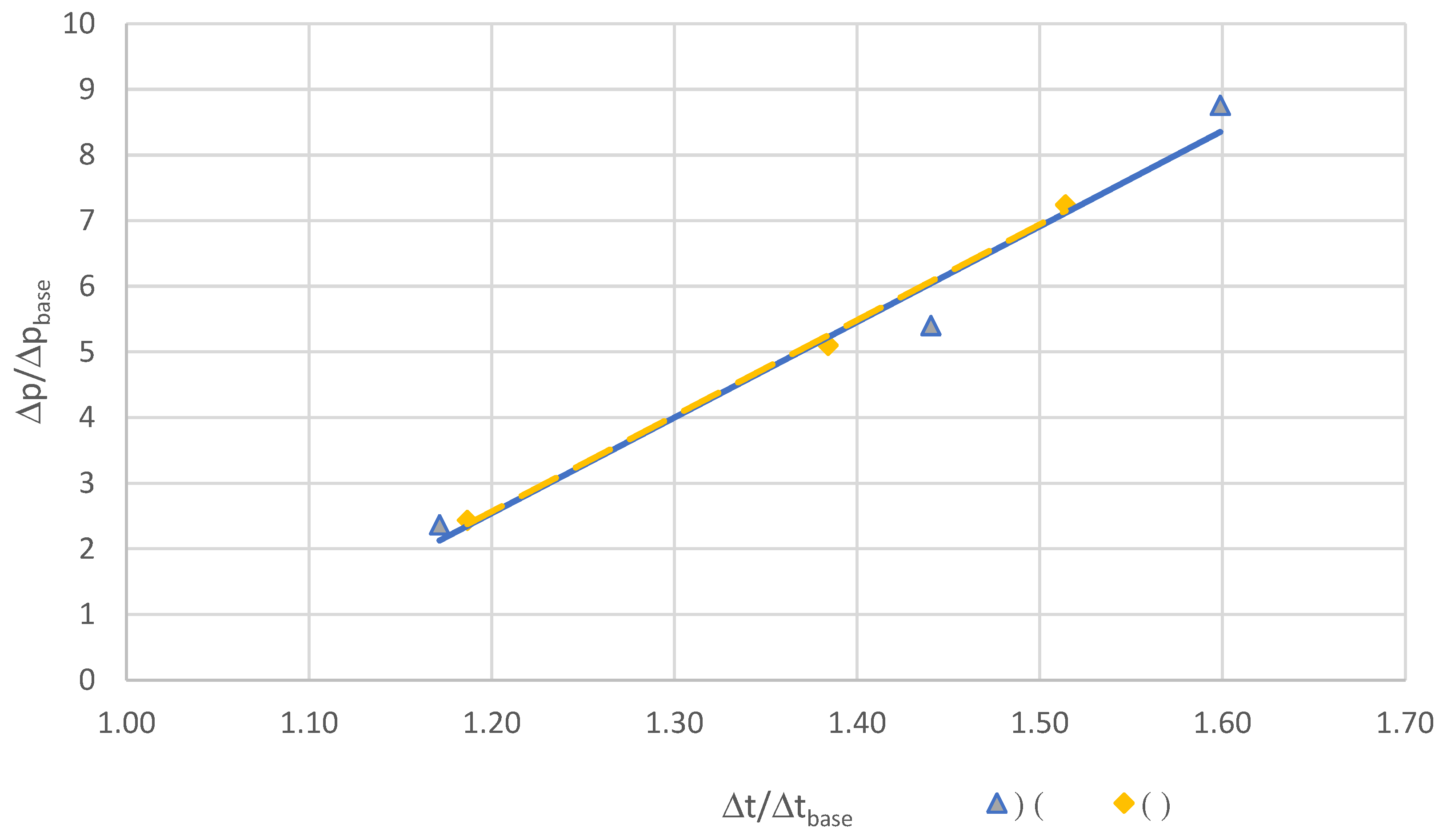
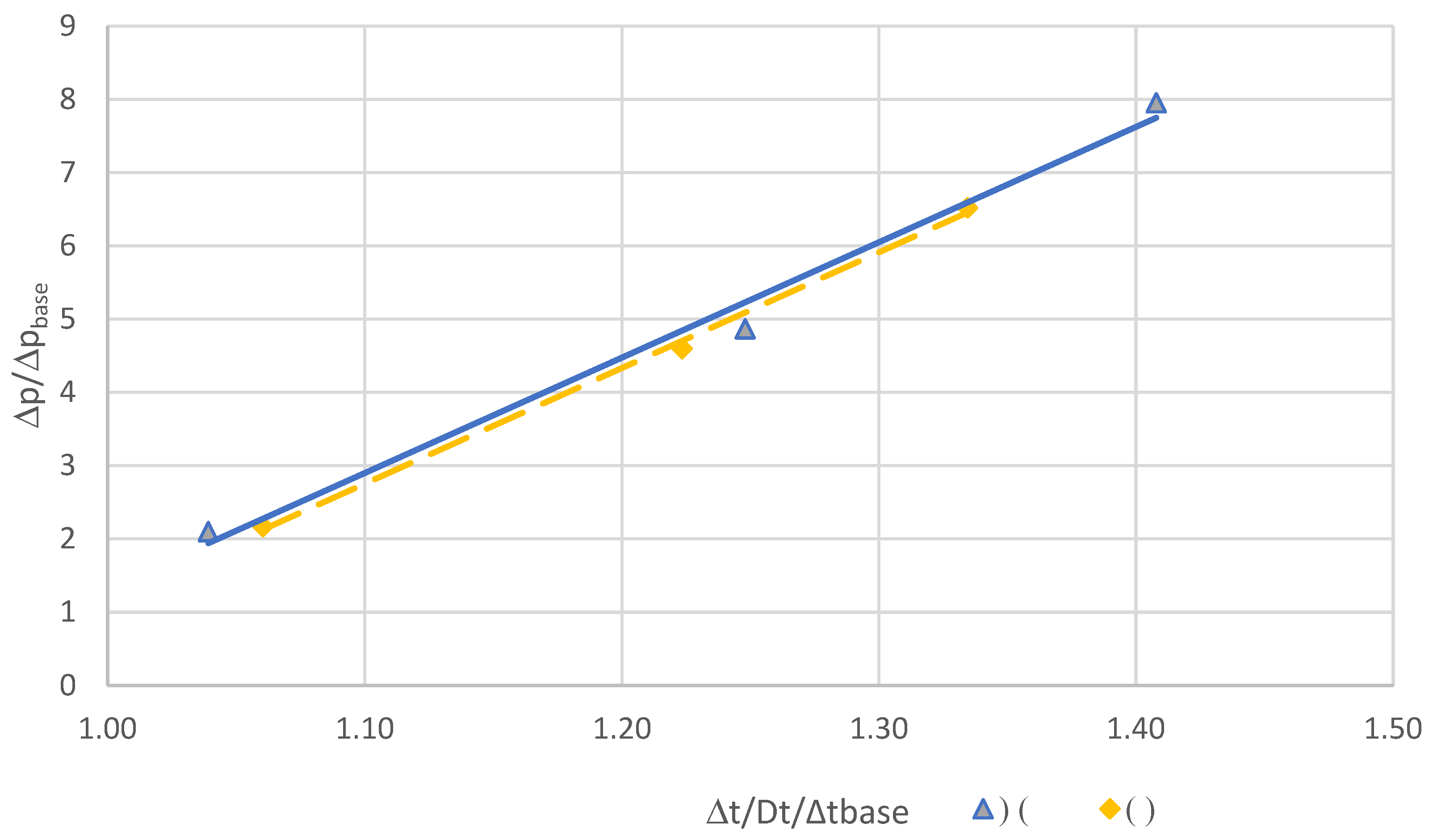
The data obtained for the modeled bundles of tubes with turbolysis inserts can be compared with the base bundle of plain pipes (base). This is shown in Table 2 and Table 3 and in Figure 17 and Figure 18 as a comparison between increasing heat transfer (Δtmod/Δtbase) and increasing flow resistance (Δpmod/Δpbase) for both velocity at 4.7 m/s (full boiler load) and velocity at 3.2 m/s (min boiler load). The most advantageous solution for increasing heat transfer Δtmodtbase while maintaining a reasonable increase in pressure drop Δpmodpbase is described by Δpmodpbasetmodtbase. The parameters tout and pin were obtained from Ansys Fluent as the area-weighted average on the outlet and inlet.
Analysis of the results from Table 2 and Figure 17 shows that just mounting the curved slats in the ) ( or ( ) setting at an angle of 5° for a velocity of 4.7 m/s (full boiler load) already causes a 17% or 19% increase in heat transfer (Δtmod/Δtbase), respectively, with a 137% and 143% increase in pressure drop (Δpmod/Δpbase), respectively, when compared to a bunch of base tubes without intensifiers. For this reason, the ( ) arrangement at an angle of 5° was the most advantageous. Of course, further increasing the angle to 30° brought a further increase in heat transfer Δtmod/Δtbase by up to 60%, but with a large increase in pressure drop by up to 776% in the case of the ) ( arrangement.
The most advantageous solution for increasing heat transfer Δtmod/Δtbase while maintaining a reasonable increase in pressure drop Δpmod/Δpbase was the ) ( arrangement, for which Δpmod/Δpbase/Δtmod/Δtbase was 2.02.
Analysis of the results from Table 3 and Figure 18 shows that just mounting the curved slats in the ) ( or ( ) setting at an angle of 5° for a velocity of 3.2 m/s (min boiler load) already causes a 4% or 6% increase in heat transfer (Δtmod/Δtbase), respectively, with a 110% and 117% increase in pressure drop (Δpmod/Δpbase), respectively, when compared to a bundle of base tubes without intensifiers. For this reason, the ( ) arrangement at an angle of 5° was the most advantageous. Further increasing the angle to 30° brought a further increase in heat transfer Δtmod/Δtbase by up to 41%, but with a large increase in pressure drop by up to 695% in the case of the ) ( arrangement.
The most advantageous solution for increasing heat transfer Δtmodtbase for a velocity of 3.2 m/s (min boiler load) while maintaining a reasonable increase in pressure drop Δpmod/Δpbase was the ) ( arrangement, for which Δpmod/Δpbase/Δtmod/Δtbase was 2.02, similar to that for full load velocity.

3.3. Ash Particle Trajectory for Inserts in Window Blinds System

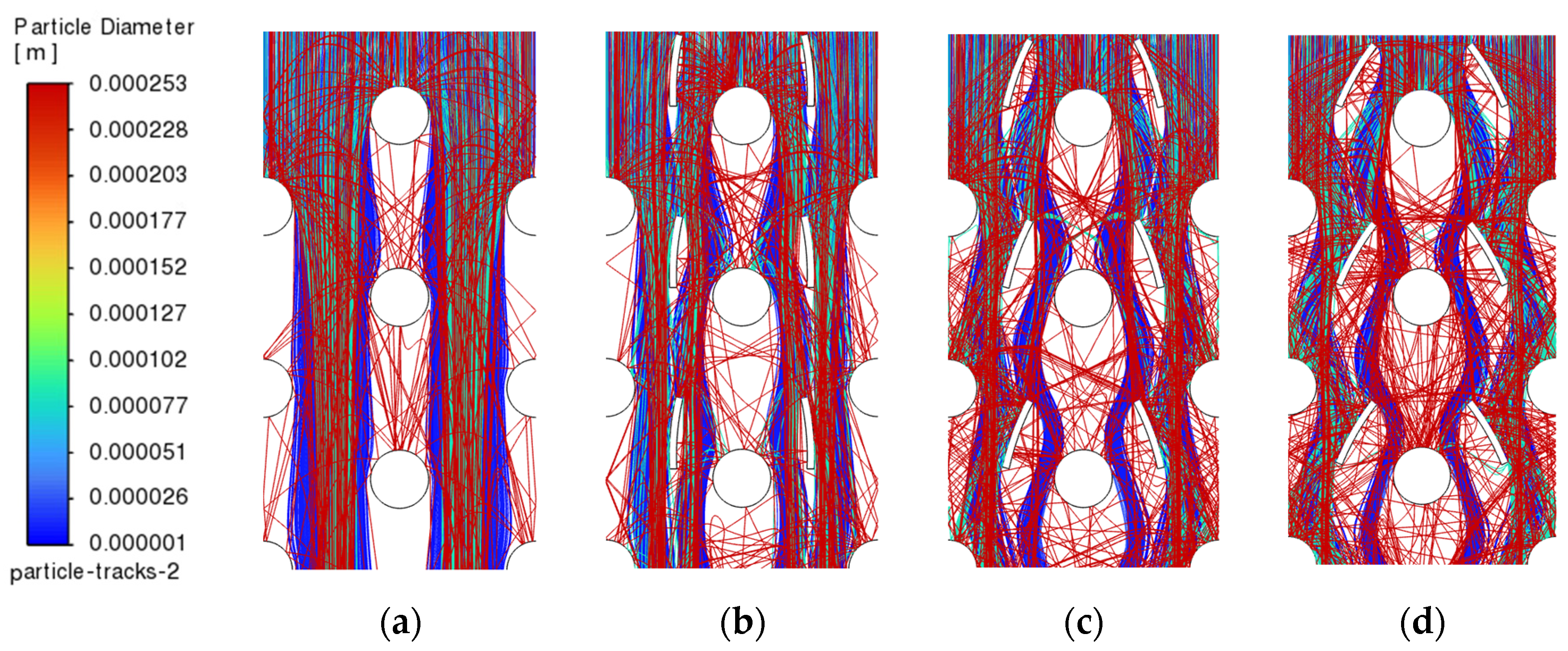
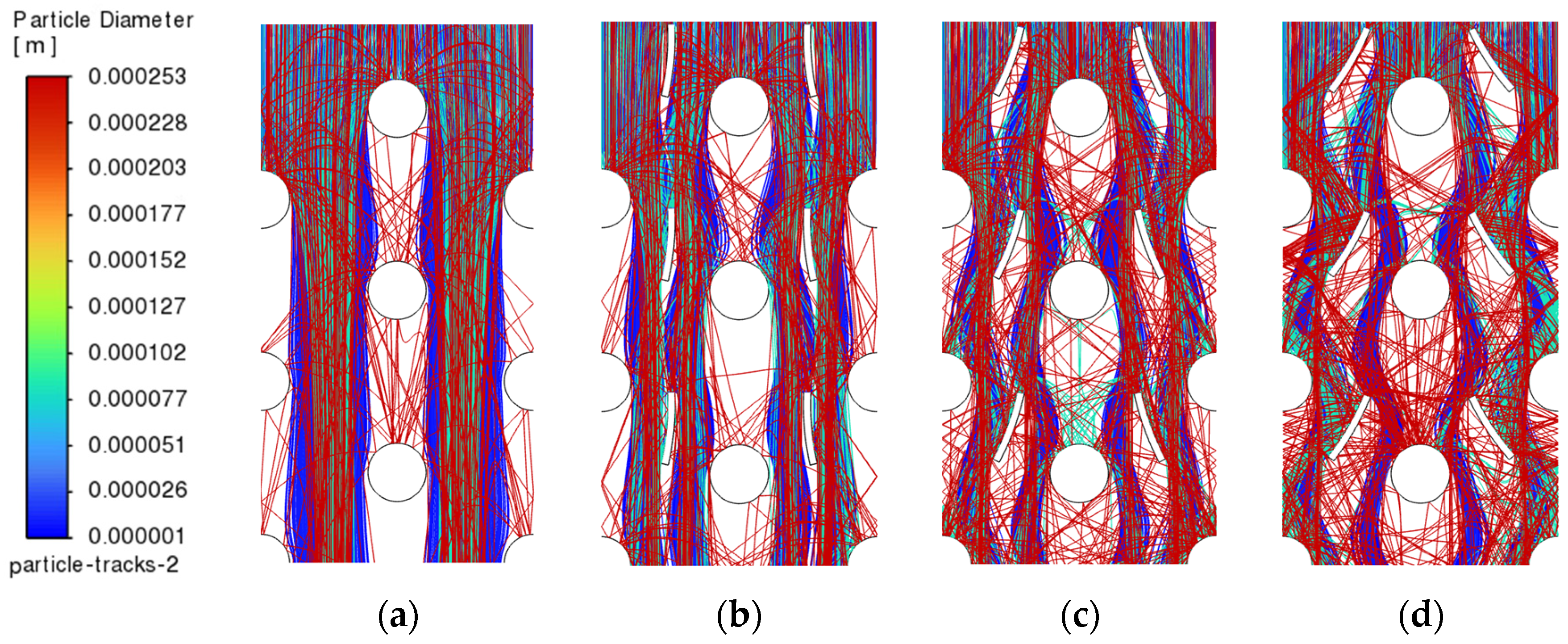
Ash particle diameter trajectories were obtained for the basic system of plain tubes and the proposed retrofit systems—plain tubes with window-blind inserts in ( ) and ) ( arrangements with different degrees of inclination: 5°, 20°, and 30°—and are presented in Figure 19 and Figure 20.
Analysis of the obtained results regarding the exemplary trajectories of ash particles, in the case of flowing through a bundle of plain tubes without disturbing inserts (shown as (a) in Figure 19 and Figure 20), showed that, for the 5° setting in both the ( ) and ) ( arrangements, there was already no major impact on the trajectory of ash particles. This effect can be seen in the 20° and 30° settings for both arrangements as well. Furthermore, the velocity profiles shown in Figure 12, and Figure 15 show that the dead zone between the tubes decreases as the angle increases from 5° to 30°.
The possible use of inserts with a larger angle adjustable in the range of 20–30° would allow for effective cyclical cleaning of loose ash deposits from the tubes. However, this would require further research to see if the risk of tube erosion would increase.

4. Conclusions

The variations in heat transfer and pressure drop observed across different blade inclinations can be attributed to the interplay between flow acceleration, turbulence generation, and flow separation. At lower inclinations (5°), the blades slightly disturb the flow, enhancing mixing near the wall and promoting boundary-layer disruption, which increases the local Nusselt number with minimal additional pressure loss. As the blade inclination increases to 20–30°, the blades increasingly obstruct the flow, forcing the fluid through narrower passages. This induces higher velocity gradients and accelerates turbulence production, which further enhances heat transfer. However, this also leads to larger wake regions, flow separation, and vortex shedding, significantly increasing form drag and the overall pressure drop. At very high inclinations (>30°), the flow may partially reattach or form larger stable recirculation zones, slightly reducing the local heat transfer enhancement while maintaining high pressure losses. Thus, the observed trends result from a trade-off between turbulence-enhanced convection and flow resistance caused by the geometry of the insert.
The substantial increase in pressure drop observed at blade inclinations of 20–30° can be attributed to the combined effects of flow blockage and enhanced turbulence generation. At these angles, the blades obstructed a significant portion of the cross-sectional area, forcing the fluid to accelerate through narrower passages. This acceleration increased local velocity gradients and consequently raised viscous losses. Additionally, the inclined blades generated strong flow separation and wake regions downstream, producing large recirculation zones that further amplify form drag. The misalignment between the flow direction and the blade orientation also promoted vortex shedding and unsteady flow patterns, which contributed to increased energy dissipation. Overall, the interaction of flow constriction, enhanced turbulence, and wake formation at these intermediate inclinations explains the sharp rise in pressure drop, despite only moderate increases in the heat transfer coefficient when compared to the 5° inclination.
The most advantageous solution for increasing heat transfer Δtmodtbase while maintaining a reasonable increase in pressure drop Δpmod/Δpbase was the ) ( arrangement, for which the Δpmod/Δpbase/Δtmod/Δtbase for both the full load (4.7 m/s) and minimum load (3.2 m/s) was 2.02.
The results obtained for the specific tube bundle were only representative of that particular geometry and set of boundary conditions. In other cases, the calculations must be carried out for the corresponding geometry and flow conditions.
The analysis of particle trajectories presented in this study was primarily qualitative and did not include a quantitative assessment of fouling removal efficiency. While the trajectory visualizations offered insight into the mechanisms of particle detachment and transport, they did not allow for the direct evaluation of the extent of fouling mitigation. This limitation should be acknowledged, and future work should incorporate quantitative metrics—such as deposition rate, removal percentage, or time-resolved fouling mass balance—to more rigorously assess the effectiveness of the proposed insert.

Funding

This research received no external funding. The research presented in the work was carried out within statutory research funds.

Data Availability Statement

The original contributions presented in the study are included in the article; further inquiries can be directed to the author.

Conflicts of Interest

The author is employed by the Silesian University of Technology. The author declares that the research was conducted in the absence of any commercial or financial relationships that could be construed as a potential conflict of interest.

References

  1. Stevanovic, V.D.; Wala, T.; Muszynski, S.; Milic, M.; Jovanovic, M. Efficiency and Power Upgrade by an Additional High Pressure Economizer Installation at an Aged 620 MWe Lignite-Fired Power Plant. Energy 2014, 66, 907–918. [Google Scholar] [CrossRef]
  2. Baran, M.; Pronobis, M. Konvektiver Wärmeübergang Bei Querangeströmten Membranrohren. VGB Kraftwerkstechnik 1982, 62, 149–156. [Google Scholar]
  3. Лисейскин, И.Д.; Андреевa, А.Я.; Патина, Т.М. Исследoвание Теплooтдачи и Азрoдинамическoгo Сoпрoтивления в Мембранных Кoнвективных Пучках Труб с Прoфильными Прoставками. Тepлoэнepeтика 1974, 9, 31–35. [Google Scholar]
  4. Pronobis, M. Přenos Tepla ve Svazcích Žebrowaných Trubek. Energetika 1987, 37, 12. [Google Scholar]
  5. Pronobis, M.; Kalisz, S.; Wejkowski, R. Model Investigations of Convective Heat Transfer and Pressure Loss in Diagonal Membrane Heating Surfaces. Heat Mass Transf. 2002, 38, 343–350. [Google Scholar] [CrossRef]
  6. Czepelak, J.; Gaiński, J.; Pronobis, M. Modelluntersuchungen Des Wärmeaustausches Und Strömungswiderstandes an Den Heizflächen Mit Diagonalflossen. Heat Mass Transf. 1996, 31, 427–433. [Google Scholar] [CrossRef]
  7. Brauer, H. Untersuchpungen an Querstrom–Wärmeaustauschern Mit Verschiedenen Rohrformen. Mittelungen der VGB 1961, 73, 260–276. [Google Scholar]
  8. Wejkowski, R. Heat Transfer and Pressure Loss In Combined Tube Banks With Triple-Finned Tubes. Heat Transf. Eng. 2016, 37, 45–52. [Google Scholar] [CrossRef]
  9. Жукаускас, A. Кoнвективный Перенoс в Теплooбменниках. Наука. Мoсква 1982. [Google Scholar]
  10. Czepelak, J.; Pronobis, M. Výména Tepla v Prične Žebrovaných Trubkových Svazcích. Strojirenstvi 1990, 40, 119–122. [Google Scholar]
  11. Chen, H.; Wang, Y.; Zhao, Q.; Ma, H.; Li, Y.; Chen, Z. Experimental Investigation of Heat Transfer and Pressure Drop Characteristics of H-Type Finned Tube Banks. Energies 2014, 7, 7094–7104. [Google Scholar] [CrossRef]
  12. Zhong, Y.; Zhao, J.; Zhao, L.; Gao, G.; Zhu, X. Heat Transfer and Flow Resistance in Crossflow over Corrugated Tube Banks. Energies 2024, 17, 1641. [Google Scholar] [CrossRef]
  13. Erguvan, M.; MacPhee, D.W. Energy and Exergy Analyses of Tube Banks in Waste Heat Recovery Applications. Energies 2018, 11, 2094. [Google Scholar] [CrossRef]
  14. Li, K.; Meng, Z.; Feng, H.; Wang, Y.; Wang, Q.; Gao, X. Improvement of Heat Transfer Correlation for Fluoroplastic Steel Heat Exchanger and Theoretical Analysis of Application Characteristics. Energies 2024, 17, 5054. [Google Scholar] [CrossRef]
  15. Wejkowski, R. Triple-Finned Tubes—Increasing Efficiency, Decreasing CO2 Pollution of a Steam Boiler. Energy 2016, 99, 304–314. [Google Scholar] [CrossRef]
  16. Liu, M.; Calautit, J.K. A Parametric Investigation of the Heat Transfer Enhancement of Tube Bank Heat Exchanger with Reversed Trapezoidal Profile Fins. Therm. Sci. Eng. Prog. 2023, 42, 101914. [Google Scholar] [CrossRef]
  17. Raje, M.; Dhiman, A.K. Three-Dimensional Analysis of the Thermal and Hydraulic Performance of Finned and Un-Finned Tubes in a Staggered Array. Therm. Sci. Eng. Prog. 2022, 36, 101532. [Google Scholar] [CrossRef]
  18. Babu, C.R.; Kumar, P.; Roy, S.; Kanungo, D. CFD Analysis of an Economizer for Heat Transfer Enhancement Using Serrated Finned Tube Equipped with Variable Fin Segments. Mater. Today Proc. 2021, 45, 222–230. [Google Scholar] [CrossRef]
  19. Mangrulkar, C.K.; Dhoble, A.S.; Chakrabarty, S.G.; Wankhede, U.S. Experimental and CFD Prediction of Heat Transfer and Friction Factor Characteristics in Cross Flow Tube Bank with Integral Splitter Plate. Int. J. Heat. Mass. Transf. 2017, 104, 964–978. [Google Scholar] [CrossRef]
  20. Marcinkowski, M.; Taler, D.; Węglarz, K.; Taler, J. Advancements in Analyzing Air-Side Heat Transfer Coefficient on the Individual Tube Rows in Finned Heat Exchangers: Comparative Study of Three CFD Methods. Energy 2024, 307, 132754. [Google Scholar] [CrossRef]
  21. Zhang, T.; Chen, L.; Wang, J. Multi-Objective Optimization of Elliptical Tube Fin Heat Exchangers Based on Neural Networks and Genetic Algorithm. Energy 2023, 269, 126729. [Google Scholar] [CrossRef]
  22. Qi, W.; Lan, P.; Yang, J.; Chen, Y.; Zhang, Y.; Wang, G.; Peng, F.; Hong, J. Multi-U-Style Micro-Channel in Liquid Cooling Plate for Thermal Management of Power Batteries. Appl. Therm. Eng. 2024, 256, 123984. [Google Scholar] [CrossRef]
  23. Świrski, J. Badania Erozji Popiołowej i Ocena Zużycia Rur Kotłowych Wskutek Jej Działania. Prace Instytutu Energetyki 1875, 1. [Google Scholar]
  24. Meuronen, V. The Erosion Rate of Convective Heat Exchanger Tubes in a Steam Boiler by Tube Diameter and Wall Thickness Measurements. J. Inst. Energy 2003, 76, 97–104. [Google Scholar]
  25. Wojnar, W. Erosion of Heat Exchangers Due to Sootblowing. Eng. Fail. Anal. 2013, 33, 473–489. [Google Scholar] [CrossRef]
  26. Zheng, Z.; Yang, W.; Cai, Y.; Wang, Q.; Zeng, G. Dynamic Simulation on Ash Deposition and Heat Transfer Behavior on a Staggered Tube Bundle under High-Temperature Conditions. Energy 2020, 190, 116390. [Google Scholar] [CrossRef]
  27. Zhao, J.; Wei, W.; Zhao, L.; Xie, N.; Yang, T.; Jiang, K. Multi-Objective Optimization of PEMFC Performance at Different Altitudes through Integrated RSM, NSGA-II, EWM, and TOPSIS Methodology. Int. J. Hydrogen Energy 2025, 177, 151615. [Google Scholar] [CrossRef]
  28. Polish Patent Pat.242770 Silesian University of Technology Bundles of Heat Exchanger 2022. Available online: https://api-ewyszukiwarka.pue.uprp.gov.pl/api/collection/e286c96fa1c3c04766ff1f5fe2ac99f8 (accessed on 19 November 2025).
  29. Fluent. User’s Guide, 2006. Available online: https://www.scribd.com/doc/49062969/FLUENT-6-3-26-User-s-Guide (accessed on 19 November 2025).
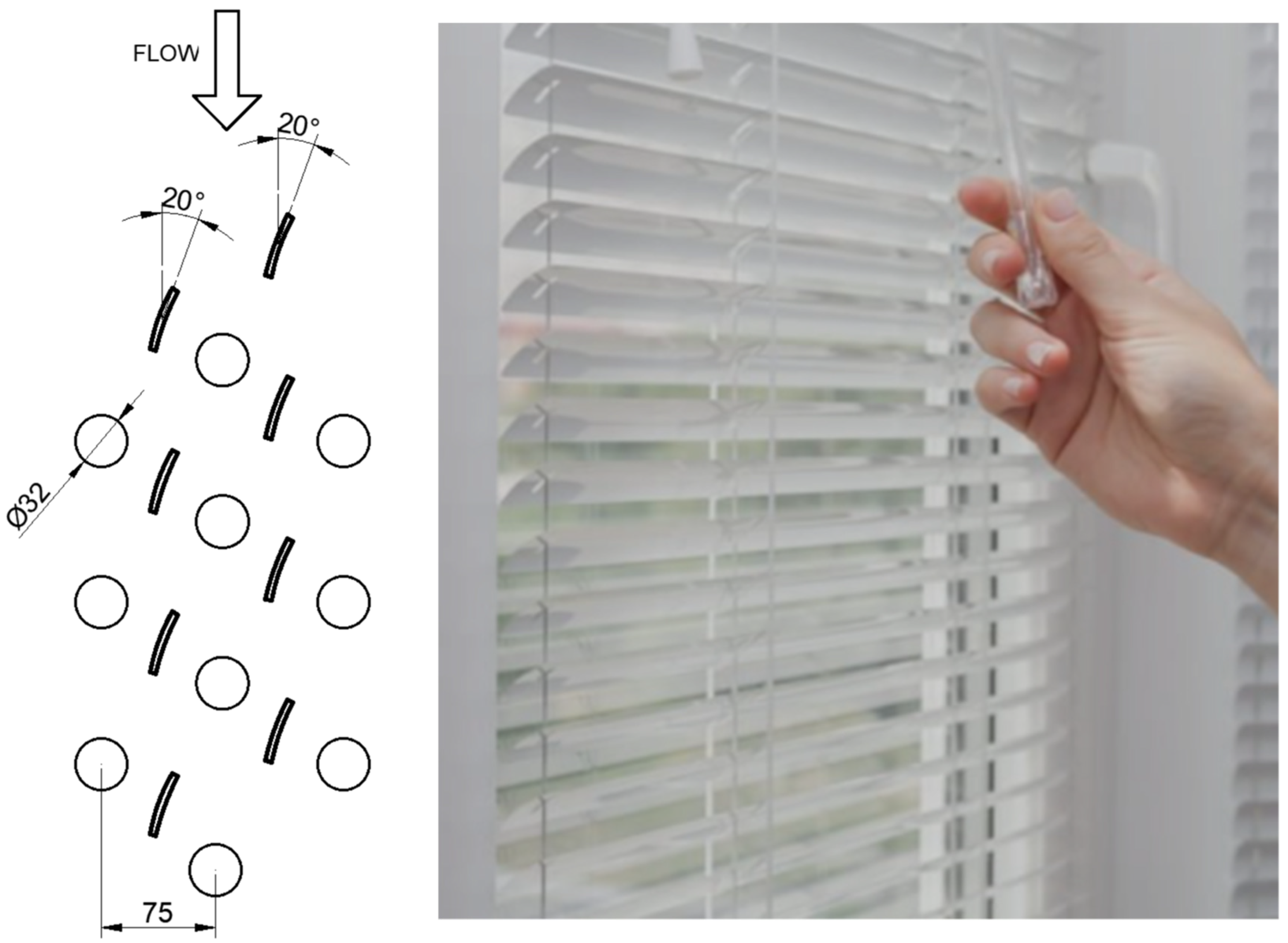
Figure 1. New solution for increasing heat exchange and/or cleaning of tube bundles using inserts (flat bar as curved slats in window blinds).
Energies 19 00162 g001
Figure 2. Periodic increasing of heat transfer and/or cleaning of tube bundle (big arrow–gas inflow direction) from ash particles (small arrows) using flat bar as curved slats in window-blind style, which can rotate (a) rest—inclination 5°, (b) operating condition (cleaning ash from tubes)—inclination 5–45°.
Energies 19 00162 g002
Figure 3. Possibility of temporary intensification of heat exchange and/or ash cleaning (mean particle diameter–trajectories). (a) Base system; (b) inserts and rotation to the position, e.g., 30°; (c) inserts and rotation to the position, e.g., 45°.
Energies 19 00162 g003
Figure 4. Selected heat exchanger—ECO of a solid fuel boiler.
Energies 19 00162 g004
Figure 5. Plain tubes with window-blinds insert in ( ) arrangement with different degrees of inclination: (a) 5°, (b) 20°, (c) 30°.
Energies 19 00162 g005
Figure 6. Plain tubes with window-blind inserts in ) ( arrangement with different degrees of inclination: (a) 5°, (b) 20°, (c) 30°.
Energies 19 00162 g006
Figure 7. Example of a numeric grid with visible boundary layers with inflation near the walls.
Energies 19 00162 g007
Figure 8. Diagram based on the description of the computational domain.
Energies 19 00162 g008
Figure 11. Static pressure in a single section of the economizer. (a) The basic system of plain tubes vs. the proposed retrofit system—plain tubes with window-blind inserts in a ( ) arrangement with different degrees of inclination: (b) 5°, (c) 20°, and (d) 30° for 4.7 m/s, corresponding to full boiler load.
Energies 19 00162 g011
Figure 12. Velocity contours in a single section of the economizer. (a) The basic system of plain tubes vs. the proposed retrofit system—plain tubes with window-blind inserts in a ( ) arrangement with different degrees of inclination: (b) 5°, (c) 20°, and (d) 30° for 4.7 m/s, corresponding to full boiler load.
Energies 19 00162 g012
Figure 13. Temperature contours in a single section of the economizer. (a) The basic system of plain tubes vs. the proposed retrofit system—plain tubes with window-blind inserts in a ( ) arrangement with different degrees of inclination: (b) 5°, (c) 20°, and (d) 30° for 4.7 m/s, corresponding to full boiler load.
Energies 19 00162 g013
Figure 14. Static pressure in a single section of the economizer. (a) The basic system of plain tubes vs. the proposed retrofit system—plain tubes with window-blind inserts in a ) ( arrangement with different degrees of inclination: (b) 5°, (c) 20°, and (d) 30° for 4.7 m/s, corresponding to full boiler load.
Energies 19 00162 g014
Figure 15. Velocity contours in a single section of the economizer. (a) The basic system of plain tubes vs. the proposed retrofit system—plain tubes with window-blind inserts in a ) ( arrangement with different degrees of inclination: (b) 5°, (c) 20°, and (d) 30° for 4.7 m/s, corresponding to full boiler load.
Energies 19 00162 g015
Figure 16. Temperature contours in a single section of the economizer. (a) The basic system of plain tubes vs. the proposed retrofit system—plain tubes with window-blind inserts in a ) ( arrangement with different degrees of inclination: (b) 5°, (c) 20°, and (d) 30° for 4.7 m/s, corresponding to full boiler load.
Energies 19 00162 g016
Figure 17. Heat transfer and pressure drop increase for tube bundles with curved slats in the arrangements ( ) and ) ( compared to the base bundle of plain pipes for 4.7 m/s (full boiler load).
Energies 19 00162 g017
Figure 18. Heat transfer and pressure drop increase for tube bundles with curved slats in the arrangements ( ) and ) ( compared to the base bundle of plain pipes.
Energies 19 00162 g018
Figure 19. Ash particle diameter trajectories obtained for the first three rows. (a) The basic system of plain tubes vs. the proposed retrofit system—plain tubes with window-blind inserts in a ( ) arrangement with different degrees of inclination: (b) 5°, (c) 20°, and (d) 30° for 4.7 m/s (full boiler load).
Energies 19 00162 g019
Figure 20. Ash particle diameter trajectories obtained for the first three rows. (a) The basic system of plain tubes vs. the proposed retrofit system—plain tubes with window-blind inserts in a ) ( arrangement with different degrees of inclination: (b) 5°, (c) 20°, and (d) 30° for 4.7 m/s (full boiler load).
Energies 19 00162 g020
Table 1. Boundary conditions for 2D flow (for boiler OP120 full and min loads).
ParameterUnitFull Boiler LoadMin Boiler Load
Tube bundle velocitym/s4.73.2
Gas inlet temperatureK710732
Average temperature of the inner wall of the tube 483483
Outlet pressurePa−1000−698
Ash particle fluxkg/s0.20.14
Temperature of particlesK710732
Table 2. Obtained CFD modeling data of the base bundle of plain tubes and the same bundle of tubes with curved slats in the ( ) and ) ( settings and angles of 5°, 20°, and 30° for 4.7 m/s (full boiler load).
ParameterUnitBase Plain TubesTubes + Inserts ( ) 5°Tubes + Inserts ( ) 20°Tubes + Inserts ( ) 30°Tubes + Inserts ) ( 5°Tubes + Inserts ) ( 20°Tubes + Inserts ) ( 30°
tinK710710710710710710710
toutK663.9655.3646.2640.2656643.6636.3
ΔtK46.154.763.869.85466.473.7
ΔttmodΔtbaseK −8.6−17.7−23.7−7.9−20.3−27.6
Δtmod/Δtbase 1.191.381.511.171.441.60
pinPa−924.1−815.2−612.8−450.3−820.2−590−335.1
poutPa−1000−1000−1000−1000−1000−1000−1000
ΔpPa−75.9−184.8−387.2−549.7−179.8−410−664.9
ΔpmodΔpbasePa 108.9311.3473.8103.9334.1589
Δpmod/Δpbase 2.435.107.242.375.408.76
Vmaxm/s9.811.112.013.911.2412.714.6
Δpmod/Δpbase/Δtmod/Δtbase 2.053.694.782.023.755.48
Table 3. Obtained CFD modeling data of the base bundle of plain tubes and the same bundle of tubes with curved slats in the ( ) and ) ( settings and angles of 5°, 20°, and 30° for 3.2 m/s (min boiler load).
ParameterUnitBase Plain TubesTubes + Inserts ( ) 5°Tubes + Inserts ( ) 20°Tubes + Inserts ( ) 30°Tubes + Inserts ) ( 5°Tubes + Inserts ) ( 20°Tubes + Inserts ) ( 30°
tinK732732732732732732732
toutK670.7667657650.2668.3655.5645.7
ΔtK61.3657581.863.776.586.3
ΔttmodΔtbaseK 3.7−13.7−20.5−2.4−15.2−25
Δtmod/Δtbase 1.061.221.331.041.251.41
pinPa−659.5−612.1−513.9−436−615−502.8−377.9
poutPa−700−700−700−700−700−700−700
ΔpPa−40.5−87.9−186.1−264−85−197.2−322.1
ΔpmodΔpbasePa 47.4145.6223.544.5156.7281.6
Δpmod/Δpbase 2.174.606.522.104.877.95
Vmaxm/s6.77.59.09.527.78.710
Δpmod/Δpbase/Δtmod/Δtbase 2.053.764.882.023.905.65
Disclaimer/Publisher’s Note: The statements, opinions and data contained in all publications are solely those of the individual author(s) and contributor(s) and not of MDPI and/or the editor(s). MDPI and/or the editor(s) disclaim responsibility for any injury to people or property resulting from any ideas, methods, instructions or products referred to in the content.