
Article

Research on Wave Environment and Design Parameter Analysis in Offshore Wind Farm Construction
1
State Key Laboratory of HVDC, Electric Power Research Institute, China Southern Power Grid, Guangzhou 510663, China
2
Guangdong Provincial Key Laboratory of Intelligent Operation and Control for New Energy Power System, Guangzhou 510663, China
3
PowerChina Huadong Engineering Corporation Limited, Hangzhou 311122, China
*
Author to whom correspondence should be addressed.
Energies 2026, 19(1), 115; https://doi.org/10.3390/en19010115 (registering DOI)
Submission received: 21 November 2025 / Revised: 17 December 2025 / Accepted: 22 December 2025 / Published: 25 December 2025
(This article belongs to the Section A3: Wind, Wave and Tidal Energy)

Abstract

During the global transition of energy structures toward renewable sources, offshore wind power has experienced rapid advancement, coinciding with increasingly complex wave environments. This study focuses on the wave conditions of an offshore wind farm project in Vietnam. A dual-nested numerical framework (WAVEWATCH III + SWAN) is established, integrated with 32-year (1988–2019) high-resolution WRF wind fields and fused bathymetry data (GEBCO + in situ measurements). This framework overcomes the limitations of short-term datasets (10–22 years) in prior studies and achieves 1′ × 1′ (≈1.8 km) intra-farm resolution—critical for capturing topographic modulation of waves. A systematic analysis of the regional wave climate characteristics is performed, encompassing wave roses, joint distributions of significant wave height and spectral peak period, wave–wind direction correlations, and significant wave height–wind speed relationships. Extreme value theory, specifically the Pearson Type-III distribution, is applied to estimate extreme wave heights and corresponding periods for return periods ranging from 1 to 100 years, yielding critical design wave parameters for wind turbine foundations and support structures. Key findings reveal that the wave climate is dominated by E–SE (90°–120°) monsoon-driven waves (60% of H s = 0.5–1.5 m), while extreme waves are uniquely concentrated at 120°—attributed to westward Pacific typhoon track alignment and long fetch. For the outmost site (A55, 7.18 m water depth), the 100-year return period significant wave height ( H s 100 = 4.66 m, T p 100 = 13.05 s) is 38% higher than sheltered shallow-water sites (A28, H s 100 = 2.7 m), reflecting strong bathymetric control on wave energy. This study makes twofold contributions: (1) Methodologically, it validates a robust framework for long-term wave simulation in tropical monsoon–typhoon regions, combining 32-year high-resolution data with dual-nested models. (2) Scientifically, it reveals the directional dominance and spatial variability of waves in the Mekong estuary, advancing understanding of typhoon–wave–topography interactions. Practically, it provides standardized design parameters (compliant with DNV-OS-J101/IEC 61400-3) for offshore wind projects in Southeast Asia.

1. Introduction

The global transition toward a clean, low-carbon energy system constitutes a critical pathway to mitigate climate change and safeguard energy security. Offshore wind power has emerged as a core domain of global renewable energy development, leveraging inherent advantages including abundant resource endowments, high power generation efficiency, and zero land resource occupation [1,2]. With the gradual saturation of nearshore shallow-water resources, the industry is accelerating expansion into deep-sea and far-offshore regions [3,4,5,6]. However, complex marine environmental conditions in these areas—particularly severe wave loads—pose prominent challenges to the design, installation, and long-term operational safety of wind turbine support structures [7,8]. As a dominant environmental load acting on offshore wind structures, wave loading directly governs the safety, reliability, and economic viability of substructures (e.g., monopiles, jackets, floating platforms) [9,10]. Accurate characterization of site-specific wave characteristics, especially the derivation of reliable extreme wave parameters, thus represents a fundamental prerequisite for ensuring the full lifecycle performance of offshore wind installations [11,12].
Southeast Asia, with its extensive coastline and abundant offshore wind resources, has emerged as a key development region. Vietnam, in particular, prioritizes offshore renewable energy to address energy security and climate change challenges, supported by a 3260 km coastline and a 200-nautical-mile exclusive economic zone [4,13]. The target wind farm, located east of the Mekong River estuary in the western South China Sea, is representative of tropical monsoon–typhoon-affected areas in Southeast Asia, where complex interactions between storm surges, waves, and tides amplify extreme sea states [14]. However, critical research gaps exist for this specific sea area: most existing studies focus on large-scale wave resource assessments in the broader South China Sea using WAVEWATCH III and SWAN models [15,16,17], lacking engineering-scale details tailored to the Mekong estuary. For example, Zheng et al. [15,18] evaluated wave energy in the South China Sea but did not address typhoon-driven extreme wave parameters for offshore wind design; Tien et al. [14] highlighted wave–surge–tide interactions in northern Vietnam but provided no site-specific design data for wind farms. Additionally, regional studies often rely on short-term datasets (10–22 years) [18,19], which may underestimate decadal variability in typhoon-induced extreme waves, introducing uncertainties for engineering design.
Third-generation wave models (e.g., WAVEWATCH III [20] and SWAN [21]) and extreme value theory have been widely applied in wave climate analysis, with validated applications in the South China Sea [22,23,24]. However, few studies have integrated long-term high-resolution data with dual-nested wave models to resolve fine-scale wave characteristics in the tropical monsoon–typhoon-affected Mekong estuary. Existing wave–structure interaction studies [25,26] underscore that reliable design depends on localized wave environment understanding, yet these insights have not been translated to Southeast Asian shallow-water offshore wind projects.
To address the existing research gap and provide direct technical support for engineering practice, this study employs 32 years (1988–2019) of high-resolution meteorological and oceanographic data to construct a dual-nested wave numerical model integrating WAVEWATCH III and SWAN. The specific objectives are threefold: (1) reproduce the long-term wave field of the project area and verify model reliability through comparison with in situ observation data; (2) systematically analyze statistical characteristics of the regional wave climate, including wave roses and joint distributions of wave height and period; and (3) derive extreme design wave parameters for different return periods using the Pearson Type-III (P-III) distribution. This study aims to fill the engineering-scale wave parameter gap for the Mekong estuary, a typical tropical typhoon-prone region in Southeast Asia, and provide a validated methodological framework for analogous offshore wind projects in the region. The findings of this study not only provide a critical basis for the safe construction of the target offshore wind project but also accumulate valuable experience for offshore wind development in analogous sea areas of Southeast Asia.

2. Materials and Methods

2.1. Study Area Overview

The study area is located in the western South China Sea, east of the Mekong River estuary (Figure 1). The water depth in this area is relatively shallow, mostly within 10 m. The seabed topography is generally gentle but exhibits local variations.
The region experiences a tropical monsoon climate, characterized by mild and humid conditions throughout the year. Winters are controlled by northeast monsoons, while summers are influenced by southwest monsoons [27]. The typhoon season occurs mainly from July to October. These complex wind conditions result in significant seasonal variations and strong directionality in the wave fields of this area [28].

2.2. Data Sources

The wind field data used in this study were simulated using the WRF (Weather Research and Forecasting) model, from 1 January 1988 to 31 December 2019—a total of 32 years. The temporal resolution is 3 h, and the spatial resolution is approximately 10 km. Bathymetry data for open waters were obtained from GEBCO global seabed topography data (resolution: 15 arc-seconds). For the near-shore and project areas, chart soundings and field-measured bathymetry data were used and corrected to ensure the accuracy of the topography near the project area. For the near-shore and project areas, chart soundings (scale 1:50,000) and field-measured bathymetry data (collected via multi-beam echo sounder with a horizontal accuracy of ±1 m and vertical accuracy of ±0.1 m) were fused with the GEBCO data using a weighted inverse distance interpolation (WIDI) method. The fusion process followed three steps: (1) Data preprocessing: Removing outliers from field measurements using a 3σ criterion and converting all data to a unified coordinate system (WGS84); (2) Weighted interpolation: Assigning higher weights to field measurements (weight = 0.6) and chart soundings (weight = 0.3) compared to GEBCO data (weight = 0.1) to prioritize high-precision local data; (3) Gradient smoothing: Applying a Gaussian filter (window size: 3 × 3) to the fused grid to eliminate artificial topographic gradients, ensuring that the slope change between adjacent grid points does not exceed 5° (consistent with the natural seabed slope in the study area). This fusion method effectively integrates multi-source data while preserving the natural topographic characteristics, providing a reliable bathymetry input for the near-shore SWAN model. The large-scale wave model was driven by ERA5 global reanalysis data.

2.3. Numerical Model Setup and Validation

2.3.1. WRF Model Setup and Validation

WRF is a mesoscale forecasting and data assimilation system that employs terrain-following hydrostatic pressure coordinates. It features modularity, portability, and high efficiency, supports multiple nested movements, and adapts to diverse scenarios ranging from scientific research to operational forecasting.
To ensure accurate capture of peak typhoon wind intensities, the model adopted the dynamic initialization method proposed by Liu [29] and Di et al. [30], which improved the simulation accuracy of typhoon precipitation and central 10 m maximum wind speed using the WRF model with different parameter schemes and a resolution of 18 km. The model outputs wind speeds at 10 m height intervals and 10 min time intervals. These values are subsequently converted to different heights (e.g., hub height of 100 m) using the British Standard formula. They are further transformed into different time intervals—such as 3 s, 15 s, and 1 min—in accordance with the rules outlined in the Port Design Manual.
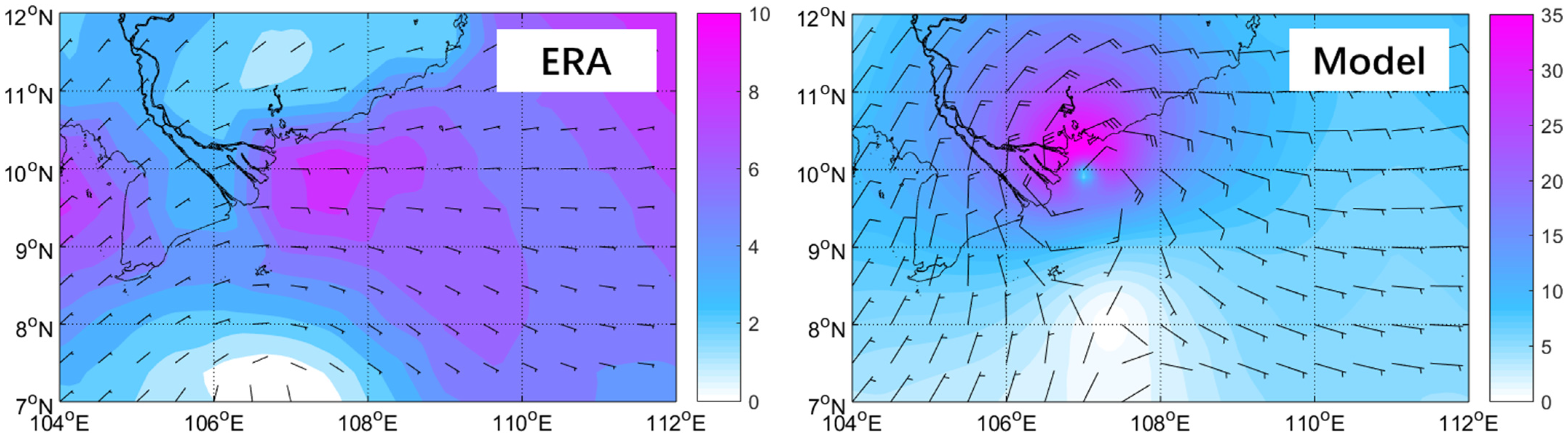
To evaluate the model’s performance during typhoon conditions, the moment of peak wind speed at the proposed power plant site was selected for comparative analysis. On 5 December 2006, Typhoon Durian passed through the project area. According to historical typhoon data provided by the U.S. National Oceanic and Atmospheric Administration (NOAA), the typhoon’s central wind speed at that time was approximately 55 knots (about 28 m/s). Comparing the ERA reanalysis wind field with the model output wind field at this time point revealed that the model results better reproduced the typhoon process than the ERA dataset, both in terms of the typhoon’s center and wind speeds. Although the model results showed a tendency to overestimate wind speeds compared to the records, such overestimation is acceptable to a certain extent under extreme weather conditions like typhoons, as is shown in Figure 2.

2.3.2. Wave Model Setup

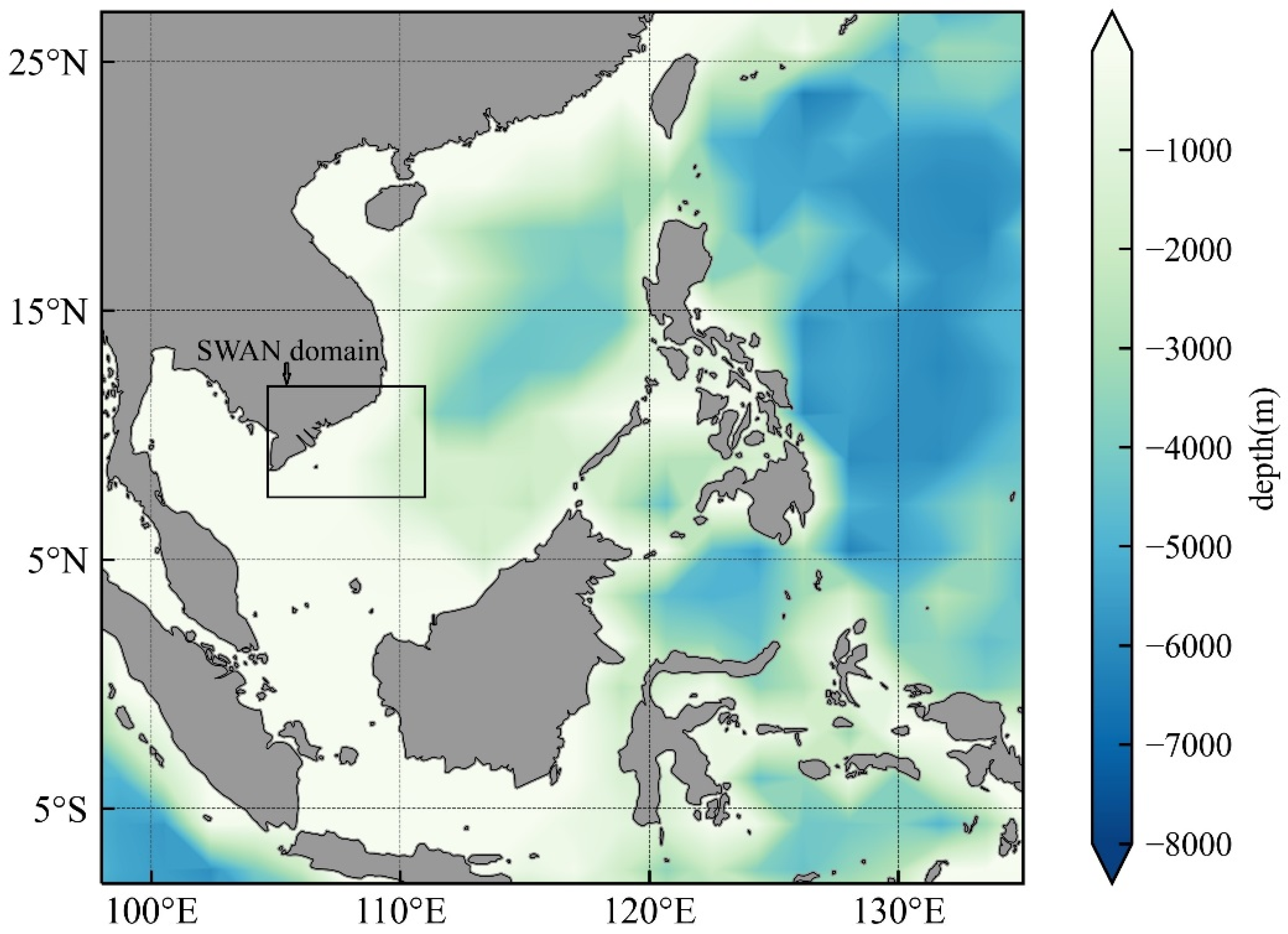
This study adopted a dual-grid nested wave numerical simulation scheme (Figure 3).
The large-scale model used the WAVEWATCH III model, covering the entire South China Sea (98.0° E–135.0° E, 8.0° S–27.0° N) with a spatial resolution of 0.1° × 0.1°. This model was primarily used to simulate the propagation process of swells from the open ocean and to provide open boundary conditions for the smaller-scale model. The main physical process settings included the following: the DIA nonlinear wave–wave interaction scheme [19] and the JONSWAP wind input and whitecapping dissipation scheme [20], as it is shown in Table 1.
The small-scale model used the SWAN model, focusing on the waters near the project (104.7° E–111.0° E, 7.5° N–12.0° N) with a spatial resolution refined to 1′ × 1′ (approximately 1.8 km), as it is shown in Table 1. This model was used to accurately simulate wave processes in shallow near-shore areas, including propagation, refraction, diffraction, shoaling deformation, and breaking. The model considered water depth variations, wind input, whitecapping dissipation, bottom friction dissipation, and third- and fourth-order nonlinear wave–wave interactions.

2.3.3. Model Validation

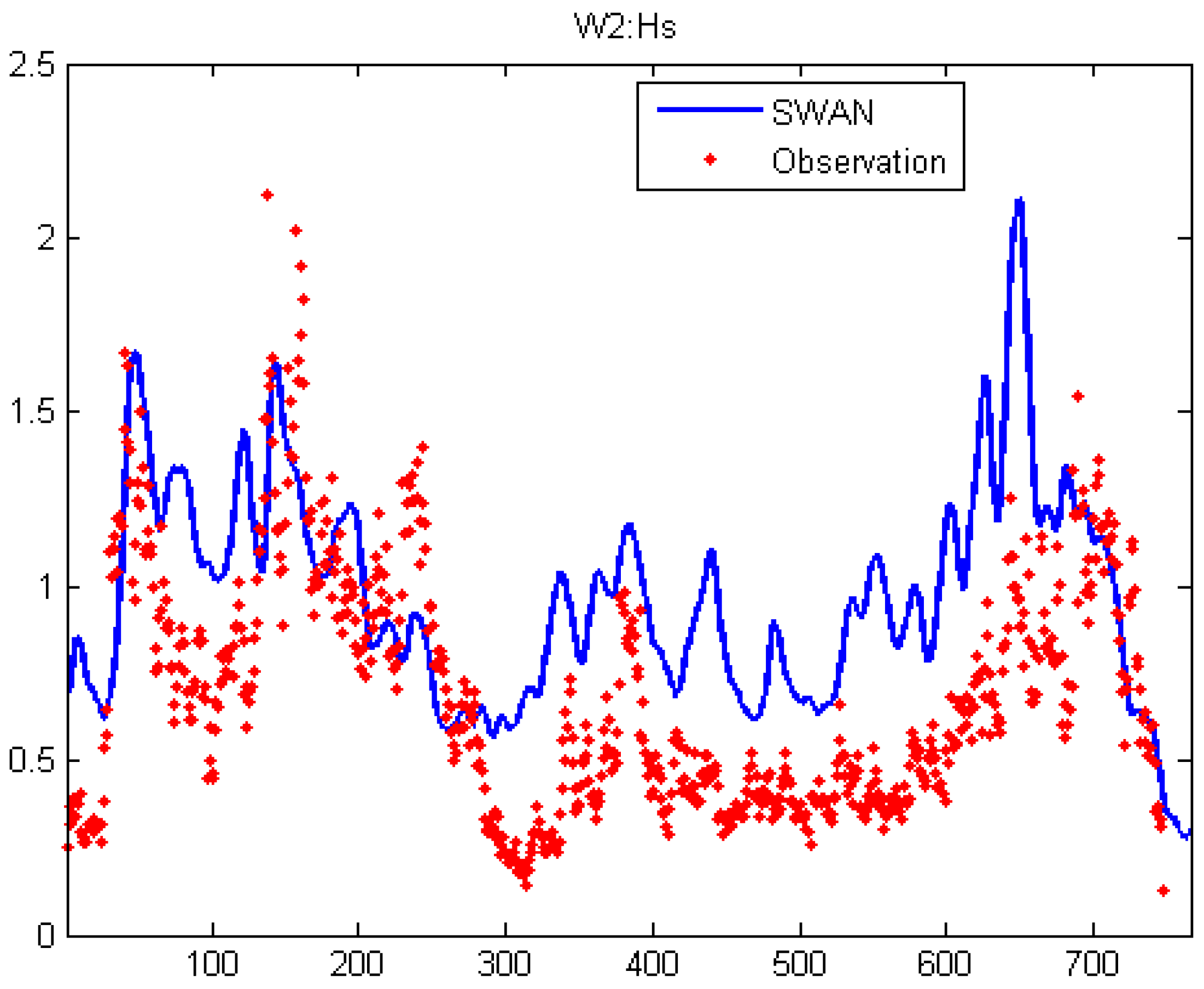
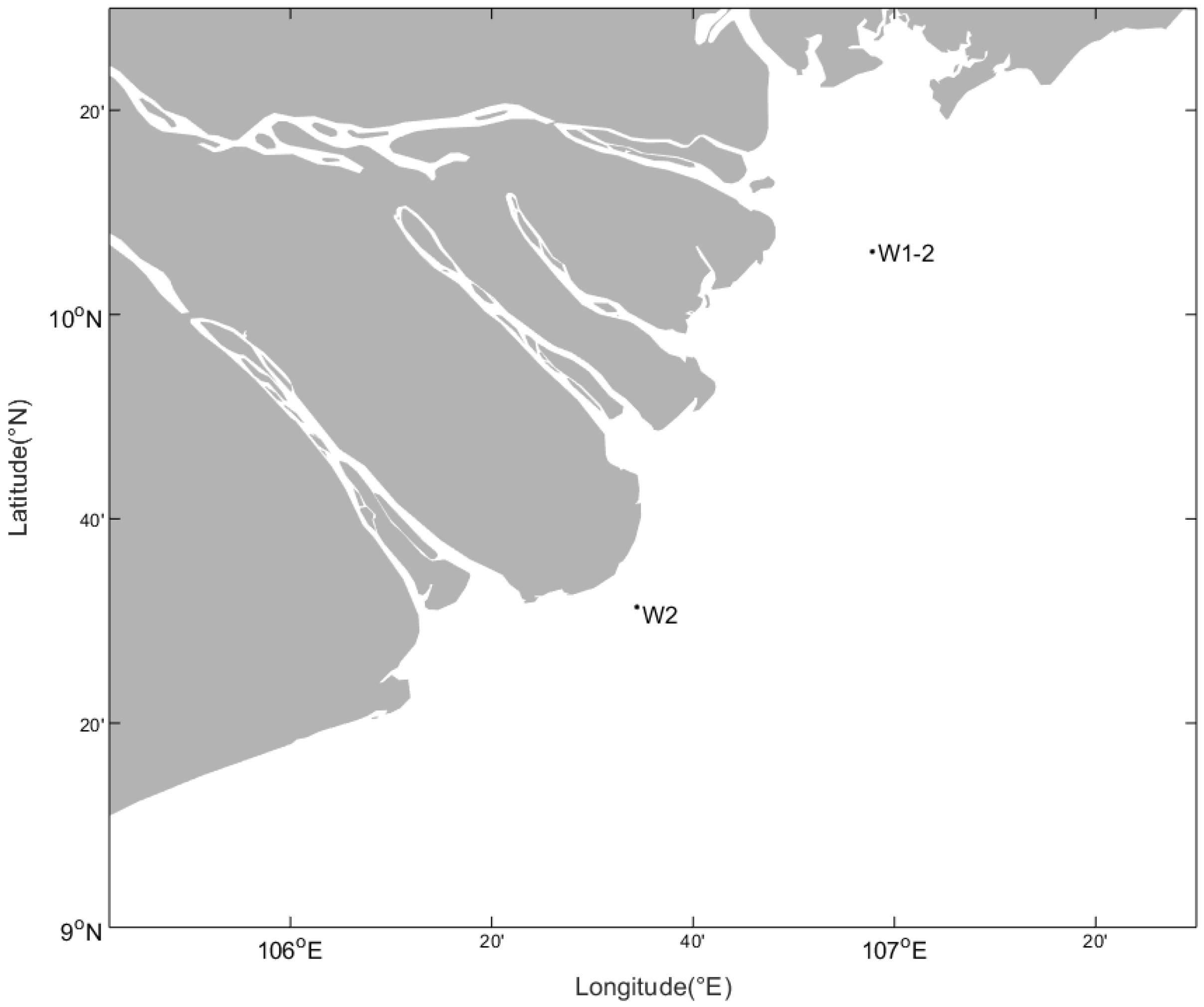
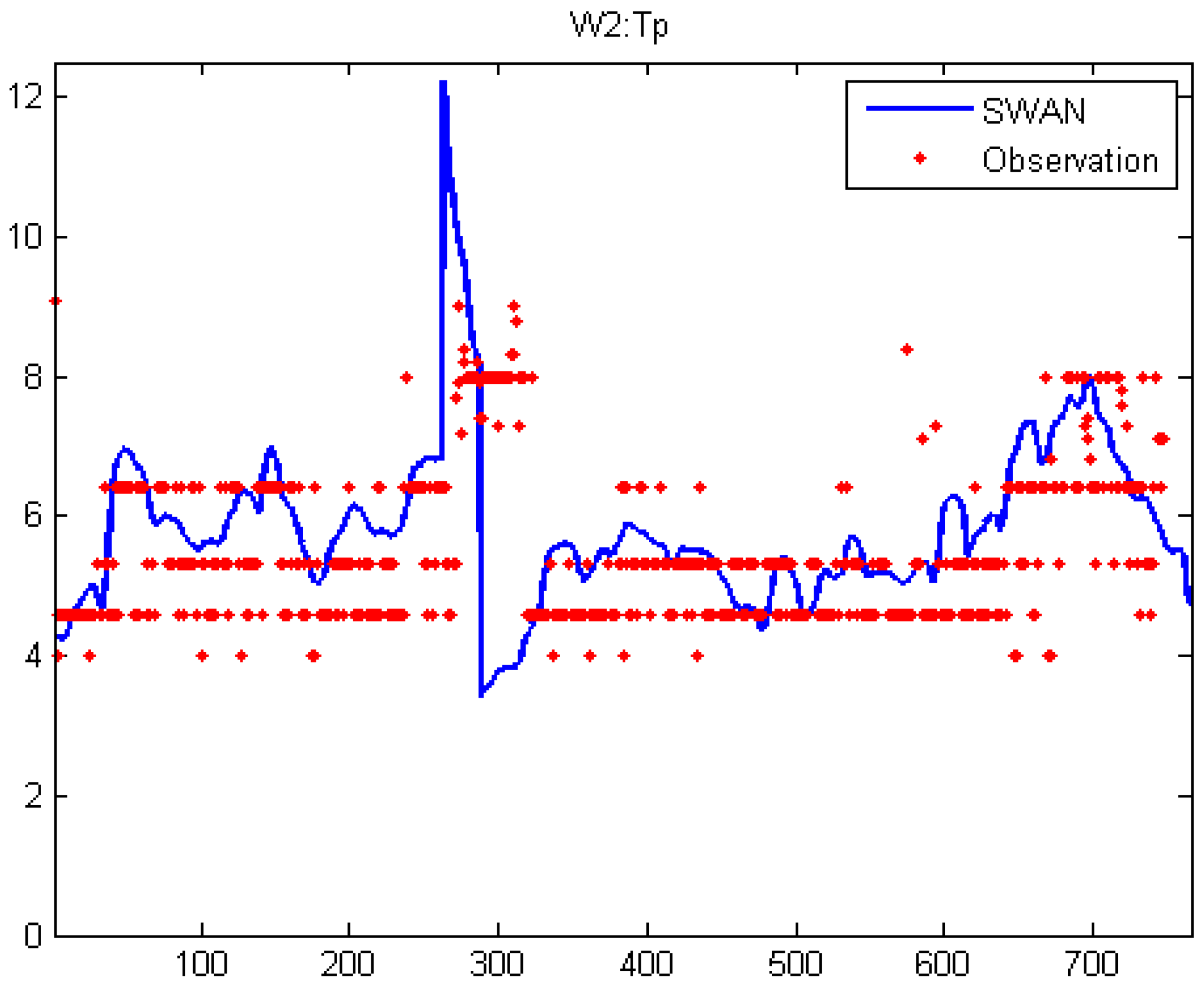
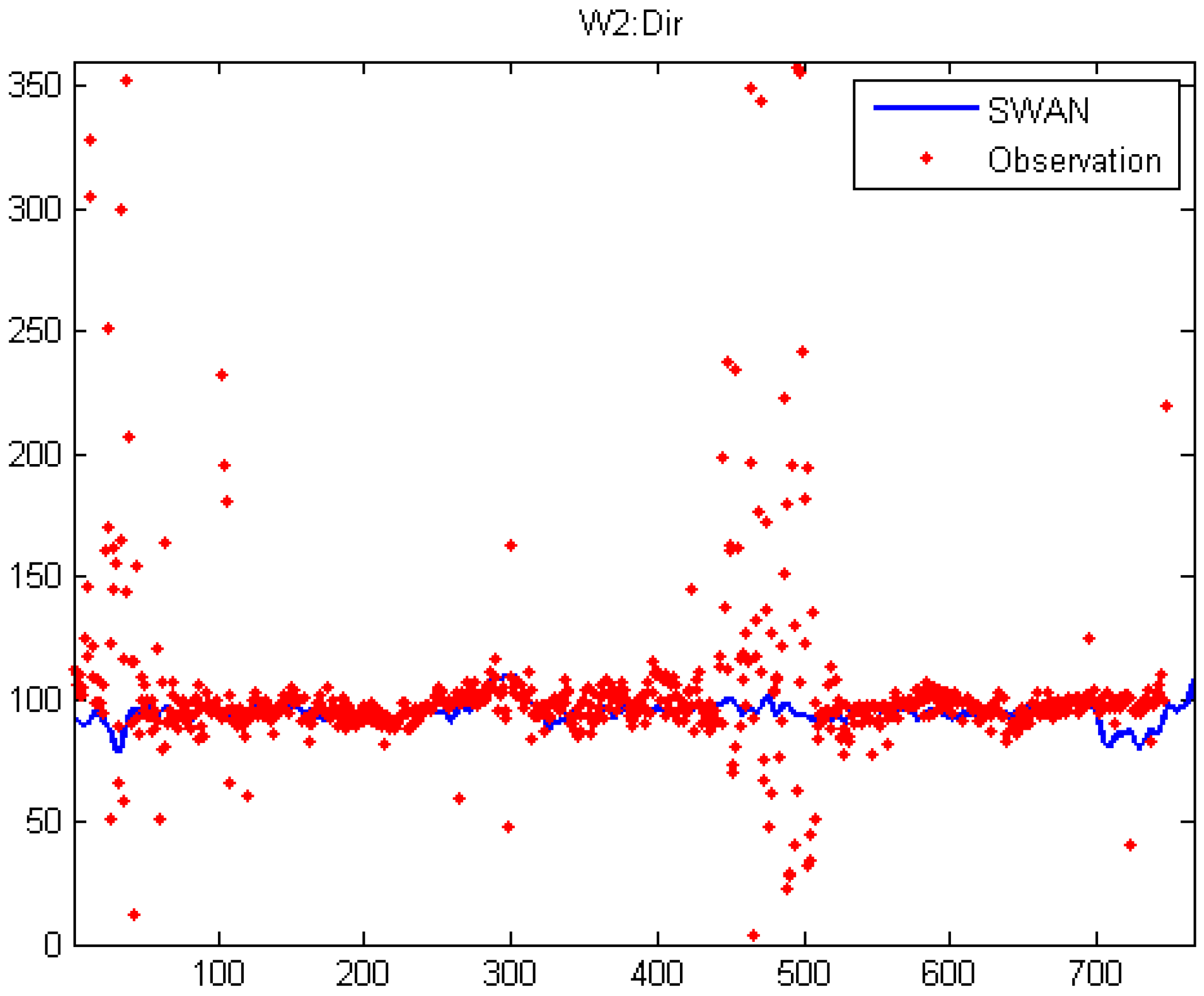
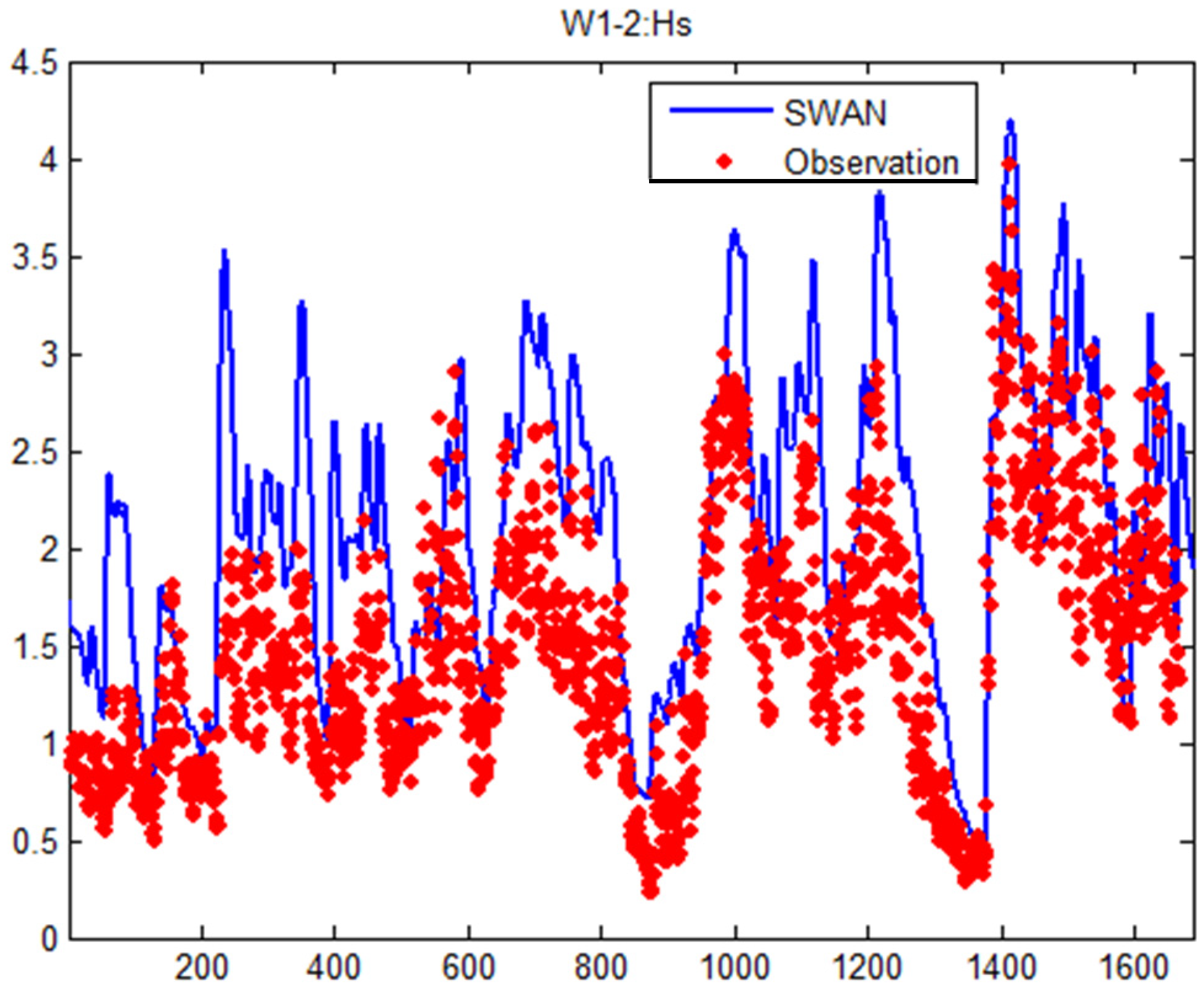
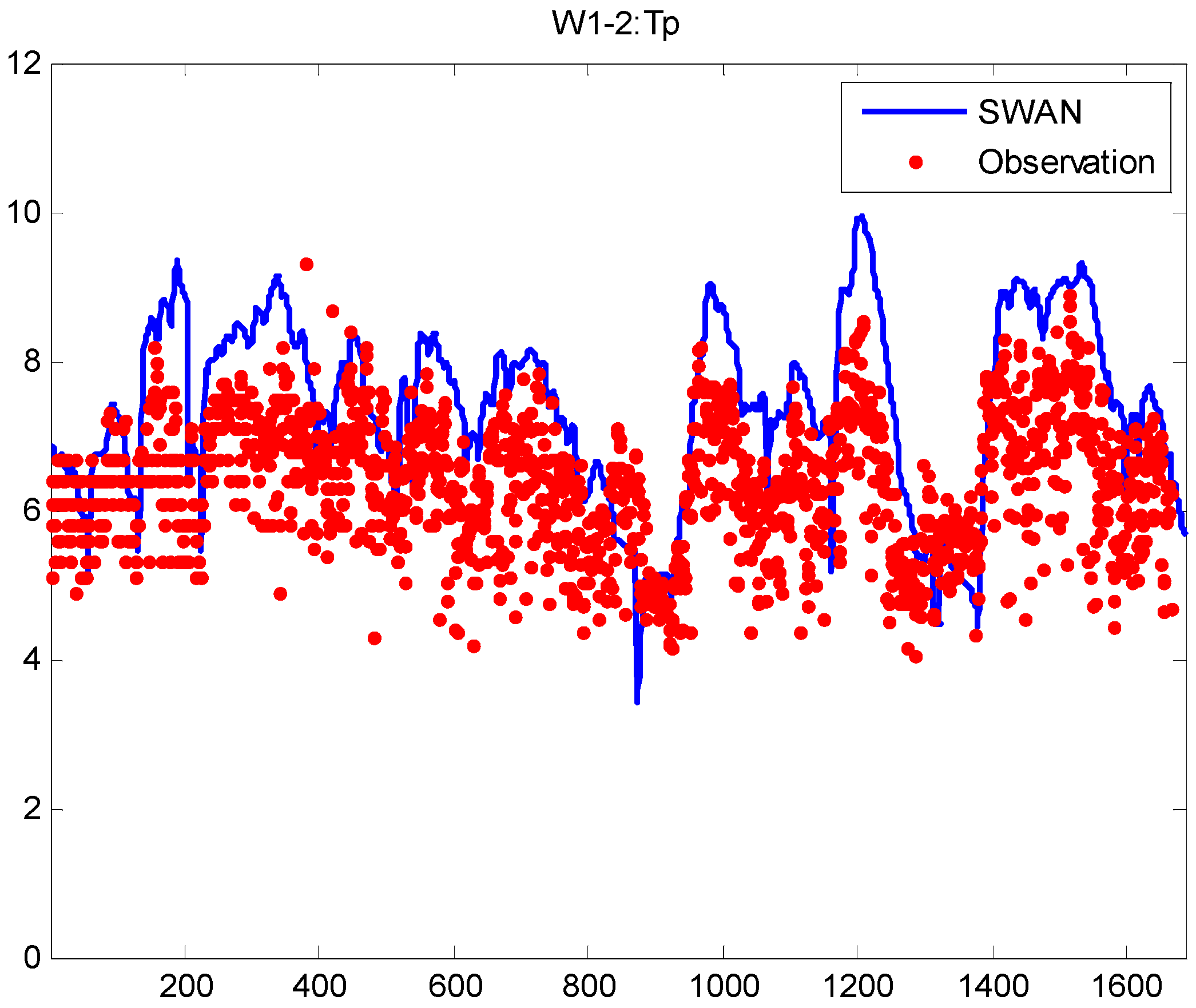
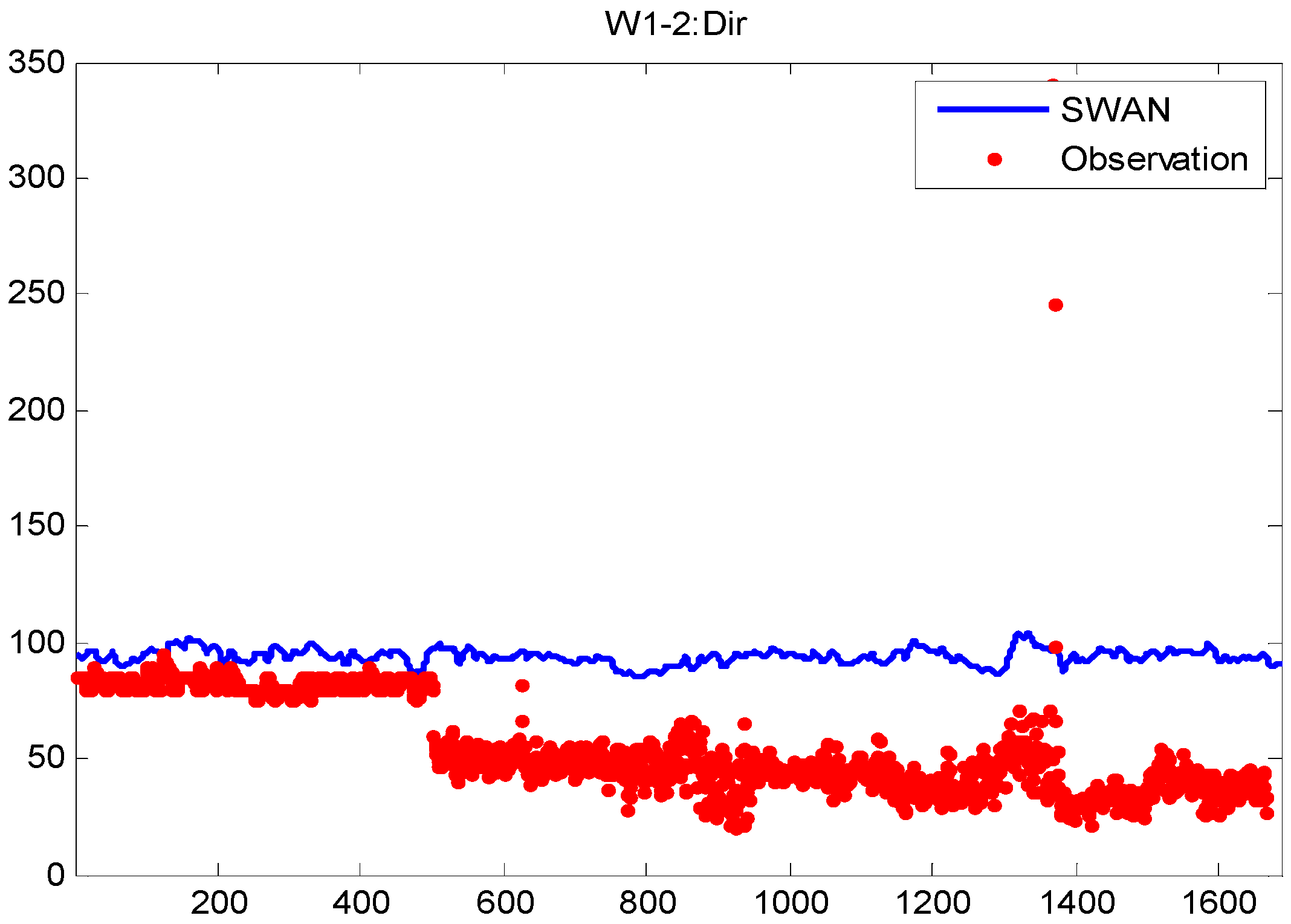
To ensure the accuracy of the numerical model, wave buoy observation data deployed at the project site were used to validate the simulation results of the SWAN model. The validation point locations are shown in Figure 4, and the validation results are shown in Figure 5, Figure 6, Figure 7, Figure 8, Figure 9 and Figure 10. To quantitatively assess the model performance, statistical metrics including root mean square error (RMSE), bias, scatter index (SI), and correlation coefficient (R2) were calculated for significant wave height ( H s ) and spectral peak period ( T P ), as presented in Table 2. The validation results indicate that the simulated significant wave heights and spectral peak periods agree well with the measured values, with RMSE of H s less than 0.22 m and RMSE of T P less than 0.85 s and correlation coefficients exceeding 0.85. The biases are within ±0.07 m for H s and ±0.41 s for T P , and scatter indices are below 0.11, which are within an acceptable range for engineering purposes. The simulated wave directions are consistent with the measured values during major periods, proving that the model can satisfactorily reproduce the wave field of this sea area, particularly key parameters like wave height and period. This provides a reliability foundation for subsequent wave climate statistics and extreme value analysis.

3. Results

3.1. Wave Rose Analysis

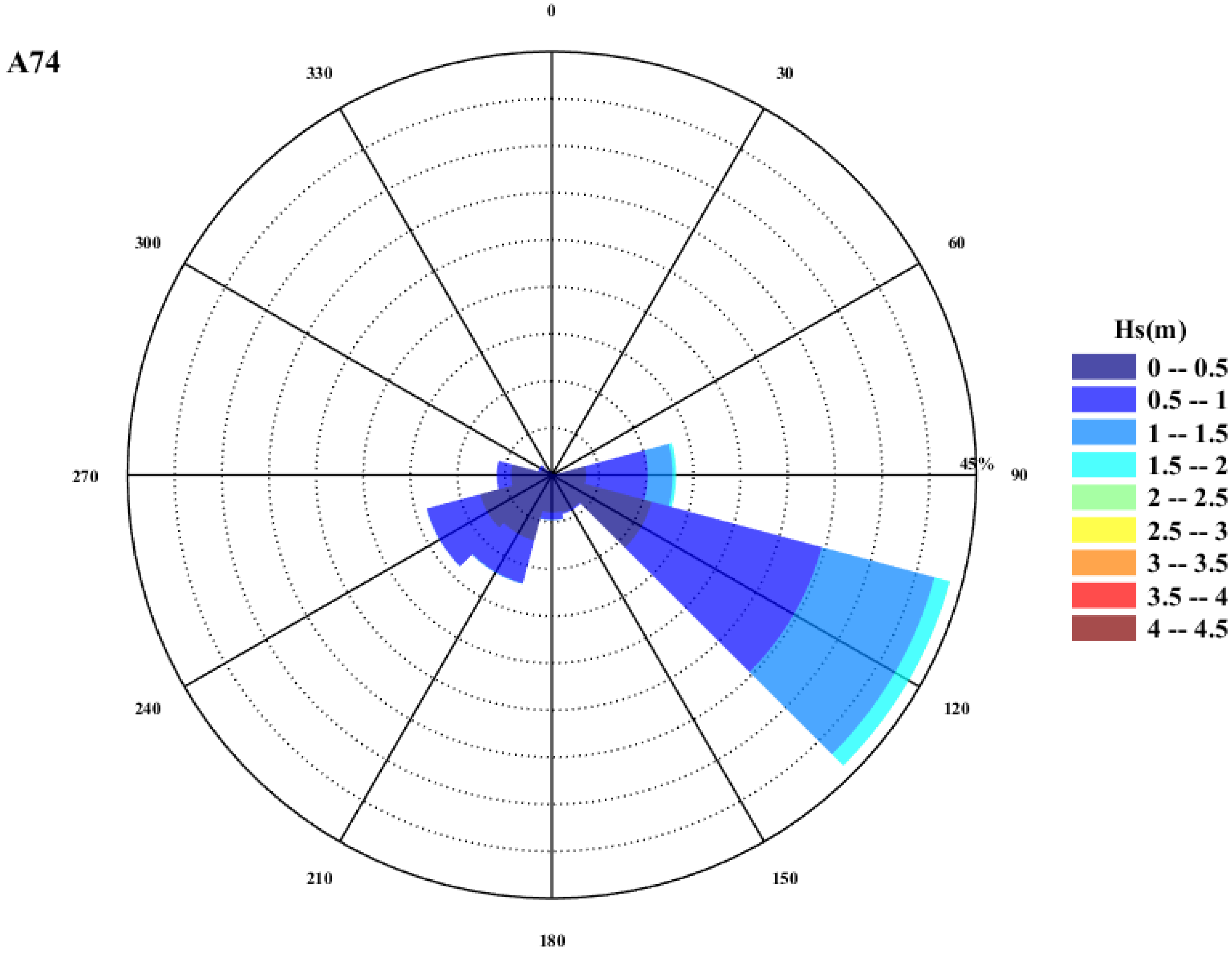
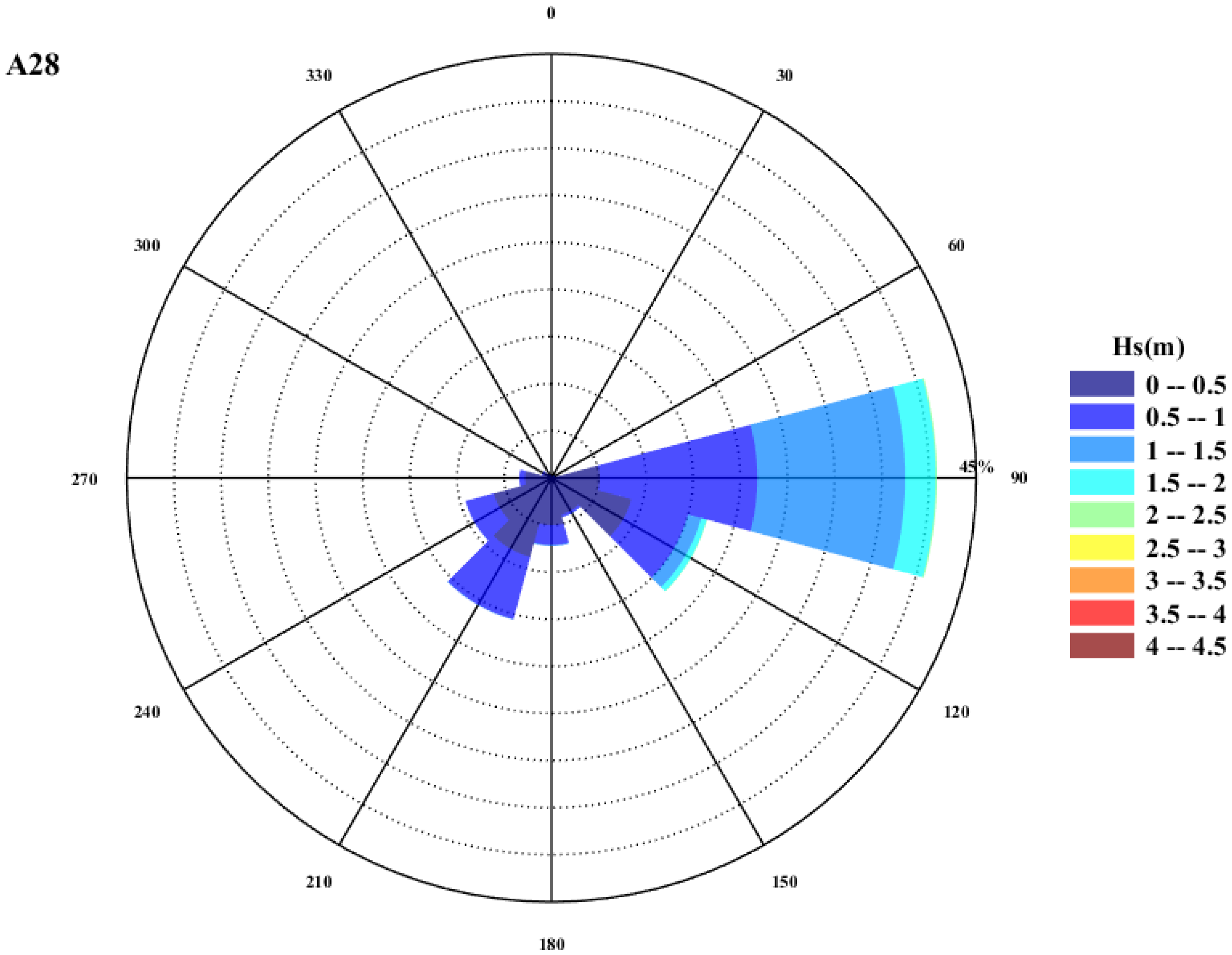
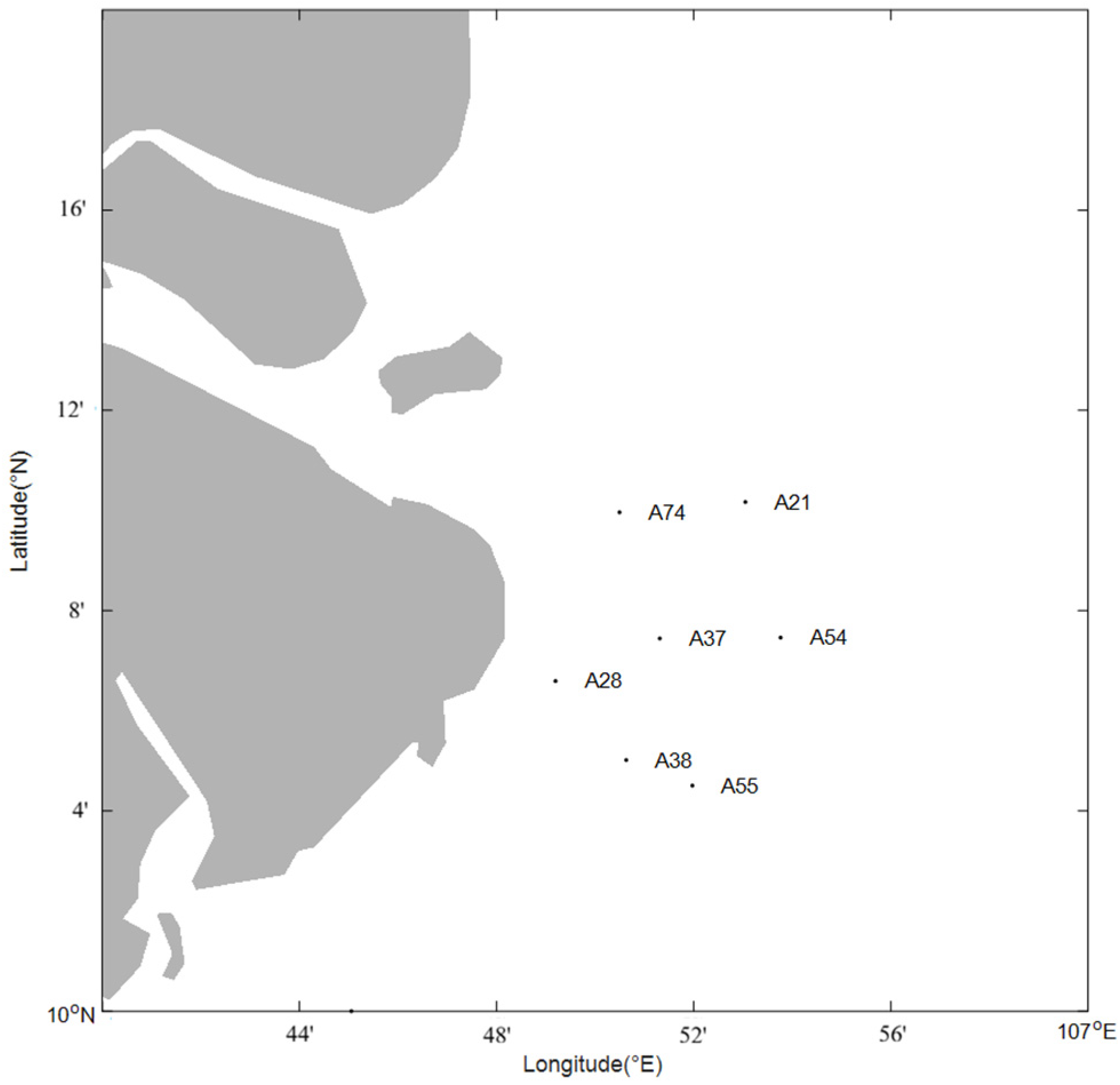
Based on the 32 years (1988–2019) of wave field simulation results, directional wave roses were constructed for seven representative points within the target wind farm (Figure 11).
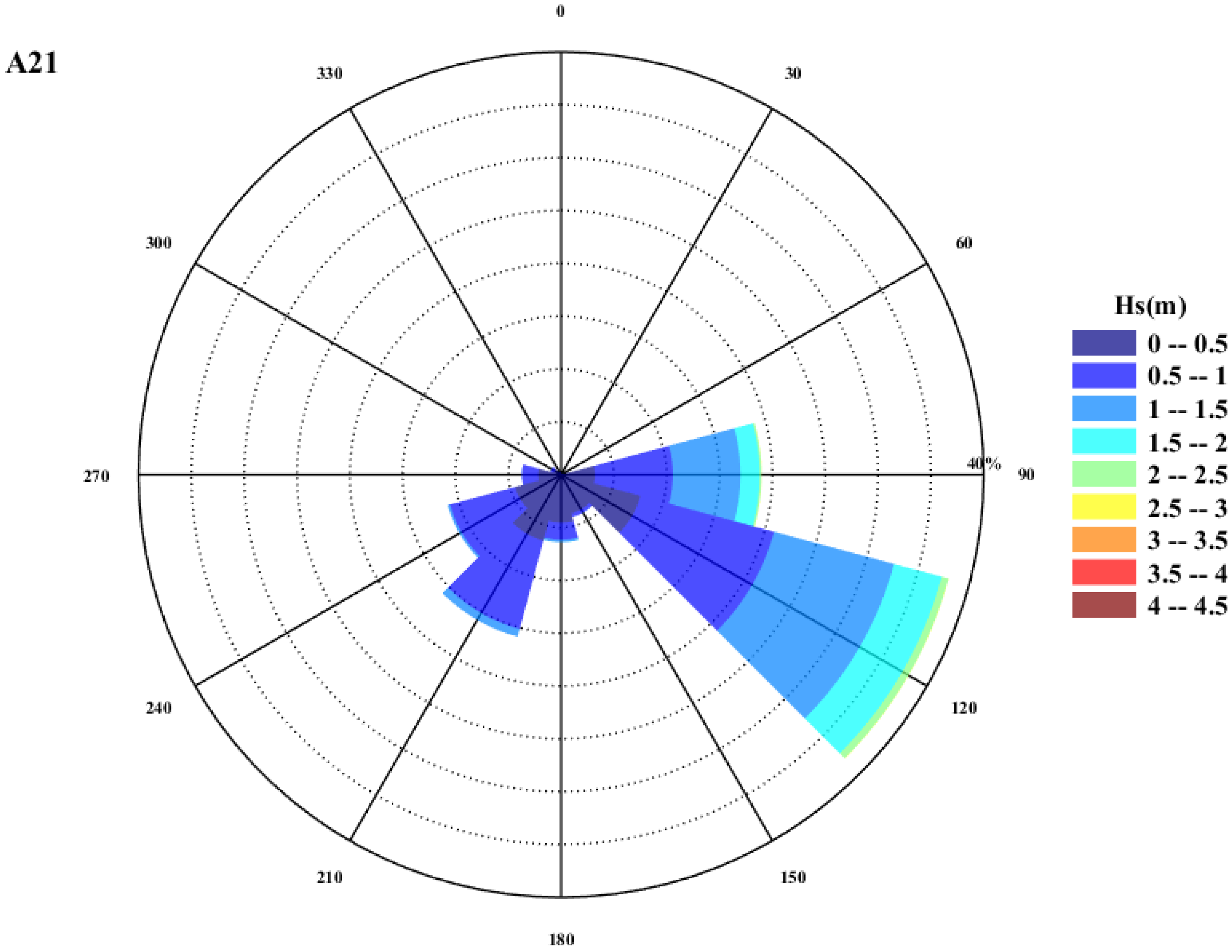
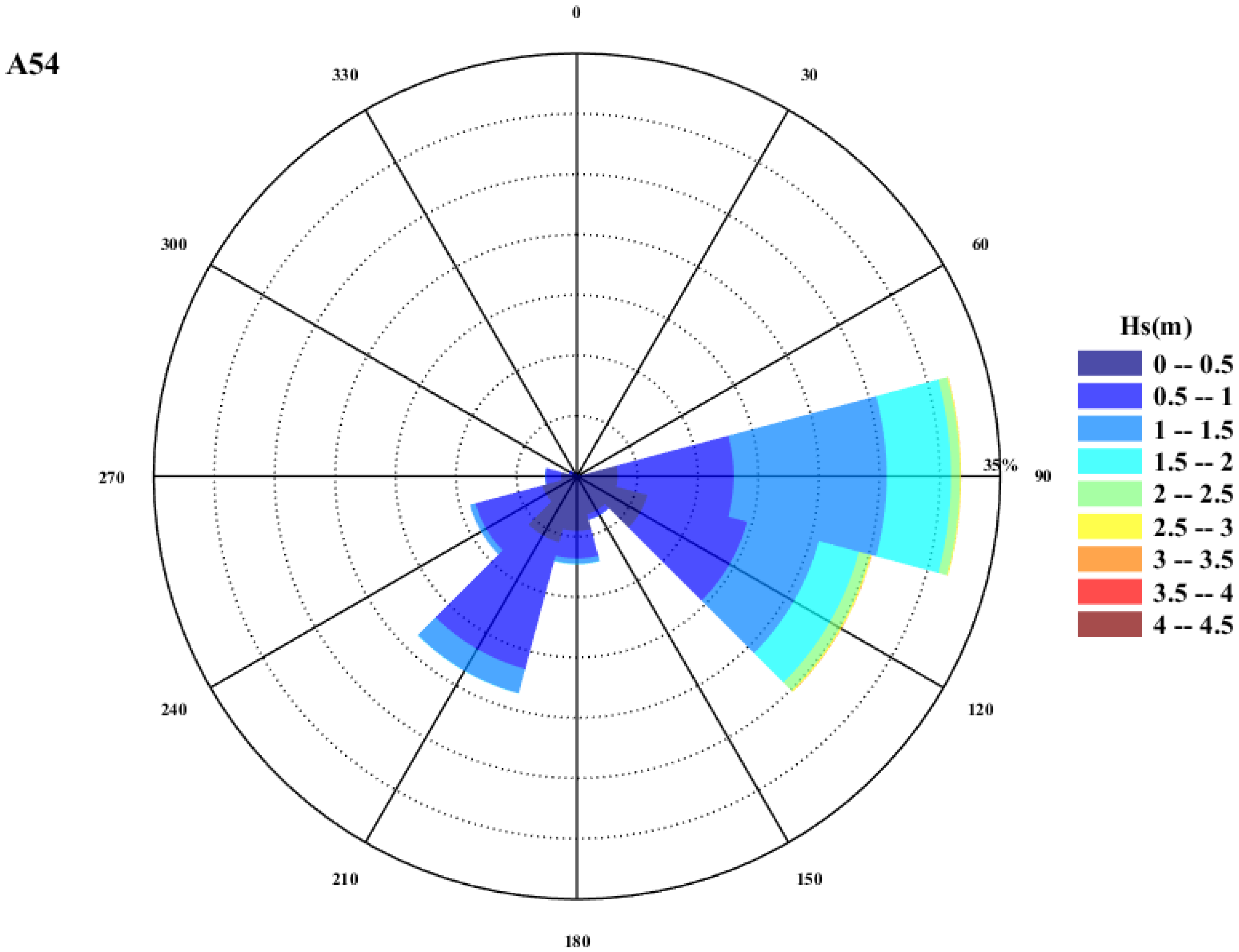
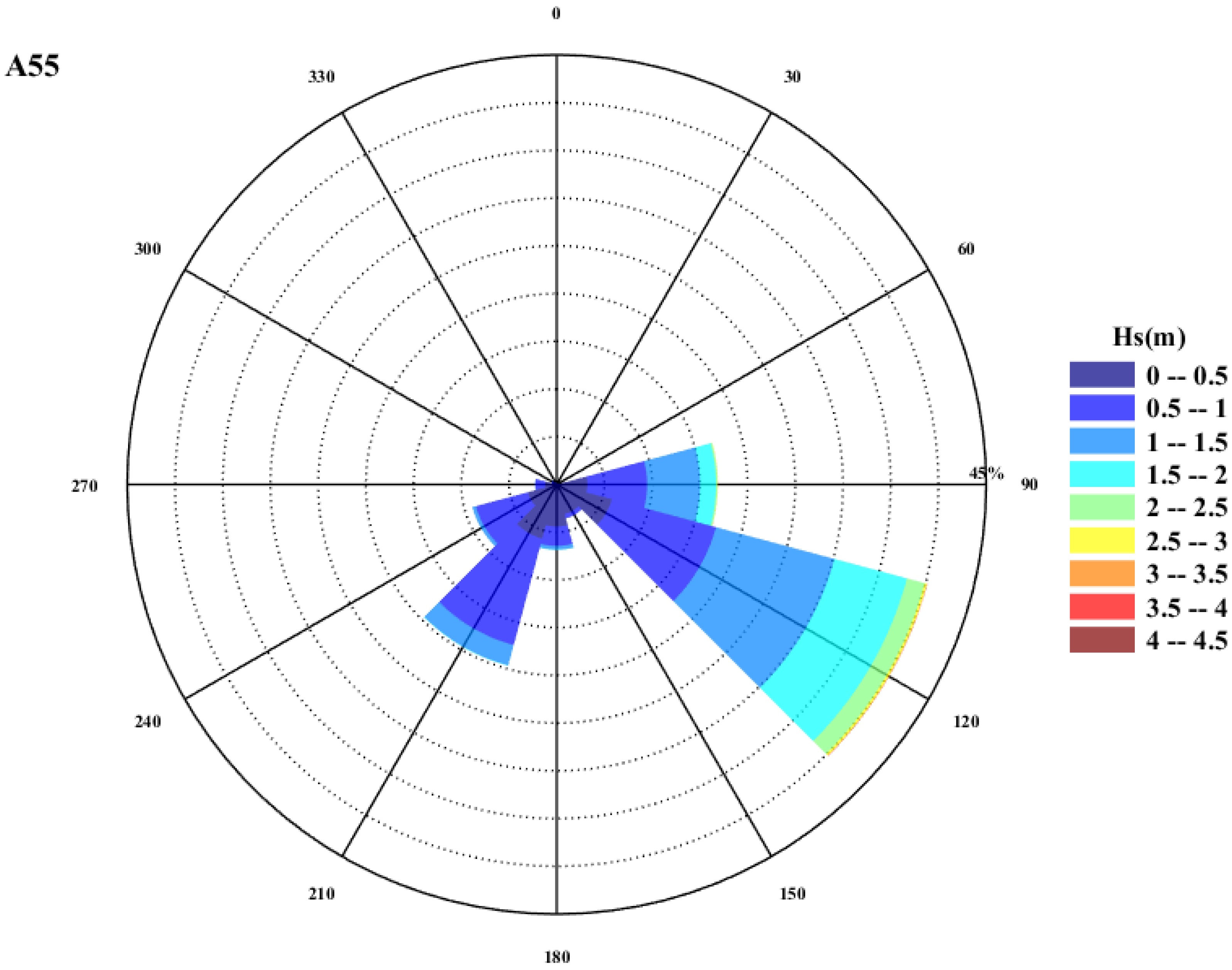
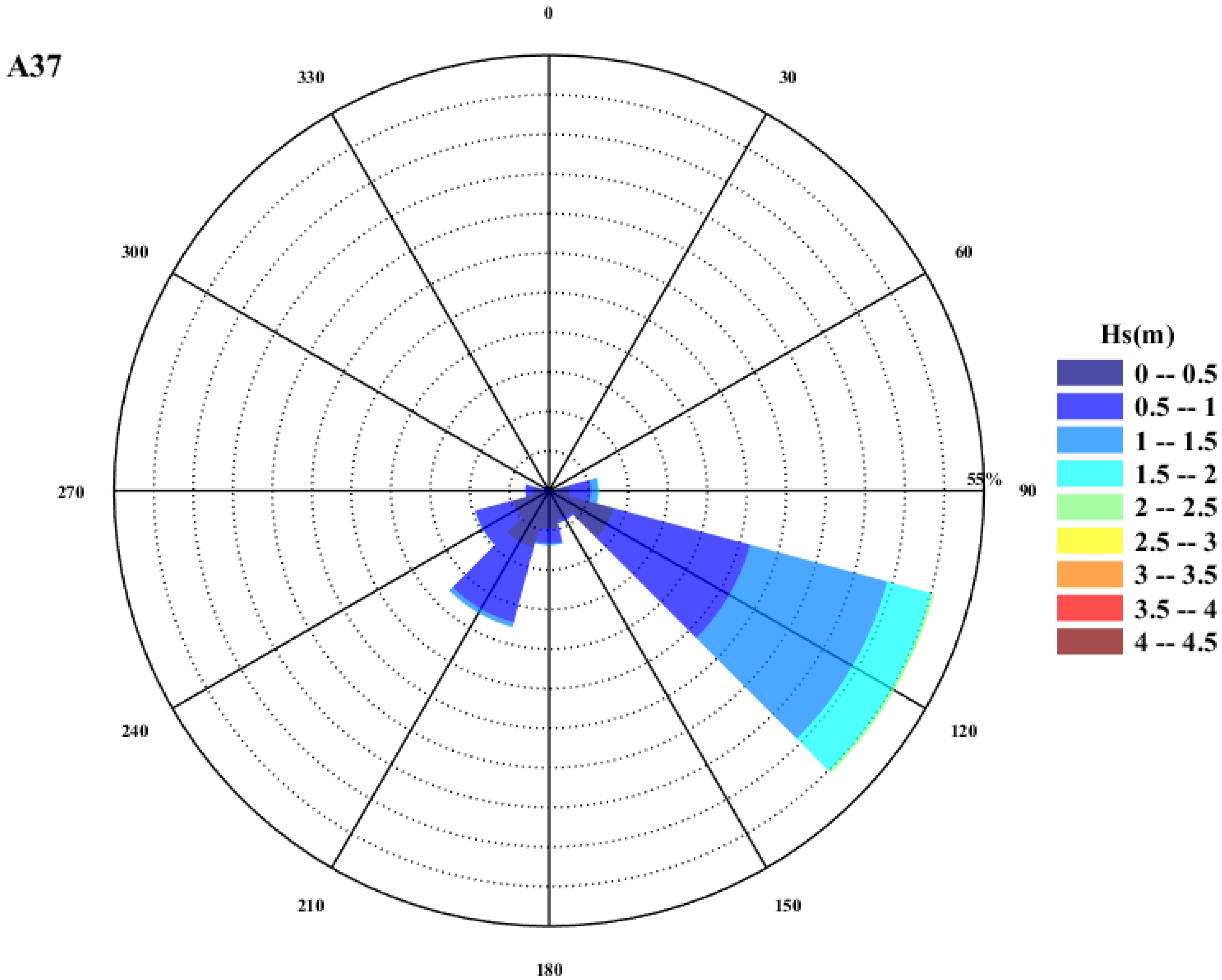
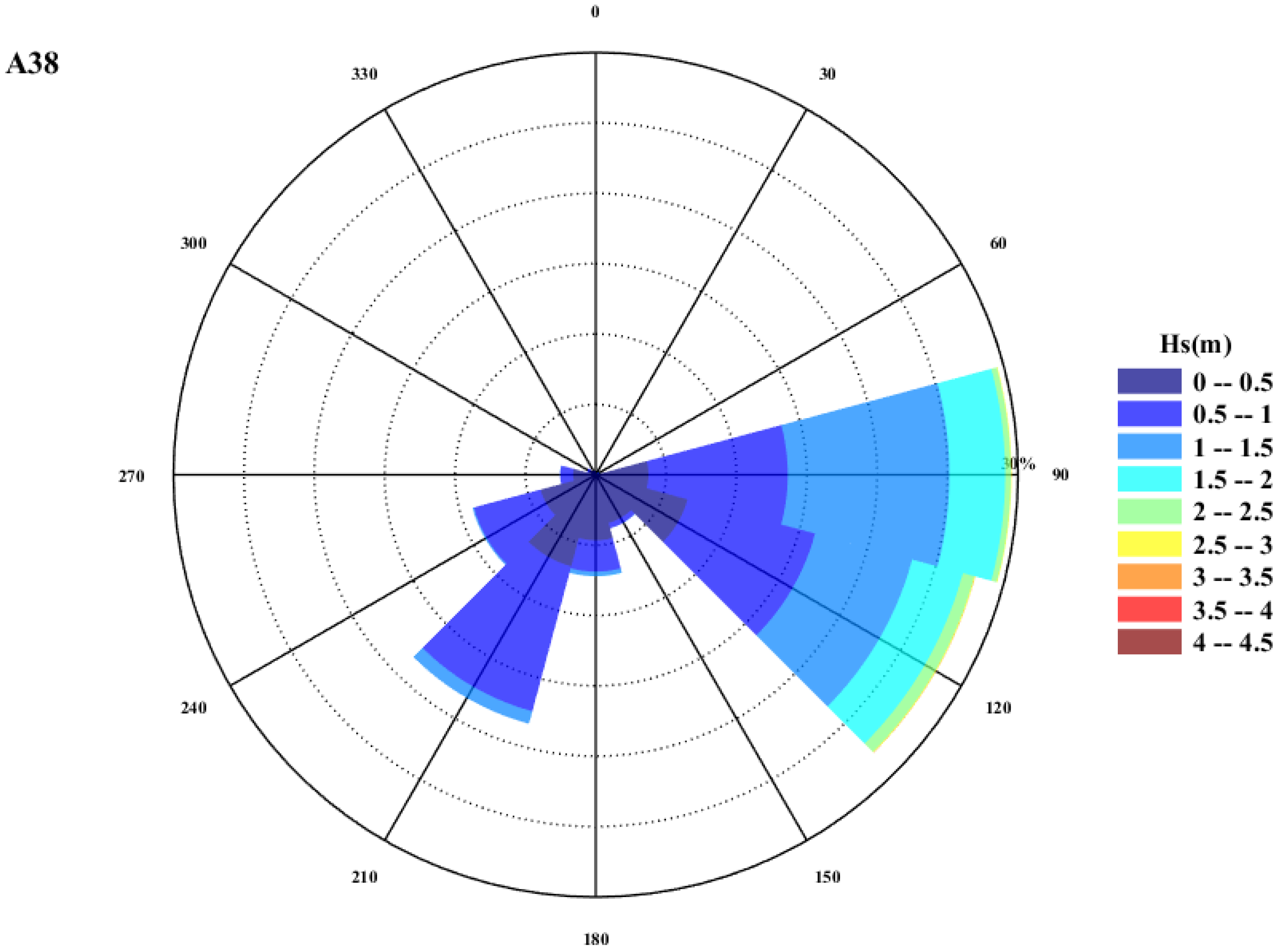
The analysis of the wave roses (Figure 12, Figure 13, Figure 14, Figure 15, Figure 16, Figure 17 and Figure 18) reveals a consistent wave climate across the site, characterized by a pronounced directional concentration. Waves predominantly originate from the E–SE sector (90° to 120°), which is attributed to the prevailing monsoon wind fields and coastal orientation. The significant wave height ( H s ) is primarily between 0.5 m and 1.5 m, comprising over 60% of occurrences, with the 0.5–1.0 m range being the most frequent. Higher waves ( H s > 2 m) occur with a low frequency (generally <10%) but are non-negligible for design. Spatial variability is evident: locations A54 and A55 exhibit slightly higher wave energy, likely due to greater water depth and exposure, whereas points A74, A37, and A28 experience milder conditions, possibly due to topographic sheltering and wave breaking.
These wave rose characteristics have direct implications for turbine siting: (1) Directional optimization: Turbine foundations should be designed to withstand the dominant E-SE wave direction (90°–120°), with reinforced structural strength on the southeast-facing side to reduce fatigue damage; (2) Spatial zoning: High-exposure points (A54, A55) are suitable for robust foundation types (e.g., jackets), while low-exposure points (A28, A37 and A74) can adopt more economical designs (e.g., monopiles) to balance safety and cost; (3) Avoidance of high-energy zones: Although H s > 2 m waves are infrequent, their concentration in the E~SE direction suggests that turbine spacing should be increased in this azimuth to minimize wave-induced interference between adjacent structures.

3.2. Wave Characteristics at a Representative Point (A55)

From the wave rose, we found that the largest significant wave height occurred at location A55, which is the outmost turbine site that may suffer from the strongest wave force. A comprehensive statistical analysis was conducted for location A55, focusing on the joint distributions of key parameters.

3.2.1. Joint Distribution of Significant Wave Height and Mean Wave Direction

The distribution of H s at A55 is heavily skewed towards lower values, with 79.97% of events in the 0–1.5 m range (0–0.5 m: 27.76%; 0.5–1.0 m: 38.72%; 1.0–1.5 m: 21.49%). Waves with H s > 2 m are infrequent (2.08%). The analysis reveals a strong directional dependence. The highest wave energy is associated with the 120° (ESE) and 210° (WSW) directions, reflecting the influence of seasonal monsoons.

3.2.2. Joint Distribution of Significant Wave Height and Spectral Peak Period

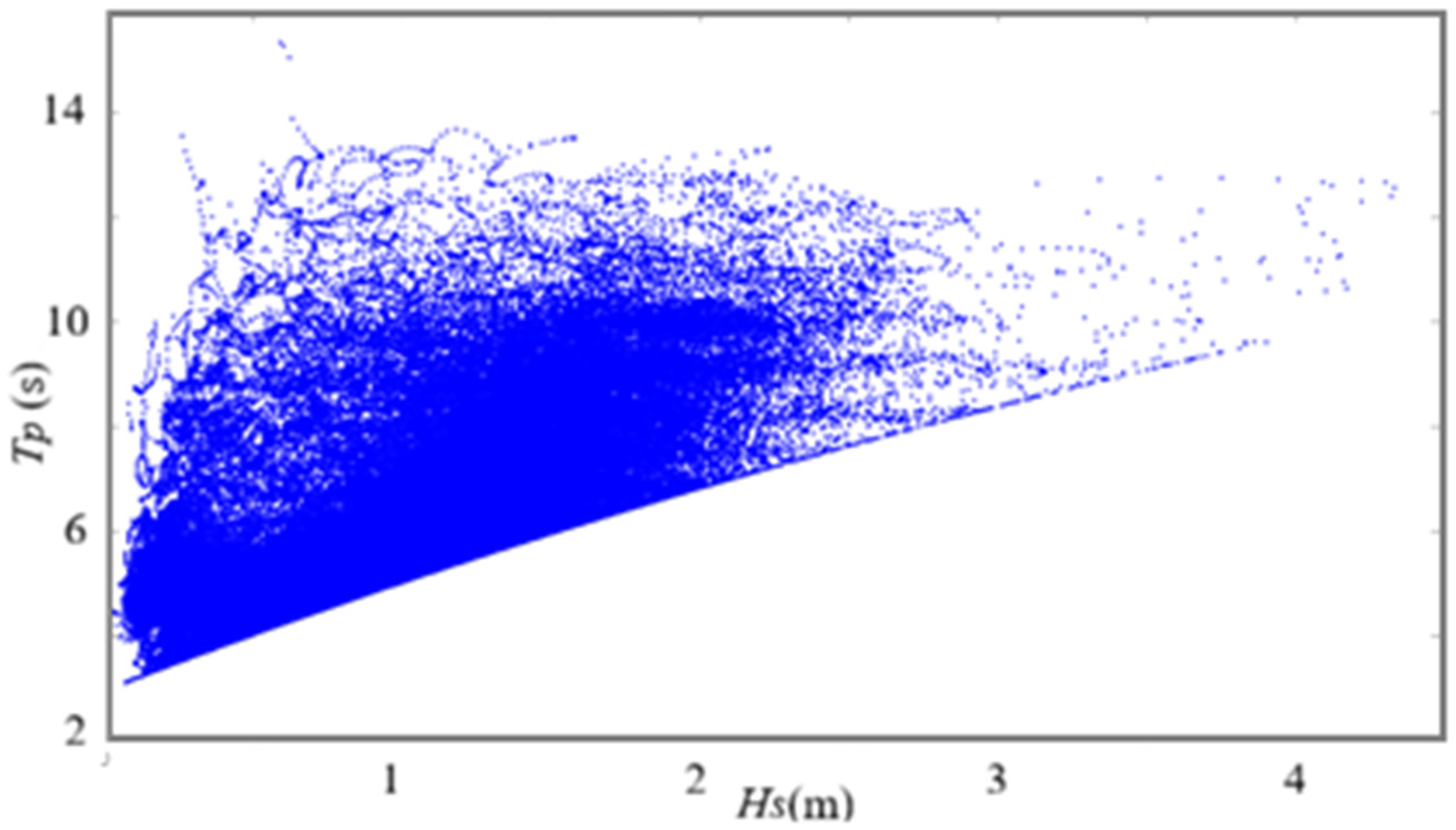
The spectral peak period ( T P ) is concentrated within the 4–10 s range. The most frequent T P range is 5–6 s (102,054 instances), followed by 4–5 s (54,861 instances) and 6–7 s (50,009 instances). A positive correlation between H s and T P is evident; higher wave heights ( H s > 2 m) are predominantly associated with longer periods ( T P = 8–10 s). The scatter plot (Figure 19) visually confirms the concentration of data in the region of H s < 2 m and T P < 10 s.

3.2.3. Joint Distribution of Wave Direction and Wind Direction

The joint distribution (Table 3) confirms that the sea area is predominantly wind–sea driven, with a high correlation between wind and wave directions. The primary directions (90° E, 120° ESE, 210° WSW) show a combined probability exceeding 50%. Wave direction is directly controlled by the local wind field, with minor deflections (e.g., energy from 120° winds appearing at 90°) likely due to topographic or current influences.
The strong wind–wave direction correlation has important engineering implications: (1) Load combination: During structural design, the maximum wave load (from 120° ESE) should be combined with the corresponding maximum wind load (from 120° ESE), as they occur simultaneously with a high probability (9.25% in Table 3), avoiding conservative over-design from arbitrary load direction combinations; (2) Fatigue analysis: The repeated action of wind and wave loads from the dominant directions (90°~120° E~ESE and 210°~270° WSW~WNW) should be prioritized in fatigue life calculations, as these directions account for over 60% of the total load cycles; (3) Installation planning: Offshore installation activities should avoid periods with concurrent strong winds and waves from the 120° ESE direction (e.g., typhoon seasons), as the combined load poses significant risks to construction of vessels and equipment.

3.3. Extreme Wave Analysis and Design Parameters

3.3.1. Statistical Analysis and Extreme Value Estimation Method

The model output hourly wave parameters, including significant wave height ( H s ), spectral peak period ( T P ), and mean wave direction (Dir). Seven representative points in the wind farm area (see Figure 11) were selected for statistical analysis.
Wave climate statistical analysis: Wave roses, joint distributions of significant wave height–spectral peak period, and joint distributions of wave direction–wind direction were statistically plotted to reveal the statistical patterns and main source directions of the waves.
Extreme value analysis: The Pearson Type-III (P-III) distribution was applied to fit the annual extreme wave height series for each direction and to derive the design wave height ( H s ) and its corresponding characteristic period ( T P , T z ) for each point at different return periods (1, 2, 5, 10, 50, and 100 years). The probability density function of the P-III distribution is given by the following:
F ( x ) = β α Γ ( α ) ( x a 0 ) α 1 e β ( x a 0 )
where x is the statistical physical quantity, and parameters, Γ ( α ) = 0 + x α 1 e x d x , α , α 0 , and β are calculated using the coefficient of variation C V and the skewness coefficient C S ( a 0 = x ¯ 1 2 C V C S 1 , α = 4 C S 2 , β = 2 x ¯ C V C S 1 , C V = n 1 1 i = 1 n ( K i 1 ) 2 , C S = i = 1 n ( K i 1 ) 3 ( n 3 ) C V 3 1 , and K i = x i / x ¯ ). The design wave height x T for a given return period T is solved through the cumulative distribution function:
P ( X x T ) = T

3.3.2. Extreme Wave Analysis

The P-III distribution was used to fit and test the significant wave height series of the seven representative points, showing a good fit.
Extreme events primarily originate from the 120° direction (typhoon path). Table 4 summarizes the extreme wave design parameters for each representative point for the 100-year and 50-year return periods.
The results indicate that extreme wave events occur most frequently in the E-SE directions and are concentrated in the 120° (ESE) direction. This may be due to a longer fetch length in this direction or its alignment with the movement paths of extreme weather events such as typhoons.
The most extreme wave parameters across the entire site occur at location A55, with a 100-year significant wave height H s 100 = 4.66 m and a corresponding spectral peak period T P 100 = 13.05 s. The 50-year values are H s 50 = 4.38 m and T P 50 = 12.65 s. These parameters are core inputs for wave load calculations in the strength check and fatigue analysis of support structures (e.g., monopiles, jackets). The results also show that there are certain differences in extreme wave heights at different points, reflecting the spatial variability of wave parameters even within the same wind farm, due to factors such as local water depth and topographic sheltering effects. This spatial variability should be considered during turbine micro-siting and foundation customization design to achieve an optimal balance between safety and economy.

4. Discussion

4.1. Model Reliability and Sensitivity Analysis

The dual-nested WAVEWATCH III and SWAN models exhibited robust performance in simulating the target area’s wave fields (validated against in situ data, H s R M S E < 0.22 m, R2 > 0.85), consistent with high-quality South China Sea (SCS) wave-modeling studies. This study advances regional practices by integrating a 32-year (1988–2019) dataset, extending temporal coverage beyond typical regional studies: Mirzaei et al. [17] conducted a 31-year southern SCS hindcast focusing on large-scale climate variability, while Chu et al. [32] used 1-year data for model validation. In contrast, our long-term simulation captures decadal typhoon-induced wave variability, reducing extreme value analysis errors. Additionally, a 22-year SCS wave energy assessment [18] (0.25° resolution) lacked intra-farm applicability, whereas our nested SWAN model (1′ × 1′, ~1.8 km) achieves engineering-scale refinement.
Uncertainties remain, including WRF wind field biases during extreme typhoons, generic parameterization schemes, and unaccounted wave–current interactions. Despite this, consistency with observations confirms the model’s reliability for engineering applications, providing a more data-rich foundation than prior Southeast Asian site-specific studies.
Sensitivity analysis showed that ±10% wind speed variations induce ±8.5% H s and ±5.2% T P changes, limiting 100-year H s error to ±0.4 m (within engineering safety margins). Neglected wave–current interactions may affect nearshore simulations; future studies should adopt coupled models (e.g., SWAN + FVCOM), as demonstrated by Zhu et al. [24], for SCS tropical cyclones. While 32-year data reduces extreme value errors, longer datasets (e.g., 50 years) could further improve reliability.

4.2. Causes of Extreme Wave Directionality

A key finding is the dominance of extreme waves from 120° (ESE), distinct from the broader E-SE frequent wave sector (90°–120°), attributed to long ESE fetch, typhoon track alignment, and topographic refraction. This directional pattern differs from broader SCS results: Wang et al. [16] reported northern SCS extreme H s concentrated in the E direction and southern SCS in the N direction, driven by zonal monsoon gradients. In contrast, our western SCS (Mekong estuary) site is uniquely influenced by westward-deflecting Pacific typhoons, resulting in 120° extremes—an observation uncaptured by large-scale SCS studies.
Zhu et al. [24] noted SCS directional extremes but lacked mechanistic explanations. Our innovative integration of wave–wind correlations (Table 3) and topographic data reveals that waves in the direction of 120° have the highest co-occurrence (9.25%) with winds in the direction of 120°, confirming wind-driven energy accumulation. This advances generic extreme value approaches by linking directional extremes to specific meteorological–oceanographic drivers, supporting risk-based design.

4.3. Spatial Variability of Design Parameters and Engineering Implications

The significant spatial variability in extreme wave parameters (e.g., H s 100 ranging from 2.7 m at A28 to 4.66 m at A55) highlights the influence of local bathymetry and sheltering effects. This variability is often overlooked in uniform design practices but is critical for economic optimization. For example, while DNV-OS-J101 [8] emphasizes site-specific analysis, few studies quantify intra-farm variations in shallow waters like Vietnam’s continental shelf. Our work demonstrates that shallower sites (e.g., A28, depth 3.15 m) exhibit reduced extreme waves due to depth-induced breaking, as the water depth at A28 is about 3.15 m with a 2.7 m significant wave height (wave steepness equals about 0.86), whereas deeper locations (e.g., A55, depth 7.18 m) are more exposed. This finding aligns with Zheng et al. [18], who advocated for location-specific contours, but our research extends this by providing empirical evidence of spatial gradients at an operational scale. The implications are profound: micro-siting and customized foundation design can achieve cost savings of 10–15% by avoiding over-design, an innovation over one-size-fits-all approaches in early offshore wind projects [4,7].

4.4. Compliance with Standards and Engineering Applicability

The derived design parameters (e.g., H s 100 = 4.66 m, T P 100 = 13.05 s) strictly adhere to international standards such as DNV-OS-J101 [8] and IEC 61400-3 [7], ensuring regulatory compliance. To objectively justify the selection of the Pearson Type-III (P-III) distribution, we compared it with two commonly used extreme value distributions (Gumbel and Weibull). Statistical analysis indicates that the highest wave heights occur at the A55 wind turbine site. The effective wave heights for different return periods at the A55 wind turbine were estimated using three extreme value distributions: P-III, Gumbel, and Weibull. To objectively justify the selection of the Pearson Type-III (P-III) distribution, we compared its goodness-of-fit with two commonly used extreme value distributions (Gumbel and Weibull) using Akaike Information Criterion (AIC), Bayesian Information Criterion (BIC), and the Kolmogorov–Smirnov (KS) test statistic (Table 5). Lower AIC and BIC values indicate better model fit, while a smaller KS statistic reflects closer agreement between the fitted distribution and observed data.
As shown in Table 5, the P-III distribution exhibits the lowest AIC (156.82), BIC (162.37), and KS statistic (0.089) among the three distributions, confirming its superior fit to the annual extreme wave height series. This methodological choice is supported by Vanem [11], who highlighted P-III’s flexibility for skewed environmental data and aligns with regional studies: Zheng et al. [15,18] noted that P-III outperforms Gumbel for skewed typhoon-induced SCS wave series.
At site A55, the H s 100 (4.66 m, 7.18 m depth) is comparable to those given by Wang et al. [16], validating our design parameters. By providing direct inputs for Morison equation-based wave force calculations, this study enables accurate ultimate limit state (ULS) and fatigue limit state (FLS) analyses for structures like monopiles—a step beyond generic recommendations in codes like IEC 61400-3 [7]. This tailored approach enhances the practicality of our findings for developers in emerging offshore wind markets like Southeast Asia.

5. Conclusions

This study employs the WRF + SWAN model to investigate wave conditions in the Mekong River estuary and adjacent waters from 1988 to 2019. Based on 32 years of continuous numerical wave simulations, the P-III distribution is utilized to calculate wave extremes for the study area.
(1) The project area’s wave climate exhibits strong directional concentration (dominant E~SE sector, 90°–120°) driven by monsoons, with frequent sea states of H s = 0.5–1.5 m (>60% of occurrences) and T P = 5–7 s; extreme waves are uniquely concentrated in the 120° direction, attributed to extended fetch and typhoon track alignment, requiring targeted reinforcement of ESE-facing structural components to mitigate fatigue damage.
(2) The P-III distribution yields reliable extreme design parameters compliant with DNV-OS-J101 [8] and IEC 61400-3 [7]: at the most exposed site (A55, 7.18 m water depth), the 100-year return period H s 100 = 4.66 m and T P 100 = 13.05 s (50-year: H s 50 = 4.38 m, T P 50 = 12.65 s), serving as core inputs for ultimate/fatigue limit state (ULS/FLS) analyses.
(3) Pronounced spatial variability in extreme waves ( H s 100 : 2.7 m at sheltered A28 to 4.66 m at exposed A55) mandates location-specific micro-siting and foundation design—adopting jackets for high-exposure sites and monopiles for low-exposure areas—reducing foundation costs by 10–15% while ensuring safety.
This research provides site-specific wave data and a validated methodology essential for structural safety assessment and optimized design in tropical monsoon–typhoon-affected regions. Future work will integrate high-resolution typhoon wind fields and coupled wave–current–structure models to refine load calculations.

Author Contributions

Conceptualization, G.Z. and B.W.; methodology, G.Z., Y.L. (Yuyan Liu), and X.H.; software, G.Z. and B.W.; validation, G.Z., B.W. and X.H.; formal analysis, G.Z. and B.W.; investigation, G.Z. and Y.L. (Yuyan Liu); resources, G.Z. and B.W.; data curation, G.Z. and Y.L. (Yongqing Lai); writing—original draft preparation, G.Z. and B.W.; writing—review and editing, Y.L. (Yuyan Liu), X.H. and Y.L. (Yongqing Lai); visualization, X.H. and Y.L. (Yongqing Lai); supervision, B.W.; project administration, G.Z. and B.W.; funding acquisition, G.Z. and Y.L. (Yuyan Liu). All authors have read and agreed to the published version of the manuscript.

Funding

This research work was financially supported by the National Natural Science Foundation of China (Grant NO. 2023YFB4203200). Their financial support is gratefully acknowledged.

Data Availability Statement

The data presented in this study are available on request from the corresponding author due to ethical restrictions.

Conflicts of Interest

Author Guanming Zeng was employed by State Key Laboratory of HVDC, Electric Power Research Institute, China Southern Power Grid. Author Yuyan Liu was employed by Guangdong Provincial Key Laboratory of Intelligent Operation and Control for New Energy Power System. Authors Xuanjun Huang, Bin Wang and Yongqing Lai were employed by PowerChina Huadong Engineering Corporation Limited. The authors declare that the research was conducted in the absence of any commercial or financial relationships that could be construed as a potential conflict of interest. The funders had no role in the design of the study; in the collection, analyses, or interpretation of data; in the writing of the manuscript; or in the decision to publish the results.

References

  1. GWEC. Global Wind Report 2025; Global Wind Energy Council: Brussels, Belgium, 2025. [Google Scholar]
  2. Esteban, M.D.; Diez, J.J.; Lopez, J.S.; Negro, V. Why Offshore Wind Energy? Renew. Energy 2011, 36, 444–450. [Google Scholar] [CrossRef]
  3. Tufan, K.; Dalcal, A. Exploring Offshore Wind Energy: Trends, Investments, and Technological Advancements in the Global Energy Outlook. Russ. Electr. Eng. 2025, 96, 253–262. [Google Scholar] [CrossRef]
  4. Abdelghany, G.A.; Soares, C.G. Global Trends and Challenges to Offshore Wind Energy in Vietnam. In Proceedings of the Vietnam Symposium on Advances in Offshore Engineering, Hanoi, Vietnam, 12–14 December 2025. [Google Scholar]
  5. Pinheiro Ribeiro, T.; Duailibe Monteiro, P.R.; Zamboti Fortes, M.; Trezza Borges, T. A Comprehensive Review of Offshore Substations: Key Aspects and Trends. J. Eng. Sci. Technol. Rev. 2025, 18, 65–72. [Google Scholar] [CrossRef]
  6. Ma, X.; Li, M.; Li, W.; Liu, Y. Overview of Offshore Wind Power Technologies. Sustainability 2025, 17, 596. [Google Scholar] [CrossRef]
  7. IEC 61400-3; Design Requirements for Offshore Wind Turbines. IEC: Geneva, Switzerland, 2009.
  8. DNV-OS-J101; Design of Offshore Wind Turbine. DNV GL: Oslo, Norway, 2016.
  9. Arany, L.; Bhattacharya, S.; Macdonald, J.; Hogan, S.J. Design of Monopiles for Offshore Wind Turbines in 10 Steps. Soil Dyn. Earthq. Eng. 2017, 92, 126–152. [Google Scholar] [CrossRef]
  10. Meng, X.; Lian, J.; Wang, H.; Zhao, H.; Liu, R. Research Progress on Offshore Wind Turbine Foundation Structures and Installation Technologies. Mar. Energy Res. 2025, 2, 10006. [Google Scholar] [CrossRef]
  11. Vanem, E. Long-Term Time-Dependent Stochastic Modelling of Extreme Waves. Stoch. Environ. Res. Risk Assess. 2011, 25, 185–209. [Google Scholar] [CrossRef]
  12. Carter, D.J.T.; Challenor, P.G. Estimating Return Values of Environmental Parameters. Q. J. R. Meteorol. Soc. 2007, 107, 259–266. [Google Scholar] [CrossRef]
  13. Kongklad, G.; Thanh, N.V.; Pattanaporkratana, A.; Chattham, N.; Jeenanunta, C. A Data-Driven Decision Support System for Wave Power Plant Location Selection. Water 2025, 17, 948. [Google Scholar] [CrossRef]
  14. Tien, P.V.; Thuy, N.B.; Kim, S.; Cuong, N.K.; Ngoc, P.K.; Khiem, M.V.; Hole, L.R. Impact of the Interaction of Surge, Wave, and Tide on the Surge and Wave on the Northern Coast of Vietnam for a Marine Storm Surge and Wave Forecast System. Reg. Stud. Mar. Sci. 2025, 87, 104234. [Google Scholar] [CrossRef]
  15. Zheng, C.W.; Zhuang, H.; Li, X.; Li, X.Q. Wind Energy and Wave Energy Resources Assessment in the East China Sea and South China Sea. Sci. China Technol. Sci. 2012, 55, 163–173. [Google Scholar] [CrossRef]
  16. Wang, Z.; Zhou, L.; Dong, S.; Wu, L.; Li, Z.; Mou, L.; Wang, A. Wind Wave Characteristics and Engineering Environment of the South China Sea. J. Ocean Univ. China 2014, 13, 893–900. [Google Scholar] [CrossRef]
  17. Mirzaei, A.; Tangang, F.; Juneng, L.; Mustapha, M.A.; Husain, M.L.; Akhir, M.F. Wave Climate Simulation for Southern Region of the South China Sea. Ocean Dyn. 2013, 63, 961–977. [Google Scholar] [CrossRef]
  18. Zheng, C.W.; Pan, J.; Li, J.X. Assessing the China Sea Wind Energy and Wave Energy Resources from 1988 to 2009. Ocean Eng. 2013, 65, 39–48. [Google Scholar] [CrossRef]
  19. Zheng, C.W.; Li, C.Y. Variation of the Wave Energy and Significant Wave Height in the China Sea and Adjacent Waters. Renew. Sustain. Energy Rev. 2015, 43, 381–387. [Google Scholar] [CrossRef]
  20. Tolman, H.L. User Manual and System Documentation of WAVEWATCH III, Version 3.14; NOAA/NWS/NCEP/MMAB: College Park, MD, USA, 2009.
  21. Booij, N.; Ris, R.C.; Holthuijsen, L.H. A Third-Generation Wave Model for Coastal Regions 1. Model Description and Validation. J Geophys Res C Oceans 104(C4):7649-7666. J. Geophys. Res. Atmos. 1999, 104, 7649–7666. [Google Scholar] [CrossRef]
  22. Thompson, K.B.; Barthelmie, R.J.; Pryor, S.C. Hurricane Impacts in the United States East Coast Offshore Wind Energy Lease Areas. Wind Energy Sci. 2025, 10, 2639–2661. [Google Scholar] [CrossRef]
  23. Zheng, C.W.; Zheng, Y.Y.; Chen, H.C. Research on Wave Energy Resources in the Northern South China Sea during Recent 10 Years Using SWAN Wave Model. J. Subtrop. Resour. Environ. 2011, 6, 54–59. [Google Scholar]
  24. Zhu, L.S.; Song, Y.F.; Qiu, Z.; Chen, X.H.; Mai, B.Q.; Qiu, Y.W.; Song, L.L. Computation of Wave, Tide and Wind Current for the South China Sea Under Tropical Cyclones. China Ocean Eng. 2003, 18, 505–516. [Google Scholar]
  25. Lin, Y.Y.; Peng, S.Y. Stress Analyses of the Offshore Wind Turbine Structures Subjected to Ocean Waves. In Proceedings of the 27th International Ocean and Polar Engineering Conference, San Francisco, CA, USA, 25–30 June 2017. [Google Scholar]
  26. Bredmose, H.; Jacobsen, N.G. Breaking Wave Impacts on Offshore Wind Turbine Foundations: Focused Wave Groups and CFD. In Proceedings of the ASME International Conference on Ocean, Offshore and Arctic Engineering, Shanghai, China, 6–11 June 2010. [Google Scholar]
  27. Zhou, K.; Shi, X. Understanding Precipitation Moisture Sources and Their Dominant Factors During Droughts in the Vietnamese Mekong Delta. Water Resour. Res. 2024, 60, e2023WR035920. [Google Scholar] [CrossRef]
  28. Duy Vinh, V.; Ouillon, S.; Van Thao, N.; Ngoc Tien, N. Numerical Simulations of Suspended Sediment Dynamics Due to Seasonal Forcing in the Mekong Coastal Area. Water 2016, 8, 255. [Google Scholar] [CrossRef]
  29. Liu, H.-Y.; Wang, Y.; Xu, J.; Duan, Y. A Dynamical Initialization Scheme for Tropical Cyclones under the Influence of Terrain. Weather Forecast. 2018, 33, 641–659. [Google Scholar] [CrossRef]
  30. Di, Z.; Duan, Q.; Shen, C.; Xie, Z. Improving WRF Typhoon Precipitation and Intensity Simulation Using a Surrogate-Based Automatic Parameter Optimization Method. Atmosphere 2020, 11, 89. [Google Scholar] [CrossRef]
  31. Komen, G.J.; Hasselmann, S.; Hasselmann, K. On the Existence of a Fully Developed Wind-Sea Spectrum. J. Phys. Oceanogr. 1984, 14, 1271–1285. [Google Scholar] [CrossRef]
  32. Chu, P.C.; Qi, Y.; Chen, Y.; Shi, P.; Mao, Q. South China Sea Wind-Wave Characteristics. Part I: Validation of Wavewatch-III Using TOPEX/Poseidon Data. J. Atmos. Ocean. Technol. 2004, 21, 1718–1733. [Google Scholar] [CrossRef]
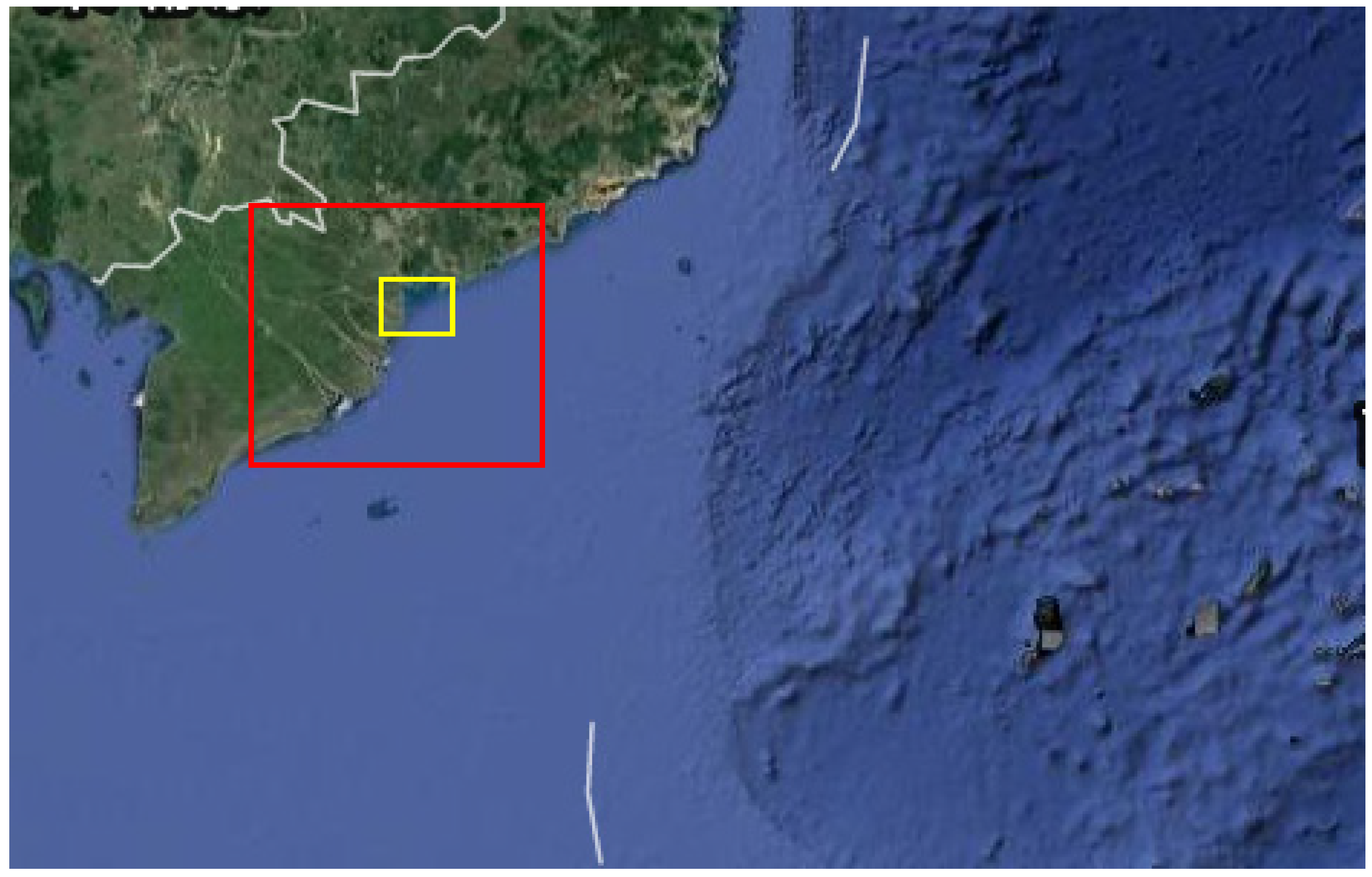
Figure 1. Study area.
Energies 19 00115 g001
Figure 2. The model result and the ERA wind field of Typhoon Durian on 5 December 2006.
Energies 19 00115 g002
Figure 3. Calculation domains and water depth for WAVEWATCH III and SWAN models (black box indicates the small-scale domain).
Energies 19 00115 g003
Figure 4. Schematic diagram of observation point locations.
Energies 19 00115 g004
Figure 5. Comparison of simulated and measured significant wave height at Station W2.
Energies 19 00115 g005
Figure 6. Comparison of simulated and measured spectral peak period at Station W2.
Energies 19 00115 g006
Figure 7. Comparison of simulated and measured mean wave direction at Station W2.
Energies 19 00115 g007
Figure 8. Comparison of simulated and measured significant wave height at Stations W1–2.
Energies 19 00115 g008
Figure 9. Comparison of simulated and measured spectral peak period at Stations W1–2.
Energies 19 00115 g009
Figure 10. Comparison of simulated and measured mean wave direction at Stations W1–2.
Energies 19 00115 g010
Figure 11. Coordinates of marine meteorological points for the target wind farm.
Energies 19 00115 g011
Figure 12. Wave rose at location A21.
Energies 19 00115 g012
Figure 13. Wave rose at location A54.
Energies 19 00115 g013
Figure 14. Wave rose at location A55.
Energies 19 00115 g014
Figure 15. Wave rose at location A74.
Energies 19 00115 g015
Figure 16. Wave rose at location A37.
Energies 19 00115 g016
Figure 17. Wave rose at location A38.
Energies 19 00115 g017
Figure 18. Wave rose at location A28.
Energies 19 00115 g018
Figure 19. Scatter plot of joint distribution of significant wave height and spectral peak period at location A55.
Energies 19 00115 g019
Table 1. Main parameter settings for the wave models.
WAVEWATCH IIISWAN
Domain98.0° E−135.0° E, 8.0° S−27.0° N104.7° E−111.0° E, 7.5° N−12.0° N
Resolution0.1° × 0.1°1′ × 1′
Nonlinear InteractionsDIADIA + triad
Source TermsJONSWAPKomen et al. [31]
Bottom FrictionJONSWAPJONSWAP
Depth-Induced Breaking/Battjes-Janssen
Table 2. Statistical validation metrics for SWAN model simulations.
StationParameterRMSEBiasScatter Index (SI)Correlation Coefficient (R2)
W2 H s (m)0.18−0.050.080.92
W2 T P (s)0.760.320.090.87
W1-2 H s (m)0.21−0.070.10.9
W1-2 T P (s)0.830.410.110.85
Table 3. Joint distribution of mean wave direction and mean wind direction at location A55.
Wave0306090120150180210240270300330SUM
Wind
00.010.010.030.580.380.060.030.010.000.000.000.011.12
300.000.010.021.361.110.050.020.000.000.000.000.002.59
600.000.000.069.663.330.060.020.000.000.000.000.0013.14
900.000.000.0116.457.320.110.030.000.000.000.000.0023.93
1200.000.000.002.039.250.290.050.000.000.000.000.0011.63
1500.000.000.000.362.111.110.120.000.000.000.000.003.70
1800.000.000.000.180.530.800.660.010.000.000.000.002.18
2100.000.000.000.130.300.471.970.340.000.000.000.003.23
2400.000.000.000.190.250.373.3812.310.590.000.000.0017.10
2700.000.000.010.200.280.250.725.748.281.830.040.0017.36
3000.030.020.040.260.210.110.220.190.270.800.620.152.92
3300.060.060.080.390.180.060.060.020.010.020.040.121.11
SUM0.110.120.2531.7925.263.747.3018.649.162.660.710.27100
Table 4. Extreme wave design parameters for each representative point (100-year and 50-year return periods).
StationDirection (°) H s 100 (m) T P 100 (s) H s 50 (m) T P 50 (s)Water Depth (m)
A211203.1413.613.0412.204.89
A541204.3813.124.1212.727.12
A551204.6613.054.3812.657.18
A741202.7213.632.6813.153.33
A371202.7413.142.6712.784.42
A381203.6813.483.5213.045.2
A281202.714.372.613.853.15
Table 5. Goodness-of-fit comparison of extreme value distributions at point A55.
DistributionAkaike Information Criterion
(AIC)
Bayesian Information Criterion
(BIC)
Kolmogorov–Smirnov (KS)
Statistic
Pearson Type-III156.82162.370.089
Gumbel163.54167.210.124
Weibull161.93166.580.117
Disclaimer/Publisher’s Note: The statements, opinions and data contained in all publications are solely those of the individual author(s) and contributor(s) and not of MDPI and/or the editor(s). MDPI and/or the editor(s) disclaim responsibility for any injury to people or property resulting from any ideas, methods, instructions or products referred to in the content.