Article

Dynamic Behaviour of Energy Transfer Station Real Field Performance Compared to Ideal Laboratory Conditions

1
Danfoss Trata, d.o.o., Ulica Jožeta Jame 16, 1210 Ljubljana, Slovenia
2
Faculty of Mechanical Engineering, University of Ljubljana, Aškerčeva cesta 6, 1000 Ljubljana, Slovenia
*
Author to whom correspondence should be addressed.
Energies 2026, 19(1), 101; https://doi.org/10.3390/en19010101
Submission received: 26 October 2025 / Revised: 27 November 2025 / Accepted: 15 December 2025 / Published: 24 December 2025
(This article belongs to the Special Issue Energy Management and Life Cycle Assessment for Sustainable Energy)

Abstract

District energy is one of the most efficient heat distribution systems. The interface between the pipe network and buildings is made of thermal and hydraulic separation units named stations. The control of temperature on the secondary side is handled in substations. Several parameters influence control stability, such as differential pressure, mass flow, temperatures, valve inherent characteristics and controller tuning. There are different design approaches for stations in different geographies. However, one option is a generalist control loop setup, which is analysed here. Four sites in Sweden were monitored for performance (during the winter period and with the same hardware setups), and an analysis of the variability of controller tuning parameters was performed. For the purposes of laboratory comparison, the tests were executed with different configurations of generic control loop setups. The results, arranged into distribution histograms, show similarities between the laboratory and field setups. One can see that well-performing setups are close to a normal distribution, while the others are not. One key parameter is the controller setup and algorithm used. Proper tuning of the controller, together with differential pressure control, secures optimal performance of district energy stations. District heating stations with operations closer to the set point positively influence the performance of the whole grid and therefore improve the energy efficiency of the stations.

1. Introduction

District energy, namely district heating and cooling, is key to the decarbonisation of heating systems, which are responsible for most of the carbon emissions worldwide. District energy systems provide the following:
  • Better efficiency of sources; for instance, CHP is more efficient than a traditional power plant.
  • Enable usage of renewable sources and, above all, waste heat.
  • Relatively easy energy shift between energy production and usage.
Therefore, it is essential that district energy use adapts and modernises to new conditions, which, in general, are moving towards low-temperature systems [1]. A move to low-temperature systems is caused by better insulation of buildings, but also by the greater and more effective penetration of floor heating. However, with ever-lower flow temperatures, this shifts the focus for improvement to the accuracy of control elements.
Certain studies [2] predict disproportional growth in district heating penetration in the upcoming year. This, combined with the electrification of sources, where large heat pumps can be used as a source, puts stress on improvements in the substation performance. Four sites in Sweden were chosen to study substations with, as seen on a first glance, poorer performance. In addition, laboratory experiments were performed in similar conditions to analyse influencing factors on the stability of controls.
The performance of the substations was extensively studied before now, such as in [3], which outlines a model of the dynamic behaviour of a substation with experimental validation. A substation in the district heating system is analysed by [4,5], outlining the connection between the secondary and primary systems in a thermal substation. The relevance of pressure and temperature control system coupling is added by [6]. Ref. [7] looks into the performance of district energy systems. Ref. [8] decomposes the station into elements and proposes experimentally validated modes for those as well. Ref. [9] then studies the impact of substations on network flexibility, which plays a key role in optimisation, as well as in the response of the secondary system outlined by [5]. Brum et al. [10] compare different systems. Ref. [11], however, takes a different approach by modelling the substation as a grey box Modelling using LabVIEW is performed by Lazarević, described in [11,12].
It is essential to understand the elements of a substation and its dynamic behaviour if one wants to understand the influences on the control ability of substations and the stability of controlled parameters. Thermal probes are described by Rupnik [13] and Bajsić [14]. Bobič [15] outlines the behaviour of a heat exchanger with abnormal asymmetric distribution over plates, which can cause different deviations in the control system or influence of fouling, as outlined by Genić [16]. A key point that emerges is the need to improve model-based control, and Arendt outlines an option for how to execute it in [17]. Ionesi [18] brings into play the ROM of the buildings for those purposes.
In [19], tools for district energy planning are described. Similarly, Refs. [20,21] analyse district energy as a positive energy development in urban centres and offer tools for planning [22] and databases [23]. Ref. [24] deals with the optimisation of district heating systems with renewable resources, where the stability of operation is also important. The integration of renewable energy sources into low-temperature district heating systems is reviewed and outlined in [25]. Further for that is needed 5G substation described in Ref. [26], while [27] delas with 4G systems and in [28] hybrid system. In Ref. [29] Dynamic simulation and optimisation is described, while in [30] oscillatory behaviour of systems in thermohydraulic domain is described.

2. Difference Between Substations

Previously, two different engineering solutions were developed to provide an optimal solution with regard to the control of heating and domestic hot water demand in buildings. It is to be noted that only heating, not cooling, systems are of interest in this article. Those two solutions are as follows:
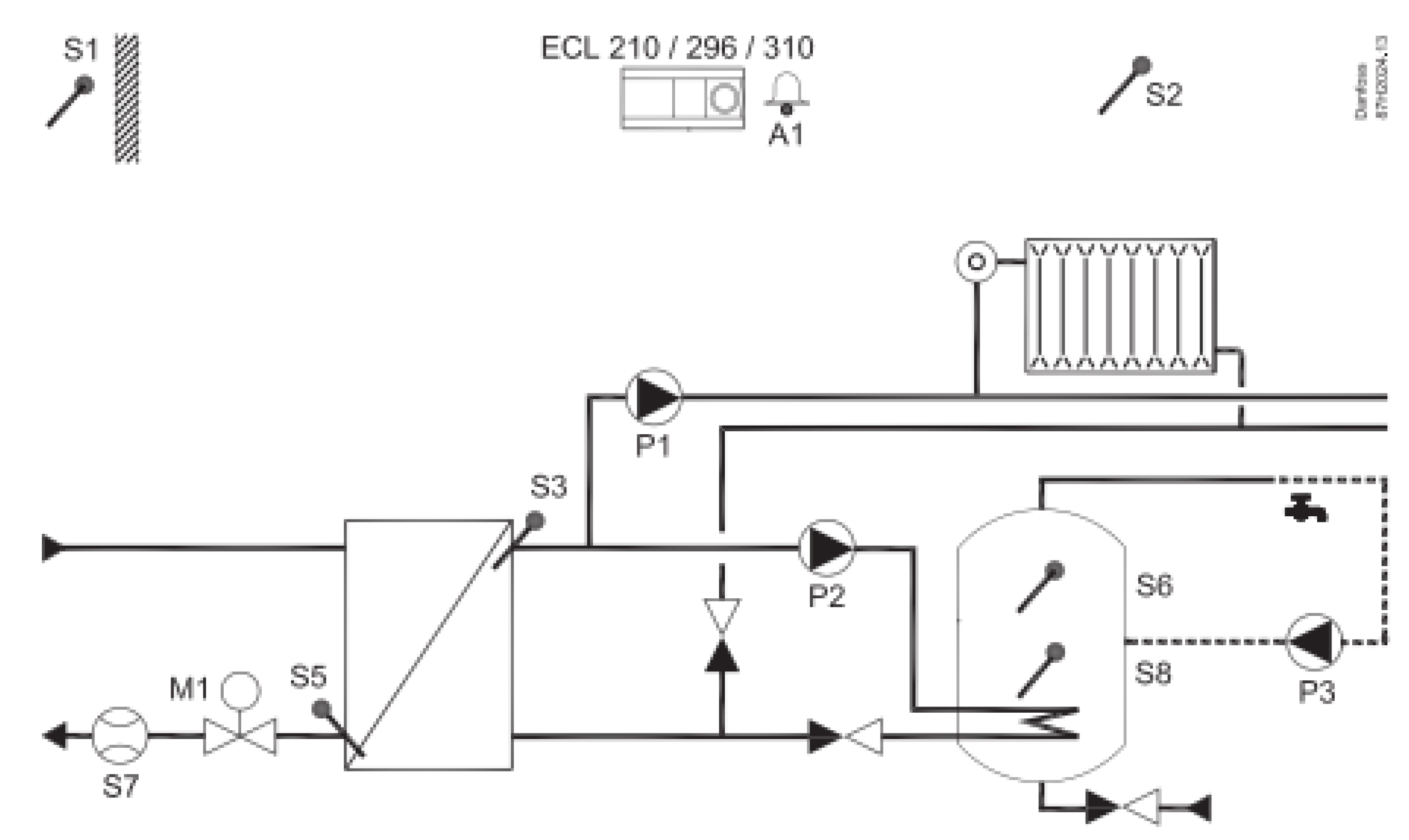
In the case of a modular approach, the substation consists of one heat exchanger, which is used to reduce the temperature and pressure to the required level for the building. All necessary safety equipment is built into this station. On the secondary side, mixing loops are then used to prepare the water to be at the correct temperature for space heating (floor, radiators, etc.) and domestic hot water. As a rule, those systems usually also accommodate the preparation of domestic hot water systems with a tank, which then requires careful temperature management inside the tank to prevent bacterial growth. Such systems are also suitable for multifamily buildings with flat stations installed.
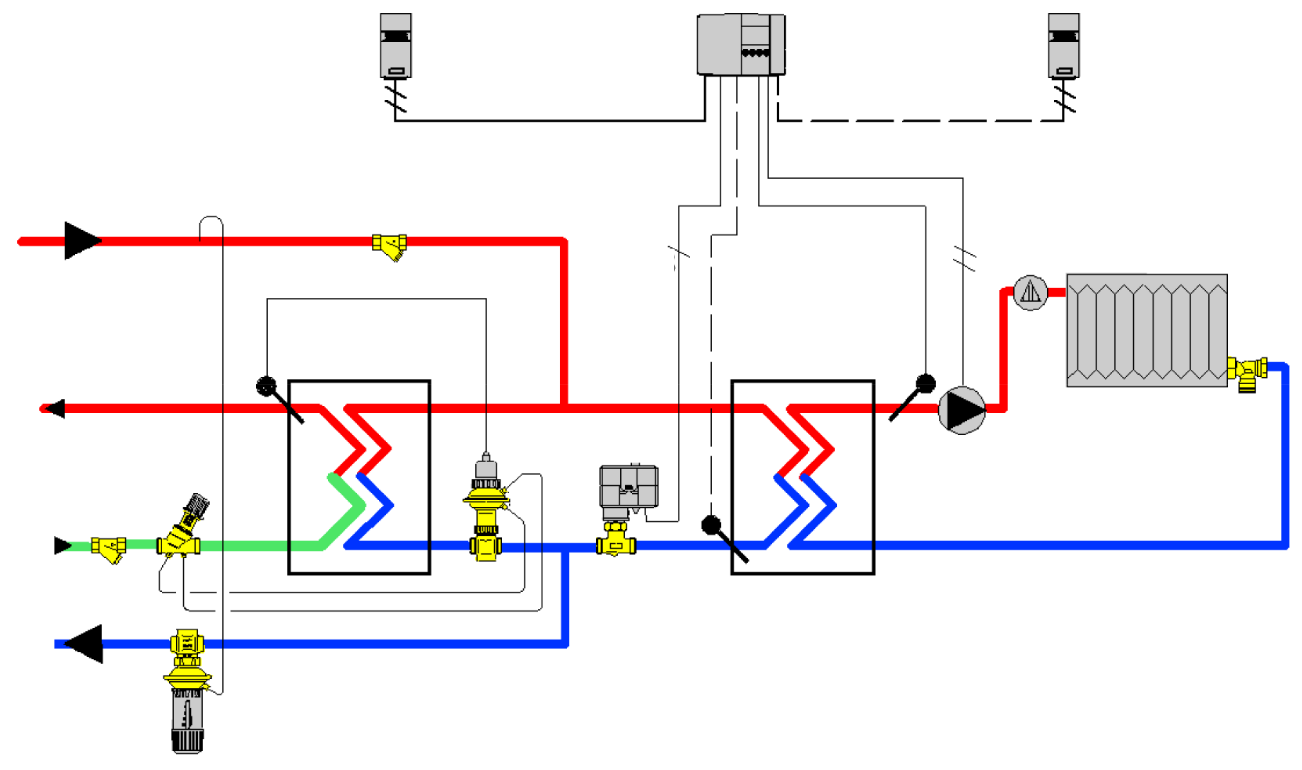
The integral approach has multiple loops in the stations, which reduces the need for additional mixing loops on the secondary side. Typically, such systems are made with two or three loops, one being responsible for instantaneous domestic hot water production, the others being used for space heating purposes. Relatively low return temperatures are achieved, especially when implementing instantaneous domestic hot water solutions without accumulators. Improved versions of integral systems also exist, such as a cooling station or a three-stage station, where water is cooled down in stages with the aim of achieving the lowest possible return temperatures.
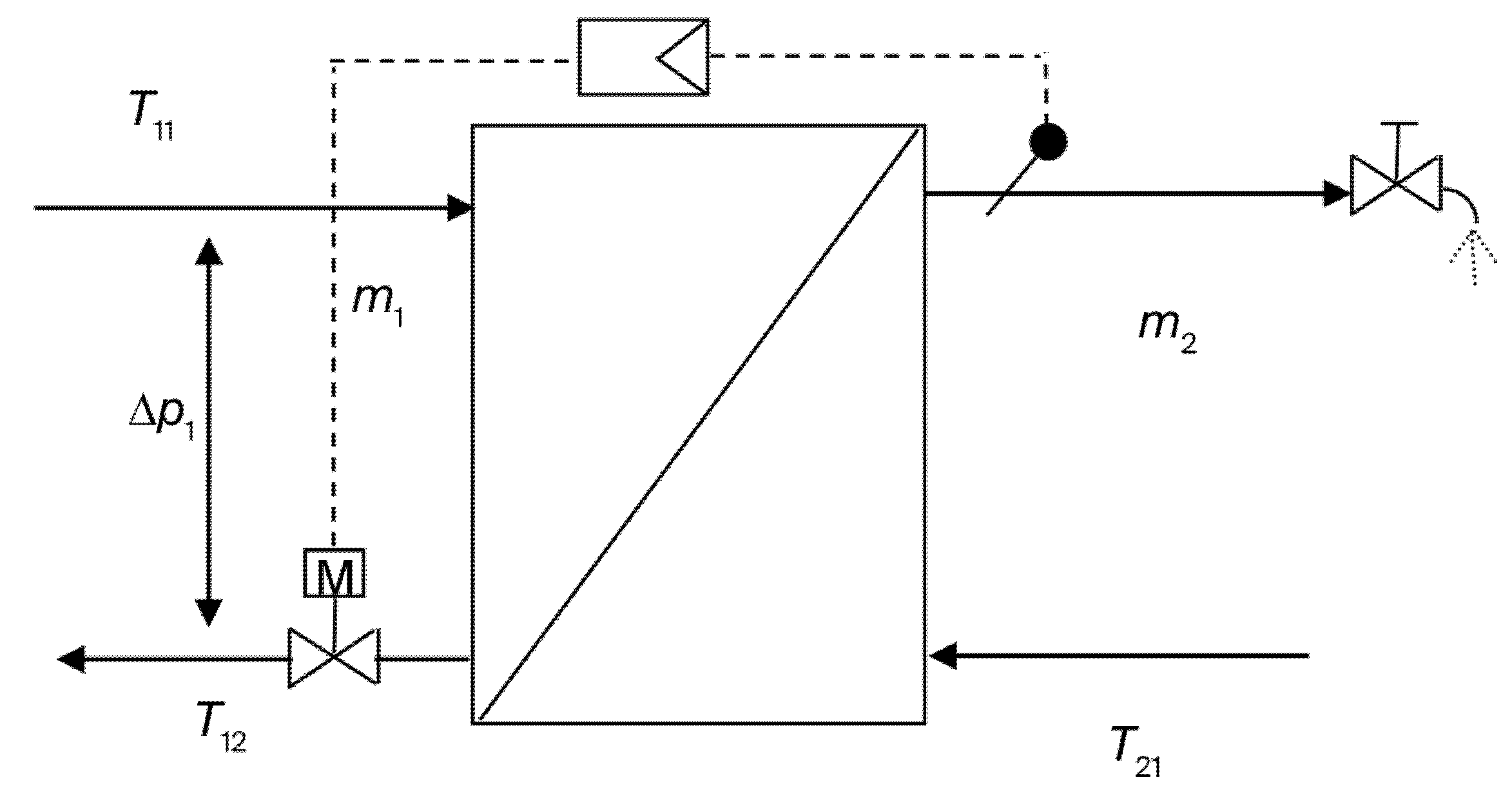
In general, all of these variations have one basic control unit, depicted in Figure 3, in common. This basic control unit consists of a heat exchanger with a temperature sensor on the secondary outlet side, which measures the controlled temperature. This signal is used in a typical linear proportional-integral controller. The controller then commands the opening of the control valve via a gear motor actuator, which then controls the flow on the primary side. The disturbance parameter is the mass flow on the secondary side of the heat exchanger. The primary inlet temperature changes very slowly with changes in the system, which follow the weather; similarly, the inlet temperature on the secondary side is almost constant in the case of domestic hot water preparation and has slow and small variations in the case of the heating system. Modification of the reference temperature is also minor, as it is either constant in the case of domestic hot water or follows weather compensation (either through a linear weather compensation curve or calculated by AI); its variations are at least ten times slower than the system response.
The integral approach is mainly used in Scandinavia or areas influenced by Scandinavian design (like parts of Poland and The Netherlands). A modular approach is mainly popular design-wise in Central and Southern Europe, but also in Eastern European countries. For cooling, a modular approach with many stations in parallel is always used in cases where bigger thermal capacities are needed. In countries where district heating is not used for domestic hot water preparation, like China, only a modular approach is used, as it makes no sense to use the integral one. Integral stations providing up to approximately 150 kW of power are usually less costly to produce; thus, flat stations without exemptions follow this design approach.

3. Influences on Gain in Temperature Control

For stable control, outlet temperature variation should not exist; thus, one can extract the following relationship between outlet temperature on the secondary side and an influencing parameter on the secondary side:
d T o c d x = C
where x can be any kind of parameter. For demonstration, one can use mass flow on the primary side for x. From the energy equation,
W = Q A
Rewritten for the case of thermal equilibrium on a heat exchanger,
m ´ h c p h ( T i h T o h ) = m ´ c c p c ( T o c T i c ) + Q l
Assuming small variation in specific heat change and a negligible dissipation of heat into the surroundings, one can, by having the inlet temperature into the heat exchanger be invariant with respect to mass flow on the primary side, get the following relation (combining (3) into (1) and executing the derivation):
d T o c d m ´ h = T h m ´ c
Further elaborating down the control chain and using for variable x
  • Valve stroke,
  • Difference in pressure over control valve,
  • Input signal to actuator,
  • Error signal to the proportional integral controller,
one can get, for linear valve characteristics and only a proportional controller (for the sake of simplification), the following relation of influencing parameters on system gain:
d T o c d e = ρ T h m ´ c p c k v s h s α v ( 1 1 R ) K p
One can see from (5) that the following parameters have an influence on system control gain:
  • Temperature drop on the primary side;
  • Inverse mass flow on the secondary side;
  • Square root of pressure differential on the primary side (on control valve);
  • Gradient of valve inherent characteristics;
  • Inverse valve range ability;
  • Amplification of proportional parameters.

4. Dynamic Response of Different Control Setups in Laboratory Environment

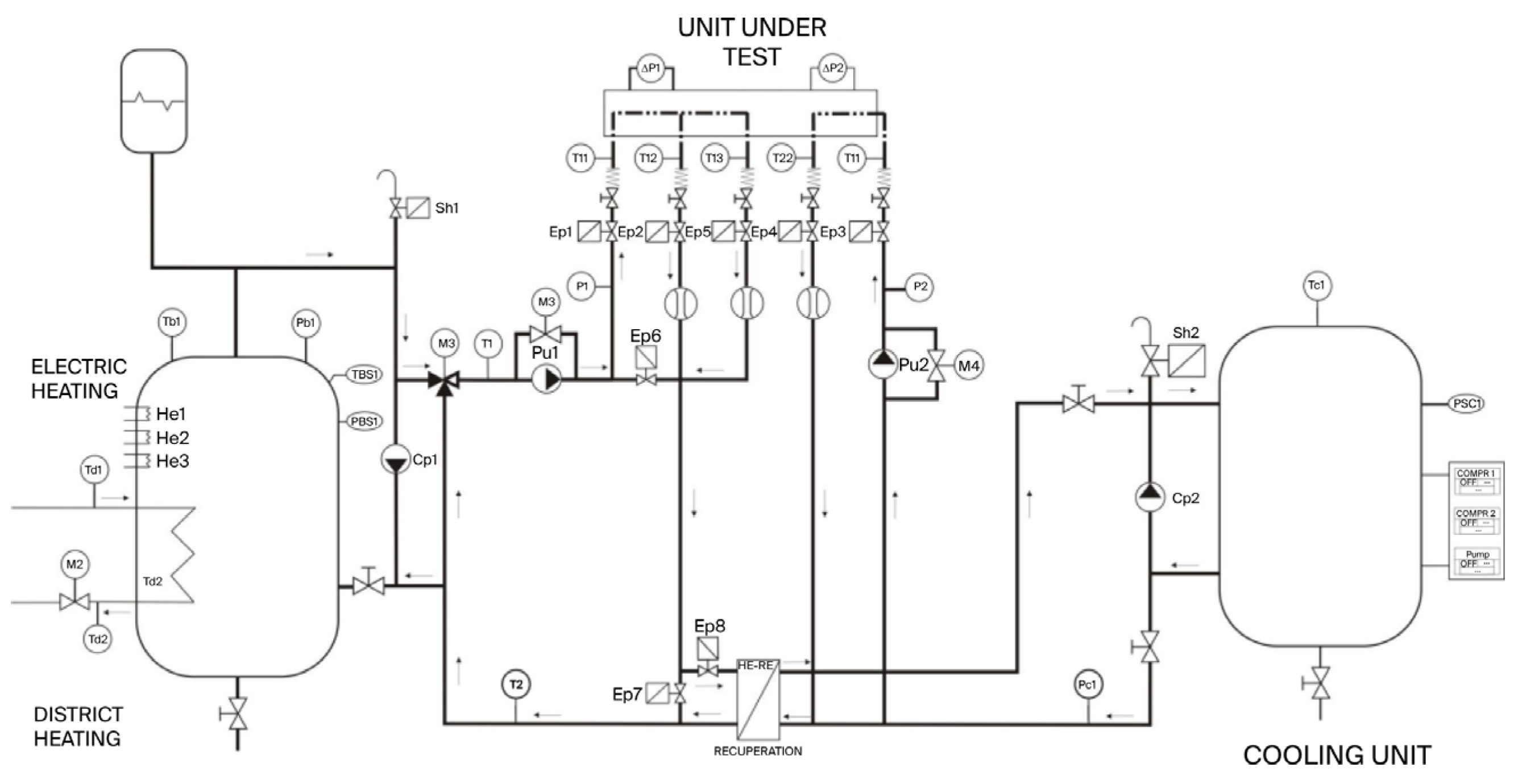
To characterise different responses from the field, experiments were performed on a basic control unit (depicted in Figure 3) in the laboratory. For this purpose, a specialised test rig was made, which was able to simulate domestic hot water preparation without accumulation in a district heating system. The test rig, depicted in Figure 4, has a heat source, whose temperature can be modulated between 50 °C and 120 °C, and a cold sink, which keeps a constant supply temperature at 10 °C or below. The test unit was placed on a test rig, where the intervention was on the mass flow on the secondary side of the basic control unit. The intervention was made in flow steps of 0 L/h, 150 L/h and 360 L/h by a pump. All flows, temperatures and pressures on the basic control unit were measured.
The measurement accuracy of the sensors was as follows: the water temperature on the primary and secondary sides of the heat exchanger: ±0.3 °C; the water mass flow on the primary and secondary sides of the heat exchanger: ±1%; and the differential pressure on the primary and secondary sides of the heat exchanger: ±3%.
The dynamic errors of the sensors are also very important for these measurements. The time constants were the following: temperature sensors, τ = 5   s , and flow sensors, τ = 1.5   s . Given the observed dynamic of the control system, the time constants are sufficient in order to not significantly influence the result of the measurements. The calculated overall measurement error is within a 7% frame.
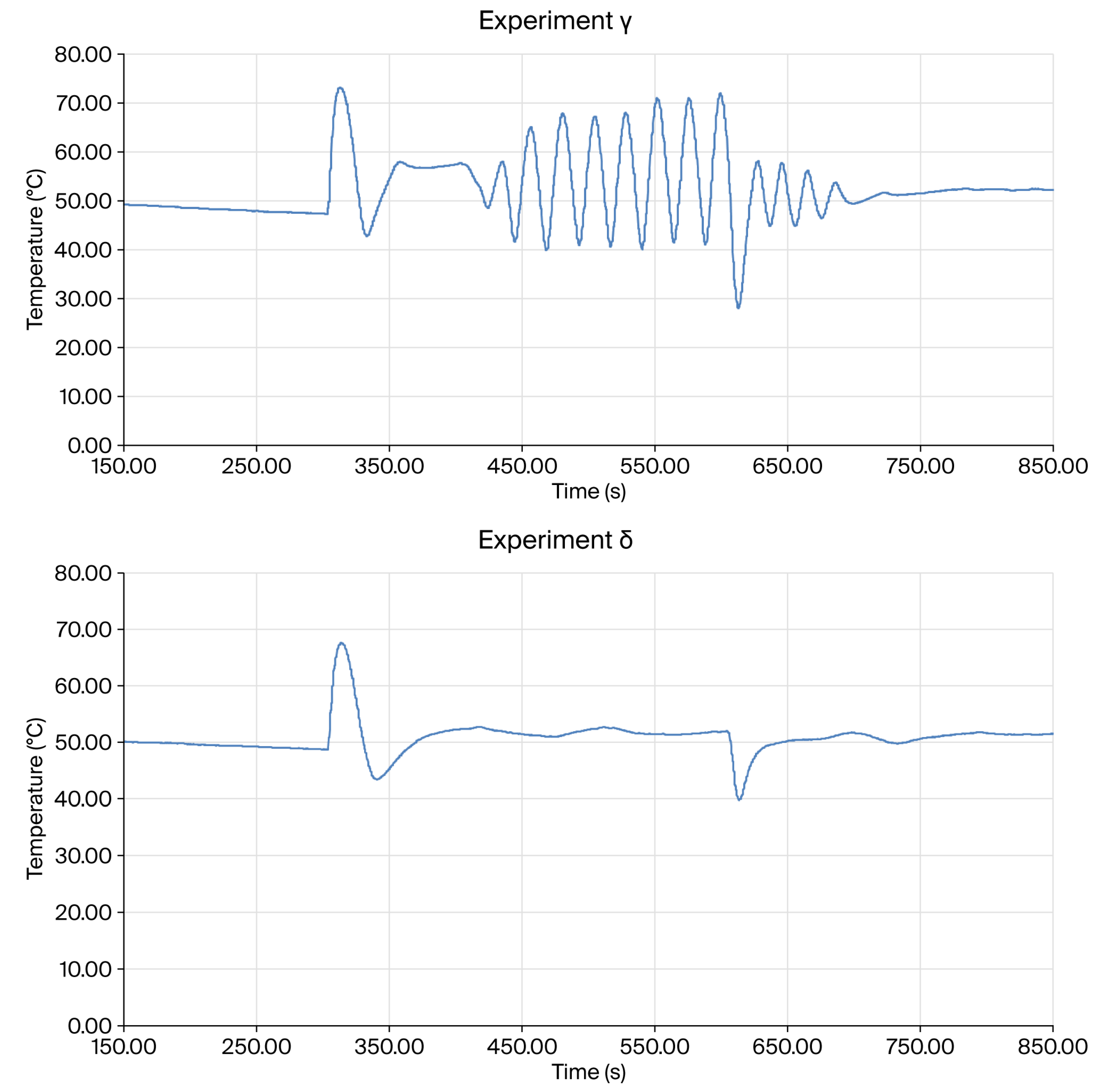
To characterise the dynamic behaviour of different station setups, we chose to conduct experiments under winter conditions, similar to those in Swedish district heating systems. Setups were created for a system with and without a differential pressure controller, for a system with high differential pressure, and for systems with pressure variations. Experiments were done with two steps on secondary mass flow, namely from 0 to 150 L/h and from 150 L/h to 360 L/h. The overview of experiments is shown in Table 1. The results are depicted in Figure 5.
One can see the explicit oscillatory behaviour of the control loops without differential pressure at low flows (γ); however, when observing the station with differential pressure control (δ), this is gone. It is also interesting to observe that the system without a differential pressure controller becomes suddenly oscillatory when the pressure rises over a certain limit.

5. Case Study—Field Measurements in Four Locations with Swedish District Heating Systems

Four places with district heating in Sweden were chosen. The places were chosen randomly. However, all four chosen stations had an integral design, depicted in Figure 2, and we observed only domestic hot water preparation (which was performed by the instantaneous method—without any accumulator), mainly due to the speed of response.
For the sake of comparison, several influential parameters on system control gain were kept constant. Those are the following:
  • Temperature on the primary side, by performing the test in winter on days with little outside temperature variation;
  • Pressure differential on the primary side, by using the integrated pressure-independent valve of cases A, C and D;
  • Gradient of valve inherent characteristics and valve range ability, by using the same type of valves.
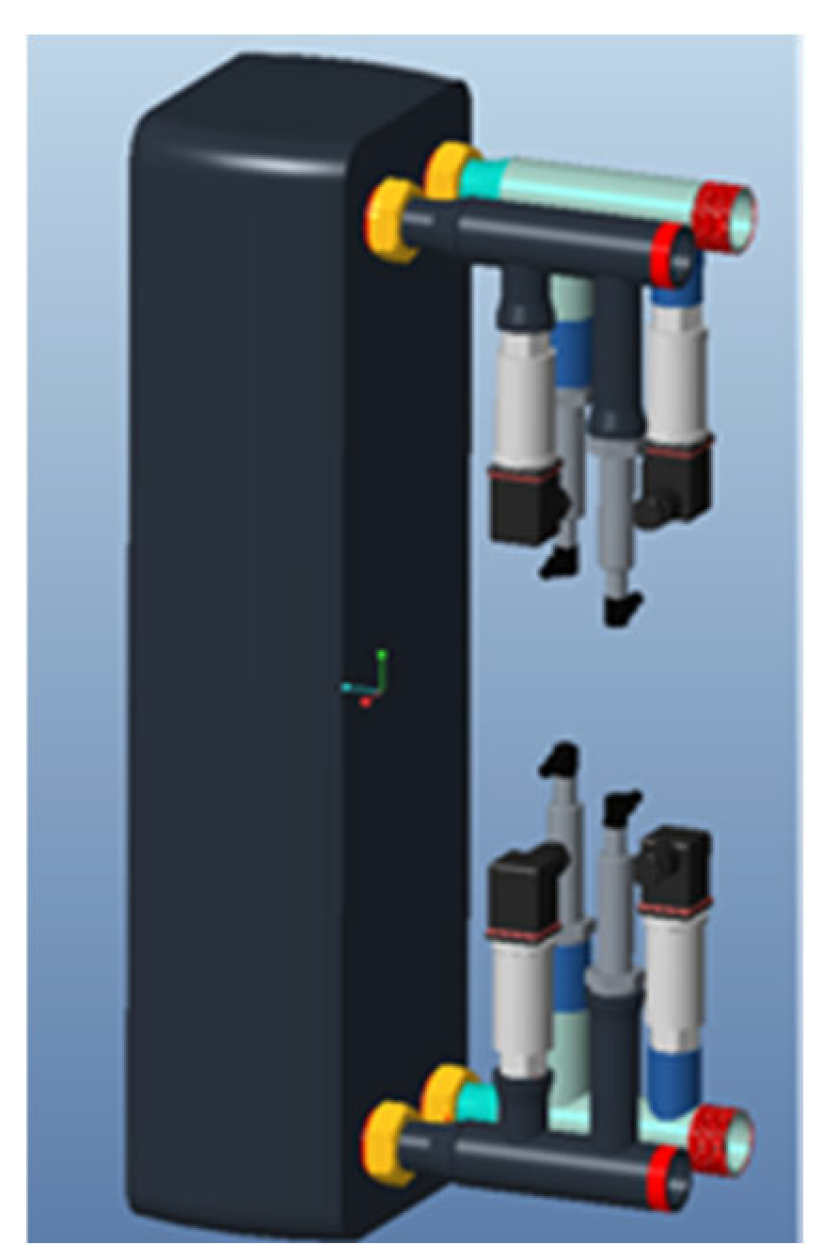
Data loggers were set on real objects measuring all parameters; the setup and installation of sensors is depicted in Figure 6. We were able to measure the following parameters:
  • Four temperatures (both inlets and outlets on the primary and secondary sides);
  • Four pressures (both inlets and outlets on the primary and secondary sides);
  • Mass flow on the primary side.
The stations are denoted with designations A, B, C and D for the sake of differentiating the setups. In case C, an AI controller was used, while the rest had proportional-integral linear controllers built in. The equipment producers were the same except for the controllers. Stations B, C and D were made by one producer and A by another. The sample, though small, is highly randomised in terms of usage, meaning there is a randomised load on mass flow on the secondary side.
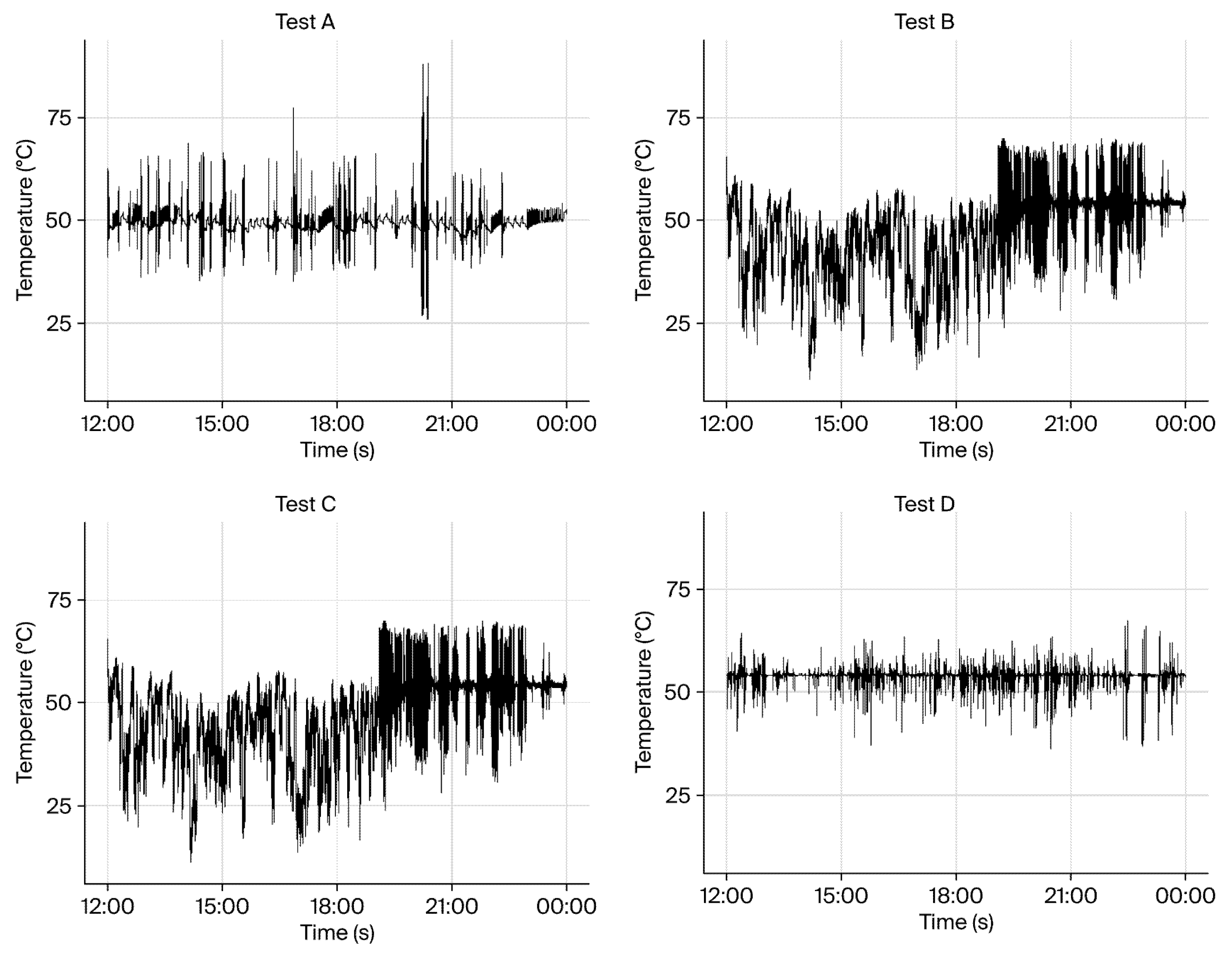
The results of typical 12 h operations are depicted in Figure 7 for sites A to D, respectively. At first glance, we observed relatively oscillatory control, with big deviations from set points. However, one must bear in mind that these are domestic hot water systems without accumulation in multifamily houses, thus demand is highly randomised.
As one can see, all four setups show oscillatory behaviour. Site C showed the smallest deviation from the set-point temperature, which was around 55 °C. This was closely followed by site D with the same set point and a larger deviation from the desired temperature setting. One can see in comparison to C that this site also had more instances of tapping at the same time than site C. Site A showed a similar amount of tapping instances compared to site C; however, the stability and absolute deviation from the set-point temperature, which in this case was 50 °C, were worse. The worst of all four cases was site B, which did not show deviations from the set-point temperature, which should have been around 55 °C, but also had a high tapping frequency and large deviations from the desired set-point temperature.

6. Comparison Between Laboratory and Field Results

To quantify the performance of substations, a measure of quality performance needs to be set. However, the processes are highly oscillatory in terms of response. Thus, one can assume that the distribution of the controlled variable might not follow a Gaussian distribution. Therefore, histograms were constructed using the following equation:
n = j = 1 k f j
For bin width, the following equation was used:
k = [ m a x T o c m i n T o c h ]
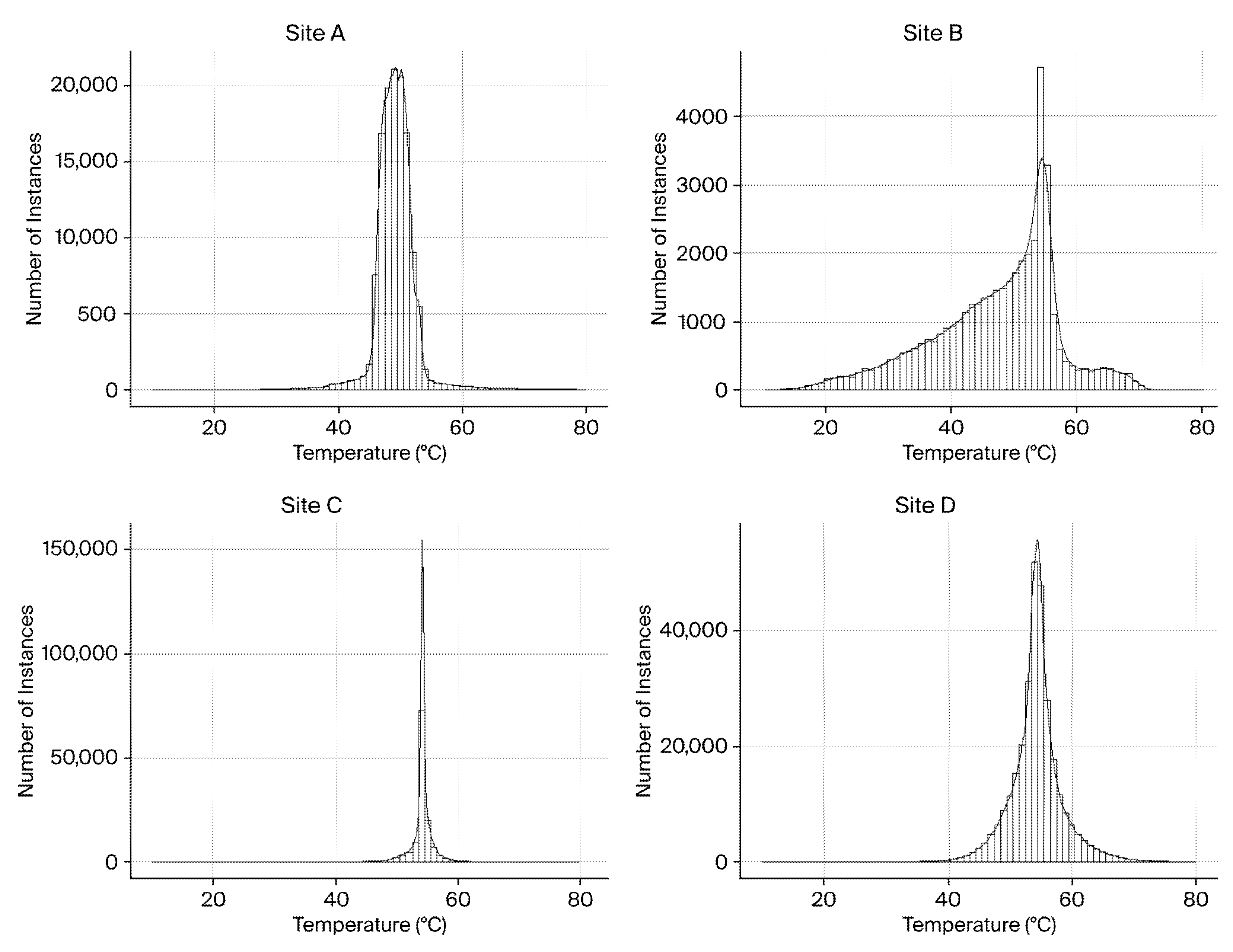
The distribution of the observed stations A to D is depicted below in Figure 8:
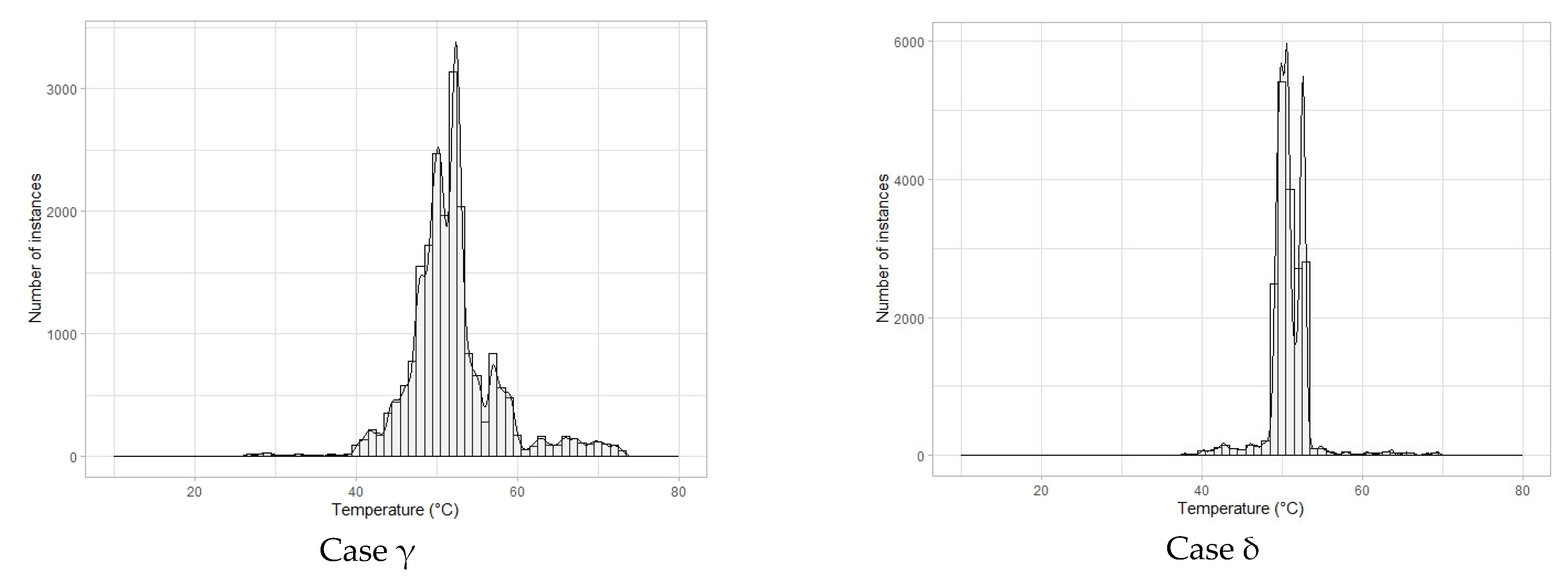
The experimental values were evaluated and histograms were drawn for these as well, depicted in Figure 9.

7. Discussions

One can compare the normal distributions of the laboratory results with results from the field. The more normal the distribution and the smaller the deviation from its mean value, the better the stability achieved. The wider the distribution is and the more valves are in the given operational spectrum, the bigger the probability is for oscillations. In cases where the distribution is symmetric but with a large standard deviation, this represents a system where more valves are in the given operation; thus, the temperature parameter is less probably on the required set point. Typically, systems without differential pressure controllers are more prone to oscillations; thus, there are more values away from the set point.
One can see that case B does not have a normal distribution, while the other three are approximately normally distributed (case A is the furthest away). The best control performance seen from the raw data is case C, where the variation in the controlled parameter is minimised.
Experiments show similar behaviour, as the ones with a differential pressure controller, cases δ, show an approximately normal distribution, while the ones without a differential pressure controller, cases γ, exhibit a distribution that is not in line with a normal distribution. The reason for experiment δ not being completely in line with a normal distribution is the relatively small sample of laboratory tests, as they cover only 5 min of operation and not several hours, as was the case with the measured results in the field.
Comparing the laboratory measurements of operation with a differential pressure controller, cases δ, shows invariance with respect to changes in pressure, meaning that cases δ have practically very similar histograms, and the histograms are also similar to the ones measured in the field cases A, C and D. In contrast, case C shows more variability and less similarity of response.
Case A shows more variability in mean value; however, it is still similar to a normal distribution, while case C shows very odd behaviour, with the curve being deformed to the side of the low-temperature distribution.
Based on this, the differential pressure controller is forcing the distribution towards a more normal distribution; however, the settings on the controllers can, through the addition of proper amplification to the control loop, have a major influence on the stability, and therefore on the distribution, of the temperatures.
Cases A, C and D on all sites were equipped with differential pressure controllers, with the same valve characteristics and rangeability and actuator speed, and were run under the same temperature conditions; the only variation was case B, without a pressure-independent valve. One can therefore conclude that case C had the best setting parameters, with case D closely following it, while in case A, the parameters were not set optimally. As for the AI-driven controller, case C, it looks like that AI algorithm was set to respond too slowly, as there were too many instances where the temperature fell below −10% from the set point, making the distribution deformed towards low temperatures.
The analysis shows that the differential pressure controller contributes positively towards the distribution of controlled parameters and pulls the variations towards the normal distribution, while using no differential pressure controller, especially in cases of high variation, deforms the distribution.
All cases in the field had several amplification factors eliminated; however, deviations can be seen. This shows the importance of the tuning of the controller to the optimal operation of district heating stations. The optimal tuning of the controllers can be an option for further investigation, especially bearing in mind the usage of nonlinear controllers (e.g., fuzzy logic) and considering multivariable control, not SISO, as it is an industry standard today.
Understanding proper substation stability gives better deviations from set points and typically brings the set point closer to the optimum. In the case of domestic hot water systems, this means lower settings. Better stability also minimises overflows and underflows, thus also improving the hydraulic stability of the system and therefore improving the energy efficiency of the station significantly. Stations built in networks with better performance also use less primary energy and therefore improve the energy efficiency of the district heating system. Last but not least, stations with closer operation to the set point also require lower flow temperatures and therefore generate better temperature differentials, which then positively influence the energy performance of the source.

8. Conclusions

This paper presents a possible method for the fast evaluation of the stability of district heating substations. By understanding stability-influencing parameters in laboratory conditions, one can compare with the field results and, from histograms, deduce whether the system is stable enough or not. This enables fast diagnostics of control performance, which is especially essential for domestic hot water systems. Fast diagnostics in the field are very much needed, as this tells installers which parameters to improve; it is either about fine-tuning on the PI controller or the error is more foundational in the hardware configuration of the thermal substation. The improvement of substation performance is essential, as return temperatures in district heating systems can then be stable and low, meaning that the source can perform with better efficiency.

Author Contributions

Conceptualization, M.B.; Methodology, M.B.; Software, M.P.; Formal analysis, M.B.; Investigation, M.B.; Resources, M.B. and M.P.; Data curation, M.B.; Writing—original draft, M.B.; Writing—review & editing, A.K.; Visualization, M.B.; Supervision, A.K.; Project administration, M.B. All authors have read and agreed to the published version of the manuscript.

Funding

The authors would like to acknowledge the Greentech project, co-funded by the European Union—NextGeneration EU—and the Slovenian Research Agency for the research core funding no. p2-0223 heat and mass transfer.

Data Availability Statement

The original contributions presented in this study are included in the article. Further inquiries can be directed to the corresponding author.

Conflicts of Interest

Authors Miha Bobič and Mojca Povalej were employed by Danfoss Trata, d.o.o. The remaining authors declare that the research was conducted in the absence of any commercial or financial relationships that could be construed as a potential conflict of interest.

Abbreviations

A work, J
c p specific heat capacity of fluid, J/(kg K)
hvalve stroke, m
k v flow coefficient, m 3 / s
K p control parameter, proportional amplification, m
C constant
m ´ mass flow rate, k g / s
t time, s
k number of instances
Q heat, J
T temperature, K; °C
T temperature difference, K; °C
k number of bins
h bin width
p pressure, Pa
Δ p pressure difference, Pa
Rvalve range ability
Wenergy, J
x variable
eerror K, °C
Greek symbols
α gradient of inherent valve characteristics, m 3 / m s
ρ density, kg/m3
τ time constant, s
Subscripts
ooutlet
iinlet
lloss
v valve
s maximum
jcounter
Superscripts
h hot fluid, the primary side
c cold fluid, the secondary side
Abbreviations
A, B, C, DCases in the field
AIArtificial intelligence
CHPCombined heat and power plant
ROMReduced-order models
SISOSingle-input single-output
PIProportional-integral control algorithm
DPDifferential control algorithm

References

  1. Lund, H.; Werner, S.; Wiltshire, R.; Svendsen, S.; Thorsen, J.E.; Hvelplund, F.; Mathiesen, B.V. 4th Generation District Heating (4GDH): Integrating Smart Thermal Grids into Future Sustainable Energy Systems. Energy 2014, 68, 1–11. [Google Scholar] [CrossRef]
  2. Mathiesen, B.V.; Bertelsen, N.; Schneider, N.C.A.; García, L.S.; Paardekooper, S.; Thellufsen, J.Z.; Djørup, S.R. Towards a Decarbonised Heating and Cooling Sector in Europe: Unlocking the Potential of Energy Efficiency and District Energy; Aalborg University: Aalborg, Denmark, 2019. [Google Scholar]
  3. Bajsić, I.; Bobič, M. Modelling and Experimental Validation of a Hot Water Supply Substation. Energy Build. 2006, 38, 327–333. [Google Scholar] [CrossRef]
  4. Cai, W. Nonlinear Dynamics of Thermal-Hydraulic Networks. Ph.D. Thesis, University of Notre Dame, Notre Dame, IN, USA, 2006. [Google Scholar]
  5. Cai, W.; Franco, W.; Arimany, G.; Sen, M.; Yang, K.T.; McClain, R.L. Interaction Between Secondaries in a Thermal-Hydraulic Network. J. Dyn. Syst. Meas. Control 2006, 128, 820–828. [Google Scholar] [CrossRef]
  6. Bobič, M. Razvoj Merilnega Sistema Za Preizkušanje Sklopljenega Krmilnega Sistema Tlačno-Temperaturne Regulacije. Ph.D. Thesis, University of Ljubljana, Faculty of Mechanical Engineering, Ljubljana, Slovenia, 2021. [Google Scholar]
  7. Ivančić, A.; Romaní, J.; Salom, J.; Cambronero, M.V. Performance Assessment of District Energy Systems with Common Elements for Heating and Cooling. Energies 2021, 14, 2334. [Google Scholar] [CrossRef]
  8. Lazarević, S.L.; Čongradac, V.D.; Andjelković, A.S.; Kljajić, M.V.; Kanović, Ž.S. District Heating Substation Elements Modeling for the Development of the Real-Time Model. Therm. Sci. 2019, 23, 2061–2070. [Google Scholar] [CrossRef]
  9. Vandermeulen, A.; Van Oevelen, T.; van der Heijde, B.; Helsen, L. A Simulation-Based Evaluation of Substation Models for Network Flexibility Characterisation in District Heating Networks. Energy 2020, 201, 117650. [Google Scholar] [CrossRef]
  10. Brum, M.; Erickson, P.; Jenkins, B.; Kornbluth, K. A Comparative Study of District and Individual Energy Systems Providing Electrical-Based Heating, Cooling, and Domestic Hot Water to a Low-Energy Use Residential Community. Energy Build. 2015, 92, 306–312. [Google Scholar] [CrossRef]
  11. Lazarević, S.; Čongradac, V.; Anđelković, A.S.; Čapko, D.; Kanović, Ž. A Novel Approach to Real-Time Modelling of the District Heating Substation System Using LabVIEW. J. Clean. Prod. 2019, 217, 360–370. [Google Scholar] [CrossRef]
  12. Kiss, G.R.; Horváth, M.; Szánthó, Z. MATLAB Simulink-Based Modelling and Performance Analysis of District Heating Substations for Renewable Energy Integration. Energies 2025, 18, 2370. [Google Scholar] [CrossRef]
  13. Rupnik, K.; Kutin, J.; Bajsić, I. Identification and Prediction of the Dynamic Properties of Resistance Temperature Sensors. Sens. Actuators A Phys. 2013, 197, 69–75. [Google Scholar] [CrossRef]
  14. Bajsič, I.; Bobič, M. Time Response of a Sheathed Temperature Measurement Probe. Instrum. Sci. Technol. 2008, 36, 543–551. [Google Scholar] [CrossRef]
  15. Bobič, M.; Gjerek, B.; Golobič, I.; Bajsić, I. Dynamic Behaviour of a Plate Heat Exchanger: Influence of Temperature Disturbances and Flow Configurations. Int. J. Heat Mass Transf. 2020, 163, 120439. [Google Scholar] [CrossRef]
  16. Genić, S.B.; Jaćimović, B.M.; Mandić, D.; Petrović, D. Experimental Determination of Fouling Factor on Plate Heat Exchangers in District Heating System. Energy Build. 2012, 50, 204–211. [Google Scholar] [CrossRef]
  17. Arendt, K.; Ionesi, A.; Jradi, M.; Singh, A.K.; Kjærgaard, M.B.; Veje, C.; Jørgensen, B.N. A Building Model Framework for a Genetic Algorithm Multi-Objective Model Predictive Control. In Proceedings of the 12th REHVA World Congress CLIMA 2016, Aalborg, Denmark, 22–25 May 2016; p. 186. [Google Scholar]
  18. Ionesi, A.; Jouffroy, J. On-Line Parameter Estimation of Reduced-Order Models for Buildings Energy Dynamics Using the Modulating Function Method. In Proceedings of the Winter Simulation Conference 2018, Gothenburg, Sweden, 9–12 December 2018; pp. 503–514. [Google Scholar] [CrossRef]
  19. Wehkamp, S.; Schmeling, L.; Vorspel, L.; Roelcke, F.; Windmeier, K.L. District Energy Systems: Challenges and New Tools for Planning and Evaluation. Energies 2020, 13, 2967. [Google Scholar] [CrossRef]
  20. Neumann, H.M.; Hainoun, A.; Stollnberger, R.; Etminan, G.; Schaffler, V. Analysis and Evaluation of the Feasibility of Positive Energy Districts in Selected Urban Typologies in Vienna Using a Bottom-Up District Energy Modelling Approach. Energies 2021, 14, 4449. [Google Scholar] [CrossRef]
  21. Kozlowska, A.; Guarino, F.; Volpe, R.; Bisello, A.; Gabaldòn, A.; Rezaei, A.; Albert-Seifried, V.; Alpagut, B.; Vandevyvere, H.; Reda, F.; et al. Positive Energy Districts: Fundamentals, Assessment Methodologies, Modeling and Research Gaps. Energies 2024, 17, 4425. [Google Scholar] [CrossRef]
  22. Bruck, A.; Díaz Ruano, S.; Auer, H. A Critical Perspective on Positive Energy Districts in Climatically Favoured Regions: An Open-Source Modelling Approach Disclosing Implications and Possibilities. Energies 2021, 14, 4864. [Google Scholar] [CrossRef]
  23. Civiero, P.; Turci, G.; Alpagut, B.; Kuzmic, M.; Soutullo, S.; Sánchez, M.N.; Seco, O.; Bossi, S.; Haase, M.; Massa, G.; et al. Operational Insights and Future Potential of the Database for Positive Energy Districts. Energies 2024, 17, 899. [Google Scholar] [CrossRef]
  24. Tran, T.T.D.; Smith, A.D. Stochastic Optimization for Integration of Renewable Energy Technologies in District Energy Systems for Cost-Effective Use. Energies 2019, 12, 533. [Google Scholar] [CrossRef]
  25. Sarbu, I.; Mirza, M.; Muntean, D. Integration of Renewable Energy Sources into Low-Temperature District Heating Systems: A Review. Energies 2022, 15, 6523. [Google Scholar] [CrossRef]
  26. Khlebnikova, E.; Pothof, I.; van der Zwan, S.; Loverdou, L. On the design of 5GDHC substation control systems. Int. J. Sustain. Energy 2024, 43, 1–16. [Google Scholar] [CrossRef]
  27. Chicherin, S. Conversion to Fourth-Generation District Heating (4GDH): Heat Accumulation Within Building Envelopes. Energies 2025, 18, 2307. [Google Scholar] [CrossRef]
  28. Żurawski, M.; Mika, Ł.; Kuś, J. A Review of Existing Hybrid District Heating Substations and Their Application Potential. Energies 2025, 18, 5093. [Google Scholar] [CrossRef]
  29. Su, J.; Zhang, J.; Li, G.; Zhang, W.; Yu, H.; Kang, L.; Zhang, L.; Zhang, X.; Wang, J. Research on Dynamic Simulation and Optimization of Building Energy Consumption of Substations in Cold Regions Based on DeST: A Case Study of an Indoor Substation in Shijiazhuang. Buildings 2025, 15, 3706. [Google Scholar] [CrossRef]
  30. Friedrich, P.; Kuroptev, K.; Huynh, T.; Niessen, S. Stability Analysis and Mitigation of Thermo-Hydraulic Oscillations in Multi-Supplier District Heating Systems. Energies 2025, 18, 1126. [Google Scholar] [CrossRef]
Figure 1. Modular substation.
Energies 19 00101 g001
Figure 2. Integral substation.
Energies 19 00101 g002
Figure 3. Basic control unit.
Energies 19 00101 g003
Figure 4. Test rig scheme.
Energies 19 00101 g004
Figure 5. Experiment γ and δ.
Energies 19 00101 g005
Figure 6. Configuration of the sensor placement.
Energies 19 00101 g006
Figure 7. Results from sites A, B, C and D.
Energies 19 00101 g007
Figure 8. Histogram of cases A, B, C and D.
Energies 19 00101 g008
Figure 9. Histogram of cases γ and δ.
Energies 19 00101 g009
Table 1. Overview of experiments.
Test NameDifferential Pressure BarFlow Temperature °CWith or Without Differential Pressure Controller
γfrom 0.35 to 6100without
δfrom 0.35 to 6100with
Disclaimer/Publisher’s Note: The statements, opinions and data contained in all publications are solely those of the individual author(s) and contributor(s) and not of MDPI and/or the editor(s). MDPI and/or the editor(s) disclaim responsibility for any injury to people or property resulting from any ideas, methods, instructions or products referred to in the content.