Article

Combustion Characteristics of Liquid Ammonia Direct Injection Under High-Pressure Conditions Using DNS

by
Ziwei Huang
,
Haiou Wang
*,
Qian Meng
,
Kun Luo
and
Jianren Fan
State Key Laboratory of Clean Energy Utilization, Zhejiang University, Hangzhou 310027, China
*
Author to whom correspondence should be addressed.
Energies 2025, 18(9), 2228; https://doi.org/10.3390/en18092228
Submission received: 9 March 2025 / Revised: 17 April 2025 / Accepted: 23 April 2025 / Published: 27 April 2025
(This article belongs to the Special Issue Experiments and Simulations of Combustion Process II)

Abstract

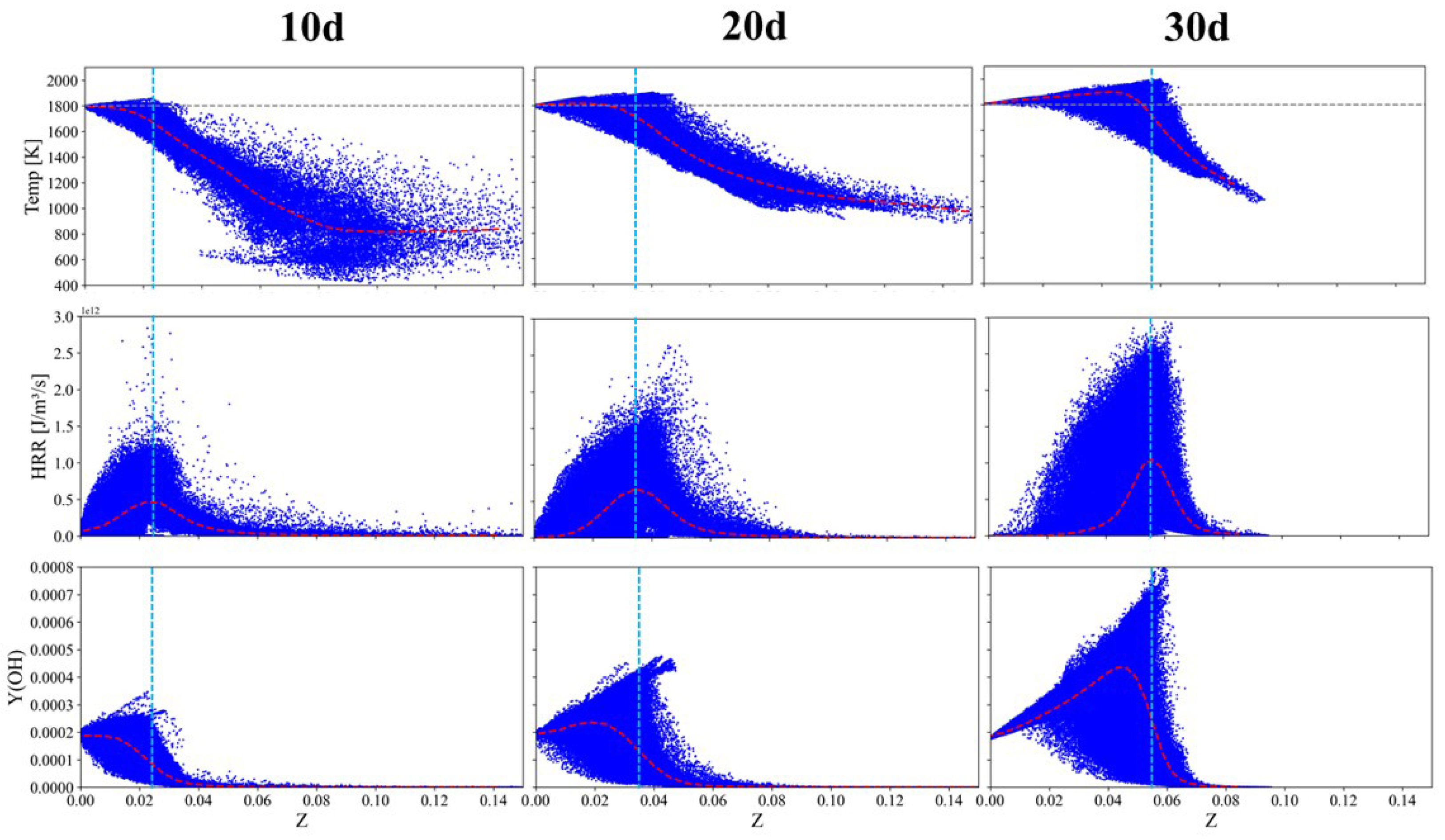
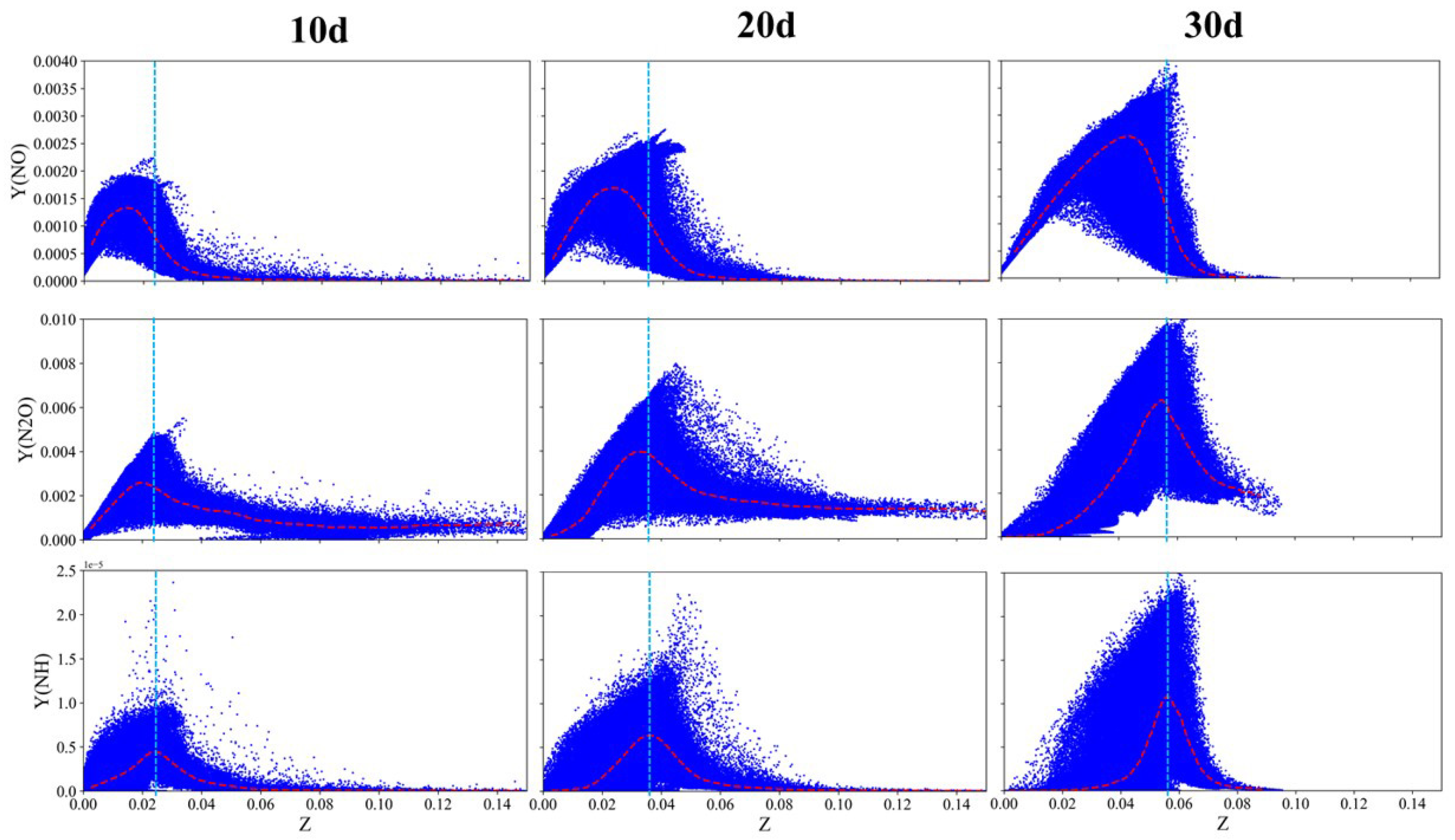
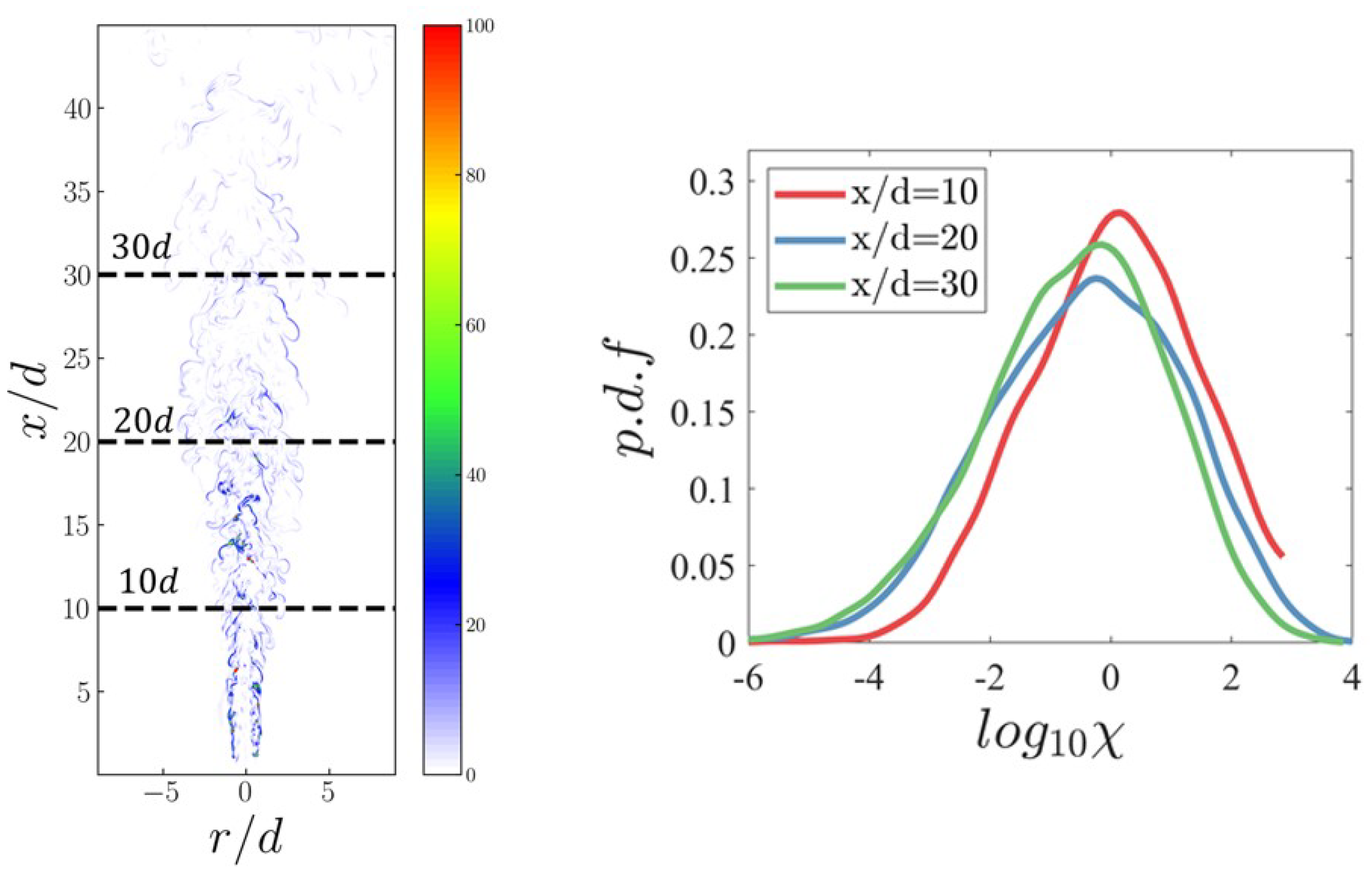
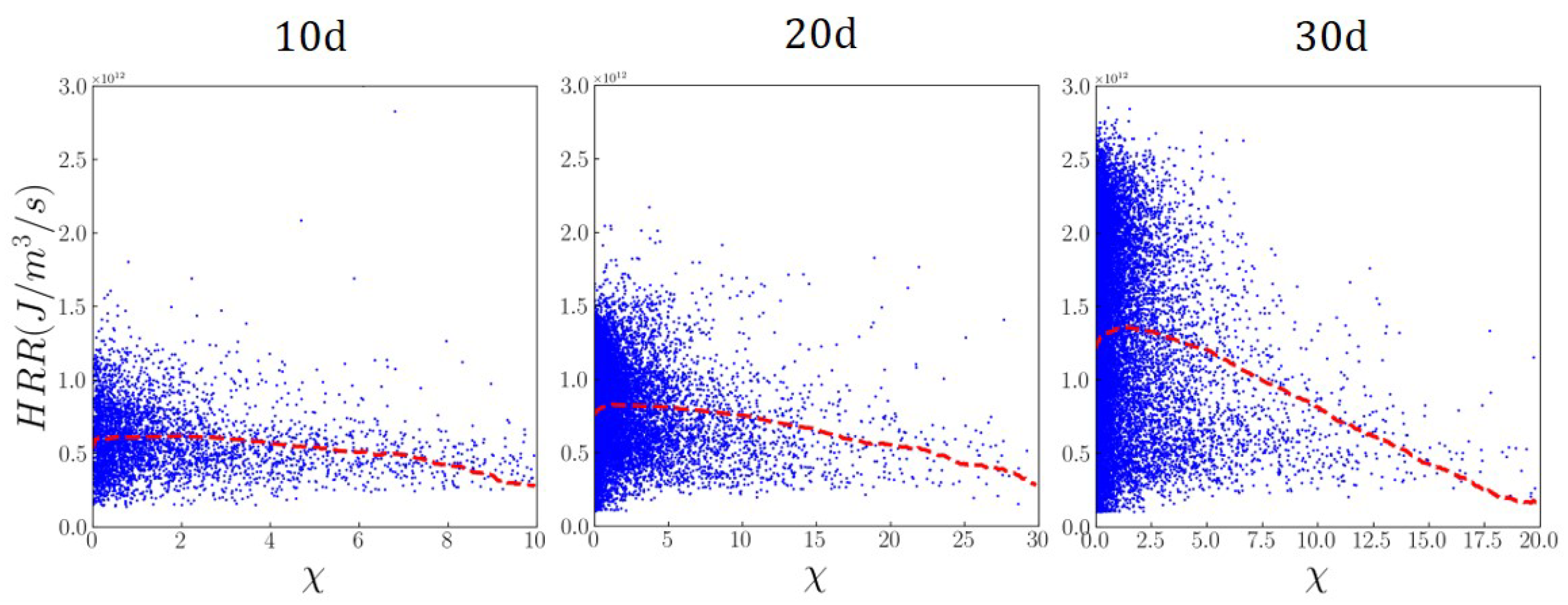
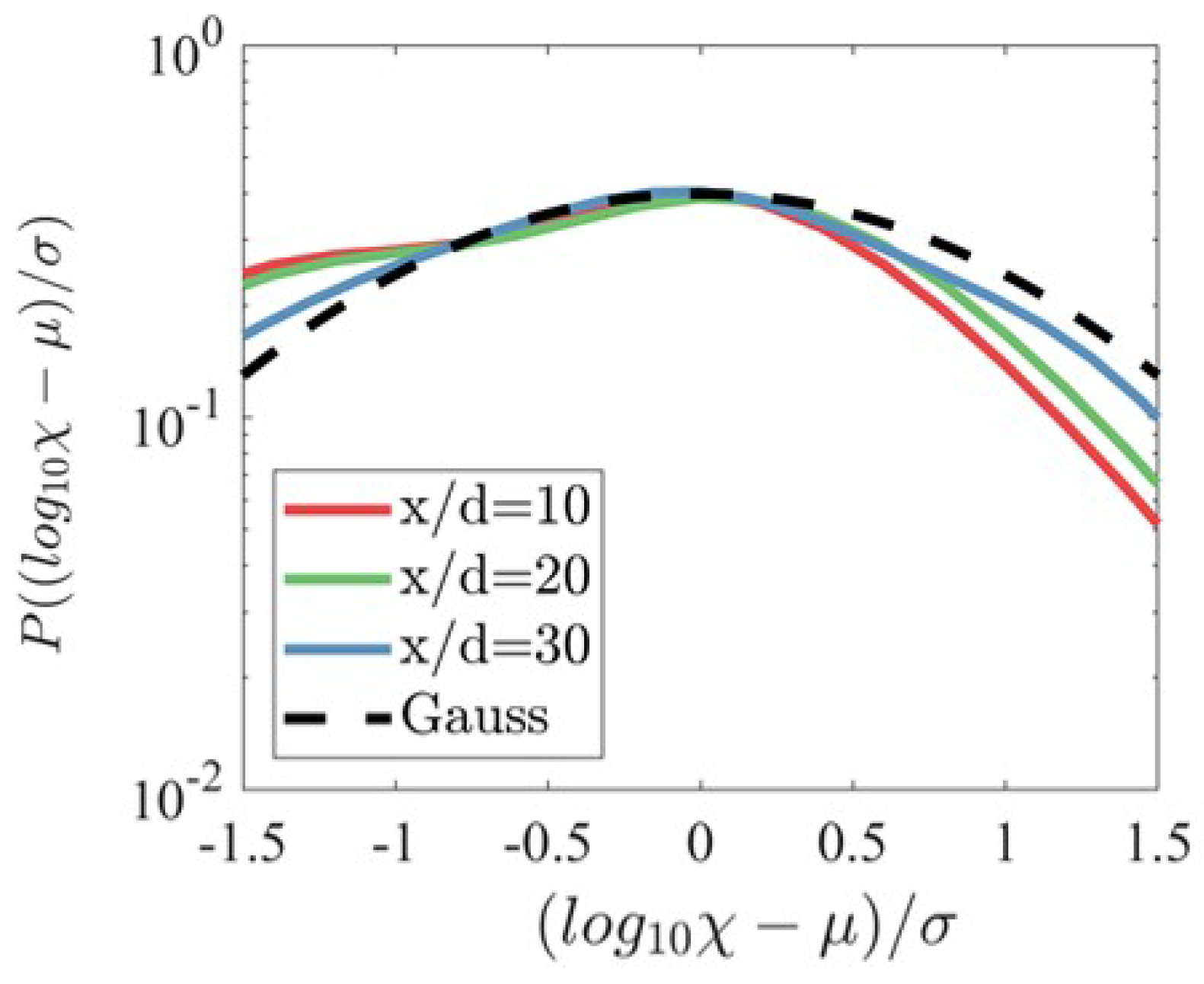
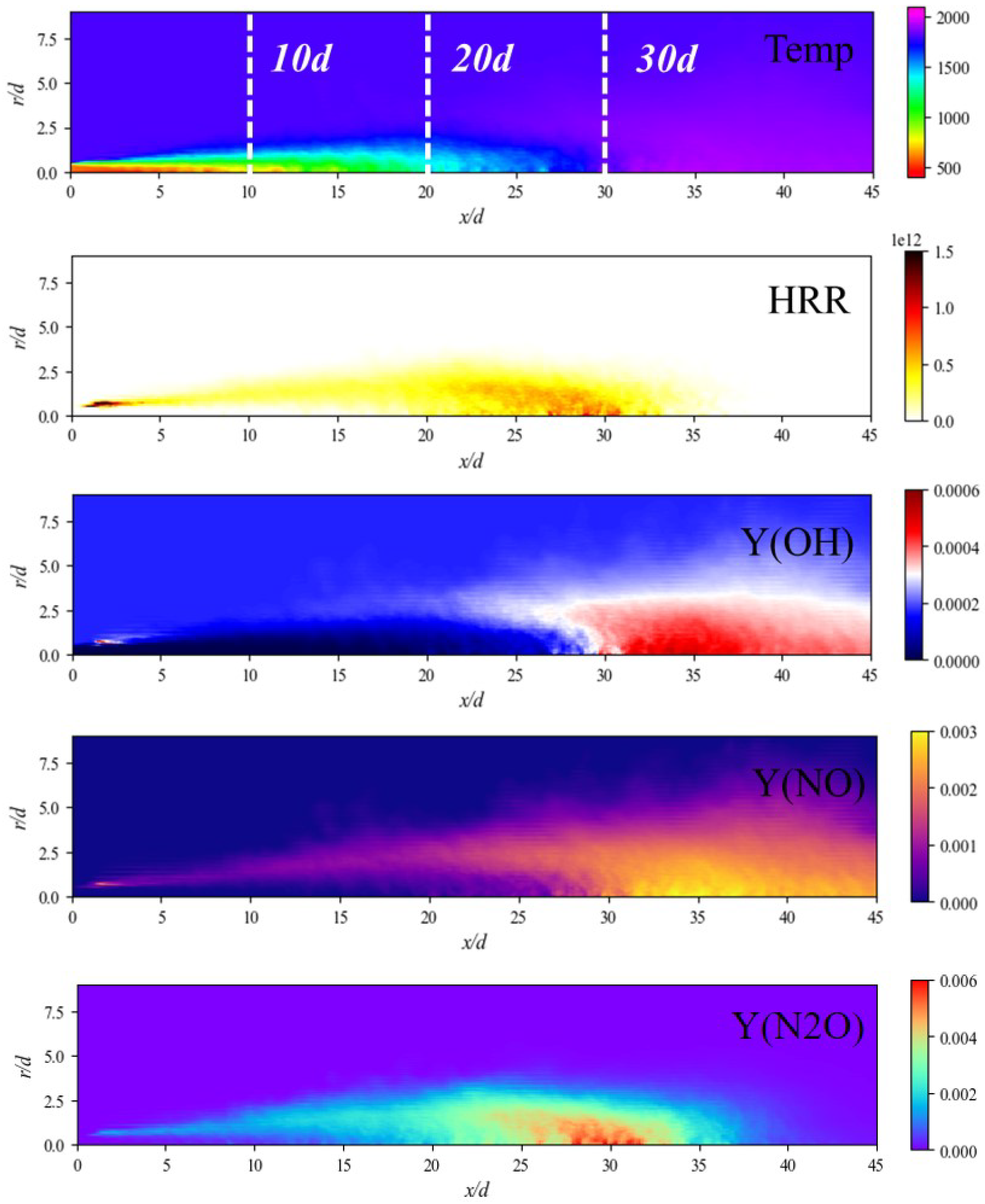
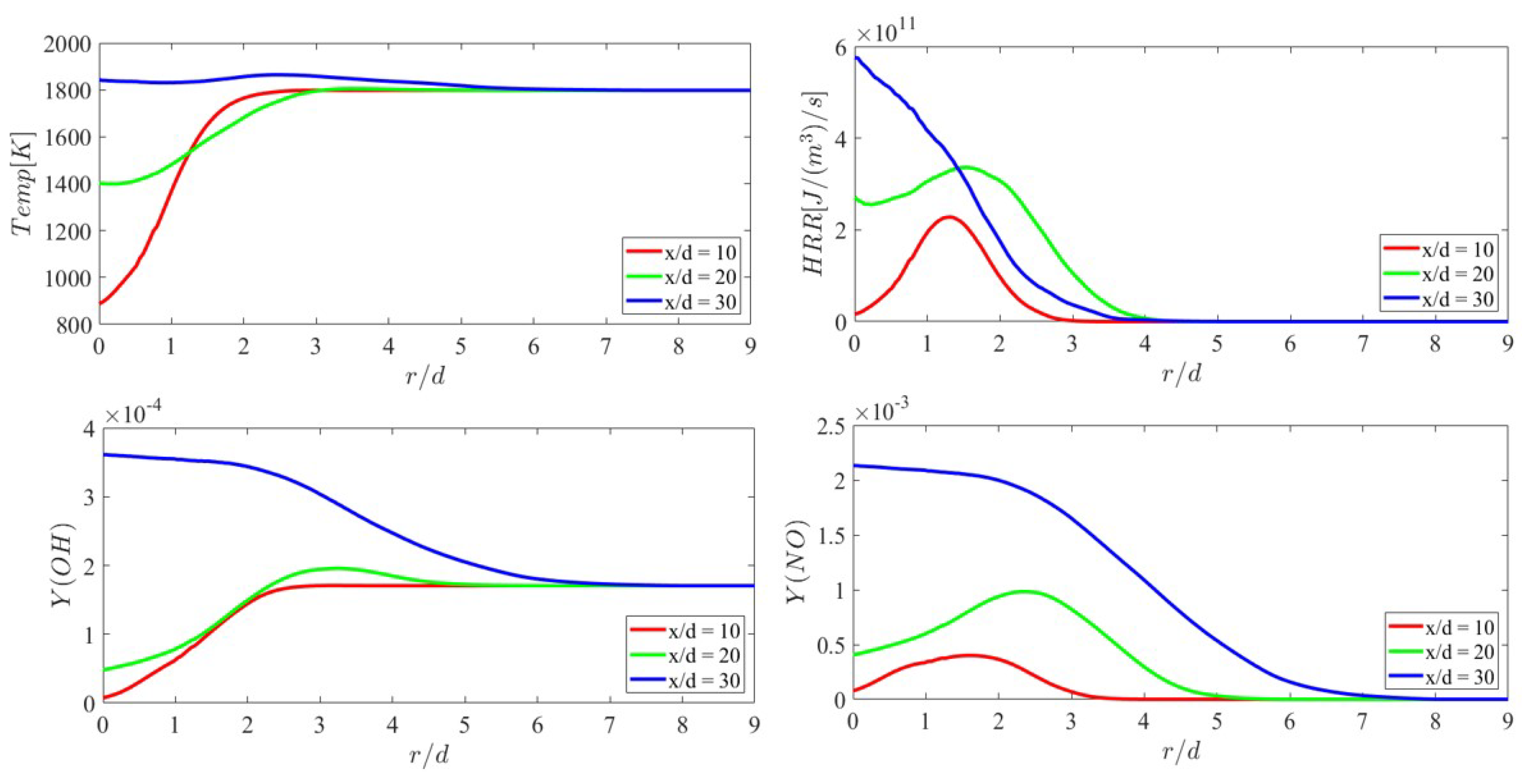
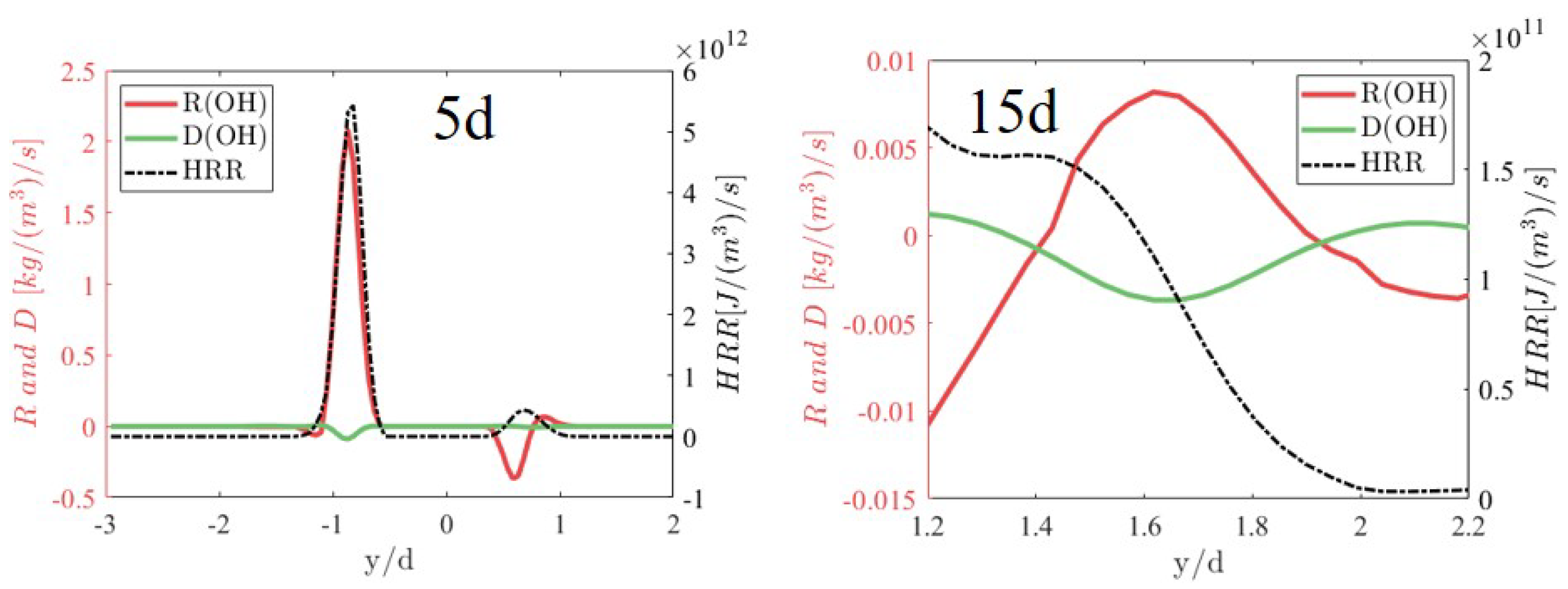
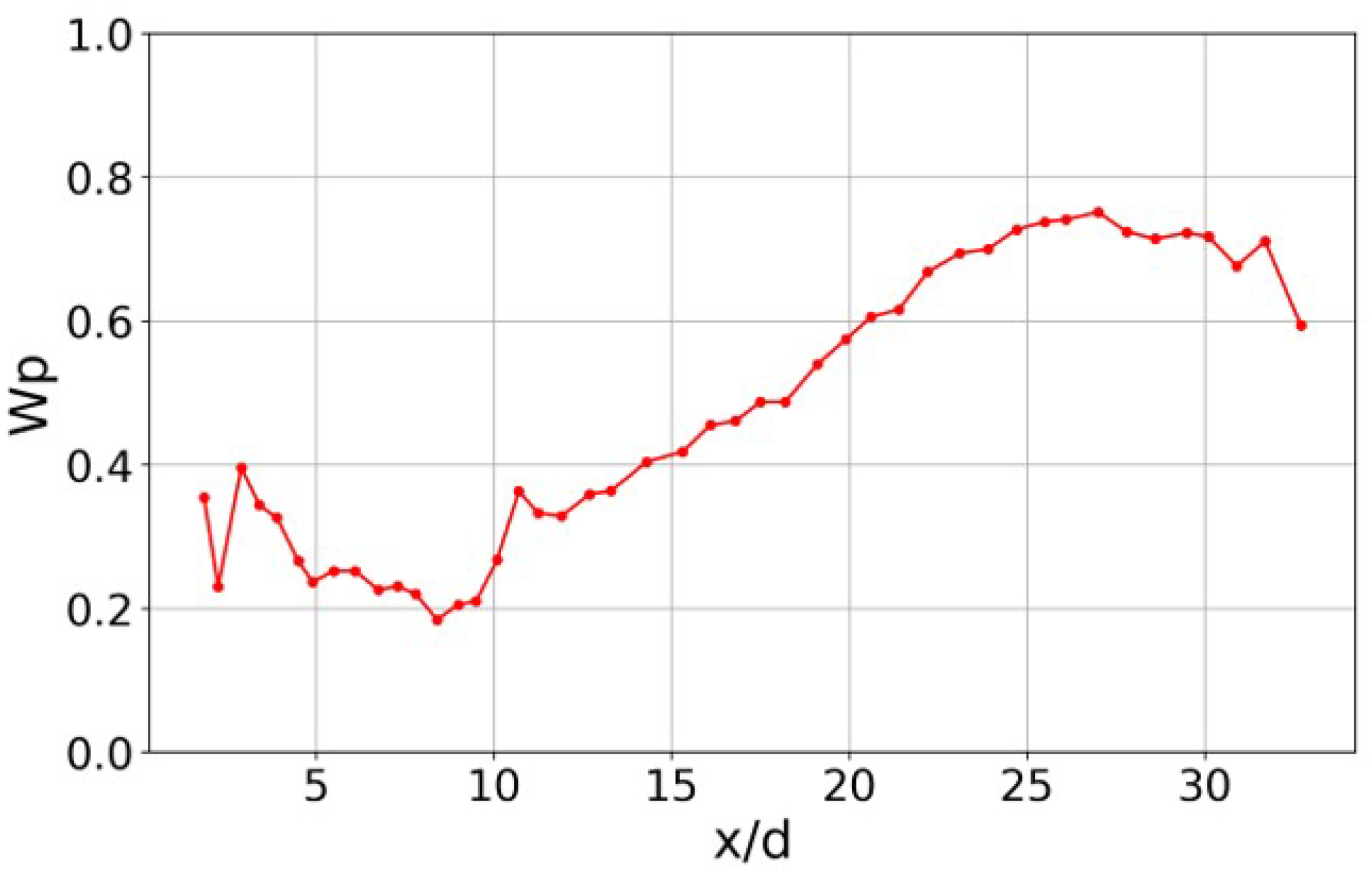
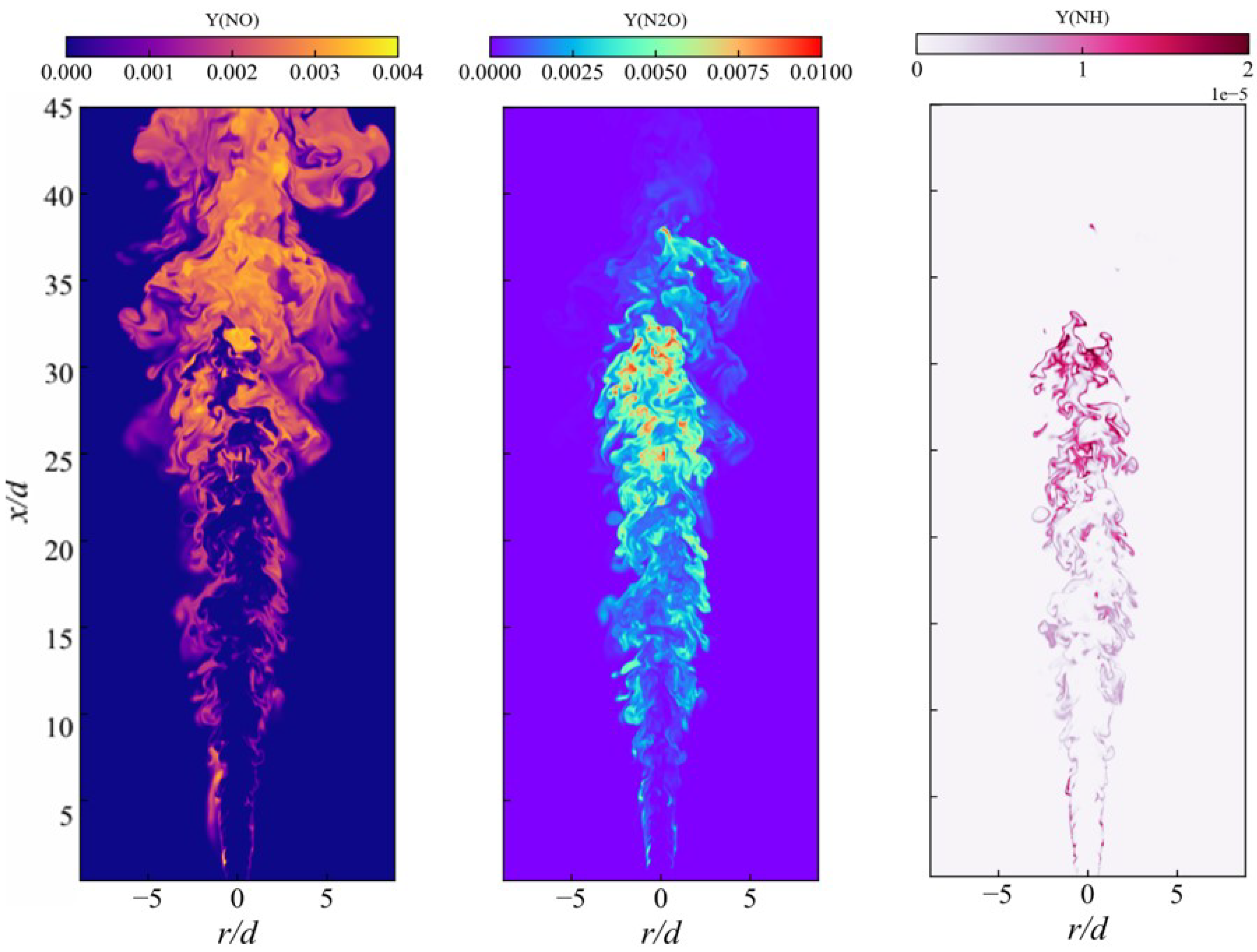
As a zero-carbon fuel, ammonia can be directly employed in its liquid form. However, its unique physical and chemical properties pose challenges to its application in engines. The direct injection of liquid ammonia is considered a promising technique for internal combustion engines, yet its combustion behavior is still not well understood. In this work, the combustion characteristics of liquid ammonia direct injection under high-pressure conditions were investigated using direct numerical simulation (DNS) in a Eulerian–Lagrangian framework. The ammonia spray was injected via a circular nozzle and underwent combustion under high-temperature and high-pressure conditions, resulting in complex turbulent spray combustion. It was found that the peaks of mass fraction of important species, heat release rate, and gaseous temperature increase with increasing axial distance, and the peaks shifted to richer mixtures. The distribution of scalar dissipation rate at various locations is nearly log-normal. The budget analysis of species transport equations shows that the reaction term is much larger than the diffusion term, suggesting that auto-ignition plays a predominant role in turbulent ammonia spray flame stabilization. It can be observed that both non-premixed and premixed combustion modes co-exist in the ammonia spray combustion. Moreover, the contribution of premixed combustion becomes more significant as the axial distance increases.
Keywords: direct numerical simulation; liquid ammonia; flame structure; combustion modes direct numerical simulation; liquid ammonia; flame structure; combustion modes