Article

Effect of Dynamic Injection Velocity and Mixed Wettability on Two-Phase Flow Behavior in Porous Media: A Numerical Study


1
State Key Laboratory of Multiphase Flow in Power Engineering, Xi’an Jiaotong University, Xi’an 710049, China
2
College of Civil Engineering, Xi’an Shiyou University, Xi’an 710065, China
3
School of Engineering and Technology, China University of Geosciences (Beijing), Beijing 100083, China
*
Author to whom correspondence should be addressed.
Energies 2025, 18(4), 879; https://doi.org/10.3390/en18040879
Submission received: 17 December 2024 / Revised: 23 January 2025 / Accepted: 6 February 2025 / Published: 12 February 2025

Abstract

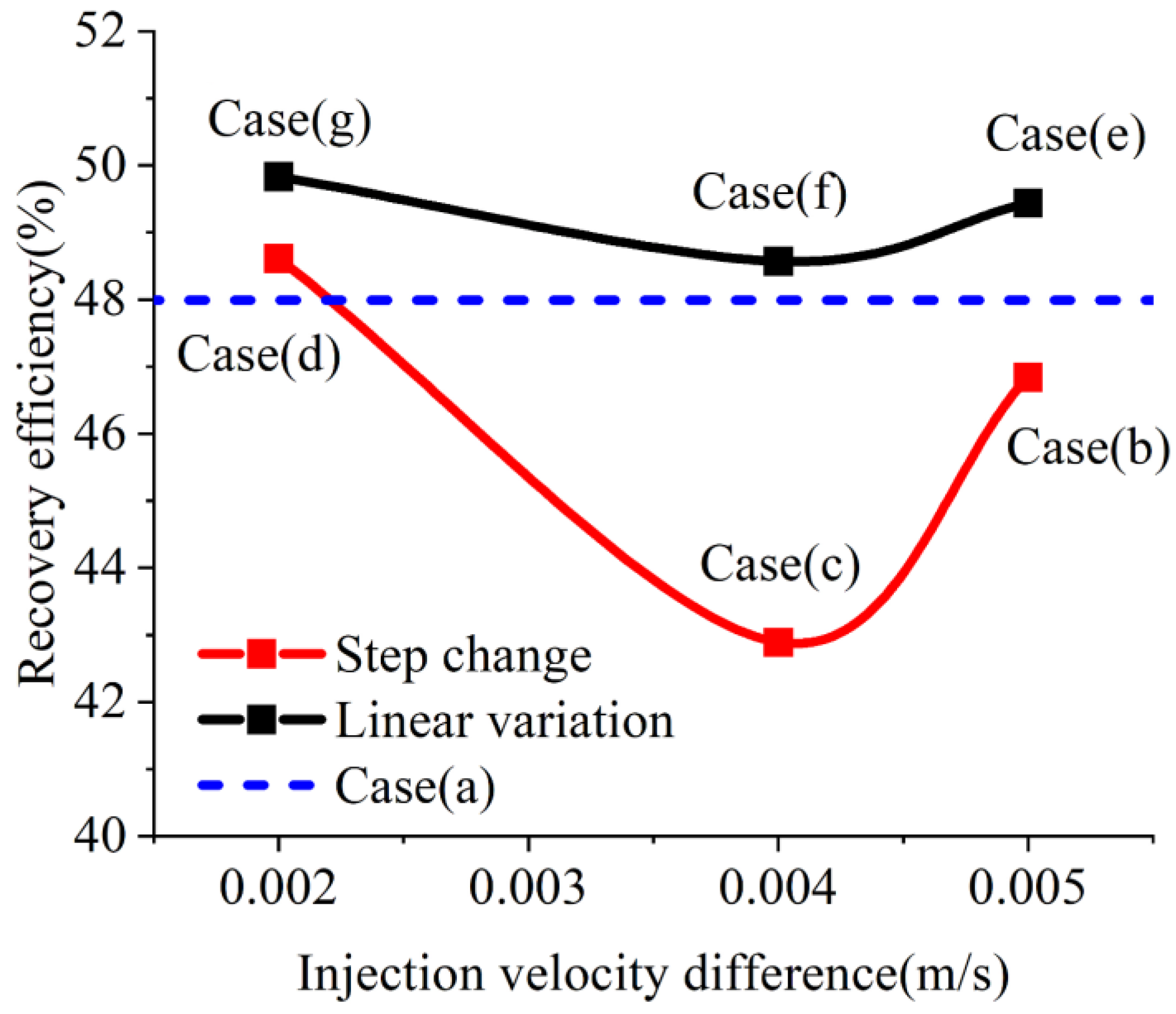
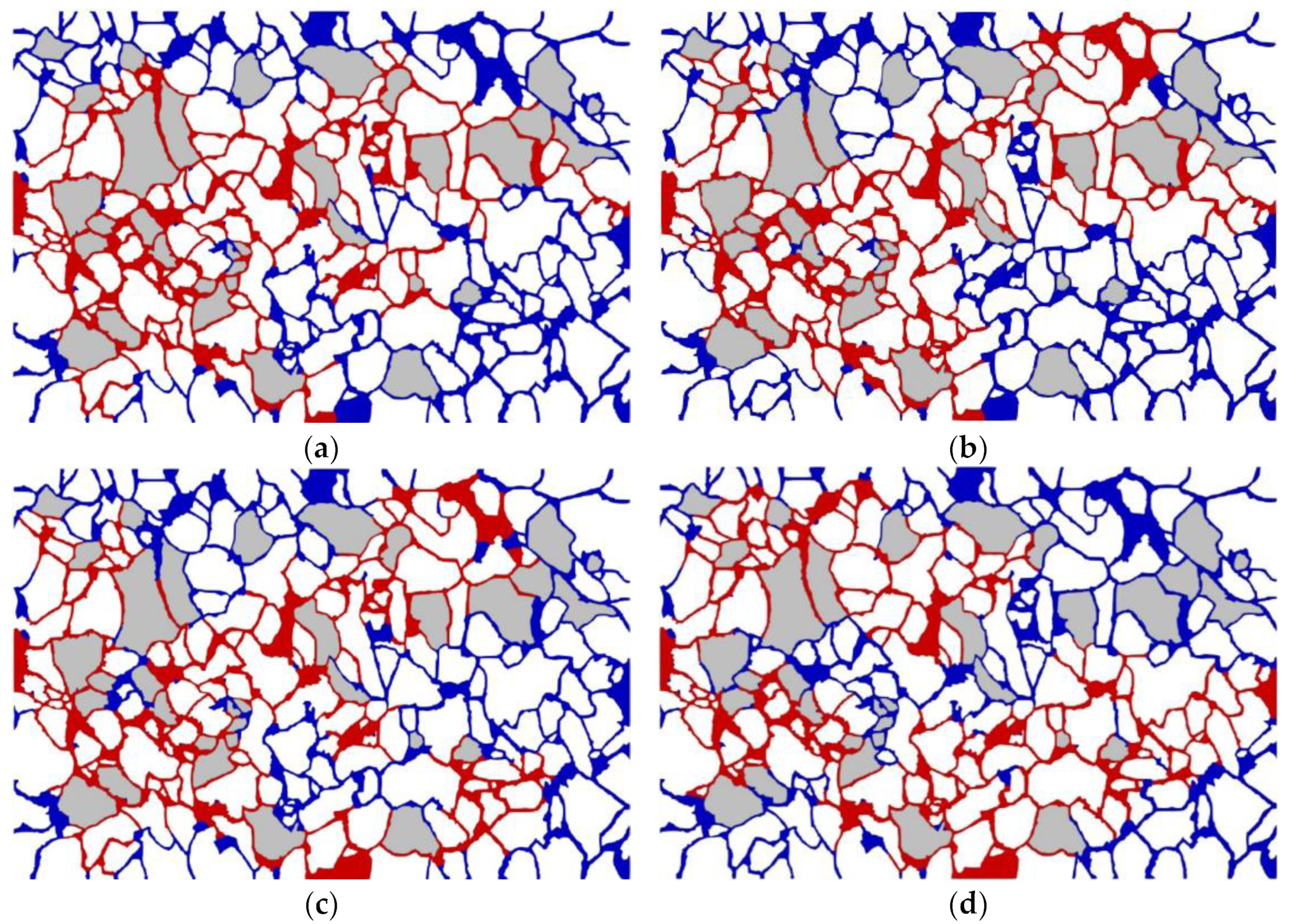
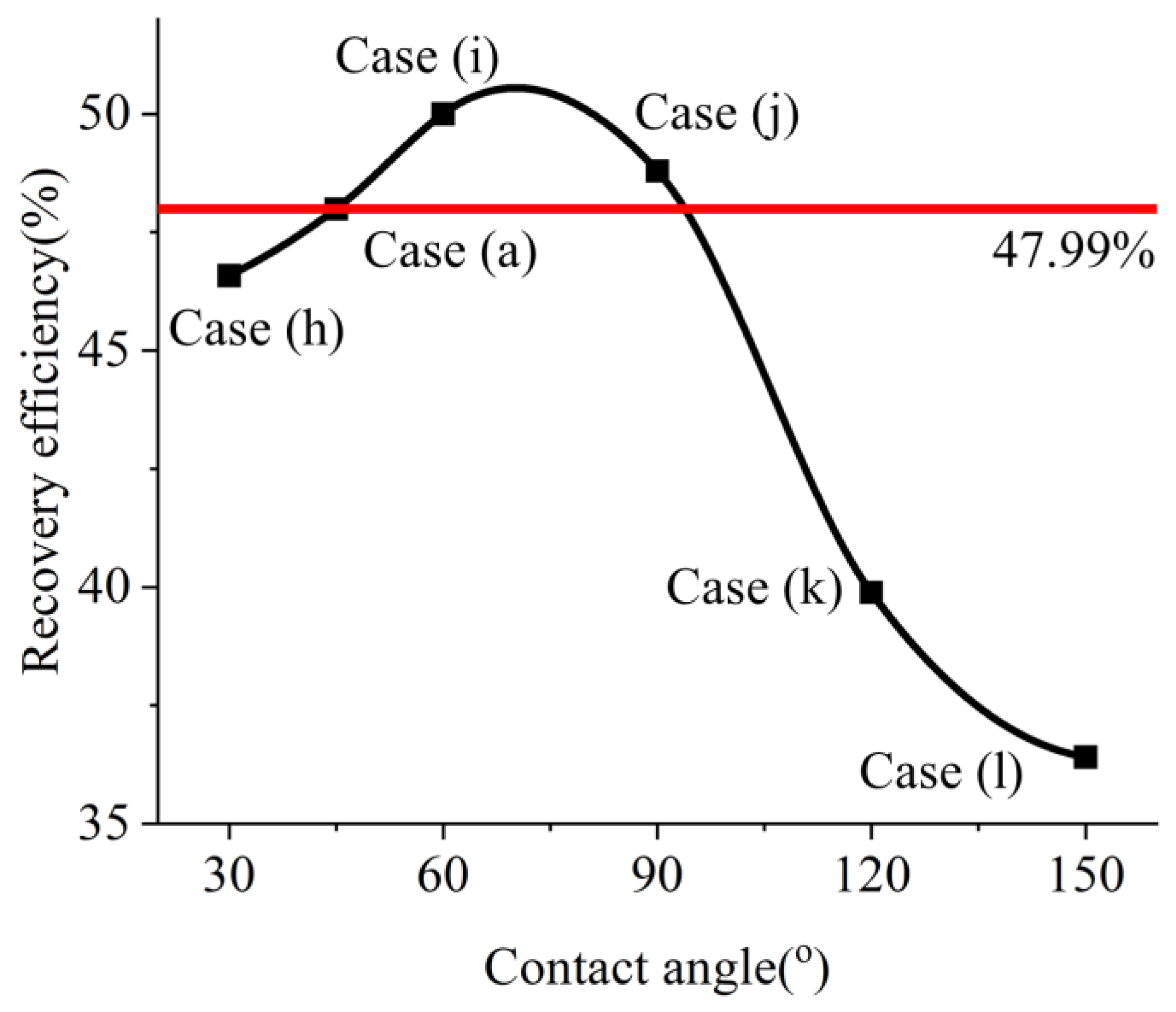
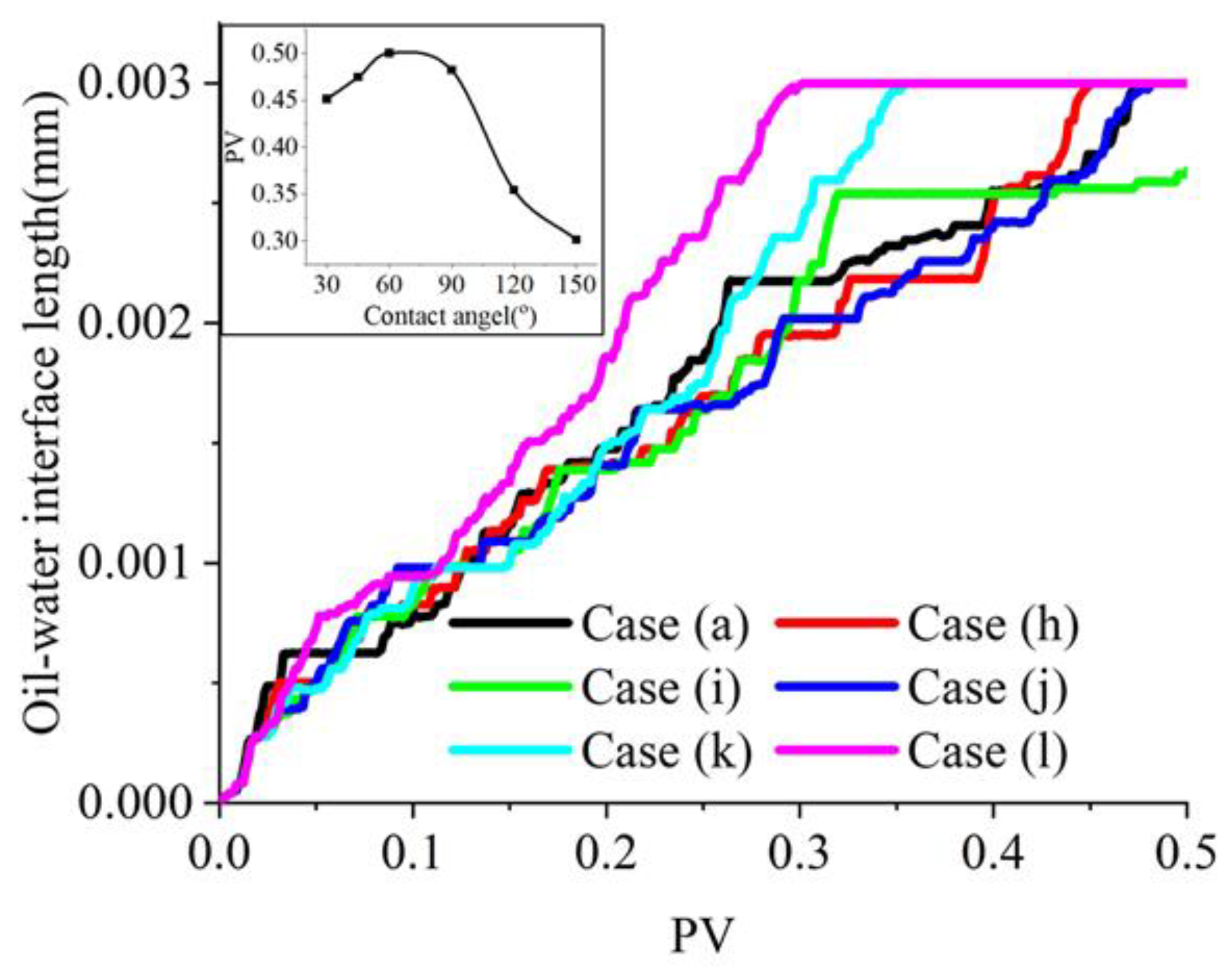
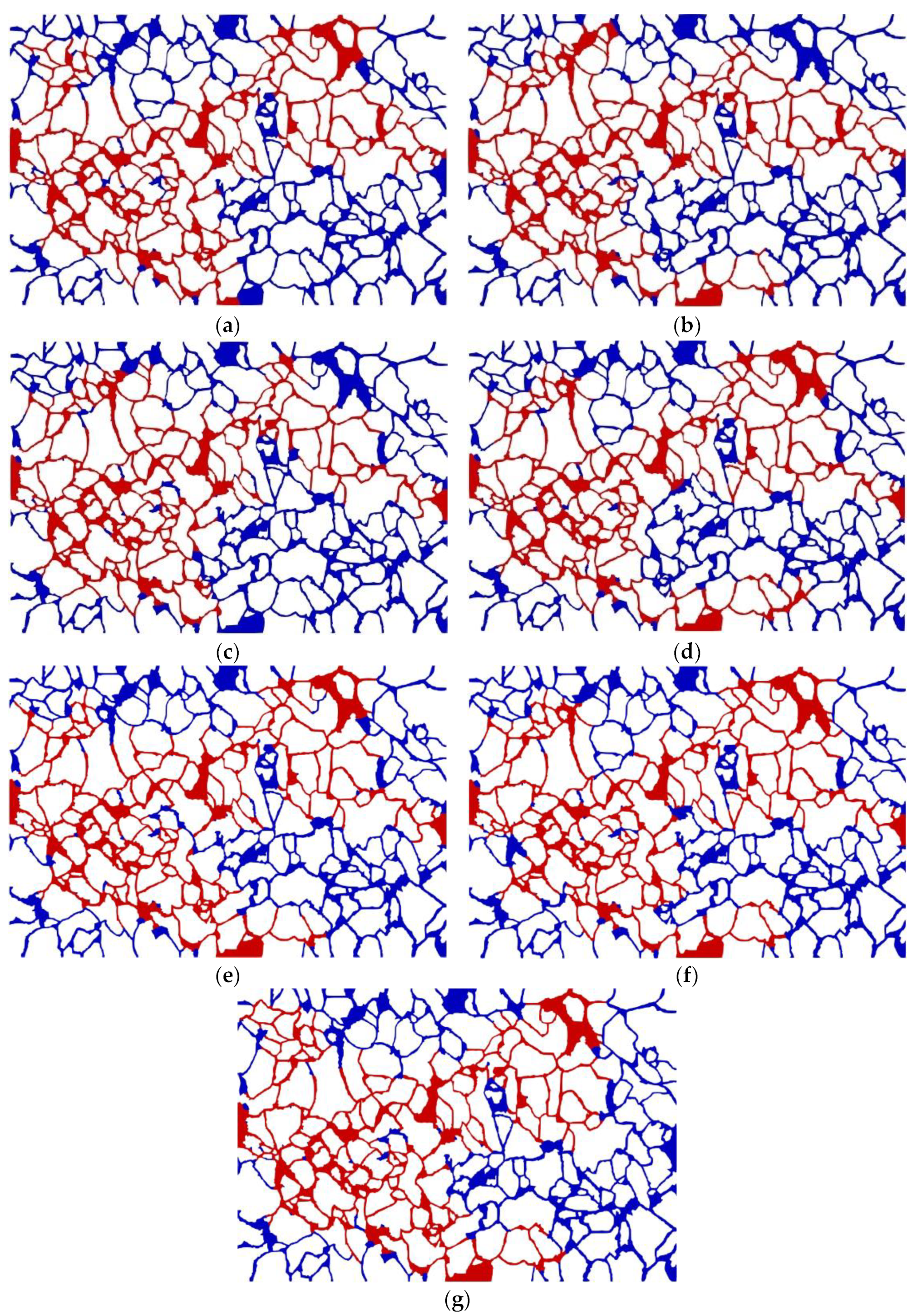
Immiscible displacement in porous media is a crucial microscale flow phenomenon in many fields, necessitating an understanding of the flow mechanisms under dynamic injection velocity and mixing wettability to predict and affect this flow accurately. Initially, a dynamic injection velocity method and a computational domain model considering non-dominant/dominant wetting angles were proposed. Then, microscale flow phenomena were modeled in a pore throat structure and doublet geometry under mixed wetting conditions. Finally, the influence of dynamic injection velocity and mixed wettability on microscale flow were investigated using numerical simulations. The results indicate that when stepwise and piecewise linear changes in injection velocity are observed, unlike continuous injection, two preferential displacement pathways are predominantly formed in the porous media. As the difference between the maximum and minimum injection velocity increases, the recovery efficiency initially decreases and then increases. Recovery efficiency is higher under piecewise linear injection velocity changes. The non-dominant wetting angle determines the distribution and flow of oil-water two-phase systems in porous media. With a dominant controlling wetting angle of 45°, as the non-dominant wetting angle increases, the flow phenomenon changes from one preferential pathway in the back region (30°, 45°) to two preferential pathways (60°, 90°, 120°) and then to one preferential pathway in the middle porous media (150°). As the degree of the non-dominant wetting angle increases, the recovery efficiency first increases and then decreases, with a maximum and minimum difference of 13.6%.
Keywords: dynamic injection velocity; numerical simulation; porous media; mixed wettability dynamic injection velocity; numerical simulation; porous media; mixed wettability