Article

Annual Simulation of Phase Change Materials for Enhanced Energy Efficiency and Thermal Performance of Buildings in Southern California


1
Department of Electrical and Computer Engineering, University of California, Riverside, CA 92521, USA
2
Office of Technology Partnerships, University of California, Riverside, CA 92521, USA
*
Author to whom correspondence should be addressed.
Energies 2025, 18(4), 847; https://doi.org/10.3390/en18040847
Submission received: 25 December 2024 / Revised: 3 February 2025 / Accepted: 9 February 2025 / Published: 11 February 2025
(This article belongs to the Section J: Thermal Management)

Abstract

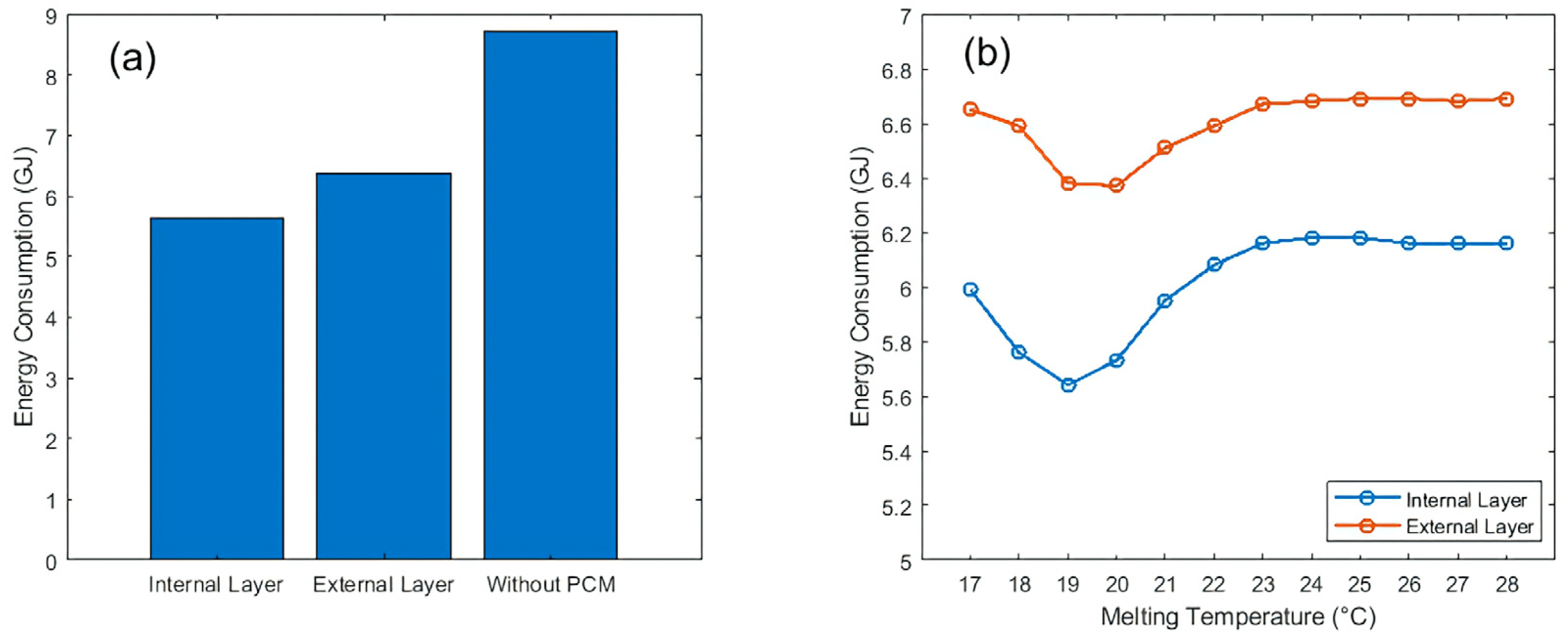
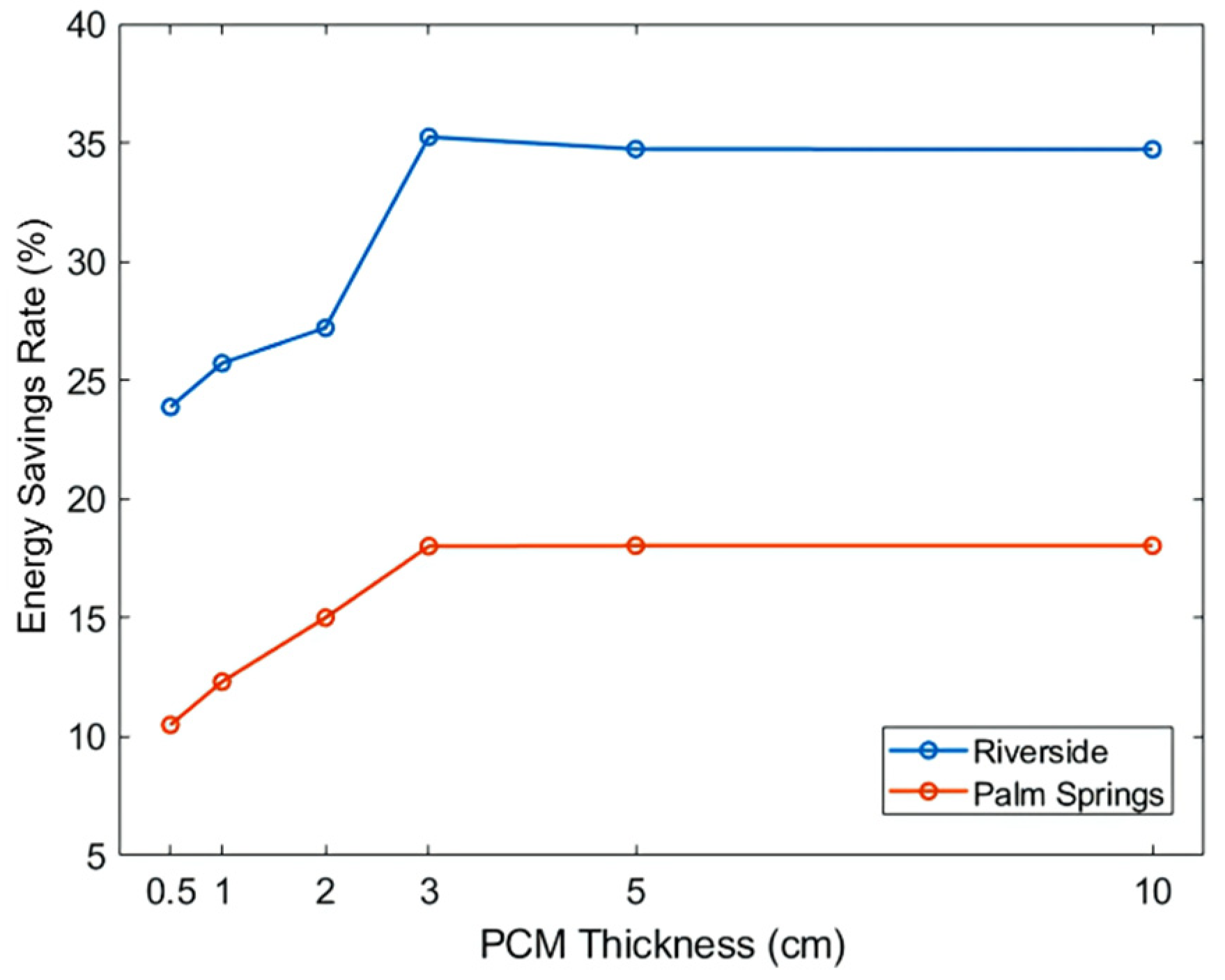
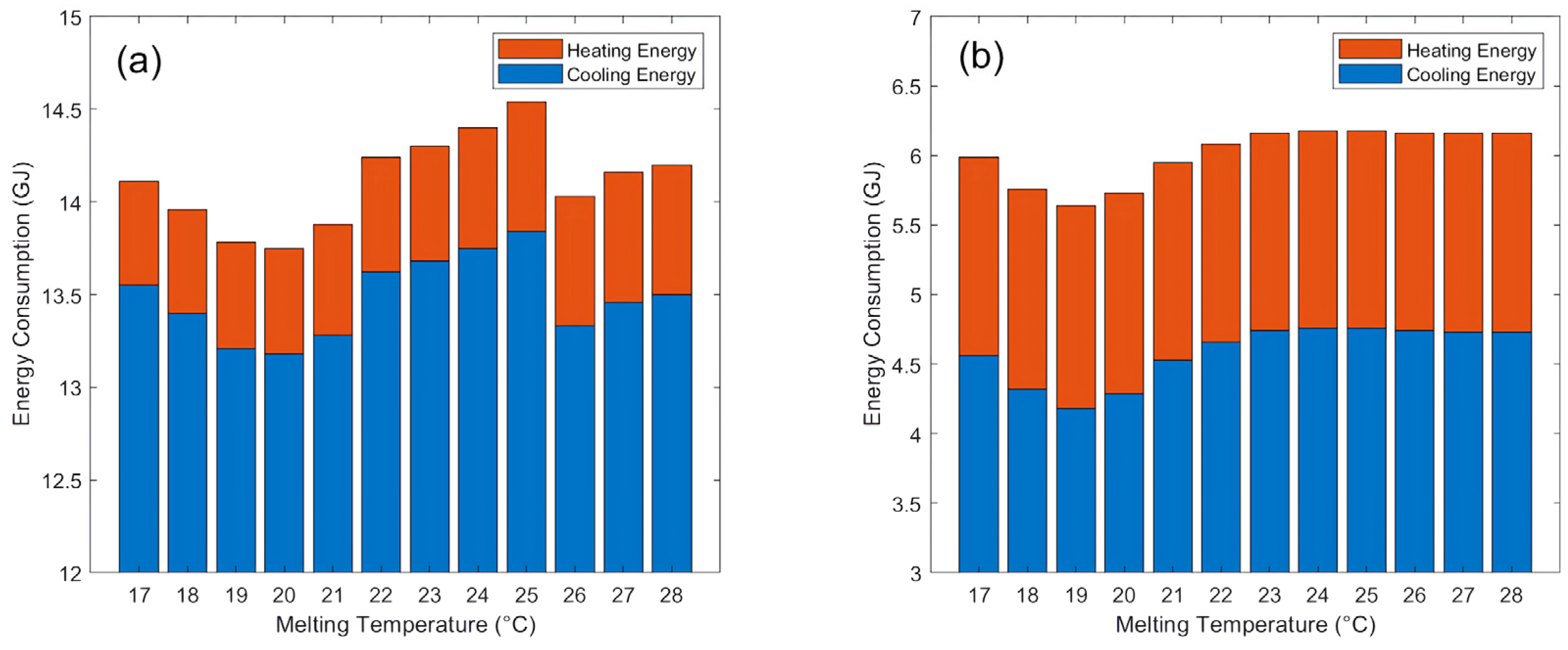
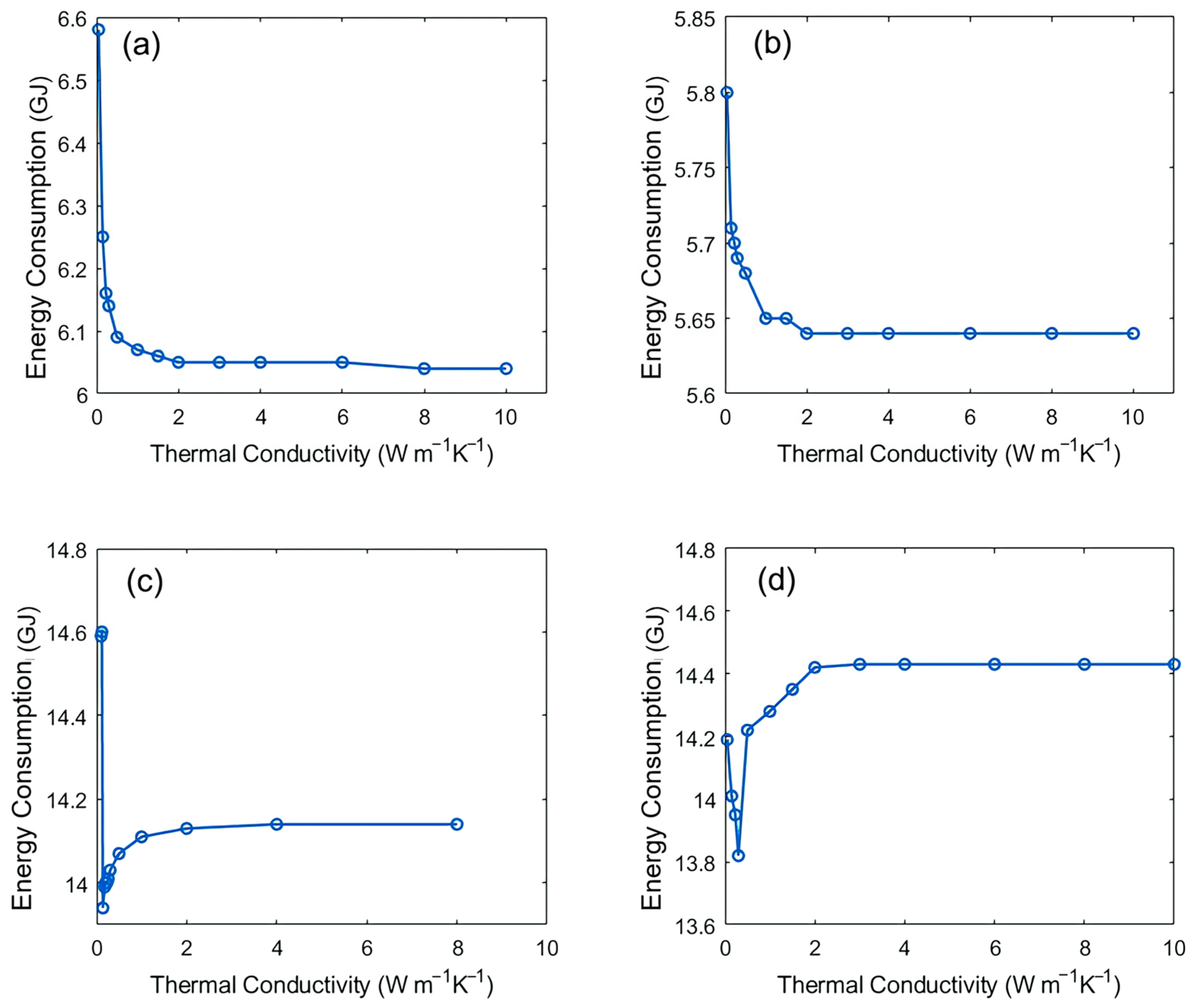
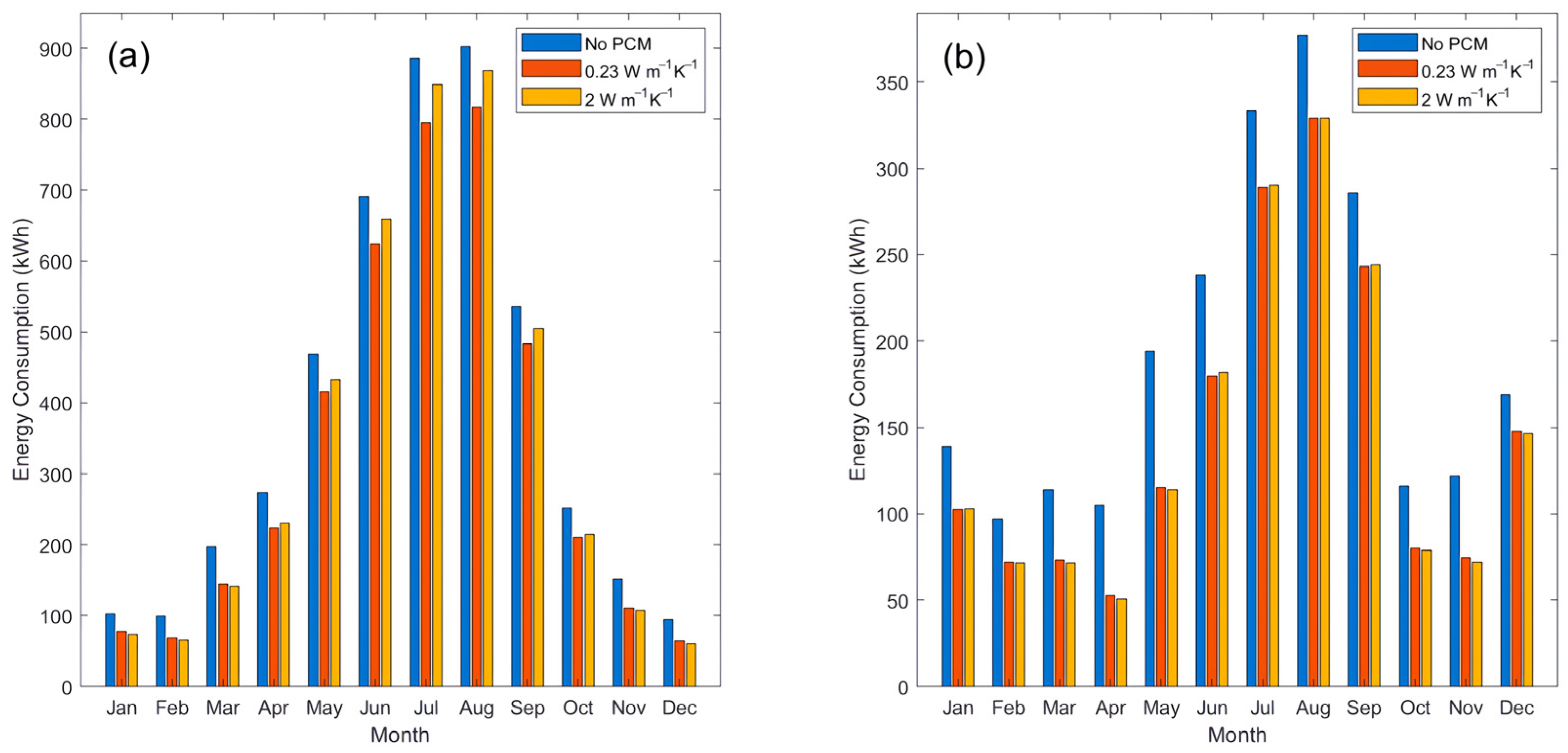
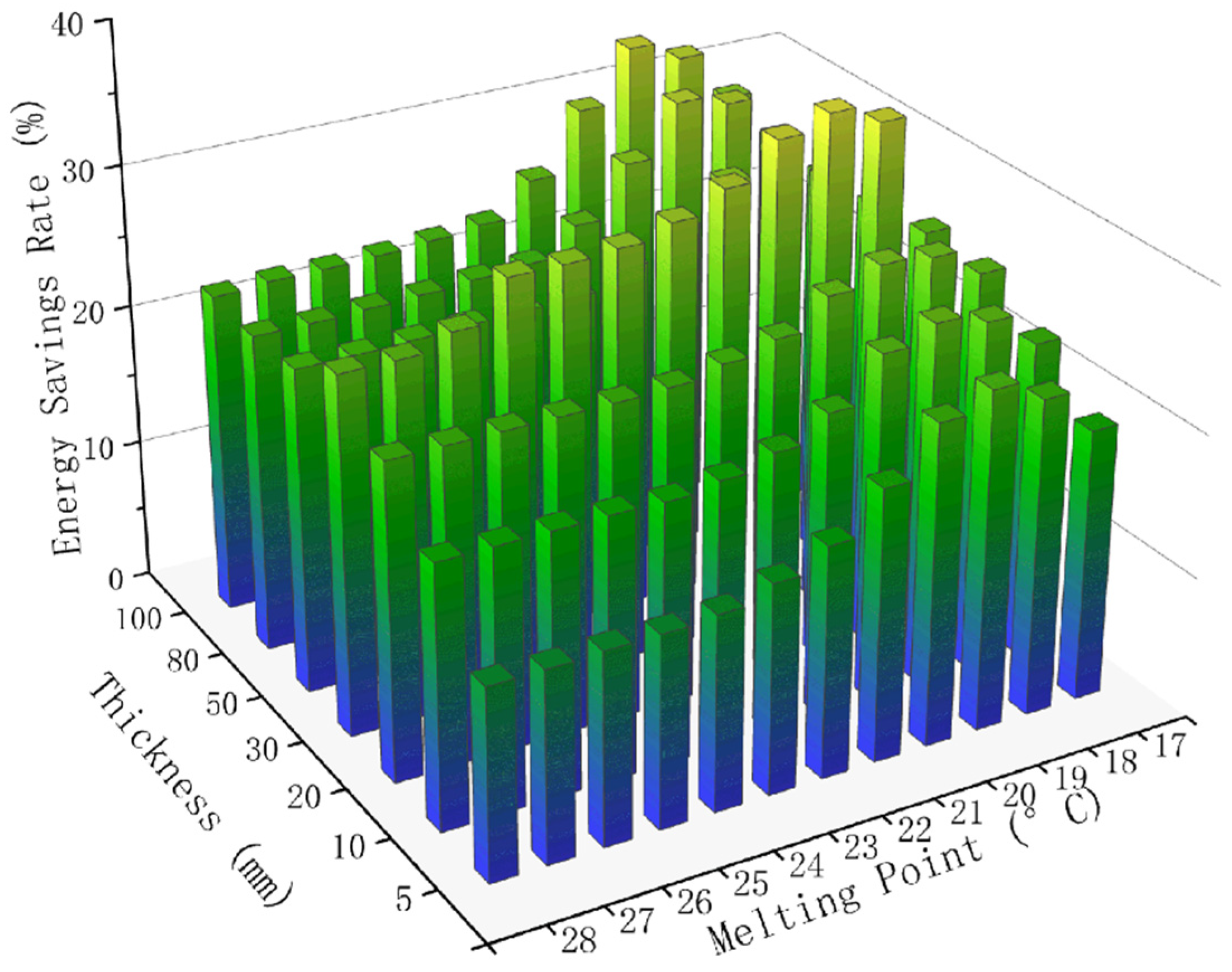
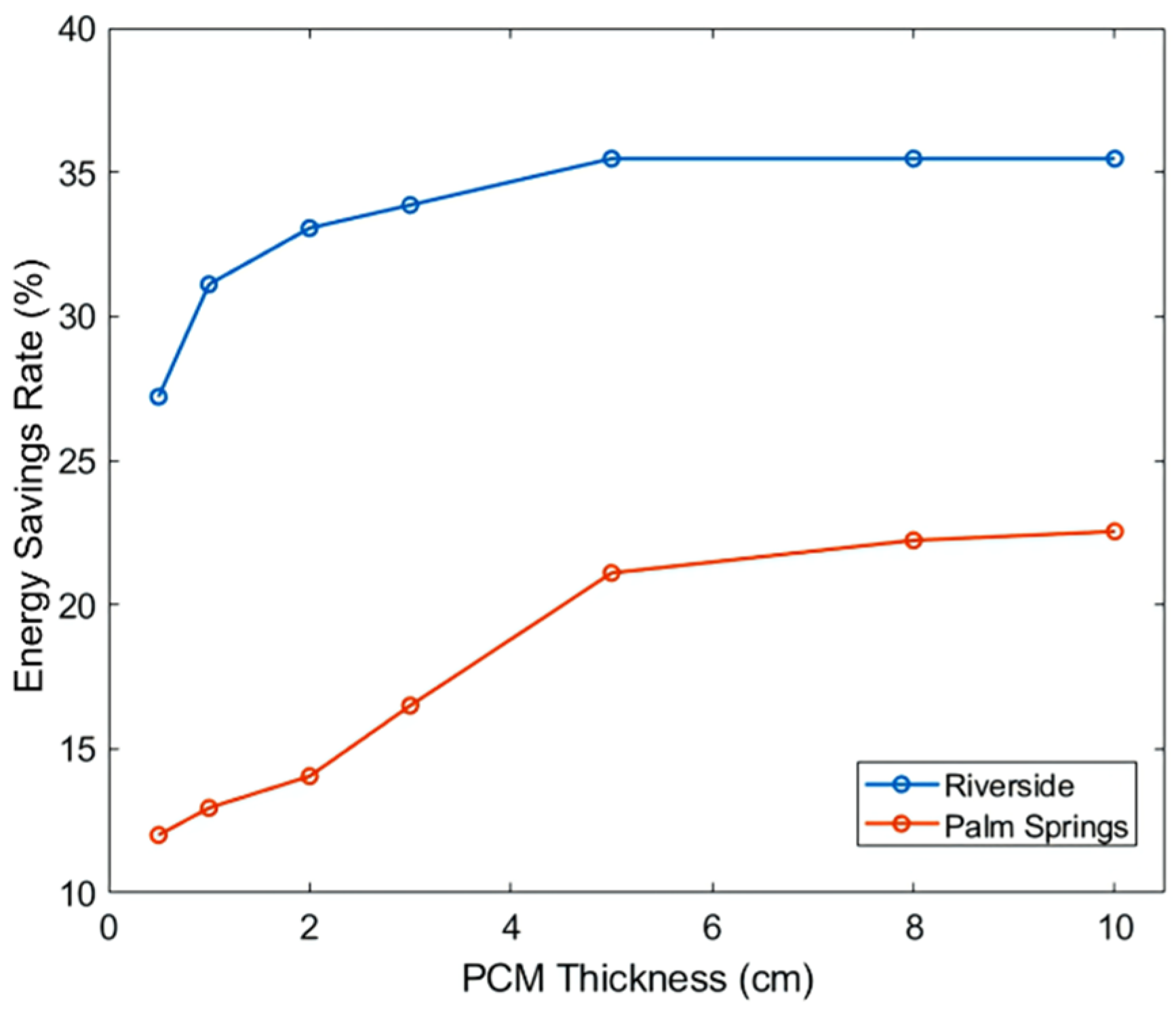
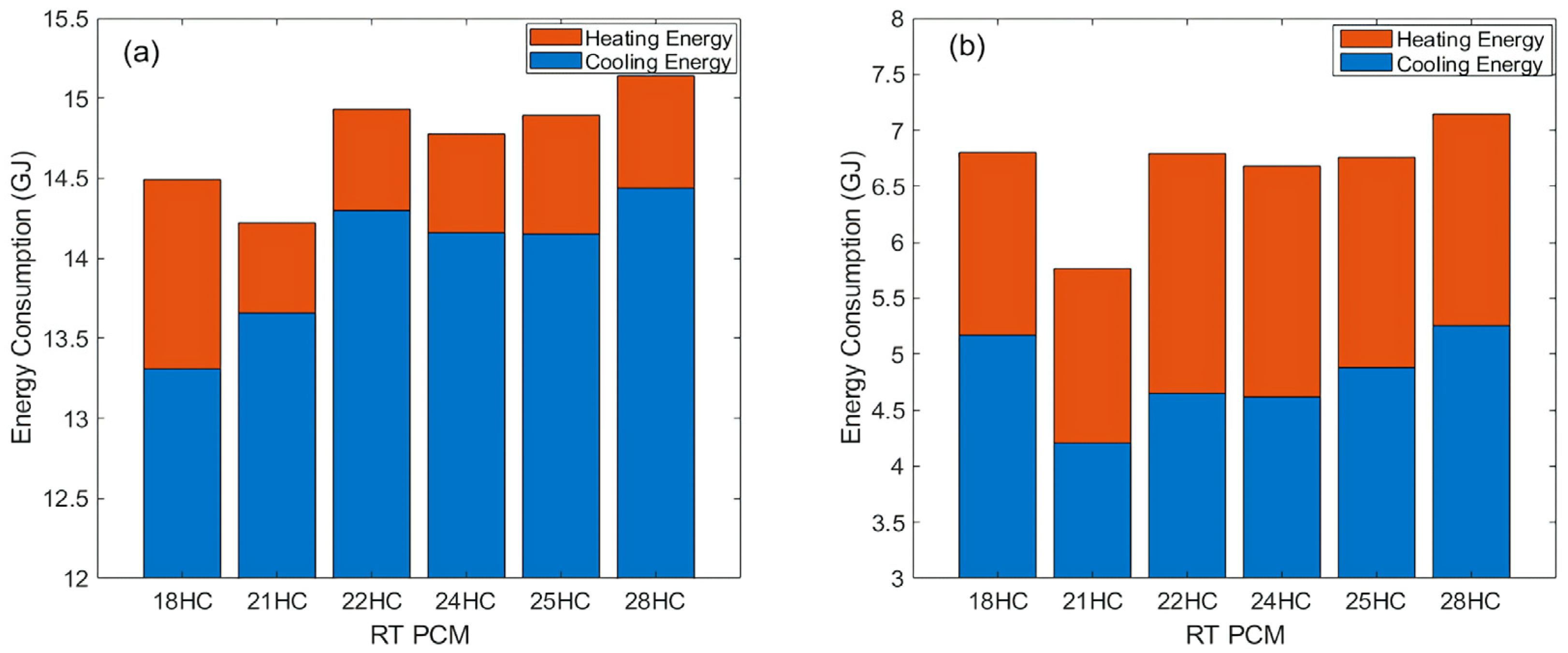
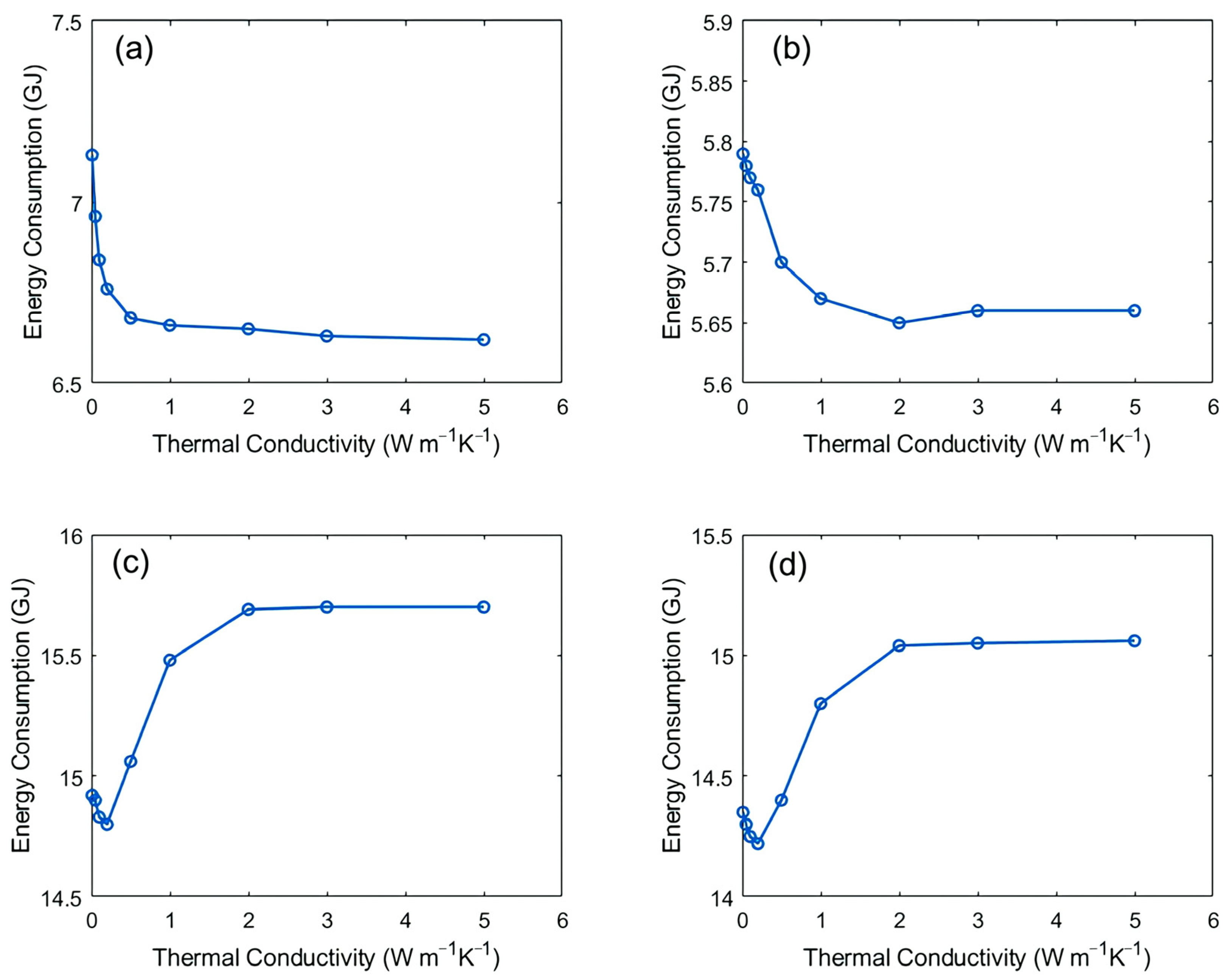
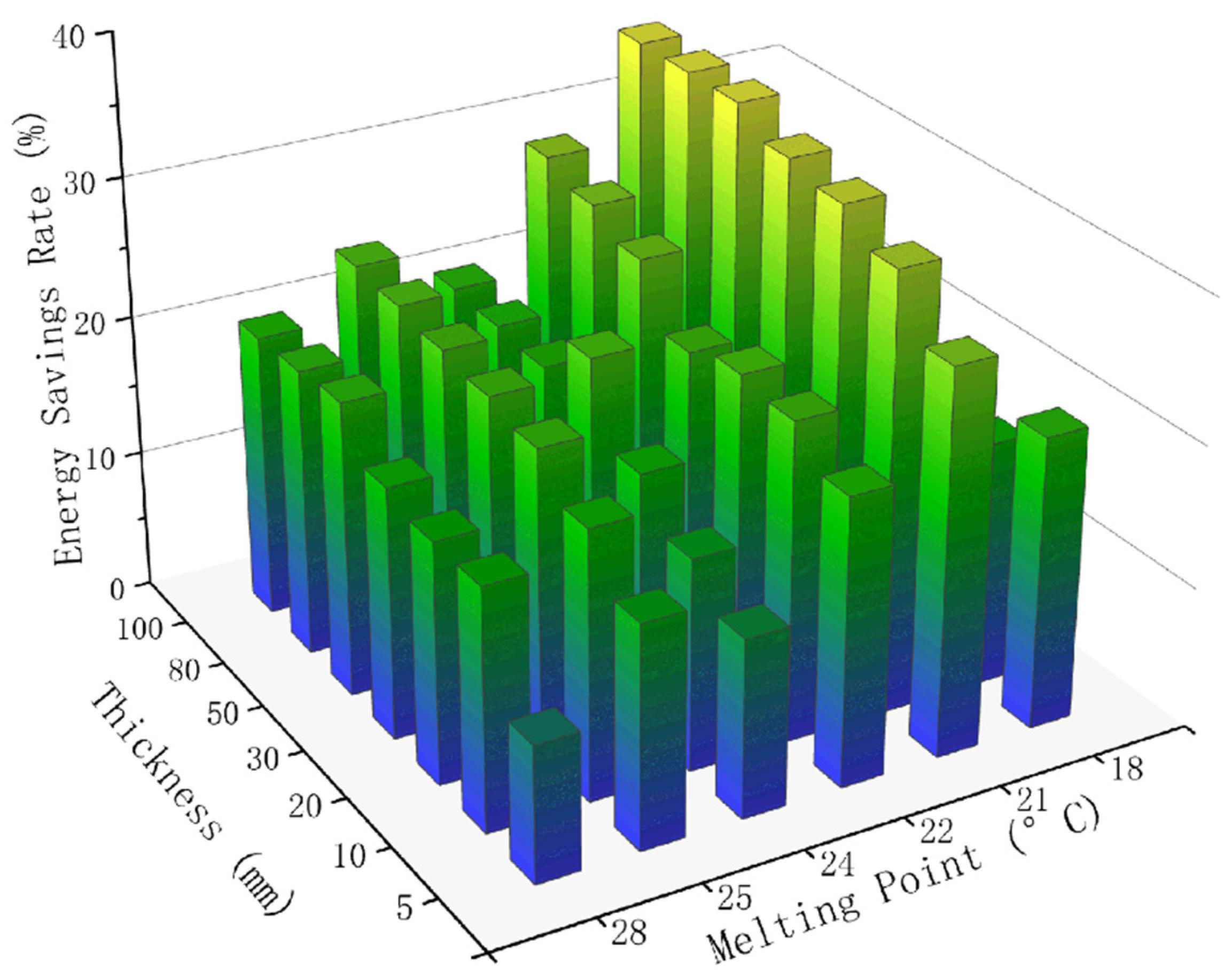
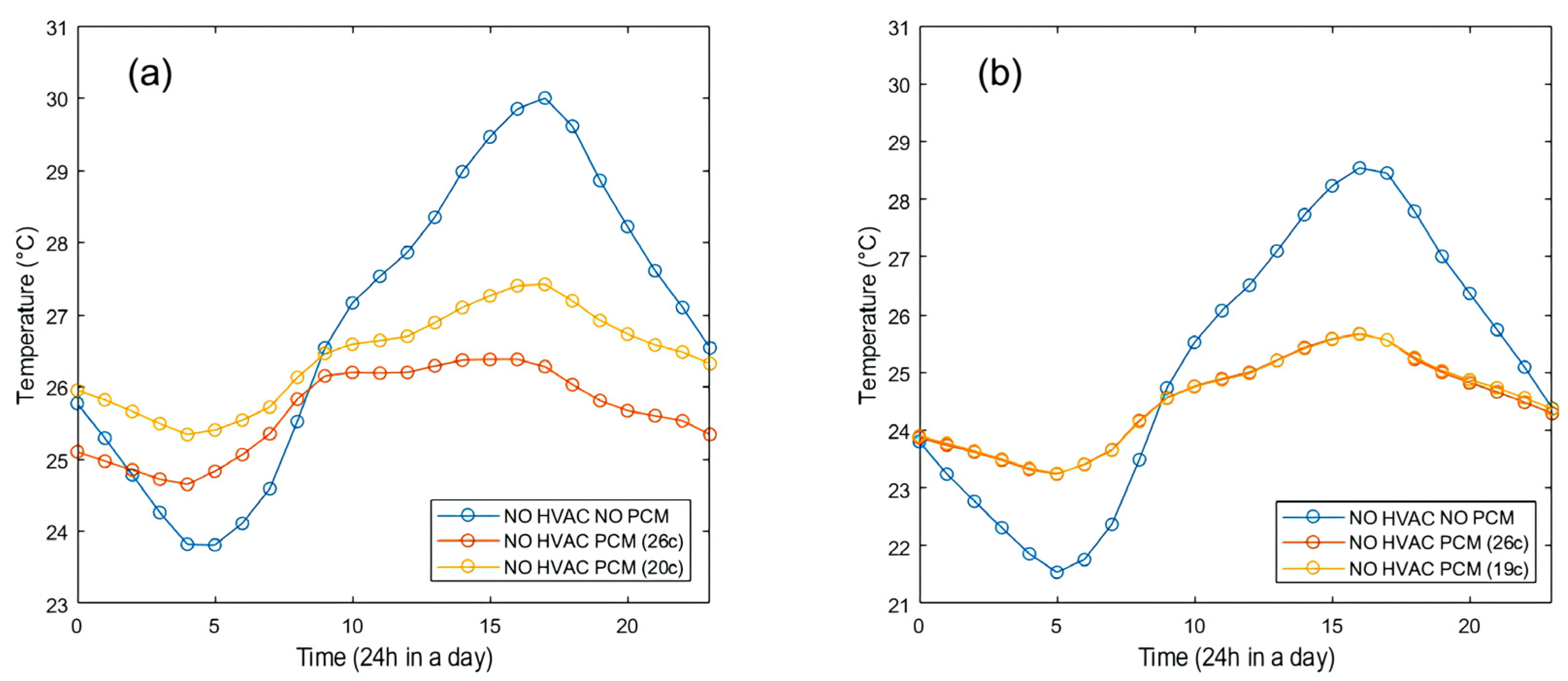
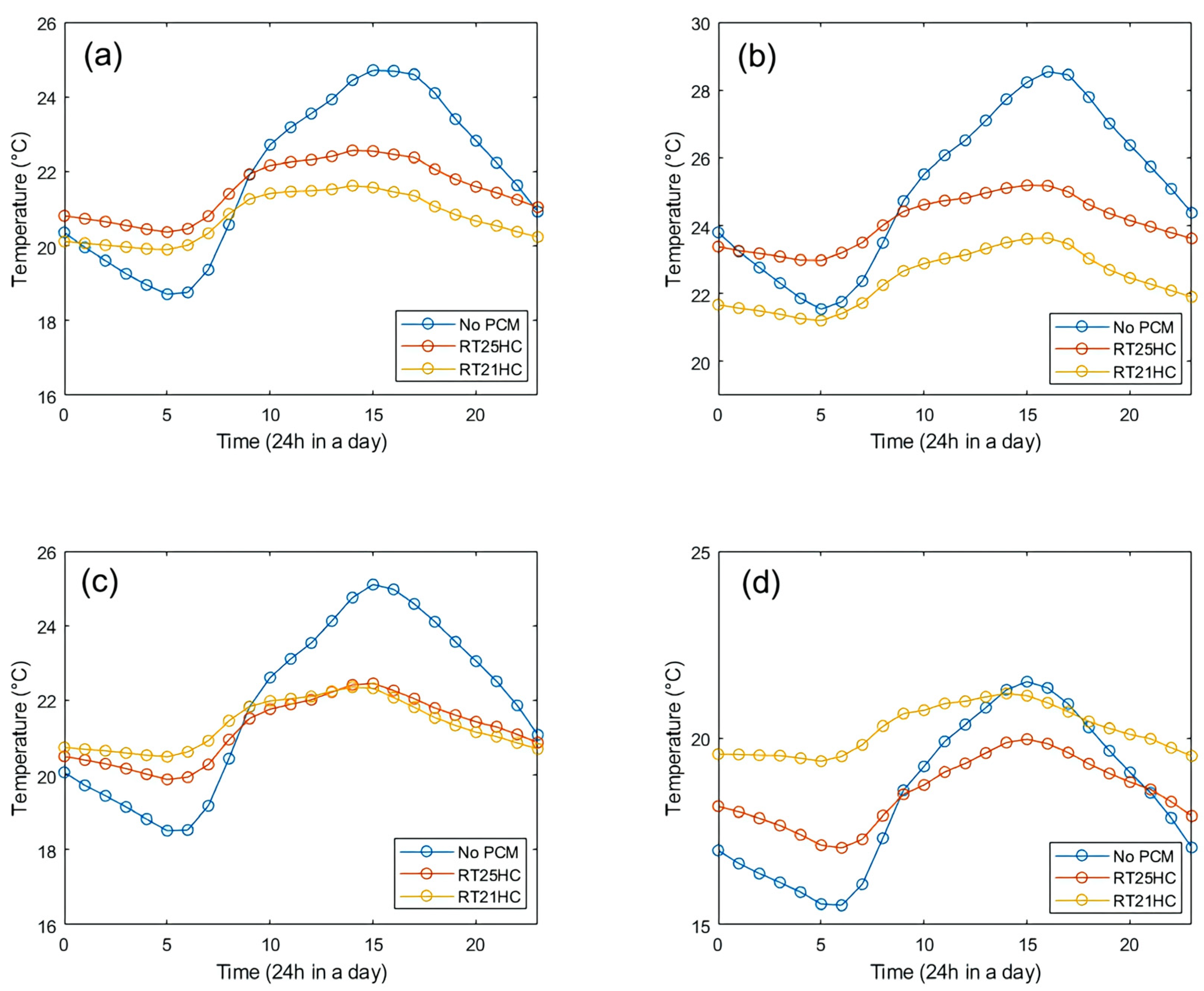
The use of advanced thermal storage materials, such as phase change materials (PCMs), offers a practical approach to reducing energy consumption in buildings while maintaining comfortable indoor temperatures. This work employs EnergyPlus to simulate the energy consumption of residential homes equipped with paraffin-based PCMs in Southern California, a region that experiences extremely high summer temperatures and significant day–night temperature variations. Two computational methods, the basic method and the hysteresis method, are employed. The effect of position, melting point, thickness, and thermal conductivity of PCMs on the energy savings rate in buildings is systematically investigated. The results show that the optimized melting point of PCM for Riverside and Palm Springs falls within the range of 19 to 21 °C. As thermal conductivity increases from 0.2 W m−1 K−1 to 3 W m−1 K−1, energy consumption in Riverside decreases by about 5%, whereas in Palm Springs, with its hotter summer temperatures, energy consumption increases. The optimal parameters yielded a total annual energy savings rate of 35.24% in Riverside and 18.52% in Palm Springs using the basic method and 35.47% in Riverside and 22.13% in Palm Springs using the hysteresis method. Under natural ventilation conditions, PCMs can reduce indoor day–night temperature differences in summer to 2.4 °C and 2.2 °C in Riverside, depending on the method used, compared to a 7 °C temperature difference without PCMs. Even without air conditioning, PCMs effectively maintain indoor temperatures within a comfortable range. This work demonstrates that optimizing PCMs in building design can significantly enhance energy efficiency and thermal comfort, providing a sustainable solution for reducing energy demands in residential settings.
Keywords: phase change materials; paraffin; energy saving; thermal performance; building simulation; Southern California phase change materials; paraffin; energy saving; thermal performance; building simulation; Southern California