1. Introduction
The levels of carbon dioxide (CO
2) in the atmosphere have reached critical values in recent years, resulting in a serious impact on the environment. This trend is beginning to have significant implications for the well-being of humanity and represents one of the foremost challenges mankind must address. CO
2 is produced by burning carbon-containing substances like coal or petrol. The natural fraction of CO
2 in the atmosphere is small. Nevertheless, it plays an important role in the carbon cycle, which is essential for the life of flora and fauna. The significant disruption of the natural balance of CO
2 gas quantities is primarily attributable to human activities, which account for two-thirds of the total greenhouse gas emissions. These activities include the combustion of fossil fuels like coal and oil, production of cement, and slash-and-burn agriculture [
1,
2]. On the other hand, energy is an essential requirement for each nation, as it plays a crucial role in every household, the transport sector, and industry. Consequently, it is vital for the economic growth of a country [
3,
4,
5]. Emissions of CO
2 have increased by 40% compared to the pre-industrial era. Part of these CO
2 gas emissions are assimilated by plants and accumulated as biomass in living organisms, and about a third is absorbed by the oceans, leading to acidification, while the remainder stays in the atmosphere. This increase significantly contributes to climate change, which has the potential to cause severe impacts such as rising sea levels, extreme weather events, and shortages of food and water [
6,
7].
Latin America is a region significantly affected by climate change and its associated consequences, particularly extreme meteorological phenomena. These events have resulted in substantial damage to health, life, food, water, and energy resources. According to the World Meteorological Organization, climate-related events claimed 312,000 lives and affected over 277 million people between 1998 and 2020 [
2,
8].
Most countries in the region use hydropower as their main source of electricity production. So, they contribute only little to global warming by their electricity production. However, the prolonged drought in these areas has led to a significant drop in electricity generation by hydropower in South America, necessitating the search for alternative solutions. One option is switching to fossil fuels as a substitute for hydropower, but using fossil fuels as the primary energy source for electricity production results in a resurgence and exacerbation of the issue of harmful emissions in already highly vulnerable regions such as Latin America. In addition, the transport sector in Latin America is still based on vehicles using combustion engines, which causes large CO
2 output. Moreover, South America has a major contribution to the rising CO
2 level by deforestation, especially when carried out by slash-and-burn, as has been done over decades for instance in some parts of Brazil, Argentina, Paraguay, and Bolivia [
9].
Global and collective efforts are necessary to mitigate harmful emissions that cause climate change. As of November 2017, 195 countries—among them the Latin American countries—had joined the Paris Climate Agreement, committing themselves to limit global warming by reducing CO
2 emissions [
10]. Accordingly, renewable energy resources like wind and sunshine should be chosen, both for additional electricity generation and the transport sector. The adoption of clean technologies and practices, the exploration and implementation of new alternative low-carbon energy sources, and substantial investments in renewable energy, along with the aforementioned policies, are crucial for achieving the goal of decarbonization. Globally, the road transport sector contributed a quarter of the greenhouse gas emissions in 2018 and 2019 [
11,
12]. Battery electric vehicles (BEVs) have been developed and are already in use. They are regarded as a viable solution for decarbonizing the transport sector. The vehicle runs on electricity from a large onboard battery. To generate and supply the necessary power, a BEV is equipped with battery packs, whose size and weight vary according to the vehicle’s driving range. At present, lithium-ion batteries (LIB) can deliver the highest energy density of all commercially available batteries [
13,
14,
15]. It amounts to 0.875 MJ/kg, which enables a driving range of about 100 km for a battery mass of 100 kg [
16]. Currently, LIB-based battery packs can provide a driving range of approximately 400 to 500 km on a single full charge. However, the cost of such a vehicle is approximately double that of a standard car [
17]. Consequently, the implementation of battery electric vehicles (BEVs) in low- and middle-income countries faces significant challenges. With appropriate policies, the price variations for different countries in Latin America may differ in percentage terms [
18]. Although BEVs, unlike combustion engine vehicles, do not produce harmful emissions from their tailpipes during operation, carbon dioxide (CO
2) is emitted during the production of electricity required to power these vehicles. It has been found that, for instance, mid-size BEVs will achieve a 50% reduction in harmful emissions during operation compared to gasoline-powered vehicles of the same size [
17,
19]. However, CO
2 reduction is contingent upon the methods of electricity generation for battery and vehicle manufacturing and for vehicle operation. Total carbon dioxide emissions will be higher if the electricity is generated from non-renewable carbon-based primary sources. Additionally, the mining and manufacturing of battery elements significantly impacts the total CO
2 release over the lifetime of electric vehicles.
A previous scientific study analyzed how total carbon dioxide emissions vary with the utilization of different types of vehicles in four European countries, considering the primary energy sources employed for electricity generation in each country [
20]. The results show that the total CO
2 emissions for battery-driven vehicles are strongly dependent on the battery size and on the source of electrical energy. A BEV with a driving range of 150 km appears to be the optimal choice in terms of lower emissions, whereas a BEV with a driving range of around 500 km often exhibits high CO
2 values in various scenarios. Fuel cell vehicles are highly dependent on the primary energy mix used for electricity production to generate hydrogen, achieving the best performance in countries utilizing nearly exclusively renewable primary sources, such as Norway. In contrast, for countries that still rely predominantly on fossil fuels for electricity production, such as Poland, the best choice in terms of total CO
2 emissions remains petrol-driven combustion cars.
In the present study, the focus is on Latin American countries. Brazil, Mexico, Argentina, Paraguay, and Ecuador are chosen as representative samples. As there is a growing adoption of electric vehicles in the market, the current study aims to investigate the total consumption of combustion and battery-driven vehicles and to calculate the CO2 emissions over the lifetime of these vehicles during utilization of cars in these five Latin American countries. Each of them generates its electricity from distinct primary energy sources, represented by varying proportions of the total energy mix—hydropower is predominant in some countries, such as Brazil, Ecuador, and Paraguay, while natural gas is more prevalent in Mexico and Argentina.
As before, the present study aims to determine the total CO
2 emissions generated by different types of passenger vehicles, taking into account the stages of manufacturing, battery production, and vehicle operation under consideration of the energy mix of selected countries in Latin America. In contrast to the previous study, where European countries were compared [
20], it is largely based on experimental data for the energy consumption of the cars under realistic conditions and takes into account the CO
2 emissions from the production and refinement of petrol.
Additionally, the technological scope is expanded by including conventional hybrid cars that use an electric motor but produce the needed electricity by combustion. The treatment of the plug-in hybrid cars is improved now by using realistic engine efficiency and an observed ratio of electricity to petrol use. Together with petrol cars, battery cars and fuel cell cars, the suite of vehicle types is complete, all evaluated under a common methodological framework.
Compared with the earlier analysis performed for European countries, the present study introduces several methodological improvements that increase its relevance for the Latin American context. The operational emissions of hybrid and electric vehicles are estimated using real-world energy consumption data, which increases the accuracy of the results for these powertrains. The study also accounts for the substantial differences in CO2 emissions arising from vehicle and battery manufacturing by distinguishing their region of production, rather than relying on averaged values. Altogether, these enhancements provide a clearer and more realistic assessment of how each vehicle technology performs under the diverse electricity mixes characteristic of Latin American countries.
2. Materials and Methods
This study adopts a life-cycle perspective on total CO
2 emissions (manufacturing + battery production + operation). It is not a full Life Cycle Assessment according to ISO 14040 and 14044 standards [
21,
22] as raw material extraction and end-of-life stages are outside the system boundaries.
Five technological configurations currently available in the market were analyzed: internal combustion engine vehicles (ICEVs), battery electric vehicles (BEVs), fuel cell electric vehicles (FCEVs), and two types of hybrid vehicles: plug-in hybrid electric vehicles (PHEVs) and conventional hybrid electric vehicles (HEVs). A total driving mileage of 200,000 km was assumed for all vehicle types. For all cars, the driving range (on highways) is set to 500 km, which is reached by any petrol car and the goal for electric cars. Additionally, shorter ranges are assessed for BEVs: 360 km, which is regarded as the current standard, and 150 km, which is assumed to be sufficient for a city car that is not used on long distances. From these ranges, the necessary battery capacities of the BEVs are calculated, while the battery capacities of the other cars are taken from real cars; only for the FCEVs, it was estimated based on the other capacities (see
Table 1). The contribution of air conditioning was not considered in the comparison, as cooling uses the same technology in all cars; therefore, it only increases the difference by a few percent. And heating is not much used in Latin America.
The calculations in this study follow a deterministic approach based on measured data and values obtained from the established literature. As the key inputs for each vehicle type and the composition of the electricity mix are drawn from well-validated sources, the main source of uncertainty arises from the natural variability of these parameters rather than from the calculation procedure itself. To ensure transparency, the typical ranges reported for these inputs are discussed, together with their expected influence on the results. The use of real-world consumption data for hybrid and electric vehicles, the distinction of manufacturing emissions by production region, and the reliance on consistent reference sources help minimize potential errors and improve the robustness of the estimates.
2.1. Internal Combustion Engine Vehicles (ICEV)
The analysis of internal combustion engine vehicles (labeled as petrol in figures and tables) begins with a representative compact car weighing 1200 kg. A constant fuel consumption rate of 6 L per 100 km was used, reflecting the average performance of such vehicles under combined urban and highway driving conditions [
23]. Using a gasoline lower heating value of 44 MJ/kg and a density of 0.76 kg/L, the energy consumption was determined to be 0.557 kWh/km. This value, denoted as C
m0, serves as a baseline for subsequent calculations.
In the context of vehicles, energy consumption refers to the actual amount of energy used by the vehicle during its operation, including factors such as engine efficiency, driving behavior, and energy losses. Energy demand, however, represents the total energy required by the vehicle to perform its functions under specific conditions. While consumption reflects real-world usage, demand indicates the theoretical energy needed based on driving scenarios.
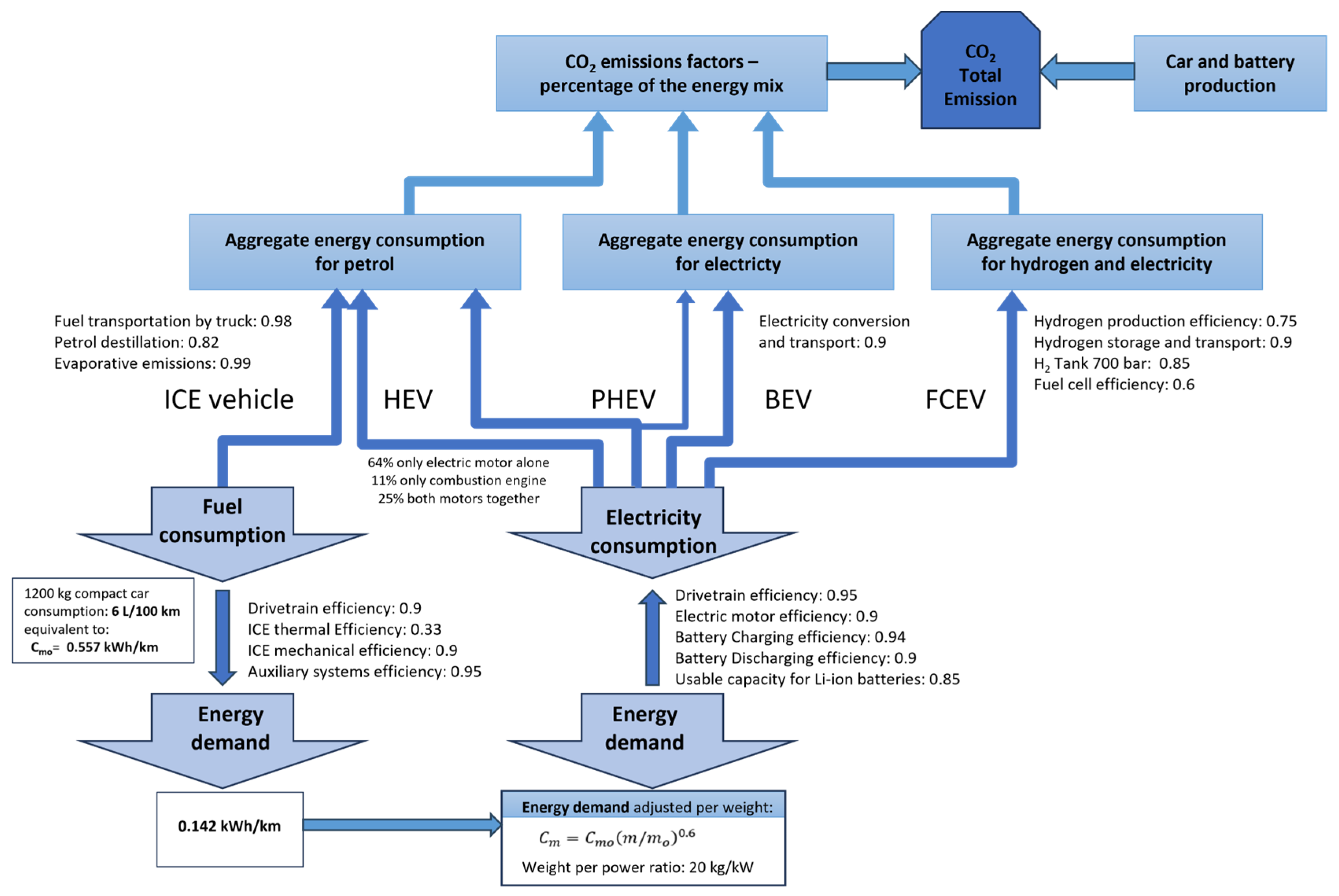
To estimate the energy demand of the other vehicle types, the energy consumption of the internal combustion engine vehicle (Cm0) was used in conjunction with the efficiency value of converting fuel energy into useful energy for vehicle motion, which was set at 0.256 in this study. Based on this relationship, an energy demand of 0.142 kWh/km was obtained for the ICE vehicle. This value serves as a reference for extrapolating the energy demand of vehicles with different masses and propulsion configurations.
The adjustment of energy demand based on vehicle weight was carried out using Equation (1), which has been widely applied in vehicle energy modeling studies [
16]. In this equation, the energy demand of a given vehicle (C
m) is calculated from the reference value (C
m0), the mass
m of the vehicle under analysis, and the reference vehicle mass (m
0 = 1200 kg).
To determine the actual energy consumed based on the energy demand, it is necessary to account for the efficiency of each stage involved in the energy conversion, transmission, and storage processes. The specific efficiency values considered in this study are detailed in
Appendix A.
Figure 1 schematically shows the methodology used in this study.
2.2. Battery Electric Vehicles (BEVs)
For these vehicles, three subtypes were considered: a compact short-range electric car, denoted as City BEV, an electric vehicle with medium-sized battery (Mid-range BEV), and a long-range electric vehicle (Long-range BEV). The key specifications of these vehicle types are summarized in
Table 1.
To ensure a meaningful and unbiased comparison between different types of powertrains, it is essential that all vehicles exhibit comparable performance characteristics, specifically in terms of acceleration and top speed. This was achieved by maintaining a constant power to weight ratio across all vehicle types, which in this study was set at 0.05 kW per kilogram. Simultaneously, each vehicle was required to meet a specified driving range, requiring adjustments in the size of the battery to match the calculated energy consumption.
However, increasing the energy storage capacity, whether through a larger fuel tank or a higher-capacity battery, inevitably increases the vehicle’s overall weight. This added mass, in turn, demands a more powerful motor to preserve the designated power to weight ratio, thereby further increasing the vehicle’s weight and creating a feedback loop. To resolve this interdependence, an iterative computational approach was employed: each cycle recalculates energy consumption and motor size based on the updated vehicle weight, followed by a recalculation of storage requirements and total mass. This process was repeated until convergence was achieved and all key parameters (mass, motor power, and energy consumption) stabilized to within four or five significant digits. The methodology follows the procedure established in previous work [
20] with detailed formulations and parameter values, including mass and energy conversion efficiencies which are provided in
Appendix A.
It is important to note that lithium-ion batteries, which are commonly used in electric vehicles, have significantly lower energy density compared to fuels such as gasoline or hydrogen. As a result, batteries contribute substantially to vehicle weight, particularly as driving range increases. On the other hand, electric motors are generally lighter than internal combustion engines with equivalent power output. For short-range battery electric vehicles (BEVs), this weight advantage in the drivetrain partially offsets the battery mass. However, as driving range extends, the growing size and mass of the battery outweigh the benefits, resulting in a significantly heavier vehicle configuration.
2.3. Fuel Cell Electric Vehicles (FCEVs)
These vehicles use hydrogen as their primary energy carrier, which is converted into electricity through an electrochemical reaction in a fuel cell. This electricity powers an electric motor in a manner similar to battery electric vehicles (BEVs). However, unlike BEVs, FCEVs store energy in the form of compressed hydrogen rather than electrochemical batteries.
In this study, a representative mid-size FCEV was considered, with a total mass of 1320 kg and a hydrogen storage system capable of holding 4 kg at 700 bar, providing an estimated driving range of approximately 500 km. When considering all stages from hydrogen production to power delivery at the wheels (well-to-wheel), the overall efficiency of FCEVs is significantly lower than that of BEVs, mainly due to losses associated with hydrogen production, compression, and conversion into electricity. Nevertheless, their potential as a sustainable vehicle propulsion alternative is in the ability to use hydrogen from electricity or other processes powered by renewable energy sources of varying availability like wind and solar energy.
To estimate the total energy consumption, the efficiencies of each stage in the hydrogen supply chain, as well as the conversion processes involved, were taken into account. Specifications of the FCEVs are summarized in
Table 1. The specific efficiency values used in this analysis are provided in
Appendix A.
2.4. Hybrid Vehicles
For hybrid vehicles, two variants were analyzed: conventional hybrid vehicles (HEVs) and plug-in hybrid vehicles (PHEVs). Both combine an internal combustion engine with one or more electric motors but differ mainly in the battery capacity and charging method. The principal technical characteristics and calculated data of these vehicles are outlined in
Table 1.
2.4.1. Plug-In Hybrid Vehicles (PHEVs)
These vehicles are equipped with two independent energy sources: fossil fuel (generally gasoline) and electrical energy, which is obtained from the electrical grid and stored in a rechargeable battery. Compared to battery electric vehicles (BEVs), PHEVs incorporate a smaller capacity battery, allowing only a limited electric driving range, but sufficient for typical urban trips. In this study, a 28 kWh battery with an estimated weight of 115 kg was considered. The vehicle’s total weight is 1600 kg.
The electric motor primarily operates under low-speed and frequent-stop conditions typical of urban environments, where system efficiency is maximized and local emissions are reduced due to features such as regenerative braking and high drivetrain efficiency at low loads. On the other hand, the ICE is designed to operate under higher energy demand situations, such as high speeds or long-distance trips typical of highway driving. Additionally, some hybrid models can run both motors simultaneously for short periods to optimize overall vehicle performance and efficiency.
To estimate the energy demand from each source, a representative driving profile was assumed in which the electric motor operates 20% of the total time, while the combustion engine covers the remaining 80%. This distribution aligns with experimental studies on real-world PHEV usage patterns, which show partial use of electric mode depending on battery size, charging frequency, and driving habits [
24].
Appendix A shows the efficiency data considered during the energy conversion processes used.
2.4.2. Conventional Hybrid Electric Vehicles (HEVs)
This configuration combines two propulsion systems: an internal combustion engine (ICE) powered exclusively by gasoline and an electric motor that assists under certain driving conditions to improve energy efficiency. Unlike plug-in hybrid vehicles (PHEVs), HEVs are not connected to the electrical grid to charge their battery; instead, electrical energy is generated internally either through a generator coupled to the combustion engine or via regenerative braking, which converts part of the vehicle’s kinetic energy into electricity.
The battery in HEVs is considerably smaller than those in BEVs or PHEVs. In this study, a commercial vehicle with a battery of 1 kWh capacity and a weight of 22 kg was considered, corresponding to a vehicle with a total mass of 1519 kg. This configuration allows a lighter energy storage system, promoting a lighter and more efficient design.
HEV operation can be divided into four main modes:
Pure electric driving;
Driving with the internal combustion engine, with simultaneous battery charging
Combined operation of both motors (electric + combustion);
Energy recovery through regenerative braking.
During low-speed driving, urban traffic conditions, or gentle accelerations, the system prioritizes the use of the electric motor since the combustion engine would be less efficient in these conditions. At medium or high speeds, or when higher power demand arises, the combustion engine is activated. In high energy demand situations (e.g., rapid accelerations or steep inclines), both motors may operate simultaneously to deliver increased power. During deceleration or braking phases, the regenerative braking system recovers some kinetic energy and stores it in the battery.
To quantify the energy demand of HEVs, it is necessary to determine the proportion of time the vehicle operates in each described mode. This study adopted values obtained by Peng et al. [
25], who analyzed real driving patterns in hybrid vehicles. According to their results
64% of the trip was performed using only the electric motor;
11% of the trip was performed using only the combustion engine;
25% of the trip involved combined operation of both motors.
Regarding the regenerative braking system, Stratton and Heywood [
26] estimated through simulations that its incorporation in parallel hybrid vehicles can reduce fuel consumption by between 4.2% and 17.1%, depending on the driving cycle. For this study, the estimate of 6.1% corresponding to the US06 cycle was used, which is characterized by simulating aggressive urban conditions with rapid accelerations, frequent braking, and relatively high speeds.
Based on this information, an energy balance for the HEV was developed, considering efficiencies associated with each stage of the energy conversion process. In
Table 1, the fundamental parameters calculated for HEVs are detailed. Specific details of these efficiencies are presented in
Appendix A.
2.5. CO2 Emissions Calculations
To estimate the CO
2 emissions generated by gasoline use, an emission factor of 3.85 kg of CO
2 per liter of fuel consumed was applied. This value was obtained by summing the direct emissions from combustion (3.08 kg of CO
2) with the upstream emissions associated with the fuel’s life cycle: 0.45 kg of CO
2 from production, 0.29 kg of CO
2 from refining, and 0.03 kg of CO
2 from transportation [
27,
28].
The values for CO
2 emissions for different primary electricity production sources are taken from database electricity maps [
29] and are presented in
Table 2. Data for the different energy sources used for power generation for the year 2023 for Latin America’s countries, Paraguay, Brazil, Ecuador, Argentina, and Mexico, are taken mostly from a database of the International Energy Agency (IEA) [
11].
The CO
2 emissions associated with the production of vehicles and lithium batteries vary significantly depending on the country or region where manufacturing takes place. This study considered two scenarios: production in Europe or America and production in Asia. To characterize the energy mix of each region, official information from the International Energy Agency (IEA) [
11] was used, with the results summarized in
Table 3.
For estimating CO
2 emissions derived from the vehicle manufacturing process, the study by Sato and Nakata [
30] was taken as a reference, which reported an average energy consumption of 41.8 MJ per kilogram of vehicle produced. Based on this value, the energy demand required for the production of different vehicle types presented in this study was calculated, considering their mass. Finally, the CO
2 emission factors detailed in
Table 4 were applied, combined with the energy mix composition of each region presented in
Table 3.
To estimate the amount of CO
2 emitted during battery production, emission factors obtained from various sources, compiled and analyzed in a review article [
31], were used. It is important to note that these factors vary significantly depending on the country or region of manufacture, especially for lithium batteries, due to differences in the technologies employed, the energy mix, and industrial processes. From the numbers given in this study, a CO
2 emission factor of 55 kg per kWh of stored energy was calculated as an average for batteries manufactured in Europe or America, while for Asia, a factor of 180 kg CO
2 per kWh of stored energy was estimated.
3. Results
Figure 2b,
Figure 3b,
Figure 4b,
Figure 5b and
Figure 6b present the total carbon dioxide emissions that the respective vehicle types generate by production and run over 200,000 km based on the corresponding primary energy sources for electricity generation in 2023 in the given countries [
11]. The calculations include the following vehicle types: a petrol-powered car, labeled “petrol” in the figures, battery electric vehicles with low, medium, and high driving ranges, labeled as “City BEV”, “Mid-range BEV”, and “Long-range BEV” (BEVs—battery electric vehicle), a hydrogen-powered vehicle using a fuel cell, labeled as “FCEV” (fuel cell electric vehicle), and two types of hybrid vehicles, a plug-in hybrid electric vehicle, labeled “PHEV”, and a hybrid electric vehicle, labeled “HEV”.
In the assessment of carbon dioxide emissions related to cars and batteries production, two distinct scenarios have been considered and articulated separately due to the broad range of values. These scenarios differentiate between car and battery manufacturers in Europe and/or America and those produced in Asia due to their large difference in CO
2 emissions [
31] (see
Table 4), as indicated in the figures by labels “EU America” and “Asia”, depicted using distinct columns.
3.1. Paraguay
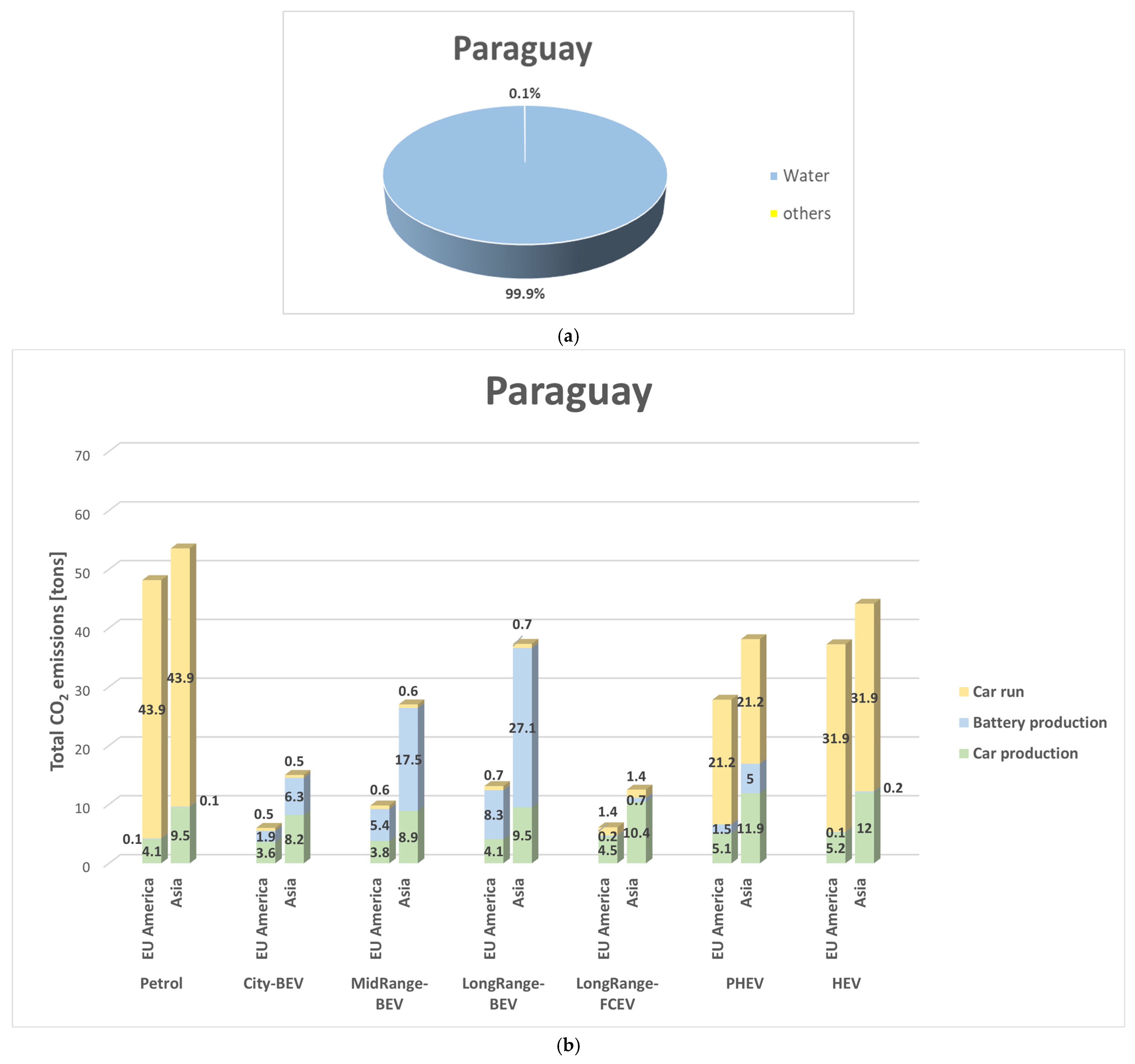
Figure 2a presents the electricity production for Paraguay in 2023. The country’s electricity generation is composed of 99.9% hydropower and 0.1% from other sources. This positions Paraguay as the nation with the highest percentage of electricity derived from renewable energy sources within the scope of this study.
Based on these figures, CO
2 emissions have been calculated for seven types of vehicles, assuming their utilization within the country. According to the data in
Figure 2b, the highest pollution results from the use of petrol cars. Utilizing such a vehicle over a lifespan of 200,000 km would emit 48.1 tons of CO
2 emissions if the car and the battery are manufactured in Europe, and 53.5 tons if it is produced in Asia. However, PHEVs and HEVs also exhibit high CO
2 emissions, particularly when both the vehicle and its batteries are manufactured in Asia, reaching 38.1 and 4.1 tons, respectively.
Hybrid vehicles could reduce emissions to 37.2 tons with European batteries. Plug-in hybrid electric vehicles (PHEVs) would achieve even lower emissions, with 27.8 tons for European batteries.
The most environmentally friendly options for Paraguay are the City BEV and FCEV, which would result in 6.0 tons of emissions for City BEV with EU–America car and battery production, and 15 tons if the battery and car are produced in Asia. FCEV would reduce emissions to 6.1 tons (EU or American car and battery) and 12.5 tons (Asian car and battery). For long-range BEVs, the CO
2 output more strongly depends on the car and battery production: vehicles powered by Asian-produced cars and batteries are projected to release 37.3 tons of emissions, whereas those with European-produced ones are estimated to release 13.1 tons (
Figure 2b).
Based on the aforementioned results for Paraguay, which has a predominantly hydroelectric power production, the lowest possible carbon dioxide emissions would be achieved with electric vehicles utilizing European batteries. Conversely, vehicles with internal combustion engines result in the highest emissions, closely followed by HEVs manufactured in Asia.
3.2. Brazil
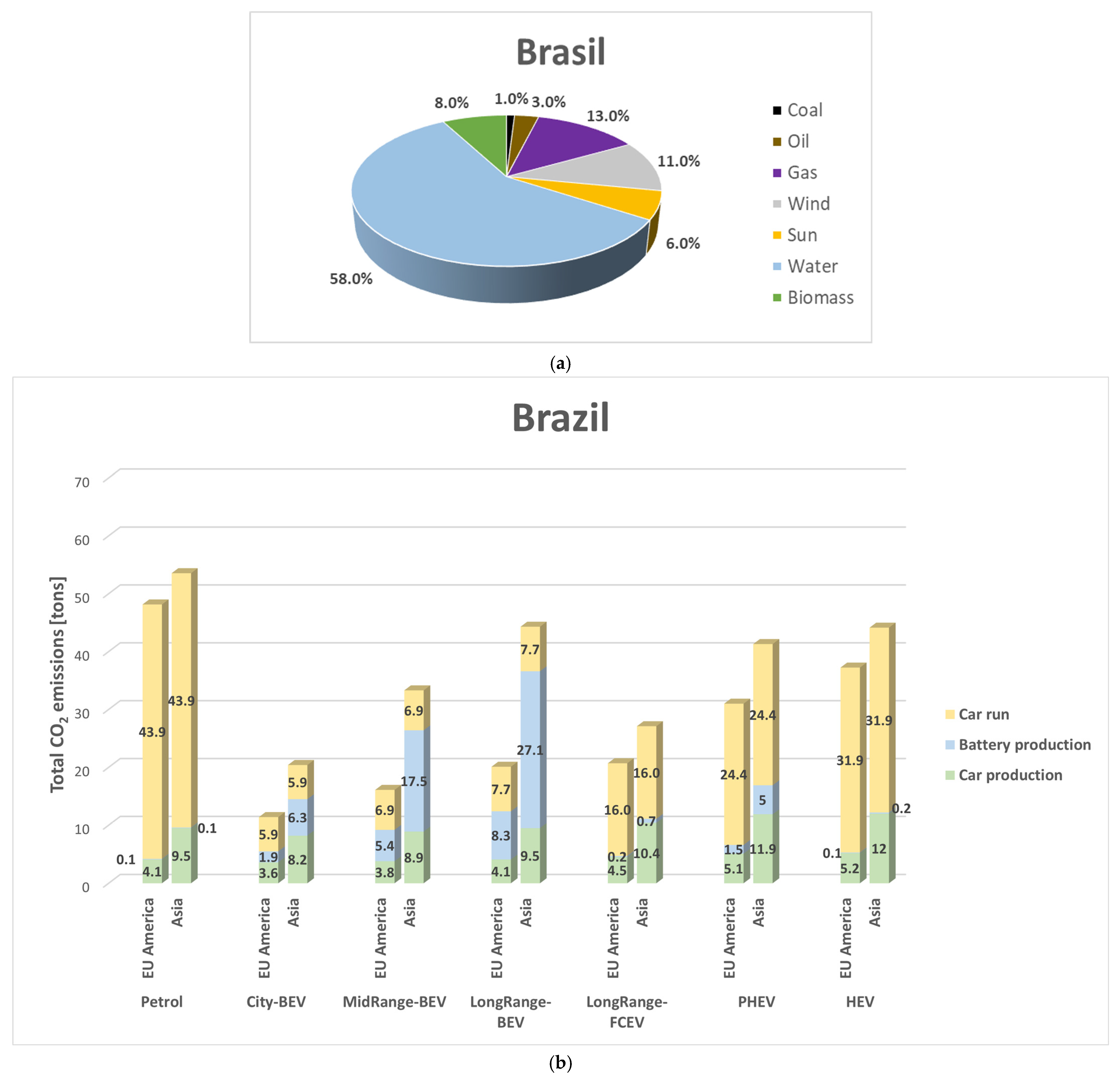
The electricity production from various sources for Brazil in 2023 exhibits notable differences compared to Paraguay (
Figure 3a). Hydropower constitutes a significant portion, approximately 58% of Brazil’s electricity mix. The remaining electricity is generated from various sources: 13% is derived from natural gas, 11% from wind energy, 8% from biomass, 6% from solar energy, 3% from oil, and 1% from coal.
While the CO2 emissions of the petrol and the hybrid electric vehicles (HEVs) remain the same for European/American- and Asian-produced vehicles and batteries, they increase for all other vehicles compared to Paraguay. Battery electric vehicles (BEVs) with long-driving range and Asian-manufactured car/batteries are estimated to produce around 44.3 tons of emissions. Fuel cell electric vehicles (FCEVs) are projected to contribute approximately 20.7 and 27.1 tons of CO2 emissions, respectively. A vehicle with medium range and an Asian-manufactured battery is estimated to produce 33.3 tons of emissions.
Notably, if the batteries were manufactured in Europe or America, the emissions for long-range BEVs would be 20.1 tons and 16.1 tons for medium-range vehicles. Nevertheless, the lowest CO
2 emissions are achieved by utilizing a city car with a short range. For a European-manufactured battery, the emissions amount to 11.4 tons, whereas an Asian-manufactured battery would contribute 20.4 tons (
Figure 3b).
The results obtained for Brazil can be summarized as follows: with more than 80% of the electricity production derived from renewable sources and the remainder from various other sources, the lowest emission levels would be achieved by short-range BEVs (battery electric vehicles) utilizing European batteries. Emissions from petrol-powered vehicles remain the highest.
3.3. Ecuador
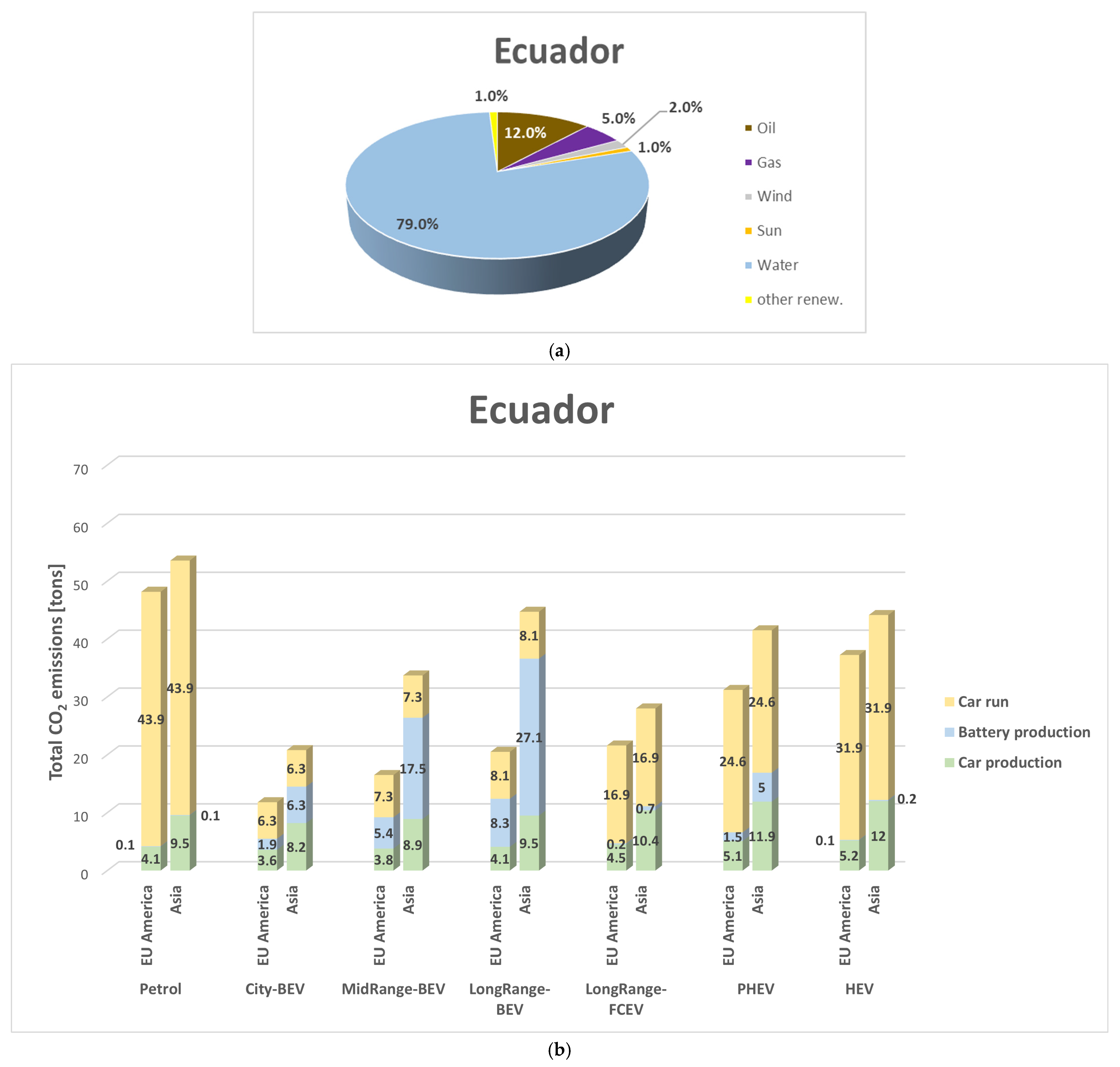
In 2023, Ecuador’s energy production was predominantly sourced from hydropower (
Figure 4a), which accounted for 79% of the total energy mix. The remaining energy was generated from oil (12%), natural gas (5%), wind energy (2%), solar energy (1%), and other renewable sources (1%).
In the case of Ecuador, where primary energy production is predominantly sourced from hydropower, the most environmentally sustainable option, according to the results, is the use of a short-range battery electric vehicle (BEV). With a European-manufactured car and battery, emissions are the lowest at 11.8 tons, whereas an Asian-manufactured car/battery increases total emissions to 20.8 tons (
Figure 4b). Slightly higher emissions result from using a medium-range BEV with European/American-manufactured cars and batteries, at 16.5 tons. In the case of an Asian-manufactured vehicle, emissions for the same vehicle rise to 33.7 tons. A similar pattern is observed with long-range BEVs, where emissions increase to 20.5 tons with a European- or American-manufactured car and battery, and reach 44.7 tons with an Asian car/battery. Comparable CO
2 emissions to those of long-range BEVs would be produced by using a long-range fuel cell electric vehicle (FCEV), with emissions of 21.6 and 28 tons, respectively. Plug-in hybrids produce 31.2 and 41.5 tons, respectively, while hybrid electric vehicles (HEVs) generate 37.2 and 44.1 tons. The most polluting option in the case of this energy mix for Ecuador remains the use of petrol-powered vehicles, with emissions of 53.5 tons (
Figure 4b).
In Ecuador, whose electricity mix, like that of Brazil, contains more than 80% of renewable sources, the results are similar to that of Brazil: in this context, the most advantageous approach would be the use of battery-powered vehicles with car and batteries produced in Europe or America.
3.4. Argentina
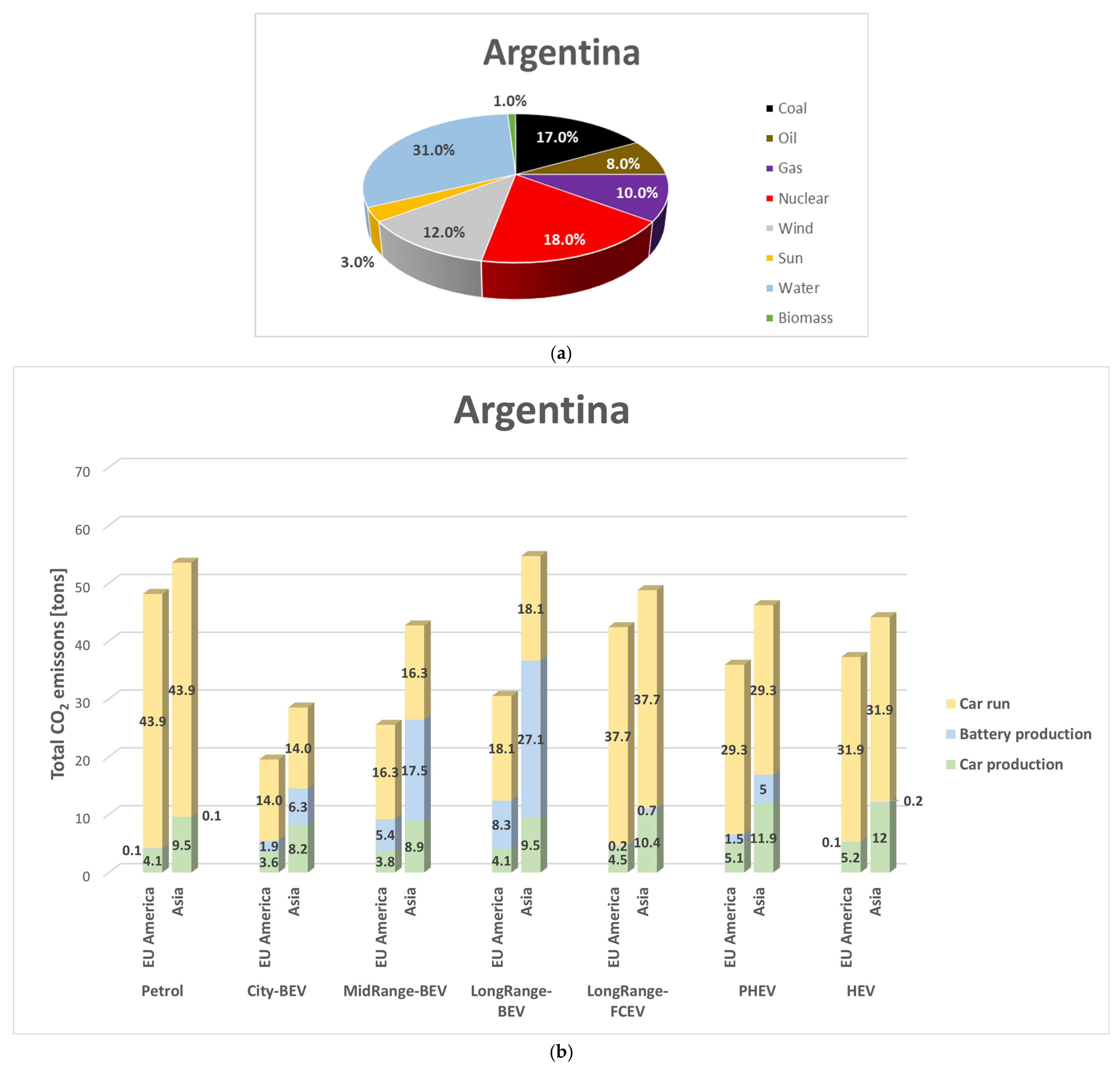
Unlike the aforementioned three countries, Argentina has no dominant hydropower production. Instead, the country’s electricity sources form a diverse array. Hydropower constitutes merely 31% of the total energy mix, while nuclear power plants contribute 18%, coal 17%, wind energy 12%, natural gas 10%, oil 8%, solar energy 3%, and biomass the remaining 1% (
Figure 5a).
Given this energy mix, which includes both renewable and fossil fuels, as well as a considerable proportion of nuclear energy, the highest CO
2 output is caused by the use of long-range battery electric vehicles (BEVs) manufactured in Asia, resulting in emissions of 54.7 tons of CO
2. Conversely, if batteries and cars are produced in Europe or America, emissions for the same vehicle type decrease to 30.5 tons (
Figure 5b). Fuel cell electric vehicles (FCEVs) emit 42.4 and 48.8 tons of carbon dioxide depending on the battery/car region of production, which is nearly as much as those of petrol vehicles, which emit 48.1 tons and 53.5 tons, resp., (as in the other countries) for European/American manufacturing.
Mid-range BEVs also exhibit considerable variations in total CO
2 emissions based on the origin of their batteries—25.5 tons for EU-manufactured batteries and 42.7 tons for Asian-manufactured parts. Plug-in hybrid electric vehicles (PHEVs) emit 35.9 and 46.2 tons, while mid-size HEVs emit 37.2 and 44.1 tons. The most environmentally sustainable option, as observed in other countries, is the City BEV, with emissions of 19.5 and 28.5 tons, respectively (
Figure 5b).
Summarizing, with a decreased percentage of low carbon sources—in Argentina, they contribute only 65% to the electricity generation—it remains still advantageous to utilize BEVs with European batteries. However, the emissions generated by these vehicles surpass those of Paraguay, Brazil, and Ecuador. In this context, the highest levels of pollution would be caused by long-range BEVs with Asian batteries.
3.5. Mexico
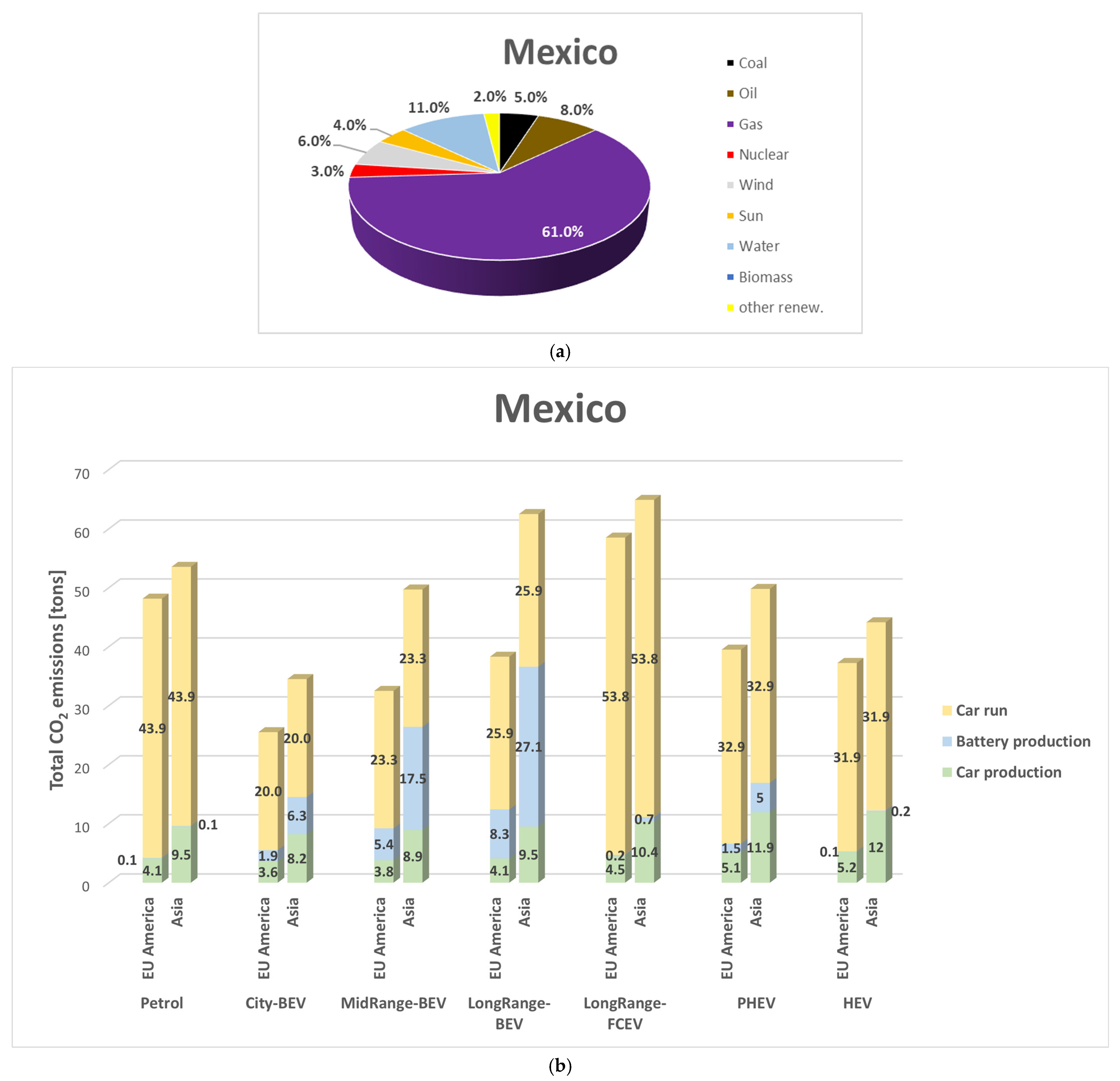
Mexico also utilizes a diverse array of primary energy sources to generate its electricity. In 2023, the predominant energy source is derived from carbon-based sources—61% natural gas, 8% oil, and 5% coal. Low carbon sources are 11% hydropower, 6% wind, 4% solar, 3% nuclear energy, and 2% from other renewable sources (
Figure 6a).
The calculation of CO2 emissions shows that, within this context, the most polluting options are the use of long-range battery electric vehicles (BEVs) and fuel cell electric vehicles (FCEVs), which are often regarded as ‘zero emission vehicles’ (
Figure 6b). The carbon emissions are as follows: long-range BEVs would emit 62.5 tons with an Asian-manufactured car and battery and 38.3 tons with a European-/American-manufactured car and battery. Emissions for long-range FCEVs would be about 64.9 tons. Except for the European/American long-range BEV, these values surpass the emissions from petrol vehicles. The use of plug-in hybrids would result in slightly lower emissions than petrol vehicles—39.5 and 49.8 tons, while mid-size hybrids would emit 37.2 and 44.1 tons. Nevertheless, even in this scenario, the most environmentally sustainable option would be the City BEV, with emissions of 25.5 and 34.5 tons, respectively.
In the case of Mexico, with the predominance of fossil energy sources, the highest emissions would be produced by long-range BEVs with Asian batteries and FCEVs. These vehicles would result in significantly higher emission levels compared to petrol cars, even exceeding those calculated for Argentina. The lowest emissions would be produced by BEVs with short range from Europe or America.
3.6. Comparative Results for All Five Countries
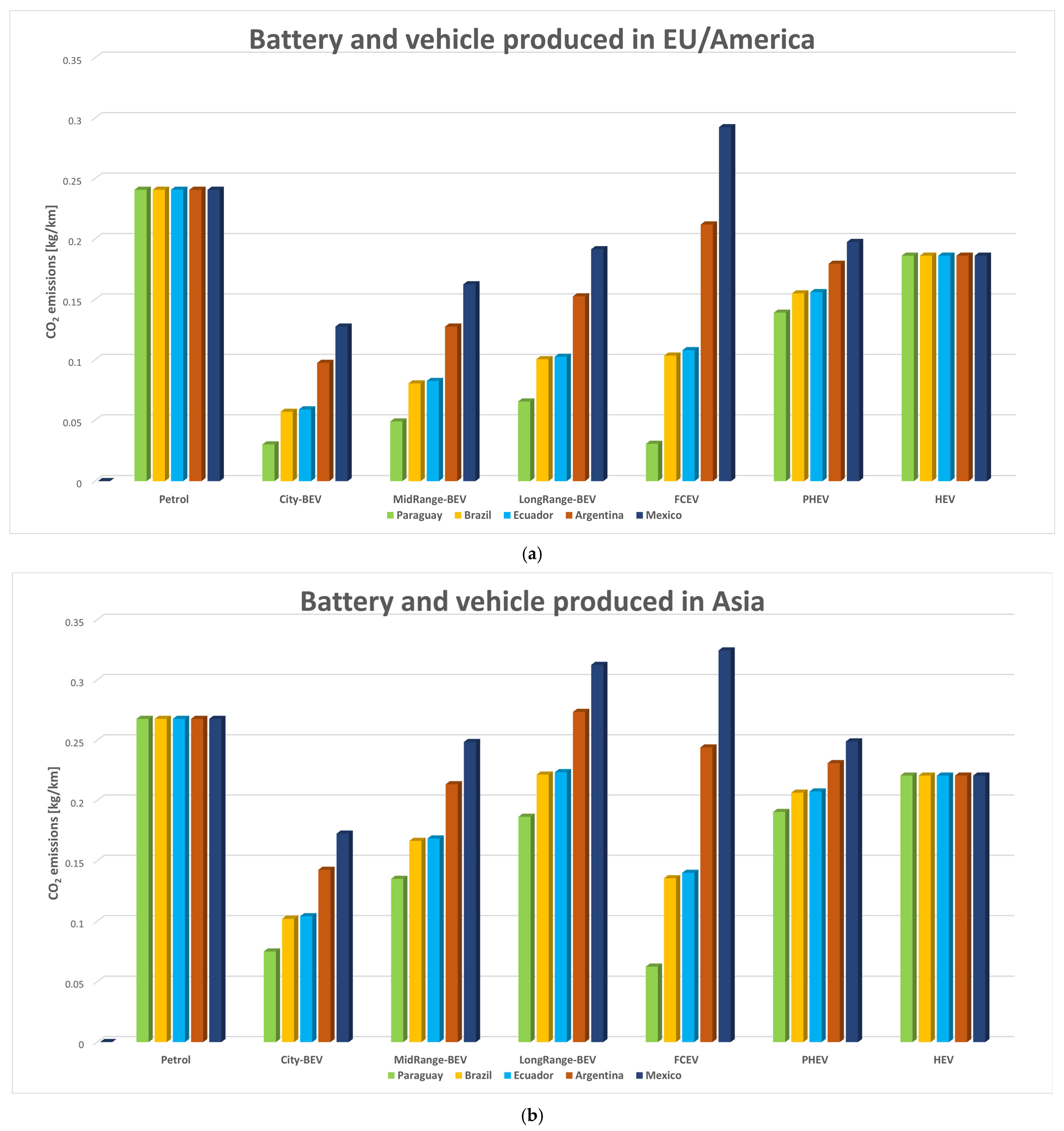
To provide an integrated overview of the results, the total CO2 emissions per kilometer for all vehicle types were compiled into two comparative figures. These figures summarize the combined effects of the national electricity mix and the origin of battery production on overall emissions.
Figure 7a presents the results of CO
2 emission release in kilogram per kilometer, assuming that battery and car production takes place in Europe or America. The manufacturing processes at higher share of renewable energy reduce CO
2 intensity of battery manufacturing. Under these conditions, short- and mid-range BEVs show the lowest emissions across all countries, particularly in Paraguay, Brazil, and Ecuador, where the electricity mix is dominated by sustainable sources. The differences between countries are still visible, especially for long-range BEVs and FCEVs, but the overall trends remain more favorable for vehicles using electric motors.
Figure 7b shows the corresponding results when battery and car production takes place in Asia, where the CO
2 intensity of battery and car manufacturing is substantially higher. In this scenario, the relative advantage of BEVs decreases, especially in Mexico and Argentina. For long-range BEVs and FCEVs, the higher battery production footprints lead to total emission values that approach or even exceed those of conventional petrol vehicles. This illustrates the total vehicle-life emissions based on the battery manufacturing location.
Overall, the two comparative figures clearly demonstrate that the battery origin has a major impact on the total life-cycle CO2 emissions for electric vehicles, that the country’s electricity mix remains a key determinant, especially for vehicle operation, and that short-range BEVs using batteries from EU/America consistently achieve the lowest emissions, independent of the country.
4. Discussion
The results of the current study underscore the critical importance of the electricity source for the overall CO2 emissions of vehicles, both in terms of car and battery production and vehicle usage. The two scenarios examined—one where car and battery are produced in Europe and/or America, and the other with production in Asia—significantly influence the total emissions for each electric vehicle type. The substantial difference in CO2 emissions between production in Asia and Europe/America is primarily due to the regional energy mix. In Asia, electricity generation for industrial processes relies heavily on coal, which has a very high carbon intensity compared to Europe and America, where renewable and nuclear sources represent a significant share. Furthermore, variations in manufacturing technologies, efficiency standards, and supply chain practices contribute to the higher emission factors observed in Asia.
The findings of this study show that battery electric vehicles (BEVs) with batteries manufactured in Europe or America, which possess the shortest range, will generate the lowest levels of CO2 emissions in the countries analyzed, irrespective of their energy mix for electricity generation. Nevertheless, the emission values for these vehicles, including City BEVs, exhibit variability across the different countries. Although these values are the lowest in comparison to other types, the CO2 emissions from these City BEVs increase as the proportion of renewable energy sources used for electricity generation in the respective country decreases. It is particularly evident that in countries where renewable energies predominate, such as Paraguay, Brazil, and Ecuador, these types of vehicles are the most effective in reducing overall CO2 emissions. There, gasoline-powered vehicles remain the predominant sources of harmful emissions. In the case of Paraguay, with a very high degree of green energy production, an FCEV appears to be a slightly better choice in terms of CO2 reduction, as it shows slightly lower emissions compared to a short-range BEV.
Previous studies on countries with a strong dominance of hydro energy, such as Norway and Sweden, have been conducted and confirm that BEVs, even with a medium range, are the optimal choice for effectively reducing emissions [
32]. These studies emphasize the importance of national electrical grids and the methods of hydrogen production in achieving low levels of overall CO
2 emissions. Similar conclusions are reached by other authors in the case of Sweden [
33], who highlight that if a country generates its energy from renewable sources, BEVs are the most environmentally beneficial option. The authors also note that under these conditions, BEVs should be complemented by hydrogen fuel cell vehicles to meet the demand for light commercial transportation.
The results of the present study show slightly lower levels of overall emissions for FCEVs in a country with nearly 100% of renewable energy compared to all BEVs, indicating that FCEVs are the best option in that case. In all other cases studied, short-range BEVs have the lowest CO
2 output, especially when equipped with a battery produced with low CO
2 emission. Similar results were obtained in a previous study conducted for European countries [
20].
For countries such as Argentina and Mexico, which do not have a substantial share of renewable energy (specifically hydro energy), the utilization of so-called zero emission vehicles is questionable. This is particularly true for long-range vehicles with batteries produced in Asia and FCEVs, whose emission values exceed even those of fossil fuel-powered vehicles. A similar conclusion was reached in a previous study in the case of Poland, where electricity production is predominantly from coal-fired power plants. In this scenario, petrol-powered vehicles were found to have lower CO
2 emission than any other type of vehicle [
20]. However, in the Latin American countries, using hybrid cars always reduces the CO
2 emissions compared to petrol cars. It is therefore a good choice for countries where electricity generation is dominated by fossil fuels.
In the Latin American context, the results also reveal broader challenges that go beyond the vehicles themselves. Many countries in the region continue to depend heavily on hydropower, a source that is increasingly exposed to climate variability and recurrent droughts. When hydropower output falls, electricity systems often turn to fossil-based backup generation, and in some cases, this even leads to new investments in coal- or oil-fired power plants, which can lock in higher emissions for years. For this reason, transport electrification must be accompanied by a steady expansion and diversification of renewable energy sources if it is to deliver sustained emission reductions. The clear advantage of short-range BEVs—and, in nearly fully renewable systems, FCEVs—also depends strongly on where their batteries are manufactured, since production in regions with low-carbon electricity significantly reduces their overall footprint. In countries where fossil fuels dominate the grid, conventional hybrid electric vehicles (HEVs) remain a practical transitional option because their emissions are not sensitive to electricity generation conditions and depend more on vehicle mass and operating efficiencies. These considerations are consistent with previous work in the region, which has shown that shifts in vehicle technology only translate into meaningful climate benefits when supported by solid public policies, including renewable energy targets, incentives for electric mobility, and stricter emission standards [
18]. Strengthening these policies will be essential for ensuring that the move toward electrified transport contributes effectively to national decarbonization goals.
Based on the findings of the current study, the necessity for policy measures to support the use of (short-range) electric cars and extend renewable energy sources for electricity generation is emphasized. Enhancing investments in infrastructure for renewable sources such as hydroelectric power plants, wind farms, and solar energy installations would significantly contribute to the reduction of carbon dioxide emissions. Additionally, the establishment of financial incentives and infrastructure for the acquisition and charging of electric vehicles—battery electric vehicles (BEVs) for short distances and fuel cell electric vehicles (FCEVs) for long ranges—could be highly beneficial. This is particularly crucial when generating electricity from sustainable energy sources.
5. Conclusions
Compared to petrol cars, hybrid cars reduce CO2 emissions, but only by about 13% to 20%. Battery electric vehicles can indeed significantly reduce CO2 output compared to petrol cars, up to 89%, if the electricity is mainly produced from renewable sources, and the battery is small and produced with low CO2 emissions. On the other hand, if the battery is large and produced with high CO2 emissions and the electricity is mainly generated from fossil fuels, the CO2 output can even exceed that of a petrol car by 20%. On average, electric cars have about half the total CO2 output of petrol cars in the five countries studied. Fuel cell electric vehicles are only a good choice if the electricity is mainly generated from renewable energy sources. Summarizing, eco-friendly electricity generation is a prerequisite for the eco-friendly use of electric cars. Therefore, electricity generation from renewable resources should be extended and that from fossil fuels reduced in all countries where the fraction of renewable sources is low.
Given that battery electric vehicles with small batteries are, across all scenarios and countries analyzed in this study, the option with the lowest total CO2 emissions over their life cycle—particularly when their manufacturing takes place in Europe or America—their adoption represents an effective strategy for mitigating the climate impact of the transportation sector.
Therefore, it is advisable that Latin American governments design and implement comprehensive public policies to encourage the adoption, use, and infrastructure expansion of battery electric vehicles, especially those made for a short cruising range. Such measures may include purchase subsidies, tax incentives, investments in charging networks, and public information and awareness campaigns aimed at supporting a fair and sustainable technological transition.