Article

Annual Flow Balance of a Naturally Ventilated Room with a Façade Opening Covered by Openwork Grating


1
Faculty of Energy and Environmental Engineering, Silesian University of Technology, Konarskiego 18, 44-100 Gliwice, Poland
2
Faculty of Transport and Aviation Engineering, Silesian University of Technology, Krasińskiego 8, 40-019 Katowice, Poland
3
Fire Research Department, Building Research Institute, Filtrowa 1, 00-611 Warszawa, Poland
*
Author to whom correspondence should be addressed.
Energies 2025, 18(24), 6569; https://doi.org/10.3390/en18246569
Submission received: 5 November 2025 / Revised: 10 December 2025 / Accepted: 13 December 2025 / Published: 16 December 2025
(This article belongs to the Section G: Energy and Buildings)

Abstract

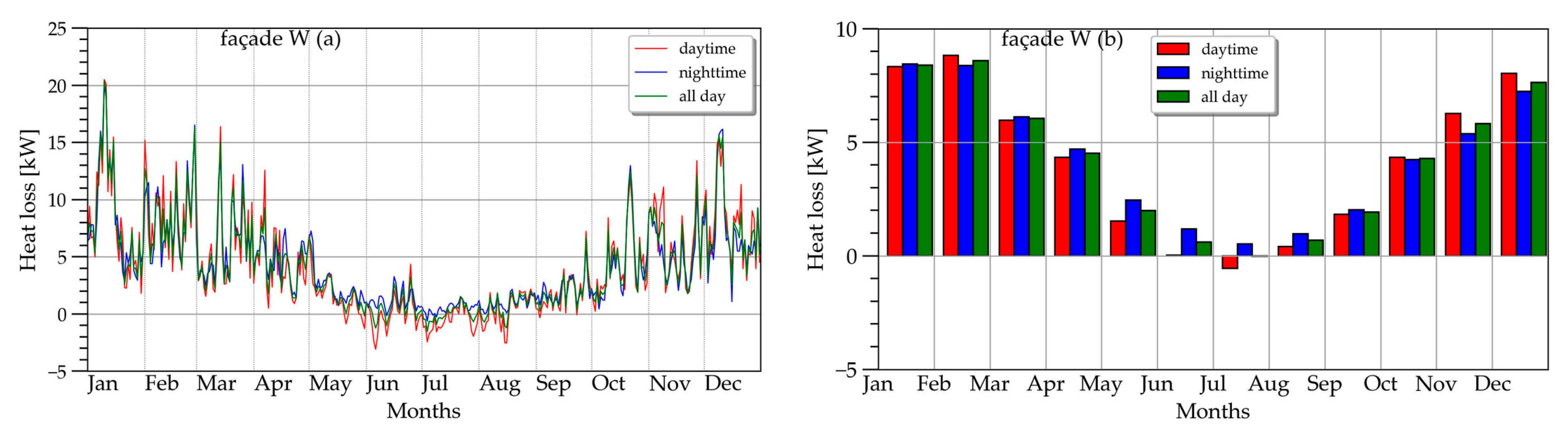
This paper presents research on a naturally ventilated room with a façade opening covered by openwork grating. The first part describes experimental measurements of airflow velocity through the façade opening. Then, a numerical model of the room with the opening is introduced and validated using the experimental data. The core of the research consists of a series of numerical simulations in which the inflow and outflow of air are determined hour by hour using official data from a typical meteorological year and statistical climatic data for building energy calculations. Among the findings is a strong dependence of the opening performance on the façade orientation and the season of the year. For almost the entire year, excluding the daytime in July, the average ambient temperature is lower than the assumed inner temperature, which can cause heat losses due to air exchange (solar irradiation is not taken into account). The highest heat losses, close to 10 kW per window slot for all façades, are expected in February. The analysis confirms that, in temperate climates, natural ventilation is beneficial, especially when utilizing night cooling. The energy savings for a single window slot in July may reach up to 0.012 kWh/m2.

1. Introduction

Numerous studies have shown that buildings consume about 40% of the global energy used [1]. Therefore, many measures are taken to reduce energy consumption in buildings. This includes improving both the insulation of the building envelope and the efficiency of the various systems with which the building is equipped. This is especially true of ventilation, air conditioning, and heating systems. The search for cost savings for systems that supply fresh air to a building has led to natural ventilation being increasingly considered in this role [2]. Additionally, the COVID-19 pandemic has increased interest in natural ventilation [3]. The potential for natural ventilation is also one of the building characteristics assessed in environmental certification. For example, in the BREEAM model, this is recognized through the “≤5% mechanical ventilation” credit, which is then included in the final building scoring [4]. The achievement of this score is based on modeling the ventilation usage over a period of one year, during the asset’s operating hours, a methodology that is also applied in this paper.
It can be observed that in buildings where air conditioning and the ability to open windows are available, users will often first choose to open a window. If this does not provide them with the expected conditions, they will then choose to turn on the air conditioning. Therefore, a partial return to natural ventilation seems to be the appropriate solution, although it should be accompanied by a thorough analysis of the potential consequences of such measures. The opening of air intakes or windows can result in an uncontrolled inflow of air into the building. This may cause a change in the pressure distribution in the building, which could result in a deterioration of fire safety, as well as the need to supply the building with additional heat or cold in an undetermined amount, because the amount of air flowing into the building in an uncontrolled manner is undetermined.
The increased interest in natural ventilation systems has been reflected in scientific papers. Many publications have considered various aspects of natural ventilation [5,6]. It has been pointed out that the position of the façade where natural ventilation openings (such as windows) are located is of great importance due to the direction of wind inflow and insolation. The angle of wind inflow on a façade with windows is critical to the amount of air entering the building [7,8,9]. Hu explicitly writes that to design efficient natural ventilation, it is necessary to take into account the effect of wind direction on the building [10]. Studies have shown that the window opening ratio, the size of the window opening, and its possible obstruction with additional covers will significantly affect the amount of air supplied to the room through natural ventilation [11,12,13,14]. Additionally, the amount of airflow entering a building is influenced by various architectural aspects such as the window-to-wall area ratio, the building’s orientation [15], the shape of the roof [16], or different types of window recesses [17]. Even special louvers have been proposed to increase the effect of wind on the efficiency of natural ventilation [18], or louvers or vanes dedicated to single-sided ventilation [19]. However, it should be remembered that with wind-driven natural ventilation, the choice of ventilation strategy, whether single-sided or double-sided, is also important for its efficiency [20]. Because the main driving force of the natural ventilation process is wind, it is also important to determine the value of wind pressure coefficients (Cp) for a façade with windows because this value strongly affects the accuracy of predicted airflow rates for natural ventilation [21,22]. Xie even states that wind pressure coefficients are critical inputs for building energy simulations [23]. Studies show that the amount of air entering a building through natural ventilation will be affected by the building’s surroundings. If the building is freestanding, then the wind impact will be greater than for a building situated between other buildings [24].
Natural ventilation appears to improve a building’s energy efficiency and indoor air quality; however, there are areas where the latter is compromised due to outdoor pollution [25]. PM2.5, in particular, can be a problem [26,27]. However, the concentration of particulates will depend on the floor on which the room is located. Due to the wind profile, rooms located on higher floors are less likely to experience an increase in PM 2.5 concentrations as a result of natural ventilation. It should be remembered that the supply of fresh air to a building by way of natural ventilation makes it impossible to control the quality of the air supplied.
Over the years, many researchers have conducted studies on the energy-saving potential of using natural ventilation [28,29,30]. Tong et al. evaluated the energy-saving potential for office buildings in 76 Chinese cities in 2015 using natural ventilation and predicted an average of 2324 NV hours out of 8760 h/year, leading to an 8–78% reduction in cooling energy consumption [31]. In contrast, Tognon et al. found that the use of natural ventilation in sample buildings in selected Italian cities could lead to savings of up to 30% in cooling energy [32]. Reducing cooling power demand is most often associated with the use of natural ventilation during nighttime hours [21,33,34] or the use of reduced-temperature air in free cooling systems. Reducing the demand for cooling power through natural ventilation can result in overlooking issues related to the relative humidity in the room, which has a major impact on the perception of comfort for room users [35]. Analyses show that it is possible to fully exploit the potential of crossflow ventilation due to its cooling properties. To achieve this, it is necessary to properly design the size and placement of supply vents, the interior architecture of the building, and the correct mode of operation of the supply vents depending on external conditions [36]. It is worth noting that some areas have conditions that allow the use of natural ventilation for relatively long periods during the year. Chen et al. studied the hours of natural ventilation in 60 cities worldwide and found that subtropical mountain climates are the most favorable for using natural ventilation to ventilate buildings [37].
Ghalam analyzed the effectiveness of natural ventilation in a temperate, humid climate. The research focused on the effect of wind on the amount of air entering a room. Conclusions indicate that the orientation of the building with respect to the incoming wind (wind angle) and the distance between buildings are key factors for the effectiveness of natural ventilation [38]. Some studies also show that in temperate climates, promoting natural ventilation with openable windows can significantly improve thermal comfort in office building spaces for a significant part of the year [39]. Mao even states that the temperate zone has the greatest potential for natural ventilation [40]. Other studies have demonstrated the great potential for energy savings from natural ventilation in the context of climate change, particularly in temperate climates [41,42].
As described above, natural ventilation is increasingly considered a system for saving energy by maintaining certain air parameters in a room. If natural ventilation were to be used as the only system that brings fresh air into a room throughout the year, heating and cooling systems would only operate on circulating air, requiring energy to maintain specific air parameters within the room. It should be noted that such a system would prevent the recovery of energy from exhaust air, both heating and cooling, making it an economically inefficient system. However, many studies show that using natural ventilation during the transitional period and as night ventilation in the summer has strong economic advantages, especially in temperate climates. For natural ventilation to be economically viable, it is necessary to accurately determine the amount of air entering the interior, taking into account the orientation of the façade, the building’s environment, and meteorological conditions (temperature, wind speed, and direction) throughout the year.
The presented work focuses on a single type of façade opening and its role as a basic element of the natural ventilation system. The motivation of the work was an inquiry by the management of a tall building under construction, equipped with only such windows. They wanted to know whether it was reasonable to use the windows without central control, taking into account the possibility that the building occupants might leave the windows closed or opened involuntarily, regardless of actual or future weather conditions. The key previous studies and their relevance to the presented work are shown in Table 1.
First, detailed characteristics of the examined window performance are determined. Then, using official data from typical meteorological years and statistical climatic data for building energy calculations, the amount of inflowing or outflowing air, as well as the heat loss or gain, are calculated on an hourly basis, assuming that the window remains open all the time (not because the window was left open unintentionally but to determine its ventilation potential).
The main contribution of this work is a method for a detailed analysis of the performance of the façade opening throughout the year. Its novelty lies in the quantitative evaluation of its sensitivity to climate conditions. Due to the use of long-term average weather data, the method should be robust to weather variability, which is significant in the temperate transitional climate zone, and provides results that are valid in the long-term horizon.

2. Materials and Methods

The starting point of the research was to conduct full-scale measurements of airflow through a single façade opening on a high floor of a high-rise building. At the same time, weather parameters were continuously recorded. To correlate the measured airflow with the weather parameters, particularly the wind impact, a series of numerical simulations of airflow around a tall building was carried out to determine the dependence of the pressure coefficient on the wind inflow angle for different building façades. The results were validated with data from the literature.
Next, a numerical model for the single opening was developed. The characteristics of the opening were numerically determined for different wind speeds and inflow angles. These results were then validated with the measured data.
Subsequently, official data from typical meteorological years were used to calculate the amount of inflowing or outflowing air hour by hour. With the complete opening characteristics and values of the pressure coefficient, airflow through the opening was interpolated for each set of weather parameters. This, in turn, allowed for determining the heat flow, which impacts the energy demands for adjusting the fresh air to the desired conditions. A flowchart of the research procedure is shown in Figure 1.

2.1. Experiment Description

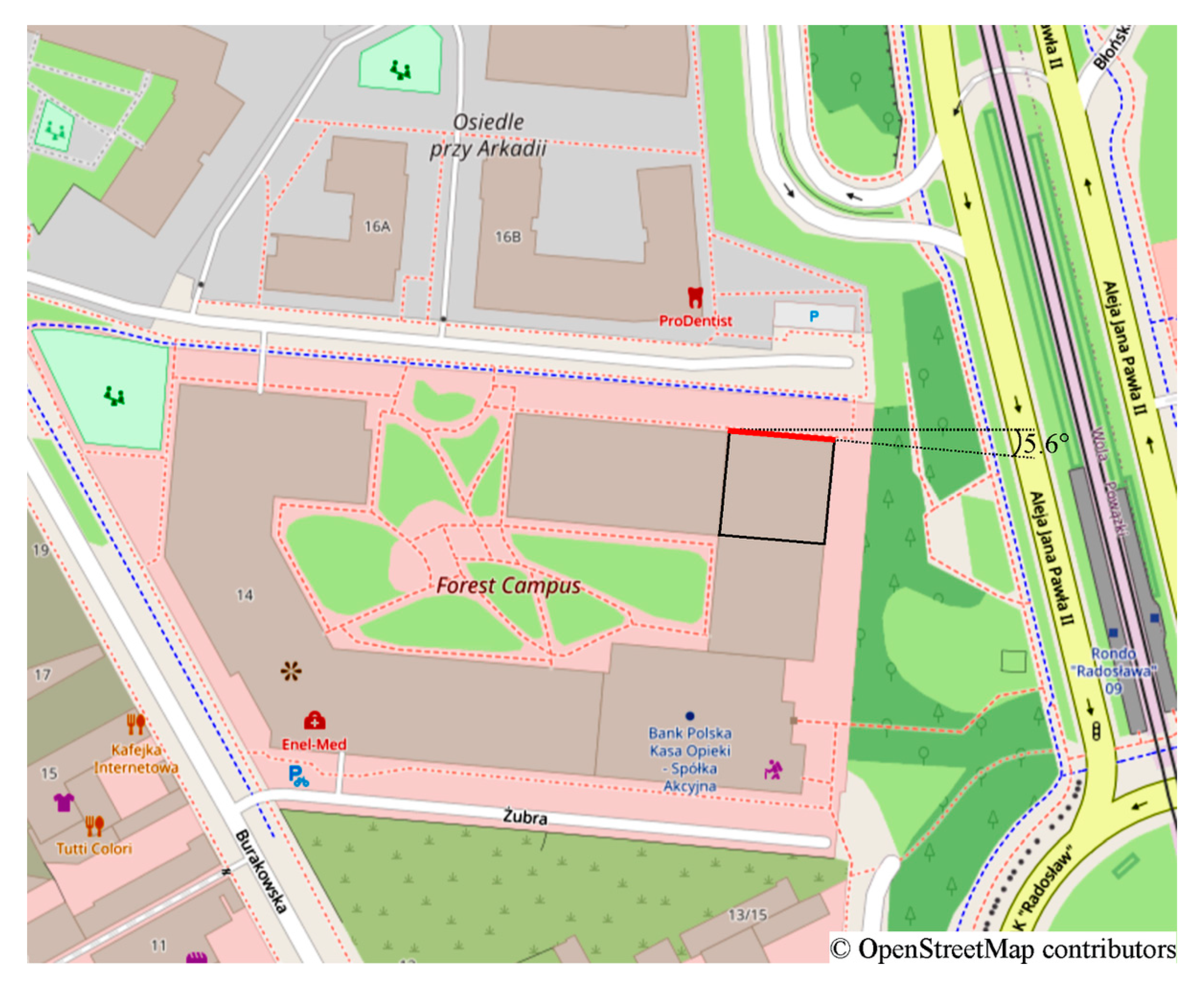
The experimental part of the study took place on 14 September 2021, on the façade of a tall building under construction in Warsaw, Poland (52°13′44 N, 21°00′00 E). The location falls within the warm temperate transitional climate zone. The building, which is 120 m high, is the tallest part of an office complex called Forest Campus and has been built generally on a square plane. On the day of the measurements, north and northwest winds prevailed, so the façade facing nearly north (with a 5.6° deviation to the east) was selected. A general sketch of the complex, with the examined tall building and façade marked, is shown in Figure 2.
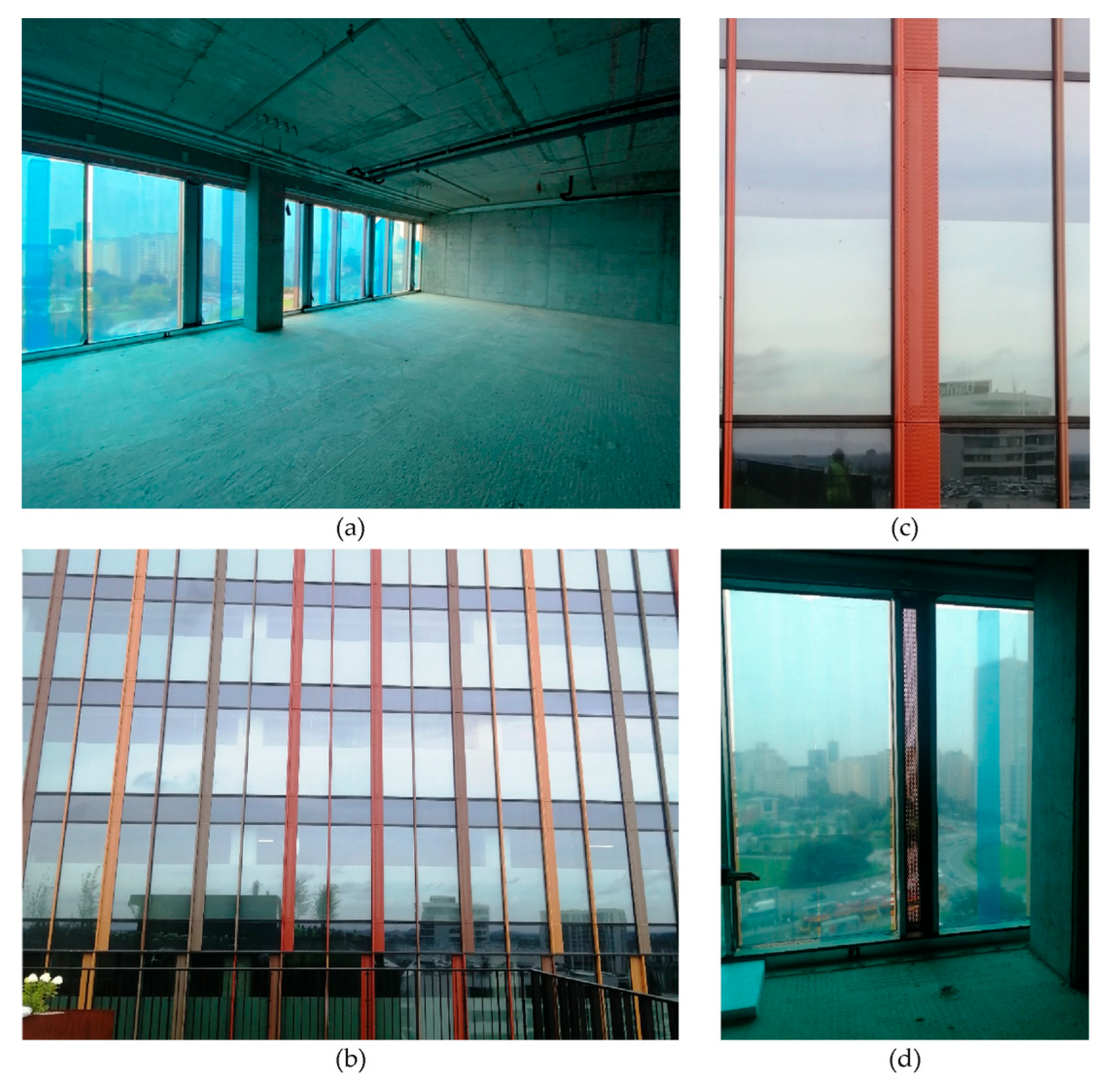
A floor at 2/3 of the building height was chosen because this minimized the influence of the lower parts of the complex and the building roof on airflows. This was the 23rd floor, at a height of 80 m above the ground. There are no high buildings in the immediate vicinity, so the impact of the wind can be considered undisturbed. The floors in the upper part of the building are 3.38 m high, and at the time of the measurements, each floor formed an open space covering the entire area (Figure 3a). The building façades consist of non-opening glazed panels (Figure 3b). However, natural ventilation has been incorporated into the building, which was implemented by a series of façade openings covered by an openwork grating (Figure 3c,d). Such a window type is interesting because it connects two ideas, unopenable glazed panels and façade openings allowing the natural ventilation, and the window slots are restrainedly integrated into the façade. The grating mitigates the flow. Laboratory tests showed that the grating decreases the discharge coefficient by a factor of 2, so the volumetric flow through the window is half that of a simple opening for a given wind impact [43].
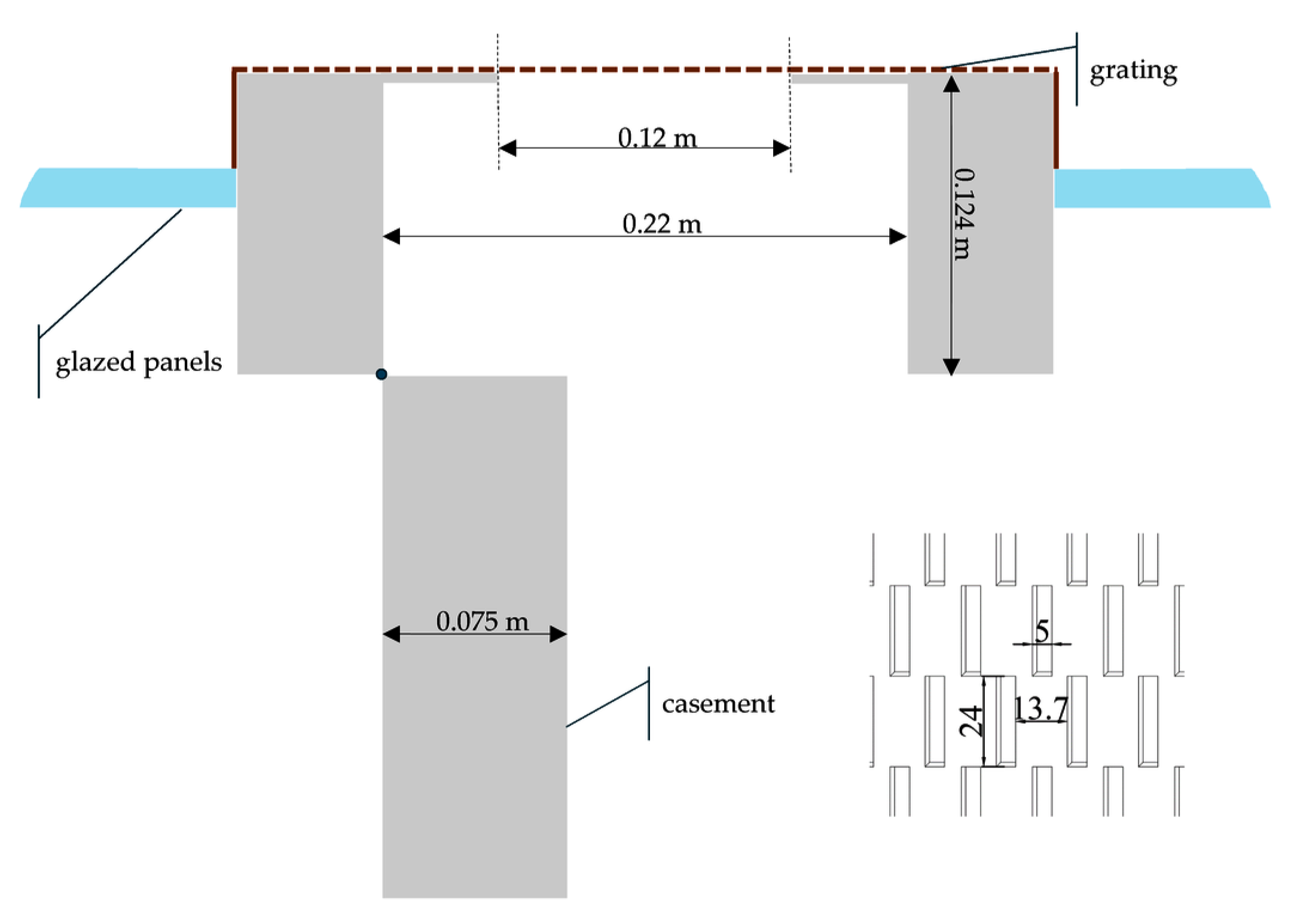
The horizontal distance between the façade openings is 2.62 m. Each façade opening is 2.8 m high, 0.124 m deep, and 0.22 m wide. However, due to mounting elements, the width of the grating area accessible for airflow is only 0.12 m, so the effective opening area is 0.336 m2. Each slot can be closed by a casement, which is 0.075 m thick. When opened, the casement is positioned perpendicular to the grating and aligns with the opening’s clearance. The lower edge of each slot is 0.12 m above the floor. A horizontal cross-section of the slot and the grating dimensions is shown in Figure 4. A window of this type has only two working positions: closed or completely open.
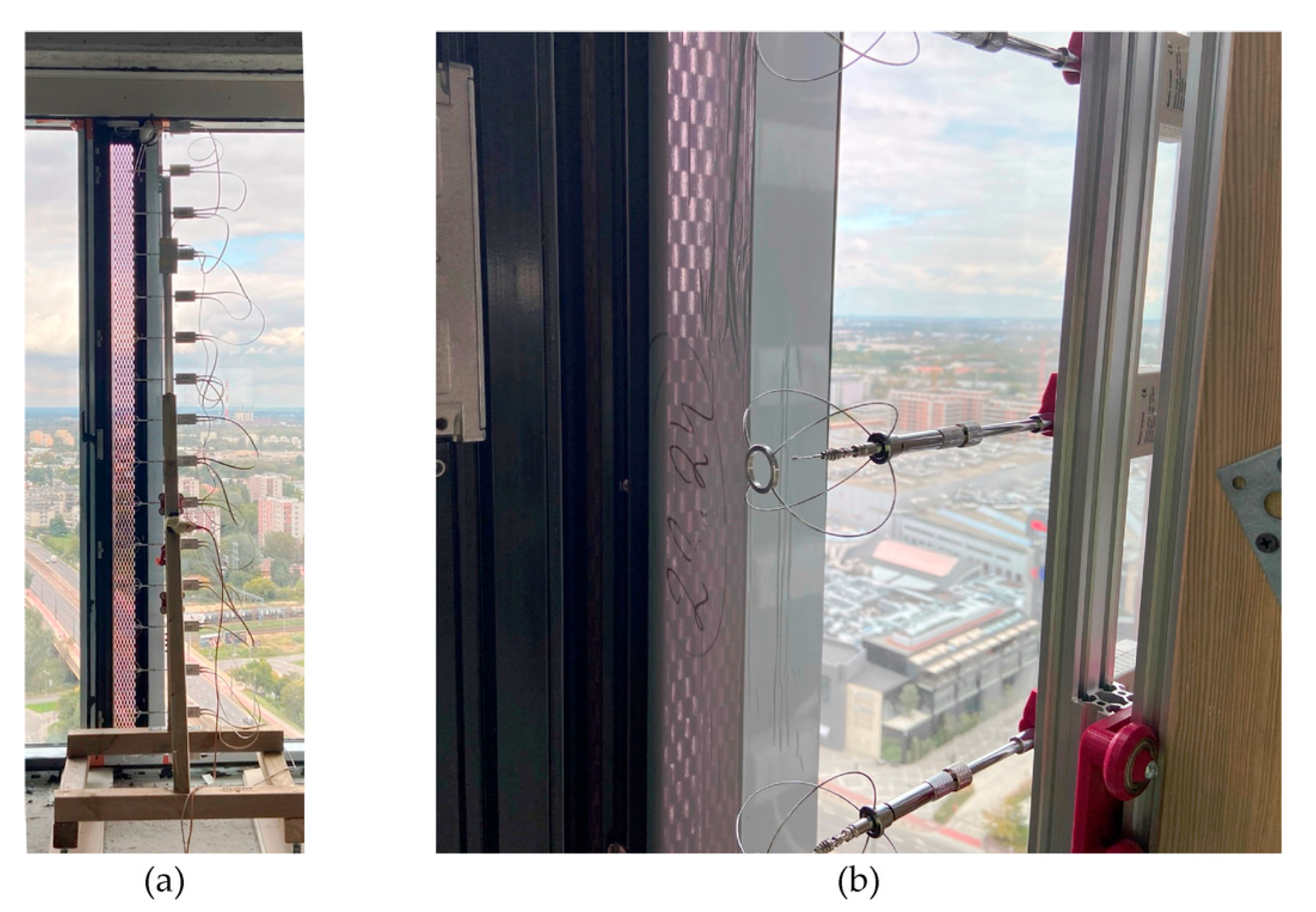
The velocity of air flowing through the opening was measured with 16 thermoanemometers mounted on a stand pole. Each anemometer, manufactured by Sensor Company, was equipped with an omnidirectional velocity sensor. The anemometer had a spherical velocity sensor of 3 mm in diameter. It was made of enameled copper wire molded into a sphere. The overheating temperature of the sensor was set to 25 °C. The velocity probes of the anemometers had an unheated sensor that measured the air temperature. These measurements of air temperature were used to correct the velocity when the air temperature of the airflow differed from the air temperature during calibration [44]. The air velocity measurement range was 0.05 to 5 m/s, with an accuracy of ±0.02 m/s and ±1.5%, respectively. The anemometers averaged measurements over 30 s intervals.
The sensors were placed along the centerline of the opening aperture (with respect to the casement) at a distance of 0.36 m from it. The vertical distance between the sensors was 0.185 m, and the lowest and highest sensors were positioned near the lower and upper edges of the slot, respectively. The measurement assembly is shown in Figure 5.
When the measurements were taken, weather conditions were continuously recorded every 30 s by a Kestrel Weather Meter 5500, which was placed on the building roof. Its parameters are shown in Table 2.

2.2. Experimental Data

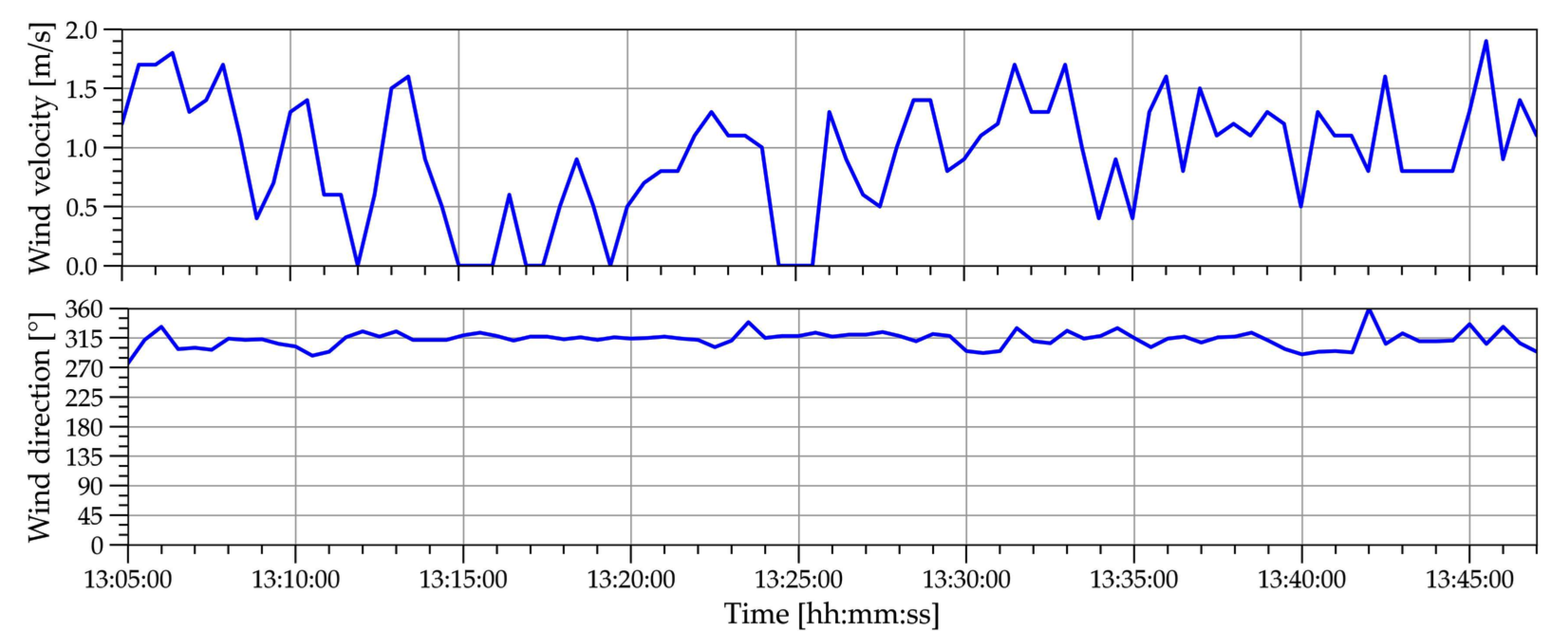
The weather during the measurements was generally stable, with an air temperature of 19 °C, atmospheric pressure of 993 hPa, and relative humidity of 63%. Figure 6 shows the wind velocity and wind direction (0 or 360° means north, 90° means east, 180° means south, and 270° means west).
As for the wind speed, it was variable—its velocity violently fluctuated from 0 up to 2 m/s. However, its direction was almost stable, blowing from the northwest and north.
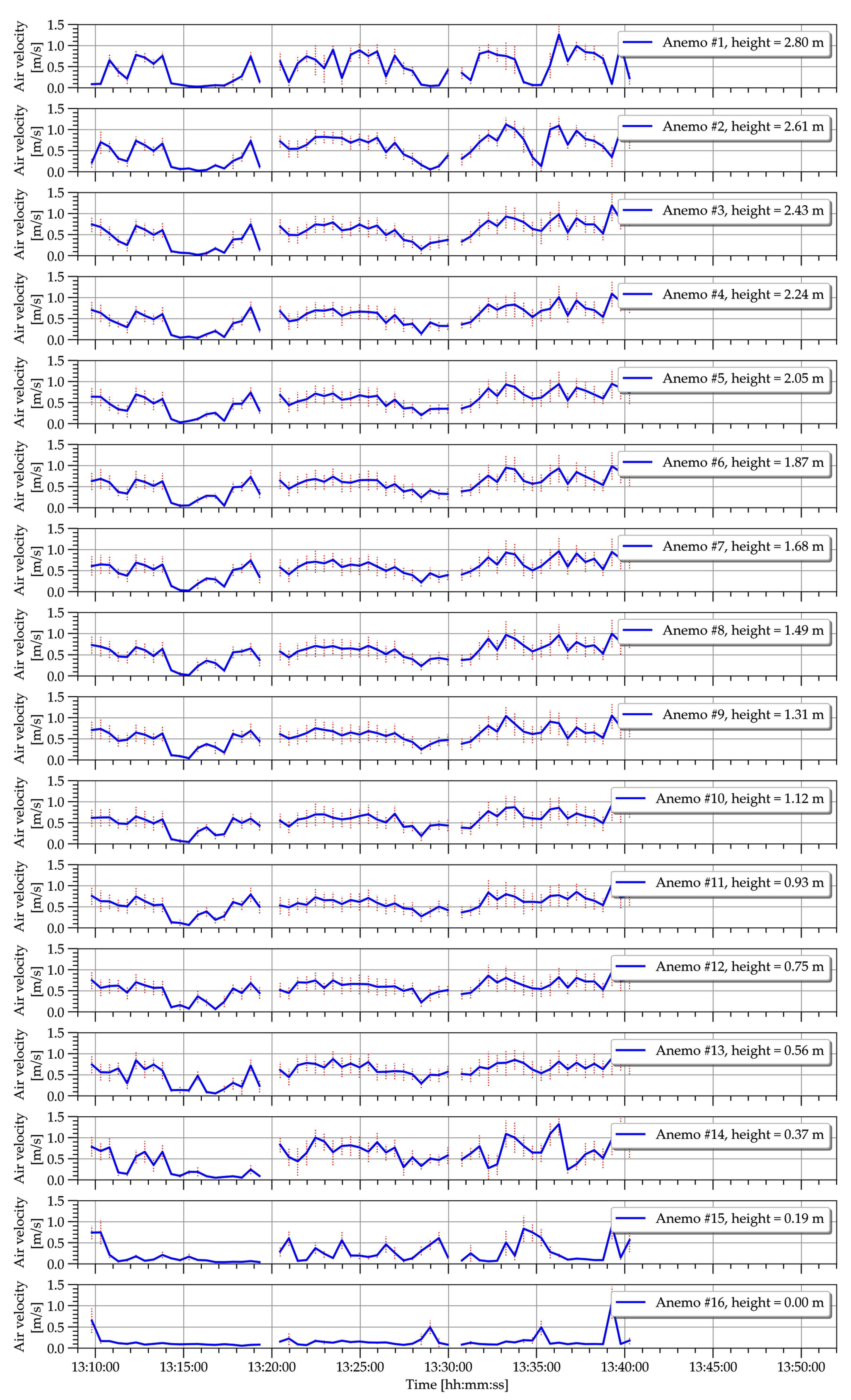
The records from the anemometers are presented in Figure 7. High values of the standard deviation confirm the highly turbulent nature of the flow through the façade opening. However, the dependence on wind properties is clearly visible: the stronger the wind, the more intense the air inflow through the opening. The match between the wind velocity and airflow velocity is not perfect, but one must keep in mind the vertical distance between the examined façade opening and the weather station.
The grating moderated the flow, so the recorded airflow velocity values are much smaller than the wind velocity. The curves corresponding to neighboring anemometers are similar but not the same, due to the changing wind properties along the grating height.

2.3. Interpretation of the Experimental Data

A direct correlation between the measured airflow velocity and the recorded values of wind speed and direction is not possible because the performance of window openings is considered in terms of volumetric flow, and the impact of wind depends on the wind inflow angle in a nonlinear manner.
Volumetric flow (V) through the façade opening is determined by the following expression [45]:
V = C d A 2 p ρ 0 [ m 3 / s ]
where Δp denotes the pressure difference that drives the flow, ρ0 is air density under normal conditions, A is the opening area, and Cd is the discharge coefficient that describes the properties of the opening. The pressure difference is mainly caused by the wind impact or the temperature difference. When the wind is the main factor driving the flow, the wind-originated pressure difference (Δpwind) depends on wind velocity and inflow angle, but the relationship is not straightforward. It is influenced by factors such as the location on the façade, the façade structure, the building shape, the vertical distance from the ground or roof, and other buildings in the vicinity. Gids and Phaff [46] showed that when the difference in the air temperature between the interior and exterior (ΔT) causes buoyancy forces to drive the flow, the respective component of the pressure jump can be expressed as follows:
p T = C h T
where C is a constant, and h stands for the opening height. The issue of airflow around high buildings has been studied by many researchers using numerical and experimental methods. It was found that the nature of the flows strongly depends on the Reynolds number:
R e = ρ u L μ
where µ denotes air dynamic viscosity, and L stands for the characteristic flow dimension. For tall buildings, the width of the façade can be adopted as the characteristic dimension (L ≥ 10 m). Even for low wind velocities (u ≈ 1 m/s), the value of Re is >105 and should thus be considered as high.
In this work, the experimental results published by Hinsberg [47] were used to validate a preliminary numerical model. Hinsberg evaluated, among other things, the wind pressure coefficient for a square prism at different angles of wind inflow. Although Abdusemed and Ahuja [48] and Kobayashi [22] also published data on the wind pressure coefficient for a scaled building model, their results concerned lower Reynolds numbers (Re < 105). Despite qualitative agreement, these results cannot be directly applied to the current case.
The wind pressure coefficient is defined as follows:
C p = p w i n d 1 2 ρ u w i n d 2
where uwind denotes the wind velocity far from the building façade, and ρ is the actual air density. For buildings with a rectangular base and sharp edges, the wind pressure coefficient is practically independent of wind velocity [44]. When selecting a location in the middle of the façade (far from the edges of the façade and the roof), the value of the wind pressure coefficient mainly depends on the inflow angle. This dependence is crucial when evaluating the efficiency of a window opening [21].
Because the experimental values of the pressure coefficient provided by Hinsberg were measured only for a few inflow angles, a numerical model was developed to obtain a nearly continuous dependence. The model was built using the ANSYS Fluent R19.1 software package.
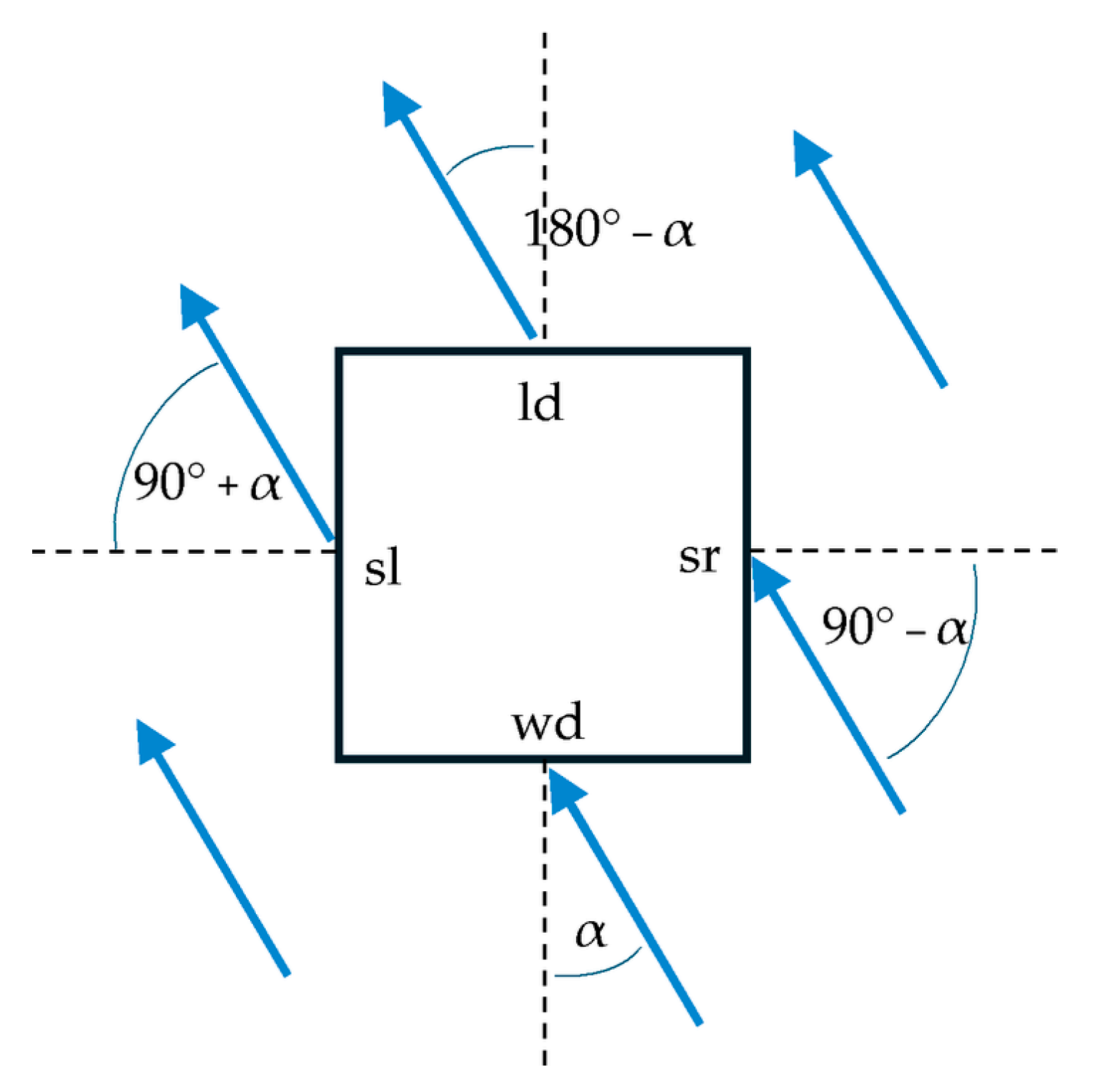
A 2D representation of the flow around a square-shaped building was selected to speed up the calculations. The edge of the building was set at 10 m, and the entire computational domain was 20 times larger to avoid boundary effects. Since the façade consists of glazed panels and almost flush metal strips, the roughness height was adopted as 0. The corners of the building were rounded with a curvature radius of 0.01 m. A schematic sketch of the model and the angle notation are presented in Figure 8.
A total of 60 2D numerical simulations were carried out (for inflow angles in the range from 0 to 45°, with spacing of 5° and wind velocities of 1, 2, 5, 10, 15, and 20 m/s). The widely used k-ω SST turbulence model was applied. Because the flows around the building appeared to be unsteady to a high degree, the transient calculation mode was selected. The time step size was 0.1 s, which was enough to ensure convergence in every interval. Air was regarded as a fluid of constant density. The coupled pressure-based solver was used with all default settings.
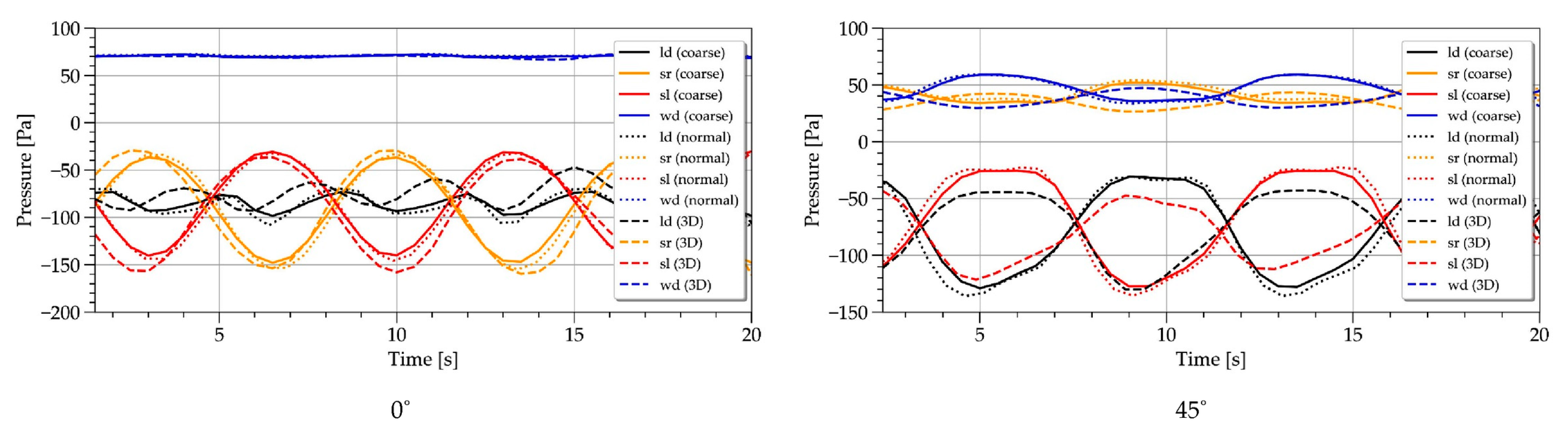
Two meshes were checked: a coarse mesh with a total of 56,222 cells, containing 6 inflation layers around the building, and a normal mesh with a total of 127,012 cells, containing 10 inflation layers. The growth factor was 1.1 for both inflation regions. Additionally, a full 3D model of a building 50 m high was built. The latter also contained 6 inflation layers with a growth factor of 1.1 and consisted of more than 3 million cells. Due to the very long computational time, such a model was very impractical for the considered application and was used just for extra validation. Figure 9 presents sample results for all models for wind velocity 10 m/s and two inflow angles, 0 and 45°.
The curves do not overlap accurately, especially for the results of the 3D model. However, their general trends are quite similar, suggesting that the model results can be considered mesh-independent and have a sound physical meaning. The sample pressure values for both meshes and values provided by the 3D model are almost the same.
The main conclusion drawn from the entire series of numerical experiments is that only at windward façades, when the wind inflow angle is low, does the pressure take positive values, which are stable. For leeward façades and for high wind inflow angles, the pressure values are negative, and significant ripples are visible (Figure 9). Thus, the pressure values used further in the work are time averages over many periods (the averaging time was chosen so as not to affect the mean value).
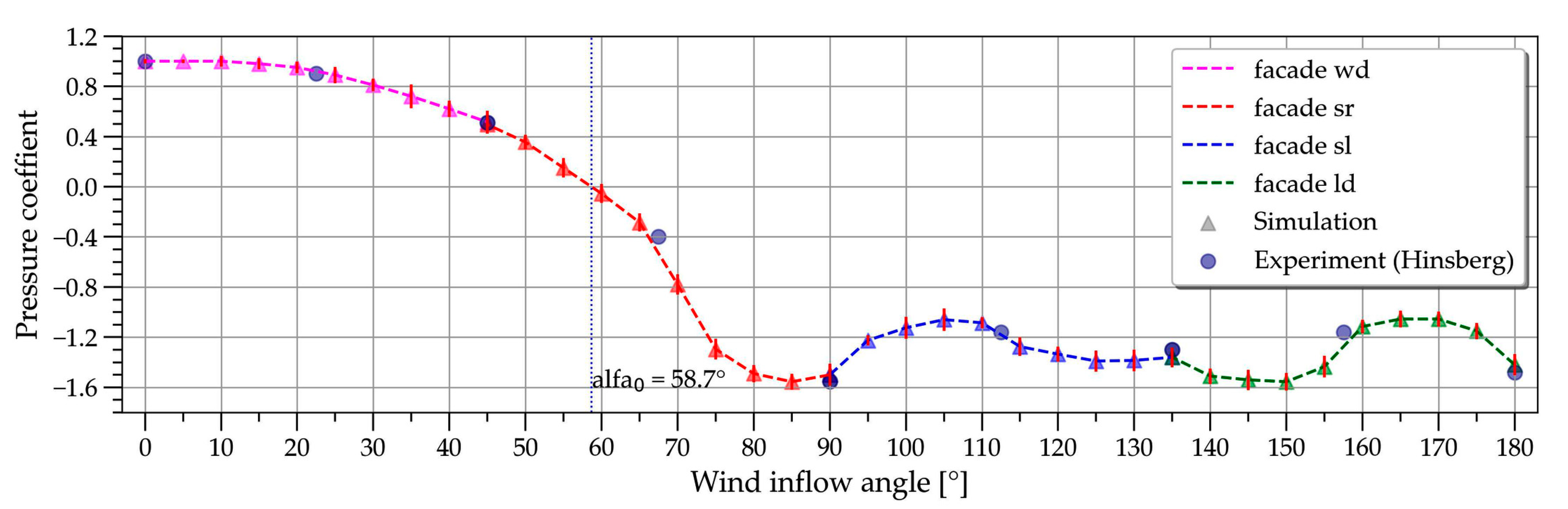
Figure 10 presents the numerical results of the 2D model for the point in the middle of the façade (0° means perpendicularly inflowing wind, 90° means parallel wind, and 180° means leeward façade, as shown in Figure 8). For each wind inflow angle, the values of the wind pressure coefficient are calculated here as averages for different wind velocities based on time-averaged pressure values (as mentioned above). The standard deviations and the values published by Hinsberg are also shown.
As shown, negative values of the pressure coefficient prevail. These occur for leeward façades and also at the windward façades, when the wind inflow angle is large enough. This occurs for wind inflow angles greater than approximately 59°. It is caused by air stream separation at the edge of a façade facing more steeply toward the wind. One must be aware that for building shapes other than a square, this step should be recalculated to obtain relevant distribution of the pressure coefficient.
The values obtained from the 2D numerical simulations were used to assess the wind impact on volumetric flow through the examined opening. By having these values of the wind pressure coefficient for a number of inflow angles spaced relatively densely, a value for any angle can be interpolated. The wind pressure coefficient can take negative values for leeward façades or when the wind inflows at a high angle, and this should be factored into the equation. Finally, the volumetric flow through the façade opening can be expressed as a function of the wind velocity and the wind inflow angle as follows:
V = s i g n ( C p ( α ) ) C d A ρ ρ 0 | C p ( α ) | u w i n d [ m 3 / s ]
This theoretically determined value can be compared with the measured one. Although the anemometers were placed close to the grating, they recorded only the velocity magnitude at the vertical centerline of the slot clearance. Because the velocity profile across the slot is not known in general, it is reasonable to assume that the volumetric flow is linearly proportional to the product of the average of the recorded values and the opening area:
V m e a s u r e m e n t = A 1 n a n e m o i = 1 n a n e m o u i
Such estimated values of the volumetric flow were compared to the actual wind velocity recorded by the weather station. Because the times when the weather parameters were recorded did not align with the timestamps of the anemometer data, the values of wind velocity and wind direction were linearly interpolated between the two closest data points. Figure 6 suggests that for most of the measurement time, the wind inflow angle falls in the region of positive values of the pressure coefficient.
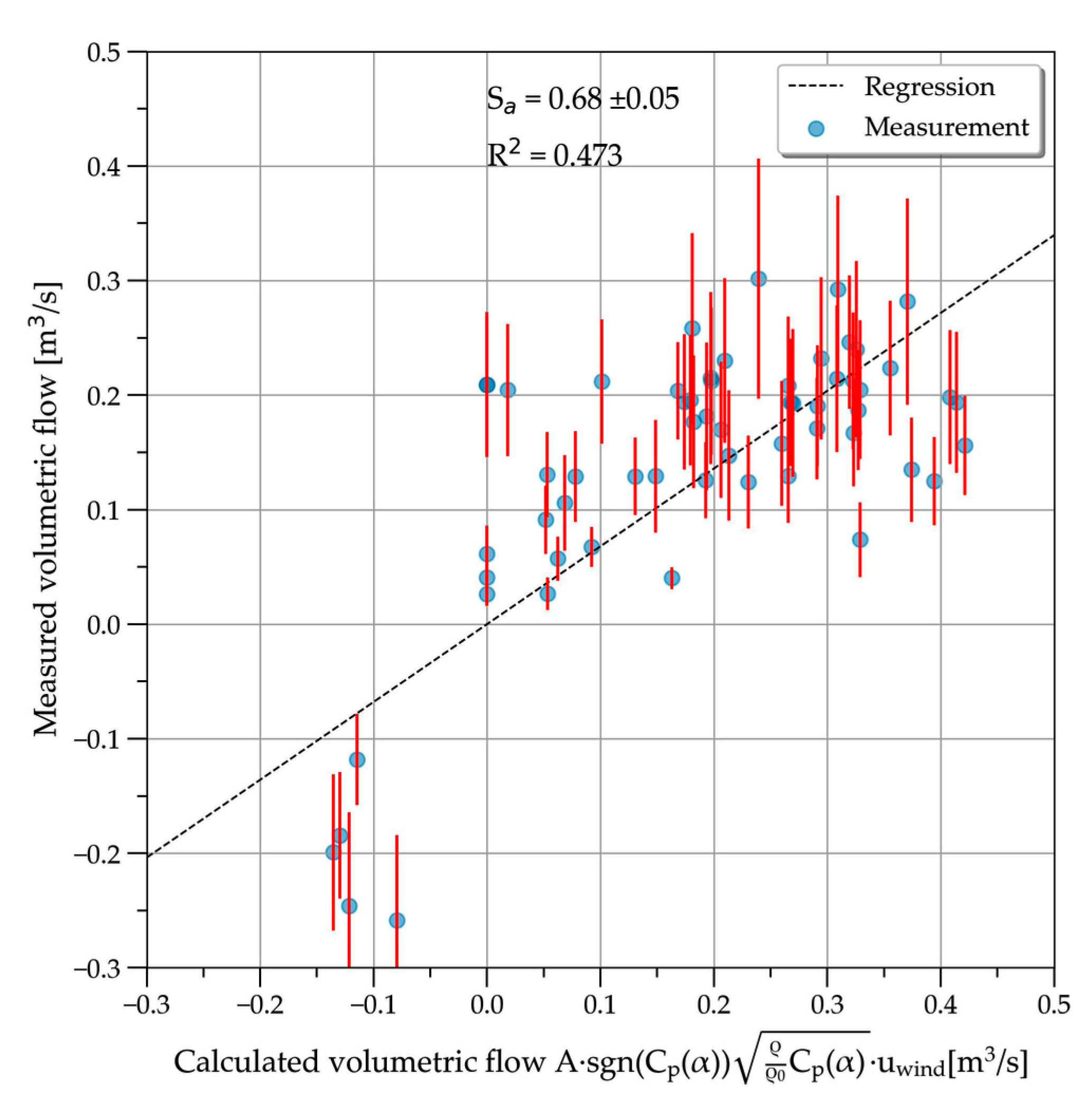
Only rarely did the wind change almost to a westerly direction, which corresponded to a negative pressure coefficient, which caused the outflow. The theoretical values of the volumetric flow were then calculated according to Equation (5), although the unknown discharge coefficient Cd was omitted. This is shown in Figure 11.
As can be easily seen, the data points are widely scattered, which indicates that the relationship is not very strong. In fact, the determination coefficient R2 takes a moderate value of 0.473. The main reason for such a loose dependence is the highly turbulent nature of the wind, as mentioned earlier. The regression coefficient Sa = 0.68 corresponds to the product of the unknown values of the discharge coefficient Cd and the proportional factor between the mean measured air velocity and the actual volumetric flow. Since these data are consistent with results captured in a laboratory [43], they were deemed sufficient for numerical model validation.

2.4. The Numerical Model of the Opening

To gain a deeper understanding of the airflow through the examined façade opening covered by the openwork grating, a 3D numerical model was built using the ANSYS Fluent software package. The model accurately reproduced the elements that are essential for the examined phenomenon. It consisted of a volume representing the interior building space and the façade opening with the openwork grating. Two submodels were developed to handle different wind directions relative to the façade. The criterion for selecting the appropriate submodel was the value of the pressure coefficient: for positive values, the first submodel was used, and for negative values, the second one. As shown in Figure 10, the inflow angle at which the pressure coefficient changes sign is approximately 59°. The transition is very smooth, and the pressure actually takes values close to zero here. For both submodels, a series of simulations was carried out to cover the whole range of wind velocities and inflow angles. The influence of temperature was provisionally neglected.
  • The first submodel was applied when the wind blew onto the examined façade at a relatively small angle, corresponding to positive values of the pressure coefficient. This submodel also included a volume corresponding to the building exterior. This structure allowed for an accurate reproduction of the wind’s impact on the elements of the window opening. In the considered weather data, the wind velocity ranged up to 15 m/s, so values of 1, 5, 10, and 15 m/s were examined. Due to the opening’s asymmetry, the inflow angle was varied from −55 to 55° in 5° increments.
  • The second submodel was used for cases with negative values of the pressure coefficient. It was simplified, and the wind effect was modeled by applying a relevant negative pressure value on a plane near the façade surface (not shown in Figure 12, because the exact position of the pressure plane did not affect the results). This approach was appropriate because, for a façade with negative wind pressure, the airflow due to the wind is residual, and the air velocity near the opening is very low. Only the suction effects are important in this case, so using such a submodel speeds up the calculations. The negative pressure varied from −1 to −250 Pa, with incremental spacing, corresponding to a square dependence between air velocity and pressure.
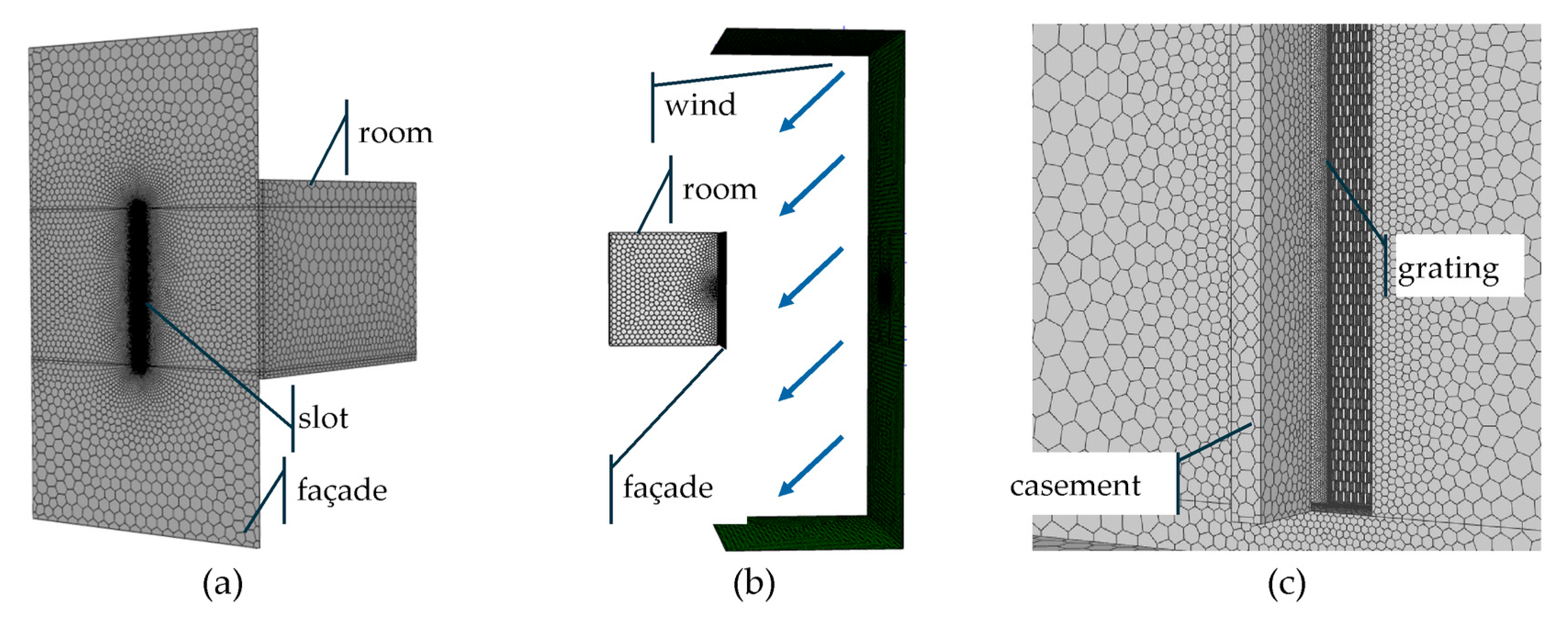
The dimensions of the inner space were limited to conserve computational resources. It formed a 6 m wide and long square room with real height. A boundary condition of type ‘pressure outlet’ was assigned to a door on the wall of the room opposite the opening. This simulated all leakages and made the model physically sound, allowing for flow balancing. The façade was modeled as a surface of type ‘wall,’ which is much wider than the opening and contains floors below and above the examined one (Figure 12a). This configuration prevents unwanted boundary effects. In the first submodel, three of the boundary surfaces of the exterior volume were of type ‘velocity inlet,’ with freely set velocity components, allowing for modeling any wind direction within the required range. The exterior volume extended significantly beyond the façade (the size of this volume was 5 times larger in each dimension than the façade), ensuring a uniform flow distribution. The model is schematically shown in Figure 12b (not to scale). The opening slot and the grating were also modeled in detail, as shown in Figure 12c. Inflation layers were added at the casement surface.

2.5. Mesh Sensitivity Analysis

A mesh sensitivity analysis was performed using two meshes, referred to as normal and dense. The properties of both meshes are shown in Table 3. The denser mesh has half the edge length in the region near the opening, particularly around the grating. This region is crucial for flow modeling, while the cell sizes in the other regions remained the same.
The growth rate parameter determines how quickly the cell size increases when transitioning between areas of different mesh densities. A value of 1.1 ensures smooth growth in these transition areas. For both meshes, the minimum orthogonal quality exceeded the required threshold of 0.1. Several preliminary simulations were conducted for both meshes, accounting for different wind velocities and wind inflow angles. Sample results are shown in Table 4.
In general, the differences between the meshes are negligible for steep wind inflows, with larger discrepancies (up to 5%) appearing only for crosswinds. This can also be observed from the data in Table 4. Ultimately, the normal mesh was selected for further calculations.
According to Equation (1), the flow is forced by a pressure difference, which is simply a sum of partial pressures coming from all contributing factors. In this work, contributions of wind and temperature difference are taken into account. Both factors are examined separately to decrease computational complexity. When the wind contribution is considered, air is regarded as a fluid of constant density; when the temperature difference is considered, the model accounts for buoyancy. As previously, the coupled pressure-based solver was used with all default settings.

2.6. Model Validation

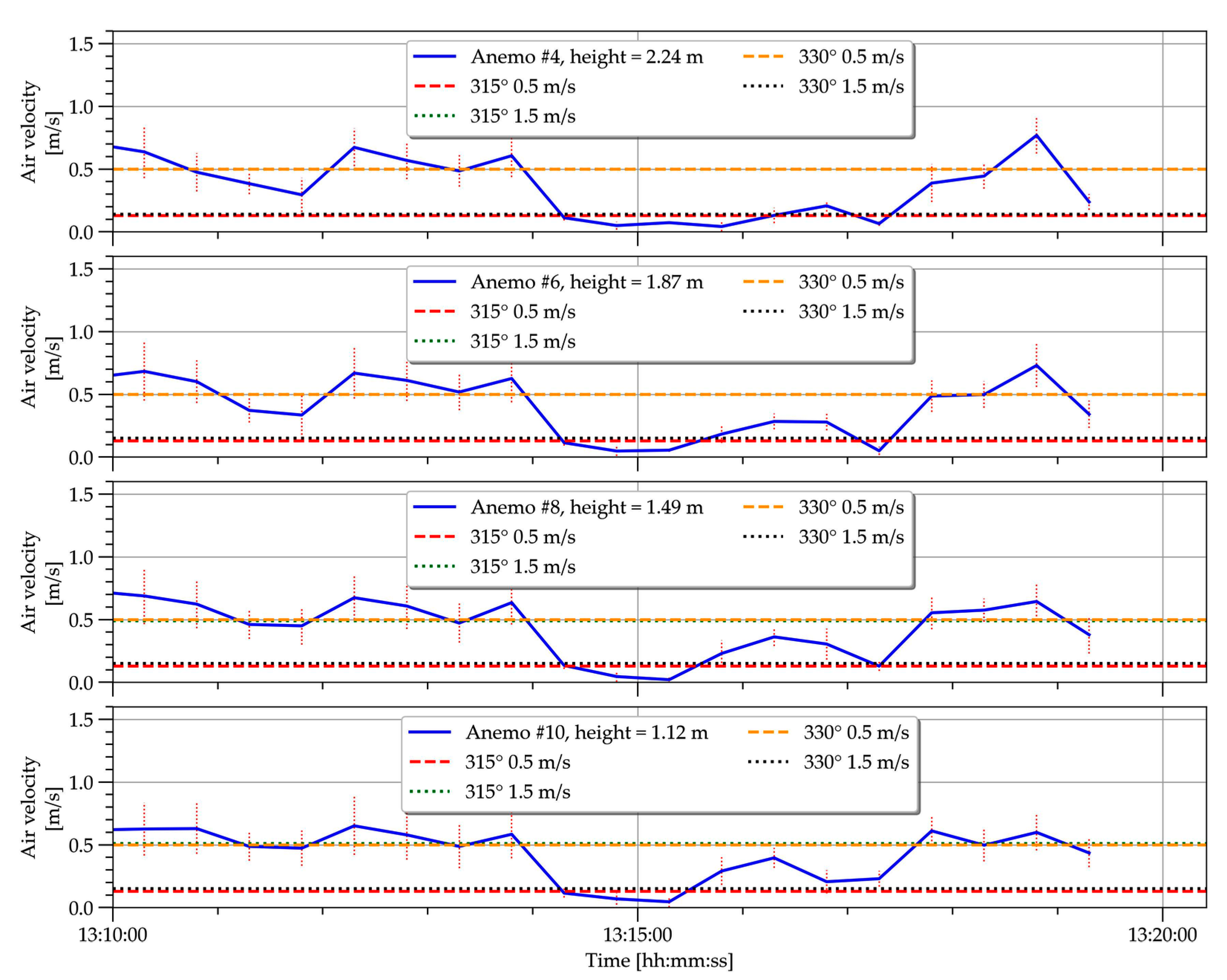
The model was validated using the measured data. Since the ambient temperature was almost the same as the inner one, only the wind impact was considered. Direct comparison was difficult due to the highly turbulent nature of the wind, so a simple statistical treatment was applied to the meteorological data. The wind speed was grouped into intervals of 0.5 m/s, and the wind angle was grouped into 15° intervals. It was found that the most common conditions occurred for intervals within wind directions between 315 and 330° and wind speeds between 0.0–0.5, 0.5–1.0, and 1.0–1.5 m/s. These intervals accounted for 11, 16, and 17% of the total time, respectively.
Because the examined façade faces north and is deflected by 5.6° to the east, these wind directions correspond to wind angles between 50 and 35°. These wind conditions fall within the region of positive wind pressure coefficients. Because these conditions occurred primarily between 13:10 and 13:20, this interval was selected for validation. Figure 13 shows the actual readings from selected anemometers during this period and the calculated velocity magnitudes for the same anemometers, based on the mentioned ranges of wind velocity and direction.
As can be seen, the measured values align well with the calculated ranges. Additionally, if the spread of the measured values is taken into account, the numerical model can be considered accurate.

3. The Performance Characteristics of the Opening

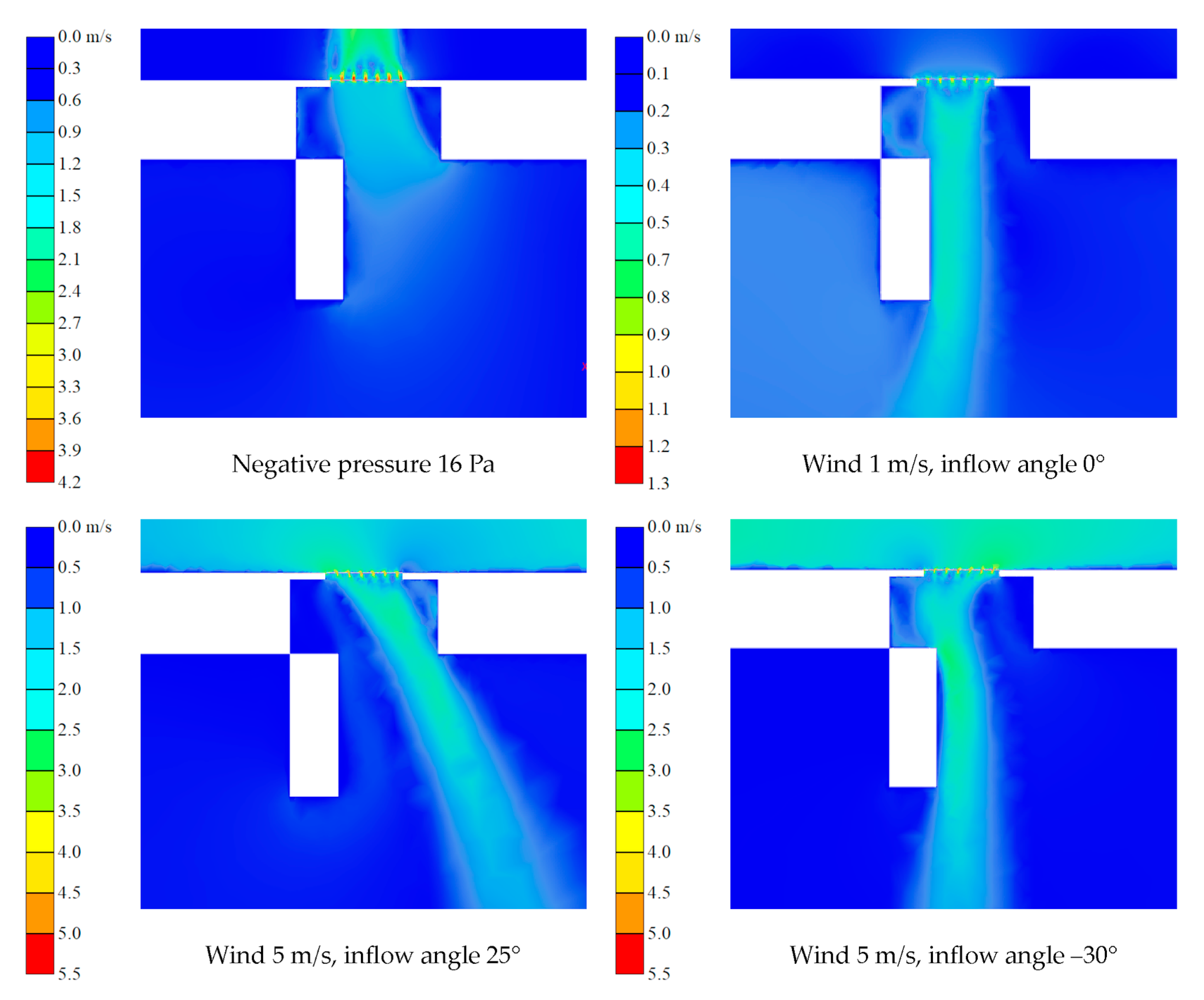
A visualization of airflow through the opening is shown in Figure 14. It presents the distribution of velocity magnitude in a horizontal plane at half the room height for selected cases. In the outflow case, when a negative pressure value is applied, a wide, blurry air stream can be observed inside the room. For the inflow cases, a sharp stream is formed, and its axis depends on the wind angle. Negative values of the inflow angle correspond to the wind from the right. It is visible that for winds from the left, the core of the airstream is slanted, which can cause the anemometers placed at the centerline of the slot aperture not to record the peak values. This may contribute to the spread of the data points observed in Figure 11.
Regarding pressure, for all cases, the entire domain appears to be divided into two subregions of almost constant pressure. A significant pressure jump occurs just at the grating plane (not presented).
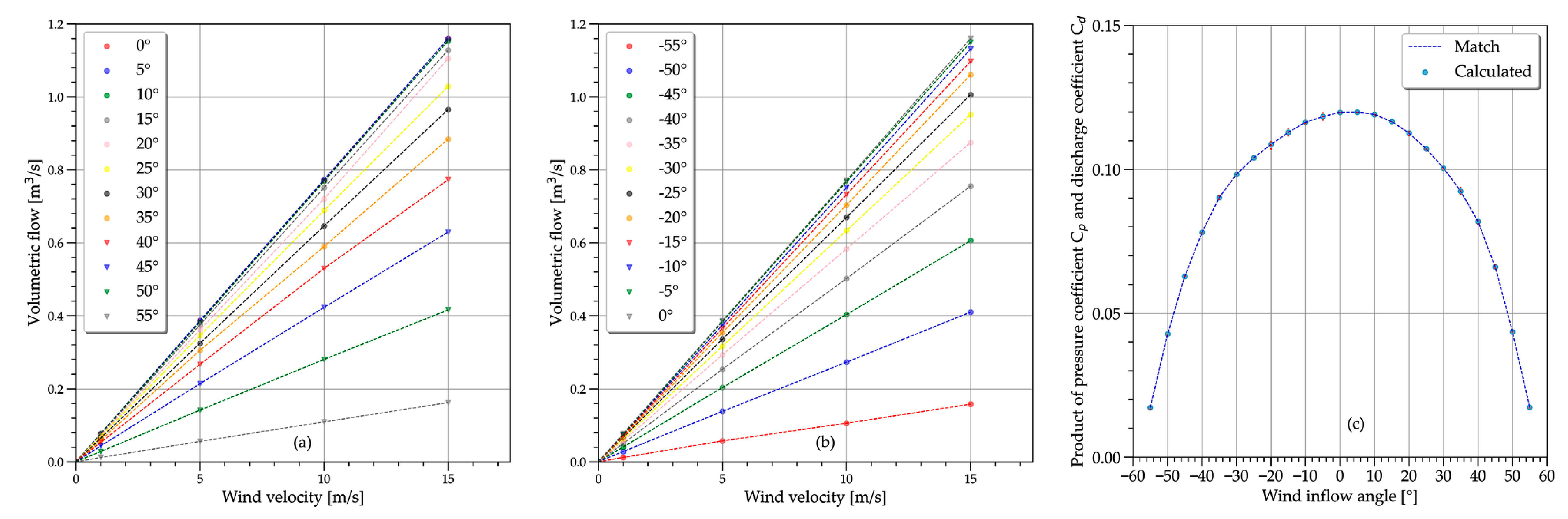
The results of the first submodel are shown in Figure 15. Figure 15a,b present the dependence of volumetric flow rate on the wind velocity and wind inflow angle (for negative and positive angles, respectively). As expected, for a given inflow angle, the volumetric flow rate increases strictly linearly with the wind velocity. This allowed for the calculation of the dependence of the product of the discharge coefficient and the pressure coefficient on the inflow angle (Figure 15c). This product varies in the range of 0.03 to 0.23. A slight asymmetry, caused by the window casement, is visible in Figure 15c.
It is also noticeable that the dependence of volumetric flow on the inflow angle is quantitatively consistent with the distribution shown in Figure 10.
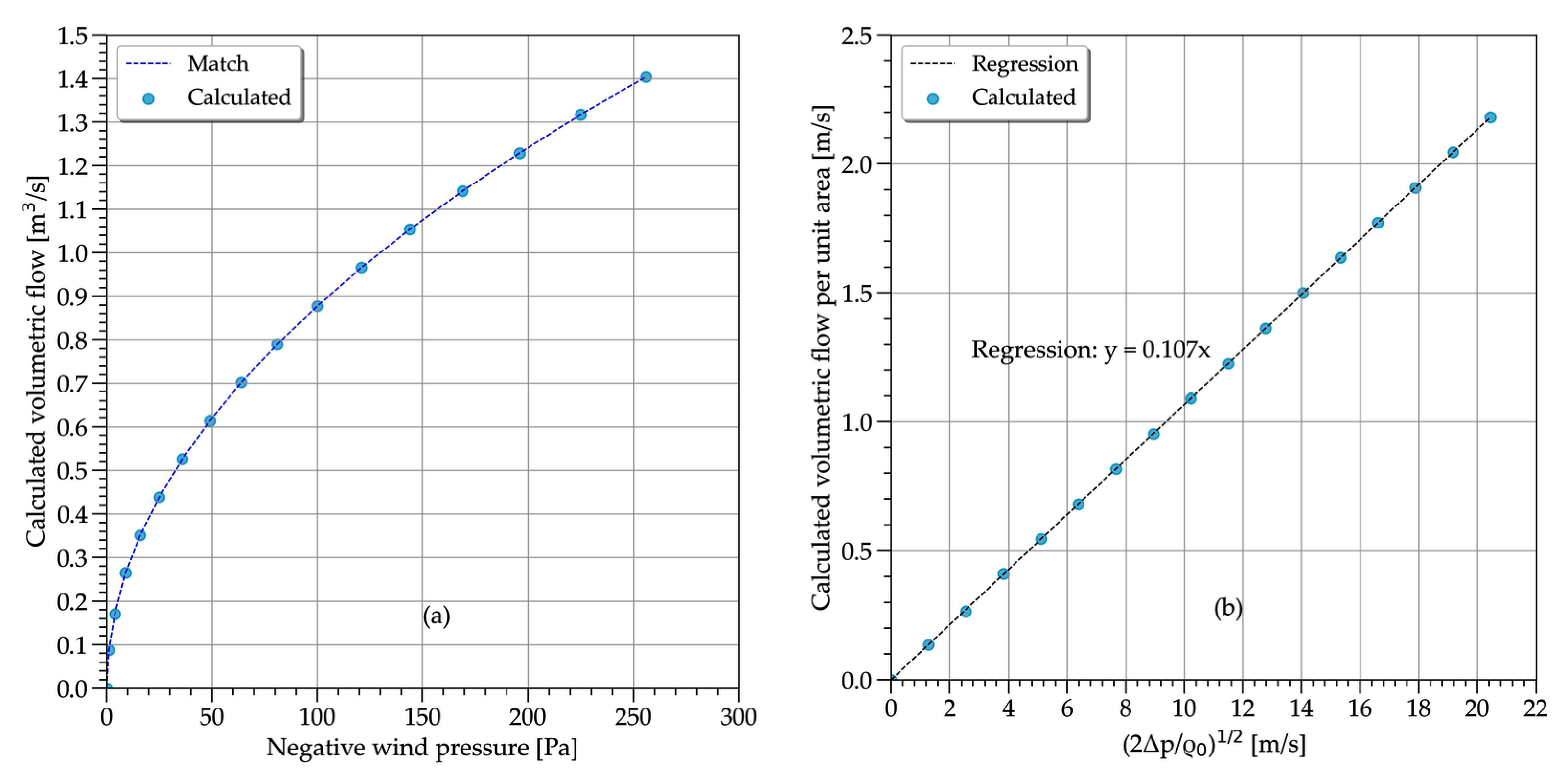
The results of the second submodel are shown in Figure 16. Linear regression was carried out using Equation (1). The slope of the regression line represents the discharge coefficient of the opening when it operates in suction mode. For negative values of the pressure coefficient, Cd = 0.204. The determined values of the discharge coefficient are lower than the values commonly spotted commonly in the literature for simple window openings that are not covered by the grating.
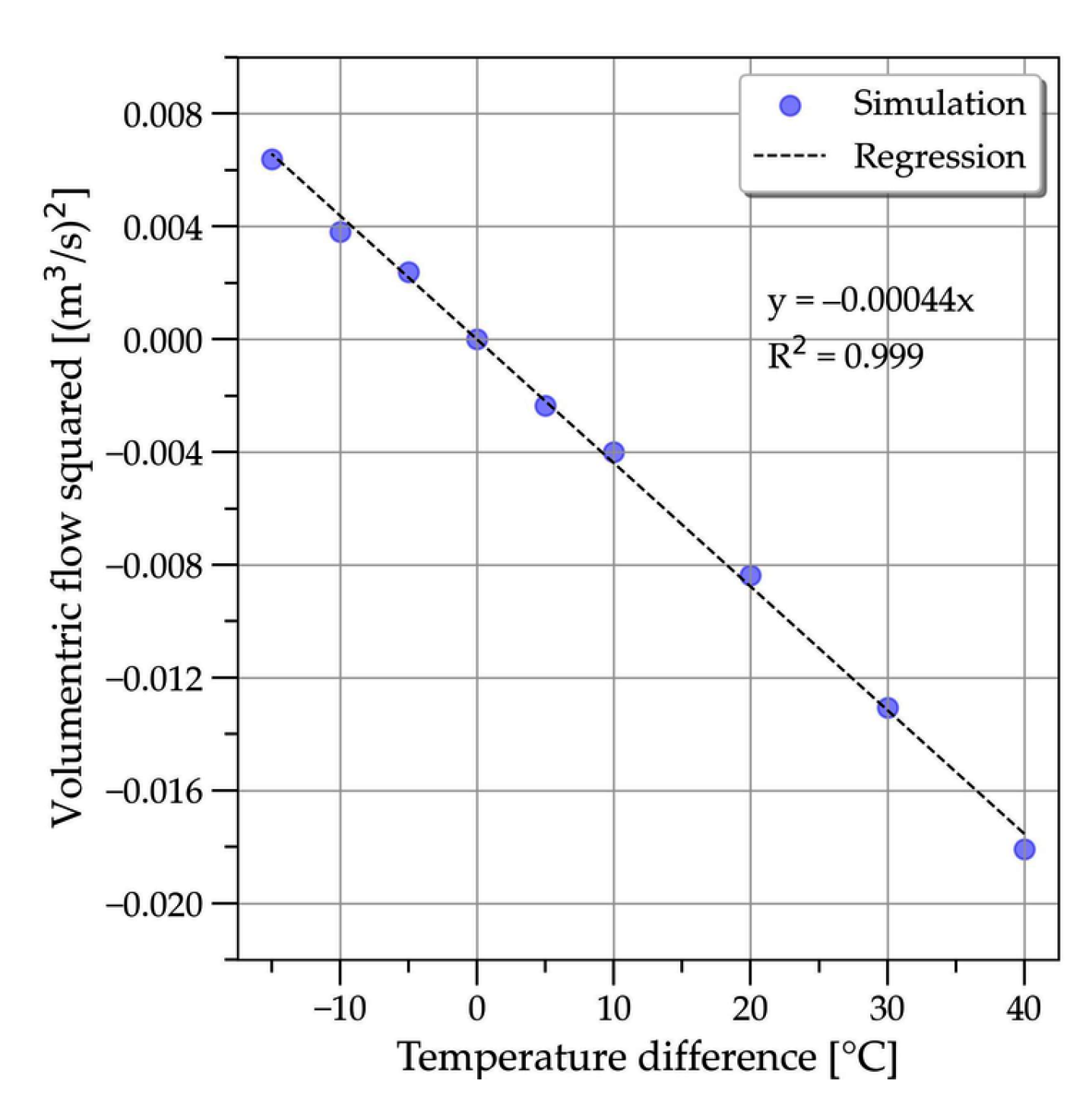
The impact of the temperature difference was examined using the first submodel. An ideal gas model was enabled for air, buoyancy was accounted for, and the pressure discretization method was set to ‘body force weighted.’ The inner temperature was set at 20 °C, and the backflow temperature for the door was set at the same value. The outside temperature varied from −20 to 35 °C, representing the typical temperature range at the examined location. The results are shown in Figure 17, plotted as a function of the square of the volumetric flow (with the sign indicating the flow direction—negative for outflow, and positive for inflow) against the temperature difference between interior and exterior.
As shown, the simulated data points almost perfectly match the dependence expressed by Equations (1) and (2). For the highest temperature difference examined, the volumetric flow through the opening reached a value of 0.134 m3/s. Thus, the contribution of this phenomenon is not too high (see Figure 15 and Figure 16). When the ambient temperature is lower than the inner temperature, air escapes outside, forming a plume. This happens most of the time. However, during rare instances when the ambient temperature is higher than the indoor temperature, warmer outside air flows in and spreads beneath the ceiling. In both cases, the flow direction is the same across the entire opening area, and the flow velocity increases with height.
Król and Król [14] showed that, under intense solar radiation, a strong vertical updraft may appear at the façade, and its temperature may reach values significantly higher than the bulk temperature. However, this phenomenon was not taken into account here. Solar irradiation is outside the scope of this work, and such a flow is parallel to the façade and reaches the maximum flow velocity at a relatively large perpendicular distance.

4. Results and Discussion—The Annual Flow and Energy Balance

The annual flow balance was made under the assumption that the examined window opening would remain open all year long. While this condition may seem somewhat unrealistic, it allowed for the estimation of the efficiency of the opening in terms of natural ventilation, or in other words, its ventilation potential. This approach also indicates the moments when the window should probably be closed and makes building management aware of possible energy losses or gains due to natural ventilation.
The calculations of the amount of air inflowing and outflowing through the opening were carried out using data published by the Polish Ministry of Investments and Development, which provides typical meteorological years and statistical climatic data for the energy calculations of buildings. There are 61 stations in total, which cover the entire country. A dataset from a station has been established based on 30 years of continuous measurements according to EN ISO 15927-4:2005 standard [49]. These datasets cover the entire virtual year, hour by hour, which provides 8760 records [50]. In this work, data from station # 12 375 0, located in Warsaw at 52°10′ N 20°58′ E, were used. These data were compiled from observations made between 1971 and 2000. The direct distance between the station and the tall building examined is 9.64 km, so the data can be regarded as representative.
Using the data going back so far may raise doubts in light of observed climate changes; however, it is the only representative and official dataset averaged over a long period. If the research was based on data covering a shorter period, the results would be burdened by much greater uncertainty. In temperate transitional climates, as for the analyzed building, the temperature differences between the same periods in subsequent years may reach more than 25 °C, which is much greater than changes due to global warming [51]. What is more, there are no other such detailed and comprehensive data available.
Because ventilation should be considered in relation to the diurnal occupancy of an office building, the data were examined for two times of day: 6:00 to 18:00 (daytime) and 18:00 to 6:00 (nighttime). This distinction remains valid even for buildings located at relatively high latitudes, where the duration of the day changes significantly throughout the year.

4.1. Flow Balance

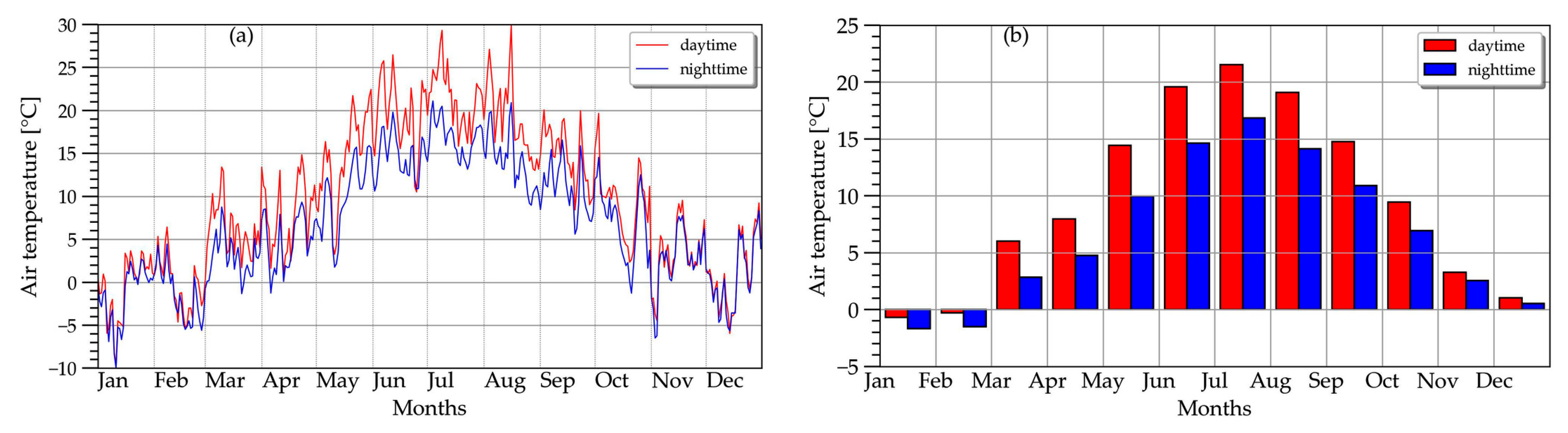
Figure 18 presents the average ambient temperature for the selected location throughout the year. The left diagram shows the daily averaged temperature for daytime and nighttime, while the right one shows the monthly averaged temperature for both periods.
As can be seen, only in January and February do the average daytime and nighttime temperatures fall below 0 °C. Generally, the temperature changes drastically from day to day, with a span of up to 15 °C for both daytime and nighttime temperatures. The highest temperatures occur in July and August, exceeding 30 °C, although the average monthly temperatures for these months are much lower, reaching about 22 °C.
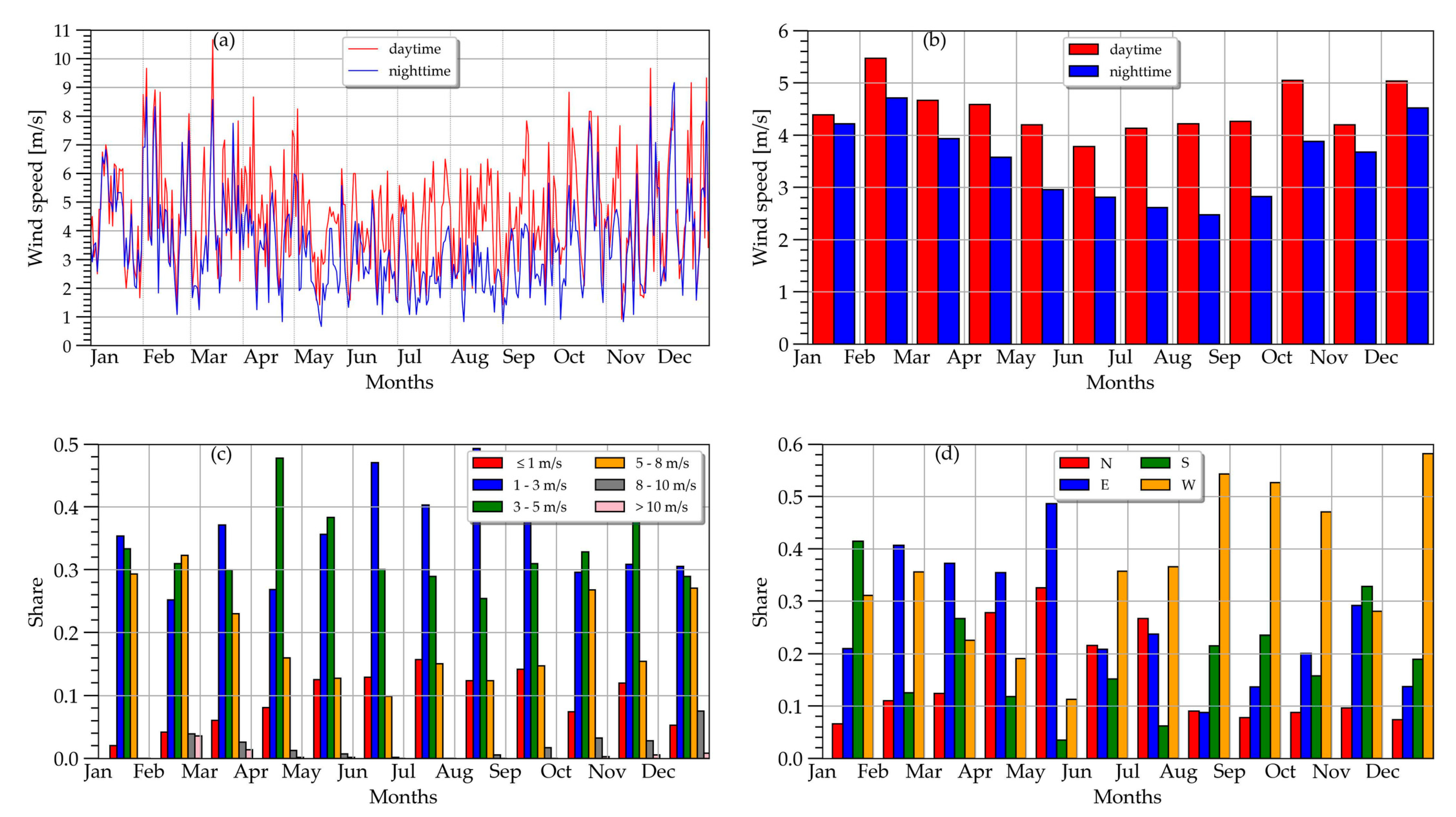
Figure 19 presents the wind distributions for the selected location throughout the year in different periods. This helps to provide insight into the nature of the weather conditions at the examined location.
The statistics presented show that the winds in summer are generally weaker than in other seasons. In summer, winds between 1 and 3 m/s prevail, followed by winds between 3 and 5 m/s. In other seasons, winds between 3 and 5 m/s are more common, and the share of winds between 5 and 8 m/s becomes more significant. The shares of stronger and weaker winds are marginal. Particularly in summer, daytime winds are significantly stronger than nighttime winds. The share of west winds is significant throughout the year, with a clear prevalence in the second half of the year. In January, south winds have the largest share, whereas east winds are dominant for the remainder of the first half of the year.
If flow balance calculations were carried out directly for every record in the dataset, it would require thousands of time-consuming ANSYS Fluent simulations (one simulation for each hour of the year—totaling 8760 simulations). This process would need to be repeated for all four façades.
To make this approach realizable, the results from both submodels discussed above were used. For each record in the examined dataset, the resulting volumetric flow was determined by interpolating the preliminary data. Additionally, a pressure correction due to the temperature difference was included. First, based on the relative wind direction to the given façade, a suitable submodel was selected. Then, the actual meteorological data were fit to the appropriate records, accounting for wind speed, its direction, and temperature. Finally, the resulting volumetric flow was interpolated. This procedure is quick and can be applied to similar datasets for any location on Earth. It can also be applied to any tall building, freely oriented with respect to the sides of the world.
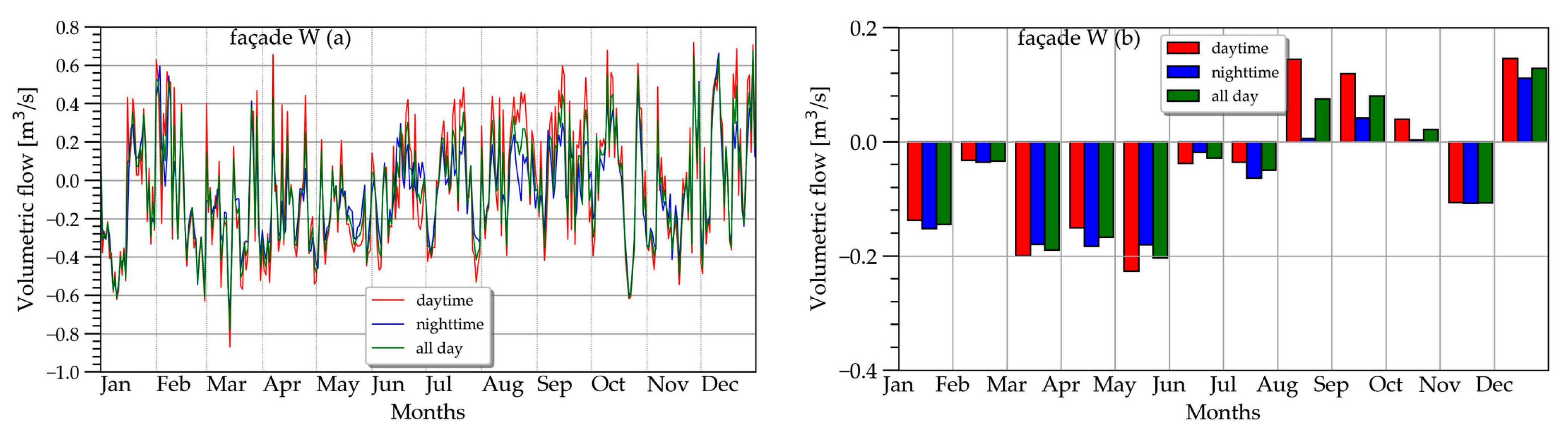
The results are shown separately for each façade because the wind conditions are different for them throughout the year. Figure 20 shows the flow averaged daily and monthly for the W façade.
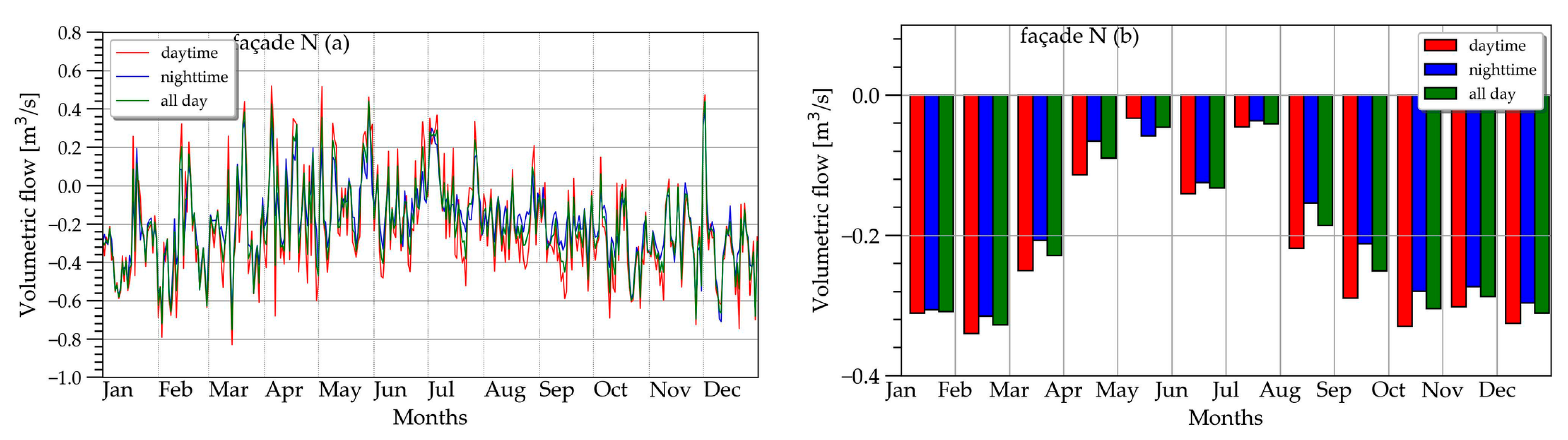
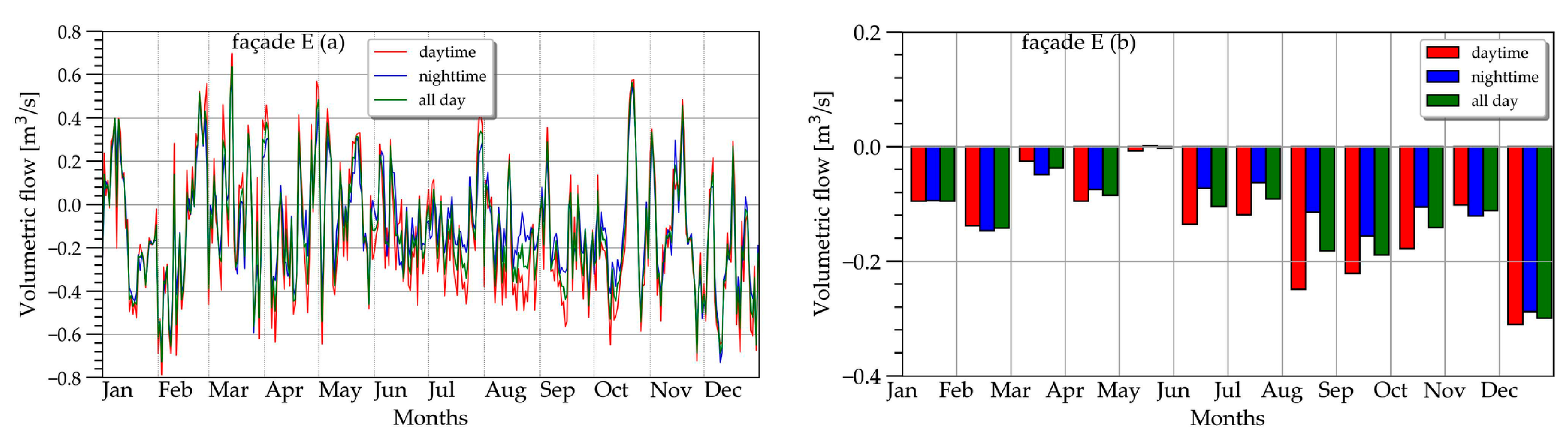
The western winds prevail in the second half of the year (Figure 19d), which corresponds to the results for the W façade. In this period, air blows often steeply onto the façade, causing air to flow in through the opening. As shown in Figure 20, such a situation also happens in other seasons, but less often. Figure 21, Figure 22 and Figure 23 present the data for the other façades.
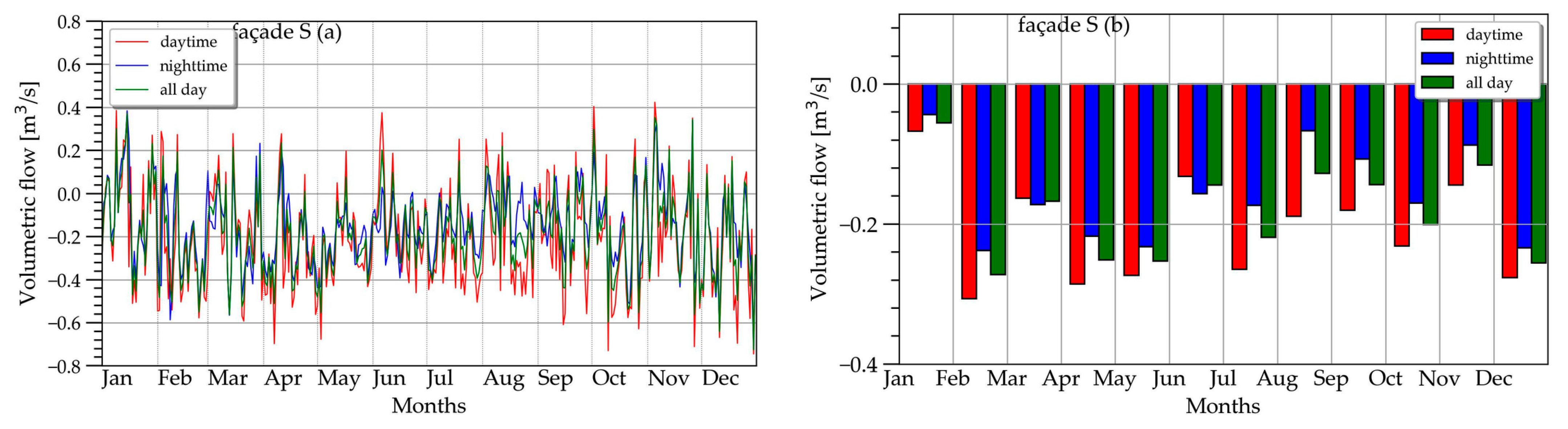
Due to the high variability of the weather conditions, the nature of the flow changed continuously, and the flow direction through the opening also changed. However, if a single opening is considered, the suction caused by the wind is the main factor driving the air exchange—in terms of the monthly average, air mainly outflows from the inner space of the building. The distribution of volumetric flow is different for each of the façades. For the N façade, the outflow is weakest from May to August, and for the E façade, it is generally weaker but stronger in the second half of the year. For the S façade, the outflow is quite strong all year long, excluding January.

4.2. Heat Loss Balance

Although the nature of the presented research does not allow for a direct determination of the amount of energy that must be supplied to the room for heating or cooling needs, it does allow for an estimate of the heat gains or losses due to air exchange through a single façade opening. With the value of volumetric flow, these amounts can be estimated, assuming the desired interior air temperature is set to 20 °C, as previously mentioned.
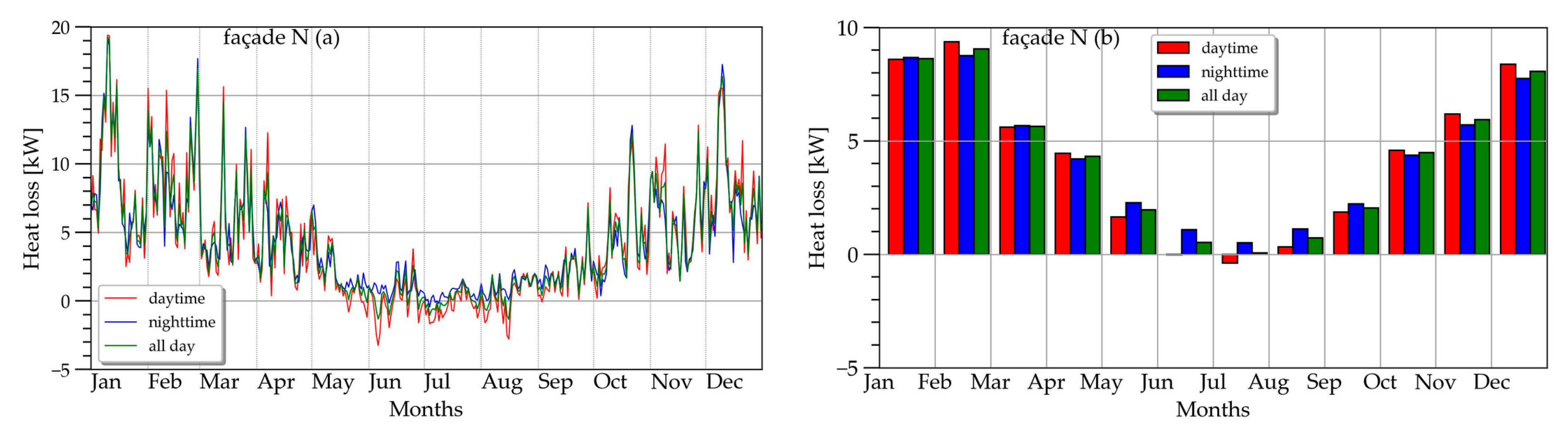
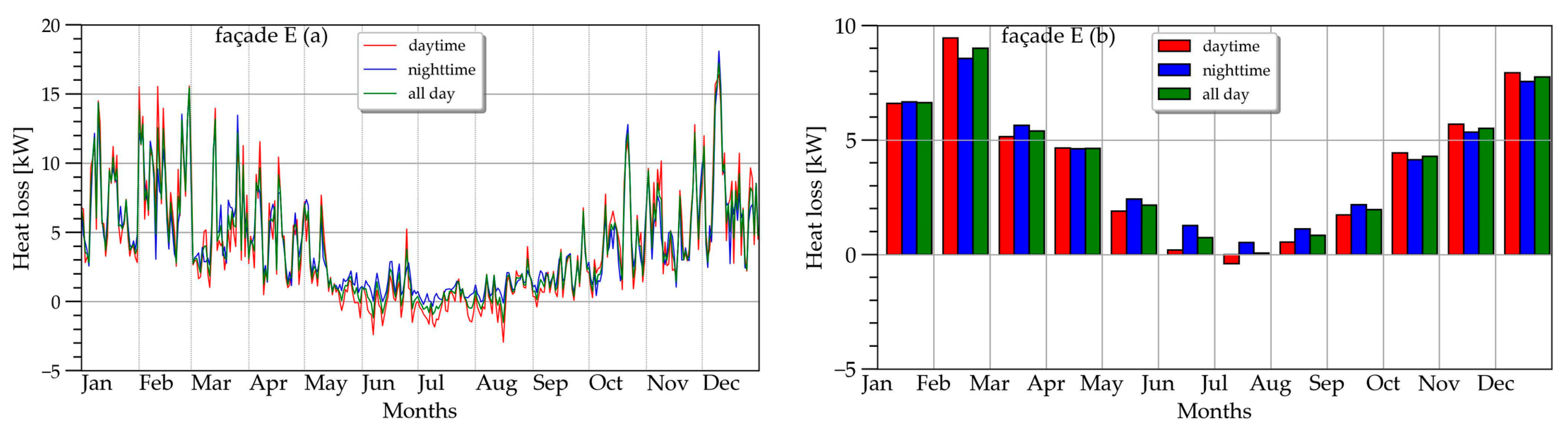
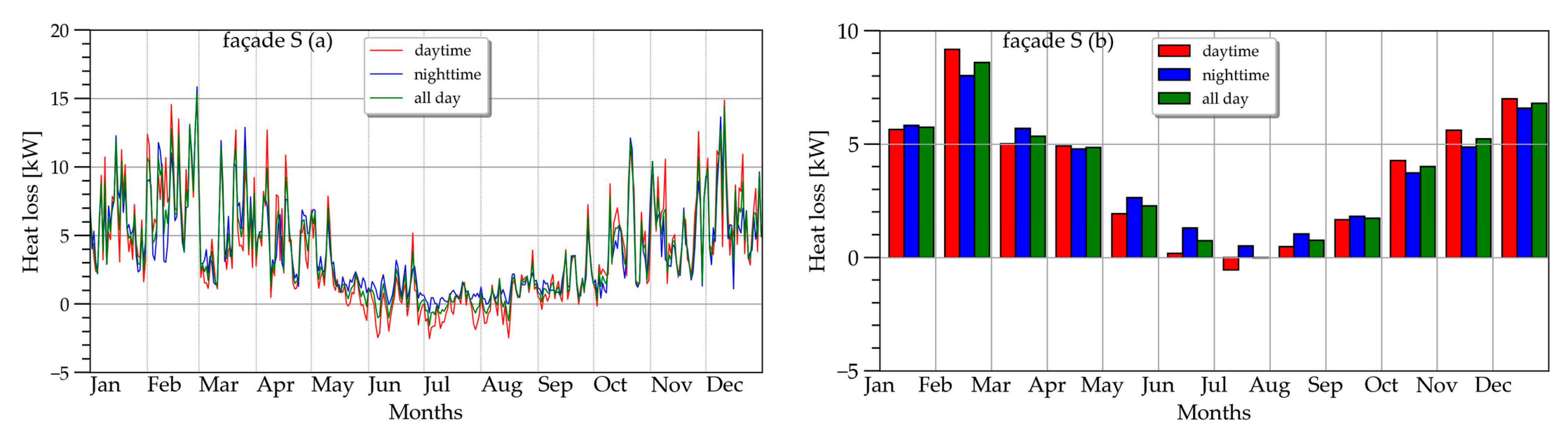
It was assumed that the rate of heat exchange depends on the temperature difference and the mass of air flowing in or out. If air is exiting the room, it must be balanced by air entering through the door. However, this air ultimately penetrates the building shell and must be cooled or heated in other parts of the building. This procedure did not account for heat gains due to solar radiation, so generally, the results presented here do not correspond to the energy amounts that would need to be supplied by heating, ventilation, and air conditioning devices. However, heat exchange through façade openings significantly contributes to the total energy balance of a building. The results are shown in Figure 24, Figure 25, Figure 26 and Figure 27.
The general conclusions regarding the monthly distributions of the heat balance are as expected for a location in a temperate climate. For almost the entire year, excluding the daytime in July, the average ambient temperature is lower than the assumed inner temperature (20 °C). Therefore, air exchange through a façade opening almost always causes heat losses. However, this effect is suppressed by solar irradiation in warmer seasons, meaning energy does not need to be provided for heating demand during this period.
If the opening remains open, the heat losses due to air exchange are moderate from May to September (excluding July), up to about 3 kW. There are days in this period when heat gains occur occasionally. Only in July are heat gains expected for the entire period, but only during the day. In this month, the amount of energy gained during the day is more or less lost at night, so the total balance is about zero for all façades. This means that even if air exchange is the only contributor to heat gain, energy must be provided for cooling during this period at daytime.
The heat losses are much higher during the other seasons. The most energy-demanding month is February, when the heat losses are close to 10 kW for all façades. The same applies to January for the W and N façades.

4.3. Estimation of the Night Cooling Potential

Because the presented work does not account for the energy gains from solar irradiation, the total real heat balance would be different, especially in summer. As shown in Figure 24, Figure 25, Figure 26 and Figure 27, the monthly averaged amount of heat is negative for nighttime throughout the year. Therefore, the results presented here may be useful when planning night cooling through natural ventilation for temperate climates [21].
If the air conditioning is off and there are no internal energy sources, the rate of temperature change when ambient air of temperature Tamb enters the room of volume Vroom can be expressed as [31]:
V r o o m d T d t = V ( T a m b T )
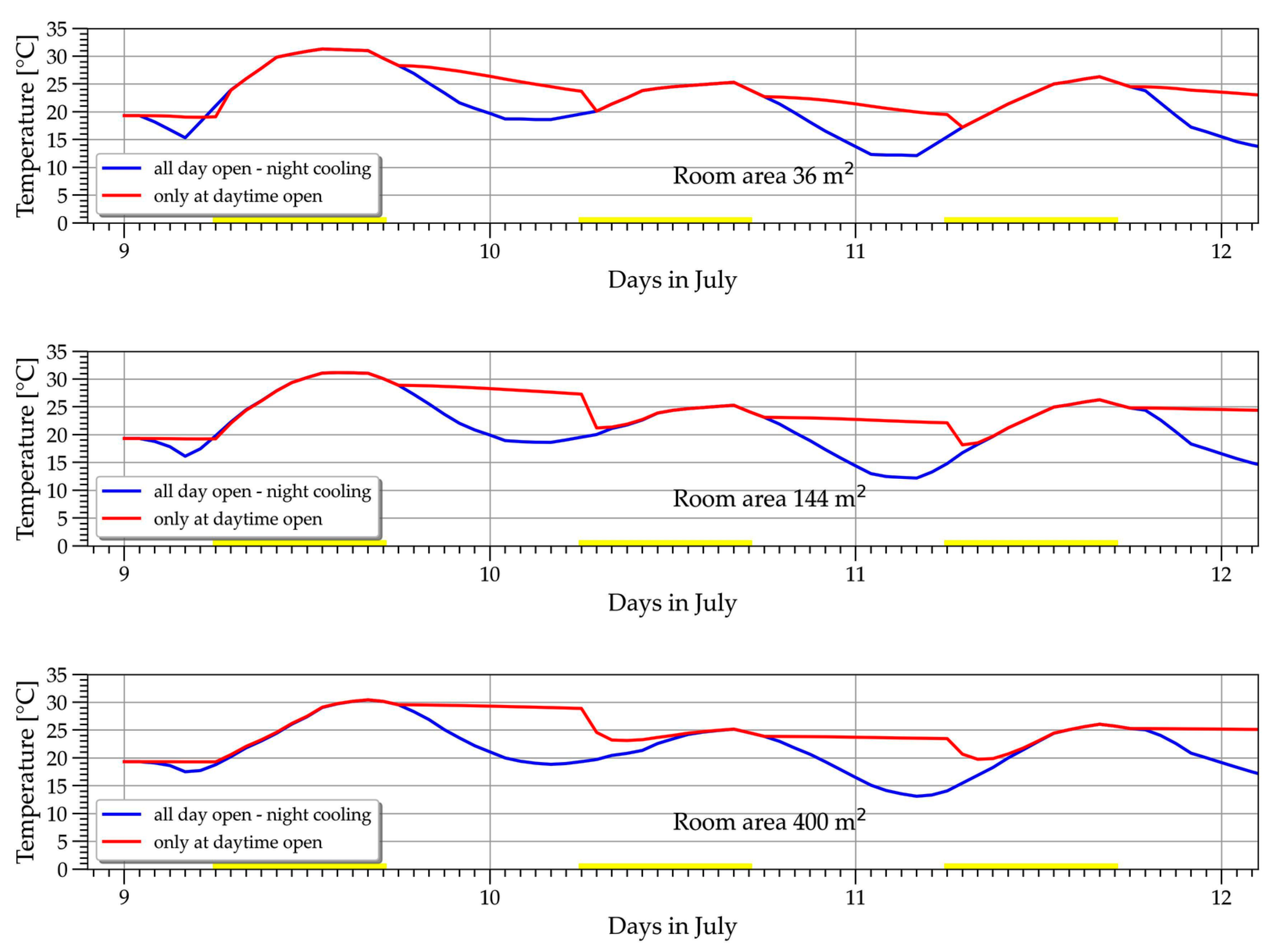
The heat transfer to all surfaces in the room is ignored to focus the considerations solely on ventilation effects. This condition can be implemented with adiabatic (or at least well-insulated) wall surfaces. This formula, applied to a number of square rooms of different sizes but the same height of 3.38 m, equipped with a single window slot, allowed two scenarios to be analyzed for a period in July: all-day open and only daytime open window. When the window was closed, a leakage of 1% was introduced to make the simulation real.
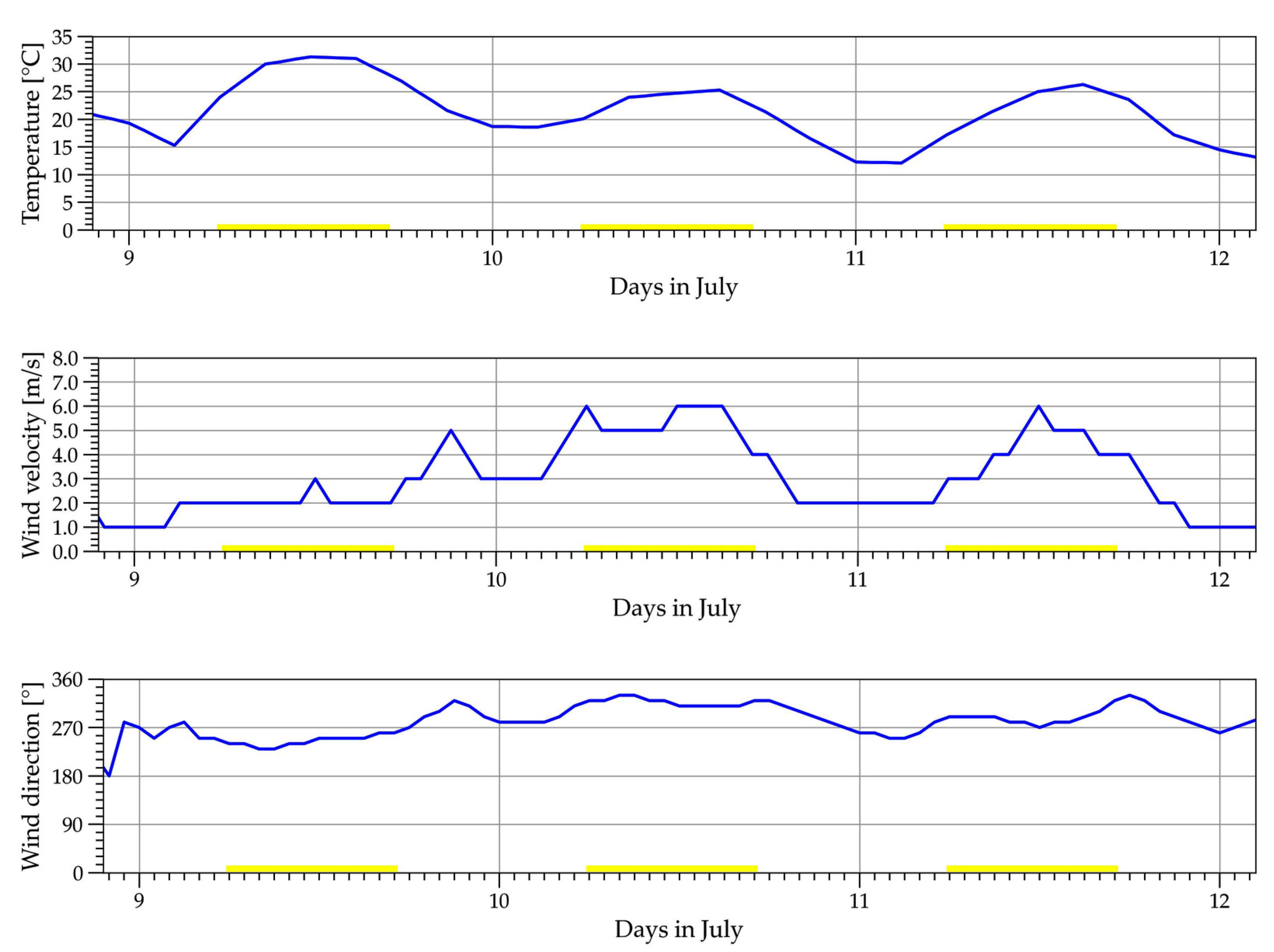
A period of 3 consecutive days (9–11 July) with stable weather was selected to simplify the considerations. For the entire period, west winds prevailed, so the W façade was taken into account. The averaged weather conditions during the period are shown in Figure 28 and Figure 29, which present the results for 3 rooms of different floor areas.
As can be observed, the effects of night cooling last longer for larger rooms. This is because the rate of temperature change depends on the V/Vroom ratio. The larger rooms are also heated more slowly and to a slightly lower temperature than the smaller ones. For the largest examined room, the effects of night cooling last for about half of the day.
The temperature difference at the beginning of daytime between both scenarios is from approximately 5 °C for the smallest room to approximately 10 °C for the largest. This corresponds to the amounts of heat to be removed from 0.006 to 0.012 kWh/m2. If heat exchange with surfaces in the room was included, the total thermal inertia would be higher, and hence the effects of the night cooling would be more distinct.

5. Conclusions

The paper describes an in-depth study on the performance of a window opening covered with openwork grating. First, the airflow measurements for a real opening on the 23rd floor of a high building were carried out; then, a numerical model was built and validated. Finally, using official data from typical meteorological years and statistical climatic data, the annual flow balance through the opening was calculated.
The study confirmed that the main factor driving the air exchange through such a window opening is wind. The performance of the opening depends on both the speed and direction of the wind. Importantly, air is pumped out only for the narrow range of inflow angles (~ −60 to 60°) on the windward façade; for the less steep angles and for all other façades, the pressure coefficient takes negative values, and the air is sucked in. The impact of the temperature difference is much weaker; it is comparable to the effect of wind speeds lower than about 2 m/s.
The quantitative results of the work are limited to the window type examined. Its specifics is caused by the grating, which moderates and blurs airstream in the opened state. The aspect ratio of the window opening (very narrow and high slot) also plays an important role here. However, the qualitative findings are of general importance. Additionally, the presented approach, after validation of a relevant numerical model, can be applied to any window type for any building anywhere in the world. The research presented showed that façade orientation has a significant impact on naturally ventilated buildings. However, in temperate climate zones, it may cause energy losses, especially in winter. The most energy-demanding month is February, when the heat losses per open window slot are close to 10 kW for all façades. In the transitional seasons, the heat losses reach about 3 kW.
Thus, when planning the use of natural ventilation in a building, it seems necessary to determine the size and type of ventilation openings depending on the façade orientation. Long-term weather data should also be taken into account. It has been shown that even in temperate climates, the use of natural ventilation has its justifications, especially in the current era of intense search for energy savings. When night cooling is used, the estimated energy savings for a single window slot in July may reach up to 0.012 kWh/m2.
However, in light of the very high variability of weather parameters at medium and high latitudes, it seems beneficial to apply actuators that automatically control the opening’s state with respect to actual weather, especially wind speed and direction. The outcomes of the work may be used to pre-plan a schedule for automated seasonal opening/closing of the windows or used by the building automation systems. Obviously, each separated room should be equipped with sensors to measure actual air parameters, such as temperature, humidity, and pollutant concentration, and the building should be equipped with a weather station. It is also possible to make use of weather forecasts to adjust the ventilation strategy more effectively. It would allow the control system to make an independent close/open decision for each window opening in each room on each façade.
The possibility of such real-time control apparently undermines the basic assumption of the presented research, which is based on meteorological data averaged in the long term. However, it must be kept in mind that the proposed methodology allows for the determination of the ventilation potential of the selected window type, which is essential in the building and façade design stage.
This may save a lot of energy without significantly losing the benefits of natural ventilation. The window central control system may appear indispensable in emergency situations and cooperate with firefighting systems.
A mixed solution is also possible, where the building relies primarily on mechanical ventilation and air conditioning systems, but users are still able to open windows.

Author Contributions

Conceptualization, M.K. and A.K.; methodology, M.K. and A.K.; software, A.K.; validation, M.K. and A.K.; formal analysis, M.K. and A.K.; investigation, M.K., A.K., P.K. and W.W.; resources, P.K., W.W. and A.K.; data curation, A.K.; writing—original draft preparation, M.K. and A.K.; writing—review and editing, W.W.; visualization, A.K.; supervision, M.K. All authors have read and agreed to the published version of the manuscript.

Funding

The work was supported by the Polish Ministry of Science and Higher Education within the research subsidy.

Data Availability Statement

Dataset available on request from the authors.

Conflicts of Interest

The authors declare no conflicts of interest.

References

  1. Paone, A.; Bacher, J.-P. The Impact of Building Occupant Behavior on Energy Efficiency and Methods to Influence It: A Review of the State of the Art. Energies 2018, 11, 953. [Google Scholar] [CrossRef]
  2. Zoure, A.N.; Genovese, P.V. Implementing natural ventilation and daylighting strategies for thermal comfort and energy efficiency in office buildings in Burkina Faso. Energy Rep. 2023, 9, 3319–3342. [Google Scholar] [CrossRef]
  3. Agarwal, N.; Meena, C.S.; Raj, B.P.; Saini, L.; Kumar, A.; Gopalakrishnan, N.; Kumar, A.; Balam, N.B.; Alam, T.; Kapoor, N.R.; et al. Indoor air quality improvement in COVID-19 pandemic: Review. Sustain. Cities Soc. 2021, 70, 102942. [Google Scholar] [CrossRef]
  4. Seinre, E.; Kurnitski, J.; Voll, H. Building sustainability objective assessment in Estonian context and a comparative evaluation with LEED and BREEAM. Build. Environ. 2014, 82, 110–120. [Google Scholar] [CrossRef]
  5. Yin, X.; Muhieldeen, M.W.; Razman, R.; Ee, J.Y.C.; Chiong, M.C. The potential effects of window configuration and interior layout on natural ventilation buildings: A comprehensive review. Cleaner Eng. Technol. 2024, 23, 100830. [Google Scholar] [CrossRef]
  6. Ganesh, G.A.; Sinha, S.L.; Verma, T.N.; Dewangan, S.K. Energy consumption and thermal comfort assessment using CFD in a naturally ventilated indoor environment under different ventilations. Therm. Sci. Eng. Prog. 2024, 50, 102557. [Google Scholar] [CrossRef]
  7. Hawendi, S.; Gao, S. Impact of windward inlet-opening positions on fluctuation characteristics of wind-driven natural cross ventilation in an isolated house using LES. Int. J. Vent. 2018, 17, 93–119. [Google Scholar] [CrossRef]
  8. Elghamry, R.; Hassan, H. Impact of window parameters on the building envelope on the thermal comfort, energy consumption and cost and environment. Int. J. Vent. 2020, 19, 233–259. [Google Scholar] [CrossRef]
  9. Lee, K.Y.; Mak, C.M. Effects of different wind directions on ventilation of surrounding areas of two generic building configurations in Hong Kong. Indoor Built Environ. 2021, 31, 2. [Google Scholar] [CrossRef]
  10. Hu, H.; Kikumoto, H.; Ooka, R. Effect of wind direction on natural ventilation in a multiple-room house via field measurements and numerical simulations. J. Wind Eng. Ind. Aerodyn. 2024, 248, 105718. [Google Scholar] [CrossRef]
  11. Liu, T.; Lee, W.L. Influence of window opening degree on natural ventilation performance of residential buildings in Hong Kong. Sci. Technol. Built Environ. 2020, 26, 28–41. [Google Scholar] [CrossRef]
  12. Gautam, K.R.; Rong, L.; Zhang, G.; Abkar, M. Comparison of analysis methods for wind-driven cross ventilation through large openings. Build. Environ. 2019, 154, 375–388. [Google Scholar] [CrossRef]
  13. Zhang, X.; Weerasuriya, A.U.; Wang, J.; Li, C.Y.; Chen, Z.; Tse, K.T.; Hang, J. Cross-ventilation of a generic building with various configurations of external and internal openings. Build. Environ. 2022, 207, 108447. [Google Scholar] [CrossRef]
  14. Król, A.; Król, M. Experimental and numerical research on the solar updraft at a tall building façade. Build. Environ. 2023, 240, 110466. [Google Scholar] [CrossRef]
  15. Maiques, M.; Tarragona, J.; Gangolells, M.; Casals, M. Energy implications of meeting indoor air quality and thermal comfort standards in Mediterranean schools using natural and mechanical ventilation strategies. Energy Build. 2025, 328, 115076. [Google Scholar] [CrossRef]
  16. Esfeh, M.K.; Sohankar, A.; Shahsavari, A.R.; Rastan, M.R.; Ghodrat, M.; Nili, M. Experimental and numerical evaluation of wind-driven natural ventilation of a curved roof for various wind angles. Build. Environ. 2021, 205, 108275. [Google Scholar] [CrossRef]
  17. Aflaki, A.; Mahyuddin, N.; Mahmoud, Z.A.-C.; Baharum, M.R. A review on natural ventilation applications through building façade components and ventilation openings in tropical climates. Energy Build. 2015, 101, 153–162. [Google Scholar] [CrossRef]
  18. Stein-Montalvo, L.; Ding, L.; Hultmark, M.; Adriaenssens, S.; Bou-Zeid, E. Kirigami-inspired wind steering for natural ventilation. J. Wind Eng. Ind. Aerodyn. 2024, 246, 105667. [Google Scholar] [CrossRef]
  19. Ziarani, N.N.; Cook, M.J.; O’Sullivan, P.D. Experimental evaluation of airflow guiding components for wind-driven single-sided natural ventilation: A comparative study in a test chamber. Energy Build. 2023, 300, 113627. [Google Scholar] [CrossRef]
  20. Fallahpour, M.; Naeini, H.G.; Mirzaei, P.A. Generic geometrical parametric study of wind-driven natural ventilation to improve indoor air quality and air exchange in offices. J. Build. Eng. 2024, 84, 108528. [Google Scholar] [CrossRef]
  21. Ramponi, R.; Angelotti, A.; Blocken, B. Energy saving potential of night ventilation: Sensitivity to pressure coefficients for different European climates. Appl. Energy 2014, 123, 185–195. [Google Scholar] [CrossRef]
  22. Kobayashi, T.; Sandberg, M.; Fujita, T.; Lim, E.; Umemiya, N. Numerical analysis of wind-induced natural ventilation for an isolated cubic room with two openings under small mean wind pressure difference. Build. Environ. 2022, 226, 109694. [Google Scholar] [CrossRef]
  23. Xie, X.; Luo, Z.; Grimmond, S.; Blunn, L. Use of wind pressure coefficients to simulate natural ventilation and building energy for isolated and surrounded buildings. Build. Environ. 2023, 230, 109951. [Google Scholar] [CrossRef]
  24. Mise, D.; Irrenfried, C.; Meile, W.; Brenn, G.; Kozmar, H. Wind-driven natural ventilation of cubic buildings in rural and suburban areas. J. Build. Eng. 2024, 87, 108740. [Google Scholar] [CrossRef]
  25. Lin, Y.; Yuan, X.; Yang, W.; Chan, M.; Tian, L. Impact of outdoor particulate matter 2.5 pollution on natural ventilation energy saving potential in office buildings in China. J. Build. Eng. 2023, 76, 107425. [Google Scholar] [CrossRef]
  26. Ben-David, T.; Waring, M.S. Impact of natural versus mechanical ventilation on simulated indoor air quality and energy consumption in offices in fourteen U.S. cities. Build. Environ. 2016, 104, 320–336. [Google Scholar] [CrossRef]
  27. Wang, H.; Guo, X.; Yang, J.; Gao, Z.; Zhang, M.; Xu, F. Indoor PM2.5 and building energy consumption in nine typical residential neighborhoods in Nanjing under different ventilation strategies caused by traffic-related PM2.5 dispersion. J. Build. Eng. 2024, 95, 110168. [Google Scholar] [CrossRef]
  28. Bienvenido-Huertas, D.; Sanchez-García, D.; Rubio-Bellido, C. Analyzing natural ventilation to reduce the cooling energy consumption and the fuel poverty of social dwellings in coastal zones. Appl. Energy 2020, 279, 115845. [Google Scholar] [CrossRef]
  29. Li, C.; Chen, Y. A multi-factor optimization method based on thermal comfort for building energy performance with natural ventilation. Energy Build. 2023, 285, 112893. [Google Scholar] [CrossRef]
  30. Wen, Y.; Wei, J.; Lau, S.-K.; Gu, Z.; Leng, J. A two-level optimization approach for underground natural ventilation based on CFD and building energy simulations. Energy Build. 2024, 310, 114102. [Google Scholar] [CrossRef]
  31. Tong, Z.; Chen, Y.; Malkawi, A.; Liu, Z.; Freeemen, R.B. Energy saving potential of natural ventilation in China: The impact of ambient air pollution. Appl. Energy 2016, 179, 660–668. [Google Scholar] [CrossRef]
  32. Tognon, G.; Marigo, M.; De Carli, M.; Zarrella, A. Mechanical, natural and hybrid ventilation systems in different building types: Energy and indoor air quality analysis. J. Build. Eng. 2023, 76, 107060. [Google Scholar] [CrossRef]
  33. Salihi, M.; Chhiti, Y.; Fiti, M.E.; Harmen, Y.; Chebak, A.; Jama, C. Enhancement of buildings energy efficiency using passive PCM coupled with natural ventilation in the Moroccan climate zones. Energy Build. 2024, 315, 114322. [Google Scholar] [CrossRef]
  34. Yang, H.; Hu, Z.; Ge, F.; Liu, X. Analysis of cooling performance and energy consumption of nocturnal radiation and natural ventilation combined mechanical refrigeration system for outdoor prefabricated substation. Appl. Therm. Eng. 2023, 230, 120650. [Google Scholar] [CrossRef]
  35. Safdari, M.; Dennis, K.; Gharabaghi, B.; Siddiqui, K.; Aliabadi, A.A. Implications of latent and sensible building energy loads using natural ventilation. J. Build. Eng. 2024, 96, 110447. [Google Scholar] [CrossRef]
  36. Stasi, R.; Ruggiero, F.; Berardi, U. Natural ventilation effectiveness in low-income housing to challenge energy poverty. Energy Build. 2024, 304, 113836. [Google Scholar] [CrossRef]
  37. Chen, Y.; Tong, Z.; Malkawi, A. Investigating natural ventilation potentials across the globe: Regional and climatic variations. Build. Environ. 2017, 122, 386–396. [Google Scholar] [CrossRef]
  38. Ghalam, N.Z.; Farrokhzad, M.; Nazif, H. Investigation of optimal natural ventilation in residential complexes design for temperate and humid climates. Sustain. Energy 2021, 27, 100500. [Google Scholar] [CrossRef]
  39. Veloso, A.C.O.; Filho, C.R.A.; Souza, R.V.G. The potential of mixed-mode ventilation in office buildings in mild temperate climates: An energy benchmarking analysis. Energy Build. 2023, 297, 113445. [Google Scholar] [CrossRef]
  40. Mao, R.; Ma, Z.; Ning, H.; Cao, J. Exploring the natural ventilation potential of urban climate for high-rise buildings across different climatic zones. J. Clean. Prod. 2024, 475, 143722. [Google Scholar] [CrossRef]
  41. Bamdad, K.; Matour, S.; Izadyar, N.; Law, T. Introducing extended natural ventilation index for buildings under the present and future changing climates. Build. Environ. 2022, 226, 109688. [Google Scholar] [CrossRef]
  42. Veloso, A.C.O.; Souza, R.V.G. Climate change impact on energy savings in mixed-mode ventilation office buildings in Brazil. Energy Build. 2024, 318, 114418. [Google Scholar] [CrossRef]
  43. Król, M.; Król, A.; Koper, P.; Bielawski, J.; Krajewski, G.; Węgrzyński, W. Wind driven natural flow through the different types of openings on the façade—An experimental investigation. J. Build. Eng. 2023, 71, 106491. [Google Scholar] [CrossRef]
  44. Popiołek, Z.; Melikov, A.K.; Jorgensen, F.E.; Finkelstein, W.; Sefker, T. Impact of natural convection on the accuracy of low-velocity measurements by thermal anemometers with omnidirectional sensor. ASHRAE Trans. 1998, 104, 1507–1518. [Google Scholar]
  45. Awbi, H.B. Ventilation of Buildings, 2nd ed.; Spon Press: Oxfordshire, UK, 2003. [Google Scholar]
  46. De Gids, W.; Phaff, H. Ventilation rates and energy consumption due to open windows—A brief overview of research in the Netherlands. Air Infiltration Rev. 1982, 4, 4–5. [Google Scholar]
  47. van Hinsberg, N.P. Aerodynamics of smooth and rough square-section prisms at incidence in very high Reynolds-number cross-fows. Exp. Fluids 2021, 62, 50. [Google Scholar] [CrossRef]
  48. Abdusemed, M.A.; Ahuja, A.K. Effect of Wind Incidence Angle on Wind Pressure Distribution on Square Shape Tall Building. Int. J. Res. Educ. Soc. Sci. 2016, 6, 4. [Google Scholar]
  49. ISO 15927-4:2005; Hygrothermal Performance of Buildings—Calculation and Presentation of Climatic Data—Part 4: Hourly Data for Assessing the Annual Energy Use for Heating and Cooling. ISO: Geneva, Switzerland, 2005.
  50. Polish Ministry of Investments and Development. Available online: https://www.gov.pl/web/archiwum-inwestycje-rozwoj/dane-do-obliczen-energetycznych-budynkow (accessed on 10 February 2024).
  51. Polish Institute of Meteorology and Water Management. Polish Climate 2024. Available online: https://imgw.pl/wp-content/uploads/2025/07/RAPORT-IMGW-PIB-Klimat-Polski-2024.pdf (accessed on 3 November 2025).
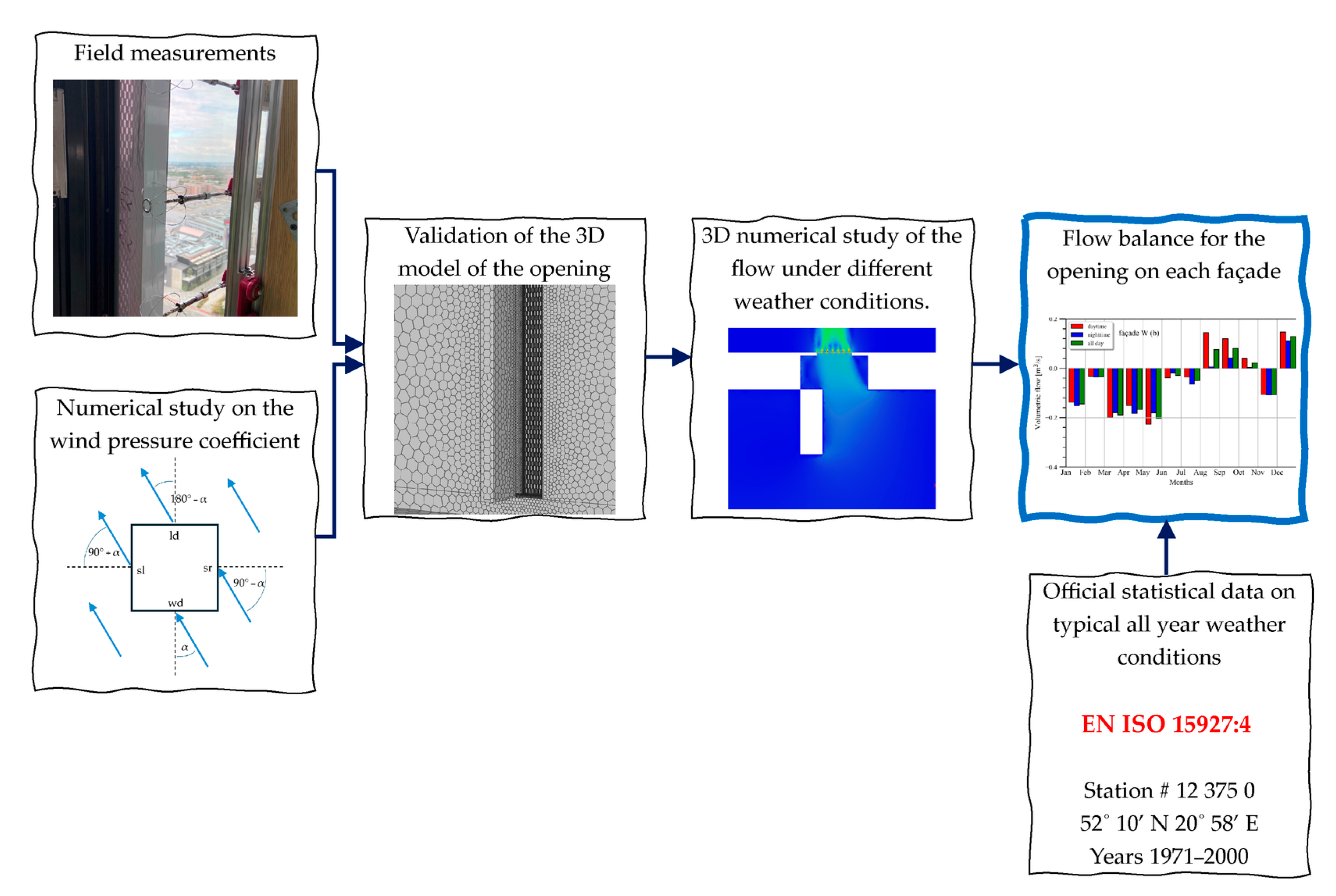
Figure 1. Overall flowchart of the research procedure.
Energies 18 06569 g001
Figure 2. The Forest Campus office complex with the examined façade.
Energies 18 06569 g002
Figure 3. A typical floor forming an open space (a), the building façade (b), and a façade opening with an openwork grating (c,d).
Energies 18 06569 g003
Figure 4. Sketch of a façade opening slot (horizontal cross-section) and the grating dimensions.
Energies 18 06569 g004
Figure 5. Stand pole with anemometers (a). One of the sensors (b).
Energies 18 06569 g005
Figure 6. Recorded wind velocity and wind direction during the measurements.
Energies 18 06569 g006
Figure 7. The anemometer records. Standard deviation is also shown (dotted red lines).
Energies 18 06569 g007
Figure 8. Sketch of the 2D numerical model (wd—windward, ld—leeward, sl—left, and sr—right façade). α denotes the wind inflow angle.
Energies 18 06569 g008
Figure 9. Pressure at the middle points of the building façades for all meshes.
Energies 18 06569 g009
Figure 10. Pressure coefficient in the center of the façade for different angles of wind inflow for all facades of a tall building. The angle at which the pressure coefficient becomes negative is indicated by a blue dashed vertical line.
Energies 18 06569 g010
Figure 11. Measured and calculated values of volumetric flow (vertical bars show the standard deviation).
Energies 18 06569 g011
Figure 12. The numerical model: façade with the opening (a), top view with the wind (b), and the opening, seen from the room, zoomed (c).
Energies 18 06569 g012
Figure 13. Validation of the numerical model of the opening. The actual readings of the anemometers are compared to the calculated ranges.
Energies 18 06569 g013
Figure 14. Distributions of airflow velocity magnitude in a horizontal plane at a height of 1.4 m (half of the slot height) for selected cases.
Energies 18 06569 g014
Figure 15. Dependence of volumetric flow on the inflow angle (a,b) and dependence of the product of the discharge coefficient and the pressure coefficient on the inflow angle (c).
Energies 18 06569 g015
Figure 16. Dependence of volumetric flow on the negative pressure (a). Regression according to Equation (1) (b).
Energies 18 06569 g016
Figure 17. Dependence of volumetric flow squared on the temperature difference.
Energies 18 06569 g017
Figure 18. Daily averaged (a) and monthly averaged (b) ambient temperature for the examined location.
Energies 18 06569 g018
Figure 19. Wind distributions for the examined location: daily averaged (a) and monthly averaged (b) and share with regard to wind speed (c) and wind direction (d).
Energies 18 06569 g019
Figure 20. Daily averaged (a) and monthly averaged (b) flow for the W façade.
Energies 18 06569 g020
Figure 21. Daily averaged (a) and monthly averaged (b) flow for the N façade.
Energies 18 06569 g021
Figure 22. Daily averaged (a) and monthly averaged (b) flow for the E façade.
Energies 18 06569 g022
Figure 23. Daily averaged (a) and monthly averaged (b) flow for the S façade.
Energies 18 06569 g023
Figure 24. Daily averaged (a) and monthly averaged (b) heat loss for the W façade.
Energies 18 06569 g024
Figure 25. Daily averaged (a) and monthly averaged (b) heat loss for the N façade.
Energies 18 06569 g025
Figure 26. Daily averaged (a) and monthly averaged (b) heat loss for the E façade.
Energies 18 06569 g026
Figure 27. Daily averaged (a) and monthly averaged (b) heat loss for the S façade.
Energies 18 06569 g027
Figure 28. Weather conditions in the chosen period; daytime is marked by yellow bars.
Energies 18 06569 g028
Figure 29. The effects of night cooling for different room areas.
Energies 18 06569 g029
Table 1. Selected previous studies in relation to the work presented.
Literature ItemsMentioned IssuePresented Research
[7,8,9]The angle of wind inflow on a façade with windows is critical to the amount of air entering the building.This statement was confirmed, and extensive numerical studies on this issue were carried out.
[21,22,23]Study on the value of the wind pressure coefficients (Cp) for a façade with windows because this value strongly affects the accuracy of predicted airflow rates for natural ventilationIn the research presented, the distribution of the Cp coefficient for the analyzed facades was determined.
[28,29,30]The use of natural ventilation allows for potential energy savings.This topic was addressed in the research.
[38,40]Orientation of the building with respect to the incoming wind (wind angle) is a key factor for the effectiveness of natural ventilation.The presented conclusions are consistent.
Table 2. Parameters of the Kestrel Weather Meter 5500.
VariableRangeAccuracyResolution
Temperature−29–70 °C±0.5 °C0.1 °C
Flow velocity0.1–40.0 m/s±3%0.1 m/s
Wind direction0–360°
Pressure100–1600 hPa±1.5 hPa0.1 hPa
Relative humidity10–90% RH±2% RH0.1% RH
Table 3. Examined numerical meshes.
MeshNo of CellsNo of FacesNo of NodesGrowth RateOrthogonal Quality
Normal665,1184,311,7853,377,2721.10.21
Dense952,9376,334,3745,060,4081.10.22
Table 4. Mesh sensitivity analysis—flows for selected cases.
CaseMeshMass Flow Rate [kg/s]Volumetric Flow Rate [m3/s]
5 m/s 0°Normal0.4730.386
Dense0.4760.389
5 m/s 60°Normal0.1920.157
Dense0.2010.163
Disclaimer/Publisher’s Note: The statements, opinions and data contained in all publications are solely those of the individual author(s) and contributor(s) and not of MDPI and/or the editor(s). MDPI and/or the editor(s) disclaim responsibility for any injury to people or property resulting from any ideas, methods, instructions or products referred to in the content.