Article

Effects of Localized Overheating on the Particle Size Distribution and Morphology of Impurities in Transformer Oil

1
State Key Laboratory of Power Transmission Equipment Technology, Chongqing University, Chongqing 400044, China
2
State Grid Chongqing Electric Power Research Institute, Chongqing 400022, China
*
Author to whom correspondence should be addressed.
Energies 2025, 18(24), 6566; https://doi.org/10.3390/en18246566
Submission received: 27 October 2025 / Revised: 3 December 2025 / Accepted: 9 December 2025 / Published: 16 December 2025

Abstract

Power transformers are critical components of power grids, and their operational status characterization and fault diagnosis are crucial for power system reliability. Oil quality assessment is a crucial method for determining transformer status, and the detection of impurity particles in oil has historically been a key approach. However, recent field tests have revealed the presence of numerous impurity particles less than 5 μm in transformer oil. Current power standards do not address these micron-sized particles, and their sources and mechanisms of action are largely unresolved. Therefore, this paper designed a localized overheating experiment, incorporating microflow imaging technology, to investigate the generation patterns of impurity particles under localized overheating and their quantitative correlation with heat. Field oil samples were also collected and tested to further explore the potential application of these micron-sized particles in transformer overheating assessment. The research results show that insulating oil can decompose and produce impurity particles at temperatures as low as 140 °C. When the temperature is below 140 °C, the number of particles at different heat levels is not significantly different from that of the non-overheated oil sample. However, when the temperature exceeds 140 °C, the number of particles increases significantly with increasing heat. Among the generated particles, particles with a diameter of less than 5 μm account for over 50% of the total number, and their number increases significantly with increasing heat. Their morphology is characterized by a smooth, regular, and spherical shape. Field test results of overheated oil samples are consistent with laboratory tests. Micron-sized particles are highly sensitive to changes in overheating conditions and have the potential to be used as a new characteristic parameter of transformer overheating conditions. In summary, this paper reveals the formation mechanism of impurity particles in insulating oil under localized overheating conditions. It was found that insulating oil can also decompose and generate impurity particles at 140 °C, with the pyrolysis products mainly consisting of particles smaller than 5 μm in diameter, which are not currently considered a concern in existing standards. Further research indicates that these micron-sized particles exhibit high sensitivity to changes in overheating conditions, demonstrating potential application value as a novel characteristic parameter of transformer overheating.

1. Introduction

Accurate characterization of the operating status and fault diagnosis of power transformers are of great significance to ensuring the safety of power systems [1,2,3]. The method based on Dissolved Gas Analysis (DGA) is one of the primary techniques currently used for diagnosing latent insulation faults in transformers [4,5]. Although DGA technology has been implemented for online monitoring, the monitoring results exhibit certain delays and uncertainties due to the need for oil–gas separation, gas–gas separation, and the complex diffusion process of gases in oil [6]. Exploring new characteristic parameters and detection technologies closely related to fault energy has long been a key research focus in this field.
The number of impurity particles in oil is one of the key indicators for assessing the condition of transformer insulating oil. The IEC 60422:2013 standard recommends the use of an automatic particle counter to detect particles larger than 5 μm in oil samples, with cleanliness levels evaluated according to the ISO 4406-2021 standard [7,8]. However, recent results from the use of microflow imaging technology to analyze a large number of field transformer oil samples indicate that even in normally operating transformers, micro-sized carbon particles with a particle size smaller than 5 μm are commonly present, accounting for nearly 50% of the total number of particles. Although current standards consider particles smaller than 5 μm to have a relatively small impact on the risk of insulation discharge and have not made specific provisions, their sources and the interaction mechanism between them and potential faults are still unclear. Existing studies have shown that tiny particles smaller than 5 μm can have a significant impact on the electrical properties of insulating oil. Increased concentration of these particles can lead to increased dielectric loss and decreased DC resistivity, thereby accelerating the insulation degradation of the oil [9]. Therefore, although such particles have not yet been included in current testing standards, their potential electrical impact is still significant and further in-depth research is needed on their generation mechanism and their correlation with operational faults.
Insulating oil will decompose under the action of electrical and thermal fault energy to produce small molecular hydrocarbon gas. The type and concentration of the gas are closely related to the magnitude of the fault energy. This is the theoretical basis of the traditional DGA diagnostic method [10]. However, in addition to gas, external energy acting on insulating oil may also generate other substances, such as carbon particles [11]. Although the traditional view is that carbon particles in transformer oil are only formed under high-energy discharge or high temperature (>500 °C) conditions [12,13], the results of research on molecular sieve catalytic reaction systems in the field of petroleum processing show that some hydrocarbon substances in petroleum can generate coke through free radical reactions at low temperatures of about 100 °C [14]. By analogy, it can be inferred that hydrocarbon molecules in transformer oil may also undergo cracking under low-temperature overheating conditions, leading to the formation of free carbon particles. The number and morphology of these particles are likely to have a certain correlation with the applied heat.
Based on this, the present study designs a localized overheating experiment, combined with microflow imaging technology, to systematically investigate the evolution of impurity particles in transformer oil under localized overheating conditions, including their quantity, particle size, and morphology. Furthermore, the study analyzes the correlation between these characteristics and the heat generation. Additionally, by comparing and analyzing the characteristics of impurity particles in oil samples from both normally operating and faulty transformers, this study further explores the feasibility of using micron-sized impurity particles as a characteristic parameter for identifying latent insulation faults in transformers.

2. Localized Overheating Experiment of Insulating Oil and Impurity Particle Detection

2.1. Localized Overheating Experiment of Insulating Oil

In the localized overheating experiment, alumina ceramic plates are selected as the heat source medium. A certain mass of ceramic plates is heated to a predetermined temperature and then immersed in insulating oil to simulate the localized overheating process [15]. This material exhibits excellent chemical inertness at temperatures below 1200 °C, ensuring that it does not react chemically with insulating oil nor produce detritus due to surface oxidation. It effectively prevents the contamination of insulating oil caused by the decomposition of the heat source material under high-temperature conditions.
The cooling process after the ceramic plates are immersed in insulating oil can be divided into two stages. In the first stage, the high-temperature ceramic plates (Tmax) and the low-temperature insulating oil (Tmin) reach the internal thermal equilibrium temperature (Teq) of the system through heat conduction. The heat released by the ceramic plates during this stage is equal to the heat absorbed by the insulating oil, denoted as Qoil. In the second stage, the oil-heat source system, having reached Teq in the sealed container, dissipates heat to the environment through the container wall, and eventually, the entire system stabilizes at Tmin.
The method for calculating the actual heat absorbed by the insulating oil (Qoil) is as follows. Firstly, based on the principle of energy conservation, the energy released by the ceramic plate is equal to the heat absorbed by the insulating oil. By solving Equation (1), the internal equilibrium temperature (Teq) of the heat source-oil system can be determined.
c c · m c · ( T m a x T e q ) = c o i l · m o i l · ( T e q T m i n )
where cc is the specific heat capacity of the alumina ceramic plate (0.86 J/g·°C), mc is the mass of the ceramic plate, coil is the specific heat capacity of the insulating oil (1.839 J/g·°C), moil is the mass of the oil sample (265.5 g), Tmax is the heating temperature of the ceramic plate, and Tmin is the ambient temperature (25 °C).
Then, the equilibrium temperature Teq is substituted into Equation (2) to obtain the actual heat absorbed by the insulating oil during the overheating stage:
Q o i l =   c o i l m o i l ( T e q T m i n ) T e q = c c m c T m a x + c o i l m o i l T m i n c c m c + c o i l m o i l Q o i l = c c m c c o i l m o i l c c m c + c o i l m o i l ( T m a x T m i n )
By changing the mass (mc) and heating temperature (Tmax) of the heat source medium, the amount of heat absorbed by the oil sample can be quantitatively controlled.
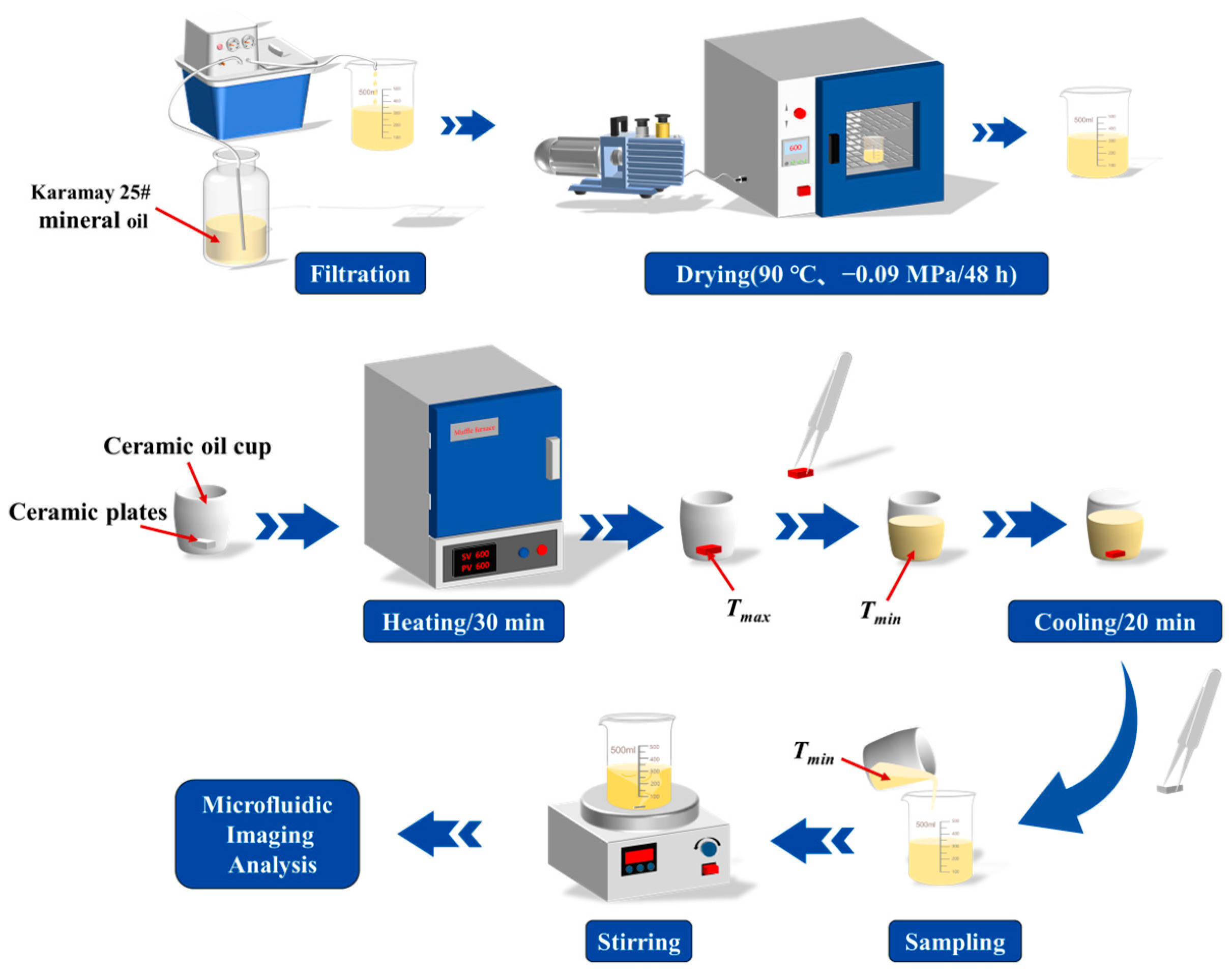
The overall experimental process is shown in Figure 1, and the specific steps are as follows:
(1) Oil sample pretreatment stage: The Karamay 25# insulating oil used in the experiment was purchased from Chongqing Chuanrun Co., Ltd. (Chongqing, China). This oil is a mineral insulating oil obtained through deep refining after petroleum fractionation. It has good insulation properties and oxidation stability. Its main physicochemical properties are shown in Table 1. The oil sample is first filtered and then placed in a vacuum drying oven at 90 °C/−0.09 MPa for degassing and drying for 48 h, ensuring the moisture content is ≤17 μg/g to minimize the synergistic effect of moisture on impurity particle formation during overheating. Finally, to reduce the impact of initial state differences in experimental equipment, all items used in the experiment, including ceramic oil cups (99.9% Al2O3, 350 mL), ceramic plates (99.9% Al2O3, 10 mm × 10 mm × 4 mm) and sampling bottles, are cleaned with anhydrous ethanol and then dried in an oven at 90 °C for 24 h before use.
(2) Heat source treatment stage: Alumina ceramic plates of a specific mass (1 tablet/0.265 g, 5 tablets/1.325 g, 13 tablets/3.445 g) are placed in a muffle furnace and heated to a preset temperature and held for 30 min.
(3) Heat Conduction Stage: Quickly transfer the heated ceramic plate into a ceramic oil cup containing the pretreated oil sample, and immediately seal the container to isolate it from air for 20 min.
(4) Cooling and sampling stage: Quickly transfer the heated ceramic plate into a ceramic oil cup containing the pretreated oil sample, and immediately seal the container to isolate it from air for 20 min.
This experiment is based on the temperature rise limits specified in IEC 60076-2, where the winding hot spot limit is approximately 100 °C and the top oil temperature limit is around 80 °C [16]. With reference to the flash point of 140 °C for the Karamay KI25X transformer oil, and further considering different levels of overheating conditions, six groups of heat source temperatures were designed, Tmax = 80 °C, 100 °C, 140 °C, 200 °C, 400 °C and 600 °C, to carry out localized overheating experiments. The heat absorption of the oil sample was controlled by changing the heat source mass (mc = 0.265 g, 1.325 g, 3.445 g). For example, when mc = 0.265 g and Tmax = 200 °C, the heat absorption of the insulating oil is calculated according to Equation (3):
Q o i l = 0.86 × 0.265 × 1.839 × 265.5 0.86 × 0.265 + 1.839 × 265.5 × ( 200 25 ) 40   J
Table 2 lists the heat absorbed by the oil samples under different heat source temperatures and masses.

2.2. Impurity Particle Testing and Characteristic Parameter Extraction in Oil

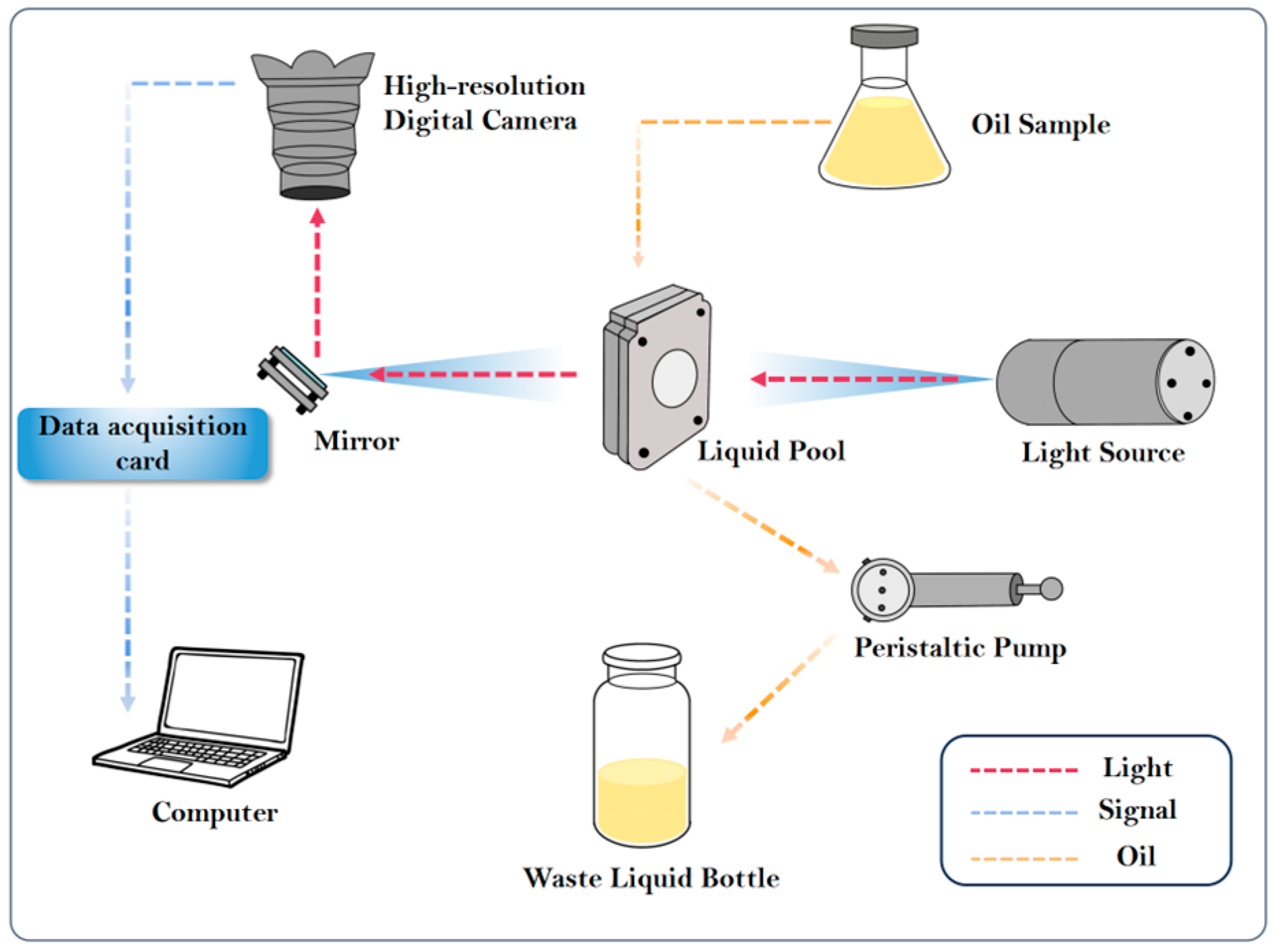
Microflow imaging (MFI) was used to test the impurity particles in the oil. This method is based on the principle of dynamic imaging and employs a high-precision optical imaging system with a resolution of 4096 × 3000 pixels to capture images of impurity particles. Image recognition technology is then used to analyze the geometric parameters of the particles, allowing for clear identification of morphological details in the size range of 0.3 to 1000 μm. Figure 2 shows a schematic diagram of the detection principle of the microflow imaging system. Its specific working principle is as follows: the oil sample is delivered to the transparent liquid pool by a peristaltic pump. Under the illumination of the pulse light source, the particle image in the flow state is captured in real time by a high-resolution digital camera. Subsequently, the image is transmitted to the computer through a data acquisition device, and the number, particle size and morphology of the particles are extracted by threshold segmentation and image recognition algorithms. At present, microflow imaging has been effectively used in the biopharmaceutical field to analyze insoluble particles in protein preparations [17,18,19].
Compared with the automatic particle counting method recommended by the ISO 11500:2022 standard [20], this method has higher measurement accuracy for micro-sized particles with a particle size of less than 5 μm, and can obtain morphological parameters of impurity particles including roundness and aspect ratio.
To ensure the representativeness of the test data, before each test, the oil sample was stirred for 30 min using a magnetic stirrer to ensure that the impurity particles were evenly distributed in the oil sample, and 2.5 mL of the test oil sample was used to rinse the pool 10 times to reduce the interference of residual liquid inside the equipment on the measurement results. During the entire oil sample testing process, the sampling bottle mouth was sealed with a lid to prevent contamination from airborne particles. Finally, to reduce the influence of measurement errors, three oil samples were taken under the same overheating conditions each time, and each sample was tested four times. The average value was taken as the characteristic parameter value of the oil sample under the overheating condition.

3. Analysis of Characteristic Parameters of Impurity Particles in Insulating Oil

3.1. Number of Particles

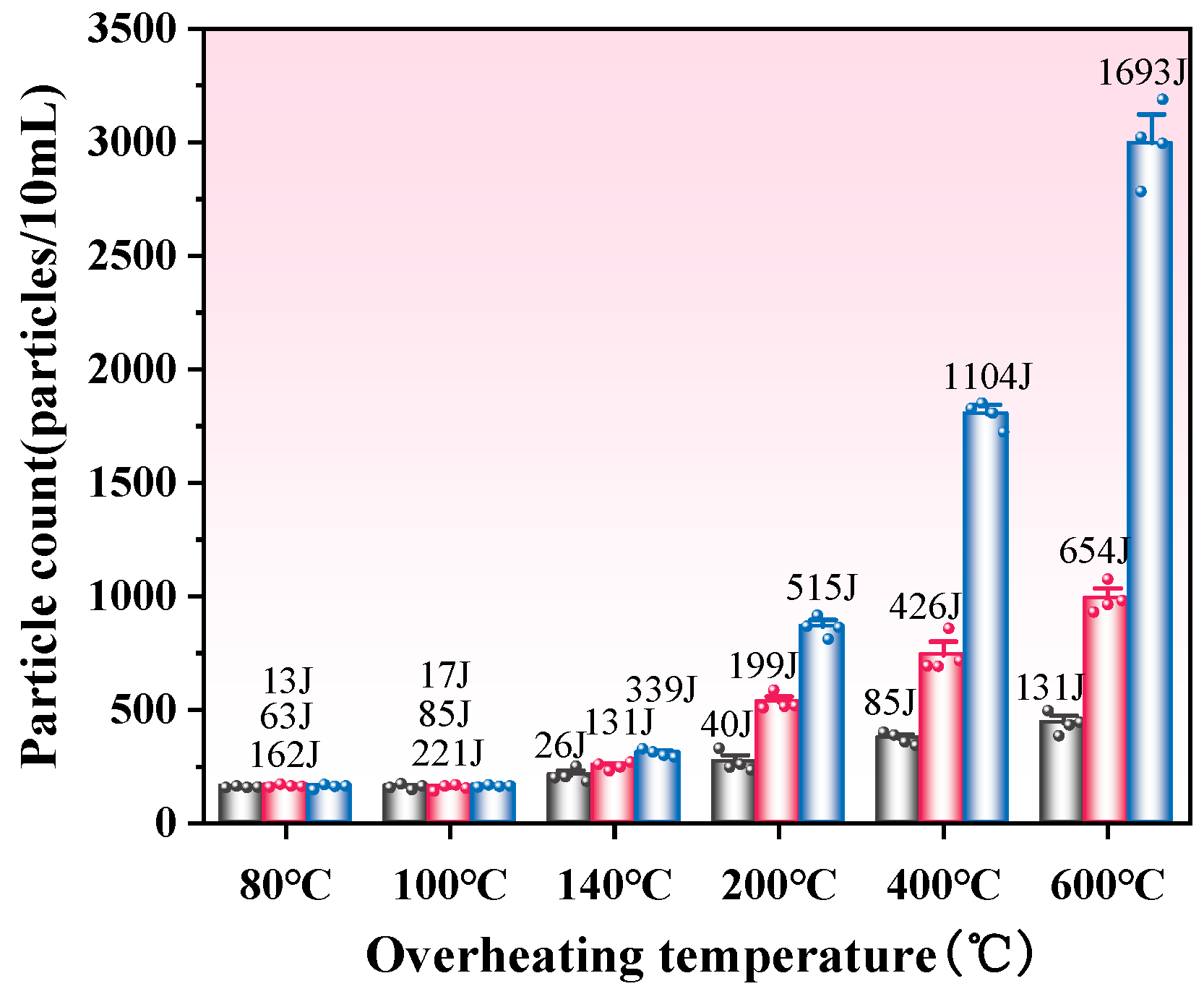
Figure 3 shows the variation in the number of impurity particles in the oil under different superheat conditions, and Table 3 shows the particle number data under the corresponding temperature and heat absorption conditions. As can be seen from Figure 3 and Table 3, when Tmax ≤ 100 °C, the number of particles in the oil remains between 158 and 165, showing no significant change, even when the heat input increases from 13 J to 221 J. However, when Tmax exceeds 140 °C, the number of particles begins to increase with increasing heat input. Even with a heat input of only 131 J, the number of particles increases by 91 and 93, respectively, compared to the values at 80 °C (162 J) and 100 °C (221 J), representing an increase of approximately 54%. This experimental phenomenon demonstrates that temperature is the primary factor affecting the formation of impurity particles.
As the overheating temperature increases further, the number of particles increases with the amount of heat, and this trend becomes more pronounced with higher temperatures. For example, at 200 °C, the amount of heat increases from 40 J to 515 J, an approximately 11.9-fold increase, and the number of particles increases from 269 to 866, a 222% increase. At 600 °C, the amount of heat increases from 131 J to 1693 J, also an approximately 11.9-fold increase, but the number of particles soars from 441 to 2997, a 579% increase. This indicates that after temperatures exceed 140 °C, heat begins to promote particle formation, and the two exhibit a significant positive correlation.
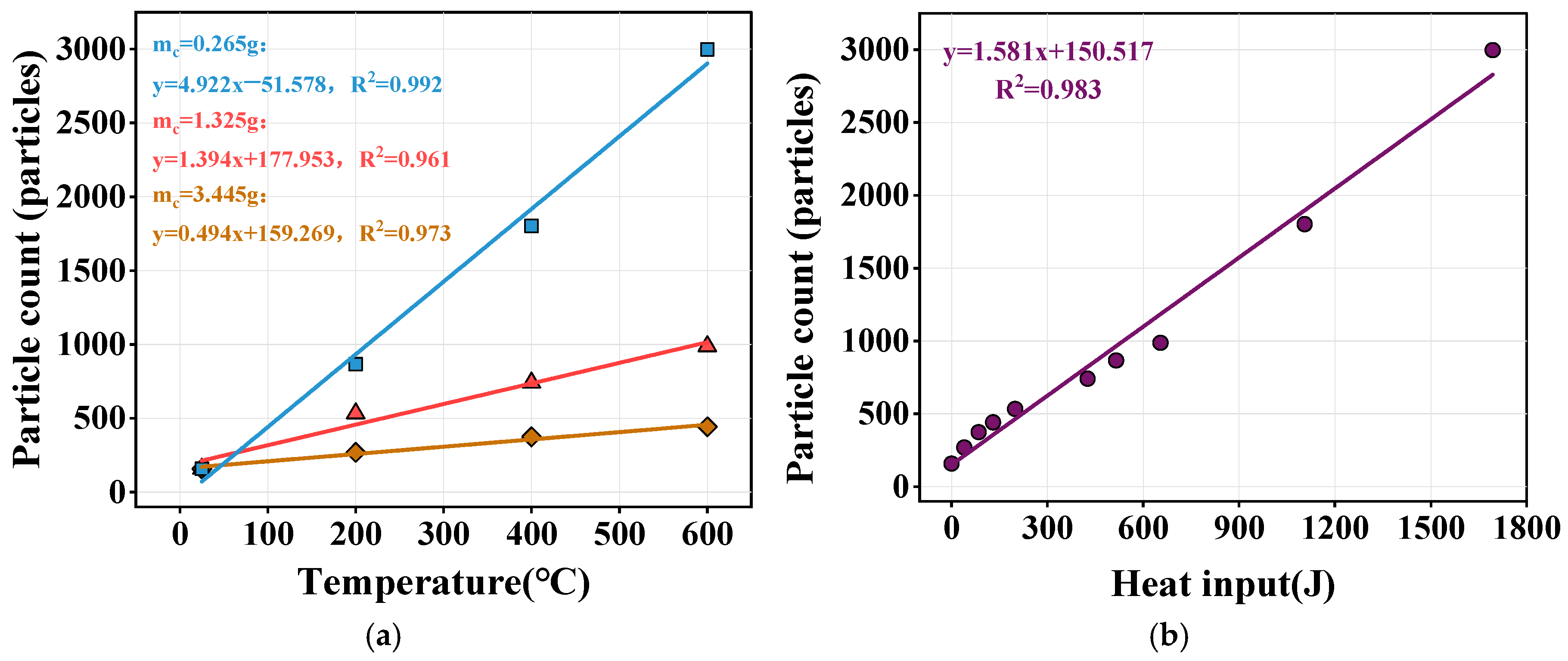
To further clarify the correlation between heat, temperature, and particle number in the oil, experimental data under Tmax = 200 °C to 600 °C were selected. Linear fittings were performed for both temperature-particle number and heat-particle number relationships, as shown in Figure 4. From Figure 4, it can be seen that the average correlation coefficient between temperature and particle number is 0.975, and the correlation coefficient between heat and particle number is 0.983, both of which exhibit a strong linear correlation.
To further clarify the relative influence of heat and temperature on the generation of impurity particles from the cracking of insulating oil, this paper proposes to use a multiple linear regression model for quantitative analysis. According to Equation (2), the heat absorbed in the oil (Qoil) is a function of the heat source temperature (Tmax) and the heat source mass (mc). Therefore, it is necessary to further analyze the correlation between temperature and heat and the multicollinearity problem that may be caused. The results show that the Pearson correlation coefficient between the two is approximately 0.53, indicating a weak correlation, and the variance inflation factor (VIF) is 1.65, which does not exceed the threshold set by the collinearity criterion (VIF > 5). This suggests that both variables can be included in the model as explanatory variables. Based on this, this paper uses standardized variables to construct a multiple linear regression equation, with temperature and heat as independent variables and the number of particles as the dependent variable, to analyze the relative influence of heat and temperature on the generation of impurity particles from the cracking of insulating oil. The obtained regression model and its results are shown in Equation (4) and Table 4:
N = 146.732 + 0.014 T max + 1.578 Q oil
where N is the number of particles in the oil; Tmax is the heat source temperature; Qoil is the heat absorbed by the oil.
The results in Table 4 show that the established multiple linear regression model has a high goodness of fit with R2 = 0.978, indicating strong fitting performance. Among the variables, the standardized regression coefficient for heat is 0.991, significantly higher than the coefficient for temperature, which is 0.003, and the effect is statistically significant (p < 0.01). This indicates that when the temperature exceeds 140 °C, the impact of heat on the formation of impurity particles in the oil is much greater than that of temperature.
Based on the above analysis, although heat is essentially a function of both temperature and heat source mass, there are fundamental differences in the mechanisms by which these two factors influence particle formation during the pyrolysis of insulating oil. Temperature primarily acts as a trigger, determining whether the initial threshold for the pyrolysis reaction is reached; heat, on the other hand, is a driving variable, controlling the intensity and scale of the reaction. Experimental results show that when the temperature exceeds 140 °C, the number of particles increases significantly with heat. Furthermore, the standardized regression coefficient for heat on particle number in the regression analysis is significantly higher than that for temperature, further confirming the dominant role of heat.
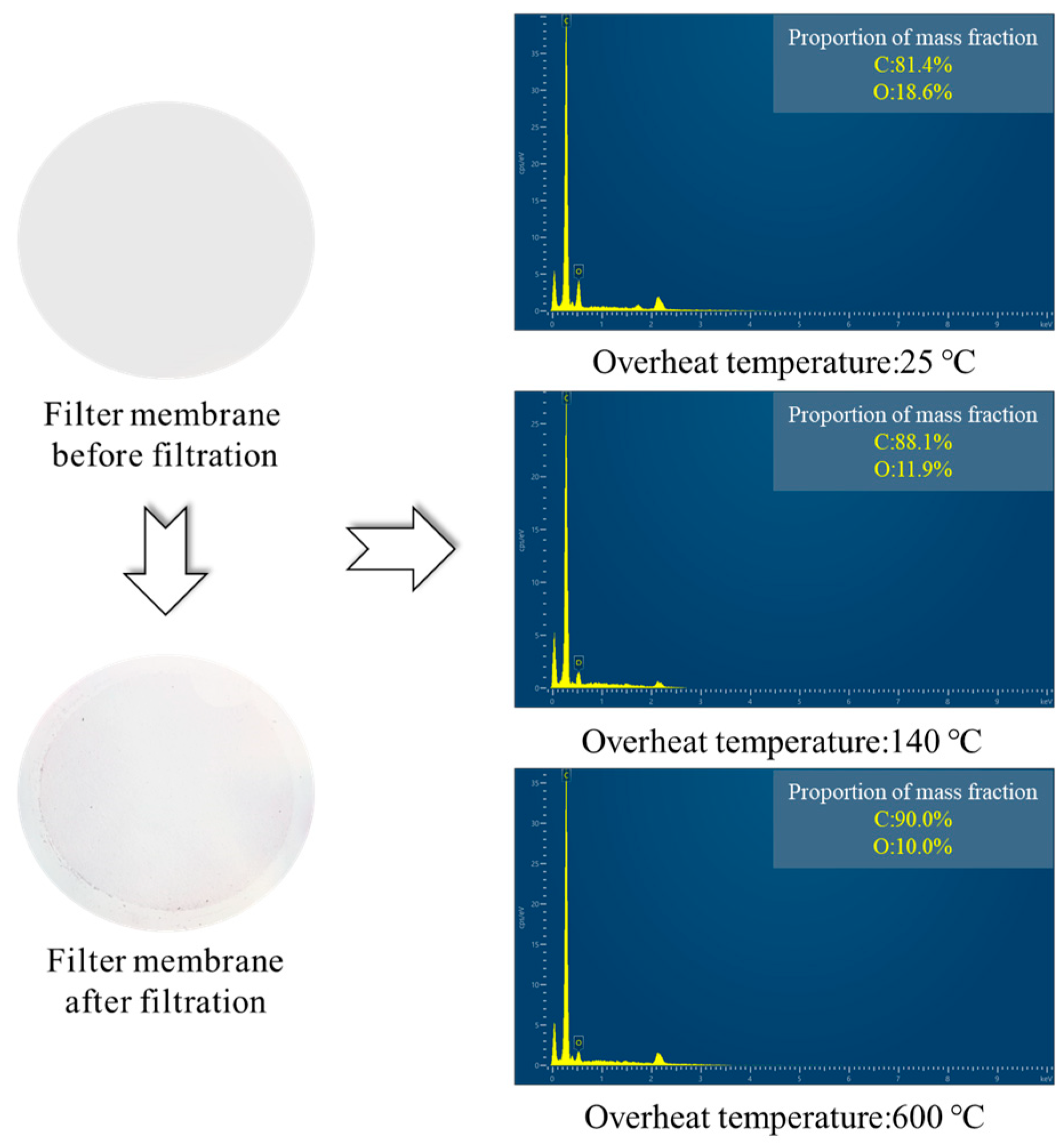
To verify the composition of impurity particles generated under localized overheating, oil samples overheated at 140 °C and 600 °C were filtered through a filter membrane with a pore size of 0.22 μm. To minimize the interference from residual oil samples, the filter membranes were soaked in alcohol and dried before elemental analysis was performed using an X-ray Energy Dispersive Spectrometer (EDS). As shown in Figure 5, obvious light gray marks appeared on the surface of the filter membrane after filtration. The EDS results show that compared with the blank filter membrane, the carbon content of the samples overheated at 140 °C and 600 °C increased significantly, while the oxygen content decreased accordingly, and the C/O ratio of the two was close. Combined with the previous research on the generation of carbon particles by thermal decomposition of insulating oil at 600 °C [11], it can be inferred that insulating oil may also generate carbon particles at temperatures as low as 140 °C. Similar analysis methods have also been reported in the literature [21].

3.2. Particle Size Distribution

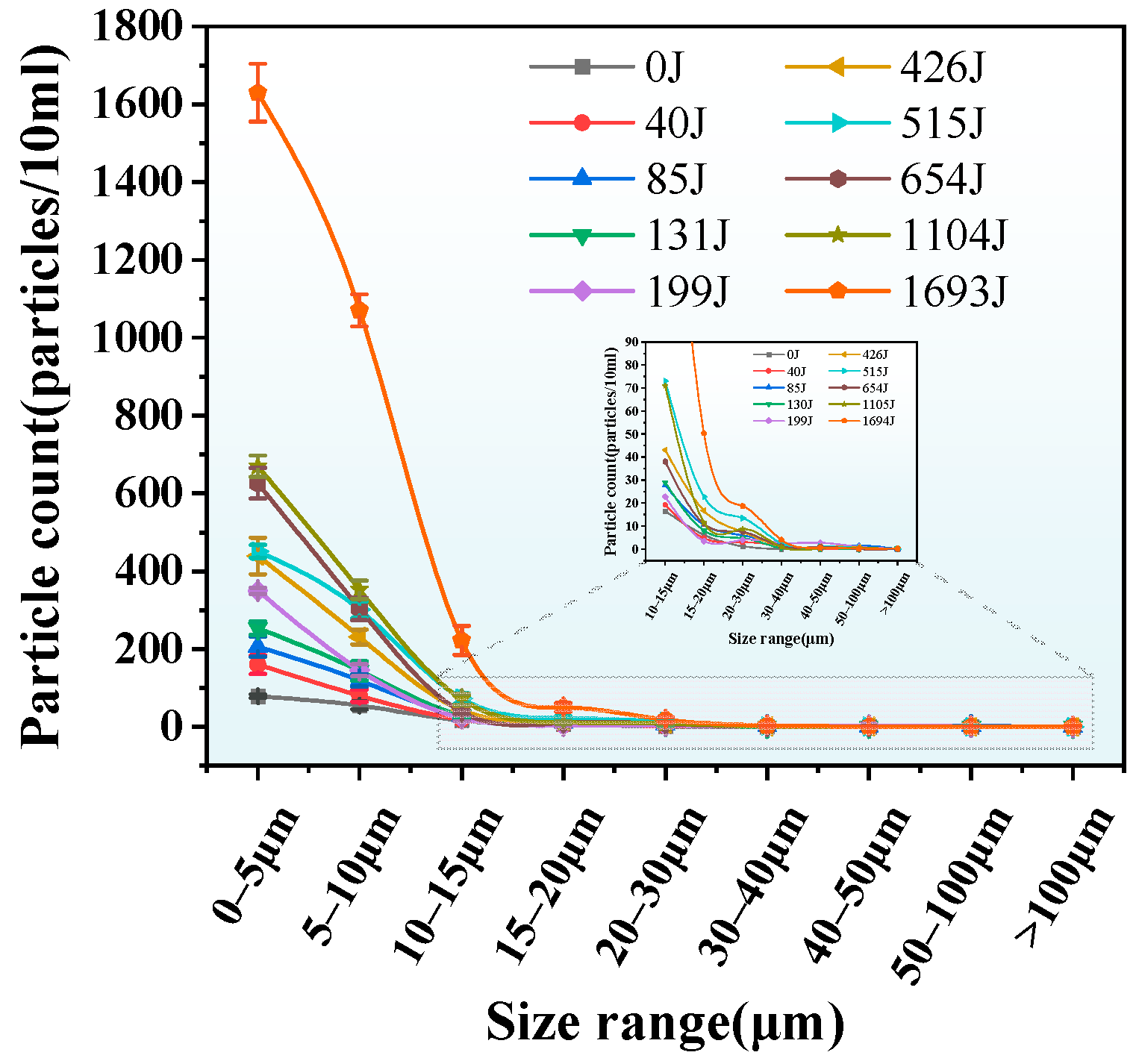
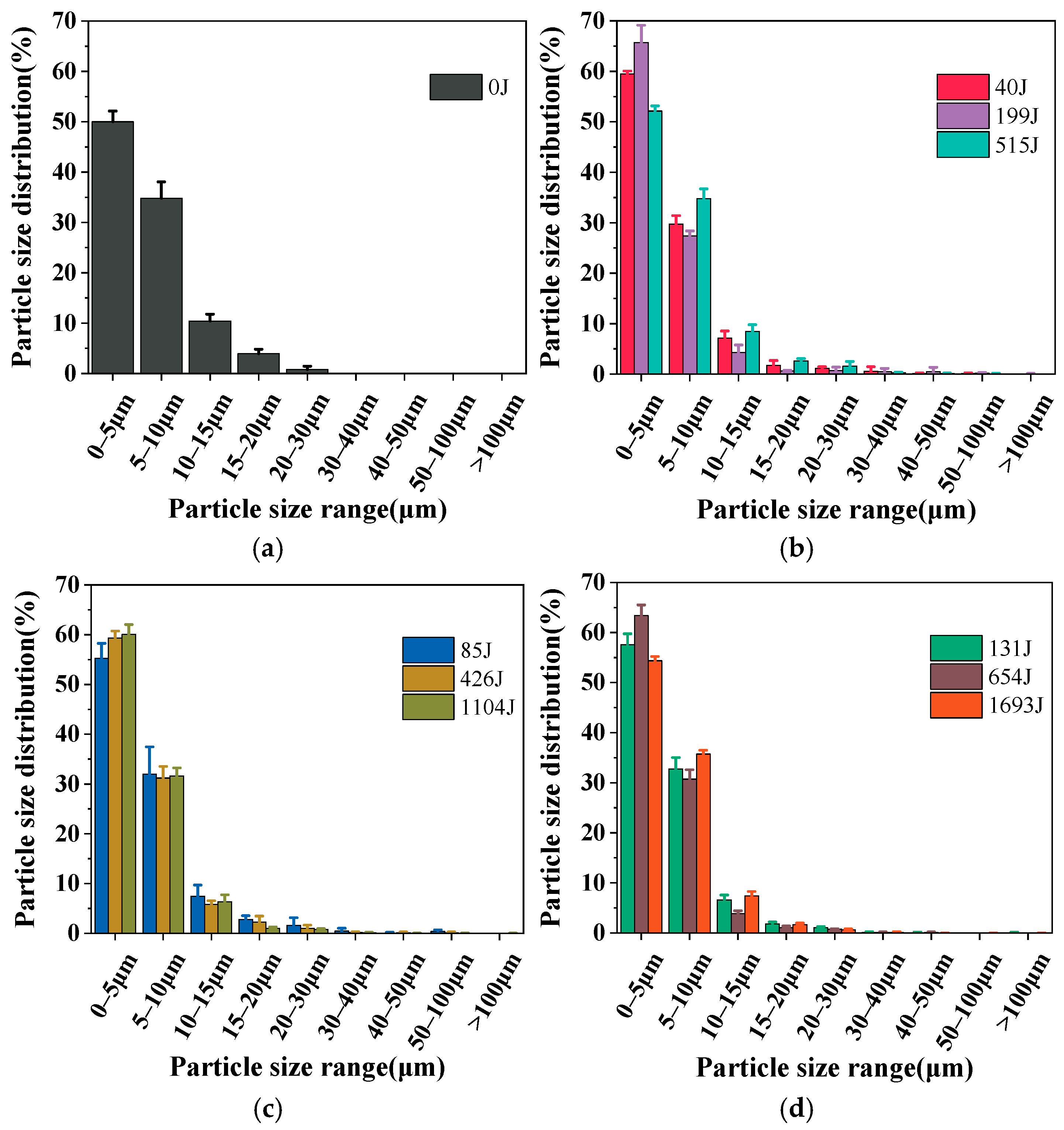
Further statistical analysis of the particle size distribution was conducted to explore its correlation with heat level. Figure 6 shows that the particle size distribution in the oil ranges from a few microns to hundreds of microns, but the majority of particles are distributed in the 0–10 μm range, and their size increases significantly with increasing heat. The number of particles larger than 10 μm is relatively small, and their size does not change significantly with increasing heat.
Figure 7 shows the particle size distribution probability at different heat levels. Impurity particles are primarily concentrated in the 0–10 μm range, accounting for over 90% of the total number of particles, with the 0–5 μm range consistently exceeding 50%. This further demonstrates that a large number of impurity particles with a size less than 5 μm are generated during the pyrolysis of insulating oil.

3.3. Particle Shape

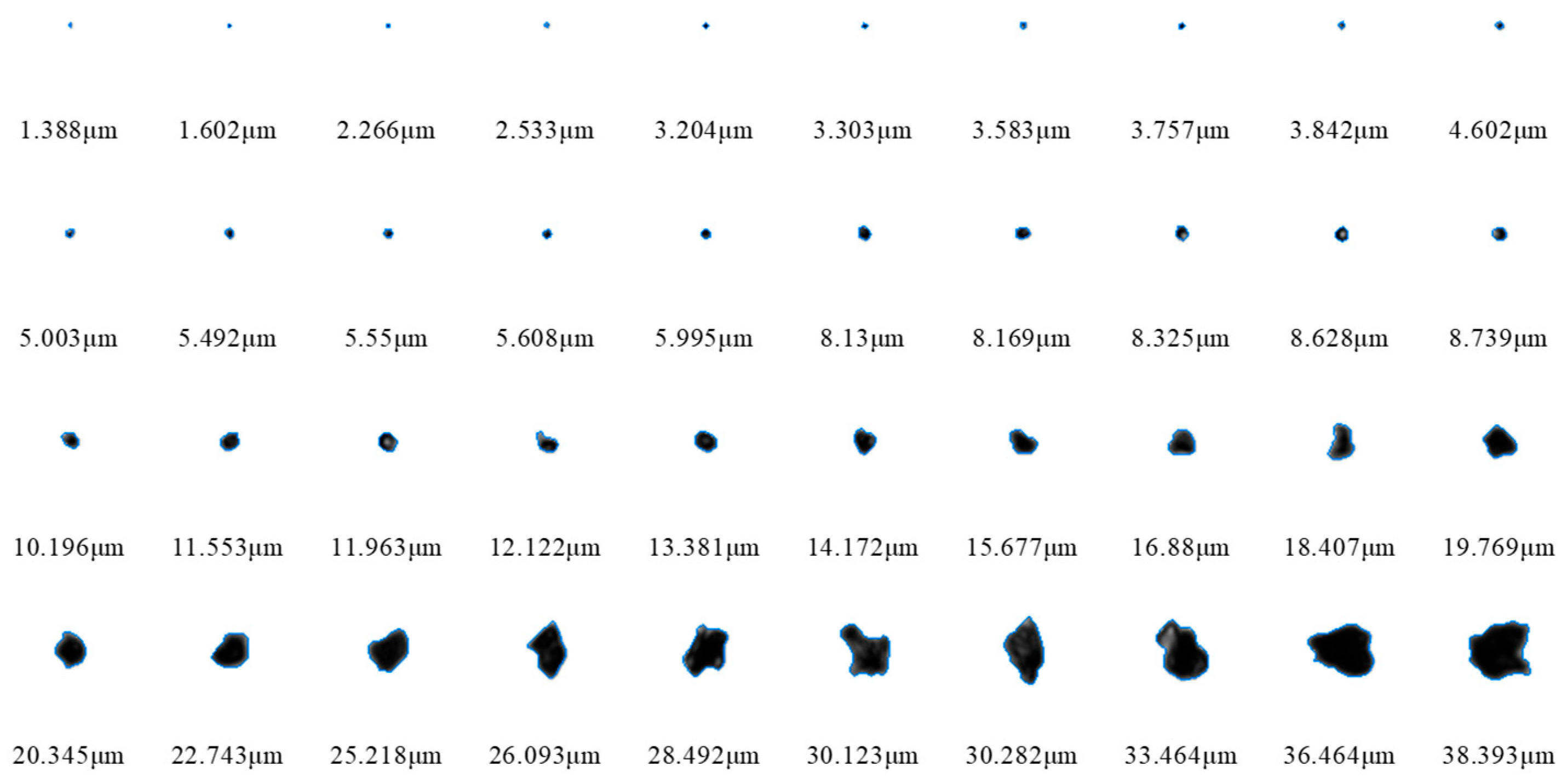
In addition to particle count and size distribution, significant differences in morphology can also be observed from the microflow images. As shown in Figure 8, small-sized impurity particles are mostly spherical and exhibit regular shapes. However, as the particle size increases, the surface contours become more angular, and the overall shape tends to become irregular.
In order to further quantitatively characterize the morphological characteristics of impurity particles generated in oil, it is necessary to select appropriate morphological parameters. Commonly used two-dimensional morphological parameters include roundness, ellipticity, and aspect ratio, which can characterize the shape characteristics of particles from different dimensions such as macroscopic size ratio and contour smoothness [22]. In combination with the differences in contour smoothness of particles in microflow images, this paper uses roundness to quantitatively analyze particle morphology.
Roundness is an indicator that characterizes the smoothness of a particle’s contour. Its value is calculated by the maximum inscribed circle radius of each point on the particle’s contour. The mathematical expression is as follows [23]:
R W = i = 1 N | ρ i | N ρ i c
where ρic is the radius of the particle’s maximum inscribed circle, ρi is the radius of the maximum inscribed circle that includes the i-th point of the particle’s contour, and N is the total number of contour points. Rw values closer to 1 indicate smoother, more regular particle contours; values closer to 0 indicate rougher, more complex contours.
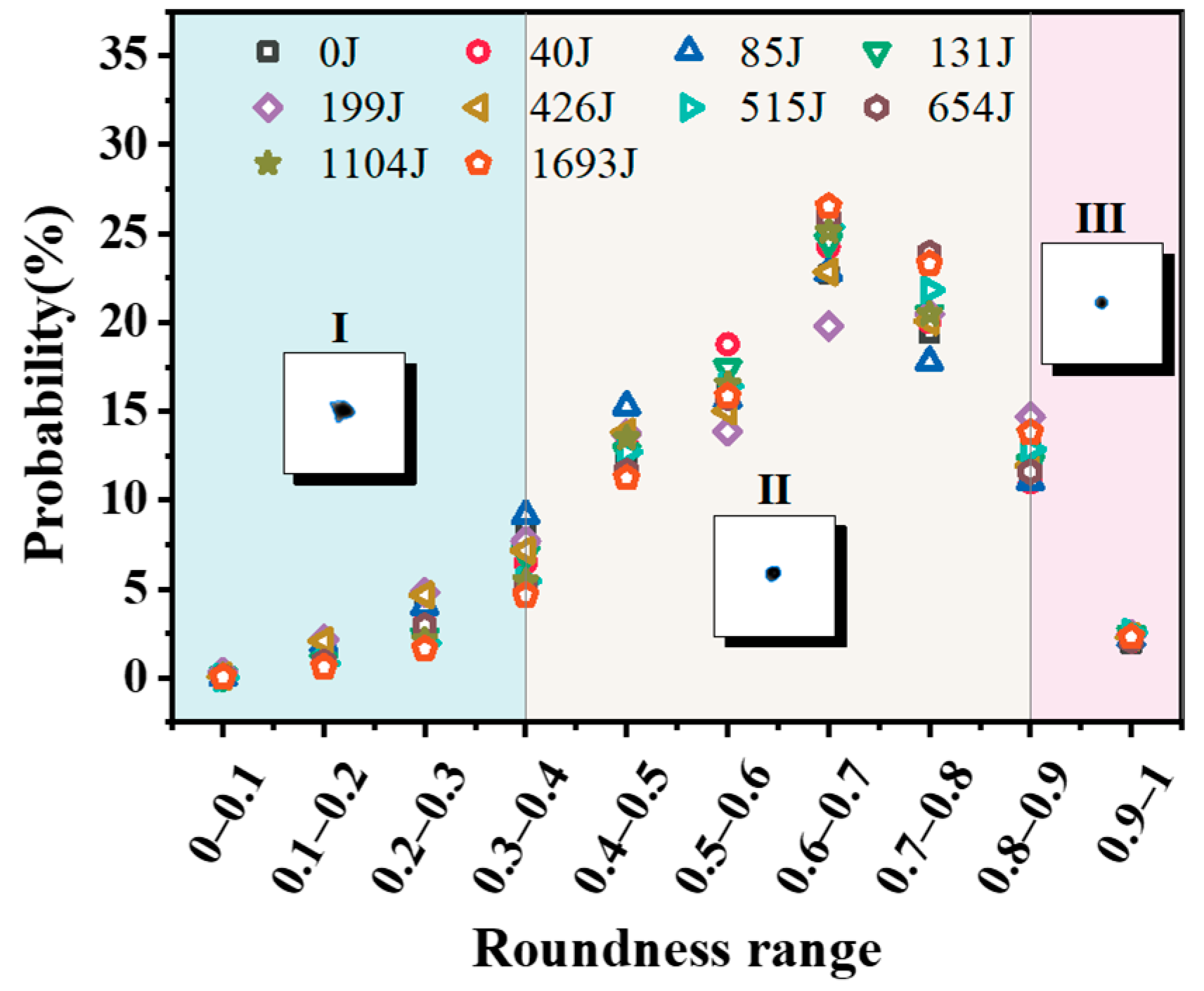
Figure 9 shows the probability distribution of impurity particle roundness, which can be divided into three regions. Region I (0–0.4) corresponds to rough, irregular particle edges with pronounced corners and protrusions. Region II (0.4–0.9) indicates relatively smooth particle contours with an overall morphology close to a sphere. Region III (0.9–1.0) represents highly rounded particles with a morphology close to an ideal sphere. Further analysis of Figure 8 reveals that under different heat conditions, the roundness of impurity particles is primarily concentrated in Region II, which accounts for over 80% of all impurity particle roundness. This suggests that the particles generated during the pyrolysis of insulating oil are mostly smooth and nearly spherical in shape.
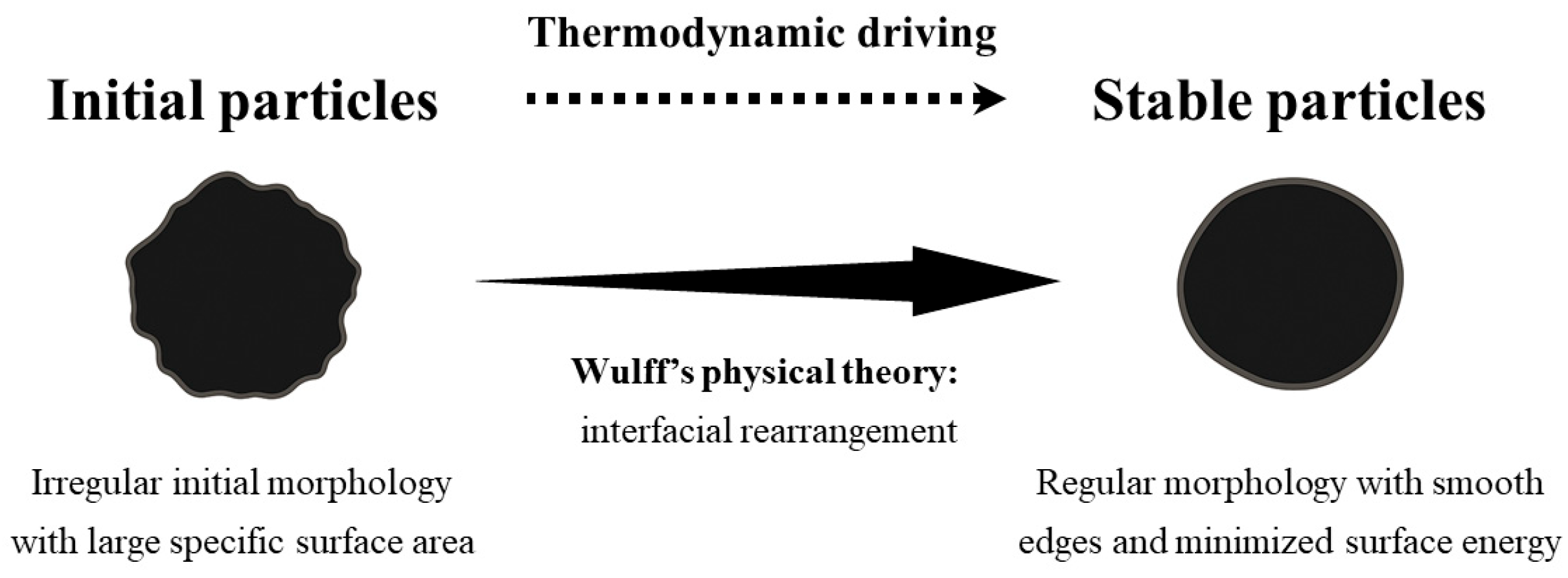
This morphological feature is primarily due to the thermodynamically driven process during pyrolysis, where the system spontaneously tends toward energy minimization [24]. As shown in Figure 10, with the input of heat, hydrocarbon molecules break down to form a large number of initially irregular particles with large specific surface areas. These morphological features result in high surface and interfacial energies, leading to high free energy and, therefore, thermodynamic instability. According to Wulff’s configuration theory, these particles continuously reduce their free energy through contraction and interfacial rearrangement during cooling and migration, gradually evolving into a geometric structure with a more regular outline and smoother surface, ultimately presenting a thermodynamically stable spherical morphology [25].
In summary, combined with the analysis of particle size and morphology distribution, it can be seen that insulating oil will generate a large number of micro-sized impurity particles with a particle size of <5 μm and a morphology close to spherical under overheating conditions.

4. Field Oil Sample Analysis

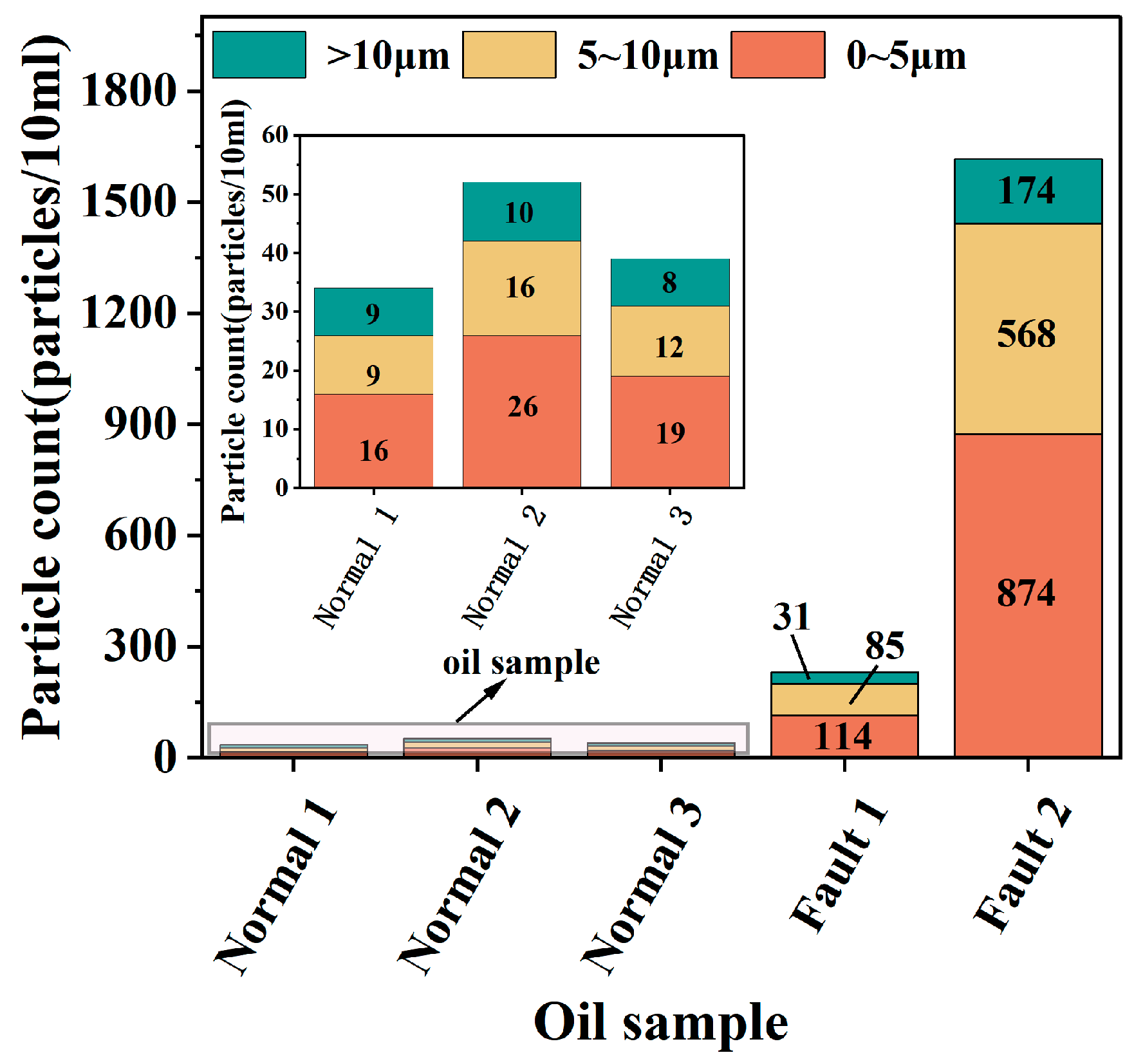
To verify the rationality of the above test results, five field oil samples from different substations were collected and subjected to microflow imaging testing. The results are shown in Figure 11. Three of these samples were from normal operation, and the other two were from overheating failures. Detailed information is shown in Table 5. The overheating failure type was determined based on the DGA data of the field oil samples.
Figure 11 shows that the particle counts in both Fault 1 (low-temperature overheating) and Fault 2 (high-temperature overheating) oil samples were significantly higher than those in the normal operating oil samples, indicating that thermal faults can cause the insulating oil to decompose and generate impurity particles. Further comparison of particle counts across different particle size ranges reveals that the impurity particles generated in the field overheated oil samples are primarily small particles of 0–5 μm, with the increase occurring primarily in the 0–10 μm range. Normal oil samples had only 26–41 particles in this range, while low-temperature overheating increased this to 199 particles and high-temperature overheating to 1443 particles, representing 5–8 times and over 35 times the normal oil samples, respectively. In contrast, the number of particles >10 μm did not vary significantly between the different oil samples. This indicates that the generated particles are primarily distributed in the 0–10 μm range, and their number shows a significant positive correlation with the degree of overheating. These results are consistent with the patterns observed in laboratory oil samples.
In summary, the analysis of transformer oil samples in the field showed that the oil sample with an overheating fault generated a large number of impurity particles compared with the oil sample under normal operation. The particle size was mainly concentrated in the range of 0~10 μm, with the largest number of micro-sized particles smaller than 5 μm. The number of micro-sized particles increased significantly with the degree of overheating, which is consistent with the results of the local overheating test in the laboratory. It should be further pointed out that the micro-sized particles generated by overheating are significantly distinguishable from impurities from other sources. The particles generated by oil pyrolysis are mostly spherical and the particle size is mainly smaller than 5 μm, while the particles introduced by metal wear or paper insulation aging are usually larger in size and irregular in shape. Therefore, they can be effectively distinguished by the characteristic parameters of microflow imaging technology [26]. In addition, previous studies have shown that these particles have significant migration under the action of an electric field, and are easy to move to high field strength regions and attach to the surface of insulating paperboard, which may cause local electric field distortion and accelerate insulation aging [21]. Combining the consistency between the field oil sample and the laboratory results in this study, it can be considered that such micro-sized particles have highly sensitive response characteristics to changes in overheating state and have potential application value as a new characteristic parameter of transformer overheating state.

5. Conclusions

This paper quantitatively analyzes the relationship between the heat absorbed by insulating oil due to overheating and the characteristic parameters of the generated impurity particles. The main conclusions are as follows:
(1) Insulating oil decomposes to form impurity particles even at temperatures as low as 140 °C. Below 140 °C, the number of impurity particles in the oil under different heat conditions showed no significant difference compared to a blank oil sample. However, above 140 °C, the particle count increased significantly with increasing heat. A multivariate linear regression analysis, with temperature and heat as independent variables and particle count as the dependent variable, showed that heat significantly impacted particle formation above 140 °C.
(2) Above 140 °C, a large number of microscopic impurity particles (<5 μm), which are not considered by current standards, were generated in the insulating oil. These particles accounted for over 50% of the total particle count and increased significantly with increasing heat. Morphologically, the impurity particles primarily exhibited smooth, regular, and spherical shapes.
(3) The generalizability of the laboratory results was verified using five field oil samples from different substations. The results show that the impurity particles in the oil samples from on-site overheating failures are also mainly micro-sized particles smaller than 5 μm, and their number increases significantly with the increase of overheating degree, showing a correlation pattern consistent with the local overheating test.
This paper reveals that microparticles smaller than 5 μm exhibit high sensitivity to changes in overheating levels, suggesting their potential application as a novel characteristic parameter for assessing transformer overheating conditions. Future research could focus on accumulating field oil sample test data to further explore the correlation between microparticle characteristics and overheating conditions. Considering that the actual transformer insulation system consists of insulating oil and oil-impregnated paper, localized overheating can lead not only to the pyrolysis of the oil but also to the decomposition of the paper insulation. Therefore, future research will focus on the generation patterns and evolution mechanisms of impurity particles in the oil-paper insulation system under localized overheating.

Author Contributions

Methodology, C.C.; writing—original draft preparation, S.F.; writing—review and editing, L.Y., S.F., X.Y. and R.L.; project administration, X.Y. Supervision, R.L. and L.Y.; Conceptualization, R.L. Data curation, C.C. Resources, X.Y.; Funding acquisition, X.Y. All authors have read and agreed to the published version of the manuscript.

Funding

This work is financially supported by State Grid Corporation of China Science and Technology Project under grant 5500-202499147A-1-1-ZN.

Data Availability Statement

The original contributions presented in this study are included in the article. Further inquiries can be directed to the corresponding author.

Conflicts of Interest

Author Xinxi Yu was employed by the State Grid Chongqing Electric Power Co., Ltd. Electric Power Science Research Institute. The authors declare that the research was conducted in the absence of any commercial or financial relationships that could be construed as a potential conflict of interest. The funding sponsors had no role in the design of the study; in the collection, analyses, or interpretation of data; in the writing of the manuscript; or in the decision to publish the results.

References

  1. Ivanov, G.; Spasova, A.; Mateev, V.; Marinova, I. Applied Complex Diagnostics and Monitoring of Special Power Transformers. Energies 2023, 16, 2142. [Google Scholar] [CrossRef]
  2. Yao, H.; Xu, Y.; Guo, Q.; Chen, S.; Lu, B.; Huang, Y. Study on transformer fault diagnosis based on improved deep residual shrinkage network and optimized residual variational autoencoder. Energy Rep. 2025, 13, 1608–1619. [Google Scholar] [CrossRef]
  3. Wang, S.; Wang, S.; Cui, Y.; Long, J.; Ren, F.; Ji, S.; Wang, S. An Experimental Study of the Sweep Frequency Impedance Method on the Winding Deformation of an Onsite Power Transformer. Energies 2020, 13, 3511. [Google Scholar] [CrossRef]
  4. Lin, J.; Sheng, G.; Yan, Y.; Dai, J.; Jiang, X. Prediction of Dissolved Gas Concentrations in Transformer Oil Based on the KPCA-FFOA-GRNN Model. Energies 2018, 11, 225. [Google Scholar] [CrossRef]
  5. Zhou, W.; Zhao, Y.; Wang, X.; Zhang, P. Box-plot-SA-BP: Fault Diagnostic Model for Multi-feature Transformer DGA. Power Syst. Big Data 2023, 26, 44–52. [Google Scholar] [CrossRef]
  6. Zhu, P. Application of probabilistic neural network with fruit fly optimization algorithm in power transformer fault diagnosis. Power Syst. Big Data 2018, 21, 37–43. [Google Scholar] [CrossRef]
  7. IEC 60422:2013; Mineral Insulating Oils in Electrical Equipment–Supervision and Maintenance Guidance. International Electrotechnical Commission: Geneva, Switzerland, 2013.
  8. ISO 4406:2021; Hydraulic Fluid Power—Fluids Method for Coding the Level of Contamination by Solid Particles. International Standard: Geneva, Switzerland, 2021.
  9. Zhang, X.; Zhu, H.; Feng, S.; Yang, Y.; Chen, C.; Zhao, X.; Yang, L. Research on Generation Mechanism of Carbon Particles in Natural Ester and Mineral Oil and Their Impact on Electrical Properties. High Volt. Appar. 2025, 61, 11–20. [Google Scholar] [CrossRef]
  10. Feng, D.; Chen, G.; Yan, X.; Hao, J.; Liao, R. Molecular pyrolysis process and gas production characteristics of 3-element mixed insulation oil under thermal fault. High Volt. 2022, 7, 1130–1140. [Google Scholar] [CrossRef]
  11. Dong, Z.; Zhang, Z.; Zhong, J.; Xue, Z.; Yang, Y.; Pan, Z.; Fang, J. Adhesion characteristics of carbon particles on the surface of epoxy resin in insulating oil under DC electric field and influencing factors. High Volt. 2025, 10, 505–516. [Google Scholar] [CrossRef]
  12. Chen, X.; Chen, Z.; Feng, H.; Fang, Y.; Chen, W.; Han, K. Formation and diffusion characteristics of carbon black in insulating oil under multiple breakdown. In Proceedings of the 2021 IEEE 2nd China International Youth Conference on Electrical Engineering (CIYCEE), Chengdu, China, 15–17 December 2021; pp. 1–5. [Google Scholar]
  13. IEC 60599:2007; Mineral Oil-Filled Electrical Equipment In Service—Guidance on the Interpretation of Dissolved and Free Gases Analysis. International Electrotechnical Commission: Geneva, Switzerland, 2007.
  14. Gong, P.; Wang, Z. Causes, types and influencing factors of coke formation in petroleum processing. Chem. Ind. Eng. Prog. 2016, 35, 101–108. [Google Scholar] [CrossRef]
  15. Tsuchie, M.; Kozako, M.; Hikita, M.; Sasaki, E. Modeling of early stage partial discharge and overheating degradation of paper-oil insulation. IEEE Trans. Dielectr. Electr. Insul. 2014, 21, 1342–1349. [Google Scholar] [CrossRef]
  16. IEC 60076-2; Power Transformers–Part 2: Temperature Rise for Liquid-Immersed Transformers. International Electrotechnical Commission: Geneva, Switzerland, 2011.
  17. Sharma, D.K.; King, D.; Oma, P.; Merchant, C. Micro-flow imaging: Flow microscopy applied to sub-visible particulate analysis in protein formulations. AAPS J. 2010, 12, 455–464. [Google Scholar] [CrossRef] [PubMed]
  18. Strehl, R.; Rombach-Riegraf, V.; Diez, M.; Egodage, K.; Bluemel, M.; Jeschke, M.; Koulov, A.V. Discrimination between silicone oil droplets and protein aggregates in biopharmaceuticals: A novel multiparametric image filter for sub-visible particles in microflow imaging analysis. Pharm. Res. 2012, 29, 594–602. [Google Scholar] [CrossRef] [PubMed]
  19. Wang, S.; Liaw, A.; Chen, Y.M.; Su, Y.; Skomski, D. Convolutional neural networks enable highly accurate and automated subvisible particulate classification of biopharmaceuticals. Pharm. Res. 2023, 40, 1447–1457. [Google Scholar] [CrossRef]
  20. ISO 11500:2022; Hydraulic Fluid Power—Determination of the Particulate Contamination Level of a Liquid Sample by Light Obscuration Counting Using the Light-Extinction Principle. ISO: Geneva, Switzerland, 2022.
  21. Zhang, Z.; Pan, X.; Dong, Z.; Zhong, J.; Wang, X. Study on the generation of carbon particles in oil and its effect on the breakdown characteristics of oil-paper insulation. IEEJ Trans. Electr. Electron. Eng. 2023, 18, 1085–1094. [Google Scholar] [CrossRef]
  22. ISO 9276-6:2008; Representation of results of particle size analysis—Part 6: Descriptive and quantitative representation of particle shape and morphology. ISO: Geneva, Switzerland, 2008.
  23. Bullard, J.W.; Garboczi, E.J. Defining shape measures for 3D star-shaped particles: Sphericity, roundness, and dimensions. Powder Technol. 2013, 249, 241–252. [Google Scholar] [CrossRef]
  24. Liu, Z.; Sun, Q.; Song, S.; Shi, Q. Non-equilibrium thermodynamic analysis of quasi-static granular flows. Acta Phys. Sin. 2014, 63, 294–304. [Google Scholar] [CrossRef]
  25. Herring, C. Some theorems on the free energies of crystal surfaces. Phys. Rev. 1951, 82, 87. [Google Scholar] [CrossRef]
  26. Chen, C.; Zhao, X.; Li, G.; Wang, K.; Yang, L.; Liao, R. Study on the testing method of carbon particles in insulating oil based on microflow imaging. CSEE J. Power Energy Syst. 2025, 7, 1–6. [Google Scholar] [CrossRef]
Figure 2. Schematic diagram of the microflow imaging system.
Energies 18 06566 g002
Figure 1. Localized overheating experiment process.
Energies 18 06566 g001
Figure 3. Variation in the number of impurity particles in oil under different overheating conditions.
Energies 18 06566 g003
Figure 4. Fitting curves. (a) Temperature versus particle number. (b) Heat versus particle number.
Energies 18 06566 g004
Figure 5. Appearance changes and element content analysis before and after membrane filtration.
Energies 18 06566 g005
Figure 6. Particle size distribution of impurity particles in oil under different heat conditions.
Energies 18 06566 g006
Figure 7. Probability of particle size distribution of impurity particles in oil under different heat conditions. (a) 25 °C. (b) 200 °C. (c) 400 °C. (d) 600 °C.
Energies 18 06566 g007
Figure 8. Microflow imaging results of some impurity particles.
Energies 18 06566 g008
Figure 9. Distribution of impurity particles Rw in oil under different heat conditions.
Energies 18 06566 g009
Figure 10. Schematic of particle morphology evolution during the pyrolysis of insulating oil.
Energies 18 06566 g010
Figure 11. Particle size distribution of impurity particles in field oil samples.
Energies 18 06566 g011
Table 1. Basic characteristics of Karamay 25# mineral insulating oil.
ParameterKaramay 25#ParameterKaramay 25#
Pour point/°C−45Dielectric loss factor (90 °C)0.005
Kinematic viscosity (40 °C)/(mm2/s)≤12Breakdown voltage (kV/mm)≥28
Density (20 °C)/(kg/m2)895Flash point/°C135
Table 2. Heat absorbed by oil samples under different overheating conditions.
Temperature/°CMass/gHeat/J
800.26513
1.32563
3.445162
1000.26517
1.32585
3.445221
1400.26526
1.325131
3.445339
2000.26540
1.325199
3.445515
4000.26585
1.325426
3.4451104
8000.265131
1.325654
3.4451693
Table 3. Number of impurity particles in oil under different temperatures and absorbed heat conditions.
Temperature/°CHeat/JNumber (Particles/10 mL)
8013161
63165
162163
10017162
85158
221165
14026212
131254
339309
20040269
199533
515866
40085374
426741
11041802
800131441
654988
16932997
Table 4. Multiple linear regression results.
Model
Parameters
Unstandardized CoefficientsStandardized
Coefficients
t-Test ResultsSignificance Level
Constant146.732/1.6860.136
Tmax0.0140.0030.0570.956
Qoil1.5780.99117.038<0.01
R20.978
Table 5. On-site oil information.
Serial NumberVoltage LevelModelRemark
Normal 1110 kVSZ11-63000/110Normal operation
Normal 2220 kVSFPSZ10-180000/220Normal operation
Normal 3500 kVODFS20-334000/500Normal operation
Fault 11000 kVBKDF-240000/1000Low temperature overheating
Fault 2500 kVEFPH 8557High temperature overheating
Disclaimer/Publisher’s Note: The statements, opinions and data contained in all publications are solely those of the individual author(s) and contributor(s) and not of MDPI and/or the editor(s). MDPI and/or the editor(s) disclaim responsibility for any injury to people or property resulting from any ideas, methods, instructions or products referred to in the content.