
Article

Lab-Scale Performance Evaluation of CaCl2/MgCl2/Silica Gel Sorbent Material for Thermal Energy Storage


by
Mauro Prestipino
1,*,
Antonio Fotia
2,
Mario Alberto Avila-Gutierrez
1,
Luigi Calabrese
1,
Andrea Frazzica
2,
Candida Milone
1 and
Emanuela Mastronardo
1,*
1
Engineering Department, University of Messina, C. da di Dio, 98166 Messina, Italy
2
Istituto di Tecnologie Avanzate per l’Energia “Nicola Giordano”, CNR ITAE, Via Santa Lucia Sopra Contesse, 5, 98100 Messina, Italy
*
Authors to whom correspondence should be addressed.
Energies 2025, 18(24), 6527; https://doi.org/10.3390/en18246527
Submission received: 14 November 2025 / Revised: 4 December 2025 / Accepted: 9 December 2025 / Published: 12 December 2025

Abstract

Combining different materials into binary salts can significantly enhance the efficiency and stability of Thermochemical Energy Storage (TCES) systems. This study aimed to develop and characterise novel salt hydrate composite materials for TCES, focusing on a mixture of magnesium chloride (MgCl2) and calcium chloride (CaCl2) impregnated into a mesoporous silica gel (SG) sphere matrix. Three different MgCl2/CaCl2 salt ratios were investigated to find the optimal balance between sorption capacity and stability against deliquescence in humid environments. Prepared samples underwent comprehensive characterisation, including structural and morphological analysis, water vapour sorption and heat capacity measurements. The hybrid CaCl15/MgCl15/SG sample exhibited intermediate behavior between the pure CaCl30/SG and MgCl30/SG samples, with significantly improved stability in a humid environment due to the addition MgCl2. Characterisation revealed the effective confinement of the salt mix in the matrix. The optimised CaCl15/MgCl15/SG sample demonstrated highly promising gravimetric and volumetric energy storage capacities of 1092 J/g and 2.3 MJ/m3, respectively, comparable to recently reported composites. The material sorption dynamics were ultimately tested in a whole adsorbent unit under near-real-world operating conditions, pushing the research to the reactor and system level, and demonstrating that the presence of MgCl2 in the composite does not adversely affect the adsorption kinetics compared to the pure CaCl2-based composite.

1. Introduction

The escalating global demand for energy, combined with the imperative to mitigate climate change, has driven a concerted effort to develop efficient and sustainable energy storage solutions. In this context, thermal energy storage (TES) is recognised as a pivotal technology for bridging the gap between energy supply and demand, particularly in the effective integration of intermittent renewable energy sources such as solar thermal energy [1]. TES technologies are conventionally classified into three distinct categories: sensible heat storage, latent heat storage, and thermochemical heat storage (TCS). Of these, TCS is distinguished by its exceptionally high energy density and its unique capability to store energy for prolonged periods without significant thermal losses, a feature that provides a substantial advantage over systems relying on thermal insulation [2]. The fundamental principle of TCS is predicated upon the utilisation of reversible chemical reactions, wherein energy is stored in the chemical bonds of a material. For low-temperature applications, which are highly relevant for residential sectors and data centers, the reversible hydration/dehydration reaction of hygroscopic salts with water is an extensively investigated approach due to its operational simplicity and high energy density [3].
A TCS system employs a salt hydrate that, upon heating, undergoes an endothermic dehydration reaction, representing the charging phase [4]. This process can be generically represented as:
Salt⋅nH2O(s) + Heat ⇌ Salt(s) + nH2O(g)
The anhydrous salt is subsequently stored and kept separated from the water vapour. To release the energy, triggering the discharging phase, the anhydrous salt is re-exposed to water vapour, which initiates an exothermic hydration reaction, releasing the stored heat:
Salt(s) + nH2O(g) ⇌ Salt⋅nH2O(s) + Heat
This inherent reversibility and high energy density renders salt hydrates highly suitable for applications such as space heating, air conditioning, and domestic hot water provision, that can be powered by solar collectors [5].
Despite their significant theoretical potential, the practical implementation of pure salt hydrates is hampered by several critical limitations. The most pervasive issue is the deliquescence [6], a phenomenon whereby the salt, when subjected to a relative humidity exceeding a critical threshold, absorbs a sufficient quantity of water vapour to dissolve into a bulk liquid solution. This phenomenon is highly detrimental, as it leads to an irreversible loss of performance, the severe degradation of the material, and potential corrosion of the reactor components [7]. The formation of a liquid solution drastically reduces the available surface area for reaction and compromises the long-term reliability of the system. Further challenges include the inherently low thermal conductivity of the solid salts, which impedes efficient heat transfer and thereby limits the system’s power output. Additionally, the mechanical degradation and particle agglomeration that occur over repeated cycles can reduce the material’s structural integrity and its ability to consistently perform over its design life [7,8].
To overcome these challenges, a paradigm shift has occurred in the research domain towards the development of composite materials. In these systems, a hygroscopic salt is embedded within the porous structure of a host matrix [9]. This innovative strategy offers an effective solution to the problem of deliquescence by confining the salt within the micro- and mesopores of the matrix, thereby preventing the formation of a bulk liquid. Various types of mesoporous matrices have been employed to mitigate the deliquescence of inorganic salts. The use of various salts of different natures and quantities and their embedding in a porous structure, allows for the development of composites with improved energy storage capacity and increased stability of the adsorbent species [8,9]. Matrices with excellent capacities for the embedding of different types of hydrated salts include mesoporous silica gel composites [10], allumina [6,11], and zeolites [12], where the size of pores and channels can be selected among the various families of zeolites [13], such as 13X, Type A, NaY, NaX, HY, and clays, such as, vermiculite [14,15,16]. Alternatively, materials such as porous carbon [17], expanded graphite [18], carbon nanotubes [19], and carbon aerogels [20] have been developed and used as matrices for composite sorbents manufacturing owing to their highly structured porous network channels with large specific surface areas [21]. Metal–organic frameworks (MOFs) have been used as excellent porous host matrices because of their great hybrid versatility (chemical and structural diversity), which optimises the encapsulation of hydrated inorganic salts [22,23]. Recently, new hybrid material synthesis strategies have been implemented as promising candidates for environmentally friendly thermochemical heat storage applications, such as microporous aluminum fumarate [24] and metal ion coordination organic sorbent (MCO) aerogels [25]. Among the numerous matrices investigated, silica gel has emerged as a premier candidate due to its high specific surface area, large pore volume, chemical inertness, and exceptional mechanical stability [3]. The silica gel matrix serves multiple functions: it not only physically disperses the salt particles, thereby preventing agglomeration and deliquescence, but its extensive porous network also facilitates the rapid transport of water vapour to the reactive sites, which significantly accelerates the reaction kinetics and the heat transfer.
A comprehensive review of the published literature reveals a wide range of thermochemical composite materials engineered for low-temperature heat storage [4]. The performance of these materials is typically evaluated based on key metrics such as heat storage capacity (HSC), salt loading, and cyclic durability, with a specific focus on mitigating corrosion issues. Several composites based on silica-alumina were developed, which are impregnated with various hygroscopic salts like calcium chloride (CaCl2), barium hydroxide (Ba(OH)2), and lithium nitrate (LiNO3) [5]. A study by Jabbari-Hichri et al. [11] showed that adding LiNO3 and CaCl2 to pure silica-alumina can increase the composite’s energy density by 1.5 to 2 times, respectively. This is particularly notable for the CaCl2 composite, which contains 30–40% CaCl2 by mass, as it allows for a significant reduction in the size of reactors used for space heating applications. The silica-alumina impregnated with CaCl2 achieved high dehydration heat (656–886 kJ/kg), outperforming other reported CaCl2-based composites in the literature. For context, other composites like CaCl2–FeKIL2 [6] and CaCl2–alumina–silica [7] have reported heat storage capacities of 560 J/g and 637 J/g, respectively. The effectiveness of CaCl2 is attributed to its ability to form a surface layer on the alumina-silica, which enhances hydration without dissolving the salt.
Further research has tested other composites using materials like zeolite, silica gel, activated carbon, and vermiculite with salts such as CaCl2, LiNO3, MgSO4, Ca(NO3)2, and LiBr [8]. At 23 °C and 15 mbar, vermiculite-based composites demonstrated the highest sorption capacities. Specifically, composites with CaCl2, LiBr, LiNO3, and Ca(NO3)2 showed sorption capacities of 1.45, 0.9, 0.8, and 0.45 kg·kg−1, respectively, which is a significant improvement over pure vermiculite’s capacity of 0.05 kg·kg−1. The top performers in terms of energy density were vermiculite composites with CaCl2 (0.18 GJ·m−3) and LiBr (0.17 GJ·m−3).
Despite the significant progress in the development of TCES composite materials, several key challenges must be addressed for their widespread adoption. The long-term durability of the materials remains a critical area of investigation. Repeated hydration and dehydration cycles can induce structural changes, such as the gradual migration of salt from the pores to the surface of the matrix, leading to reduced performance and eventual failure. Furthermore, salt particle agglomeration can occur during both hydration (due to deliquescence) and dehydration. This change in the material’s porosity hinders vapour diffusion, leading to slower or incomplete reactions that are not reversible. The ultimate result of this process is cycling-induced performance degradation. While this issue can be partially mitigated by carefully controlling the reaction conditions, specifically the vapour pressure or relative humidity (RH) and temperature, this approach is particularly challenging for salts such as MgCl2 and CaCl2 because they exhibit a low deliquescence RH (DRH), typically around 30% at 25 °C. The balance between achieving a high heat storage capacity, fast reaction kinetics, and exceptional long-term stability is the ultimate goal of material research in this field. The development of novel matrices, the exploration of new salt hydrate mixtures, and the engineering of the composite’s microstructure are all crucial for advancing the state-of-the-art.
Combining two different materials to create a binary salt can improve the efficiency and stability of TCES (thermochemical energy storage) systems. A great example of this is the combination of sulfates and chlorides. Chlorides mostly combine high hygroscopicity and deliquescence phenomenon, forming a solution that reduces the stability of the hydration reaction. In contrast, sulfates often have incomplete hydration reactions due to slow reaction kinetics and poor water vapor transfer. By mixing these two salts, the hydrated chloride solution can help dissolve the dehydrated sulfate, enabling it to reach a higher hydrate state [26]. The synergistic effect of this mixture stabilizes chloride against over-hydration while simultaneously accelerating the hydration kinetics of the sulfate. To mitigate reactor corrosion, the mixture should maintain a high sulfate ratio and utilize a low desorption temperature [26]. Rammelberg et al. [27,28] explored various binary salt mixtures by combining MgCl2, MgSO4, MgBr2, FeSO4, and CaCl2. They found that a mixture of CaCl2 and MgCl2 had superior kinetic properties and remarkable cycle stability, even without special controls to prevent overhydration. This mixture showed almost no performance loss after 55 cycles. Similarly, Ejeian et al. [29] developed MgSO4-based composites on activated carbon fiber, specifically choosing MgSO4 to prevent solution leakage from excessive hydration and to improve mass transfer and adsorption density. Another strategy for controlling composite sorption properties involves the embedding of two interacting salts into a porous material, as reported by Gordeeva et al. [30]. For instance, the formation of LiCl-LiBr solid solutions within silica gel pores enables the adjustment of the salt solvation equilibrium temperature. However, the small mutual solubility of these salts limits the temperature shift to only 5–15 °C. Posern and Kaps used attapulgite as a host for a binary salt mixture of MgSO4 and MgCl2 [31]. They achieved an energy density of 1590 J/g for a composite with 32.8% wt. salt content, particularly when the mixture contained 80% wt. MgSO4 and 20% wt. MgCl2. While higher MgCl2 content led to increased water uptake and heat production, it also increased the risk of salt solution leakage. They also found that adding just 10% MgCl2 to the mixture could boost the sorption heat by 50% compared to pure MgSO4. The use of binary salt hydrates also enhances resistance to corrosion, particularly when employing copper heat exchangers in contact with salts such as MgCl2 and CaCl2 [32]. Nonetheless, relevant performance metrics such as energy density, power density, and cycling stability were sparsely reported in the available literature [33].
This study aims to contribute to this body of knowledge and to address these gaps by developing novel binary salt composite materials composed of a CaCl2 and MgCl2 mixture embedded in a mesoporous silica gel sphere matrix. The main goal was the optimisation of the salt ratio for the best balance of high sorption capacity and deliquescence stability. Indeed, three CaCl2 to MgCl2 salt ratio compositions were initially analysed to identify the optimal balance between sorption capacity and deliquescence stability of the composite. The prepared samples underwent a comprehensive characterization, with a focus on morphological analysis, sorption capacity, and sorption heat capacity. The sorption heat was measured using a customized simultaneous thermogravimetric apparatus (STA). This device was configured to operate under conditions that replicate the real operating conditions of sorption TES systems for building applications, allowing us to determine the maximum achievable energy storage density for each composite material. After identifying the optimized composition, the material sorption dynamics were tested in a whole adsorbent unit with size and boundary operating conditions as close as possible to the real ones, thus pushing the research at the level of the reactor and overall system.

2. Materials and Methods

2.1. CaCl2/MgCl2/Silica Gel Sorbent Materials Preparation

For the preparation of the CaCl2/MgCl2/Silica gel sorbent materials, the dry impregnation technique was used. The reagents used are calcium chloride dihydrate (≥99%, Sigma-Aldrich, St. Louis, MO, USA), magnesium chloride hexahydrate (≥99%, Sigma-Aldrich), and mesoporous silica gel (SG) with a grain size of 0.5–0.8 mm. In a typical procedure, the matrix, represented by mesoporous silica gel, and the salt were dehydrated completely in an oven at 120 °C overnight. Then, the salts in proper amounts were dissolved in DI water. The saline solution was stirred for 15 min at room temperature to ensure the optimal dissolution of the salt into the water. The matrix was impregnated by the dropwise addition of the salt solution via a Pasteur pipette under continuous manual mixing (using a spatula) until a uniform consistency was attained. The prepared composite samples are listed in Table 1. The salt load was fixed to 30% wt. of the composite, and the ratio between the salts CaCl2/MgCl2 varied between 1 and 5. For the sake of completeness, also the composites impregnated with a single salt were prepared, fixing the load to 30% wt. of the composite. The samples are named with the code Salt1x/Salt2y/SG, where x and y are the loads of salt 1 and salt 2, respectively. As example the batch CaCl15/MgCl15/SG is referred to a composite material based on silica gel filled with 15% wt. of CaCl2 and 15% wt. of MgCl2 salt hydrates.

2.2. Sorbent Materials Morphological and Textural Characterisation

The pore volume and specific surface area of the materials were determined using a NOVA 1200e physisorption analyser (Quantachrome Instruments, Boynton Beach, FL, USA). Prior to analysis, samples were degassed under vacuum at 120 °C for 2 h. The specific surface area was calculated via the Brunauer–Emmett–Teller (BET) multipoint method. The total pore volume was determined from the nitrogen desorption isotherm using the Barrett-Joyner-Halenda (BJH) method.
Morphological features were examined at ambient conditions using a 3D optical digital microscope (HK-8700, Hirox, Limonest, France) at 100× magnification and an Environmental Scanning Electron Microscope (ESEM, FEI Quanta 450-Thermo Fisher Scientific, Waltham, MA, USA) operating with an accelerating voltage of 5 kV.
The bulk density of the composites was quantified via He pycnometer (Ultrapyc 3000; Anton Paar, Graz, Austria) at a controlled temperature of 25 °C. Prior to analysis, the samples were dried in an oven under static air for four hours at 120 °C.

2.3. Thermochemical Behaviour Assessment

Sorption analysis, comprising a full hydration-dehydration cycle, was performed using a thermogravimetric dynamic vapor sorption (DVS) system (Surface Measurement Systems, Alperton-London, UK). This system allowed for precise control of the temperature and water vapor partial pressure (pH2O) while simultaneously providing measurable mass change data. The apparatus consists of a micro-balance (with a precision of ±0.1 μg). Before the experiment, the sample was dehydrated for 4 h at 150 °C under vacuum. The hydration/dehydration cycles were performed in isobaric mode, namely by keeping the evaporator pressure constant and varying the temperature instead from 150 °C to 32 °C. The selected evaporator pressures were 8.65, 12.24, and 17.02 mbar. The analyses were carried out on ~10 mg of sample.
The sorption heat of water vapor was quantified under static conditions utilizing a Simultaneous Thermal Analysis (STA) apparatus (Themys One, Setaram, Caluire-et-Cuire, France). The apparatus, which can simultaneously measure mass variation and heat flux, was modified to simulate the typical operating conditions of a closed sorption thermal energy storage system. These modifications included an integrated evaporator to control the water vapor pressure within the testing chamber, a vacuum circuit to manage adsorption and desorption cycles, and a vacuum pump for degassing the sample. The detailed description of the system is reported as Electronic Supplementary Information (ESI). Before testing, the sample was dehydrated by holding it under vacuum (10−5 bar) at 120 °C for 3 h. Then, the evaporator valve was opened and the system was allowed to equilibrate for 2 h at 120 °C. No significant water sorption is expected to be observed at this temperature, only mass fluctuation due to the abrupt inlet of the water vapour in the chamber. The sorption heat was evaluated during a cooling process from 120 °C to 25 °C at a scan rate of 5 °C/min under isobaric conditions (≈17 mbar). The scheme of the programmed temperature profile is reported in Figure 1.

2.4. Lab-Scale Sorption/Desorption Apparatus and Experimental

For a more in-depth study of the sorption/desorption dynamics of the developed materials on a whole adsorbent unit with size and boundary operating conditions as close as possible to the real ones, it was essential to integrate the material into a heat exchanger. Among the different approaches for studying the sorption/desorption dynamics, it was selected the Thermal Large Temperature Jump (T-LTJ) method [34]. This method relies on monitoring the temperature differential between the absorber inlet and outlet following a rapid change in the inlet temperature. Specifically, an abrupt temperature decrease or increase at the inlet initiates the sorption or desorption reaction, respectively.
The test rig utilized for the adsorption/desorption cycles consists of a heating/cooling unit and two vacuum chambers: an evaporator/condenser and a measuring chamber, which are connected by a gate valve. Both chambers are also connected to a vacuum pump. The entire setup is insulated with polyurethane foam to prevent heat loss. A small-scale adsorber, placed within the measuring chamber, is hydraulically connected to a pair of thermostatic baths. These baths are used to simulate adsorption and desorption steps by creating temperature drops or jumps across a heat exchanger. A third thermostatic bath is connected to the evaporator/condenser chamber to control the pressure inside the reactor, by imposing an almost constant evaporation/condensation pressure, thus mimicking the isobaric adsorption/desorption phases typical of a sorption storage working cycle. This evaporator/condenser chamber is a vacuum vessel with a copper coil heat exchanger, as well as ports for a vacuum valve, a temperature sensor, and the vacuum circuit. The system uses pressure transducers and T-type thermocouples to monitor pressure and temperature within the two chambers, as well as the inlet and outlet temperatures of the heat exchanger. A flow meter tracks the flow rate of the heat transfer fluid. The data from these sensors is acquired using Adam–Advantech modules and recorded by LabVIEW software (2020). The adsorber dynamic is evaluated by analyzing the temperature difference between the outlet and inlet in response to the temperature change. The schematic of the T-LTJ system as well as its detailed operating principle can be found elsewhere [34].
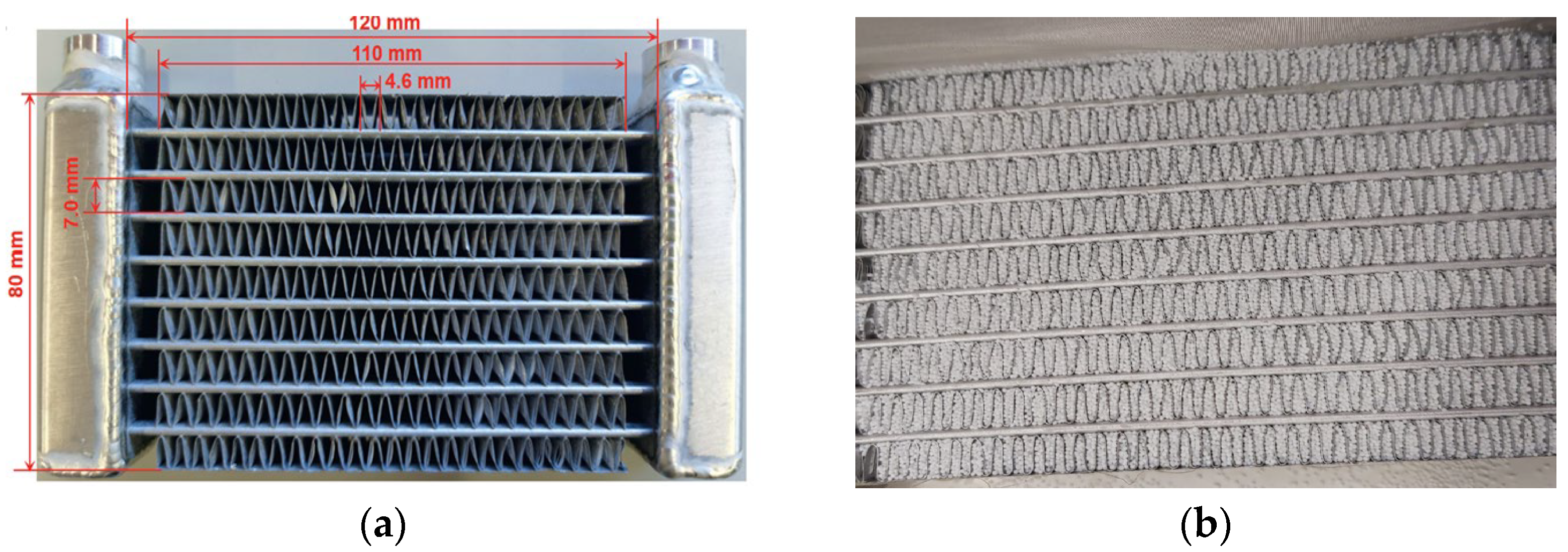
A finned-flat tubes aluminum heat exchanger was used, integrating 77 g of sorbent material between the finned structure. The picture of the as received heat exchanger and that of the one with the material are reported in Figure 2. In the figure, details concerning the heat exchanger geometry, fin distance, and step are also reported. The selected material is the CaCl15/MgCl15/SG sample for the reasons that will be explained in Section 3.2.
The system was tested considering two reference operating conditions, namely, space heating in the winter season and space cooling in the summer season. Accordingly, the evaporation temperature for the adsorption stages, which represent the discharging phase both in winter and summer, was varied. More specifically, it was set to 10 °C in winter, considering the use of low-grade renewable heat (e.g., solar thermal, geothermal) to provide the evaporation heat energy, and 15 °C in summer, considering an underfloor cooling distribution system. The temperature drop applied to the adsorber is also varying. In wintertime, a step from 74 °C down to 32 °C is defined. The starting temperature is defined considering the limited desorption temperature which can be considered available in winter, while the ending temperature represents the average space heating temperature to be delivered to the building. Also in this case, the reference distribution system is represented by underfloor heating. In summertime, the temperature drop applied for the adsorption stage is selected between 85 °C and 35 °C. This derives from the higher achievable desorption temperature in summer, provided by solar thermal collectors (i.e., 85 °C) and, at the same time, the high ambient temperature to which the adsorption heat is rejected during the adsorption stage (i.e., 35 °C). For both winter and summer conditions, the sorption/desorption cycles were carried out for three cycles.
The total temperature variation recorded for each system under testing comprises the impact of sensible heating or cooling of the sorbent material, metal and water contained in the HEX, as well as the heat exchanged due to the adsorption/desorption phenomena. To isolate the effect of water adsorption/desorption (ΔTsorp/des) and remove the sensible contribution from the ΔT measurement, a blank test (ΔTbl) is performed for each set of conditions. This involves running a test with the same temperature change (drop or jump) as the sorption/desorption experiments, but without connecting the measuring chamber to the evaporator/condenser. Under this condition, the only physical phenomenon causing the temperature difference across the HEX is represented by the sensible heating/cooling of the adsorber.
It follows that the temperature difference used to assess adsorption dynamics is determined by:
ΔTsorp/des = ΔTov − ΔTbl
ΔTbl/ov = Toutlet − Tinlet
Here, the subscript “ov” indicates the test with the heat exchanger containing the sorption material and connected to the evaporator/condenser, while the subscript “bl” refers to the test conducted without sorption/desorption phenomenon occurring. From this measured temperature difference, the heat flow Q͘ of the adsorption/desorption process (from the heat exchanger to the heat transfer fluid (HTF) can be calculated as:
Q ͘ sorp / des   =   c p , HTF   m ˙   HTF   Δ T ads / des
where cp,HTF and m ˙ HTF are the specific heat of the HTF and the mass flow rate of the HTF, respectively.
It has been demonstrated for several sorbent-sorbate couples that, usually, the following exponential function can describe the behaviour of the adsorption/desorption processes:
Δ T ads / des ( t )   =   Δ T   +   Δ T 0   exp ( t / τ )
The characteristic time ( τ ) describes the adsorption/desorption rate, and it is a useful parameter for comparing different tests and adsorbers configurations. This parameter is determined by fitting it to the experimentally derived ΔTsorp/des, while Δ T 0 and Δ T are fitting parameters.

3. Results

3.1. Sorbent Materials Preparation, Morphological and Textural Analysis

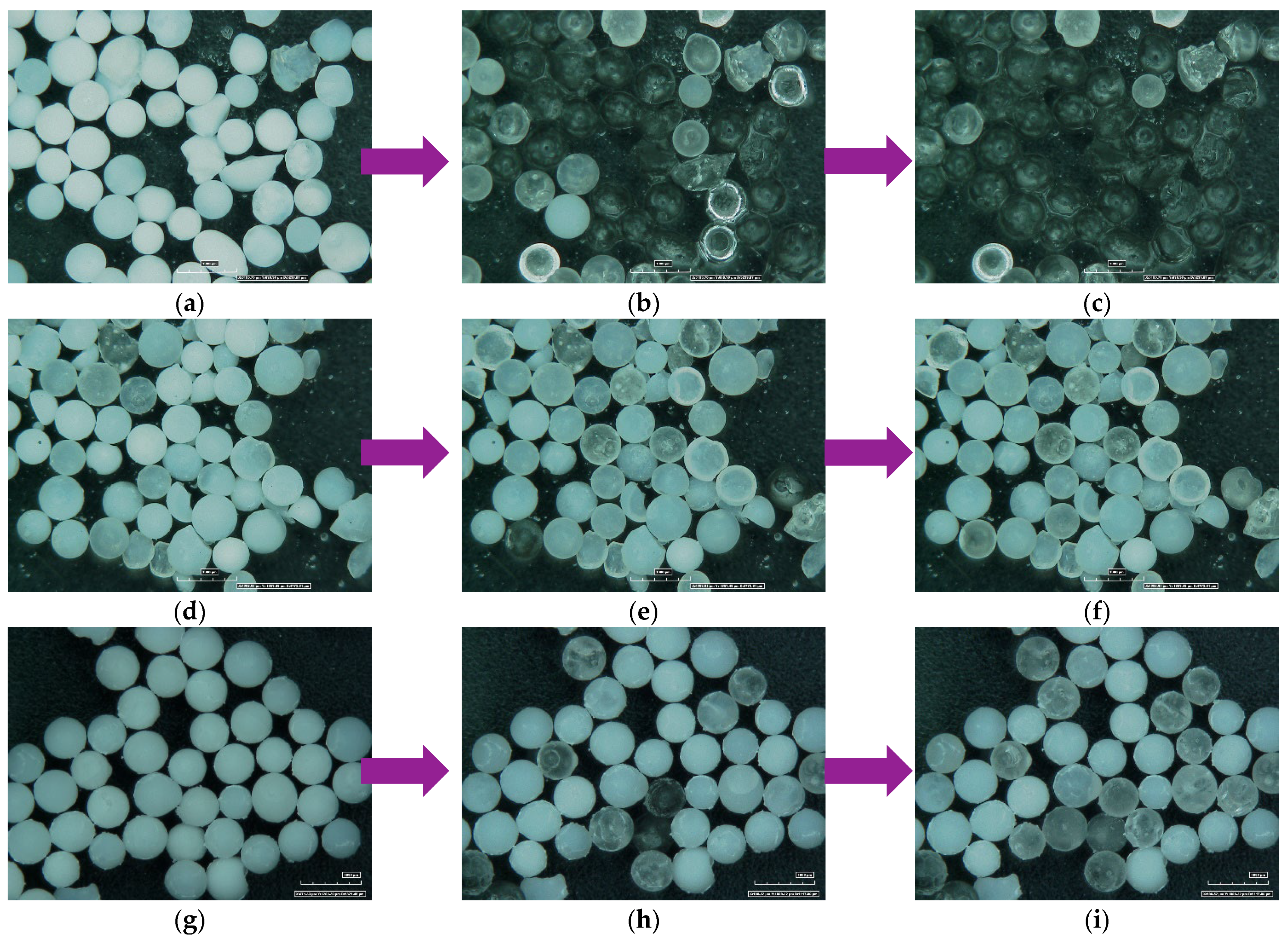
The as-prepared composite materials, as listed in Table 1, were observed using an optical microscope after drying in an oven at 120 °C for 2 h, and after 30 and 60 min under atmospheric conditions. The measured RH and T in the environment were 52% and 25 °C. The goal is to observe the material evolution under these conditions. For the sake of brevity, in Figure 3 the comparative analysis of CaCl30/SG, CaCl15/MgCl15/SG, and MgCl30/SG samples is reported. Initially, transparent silica gel spheres turn white when salt is added, regardless of whether it is CaCl2, MgCl2 or their mixture (see Figure 3a,d,g). After the progressive exposure to these atmospheric conditions, the whitish spheres become transparent, as a solution is present inside the sphere, thus demonstrating that deliquescence, typical of these salts [35], has occurred (see Figure 3c,f,i). A direct correlation was observed between the CaCl2 content and the resulting material transparency. The enhanced transparency demonstrated by samples with greater CaCl2 concentrations provides quantitative evidence that a larger CaCl2 load facilitates a higher degree of deliquescence (Figure 3c). Furthermore, in the CaCl30/SG sample, the spheres tend to coalesce. On the contrary, the embedding of MgCl2 in silica gel matrix favors a lower tendency to deliquesce. Indeed, and after 1 h of exposure to the atmospheric conditions of the MgCl30/SG sample, the spheres are still predominantly whitish. The hybrid CaCl15/MgCl15/SG sample shows an intermediate behavior between the CaCl30/SG and MgCl30/SG samples, with a markedly improved stability in a humid environment (evidenced by a few transparent pellets) offered by the addition of MgCl2 in the mixture of hydrated salts used for the SG encapsulation. To further prove that this color change is due to the sorption of humidity, the mass of the samples was measured before and after the test.
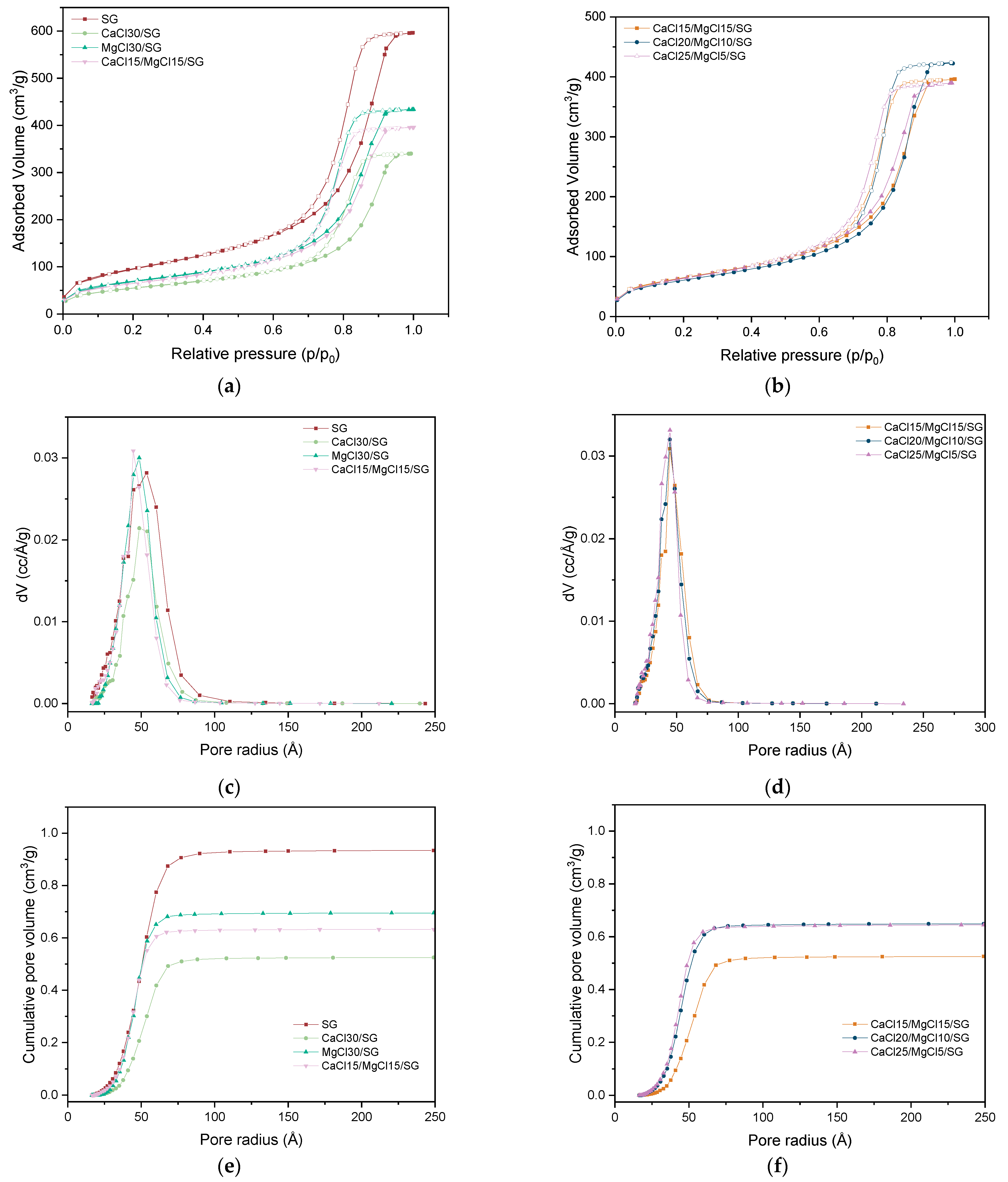
Nitrogen physisorption analysis was conducted on the samples to assess the impact of salt incorporation on surface area and porosity. All measured isotherms, depicted in Figure 4 exhibited a characteristic Type IV shape according to the IUPAC classification [36]. The observed hysteresis loop, classified as Type H1, aligns with the model of capillary condensation. Hysteresis occurs once the pore width exceeds a critical threshold, a value that is dependent on the specific adsorption system and temperature. For instance, in cylindrical pores, hysteresis in nitrogen and argon adsorption begins at pore widths greater than ~4 nm when measured at 77 K and 87 K, respectively. Specifically, the Type H1 loop is found in materials which exhibit a narrow range of uniform mesopores. In fact, the pore radius distribution is monomodal and narrowly centered around an average value between 44 and 48 Å. Between the as-purchased SG and the impregnated samples, a significant reduction in the specific surface area and pore volume is evident, likely associated with the confinement of the salt in the matrix pores. No notable differences can be observed between the three different mixtures.
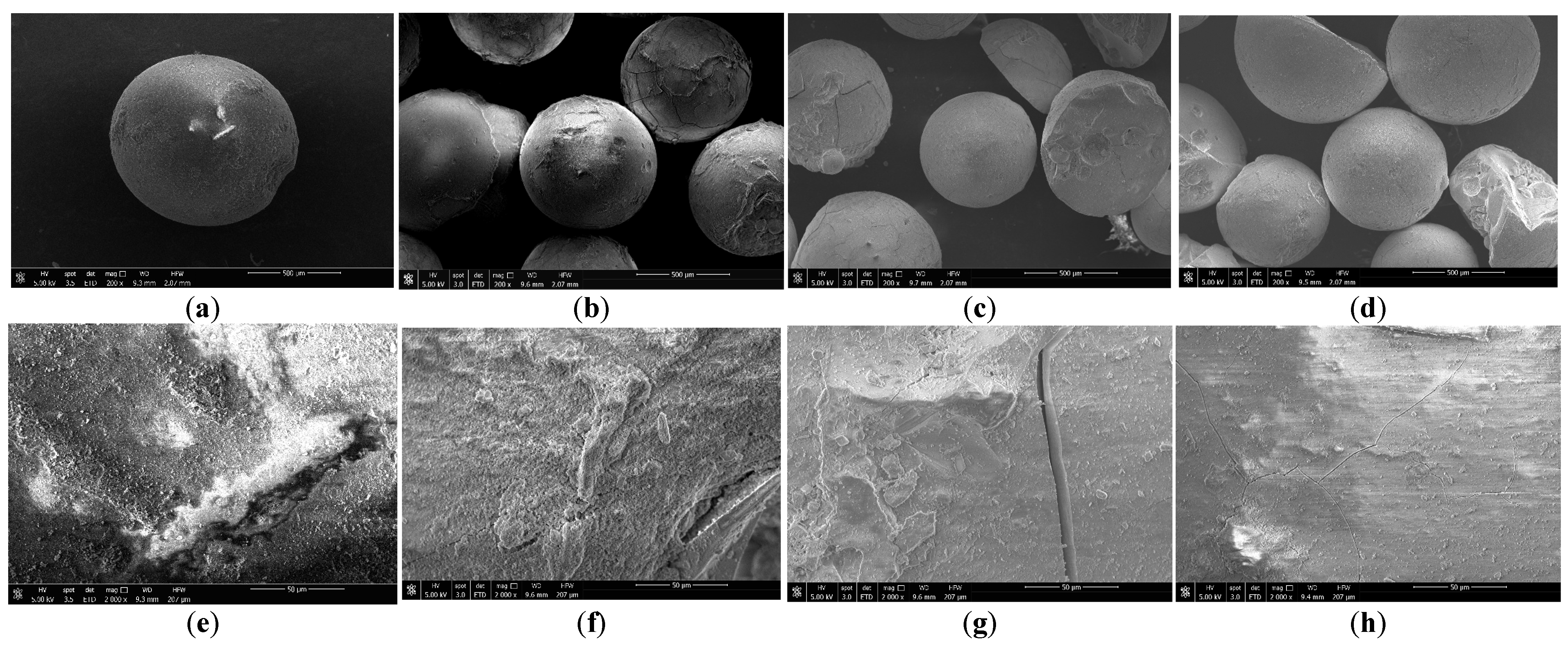
The SEM analysis of SG (Figure 5a,e) reveals a rough surface with small asperities. The samples with the salt mixtures are also reported (Figure 5b–d,f–h). Despite some cracks on the surface, likely due to the exothermic absorption of the salt solution during the impregnation procedure, which might alter the integrity of the sphere, no salt aggregates are observable, regardless of the salt mixture ratio. Contrarily, when only CaCl2 is used, large cracks and crystal agglomerations are evident at higher magnification on the SG sphere surface. In the case of the MgCl30/SG sample, no large cracks or salt agglomerations are observable.

3.2. Thermochemical Performance Evaluation

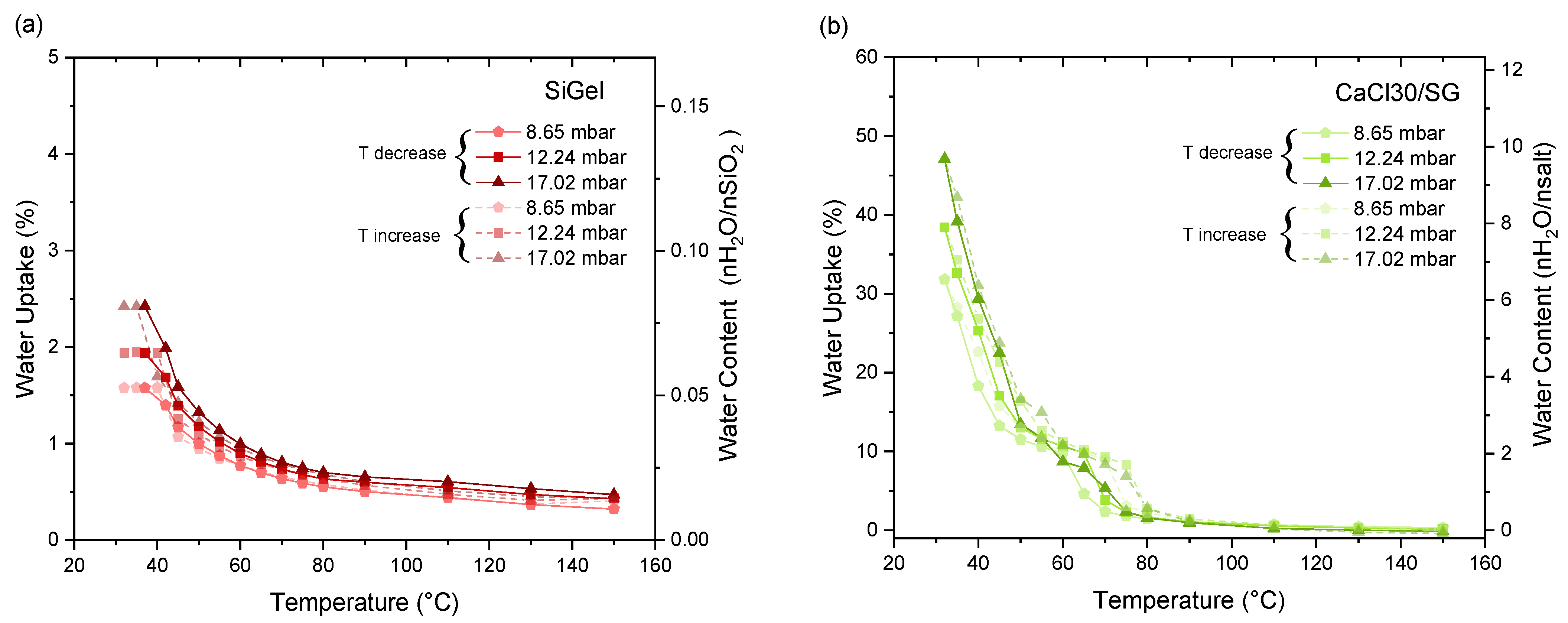
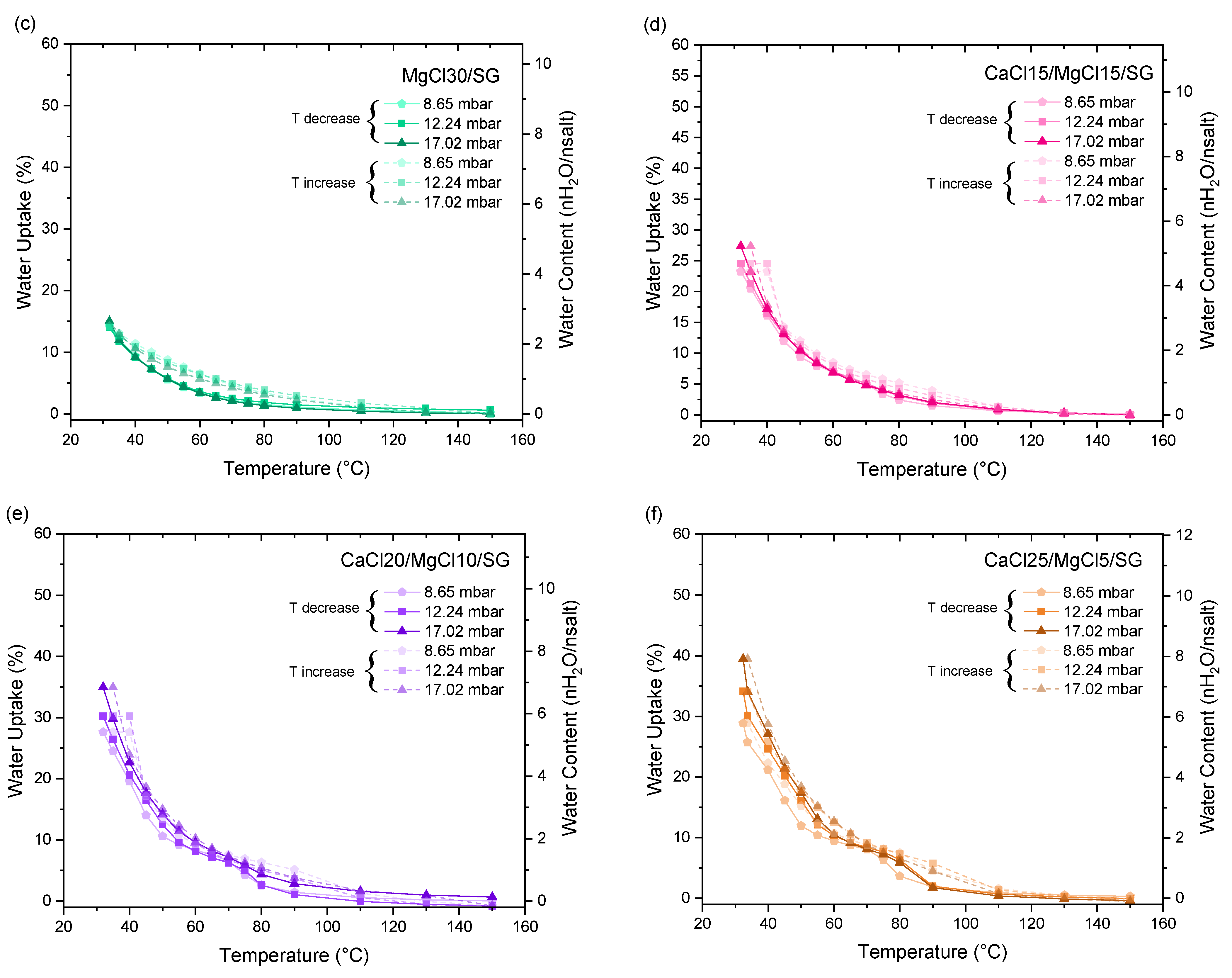
The results of the isobaric DVS hydration/dehydration cycles at 8.65, 12.24, and 17.02 mbar are reported in Figure 6. The graph illustrates how both the percentage change in mass (water uptake) and the molar ratio of water to salts or to SiO2 (water content) vary with temperature for each investigated evaporator pressure. The water content values were calculated using the following equation:
n H 2 O n salt = water   uptake   %   ×   molecular   weight   salt molecular   weigth   H 2 O   ×   salt   load   [ % ]
The as-received SG exhibits a small water uptake at the investigated pressures, namely 2.5% at the higher pressure of 17 mbar (Figure 6a). A slight hysteresis between the hydration and dehydration process was observable. Hence, it can be assumed that the contribution to the water vapor sorption of the silica gel in all the composites is negligible, and that almost all the water uptake is associated with the salt. For the CaCl30/SG sample (Figure 6b), the behavior is typical of that of the pure salt [10]. Indeed, in correspondence to the mono- and the dehydrated phases, two changes in the curves’ slope are evident between 65 and 50 °C and 70–65 °C, respectively. In general, for all the samples, it is true that the higher the vapor pressure, the higher the water sorption capacity, except for the MgCl30/SG composite (Figure 6c). In this case, the salt is able to hydrate only to a 2.5 water molecule hydrated phase, regardless of the water vapor pressure used, where a quite similar maximum water vapor uptake can be identified. Although the MgCl2 could hydrate to a hexahydrate phase, the salt’s tendency to form a hydration layer hinders the vapor flow through the inner particles. As a further limiting aspect, the pure salt under the same investigated conditions exhibits a notable hysteresis between the hydration and the dehydration reactions (see Figure S2 of ESI), likely associated with slower kinetics. Regarding the mixed salt compositions, expectedly, the curve behavior retraces that of the CaCl30/SG sample, with the higher CaCl2 loads (CaCl20/MgCl10/SG, CaCl25/MgCl5/SG) (Figure 6e,f). While the curve of the CaCl15/MgCl15/SG sample (Figure 6d) has a trend more similar to the MgCl30/SG composite one, but with a much higher water sorption capacity of ~30% corresponding to 5 water molecules per mole of salts. Also, in the case of mixed salt composites, small hysteresis is observable.
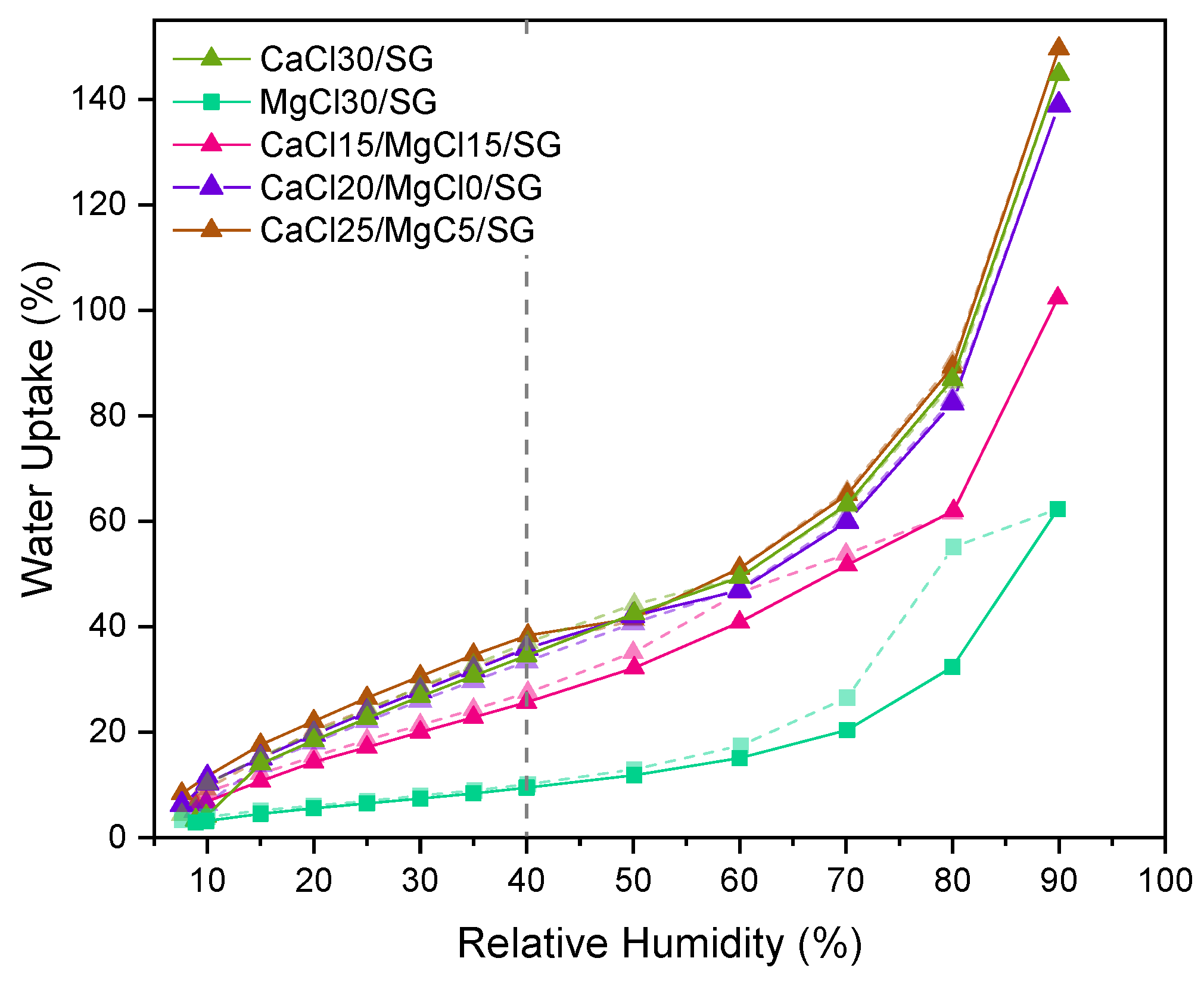
Accelerated ageing stability tests, namely hydration-dehydration cycles, were performed on all composite samples in a climatic chamber (Memmert HCP). One hundred consecutive cycles were executed, with the hydration step carried out at 35 °C and 90% RH, and the dehydration step at 80 °C and 35% RH. After this ageing, the samples were tested on the DVS apparatus under isothermal conditions, namely keeping the temperature constant at 30 °C and varying the RH in the range 0–90% to perform a hydration/dehydration cycle. The results are reported in Figure 7.
Considering that the maximum evaporator pressure at which the fresh samples were tested is 17.01 mbar, at 30 °C, the corresponding RH is 40% (taking into account a water vapor saturation pressure of 42.46 mbar at this temperature). This value is marked in the graph with a vertical dashed line. Hence, to compare the water sorption capacity of the unaged and aged samples, the maximum water uptake under isobaric conditions at 17.01 mbar is compared with that measured at 30 °C and 40% RH. The samples CaCl30/SG and MgCl30/SG show a notable decrease after 100 cycles: from 47.1% and 15.02% to 36.9% and 10.1%, respectively. On the contrary, the mixed salts compositions show no or negligible decrease in water sorption capacity. Specifically, for CaCl15/MgCl15/SG, CaCl20/MgCl10/SG, and CaCl25/MgCl5/SG the values are, respectively, 27.36%, 34.97%, and 39.47% for the unaged samples and 27.46%, 35.89%, and 38.27% for the aged ones. Thus, indicating a greater stability of these materials. Further studies are ongoing to increase the number of cycles to 1000 and to characterise the materials.
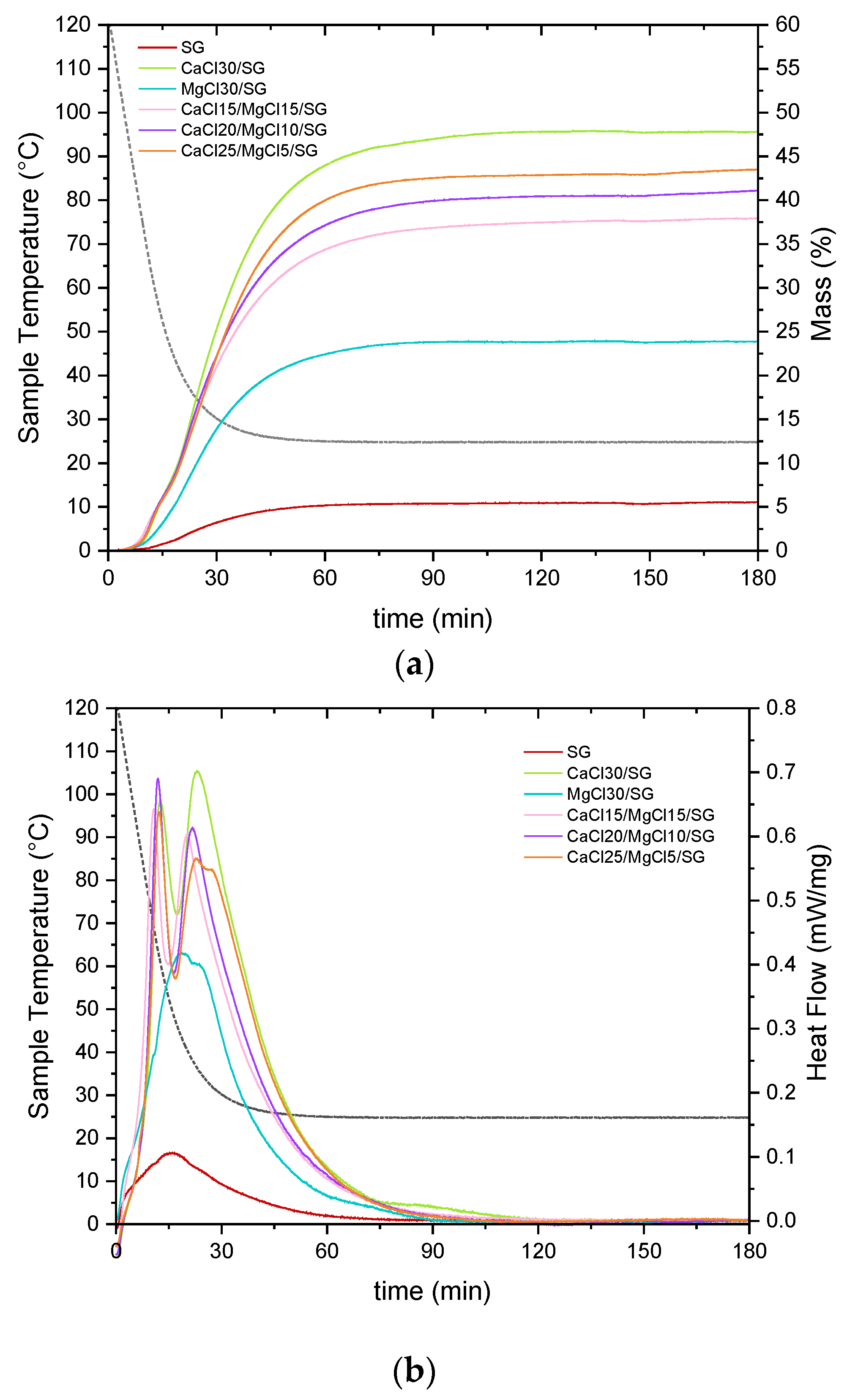
The heat release capacity during the hydration reaction has been evaluated in a customized TG/DSC apparatus able to work under saturated vapor working conditions. The hydration reaction (Figure 8) is carried out by cooling from 120 °C to r.T. under a saturated vapor pressure of 17 mbar. The sample is then held at this condition for two hours. The thermal treatment of the sample under vacuum at 120 °C for 180 min before the analysis ensures the complete dehydration of the material. The weight change and the heat flow as a function of time are plotted in Figure 8. The evaluated heat release capacities are listed in Table 2. Taking into account the composites density (ρ), the volumetric heat storage/release capacity Q S / R v ( MJ / m 3 ) is determined through the following Equation:
Q S / R v ( MJ   m 3 )   =   Q S / R m ( kJ   kg 1 ) · ρ ( kg / m 3 )
where ρ is the density and Q S / R m is the gravimetric heat storage/release heat. Two distinct exothermal events (DSC graph) are observable for all the samples containing CaCl2, likely associated with the formation of the monohydrate and dihydrate forms. The peaks are centered around 65 ± 5 and 38 ± 2 °C, where the slight deviation from values of the CaCl30/SG sample is observed for the mixed salts. Namely, the lower the CaCl2 load, the more the peaks temperature shifts towards slightly lower values.
In the case of the MgCl30/SG, the DSC profile consists of a single exothermic event. Even the SG exhibits a slight vapor sorption ability associated with a small heat release capacity of 193 J/g. The CaCl30/SG sample shows the larger heat release capacity of 1325 J/g, while the MgCl30/SG sample has the lower one of 766 J/g. The heat release capacity of the mixed salts composites increases as the CaCl2 load increases, and, despite the addition of the MgCl2, which exhibits a lower heat release capacity than CaCl2, the experimental values are very close to that of the CaCl30/SG sample. For example, in the case of the CaCl15/MgCl15/SG, a reduction of ~17% is observed despite a reduction of 50% of the CaCl2 load. Considering the gravimetric and volumetric heat storage capacities listed in Table 2, the mixed composites can be regarded as very promising composite materials for low-temperature thermochemical heat storage. Indeed, the CaCl15/MgCl15/SG sample has gravimetric and volumetric capacities equal to 1092 J/g and 2.3 MJ/m3, respectively, which are very promising compared to other composites recently reported in the literature [6]. Furthermore, this sample notably reduces the deliquescence phenomenon typical of CaCl2 composites [37], thus overcoming the associated issues, such as clogging, efficiency reduction, cyclability, salt leaching, and corrosion. As a further advantage, the CaCl15/MgCl15/SG sample shows almost no hysteresis between the sorption and desorption processes (see Figure 6f).
After considering these factors, the CaCl15/MgCl15/SG sample has been selected for the lab-scale adsorption/desorption tests.

3.3. Lab-Scale Adsorption/Desorption Analysis

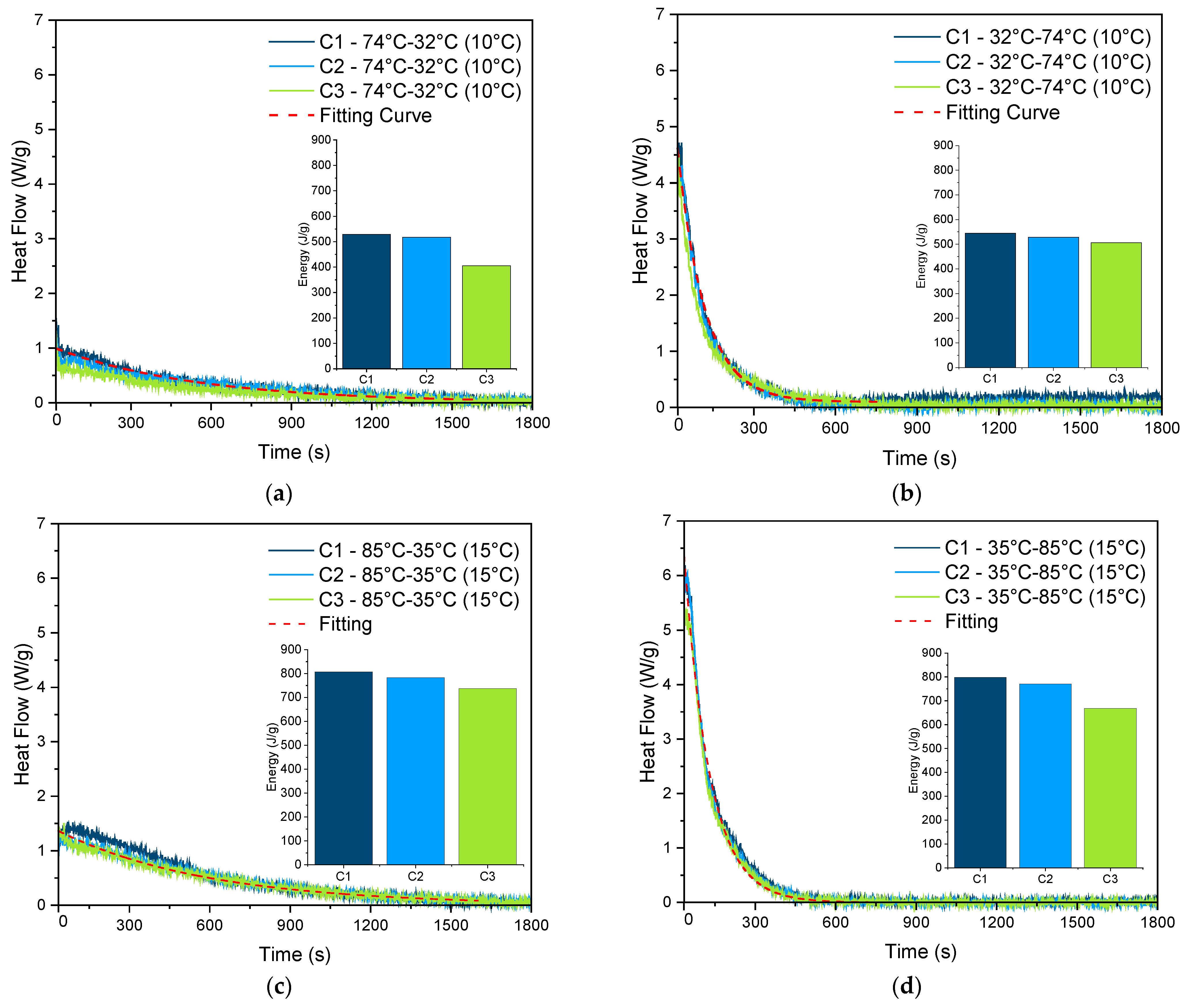
Figure 9 shows the typical heat flow profiles of the adsorption/desorption processes for salt hydrates, as reported by Zhang et al. [38] for the CaCl/SG composites, experimentally obtained by the T-LTJ approach. The three runs for the two investigated conditions demonstrate good replicability of the tests for both the adsorption and desorption runs. As expected, the heat flow of the desorption process is significantly higher than that of the adsorption process. The kinetic parameters and R2 values reported in Table 3 indicate that the heat flow curves can be fitted with a single exponential law (Equation (6)) for the full range of conversion. The average characteristic time of conversion for the adsorption process is 542 s for the 74–32 °C temperature drop with Tevap = 10 °C, and 562 s for the 85–35 °C temperature drop with Tevap = 15 °C. The above values for the two tested conditions are very similar and fall within the range of those obtained by Zhang et al. [38] for the CaCl/SG composites under the same operating conditions. It follows that the presence of MgCl in the composite does not affect the kinetics of adsorption compared to the composite based on the pure CaCl2 salt. Furthermore, based on the results of Zhang et al. [38], and the characteristic time obtained in this work, it can be deduced that, likely for the proposed CaCl15/MgCl15/SG composite, the kinetics are limited by both intergranular and intragranular mass transfer, similarly to the CaCl/SG composites. The fact that the test performed at higher evaporation temperatures and higher desorption temperatures yields results very similar to those at lower temperatures implies that the composite has already reached its highest kinetic performance (conversion rate) at 74–32 °C and Tevap = 10 °C.
The desorption process is completed at 750 s for both investigated temperature jumps. However, 80% of the process is reached after just 158 s for 32–74 °C and 154 s for 35–85 °C, respectively, which are significantly faster than the adsorption process, as expected. As for the sorption process, the desorption process can be described by a single kinetic model (Equation (6)) with a very good fitting (R2 equal to 0.99).
Regarding the adsorption energy for the 74–32 °C temperature jump, which is obtained as the integral of the heat flow in the range 0–1600 s, the average value is about 483 kJ/kg (mass of composite), while it is about 526 kJ/kg for the desorption process. In the case of the 85–35 °C temperature jump, the average adsorption/desorption energy values are 775 kJ/kg and 745 kJ/kg, respectively. The higher energy storage capacity of the composite at higher desorption temperatures is attributed to its increased water sorption capacity. Indeed, the TG/DSC tests (reported in Section 3.2) showed that sorption/desorption activities are observed even at higher temperatures than those investigated in the T-LTJ device. This explains the lower energy storage capacity measured in the T-LTJ tests compared to that reported by the TG/DSC tests. However, the selected temperature values of the T-LTJ tests comply with real applications for thermal energy storage powered by solar thermal collectors.

3.4. Relevance of the Achieved Results

Although the T-LTJ apparatus is representative of specific lab-scale testing conditions, the obtained results can also be considered as a basis for future practical applications. Indeed, the employed testing conditions in the lab are fully in line with the real operation of a sorption TES, connected to a solar thermal field, that is employed for both space heating and cooling provision in winter and summer, respectively, as already detailed in Section 2.4. In the literature, only a few examples of LTJ testing on small but representative adsorber reactor configurations are reported, usually focusing more on continuous cycling operation (e.g., adsorption chillers, desalination units) rather than TES. However, it is possible to perform a qualitative comparison with the published results.
As already anticipated, a similar investigation campaign was carried out by Zhang et al. [38], focusing on the kinetic performance of an adsorber for desalination applications. In this case, the composite was purely based on silica gel impregnated with LiCl. The obtained results, from the kinetic point of view, were in line with the ones achieved in the present study when 15 °C of evaporation is employed, with characteristic times around 560 s. On the contrary, by lowering the evaporation temperature and consequently the water vapor pressure inside the reactor, a clear slowing down in the LiCl-based composite was highlighted, reaching characteristic times up to 900 s. Differently, the composite mixture here presented, CaCl2/MgCl2, seems not affected by the pressure reduction, still keeping the same characteristic time. This result confirms the possibility of producing the heating/cooling power during the discharging phase at a similar rate.
Another similar investigation, employing the gravimetric version of the LTJ approach, was presented for a composite material employing LiCl as embedded salt within Multiwall carbon nanotubes (MWCNT) consolidated by means of an organic binder (PVS), by Brancato et al. [39]. In this case, the investigated boundary conditions were quite different, trying to simulate both isothermal and isobaric adsorption stages. Nevertheless, comparing only the isobaric adsorption operating at 5 °C of evaporation, the evaluated characteristic time was around 300 s. This turned out to be extremely promising, even though the use of an extremely light matrix, MWCNT, was limiting the volumetric energy and power density, thus making the system hardly scalable to a real size.
Most of the other cases reported in the literature [40] focused on a completely different class of materials, such as zeolites, which are always characterized by much faster adsorption dynamics, but, at the same time, much lower adsorption capacity that makes these materials less attractive for TES applications.
It can then be concluded that the use of a composite mixture like the one here proposed guarantees to maintain satisfactory kinetic performance, making the material more stable and thus easier to be scaled up to a real-size TES reactor.

4. Conclusions

This study successfully developed and characterized novel salt hydrate composite materials, made of a mixture of MgCl2 and CaCl2 impregnated in a mesoporous silica gel sphere matrix. To determine the optimal trade-off between sorption capacity and stability against deliquescence, three compositions, varying the MgCl2 to CaCl2 salt ratio were initially investigated. By optimising the MgCl2/CaCl2 ratio within the mesoporous silica gel matrix, a superior balance between high energy density and critical stability against deliquescence was achieved, with the MgCl2 addition markedly improving resistance to humid environments. The optimised composite, CaCl15/MgCl15/SG, demonstrated exceptional gravimetric and volumetric storage capacities of 1092 J/g and 2.3 MJ/m3, respectively, positioning it as a highly promising candidate compared to state-of-the-art materials. Morphological analysis confirmed effective salt confinement within the pores without external aggregation, while kinetic testing validated that the incorporation of MgCl2 does not negatively impact the adsorption rate. The viability and robustness of the developed composites were confirmed through DVS measurements conducted on the fresh samples and after the long-term stability test (100 dehydration/hydration cycles), thus demonstrating good stability. Furthermore, by testing the material dynamics at the whole adsorbent unit level under simulated real-world conditions, this research effectively bridged the gap between material development and reactor-scale performance, paving the way for the deployment of high-stability, high-capacity binary salt composites in building-scale sorption TES systems.

Supplementary Materials

The following supporting information can be downloaded at: https://www.mdpi.com/article/10.3390/en18246527/s1, Figure S1: Schematic representation of the modified thermogravimetric apparatus; Figure S2: Isobaric DVS curves of MgCl2 salt.

Author Contributions

Conceptualization, C.M. and E.M.; Methodology, M.P., L.C., A.F. (Andrea Frazzica) and C.M.; Investigation, M.P., A.F. (Antonio Fotia), M.A.A.-G., A.F. (Andrea Frazzica) and E.M.; Data curation, M.P., A.F. (Antonio Fotia) and M.A.A.-G.; Writing—original draft, M.P., L.C. and E.M.; Writing—review & editing, M.P., A.F. (Andrea Frazzica) and C.M.; Visualization, L.C. and C.M.; Supervision, E.M.; Project administration, M.P. and E.M.; Funding acquisition, A.F. (Andrea Frazzica) and E.M. All authors have read and agreed to the published version of the manuscript.

Funding

This project was partially funded by the European Union-Next Generation EU, Mission 4 Component 1 CUP J53D23015700001 (Towards affordable LOss-free seasonal Thermal enERgy storage for civil applications–LObSTER), and by the European Union’s Horizon Europe Research and Innovation Programme under grant agreement 101096921 (THUMBS UP).

Data Availability Statement

The raw data are available from the corresponding author and will be provided to interested researchers upon request, without undue reservation.

Conflicts of Interest

The authors declare no conflicts of interest. The funders had no role in the design of the study; in the collection, analyses, or interpretation of the data; in the writing of the manuscript; or in the decision to publish the results.

References

  1. Trausel, F.; De Jong, A.J.; Cuypers, R. A Review on the Properties of Salt Hydrates for Thermochemical Storage. Energy Procedia 2014, 48, 447–452. [Google Scholar] [CrossRef]
  2. Farulla, G.A.; Cellura, M.; Guarino, F.; Ferraro, M. A Review of Thermochemical Energy Storage Systems for Power Grid Support. Appl. Sci. 2020, 10, 3142. [Google Scholar] [CrossRef]
  3. Spietz, T.; Fryza, R.; Lasek, J.; Zuwała, J. Thermochemical Energy Storage Based on Salt Hydrates: A Comprehensive Review. Energies 2025, 18, 2643. [Google Scholar] [CrossRef]
  4. Yang, H.; Wang, C.; Tong, L.; Yin, S.; Wang, L.; Ding, Y. Salt Hydrate Adsorption Material-Based Thermochemical Energy Storage for Space Heating Application: A Review. Energies 2023, 16, 2875. [Google Scholar] [CrossRef]
  5. Jarimi, H.; Aydin, D.; Yanan, Z.; Ozankaya, G.; Chen, X.; Riffat, S. Review on the Recent Progress of Thermochemical Materials and Processes for Solar Thermal Energy Storage and Industrial Waste Heat Recovery. Int. J. Low-Carbon Technol. 2019, 14, 44–69. [Google Scholar] [CrossRef]
  6. Zbair, M.; Bennici, S. Survey Summary on Salts Hydrates and Composites Used in Thermochemical Sorption Heat Storage: A Review. Energies 2021, 14, 3105. [Google Scholar] [CrossRef]
  7. Aarts, J.; Fischer, H.; Adan, O.; Huinink, H. Towards Stable Performance of Salt Hydrates in Thermochemical Energy Storage: A Review. J. Energy Storage 2025, 114, 115726. [Google Scholar] [CrossRef]
  8. Kumar, N.; Hirschey, J.; LaClair, T.J.; Gluesenkamp, K.R.; Graham, S. Review of Stability and Thermal Conductivity Enhancements for Salt Hydrates. J. Energy Storage 2019, 24, 100794. [Google Scholar] [CrossRef]
  9. Ousaleh, H.A.; Said, S.; Zaki, A.; Faik, A.; El Bouari, A. Silica Gel/Inorganic Salts Composites for Thermochemical Heat Storage: Improvement of Energy Storage Density and Assessment of Cycling Stability. In Materials Today: Proceedings; Elsevier Ltd.: Amsterdam, The Netherlands, 2019; Volume 30, pp. 937–941. [Google Scholar]
  10. Fotia, A.; Brancato, V.; Mastronardo, E.; Calabrese, L.; Frazzica, A. Enhancement of CaCl2/Silica Gel Composites Sorbent Stability for Low-Grade Thermal Energy Storage. J. Energy Storage 2025, 132, 117679. [Google Scholar] [CrossRef]
  11. Jabbari-Hichri, A.; Bennici, S.; Auroux, A. Enhancing the Heat Storage Density of Silica–Alumina by Addition of Hygroscopic Salts (CaCl2, Ba(OH)2, and LiNO3). Sol. Energy Mater. Sol. Cells 2015, 140, 351–360. [Google Scholar] [CrossRef]
  12. Liu, X.; Wang, H.; Liu, X.; Yang, F.; Guan, L.; Sani, S.; Sun, C.; Wu, Y. Development of MgSO4 /Mesoporous Silica Composites for Thermochemical Energy Storage: The Role of Porous Structure on Water Adsorption. Energy Rep. 2022, 8, 4913–4921. [Google Scholar] [CrossRef]
  13. Fenwick, O.; Coutiño-Gonzalez, E.; Grandjean, D.; Baekelant, W.; Richard, F.; Bonacchi, S.; De Vos, D.; Lievens, P.; Roeffaers, M.; Hofkens, J.; et al. Tuning the Energetics and Tailoring the Optical Properties of Silver Clusters Confined in Zeolites. Nat. Mater. 2016, 15, 1017–1022. [Google Scholar] [CrossRef] [PubMed]
  14. Hongois, S.; Kuznik, F.; Stevens, P.; Roux, J.-J. Development and Characterisation of a New MgSO4−zeolite Composite for Long-Term Thermal Energy Storage. Sol. Energy Mater. Sol. Cells 2011, 95, 1831–1837. [Google Scholar] [CrossRef]
  15. Whiting, G.; Grondin, D.; Bennici, S.; Auroux, A. Heats of Water Sorption Studies on Zeolite–MgSO4 Composites as Potential Thermochemical Heat Storage Materials. Sol. Energy Mater. Sol. Cells 2013, 112, 112–119. [Google Scholar] [CrossRef]
  16. Casey, S.P.; Elvins, J.; Riffat, S.; Robinson, A. Salt Impregnated Desiccant Matrices for ‘Open’ Thermochemical Energy Storage—Selection, Synthesis and Characterisation of Candidate Materials. Energy Build. 2014, 84, 412–425. [Google Scholar] [CrossRef]
  17. Yang, X.; Li, S.; Zhao, J.; Wang, X.; Huang, H.; Wang, Y.; Deng, L. Development of Lithium Hydroxide-Metal Organic Framework-Derived Porous Carbon Composite Materials for Efficient Low Temperature Thermal Energy Storage. Microporous Mesoporous Mater. 2021, 328, 111455. [Google Scholar] [CrossRef]
  18. Lv, Y.; Zhou, W.; Jin, W. Experimental and Numerical Study on Thermal Energy Storage of Polyethylene Glycol/Expanded Graphite Composite Phase Change Material. Energy Build. 2016, 111, 242–252. [Google Scholar] [CrossRef]
  19. Takenobu, T.; Takano, T.; Shiraishi, M.; Murakami, Y.; Ata, M.; Kataura, H.; Achiba, Y.; Iwasa, Y. Stable and Controlled Amphoteric Doping by Encapsulation of Organic Molecules inside Carbon Nanotubes. Nat. Mater. 2003, 2, 683–688. [Google Scholar] [CrossRef]
  20. Wang, X.; Li, G.; Hong, G.; Guo, Q.; Zhang, X. Graphene Aerogel Templated Fabrication of Phase Change Microspheres as Thermal Buffers in Microelectronic Devices. ACS Appl. Mater. Interfaces 2017, 9, 41323–41331. [Google Scholar] [CrossRef]
  21. Carrillo, A.J.; González-Aguilar, J.; Romero, M.; Coronado, J.M. Solar Energy on Demand: A Review on High Temperature Thermochemical Heat Storage Systems and Materials. Chem. Rev. 2019, 119, 4777–4816. [Google Scholar] [CrossRef]
  22. Luo, Y.; Tan, B.; Liang, X.; Wang, S.; Gao, X.; Zhang, Z.; Fang, Y. Investigation on Water Vapor Adsorption Performance of LiCl@MIL-100(Fe) Composite Adsorbent for Adsorption Heat Pumps. Int. J. Energy Res. 2020, 44, 5895–5904. [Google Scholar] [CrossRef]
  23. Padamurthy, A.; Nandanavanam, J.; Rajagopalan, P. Preparation and Characterization of Metal Organic Framework Based Composite Materials for Thermochemical Energy Storage Applications. Appl. Surf. Sci. Adv. 2022, 11, 100309. [Google Scholar] [CrossRef]
  24. Touloumet, Q.; Postole, G.; Silvester, L.; Bois, L.; Auroux, A. Hierarchical Aluminum Fumarate Metal-Organic Framework—Alumina Host Matrix: Design and Application to CaCl2 Composites for Thermochemical Heat Storage. J. Energy Storage 2022, 50, 104702. [Google Scholar] [CrossRef]
  25. Huang, Q.; Aftab, W.; Cheng, Y.; Li, Y. Form-Stable Metal Ion Coordination Organic Sorbent Aerogel and Its Application in Low Temperature Microwave-Powered Sorption Thermochemical Energy Storage. J. Energy Storage 2025, 114, 115810. [Google Scholar] [CrossRef]
  26. Lin, J.; Zhao, Q.; Huang, H.; Mao, H.; Liu, Y.; Xiao, Y. Applications of Low-Temperature Thermochemical Energy Storage Systems for Salt Hydrates Based on Material Classification: A Review. Sol. Energy 2021, 214, 149–178. [Google Scholar] [CrossRef]
  27. Rammelberg, H.U.; Osterland, T.; Priehs, B.; Opel, O.; Ruck, W.K.L. Thermochemical Heat Storage Materials—Performance of Mixed Salt Hydrates. Sol. Energy 2016, 136, 571–589. [Google Scholar] [CrossRef]
  28. Rammelberg, H.; Myrau, M.; Osterland, T.; L Ruck, W.K.; Rammelberg, H.U.; Schmidt, T.; Ruck, W. An Optimization of Salt Hydrates for Thermochemical Heat Storae. Mater. Today Proc. 2020, 30, 937–941. [Google Scholar]
  29. Ejeian, M.; Entezari, A.; Wang, R.Z. Solar Powered Atmospheric Water Harvesting with Enhanced LiCl /MgSO4/ACF Composite. Appl. Therm. Eng. 2020, 176, 115396. [Google Scholar] [CrossRef]
  30. Gordeeva, L.G.; Grekova, A.D.; Krieger, T.A.; Aristov, Y.I. Adsorption Properties of Composite Materials (LiCl + LiBr)/Silica. Microporous Mesoporous Mater. 2009, 126, 262–267. [Google Scholar] [CrossRef]
  31. Posern, K.; Kaps, C. Calorimetric Studies of Thermochemical Heat Storage Materials Based on Mixtures of MgSO4 and MgCl2. Thermochim. Acta 2010, 502, 73–76. [Google Scholar] [CrossRef]
  32. Solé, A.; Miró, L.; Barreneche, C.; Martorell, I.; Cabeza, L.F. Corrosion of Metals and Salt Hydrates Used for Thermochemical Energy Storage. Renew Energy 2015, 75, 519–523. [Google Scholar] [CrossRef]
  33. Barbosa, E.; Menon, A.K. Thermochemical energy storage using salt mixtures with improved hydration kinetics and cycling stability. J. Energy Storage 2024, 90, 111916. [Google Scholar] [CrossRef]
  34. Palamara, D.; Palomba, V.; Calabrese, L.; Frazzica, A. Evaluation of Ad/Desorption Dynamics of S-PEEK/Zeolite Composite Coatings by T-LTJ Method. Appl. Therm. Eng. 2022, 208, 118262. [Google Scholar] [CrossRef]
  35. Guo, L.; Gu, W.; Peng, C.; Wang, W.; Jie Li, Y.; Zong, T.; Tang, Y.; Wu, Z.; Lin, Q.; Ge, M.; et al. A Comprehensive Study of Hygroscopic Properties of Calcium-and Magnesium-Containing Salts: Implication for Hygroscopicity of Mineral Dust and Sea Salt Aerosols. Atmos. Chem. Phys. 2019, 19, 2115–2133. [Google Scholar] [CrossRef]
  36. Thommes, M.; Kaneko, K.; Neimark, A.V.; Olivier, J.P.; Rodriguez-Reinoso, F.; Rouquerol, J.; Sing, K.S.W. Physisorption of Gases, with Special Reference to the Evaluation of Surface Area and Pore Size Distribution (IUPAC Technical Report). Pure Appl. Chem. 2015, 87, 1051–1069. [Google Scholar] [CrossRef]
  37. Brancato, V.; Gordeeva, L.G.; Sapienza, A.; Palomba, V.; Vasta, S.; Grekova, A.D.; Frazzica, A.; Aristov, Y.I. Experimental Characterization of the LiCl/Vermiculite Composite for Sorption Heat Storage Applications. Int. J. Refrig. 2019, 105, 92–100. [Google Scholar] [CrossRef]
  38. Zhang, Y.; Palamara, D.; Palomba, V.; Calabrese, L.; Frazzica, A. Performance Analysis of a Lab-Scale Adsorption Desalination System Using Silica Gel/LiCl Composite. Desalination 2023, 548, 116278. [Google Scholar] [CrossRef]
  39. Brancato, V.; Gordeeva, L.G.; Grekova, A.D.; Sapienza, A.; Vasta, S.; Frazzica, A.; Aristov, Y.I. Water Adsorption Equilibrium and Dynamics of LICL/MWCNT/PVA Composite for Adsorptive Heat Storage. Sol. Energy Mater. Sol. Cells 2019, 193, 133–140. [Google Scholar] [CrossRef]
  40. Palamara, D.; Proverbio, E.; Frazzica, A.; Calabrese, L. Investigating Ad/Desorption Kinetics of SAPO-34/Graphite Filled Coatings by T-LTJ for Energy-Efficient Sorption Application. Appl. Therm. Eng. 2025, 281, 128631. [Google Scholar] [CrossRef]
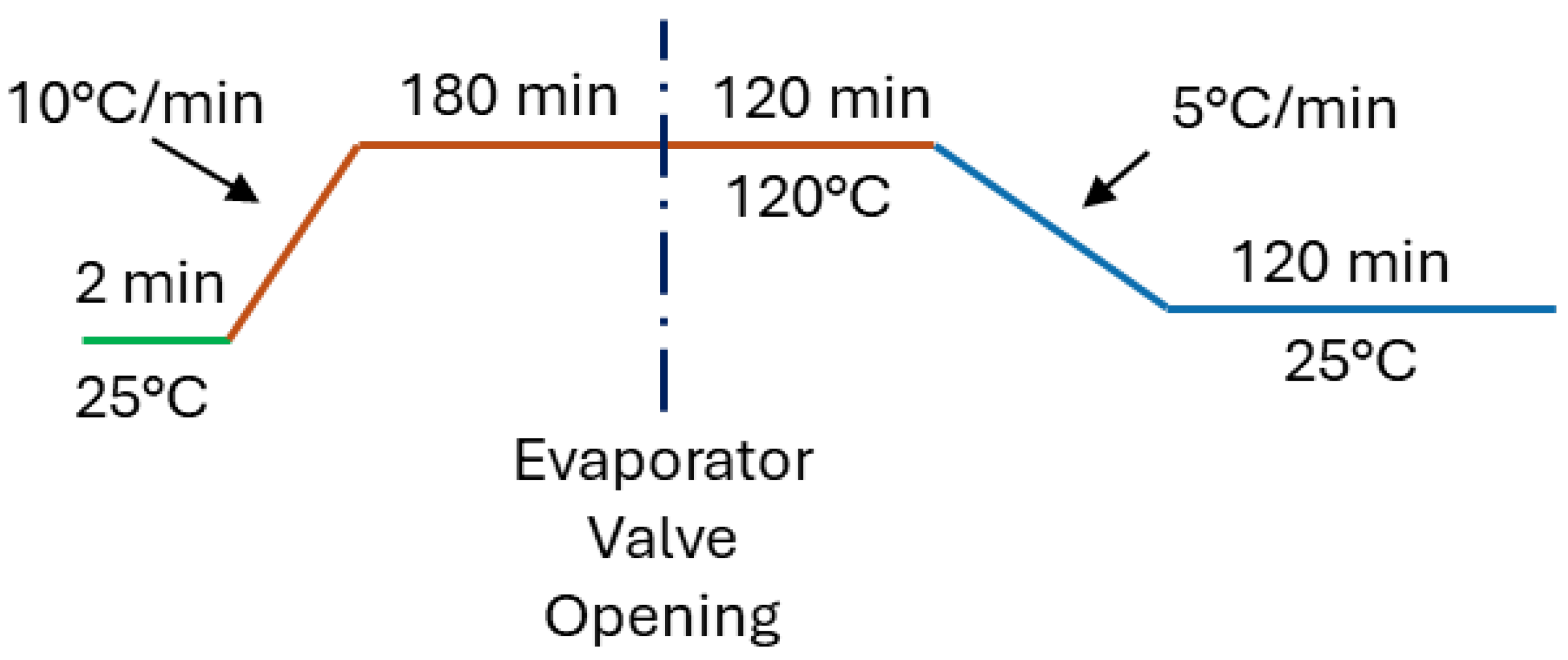
Figure 1. Scheme of the TG/DSC programmed temperature profile.
Energies 18 06527 g001
Figure 2. (a) Heat exchanger used for the T-LTJ tests; (b) heat exchanger filled with the CaCl15/MgCl15/SG composite sorbent material.
Energies 18 06527 g002
Figure 3. (ac) CaCl30/SG; (df) CaCl15/MgCl15/SG, (gi) MgCl30/SG.
Energies 18 06527 g003
Figure 4. (a,b) Nitrogen physisorption curves, (c,d) pore radius distribution, and (e,f) cumulative pore volume of all the samples. The hollow patterns are for the desorption step.
Energies 18 06527 g004
Figure 5. SEM micrographs of (a,e) SG, (b,f) CaCl15/MgCl15/SG, (c,g) CaCl20/MgCl10/SG, (d,h) CaCl25/MgCl5/SG.
Energies 18 06527 g005
Figure 6. Isobaric hydration/dehydration DVS curves of all the investigated samples: (a) SiGel, (b) CaCl30/SG, (c) MgCl30/SG, (d) CaCl15/MgCl15/SG, (e) CaCl20/MgCl10/SG, (f) CaCl25/MgCl5/SG.
Energies 18 06527 g006aEnergies 18 06527 g006b
Figure 7. Isothermal hydration/dehydration DVS curves after long-term cycling stability. The dashed lines are for the desorption (or dehydration) process.
Energies 18 06527 g007
Figure 8. (a) Weight change and (b) heat flow curves as a function of time for all the investigated samples. The dashed lines indicate the temperature profile.
Energies 18 06527 g008
Figure 9. Heat flow profiles of the (a,c) adsorption and (b,d) desorption processes for CaCl15MgCl15/SG-filled HEX.
Energies 18 06527 g009
Table 1. List of prepared composite samples: composition parameters and textural properties.
Composition ParametersTextural Properties
SamplesSalt1Salt2Mass Ratio
Salts:Composite
Mass Ratio
Salt1:Salt 2
Specific Surface
Area [m3/g]
Pore Volume
[cm3/g]
Pore Radius
[Å]
Density
[g/cm3]
SG----386.301.04944.8432.210
CaCl30/SGCaCl2-0.30-197.880.55448.6752.116
MgCl30/SG-MgCl20.30-242.840.69548.6202.156
CaCl15/MgCl15/SGCaCl2MgCl20.301:1226.180.63244.5602.103
CaCl20/MgCl10/SGCaCl2MgCl20.302:1228.320.64844.4222.099
CaCl25/MgCl5/SGCaCl2MgCl20.305:1215.340.63544.6532.210
Table 2. Experimental heat release capacities per mass and volume unit.
Samples Q S / R m [J/g] Q S / R m [kWh/kg] Q S / R v [MJ/m3] Q S / R v [kWh/m3]
SiGel193.310.0530.4270.118
CaCl30/SG1315.980.3652.7850.773
MgCl30/SG766.330.2121.6520.458
CaCl15MgCl15/SG1091.950.3032.2960.637
CaCl20MgCl10/SG1089.780.3022.2870.635
CaCl25MgCl5/SG1172.4820.0322.5910.719
Table 3. Kinetic parameters and R2 values obtained by fitting the heat flow profiles.
Conditions[∆T][∆T]0τ (s)R2
74–32–Tev = 1001.03542.57 ± 2.490.958
32–74–Tcon = 100.15.5100.52 ± 0.370.991
85–35–Tev = 1501.45562.54 ± 2.830.947
35–85–Tcon = 1509.295.65 ± 0.540.977
Disclaimer/Publisher’s Note: The statements, opinions and data contained in all publications are solely those of the individual author(s) and contributor(s) and not of MDPI and/or the editor(s). MDPI and/or the editor(s) disclaim responsibility for any injury to people or property resulting from any ideas, methods, instructions or products referred to in the content.