Article

Enhancing Shaft Voltage Mitigation with Diffusion Models: A Comprehensive Review for Industrial Electric Motors


1
Department of Electrical Engineering, Incheon National University, Incheon 22012, Republic of Korea
2
Department of BioMedical & Robotics Engineering, Incheon National University, Incheon 22012, Republic of Korea
*
Author to whom correspondence should be addressed.
These authors contributed equally to this work.
Energies 2025, 18(24), 6504; https://doi.org/10.3390/en18246504
Submission received: 10 November 2025 / Revised: 5 December 2025 / Accepted: 9 December 2025 / Published: 11 December 2025

Abstract

Industrial electric motors powered by variable frequency drives (VFDs) offer better controllability as compared to the conventional sinusoid-fed motors. However, the switching transients of VFDs induce shaft voltage in electric motors, which can lead to bearing failure. This may cause the machine to shut down and pose a serious threat to the system’s reliability. Several shaft voltage mitigation strategies are suggested in the literature, including insulated bearings, grounding brushes, copper shields, and filters. Although mitigation strategies have been extensively studied, shaft voltage signal processing remains relatively underexplored. This review introduces diffusion models (DMs), a new generative learning technique, as an effective solution for processing shaft voltage signals. These models are good at reducing noise, handling uncertainty, and capturing complex patterns over time. DMs offer robust performance under dynamic conditions as compared to traditional machine learning (ML) and deep learning (DL) techniques. In summary, the review outlines the sources and causes of shaft voltage, its existing mitigation strategies, and the theory behind DMs for shaft voltage analysis. Thus, by combining insights from electrical engineering and artificial intelligence (AI), this work addresses an important gap in the existing literature and provides a strong path forward for improving the reliability of industrial motor systems.

1. Introduction

Shaft voltage is a growing concern for the reliability of inverter-fed electric motors. As variable frequency drives (VFDs) become more common, it’s increasingly important to understand, predict, and reduce shaft voltage. This review starts by outlining the research background and the need for improved modeling approaches.

1.1. Background and Research Motivation

The shaft voltage in an electric motor is the unwanted potential difference that develops between the shaft and the motor frame. It is also referred to as bearing voltage, as this voltage appears across the bearings. The main causes of shaft voltage include electromagnetic interference (EMI), common mode voltage (CMV), stray capacitance, magnetic asymmetries, and switching transients from power electronics [1]. These voltages pass through the bearings and induce high temperature within the bearing raceways [2]. This leads to bearing lubricant breakdown [3], causing pitting, fluting, and, ultimately, bearing failure [4]. This failure often spreads to other systems attached to the machine, such as impellers, turbines, and gearboxes, causing a major concern about machine reliability [5]. Ergo, a timely solution is necessary to improve electric motors’ reliability, efficiency, and operational lifespan.
The shaft voltage phenomenon can be studied effectively by utilizing better signal analysis methods. The signal processing of electric motors can be enhanced by implementing denoising techniques [6]. A denoising algorithm and its application in classifying the faults of a rotating machine are studied in [7]. Electrical motors, especially those driven by power electronic converters, are subjected to various sources of noise, such as EMI, switching harmonics, mechanical vibrations, and sensor measurement artifacts [8]. These noise components can significantly distort the acquired signals, making it difficult to obtain meaningful information for condition monitoring, fault diagnosis, and control. Therefore, effective denoising methods are necessary to improve the quality of measured signals by suppressing unwanted noise while preserving critical features such as transient events and characteristic fault signatures.
For reliable diagnostics of shaft voltage, removing noise artifacts is of paramount importance. Shaft voltage signals are typically contaminated by high-frequency noise stemming from inverter switching and capacitive coupling [9]. Applying appropriate denoising techniques enables the accurate detection and analysis of these electrical phenomena, facilitating reliable diagnosis of shaft voltage-related faults and the assessment of mitigation strategies. Ultimately, denoising enhances signal fidelity, improves signal-to-noise ratio, and ensures that diagnostic algorithms yield precise and trustworthy results, thereby contributing to improved motor reliability and longevity [10].
The diffusion models (DMs) have recently emerged as a promising technique for denoising and signal processing. Unlike conventional methods that rely heavily on labeled data and handcrafted features, the DMs leverage the intrinsic geometric structure of high-dimensional sensor data, enabling more robust denoising, feature extraction, and predictive modeling [11]. This approach is particularly advantageous in handling noisy and complex motor signals, such as shaft voltage waveforms, and holds significant potential to improve the accuracy of fault forecasting.

1.2. Scope and Purpose of the Review

This review seeks to fill an important gap in research by introducing and evaluating DMs as a unique, data-driven framework for analyzing shaft voltage in industrial electric motors. As VFDs become increasingly common in modern automation and manufacturing systems, new methods are needed to mitigate the negative effects of parasitic shaft voltage and its impact on bearing integrity. To address this need, the review examines the potential of DMs and provides a detailed overview of current techniques for mitigating shaft voltage.
To guide this investigation, the review aims to answer the following research questions:
  • What are the primary sources and causes of shaft voltage in inverter-fed electric motors, and how do they impact the motor’s reliability and performance?
  • What are the existing mitigation strategies for shaft voltage, and how effective are they in reducing bearing failure and improving motor lifespan?
  • How can DMs be leveraged to improve the signal processing of shaft voltage, and what are the advantages of DMs over traditional methods such as machine learning (ML) and deep learning (DL)?
  • What challenges and limitations exist in the application of DMs for shaft voltage analysis, and how can future research address these gaps to improve industrial motor systems?
These questions provide a clear framework for evaluating the effectiveness of existing methods and the potential of DMs in enhancing shaft voltage mitigation strategies.
The following summarizes the review’s primary goals and contributions:
  • Analyzing the shaft voltage and its causes in detail: The review provides a detailed overview of shaft voltage in industrial electric motors. It focuses on their physical origins and the factors that contribute to shaft voltage. Key causes include high-frequency CMV, parasitic capacitances between the motor components, and the fast switching transients from inverter drives.
  • Reviewing the existing shaft voltage reduction techniques: The current techniques to reduce the shaft voltage in industrial electric motors are discussed in detail. These strategies include grounding brushes, insulated bearings, common-mode (CM) chokes, and shielding techniques. The effectiveness and limitations of these methods are also evaluated.
  • Offering a comprehensive, diffusion-based shaft voltage analysis framework: It consists of three complementary components:
    • Emphasis to denoise shaft voltage signals to get precise depictions of basic cycles and transitions.
    • Prediction of maintenance and anomaly reduction can be made possible by probabilistic forecasting of future voltage increases or adverse resonance patterns.
    • Synthetic data generation of uncommon or severe shaft voltage settings improves the prediction and adaptability of ML algorithms for diagnosis and control purposes downstream.
  • Bridging interdisciplinary domains: The review aims to encourage the integration of signal processing, ML, and power electronics. The paper offers a path for introducing generative artificial intelligence (AI) approaches into electromechanical systems.
  • Stimulating future research and industrial implementation: To stimulate future research and industrial implementation by identifying open questions, practical challenges, and potential research directions. It includes real-time installation, artificial augmentation-based data scarcity solutions, and hybrid systems that combine hardware and AI-driven mitigation techniques.
This review sets the foundation for developing intelligent, adaptable, and scalable techniques to analyze shaft voltage in industrial motors. It draws from research in electrical engineering and advanced computational models to minimize equipment downtime, enhance motor durability, and boost the reliability of industrial systems operating under demanding conditions.

1.3. Contributions to the Literature

While existing literature has addressed shaft voltage causes, their mitigation techniques, and signal processing as separate topics, this review combines all three into a unified framework. By integrating physical modeling, equivalent circuit analysis, and AI-based interpretation, it provides a clearer understanding of shaft voltage behavior in industrial motors. This combined perspective has not yet been explored and needs to be addressed in system-level diagnostics.
An important contribution of this work is the introduction of DMs for processing shaft voltage signals. Unlike traditional ML and DL approaches, DMs offer superior denoising, capturing temporal dependencies, and generating realistic synthetic data for rare discharge events. Their probabilistic nature enhances their robustness in the noisy environments, common in VFD-driven motors.
Moreover, the review explores condition-aware diffusion modeling, where variables like load, switching frequency, and thermal state are included to enhance real-world adaptability. This creates a dynamic responsive approach to voltage prediction and anomaly detection. Such adaptability makes the suggested framework a powerful tool for predictive maintenance and fault prevention in next-generation electric motor systems.
The review is organized as follows. Section 2 discusses the review methodology, followed by Section 3, which provides an overview of shaft voltage in electric motors, detailing its origins, contributing factors, and mitigation strategies. In Section 4, the applications of AI in rotating machines are examined in detail. Section 5 introduces the basic idea of DMs and explores their role in shaft voltage signal processing. Section 6 provides a comparison of existing signal-based approaches and outlines the benefits of DMs over traditional ML and DL techniques. Section 7 discusses current challenges and practical limitations related to deploying these models in industrial settings. Section 8 outlines future research directions and possible developments, followed by the conclusion.

2. Review Methodology

This review followed a structured search and selection strategy to identify studies relevant to: (i) shaft voltage and bearing current phenomena in inverter-fed motors, (ii) shaft voltage mitigation techniques, and (iii) AI and diffusion-based modeling for industrial time-series signals. The search process was designed to capture both foundational works and recent advances, prioritizing peer-reviewed journals and conference publications.

2.1. Databases and Time Window

The literature search was conducted using IEEE Xplore, Scopus, Web of Science, and Google Scholar. The primary time window was 2006–2025 to capture both foundational studies on shaft voltage mechanisms and their mitigation in inverter-fed drives, as well as recent advances in AI and diffusion-based time-series modeling. Earlier works were considered only if highly cited and essential for the theoretical background.

2.2. Search Keywords

Queries combined three themes: (1) shaft voltage and bearing current, (2) shaft voltage mitigation methods, and (3) AI/generative modeling. Example keyword strings included:
  • shaft voltage OR bearing voltage OR bearing current OR EDM OR electrostatic discharge
  • common-mode voltage OR VFD OR PWM OR inverter-fed motor OR parasitic capacitance
  • shaft grounding ring OR insulated bearing OR common-mode choke OR shielding OR slot wedge
  • signal denoising OR time-series forecasting OR anomaly detection OR predictive maintenance
  • diffusion model OR DDPM OR score-based model OR generative model
Boolean combinations were applied (e.g., “shaft voltage” AND “common-mode voltage”; “bearing current” AND “mitigation”; “time-series” AND “diffusion model”).

2.3. Inclusion and Exclusion Criteria

Studies were included if they: (i) investigated shaft voltage/bearing current mechanisms, measurement, or mitigation in inverter-fed motor systems; or (ii) presented AI-based methods for rotating machinery and predictive maintenance; or (iii) reported diffusion/score-based methods for time-series denoising, imputation, forecasting, anomaly detection, or synthetic data generation with relevance to industrial monitoring. Studies were excluded if they: (i) were not in English; (ii) were outside the scope of electrical machines or industrial time-series monitoring; (iii) lacked sufficient methodological detail; or (iv) were non-technical opinion pieces.

2.4. Study Selection Process

The workflow of the selection process is depicted in Figure 1. Titles and abstracts were screened first, followed by full-text assessment for eligibility. Duplicate records were removed. The final set of included studies was organized into three categories: (i) shaft voltage origins and modeling, (ii) mitigation methods, and (iii) AI/diffusion modeling for signal processing and predictive maintenance.

3. Shaft Voltage in Electric Motors

This section provides a detailed explanation of the key factors that contribute to the generation of shaft voltage in electric motors. Following this analysis, the equivalent circuit for shaft voltage measurement and various mitigation strategies are discussed in detail.

3.1. Origins of Shaft Voltage

The shaft voltage in rotating machines has been known for many years, posing detrimental effects on the motor bearings. Various faults can occur in electric machines; however, it is important to note that bearing failures constitute more than 50% of these faults [12]. The bearing failure presents a critical challenge to the reliability of electric machines, often leading to premature machine downtime and increased maintenance requirements [2,13]. Therefore, timely measures are necessary to alleviate the shaft voltage and other factors contributing to bearing voltage. Before examining the methods to mitigate the shaft voltage, its underlying causes are briefly discussed.

3.1.1. Magnetic Imbalance

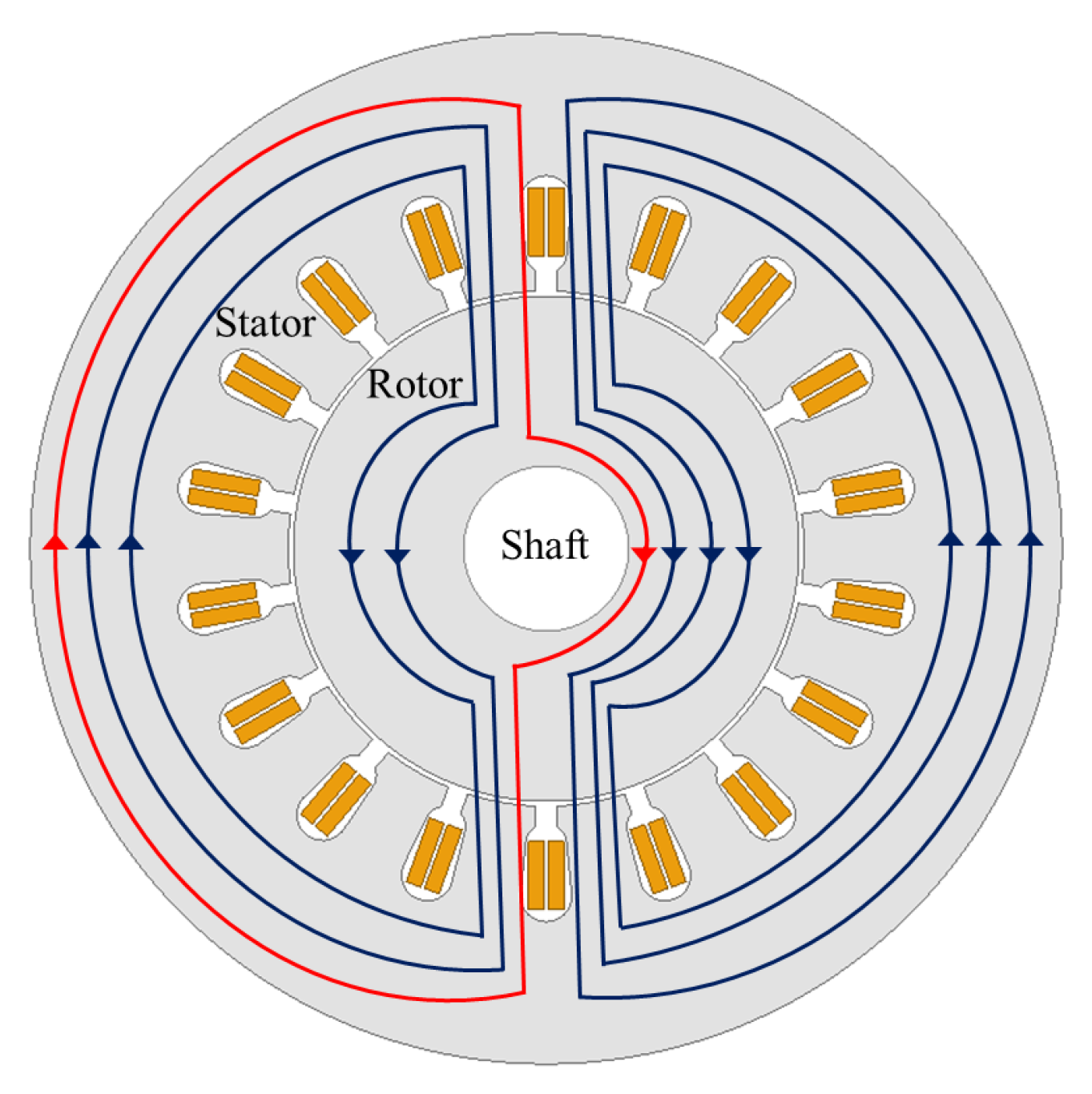
Magnetic imbalance in an electric motor is illustrated in Figure 2, which occurs due to the uneven magnetic flux distribution. This leads to a phenomenon called unbalanced magnetic pull. A magnetic asymmetry or imbalance happens mainly due to manufacturing imperfections. It may also occur if the motor windings receive an unequal power supply. In such scenarios, an unbalanced magnetic flux will encircle the motor shaft due to asymmetry, leading to shaft voltage [2]. This may generate low-frequency circulating currents in the motor and greatly affect motor performance and system reliability. Also, the rotor and stator eccentricities cause a major imbalance and induce a circulating current in the motor [14]. Although these types of imperfections are very rare these days, a regular inspection is very important to avoid the pitfalls.

3.1.2. Common Mode Voltage

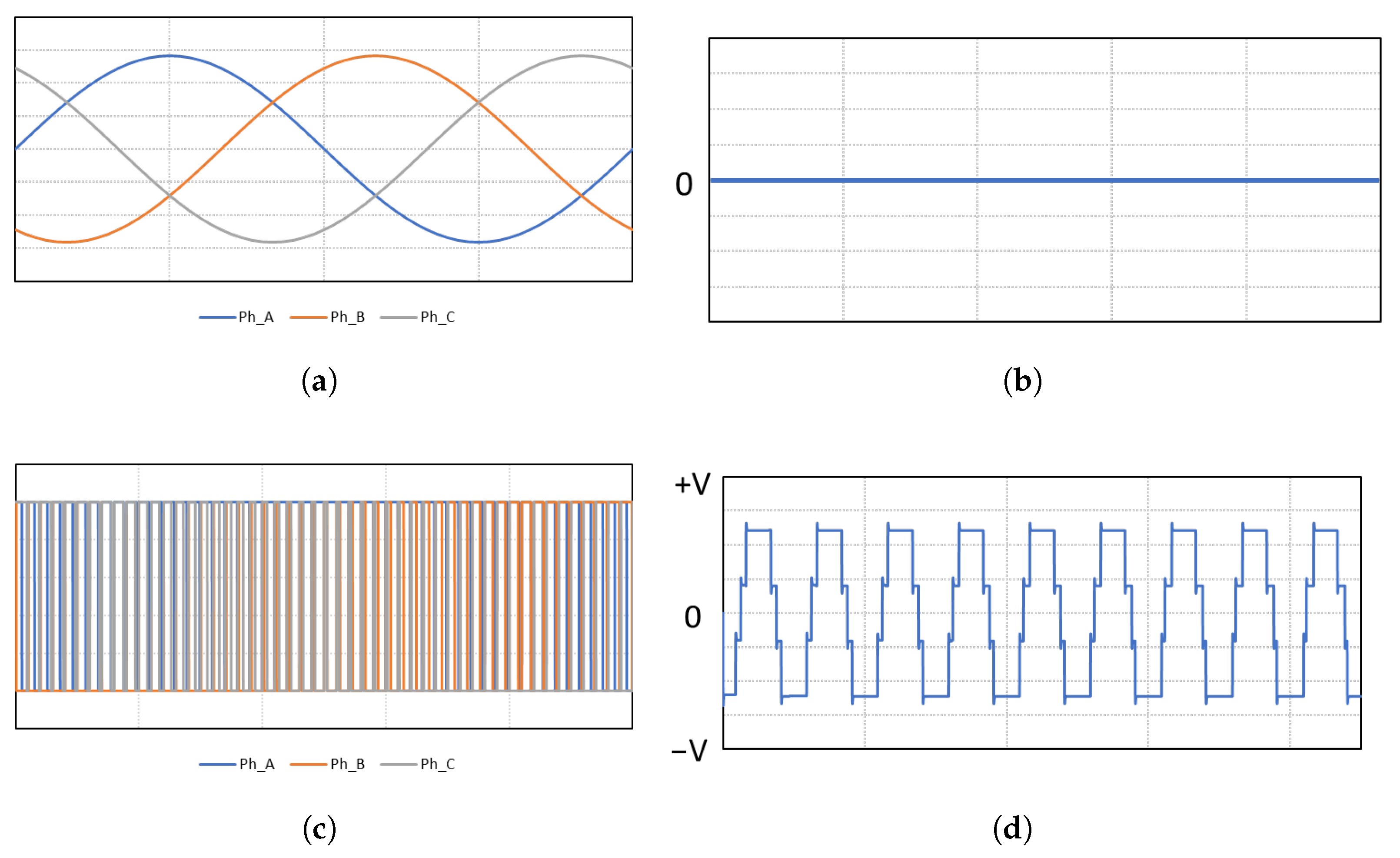
The CMV is the difference in electrical potential between the neutral point of a three-phase system and the ground. In inverter-fed motor systems, CMV is a major concern because it significantly contributes to issues with shaft voltage and bearing current [15]. Ideally, when the motor receives a balanced sinusoidal three-phase voltage, the CMV remains zero. However, in real-world applications, VFDs are commonly used for precise motor speed and torque control. The switching transients of VFDs introduce CMV into the system. The details of CMV under different power supplies are illustrated in Figure 3.
The proximity of components in the motor structure leads to parasitic capacitances between the stator, rotor, bearings, and frame. These capacitances have a negligible effect under a purely sinusoidal supply. However, due to VFDs, a CMV develops and excites these parasitic capacitances, allowing high-frequency currents to flow through unwanted paths. As a result, bearing currents can develop, which slowly deteriorate the bearing surfaces, causing premature failures and increased maintenance [16]. The applied DC-link voltage highly influences the impact of CMV; higher voltages result in greater CMV amplitudes and stronger shaft voltage effects.

3.1.3. Electrostatic Discharge

As we discussed earlier, CMV in inverter-fed motors can create voltage across the motor bearings. When the voltage between the shaft and bearing exceeds the bearing lubricant threshold, then electrostatic discharge (ESD) occurs. This discharge happens in the bearing raceways and is triggered by the breakdown of the insulating lubricant layer. The breakdown threshold usually ranges from 5 V to 30 V, depending on factors like temperature, load, and lubricant properties [17]. ESD events can be seen as sudden spikes in the typical waveform of the shaft voltage signal [18]. These sudden discharges may seem minor at first, but repeated occurrences lead to localized heating and surface wear. Over time, this can cause fluting, pitting, and other marks on the bearing surfaces, shortening their lifespan. Therefore, understanding and addressing ESD is crucial for ensuring the long-term reliability of modern electric motor systems [19].

3.1.4. Shaft Magnetization

Another important cause of shaft voltage is shaft magnetization. This usually arises due to the unbalanced ampere-turns in the motor windings. Such an imbalance can create uneven magnetic fields that induce voltage along the rotor shaft. In some situations, unintended electrical contact, like accidental grounding between the rotor windings and the rotor core, can cause circulating stray currents. These currents may permanently magnetize the motor shaft, continuing to affect voltage buildup over time [20]. Additionally, geometric or material differences in the motor’s magnetic circuit can produce varying flux linkages with the shaft. This changing flux interaction induces a voltage on the rotor shaft, leading to bearing current [21]. Over time, these effects can damage bearing insulation, lower machine efficiency, and ultimately lead to early bearing failure. Shaft magnetization should be considered in the motor’s design stage for better electromagnetic symmetry and operational reliability.
The origins and sources of shaft voltage in electric motors are summarized in Table 1. The references in the table were chosen for their focus on the primary causes of shaft voltage and their insights into its physical origins, effects on bearing performance, and motor reliability.

3.2. Equivalent Circuit for Measuring the Shaft Voltage

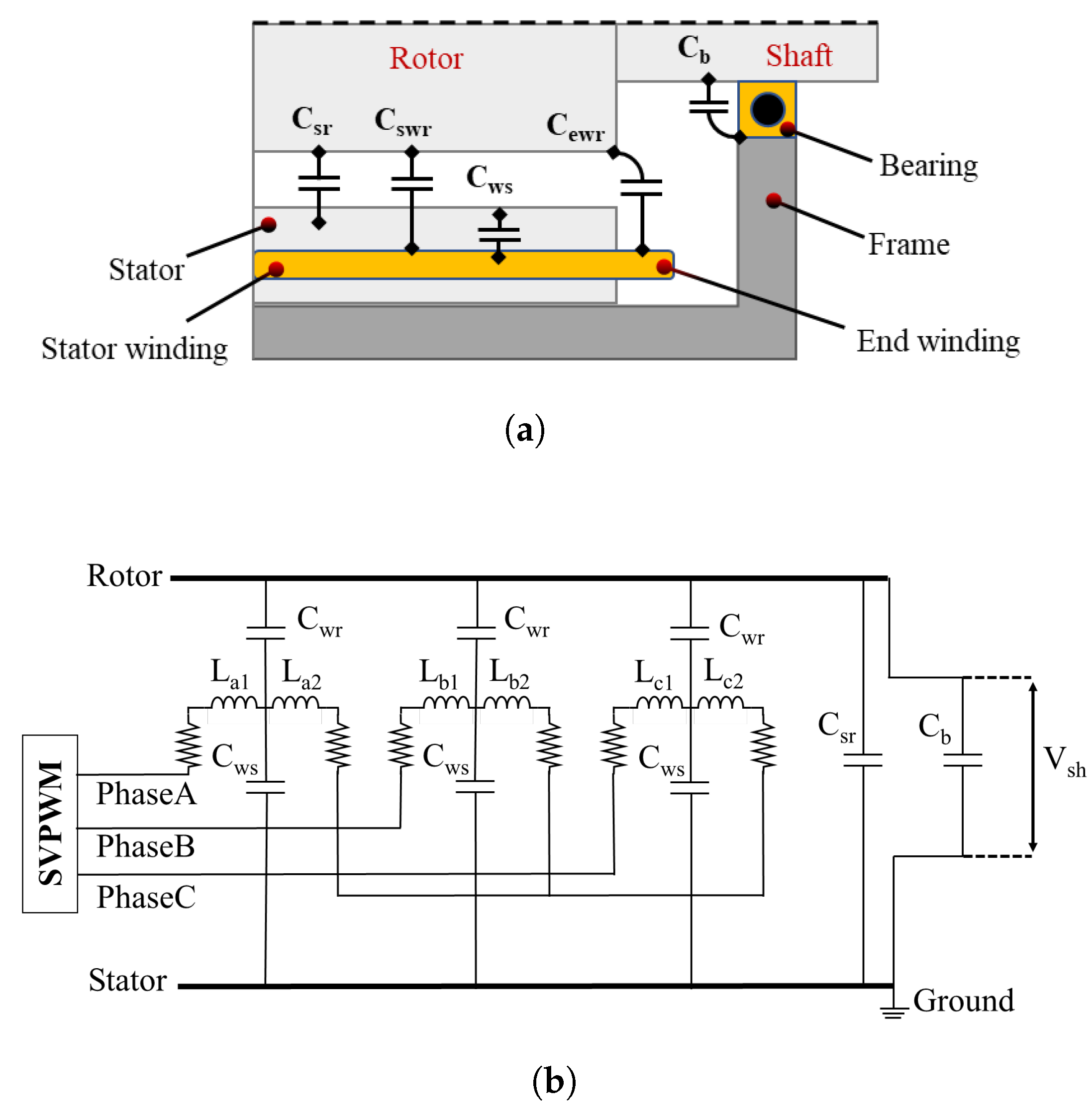
Shaft voltage in an electric motor can be measured by designing a simple equivalent circuit. A typical motor model and its shaft voltage equivalent circuit are represented in Figure 4 [22]. The equivalent circuit in Figure 4b has been designed in the MATLAB/Simulink R2024a, based on the geometric layout of the motor shown in Figure 4a.
In Figure 4b, the drive end and non-drive end bearings are represented by a single bearing capacitor, C b . This bearing capacitor is connected in parallel with the stator-to-rotor capacitance, C s r . Furthermore, C w r and C w s represent the winding-to-rotor and winding-to-stator capacitances, respectively. Each stator phase winding is modeled using two inductors, L a 1 , L a 2 for phase A, L b 1 , L b 2 for phase B, and L c 1 , L c 2 for phase C. The shaft voltage, represented by V s h , can be measured by connecting a voltage sensor between the rotor shaft and the grounded motor frame. This configuration enables the simulation of capacitive coupling and voltage gradient, which are responsible for shaft voltage during inverter-fed operation.
The severity of shaft voltage can be measured by calculating the bearing voltage ratio (BVR), represented by
BVR = V B V CMV C wr C wr + C sr + C b
where V B represents the bearing voltage, and V CMV is the common mode voltage. It can be seen that the BVR is directly proportional to the winding to rotor capacitance and increases as the value of C w r increases.

3.3. Review of Shaft Voltage Mitigation Methods

Several methods are suggested in the literature to alleviate shaft voltage in electric machines. These methods include CMV suppression, shaft voltage grounding, capacitive coupling reduction, bearing insulation, motor geometry modification, and a hybrid approach of these techniques. Further explanation of these approaches is presented below.

3.3.1. Common Mode Voltage Suppression

Shaft voltage mitigation can be achieved by directly reducing the voltage on the motor shaft or by controlling the underlying mechanisms responsible for its generation. One major source of shaft voltage is CMV, which arises from the switching transients of the inverter. Several pulse width modulation (PWM) techniques have been suggested in the literature to reduce CMV effectively. In order to reduce CMV at the inverter stage, recent research on CMV mitigation has focused on modulation and topology modifications. For parallel current-source converters, Ding and Li present an interleaved carrier-based sinusoidal pulse width modulation (SPWM) system that uses coordinated interleaving patterns to reduce CMV and achieve dc-current balancing [23]. A four-leg current-source inverter topology is presented by Xu et al., in which the extra leg suppresses CMV throughout the whole modulation index and reconstructs zero-current vectors. Additionally, fault-tolerant operation under open-phase and open-switch failures is made possible by this design [24]. Zhao et al. present a hybrid selective harmonic elimination pulse width modulation (SHEPWM) technique for medium-voltage neutral-point-clamped inverters that reduces low-frequency CMV where passive filters are least effective by alternating between conventional and modified selective harmonic elimination patterns depending on operating frequency [25].
Advanced inverter topologies and careful consideration of available options can help mitigate CMV. Turzynski and Chrzan, for instance, suggest a quasi-resonant DC-link inverter that reduces CMV and suppresses bearing currents without the need for additional grounding or filters by electrically isolating the motor from the supply during switching transitions [26]. Furthermore, Turzynski and Musznicki provide a thorough analysis of CMV reduction techniques, comparing their efficacy and trade-offs in VFDs [27]. Their results show that, while there are numerous mitigation strategies, none completely address the shaft-voltage issue in all scenarios, underscoring the necessity for alternative solutions.
While these methods are effective, they often require extra components like passive filters or specialized controllers. This increases hardware cost and makes the overall system cumbersome.

3.3.2. Shaft Voltage Grounding

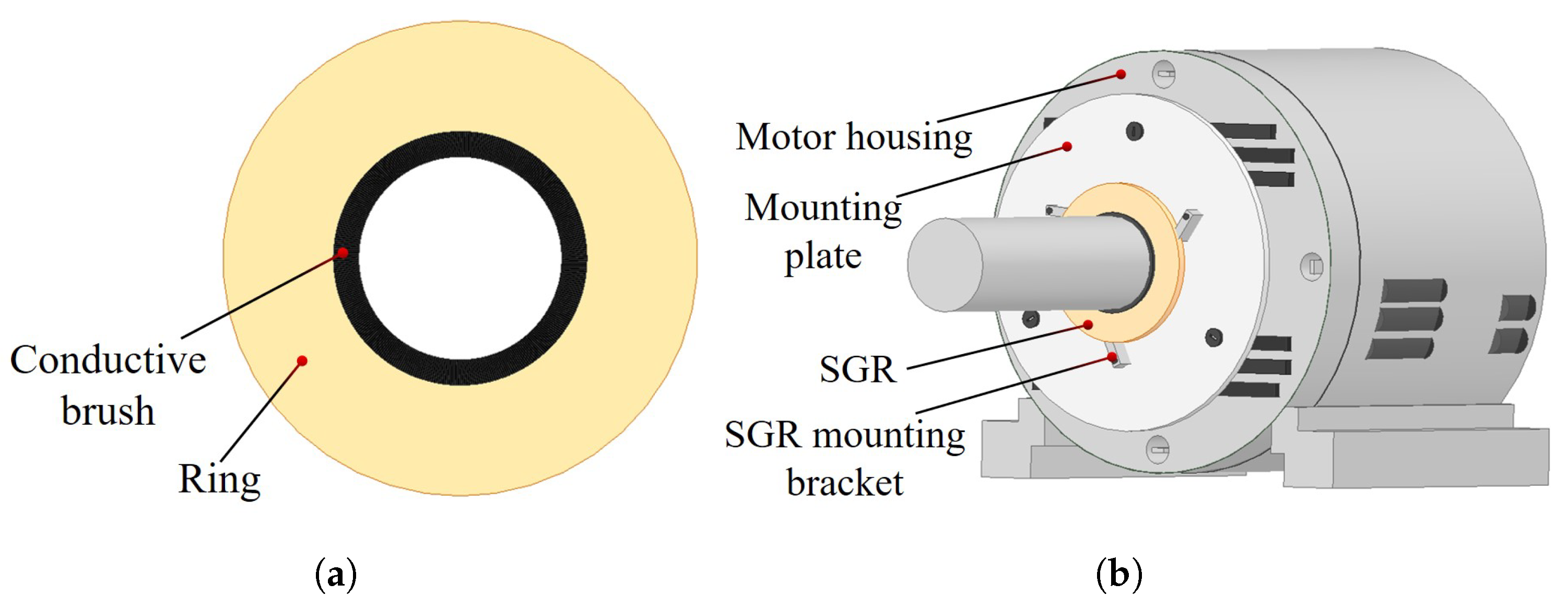
Another promising method to reduce shaft voltage is to safely ground bearing currents using a shaft grounding ring (SGR). Figure 5 shows a typical SGR geometry and its installation on a motor. It can be seen that an SGR comprises a conductive brush and ring structure. The SGR creates a low-resistance path between the motor shaft and the grounded frame. This effectively directs harmful bearing currents away from the rolling elements. Muetze and Oh introduced a static charge dissipation method using a conductive microfiber ring to provide a controlled path from the shaft to ground in inverter-fed machines [28]. Later, they evaluated the current-carrying capacity of these microfiber contacts across various frequencies and currents, and provided design guidelines for reliable SGR use in industrial drives [29]. Conductive microfibre shaft-grounding rings were found to be an effective preventive solution by Willwerth and Roman, who shared field data from traction motors demonstrating that untreated shaft voltages cause severe bearing damage [30].
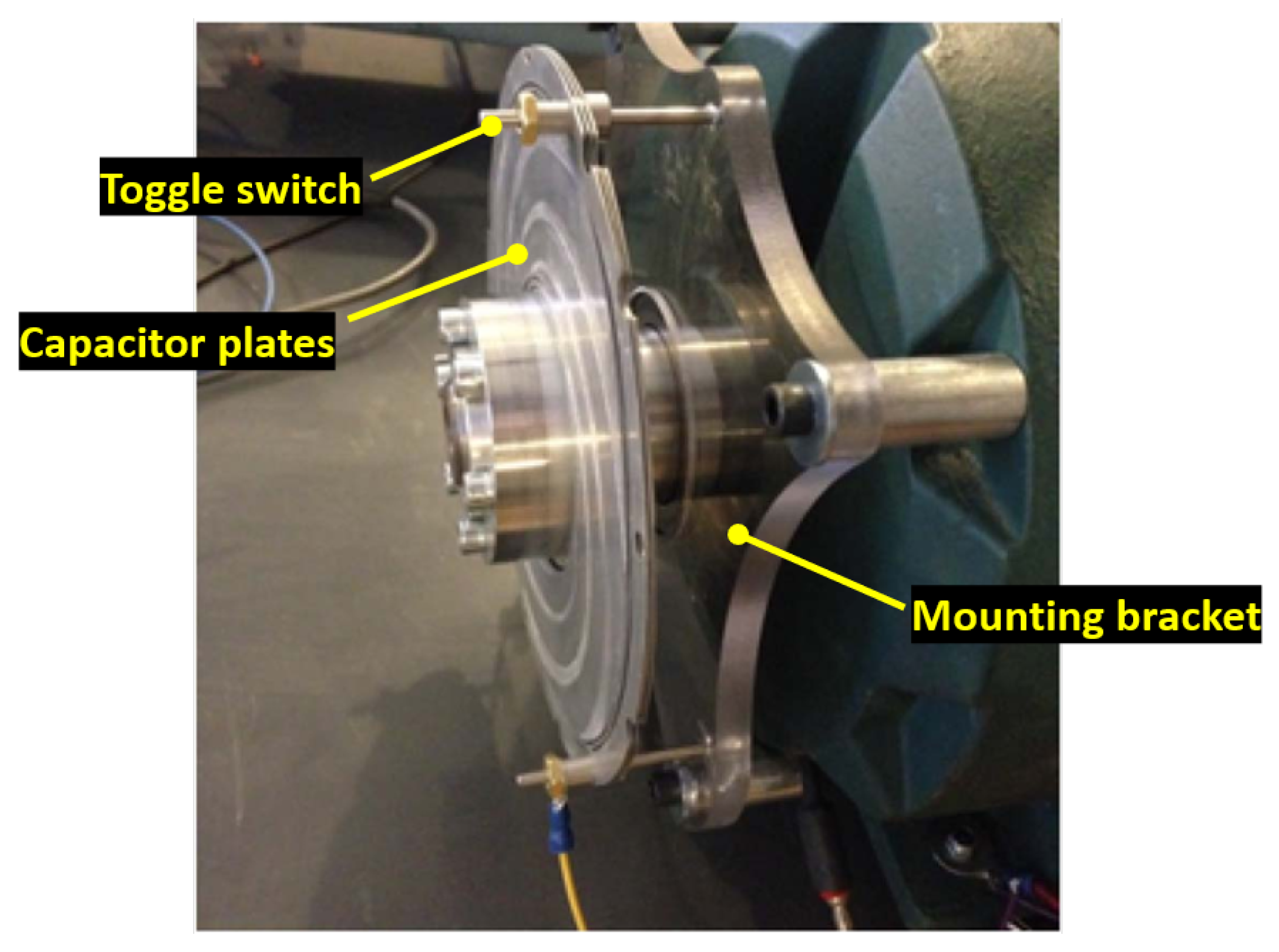
Although an SGR provides a non-invasive and relatively simple solution to shaft voltage problems, its performance can decline over time due to wear and contamination of the contact surfaces. This makes regular inspection and maintenance necessary. To overcome this limitation, researchers have proposed contactless capacitor-based grounding structures [5]. As shown in Figure 6, this configuration uses capacitor plates to establish a capacitive coupling path to the grounded frame. This capacitive approach works similarly to SGR by providing a low-impedance path for high-frequency bearing currents without requiring physical contact.
Conductive grease can also be used to divert CM currents away from the bearings. A conductive grease offers a lower impedance path and reduces the bearing current by providing multiple discharge paths [31,32]. It is important to note that conductive grease mitigates discharge paths but does not function as a grounding device. A thorough analysis must be performed before implementing this technique, as grease contains conductive agents like copper, silver, and gold. These agents cause a risk of pitting and bearing deterioration [18]. Therefore, while these techniques show significant potential, they need to be evaluated for reliability, durability, and appropriateness for the intended application environment.

3.3.3. Capacitive Coupling Reduction

Shaft voltage can also be reduced by limiting the formation of stray current circuits in electric motors. One effective approach is to decrease the capacitive coupling between different motor components, particularly between the stator windings and the rotor shaft. Excessive coupling creates unintended current paths that allow common-mode (CM) currents to flow, leading to shaft-voltage buildup. To mitigate this, several shielding-based structures have been proposed.
A grounded partial electrostatic shield has been inserted into the stator slots to mitigate bearing currents [33]. The study presents FEM and experimental validation to lower the winding-to-rotor capacitance that ultimately lowers high-frequency bearing currents in inverter-fed induction motors. Similar concepts have been investigated in [34]. Here, the electric field coupling that causes shaft voltage generation is weakened by a thin stator-layer electrostatic screen. Tests on a 3 kW motor reveal a notable decrease in discharge bearing currents. Another approach replaces the traditional slot wedge with an electromagnetic shielding wedge [35]. This creates a grounded barrier between conductors and the rotor surface, and significantly reduces high-frequency bearing currents while keeping torque and efficiency intact. In addition, positioning a simple metallic shield near the stator end-winding overhang has been effective in interrupting the capacitive path from end windings to the rotor. This approach helps prevent harmful EDM bearing currents in small inverter-fed machines [36].
Recent studies have focused on reducing the motor’s internal parasitic capacitance to mitigate the shaft voltage generation. Park et al. used analytical models and FEM validation to show the primary relationship between parasitic capacitance. They discovered that the biggest factor influencing shaft voltage is the winding-to-rotor capacitance, whereas variations in the winding-to-stator capacitance have minimal impact [37]. Building on this emphasis on capacitance, a number of studies actively lower C w r and the associated capacitive bearing currents by introducing shielding structures. Vostrov et al. integrate grounded electrodes into stator-slot openings to divert high-frequency capacitive currents away from the rotor, reducing the effective C w r while keeping torque intact [38]. Slot-embedded shields can lower C w r by up to 84%, according to Scheuermann et al.’s experimental comparison of various electrostatic shielding geometries in traction motors. However, they highlight manufacturing limitations and possible eddy-current issues [39]. A layered-shield structure that lowers Cwr and end-winding capacitance without changing motor geometry is proposed by Heo et al. [40]. Kang et al. present a hybrid shield ring that enhances motor cooling and lowers shaft voltage by altering internal field distributions [41].
Among various techniques, inserting conductive slot wedges has shown promising results. These slot wedges can greatly lower the capacitive coupling between winding conductors and the rotor when they are grounded correctly [42]. They aid in preventing voltage accumulation across the shaft by altering the internal electric field distribution and offering a regulated discharge channel. Without the need for additional circuitry, these design-level solutions provide a long-lasting solution. The limitation of this method includes the cost of the extra shield component. Additionally, slot fill factor considerations may make deployment difficult when the shields are placed in the slots.

3.3.4. Bearing Insulation

The bearing surface can be electrically insulated to block bearing currents and thereby reduce the risk of shaft voltage. The basic idea is to increase the impedance of the current path through the bearing, so that CM currents are forced to flow elsewhere [32]. A summary of practical design guidelines and evaluation methods for inverter-induced bearing currents in machines up to 500 kW has been provided, emphasizing when insulated shafts or bearings are required and how various current processes predominate throughout power ratings [43]. More recently, a thorough analysis of bearing current modeling and mitigation strategies emphasized that the use of wide-bandgap devices will make high-frequency bearing currents even more critical. It also found that one of the most popular countermeasures in industrial drives is bearing insulation [44].
Ceramic coatings, polymer sleeves, or dielectric layers can be used to insulate bearing journals, bearing races, or the shaft itself. The necessity of system level grounding in addition to bearing insulation is shown by case studies on large rotating machinery, which demonstrate that hydrogenerators with poorly coordinated insulation design can nonetheless experience significant shaft current circulation [45]. Experimental studies show that insulating the inner ring on the shaft side results in a greater drop in shaft voltage than insulating merely the outer ring [46]. Further research indicates that outer race insulation by itself can still reduce shaft voltage by 40% to 60%, however its efficacy is mostly dependent on the drive system’s available bypass routes [47].
Another option is to replace steel bearings with hybrid or fully ceramic bearings, which provide extremely high electrical resistance and eliminate the rolling-contact discharge mechanism entirely. These bearings are appealing for high-performance applications because they are lighter, harder, and have better resistance to heat and corrosion [48]. They may, however, transfer CM currents into unwanted components and are far more costly. In fact, experimental results indicate that the current may divert into couplings, gearboxes, or auxiliary components when the bearing path is completely blocked, thereby causing new failure points elsewhere in the system [49].
Although bearing insulation effectively blocks current flow through the rolling elements, the remaining CM current is diverted into other structural paths. Accordingly, insulation is best implemented together with controlled grounding or shielding measures to manage current redistribution and ensure system-wide protection.

3.3.5. Motor Geometry Modification

The shaft voltage can also be reduced by modifying the motor design. The proximity and shape of an electric motor’s components have a significant impact on its capacitive coupling. The design of the slot opening is crucial for figuring out the capacitive interaction between the rotor and winding. Shaft voltage levels are directly impacted by this relationship [50]. According to recent research, employing a zig-zag slot opening design instead of the conventional design greatly lowers the capacitance and aids in lowering shaft voltage [51]. The oblique type of slot is another useful form that can lower the parasitic capacitance that affects shaft voltage [52].
Motor windings can also be modified to mitigate shaft voltage. The winding-to-rotor capacitance and, consequently, the shaft-to-frame voltage are reduced when the stator phase windings are moved away from the rotor surface [37]. Building on this concept, Berhausen and Jarek suggest an additional toroidal winding around the stator yoke that produces a compensating circular flux. Under appropriate excitation, this winding significantly lowers the induced shaft voltage and related bearing currents under a variety of operating circumstances [53]. Peng et al. examine fractional slot PMSMs and demonstrate how the pole/slot combination significantly influences the parasitic capacitances and CMV-induced shaft voltage, enabling the selection of particular slot pole combinations that reduce shaft voltage without sacrificing torque production [54]. However, manufacturability and slot fill factor in high power density machines ultimately limit these winding and slot level approaches [53].
Shaft voltage mitigation can also be achieved by utilizing rotor geometry. Maetani and colleagues investigate an inverter-fed ungrounded brushless DC motor with a rotor that is electrically insulated from the shaft, demonstrating that the inserted insulation layer interrupts the high-frequency current loop and substantially suppresses bearing voltage [55]. Kim et al. redesign the rotor and permanent magnet layout of an IPM type high-voltage motor, showing that an optimized V-shaped magnet arrangement lowers the effective shaft-to-stator capacitance and achieves roughly 39% reduction in shaft voltage without degrading electromagnetic performance [56]. These geometry-based solutions can be very successful, but they necessitate structural modifications to the machine, making them most feasible during the design phase. Retrofitting existing drives with such modifications is challenging and frequently unprofitable due to the associated redesign and manufacturing effort.

3.3.6. Hybrid Approaches for Shaft Voltage Mitigation

Numerous research have focused into hybrid systems, which combine several mitigation techniques to address shaft voltage generation and transmission processes at the same time. These approaches frequently produce higher reduction than single method solutions by combining electrical, structural, and material based strategies. For instance, Yang et al. study an electric vehicle motor controlled by a SiC inverter and show that combining an active zero state PWM strategy with a CMV oriented filter suppresses high frequency bearing currents and shaft voltage more successfully than PWM only methods [57]. Grounding methods can also be integrated into combined solutions. According to one study, combining a shaft grounding element with a CM choke at the inverter output greatly reduces peak shaft voltage, bearing discharge energy, and CM current under dynamic load conditions [27].
There have also been suggestions for motor side hybrid designs. Aqil et al. change the stator to rotor electric field distribution by applying a thin perovskite dielectric layer on the rotor surface and conductive stator slot wedges. Their dual layer design preserves the original electromagnetic torque profile while reducing shaft voltage by up to 36.3% [58]. A more sophisticated IPMSM setup reduces the winding-to-rotor parasitic capacitance and achieves a shaft-to-frame voltage reduction of roughly 70.27% over a broad frequency range by combining winding shape optimization with targeted end winding shielding [59].
These results demonstrate that, when compared to single technique solutions, hybrid setups have a greater potential to lower shaft voltage. These combined strategies are useful in high-performance applications where reliability and space efficiency matter, such as electric vehicles, aerospace systems, and high-speed industrial drives. However, hybrid strategies inevitably increase system complexity and may raise manufacturing and integration costs due to the addition of multiple coordinated components.

3.4. Comparative Analysis of Shaft Voltage Mitigation Methods

The comparative analysis of shaft voltage mitigation methods reveals key differences in their effectiveness, cost, and applicability, while approaches such as shaft voltage grounding are simple but require frequent maintenance and might not be as efficient in high-load situations. PWM modulation techniques effectively minimize CMV, but they also increase system complexity and computational expenses. Capacitive coupling reduction methods are generally less effective as compared to hybrid approaches that integrate both hardware and software elements. Experimental evidence shows that, while these methods are effective in lab settings, long-term real-world data is scarce, with studies like Ding and Li [23] highlighting the drawbacks of complexity and increased losses. Additionally, each solution has trade-offs between complexity, cost, and efficacy; hybrid approaches provide the best results at the cost of additional components. Despite advancements, there are still a number of limitations, such as the lack of real-world data, the restricted investigation of hybrid techniques, and the inadequate study of various motor types, especially PMSMs and high-power drives. Future research should focus on long-term testing, combined mitigation methods, and the standardization of test protocols to ensure more comprehensive solutions for industrial applications.
Furthermore, even though the evaluated mitigation measures offer useful methods to lower shaft voltage, they mostly rely on physical redesigns and steady-state assumptions, which leaves the intrinsically stochastic and time-varying behavior of shaft-voltage signals unaddressed. Because of this gap, the current analysis emphasizes data-driven, signal-level techniques as a supplementary strategy that can improve interpretability, capture uncertainty, and enable next-generation mitigation frameworks.
The shaft voltage mitigation methods are summarized in Table 2. The selection of the references in Table 2 was based on how well they explained the main strategies for reducing shaft voltage in electric motors. The chosen studies offer a thorough summary of each approach’s practical considerations, limitations, and usefulness.

4. Applications of Artificial Intelligence in Rotating Machines

Recent advancements in Artificial Intelligence (AI) have introduced novel techniques for analyzing complex patterns in electric machines. DL has emerged as one of the most effective methods for detecting subtle variations in both the frequency and temporal domains. The applications of DL and conventional ML models to signal analysis, especially vibration signals, are examined in this section, with a focus on the early identification of bearing faults and predictive maintenance in electric motors.

4.1. Machine Learning & Deep Learning in Vibration Signal Analysis

Recent developments in ML have produced impressive outcomes in industrial sectors, particularly in the analysis of time-series signals from rotating machinery. One promising application is the analysis of vibration signals from rotating shafts to detect imbalances or degradation in roller bearings [74]. Rotating shaft imbalances can affect the life of motor bearings and other mechanical parts, raising operating expenses. Therefore, reducing maintenance costs, avoiding unscheduled production downtime, and improving the overall service life of machinery all depend on the early detection of such anomalies [75]. Real-time analysis of streaming data is made possible by ML-based detection techniques, which require few extra resources and can be completely automated. Because of this, imbalances may be found and fixed immediately before the drive train provides significant damage [76].
Development of structural elements over time could lead to unpredictable loads and environmental effects that inflict different levels of damage [77]. Such deterioration is particularly prevalent and challenging to stop in concrete structures; thus, accurately estimating the extent of damage is essential to preserving structural integrity and safety [78]. By locating and evaluating damage, sensor-based structural health monitoring (SHM) technologies contribute significantly to precise assessments and increased safety [79]. By utilizing the right SHM approach, we can minimize repair costs and increase the structure’s lifespan by facilitating rapid maintenance activities and ensuring accurate damage evaluation [80].
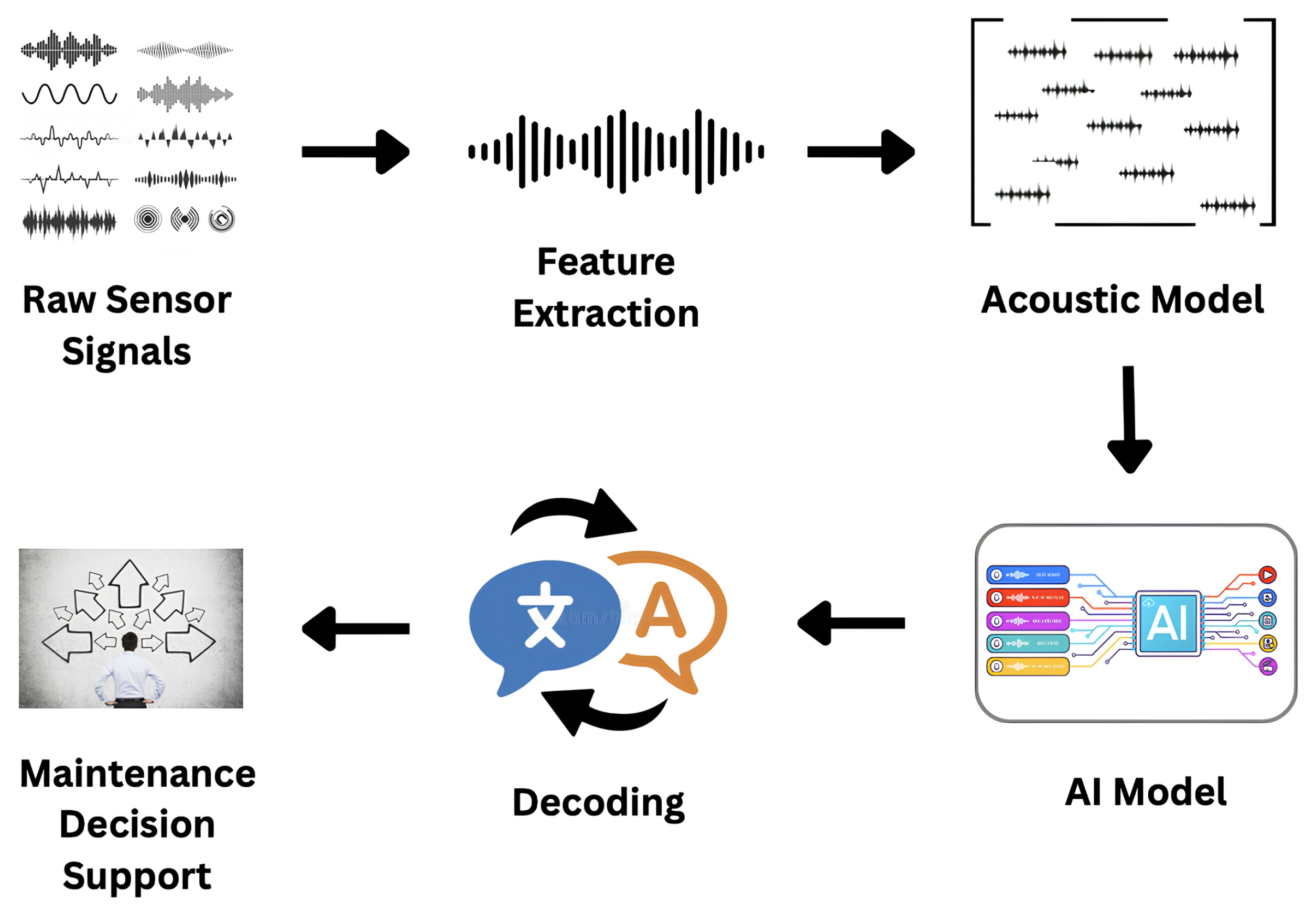
The DL method used for signal processing in SHM is shown in Figure 7. Raw sensor data, including vibrations or audio emissions, is preprocessed, and features are extracted. These features are then analyzed by DL models to provide precise damage localization and identification. The insights enhance automation, precision, and real-time monitoring while helping in the immediate decision making of maintenance.
The fundamental idea behind vibration analysis is that distinctive patterns in vibration signals are caused by mechanical issues in rotating components [81]. It is possible to determine differences from typical operational behavior by maintaining and assessing these trends over time. This makes it possible to carry out actions quickly to stop minor problems from turning into significant system failures [82].
In the context of shaft voltage denoising, DL methods can enhance traditional vibration-based analyses by addressing high-frequency noise introduced by inverter switching transients and other electrical interferences.

4.2. Deep Learning in Time-Series and Fault Detection Tasks

Fault detection capabilities have been altered by the combination of big data, Internet of Things (IoT), and AI. This has made it possible to monitor the entire system using data collected by linked devices [83]. Furthermore, these skills have been further improved by the use of ML and DL approaches. More precise and intelligent failure prediction results from these models’ ability to automatically identify patterns and extract significant information from enormous quantities of historical data [84].
Convolutional neural networks (CNNs) are frequently employed for multiclass classification problems, and ML approaches have been widely applied to bearing anomaly detection. A technique was created that uses a Gaussian mixture model (GMM) to learn the typical operating conditions of motor bearings and builds power spectra from current sensor information. Failure modes induced by inadequate lubrication were successfully discovered by their unsupervised learning technique [85].
DL architectures were combined by using a stacked CNN to extract spatial features from vibration data, followed by a stacked gated recurrent unit (GRU) to capture temporal patterns. A regression layer was then used for anomaly prediction based on the NASA prognostics bearing dataset [86]. The empirical mode decomposition (EMD) was adopted, and the Hilbert-Huang transform (HHT) was used to derive a compact and informative feature set. They then trained a hybrid ensemble detector using only normal condition data to identify deviations indicative of faults [87].
A hybrid ensemble detection device has been trained mainly on normal data to detect shifts indicating faults after HHT and EMD used the NASA prognostics that carried the dataset to extract precise features for anomaly prediction through a regression layer [88]. A thresholding technique was set on the reconstruction error to identify anomalies after learning the representation of typical vibration signals using an autoencoder model. Using the NASA bearing dataset, an autoencoder in combination with an OS-ELM was used to categorize bearing health states [89].
Artificial neural networks (ANNs) are well known for their capacity to create operational and planning plans based on extensive industrial datasets and extract data-driven insights. ANNs are particularly well-suited for modeling and simulating complex system components due to their minimal memory requirements and high computational efficiency [90]. In the meantime, support vector machines (SVMs) have proven to be highly effective in capturing intricate, non-linear correlations between variables, which makes them perfect for modeling and optimization tasks across a range of engineering and scientific fields. SVM has been used in certain studies to model and categorize bearing problems in industrial machinery. For example, vibration responses in rotor-bearing systems were predicted by dimension analysis utilizing matrix techniques in conjunction with SVM [91]. The usefulness of ML models for the early identification of bearing problems in rotating machinery has been demonstrated by additional research conducted across a variety of energy systems [92].

4.3. AI-Based Predictive Maintenance

Predictive maintenance is a cutting-edge maintenance paradigm that uses enormous volumes of data to anticipate faults before they happen. DL models, especially long-short term memory (LSTM)-based autoencoders, are particularly useful for efficiently managing and learning from this data [93]. These models are ideal for studying sequential data, such as time-series vibration signals, since they can capture contextual patterns and long-term temporal connections [94]. In predictive maintenance, a variety of data types produced by industrial machinery are analyzed, including temperature readings, vibration signals, oil condition evaluations, and other operational factors. Among these, vibration data is especially useful for the early identification of mechanical anomalies in electric machines, such as wear, imbalance, and misalignment [95].
The emergence of ML techniques into predictive maintenance across wide industries has greatly improved defect detection and predictions, complementing conventional methods [96]. To precisely diagnose fault types, estimate remaining usable life (RUL), and optimize maintenance planning, ML algorithms such as Random Forest (RF), SVM, and neural networks (NNs) can learn from historical vibration data [97].
Predictive maintenance in electric motors is very crucial as they are the backbone of almost every industry. A continuous effort has been made to ensure stable and effective motor operation. Reference [98] describes the procedure for locating problems with the system to preserve the motors’ operational consistency. To stop equipment degeneration or failure, this procedure comprises continuous tracking, identifying issues, and corrective action implementation [99]. Efficient problem detection increases system efficiency, eliminates maintenance expenses, and minimizes downtime.
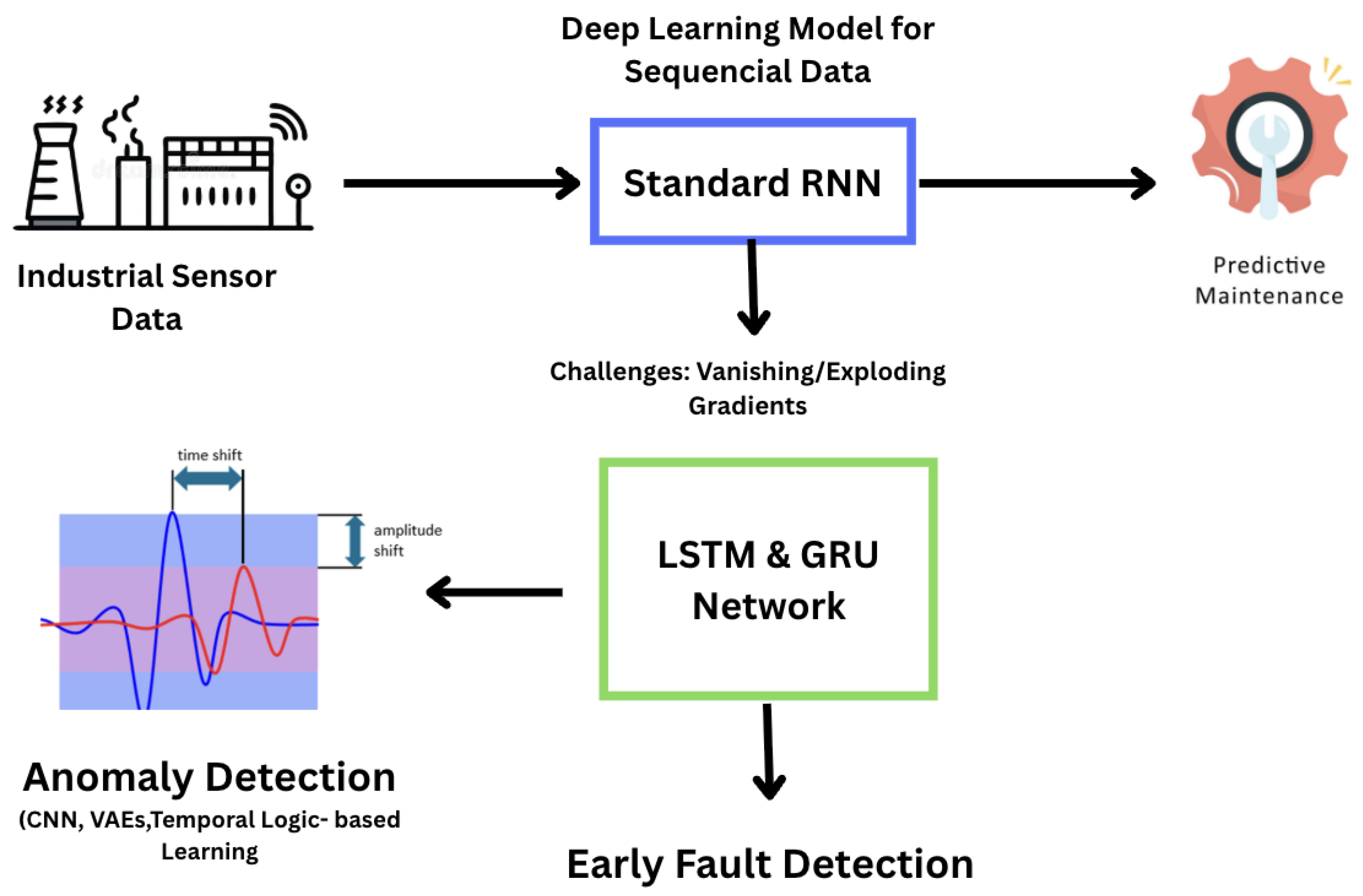
A variety of DL architectures for anomaly detection and predictive industrial maintenance are shown in Figure 8, focusing on their functions in early fault identification and system optimization. By studying complex structures in industrial data, these models make proactive maintenance possible in the future. Because of this, LSTM autoencoders are ideally suited for training on datasets that comprise lengthy vibration data sequences, providing significant promise for early problem identification and improved system health monitoring.

5. Diffusion Models: Theory and Applications

In generative modeling, diffusion learning has become an effective model that provides a strong substitute for traditional methods like generative adversarial networks (GANs) and variational autoencoders (VAEs). DMs improve output stability and quality by modeling data production as a progressive denoising process. Their scalability and probabilistic principles have contributed to systems being adopted in a variety of research areas. The scientific basis and diverse applications of DMs are studied in this section.

5.1. Denoising Diffusion Probabilistic Models

DMs have the ability to denoise noisy signals. These models use two Markov chains in a denoising diffusion probabilistic model (DDPM): the forward chain gradually introduces noise into the data, and the reverse chain is learned to reverse this process and reconstruct clean data from noisy signals. In the context of shaft voltage analysis, this process enables the model to remove unwanted noise while retaining critical information about the shaft voltage, ultimately leading to clearer signal representations. In order to transform any challenging data distribution into a straightforward prior, such as a conventional Gaussian, the forward chain is typically manually built [100].
The reverse chain, on the other hand, is taught; deep neural networks are used to predict its transition probabilities in order to reverse the noise process. Ancestral sampling is used to gradually refine the random sample taken from the prior distribution using the learned reverse chain to provide fresh data [101]. A recently developed class of generative models called DPMs has shown impressive results in a range of applications [102].
Denoising autoencoders (DAEs), a type of NNs, are trained to reconstruct clean input data from a faulty version at the output layer. DAEs have become a popular technique for unsupervised representation learning by training to denoise faulty inputs [103]. The quality of the learnt features can be improved by shifting the noise scale during training [104]. Through the viewpoint of score function matching, DAEs have also been viewed as generative models in addition to representation learning [105].
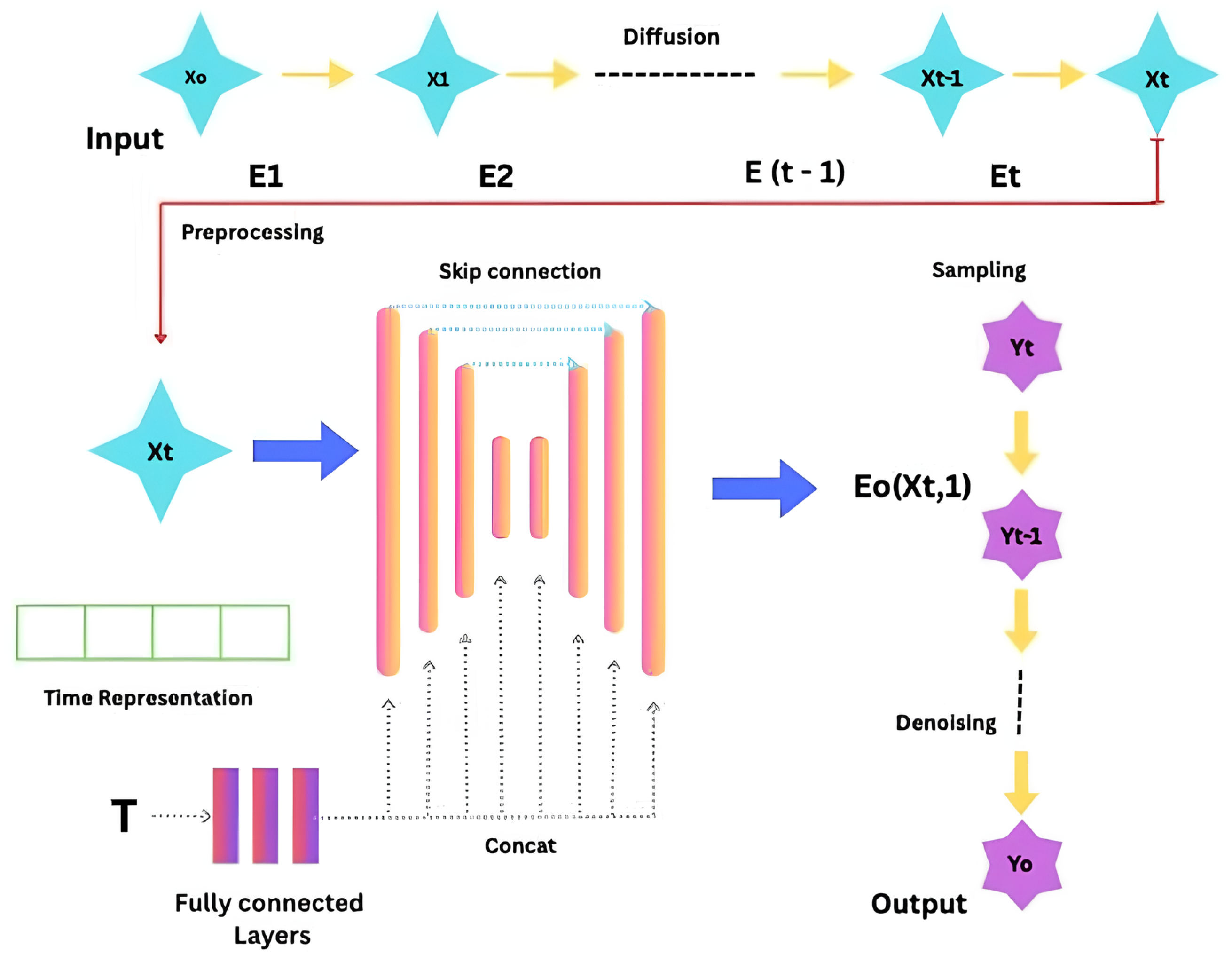
The precise method for DDPM can be seen in Figure 9. Teal diamond nodes represent noisy inputs x t at different timesteps. Yellow dashed arrows indicate the forward diffusion and reverse denoising steps, and blue solid arrows show the information flow through the denoising network. Green rectangles denote the time-step representation, magenta vertical bars correspond to the fully connected layers for the time embedding, and purple star-shaped nodes represent the sampled latent variables Y t and the final denoised output Y 0 .
Reusing both models and datasets to improve performance while lowering computational and developmental costs has become more popular as a result of the broad use of pre-trained models [106]. One effective method for transferring knowledge from big instructor models to more compact student models is knowledge distillation (KD) [107]. DPMs have benefited greatly from this method, which offers characteristics including shorter sampling times and increased model efficiency [108].

5.2. Mathematical Formulation of the Diffusion Model Architecture

The mathematical principles of the forward and reverse diffusion processes are presented in this section. It describes how data is gradually noised using a Markov chain and then reconstructed using learned denoising transitions, allowing the model to produce high-fidelity samples from detailed information distributions [109].
  • Forward Diffusion Process
Starting from the clean data x 0 , noise is progressively added over T timesteps:
q ( x t x t 1 ) = N x t ; 1 β t x t 1 , β t I , t = 1 , , T ,
with a variance schedule β t ( 0 , 1 ) .
The marginal distribution at step t can be written as:
q ( x t x 0 ) = N x t ; α ¯ t x 0 , ( 1 α ¯ t ) I , where α ¯ t = s = 1 t ( 1 β s ) .
ii.
Time Embedding
The timestep t is embedded into a vector e t via a function such as sinusoidal positional encoding or learned embeddings:
e t = TimeEmbed ( t ) ,
which is concatenated with intermediate neural network features.
iii.
Neural Network Denoiser
The noisy input x t and time embedding e t are fed into a U-Net model with skip connections and concatenation:
ϵ ^ = E 0 ( x t , t ) ,
where E 0 denotes the neural network output predicting the noise component at timestep t.
iv.
Reverse Sampling (Denoising)
Starting from Gaussian noise x T N ( 0 , I ) , the reverse diffusion process samples:
p θ ( x t 1 x t ) = N x t 1 ; μ θ ( x t , t ) , Σ θ ( x t , t ) ,
with the mean μ θ ( x t , t ) computed from E 0 ( x t , t ) and noise schedule parameters.
v.
Training Objective
The network is trained to minimize the expected squared error between the true noise and predicted noise:
L ( θ ) = E t , x 0 , ϵ ϵ E 0 α ¯ t x 0 + 1 α ¯ t ϵ , t 2 , ϵ N ( 0 , I ) .

5.3. Recent Developments in Diffusion Models

DMs have gained significant interest in signal processing due to their ability to improve noise suppression and data reconstruction. These models handle common problems like overfitting and offer an organized method for simulating data distributions. DMs are noteworthy for their ability to learn significant latent representations, which allows for a greater understanding of the underlying patterns in the data [110].
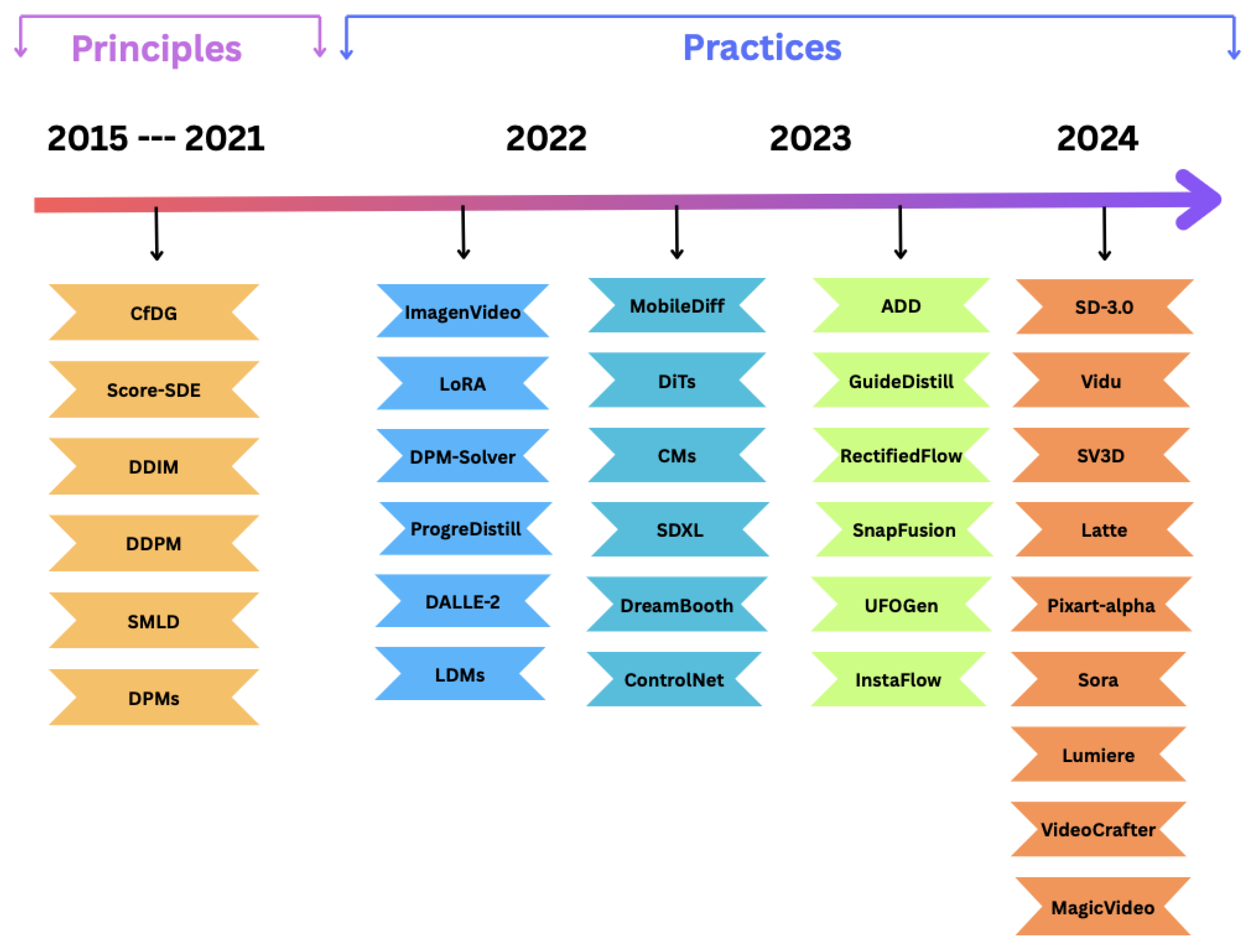
Modeling the progressive spread of information, in which entities gradually pick up new information based on their prior behavior and contacts with others, is the fundamental idea behind DMs. Among these, DDPM simulates the evolution of information or data patterns from starting conditions to widespread adoption using statistical and probabilistic mechanisms, especially Bayesian inference [111]. These models take into account variables like networks of interactions, diffusion velocity, and individual effects. Figure 10 shows the gradual evolution of DMs, starting from a traditional statistical framework and moving to current DL-based generative techniques. Important changes are documented in the timeline, such as the recent development of denoising score matching and developments in variance scheduling. It also showcases the evolution of inference strategies, architectural advancements, and training methodologies. Together, these advancements have greatly improved the stability, efficiency, and realism of outputs across various fields, including signal processing.
Furthermore, time-series data in industrial settings has lately been subjected to diffusion modeling concepts, which have resulted in the creation of extremely resilient and adaptable structures. For instance, a conditional score-based diffusion model was presented for imputation, which uses conditioning on observed data to customize the diffusion process for time-series imputation [113]. This method efficiently estimates missing values by utilizing correlations in the existing data. By treating time-series data as continuous functions and adding noise at the function level rather than at individual data points, the diffusion framework was expanded and maintained temporal continuity throughout modeling [114]. Numerous studies have proposed novel defect detection methods in rotating machinery specifically designed for this field. For example, Hotelling’s T2 control charts were used in conjunction with auto-associative NNs to identify abnormalities in wind turbine systems. Similar to this, the accuracy of wind turbine defect identification was improved by introducing a two-stage anomaly decomposition system that was also based on Hotelling’s T2 method [115]. In a different study, a variable selection technique was created based on principal component analysis (PCA) to identify the factors that are most responsible for abnormalities. This technique uses real-time energy calculations to identify problems with crucial turbine parts, such as generators and gearboxes [116].

5.4. Diffusion Models for Industrial Time-Series and Rotating Machinery

To the best of the authors’ knowledge, no published work has yet applied DMs directly to shaft-voltage measurements. Nonetheless, several recent investigations on related industrial signals offer concrete proof of their use for time-series monitoring and rotating machinery diagnostics.
A conditional score-based DM for time-series imputation was introduced by Tashiro et al. [117], which demonstrated robust performance in noisy measurement environments and irregular sampling, conditions that are highly similar to inverter-fed motor signals. As evidenced by a denoising diffusin implicit model (DDIM)-based framework that successfully suppresses complex noise while maintaining weak bearing fault signatures under variable loads, DMs have already shown substantial denoising capability for rotating-machinery signals, beating GAN and autoencoder-based techniques [118]. Similar to the restricted availability of labeled shaft-voltage datasets, DDPM-based data-augmentation techniques have generated high-fidelity synthetic fault samples that enhance generalization when real-world data are rare [119]. DMs have also been successfully integrated into cross-domain fault-diagnosis models, enabling reliable performance despite changes in operating conditions such as load, speed, or sensor domain [120]; this capability is highly relevant for shaft-voltage analysis across different inverter designs and motor configurations. Finally, a recent review on diffusion-model-based industrial anomaly detection highlights significant architectural advances that improve reconstruction fidelity, inference speed, and diagnostic robustness, underscoring the broader industrial momentum toward diffusion-based generative modeling [121].
Collectively, these studies show that diffusion frameworks are already being applied to actual industrial sensing issues like as signal reconstruction, anomaly detection, and noise reduction. Their effectiveness in high-frequency monitoring and rotating-machine diagnostics points to a promising future for shaft-voltage analysis, especially for denoising, transient characterization, and early detection of harmful voltage events. This motivates the present review to highlight diffusion models as an emerging pathway for next-generation predictive monitoring of electric drives.

6. Comparison of Existing Signal Processing Models with Diffusion Models

Recent advancements in ML and signal processing have led to important improvements in modeling and signal analysis. However, each approach, whether traditional ML, DL, or GMs, has its trade-offs regarding performance, data needs, and generalization. This section critically examines these modeling techniques and shows how DMs overcome their limitations, providing strong and uncertainty-aware solutions designed for industrial motor systems.

6.1. Overview of Signal-Based Modeling

Traditional ML models like SVM, RF, and KNN are known for fast training and easy interpretation. This makes them good for quick prototyping and basic fault classification tasks [122]. However, they usually struggle to capture complex time-related patterns in sequential data. This limits their ability to model under dynamic conditions, such as shaft voltage signals in electric motors, which can vary rapidly.
On the other hand, DL models, such as CNNs and LSTMs, are better at handling time-series data because they can learn nonlinear time patterns. These models perform well in sequence modeling and predicting voltage waveforms [123]. However, they need large, diverse datasets and can be prone to overfitting, particularly when trained on small or noisy data. Their lack of interpretability can create problems when engineers and operators need to understand the reasons behind predictions.
Autoencoders, including sparse and variational types, are well-suited for tasks such as anomaly detection and signal compression [124]. Still, their performance can decline when dealing with nonstationary or time-changing signals, which are common in industrial motor environments. Recently, attention-based models such as Transformers have shown potential in capturing long-range dependencies in time-series data [125]. Despite being accurate, these models are computationally intensive and often require pretraining on large datasets, which isn’t always feasible in industrial situations. The evaluation of existing ML and DL models is summarized in Table 3.
In summary, while DL models outperform traditional ML methods in modeling capacity, they often face challenges with generalization. This is especially true when signal characteristics change due to variations in thermal load, rotor speed, or switching strategy. Furthermore, most of these models are deterministic and do not account for uncertainty, an important aspect in safety-critical monitoring and diagnostics.

6.2. Advantages of Diffusion Models for Shaft Voltage Analysis

The DM offers a unique method to perform signal modeling. It uses stochastic differential equations and thermodynamic noise evolution. Essentially, DMs simulate how data transforms gradually through a series of steps that reduce noise [126]. In the case of shaft voltage analysis, this process helps the model rebuild clean signal representations from noisy data and predict possible future signal states with high confidence.
One main benefit of DMs is their ability to represent the full range of possible signal changes. Unlike traditional ML or DL models, which give a single estimate, DMs show various potential outcomes. This makes them perfect for applications where understanding uncertainty is important, like predicting voltage spikes or disturbances that could cause bearing failure.
Another key advantage is their ability to handle noise effectively. Shaft voltage signals often become distorted by harmonics from inverters, EMI, and changing parasitic capacitances. Therefore, denoising is necessary for accurate modeling of shaft voltage. DMs filter out high-frequency noise at each step, leading to stable, smoother, and more reliable reconstructions.
The DMs also do a better job at preserving temporal consistency. Their step-by-step prediction approach helps maintain the natural structure of the waveform over time. In contrast, feedforward deep networks may lose some accuracy to fit overall trends. Moreover, DMs adjust well to different operational modes. They often train with modified or improved signal distributions, making them robust against variations in motor speed, load conditions, and inverter switching transients, where traditional models often struggle.

6.3. Summary of Comparative Evaluation

When comparing ML, DL, and DMs for shaft voltage signal modeling, key differences appear in several areas. Traditional ML models need little data and are simple to interpret, but they perform poorly in noisy or complex environments [127]. DL models are good at capturing patterns over time, but they require large datasets and often don’t hold up well when conditions change. They also have difficulty providing uncertainty estimates, which are crucial in mission-critical applications.
DMs find a balance. They have moderate-to-high data requirements and computational costs, but they excel in noise robustness, temporal modeling, and uncertainty quantification. Their probabilistic nature enables them to capture subtle signal dynamics and perform well across different operating conditions [126]. These features make DMs very useful for shaft voltage analysis and reconstruction, especially in situations where traditional models are either too fragile or too unclear. Table 4 shows the comparison of DMs with DL and ML models.
Diffusion-based techniques have already shown quantifiable advantages over established ML/DL baselines on closely related time-series tasks that are directly relevant to shaft voltage workflows (e.g., denoising/imputation, probabilistic forecasting, anomaly detection, and synthetic data generation). In comparison to popular forecasting and reconstruction-based methods, Table 5 highlights representative benchmark results published in the literature, demonstrating improvements in standard performance metrics and deployment outcomes.

6.4. Relevance to Industrial Motor Systems

The unique strengths of the DMs fit well with the needs of modern industrial motor systems. In real-world situations, it is important to detect voltage overshoots before they develop into harmful bearing currents. DMs can handle uncertainty and predict signal changes amid noise, which makes them particularly useful for this task. In situations with limited sensor data or partial visibility, often seen in retrofitted or cost-limited systems, DMs maintain their ability to forecast using learned noise-resilient prior knowledge.
Moreover, monitoring shaft voltage in real-time under variable inverter conditions takes advantage of the model’s timing consistency and ability to generalize across different operating conditions. These features allow DMs to support monitoring systems that can detect faults early and estimate the lifetime. As a result, DMs can be a promising approach compared to traditional ML and DL tools. It has great potential for use in next-generation diagnostic and protection systems for industrial electric motors.

7. Challenges and Limitations

DMs provide robust denoising and uncertainty-aware modeling, but their use for inverter-fed motor shaft voltage monitoring is constrained by domain realities: (i) scarce and weakly-labeled fault data, (ii) strong dependence on operating conditions (speed/load/switching), (iii) real EMI and switching artifacts in the acquisition chain, (iv) practical sensor and retrofit constraints, (v) real-time latency budgets, and (vi) PLC integration requirements. These limitations are discussed in the following subsections.

7.1. Shaft Voltage Data Scarcity and Limited Fault Labels

The lack of high-resolution, well-annotated shaft voltage and bearing current datasets is a major obstacle, particularly for real discharge events (EDM/ESD), which are challenging to identify in production but are crucial for safety. Unlike conventional vibration benchmarks, industrial confidentiality restricts cross-platform sharing and benchmarking, and shaft voltage monitoring frequently necessitates specialized probes/brushes, safe isolation, and carefully controlled tests. As a result, fault variety is restricted, datasets are dispersed, and reproducibility across motor-drive platforms is still poor [132,133].

7.2. Rotor Speed Dependence and Operating Point Distribution Shift

Shaft voltage waveforms and discharge propensity vary with rotor speed, torque, DC-link voltage, inverter topology, modulation strategy, and switching frequency through changes in CMV and parasitic capacitance paths. Experimental research on inverter-driven devices, such as high-frequency SiC drives, shows that operating point and switching frequency can significantly change the risk regime and shaft voltage behavior. As a result, a model that was trained at one operating point may deteriorate when used at various loads, speeds, temperatures, grounding conditions, or PWM settings. Because DMs simulate the entire data distribution, this is especially difficult for them. Operating point shift can directly lower denoising fidelity and miscalibrate uncertainty, causing false alarms or missed discharges [57].

7.3. Real EMI, Switching Harmonics, and Nonstationary Noise

Shaft voltage sensing in inverter-fed systems is subject to significant EMI, PWM switching harmonics, grounding topology, and layout impacts. If bandwidth, filtering, and shielding are inadequate, they can result in aliasing or front-end saturation and cause bursty, nonstationary disturbances synchronized with switching events. Although DMs are ideally suited for denoising, the error floor can be dominated by measurement chain limits (anti-alias filtering, dynamic range, grounding, probe design), so data quality needs to be considered a system-level requirement rather than a purely algorithmic one [57,132].

7.4. Sensor Constraints: Bandwidth, Isolation, Placement, and Reliability

Sensor bandwidth, electrical isolation, location constraints, and long-term dependability all limit practical implementation. While bearing current measurement may require specialized sensors and be challenging to retrofit, shaft voltage measurement may rely on brushes, slip rings, or capacitive probes that require maintenance. Observability constraints are also imposed by unfavorable positioning and hostile surroundings, e.g., temperature, oil spray, vibration. The IEC has recommendations for the measurement and evaluation of shaft voltages and bearing currents, which link instrumentation choices to safety and comparability [133]. Standards and practice-oriented guidance are also important.

7.5. Latency Requirements, Compute Limits, and Fast Sampling for Online Monitoring

DM inference is typically heavier than standard discriminative models because sampling and denoising may necessitate numerous network assessments. Particularly at high update rates, this clashes with strict latency budgets in online monitoring pipelines (acquisition → preprocessing → inference → decision). Distilled or few-step samplers, consistency-model formulations for ultra-few-step generation, and hybrid pipelines where diffusion handles denoising/imputation and a lightweight classifier makes the final detection decision are examples of practical mitigation [134,135]. Engineering the quality-latency trade-off continues to be a major obstacle for real-time shaft-voltage monitoring on edge hardware with limited power and cost, even with acceleration.

7.6. Hyperparameter Sensitivity and Optimization Difficulty in Industrial Signals

For shaft-voltage diffusion modeling, there isn’t a single, widely used training formula. Sensitive decisions like noise scheduling, window length, conditioning factors (speed, load, and PWM meta), normalization, and objective weighting affect performance. Small adjustments can change the learnt distribution and impact uncertainty calibration and reconstruction quality, raising tuning costs and impeding domain engineers’ adoption [136].

7.7. Integration with PLC/SCADA and End-to-End System Constraints

Deployment must adhere to automated limits even in cases where offline results are robust. Diffusion inference is usually located on an edge device (industrial PC, GPU/NPU) and only compact health indicators and warnings are conveyed to PLC/SCADA because PLCs are not built for high-rate neural inference. Industrial standards such as OPC UA and structured information models are frequently used to address interoperability and secure communication [137]. The necessity for edge-centric designs in high-rate monitoring is further supported by recent feasibility studies that show resource-constrained PLC inference is only feasible for small models and controlled workloads [138].

7.8. Industrial Deployment Scenarios and Real-Time Feasibility

Diffusion-based monitoring for inverter-fed motor systems should be assessed in relation to industrial restrictions such as sampling method, edge/PLC integration, sensing bandwidth, and latency budgets. An industrial PC (IPC) or edge accelerator performs preprocessing and inference, high-frequency sensing is carried out close to the drive, and only low-rate health indicators/alarms are sent to the PLC/SCADA layer in a practical deployment.
Since direct high-rate diffusion inference on PLCs is usually impractical in all scenarios, edge inference with low-rate PLC consumption of compact outputs (alarm flags, severity scores, uncertainty bounds, and trend indicators) is the suggested architecture [137,138]. Table 6 summarizes realistic deployment configurations, distinguishing high-rate acquisition at the edge from low-rate reporting to PLC/SCADA, and highlighting feasible compute platforms and latency targets.

8. Future Directions

The integration of DMs into shaft voltage analysis demonstrates a promising direction for predictive maintenance and advanced signal processing. To fully realize their potential, a few areas still need more research. The development of standardized and varied benchmark datasets that capture shaft voltage characteristics across various motor types, inverter topologies, switching frequency, loading situations, and fault scenarios is a major area of future focus. Such datasets would improve reproducibility significantly, make it possible to compare modeling approaches fairly, and fortify the basis for commercial validation.
Enhancing DMs’ real-time applicability is a also crucial direction of research.The significant processing resources required by current systems may restrict their practical use in industrial settings. Future research should investigate model-compression methods, lightweight DM variations, and hybrid architectures that incorporate simpler recurrent or convolutional components with diffusion-based denoising. Simultaneously, the implementation of hardware-efficient technologies, including edge-based AI accelerators, would provide ongoing monitoring in embedded systems with limited resources.
Hybrid modeling approaches, which combine physics-based formulations with data-driven learning, should be further investigated in the future. Physical motor parameters, such as parasitic capacitances, bearing impedance, CMV equations, load torque, and temperature effects, can be incorporated into DM architectures to increase robustness under unstable and transient operating conditions, improve interpretability, and require less training data. Similarly, using domain adaptation and transfer learning to modify pre-trained DMs will enable the models to generalize across various machine setups with less retraining.
Cross-validation using actual industrial datasets is equally important. Non-idealities such as distributional drift, measurement noise, missing segments, and severe environmental variability are frequently seen in field data. A more accurate performance evaluation and a quicker transition from laboratory-scale demonstrations to useful industrial tools would result from validating DMs under these circumstances.
Lastly, improving AI-based frameworks’ interpretability and transparency is still essential, especially for applications that are safety-critical. In industrial settings, combining physics-guided explanations with data-driven reasoning can enhance operator trust and facilitate trustworthy decision-making. A wider adoption of DMs for intelligent diagnostics and predictive maintenance will be facilitated by such hybrid explainability.

9. Conclusions

Shaft voltage continues to pose a substantial reliability challenge in inverter-fed industrial motors, where rapidly switching power electronics and parasitic couplings create complex electromagnetic interactions that accelerate bearing degradation and compromise system availability. This review has examined the emerging role of data-driven approaches in advancing motor diagnostics, critically assessed current mitigation strategies, and discussed the physical mechanisms responsible for shaft voltage generation.
This work’s initial contribution is a comprehensive description of shaft-voltage sources, including CMV, parasitic capacitances, electrostatic discharge, and shaft magnetization, that is directly connected to their practical implications in actual industrial settings. Second, a thorough and comparative analysis of grounding, insulation, capacitive shielding, PWM-optimization, and hybrid techniques shows that, while each strategy has quantifiable advantages, none of them offers a consistently reliable solution for all motor types, load scenarios, or drive architectures. Important gaps in the literature are shown by this research, such as the lack of long-term field validation, uneven testing procedures, and understudied hybrid mitigation strategies.
The synthesis of AI-based time-series modeling methods and their applicability to shaft-voltage signal analysis has been presented in detail. The review illustrates why contemporary uncertainty-aware frameworks are more appropriate for the noisy, non-stationary, and data-scarce character of shaft voltage measurements by comparing conventional ML/DL models with generative DMs. In order to translate these models into deployable monitoring systems, the study advances the field by outlining the practical challenges that must be addressed, including sensor limitations, EMI contamination, dataset shortages, real-time needs, and PLC-integration issues.
Overall, this review expands the current state of knowledge by connecting hardware-based mitigation research with the developing capabilities of generative modeling. It offers a well-informed road map for next research that combines intelligent signal-level diagnostics with physical design enhancements. This work promotes the creation of next-generation techniques that can enhance systems’ dependability, efficiency, and predictive maintenance by highlighting both the structural and computational aspects of shaft voltage in industrial electric motor systems.

Author Contributions

Conceptualization, Z.A. and A.Z.; methodology, Z.A. and A.Z.; validation, Z.A. and A.Z.; data curation, Z.A. and A.Z.; formal analysis, Z.A. and A.Z.; writing—original draft preparation, Z.A. and A.Z.; writing—review and editing, Z.A., A.Z. and J.H.; supervision, J.H.; project administration, J.H.; funding acquisition, J.H. All authors have read and agreed to the published version of the manuscript.

Funding

This work was supported by Incheon National University under the Research Grant 2024-0108.

Data Availability Statement

The original contributions presented in the study are included in the article, further inquiries can be directed to the corresponding author.

Conflicts of Interest

The authors declare no conflicts of interest.

Nomenclature

Acronyms
AEAcoustic emission
AIArtificial intelligence
ANNArtificial neural network
BVRBearing voltage ratio
CMCommon mode
CMVCommon mode voltage
CNNConvolutional neural network
DAEDenoising autoencoder
DDPMDenoising diffusion probabilistic model
DLDeep learning
DMDiffusion model
DPMDiffusion probabilistic model
EDMElectrical discharge machining
EMDEmpirical mode decomposition
EMIElectromagnetic interference
ESDElectrostatic discharge
GANGenerative adversarial network
GMMGaussian mixture model
GMGenerative model
GRUGated recurrent unit
HHTHilbert–Huang transform
IoTInternet of Things
KDKnowledge distillation
KNNk-nearest neighbors
LSTMLong short-term memory
MLMachine learning
NDENon-drive end
NNNeural network
OS-ELMOnline sequential extreme learning machine
PCAPrincipal component analysis
PHMPrognostics and health management
PWMPulse width modulation
RFRandom forest
RULRemaining useful life
SGRShaft grounding ring
SHMStructural health monitoring
SVMSupport vector machine
VFDVariable frequency drive
Symbols
B V R Bearing voltage ratio
C b Bearing capacitance
C s r Stator-to-rotor capacitance
C w r Winding-to-rotor capacitance
C w s Winding-to-stator capacitance
e t Time-embedding vector at timestep t
I Identity matrix
L ( θ ) Training loss function
L a 1 , L a 2 Phase-A stator inductances
L b 1 , L b 2 Phase-B stator inductances
L c 1 , L c 2 Phase-C stator inductances
p θ ( · ) Reverse diffusion (learned) transition distribution
q ( · ) Forward diffusion transition distribution
tDiffusion timestep
TTotal number of diffusion steps
V B Bearing voltage
V CMV Common mode voltage
V s h Shaft voltage
x 0 Clean data sample
x t Noisy data sample at timestep t
x T Pure noise sample at timestep T
β t Noise variance schedule parameter
α ¯ t Cumulative product of ( 1 β s ) up to timestep t
ϵ Gaussian noise
ϵ ^ Predicted noise (network output)
μ θ ( · ) Mean of reverse diffusion transition
Σ θ ( · ) Covariance of reverse diffusion transition

References

  1. Vostrov, K.; Pyrhönen, J.; Niemelä, M.; Lindh, P.; Ahola, J. On the Application of Extended Grounded Slot Electrodes to Reduce Noncirculating Bearing Currents. IEEE Trans. Ind. Electron. 2023, 70, 2286–2295. [Google Scholar] [CrossRef]
  2. Plazenet, T.; Boileau, T.; Caironi, C.; Nahid-Mobarakeh, B. A Comprehensive Study on Shaft Voltages and Bearing Currents in Rotating Machines. IEEE Trans. Ind. Appl. 2018, 54, 3749–3759. [Google Scholar] [CrossRef]
  3. Asefi, M.; Nazarzadeh, J. Survey on high-frequency models of PWM electric drives for shaft voltage and bearing current analysis. IET Electr. Syst. Transp. 2017, 7, 179–189. [Google Scholar] [CrossRef]
  4. Ma, J.; Xue, Y.; Han, Q.; Li, X.; Yu, C. Motor Bearing Damage Induced by Bearing Current: A Review. Machines 2022, 10, 1167. [Google Scholar] [CrossRef]
  5. Ludois, D.C.; Reed, J.K. Brushless Mitigation of Bearing Currents in Electric Machines Via Capacitively Coupled Shunting. IEEE Trans. Ind. Appl. 2015, 51, 3783–3790. [Google Scholar] [CrossRef]
  6. Almounajjed, A.; Sahoo, A.K.; Kumar, M.K. Condition monitoring and fault detection of induction motor based on wavelet denoising with ensemble learning. Electr. Eng. 2022, 104, 2859–2877. [Google Scholar] [CrossRef]
  7. Zhang, S.; Xu, F.; Hu, M.; Zhang, L.; Liu, H.; Li, M. A novel denoising algorithm based on TVF-EMD and its application in fault classification of rotating machinery. Measurement 2021, 179, 109337. [Google Scholar] [CrossRef]
  8. Gonzalez, P.; Buigues, G.; Mazon, A.J. Noise in Electric Motors: A Comprehensive Review. Energies 2023, 16, 5311. [Google Scholar] [CrossRef]
  9. Song, Z.; Tang, R.; Yu, S.; Zhang, H. The influence of vibration and acoustic noise of axial flux permanent magnet machines by inverter. In Proceedings of the 2010 International Conference on Mechanic Automation and Control Engineering, Wuhan, China, 26–28 June 2010. [Google Scholar]
  10. Wang, X.; Zheng, P.; Cheng, N. Erasing Noise in Signal Detection with Diffusion Model: From Theory to Application. arXiv 2025, arXiv:2501.07030. [Google Scholar] [CrossRef]
  11. Lemercier, J.M.; Richter, J.; Welker, S.; Moliner, E.; Välimäki, V.; Gerkmann, T. Diffusion Models for Audio Restoration: A review. IEEE Signal Process. Mag. 2024, 41, 72–84. [Google Scholar] [CrossRef]
  12. Zhang, P.; Du, Y.; Habetler, T.G.; Lu, B. A survey of condition monitoring and protection methods for medium-voltage induction motors. IEEE Trans. Ind. Appl. 2011, 47, 34–46. [Google Scholar] [CrossRef]
  13. Êvo, M.T.A.; Alzamora, A.M.; Zaparoli, I.O.; de Paula, H. Inverter-induced bearing currents—A thorough study of the cause-and-effect chains. In Proceedings of the 2021 IEEE Industry Applications Society Annual Meeting (IAS), Vancouver, BC, Canada, 10–14 October 2021; pp. 1–8. [Google Scholar]
  14. Shami, U.T.; Akagi, H. Identification and Discussion of the Origin of a Shaft End-to-End Voltage in an Inverter-Driven Motor. IEEE Trans. Power Electron. 2010, 25, 1615–1625. [Google Scholar] [CrossRef]
  15. Kalaiselvi, J.; Srinivas, S. Bearing currents and shaft voltage reduction in dual-inverter-fed open-end winding induction motor with reduced CMV PWM methods. IEEE Trans. Ind. Electron. 2015, 62, 144–152. [Google Scholar] [CrossRef]
  16. Jin, X.; Zhao, M.; Chow, T.W.S.; Pecht, M. Motor Bearing Fault Diagnosis Using Trace Ratio Linear Discriminant Analysis. IEEE Trans. Ind. Electron. 2014, 61, 2441–2451. [Google Scholar] [CrossRef]
  17. Muetze, A.; Oh, H.W. Design aspects of conductive microfiber rings for shaft-grounding purposes. IEEE Trans. Ind. Appl. 2008, 44, 1749–1757. [Google Scholar] [CrossRef]
  18. Oh, H.W.; Willwerth, A. Shaft grounding-a solution to motor bearing currents. ASHRAE Trans. 2008, 114, 246–251. [Google Scholar]
  19. Esmaeili, K.; Wang, L.; Harvey, T.J.; White, N.M.; Holweger, W. Electrical Discharges in Oil-Lubricated Rolling Contacts and Their Detection Using Electrostatic Sensing Technique. Sensors 2022, 22, 392. [Google Scholar] [CrossRef] [PubMed]
  20. Prashad, H. Shaft voltages and their origin in rotating machines and flow of electric current through bearings. In Tribology and Interface Engineering Series; Elsevier: Amsterdam, The Netherlands, 2006; Volume 49, pp. 15–23. [Google Scholar]
  21. Salazar, M.; Minakata, K.; Reznikov, M. Electrostatic enforcement of steam power plant. In Proceedings of the 2013 IEEE Industry Applications Society Annual Meeting, Lake Buena Vista, FL, USA, 6–11 October 2013. [Google Scholar]
  22. Park, J.K.; Wellawatta, T.R.; Ullah, Z.; Hur, J. New Equivalent Circuit of the IPM-Type BLDC Motor for Calculation of Shaft Voltage by Considering Electric and Magnetic Fields. IEEE Trans. Ind. Appl. 2016, 52, 3763–3771. [Google Scholar] [CrossRef]
  23. Ding, L.; Li, Y.W. Simultaneous DC Current Balance and CMV Reduction for Parallel CSC System with Interleaved Carrier-Based SPWM. IEEE Trans. Ind. Electron. 2020, 67, 8495–8505. [Google Scholar] [CrossRef]
  24. Xu, Y.; Wang, Z.; Li, C.; He, J. Common-Mode Voltage Reduction and Fault-Tolerant Operation of Four-Leg CSI-Fed Motor Drives. IEEE Trans. Power Electron. 2021, 36, 8570–8574. [Google Scholar] [CrossRef]
  25. Zhao, Z.; Zhong, Y.; Gao, H.; Yuan, L.; Lu, T. Hybrid selective harmonic elimination PWM for common-mode voltage reduction in three-level neutral-point-clamped inverters for variable speed induction drives. IEEE Trans. Power Electron. 2021, 27, 1152–1158. [Google Scholar] [CrossRef]
  26. Turzynski, M.; Chrzan, P.J. Reducing Common-Mode Voltage and Bearing Currents in Quasi-Resonant DC-Link Inverter. IEEE Trans. Power Electron. 2020, 35, 9553–9562. [Google Scholar] [CrossRef]
  27. Turzyński, M.; Musznicki, P. A Review of Reduction Methods of Impact of Common-Mode Voltage on Electric Drives. Energies 2021, 14, 4003. [Google Scholar] [CrossRef]
  28. Muetze, A.; Oh, H.W. Application of static charge dissipation to mitigate electric discharge bearing currents. IEEE Trans. Ind. Appl. 2008, 44, 135–143. [Google Scholar] [CrossRef]
  29. Muetze, A.; Oh, H.W. Current-carrying characteristics of conductive microfiber electrical contact for high frequencies and current amplitudes: Theory and applications. IEEE Trans. Power Electron. 2010, 25, 2082–2092. [Google Scholar] [CrossRef]
  30. Willwerth, A.; Roman, M. Electrical bearing damage—A lurking problem in inverter-driven traction motors. In Proceedings of the 2013 IEEE Transportation Electrification Conference and Expo (ITEC), Detroit, MI, USA, 16–19 June 2013; pp. 1–4. [Google Scholar]
  31. Cao, Z.; Xia, Y.; Ge, X. Conductive capacity and tribological properties of several carbon materials in conductive greases. Ind. Lubr. Tribol. 2016, 68, 577–585. [Google Scholar] [CrossRef]
  32. Suzumura, J. Prevention of electrical pitting on rolling bearings by electrically conductive grease. Q. Rep. RTRI 2016, 57, 42–47. [Google Scholar] [CrossRef]
  33. Ferreira, F.J.T.E.; Cistelecan, M.V.; de Almeida, A.T. Evaluation of slot-embedded partial electrostatic shield for high-frequency bearing current mitigation in inverter-fed induction motors. IEEE Trans. Energy Convers. 2012, 27, 382–390. [Google Scholar] [CrossRef]
  34. Quan, J.; Bai, B.; Wang, Y.; Liu, W. Research on electrostatic shield for discharge bearing currents suppression in variable-frequency motors. In Proceedings of the 17th International Conference on Electrical Machines and Systems, Hangzhou, China, 22–25 October 2014; pp. 139–143. [Google Scholar]
  35. Bai, B.; Wang, Y.; Wang, X. Suppression for discharging bearing current in variable-frequency motors based on electromagnetic shielding slot wedge. IEEE Trans. Magn. 2015, 51, 8109404. [Google Scholar] [CrossRef]
  36. Magdun, O.; Gemeinder, Y.; Binder, A. Prevention of harmful EDM currents in inverter-fed AC machines by use of electrostatic shields in the stator winding over-hang. In Proceedings of the IECON 2010—36th Annual Conference on IEEE Industrial Electronics Society, Glendale, AZ, USA, 7–10 November 2010; pp. 962–967. [Google Scholar]
  37. Park, J.K.; Wellawatta, T.R.; Choi, S.J.; Hur, J. Mitigation Method of the Shaft Voltage According to Parasitic Capacitance of the PMSM. IEEE Trans. Ind. Appl. 2017, 53, 4441–4449. [Google Scholar] [CrossRef]
  38. Vostrov, K.; Pyrhönen, J.; Lindh, P.; Niemelä, M.; Ahola, J. Mitigation of Inverter-Induced Noncirculating Bearing Currents by Introducing Grounded Electrodes into Stator Slot Openings. IEEE Trans. Ind. Electron. 2021, 68, 11752–11760. [Google Scholar] [CrossRef]
  39. Scheuermann, S.; Brodatzki, M.; Doppelbauer, M. Investigation of electrostatic shieldings in traction motors to mitigate capacitive bearing currents. In Proceedings of the 2024 International Symposium on Power Electronics, Electrical Drives, Automation and Motion (SPEEDAM), Napoli, Italy, 19–21 June 2024. [Google Scholar]
  40. Heo, J.H.; Kang, J.K.; Im, J.H.; Hur, J. Proposing the New Layered-Shield Structure for Shaft Voltage Reduction in IPMSM. IEEE Trans. Transp. Electrif. 2025, 11, 4313–4326. [Google Scholar] [CrossRef]
  41. Kang, J.K.; Heo, J.H.; Kim, S.H.; Hur, J. Novel Structure of Shield Ring to Reduce Shaft Voltage and Improve Cooling Performance of Interior Permanent Magnet Synchronous Motor. Electronics 2024, 13, 1535. [Google Scholar] [CrossRef]
  42. Ferreira, F.; Cistelecan, M.; Almeida, A. Slot-embedded partial electrostatic shield for high-frequency bearing current mitigation in inverter-fed induction motors. In Proceedings of the XIX International Conference on Electrical Machines (ICEM 2010), Rome, Italy, 6–8 September 2010; pp. 1–6. [Google Scholar]
  43. Muetze, A.; Binder, A. Practical rules for assessment of inverter-induced bearing currents in inverter-FED AC motors up to 500 kW. IEEE Trans. Ind. Electron. 2007, 54, 1614–1622. [Google Scholar] [CrossRef]
  44. Zhu, W.; Gaetano, D.D.; Chen, X.; Jewell, G.W.; Hu, Y. A review of modeling and mitigation techniques for bearing currents in electrical machines with variable-frequency drives. IEEE Access 2022, 10, 125279–125297. [Google Scholar] [CrossRef]
  45. Pedneault-Desroches, J.; Merkhouf, A.; Al-Haddad, K. Hydrogenerators’ Vulnerability Towards Bearing Insulation Systems, Shaft Voltage and Current. In Proceedings of the 2023 IEEE Electrical Insulation Conference (EIC), Quebec City, QC, Canada, 18–21 June 2023. [Google Scholar]
  46. Han, P.; Heins, G.; Patterson, D.; Thiele, M.; Ionel, D.M. Evaluation of Bearing Voltage Reduction in Electric Machines by Using Insulated Shaft and Bearings. In Proceedings of the 2020 IEEE Energy Conversion Congress and Exposition (ECCE), Detroit, MI, USA, 11–15 October 2020; pp. 5584–5589. [Google Scholar]
  47. Binder, A.; Muetze, A. Scaling Effects of Inverter-Induced Bearing Currents in AC Machines. In Proceedings of the 2007 IEEE International Electric Machines & Drives Conference, Antalya, Turkey, 3–5 May 2007; pp. 1477–1483. [Google Scholar]
  48. Oliver, J.; Guerrero, G.; Goldman, J. Ceramic bearings for electric motors: Eliminating damage with new materials. IEEE Ind. Appl. Mag. 2017, 23, 14–20. [Google Scholar] [CrossRef]
  49. Xing, S.; Wu, Z. Characteristic Research of Bearing Currents in Inverter-Motor Drive Systems. In Proceedings of the 2006 CES/IEEE 5th International Power Electronics and Motion Control Conference, Shanghai, China, 14–16 August 2006; pp. 1–4. [Google Scholar]
  50. Bar-Cohen, Y.; Lee, H.J.; Badescu, M.; Sherrit, S.; Bao, X.; Shalev, Y. Specialized Drilling Techniques for Medical Applications. In Advances in Terrestrial and Extraterrestrial Drilling: Ground, Ice, and Underwater; Springer: Berlin/Heidelberg, Germany, 2021; Volume Chapter 9, p. 271. [Google Scholar]
  51. Gaetano, D.D.; Zhu, W.; Sun, X.; Chen, X.; Griffo, A.; Jewell, G.W. Novel Stator Slot Opening to Reduce Electrical Machine Bearing Currents. IEEE Trans. Magn. 2023, 59, 8101605. [Google Scholar] [CrossRef]
  52. Yea, M.; Han, K.J. Modified slot opening for reducing shaft-to-frame voltage of AC motors. Energies 2020, 13, 760. [Google Scholar] [CrossRef]
  53. Berhausen, S.; Jarek, T. Method of Limiting Shaft Voltages in AC Electric Machines. Energies 2021, 14, 3326. [Google Scholar] [CrossRef]
  54. Peng, B.; Wang, X.; Zhao, W.; Ren, J. Study on shaft voltage in fractional slot permanent magnet machine with different pole and slot number combinations. IEEE Trans. Magn. 2019, 55, 8102305. [Google Scholar] [CrossRef]
  55. Maetani, T.; Isomura, Y.; Watanabe, A.; Iimori, K.; Morimoto, S. Suppressing bearing voltage in an inverter-fed ungrounded brushless DC motor. IEEE Trans. Ind. Electron. 2013, 60, 4861–4868. [Google Scholar] [CrossRef]
  56. Kim, K.T.; Cha, S.H.; Hur, J.; Shim, J.-S.; Kim, B.-W. Suppression of shaft voltage by rotor and magnet shape design of IPM-type high voltage motor. J. Electr. Eng. Technol. 2013, 8, 938–944. [Google Scholar] [CrossRef]
  57. Yang, M.; Cheng, Y.; Du, B.; Li, Y.; Wang, S.; Cui, S. Research on Analysis and Suppression Methods of the Bearing Current for Electric Vehicle Motor Driven by SiC Inverter. Energies 2024, 17, 1109. [Google Scholar] [CrossRef]
  58. Aqil, M.; Im, J.H.; Hur, J. Application of Perovskite Layer to Rotor for Enhanced Stator-Rotor Capacitance for PMSM Shaft Voltage Reduction. Energies 2020, 13, 5762. [Google Scholar] [CrossRef]
  59. Lee, S.T.; Park, J.K.; Jeong, C.L.; Rhyu, S.H.; Hur, J. Shaft-to-Frame Voltage Mitigation Method by Changing Winding-to-Rotor Parasitic Capacitance of IPMSM. IEEE Trans. Ind. Appl. 2019, 55, 1430–1436. [Google Scholar] [CrossRef]
  60. Chen, H.; Zhao, H. Review on pulse-width modulation strategies for common-mode voltage reduction in three-phase voltage-source inverters. IET Power Electron. 2016, 9, 2611–2620. [Google Scholar] [CrossRef]
  61. Jiang, D.; Chen, J.; Shen, Z. Common mode EMI reduction through PWM methods for three-phase motor controller. CES Trans. Electr. Mach. Syst. 2019, 3, 133–142. [Google Scholar] [CrossRef]
  62. Piazza, M.C.D.; Ragusa, A.; Vitale, G. Effect of common-mode active filtering in induction motor drives for electric vehicles. IEEE Trans. Veh. Technol. 2010, 59, 2664–2673. [Google Scholar] [CrossRef]
  63. Wang, S.; Maillet, Y.Y.; Wang, F.; Boroyevich, D.; Burgos, R. Investigation of hybrid EMI filters for common-mode EMI suppression in a motor drive system. IEEE Trans. Power Electron. 2010, 25, 1034–1045. [Google Scholar] [CrossRef]
  64. Luo, F.; Wang, S.; Wang, F.; Boroyevich, D.; Gazel, N.; Kang, Y.; Baisden, A.C. Analysis of CM volt-second influence on CM inductor saturation and design for input EMI filters in three-phase dc-fed motor drive systems. IEEE Trans. Power Electron. 2010, 25, 1905–1914. [Google Scholar]
  65. Ström, J.P.; Tyster, J.; Korhonen, J.; Purhonen, M.; Silventoinen, P. Active du/dt filter dimensioning in variable speed AC drives. In Proceedings of the 14th European Conference on Power Electronics and Applications, Birmingham, UK, 30 August–1 September 2011; pp. 1–7. [Google Scholar]
  66. Muetze, A. Scaling issues for common-mode chokes to mitigate ground currents in inverter-based drive systems. IEEE Trans. Ind. Appl. 2009, 45, 286–294. [Google Scholar] [CrossRef]
  67. Hanigovszki, N.; Landkildehus, J.; Blaabjerg, F. Output filters for AC adjustable speed drives. In Proceedings of the APEC 07—Twenty-Second Annual IEEE Applied Power Electronics Conference and Exposition, Anaheim, CA, USA, 25 February–1 March 2007; pp. 236–242. [Google Scholar]
  68. Mondal, G.; Sheron, F.; Das, A.; Sivakumar, K.; Gopakumar, K. A DC-link capacitor voltage balancing with CMV elimination using only the switching state redundancies for a reduced switch count multi-level inverter fed IM drive. EPE J. 2009, 19, 5–15. [Google Scholar] [CrossRef]
  69. Dagan, K.J.; Zuckerberger, A.; Rabinovici, R. Fourth-arm common-mode voltage mitigation. IEEE Trans. Power Electron. 2016, 31, 1401–1407. [Google Scholar] [CrossRef]
  70. Mei, C.; Balda, J.; Waite, W. Cancellation of common-mode voltages for induction motor drives using active method. IEEE Trans. Energy Convers. 2006, 21, 380–386. [Google Scholar] [CrossRef]
  71. Muetze, A.; Sullivan, C. Simplified Design of Common-Mode Chokes for Reduction of Motor Ground Currents in Inverter Drives. IEEE Trans. Ind. Appl. 2011, 47, 2570–2577. [Google Scholar] [CrossRef]
  72. Muetze, A.; Binder, A. Calculation of influence of insulated bearings and insulated inner bearing seats on circulating bearing currents in machines of inverter-based drive systems. IEEE Trans. Ind. Appl. 2006, 42, 965–972. [Google Scholar] [CrossRef]
  73. Oh, H.; Willwerth, A. New motor design with conductive micro fiber shaft grounding ring prevents bearing failure in PWE inverter driven motors. In Proceedings of the 2007 Electrical Insulation Conference and Electrical Manufacturing Expo, Nashville, TN, USA, 22–24 October 2007; pp. 240–246. [Google Scholar]
  74. Khalil, R.A.; Saeed, N.; Masood, M.; Fard, Y.M.; Alouini, M.S.; Al-Naffouri, T.Y. Deep learning in the industrial internet of things: Potentials, challenges, and emerging applications. IEEE Internet Things J. 2021, 8, 11016–11040. [Google Scholar] [CrossRef]
  75. Haque, M.A.; Nahin, K.H.; Nirob, J.H.; Ahmed, M.K.; Sawaran Singh, N.S.; Paul, L.C.; Ateya, A.A. Multiband THz MIMO antenna with regression machine learning techniques for isolation prediction in IoT applications. Sci. Rep. 2025, 15, 7701. [Google Scholar] [CrossRef] [PubMed]
  76. Xu, F.; Ding, N.; Li, N.; Liu, L.; Hou, N.; Xu, N.; Chen, X. A review of bearing failure Modes, mechanisms and causes. Eng. Fail. Anal. 2023, 152, 107518. [Google Scholar] [CrossRef]
  77. Krentowski, J.R. Assessment of destructive impact of different factors on concrete structures durability. Materials 2021, 15, 225. [Google Scholar] [CrossRef]
  78. Zhang, J.L.; Li, G.; Yu, D.H.; Dong, Z.Q. Framework for seismic risk analysis of engineering structures considering the coupling damage from multienvironmental factors. J. Struct. Eng. 2024, 150, 04024147. [Google Scholar] [CrossRef]
  79. Hassani, S.; Dackermann, U. A systematic review of advanced sensor technologies for non-destructive testing and structural health monitoring. Sensors 2023, 23, 2204. [Google Scholar] [CrossRef]
  80. Kralovec, C.; Schagerl, M. Review of structural health monitoring methods regarding a multi-sensor approach for damage assessment of metal and composite structures. Sensors 2020, 20, 826. [Google Scholar] [CrossRef] [PubMed]
  81. Romanssini, M.; de Aguirre, P.C.C.; Compassi-Severo, L.; Girardi, A.G. A review on vibration monitoring techniques for predictive maintenance of rotating machinery. Eng 2023, 4, 1797–1817. [Google Scholar] [CrossRef]
  82. Nithin, S.K.; Hemanth, K.; Shamanth, V.; Mahale, R.S.; Sharath, P.C.; Patil, A. Importance of condition monitoring in mechanical domain. Mater. Today Proc. 2022, 54, 234–239. [Google Scholar] [CrossRef]
  83. Jagatheesaperumal, S.K.; Rahouti, M.; Ahmad, K.; Al-Fuqaha, A.; Guizani, M. The duo of artificial intelligence and big data for Industry 4.0: Applications, techniques, challenges, and future research directions. IEEE Internet Things J. 2021, 9, 12861–12885. [Google Scholar] [CrossRef]
  84. Misra, N.N.; Dixit, Y.; Al-Mallahi, A.; Bhullar, M.S.; Upadhyay, R.; Martynenko, A. IoT, big data, and artificial intelligence in agriculture and food industry. IEEE Internet Things J. 2020, 9, 6305–6324. [Google Scholar] [CrossRef]
  85. König, F.; Sous, C.; Chaib, A.O.; Jacobs, G. Machine learning based anomaly detection and classification of acoustic emission events for wear monitoring in sliding bearing systems. Tribol. Int. 2021, 155, 106811. [Google Scholar] [CrossRef]
  86. Wang, D.; Guo, Q.; Song, Y.; Gao, S.; Li, Y. Application of multiscale learning neural network based on CNN in bearing fault diagnosis. J. Signal Process. Syst. 2019, 91, 1205–1217. [Google Scholar] [CrossRef]
  87. Lee, K.; Kim, J.K.; Kim, J.; Hur, K.; Kim, H. CNN and GRU combination scheme for bearing anomaly detection in rotating machinery health monitoring. In Proceedings of the 2018 1st IEEE International Conference on Knowledge Innovation and Invention (ICKII), Jeju Island, Republic of Korea, 23–27 July 2018; pp. 102–105. [Google Scholar]
  88. Ou, J.; Li, H.; Huang, G.; Yang, G. Intelligent analysis of tool wear state using stacked denoising autoencoder with online sequential-extreme learning machine. Measurement 2021, 167, 108153. [Google Scholar] [CrossRef]
  89. Nawaz, A.; Khan, S.S.; Ahmad, A. Ensemble of autoencoders for anomaly detection in biomedical data: A narrative review. IEEE Access 2024, 12, 17273–17289. [Google Scholar] [CrossRef]
  90. Di Stefano, A.G.; Ruta, M.; Masera, G. Advanced digital tools for data-informed and performance-driven design: A review of building energy consumption forecasting models based on machine learning. Appl. Sci. 2023, 13, 12981. [Google Scholar] [CrossRef]
  91. Shinde, P.V.; Desavale, R.G. Application of dimension analysis and soft competitive tool to predict compound faults present in rotor-bearing systems. Measurement 2022, 193, 110984. [Google Scholar] [CrossRef]
  92. Jadhav, P.M.; Kumbhar, S.G.; Desavale, R.G.; Patil, S.B. Distributed fault diagnosis of rotor-bearing system using dimensional analysis and experimental methods. Measurement 2020, 166, 108239. [Google Scholar] [CrossRef]
  93. Shiri, F.M.; Perumal, T.; Mustapha, N.; Mohamed, R. A comprehensive overview and comparative analysis on deep learning models: CNN, RNN, LSTM, GRU. arXiv 2023, arXiv:2305.17473. [Google Scholar] [CrossRef]
  94. Wunsch, A.; Liesch, T.; Broda, S. Groundwater level forecasting with artificial neural networks: A comparison of long short-term memory (LSTM), convolutional neural networks (CNNs), and non-linear autoregressive networks with exogenous input (NARX). Hydrol. Earth Syst. Sci. 2021, 25, 1671–1687. [Google Scholar] [CrossRef]
  95. Zhang, W.; Yang, D.; Wang, H. Data-driven methods for predictive maintenance of industrial equipment: A survey. IEEE Syst. J. 2019, 13, 2213–2227. [Google Scholar] [CrossRef]
  96. Teng, W.; Ding, X.; Tang, S.; Xu, J.; Shi, B.; Liu, Y. Vibration analysis for fault detection of wind turbine drivetrains—A comprehensive investigation. Sensors 2021, 21, 1686. [Google Scholar] [CrossRef]
  97. Kumar, J.P.; Chauhan, P.S.; Pandit, P.P. Time domain vibration analysis techniques for condition monitoring of rolling element bearing: A review. Mater. Today Proc. 2022, 62, 6336–6340. [Google Scholar] [CrossRef]
  98. Khaneghah, M.Z.; Alzayed, M.; Chaoui, H. Fault detection and diagnosis of the electric motor drive and battery system of electric vehicles. Machines 2023, 11, 713. [Google Scholar] [CrossRef]
  99. Lang, W.; Hu, Y.; Gong, C.; Zhang, X.; Xu, H.; Deng, J. Artificial intelligence-based technique for fault detection and diagnosis of EV motors: A review. IEEE Trans. Transp. Electrif. 2021, 8, 384–406. [Google Scholar] [CrossRef]
  100. Bandara, W.G.C.; Nair, N.G.; Patel, V.M. DDPM-CD: Denoising diffusion probabilistic models as feature extractors for change detection. arXiv 2022, arXiv:2206.11892. [Google Scholar]
  101. Koller, D.; Friedman, N. Probabilistic Graphical Models: Principles and Techniques; MIT Press: Cambridge, UK, 2009. [Google Scholar]
  102. Ge, S.; Hayes, T.; Yang, H.; Yin, X.; Pang, G.; Jacobs, D.; Huang, J.B.; Parikh, D. Long video generation with time-agnostic VQGAN and time-sensitive transformer. In Proceedings of the European Conference on Computer Vision (ECCV), Tel Aviv, Israel, 23–27 October 2022. [Google Scholar]
  103. He, K.; Chen, X.; Xie, S.; Li, Y.; Dollár, P.; Girshick, R. Masked Autoencoders Are Scalable Vision Learners. In Proceedings of the IEEE/CVF Conference on Computer Vision and Pattern Recognition (CVPR), New Orleans, LA, USA, 18–24 June 2022; pp. 16000–16009. [Google Scholar]
  104. Fang, G.; Ma, X.; Wang, X. Structural Pruning for Diffusion Models. arXiv 2023, arXiv:2305.10924. [Google Scholar] [CrossRef]
  105. Song, Y.; Ermon, S. Generative Modeling by Estimating Gradients of the Data Distribution. In Proceedings of the Advances in Neural Information Processing Systems (NeurIPS), Vancouver, BC, Canada, 8–14 December 2019; Volume 32. [Google Scholar]
  106. Jing, Y.; Mao, Y.; Yang, Y.; Zhan, Y.; Song, M.; Wang, X.; Tao, D. Learning Graph Neural Networks for Image Style Transfer. In Proceedings of the European Conference on Computer Vision (ECCV), Tel Aviv, Israel, 23–27 October 2022. [Google Scholar]
  107. Yang, Y.; Qiu, J.; Song, M.; Tao, D.; Wang, X. Distilling Knowledge from Graph Convolutional Networks. In Proceedings of the IEEE/CVF Conference on Computer Vision and Pattern Recognition (CVPR), Seattle, WA, USA, 14–19 June 2020. [Google Scholar]
  108. Yang, X.; Zhou, D.; Feng, J.; Wang, X. Diffusion Probabilistic Model Made Slim. In Proceedings of the IEEE/CVF Conference on Computer Vision and Pattern Recognition (CVPR), Vancouver, BC, Canada, 17–24 June 2023. [Google Scholar]
  109. Bentamou, A.; Chretien, S.; Gavet, Y. 3D Denoising Diffusion Probabilistic Models for 3D microstructure image generation of fuel cell electrodes. Comput. Mater. Sci. 2025, 248, 113596. [Google Scholar] [CrossRef]
  110. Bengesi, S.; El-Sayed, H.; Sarker, M.K.; Houkpati, Y.; Irungu, J.; Oladunni, T. Advancements in Generative AI: A Comprehensive Review of GANs, GPT, Autoencoders, Diffusion Model, and Transformers. IEEE Access 2024, 12, 69812–69837. [Google Scholar] [CrossRef]
  111. Ma, Z.; Zhang, Y.; Jia, G.; Zhao, L.; Ma, Y.; Ma, M.; Zhou, B. Efficient diffusion models: A comprehensive survey from principles to practices. IEEE Trans. Pattern Anal. Mach. Intell. 2025, 47, 7506–7525. [Google Scholar] [CrossRef]
  112. Li, J.; Zhang, C.; Zhu, W.; Ren, Y. A Comprehensive Survey of Image Generation Models Based on Deep Learning. Ann. Data Sci. 2025, 12, 141–170. [Google Scholar] [CrossRef]
  113. Yang, Y.; Jin, M.; Wen, H.; Zhang, C.; Liang, Y.; Ma, L.; Wen, Q. A survey on diffusion models for time series and spatio-temporal data. arXiv 2024, arXiv:2404.18886. [Google Scholar] [CrossRef]
  114. Wang, X.; Zhang, H.; Wang, P.; Zhang, Y.; Wang, B.; Zhou, Z.; Wang, Y. An observed value consistent diffusion model for imputing missing values in multivariate time series. In Proceedings of the 29th ACM SIGKDD Conference on Knowledge Discovery and Data Mining, Long Beach, CA, USA, 6–10 August 2023; pp. 2409–2418. [Google Scholar]
  115. Zhou, J.; Li, J.; Zheng, G.; Wang, X.; Zhou, C. Mtsci: A conditional diffusion model for multivariate time series consistent imputation. In Proceedings of the 33rd ACM International Conference on Information and Knowledge Management, Boise, IA, USA, 21–25 October 2024; pp. 3474–3483. [Google Scholar]
  116. Ping, Z.; Wang, D.; Zhang, Y.; Ding, B.; Duan, Y.; Zhou, W. Few-shot aero-engine bearing fault diagnosis with denoising diffusion based data augmentation. Neurocomputing 2025, 622, 129327. [Google Scholar] [CrossRef]
  117. Tashiro, Y.; Song, J.; Song, Y.; Ermon, S. CSDI: Conditional Score-based Diffusion Models for Probabilistic Time Series Imputation. arXiv 2021, arXiv:2107.03502. [Google Scholar] [CrossRef]
  118. Wong, T.Y.; Lim, M.H.; Ngui, W.K.; Leong, M.S. Denoising diffusion implicit model for bearing fault diagnosis under different working loads. In ITM Web of Conferences; EDP Sciences: Grenoble, France, 2024; Volume 63, p. 01025. [Google Scholar]
  119. Zhao, P.; Zhang, W.; Cao, X.; Li, X. Denoising diffusion probabilistic model-enabled data augmentation method for intelligent machine fault diagnosis. Eng. Appl. Artif. Intell. 2025, 139, 109520. [Google Scholar] [CrossRef]
  120. Zhang, Y.; Wang, Z.; Fan, C.; Jiang, Z.; Yu, K.; Ren, Z.; Feng, K. Diffusion model-assisted cross-domain fault diagnosis for rotating machinery under limited data. Reliab. Eng. Syst. Saf. 2025, 264, 111372. [Google Scholar] [CrossRef]
  121. Wang, J.; Wang, Z.; Wen, C.; Liu, W.; Liu, X.; Wang, D. Industrial Anomaly Detection Based on Improved Diffusion Model: A Review. Cogn. Comput. 2025, 17, 165. [Google Scholar] [CrossRef]
  122. Dai, X.; Gao, Z. From Model, Signal to Knowledge: A Data-Driven Perspective of Fault Detection and Diagnosis. IEEE Trans. Ind. Informatics 2013, 9, 2226–2238. [Google Scholar] [CrossRef]
  123. de Oliveira, R.A.; Ravindran, V.; Rönnberg, S.K.; Bollen, M.H.J. Deep Learning Method with Manual Post-Processing for Identification of Spectral Patterns of Waveform Distortion in PV Installations. IEEE Trans. Smart Grid 2021, 12, 5444–5456. [Google Scholar] [CrossRef]
  124. Zhou, C.; Paffenroth, R.C. Anomaly Detection with Robust Deep Autoencoders. In Proceedings of the 23rd ACM SIGKDD International Conference on Knowledge Discovery and Data Mining (KDD ’17), Halifax, NS, Canada, 13–17 August 2017; pp. 665–674. [Google Scholar]
  125. Wen, Q.; Zhou, T.; Zhang, C.; Chen, W.; Ma, Z.; Yan, J.; Sun, L. Transformers in Time Series: A Survey. arXiv 2023, arXiv:2202.07125. [Google Scholar] [CrossRef]
  126. Yang, L.; Zhang, Z.; Song, Y.; Hong, S.; Xu, R.; Zhao, Y.; Zhang, W.; Cui, B.; Yang, M.H. Diffusion Models: A Comprehensive Survey of Methods and Applications. ACM Comput. Surv. 2024, 56, 1–39. [Google Scholar] [CrossRef]
  127. Gupta, S.; Gupta, A. Dealing with Noise Problem in Machine Learning Data-sets: A Systematic Review. Procedia Comput. Sci. 2019, 161, 466–474. [Google Scholar] [CrossRef]
  128. Rasul, A.F.; Seward, C.; Schuster, I.; Vollgraf, R. Autoregressive Denoising Diffusion Models for Multivariate Probabilistic Time Series Forecasting. arXiv 2021, arXiv:2101.12072. [Google Scholar] [CrossRef]
  129. Ni, Y.; Bu, J.; Li, S.; Cao, J. ImDiffusion: Imputed Diffusion Models for Multivariate Time Series Anomaly Detection. arXiv 2023, arXiv:2307.00754. [Google Scholar] [CrossRef]
  130. Cao, J.; Hu, Z.; Wang, Y.; Bu, J.; VanGemert, J.; Cao, J. Optimizing Diffusion Models for Multivariate Time Series Classification via Squeezed-State Encoding and Bures-Wasserstein Metric. arXiv 2024, arXiv:2408.05740. [Google Scholar]
  131. Li, Y.; Chen, W.; Hu, X.; Chen, B.; Sun, B.; Zhou, M. Transformer-Modulated Diffusion Models for Probabilistic Forecasting. In Proceedings of the Twelfth International Conference on Learning Representations (ICLR), Vienna, Austria, 7–11 May 2024. [Google Scholar]
  132. Pei, T.; Zhang, H.; Hua, W.; Zhang, F. Comprehensive Review of Bearing Currents in Electrical Machines: Mechanisms, Impacts, and Mitigation Techniques. Energies 2025, 18, 517. [Google Scholar] [CrossRef]
  133. Mailula, K.O.; Saha, K.A. A Comprehensive Review of Shaft Voltages and Bearing Currents, Measurements and Monitoring Systems in Large Turbogenerators. Energies 2025, 18, 2067. [Google Scholar] [CrossRef]
  134. Salimans, T.; Ho, J. Progressive Distillation for Fast Sampling of Diffusion Models. arXiv 2022, arXiv:2202.00512. [Google Scholar] [CrossRef]
  135. Salimans, T.; Mensink, T.; Heek, J.; Hoogeboom, E. Multistep Distillation of Diffusion Models via Moment Matching. Adv. Neural Inf. Process. Syst. 2024, 37, 36046–36070. [Google Scholar]
  136. Lu, C.; Song, Y. Simplifying, Stabilizing & Scaling Continuous-Time Consistency Models. arXiv 2024, arXiv:2410.11081. [Google Scholar]
  137. OPC Foundation. OPC Unified Architecture: Interoperability for Industrie 4.0 and the Internet of Things; Whitepaper (PDF); OPC Foundation: Scottsdale, AZ, USA, 2024; Version V17. [Google Scholar]
  138. Mennilli, R.; Mazza, L.; Mura, A. Integrating Machine Learning for Predictive Maintenance on Resource-Constrained PLCs: A Feasibility Study. Sensors 2025, 25, 537. [Google Scholar] [CrossRef]
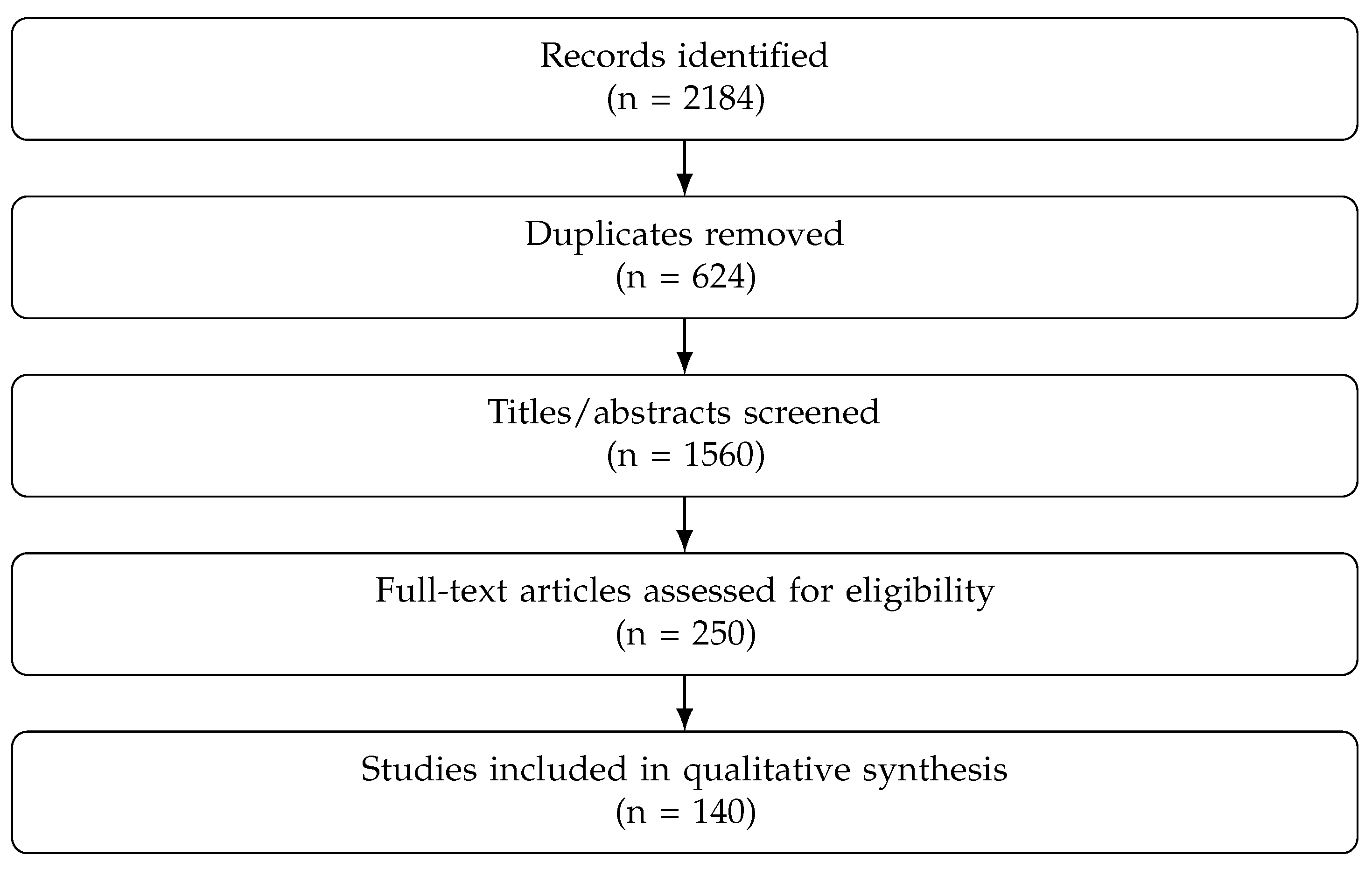
Figure 1. Study selection workflow.
Energies 18 06504 g001
Figure 2. Representation of magnetic imbalance in electric motors. The blue arrows represent the balanced magnetic flux lines, while the red line indicates the unbalanced magnetic flux encircling the shaft due to the imbalance.
Energies 18 06504 g002
Figure 3. The mechanism of CMV under different power supplies: (a) Sinusoid balanced three phase supply, (b) CMV under the sinusoid supply, (c) Inverter supply, (d) CMV under the inverter supply.
Energies 18 06504 g003
Figure 4. Shaft voltage modeling in motors: (a) 2-D model of motor, (b) Shaft voltage equivalent circuit.
Energies 18 06504 g004
Figure 5. Working principle of a typical SGR: (a) SGR model, (b) SGR mounting to a motor.
Energies 18 06504 g005
Figure 6. Experimental setup of a capacitor-based grounding structure [5].
Energies 18 06504 g006
Figure 7. DL application and workflow in signal processing.
Energies 18 06504 g007
Figure 8. DL architectures for predictive industrial maintenance and anomaly detection.
Energies 18 06504 g008
Figure 9. Process of denoising diffusion probabilistic models (DDPMs).
Energies 18 06504 g009
Figure 10. Evolution of diffusion model principles and practices [112].
Energies 18 06504 g010
Table 1. Shaft voltage causes and sources based on literature.
Shaft Voltage OriginsSourcesReferences
Magnetic Asymmetry- Rotor and stator eccentricity.[2,14]
- Imbalance winding.
CMV- Switching transients of VFDs [15,16]
ESD- Potential induced by particle impingement.[17,18,19]
- Potential due to charged particles.
- Permanent magnetization of casing or pedestals.
Shaft Magnetization- Unbalanced ampere turns around the shaft.[20,21]
- Unintended electrical contact between rotor winding and core.
Table 2. Overview of shaft voltage mitigation methods suggested in the literature.
Mitigation MethodImplementation TypeWorking PrincipleLimitationsReferences
CMV suppressionHybridUsing common mode chokes and supervised PWM strategies.Increased complexity and computational costs. [15,23,24,25,26,60,61,62,63,64,65,66,67,68,69,70,71]
Shaft voltage groundingHardwareAdding a low impedance path for bearing currents to divert them from the bearings to the ground.Periodic maintenance requirement and high cost. [5,17,28,29,30,31,32]
Capacitive coupling reductionHardwareReducing the parasitic capacitances of the motor contributing to shaft voltage.High cost and slot-fill factor considerations. [1,33,34,35,36,37,38,39,40,41,42,58,59]
Bearing insulationHardwareIncreasing the impedance for blocking the bearing currents.Costly. The safety of other components connected to the bearings becomes sensitive. [43,44,45,46,47,48,49,72,73]
Motor geometry modificationHardwareModifying the motors’s geometry that include winding patterns, slot structure, and rotor design.Invasive nature. Imposes additional working and labor costs. [37,50,51,52,53,54,55,56]
Hybrid approachHybridEmploying multiple shaft voltage mitigation strategies.Handling can be complex. Increases computational time and costs due to multiple components. [27,57,58,59]
Table 3. Existing ML and DL models with strengths and limitations.
Model TypeExample MethodsStrengthsLimitations
MLSVM, RF, KNN.Low training time, interpretable.Poor at capturing temporal features.
Performance drops with noise.
DLCNN, LSTM, GRU.Good for sequential and high-dimensional data.Requires large datasets.
Difficult to interpret; overfitting risk.
AutoencodersDenoising, Variational.Useful for anomaly detection and compression.Struggles with time-variant behavior.
Weak generalization in new conditions.
TransformersAttention-based models.Excellent at long-range dependency modeling.High computational cost.
May require extensive pretraining.
Table 4. Summary of comparative evaluation of ML, DL, and DMs.
FeatureML ModelsDL ModelsDMs
Data RequirementLowHighModerate–High
Robustness to NoiseLowMediumHigh
Temporal Feature CapturePoorGoodExcellent
InterpretabilityMediumLowLow–Medium
Uncertainty ModelingNoLimitedYes
GeneralizationMediumMediumHigh
Computational CostLowHighHigh
Table 5. Representative benchmark evidence quantifying diffusion model advantages over established time-series approaches in tasks relevant to shaft voltage analysis.
Diffusion-Based ModelPrimary TaskCompared Against (Examples)Dataset/SettingReported Quantitative Advantage
CSDI [117]TS imputationProbabilistic imputers; SOTA deterministic imputersHealthcare & environmental TSImproves by 40–65% on probabilistic metrics; reduces deterministic imputation error by 5–20%.
TimeGrad [128]Probabilistic forecastingVAR, LSTM-copula, GP, TransformerHigh-dimensional benchmarksLower CRPS than strong baselines (e.g., Traffic: 0.110 vs. 0.133; Taxi: 0.311 vs. 0.346).
ImDiffusion [129]Anomaly detectionForecasting- and reconstruction-based detectorsBenchmarks + Microsoft productionIn production, reports + 11.4% improvement in detection F1-score vs. a legacy approach.
MTSCI [130]Time-series classificationStrong classification baselines (reported)MTSCL benchmarkReports average improvements of 17.88% (MSE), 15.09% (MAE), and 13.64% (RMSE) over baselines.
TMDM [131]Uncertainty-aware forecastingStrong SOTA forecasters (reported)Weather/
Electricity/
Traffic
Improves predictive-interval coverage (PICP) by +3.42 (71.12→74.54) on Weather, +2.99 (84.98→87.97) on Electricity, and +4.62 (78.03→82.65) on Traffic.
Table 6. Industrial deployment scenarios for diffusion-based shaft-voltage monitoring (edge/PLC integration, sampling, latency, and hardware feasibility).
ScenarioSignalsSampling (Edge → PLC)Compute LocationLatency TargetPLC/SCADA Integration (Outputs)
Retrofit monitoring V s h , CMV proxy (opt.), bearing current (opt.)kHz-range → Hz-rangeIPC (CPU) near drivesub-second to secondsAlarm flag + severity + discharge-rate via OPC UA/Modbus; maintenance trigger.
Cabinet edge analytics V s h , phase currents, V d c , temp (opt.)high-rate → low-rateIPC + optional GPU/NPUtens–hundreds msUncertainty bounds + health indicators; mitigation logic (filters/PWM changes).
Fast-event protectionHigh-bandwidth V s h , bearing current, PWM timingevent-based reportingEdge GPU/NPUms-scaleEvent flags/time-stamps; PLC protective action (PWM change/controlled stop).
Digital twin planningAggregated trends/indicatorslow-rate reportingEdge + server/cloudseconds–minutesDashboards + trend/RUL; integrates with SCADA/CMMS.
Disclaimer/Publisher’s Note: The statements, opinions and data contained in all publications are solely those of the individual author(s) and contributor(s) and not of MDPI and/or the editor(s). MDPI and/or the editor(s) disclaim responsibility for any injury to people or property resulting from any ideas, methods, instructions or products referred to in the content.