Valorisation Pathways Analysis of Marine and Coastal Resources for Renewable Energy Carriers and High Value Bioproducts in La Guajira, Colombia

 , and
, and
Abstract
1. Introduction
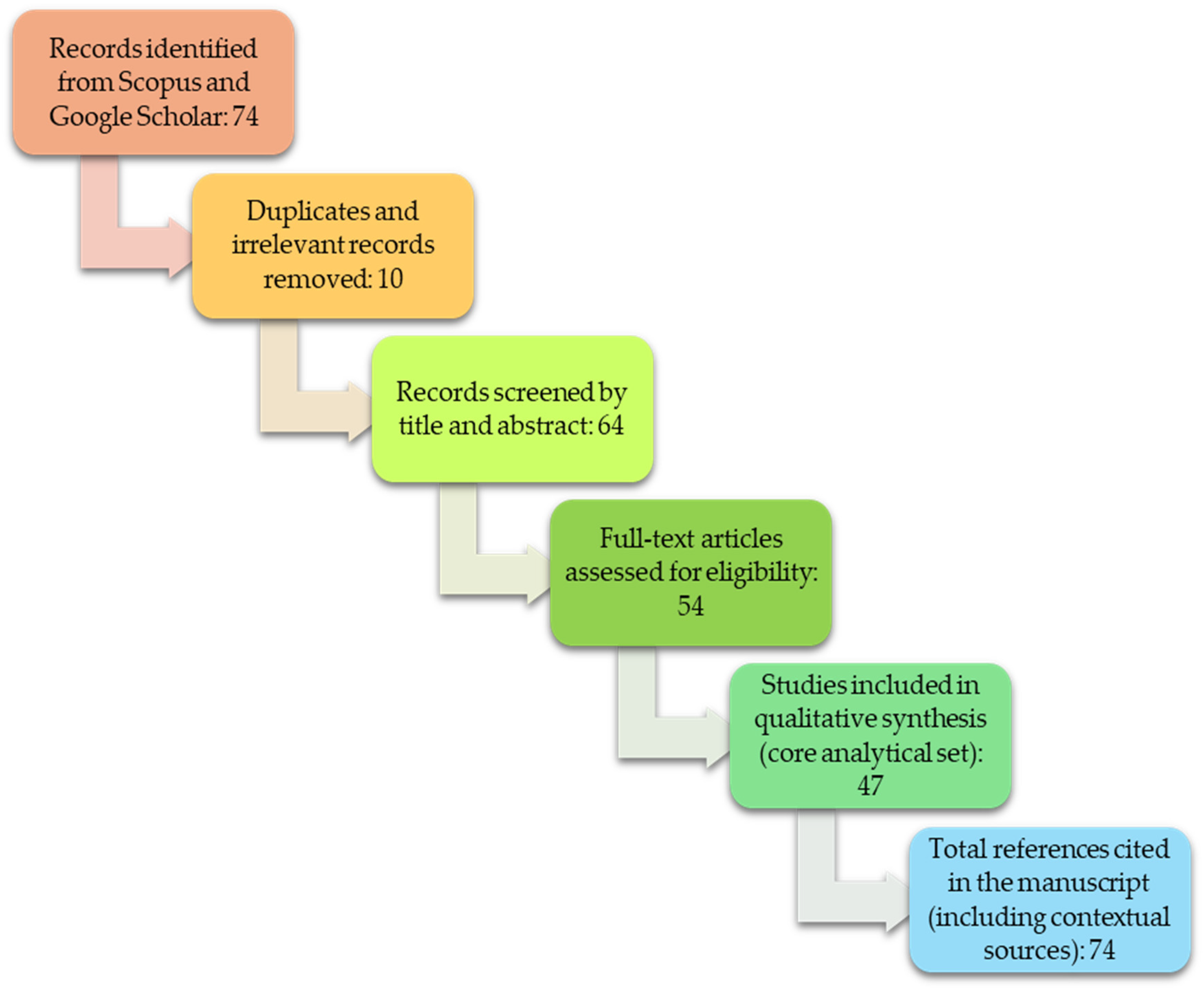
2. Methodology
3. Global Overview
3.1. Raw Materials
3.1.1. Seagrases
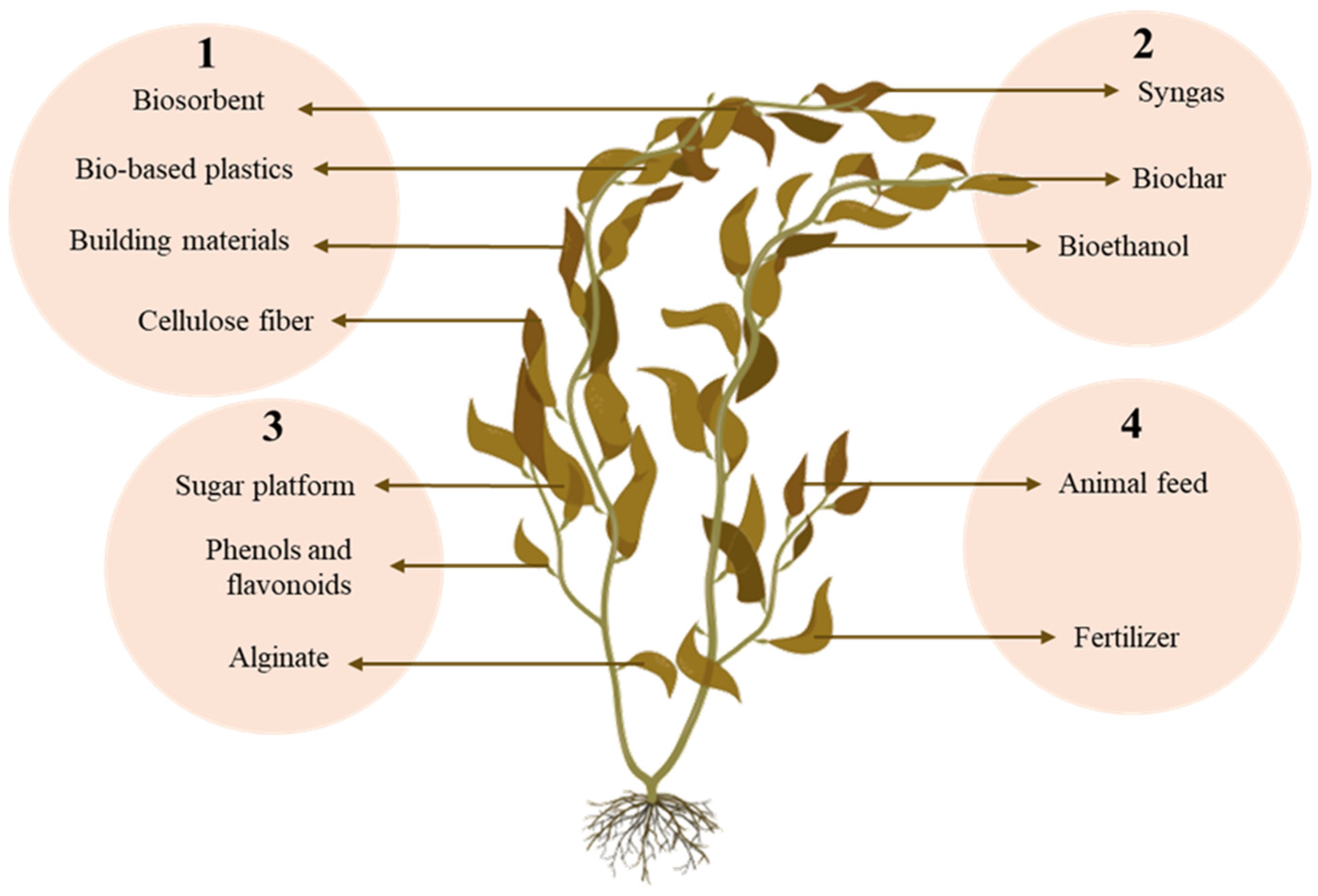
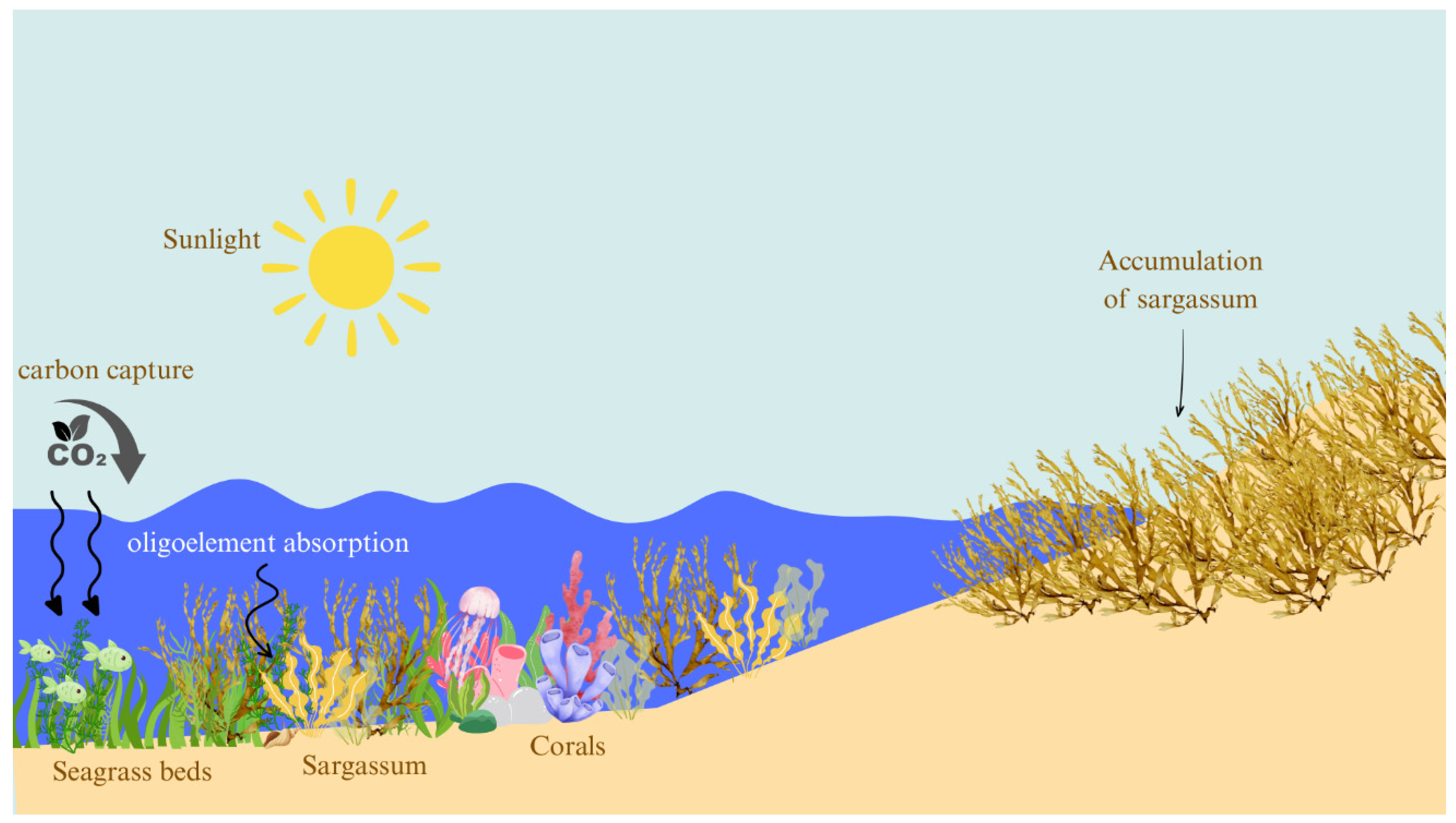
3.1.2. Algae and Sargassum
3.1.3. Cacti
3.1.4. Saltwater Energy Potential
3.2. Technologies Applied for Each Raw Material
4. Case of Study: La Guajira, Colombia
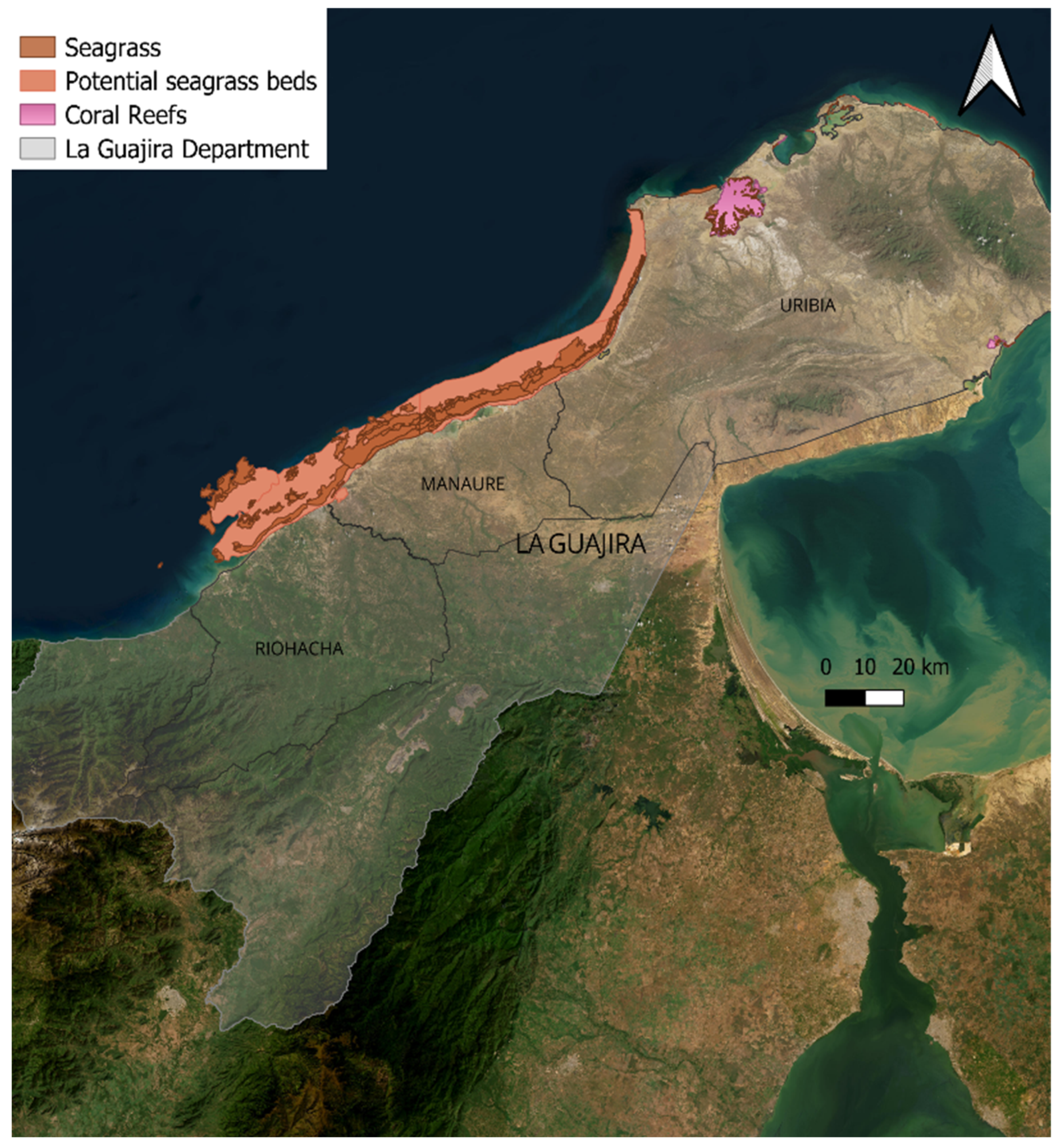
4.1. Seagrasses Locally
4.2. Sargassum Locally
- Caribbean ocean currents flowing westward, but the main flow of the sargassum belt passes further north, skirting the Greater Antilles.
- High wave energy and trade winds that hinder the accumulation of floating biomass.
- Slightly higher temperature and salinity and arid areas with little nutrient runoff (unlike areas further south in the Caribbean).
4.3. Cacti Locally
4.4. Saltwater: Energy Potential and Access to Water Resources for Communities
4.5. Coastal Winds and Solar Radiation
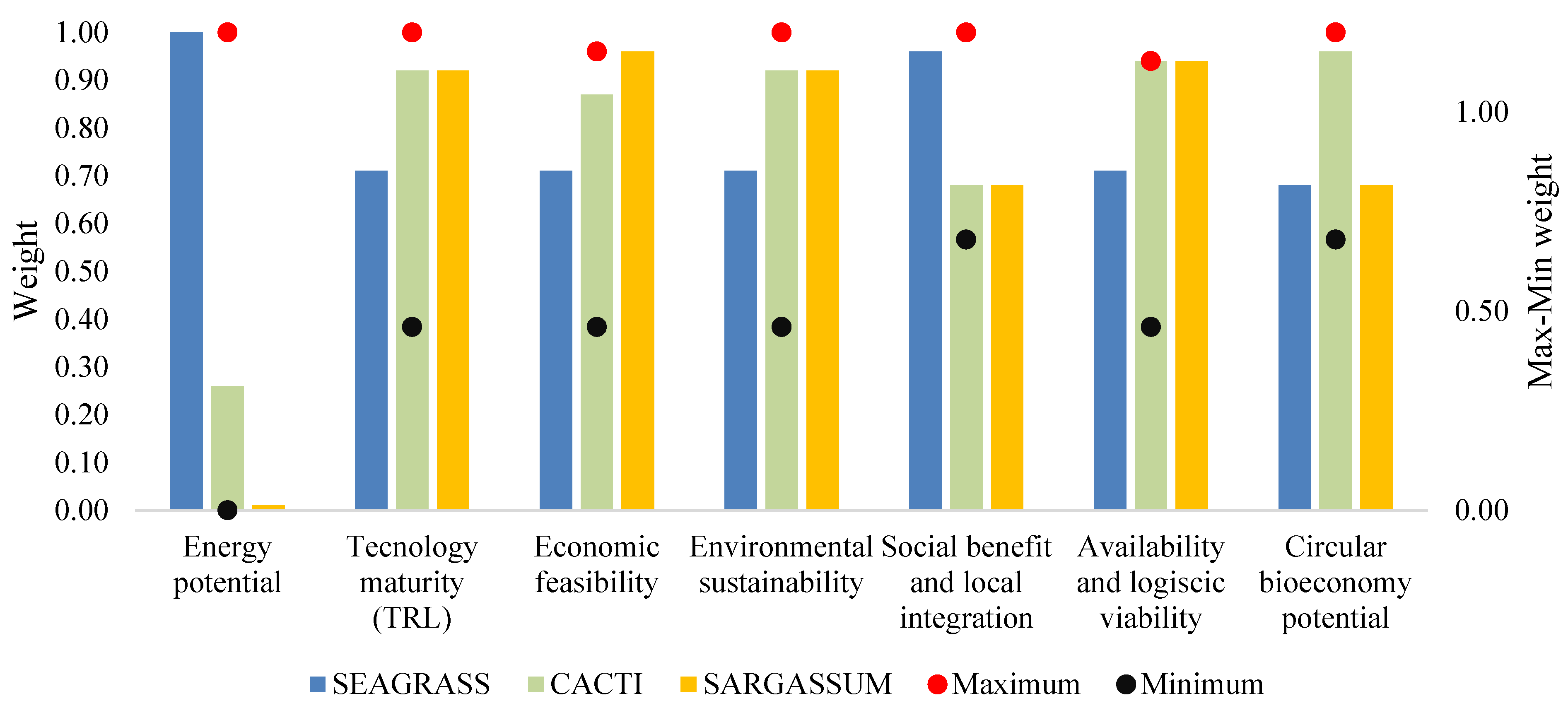
5. Comparative Discussion of the Impact on Energy Carrier Products in La Guajira
- Energy potential: 20%—representing the quantitative contribution of each biomass to renewable energy generation.
- Technological readiness level (TRL): 10%—reflecting the current stage of technological maturity for biomass conversion processes.
- Environmental sustainability: 20%—emphasising the ecological integrity and long-term resilience of each biomass resource.
- Economic feasibility: 15%—accounting for cost-efficiency and ease of implementation for local communities.
- Social benefit and local integration: 15%—highlighting the relevance of social inclusion, employment potential, and community well-being.
- Availability and logistic viability: 10%—capturing accessibility, transport feasibility, and resource stability throughout the year.
- Circular bioeconomy potential: 10%—integrating the capacity of each biomass to generate multiple value-added products beyond energy.
6. Policy and Research Implications
7. Conclusions
Author Contributions
Funding
Data Availability Statement
Acknowledgments
Conflicts of Interest
Abbreviations
| Bio-SNG | Bio-Synthetic Natural Gas |
| CAM | Crassulacean Acid Metabolism |
| CAPEX | Capital Expenditures |
| CO2 | Carbon Dioxide |
| DIMAR | Dirección de Marina Mercante Colombiana |
| DSWEL | Direct Seawater Electrolysis |
| FAO | Food and Agriculture Organization of the United Nations |
| GASB | Great Atlantic Sargassum Belt |
| H2 | Hydrogen |
| HTL | Hydrothermal Liquefaction |
| ICP-MS | Inductively Coupled Plasma Mass Spectrometry |
| IDEAM | Instituto de Hidrología, Meteorología y Estudios Ambientales |
| INVEMAR | Instituto de Investigaciones Marinas y Costeras |
| LHV | Lower Heating Value |
| MCA | Multi-Criteria Analysis |
| MPA | Marine Protected Area |
| OECD | Organisation for Economic Co-operation and Development |
| OPEX | Operating Expenses |
| OTEC | Ocean Thermal Energy Conversion |
| R&D | Research and Development |
| SaWS | Sargassum Watch System |
| TEA | Techno-Economic Assessment |
| TRL | Technological Readiness Level |
| WLC | Weighted Linear Combination |
References
- Naciones Unidas. Objetivo 14: Conservar y Utilizar Sosteniblemente Los Océanos, Los Mares y Los Recursos Marinos. 2022. Available online: https://www.un.org/sustainabledevelopment/es/oceans/ (accessed on 11 September 2025).
- Instituto de Investigaciones Marinas y Costeras—INVEMAR. Lineamientos Técnicos Para el Aprovechamiento Sostenible de Macroalgas Marinas en Colombia. Ministerio de Ambiente y Desarrollo Sostenible. 2022. Available online: https://www.invemar.org.co/ (accessed on 12 September 2025).
- European Commission. Directive (EU) 2018/2001 of the European Parliament and of the Council of 11 December 2018 on the promotion of the use of energy from renewable sources (RED II). Off. J. Eur. Union L 2018, 328, 82–209. Available online: https://eur-lex.europa.eu/legal-content/EN/TXT/?uri=CELEX:32018L2001 (accessed on 9 September 2025).
- OECD. Ocean Economy. 2020. Available online: https://www.oecd.org/en/topics/sub-issues/ocean/ocean-economy.html (accessed on 9 September 2025).
- FAO. Marco Estratégico de la FAO. 2022. Available online: https://www.fao.org/strategic-framework/es (accessed on 9 September 2025).
- Gonçalves, M.A.A.; Salvador, R.; de Francisco, A.C.; Piekarski, C.M. Value recovery from waste in the processing of buckwheat: Opportunities for a circular bioeconomy. Eng. Rep. 2024, 6, e12757. [Google Scholar] [CrossRef]
- Raposo, M.F.d.J.; de Morais, R.M.S.C.; de Morais, A.M.M.B. Health applications of bioactive compounds from marine microalgae. Life Sci. 2013, 93, 479–486. [Google Scholar] [CrossRef] [PubMed]
- Han, J.-M.; Park, J.-S.; Chun, B.-S. Eco-friendly biorefinery process optimization from Sargassum thunbergii: A sustainable approach toward zero waste. J. Ind. Eng. Chem. 2025, 142, 651–663. [Google Scholar] [CrossRef]
- Acosta-Chaparro, A.; Sánchez-Valencia, L.; Gómez-López, D.I.; Gónzalez-Corredor, J.D.; Navas-Camacho, R. Biomasa de pastos marinos y su rol como sumideros de carbono en las localidades de la isla de San Andrés y La Guajira, Caribe colombiano. Bol. Investig. Mar. Costeras 2022, 51, 137–150. [Google Scholar] [CrossRef]
- Salvador, R.; Eriksen, M.L.; Kjaersgaard, N.C.; Hedegaard, M.; Knudby, T.; Lund, V.; Larsen, S.B. From ocean to meadow: A circular bioeconomy by transforming seaweed, seagrass, grass, and straw waste into high-value products. Waste Manag. 2025, 200, 114753. [Google Scholar] [CrossRef]
- Barooni, M.; Ashuri, T.; Sogut, D.V.; Wood, S.; Taleghani, S.G. Floating Offshore Wind Turbines: Current Status and Future Prospects. Energies 2022, 16, 2. [Google Scholar] [CrossRef]
- Kim, C.; Dinh, M.-C.; Sung, H.-J.; Kim, K.-H.; Choi, J.-H.; Graber, L.; Yu, I.-K.; Park, M. Design, Implementation, and Evaluation of an Output Prediction Model of the 10 MW Floating Offshore Wind Turbine for a Digital Twin. Energies 2022, 15, 6329. [Google Scholar] [CrossRef]
- Colmenares-Quintero, R.F.; Rojas, N.; Colmenares-Quintero, J.C.; Stansfield, K.E.; Villar-Villar, S.S.; Albericci-Avendaño, S.E. Design of an Integral Simulation Model for Solar-Powered Seawater Desalination in Coastal Communities: A Case Study in Manaure, La Guajira, Colombia. Sustainability 2025, 17, 1505. [Google Scholar] [CrossRef]
- Nurohmah, A.R.; Nisa, S.S.; Stulasti, K.N.R.; Yudha, C.S.; Suci, W.G.; Aliwarga, K.; Widiyandari, H.; Purwanto, A. Sodium-ion battery from sea salt: A review. Mater. Renew. Sustain. Energy 2022, 11, 71–89. [Google Scholar] [CrossRef]
- Criollo, R.; Vilarrasa, V.; Orfila, A.; Marbà, N.; Fernández-Mora, A. Borehole heat exchangers in coastal areas may reduce heatwave seagrass loss. Geosci. Lett. 2025, 12, 2. [Google Scholar] [CrossRef]
- İlay, R. Biochar production from various low-cost marine wastes using different production methods: Characterization of biochar and marine feedstock for agricultural purposes. Mar. Pollut. Bull. 2024, 205, 116623. [Google Scholar] [CrossRef]
- Arya, R.; Abinaya, K.; Meenakumari, S.; Thirumavalavan, M.; Velmurugan, D.; Anbu, P.; Pachaiappan, R. Exploring the separation, characterization and antioxidant activity of proteins and peptides from selected seagrasses in Palk Bay region of Tamil Nadu in India. Int. J. Biol. Macromol. 2025, 295, 139606. [Google Scholar] [CrossRef] [PubMed]
- Olacia, E.; Pisello, A.L.; Chiodo, V.; Maisano, S.; Frazzica, A.; Cabeza, L.F. Sustainable adobe bricks with seagrass fibres. Mechanical and thermal properties characterization. Constr. Build. Mater. 2020, 239, 117669. [Google Scholar] [CrossRef]
- Palacio-Herrera, F.-M.; De la Rosa, J.; Sierra-Marquez, L.; Olivero-Verbel, J. Ecological risks of trace elements in sediments and Thalassia testudinum from Cartagena Bay. Mar. Pollut. Bull. 2025, 219, 118103. [Google Scholar] [CrossRef]
- Lee, R.A.; Lavoie, J.-M. From first- to third-generation biofuels: Challenges of producing a commodity from a biomass of increasing complexity. Anim. Front. 2013, 3, 6–11. [Google Scholar] [CrossRef]
- Moncada, J.; Tamayo, J.A.; Cardona, C.A. Integrating first, second, and third generation biorefineries: Incorporating microalgae into the sugarcane biorefinery. Chem. Eng. Sci. 2014, 118, 126–140. [Google Scholar] [CrossRef]
- Saravanan, A.; Kumar, P.S.; Badawi, M.; Mohanakrishna, G.; Aminabhavi, T.M. Valorisation of micro-algae biomass for the development of green biorefinery: Perspectives on techno-economic analysis and the way towards sustainability. Chem. Eng. J. 2023, 453, 139754. [Google Scholar] [CrossRef]
- Zhou, Y.; Remón, J.; Ding, W.; Jiang, Z.; Pinilla, J.L.; Hu, C.; Suelves, I. An innovative ‘sea-thermal’ synergetic biorefinery for biofuel production: Co-valorization of lignocellulosic and algal biomasses using seawater under hydrothermal conditions. J. Clean. Prod. 2024, 462, 142719. [Google Scholar] [CrossRef]
- Geng, Y.; Shaukat, A.; Azhar, W.; Raza, Q.-U.; Tahir, A.; Abideen, M.Z.U.; Zia, M.A.B.; Bashir, M.A.; Rehim, A. Microalgal biorefineries: A systematic review of technological trade-offs and innovation pathways. Biotechnol. Biofuels Bioprod. 2025, 18, 93. [Google Scholar] [CrossRef]
- Twigg, G.; Fedenko, J.; Hurst, G.; Stanley, M.S.; Hughes, A.D. A review of the current potential of European brown seaweed for the production of biofuels. Energy Sustain. Soc. 2024, 14, 21. [Google Scholar] [CrossRef]
- Farobie, O.; Amrullah, A.; Syaftika, N.; Bayu, A.; Hartulistiyoso, E.; Fatriasari, W.; Nandiyanto, A.B.D. Valorization of Rejected Macroalgae Kappaphycopsis cottonii for Bio-Oil and Bio-Char Production via Slow Pyrolysis. ACS Omega 2024, 9, 16665–16675. [Google Scholar] [CrossRef]
- Wang, M.; Hu, C.; Barnes, B.B.; Mitchum, G.; Lapointe, B.; Montoya, J.P. The Great Atlantic Sargassum Belt. Science 2019, 365, 83–87. [Google Scholar] [CrossRef]
- Ordóñez, J.I.; Cortés, S.; Maluenda, P.; Soto, I. Biosorption of Heavy Metals with Algae: Critical Review of Its Application in Real Effluents. Sustainability 2023, 15, 5521. [Google Scholar] [CrossRef]
- van Hees, D.H.; Olsen, Y.S.; Mattio, L.; Ruiz-Montoya, L.; Wernberg, T.; Kendrick, G.A. Cast adrift: Physiology and dispersal of benthic Sargassum spinuligerum in surface rafts. Limnol. Oceanogr. 2019, 64, 526–540. [Google Scholar] [CrossRef]
- Hu, C.; Murch, B.; Barnes, B.B.; Wang, M.; Maréchal, J.-P.; Franks, J.; Johnson, D.; Lapointe, B.; Goodwin, D.S.; Schell, J.M.; et al. Sargassum Watch Warns of Incoming Seaweed. Eos 2016, 97, 10–15. [Google Scholar] [CrossRef]
- Fraga, J.; Robledo, D. Covid-19 and Sargassum blooms: Impacts and social issues in a mass tourism destination (Mexican Caribbean). Marit. Stud. 2022, 21, 159–171. [Google Scholar] [CrossRef] [PubMed]
- Gavio, B.; Santos-Martinez, A. Floating Sargassum; in Serranilla Bank, Caribbean Colombia, may jeopardize the race to the ocean of baby sea turtles. Acta Biol. Colomb. 2018, 23, 311–313. [Google Scholar] [CrossRef]
- Franks, J.S.; Johnson, D.R.; Ko, D.S. Pelagic Sargassum in the Tropical North Atlantic. Gulf Caribb. Res. 2016, 27, SC6–SC11. [Google Scholar] [CrossRef]
- Medina, E.; Huber, O.; Nassar, J.M.; Navarro, P. Recorriendo el Paisaje Vegetal de Venezuela; IVIC: Caracas, Venezuela, 2013. [Google Scholar]
- Honorato-Salazar, J.A.; Aburto, J.; Amezcua-Allieri, M.A. Agave and opuntia species as sustainable feedstocks for bioenergy and byproducts. Sustainability 2021, 13, 12263. [Google Scholar] [CrossRef]
- Loizzo, M.R.; Bruno, M.; Balzano, M.; Giardinieri, A.; Pacetti, D.; Frega, N.G.; Sicari, V.; Leporini, M.; Tundis, R. Comparative Chemical Composition and Bioactivity of Opuntia ficus-indica Sanguigna and Surfarina Seed Oils Obtained by Traditional and Ultrasound-Assisted Extraction Procedures. Eur. J. Lipid Sci. Technol. 2019, 121, 1800283. [Google Scholar] [CrossRef]
- Timpanaro, G.; Foti, V.T. Sustainable extraction of bioproducts from cactus pear waste: Economic viability and market opportunities in a green economy. Curr. Res. Green Sustain. Chem. 2025, 10, 100449. [Google Scholar] [CrossRef]
- Emanuele, L.; Dujaković, T.; Roselli, G.; Campanelli, S.; Bellesi, G. The Use of a Natural Polysaccharide as a Solidifying Agent and Color-Fixing Agent on Modern Paper and Historical Materials. Organics 2023, 4, 265–276. [Google Scholar] [CrossRef]
- Mannai, F.; Elhleli, H.; Ammar, M.; Passas, R.; Elaloui, E.; Moussaoui, Y. Green process for fibrous networks extraction from Opuntia (Cactaceae): Morphological design, thermal and mechanical studies. Ind. Crop. Prod. 2018, 126, 347–356. [Google Scholar] [CrossRef]
- Hernandez, E.; Espinosa-Solares, T.; Pérez-Cadena, R.; Téllez-Jurado, A.; Ramírez-Arpide, F.R. Sustainable agrobiorefinery system for advanced ethanol production from Opuntia prickly pear cactus nopales. Energy Convers. Manag. 2024, 321, 119052. [Google Scholar] [CrossRef]
- Pazmiño Abad, K.G. Obtención de Bioplástico a Partir del Mucílago de Cactus (Opuntia ficus-indica) Para Uso Como Envolturas Alimenticias [Escuela Superior Politécnica de Chimborazo]. 2021. Available online: https://dialnet.unirioja.es/descarga/articulo/9227621.pdf (accessed on 12 September 2025).
- Villalobos, S.; Orlando Vargas, B.; Melo, S. Uso, Manejo y Conservación de “yosú”, Stenocereus griseus (Cactaceae), en la Alta Guajira Colombiana Usage, Managment and Conservation of “yosú”, Stenocereus griseus (Cactaceae), in the Upper Guajira, Colombia. Acta Biol. Colomb. 2007, 12, 99–112. Available online: https://www.researchgate.net/publication/259482736_USO_MANEJO_Y_CONSERVACION_DE_yosu_Stenocereus_griseus_CACTACEAE_EN_LA_ALTA_GUAJIRA_COLOMBIANA_Usage_Managment_and_Conservation_of_yosu_Stenocereus_griseus_Cactaceae_in_the_Upper_Guajira_Colombia (accessed on 31 October 2025).
- Wang, Z.L.; Jiang, T.; Xu, L. Toward the blue energy dream by triboelectric nanogenerator networks. Nano Energy 2017, 39, 9–23. [Google Scholar] [CrossRef]
- Arias, F.J.; Heras, S.D.L. Ocean salt basins energy harvesting. Appl. Ocean Res. 2020, 98, 102074. [Google Scholar] [CrossRef]
- Cheng, L.; Abraham, J.; Trenberth, K.E.; Fasullo, J.; Boyer, T.; Mann, M.E.; Zhu, J.; Wang, F.; Locarnini, R.; Li, Y.; et al. Another Year of Record Heat for the Oceans. Adv. Atmos. Sci. 2023, 40, 963–974. [Google Scholar] [CrossRef]
- Benito-González, I.; López-Rubio, A.; Martínez-Abad, A.; Ballester, A.-R.; Falcó, I.; González-Candelas, L.; Sánchez, G.; Lozano-Sánchez, J.; Borrás-Linares, I.; Segura-Carretero, A.; et al. In-Depth Characterization of Bioactive Extracts from Posidonia oceanica Waste Biomass. Mar. Drugs 2019, 17, 409. [Google Scholar] [CrossRef]
- Millán, S.; Rivas, N.; Chasqui, L. First report on the distribution and extension of seagrass meadows in Quitasueño Coral Bank, Southwestern Caribbean. Acta Biol. Colomb. 2024, 29, 136–139. [Google Scholar] [CrossRef]
- García-Bonilla, E.; González, P.; Pirateque, L.; Guerrero-Kommritz, J.; Puyana, M.; Acosta, A. Sea Grasses, a New Unreported Habitat for the Heterobranch Mollusk Umbraculum umbraculum in the Caribbean Region. Mar. Fish. Sci. 2020, 33, 129–133. [Google Scholar] [CrossRef]
- Sierra-Rozo, O.; Santos-Martínez, A.; Acero, A. Prospección Ecológica del Manglar y Praderas Marinas Como Hábitats de Cría Para Peces Arrecifales en San Andres Isla, Caribe Insular Colombiano. Instituto de Investigaciones Marinas y Costeras, 41 (Boletín de Investigaciones Marinas y Costeras). 2012. Available online: https://boletin.invemar.org.co/ojs/index.php/boletin/article/view/93 (accessed on 18 October 2025).
- Gustafsson, C.; Hovey, R.K.; Olsen, Y.S.; Statton, J.; Kendrick, G.A. Functional traits are moderate predictors of above- and below-ground biomass in multispecies seagrass habitats. Funct. Ecol. 2025, 39, 1522–1536. [Google Scholar] [CrossRef]
- Cao, L.; Yu, I.K.; Cho, D.-W.; Wang, D.; Tsang, D.C.; Zhang, S.; Ding, S.; Wang, L.; Ok, Y.S. Microwave-assisted low-temperature hydrothermal treatment of red seaweed (Gracilaria lemaneiformis) for production of levulinic acid and algae hydrochar. Bioresour. Technol. 2019, 273, 251–258. [Google Scholar] [CrossRef]
- Piedra-Castro, L.; Ramírez-Vargas, M.A. Arribo masivo de sargazo (Sargassum natans) a la costa del Caribe Sur de Costa Rica durante el 2022. Bol. Investig. Mar. Costeras 2023, 52, 167–172. [Google Scholar] [CrossRef]
- Schmidt, C. Escape from Sargasso Sea: Tremendous Sargassum Blooms Challenge Caribbean and Atlantic Communities. Environ. Heal. Perspect. 2023, 131, 92001. [Google Scholar] [CrossRef]
- Gori, B.; Ulian, T.; Bernal, H.Y.; Diazgranados, M. Understanding the diversity and biogeography of Colombian edible plants. Sci. Rep. 2022, 12, 7835. [Google Scholar] [CrossRef]
- Carbonó-Delahoz, E.; Barros-Barraza, A.; Jiménez-Vergara, J. Cactaceae de Santa Marta, Magdalena, Colombia. Rev. Acad. Colomb. Cienc. Exactas Fís. Nat. 2013, 37, 177–187. [Google Scholar] [CrossRef]
- Amaral, D.T.; Bonatelli, I.A.; Romeiro-Brito, M.; Moraes, E.M.; Franco, F.F. Spatial patterns of evolutionary diversity in Cactaceae show low ecological representation within protected areas. Biol. Conserv. 2022, 273, 109677. [Google Scholar] [CrossRef]
- Caceres Duran, L.G.; Castiblanco Molina, L.X. Evaluación de la Opuntia Ficus Indica (Cactus) Como Coagulante Natural Para el Tratamiento de Agua Potable de la Empresa Emservilla en el Municipio de Ubaté. Universidad de América. 2020. Available online: https://repository.uamerica.edu.co/server/api/core/bitstreams/1adf534f-5338-4079-a068-b610edfc45b8/content (accessed on 18 October 2025).
- Delgado Marín, J.P. Estudio de Viabilidad Tecno-Económica de una Planta de Generación Eléctrica a Partir de la Digestión Anaeróbica del Cactus Nopal en Colombia. Universidad Politécnica de Cartagena. 2020. Available online: https://repositorio.upct.es/server/api/core/bitstreams/41a718cb-44b3-4a8b-8535-0d7c96e9b33c/content (accessed on 31 October 2025).
- Salazar Sánchez, L.C.; Acosta, A.; Romero-Tibabuzo, C.C.; Guerrero-Kommritz, J.; Duerñas, P.R.; Borrero-Pérez, G.H.; Bocanegra, V.; Acero, A.; Campos, N.H.; Puyana Hegedus, M.; et al. Fauna Marina: Bahía de Taganga, Caribe Colombiano; Pontificia Universidad Javeriana: Bogotá, Colombia, 2021. [Google Scholar] [CrossRef]
- Vargas-Brochero, J.; Hurtado-Castillo, S.; Altamiranda, J.; Filho, F.C.M.d.M.; Beluco, A.; Canales, F.A. Optimizing Renewable Energy Systems for Water Security: A Comparative Study of Reanalysis Models. Sustainability 2024, 16, 4862. [Google Scholar] [CrossRef]
- Ishaq, H.; Crawford, C. Addressing Freshwater Scarcity and Hydrogen Production: Offshore Wind and Reverse Osmosis Synergies. Adv. Sustain. Syst. 2024, 8, 2400390. [Google Scholar] [CrossRef]
- Feria-Díaz, J.J.; Correa-Mahecha, F.; López-Méndez, M.C.; Rodríguez-Miranda, J.P.; Barrera-Rojas, J. Recent desalination technologies by hybridization and integration with reverse osmosis: A review. Water 2021, 13, 1369. [Google Scholar] [CrossRef]
- Cath, T.Y.; Hancock, N.T.; Lundin, C.D.; Hoppe-Jones, C.; Drewes, J.E. A multi-barrier osmotic dilution process for simultaneous desalination and purification of impaired water. J. Membr. Sci. 2010, 362, 417–426. [Google Scholar] [CrossRef]
- Vanegas Chamorro, M.J.; Rodríguez, P.; Cárdenas, L. Estudio del potencial de la radiación solar en La Guajira a partir de registros meteorológicos y modelos atmosféricos. Rev. Espac. 2017, 38, 21. Available online: https://www.revistaespacios.com/a17v38n45/a17v38n45p21.pdf (accessed on 31 October 2025).
- Vanegas Chamorro, M.; Villicaña Ortíz, E.; Arrieta Viana, L. Cuantificación y caracterización de la radiación solar en el departamento de la guajira-colombia mediante el calculo de transmisibilidad atmosférica. Prospectiva 2015, 13, 54. [Google Scholar] [CrossRef][Green Version]
- Carvajal Romo, J.E.; Sánchez, A.F.; Cárdenas, J.J. Evaluación del recurso solar en el Caribe colombiano para aplicaciones fotovoltaicas. Rev. Fac. Ing. 2019, 28, 63–74. [Google Scholar]
- Luengo, C.A.G.; Amâncio-Vieira, S.F.; Fidelis, R.; Contani, E.A.d.R. Application of a Multicriteria Decision Model for the Selection of Conversion Pathways for Biofuel Production and Management in a Medium-Sized Municipality in the State of Paraná. Energies 2025, 18, 2367. [Google Scholar] [CrossRef]
- Hemavathy, R.V.; Ragini, Y.P.; Shruthi, S.; Ranjani, S.; Subhashini, S.; Thamarai, P. Biofuel production from marine macroalgae: Pathways, technologies, and sustainable energy solutions. Ind. Crop. Prod. 2025, 224, 120282. [Google Scholar] [CrossRef]
- Soleymani, M.; Rosentrater, K.A. Techno-Economic Analysis of Biofuel Production from Macroalgae (Seaweed). Bioengineering 2017, 4, 92. [Google Scholar] [CrossRef]
- Amador-Castro, F.; García-Cayuela, T.; Alper, H.S.; Rodriguez-Martinez, V.; Carrillo-Nieves, D. Valorization of pelagic sargassum biomass into sustainable applications: Current trends and challenges. J. Environ. Manag. 2021, 283, 112013. [Google Scholar] [CrossRef]
- Orozco-González, J.G.; Amador-Castro, F.; Gordillo-Sierra, A.R.; García-Cayuela, T.; Alper, H.S.; Carrillo-Nieves, D. Opportunities Surrounding the Use of Sargassum Biomass as Precursor of Biogas, Bioethanol, and Biodiesel Production. Front. Mar. Sci. 2022, 8, 791054. [Google Scholar] [CrossRef]
- Salgado-Hernández, E.; Ortiz-Ceballos, Á.I.; Alvarado-Lassman, A.; Martínez-Hernández, S.; Rosas-Mendoza, E.S.; Velázquez-Fernández, J.B.; Dorantes-Acosta, A.E. Energy-saving pretreatments affect pelagic Sargassum composition and DNA metabarcoding reveals the microbial community involved in methane yield. PLoS ONE 2023, 18, e0289972. [Google Scholar] [CrossRef]
- Kositkanawuth, K.; Bhatt, A.; Sattler, M.; Dennis, B. Renewable Energy from Waste: Investigation of Co-pyrolysis between Sargassum Macroalgae and Polystyrene. Energy Fuels 2017, 31, 5088–5096. [Google Scholar] [CrossRef]
- PROCOLOMBIA. An Ocean of Opportunities: Colombia Embraces Offshore Wind Energy. 2025. Available online: https://investincolombia.com.co/en/resources/offshore-wind-energy-colombia (accessed on 31 October 2025).
- Grattan, S. Big Firms Abandon Wind Energy Plans in Colombia Amid Regulatory Shifts, Social Issues and Grid Gaps|AP News. 2025. Available online: https://apnews.com/article/colombia-wind-energy-companies-climate-56dd34be39a393a4041e9431bdd45e0b (accessed on 31 October 2025).
- Chae, S.; Kim, H.; Hong, J.G.; Jang, J.; Higa, M.; Pishnamazi, M.; Choi, J.-Y.; Walgama, R.C.; Bae, C.; Kim, I.S.; et al. Clean power generation from salinity gradient using reverse electrodialysis technologies: Recent advances, bottlenecks, and future direction. Chem. Eng. J. 2023, 452, 139482. [Google Scholar] [CrossRef]
- Gül, T.F.; Akalın, M.; Dönmezler, E.N.; Bolat, A.; Cihanoğlu, A.; Güler, E.; Kabay, N. Review on reverse electrodialysis process-a pioneering technology for energy generation by salinity gradient. Front. Membr. Sci. Technol. 2024, 3, 1414721. [Google Scholar] [CrossRef]
- Shetty, B.; Puranam-Rajashekar, S.; Aralikatti, G.H.; Nagaraj, P.; Kumar, L.H.; Tengli, P.N.; Thakur, M.S.; Sridhar, V.; Krishnappa, M. Seawater electrolysis: A critical review on fundamentals, recent progress, and future perspectives on sustainable hydrogen generation. Next Energy 2025, 9, 100407. [Google Scholar] [CrossRef]
- Milledge, J.J.; Harvey, P.J. Golden Tides: Problem or Golden Opportunity? The Valorisation of Sargassum from Beach Inundations. J. Mar. Sci. Eng. 2016, 4, 60. [Google Scholar] [CrossRef]
- Salgado-Hernández, E.; Ortiz-Ceballos, Á.I.; Martínez-Hernández, S.; Rosas-Mendoza, E.S.; Dorantes-Acosta, A.E.; Alvarado-Vallejo, A.; Alvarado-Lassman, A. Methane Production of Sargassum spp. Biomass from the Mexican Caribbean: Solid–Liquid Separation and Component Distribution. Int. J. Environ. Res. Public Health 2023, 20, 219. [Google Scholar] [CrossRef]
- Al-Mahbashi, N.M.Y.; Kutty, S.; Jagaba, A.; Al-Nini, A.; Sholagberu, A.T.; Aldhawi, B.N.; Rathnayake, U. Sustainable sewage sludge biosorbent activated carbon for remediation of heavy metals: Optimization by response surface methodology. Case Stud. Chem. Environ. Eng. 2023, 8, 100437. [Google Scholar] [CrossRef]
- Thompson, T.M.; Young, B.R.; Baroutian, S. Enhancing biogas production from caribbean pelagic Sargassum utilising hydrothermal pretreatment and anaerobic co-digestion with food waste. Chemosphere 2021, 275, 130035. [Google Scholar] [CrossRef]
- Aminuddin, M.F.; Ullah, R.; Masdar, M.S.; Yunus, R.M.; Majlan, E.H.; Baharudin, N.A.; Daud, N.M.R.N.M.; Husaini, T. A direct seawater electrolysis (DSWEL) for hydrogen production: A review of system design components and advancements. Int. J. Hydrogen Energy 2025, 144, 336–358. [Google Scholar] [CrossRef]
- Congreso de la República de Colombia. Ley 1715 de 2014, Por Medio de la Cual se Regula la Integración de las Energías Renovables No Convencionales al Sistema Energético Nacional. Diario Oficial No. 49.150. 2014. Available online: https://www.anla.gov.co/07rediseureka2024/normativa/leyes/ley-1715-de-2014-integracion-de-las-energias-renovables-no-convencionales-al-sistema-energetico-nacional (accessed on 29 September 2025).
- Unidad de Planeación Minero Energética (UPME). Boletín Estadístico 2020–2024 S1. 2025. Available online: https://docs.upme.gov.co/SIMEC/Boletin-estadistico/Boletin_Estadistico_2020-2024_S1VF_Abril_VFD-07abr25.pdf (accessed on 29 September 2025).
- Golecha, R.; Gan, J. Biomass transport cost from field to conversion facility when biomass yield density and road network vary with transport radius. Appl. Energy 2016, 164, 321–331. [Google Scholar] [CrossRef]


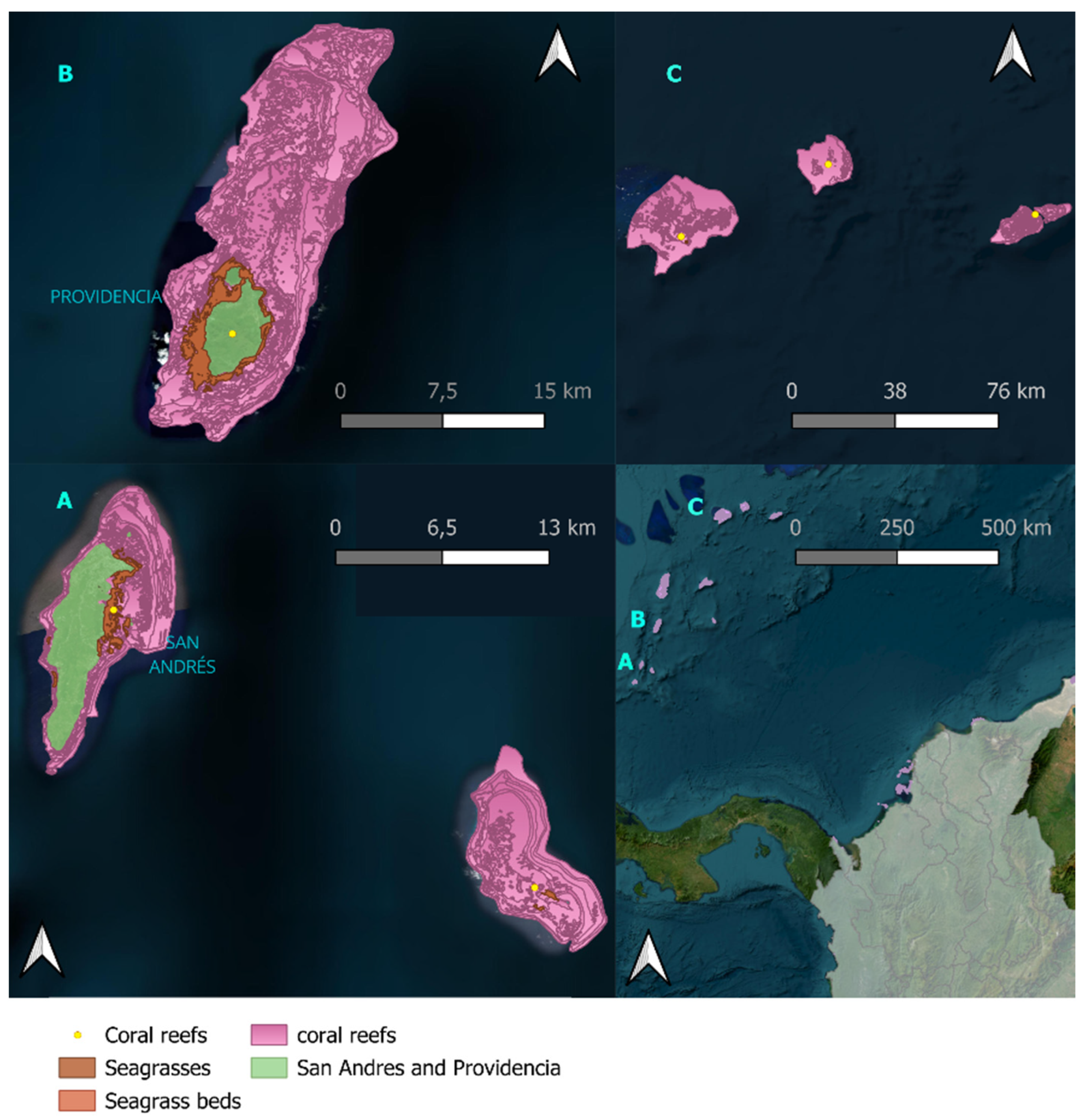

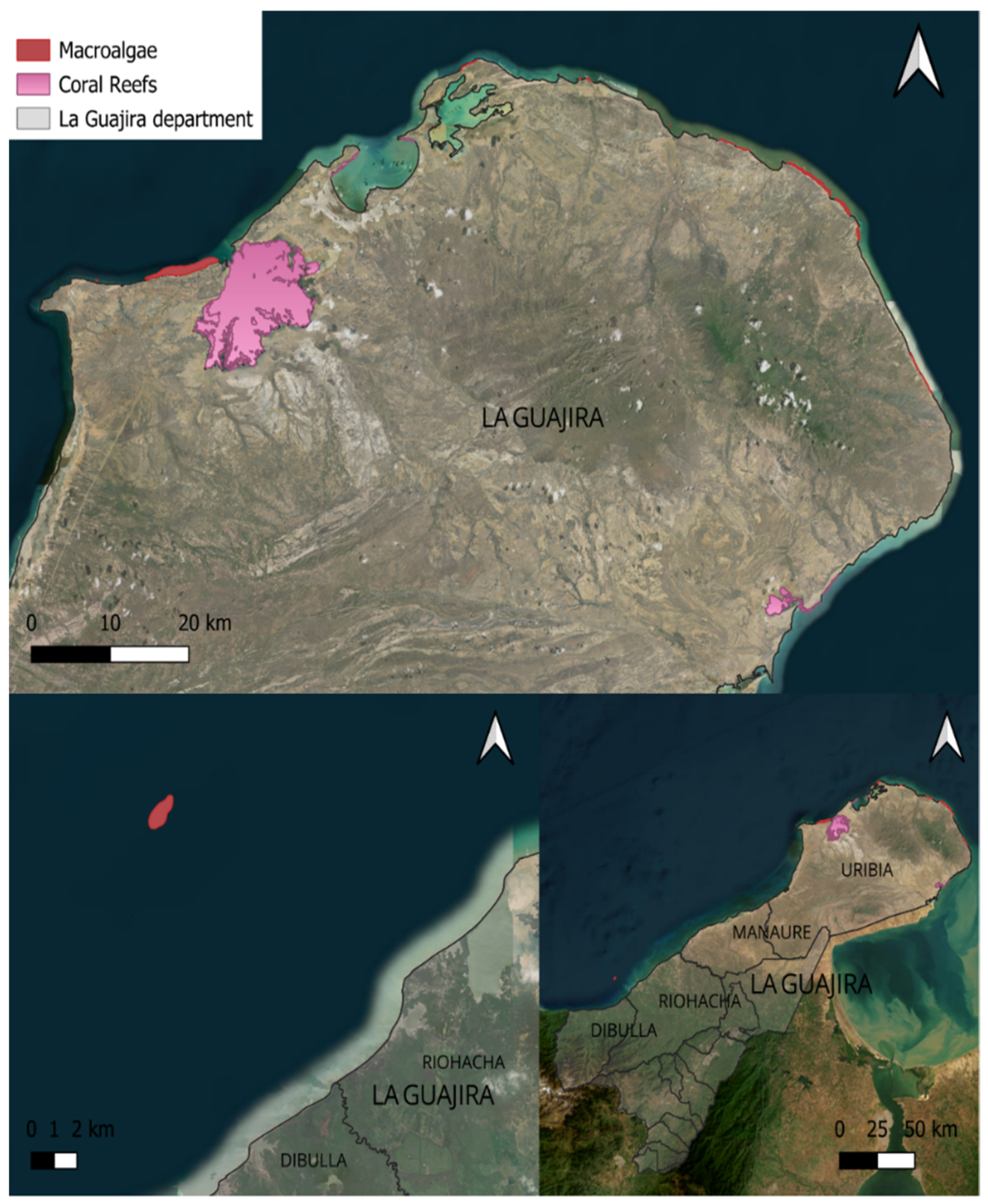

| Algae Species | Main Products | Main Challenges | References |
|---|---|---|---|
| Several species | Biofuels (biodiesel, bioethanol, biogas), bioproducts (pigments, antioxidants, food, cosmetics), nutrient recovery, co-products | It assesses the technological and economic bottlenecks involved in moving from pilot to commercial scale, and how this affects the efficiency of the various subsystems. | [24] |
| Laminaria, Saccharina, Fucus spiralis, Laminaria hyperborea | Bioethanol, biogas, anaerobic digestion, use as feedstock for biomass fuels, including hydrothermal liquefaction in some cases. | Discussed that choosing species with high productivity, rapid growth, and environmental tolerance is key; drying, transport, and logistics costs continue to be significant. | [25] |
| Kappaphycopsis cottonii | Biochar and bio-oil | Demonstrates an approach to waste utilisation (industrial processing waste) to obtain value-added products but the challenges are yield, pyrolysis cost, bio-oil stability. | [26] |
| Country/Region | Specie | Main Application | References |
|---|---|---|---|
| Italy | Opuntia ficus-indica (Sanguigna, Surfarina) | Oils (seed), pectins, antioxidants, functional juices | [36,37] |
| Tunisia | Opuntia ficus-indica | Biocomposites, packaging, paper | [39] |
| Mexico | Opuntia, Agave | Biogas, bio-SNG, bioethanol, biodiesel, tequila and mezcal | [35,40] |
| Ecuador | Opuntia ficus-indica | Bioplastics (mucilage) | [41] |
| Raw Material | Main Technological Routes | TRL |
|---|---|---|
| Seagrass | Composting, adsorbents for water treatment, building materials (panels, bricks), extraction of bioactive proteins and peptides. | TRL 4–7. |
| Sargassum | Anaerobic digestion, hydrothermal liquefaction (HTL), pyrolysis, fractionation for bioproducts (pigments, antioxidants), and biocomposites. | TRL 5–8. |
| Cactus | Enzymatic fermentation for bioethanol, anaerobic digestion, mucilage extraction for bioplastics, pectin, oil and fibre extraction for biocomposites. | TRL 5–8. |
| Seawater and saline resources | Ocean thermal energy conversion, tidal and wave energy, osmotic energy, and reverse osmosis desalination integrated with renewables. | TRL 5–9. |
| Zone | Seagrass Area (ha) |
|---|---|
| La Guajira | 56,386.41 |
| Archipelago of Saint Andrew and Providence | 2002.35 |
| Bolívar | 2712.72 |
| Caribbean Chocó | 350.26 |
| Córdoba | 18.95 |
| Magdalena | 89.54 |
| Sucre | 3176.18 |
| Total area | 64,736.41 |
| Zone | Potential Seagrass Areas (ha) |
|---|---|
| Caribbean Chocó | 46.43 |
| Sucre | 236.92 |
| La Guajira | 81,702.72 |
| Total area | 81,986.06 |
| Type of Trace Element | Element | Concentration Rate (µg·kg−1) | |
|---|---|---|---|
| Toxic | Thallium | TI | 25.9–323 |
| Bismuth | Bi | 30.3–671 | |
| Antimony | Sb | 57.1–671 | |
| Cadmium | Cd | 74.4–972 | |
| Arsenic | As | 159–5655 | |
| Lead | Pb | 1982–20,396 | |
| Excessively toxic | Selenium | Se | 3.4–1319 |
| Beryllium | Be | 10–718 | |
| Cobalt | Co | 10.0–5652 | |
| Lithium | Li | 66.3–15,381 | |
| Nickel | Ni | 1119–16,562 | |
| Vanadium | V | 1379–60,711 | |
| Cooper | Cu | 1870–198,492 | |
| Chromium | Cr | 2897–32,732 | |
| Lanthanides | Thulium | Tm | 1.9–162 |
| Terbium | Tb | 2.1–356 | |
| Lutetium | Lu | 2.3–154 | |
| Europium | Eu | 3.9–600 | |
| Holmium | Ho | 3.2–383 | |
| Samarium | Sm | 7.9–2316 | |
| Dysprosium | Dy | 11.9–1946 | |
| Erbium | Er | 12.1–1127 | |
| Gadolinium | Gd | 12.5–2919 | |
| Ytterbium | Yb | 10.2–1049 | |
| Praseodymium | Pr | 10.9–2995 | |
| Neodymium | Nd | 50.3–11,866 | |
| Cerium | Ce | 51.5–25,565 | |
| Lanthanum | La | 43.3–12,881 | |
| Actinides | Thorium | Th | 7.4–5465 |
| Uranium | U | 419–10,825 | |
| Micronutrients | Molybdenum | Mo | 10–27,726 |
| Boron | B | 1051–484,596 | |
| Zinc | Zn | 29,686–182,425 | |
| Other elements | Tantalum | Ta | 4–1705 |
| Tungsten | W | 3.3–753 | |
| Cesium | Cs | 3.8–1199 | |
| Hafnium | Hf | 6.4–909 | |
| Niobium | Nb | 5.1–6792 | |
| Tin | Sn | 28.8–3319 | |
| Gallium | Ga | 22.1–6790 | |
| Barium | Ba | 18.8–6512 | |
| Germanium | Ge | 71.7–2480 | |
| Scandium | Sc | 71.2–6901 | |
| Yttrium | Y | 152–10,185 | |
| Zirconium | Zr | 380–29,373 | |
| Rubidium | Rb | 719–26,020 | |
| Strontium | Sr | 220,401–3,380,869 | |
| Scenario | Dry Density ρ (kg·m−2) | Mass (t) | LHV (MJ·kg−1) | Total Energy (GWh) |
|---|---|---|---|---|
| Minimum | 0.20 | 112,773.82 | 15.00 | 469.89 |
| Average | 0.60 | 338,318.46 | 17.50 | 1644.60 |
| Maximum | 1.00 | 563,864.10 | 20.00 | 3132.58 |
| Estimate | Fresh Biomass (t·yr−1) | 20% db (t) | LHV (MJ·kg−1) | Theoretical Energy (GWh) |
|---|---|---|---|---|
| Minimum | 23,000 | 4600 | 10 | 12.8 |
| Maximum | 68,000 | 13,600 | 12 | 45.3 |
| Average | 45,500 | 9100 | 11 | 29.05 |
| Cactus Species | Subspecies |
|---|---|
| Acanthocereus | Acanthocereus tetragonus |
| Cereus | Cereus hildmannianus |
| Hylocereus | Hylocereus costaricensis |
| Melocactus | Melocactus curvispinus |
| Nopalea | Nopalea cochenillifera |
| Opuntia | Opuntia caracassana |
| Pereskia | Pereskia bleo |
| Pereskia guamacho | |
| Pilosocereus | Pilosocereus lanuginosus |
| Pseudorhipsalis | Pseudorhipsalis amazonica |
| Rhipsalis | Rhipsalis baccifera |
| Estimate | Dry Density ρ (t·ha−1) | Total Mass (t) | Usable 10% (kg) | LHV (MJ·kg−1) | Theoretical Energy (GWh) |
|---|---|---|---|---|---|
| Minimum | 2 | 320,000 | 32,000,000 | 14 | 124.40 |
| Average | 6 | 960,000 | 96,000,000 | 16 | 426.70 |
| Maximum | 10 | 1,600,000 | 160,000,000 | 18 | 800.00 |
| Unit | Seagrases | Sargassum | Cacti | Min/Max | |
|---|---|---|---|---|---|
| Energy Potential | GWh·y−1 | 1.645 | 29 | 427 | 0/1.645 |
| TRL | Ordinal | 6 | 7 | 7 | 1/9 |
| Economic feasibility | Ordinal | 3 | 5 | 4 | 1/5 |
| Environmental sustainability | Ordinal | 4 | 3 | 3 | 1/5 |
| Social benefit and local integration | Ordinal | 3 | 5 | 5 | 1/5 |
| Availability and logistic viability | Ordinal | 2 | 5 | 5 | 1/5 |
| Circular bioeconomy potential | Ordinal | 5 | 5 | 4 | 1/5 |
| Resource | Technical Aspects | Economic Aspects | Socio-Environmental Aspects | References |
|---|---|---|---|---|
| Macroalgae (growing) | Technologies: open sea or tank cultivation; conversion: fermentation (bioethanol), anaerobic digestion (biogas), pyrolysis/gasification, lipid extraction. Maturity: demo-scale pilots, various R&D routes. Challenges: harvesting, drying, composition variability. | High cultivation/harvesting and processing costs; economics depend on co-products (food, cosmetics) and scale. According to TEAs, viability improves with integration (biorefineries). | Positive: does not compete with agricultural land; risk: local impacts on ecosystems if crops are poorly managed; nutrient management and eutrophication. | [68,69] |
| Sargassum (waste) | Conversions: anaerobic digestion (biogas), bioethanol, compost, pyrolysis/gasification. Maturity: applied studies and pilot projects; pretreatment improves performance. | Economically attractive as low-cost feedstock (waste problem), but coastal logistics and sanitation increase OPEX. Variable-value feedstock model necessary; can be profitable if supply chain is stable. Good candidate for regional plants. | Greater benefit (cleans beaches) but beware of contaminants (metals, pathogens), emissions from decomposition on beaches if not collected. | [70,71,72] |
| Fisheries/aquaculture waste | Classic routes: oil extraction → biodiesel; digestion → biogas; more technically mature. | Feedstock with variable value; can be profitable if supply chain is stable. Good candidate for regional plants. | Risks of contamination if not managed; positive nutrient recovery. | [73] |
| Sun + Wind (coastal and offshore) | Mature technologies: solar photovoltaic, onshore/offshore wind. Offshore: high energy density and high capacity factors. Requirements: grid connection, storage, civil works. | High CAPEX (especially offshore) but levelised energy costs have fallen. Challenges: permits, grid, social acceptance. Projects in Colombia moving forward (energy transition). | Low emissions; local impacts (landscape, marine fauna/birds); social: consultation with indigenous communities crucial. | [74,75] |
| Salinity gradient | Conceptual Reverse electrodialysis and Osmotic energy; ionic membranes and critical coatings; still at pilot/demo scale. | Current costs high due to membranes; good potential in estuaries with continuous flow. Viable if membrane costs are reduced and economies of scale are achieved. | Low emissions; requires brine management and design to avoid impact on estuaries. | [76] |
| Seawater electrolysis/green hydrogen | Rapidly advancing technology: direct seawater electrolysis (DSWEL) and chloride-tolerant electrolysers. Requirements: integration with renewables and/or desalination. Maturity: R&D/pilot; challenges: corrosion, by-products, efficiency. | H2 costs still high; but costs fall if cheap renewable electricity is available and costly desalination is avoided. Potential for export (H2 or ammonia) from advantageous coastal areas. | H2 clean at the end of the chain; risks: management of chlorinated products, brine; positive impacts on decarbonisation if done well. | [77,78] |
Disclaimer/Publisher’s Note: The statements, opinions and data contained in all publications are solely those of the individual author(s) and contributor(s) and not of MDPI and/or the editor(s). MDPI and/or the editor(s) disclaim responsibility for any injury to people or property resulting from any ideas, methods, instructions or products referred to in the content. |
© 2025 by the authors. Licensee MDPI, Basel, Switzerland. This article is an open access article distributed under the terms and conditions of the Creative Commons Attribution (CC BY) license (https://creativecommons.org/licenses/by/4.0/).
Share and Cite
Colmenares-Quintero, R.F.; Corredor-Muñoz, L.S.; Piedrahita-Rodriguez, S. Valorisation Pathways Analysis of Marine and Coastal Resources for Renewable Energy Carriers and High Value Bioproducts in La Guajira, Colombia. Energies 2025, 18, 6459. https://doi.org/10.3390/en18246459
Colmenares-Quintero RF, Corredor-Muñoz LS, Piedrahita-Rodriguez S. Valorisation Pathways Analysis of Marine and Coastal Resources for Renewable Energy Carriers and High Value Bioproducts in La Guajira, Colombia. Energies. 2025; 18(24):6459. https://doi.org/10.3390/en18246459
Chicago/Turabian StyleColmenares-Quintero, Ramón Fernando, Laura Stefania Corredor-Muñoz, and Sara Piedrahita-Rodriguez. 2025. "Valorisation Pathways Analysis of Marine and Coastal Resources for Renewable Energy Carriers and High Value Bioproducts in La Guajira, Colombia" Energies 18, no. 24: 6459. https://doi.org/10.3390/en18246459
APA StyleColmenares-Quintero, R. F., Corredor-Muñoz, L. S., & Piedrahita-Rodriguez, S. (2025). Valorisation Pathways Analysis of Marine and Coastal Resources for Renewable Energy Carriers and High Value Bioproducts in La Guajira, Colombia. Energies, 18(24), 6459. https://doi.org/10.3390/en18246459