Abstract
The insulation performance of vacuum arc interrupters greatly affects the reliability of vacuum circuit breakers. Optimizing the electric field distribution of a vacuum arc interrupter can improve its insulation performance. Here, we establish a two-dimensional model of vacuum arc interrupter with a shield system and study the electric field distribution of the vacuum arc interrupter under different structures through finite element simulation. Research has shown that as the electrode gap, contact chamfer radius, and main shield radius increase, the maximum value of the electric field in the vacuum arc interrupter decreases. The conductive rod at the static end of this vacuum arc interrupter is thickened, and the structure of the moving and static ends is asymmetric, resulting in asymmetric distribution of electric fields at the moving and static ends, which is not conducive to uniform electric fields. Optimization can be achieved by adjusting the structure of the main shielding cover. The research results will provide a basis for optimizing the electric field distribution of vacuum arc interrupters.
1. Introduction
The development of national industries relies heavily on the support of electric power. With the advancement of industrialization, both the voltage levels and loads of power grids have been continuously increasing [1,2,3]. Circuit breakers, owing to their excellent interruption performance, can quickly and effectively clear faults in power systems. Their stability and reliability are therefore critical for the safe operation of power grids [4,5,6]. As the core component of circuit breakers, the vacuum interrupter plays a decisive role in the insulation performance of circuit breakers, which is closely related to the distribution of the internal electric field [7,8,9].
Sulfur hexafluoride (SF6) has been widely used in conventional gas-insulated switchgear (GIS) due to its superior insulating and arc-quenching properties. However, because of its severe environmental impact, power equipment utilizing SF6 is gradually being phased out. Vacuum circuit breakers have thus become an excellent alternative to SF6 circuit breakers [10,11,12,13,14,15,16]. To meet the demands of modern industry, vacuum interrupters are evolving toward miniaturization and higher voltage levels, while also extending their application to lower voltage ranges [17].
The electric field distribution within vacuum interrupters is a key factor affecting the overall performance of circuit breakers. Numerous studies have attempted to reduce breakdown risk and improve performance by homogenizing the internal electric field. Most existing works rely on electrostatic field simulations and use these results to guide structural optimization of vacuum interrupters. Factors such as contacts, contact gap, and external insulation all influence the electric field distribution. In addition, the floating potential of the main shield—affected by both its geometry and surrounding environment—exerts a significant impact on the electric field distribution inside the interrupter [18]. As a result, researchers have pursued various approaches from different perspectives. Guo et al. identified electric field concentration regions in external insulation via simulation, subsequently optimized the structure, and validated it through prototype testing [19]. Wu built a model of 12 kV vacuum interrupter, using finite element analysis to study the effect of the contact gap on the electric field and proposed a comprehensive optimization design [20]. Regarding 40.5 kV equipment, Fang et al. developed a simplified 2D model to examine the influence of the main shield radius, providing optimization recommendations [4]. Similarly, Wang and Chen demonstrated that equalizing shields of different shapes can effectively homogenize the electric field within the interrupter [21]. Furthermore, Zhang and Zhuang compared models with and without a main shield, confirming its crucial role in electric field equalization [22]. In many reported models, the diameters of the moving and stationary electrodes are identical. In practice, however, the stationary electrode can be designed thicker than the moving electrode, as it does not require mechanical actuation. This asymmetry alters the field distribution inside the interrupter. The fundamental principle behind this asymmetric design lies in the distinct functions of the stationary and moving contacts. The stationary contact, being fixed, can be prioritized for thickening to enhance structural stability, current-carrying capacity, and thermal dissipation. Conversely, the moving contact must account for its kinematic function, requiring lightweight construction to enable rapid opening and closing by the operating mechanism.
For large-capacity generator circuit breaker interrupter chambers, the elevated voltage level makes the fixed contact edge particularly prone to electric field concentration, posing a risk of insufficient insulation reliability [23,24,25]. Regarding the modeling approach, since the core objective of this study is to analyze the electric field distribution in the contact region—which exhibits strict axisymmetric characteristics—a two-dimensional axisymmetric model was adopted for simulation [26]. Accordingly, this research establishes a 2D axisymmetric model of the vacuum interrupter chamber with a thickened fixed conductive rod, calculates its electric field distribution at the 31.5 kV voltage level, and systematically analyzes the influence of key parameters—including contact gap, contact edge radius, and main shield structure—on the electric field distribution. The relevant work can provide valuable references for the electric field optimization design of such vacuum circuit breaker interrupter chambers.
2. Vacuum Interrupter Model
2.1. Subsection
When a circuit breaker interrupts the current, the operating mechanism drives the separation of the moving and stationary contacts. During this process, a vacuum arc is formed between the contacts, which is sustained by the ionization of metal vapor generated from the electrode material. As the contacts continue to separate, the gap distance increases, the current decreases, and the metal vapor density is reduced. At the current zero crossing, the plasma diffuses outward and eventually extinguishes the arc [27]. This arcing and arc-extinguishing process takes place entirely within the vacuum interrupter.
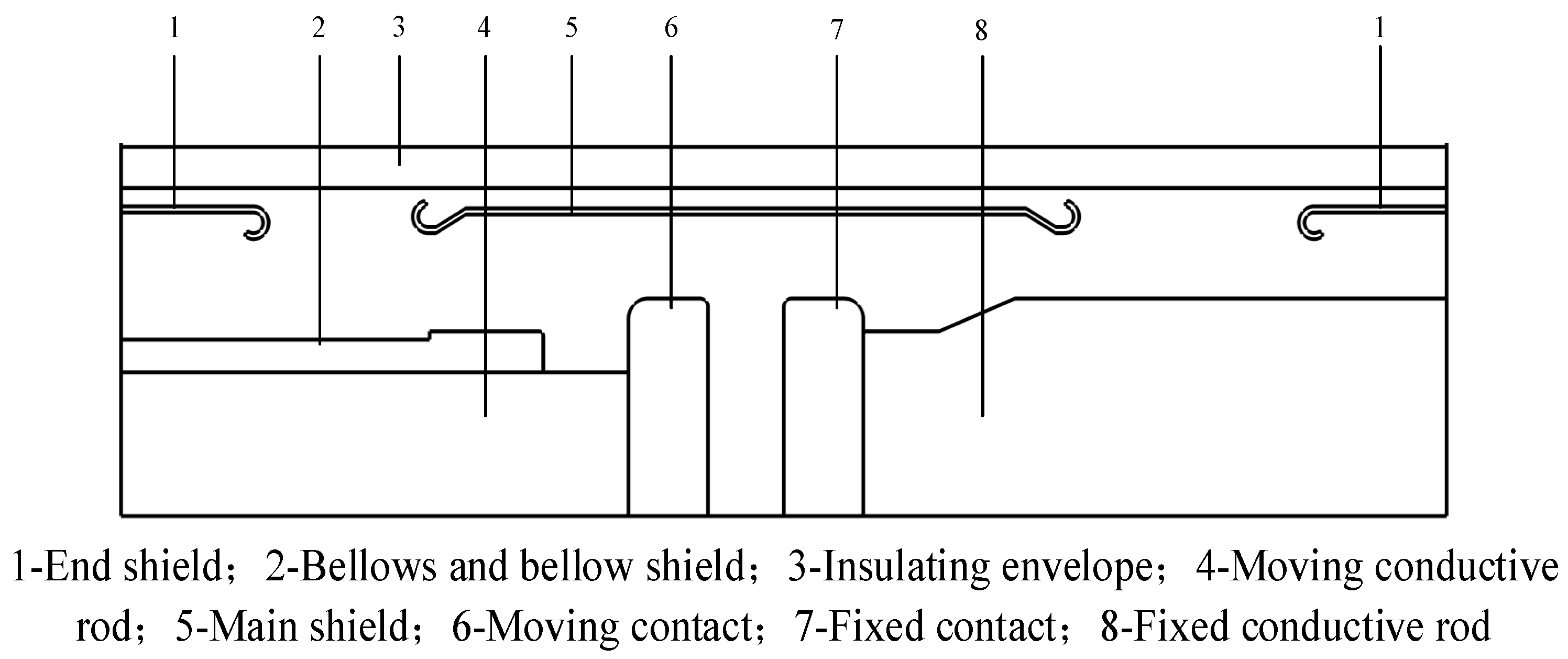
A vacuum interrupter mainly consists of a stationary contact, a moving contact, a stationary conductive rod, a moving conductive rod, an insulating envelope, a bellows, metallic end plates, and a shielding system [28,29]. The shielding system functions to cool and condense the metal vapor produced during the arcing process, preventing its deposition on the inner wall of the insulating envelope, which would otherwise reduce its dielectric strength. Moreover, it facilitates the rapid decay of the residual plasma after arc extinction [30,31]. The shielding system typically includes a main shield, bellows shield, and end shield, with additional equalizing shields incorporated when necessary.
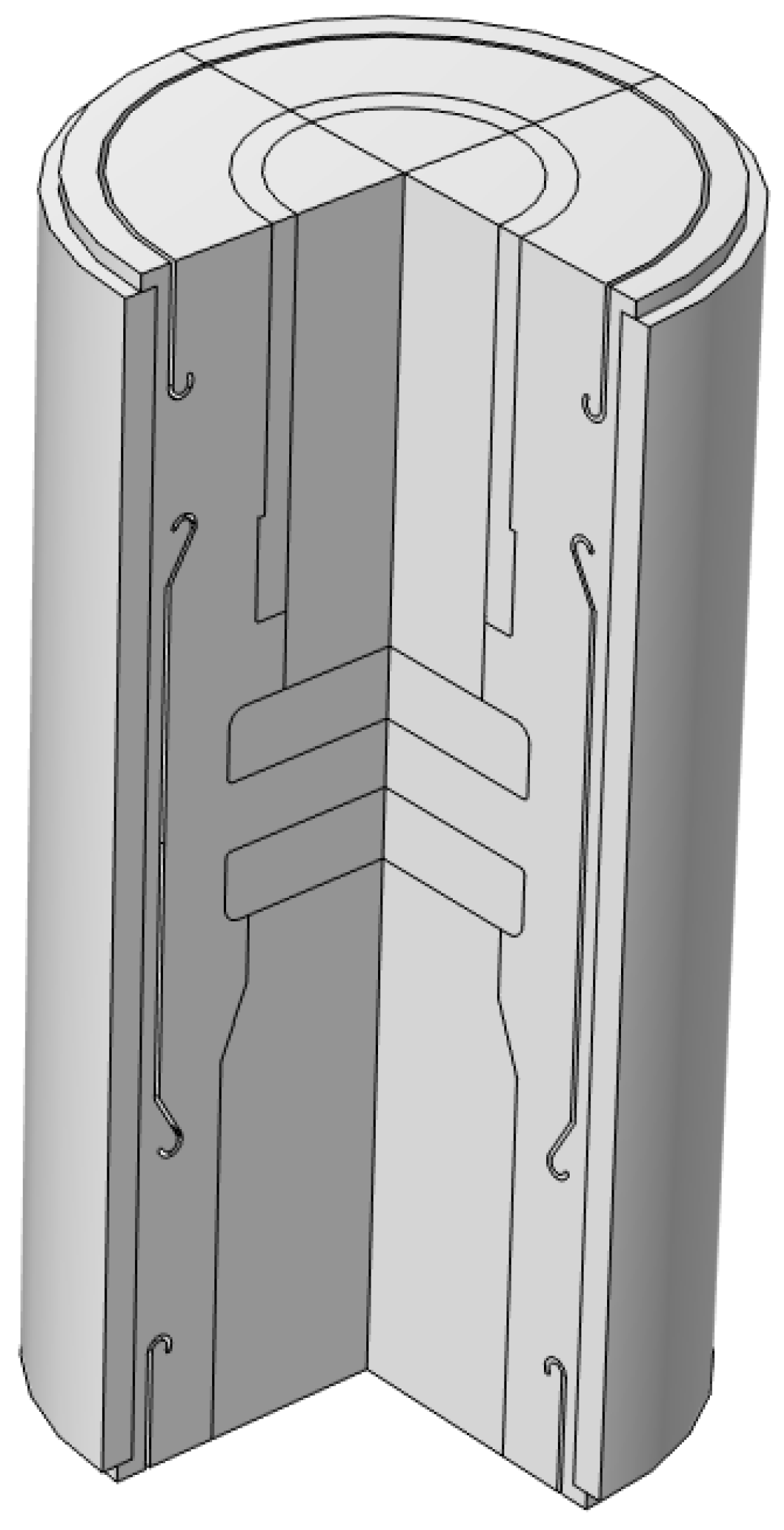
If the electric field inside the interrupter is unevenly distributed, local weak points in insulation may occur. An appropriately designed shielding system not only absorbs metal vapor but also adjusts the internal electric field distribution of the vacuum interrupter, thereby homogenizing the field and enhancing its insulation performance. It should be noted that this study primarily focuses on the dominant role of macroscopic geometric structures, and therefore reasonably simplifies microscopic factors such as surface roughness and triple-junction effects. The simulation model of the vacuum interrupter is shown in Figure 1, and its partial three-dimensional simulation model is presented in Figure 2. Some structural parameters of this interrupter chamber are listed in Table 1 below.
Figure 1.
Two-dimensional electric field simulation model of vacuum arc interrupter.
Figure 2.
Three-dimensional electric field simulation model of the vacuum interrupter chamber.
Table 1.
Structural Parameters of the 31.5 kV Vacuum Circuit Breaker Interrupter Chamber.
2.2. Model Parameters
In the simulation model, a high voltage of 31.5 kV was applied to the stationary terminal, while the moving terminal was set to zero potential. The computational domain was extended with an infinite element region, with the potential at infinity set to zero. The main shield was assigned a floating potential. Material parameters for each component are listed in Table 2.
Table 2.
Material parameters of vacuum arc interrupter.
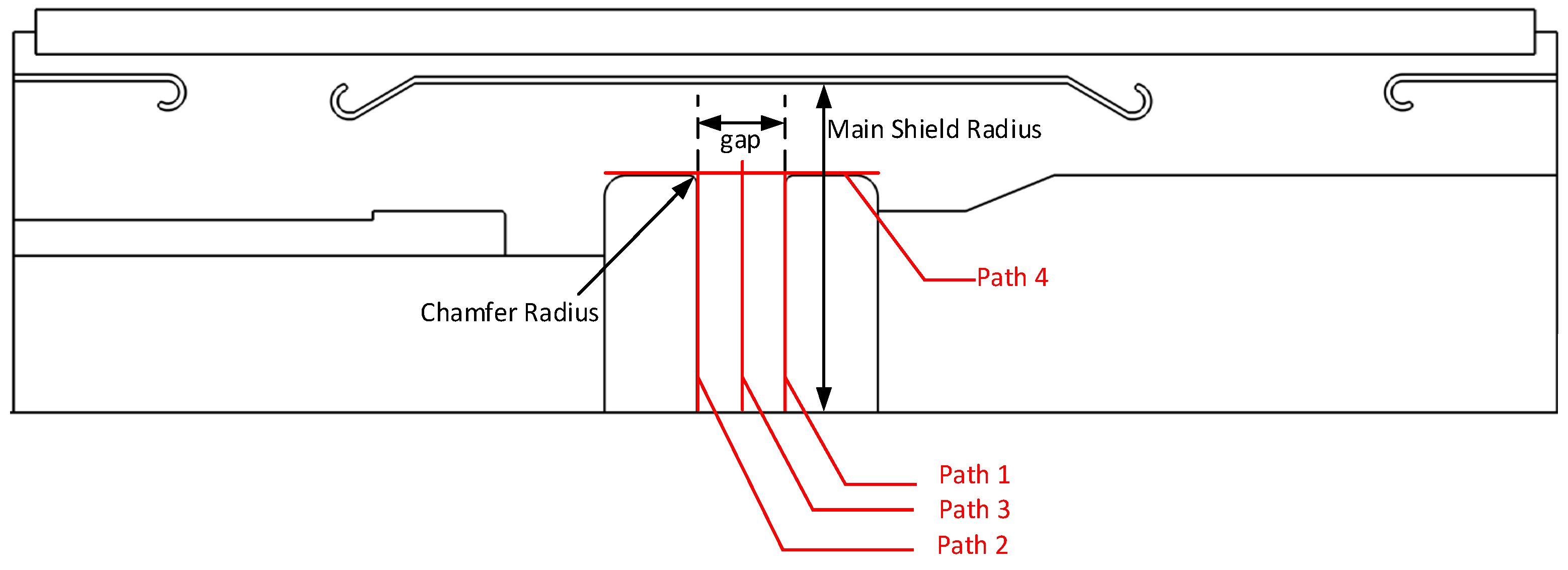
To investigate the electric field distribution within the vacuum interrupter, four paths were defined to record the variation in electric field intensity along each path. Path 1 was along the radial direction on the surface of the stationary contact, Path 2 along the radial direction on the surface of the moving contact, Path 3 along the radial direction through the center of the moving and stationary contacts, and Path 4 along the axial boundary between the moving and stationary contacts, as shown in Figure 3.
Figure 3.
Schematic diagram of four paths.
3. Effect of Contact Gap and Edge Chamfer Radius on the Electric Field in a Vacuum Interrupter
3.1. Effect of Contact Gap on the Electric Field in a Vacuum Interrupter
The contacts are the core components of the vacuum interrupter, which controls current interruption through the making and breaking of the moving and stationary contacts. When the circuit breaker operates, the region between the moving and stationary contacts is usually where the electric field is most concentrated within the interrupter. The contact gap significantly influences the electric field magnitude inside the interrupter. In this study, contact gaps of 20–25 mm were selected for simulation.
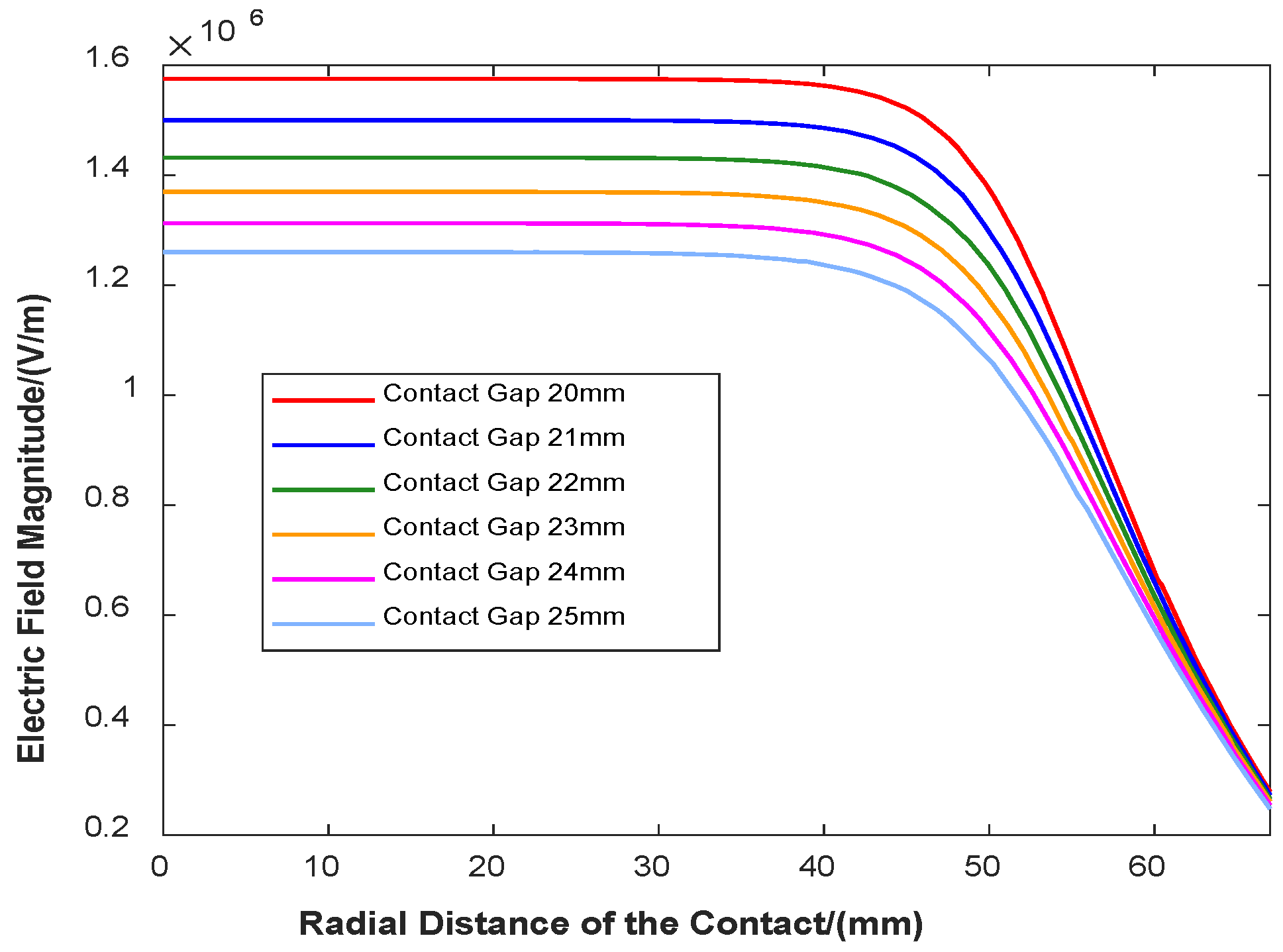
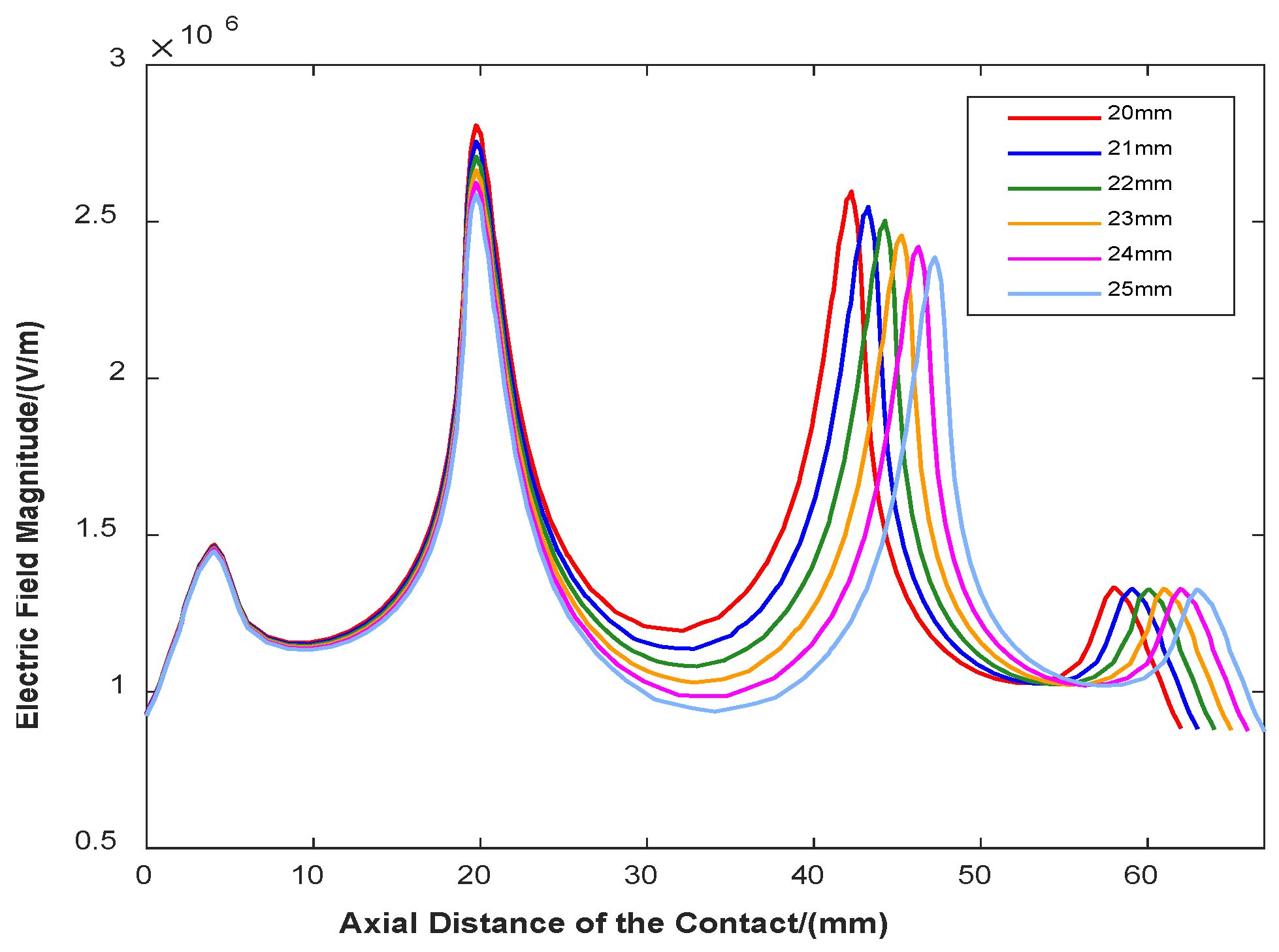
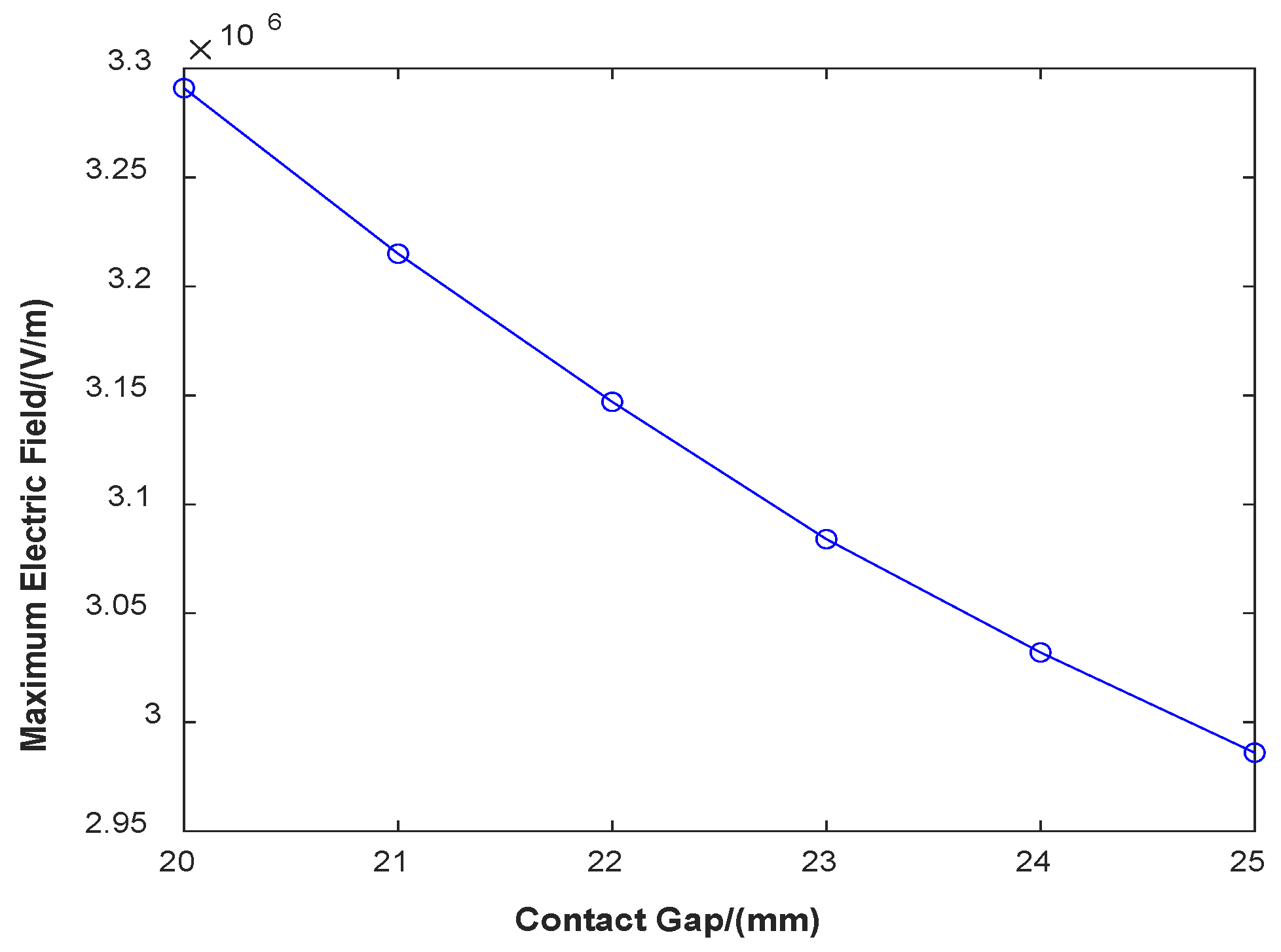
The electric field distributions along the path between the moving and stationary contacts (Path 3) and along the axial boundary between the contacts (Path 4) were recorded, as shown in Figure 4 and Figure 5. The relationship between the maximum electric field in the interrupter and the contact gap is presented in Figure 6. The electric field distribution patterns are similar under different contact gaps, with the maximum field occurring at the contact edges. As the contact gap increases, the maximum electric field within the interrupter decreases. Although increasing the contact gap can significantly reduce the maximum field, excessively large gaps increase the mechanical burden on the operating mechanism and may reduce the interrupting capability of the circuit breaker [32,33]. Therefore, in industrial applications, the contact gap should be selected by balancing multiple factors.
Figure 4.
Electric field distribution on path 3 at different electrode gaps.
Figure 5.
Electric field distribution on path 4 at different electrode gaps.
Figure 6.
Maximum electric field of vacuum arc interrupter at different electrode gaps.
3.2. Effect of Contact Edge Chamfer Radius on the Electric Field Distribution
The simulation results indicate that the maximum electric field within the vacuum interrupter is generally concentrated at the edges of the contacts, primarily due to field enhancement at sharp edges. To reduce this field concentration, the contact edges are chamfered. In this study, chamfer radius ranging from 0.5 mm to 3 mm were selected for simulation to investigate the effect of contact edge chamfering on the electric field distribution.
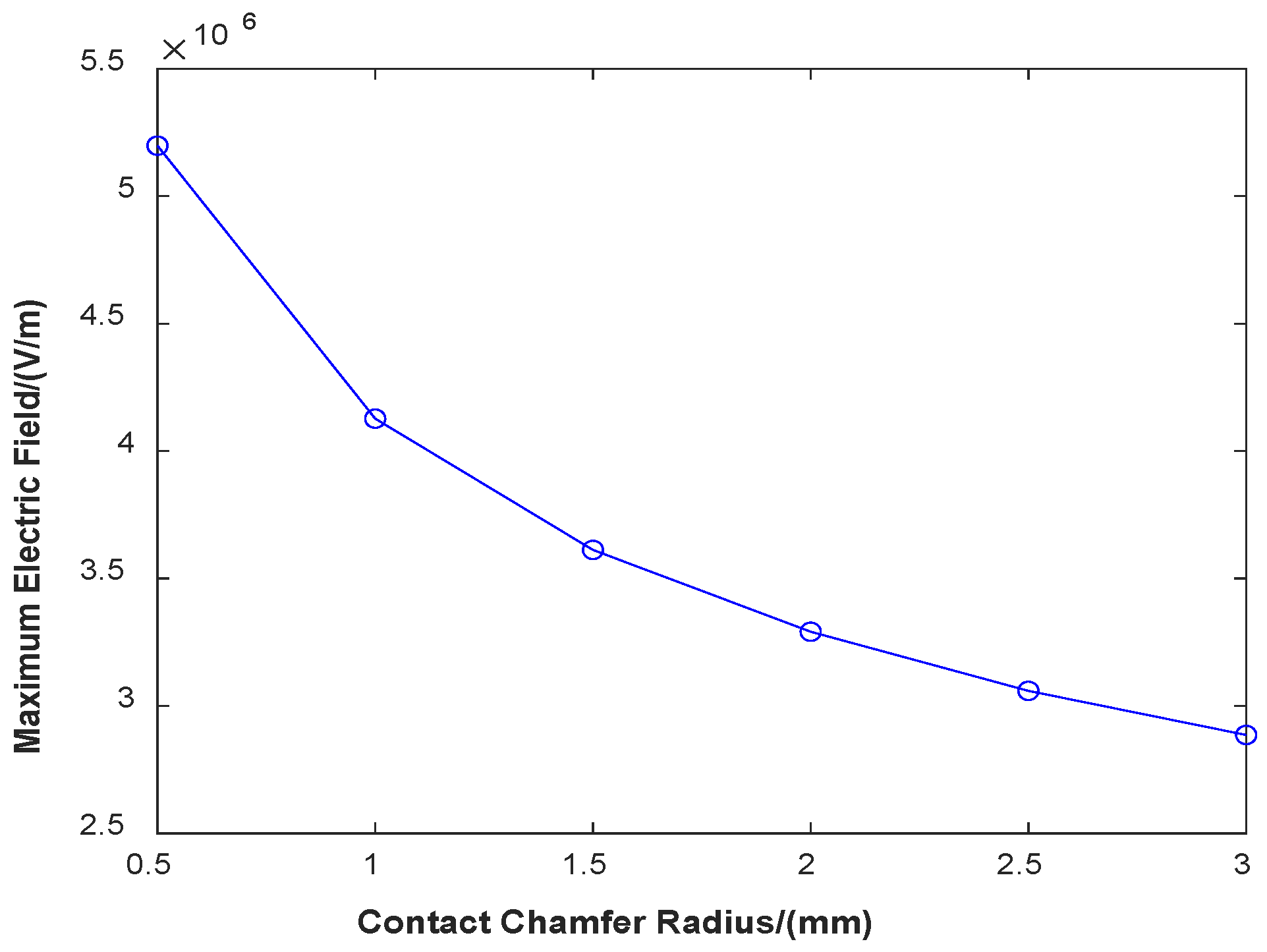
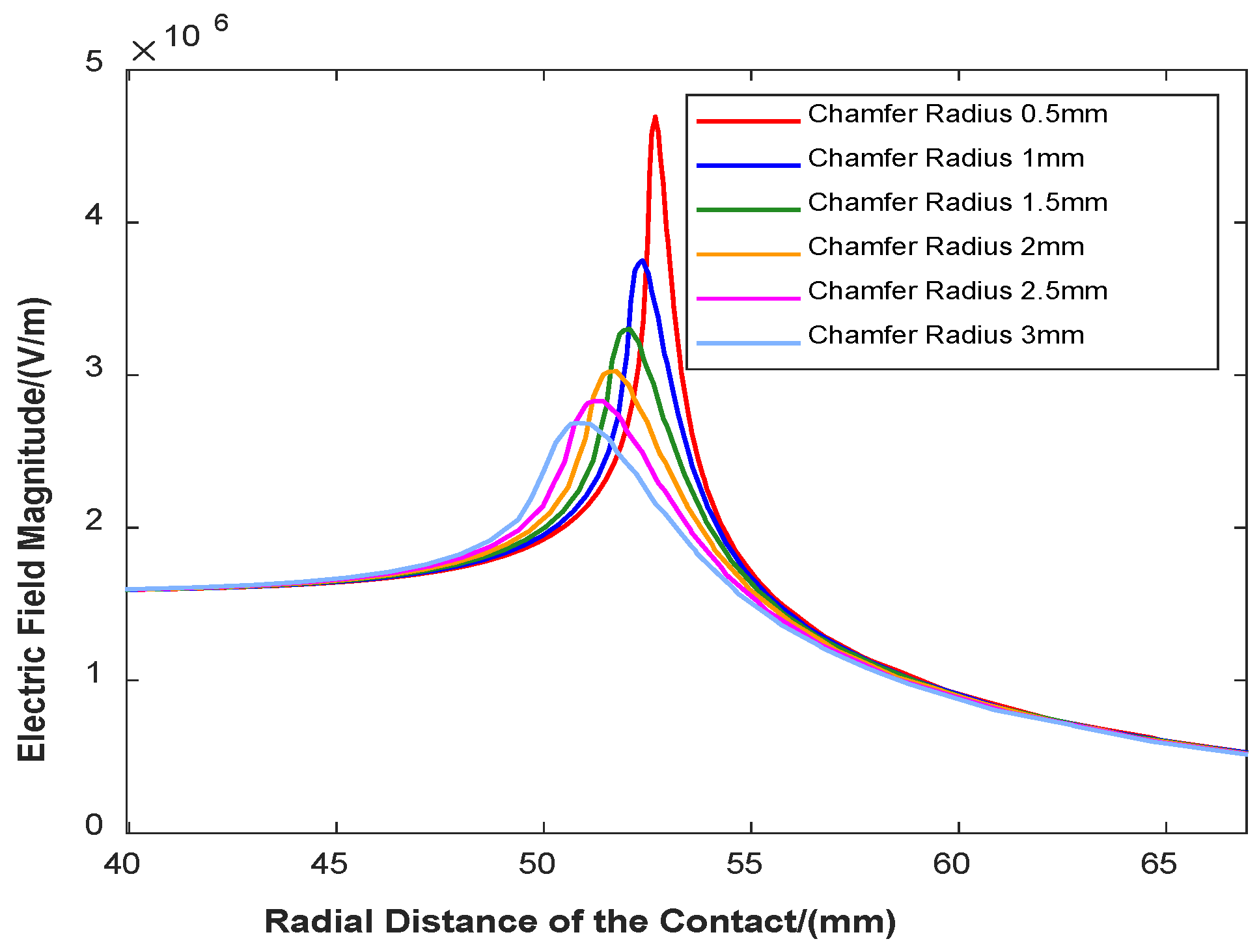
Figure 7 shows the relationship between the maximum electric field in the interrupter and the contact chamfer radius, while Figure 8 presents the radial electric field distribution along the surface of the stationary contact (Path 1) for different chamfer radius.
Figure 7.
Maximum electric field of vacuum arc interrupter at different contact chamfer radius.
Figure 8.
Electric field distribution on path 1 at different contact chamfer radius.
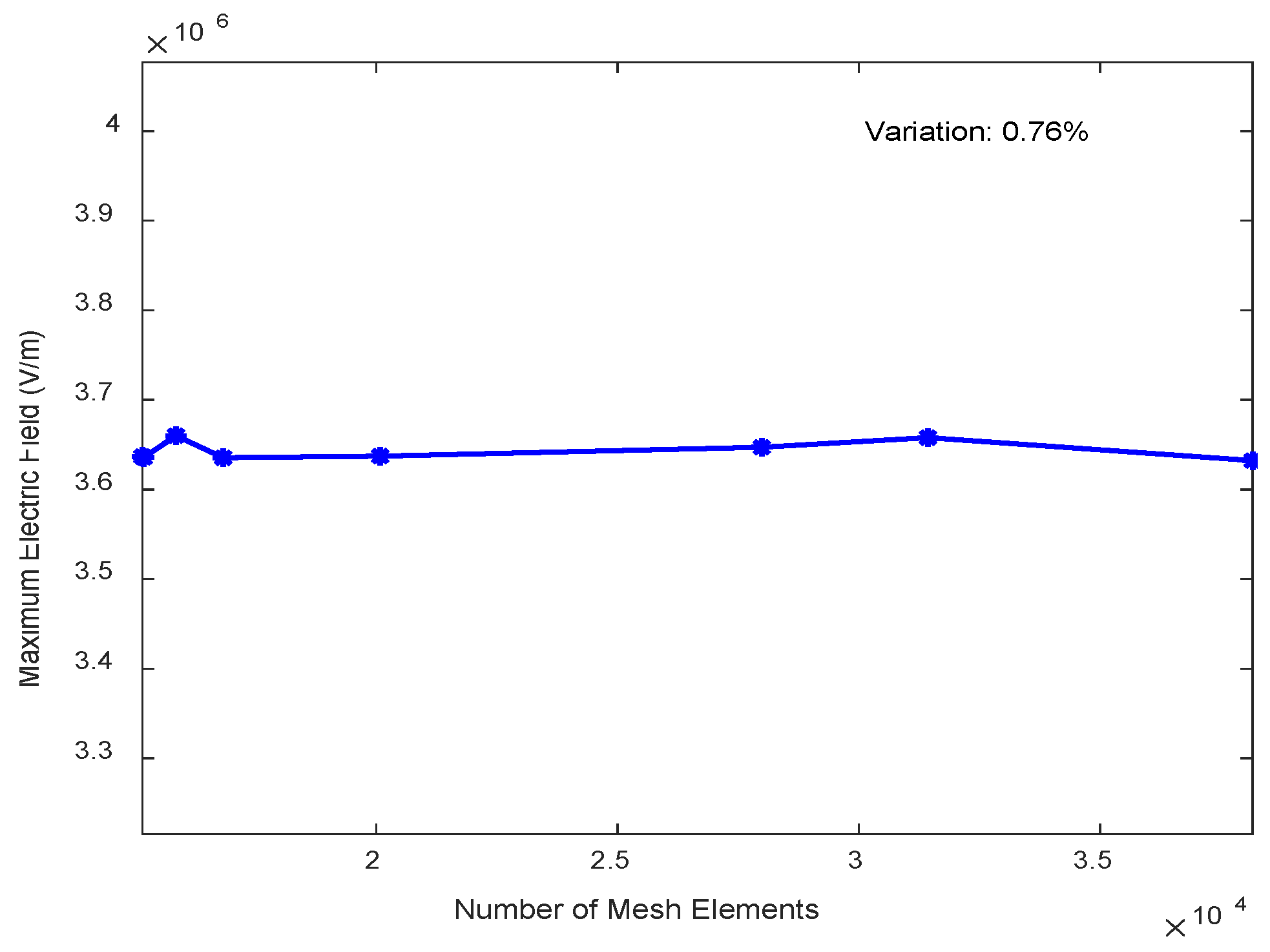
It is evident that increasing the contact chamfer radius can mitigate the electric field concentration at the contact edges, with the maximum electric field decreasing as the chamfer radius increases. However, the reduction in field strength exhibits diminishing returns. The chamfer radius should not be excessively enlarged for three reasons: (1) the boundary attenuation effect reduces the benefit of further increasing the chamfer radius; (2) a larger chamfer reduces the contact area between the moving and stationary contacts, and excessive reduction may impair the performance of the interrupter; (3) the contact blade itself is relatively thin. To verify the reliability of the simulation results, a mesh independence study was conducted, as shown in Figure 9. The analysis demonstrates that further refinement of the baseline mesh results in a change of less than 0.8% in the maximum electric field intensity within the interrupter chamber, confirming that the current mesh configuration yields a mesh-independent solution.
Figure 9.
Mesh Sensitivity Analysis and Results.
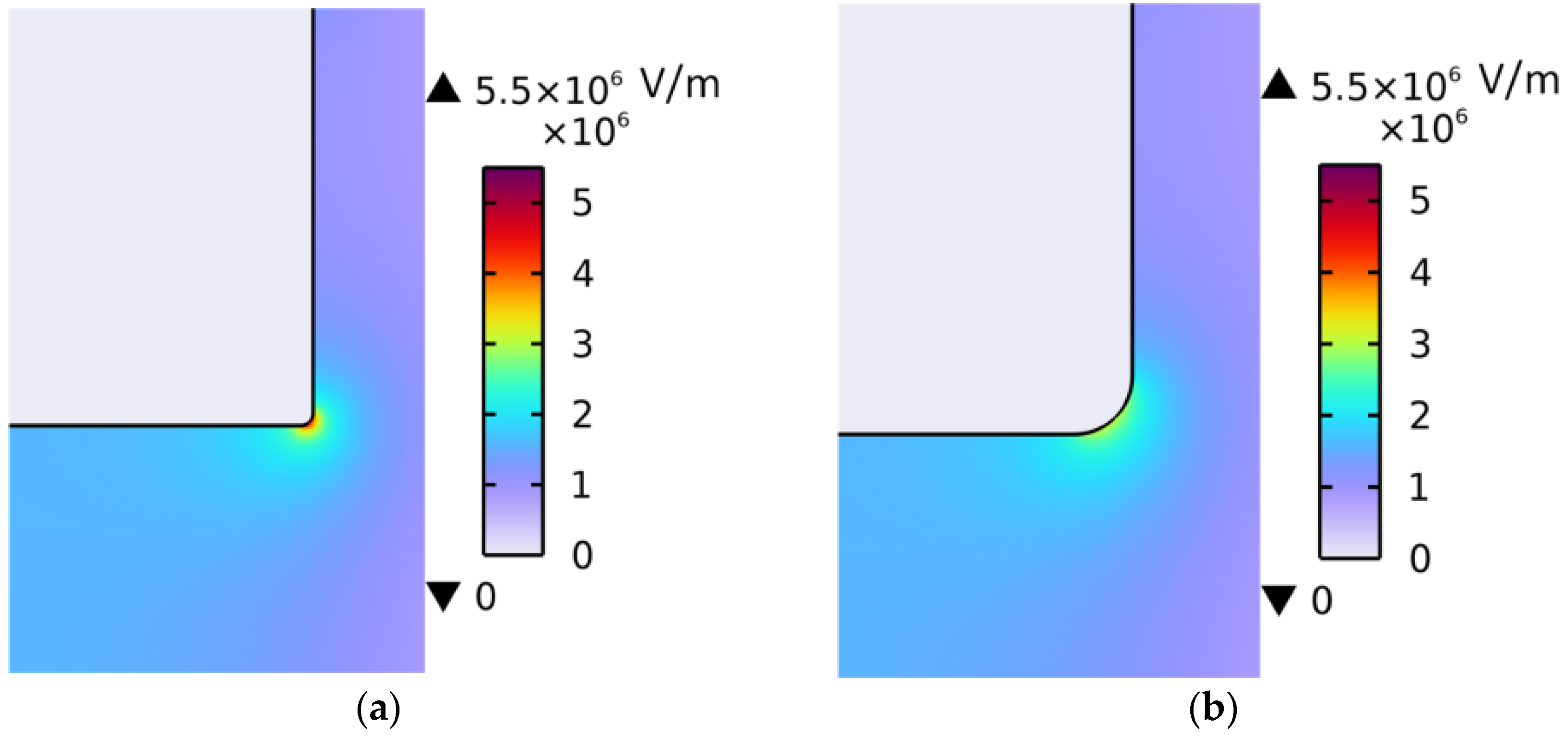
Figure 10 illustrates the electric field distribution at the edge of the moving contact for chamfer radius of 0.5 mm and 2 mm. Severe field concentration occurs at the 0.5 mm chamfer, while at 2 mm the concentration is significantly alleviated. Considering the thinness of the contact blade, a chamfer radius of 2 mm was selected in this study.
Figure 10.
Distribution diagram of electric field at the edge of the moving end contact ((a): contact chamfer radius of 0.5 mm; (b): contact chamfer radius of 2 mm).
4. Effect of Main Shield on the Electric Field Distribution in a Vacuum Interrupter
4.1. Effect of Main Shield Radius on the Electric Field Distribution
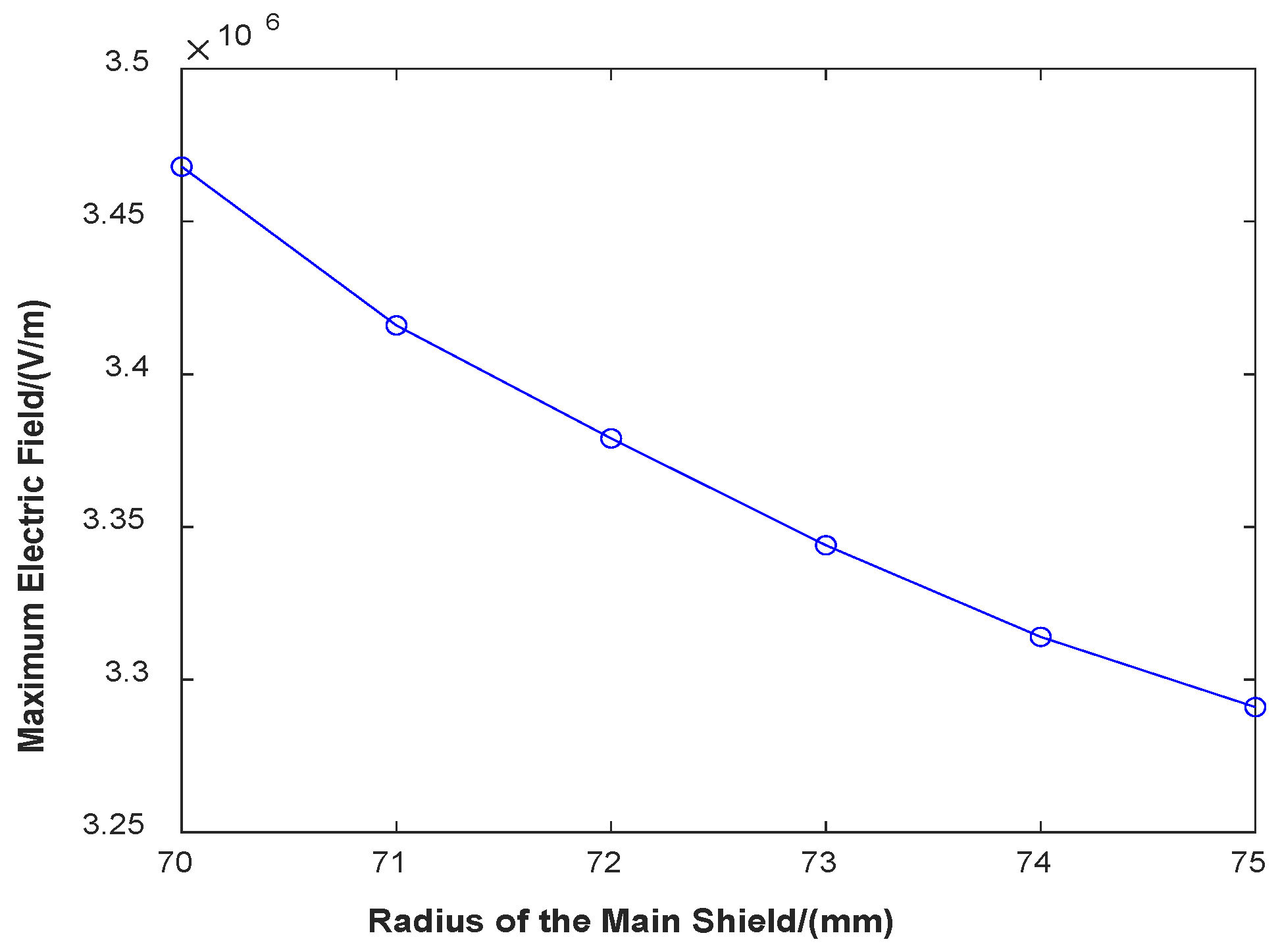
In addition to its shielding function, the main shield can also adjust the electric field distribution within the vacuum interrupter. The main shield radius is defined as the distance from the center of the contacts to the main shield [34]. Simulation models were established with main shield radius ranging from 70 mm to 75 mm to investigate their effect. The relationship between the maximum electric field in the interrupter and the main shield radius is shown in Figure 11.
Figure 11.
Maximum electric field of vacuum arc interrupter at different main shield radius.
As the main shield radius increases, the maximum electric field in the interrupter decreases. However, an excessively large radius can result in an oversized interrupter and may reduce the shielding effectiveness of the main shield. In industrial production, the selection of the main shield radius must consider multiple factors.
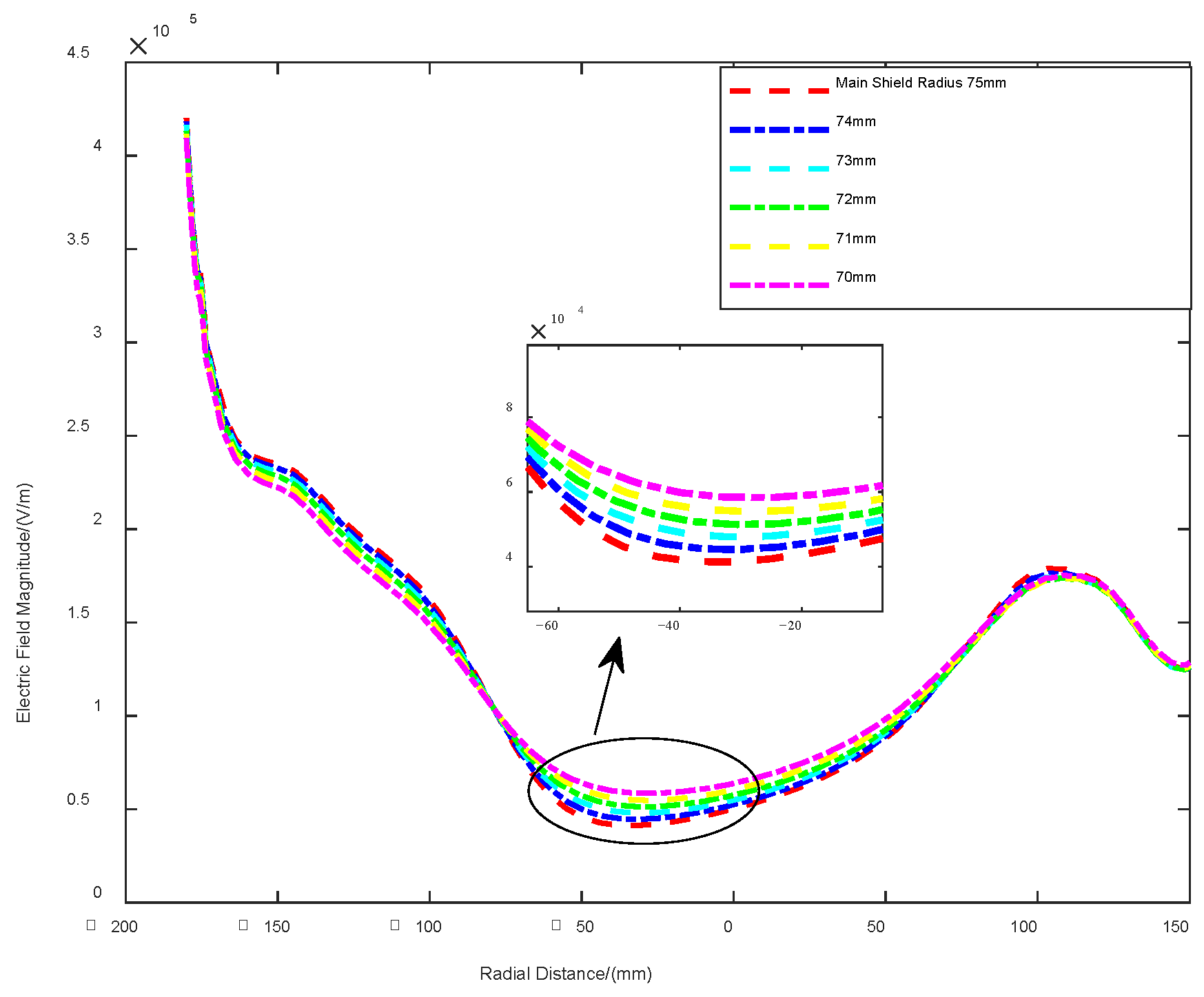
Figure 12 shows the distribution of the electric field intensity along the axial distance on the vacuum interrupter’s insulating envelope. The field strength is minimum at the central region of the contacts and gradually increases towards both ends. Furthermore, a comparison of the electric field curves for different main shield radii reveals that the overall distribution pattern remains consistent, with no significant differences observed despite the variation in radius.
Figure 12.
Axial Electric Field Distribution on Vacuum Interrupter Insulating Envelope.
4.2. Electric Field Distribution Optimization with an Asymmetric Main Shield in a Vacuum Interrupter
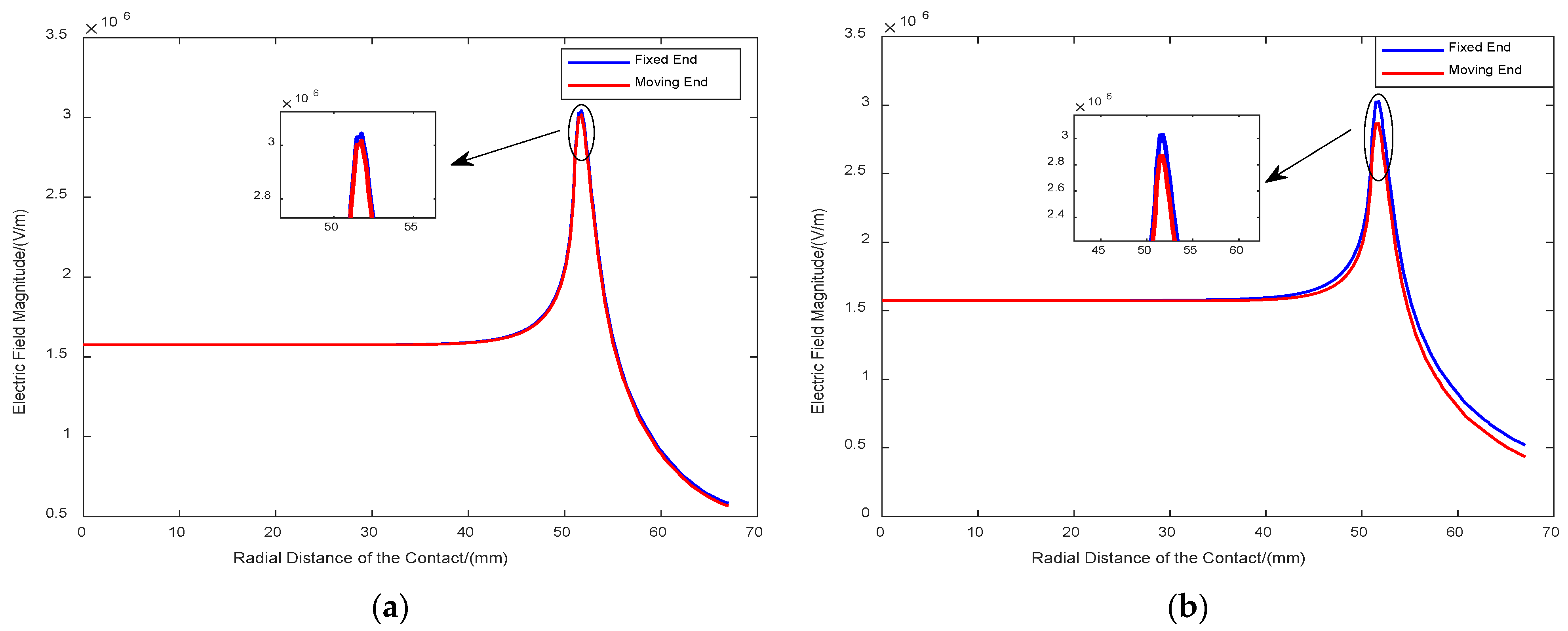
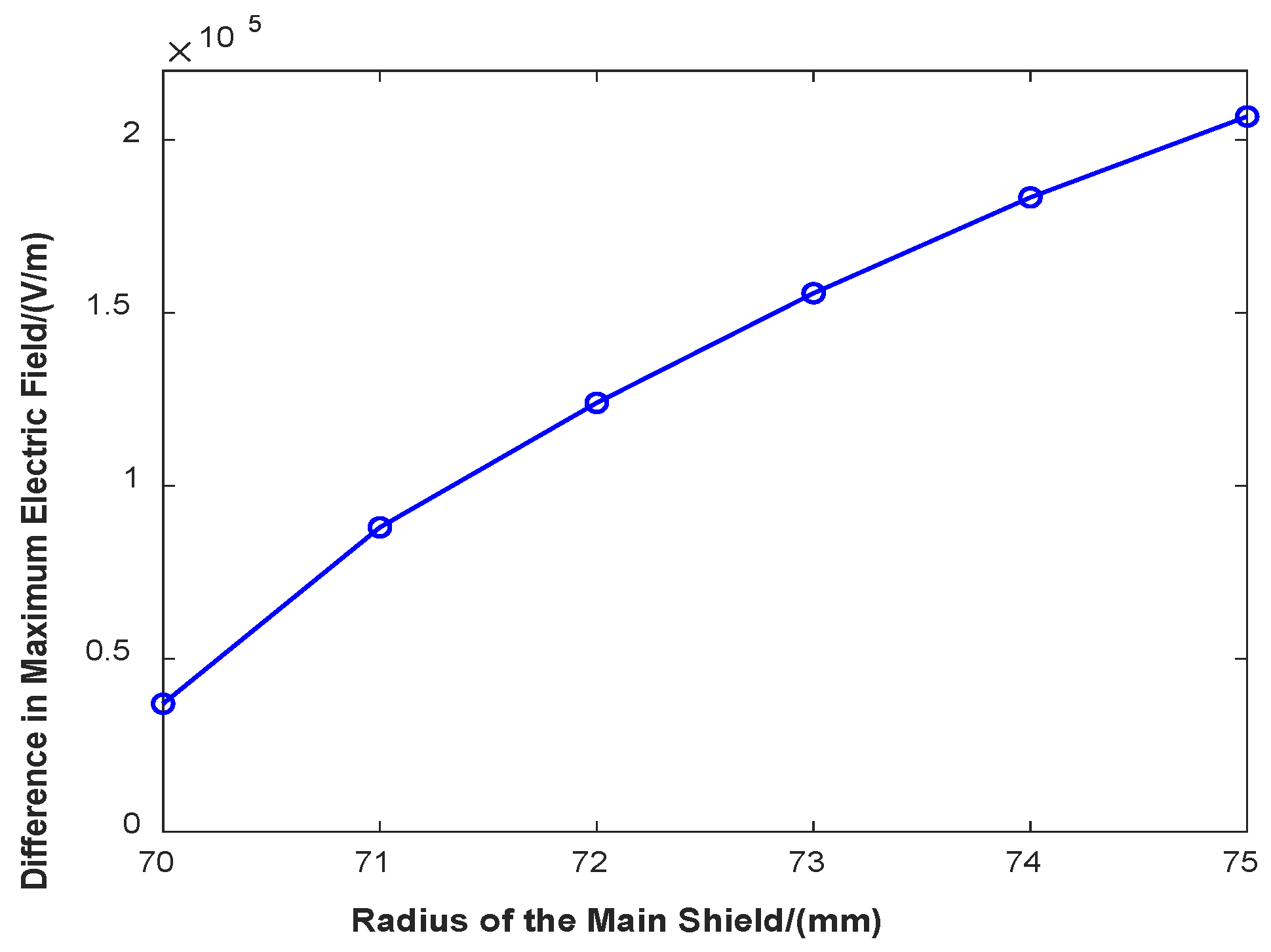
As discussed in the previous section, moderately increasing the main shield radius can reduce the maximum electric field within the vacuum interrupter, but the reduction is limited. The electric field distributions along the radial direction on the surfaces of the stationary and moving contacts (Paths 1 and 2) were recorded for main shield radii of 70 mm and 75 mm, as shown in Figure 13. The difference in the maximum electric field between the stationary and moving contact regions under different shield radii is presented in Figure 14.
Figure 13.
Electric field distribution along the radial direction on the static contact surface and moving contact surface (path 1 and path 2). ((a): main shield radius 70 mm; (b): main shield radius 75 mm).
Figure 14.
The difference in maximum electric field values between the static and moving contact areas under different radii of the main shield.
It can be observed that, in this vacuum interrupter, as the main shield radius increases, the electric field at the edge of the stationary contact increases while that at the edge of the moving contact decreases, resulting in a higher degree of asymmetry. This asymmetry is unfavorable for achieving a uniform electric field and for further reducing the maximum field intensity.
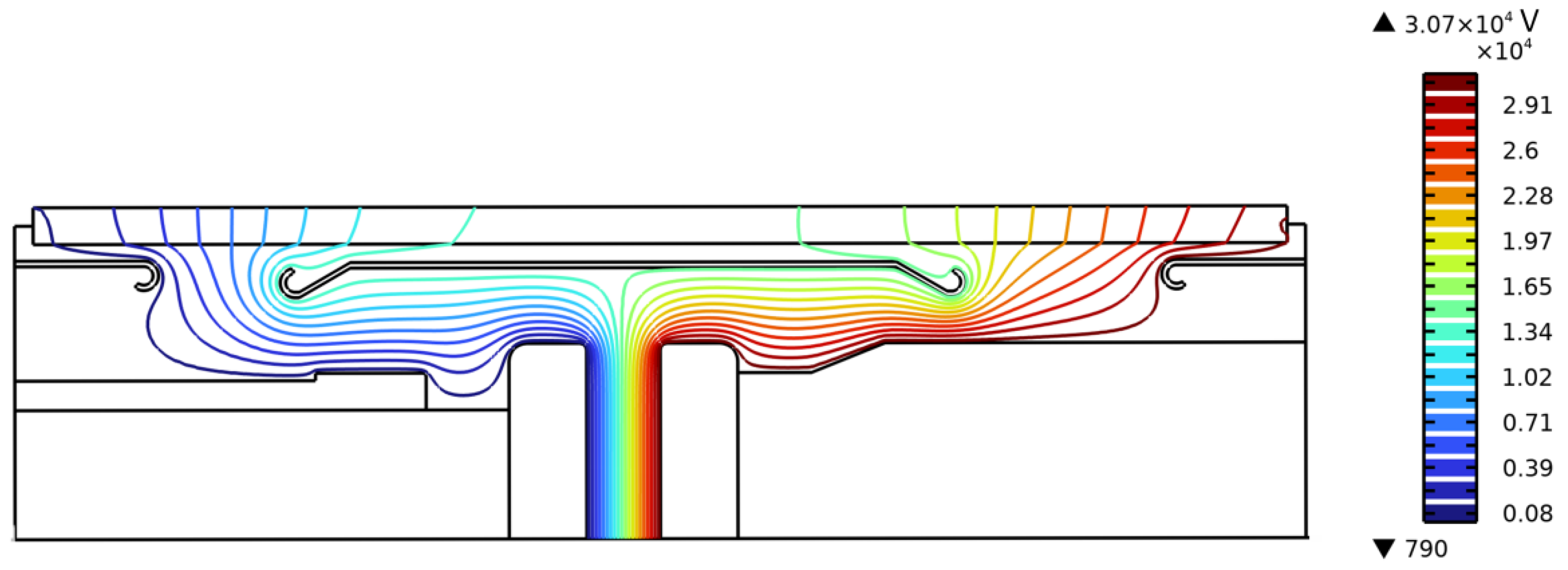
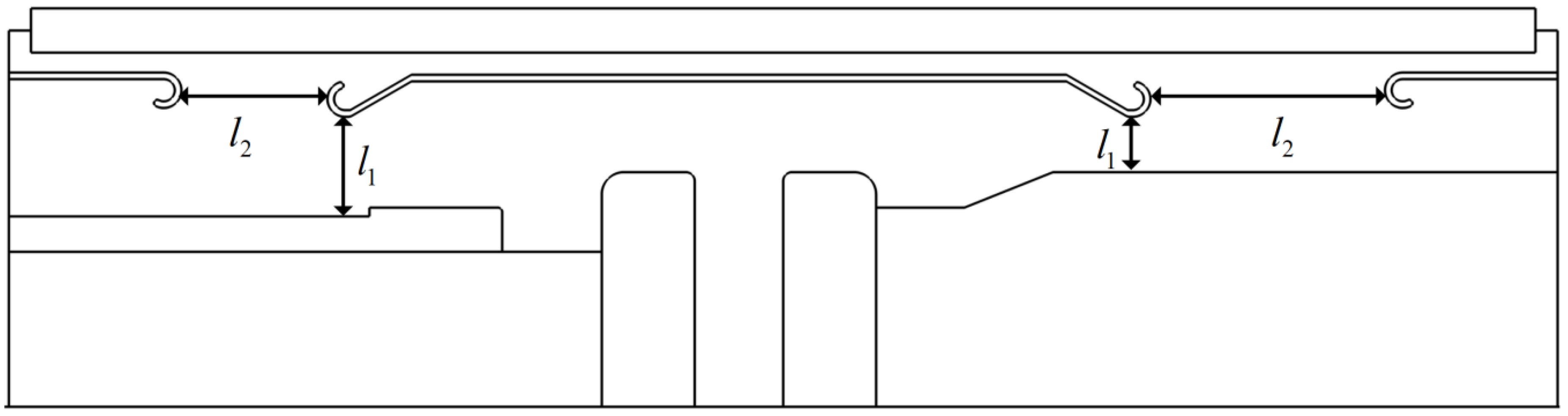
Figure 15 shows the equipotential distribution for a main shield radius of 75 mm. The equipotential lines in the contact region are not symmetrically distributed, resulting in a significantly higher maximum electric field at the stationary contact compared to the moving contact. Generally, the maximum electric field within a vacuum interrupter occurs in the contact region, and asymmetry in this region leads to an increase in the overall maximum field. The key factors influencing the distribution of equipotential lines, and thus the electric field distribution, are: (1) the distance between the end of the main shield and the conductive rod (for the moving end, this is the distance between the main shield end and the bellows and bellows shield); (2) the distance between the end of the main shield and the end shield. For clarity, the former is referred to as Distance 1 l1 and the latter as Distance 2 l2, as illustrated in Figure 16. Due to the structural asymmetry between the stationary and moving ends of the interrupter in this study, these two distances differ, leading to an uneven electric field distribution. In such cases, an asymmetrically designed main shield can be used to improve the uniformity of the electric field distribution.
Figure 15.
Potential equipotential diagram when the radius of the main shield is 75 mm.
Figure 16.
Schematic diagram of distance l1 and distance l2.
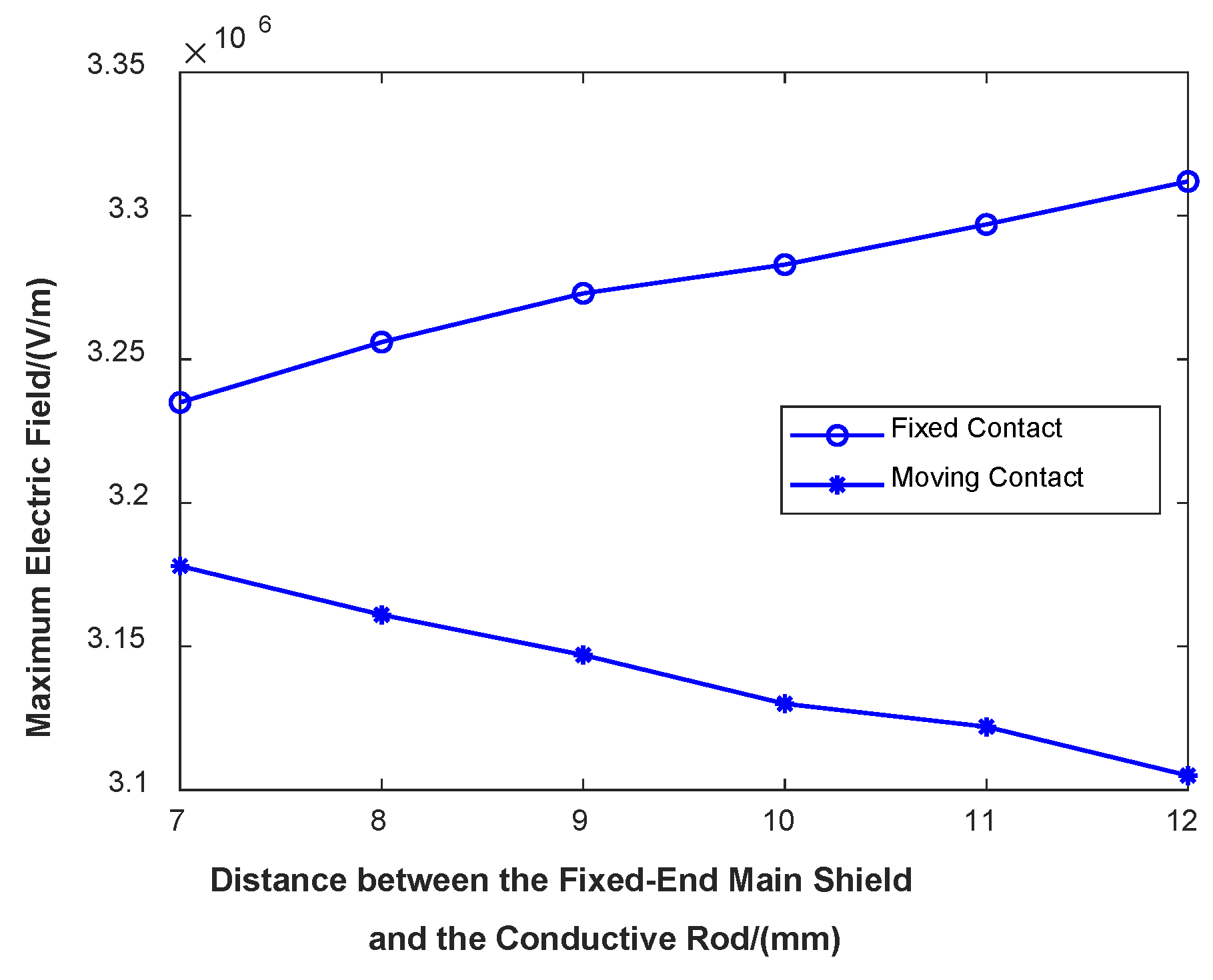
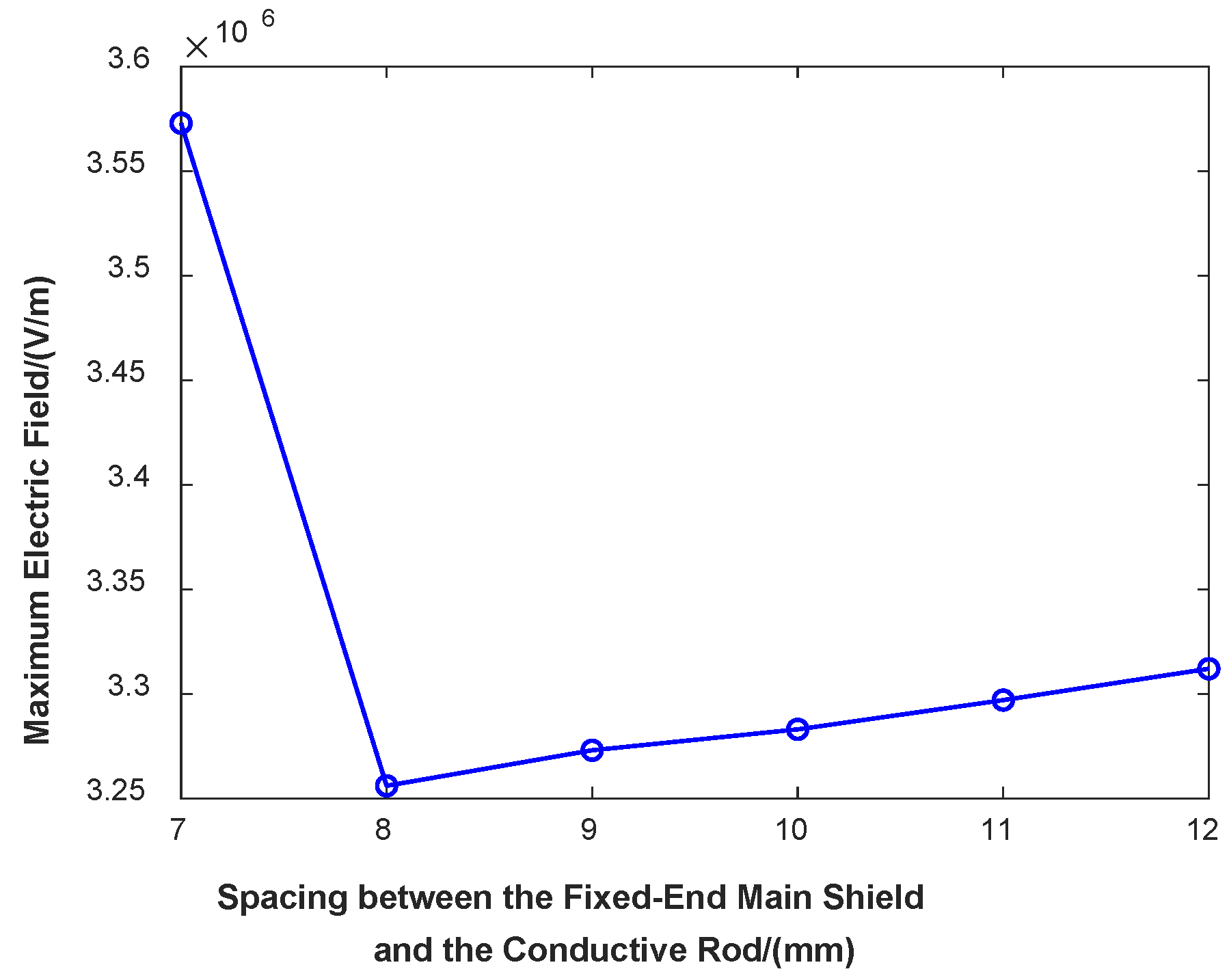
Taking the model with a main shield radius of 75 mm as an example, the spacing l1 is 22.5 mm at the moving end and 12.5 mm at the fixed end. The fixed-end spacing l1 is reduced to optimize the electric field distribution. The maximum electric field values in the contact regions of the moving and fixed ends under different fixed-end spacings l1 are shown in Figure 17, and the maximum electric field values in the interrupter chamber under different fixed-end spacings l1 are shown in Figure 18.
Figure 17.
Maximum electric field in the moving contact area and maximum electric field in the static contact area at different distances of l1.
Figure 18.
Maximum electric field of vacuum arc interrupter at different distances of l1.
As the fixed-end spacing l1 decreases, the maximum electric field in the fixed-end contact region decreases, while that in the moving-end contact region increases, thereby reducing the degree of asymmetry. Consequently, when the fixed-end spacing l1 is reduced from 12 mm to 8 mm, the maximum electric field in the vacuum interrupter chamber decreases. However, when the fixed-end spacing l1 is further reduced from 8 mm to 7 mm, the maximum electric field increases abruptly. This is because the distance between the fixed end of the main shield and the conductive rod becomes too small, causing the location of the maximum electric field in the interrupter chamber to shift from the contact edge to the fixed end of the main shield. Although further reduction in the fixed-end spacing l1 can continue to decrease the maximum electric field in the contact region, it would lead to a sharp increase in the electric field at the fixed end of the main shield.
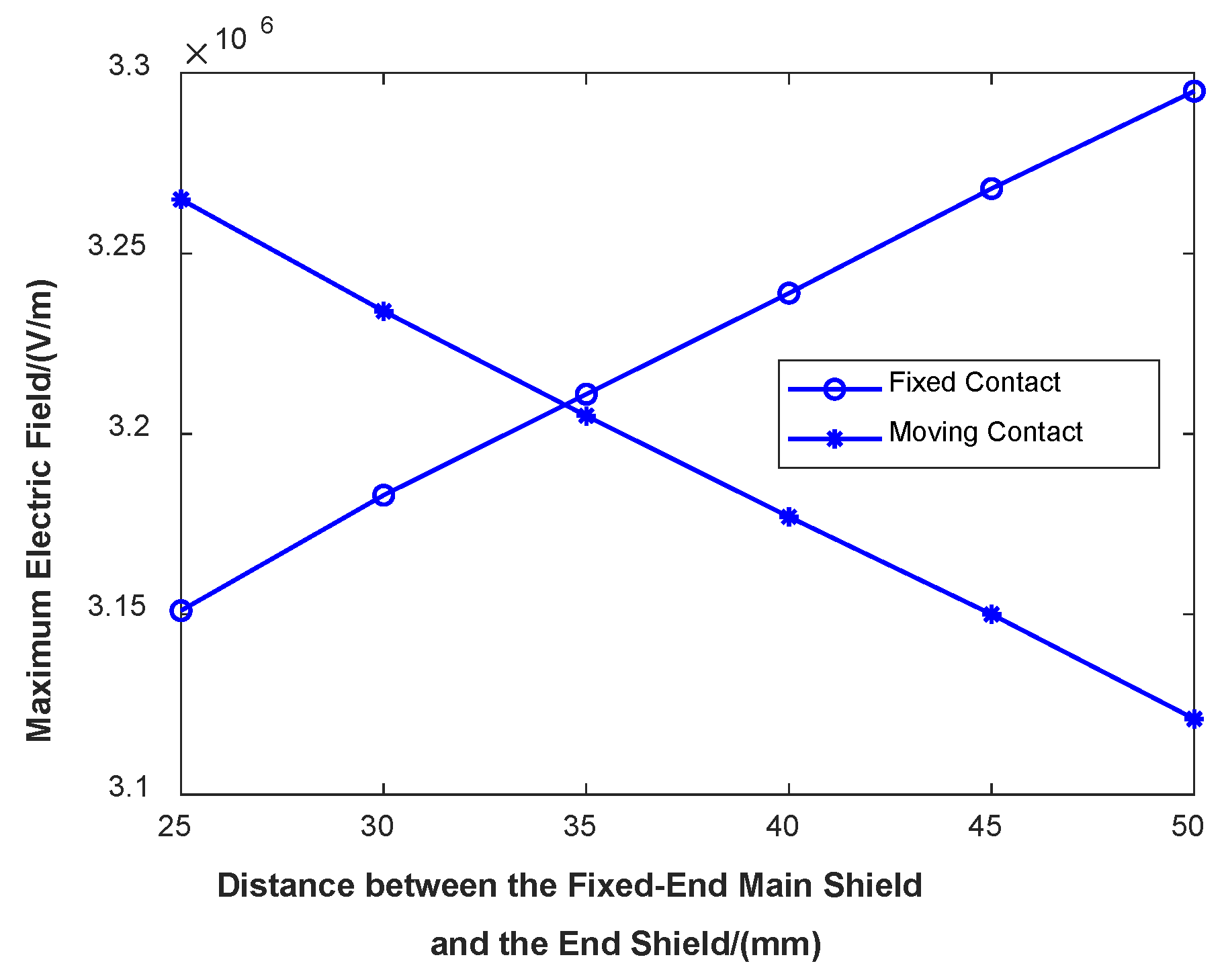
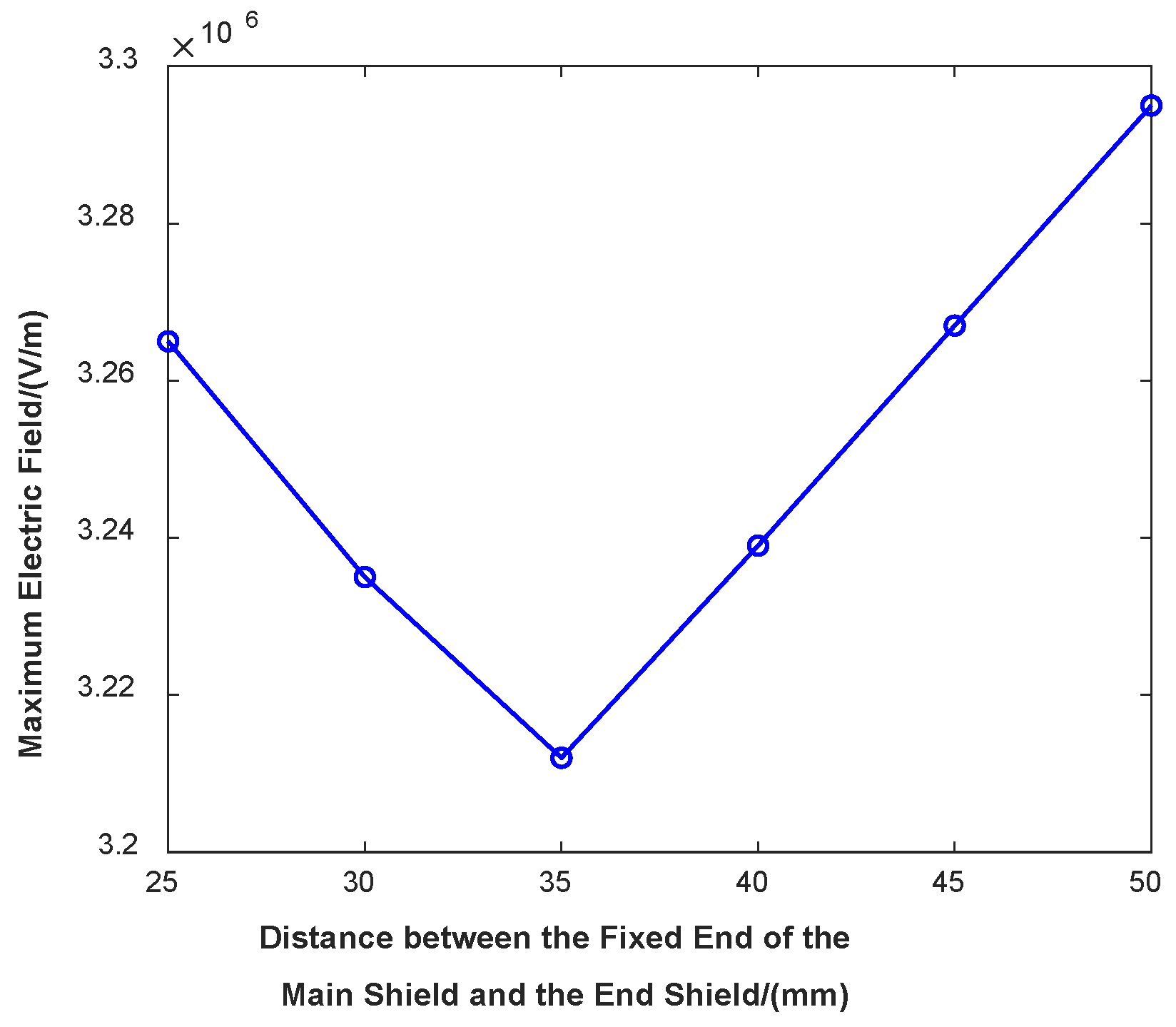
In the model with a main shield radius of 75 mm, the spacing l2 is 33 mm at the moving end and 53 mm at the fixed end. The length of the main shield at the fixed end is increased to reduce the fixed-end spacing l2, thereby optimizing the electric field distribution. The maximum electric field values in the contact regions of the moving and fixed ends under different fixed-end spacings l2 are shown in Figure 19, and the maximum electric field values in the interrupter chamber under different fixed-end spacings l2 are shown in Figure 20.
Figure 19.
Maximum electric field in the moving contact area and maximum electric field in the static contact area at different distances of l2.
Figure 20.
Maximum electric field of vacuum arc interrupter at different distances of l2.
As the fixed-end spacing l2 decreases, the maximum electric field in the fixed-end contact region decreases, while that in the moving-end contact region increases, leading to a reduction in the degree of asymmetry. When the maximum electric field values in the fixed-end and moving-end contact regions become equal, the asymmetry is minimized, and the maximum electric field in the interrupter chamber is also reduced to its lowest value. Further reduction in the fixed-end spacing l2 beyond this point results in an increase in the maximum electric field within the interrupter chamber. The results in Figure 20 confirm this trend: as the fixed-end spacing l2 decreases, the maximum electric field in the interrupter chamber first decreases and then increases, reaching a minimum at 35 mm.
During the adjustment of the fixed-end spacing l2, the distance between the end of the main shield and the conductive rod remains unchanged. Therefore, this approach does not cause a sharp increase in the electric field at the fixed end of the main shield, making it more effective than adjusting the fixed-end spacing l1.
5. Conclusions
This paper investigates the influence of contact gap, edge chamfer radius, and shielding on the internal electric field distribution of a vacuum interrupter chamber designed for 31.5 kV circuit breakers with a thickened fixed-end conductive rod. The main conclusions are summarized as follows:
- Increasing the contact gap reduces the electric field strength between the moving and fixed contacts and decreases the maximum electric field within the interrupter chamber. However, it does not alter the fundamental distribution pattern of the electric field inside the vacuum interrupter.
- A larger contact edge chamfer radius mitigates electric field concentration at the contact edges and reduces the maximum electric field within the interrupter. A chamfer radius of 2 mm is sufficient to significantly alleviate field concentration, thereby considerably reducing the risk of breakdown at this location.
- As the radius of the main shield increases, the maximum electric field in the interrupter chamber decreases.
- With an increase in the main shield radius, the asymmetry of the electric field between the moving and fixed contact regions in the studied interrupter becomes more pronounced, which is detrimental to achieving a uniform field distribution.
- The asymmetry of the electric field between the moving and fixed contact regions can be optimized by adjusting two distances: the spacing between the fixed-end main shield and the conductive rod, and the spacing between the fixed-end main shield and the end shield. Reducing these spacings decreases the maximum electric field in the fixed-end contact region while increasing it in the moving-end region. The electric field distribution across the contacts becomes most symmetric, and the maximum field value in the contact region is minimized, when the field maxima at the moving and fixed contacts are equal. However, when the spacing between the fixed-end main shield and the conductive rod is reduced to 7 mm, the location of the maximum electric field shifts from the contact region to the end of the fixed main shield, resulting in an overall increase in the maximum field within the interrupter. Further reduction in this spacing is therefore not advisable.
This study innovatively reveals the inherent principles of electric field distribution in asymmetric structures and proposes a concrete method for electric field optimization through asymmetric shield design, providing an effective solution to address electric field concentration issues caused by structural asymmetry in engineering practice. The quantitatively derived design parameters from simulations can be directly applied to the engineering design and optimization of vacuum interrupter chambers, offering significant practical value for enhancing the insulation performance and operational reliability of circuit breakers.
It should be noted that this work primarily focuses on static insulation characteristics, with reasonable simplifications applied to microscopic factors such as surface roughness and triple-junction effects. Furthermore, while dynamic processes including vacuum arc behavior, plasma characteristics, and post-arc dielectric recovery are recognized as critical physical mechanisms, these aspects are reserved as key directions for future research. Such in-depth investigations will further refine the theoretical framework for evaluating breaking capacity and contribute to more comprehensive guidance for designing high-performance interrupter chambers.
Author Contributions
Conceptualization, N.Z.; software, Y.F.; validation, Z.B.; investigation, Y.F.; resources, S.W.; data curation, S.Y.; writing—original draft preparation, S.Y. and Y.F.; writing—review and editing, S.N.; supervision, S.W. and S.N.; project administration, N.Z.; funding acquisition, N.Z. All authors have read and agreed to the published version of the manuscript.
Funding
This research was funded by the National Key R&D Program of China, grant number “2022YFB2403600”.
Data Availability Statement
The original contributions presented in this study are included in the article. Further inquiries can be directed to the corresponding authors.
Conflicts of Interest
The authors declare no conflicts of interest.
References
- Akinyemi, A.S.; Musasa, K.; Davidson, I.E. Analysis of voltage rise phenomena in electrical power network with high concentration of renewable distributed generations. Sci. Rep. 2022, 12, 7815. [Google Scholar] [CrossRef]
- Leng, X. The Chaos Characteristic Identification and Control of the Arc in the Switches. Ph.D. Thesis, Shenyang University of Technology, Shenyang, China, 2014. [Google Scholar]
- Chen, R.D.; Xu, P.P.; Yao, H.N. Decarbonization of China’s regional power grid by 2050 in the government development planning scenario. Environ. Impact Assess. Rev. 2023, 101, 107129. [Google Scholar] [CrossRef]
- Keshavarzi, D.; Farjah, E.; Ghanbari, T. A Hybrid DC Circuit Breaker and Fault Current Limiter With Optional Interruption Capability. IEEE Trans. Power Electron. 2018, 33, 2330–2338. [Google Scholar] [CrossRef]
- Lu, C. Research on hazardous point and safety control technology for substation maintenance site based on high voltage SF6 circuit breaker. Mod. Manuf. Technol. Equip. 2024, (Suppl. S2), 4–6. [Google Scholar] [CrossRef]
- Luo, R.; Pi, D.N. Intelligent fault diagnosis of high voltage vacuum circuit breaker based on capacitive energy transfer change. Mach. Des. Res. 2024, 40, 248–253+260. [Google Scholar] [CrossRef]
- Hu, C.Z.; Chen, Z.Y.; Chen, L.A.; Zhang, J. Simulation and optimization on insulating property of 12kV vacuum circuit breakers based on finite element method. J. Xiamen Univ. Technol. 2017, 25, 23–28. [Google Scholar] [CrossRef]
- Zhao, S.S.; Hui, J.; Liu, B.J.; Hu, Q.D.; Li, Z. Analysis of breakdown and simulation optimization for vacuum interrupter. Electr. Eng. 2024, 25, 81–84. [Google Scholar] [CrossRef]
- Liu, T.; Ma, Z.Y. Analysis of influencing factors for electric field distribution of high voltage vacuum interrupter. High. Volt. Eng. 2007, 1, 136–139. [Google Scholar] [CrossRef]
- Jia, S.L.; Jia, R.Z.; Zhu, L. Advances in the development of vacuum-based eco-friendly GIS. High. Volt. Appar. 2022, 58, 1–12. [Google Scholar] [CrossRef]
- Wu, W.H.; Wu, S.W.; Shen, F.H.; Liu, B.; Gao, Y.; Wang, Y.; Zhao, J.Q. Electric field analysis and calculation of parallel capacitors for 252 kV environmentfriendly GIS double-break vacuum circuit breaker. High. Volt. Appar. 2024, 60, 114–125. [Google Scholar] [CrossRef]
- Liu, D.H.; Wang, J.M.; Wang, Z.Y.; Gu, P.J. Preliminary study on the development of 126KV vacuum circuit breaker in China. High. Volt. Appar. 2003, 2, 26–28. [Google Scholar] [CrossRef]
- Xiu, S.X.; Wang, J.M. Technical development of vacuum circuit breaker towards higher voltage. High. Volt. Appar. 2004, 1, 43–44+47. [Google Scholar] [CrossRef]
- Ma, Y.L.; Liu, W.F.; Zhou, X.; Tian, T.; Bai, J.; Luo, Y. Quantitative investigation on the stray capacitance and voltage sharing at breaks of 126 kV triple-break vacuum circuit breakers. Ningxia Electr. Power 2022, 1, 50–56+68. [Google Scholar] [CrossRef]
- Xiao, S.; Shi, S.Y.; Lin, J.T.; Yan, X.L.; Li, Y.; Tang, J.; Zhang, X.X. Analysis on the control strategy of the strong greenhouse insulating gas SF6 in high-voltage electrical equipment under the goal of “emission peak and carbon neutrality”. Proc. CSEE 2023, 43, 339–358. [Google Scholar] [CrossRef]
- Wang, J.M.; Qian, Y.G. Discussion on the product development of high voltage vacuum interrupters and vacuum circuit breakers. High. Volt. Appar. 2003, 1, 65–67. [Google Scholar] [CrossRef]
- Liu, S.X.; Cong, J.Y.; Liao, M.F.; Dong, H.J. Analysis of development about vacuum interrupter. High. Volt. Appar. 2006, 5, 375–378. [Google Scholar] [CrossRef]
- Nakano, Y.; Surges, B.; Hinrichsen, V. Increasing the internal field strength of vacuum interrupters with vapor shield potential control. IEEE Trans. Power Deliv. 2018, 33, 3155–3161. [Google Scholar] [CrossRef]
- Guo, L.L.; Wang, P.; Han, C.G.; Xin, Z.Z.; Xiong, X.Z. Optimal design of electrical field for external insulation of vacuum interrupter in 12 kV nitrogen insulated switchgears. High. Volt. Appar. 2020, 56, 152–159+172. [Google Scholar] [CrossRef]
- Wu, X.K. Comprehensive optimization design of vacuum arc interrupter for 12kV vacuum circuit breaker. Mod. Econ. Inf. 2009, 1, 78–79. [Google Scholar] [CrossRef]
- Wang, J.M.; Chen, M.J. Uniform voltage effect of vacuum arc interrupter with different shielding covers. High. Volt. Appar. 1989, 6, 23–26. [Google Scholar] [CrossRef]
- Zhang, Y.; Zhuang, H.G. Analysis and simulation of electric field distribution of vacuum interrupter. Electron. Sci. Technol. 2015, 28, 108–110+114. [Google Scholar] [CrossRef]
- Dai, D.Y.; Liu, S.Q.; You, Y.M.; Peng, Z.B.; Xi, H.Y. Electric field analysis and optimization design of insulation structure for 12 kV vacuum interrupter. High. Volt. Appar. 2024, 60, 50–56. [Google Scholar] [CrossRef]
- Zhao, L.N. Optimum Design Method of Vacuum Arc Extinguish Chamber of Embedded Pole. High. Volt. Appar. 2017, 53, 97–100. [Google Scholar] [CrossRef]
- Liu, Z.Y.; Wang, J.M.; Xiu, S.X.; Wang, Z.Y.; Yuan, S.; Jin, L. Development of high-voltage vacuum circuit breakers in China. IEEE Trans. Plasma Sci. 2007, 35, 856–865. [Google Scholar] [CrossRef]
- Shemshadi, A.; Akbari, A.; Bathaee, S.M.T. A novel approach for reduction of electric field stress in vacuum interrupter chamber using advanced soft computing algorithms. IEEE Trans. Dielectr. Electr. Insul. 2013, 20, 1951–1958. [Google Scholar] [CrossRef]
- Xiao, L.Z. A Vacuum Arc Interrupter with a Cup-Shaped Transverse Magnetic Field Electrode Structure. Master’s Thesis, University of Electronic Science and Technology of China, Chengdu, China, 2006. [Google Scholar]
- Wang, L.N. Parameterized Design of High-Voltage Vacuum Interrupter. Master’s Thesis, Hebei University of Technology, Tianjin, China, 2014. [Google Scholar]
- Guo, X. Optimization Design of Vacuum Arc Interrupter. Master’s Thesis, Hebei University of Technology, Tianjin, China, 2012. [Google Scholar]
- Qi, H.W.; Zhou, D. Influence of shields to the static electric field in vacuum interrupter for optimization designing. In Proceedings of the 2009 Chinese Control and Decision Conference, Guilin, China, 17–19 June 2009; IEEE: Piscataway, NJ, USA, 2009; pp. 1973–1977. [Google Scholar] [CrossRef]
- Wang, W.C.; Zhang, P.; Li, X.F.; Li, P.A.; Deng, F.S. The influence of 12 kV vacuum interrupter structure on electric field distribution: A simulation study. Chin. J. Vac. Sci. Technol. 2021, 41, 1031–1038. [Google Scholar] [CrossRef]
- Ge, G.W.; Wang, W.B.; Cheng, X.; Chen, H.; Duan, X.H. Electric field design of integrated high-voltage vacuum interrupter based on two-gap asynchronous linkage. Trans. China Electrotech. Soc. 2024, 39, 5555–5564. [Google Scholar] [CrossRef]
- Gu, G.R. Abnormal voltage fault caused by vacuum circuit breaker overtravel failure. Rural. Electician 2023, 31, 58–59. [Google Scholar] [CrossRef]
- Wang, W.C.; Zhang, P.; Li, X.F.; Li, P.A.; Chang, J.T. Electric field characteristics analysis of vacuum interrupters based on orthogonal design. High. Volt. Appar. 2023, 59, 30–37. [Google Scholar] [CrossRef]
Disclaimer/Publisher’s Note: The statements, opinions and data contained in all publications are solely those of the individual author(s) and contributor(s) and not of MDPI and/or the editor(s). MDPI and/or the editor(s) disclaim responsibility for any injury to people or property resulting from any ideas, methods, instructions or products referred to in the content. |
© 2025 by the authors. Licensee MDPI, Basel, Switzerland. This article is an open access article distributed under the terms and conditions of the Creative Commons Attribution (CC BY) license (https://creativecommons.org/licenses/by/4.0/).