


Abstract
Due to the dominance of renewable energy sources and DC loads, modern power distribution systems are undergoing a transformative shift toward DC microgrids. Therefore, this article is structured to present information on the design, optimization, control, and management of DC microgrids, demonstrating that DC systems have superseded AC systems across power production, transmission, and distribution. The core cause of this superiority is the DC microgrid’s scalability, flexibility, and ease of control. This review is focused on the structural analysis, intelligent and management schemes, market employability, and reliability analysis of a DC microgrid. After this work, some methods are presented that ensure the engineered DC microgrid remains robust to various environmental and operational conditions throughout its service life. The article is enriched with methodological flowcharts and block diagrams, from which design insights can be gained to design a reliable, resilient, robust DC microgrid. The article ends with an indication of how the future energy landscape will look, with the realization of modern technologies through DC microgrids.
1. Introduction
Since humanity began producing electricity, its distribution has been a core problem. The modern-day awakening to renewable power generation and technological advancements in distribution systems has sparked debate over AC and DC distribution systems. This interest has primarily been caused by the conception of DC microgrids, which have enabled the integration of diverse sources and loads. It is a localized integration system that is far less complex and much more efficient than AC integration systems. DC microgrids are already becoming popular, so modern research is converging on various aspects of these systems. This article explores burning issues in DC microgrids, including efficient architectures, control and optimization paradigms, and reliability.
In 1880, Thomas Edison’s company (Edison Electric Inc.) invented and installed a DC power system that became popular. Since the system could not deliver power over long distances, George Westinghouse’s company introduced the AC system. He successfully supplied AC electricity over long distances at the commercial scale in 1886. This miracle is attributed mainly to the invention of AC transformers, which made it possible to step up the voltage for minimal loss power transmission and to step down the voltage to make it usable for the consumer [1]. Although Thomas Edison tried to defame and unpopularize the AC power system, the discovery of transformers was a significant breakthrough that forced Edison Electric and Thomas-Houston to merge into General Electric, whose business was primarily based on AC systems.
Since the late 20th century, the energy landscape has been transformed by the advancements in power electronics and the production of DC electricity. Modern energy distribution systems are reliable, robust, and support decentralized operations with easy integration of distributed energy resources (DERs). Since many of these resources, such as photovoltaics, fuel cell technology, and energy storage systems (ESSs), are naturally DC, they are causing such a massive shift [1]. This has also spurred the development of everyday-use devices powered by DC, such as DC lamps, DC fans, and DC inverter air conditioners. In addition to this, all modern electronics run on DC electricity [2].
In a conventional AC microgrid, configuring these native DC elements requires multiple power conversion stages. The DC power from a solar panel is converted to AC by a DC-AC inverter for grid connection, and subsequently a rectifier converts it back to DC for utilization. Each of these conversion phases induces energy losses, typically around 2.5% per stage, which accumulates to cause a significant system-level inefficiency [3]. This intrinsic inability to drive native DC devices via an AC medium is the primary driver of the “DC Renaissance” [4]. By establishing a common DC distribution bus, the need for multiple, redundant conversion stages is eliminated, promising a more streamlined, efficient, and reliable power architecture. The modern debate is therefore not a simple reversal of the historical one; it is a new evolution in a landscape dominated by power electronics, where the primary challenge is no longer long-distance transmission but efficient local integration and distribution [5].
Concurrent with the revival of DC is the rise of the microgrid archetype. A DC microgrid is the strategic integration of distributed energy resources (DERs) and DC loads. The microgrid can be designed as a grid-connected system or an island grid system. But the design and optimization philosophy will essentially be the same in both grid-connected and island microgrids. In grid-connected operation, it has resolved several pressing problems, such as power flow control, transmission loss control, and optimal dispatch. One of the biggest reasons for DC microgrid’s popularity is its ability to operate in island mode at all production scales, from small to large.
In addition to the above-mentioned advantages of DC microgrids, several other factors are driving their implementation. For instance, they can be designed to supply uninterrupted power to critical loads such as hospitals, emergency care centers, educational institutions, and remote sites. Also, the small- and medium-scale DC microgrid can easily be relocated if the need arises from the people and teams working in remote areas [6]. Such flexibility has led to various applications of the DC microgrid, as demonstrated by Table 1. The data in this table has been collected from popular publishers such as Elsevier, IEEE, Wiley, etc., using keywords such as energy integration, DC microgrid, Building energy systems, standalone DC microgrid, and other related terms. The search range was set from 1995 to 2025. The table shows the approximate number of publications against each application and the total publications since 1995. The data shows that DC microgrids are becoming increasingly popular as both standalone and grid-connected energy systems.
Table 1.
Approximate Analysis of Publications on DC Microgrid (DCMG).
Two key advancements, DC support for architectural configuration and the operational flexibility of the grid concept, have enabled the realization of DC microgrids. This synergy creates a highly governable and efficient platform exclusively suited to the demands of modern energy systems, capable of impeccably integrating renewable generation, energy storage, and digital loads into a unified, resilient, and optimized local power ecosystem [7].
With a critical review of the current state of the literature on DC microgrid, as demonstrated in Table 1. This article focuses on the review of the following aspects:
- Critical review of different DC microgrid architectures and their situational analysis with respect to control complexity and reliable operability.
- How different control strategies can help achieve the realization of flexible DC microgrids while satisfying safety and operational standards as set by different organizations such as IEEE, IEC, and EMerge.
- Which typical standards must be kept in view by the designer while designing a DC microgrid?
To explore the above-mentioned aspects of DC microgrids, this article is organized into the following sections: Section 1 presents a comprehensive introduction to DC microgrids; Section 2 presents the basics of DC microgrids, including components, configurations, and power efficiency. Section 3 will explore control strategies for DC microgrids to achieve optimal, resilient, and reliable operations. Section 4 will present an overview of the application of different standards and how they can incorporate reliability in the grid’s operations. Section 5 conclude the article by highlighting some burning issues as indicated by the literature and how future directions should be sought.
2. DCMG Components, Configurations, and Global Market
A DC microgrid can be configured in many ways, ranging from the simplest bus topology to more complex radial or ring topologies. Before exploring any specific configuration, it would be beneficial to discuss the components and building blocks of a DC microgrid. Therefore, in this section, first, the different converter options will be described, and second, their configurations to form various DC microgrid structures will be described.
2.1. DC Microgrid Building Blocks
The core elements of any DC microgrid are power converters, as shown in Figure 1, since they are the only resources by which flexibility, scalability, and energy flow control can be accomplished. Acting as the interface between all sources, loads, and storage elements, these devices manage voltage levels and direct power flow throughout the system. Modern semiconductor technologies have advanced significantly by reducing power consumption and increasing switching frequencies. This advancement has led to the modern-day DC microgrids [8].
Figure 1.
DC Microgrid.
2.1.1. Functions of Power Converters
Before addressing the specific converters, it is worthwhile to understand the functions performed by different power converters in a typical DC microgrid. The power converters specifically perform the following tasks in a DC microgrid:
- Voltage Interfacing: A moderately to highly complex DC microgrid needs to operate on different levels at different ports. For instance, if a DC microgrid integrates multiple PV systems operating at different voltage levels while the common DC bus is designed to operate at 110 V, a battery system at 48 V, and a 24 V DC load, the DC/DC converters, like buck/boost converters, can easily bridge energy flow at these different voltage levels [9].
- Power Flow Control: Power flow is one of the major tasks performed by all power converters. The control and amount of power flow are actively regulated by varying the duty cycles of converter switches in response to feedback control signals. The control systems implemented for different converters ensure the controlled flow of power, which is only possible if the entire system is robustly stable [10,11].
- Maximum Power Point Tracking (MPPT): Variable power generation is the core characteristic of all renewable energy sources, like PV, wind, tidal, etc. To utilize the available energy to the fullest, the converter connected to the renewable energy source must be operated to track the maximum available power and ensure that the power flows towards the shared bus, and hence towards energy storage devices and loads. This goal is achieved using different MPPT algorithms. Currently, there are many such algorithms in the literature. The boost converter is the most widely used MPPT controller. Some designers also prefer the use of buck converters or buck-boost converters [12,13].
- Bidirectional Operation for Energy Storage: These converters are the heart of modern DC microgrids for the integration of energy systems. The maximum cost–benefit can only be achieved if an energy storage system is integrated. The integration of energy storage systems makes the overall system flexible, stable, and scalable. Bidirectional converters are created by combining buck and boost converters, with one controlling the flow of power in the opposite direction with respect to the other converter [14].
- AC to DC Conversion (Rectification): This function is necessary for integrating the national grid as a power source into DC microgrid operations. It also enables the integration of variable-frequency sources, such as wind and tidal turbines. Rectification can help optimize the sizing of resources such as batteries, solar panels, and other components to achieve optimal implementation and running costs.
- DC to AC Conversion (Inversion): This function is required if an AC load or AC grid is to be supplied power from a DC microgrid. Thus, this function provides greater flexibility, as the DC microgrid not only drives DC loads but also serves AC loads. But the design of control systems for inverters poses a real challenge for energy engineers because the control system for the inversion process is comparatively complex compared with those for DC-DC converters.
Figure 1 shows a typical microgrid consisting of AC sources and loads, DC sources and loads, and an energy storage system. Clearly, it will need three types of power converters: an AC-to-DC converter to integrate AC sources, a DC-to-AC converter to integrate AC loads, and a DC-to-DC converter to integrate DC sources and loads. Thus, with respect to a DC microgrid, the power converters are of three types: (1) Rectifiers (AC to DC converters), (2) Inverters (DC/AC converters), and (3) DC/DC converters. It should be noticed that all converters involve a DC source/load at one of their ports. The DC microgrid will also need a bidirectional DC/DC converter to integrate energy storage systems. Figure 2 shows a complete list of power converters used to configure DC microgrids. The design objectives, architecture, cost, robustness, and reliability dictate the selection of a converter for a typical DC microgrid.
Figure 2.
Converter Topologies for DC Microgrid.
2.1.2. Converter Topologies—DC/DC Converters
These converters make up the bulk of a DC microgrid. With reference to DCMG, they are classified as: isolated converters, non-isolated converters, and multiport converters. In the following paragraphs, each converter class is briefly described.
Isolated Converters: Several isolated DC/DC converters can be employed in DC microgrids. A list of commonly used converter topologies is shown in Figure 2. The peculiar features of these converters are the galvanic isolation and the ease of designing multiport DC supplies using coupled inductors. But the design of inductors (coupled inductors and transformers), particularly those used in modern compact and innovative designs, faces two major issues: limited current-handling capability and frequency instability. Therefore, the isolated DC-DC converters are suitable only in low to medium power designs. These converters are popular for the design of DC power supplies used in computer systems, servers, and networking systems. Their popularity in these systems is mainly due to galvanic isolation, which provides inherent safety for electronic systems.
Non-isolated DC/DC Converters: Compared to isolated converters, they lack galvanic isolation but offer greater flexibility, easier control, and higher power-delivery efficiency. While galvanic isolation adds complexity and reduces efficiency, non-isolated converters are simpler, with fewer components and a smaller PCB footprint. If the whole system operates on a single ground but at different voltage levels, non-isolated converters excel. Their main advantage is their ability to handle larger power flow, making them comparable to DC transformers, in contrast to AC transformers. These converters are mainly of three types: buck, boost, and buck-boost. A buck converter reduces the input DC voltage, a boost converter increases it, and a buck-boost converter can either raise or lower the voltage depending on the duty ratio. Thanks to these benefits, they are highly popular in modern DC microgrids [2].
Bidirectional DC/DC Converters: In most DCMG implementations, these converters are non-isolated. They can be built as a single-unit buck-boost converter or as two separate converters (a buck converter for charging batteries and boost converters for discharging batteries), configured to operate as bidirectional power flow controllers. These converters help scale up or down the power capacity of a DC microgrid by integrating DC battery. Bidirectional battery converters (BESS) in DC microgrids present the control problem of guaranteeing a smooth, stable change between charging and discharging modes without triggering voltage or current fluctuations. Rapid switching can commence transients, disrupt the DC bus, and stress converter components. Controllers must precisely manage bidirectional power flow, synchronize with dynamic load and renewable variations, and uphold efficiency while safeguarding the battery from overcharge or deep discharge. Achieving smooth mode transition requires sophisticated control strategies with fast dynamic response.
Multi-port Converters: A substantial recent advancement is the discovery of multi-port converters. Instead of using separate converters for each source and load, a single multi-port converter can provide a standard interface for multiple elements, such as a PV array, a battery, and the main DC bus [15]. This approach offers several compelling advantages: it reduces the total number of power electronic components, which can lower system cost and size; it increases overall power density; and by centralizing control, it can simplify the energy management strategy [16]. The development of efficient and reliable multi-port converters is a key area of research aimed at making DC microgrids more compact and cost-effective. The only challenge associated with such converters is the efficient design of control schemes. Since a multi-port converter converts a complete DC microgrid into a single multi-port unit, robust and resilient controllability, flexibility, scalability, and maintainability are lost.
Multiport converters present substantial control problems due to the need for synchronized power flow amongst multiple sources and loads, each with distinct voltage and current characteristics. Their ports are dynamically linked, meaning turmoil in one port, such as renewable variations, can destabilize others. Controllers must therefore manage voltage regulation, current balancing, and decoupling of nonlinear dynamics while optimizing efficiency, reliability, and cost. Real-time modification is essential to handle fast-changing renewable inputs, yet computational complexity increases with more ports and objectives. Additionally, fault tolerance is essential, as failures in one port can propagate through the system. These challenges demand hybrid control strategies that combine classical methods with advanced optimization to ensure stable and resilient operation.
2.1.3. Converter Topologies—AC/DC and DC/AC Converters
As depicted in Figure 1, these converters are required for AC sources and AC loads. According to Figure 2, depending on the type of AC source, an AC/DC converter can be a single-phase rectifier, a three-phase rectifier, or even a multi-phase rectifier. The major challenge in the design and implementation of rectifier control is ensuring integration with an AC source at unity power factor. Modern linear and nonlinear control algorithms have evolved to the point that this goal can be easily achieved. Similarly, depending on the AC load, the DC/AC converter could be a single-phase inverter or a three-phase inverter. The design of the inverter control system presents real challenges, as it involves the complex control objective of fine frequency and voltage control.
2.1.4. Converters for Bipolar DC Microgrids
Bipolar DC microgrids, which use a positive, negative, and neutral conductor, offer enhanced flexibility, safety, and compatibility with three-phase wiring infrastructure. However, they introduce the unique challenge of maintaining voltage balance between the positive and negative poles, particularly when loads are unequally distributed. This requires specialized DC/DC converter topologies explicitly designed for voltage balancing, which can actively transfer power between the poles to correct any imbalance [17].
This evolution in converter technology demonstrates a clear trend of co-evolution. As microgrid architectures become more sophisticated to meet demands for higher reliability and functionality, the power electronic components must also evolve in complexity to manage these advanced systems efficiently. The move from simple buck/boost converters to intelligent multi-port and balancing converters is a direct response to the needs of more complex and capable microgrid designs.
2.1.5. Impact of Wide Bandgap Semiconductors on Converter Performance
Although discussion of selecting power electronic devices is outside the scope of this article, a brief overview would be worthwhile. The properties of their semiconductor switches inherently constrain the performance of power electronic converters. The introduction and increasing availability of wide bandgap (WBG) semiconductor materials, including Silicon Carbide (SiC) and Gallium Nitride (GaN), mark a significant advancement in power electronics. In comparison to conventional silicon (Si) devices, WBG technologies support operation at higher voltages, elevated temperatures, and substantially increased switching frequencies with reduced losses [18].
Incorporation of SiC and GaN into DC/DC converters significantly influences DC microgrid design. Enhanced switching frequencies permit the utilization of more compact passive components, such as inductors and capacitors, resulting in converters with greater power density, reduced weight, and smaller footprints. Additionally, reduced switching and conduction losses improve converter efficiency, thereby positively impacting overall system efficiency in microgrids. The ability to operate at higher temperatures further simplifies thermal management, thereby reducing the cost and complexity of cooling systems. Collectively, these advancements play a pivotal role in enhancing the efficiency, size, and cost-competitiveness of DC microgrid hardware relative to established AC solutions [19].
2.2. Architectural Topologies of a DC Microgrid
The selection of microgrid architecture is the most fundamental design decision, dictating the system’s intrinsic efficiency, reliability, complexity, and cost. While the legacy of the 20th-century power grid has made AC the default choice, a detailed analysis reveals that DC and hybrid AC/DC architectures offer compelling advantages that are increasingly aligning with the trajectory of modern energy systems. This section provides a critical comparison of these architectures, examining their core topologies and presenting quantitative performance data.
The physical layout, or topology, of a DC microgrid is the most important factor influencing both reliability and cost. Selecting a topology requires engineers to balance the straightforward design and lower expense of radial systems with the greater resilience offered by more complex looped or mesh structures.
2.2.1. Single Bus Topology
This is the most elementary configuration, as shown in Figure 3, where all distributed generators, energy storage systems, and loads are connected to a single common DC bus. Its primary advantages are simplicity in design, low initial cost, and minimal maintenance requirements [3].
Figure 3.
DC Microgrid using Bus Topology.
However, its significant drawback is its vulnerability: the single bus is a single point of failure that can cause a complete system outage if a fault occurs with it.
2.2.2. Radial Topology
Expanding on the single bus approach, the radial topology consists of a main bus with several branches, each leading to sub-buses that connect to various sources and loads [20]. This expansion scheme is illustrated in Figure 4. This configuration provides added flexibility in managing different voltage levels within the microgrid and slightly improves reliability. If a fault occurs in one branch, the others can continue operating. However, radial systems may face stability challenges, especially when switching to island mode [8].
Figure 4.
Radial Topology.
2.2.3. Ring or Loop Topology
In this configuration, known as a ring or loop topology, the DC bus, the main electrical pathway that distributes direct current throughout the network, is arranged in a closed loop. The configuration is illustrated in Figure 5. This setup provides two parallel paths for power to reach any point in the microgrid. Compared to a radial topology, where power flows in one direction from the source to each load along distinct branches, or a single bus configuration, where all loads are connected to a single common line, the ring arrangement dramatically increases system reliability. If a fault occurs on one section of the ring, that segment can be isolated, while power continues to flow to all loads via the alternate path, allowing the system to operate in a degraded but functional state like a single bus setup [21].
Figure 5.
Ring Topology.
However, this enhanced resilience introduces greater complexity in control and protection systems. For example, additional sensors and advanced fault detection systems are required to quickly identify and isolate faults, ensuring continued operation without risking equipment damage. Implementing these sophisticated protection strategies increases both the technical demands and the cost of managing the microgrid, but it is essential for maintaining robust and reliable performance in critical applications [22].
2.2.4. Mesh and Interconnected Topologies
Representing the most advanced and resilient architectures, mesh topologies combine elements of ring and radial structures to create multiple interconnected power flow paths. This provides the highest levels of reliability and operational flexibility. An interconnected topology can also connect two or more external AC grids, offering maximum redundancy against the failure of a single utility connection. These topologies, while delivering superior performance, are also the most complex and costly to implement and control. In meshed DC microgrids, advanced protection coordination strategies address the absence of current zero-crossing and the challenge of selectivity by employing fast solid-state circuit breakers, differential protection schemes, and adaptive relaying. Techniques such as current-limiting converters, communication-assisted protection, and fault detection using traveling waves or wavelet transforms enhance speed and accuracy. Optimization-based coordination and intelligent algorithms, including machine learning, further improve selectivity under complex fault scenarios. These strategies collectively ensure reliable, rapid isolation while maintaining system stability and resilience.
The selection of a topology is not an uninformed choice, but a direct engineering decision driven by the application’s criticality. A simple, low-cost circular design might be sufficient for a residential or small commercial application with non-critical loads. However, mission-critical facilities such as data centers, hospitals, or military bases will invariably demand higher investment in ring or mesh topologies to justify the required level of power supply continuity and resilience [23].
A comparative analysis of all topologies is presented in Table 2. This comparison clearly indicates that the mesh (or interconnect) topology performs better in several metrics. But each topology is helpful in its own specific scope and can be improved through the application of modern control and management technologies.
Table 2.
Comparative Analysis of DCMG Architectures.
2.3. Advantages of DC Microgrid Architectures
So far, different grid architectures have been discussed. It will be worthwhile to discuss the generic advantages of DC microgrid after discussing the comparative efficiencies of different DCMG architectures. Specifically, having an overview of how the DC microgrid is attributed to economic efficiency, control simplicity, and operational stability will broaden the discussions in the coming sections.
2.3.1. Quantitative Efficiency and Comparative Advantage
The most compelling technical argument for adopting DC microgrids is their demonstrably superior energy efficiency. This advantage stems principally from the reduction in power conversion stages and the abolition of physical loss mechanisms inherent to AC systems. These benefits have led to the popularity of microgrids on a large scale, as shown in Figure 6.
Figure 6.
Installed Microgrid Capacity (MW).
The core of the efficiency increase lies in positioning the distribution architecture with the native DC characteristics of modern DERs and loads. In a typical AC system with solar PV, battery storage, and LED lighting, power may undergo three or more conversions (DC-AC from PV, AC-DC for battery charging, DC-AC for battery discharging, and DC-DC at the LED driver), each stage incurring losses. A DC microgrid restructures this pathway, allowing DC sources to power DC loads directly, often with only a single DC-DC converter for voltage matching, thereby curtailing collective conversion losses. Experimental data from pilot projects and simulation studies strongly support this theoretical benefit:
- A hardware prototype comparison demonstrated that a DC system could achieve a 15% increase in efficiency over an equivalent AC system [2].
- A comparative installation by Bosch in Charlotte, North Carolina, where a DC microgrid was installed alongside an equivalent AC system for direct comparison, showed that the DC system utilized the energy from its PV array with 8% more efficiency [24].
- A comprehensive simulation study conducted by the National Renewable Energy Laboratory (NREL) and Bosch, modeling various commercial building types across different U.S. climates, concluded that the Bosch DC microgrid architecture uses locally generated PV energy 6% to 8% more efficiently than traditional AC systems [2]
- For specific high-density DC load applications like data centers, the potential savings are even more dramatic. Studies from Lawrence Berkeley National Laboratory have indicated that data centers could reduce energy consumption by up to 28% by transitioning to a DC microgrid architecture [25].
Beyond conversion losses, DC systems are inherently more efficient in power transmission and distribution over the shorter distances typical of a microgrid. They are not subject to reactive power flows, which consume grid capacity and contribute to AC system losses. Furthermore, DC systems do not suffer from the skin effect, which increases the effective resistance of conductors at AC frequencies, nor do they require complex frequency regulation [16].
2.3.2. Control Simplicity, Stability, and Integration of Energy Storage
Beyond efficiency, DC architecture offers substantial benefits in terms of control simplicity and the integration of key enabling technologies, such as energy storage.
A primary challenge in AC microgrids is maintaining precise synchronization of frequency and phase among all distributed generators, mainly when operating in island mode. This requires complex control algorithms and often high-speed communication to ensure stable operation and prevent damaging circulating currents. DC microgrids entirely circumvent this issue. Since there is no frequency or phase to synchronize, the control objectives are simplified to voltage regulation and load sharing, thereby making the coordination of multiple DERs significantly simpler [25].
This simplicity encompasses incorporating ESS, a critical component for managing the intermittency of renewables and ensuring consistency. Batteries, supercapacitors, and fuel cells are all inherently DC devices. In an AC microgrid, a bidirectional inverter (a DC-AC and AC-DC converter) is required to interface with the AC bus. In a DC microgrid, they can be connected directly to the bus via a simpler and more efficient bidirectional DC-DC converter [26]. This direct and efficient coupling not only reduces capital costs and energy losses but also allows the ESS to respond more rapidly to compensate for load fluctuations and renewable variability, thereby enhancing overall system stability and reliability [27].
Despite these advantages, it is crucial to acknowledge the maturity of AC systems. The century-long dominance of AC has resulted in a well-developed ecosystem of standardized, mass-produced, and highly reliable protection devices (such as circuit breakers, relays) [28]. Fault detection and interruption in AC systems are aided by the natural zero-crossing of the current waveform, a feature absent in DC systems. As will be discussed later, the development of cost-effective and reliable DC protection is a significant challenge and a primary focus of current research.
This reality creates a critical trade-off for system designers. The demonstrable efficiency gains of DC architecture are weighed against the perceived risks and higher costs associated with a less mature technological ecosystem. The Redwood Coast Airport Microgrid (RCAM) project serves as a salient case study. A detailed analysis found that a DC-coupled configuration would be 11% more efficient at converting solar energy into grid exports than its AC-coupled counterpart. Nevertheless, the study recommended the AC architecture for near-term deployment, citing the “immaturity of DC-DC converter technology” as a source of greater financial risk and higher projected operation and maintenance (O&M) costs, which ultimately led to a marginally higher Levelized Cost of Energy (LCOE) [29]. This illustrates that the path to widespread DC microgrid adoption is contingent not only on proving technical superiority but also on the maturation, standardization, and cost reduction in the entire DC component supply chain to achieve “bankability” [30].
2.3.3. The Hybrid AC/DC Approach: A Pragmatic Bridge to Future Grids
Given the enormous installed capacity of AC substructure and the convincing efficiency of DC for modern loads, the hybrid AC/DC microgrid is evolving as a practical and robust architecture that leverages the strengths of both worlds. These systems feature both an AC bus and a DC bus, linked by one or more bidirectional power converters.
This dual-bus structure offers optimal integration efficiency. Native DC sources (PV, ESS) and loads (LEDs, electronics) connect to the DC bus, while legacy AC loads and connections to the utility grid interface with the AC bus. This minimizes the total number of power conversion stages across the system, capturing a significant portion of the efficiency gains of a pure DC system while retaining compatibility with existing AC equipment. A hybrid microgrid can be developed by augmenting an existing AC distribution network with a DC sub-grid, representing a more gradual and economically feasible transition pathway than a complete replacement of AC infrastructure [28]. This approach provides a flexible, future-proof platform capable of accommodating the evolving mix of AC and DC devices in modern energy systems.
3. Intelligent Control and Management Systems
While power electronics form the physical backbone of a DC microgrid, the intelligent control and management system serves as its central nervous system, ensuring stable, reliable, and optimized operation. The control architecture must coordinate a diverse array of distributed resources, respond dynamically to changes in power generation and load, and manage energy flow to meet both technical and economic objectives. Since a DCMG is configured with multiple converters and may use various buses, three control methods have been used so far: centralized, distributed, and decentralized. Modern DC microgrid control strategies are increasingly moving away from centralized models toward decentralized, distributed frameworks that offer superior scalability, reliability, and plug-and-play functionality. A categorical depiction of different control methods is shown in Figure 7.
Figure 7.
Control Strategies in a DC Microgrid.
3.1. Hierarchical Control Frameworks for Coordinated Operation
To manage the inherent complexity of microgrid operation, which involves processes occurring across a wide range of timescales, a hierarchical control framework is almost universally adopted. This structure decomposes the control problem into three distinct levels, each with a specific function and response time.
3.1.1. Primary Control
This represents the fastest layer of control, operating within milliseconds and relying on real-time, local measurements, without any communication with other devices or controllers [15]. The primary control maintains DC bus voltage stability and ensures that the system’s parallel-connected power converters share loads proportionally. Among various techniques, droop control is the most common primary control approach. It enables autonomous system balancing by adjusting each converter’s output solely based on locally measured voltage and current values, independent of central coordination. This control level is specifically designed to deliver an immediate response, which is essential for coping with abrupt changes in load or unpredictable fluctuations in renewable energy generation, thereby safeguarding the microgrid’s operational stability and reliability [31].
3.1.2. Secondary Control
Operating on a timescale of seconds to minutes, the secondary control layer serves as a supervisory system to address the inherent limitations of the primary control. For example, the droop control is a method for regulating power sharing among converters by allowing the output voltage to decrease slightly as the load increases, resulting in a steady-state voltage deviation from the nominal value. Here, the bus voltage refers to the standard voltage level maintained across the system, ensuring coordinated operation. The secondary controller detects this deviation and issues correction signals to the primary controllers (the local devices managing real-time voltage and current) to restore the bus voltage precisely to its intended level [15]. This control layer usually depends on a low-bandwidth communication network, which is adequate because secondary control functions on slower timescales and does not require real-time data. These networks are sufficient for transmitting aggregated measurements and setpoints between controllers, allowing coordinated adjustments without high-speed communication. By collecting system-wide information and coordinating the actions of multiple converters, secondary control maintains optimal power sharing, power quality, and system stability [32].
3.1.3. Tertiary Control
This is the uppermost and slowest control level, designed for the overall economic and operational optimization of the microgrid over periods of minutes to hours. The tertiary controller, often part of a broader Energy Management System (EMS), manages the power flow between the microgrid and the primary utility grid, schedules the dispatch of generators, and controls the charging and discharging of energy storage systems based on factors like electricity prices, weather forecasts, and load predictions [33].
3.2. Centralized, Decentralized, and Distributed Control
Centralized control is a system in which a single controller collects data from all parts of the microgrid and makes operational decisions for the entire system. In contrast, decentralized control enables each device or local controller to operate independently, relying only on local measurements without communicating with other units or a central authority. Distributed control is a middle-ground approach in which multiple controllers work together by sharing information through a communication network. Yet, no single controller has complete control over the entire system.
Compared to that, centralized control provides the best system-wide performance but has single points of failure and limited scalability. Decentralized control increases reliability and scalability because each unit can operate independently, but it might not optimize the whole system. Distributed control finds a middle ground by enabling coordination and information sharing, boosting flexibility and resilience while still achieving system-level goals.
The Droop control is the foundational technique for achieving decentralized load sharing [34]. It works by creating a linear relationship, known as droop, between a converter’s output voltage and its output current. When multiple converters are connected to the same bus, an increase in load will cause the bus voltage to decrease slightly. In response, all converters will increase their current output according to their pre-defined droop characteristic, thus automatically sharing the new load in proportion to their droop settings without any explicit communication [35]. Advanced forms of droop control can be made adaptive, for example, by modifying the droop coefficient based on a battery’s State of Charge (SoC) to ensure that multiple batteries are charged and discharged in a balanced manner, extending their operational life [36].
The ability to decentralize and enable plug-and-play control is not just a technical upgrade; it transforms how people access electricity, especially in areas without it. Typically, expanding the electric grid is slow and expensive, with decisions made from the top down. With DC microgrids featuring plug-and-play capabilities, communities can start small with nano-grids, such as a solar panel and battery for a few houses. As their needs and resources grow, these small grids can connect to form a larger, village-wide microgrid simply by linking them through a shared DC line. This bottom-up approach offers flexibility and allows communities to develop their electrical systems gradually, without requiring a complicated central setup. This is possible thanks to decentralized control technology, which enables the system to automatically adjust as new components are added, eliminating the need to redesign the entire grid each time it expands [37].
A key advantage and defining feature of modern DC microgrid design is the stress on decentralized control. In a purely decentralized architecture, each grid component makes its operational decisions independently, relying solely on locally measured variables such as the DC bus voltage, without requiring communication with a central controller or other units. This approach offers profound benefits:
- Enhanced Reliability: By eliminating the central controller and communication network as single points of failure, the system becomes more robust and resilient [38].
- Scalability and Modularity: New generators, loads, or storage units can be added to the system without needing to reprogram a central controller. The system can grow organically, which is a significant advantage in terms of cost and flexibility [38].
- Plug-and-Play (PnP) Capability: This is the goal of decentralized control. PnP functionality allows devices to be seamlessly connected to or disconnected from the microgrid, with the system automatically adapting to the change and reconfiguring its operation to maintain stability [39].
A comparison of the performances of different control approaches is presented in Table 3. It should be noted that decentralized and hierarchical control strategies are far better and dominant in modern-day control methods for DC microgrids. Therefore, the decentralized control combined with a hierarchical strategy is becoming popular in modern DCMG designs.
Table 3.
Performance Analysis of Different Control Strategies.
3.3. Optimization Techniques for Economic and Resilient Operation
The tertiary control level, also known as the Energy Management System (EMS), intelligently allocates resources within the microgrid to maintain optimal performance across multiple, and often conflicting, objectives. These typically include minimizing operating costs, reducing greenhouse gas emissions, maximizing the use of on-site renewable energy, and extending the lifespan of energy storage systems. For instance, when electricity prices on the main grid rise, the EMS may discharge batteries instead of purchasing expensive power, reducing costs. On particularly sunny days, it can prioritize solar utilization by charging batteries and supplying local loads, thereby lowering operational expenses and carbon emissions. Similarly, when forecasts indicate low demand or high renewable generation, the EMS may schedule flexible loads or shift energy storage charging to those periods.
However, these goals can sometimes conflict. For example, maximizing battery life might require avoiding deep discharges and fast cycling, but this cautious approach could occasionally lead to higher costs if the system needs to buy more energy from the grid. The EMS must therefore balance these trade-offs, adjusting its strategies in real time based on current conditions, forecasts, and the priorities set by system operators.
A range of optimization methods is used to address the tertiary control problem described above. Some of the most common approaches are outlined below.
3.3.1. Mathematical Programming
Techniques such as operations research, integer programming (IP), mixed-integer linear programming (MILP), and Lagrange multipliers, provide powerful frameworks for modeling optimization problems in DC microgrids because they can rigorously capture the complex trade-offs among generation, storage, and load management. DC microgrids often involve discrete decisions such as switching converters, scheduling battery charging cycles alongside continuous variables such as voltage levels, current flows, making mixed-integer formulations particularly suitable. Operations research techniques allow systematic handling of resource allocation and reliability constraints, while Lagrange multipliers enable decomposition of large-scale problems into tractable subproblems, such as separating economic dispatch from network constraints. These algorithms can incorporate technical limits (converter ratings, line capacities), economic objectives (minimizing cost or maximizing efficiency), and reliability requirements (ensuring stable operation under uncertainty), thereby offering a mathematically rigorous and flexible approach to designing resilient and efficient DC microgrid control strategies [40].
3.3.2. Heuristic and Meta-Heuristic Algorithms
Heuristic and meta-heuristic optimization methods have emerged as highly effective tools for DC microgrid operational optimization compared to conventional approaches like linear programming and its variants as stated above. Conventional methods perform well for structured, convex problems but struggle with nonlinearities, uncertainties, and mixed discrete-continuous variables inherent in microgrids. Heuristic methods, such as rule-based scheduling and greedy search, provide fast, problem-specific solutions but often risk local optima. Meta-heuristic techniques such as Genetic Algorithms (GA), Particle Swarm Optimization (PSO), Grey Wolf Optimization (GWO), Ant Colony Optimization (ACO), and Differential Evolution (DE), excel in exploring complex search spaces, balancing exploration and exploitation, and handling multi-objective problems like cost, reliability, and emissions. Their flexibility and robustness yield near-optimal, scalable solutions under dynamic renewable generation and load variations [26].
3.3.3. Advanced and AI-Based Techniques
To handle the uncertainties inherent in real-time operation, more advanced methods are being deployed. Model Predictive Control (MPC) uses a model of the system to optimize operations over a future time horizon, re-evaluating at each time step to adapt to new information [41]. Robust optimization techniques are designed to find solutions that remain feasible and near-optimal across a wide range of scenarios for uncertain variables (such as solar output or electricity prices). Increasingly, machine learning and artificial intelligence are being used for more accurate forecasting of loads and generation, and multi-agent systems, where each component acts as an intelligent agent, are well-suited to the distributed nature of microgrids [40]. A summary of these optimization approaches is depicted in Figure 8.
Figure 8.
Optimization Techniques in DC Microgrid.
3.4. Fault Detection and Classification for Resilient Control
DC microgrids offer potential advantages in efficiency and control, but their wider adoption depends on overcoming challenges in fault protection. The nature of direct current and power-electronic-based grids creates a fault environment that is different from traditional AC systems, rendering conventional AC protection methods ineffective. Ensuring safety, reliability, and selective fault isolation is a crucial technical aspect in DC microgrid design. A DC microgrid can typically experience the following types of faults that need to be addressed by the fault-tolerant control (FTC) scheme.
3.4.1. Fault Detection Issues
Absence of Natural Current Zero-Crossing: This is the most profound challenge. AC fault currents naturally pass through zero twice per cycle (100 or 120 times per second), providing a regular opportunity for mechanical circuit breakers to extinguish the electrical arc that forms when their contacts separate. DC fault currents are continuous and lack a natural zero-crossing point. This makes it exceedingly challenging to interrupt the current flow, as the arc can sustain indefinitely, leading to severe equipment damage and significant fire hazards [42,43].
Rapidly Rising Fault Currents: DC microgrids are characterized by low line impedance and the presence of large DC-link capacitors at the interface of every power converter. During a low-impedance fault like a direct short-circuit, these capacitors discharge instantaneously, injecting a massive surge of current into the fault. This results in an extremely high rate of current rise (di/dt) and peak fault currents that can reach thousands of amperes within microseconds, far faster than in typical AC systems. This rapid rise can damage sensitive power electronic components before a conventional mechanical breaker has time to react [44].
Variable and Low Fault Current Levels: The magnitude of fault current in a microgrid is highly dependent on its mode of operation. When connected to the utility grid, the fault current is large and primarily supplied by the grid. During island mode operation, the fault current is supplied solely by the distributed energy resources (DERs) within the microgrid. Power electronic inverters are typically designed to limit their output current to protect themselves, often to a level of just 1.5 to 2 times their nominal rated current. This limited fault current can be too low to reliably trip conventional overcurrent protection devices that are set to operate at much higher levels, a dangerous condition known as protection blinding [45].
Bidirectional Power Flow: In meshed or ring-configured microgrids, power can flow in multiple directions. A fault on any given line can be fed from both ends. This makes traditional unidirectional overcurrent protection schemes, which are standard in radial AC distribution systems, completely ineffective. Protection systems in DC microgrids must be inherently directional to correctly identify and isolate the faulted section without causing unnecessary outages in healthy parts of the system [45].
3.4.2. Types of Faults in DC Microgrid
The combinations of the above-described factors, such as sustained arcs, ultra-fast current rise, and variable fault levels, create a protection environment where traditional, slow-acting, non-directional, and high-current-threshold devices are inadequate. These challenges can be classified into faults, as shown in Figure 9 [46] and a brief description and nature of each fault is presented below:
Figure 9.
Faults in DC Microgrid.
Line–Line Fault (LL Fault): This fault occurs when two ports (positive and negative, or any two ports with a significant potential difference between them) within the microgrid come into direct contact, creating a low-impedance path and causing a massive, rapid surge of current. This fault can occur due to insulation failure, cable damage, or inadvertent contact between two poles. The high fault current can damage equipment if not swiftly isolated. This fault can be detected using differential protection or transient protection schemes [46,47]. All protection schemes will be explained in the upcoming subsection.
Line–Ground Fault (LG Fault): This fault occurs when a power pole is short-circuited with ground or a ground surface. This fault can occur due to insulation degradation, a short circuit to the chassis or enclosure, or a leak through the enclosure due to a wet environment. This can lead to significant fault currents, depending on the grounding configuration, and may pose safety and equipment risks [48].
Series Arc Fault: This fault arises when there is a break or loose connection in a conductor, causing an arc to form in series with the load. Series-arc faults typically produce lower currents but can generate intense localized heating, posing fire hazards and being difficult to detect with conventional overcurrent protection [49].
Shunt Arc Fault: A shunt arc fault occurs when an arc forms between two conductors or between a conductor and ground in parallel to the main circuit. It often results in high fault currents and can cause severe equipment damage and fire risks if not quickly interrupted [49].
Identifying fault types quickly is key to designing adequate protection in DC microgrids. This need has led to the development of specialized protection schemes and devices, but their complexity and cost pose significant technical and economic challenges. Developing affordable protection solutions is crucial for the broad adoption of DC systems. The following section explores some available market solutions.
3.5. State-of-the-Art Protection Schemes and Coordination Strategies
To address the challenges of DC fault protection, researchers have developed a variety of advanced schemes that depend on quicker detection techniques and smart coordination.
3.5.1. Adaptive Protection
This is a key strategy for dealing with variable fault currents. An adaptive protection system is aware of the microgrid’s operational state (for instance, grid-connected or islanded, which DERs are online) and can automatically adjust the settings of its protective devices (such as trip thresholds, time delays) to ensure sensitive and selective operation under all conditions [50].
3.5.2. Differential Protection
This scheme operates on the principle of Kirchhoff’s current law. It uses current sensors at both ends of a protected line or bus, along with a high-speed communication link, to compare the current entering the zone with the current leaving it. Under normal conditions, these currents are equal. During an internal fault, they become unequal, triggering an immediate trip signal. This method is speedy and selective, but its reliance on communication infrastructure adds cost and a potential point of failure [51].
3.5.3. Transient-Based and Derivative Methods
These techniques exploit the unique electrical signatures that occur at the very beginning of a fault. These signatures are usually measured in terms of current and voltage variations. There are two protection methods based on such variations as described below:
- Voltage and Current Derivatives (dv/dt, di/dt): The rapid discharge of capacitors during a fault causes a sharp voltage-drop (dv/dt) and a sharp rise in current (di/dt). By monitoring these rates of change, a fault can be detected within microseconds, much faster than waiting for the current to reach a specific overcurrent threshold [52].
- Traveling Wave Protection: A fault inception generates high-frequency electromagnetic waves that travel along the power lines away from the fault location. Sensors can detect the arrival time and polarity of these “traveling waves” to very quickly detect and even locate the fault with high precision [53].
3.5.4. Machine Learning (ML) Approaches
An emerging and promising area is the use of ML algorithms for fault detection and classification. A controller can be trained on simulation or real-world data from numerous fault scenarios (different types, locations, impedances). Once trained, the ML model, based on a decision tree or neural network, can analyze real-time system measurements to rapidly and accurately identify that a fault has occurred and classify its type, enabling a more targeted and intelligent protection response [43].
3.6. Advanced DC Circuit Breaker Technologies
Fault detection and classification schemes must be paired with circuit interruption devices, specifically DC circuit breakers, that can operate in the demanding DC environment. Conventional DC circuit breakers are designed using traditional induction methods, which might not work efficiently in DC settings. Therefore, the market is now becoming plentiful with circuit breakers based on modern hybrid and solid-state technologies. In the following paragraphs, some of these circuit breakers are described.
3.6.1. Solid-State Circuit Breakers (SSCBs)
These devices represent the most technologically advanced solution for DC interruption. Instead of mechanical contacts, SSCBs utilize power electronic switches such as IGBTs, SiC MOSFETs, or JFETs to interrupt the current flow [54]. Their key advantages are ultra-fast speed, no arcing, and high reliability. They can interrupt a fault current in a matter of microseconds, fast enough to protect sensitive electronics from the rapid current rise. As there are no mechanical parts to separate, there is no electrical arc, eliminating a primary failure mode and a source of equipment damage. The absence of moving parts leads to a much longer operational life and higher reliability. The primary drawbacks of SSCBs are their higher initial cost and higher on-state conduction losses compared to mechanical breakers.
3.6.2. Hybrid Circuit Breakers (HCBs)
HCBs are designed to merge the best features of both mechanical and solid-state breakers. A typical HCB includes a main mechanical switch in parallel with a smaller solid-state switch. During normal operation, current flows through the low-loss mechanical switch. When a fault occurs, the solid-state switch turns on, and the mechanical switch begins to open. The current then shifts to the solid-state path. Once the mechanical switch is fully open and isolated, the solid-state switch turns off, breaking the fault current without an arc. This method provides the fast interruption speed of an SSCB while maintaining the low conduction losses of a mechanical breaker [55].
3.6.3. Z-Source Breakers
This is a novel breaker topology that utilizes a unique network of inductors and capacitors (an impedance source, or Z-source) to create a resonant current that forces a zero-crossing, allowing for the use of more conventional thyristor-based switches to interrupt the fault. This approach can effectively handle fault conditions and dissipate the fault energy within the breaker’s passive components [56]. A comparison using different aspects for the above mentioned is presented in Table 4.
Table 4.
Comparison between Different Circuit Breakers.
4. Reliability, Standardization, and Future Outlook
For DC microgrids to move from niche uses to a mainstream power distribution system, they must prove they are reliably robust and backed by a mature set of technical standards. Careful analysis methods are needed to measure and ensure system reliability, while comprehensive standards are necessary to ensure safety, interoperability, and market trust. Navigating this landscape is crucial for reducing risks and speeding up the adoption of DC technology.
4.1. Methodologies for Rigorous Reliability Assessment
Ensuring the dependability of a microgrid, especially one serving critical loads, requires a multi-faceted approach to reliability analysis that spans from the component level to the entire system [57].
4.1.1. Worst-Case Circuit Analysis (WCCA)
This is a deterministic, bottom-up analysis technique focused on the power electronic hardware at the heart of the microgrid [58]. WCCA involves systematically analyzing a circuit’s performance under the most unfavorable combination of conditions. This includes accounting for initial component tolerances, parameter drift due to aging, temperature, radiation effects, and extreme operating inputs [59]. The goal is to prove, with a high degree of confidence, that the circuit, such as a DC/DC converter, will meet all performance specifications throughout its design life, even under these worst-case scenarios. WCCA is a critical tool for building reliability into the hardware design and is often a mandatory requirement for high-reliability applications [60,61].
WCCA can be performed using either the most pessimistic approach, extreme-value analysis (EVA), or the statistical approach, root-sum-squared (RSS) analysis. If a circuit passes EVA, it is considered the most resilient and robust. In EVA or RSS analysis, the performance parameters are calculated based on the extreme (minimum or maximum, whichever yields the worst-case) values of circuit components. In EVA, it is assumed that component values will likely drift equally in either positive or negative directions from their nominal values. Conversely, RSS analysis separates impact parameters into bias (predictable) and random (unpredictable) components. Bias parameters cause drift toward either positive or negative extremes, while random parameters cause drift on both sides. Therefore, in RSS, the extreme values of a component are unevenly distributed on either side of the typical value. A systematic procedure to perform WCCA using either the EVA or the RSS approach is shown in Figure 10. It presents a suggested workflow that can be adapted to specific systems.
Figure 10.
WCCA for DC Microgrid.
4.1.2. Probabilistic and Statistical Methods
While WCCA addresses deterministic performance, probabilistic methods are used to evaluate the overall system’s ability to handle its load amid random component failures and stochastic resource availability. This type of analysis is called Monte Carlo analysis (MCA). It is the least conservative method and relies on MCA trials. In each trial, MCA selects components from EVA extremes or RSS extremes (depending on analysis preferences), and performance parameters are calculated using a simulation tool. A certain percentage of successful MCA runs, such as 95% or 98% (based on service or mission requirements), qualifies the circuit as passing with respect to performance parameter.
At the system level, MCA is a powerful computational method used for analyzing complex systems with many random variables, such as intermittent renewable generation and random equipment failures. The simulation runs thousands of trials, each with a different randomly generated sequence of events (for instance, component failures, variations in solar irradiance) and aggregates the results to produce statistical reliability indices like the expected energy not supplied [62].
For large-scale systems, MCA turns into advanced techniques like Probabilistic Analysis of Deterministic Systems (PADeS), which are used to assess large-signal stability. PADeS randomly samples the network configurations and disturbances, evaluates the parameters like basin stability (the probability of returning to a stable state) and survivability (the probability of remaining within operational bounds) to quantify a more nuanced view of the system’s robustness [63]. A workflow for the application of MCA or MCA-based PADeS on DCMG is shown in Figure 11. It should be noted that these methods only indicate if the system failed, partially failed, or passed using probability measures. It is unable to locate the problematic regions within the circuit. Problem localization can be accomplished using WCCA, FTA, or FMECA, which will be described shortly.
Figure 11.
Application of PADeS to a Typical DC Microgrid.
4.1.3. Failure Modes, Effects, and Criticality Analysis (FMECA)
FMECA is a systematic, inductive reasoning process used to identify potential failure modes at the component level, analyze their possible effects on system performance, and prioritize them for mitigation [64]. For each likely failure mode (under the framework of Qualitative FMECA), a Risk Priority Number (RPN) is calculated as the product of three factors: the likelihood of Occurrence (measured using a scale of 1 to 10; O = 1 implies the fault is least likely and O = 10 the event is sure to happen), the Severity of the effect (represented using a scale of 1 to 10; S = 1 is representative of least severe fault while S = 10 represents the most severe fault and it must be avoided. Severity can result in loss of production time, loss of machine, mild injury to the operator, severe injury—such as loss of some organ—to the operator, or loss of precious life), and the likelihood of non-Detection (It is also measured using a scale of 1 to 10; D = 1 indicate the fault is completely detectable and D = 10 indicates the non-detectable fault). A highly favorable outcome would be a PRN value equal to unity (PRN = S × O × D), while the most unfavorable will be PRN = 1000.
This analysis helps engineers identify the most critical components in the system whose failure would have the most severe consequences, and focuses on design improvements, redundancy, or maintenance efforts accordingly [65,66]. An application of Qualitative FMECA for a medium power buck converter is presented in Table 4. An explanation of the faults and their associated SOD values is provided now:
- F1: It can occur if the buck converter is driven from a rectifier converting a variable frequency source to DC. Since the input voltage is usually filtered using special LC filters, its occurrence is less likely. It is easily detected by active-sensing systems embedded in control ICs, and its severity will be low because it can only damage the PCB on which the converter is implemented [67].
- F2: Capacitors and inductors are used to filter non-DC power in various power converters. Excessive voltage across a capacitor caused by overcharging can damage it, which is the most common cause of failure. The effects of equivalent series resistance (ESR) and high dv/dt can also harm a capacitor. Excessive current—caused by DC resistance and di/dt—can damage an inductor. If the WCCA’s conservative guidelines are followed, the likelihood of these issues occurring will be minimized. They often go unnoticed and are usually not protected, which can lead to mild symptoms [68,69].
- F3: Semiconductor technology has advanced significantly, making damage to switching devices almost unlikely and causing minimal severity. Nonetheless, protection circuits are used for all switching devices in medium- to high-power converter applications [70,71].
- F4: Primary control circuits are usually accomplished using specialized control ICs whose functionalities are guaranteed by their manufacturers. Yet these ICs require external passive components to configure the feedback network and control loops. Therefore, their occurrence and non-detection are less likely. But if a fault occurs that could be highly damaging to the entire circuit, or even it can cause injury to nearby people [72,73].
- F5: Secondary control is usually applied to implement efficient energy flow control. Therefore, the occurrence of this fault is less likely because the energy flow is continuously measured to force dynamic control actions. But its failure could be highly severe to the system and the people nearby [74].
The analysis presented in Table 5 is based on the authors’ experiences. It indicates that the selection of filtering components and the passive components associated with primary and secondary control should be made more conservatively.
Table 5.
Qualitative FMECA Applied to a Buck Converter.
4.1.4. Fault-Tree Analysis (FTA)
This is a top-down deductive methodology [75] that starts with a specific undesirable system-level event and systematically identifies all the potential component-level failures and combinations of failures that could lead to that event [76]. By assigning failure probabilities to the basic events, the overall likelihood of the top event can be calculated, providing a quantitative measure of system reliability. FTA, when combined with WCCA, can help achieve the design and implementation of the most resilient DC microgrids.
A simple application of the FTA is shown in Figure 12 applied to the DC microgrid shown in Figure 1. According to this analysis, all five fault types can independently cause subsequent failure to any of the five converters. Assuming that , , then the probability of failure of any converter, , can be computed by combining F1 with F2 and F3 with F4. Then the effects of F1 or F2 will be . And the effects of F3 and F4 will be . Finally, the total probability of all faults will be, .
Figure 12.
Fault-Tree Analysis for the DC Microgrid Shown in Figure 1.
Proceeding to the final event, the probability of complete DCMG failure is 0.00137. This means the chance of failure of this DCMG is only 0.137%. It should be noted that these calculations are based on general understandings of how these faults can occur in a DC microgrid. These results do not represent any actual DCMG system.
4.2. Standards Applicable to DC Microgrid
The development and adoption of comprehensive technical standards are crucial for ensuring safety, component interoperability, and market growth. The standards landscape for DC microgrids is still evolving, with different organizations addressing specific application areas.
4.2.1. International Electrotechnical Commission (IEC)
The IEC 62257 series of technical specifications is particularly relevant for DC microgrids in the context of off-grid and rural electrification. This series provides a comprehensive set of recommendations covering the entire project lifecycle. For instance, IEC TS 62257-5 specifies requirements for protection against electrical hazards [77], IEC TS 62257-7-1 provides guidelines for PV generators [78], IEC TS 62257-9-2 defines general requirements for the design and implementation of microgrids, with the 2016 edition expanding the scope to include DC nominal voltages up to 1500 V [79], and IEC TS 62257-9-5 details laboratory evaluation and quality assurance test methods for stand-alone renewable energy products and components, crucial for ensuring the reliability of off-the-shelf equipment [80]. These guidelines combined with reliability assessment methods can help achieve the design of robust and safe DC microgrids. A detailed overview of the applications of IEC framework is shown in Figure 13. The adaptation of these standards will ensure the successful product design, implementation, and market in different round the globe.
Figure 13.
IEC Standards Applicable to DC Microgrid.
4.2.2. EMerge Alliance
This industry consortium is focused on developing standards for the use of low-voltage DC power within commercial and residential buildings. Their standards aim to create an ecosystem of interoperable products.
Occupied Space Standard: This standard defines a two-layer power architecture, using a 380 V DC “backhaul” to distribute power throughout a building, which is then converted to a safe, Class 2-limited 24 V DC for final distribution in occupied spaces. This approach leverages the efficiency of higher voltage distribution while ensuring safety and flexibility at the point of use.
DC & Hybrid AC/DC Microgrid Technical Standard: This is a broader standard that addresses system-level concerns, including requirements for power conversion, infrastructure, grounding, and protection in building-scale microgrids.
4.2.3. IEEE Standards
IEEE Standards play a pivotal role in shaping the design and implementation of DC microgrids within the modern energy landscape. These standards, such as IEEE 2030.10:2021 [81] and IEEE 1547:2018 [82], provide comprehensive frameworks that address critical aspects like interoperability, safety, protection, and performance requirements for integrating distributed energy resources. By establishing uniform guidelines, IEEE Standards help ensure that DC microgrids can operate reliably with both legacy and emerging technologies, facilitating seamless integration with renewable sources, energy storage systems, and smart grid infrastructure.
Moreover, IEEE Standards enable manufacturers, utilities, and system designers to develop interoperable products and solutions, which accelerates market adoption and reduces development costs. Their emphasis on harmonizing communication protocols, voltage regulation, and protection schemes supports the scalability and resilience of DC microgrids, making them a foundational element in advancing sustainable, flexible, and efficient energy systems worldwide. As the DC microgrid sector continues to evolve, the ongoing development and adoption of IEEE Standards remain essential for fostering innovation and ensuring the safe, reliable deployment of these systems in diverse applications [83,84].
4.2.4. Military Standards (MIL-STD)
The U.S. military has long-established standards for shipboard power systems. While MIL-STD-1399-300-1:2018 [85] is the definitive standard for AC electrical interfaces on naval vessels, it is not applicable to DC systems. Recognizing the strategic shift towards DC power for future warships, the Naval Sea Systems Command (NAVSEA) has initiated the development of new DC-specific standards. This crucial work includes draft standards with working names MIL-STD-1399-LVDC:2016 (for Low Voltage DC, defining standard voltages like 375 V, 650 V, and 1000 V) and MIL-STD-1399-MVDC: 2016 (for Medium Voltage DC). These new standards are essential for enabling the reliable integration of DC sources, energy storage, and advanced mission systems on future naval platforms [86].
The current state of standardization reveals a critical challenge that can be characterized as a vicious cycle hindering broader market adoption. Without mature, comprehensive standards for general commercial and industrial applications, manufacturers are hesitant to invest in developing a wide range of interoperable products, leading to a limited and fragmented market. This lack of available standardized equipment, in turn, makes it difficult for designers to implement DC systems and for standards bodies to gather the necessary field data and consensus to finalize robust standards. This cycle is currently being broken by motivated, large-scale adopters with specific needs, such as the U.S. Navy, and industry-led consortia like the EMerge Alliance. Accelerating this process for the broader market will require concerted, collaborative efforts and further investment in demonstration projects [87].
4.3. Persisting Challenges and Future Research Trajectories
Despite significant progress, several key challenges remain to unlock the full potential of DC microgrids. The future research and development trajectory will be shaped by the need to overcome these hurdles:
4.3.1. Cost-Effective Protection
As detailed in this section, developing reliable, ultra-fast DC protection systems that are also cost-competitive remains the most significant technical and commercial barrier. Future research will focus on novel circuit-breaker topologies and on reducing the manufacturing costs of solid-state and hybrid breakers.
4.3.2. Standardization and Interoperability
The acceleration and harmonization of standards for voltage levels, communication protocols, and protection coordination are paramount. The development of open-source data models for device interoperability, as proposed by the EMerge Alliance, is a promising step. Future research should opt out widespread use of relevant standards for brisk realizations of research into real products.
4.3.3. Stability in Low-Inertia Systems
Power electronic converters dominate DC microgrids and lack the rotational inertia of traditional generators. This makes them more susceptible to instability, particularly when serving a high proportion of constant power loads (CPLs), which exhibit a negative impedance characteristic. Advanced control strategies to ensure robust stability in these low-inertia environments remain an active and critical area of research.
4.3.4. Advanced Control and Optimization
The increasing complexity of microgrids calls for more intelligent and predictive control. Future research will heavily involve the application of artificial intelligence and machine learning for more accurate forecasting, real-time optimization under uncertainty, and enhanced cybersecurity for control and communication networks.
4.3.5. Network Security Issues
DC microgrids face critical network security confronts that demand future research, including liabilities in SCADA and ICT systems, weak transmission protocols, and risks of false data insertion that threaten stability and reliability. Distributed control structures are particularly exposed, as compromising one node can tumble across the system, while smart metering develops privacy concerns. Coordinated cyber-physical attacks could unsettle operations or ruin equipment, underscoring the need for resilient design, AI-driven intrusion detection, blockchain-based authentication, and standardized secure protocols. Developing robust testbeds and adaptive control strategies will be essential to ensure secure, sustainable, and resilient DC microgrid operation.
5. Conclusions
The resurgence of direct current, embodied in the DC microgrid, represents a fundamental and necessary evolution in power distribution. Driven by the twin revolutions in renewable energy generation and digital load technologies, the DC architecture offers a more direct, efficient, and controllable pathway for electricity, moving beyond the century-old paradigm optimized for a different era. This comprehensive review has systematically analyzed the multifaceted landscape of DC microgrid design, from its architectural foundations and enabling power electronics to its intelligent control systems and critical protection requirements.
The analysis confirms a compelling and data-supported value proposition. DC microgrids deliver significant efficiency gains, with documented energy savings ranging from 6% to over 28% across various applications by eliminating redundant power conversion stages and inherent AC-loss mechanisms. They offer simplified control by avoiding the need for complex frequency and phase synchronization, and they provide a naturally superior platform for the seamless integration of essential modern components, such as solar PV and battery energy storage. Real-world deployments in smart buildings, mission-critical data centers, and remote communities are increasingly validating these benefits, demonstrating the technology’s capacity to enhance resilience, reduce operational costs, and expand global energy access.
However, the path to widespread adoption is contingent on overcoming significant and persistent challenges. The foremost of these is the development of fast, reliable, and cost-effective fault protection systems capable of operating in the unforgiving DC environment, which lacks a natural current zero-crossing. Concurrently, the maturation of a comprehensive ecosystem of technical standards is essential to ensure component interoperability, guarantee safety, and build the market confidence necessary to drive down costs and mitigate investment risk.
Looking forward, the trajectory of DC microgrids is inextricably linked to continued innovation in power electronics, particularly wide-bandgap semiconductors, and to the increasing sophistication of embedded control and optimization algorithms. As these core technologies mature and as industry and standards bodies coalesce around a unified framework, the economic and technical barriers will continue to diminish. DC microgrids are thus poised to move from a promising alternative to a foundational element of future energy infrastructure, becoming a cornerstone of resilient, efficient, and sustainable power distribution for a diverse and growing range of innovative and remote applications.
Author Contributions
Conceptualization, G.S., A.H., M.Y.J., K.S. and T.M.; methodology, G.S. A.H. and M.Y.J.; writing—original draft preparation, G.S. and M.Y.J.; writing—review and editing, G.S., A.H., M.Y.J., K.S. and T.M.; resources, G.S., A.H., M.Y.J. and T.M.; supervision, M.Y.J., K.S. and T.M.; project administration, G.S., A.H. and M.Y.J.; All authors have read and agreed to the published version of the manuscript.
Funding
This research received no external funding.
Data Availability Statement
No new data were created or analyzed in this study.
Conflicts of Interest
The authors declare no conflicts of interest.
References
- Cucuzzella, M.; Scherpen, J.M.A.; Machado, J.E. Microgrids control: AC or DC, that is not the question. EPJ Web Conf. 2024, 310, 00015. [Google Scholar] [CrossRef] [Scilit]
- Memon, D.A.; Ali, K.H.; Memon, A.A.; Ansari, J.A.; Badar, J.; Alharbi, M.; Banatwala, A.Z.; Kumar, M. Comparative analysis and implementation of DC microgrid systems versus AC microgrid performance. Front. Energy Res. 2024, 12, 1370547. [Google Scholar] [CrossRef] [Scilit]
- Pires, V.F.; Pires, A.; Cordeiro, A. DC Microgrids: Benefits, Architectures, Perspectives and Challenges. Energies 2023, 16, 1217. [Google Scholar] [CrossRef] [Scilit]
- Liao, J.; Liu, Y.; Guo, C.; Zhou, N.; Wang, Q.; Kang, W.; Vasquez, J.C.; Guerrero, J.M. Power quality of DC microgrid: Index classification, definition, correlation analysis and cases study. Int. J. Electr. Power Energy Syst. 2024, 156, 109782. [Google Scholar] [CrossRef] [Scilit]
- Yahaya, A.A.; Edpuganti, A.; Khadkikar, V.; Zeineldin, H. A Novel Simultaneous AC and DC Charging Scheme for Electric Vehicles. IEEE Trans. Energy Convers. 2024, 39, 1534–1546. [Google Scholar] [CrossRef] [Scilit]
- Ramos-Paja, C.A.; Serna-Garcés, S.I.; Saavedra-Montes, A.J. Battery Power Interface to Mitigate Load Transients and Reduce Current Harmonics for Increasing Sustainability in DC Microgrids. Sustainability 2025, 17, 7987. [Google Scholar] [CrossRef] [Scilit]
- Adegboyega, A.W.; Sepasi, S.; Howlader, H.O.R.; Griswold, B.; Matsuura, M.; Roose, L.R. DC Microgrid Deployments and Challenges: A Comprehensive Review of Academic and Corporate Implementations. Energies 2025, 18, 1064. [Google Scholar] [CrossRef] [Scilit]
- Nanda, S.; Pattanayak, B.; Barik, S.K.; Senapati, R.N. DC Microgrid, Faults and Detection Techniques: A Comprehensive Review. In Proceedings of the 5th International Conference on Recent Trends in Computer Science and Technology, ICRTCST 2024—Proceedings, Jamshedpur, India, 15–16 April 2024; pp. 321–325. [Google Scholar] [CrossRef] [Scilit]
- Munawar, S.; Iqbal, M.S.; Adnan, M.; Akbar, M.A.; Bermak, A. Multilevel Inverters Design, Topologies, and Applications: Research Issues, Current, and Future Directions. IEEE Access 2024, 12, 149320–149350. [Google Scholar] [CrossRef] [Scilit]
- Zhang, H.; Lin, P.; Zhu, M.; Chen, W.; DU, L.; Lu, Z.; Wu, L. Modular Multi-Level Multi-Line DC Power Flow Controller for Meshed HVDC Grids Enabled by Decentralized Power Exchange Mechanism. IEEE Trans. Ind. Appl. 2025, 1–15. [Google Scholar] [CrossRef] [Scilit]
- Sarmokadam, S.; Suresh, M.; Mathew, R. Power flow control strategy for prosumer based EV charging scheme to minimize charging impact on distribution network. Energy Rep. 2025, 13, 3794–3809. [Google Scholar] [CrossRef] [Scilit]
- Guanghua, L.; Siddiqui, F.A.; Aman, M.M.; Shah, S.H.H.; Ali, A.; Soomar, A.M.; Shaikh, S. Improved maximum power point tracking algorithms by using numerical analysis techniques for photovoltaic systems. Results Eng. 2024, 21, 101740. [Google Scholar] [CrossRef] [Scilit]
- Hasan, A.; Javed, M.Y.; Shahid, K.; Mussenbrock, T. Optimized Maximum Power Point Tracking for Hybrid PV-TEG Systems Using an Improved Water Cycle Algorithm. IEEE Access 2025, 13, 149343–149360. [Google Scholar] [CrossRef] [Scilit]
- Saini, S.S.; Sharma, K.K. Power enhancement in distributed system to control the bidirectional power flow in electric vehicle. Multimed. Tools Appl. 2024, 83, 54673–54698. [Google Scholar] [CrossRef] [Scilit]
- Dahale, S.; Das, A.; Pindoriya, N.M.; Rajendran, S. An overview of DC-DC converter topologies and controls in DC microgrid. In Proceedings of the 2017 7th International Conference on Power Systems, ICPS 2017, Pune, India, 21–23 December 2017; pp. 410–415. [Google Scholar] [CrossRef] [Scilit]
- Saafan, A.A.; Khadkikar, V.; El Moursi, M.S.; Zeineldin, H.H. A New Multiport DC-DC Converter for DC Microgrid Applications. IEEE Trans. Ind. Appl. 2023, 59, 601–611. [Google Scholar] [CrossRef] [Scilit]
- Pires, V.F.; Cordeiro, A.; Roncero-Clemente, C.; Rivera, S.; Dragicevic, T. DC–DC Converters for Bipolar Microgrid VoltageBalancing: A Comprehensive Review of Architectures and Topologies. IEEE J. Emerg. Sel. Top. Power Electron. 2023, 11, 981–998. [Google Scholar] [CrossRef] [Scilit]
- Gutwald, B.; Reichenstein, T.; Barth, M.; Franke, J. Measurement Technology in Industrial Low Voltage DC grids—Requirements and Selection Procedure. In Proceedings of the 2024 1st International Conference on Production Technologies and Systems for E-Mobility (EPTS), Bamberg, Germany, 5–6 June 2024; IEEE: New York, NY, USA, 2024; pp. 1–6. [Google Scholar] [CrossRef] [Scilit]
- Waheed, A.; Rahman, S.U.; Sarwar, R. Impact of Bidirectional Semiconductor Devices on DC and Hybrid Microgrids Enhanced by Wide Bandgap Materials. Eng. Rep. 2025, 7, e70197. [Google Scholar] [CrossRef] [Scilit]
- Vuyyuru, U.; Maiti, S.; Chakraborty, C.; Pal, B.C. A Series Voltage Regulator for the Radial DC Microgrid. IEEE Trans. Sustain. Energy 2019, 10, 127–136. [Google Scholar] [CrossRef] [Scilit]
- Rastogi, R.K.; Tripathy, M. Enhancing Stability and Performance of DC Microgrid: A Coordinated Impedance Reshaping Controller Design Approach. IEEE Trans. Ind. Appl. 2024, 60, 7797–7806. [Google Scholar] [CrossRef] [Scilit]
- Binqadhi, H.; Hamanah, W.M.; Shafiullah, M.; Alam, M.S.; AlMuhaini, M.M.; Abido, M.A. A Comprehensive Survey on Advancement and Challenges of DC Microgrid Protection. Sustainability 2024, 16, 6008. [Google Scholar] [CrossRef] [Scilit]
- Al-Ismail, F.S. DC Microgrid Planning, Operation, and Control: A Comprehensive Review. IEEE Access 2021, 9, 36154–36172. [Google Scholar] [CrossRef] [Scilit]
- Fregosi, D.; Ravula, S.; Brhlik, D.; Saussele, J.; Frank, S.; Bonnema, E.; Scheib, J.; Wilson, E. A Comparative Study of DC and AC Microgrids in Commercial Buildings Across Different Climates and Operating. In Proceedings of the 2015 IEEE First International Conference on DC Microgrids (ICDCM), Atlanta, GA, USA, 7–10 June 2015. [Google Scholar] [CrossRef] [Scilit]
- Nagaraj, A.; Tranchero, M. How Does Data Access Shape Science? The Impact of Federal Statistical Research Data Centers on Economics Research. 1 June 2023. Available online: https://papers.ssrn.com/abstract=4483672 (accessed on 8 September 2025).
- Vasantharaj, S.; Indragandhi, V.; Subramaniyaswamy, V.; Teekaraman, Y.; Kuppusamy, R.; Nikolovski, S. Efficient Control of DC Microgrid with Hybrid PV—Fuel Cell and Energy Storage Systems. Energies 2021, 14, 3234. [Google Scholar] [CrossRef] [Scilit]
- Al-Ismail, F.S. A Critical Review on DC Microgrids Voltage Control and Power Management. IEEE Access 2024, 12, 30345–30361. [Google Scholar] [CrossRef] [Scilit]
- Unamuno, E.; Barrena, J.A. Hybrid ac/dc microgrids-Part I: Review and classification of topologies. Renew. Sustain. Energy Rev. 2015, 52, 1251–1259. [Google Scholar] [CrossRef] [Scilit]
- Kumar, S. Comparative Analysis of ac Coupled and dc Coupled Microgrids: Analyzing Electrical Performances and Economics. Cal Poly Humboldt Theses and Projects. January 2024. Available online: https://digitalcommons.humboldt.edu/etd/788 (accessed on 9 September 2025).
- Nagpal, M. Empowering Energy Evolution: The rise of microgrid autonomy [Technology Leaders]. IEEE Electrif. Mag. 2024, 12, 6–11. [Google Scholar] [CrossRef] [Scilit]
- Kumar, A.A.; Prabha, N.A. A comprehensive review of DC microgrid in market segments and control technique. Heliyon 2022, 8, e11694. [Google Scholar] [CrossRef] [Scilit]
- Ghanbari, N.; Mobarrez, M.; Bhattacharya, S. A Review and Modeling of Different Droop Control Based Methods for Battery State of the Charge Balancing in DC Microgrids. In Proceedings of the IECON 2018—44th Annual Conference of the IEEE Industrial Electronics Society, Washington, DC, USA, 21–23 October 2018. [Google Scholar]
- Lin, X.; Zamora, R.; Sheina, A. A Comprehensive Review in DC microgrids: Topologies, Controls and Future Trends. In Proceedings of the 2023 IEEE International Conference on Energy Technologies for Future Grids, ETFG 2023, Wollongong, Australia, 3–6 December 2023. [Google Scholar] [CrossRef] [Scilit]
- Bhargavi, K.M.; Jayalakshmi, N.S.; Gaonkar, D.N.; Shrivastava, A.; Jadoun, V.K. A comprehensive review on control techniques for power management of isolated DC microgrid system operation. IEEE Access 2021, 9, 32196–32228. [Google Scholar] [CrossRef] [Scilit]
- Xu, Z.; Chen, F.; Chen, K.; Lu, Q. Research on Adaptive Droop Control Strategy for a Solar-Storage DC Microgrid. Energies 2024, 17, 1454. [Google Scholar] [CrossRef] [Scilit]
- Gu, J.; Yang, X.; Zhang, Y.; Xie, L.; Wang, L.; Zhou, W.; Ge, X. Fuzzy Droop Control for SOC Balance and Stability Analysis of DC Microgrid with Distributed Energy Storage Systems. J. Mod. Power Syst. Clean Energy 2024, 12, 1203–1216. [Google Scholar] [CrossRef] [Scilit]
- Richard, L.; Boudinet, C.; Ranaivoson, S.A.; Rabarivao, J.O.; Befeno, A.E.; Frey, D.; Alvarez-Hérault, M.-C.; Raison, B.; Saincy, N. Development of a DC Microgrid with Decentralized Production and Storage: From the Lab to Field Deployment in Rural Africa. Energies 2022, 15, 6727. [Google Scholar] [CrossRef] [Scilit]
- Habibullah, A.F.; Padhilah, F.A.; Kim, K.-H.; de Lucas, C.H.; Prieto, D.R.; Rodriguez, N.F.G. Decentralized Control of DC Microgrid Based on Droop and Voltage Controls with Electricity Price Consideration. Sustainability 2021, 13, 11398. [Google Scholar] [CrossRef] [Scilit]
- Wang, R.; Feng, W.; Nordman, B.; Gerber, D.; Li, Y.; Kang, J.; Hao, B.; Brown, R. Technology standards for direct current microgrids in buildings: A review. Renew. Sustain. Energy Rev. 2025, 211, 115278. [Google Scholar] [CrossRef] [Scilit]
- Thirunavukkarasu, G.S.; Seyedmahmoudian, M.; Jamei, E.; Horan, B.; Mekhilef, S.; Stojcevski, A. Role of optimization techniques in microgrid energy management systems—A review. Energy Strategy Rev. 2022, 43, 100899. [Google Scholar] [CrossRef] [Scilit]
- Cabrera-Tobar, A.; Pavan, A.M.; Petrone, G.; Spagnuolo, G. A Review of the Optimization and Control Techniques in the Presence of Uncertainties for the Energy Management of Microgrids. Energies 2022, 15, 9114. [Google Scholar] [CrossRef] [Scilit]
- Salehimehr, S.; Miraftabzadeh, S.M.; Brenna, M. A Novel Machine Learning-Based Approach for Fault Detection and Location in Low-Voltage DC Microgrids. Sustainability 2024, 16, 2821. [Google Scholar] [CrossRef] [Scilit]
- Ibrahim, M.H.; Badran, E.A.; Abdel-Rahman, M.H. Detect, Classify, and Locate Faults in DC Microgrids Based on Support Vector Machines and Bagged Trees in the Machine Learning Approach. IEEE Access 2024, 12, 139199–139224. [Google Scholar] [CrossRef] [Scilit]
- Baba, M.; Nor, N.B.M.; Shiekh, M.A.; Alharthi, Y.Z.; Shutari, H.; Majeed, M.F. A Review on Microgrid Protection Challenges and Approaches to Address Protection Issues. IEEE Access 2024, 12, 175278–175303. [Google Scholar] [CrossRef] [Scilit]
- Srivastava, A.; Mohanty, R.; Ghazvini, M.A.F.; Tuan, L.A.; Steen, D.; Carlson, O. A Review on Challenges and Solutions in Microgrid Protection. In Proceedings of the 2021 IEEE Madrid PowerTech, PowerTech 2021—Conference Proceedings, Madrid, Spain, 27 June–2 July 2021. [Google Scholar] [CrossRef] [Scilit]
- Li, W.; Han, H.; Sun, Y.; Chen, S.; Liu, H.; Zheng, X.; Liu, Y.; Zhao, J. A Novel Fault Diagnosis Scheme Based on Local Fault Currents for DC Microgrids. IEEE Trans. Power Deliv. 2025, 40, 570–583. [Google Scholar] [CrossRef] [Scilit]
- PrashanthKumar, H.K.; Dash, R.; Swain, S.C. Analyzing Line-Line Faults in DC Microgrids Through Discrete Wavelet Transform Techniques. In Proceedings of the 2024 IEEE International Conference on Smart Power Control and Renewable Energy, ICSPCRE 2024, Rourkela, India, 19–21 July 2024. [Google Scholar] [CrossRef] [Scilit]
- Guerrero, J.M.; Navarro, G.; Mahtani, K.; Platero, C.A. Double Line-to-Ground Faults Detection Method in DC-AC Converters. IEEE Trans. Ind. Appl. 2023, 59, 332–344. [Google Scholar] [CrossRef] [Scilit]
- Pan, P.; Mandal, R.K. Learning approach based DC arc fault location classification in DC microgrids. Electr. Power Syst. Res. 2022, 208, 107874. [Google Scholar] [CrossRef] [Scilit]
- Mirsaeidi, S.; Dong, X.; Shi, S.; Wang, B. AC and DC Microgrids: A Review on Protection Issues and Approaches. J. Electr. Eng. Technol. 2017, 12, 2089–2098. [Google Scholar] [CrossRef]
- Rao, G.K.; Gangwar, T.; Choudhury, B.K.; Jena, P. Novel Differential Protection Strategy for Zonal DC Microgrid. IEEE J. Emerg. Sel. Top. Power Electron. 2025, 13, 2476–2488. [Google Scholar] [CrossRef] [Scilit]
- Sijo, A.; Quiroz, J.E.; Reno, M.J. DC Microgrid Protection: Review and Challenges. Available online: https://www.researchgate.net/publication/326957897_DC_Microgrid_Protection_Review_and_Challenges (accessed on 5 November 2025).
- Paruthiyil, S.K.; Bidram, A.; Aparicio, M.J.; Hernandez-Alvidrez, J.; Dow, A.R.R.; Reno, M.J.; Bauer, D. Travelling wave—Based fault detection and location in a real low—Voltage DC microgrid. IET Smart Grid 2025, 8, e12207. [Google Scholar] [CrossRef] [Scilit]
- Ugalde-Loo, C.E.; Wang, Y.; Wang, S.; Ming, W.; Liang, J.; Li, W. Review on Z-Source Solid State Circuit Breakers for DC Distribution Networks. CSEE J. Power Energy Syst. 2023, 9, 15–27. [Google Scholar] [CrossRef] [Scilit]
- Bento, A.R.F.; Bento, F.; Cardoso, A.J.M. A Review on Hybrid Circuit Breakers for DC Applications. IEEE Open J. Ind. Electron. Soc. 2023, 4, 432–450. [Google Scholar] [CrossRef] [Scilit]
- Bayati, N.; Hajizadeh, A.; Soltani, M. Impact of Faults and Protection Methods on DC Microgrids Operation. In Proceedings of the 2018 IEEE International Conference on Environment and Electrical Engineering and 2018 IEEE Industrial and Commercial Power Systems Europe, EEEIC/I and CPS Europe 2018, Palermo, Italy, 12–15 June 2018. [Google Scholar] [CrossRef] [Scilit]
- López-Prado, J.L.; Vélez, J.I.; Garcia-Llinás, G.A. Reliability Evaluation in Distribution Networks with Microgrids: Review and Classification of the Literature. Energies 2020, 13, 6189. [Google Scholar] [CrossRef] [Scilit]
- WCCA. The Who, What, When and Why of WCCA Contents: What Is a WCCA? WCCA: West Covina, CA, USA, 2022. [Google Scholar]
- Smith, W.M. Worst case circuit analysis—An overview (electronic parts/circuits tolerance analysis). In Proceedings of the Annual Reliability and Maintainability Symposium, Las Vegas, NV, USA, 22–25 January 1996; pp. 326–334. [Google Scholar] [CrossRef] [Scilit]
- Lenertz, B.A. Electrical Design Worst-Case Circuit Analysis: Guidelines and Draft Standard (REV A); The Aerospace Corporation: Chantilly, VA, USA, 2013. [Google Scholar]
- Hayes, M.J.; Tadeo, F.; Salazar, J. Evaluation of the Worst-Case Performance of Active Filters, using Robust Control Ideas. Int. J. Sci. Tech. Autom. Control Comput. Eng. IJ-STA 2010, 4, 1338–1353. [Google Scholar]
- Khayat, M.; El Mrabet, M.; Mekrini, Z.; Boulaala, M. Review on the Reliability Analysis of Isolated Microgrids. In International Conference on Advanced Intelligent Systems for Sustainable Development; Springer Nature: Cham, Switzerland, 2024; Volume 931, pp. 272–282. [Google Scholar] [CrossRef] [Scilit]
- Strenge, L.; Kirchhoff, H.; Ndow, G.L.; Hellmann, F. Stability of meshed DC microgrids using Probabilistic Analysis. In Proceedings of the 2017 IEEE 2nd International Conference on Direct Current Microgrids, ICDCM 2017, Nuremburg, Germany, 27–29 June 2017; pp. 175–180. [Google Scholar] [CrossRef] [Scilit]
- Stamatis, D.H. Failure Mode and Effect Analysis: FMEA from Theory to Execution; ASQC/Quality Press: Milwaukee, WI, USA, 2003; p. 455. [Google Scholar]
- Zúñiga, A.A.; Fernandes, J.F.P.; Branco, P.J.C. Fuzzy-Based Failure Modes, Effects, and Criticality Analysis Applied to Cyber-Power Grids. Energies 2023, 16, 3346. [Google Scholar] [CrossRef] [Scilit]
- Peyghami, S.; Davari, P.; F-Firuzabad, M.; Blaabjerg, F. Failure mode, effects and criticality analysis (FMECA) in power electronic based power systems. In Proceedings of the 2019 21st European Conference on Power Electronics and Applications, EPE 2019 ECCE Europe, Genova, Italy, 3–5 September 2019. [Google Scholar] [CrossRef] [Scilit]
- Badapanda, M.K.; Tripathi, A.; Upadhyay, R.; Lad, M. High Voltage DC Power Supply with Input Parallel and Output Series Connected DC-DC Converters. IEEE Trans. Power Electron. 2023, 38, 6764–6768. [Google Scholar] [CrossRef] [Scilit]
- Wei, Y.; Hossain, M.M.; Mantooth, H.A. Cryogenic Overcurrent Characteristic of GaN HEMT and Converter Evaluation. IEEE Trans. Ind. Appl. 2024, 60, 6479–6487. [Google Scholar] [CrossRef] [Scilit]
- Sharma, K.P.; Vijayakumar, T. Study of Capacitor & Diode Aging effects on Output Ripple in Voltage Regulators and Prognostic Detection of Failure. Int. J. Electron. Telecommun. 2022, 68, 281–286. [Google Scholar] [CrossRef] [Scilit]
- Kozak, J.P.; Zhang, R.; Porter, M.; Song, Q.; Liu, J.; Wang, B.; Wang, R.; Saito, W.; Zhang, Y. Stability, Reliability, and Robustness of GaN Power Devices: A Review. IEEE Trans. Power Electron. 2023, 38, 8442–8471. [Google Scholar] [CrossRef] [Scilit]
- Abuelnaga, A.; Narimani, M.; Bahman, A.S. Power electronic converter reliability and prognosis review focusing on power switch module failures. J. Power Electron. 2021, 21, 865–880. [Google Scholar] [CrossRef] [Scilit]
- Hosseinabadi, F.; Chakraborty, S.; Bhoi, S.K.; Prochart, G.; Hrvanovic, D.; Hegazy, O. A Comprehensive Overview of Reliability Assessment Strategies and Testing of Power Electronics Converters. IEEE Open J. Power Electron. 2024, 5, 473–512. [Google Scholar] [CrossRef] [Scilit]
- Rahimpour, S.; Husev, O.; Vinnikov, D.; Kurdkandi, N.V.; Tarzamni, H. Fault Management Techniques to Enhance the Reliability of Power Electronic Converters: An Overview. IEEE Access 2023, 11, 13432–13446. [Google Scholar] [CrossRef] [Scilit]
- Alcaide, A.M.; Buticchi, G.; Chub, A.; Dalessandro, L. Design and Control for High-Reliability Power Electronics: State-of-the-Art and Future Trends. IEEE J. Emerg. Sel. Top. Ind. Electron. 2023, 5, 50–61. [Google Scholar] [CrossRef] [Scilit]
- Yazdi, M.; Mohammadpour, J.; Li, H.; Huang, H.; Zarei, E.; Pirbalouti, R.G.; Adumene, S. Fault tree analysis improvements: A bibliometric analysis and literature review. Qual. Reliab. Eng. Int. 2023, 39, 1639–1659. [Google Scholar] [CrossRef] [Scilit]
- Patiño-Álvarez, G.A.; Arias-Pérez, J.S.; Muñoz-Galeano, N. A Step-by-Step Methodology for Obtaining the Reliability of Building Microgrids Using Fault TreeAnalysis. Computers 2024, 13, 131. [Google Scholar] [CrossRef] [Scilit]
- IEC TS 62257-5:2015; Recommendations for Renewable Energy and Hybrid Systems for Rural Electrification-Part 5: Protection Against Electrical Hazards International Electrotechnical Commission. International Electrotechnical Commission: Geneva, Switzerland, 2015.
- IEC TS 62257-7-1:2010; Recommendations for Small Renewable Energy and Hybrid Systems for Rural Electrification-Part 7-1: Generators-Photovoltaic Generators. International Electrotechnical Commission: Geneva, Switzerland, 2010.
- IEC TS 62257-9-2:2016; Technical Specification Recommendations for Renewable Energy and Hybrid Systems for Rural Electrification-Part 9-2: Integrated systems-Microgrids International Electrotechnical Commission. International Electrotechnical Commission: Geneva, Switzerland, 2016.
- IEC TS 62257-9-5:2024; Technical Specification Renewable Energy Off-Grid Systems-Part 9-5: Integrated Systems-Laboratory Evaluation of Stand-Alone Renewable Energy Products for Rural Electrification International Electrotechnical Commission. International Electrotechnical Commission: Geneva, Switzerland, 2024.
- IEEE 2030.10:2021; IEEE Standard for DC Microgrids for Rural and Remote Electricity Access Applications. IEEE: Piscataway, NJ, USA, 2021.
- IEEE 1547:2018; IEEE Standard for Interconnection and Interoperability of Distributed Energy Resources with Associated Electric Power Systems Interfaces. IEEE: Piscataway, NJ, USA, 2018.
- Kant, K.; Gupta, O.H. DC Microgrid: A Comprehensive Review on Protection Challenges and Schemes. IETE Tech. Rev. 2023, 40, 574–590. [Google Scholar] [CrossRef] [Scilit]
- Nandini, K.K.; Jayalakshmi, N.S.; Jadoun, V.K. An overview of DC Microgrid with DC distribution system for DC loads. Mater. Today Proc. 2022, 51, 635–639. [Google Scholar] [CrossRef] [Scilit]
- MIL-STD-1399-1:2018. Available online: http://everyspec.com/MIL-STD/MIL-STD-1300-1399/MIL-STD-1399-SECT-300_PART-1_55833/ (accessed on 5 November 2025).
- Hoffman, M.; Marcos, A.C.; Jessica, R.K.; Shahnawaz, A.S.; Tan, J.; De La Rosa Marcus, I. Microgrid Handbook for Army Resilience a Technical Review. 2025. Available online: https://www.pnnl.gov/main/publications/external/technical_reports/PNNL-38494.pdf (accessed on 24 October 2025).
- Carvalho, E.L.; Blinov, A.; Chub, A.; Emiliani, P.; De Carne, G.; Vinnikov, D. Grid Integration of DC Buildings: Standards, Requirements and Power Converter Topologies. IEEE Open J. Power Electron. 2022, 3, 798–823. [Google Scholar] [CrossRef] [Scilit]
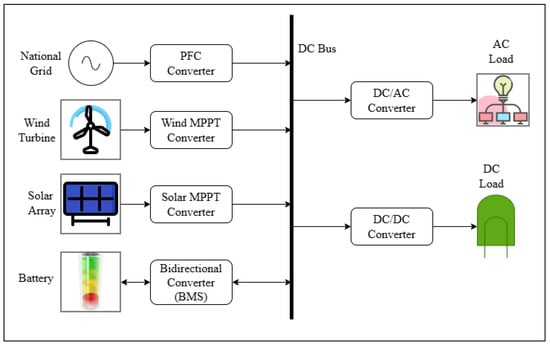
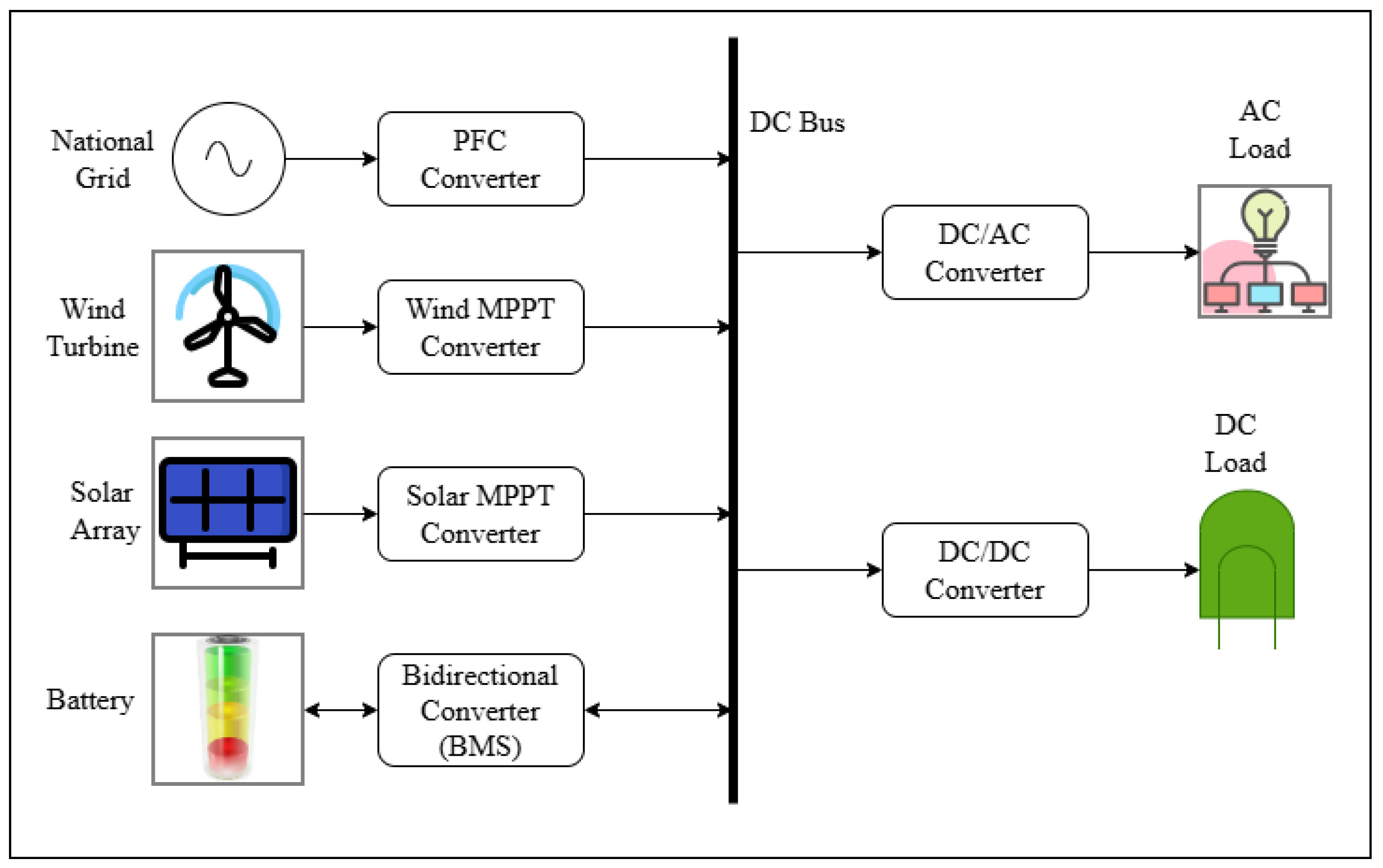
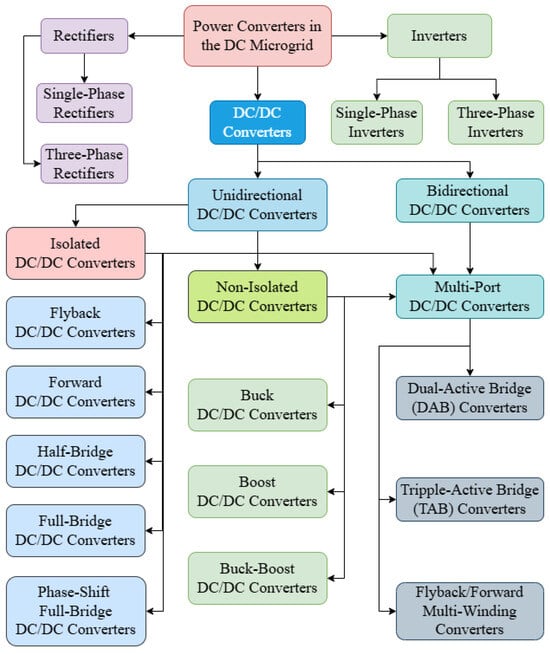
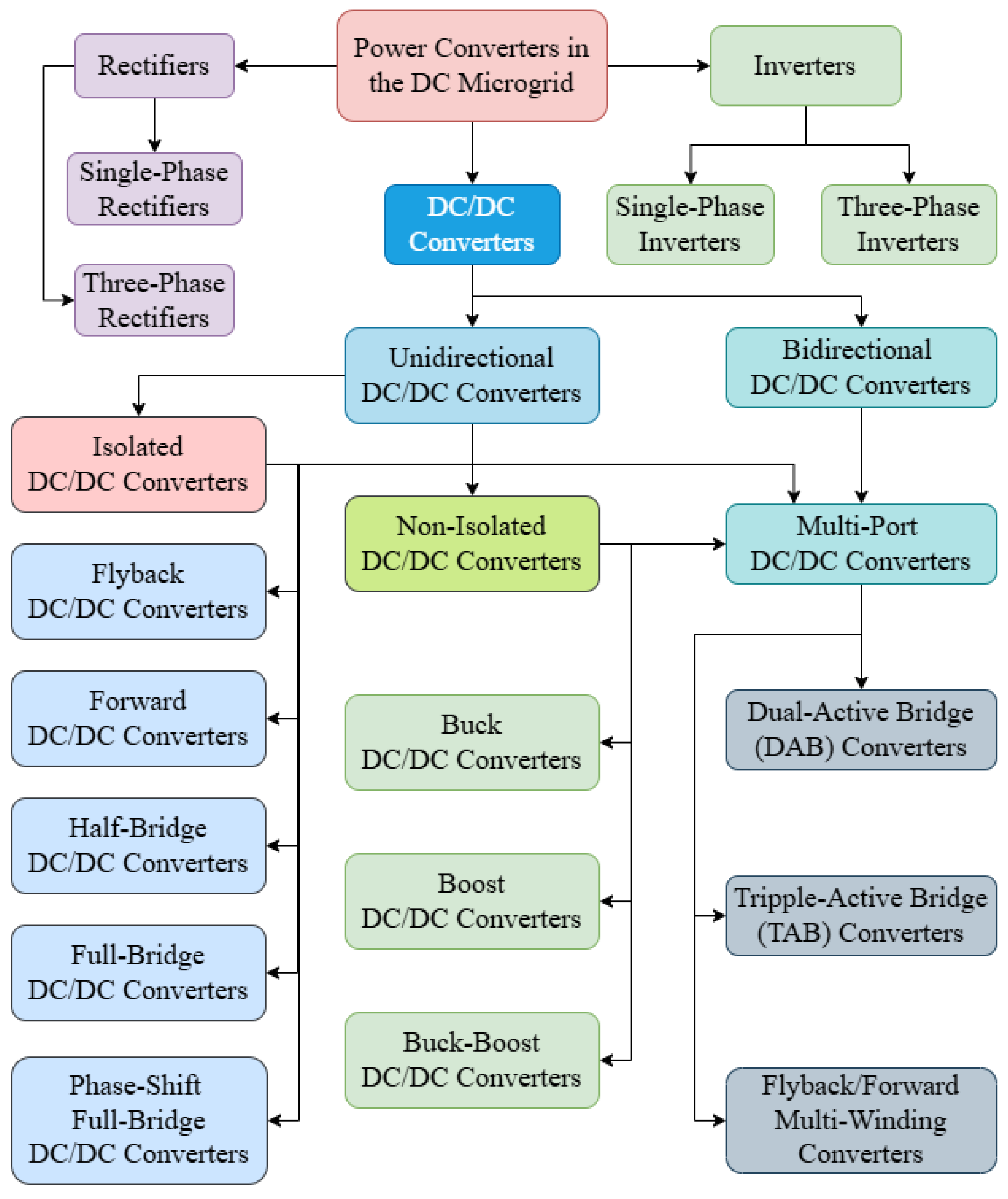
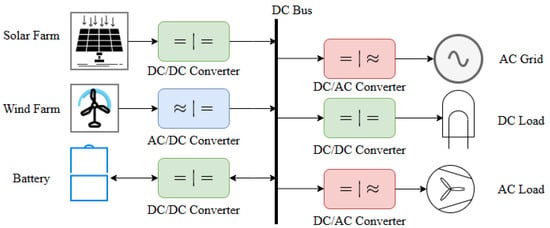
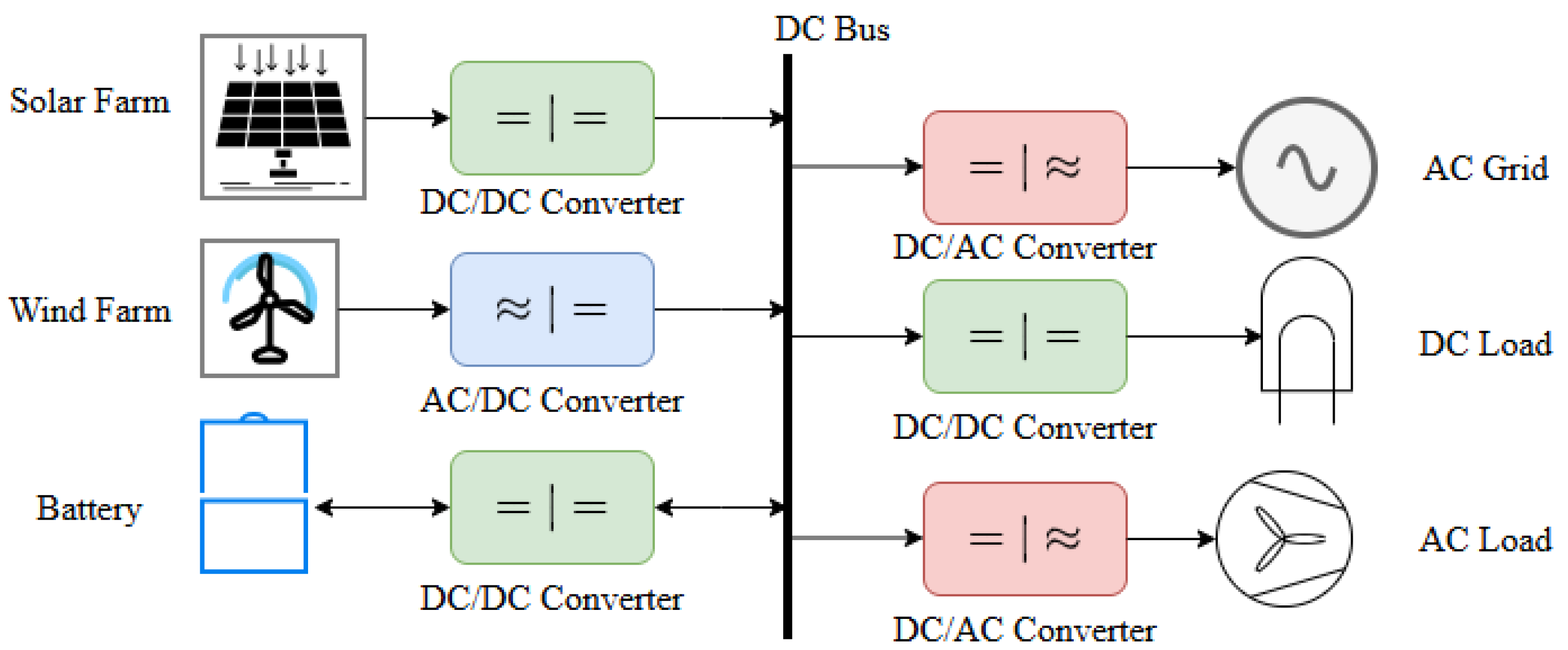
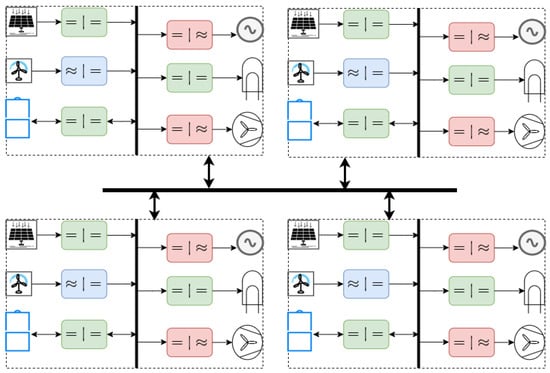
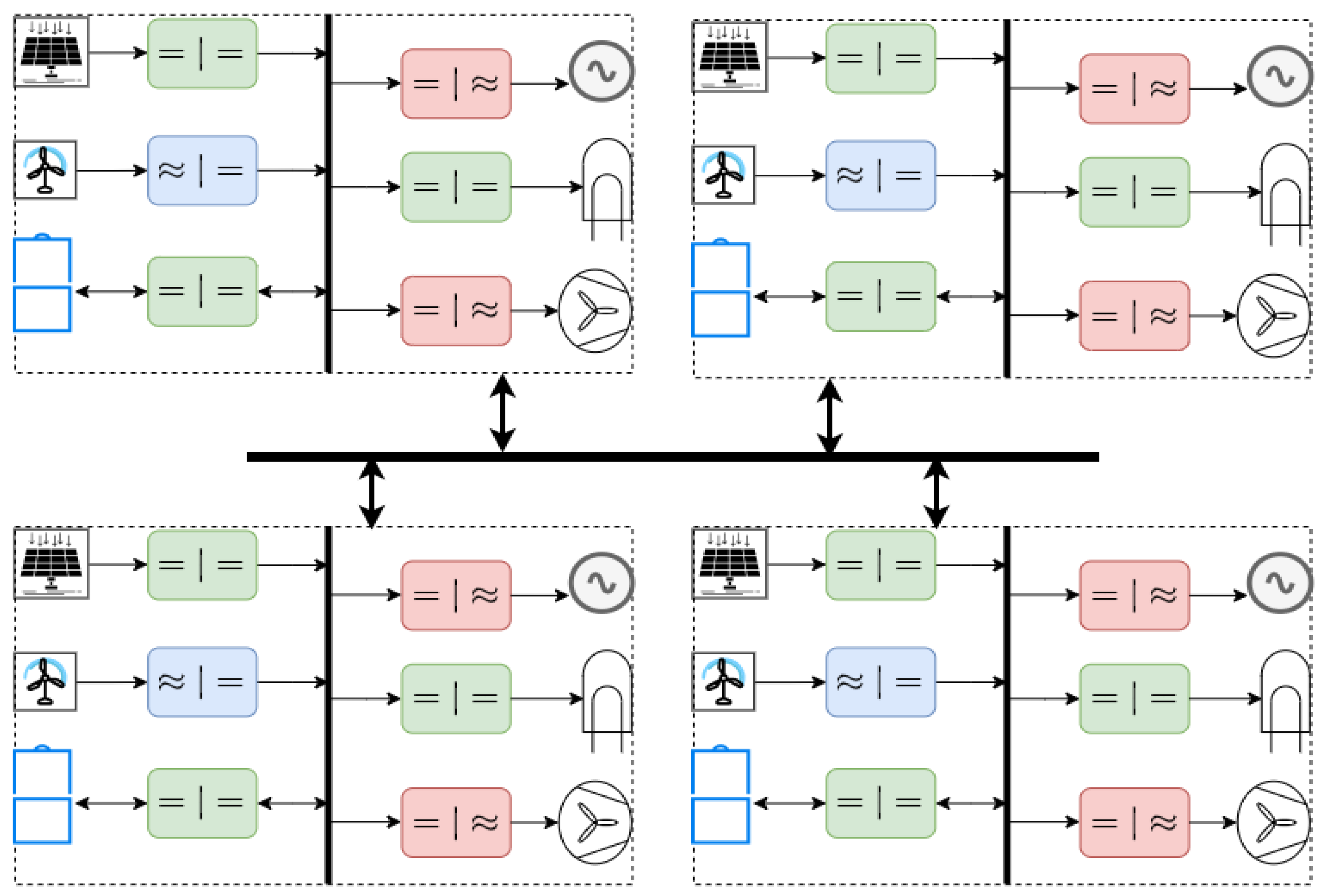
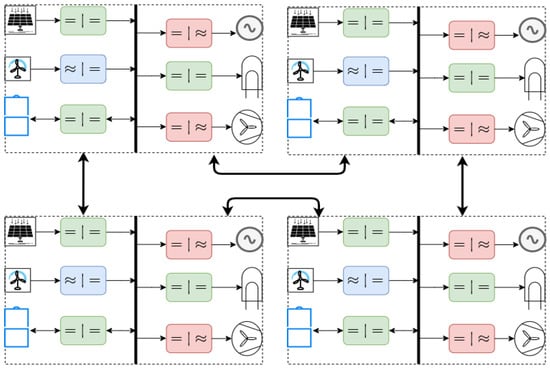
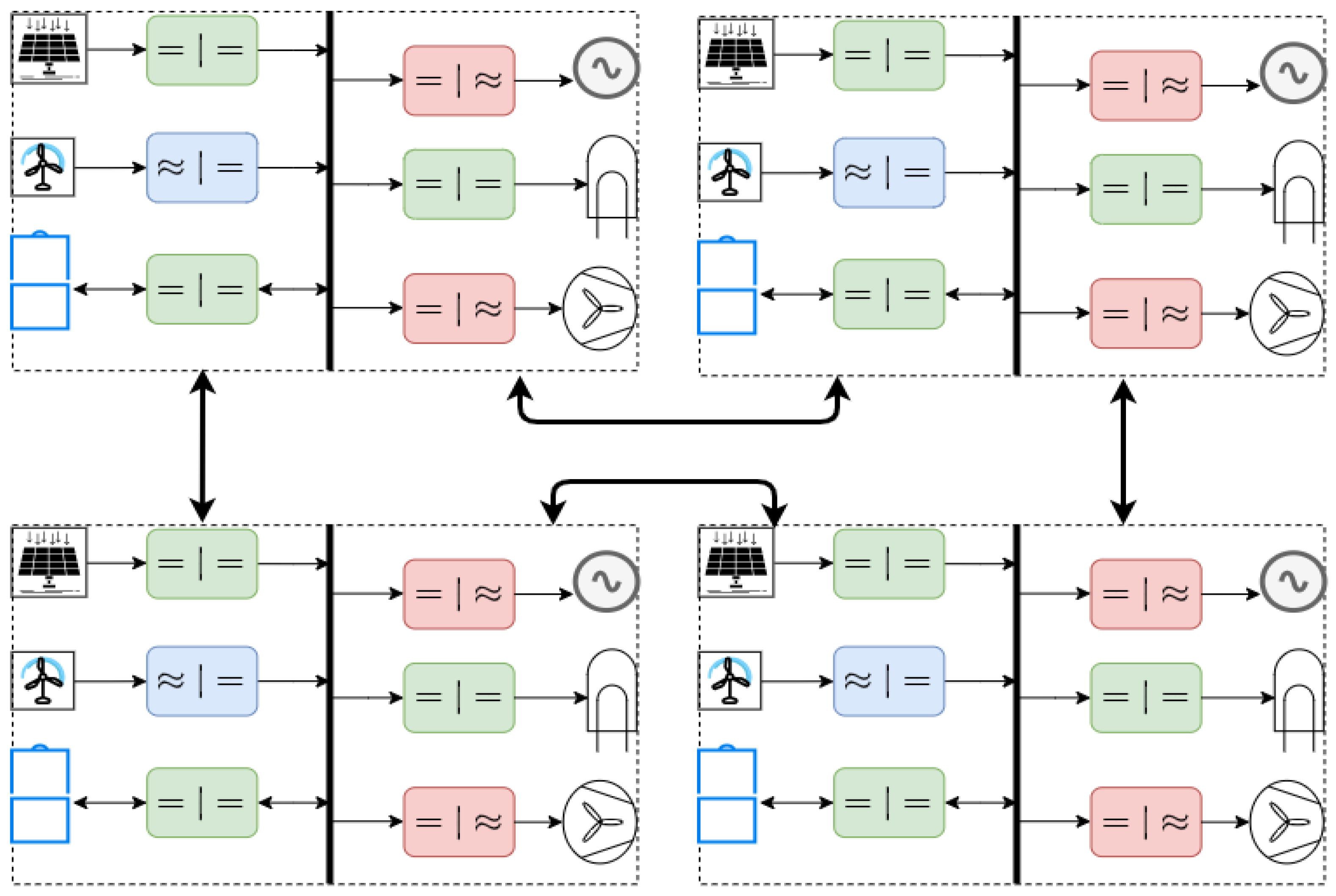
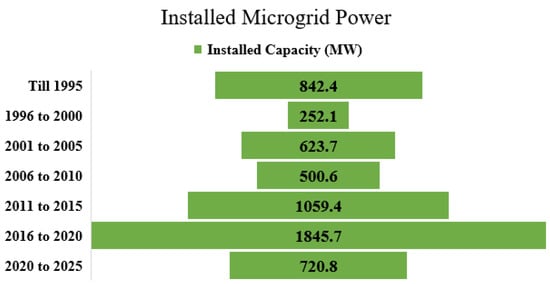
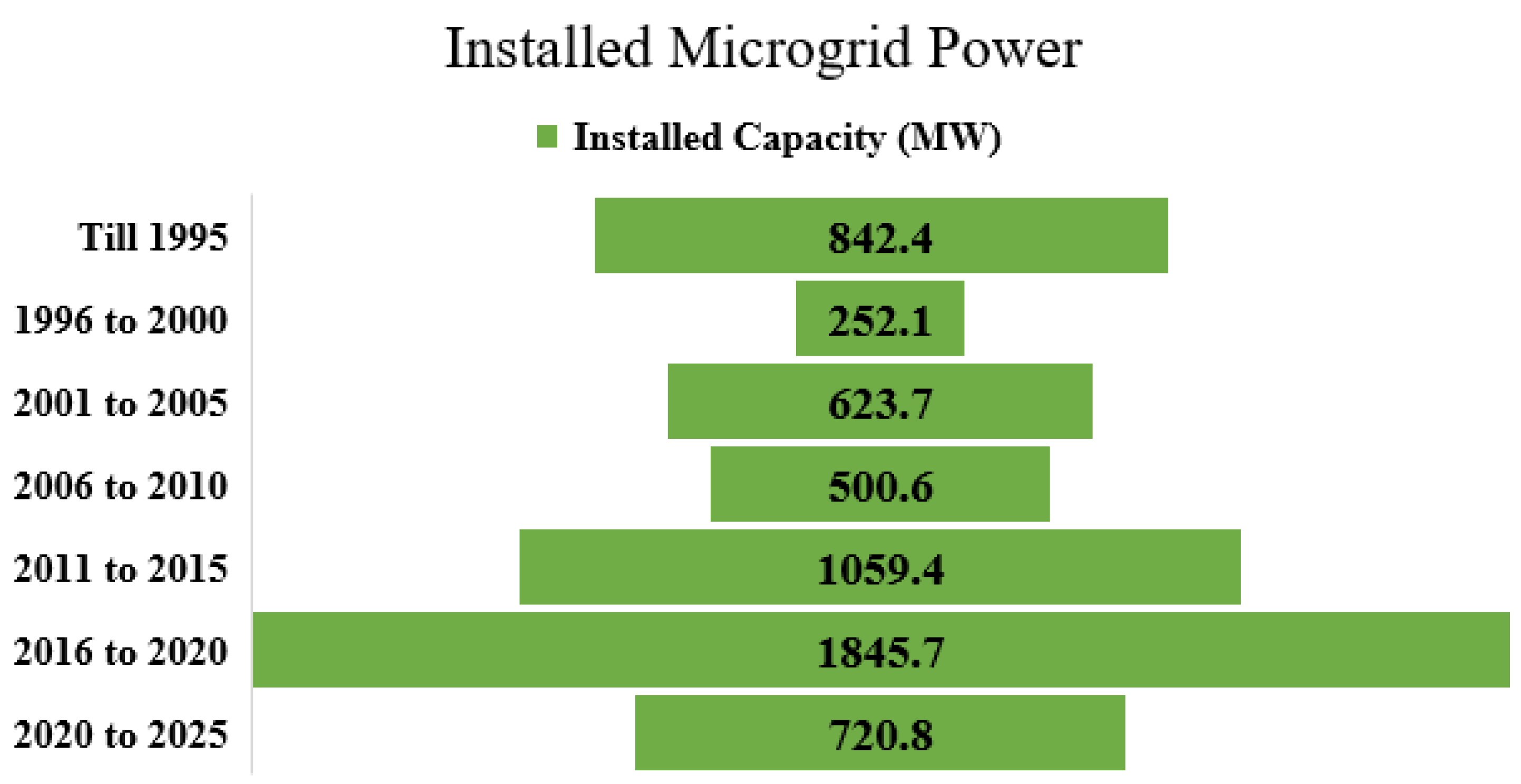
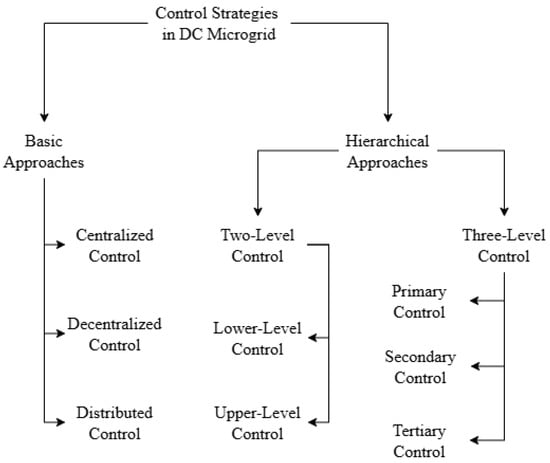
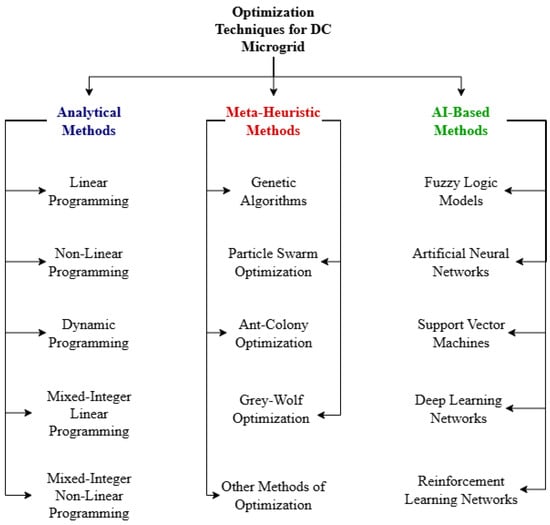
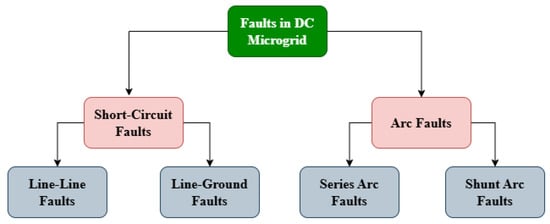
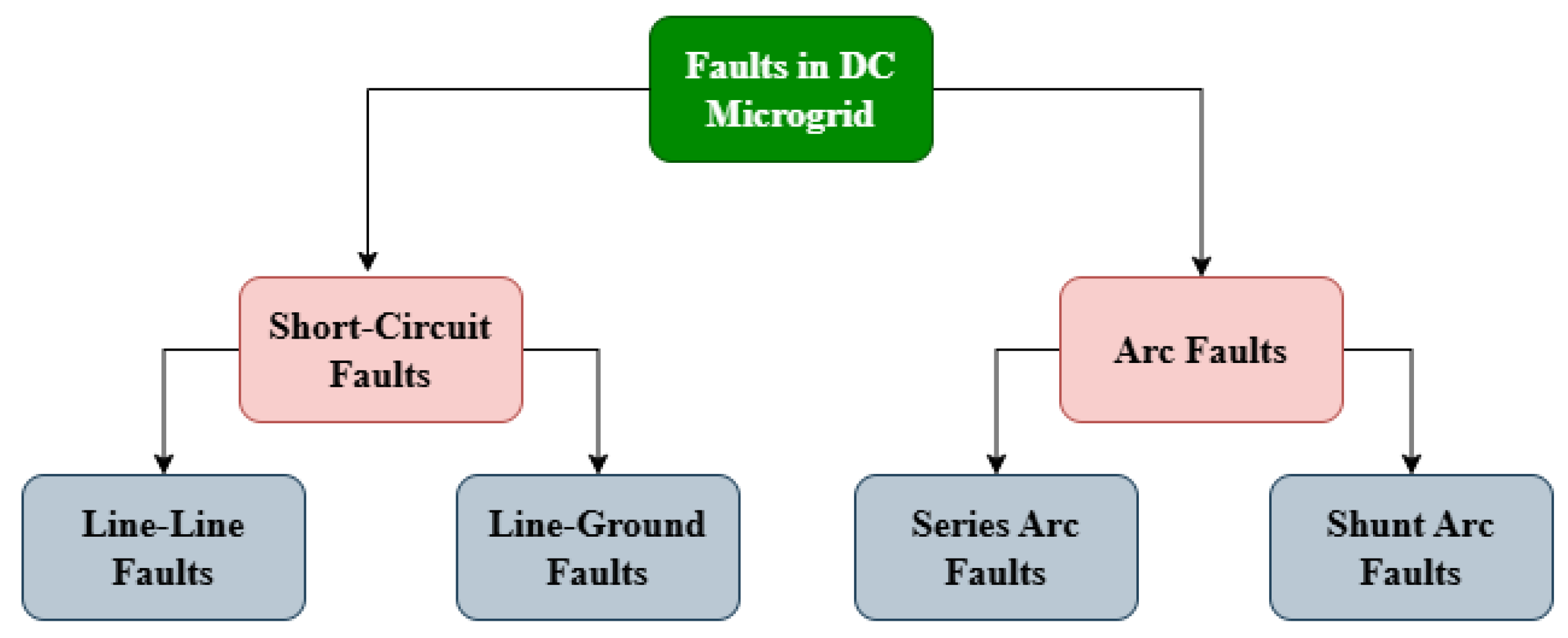
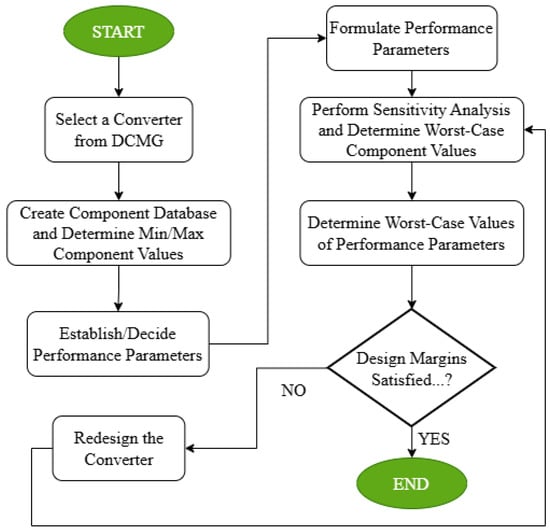
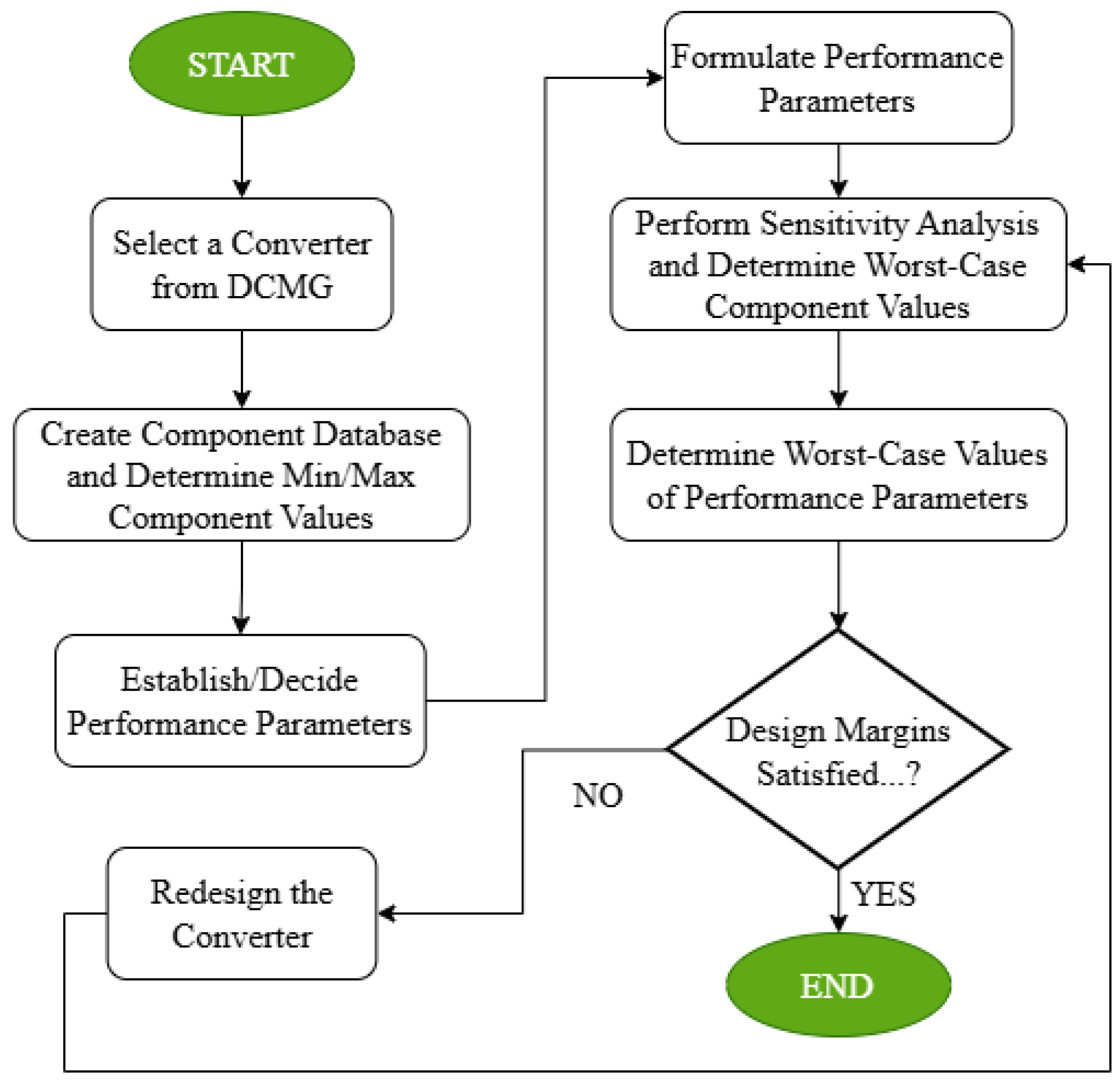
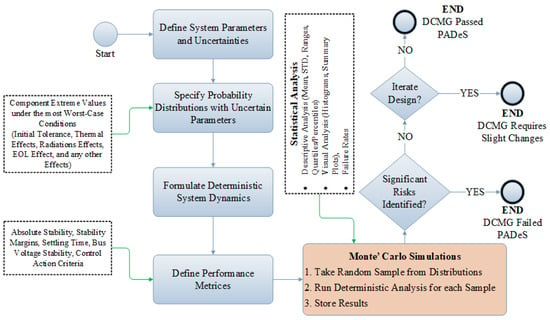
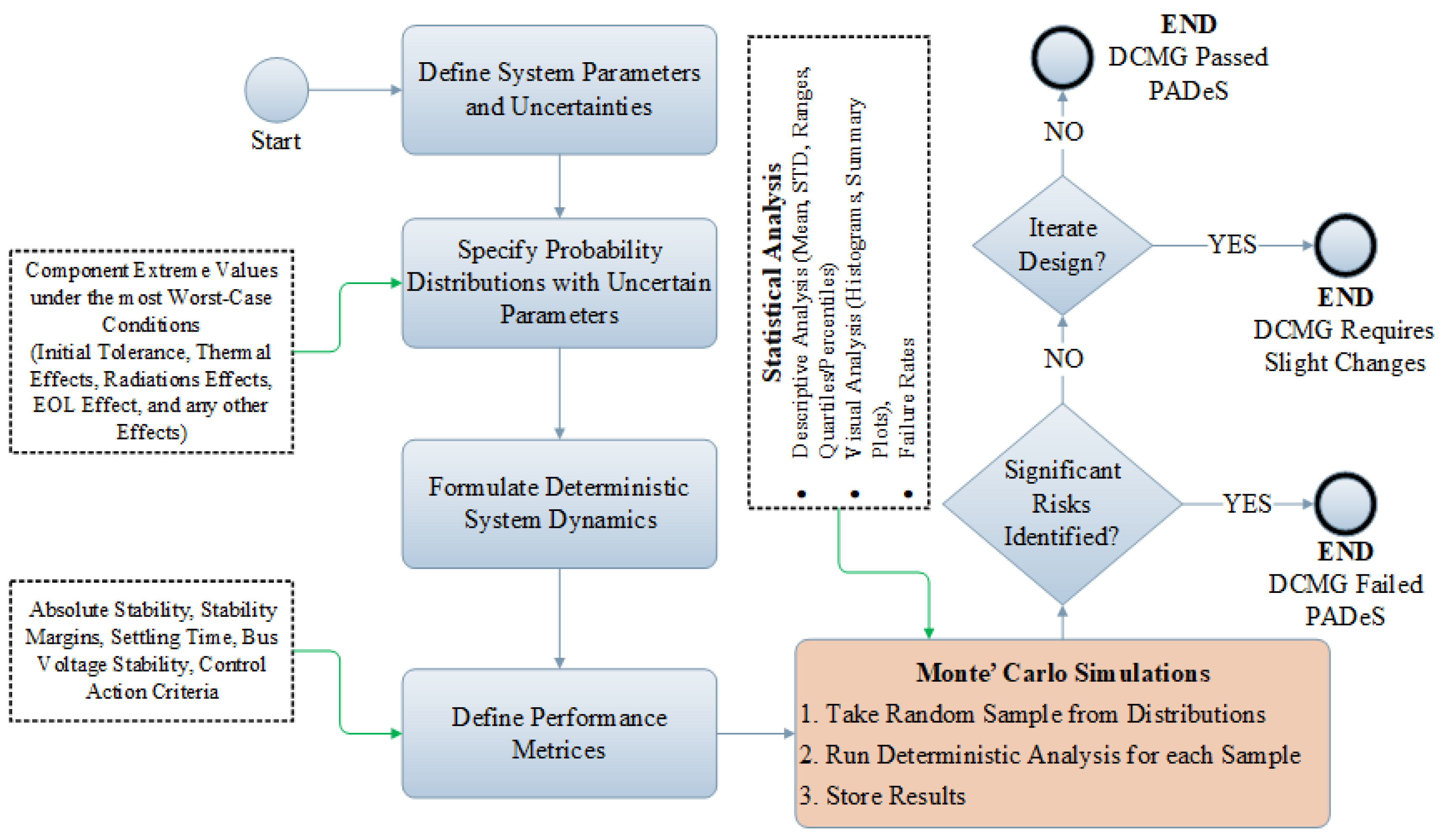
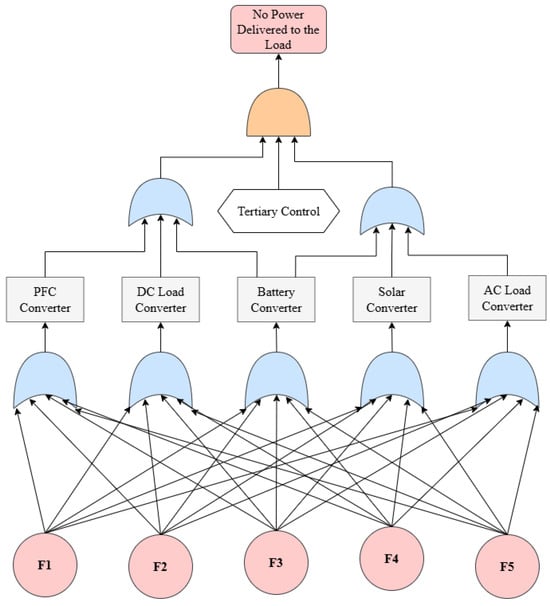
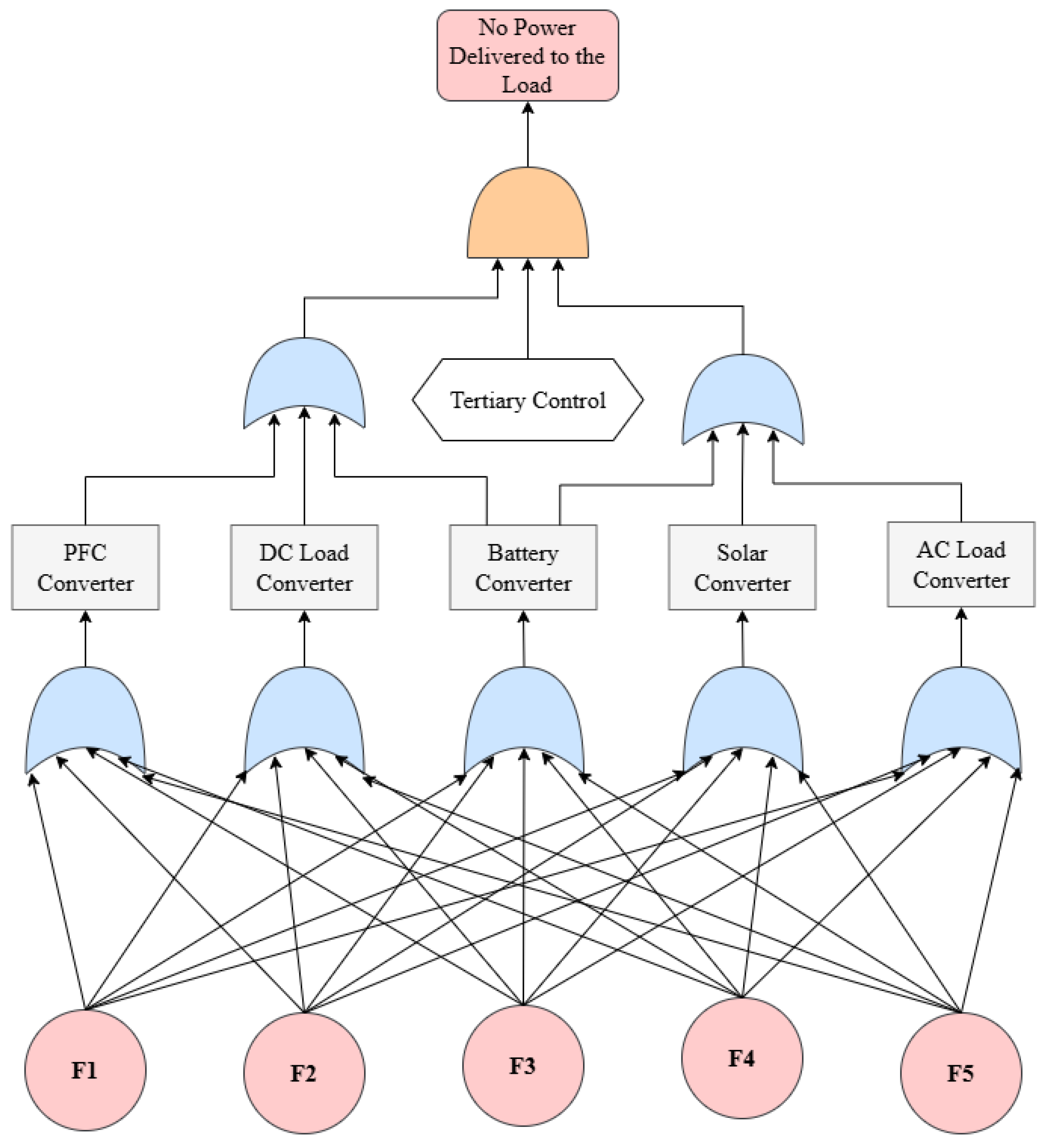
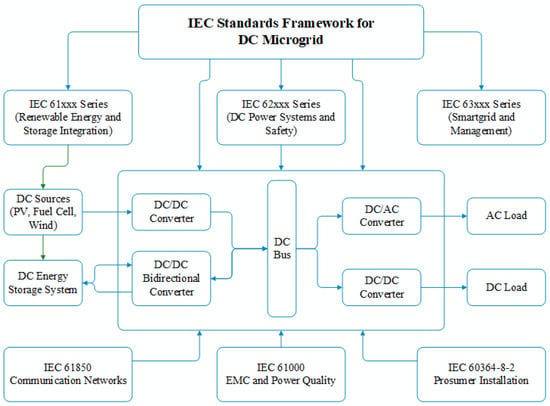
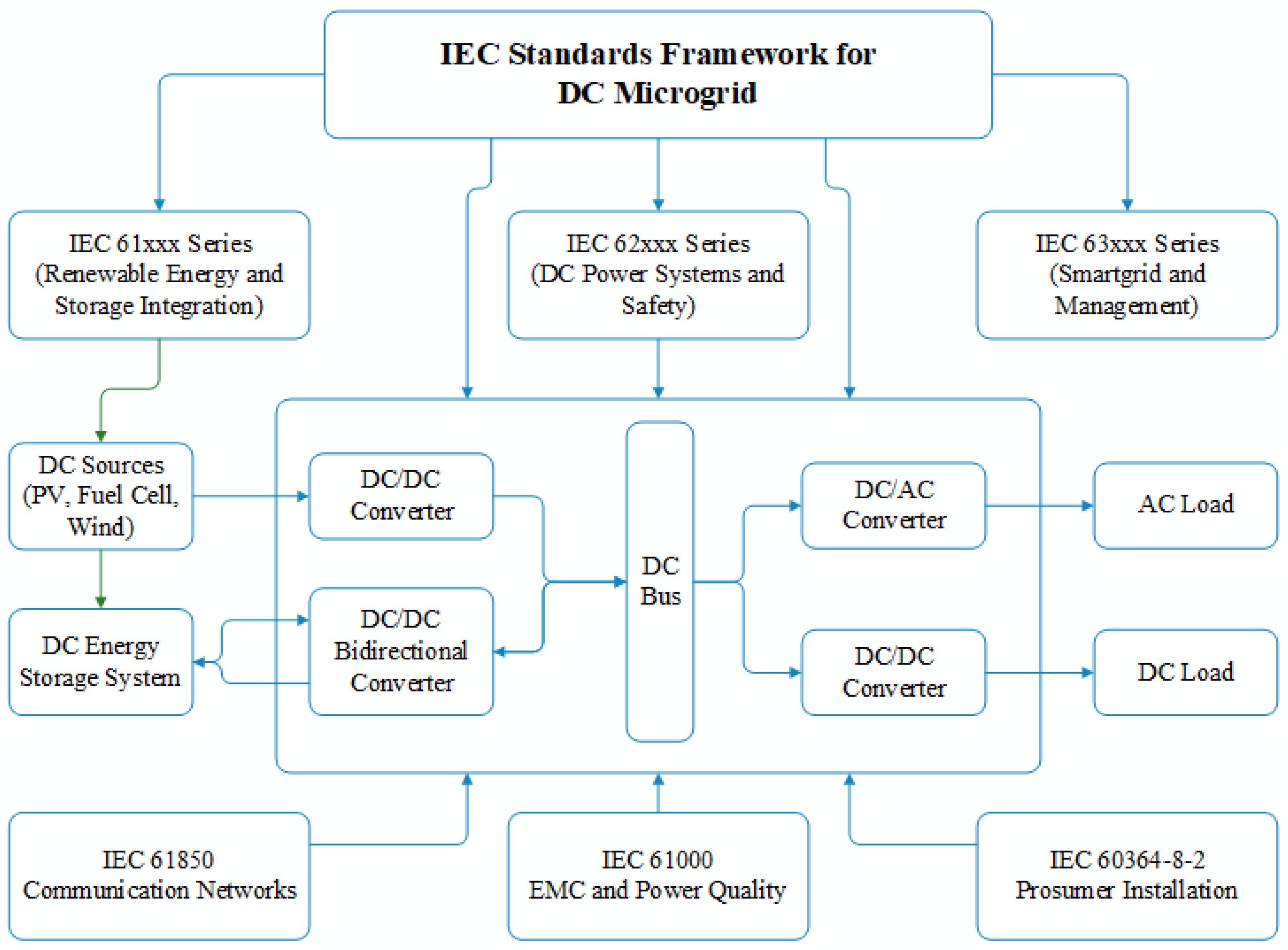

Disclaimer/Publisher’s Note: The statements, opinions and data contained in all publications are solely those of the individual author(s) and contributor(s) and not of MDPI and/or the editor(s). MDPI and/or the editor(s) disclaim responsibility for any injury to people or property resulting from any ideas, methods, instructions or products referred to in the content. |
© 2025 by the authors. Licensee MDPI, Basel, Switzerland. This article is an open access article distributed under the terms and conditions of the Creative Commons Attribution (CC BY) license (https://creativecommons.org/licenses/by/4.0/).