Article

Advancing Community Bioenergy in Central Greece: Biomass Integration and Market-Uptake Evaluation

by
Michalis Alexandros Kougioumtzis
1,*,
Vassilis Filippou
1,2,
Kostas Dasopoulos
3 and
Panagiotis Grammelis
1
1
Chemical Process and Energy Resources Institute, Centre for Research and Technology Hellas, Egialias 52, 15125 Athens, Greece
2
Energy Community of Karditsa, 43100 Karditsa, Greece
3
Q-Plan International, 11 El. Venizelou Str, 55133 Thessaloniki, Greece
*
Author to whom correspondence should be addressed.
Energies 2025, 18(23), 6346; https://doi.org/10.3390/en18236346 (registering DOI)
Submission received: 29 August 2025 / Revised: 7 November 2025 / Accepted: 27 November 2025 / Published: 3 December 2025

Abstract

This paper investigates how the existing pellet plant of the Energy Community of Karditsa (ESEK) can be leveraged to strengthen RESCoop operations by integrating a variety of biomass feedstocks as (i) urban residual biomass, (ii) forest residues, and (iii) alternative sources such as spent coffee grounds (SCGs). The RESCoop envisions an extended role as an Energy Service Company (ESCO) by installing and operating biomass boilers in local public buildings. The paper provides an overview of the technical and business support that was provided to the RESCoop for the development of such new business activities and aggregates the lessons learned from engaging the rural society towards sustainable bioenergy production. More specifically, the study covers the logistical aspects of the new RESCoop value chains, including availability, collection, transportation, and processing of the feedstocks along with their costs. A base case scenario investigates the feasibility of installing biomass boilers in municipal buildings through a detailed financial viability study examining capital and operational expenses, revenues, and key financial indicators. Further, the environmental and socio-economic impacts of the new RESCoop activities are evaluated in terms of CO2 equivalent savings compared to fossil fuel solutions and new job creation, respectively. This detailed analysis highlights the potential for sustainable bioenergy integration and provides valuable insights for similar initiatives aiming to diversify and enhance sustainable energy practices in local communities.

1. Introduction

Community energy has the potential to establish a renewed equilibrium between local economies and the global economic landscape. By bridging the urban and rural gap and narrowing the disparities between north and south, as well as rich and poor, community energy serves as an empowering force for local residents. Its implementation fosters energy democracy, offering the prospect of shaping an economy and society grounded in collaboration rather than rivalry, all while respecting the constraints of our planet [1].
Bioenergy holds a lasting position in the future energy landscape, particularly because of its dispatchable nature and capability to replace the entire range of fossil-based fuels and chemicals [2,3]. In 2019, bioenergy accounted for 12.5% of global energy consumption, with 90% of its feedstock derived from lignocellulosic materials like wood, grass, and straw [4,5,6,7,8]. Bioenergy systems offer several critical advantages in the transition toward sustainable energy systems. From a technological perspective, there are several biomass conversion technologies that convert biomass not only to bioenergy but also added-value products. For example, Wang et al. [9] present recent advances and challenges regarding the hydrothermal valorization of lignocellulosic biomass into bio-oil, wood vinegar, briquette fuels, absorbents, carbonaceous electrode materials, and catalysts. From an environmental perspective, sustainably sourced biomass can provide carbon-neutral or carbon-negative energy when accounting for forest regrowth and agricultural regeneration cycles. Biomass energy also enables the valorization of waste streams, reducing landfill burdens and associated methane emissions. Economically, bioenergy contributes to local value retention by keeping energy expenditures within regional economies rather than exporting wealth to fossil fuel suppliers. The distributed nature of biomass resources supports rural economic development and can provide price stability compared to volatile international fossil fuel markets.
The selection of feedstock in biomass plants is pivotal, emphasizing those with the shortest carbon payback period [10,11]. This strategic choice aims to establish best practices, aligning with the principles of sustainable consumption and production patterns (SDG 12) and taking proactive measures to address climate change and its repercussions (SDG 13) [12]. Meanwhile, pelletization can be used to overcome most of the difficulties of bulk raw material because pellets have a high density, high mechanical resistance and standardized dimensions [13,14]. Moreover, biomass with a high ash content can be mixed with a different biomass with a lower ash content before pelletization. Over and above the technical advantages, pelletization has economic advantages in terms of transport, storage and logistics [15].
The utilization of biomass as a renewable energy source is increasingly recognized globally for its potential to contribute to energy diversification and sustainability. Biomass resources, deriving from organic materials, offer a carbon-neutral alternative to fossil fuels, as the CO2 emitted during biomass combustion is generally offset by the CO2 absorbed during the feedstock’s growth [16]. Moreover, advancements in biomass energy technologies have improved the efficiency and environmental footprint of biomass-based systems, making them more viable as primary energy sources in both high-income and low- and middle-income countries [17]. Community energy systems represent a transformative approach to managing local energy needs through the collective action of local stakeholders [18]. These systems not only foster community engagement and cooperation but also enhance energy security and resilience by reducing dependence on external energy supplies [19]. The focus on community-based biomass solutions exemplifies how local resources can be effectively harnessed to meet local energy demands, thereby empowering communities and supporting local economies. Effective policy frameworks are critical in supporting the deployment and success of biomass energy projects. Policies that provide financial incentives, such as feed-in tariffs, tax credits, and grants, are essential for overcoming initial capital barriers associated with renewable energy projects. Additionally, regulatory support for sustainable biomass harvesting and conversion can ensure that biomass projects contribute positively to environmental goals without depleting local resources or causing ecological harm [20]. The integration of supportive policies is crucial for the scalability of projects like those presented in the current paper, ensuring that they can replicate their success in other regions and contribute more broadly to national energy targets.
The BECoop project (H2020, EU-funded) was dedicated to harnessing the potential of bioenergy within the Energy Community of Karditsa (ESEK). To achieve this objective, the project was actively involved in guiding the pilot bioenergy cooperative in realizing its bioenergy heating vision. This involves the collaborative development of a technical action plan and comprehensive support throughout the implementation process. In this study the term “new biomass feedstocks” refers specifically to three biomass sources that have not previously been utilized by ESEK in its energy operations: (1) urban pruning residues from municipal tree maintenance activities and park management operations, (2) spent coffee grounds collected from local cafes, restaurants, and hotels, and (3) forest residues consisting of fir and oak logging residues from nearby sustainably managed forests. These feedstocks are considered “new” in contrast to ESEK’s existing biomass activities.
The purpose of this paper is threefold: First, to present a comprehensive techno-economic assessment of integrating novel urban and forest biomass feedstocks into an existing community energy cooperative’s pellet production operations. Second, to evaluate the environmental and socio-economic impacts of expanding community-scale bioenergy heating systems through diversified feedstock portfolios. Third, to provide a replicable methodological framework and document practical lessons learned that can guide other European energy communities in developing similar biomass-based business activities. This work contributes to the limited literature on the practical implementation challenges and opportunities for renewable energy cooperatives (RESCoops) transitioning from single-technology models to diversified bioenergy portfolios, particularly in the context of rural and semi-urban settings.

2. Materials and Methods

2.1. Energy Community of Karditsa (ESEK) as a BECoop RESCoop—Expanding Its Biomass Activities

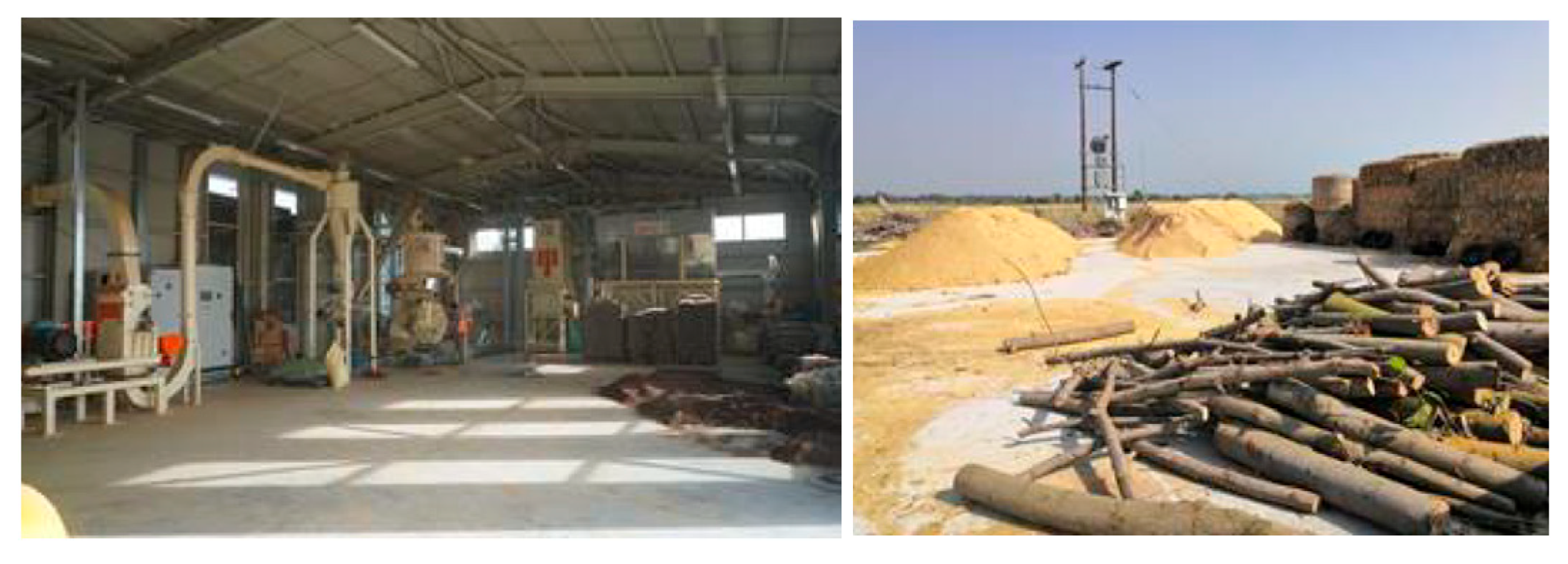
ESEK, Karditsa, Greece is an energy community with over 400 members, such as municipalities, local SMEs and associations that operate in the region of Thessaly. ESEK owns a biomass plant that produces refined solid biofuels. The pellet plant has a capacity for producing 0.5 tons per hour and can be seen in Figure 1.
The primary aim of the BECoop RESCoop initiative was to enhance and extend the existing biomass supply chain, enriching the scope to incorporate comprehensive bioenergy production. Utilizing ESEK’s existing pellet plant, the initiative explored innovative ways to leverage this facility to escalate the community’s bioenergy activities. The emphasis was on fostering a local bioenergy heating community, creating a synergistic ecosystem for sustainable energy practices. Situated in Karditsa, a city in western Thessaly, the project navigated the challenges posed by the expanding local fossil fuel infrastructure, which competed with the adoption of renewable energy heating solutions, notably biomass boilers. The region boasted substantial biomass potential, with resources derived from agriculture, forestry, and wood processing industries. These sectors provided a robust foundation for the deployment of bioenergy technologies, offering a sustainable alternative to traditional heating methods. Central to the initiative was the operation of a biomass plant dedicated to the production of solid biofuels for both heating and cooling. The primary materials processed at this plant included industrial residuals like sawdust and woodchips, as well as logging residues from Forest Cooperatives. The project also emphasized strong collaborations with local authorities to enhance the biomass supply chain by integrating municipal biomass, such as prunings from urban landscaping, thereby enriching the community’s resource base. The strategic direction of the BECoop RESCoop included expanding the range of products and services provided by ESEK’s pellet production facility. It particularly focused on developing innovative biofuel blends that utilized cost-effective and alternative raw materials, such as urban and forest residues and spent coffee grounds. This exploration was part of a broader effort to transform ESEK into an Energy Service Company (ESCO). As part of this model, ESEK will be responsible for installing and operating biomass boilers in local buildings, managing the production and supply of biofuels, and providing the generated heat directly to end-users. This approach will ensure that consumers only pay for the heat they use, alleviating concerns related to boiler maintenance and fuel provision.

2.2. Supply Chain Assessment

In alignment with the overarching goals of the community and the strategic objectives of the BECoop RESCoop, a thorough assessment of potential biomass feedstocks was conducted. This initial support service was critical in identifying and quantifying various local biomass sources that could contribute to a sustainable energy production system. Urban Biomass primarily includes organic debris from city pruning activities. The assessment focused on collecting, categorizing, and analyzing the chemical and physical properties of these prunings to determine their suitability for conversion into bioenergy. Special attention was given to their moisture content, caloric value, and ash content, which are critical parameters for both boiler efficiency and pellet quality. Forestry Residues from local forestry operations, such as branches, leaves, and bark, were evaluated. The study involved detailed analyses of their density and combustibility. These characteristics are essential to ensure that the residues can be efficiently processed into high-quality biofuels without harming the boiler systems. Spent coffee grounds from local cafes and citizens were identified as a promising yet underutilized biomass resource. The disposal of organic waste to landfills incurred a significant cost to municipalities, charged at 50 euros per ton. This fee is projected to rise by 5 euros annually, reaching 70 euros per ton by 2027. This escalating cost structure represents a financial burden that could be alleviated through alternative disposal strategies.
For each type of biomass, the assessment included a quantitative analysis to estimate the volumes available for energy production. For the data collection, local businesses, municipal authorities, and forest cooperatives were engaged to gather data on the amount of biomass they have access. The results of these assessments provided crucial insights into the diverse biomass resources available within the community. By highlighting the specific properties and quantities of each biomass type, the study not only underscores their potential for sustainable energy production but also aids in strategic planning for the integration of these resources into the existing bioenergy supply chain. This comprehensive evaluation ensures that all selected biomass feedstocks are compatible with the technical specifications of biomass boilers and pellet production facilities, thereby enhancing the efficiency and sustainability of the BECoop RESCoop’s operations. A customized value chain that effectively oversees and enhances the processing of diverse biomass feedstocks was defined. This strategy aimed to fully realize the potential of each biomass type, with a particular emphasis on urban prunings, coffee residues, and forest residues, ensuring the sustainable and efficient use of all resources. In handling the logistics for collecting three primary biomass feedstocks—urban prunings, spent coffee grounds, and forest residues—an in-depth cost analysis was performed. This analysis was essential for optimizing resource allocation and ensuring the economic sustainability of the biomass supply chain.

2.3. Economic Feasibility

To determine the economic feasibility of the RESCoop’s new activities, a feasibility study was performed. Several assumptions were made in order to perform the analysis and calculate economic indicators. More specifically:
  • n = 25 years lifetime of the new activities
  • r = fixed inflation rate (2%) based on IMF data
  • Fixed OPEX and revenues throughout the years
Cash Flow = CAPEX + OPEXRevenue
Present   Value   ( PV )           P V = C a s h   F l o w ( 1 + r ) ^ n
Net   Present   Value   ( NPV )           N P V = Σ C a s h   F l o w ( 1 + r ) ^ n
Return   on   Investment   ( ROI )           R O I = R e v e n u e s O P E X C A P E X
Payback   Period   ( PBP )           P B P = C A P E X   R e v e n u e s O P E X
Internal   Rate   of   Return   ( IRR )           I R R = C a s h   F l o w   ( 1 + r ) ^ n C A P E X

2.4. Environmental and Socio-Economic Impact Assessment

To measure the environmental and socio-economic impact of the new activities of the RESCoop, in-house tools were used. The tools are built from previous H2020 projects (Up_running [21] and AgroBioHeat [22]) and available literature. Moreover, data used for these analyses derived from EU Environmental Agency [23], from the EU Directive 2018/2001 (RED II [24]) and from sustainability reports [25].
The methodology calculates GHG emissions based on: (i) GHG accounting methodology presented in the Report of the European Commission COM (2010) 11 [26] plus additions in the European Commission Staff Working Document SWD (2014) 259 [27]; (ii) JRC report EUR 27215 EN [28] and (iii) European Project BIOGRACE II [29].
In brief, GHG emissions are calculated as CO2 equivalent emissions. The aim is to calculate the GHG emissions savings based on the new activities of the RESCoop.
The following equation calculates the total emissions before energy conversion:
E = eec + el + ep + etd + euescaeccseccr,
where
  • E = total emissions from the production of the fuel before energy conversion.
  • eec = emissions from the extraction or cultivation of raw materials.
  • el = annualized emissions from carbon stock changes caused by land use change (not considered in the tool).
  • ep = emissions from processing.
  • etd = emissions from transport and distribution.
  • eu = emissions from the fuel in use, that is greenhouse gases emitted during combustion.
  • esca = emission savings from improved agricultural management; (not considered in the tool).
  • eccs = emission savings from carbon capture and geological storage; (not considered in the tool) and
  • eccr = emission savings from carbon capture and replacement (not considered in the tool).
Emissions from the manufacture of machinery and equipment were not considered. Moreover, due to the fact that the RESCoop which is investigated in this paper mobilizes small amounts of biomass, the emissions related to harvesting, transportation processing and use (eec, ep, etd, eu) are drafted from the default values of RED II.
Furthermore, the GHG gas emissions from the final use of biomass are calculated as follows:
  • For the electricity coming from energy installations delivering useful heat together with electricity:
EC el = E η el · C el   ·   η el C el   ·   η el + C h   ·   η h
  • For the useful heat coming from energy installations delivering heat together with electricity:
EC h = E η h · C h   ·   η h C el   ·   η el + C h   ·   η h
where
  • ECh,el = Total GHG gas emissions.
  • E = Total GHG gas emissions before end-conversion.
  • ηel = The electrical efficiency, defined as the electricity produced divided by the annual fuel input.
  • ηh = The heat efficiency, defined as the heat output divided by the annual fuel input.
  • Cel = Fraction of exergy in the electricity set to 100% (Cel = 1).
  • Ch = Carnot efficiency for useful heat at less than 150 °C at point of delivery (0.35).
Lastly, the GHG gas emission savings are calculated from implementing the biomass-based value chain (production of heat/cooling/electricity from biomass) compared to the emissions produced from the generation of heat/cooling/electricity from fossil fuels. GHG emission savings from heating, cooling, electricity generation from biomass are calculated as:
SAVING = (ECF(h&c,el)ECB(h&c,el))/ECF(h&c,el),
where
  • ECB(h&c,el) = total emissions from the production of heat, cooling, electricity from biomass;
  • ECF(h&c,el) = total emissions from the fossil fuel comparator for heating and cooling, electricity.
Regarding the social impact, it is calculated through the amount of the biomass mobilized, by consulting sustainability reports [25]. Through a function that relates mobilized biomass to economic metrics, the amount of new full-time jobs created (equipment manufacturing, construction, feedstock supply, operation and maintenance of the plant) and indirect jobs are calculated. Furthermore, the GDP impact of the bioenergy activities on these sectors is also calculated.

3. Results and Discussion

3.1. Logistics of New BECoop RESCoop Activities

3.1.1. Biomass Assessment

The biomass assessment has uncovered significant resources within the Karditsa region that hold considerable potential for sustainable energy production. The evaluation focused on three key types of biomass: coffee residues, urban prunings, and forest residues. Regarding the Spent Coffee Grounds, the study estimated that coffee residues generated within the city of Karditsa amount to approximately 600 tons per year on a wet basis, which translates to around 300 tons per year when dried. These residues, primarily from local coffee shops, represent a valuable and underutilized source of biomass that could be effectively converted into energy. Regarding urban prunings from the maintenance of city parks and streetscapes, they were quantified at about 14,000 tons per year on a wet basis. Of this, the RESCoop’s existing facilities can currently process up to 4000 tons per year. This indicates a significant portion of urban biomass that could be harnessed further, highlighting the potential for expansion in processing capabilities. Finally, regarding the forest residues, the assessment also revealed a substantial quantity, with a theoretical potential of approximately 67,650 tons per year on a wet basis. These residues, derived from local forest management and clearance activities, remain largely unexploited. This untapped resource presents a notable opportunity for the BECoop RESCoop to expand its biomass supply chain and enhance its bioenergy production capabilities.

3.1.2. Fuel Properties and Logistics of New Feedstock

The BECoop RESCoop has identified a significant opportunity in valorizing the coffee residues as a viable biomass source, transforming what is currently a largely discarded waste product into a valuable resource. Coffee residues are generated abundantly across various establishments, including coffee houses, hotel complexes, municipal buildings, and private homes, following the coffee brewing process. Presently, these organic residues are disposed with other waste materials, contributing to increased municipal waste management costs. The abundant availability of coffee residues makes them an attractive candidate for bioenergy production. Their composition includes properties conducive to energy generation, which could significantly offset costs associated with waste disposal. Local coffee houses could also be incentivized to contribute their coffee waste towards bioenergy production. Potential incentives could include reductions in municipal taxes, recognizing their efforts in reducing municipal waste management burdens. This strategy not only supports environmental sustainability but also provides financial benefits to participating businesses.
Moreover, another biomass residue of the area that was considered for the new activities of the BECoop RESCoop was that of urban prunings. The routine maintenance of city parks and roadsides includes the annual pruning of trees, a practice essential for plant health and urban aesthetics. This process generates a significant quantity of biomass in the form of urban prunings. Despite their potential as a renewable energy source, these valuable biomass resources are frequently underutilized, often being disposed improperly in landfills or illegally burned in open fields, both of which are environmentally detrimental practices. Illegal burning, in particular, releases harmful emissions that pose risks to both human health and the environment. The current practices of handling urban prunings not only waste a potential bioenergy resource but also contribute to environmental pollution and increased municipal waste management costs. Transitioning from these harmful disposal methods to sustainable utilization strategies for bioenergy production could significantly enhance urban waste management systems and reduce environmental impacts.
A third potential feedstock that was considered for the new activities of the BECoop RESCoop was that of forest residues. The potential of forest residues as a biomass source in the region surrounding Lake Plastira, approximately 20 km from the city of Karditsa, is significant and yet fully untapped. These residues accumulate from harvesting of local forests and the aftermath of extreme weather events, such as the medicane “Ianos”. Notably, the mountainous terrain in this area hosts abundant forest residues from predominantly fir and oak trees, which are recognized as viable sources for biofuel production. The accumulation of forest residues not only represents a missed opportunity for energy recovery but also poses significant fire risks, especially during the hot, dry summer period. The proactive management of these residues by converting them into bioenergy could mitigate such risks while providing renewable energy.
Within the scope of the BECoop project, the assessment of forest residues has primarily remained theoretical, focusing on identifying the potential volumes and properties of these materials. This investigation highlights the need for policy adjustments and innovative management strategies to unlock the bioenergy potential effectively. Utilizing forest residues not only addresses waste management in forest areas but also contributes to local and national energy goals. By converting these residues into bioenergy, communities can reduce their dependence on non-renewable energy sources, decrease carbon emissions, and enhance their energy security.
In brief, Table 1 presents an overview of the main characteristics of the feedstock that could be exploited during the new activities of the RESCoop.
For the investigation of the above-mentioned feedstocks, a specialized value chain was developed that efficiently manages and optimizes their processing. This tailored approach is designed to maximize the potential of each type of biomass, focusing on urban prunings, coffee residues, and forest residues, ensuring that all resources are utilized sustainably and effectively.
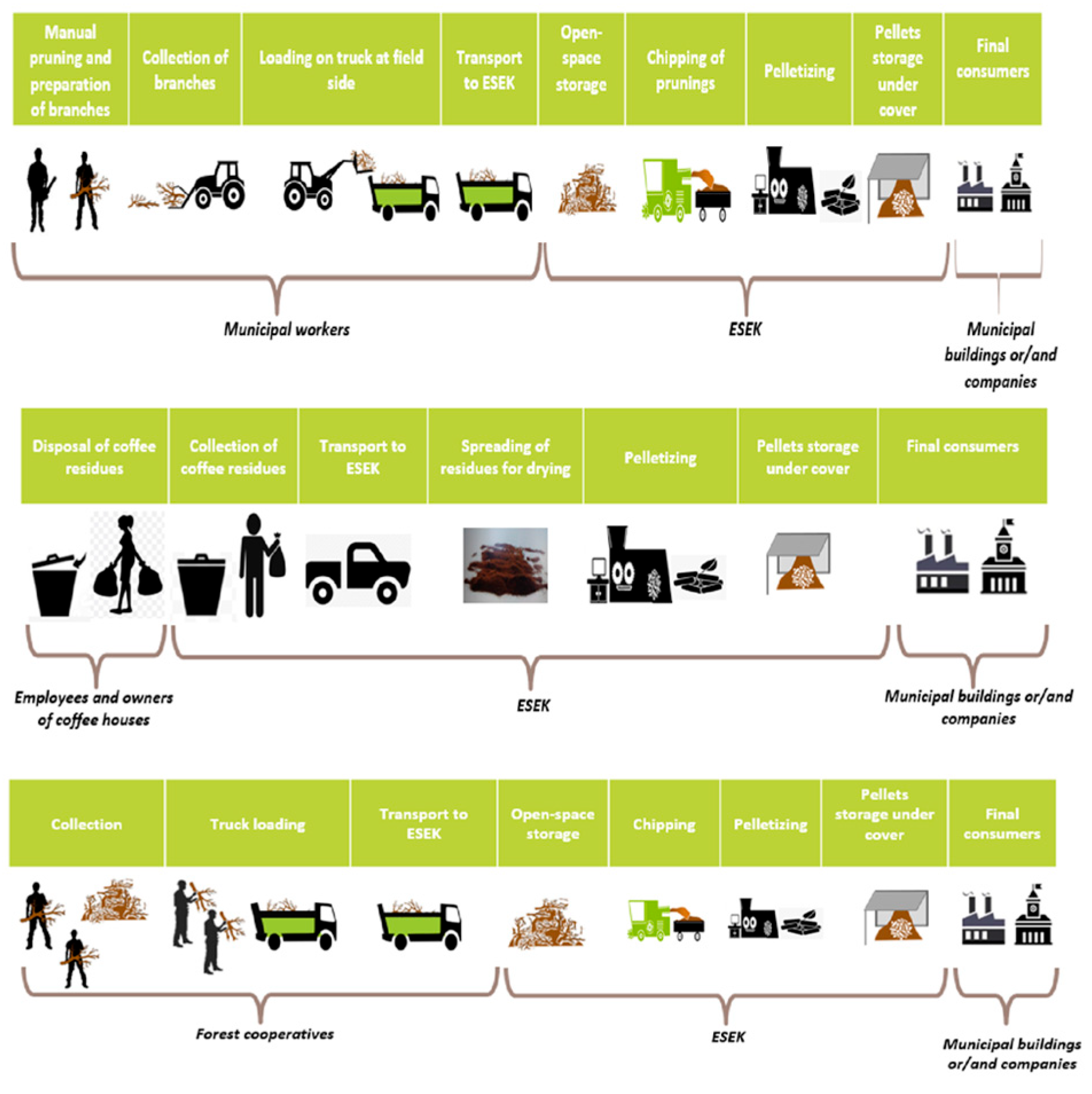
The management of urban prunings involves a systematic collection process from city parks and roadside maintenance. Once collected, these prunings are loaded onto municipality-owned trucks, which transport the biomass to ESEK’s processing plant. The management of urban prunings is a key component of the tailored logistics designed to maximize the utilization of various biomass feedstocks. Urban prunings are collected by municipal workers. The collection is carried out manually or with the aid of mechanical equipment such as crane loaders, depending on the volume and location. At the pellet plant, the urban prunings are temporarily stored, allowing moisture to evaporate. The storage period lasts between one to two months, after which the prunings are moved to chipping machines (wood chipper). This practice enhances the sustainability and efficiency of the local bioenergy supply chain, demonstrating a proactive approach to the valorization of residual biomass that could serve as a model for other municipalities and regions.
Regarding spent coffee grounds, they can be collected from various establishments like coffee houses, restaurants or citizens throughout the city center of Karditsa. These residues are first dried to reduce moisture content, enhancing their suitability for pellet production. Subsequently, they are processed into biofuels, providing a local source of renewable energy while addressing waste management issues in local communities. This process involves several key stages, from collection to the final pellet production. Dedicated bins were strategically placed in central locations within coffee houses throughout Karditsa. This setup not only facilitates easy disposal and segregation of coffee residues from other waste but also raises awareness among business owners and customers about the importance of proper waste management and recycling. The residues were collected every 15 days. This frequency was chosen to balance the accumulation rate of coffee waste and reduce the need for daily management while preventing odor issues. Once collected, the coffee residues are transported a distance of 7 km to the biomass processing plant. Upon arrival at the plant, the coffee residues were stored openly, allowing natural processes to reduce moisture content. After a drying period of 2–3 weeks, they are ready to be combined with woody biomass for the pellet production. The designed value chain for coffee residues not only enhances the sustainability of local coffee shops by reducing their waste footprint but also contributes significantly to the community’s energy independence. By converting coffee residues into bioenergy, the RESCoop supports a circular economy future, adds economic value to what would otherwise be waste, and decreases the environmental impact through innovative waste management practices.
Regarding forest residues, they are gathered from nearby mountainous areas, particularly after the harvesting of the logs. This process involves a coordinated effort with local forest cooperatives, which play a crucial role in the sustainable harvesting and transportation of forest residues to the RESCoop processing facility. The forest cooperatives ensure that the collection methods sustain the health of the forest ecosystem, adhering to environmental standards and sustainable forestry practices. Once collected, the residues are transported to the RESCoop plant. Upon arrival at RESCoop’s facilities, the forest residues are initially stored to ensure they are adequately dried before further processing. The RESCoop utilizes a wood chipper to process the forest residues into smaller, uniform pieces, wood chips. The management of forest residues not only helps in reducing the fire hazard in the forested areas but also contributes significantly to the regional biomass potential for biofuels production.
In brief, Figure 2 illustrates the value chains for all three feedstocks, from collection and transportation to processing and final use.
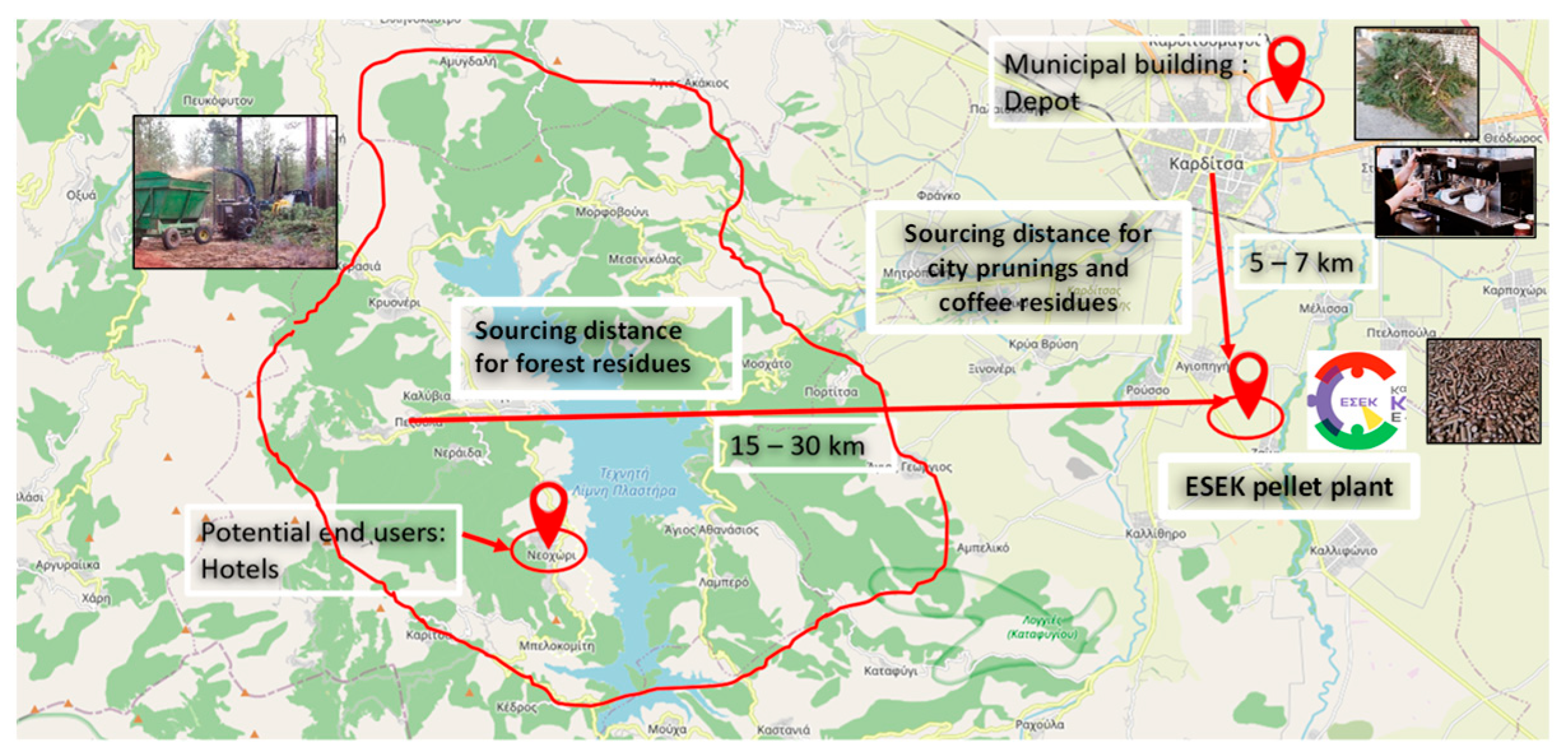
Furthermore, the following figure provides an overview of the RESCoop’s location and the distances of the new feedstocks that are sourced, along with the distance to potential end-users (Figure 3).
The tailored logistics and optimized processes of the new RESCoop value chain highlight its strategic approach to resource management. By converting locally sourced biomass into energy, the initiative reduces dependency on external energy supplies and enhances the energy security of the region. Additionally, this approach minimizes waste and promotes the use of renewable resources, aligning with broader environmental and economic objectives. This value chain model serves as a blueprint for other regions aiming to develop their bioenergy capabilities, demonstrating the potential benefits of a well-organized approach to biomass utilization.


3.1.3. Cost Analysis of Biomass Collection

In managing the logistics associated with the collection of three key biomass feedstocks—urban prunings, spent coffee grounds and forest residues—a detailed cost analysis was conducted based on real life demonstrations. This analysis is critical for optimizing resource allocation and ensuring the economic viability of the biomass supply chain.
The collection of urban prunings, which involves gathering and transporting tree cuttings from city parks and streets, incurs a cost of 29.1 euros per ton. This cost encompasses the labor, transportation, and equipment needed to efficiently collect and transport the prunings to the processing facility. Coffee residues are collected from various establishments such as coffee houses and restaurants at a cost of 21 euros per ton. This relatively lower cost reflects the streamlined collection routes and the proximity of coffee houses to the collection points, which significantly reduce transportation expenses. Lastly, forest residues cost 33 euros per ton to collect. This higher cost is attributed to the challenges of accessing remote forest areas, the labor-intensive process of gathering and the longer distances over which the residues must be transported to the processing facility. The cost assessment helps the BECoop RESCoop to strategically plan and allocate resources across its biomass collection operations.

3.1.4. Feedstock Supply Stability and Collection Feasibility

Approximately 300 tons (dry basis) of spent coffee grounds are collected annually from local coffee houses and restaurants. As Karditsa is not a major tourist area, coffee consumption remains stable year-round, with only a minor (5–10%) summer variation which is balanced by residents’ vacations, ensuring a steady feedstock supply. Regarding the managing of urban prunings, the Municipality of Karditsa faces challenges, as they are often burned or landfilled. Through a Memorandum of Cooperation under the BECoop project, ESEK and the Municipality began processing prunings into pellets and plan to establish a “Greek Biomass Point” for collection and pre-processing. In the short term, woodchips are used as mulch in municipal gardens. Regarding forest residues, ESEK also collaborates with three forest cooperatives, securing 5000–7000 tons of forest residues annually, ensuring a reliable and diversified biomass supply.

3.2. New Business Activity of the BECoop RESCoop

The new activity, as mentioned beforehand, is to expand the current feedstock sources and treat new feedstocks such as urban and forest residues and spent coffee grounds. Based on the new feedstocks, the BECoop RESCoop will produce new mixtures of alternative solid biofuels. In this context, the pilot production and analysis of various mixtures of these new fuels were carried out. The main pelletization parameters are presented in Table 2. In all samples, the basic pelletization parameters remained constant, and as such, no variations were observed during the pelletization process. Finally, no additives were added during the process.
During the pelletization process, the spent coffee grounds were mixed together with forest residues, sawmill residues, urban pruning, peach prunings, maize stover and miscanthus at different percentages. Indicative results of the fuel characterization of specific mixtures are presented in the following Table 3. Further information on the mixed pellets is published elsewhere in a detailed analysis [31].
The second new activity of the RESCoop is about offering a service for space heating, including biomass supply, pellet production, boiler installation, operation and maintenance and sale of thermal energy. Thus, the RESCoop could install biomass boilers to local buildings and industries and sell heat to customers as an ESCO. Consequently, the end-users will only pay for the heat they consume, while fuel supply and boiler maintenance handled by the RESCoop.
As part of its strategic vision and roadmap for the next 2–3 years, the BECoop RESCoop plans a significant expansion in its bioenergy infrastructure. This initiative is aligned with the community’s goal to enhance sustainable energy solutions across municipal facilities. The roadmap outlines the installation of 20 biomass boilers, each with an average capacity of 45 kW, across 20 different municipal buildings within the Municipality of Karditsa. Production Requirements: To meet the heating demands facilitated by these new boilers, ESEK will increase production by an additional 200 tons of biomass pellets annually. These pellets will be produced using a mixture of new and existing feedstocks. The installation of these boilers and the subsequent increase in pellet production are expected to generate approximately 730 MWh of energy annually. This substantial output will primarily cover the heating needs of the municipal buildings, ensuring that public facilities can operate efficiently throughout the year without excessive energy costs. This initiative marks a significant step towards energy independence for the community, reducing its carbon footprint and fostering a more resilient local energy economy. By utilizing locally sourced and produced biomass, the community not only supports local businesses and jobs but also promotes environmental sustainability through the reduction in greenhouse gas emissions associated with traditional heating methods like fossil fuels.

3.3. Feasibility Study of the BECoop RESCoop

A feasibility study was conducted to assess the viability of installing 20 biomass boilers, each with a capacity of 45 kW, across various municipal buildings as part of the new activities of the RESCoop. The study details all initial capital expenses involved in installing the biomass boilers, as well as the ongoing operational costs, which include maintenance, fuel procurement, and labor. Revenue projections are based on the sale of direct heat generated by the biomass boilers to municipal buildings. Key financial indicators such as Net Present Value (NPV), Internal Rate of Return (IRR), and payback periods are calculated to evaluate the project’s profitability. The feasibility study confirms that the installation of biomass boilers aligns with the community’s immediate and future heating needs, providing a reliable and renewable source of energy. For the analysis, based on local implementation and feedback, CAPEX was estimated at 105,800 €, including: (i) installation of 20 biomass boilers (total thermal capacity 1 MW); (ii) transportation, connection and configuration; (iii) R&D, permits and taxes; and (iv) no use of subsidy or national grant. Regarding OPEX for the required pellets (around 185 tons) for the 20 boilers, it was calculated at 30,614 €, including: (i) pellet production plant operational costs at 40 €/t regarding thermal demands, electrical demands, drying, pelletizing, packaging; (ii) machinery and vehicles maintenance and depreciation at 20 €/t; (iii) biomass logistics (pruning, wood waste, forest residues and coffee residues) at 46 €/t including collection, transportation, storage; (iv) labor costs at 60 €/t; and (v) installation and maintenance costs that are included in the above pricings. Regarding revenues, pellets are assumed to be sold at 350 €/t.
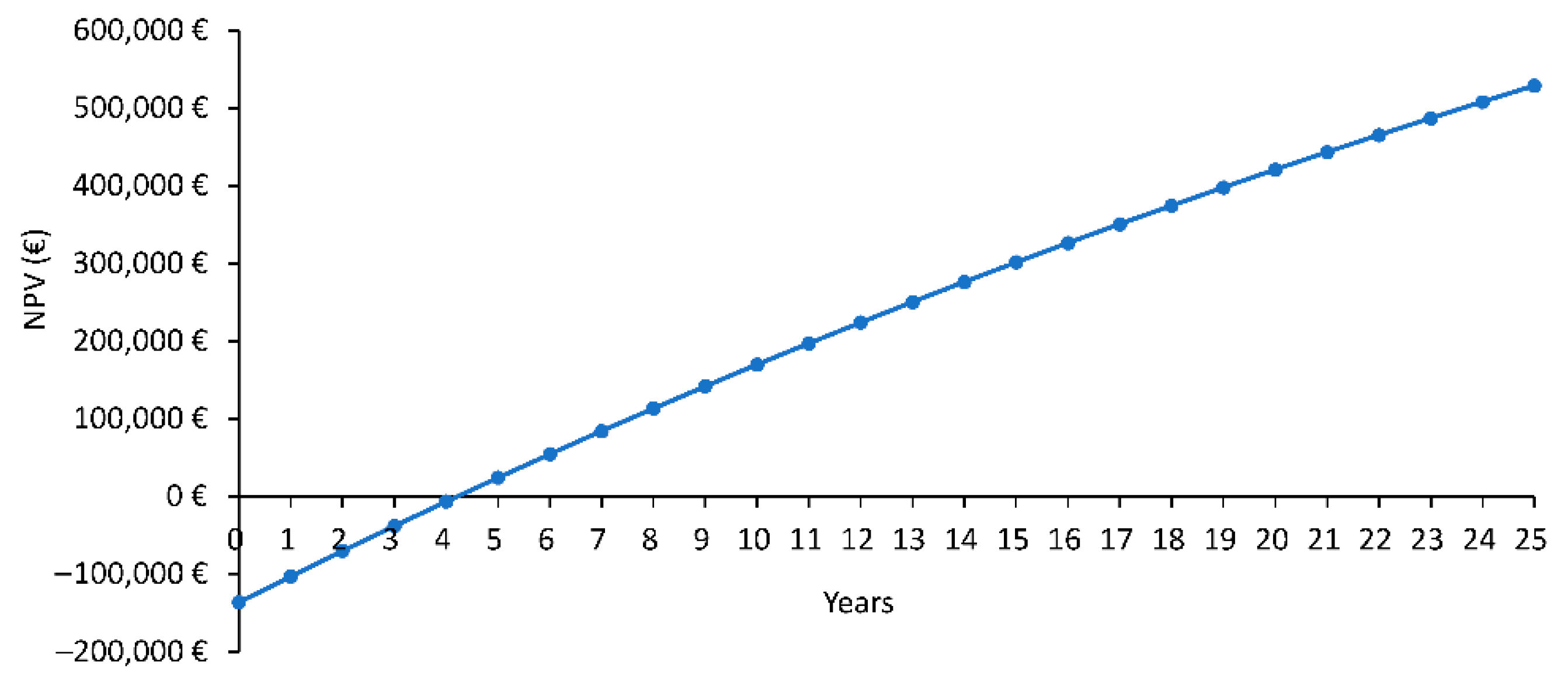
This alignment ensures that the project supports local energy strategies and contributes to energy security. By replacing conventional heating systems of fossil fuels with biomass boilers, the project significantly reduces the community’s carbon footprint and supports broader environmental objectives, such as reducing greenhouse gas emissions and promoting renewable energy sources. The success of this project could serve as a model for similar renewable energy projects regionally and nationally, promoting the adoption of biomass as a key component of sustainable urban energy planning. Table 4 and Figure 4 illustrates the Cumulative Cash flow analysis and investment planning of the BECoop RESCoop for 25 years.
The graph (Figure 4) and investment planning results indicate that the concept is highly profitable with a payback period of 4 years. To ensure realistic results, safety factors and conservative scenarios were included due to the current energy crisis and significant energy price fluctuations. Based on the cash flow analysis that was performed, an NPV of 528,935 €, a payback period of 4.00 years, and an IRR of 22.23% were calculated. To investigate the impact of several parameters a sensitivity analysis was performed. The impact of the pellet selling price and the feedstocks costs were taken into consideration by changing them by ±20%. The highest impact was seen by altering the selling price of the pellet (decreasing the payback period by 28%), whereas the alteration of the feedstock price changed the payback period by 6%. The economic parameters for these cases are presented in Table 5.
It should be noted that the present feasibility analysis adopts a deterministic approach that does not explicitly account for the thermal inertia of municipal buildings or the conversion of wall thermal resistance into virtual energy storage (VES), which can reduce fuel consumption by buffering short-term temperature variations, as proposed by Chang, L., et al. [32], to enhance the accuracy and resilience of economic evaluations. Additionally, the operational cost estimations in this study are based on conventional heating demand profiles and do not explicitly account for the thermal inertia of municipal buildings, which can act as a form of virtual energy storage by buffering indoor temperature fluctuations. Recent research has shown that modeling building thermal dynamics, including wall thermal resistance and indoor air heat capacity, can smooth heating loads, improve comfort (20–24 °C) and reduce fuel consumption requirements. Integrating such models into future analyses could therefore optimize OPEX and CO2 reduction potential for community heating systems as mentioned Li et al. [33].

3.4. Socio-Economic and Environmental Impact of New BECoop RESCoop Activities

3.4.1. Socio-Economic Impact

Two scenarios were examined to assess the socio-economic impact of the BECoop RESCoop:
Pellet Production Scenario: In this scenario, the BECoop RESCoop processes 1200 dry tons of biomass pellets annually for heating purposes exclusively. In this case, 20 biomass boilers are installed in local municipal buildings that will result in the opening of 7.55 new FTE jobs for the local community. This scenario also anticipates a direct contribution of €190,000 to the local Gross Domestic Product (GDP), reinforcing the economic vitality of Karditsa.
1 MWe Biomass Power Plant Scenario: Envisioned as a future expansion in the BECoop RESCoop’s roadmap, the establishment of a 1 MWe biomass power plant stands to significantly amplify the economic output, by mobilizing 5700 dry tons of local biomass. This development is expected to create 38 new FTE jobs and is projected to generate a substantial economic impact, contributing €1,860,000 to the GDP. This scenario represents a strategic escalation in local energy production, positioning the community as a hub for renewable energy.
These scenarios highlight the tangible and prospective economic and employment benefits derived from the project’s activities. The potential to generate over 60 new jobs could have a transformative effect on many families within Karditsa, substantiating the BECoop RESCoop’s capacity to foster significant socio-economic growth. The direct correlation between the project’s scale and its socio-economic benefits suggests expansive potential such as community impact which include job creation and increased GDP contributions, enhancing the economic landscape of Karditsa and improving the standard of living for the local citizens. It also produces scalability potential as a replicating model in other regions of Greece, which could unlock similar benefits, promoting sustainable economic development. The BECoop RESCoop’s initiatives could serve as a catalyst for broader economic development, potentially influencing national policies on renewable energy and local development. The success of these initiatives in Karditsa serves as a compelling case study for other communities aiming to harness the economic potential of sustainable energy practices.
Table 6 illustrates the projected employment opportunities and GDP impact for both operational scenarios, presenting the positive economic implications of expanding bioenergy initiatives within the community. It is important to mention that both construction and equipment manufacturing jobs are mobilized through new facilities and installations, unlike the supply of feedstock or the operation and maintenance of the solutions, which are permanent jobs linked to existing facilities.
The current paper’s socioeconomic impact assessment employs standardized coefficients from established sustainability reports rather than site-specific primary data collection. This methodological choice ensures consistency with accepted bioenergy project evaluation practices enabling cross-project comparability. Furthermore, it ensures transparency and replicability using publicly accessible coefficient values and robustness by incorporating averaged relationships from diverse economic contexts rather than potentially idiosyncratic local conditions.

3.4.2. Environmental Impact

The environmental assessment of the BECoop RESCoop, involving two distinct scenarios as in the socio-economic assessment, underscores the project’s significant potential for reducing environmental impact. The analysis covers both the pellet production concept and the 1 MWe biomass power plant concept.
In the existing operation where the RESCoop produces 1200 tons of biomass pellets annually, the CO2 equivalent (CO2eq) emissions for heat production were meticulously calculated. The emissions were estimated at 4.4 gCO2eq per megajoule (MJ), summing up to a total of 79.2 tons of CO2eq annually. This represents a substantial reduction in greenhouse gas emissions compared to traditional fossil fuel heating methods, illustrating the project’s positive environmental influence.
For the scenario of establishing a 1 MWe biomass power plant, CO2eq emissions associated with electricity production were estimated at 26.8 gCO2eq/MJ, resulting in an annual total of 469.4 tons of CO2eq. This also reflects a significant decrease in emissions compared to conventional electricity production from fossil fuels, highlighting the project’s broader environmental benefits.
The beneficial environmental outcomes of the BECoop RESCoop are largely attributable to efficient resource management, including the moderate use of locally sourced biomass and optimized logistics that minimize transportation distances. Specifically, in the pellet production process at ESEK plant the energy required for processes such as drying and pelletizing is sourced from the combustion of biomass chips and pellets, ensuring that the operations are powered by renewable sources. All electrical demands for the pellet plant are met with electricity generated from renewable sources, further enhancing the project’s sustainability profile. The project’s environmental achievements include impressive GHG savings in which the use of biomass boilers for heating purposes led to estimated CO2eq savings of 94.4% and in the scenario involving the biomass power plant, the project achieves CO2eq savings of 85.4% from electricity production. This exceeds the minimum requirements of the Renewable Energy Directive II (RED II), which mandates at least 80% GHG savings for new biomass installations.
The project’s ability to achieve significant reductions in greenhouse gas emissions plays a crucial role in transitioning towards a more sustainable energy landscape, setting a benchmark for future renewable energy projects.
Table 7 provides a detailed breakdown of the environmental impact of the BECoop RESCoop activities, specifically focusing on the CO2 equivalent emissions from the two operational scenarios: the existing pellet production and the proposed 1 MWe biomass power plant.

3.5. Heating a Public School with Pellets Mixed with Spent Coffee Grounds—Lessons Learned

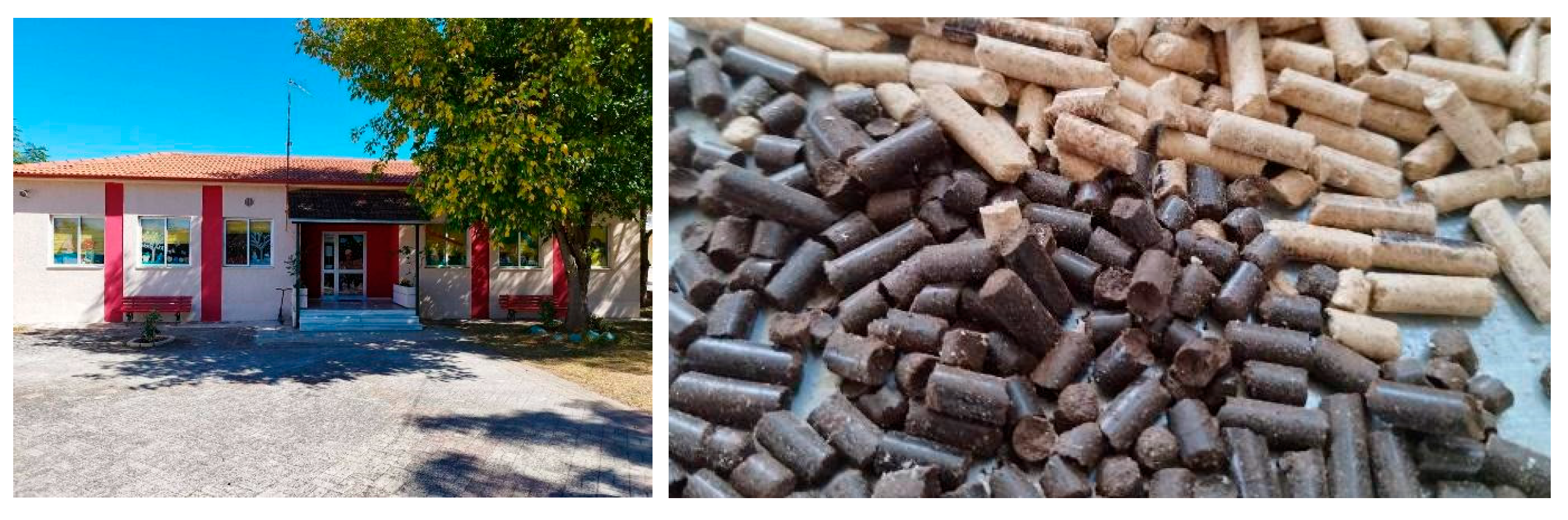
Further to the evaluation and presentation of the technical and business support activities that were provided to the BECoop RESCoop and its new activities, lessons learned and conclusions derived from the heating of a local municipality school with new “alternative fuels” are presented. The school and a sample of the mixed pellets are shown at Figure 5.
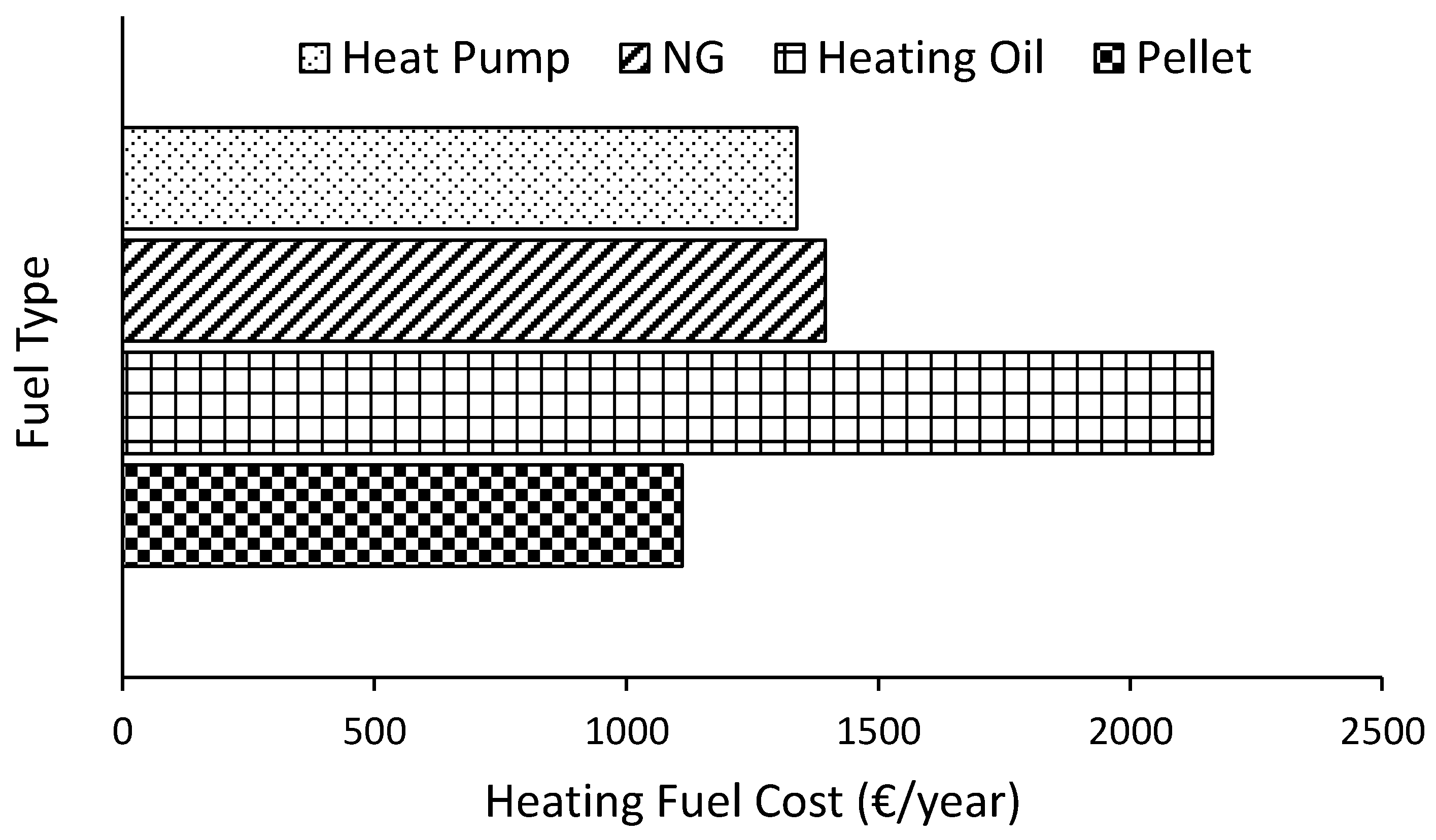
The replacement of heating oil with mixed pellets containing spent coffee grounds in a public school has demonstrated significant social and economic impacts. The use of mixed SCG pellets led to a 49% reduction in heating cost for the public school by switching from heating oil. The fuel cost comparison for heating the school with various fuels can be seen in Figure 6.
This initiative has not only reduced heating costs but also provided a sustainable energy solution, fostering community involvement in renewable energy practices. By utilizing locally sourced biomass, including spent coffee grounds from local coffee shops, the project has created a model for community bioenergy heating that promotes environmental responsibility and energy independence.
The economic benefits of this transition are substantial. The local production of biofuel from waste materials reduces the reliance on imported fossil fuels, keeping energy spending within the community. This, in turn, supports local businesses and stimulates the economy by creating jobs in the collection, processing, and distribution of biomass. Moreover, the project has enhanced social cohesion by involving local stakeholders, including schools, businesses, and municipal authorities, in the bioenergy value chain.
Furthermore, the environmental benefits are noteworthy. The reduction in CO2 emissions from using mixed pellets instead of heating oil contributes to the community’s efforts to combat climate change. The project also mitigates waste disposal issues, turning a potential environmental problem into a valuable resource.

4. Discussion: Novel Insights for Community Bioenergy Transitions

ESEK’s transition toward an Energy Service Company (ESCO) model represents not merely a business model adaptation but rather a fundamental institutional innovation in community–utility relationships. Traditional municipal energy procurement involves capital-intensive boiler investments, ongoing fuel procurement uncertainty, and operational risk, thus creating institutional inertia favoring familiar fossil fuel systems despite higher operational costs. The current paper’s analysis reveals the transformative potential of the ESCO model. By absorbing capital risk, fuel supply responsibility, and operational complexity, the REScoop eliminates institutional barriers to bioenergy adoption. Municipal decision-makers face simplified procurement choices, either to continue paying expensive fossil-based heating, or pay for community biobased heating for guaranteed heat delivery with zero capital investment. This shifts the adoption decision from complex multi-year infrastructure planning to simple operational cost optimization that can be replicated in other communities.
Unlike conventional biomass projects relying on single feedstock sources, the expansion of the BECoop RESCoop’s three-feedstock strategy (coffee grounds, urban prunings, forest residues) embodies principles of modern portfolio theory applied to bioenergy supply chains. The current paper’s analysis demonstrated quantifiable resilience benefits for securing the biomass feedstock. Single-feedstock dependence creates vulnerability to seasonal variations (forestry operations cease during wet winters) and extreme weather events (storms reducing accessible forest/agricultural residues). The diversified portfolio achieves greater supply reliability compared to single-source scenarios. Moreover, diversified feedstock input enhance cost stability. Feedstock cost volatility decreases in diversified portfolios compared to single-source dependency, providing more predictable operational economics for long-term heat supply contracts. However, diversification introduces coordination complexity as managing three distinct supply chains (urban municipal contracts, coffee ground collection, forestry cooperative agreements) requires capacity typically absent in small cooperatives, thus proactive programming is needed. Moreover, the long-term sustainability of biomass feedstock supply is subject to several risks, notably competition from other industries such as biofuels, biochemicals, and biomaterials, which increasingly demand lignocellulosic residues and agricultural by-products. In addition, regional market dynamics, land use changes, and policy shifts further influence biomass availability and cost structures. Long-term supply agreements, integrated resource management, and improved feedstock logistics are critical to ensuring stable biomass availability for community bioenergy projects.
Conventional socioeconomic assessments quantify employment generation and GDP contributions as was presented in the current paper. While valuable, these metrics obscure more profound community transformation mechanisms. Money spent on fossil fuels mainly exports money from the local economy. In contrast, biomass heating retains money within local community’s economy through local labor, municipal biomass provision, and cooperative surplus distribution. Moreover, the adoption of such community biobased heating concepts, create technical skill accumulation, enabling workforce mobility into broader renewable energy sectors. Furthermore, municipal participation in biomass supply chain operations (e.g., urban pruning collection, logistics coordination) develops organizational capabilities in circular economy practices transferable to other waste valorization initiatives. These “multiplicative” socioeconomic effects such as value retention, skills development, institutional learning, etc., constitute additional benefits in adopting community-based heating, as were recorded during the drafting of the current paper.
The current paper also helps identify specific policy mechanisms that could accelerate community bioenergy adoption. First of all, feedstock mobilization policy is needed to boost the community bioenergy adoption. Current waste management regulations classify urban prunings and coffee grounds as municipal solid waste requiring disposal rather than recognizing them as bioenergy resources. A policy recommendation by creating “bioenergy feedstock” classification would facilitate the transfer from municipalities to energy cooperatives, eliminating disposal costs (currently €50–70/t for organic waste) while generating feedstock revenue. Moreover, the ESCO model’s primary barrier is cooperative capital availability for boiler installations. A supportive policy would be to establish regional revolving loan funds providing zero-interest capital to energy communities for deploying community energy systems, which can be repaid through guaranteed heat sales contracts, thus enabling rapid scaling without commercial lending barriers. Lastly, the institutionalization of regional bioenergy advisory services providing feasibility studies, supply chain development support, and regulatory navigation would be a supportive policy mechanism reducing cooperative transaction costs and efforts.
The BECoop RESCoop represents a community bioenergy model that can be replicated in municipalities, where district heating infrastructure is lacking and sustainable sourcing of untapped biomass resources is feasible. Based on the current paper’s analysis, several success factors were identified. First of all, the need to secure long-term heat purchase agreements (e.g., with municipal buildings) in order to secure revenue certainty. Moreover, a success factor is to secure feedstock supply by establishing contracts or municipal agreements for feedstock provision and by diversifying the feedstock portfolio. Lastly, an important success factor is to adopt an incremental scaling approach, where you begin with few installations proving operational reliability and social engagement (community trust) before major expansion. On the other hand, several failure risks were also identified. One such is the risk of feedstock supply disruptions. To mitigate such risk, there is the need to maintain 2–3 months buffer storage and to diversify the feedstocks that are processed. Lastly, another failure risk could be the market competition from existing and established heating solutions such as natural gas grid or district heating, where it will be difficult to withstand price competition.
In brief, while the current study demonstrates the feasibility of integrating new biomass feedstocks in an existing energy community in Central Greece, regional factors such as local infrastructure, feedstock availability, and stakeholder engagement vary across Europe. Future research should apply this framework to diverse geographic and socioeconomic settings to validate transferability and identify best practices.

5. Conclusions

The BECoop RESCoop’s initiative to install 20 biomass boilers across municipal buildings in Karditsa represents a transformative step towards sustainable energy integration within the community. By utilizing locally sourced biomass such as urban prunings, coffee residues, and forest residues, the project supports environmental sustainability as well as boosts local energy independence. The conversion of these biomass sources into energy aligns with global sustainability goals, significantly reducing the community’s reliance on fossil fuels and decreasing its carbon footprint. The initiative showcases the practical application of renewable energy technologies and sets a precedent for community-driven sustainable development. The feasibility study associated with the biomass boiler project underscores its economic viability through detailed financial analysis, demonstrating favorable outcomes such as positive NPV and reasonable payback periods. The economic benefits, coupled with the creation of new jobs and support for local industries involved in biomass collection and processing. This economic pilot case provides a strong foundation for potential expansion and replication of the bioenergy model in other regions, encouraging broader adoption of biomass energy solutions. To capitalize on the successes of the BECoop RESCoop project and encourage wider adoption, it is recommended that similar initiatives focus on integrating comprehensive stakeholder engagement and logistical planning. Furthermore, policy support and regulatory frameworks should be adapted to facilitate the expansion of biomass energy projects, ensuring they can meet the growing demand for sustainable energy solutions. By continuing to innovate and refine biomass energy practices, communities can significantly contribute to national and global efforts aimed at achieving a sustainable energy future, fostering a resilient and green economy.

Author Contributions

Conceptualization, M.A.K.,V.F. and P.G.; methodology, M.A.K., V.F. and K.D.; validation, M.A.K. and V.F.; formal analysis, M.A.K.; investigation, M.A.K., V.F. and K.D.; resources, M.A.K.; writing—original draft preparation, M.A.K. and V.F.; writing—review and editing, M.A.K., V.F. and P.G. and M.A.K.; supervision, M.A.K. and P.G.; project administration, M.A.K.; funding acquisition, P.G. All authors have read and agreed to the published version of the manuscript.

Funding

The research leading to this publication has received funding from the European Union Horizon Programme (H2020), under grant agreement no 952930, BECoop (Unlocking The Community Bioenergy Potential). The sole responsibility of this publication lies with the authors. The European Union is not responsible for any use that may be made of the information contained therein.

Data Availability Statement

The raw data supporting the conclusions of this article will be made available by the authors on request.

Acknowledgments

The authors would like to thank ESEK—Energy Community of Karditsa for their contribution in the pelletization of the fuel mixtures.

Conflicts of Interest

The authors declare no conflicts of interest.

Abbreviations

The following abbreviations are used in this manuscript:
ESEKEnergy Community of Karditsa
ESCOEnergy Service Company
FTEFull Time Equivalent
GDPGross Domestic Product
GHGGreenhouse gases
IRRInternal Rate of Return
LHVLower Heating Value
NPVNet Present Value
PBPPayback Period
PVPresent Value
REDRenewable Energy Directive
REScoopRenewable Energy Sources Cooperative
ROIReturn on Investment
SCGsSpent coffee grounds

References

  1. European Commission. Community Energy: A Practical Guide to Reclaiming Power. Available online: https://energy-communities-repository.ec.europa.eu/community-energy-practical-guide-reclaiming-power_en (accessed on 5 October 2025).
  2. Ahrenfeldt, J.; Thomsen, T.P.; Henriksen, U.; Clausen, L.R. Biomass gasification cogeneration—A review of state of the art technology and near future perspectives. Appl. Therm. Eng. 2013, 50, 1407–1417. [Google Scholar] [CrossRef]
  3. Ferreira, S.D.; Lazzarotto, I.P.; Junges, J.; Manera, C.; Godinho, M.; Osório, E. Steam gasification of biochar derived from elephant grass pyrolysis in a screw reactor. Energy Convers. Manag. 2017, 153, 163–174. [Google Scholar] [CrossRef]
  4. Afgan, N.H.; Gobaisi, D.A.; Carvalho, M.G.; Cumo, M. Sustainable energy development. Renew. Sustain. Energy Rev. 1998, 2, 235–286. [Google Scholar] [CrossRef]
  5. Brack, D.; Birdsey, R.; Walker, W. Greenhouse Gas Emissions from Burning US-Sourced Woody Biomass in the EU and UK; Chatham House: London, UK, 2021. [Google Scholar]
  6. Kirch, T.; Medwell, P.R.; Birzer, C.H.; van Eyk, P.J. Small-scale autothermal thermochemical conversion of multiple solid biomass feedstock. Renew. Energy 2020, 149, 1261–1270. [Google Scholar] [CrossRef]
  7. Mor, S.; John, S.; Kaur-Si, M.; Ravi, K. Emission factors and global warming potential of various solid biomass fuel-cook stove combinations. Atmos. Pollut. Res. 2020, 11, 2. [Google Scholar] [CrossRef]
  8. Szczodrak, J.; Fiedurek, J. Technology for conversion of lignocellulosic biomass to ethanol. Biomass Bioenergy 1996, 10, 367–375. [Google Scholar] [CrossRef]
  9. Wang, C.; Zhang, W.; Qiu, X.; Xu, C. Hydrothermal treatment of lignocellulosic biomass towards low-carbon development: Production of high-value-added bioproducts. EnergyChem 2024, 6, 100133. [Google Scholar] [CrossRef]
  10. Madsen, K.; Bentsen, N.S. Carbon Debt Payback Time for a Biomass Fired CHP Plant—A Case Study from Northern Europe. Energies 2018, 11, 807. [Google Scholar] [CrossRef]
  11. SDG Good Practices. Department of Economic and Social Affairs. Available online: https://sdgs.un.org/sdg-good-practices (accessed on 5 October 2025).
  12. Guo, F.; Chen, J.; He, Y.; Gardy, J.; Sun, Y.; Jiang, J.; Jiang, X. Upgrading agro-pellets by torrefaction and co-pelletization process using food waste as a pellet binder. Renew. Energy 2022, 191, 213–224. [Google Scholar] [CrossRef]
  13. Bentzen, J.D.; Hindsgaul, C.; Henriksen, U.B.; Sørensen, L.H. Straw Gasification in a Two-Stage Gasifier: 12th European Biomass Conference. In Proceedings of the 12 European Biomass Conference, Amsterdam, The Netherlands, 17–21 June 2002. [Google Scholar]
  14. Erlich, C.; Björnbom, E.; Bolado, D.; Giner, M.; Fransson, T. Pyrolysis and gasification of pellets from sugar cane bagasse and wood. Fuel 2006, 85, 1535–1540. [Google Scholar] [CrossRef]
  15. Lehtikangas, P. Storage effects on pelletised sawdust, logging residues and bark. Biomass Bioenergy 2000, 19, 287–293. [Google Scholar] [CrossRef]
  16. McKendry, P. Energy production from biomass (part 1): Overview of biomass. Bioresour. Technol. 2002, 83, 37–46. [Google Scholar] [CrossRef] [PubMed]
  17. Demirbas, A. Political, economic and environmental impacts of biofuels: A review. Appl. Energy 2009, 86 (Suppl. 1), S108–S117. [Google Scholar] [CrossRef]
  18. Walker, G.; Devine-Wright, P. Community Renewable Energy: What Should It Mean? Energy Policy 2008, 36, 497–500. [Google Scholar] [CrossRef]
  19. Seyfang, G.; Haxeltine, A. Growing Grassroots Innovations: Exploring the Role of Community-Based Initiatives in Governing Sustainable Energy Transitions. Socioeco.org. Available online: https://www.socioeco.org/bdf_fiche-document-3844_en.html (accessed on 5 October 2025).
  20. Gold, S.; Seuring, S. Supply chain and logistics issues of bio-energy production. J. Clean. Prod. 2011, 19, 32–42. [Google Scholar] [CrossRef]
  21. uP_running. Take-Off for Sustainable Supply of Woody Biomass from Agrarian Pruning and Plantation Removal, H2020 Project, GA No 691748. Available online: https://www.up-running.eu/other-materials/ (accessed on 5 October 2025).
  22. AgroBioHeat. Promoting the Penetration of Agrobiomass Heating in European Rural Areas, H2020 Project, GA No 818369. Available online: https://agrobioheat.eu/ (accessed on 5 October 2025).
  23. European Environment Agency. EMEP/EEA Air Pollutant Emission Inventory Guidebook, 1.A.4 Small Combustion. 2019. Available online: https://www.eea.europa.eu/publications/emep-eea-guidebook-2019/part-b-sectoral-guidance-chapters/1-energy/1-a-combustion/1-a-4-small-combustion/view (accessed on 5 October 2025).
  24. RED II (Renewable Energy Directive) 2018/2001/EU. Available online: https://eur-lex.europa.eu/legal-content/EN/TXT/?uri=uriserv:OJ.L_.2018.328.01.0082.01.ENG&toc=OJ:L:2018:328:TOC (accessed on 5 October 2025).
  25. Deloitte. Towards an Integrated Energy System: Assessing Bioenergy’s Socio-Economic and Environmental Impact. 2022. Available online: https://bioenergyeurope.org/wp-content/uploads/2024/01/Deloitte-Report-2022_Towards-an-Integrated-Energy-System.pdf (accessed on 5 October 2025).
  26. European Commission. Report from the Commission to the Council and the European Parliament on Sustainability Requirements for the Use of Solid and Gaseous Biomass Sources in Electricity, Heating and Cooling; European Commission: Brussel, Belgium, 2010. [Google Scholar]
  27. European Commission. State of Play on the Sustainability of Solid and Gaseous Biomass Used for Electricity, Heating and Cooling in the EU; European Commission: Brussel, Belgium, 2014. [Google Scholar]
  28. JRC. Solid and Gaseous Bioenergy Pathways: Input Values and GHG Emissions: Calculated According to Methodology Set in COM(2016) 767: Version 2. 2017. Available online: https://publications.jrc.ec.europa.eu/repository/handle/JRC104759 (accessed on 5 October 2025).
  29. BIOGRACE II. Harmonised Greenhouse Gas Calculations for Electricity, Heating and Cooling from Biomass. Available online: https://biograce.net (accessed on 5 October 2025).
  30. ECN. Phyllis Database, Database for the Physico-Chemical Composition of (Treated) Lignocellulosic Biomass, Micro- and Macroalgae, Various Feedstocks for Biogas Production and Biochar. Available online: https://phyllis.nl/ (accessed on 5 October 2025).
  31. Kougioumtzis, M.A.; Filippou, V.; Rontogianni, A.; Karampinis, E.; Grammelis, P.; Kakaras, E. Valorization of spent coffee ground by mixing with various types of residual biomass for pellet production: Evaluation of solid biofuel properties at different mixtures. Biofuels Bioprod. Biorefin. 2024, 18, 968–989. [Google Scholar] [CrossRef]
  32. Chang, L.; Li, Z.; Tian, X.; Su, J.; Chang, X.; Xue, Y.; Li, Z.; Jin, X.; Wang, P.; Sun, H. A two-stage distributionally robust low-carbon operation method for antarctic unmanned observation station integrating virtual energy storage and hydrogen waste heat recovery. Appl. Energy 2025, 400, 126578. [Google Scholar] [CrossRef]
  33. Li, Z.; Sun, H.; Xue, Y.; Li, Z.; Jin, X.; Wang, P. Resilience-oriented asynchronous decentralized restoration considering building and E-bus co-response in electricity-transportation networks. IEEE Trans. Transp. Electrif. 2025, 11, 11701–11713. [Google Scholar] [CrossRef]
Figure 1. ESEK pellet plant at Karditsa, Greece.
Energies 18 06346 g001
Figure 2. Value chain operations of the investigated biomass streams: urban prunings, coffee residues and forest residues.
Energies 18 06346 g002
Figure 3. Diagram of value chain operations for the new activities (forest residues, coffee residues and urban prunings exploitation).
Energies 18 06346 g003
Figure 4. Evaluation of the investment for the new RESCoop activities.
Energies 18 06346 g004
Figure 5. School and a sample of the mixed pellets.
Energies 18 06346 g005
Figure 6. Fuel cost comparison for heating school with mixed SCG pellets.
Energies 18 06346 g006
Table 1. Main properties of coffee residues, urban prunings, fir and oak (Source: CERTH analyses *, [30] **).
Parameter UnitValue
Urban Prunings **Fir **Oak **Coffee Residues *
Moisture% a.r.30.78373861.7
Volatile% d.b.75.93--81
Ash% d.b.5.890.280.321.6
C% d.b.47.9950.3649.4253.34
H% d.b.5.555.925.546.79
N% d.b.1.440.050.811.53
S% d.b.0.10-0.080.13
HHVMJ/kg d.b19.4521.1018.1622.83
LHVMJ/kg a.r.11.8711.589.586.68
Table 2. Main pelletization parameters.
ParameterValue
Particle size, mm<6
Moisture Content, %11–14
Pellet mill (Ring die), diameter × length, mm6 × 65
Compressed ratio6.5–7
Pelletizing temperature, °C95
Pellet temperature after the pelletization process, °C75
Table 3. Main fuel characteristics of indicative coffee pellets mixed with forest residues and urban prunings [31].
Parameter UnitValues
Urban Prunings (90%)/Coffee Residues (10%)Forest Residues (10%)/Coffee Residues (90%)
Moisture% a.r.11.110
Ash% d.b.1.62.5
Volatiles% d.b.77.976.3
C% d.b.50.3550.77
H% d.b.6.016.22
N% d.b.0.82.96
S% d.b.0.050.2
Cl% d.b.0.020.02
HHVMJ/kg d.b19.8720.53
LHVMJ/kg a.r.16.2317.02
Bulk densitykg/m3, a.r.648725
Mechanical Durability% a.r.96.291.1
Table 4. Cumulative Cash Flows of the new RESCoop activities.
YearsCAPEX (€)OPEX (€)Inflation RateRevenues (€)Cash Flow (€)Cumulative (€)PV €NPV €
0105,80030,6142.00%0−136,414−136,414−136,414−136,414
1 30,6142.00%64,69334,079−102,33433,411−103,003
2 30,6142.00%64,69334,079−68,25532,756−70,246
3 30,6142.00%64,69334,079−34,17532,114−38,133
4 30,6142.00%64,69334,079−9631,484−6648
5 30,6142.00%64,69334,07933,98430,86724,218
6 30,6142.00%64,69334,07968,06330,26254,480
7 30,6142.00%64,69334,079102,14229,66884,148
8 30,6142.00%64,69334,079136,22229,086113,235
9 30,6142.00%64,69334,079170,30128,516141,751
10 30,6142.00%64,69334,079204,38127,957169,708
11 30,6142.00%64,69334,079238,46027,409197,117
12 30,6142.00%64,69334,079272,54026,871223,988
13 30,6142.00%64,69334,079306,61926,345250,333
14 30,6142.00%64,69334,079340,69925,828276,161
15 30,6142.00%64,69334,079374,77825,322301,482
16 30,6142.00%64,69334,079408,85824,825326,307
17 30,6142.00%64,69334,079442,93724,338350,645
18 30,6142.00%64,69334,079477,01623,861374,507
19 30,6142.00%64,69334,079511,09623,393397,900
20 30,6142.00%64,69334,079545,17522,934420,834
21 30,6142.00%64,69334,079579,25522,485443,319
22 30,6142.00%64,69334,079613,33422,044465,363
23 30,6142.00%64,69334,079647,41421,612486,975
24 30,6142.00%64,69334,079681,49321,188508,163
25 30,6142.00%64,69334,079715,57320,772528,935
Table 5. Results of the investment planning of the BECoop RESCoop activities.
Economic ParameterValues
ScenarioBase Case−20% Pellet Selling Price+20% Pellet Selling Price+20% Feedstock Cost−20% Feedstock Cost
Net Present Value528,935276,328781,542494,319563,551
Return On Investment24.98%15.50%34.47%23.46%26.55%
Pay-pack period4.00 years6.45 years2.90 years4.26 years3.77 years
Internal Rate of Return22.23%12.21%31.74%20.67%23.82%
Table 6. Socio-economic impact of the BECoop RESCoop activities.
ScenarioPellet Production1 MWe Plant
Employment Impact (FTE *)GDP Impact (M€)Employment Impact (FTE)GDP Impact (M€)
Equipment manufacturing0.300.0210.03
Construction0.100.0010.06
Feedstock supply2.400.06190.45
Operation & maintenance4.00.0790.84
Indirect0.760.0480.48
Total 7.550.19381.86
* FTE: Full time equivalent.
Table 7. Environmental impact of the BECoop RESCoop activities.
Pellet Plant Case1 MWe Biomass PlantUnits
CO2eq emissions from transport and distribution3.43.1gCO2eq/MJFuelMinimum GHG emissions savings based on RED II for new biomass installations
CO2eq emissions from processing0.31.1gCO2eq/MJFuel
CO2eq emissions from fuel in use0.30.3gCO2eq/MJFuel
Total CO2eq emissions from production of fuel before energy conversion4.004.50gCO2eq/MJFuel
Total CO2eq emissions produced79.2469.4tCO2eq
Total CO2eq emissions from energy production4.426.8gCO2eq/MJ
HG emissions savings94.485.4%80%
Disclaimer/Publisher’s Note: The statements, opinions and data contained in all publications are solely those of the individual author(s) and contributor(s) and not of MDPI and/or the editor(s). MDPI and/or the editor(s) disclaim responsibility for any injury to people or property resulting from any ideas, methods, instructions or products referred to in the content.