Article

Improvement of Fast Simulation Method of the Flow Field in Vertical-Axis Wind Turbine Wind Farms and Consideration of the Effects of Turbine Selection Order


1
Graduate School of Engineering, Tottori University, 4-101 Koyama-Minami, Tottori 680-8552, Japan
2
Advanced Mechanical and Electronic System Research Center (AMES), Faculty of Engineering, Tottori University, 4-101 Koyama-Minami, Tottori 680-8552, Japan
3
Department of Mechanical Engineering, National Institute of Technology (KOSEN), Kagawa College, 355 Chokushi, Takamatsu 761-8058, Japan
*
Author to whom correspondence should be addressed.
Energies 2025, 18(23), 6294; https://doi.org/10.3390/en18236294 (registering DOI)
Submission received: 6 October 2025 / Revised: 19 November 2025 / Accepted: 27 November 2025 / Published: 29 November 2025

Abstract

To determine the optimal arrangement of vertical-axis wind turbines (VAWTs) within wind farms, we previously developed a technique (method-1) that constructs a flow field based on two-dimensional (2D) velocity data derived from computational fluid dynamics (CFD) simulations. In this study, we introduce an improved approach (method-2), which follows the same fundamental concept as method-1 but incorporates a more efficient algorithm for generating the flow field. Comparative analyses confirmed that method-2 produces results equivalent to those of method-1 while significantly reducing computational time and cost. Method-2 reduces the computation time of method-1 by approximately 50% for parallel layouts (θ = 0°) and up to 60% for slanted layouts (θ = ±45°). Using method-2, we further investigated the performance of a wind farm composed of eight VAWT rotors arranged in a linear configuration under the assumption of a 2D flow. The results highlighted two important aspects. First, the predicted power output is unaffected by the order in which the flow fields are superimposed during calculation; second, the method exhibits high sensitivity to even small variations in rotor placement within the layout when the spacings between rotors are short. Additionally, we examined how rotor spacing affects the distribution of power generation across the rotor array. These findings of this study validate the efficiency of method-2 and offer practical insights for designing optimized VAWT layouts.

1. Introduction

Achieving a carbon-free society requires the large-scale and early introduction of various renewable energy (RE) resources. Among them, wind energy plays a particularly important role because of its scalability and ability to operate both onshore and offshore. Although large horizontal-axis wind turbines (HAWTs) currently dominate the commercial market because of their high efficiency and proven technology, small wind turbines have also attracted significant attention. Small turbines have several advantages over large turbines, including easier transportation, faster installation, lower land-use requirements, and suitability for distributed energy systems in urban areas and remote communities. These features make them particularly promising for decentralized energy production, in which electricity is generated closer to the point of consumption.
However, a major challenge with small wind turbines is the relatively high cost of power generation compared with large-scale wind turbines. Unlike large HAWTs, smaller units do not benefit from economies of scale, making each kilowatt hour (kWh) of energy more expensive. To address this issue, researchers have begun exploring novel deployment strategies, particularly for vertical-axis wind turbines (VAWTs).
Recently, the installation of multiple small VAWTs in closely spaced configurations has attracted significant attention. Unlike HAWTs, where the turbines must be placed far apart to avoid wake interference, which reduces efficiency, VAWTs can be arranged in denser clusters. Studies have shown that closely spaced VAWTs may exhibit constructive aerodynamic interactions, meaning the wake of one turbine can enhance the performance of its neighbors [1]. This “power output enhancement effect” suggests that well-planned arrays of small VAWTs could significantly increase the amount of electricity generated per unit of land area compared to conventional layouts. The flow field around a VAWT is highly unsteady, three-dimensional, and influenced by blade-vortex interactions and dynamic stall effects [2]. This makes the use of high-fidelity numerical methods such as computational fluid dynamics (CFD) computationally expensive. Consequently, the development of accurate yet simplified wake models for VAWTs has lagged. Without such models, designing optimal layouts for VAWT wind farms (VAWT-WFs) that maximize energy production while minimizing costs remains challenging. If these challenges can be overcome, a small VAWT-WF could become a vital component of the RE portfolio. Their deployment will not only support the transition to a decarbonized society but also provide flexible and cost-effective energy solutions for communities, complementing large-scale HAWT-WFs and other REs, such as solar and hydropower.
In a groundbreaking study on VAWT-WFs, Rajagopalan et al. [1] investigated the aerodynamic interference when multiple VAWTs are placed close together and examined how turbine spacing, alignment, and arrangement influence airflow patterns. The interference among multiple rotors can either decrease the efficiency owing to wake effects or, for some configurations, enhance the power output. Whittlesey et al. [3] showed that a turbine arrangement similar to a fish schooling pattern can reduce wake interference and increase the overall energy capture. Compared with traditional designs, bioinspired layouts can significantly improve the efficiency of WFs. Dabiri [4] found that counter-rotating arrangements minimize wake losses and allow turbines to be placed close together, thereby significantly increasing the WF power density. Their findings suggest that such designs can enhance the power density by an order of magnitude compared to conventional HAWT-WFs. Using numerical simulations, Zanforlin and Nishino [5] showed that constructive vortex interactions and flow accelerations between turbines can enhance the power output. This study analyzed the fluid dynamics mechanism behind the improved performance of closely spaced VAWTs. Sahebzadeh et al. [6] investigated optimal layout strategies for VAWT-WFs using double-rotor arrangements to enhance the overall WF efficiency. Hansen et al. [7] conducted CFD simulations for different spacings and configurations for the numerical modeling and optimization of paired VAWTs to support upscaling to larger farm designs. Their results showed that an optimized layout can reduce the wake effects and improve the combined efficiency. Silva et al. [8] studied the overall VAWT output and individual rotor performance for different cluster configurations of VAWTs. The authors tested various arrangements and spacings using experiments and simulations and showed that a certain layout (straight line, three turbines, and three blades) with a diameter of 3 m can enhance energy capture by improving the flow interactions. Vergaerde et al. [9,10] performed experimental studies on the interaction of paired VAWTs and confirmed that under optimal configurations, paired VAWTs can achieve significant power enhancement compared with isolated turbines. Jodai et al. [11] conducted wind tunnel experiments to examine the interactions among six small VAWTs arranged in three different layouts—three parallel pairs side-by-side, staggered pairs, and two parallel trios—and showed that reducing the spacing between the turbine clusters improves the average power output per unit installation area. In 1994, Mosetti et al. [12] introduced a genetic algorithm (GA) to optimize wind turbine placement for the HAWTs in large WFs. This study focused on two significant aspects: minimizing the cost and maximizing the total energy output for certain types of land and turbines. This work led to the development of modern WFs’ layout optimization techniques. Subsequently, many researchers studied HAWTs in WFs [13,14,15,16,17]. Chen et al. [18] investigated a WF layout with multiple hub heights to reduce the wake loss and improve power generation. They developed a greedy algorithm for determining turbine placement, considering wind conditions and wake interactions, and showed that mixing hub heights in the layout enhanced the energy capture compared to single-height designs. This is a practical method for improving WF efficiency while maintaining low computational costs. Gualtieri [19] proposed a new method for WFs layout optimization that integrated both turbine placement and turbine type selection. This approach allows different turbine models to be chosen based on the local wind conditions within a WF. This method accounts for wake effects, wind variability, and cost performance trade-offs to maximize the overall energy efficiency. They introduced the Jensen model [20] as the wake model for HAWTs to reduce the computational cost. In a recent study on HAWT wake models, Shao et al. [21] presented an improved model for multiple wind turbine wakes, focusing on the faster recovery that occurs when wakes overlap. This study modified traditional wake superposition methods to better capture the velocity distribution and turbulence effects in complex wake interactions. Chen and Agarwal [22] explored the optimal placement of HAWTs and VAWTs within a WF using a GA. They showed that mixed HAWT–VAWT layouts can reduce wake interference and enhance power generation by considering wake effects and turbine interactions. Talamalek et al. [23] investigated the effect of ambient turbulence on the performance of two closely spaced VAWTs. They found that higher turbulence levels enhanced wake mixing, leading to faster wake recovery and improved downstream turbine performance, which can mitigate negative wake effects and offer insights for optimizing VAWT-WF layouts. Cazzaro et al. [24] focused on the layout optimization of VAWTs to maximize the energy production while considering wake interactions. They formulated a problem and applied advanced optimization techniques to determine efficient turbine arrangements. Their method accounts for the wind direction variability, spacing constraints, and aerodynamic interactions specific to VAWTs. Their results show that optimized layouts can significantly improve the power output compared to conventional grid-based placements. This study also highlights the potential of mathematical optimization approaches for designing compact and efficient VAWT-WFs. Overall, it provides a structured framework for improving the performance of future VAWTs.
In recent years, closely coupled arrangements of small VAWTs have attracted attention because of their power-output enhancement effects [25]. Azadani [26] demonstrated how arrays of VAWTs can exhibit positive wake interactions that enhance the overall power output, in contrast to the negative wake interference of typical HAWT-WFs. Mereu et al. [27] investigated how Savonius turbines interact when placed in a linear array, focusing on the effects of the inter-turbine spacing, wind incidence angle, and number of turbines. They showed that closer spacing and smaller incidence angles can improve the performance. However, the flow field around VAWTs is more complex than that around HAWTs, and the computational costs of numerical analyses are high. Buranarote et al. [28] proposed a method to calculate the flow field around a VAWT cluster by combining a wake model [29] for a HAWT with the potential flow; however, the method had a large number of parameters and required a relatively longer computation time. Although Buranarote et al. attempted to build a method using equations to give a flow field similar to the results obtained by two-dimensional (2D) CFD, we came up with the idea that it is easy to build up the flow field using the CFD-outputting numerical data. Therefore, we proposed a method [30] (referred to as method-1 here) to significantly reduce the number of parameters by directly using the CFD analysis data of an isolated single two-dimensional (2D) VAWT rotor to build up the flow field of a VAWT-WF. This study proposes a new method (called method-2) which applies the same concept as method-1 but simplifies the algorithm for constructing the flow field. We showed that method-2 can give the same results as method-1, albeit with a shorter calculation time. Furthermore, by applying this method to an eight-VAWT linear layout, the effects of the calculation order, sensitivity to subtle differences in the layout, and dependence of the rotor output on the rotor spacing were investigated and clarified.
The remainder of this paper is organized as follows. Section 2 explains the methodology and algorithm of method-2 by comparison with method-1. Section 3 presents the simulation results and discussions, including a comparison between method-1 and method-2, the effects of calculation order, sensitivity of power prediction to layout, and gap dependence of rotor power. Finally, Section 4 concludes.

2. Materials and Methods

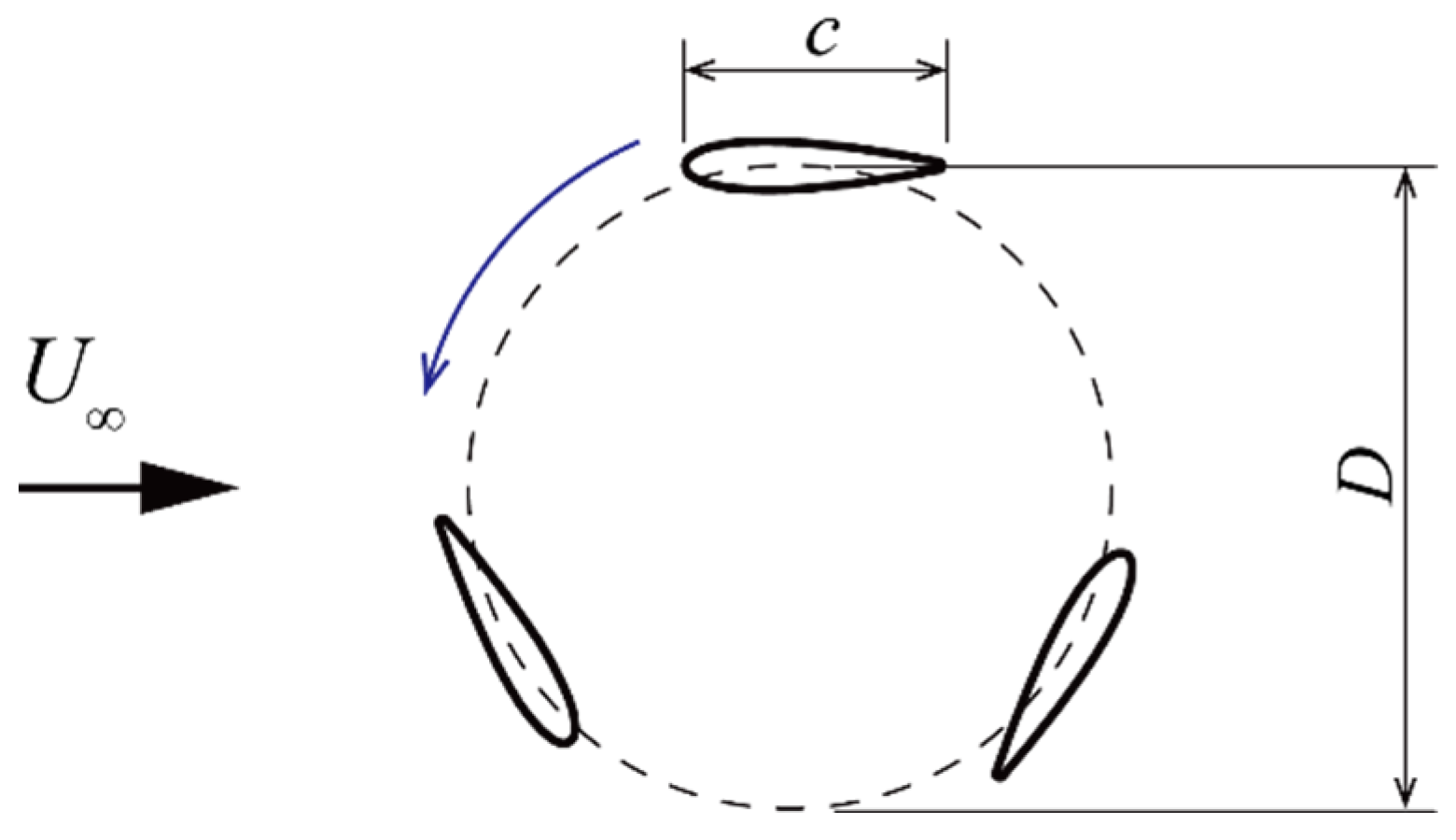
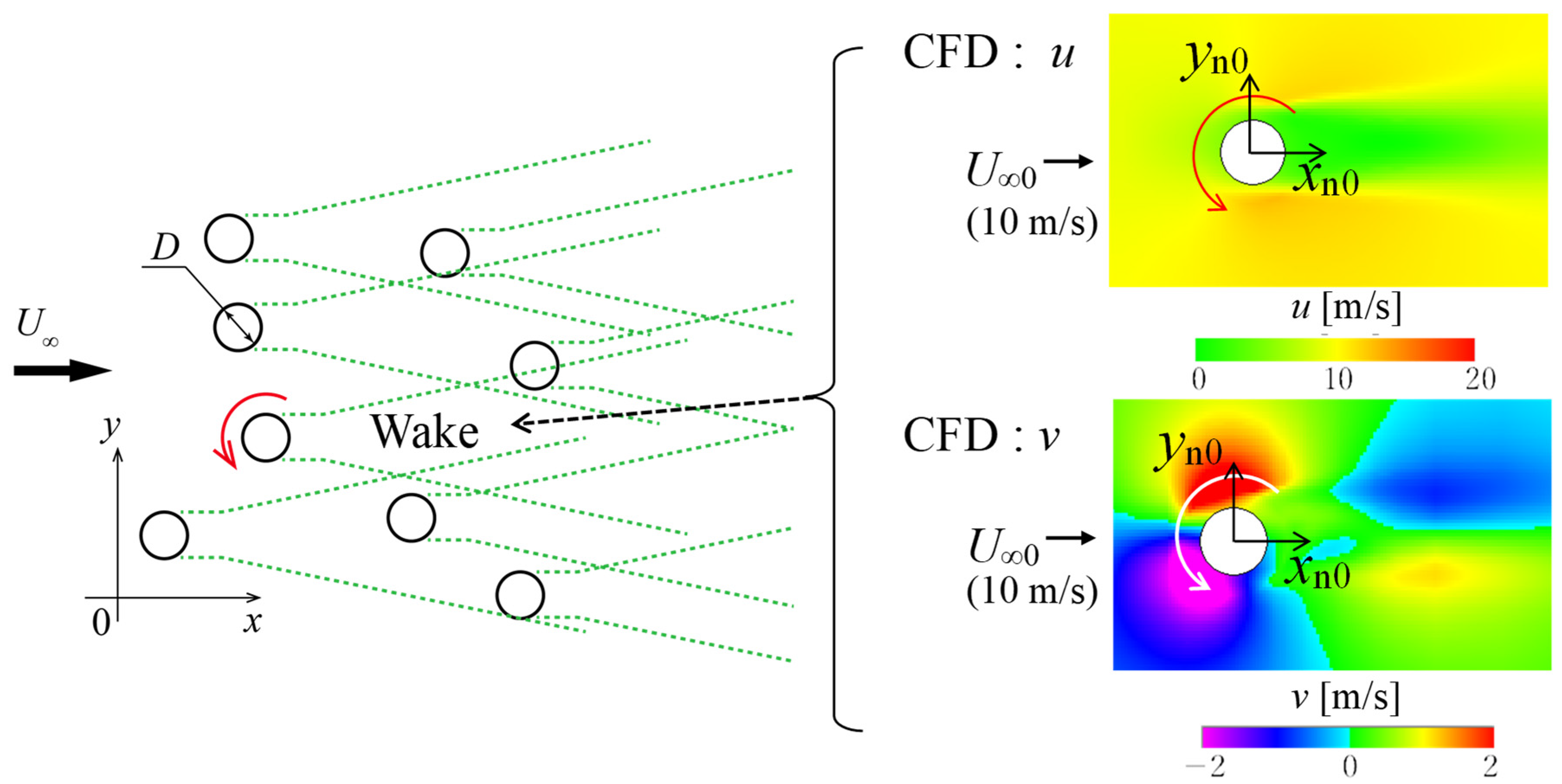
This study deals with miniature 2D-VAWT rotors, each representing an equatorial cross-section of a 3D-printed model used for wind tunnel experiments [11]. However, the hub of the model is neglected. The rotor configuration, which is the same as that used in a previous study [30], is shown in Figure 1. Figure 2 shows a conceptual image of the proposed method and absolute coordinate systems x , y . The concept and basic equations of the new method (method-2) are the same as those of method-1, assuming the availability of CFD analysis velocity data (uCFD, vCFD) around a single 2D-VAWT rotor for a given wind speed U∞0. The 2D CFD results of the isolated single turbine used in this study were obtained by solving Reynolds-averaged Navier–Stokes equations using the turbulence model of the SST k-ω. STAR-CCM+ ver.14.04.011 was used as the solver with a dynamic fluid/body interaction model. The computational domain was 80D × 100D and the total number of cells was approximately 230,000. For the boundary conditions, a constant wind speed of 10 m/s was set at the inlet, a constant gauge pressure of 0 Pa was given at the outlet, and slip conditions were assumed at the sides. The time step was set to 0.000025 s. The rotor power was obtained by averaging the unsteady torque and rotational speed after convergence, assuming the same rotor height as the miniature wind turbine. The details are described in reference [31]. Using Equations (1) and (2), the velocity-difference fields (dudif, dvdif), which are the differences between the uniform flow velocities (U∞0 or 0) normalized by a constant wind speed U∞0 and CFD analysis results, are calculated at each computational grid point. The calculated velocity difference field is substituted into Equations (3) and (4) to construct the flow field of the VAWT-WF with N rotors. Here, (xn0, yn0) are the local coordinates with the center of a single rotor as the origin, and UF(j) is the virtual upstream wind speed of the jth rotor. The arguments xn(j) and yn(j) of dudiff and dvdiff in Equations (3) and (4) are defined by xn(j) = (xxj)/D and yn(j) = (yyj)/D, respectively. (xj, yj) are the absolute coordinates of the jth rotor. The virtual upstream wind speed UF(j) is calculated by correcting the average wind speed uave at the rotor center using ∆u1(j) and ∆u2(j), as described in Equation (5). ∆u1(j) was introduced to express the interference from other rotors and was related to the velocity gradient of du/dy at the center of jth rotor. ∆u2(j) was a correction introduced from a comparison of the CFD analysis of paired VAWTs [31] and was related to the secondary velocity component v, especially when the distance from the closest rotor is small. The details are given in reference [30] that describes method-1. Except for the calculation algorithm described below, the setting parameter values for method-2 are the same as those for method-1; therefore, the details are not given here.
d u d i f x n 0 , y n 0 = 1 U 0 u C F D x n 0 , y n 0 U 0
d v d i f x n 0 , y n 0 = v C F D x n 0 , y n 0 U 0
u x , y = U + j = 1 N U F j d u d i f x n j , y n j
v x , y = j = 1 N U F j d v d i f x n j , y n j
U F j = u a v e j + u 1 j u 2 ( j )
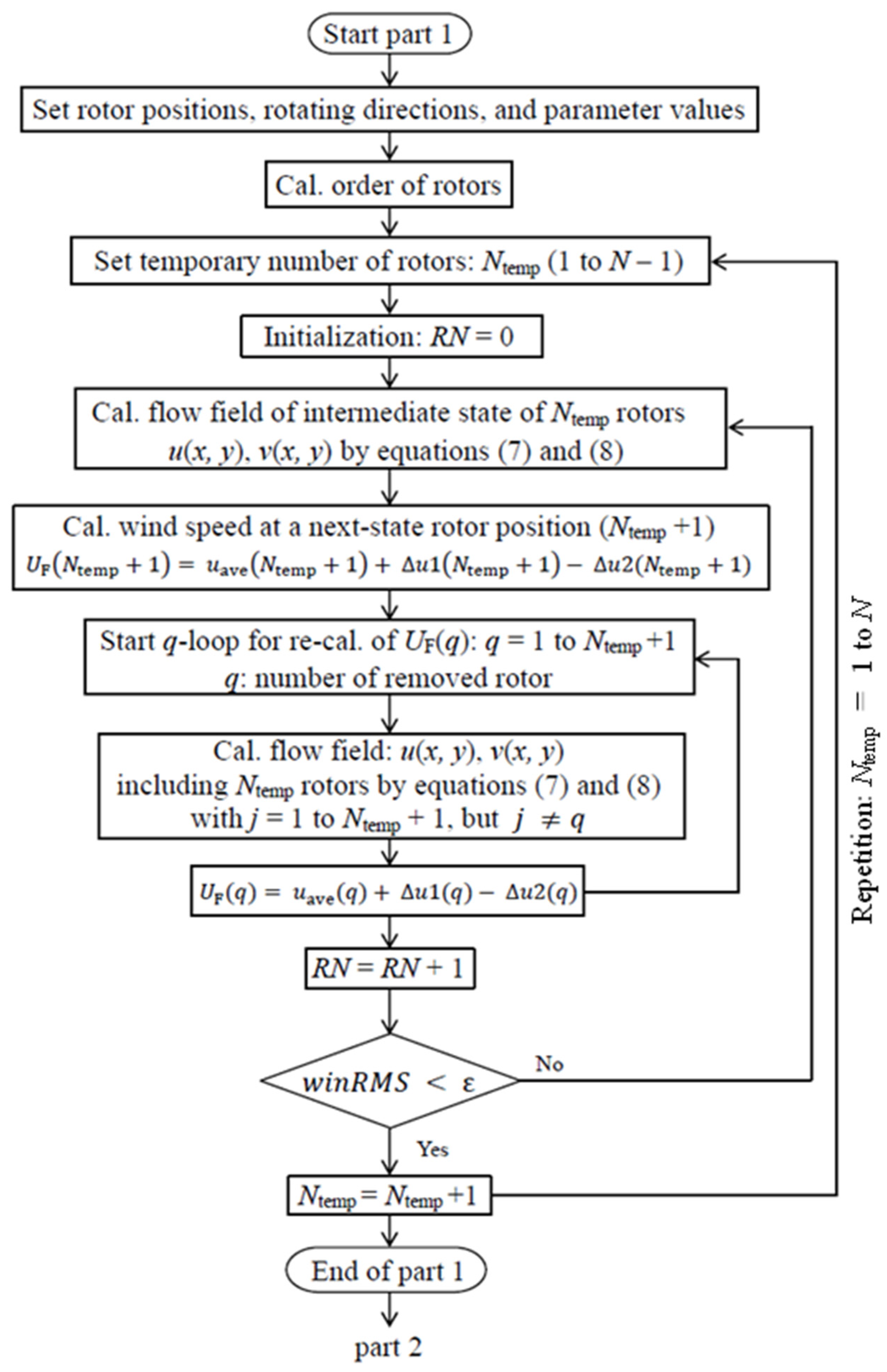
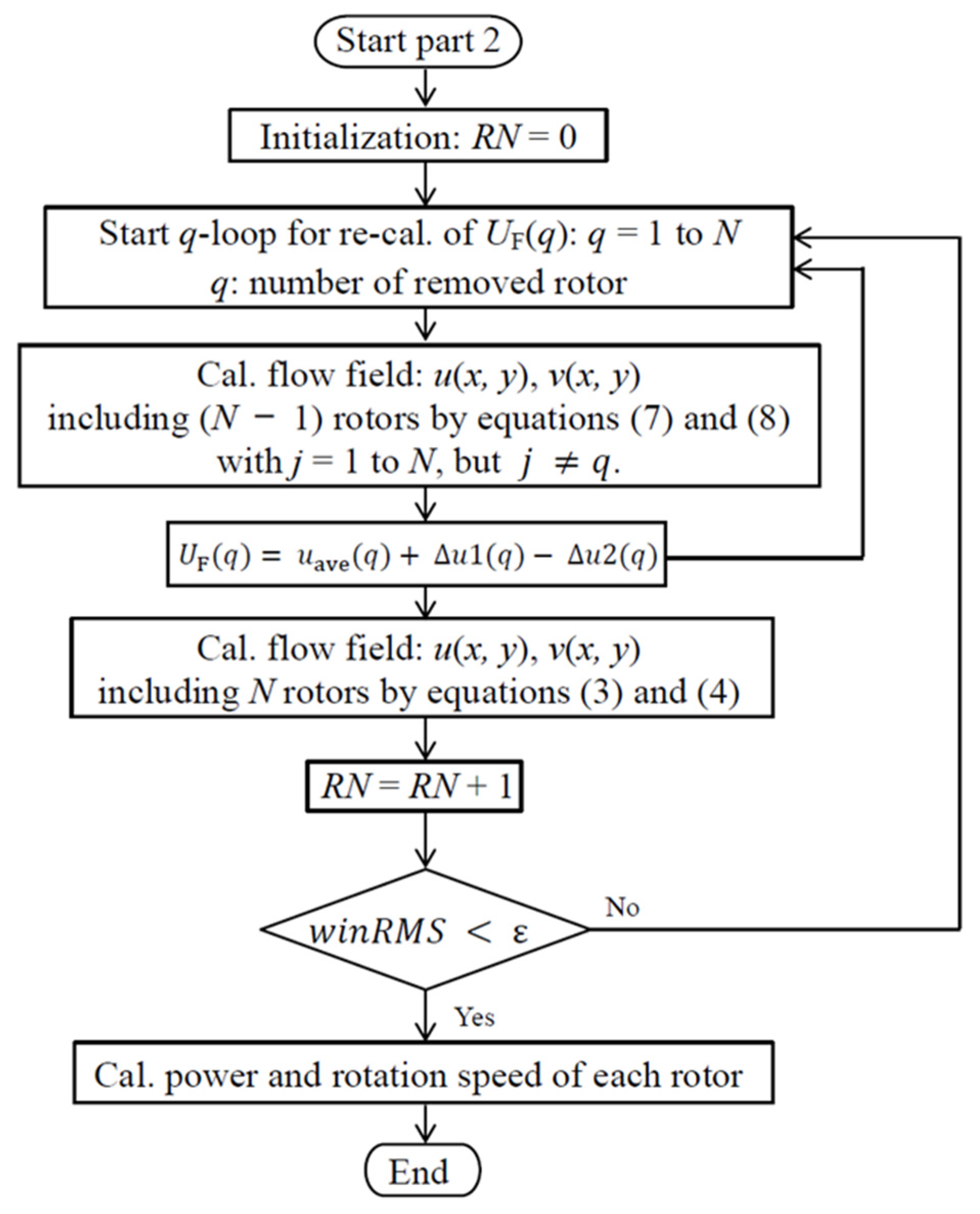
The previously proposed method-1 [30] gradually constructed the flow field of a WF by adding rotors one by one, starting from the rotor closest upstream. Specifically, the virtual upstream wind speed (UF) of each rotor was obtained for an intermediate state with a temporary number of rotors (Ntemp) through iterative calculations, continuing until the convergence criterion, defined by winRMS in Equation (6), fell below a small constant (iteration threshold: ε = 0.0001). The value winRMS was evaluated for each intermediate state using Equations (5) and (7). In the process of constructing each intermediate state, Equations (7) and (8) were adopted to calculate the flow field of a tentative layout that removed one of the rotors to obtain the virtual upstream wind speed UF (q) at the position of the removed rotor. Here, q denotes the number of a removed rotor. Figure 3 shows a flow chart of the construction of the intermediate states, which include fewer rotors than the final number N; we denote this calculation process as part 1. In this flowchart, the variable RN is introduced as the repetition number to monitor the iteration conditions. After completing part 1, the temporary flow field of a WF consisting of the total number of rotors (N) is obtained. Then, method-1 executes the final iteration process (denoted as part 2) to obtain the converged flow field of the WF. Figure 4 shows a flowchart of part 2.
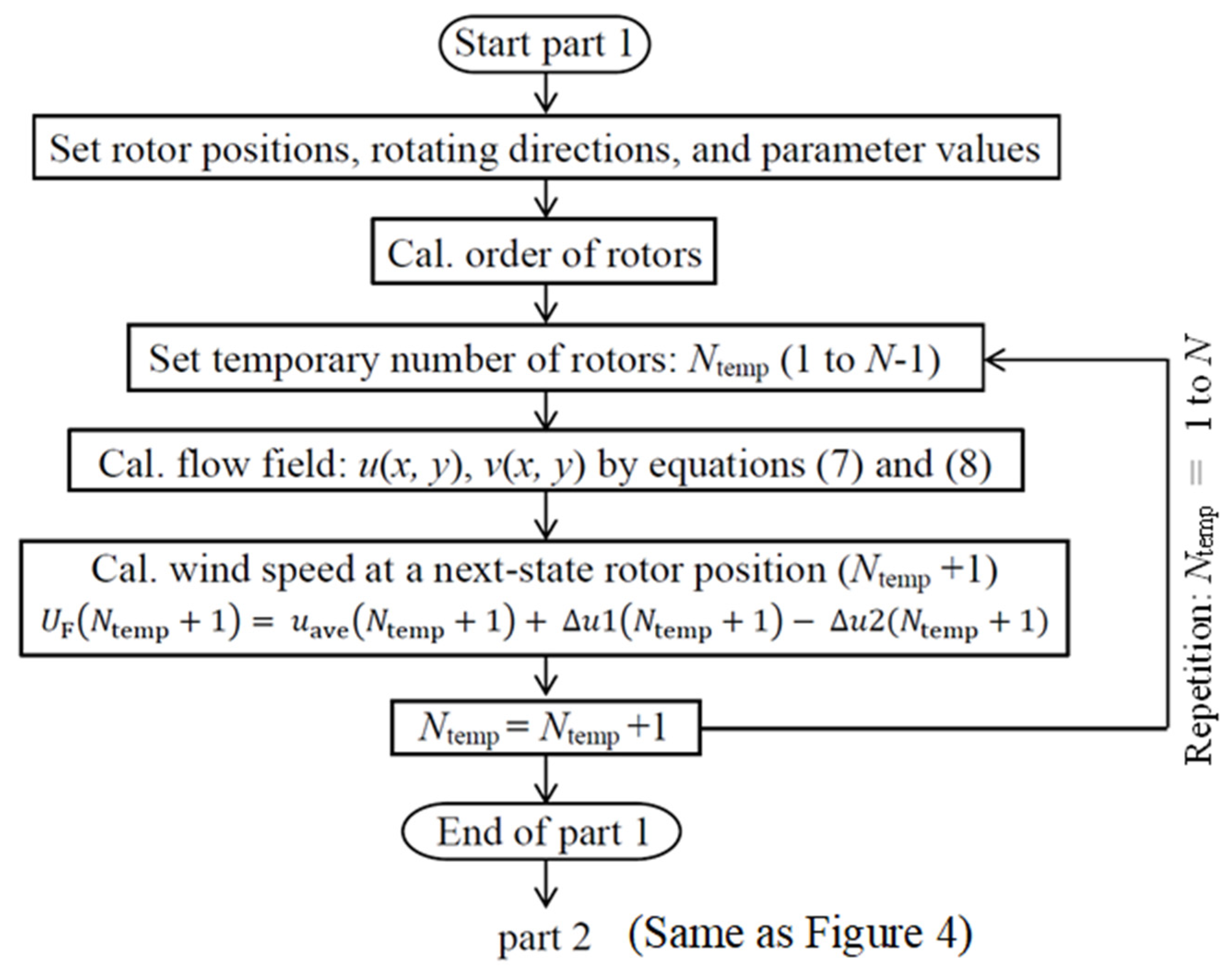
In method-2 (proposed in this study), the part-1 process, which builds up the flow field of a WF consisting of all N rotors, does not include iterations, as shown in Figure 5. The initial flow field of a wind farm consisting of all rotors was constructed by simply adding the influences of the rotors in order from upstream in part 1 of method-2. Part 2 of method-2 is the same as that of method-1 (Figure 4). Because there are no iterations in part 1, method-2 is expected to require significantly less calculation time.
Although the present study employs 2D CFD data, the formulation of method-2 can be directly extended to three-dimensional flow fields.
w i n R M S = j = 1 N t e m p U F R N j U F R N 1 j 2 N t e m p
u x , y = U + j = 1 N t e m p U F ( j ) d u d i f x n ( j ) , y n ( j )
v x , y = j = 1 N t e m p U F ( j ) d v d i f x n ( j ) , y n ( j )

3. Results and Discussion

3.1. Comparison Between Method-1 and Method-2

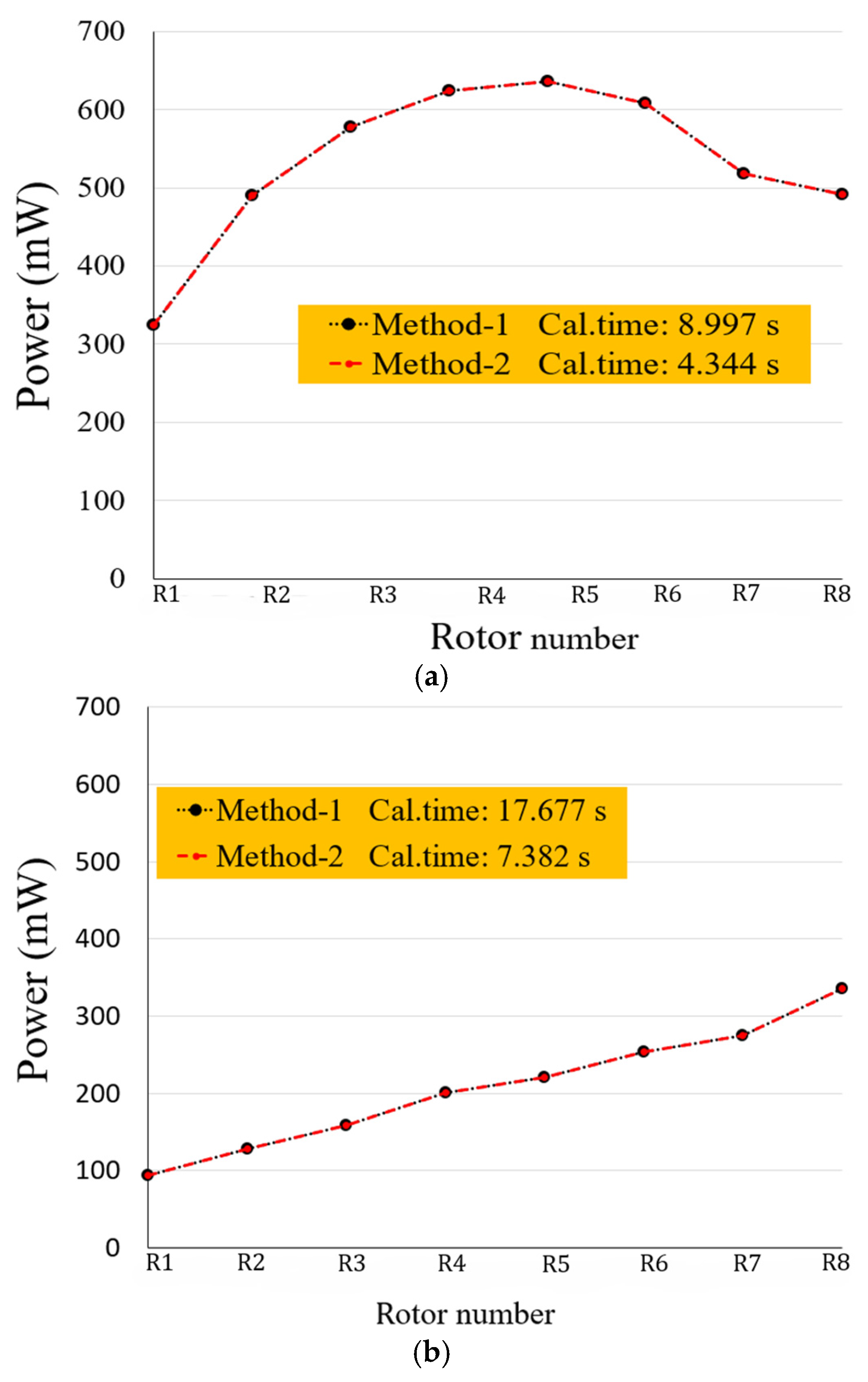
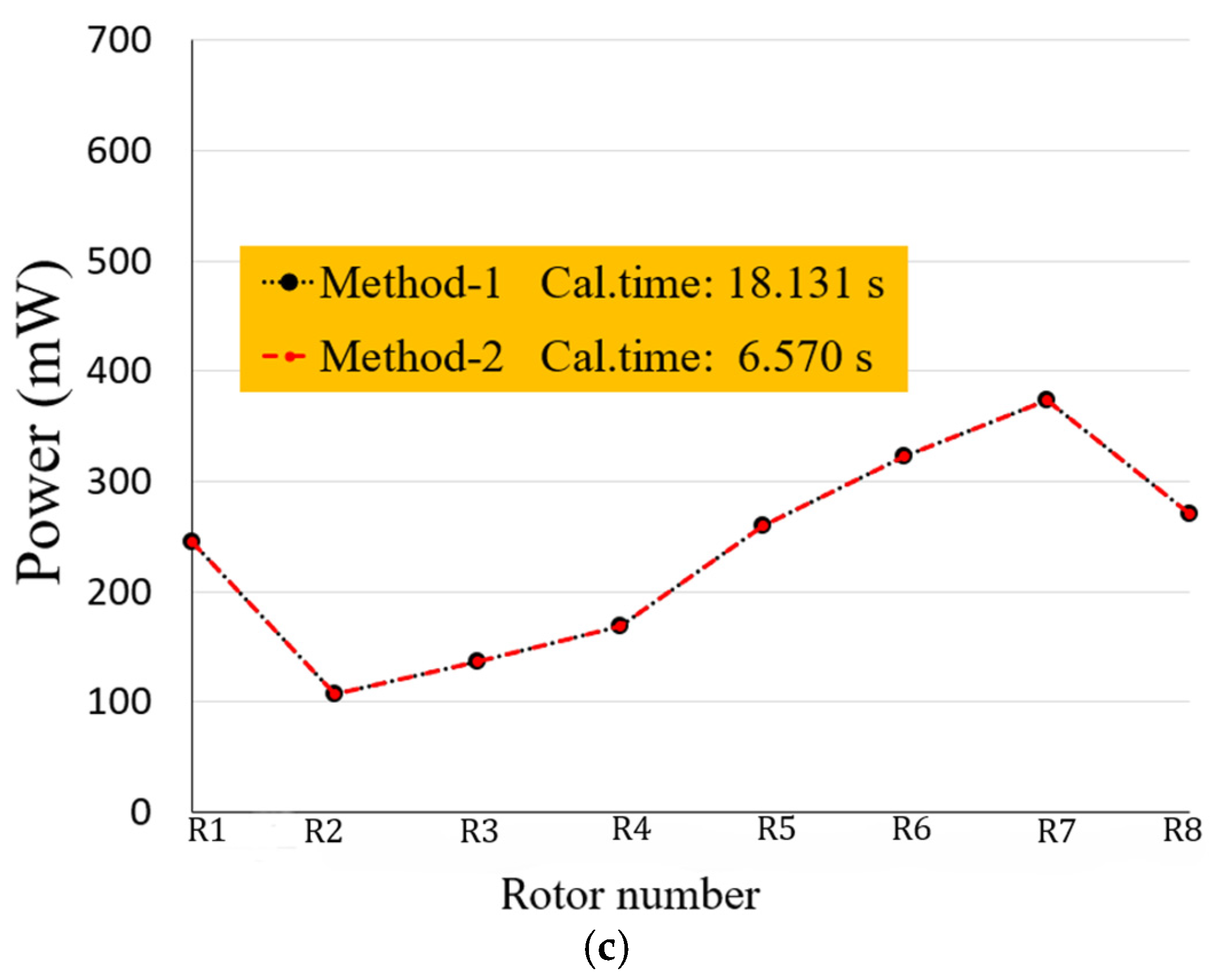
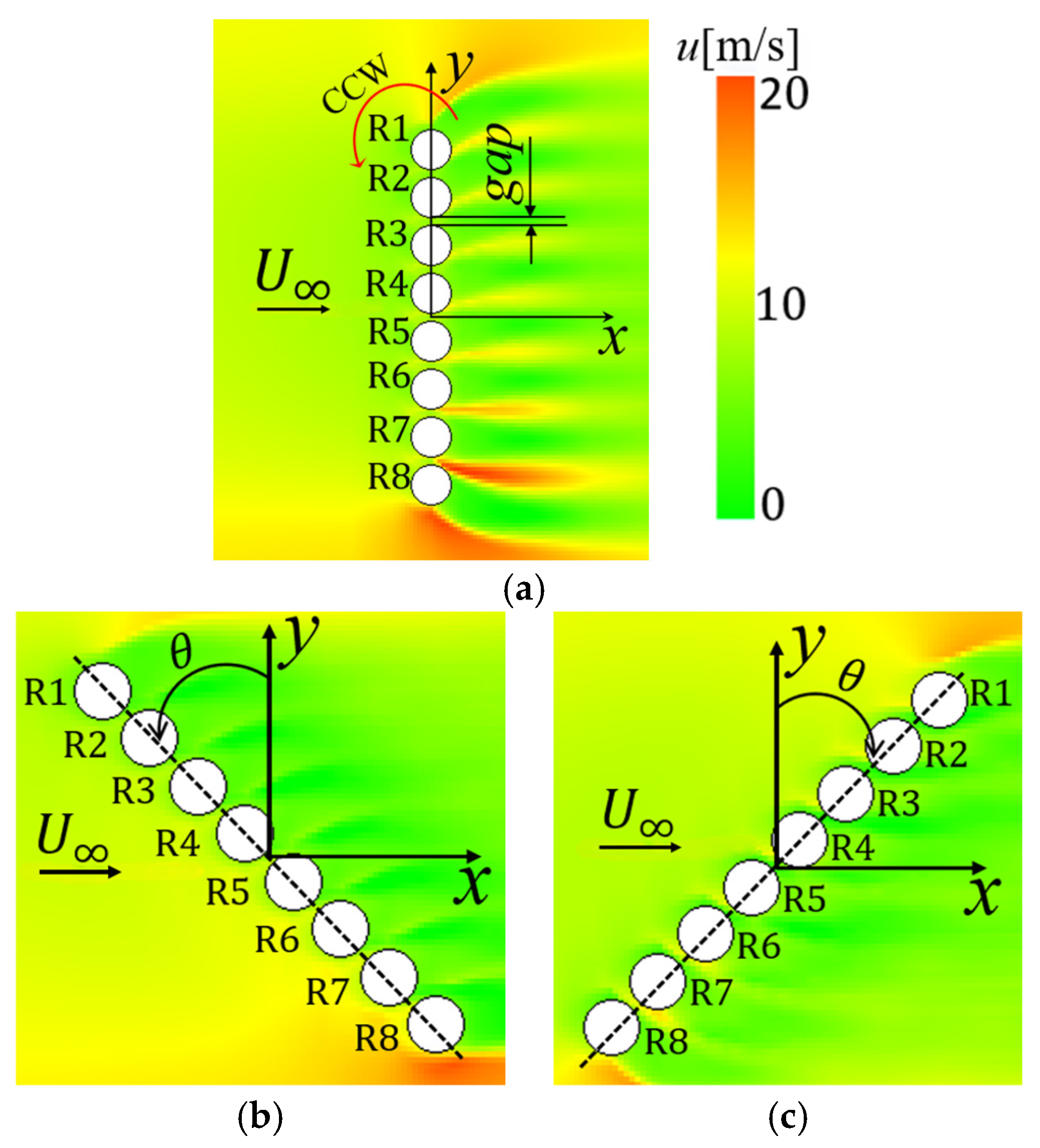
Figure 6a shows the parallel layout (θ = 0° compared to y axis) of eight miniature rotors (R1 to R8) arranged in a line. Figure 6b,c are the rotor layouts obtained by rotating the parallel layout around the layout center at θ = 45° and −45°, respectively. The rotation angle θ based on y-axis direction is positive for counter clockwise and negative for clockwise rotation. The main flow flowed from left to right with a wind speed (U) of 10 m/s. All the rotors were rotated counterclockwise (CCW), and the spacing between the rotors (gap) was assumed to be 10 mm (gap/D = 0.2). In Figure 6, the wind speed in the x-direction (u) predicted by method-2 is shown in color. Figure 7 shows the output power (mechanical power) of each rotor calculated using the two methods for each layout in Figure 6. The output power of the jth rotor was obtained from the UF(j) using the power curve shown in Figure 5 of reference [30]. The power curve was assumed to be proportional to the cube of the wind speed and to pass through a specific operational condition obtained by 2D CFD analysis of an isolated single 2D VAWT rotor. Methods-1 and -2 consistently predicted the same output power for each rotor in each layout. We performed predictions using both methods on layouts other than this one and confirmed that both methods predicted the same results in all cases.
As shown in Figure 7a, the calculation time of method-2 is shorter than that of method-1. Furthermore, in the case of the layout θ = 0° in Figure 6a, the calculation time was reduced by about 50%. The maximum number of repetitions (RN) for the calculation of the eight-rotor parallel layout was four for method-1, while it was five for method-2. In this case, although the maximum RN of method-1 tends to be less than that of method-2, method-1 needs more repetitive iterative calculations than method-2.
It is also clear from Figure 7b,c that the calculation time of method-2 is much shorter than that of method-1, and in the case of the slanted layout shown in Figure 6b,c, the calculation time is reduced by approximately 60%. Therefore, in the next section, we use method-2.
This study used an in-house software using the C# language. The basic speedup, which is common for methods-1 and -2, was achieved using the numerical data obtained by 2D CFD. Another common speedup is parallelization using the “Parallel.For” method, which is available in the C# language. The speedup of method-2 over method-1 was achieved by the difference in the algorithms shown in Figure 3 and Figure 5.
In a previous paper [30] describing method-1, power predictions using method-1 agreed well with the results obtained by 2D CFD, both qualitatively and quantitatively, when the inter-rotor distance was larger than 25 mm. This ensures that method-2 produces good results consistent with the 2D CFD results under the same conditions, both qualitatively and quantitatively.

3.2. Effects of Calculation Order

In both methods, the calculations were performed starting from the upstream rotor. In the case where some rotors have the same position in the main stream direction (x direction) as shown in Figure 6a, the calculations were carried out in the order of the unique rotor numbers (R1, R2, …, R8) that were set initially. To investigate the effects of the calculation order on output power prediction, we created a simulation program that can perform calculations in a specific order. In addition to the parallel layout shown in Figure 6a, two slant layouts illustrated in Figure 6b,c were also considered for studying the effects of the calculation order. In the layout in Figure 6b with θ = 45°, rotor R1 is located at the most upstream position, whereas in the layout of Figure 6c with θ = 45°, rotor R8 is located at the most upstream position.
Table 1 summarizes the average output power and calculation time for the eight rotors when the calculation order is changed for the layouts with three tilt-angles of θ = 0°, 45°, and 45°. As shown in Table 1, the output power predicted by method-2 was not affected by the calculation order of the wind turbine rotors. However, the calculation time was affected by the calculation order.
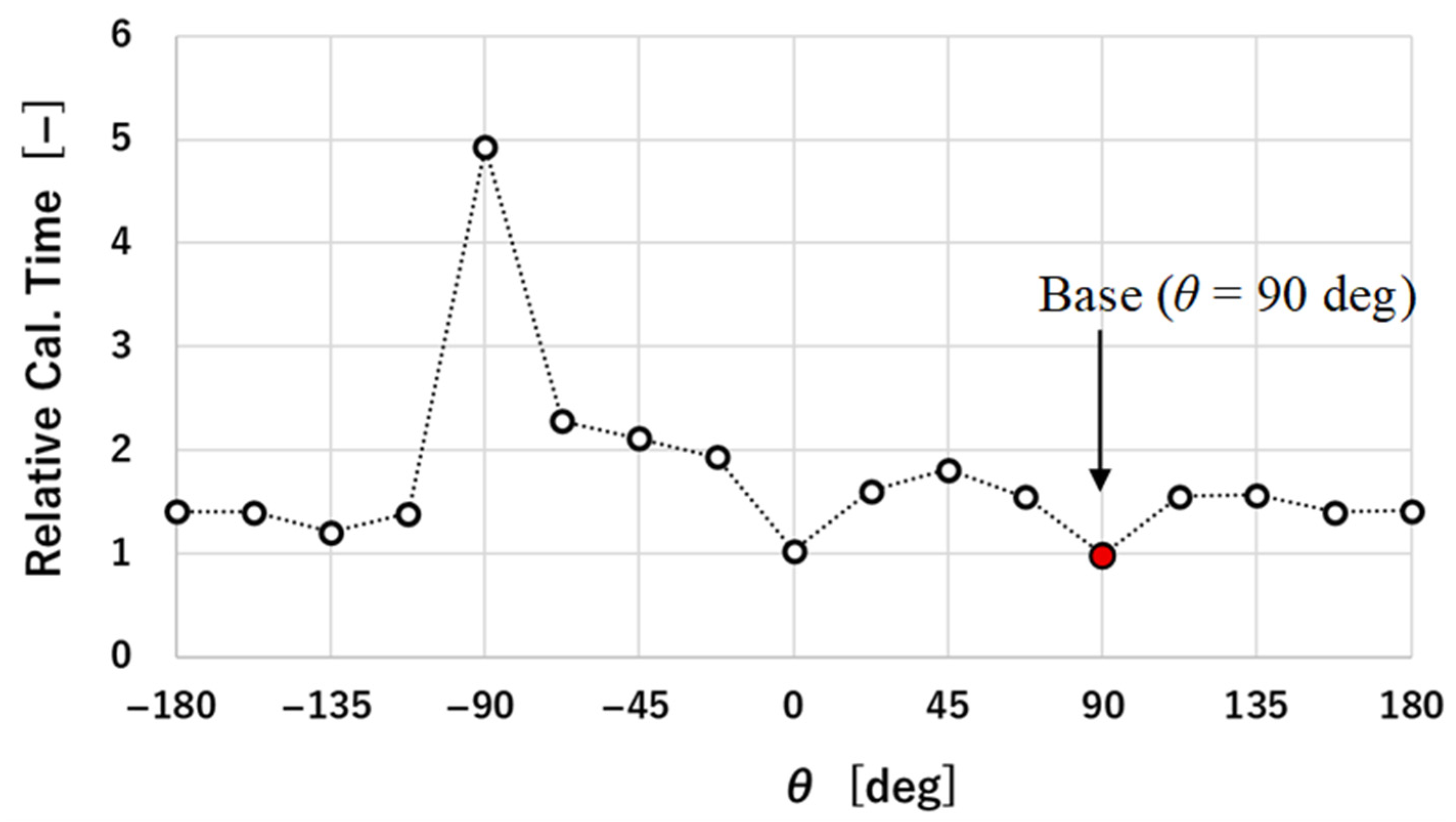
We observed that the calculation time varied each time we performed the calculations in the same order for the same layout. The calculation time is dependent on the computer used. To investigate the dependence of calculation time on the direction angle θ of a straight arrangement of eight rotors, the calculations were repeated five times for each angle, which was changed from −180° to 180° with an interval of 22.5°. The calculation was conducted in the forward order R1→R2→R3→R4→R5→R6→R7→R8. The averaged calculation times are shown in Figure 8, in which the relative calculation times are based on the minimum average time obtained for θ = 90°, corresponding to the tandem layout. The mean difference between the maximum and minimum times for each angle is 0.29 s, and the mean standard deviation is 0.11 s. The calculations in the backward order R8→R7→R6→R5→R4→R3→R2→R1 at angle 45° and −45° in Table 1 correspond to θ = −135° and 135°, respectively. It is clear that the parallel layout can be calculated quickly. On the other hand, the backward calculation order takes about five times as long as the base time of the tandem layout when calculating in the forward order. These results show that in the proposed method, it is reasonable to perform calculations from the upstream wind turbine to shorten the calculation time.

3.3. Sensitivity of Power Prediction to Layout

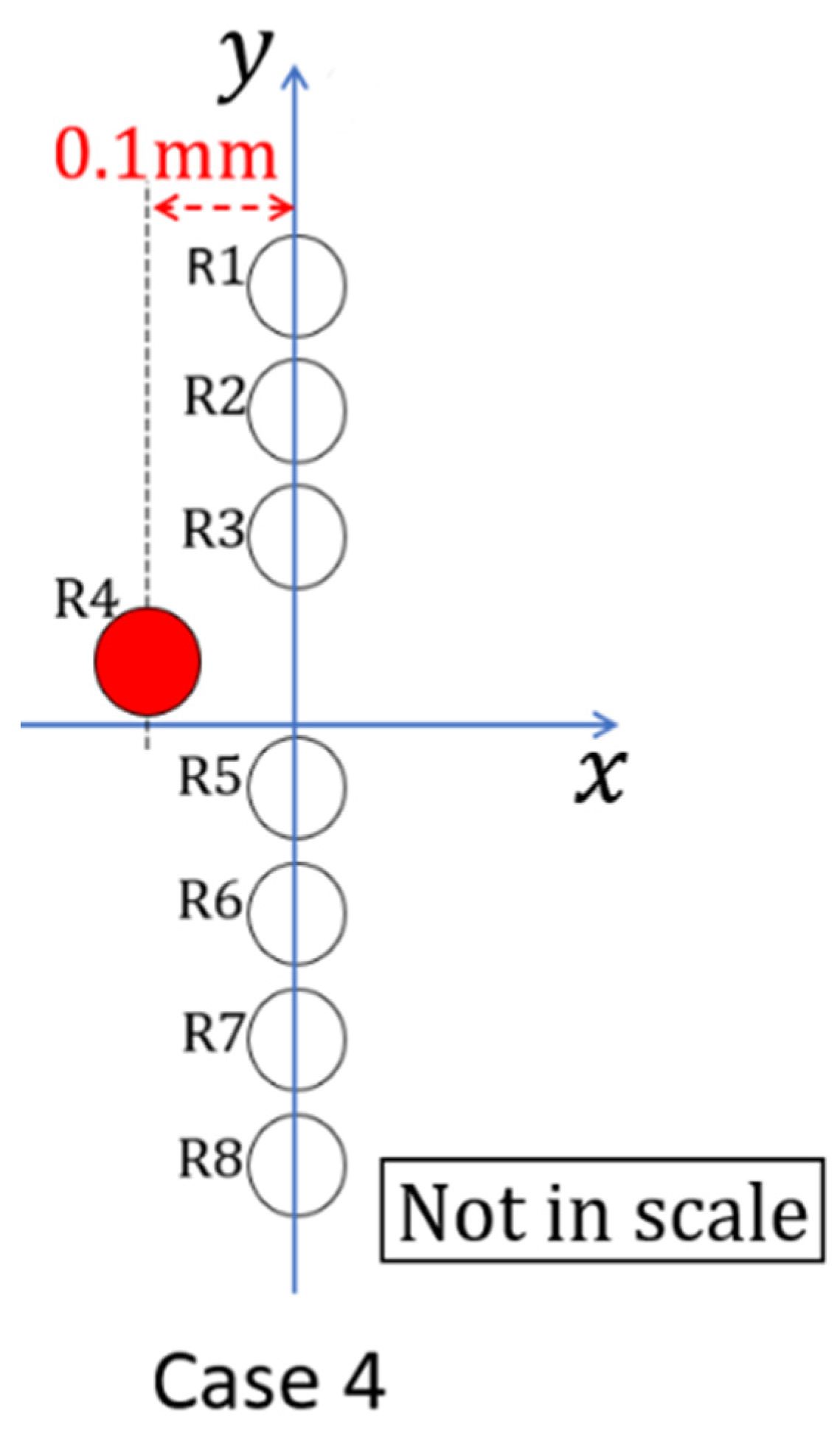
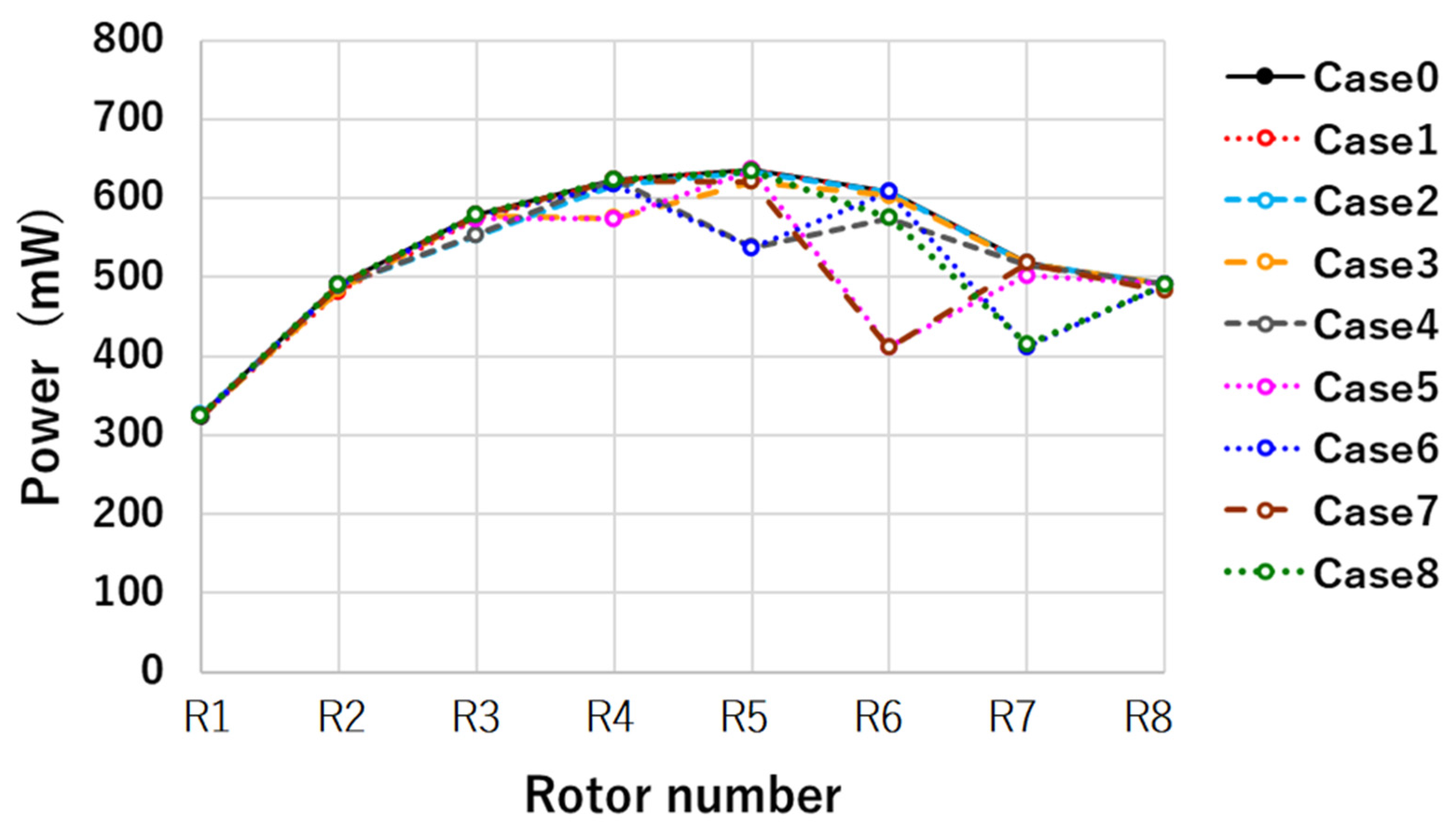
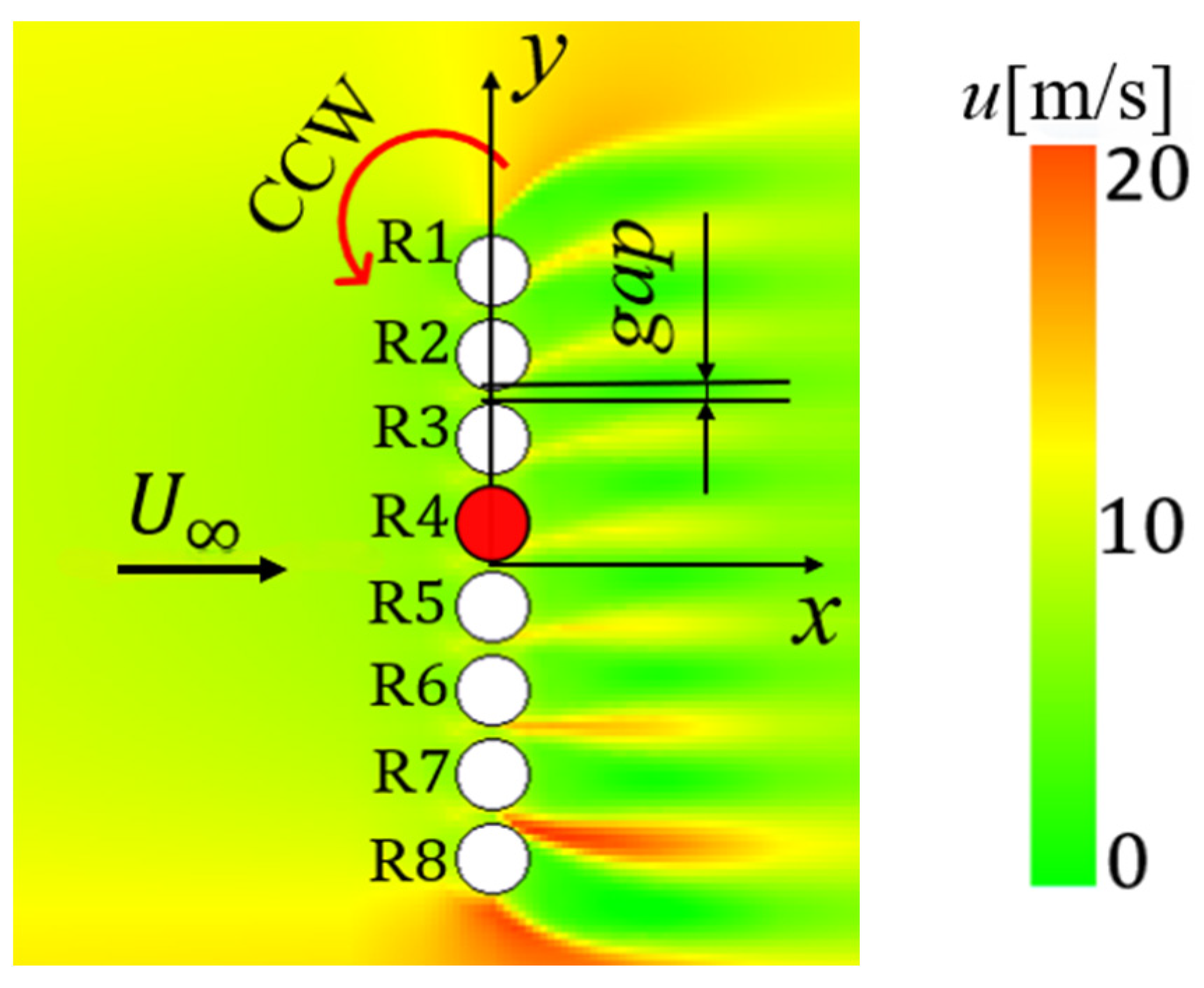
In method-2, as in method-1, the output power of a given turbine rotor was affected by the presence of other rotors, and the predicted results changed accordingly. To investigate the extent to which the output prediction is affected by small layout differences, we consider some layouts in which the main-flow-direction coordinate (x coordinate) of one of the rotors in the parallel layout of Figure 6a was shifted upstream by 0.1 mm (0.2% of the rotor diameter), as shown in Figure 9. Note that the shift in Figure 9 is exaggerated and not drawn to scale. Figure 9 shows Case 4, where the rotor R4 is shifted. Table 2 summarizes the nine cases for which the calculations were performed. However, Case 0 is the parallel layout shown in Figure 6a, where all eight rotors have the same coordinate values in the mainstream direction.
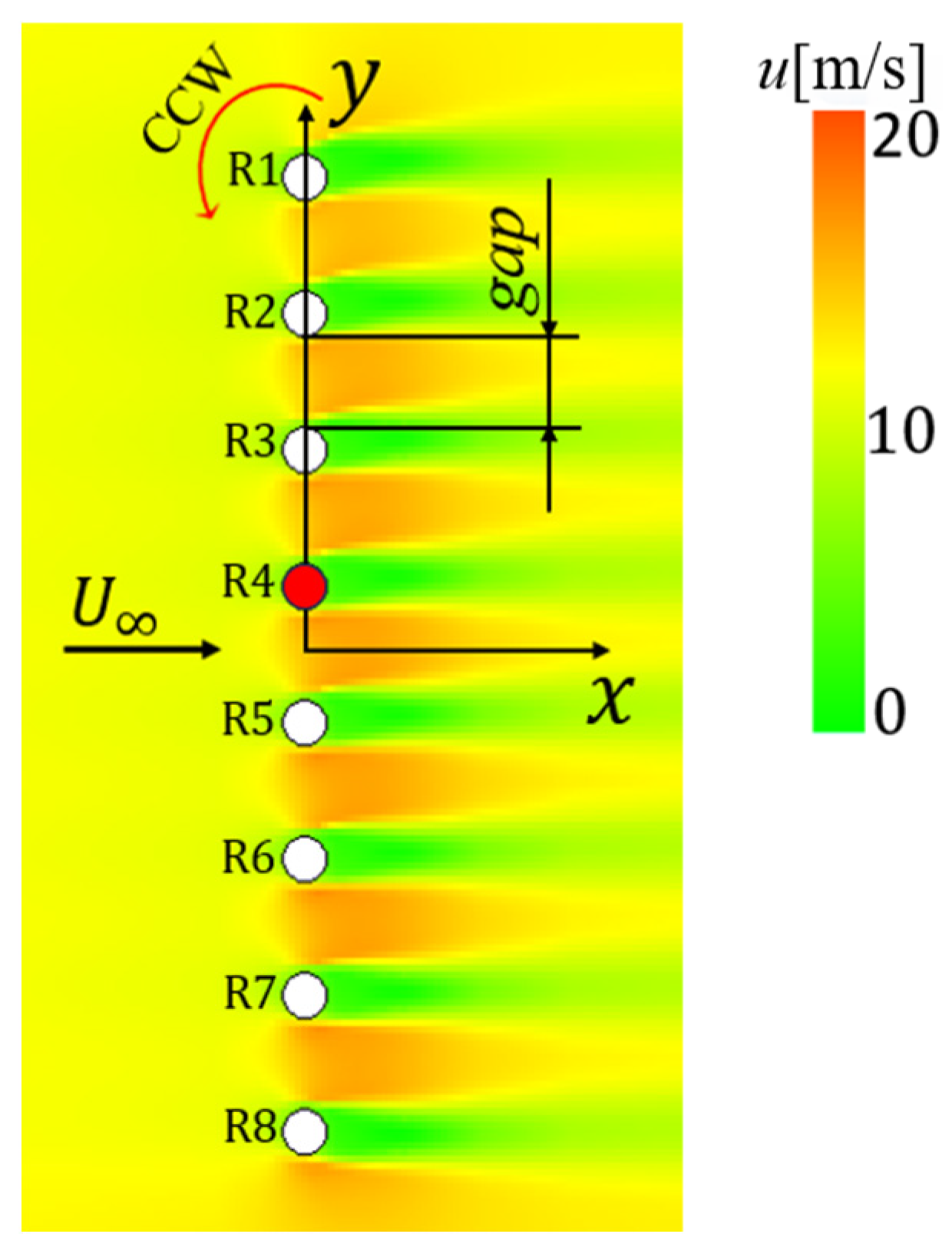
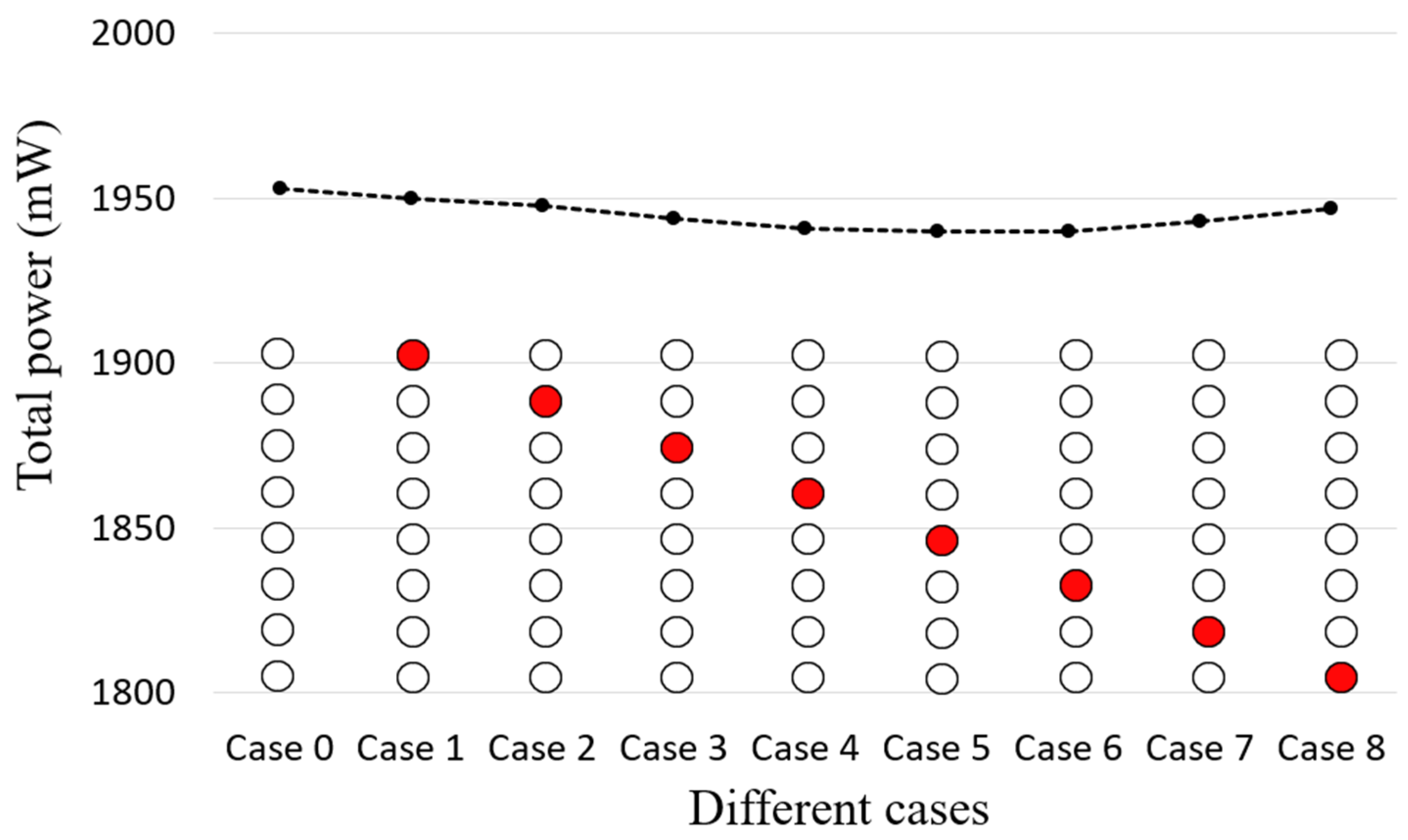
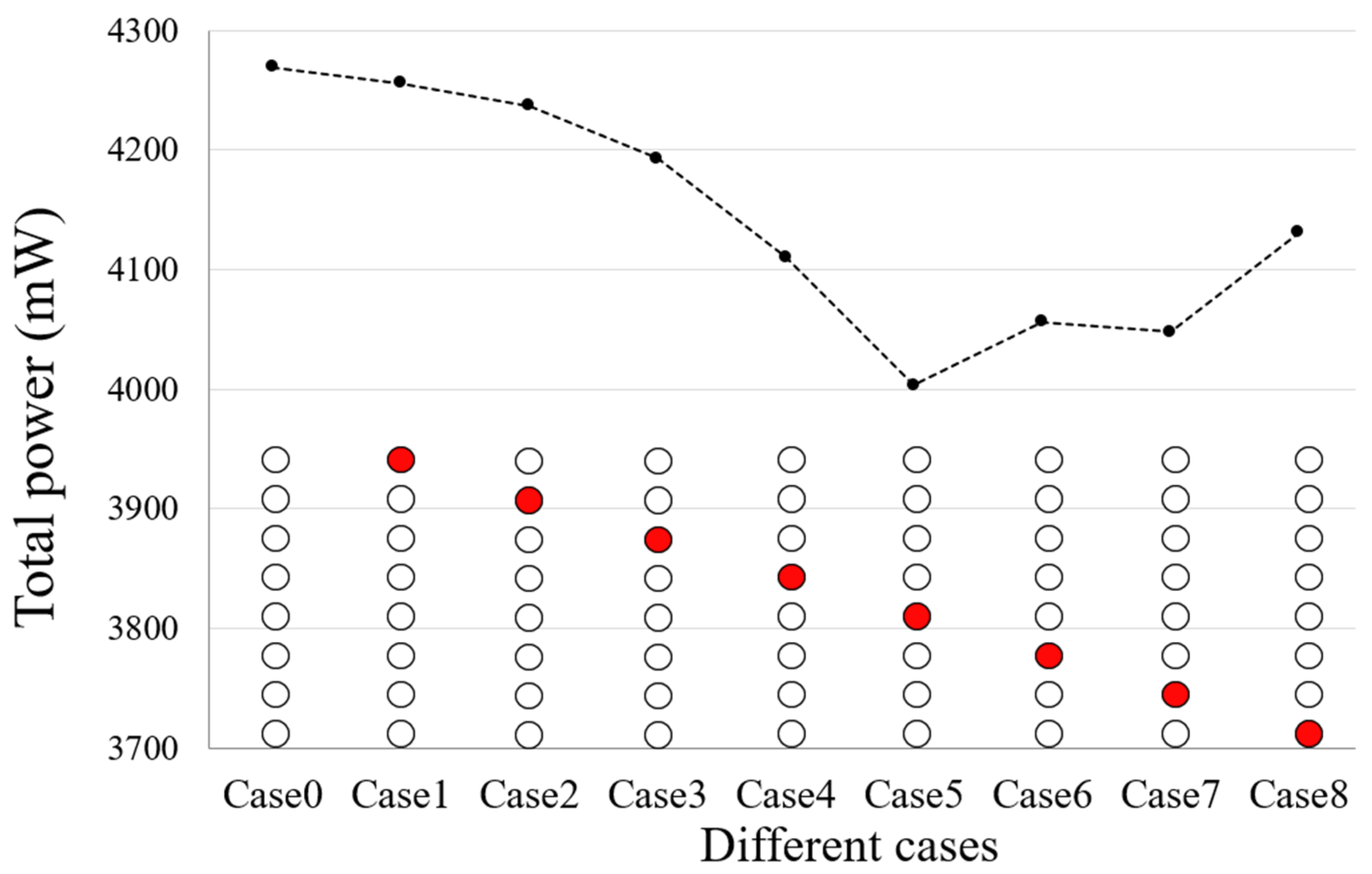
Figure 10 shows the calculation results for Case 4 under the condition of gap = 10 mm (gap/D = 0.2), and Figure 11 shows a graph comparing the total output of the eight rotors for each case. As shown in Figure 11, Case 5 has the smallest total output power, which is approximately 6% lower than that of Case 0, which has the largest total output power.
We also investigated a gap of 100 mm (gap/D = 2), as shown in Figure 12. Figure 13 compares the total output of the eight rotors for each case. In Figure 13, Case 5 has the smallest total power, which is approximately 0.8% smaller than that of Case 0, which has the largest total output power. A comparison of Figure 11 and Figure 13 clearly showed that as the spacing increases, slight differences in the rotor position tend to have less effect.

3.4. Gap Dependence of Rotor Power Prediction

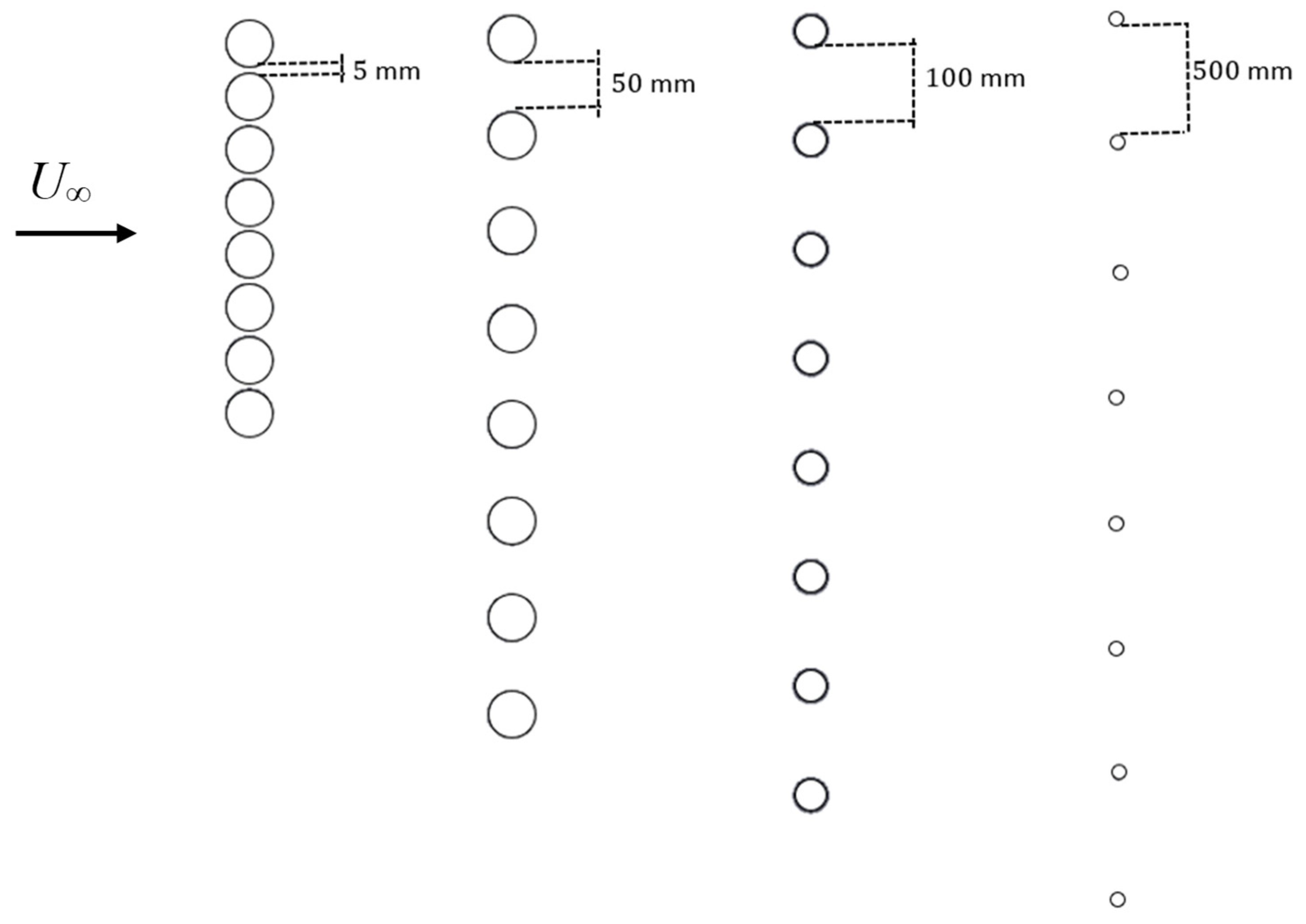
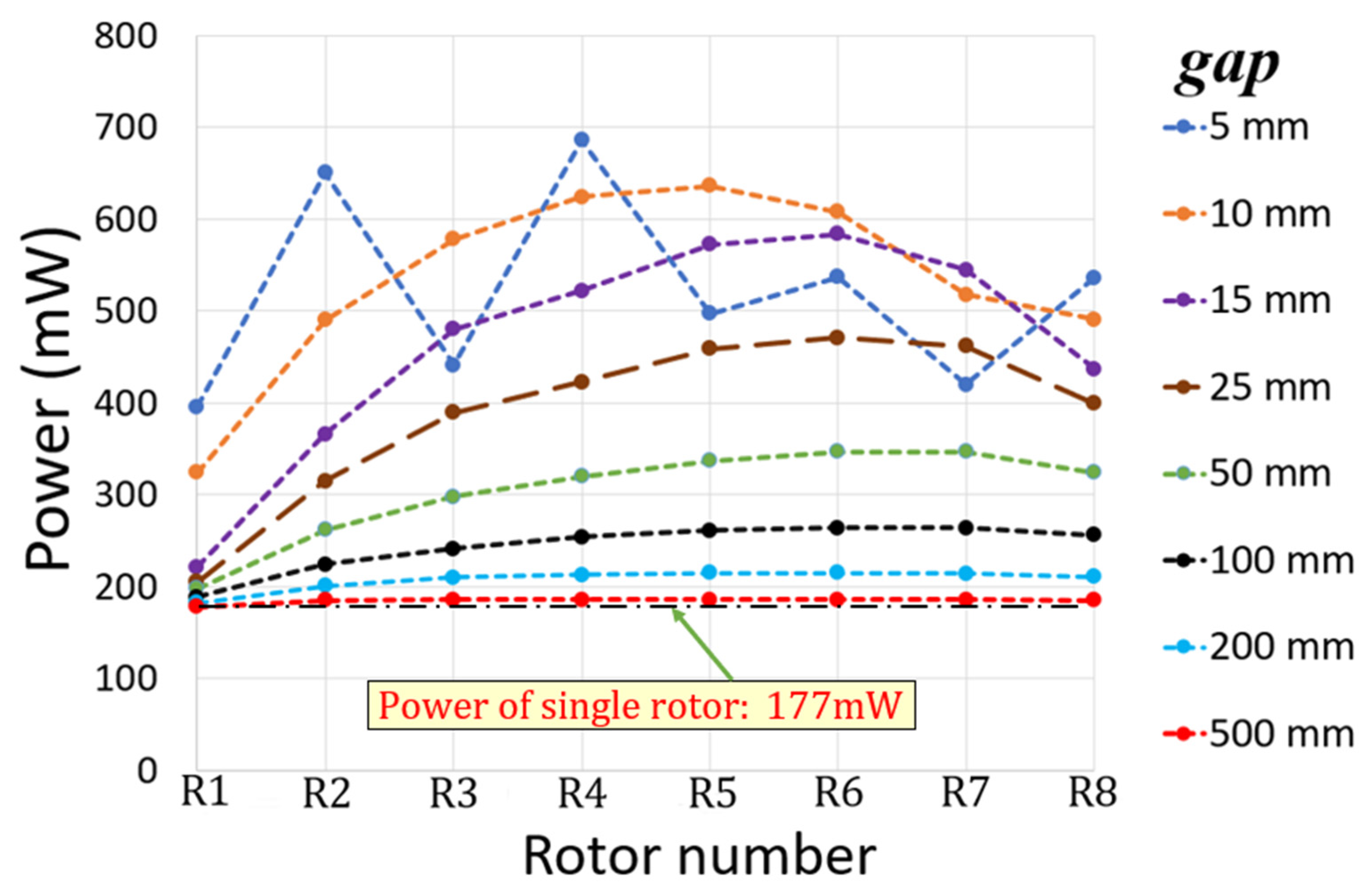
In Case 0, the eight rotors were arranged in parallel in a straight line perpendicular to the main flow. To investigate the effect of rotor spacing on the output power under Case 0, eight layouts were considered, with spacing varying from 5 to 500 mm. Figure 14 shows example layouts for four different spacing values, and the corresponding results are shown in Figure 15. The power distribution was uneven only at the smallest spacing (gap = 5 mm), which indicates the strong interaction between rotors at very short distances. However, the large unevenness appears to be unnatural. We will discuss this uneven power distribution later. Except for the smallest gap case, the power distribution shows relatively large power outputs for the rotors near the center of each layout. Overall, the smaller-gap layout increased the output power. However, the output power of each rotor approached that of an isolated single rotor (PSI = 177 mW at U = 10 m/s) when the gap increased. Mereu et al. [27] analyzed the effects of the interaxial distance on the performance of an array of eight Savonius turbines at zero wind incidence (θ = 0°). They showed that the power increases as the turbine spacing decreases and the turbine position of the peak performance shifted depending on the spacing, as shown in Figure 8 of their paper [27]. Although the turbine types used were different, their results were similar to ours.
Although a large uneven power distribution was observed in the 5 mm gap layout as mentioned above, we observed an uneven power distribution in a larger spacing layout, which had a slightly different position for one of the rotors constituting a parallel layout. Figure 16 shows an example of the power distribution in the case of gap/D = 0.2. Case 0 is the straight arrangement of eight rotors and is the same as the 10 mm gap case in Figure 15. The layouts of Cases 1–8 are the same as those in Figure 11, where one rotor has a slightly different x-coordinate from the other rotors. In Cases 5 and 7, the power of R6 significantly decreased from the power in Case 0. The degree of unevenness observed in the slightly different position layouts decreased with increasing rotor spacing. Based on the above observations, the uneven power distribution in the case of the smallest rotor spacing (gap = 5 mm) was attributed to the interaction between rotors caused by their close proximity.
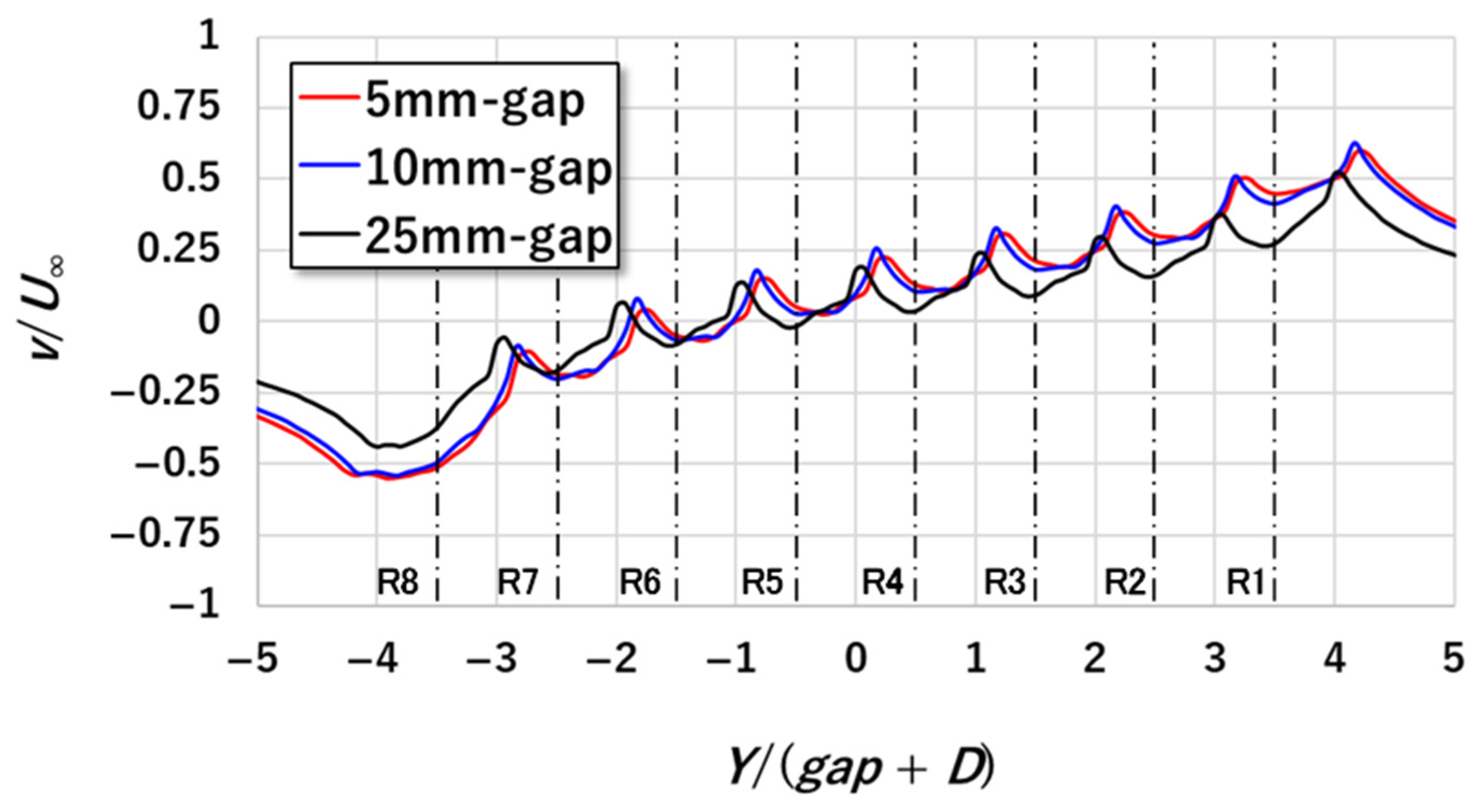
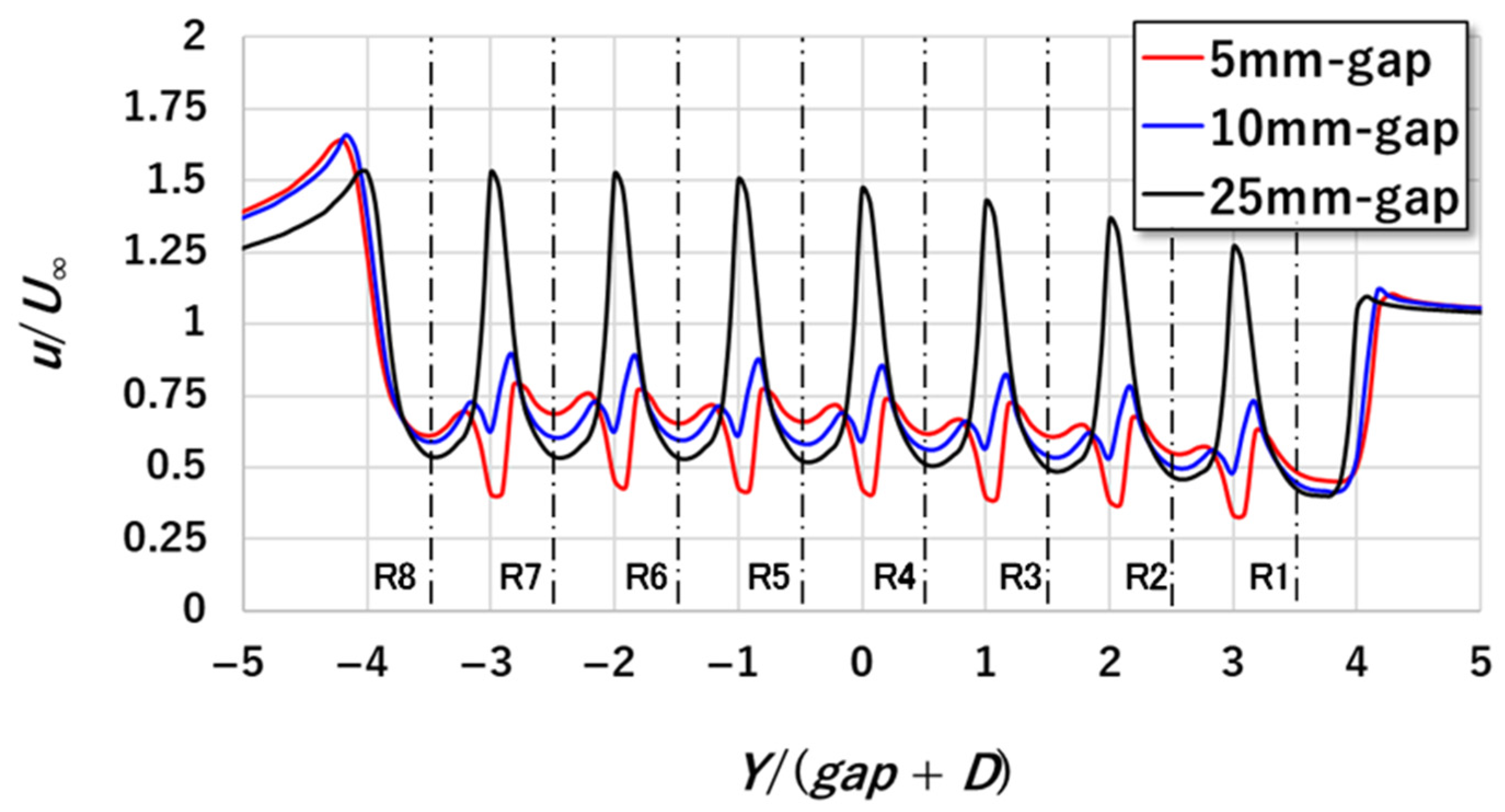
To further investigate the construction of the flow field and how the interactions between wind turbines increase with decreasing the inter-rotor distance, the wind speed distribution of u/U and v/U at x/D = 0 for eight parallel configurations (θ = 0 deg) are shown in Figure 17 and Figure 18, respectively. Wind-turbine spacings of gaps = 5, 10, and 25 mm (gap/D = 0.1, 0.2, and 0.5, respectively) were selected. To facilitate the comparison of graphs for different wind turbine spacings, the normalized coordinate Y divided by gap + D was used as the horizontal axis in each figure. The dash-dotted lines in Figure 17 and Figure 18 indicate the center position of each rotor. Figure 17 shows that in the 25 mm gap arrangement, the mainstream velocity u accelerated in the gap region between the wind turbines. In the 10 mm and 5 mm gap arrangements, the increase in flow speed in the gap region was smaller. However, the velocity u at the center of the wind turbine increased as the inter-rotor distance decreased. Figure 18 shows that the velocity component v perpendicular to the main stream was positive in the range of R1–R5 and negative in the range of R6–R8. The average rate of change (average gradient) of the velocity component v in the Y-direction increased as the inter-rotor distance decreased.
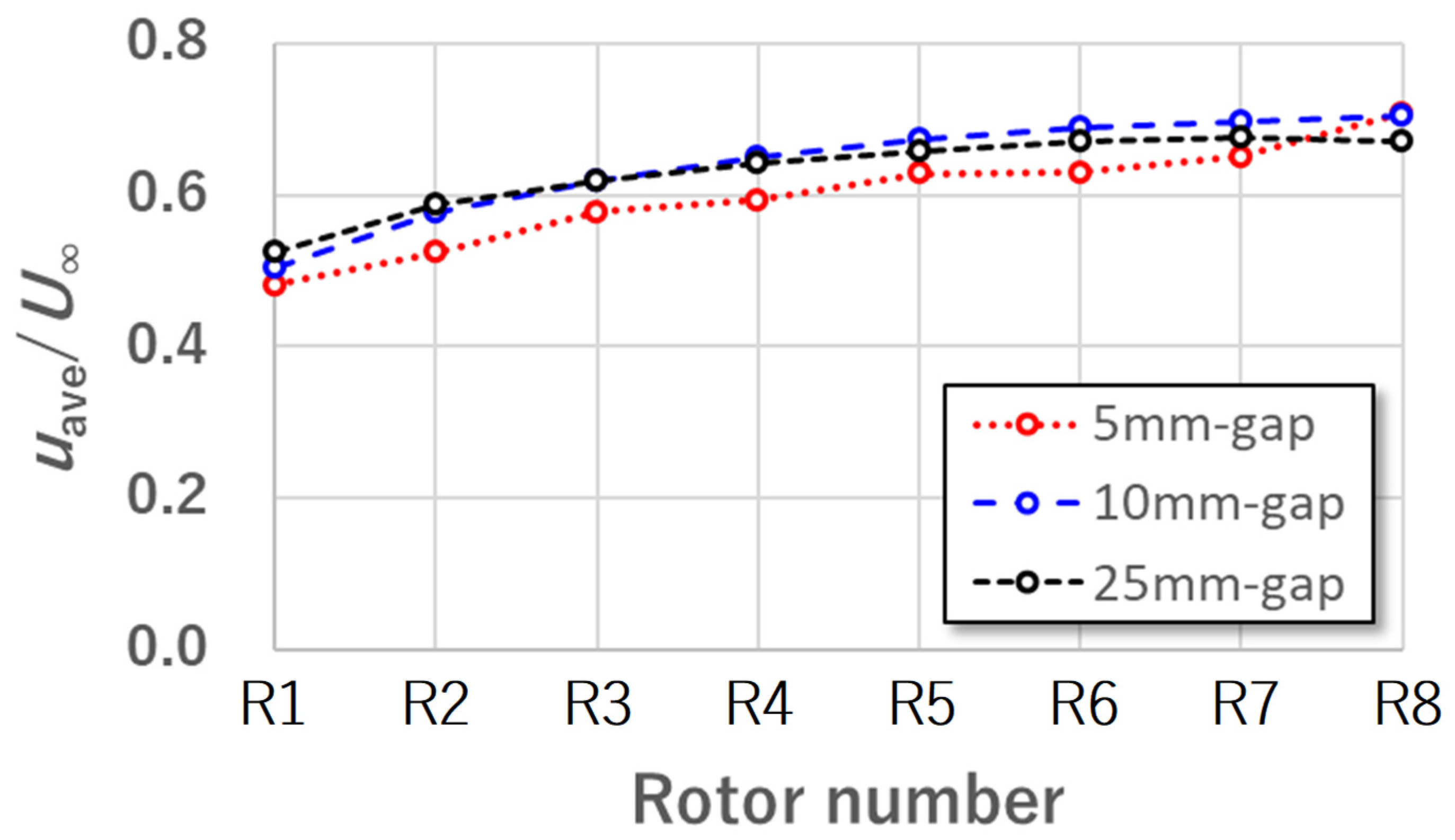
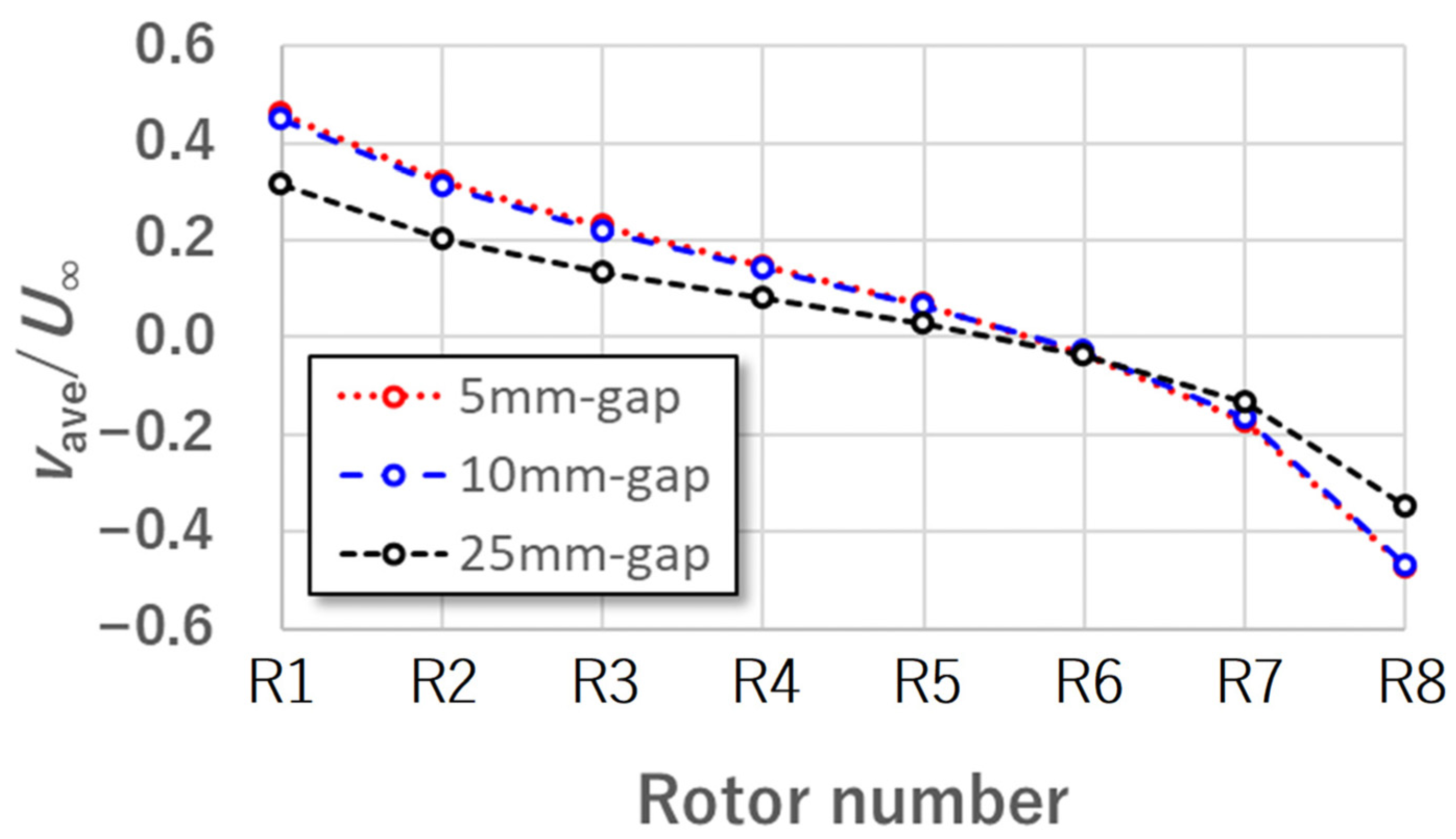
Figure 19 and Figure 20 show the average wind speed components in the main flow direction (uave) and perpendicular direction (vave), respectively, at each wind turbine position, calculated from the data shown in Figure 17 and Figure 18, using the inter-rotor distance as a parameter. Each average wind speed is normalized by the upstream wind speed U and shown on the vertical axis of each figure. According to Figure 19, uave gradually increased from R1 to R8. In the case of the minimum spacing of 5 mm, a slight fluctuation in uave similar to the power fluctuation shown in Figure 15 was observed. However, the uave values in the case of the 5 mm gap are lower than those in the 10 mm gap. The phase of the above fluctuation is also opposite that of the fluctuation in power. For example, the power shown in Figure 15 increased at R2 and R4; however, the uave values in Figure 19 were relatively smaller at R2 and R4.
The vave values in Figure 20 gradually decreased from R1 to R8. In the range of R1–R5, the vave tended to increase slightly as the inter-rotor distance decreased, and decreased in the range of R7–R8. The uave and vave values observed thus far cannot explain the fluctuation in the power distribution observed in the 5 mm gap case. However, as shown in Equation (23) of reference [30], the correction term Δu1 of the virtual upstream wind speed UF in this computation method includes the velocity gradient du/dy in the Y-direction of the main flow direction velocity component u. As shown in Figure 17, the velocity gradient du/dy changes significantly depending on the wind turbine position. Thus, it is possible that it has a significant impact on the virtual upstream wind speed UF and the power.
It should be noted that this study used flow velocity information obtained from 2D CFD. Therefore, the velocity changes near the rotors were larger compared with the actual three-dimensional velocity field. In addition, the flow velocity field around the vertical-axis wind turbine varied significantly depending on its relationship with the rotation direction of the surrounding rotors. Although this study only dealt with wind turbine arrangements rotating in the same direction, the equivalence of method-1 and method-2 was confirmed, even for counter-rotating arrangements. However, there are problems with prediction accuracy when applying this to actual vertical-axis wind turbines. Further improvements (such as adding corrections) are required in the wind turbine interaction model. The application and improvement of this method for actual wind turbines (i.e., a three-dimensional flow field) is a subject for future research.

4. Conclusions

In this study, a previously developed approach, referred to as method-1, was improved and reformulated as method-2 using an enhanced calculation algorithm. Both approaches relied on the same fundamental code and constructed the flow fields of wind farms by directly superimposing the CFD data of an isolated single 2D-VAWT rotor. To corroborate its applicability, method-2 was applied to a wind farm consisting of eight miniature 2D-VAWT rotors arranged in a linear configuration.
The main findings of this study are as follows:
Method-2 gave exactly the same results as method-1; however it reduced the calculation time by approximately 50–60%.
When the calculation order for the straight-line layout of the eight 2D-VAWT rotors was changed using method-2, the rotor output power was exactly the same, even though the calculation time differed depending on the calculation order.
The calculation order of the tandem layout of the eight rotors from the backward direction (from downstream to upstream) takes about five times as long as the calculation time from the forward order (from upstream to downstream).
When the inter-rotor spacing is small, the total output of the eight rotors can vary by up to 6% if the position of one rotor is changed by just a small distance (0.1 mm). The proposed method has very high sensitivity in a negative sense to the position of the wind turbines.
The power distribution of the eight rotors arranged in parallel in a straight line perpendicular to the main flow approached a constant that equals the power of an isolated single rotor when the inter-rotor distance is as much as ten times the diameter D. However, the power distribution showed relatively large power outputs near the center of the layout when the inter-rotor gap became smaller. For the smallest gap of 5 mm, the power showed uneven distribution.
Two mean velocities, uave (streamwise) and vave (perpendicular), at each rotor center were investigated. However, no behavior was observed that could explain the fluctuation in the power distribution obtained at the minimum inter-rotor gap. It is possible that the local gradient of the streamwise velocity component in the direction perpendicular to the main flow caused the uneven power distribution.
Although the proposed method-2 requires more improvements in the accuracy of predicting rotor powers for very short inter-rotor distances, it enables the rapid evaluation of multiple VAWT layouts using only single-rotor 2D CFD data, reducing the need for expensive full-farm simulations by three-dimensional CFD. This approach is particularly useful for preliminary windfarm design and educational research environments with limited computational resources. Furthermore, it can be integrated into layout optimization algorithms to maximize the power generation per unit land area. A study exploring the optimum layout of 2D-VAWTs using method-2 and a genetic algorithm is underway. Applying method-2 to actual three-dimensional VAWT wind farms is our goal in the near future.

Author Contributions

Conceptualization, Y.H.; methodology, M.S.M.; software, Y.H.; validation, M.S.M. and Y.J.; formal analysis, Y.H. and M.S.M.; investigation, Y.H., M.S.M. and Y.J.; resources, Y.H.; data curation, M.S.M. and Y.H.; writing—original draft preparation, M.S.M.; writing—review and editing, Y.H. and Y.J.; visualization, M.S.M.; supervision, Y.H.; project administration, Y.H.; funding acquisition, Y.H. and Y.J. All authors have read and agreed to the published version of the manuscript.

Funding

This research was supported by the Iwatani Naoji Foundation and JSPS KAKENHI, grant number JP22K12456.

Data Availability Statement

The original contributions presented in this study are included in the article. Further inquiries can be directed to the corresponding author.

Conflicts of Interest

The authors declare no conflicts of interest.

Abbreviations

The following abbreviations are used in this manuscript:
CCWCounter Clockwise
CFDComputational Fluid Dynamics
GAGenetic Algorithm
HAWTHorizontal Axis Wind Turbine
RERenewable Energy
RMSRoot Mean Square
RNRepetition Number
VAWTVertical Axis Wind Turbine
WFWind Farm
tempTemporary
2DTwo Dimensional
3DThree Dimensional

References

  1. Rajagopalan, R.G.; Rickerl, T.L.; Klimas, P.C. Aerodynamic interference of vertical axis wind turbines. J. Propul. Power 1990, 6, 645–653. [Google Scholar] [CrossRef]
  2. Paraschivoiu, I. Wind Turbine Design: With Emphasis on Darrieus Concept; Ploytechnic International Press: Montréal, QC, Canada, 2002; pp. 199–226. Available online: https://books.google.com/books/about/Wind_Turbine_Design.html?id=sefVtnVgso0C (accessed on 11 November 2025).
  3. Whittlesey, R.W.; Liska, S.; Dabiri, J.O. Fish schooling as a basis for vertical axis wind turbine farm design. Bioinspir. Biomim. 2010, 5, 035005. [Google Scholar] [CrossRef]
  4. Dabiri, J.O. Potential order-of-magnitude enhancement of wind farm power density via counter-rotating vertical axis wind turbine arrays. J. Renew. Sustain. Energy 2011, 3, 043104. [Google Scholar] [CrossRef]
  5. Zanforlin, S.; Nishino, T. Fluid dynamic mechanisms of enhanced power generation by closely spaced vertical-axis wind turbines. Renew. Energy 2016, 99, 1213–1226. [Google Scholar] [CrossRef]
  6. Sahebzadeh, S.; Rezaeiha, A.; Montazeri, H. Towards optimal layout design of vertical-axis wind-turbine farms: Double rotor arrangements. Energy Convers. Manag. 2020, 226, 113527. [Google Scholar] [CrossRef]
  7. Hansen, J.T.; Mahak, M.; Tzanakis, I. Numerical modelling and optimization of vertical axis wind turbine pairs: A scale up approach. Renew. Energy 2021, 171, 1371–1381. [Google Scholar] [CrossRef]
  8. Silva, J.E.; Danao, L.A.M.; Cluster, V.V.A.W.T. Varying VAWT cluster Configuration and the effect on individual rotor and overall cluster performance. Energies 2021, 14, 1567. [Google Scholar] [CrossRef]
  9. Vergaerde, A.; De Troyer, T.; Kluczewska-Bordier, J.; Parneix, N.; Silvert, F.; Runacres, M.C. Wind tunnel experiments of a pair of interacting vertical-axis wind turbines. J. Phys. Conf. Ser. 2018, 1037, 072049. [Google Scholar] [CrossRef]
  10. Vergaerde, A.; De Troyer, T.; Standaert, L.; Kluczewska-Bordier, J.; Pitance, D.; Immas, A.; Silvert, F.; Runacres, M.C. Experimental validation of the power enhancement of a pair of vertical-axis wind turbines. Renew. Energy 2020, 146, 181–187. [Google Scholar] [CrossRef]
  11. Jodai, Y.; Tokuda, H.; Hara, Y. Experiments on interaction between six vertical-axis wind turbines in pairs or trios. J. Phys. Conf. Ser. 2024, 2767, 072003. [Google Scholar] [CrossRef]
  12. Mosetti, G.; Poloni, C.; Diviacco, B. Optimization of wind turbine positioning in large windfarms by means of a genetic algorithm. J. Wind Eng. Ind. Aerodyn. 1994, 51, 105–116. [Google Scholar] [CrossRef]
  13. González, J.S.; Gonzalez Rodriguez, A.G.; Mora, J.C.; Santos, J.R.; Payan, M.B. Optimization of wind farm turbines layout using an evolutive algorithm. Renew. Energy 2010, 35, 1671–1681. [Google Scholar] [CrossRef]
  14. Wagner, M.; Day, J.; Neumann, F. A fast and effective local search algorithm for optimizing the placement of wind turbines. Renew. Energy 2013, 51, 64–70. [Google Scholar] [CrossRef]
  15. Gao, X.; Yang, H.; Lin, L.; Koo, P. Wind turbine layout optimization using multi-population genetic algorithm and a case study in Hong Kong offshore. J. Wind Eng. Ind. Aerodyn. 2015, 139, 89–99. [Google Scholar] [CrossRef]
  16. Gao, X.; Yang, H.; Lu, L. Optimization of wind turbine layout position in a wind farm using a newly-developed two-dimensional wake model. Appl. Energy 2016, 174, 192–200. [Google Scholar] [CrossRef]
  17. Sun, H.; Yang, H.; Gao, X. Investigation into spacing restriction and layout optimization of wind farm with multiple types of wind turbines. Energy 2019, 168, 637–650. [Google Scholar] [CrossRef]
  18. Chen, K.; Song, M.X.; Zhang, X.; Wang, S.F. Wind turbine layout optimization with multiple hub height wind turbines using greedy algorithm. Renew. Energy 2016, 96, 676–686. [Google Scholar] [CrossRef]
  19. Gualtieri, G. A novel method for wind farm layout optimization based on wind turbine selection. Energy Convers. Manag. 2019, 193, 106–123. [Google Scholar] [CrossRef]
  20. Martinez, L.; Leonardi, S.; Churchfield, M.; Moriarty, P. A Comparison of Actuator Disk and Actuator Line Wind Turbine Models and Best Practices for Their Use. In Proceedings of the 50th AIAA Aerospace Sciences Meeting Including the New Horizons Forum and Aerospace Exposition, Nashville, TN, USA, 9–12 January 2012; American Institute of Aeronautics and Astronautics: Reston, VA, USA, 2012. [Google Scholar] [CrossRef]
  21. Shao, Z.; Wu, Y.; Li, L.; Han, S.; Liu, Y. Multiple wind turbine wakes modeling considering the faster wake recovery in overlapped wakes. Energies 2019, 12, 680. [Google Scholar] [CrossRef]
  22. Chen, X.; Agarwal, R. Optimal placement of horizontal- and vertical-axis wind turbines in a wind farm for maximum power generation using a genetic algorithm. In Proceedings of the ASME 2011 5th International Conference on Energy Sustainability, Washington, DC, USA, 7–10 August 2011; pp. 2033–2039. [Google Scholar] [CrossRef]
  23. Talamalek, A.; Runacres, M.C.; De Troyer, T. Effect of turbulence on the performance of a pair of vertical-axis wind turbines. J. Phys. Conf. Ser. 2022, 2265, 022098. [Google Scholar] [CrossRef]
  24. Cazzaro, D.; Bedon, G.; Pisinger, D. Vertical axis wind turbine layout optimization. Energies 2023, 16, 2697. [Google Scholar] [CrossRef]
  25. De Tavernier, D.; Ferreira, C.; Li, A.; Paulsen, U.S.; Madsen, H.A. Towards the understanding of vertical-axis wind turbines in double-rotor configuration. J. Phys. Conf. Ser. 2018, 1037, 022015. [Google Scholar] [CrossRef]
  26. Azadani, L.N. Vertical axis wind turbines in cluster configurations. Ocean Eng. 2023, 272, 113855. [Google Scholar] [CrossRef]
  27. Mereu, R.; Federici, D.; Ferrari, G.; Schito, P.; Inzoli, F. Parametric numerical study of Savonius wind turbine interaction in a linear array. Renew. Energy 2017, 113, 1320–1332. [Google Scholar] [CrossRef]
  28. Buranarote, J.; Hara, Y.; Furukawa, M.; Jodai, Y. Method to predict outputs of two-dimensional VAWT rotors by using wake model mimicking the CFD-created flow field. Energies 2022, 15, 5200. [Google Scholar] [CrossRef]
  29. Shapiro, C.R.; Starke, G.M.; Meneveau, C.; Gayme, D.F. A wake modeling paradigm for wind farm design and control. Energies 2019, 12, 2956. [Google Scholar] [CrossRef]
  30. Hara, Y.; Moral, M.S.; Ide, A.; Jodai, Y. Fast simulation of the flow field in a VAWT wind farm using the numerical data obtained by CFD analysis for a single rotor. Energies 2025, 18, 220. [Google Scholar] [CrossRef]
  31. Hara, Y.; Jodai, Y.; Okinaga, T.; Furukawa, M. Numerical analysis of the dynamic interaction between two closely spaced vertical-axis wind turbines. Energies 2021, 14, 2286. [Google Scholar] [CrossRef]
Figure 1. 2D-VAWT rotor assumed in this study.
Energies 18 06294 g001
Figure 2. Conceptual image of the present method.
Energies 18 06294 g002
Figure 3. Flow chart of part 1 in method-1.
Energies 18 06294 g003
Figure 4. Flow chart of part 2 in method-1 and method-2.
Energies 18 06294 g004
Figure 5. Flow chart of part 1 in method-2.
Energies 18 06294 g005
Figure 6. Flow field predicted for an eight-rotor linear layout by method-2: (a) θ = 0°, (b) θ = 45°, and (c) θ = 45°.
Energies 18 06294 g006
Figure 7. Comparison of powers and calculation times for an eight-rotor configuration between two methods: (a) θ = 0°, (b) θ = 45°, and (c) θ = 45°.
Energies 18 06294 g007aEnergies 18 06294 g007b
Figure 8. Relative calculation time of eight-turbine layout in order of R1→R2→R3→R4→R5→R6→R7→R8.
Energies 18 06294 g008
Figure 9. Illustration of a layout where one of the eight rotors is shifted upstream off the base line of the layout. This illustration shows Case 4, where the position of the rotor R4 (in red) is shifted by 0.1 mm in the negative-x direction. Note: The illustration is not drawn to scale.
Energies 18 06294 g009
Figure 10. Flow field predicted for Case 4 layout (gap/D = 0.2).
Energies 18 06294 g010
Figure 11. Total powers predicted for slightly different layouts (gap/D = 0.2). The red circle indicates the rotor whose position is shifted by 0.1 mm in the negative-x direction.
Energies 18 06294 g011
Figure 12. Flow field predicted for Case 4 layout (gap/D = 2).
Energies 18 06294 g012
Figure 13. Total powers predicted for slightly different layouts (gap/D = 2). The red circle indicates the rotor whose position is shifted by 0.1 mm in the negative-x direction.
Energies 18 06294 g013
Figure 14. Examples of four parallel layouts with different gaps.
Energies 18 06294 g014
Figure 15. Power distributions predicted for different-gap layouts.
Energies 18 06294 g015
Figure 16. Power distributions predicted for slightly different layouts of gap/D = 0.2.
Energies 18 06294 g016
Figure 17. Distributions of wind speed u/U at x/D = 0 in the eight-rotor parallel layout.
Energies 18 06294 g017
Figure 18. Distributions of wind speed v/U at x/D = 0 in the eight-rotor parallel layout.
Energies 18 06294 g018
Figure 19. Distributions of averaged wind speed uave/U at each rotor-center position in the eight-rotor parallel layout.
Energies 18 06294 g019
Figure 20. Distributions of averaged wind speed vave/U at each rotor-center position in the eight-rotor parallel layout.
Energies 18 06294 g020
Table 1. Average powers and calculation times obtained using method-2 for different fixed calculation orders.
Layout (θ)Fixed OrderCal. TimeAve. Power
R1→R2→R3→R4→R5→R6→R7→R84.400 s0.534 W
R8→R7→R6→R5→R4→R3→R2→R16.161 s
R4→R5→R3→R6→R2→R7→R1→R85.223 s
45°R1→R2→R3→R4→R5→R6→R7→R87.481 s0.208 W
R8→R7→R6→R5→R4→R3→R2→R15.138 s
−45°R1→R2→R3→R4→R5→R6→R7→R89.069 s0.236 W
R8→R7→R6→R5→R4→R3→R2→R16.719 s
In the fixed calculation order, green indicates the reverse order of black, and red indicates a random order.
Table 2. Correspondence between shifted rotor and case name.
CaseShifted Rotor
Case 0No shift
Case 1R1
Case 2R2
Case 3R3
Case 4R4
Case 5R5
Case 6R6
Case 7R7
Case 8R8
Disclaimer/Publisher’s Note: The statements, opinions and data contained in all publications are solely those of the individual author(s) and contributor(s) and not of MDPI and/or the editor(s). MDPI and/or the editor(s) disclaim responsibility for any injury to people or property resulting from any ideas, methods, instructions or products referred to in the content.