Article

Application of IoT in Monitoring Greenhouse Gas Emissions in Anaerobic Reactors

1
Department of Electrical and Computer Engineering, University of California at Santa Cruz, Santa Cruz, CA 95064, USA
2
Department of Electrical and Computer Engineering, University of California at Davis, Davis, CA 95616, USA
3
Department of Population Health and Reproduction, School of Veterinary Medicine, University of California at Davis, Davis, CA 95616, USA
*
Author to whom correspondence should be addressed.
Energies 2025, 18(23), 6191; https://doi.org/10.3390/en18236191
Submission received: 13 September 2025 / Revised: 20 November 2025 / Accepted: 21 November 2025 / Published: 26 November 2025

Abstract

Anaerobic reactors are often used to control emissions and capture greenhouse gas (GHG) (biogas, a mixture of carbon dioxide and methane) from waste such as dairy manure. However, real-time monitoring of biogas production during in vitro anaerobic experiments is often challenging mainly due to the unpredictable and low levels of biogas production in a lab reactor system. The application of Internet of Things (IoT) technologies can enhance real-time monitoring of biogas production and GHG emissions from livestock waste. Integration of IoT to anaerobic reactors provides transformative solutions for low-cost monitoring. In this study, an IoT based sensor system that included a highly sensitive Renesas mass flow sensor module for biogas monitoring, Adafruit ported pressure sensor for monitoring of reactor pressure, and ultra-small DROK temperature probe for temperature monitoring was built and implemented for determining the biogas production in anaerobic reactors. Further, impacts of anaerobic process on the reduction of pathogenic organisms such as E. coli were determined using the conventional culture-based method. Results showed that the application of the IoT based system was able to monitor biogas production in real-time, and transmit the data to mobile phone using the ThingSpeak IoT platform offered by MathWorks (MATLAB) (Natick, MA, USA). The difference between the sensor’s biogas volume readings and actual observations over a 30-day time interval was 5–6% indicating the high level of accuracy and low error levels of the system. Further, results showed 1.6–4.8 log reductions of E. coli in effluent of anaerobic reactors indicating substantial impacts of the anaerobic process on pathogen indicator reduction. We anticipate that the system we used in this study has a substantial potential to enhance monitoring of anaerobic reactors and GHG emissions from livestock waste.

1. Introduction

Livestock waste is a source of a considerable amount of greenhouse gas (GHG) emissions into the environment [1,2,3], and controlling it requires improved animal waste treatment methods capable of stabilizing livestock waste and reducing microbial activity in manure. Further, animal waste is known to contain pathogens, which has impacts on microbial pollution in the environment leading to water quality issues [4,5,6]. One of the treatment methods that has received substantial attention in the past few years is the use of anaerobic digesters for treating dairy waste [7,8,9]. These anaerobic reactors are used to digest manure for production and collection of biogas. However, maintaining and monitoring of these reactors requires consistent human intervention for observing critical process parameters such as temperature and pressure. One of the main purposes of this study was to develop and implement Internet of Things (IoT) based tool to connect anaerobic reactors to the internet to collect and exchange data, enabling reactors to be smart, and automate tasks of monitoring biogas production.
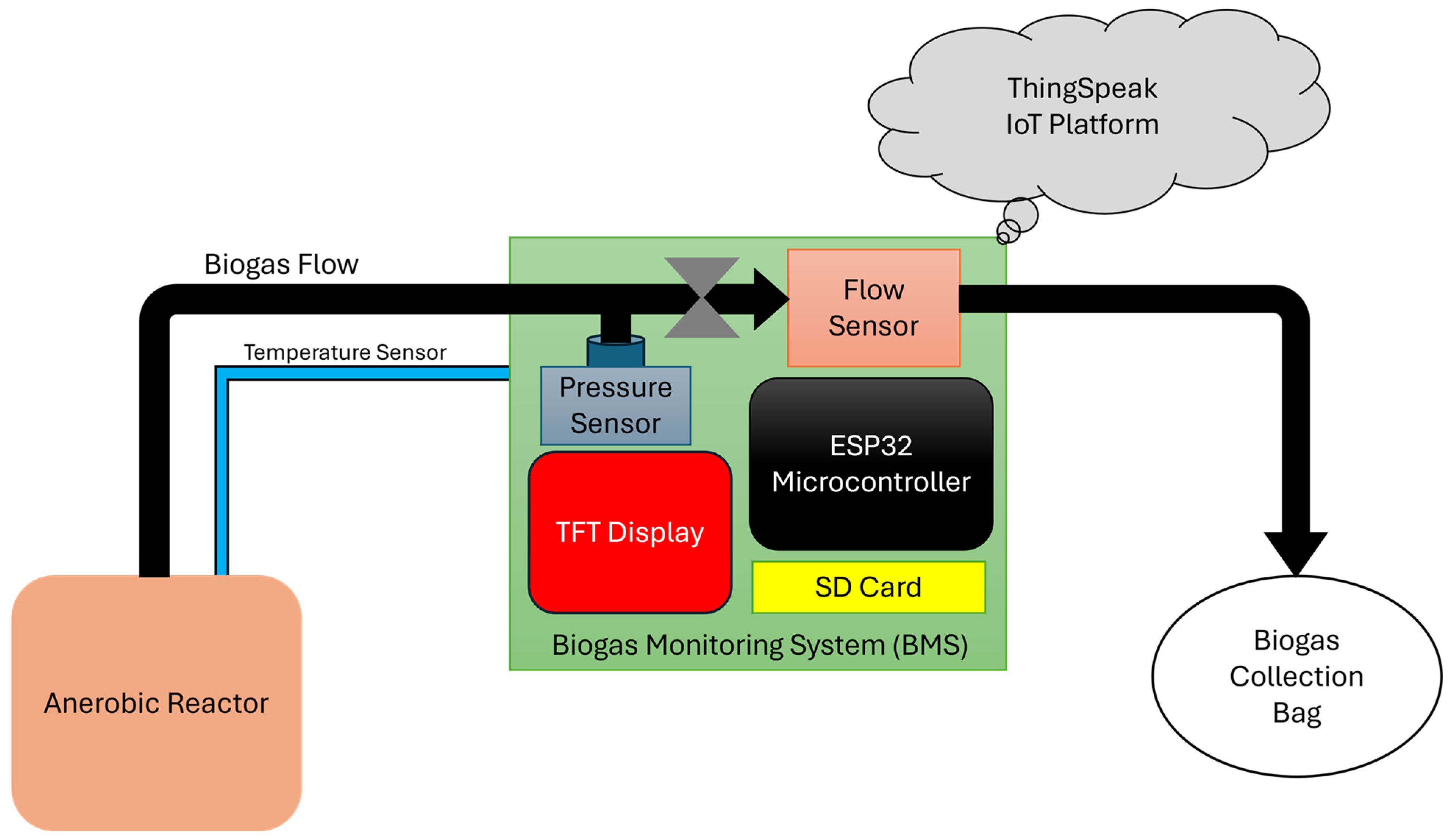
Anaerobic reactors digest manure under anaerobic environments (without oxygen) and produces biogas (a mixture of methane and carbon dioxide, which are GHG gases) [10,11,12]. Since biogas contains methane, trapping and utilizing the biogas provides an option for potentially using it as renewable energy [methane can be used as a biofuel]. Methane content in biogas can vary from 40 to 80%, and carbon dioxide can vary from 20 to 60% depending on the conditions of anaerobic reactors, and stage of anaerobic process [13,14,15]. While anaerobic digestion is a natural process, often it is a slow process [16,17] involving multiple intermediate processes, and biogas yield can be low, especially when feedstock volume is low and as complex as manure. At higher temperatures (35–45 °C), biogas production increases—but anaerobic reactors in the real world are often operated under ambient conditions (15–28 °C) [18,19,20]. Around 2–4 kg of manure volatile solids produces one cubic meter of biogas (biogas calorific value varies from 4500–5500 kcal/m3) [21,22,23]. Both the quantity of biogas production and calorific value of biogas may depend on the feedstock types. In ambient and natural conditions, biogas production in anaerobic reactors can be unpredictable. Additionally, feedstock characteristics and reactor conditions such as total solids, pH, oxygen, temperature, microbial population, and incubation period play crucial roles in biogas production [24,25,26]. Understanding the impacts of chemical parameters and feedstock characteristics on biogas production is crucial to optimize the application of manure for biogas production. Many of these parameters can be monitored in reactors using IoT connected sensors. To quantify biogas potential of dairy manure, lab-scale experiments are often used; however, these experiments use low reactor volumes (reactor size varies 0.2–2 L), and the precise determination of biogas production from manure can be challenging [27,28]. The adaptation of the cost-effective IoT technologies can assist monitoring of biogas production in small-scale anaerobic reactors. Furthermore, these technologies with certain improvement can be deployed for large-scale monitoring of GHG emissions from the environment. The primary goal of this research was to implement an IoT sensors-based monitoring system for the observations of temperature, pressure, and biogas production from lab-scale anaerobic reactors in real-time and remotely (Figure 1).
In addition to GHG emissions, livestock waste causes food safety and environmental risks because of pathogenic organisms such as E. coli in feces. Studies have shown that incidences of foodborne pathogen-related outbreaks have increased over time in the United States and livestock waste is a major source of contamination [29,30,31]. Improperly treated manure and its application as an organic soil amendment poses risks to produce safety and public health [29,32]. Many pathogens such as E. coli O157:H7, Salmonella spp., and Listeria monocytogenes pose severe health risks to the public and environment, and dairy cattle are known to shed these pathogenic organisms [33,34]. Therefore, the treatment of manure is recommended prior to the application of manure as fertilizer in cropland, as untreated manure has higher chances of possessing and transmitting these infection agents to crops, agricultural land as well as contaminating water and soil [35,36]. Treatment methods such as composting and anaerobic digestion processes are effective in reducing pathogenic organisms at various levels depending on treatment conditions such as temperature and time [37,38]. Additional studies are needed to improve the understanding of pathogen degradation in animal waste using anaerobic processes, and to develop techniques to reduce pathogens further. Many anaerobic reactors are operated in mesophilic conditions (20–35 °C), and this temperature range is supportive to bacteria growth. Therefore, a secondary goal of this study was to investigate the performance of anaerobic digestion process in pathogenic bacteria reduction. To achieve an improved understanding of pathogenic bacteria reduction, the changes in E. coli levels in reactor feedstock were monitored using a conventional lab-based method, which uses selective culture media to enumerate bacterial colonies in the feedstock. The overall specific objectives of this study are as follows: (1) implement IoT sensors based on a biogas-monitoring device to quantify biogas production in anaerobic reactors; (2) determine the impacts of anaerobic process on E. coli reduction; and (3) understand the relationships between biogas productions, changes in chemical parameters, incubation days, and E. coli reductions.

2. Materials and Methods

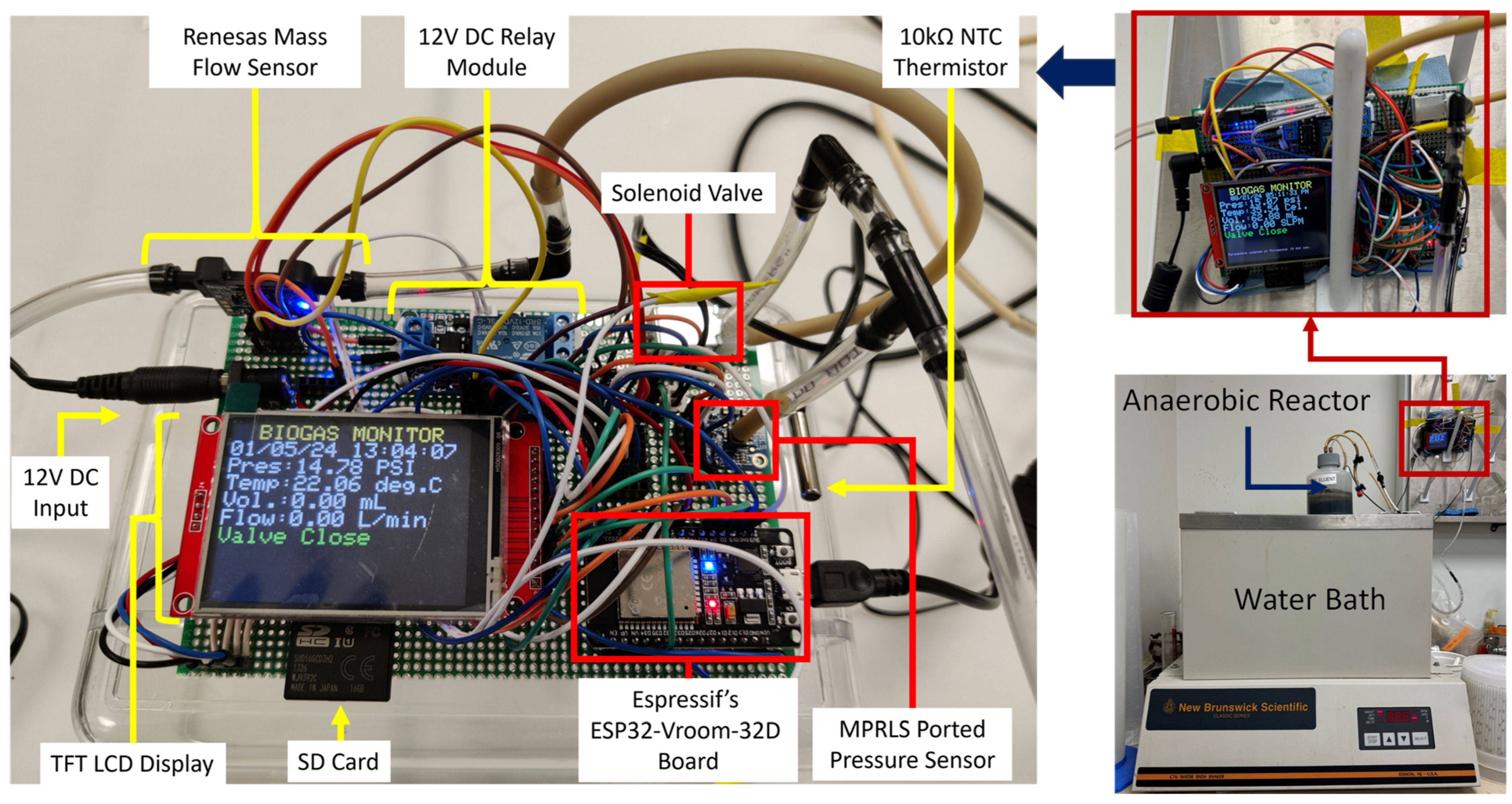
The IoT sensors-based system was implemented in this study for monitoring biogas production, which was built on an ESP32 (Shanghai, China) Devkit V1 microcontroller (Figure 2). This system has three sensors: (1) a Adafruit [New York, NY, USA] MPRLS ported pressure sensor (measurement range varies 0–25 PSIA) to measure pressure; (2) a DROK 10 kΩ NTC-based temperature sensor to measure temperature (DROK, Guangzhou, Guangdong, China); and (3) a Renesas (Renesas Electronics, Toyosu, Kotoku, Tokyo, Japan) FS2012–1100 NG mass flow sensor to measure the production of biogas. A display screen module (2.8″ TFT) was integrated with an SD card module for displaying the measurements and storing the data. A mini solenoid valve was used to control the flow of biogas from the anaerobic reactor, which was conditioned to open when an upper threshold of the pressure was reached inside the reactor. All the components were integrated onto a perfboard and the ESP32 was programmed with Arduino Integrated Development Environment (IDE). Additionally, the system was programmed to communicate with the ThingSpeak IoT platform (Application version 1.0.4) freely offered by MATLAB (version R2024a) to visualize the data and monitor the reactors remotely using a mobile phone. In ESP32, a 2.4 GHz Wi-Fi module was used to connect with the internet for data transfer, monitor over the internet, and perform parameter updates. Additional details such as programming, and algorithm are provided elsewhere [39].
In order to perform dairy manure anaerobic digestion experiments, fresh manure was collected from the floor of the dairy milking barn of a dairy farm located in Escalon, CA, USA. Manure was stored at 4 °C until the start of the experiment. Prior to starting the experiment, manure was mixed with tap water to prepare feedstock, and subsequently it was filtered with an 800-micron sieve (Hogentogler & Co., Inc., Columbia, MD, USA) to remove larger particles. This sieved manure was fed to a reactor to start the anaerobic experiment. External inoculum was not added in the reactors to avoid the influence of bacteria present in the inoculum.
The membrane filtration method (EPA Method 1603) (US EPA, Washington, DC, USA) was used to estimate E. coli levels in manure feedstock. This method is widely used for the enumeration of E. coli in environmental liquid/water/wastewater samples. A sample volume of 100 µL was filtered through of a membrane filter (0.45 µm pore size) that was overlaid on the membrane filtration device. After filtration, the membrane filters were placed on a selective and differential medium (modified mTEC agar) (BD DifcoTM, Franklin Lakes, NJ, USA) that contains a chromogen (5-bromo-6-chloro-3-indolyl-D-glucuronide) agar in petri dishes. These petri dishes with filters were incubated at 44.5 ± 0.2 °C for 16–20 h. Subsequently, E. coli colonies (red or magenta) on the membrane were enumerated.
Prior to starting the experiment, the IoT sensors were calibrated and validated by comparing the data with a standard mass and volumetric flow meter. We used a set of processes and tools to verify the observations of the IoT sensors. Firstly, we used a mass flow meter (FMS-1609A; DwyerOmega, Michigan City, IN, USA) to compare the IoT flow sensors results. The mass flow meter (FMS-1609A) is used in various industrial utilities including gas flow applications such as combustion of air, leak testing, research, and chemical process control. These flow meters are highly accurate with the accuracy of ±0.8%, and can be operated in humidity range of 0–100%. In the IoT system, we used Renesas FS2012-1100-NG Mass Flow Sensor for monitoring the biogas flow, which works with 5 V DC and transmits data via I2C communication protocol. The sensor measures the gas and liquid flow by using the thermos-transfer method and provides digital and analog calibrated output, and can be mounted on a circuit board for processing controls and monitoring wirelessly. To compare the flow observations of these two sensors (FMS-1609A and FS2012-1100-NG), we used a controlled pressurized cylinder with a capability of releasing gas at multiple flow rates and pressure. This cylinder was connected with an inlet system, and controlled ultra-pure air was passed through these two types of sensors connected with the inlet. The observations of both sensors were recorded. First the air was passed through the FMS-1609A flow meter, and then it was passed through the FS2012-1100-NG flow sensor of the IoT. Overall, in this approach the known air flow rate was passed through the both sensors simultaneously to record measurements in real time. This experiment was conducted at various levels of flow rate (1, 2, 3, 4, and 5 SLPM), and data were recorded from both types of devices. Finally, we compared the data produced by these two devices, and results showed coefficient of determination (R2) value of 0.997 and Root Mean Square Error (RMSE) value of 0.09, which showed that the IoT based system used in this study, was highly accurate.
Additional parameters such as salts, sodium, calcium, potassium, electrical conductivity (E.C.), and pH were monitored using the handheld LAQUAtwin sensors (HORIBA, Kisshoin, Kyoto, Japan). Salt was measured using the LAQUAtwin-Salt-11 while EC was measured using the LAQUAtwin-EC-11. Sodium, potassium, and calcium were measured using LAQUAtwin Na-11, K-11, and Ca-11. Total solid (TS) in manure was determined by heating the samples for 24 h at 104 °C and weighing the remaining solid residue. The volatile solid (VS) content was measured by heating the sample at 500 °C for 2 h. Both TS and VS were measured using standard methods by American Public Health Associations (APHA). These measurements provided the information about the manure characteristics and their organic content. The experiments were conducted in two reactors. The first reactor, which was operated over 25 days, included the IoT sensors-based device and tedlar gas collection bag. The second reactor was directly connected with a tedlar gas collection bag system (without IoT sensors) in order to compare the systems.

3. Results

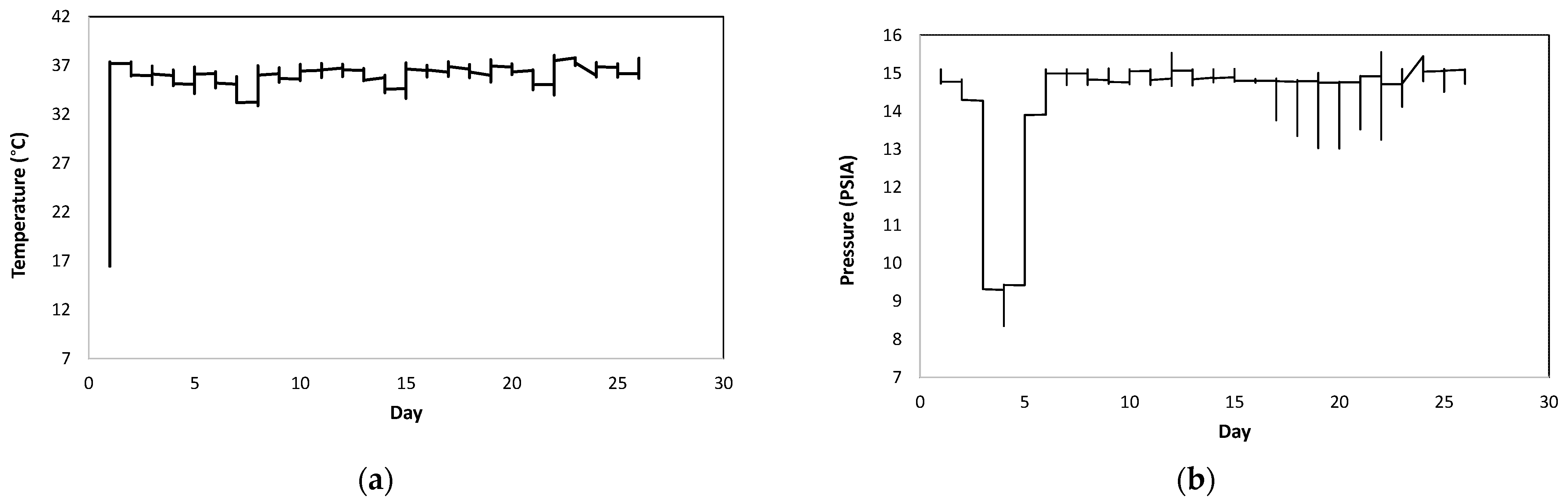
Figure 3 shows experiment setup. Results of biogas production monitoring using IoT sensors-based devices are shown in Figure 4 and Figure 5. Changes in temperature and pressure are shown in Figure 4a and Figure 4b, respectively. In the beginning of the experiment, feedstock temperature was 17 °C and reached the desired temperature of 37 °C within 40–60 min. The temperature of the feedstock remained consistent for the entire duration within a deviation of 1–3 °C due to the water temperature control mechanisms of the water bath (set to 38 °C), which is reflected in the temperature profile of the reactor (Figure 4a). Within the first few days, pressure drops mainly due to the consumption of air inside the reactor caused by biological activity (Figure 4b). Subsequently, the pressure inside the reactor varied between 13 PSI to 16 PSI. This pressure variation in reactor was attributed to the inbuilt pressure valve, which released the biogas after the pressure inside reactor met a threshold value.
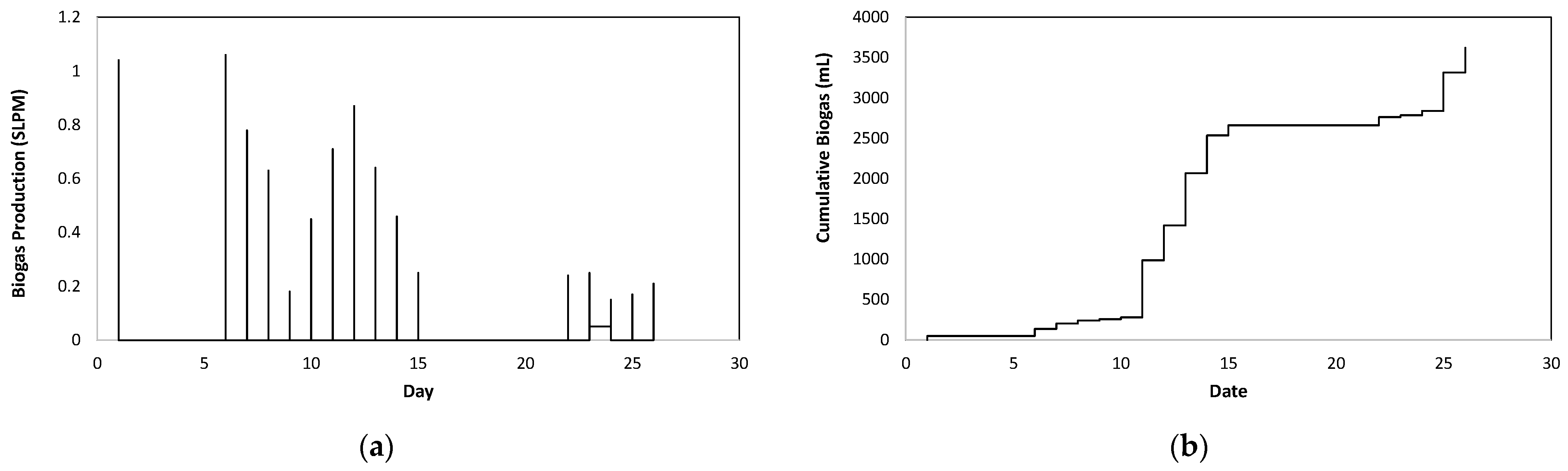
The production of biogas in the anaerobic reactor is shown in Figure 5. Biogas production is presented as standard liter per minute (SLPM). The majority of the biogas was produced between Day 5 and Day 15, and then the production was negligible between Day 15 and Day 22. The cumulative gas production is shown in Figure 5b. In order to compare the IoT-based observations with the actual biogas production measurement, we used a water displacement method, where the tedlar gas collection bag was inserted into a water chamber and the displaced water volume was measured as a quantity of total gas produced in the reactor. While the tedlar gas bag-based observations using the water displacement method provided a reasonable estimate, these methods are tedious and often susceptible to human error in measurement and gas leaks. When comparing the total gas production in 25 days of incubation, the tedlar gas bag method yielded 2500–2600 mL of gas while the sensors estimated around 2700 mL of gas production, yielding a difference of 5–6%. In the tedlar bag-based method a slightly lower gas volume was observed, which was expected mainly due to potential gas leaks during prolonged storage of gas in the tedlar gasbags. During gas production in the reactor, TS and VS of feedstock changed from 2.31% to 1.79% (a change of 0.51%) and from 0.50% to 0.38% (a change of 0.11%), respectively.
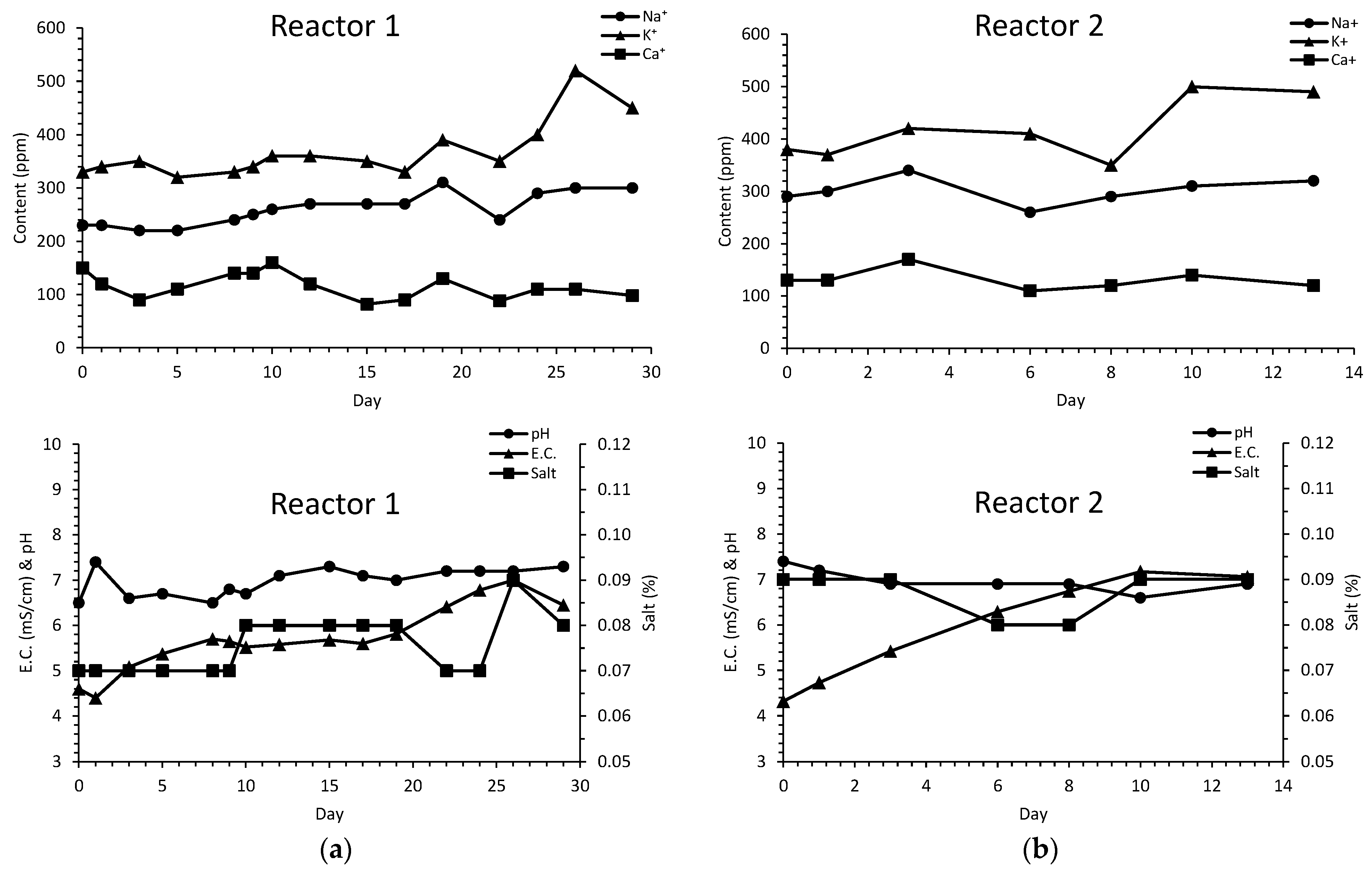
The TS and VS content of feedstock was about 2.31–2.36% and 0.46–0.5%, respectively. The pH of feedstock was around 6.97. The E.C. value varied from 5.71 to 5.96 mS/cm. Calcium, sodium, and potassium values were 115.87–131.43 ppm, 260.0–301.43 ppm, and 368.0–417.44 ppm, respectively. Salt concentrations of feedstock varied 0.08–0.09%. Descriptive statistics of these parameters are shown in Table 1. Changes in chemical parameters over time are shown in Figure 6. Results of sodium (Na+), potassium (K+), calcium (Ca+), pH, E.C., and salt measurements show that the values of the majority of these parameters remained stable. For example, pH values remained relatively stable at 6.5 to 7.5 for both reactors. The E.C. and salts values did not change substantially over the incubation period. The changes in values of Na+, K+, and Ca+ over time was minimal as a stable trend was observed with minimum fluctuations over time (Figure 6). At a pH range of 6.0–7.5, the anaerobic process is mainly governed by the interaction of carbonic systems and a net strong base [40]. In mesophilic anaerobic digestion, when anaerobic reactors are performing optimally the temperature of the reactor is around 28–35 °C and pH is generally between 6.5 and 7.5. A temperature of 35 °C is known to provide optimal conditions for bacteria growth and performance. When pH decreases, it indicates an acidic environment in the reactor and acid accumulation caused by volatile fatty acid in the digester. In general, acidogenic bacteria (acidogenesis process) is responsible for producing acids and lowering the pH of the reactor [41].
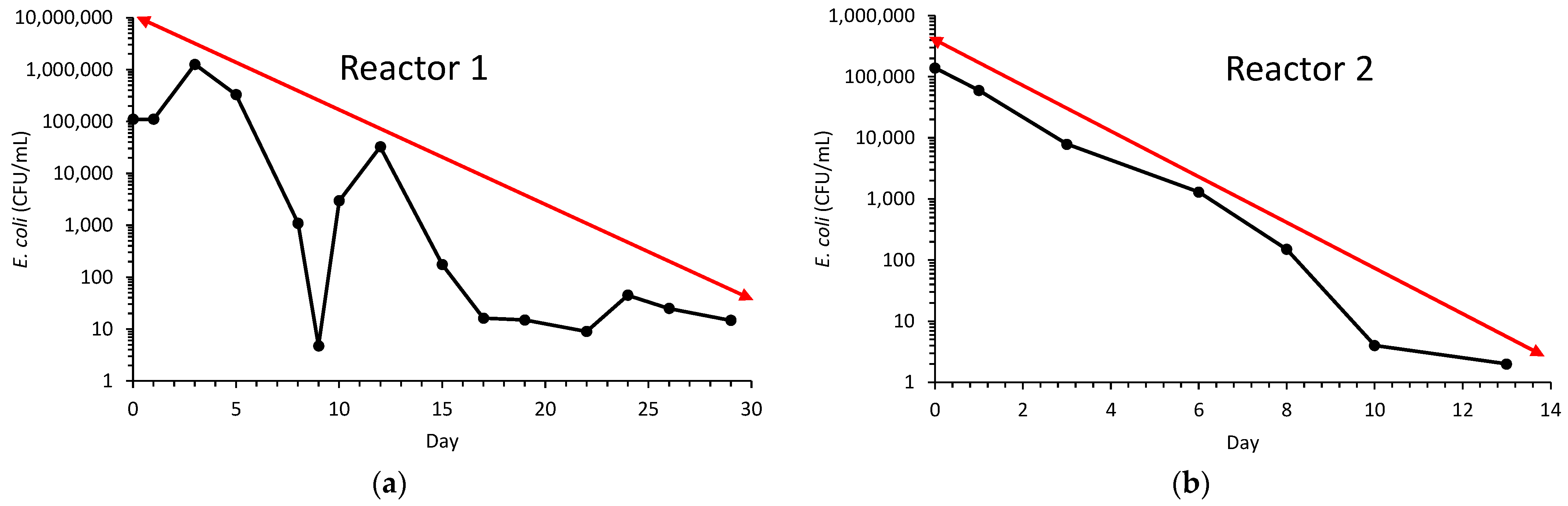
In addition to monitoring chemical parameters, we also monitored biological parameters such as the change in E. coli levels during anaerobic process. Changes in E. coli levels in Reactor 1 and Reactor 2 are shown in Figure 7. The reduction of E. coli levels in Reactor 2 was relatively faster than Reactor 1. For example, E. coli levels in Reactor 2 reached <5 CFU/mL in less than 15 days, in contrast to Reactor 1, where E. coli levels remained at high levels (175–1000 CFU/mL). While Reactor 2 shows a consistent trend of reduction of E. coli, the trend of E. coli levels was not stable in Reactor 1. Even after digestion for more than 25 Days, E. coli levels in Reactor 1 were higher than 10 CFU/mL.
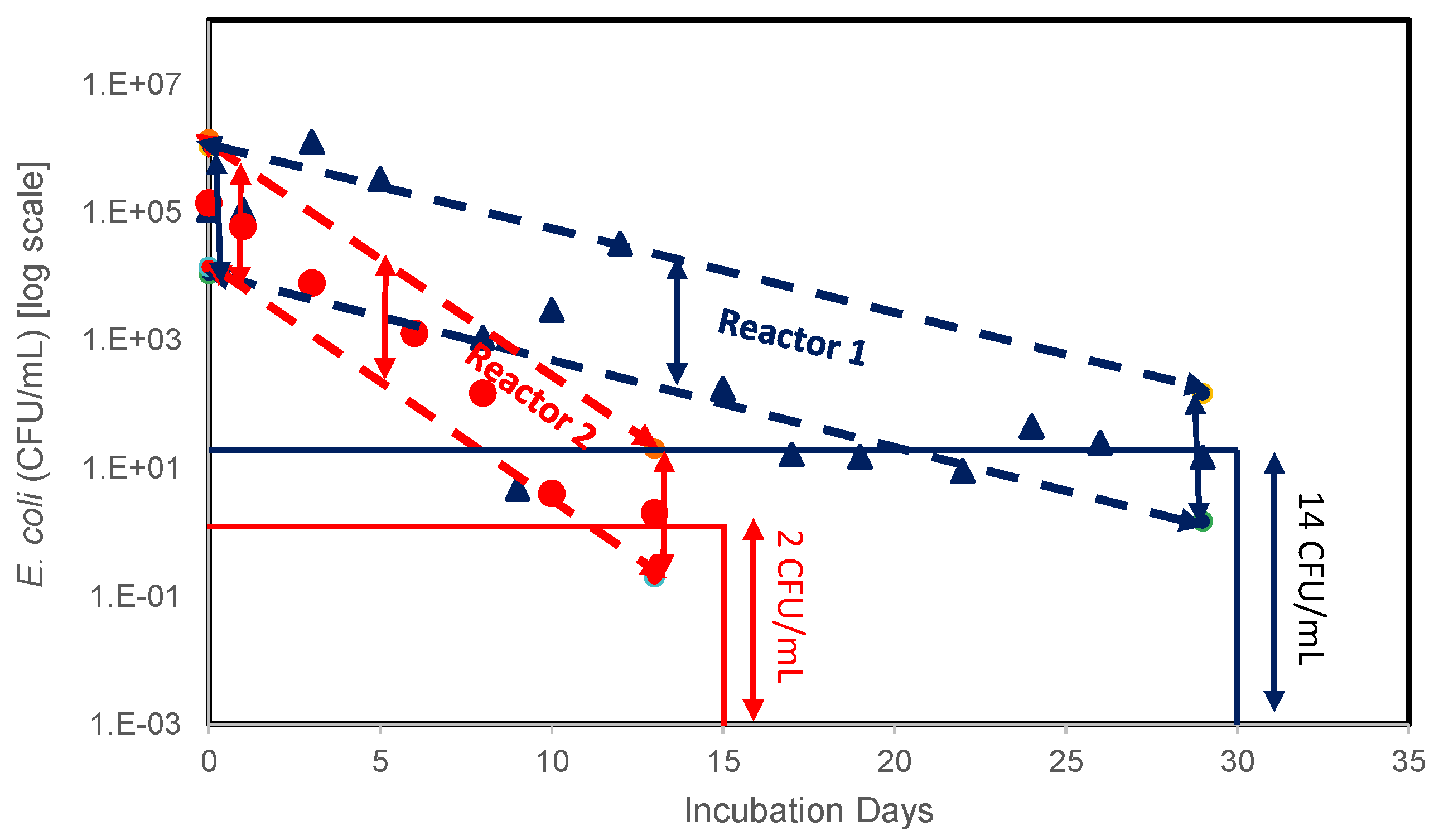
Previous studies have shown that the anaerobic process reduces many aerobic and facultative pathogenic organisms including Salmonella spp., Shigella spp., and E. coli [42,43]. However, reduction trends are often unpredictable, especially during manure anaerobic digestions due to the complex nature of manure feedstock and associated processes. As shown in Figure 7, initial E. coli levels in feedstock were around 100,000 CFU/mL, and at the end of experimentation, E. coli levels reached 10–20 CFU/mL in Reactor 1 and 2–5 CFU/mL in Reactor 2 (Figure 8).
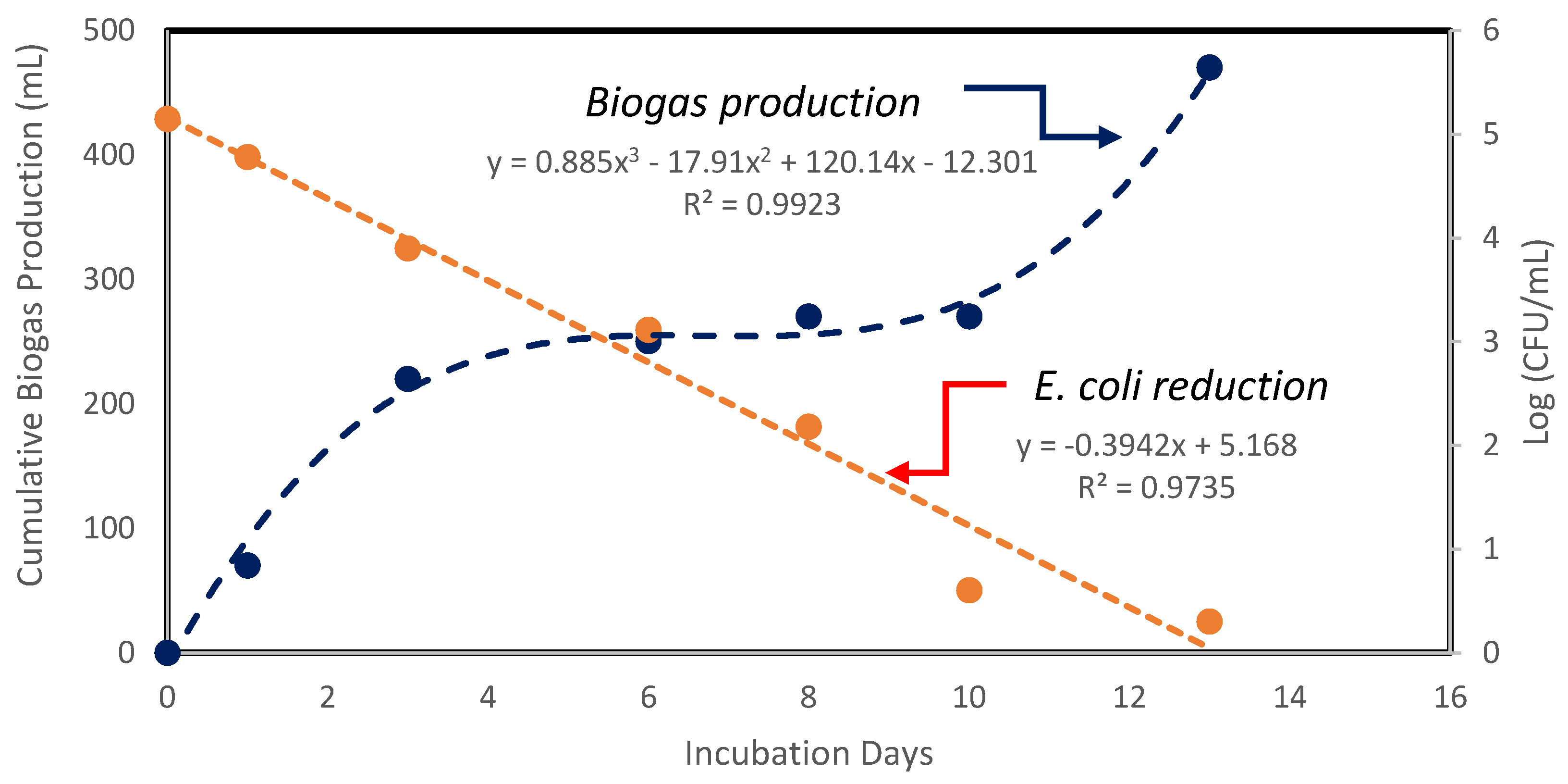
In terms of anaerobic digestion, we intended to investigate the startup phase (first two weeks), which is considered a crucial stage of the anaerobic process that determines the fate of the digester in subsequent phases and its long-term performance. In order to compare the conditions of anaerobic reactors during the startup phase, we compared two parameters: (1) E. coli levels; and (2) biogas production. The conditions of the reactors in terms of total biogas production, E. coli levels, and total solids are shown in Table 2.
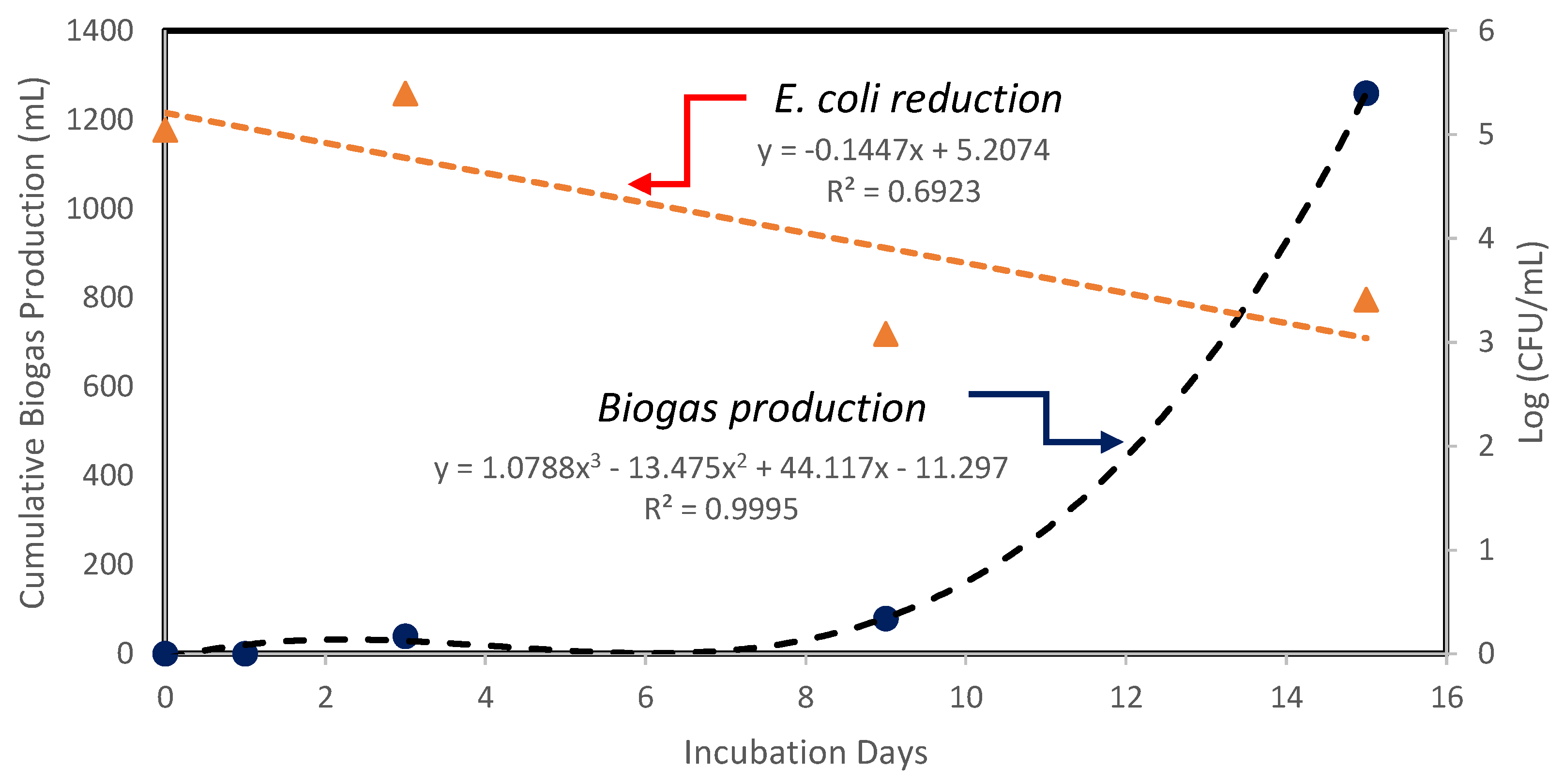
For the first 15 days of the experiment, E. coli data of Reactor 1 was averaged over every three days to streamline the daily fluctuations. The average of E. coli levels in Reactor 2 was not included due to linear trends in the reduction of E. coli levels. Superimposed data of E. coli and biogas production (Reactor 1) are shown in Figure 9. These data for Reactor 2 are shown in Figure 10. A notable observation was that total biogas production in the first week was substantially higher in Reactor 2 than Reactor 1. The gas production in Reactor 1 started in the late second week, while gas production in Reactor 2 started within the first week. The higher gas production in Reactor 2 coincided with lower E. coli levels in Reactor 2. Similarly, the lower gas production in Reactor 1 coincided with higher E. coli levels (Figure 9 and Figure 10). These findings are substantial for evaluating the anaerobic reactor conditions in the startup phases. The specific trend of lower E. coli levels linked with higher biogas production could be an important finding for determining the health of an anaerobic reactor. E. coli are facultative organisms, which can grow in both aerobic and anaerobic environments. However, under a strict anaerobic environment, E. coli growth is reduced substantially.

4. Discussion

In this research, a specially designed experiment setup that included an anaerobic reactor, heating system, and an additional anaerobic reactor integrated with IoT sensors was evaluated. The IoT system was successfully implemented and it was capable of monitoring the reactor performance in terms of temperature, biogas production, and pressure in real time, and it transmitted data to a mobile platform wirelessly. The comparative results between actual observations and measurements obtained through IoT sensors showed that the IoT system performed the intended tasks. A major goal of this work was to utilize IoT-connected sensors to monitor GHG emissions (i.e., biogas, mixture of CH4 and CO2), which are emitted from dairy waste under anaerobic conditions. As a secondary goal, we evaluated the impact of the anaerobic process on the reductions of E. coli. Findings showed that reactors that start gas production early have lower E. coli levels, indicating the tangible relationships between E. coli levels in the start-up phase and gas production. Monitoring both E. coli and biogas production in anaerobic reactors is important because E. coli is linked with public health risks. Biogas production and its subsequent application as a biofuel enhances the value of anaerobic reactor. Elevated levels of E. coli in manure pose substantial public and environmental health risks [44,45], and controlling it requires improved methods for monitoring these pollutions. Here we investigated a device, which could be extremely valuable in terms of cost-effective tool development for monitoring anaerobic reactors and associated biological process in real time and remotely.
In terms of application of IoT for environmental GHG monitoring, it is still in the development stages. In this study, we used multiple ultra small detectors (i.e., sensors) for monitoring pressure, temperature, and gas volume. These sensors are used previously for medical application. We used Adafruit MPRLS Ported Pressure Sensor to monitor the pressure in reactors. These sensors are capable of monitoring pressure (0–25 PSI) inside a close space such as tube and reactor. The unique part of this sensor is that it comes with an embedded metal port, which can be connected to any tube. These sensors work by using a silicone-gel-covered pressure sensing element that is connected to a stainless-steel port. The change in pressure on the port causes stress, and strain on the sensing component, which generates electrical signals that are recorded. Unlike other ported pressure sensors, Adafruit ported sensor uses I2C and is capable of connecting with any microcontroller for real-time pressure measurements with an accuracy of ±1.5–2%. Compared to other conventional pressure sensors, these are ultra-small sensors and easily connectable to any microprocessors for real-time monitoring.
To monitor biogas production, we used Renesas FS2012-1100-NG Mass Flow Sensor. This sensor operates on the thermos–transfer principle using micro-electro-mechanical systems (MEMS), that measure flow by monitoring the flowing gas transfers heat from an integrated heating element. The sensor includes a micro-heater in the center, and two temperature sensors connected upstream and downstream of the heater. These sensors are capable of monitoring flow with an accuracy of ±2%. Conventionally flow is monitored using turbine, different pressure flow meter, and ultrasonic and magnetic meters; however, such flow meters are large, difficult to connect with small microprocessor, and monitoring small quantity of gas production is challenging. To monitor temperature, we used a DROK 10 kΩ temperature probe. This probe operates on the principle of a negative temperature coefficient (NTC) thermistor (i.e., sensor), where increase in temperature results in the decrease of its electrical resistance. These ultra-small sensors measure temperature with an accuracy of ±1%. The NTC technology is a well-established and a mature technology for monitoring temperature used in various settings including electric vehicles, wearable device, and IoT, and are known for small size, accuracy, and stability.
Recently, IoT-based systems received substantial interest and are generating new opportunities in monitoring and sensing applications. Considering the enhanced availability of cost-effective and efficient microprocessors capable of controlling multiple sensors, retrieving data, and transmitting the data wirelessly, IoT systems can provide wholistic information cost effectively. For example, there were 16.6–18.8 billion connected IoT devices by 2023–2024 (annual growth of 13–15%) [46,47]. While in healthcare applications IoT implementation is playing a vital role in sharing medical resources and data [48,49], the potential of IoT-connected sensors is yet to be fully utilized in environmental monitoring and waste management in the lab and field [50,51]. There are increasing environmental challenges (pollution, climate change, water quality, GHG emissions), and traditional methods of monitoring often lack accuracy and automation—IoT connected sensors can play a critical role.
The device used in this study for GHG monitoring has significant scientific and engineering implications when it comes to monitoring and controlling GHG emissions from waste in anaerobic reactors and the environment. While significant finances and resources are used annually by various agencies all over the world to control GHG emissions from livestock waste, a majority of the currently available information is theoretical in nature and often estimated by mathematical models and equations [52,53,54]. One of the major challenges in obtaining the actual observations is the required cost of monitoring [55]. These low cost, low powered, and easily assembled devices can play a key role in monitoring waste and agricultural-related problems, as well as assisting in the development of solutions to real-world problems.
In terms of monitoring of microbial pollution in environment, animal waste is a major source of E. coli, which can contaminate ambient water bodies such as rivers, lakes, and reservoirs, causing public health risks [4]. Previous studies showed that anaerobic reactors and temperature conditions of the reactors have substantial impact on E. coli reductions. For example, a study [43] developed kinetic models to determine the inactivation of E. coli in anaerobic reactors under various temperature conditions. This study evaluated the impacts of moderate (25 °C), mesophilic (37 °C), and thermophilic (52.5 °C) temperature on E. coli reductions, and subsequently, kinetic models were developed to predict E. coli levels in effluent of anaerobic reactors. Results showed that the inactivation of E. coli at thermophilic conditions was 15–17 times faster than the inactivation at mesophilic conditions (25–37 °C). Similarly, another study [42] evaluated the impacts of temperature on three pathogens’ (Escherichia coli, Salmonella, and L. monocytogenes) decay. Authors performed pathogen inoculation in manure followed by anaerobic digestion to compare the inactivation of these three bacteria under multiple temperature conditions. Results of this study showed that E. coli survival was longer than Salmonella and Listeria in anaerobic environment under all temperature conditions. In 15 days of anaerobic digestion process (at 30 °C), Salmonella and L. monocytogenes levels were reduced to non-detectable levels. However, the E. coli levels persisted beyond 15 days of incubation. The results of present study showed 1–5 log E. coli reductions (at 37 ± 2 °C) (Figure 8). Overall results illustrate that the anaerobic process has substantial influence in E. coli reduction; however, it is unlikely that the mesophilic anaerobic process (35–37 °C) can eliminate E. coli completely in 15–30 days of incubation.
Livestock waste produces a substantial amount of GHG [56,57], but monitoring of these emissions are often difficult because a majority of these farms are located in rural and underdeveloped regions. Typically, the cost of using the existing monitoring technologies is high and unaffordable for a majority of the rural population. While the IoT device presented here has a substantial scope for improvement such as connecting the device with additional sensors for gas composition monitoring, improving the device for outdoor application, or equipping the device to operate using battery power, nevertheless, the innovation and application presented here is a step forward. These small sized and affordable devices can assist rural and farming communities in monitoring the issues related to their on-farm waste and explore the available waste management technologies to take the much-needed actions for controlling the air and water quality issues caused by farming practices.
While IoT sensors are relatively low-powered and cost-effective tools to facilitate monitoring wirelessly, the limitations of the IoT sensors include issues related with connectivity, data management, security vulnerability, and maintenance issues. These sensors have limited processing power and can be influenced by environmental factors such as temperature and moisture. Further, integration of sensors is complex and requires a skilled workforce, which can increase the cost of implementation. However, currently there is increasing demand of these sensors from virtually all industries including complex industrial systems, smart homes, health monitoring, and remote monitoring of air and water quality, which is likely to reduce the cost of the sensors, automation, operation and maintenance.

5. Conclusions

In this research, we designed an integrated IoT-based sensor system for instantaneous monitoring of pressure, temperature, and biogas production in anaerobic reactors. These reactors used dairy manure as feedstock for biogas production. Biogas is a renewable energy source, and understanding the potential of livestock manure to produce renewable energy is critical not only for renewable energy production but also for controlling GHG emissions from animal waste that causes air pollution and global warming. The results of this study showed that an IoT sensor-based tool was able to monitor biogas production in real-time with an accuracy of 5–6%. Further, the system provided reactor monitoring and control wirelessly over the phone on ThingSpeak, a cloud-based IoT analytics platform. Furthermore, the monitoring of E. coli reduction in dairy waste under anaerobic conditions showed that these anaerobic reactors were capable of reducing pathogenic organisms such as E. coli between 1.6 and 4.8 log. The implementation of an IoT system for biogas monitoring and reliable observations illustrate that an IoT system has a substantial potential to be used in the monitoring of environmental GHG emissions.

Author Contributions

Conceptualization, P.P.; methodology, A.P. and A.L.; IoT development and integration, A.P. and A.L.; experiment, A.L.; experiment setup and data retrieving, A.L. and A.P.; data analysis, A.L., A.P. and P.P.; writing, A.L., A.P. and P.P.; supervision, P.P.; project administration, P.P.; funding acquisition, P.P. All authors have read and agreed to the published version of the manuscript.

Funding

This research received no external funding.

Data Availability Statement

The original contributions presented in this study are included in the article. Further inquiries can be directed to the corresponding author.

Acknowledgments

Authors acknowledge Tracee Da Silva and Denis Da Silva for the support provided in sample collection from Da Silva Dairy Farms, Escalon, CA, USA. Authors thank the University of California Agriculture and Natural Resources (UC ANR) and School of Veterinary Medicine, UC Davis for supporting this work.

Conflicts of Interest

The authors declare no conflicts of interest.

References

  1. Bellarby, J.; Tirado, R.; Leip, A.; Weiss, F.; Lesschen, J.P.; Smith, P. Livestock greenhouse gas emissions and mitigation potential in Europe. Glob. Change Biol. 2013, 19, 3–18. [Google Scholar] [CrossRef] [PubMed]
  2. Massé, D.I.; Talbot, G.; Gilbert, Y. On farm biogas production: A method to reduce GHG emissions and develop more sustainable livestock operations. Anim. Feed. Sci. Technol. 2011, 166, 436–445. [Google Scholar] [CrossRef]
  3. Qin, Z.; Deng, S.; Dunn, J.; Smith, P.; Sun, W. Animal waste use and implications to agricultural greenhouse gas emissions in the United States. Environ. Res. Lett. 2021, 16, 064079. [Google Scholar] [CrossRef]
  4. Pandey, P.; Kass, P.; Soupir, M.; Biswas, S.; Singh, V. Contamination of water resources by pathogenic bacteria. AMB Express 2014, 4, 51. [Google Scholar] [CrossRef]
  5. Jamieson, R.; Gordon, R.; Joy, D.; Lee, H. Assessing microbial pollution of rural surface waters: A review of current watershed scale modeling approaches. Agric. Water Manag. 2004, 70, 1–17. [Google Scholar] [CrossRef]
  6. Mallin, M.A.; Cahoon, L.B. Industrialized animal production—A major source of nutrient and microbial pollution to aquatic ecosystems. Popul. Environ. 2003, 24, 369–385. [Google Scholar] [CrossRef]
  7. Pandey, P.K.; Ndegwa, P.M.; Soupir, M.L.; Alldredge, J.R.; Pitts, M.J. Efficacies of inocula on the startup of anaerobic reactors treating dairy manure under stirred and unstirred conditions. Biomass Bioenergy 2011, 35, 2705–2720. [Google Scholar] [CrossRef]
  8. Sakar, S.; Yetilmezsoy, K.; Kocak, E. Anaerobic digestion technology in poultry and livestock waste treatment—A literature review. Waste Manag. Res. 2009, 27, 3–18. [Google Scholar] [CrossRef]
  9. Nasir, I.M.; Mohd Ghazi, T.I.; Omar, R. Anaerobic digestion technology in livestock manure treatment for biogas production: A review. Eng. Life Sci. 2012, 12, 258–269. [Google Scholar] [CrossRef]
  10. Li, J.; Wei, L.; Duan, Q.; Hu, G.; Zhang, G. Semi-continuous anaerobic co-digestion of dairy manure with three crop residues for biogas production. Bioresour. Technol. 2014, 156, 307–313. [Google Scholar] [CrossRef]
  11. Amon, T.; Amon, B.; Kryvoruchko, V.; Zollitsch, W.; Mayer, K.; Gruber, L. Biogas production from maize and dairy cattle manure—Influence of biomass composition on the methane yield. Agric. Ecosyst. Environ. 2007, 118, 173–182. [Google Scholar] [CrossRef]
  12. Pandey, P.; Pandey, A.; Yan, L.; Wang, D.; Pandey, V.; Meikap, B.C.; Huo, J.; Zhang, R.; Pandey, P.K. Dairy waste and potential of small-scale biogas digester for rural energy in India. Appl. Sci. 2021, 11, 10671. [Google Scholar] [CrossRef]
  13. Rahman, M.A.; Shahazi, R.; Nova, S.N.B.; Uddin, M.R.; Hossain, M.S.; Yousuf, A. Biogas production from anaerobic co-digestion using kitchen waste and poultry manure as substrate—Part 1: Substrate ratio and effect of temperature. Biomass Convers. Biorefin. 2023, 13, 6635–6645. [Google Scholar] [CrossRef] [PubMed]
  14. Hilgert, J.E.; Herrmann, C.; Petersen, S.O.; Dragoni, F.; Amon, T.; Belik, V.; Ammon, C.; Amon, B. Assessment of the biochemical methane potential of in-house and outdoor stored pig and dairy cow manure by evaluating chemical composition and storage conditions. Waste Manag. 2023, 168, 14–24. [Google Scholar] [CrossRef]
  15. El-Mashad, H.M.; Zhang, R. Biogas production from co-digestion of dairy manure and food waste. Bioresour. Technol. 2010, 101, 4021–4028. [Google Scholar] [CrossRef] [PubMed]
  16. Adekunle, K.F.; Okolie, J.A. A review of biochemical process of anaerobic digestion. Adv. Biosci. Biotechnol. 2015, 6, 205. [Google Scholar] [CrossRef]
  17. Pavlostathis, S.; Giraldo-Gomez, E. Kinetics of anaerobic treatment: A critical review. Crit. Rev. Environ. Sci. Technol. 1991, 21, 411–490. [Google Scholar] [CrossRef]
  18. Dev, S.; Saha, S.; Kurade, M.B.; Salama, E.-S.; El-Dalatony, M.M.; Ha, G.-S.; Chang, S.W.; Jeon, B.-H. Perspective on anaerobic digestion for biomethanation in cold environments. Renew. Sustain. Energy Rev. 2019, 103, 85–95. [Google Scholar] [CrossRef]
  19. Meegoda, J.N.; Li, B.; Patel, K.; Wang, L.B. A review of the processes, parameters, and optimization of anaerobic digestion. Int. J. Environ. Res. Public Health 2018, 15, 2224. [Google Scholar] [CrossRef]
  20. Chae, K.; Jang, A.; Yim, S.; Kim, I.S. The effects of digestion temperature and temperature shock on the biogas yields from the mesophilic anaerobic digestion of swine manure. Bioresour. Technol. 2008, 99, 1–6. [Google Scholar] [CrossRef] [PubMed]
  21. Rico, C.; Rico, J.L.; Tejero, I.; Muñoz, N.; Gómez, B. Anaerobic digestion of the liquid fraction of dairy manure in pilot plant for biogas production: Residual methane yield of digestate. Waste Manag. 2011, 31, 2167–2173. [Google Scholar] [CrossRef]
  22. Molnar, L.; Bartha, I. High solids anaerobic fermentation for biogas and compost production. Biomass 1988, 16, 173–182. [Google Scholar] [CrossRef]
  23. Orhorhoro, E.K.; Ebunilo, P.O.; Sadjere, G.E. Experimental determination of effect of total solid (TS) and volatile solid (VS) on biogas yield. Am. J. Mod. Energy 2017, 3, 131–135. [Google Scholar] [CrossRef]
  24. Abeng, D.; Sutaryo, S.; Purnomoadi, A.; Susanto, S.; Purbowati, E.; Adiwinarti, R.; Purwasih, R.; Widiharih, T. Optimization of methane production from dairy cow manure and germinated papaya seeds using response surface methodology. Case Stud. Chem. Environ. Eng. 2024, 10, 100927. [Google Scholar] [CrossRef]
  25. Induchoodan, T.; Haq, I.; Kalamdhad, A.S. Factors affecting anaerobic digestion for biogas production: A review. Adv. Org. Waste Manag. 2022, 223–233. [Google Scholar] [CrossRef]
  26. Dobre, P.; Nicolae, F.; Matei, F. Main factors affecting biogas production-an overview. Rom. Biotechnol. Lett. 2014, 19, 9283–9296. [Google Scholar]
  27. Cruz, I.A.; Andrade, L.R.; Bharagava, R.N.; Nadda, A.K.; Bilal, M.; Figueiredo, R.T.; Ferreira, L.F. An overview of process monitoring for anaerobic digestion. Biosyst. Eng. 2021, 207, 106–119. [Google Scholar] [CrossRef]
  28. Tsapekos, P.; Khoshnevisan, B.; Zhu, X.; Treu, L.; Alfaro, N.; Kougias, P.G.; Angelidaki, I. Lab-and pilot-scale anaerobic digestion of municipal bio-waste and potential of digestate for biogas upgrading sustained by microbial analysis. Renew. Energy 2022, 201, 344–353. [Google Scholar] [CrossRef]
  29. U.S. Food and Drug Administration. Raw Manure Under the FSMA Final Rule on Produce Safety; U.S. Food and Drug Administration: Silver Spring, MD, USA, 2020.
  30. Luna, S. Outbreak of E. coli O157: H7 infections associated with exposure to animal manure in a rural community—Arizona and Utah, June–July 2017. Morb. Mortal. Wkly. Rep. 2018, 67, 659–662. [Google Scholar] [CrossRef]
  31. Black, Z.; Balta, I.; Black, L.; Naughton, P.J.; Dooley, J.S.; Corcionivoschi, N. The fate of foodborne pathogens in manure treated soil. Front. Microbiol. 2021, 12, 781357. [Google Scholar] [CrossRef]
  32. Alegbeleye, O.O.; Sant’Ana, A.S. Manure-borne pathogens as an important source of water contamination: An update on the dynamics of pathogen survival/transport as well as practical risk mitigation strategies. Int. J. Hyg. Environ. Health 2020, 227, 113524. [Google Scholar] [CrossRef]
  33. Oliver, S.P.; Jayarao, B.M.; Almeida, R.A. Foodborne pathogens in milk and the dairy farm environment: Food safety and public health implications. Foodbourne Pathog. Dis. 2005, 2, 115–129. [Google Scholar] [CrossRef]
  34. Holzhauer, M.; Wennink, G.J. Zoonotic risks of pathogens from dairy cattle and their milk-borne transmission. J. Dairy Res. 2023, 90, 325–331. [Google Scholar] [CrossRef] [PubMed]
  35. Leach, K.A.; Archer, S.C.; Breen, J.E.; Green, M.J.; Ohnstad, I.C.; Tuer, S.; Bradley, A.J. Recycling manure as cow bedding: Potential benefits and risks for UK dairy farms. Vet. J. 2015, 206, 123–130. [Google Scholar] [CrossRef] [PubMed]
  36. Nicholson, F.; Chambers, B.; Moore, A.; Nicholson, R.; Hickman, G. Assessing and managing the risks of pathogen transfer from livestock manures into the food chain. Water Environ. J. 2004, 18, 155–160. [Google Scholar] [CrossRef]
  37. Olaimat, A.N.; Holley, R.A. Factors influencing the microbial safety of fresh produce: A review. Food Microbiol. 2012, 32, 1–19. [Google Scholar] [CrossRef]
  38. Mandrell, R.E. Enteric Human Pathogens Associated with Fresh Produce: Sources, Transport, and Ecology. In Microbial Safety of Fresh Produce; Wiley: Hoboken, NJ, USA, 2009; pp. 1–41. [Google Scholar]
  39. Pandey, A.; Momeni, O.; Pandey, P. Design and Implementation of IoT-Enabled Device for Real-Time Monitoring of Greenhouse Gas Emissions, and Pressure in Anaerobic Reactors. IEEE Access 2024, 12, 133848–133862. [Google Scholar] [CrossRef]
  40. Capri, M.G.; Marais, G.v.R. pH adjustment in anaerobic digestion. Water Res. 1975, 9, 307–313. [Google Scholar] [CrossRef]
  41. Jiang, M.; Qiao, W.; Wang, Y.; Zou, T.; Lin, M.; Dong, R. Balancing acidogenesis and methanogenesis metabolism in thermophilic anaerobic digestion of food waste under a high loading rate. Sci. Total Environ. 2022, 824, 153867. [Google Scholar] [CrossRef]
  42. Biswas, S.; Pandey, P.K.; Farver, T.B. Assessing the impacts of temperature and storage on Escherichia coli, Salmonella, and L. monocytogenes decay in dairy manure. Bioprocess Biosyst. Eng. 2016, 39, 901–913. [Google Scholar] [CrossRef]
  43. Pandey, P.K.; Soupir, M.L. Escherichia coli inactivation kinetics in anaerobic digestion of dairy manure under moderate, mesophilic and thermophilic temperatures. AMB Express 2011, 1, 18. [Google Scholar] [CrossRef]
  44. Chen, F.; Zhou, B.; Yang, L.; Zhuang, J.; Chen, X. Assessing the risk of E. coli contamination from manure application in Chinese farmland by integrating machine learning and Phydrus. Environ. Pollut. 2024, 356, 124345. [Google Scholar] [CrossRef]
  45. Richter Taylor, K.S.; Kauffman, M.; Mammel Mark, K.; Lacher David, W.; Rajashekara, G.; Leonard Susan, R. Long-term impacts of untreated dairy manure on the microbiome and Shiga toxin-producing Escherichia coli persistence in agricultural soil. Appl. Environ. Microbiol. 2025, 91, e00447-25. [Google Scholar] [CrossRef]
  46. Ullah, I.; Adhikari, D.; Su, X.; Palmieri, F.; Wu, C.; Choi, C. Integration of data science with the intelligent IoT (IIoT): Current challenges and future perspectives. Digit. Commun. Netw. 2025, 11, 280–298. [Google Scholar] [CrossRef]
  47. Sun, P.; Wan, Y.; Wu, Z.; Fang, Z.; Li, Q. A survey on privacy and security issues in IoT-based environments: Technologies, protection measures and future directions. Comput. Secur. 2025, 148, 104097. [Google Scholar] [CrossRef]
  48. Zhang, G.; Navimipour, N.J. A comprehensive and systematic review of the IoT-based medical management systems: Applications, techniques, trends and open issues. Sustain. Cities Soc. 2022, 82, 103914. [Google Scholar] [CrossRef]
  49. Wakili, A.; Bakkali, S. Internet of Things in healthcare: An adaptive ethical framework for IoT in digital health. Clin. eHealth 2024, 7, 92–105. [Google Scholar] [CrossRef]
  50. Ullo, S.L.; Sinha, G.R. Advances in Smart Environment Monitoring Systems Using IoT and Sensors. Sensors 2020, 20, 3113. [Google Scholar] [CrossRef]
  51. Sharma, A.; Singh, K.J.; Kapoor, D.S.; Thakur, K.; Mahajan, S. The Role of IoT in Environmental Sustainability: Advancements and Applications for Smart Cities. In Mobile Crowdsensing and Remote Sensing in Smart Cities; Kerrache, C.A., Sahraoui, Y., Calafate, C.T., Vegni, A.M., Eds.; Springer Nature: Cham, Switzerland, 2025; pp. 21–39. [Google Scholar]
  52. Siddiki, S.Y.A.; Uddin, M.N.; Mofijur, M.; Fattah, I.M.R.; Ong, H.C.; Lam, S.S.; Kumar, P.S.; Ahmed, S.F. Theoretical calculation of biogas production and greenhouse gas emission reduction potential of livestock, poultry and slaughterhouse waste in Bangladesh. J. Environ. Chem. Eng. 2021, 9, 105204. [Google Scholar] [CrossRef]
  53. He, D.; Deng, X.; Wang, X.; Zhang, F. Livestock greenhouse gas emission and mitigation potential in China. J. Environ. Manag. 2023, 348, 119494. [Google Scholar] [CrossRef]
  54. Hörtenhuber, S.J.; Seiringer, M.; Theurl, M.C.; Größbacher, V.; Piringer, G.; Kral, I.; Zollitsch, W.J. Implementing an appropriate metric for the assessment of greenhouse gas emissions from livestock production: A national case study. Animal 2022, 16, 100638. [Google Scholar] [CrossRef] [PubMed]
  55. Allen, D.; Ravikumar, A.; Tullos, E. Scientific Challenges of Monitoring, Measuring, Reporting, and Verifying Greenhouse Gas Emissions from Natural Gas Systems. ACS Sustain. Resour. Manag. 2024, 1, 10–12. [Google Scholar] [CrossRef]
  56. Kalehe Kankanamge, E.; Ramilan, T.; Tozer, P.R.; de Klein, C.; Romera, A.; Pieralli, S. Greenhouse gas mitigation in pasture-based dairy production systems in New Zealand: A review of mitigation options and their interactions. Clim. Smart Agric. 2025, 2, 100071. [Google Scholar] [CrossRef]
  57. Nleya, Y.; Young, B.; Nooraee, E.; Baroutian, S. Anaerobic digestion of dairy cow and goat manure: Comparative assessment of biodegradability and greenhouse gas mitigation. Fuel 2025, 381, 133458. [Google Scholar] [CrossRef]
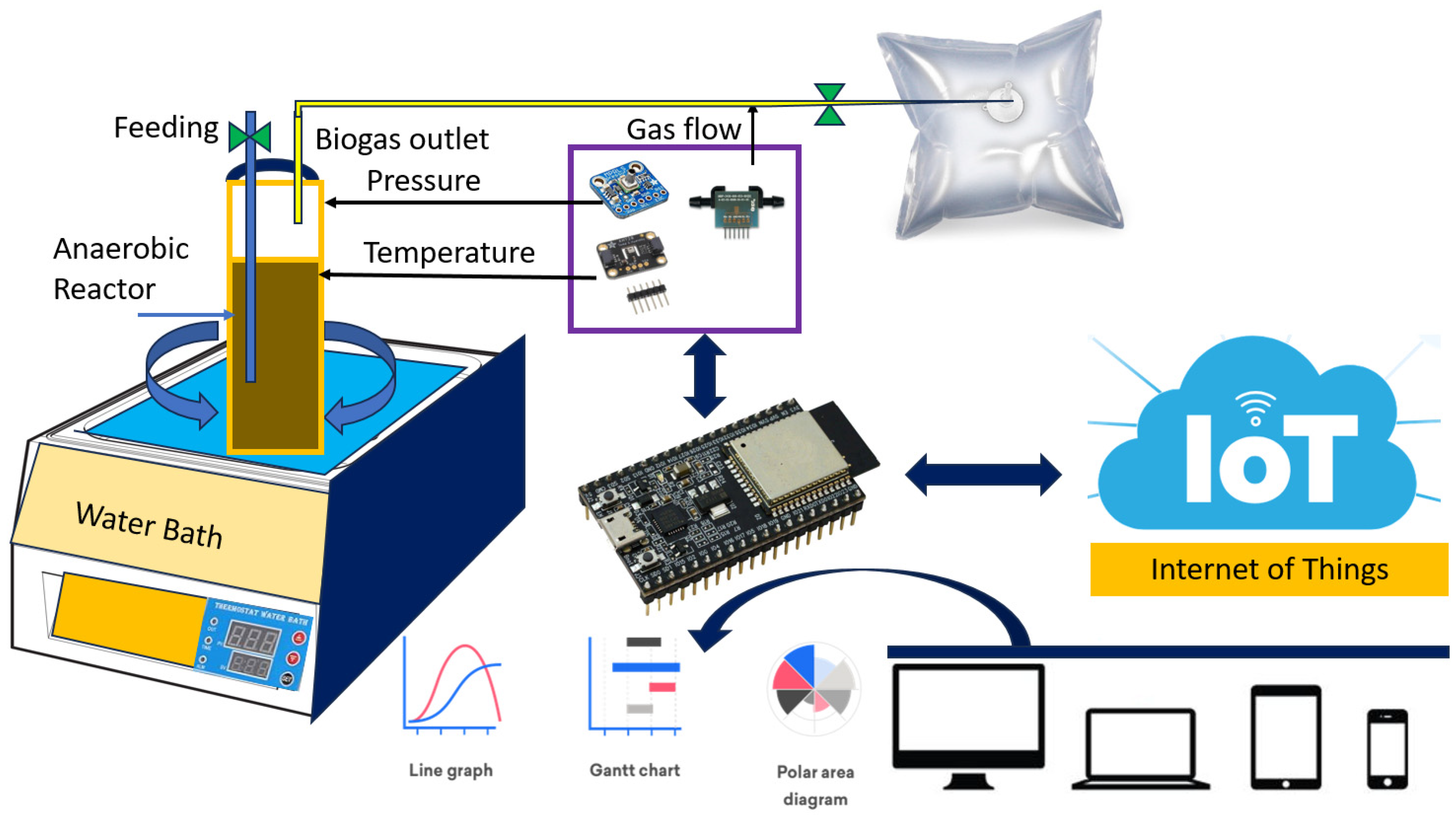
Figure 1. Conceptualization of IoT sensors application for monitoring anaerobic in vitro experiments. Anaerobic reactors temperature was maintained by keeping reactors in a water bath, which was operated at a desired mesophilic temperature level. Biogas produced in the reactor was passed through IoT sensors for monitoring. Eventually biogas was stored in tedlar gas storage bags.
Energies 18 06191 g001
Figure 2. Schemes of sensors embedded in IoT system for biogas, pressure, and temperature monitoring. IoT platform including ESP 32 and associated components are shown. Microcontrollers such as ESP 32 are a low-cost, low-power chip-based microcontrollers with integrated Wi-Fi and Bluetooth capabilities.
Energies 18 06191 g002
Figure 3. In vitro experiments: (left) overview of sensors and valves; (right) experiment setup showing reactors, water bath, and connectivity between reactors and IoT system.
Energies 18 06191 g003
Figure 4. Temperature and pressure monitoring in anaerobic reactors using IoT sensors: (a) temperature variations and consistency of feedstock during incubation period; (b) change in pressure in reactor during anaerobic process.
Energies 18 06191 g004
Figure 5. Monitoring of biogas production using IoT based sensors: (a) biogas production (SLMP) over the incubation period; and (b) total biogas production (cumulative) during anaerobic digestion of manure.
Energies 18 06191 g005
Figure 6. Changes in chemical parameters Na+, K+, Ca+, pH, Salts, and EC: (a) parameter values in Reactor 1; (b) parameter values in Reactor 2.
Energies 18 06191 g006
Figure 7. Changes in E. coli levels in dairy waste during anaerobic digestion process: (a) variation in E. coli levels during anaerobic process in Reactor 1; (b) variation in E. coli levels during anaerobic process in Reactor 2. Red lines in figure are used to indicate variations in E. coli over the time. Black circles indicate actual observations of E. coli levels.
Energies 18 06191 g007
Figure 8. Comparison of E. coli reduction in Reactor 1 and Reactor 2. Dotted blue lines show one order of magnitude boundary of E. coli levels in Reactor 1; and dotted redlines show one order of boundary of E. coli levels in Reactor 2. Blue markers show changes in E. coli levels in Reactor 1, and red markers show changes in E. coli levels in Reactor 2.
Energies 18 06191 g008
Figure 9. Cumulative biogas production and E. coli reduction in Reactor 1. E. coli reduction is plotted in secondary y-axis, and numbers are in log transformed. Yellow dotted line shows trendline for E. coli reduction. Blue dotted line indicates trendline of biogas production. Yellow triangle markers are observations of E. coli levels, and blue circles are observations of biogas volume.
Energies 18 06191 g009
Figure 10. Cumulative biogas production and E. coli reduction in Reactor 2. E. coli reduction is plotted with secondary y-axis, and numbers are in log transformed. Yellow dotted line shows trendline for E. coli reduction. Blue dotted line indicates trendline of biogas production. Yellow triangle markers are observations of E. coli levels, and blue circles are observations of biogas volume.
Energies 18 06191 g010
Table 1. Descriptive statistics of chemical and biological parameters and their corresponding values in Reactor 1 and Reactor 2.
Parameters Reactor 1Reactor 2Average
[Reactors 1 and 2]
E. coli (CFU/mL)Average123,12529,90876,517
Range1,259,991139,998699,995
Std. Dev.326,71253,233189,973
pHAverage6.976.976.97
Range0.400.800.60
Std. Dev.0.310.260.29
Sodium (ppm)Average30.24301.43165.84
Range30.2480.0055.12
Std. Dev.30.2425.4527.85
Potassium (ppm)Average368.00417.14392.57
Range190.00150.00170.00
Std. Dev.53.8858.2356.06
Calcium (ppm)Average115.87131.43123.65
Range78.0060.0069.00
Std. Dev.24.2019.5221.86
Salts (%)Average0.080.000.04
Range0.020.000.01
Std. Dev.0.010.000.01
E.C. (mS/cm)Average5.715.965.84
Range1.402.852.13
Std. Dev.0.731.150.94
Table 2. Initial conditions of total solids, E. coli reductions, and total biogas production during startup phase [first 15 days of anaerobic process].
Changes in Startup PhaseReactor 1Reactor 2
Total biogas production (mL)1260470
Initial total solid (%)2.312.63
Total solid reduction (%)0.370.22
Initial E. coli (log)5.045.14
E. coli reduction (log)1.634.84
Disclaimer/Publisher’s Note: The statements, opinions and data contained in all publications are solely those of the individual author(s) and contributor(s) and not of MDPI and/or the editor(s). MDPI and/or the editor(s) disclaim responsibility for any injury to people or property resulting from any ideas, methods, instructions or products referred to in the content.