Article

Integration of Key Performance Indicators (KPI) Taxonomy and Energy Efficiency Analysis in the Aluminium Industry Using Industry 4.0 Technologies


by
Andrzej Pacana
1,*,
Karolina Czerwińska
1,
Lucia Bednárová
2 and
Zuzana Šimková
2
1
Faculty of Mechanical Engineering and Aeronautics, Rzeszow University of Technology, Al. Powstancow Warszawy 12, 35-959 Rzeszow, Poland
2
Faculty of Mining, Ecology, Process Control and Geotechnologies, Technical University of Košice, Letná 9, 04001 Košice, Slovakia
*
Author to whom correspondence should be addressed.
Energies 2025, 18(23), 6133; https://doi.org/10.3390/en18236133
Submission received: 23 October 2025 / Revised: 19 November 2025 / Accepted: 21 November 2025 / Published: 23 November 2025

Abstract

The energy transition in the aluminium industry is crucial, as its processes are among the most energy-intensive. In this context, KPIs (Key Performance Indicators), defined as quantitative measures for assessing the effectiveness and efficiency of processes, are an essential tool for identifying energy losses, monitoring the results of optimisation measures, and supporting the achievement of sustainable development goals. The purpose of the study was to develop a KPI taxonomy model that would enable the identification and monitoring of energy efficiency at the process level in aluminium industry companies, using Industry 4.0 tools (visualisation screens). As part of the selection of indicators, a literature review, surveys, and in-depth interviews were conducted. A classification of indicators corresponding to energy-intensive stages of production was proposed, which allows precise tracking of energy efficiency at each stage of production. The practical contribution of the study is the construction of visualisation screens that enable real-time monitoring of KPIs and support optimisation decisions. This approach integrates energy management, smart manufacturing, and predictive maintenance, enabling comprehensive and sustainable energy management. The results indicate the need for further research on the development of energy KPIs to improve efficiency, and their implementation in the aluminium industry should be supported through guidelines, tools, training, and pilot projects.

1. Introduction

Currently, due to the ever-increasing demands of the business environment in the area of quality assurance for delivered products and the need to increase competitiveness, industrial companies are looking for methods and techniques to improve their processes. Organisations have the opportunity to improve and develop their level of efficiency through technological development [1,2], widespread use of computer equipment [3,4], and the implementation of smart manufacturing concepts [5].
In the context of the ongoing industrial and digital transformation, the widely used term Industry 4.0 plays an important role. It is a concept that refers to various modern technological solutions, including activities that affect the entire industrial system [6,7]. An important element of the Industry 4.0 concept is the Internet of Things (IoT), which supports the integration of many machines and devices into an integrated system that collects data from the entire industrial infrastructure. Monitoring machines and devices using the IoT system is an invaluable source of knowledge in the context of ensuring a consistent level of quality, process efficiency, and an appropriate level of energy efficiency of the machine park [8,9]. The collection of real-time data on machine operation, energy consumption, performance, and environmental conditions facilitates the identification of potential problems and the optimisation of their operation in terms of energy efficiency. By transferring the assumptions of this concept to industrial operations, it becomes possible to implement advanced energy management systems. These systems monitor and optimise energy consumption throughout the entire production process [10,11].
The implication of the concept of smart factories involves the beginning of work on intensive industrial progress work and contributes to the formation of a new area within sustainable development, sustainable energy management based on data and knowledge, which is closely related to energy efficiency [12,13]. In the simplest terms, energy efficiency can be described as a reduction in the amount of energy required to perform a specific task (for example, manufacturing a product or providing a service) [14,15]. This approach is also present in the European Union, where energy efficiency is defined as ‘the ratio of results, services, goods or energy obtained to energy input’. However, there is a difference between energy efficiency and energy saving. The latter term should be understood as ‘the amount of energy saved, determined by measuring or estimating consumption before and after the implementation of one or more measures to improve energy efficiency, while ensuring normalisation of external conditions that affect energy consumption’ [16]. In industrial spaces, sustainable energy management boils down to ensuring a stable and relatively environmentally friendly supply of electricity and heat. Ensuring and using this supply is accompanied by measures that aim to increase the efficiency and savings of this resource [17].
One way to consciously manage energy in companies (implementation of the concept of sustainable energy) is to use best practices and tools that support energy efficiency improvement in the form of an energy management system according to ISO 50001 [18]. From the perspective of the standard, energy issues should relate to energy consumption in the main, auxiliary and management processes, which is not always obvious [19]. A comprehensive approach is necessary. This requires an analysis of all the company’s facilities in order to propose ‘positive’ solutions. As a result of implementation errors and a poor approach to energy management, it is possible to focus solely on the production area, neglecting other processes. This prevents the full identification of areas where the efficiency of energy-saving equipment and processes can be improved.
The achievement of sustainable energy by industrial enterprises should be measurable. The idea of sustainable development is an important factor determining the selection and implementation of appropriate indicators to measure and evaluating key aspects of processes. These can have a significant impact on both the efficiency of technological operations and sustainable development from an energy perspective [20]. The development of technology that supports the acquisition of data from measurable process parameters can provide a foundation for making rational and sensible development decisions, proper resource management, and increasing energy efficiency and energy savings. This ultimately leads to an improvement in overall sustainable energy efficiency in the manufacturing industry [21,22].
A prerequisite for optimal use of a company’s existing infrastructure is the definition of adequate measures and tools for assessing the energy efficiency of industrial processes. Key Performance Indicators (KPIs) are important tools for assessing the functioning and achievement of a company’s objectives. The definition of KPIs presented in [23] indicates that KPIs act as a set of measures that focus on the aspects of a company’s performance that are considered critical to its success.
Indicator analyses and indicator-based management of manufacturing processes can use KPIs applied in other areas. However, it should be noted that operational manufacturing processes require the definition of reliable indicators for efficiency, productivity, and energy consumption to take into account diverse technological operations [24].
The purpose of the study was to propose a KPI taxonomy model that allows the identification and monitoring of key energy efficiency indicators at the process level in modern aluminium industry enterprises, using tools of Industry 4.0 such as navigation and visual screens. Understanding how and where energy is used is an important component in achieving the goal adopted. A gap was identified in the absence of indicators related to industrial processes or enterprises, as well as the lack of adequate and correlated indicators related to the sector or country. The first group of indicators can support the identification of key areas for improving energy efficiency, supporting practical action. The second set of indicators only allows for tracking progress in energy efficiency [25].
From a scientific perspective, this study has a positive impact on the development of knowledge in the field of energy efficiency management in industrial enterprises by presenting a practical and participatory approach based on the implication of KPIs in the production space. Referring to the transformation of manufacturing companies towards the Industry 4.0 concept, the study presents a method of using new technologies (Power BI) to improve the analysis and visualisation of data from main and auxiliary processes. The use of visualisation dashboards allows managers to monitor the situation and immediately identify patterns, trends and anomalies that would be difficult to spot based on raw data.
The study presents a realistic solution for production managers in industrial enterprises who want to improve and modernise their energy efficiency measurement systems without having to implement advanced and technologically demanding solutions. It is crucial to understand how energy efficiency KPIs, in conjunction with new technologies, fit into the business objectives of companies in the era of Industry 4.0.
The originality of the approach presented in the study is reflected in the analysis of concept of the attributes of the fourth industrial revolution integrated with a set of energy efficiency implied in the industrial space. The set of indicators enables the monitoring, evaluation, and improvement of energy consumption, which allows better process efficiency, the achievement of sustainable development goals, and financial savings. This type of indicator allows identifying areas for improvement related to components characteristic of smart manufacturing, i.e., human–machine interaction (HMI) and digital data exchange in the production space.
Another original contribution of the study was its holistic approach, which allowed us to present how energy efficiency indicators can support the effectiveness of energy transition measures integrated with the digital transformation of industrial enterprises. The purpose of addressing this topic was to highlight its relevance and to propose a role that it could play in achieving the expected level of energy and digital transformation through the use of indicator analyses in KPI settings.
The study presents a systematic approach to issues related to energy efficiency in the aluminium industry, focussing on the use of KPIs. The introduction presents the characteristics of the industry and the concept of using energy efficiency KPIs in manufacturing companies. A review of the literature indicates the need to monitor energy consumption in manufacturing companies and to visualise the results. The section on materials and methods describes the data sources and the KPI taxonomy model, which enables the identification and monitoring of energy KPIs at the process level. The section on results and analysis covers the classification of processes in the aluminium industry, a proposal for energy KPIs relating to typical main and auxiliary processes in the aluminium industry, and a visualisation dashboard design. The discussion refers to the interpretation of the results obtained in the context of their practical usefulness and indicates directions for optimisation. The conclusion section summarises the importance of the developed model for improving energy efficiency and defines its practical application in energy management systems.

2. Literature Review—The Need to Monitor Energy Efficiency

The forecasts for global aluminium demand indicate that demand will double or even triple by 2050 [25,26]. Aluminium processing and production are very energy-intensive sectors. They consume significant amounts of electricity and fossil fuels for energy purposes and for use as reaction materials [27,28]. For this reason, ensuring high energy efficiency in aluminium production and processing is important in minimising greenhouse gas emissions [29].
With the development of knowledge and environmental awareness, energy prices, and the growth in the number of industrial companies interested in improving energy efficiency, there has been an increased demand for methods, tools, and solutions that are also accessible to people who are not experts in the energy sector. Given the complexity of the methods and tools (including, for example, stochastic frontier analysis [30], data envelope analysis [31], exergy analysis [32], and their extensions), unlike in scientific circles, they have not gained popularity in industrial circles due to their low degree of convenience of use [33,34]. However, overly simplistic methods or tools used only to perform qualitative assessments based on economic assumptions become of little value in terms of multifaceted energy improvement within the framework of energy and digital transformation of industrial enterprises.
Constant monitoring and control of processes is one of the fundamental stages of business process management (BPM) [35]. The key reasons foundries should monitor and control their processes and business activities include the need to identify and correct problems in process implementation and increase their energy efficiency, as well as the need to comply with legal regulations [36,37]. Increased efficiency can be achieved by using data from process monitoring systems and through integrated planning and response based on open access to process data [38,39]. An important step in this regard is to identify relevant objectives and success factors and then use them to build KPIs. Established KPIs and their values are monitored to detect deviations from the accepted value, allowing immediate response and implementation of appropriate corrections to processes [40,41].
Visualisation of results plays an important role in efficient monitoring of indicators [23]. To this end, it may be helpful to use a dashboard to measure and present KPIs. Dashboards provide a clear and effective way to consolidate and intuitively present complex data, making it easier for managers to identify problems and errors. Dashboards offer the integration of data from various sources and the ability to present it in real time, which is important in an increasingly dynamic industrial environment [42]. A visual summary of the data is helpful in the context of rapid decision making. In addition, dashboards have another strong point—the ability to personalise them. It is possible to tailor the visualisation on the dashboard to the specific needs of the company, which increases the accuracy of the information presented and improves the efficiency of reading and interpretation. This type of interaction (using filters and customising visualisations to suit your needs) facilitates deeper data exploration and the discovery of valuable insights that would not be possible with traditional static reports [43].
There is no universal single KPI taxonomy for process supervision in the context of energy efficiency. Process monitoring and control can be carried out at various management levels but also from different perspectives, i.e., technical, operational, financial, safety, and maintenance [44,45]. Extensive knowledge from different perspectives on processes should be combined with available data that provide real-time information on their energy efficiency [46].
Identifying processes in which the implementation of appropriate energy efficiency measures would contribute to an increase in their overall energy efficiency requires information on the final energy consumption. There are significant differences in bottom-up data on final energy consumption in the small and medium manufacturing sector in different countries, creating a need for a KPI taxonomy [47,48]. This could support decisions on the implications of energy efficiency measures and greenhouse gas mitigation measures to realise their full potential within processes, enterprises, and sectors [49]. A KPI taxonomy would help identify the processes with the greatest potential, provide information on the progress of energy efficiency measures, and indicate which areas need to be addressed in energy policy [50,51].
The issue of the distribution of energy efficiency measures and the potential for energy savings has been addressed in the literature on the subject in relation to various industries and sectors, for example, in the cement industry [52], in the chemical and pharmaceutical industries [53], in the ceramics industry [54], in the steel industry [55,56], the paper and glass industry [57], and polymer processing [58]. Characteristics were also analysed, and barriers to business were identified to draw conclusions about energy efficiency policies and specific recommendations for energy efficiency measures for various types of industrial enterprises [59].
Several studies have been conducted on improving energy efficiency in the aluminium industry and energy savings potentials have been identified, e.g., [60,61,62,63,64,65,66]. The regional and global potential to improve energy efficiency has also been estimated by comparing branches, products, and activities within the aluminium industry [67,68,69]. Available energy efficiency measures have been evaluated, and cost–supply curves have been constructed to identify technical and cost-effective opportunities for savings in energy and greenhouse gas emissions. These studies were carried out considering only the alumina refining and aluminium electrolysis processes [60]. Technologies used in the aluminium smelting process and energy efficiency technologies in the alumina production process were analysed using an energy savings curve (CSC—Conservation Supply Curve). The Conservation Supply Curve is a graph showing potential energy savings in a company, depending on the unit cost of implementing these savings. This made it possible to simulate scenarios and determine the benefits in terms of energy efficiency [70].
Few studies explicitly refer to energy efficiency measures and potential at the technological level, as confirmed by a study conducted by [71]. Electrolysis in primary aluminium production, recycling, and general measures to improve energy efficiency attract the greatest interest. This can be explained by the high energy intensity of electrolysis and the relatively extensive use of general measures. It is also important to note that aluminium undergoes either electrolysis or recycling [60].
Global statistics on final energy consumption for the refining and electrolysis of aluminium oxide, as well as related greenhouse gas emissions, are available from the International Aluminium Institute. The Institute also provides the indicated values (energy consumption and gas emissions) for processes in primary aluminium production (bauxite mining followed by its refining to aluminium oxide in the Bayer process) [72]. Data on efficiency, primary energy consumption, and carbon dioxide emissions have been presented and used in studies [73,74]. The available statistical values and actual energy consumption and gas emissions refer mainly to production processes, the main processes. There is a lack of data on auxiliary and management processes in this area, i.e., data on the full distribution of energy consumption and greenhouse gas emissions across all processes involved in the production and processing of aluminium products.
To estimate the potential for energy efficiency in the aluminium industry and make decisions about improvement measures, it is necessary to divide the types of processes involved in aluminium production and define important key performance indicators (KPIs) [75]. These types of indicators should be defined at different levels, which highlights the need for a KPI taxonomy. Distributed level—Process level; this approach supports decision making by decision-makers in relation to an industrial entity. The aggregate level—the sector level simplifies decision making with regard to the aluminium industry sector [76]. The industrial sector highlights the importance and obligation of standardisation and the implications of analysis at the process and plant levels [77,78,79].
The use of KPIs to improve the energy efficiency of industrial enterprises is still rare, although they have potential in this area, for example, in increasing technology transfer for the implementation of highly efficient energy solutions. The literature on the subject points to the use of KPIs in aluminium processing companies to measure and define guidelines for the evaluation of sustainable development, taking into account environmental, economic and social aspects in the aluminium extrusion process [80]. For this purpose, a computer model was developed, and detailed mathematical case studies were performed [81]. KPIs have also been used to monitor waste from the aluminium casting process in the form of used mould sand [82]. However, there is a lack of studies that would take into account KPIs to measure main and auxiliary processes in aluminium processing in the context of their energy efficiency.
The introduction of energy KPIs in industrial practice is not a simple task. Numerous studies have been conducted on this issue in relation to various energy-intensive industries and regions in different contexts. Table 1 provides an overview of scientific studies on measures taken to improve energy efficiency in companies in the aluminium industry using KPIs.
The scientific studies cited in Table 1 focus on the use of performance KPIs to improve sustainability and energy efficiency in aluminium companies. The studies present ways in which KPIs support decision making, the optimisation of activities, and the development of smart companies. However, there is a lack of studies that would analyse the energy intensity of individual production processes, allowing the examination of the energy intensity of individual stages of the aluminium component manufacturing process. To fill this gap, a model for measuring energy efficiency in aluminum industry companies was developed, enabling the mapping of the structure of main and auxiliary processes and the development of an adequate set of KPIs.

3. Materials and Methods

The effectiveness of measuring the energy efficiency of industrial enterprises should be assessed in a manner that ensures objectivity. Appropriate methods and tools must strike a balance between ease of use, completeness, and generalisability. For this reason, they should:
  • Have a general scope—ensuring their usefulness within relevant industrial sectors;
  • Use components that are openly accessible to nonexperts, ensuring their usefulness for all economic entities operating in the industrial sector;
  • Convey important information (from the point of view of energy)—ensuring technically reliable results;
  • Enable knowledge transfer—facilitating the generalisation of effective methods and solutions to other industrial and management cases.
In industrial terms, this agreement can be achieved through the use of energy KPIs, given the correlation between energy and production issues.
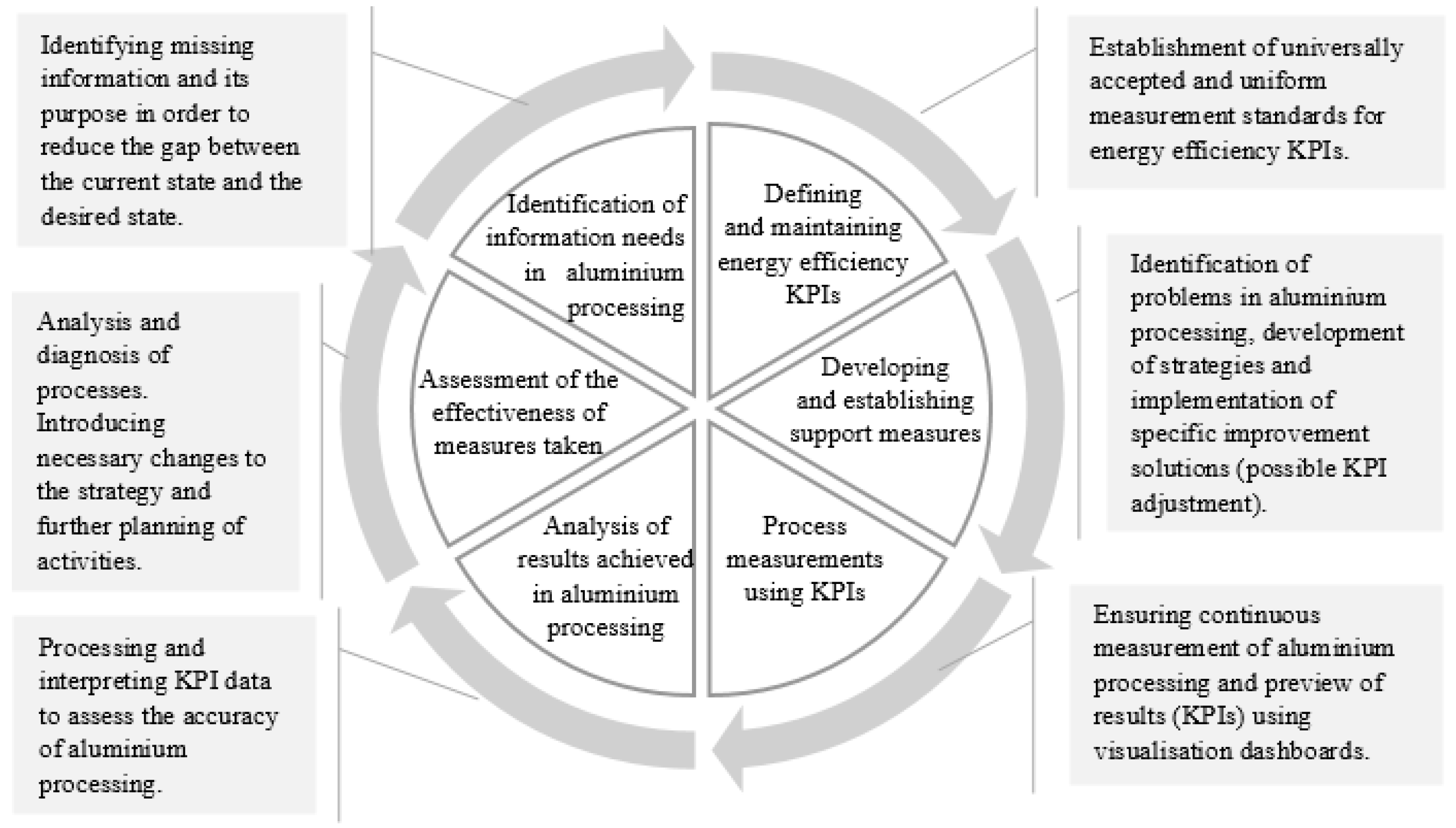
In connection with the premises mentioned above and guidelines from the literature on the subject, a circular model has been created to measure aggregate energy efficiency in aluminium industry companies using energy KPIs has been created. Figure 1 presents a general overview of the essence of the measurement processes.
Based on the assumptions of the adopted model (Figure 1), the definition of energy KPIs should begin by specifying information needs in relation to the adopted objectives. The company should adopt indicators and update them regularly at specified intervals or when the monitored processes undergo significant changes. The classification of information and data as part of the usefulness verification process can be performed using checklists, which will help minimise the impact of missing data on the reliability of the analysis results. Data analysis should lead to clarification of differences between the achieved and assumed results.
Energy KPIs were adopted to measure the value of the processes examined in relation to the identified information needs. Each of the specified indicators was assigned a specific form of presentation as part of periodic reports. The format to present the results of the indicators in dashboards and visualisations was correlated with information and management needs. It is possible to limit the number of KPI results analysed by decision makers (management), but a comprehensive view of the energy transition should be maintained. Too many KPIs and, as a result, too many results can distort the transparency of reports, thus making it difficult to identify priority areas for improvement. In addition to identifying KPIs, the selection stage also involves determining which indicators are relevant and most appropriate for the organisation’s direction of development in terms of energy and digital transformation in industry.
To identify an appropriate set of energy KPIs, a review of the literature was performed, based on which a method developed by [84] was selected, promoting the selection of indicators that take into account the opinions of employees. For this reason, questionnaires were used, and interviews were conducted with key employees in relation to the research topic. This methodology is a practical and accessible alternative in which questionnaires are distributed among department managers and some of the company’s management staff. Interviews were conducted with employees in key management positions responsible for setting the company’s strategy, making strategic decisions, and managing its long-term development.
The questionnaire used in the study was divided into four parts.
The first part contained the purpose of the study and detailed instructions on how to complete the questionnaire, specifying how to answer and the rating scale (from 1 to 5, where 1 meant very low importance of the indicator and 5 very high importance). The purpose of this part was to provide respondents with clear guidelines and an understanding of the essence of the study.
The second part included respondent metrics, allowing for the determination of basic demographic and professional data, such as position, department, length of service, level of education, and age. This information enabled the analysis of the results in the context of respondent diversity.
The third part concerned the evaluation of key performance indicators (KPIs) in relation to support processes, while the fourth part referred to the assessment of KPIs in relation to core processes. Both parts identified specific processes carried out in aluminium processing and assigned appropriate energy indicators to them.
Each KPI was described in detail, including its name, definition, calculation formula, and summary of its significance for the energy efficiency of processes. This approach enabled respondents to make an informed and comparable assessment of individual indicators in terms of their usefulness and significance for the organisation.
In addition, the final part of the survey included open questions that allowed respondents to present their own opinions, propose new indicators, or comment on the issues raised.
Based on the obtained ratings, a manual was developed and KPIs were selected. For further analysis, the KPI with an average rating equal to or greater than 3.5 was evaluated. This contributed to the inclusion of indicators with a significant perceived impact on the energy efficiency of processes. The selection process was verified by two rounds of review:
  • First round: analysis of raw survey results and identification of KPIs with the highest average rating and low variance in ratings among respondents,
  • Second round: validation of pre-selected KPIs by internal experts who assessed their practical usefulness in monitoring and reporting, as well as their compatibility with the capabilities of the energy monitoring system.
This approach ensured that the final set of KPIs included indicators that were relevant from a theoretical and practical perspective, and minimised the impact of subjective differences in ratings between respondents.
Fifty-eight people participated in the study, of whom 56 completed suitable questionnaires for analysis. The response rate was satisfactory, as evidenced by the high participation rate. A high response rate increases the reliability of the results and improves the quality of the data. The indicated number of participants in the study was determined by one of the key assumptions of the study: the questions in the questionnaire were addressed only to management staff.
Respondents were management staff (37%) and executives (63%) directly involved in production processes and energy efficiency management activities. Most of the respondents (71%) had an engineering degree, 18% were technicians, and the remaining 11% had other degrees. The average service length in the company was 8 years, while the average experience in the area of energy consumption monitoring and optimisation was 2 years. The survey participants represented various production and support departments characteristic of aluminium processing, including: anode preparation and handling, electrolysis, melting and casting, packaging lines, cutting and cleaning processes, as well as support departments such as maintenance, energy, internal transport, cooling, and compressed air systems.
Due to the fact that the survey was conducted in a single company, covering only managerial and executive staff, there is a risk of selection bias. To reduce its severity, strict criteria were applied for the selection of respondents, including the following:
  • Holding a managerial or executive position in the production, quality control, maintenance, energy management, and energy process support departments;
  • Direct involvement in energy monitoring and management;
  • A minimum of one year of experience in the company in an area related to production or energy processes;
  • Practical experience in using KPI monitoring and analysis systems;
  • Direct access to operational data and energy reports necessary for KPI assessment;
  • Voluntary consent to participate in the study and willingness to provide reliable information.
The selection of respondents was carried out together with the company’s CEO and Human Resources manager due to their knowledge of the employees themselves and the organisational structure, which made it possible to select employees whose knowledge and experience would contribute significantly to the results of the study.
Furthermore, care was taken to ensure the high quality of the questionnaire: the survey was understandable and did not contain leading questions. The results should be interpreted with this limitation in mind as reflecting the perceptions and priorities of the management staff in the surveyed company, and not the entire industry.
The interviews were conducted using an interview protocol. The interview protocol was developed to supplement the survey research, and its purpose was to deepen knowledge about the evaluation of energy KPIs relevant to main and auxiliary processes in aluminium processing. The interview was semi-structured, which means that it was based on a prepared set of questions but allowed for flexible development of topics depending on the course of the conversation. This approach allowed us to obtain both factual data and in-depth opinions and experiences of the respondents.
The structure of the protocol consisted of four parts, corresponding to the layout of the survey questionnaire. The first part presented the purpose of the interview, the rules for its conduct, and the issues of voluntariness and anonymity. The second part contained the respondent’s details, including basic information about their position, responsibilities, and professional experience, which allowed for the proper interpretation of the answers.
The third part concerned the evaluation of KPIs in relation to support processes, and the fourth part concerned the assessment of KPIs in relation to core processes. The questions in both parts focused on determining the relevance and usefulness of the indicators and barriers to their use.
Integration of interviews and surveys provides a better understanding of the solutions to a specific problem and allows a broader picture to be obtained, that is, quantitative and qualitative information, which is fundamental for indicator analysis [85]. A distinguishing feature of the integration of these methods is that it involves employees in the complex process of defining KPIs. This contributes to greater acceptance and commitment to indicator-based management. It also allows KPIs to be tailored to the specific nature of the company, which is not possible with many other approaches, such as a self-contained review of the literature.
The scope of the measurement processes analysed may be limited to significantly energy-intensive main and auxiliary processes, depending on the specific nature and capabilities of the enterprise. The scope of measurement for the auxiliary and main processes should be determined by the decision makers responsible for the analysed area in the company, which is important in terms of the reliability of the measurement.
Within the scope of the issue under consideration, it is permissible to omit management processes because they account for a negligible share of total energy consumption. Activities related to administrative, planning, or strictly office work use electricity mainly to meet the needs of lighting and computer equipment. They therefore represent a small fraction of the energy consumption of power-intensive technological processes such as electrolysis, smelting, or aluminium casting.
From the perspective of energy management according to ISO 50001, the dominant role is played by the identification and subsequent improvement of important areas of energy consumption (SEU—Significant Energy Use) [85,86]. SEU refers to those processes, systems, or areas within a company that are responsible for the highest energy consumption or have the greatest impact on the organisation’s total energy consumption. Management processes, due to their marginal energy demand and lack of a close connection with production, are minor energy users and do not require extensive and multifaceted analysis.
In addition to reviewing the literature, conducting surveys, and interviewing, the research model also includes the development of dashboards and visualisations. For this purpose, the Power BI tool was used, which allows for the identification and implementation of a set of indicators. A method of presenting the indicators was developed to allow detailed and rapid analysis and interpretation of the data.
The generalisation of the model allows general conclusions to be drawn that are useful for entire groups of companies with key, similar, or identical characteristics, and not only for specific, researched cases.
The developed procedure and energy efficiency measurement model formed the basis for further considerations, enabling the transition to the presentation of results and their interpretation in the context of conscious management of production processes in aluminum industry companies.

4. Results and Analysis

4.1. Division of Processes in the Aluminium Industry and Aluminium Casting Foundries

This section presents the division of processes in the aluminium industry and aluminium foundries. The division of processes into main and auxiliary processes is the starting point for the taxonomy of energy KPIs for individual activities undertaken in the production of aluminium alloy products. This type of process division provides useful information needed to perform analyses related to the energy efficiency of companies in the industry under study.
In the aluminium industry and aluminium foundries, the authors of the study [87] distinguish the following auxiliary processes: compressed air, lighting, space heating, space cooling, process cooling, internal transports, pumping, general ventilation, steam, flue gases, oil purification, and other support processes. Although this group of processes is not often the main focus of researchers, they are an essential element that influences the quality, safety, and efficiency of the production cycle.
In modern aluminium alloy processing companies, auxiliary processes are increasingly automated and increasingly subject to digital monitoring. The use of production management systems, cloud-based process data analysis, and the implication of Internet of Things sensors, which are the domain of Industry 4.0, allows for the prediction of failures, enabling their conscious optimisation and improvement of energy efficiency. However, the key issue remains to know what to measure in order to effectively manage auxiliary processes.
The study analysed the production processes used in the primary aluminium production, the aluminium foundries and secondary aluminium production processes. Table 2 presents the implementation stages of individual groups of production processes in the aluminium industry.
Due to the modernisation of key processes in the aluminium industry through the implementation of innovative solutions such as low-emission electrolysis, advanced melting furnaces, and smart casting lines, it is possible to obtain high-purity aluminium with excellent performance properties. The aluminium recycling process is also gaining importance, as it allows the metal to be reused with significantly lower energy consumption. Developing in line with the Industry 4.0 concept, the aluminium industry strives to optimise and ensure high efficiency of main and auxiliary processes while caring for the natural environment.
Based on an analysis of the individual stages of production processes in the aluminum industry, it is possible to distinguish between main processes and auxiliary processes. This division allows for a precise identification of key areas that affect the total energy consumption of a plant. This division enables the development of a set of KPIs focused on assessing energy efficiency, tailored to both key production processes and supporting processes, which allows for comprehensive monitoring and optimization of the energy intensity of operations.

4.2. Taxonomy of Energy KPIs in Relation to Processes in the Aluminium Industry and Aluminium Foundries

The correctness and usefulness of the developed model were tested in one of the companies operating in the aluminium industry. The company has been operating on the market for 25 years and is located in the southern part of Poland. The aluminium alloy products manufactured are intended for industries and sectors such as aviation, automotive, robotics, energy, rails, mechanical engineering, and engine technology. Analyses were performed in the first and second quarters of 2025.
Based on the division of processes in Section 4.1 and a review of the literature, a potential set of KPIs was identified. Four meetings were organised with the company’s management staff (managers of separate organisational units and their deputies who manage teams, are responsible for team building and for the implementation of the company’s tasks and results). The primary objective of the meetings was to identify available information on energy consumption and use in aluminium industry processes, as well as to gather additional information on the progress made in the company’s energy transition. The meetings also addressed the issue of the company’s level of adaptation to the idea of Industry 4.0.
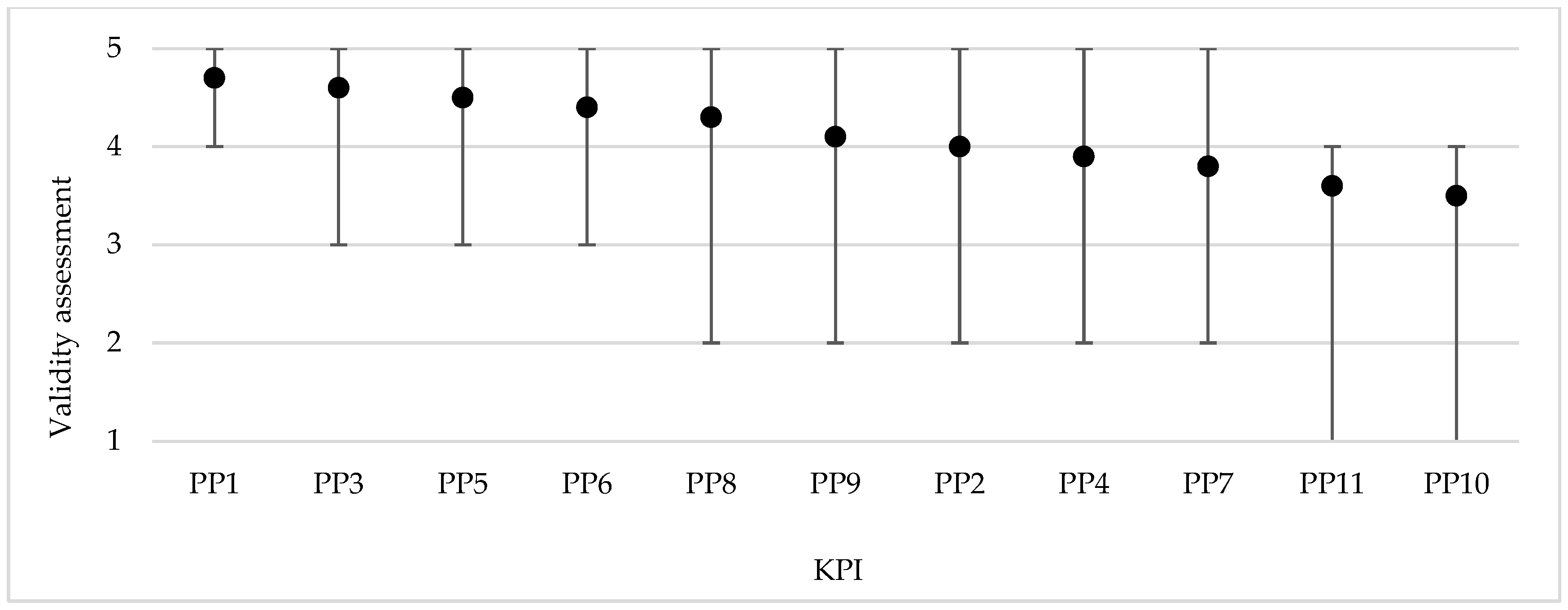
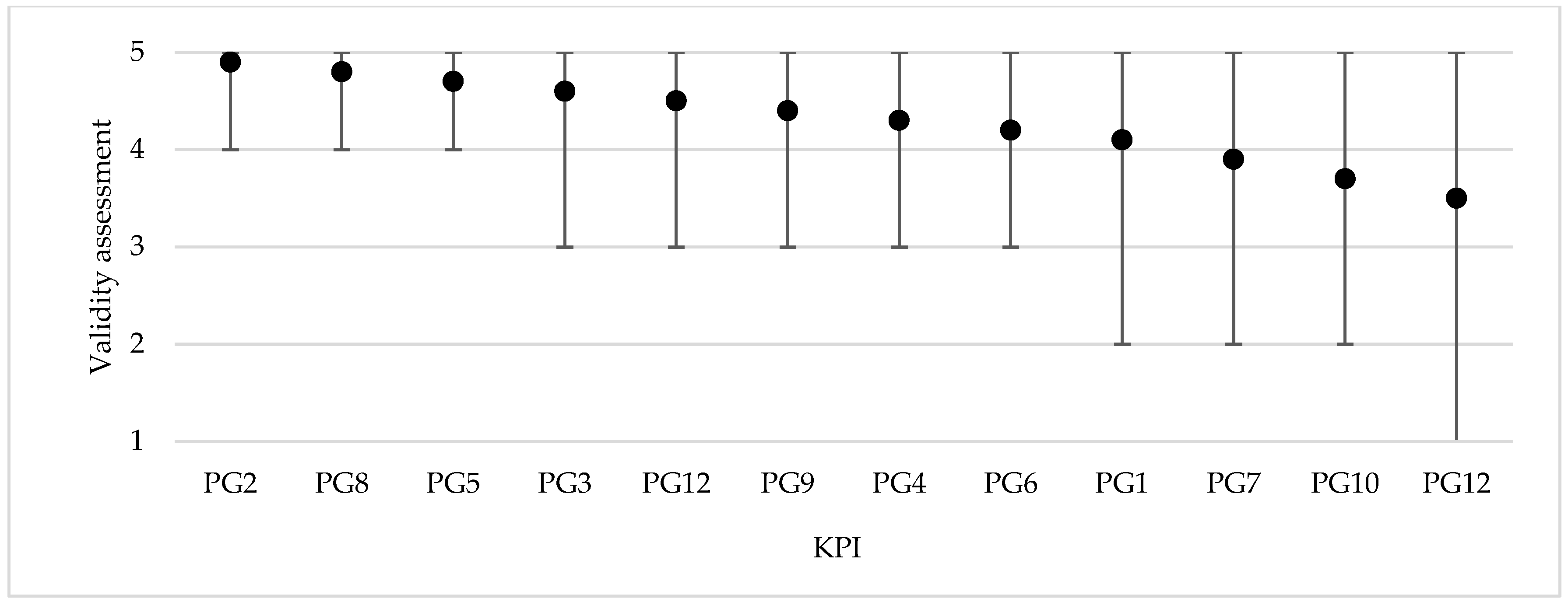
The descriptive statistics of the surveys on the importance and usefulness of KPIs for the auxiliary and main aluminium processing processes are presented in Figure 2 and Figure 3. The statistics include KPIs that were selected as relevant for measuring energy efficiency (their average score ≥ 3.5).
Analysis of the survey results indicates that, according to the respondents, the KPIs related to the compressed air system, hall heating, process cooling and internal transport are the most important and useful to monitor the auxiliary processes (Figure 2), which is reflected in their highest positions in the ranking (places 1–4). The average ratings for all auxiliary process KPIs range from 4.7 to 3.5, with the highest average (4.7) for the compressed air system and the lowest (3.5) for the exhaust gas treatment system. The minimum values assigned to KPIs range from 1 to 3, and the maximum values from 4 to 5, indicating a moderate spread of ratings and moderate diversity of respondents’ opinions. An analysis of the number of ratings shows that the maximum values (5) dominated in the case of key KPIs (compressed air, heating of the room), while the minimum values (1) were sporadic and concerned KPIs of lower importance in the importance hierarchy, such as exhaust gas or oil purification, which allows us to clearly determine the relative weight of individual indicators in perception of management.
The results of the survey on the importance and usefulness of energy efficiency KPIs in relation to the main aluminium processing processes are illustrated in Figure 3.
The results of the survey indicate that in the main processes, the highest importance was assigned to KPIs related to electrolysis (PG2), energy recovery (PG5) and casting energy efficiency (PG5), as indicated by their top positions in the ranking. The average KPI ratings range from 4.9 to 3.5, with the highest value for electrolysis and the lowest for aluminium processing. The range of minimum (1–4) and maximum (5) ratings indicates a moderate diversity of opinions, with maximum values dominating for key indicators and minimum values for KPIs of lesser importance. The results obtained allow for a clear hierarchy of the importance in the main processes to be established, emphasising the role of indicators related to the largest sources of energy consumption.
The survey results were supplemented with information gathered during interviews with top management employees (senior directors—strategic management staff). Table 3 presents a set of energy KPIs in relation to the specified support processes.
Table 3 describes the energy KPIs for the auxiliary processes that have a significant impact on the electricity consumption of the companies in the aluminium industry. The proposed indicators have been defined in a way that allows for: comparing efficiency over time, identifying areas of energy loss, and assessing the effectiveness of the optimisation measures implemented.
To identify key auxiliary processes in aluminium processing in the context of improving energy efficiency, a review of typical shares of energy consumption by end users was carried out (Table 4). The values presented are typical indicative values based on an analysis of the production plant where the method was tested. The information in Table 3 is presented to facilitate understanding of which KPIs are most important.
According to Table 4, the systems that account for the largest share of energy consumption in auxiliary processes are compressed air, heating, process cooling, and internal transport (together approximately 40–55% of the energy consumed by auxiliary processes). Processes with a low share, such as lighting and oil cleaning, are of lesser strategic importance, but are easy to optimise (short payback periods).
Each of the indicators presented relates energy consumption to a specific unit of useful effect of a given auxiliary process. Monitoring with KPIs will enable reduction in energy costs and maintain the high reliability and quality of auxiliary processes, which are an important element in the manufacture of aluminium alloy products.
Review of the literature, surveys, and direct interviews also resulted in the development of energy KPIs for the main processes in the aluminium industry. The characteristics of the proposed energy KPIs are presented in Table 5.
Repeated processes in Table 1 are listed only once in Table 2, proposing an energy KPI for them.
Some of the energy KPIs included in Table 3 and Table 5 relate the measured values to the weight of the aluminium alloy, which is the natural unit of production. This approach is justified because in the aluminium industry, key processes (e.g., melting, casting, cleaning, sorting) relate to a specific amount of material expressed in kilogrammes. This makes it possible and easier to compare, for example, machines, production lines or companies, even when production is carried out on different scales. The converted energy KPIs contribute to the standardisation of energy consumption. Another advantage is the ability to directly link energy efficiency with the costs incurred during production. Therefore, the approach presented appears to be reliable, practical, and comparable.
Regarding the indicators related to the main aluminium processing processes (Table 5), an overview of the typical share of energy consumption by end users has been compiled (Table 6). As in Table 4, the values presented are typical indicative values based on an analysis of the production plant where the method was tested.
The highest energy consumption is associated with KPIs related to electrolysis and melting, which together can account for more than 60% of the total energy demand in a primary plant and 40–50% in a secondary plant. KPIs related to temperature maintenance, casting and pressing also have a high share, generating significant heat and electricity losses. End processes (machining, cutting, cleaning, packaging) have a lower share, play a complementary role and are key to operational optimisation and overall efficiency improvement.
The division into KPIs used for main processes and auxiliary processes is necessary because both areas perform completely different functions in manufacturing companies. Main processes directly create the product and generate the largest share of energy costs, which is why their KPIs must measure the efficiency of energy converted into aluminium. Auxiliary processes, on the other hand, are responsible for the operation of the infrastructure, and their KPIs focus on minimising energy losses and ensuring stable operating conditions for technological systems. Table 7 shows the differences between KPIs for main and auxiliary processes in the aluminum industry.
Different objectives, scope of activity, typical areas of loss, and different nature of input data—presented in Table 7—show that common KPIs would not be adequate or comparable. By separating the two groups of indicators, it is possible to precisely monitor energy efficiency where aluminum is produced and where energy is needed to maintain the entire production process.
The introduction of an energy efficiency monitoring system based on energy KPIs for specific groups of processes in the aluminium industry plays a key role in the long-term and multifaceted development of the company. The system contributes to building a clear and reliable picture of energy consumption in key production processes, from electrolysis, smelting, and casting to aluminium recycling, while taking into account energy-intensive auxiliary processes. The proposed set of indicators provides input data for visualisation dashboards in modern Industry 4.0 companies. This approach provides management with a tool to support informed strategic decisions in the context of technology improvement or innovation implementation. As a result, it becomes possible not only to reduce energy consumption and greenhouse gas emissions but also to strengthen the market position by lowering unit production costs, meeting customer requirements, and fulfilling sustainable development goals.
In the context of ongoing monitoring of energy KPI results, dashboards and visualisation tools that display indicator values in real time are helpful. This solution is an integral part of the idea of smart factories and Industry 4.0, which combines data from measurement systems, automation, and production management systems.

4.3. Dashboards and Visualisation Tools for Monitoring Energy KPIs

Dashboards and visualisations enable effective consolidation and intuitive presentation of complex data, making it easier for management to identify problems and errors. The ability to visually present data summaries allows analysis and identification of relevant insights, which was difficult or often even impossible when using statistical reports. For these reasons, after defining energy KPIs, visualisation panels were developed to support energy efficiency management.
Power BI software (version 2.147.1085.0) was used to develop visualisation dashboards. Tables were created in Excel, covering the division into process groups and the energy efficiency indicators assigned to them. A connection was established between the Business Intelligence environment and the prepared data sheets, enabling the modelling and visualisation of information. Filters and data segmentation were used in the creation of dashboards, allowing for the selection of processes, production lines, or time intervals.
In order to ensure the reliability, continuity and high temporal resolution of data used for energy efficiency analysis, it is necessary to implement a real-time data acquisition system based on SCADA (Supervisory Control and Data Acquisition) architecture integrated with the MES (Manufacturing Execution System) and a Business Intelligence (BI) analytical environment. The SCADA system acts as a master monitoring and control module that enables direct reading of data from measuring devices and industrial automation systems, including, for example, temperature sensors (used in electrolysis, melting, casting, and temperature maintenance processes), electricity and heat metres, as well as PLC controllers installed in individual production lines. These data are continuously transmitted through industrial communication protocols to the central database of the MES system.
The MES system is responsible for aggregating, validating, and contextualising production data, enabling energy information to be linked to specific processes, production batches, work shifts, or equipment. This makes it possible to obtain unified data relevant to energy KPIs that reflect the actual efficiency of individual areas of energy consumption. The data processed in MES are then transferred to a Business Intelligence environment, such as Microsoft Power BI, for visualisation in the form of interactive dashboards.
The use of such an integrated SCADA–MES–BI system enables the creation of a hierarchical energy information flow model, in which data from the operational level (sensors, PLC) are transformed into analytical data (KPIs, trends, deviations). This approach not only allows for real-time energy consumption monitoring but also allows for the identification of energy anomalies and inefficiencies, the generation of automatic alerts, and the performance of predictive analyses supporting proactive energy management.
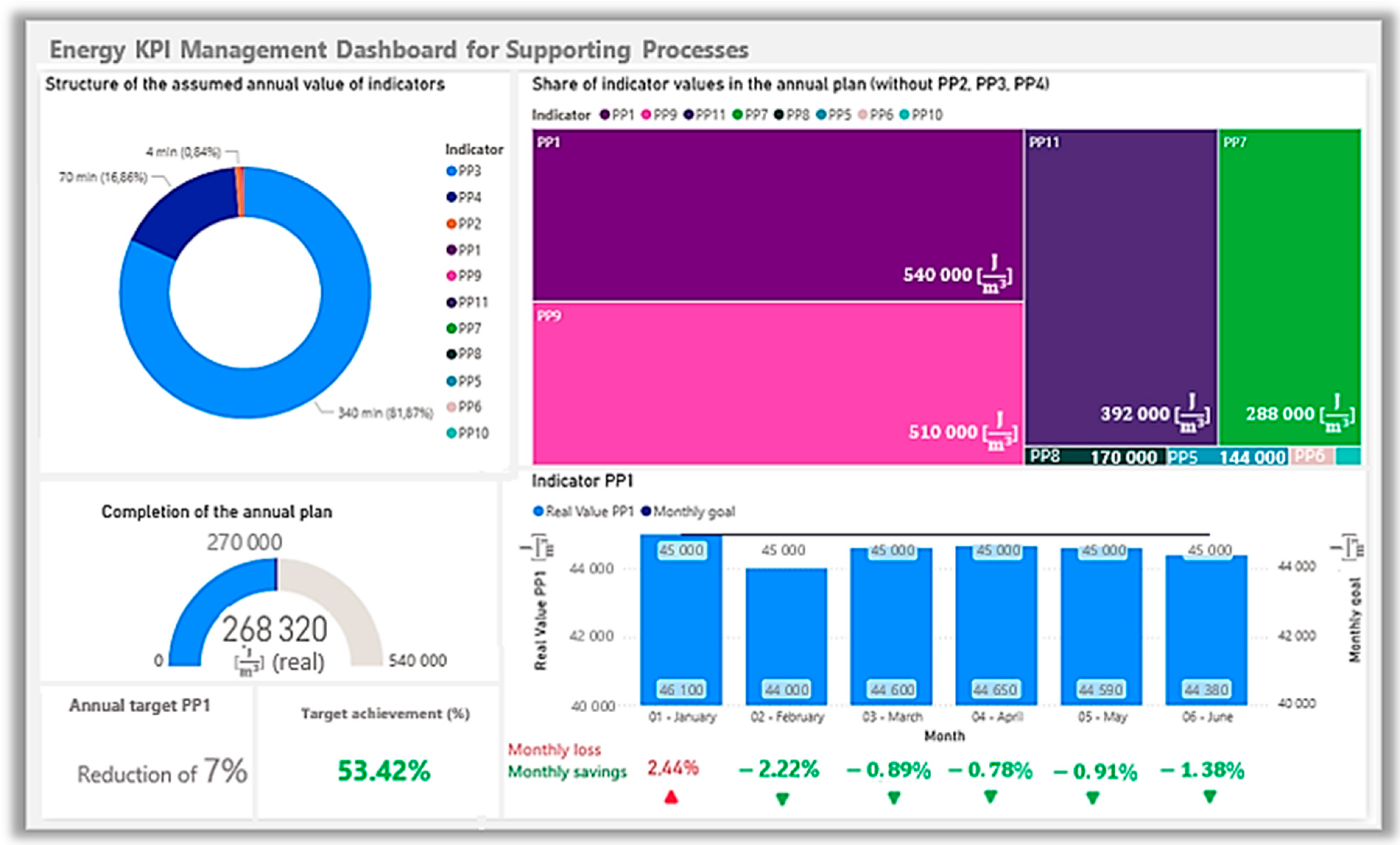
Figure 4 shows an example of a dashboard created for an aluminium processing company. The visualisation dashboard refers to one of the indicators from the auxiliary processes group (PP1).
Each dashboard contains varied graphics that are considered appropriate for each indicator (ensuring clarity of communication) and are arranged in a way that allows quick interpretation of priorities. The dashboards presented show hypothetical/fictitious data in order to protect the company’s internal information. Hypothetical data allow the structure (visualisation layout, arrangement of charts, and indicators) of the dashboards to be tested. In addition, illustrating the structure of the visualisation dashboards was considered important in terms of the practical aspect of developing and using the proposed sets of energy KPIs.
Well-designed dashboards enable quick identification of deviations from the accepted norm and, in the case of the topic in question, visualisation of energy consumption trends. A navigation screen integrated with energy KPIs is a tool that supports development decisions, enables improvements in energy and production efficiency, and supports the implementation of energy transition strategies.
The presented results provide a basis for interpreting the obtained relationships and their significance for the practical improvement of energy efficiency in the aluminum industry, which constitute a starting point for in-depth discussion.

5. Discussion

As indicated in [91], sectors with a relatively small number of products and processes achieve satisfactory results and positive energy KPIs. This may be due to the advantage that companies that have adopted specific energy strategies and have adequate access to detailed and systematic energy consumption measurements have. Less favourable conditions exist in sectors where many products are manufactured and many different processes are carried out. In such sectors, the implementation of energy KPIs remains low. This appears to be the result of the large number of small and medium companies for which precise energy consumption is not often available [92]. In addition, several barriers have been identified that prevent small and medium companies from achieving energy efficiency [93]. For this reason, researchers should focus their efforts on motivating small and medium-sized enterprises to overcome these barriers. This activity would support the process of disseminating energy KPIs related to process improvement. Decision makers also play an important role, as they can positively influence energy investments and actively disseminate indicators in entities and entire sectors where they are still rarely used. For businesses and industry, this would enable them to compare their energy efficiency performance with that of other companies (with certain similar characteristics) and to set realistic energy efficiency targets. On the other hand, we would be able to develop new technologies for energy-intensive processes.
The research gap presented is filled by the model approach presented in the study. The implementation of adequate indicators for individual stages of the aluminium alloy product manufacturing process is useful as it enables a precise understanding and control of energy consumption throughout the entire manufacturing cycle. This approach makes it possible to identify the most energy-intensive stages and helps to determine the potential for savings and to make decisions regarding technological modernisation in areas where it will bring measurable results. Due to the comprehensive information provided by such KPIs, it is possible to make comparisons within production lines or changes. With regard to auxiliary processes, it facilitates the identification of hidden sources of energy losses (low-efficiency areas), which are often overlooked in companies despite the fact that they can have a significant impact on the company’s total energy consumption. Additional long-term advantages of the approach presented in the study include the following:
  • Facilitating the creation of energy reports,
  • Support and the possibility of integration with digital monitoring and automation,
  • Creating realistic and adequate (in relation to needs) budgets that take into account investments in technological modernization,
  • Positive impact on the sustainable development of the company and its image,
  • Increased awareness of energy among employees.
Despite the significant number of benefits and advantages of using energy KPIs broken down into individual stages of aluminium product manufacturing, this approach also has certain limitations. Research based on the proposed model identified the following implications:
  • The diversity of equipment, technologies, and production lines used requires individual calibration of KPIs, making it difficult to standardise and compare energy indicators.
  • The need to use advanced sensors and metres to collect data, which requires significant financial outlays.
  • Technological downtime and modifications in production cause fluctuations in indicators, which can lead to erroneous conclusions.
  • Energy KPIs should be used in conjunction with other process indicators to not disrupt the quality and safety of work.
  • Maintaining and updating dashboards requires IT support and often involves employees involved in internal energy management.
  • Dependence on the IT infrastructure.
  • The lack of training and organisational resistance among employees can contribute to inappropriate use of tools.
In addition, energy consumption in companies is often aggregated at the production line or company level, which complicates the collection of adequate data and the attribution of consumption to a specific machine or batch of products.
Energy indicators integrated with visualisation dashboards are a useful tool for supporting optimisation decisions, but their effectiveness depends to a large extent on variables such as measurement accuracy, synchronisation with processes, data reliability and quality, as well as the competence of each individual. Implementing the solutions presented without taking into account the identified difficulties can result in incorrect conclusions and poor development decisions.
This study makes a valuable theoretical and practical contribution to the field of energy efficiency management in industrial enterprises. Theoretically, it highlights the essence of the process taxonomy of energy KPIs for the specific nature of production and processes, while taking into account the company’s development strategy. In practice, it presents a model for selecting, defining, and implementing energy KPIs, as well as examples of appropriate dashboard configurations. The information provided may be useful to enterprise managers in terms of improving their efficiency and the implications of productive energy management practices.
Future research will focus on performing energy analyses in other aluminium industries using the same taxonomy, ensuring the comparability of results and enabling greater conclusions and recommendations to be drawn regarding improvements in energy efficiency in line with the energy transition. The detection will be extended to include considerations of final energy consumption and greenhouse gas emissions. The presented research concept is interesting and constructive, since it is not always possible to attribute final energy consumption and greenhouse gas emissions to a specific company at such a detailed level. Applying the same taxonomy when studying different companies would enable the results to be compared in order to assess their similarities, differences, compliance, or progress.
Taking into account both the theoretical perspective and the industrial context allows us to draw synthetic conclusions that form the basis for the final summary.

6. Conclusions

The production of aluminium alloy products is becoming increasingly important in meeting the growing demand for aluminium not only in environmental and economic terms but also in terms of increased competitiveness among companies. It will be important to focus management, technology, and research and development activities on increasing energy efficiency, production capacity, and recovery efficiency in production. It is necessary to undertake research and development in relation to activities defined as innovative or emerging. For this reason, the objective of the study was to propose a KPI taxonomy model that would enable the identification and monitoring of key energy efficiency indicators at the process level in modern aluminium industry enterprises. This model uses Industry 4.0 tools, such as navigation and visual screens. Understanding how and where energy is used is an important component in achieving the goal adopted.
The study showed that the adopted research model was characterised by a correct and logically consistent structure, which was confirmed by its positive verification in a manufacturing company. The analyses emphasised the importance of the energy KPI taxonomy, taking into account individual groups of processes (main and auxiliary) relevant to the assessment of energy efficiency in the production area. A dedicated set of energy KPIs was proposed for the identified processes, allowing comprehensive analyses and ensuring the comparability of the results. Additionally, a design of visualisation panels was created, correlated with energy KPIs, which ensured a high level of transparency and readability of the presented data.
The proposed solution is related to the concept of Industry 4.0, which emphasises the integration of the production space (including production processes) with information technologies, as well as the monitoring and interpretation of data. The developed model indicates the possible implications of the smart industry concept in the area of energy efficiency management and industrial digitalisation.
The solutions presented in this study may be useful for energy efficiency and maintenance specialists, process engineers, and management staff whose goal is to increase the transparency of process data, improve energy efficiency, and improve productivity in modern aluminium industry enterprises.

Author Contributions

Conceptualization, A.P., L.B., Z.Š. and K.C.; methodology, A.P., K.C., L.B. and Z.Š.; software, A.P. and K.C.; validation, A.P., L.B., Z.Š. and K.C.; formal analysis, A.P.; investigation, A.P., L.B., Z.Š. and K.C.; resources, A.P., Z.Š., L.B. and K.C.; data curation, A.P., K.C., L.B. and Z.Š.; writing—original draft preparation, A.P., L.B., Z.Š. and K.C.; writing—review and editing, A.P., K.C., L.B. and Z.Š.; visualization, K.C.; supervision, A.P., L.B., Z.Š. and K.C.; project administration, A.P., Z.Š., L.B. and K.C.; funding acquisition, L.B., Z.Š., A.P. and K.C. All authors have read and agreed to the published version of the manuscript.

Funding

The article was supported by VEGA 1/0328/25, Strategy for the effective and sustainable use of Earth Resources within the Slovak Republic, with an emphasis on the Raw Materials Policy of the EU& by the Horizon 2020 project, No. 101180341 Interregional EU innovation Hubs for the circularity and green supply of Raw Materials to achieve the resilience of the main underdeveloped regions specialising in the critical industrial value chain.

Data Availability Statement

The original contributions presented in this study are included in the article. Further inquiries can be directed to the corresponding author.

Conflicts of Interest

The authors declare no conflicts of interest.

References

  1. Dudin, M.N.; Voykova, N.A.; Frolova, E.E.; Artemieva, J.A.; Rusakova, E.P.; Abashidze, A.H. Modern trends and challenges of development of global aluminum industry. Metalurgija 2017, 56, 255–258. [Google Scholar]
  2. Pandey, A.K.; Prakash, R. Opportunities for sustainability improvement in aluminum industry. Eng. Rep. 2020, 2, e12160. [Google Scholar] [CrossRef]
  3. Cagno, E.; Ramirez-Portilla, A.; Trianni, A. Linking energy efficiency and innovation practices: Empirical evidence from the foundry sector. Energy Policy 2015, 83, 240–256. [Google Scholar] [CrossRef]
  4. Ulewicz, R.; Czerwińska, K.; Pacana, A. A Rank Model of Casting Non-Conformity Detection Methods in the Context of Industry 4.0. Materials 2023, 16, 723. [Google Scholar] [CrossRef]
  5. Horobet, A.; Tudor, C.D.; Dinca, Z.; Dumitrescu, D.G.; Stoica, E.A. Artificial Intelligence and Smart Manufacturing: An Analysis of Strategic And Performance Narratives. Amfiteatru Econ. 2024, 26, 440–457. [Google Scholar] [CrossRef]
  6. Klimecka-Tatar, D.; Kapustka, K. The role of artificial intelligence in circular economy strategies: Predictive analysis for SMEs. Manag. Syst. Prod. Eng. 2025, 33, 212–219. [Google Scholar] [CrossRef]
  7. Stawiarska, E.; Szwajca, D.; Matusek, M.; Wolniak, R. Diagnosis of the Maturity Level of Implementing Industry 4.0 Solutions in Selected Functional Areas of Management of Automotive Companies in Poland. Sustainability 2021, 13, 4867. [Google Scholar] [CrossRef]
  8. Gajdzik, B.; Grabowska, S.; Saniuk, S.; Wieczorek, T. Sustainable development and industry 4.0: A bibliometric analysis identifying key scientific problems of the sustainable industry 4.0. Energies 2020, 13, 4254. [Google Scholar] [CrossRef]
  9. Ingaldi, M.; Ulewicz, R. The business model of a circular economy in the innovation and improvement of metal processing. sustainability 2024, 16, 5513. [Google Scholar] [CrossRef]
  10. Gajdzik, B.; Grabowska, S.; Saniuk, S. A Theoretical Framework for Industry 4.0 and Its Implementation with Selected Practical Schedules. Energies 2021, 16, 940. [Google Scholar] [CrossRef]
  11. Chinnathai, M.K.; Alkan, B. A digital life-cycle management framework for sustainable smart manufacturing in energy intensive industries. J. Clean. Prod. 2023, 419, 138259. [Google Scholar] [CrossRef]
  12. Strozzi, F.; Colicchia, C.; Creazza, A.; Noe, C. Literature review on the ‘Smart Factory’ concept using bibliometric tools. Int. J. Prod. Res. 2017, 55, 6572–6591. [Google Scholar] [CrossRef]
  13. Wu, K.; Xu, J.; Zheng, M.M. Industry 4.0: Review and proposal for implementing a smart factory. Int. J. Adv. Manuf. Technol. 2024, 133, 1331–1347. [Google Scholar] [CrossRef]
  14. Amjadi, G.; Lundgren, T.; Zhou, W.C. A dynamic analysis of industrial energy efficiency and the rebound effect: Implications for carbon emissions and sustainability. Energy Effic. 2022, 15, 54. [Google Scholar] [CrossRef]
  15. Cagno, E.; Neri, A.; Triammi, A. Broadening to sustainability the perspective of industrial decision-makers on the energy efficiency measures adoption: Some empirical evidence. Energy Effic. 2018, 11, 1193–1210. [Google Scholar] [CrossRef]
  16. Gokgoz, F.; Yalcin, E. An environmental, energy, and economic efficiency analysis for the energy market in European Union. Environ. Prog. Sustain. Energy 2023, 42, e14068. [Google Scholar] [CrossRef]
  17. Zuoza, A.; Pilinkiene, V. Energy efficiency and carbon emission impact on competitiveness in the european energy intensive industries. Energies 2021, 14, 4700. [Google Scholar] [CrossRef]
  18. ISO 50001; Energy Management Systems—Requirements with Guidance for Use. International Organization for Standardization: Geneva, Switzerland, 2018.
  19. Gajdzik, B.; Wolniak, R.; Grebski, W.W. Electricity and heat demand in steel industry technological processes in Industry 4.0 conditions. Energies 2023, 16, 787. [Google Scholar] [CrossRef]
  20. Pacana, A.; Czerwińska, K. Model of diagnosing and searching for incompatibilities in aluminium castings. Materials 2021, 14, 6497. [Google Scholar] [CrossRef]
  21. Calise, F.; Vicidomini, M.; Costa, M.; Wang, Q.W.; Ostergraard, P.A.; Duic, N. Toward an efficient and sustainable use of energy in industries and cities. Energies 2019, 12, 3150. [Google Scholar] [CrossRef]
  22. Janik, S.; Szabo, P.; Mlkva, M.; Marecek-Kobibisky, M. Effective data utilization in the context of Industry 4.0 technology integration. Appl. Sci. 2022, 12, 10517. [Google Scholar] [CrossRef]
  23. Pekarcikova, A.; Sujova, E.; Mizerak, M.; Trojan, J.; Edl, M. Key performance indicators as a tool for evaluatingefficiency of production processes. Acta Logist. 2025, 12, 223–228. [Google Scholar] [CrossRef]
  24. Peters, G.P.; Andres, R.M.; Canadell, J.G.; Fuss, S.; Jackson, R.B.; Korsbakken, J.I.; Le Quere, C.; Nakiecenovic, N. Key indicators to track current progress and future ambition of the Paris Agreement. Nat. Clim. Chang. 2017, 7, 118–122. [Google Scholar] [CrossRef]
  25. Liu, G.; Bangs, C.E.; Müller, D.B. Unearthing potentials for decarbonizing the US aluminum cycle. Environ. Sci. Tecnol. 2011, 45, 9515–9522. [Google Scholar] [CrossRef]
  26. Cullen, J.M.; Allwood, J.M. Mapping the global flow of aluminum: From liquid aluminum to end-use goods. Environ. Sci. Technol. 2013, 47, 3057–3064. [Google Scholar] [CrossRef]
  27. Prashar, A. Eco-efficient production for industrial small and medium-sized enterprises through energy optimisation: Framework and evaluation. Prod. Plan. Control 2021, 32, 198–212. [Google Scholar] [CrossRef]
  28. Rohdin, P.; Thollander, P.; Solding, P. Barriers to and drivers for energy efficiency in the Swedish foundry industry. Energy Policy 2007, 35, 672–677. [Google Scholar] [CrossRef]
  29. Patange, G.; Khond, M. Energy efficiency in small and medium scale foundry industry. Metalurgija 2016, 55, 257–259. [Google Scholar]
  30. Zhend, X.Y.; Heshmati, A. An Analysis of energy use efficiency in china by applying stochastic frontier panel data models. Energies 2020, 13, 1892. [Google Scholar] [CrossRef]
  31. Xu, T.; You, J.X.; Li, H.; Shao, L.N. Energy efficiency evaluation based on data envelopment analysis: A literature review. Energies 2020, 13, 3548. [Google Scholar] [CrossRef]
  32. Shabgard, H.; Faghri, A. Exergy analysis in energy systems: Fundamentals and application. Front. Heat Mass Transf. 2019, 12, 1–16. [Google Scholar] [CrossRef]
  33. Li, M.J.; Tao, W.Q. Review of methodologies and polices for evaluation of energy efficiency in high energy-consuming industry. Appl. Energy 2017, 187, 203–215. [Google Scholar] [CrossRef]
  34. Menghi, R.; Papetti, A.; Germani, M.; Marconi, M. Energy efficiency of manufacturing systems: A review of energy assessment methods and tools. J. Clean. Prod. 2019, 240, 118276. [Google Scholar] [CrossRef]
  35. Reijers, H.A. Business process management: The evolution of a discipline. Comput. Ind. 2021, 126, 103404. [Google Scholar] [CrossRef]
  36. Van Looy, A. A quantitative and qualitative study of the link between business process management and digital innovation. Inf. Manag. 2021, 58, 103413. [Google Scholar] [CrossRef]
  37. Roberti, M. Environmental performance and trends of the world’s semiconductor foundry industry. J. Ind. Ecol. 2024, 28, 1183–1197. [Google Scholar] [CrossRef]
  38. Viriyasitavat, W.; Xu, L.D.; Bi, Z.M.; Sapsomboon, A. Blockchain-based business process management (BPM) framework for service composition in industry 4.0. J. Intell. Manuf. 2020, 31, 1737–1748. [Google Scholar] [CrossRef]
  39. Rabelato, M.G.; Saran, L.M.; Cury, V.B.; Rodrigues, A. Environmental performance analysis: Foundry industry case report. Manag. Environ. Qual. 2017, 28, 248–263. [Google Scholar] [CrossRef]
  40. Pacana, A.; Radon-Cholewa, A.; Pacana, J.; Wozny, A. The study of stickiness of packaging film by Shainin method. Przem. Chem. 2015, 94, 1334–1336. [Google Scholar]
  41. Balon, U.; Dziadkowiec, J.M.; Niewczas-Dobrowolska, M. Key performance indicators (KPIs) in the quality management system. Int. J. Qual. Res. 2024, 18, 473–486. [Google Scholar]
  42. Shin, S.; Na, I.; Elmqvist, N. Drillboards: Adaptive visualization dashboards for dynamic personalization of visualization experiences. IEEE Trans. Vis. Comput. Graph. 2025, 31, 7196–7210. [Google Scholar] [CrossRef] [PubMed]
  43. Immzwan, T.; Pratiwi, A.I.; Wahyo, W.N. The proposed dashboard model for measuring performance of small-medium enterprises (SME). Int. J. Integr. Eng. 2019, 11, 167–173. [Google Scholar] [CrossRef]
  44. Bumba, A.; Gomes, M.; Jesus, C.; Lima, R.M. KPI tree-a hierarchical relationship structure of key performance indicators for value streams. Prod. Eng. Arch. 2023, 29, 175–185. [Google Scholar] [CrossRef]
  45. Pacana, A.; Czerwińska, K. Validation of the use of KPIs to measure information security management system performance in manufacturing companies. Prod. Eng. Arch. 2025, 31, 266–275. [Google Scholar] [CrossRef]
  46. Sujova, E.; Vyslouzilova, D.; Koleda, P.; Gajdzik, B. Research on the evaluation of the efficiency of production processes through the implementation of key performance indicators. Manag. Syst. Prod. Eng. 2023, 31, 404–410. [Google Scholar] [CrossRef]
  47. Patalas-Maliszewska, J.; Topczak, M. Assessment of energy consumption in the context of implementing additive manufacturing technologies: Evidence from Polish small and medium sized production companies. Energy Sustain. Dev. 2023, 73, 355–364. [Google Scholar] [CrossRef]
  48. Herce, C.; Biele, E.; Martini, C.; Salvio, M.; Toro, C.; Brandl, G.; Lackner, P.; Reuter, S. A methodology to characterize energy consumption in small and medium-sized enterprises at national level in European countries. Clean Technol. Environ. Policy 2024, 26, 93–108. [Google Scholar] [CrossRef]
  49. Binderauer, P.J.; Woegerbauer, M.; Nagovnak, P.; Kienberger, T. The effect of “energy of scale” on the energy consumption in different industrial sectors. Sustain. Prod. Consum. 2023, 41, 75–87. [Google Scholar] [CrossRef]
  50. Johansson, I.; Mardan, N.; Cornelis, E.; Klimura, O.; Thollander, P. Designing policies and programmes for improved energy efficiency in industrial SMEs. Energies 2019, 12, 1338. [Google Scholar] [CrossRef]
  51. Herce, C.; Martini, C.; Toro, C.; Biele, E.; Salvio, M. Energy efficiency policies for small and medium-sized enterprises: A review. Sustainability 2024, 16, 1023. [Google Scholar] [CrossRef]
  52. Mokhtar, A.; Nasooti, M. A decision support tool for cement industry to select energy efficiency measures. Energy Strat. Rev. 2020, 28, 100458. [Google Scholar] [CrossRef]
  53. Zuberi, M.J.S.; Patel, M.K. Cost-effectiveness analysis of energy efficiency measures in the Swiss chemical and pharmaceutical industry. Int. J. Energy Res. 2019, 43, 313–336. [Google Scholar] [CrossRef]
  54. Carvalheira, S.; Oliveira, M.; Robaina, M.; Matias, J.C.O. Energy Efficiency Improvements in a Portuguese Ceramic Industry: Case Study. Appl. Sci. 2023, 13, 5028. [Google Scholar] [CrossRef]
  55. Johansson, M.T.; Soderstron, M. Options for the Swedish steel industry—Energy efficiency measures and fuel conversion. Energy 2011, 36, 191–198. [Google Scholar] [CrossRef]
  56. Stroud, D.; Evans, C.; Weinel, M. Innovating for energy efficiency: Digital gamification in the European steel industry. Eur. J. Ind. Relat. 2020, 26, 419–437. [Google Scholar] [CrossRef]
  57. Caragliu, A. Energy efficiency-enhancing policies and firm performance: Evidence from the paper and glass industries in Italy. Energy Policy 2021, 156, 112415. [Google Scholar] [CrossRef]
  58. Khripko, D.; Schluter, B.A.; Rommel, B.; Rosano, M.; Hesselbach, J. Energy demand and efficiency measures in polymer processing: Comparison between temperate and Mediterranean operating plants. Int. J. Energy Environ. Eng. 2016, 7, 225–233. [Google Scholar] [CrossRef]
  59. Wohlfarth, K.; Eichhammer, W.; Schlomann, B.; Worrell, E. Tailoring cross-sectional energy-efficiency measures to target groups in industry. Energy Effic. 2018, 11, 1265–1279. [Google Scholar] [CrossRef]
  60. Haraldsson, J.; Johansson, M.T. Review of measures for improved energy efficiency in production-related processes in the aluminium industry—From electrolysis to recycling. Renew. Sustain. Energy Rev. 2018, 93, 525–548. [Google Scholar] [CrossRef]
  61. Das, S. Achieving carbon neutrality in the global aluminum industry. JOM 2012, 64, 285–290. [Google Scholar] [CrossRef]
  62. Haraldsson, J.; Johansson, M.T. Energy efficiency in the supply chains of the aluminium industry: The cases of five products made in Sweden. Energies 2019, 12, 245. [Google Scholar] [CrossRef]
  63. Yandri, E.; Suherman, S.; Lomi, A.; Setyobudi, R.H.; Ariati, R.; Pramudito, P.; Ronald, R.; Ardiani, Y.; Burlakovs, J.; Zahoor, M.; et al. Sustainable energy efficiency in aluminium parts industries utilizing waste heat and equivalent volume with energy management control system. Proc. Est. Acad. Sci. 2024, 73, 29–42. [Google Scholar] [CrossRef]
  64. Royo, P.; Ferreira, V.J.; Loper-Sabiron, A.M.; Garcia-Armingol, T.; Ferreira, G. Retrofitting strategies for improving the energy and environmental efficiency in industrial furnaces: A case study in the aluminium sector. Renew. Sustain. Energy Rev. 2018, 82, 1813–1822. [Google Scholar] [CrossRef]
  65. Pacana, A.; Bednarova, L.; Pacana, J.; Liberko, I.; Wozny, A.; Malindzak, D. Effect of selected factors of the production process of stretch film for its resistance to puncture. Przem. Chem. 2014, 93, 2263–2264. [Google Scholar]
  66. Kermeli, K.; ter Weer, P.H.; Crijns-Graus, W.; Worrell, E. Energy efficiency improvement and GHG abatement in the global production of primary aluminium. Energy Effic. 2015, 8, 629–666. [Google Scholar] [CrossRef]
  67. Saygin, D.; Worrell, R.; Patel, M.K.; Gielen, D.J. Benchmarking the energy use of energy-intensive industries in industrialized and in developing countries. Energy 2011, 36, 6661–6673. [Google Scholar] [CrossRef]
  68. Hunt, L.C.; Kipouros, P. Energy demand and energy efficiency in developing countries. Energies 2023, 16, 1056. [Google Scholar] [CrossRef]
  69. Makridou, G.; Andriosopoulos, K.; Doumpos, M.; Zopounidis, C. Measuring the efficiency of energy-intensive industries across European countries. Energy Policy 2016, 88, 573–583. [Google Scholar] [CrossRef]
  70. Liu, S.N.; Wang, S.S.; Wang, K.; Yue, H.; Yang, S.X.; Zhang, P.J.; Zhang, R.Q. Energy consumption and GHG emission for regional aluminum industry: A case study of Henan province, China. Energy Procedia 2017, 105, 3391–3396. [Google Scholar] [CrossRef]
  71. Knayer, T.; Kryvinska, N. Evaluation of research performed on energy efficiency in energy-intensive manufacturing companies. Front. Energy Res. 2022, 10, 934859. [Google Scholar] [CrossRef]
  72. Available online: http://www.world-aluminium.org/ (accessed on 5 October 2025).
  73. Milford, R.L.; Allwood, J.M.; Cullen, J.M. Assessing the potential of yield improvements, through process scrap reduction, for energy and CO2 abatement in the steel and aluminium sectors. Resour. Conserv. Recycl. 2011, 55, 1185–1195. [Google Scholar] [CrossRef]
  74. Peng, T.; Ou, X.; Yan, X.; Wang, G. Life-cycle analysis of energy consumption and GHG emissions of aluminium production in China. Energy Procedia. Innov. Solut. Energy Transit. 2019, 158, 3937–3943. [Google Scholar] [CrossRef]
  75. Czerwińska, K.; Pacana, A.; Ostasz, G. A model for sustainable quality control improvement in the foundry industry using key performance indicators. Sustainability 2025, 17, 1418. [Google Scholar] [CrossRef]
  76. Pacana, A.; Pasternak-Malicka, M.; Zawada, M.; Radon-Cholewa, A. Decision support in the production of packaging films by cost-quality analysis. Przem. Chem. 2016, 95, 1042–1044. [Google Scholar] [CrossRef]
  77. Borges, F.Q. Energy management in the industrial sector and sustainable decision-making model. Navus-Rev. Gest. Tecnol. 2021, 11, 1–15. [Google Scholar] [CrossRef]
  78. Dolge, K.; Kubule, A.; Blumberga, D. Composite index for energy efficiency evaluation of industrial sector: Sub-sectoral comparison. Environ. Sustain. Indic. 2020, 8, 100062. [Google Scholar] [CrossRef]
  79. Franco, A.; Miserocchi, L.; Testi, D. Energy indicators for enabling energy transition in industry. Energies 2023, 16, 581. [Google Scholar] [CrossRef]
  80. Singh, K.; Sultan, I.A. Modelling and evaluation of KPIs for the assessment of sustainable manufacturing: An extrusion process case study. Mater. Today Proc. 2018, 5, 3825–3834. [Google Scholar] [CrossRef]
  81. Singh, K.; Sultan, I. A computer-aided unit process sustainable modelling for manufacturing processes: Case for extrusion process. Prod. Manuf. Res. Open Access J. 2019, 7, 143–160. [Google Scholar] [CrossRef]
  82. Nabhani, F.; McKie, M.; Hodgson, S.N.B. A case study on a sustainable alternative to the landfill disposal of spent foundry sand. Int. J. Sustain. Manuf. 2013, 3, 1–19. [Google Scholar] [CrossRef]
  83. Zhang, Y.; Yang, X.; Shard, Y.A.W.; Cui, J.R.; Tong, C.N. A KPI-based probabilistic soft sensor development approach that maximizes the coefficient of determination. Sensors 2018, 18, 3058. [Google Scholar] [CrossRef] [PubMed]
  84. Andersson, E.; Thollander, P. Key performance indicators for energy management in the Swedish pulp and paper industry. Energy Strategy Rev. 2019, 24, 229–235. [Google Scholar] [CrossRef]
  85. Pandin, M.; Sumaedi, S.; Yaman, A.; Ayundyahrini, M.; Supriatna, N.K.; Hesty, N.W. ISO 50001 based energy management system: A bibliometric perspective. Int. J. Energy Sect. Manag. 2024, 18, 1938–1963. [Google Scholar] [CrossRef]
  86. Haraldsson, J.; Johansson, S.; Thollander, P.; Wallen, M. Taxonomy, saving potentials and key performance indicators for energy end-use and greenhouse gas emissions in the aluminium industry and aluminium casting foundries. Energies 2021, 14, 3571. [Google Scholar] [CrossRef]
  87. Pacana, A.; Czerwińska, K. Improving the quality level in the automotive industry. Prod. Eng. Arch. 2020, 26, 162–166. [Google Scholar] [CrossRef]
  88. Zaytseva, N.M.; Semykina, I.Y. Intelligent control system for technological complexes of aluminum industry enterprises. Bull. Tomsk Polytech. Univ. Geo Assets Eng. 2024, 335, 119–132. [Google Scholar] [CrossRef]
  89. Czerwińska, K.; Pacana, A. Analysis of the maturity of process monitoring in manufacturing companies. Prod. Eng. Arch. 2022, 28, 246–251. [Google Scholar] [CrossRef]
  90. Simion, C.P.; Verdes, C.A.; Mironescu, A.A.; Anghel, F.G. Digitalization in energy production, distribution, and consumption: A systematic literature review. Energies 2023, 16, 1960. [Google Scholar] [CrossRef]
  91. Renna, P.; Materi, S. A literature review of energy efficiency and sustainability in manufacturing systems. Appl. Sci. 2021, 11, 7366. [Google Scholar] [CrossRef]
  92. Dolsak, J.; Hrovatin, N.; Zoric, J. What impacts the strength of perceived barriers to and drivers of energy efficiency in manufacturing SMEs? Heliyon 2024, 10, e24020. [Google Scholar] [CrossRef]
  93. Oliveira, M.R.; Jorge, D.; Pecas, P. Methodology of operationalization of KPIs for shop-floor. In Handbook of Research on Green Engineering Techniques for Modern Manufacturing; IGI Global Scientific Publishing: Hershey, PA, USA, 2019; pp. 163–191. [Google Scholar] [CrossRef]
Figure 1. General diagram of the circular model to measure energy efficiency in aluminium industry enterprises.
Energies 18 06133 g001
Figure 2. Classification and distribution of energy efficiency KPI importance ratings in auxiliary processes in the aluminium industry.
Energies 18 06133 g002
Figure 3. Ranking and distribution of energy efficiency KPI importance ratings in the main processes of the aluminium industry.
Energies 18 06133 g003
Figure 4. A dashboard was developed for the PP1 indicator of a company in the aluminium industry.
Energies 18 06133 g004
Table 1. Scientific studies relating to KPIs in aluminium industry enterprises.
AreaCharacteristicsAuthor
Aluminium supply chainThe purpose of the study was to identify practical, technical and managerial measures and KPIs to evaluate energy efficiency throughout the supply chain for selected aluminium products.Haraldsson, et al. [62]
Analysis of the production process (as a whole)The study proposes measuring energy savings in the manufacturing industry (aluminium). A baseline energy consumption indicator per unit of volume was defined, which was developed using the equivalent volume method with the energy management control system (EMCS).Yandri, et al. [63]
Quality control process in an aluminium industry enterpriseThe purpose of the study was to develop a universal indicator model to improve quality control, with a focus on the foundry industry. The model enables a multicriteria analysis of various quality control methods and determines their gradation in the context of ensuring an objectively high level of product quality. The relationship between product quality and quality control efficiency was optimised to meet the criteria of efficiency, reliability, low emissions, low energy consumption, low costs, short lead times, and automation. Czerwińska, et al. [75]
Production processes in an aluminium industry enterpriseThe main objective of the study was to introduce sustainable development methodologies/models for production processes. To this end, the article uses source data, develops a computer model, and presents detailed case studies. The article identifies and adopts key performance indicators (KPIs) and uses them to assess the sustainability of the extrusion process and its designs.Singh, et al. [81]
The Process of Aluminium Electrolysis in an aluminium industry enterpriseA data-driven approach was proposed to maximise the coefficient of determination for developing probabilistic software sensors in the absence of data. First, the problem of missing data in the training sample set was solved using the expectation maximisation (EM) algorithm. Next, to maximise the coefficient of determination, a probability model between secondary variables and KPIs was developed. Finally, a Gaussian mixture model (GMM) was used to estimate the joint probability distribution in the probabilistic software sensor model, whose parameters were estimated using the EM algorithm.Zhang, et al. [83]
Table 2. Stages of Implementation of individual groups of production processes in the Aluminium Industry.
Type of ProductionProcess/ActionExplanations
Production processes carried out as part of primary aluminum production
  • Anode handling (anode assembly and disassembly; preheating)
Recovery from residues (slag press, chip press) is a process carried out after the heating furnace operation and after the processing (cutting) process. The recovered elements are sent to the heating furnace.
2.
Electrolysis
3.
Heating furnace (maintenance, mixing, loading of alloying elements)
4.
Residue recovery (slag press, chip press)
5.
Casting
6.
Processing (cutting)
7.
Packaging (securing for shipment)
Production processes carried out in aluminum foundries
  • Melting furnace (melting)
The processes for obtaining aluminium in molten form and the processes carried out in the holding furnace can be performed interchangeably.
2.
Aluminium obtained in molten form (holding; stirring)
3.
Holding furnace (holding; stirring)
4.
Casting (hydraulic pumps; product cooling; tool heating and cooling; electric motors for conveyor systems; mold cleaning)
5.
Machining (milling, drilling)
6.
Cleaning (centrifuging)
7.
Packaging (securing for shipment)
Production processes carried out as part of secondary aluminum production
  • Scrap sorting
The casting process can be performed interchangeably with the delivery of molten aluminium. In this case, the packaging process is omitted.
2.
Preparation (scrap pressing)
3.
Melting furnace (melting)
4.
Holding furnace (holding, stirring, purifying molten metal, loading alloying elements)
5.
Casting
6.
Aluminium delivered in molten form (heating of thermoses, additional heating of metal, holding)
7.
Packaging (securing for shipment)
Source: own study based on: [88,89,90].
Table 3. Characteristics of Energy KPIs for auxiliary processes in aluminium processing.
ProcessEnergy KPICalculation FormulaObjective
Compressed airEnergy efficiency of compressed air systems P P 1 = E s V
Reduction in electricity consumption per unit of compressed air.
Optimisation of compressor operation (e.g., by eliminating leaks, regulating pressure, and recovering heat).
where
Es—total electricity consumption of compressors,
V—total volume of compressed air produced
Unit :   J m 3
LightingElectricity consumption per unit of illuminated area P P 2 = E o A o
Reduction in electricity consumption per unit area,
Optimisation of the lighting system (e.g., modernisation of LED fixtures, motion sensors, light intensity control).
where
Eo—total electricity consumption by the lighting system in a given period,
Ao—lighting area
Unit :   J m 2
Space heatingHeat energy consumption per unit of heated area P P 3 = E h A h
Reduction in thermal energy consumption for heating,
Assessment of the efficiency of building insulation and heating systems,
Monitoring of the impact of modernisation (e.g., boiler replacement, insulation, weather automation).
where
Eh—total heat energy consumption (from fuels, gas, district heating or electricity),
Ah—heated area
Unit :   J m 2
Space cooling Electricity consumption per unit of cooled area P P 4 = E c A c
Optimisation of electricity consumption by cooling systems,
Evaluation of cooling efficiency depending on the cooled area and climatic conditions,
Identification of improvement opportunities (e.g., modernisation of refrigeration units, improvement of insulation, use of free cooling).
where
Ec—total electricity consumption of cooling systems
Ac—cooled area
Unit :   J m 2
Process coolingEnergy efficiency of the process cooling system P P 5 = E e l Q p r o d
Reduce electricity consumption by cooling systems,
Improving cooling efficiency (e.g., optimising operating temperatures, maintaining heat exchangers, using free cooling),
Monitoring the impact of modernisation or changes in process loads.
where
Eel—electricity consumption by the refrigeration system
Qprod—amount of product or material that required cooling.
Unit :   J k g
Internal transports Energy efficiency of internal transport P P 6 = E t M t
Reducing energy consumption for transporting materials within the plant,
Identifying inefficient routes, stops, excessive speeds, or empty runs,
Comparing the efficiency of different types of transport (electric versus combustion).
where
Et—total energy consumption by internal transport,
Mt—mass of transported material
Unit :   J k g
Pumping Energy efficiency of the pumping system P P 7 = E p V p
Evaluation of the energy efficiency of pumps and pumping systems,
Identification of excessive energy consumption (e.g., due to dirty filters, oversized pumps, flow throttling),
Assessment of the effects of optimisation measures (e.g., use of inverters, higher-efficiency pumps, modernisation of hydraulic systems).
where
Ep—electrical energy consumed by the pumps,
Vp—volume of liquid pumped
Unit :   J m 3
General ventilationEnergy efficiency of general ventilation systems P P 8 = E v V v
Monitoring the energy efficiency of ventilation systems,
Identifying opportunities for optimising energy consumption (e.g., using variable speed fans, heat recovery, CO2 sensors),
Determining seasonal trends (outside temperature, hall load).
where
Ev—electricity consumption of fans,
Vv—volume of air flowing through the ventilation system
Unit :   J m 3
SteamEnergy efficiency of the steam system P P 9 = E s t M s t
Increasing the energy efficiency of steam generation,
Reducing Heat Losses in boilers and steam networks,
Evaluating the effectiveness of modernisation measures (e.g., condensate recovery, pipeline insulation, burner automation).
where
Est—amount of chemical energy contained in the fuel used to produce steam,
Mst—mass of steam produced
Unit :   J k g
Cleaning of flue gases Energy efficiency of the exhaust gas treatment system P P 10 = E g V g
Monitoring the energy efficiency of the exhaust gas treatment process,
Identifying excessive energy consumption (e.g., due to filter contamination, improper control, or excessive air flow);
Evaluating the effects of modernisation (e.g., filter replacement, use of automation, or heat recovery).
where
Eg—electricity consumption by exhaust gas treatment devices
Vg—volume of exhaust gas that passed through the treatment system
Unit :   J m 3
Oil purificationEnergy Efficiency of the oil purification system P P 11 = E o p V o
Monitoring the energy efficiency of the oil purification process;
Identifying excessive energy consumption (e.g., contaminated filters, poor pump selection, suboptimal temperatures),
Evaluation of the effectiveness of efficiency improvement measures (e.g., automation, heat recovery, filter maintenance).
where
Eop—electricity consumption by oil purification devices
Vo—volume of purified oil
Unit :   J m 3
Table 4. Typical energy consumption structure in auxiliary aluminium processing processes based on KPIs.
Energy KPIApproximate Share of Total Energy
Consumption [%]
Justification for Energy Participation
Energy efficiency of compressed air systems10–20%The high share in total energy consumption may result from the low efficiency of converting electricity into compressed air, significant losses due to leaks, and frequent operation at excessive working pressure.
Electricity consumption per unit of illuminated area2–5%Relatively low share related to the lighting area and type of lighting. Measures such as LED modernisation or the installation of motion sensors reduce the share to the lower range of values.
Heat energy consumption per unit of heated area10–15%A significant proportion of thermal energy is used to maintain the temperature in large production halls and to heat components in the process. Losses often occur due to poor insulation and a lack of recovery of waste heat.
Electricity consumption per unit of cooled area3–5%Moderate participation depends on the cubic capacity and temperature requirements in quality control rooms and laboratories (the need to use air conditioning systems).
Energy efficiency of the process cooling system5–10%The share values result from the continuous operation of the cooling systems necessary to maintain the temperature of electrolytic baths, casting moulds, and hydraulic systems. The high cooling power density generates significant energy consumption.
Energy efficiency of internal transport5–10%Energy consumption by forklifts, conveyors, and overhead cranes. The share depends on the logistics system and the degree of automation. In modern factories, transport is increasingly being electrified, which is changing the structure of energy consumption.
Energy efficiency of the pumping system3–7%Consumption is related to the transport of cooling and process fluids. High pressures and flow rates increase power requirements. Losses result from a lack of regulation and suboptimal pump selection.
Energy efficiency of general ventilation systems5–8%Large production halls require air exchange to maintain temperature and remove dust and gases. Systems are often oversized, and fans operate continuously (without automatic control).
Energy efficiency of the steam system3–8%Occurs in enterprises with washing, heating, and anode preparation processes. Heat loss through uninsulated pipes and lack of condensate recovery.
Energy efficiency of the exhaust gas treatment system2–4%Consumption depends on the type of filtration system and the required level of emission reduction. Applies to fans, pumps, reactors, and electrostatic precipitators.
Energy Efficiency of the oil purification system<2%Low consumption—applies mainly to filter devices and separators in hydraulic systems. Typically stable and low consumption.
Table 5. Characteristics of Energy KPIs for main aluminum processing processes.
ProcessEnergy KPICalculation FormulaObjective
Handling of anodesEnergy efficiency of anode handling P G 1 = E a M a
identification of changes in the energy consumption of assembly, disassembly, and heating of anodes,
Monitoring the effectiveness of optimisation measures (e.g., thermal insulation, heat recovery, automation of the heating cycle),
Support for investment decisions regarding the modernisation of furnaces and assembly stations.
where
Ea—total electricity consumption in the assembly, disassembly, and preheating processes of the anodes.
Ma—total weight of the anodes subjected to the process.
Unit: J k g
ElectrolysisEnergy efficiency of electrolysis P G 2 = E e l M e l
Identification of excessive energy consumption and deviations from standard energy consumption,
Comparison of the efficiency of different electrolyzers or production lines,
Support for decisions on technology modernisation (e.g., replacement of anodes, improvement of process control, automation of current regulation systems).
where
Eel—total electricity consumption in the electrolysis process
Mel—mass of aluminium produced
Unit: J k g
Heating oven (maintaining, mixing)Energy efficiency of temperature maintenance P G 3 = E e l M e l
Identification of excessive energy consumption in the process of maintaining temperature and mixing,
Comparison of energy efficiency between furnaces or production changes,
Support for decisions on the modernisation of heating systems, furnace automation, or waste heat recovery.
where
Eel—total electricity consumption of the heating furnace
Mel—mass of aluminium alloy subjected to the heating and mixing process
Unit: J k g
Recovery from residues (recycling)Energy efficiency of residue recovery P G 4 = E o p M o p
Evaluation of the energy efficiency of scrap melting and cleaning,
Identification of energy losses in individual stages of recycling,
Support for decisions on the modernisation of furnaces, segregation systems, and process automation.
where
Eop—total electricity consumption in the aluminium recycling process
Mop—mass of recovered aluminium
Unit: J k g
CastingEnergy efficiency of casting P G 5 = E u s e f u l E t o t a l · 100 %
Identification of energy inefficiencies in mould heating and foundry machine operation,
Comparison of efficiency between foundry furnaces or production changes,
Support for decisions on equipment modernisation and process automation.
where
Euseful—the amount of energy actually used to convert liquid aluminium into a casting.
Etotal—total energy consumption in the casting process
Unit: %
Processing (cutting)Energy efficiency of the cutting process P G 6 = E p c M c
Assessment of the energy efficiency of cutting machines (e.g., circular saws, band saws, lasers, plasmas),
Detection of inefficiencies (e.g., blunt blades, incorrect cutting parameters, errors in automation),
Comparison of energy efficiency between different devices and production changes,
Planning of modernisation measures (e.g., use of variable speed drives, optimisation of operating mode).
where
Epc—electrical consumption of the cutting device
Mc—mass of aluminium subjected to cutting
Unit: J k g
Packaging (securing for shipping)Energy efficiency of aluminum packaging lines P G 7 = N p k E p k
Identification of excessive energy consumption in packaging lines,
Comparison of energy efficiency between shifts or different packaging lines,
Support for decisions on equipment modernisation (automation, energy-efficient machines, optimisation of operating cycles).
where
Npk—number of packaged (secured) units
Epk—total electricity consumption in the packaging process
Unit: p a c k a g e J
Melting furnace (melting)Energy efficiency of melting, taking into account melting recovery P G 8 = E n e t t o M p
E n e t t o = E c a ł k E o d z y s k
Identification of energy consumption trends,
Comparison of efficiency between furnaces,
Evaluation of the effectiveness of optimisation measures.
Monitoring the impact of heat recovery systems on the energy balance,
Evaluation of the effects of investments in energy-efficient technologies.
where
Ecałk—total electricity consumption in the aluminum melting process
Eodzysk—energy recovered from auxiliary processes
Mp—mass of molten aluminum
Unit: J k g
Machining (milling, drilling)Energy efficiency of machine tools P G 9 = E p r o d E o c a ł k · 100 %
Identification of energy losses resulting from idle machine operation,
Support for decisions on the modernisation of drive, control, and cooling systems,
Optimisation of CNC operating parameters to reduce energy consumption,
where
Eprod—the amount of energy consumed during actual material processing
Eocałk—total energy consumption by the machine
Unit: %
Cleaning (spinning)Energy efficiency of cleaning P G 10 = E c p r o d E c c a ł k · 100 %
Monitoring and comparing energy consumption in individual cleaning lines,
Assessing the impact of rotational speed, temperature, or cycle time on energy consumption,
identification of potential savings resulting from process parameter optimisation,
Support for modernisation decisions (implementation of more efficient drives, kinetic energy recovery systems, or intelligent speed controllers).
where
Ecprod—amount of energy consumed during actual cleaning (centrifuging, separation, drying, pumping)
Eocałk—total energy consumption of the cleaning system
Unit: %
Sorting scrap metalEnergy efficiency of aluminum recovery (sorting) P G 11 = M o d z E s o r t
Evaluation of the energy efficiency of recycling,
identification of the relationship between scrap purity and energy consumption,
Support for decisions on the modernisation of separation lines, optical sensors, and drive control.
where
Modz—mass of pure aluminium obtained after sorting
Esort—total electricity consumption by the sorting line
Unit: k g J
Preparation (pressing scrap metal)Energy efficiency of the pressing cycle P G 12 = E c k l M p r e s · t c k l
Assessment of energy efficiency based on scrap weight and machine operating time.
Identification of inefficient cycles (too long or too energy-intensive).
where
Eckl—electricity consumed during one cycle
Mpres—weight of scrap compressed during the working cycle
tckl—duration of the working cycle
Unit: W k g
Table 6. Typical energy consumption structure in the main aluminium processing processes based on KPIs.
Energy KPIApproximate Share of Total Energy
Consumption [%]
Justification for Energy Participation
Energy efficiency of anode handling1–2%Energy is consumed in the baking process and in the transfer and forming of anodes. Significant heat losses may occur from chamber furnaces.
Energy efficiency of electrolysis30–40%Electrolysis is the most energy-intensive stage in primary aluminium production. Its high share is due to the endothermic nature of the aluminium oxide decomposition reaction and the heat losses in the electrolyte (radiation, anode resistance, and cryolite bath resistance).
Energy efficiency of temperature maintenance5–8%A process requiring a constant supply of heat to maintain a stable temperature of liquid aluminium. Heat losses result from conduction through the walls of the furnace, leaks, and radiation from the open metal mirror.
Energy efficiency of residue recovery1–3%The process requires the drying and heating of secondary materials. The proportion depends on the scale of operations and the type of waste.
Energy efficiency of casting5–10%Energy consumption is associated with maintaining moulds at a specific temperature and powering drive systems, pumps, and cooling systems. Additional losses arise from excessively long cycle times and excessive metal overcooling.
Energy efficiency of the cutting process1–3%The low share is due to the short duration of the process, but the local capacity of the equipment is high. High energy efficiency depends on the right choice of technology and cutting parameters.
Energy efficiency of aluminum packaging lines1–2% Small but stable share. Energy consumption comes from the operation of conveyor belt motors, wrappers, and film sealing devices.
Energy efficiency of melting, taking into account melting recovery25–35%The dominant process in secondary plants. Its share results from the high demand for thermal energy to melt scrap and the loss of heat from radiation and convection. The use of regenerative and regenerative burners reduces consumption.
Energy efficiency of machine tools3–6%Energy used mainly for spindle drives, feeds and cooling systems. The share depends on the precision and degree of automation of the machining process.
Energy efficiency of cleaning1–2%Moderate contribution but significant for the quality of the end product. Energy mainly used for heating baths, drives and fans.
Energy efficiency of aluminum recovery (sorting)1–3%Energy consumed to power separators, conveyor belts and optical devices. Energy consumption increases with process automation and high line throughput.
Energy efficiency of the pressing cycle5–8%Energy consumption comes mainly from press hydraulic systems, heating systems and transport systems. The process parameters (batch temperature, pressing speed) have a significant impact.
Table 7. The difference between energy efficiency KPIs for primary and secondary processes in the aluminium industry.
Comparison AreaKPIs for Main (Production) ProcessesKPIs for Support Processes
Energy goalMaximizing the energy efficiency of processes directly involved in the manufacture of aluminum products and semi-finished aluminum products.Minimizing energy losses and improving the energy efficiency of infrastructure systems supporting production.
Scope of activityIt covers the following processes: electrolysis, melting, casting, cutting, pressing, packaging, recycling, sorting, mechanical processing, and cleaning of aluminum.Applies to systems: compressed air, lighting, heating, cooling, ventilation, pumping, internal transport, steam systems, exhaust gas and oil purification.
Direct impact on productionVery high—directly affects aluminum quality, unit costs, and process stability.Indirect—affects equipment reliability, operating environment stability, and operating costs.
Frequency and scale of monitoringContinuous, real-time monitoring—delays can affect the quality and safety of the process.Periodic or cyclical monitoring, mainly for energy consumption optimization and preventive maintenance.
Typical areas of energy lossHeat loss in furnaces and baths, inefficient electrolysis, excessive energy consumption by machine tools, losses during melting and casting.Compressed air leaks, heat loss in steam systems, inefficient ventilation, excessive load on pumps and fans, outdated cooling and lighting systems.
Business benefitReducing the cost of manufacturing aluminum products, increasing process efficiency and stability, and reducing energy-intensive operations.Reduction in infrastructure operating costs, lower energy losses, and greater reliability of auxiliary systems.
Input data necessary for calculating KPIsTechnologically complex data, including electrochemical parameters (current, voltage), process temperatures, aluminum mass flows, heat losses, cycle times, and mass and energy balances.Technical and infrastructure data, including media pressures and flows (air, steam, coolant), heated/cooled areas, auxiliary equipment load, energy consumption and lighting, internal transport, and filtration and purification data.
Disclaimer/Publisher’s Note: The statements, opinions and data contained in all publications are solely those of the individual author(s) and contributor(s) and not of MDPI and/or the editor(s). MDPI and/or the editor(s) disclaim responsibility for any injury to people or property resulting from any ideas, methods, instructions or products referred to in the content.