Article

Alternative Fuels’ Techno-Economic and Environmental Impacts on Ship Energy Efficiency with Shaft Generator Integration


by
Mina Tadros
1,2,*,
Evangelos Boulougouris
1,
Antonios Michail Ypsilantis
3,
Nicolas Hadjioannou
3 and
Vasileios Sakellis
4
1
Department of Naval Architecture, Ocean and Marine Engineering, Maritime Safety Research Centre (MSRC), University of Strathclyde, Glasgow G4 0LZ, UK
2
Department of Naval Architecture and Marine Engineering, Faculty of Engineering, Alexandria University, Alexandria 21544, Egypt
3
Cymona Shipping Management SAM, 98000 Monaco-Ville, Monaco
4
Alassia NewShips Management, 151 24 Marousi, Greece
*
Author to whom correspondence should be addressed.
Energies 2025, 18(22), 6070; https://doi.org/10.3390/en18226070
Submission received: 23 October 2025 / Revised: 12 November 2025 / Accepted: 17 November 2025 / Published: 20 November 2025

Abstract

This study presents an integrated techno-economic and environmental assessment of shaft generator (SG) integration in marine propulsion systems using alternative fuels. A comprehensive numerical model is developed to simulate the operation of a bulk carrier equipped with a low-speed two-stroke main engine, comparing conventional diesel generator (DG) configurations with SG-powered alternatives under varying ship speeds and auxiliary electrical loads. Three fuel types, heavy fuel oil (HFO), fatty acid methyl esters (FAMEs), and methanol–diesel dual fuel, are analyzed to evaluate fuel consumption, exhaust emissions, and economic feasibility. The results show that SG integration consistently reduces total fuel consumption by 0.1–0.5 t/day, depending on load and fuel type, yielding annual savings of up to 150 tonnes per vessel. Carbon dioxide (CO2), Nitrogen oxide (NOx), and sulphur oxide (SOx) emissions decrease proportionally with increased SG load, with annual reductions exceeding 450 tonnes of CO2 and up to 15 tonnes of NOx for HFO systems. Methanol–diesel operation achieves the highest relative improvement, with up to 50% lower CO2 and near-zero SOx emissions, despite a moderate increase in total fuel mass due to methanol’s lower calorific value. Economically, SG utilization provides daily fuel cost savings ranging from $200 to $1050, depending on the fuel and load, leading to annual reductions of up to $320,000 for high-load operations. The investment analysis confirms the financial viability of SG installations, with net present values (NPVs) up to $1.4 million, internal rates of return (IRRs) exceeding 100%, and payback periods below one year at 600 kW load. The results highlight the dual benefit of SG technology, enhancing energy efficiency and supporting IMO decarbonization goals, particularly when coupled with low-carbon fuels such as methanol. The developed computational framework provides a practical decision-support tool for ship designers and operators to quantify SG performance, optimize energy management, and evaluate the long-term economic and environmental trade-offs of fuel transition pathways.

1. Introduction

Maritime transportation constitutes a critical pillar of global trade, facilitating the movement of approximately 11 billion tonnes of cargo annually via international seaways [1]. Despite its economic significance, the shipping sector is a major contributor to atmospheric pollution, emitting substantial quantities of carbon dioxide (CO2), nitrogen oxides (NOx), and sulphur oxides (SOx) [2,3]. According to the Fourth Greenhouse Gas Study by the International Maritime Organization (IMO), emissions from maritime activities increased by 9.6% between 2012 and 2018, with the shipping industry responsible for approximately 2.89% of total global anthropogenic greenhouse gas emissions [4]. The primary driver of these emissions is the reliance on fossil fuels in heavy-duty marine diesel engines, which serve as the principal power source for most vessels. A range of technological and operational measures can be implemented to optimize fuel usage and, in turn, minimize the emission of harmful exhaust gases [5,6,7,8].

2. Background

Engine optimization represents a key strategy for enhancing the overall efficiency of marine propulsion systems and reducing fuel consumption [9,10]. This process involves fine-tuning engine parameters, such as the fuel injection system [11,12,13,14,15], and turbocharging [16,17,18,19] characteristics to achieve optimal combustion performance under varying operating conditions. Advanced control systems, including electronic engine management and adaptive tuning algorithms, enable real-time adjustments to improve thermal efficiency while minimizing energy losses [20]. Furthermore, integrating waste heat recovery systems [21,22,23] and variable valve timing [24,25,26] can further enhance the energy utilization of the engine. By improving combustion efficiency and reducing specific fuel consumption, engine optimization not only decreases operational costs but also results in a significant reduction in greenhouse gas (GHG) and pollutant emissions [27,28]. These measures contribute to the overall energy efficiency of the vessel, aligning with the IMO’s energy efficiency standards and decarbonization targets.
The integration of Power Take-Off (PTO) systems and shaft generators in marine propulsion provides an effective means of reducing fuel consumption and enhancing overall vessel energy efficiency. A PTO system utilizes the mechanical energy from the main engine shaft to generate electrical power through a shaft generator, thereby reducing or even eliminating the need to operate auxiliary diesel generators during navigation. By exploiting the surplus energy from the main propulsion engine, this approach optimizes fuel utilization, as the specific fuel consumption of the main engine is typically lower than that of auxiliary engines operating at partial loads. Modern PTO configurations can be coupled with variable frequency drives (VFDs) and energy management systems to ensure stable and efficient power generation under varying engine speeds and load conditions. Additionally, hybrid PTO/PTI (Power Take-In) arrangements enable the system to function bidirectionally, allowing the electric motor to assist propulsion during low-speed operations or when the main engine load is suboptimal, further improving energy efficiency. The adoption of PTO and shaft generator systems has demonstrated potential fuel savings of 5–10% in conventional vessels [29], while also contributing to lower emissions by reducing the operational hours of auxiliary engines. These systems align with the broader objectives of ship energy efficiency measures and support compliance with the International Maritime Organization’s Energy Efficiency Design Index (EEDI) and Energy Efficiency Existing Ship Index (EEXI) regulations.
One notable approach involves upgrading traditional PTO systems to Auxiliary Power Systems (APS) with electrification. Gully et al. [30] demonstrated that retrofitting container ships with electrified APS can significantly reduce fuel consumption across different operational scenarios, highlighting the potential for scalable fuel savings dependent on APS capacity. Similarly, Souflis-Rigas et al. [31] investigated PTO integration on a liquified natural gas (LNG) carrier, revealing multiple benefits including improved engine loading, optimized auxiliary engine usage, reduced maintenance costs, and enhanced Specific Fuel Oil Consumption (SFOC). Their findings underscored the financial viability of PTO investments, with additional fuel savings possible through improvements in PTO efficiency.
From a technical perspective, advances in marine electric machine design have expanded the operational capabilities of propulsion systems. Stanic et al. [32] introduced a novel synchronous machine with dual independent exciters enabling both shaft generator and variable-speed propulsion motor functions. This design facilitates full electric propeller control from zero speed, surpassing the operational limits of conventional PTO/PTI (Power Take-In) systems and providing enhanced speed range and flexibility. Building on this, Reusser et al. [33] applied a torque field-oriented control (FOC) scheme with selective optimization on a Permanent Magnet Synchronous Machine (PMSM). Their control strategy dynamically switches between PTO and PTI modes to operate diesel engines at the minimum emission operating points (MEOPs), effectively reducing emissions while maintaining compliance with the EEDI.
Operational safety and propulsion reliability are additional focal points. Łosiewicz et al. [34] addressed propulsion failures in oil tankers, which can result in loss of directional control and increased risk of capsizing during storms. By employing PTO/PTI systems that allow shaft generators to function as electric motors in emergency scenarios, their reliability analysis showed enhanced propulsion system resilience and safer vessel maneuvering under critical conditions. Complementing this, Sui et al. [35] highlighted the importance of integrating dynamic engine behavior into safety assessments of low-powered cargo ships navigating adverse sea states. Their integrated propulsion, maneuvering, and sea state model demonstrated that utilizing PTO/PTI modes combined with propeller pitch adjustments enhances thrust availability and prevents engine overload during heavy weather, thereby improving operational safety.
Further challenges arise in hybrid power ships, particularly regarding mechanical wear and fluctuations in shaft speed during mode transitions. Fan et al. [36] modeled a 7500-ton bulk carrier’s hybrid propulsion system and applied a modified adaptive particle swarm optimization (MAPSO) to control shaft motor torque and clutch oil pressure. Their control approach reduced shaft speed overshoot, rotational jerk, and clutch wear by over 50%, validating the model with high simulation accuracy and demonstrating practical improvements in hybrid powertrain durability and performance.
In related hydrodynamic considerations, Chun et al. [37] studied stern boat deployment systems, identifying how stern wake and water jet interactions challenge maneuvering near stern ramps. Their proposed safe recovery course and experimental operability assessments contribute indirectly to optimizing vessel auxiliary operations and safety, which are integral to overall ship energy management.
Collectively, these studies highlight the multifaceted benefits of integrating electrified PTO/PTI systems, advanced control strategies, and hybrid powertrain optimizations to enhance fuel efficiency, reduce emissions, improve operational safety, and increase propulsion reliability in modern marine vessels. The ongoing evolution of marine electric machines and control algorithms further supports the maritime industry’s transition towards more sustainable and resilient propulsion architectures.

3. Research Motivation and Innovation

While previous studies have demonstrated the technical and operational benefits of PTO/PTI systems and electrified auxiliary power solutions, this work introduces a novel computational framework that enables rapid and reliable estimation of fuel savings, emission reductions, and economic viability during the design phase. Most existing research relies on high-fidelity simulations or experimental testing, which, while accurate, are often computationally intensive and time-consuming. Such approaches limit their application in real-time decision support or early design optimization. Similarly, prior control-oriented studies primarily focus on hardware performance optimization without explicitly addressing the need for a fast and holistic method to estimate the energy, environmental, and financial effects of different PTO/PTI or SG operating modes.
In contrast, the proposed model offers a streamlined yet comprehensive approach for quantifying the technical, environmental, and economic impacts of SG integration across various operational scenarios. The novelty of this study lies not in the use of fundamental propulsion equations but in their integration into a unified computational framework that simultaneously evaluates the energy efficiency, emission characteristics, and investment performance of SG systems operating with multiple fuel types.
The framework dynamically integrates the propulsion power balance, emission factor–based environmental modeling, and Monte Carlo–driven financial analysis into a single decision-support tool. This integration allows for rapid performance assessment and sensitivity evaluation across various SG load levels, fuel types, and price conditions, supporting both retrofit and newbuild applications. By bridging the gap between theoretical modeling and practical operational decision-making, the proposed framework enhances the applicability and scalability of SG systems in real-world maritime operations and contributes to the broader goal of data-driven ship energy management and decarbonization planning.

4. Methodology and Numerical Model

The numerical model developed in this study aims to evaluate the fuel consumption, energy balance, and emission reductions associated with the installation of a shaft generator (SG) on a bulk carrier equipped with a 2-stroke low-speed main engine. The effective power in kW, PE, as in the Equation (1) is then linked to the main engine brake power through the mechanical efficiency of the propulsion train, enabling the calculation of main engine fuel consumption across different operating points [38]. The auxiliary power demand is subsequently superimposed to represent the hotel load and electrical requirements, which can be supplied either by diesel generators or by the shaft generator. By comparing these two scenarios, the model quantifies the net fuel savings, emission reductions, and associated cost benefits attributable to the SG installation.
P E = R T × V S η H
where RT is the total resistance of the vessel (N), VS is the ship speed (m/s), and ηH is the hull efficiency. Then, the main engine brake power in kW, PME, is computed using the following equation:
P M E = P E η D × η S × η R
where ηD, ηS, and ηR are incorporated into the ηH parameter and represent the propeller, shaft line, and relative rotative efficiencies, respectively.
In the presence of the SG, a portion of the main engine output is diverted to generate electrical power, reducing the net power available for propulsion. The total brake power demand of the main engine in kW, PME-total, can therefore be expressed as:
P M E - t o t a l = P M E + P S G
where PSG is the SG power demand.
The ship speed VS is related to the delivered power through the empirical cubic law. The cubic law provides a reasonable approximation in the absence of detailed resistance curves and is widely applied in preliminary performance and fuel consumption assessments. In this study, the computational range extends between 35% and 85% of the main engine’s Maximum Continuous Rating (MCR), representing typical slow-steaming and full-service conditions for bulk carriers. Although engine manufacturers recommend avoiding continuous operation below 40% MCR to prevent incomplete combustion and mechanical stress [29], the model is extended down to 35% MCR (corresponding to approximately 10 knots) to capture the vessel’s low-speed, fuel-efficient operating regime, which is increasingly adopted in practice under slow-steaming strategies. This extension enables a more comprehensive evaluation of SG performance across realistic operating scenarios. By using the following expression, the propulsion power demand at reduced operating speeds can be readily estimated, allowing for the evaluation of shaft generator performance across various operating conditions [39]:
P M E V 3
The simulation will be performed for three types of fuels, (1) HFO, (2) Fatty Acid Methyl Esters (FAMEs) and (3) methanol, in a dual-fuel engine. The main engine SFOC is assumed to be constant at NCR (159 g/kWh + 7% margin) in the case of HFO. The total daily fuel consumption of the main engine (ME), FCME, is expressed in the following equation [40]:
F C M E   = P M E   S F O C M E 24 1000
where FCME is in t/day.
The daily auxiliary fuel consumption based on diesel generators (DG), FCDG, is expressed using the following equation:
F C D G   = P D G   S F O C D G 24 1000
where PDG is the auxiliary power demand in kW, and SFOCDG is the DG-specific fuel consumption in g/kWh.
The SG power take-off is modeled as a constant auxiliary electrical load ranging from 300 to 600 kW, applied to the main engine via the reduction gearbox. The model assumes steady-state operation, constant propeller efficiency, and uniform main engine loading, providing a reliable and computationally efficient approximation for design-stage techno-economic and environmental evaluation of SG performance. When using the SG, part or all of the auxiliary demand is covered by the main engine via the shaft generator, reducing FCDG and increasing FCME slightly. The net saving, ΔFC, is computed using the following expression:
Δ F C = F C M E - D G   F C M E - S G
where FCME-DG is the total consumption of the main engine and DG, and FCME-SG is the total consumption of the main engine, while adding the loads from SG.
The reduction in greenhouse gas and pollutant emissions is estimated based on standard fuel emission factors (EF). For exhaust emissions, the emission reduction is expressed by the following equations:
E C O 2 = Δ F C × E F C O 2
E N O x = Δ F C × E F N O x
E S O x = Δ F C × E F S O x
where EFCO2, EFNOx, and EFSOx are the emission factors of carbon dioxide (CO2), nitrogen oxides (NOx), and sulphur oxides (SOx) emissions, respectively, as presented in Table 1 and depending on engine Tier and fuel chemical composition [41]. The emission factor of methanol, when used as the primary fuel in a dual-fuel engine, is calculated in relation to MDO, assuming a 95% methanol share.
The annual fuel cost savings, SFuel-Cost, from the SG installation are calculated using the following expression for each type of fuel considered:
S F u e l - Cos t = F C M E × P M E × C H F O + F C D G × P D G × C M D O F C M E - S G × P M E - S G × C H F O × d y e a r
where CFuel is in $/t, and it represents the current fuel price of the used fuel for the main engine and MDO for the DG, and dyear is the number of operating days per year. The prices of the HFO, MDO, FAME and methanol are 522, 794, 1795 and 350 $/t, respectively.
The economic feasibility of the SG installation is assessed using three complementary financial indicators: net present value (NPV), internal rate of return (IRR) and payback period (PBP) [45,46]. The NPV accounts for the time value of money by discounting future annual savings back to present value. It is calculated as:
N P V   = t = 1 n S F u e l - Cos t ( 1 + r ) t C A P E X S G
where r is the interest rate and is assumed to be 5% according to Flexible Academy of Finance [47], n is the project life time and is equal to 5 years and CAPEXSG is the installation cost of the SG. For a 640 kW SG, the typical CAPEX ranges from $250,000 to $500,000, depending on the design and integration [48].
The IRR is the interest rate that makes the NPV exactly zero, calculated using the following equation.
0 = t = 1 n S F u e l - Cos t ( 1 + I R R ) t C A P E X S G
The PBP for the SG installation is calculated using the ratio between the CAPEX, including equipment, installation, and commissioning, and the annual operational savings achieved through reduced fuel consumption, taking into account variations in vessel operating profiles and fuel price scenarios.
P B P = C A P E X S G S F u e l - Cos t

5. Case Study and Discussion

5.1. Ship Characteristics for Case Study

A bulk carrier with an overall length of 200 m is considered for the computational analysis. The vessel is equipped with a single fixed-pitch propeller directly coupled to the main propulsion engine. Under standard operating conditions, the ship achieves a cruising speed of 13.5 knots at 85% of its MCR. The propulsion system comprises a low-speed, two-stroke marine diesel engine with a maximum power output of 6400 kW and a SFOC of 159 (+7%) g/kWh. The vessel primarily utilizes heavy fuel oil (HFO) and its low-sulphur variants to ensure compliance with international emission regulations while maintaining operational cost efficiency. The diesel generator is operated using marine diesel oil (MDO). Although it is more expensive than HFO, MDO is required due to its superior ignition quality, lower viscosity, and compliance with international regulations on sulphur emissions for auxiliary engines. A comprehensive overview of the ship’s principal specifications, engine performance parameters, and fuel consumption characteristics is presented in Table 2.

5.2. Results and Discussion

The numerical model is developed and implemented in the MATLAB R2025a environment. It is applied to the case study bulk carrier to quantify the effect of SG integration on fuel consumption, costs, and exhaust gas emissions. Results are presented for ship speeds between 10 and 13.5 knots, representing typical operating conditions of the vessel. Two scenarios are compared: (i) main engine with auxiliary diesel generators (ME + DG) and (ii) main engine with shaft generator (ME + SG). Four load cases have been considered for both the DG and SG, with auxiliary electrical demands varying from 300 kW to 600 kW in increments of 100 kW, to evaluate the impact of different hotel load levels on fuel consumption, cost savings, emission reductions, and the overall payback period of the system. Three different fuel types—HFO, FAME, and methanol—are considered primary fuels for operating the main engine, and the results are presented in Table 3.
Across all operating conditions, total daily fuel consumption increases with both ship speed and auxiliary load, as expected from the cubic dependence of propulsion power on ship speed. For instance, in the case of HFO (SFOC = 170 g/kWh), at 10 knots, the total fuel consumption rises from 10.59 t/day at a 300 kW DG load to 12.06 t/day at 600 kW, while the equivalent SG scenario shows slightly lower values ranging from 10.34 to 11.56 t/day. At higher speeds, such as 13.5 knots, the difference becomes more pronounced, with DG-driven consumption ranging from 23.89 to 25.37 t/day, compared to 23.64–24.87 t/day when the SG supplies the electrical demand. This reflects the consistent efficiency advantage of the SG configuration over DG operation.
When comparing fuels, the impact of SFOC becomes apparent. FAME, with a higher SFOC of 190 g/kWh, consistently records higher fuel consumption than HFO under equivalent operating conditions. At 13.5 knots and 600 kW load, FAME reaches 27.99 t/day (ME + DG) compared with 25.37 t/day for HFO, representing an increase of roughly 10%. Methanol–diesel blends, with the highest assumed SFOC of 320 g/kWh, exhibit the most significant fuel demand, reaching 28.65 t/day at 13.5 knots and 600 kW load. This trend holds across all speeds, with methanol–diesel showing 2–5% higher consumption than FAME and up to 15% higher than HFO.
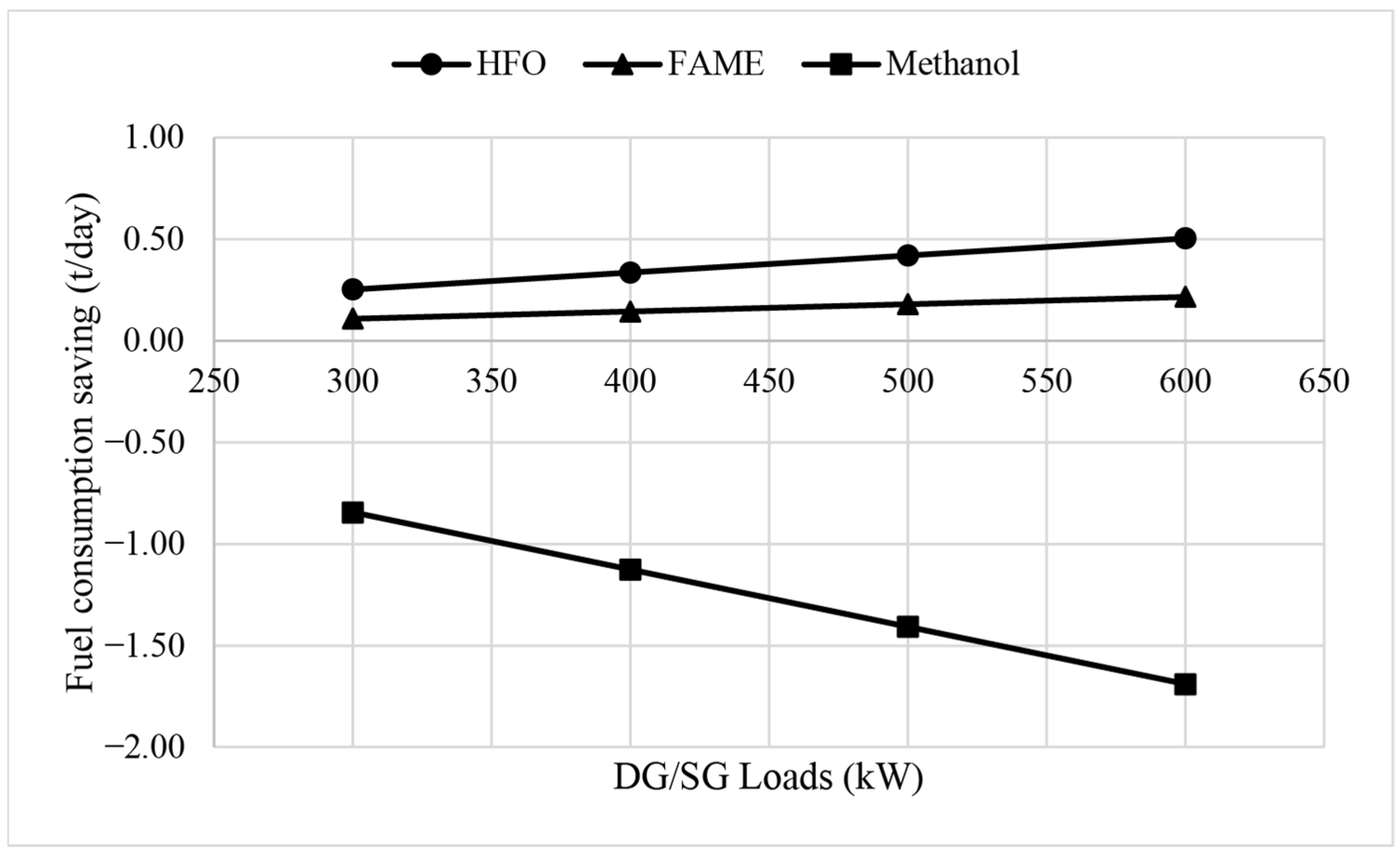
Significantly, across all fuels, the SG consistently reduces total fuel consumption relative to the DG scenario, with average daily savings of 0.2–0.5 t/day, depending on the auxiliary load. These results confirm the advantage of extracting electrical power directly from the main engine rather than using standalone diesel generators.
It is acknowledged that real-world operational data for methanol-fueled ships remain limited due to the early stage of commercial deployment of methanol propulsion systems. Accordingly, the methanol–diesel dual-fuel engine performance parameters employed in this study are derived from available engine data from WinGD project guides [49]. While this approach provides a reasonable approximation of current dual-fuel engine behavior, the results should be interpreted as indicative rather than absolute. The robustness of these findings would benefit from validation through experimental measurements or long-term operational data as methanol-fueled vessels become more widespread.
Figure 1 illustrates the net fuel consumption savings achieved when replacing DG operation with SG power at different auxiliary load levels (300–600 kW) for the three fuel types. For HFO, the SG integration yields steady improvements, with daily savings ranging from 0.25 t/day at 300 kW to nearly 0.50 t/day at 600 kW. For FAME, savings are smaller, typically between 0.10 and 0.25 t/day, reflecting its lower calorific value and higher SFOC. In contrast, methanol–diesel operation shows an opposite trend, with total fuel consumption increasing under SG utilization due to the low energy density of methanol and its elevated SFOC, leading to a “fuel penalty” of up to 1.6 t/day at higher loads.
When extrapolated to a typical operating period of 300 days per year, these daily variations translate into significant annual impacts. For HFO, annual fuel savings range from approximately 75 tonnes per year at 300 kW to 150 tonnes per year at 600 kW, representing substantial operational and emission benefits. For FAME, annual savings range between 30 and 75 tonnes, providing moderate but meaningful reductions in both fuel costs and CO2 output. Conversely, for methanol–diesel, the annual fuel increase is estimated between 240 and 480 tonnes, depending on SG load. Despite this rise in total fuel mass, methanol-fueled systems still achieve up to 50% lower CO2 emissions and negligible SOx levels compared to HFO, highlighting a trade-off between energy efficiency and emission reduction.
The combined results confirm that the performance of SG systems is dependent on fuel. HFO demonstrates the most significant efficiency improvement and predictable operational behavior. FAME provides steady but limited gains due to its lower energy content. Methanol–diesel currently experiences increased fuel consumption under SG operation, although it offers clear environmental advantages.
In general, SG integration yields daily fuel savings between 0.1 and 0.5 t/day for conventional fuels, corresponding to large cumulative annual savings and emission reductions in vessels with continuous electrical loads. These results affirm the SG as a robust energy-efficiency measure for both existing and newbuild ships. As the maritime sector transitions toward low- and zero-carbon propulsion systems, optimizing SG–engine control and hybrid configurations will be essential to balance energy efficiency, fuel economy, and emissions compliance across diverse fuel strategies.
In terms of fuel costs, Table 4 presents the daily fuel costs associated with the two configurations studied. Fuel costs are calculated using 522 $/t for HFO in the main engine and 794 $/t for MDO in the auxiliary engine, 716 $/t for FAME and 350 $/t for methanol [50]. The comparison reveals that shaft generator integration reduces the total daily fuel expenditure for all fuels, though the magnitude of savings varies according to fuel type, energy content, and SFOC.
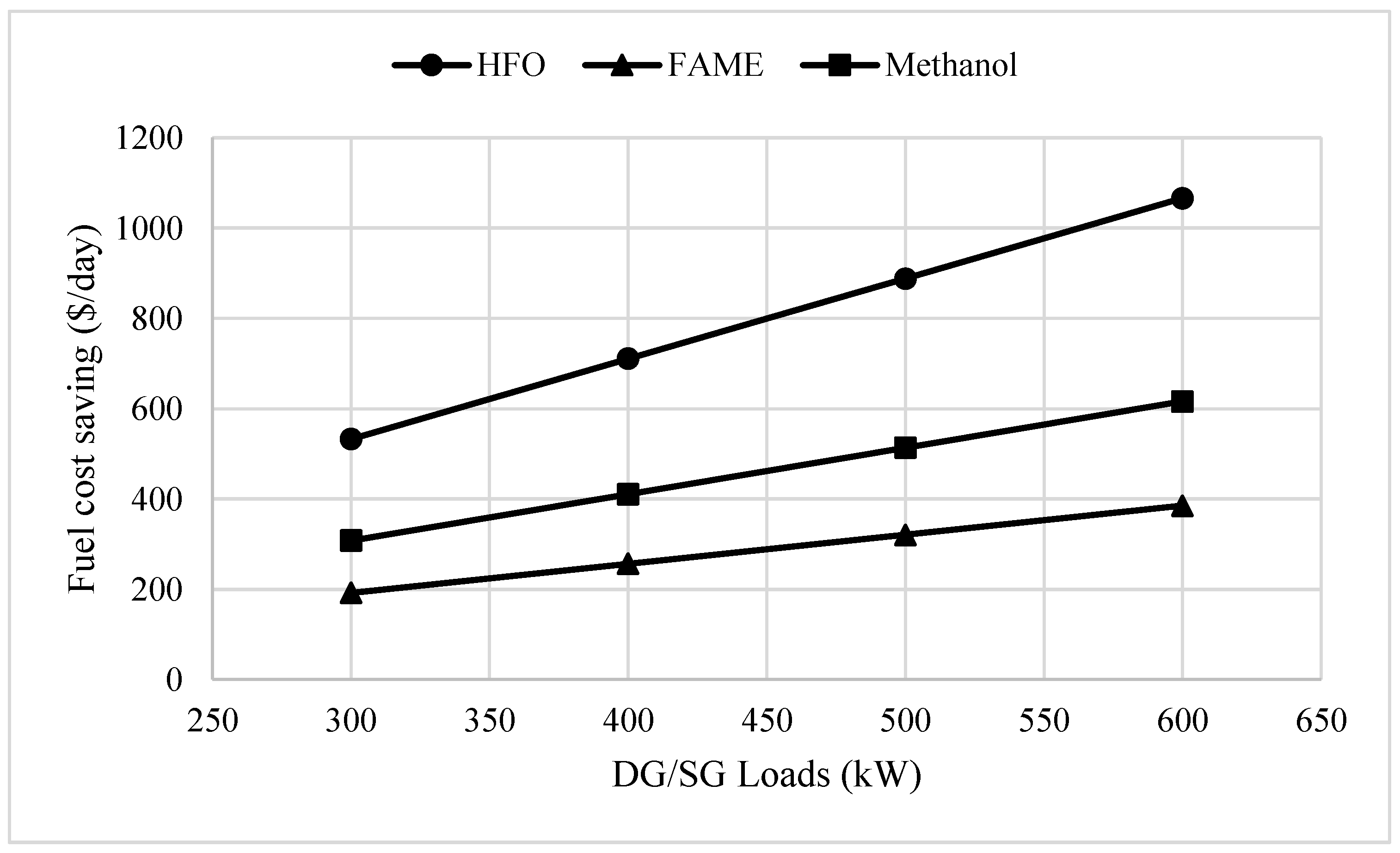
For HFO, SG integration provides the most consistent and substantial financial savings. As shown in Figure 2, the daily cost reduction increases almost linearly with SG load, ranging from approximately 530 $/day at 300 kW to over 1050 $/day at 600 kW. This trend reflects the efficiency advantage of the main engine over auxiliary diesel generators, whose higher SFOC at partial load leads to greater relative savings when replaced by shaft-generated power. The linear growth also indicates that SG operation becomes progressively more cost-effective at higher auxiliary demand, making it particularly advantageous for bulk carriers and large cargo vessels with continuous electrical loads.
In the case of FAME, despite its higher unit price and SFOC, the financial benefits of SG integration remain positive though comparatively modest. Daily savings range from about 200 $/day at 300 kW to 400 $/day at 600 kW, primarily due to the reduced difference in efficiency between the main engine and the auxiliary generators when operating with biofuels. Nonetheless, the results confirm that even for renewable fuels, the SG contributes measurable economic gains while simultaneously supporting compliance with sustainable fuel adoption policies.
For methanol–diesel dual-fuel systems, the cost savings are more moderate in relative terms but substantial in absolute value, ranging from approximately 400 $/day at 300 kW to 600 $/day at 600 kW. This trend demonstrates that even though methanol has a lower calorific value and higher SFOC, its lower cost per tonne can still result in meaningful operational savings when SG power replaces DG generation. The positive gradient of the methanol cost-saving curve (Figure 2) further highlights the increasing profitability of SG utilization at higher electrical loads, particularly when methanol prices remain low relative to marine diesel oil.
When these daily savings are extrapolated to a typical 300-day operational year, the cumulative financial benefits become considerable. For HFO, the total annual cost reduction is estimated between $160,000 and $320,000, while FAME yields approximately $60,000 to $120,000 in yearly savings. Methanol–diesel operation achieves comparable annual reductions ranging from $120,000 to $180,000, confirming that SG utilization remains economically advantageous across all fuel options under realistic market conditions. The results underline the scalability of the SG system’s financial impact: even modest daily savings translate into significant long-term operational cost reductions when applied to full-year service profiles.
Figure 2 clearly demonstrates the nearly linear relationship between SG load and daily cost savings for all fuels, indicating that the economic benefit of SG integration grows steadily with higher power demand. HFO consistently delivers the highest cost savings due to its low unit price and substantial efficiency differential between the main engine and DGs. FAME, constrained by its higher SFOC and price, offers smaller yet stable benefits, whereas methanol–diesel systems show competitive performance that improves further at high SG loads.
In summary, the analysis confirms that integrating a shaft generator provides tangible and scalable economic benefits across all fuel types and operating conditions. While the magnitude of daily savings depends on both fuel price and efficiency characteristics, the overall trend demonstrates that SG adoption is desirable for vessels with sustained auxiliary power requirements, enhancing both operational efficiency and investment feasibility—especially under future fuel cost and carbon pricing scenarios.
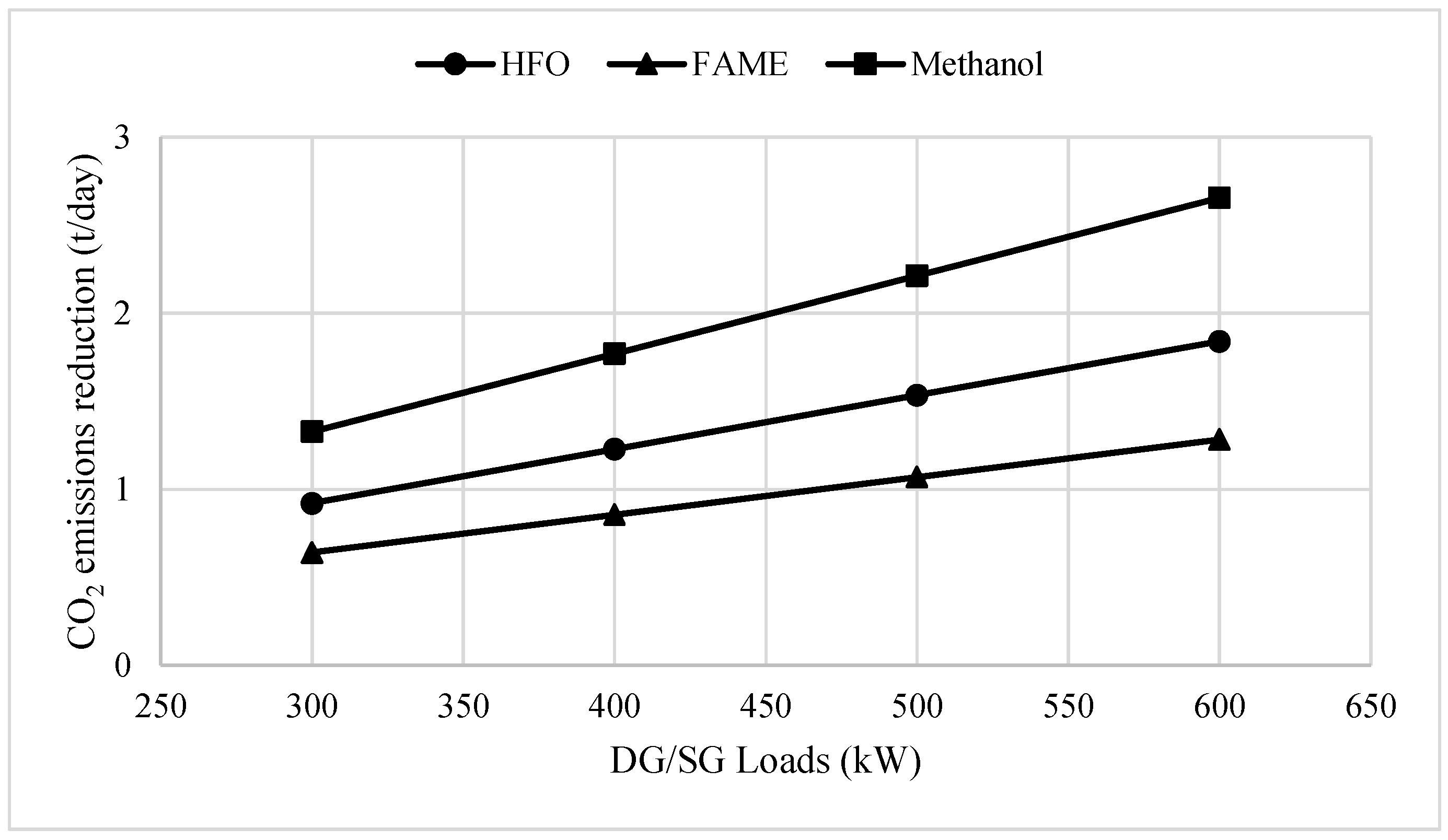
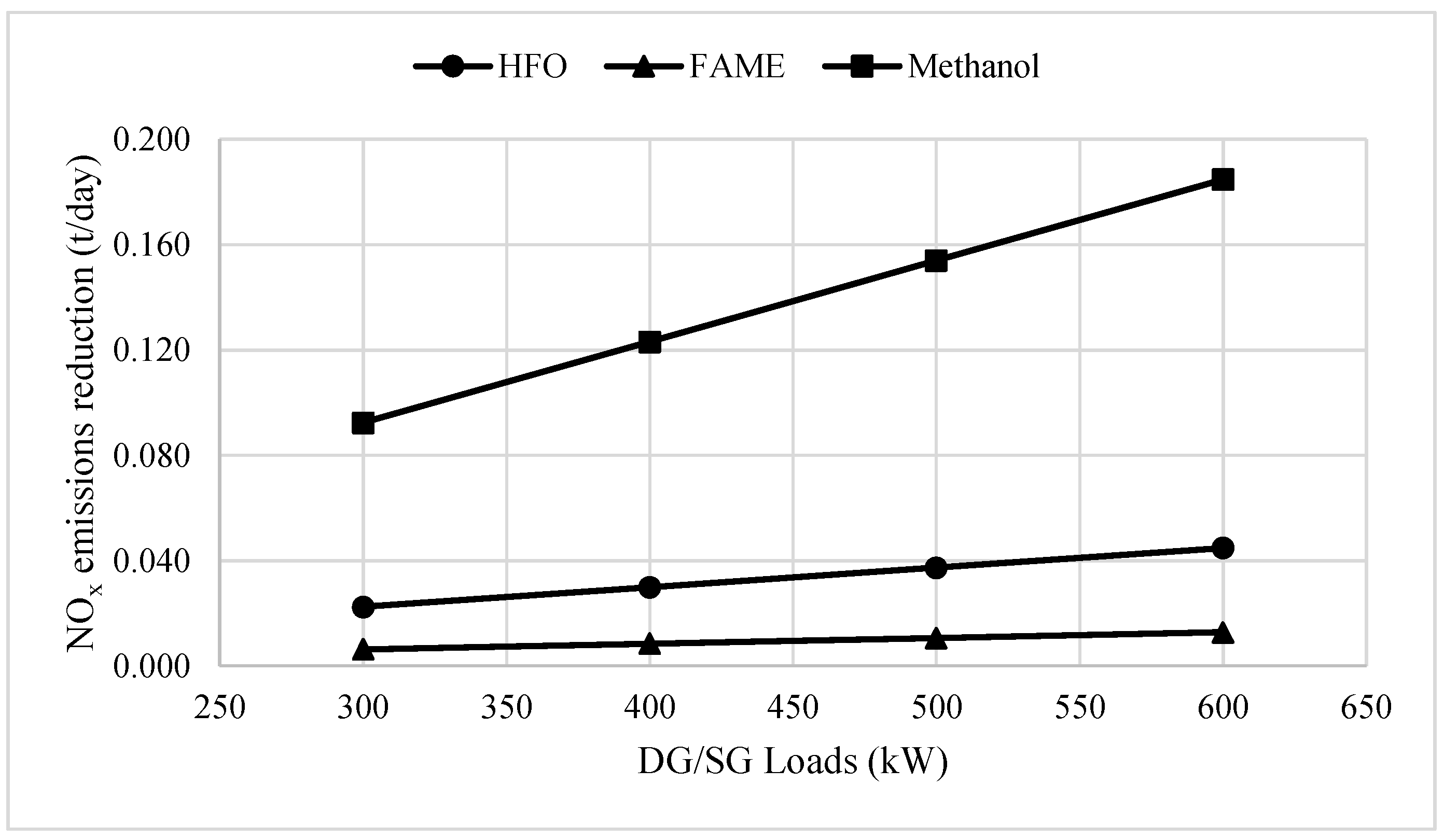
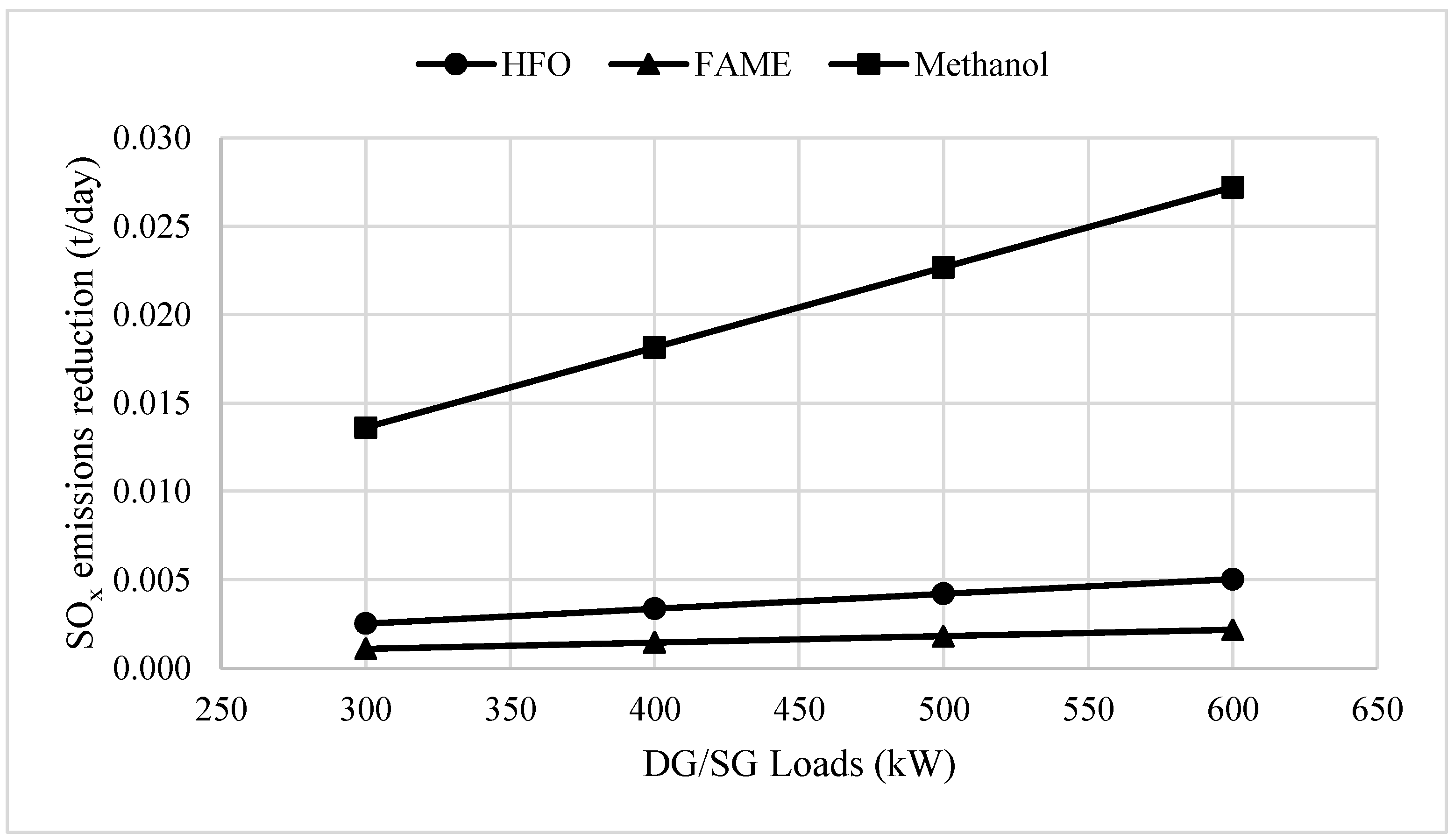
The impact of SG integration on exhaust emissions is strongly influenced by the type of fuel used, the ship’s operational speed, and the auxiliary electrical load. Table 5 summarizes the calculated CO2, NOx, and SOx emissions for the three fuels under different load and speed conditions, while Figure 3, Figure 4 and Figure 5 illustrate the corresponding daily emission reductions achieved through SG utilization compared to the conventional diesel generator (DG) configuration.
Across all fuel types, emission levels increase with ship speed and auxiliary load, corresponding to the rise in total fuel consumption. However, in every case, the integration of the SG results in lower emissions than DG operation, confirming that the main engine supplies electrical power more efficiently than smaller DG units working under partial load. The magnitude of emission reduction varies by fuel, reflecting both the intrinsic chemical composition of the fuel and its combustion characteristics.
For vessels operating on HFO, the absolute emission levels remain the highest among the fuels studied due to the fuel’s high carbon and sulfur content. At 13.5 knots and 600 kW, total CO2 emissions reach approximately 77.4 t/day, NOx emissions 2.21 t/day, and SOx emissions 0.25 t/day under DG operation. When the SG is utilized, these emissions decrease consistently across all load levels. As shown in Figure 3, Figure 4 and Figure 5, the daily emission reductions range from about 1.0 to 1.8 t/day for CO2, 0.03 to 0.05 t/day for NOx, and 0.004 to 0.008 t/day for SOx as SG load increases from 300 to 600 kW. These improvements, while modest in daily magnitude, accumulate substantially over time. Assuming 300 operational days per year, the annual reduction in CO2 emissions can exceed 450 tonnes per vessel, alongside a reduction of approximately 10–15 tonnes of NOx and 1–2 tonnes of SOx. These results demonstrate that even for carbon-intensive fuels like HFO, SG integration provides significant environmental benefits through enhanced energy efficiency and reduced auxiliary engine usage.
The emissions profile for FAME differs notably due to its renewable origin and lower sulfur content, although its higher SFOC leads to relatively greater fuel consumption and hence increased CO2 output compared to HFO for the same operational load. At 13.5 knots and 600 kW, CO2 emissions reach about 83.0 t/day, NOx emissions 2.54 t/day, and SOx emissions 0.28 t/day in the DG configuration. With SG integration, daily reductions of approximately 0.8–1.4 t/day of CO2, 0.02–0.04 t/day of NOx, and 0.002–0.004 t/day of SOx are observed. The overall emission reduction potential is therefore somewhat lower than that of HFO, but the environmental advantages remain meaningful when the renewable nature of FAME is considered. Over a year of continuous operation, these daily savings correspond to approximately 250–400 tonnes of CO2 reduction, reinforcing the role of SG technology in improving the sustainability of biofuel-powered vessels.
Methanol–diesel systems exhibit a distinctly different emissions profile. Methanol’s low carbon-to-hydrogen ratio and negligible sulfur content lead to substantially lower CO2 and SOx emissions compared to HFO and FAME, while NOx emissions remain comparable due to similar combustion temperatures. Under DG operation at 13.5 knots and 600 kW, CO2 emissions amount to 69.1 t/day, NOx 0.79 t/day, and SOx 0.024 t/day. When the SG is introduced, emissions decrease significantly, with reductions of approximately 1.5–2.8 t/day for CO2, 0.08–0.18 t/day for NOx, and 0.015–0.025 t/day for SOx, depending on SG load. On an annual scale, these daily reductions translate to approximately 450–840 tonnes less CO2, 30–50 tonnes less NOx, and nearly 7 tonnes less SOx per vessel.
Although methanol operation shows a higher total fuel mass consumption due to its lower energy density, its emission advantages far outweigh the fuel penalty. The results confirm that the combination of SG integration and methanol use provides the most significant emission reductions among all fuels analyzed, positioning it as a promising pathway toward compliance with IMO decarbonization targets and regional emission control area (ECA) regulations.
Overall, the emission reductions achieved through SG integration increase almost linearly with auxiliary load for all fuels. The highest improvements are observed in CO2, followed by NOx and SOx, reflecting the relative proportion of these gases in the exhaust stream. HFO yields the greatest absolute reduction due to its high baseline emissions, while methanol offers the highest relative percentage reduction, achieving up to 50% lower CO2 and nearly zero SOx compared to HFO. FAME occupies an intermediate position, offering measurable CO2 and NOx reductions along with renewable sourcing benefits.
When aggregated across 300 operational days, the SG’s emission-reduction potential becomes substantial for fleet-level deployment. Even moderate daily savings translate into hundreds of tonnes of CO2 and several tonnes of NOx and SOx avoided annually per vessel, contributing meaningfully to corporate and regulatory decarbonization targets. These findings underscore that SG integration not only enhances fuel economy and cost efficiency but also provides a quantifiable and scalable environmental advantage—particularly when paired with low- or zero-carbon fuels such as methanol.
The economic feasibility of the SG installation is assessed by calculating the NPV, IRR and PBP under conditions of fuel price and capital cost uncertainty. To account for the time value of money, the NPV is calculated by discounting the stream of annual savings over the project lifetime at a specified discount rate and subtracting the SG capital cost. A consistently positive NPV indicates that the project generates long-term financial value, even under unfavorable market conditions. The IRR complements this analysis by representing the discount rate at which the NPV equals zero, thereby expressing the profitability of the investment as a percentage return. The PBP is defined as the ratio between the investment cost of the SG system and the annual operational savings, providing a straightforward measure of the time required to recover the initial investment. Together, these three indicators provide a comprehensive evaluation of the economic performance of the SG system, capturing both short-term payback and long-term profitability.
To account for market variability, the Monte Carlo simulation effectively serves as a probabilistic sensitivity analysis, capturing the combined effects of fuel price volatility and SG capital cost variability on the key economic indicators (NPV, IRR, and PBP). By sampling 1000 random realizations within the specified uncertainty ranges, this approach provides a statistically robust quantification of the variability and confidence intervals of the predicted outcomes, thereby accounting for real-world uncertainty in market and investment conditions. Two sources of uncertainty are considered:
  • Fuel price variation: random multipliers within a ±20% range of the baseline fuel prices are applied, generating 1000 possible realizations of daily savings.
  • SG capital cost variation: 1000 random investment costs are drawn from a uniform distribution in the range of $250,000–$500,000, representing typical values reported for a 640 kW shaft generator installation.
In each iteration, the simulated daily fuel cost saving is converted into an annual value by assuming 300 operating days per year. This annual saving is then divided by the randomly generated shaft generator capital cost, resulting in an NPV, IRR and PBP estimate. Repeating this process for 1000 iterations produced a probability distribution of each parameter for each auxiliary load case (300–600 kW).
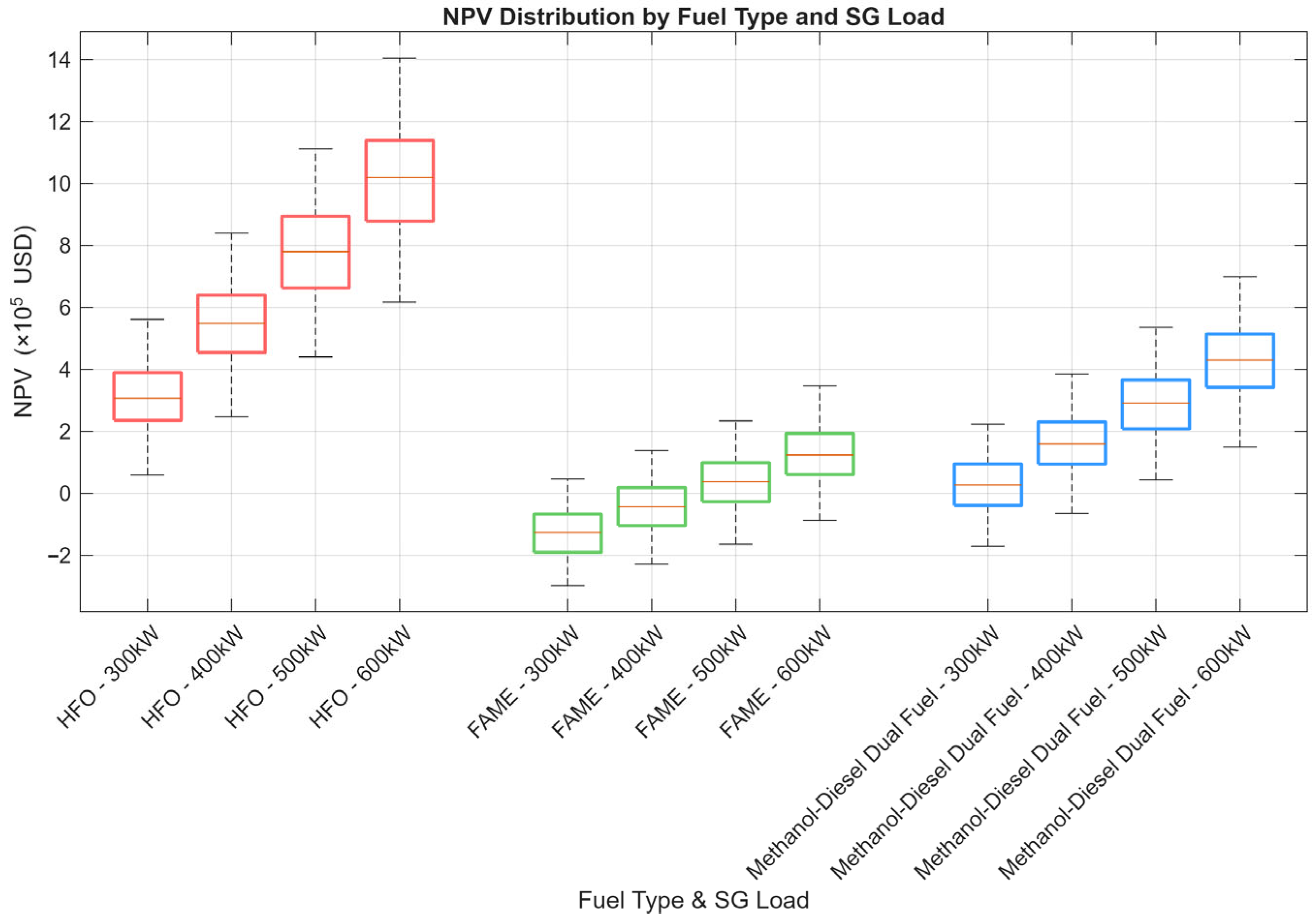
Figure 6 provides a comparative visualization of the economic viability of SG integration across three fuel types. The NPV, expressed in millions of $, serves as the primary metric for evaluating the financial attractiveness of SG deployment.
Across all fuel types, the boxplot reveals a clear upward trend in NPV with increasing SG load. This indicates that higher SG utilization leads to greater operational savings, primarily through reduced fuel consumption and improved energy efficiency. The median NPVs increase progressively from 300 kW to 600 kW, suggesting that the economic return on investment strengthens as the SG supplies more auxiliary power.
The interquartile ranges (IQRs) also narrow slightly at higher loads, particularly for HFO and Methanol-Diesel, implying reduced uncertainty and more consistent financial performance. This trend supports the strategic recommendation to maximize SG load where feasible, especially in vessels with high auxiliary demand.
HFO shows moderate to high NPVs, with medians ranging from $0.3 million at 300 kW to over $1 million at 600 kW. Despite its higher carbon and sulfur content, HFO benefits from low fuel costs and a favorable efficiency differential between the main engine and auxiliary DGs. The wider IQRs and presence of outliers reflect sensitivity to fuel price volatility and capital cost assumptions.
FAME yields the lowest NPVs among the three fuels, with medians ranging from $0.1 million at 300 kW to $0.1 million at 600 kW. The relatively lower economic return is due to its higher SFOC and fuel cost, which reduce the net savings achievable through SG integration. However, the narrow IQRs suggest stable performance, making FAME a viable option in sustainability-driven operations where environmental benefits may outweigh financial metrics.
Methanol–diesel dual-fuel operation exhibits a broad range of NPV outcomes, reflecting both its promising potential and the sensitivity of its economic performance to market and technical conditions. The NPVs increase from around $0.05 million at 300 kW to nearly $0.8 million at 600 kW, demonstrating that while high-load operation can yield substantial economic returns, lower-load scenarios may still result in marginal or even negative profitability.
This variability arises from differences in SFOC, fuel cost, and market price fluctuations across all investigated fuels. At lower SG loads, the reduction in auxiliary diesel generator usage remains modest, which limits the achievable fuel savings and may not fully offset the initial installation cost of the SG system. However, as SG utilization increases, a larger share of the electrical demand is met by the main engine, resulting in greater displacement of diesel generator operation. This leads to notable improvements in overall energy efficiency, substantial reductions in total fuel consumption, and cumulative cost savings that significantly enhance the system’s economic performance.
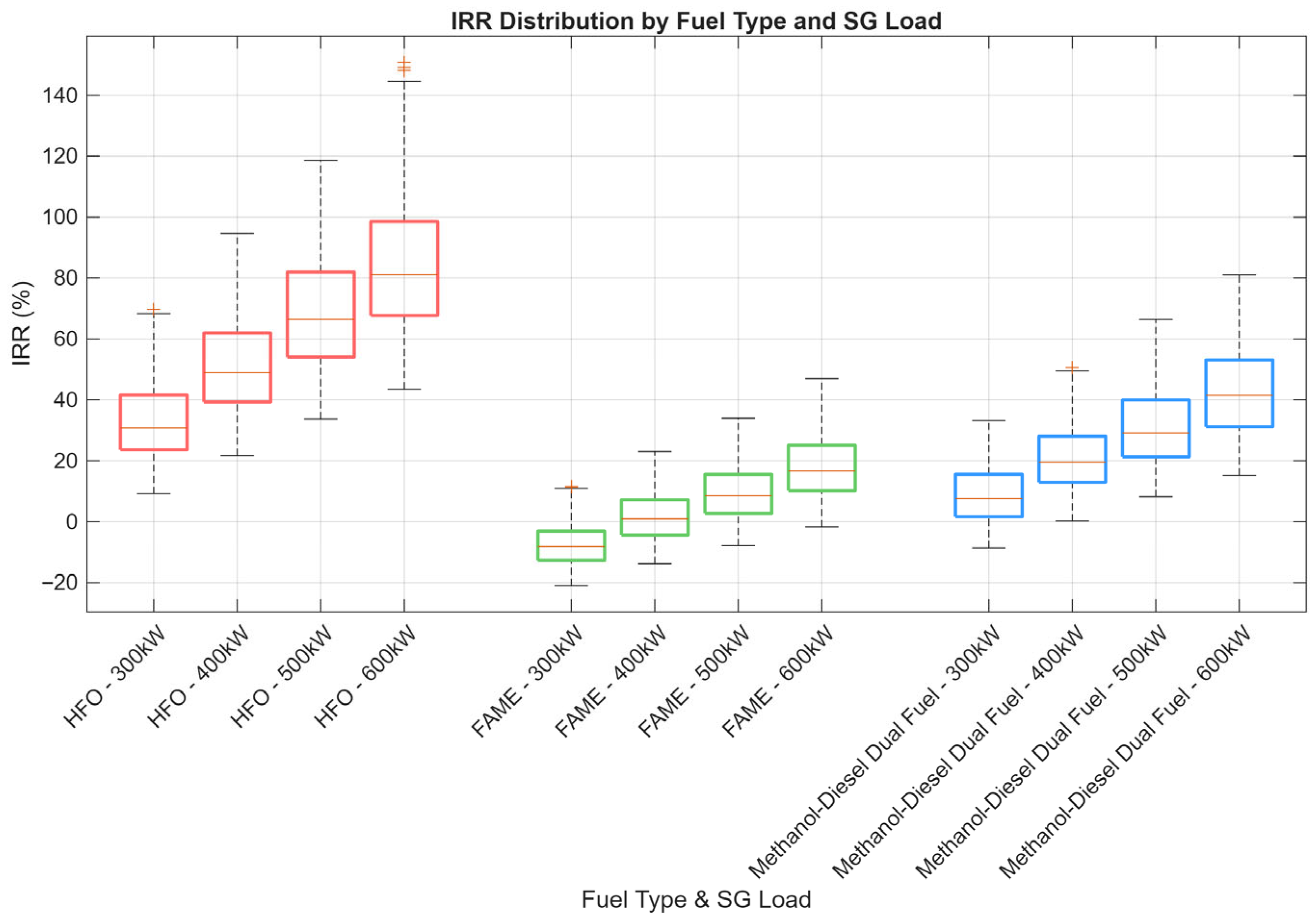
Figure 7 provides a comparative visualization of the economic viability of SG integration across three fuel types. The IRR, expressed in millions of percentage, serves as the second metric for evaluating the financial attractiveness of SG deployment.
HFO exhibits the highest IRR values among the three fuels, confirming its strong financial viability under current market conditions. The median IRR increases from approximately 35–40% at 300 kW to nearly 100% at 600 kW, with upper quartile values exceeding 140% at the maximum load. This pronounced growth reflects the substantial fuel cost savings achieved when the SG is operated at higher loads, where a greater portion of the electrical demand is supplied by the more efficient main engine rather than auxiliary diesel generators. The relatively wide IQRs and presence of a few low-end outliers suggest sensitivity to fuel price volatility and capital cost variation, yet the overall distribution remains firmly positive. These results confirm that SG deployment with HFO offers the most attractive and stable economic performance among the studied fuels.
FAME continues to demonstrate the lowest IRR values, with medians ranging from approximately 10% at 300 kW to 20–25% at 600 kW. Although incremental improvements occur at higher SG loads, the results indicate that FAME-fueled systems are unlikely to achieve strong financial returns without external policy or market incentives. The consistently low IRR is driven by FAME’s elevated SFOC and higher unit cost compared to HFO, which limit the net financial benefit of SG integration. The narrow IQRs across all load levels indicate predictable, low-variance performance but also highlight that profitability remains marginal under typical fuel price conditions.
Methanol–diesel dual-fuel configurations yield moderate IRR values, with medians increasing from around 10–15% at 300 kW to roughly 60–70% at 600 kW, indicating a progressive strengthening of economic viability as SG utilization rises. The lower quartile values occasionally dip below zero at lower loads, showing that methanol’s higher SFOC and market price can reduce profitability when SG contribution is limited. However, at higher loads, the IRR distribution shifts strongly upward, with most realizations well above 50%, and upper quartiles approaching 100%. This trend reflects the compounded benefits of enhanced energy efficiency, reduced fuel consumption, and lower emissions penalties when methanol-fueled systems are paired with high SG loads. The narrowing IQRs at elevated loads suggest improved investment stability and reduced exposure to market uncertainties.
Overall, the IRR analysis demonstrates that the financial attractiveness of SG integration is highly dependent on both the fuel type and the SG load. HFO delivers the strongest returns and resilience to uncertainty, methanol–diesel provides competitive performance with growing profitability at higher loads, and FAME remains limited in financial potential unless supported by carbon pricing or incentive mechanisms.
The IRR trends are consistent with the NPV results, confirming that both indicators follow the same load-dependent behavior. As shaft generator utilization increases, the economic benefits grow substantially due to higher fuel displacement and improved main engine efficiency. HFO consistently demonstrates the most favorable financial performance, with both the NPV and IRR rising sharply at higher SG loads. Methanol–diesel systems show similar upward trends but with moderate overall returns, reflecting their sensitivity to fuel cost and SFOC assumptions. FAME, while environmentally advantageous, remains the least profitable option under current market conditions. Together, these findings emphasize that the financial viability of SG integration is closely linked to the selected fuel type, fuel pricing structure, and operational load strategy, offering valuable guidance for both retrofit and newbuild energy efficiency planning.
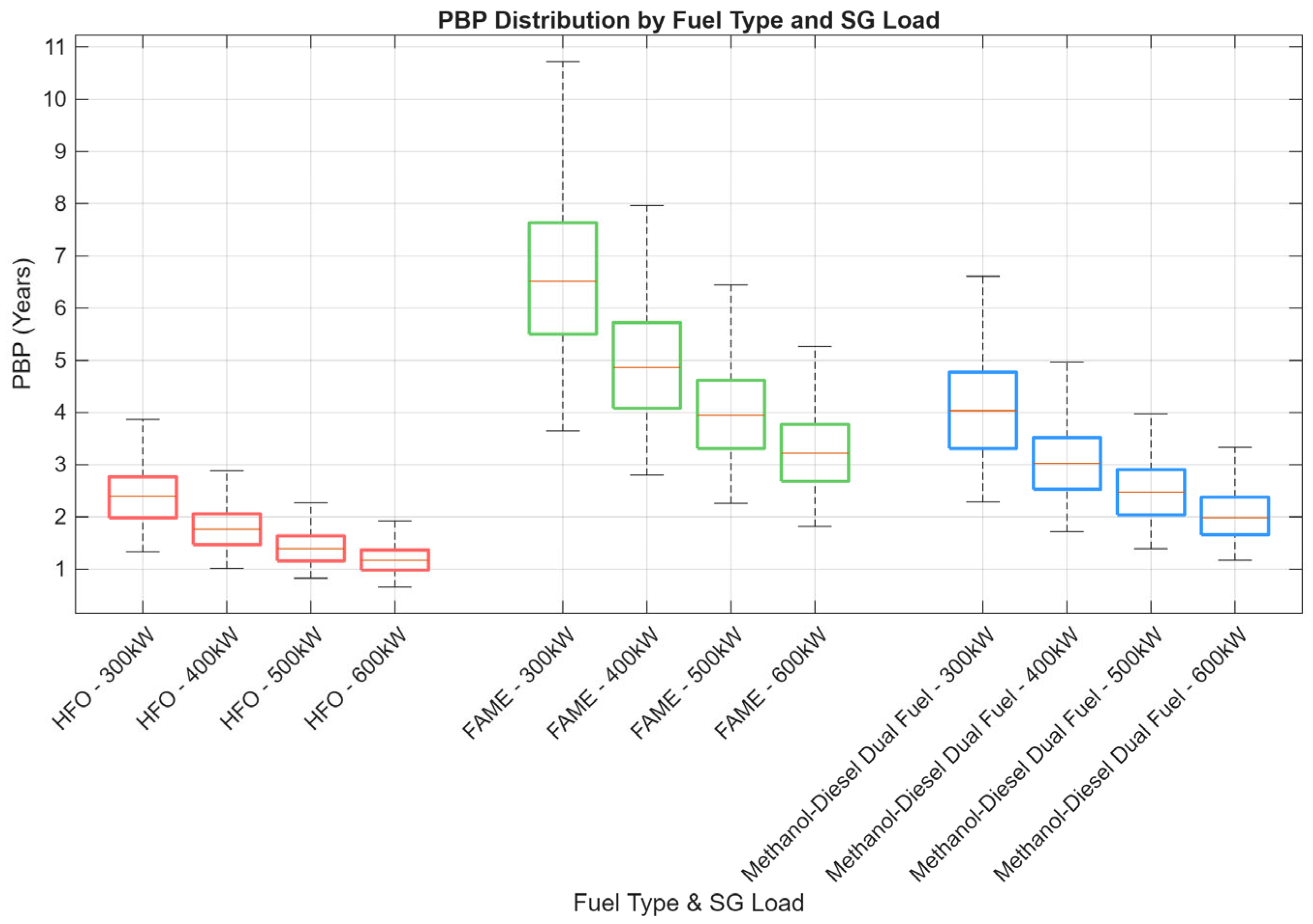
Figure 8 presents the boxplot analysis of the PBP distributions obtained from the Monte Carlo simulations for SG load levels. Each boxplot summarizes the variability in the PBP values resulting from 1000 random realizations of fuel prices and SG capital costs. The PBP, expressed in years, serves as the last metric for evaluating the financial attractiveness of SG deployment.
The PBP analysis further confirms the strong correlation between fuel type, SG load, and investment performance. Across all fuels, increasing SG utilization results in shorter and more stable PBPs, reflecting the compounded benefits of higher energy efficiency and reduced dependence on auxiliary diesel generator operation.
HFO demonstrates the lowest and most consistent PBP values, with medians decreasing from approximately 2.5 years at 300 kW to about 1.0 year at 600 kW. The narrow IQRs indicate stable returns even under fluctuating fuel prices or variations in capital costs. The minimal spread across all loads highlights the reliability of HFO-based SG installations, which deliver rapid cost recovery and strong financial robustness. This makes HFO the most economically favorable configuration, particularly for conventional bulk carriers and similar vessels that have continuous auxiliary power demands.
FAME, by contrast, exhibits the longest PBPs and the widest variability, especially at lower SG loads. Median values exceed 6 years at 300 kW, gradually declining to around 4 years at 600 kW. The large spread and high upper quartile values—reaching up to 10 years—indicate that profitability is highly sensitive to biofuel pricing and operational conditions. Although higher SG utilization improves cost recovery, the consistently long PBPs reflect the combined effect of FAME’s elevated SFOC, higher fuel price, and limited efficiency margin between main engine and DG operation. These findings suggest that FAME-fueled SG integration would require additional economic incentives or policy support to achieve financial feasibility.
Methanol–diesel dual-fuel systems occupy an intermediate position between HFO and FAME, showing progressive improvement as SG load increases. Median PBPs drop from around 4 years at 300 kW to roughly 2 years at 600 kW, with IQRs narrowing considerably at higher loads. This indicates growing economic attractiveness and reduced uncertainty when the SG is heavily utilized. While the presence of a few upper outliers at low loads suggests sensitivity to methanol pricing, the overall trend indicates that methanol–diesel systems can achieve payback periods comparable to those of HFO under optimal operational conditions. The combination of lower emissions and competitive capital recovery strengthens methanol’s role as a transitional fuel supporting both environmental and economic objectives.
Overall, the PBP distribution highlights that higher SG loads consistently enhance the financial viability of all fuel configurations. HFO provides the fastest and most predictable payback, methanol–diesel achieves competitive recovery times at high loads, and FAME remains the slowest but environmentally favorable option. These results reinforce the conclusion that maximizing SG utilization is key to achieving rapid capital recovery and long-term operational efficiency across different fuel pathways.
The results presented in this study are valid for the analyzed operational envelope corresponding to ship speeds between 10 and 13.5 knots, equivalent to 35–85% of the main engine’s MCR, and for SG load fractions between 300 and 600 kW. Within this range, the propulsion and SG systems operate under stable and efficient conditions consistent with manufacturer recommendations. It should be noted that shaft generator operation is not recommended below 40% of MCR, as the main engine torque and exhaust temperature may become insufficient to maintain stable electrical generation. At very low speeds (below 40% MCR) or under adverse sea states, deviations from the cubic power–speed relationship and increases in hydrodynamic resistance can occur, leading to reduced propulsion efficiency and higher fuel consumption. Therefore, results in these conditions should be interpreted conservatively, and further model refinement or experimental validation is recommended for extended low-load or rough-weather scenarios.

6. Conclusions and Future Recommendations

This study provides a comprehensive numerical investigation into the techno-economic and environmental effects of integrating SGs into marine propulsion systems, focusing on their performance under various fuels, loads, and operating conditions. The developed model, applied to a bulk carrier case study, quantified how SG utilization influences fuel consumption, emission profiles, and investment feasibility across three representative fuels: HFO, FAME, and methanol–diesel dual fuel. The developed computational framework represents a practical design-stage tool capable of quantifying SG system performance and investment feasibility across multiple alternative fuel scenarios, offering a faster and more holistic assessment than existing single-domain simulation approaches.
Operationally, SG integration demonstrated consistent improvements in energy efficiency, reducing daily fuel consumption by 0.1–0.5 t/day depending on load and fuel type. The advantage becomes the most pronounced at higher SG loads (500–600 kW), where auxiliary diesel generator operation is largely displaced, resulting in annual fuel savings exceeding 150 tonnes per vessel. The model confirms that SG systems are particularly beneficial for vessels with continuous electrical demand, such as bulk carriers and container ships, where high utilization ensures strong technical and financial performance.
From an environmental perspective, SG operation significantly reduces CO2, NOx, and SOx emissions across all fuels. For HFO, daily reductions reach up to 1.8 t/day of CO2, 0.05 t/day of NOx, and 0.008 t/day of SOx, translating into annual cuts of over 450 tonnes of CO2 and 15 tonnes of NOx. FAME, despite higher fuel consumption, provides additional benefits due to its renewable origin and low sulphur content. Methanol–diesel systems deliver the most pronounced relative reductions, achieving 50% lower CO2 and near-zero SOx emissions, confirming their potential as transitional low-carbon solutions aligned with IMO and FuelEU Maritime decarbonization targets.
The economic evaluation further validates the SG as a financially sound investment. Across all fuels, cost savings increase linearly with SG load, yielding up to $1050 per day for HFO and $600 per day for methanol–diesel systems. Over a standard 300-day operational year, this equates to annual fuel cost reductions of up to $320,000 per vessel. The Monte Carlo–based financial analysis confirms strong profitability, with NPVs exceeding $1.4 million, IRRs exceeding 100%, and payback periods of under one year at high SG utilization. HFO offers rapid and stable payback, while methanol–diesel delivers balanced environmental and economic performance. In contrast, FAME, although sustainable, requires policy incentives or carbon pricing mechanisms to achieve comparable viability.
Overall, this research demonstrates that SG integration provides a scalable, fuel-flexible, and economically attractive pathway for improving ship energy efficiency while reducing emissions. The developed model establishes a practical decision-support framework for evaluating SG applications in both retrofit and newbuild designs. Future research should incorporate experimental validation through collaboration with ongoing SG pilot installations, including real-time engine monitoring and voyage data collection. Extending this framework to include emerging clean fuels such as ammonia and hydrogen and regulatory-driven lifecycle assessments will further refine its predictive capability and ensure its relevance to the maritime sector’s ongoing energy transition.
Although this study focuses on a bulk carrier as a representative case, the developed framework is inherently modular and can be readily adapted to other vessel types and propulsion configurations. Future research will expand the analysis to include a broader range of ship categories—such as container ships, tankers, and Ro-Pax ferries—to enhance the general applicability of the results and further validate the model’s robustness under different operational and design conditions. In addition, forthcoming studies will build upon the current probabilistic assessment by performing a comprehensive multi-parameter sensitivity analysis, examining the effects of variables such as main engine SFOC, emission factors, discount rate, and operational profile duration. This extended analysis will help identify the most influential parameters governing the techno-economic and environmental performance of shaft generator systems, thereby improving the model’s predictive reliability and practical relevance.
While the present work primarily evaluates the techno-economic performance of shaft generator integration in terms of operational fuel costs and investment feasibility, a more comprehensive assessment should also consider fuel availability, production scalability, and supply chain infrastructure. Future research will therefore incorporate these broader factors, drawing upon standardized methodologies for the evaluation of alternative fuels [51]. Integrating such parameters will provide a more holistic understanding of how market maturity, regional distribution networks, and storage logistics influence the long-term economic competitiveness and adoption potential of emerging marine fuels.

Author Contributions

M.T.: Conceptualization, Formal analysis, Visualization, Investigation, Methodology, Writing—original draft. E.B.: Conceptualization, Visualization, Writing—review and editing. A.M.Y.: Conceptualization, Visualization. N.H.: Conceptualization, Visualization. V.S.: Conceptualization, Visualization. All authors have read and agreed to the published version of the manuscript.

Funding

The authors gratefully acknowledge that the research presented in this paper was partially generated as part of the SEASTARS project. SEASTARS has received funding from the European Union’s Horizon Europe Research and Innovation Programme under grant agreement No 101192901. The authors affiliated with Maritime Safety Research Centre (MSRC) greatly acknowledge the financial support by the MSRC sponsors DNV and RCG. The opinions expressed herein are those of the authors and should not be construed to reflect the views of EU, DNV, or RCG.

Data Availability Statement

The original contributions presented in this study are included in the article. Further inquiries can be directed to the corresponding author.

Conflicts of Interest

Authors Antonios Michail Ypsilantis, Nicolas Hadjioannou were employed by the company Cymona Shipping Management SAM. Author Vasileios Sakellis was employed by the company Alassia NewShips Management. The remaining authors declare that the research was conducted in the absence of any commercial or financial relationships that could be construed as a potential conflict of interest.

Nomenclature

APSAuxiliary Power Systems
CAPEXInvestment cost of the system
CFuelFuel price
CO2Carbon dioxide
CVCalorific value
DGDiesel generators
dyearNumber of operating days per year
EEDIEnergy efficiency design index
EEXIEnergy Efficiency Existing Ship Index
EFEmission factor
FCDGAuxiliary fuel consumption
FCMEFuel consumption of the main engine
FCME-DGTotal consumption of main engine and DG
FCME-SGTotal consumption of main engine while adding the loads from SG
FOCField-oriented control
GHGGreenhouse gas
HFOHeavy fuel oil
IMOInternational Maritime Organization
IQRInterquartile range
IRRInternal Rate of Return
LNGLiquified natural gas
MAPSOModified adaptive particle swarm optimization
MCRMaximum Continuous Rating
MDOMarine diesel oil
MEOPsMinimum emission operating points
NCRNormal Continuous Rating
NOxNitrogen oxides
NPVNet Present Value
PBPPayback period
PEEffective power
PMEBrake power demand of the main engine
PMSMPermanent Magnet Synchronous Machine
PSGSG power demand
PTIPower Take-In
PTOPower Take-Off
QQuarter
RTTotal resistance
SFOCSpecific Fuel Oil Consumption
SFuel-CostFuel cost savings
SGShaft generator
SOxSulphur oxides
VFDVariable frequency drives
VSShip speed
ΔFCNet saving
ηDPropeller efficiency
ηHHull efficiency
ηRRelative rotative efficiency
ηSShaft efficiency

References

  1. UNCTAD. Review of Maritime Transport 2018; UNCTAD: New York, NY, USA, 2018.
  2. Ceylan, B.O.; Akyar, D.A.; Celik, M.S. A novel FMEA approach for risk assessment of air pollution from ships. Mar. Policy 2023, 150, 105536. [Google Scholar] [CrossRef]
  3. Tadros, M.; Ventura, M.; Guedes Soares, C. Review of the IMO Initiatives for Ship Energy Efficiency and Their Implications. J. Mar. Sci. Appl. 2023, 22, 662–680. [Google Scholar] [CrossRef]
  4. IMO—MEPC. Reduction of GHG emissions from ships. In Fourth IMO GHG Study 2020; IMO: London, UK, 2020; Volume 53, pp. 1689–1699. [Google Scholar]
  5. Tadros, M.; Ventura, M.; Guedes Soares, C. Review of current regulations, available technologies, and future trends in the green shipping industry. Ocean Eng. 2023, 280, 114670. [Google Scholar] [CrossRef]
  6. Karatuğ, Ç.; Ejder, E.; Tadros, M.; Arslanoğlu, Y. Environmental and Economic Evaluation of Dual-Fuel Engine Investment of a Container Ship. J. Mar. Sci. Appl. 2023, 22, 823–836. [Google Scholar] [CrossRef]
  7. Trivyza, N.L.; Rentizelas, A.; Theotokatos, G.; Boulougouris, E. Decision support methods for sustainable ship energy systems: A state-of-the-art review. Energy 2022, 239, 122288. [Google Scholar] [CrossRef]
  8. Wang, Y.; Iris, Ç. Transition to near-zero emission shipping fleet powered by alternative fuels under uncertainty. Transp. Res. D Transp. Environ. 2025, 142, 104689. [Google Scholar] [CrossRef]
  9. Tadros, M.; Ventura, M.; Guedes Soares, C. Optimization procedure to minimize fuel consumption of a four-stroke marine turbocharged diesel engine. Energy 2019, 168, 897–908. [Google Scholar] [CrossRef]
  10. Theotokatos, G.; Stoumpos, S.; Bolbot, V.; Boulougouris, E. Simulation-based investigation of a marine dual-fuel engine. J. Mar. Eng. Technol. 2020, 19, 5–16. [Google Scholar] [CrossRef]
  11. Gnanasekaran, S.; Saravanan, N.; Ilangkumaran, M. Influence of injection timing on performance, emission and combustion characteristics of a DI diesel engine running on fish oil biodiesel. Energy 2016, 116, 1218–1229. [Google Scholar] [CrossRef]
  12. Liu, J.; Wang, J.; Zhao, H. Optimization of the injection parameters and combustion chamber geometries of a diesel/natural gas RCCI engine. Energy 2018, 164, 837–852. [Google Scholar] [CrossRef]
  13. Wang, H.; Gan, H.; Theotokatos, G. Parametric investigation of pre-injection on the combustion, knocking and emissions behaviour of a large marine four-stroke dual-fuel engine. Fuel 2020, 281, 118744. [Google Scholar] [CrossRef]
  14. Ma, C.; Yao, C.; Song, E.-Z.; Ding, S.-L. Prediction and optimization of dual-fuel marine engine emissions and performance using combined ANN with PSO algorithms. Int. J. Engine Res. 2022, 23, 560–576. [Google Scholar] [CrossRef]
  15. Guan, W.; Luo, S.; Wu, J.; Lou, H.; Wang, L.; Wu, F.; Li, L.; Huang, F.; He, H. The Impact of Diesel Injection Strategy and In-Cylinder Temperature on the Combustion and Emissions of Ammonia/Diesel Dual-Fuel Marine Engine. Energies 2025, 18, 3631. [Google Scholar] [CrossRef]
  16. Nain, A. Turbocharger Optimization of Diesel Engine for Fuel Economy Improvement Using 1-D Thermodynamic Analysis; SAE Technical Paper; SAE International: Warrendale, PA, USA, 2020. [Google Scholar] [CrossRef]
  17. Ma, Z.; Gu, Y.; Zhu, S.; Yang, M.; Deng, K. Analysis on capability of power recovery of marine diesel engine at high backpressure conditions. Appl. Therm. Eng. 2022, 204, 117933. [Google Scholar] [CrossRef]
  18. Zhang, Y.; Zhang, F.; Leng, L.; Ren, Z.; Shi, L.; Deng, K. Matching and optimization to minimize fuel consumption and NOx emission for a marine diesel engine with turbo-assisted exhaust gas recirculation. Proc. Inst. Mech. Eng. Part D 2023, 239, 651–664. [Google Scholar] [CrossRef]
  19. Shen, H.; Yang, F.; Jiang, D.; Lu, D.; Jia, B.; Liu, Q.; Zhang, X. Parametric Investigation on the Influence of Turbocharger Performance Decay on the Performance and Emission Characteristics of a Marine Large Two-Stroke Dual Fuel Engine. J. Mar. Sci. Eng. 2024, 12, 1298. [Google Scholar] [CrossRef]
  20. Martinić-Cezar, S.; Jurić, Z.; Assani, N.; Račić, N. Controlling Engine Load Distribution in LNG Ship Propulsion Systems to Optimize Gas Emissions and Fuel Consumption. Energies 2025, 18, 485. [Google Scholar] [CrossRef]
  21. Altosole, M.; Benvenuto, G.; Campora, U.; Laviola, M.; Trucco, A. Waste Heat Recovery from Marine Gas Turbines and Diesel Engines. Energies 2017, 10, 718. [Google Scholar] [CrossRef]
  22. Ouyang, T.; Huang, G.; Lu, Y.; Liu, B.; Hu, X. Multi-criteria assessment and optimization of waste heat recovery for large marine diesel engines. J. Clean. Prod. 2021, 309, 127307. [Google Scholar] [CrossRef]
  23. Kallis, G.; Roumpedakis, T.C.; Pallis, P.; Koutantzi, Z.; Charalampidis, A.; Karellas, S. Life cycle analysis of a waste heat recovery for marine engines Organic Rankine Cycle. Energy 2022, 257, 124698. [Google Scholar] [CrossRef]
  24. Jia, M.; Xie, M.; Wang, T.; Peng, Z. The effect of injection timing and intake valve close timing on performance and emissions of diesel PCCI engine with a full engine cycle CFD simulation. Appl. Energy 2011, 88, 2967–2975. [Google Scholar] [CrossRef]
  25. Fontana, G.; Galloni, E. Variable valve timing for fuel economy improvement in a small spark-ignition engine. Appl. Energy 2009, 86, 96–105. [Google Scholar] [CrossRef]
  26. Martins, M.E.S.; Lanzanova, T.D.M. Full-load Miller cycle with ethanol and EGR: Potential benefits and challenges. Appl. Therm. Eng. 2015, 90, 274–285. [Google Scholar] [CrossRef]
  27. Tadros, M.; Ventura, M.; Guedes Soares, C. A nonlinear optimization tool to simulate a marine propulsion system for ship conceptual design. Ocean Eng. 2020, 210, 107417. [Google Scholar] [CrossRef]
  28. Cao, J.; Liu, Z.; Shi, H.; Dong, D.; Kang, S.; Bu, L. A Review of Marine Dual-Fuel Engine New Combustion Technology: Turbulent Jet-Controlled Premixed-Diffusion Multi-Mode Combustion. Energies 2025, 18, 3903. [Google Scholar] [CrossRef]
  29. MAN Energy Solutions. Shaft Generators for Low Speed Main Engines; MAN Energy Solutions: Augsburg, Germany, 2021. [Google Scholar]
  30. Gully, B.H.; Webber, M.E.; Seepersad, C.C. Shaft Motor-Generator Design Assessment for Increased Operational Efficiency in Container Ships. In Proceedings of the ASME 2011 5th International Conference on Energy Sustainability, Washington, DC, USA, 7–10 August 2011; pp. 1813–1819. [Google Scholar]
  31. Souflis-Rigas, A.; Prousalidis, J.; Dimopoulos, G. Assessing the implementation of Power Take Off (PTO) system onboard Liquified Natural Gas (LNG) carriers. In Proceedings of the 2021 IEEE Electric Ship Technologies Symposium (ESTS), Online, 3–6 August 2021; pp. 1–8. [Google Scholar]
  32. Stanic, G.; Bonato, S.; Groppo, M.; Tessarolo, A. Hybrid synchronous motor-alternator with dual AC/DC excitation system for shipboard generation and propulsion applications. In Proceedings of the 2014 International Conference on Electrical Machines (ICEM), Berlin, Germany, 2–5 September 2014; pp. 2362–2367. [Google Scholar]
  33. Reusser, C.A.; Perez, M.; Perez, J. Ship‘s PTO/PTI Torque Field Oriented Control scheme, with optimization strategy, for EEDI index improvement. In Proceedings of the 2018 IEEE International Conference on Electrical Systems for Aircraft, Railway, Ship Propulsion and Road Vehicles & International Transportation Electrification Conference (ESARS-ITEC), Nottingham, UK, 7–9 November 2018; pp. 1–6. [Google Scholar]
  34. Łosiewicz, Z.; Mironiuk, W.; Cioch, W.; Sendek-Matysiak, E.; Homik, W. Application of Generator-Electric Motor System for Emergency Propulsion of a Vessel in the Event of Loss of the Full Serviceability of the Diesel Main Engine. Energies 2022, 15, 2833. [Google Scholar] [CrossRef]
  35. Sui, C.; de Vos, P.; Hopman, H.; Visser, K.; Stapersma, D.; Ding, Y. Effects of adverse sea conditions on propulsion and manoeuvring performance of low-powered ocean-going cargo ship. Ocean Eng. 2022, 254, 111348. [Google Scholar] [CrossRef]
  36. Fan, A.; Tian, Z.; Li, Y.; Liu, H.; Qiu, H.; Liufu, Y.; Vladimir, N. MAPSO-based mode transition process optimisation of ship parallel hybrid power system. J. Mar. Eng. Technol. 2025, 24, 417–431. [Google Scholar] [CrossRef]
  37. Chun, H.H.; Kim, M.C.; Lee, I.; Kim, K.; Lee, J.K.; Jung, K.H. Experimental investigation on stern-boat deployment system and operability for Korean coast guard ship. Int. J. Nav. Archit. Ocean. Eng. 2012, 4, 488–503. [Google Scholar] [CrossRef][Green Version]
  38. Carlton, J. Marine Propellers and Propulsion, 2nd ed.; Butterworth-Heinemann: Oxford, UK, 2012. [Google Scholar]
  39. Watson, D.G.M. Practical Ship Design; Elsevier Science Ltd.: Oxford, UK, 1998. [Google Scholar]
  40. Heywood, J.B. Internal Combustion Engine Fundamentals; McGraw-Hill: New York, NY, USA, 1988. [Google Scholar]
  41. Kristensen, H.O. Energy Demand and Exhaust Gas Emissions of Marine Engines; Technical University of Denmark: Kongens Lyngby, Denmark, 2012. [Google Scholar]
  42. Sallam, S.K.; Elgohary, M.M.; Seddiek, I.S. Methanol as an Eco-Environmental Alternative Fuel for Ships: A Case Study. J. Mar. Sci. Technol. 2023, 31, 205–214. [Google Scholar] [CrossRef]
  43. Tadros, M.; Ventura, M.; Guedes Soares, C. Optimization of the performance of marine diesel engines to minimize the formation of SOx emissions. J. Mar. Sci. Appl. 2020, 19, 473–484. [Google Scholar] [CrossRef]
  44. Bortnowska, M. Projected Reductions in CO2 Emissions by Using Alternative Methanol Fuel to Power a Service Operation Vessel. Energies 2023, 16, 7419. [Google Scholar] [CrossRef]
  45. Ejder, E.; Arslanoğlu, Y. Evaluation of ammonia fueled engine for a bulk carrier in marine decarbonization pathways. J. Clean. Prod. 2022, 379, 134688. [Google Scholar] [CrossRef]
  46. Uyan, E. Tecno-econo-enviro-social assessment of clean electrification for a marine equipment manufacturing plant in Türkiye through hybrid renewable energy system with demand response. Energy 2024, 304, 132015. [Google Scholar] [CrossRef]
  47. Flexible Academy of Finance. Ship Financing Options. Available online: https://academyflex.com/ship-financing-options/ (accessed on 9 July 2025).
  48. IMO GreenVoyage2050. Shaft Generator. Available online: https://greenvoyage2050.imo.org/technology/shaft-generator/?utm_source=chatgpt.com (accessed on 7 July 2025).
  49. WinGD. General Technical Data. Available online: https://wingd.com/products-solutions/engines/general-technical-data (accessed on 7 November 2025).
  50. Ship & Bunker. World Bunker Prices. Available online: https://shipandbunker.com/prices (accessed on 8 June 2025).
  51. Albrecht, F.G.; König, D.H.; Baucks, N.; Dietrich, R.-U. A standardized methodology for the techno-economic evaluation of alternative fuels—A case study. Fuel 2017, 194, 511–526. [Google Scholar] [CrossRef]
Figure 1. Fuel consumption savings between ME + DG and ME + SG configurations at different auxiliary load levels (300–600 kW) and for three fuel types.
Energies 18 06070 g001
Figure 2. Daily fuel cost savings between ME + DG and ME + SG configurations at different auxiliary load levels (300–600 kW) and for three fuel types.
Energies 18 06070 g002
Figure 3. CO2 emission reduction between ME + DG and ME + SG configurations at different auxiliary load levels (300–600 kW) and for three fuel types.
Energies 18 06070 g003
Figure 4. NOx emission reduction between ME + DG and ME + SG configurations at different auxiliary load levels (300–600 kW) and for three fuel types.
Energies 18 06070 g004
Figure 5. SOx emission reduction between ME + DG and ME + SG configurations at different auxiliary load levels (300–600 kW) and for three fuel types.
Energies 18 06070 g005
Figure 6. Distribution of NPV for SG Loads and fuel types.
Energies 18 06070 g006
Figure 7. Distribution of IRR for SG Loads.
Energies 18 06070 g007
Figure 8. Distribution of Payback Periods for SG Loads.
Energies 18 06070 g008
Table 1. Emission factors for different types of fuels [41,42,43,44].
UnitHFOMDOFAMEMethanol
EFCO2tCO2/tFuel3.1143.2062.991.375
EFNOxkgNOx/tFuel898991.3513
EFSOxtSOx/tFuel20× (0.5%)20× (0.5%)20× (0.5%)20× (0.0%)
Table 2. Ship and engines characteristics.
CharacteristicUnitValue
ShipShip type-Bulk carrier
Waterline Lengthm200
Breadthm23.8
Draftm10.8
Deadweighttonne35,000
Design speed at 85% MCRknots13.5
Main EngineRated powerkW6400
Rated speed rpm85.2
SFOCg/kWh170
CVkJ/kg42,700
Diesel GeneratorNumber-3
Rated powerkWe640
Rated speedrpm900
SFOCg/kWh205
Table 3. Comparison between fuel consumption in t/day for the two studied configurations along the different types of fuels.
Fuel TypesME + DGME + SG
DG Loads (kW)SG Loads (kW)
Vs300400500600Vs300400500600
HFO1010.5811.0711.5612.061010.3310.7411.1411.55
1113.5914.0914.5815.071113.3413.7514.1614.57
11.314.6115.1015.6016.0911.314.3614.7715.1815.58
1217.2117.7018.1918.681216.9617.3617.7718.18
12.318.4218.9119.4019.8912.318.1718.5718.9819.39
1321.4821.9722.4622.951321.2321.6322.0422.45
13.222.4122.9123.4023.8913.222.1622.5722.9823.39
13.523.8824.3724.8625.3513.523.6224.0324.4424.85
FAME1011.6512.1412.6413.131011.5412.0012.4612.91
1115.0215.5116.0016.491114.9115.3715.8216.28
11.316.1616.6517.1417.6311.316.0516.5116.9617.42
1219.0619.5520.0420.531218.9519.4119.8620.32
12.320.4120.9021.3921.8912.320.3020.7621.2121.67
1323.8324.3224.8125.311323.7224.1824.6325.09
13.224.8825.3725.8626.3513.224.7725.2325.6826.14
13.526.5127.0027.4927.9913.526.4026.8627.3127.77
Methanol-Diesel1018.7419.2319.7220.211019.5820.3621.1321.90
1124.4524.9425.4425.931125.3026.0726.8427.62
11.326.3826.8827.3727.8611.327.2328.0028.7829.55
1231.3131.8032.2932.781232.1532.9233.7034.47
12.333.6034.0934.5835.0812.334.4435.2235.9936.77
1339.4039.8940.3940.881340.2541.0241.7942.57
13.241.1841.6742.1642.6613.242.0242.8043.5744.35
13.543.9544.4444.9345.4213.544.7945.5746.3447.11
Table 4. Comparison between the daily fuel cost in $/day for the two studied configurations.
Fuel TypesME + DGME + SG
DG Loads (kW)SG Loads (kW)
Vs300400500600Vs300400500600
HFO105924631567067096105391560458176030
117497788882798669116964717773907603
11.3802984208810920111.37496770979228135
129384977510,16510,556128851906492779490
12.310,01510,40610,79711,18712.394829695990810,121
1311,61312,00312,39412,7851311,08011,29311,50611,719
13.212,10212,49312,88313,27413.211,56911,78211,99512,208
13.512,86413,25513,64614,03613.512,33112,54412,75712,970
FAME108457884892399629108265859189189244
1110,86911,25911,65012,0411110,67611,00311,32911,656
11.311,68412,07512,46512,85611.311,49111,81812,14412,471
1213,76114,15214,54214,9331213,56913,89514,22214,548
12.314,72915,12015,51015,90112.314,53714,86315,19015,516
1317,17817,56817,95918,3501316,98517,31217,63817,965
13.217,92818,31918,70919,10013.217,73618,06218,38818,715
13.519,09719,48719,87820,26913.518,90419,23119,55719,884
Methanol-Diesel107597798883788769107289757778658153
11972410,11510,50510,8961194169704999210,280
11.310,44310,83311,22411,61511.310,13510,42310,71110,999
1212,27512,66513,05613,4471211,96712,25512,54212,830
12.313,12813,51913,91014,30012.312,82013,10813,39613,684
1315,28815,67916,06916,4601314,98015,26815,55615,844
13.215,95016,34016,73117,12213.215,64215,93016,21716,505
13.516,98017,37117,76218,15213.516,67216,96017,24817,536
Table 5. Comparison between the estimated exhaust emissions in t/day for different fuel types.
Fuel TypesCO2 EmissionsNOx EmissionsSOx Emissions
Vs300400500600Vs300400500600Vs300400500600
HFO1032.233.434.736.0100.9190.9560.9921.028100.1030.1070.1110.116
1141.542.844.145.4111.1871.2241.2601.296110.1330.1370.1420.146
11.344.746.047.348.511.31.2781.3141.3511.38711.30.1440.1480.1520.156
1252.854.155.356.6121.5091.5451.5821.618120.1700.1740.1780.182
12.356.657.859.160.412.31.6171.6531.6891.72612.30.1820.1860.1900.194
1366.167.468.669.9131.8891.9251.9621.998130.2120.2160.2200.224
13.269.070.371.672.813.21.9722.0092.0452.08113.20.2220.2260.2300.234
13.573.674.876.177.413.52.1022.1392.1752.21113.50.2360.2400.2440.248
FAME1034.535.937.238.6101.0541.0961.1381.179100.1150.1200.1250.129
1144.645.947.348.7111.3621.4041.4451.487110.1490.1540.1580.163
11.348.049.450.752.111.31.4661.5081.5491.59111.30.1600.1650.1700.174
1256.758.059.460.8121.7311.7731.8141.856120.1900.1940.1990.203
12.360.762.163.464.812.31.8551.8961.9381.98012.30.2030.2080.2120.217
1370.972.373.775.0132.1672.2092.2502.292130.2370.2420.2460.251
13.274.175.476.878.213.22.2632.3042.3462.38813.20.2480.2520.2570.261
13.578.980.381.783.013.52.4122.4542.4952.53713.50.2640.2690.2730.278
Methanol-Diesel1028.729.931.032.1100.3290.3420.3550.368100.0100.0100.0110.011
1137.138.239.440.5110.4250.4380.4510.464110.0130.0130.0130.014
11.339.941.142.243.311.30.4570.4700.4830.49611.30.0140.0140.0140.015
1247.248.349.450.6120.5400.5530.5660.579120.0160.0160.0170.017
12.350.551.652.853.912.30.5790.5920.6050.61812.30.0170.0180.0180.018
1359.060.261.362.4130.6760.6890.7020.715130.0200.0210.0210.021
13.261.662.863.965.013.20.7060.7190.7320.74513.20.0210.0210.0220.022
13.565.766.868.069.113.50.7530.7660.7790.79213.50.0220.0230.0230.024
Disclaimer/Publisher’s Note: The statements, opinions and data contained in all publications are solely those of the individual author(s) and contributor(s) and not of MDPI and/or the editor(s). MDPI and/or the editor(s) disclaim responsibility for any injury to people or property resulting from any ideas, methods, instructions or products referred to in the content.