1. Introduction
Climate change is an undeniable phenomenon, and strengthening resilience to its impacts has become a priority of European legislation, both at the EU level [
1] and within national frameworks. For instance, Germany [
2], France [
3], Spain [
4], and Poland [
5] have all recognized the building sector as particularly vulnerable to climate-related risks. Numerous studies have investigated the implications of climate change for the urban environment [
6,
7,
8], with a substantial body of research focusing specifically on its influence on building energy demand and the challenges of implementing sustainable construction in the era of climate change [
9,
10,
11,
12].
The effectiveness of climate impact assessments and the development of adaptation strategies rely heavily on the availability and quality of meteorological data [
13]. Among various data providers, the 193 National Meteorological Services associated with the World Meteorological Organization (WMO) constitute a key source of accessible datasets [
14]. A comprehensive overview of meteorological databases used for research purposes has been provided by [
15]. For building energy analysis, climate data are typically applied in three principal formats [
16].
The first category consists of continuous yearly datasets, such as the Actual Meteorological Year (AMY) or the Synthetic Meteorological Year (SMY), representing either historical or projected conditions. Another group comprises typical years, designed to provide statistically representative climate data. This includes the Test Reference Year (TRY), the Typical Meteorological Year (TMY), the International Weather for Energy Calculation (IWEC), and the Weather Year for Energy Calculation (WYEC), developed mainly by institutions in the USA. These datasets reflect average weather patterns but exclude extreme events. Complementary to them are specialized formats intended to describe near-extreme or atypical weather situations, such as the Design Summer Year (DSY), Design Reference Year (DRY), Extreme Meteorological Year (XMY), Untypical Meteorological Year (UMY), or Hot Summer Year (HSY).
Different standardized datasets are applied across countries to support building energy calculations [
17]. For example, Australia employs the Representative Meteorological Year (RMY), China the Chinese Standard Weather Data (CSWD), India the Indian Typical Years from ISHRAE, Italy the Italian “Gianni De Giorgio” (IGDG), the United Kingdom the UK TRY, while both the USA and Poland rely on TMY. These formats incorporate a variety of meteorological parameters, including air temperature and humidity, solar radiation (irradiance, illuminance, and infrared intensity), wind characteristics, barometric pressure, precipitation, cloud cover, and snow conditions [
16]. Notably, however, they do not include ground temperature data, despite its dependence on climate variability [
18].
Soil temperature is shaped not only by atmospheric conditions but also by a combination of geographical, environmental, and physical factors, such as slope orientation, vegetation, albedo, soil structure, and water content [
19]. Its role in the energy balance of buildings is crucial, particularly for structures in contact with or embedded in the ground. Ground temperature directly affects heat transfer through building envelopes in contact with soil, influencing the design and thickness of thermal insulation. It is also critical for the proper sizing and operation of HVAC systems, particularly those utilizing ground heat exchangers in ventilation systems or ground-source heat pumps. Additionally, knowledge of soil temperature is fundamental for ground heat storage applications and for determining safe depths of buried infrastructure exposed to frost, such as water pipelines.
To assess soil thermal conditions in building energy studies, virtual tools such as Building Energy Models (BEM) based on EnergyPlus are commonly employed [
20]. Machine learning methods are also explored to estimate soil temperature profiles. However, such approaches remain scarce due to the limited availability of multi-depth soil temperature data, and their accuracy tends to decline with increasing depth, where model generalization becomes particularly challenging [
21]. Regardless of the approach, reliable prediction requires extensive measurement datasets. Expanding soil temperature monitoring is therefore essential for both engineering practice and scientific research [
22].
Previous studies on soil temperature distribution measurements have been conducted using various methods and data sources. The most classical approach remains in situ measurements performed with Resistance Temperature Detectors (RTDs, e.g., Pt100/Pt1000) [
23,
24,
25,
26] and Negative Temperature Coefficient (NTC) thermistors [
27]. RTDs are characterized by high accuracy and stability, which has been confirmed, among others, in borehole (BH) heat exchanger studies [
23] and in long-term borehole thermal energy storage (BTES) observations in Sweden [
24]. Pt100 sensors were also used in laboratory experiments to measure soil temperature distributions [
25] and in field studies in the active layer of permafrost [
26]. NTC thermistors are applied in the measurement of soil thermal properties [
27].
In recent years, distributed measurement techniques such as Distributed Temperature Sensing (DTS) have also been developed, using optical fibers to obtain continuous temperature profiles along sections extending hundreds of meters. Schilperoort et al. [
28] presented the construction of a DTS profiler recording vertical soil temperature distributions, while Violante et al. [
29] applied DTS for thermo-stratigraphic correlation around ground heat exchangers. Classical works by Sayde et al. [
30] and Shehata et al. [
31] demonstrated the potential of heated optical fibers for measuring both soil moisture and thermal properties. Kłonowski et al. [
32] showed high agreement between DTS borehole measurements and manual temperature logging, confirming the usefulness of the method in geothermal studies. Hatley et al. [
33] and Mohammadzadeh Bina et al. [
34] further extended the application of DTS to scour monitoring and long-term prediction of ground-source heat pump performance.
Beyond in situ and DTS methods, data from remote sensing and global databases are gaining importance. Platforms such as GreenCast Soil Temperature [
35] and SoilTemperature.app [
36] provide near-surface soil temperature information based on meteorological networks and numerical models. At the international level, valuable data are supplied by NASA LPVS [
37], ECV Inventory [
38], and Copernicus Land [
39], offering Land Surface Temperature (LST) products. However, it should be emphasized that LST refers to surface temperature rather than subsurface conditions, which limits its usefulness in the design of ground heat exchange systems.
An important complement is provided by sensors developed within NASA projects, such as the Soil Temperature Sensor (STS) [
40], which are used both in ground-based research networks and in field experiments.
In this context, it is important to highlight the potential of new-generation digital sensors such as TMP117. TMP117 is a fully integrated, low-power temperature sensor by Texas Instruments with an on-chip 16-bit ADC (0.0078 °C resolution), ±0.1 °C accuracy over −20 °C to 50 °C without user calibration, and an I
2C/SMBus interface [
41]. Its very low current draw (≈3.5 µA at 1 Hz) reduces self-heating and supports long battery life, while the wide supply range (1.7–5.5 V) facilitates battery-powered deployments. Devices are designed in accordance with ASTM E1112 [
42] and ISO 80601 [
43] requirements for electronic thermometers and are factory-tested with equipment traceable to ISO/IEC 17025 [
44] standards. Compared with classical RTD sensors (e.g., Pt100/Pt1000) and NTC thermistors—which typically require analog excitation/bridges, precision external ADCs, more extensive calibration, and heavier cabling—TMP117 avoids complex analog conditioning and thereby simplifies system integration without sacrificing point accuracy or stability. As shown by Derwein et al. [
45], such digital sensors can outperform classical RTDs in applications that demand mobility and scalability; recent IoT implementations further underline their relevance in environmental monitoring [
46,
47,
48]. By contrast, fiber-optic Distributed Temperature Sensing (DTS) provides continuous temperature profiles along a cable (meter-scale spatial resolution over hundreds–thousands of meters), but it requires an optical interrogator, higher power, and more complex installation and maintenance. For multi-depth, battery-powered nodes in buildings and shallow boreholes, point sensors like TMP117 offer substantially lower cost and power with comparable point accuracy, making them more practical despite the lack of spatial continuity. These attributes motivated our choice of TMP117 for the multi-depth, long-duty monitoring reported here and underpin the scalability of the approach in IoT-style field studies.
Effective assessment of soil temperature therefore requires combining different data sources: point measurements, DTS profiling, and remote sensing. In engineering studies, modular networks of digital sensors (e.g., TMP117) are particularly promising, as they combine low cost, easy replacement, and high accuracy, providing a practical alternative to complex and expensive fiber-optic systems.
This article introduces a novel system for soil-temperature measurement designed to be reliable, simple, and cost-effective. The proposed approach enables broader dissemination of soil-temperature data for both scientific and commercial applications. Moreover, the exchange of such information may play a critical role in responding to extreme weather events. As demonstrated in [
49], the active participation of individuals in sharing local measurements can improve forecasting and support policymakers in developing strategies for mitigating the consequences of severe weather phenomena, which also affect soil-temperature distributions. This study presents such a system and demonstrates its utility for building-energy assessments in urban conditions.
This study makes three specific contributions. First, it presents a scalable, multi-depth soil-temperature monitoring system built around TMP117 sensors that combines ±0.1 °C accuracy with very low power demand, enabling dense and long-duty deployments. Second, it provides a like-for-like assessment of GAHE performance using (a) ground temperatures derived from TMY, (b) IMWM data processed via the PN-EN 16798-5-1:2017-07 procedure, and (c) direct in situ measurements, all under identical boundary conditions. Third, it quantifies local urban effects by comparing adjacent boreholes, showing that standard approaches systematically underestimate ground temperature and overestimate GAHE loads (depending on depth and case), while nearby underground utilities measurably reshape the subsurface thermal regime. These findings motivate the integration of local ground monitoring into building-energy assessments and updates to climate-data practices for GAHE design.
The remainder of the paper is organized as follows:
Section 2 describes the measurement network, site, datasets, and computational procedures;
Section 3 presents results for ground temperature and GAHE energy balance;
Section 4 discusses limitations and design implications; and
Section 5 concludes and outlines future work.
2. Materials and Methods
2.1. Measurement Network–Hardware
As mentioned in the previous paragraph, extending ground temperature monitoring is essential for both engineering practice and scientific research related to the assessment of soil thermal conditions in building energy studies. The authors propose a solution to this problem involving the use of a measurement system that should have both:
a low degree of complexity, guaranteeing long-term reliability and low failure rate;
a reasonably high degree of measurement accuracy, sufficient to carry out analyses verifying the thesis statements;
flexibility in the programming of observations;
low cost, which is important from the point of view of possible damage and repair (in the event of, for example, interference by wild animals or deliberate vandalism by humans).
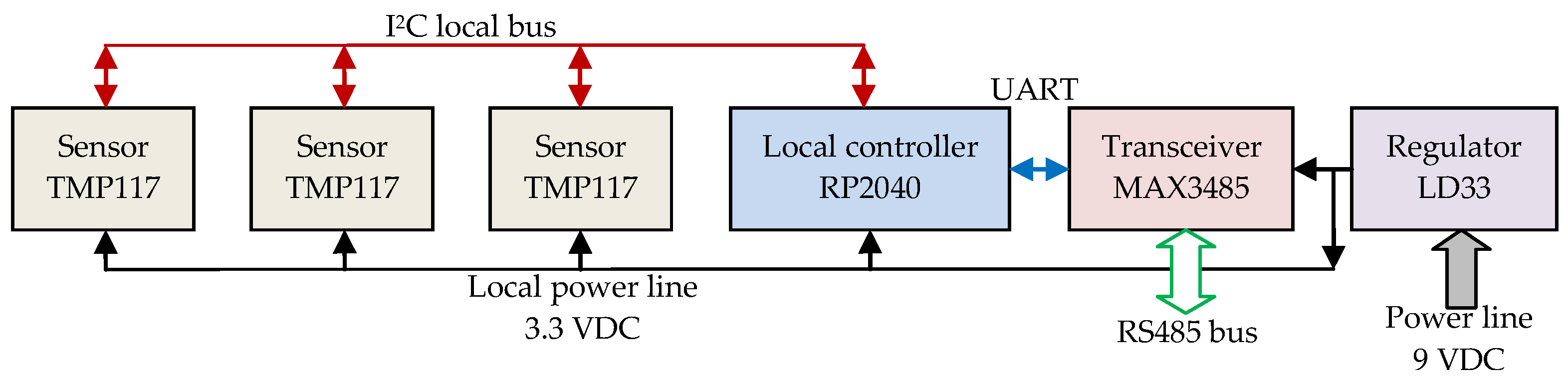
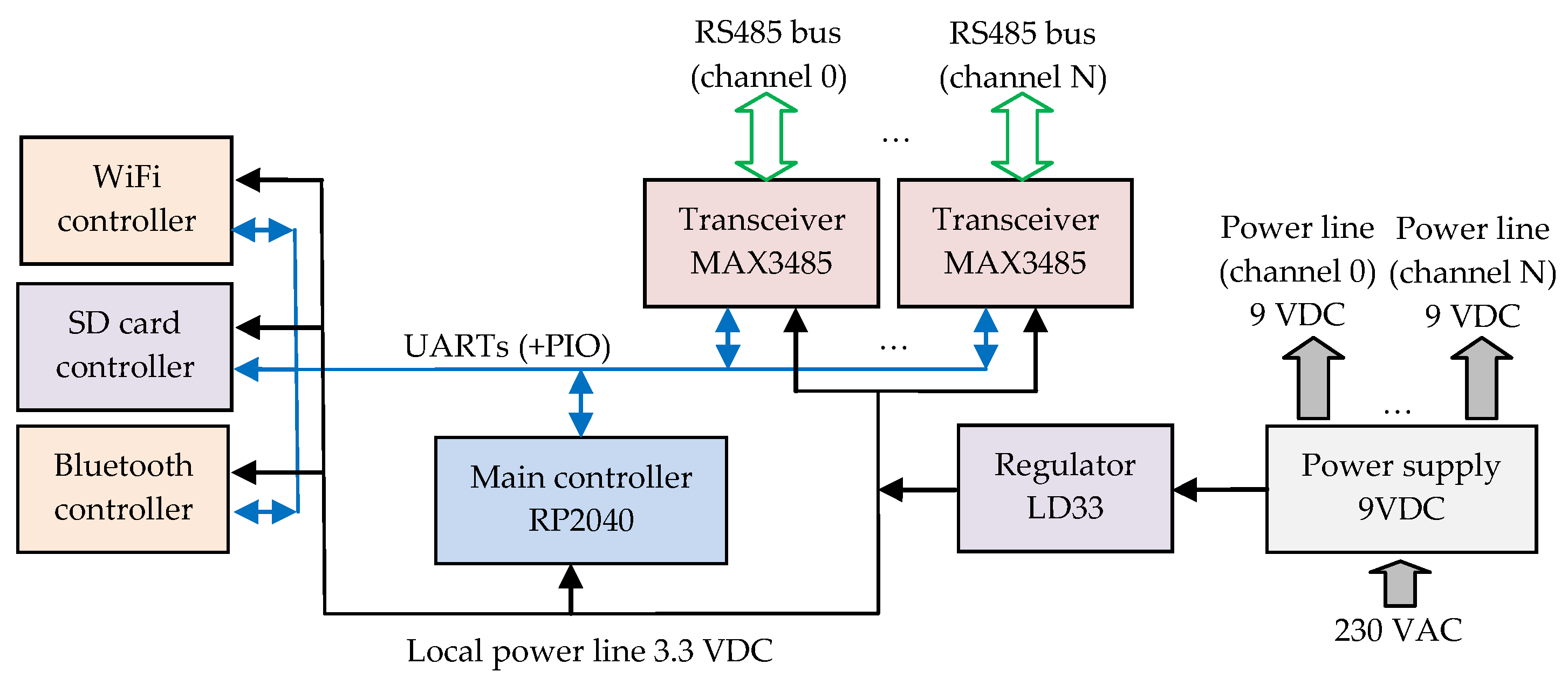
Currently, there are a number of temperature sensors on the market that feature both a wide measurement range and a wide spectrum of accuracy. An example is the popular RTD sensors (e.g., Pt100), which are successfully used in industry (especially in processes at high temperatures). Another example is the group of NTC sensors, which are commonly used, for example, in the home appliance industry. However, it should be noted that both groups of sensors require additional, external, rather complex systems for conditioning their operation in the electronic aspect (power supply, data acquisition in analog form, analog-to-digital conversion (ADC) processing, data buffering/collection, transmission of results). In addition, in the case of measurement networks installed in open areas, unguarded and unmonitored in terms of third-party access, this requires the erection of small building structures as measurement stations, which must have special protection against unauthorized access. All this is most often associated with the high cost of the individual components of the measurement network and, further, with the security of the collected data. The simplest solution to this basic problem is to construct a measurement network from low-cost components with high integration of as many components as possible, in such an arrangement that any violation of the integrity of the system is not associated with long-term downtime caused by costly repairs, replacements and, consequently, calibrations of the rebuilt network. A schematic diagrams of the components of the constructed measurement network are shown in
Figure 1 and
Figure 2.
The measurement system uses TMP117 temperature sensors made by Texas Instruments Inc., Dallas, TX, U.S.A. The TMP117 is designed in accordance with ASTM E1112 and ISO 80601 requirements for electronic thermometers used in medical applications. It has an integrated 16-bit ADC that enables temperature measurement with a resolution of 0.0078 °C and an accuracy of ±0.1 °C over a temperature range of −20 °C to 50 °C without calibration. Communication with the TMP117 is carried out via an Inter-Integrated Circuit (I2C) serial communication protocol and an SMBus™-compliant interface, allowing up to four devices to be connected to a single bus. The designers of the TMP117 chip took care to ensure low power consumption, which minimizes the effect of self-heating on measurement accuracy. The sensor can be powered by an electrical voltage in the range of 1.7 V to 5.5 V and the average current consumption does not exceed 3.5 μA.
According to the datasheet [
50], for non-medical applications, the sensor can successfully serve as a single-chip digital alternative to platinum RTD sensors, with accuracy comparable to Class AA, while consuming only a fraction of the power needed for an RTD sensor (e.g., Pt100). Thanks to the high integration of TMP117 sensor components, the design of measurement networks is greatly simplified, eliminating the need to provide, for example, precise references, ADC processing circuits and complex algorithms as well as the extremely important issue of calibration. The manufacturer of the TMP117 chips ensures that all sensors are tested in a production configuration that is traceable to National Institute of Standards and Technology (NIST) and verified with equipment that is calibrated to ISO/IEC 17025-accredited standards.
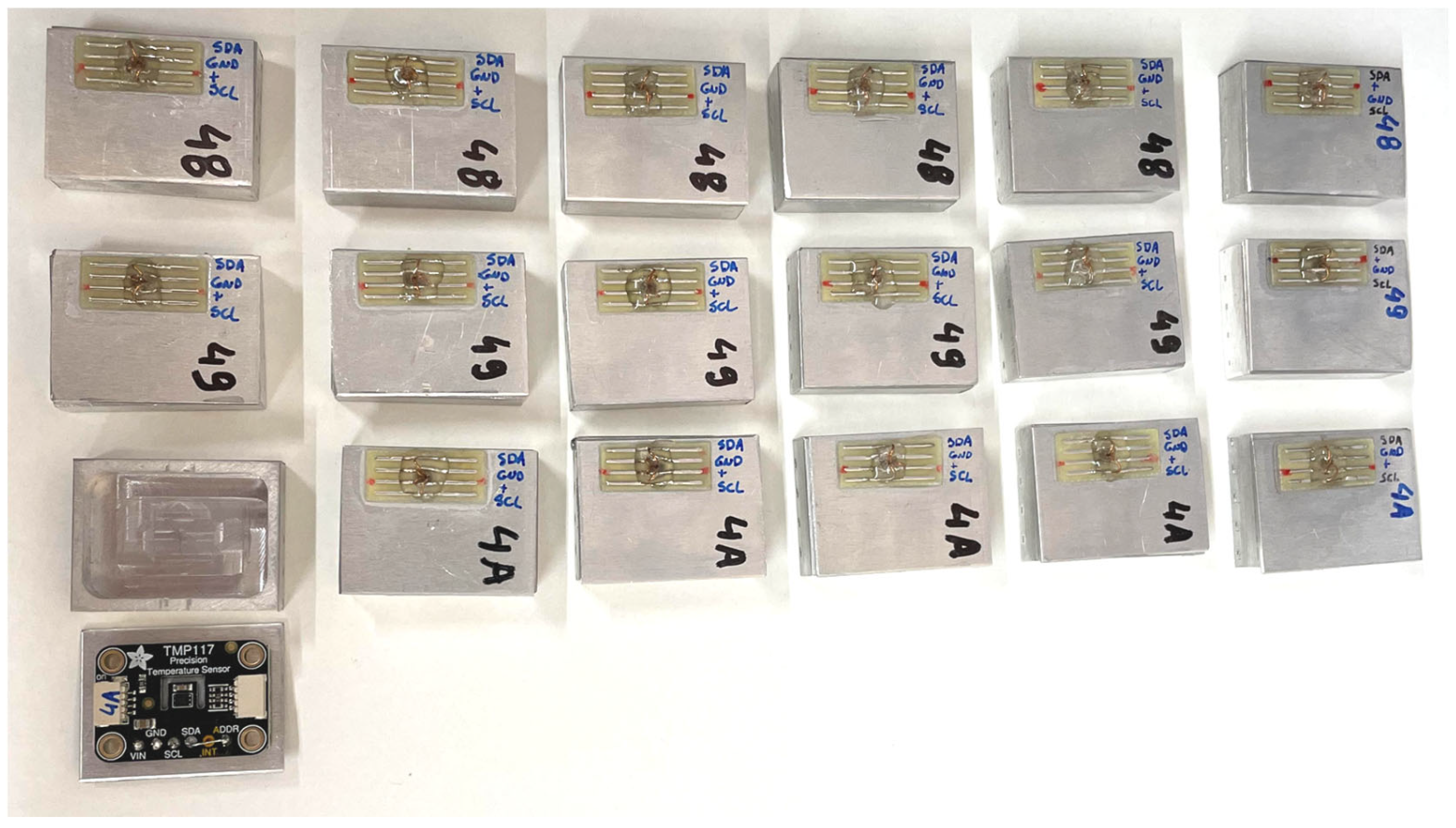
The sensors (mounted on Printed Circuit Boards, PCBs, prefabricated by Adafruit Industries LLC, New York, NY, USA,
Figure 3) were enclosed in hermetic aluminum housings sealed with epoxy adhesive. The aluminum alloy casing consisted of two parts (housing with cover) made using CNC technology from a single piece of metal. Both parts of the casing were glued together and sealed with epoxy resin. The electrical wires (enameled wire) were led through a 2 mm diameter hole in the cover, which was also filled with epoxy resin. The hole with the wires was additionally secured with an epoxy laminate board with copper tracks applied to it, to which the external wires connecting the sensor to the measuring network were soldered. The laminate board with the electrical connection was filled with epoxy resin and secured with oil paint intended for underground infrastructure elements. In addition, the housing and connected cables were reinforced with two polyamide cable ties, which ensure the mechanical integrity of the entire system even when significant forces are applied, leading to the housing becoming unsealed and/or the electrical connection being broken. To ensure the best thermal conductivity between the housing and the sensor, a flexible heat-conductive compound with a thermal conductivity of 12 W/mK was used, and the interior of the housing was filled with a paste with a thermal conductivity of 6 W/mK (AG Termopasty, Sokoły, Poland).
The electronic system controlling the TMP117 sensors (microcontroller and power supply voltage stabilizers) was installed in polyethylene enclosures consisting of two parts screwed together with four screws. All cables were led out of the enclosure through hermetic cable glands, and the cables themselves were additionally secured inside the enclosure by soldering them to the copper tracks of an epoxy laminate board, glued to one of the inner walls of the enclosure, which served as an intermediate link between the cables and the actual electronic circuits (with their own PCBs). The interior of the enclosure was filled with a two-component silicone potting compound designed for electronic systems operating in harsh environments (HellermannTyton, Crawley, UK). Cables designed for underground internet installations were used as connecting wires between sensors and measuring nodes. In addition to a special high-strength insulating coating, these cables are also filled with a sealing paste inside.
The schematic of the measurement node shown in
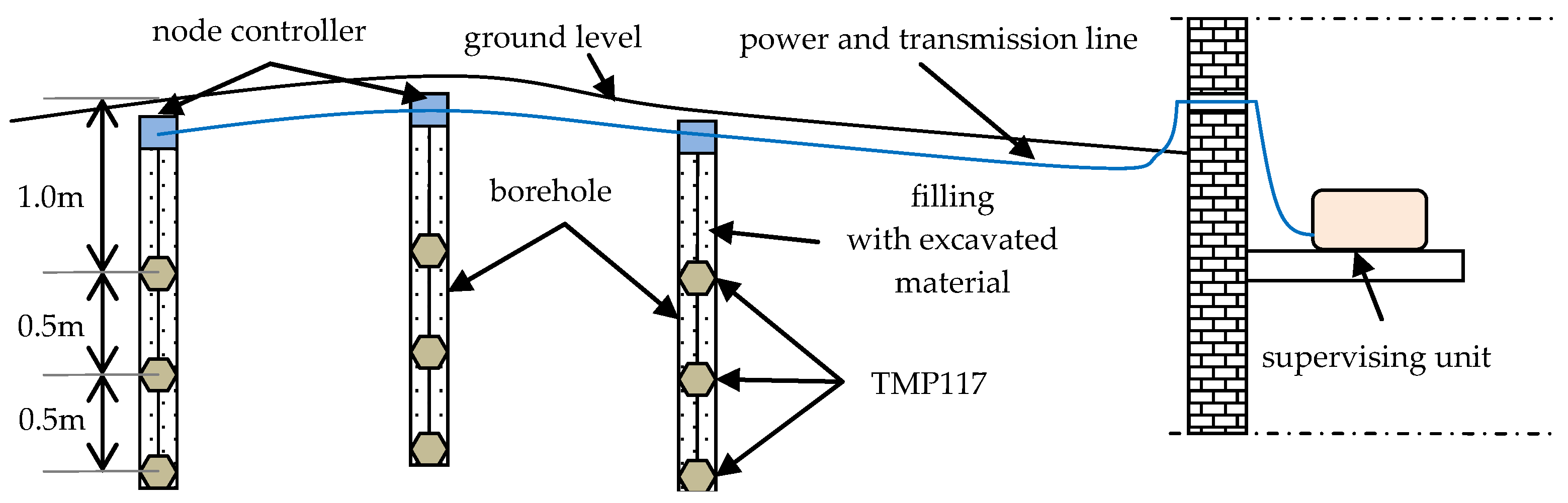
Figure 1 includes three TMP117 sensors, which measure temperature at depths of 1.0 m, 1.5 m, and 2.0 m below ground level.
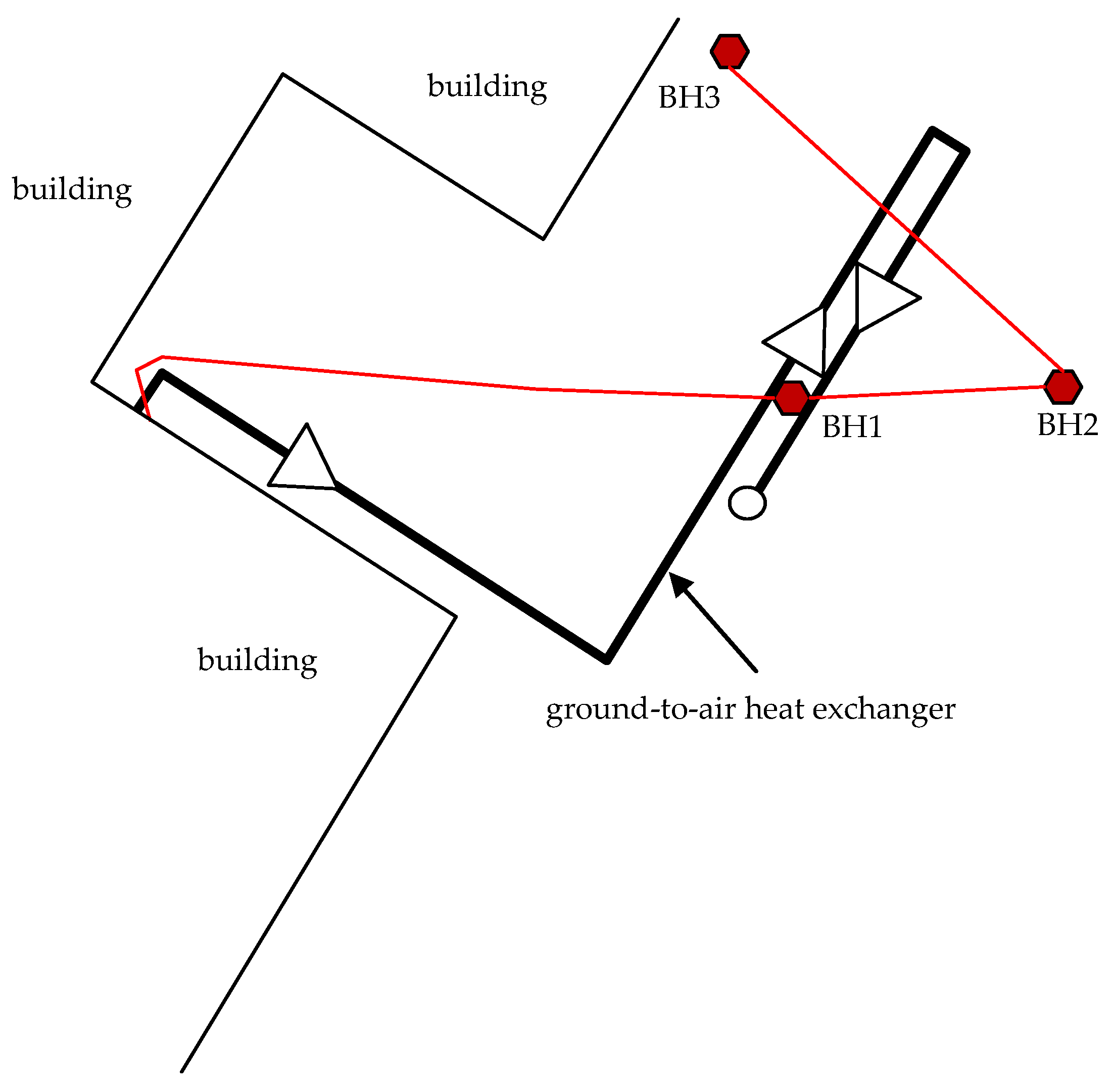
Figure 4 and
Figure 5 show the sensor layout in the measurement network.
The RS485 data bus and low-voltage power bus (9 VDC) can be divided into multiple independent lines (channels supported by independent UART buses; in
Figure 5, one such line is marked in red), which facilitates the control of measurement nodes in terms of their placement on the bus (it solves the problem of the correct placement of terminating resistors, whose task is to eliminate harmful interference and signal reflection by matching the line impedance).
The RP2040 chip with two 32-bit ARM Cortex M0+ cores was selected as the microcontroller managing the sensors in the nodes and the nodes in the supervisory unit. Of course, if battery power is required, ultra-low-power microcontrollers can be used, such as the 16-bit MSP430G2553 (Texas Instruments Inc., Dallas, TX, USA) with a RISC architecture core, which consumes only 230 µA in active mode, operating at a clock frequency of 1 MHz and a power supply of 2.2 V (see [
51]), as the system does not require significant computing power.
2.2. Measurement Network–Software
The simplicity of the hardware concept of the measurement network is mainly due to the chip-level integration of the individual components of the temperature sensor, as well as to the use of microcontrollers whose functioning is configured through an internal program stored in flash memory. All the intrinsic software functioning in the microcontrollers is version 1.1 and was developed in C language.
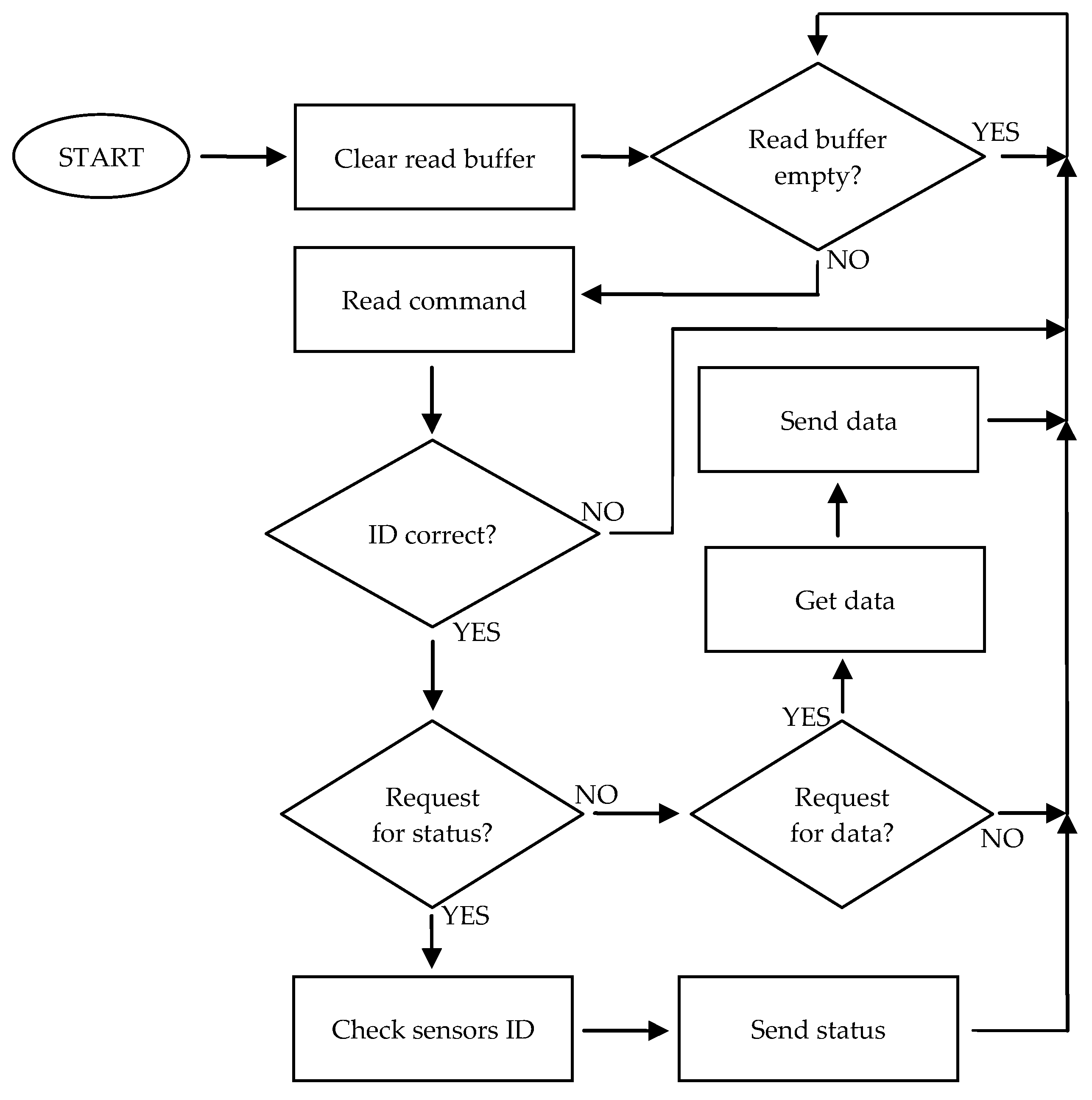
Figure 6 shows the algorithm of the program running in the measurement node, and
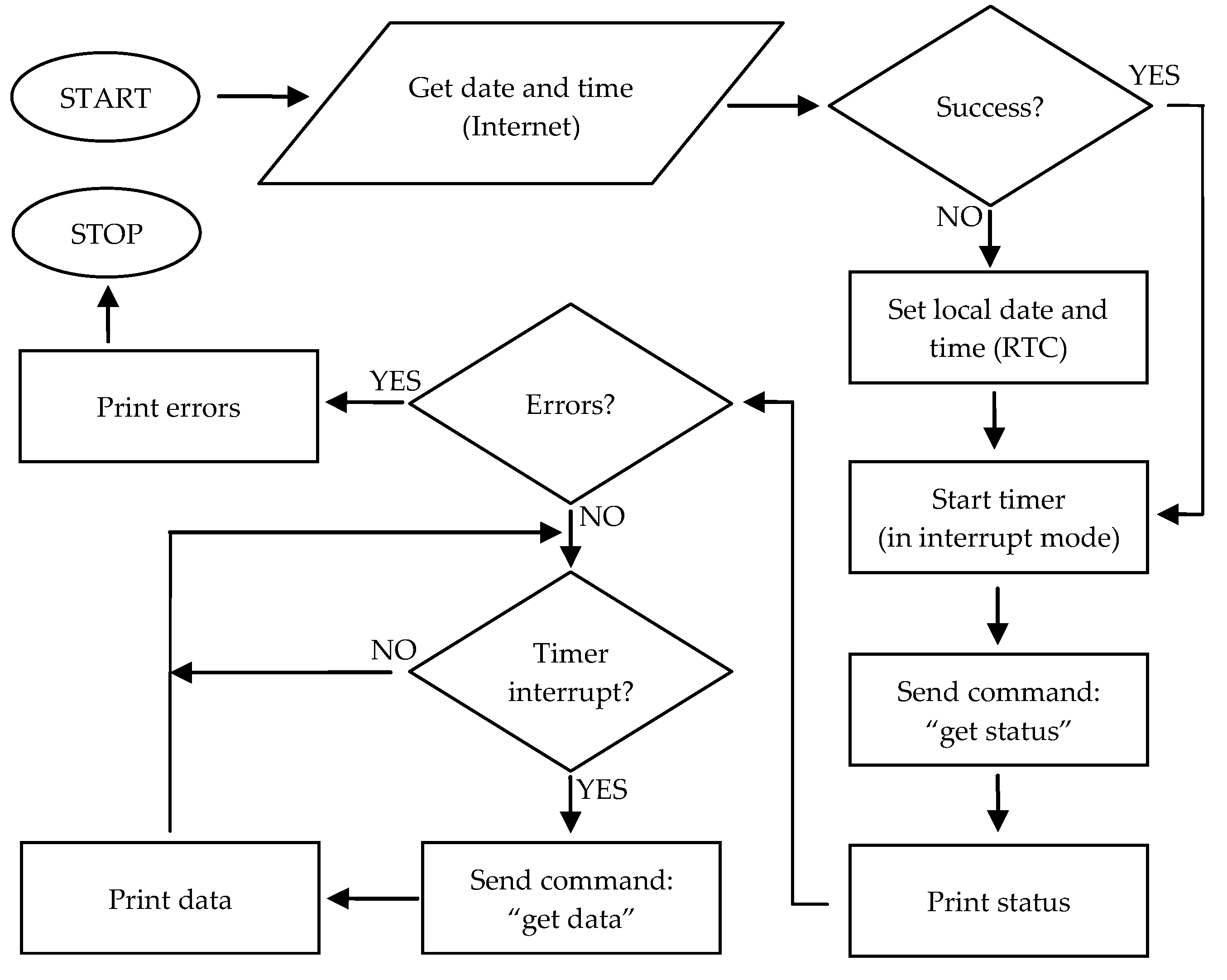
Figure 7 shows the algorithm of the program running in the supervisory unit.
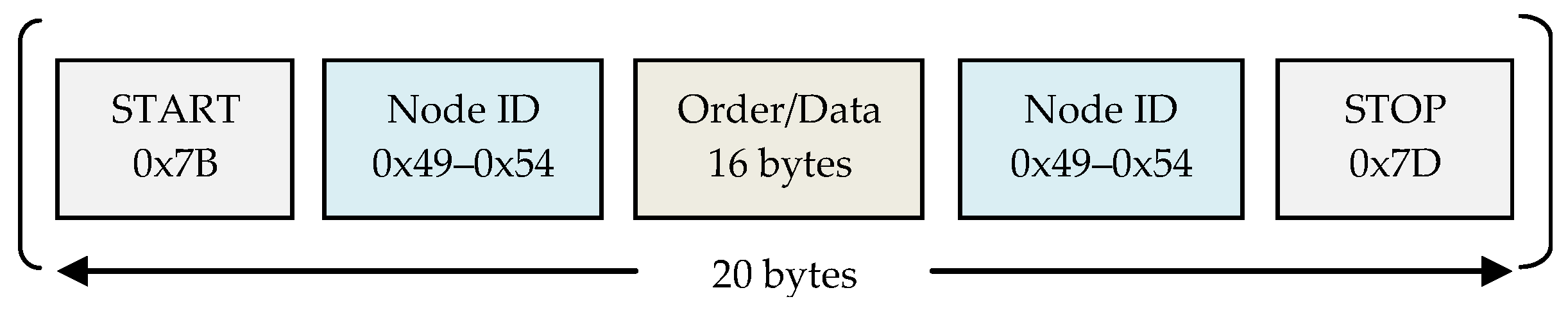
The supervisory unit communicates with the measurement nodes using a simplified ASCII protocol with information frame shown in
Figure 8.
Due to the low data sampling rate of the nodes (every 15 min), the transmission speed can be as low as 9600 baud and also CRC is not a necessary component of each information frame. Frame validation involves identifying the start and stop bytes and the node ID (stored in the 2nd and 19th bytes of the frame). The data collected by the supervisory unit is stored on an SD card and memory buffer, making it available on demand remotely via bluetooth and WiFi. The data file stored on the SD card is in ASCII text format and contains lines with keywords to facilitate data parsing.
2.3. Influence of the Ground Temperature Determination Method on the Energy Performance Assessment of the Ground-to-Air Heat Exchanger (GAHE)
Among HVAC systems influencing a building’s energy demand, the Ground-to-Air Heat Exchanger (GAHE) plays a notable role, as its performance is inherently governed by soil temperature distribution.
The thermal efficiency of the GAHE [
52], expressed through its heating or cooling output, can be quantified using the following relation
where
—heat gain from the GAHE [W];
—air density [kg/m3];
—specific heat of air at constant pressure, [ kWh/(kg K)];
—the air flow rate transported by the supply fans in the air handling unit [m3/h];
—supply outdoor air fraction [-];
—air temperature at the GAHE outlet [°C];
—outdoor air temperature [°C];
—calculation interval [h].
Since Equation (1) requires empirical data, it cannot be directly applied during the design stage. In particular, the outlet air temperature of the GAHE is difficult to predict without measurements. Therefore, the air temperature change across the exchanger can be determined following the procedure given in Standard PN-EN 16798-5-1:2017-07 [
52]:
where
Ground temperature
is calculated with the following formula:
where
—mean annual temperature of outdoor air [°C];
—maximum mean monthly temperature of outdoor air [°C];
–hours per year [h].
Coefficient
accounts for soil type and the depth of GAHE tubes:
where
—soil density, [1500 kg/m3];
—capacity of soil, [1200 J/kg K];
—soil thermal conductivity, [1.88 W/m K];
—tube depth [m].
The flow time coefficient
is given by the following formula:
where
The overall heat transfer coefficient of the GAHE is then determined as:
where
—thermal conductivity of the tube, [0.28 W/m K];
—inner diameter of the tube, [0.200 m];
—outer diameter of the tube, [0.188 m].
The inside surface coefficient
is calculated as:
where
In this study, the thermal output of the GAHE was assessed using three calculation pathways (Cases 1–3), applied to a 10-day period between 29 July and 7 August 2025 at a constant volumetric airflow of 100 m3/h. All analyses were carried out in Olsztyn, on the campus of the University of Warmia and Mazury, where an innovative measurement system—developed and described in this study—was installed.
Case 1—Ground temperature
was estimated using Typical Meteorological Year (TMY) data, which is the standard approach adopted in Poland for building energy performance calculations [
53]. The outdoor air temperature
was also taken from the TMY dataset.
Case 2—Ground temperature
was calculated following PN-EN 16798-5-1:2017-07, but with meteorological input data based on actual outdoor air temperatures
recorded between August 2024 and July 2025. These data were obtained from the Institute of Meteorology and Water Management (IMWM) [
54]. Outdoor air temperature
was also taken directly from IMWM measurements.
Case 3—Ground temperature was derived from direct field measurements performed with the original monitoring system developed by the authors and presented in this paper. Outdoor air temperature was again taken from IMWM.
For ground-air heat exchangers the ideal installation depth is typically between 1.0 m and 3 m. This range is a compromise between achieving a stable ground temperature and keeping excavation costs reasonable. Under conditions characteristic of the climate and soil of north-eastern Poland, the typical depth of GAHE is between 1 and 2 m, which is why for each case the analysis was carried out for three GAHE pipe depths: 1.0, 1.5, and 2 m.
It should be emphasized that the parameters of the soil in the immediate vicinity of the GAHE are an important factor in determining the change in air temperature in the exchanger. In the presented case of the actual GAHE installation, they result from the homogeneity of the substrate, which, as a result of construction works related to the demolition of the previous building and the erection of a new building, the installation of GAHE pipes, and the development of the area in the immediate vicinity of the building, led to the homogenization of the soil material in the ground to a depth of approximately 3 m below ground level. Therefore, the selected research area qualifies as a fully controlled experimental field, meeting the criteria of significance of key parameters for the research in question. In each case of heterogeneous subsoil, a sensitivity analysis should be performed to identify, for example, their critical values.
3. Results
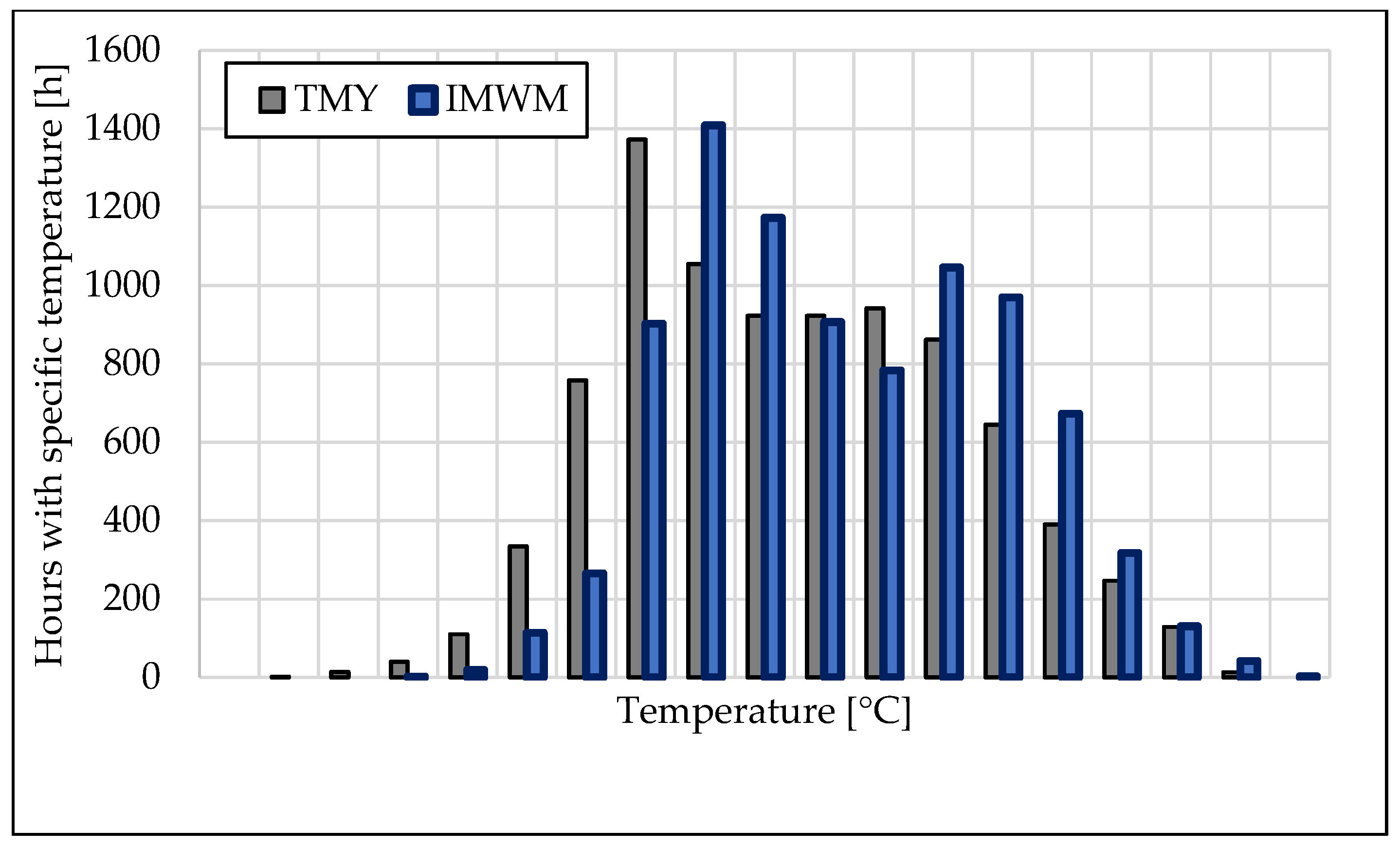
The comparison of TMY data and IMWM observations for the year preceding the field campaign revealed systematic differences in outdoor air temperature profiles. The mean hourly air temperature in TMY was 6.9 °C, while IMWM measurements yielded 9.5 °C (
Figure 9). Frequency distributions showed that TMY data clustered around 0–1 °C (6.5% of all records), whereas IMWM measurements were dominated by 3–4 °C (5.5%). This illustrates a shift toward higher values in the measured dataset. Percentile analysis confirmed this tendency: the 5th percentile was −5.3 °C (Case 1) versus −1.7 °C (Case 2–3), while the 95th percentile reached 21.5 °C and 22.4 °C, respectively.
Extremes also differed: the lowest temperature in TMY was −17.3 °C (7 January, 06:00), compared to −11.2 °C in IMWM (20 February, 06:00). The highest values were 31.0 °C in TMY (9 June, 12:00) and 33.0 °C in IMWM (3 July, 10:00). Thus, real measurements exhibited higher summer peaks and milder winter minima relative to TMY.
Seasonal averages confirmed this tendency, showing that in winter the mean temperature was −2.31 °C according to Case 1 and 1.37 °C based on Case 2–3 observations. In spring the values were 6.31 °C and 8.62 °C, respectively, while in summer they reached 16.55 °C (TMY) and 17.61 °C (IMWM). During autumn, the averages amounted to 7.03 °C and 10.18 °C, respectively.
During the observation period from 29 July to 7 August, the mean outdoor air temperature derived from TMY data was 18.3 °C, whereas the IMWM measurements indicated a lower average of 17.4 °C. The maximum outdoor temperature in TMY reached 28.8 °C, while the peak recorded by IMWM was 27.9 °C. Conversely, minimum values diverged more strongly: the TMY data showed 8.1 °C, while IMWM measurements indicated 10.7 °C. This suggests that TMY systematically projected colder night-time conditions, with a mean difference of approximately −2.6 °C. As a consequence, the diurnal amplitude of outdoor temperature variation was larger in TMY, amounting to 20.7 °C, whereas IMWM data exhibited a smaller range of 17.2 °C (3.5 °C lower).
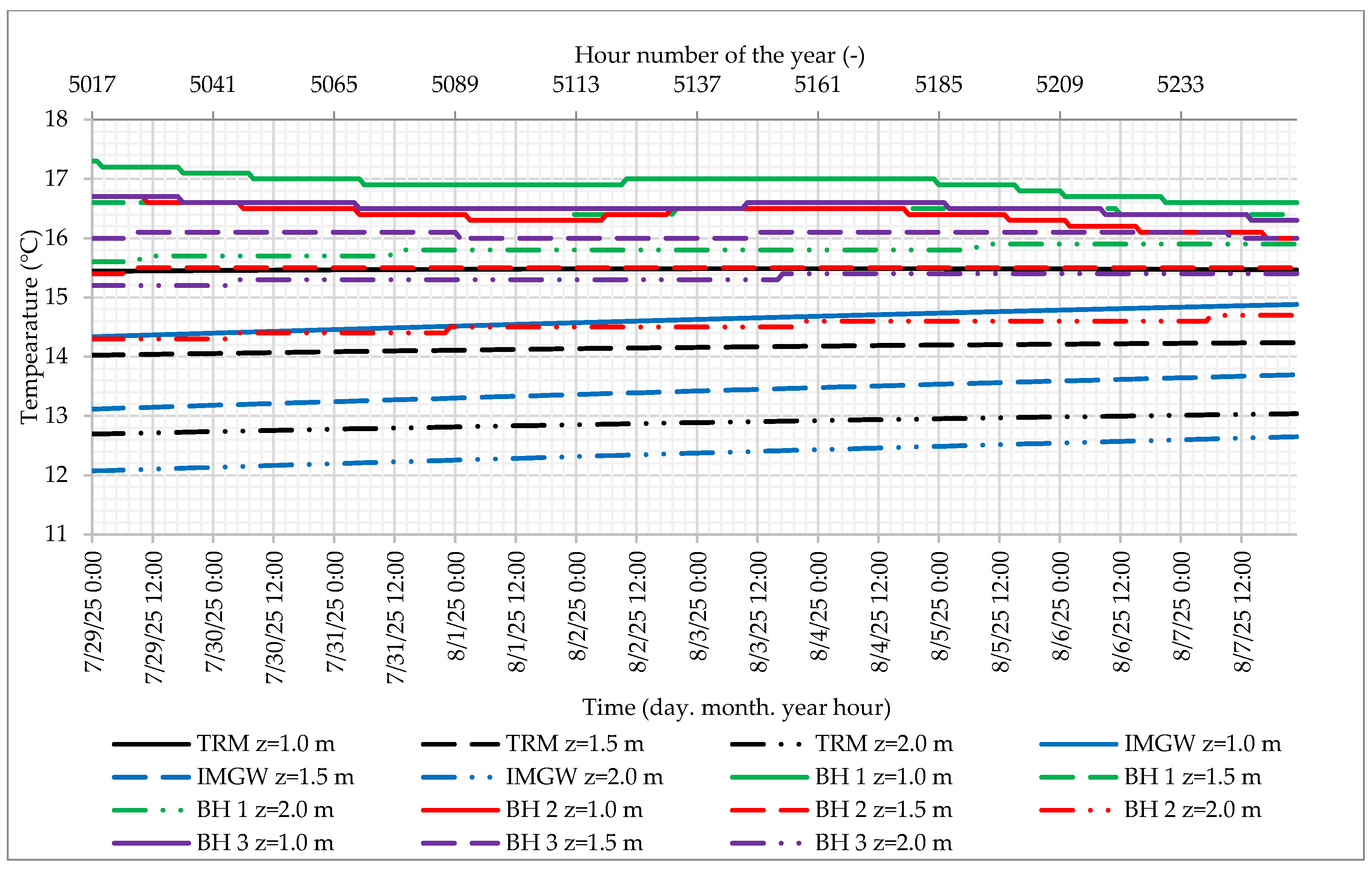
Soil temperature distributions at depths of 1.0 m, 1.5 m, and 2.0 m were then analyzed (
Figure 10). The dataset included both computational series performed in accordance with PN-EN 16798-5-1:2017-07, based on the Typical Meteorological Year (TMY) (Case 1) and the Institute of Meteorology and Water Management (IMWM) data (Case 2), as well as field measurements obtained with the proposed monitoring system in three boreholes (BH1–BH3) (Case 3).
At 1.0 m, the mean measured temperature (16.61 °C) exceeded both model predictions (15.47 °C TMY; 14.62 °C IMWM). Differences among boreholes were modest (~0.5 °C), with BH1 warmer than BH2. Temporal variability was minimal (σ = 0.14 °C). The relationships with outdoor air temperature proved to be very weak (r ≤ 0.20, R2 < 0.05).
At 1.5 m, measured values (16.02 °C) again surpassed models (14.15 °C TMY; 13.42 °C IMWM), with the largest inter-borehole differences observed (BH1: 16.5 °C vs. BH2: 15.5 °C). Temporal variability was lowest here (σ = 0.03 °C), reflecting strong soil thermal inertia. Correlations with outdoor air temperature were close to zero, and the regression slopes were practically flat, confirming the absence of response within the short, ten-day window.
At 2.0 m, measurements gave 15.21 °C, whereas model outputs were 12.88 °C (TMY) and 12.37 °C (IMWM). Discrepancies reached +2.3 °C and +2.8 °C. At the same time, considerable discrepancies were observed between the boreholes—BH1 exhibited the highest temperature (15.8 °C), whereas BH2 recorded the lowest (14.5 °C). Temporal variability remained very low (σ = 0.08 °C), and correlations with outdoor air temperature were practically absent (r ≈ 0.04).
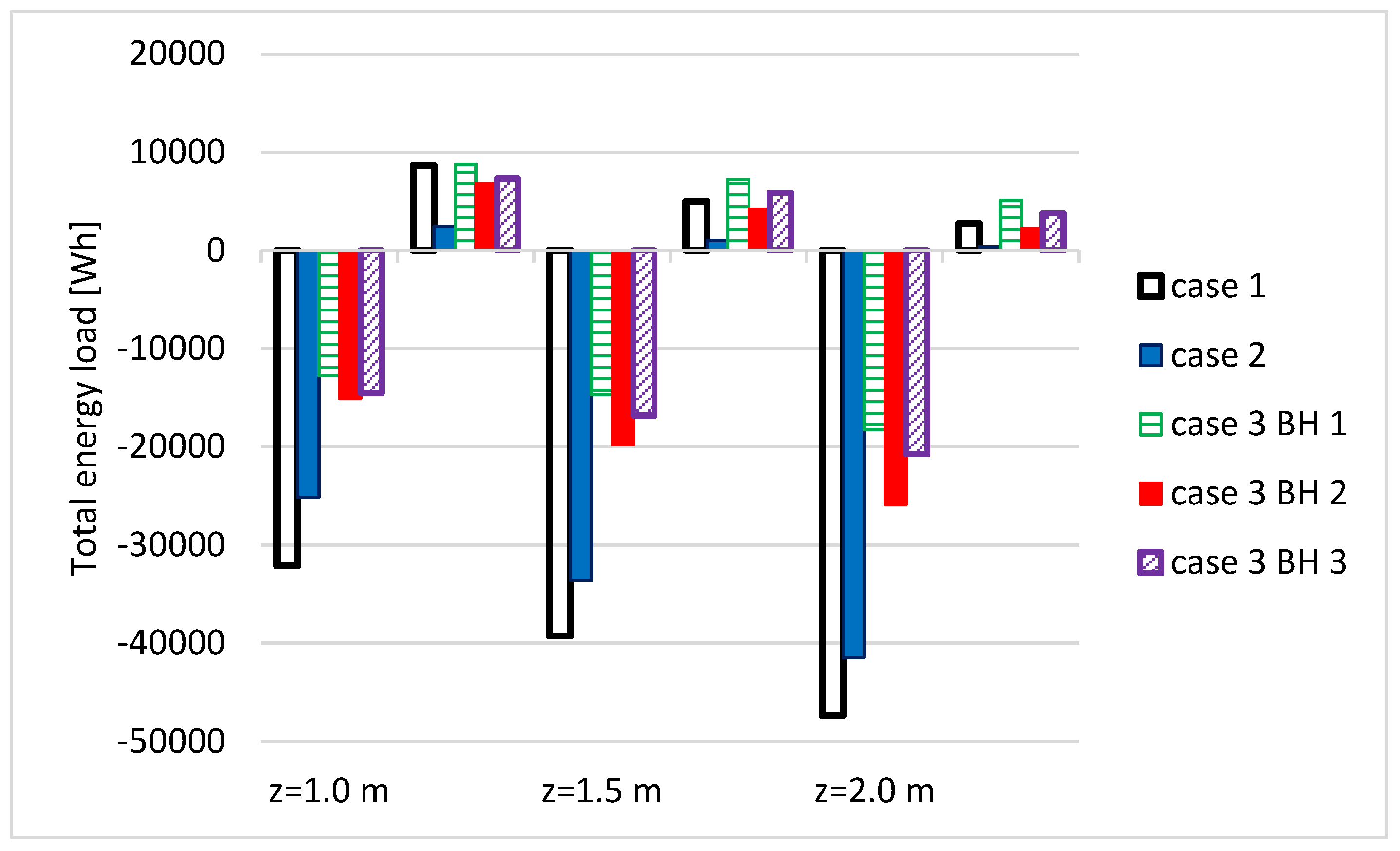
In the conducted analyses, the energy balance of the ground-to-air heat exchanger (GAHE) was determined for the summer period between 29 July and 7 August 2025, covering ten days (240 h), according to Equation (1). The selected 10-day observation period is based on the assumption that a comparative analysis of different GAHE location scenarios and approaches to analysis will provide clearer results if it covers the quasi-stationary state of a three-phase soil medium that can be maintained with stable parameters over a shorter period of time. Positive values correspond to the pre-heating effect, while negative values indicate pre-cooling (
Figure 11 and
Figure 12 and
Table 1). In summer conditions, pre-heating in the GAHE occurs when the outdoor air temperature is lower than the ground temperature. This most often happens during nighttime hours. For this reason, in real installations, nighttime shutdown of the GAHE is often applied. The balance was calculated under the assumption of a constant airflow rate of 100 m
3/h.
In all three cases, the total GAHE balance (sum of hourly values over the 10-day period) was negative, reflecting the dominance of the cooling effect during the analyzed summer interval (
Table 1). At the same time, the case 2 based on actual meteorological observations from the Institute of Meteorology and Water Management (IMWM) showed a less pronounced cooling effect compared with the case 1 based on Typical Meteorological Year (TMY) data. At a depth of 1.0 m, the cumulative pre-cooling energy amounted to 23.4 kWh for TMY and 22.7 kWh for IMWM, representing a difference of 3.02%. These differences increased with depth: at 1.5 m the corresponding values were 34.2 kWh and 32.6 kWh (a difference of 4.93%), whereas at 2.0 m they reached 44.6 kWh and 41.1 kWh, respectively (a difference of 7.84%). This indicates that, when actual meteorological data were applied, the cooling balance was on average 3–8% less intensive than in the case based on TMY.
From the perspective of ground heat extraction (pre-heating), the differences between Case 1 and Case 2 were even more pronounced (
Figure 11). At a depth of 1.0 m, the cumulative hourly energy recovered for air pre-heating reached 8.6 kWh for TMY, while IMWM data yielded only 2.4 kWh, corresponding to a difference of 71.7%. At 1.5 m, the discrepancy increased to 79.3%, and at 2.0 m it reached as much as 86.4%. TMY also produced higher maximum hourly values at shallower depths; for instance, at 1.0 m the peak hourly load was 251.2 Wh for TMY compared with 126.0 Wh for IMWM, while the maximum daily totals at this depth were 1.3 kWh and 0.9 kWh, respectively. The analysis of the share of hours with pre-heating confirmed that the capacity of the soil to reduce the temperature of air passing through the GAHE increased with depth during the summer period. For TMY, pre-heating occurred during 37.1% of hours at 1.0 m but only 17.1% at 2.0 m, whereas for IMWM the corresponding values were 19.2% and 5.4%.
In Case 3, which was based on three field boreholes, clear differences were observed between the locations. Borehole BH1 consistently exhibited the highest pre-heating values at all depths, with cumulative totals of 8.7 kWh at 1.0 m, 7.2 kWh at 1.5 m, and 5.1 kWh at 2.0 m. By comparison, BH2 yielded 6.8 kWh, 4.2 kWh, and 5.2 kWh at the respective depths, while BH3 produced 7.3 kWh, 5.9 kWh, and 3.8 kWh.
The cumulative energy obtained in pre-cooling mode during the analyzed period also revealed distinct differences between calculation approaches (
Figure 11). In Case 1 (TMY), the values were 32.1 kWh at 1.0 m, 39.2 kWh at 1.5 m, and 47.4 kWh at 2.0 m. In Case 2 (IMWM), the corresponding values were lower, namely 25.2 kWh, 33.6 kWh, and 41.5 kWh, which represents reductions of 21.5%, 14.4%, and 12.4%, respectively, compared with TMY. In Case 3, based on in situ measurements, the magnitude of pre-cooling was considerably smaller. For BH1, the totals were 12.7 kWh, 14.7 kWh, and 18.2 kWh at 1.0 m, 1.5 m, and 2.0 m, respectively; for BH2 the values reached 15.1 kWh, 19.8 kWh, and 25.9 kWh; while for BH3 they amounted to 14.5 kWh, 16.8 kWh, and 20.7 kWh. Compared with TMY, this corresponds to reductions of approximately 52–60% for BH1, 50–56% for BH2, and 54–59% for BH3, depending on depth. A similar comparison against IMWM data indicated reductions of around 37–52% for BH1, 30–47% for BH2, and 38–50% for BH3.
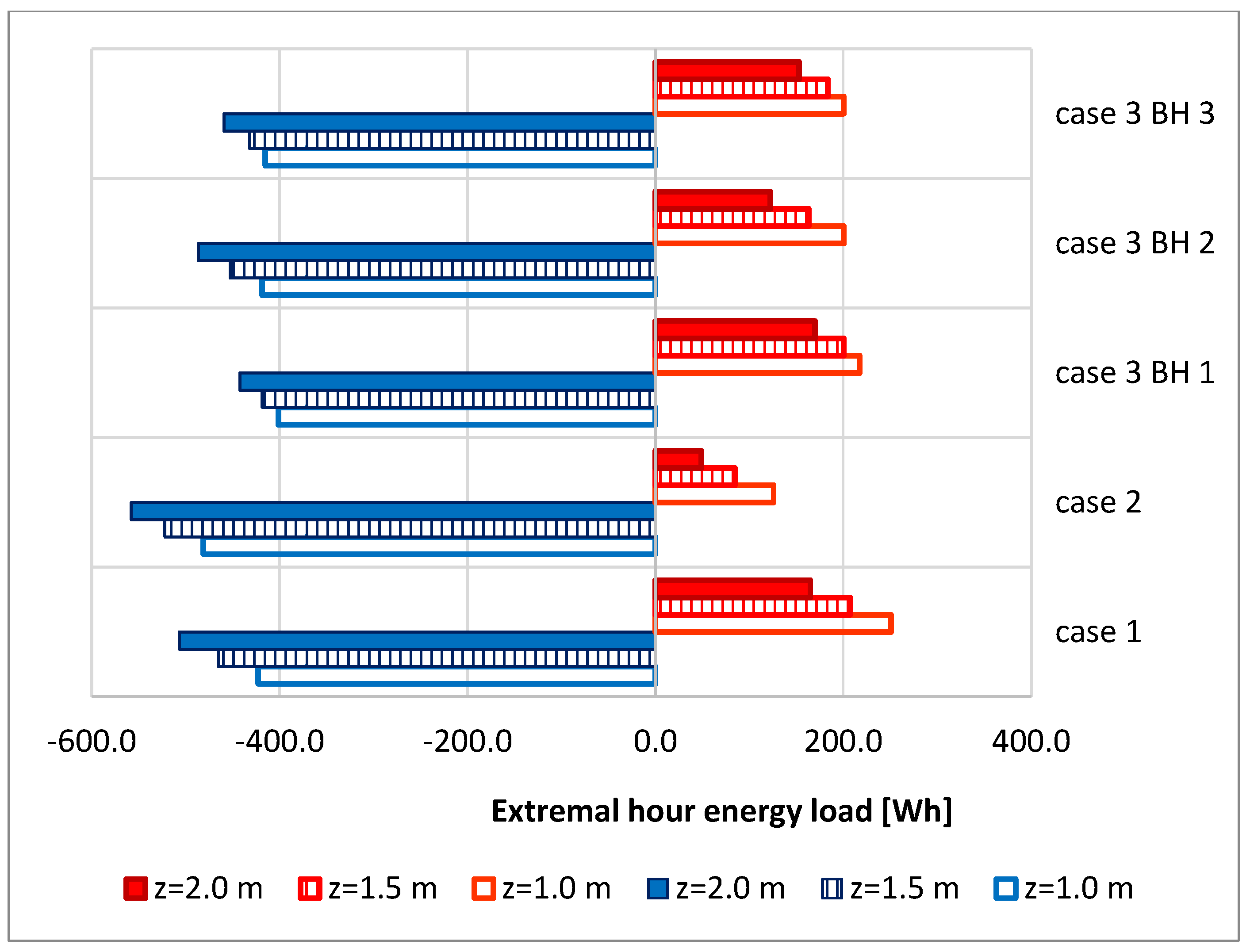
The highest extreme hourly cooling values were recorded in Case 2 at a depth of 2 m (557.6 Wh), whereas the maximum pre-heating was observed in Case 1 at a depth of 1 m (251.2 Wh) (
Figure 12). Field measurements indicated more moderate loads in both cooling and heating, emphasizing the importance of local in situ investigations for accurately assessing GAHE performance. The analysis of extreme hourly energy values in Case 3 showed that the measurement data from boreholes BH1, BH2, and BH3 were very similar, with differences generally limited to a few to several percent. For cooling at a depth of 1 m, the deviation between BH2 and BH1 was +4.2%, while between BH3 and BH1 it was +3.4%. At 1.5 m, the differences were larger, amounting to +8.1% for BH2 relative to BH1 and +3.3% for BH3. The largest discrepancies occurred at 2 m, where BH2 recorded values +10.0% higher than BH1 and BH3 was +3.8% higher. For heating, the greatest differences were also found at 2 m, where BH2 yielded values −28.0% lower than BH1 and BH3 was lower by −10.0%. At 1.5 m, both BH2 and BH3 were −18.6% below BH1, while at 1 m the deviations amounted to −7.8%. Among the analyzed scenarios, Case 2 (IMWM) displayed a distinct profile, with comparatively smaller pre-cooling values but, at the same time, among the highest pre-heating values, which clearly differentiates it from all other cases. In contrast, Case 1 (TMY) was characterized by the largest hourly extremes in both cooling and heating.
4. Discussion
The comparison of the TMY and IMWM models reveals that both systematically underestimate ground temperature relative to in situ measurements. Over the entire analyzed period, measured values were on average 1.1–2.3 °C higher than the TMY model predictions, and 2.0–2.8 °C higher than those from the IMWM model, with discrepancies increasing with depth. It should be emphasized that the TMY climatology used was developed for Olsztyn based on meteorological observations from 1971 to 2000, and thus does not reflect the more dynamic climate trends observed in recent years. The TMY dataset indicates colder and longer winters—conditions that are no longer observed in Central Europe to the same extent as 50 or even 20 years ago.
According to IMGW climatological reports [
55], from 1951 to 2023 the annual mean air temperature in Poland exhibited a positive and statistically significant trend (confidence level α = 0.95) of 0.3 °C per 10 years, corresponding to an increase of approximately 2.2 °C over the full period. Similar tendencies were found in northeastern Poland. Seasonal analysis showed that the largest temperature increase occurred during winter, at roughly 0.62 °C/10 years, while the smallest increase was during autumn, at about 0.19 °C/10 years. In spring and summer, increases in maximum temperatures (0.64 °C/10 years) were more pronounced than for minimum temperatures (0.19 °C/10 years).
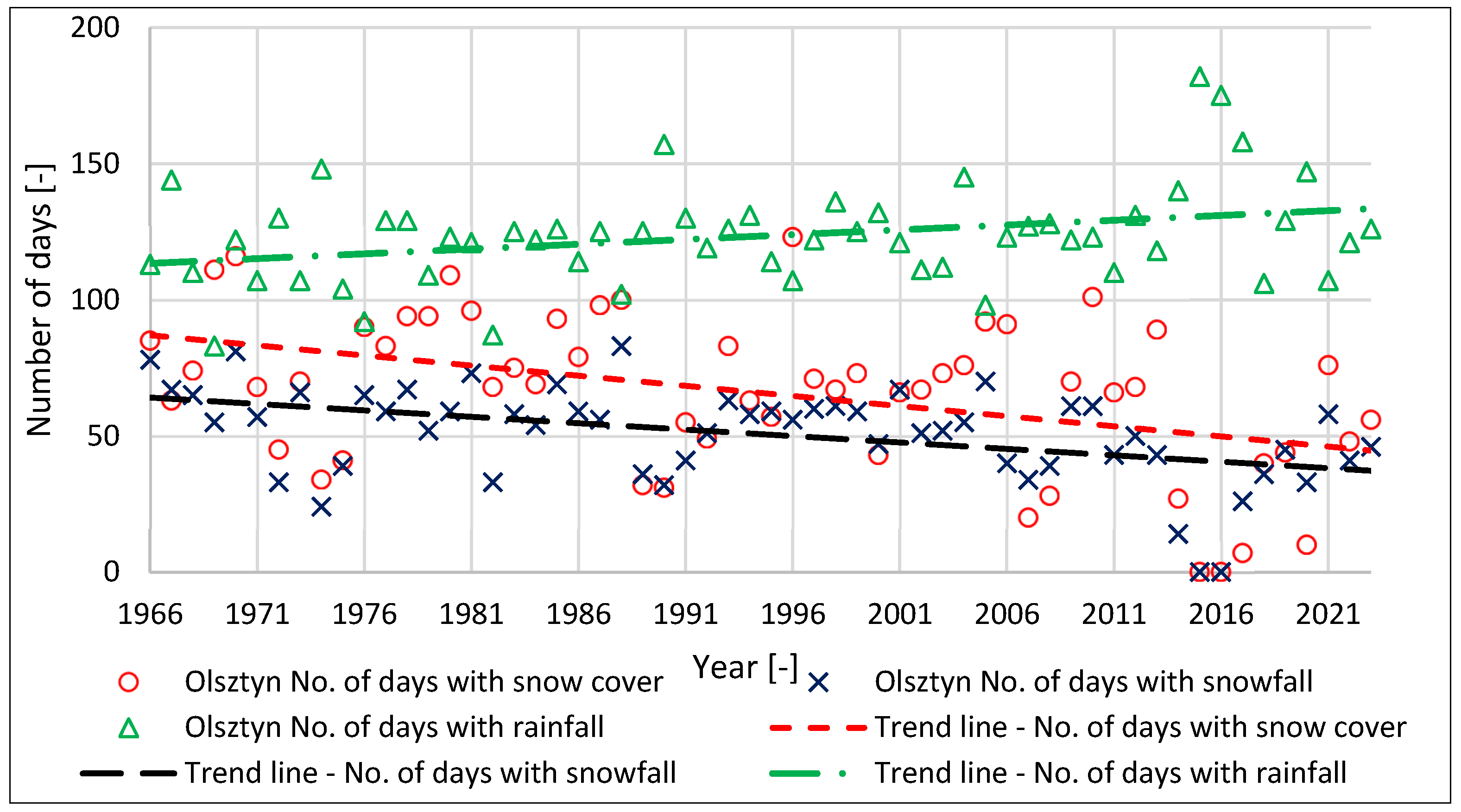
An important factor affecting the subsurface temperature distribution—unaccounted for in summer-only measurements—is snowfall. Here the influence of climate change is particularly evident (
Figure 13). Approximately six decades ago, snow precipitation occurred on average 60 days per year, and the snow cover remained in place for 82 days. Currently, snowfall days have declined to approximately 43 days per year, and days with persistent snow cover to around 53. In both 2015 and 2016, no snowfall was recorded in Olsztyn. Simultaneously, the number of rainfall days has increased—from about 113 per year in the 1960s to approximately 121 at present. Snow cover depth has also declined substantially: from 1966 to 2023, snow depth dropped by about 50%.
Rising trends are also observable in minimum ground temperatures. The most significant changes occurred in summer. For example, a linear trend for August indicates an increase in minimum ground temperature from around 1.6 °C in 1966 to about 5.1 °C in 2023. In winter, a similar rise is evident though less pronounced: in February 1966, the minimum recorded ground temperature was approximately −21.0 °C, while in 2023 it was around −17.4 °C. These shifts imply that the use of TMY-based inputs in computational models per the PN-EN 16798-5-1:2017-07 standard may lead to substantial discrepancies.
A more defensible approach is to use contemporary meteorological data for building energy balance calculations conforming to PN-EN 16798-5-1:2017-07. In absence of such data, constructing a TMY for the period 1995–2025 would be optimal. Otherwise, reliance on actual measurement data becomes necessary, recognizing that a single year may not reflect multiyear trends and may be influenced by episodic extreme events such as heavy rainfall or heatwaves.
Interestingly, calculations based on meteorological data from the year immediately preceding the field measurements also failed to reproduce the actual ground temperature profile. Although the summer of 2025 [
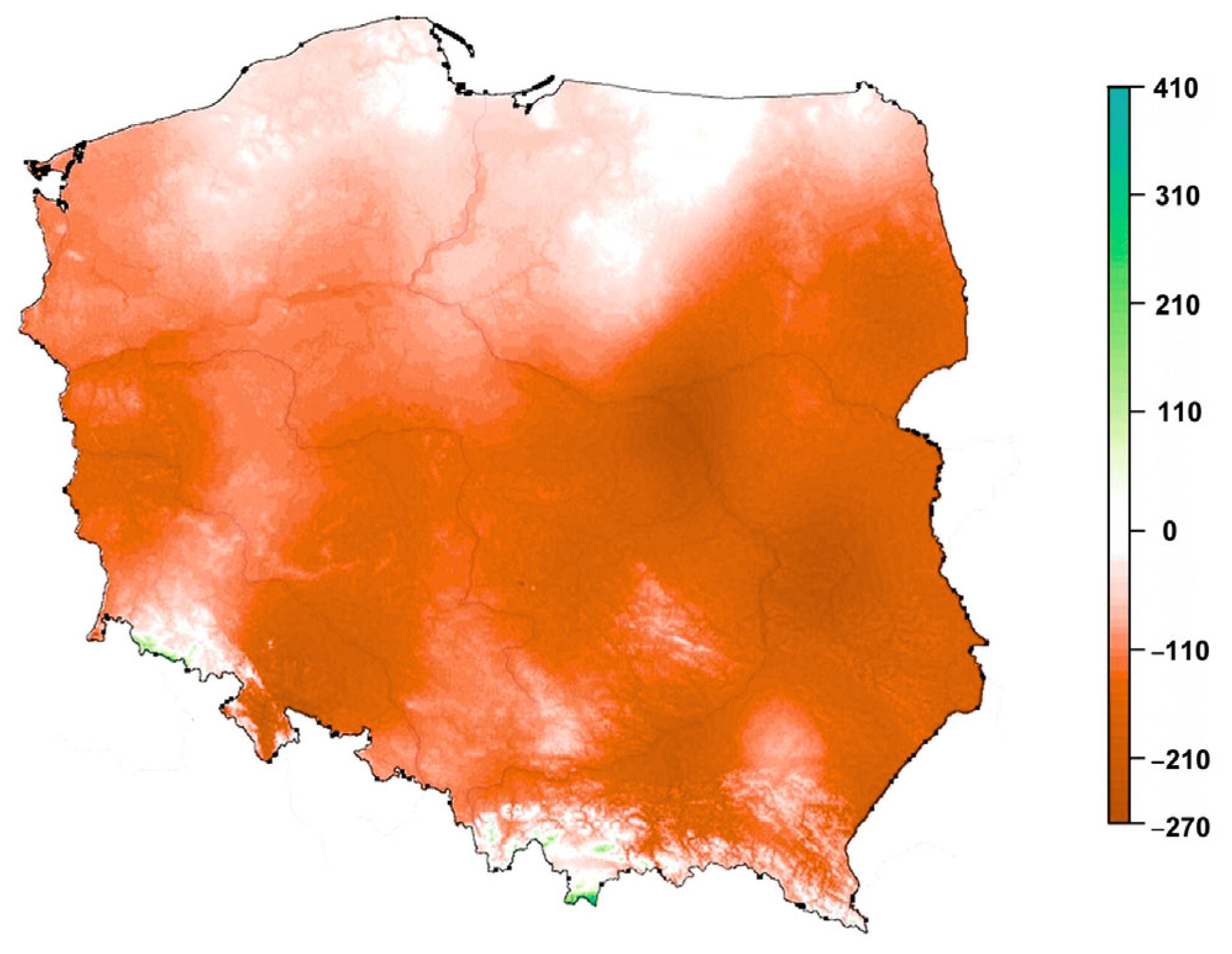
56] can be considered thermally ordinary, the areal mean air temperature was 18.2 °C, only 0.2 °C higher than the 1991–2020 reference average. Precipitation in summer 2025 totaled 211.1 mm, which is 11.9 mm lower than the climatological norm. However, the key parameter for the ground energy balance was the negative cumulative climatic water balance, with the greatest deficits (down to −270 mm) observed in the Mazovian Lowland region. The Olsztyn area also exhibited moisture deficit (
Figure 14).
The obtained results also revealed noticeable discrepancies in the measurement data between the individual boreholes BH1, BH2, and BH3. The lowest temperatures were consistently recorded in borehole BH2. The shallower the depth, the smaller the differences in soil temperature between the boreholes. At a depth of 1.0 m, the ground temperature in BH3 was on average 0.1 °C higher than in BH2, while in BH1 the mean temperature exceeded that of BH2 by 0.5 °C at the same depth. With increasing depth, these differences became more pronounced. At 2.0 m, the soil temperature in BH3 was on average 0.8 °C higher than in BH2, whereas BH1 recorded values approximately 1.3 °C higher than BH2.
Such differences in the soil temperature distribution translated into significant discrepancies in the total amount of energy extracted during the ten days of system operation analyzed. Based on the measured soil temperature profiles, it was established that BH2 provided about 30% more energy than BH3, and nearly twice as much as BH1. These variations cannot be reproduced by applying standard computational models used for building energy balance assessments, such as the methodology described in PN-EN 16798-5-1:2017-07, regardless of the quality of the input data regarding outdoor air temperature distribution. The measurement differences observed between the boreholes clearly result from their placement within a real, developed urban area, and from the influence of nearby underground infrastructure on soil thermal conditions. Elements such as sewer pipelines, inspection chambers, district heating mains, external HVAC installations, as well as the proximity of building foundations, all alter the natural soil temperature distribution.
In the present case, BH2 was located at the greatest distance from underground utilities, thereby reflecting undisturbed soil temperature conditions. In contrast, BH1 was situated in close proximity to sewer pipelines and GAHE installations, which significantly affected its soil temperature profile. The thermal regime in the vicinity of BH3, on the other hand, was strongly influenced by the immediate presence of a heated, basement-equipped building.
It must be emphasized, however, that the measurements presented in this study covered only a ten-day period and therefore do not provide a sufficient basis for drawing long-term conclusions. The primary aim of this paper was to demonstrate the functionality of the innovative monitoring system, while the presented findings should be regarded as preliminary evidence confirming the importance and necessity of wider application of in situ soil temperature measurements. Even this limited ten-day analysis illustrates how large the discrepancies in the GAHE energy balance may be when relying on simplified mathematical models for engineering purposes, compared to actual field data.
Considering the ongoing process of urbanization, the determination of real soil temperature conditions within dense urban networks and installation zones is essential for accurate energy balancing of buildings and structures, especially in the context of HVAC systems that depend on ground thermal parameters, such as ground source heat pumps or GAHE systems. Furthermore, long-term measurement campaigns would provide a sound basis for systemic recommendations; for example, regarding the safe depths at which technical infrastructure such as water supply or sewer networks should be located. The possibility of installing such utilities at shallower depths, while maintaining safe operating conditions, could in practice result in significant reductions in investment costs.