Thermal Performance of Charge/Discharge Dynamics in Flat-Plate Phase-Change Thermal Energy Storage Systems

Abstract
1. Introduction
2. Experimental and Simulation Methods
2.1. Numerical Simulation Method
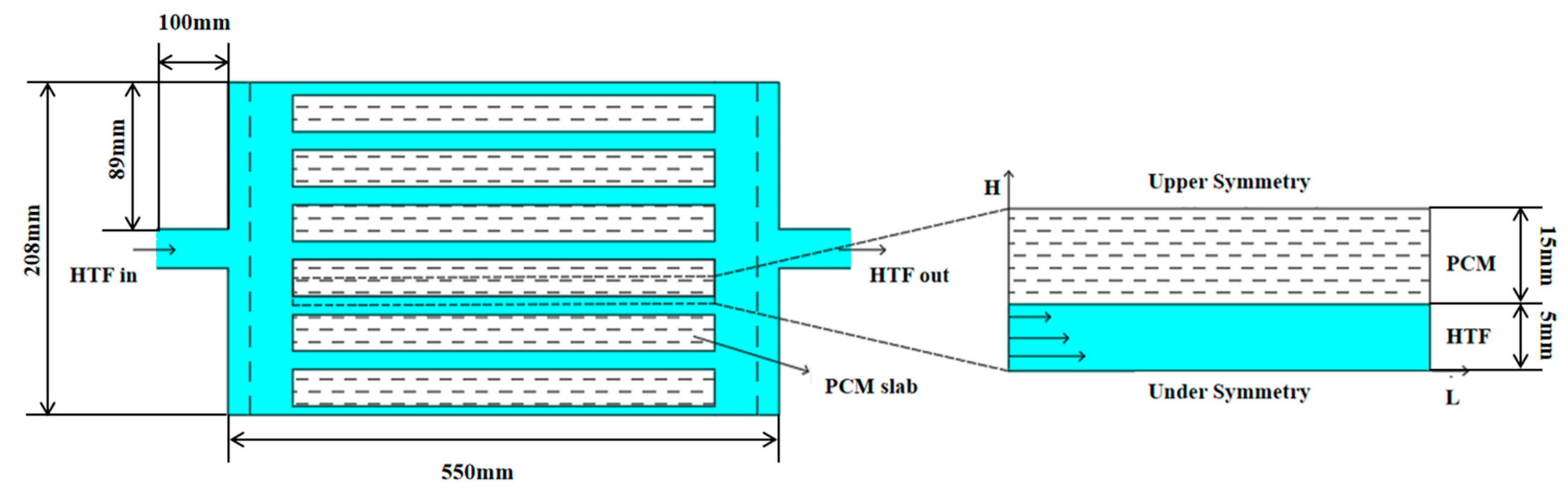
2.1.1. Physical Model
- (1)
- Uniform mass flow distribution and identical inlet temperatures across all heat transfer fluid (HTF) channels;
- (2)
- Due to the thin and flat physical properties of the plate and the characteristics of its horizontal layout, the natural convection within the liquid phase of PCM is ignored;
- (3)
- The energy loss of the phase-change energy storage device to the environment is not considered;
- (4)
- Homogeneity and isotropy of PCM with constant thermophysical properties;
- (5)
- The initial temperature of all PCM is the same. The initial temperature of the HTF and the container in the device is also the same;
- (6)
- Gravity is vertical, and there is no symmetry in that direction.
2.1.2. Mathematical Model
2.1.3. Boundary Conditions and Parameter Settings
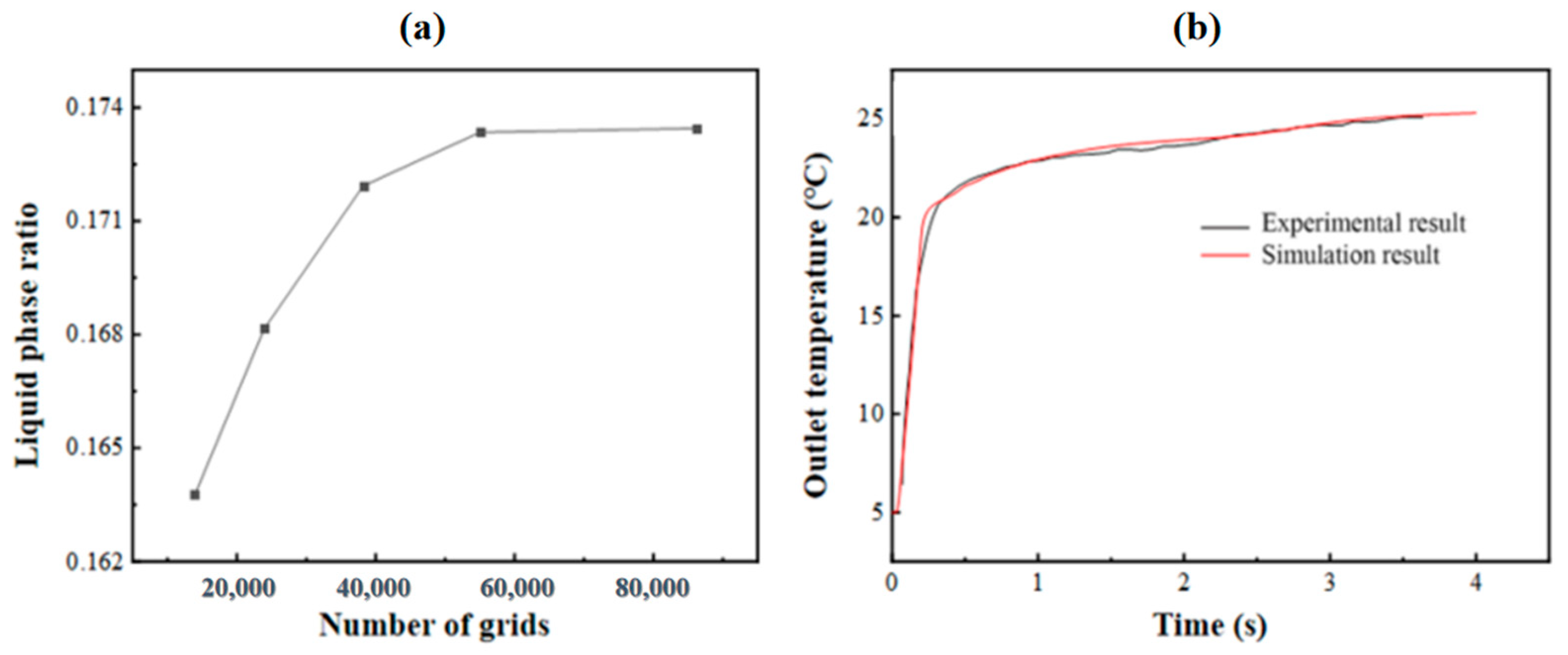
2.1.4. Grid Independence Verification and Model Verification
2.1.5. Evaluation Index
2.2. Phase-Change Cold Storage Experiment
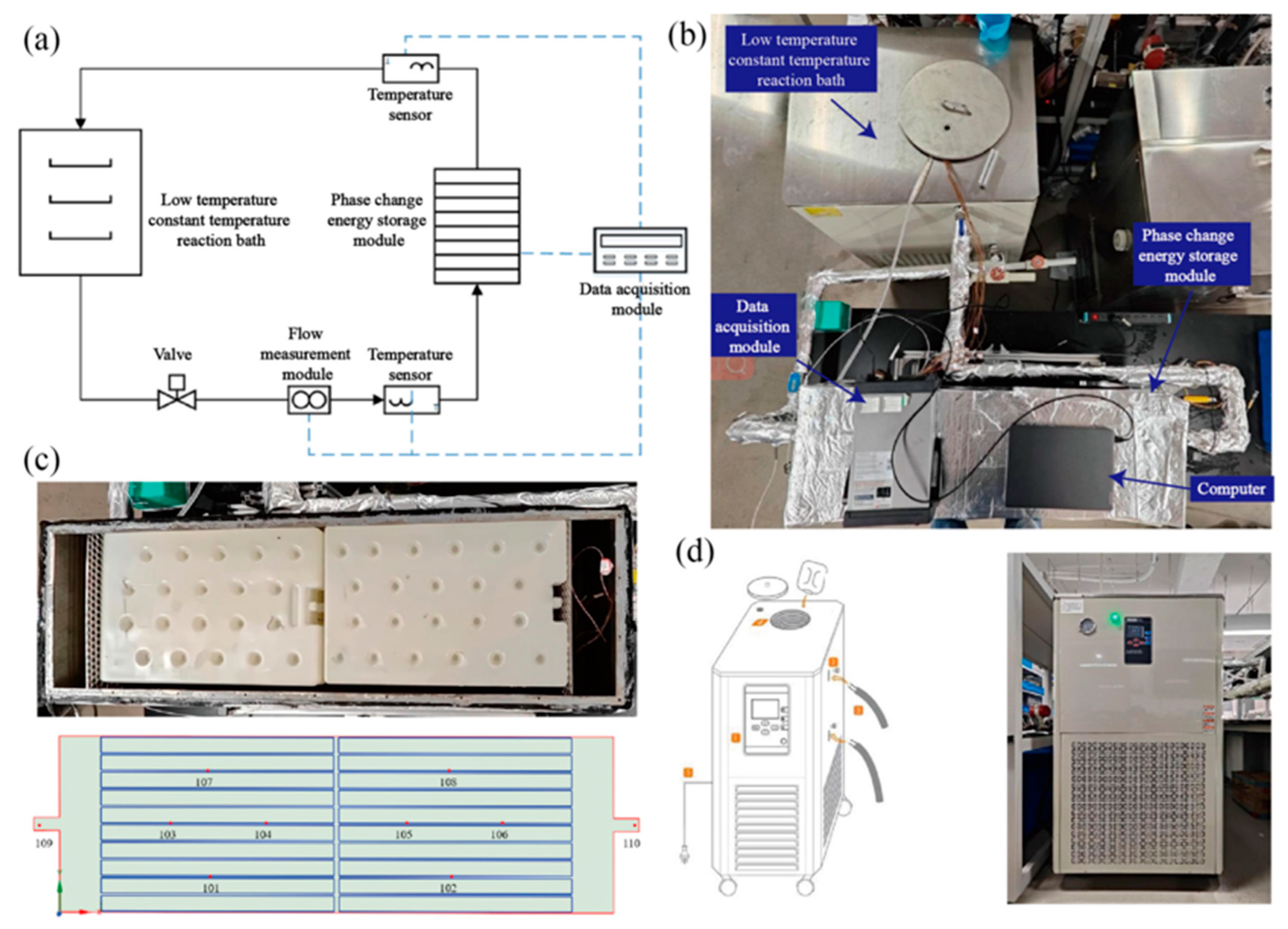
2.2.1. Experimental Bench System Principle
2.2.2. Main Equipment of Experimental Bench System
- (1)
- Flat-panel thermal energy storage device based on phase change
- (2)
- Low-temperature constant-temperature reaction tank
- (3)
- Agilent 34970A Data Acquisition Instrument
2.2.3. Experimental Content
- (1)
- Cold storage experiment
- (2)
- Cold release experiment
3. Results and Discussions
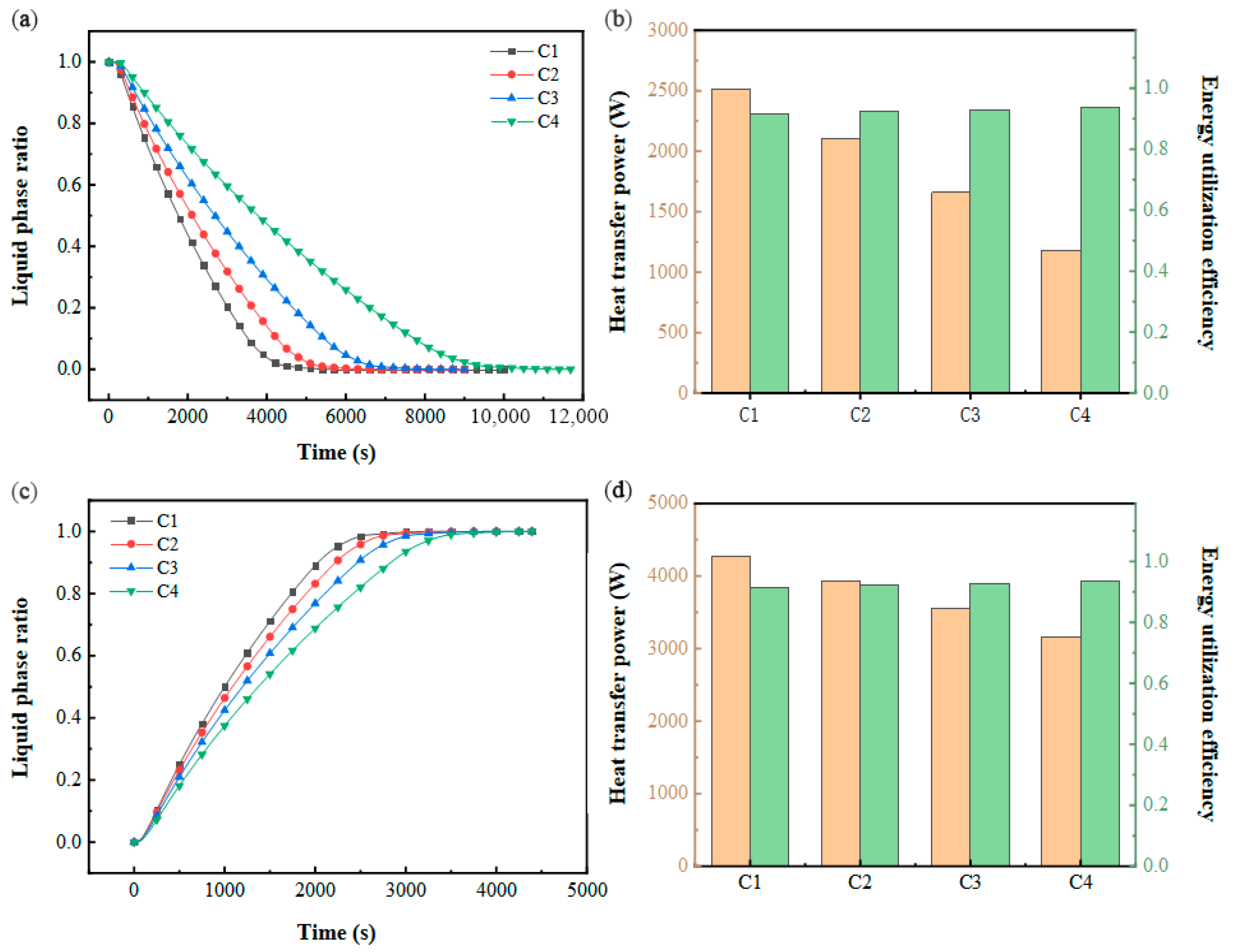
3.1. Influence of Cell Structure on the Overall Performance of Cold Storage
3.2. Thermal Performance Analysis of the Flat-Panel Phase-Change Energy Storage Unit
3.3. Impact of Inlet and Outlet Locations
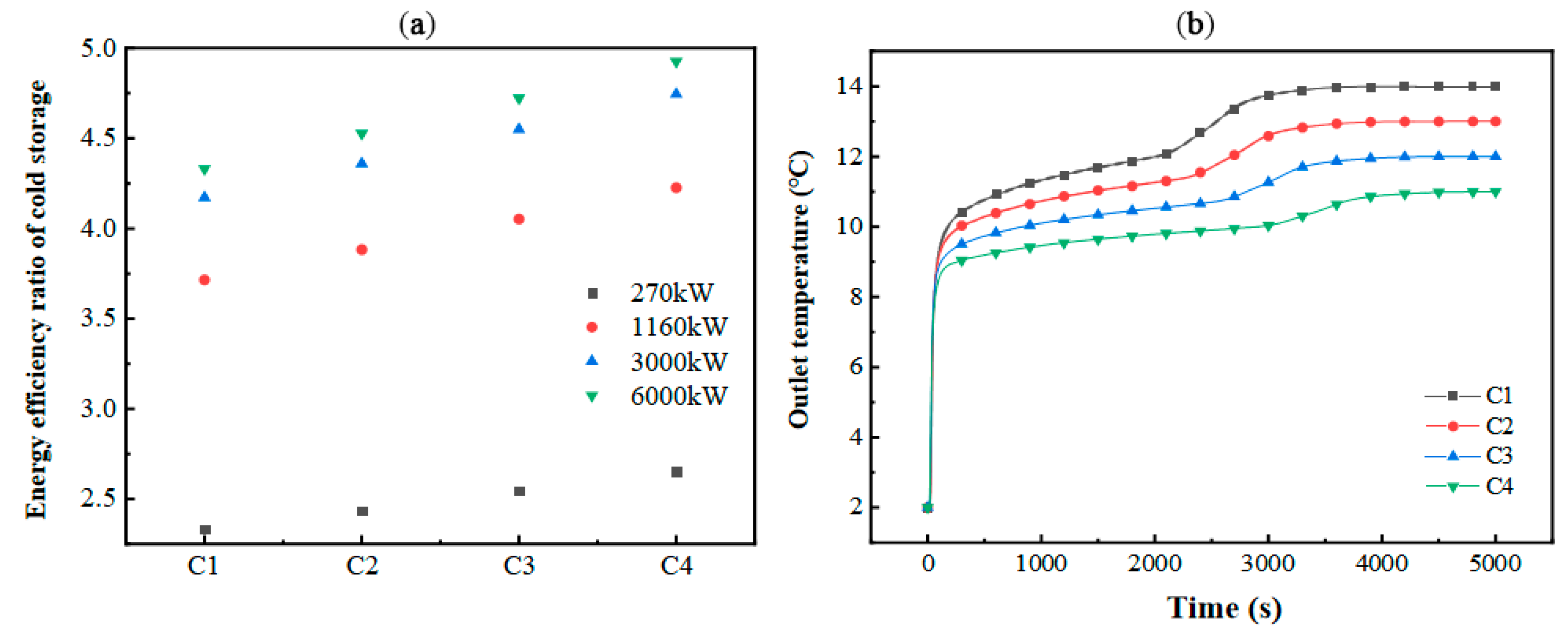
3.4. Impact of Constant Inlet Power
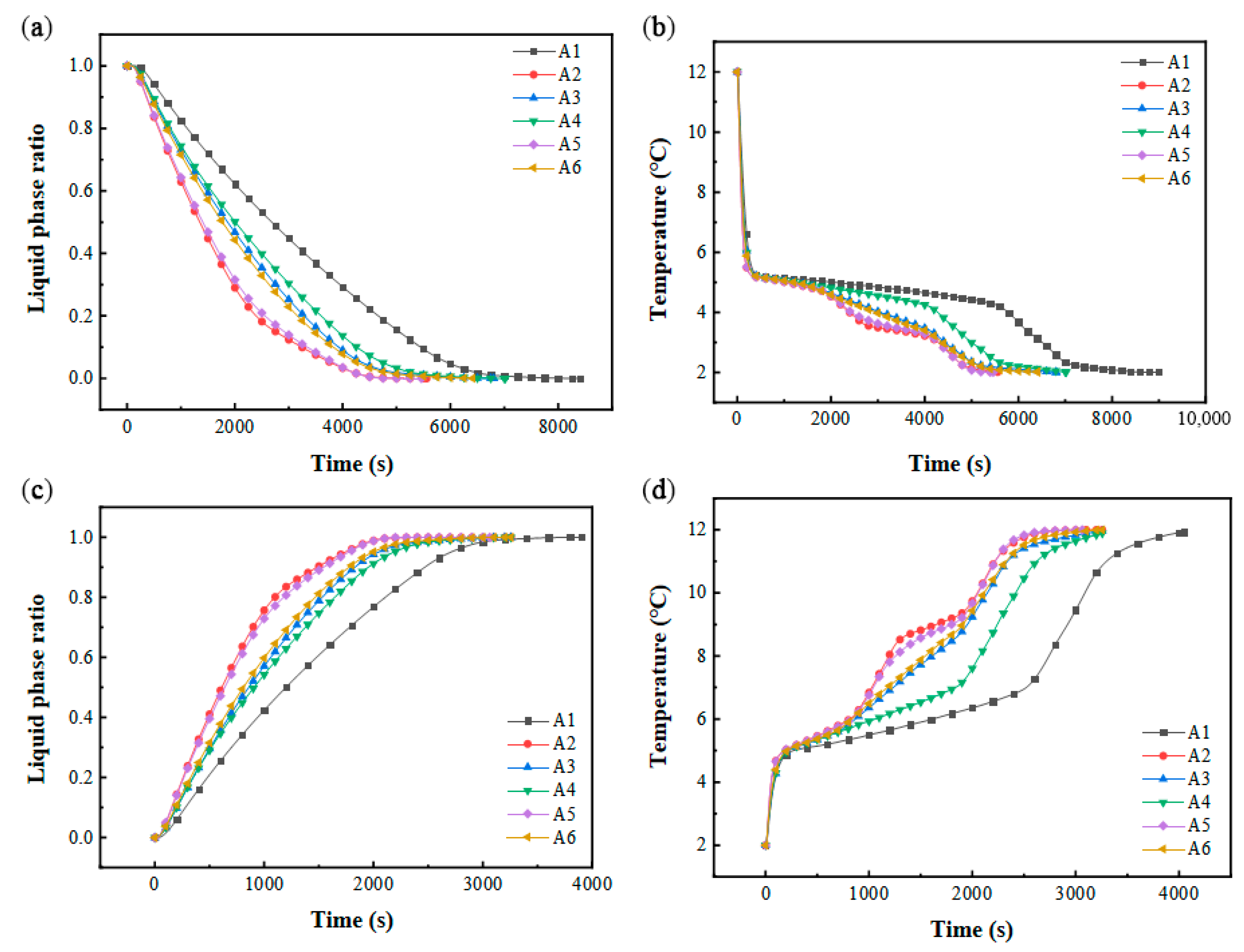
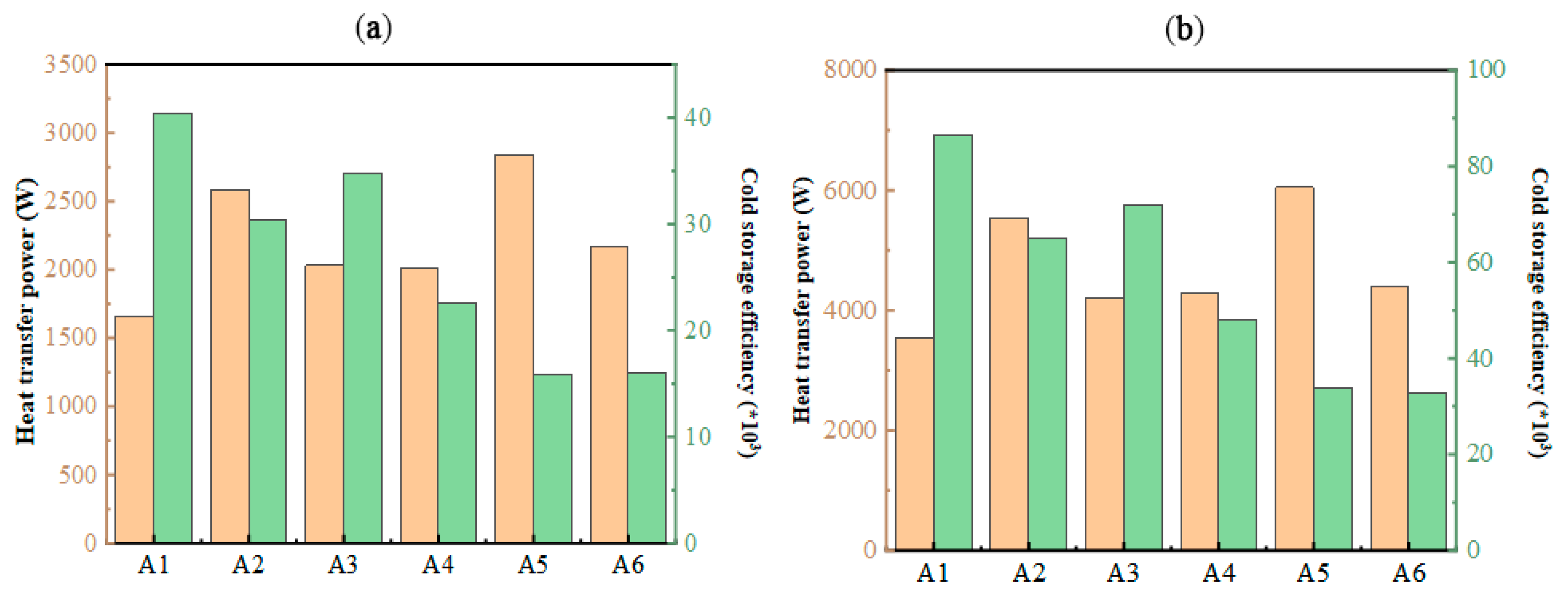
3.5. Impact of Unit Stacking Form
3.6. Experimental Study of Flat-Panel Phase-Change Energy Storage Device
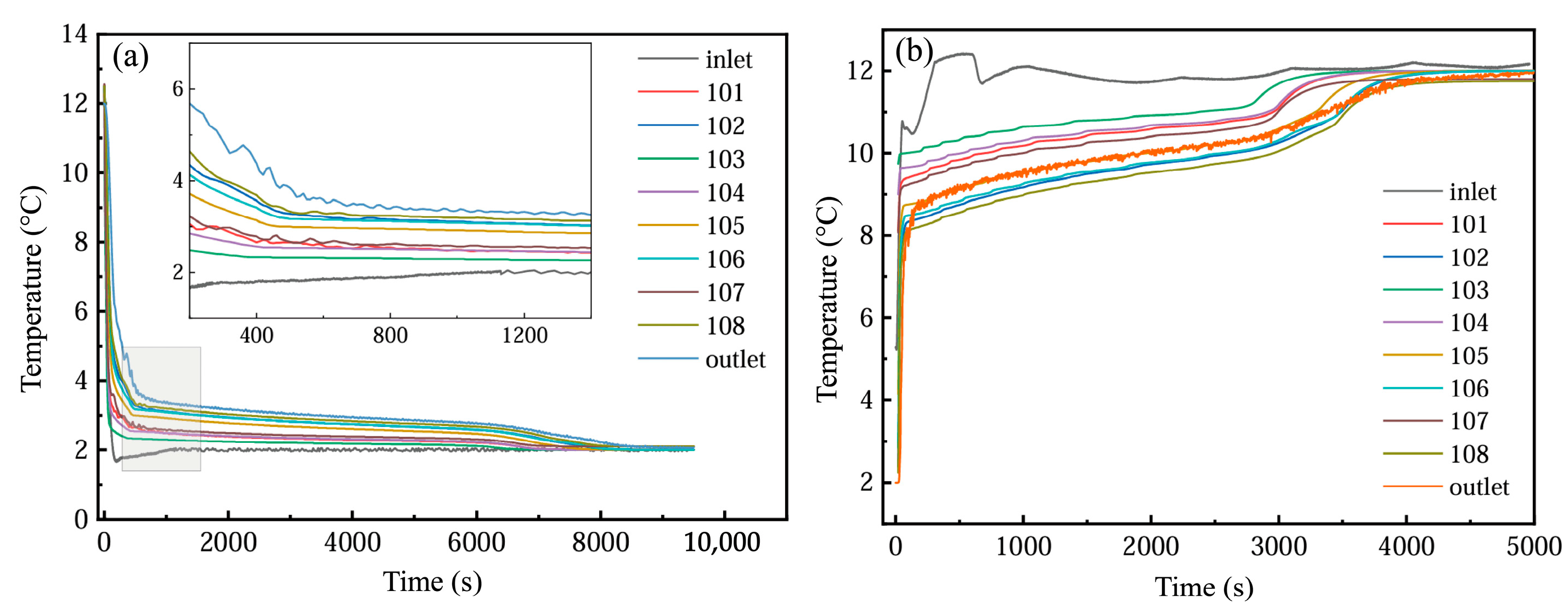
3.6.1. Analysis of Heat Transfer Performance
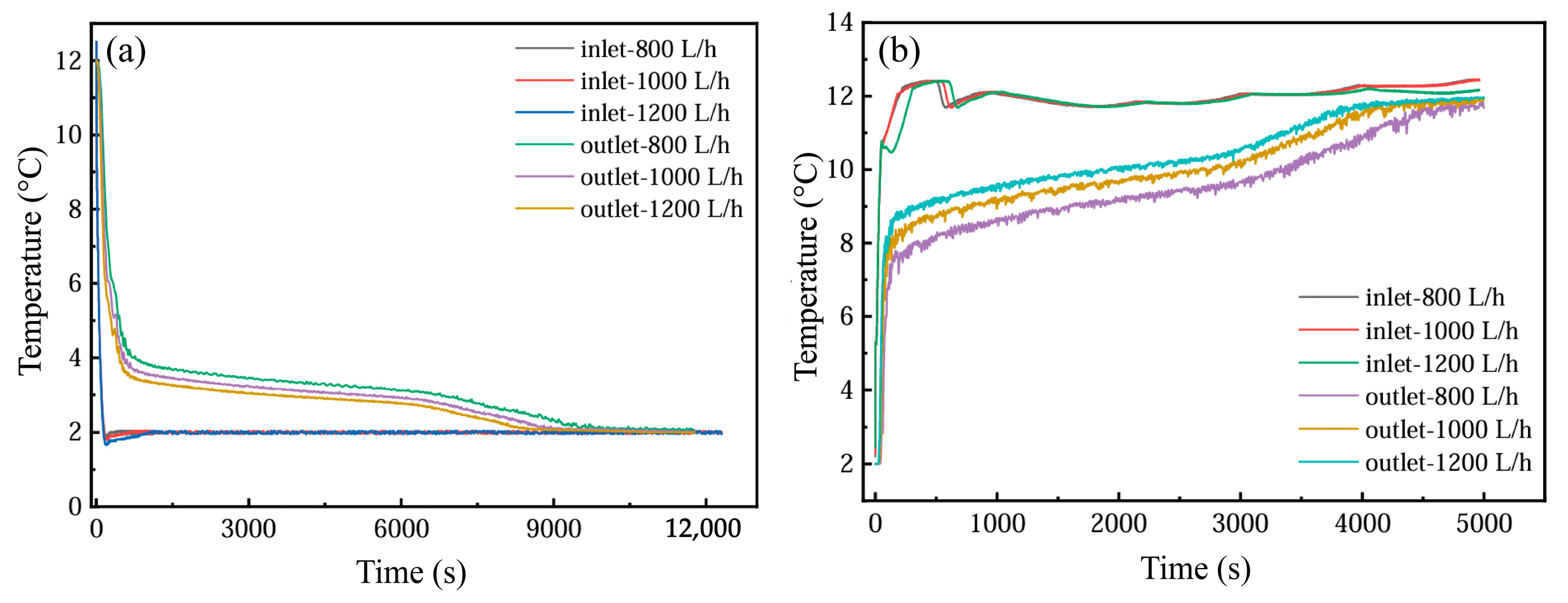
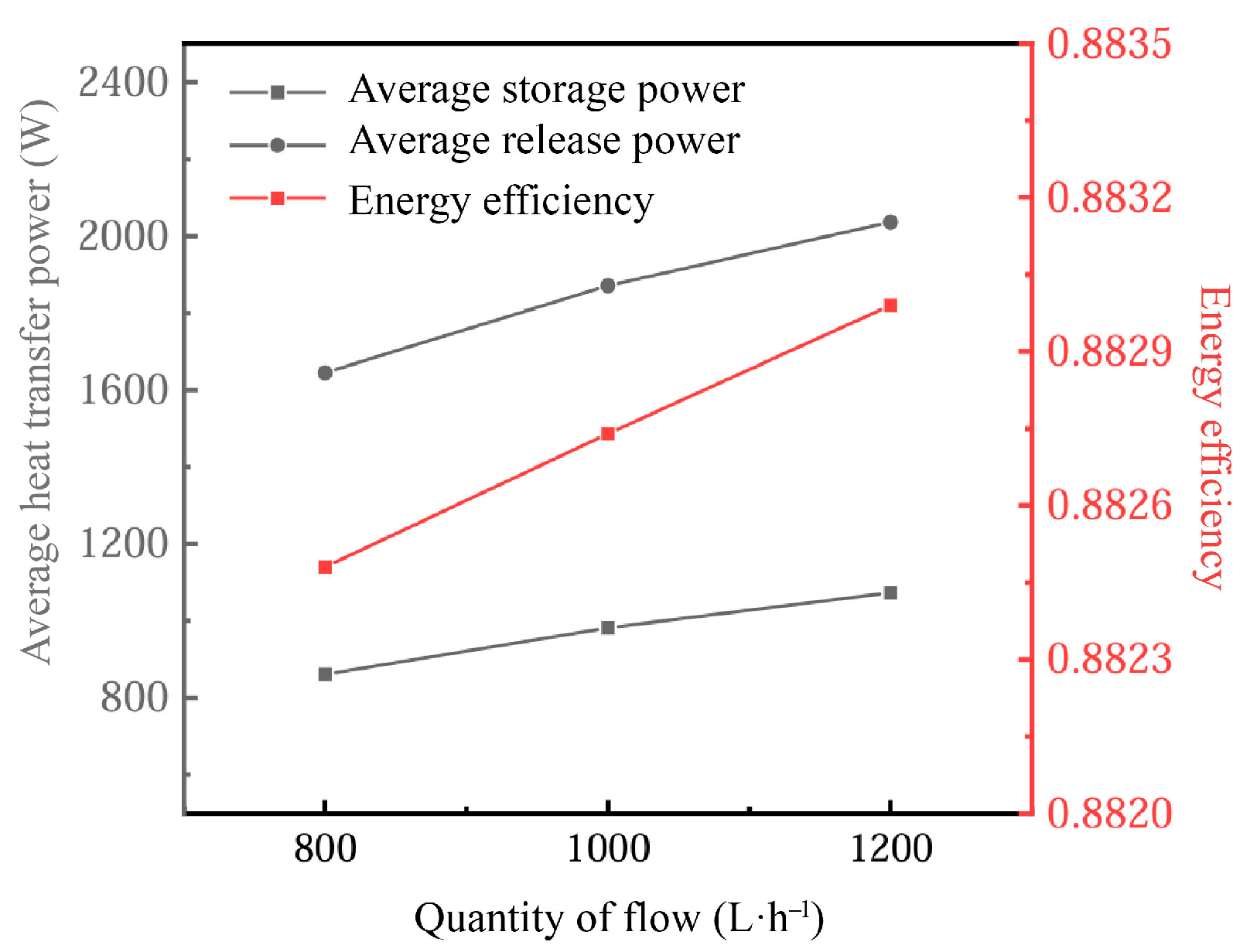
3.6.2. Influence of Inlet Flow on the Performance of Energy Storage
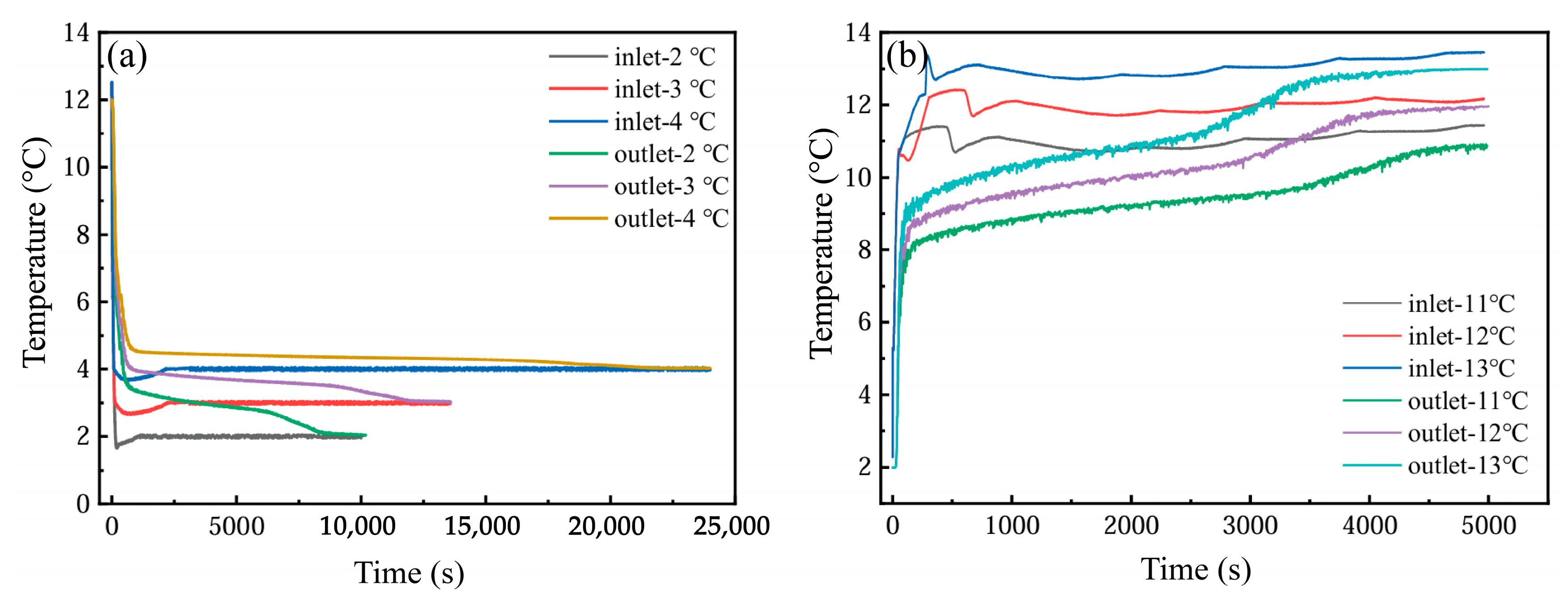
3.6.3. Influence of Inlet Temperature on Device Energy Storage Capacity
3.7. Comparison Between Experimental Results and Numerical Simulation
4. Conclusions
- (1)
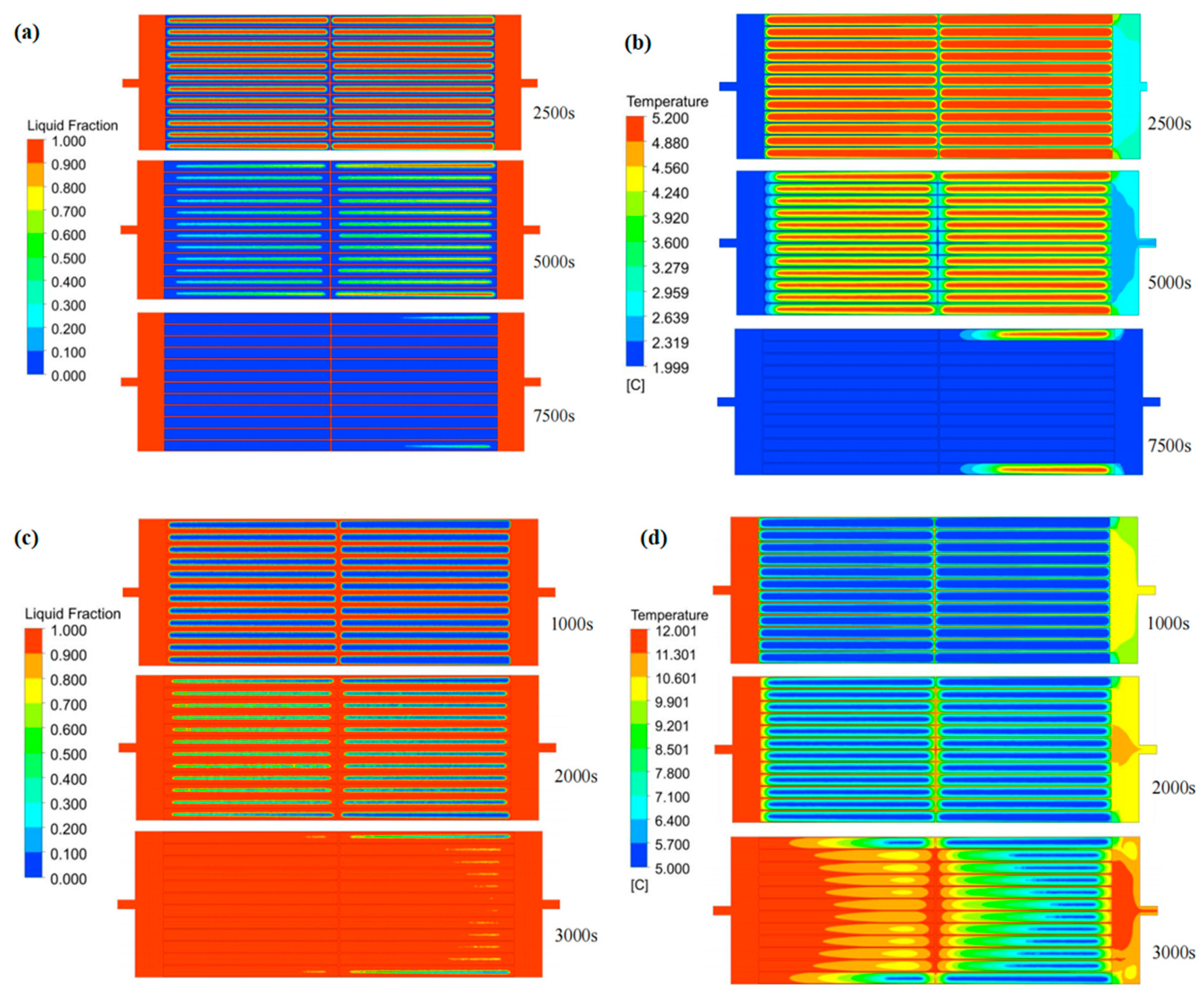
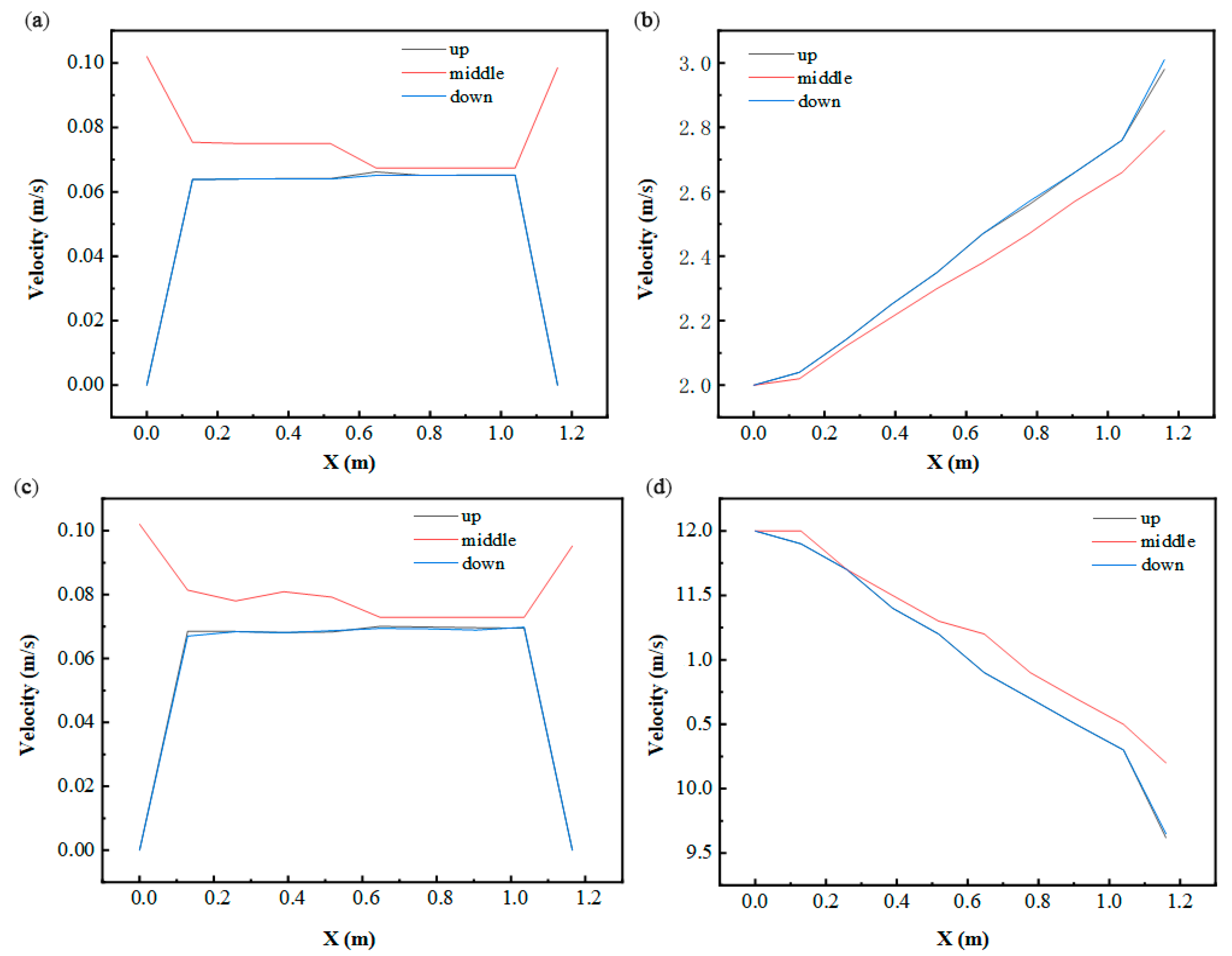
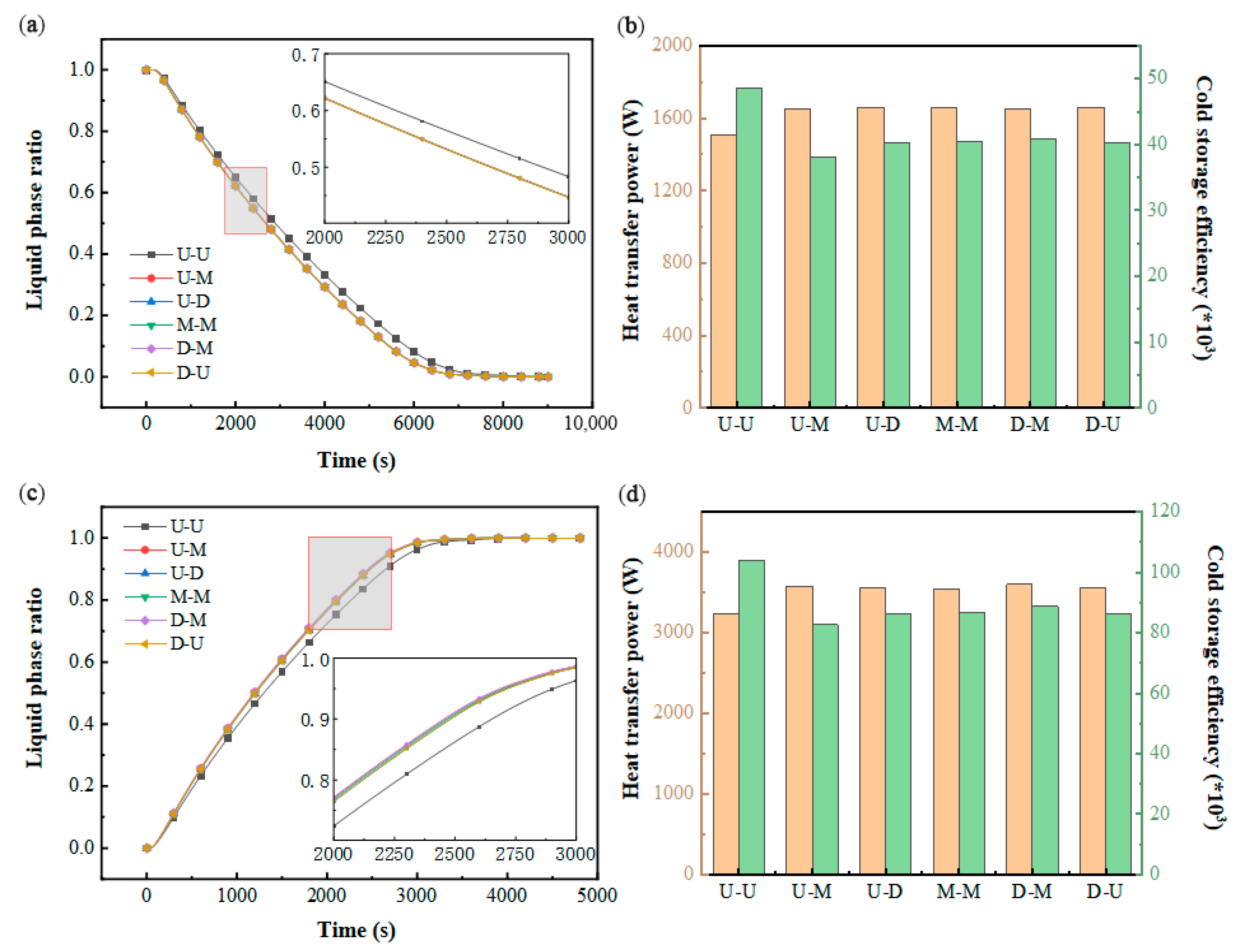
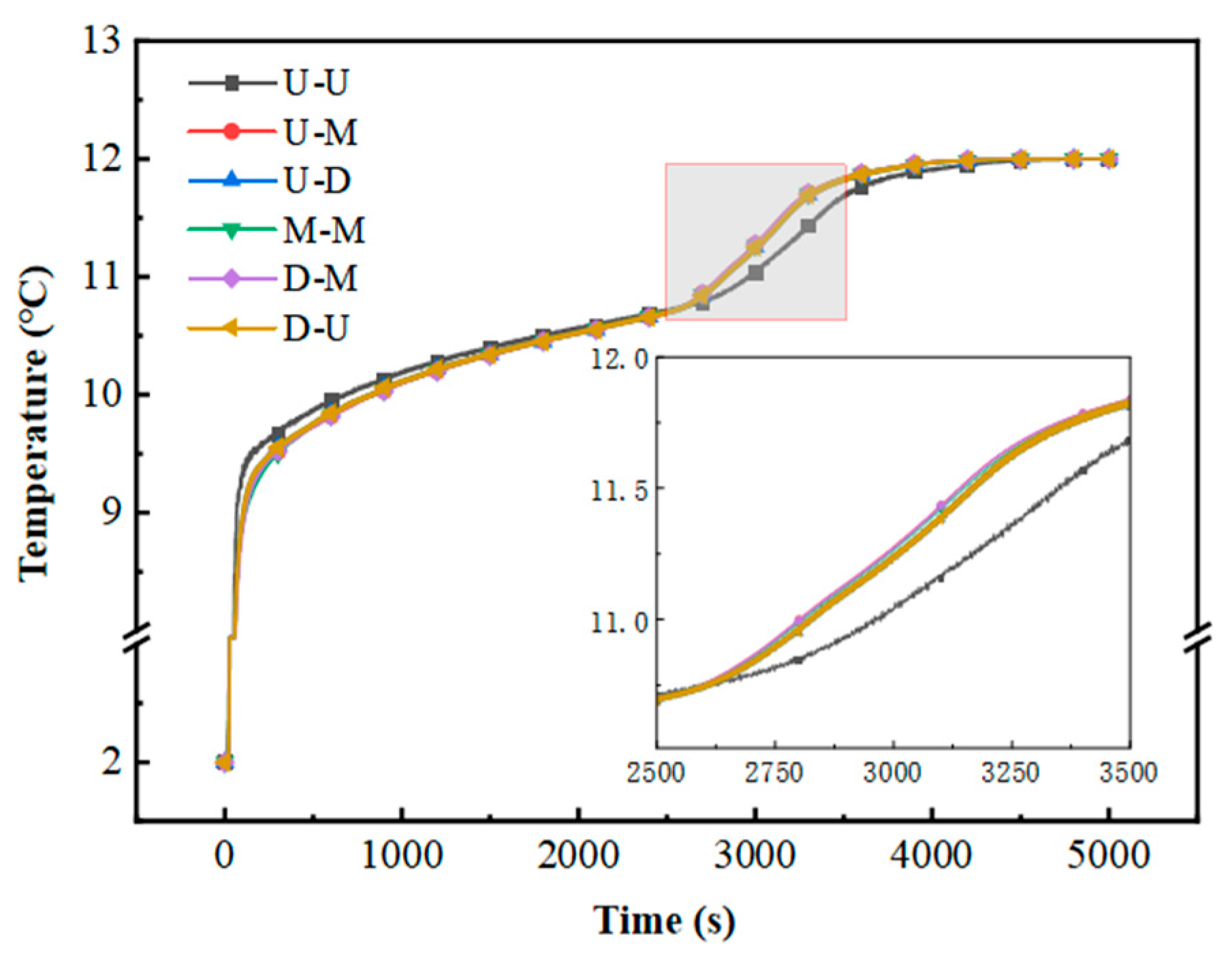
- The fluid distribution among the units in the device is uniform, and the inlet and outlet locations have little influence on the comprehensive performance.
- (2)
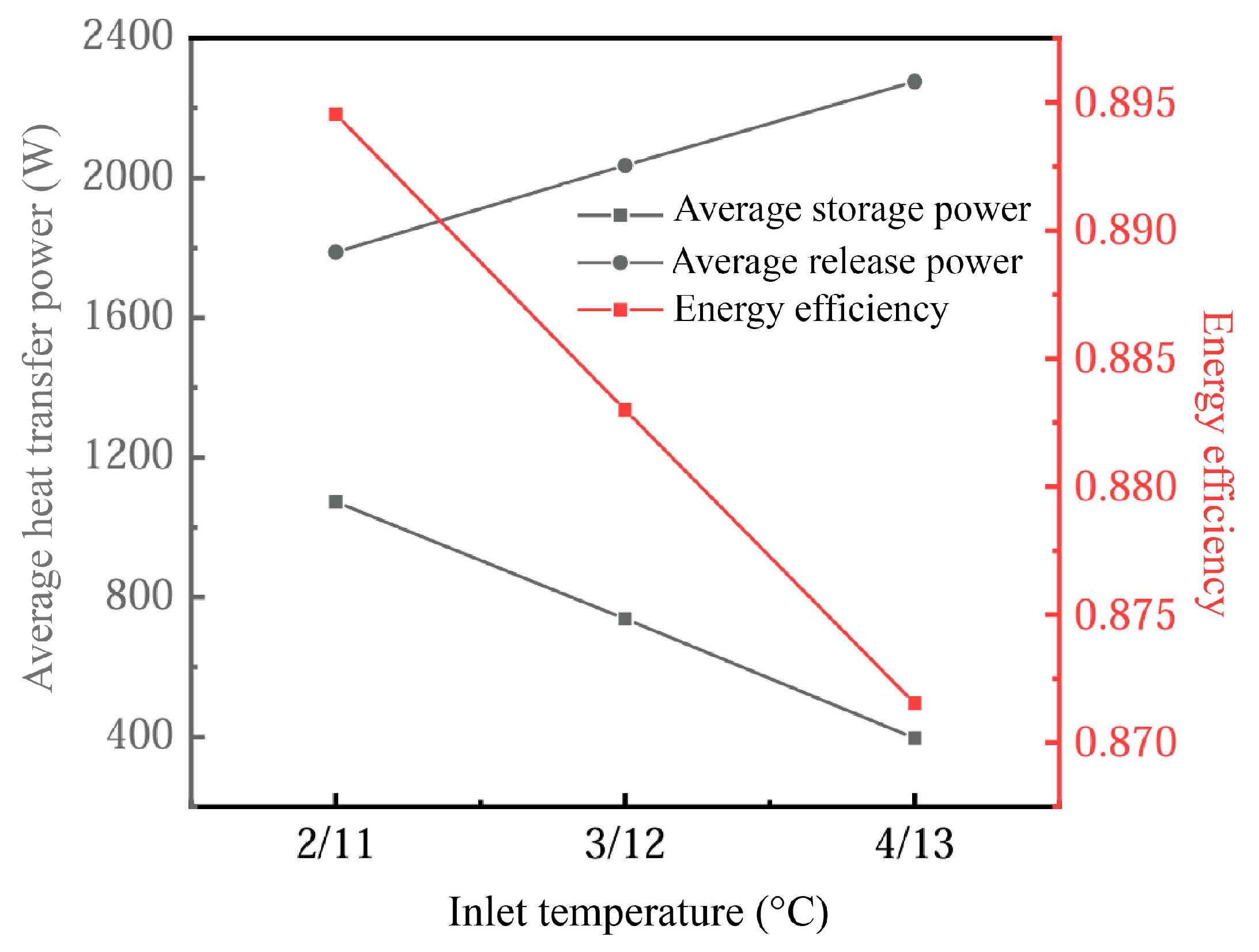
- The inlet temperature plays a crucial role and has a substantial influence on the overall performance of the device under constant inlet power operating conditions, so the operating temperature can be adjusted preferentially to respond to the system performance quickly.
- (3)
- The lateral stacking of phase-change units can increase the heat transfer rate of the device, and the use of units with high unit energy storage efficiency to replace units with poor efficiency can effectively enhance the overall rate of heat transfer.
- (4)
- An experimental setup for the flat-plate PCM-based thermal storage system was successfully constructed. The empirical findings indicate that elevated flow velocities enhance phase transition kinetics within the module but exert negligible effects on energy retention efficacy. While inlet temperatures significantly influence thermal storage and exchange dynamics, their impact on the cooling discharge process remains constrained.
- (1)
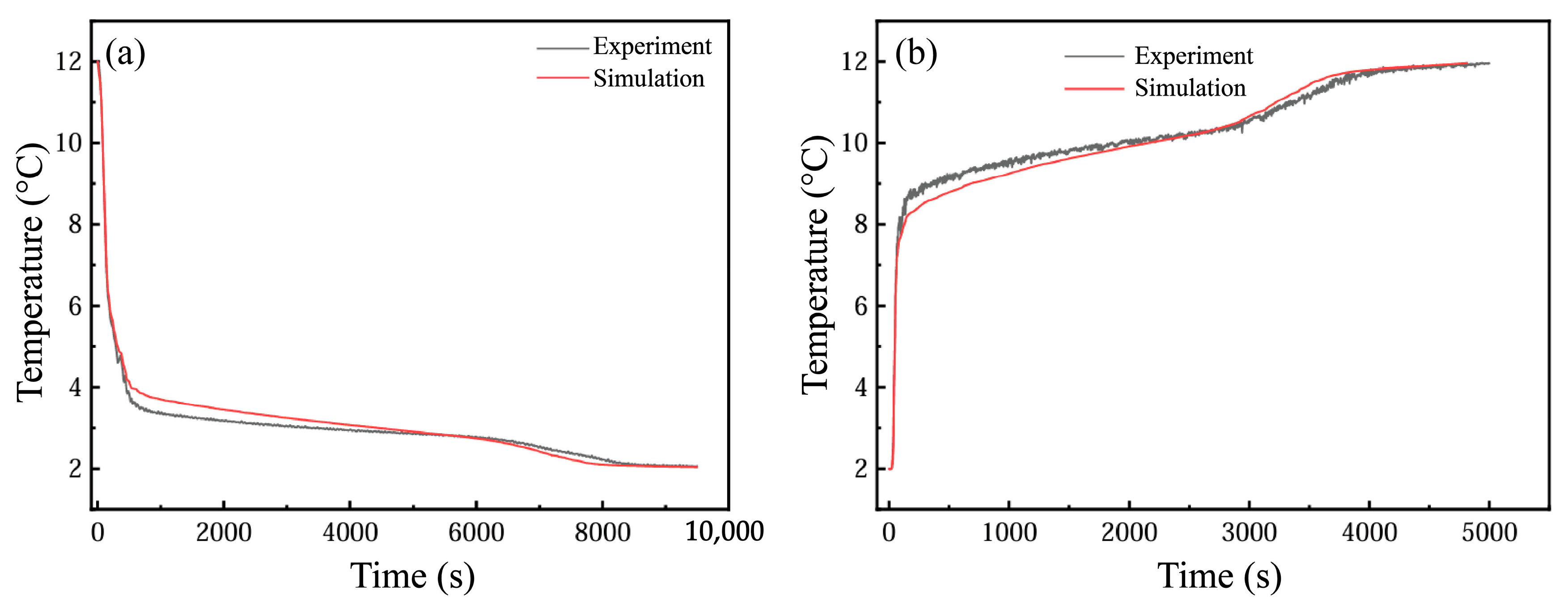
- Differences between experimental and simulation conditions: The simulations in this study are based on the assumed conditions of uniform flow and a steady state, which are not fully valid in practice; this may lead to a discrepancy between simulation results and actual results.
- (2)
- Gap between model simplification and practical application: The complex physical processes of the phase-change energy storage system model in this study are simplified, such as the non-linear behavior of the phase-change material and the dynamics of the system’s thermodynamic processes.
- (3)
- Influence of environmental factors: A constant ambient temperature and fluid flow rate are assumed in this study. However, in real applications, the environmental and operating conditions may change, and these factors may affect the actual performance of the phase-change energy storage system.
- (1)
- Consideration of dynamic operating conditions: This study assumed fixed operating conditions; however, in practical applications, the operating conditions of the system (e.g., flow rate, ambient temperature, etc.) will change. Future research should consider more dynamic operating conditions to simulate the effects of different loads and environmental changes on the performance of phase-change energy storage systems.
- (2)
- Multi-physics coupled modelling: The performance of phase-change energy storage systems is not only affected by heat transfer but also involves multiple physical processes such as fluid dynamics and the phase-change properties of matter. Future research can further develop multi-physics coupled modelling to improve the accuracy of the model by considering the interactions between different physical fields.
- (3)
- Integration with real air-conditioning systems: The ultimate goal of phase-change energy storage technology is to integrate it with real devices such as air-conditioning systems. Future research should focus on methods of integrating phase-change energy storage systems with existing air-conditioning systems to optimize the matching of the energy storage and release processes to improve the overall energy efficiency of the air-conditioning system.
- (4)
- Environmental impact and life cycle analysis: In future work, research should assess the carbon footprint, energy efficiency, and economics of different phase-change energy storage systems in real-world applications in order to inform sustainable design.
Author Contributions
Funding
Data Availability Statement
Acknowledgments
Conflicts of Interest
Nomenclature
| English alphabet | |||
| A | inlet cross-sectional area (m3) | t | time (s) |
| Amush | the continuous number of partially solidified regions in a phase transition | T | temperature (K) |
| cp | isobaric heat capacity (J·kg−1·K−1) | T1 | melting point (K) |
| g | gravitational acceleration (m·s−2) | Tin | inlet temperature (K) |
| H | heat content (kJ·kg−1) | Tref | reference temperature (K) |
| ΔH | phase-change latent heat (kJ·kg−1) | ΔT | HTF inlet and outlet temperature difference (K) |
| mpcm | mass of phase-change material (kg) | v | fluid velocity (m·s−1) |
| p | pressure (Pa) | V | capacity (m3) |
| Pτ | running resistance power (W) | Vin | inlet velocity (m·s−1) |
| Pin | constant inlet power (W) | W | heat transfer power (W) |
| Q | total storage energy (kJ) | ||
| Greek alphabet | |||
| β | liquid-phase ratio | θ | unit phase transition rate (kJ·m−3·s−1) |
| ε | A number less than 0.0001 | µ | dynamic viscosity (Pa·s) |
| ζ | energy efficiency ratio of cold storage | ρ | density (kg·m−3) |
| η | energy utilization efficiency | φ | unit operating efficiency |
References
- Gao, Y.; Zhang, X.; Xu, X.; Liu, L.; Zhao, Y.; Zhang, S. Application and research progress of phase change energy storage in new energy utilization. J. Mol. Liq. 2021, 343, 117554. [Google Scholar] [CrossRef]
- Ma, H.; Wang, H.; Yan, Z.; Yu, Q. Evaluating peak-regulation capability for power grid with various energy resources in Chinese urban regions via a pragmatic visualization method. Sustain. Cities Soc. 2022, 80, 103749. [Google Scholar] [CrossRef]
- She, X.; Cong, L.; Nie, B.; Leng, G.; Peng, H.; Chen, Y.; Zhang, X.; Wen, T.; Yang, H.; Luo, Y. Energy-efficient and-economic technologies for air conditioning with vapor compression refrigeration: A comprehensive review. Appl. Energy 2018, 232, 157–186. [Google Scholar] [CrossRef]
- Hirmiz, R.; Teamah, H.; Lightstone, M.; Cotton, J. Performance of heat pump integrated phase change material thermal storage for electric load shifting in building demand side management. Energy Build. 2019, 190, 103–118. [Google Scholar] [CrossRef]
- Sharma, A.; Tyagi, V.V.; Chen, C.R.; Buddhi, D. Review on thermal energy storage with phase change materials and applications. Renew. Sustain. Energy Rev. 2009, 13, 318–345. [Google Scholar] [CrossRef]
- Xie, J.; Wang, W.; Liu, J.; Pan, S. Thermal performance analysis of PCM wallboards for building application based on numerical simulation. Sol. Energy 2018, 162, 533–540. [Google Scholar] [CrossRef]
- Saffari, M.; De Gracia, A.; Fernández, C.; Cabeza, L.F. Simulation-based optimization of PCM melting temperature to improve the energy performance in buildings. Appl. Energy 2017, 202, 420–434. [Google Scholar] [CrossRef]
- Li, S.-F.; Liu, Z.-H.; Wang, X.-J. A comprehensive review on positive cold energy storage technologies and applications in air conditioning with phase change materials. Appl. Energy 2019, 255, 113667. [Google Scholar] [CrossRef]
- Abdulateef, A.M.; Mat, S.; Abdulateef, J.; Sopian, K.; Al-Abidi, A.A. Geometric and design parameters of fins employed for enhancing thermal energy storage systems: A review. Renew. Sustain. Energy Rev. 2018, 82, 1620–1635. [Google Scholar] [CrossRef]
- Zivkovic, B.; Fujii, I. An analysis of isothermal phase change of phase change material within rectangular and cylindrical containers. Sol. Energy 2001, 70, 51–61. [Google Scholar] [CrossRef]
- Liu, M.; Saman, W.; Bruno, F. Validation of a mathematical model for encapsulated phase change material flat slabs for cooling applications. Appl. Therm. Eng. 2011, 31, 2340–2347. [Google Scholar] [CrossRef]
- Ding, C.; Niu, Z.; Li, B.; Hong, D.; Zhang, Z.; Yu, M. Analytical modeling and thermal performance analysis of a flat plate latent heat storage unit. Appl. Therm. Eng. 2020, 179, 115722. [Google Scholar] [CrossRef]
- Iten, M.; Liu, S.; Shukla, A. Experimental validation of an air-PCM storage unit comparing the effective heat capacity and enthalpy methods through CFD simulations. Energy 2018, 155, 495–503. [Google Scholar] [CrossRef]
- Halawa, E.; Bruno, F.; Saman, W. Numerical analysis of a PCM thermal storage system with varying wall temperature. Energy Convers. Manag. 2005, 46, 2592–2604. [Google Scholar] [CrossRef]
- Crespo, A.; Zsembinszki, G.; Vérez, D.; Borri, E.; Fernández, C.; Cabeza, L.F.; de Gracia, A. Optimization of design variables of a phase change material storage tank and comparison of a 2D implicit vs. 2D explicit model. Energies 2021, 14, 2605. [Google Scholar] [CrossRef]
- Nie, B.; Du, Z.; Zou, B.; Li, Y.; Ding, Y. Performance enhancement of a phase-change-material based thermal energy storage device for air-conditioning applications. Energy Build. 2020, 214, 109895. [Google Scholar] [CrossRef]
- Younis, O.; Abderrahmane, A.; Hatami, M.; Mourad, A.; Kamel, G. Thermal energy storage using nano phase change materials in corrugated plates heat exchangers with different geometries. J. Energy Storage 2022, 55, 105785. [Google Scholar] [CrossRef]
- Huang, H.; Wang, Z.; Zhang, H.; Dou, B.; Huang, X.; Liang, H.; Goula, M.A. An experimental investigation on thermal stratification characteristics with PCMs in solar water tank. Sol. Energy 2019, 177, 8–21. [Google Scholar] [CrossRef]
- Ye, W.-B.; Zhu, D.-S.; Wang, N. Fluid flow and heat transfer in a latent thermal energy unit with different phase change material (PCM) cavity volume fractions. Appl. Therm. Eng. 2012, 42, 49–57. [Google Scholar] [CrossRef]
- Xie, S.; Wu, W. Effect of aspect ratio on PCM melting behavior in a square cavity. Int. Commun. Heat Mass Transf. 2023, 143, 106708. [Google Scholar] [CrossRef]
- Hari, B.; Suresh, S.; Kottala, R.K.; Praveenkumar, S. Synthesis and characterization of high thermal conductive leak resistant phase change material for solar photovoltaic panel cooling applications. J. Energy Storage 2025, 122, 116656. [Google Scholar] [CrossRef]
- Prabhu, B.; Arunkumar, T.; Subramanian, P.; Alarifi, A.; Mariappan, M. Conch shell derived bio-carbon/Paraffin as novel composite phase change material with enhanced thermal energy storage properties for photovoltaic module cooling systems. Sol. Energy Mater. Sol. Cells 2025, 281, 113306. [Google Scholar]
- Homlakorn, S.; Velmurugan, K.; Suksri, A.; Wongwuttanasatian, T. Comparative study for photovoltaic cooling using metal mesh inserted eutectic phase change material enclosure. Case Stud. Therm. Eng. 2023, 45, 103024. [Google Scholar] [CrossRef]
- Chang, S.; Zhang, L.; Li, X.; Liu, B.; Meng, Y.; Hu, H. Experimental study of novel paraffin-fatty acid eutectic mixtures for thermal management of electronic devices. J. Energy Storage 2024, 84, 110846. [Google Scholar] [CrossRef]
- Jiang, Z.; Rivero, M.E.N.; Liu, X.; She, X.; Xuan, Y.; Ding, Y. A novel composite phase change material for medium temperature thermal energy storage manufactured with a scalable continuous hot-melt extrusion method. Appl. Energy 2021, 303, 117591. [Google Scholar] [CrossRef]
- Weingrill, H.M.; Resch-Faustera, K.; Lucyshynb, T.; Zaunerc, C. High-density polyethylene as phase-change material: Long-term stability and aging. Polym. Test. 2019, 76, 433–442. [Google Scholar] [CrossRef]
- Oliveski, R.D.C.; Becker, F.; Rocha, L.A.O.; Biserni, C.; Eberhardt, G.E.S. Design of fin structures for phase change material (PCM) melting process in rectangular cavities. J. Energy Storage 2021, 35, 102337. [Google Scholar] [CrossRef]
- Bria, A.; Raillani, B.; Chaatouf, D.; Salhi, M.; Amraqui, S.; Mezrhab, A. Effect of PCM thickness on the performance of the finned PV/PCM system. Mater. Today Proc. 2023, 72, 3617–3625. [Google Scholar] [CrossRef]
- Zhang, X.; Ge, Y.; Lang, P. Experimental investigation and CFD modelling analysis of finned-tube PCM heat exchanger for space heating. Appl. Therm. Eng. 2024, 244, 122731. [Google Scholar] [CrossRef]
- Sonker, V.K.; Sharma, P.; Ram, R.; Sarkar, A. A CFD simulation analysis of the effects of PCM and nanoparticles stored in copper cylinders inside a solar still. J. Energy Storage 2025, 108, 115091. [Google Scholar] [CrossRef]
- Li, Y.; Zhang, X.; Munyalo, J.M.; Tian, Z.; Ji, J. Preparation and thermophysical properties of low temperature composite phase change material octanoic-lauric acid/expanded graphite. J. Mol. Liq. 2019, 277, 577–583. [Google Scholar] [CrossRef]



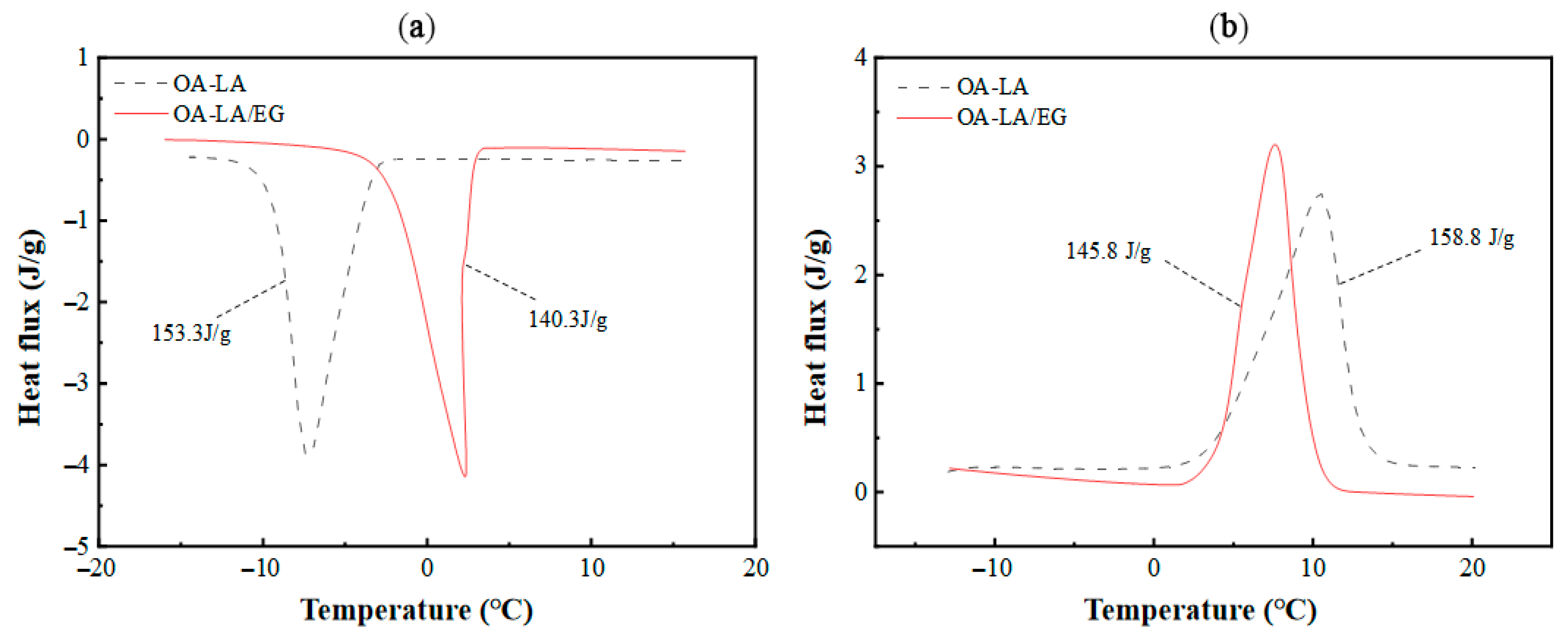
| Physical Properties | CPCM | HDPE |
|---|---|---|
| Density (kg·m−3) | 945 | 940 |
| Specific heat capacity (kJ·kg−1·K−1) | 1935 | 1900 |
| Thermal conductivity (W·m−1·K−1) | 2.23 | 0.48 |
| Phase-change latent heat (kJ·kg−1) | 143 | -- |
| Phase-change temperature (°C) | 5/5.2 | -- |
| Serial Number | Fluid Inlet Temperature (°C) | Fluid Inlet Flow (L·h−1) |
|---|---|---|
| 1 | 2 | 1200 |
| 2 | 2 | 1000 |
| 3 | 2 | 800 |
| 4 | 3 | 1200 |
| 5 | 4 | 1200 |
| Serial Number | Fluid Inlet Temperature (°C) | Fluid Inlet Flow (L·h−1) |
|---|---|---|
| 1 | 12 | 1200 |
| 2 | 12 | 1000 |
| 3 | 12 | 800 |
| 4 | 11 | 1200 |
| 5 | 13 | 1200 |
| Structure | Inlet Position | Outlet Position |
|---|---|---|
| U–U | Up (Y = 0.408 m) | Up (Y = 0.408 m) |
| U–M | Up (Y = 0.333 m) | Middle (Y = 0.1915 m) |
| U–D | Up (Y = 0.333 m) | Down (Y = 0.05 m) |
| M–M | Middle (Y = 0.1915 m) | Middle (Y = 0.1915 m) |
| D–M | Down (Y = 0.05 m) | Middle (Y = 0.1915 m) |
| D–U | Down (Y = 0.05 m) | Up (Y = 0.333 m) |
| Case | Inlet Velocity (m/s) | Inlet Temperature—Cold Storage (°C) | Inlet Temperature—Cold Release (°C) |
|---|---|---|---|
| C1 | 0.083 | 0 | 14 |
| C2 | 0.091 | 1 | 13 |
| C3 | 0.10 | 2 | 12 |
| C4 | 0.11 | 3 | 11 |
| Types | Unit 1 | Unit 2 | Unit Arrangement Structure (Number of Columns, Number of Rows, Unit Type) |
|---|---|---|---|
| A1 | HPCM = 30 mm, HHTF = 4 mm | HPCM = 15 mm, HHTF = 2 mm | 2, 12, unit 1 |
| A2 | 1, 12, unit 1; 1, 24, unit 2 | ||
| A3 | 2, (6, unit 2)/(6, unit 1)/(6, unit 2) | ||
| A4 | 3, 8, unit 1 | ||
| A5 | 1, 8, unit 1; 1, (4, unit 2)/(4, unit 1)/(4. unit 2); 1, 16, unit 2 | ||
| A6 | 3, (4, unit 2)/(4, unit 1)/(4, unit 2) |
Disclaimer/Publisher’s Note: The statements, opinions and data contained in all publications are solely those of the individual author(s) and contributor(s) and not of MDPI and/or the editor(s). MDPI and/or the editor(s) disclaim responsibility for any injury to people or property resulting from any ideas, methods, instructions or products referred to in the content. |
© 2025 by the authors. Licensee MDPI, Basel, Switzerland. This article is an open access article distributed under the terms and conditions of the Creative Commons Attribution (CC BY) license (https://creativecommons.org/licenses/by/4.0/).
Share and Cite
Ni, M.; Yue, X.; Liu, M.; Wang, L.; Chen, Z. Thermal Performance of Charge/Discharge Dynamics in Flat-Plate Phase-Change Thermal Energy Storage Systems. Energies 2025, 18, 5733. https://doi.org/10.3390/en18215733
Ni M, Yue X, Liu M, Wang L, Chen Z. Thermal Performance of Charge/Discharge Dynamics in Flat-Plate Phase-Change Thermal Energy Storage Systems. Energies. 2025; 18(21):5733. https://doi.org/10.3390/en18215733
Chicago/Turabian StyleNi, Minglong, Xiaolong Yue, Mingtao Liu, Lei Wang, and Zhenqian Chen. 2025. "Thermal Performance of Charge/Discharge Dynamics in Flat-Plate Phase-Change Thermal Energy Storage Systems" Energies 18, no. 21: 5733. https://doi.org/10.3390/en18215733
APA StyleNi, M., Yue, X., Liu, M., Wang, L., & Chen, Z. (2025). Thermal Performance of Charge/Discharge Dynamics in Flat-Plate Phase-Change Thermal Energy Storage Systems. Energies, 18(21), 5733. https://doi.org/10.3390/en18215733