


Abstract
Carbon dioxide (CO2)-enhanced coalbed methane recovery involves a complex process of mixed-gas adsorption, desorption, and diffusion–transport. The literature suggests that an appropriate range of CO2 injection pressure and an optimal injection time window are critical for coal seams with varying reservoir conditions. That is, higher pressure and longer injection periods do not necessarily lead to better displacement performance. Therefore, in this study, experimental research was conducted on the time-varying characteristics of the displacement–replacement effect of CO2-enhanced methane (CH4) extraction from coal seams, and the following results were obtained. (1) The process of displacement–replacement of CH4 by CO2 in coal seams can be divided into five stages: a stage of spontaneous CH4 desorption caused by partial-pressure effects, a replacement-dominated stage, a stage where replacement and displacement act jointly, a displacement-dominated stage, and a stabilization stage. (2) For all three coal samples (anthracite, coking coal, and long-flame coal), cumulative CH4 desorption increases with increasing CO2 injection pressure below 5 MPa and finally stabilizes. However, when CO2 injection pressure exceeds 5 MPa, the effect weakens, possibly due to the dynamic changes in CO2 partial pressure. (3) The displacement–replacement ratio decreases with increasing CH4 equilibrium pressure. Additionally, the larger the difference between the CO2 injection pressure and the CH4 equilibrium pressure, the better the displacement–replacement effect.
1. Introduction
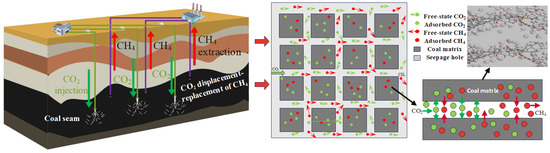
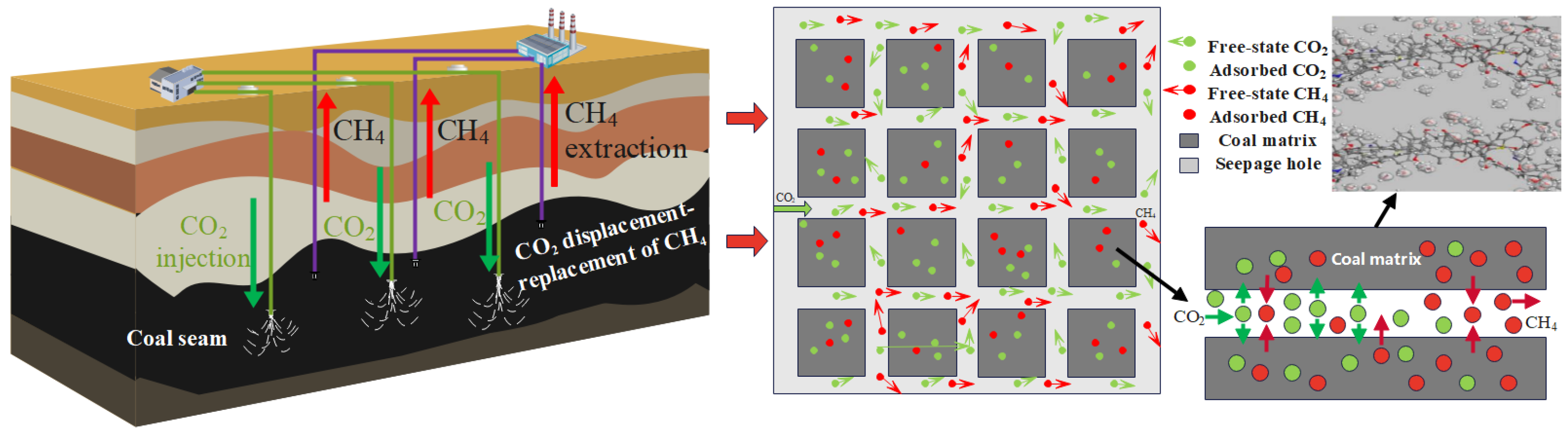
Coal serves as China’s fundamental and backup energy source, playing a deeply integrated role in the country’s economy. Coal bed methane (CH4, CBM) is a valuable, high-quality, and clean resource associated with coal, and its efficient extraction is crucial for preventing and controlling disasters related to its catastrophic explosions, making it an important option and cleaner than conventional fossil fuels [1,2,3,4]. China’s coal seam structure is complex, with generally low permeability of coal. Shallow coal resources are notably depleting, leading to a shift in coal development to deeper levels, which has now become the norm. The increasingly evident low-permeability characteristics of coal seams, complex geology, and technical limitations have become the bottlenecks, making CH4 extraction more difficult and increasing the pressure to prevent and control CH4 disasters [5,6]. Thus, industrial innovation is required to manage hazards and maintain productivity at greater depths. Unfortunately, traditional negative pressure extraction technology cannot overcome the challenge of low permeability in coal seams. Pre-extraction is time consuming and yields slow results, failing to meet the needs of mining succession and underground safety production [7]. To address the challenge of low permeability in coal seams, China has implemented measures such as mining protective layers, hydraulic fracturing/slotting/punching, and loosening blasting to enhance CH4 drainage and improve coal seam permeability [8]. Although most permeability enhancement measures have successfully improved the permeability of coal seams, the issue of a sharp decline in extraction efficiency due to the decrease in reservoir pressure during the later stages of mining remains unresolved. Therefore, development of a simple and effective new technology to improve coal seam permeability and enhance gas extraction efficiency is urgently demanded [9]. With the continuous advancement of science and technology, breakthroughs have been made in gas injection displacement–replacement technology [10]. The successful experiment of carbon dioxide (CO2)-enhanced CBM (CO2-ECBM) recovery via gas injection has provided a new innovative approach to improve underground gas extraction efficiency using gas injection displacement. The injection of CO2 into the coal seam can not only compete with CH4 stored in the coal seam for adsorption, reduce the effective partial pressure of the gas, and promote the desorption of adsorbed gas but can also increase the internal pressure of the coal body, enhance the mixed gas percolation velocity, effectively compensate for the reservoir pressure drop during the later stages of extraction, and provide sufficient power and reliable migration pathways for the reservoir flow field [11] (Figure 1). Simultaneously, CO2 can be stored in the coal seam, which can significantly reduce its greenhouse effect. This technology has attracted tremendous research attention due to its safety, economic feasibility, environmental friendliness, and significant improvement in gas recovery rate, and offers promising application prospects in the near future.
Figure 1.
Schematic illustration of CO2-ECBM recovery mechanism via CO2 displacement–replacement.
Many researchers have conducted similar experimental research and concluded that displacement and replacement effects occur throughout the gas injection process, but the dominant role varies at different stages [12,13,14]. Furthermore, several experiments were performed on CO2 displacement in large-sized coal rock specimens, and it was found that factors such as gas injection pressure, speed, gas content, reservoir structure, and permeability jointly determined the displacement effect [15,16]. For instance, Wang et al. conducted CO2/N2 replacement experiments on CBM under different gas injection pressure and stress conditions and analyzed the impact of experimental conditions on the replacement volume ratio and gas breakthrough time [17,18]. Wang et al. used Comsol to compare the stimulation effects of injecting N2 and CO2 on CBM displacement, concluding that injecting CO2 was more effective at increasing CH4 production than injecting N2, and the gas content in the coal seam decreased at a faster rate with the increase in the gas injection pressure [19]. Sun et al. reported that injecting CO2 not only reduced the partial pressure of CBM and accelerated its desorption but also made the coal body more prone to adsorbing CO2 gas, which could compete with and adsorb CH4 molecules in the coal, thereby increasing the production of CBM [20]. Several researchers focused on the technical characteristics of gas injection displacement to enhance the recovery of CBM [21,22,23,24]. Based on the percolation equation, diffusion equation, and multi-component gas adsorption equation, they established a coupled equation and introduced practical examples for its solution, deriving the pressure distribution of CBM, gas concentration distribution, and a quantitative relationship between permeability and gas concentration.
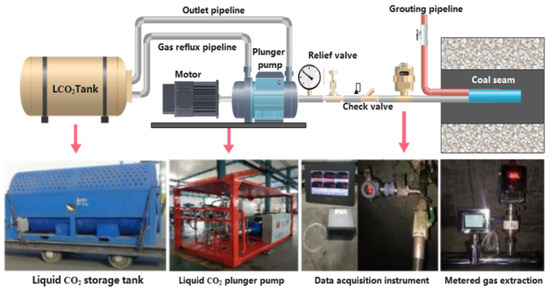
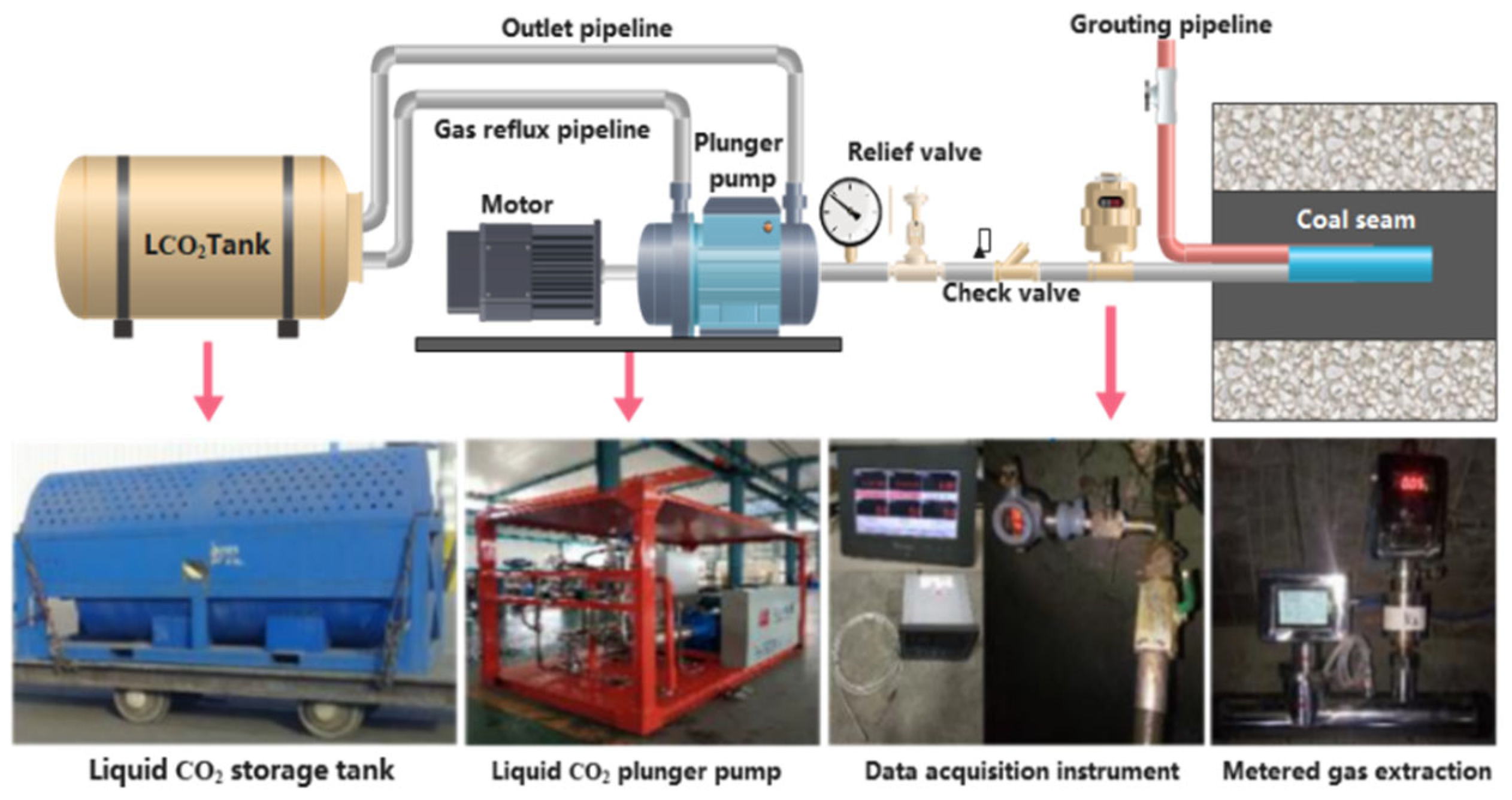
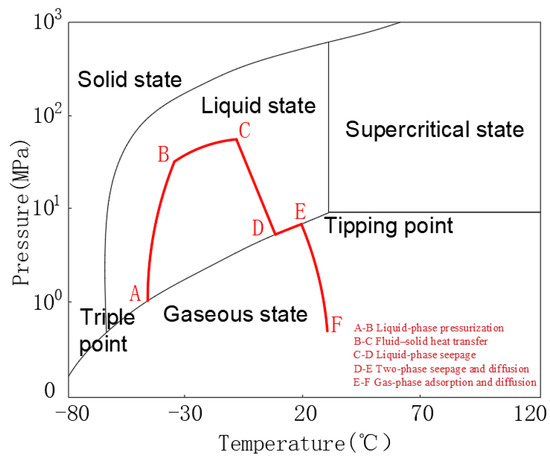
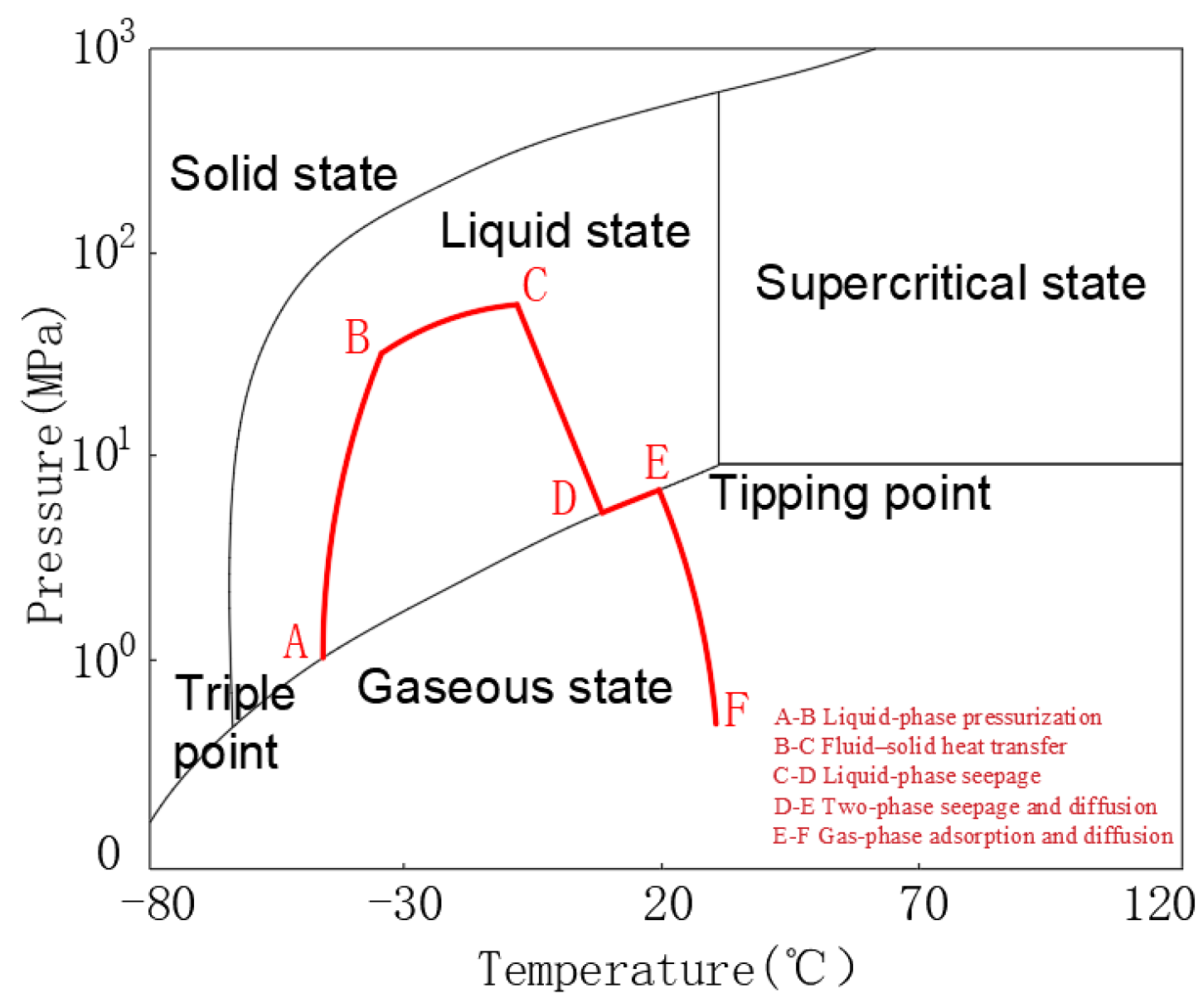
Focusing on underground gas control in coal mines, Wen et al. proposed a technique for fracturing coal and rock and displacing coal-seam CH4 using liquid CO2 (Figure 2). They designed field tests involving the displacement of coal-seam CH4 by CO2, which effectively shortened the pre-drainage time and reduced the drilling workload for drainage boreholes [25,26,27]. The phase-transition process of liquid CO2 injected into the coal seam through boreholes is illustrated in Figure 3. In the figure, A–B is liquid-phase pressurization, B–C is fluid–solid heat transfer, C–D is liquid-phase seepage, D–E represents two-phase seepage and diffusion, and E-F is gas-phase adsorption and diffusion. The effectiveness of liquid CO2 in enhancing coal-seam CH4 drainage primarily depends on the gas-phase adsorption–diffusion–seepage stage (D–F in Figure 3). This stage involves complex physical processes including gas-phase CO2 seepage, diffusion, and adsorption, and features multi-field coupling among the temperature field, pressure field, and gas concentration field.
Figure 2.
Technological process and equipment for liquid CO2 displacement of CH4 in coal seams.
Figure 3.
Phase change curve during liquid CO2 pressure injection process.
After injecting CO2 into a coal seam, high-pressure gas flow initially carries part of the CH4 out of the coal, reducing the amount of free CH4 and weakening the displacement effect. With the continuous diffusion of CO2 into the coal matrix, the sorption replacement effect begins to act, promoting the desorption and diffusion of adsorbed CH4. This increases the free CH4 and simultaneously strengthens the displacement effect. Therefore, compared with the displacement effect, the replacement effect exhibits a clear lag, and the two effects promote and constrain each other through a mutual feedback relationship, which is a key factor influencing CH4 production. However, currently employed CO2 displacement–replacement experiments generally analyze only the enhancement of CH4 recovery, and research on the time-varying characteristics of the displacement and replacement effects is still lacking.
Briefly, CO2-enhanced CBM (ECBM) recovery is a complex process involving adsorption, desorption, and diffusion–transport of mixed fluids. Studies have shown that, for coal seams under different reservoir conditions, there exists an appropriate range of CO2 injection pressure and an effective time window. That is, higher pressure and longer injection times do not necessarily yield better displacement performance. Therefore, this study focuses on the following three issues. The current theoretical research on CO2-enhanced extraction of CH4 from coal seams remains imperfect, the injection parameters lack scientific guidance, and full enforcement of the displacement effect is difficult. In this study, experimental research was conducted on the time-varying characteristics of the displacement–replacement effect of CO2-enhanced extraction of CH4 from coal seams. The results reveal the time-varying characteristics of the dominant position of displacement and replacement effects and aid in determining the key control parameters corresponding to displacement and replacement effects, providing theoretical guidance for optimizing on-site extraction and injection schemes.
2. Experimental Setup and Scheme
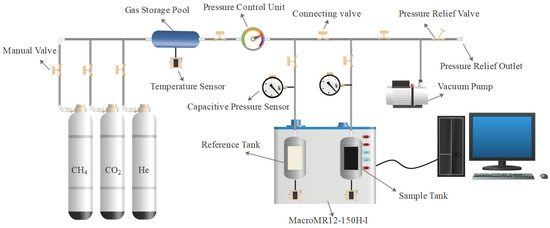
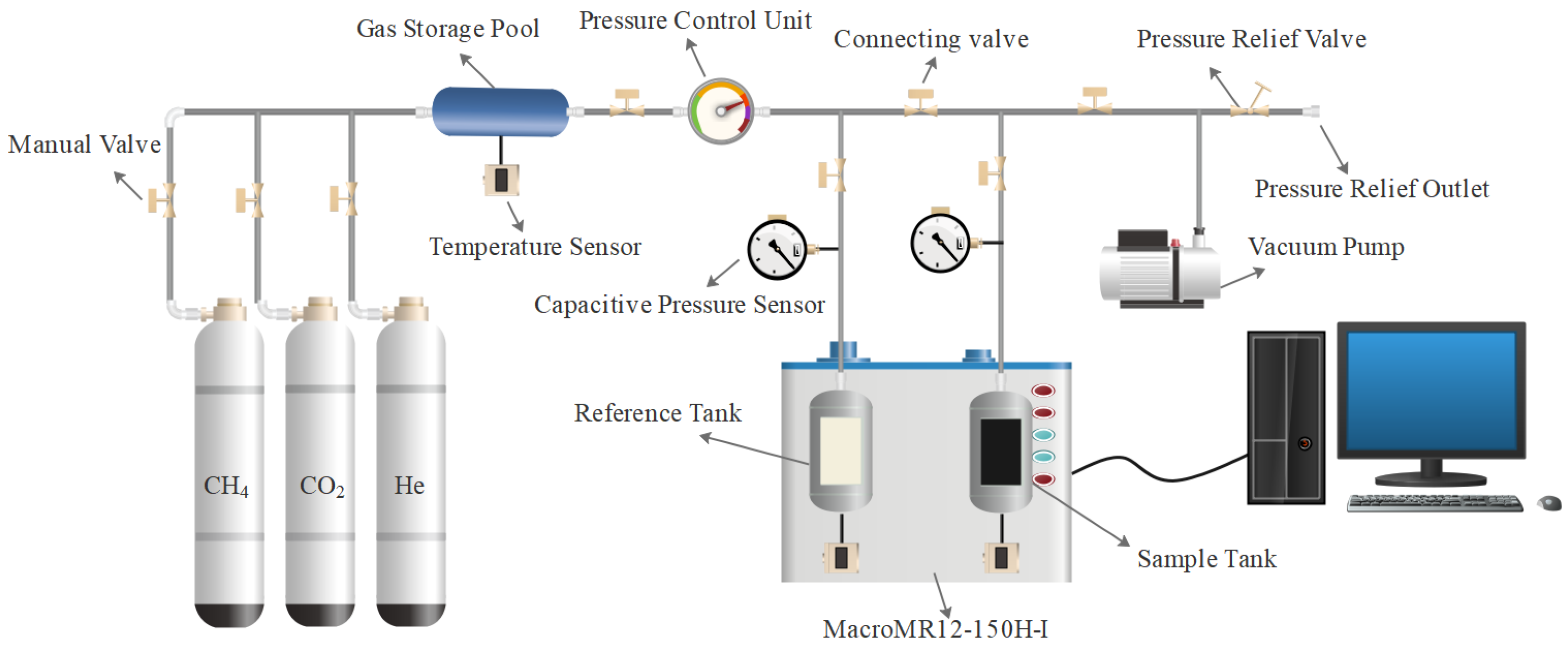
The experimental setup integrated a large-bore nuclear magnetic resonance (NMR) imaging analyzer (MacroMR12-150H-I) with a high-pressure gas-injection displacement platform. The main components include an NMR imaging analyzer, a coal sample vessel, pneumatic valves, a gas storage tank, a pressure control unit, temperature sensors, a vacuum pump, and gas cylinders (Figure 4).
Figure 4.
Schematic representation of the experimental system.
2.1. Experimental Principle
During the experiment, the following relationship exists for CH4 gas:
The partial pressure of free CH4 gas at the time i is expressed as follows:
where is the partial pressure of CH4 gas in free state at time i, denotes the compression factor of the mixture at the experimental temperature, R is the general gas constant, i.e., , T is the temperature in K, and denotes the volume of free space.
According to Dalton’s partial pressure law, the partial pressure of CO2 at time i can be obtained as follows:
Therefore, the amount of free state CO2 at time i is
Moreover, the amount of adsorbed CO2 is expressed as follows:
2.2. Experimental Scheme
Coal samples of anthracite, coking coal, and long-flame coal were selected for the experiments, and they were dried in an oven at 80 °C. First, an NMR CH4 gas calibration test was conducted at temperatures of 20–60 °C and test pressures of 1–6 MPa. Subsequently, a time-varying experiment was conducted on the displacement–replacement effects of CO2-enhanced extraction of coal-seam CH4. The prepared coal samples with dimensions of 100 mm × 50 mm were subjected to coal quality analysis and measurements of true density and apparent density. The mass of the loaded coal sample, free volume of the sample chamber, V1 = 33.39 mL, and the free volume of the reference tank, V2 = 44.87 mL, were recorded. The experimental temperature was 20–60 °C, the CH4 equilibrium pressure was 1–3 MPa, and the CO2 injection pressure was 2–6 MPa with a step of 1 MPa. Table 1 presents the industrial analysis results of the coal sample.
Table 1.
Experimental parameters and corresponding results for the coal cores.
3. NMR CH4 Calibration Experiment
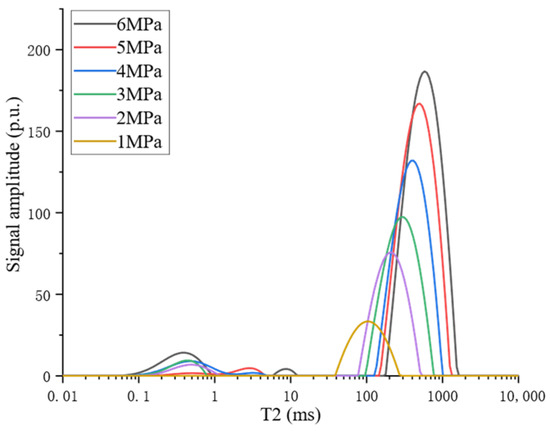
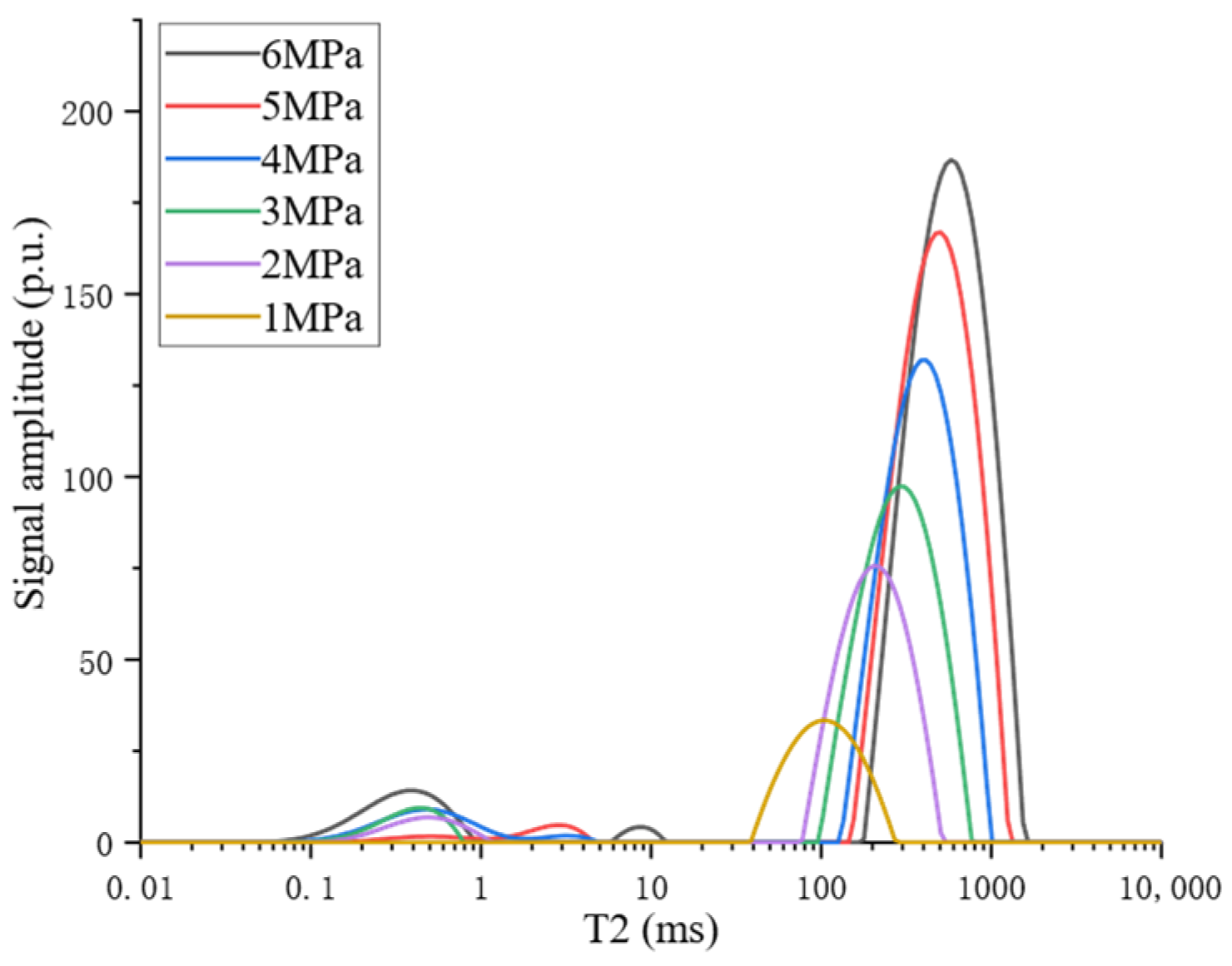
Prior to the experiment, the lines were evacuated for 6 h, and then CH4 was injected into the sample chamber at a pressure of 1–6 MPa to acquire NMR signals under different pressure and temperature conditions. Considering the temperature of 30 °C as a representing example, the T2 spectrum of free CH4 was obtained, as shown in Figure 5.
Figure 5.
T2 curve of free state CH4 peak at 30 °C temperature condition.
The NMR test results of free gas reveal that the T2 spectrum of free gas exhibits only one characteristic peak, and both the peak area (integral amplitude) and the transverse relaxation time T2 are proportional to gas pressure. This means that as pressure increases, the peak shifts to longer T2 (rightward). Therefore, in the NMR spectra of coal gas adsorption/desorption, the spectral ranges corresponding to adsorbed and free gas can be distinguished.
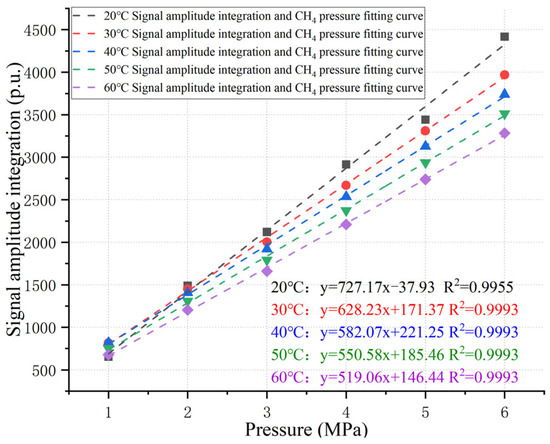
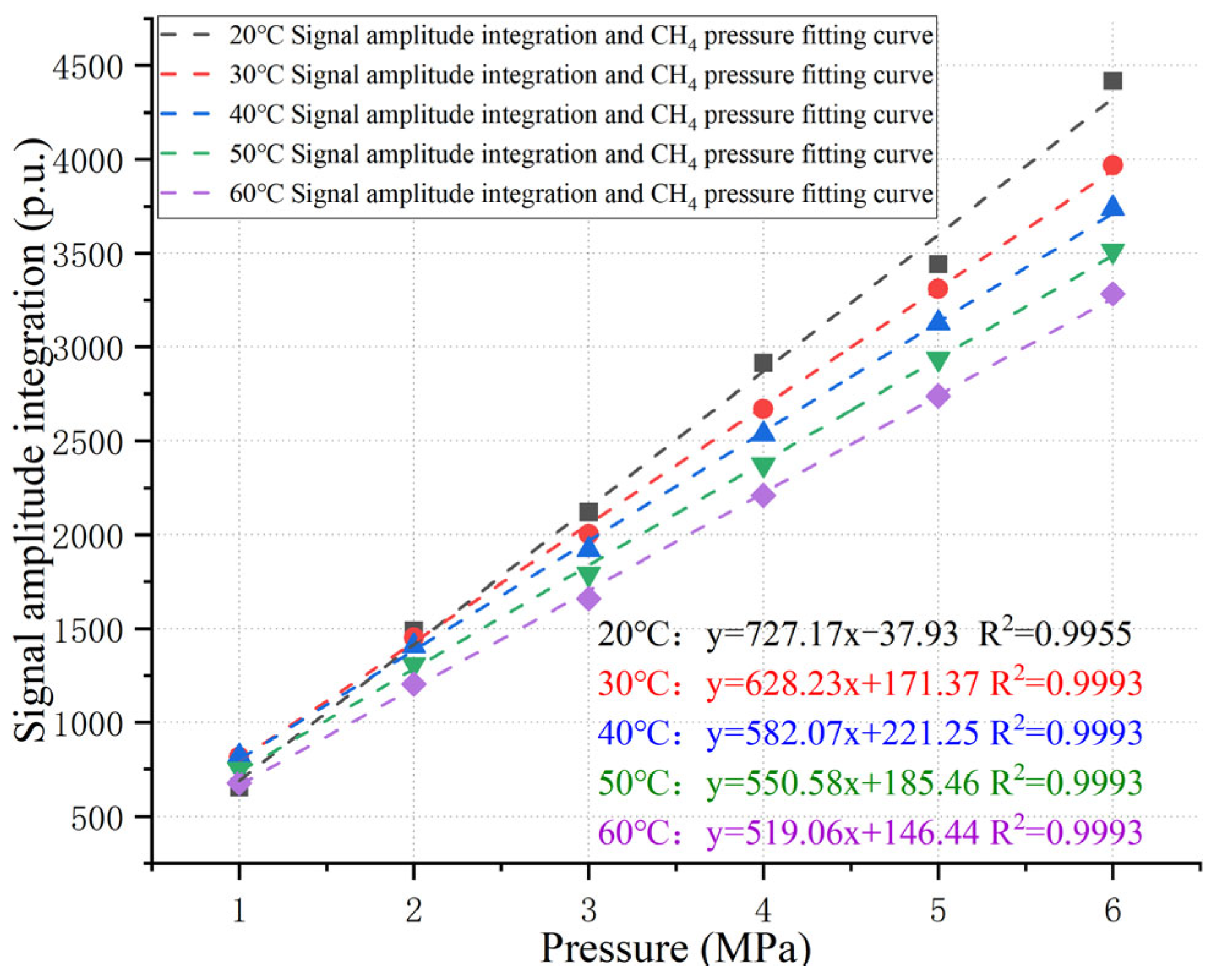
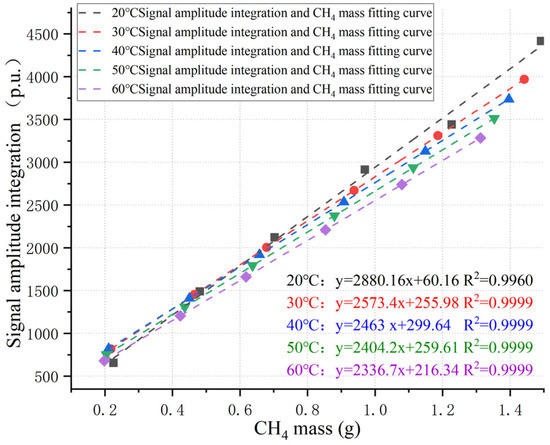
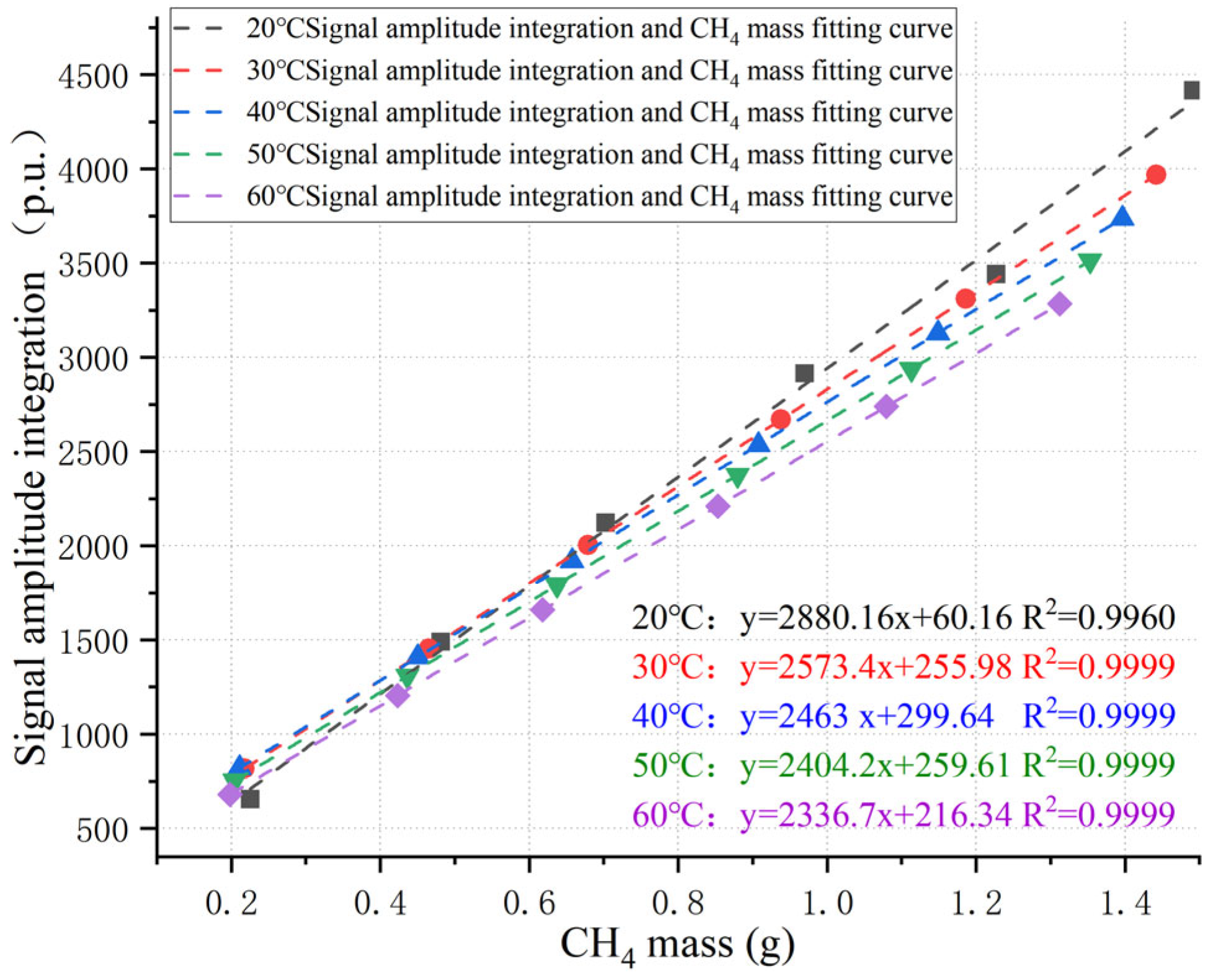
Based on the T2 spectra of free CH4, the signal amplitude integration corresponding to free CH4 at 1–6 MPa was extracted to plot a fitted curve of pressure versus T2 signal amplitude integrations of free CH4, as shown in Figure 6. According to natural gas calculation of compression factor [28], the compression factor Z was calculated under different pressures, and the corresponding results are listed in Table 2. Then, the mass of CH4 under different pressure and temperature conditions was calculated by using the real-gas equation of state PV = ZnRT. Therefore, by this method, the measured relationship between pressure and the T2 signal amplitude integration of free CH4 can be converted into a correspondence between CH4 mass and the T2 signal amplitude integration of free CH4, as shown in Figure 7.
Figure 6.
Relationship between pressure and signal amplitude integration.
Table 2.
Relationship between compressibility factor Z and methane mass.
Figure 7.
Integral fitting curve of free-state CH4 mass and signal amplitude integration.
The results reveal that, at different temperatures, the CH4 mass is proportional to the integrated signal amplitude of the NMR T2 spectrum. In other words, the greater the mass of free CH4, the larger the integrated signal amplitude. The relationship is linear, with coefficients of determination R2 all exceeding 0.9960. Therefore, by using the fitted curve between the integrated T2 signal amplitude and CH4 mass, the CH4 mass under different pressure conditions can be calculated, thereby completing the calibration of free-state CH4.
4. Experimental Study on the Time-Varying Characteristics of Displacement–Replacement Effects in CO2-Enhanced Extraction of Coal-Seam CH4
Injection of gaseous CO2 into coal seams to displace and replace CH4 is a dynamic and complex process. The driving mechanisms that enhance CH4 drainage differ across injection stages, influenced by both displacement and replacement effects. Throughout the injection process, these two effects dominate at different times and gradually transition from one to the other. These displacement and replacement effects are influenced by CO2 injection pressure, in situ CH4 pressure, temperature, and injection duration. A quantitative study of these factors is necessary to establish rational production-enhancement schemes and to select target reservoirs. Therefore, understanding the time-dependent characteristics of displacement–replacement effects, establishing quantitative metrics for CH4 production from each effect, and identifying the key controlling parameters for each can provide theoretical guidance for optimizing field injection–production strategies.
The coal samples used in the experiments included long-flame coal, coking coal, and anthracite. To calculate the amount of CH4 desorbed during the CO2 gas displacement–replacement of CH4, NMR T2 spectra were first acquired under each set of conditions. After obtaining the T2 spectra, the relationship between the integrated T2 signal amplitude and free-phase CH4 was used to determine the time evolution of CH4 desorption. Further, the residual adsorbed CH4, the adsorbed amount of CO2, and the amount of free-phase CO2 were indirectly calculated.
4.1. Effect of CO2 Injection Pressure
Gaseous CO2 was injected at pressures of 2–6 MPa by a controlled-variable method, with the CH4 equilibrium pressure set at 1 MPa and the temperature at 30 °C. The CH4 desorption per unit time was calculated. By analyzing the time evolution of CH4-stage desorption amount, the time-varying characteristics of the displacement and replacement effects were elucidated, and the optimal CO2 injection pressure range was identified.
4.1.1. Time-Varying Characteristics of CH4-Stage Desorption Amount
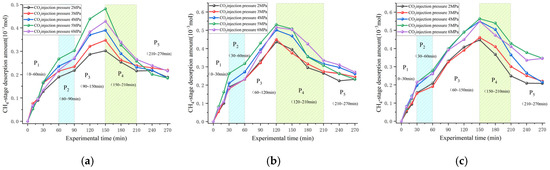
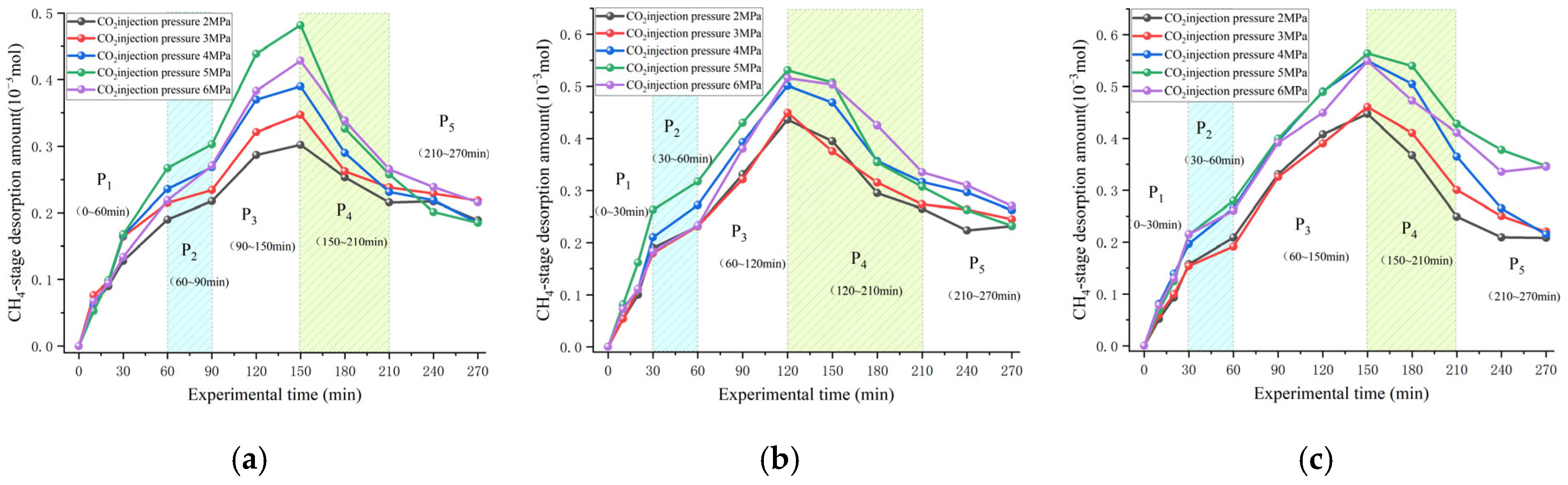
The relationships between the CH4-stage desorption amount and displacement time and CO2 injection pressure are shown in Figure 8.
Figure 8.
Time-varying characteristic curves of the desorption amount in the CH4 desorption stage. (a) Anthracite; (b) Coking coal; (c) Long flame coal.
Figure 8 demonstrates that in the P1 stage (anthracite: 0–60 min; coking coal and long-flame coal: 0–30 min), the desorption amount of CH4 gas increased rapidly with experimental time. In the P2 stage (anthracite: 60–90 min; coking coal and long-flame coal: 30–60 min), the upward trend shows a clear stage-wise slowdown. Conversely, in the P3 stage (anthracite: 90–150 min; coking coal: 60–120 min; long-flame coal: 60–150 min), the stage desorption amount of CH4 gas again increased rapidly. By contrast, in the P4 stage (anthracite: 150–210 min; coking coal: 120–210 min; long-flame coal: 150–240 min), it decreased rapidly; and in the P5 stage (anthracite and coking coal: 210–270 min; long-flame coal: 240–270 min), it tended to stabilize.
In the P1 stage, when the connecting valve is opened and CO2 gas enters the coal sample chamber, CO2 first rapidly occupies the remaining adsorption sites because of the smaller size of CO2 molecules compared to CH4 molecules. Part of the CH4 undergoes natural desorption and is expelled from the coal matrix due to the reduction in its partial pressure. Therefore, although the desorption amount of CH4 gas increases rapidly with time in this stage, the cumulative desorption amount of CH4 is still relatively small. Upon reaching the P2 stage, pressure in the coal sample chamber tends to stabilize, the remaining adsorption sites within the coal are gradually occupied by CO2 that has penetrated the coal matrix, CO2 begins competitive adsorption with CH4, and the replacement effect becomes dominant. Consequently, the stage desorption amount of CH4 gas continues to rise, but more gradually. By the P3 stage, the remaining adsorption sites in the coal have been completely occupied by CO2 that has penetrated the coal. This stage includes not only the replacement effect of CO2 on CH4 but also the displacement effect, and both effects reach their peak, thus the stage desorption amount of CH4 gas rises sharply. In the P4 stage, with the decrease in the residual adsorbed CH4 in the coal, the competitive adsorption between CO2 and CH4 gradually weakens, the replacement effect also diminishes, and the displacement effect becomes dominant. This leads to a continuous decline in the stage desorption amount of CH4 gas. In the P5 stage, very little residual adsorbed CH4 is left in the coal, the partial pressure of CH4 is essentially stable, and the free CH4 expelled from the coal under the displacement effect of CO2 also stabilizes. Therefore, the stage desorption amount of CH4 gas in this stage tends to stabilize.
The process of CO2 gas displacement–replacement of CH4 in coal seams can be divided into five stages, namely the following: (1) a stage of spontaneous CH4 desorption caused by partial-pressure effects; (2) a replacement-dominated stage; (3) a stage where replacement and displacement act jointly; (4) a displacement-dominated stage; and (5) a stabilization stage.
4.1.2. Time-Varying Characteristics of Cumulative CH4 Desorption Amount
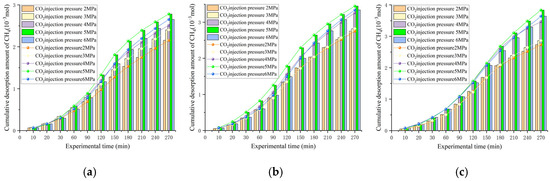
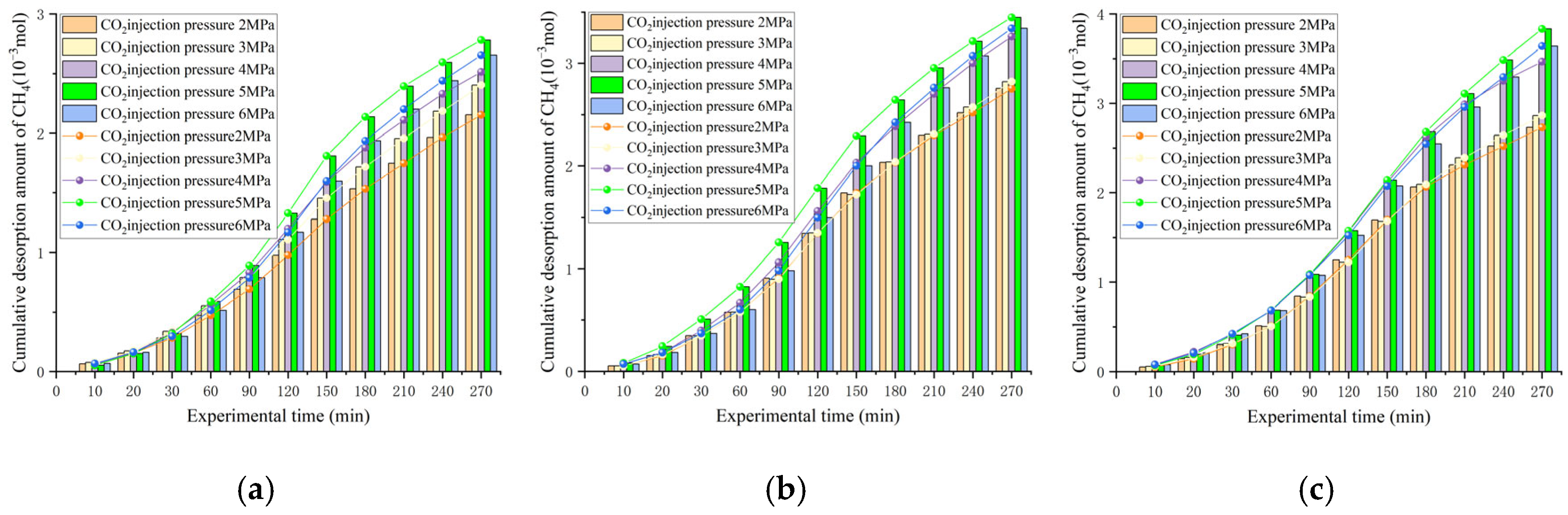
A comparative analysis was performed on the cumulative CH4 desorption at the end of the experiment under different CO2 injection pressures, as shown in Figure 9.
Figure 9.
Time-varying characteristic curves of cumulative CH4 desorption. (a) Anthracite; (b) Coking coal; (c) Long flame coal.
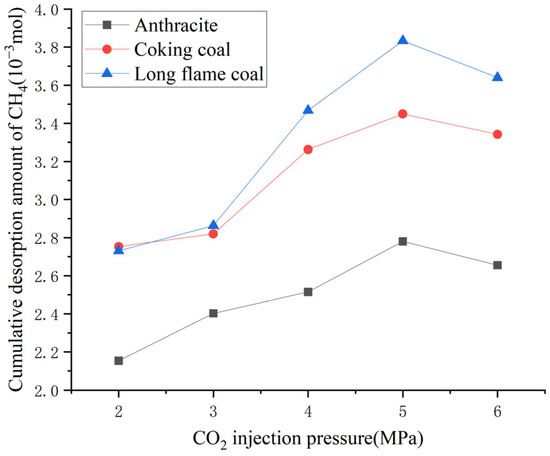
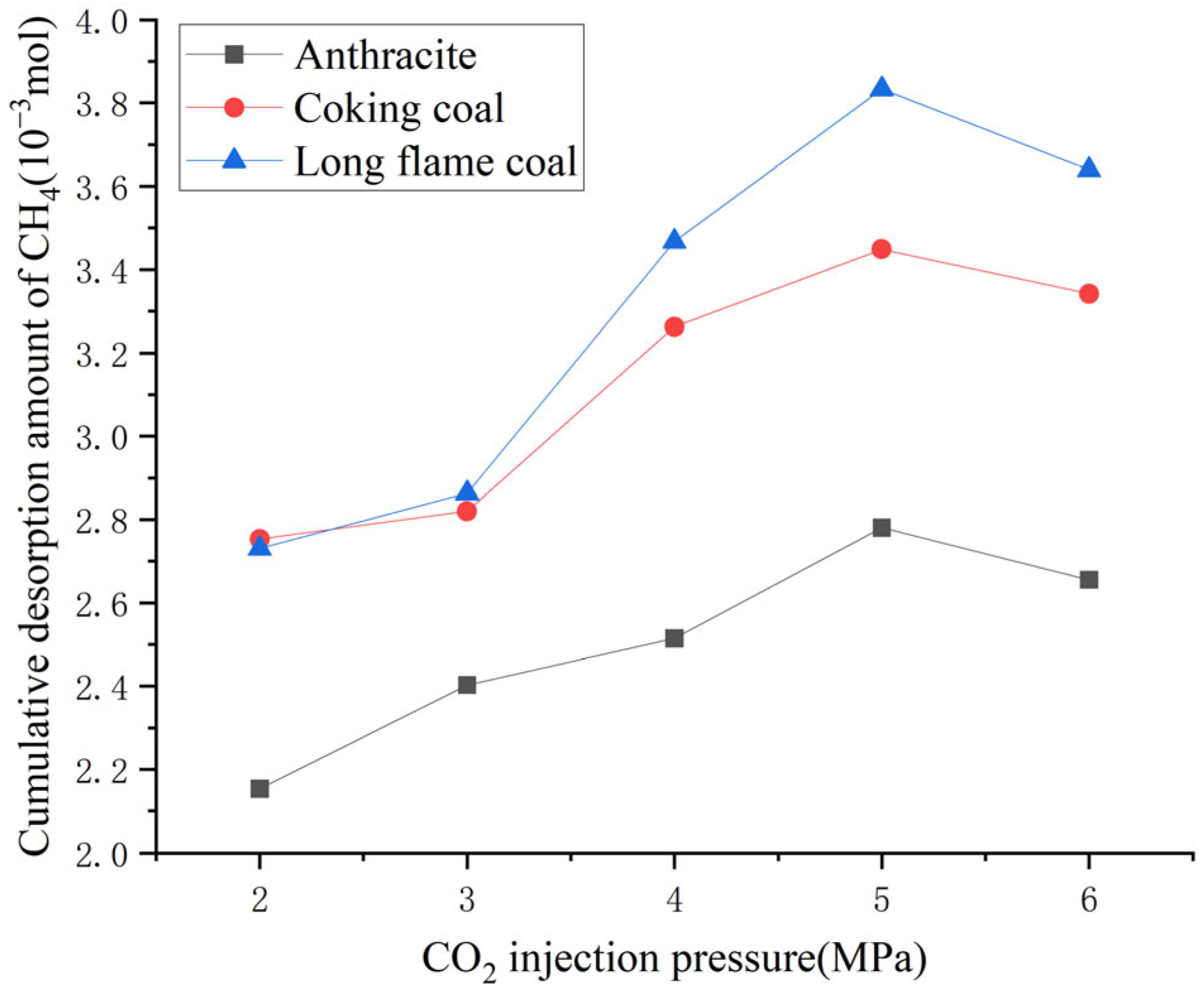
Figure 9 and Figure 10 illustrate that at the end of the experiment, the cumulative desorption amount of CH4 gas from the three coal samples increased with increasing CO2 injection pressure and finally tended to be stable.
Figure 10.
Relationship between cumulative CH4 desorption and CO2 injection pressure.
Table 3 summarizes that when the injection pressure of CO2 gas increases from 2 to 5 MPa, the increase in the CH4 desorption of long flame coal, coke, and anthracite is 29.12%, 25.26%, and 40.35%, respectively. When the injection pressure of CO2 gas increases from 2 to 6 MPa, the increase in the CH4 desorption of long flame coal is 23.30%, that of coke is 21.38%, and anthracite shows a 33.27% increase. This may be attributed to the higher difference in pressure, which leads to a faster desorption rate of CH4 during the P1–P3 stage (0–150 min), resulting in a higher cumulative desorption amount. However, simultaneously, the rate of decrease in CO2 partial pressure in the coal sample tank is also faster. By the time, the experiment reaches the P4–P5 stage (150–270 min), the partial pressure of CO2 at 5 MPa injection pressure during this stage may be higher than that at 6 MPa, resulting in higher displacement and replacement efficiency under the condition of 5 MPa CO2 injection pressure during this stage.
Table 3.
The relationship between the increase rate of CH4 desorption and CO2 injection pressure.
4.1.3. Time-Varying Characteristics of the Displacement-to-Replacement Ratio
The effectiveness of CO2 displacement and replacement is generally represented by the displacement/replacement ratio. That is, the higher the ratio, the higher the efficiency, and the better the effect. It is defined as the ratio of the amount of CO2 adsorbed to the amount of CH4 desorbed, and its calculation formula is represented as follows:
where C is the driving-out/displacement ratio; is the amount of CH4 desorbed from the coal, mol; and denotes the amount of CO2 adsorbed by the coal, mol.
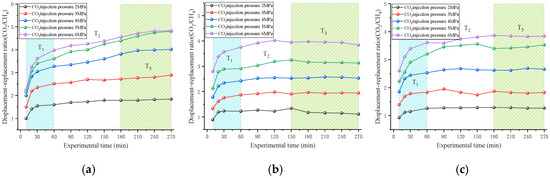
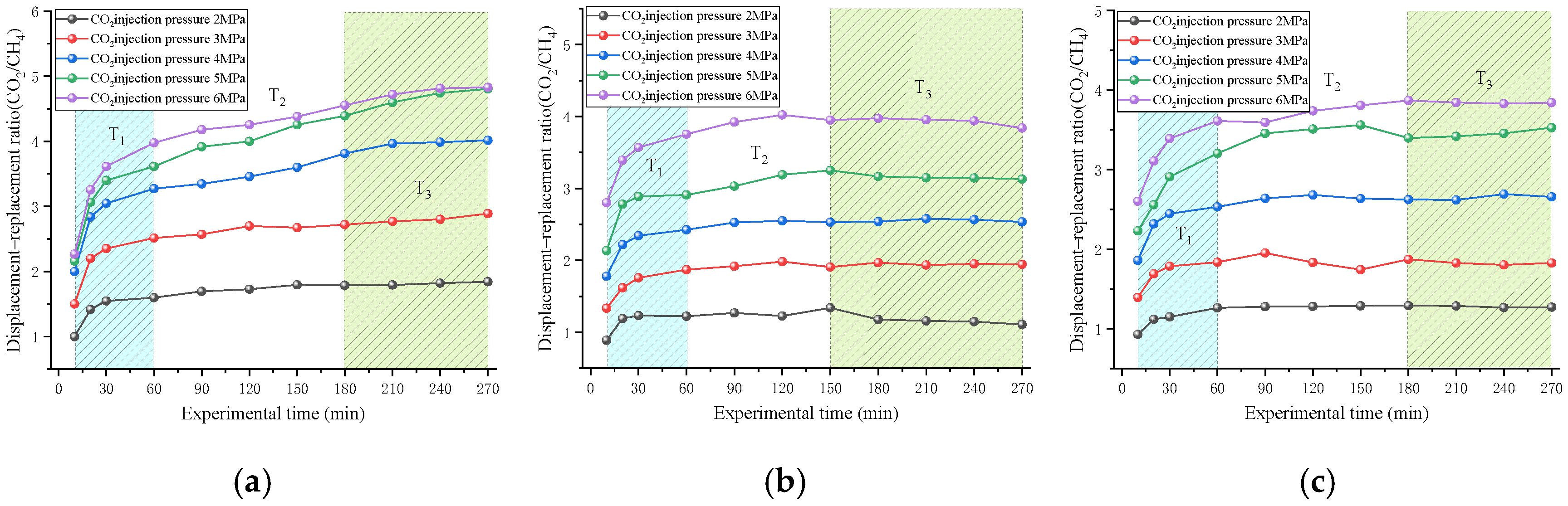
Figure 11 illustrates that the displacement–replacement ratio increases with experimental time and then tends to stabilize. In the early stage of the experiment (stage T1 in the figure), the displacement–replacement ratio rises rapidly with time. This is because after CO2 invades coal, it reaches the pores via seepage and diffusion, quickly occupies the remaining adsorption sites, and competes with CH4 for adsorption, thereby displacing adsorbed CH4. During this stage, the diffusion coefficient of CO2 is much higher than that of CH4, thus the amount of CO2 entering the coal far exceeds that of CH4 exiting, leading to a rapid increase in the displacement–replacement ratio. In the mid-stage of the experiment (T2), CO2 completely occupies the remaining adsorption sites. The decrease in gas concentration gradients weakens diffusion while competitive adsorption becomes stronger. During this stage, not only replacement of adsorbed CH4 by CO2 occurs but also displacement of adsorbed CH4 by CO2 is observed. With the prolongation of time, the replacement effect gradually becomes dominant, causing the growth of the displacement–replacement ratio to slow down. In the late stage of the experiment (T3), as adsorbed CH4 continues to be displaced, the residual adsorbed CH4 in the coal diminishes, and the replacement effect weakens accordingly. Therefore, the displacement–replacement ratio gradually levels off during this stage.
Figure 11.
Time-varying characteristic curve of displacement–replacement ratio under different CO2 injection pressure conditions. (a) Anthracite; (b) Coking coal; (c) Long flame coal.
4.2. Effect of CH4 Equilibrium Pressure
The experiment utilized a controlled-variables method. Gaseous CO2 was injected at 5 MPa under CH4 equilibrium pressures ranging from 0.5 to 2.5 MPa and at a temperature of 30 °C. The CH4 desorption per unit time was calculated, and the temporal evolution of CH4 desorption stage was analyzed to uncover the time-varying characteristics of the displacement and replacement effects at varying CH4 equilibrium pressures. This analysis aided in determining the applicability window for efficient CO2-enhanced drainage of coal seam CH4.
4.2.1. Time-Varying Characteristics of CH4-Stage Desorption Amount
The relationships of the CH4-stage desorption amount with displacement time and CO2 injection pressure are shown in Figure 12.
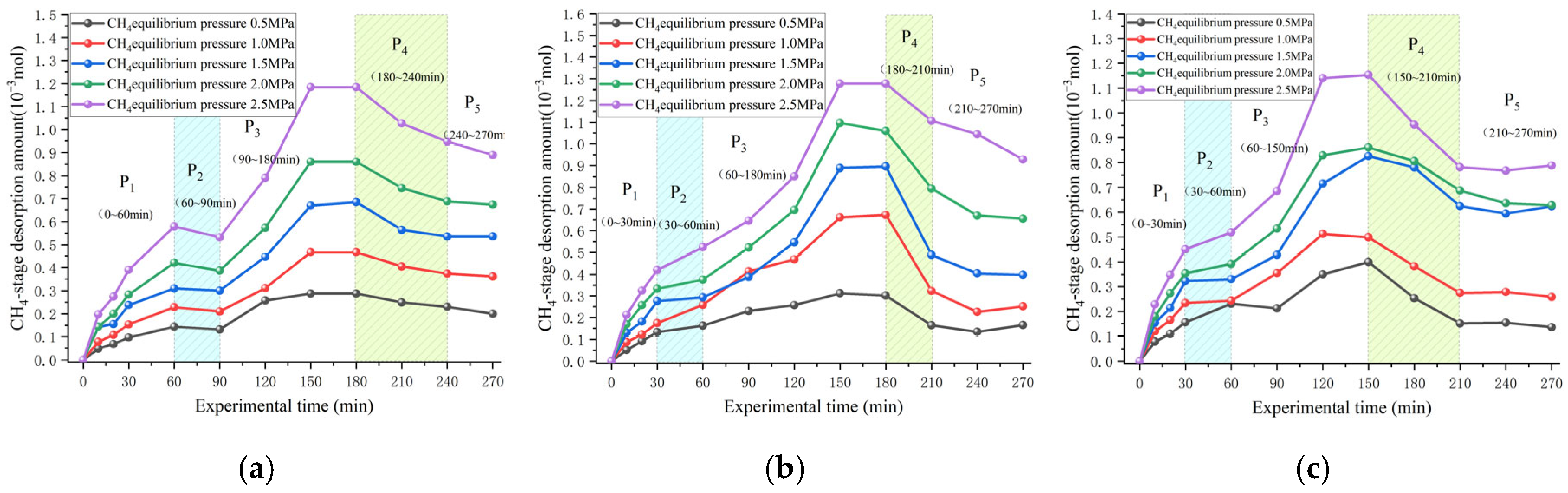
Figure 12.
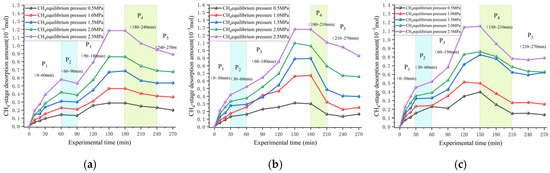
Time-varying characteristic curves of the desorption amount in the CH4 stage. (a) Anthracite; (b) Coking coal; (c) Long flame coal.
Figure 12 illustrates that under different CH4 equilibrium pressures, the CH4 desorption stage exhibits trends that are highly consistent with those observed under varying CO2 injection pressures. Similarly, based on the dominant mechanism in each stage, the entire process can be divided into five stages: (1) natural desorption of CH4 induced by partial-pressure effects; (2) onset of the replacement effect; (3) coaction of replacement and displacement effects; (4) weakening of the replacement effect; and (5) displacement-dominated stage.
4.2.2. Time-Varying Characteristics of Cumulative CH4 Desorption Amount
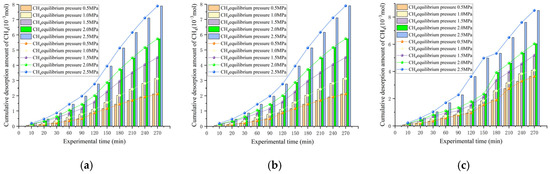
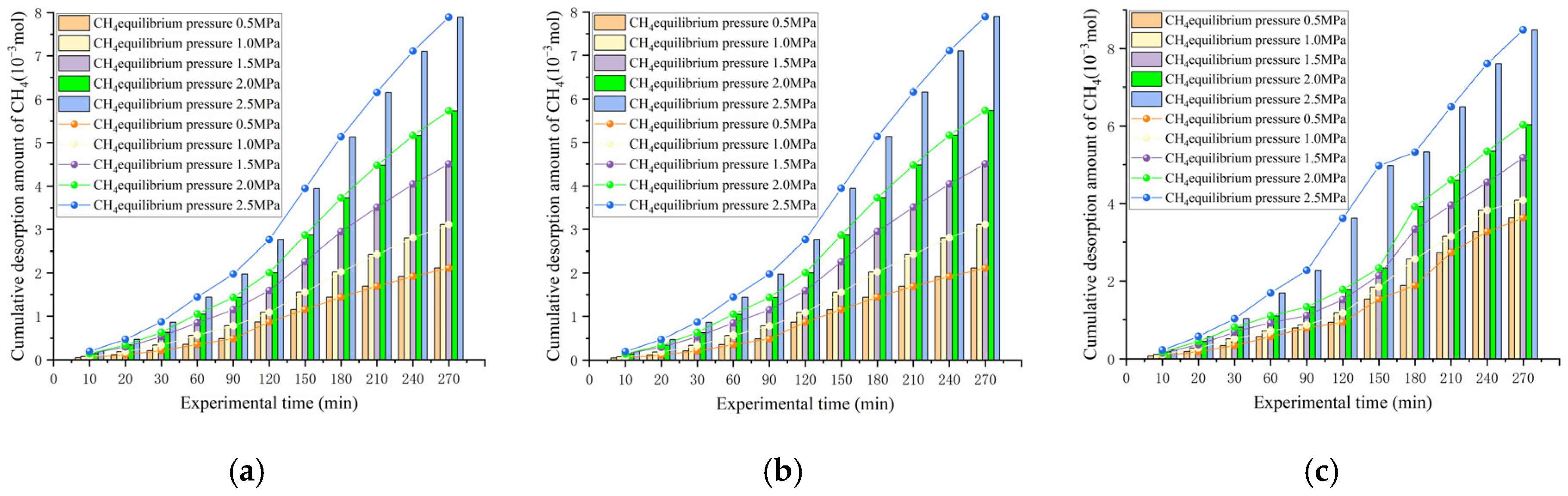
The cumulative amount of CH4 desorbed at the end of the experiments under different CH4 equilibrium pressure conditions was selected for comparative analysis, as shown in Figure 13.
Figure 13.
Time-varying characteristic curves of cumulative CH4 desorption. (a) Anthracite; (b) Coking coal; (c) Long flame coal.
The curves shown in Figure 13 demonstrate that for all three coal samples, the cumulative CH4 desorption first increases slowly and then rises rapidly with the progress of the experiment. Moreover, under different CH4 equilibrium pressure conditions, the time-varying characteristics differ. That is, the higher the CH4 equilibrium pressure, the shorter the initial slow-growth stage. The bar chart in Figure 13 further shows that the higher the CH4 equilibrium pressure, the greater the cumulative CH4 desorption. This is attributed to the fact that under the same CO2 injection pressure, the CH4 equilibrium pressure directly affects the initial CH4 content within the coal and the extent of spontaneous desorption driven by partial pressure. With the increase in the CH4 equilibrium pressure, the pressure difference relative to the CO2 injection pressure decreases, thus weakening the partial-pressure effect after CO2 injection. Therefore, the cumulative CH4 desorption increases slowly at the beginning. Simultaneously, a higher initial CH4 content enhances the replacement effect and displacement effect, leading to a subsequent rapid increase in cumulative CH4 desorption.
When the CH4 equilibrium pressure is 0.5–1.5 MPa, the cumulative CH4 desorption shows a slow increase during the first 90 min and then rises rapidly beyond 90 min. When the CH4 equilibrium pressure is in the range of 2.0–2.5 MPa, it increases slowly during the first 30 min and then rises rapidly thereafter. Thus, the higher the CH4 equilibrium pressure, the shorter the period of spontaneous CH4 desorption, and the longer the period dominated by replacement and displacement effects.
4.2.3. Time-Varying Characteristics of the Displacement-to-Replacement Ratio
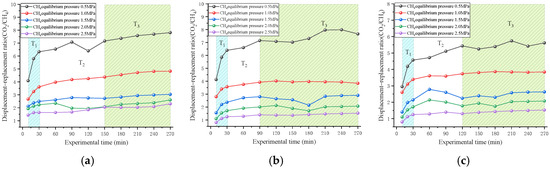
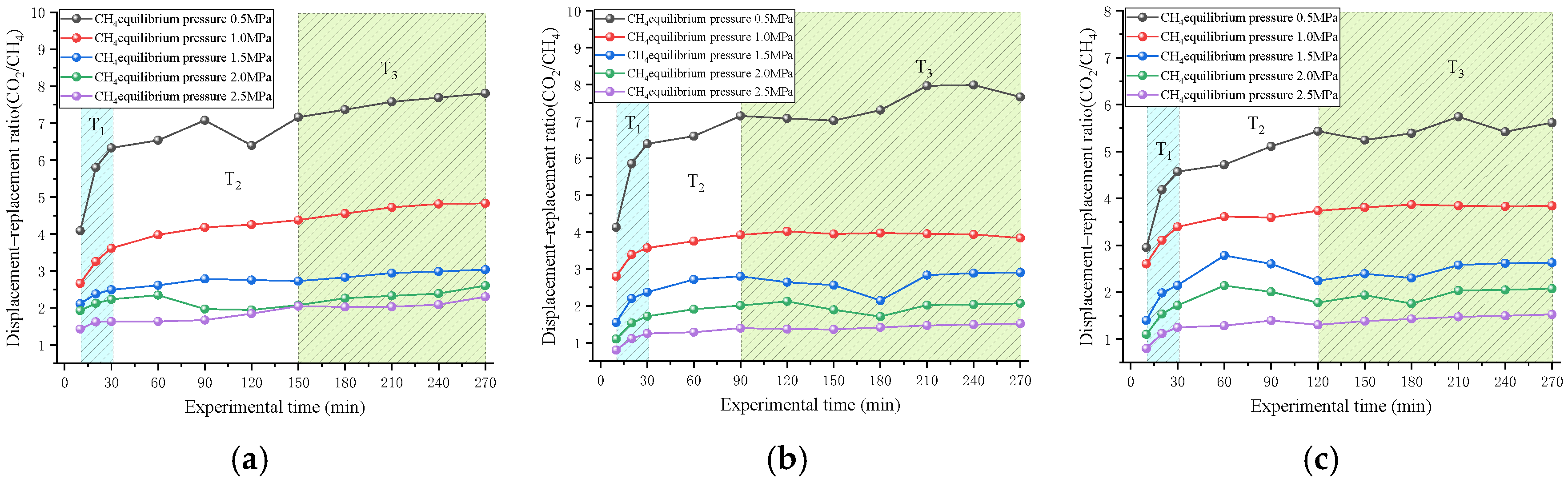
Figure 14 exhibits that the displacement–replacement ratio rises rapidly with experimental time and then levels off, which is consistent with the conclusions mentioned above. Moreover, the displacement–replacement ratio decreases with increasing CH4 equilibrium pressure. As shown in Table 4, the increase in the CH4 equilibrium pressure from 0.5 to 2.5 MPa leads to a decrease in the displacement–replacement ratios for the three coal samples at 270 min: 72.83% for long-flame coal, 80.14% for coking coal, and 70.48% for anthracite. This result indicates that the larger the pressure difference between the CO2 injection pressure and the CH4 equilibrium pressure, the more effective the displacement–replacement process.
Figure 14.
Time-varying characteristic curve of displacement–replacement ratio under different CH4 equilibrium pressure conditions. (a) Anthracite; (b) Coking coal; (c) Long flame coal.
Table 4.
Relationship between CH4 pressure difference and displacement–replacement decline.
5. Conclusions
The process by which CO2 gas displaces and replaces CH4 in coal seams can be divided into five stages: spontaneous CH4 desorption induced by partial-pressure effects; a replacement-effect dominated stage; a stage where replacement and displacement effects act jointly; a displacement-effect dominated stage; and a steady stage.
Under the conditions of different CH4 equilibrium pressures, the variation trend of CH4 gas desorption at different stages is highly consistent with that under different CO2 injection pressures. Moreover, both of them show a rapid increase and then decrease with time and finally stabilizes. The inflection point of the curve can be used as the basis for dividing each stage in the entire process of CO2 displacement and replacement of coal seam CH4.
For all three coal samples, the cumulative CH4 desorption increased with increasing CO2 injection pressure and eventually stabilized. However, the effect weakened when the CO2 injection pressure exceeded 5 MPa. This weakening may have been caused by the dynamic changes in the partial pressure of CO2.
The displacement–replacement ratio decreases with increasing CH4 equilibrium pressure. When the CH4 equilibrium pressure rises from 0.5 to 2.5 MPa, the displacement–replacement ratio at 270 min for the three coal samples decreases by 72.83% for long-flame coal, 80.14% for coking coal, and 70.48% for anthracite. This indicates that the larger the pressure difference between the CO2 injection pressure and the CH4 equilibrium pressure, the more effective the displacement–replacement process.
Author Contributions
Data curation, J.H.; Writing—original draft preparation, J.H. and H.W.; Writing—review and editing, S.W.; Investigation, X.Z.; Supervision, Z.L. All authors have read and agreed to the published version of the manuscript.
Funding
This research was funded by Shaanxi Provincial Department of Human Resources and Social Security, Postdoctoral Foundation of Shaanxi Province, China, grant number 2023BSHEDZZ2291 and Shaanxi Provincial Department of Science and Technology, Youth Fund of Shaanxi Province, China, grant number 2024JC-YBQN-0532.
Data Availability Statement
The original contributions presented in the study are included in the article, further inquiries can be directed to the corresponding author.
Conflicts of Interest
The authors declare no conflict of interest.
References
- Wang, S. On the status of coal as a primary energy source in China and green mining. China Coal 2020, 46, 11–16. [Google Scholar] [CrossRef]
- Ge, S.; Liu, S.; Fan, J.; Zhao, J.; Teng, T. Key technological system for low-carbon modern coal-based energy development. J. China Coal Soc. 2024, 49, 2949–2972. [Google Scholar]
- Wang, F.; Kobina, F. The Influence of Geological Factors and Transmission Fluids on the Exploitation of Reservoir Geothermal Resources: Factor Discussion and Mechanism Analysis. Reserv. Sci. 2025, 1, 3–18. [Google Scholar] [CrossRef] [Scilit]
- Wu, J.; Ansari, U. From CO2 Sequestration to Hydrogen Storage: Further Utilization of Depleted Gas Reservoirs. Reserv. Sci. 2025, 1, 19–35. [Google Scholar] [CrossRef] [Scilit]
- Yuan, L.; Jiang, Y.; Wang, K.; Zhao, X.; Hao, X.; Xu, C. Scientific considerations for precise development and utilization of resources in China’s closed/abandoned mines. J. China Coal Soc. 2018, 43, 14–20. [Google Scholar] [CrossRef] [Scilit]
- Wang, E.; Zhang, G.; Zhang, C.; Li, Z. Research progress and prospects of theory and technology for prevention and control of coal and gas outbursts in China. J. China Coal Soc. 2022, 47, 297–322. [Google Scholar] [CrossRef]
- Su, X.; Song, J.; Guo, H.; Pu, H.; Liu, X.; Han, Y.; Zhang, S.; Li, X.; Yu, S. Mechanisms and key technologies for enhancing coal mine gas drainage productivity. Coal Sci. Technol. 2020, 48, 1–3. [Google Scholar] [CrossRef]
- Liu, S.; Zhu, C.; Lin, B.; Liu, T. Effects of spatial distribution patterns of hydraulic slotting on pressure relief and permeability enhancement in coal seams. J. Min. Saf. Eng. 2020, 37, 983–990. [Google Scholar] [CrossRef]
- Wong, S.; Macdonald, D.; Andrei, S. Conceptual economics of full scale enhanced coalbed methane production and CO2 storage in anthracitic coals at South Qinshui basin, Shanxi, China. Int. J. Coal Geology 2010, 82, 280–286. [Google Scholar] [CrossRef] [Scilit]
- Yi, M.; Wang, L.; Cheng, Y.; Wang, C.; Hu, B. Calculation of gas concentration-dependent diffusion coefficient in coal particles: Influencing mechanism of gas pressure and desorption time on diffusion behavior. Fuel 2022, 320, 123973. [Google Scholar] [CrossRef] [Scilit]
- Wen, H.; Hao, J.; Ma, L.; Ren, L.; Wei, G.; Zheng, X. Study on the adsorption characteristics of coal samples before and after liquid CO2 immersion–dissolution. J. Xi’an Univ. Sci. Technol. 2022, 42, 397–404. [Google Scholar] [CrossRef]
- Yang, H.; Wei, C.; Wang, Z.; Yang, T. Numerical simulation of underground gas injection to displace coalbed methane based on multi-physics coupling. J. China Coal Soc. 2010, 35 (Suppl. S1), 109–114. [Google Scholar] [CrossRef]
- Yang, H.; Zhang, T.; Wang, Z.; Zhao, C. Experimental study on nitrogen injection into coal seams to displace methane and promote gas drainage. J. China Coal Soc. 2010, 35, 792–796. [Google Scholar] [CrossRef]
- Yang, H.; Feng, C.; Chen, L. Analysis of displacement–driving effects and their transformation mechanisms in nitrogen injection simulation experiments in coal seams. J. China Coal Soc. 2016, 41, 2246–2250. [Google Scholar] [CrossRef]
- Liang, W.; Zhang, B.; Li, L.; He, W. Theoretical and experimental study on energy injection (with CO2 as an example) for modified displacement extraction of CH4. J. China Coal Soc. 2018, 43, 2839–2847. [Google Scholar] [CrossRef]
- Liang, W.; Wu, D.; Zhao, Y. Experimental study on CO2 displacement of coal seam CH4. Chin. J. Rock Mech. Eng. 2010, 29, 665–673. [Google Scholar]
- Wang, L. Experimental Study on Gas-Injection Displacement of CH4 in Deep Coal Seams and Post-Displacement Characteristic Traces. Ph.D. Thesis, China University of Mining and Technology, Xuzhou, China, 2013. [Google Scholar]
- Wang, L.; Wang, Z.; Xu, S.; Zhou, W.; Wu, J. A field investigation of the deformation of protected coal and its application for CBM extraction in the Qinglong coalmine in China. J. Nat. Gas Sci. Eng. 2015, 27, 367–373. [Google Scholar] [CrossRef] [Scilit]
- Yue, G.; Wang, Z.; Kang, B. Time-varying characteristics of the gas diffusion coefficient of coal in low-temperature environments. China Saf. Sci. J. 2014, 24, 107–112. [Google Scholar] [CrossRef]
- Sun, K.; Liang, B.; Pan, Y. Study on the productivity-enhancement mechanism of coalbed methane extraction by gas injection under fluid–solid coupling. Sci. Technol. Eng. 2006, 6, 802–806, 813. [Google Scholar]
- Zhang, W.; Tai, Y. Numerical simulation of coalbed methane production by injection wells. J. Liaoning Tech. Univ. (Nat. Sci. Ed.) 2009, 28, 291–298. [Google Scholar]
- Wu, S.; Zheng, A. A three-dimensional multicomponent flow model for gas-injection displacement of coalbed methane. Nat. Gas Geosci. 2007, 18, 580–583. [Google Scholar]
- Zheng, A.; Wang, X.; Liu, D. Numerical simulation study of gas-injection displacement of coalbed methane. Pet. Drill. Tech. 2006, 31, 55–57. [Google Scholar]
- Mei, H.; Zhang, M.; Li, M.; Sun, L.; Dong, H.; Gu, H. Flow equation considering dispersion during the gas-drive process. Nat. Gas Ind. 2004, 24, 97–99. [Google Scholar]
- Wen, H.; Fan, S.; Ma, L.; Guo, J.; Wei, G.; Hao, J. Engineering practice of promoting gas drainage in low-permeability coal seams using low-pressure liquid CO2 underground. J. Xi’an Univ. Sci. Technol. 2018, 37, 530–537. [Google Scholar] [CrossRef]
- Wen, H.; Hao, J.; Ma, L.; Zheng, X. Experimental Study on Replacing Coal Seam CH4 with CO2 Gas. ACS Omega 2022, 7, 1395–1403. [Google Scholar] [CrossRef] [Scilit]
- Wei, G.; Wen, H.; Deng, J.; Li, Z.; Fan, S.; Lei, C.; Liu, M.; Ren, L. Enhanced coalbed permeability and methane recovery via hydraulic slotting combined with liquid CO2 injection. Process Saf. Environ. Prot. 2021, 147, 234–244. [Google Scholar] [CrossRef] [Scilit]
- DIN EN ISO 12213-2-2010; Natural Gas. Calculation of the Compression Factor. Part 2. Algebraic Analysis of Molar Calculations (ISO 12213-2-2006). German Version EN ISO 12213-2-2009. German Institute for Standardisation: Berlin, Germany, 2010.

Disclaimer/Publisher’s Note: The statements, opinions and data contained in all publications are solely those of the individual author(s) and contributor(s) and not of MDPI and/or the editor(s). MDPI and/or the editor(s) disclaim responsibility for any injury to people or property resulting from any ideas, methods, instructions or products referred to in the content. |
© 2025 by the authors. Licensee MDPI, Basel, Switzerland. This article is an open access article distributed under the terms and conditions of the Creative Commons Attribution (CC BY) license (https://creativecommons.org/licenses/by/4.0/).