Article

Offshore Network Development to Foster the Energy Transition

by
Enrico Maria Carlini
1,
Corrado Gadaleta
1,
Michela Migliori
1,*,
Francesca Longobardi
1,
Gianfranco Luongo
1,
Stefano Lauria
2,
Marco Maccioni
2,* and
Jacopo Dell’Olmo
2
1
Italian Transmission System Operator, Terna S.p.A., 00156 Rome, Italy
2
Department of Astronautics, Electrical and Energy Engineering, “Sapienza” University of Rome, 00184 Rome, Italy
*
Authors to whom correspondence should be addressed.
Energies 2025, 18(2), 386; https://doi.org/10.3390/en18020386
Submission received: 30 November 2024 / Revised: 24 December 2024 / Accepted: 31 December 2024 / Published: 17 January 2025
(This article belongs to the Special Issue Emerging Topics in Renewable Energy Research in Smart Grids)

Abstract

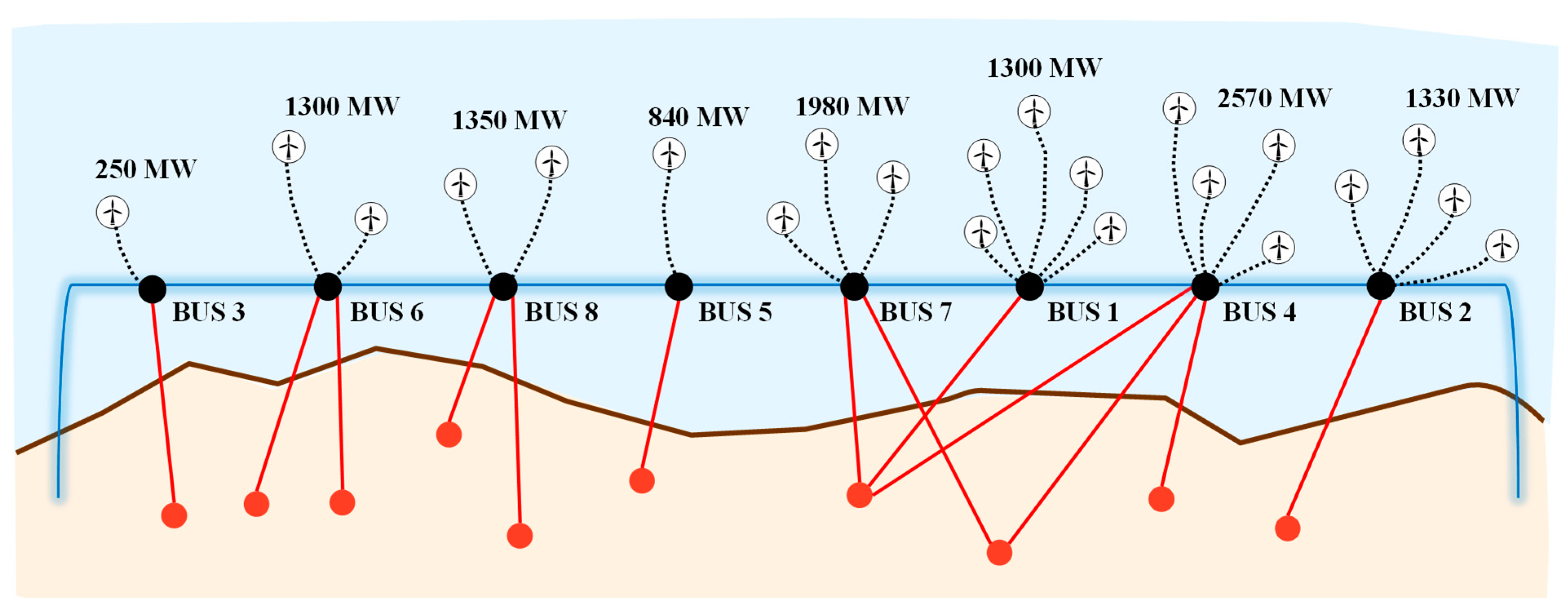
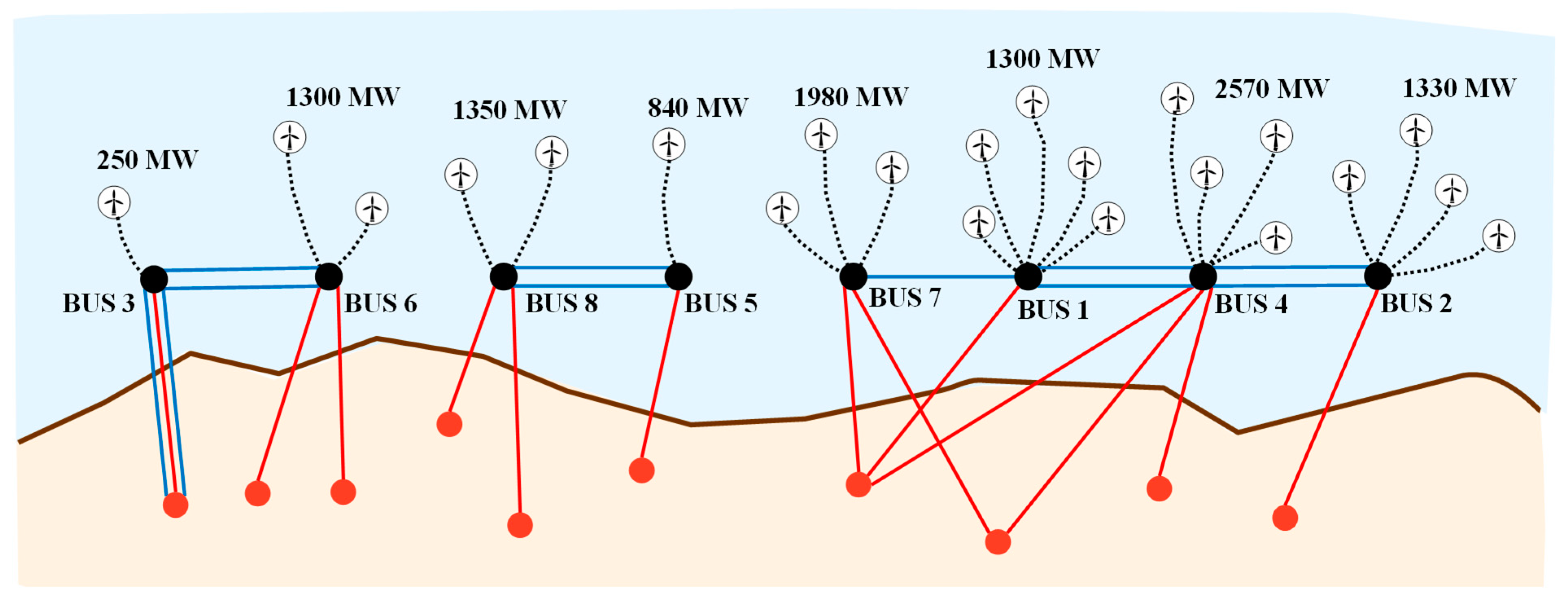
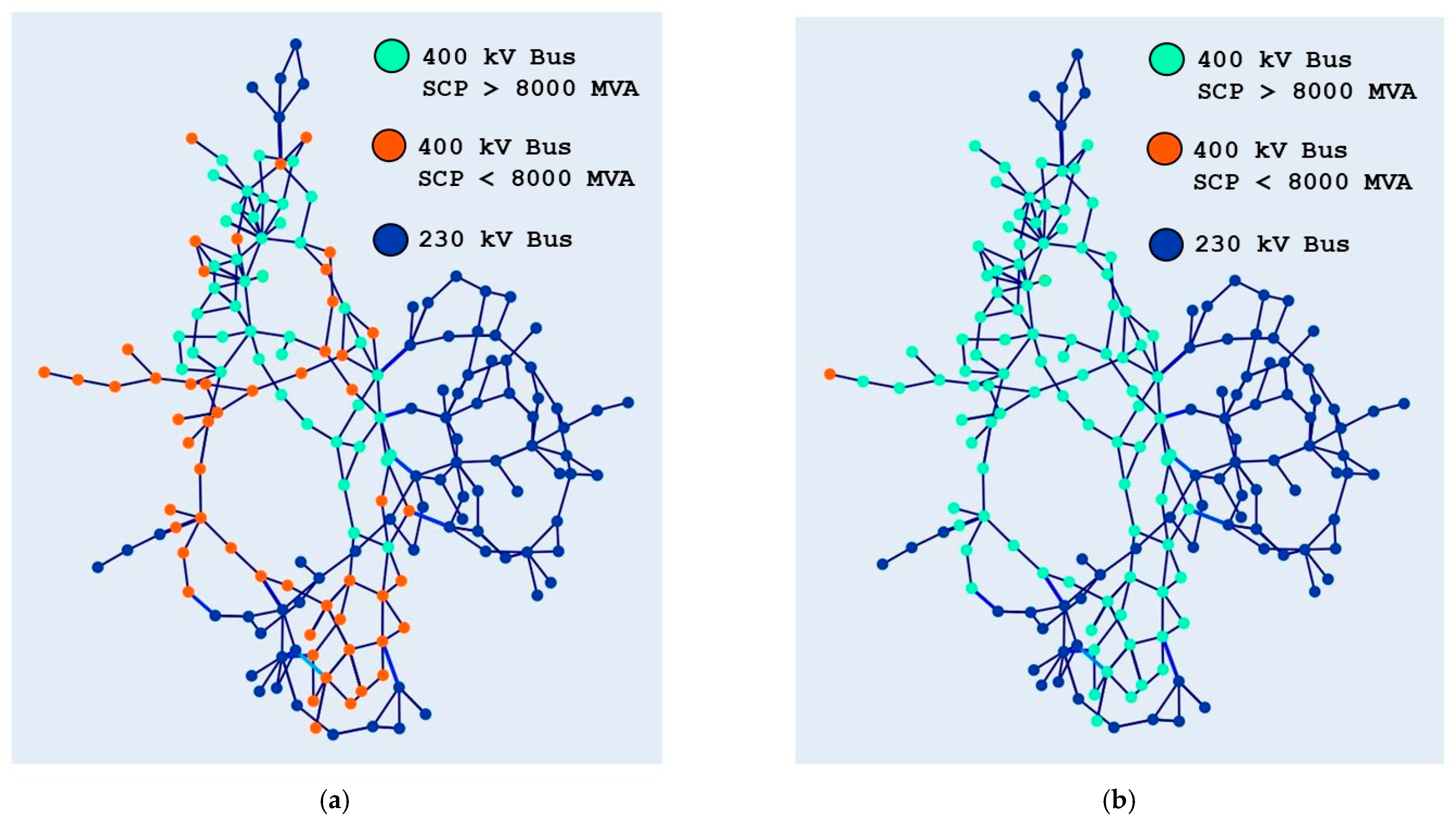
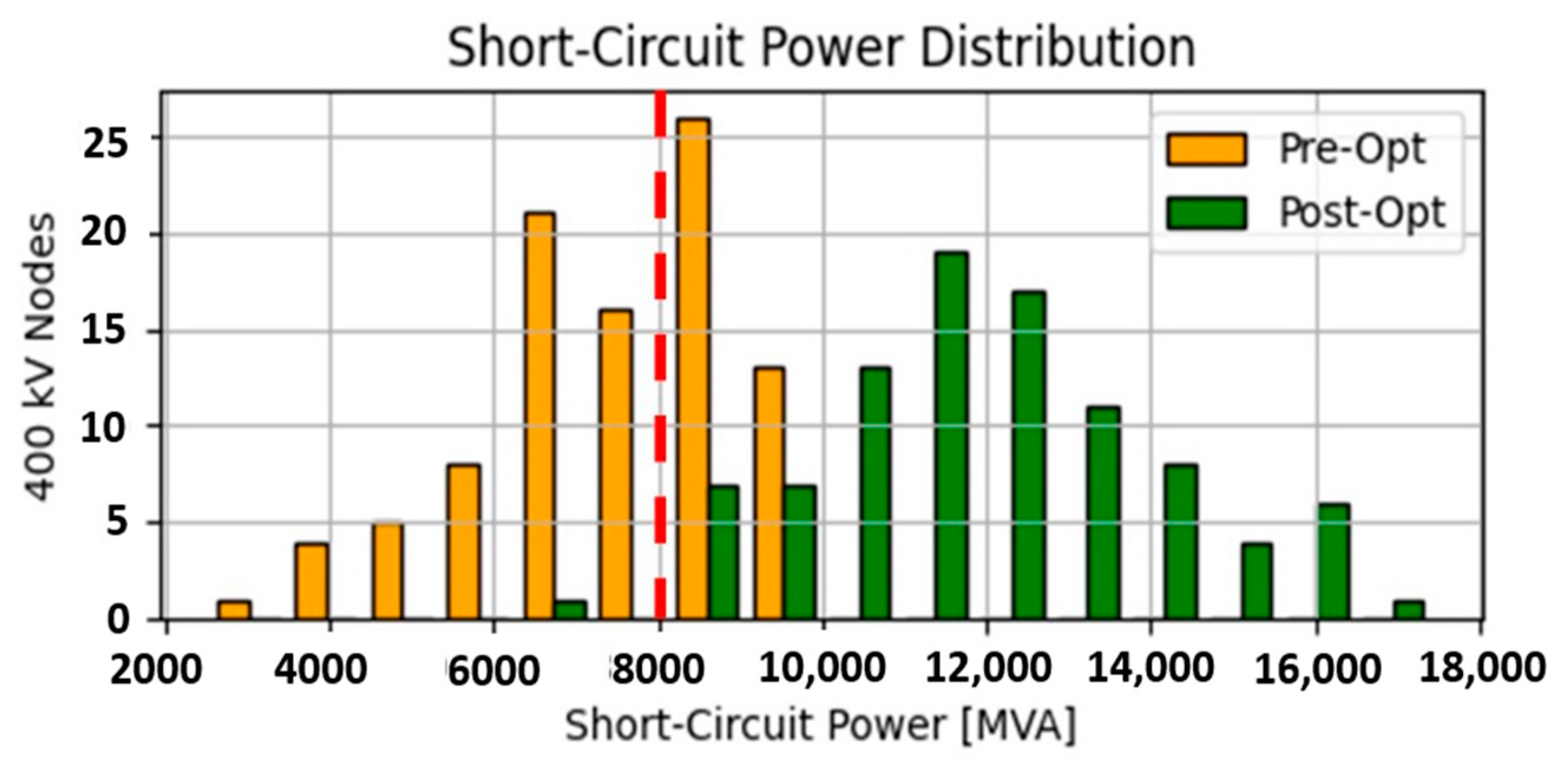
A growing interest in offshore wind energy in the Mediterranean Sea has been recently observed thanks to the potential for scale-up and recent advances in floating technologies and dynamic cables: in the Italian panorama, the offshore wind connection requests to the National Transmission Grid (NTG) reached almost 84 GW at the end of September 2024. Starting from a realistic estimate of the offshore wind power plants (OWPPs) to be realized off the southern coasts in a very long-term scenario, this paper presents a novel optimization procedure for meshed AC offshore network configuration, aiming at minimizing the offshore wind generation curtailment based on the DC optimal power flow approximation, assessing the security condition of the whole onshore and offshore networks. The reactive power compensation aspects are also considered in the optimization procedure: the optimal compensation sizing for export cables and collecting stations is evaluated via the AC optimal power flow (OPF) approach, considering a combined voltage profile and minimum short circuit power constraint for the onshore extra-high voltage (EHV) nodes. The simulation results demonstrate that the obtained meshed network configuration and attendant re-active compensation allow most of the offshore wind generation to be evacuated even in the worst-case scenario, i.e., the N1 network, full offshore wind generation output, and summer line rating, testifying to the relevance of the proposed methodology for real applications.
Keywords: offshore transmission networks; offshore wind generation; power system planning; optimization model; PTDF matrix; reactive power compensation offshore transmission networks; offshore wind generation; power system planning; optimization model; PTDF matrix; reactive power compensation