Article

Heat Transfer Enhancement of Tube Bundle with Symmetrically Inclined Annular Fins for Waste Heat Recovery

by
Jiahui Wang
1,2,
Hanxiao Liu
3,4,
Liming Wu
4,5,
Liyuan Yu
4,
Peng Liu
1,2,* and
Zhichun Liu
3,*
1
Institute of Thermal Science and Power Engineering, Wuhan Institute of Technology, Wuhan 430205, China
2
Hubei Provincial Key Laboratory of Chemical Equipment Intensification and Intrinsic Safety, Wuhan 430205, China
3
School of Energy and Power Engineering, Huazhong University of Science and Technology, Wuhan 430074, China
4
Feida Environmental Protection Technology Co., Ltd., Shaoxing 311800, China
5
Hangzhou Iron&Steel Group Co., Ltd., Hangzhou 310022, China
*
Authors to whom correspondence should be addressed.
Energies 2025, 18(18), 4964; https://doi.org/10.3390/en18184964
Submission received: 14 August 2025 / Revised: 9 September 2025 / Accepted: 15 September 2025 / Published: 18 September 2025

Abstract

Enhancing convective heat transfer efficiency in waste heat recovery applications is critical for improved energy utilization. This study conducts a convective heat transfer optimization of a tube bundle for waste heat recovery of flue gas based on an exergy destruction minimization method. The results indicate that the multi-longitudinal vortex flow is the optimal flow field for heat transfer in a tube bundle. To achieve this flow field, a novel tube bundle equipped with symmetrically inclined annular fins has been proposed and the thermal–hydraulic performance has been numerically investigated. The effects of key geometric parameters, including fin inclination angle (θ = 30°, 35°, 40°, 45°, 50°) and fin diameters (D = 62, 68, 74 mm), were systematically analyzed under varying inlet velocities (8–16 m/s) and heat flux densities (23,000–49,000 W/m2) at inlet temperatures of 527 K and 557 K. Results demonstrate that both the convective heat transfer coefficient (h) and tube bundle power consumption (Pw) increase with rising fin diameters and inclination angle. At a constant D, h and Pw exhibit a positive correlation with θ. Crucially, compared to a traditional smooth-tube bundle, the optimal annular fin configuration (θ = 45°, D = 74 mm) achieved a significant enhancement in the convective heat transfer coefficient of 22.76% to 31.22%. This improvement is attributed to intensified vortex generation near the fins, particularly above and below them at higher angles, despite a reduction in vortex count. These findings provide valuable insights for the design of high-efficiency finned tube heat exchangers for flue gas waste heat recovery.

1. Introduction

The rising global energy demand, coupled with heightened sustainability imperatives, underscores the critical need for maximizing resource utilization efficiency. Heat exchangers are pivotal in this endeavor, significantly enhancing energy recovery systems [1]. Their diverse configurations—including finned and non-finned types—are essential across industries like power generation, waste heat recovery, refrigeration, and process heating [2].
Over the past few decades, significant progress has been made in convective heat transfer enhancement technologies, accompanied by numerous theoretical explanations of the underlying physical mechanisms. These include configuration theory [3,4,5,6]. Chen et al., for instance, combined theoretical analysis with numerical calculations to summarize structural design advances for eight radiator types, optimizing ten performance indicators. Their findings provide significant theoretical insights and practical value, offering a scientific basis for the thermal design of real-world radiators [7]. Other key principles encompass the entropy production minimization principle, Bejan proposed the principle of minimizing entropy production [8,9]. Wang and Liu conducted research on the thermal performance of different geometric structure flow channels based on the principle of minimizing entropy production [10,11]. Li and Feng analyzed the thermal performance using the principle of minimizing entropy production for different fluids, respectively [12,13], where Datta et al. [14] numerically demonstrated that minimal entropy generation under constant pumping power signifies optimal heat exchange performance; the dissipative extremum principle was first rigorously defined by Guo et al. [15]. This foundational work was later reviewed and updated by Chen et al. [16], who expanded on its optimization potential. Further developments have extended the theory to complex scenarios, such as phase change, as demonstrated by Wang et al. [17], and to systems with variable thermophysical properties, as analyzed by Zhou et al. [18]. The intrinsic connection between the EDE principle and other optimization frameworks, such as the field synergy principle, was numerically investigated by He and Tao [19]. The application of the principle has been successfully demonstrated across various scales and disciplines; for instance, Feng et al. [20] provided a comprehensive review of its use in multi-objective constructal optimization. Practical large-scale applications, like the optimization of dry cooling systems based on entransy dissipation, have been presented by Wei et al. [21]. Recent research continues to validate and apply this principle. Wang et al. [22] and Xia et al. [23] employed it for the optimization of heat sinks and heat exchangers, respectively. Furthermore, its integration with constructal theory for the design of vascular networks was explored by Feng et al. [16,17,18,19,20,21,24], Chen et al. [25,26] utilized the dissipative minimum method to optimize the “bulk point heat dissipation” problem. In addition, there are the field synergy principle [27,28,29,30,31,32,33,34], the heat transfer optimization principle [35,36,37], and the exergy destruction minimization principle [37,38,39,40]. The exergy destruction minimization principle, in particular, offers a powerful thermodynamic approach for optimizing convective heat transfer processes by directly targeting irreversibility reduction. Liu et al. [39] demonstrated this by establishing optimization equations via variational methods, revealing the optimized flow field structure within a circular tube under uniform heat flux and paving the way for enhanced element design.
Enhanced heat transfer technology is the key to achieving a more uniform circumferential temperature distribution [41]. It can be classified into three types: active, passive, and composite [42]. Passive enhancement techniques, requiring no external power input, are especially attractive. Among these, adding turbulence generators (e.g., fins or baffles) increases the heat exchange area and disrupts boundary layers, thereby improving thermal performance while promoting structural compactness and material efficiency [43,44,45]. Finned tubes, consequently, are ubiquitous in waste heat recovery applications, including flue gas systems. This improves the heat exchange performance of the heat exchange tubes, makes the heat exchanger structure compact, reduces metal consumption, and saves operating costs. Therefore, finned tubes are widely used in many engineering fields to enhance heat transfer. In addition, a large number of experiments and numerical studies have been conducted on various finned tubes. Whether in laminar flow or turbulent flow, researchers have observed that finned tubes exhibit higher heat transfer characteristics to a certain extent compared to the corresponding non-finned tubes. Substantial experimental and numerical studies confirm their superior heat transfer characteristics compared to smooth tubes under both laminar and turbulent regimes.
Optimizing fin geometry is crucial for maximizing performance. Fabbri [46,47] optimized inner fin shapes under laminar flow using genetic algorithms. Saad et al. [48] and Huq et al. [49] investigated pressure drop and heat transfer in finned tubes under turbulence. McQuiston [50], Gray [51], and Tahseen et al. [52] established correlations for staggered straight finned tubes, laying a foundation for subsequent finned tube heat exchanger performance evaluation. Kim et al. [53] explored the impact of tube rows and fin spacing, while Nemati et al. [54] demonstrated the benefits of shape optimization (e.g., elliptical annular fins reducing pressure drop significantly). Dagtekin et al. [55] analyzed entropy generation in ribbed pipes, and Yu and Tao [56], Wang et al. [57], Zhang et al. [58], and Liu et al. [59] explored various wavy, corrugated, helical, and inclined fin configurations, highlighting the profound influence of geometric parameters on thermal–hydraulic performance.
Despite these advances, applying the exergy destruction minimization principle specifically to optimize heat transfer performance of finned tube bundles for high-temperature flue gas waste heat recovery remains underexplored. Furthermore, achieving the theoretically optimal flow field structures identified by methods like variational optimization within practical tube bundle designs presents a significant challenge. To address these gaps. a convective heat transfer optimization of a flue gas waste heat recovery tube bundle based on the exergy destruction minimization method was conducted. Theoretical optimization identifies the multi-longitudinal vortex flow as the optimal flow field. To realize this flow field, a novel tube bundle equipped with symmetrically inclined annular fins was proposed and its thermal–hydraulic performance was systematically investigated via numerical simulation. Key parameters—fin inclination angle (θ = 30°, 35°, 40°, 45°, 50°) and fin diameter (D = 62, 68, 74 mm)—are analyzed under relevant operating conditions (inlet velocities: 8–16 m/s; heat flux: 23,000–49,000 W/m2; inlet temperatures: 527 K, 557 K). This work provides a systematic theoretical and numerical framework for optimizing finned tube bundles based on exergy destruction minimization, bridging the gap between thermodynamic theory and heat transfer enhancement practice. It proposes and validates a novel finned tube design capable of generating a multi-longitudinal vortex flow. Moreover, this study offers practical insights into the effects of key fin geometric parameters under realistic operating conditions, providing valuable guidance for the design of high-efficiency waste heat recovery systems.

2. Heat Transfer Optimization

2.1. Exergy Destruction Minimization Method

Liu et al. [39] proposed to incorporate the exergy destruction minimization into the field of convective heat transfer enhancement. They conducted heat transfer optimization in ordinary heat exchange tubes with uniform heat flux. With the aim of minimizing exergy destruction, they obtained an optimized flow field structure, significantly improving the performance of the heat exchange tubes. To obtain the optimized structure of the gas flow field, the minimization of exergy destruction was introduced into the gas waste heat recovery tube. With the exergy destruction from heat transfer as the objective function and the exergy destruction from flow as the constraint condition, the Lagrange variational function for the gas flow and heat transfer outside the tube bundle is constructed as follows:
J = Ω [ λ T 0 ( T 2 T 2 ) + C 0 ( ρ U ( U ) U μ 2 U ) + A ρ U + B ( ( λ T ) ρ c p U T ) ] d V
where C0 is a Lagrange constant multiplier, which is related to the working conditions. A and B are Lagrange variable multipliers.
Then, by analyzing the functional changes in execution speed and temperature, the following equation is obtained:
U = 0
λ e f f T 2 ρ c p U T = 0
ρ ( U ) U = p + μ e f f 2 U + F
Here, λeff is the equivalent thermal conductivity, μeff is the equivalent viscosity. F is the additional volume force, which has a connection to scalar B and is defined as follows:
F = ρ c p B T C 0
where the scalar B can be turned into a Lagrange multiplier, the following partial differential equations can be used to solve it.
ρ c p U T = λ e f f 2 B + 2 T 0 λ e f f 2 T T 2 2 T 0 λ e f f ( T 2 ) T 3
Thus, the optimization equations were obtained. By solving these equations, the optimized flow field was obtained. In addition, in this study, user-defined scalars (UDS) were used to solve the equations, and user-defined functions (UDF) were employed to incorporate the source terms into the momentum equations.

2.2. Model Introduction

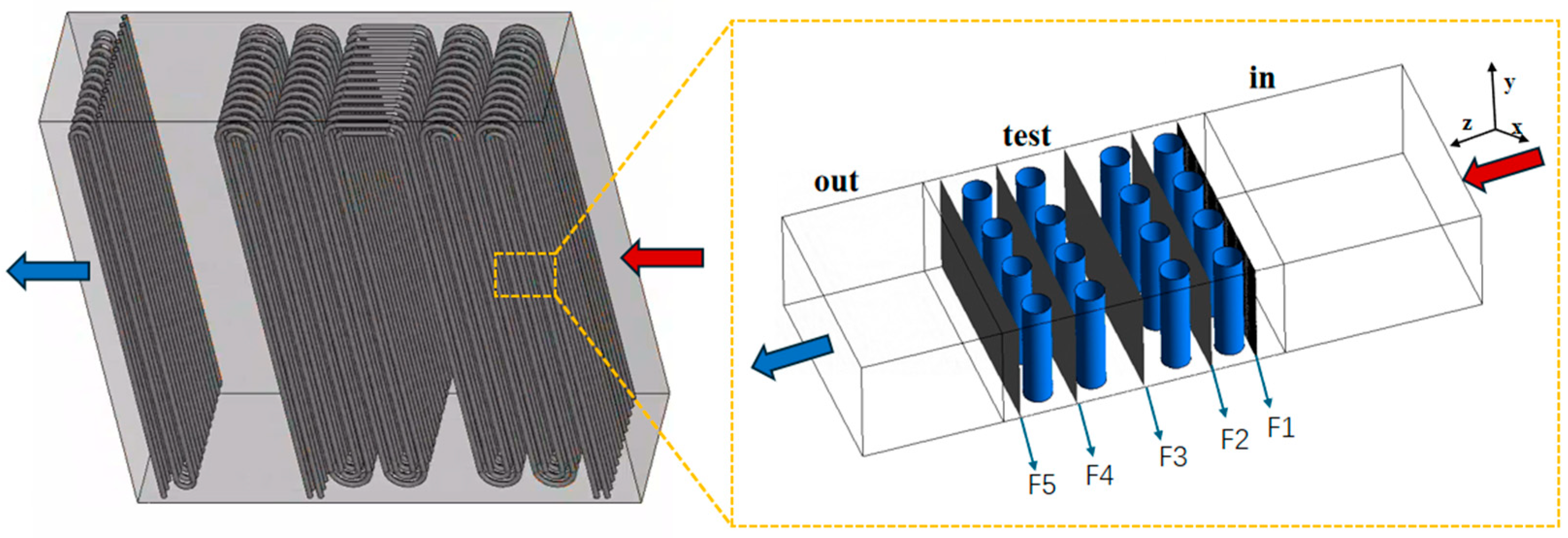
In order to demonstrate the external flue gas flow pattern based on the theory of minimizing heat loss, this paper introduces the model shown in Figure 1. This model consists of three parts: the inlet section, the test section and the outlet section. The total length (L) is 1100 mm, comprising an inlet section (L1) of 350 mm, a test section (L2) of 500 mm, and an outlet section (L3) of 250 mm. The width of the model is 400 mm and the height is 200 mm. In this section, the main objective is to obtain the optimized flow field with minimal exergy destruction. Therefore, it is assumed that the wall thickness is zero and the heat conduction of the pipe wall is not considered. The outer wall of the pipe is exposed to a uniform heat flow and is loaded on the pipe wall by UDF.

2.3. Optimize the Flow Field Model

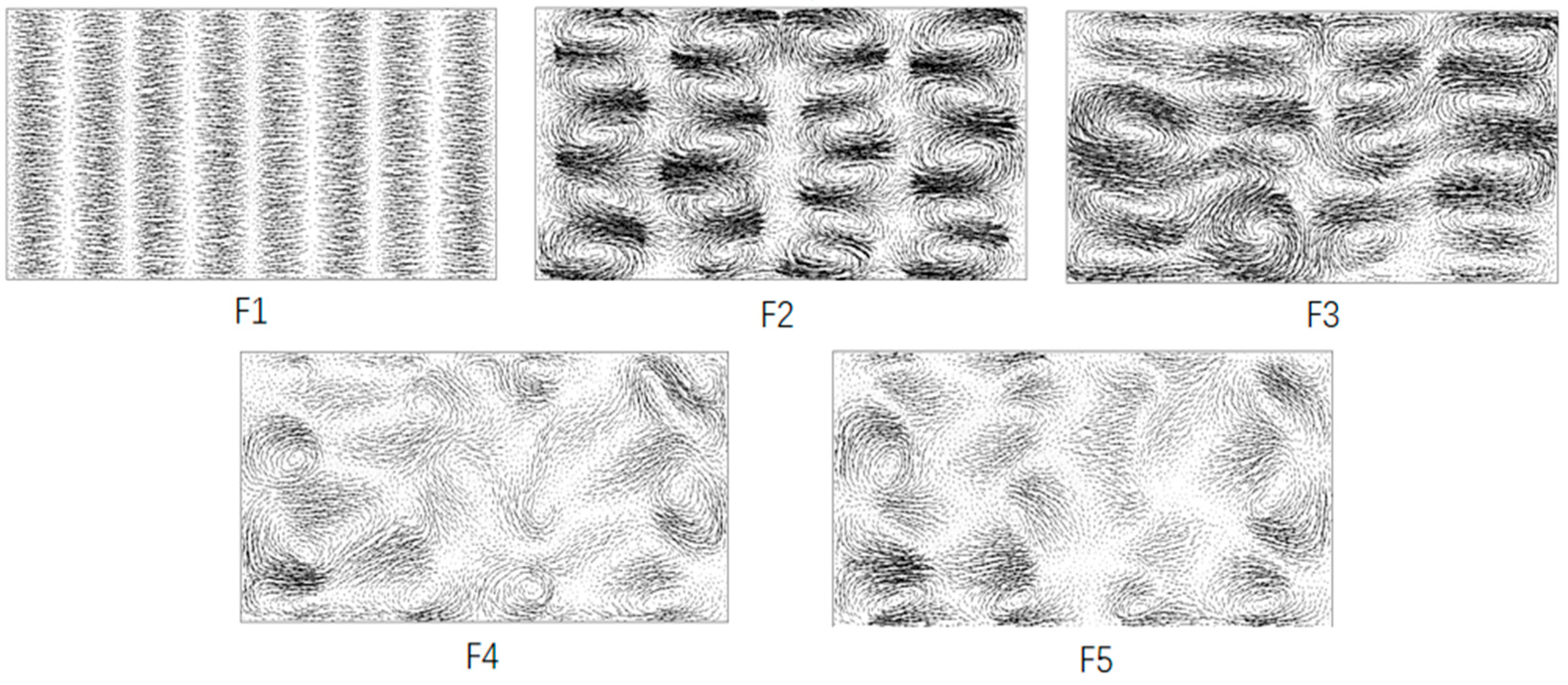
By optimizing, the optimized flow field structure under the conditions of an inlet temperature of 553 K and C0 = 200 was obtained. As shown in Figure 2, the flow field structures at five different positions along the flow direction are, respectively, displayed. At the F1 section, since there is no disturbance, no vortex structure is generated. After the first row of tubes, due to the application of UDF, a virtual force is produced, and at the F2 section, a uniform vortex structure is formed. Continuing to observe along the main flow direction of the fluid, at the F3, F4, and F5 sections, the disturbance is more intense, thus bringing stronger heat transfer performance.
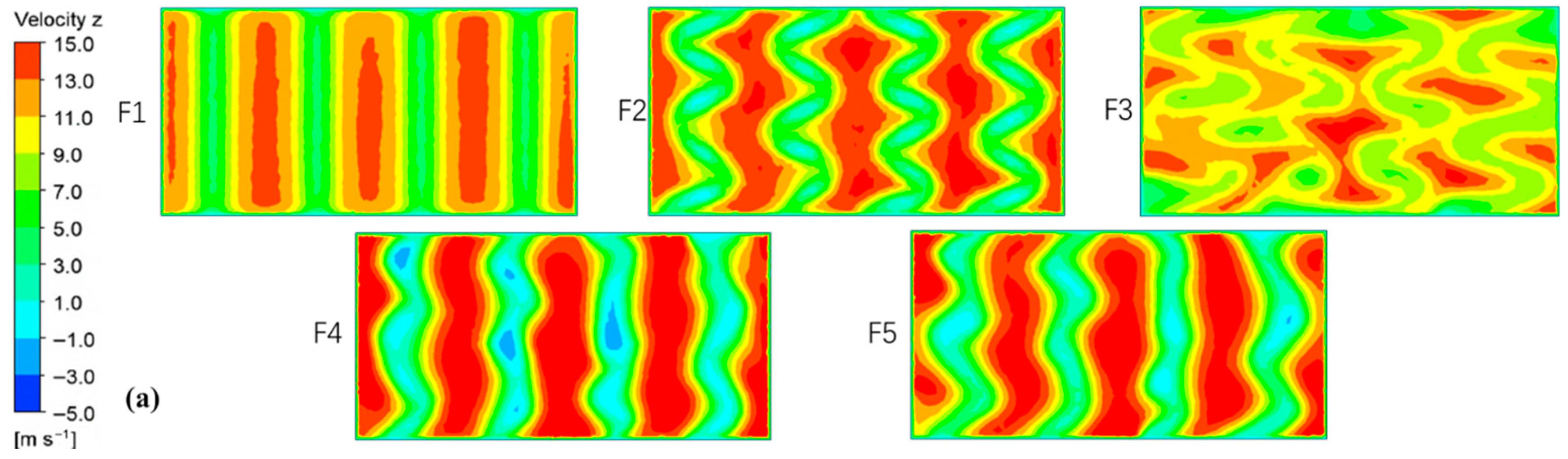
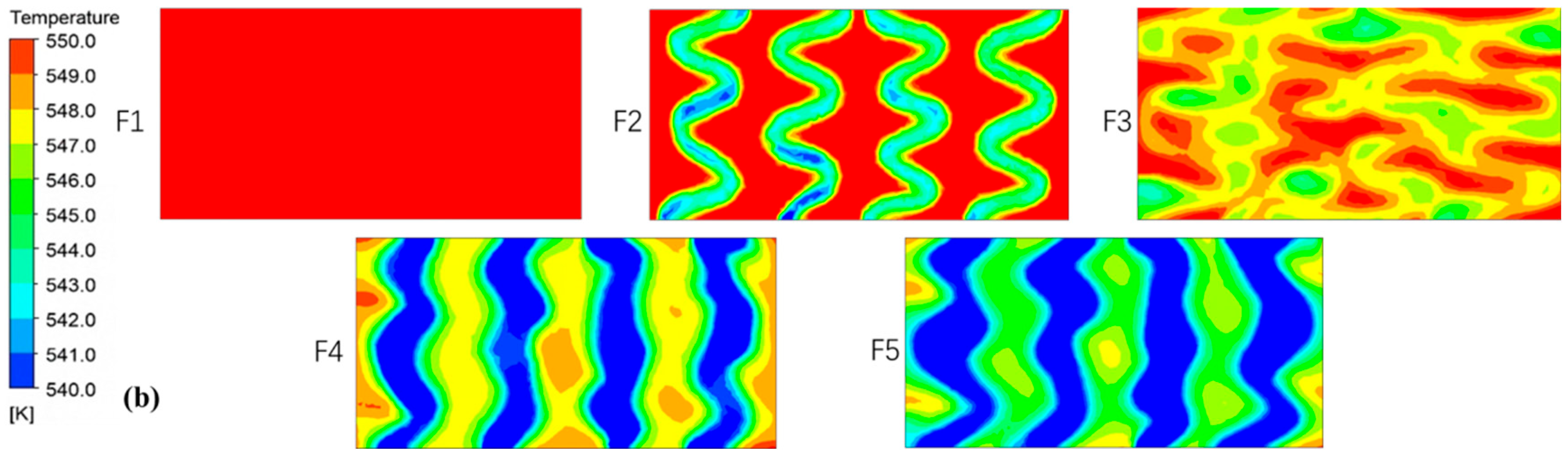
Figure 3a shows the velocity contour at different cross-sections along the main flow direction. At the F1 cross-section, since there is no disturbance, the flow velocity is relatively slow. At the F2 cross-section, due to the disturbance caused by the first row of tubes, the flow velocity changes significantly, and a relatively obvious temperature gradient appears. After the fluid continues to flow through the three rows of tubes, the temperature gradient near the tube wall increases significantly and gradually stabilizes. This helps to increase the convective heat transfer performance between the flue gas and the tube wall. Figure 3b shows the temperature variation in the flue gas along the main flow direction. It can be seen that during the flue gas flow process, due to the disturbance of the tubes, the flue gas temperature gradually decreases. This is because the disturbance of the tube rows leads to a greater flow velocity, improving the heat transfer performance and reducing the temperature difference between the tube wall and the fluid. At the F5 cross-section where the velocity gradient is the maximum, the temperature gradient is also the smallest. This helps to reduce the heat loss of the flue gas and improve the heat transfer efficiency, thus achieving the purpose of efficiently recovering the residual heat of the flue gas.

3. Optimized Flow Pattern Realization

3.1. Technical Realization

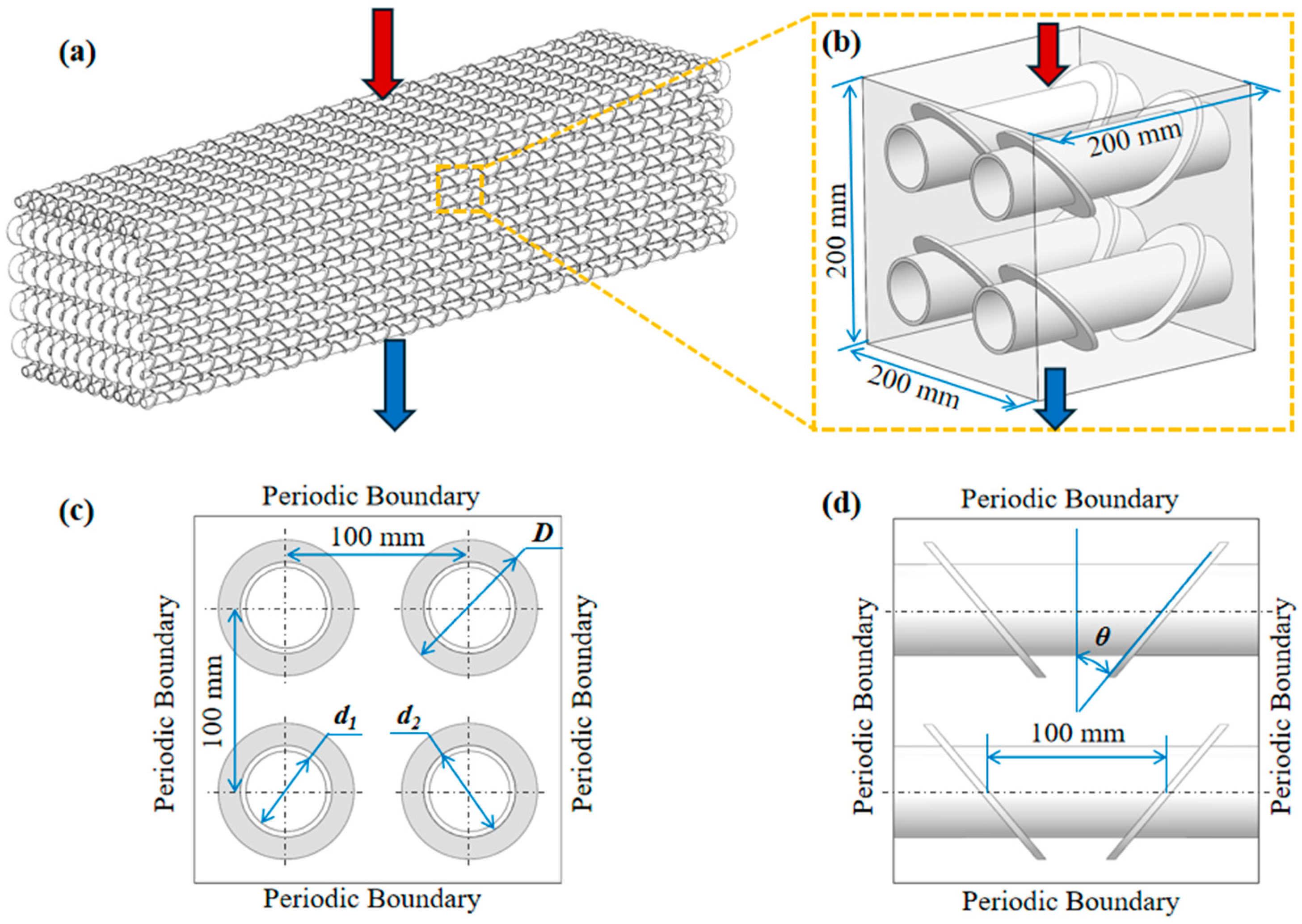
The geometric model of the tube bundle with symmetrical annular fins is shown in Figure 4a and the geometric parameters are listed in Table 1. This model is obtained by augmenting a traditional smooth tube bundle with evenly spaced, symmetrically inclined annular fins that are tightly attached to the outer tube wall. This design can be readily fabricated in practice by welding inclined fins onto the external surface of the tubes. The fins in this study, with a thickness of 3 mm, are constructed from the same stainless steel material as the tubes. Their thermophysical properties are as follows: a density of 8030 kg/m3, a specific heat capacity of 502.48 J/(kg·K), and a thermal conductivity of 16.27 W/(m·K). The fins are designed to disrupt the flow and guide the fluid to form an optimized multi-longitudinal vortex flow field between the tube bundles. This enhances the convective heat transfer between the flue gas and the tube bundles, thereby improving the overall heat recovery performance. The overall dimensions (length, width, and height) of the computational domain are kept consistent, as shown in Figure 4b. By changing the inclination angle and diameter of the fins, as well as the fluid velocity and heat flux density, the influence of the fins on the heat transfer performance of the tube bundle is studied.
To ensure that variations in the fin angle do not affect the overall structural arrangement, the center of each fin is fixed at one-quarter of the tube bundle’s length. In this study, the diameter measured along the direction of fin thickness is defined as the vertical diameter. The model introduced here involves two key variables: the inclination angle θ and the vertical diameter D. The ranges of these parameters were selected based on the existing smooth tube bundle configuration from a waste heat boiler at Hangzhou Iron&Steel Group Co., Ltd. (Hangzhou, China). The values were constrained by spatial limitations to prevent physical interference between adjacent fins while allowing meaningful variation to study the thermal–hydraulic performance. Within these practical bounds, the inclination angle θ was set to 30°, 35°, 40°, 45°, and 50°, and the vertical diameter D was varied as 62, 68, and 74 mm.

3.2. Boundary Conditions and Governing Equations

To account for the periodic nature of the computational unit, periodic boundary conditions are applied at the inlet, outlet, and all four lateral surfaces of the domain, as shown in Figure 4. Due to the variation in finned tube bundle geometry, and to facilitate comparison with a smooth tube bundle, heat conduction through both the tube and fin solid regions is considered. A constant heat flux boundary condition is specified at the inner tube wall, while the interface between the fluid and solid domains is treated with a thermally coupled boundary condition.
During the calculation process, the following assumptions are made:
(1)
The fluid has no internal heat source and is a single-phase continuous incompressible Newtonian fluid;
(2)
The fluid operates under steady-state, fully developed flow conditions;
(3)
Due to the low emissivity of the flue gas (below 0.1), the radiative heat transfer accounts for less than 1.3% of the total heat transfer at 550 K; therefore, its effect was neglected;
(4)
The influence of gravity on the fluid is not considered.
In this study, the fluid Reynolds number is higher than 5000 and the flow state is turbulent. Therefore, the model adopts the k-ε turbulence model. The relevant governing equations are as follows:
Continuity equation:
( ρ u i ) x i = 0
Momentum equation:
( ρ u i u j ) x i = P x i + x j μ + μ t u i x j + u j x i 2 3 μ + μ t u i x i δ i j ρ u i u j ¯
Energy equation:
( ρ u i T ) x i = x i μ Pr + μ t Pr t T x i
Kinetic energy (k) equation:
( ρ u i k ) x i = x i μ + μ t σ k k x i + Γ ρ ε
Dissipation rate (ε) equation:
( ρ u i ε ) x i = x i μ + μ t σ ε ε x i + c 1 Γ ε ρ c 2 ε 2 k + ν ε
where Γ is the turbulent kinetic energy, it can be defined as:
Γ = u i u j ¯ u i x i = μ t u i x j + u j x i u i x i
where ρ, P, T, μ, Pr represent the density, pressure, temperature, dynamic viscosity and Prandtl number of the fluid, respectively. μt and Prt represent the turbulent viscosity and turbulent Prandtl number, respectively. σk and σε represent the turbulent Prandtl number of energy, respectively.
The pressure-based steady-state solver in ANSYS Fluent 2022 R1 is applied to solve the governing equations and the second order upwind scheme is employed to discretize the convective term. SIMPLE algorithm is adopted for coupling the pressure and velocity. The solution was considered converged when the residuals of the momentum equation fell below 10−4, those of the energy equation dropped below 10−6, and the residuals of all other equations were reduced below 10−4. The average temperature at the inner wall of the tube bundle was monitored during the calculation.

3.3. Parameter Definitions

In the fluid region of this article, the Reynolds number (Re), the average temperature difference between the fluid and the heat transfer wall, the Nusselt number (Nu), and the resistance coefficient (f) are, respectively, expressed as
Re = ρ V 0 d r i μ
Δ T m = T w T o i l
N u = h d r i λ = q d r i λ Δ T m
f = Δ p ( L / d r i ) ρ V 0 2 / 2
where ρ, µ and λ are the density, dynamic viscosity and thermal conductivity, V0 is the flow velocity. Tw and Toil are the average temperatures of the fluid domain wall and the fluid, respectively, h is the heat transfer coefficient, and Δ p is the pressure difference in the test section.

3.4. Grid Model and Independence Verification

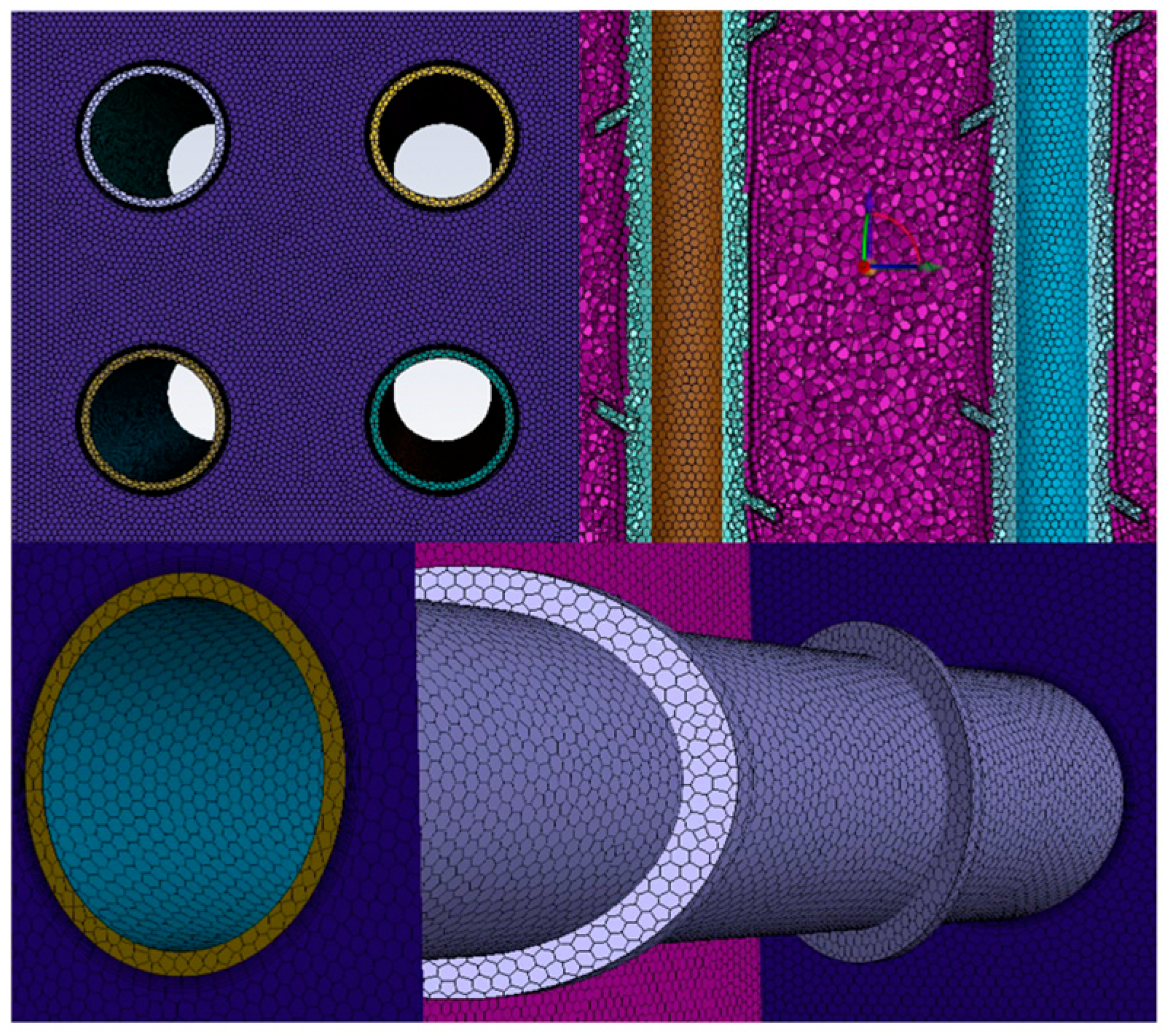
The mesh for the heat exchange tube bundle was generated using Gambit 2.4.6 software. To accurately capture flow and heat transfer phenomena within the boundary layer, a multi-layer inflation strategy was applied in the near-wall region of the fluid domain, ensuring y+ ≈ 1, as illustrated in Figure 5. This approach effectively resolves the viscous sublayer and enhances simulation accuracy. Taking a finned tube bundle with an inclination angle of 40° and a vertical diameter of 68 mm as an example, the independence of the grid number in the grid model was verified.
Simulations were conducted on three sets of grid models with different numbers (approximately 280,000, 600,000, and 1,010,000). By comparing the first two sets of grids, it can be seen that the error in heat transfer coefficient is within 0.5%, and the power error is only 0.4% when the grid density is 600,000, as shown in Table 2. When the number of grids is too large, it will cause resource waste and increase the difficulty of simulation. When the number of grids is too small, the obtained data is not accurate. The grid model with a number of 600,000 has sufficient accuracy and is therefore applied to subsequent simulation calculations.

3.5. Model Validation

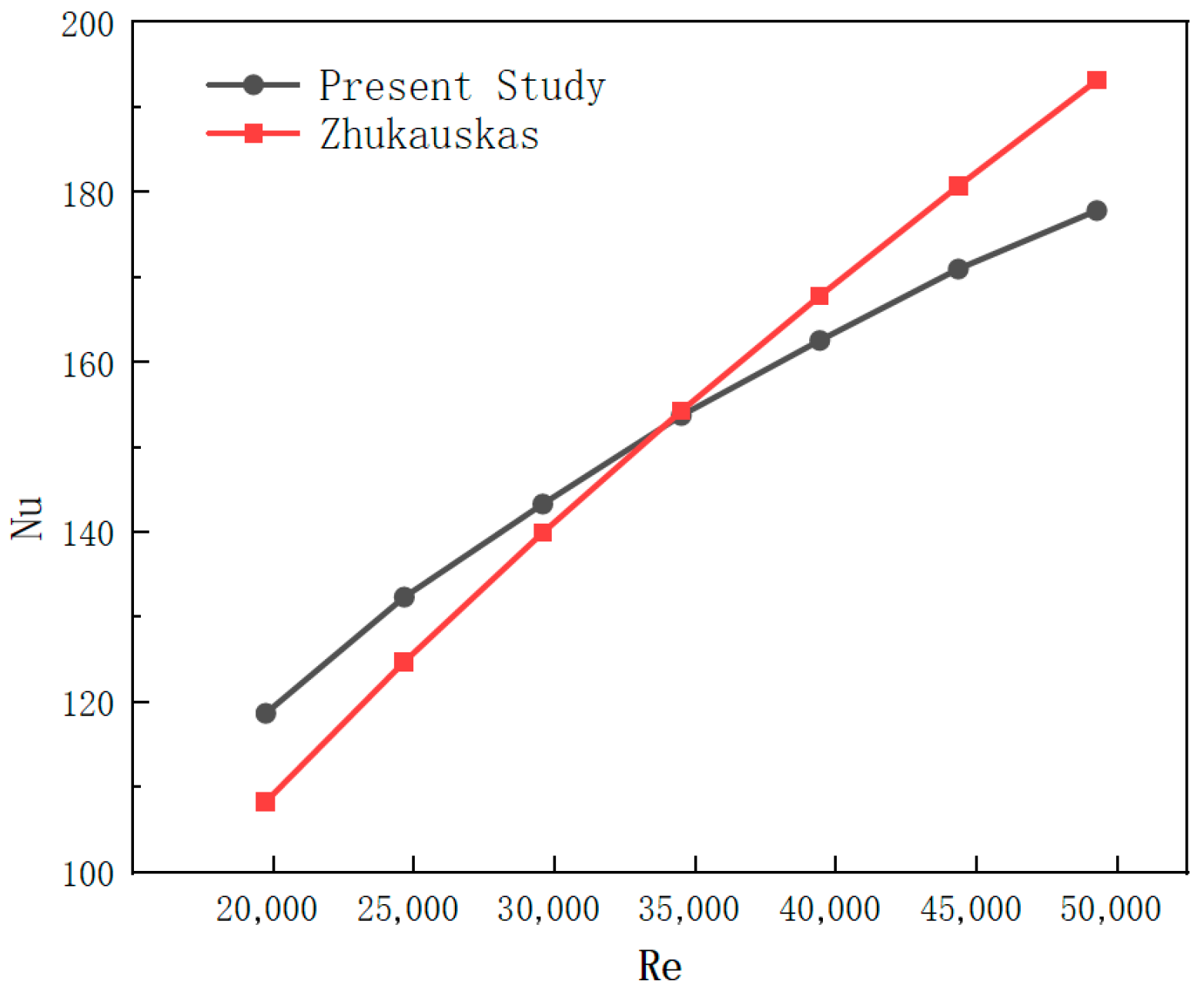
Based on the Rychakowska correlation of the Nu number [60], the heat transfer characteristics of the model were examined to ensure that the numerical model adopted in this paper is valid. The Rychakowska correlation is given by Equation (17).
N u = 0.27 Re 0.63 Pr f 0.36 ( Pr f / Pr w ) 0.25
Figure 6 shows the comparison of verification results. The error range of the Nu number is between 0.3% and 9.6%, indicating that the model has strong reliability.

4. Results and Discussion

4.1. Mechanism of Flow and Heat Transfer Performance

4.1.1. Flow Velocity Comparison

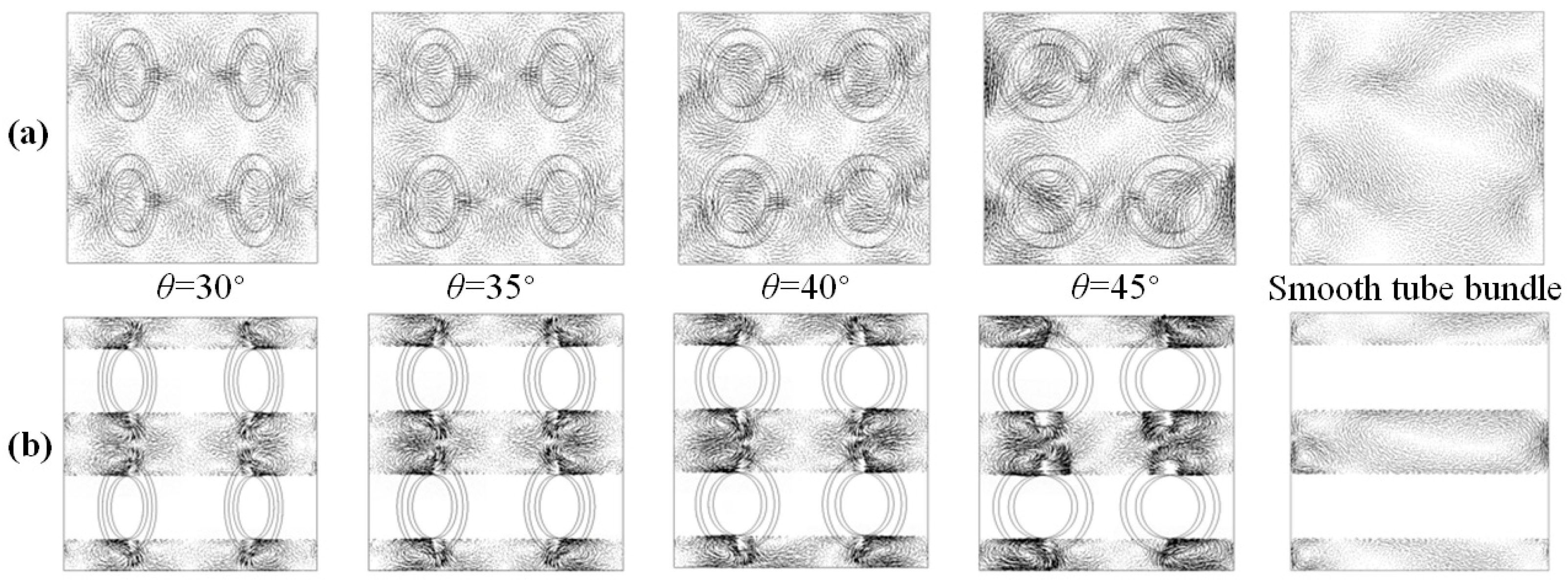
This section compares the flow vectors under different analysis perspectives. By using the velocity vector diagram, it analyzes the mechanism of how the analysis angle affects the heat transfer performance.
As shown in Figure 7a, it is the velocity vector diagram of the cross-section at the center of the fluid, perpendicular to the flow direction. The cross-section shows that when the diameter is 74 mm, at both ends of the fin, there are 6 vortices each and they are symmetrical. However, as the angle increases, the number of vortices gradually decreases. When the inclination angle reaches 50°, the vortices at some positions are not very obvious. Additionally, the formation position of the vortices keeps shifting with the increase in the angle, gradually forming similar center symmetry with the vortices on the opposite diagonal. Figure 7b is the cross-section established 50 mm away from the center of the fluid. The velocity vector diagram of this cross-section indicates that as the angle increases, the velocity lines at the edge of the fluid domain become denser. When the inclination angle changes from 30° to 35°, the vortex lines near the two sides of the fin become sparse, while the vector lines above and below the fin become denser. When the inclination angle reaches 45°, there is basically only one vortex near the edge of the fluid domain on both sides of the fin, and the turbulence intensity is very high, which is conducive to the heat exchange of high heat flux fluids, thereby improving the heat transfer performance.

4.1.2. Comparison of Temperature Contours

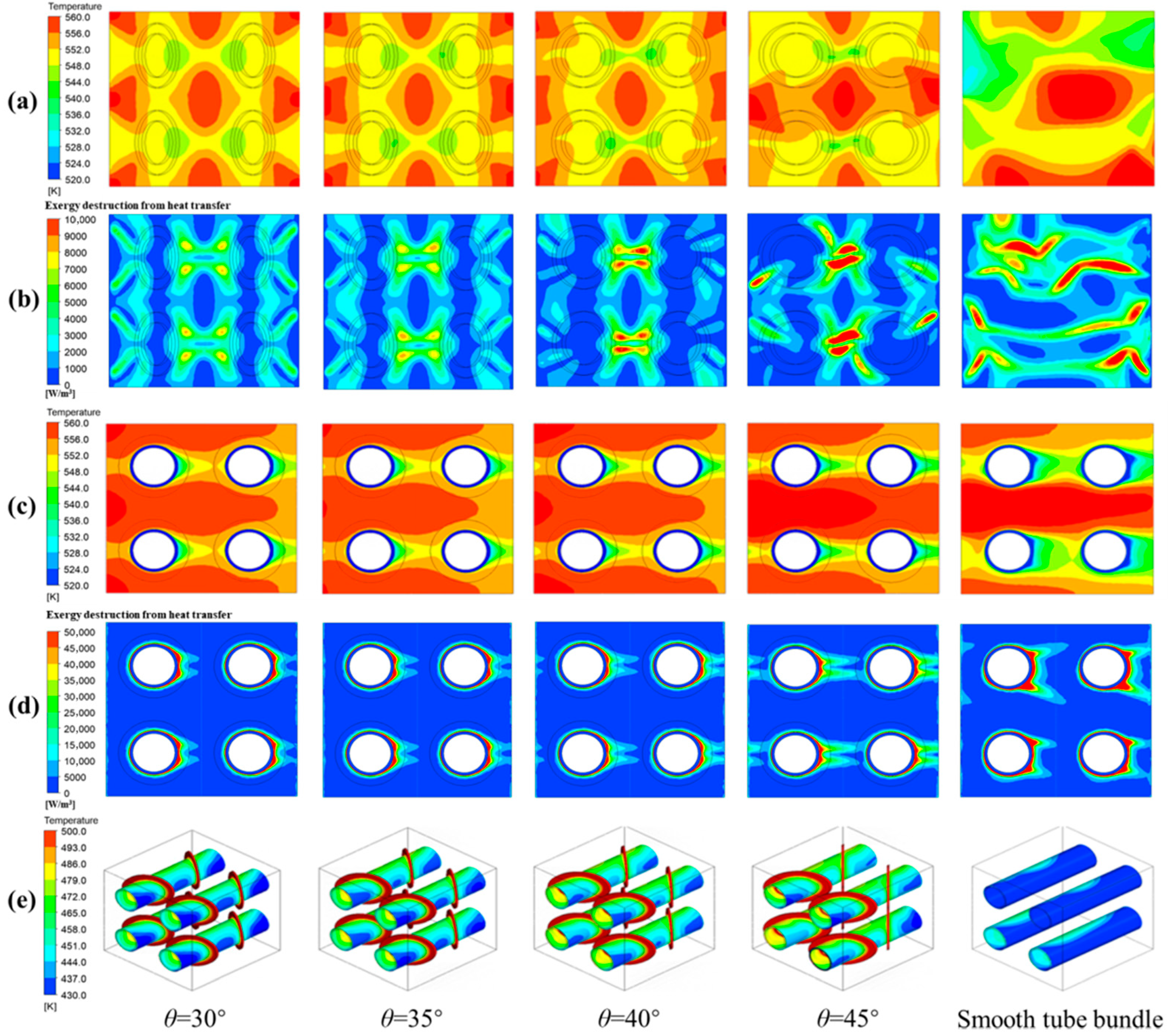
This section analyzes the fluid temperature contours, exergy destruction from heat transfer and pipe wall temperature contours under different inclination angles of the fins. The sections are established in the directions parallel and perpendicular to the flow for observation.
Figure 8a,b present the distribution of the temperature field and the exergy destruction from heat transfer on a cross-section perpendicular to the flow direction for finned tube bundles with different inclination angles as well as for a smooth tube bundle, respectively. The results in Figure 8a show that, due to the formation of multi-longitudinal vortices, the temperature distributions of the finned tube bundles exhibit multiple symmetric regions of high and low temperatures. Compared to the smooth tube bundle, the temperature distribution across the section of the finned tube bundle is more uniform. Furthermore, the temperature uniformity gradually improves with increasing inclination angle. The results in Figure 8b indicate that the exergy destruction from heat transfer on the cross-section of the finned tube bundle also displays a symmetric distribution. Since exergy destruction arising from heat transfer originates from temperature differences, regions with larger temperature variations correspond to higher exergy destruction, which is consistent with the temperature profiles shown in Figure 8a. Moreover, the exergy destruction from heat transfer across the section of the finned tube bundle is significantly lower than that of the smooth tube bundle.
Figure 8c,d show the distributions of the temperature field and exergy destruction from heat transfer on a longitudinal cross-section parallel to the flow direction for finned tube bundles with various inclination angles and a smooth tube bundle, respectively. From Figure 8c, it is observed that compared to the smooth tube bundle, the finned tube bundle significantly reduces the flow stagnation zone behind the tubes and thins the thermal boundary layer due to the vortex-induced disturbance caused by the fins, thereby effectively enhancing convective heat transfer performance. As shown in Figure 8d, exergy destruction from heat transfer is primarily concentrated within the thermal boundary layer near the outer tube walls. Furthermore, the exergy destruction from heat transfer in the finned tube bundle is markedly lower than that in the smooth tube bundle.
From Figure 8e, it can be seen that the area of the low-temperature zone close to 430 K gradually decreases as the angle increases. The temperature difference between the central area close to the inlet tube bundle surface and the central area close to the outlet tube bundle surface keeps shrinking. The temperatures at the ends opposite to and close to the inlet tube bundle gradually rise. Compared with the tube bundles with the inclination angle of 45° and 30°, there is a significant improvement effect.

4.2. Effect of Fin Diameter and Inclination Angle

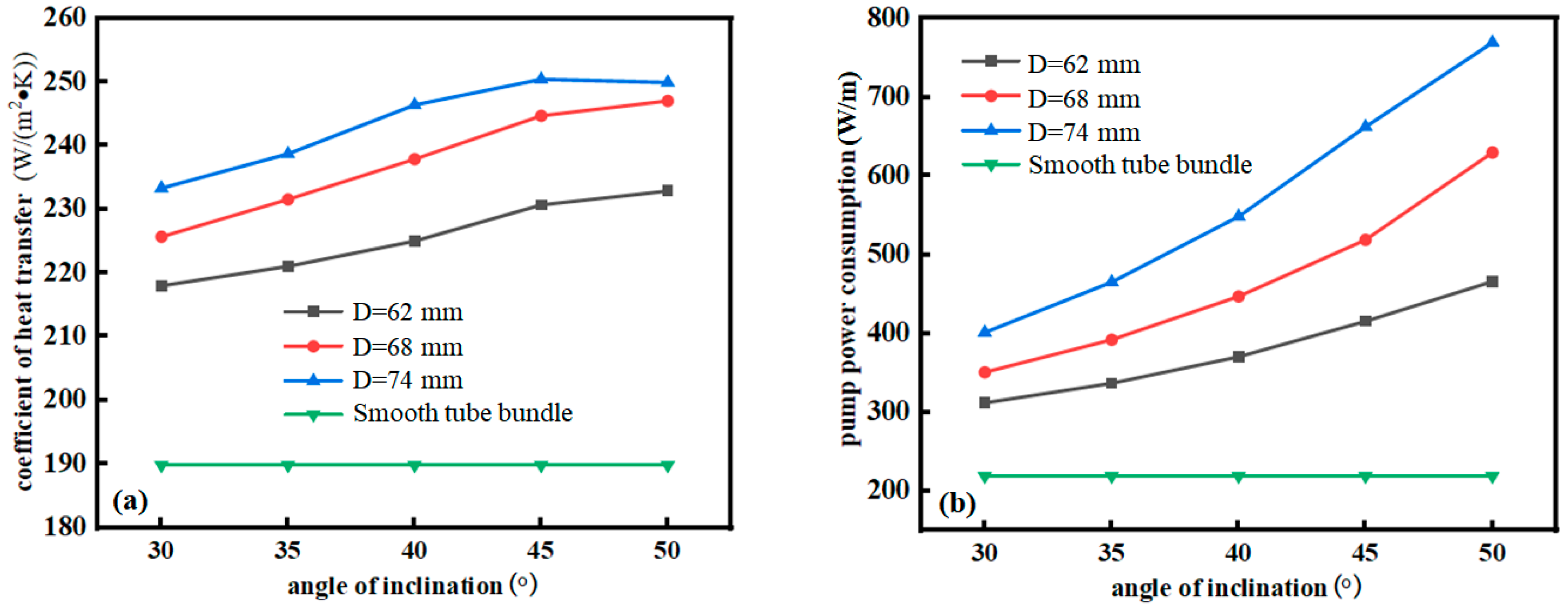
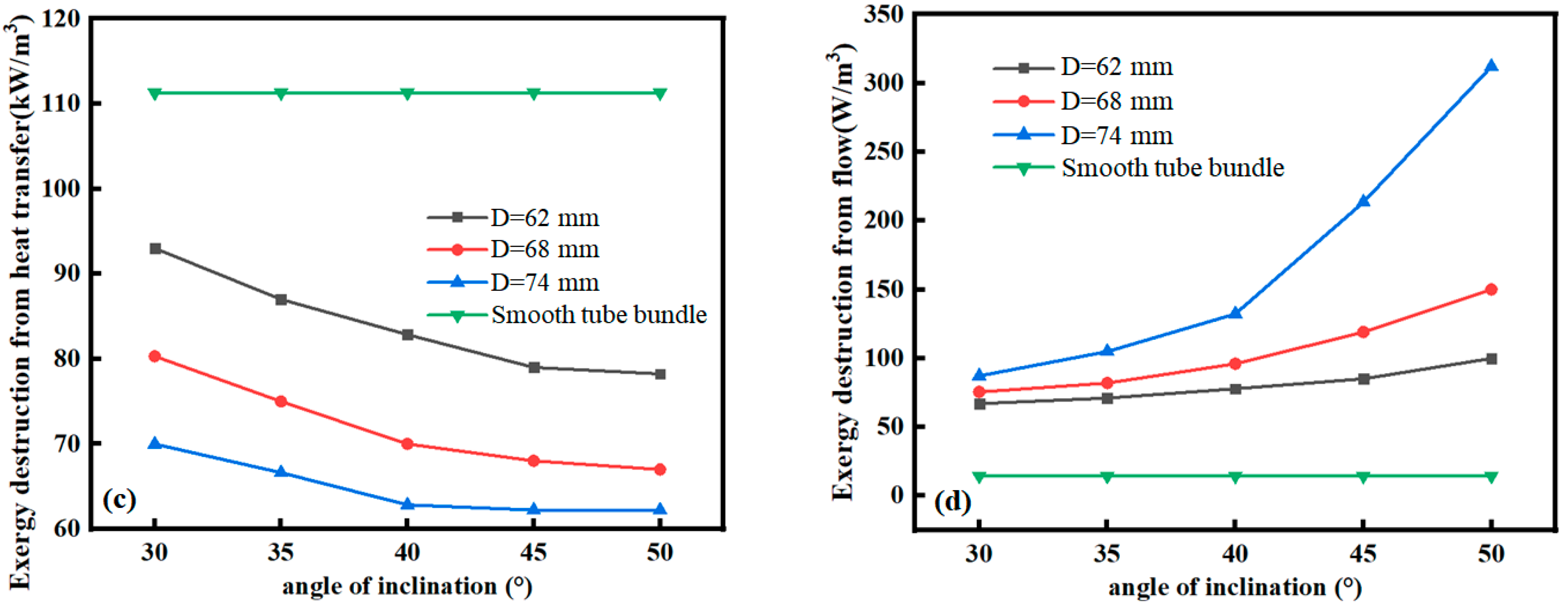
With the fluid inlet velocity and temperature held constant at 10 m/s and 557 K, respectively, the effects of fin diameter and inclination angle on the thermal–hydraulic performance of the tube bundle were systematically investigated. This section examines 15 distinct finned-tube bundle configurations, with particular emphasis on the influence of inclination angle and vertical diameter on the heat transfer coefficient, pumping power consumption and exergy destruction from heat transfer and flow. A comparative analysis with a traditional smooth-tube bundle is also provided. The simulation results are summarized and compared in Figure 9.
From Figure 9a,b, it can be seen that both the convective heat transfer coefficient and the pump power increase with the increase in the diameter of the fins. This is because when the diameter of the fins increases, the resistance of the fluid in the main flow direction becomes greater, but the vortices generated by the fin disturbance are also larger, thus resulting in a greater heat transfer coefficient and pump power. When the diameter of the fins is 62 or 68 mm, both the convective heat transfer coefficient and pump power increase with the inclination angle. When the diameter of the fins is 74 mm, the convective heat transfer coefficient obtains the highest value at inclination angle of 45°. Compared with the traditional model, the heat transfer coefficient has increased by 22.76–31.22%, and the pump power consumptions (Pw) has increased by 113.95–262.79%. Both the convective heat transfer coefficient and the pump power consumption increase as the fin diameter increases when the inclination angle of the fins is fixed. Compared with the traditional model, larger fins increase the heat transfer area between the flue gas and the heat exchange tube bundle, to some extent, making the range of turbulent flow wider. Therefore, the convective heat transfer is significantly enhanced. It observed that the heat transfer coefficient the tube bundle obtained the highest value at the diameter of 74 mm and inclination angle of 45°.
Figure 9c,d illustrate the influence of different fin structural parameters on exergy destruction from heat transfer and fluid flow irreversibility, respectively. It is observed that compared to the smooth tube bundle, the exergy destruction from heat transfer in the finned tube bundle is significantly reduced by 16.4–44.1%, corresponding to an absolute decrease of 18.3–49.1 kW/m3. Moreover, the exergy destruction from heat transfer decreases with increasing fin diameter and inclination angle, as shown in Figure 9c. The results in Figure 9d show that the exergy destruction from fluid flow in the finned tube bundle increases by 52.6–297.5 W/m3 (363–2058%) compared to the smooth tube bundle, and it rises with larger fin diameter and inclination angle. Notably, the reduction in exergy destruction from heat transfer in the finned tube bundle outweighs the increase in exergy destruction from fluid flow, indicating that the finned tube bundle offers better overall thermal performance.

4.3. Performance Comparison Under Different Working Conditions

4.3.1. Comparisons Under Different Heat Flux

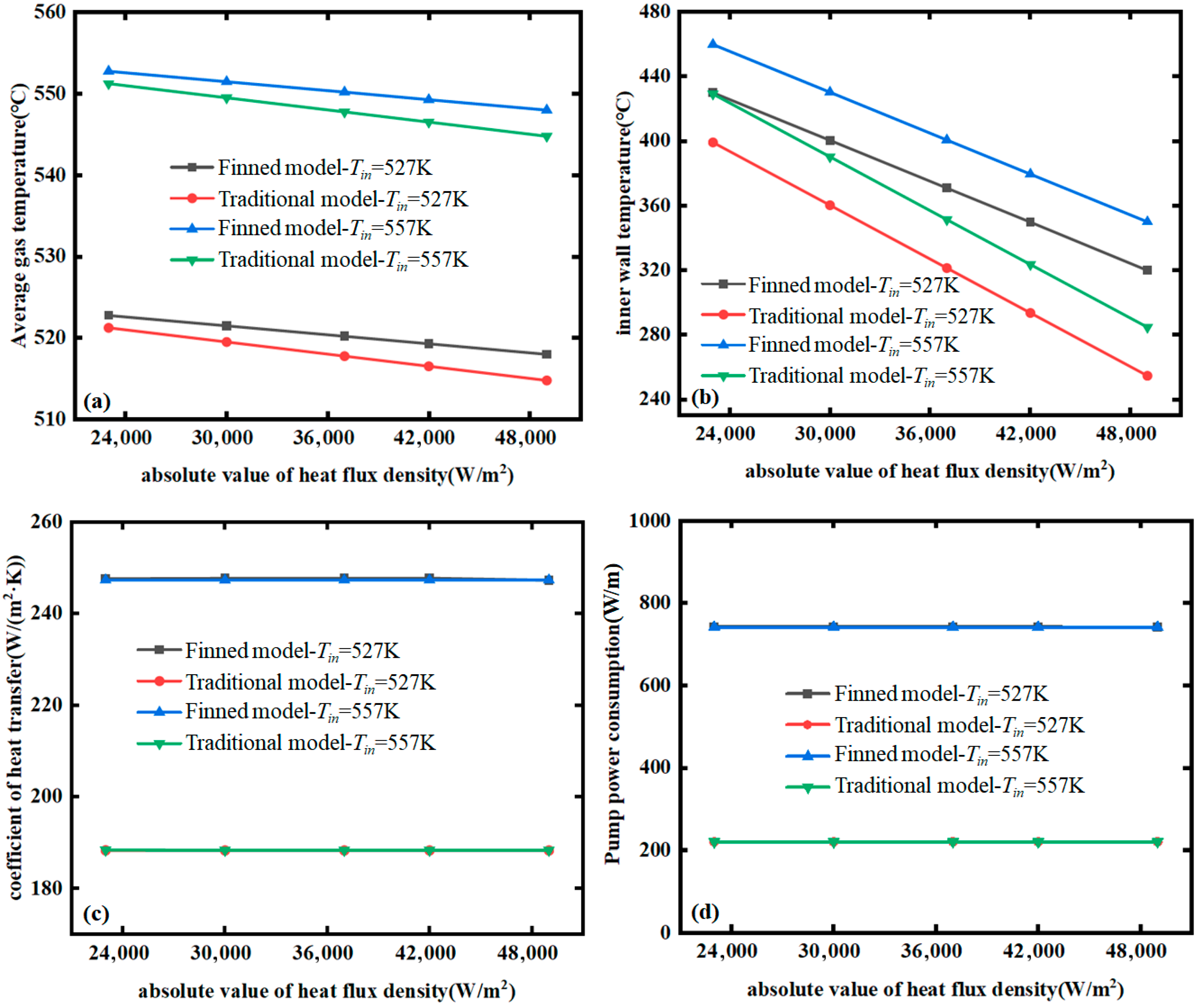
The fluid inlet velocity was maintained at 10 m/s, corresponding to a fixed mass flow rate of 0.49 kg/s. The inlet temperature was set to 527 K and 557 K by varying the heat flux density at the inner tube wall. The heat transfer efficiency and power consumption were subsequently compared under these conditions.
From Figure 10a,b, it can be seen that the fluid temperature and the outer wall temperature decrease as the heat flux density on the inner wall surface increases. When the inlet temperature is 557 K, the temperature range of the fluid is between 553 K and 548 K. When the heat flux density is 49,000 W/m2, the fluid temperature reaches the lowest value of 548.0139 K, which is 0.86% lower than when the heat flux density is 23,000 W/m2. The temperature range of the outer wall is between 483 K and 399 K. When the heat flux density is 49,000 W/m2, the fluid temperature reaches the lowest value of 399.1263 K, which is 17.3% lower than when the heat flux density is 23,000 W/m2. When the heat flux density changes, the heat transfer coefficients and power of the traditional model and the finned structure are basically the same and remain constant under different inlet temperatures, as shown in Figure 10c,d. They do not change with the heat flux density, but compared with the traditional model, the finned structure has a larger heat transfer coefficient and pump power.

4.3.2. Comparisons Under Different Entrance Velocities

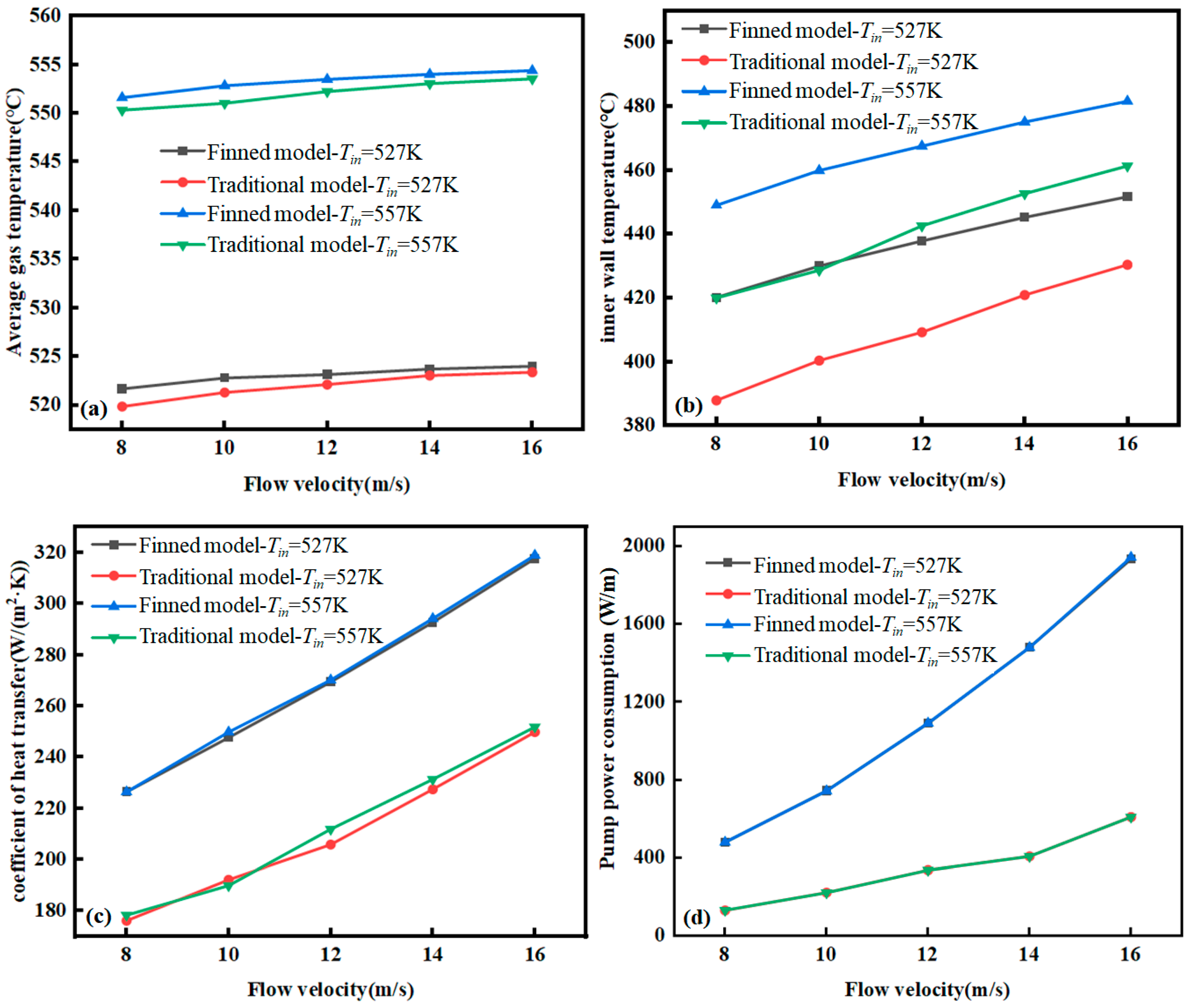
The influence of fluid inlet velocity on the thermal–hydraulic performance of the tube bundle was examined at different inlet temperatures by systematically varying the mass flow rate. A constant heat flux of −23,000 W/m2 was applied to the model in this section. By adjusting the inlet velocity and comparing results at inlet temperatures of 527 K and 557 K, the heat transfer effectiveness was evaluated to elucidate the relationships among flow velocity, heat transfer coefficient, and pressure drop.
Figure 11a,b are the temperature curves of the fluid and the outer wall under different inlet flow velocities at inlet temperatures of 557 K and 527 K, respectively. From the figures, it can be seen that as the velocity increases, both the fluid temperature and the outer wall temperature increase linearly. Moreover, the increase in the outer wall temperature is faster than that of the fluid temperature. When the inlet velocity is 16 m/s and the temperature is 557 K, the outer wall temperature is 26.4114 K higher than when the inlet velocity is 8 m/s, while the fluid temperature only increases by 1.5687 K. This indicates that the change in inlet velocity has a smaller impact on the temperature and a greater impact on the heat transfer to the outer wall.
Figure 11c shows the heat transfer coefficient curves under different flow velocities when the inlet temperature is 557 K and 527 K. From the figure, it can be seen that the change in the inlet temperature has a very small impact on the heat transfer coefficient. However, as the velocity increases, the heat transfer coefficient increases linearly. Moreover, the finned model has a higher heat transfer coefficient compared to the traditional model. At a flow velocity of 16 m/s, the heat transfer coefficient increases by approximately 28%, resulting in better heat transfer performance.
Figure 11d shows the power curves at different flow velocities when the inlet temperature is 557 K and 527 K. From the figure, it can be seen that the power consumption of the annular fin model increases exponentially with the increase in velocity. This indicates that the resistance of this model has increased significantly. As mentioned earlier, if the angle of the fins is too large, it will form a closed situation. Coupled with the increase in flow velocity, the increased resistance leads to an increase in power consumption. However, the change in inlet temperature has no effect on the pump power of the same model. For different models, a higher temperature will result in greater pump power.

5. Conclusions

This study optimized convective heat transfer in a flue gas waste heat recovery tube bundle by minimizing exergy destruction and proposed symmetrically inclined annular fins for enhancing the heat transfer performance of the tube bundle. The performance of the proposed finned tube bundle was investigated numerically. The primary findings are summarized as follows:
(1)
Convective heat transfer optimization using the exergy destruction minimization method revealed that a multi-longitudinal vortex flow is the optimal flow field structure for maximizing heat transfer performance in tube bundles. To actively generate this optimal flow pattern, a novel tube bundle configuration featuring symmetrically inclined annular fins was proposed and implemented. These fins act as artificial vortex generators, successfully inducing the desired longitudinal vortices within the flue gas flow.
(2)
The inclined annular fins significantly enhance heat transfer by effectively generating the designed longitudinal vortices. These vortices disrupt the thermal boundary layer and intensify fluid mixing near the tube surface. While increasing the fin inclination angle (θ) reduces the number of vortices, it concurrently amplifies the intensity of vortices formed above and below the fins, leading to superior local heat transfer performance, consistent with the optimized flow field characteristics.
(3)
Both the convective heat transfer coefficient (h) and the tube bundle power consumption (Pw) increase monotonically with increasing fin diameter (D). At a constant fin diameter, h and pw also increase with an increasing inclination angle (θ). The optimal geometric configuration identified, achieving the peak h of 247.6 W/(m2·K) under the studied conditions (inlet T = 557 K, mass flow = 0.49 kg/s, q″ = −23,243.8 W/m2), was θ = 45° combined with D = 74 mm. This configuration yielded a substantial 22.76–31.22% improvement in h compared to a traditional smooth-tube bundle.
(4)
The finned tube bundle model consistently outperformed the traditional smooth tube bundle with 27.2–30.3 improvement in heat transfer performance under different working conditions. In addition, the enhanced heat transfer comes at the cost of increased pumping power consumption. The finned tube bundle model exhibited higher pumping power consumption (218.3–270.0% increase) compared to the traditional smooth tube bundle.
Although this study provides meaningful insights into the thermal–hydraulic performance of the proposed finned tube bundle, several aspects warrant further investigation. Future work will include experimental validation to verify the numerical findings, exploration of alternative fin geometries and hybrid enhancement techniques, optimization under varying flue gas compositions and temperatures, and analysis of long-term performance incorporating fouling effects and cleanability. Additionally, scale-up considerations and economic evaluations for industrial implementation will be essential to assess practical applicability.

Author Contributions

Conceptualization, P.L. and Z.L.; Methodology, L.Y., P.L. and Z.L.; Software, P.L.; Validation, J.W.; Formal analysis, J.W. and H.L.; Investigation, J.W.; Resources, H.L., L.W. and L.Y.; Data curation, J.W.; Writing—original draft, J.W.; Writing—review & editing, P.L. and Z.L.; Supervision, P.L. and Z.L.; Project administration, H.L., L.W. and L.Y.; Funding acquisition, P.L. and Z.L. All authors have read and agreed to the published version of the manuscript.

Funding

This research was funded by the Zhejiang Provincial Key Research and Development Program (grant number 2023C03156) and the National Natural Science Foundation of China (grant number 52206108).

Data Availability Statement

Data available in a publicly accessible repository.

Conflicts of Interest

Authors Hanxiao Liu, Liming Wu and Liyuan Yu were employed by the company Feida Environmental Protection Technology Co., Ltd. Author Liming Wu was employed by the company Hangzhou Iron&Steel Group Co., Ltd. The remaining authors declare that the research was conducted in the absence of any commercial or financial relationships that could be construed as a potential conflict of interest.

Nomenclature

BThe scalar
cpSpecific heat capacity, J / kg · K
C0Variable constant
d1internal diameter of pipe, mm
d2external diameter of pipe, mm
DExternal diameter of fin in the axial projection direction, mm
driInner diameter of the heat exchange tube
FAdditional volume force, N
fFriction factor
hHeat transfer coefficient, W / ( m 2 K )
kTurbulent kinetic energy, m 2 / s 2
LThe total length of optimization model, mm
L1Inlet section length, mm
L2Test section length, mm
L3Outlet section length, mm
NuNusselt number
PThe distance between the fins and the center of the tube, mm
pwPower consumptions for the heat transfer finned tube bundle, W
PrPrandtl number
qHeat flux per unit area, W / m 2
ReReynolds number
TTemperature, K
Twwall temperature, K
ToilHeat transfer fluid temperature, K
uFluid velocity, m / s
VFlow rate, L / min
Greek symbols
θInclination angle of the fin, °
ε Turbulent energy dissipation, m 2 / s
λFluid thermal conductivity, W / ( m K )
λeffThe equivalent thermal conductivity of the fluid, W / ( m K )
μViscosity, P a s
μeffEquivalent viscosity, P a s
σThe Stefan-Boltzmann constant
ΔPPressure drop, P a
ρ Density, kg / m 3
ΔTTemperature difference in the absorber, K

References

  1. Mousavi, M.S.; Azizi, S.A.; Razbin, M.; Darzi, A.A.R.; Li, M. Optimized design of Helical-Finned Double Pipe heat exchangers via numerical simulation and Artificial Intelligence. Appl. Therm. Eng. 2025, 258, 124605. [Google Scholar] [CrossRef]
  2. Ibrahim, A.T.; Gomaa, A. Thermal performance criteria of elliptic tube bundle in crossflow. Int. J. Therm. Sci. 2009, 48, 2148–2158. [Google Scholar] [CrossRef]
  3. Bejan, A.; Lorente, S. Design with Constructal Theory; John Wiley & Sons: Hoboken, NJ, USA, 2008. [Google Scholar]
  4. Bejan, A.; Lorente, S. Constructal law of design and evolution: Physics, biology, technology, and society. J. Appl. Phys. 2013, 113, 151301. [Google Scholar] [CrossRef]
  5. Chen, L.G. Progress in study on constructal theory and its applications. Sci. China Technol. Sci. 2012, 55, 802–820. [Google Scholar] [CrossRef]
  6. Chen, L.; Feng, H.; Xie, Z.; Sun, F. Progress of constructal theory in China over the past decade. Int. J. Heat Mass Transf. 2019, 130, 393–419. [Google Scholar] [CrossRef]
  7. Chen, L.; Yang, A.; Feng, H.; Ge, Y.; Xia, S. Constructal design progress for eight types of heat sinks. Sci. China: Technol. Sci. 2020, 63, 879–911. [Google Scholar] [CrossRef]
  8. Bejan, A. Entropy Generation Minimization; John Wiley & Sons: New York, NY, USA, 1995. [Google Scholar]
  9. Bejan, A. Entropy generation minimization: The new thermodynamics of finite-size devices and finite-time processes. J. Appl. Phys. 1996, 79, 1191–1218. [Google Scholar] [CrossRef]
  10. Wang, Z.; Li, M.; Ren, F.; Ma, B.; Yang, H.; Zhu, Y. Sobol sensitivity analysis and multi-objective optimization of manifold microchannel heat sink considering entropy generation minimization. Int. J. Heat Mass Transf. 2023, 208, 124046. [Google Scholar] [CrossRef]
  11. Liu, G.-K.; Wang, J.; Chen, Y.-Q.; Shi, S.-Y. Energy efficiency improvement and entropy generation minimization through structural optimization of a double-layer liquid-cooled plate with circular arc-shaped flow channels. J. Enhanc. Heat Transf. 2024, 31, 67–91. [Google Scholar] [CrossRef]
  12. Li, P.; Chen, L.; Xia, S.; Kong, R.; Ge, Y. Total entropy generation rate minimization configuration of a membrane reactor of methanol synthesis via carbon dioxide hydrogenation. Sci. China Technol. Sci. 2022, 65, 657–678. [Google Scholar] [CrossRef]
  13. Feng, H.; Chen, L.; Xie, Z.; Sun, F. “Disc-point” heat and mass transfer constructal optimization for solid-gas reactors based on entropy generation minimization. Energy 2015, 83, 431–437. [Google Scholar] [CrossRef]
  14. Datta, A.; Sharma, V.; Sanyal, D.; Das, P. A conjugate heat transfer analysis of performance for rectangular microchannel with trapezoidal cavities and ribs. Int. J. Therm. Sci. 2019, 138, 425–446. [Google Scholar] [CrossRef]
  15. Guo, Z.Y.; Zhu, H.Y.; Liang, X.G. Entransy—A physical quantity describing heat transfer ability. Int. J. Heat Mass Transf. 2007, 50, 2545–2556. [Google Scholar] [CrossRef]
  16. Chen, Q.; Liang, X.G.; Guo, Z.Y. Entransy theory for the optimization of heat transfer-a review and update. Int. J. Heat Mass Transf. 2013, 63, 65–81. [Google Scholar] [CrossRef]
  17. Wang, W.H.; Cheng, X.T.; Liang, X.G. Entransy definition and its balance equation for heat transfer with vaporization processes. Int. J. Heat Mass Transf. 2015, 83, 536–544. [Google Scholar] [CrossRef]
  18. Zhou, B.; Cheng, X.; Wang, W.; Liang, X. Entransy analyses of thermal processes with variable thermophysical properties. Int. J. Heat Mass Transf. 2015, 90, 1244–1254. [Google Scholar] [CrossRef]
  19. He, Y.L.; Tao, W.Q. Numerical studies on the inherent interrelationship between field synergy principle and entransy dissipation extreme principle for enhancing convective heat transfer. Int. J. Heat Mass Transf. 2014, 74, 196–205. [Google Scholar] [CrossRef]
  20. Feng, H.J.; Chen, L.G.; Xie, Z.H. Multi-disciplinary, multi-objective and multi-scale constructal optimizations for heat and mass transfer processes performed in Naval University of Engineering, a review. Int. J. Heat Mass Transf. 2017, 115, 86–98. [Google Scholar] [CrossRef]
  21. Wei, H.; Du, X.; Yang, L.; Yang, Y. Entransy dissipation based optimization of a large-scale dry cooling system. Appl. Therm. Eng. 2017, 125, 254–265. [Google Scholar] [CrossRef]
  22. Wang, L.; Xie, Z.; Chen, L.; Wang, R.; Feng, H. Equivalent thermal resistance minimization for a circular disc heat sink with reverting microchannels based on constructal theory and entransy theory. Sci. China Technol. Sci. 2021, 64, 111–121. [Google Scholar] [CrossRef]
  23. Xia, S.J.; Xie, Z.H.; Chen, L.G.; Ge, Y. An inverse optimization for heat exchangers with entransy dissipation minimization. Int. J. Ambient Energy 2021, 42, 730–735. [Google Scholar] [CrossRef]
  24. Feng, H.J.; Chen, L.G.; Xie, Z.H. Constructal entransy dissipation rate minimization for X-shaped vascular networks. Sci. China Technol. Sci. 2019, 62, 2195–2203. [Google Scholar] [CrossRef]
  25. Chen, L.G.; Wei, S.H.; Sun, F.R. Constructal entransy dissipation rate minimization of a disc. Int. J. Heat Mass Transf. 2011, 54, 210–216. [Google Scholar] [CrossRef]
  26. Xiao, Q.H.; Chen, L.G.; Sun, F.R. Constructal entransy dissipation rate minimization for “disc-to-point” heat conduction. Chin. Sci. Bull. 2011, 56, 102–112. [Google Scholar] [CrossRef]
  27. Guo, Z.Y.; Li, D.Y.; Wang, B.X. A novel concept for convective heat transfer enhancement. Int. J. Heat Mass Transf. 1998, 41, 2221–2225. [Google Scholar] [CrossRef]
  28. Tao, W.; He, Y.; Wang, Q.; Qu, Z.; Song, F. A unified analysis on enhancing single phase convective heat transfer with field synergy principle. Int. J. Heat Mass Transf. 2002, 45, 4871–4879. [Google Scholar] [CrossRef]
  29. Qu, M.; Zhang, Y.; Zhang, X.; Song, H.; Fu, C.; Yao, Q.; Yin, S. A review: The development of field synergy and its application to cooling exchangers in the hot-wet mining field. J. Therm. Anal. Calorim. 2023, 148, 6579–6606. [Google Scholar] [CrossRef]
  30. Chen, Q.; Ren, J.; Meng, J. Field synergy equation for turbulent heat transfer and its application. Int. J. Heat Mass Transf. 2007, 50, 5334–5339. [Google Scholar] [CrossRef]
  31. Liu, W.; Liu, Z.C.; Ma, L. Application of a multi-field synergy principle in the performance evaluation of convective heat transfer enhancement in a tube. Chin. Sci. Bull. 2012, 57, 1600–1607. [Google Scholar] [CrossRef]
  32. Liu, W.; Liu, Z.C.; Huang, S.Y. Physical quantity synergy in the field of turbulent heat transfer and its analysis for heat transfer enhancement. Chin. Sci. Bull. 2010, 55, 2589–2597. [Google Scholar] [CrossRef]
  33. Liu, W.; Liu, Z.C.; Ming, T.Z.; Guo, Z. Physical quantity synergy in laminar flow field and its application in heat transfer enhancement. Int. J. Heat Mass Transf. 2009, 52, 4669–4672. [Google Scholar] [CrossRef]
  34. Tong, Z.-X.; Zou, T.-T.; Jiang, T.; Yang, J.-Q. Investigation of field synergy principle for convective heat transfer with temperature-dependent fluid properties. Case Stud. Therm. Eng. 2023, 45, 102926. [Google Scholar] [CrossRef]
  35. Chen, Q.; Wang, M.; Pan, N.; Guo, Z.-Y. Optimization principles for convective heat transfer. Energy 2009, 34, 1199–1206. [Google Scholar] [CrossRef]
  36. Liu, W.; Jia, H.; Liu, Z.; Fang, H.; Yang, K. The approach of minimum heat consumption and its applications in convective heat transfer optimization. Int. J. Heat Mass Transf. 2013, 57, 389–396. [Google Scholar] [CrossRef]
  37. Wang, J.; Liu, Z.; Yuan, F.; Liu, W.; Chen, G. Convective heat transfer optimization in a circular tube based on local exergy destruction minimization. Int. J. Heat Mass Transf. 2015, 90, 49–57. [Google Scholar] [CrossRef]
  38. Wang, J.B.; Liu, W.; Liu, Z.C. The application of exergy destruction minimization in convective heat transfer optimization. Appl. Therm. Eng. 2015, 88, 384–390. [Google Scholar] [CrossRef]
  39. Liu, W.; Liu, P.; Wang, J.B.; Zheng, N.B.; Liu, Z.C. Exergy destruction minimization: A principle to convective heat transfer enhancement. Int. J. Heat Mass Transf. 2018, 122, 11–21. [Google Scholar] [CrossRef]
  40. Golab, E.; Vahedi, B.; Jain, A.; Taylor, R.A.; Vafai, K. Laminar forced convection in a tube with a nano-encapsulated phase change materials: Minimizing exergy losses and maximizing the heat transfer rate. J. Energy Storage 2023, 65, 107233. [Google Scholar] [CrossRef]
  41. Akbarzadeh, S.; Valipour, M.S. Heat transfer enhancement in parabolic trough collectors: A comprehensive review. Renew. Sustain. Energy Rev. 2018, 92, 198–218. [Google Scholar] [CrossRef]
  42. Wang, C.; Lu, Q.; Liu, Y.; Huang, H.; Sun, J. Progressive review of heat transfer enhancement technologies in 2010–2020. Sustain. Energy Technol. Assess. 2023, 56, 103121. [Google Scholar] [CrossRef]
  43. Gong, X.; Wang, F.; Wang, H.; Tan, J.; Lai, Q.; Han, H. Heat transfer enhancement analysis of tube receiver for parabolic trough solar collector with pin fin arrays inserting. Sol. Energy 2017, 144, 185–202. [Google Scholar] [CrossRef]
  44. Cheng, Z.D.; He, Y.L.; Cui, F.Q. Numerical study of heat transfer enhancement by unilateral longitudinal vortex generators inside parabolic trough solar receivers. Int. J. Heat Mass Transf. 2012, 55, 5631–5641. [Google Scholar] [CrossRef]
  45. Liu, P.; Wu, J.; Chen, L.; Liu, Z.; Liu, W. Numerical analysis and multi-objective optimization design of parabolic trough receiver with ribbed absorber tube. Energy Rep. 2021, 7, 7488–7503. [Google Scholar] [CrossRef]
  46. Fabbri, G. Heat transfer optimization in internally finned tubes under laminar flow conditions. Int. J. Heat Mass Transf. 1998, 41, 1243–1253. [Google Scholar] [CrossRef]
  47. Fabbri, G. Effect of viscous dissipation on the optimization of the heat transfer in internally finned tubes. Int. J. Heat Mass Transf. 2004, 47, 3003–3015. [Google Scholar] [CrossRef]
  48. Saad, A.E.; Sayed, A.E.; Mohamed, E.A.; Mohamed, M.S. Experimental study of turbulent flow inside a circular tube with longitudinal interrupted fins in the streamwise direction. Exp. Therm. Fluid Sci. 1997, 15, 1–15. [Google Scholar] [CrossRef]
  49. Huq, M.; Huq, A.; Rahman, A.M.; Muhammad, M. Experimental measurements of heat transfer in an internally finned tube. Int. Commun. Heat Mass Transf. 1998, 25, 619–630. [Google Scholar] [CrossRef]
  50. McQuiston, F.C. Correlation for heat, mass and momentum transport coefficients for plate-fin-tube heat transfer surfaces with staggered tube. ASHRAE Trans. 1978, 84. [Google Scholar]
  51. Gray, D.L.; Webb, R.L. Heat transfer and friction correlations for plate fin-and-tube heat exchangers having plain fins. In Proceedings of the Ninth International Heat Transfer Conference, San Francisco, CA, USA, 3–8 August 1986. [Google Scholar]
  52. Tahseen, T.A.; Ishak, M.; Rahman, M.M. An overview on thermal and fluid flow characteristics in a plain plate finned and un-finned tube banks heat exchanger. Renew. Sustain. Energy Rev. 2015, 43, 363–380. [Google Scholar] [CrossRef]
  53. Kim, Y.H. Heat transfer characteristics of flat plate finned-tube heat exchangers with large fin pitch. Int. J. Refrig. 2005, 28, 851–858. [Google Scholar] [CrossRef]
  54. Nemati, H.; Moghimi, M.; Sapin, P.; Markides, C. Shape optimization of air-cooled finned-tube heat exchangers. Int. J. Therm. Sci. 2020, 150, 106–233. [Google Scholar] [CrossRef]
  55. Dagtekin, I.; Oztop, H.F.; Sahin, A.Z. An analysis of entropy generation through a circular duct with different shaped longitudinal fins for laminar flow. Int. J. Heat Mass Transf. 2005, 48, 171–181. [Google Scholar] [CrossRef]
  56. Yu, B.; Tao, W.Q. Pressure drop and heat transfer characteristics of turbulent flow in annular tubes with internal wave-like longitudinal fins. Heat Mass Transf. 2004, 40, 643–651. [Google Scholar] [CrossRef]
  57. Wang, Q.W.; Lin, M.; Zeng, M.; Tian, L. Investigation of turbulent flow and heat transfer in periodic wavy channel of internally finned tube with blocked core tube. ASME J. Heat Transf. 2008, 130, 061801. [Google Scholar] [CrossRef]
  58. Zhang, Z.G.; Ma, D.B.; Gao, X.N. Experimental and numerical heat transfer in a helically baffled heat exchanger combined with one three-dimensional finned tube. Chem. Eng. Process. Process Intensif. 2008, 47, 1738–1743. [Google Scholar] [CrossRef]
  59. Liu, P.; Lv, J.; Shan, F.; Liu, Z.; Liu, W. Effects of rib arrangements on the performance of a parabolic trough receiver with ribbed absorber tube. Appl. Therm. Eng. 2019, 156, 1–13. [Google Scholar] [CrossRef]
  60. Zukauskas, A. Heat transfer from tubes in cross-flow. Adv. Heat Transf. 1987, 18, 87. [Google Scholar]
Figure 1. Flue gas waste heat recovery model.
Energies 18 04964 g001
Figure 2. Optimized flow fields at different cross-sections.
Energies 18 04964 g002
Figure 3. (a) Velocity contour maps at different sections. (b) Temperature contour maps at different sections.
Energies 18 04964 g003aEnergies 18 04964 g003b
Figure 4. (a) Physical model of tube bundle with fins; (b) Periodic computational domain of finned tube bundle; (c) Left view of the computational domain; (d) Front view of the computational domain.
Energies 18 04964 g004
Figure 5. Grid system.
Energies 18 04964 g005
Figure 6. Validation of the numerical model [60].
Energies 18 04964 g006
Figure 7. (a) The velocity vector diagram of the cross-section perpendicular to the flow direction; (b) The velocity vector diagram of the cross-section 50 mm away from the center of the fluid.
Energies 18 04964 g007
Figure 8. (a) Temperature contours at the cross-section perpendicular to the flow direction; (b) Contours of exergy destruction at the cross-section perpendicular to the flow direction; (c) Temperature contours at the cross-section parallel to the flow direction; (d) Contours of exergy destruction at the cross-section parallel to the flow direction; (e) Temperature contours of the pipe wall.
Energies 18 04964 g008
Figure 9. (a) Heat transfer coefficient; (b) Pumping function; (c) Exergy destruction from heat transfer; (d) Exergy destruction from flow.
Energies 18 04964 g009aEnergies 18 04964 g009b
Figure 10. The performance of different heat exchange tube bundle varies with heat flux. (a) Average gas temperature; (b) The inner wall temperature of the pipe; (c) coefficient of heat transfer; (d) Pump power consumption.
Energies 18 04964 g010
Figure 11. Comparisons of performance of finned tube bundle and traditional smooth tube bundle. (a) Average gas temperature; (b) inner wall temperature; (c) heat transfer coefficient; (d) pump power consumption.
Energies 18 04964 g011
Table 1. Geometric Parameters of Heat Exchanger Tubes.
ParameterValue
length of side (l)200 mm
internal diameter of pipe (d1)44 mm
external diameter of pipe (d2)50 mm
The distance between the fins and the center of the tube (P)100 mm
The center distance between adjacent pipes100 mm
Table 2. Verification Error of Grid Independence.
Grid NumberCoefficient of Heat Transfer (W/m2·K)Relative Error (%)Power Consumption (W)Relative Error (%)
278,624188.514−0.98438.042−1.92
597,901190.385−0.50446.990−0.39
1,019,542191.351448.74
Disclaimer/Publisher’s Note: The statements, opinions and data contained in all publications are solely those of the individual author(s) and contributor(s) and not of MDPI and/or the editor(s). MDPI and/or the editor(s) disclaim responsibility for any injury to people or property resulting from any ideas, methods, instructions or products referred to in the content.