Article

Carbon Footprint Comparison and Environmental Impact Analysis of Ternary Lithium-Ion and Lithium Iron Phosphate Power Batteries


The Mechanical and Electrical Engineering College, Hainan University, Haikou 570228, China
*
Author to whom correspondence should be addressed.
Energies 2025, 18(18), 4914; https://doi.org/10.3390/en18184914
Submission received: 19 July 2025 / Revised: 29 August 2025 / Accepted: 11 September 2025 / Published: 16 September 2025

Abstract

Ternary lithium-ion and lithium iron phosphate power batteries are widely used on electric vehicles in China. However, the development of their carbon footprint assessment systems is still in its initial stage. This paper calculates the carbon footprints of commonly used ternary lithium-ion and lithium iron phosphate power batteries and analyzes their ecological impacts on the environment. Life cycle of the power batteries are divided into production and usage, and the inventory data of the battery in two stages are collected according to 1 kWh unit. The software Simapro and the IPCC 2021 GWP 100 carbon footprint calculation method are used to calculate the carbon footprint. The results show that the carbon footprint contribution of ternary lithium-ion batteries is the largest in the production stage, accounting for 75.8% of the total carbon footprint. This is because three precious metals (cobalt, nickel and manganese) account for a large proportion of the carbon footprint. For lithium iron phosphate batteries, the carbon footprint contribution is the largest in the usage stage, accounting for 59% of the total carbon footprint, mainly due to the low proportion of green power in China’s power system. A comparison of the total carbon emissions of two types of batteries shows that the total emissions of lithium iron phosphate batteries are generally half of those of ternary lithium-ion batteries, indicating that lithium iron phosphate batteries are superior to ternary lithium-ion batteries in terms of ecological impact on the environmental.

1. Introduction

China has put forward the dual-carbon goals of reaching the carbon peak by 2030 and achieving carbon neutrality by 2060. Electric vehicles have the advantage of zero carbon emission during their usage phase. Therefore, the development of electric vehicles is of great significance for achieving the dual-carbon goals. As the power sources of electric vehicles, the carbon emission performance throughout the entire life cycle of power batteries directly affects the carbon emission reduction efficiency of electric vehicles and serves as a key indicator for their ecological environmental value.
Li [1] used the GREET software developed by the U.S. Argonne National Laboratory to conduct a life cycle assessment of energy consumption for mainstream domestic internal combustion engine vehicles, plug-in hybrid electric vehicles, and battery powered electric vehicles. Li [2] adopted the Life Cycle Assessment (LCA) method to analyze the energy consumption and carbon footprint of the recycling system for retired power batteries in China. Liang [3] and Pan [4] carried out a comparative analysis of the life cycles of plug-in hybrid electric vehicles and traditional internal combustion engine vehicles. They found that fuel-powered vehicles have more than 25% negative impacts in terms of environmental effects and energy consumption. Zheng [5] utilized an economic and environmental sustainability approach to realize the pre-design mode analysis of “reuse-refurbishment-recycling” for lithium-ion batteries. Long [6] collected carbon emission data from the supply chain of a Chery model and conducted an LCA-based carbon emission study, revealing that carbon emissions from raw material production, component manufacturing and vehicle usage stages are the main sources of carbon emissions throughout the vehicle’s life cycle.
Xu [7] studied the nickel consumption in the production of cathodes for 1000 kg nickel-cobalt-manganese oxide batteries in accordance with ISO 14067:2018 issued by the International Organization for Standardization (ISO) [8]. They suggested that greenhouse gas emissions from sodium hydroxide and electricity in the battery production process should be reduced. Yan [9] compared the carbon emission data of battery electric vehicles and traditional fuel-powered vehicles, and found that the greenhouse gas emissions of battery powered electric vehicles are significantly higher than those of fuel-powered vehicles in the production and recycling stages, while the opposite is true in the usage stage. Chen [10] conducted a life cycle assessment of 1 kWh lithium iron phosphate batteries and ternary lithium-ion batteries, pointing out that if battery manufacturers use green electricity in daily production, energy consumption can be reduced by 20%, thereby effectively lowering carbon emissions per unit product.
As for international research on power batteries, Wu [11] calculated the Global Warming Potential (GWP) indices of electric vehicles and fuel vehicles for the years 2010, 2014 and 2020. The results showed that the equivalent carbon emissions of electric vehicles in 2020 were 13.4% lower than those of fuel vehicles. Yudhisitira [12] compared the life-cycle environmental impacts of lead-acid batteries and lithium-ion batteries in grid energy storage, providing evidence for the advantages of using lithium-ion batteries instead of lead-acid batteries in grid energy storage applications. Burchart [13] assessed the environmental impacts of battery powered electric vehicles in the Czech Republic and Poland based on the electricity production structures of the two countries. The findings indicated that while electric vehicles outperformed fuel vehicles in terms of the GWP index, they had higher impacts than fuel vehicles in other environmental indicators such as water eutrophication, particulate matter formation and acidification.
Hong [14] employed the LCA method to compare greenhouse gas emissions from electric vehicles in China and the United States. They found that both countries rely on non-clean fossil energy for electricity production, leading to a significant proportion of emissions from electric vehicles during the usage phase. Increasing the share of clean energy in power generation could effectively reduce carbon emissions from electric vehicles in the usage phase. A similar conclusion was drawn by Casals [15] in his analysis of equivalent carbon dioxide emission reductions for the sustainability of electric vehicles in Europe.
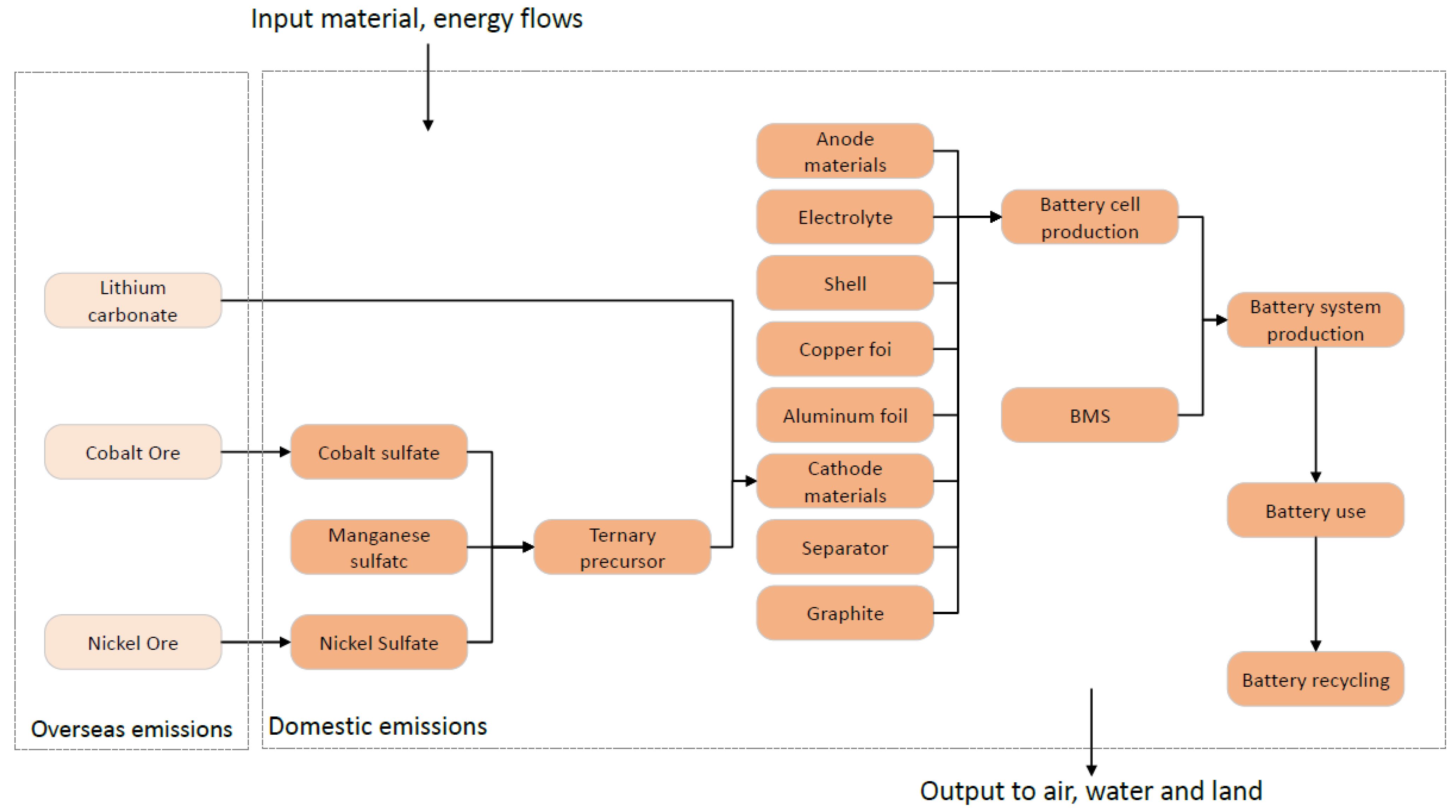
In summary, research on the carbon footprint assessment of battery powered electric vehicles in China is still in its initial stage. In particular, there is a scarcity of domestic studies on the carbon footprint and environmental impact assessment focused on power batteries, resulting in an underdeveloped evaluation system. Therefore, this study selects ternary lithium-ion batteries and lithium iron phosphate batteries, which are widely used in the domestic electric vehicle market, to conduct a carbon footprint analysis based on life cycle assessment. The system boundary illustrated in this study is presented in Figure 1. The analysis of lithium battery life cycle is divided into four phases: raw material acquisition, battery production, battery use, and battery recycling. During the battery production stage, a significant portion of the carbon footprint is attributed to the production of raw materials. The objectives of this article are to obtain carbon emission data of the main components of these two types of lithium-ion batteries during the production and usage stages, identify key environmental impact factors, and comparatively analyze the extent of their contributions to carbon emissions.
The findings of this paper can provide a basis and recommendations for relevant enterprises to reduce carbon emissions, and hold significant theoretical and practical implications for improving the construction of China’s power battery carbon footprint environmental assessment system.

2. Method and Materials

The implementation of the impact assessment relies on professional software. Currently, widely used LCA software includes GaBi 10.8, SimaPro 25.3.1, eBalance 1.11.0, Brightway2 2.4.7 and OpenLCA 2.5.0 [16,17]. The LCA method was first proposed in the 1970s. Later, after the scientific community formulated a series of rules in the 1990s, the method of LCA gradually became standardized. In recent years, following the successful applications by the U.S. Environmental Protection Agency and the European Union, the LCA evaluation method has gradually become a major approach for countries around the world to implement sustainable strategies. Therefore, this study uses SimaPro 9.4 for LCA calculation and analysis.
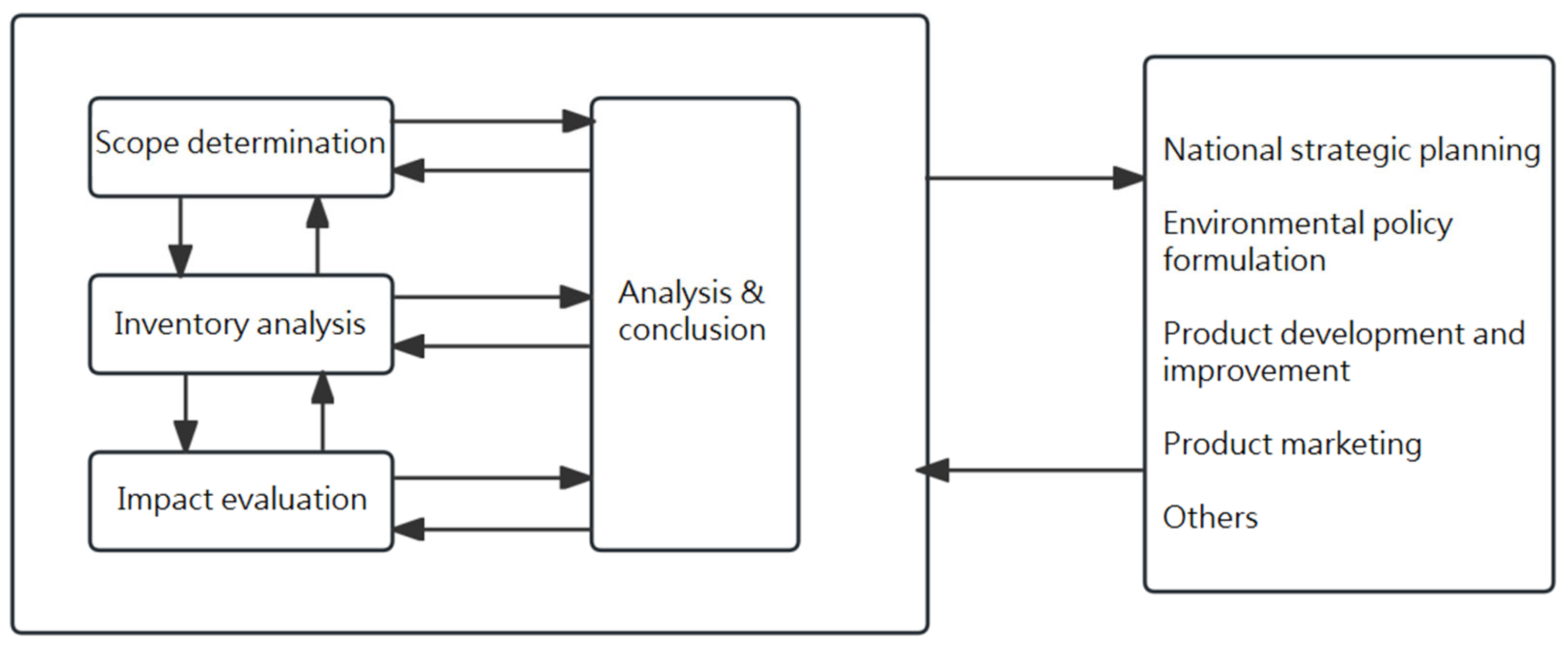
The purpose of LCA software calculation is to convert the input and output data collected, transformed and sorted in the inventory analysis into corresponding evaluation index data according to the environmental impact assessment method selected by the researcher. In accordance with the ISO 14040 standard [18], the LCA process is divided into four stages: goal and scope definition, inventory analysis, impact assessment, and interpretation of results. The framework can be referred to as shown in Figure 2.
(1)
Setting of goals and scope.
In order to make life cycle assessment more accurate, correct and effective goal setting and scope selection are of crucial importance. At this stage, it is also necessary to clearly define the functional units used in the research. By defining different func-tional units, the production and output in the process can be measured more accurate-ly, and convenience can be provided for the collection of inventory data in the next stage while avoiding confusion.
(2)
Inventory Analysis
The purpose of inventory analysis is, first of all, to collect the input and output data of the target product at different stages of its life cycle. For example, in the pro-duction of ternary lithium batteries, components such as the positive electrode, ternary precursor, and electrolyte are the main ones, and it is necessary to collect the types and data of raw materials required for producing these components. Secondly, due to the different ways of obtaining data, the data from different sources use different units of measurement. Therefore, after completing the collection of relevant data, it is neces-sary to convert the data according to the specified functional unit to ensure the accu-racy of the usage. Finally, the data is organized to build a complete table.
In terms of data sources, they are basically divided into two categories. One is di-rect data, including relevant reports from government departments, enterprise bills of materials, and on-site production line measurement data, etc. The other is indirect da-ta, including LCA databases, journal papers, and patents, etc.
(3)
Impact Assessment
The purpose of impact assessment is to convert the data results obtained from the inventory analysis into corresponding environmental indicators according to certain evaluation methods, so as to assess the existing or potential environmental impact degree of the product within its life cycle. Specifically, it realizes the quantitative and then qualitative analysis of the environmental impacts caused by different emissions by linking the impact results on different environments with the emissions that generate such impacts within the scope of the analysis objectives.
Due to the differences in environmental conditions among various countries, the third stage of LCA analysis has different emphases on the evaluation of different environmental impacts. For example, this study adopts the IPCC carbon footprint accounting method issued by the Intergovernmental Panel on Climate Change (IPCC), which focuses on the evaluation of the climatic impacts of greenhouse gases and is currently an authoritative method for calculating product carbon footprints.
(4)
Interpretation of Results
The interpretation of results involves identifying, judging, examining, and presenting the findings of the impact assessment in accordance with the defined research goals and scope to form conclusions, which includes the judgment of major issues, sensitivity checks, and other contents. In this stage, the impact assessment report generated from the impact assessment phase undergoes qualitative interpretation and conclusion summarization through methods such as comparative analysis.
The basic process of modeling using SimaPro 9.4 software includes the following steps: (1) Database selection and analysis project establishment: The software has built-in databases such as Switzerland’s Ecoinvent database, which contains most material data for the Chinese region, the USLCI database from the United States and Germany’s Industry 2.0 database. For this study, the Ecoinvent 3 database was selected. (2) Searching for materials in the software database: Look up the types of materials included in the inventory in the software database, select data for the Chinese region, and then input the usage of this material as 1 kg. (3) Assemble main components: Assemble the main components of each part, select material types according to the needs of different components, input the data on material usage in the production of main components from the inventory analysis, and complete the modeling of the battery project to be analyzed. Calculate the battery project and use the IPCC method to calculate the carbon footprint. (4) Display calculation results: Present the calculation results of the battery’s carbon footprint in the form of tree diagrams and traditional charts.

3. Results & Discussion

3.1. Determination of Scope

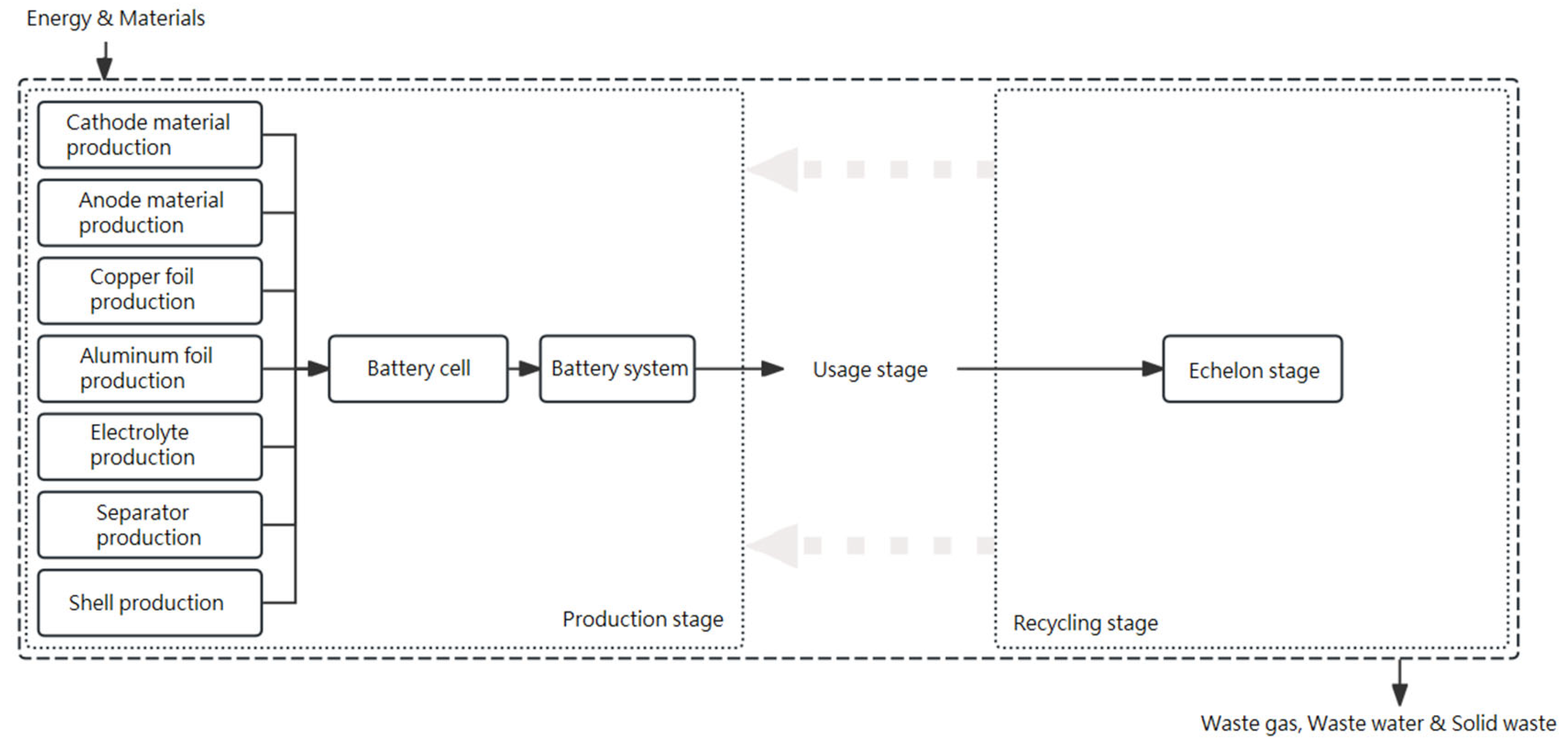
The scope of the inventory analysis covers the production stage and usage stages of lithium batteries. Due to the scarcity of data on battery recycling in China, this study only collects basic recycling data using the battery echelon utilization method. Additionally, since the recycling stage is a phase that reduces carbon emissions in product carbon footprint calculation, and this research focuses on comparing the carbon emission-increasing links of the two types of batteries, the inventory data of the recycling stage will not be included in the analysis. The scope of the inventory analysis for ternary lithium-ion and lithium iron phosphate batteries is shown in Figure 3.
For the inventory data collection for ternary lithium batteries in the production stage, the data of the main components of the battery are referenced from References [16,17,19,20], and converted to the specified functional unit. In the LCA analysis of lithium batteries, the commonly used functional units mainly include four types: capacity, energy, mass and mileage. Since this study needs to compare the carbon footprints of different lithium-ion batteries, capacity is chosen as the functional unit, which is specified as 1 kWh.
Some raw material data built-in the database of SimaPro are directly used for China region. For the data not included in SimaPro, similar raw material data in the database are selected as approximate substitutes to complete the inventory analysis. The atmospheric pollutant data that have an impact on the carbon footprint are collected as the emission data in the inventory, while other production emission data, such as water pollutant data, etc., are not included in the inventory list.

3.2. Ternary Lithium Battery

The specific parameters of the battery cells and system selected in this study are specified in Table 1. The parameters are based on the product data of China Innovation Aviation Co., Ltd., among which the vehicle data refers to Reference [19]. For the collection of materials in the production stage of lithium-ion batteries, the focus is on the main components of the battery. The data are mainly referenced from References [19,20,21,22], and the data are converted according to the specified functional unit. Some raw material data directly use the data built in the database of Simapro or international average from References [23,24]. For some raw material data not included in the built-in database of Simapro, approximate raw material data in the database are selected as substitutes to complete the bill of materials analysis.
It should be noted that in order to meet the requirement of linking the emission data in the bill of materials analysis with the corresponding environmental impact assessment model for quantification in the LCA analysis, and considering that the purpose of this study is to analyze the carbon footprint of the life cycle of power batteries, only the atmospheric pollutant data that will have an impact on the carbon footprint are collected as the emission data in the bill of materials, while other production emission data (such as water pollutant data, etc.) are not included in the bill of materials list.

3.2.1. Collection of Inventory Lists in the Production Stage of Ternary Lithium Batteries

Currently, the commonly used cathode materials for ternary lithium-ion batteries are lithium nickel cobalt aluminate (NCA) and lithium nickel cobalt manganese oxide (NCM), and the production processes of the two materials are basically similar [19]. This study takes NCM as an example. The NCM cathode consists of two parts: precursor and lithium carbonate. The material inventory of the production process is shown in Table 2, and the production inventory of the precursor is shown in Table 3.
Currently, ternary lithium-ion batteries can use graphite or lithium titanate as the negative electrode, among which graphite materials are more widely applied. This study focuses on batteries with graphite negative electrodes, and the input-output inventory for their production is shown in Table 4.
Besides cathode and anode, the materials used for production of ternary lithium-ion batteries also include electrolyte, separators, aluminum foil, copper foil, shell, cell and system. For clarity of presentation, the relevant inventory lists are referred to in Appendix A (Table A1, Table A2, Table A3, Table A4, Table A5, Table A6 and Table A7) of this paper.

3.2.2. Collection of Inventory Lists in the Usage Stage of Ternary Lithium Batteries

The energy consumption of the battery during the usage phase mainly includes two parts, the energy required to bear the battery weight during driving and the energy conversion loss during the charging and discharging process of the power battery. Referring to the calculation method in Reference [20], the energy consumption inventory of the usage phase is calculated and shown in Table 5 below.

3.2.3. Collection of Inventory Lists in the Recycling Stage of Ternary Lithium Batteries

The recycling methods for ternary lithium-ion batteries are mainly divided into echelon utilization and regenerative utilization. This study adopts the echelon utilization method for recycling. The material inventory of the recycling phase is shown in Table 6.

3.3. Lithium Iron Phosphate Battery

3.3.1. Collection of Inventory Lists in the Production Stage of Lithium Iron Phosphate Batteries

The production stage of lithium iron phosphate batteries includes the production of battery materials such as positive and negative electrodes. The data are mainly referenced from References [19,21]. The cathode material of lithium iron phosphate batteries is generally made from iron phosphate and lithium carbonate. The material inventory of the production process is shown in Table 7.
The negative electrode is still produced using graphite as the raw material, and the material inventory of the production process is shown in Table 8.
Besides cathode and anode, the materials used for production of ternary lithium-ion batteries also include electrolyte, separators, aluminum foil, copper foil, shell, cell and system. For clarity of presentation, the relevant inventory lists are referred to in Appendix A (Table A8, Table A9, Table A10, Table A11, Table A12, Table A13 and Table A14) of this paper.

3.3.2. Collection of Inventory Lists in the Usage Stage of Lithium Iron Phosphate Batteries

The calculation method for the inventory data of the usage phase is consistent with that of the ternary lithium battery. The energy consumption inventory of the lithium iron phosphate battery in the usage phase is calculated as shown in Table 9.

3.3.3. Collection of Inventory Lists in the Recycling Stage of Lithium Iron Phosphate Batteries

The material inventory of the recycling phase is shown in Table 10.

3.4. Calculation and Analysis of Carbon Footprint

Carbon footprint analysis is part of the environmental assessment in the life cycle assessment stage, that is, it is a subset of life cycle impact assessment. The Simapro software has built-in dozens of mainstream life cycle assessment methods. Since this study focuses on the carbon footprint analysis of the life cycle of two types of lithium-ion power batteries, the IPCC 2021 GWP 100 greenhouse gas accounting method in Simapro is selected for product carbon footprint analysis. Specifically, this method normalizes greenhouse gases such as CO2, CH4, and N2O to CO2 emissions with CO2 as the standard, denoted as GWP, with the unit of kg CO2-eq. As the IPCC algorithm mandates the collection of seven types of greenhouse gases, including CO2, CH4, N2O, hydrofluorocarbons (HFCs), SF6, perfluorocarbons (PFCs), and NF3, the inventory data that do not include these seven types of air pollutants have been excluded when calculating the carbon footprint of ternary lithium-ion power batteries in this paper.
The calculation method IPCC 2021 GWP 100 used in this study is already included in Simapro. By inputting the corresponding data into the software and selecting the IPCC 2021 GWP 100 method during calculation and analysis, carbon emission data can be obtained. After calculation, the results are displayed in a characterized manner, with the display node set to 0.1%, which means that substances with an impact on the results of less than 0.1% are hidden from display.

3.5. Comparison and Analysis

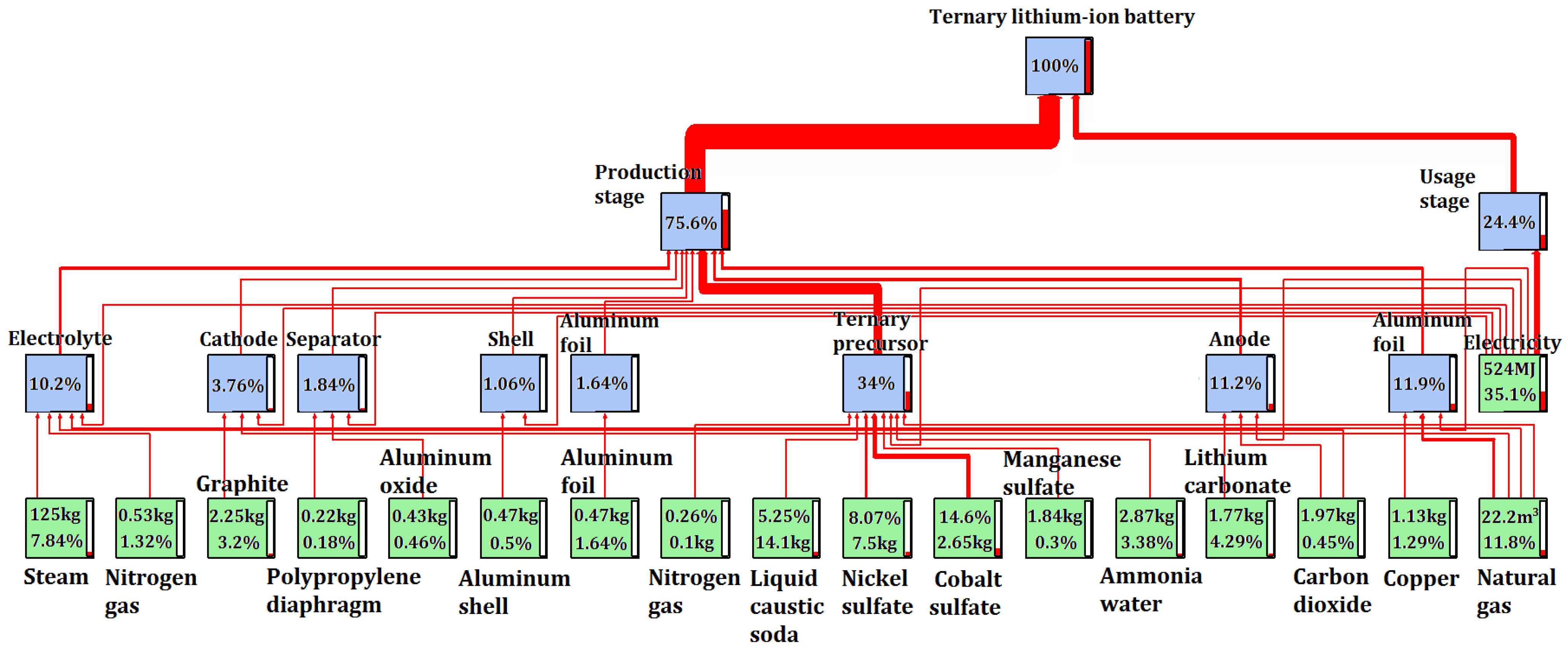
Based on the calculated results in Figure 4, it can be obtained that in the life cycle of ternary lithium-ion batteries, the carbon emission increase in the production phase accounts for 75.6% of the total carbon emissions, and the usage phase accounts for 24.4%. In the production phase, the emissions from the production of ternary precursors used in cathode production account for the highest proportion at 34%, followed by the emissions from cathode production excluding ternary precursor production, which account for 11.2%. Therefore, the carbon emissions from the complete cathode production including ternary precursors account for 45.2% of the carbon emissions in the production phase. In the production of ternary precursors, the carbon emissions from the production of 7.5 kg of nickel sulfate account for 8.0%, the carbon emissions from the production of 2.6 kg of cobalt sulfate account for 14.6%, and the carbon emissions from the production of 1.8 kg of manganese sulfate account for 0.28%.
An analysis and comparison of the above data shows that the production phase of ternary lithium-ion batteries contributes the most to the increase in carbon footprint. By tracing the sources of carbon emission increase through the tree diagram in Figure 4, it can be found that the production of ternary precursors in the production phase is the main reason for the high carbon emissions in the production phase. For ternary precursors, the main raw materials used in production are nickel sulfate, cobalt sulfate, and manganese sulfate. An analysis of the three metals shows that although the usage of cobalt sulfate is only 2.8 kg, slightly more than 1.8 kg of manganese sulfate, its carbon emissions from production account for 14.8%, which is much higher than 0.2% of manganese sulfate. At the same time, the carbon emissions from the production of 7.5 kg of nickel sulfate also reach 8.0%, indicating that cobalt sulfate and nickel sulfate have significant environmental impacts on carbon emissions during the production and processing of the three metals.
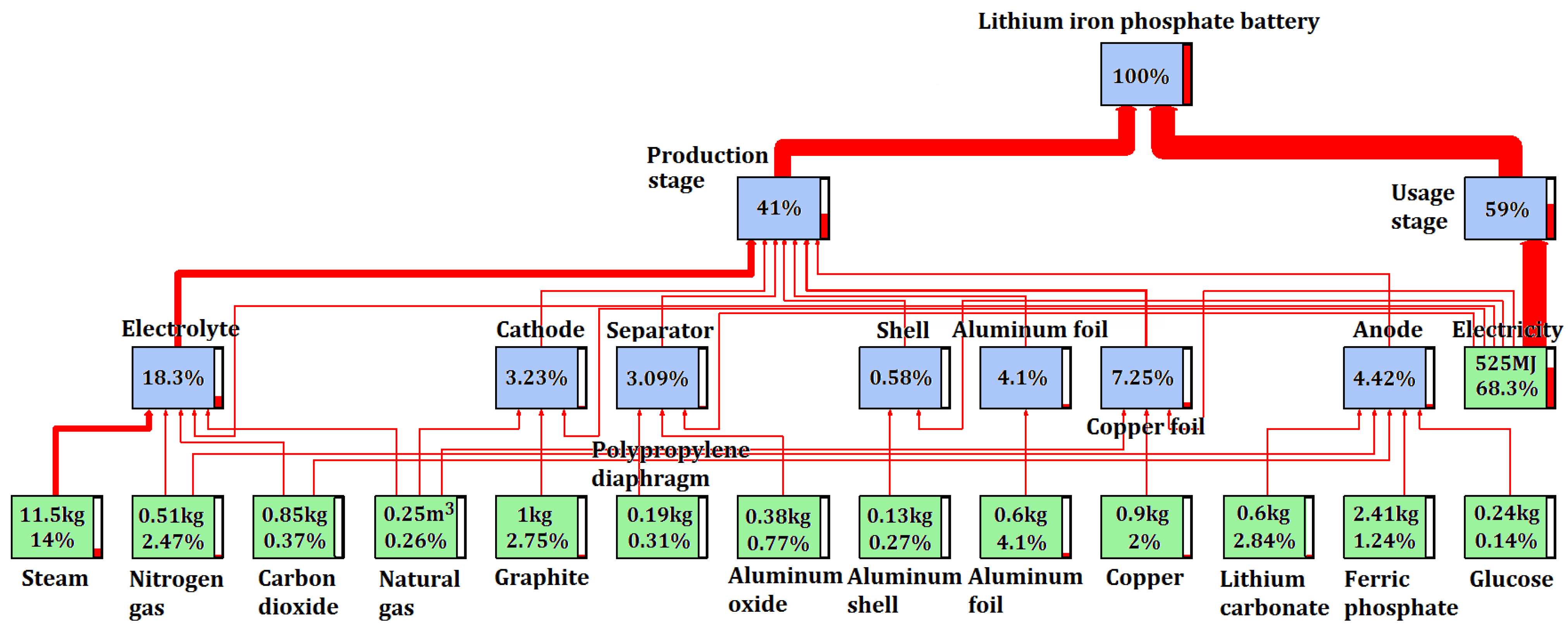
The calculation results of the life cycle carbon footprint of lithium iron phosphate batteries are shown in Figure 5 below.
For lithium iron phosphate batterie, the usage phase contributes the most to the increase in the life cycle carbon footprint, accounting for 59%, while the carbon emission increase in the production phase accounts for 41% of the total emissions, which is less than that of the battery’s usage phase. Among the carbon emissions generated during the production and usage of the battery, those caused by electricity consumption account for 68.3%, which is much higher than the emissions from electrolyte production (18.3%), copper foil production (7.2%), and cathode production (4.4%).
Using the same method as for ternary lithium-ion batteries to trace the sources of increased carbon emissions, the data analysis shows that the electricity consumption during the battery’s usage phase is the main contributor to carbon footprint emissions. The reason is that the electricity consumed by Chinese users to charge the batteries during the usage phase basically comes from the national power grid. At present, the electricity production in China’s power grid mainly comes from thermal power, and the proportion of green power energy production is relatively low, which leads to high carbon emissions during the battery’s usage phase.
According to the software’s calculation results of equivalent carbon emissions for the two types of batteries, the summarized data yield the equivalent carbon emission data, as shown in Table 11. Overall, the total carbon emissions during the production and usage phases of ternary lithium-ion batteries are 442 kg CO2-eq, while the total emissions of lithium iron phosphate batteries are 277 kg CO2eq, indicating that the overall carbon emission performance of lithium iron phosphate batteries is better than that of ternary lithium-ion batteries.
The carbon emissions of ternary lithium-ion batteries during the production phase are 334 kg CO2-eq, which is almost 4 times that of lithium iron phosphate batteries (93.1 kg CO2-eq). In the usage phase, the carbon emissions of ternary lithium-ion batteries are 108 kg CO2-eq, slightly lower than those of lithium iron phosphate batteries (134 kg CO2-eq). This indicates that the main reason for the higher GWP (Global Warming Potential) index of ternary lithium-ion batteries compared to lithium iron phosphate batteries is their huge carbon emissions during the production phase.
The production emissions of the complete cathode account for 45.2% of the carbon emissions in the production phase of ternary lithium-ion batteries, which is approximately 151 kg CO2-eq. This further confirms that the production of ternary cathodes is the main source of the significant carbon emissions of ternary lithium-ion batteries during the production phase.

4. Conclusions

In this paper, the carbon footprint calculation is carried out for ternary lithium batteries and lithium iron phosphate batteries with a functional unit of 1 kWh. Based on the comparison of the results, the ecological and environmental impacts of the two are analyzed, and the main research results are as follows:
(1)
In the life cycle of ternary lithium-ion batteries, the equivalent carbon dioxide emissions in the production phase contribute the most to the increase in carbon footprint. The main contributing factor is the production emissions of ternary cathodes, especially the processing of cobalt sulfate and nickel sulfate, two types of metals used in their production, which will produce significant carbon emission increases.
(2)
In the life cycle of lithium iron phosphate batteries, the equivalent carbon dioxide emissions in the usage phase contribute the most to the increase in the battery’s carbon footprint. The main contributing factor is the high proportion of non-green power production in China’s power grid.
(3)
By synthesizing the carbon emission data of the two types of batteries, the total carbon emissions of lithium iron phosphate batteries are approximately half of those of ternary lithium-ion batteries, reflecting that the overall carbon emission performance of lithium iron phosphate batteries is better than that of ternary lithium-ion batteries.
(4)
Overall, in the comparison of total carbon emissions between the two commonly used types of lithium-ion power batteries, the carbon emissions of lithium iron phosphate batteries are half of those of ternary lithium-ion batteries. Therefore, if only from the perspective of “dual carbon” friendliness, the number of applications of lithium iron phosphate batteries in the field of power batteries can be appropriately increased in the future to reduce the carbon emissions in the life cycle of power batteries, contributing to the realization of China’s “dual carbon” strategy.

Author Contributions

Software, H.Z. (Hao Zhang); Formal analysis, Z.W.; Resources, H.Z. (Haisheng Zhen). All authors have read and agreed to the published version of the manuscript.

Funding

This research was funded by Technical Innovation project of the Hainan Scientific Research Institutes (KYYSGY2024-006).

Data Availability Statement

The original contributions presented in this study are included in the article. Further inquiries can be directed to the corresponding author.

Conflicts of Interest

The authors declare no conflict of interest.

Appendix A

The electrolyte used in ternary lithium batteries is formulated from various carbonates and lithium hexafluorophosphate. The input-output inventory for its production is shown in Table A1 below.
Table A1. Inventory list of ternary lithium-ion battery electrolyte production.
Input/
Output
TypeMaterialsUnitQuantity
InputEnergy
& Power
ElectricitykWh3.01
Natural gaskg1.71 × 10−1
Steamkg1.25 × 10
AgentsPure waterkg7.30 × 10−1
Waterkg1.35
Nitrogen gaskg5.32 × 10−1
Alkaline solutionkg7.71 × 10−2
OutputAtmospheric pollutantsCO2g9.20 × 102
Dustg5.40 × 10−2
Hydrogen fluorideg8.08 × 10−2
Hydrogen chlorideg2.11 × 10−1
ProductElectrolytekg2.05
The inventory of input and output substances for the production of separators is shown in Table A2.
Table A2. Inventory list of ternary lithium-ion battery separator production.
Input/
Output
TypeMaterialsUnitQuantity
InputEnergy
& Power
ElectricitykWh4.87
AgentsPolypropylene separatorkg2.17 × 10−1
Waterkg5.57 × 10−1
Polyethylene separatorkg1.09 × 10−5
Aluminum oxidekg4.33 × 10−1
Water-based acrylic emulsionkg5.41 × 10−2
Sodium Carboxymethyl cellulosekg4.33 × 10−6
OutputAtmospheric pollutantsDustg2.06 × 10−2
ProductSeparatorm33.25 × 10
The inventory of substances for aluminum foil production is shown in Table A3 below.
Table A3. Inventory list of ternary lithium-ion battery aluminum foil production.
Input/
Output
TypeMaterialsUnitQuantity
InputAgentsElectrolytic aluminumkg6.18 × 10
Waterkg1.33 × 10
Diatomiteg1.92 × 10
Rolling oilg6.08 × 10
OutputAtmospheric pollutantsNon-methane hydrocarbonsg1.53 × 10
ProductAluminum foilkg4.67 × 10−1
The inventory of substances for copper foil production is shown in Table A4 below.
Table A4. Inventory list of ternary lithium-ion battery copper foil production.
Input/
Output
TypeMaterialsUnitQuantity
InputEnergy
& Power
ElectricitykWh3.12 × 10−4
Natural gaskg1.40 × 10
AgentsCopperkg1.13
Concentrated sulfuric acidkg1.83 × 10−2
Activated carbonkg3.78 × 10−4
Hydrochloric acidkg1.51 × 10−4
Tartaric acidkg1.51 × 10−3
Cobalt sulfate hexahydratekg7.56 × 10−4
Zinc sulfate heptahydratekg7.56 × 10−4
Hydroxyethyl cellulosekg1.51 × 10−4
Waterkg1.26 × 10
OutputAtmospheric pollutantsSulfuric acid mistg8.54 × 10−1
ProductCopper foilkg1.13
The inventory of substances for the production of the shell is shown in Table A5 below.
Table A5. Inventory list of ternary lithium-ion battery shell production.
Input/
Output
TypeMaterialsUnitQuantity
InputEnergy
& Power
ElectricitykWh2.35
AgentsDrawing oilkg1.88 × 10−1
Waterkg1.03 × 10−2
Aluminum shellkg4.70 × 10−1
OutputProductShellpcs6.27
The inventory of substances for the production of ternary lithium battery cells is shown in Table A6 below.
Table A6. Inventory list of ternary lithium-ion battery cell production.
Input/
Output
TypeMaterialsUnitQuantity
InputEnergy
& Power
ElectricitykWh1.17 × 10−2
Natural gaskg2.93 × 10−1
AgentsNMPkg3.33
Waterkg2.13 × 102
Electrolytekg2.05 × 105
Carbonkg1.83 × 10−1
Graphitekg5.50 × 10−2
Aluminum foilkg4.67 × 10−1
Cooper foilkg1.13
Separatorkg3.25 × 10−1
Anodekg2.37
ShellPcs6.27
OutputAtmospheric pollutantsDustg7.61
Non-Methane Hydrocarbonsg1.49
ProductBattery cellpcs6.27
The inventory of substances for the production of the battery system is shown in Table A7 below.
Table A7. Inventory list of ternary lithium-ion battery system production.
Input/
Output
TypeMaterialsUnitQuantity
InputEnergy
& Power
ElectricitykWh7.05 × 10−2
AgentsBattery cellpcs6.27
Battery management systempcs1.57 × 10−2
Shellpcs3.13 × 10−2
Waterkg1.96 × 10−1
OutputAtmospheric pollutantsDustg6.27
ProductTernary lithium-ion battery systempcs1.57 × 10−2
The material inventory for the production process of the electrolyte is shown in Table A8 below.
Table A8. Inventory list of lithium iron phosphate battery electrolyte production.
Input/
Output
TypeMaterialsUnitQuantity
InputEnergy
& Power
ElectricitykWh2.76
Natural gaskg1.57 × 10−1
Steamkg1.15 × 10
AgentsPure waterkg6.70 × 10−1
Waterkg1.24
Nitrogen gaskg4.89 × 10−1
Alkaline solutionkg7.08 × 10−2
OutputAtmospheric pollutantsCO2g8.45 × 102
Dustg4.96 × 10−2
Hydrogen fluorideg7.42 × 10−2
Hydrogen chlorideg1.94 × 10−1
ProductElectrolytekg1.88
The material inventory for the production process of the separator is shown in Table A9 below.
Table A9. Inventory list of lithium iron phosphate battery separator production.
Input/
Output
TypeMaterialsUnitQuantity
InputEnergy
& Power
ElectricitykWh4.22
AgentsPolypropylene separatorkg1.88 × 10−1
Waterkg4.83 × 10−1
Polyethylene separatorkg9.44 × 10−6
Aluminum oxidekg3.75 × 10−1
Water-based acrylic emulsionkg4.69 × 10−2
Sodium carboxymethyl cellulosekg3.75 × 10−6
OutputAtmospheric pollutantsDustg1.78 × 10−2
ProductSeparatorm32.82 × 10
The material inventory for the production process of aluminum foil is shown in Table A10 below.
Table A10. Inventory list of lithium iron phosphate battery aluminum foil production.
Input/
Output
TypeMaterialsUnitQuantity
InputAgentsElectrolytic aluminumkg7.79 × 10−1
Waterkg1.72
Diatomaceous earthg2.48
Rolling oilg7.48
OutputAtmospheric pollutantsNon-Methane Hydrocarbonsg1.97
ProductAluminum foilkg6.02 × 10−1
The material inventory for the production process of copper foil is shown in Table A11.
Table A11. Inventory list of lithium iron phosphate battery copper foil production.
Input/
Output
TypeMaterialsUnitQuantity
InputEnergy
& Power
ElectricitykWh1.12 × 10
Natural gaskg2.49 × 10−4
AgentsCopperkg9.04 × 10−1
Concentrated sulfuric acidkg1.46 × 10−2
Activated carbonkg3.02 × 10−4
Hydrochloric acidkg1.21 × 10−4
Tartaric acidkg1.21 × 10−3
Cobalt sulfate hexahydratekg6.04 × 10−3
Zinc sulfate heptahydratekg6.04 × 10−3
Hydroxyethyl cellulosekg1.21 × 10−4
Waterkg1.01 × 10
OutputAtmospheric pollutantsSulfuric acid mistg6.83 × 10−1
ProductCopper foilkg9.04 × 10−1
The material inventory for the production process of the shell is shown in Table A12.
Table A12. Inventory list of lithium iron phosphate battery shell production.
Input/
Output
TypeMaterialsUnitQuantity
InputEnergy
& Power
ElectricitykWh6.58 × 10−1
AgentsDrawing oilkg5.26 × 10−2
Waterkg2.88 × 10−3
Aluminum shellkg1.32 × 10−1
OutputProductShellpcs1.75
The material inventory for the production of lithium iron phosphate battery cells is specified in Table A13 below.
Table A13. Inventory list of lithium iron phosphate battery cell production.
Input/
Output
TypeMaterialsUnitQuantity
InputAgentsNMPkg2.37
Natural gaskg1.08
NMPkg2.37
Waterkg1.99 × 10
Electrolytekg1.88
Cathodekg2.41
Pure waterkg1.39 × 10
Aluminum foilkg6.02 × 10−1
Copper foilkg9.04 × 10−1
Separatorm22.82 × 10
Anodekg1.05
Shellpcs1.75
OutputProductBattery cellpcs1.75
The material inventory for the production process of the battery system is shown in Table A14 below.
Table A14. Inventory list of lithium iron phosphate battery system production.
Input/
Output
TypeMaterialsUnitQuantity
InputEnergy
& Power
ElectricitykWh3.75 × 10−2
AgentsBattery cellpcs1.75
Battery management systempcs1.75 × 10−2
Shellpcs1.75 × 10−2
WaterKg1.05 × 10−1
OutputAtmospheric pollutantsDustg1.35 × 10−5
ProductLithium iron phosphate battery systempcs1.75 × 10−2

References

  1. Li, S.H. Life Cycle Analysis and Environmental Benefit Evaluation of Electric Vehicles. Ph. D. Dissertation, Jilin University, Changchun, China, 2014. [Google Scholar]
  2. Li, J.X.; Li, Y.S.; Zhuang, X.N.; Wu, W.J.; Huang, Q.; Song, X.L. Energy Consumption and Carbon Footprint Analysis of Recycling System for Retired Ternary Lithium Batteries Based on Life Cycle Assessment. J. Shanghai Polytech. Univ. 2022, 39, 1–9. [Google Scholar]
  3. Liang, L.; Fu, G.Z. Comparative Analysis of Life Cycle Energy Consumption and Emissions of Plug-in Hybrid Electric Vehicles with Different Power Systems. Shanghai Auto 2016, 3, 45–50. [Google Scholar]
  4. Pan, Y.J.; Liang, L.; Tang, M.G.; Lu, L.J. Comparative Analysis of Electric Vehicle Charging Technology 2.0 and 1.0. Inf. Technol. Informatiz. 2018, 8, 162–168. [Google Scholar]
  5. Zheng, M.T.; Salim, H.; Liu, T.F.; Lu, L.J. Intelligence-Assisted Predesign for the Sustainable Recycling of Lithium-Ion Batteries and Beyond. Energy Environ. Sci. 2021, 14, 5801–5815. [Google Scholar] [CrossRef]
  6. Long, S.H.; Wei, C.Q. Research and Analysis on Carbon Emissions in the Whole Life Cycle of Automobiles. Automob. Technol. Mater. 2024, 7, 1–8. [Google Scholar]
  7. Xu, J.L.; Yu, H.J.; Xie, Y.H.; Zhang, X.M.; Wu, B.B. Research on Carbon Footprint of Recycling and Reuse of Retired Power Batteries. Environ. Pollut. Control 2023, 45, 1092–1095+1100. [Google Scholar]
  8. ISO 14067:2018; Greenhouse Gases–Carbon Footprint of Products–Requirements and Guidelines for Quantification. International Organization for Standardization: Geneva, Switzerland, 2018.
  9. Yan, H. Calculation of Carbon Emissions and Evaluation of Carbon Benefits in the Life Cycle of Electric Vehicles. Master's Dissertation, North China Electric Power University, Beijing, China, 2023. [Google Scholar]
  10. Chen, L.; Hu, S.H. Research on Carbon Footprint of New Energy Vehicle Power Battery Production. Resour. Dev. Mark. 2024, 40, 1811–1819. [Google Scholar]
  11. Wu, Z.; Wang, M.; Zheng, J.; Sun, X.; Zhao, M.; Wang, X. Life Cycle Greenhouse Gas Emission Reduction Potential of Battery Electric Vehicle. J. Clean. Prod. 2018, 190, 462–470. [Google Scholar] [CrossRef]
  12. Yudhistira, R.; Khatiwada, D.; Sanchez, F.A. A Comparative Life Cycle Assessment of Lithium-Ion and Lead-Acid Batteries for Grid Energy Storage. J. Clean. Prod. 2022, 15, 358. [Google Scholar] [CrossRef]
  13. Burchart-Korol, D.; Jursova, S.; Folęga, P.; Korol, J.; Pustejovska, P.; Blaut, A. Environmental Life Cycle Assessment of Electric Vehicles in Poland and the Czech Republic. J. Clean. Prod. 2018, 202, 476–487. [Google Scholar] [CrossRef]
  14. Hong, H.; Hao, C.; Qiang, Z.; Fei, L.; He, K. Life-cycle Assessment of Greenhouse Gas and Air Emissions of Electric Vehicles: A Comparison Between China and the U.S. Atmos. Environ. 2015, 108, 107–116. [Google Scholar]
  15. Casals, L.C.; Martinez-Laserna, E.; Garcia, A.; Beatriz Nieto, N. Sustainability analysis of the electric vehicle use in Europe for CO2 emission reduction. J. Clean. Prod. 2016, 127, 425–437. [Google Scholar] [CrossRef]
  16. Herrmann, I.T.; Moltesen, A. Does it matter which Life Cycle Assessment (LCA) tool you choose?—A comparative assessment of SimaPro and GaBi. J. Clean. Prod. 2015, 86, 163–169. [Google Scholar] [CrossRef]
  17. Daniela, Z.; Anabel, F.; Leandro, R.; Erick, T.; Andr’es, R.; Marcelo, E.; Rosa, R.; Germ’an, M. Exergo-ecological analysis and life cycle assessment of agro-wastes using a combined simulation approach based on Cape-Open to Cape-Open (COCO) and SimaPro free-software. Renew. Energy 2022, 201, 60–71. [Google Scholar]
  18. ISO 14040:2006; Environmental Management–Life Cycle Assessment—Principles and Framework. International Organization for Standardization: Geneva, Switzerland, 2006.
  19. Wang, Z.P. Potential of Recycling and Reuse of Power Batteries for New Energy Vehicles and Life Cycle Assessment. Master's Dissertation, Tsinghua University, Beijing, China, 2018. [Google Scholar]
  20. Guizhou Provincial Department of Environmental Protection. Environmental Impact Assessment Report for the Construction Project of a Production Workshop for 15,000 Tonnes/Year of High-Performance Power Lithium-Ion Battery Ternary Cathode Materials. Available online: https://sthj.guizhou.gov.cn/zwgk/zdlyxx/hjpj/jsxmslgs/201810/t20181029_77878363.html (accessed on 12 December 2017).
  21. Chen, J.J. Research on the Whole Life Cycle of Ternary Lithium-Ion Power Battery System. Master's Dissertation, Guangzhou University, Guangzhou, China, 2023. [Google Scholar]
  22. Liu, K.H. Life Cycle Assessment of BYD E6 Pure Electric Vehicle. Master's Dissertation, Fujian Agriculture and Forestry University, Fuzhou, China, 2016. [Google Scholar]
  23. Leopold, P.; Vanessa, S.; Karin, S.; Stephan, P.; Vanessa, W.; Tobias, S. Carbon footprint distributions of lithium-ion batteries and their materials. Nat. Commun. 2024, 15, 10301. [Google Scholar] [CrossRef] [PubMed]
  24. Moritz, G.; Jens, L. Costs, carbon footprint, and environmental impacts of lithium-ion batteries—From cathodeactive material synthesis to cell manufacturing and recycling. Appl. Energy 2024, 353, 122132. [Google Scholar]
Figure 1. System boundary of lithium-ion battery life cycle.
Energies 18 04914 g001
Figure 2. The framework of LCA.
Energies 18 04914 g002
Figure 3. Scope of inventory analysis for power batteries.
Energies 18 04914 g003
Figure 4. Tree diagram of carbon footprint for ternary lithium-ion batteries.
Energies 18 04914 g004
Figure 5. Tree diagram of carbon footprint for lithium iron phosphate batteries.
Energies 18 04914 g005
Table 1. Parameters of the battery cell and system under study.
ParameterQuantityUnit
Weight of the power battery system531kg
Weight of the vehicle2021kg
Total mileage traveled during the life cycle200,000km
Power consumption per 100 km19.94kWh/100 km
Battery charge–discharge efficiency95%
Capacity of the power battery system63.8kWh
Table 2. Inventory list of ternary lithium-ion battery cathode production.
Input/
Output
TypeMaterialsUnitQuantity
InputEnergy
& Power
ElectricitykWh2.76 × 10
Agentsternary precursorkg4.33
Lithium carbonatekg1.77
Oxygenkg3.93 × 10−1
Nano-aluminakg1.54 × 10−2
Waterkg6.21
OutputAtmospheric pollutantsCO2kg1.05
Dustg3.19 × 10−1
ProductCathodekg4.60
Table 3. Inventory list of ternary precursor production.
Input/
Output
TypeMaterialsUnitQuantity
InputEnergy
& Power
ElectricitykWh4.33
Natural gasm31.95
AgentsNickel sulfatekg7.50
Cobalt sulfatekg2.65
Manganese sulfatekg1.84
Ammonia waterkg2.87
Liquid caustic sodakg1.41 × 10
Nitrogen gaskg1.04 × 10−1
Waterkg1.62 × 10
OutputAtmospheric pollutantsDustg7.20 × 10−1
Sulfur dioxideg3.51 × 10−1
Ammoniag6.84
ProductTernary precursorkg4.33
Table 4. Inventory list of ternary lithium-ion battery anode production.
Input/
Output
TypeMaterialsUnitQuantity
InputEnergy
& Power
ElectricitykWh2.12
Natural gaskg4.50 × 10−2
Agentsnatural graphitekg2.25
Waterkg1.74
Asphaltkg3.01 × 10−1
OutputAtmospheric pollutantsDustg9.94 × 10−1
Smokeg1.69
Benzo (a) pyreneg3.36 × 10−6
Non-methane hydrocarbonsg3.98 × 10−1
ProductAnodekg2.37
Table 5. Inventory list of ternary lithium batteries usage.
Input/
Output
TypeMaterialsUnitQuantity
InputEnergy
& Power
ElectricitykWh8.34 × 10
AgentsTernary lithium-ion battery systempcs1.57 × 10−2
OutputProductWaste ternary lithium-ion batterypcs1.57 × 10−2
Table 6. Inventory list of ternary lithium batteries recycling.
Input/
Output
TypeMaterialsUnitQuantity
InputAgentsWaste ternary lithium-ion batterypcs1.57 × 10−2
Shellpcs1.57 × 10−2
OutputAtmospheric pollutantsDustg9.34 × 10−2
Smokemg6.25 × 10−3
ProductEchelon ternary lithium-ion batterypcs9.84 × 10−3
Table 7. Inventory list of lithium iron phosphate battery cathode production.
Input/
Output
TypeMaterialsUnitQuantity
InputAgentsIron phosphatekg2.41
Lithium carbonatekg6.02 × 10−1
Glucosekg2.41 × 10−1
Nitrogen gaskg2.24 × 10−2
Waterkg5.78 × 10−1
OutputAtmospheric pollutantsCO2g4.12
Dustg2.31 × 10−1
Productcathodekg2.41
Table 8. Inventory list of lithium iron phosphate battery anode production.
Input/
Output
TypeMaterialsUnitQuantity
InputEnergy
& Power
ElectricitykWh9.36 × 10−1
Natural gaskg1.99 × 10−2
AgentsNatural graphitekg9.94 × 10−1
Waterkg7.68 × 10−1
Asphaltkg1.33 × 10−1
OutputAtmospheric pollutantsDustg4.39 × 10−1
Smokeg1.76 × 10−1
Benzo (a) pyreneg1.48 × 10−6
Non-Methane Hydrocarbonsg7.46 × 10−1
ProductAnodekg1.05
Table 9. Inventory list of lithium iron phosphate batteries usage.
Input/
Output
TypeMaterialsUnitQuantity
InputEnergy
& Power
ElectricitykWh1.26 × 102
AgentsLithium iron phosphate battery systempcs1.75 × 10−2
OutputProductWaste lithium iron phosphate batterypcs1.75 × 10−2
Table 10. Inventory list of lithium iron phosphate batteries recycling.
Input/
Output
TypeMaterialsUnitQuantity
InputEnergy
& Power
ElectricitykWh2.72
AgentsWaste lithium iron phosphate batterypcs1.75 × 10−2
Aluminum busbarpcs2.73 × 10−2
Shellpcs2.73 × 10−2
OutputProductEchelon lithium iron phosphate batterypcs9.84 × 10−3
Table 11. Equivalent carbon emissions.
TypeProductionUsageSum
Ternary Lithium-ion Battery334 kg CO2-eq108 kg CO2-eq442 kg CO2-eq
Lithium Iron Phosphate Battery93.1 kg CO2-eq134 kg CO2-eq277 kg CO2-eq
Disclaimer/Publisher’s Note: The statements, opinions and data contained in all publications are solely those of the individual author(s) and contributor(s) and not of MDPI and/or the editor(s). MDPI and/or the editor(s) disclaim responsibility for any injury to people or property resulting from any ideas, methods, instructions or products referred to in the content.