Article

Learning Residual Distributions with Diffusion Models for Probabilistic Wind Power Forecasting

Department of Mechanical Engineering, University of Colorado Denver, Denver, CO 80204, USA
*
Author to whom correspondence should be addressed.
Energies 2025, 18(16), 4226; https://doi.org/10.3390/en18164226
Submission received: 30 June 2025 / Revised: 31 July 2025 / Accepted: 7 August 2025 / Published: 8 August 2025
(This article belongs to the Section A3: Wind, Wave and Tidal Energy)

Abstract

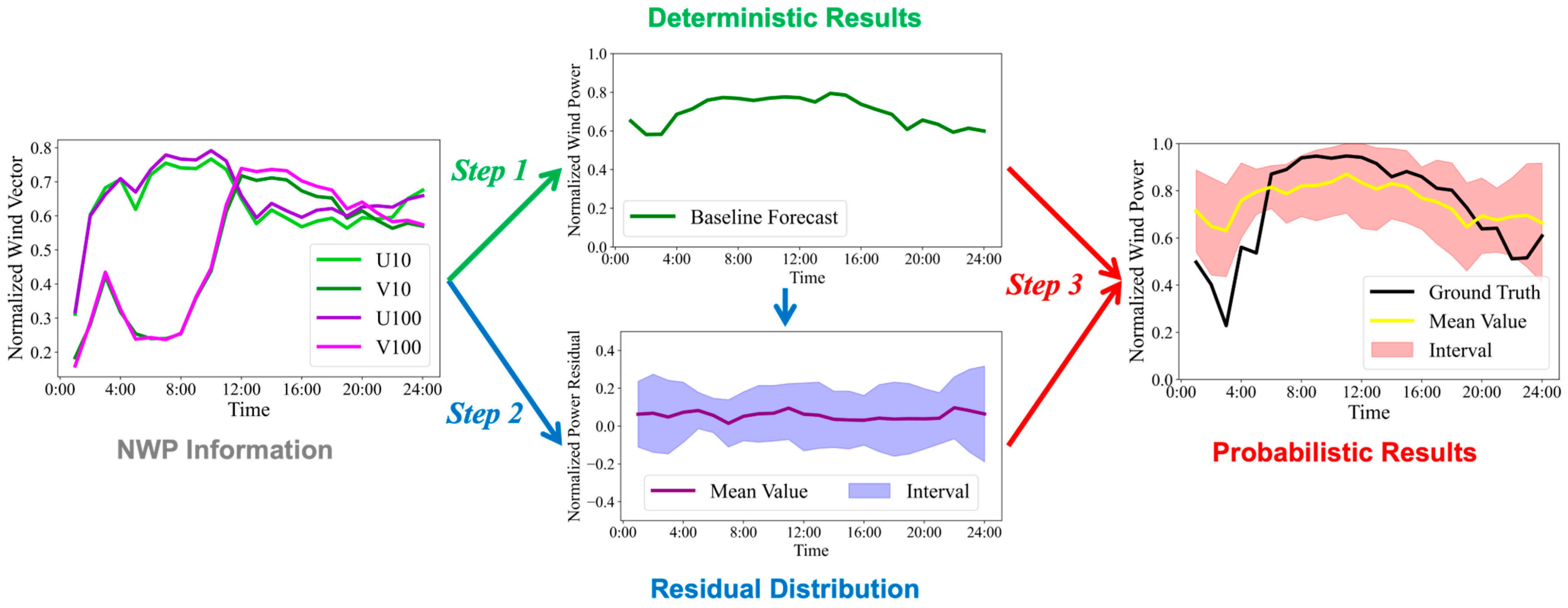
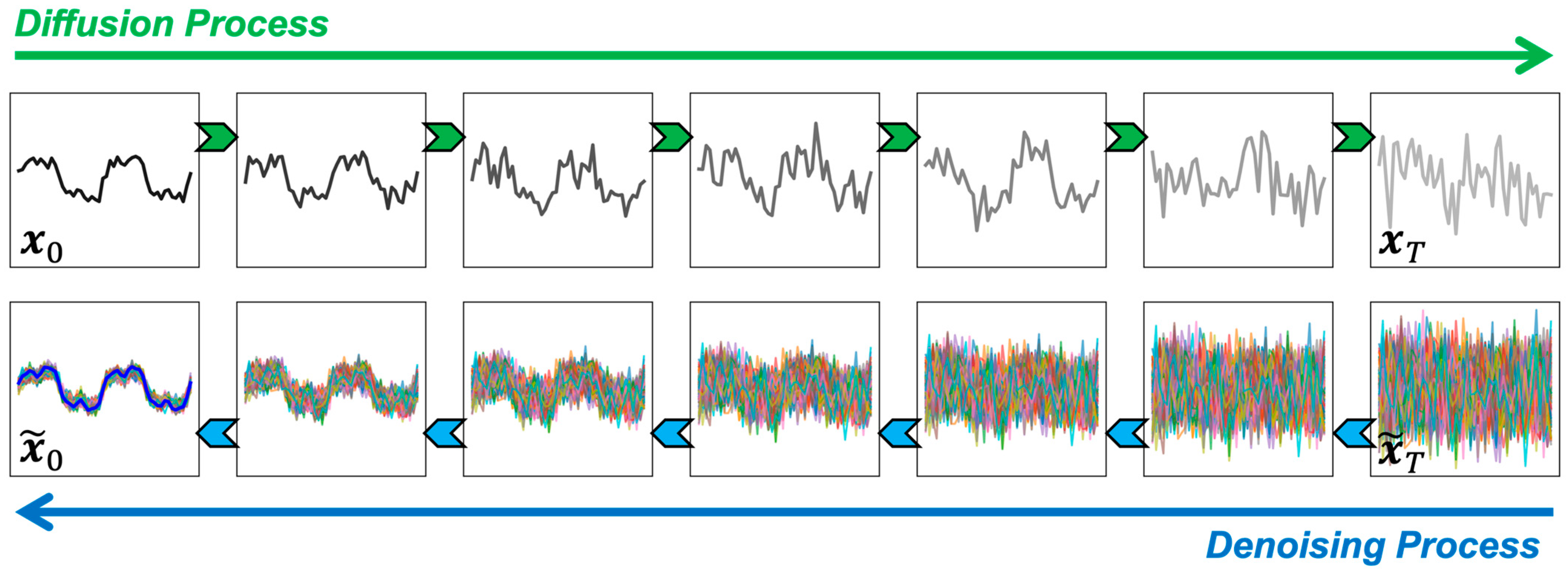
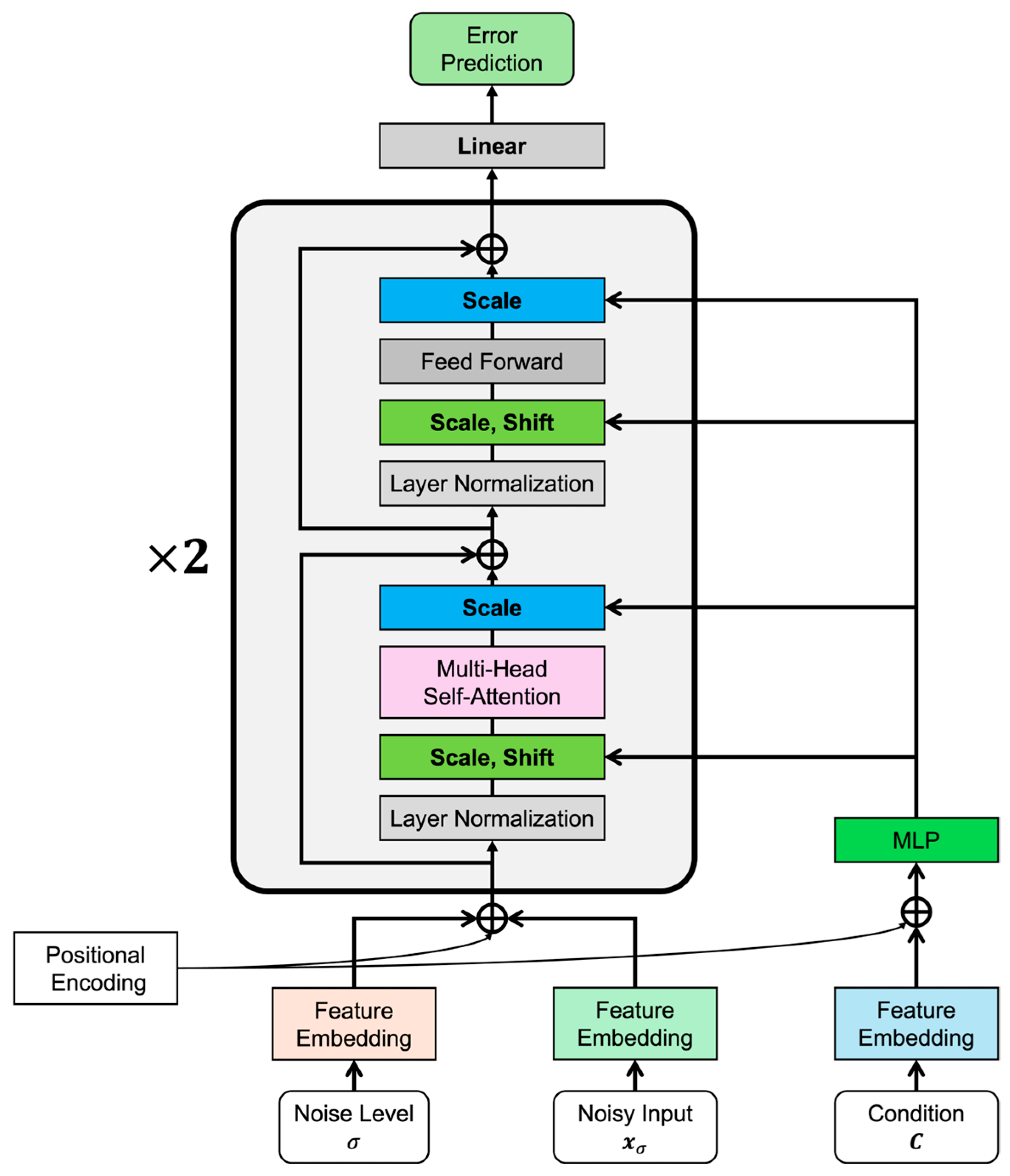
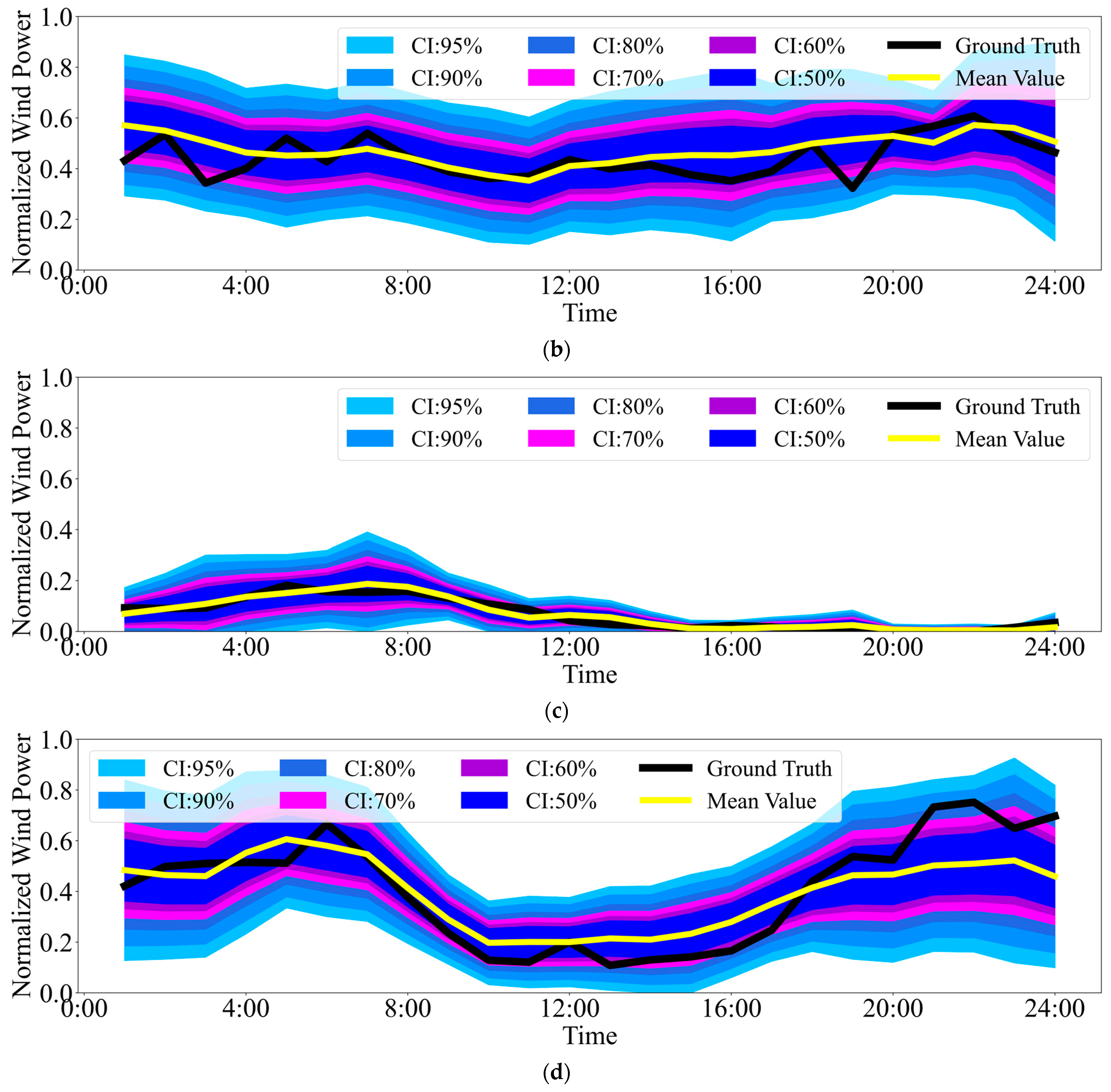
Accurate and uncertainty-aware wind power forecasting is essential for reliable and cost-effective power system operations. This paper presents a novel probabilistic forecasting framework based on diffusion probabilistic models. We adopted a two-stage modeling strategy—a deterministic predictor first generates baseline forecasts, and a conditional diffusion model then learns the distribution of residual errors. Such a two-stage decoupling strategy improves learning efficiency and sharpens uncertainty estimation. We employed the elucidated diffusion model (EDM) to enable flexible noise control and enhance calibration, stability, and expressiveness. For the generative backbone, we introduced a time-series-specific diffusion Transformer (TimeDiT) that incorporates modular conditioning to separately fuse numerical weather prediction (NWP) inputs, noise, and temporal features. The proposed method was evaluated using the public database from ten wind farms in the Global Energy Forecasting Competition 2014 (GEFCom2014). We further compared our approach with two popular baseline models, i.e., a distribution parameter regression model and a generative adversarial network (GAN)-based model. Results showed that our method consistently achieves superior performance in both deterministic metrics and probabilistic accuracy, offering better forecast calibration and sharper distributions.
Keywords: wind power forecasting; probabilistic forecasting; uncertainty-aware forecasting; diffusion model; residual modeling wind power forecasting; probabilistic forecasting; uncertainty-aware forecasting; diffusion model; residual modeling