Article

Estimation for Reduction Potential Evaluation of CO2 Emissions from Individual Private Passenger Cars Using Telematics


1
Department of Electrical Engineering and Information Systems, The University of Tokyo, Tokyo 113-8656, Japan
2
Department of Digital Business Design, Aioi Nissay Dowa Insurance Co., Ltd., Tokyo 150-8488, Japan
*
Author to whom correspondence should be addressed.
Energies 2025, 18(1), 64; https://doi.org/10.3390/en18010064
Submission received: 14 November 2024 / Revised: 11 December 2024 / Accepted: 25 December 2024 / Published: 27 December 2024
(This article belongs to the Section B3: Carbon Emission and Utilization)

Abstract

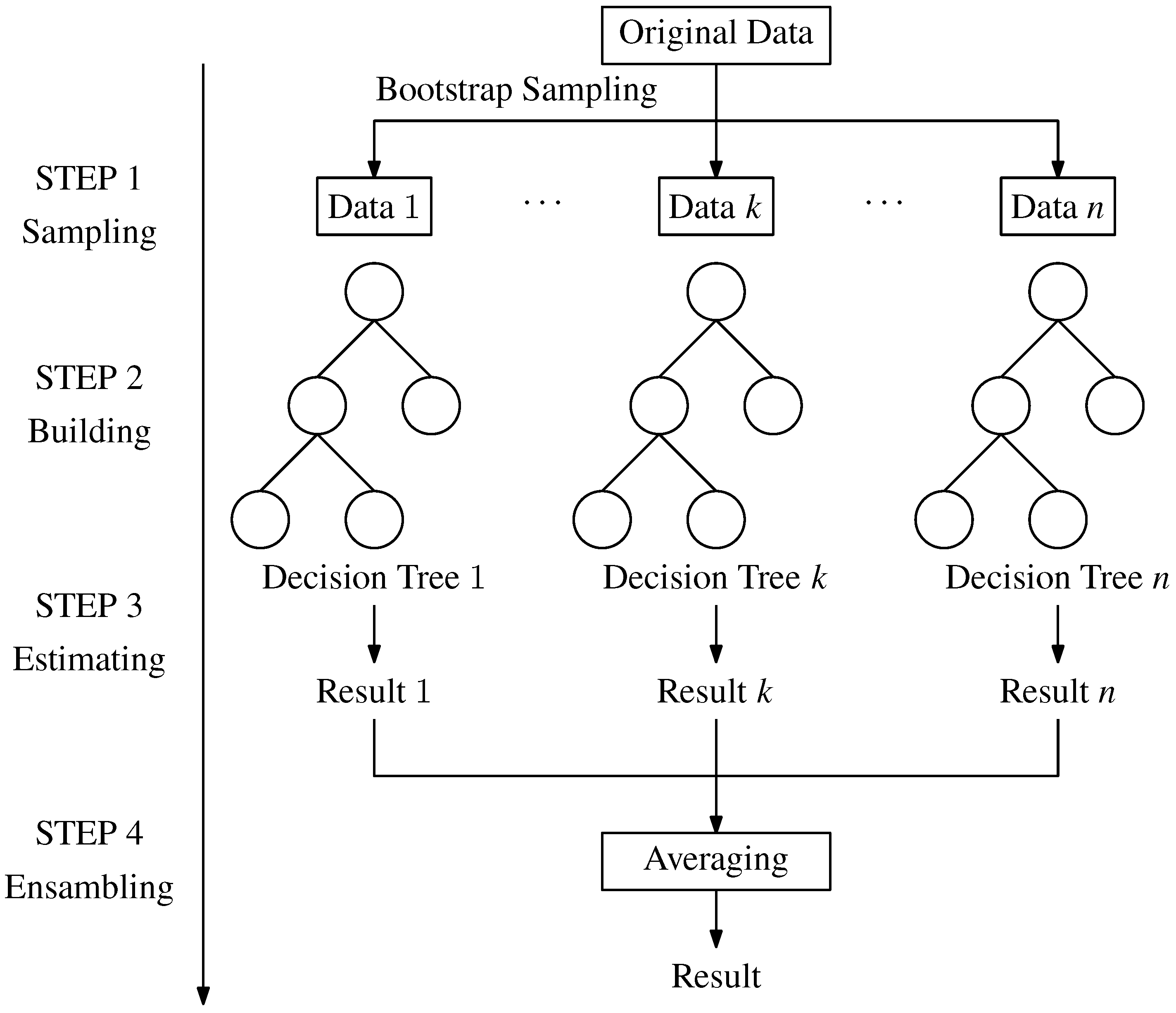
CO2 emissions from gas-powered cars have a large impact on global warming. The aim of this paper is to develop an accurate estimation method of CO2 emissions from individual private passenger cars by using actual driving data obtained by telematics. CO2 emissions from gas-powered cars vary depending on various factors such as car models and driving behavior. The developed approach uses actual monthly driving data from telematics and vehicle features based on drag force. Machine learning based on random forest regression enables better estimation performance of CO2 emissions compared to conventional multiple linear regression. CO2 emissions from individual private passenger cars in 24 car models are estimated by the machine learning model based on random forest regression using data from telematics, and the coefficient of determination for all 24 car models is R2=0.981. The estimation performance for interpolation and extrapolation of car models is also evaluated, and it keeps enough estimation accuracy with slight performance degradation. The case study with actual telematics data is conducted to analyze the relationship between driving behavior and monthly CO2 emissions in similar driving record conditions. The result shows the possibility of reducing CO2 emissions by eco-driving. The accurate estimation of the reduced amount of CO2 estimated by the machine learning model enables valuing it as carbon credits to motivate the eco-driving of individual drivers.
Keywords: CO2 emissions; car fuel consumption; estimation; machine learning; driving data CO2 emissions; car fuel consumption; estimation; machine learning; driving data