Article

Oil-Water Two-Phase Flow with Three Different Crude Oils: Flow Structure, Droplet Size and Viscosity

1
College of Pipeline and Civil Engineering, China University of Petroleum, Qingdao 266580, China
2
Shandong Provincial Key Laboratory of Oil & Gas Storage and Transportation Safety, China University of Petroleum, Qingdao 266580, China
3
CNPC East China Design Institute Co., Ltd., Qingdao 266071, China
*
Author to whom correspondence should be addressed.
Energies 2024, 17(7), 1573; https://doi.org/10.3390/en17071573
Submission received: 22 January 2024 / Revised: 7 March 2024 / Accepted: 21 March 2024 / Published: 26 March 2024
(This article belongs to the Section H1: Petroleum Engineering)

Abstract

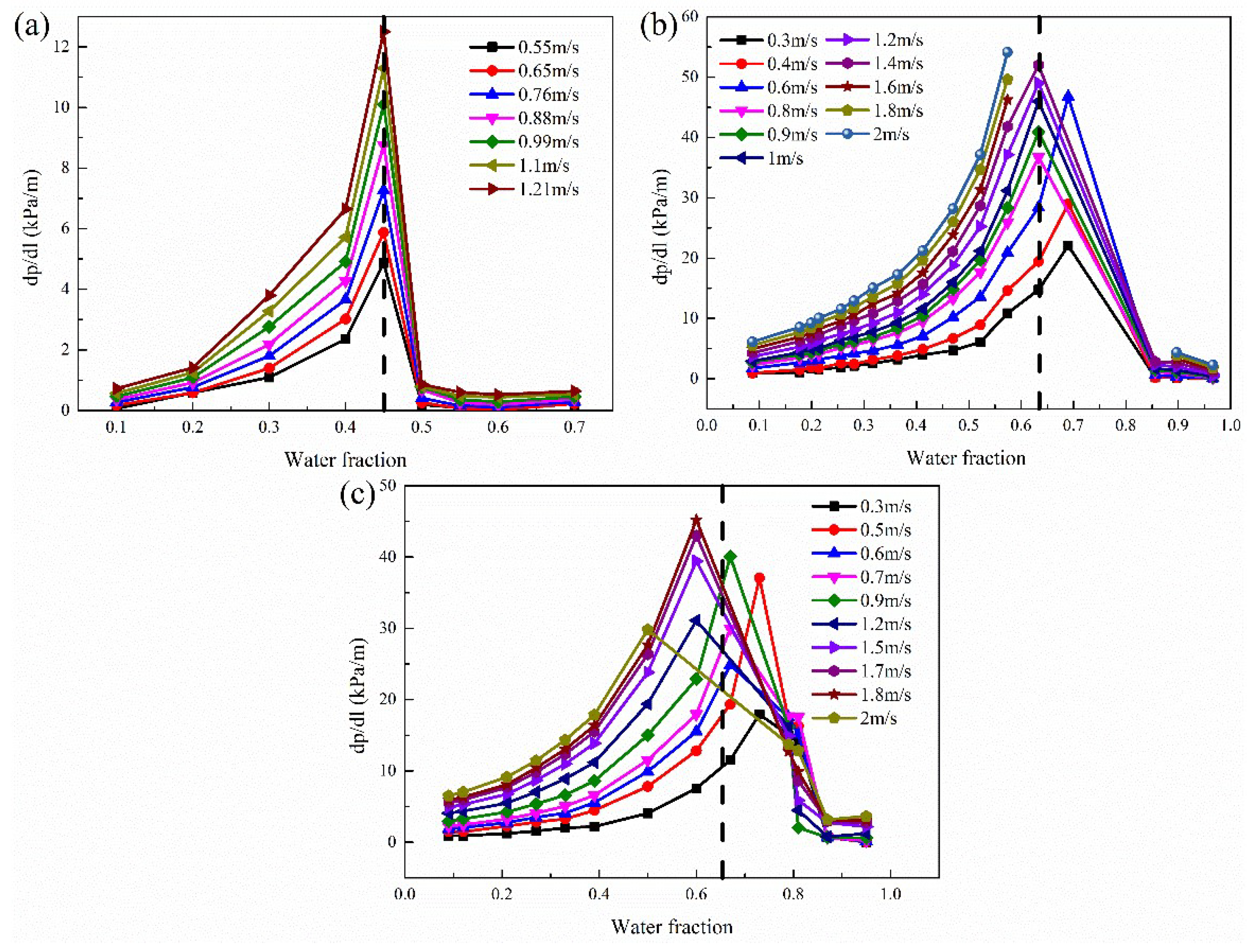
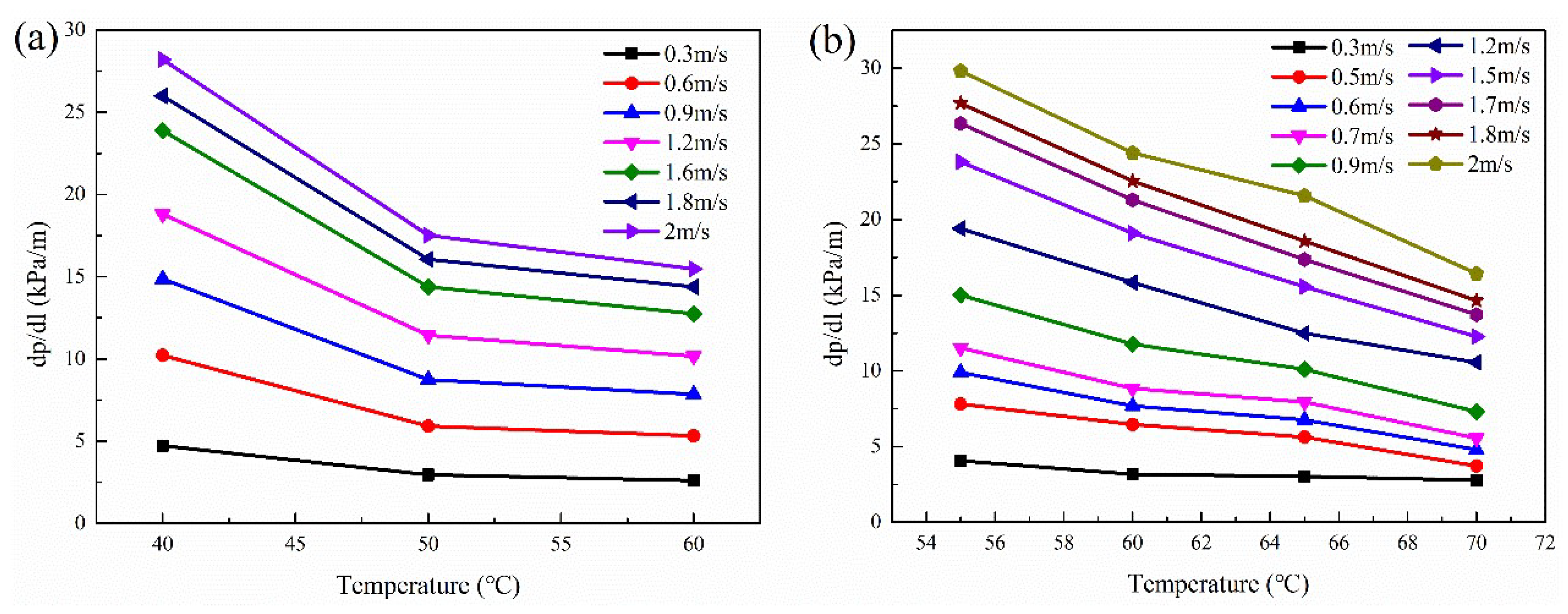
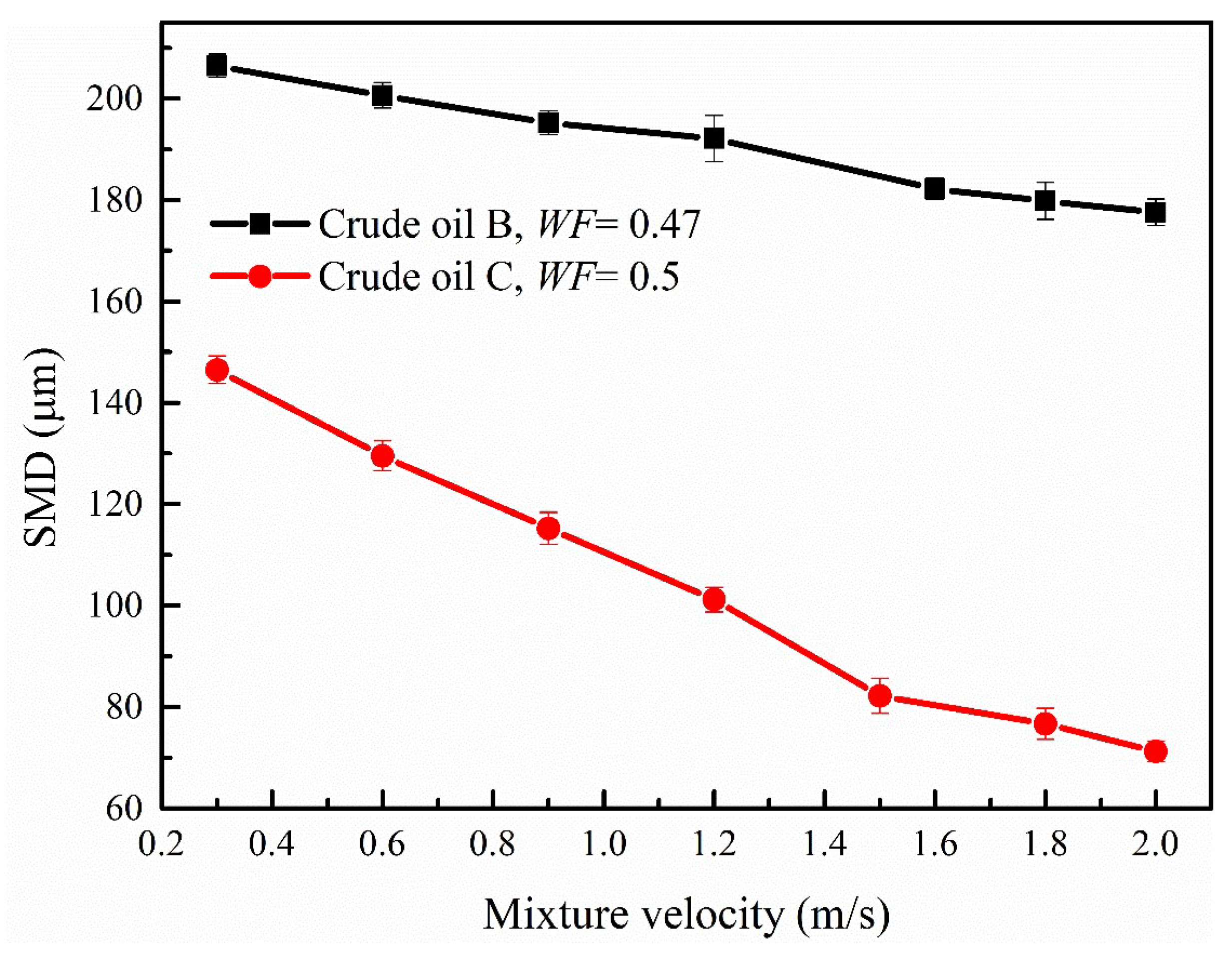
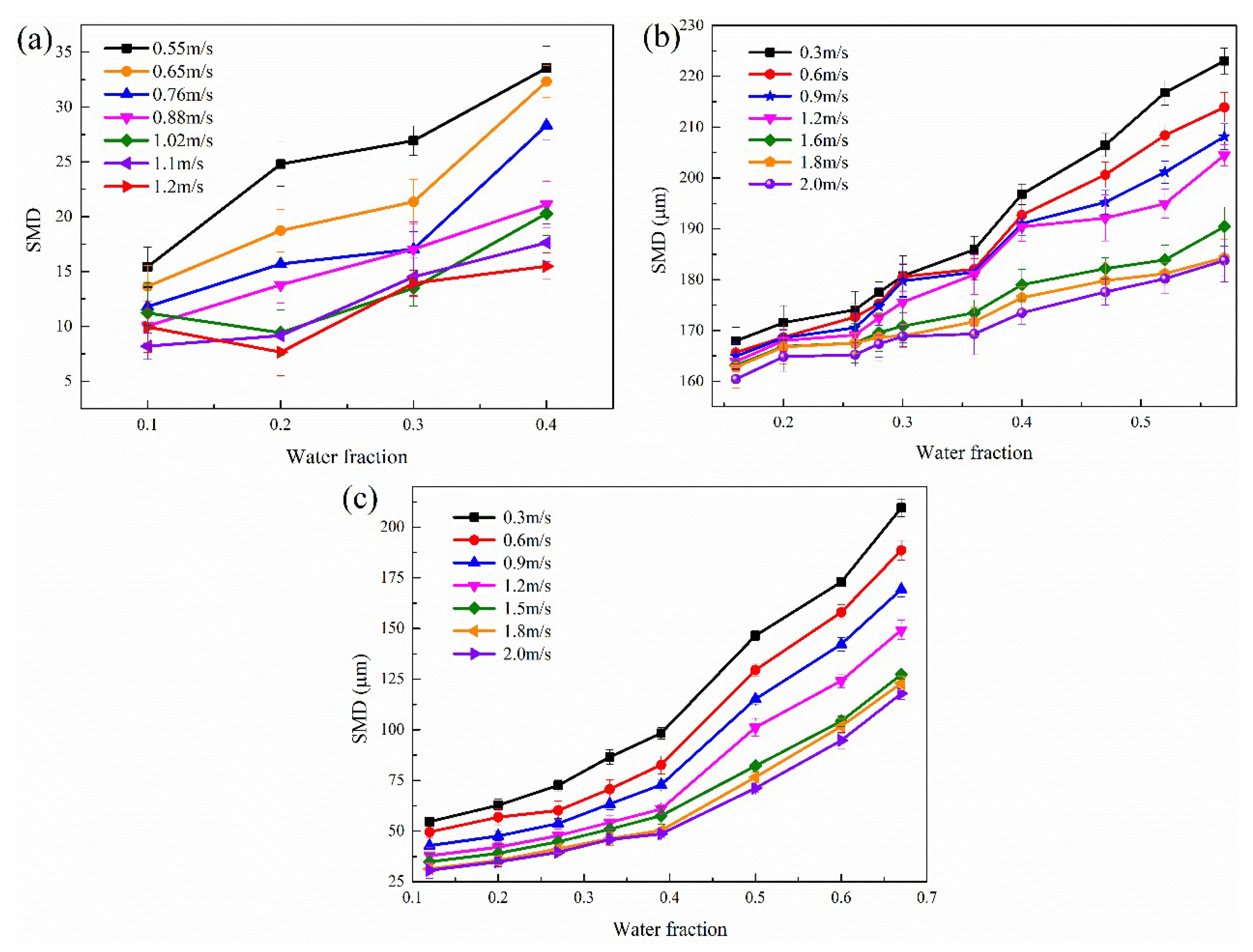
The study focuses on the flow patterns and pressure drop characteristics of three crude oils and water in a horizontal pipe. The experimental results showed that the transformation boundary of the flow pattern and phase inversion water fraction were related to the flow parameters. Comparing the three oils, it was found that the viscosity and composition of the oil also significantly influence the flow performance, which can be explained by the adsorption properties of the asphaltenes at the oil-water interface. In particular, the droplet size in water-in-oil dispersion flow was observed and measured. It showed that the water droplet size decreased with the increase of oil viscosity, the decrease of water content, the drop of temperature, and the growth of mixing velocity, probably due to higher shear stress and lower frequency of collision and coalescence between droplets. The apparent viscosity of water-in-oil emulsions was calculated by the rheological model, and the qualitative relation between flow parameters and interfacial area concentration on apparent viscosity was obtained. Taking the influence of interfacial area concentration into consideration, a simple and accurate viscosity model was established based on dimensional analysis, which is of great significance for process design in gathering and transportation systems.
Keywords: oil-water flow; pressure gradient; droplet size; interfacial area concentration; viscosity model oil-water flow; pressure gradient; droplet size; interfacial area concentration; viscosity model