Article

Load Calculation and Strength Analysis of the Deepwater Landing Drill Pipe-Lowering Operation

1
Institute of Exploration Techniques, Chinese Academy of Geological Sciences, Langfang 065000, China
2
Technology Innovation Center for Directional Drilling Engineering, Ministry of Natural Resources, Langfang 065000, China
3
Innovation Base for Automatic and Intelligent Drilling Equipment, Geological Society of China, Langfang 065000, China
4
Guangzhou Marine Geological Survey, China Geological Survey, Guangzhou 511458, China
5
National Engineering Research Center of Gas Hydrate Exploration and Development, Guangzhou 511458, China
6
College of Mechanical and Electronic Engineering, China University of Petroleum (East China), Qingdao 266580, China
7
School of Petroleum Engineering, China University of Petroleum (East China), Qingdao 266580, China
*
Author to whom correspondence should be addressed.
Energies 2024, 17(5), 1258; https://doi.org/10.3390/en17051258
Submission received: 19 January 2024 / Revised: 28 February 2024 / Accepted: 1 March 2024 / Published: 6 March 2024
(This article belongs to the Topic Advances in Oil and Gas Wellbore Integrity)

Abstract

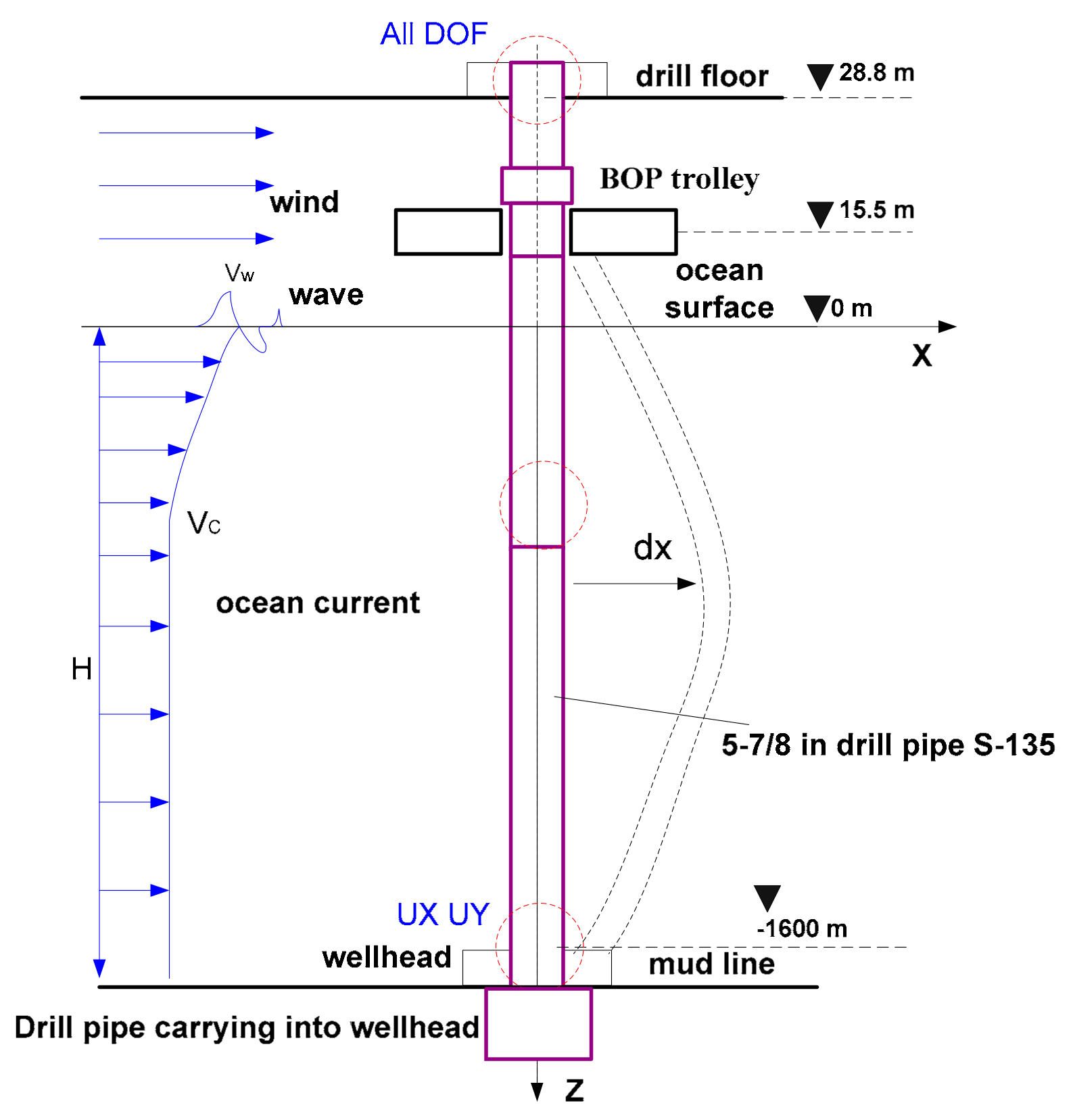
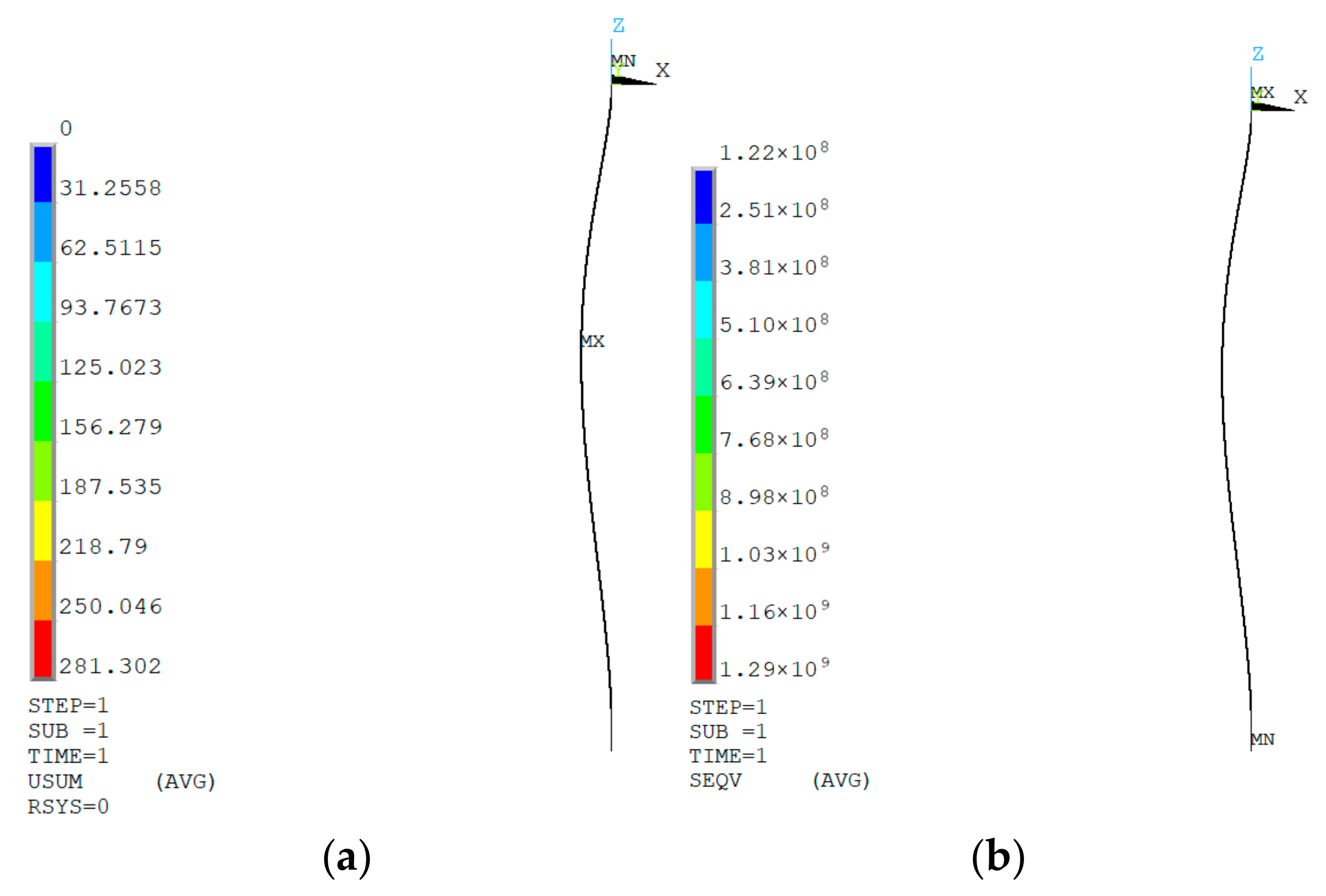
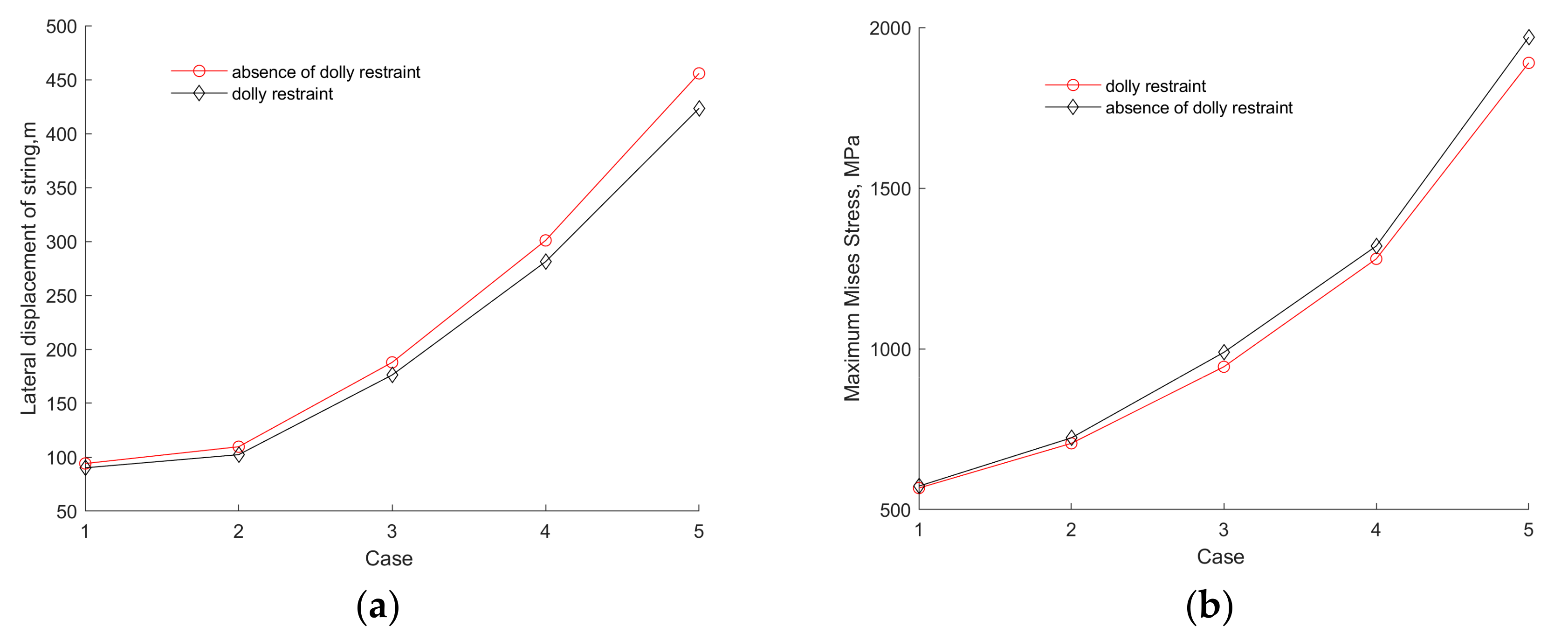
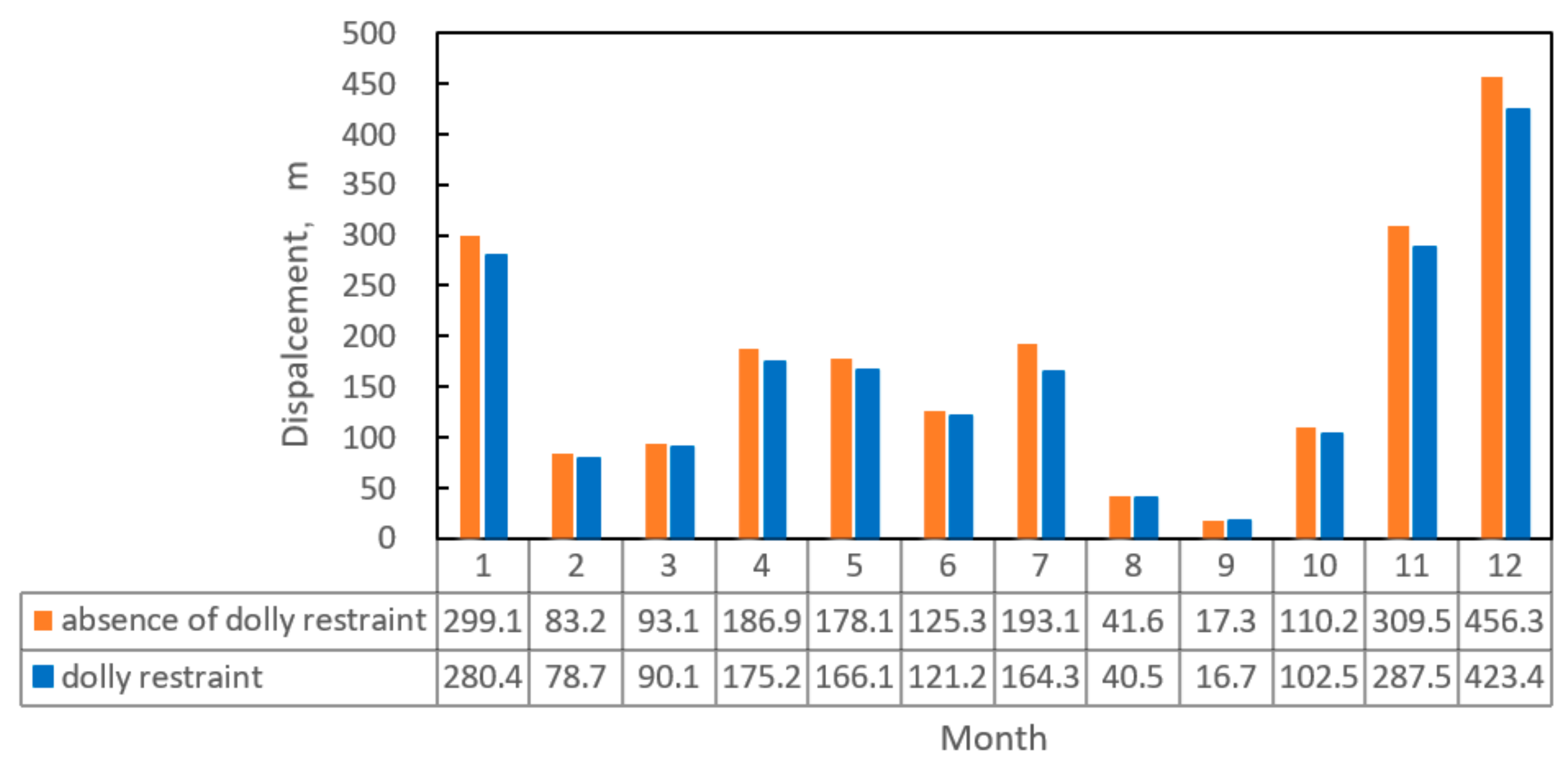
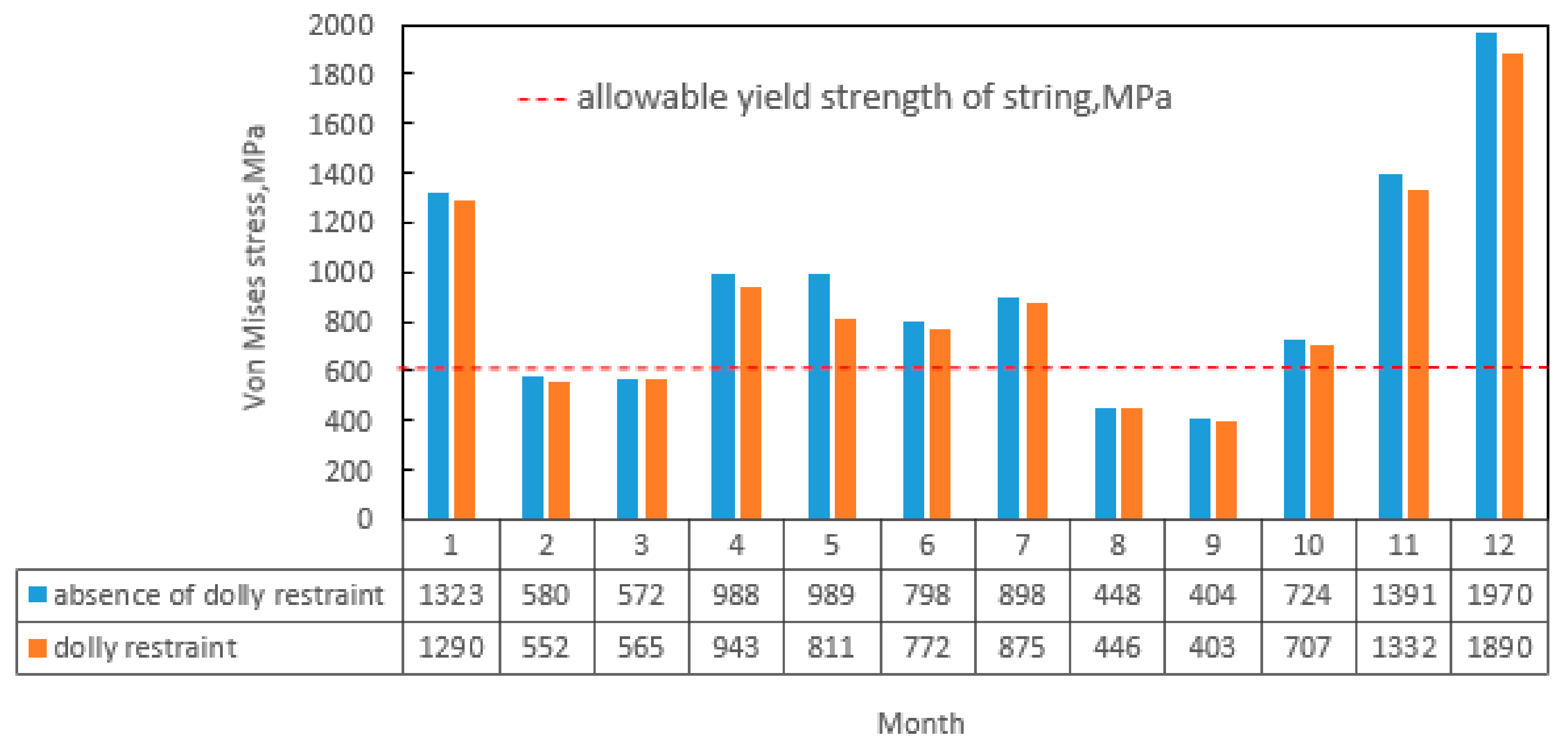
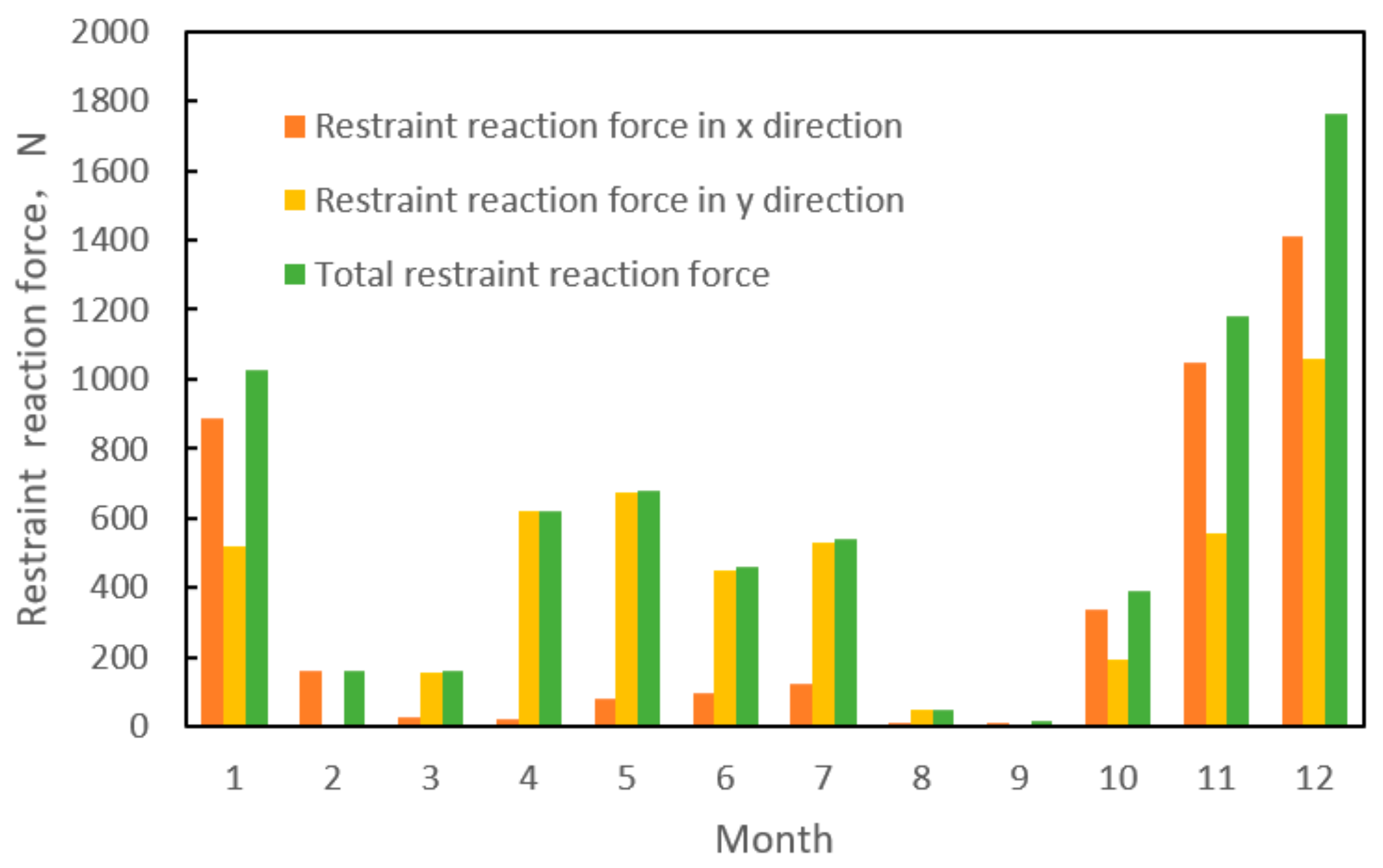
A landing string is directly exposed to seawater and subjected to significant stresses and complex deformations due to environmental loads such as wind, waves, and ocean currents during the phase in which the drill string carries the casing to the wellhead. Meanwhile, as the water depth increases, the weight of the drill string increases, leading to an increase in the tensile loads borne by the drill string, which can easily cause a risk of failure. Therefore, a quasi-static load calculation model for the deepwater insertion of the pipe column was established. Using the Ansys platform, simulations were conducted for average wind, wave, and ocean current conditions during different months throughout the year. The ultimate loads and stress distributions of the string were derived from theoretical analyses and numerical simulations for different operational sea states, and the suggested safe operating window and desired BOP trolley restraining reaction force for landing strings’ lowering are given according to the existing industry standards. The research findings can help in identifying the potential risks and failure modes of the deepwater landing string under different working conditions.
Keywords: deepwater; landing string; ocean current load; lateral displacement; Mises stress; ultimate tensile load deepwater; landing string; ocean current load; lateral displacement; Mises stress; ultimate tensile load