Article

Estimation and Control of WRRF Biogas Production

by
Tiina M. Komulainen
1,*,
Kjell Rune Jonassen
2 and
Simen Gjelseth Antonsen
1
1
Department of Mechanical, Electrical and Chemical Engineering, Oslo Metropolitan University, Pilestredet 35, 0130 Oslo, Norway
2
Veas AS, Bjerkåsholmen 125, 3470 Slemmestad, Norway
*
Author to whom correspondence should be addressed.
Energies 2024, 17(23), 5922; https://doi.org/10.3390/en17235922
Submission received: 10 July 2024 / Revised: 6 November 2024 / Accepted: 11 November 2024 / Published: 26 November 2024
(This article belongs to the Section A4: Bio-Energy)

Abstract

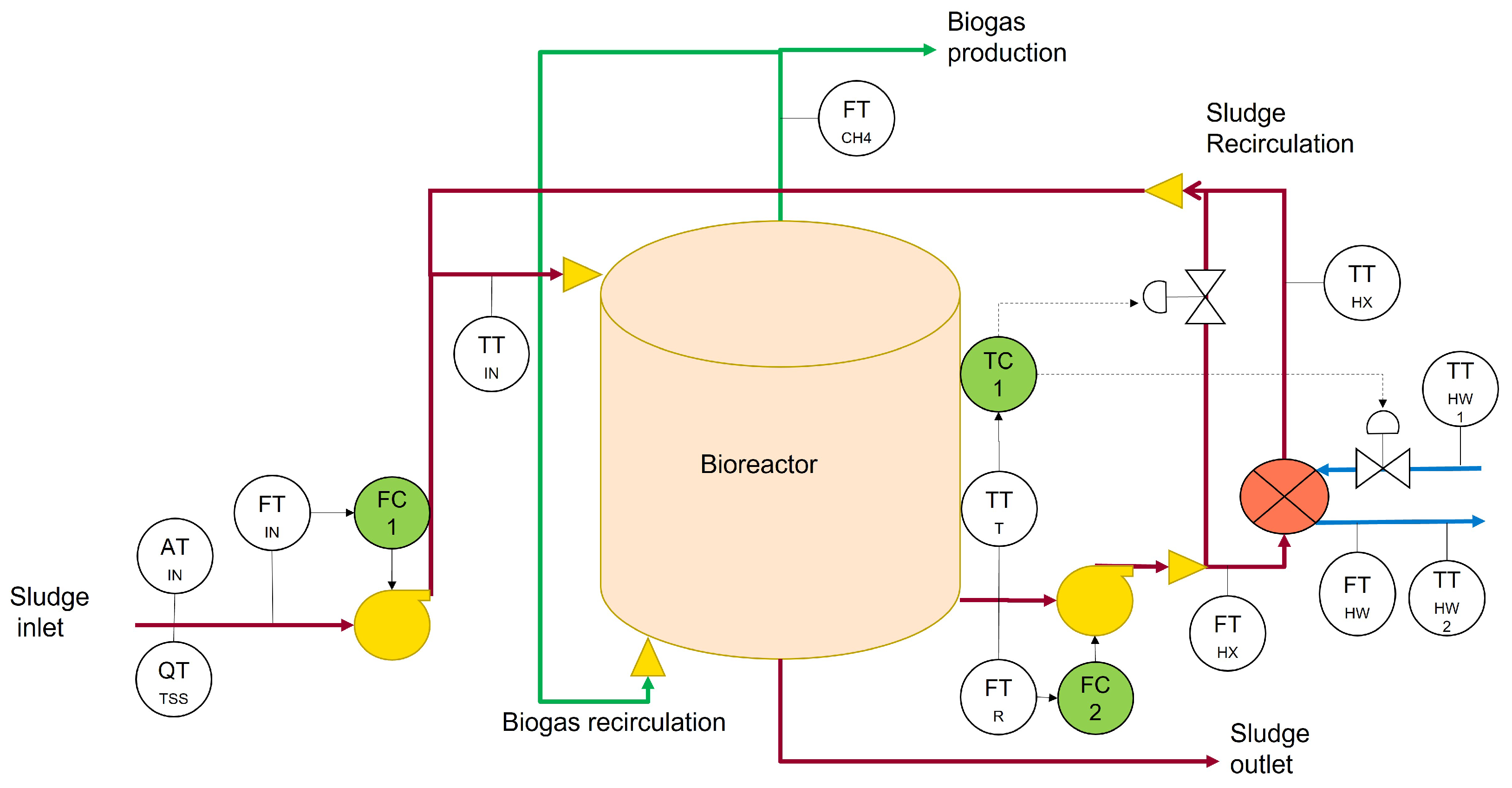
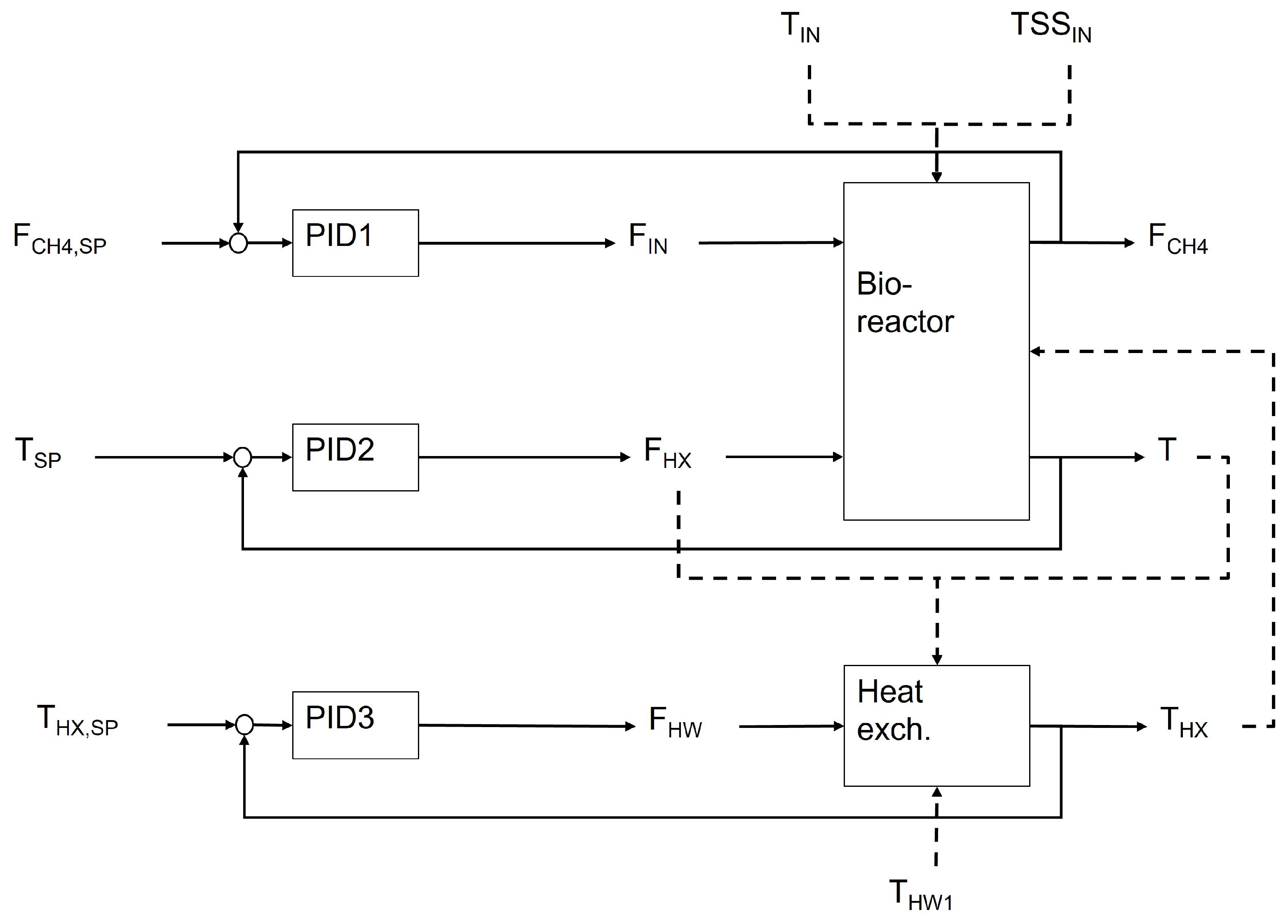
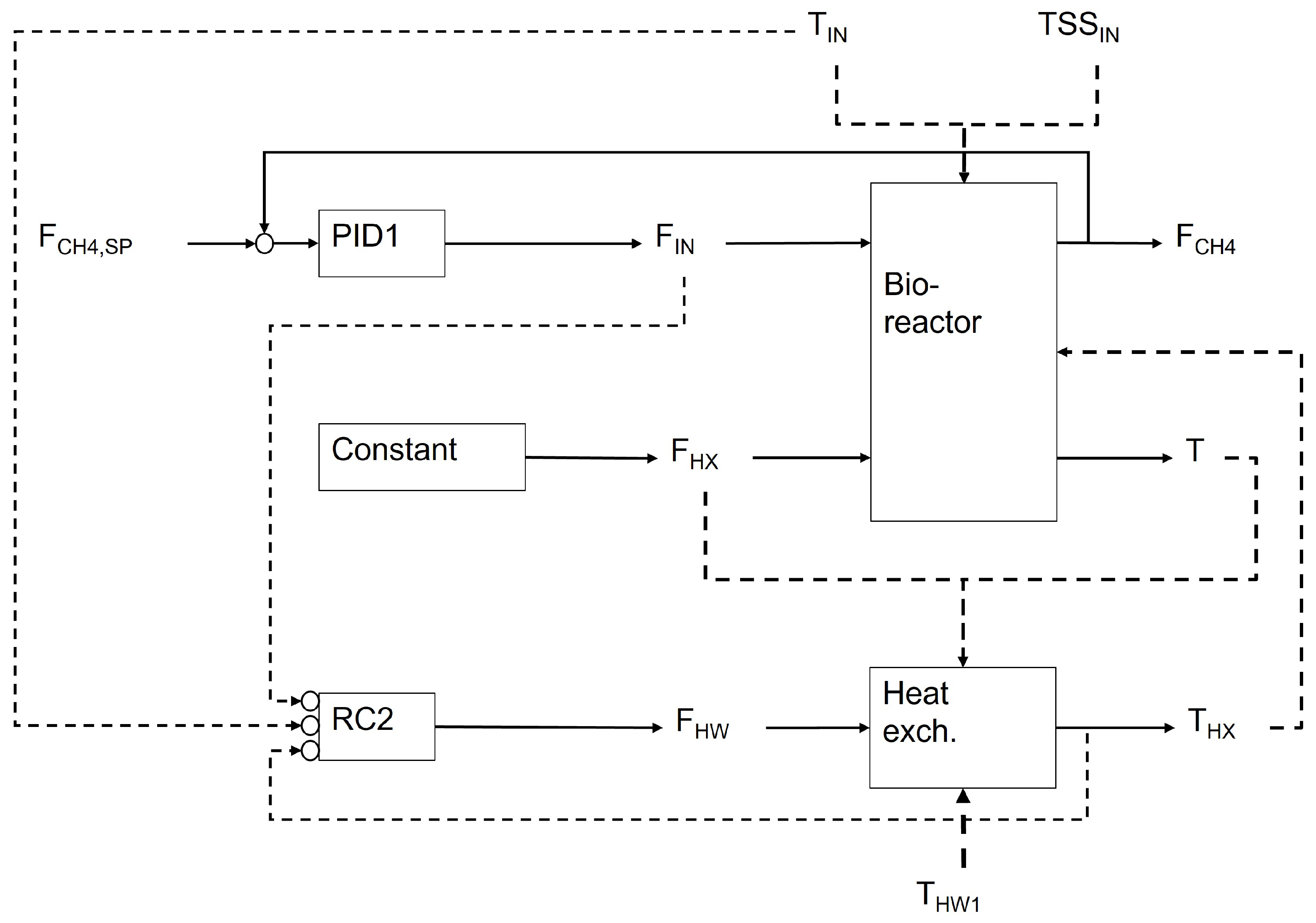
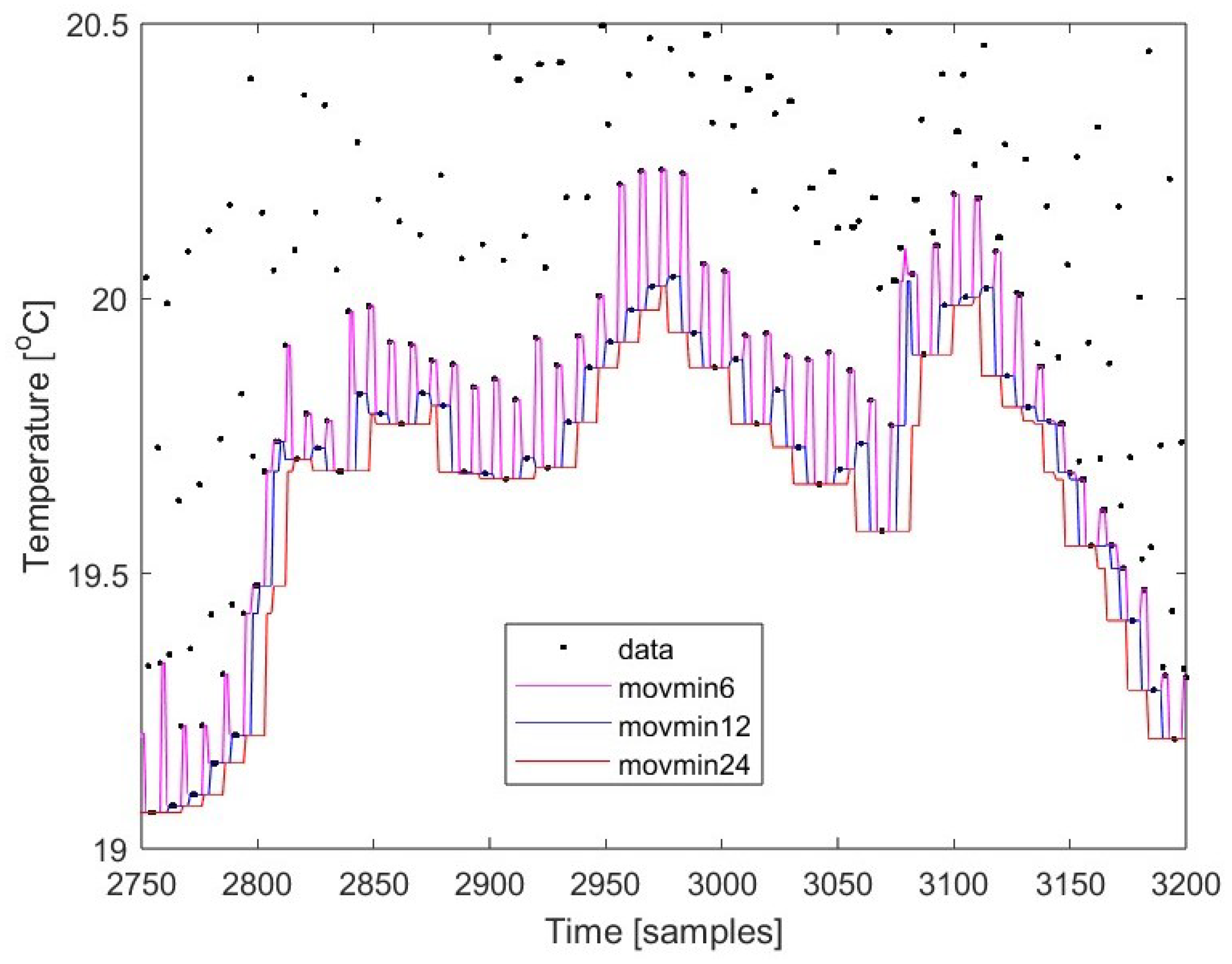
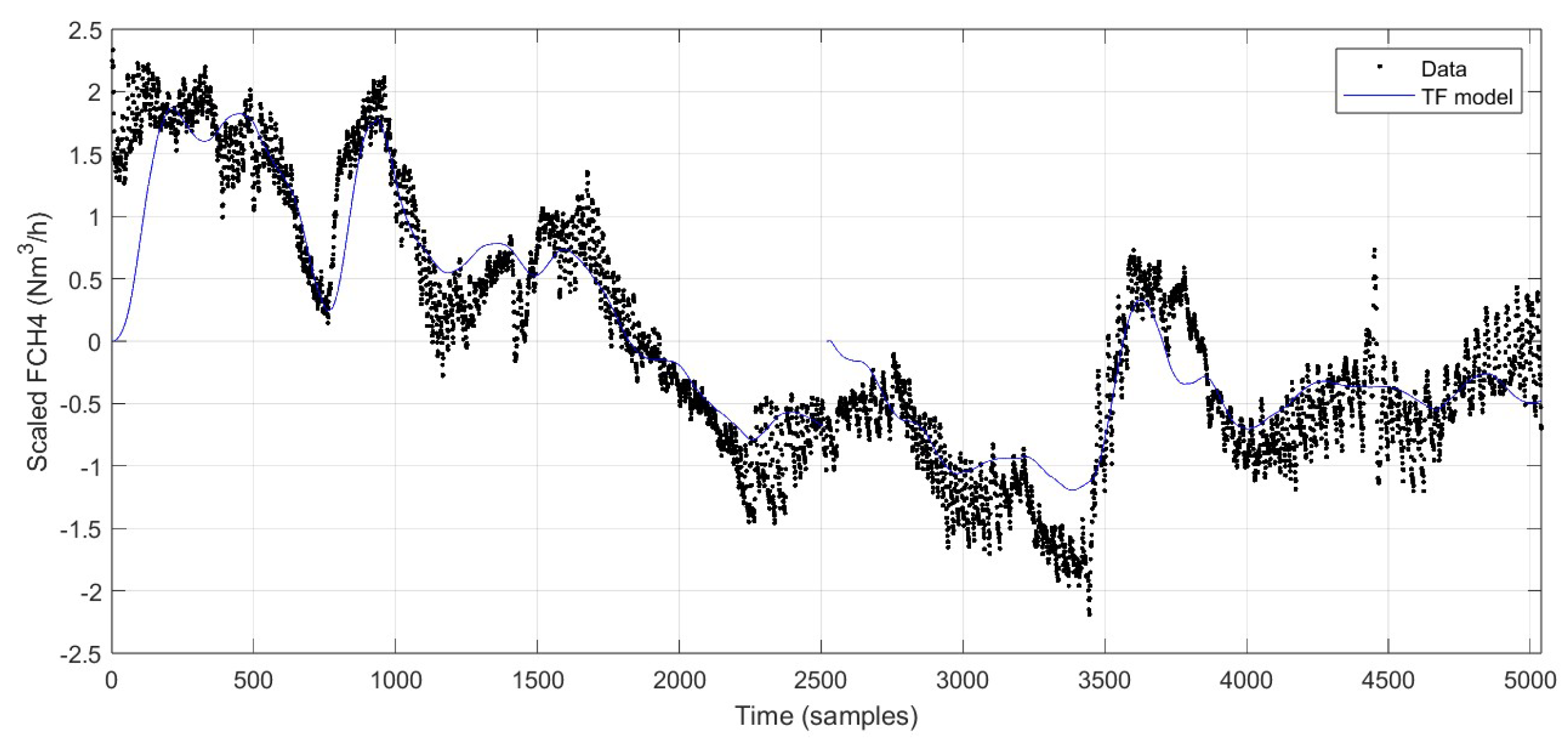
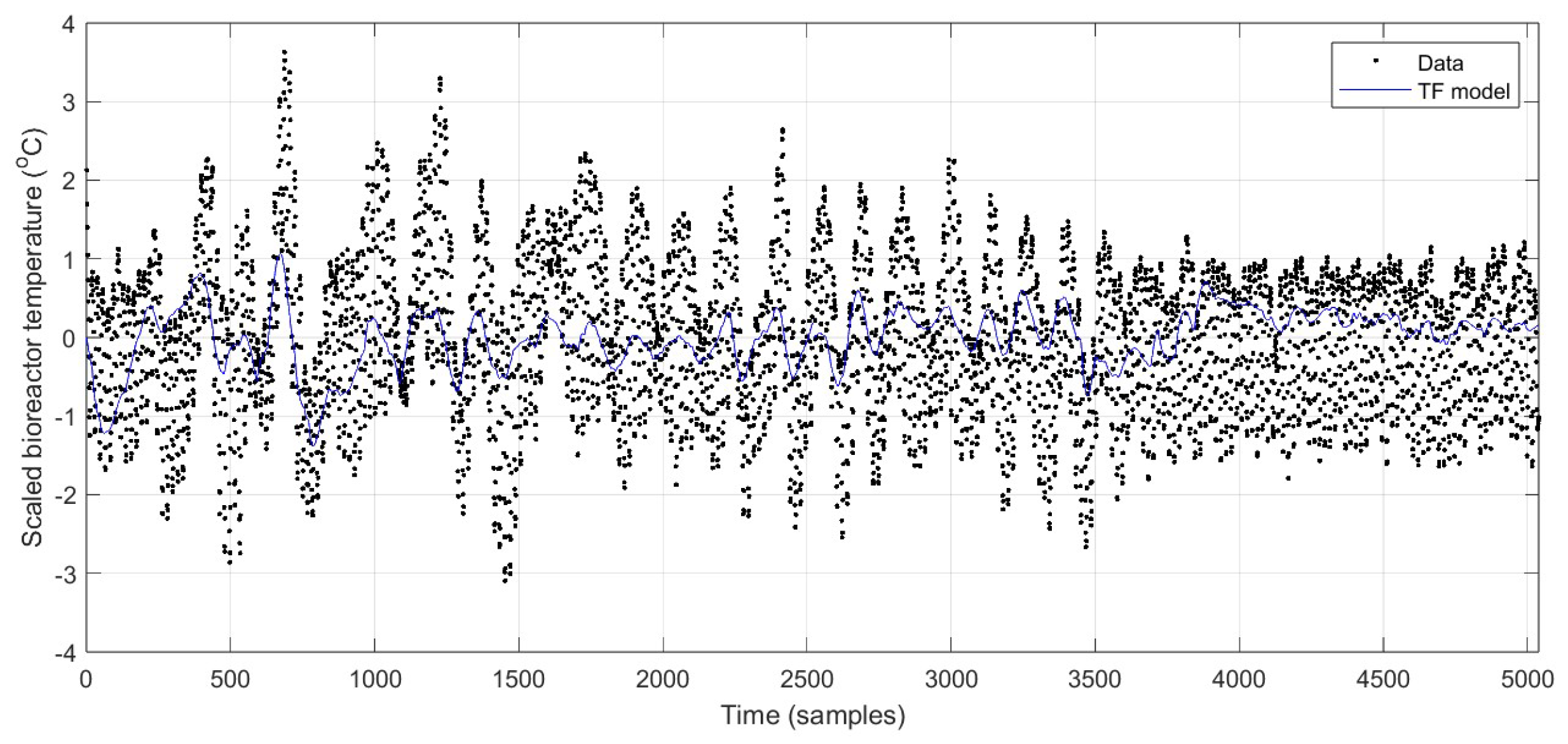
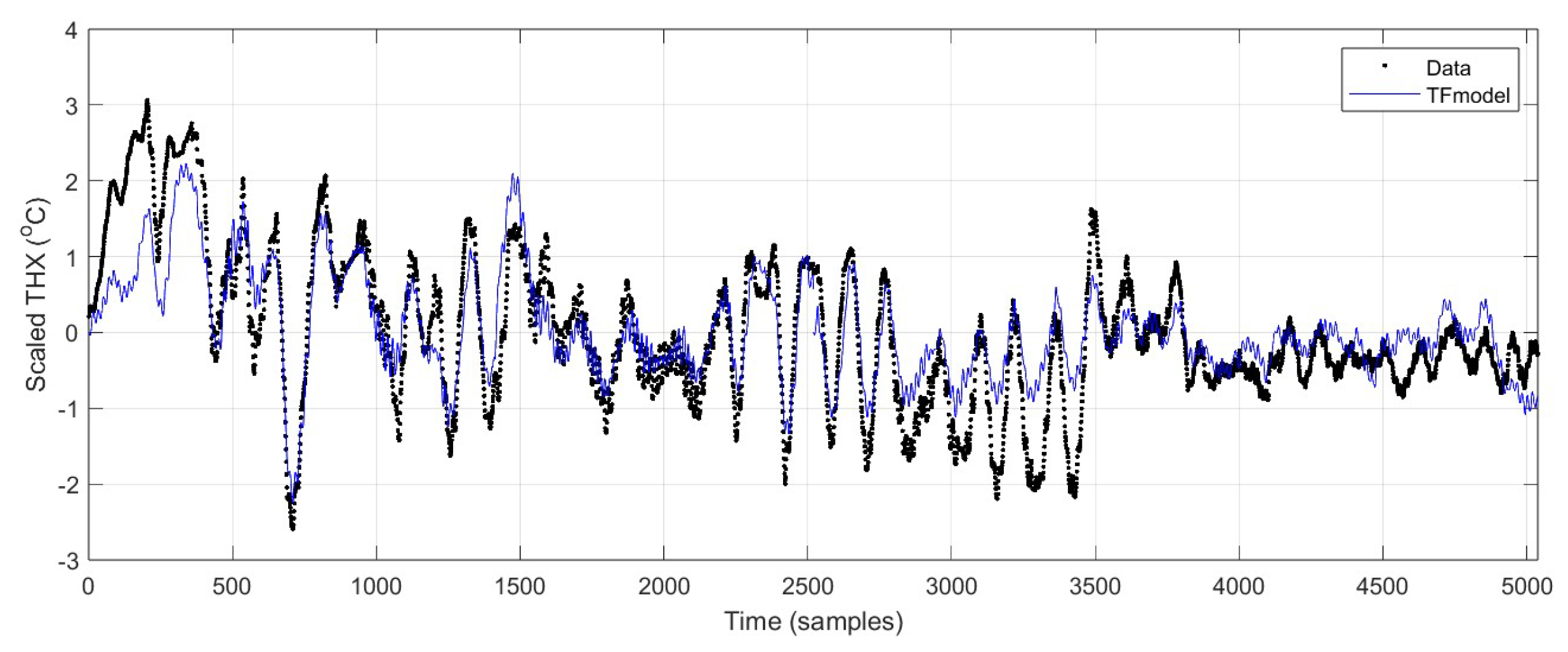
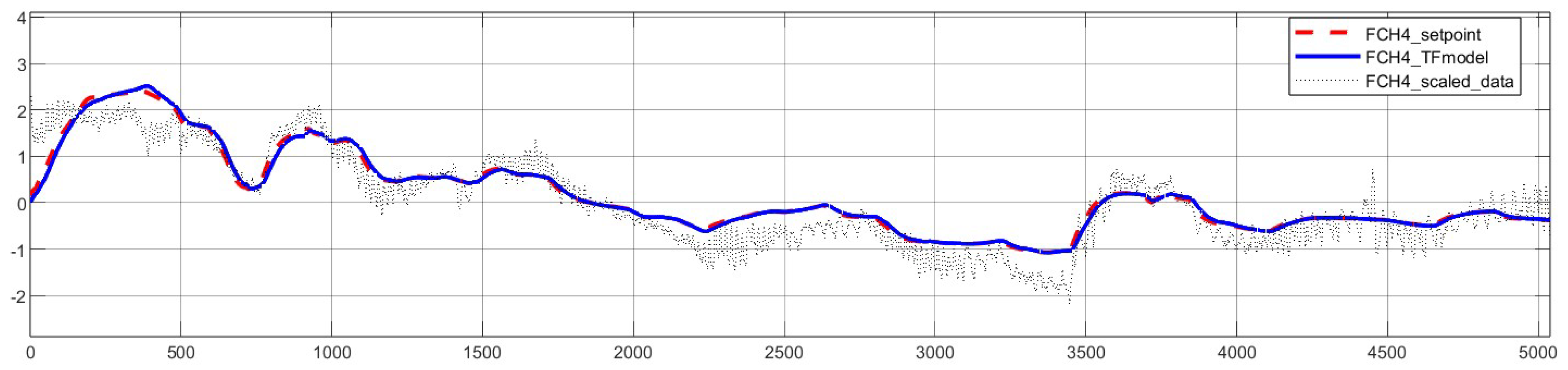
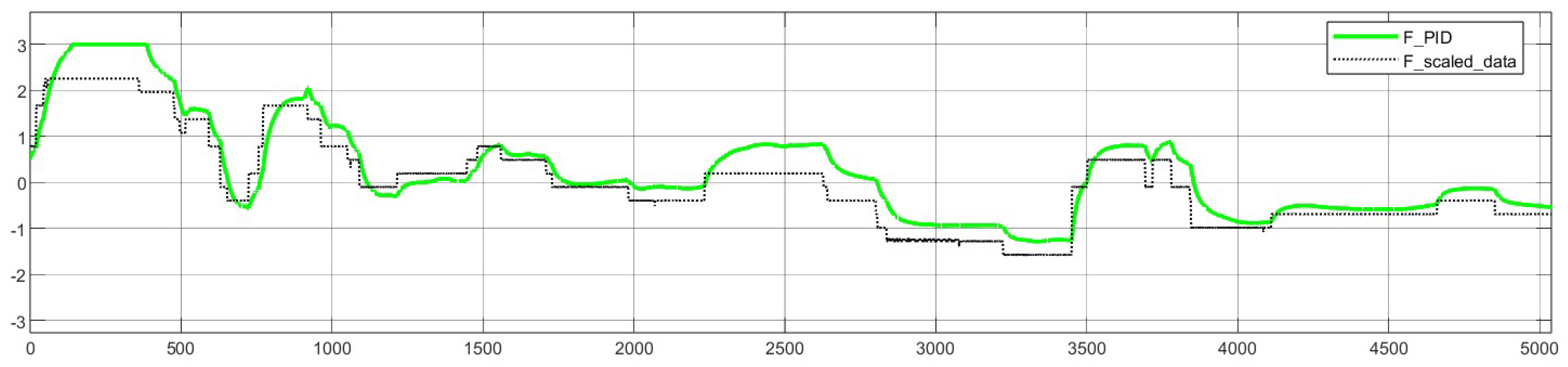
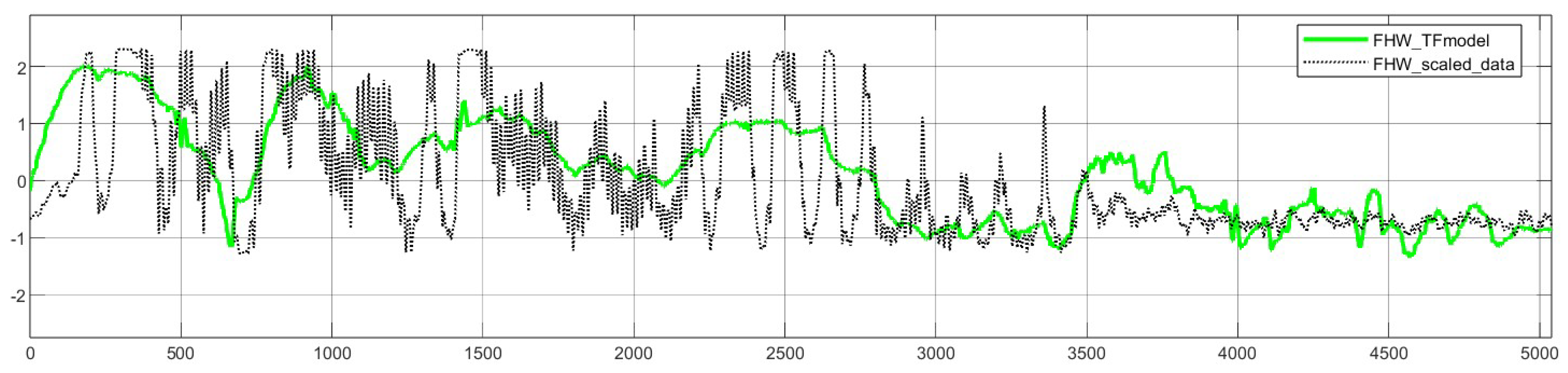
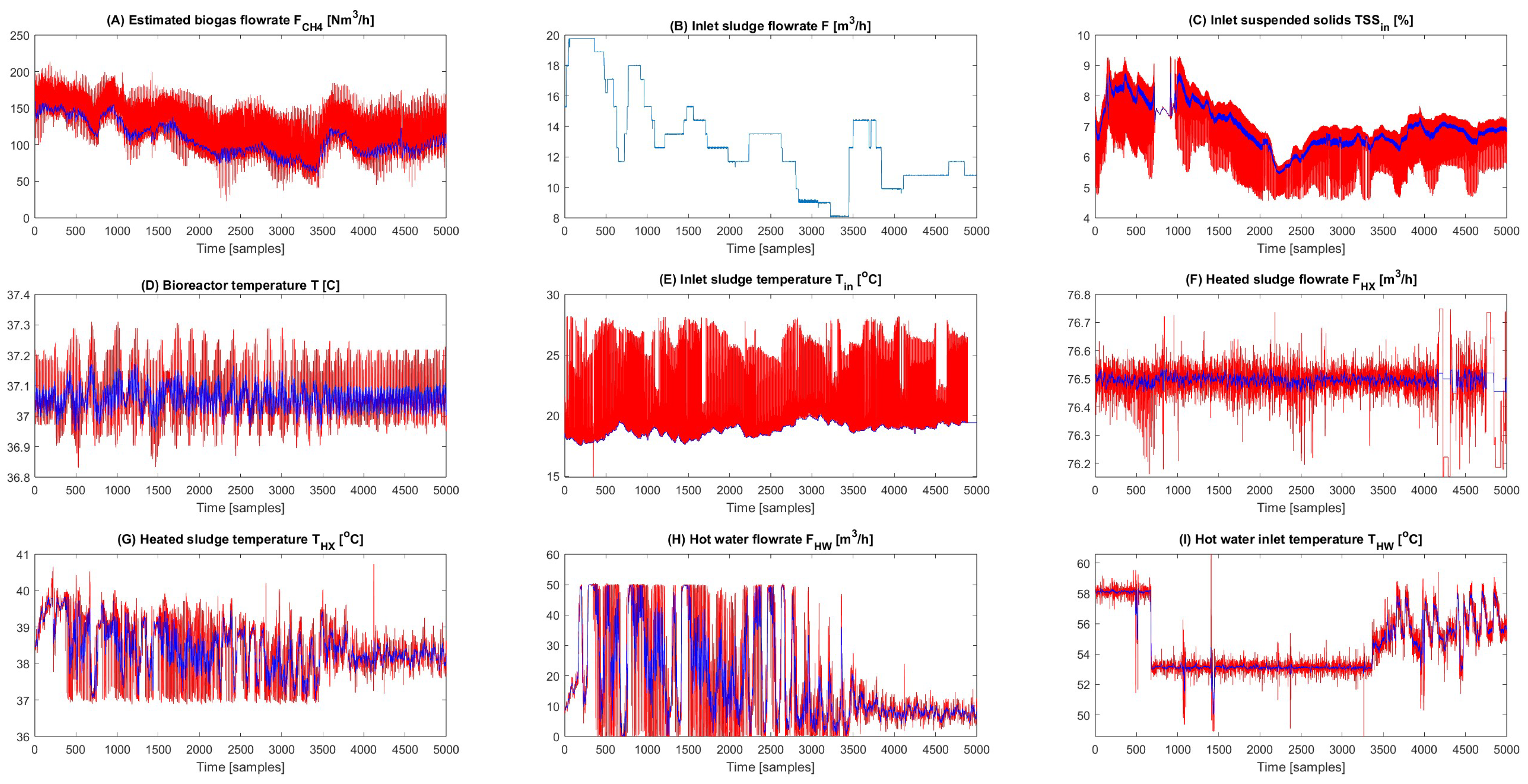
The development of resource-efficient digital technologies is a critical challenge in the wastewater sector. This industrial case study, conducted in collaboration with the Veas Water Resource Recovery Facility in Norway, focused on creating data pre-processing methods and resource-efficient control strategies. Using data from the Veas biogas plant, dynamic models were developed to compare control outcomes. The primary objective was to maximize biogas production and hot water usage while maintaining optimal temperature and hydraulic retention time by adjusting inlet sludge and hot water flow rates. Sequential operations were approximated as continuous operations using a 30-min moving minimum/maximum for bimodal data and a 2-h moving average for noisy data. The data-driven dynamic models achieved an accuracy of up to R2 of 0.85. The control strategy, which included one feedback controller, one ratio controller, and flow rate restrictions, was compared to real production data (baseline) and tested across six scenarios. The best improvement over the baseline scenario resulted in a 3% increase in total biogas production, a 6% increase in total organic loading, a 13% increase in hot water use, and a one-day reduction in hydraulic retention time. Future work should focus on control studies using extended datasets and nonlinear models.
Keywords: biogas; Water Resource Recovery Facility; estimation; dynamic modeling; control strategy development biogas; Water Resource Recovery Facility; estimation; dynamic modeling; control strategy development