Article

Estimation of the Optimum Tilt Angle of Solar PV Panels to Maximize Incident Solar Radiation in Libya †

by
Alhassan Ali Teyabeen
* and
Faisal Mohamed
Libyan Authority of Scientific Research, Tipoli P.O. Box 80045, Libya
*
Author to whom correspondence should be addressed.
This paper is an extended version of our paper published in Proceedings of 2022 13th International Renewable Energy Congress (IREC), Hammamet, Tunisia, 13–15 December 2022; pp. 1–7.
Energies 2024, 17(23), 5891; https://doi.org/10.3390/en17235891
Submission received: 19 December 2023 / Revised: 9 February 2024 / Accepted: 1 March 2024 / Published: 23 November 2024
(This article belongs to the Special Issue Energy Performance of Photovoltaic Systems)

Abstract

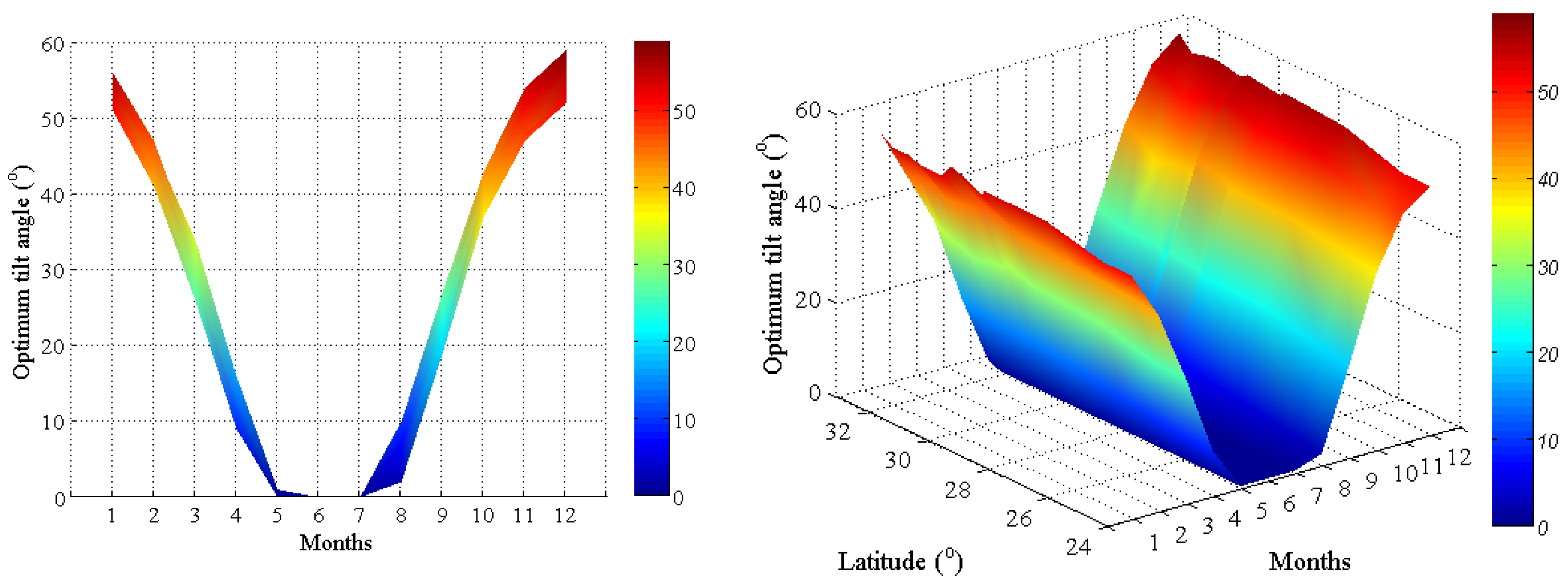
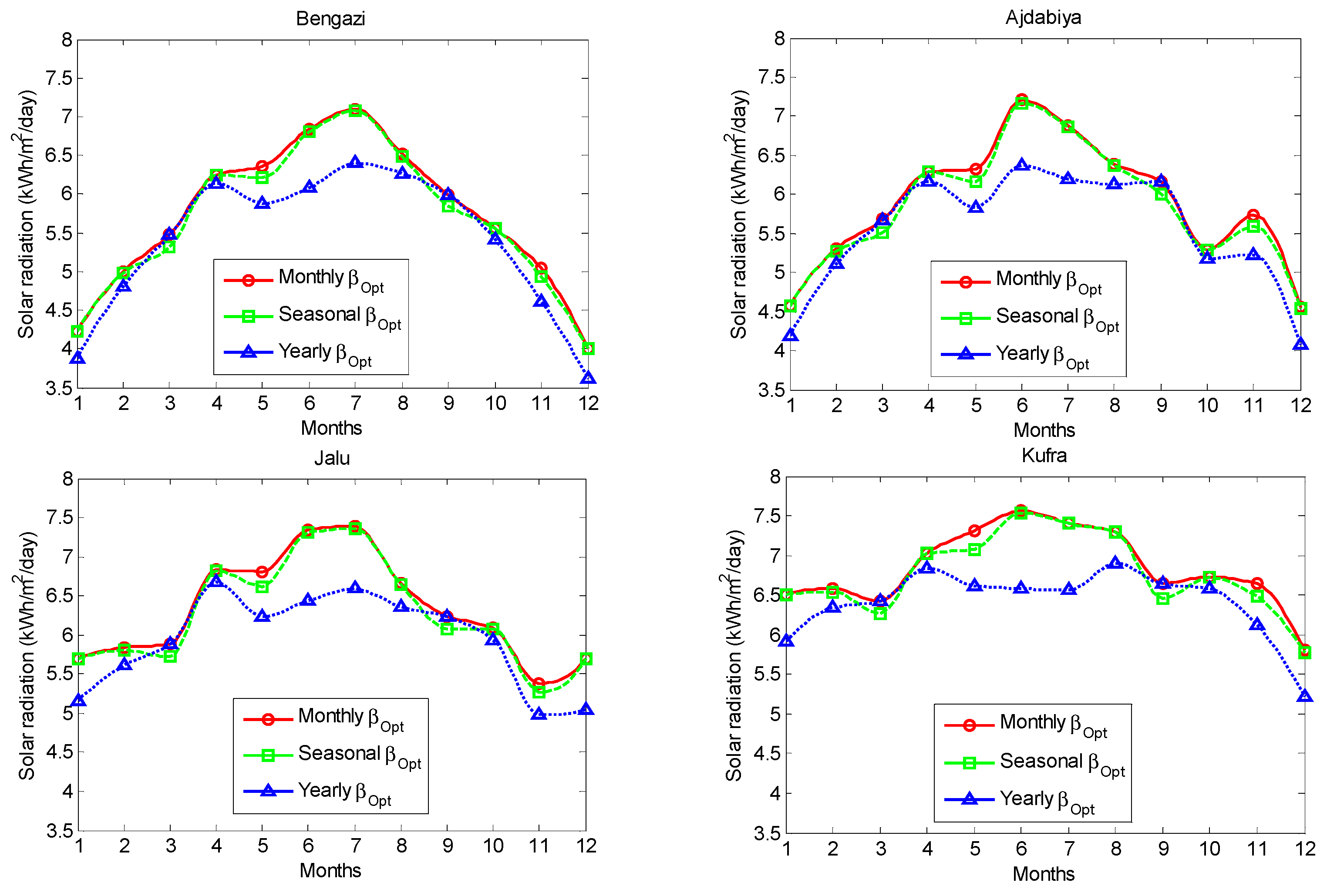
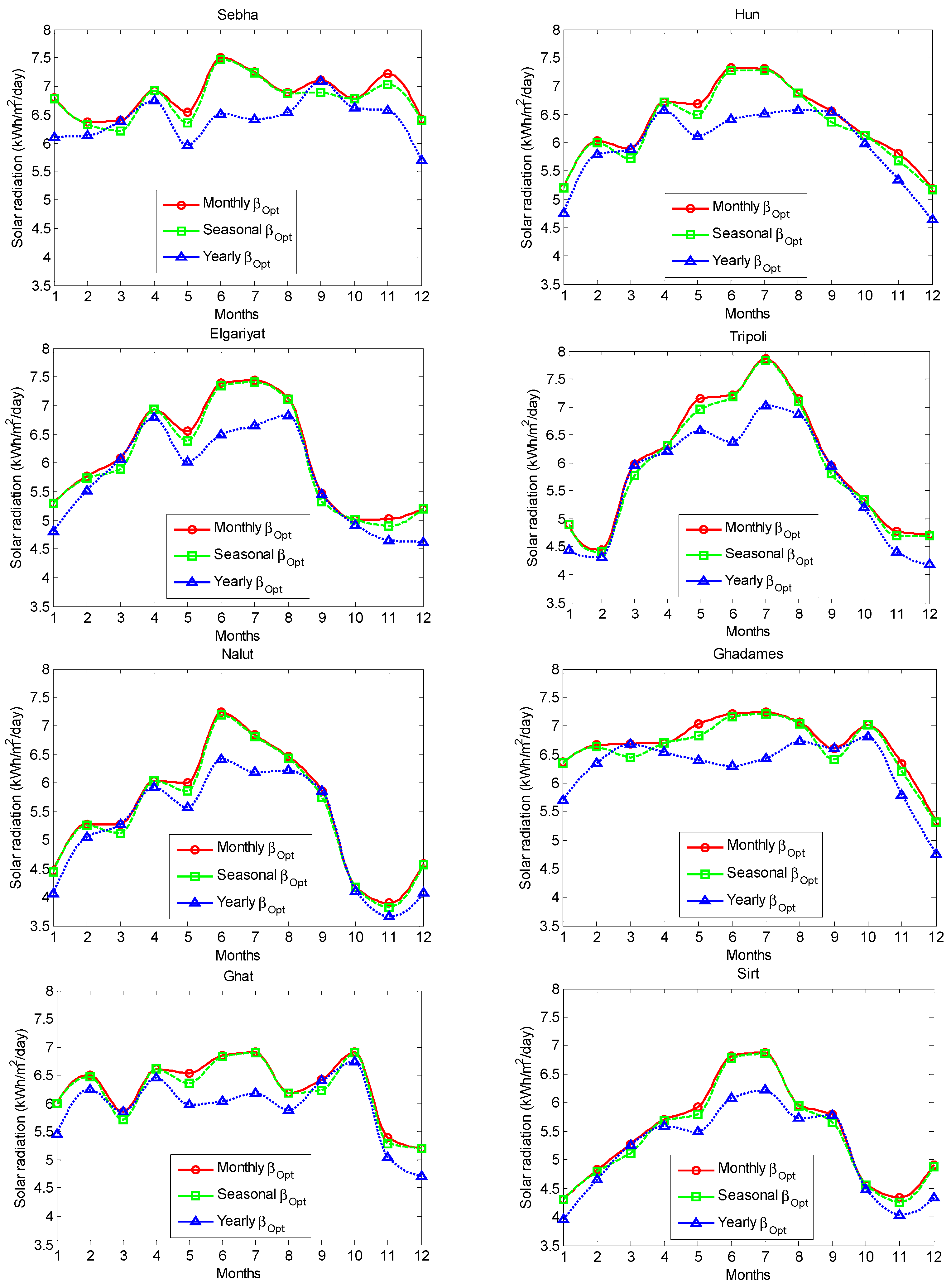
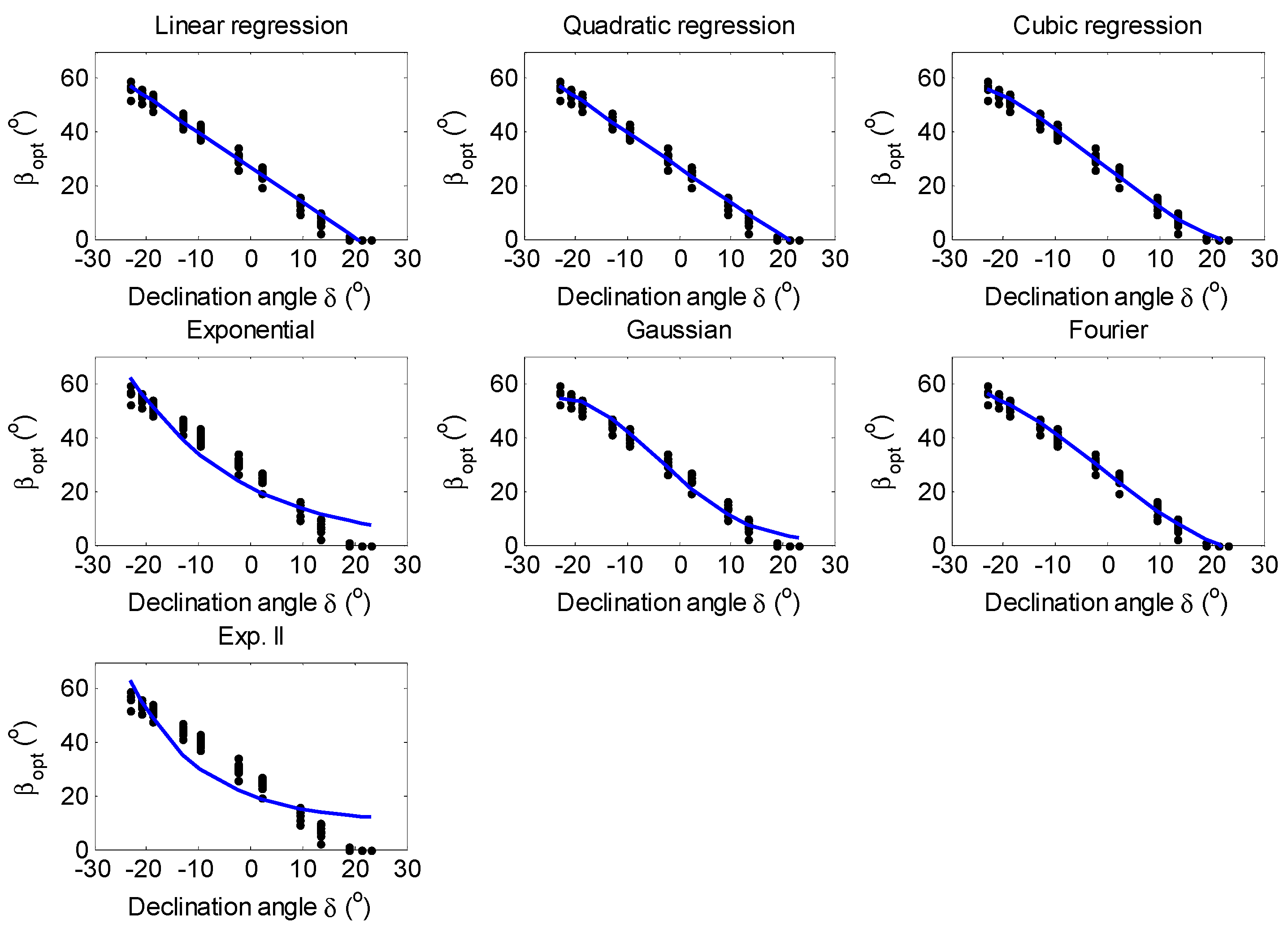
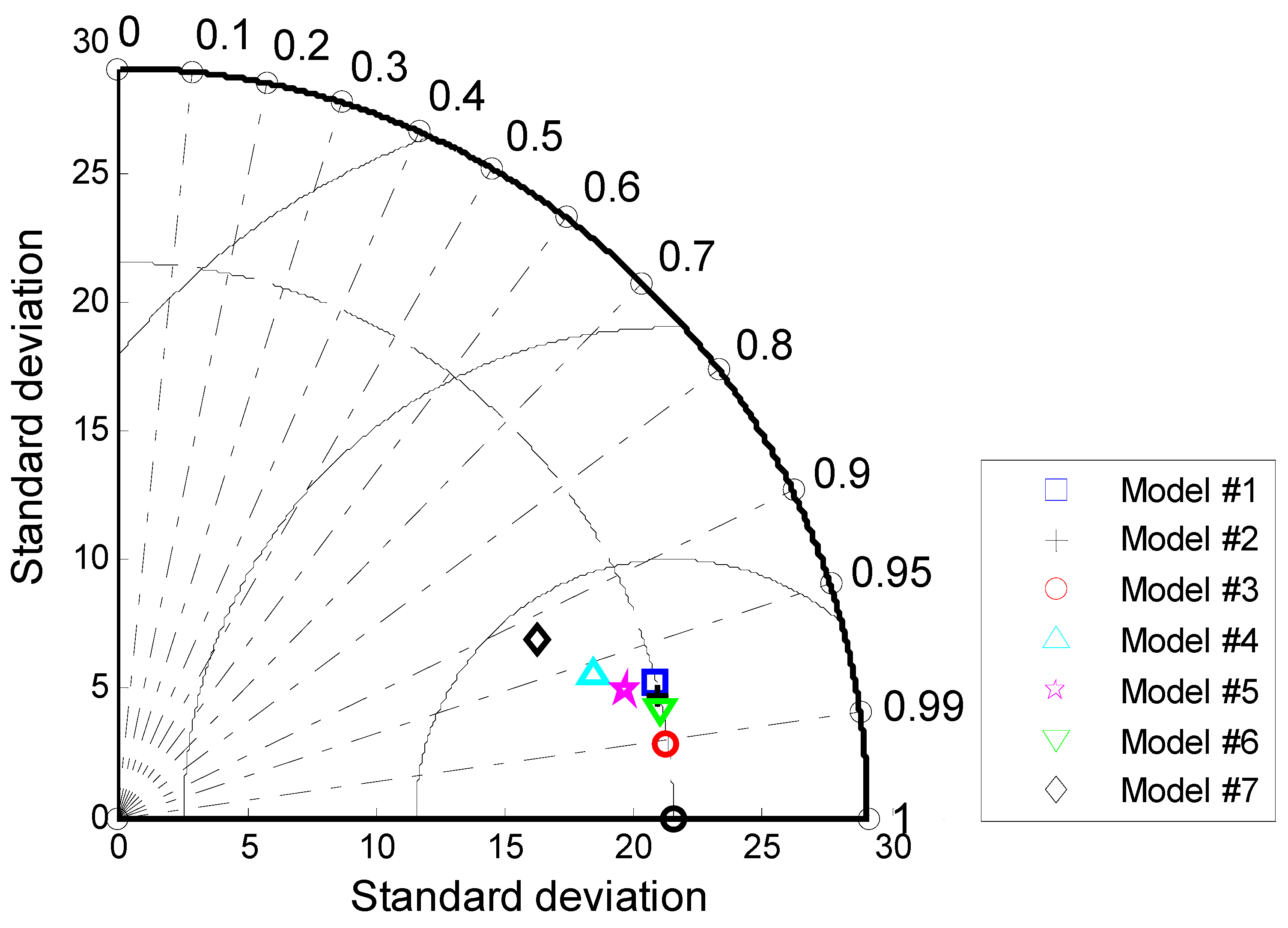
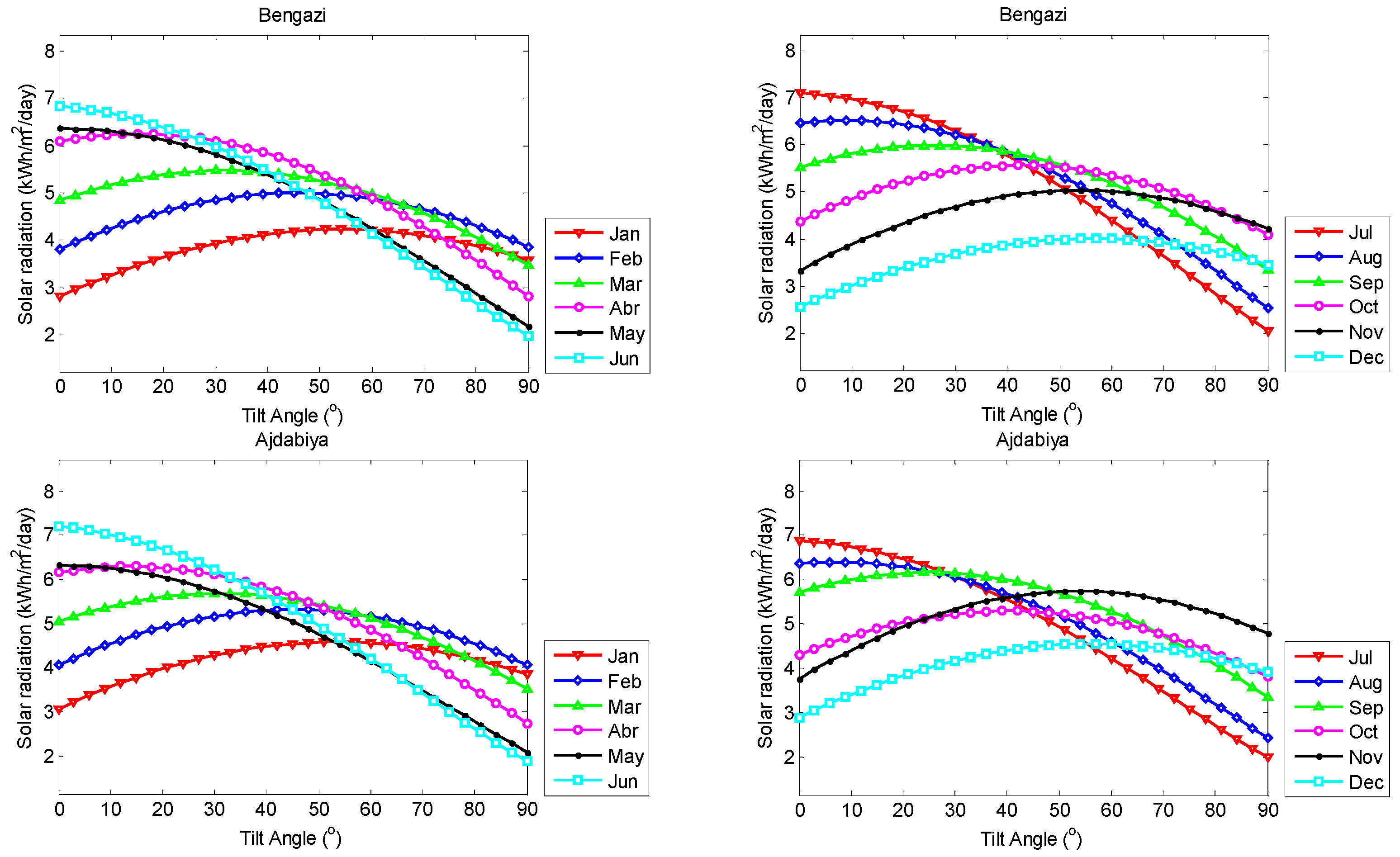
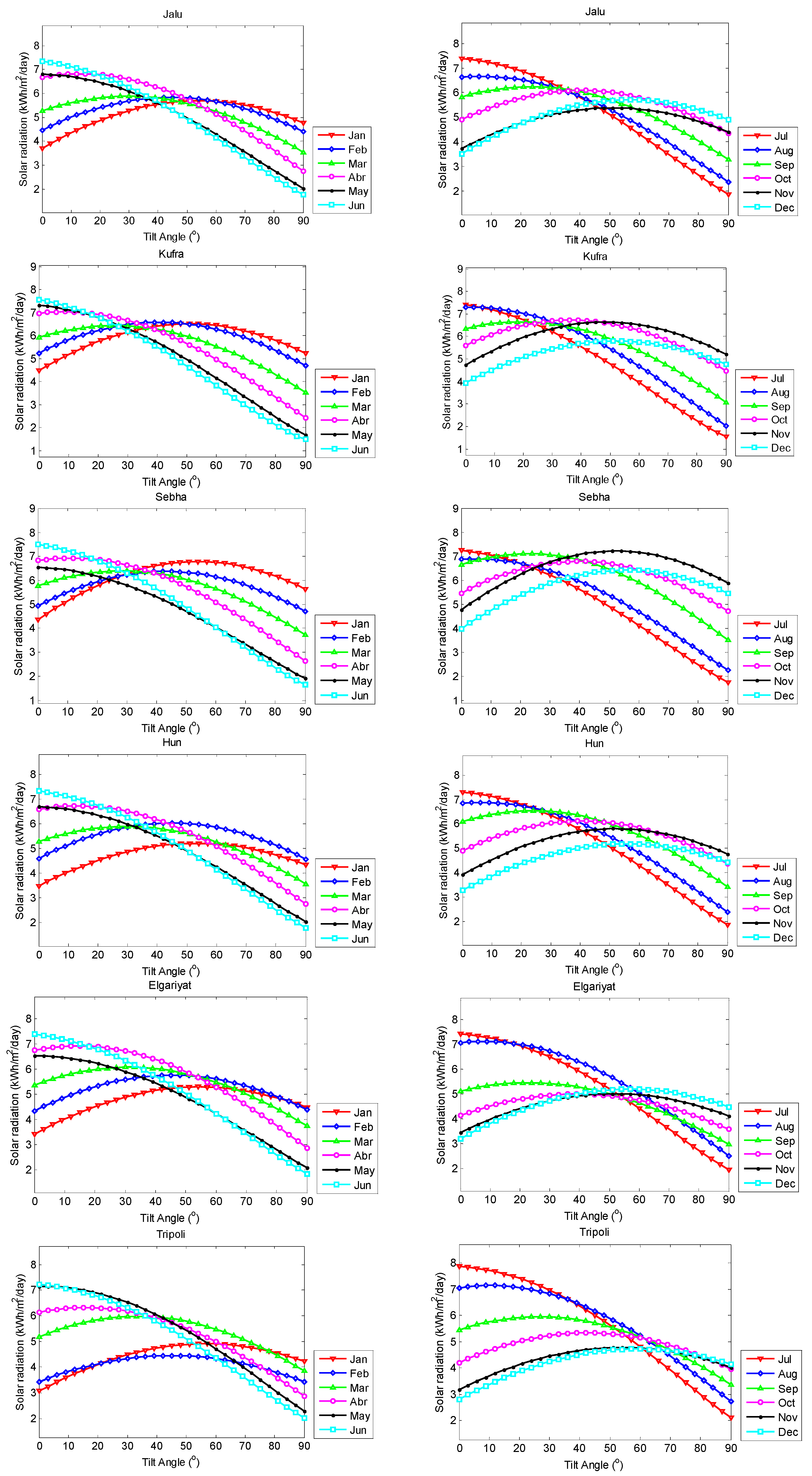
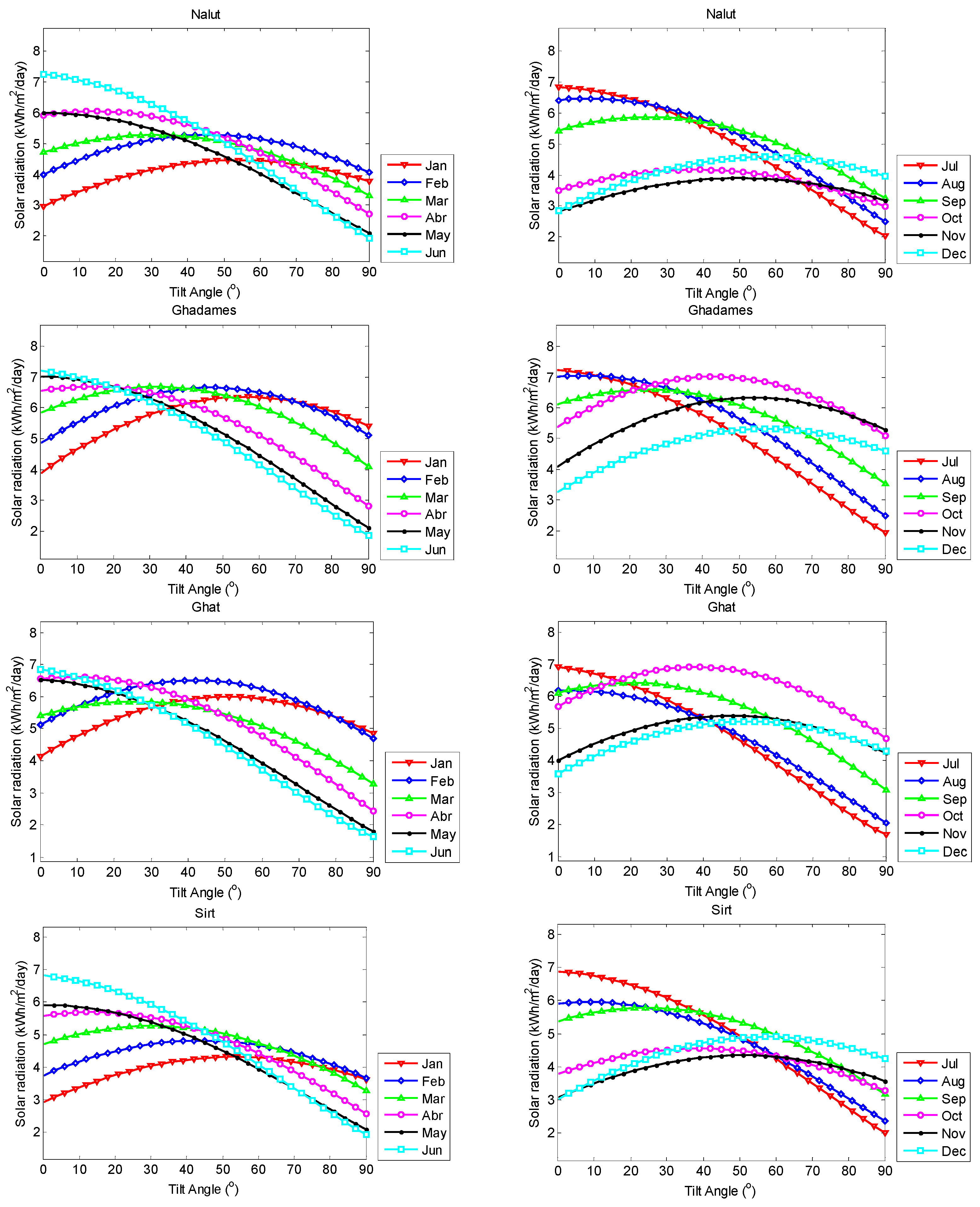
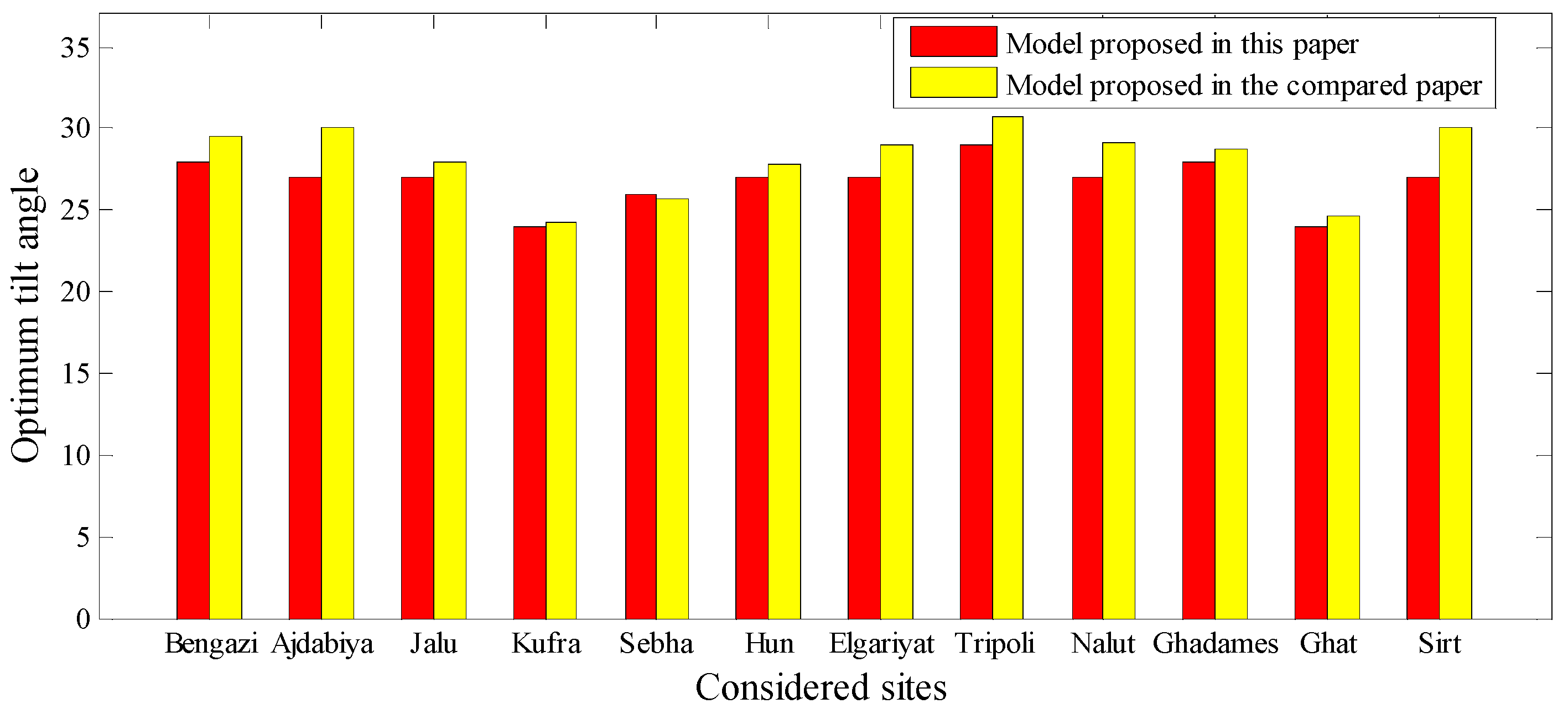
The most significant factor affecting the performance of a solar photovoltaic (PV) system is its tilt angle. It determines the amount of incident solar energy at the panel surface. In this paper, the optimum tilt angle of solar PV panels is estimated based on measured data recorded in twelve major cities in Libya by changing the panel’s tilt angle from 0 up to 90 in steps of 1 and searching for the corresponding maximum daily total solar radiation. A non-linear regression technique was applied to establish six empirical models to determine the optimum tilt angle in Libya. The accuracy of the models was evaluated using statistical criteria such as Taylor diagrams, root mean square error, mean bias error, and correlation coefficient. The results demonstrated that the monthly optimum tilt angle increased during the winter and decreased during the summer varying from 0 to 59. In addition, both third-order polynomial and Fourier models presented the best efficiency in estimating the optimum tilt angle with a correlation coefficient of 0.9943. The percent gain in average yearly solar energy received at the monthly optimum tilt angle varies from 12.43% to 17.24% for all studied sites compared to the horizontal surface.
Keywords: photovoltaic systems; solar radiation; optimum tilt angle; statistical analysis; Libya photovoltaic systems; solar radiation; optimum tilt angle; statistical analysis; Libya